Naar de inhoud

UFO'S of UAP'S, ASTRONOMIE, RUIMTEVAART, ARCHEOLOGIE, OUDHEIDKUNDE, SF-SNUFJES EN ANDERE ESOTERISCHE WETENSCHAPPEN - DE ALLERLAATSTE NIEUWTJES

UFO's of UAP'S in België en de rest van de wereld
akke.beakke.be
Ontdek de Fascinerende Wereld van UFO's en UAP's: Jouw Bron voor Onthullende Informatie! Ben jij ook gefascineerd door het onbekende? Wil je meer weten over UFO's en UAP's, niet alleen in België, maar over de hele wereld? Dan ben je op de juiste plek! België: Het Kloppend Hart van UFO-onderzoek In België is BUFON (Belgisch UFO-Netwerk) dé autoriteit op het gebied van UFO-onderzoek. Voor betrouwbare en objectieve informatie over deze intrigerende fenomenen, bezoek je zeker onze Facebook-pagina en deze blog. Maar dat is nog niet alles! Ontdek ook het Belgisch UFO-meldpunt en Caelestia, twee organisaties die diepgaand onderzoek verrichten, al zijn ze soms kritisch of sceptisch. Nederland: Een Schat aan Informatie Voor onze Nederlandse buren is er de schitterende website www.ufowijzer.nl, beheerd door Paul Harmans. Deze site biedt een schat aan informatie en artikelen die je niet wilt missen! Internationaal: MUFON - De Wereldwijde Autoriteit Neem ook een kijkje bij MUFON (Mutual UFO Network Inc.), een gerenommeerde Amerikaanse UFO-vereniging met afdelingen in de VS en wereldwijd. MUFON is toegewijd aan de wetenschappelijke en analytische studie van het UFO-fenomeen, en hun maandelijkse tijdschrift, The MUFON UFO-Journal, is een must-read voor elke UFO-enthousiasteling. Bezoek hun website op www.mufon.com voor meer informatie. Samenwerking en Toekomstvisie Sinds 1 februari 2020 is Pieter niet alleen ex-president van BUFON, maar ook de voormalige nationale directeur van MUFON in Vlaanderen en Nederland. Dit creëert een sterke samenwerking met de Franse MUFON Reseau MUFON/EUROP, wat ons in staat stelt om nog meer waardevolle inzichten te delen. Let op: Nepprofielen en Nieuwe Groeperingen Pas op voor een nieuwe groepering die zich ook BUFON noemt, maar geen enkele connectie heeft met onze gevestigde organisatie. Hoewel zij de naam geregistreerd hebben, kunnen ze het rijke verleden en de expertise van onze groep niet evenaren. We wensen hen veel succes, maar we blijven de autoriteit in UFO-onderzoek! Blijf Op De Hoogte! Wil jij de laatste nieuwtjes over UFO's, ruimtevaart, archeologie, en meer? Volg ons dan en duik samen met ons in de fascinerende wereld van het onbekende! Sluit je aan bij de gemeenschap van nieuwsgierige geesten die net als jij verlangen naar antwoorden en avonturen in de sterren! Heb je vragen of wil je meer weten? Aarzel dan niet om contact met ons op te nemen! Samen ontrafelen we het mysterie van de lucht en daarbuiten.

Archief

NASA's Top 5 Technical Challenges Countdown: #5: High-Powered Robotics
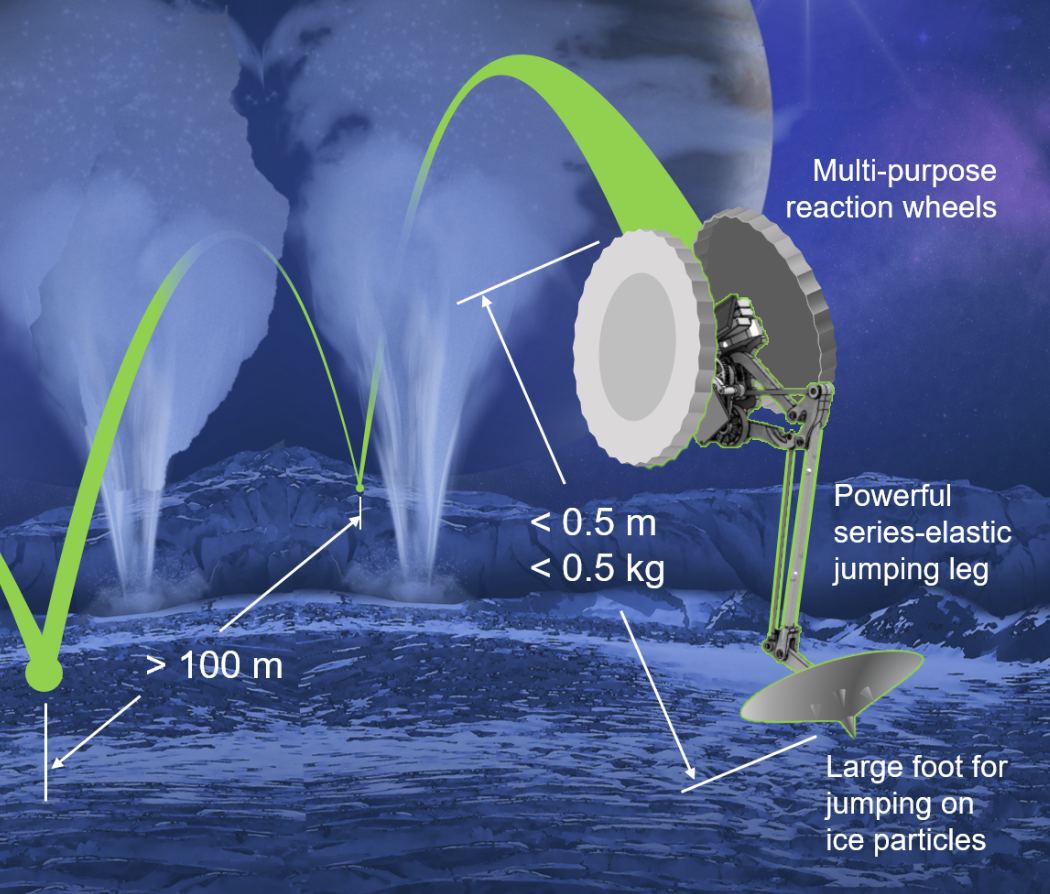
NASA's Top 5 Technical Challenges Countdown: #5: High-Powered Robotics

LEAP-Enceladus-Robot.jpg

In this series we are exploring NASA's top five challenges as detailed in its Civil Space Shortfall Ranking, which is basically NASA's Christmas wish list. These are the technologies that NASA believes we need to develop if we want to go to space…and stay there.

And we'll start with number five: high-powered robotics.

Space is hard. There's no doubt about that. It's completely unlike any environment we have ever faced on the Earth. Explorers in space, whether human or robotic, have to tackle literally out-of-this-world challenges. For example, there are extreme temperature fluctuations. One minute it could be hot enough to boil water, and the next minute cold enough to freeze nitrogen. Without thick atmospheres to balance and distribute heat, within the inner solar system you're at the mercy of the Sun: if you're in sunlight, it's generally going to be too warm, and if you're in the shade, it's hundreds of degrees colder. In the outer solar system? It's just...cold. Always, miserably cold.

And then there's the dust. On the Earth, dust is irritating – it makes us sneeze and it can jam up gears or wheels or cause your breaks to make that loud SQUEEEL sound. But in space dust is next-level. The surface of the Moon is covered in a fine powder, regolith, that is both tiny and, microscopically, fully of tiny, jagged edges. This dust can worm itself through even our best-sealed compartments, or just get carried along for the ride – where it immediately just sticks to everything.

And hey, who doesn't love a dose of deadly radiation every single second of every single day? Without a protective magnetic field and the security blanket of a nice thick atmosphere, operations on the Moon and Mars require constant exposure to cosmic rays, tiny charged particles slamming through the universe. Cosmic rays are caused by super-energetic events like supernovae and active galactic nuclei, and a typical cosmic ray particle is traveling somewhere around 99.999999% the speed of light. That's a lot of nines, and a lot of trouble. These cosmic rays can fry electronics and snip apart DNA.

And yeah, we've been sending robots into this extreme environment for decades, but if we want a more permanent presence on the Moon and Mars, we have to do better. For sure, we've had some huge successes, like the Cassini mission that spent 13 years in orbit around Saturn, or the Mars Exploration Rovers – Spirit and Opportunity – which lasted years longer than their planned 90-day missions. Those missions produced an enormous amount of science results, like the fact that we now have firm evidence that liquid water once existed on the Martian surface. We have been able to gather this evidence with the instruments on our rovers like rock abrasion tools and alpha particle X-ray spectrometer, in addition to a good old-fashioned camera.

But the presence of liquid water in the Martian past has opened up a powerful, difficult question: did Mars once harbor life? Unfortunately our current suite of robotic instruments are too limited to tell us. We need to be able to dig deeper into the soil, survey more regions, and bring more powerful instruments to answer that burning question.

This isn't just limited to Mars rovers. In general, every robot we send into space has a limited lifespan, is not meant to be repaired, and is extremely limited in what it can do. And still, those missions cost hundreds of millions, or even billions, of dollars, because we're trying to battle all those hostile environmental factors.

On the Earth, we've made great strides in making larger and more powerful robots. We have heavy-duty robots that assemble cars, and we have versatile ones that can walk like humans.

To make more impressive robots, designers have focused on increasing the power density: the amount of energy that robots can store and send through their various parts and systems. These systems include sensing, actuation (moving various bits and parts around), and aviation (like flight control). The more power you have available to all these systems, the more you can do. But if we rank power density on a scale, like a wind-up toy being a 1 and a Kaiju-killing Jaeger a 10, our robotic space probes are like a…3. Maybe 4 if we're being generous.

It's not just about having a big battery pack or solar cell. We need the ability to get this power to a robot's subsystems. We need more powerful electric motors, gearing, and drive train components. We need more capable sensors, with more dynamic range, more perception, more force. We need long-lived power distribution systems; you know, like cables and wires. We need more powerful computers to drive this all.

And, if this weren't enough, we need future robots to be modular, so that we can easily swap out components to allow the robot to fulfill a new mission objective, and we need our robots to be repairable and maintainable, because we simply can't build up a healthy lunar or Martian infrastructure with single-shot craft.

In fact, we probably need space-based robots that are even more capable and more power-dense than their current terrestrial cousins. Meaning that our goal isn't just to make current top-of-the-line Earth robots capable of facing the dangers and challenges of space environments. No, we need EVEN BETTER.

RELATED VIDEOS


{ https://www.universetoday.com/ }

Hoe vind je dit bericht?
Geschreven door peter om 22:06 Stuur door

I found evidence of a pre-historic American Indian culture dating back to 900-1200AD, but...can I save it? Utah Discovery News.

I found evidence of a pre-historic American Indian culture dating back to 900-1200AD, but...can I save it? Utah Discovery News.

Archeology,%20Fremont%20tribe%20indians,%20Utah.png
Wow, while hiking I discover ancient evidence that is from 900-1200 AD (time Fremont existed) that has gone over looked in Utah till right now. I found undeniable proof of the Fremont tribe, a tribe so old, that American Indians call them the “ancient people” or “the old ones” who lived in the lands before them. 
 
This is important, but how do you get a state to recognize the area as a historical significant location to protect it. It's close to an impending threat that will in the coming years, destroy it entirely, wiping the evidence away of this rare and little know about Fremont tribe. 
 
I will make some videos on it, and share it with you all. But the Fremont no longer exist, since they. were absorbed into other tribes long ago. I will update soon on this discovery...it's big...and I'm not talking figuratively. 
 
So I guess, I don't just find ancient alien artifacts on other planets and moons in NASA photos, I don't just find ancient cities and artifacts on Google Earth Map...I also do it in real life. 
 

{ https://www.ufosightingsdaily.com/ }

Hoe vind je dit bericht?
Geschreven door peter om 19:59 Stuur door

UFO Disk Over Douliu, Taiwan On June 5, 2025, UAP Sighting News.

UFO Disk Over Douliu, Taiwan On June 5, 2025, UAP Sighting News.

UFO_Taiwan.png
Date of sighting: June 5, 2025
Location of sighting: Douliu, Taiwan
Source: Email report
 
Watch this cloaked alien disk flying over Taiwan. Someone was watching and caught it from their apartment balcony. The object has glowing white lights on the side of the disk. Magnificent catch!
Scott C. Waring
 
Eyewitness states:
At first I noticed them through the screen window. Then I picked up my phone and walked to the balcony to start recording.  They seemed to be moving really fast, more like they were glowing, not just white in color. So I started filming.

{ https://www.ufosightingsdaily.com/ }

Hoe vind je dit bericht?
Geschreven door peter om 19:37 Stuur door

AI analysis suggests Dead Sea Scrolls are older than scientists thought, but not all experts are convinced

Part of Dead Sea Scroll 28a.

AI analysis suggests Dead Sea Scrolls are older than scientists thought, but not all experts are convinced.

An AI analysis of the Dead Sea Scrolls, which include texts from the Hebrew Bible, could mean they were composed earlier than experts thought.

Hoe vind je dit bericht?
Geschreven door peter om 23:39 Stuur door

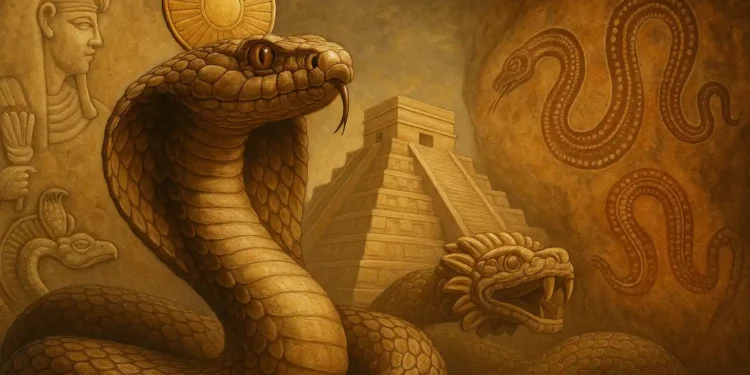
The Global Serpent: Why Snake Symbolism Appears in Every Ancient Culture

The Global Serpent: Why Snake Symbolism Appears in Every Ancient Culture

What the serpent??

In 1799, French soldiers near Egypt’s Nile Delta uncovered a large inscribed slab that would become known as the Rosetta Stone. It contained the key to decoding ancient Egyptian hieroglyphs, unlocking the voices of a long-lost civilization. While the stone itself bore no serpent imagery, Egypt’s surviving monuments and tombs are filled with depictions of snakes—coiled, crowned, and sacred. The serpent, in fact, appears everywhere in human history. From Mexico to Mesopotamia, India to Australia, ancient cultures developed strikingly similar snake symbolism. Why?

How could people separated by oceans and millennia independently choose the same symbol to express creation, danger, fertility, and power?

A Global Pattern in Stone and Story

And then it becomes obvious, after just researching a little bit, reading a few aritcles and books, and look at a few illustrations drawn by our ancestors across the globe.

Across continents, serpent imagery appears with remarkable consistency. In ancient Egypt, the cobra goddess Wadjet was a divine protector, often shown rearing up on the crowns of pharaohs. She embodied sovereignty, fire, and the divine right to rule. According to the British Museum, her symbolism reflected both protection and aggression—a duality at the heart of Egyptian cosmology.

In pre-Columbian Mesoamerica, the Aztecs worshipped Quetzalcoatl, the Feathered Serpent, a god of wind, learning, and creation. This serpent figure appears prominently in temples and codices, often linked with cosmic order and regeneration. At Chichén Itzá, during the equinoxes, a moving shadow along the steps of the main pyramid forms the shape of a descending serpent—engineered to honor this divine being.

These motifs appear far beyond the reach of shared trade routes or contact. In India, snakes known as Nāgas are still venerated today. In Aboriginal Australia, stories of the Rainbow Serpent stretch back tens of thousands of years, passed down in oral tradition and depicted in ancient rock art.

The consistency of this imagery suggests a deep-rooted psychological or environmental source—but no single explanation has ever fully accounted for it.

From Rock Art to Living Memory

In Western Australia’s Kimberley region, rock paintings depict enormous serpentine figures, their arcs following the curves of rivers and cliffs. These images are attributed to the Rainbow Serpent, a powerful being believed to have shaped the land itself—creating rivers, mountains, and life. Some of these paintings may be over 20,000 years old, though dating remains uncertain. According to Aboriginal elders, the Rainbow Serpent is not a metaphor. It is real, remembered, and revered.

On the other side of the world, early Hindu texts like the Mahabharata describe encounters with divine snakes. These Nāgas are neither wholly evil nor entirely benign. They live underground or near water, protect treasures, and wield supernatural power. Shrines to Nāgas still dot the Indian countryside, where villagers offer milk and flowers to carved serpent stones.

What connects these traditions is not only the snake’s visual presence—but its elevated role in explaining how the world came to be.

Serpents of Kings and Gods

In Egypt, the cobra goddess Wadjet was considered the personal protector of the pharaoh. Her image, known as the uraeus, appears on crowns dating back to around 3100 BCE, during the unification of Upper and Lower Egypt under Narmer. Her function was both symbolic and magical—believed to spit fire at enemies and defend the divine order (ma’at).

Mesoamerican texts, such as the Codex Borgia, include detailed illustrations of feathered serpents involved in rituals of time, rebirth, and celestial order. While interpretations vary, scholars agree that Quetzalcoatl’s symbolism was deeply embedded in Aztec spiritual and political life. He was a cultural founder figure, bringing laws, maize, and the calendar.

Despite the wide geographic gap, both traditions elevate the serpent to the realm of divine kingship and cosmic authority.

The Psychological Angle

Swiss psychiatrist Carl Gustav Jung believed that serpent imagery represents a universal archetype—a symbol embedded in the collective unconscious of all humanity. Because snakes shed their skin, Jung argued, humans instinctively associate them with rebirth, transformation, and immortality. In his Collected Works (Vol. 9), he wrote that the snake’s ability to renew itself made it an ideal emblem of the psyche’s deep structures.

Mythologist Joseph Campbell independently reached similar conclusions. In The Hero with a Thousand Faces, he showed that serpents often play key roles in the hero’s journey—appearing as both obstacle and guide. In nearly every culture he studied, serpents carried the dual symbolism of death and life, fear and wisdom, endings and beginnings.

Psychological theories help explain the emotional power of snake symbols—but they still don’t answer why snakes, above all animals, were chosen in so many places, by so many people.

Environment and Interpretation

Some anthropologists propose that the natural behaviors of snakes made them universally symbolic. In agricultural societies, snakes emerged after rain and often inhabited riverbanks, making them logical candidates to represent fertility and water cycles. In many myths, they are linked to rainfall, drought, or seasonal change.

In ancient Egypt, Wadjet was associated with the Nile floods, which brought fertility to the land. Similarly, Quetzalcoatl was believed to bring rain and agricultural renewal. Serpents in these contexts act as agents of the life-death-life cycle—a pattern at the core of many belief systems.

While no definitive scientific study has mapped all global serpent symbols to specific environmental factors, the correlation between serpent myths and water is notable and persistent.

The Oldest Serpent Yet

At Göbekli Tepe in southeastern Turkey, archaeologists have uncovered serpent carvings dating back nearly 11,000 years. These reliefs appear on massive T-shaped pillars arranged in ceremonial enclosures. The serpents are stylized, elongated, and often depicted in motion—carved with intent, not decoration.

Göbekli Tepe predates writing, agriculture, and urban life. Yet its builders clearly regarded the serpent as important enough to inscribe in stone. While the full meaning remains unknown, the presence of such early serpent imagery suggests that this symbol may have roots far deeper than organized religion or state power.

These are the oldest known serpent carvings yet found, pushing the symbol’s documented history to the dawn of monumental human architecture. And I find it really interesting that the serpent is one of the more prominent symbols at Göbekli Tepe.

So… what the Serpent?

Despite decades of scholarship, the question remains open. Was the serpent a biological fear? A metaphor for transformation? A visual shorthand for cycles of rain, life, and death?

Jung’s archetypes, Campbell’s myths, and archaeological discoveries offer pieces of the puzzle—but not the whole picture. What’s clear is this: across space and time, from desert temples to jungle pyramids to sun-scorched rock faces, humanity chose the serpent. Not once, but again and again.

Whether divine guardian or chaotic force, the snake has slithered its way into our deepest stories—and refuses to leave.

RELATED VIDEOS


{ https://curiosmos.com/category/unsolved-mysteries/ }

Hoe vind je dit bericht?
Geschreven door peter om 21:28 Stuur door

Could There Have Been a Civilization Before the Ice Age?

Could There Have Been a Civilization Before the Ice Age?

Evidence of complex human activity at the end of the Ice Age does exist.

Imagine standing on the shores of the modern-day Black Sea about 8,000 years ago. Instead of brackish waves, you would have seen a calm freshwater lake surrounded by fertile plains and forested hills. That landscape changed dramatically around 7,600 years ago. Marine geologists William Ryan and Walter Pitman, after years of sediment analysis and sonar scans, proposed that a catastrophic flood had occurred when rising Mediterranean waters surged through the Bosporus Strait. This event rapidly transformed the Black Sea from a freshwater lake into a vast saltwater basin.

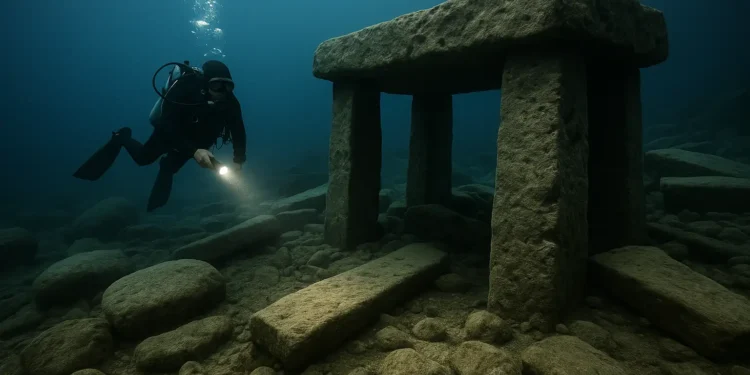
Sediment cores taken from the seabed reveal ancient shorelines more than 100 meters below present sea level, supporting the idea of a sudden inundation. While this event occurred after the last Ice Age, it remains one of the most dramatic post-glacial sea-level changes. It has led some researchers to wonder whether human settlements—perhaps even early civilizations—were lost beneath the rising waters.

Echoes Beneath the Waves

Over the past two decades, researchers have mapped submerged landscapes along the Black Sea’s former shoreline. Using sonar and underwater drones, they’ve documented features that appear to show organized shapes and linear patterns. While some formations resemble terraces or walls, these interpretations remain speculative. No peer-reviewed study has yet confirmed the presence of definitive pre-Holocene architecture beneath the Black Sea.

Still, the surrounding basin was once fertile and habitable. Archaeological evidence from the nearby Anatolian and Balkan regions shows Neolithic communities thriving in the millennia leading up to the flood. It’s plausible that similar groups occupied now-submerged lowlands. If so, their settlements may have been erased swiftly, with little trace left behind—except perhaps in the memories of their descendants.

Göbekli Tepe: A Clue from Stone

Evidence of complex human activity at the end of the Ice Age does exist—above sea level. Göbekli Tepe, located in southeastern Turkey (one of my absolute favorite sites), was constructed around 9600 BCE, shortly after the Younger Dryas cold snap. The site features towering limestone pillars, some up to 10 tons, carved with animals, symbols, and abstract motifs. Its builders used advanced quarrying and organizational skills, even though they had no pottery, no written language, and no domesticated crops.

The sophistication of Göbekli Tepe challenges the traditional view that complex societies only emerged after agriculture. While the people who built it were likely hunter-gatherers, they clearly had the social coordination and symbolic systems often associated with later civilizations. This raises the question: Could Göbekli Tepe represent a surviving cultural lineage—descendants of an earlier, now-lost society forced to adapt after environmental collapse? Or is Göbekli Tepe a civilization on its own? Lost to time? If you believe there is a possibility, read this article I wrote a while back.

Atlantis Reconsidered

References to lost civilizations are not limited to scientific theories. Plato’s tale of Atlantis, often regarded as a philosophical allegory, has inspired generations of researchers to search for real-world parallels. Around the globe, underwater features have stirred debate: the Yonaguni Monument off Japan, structures in the Gulf of Khambhat off India, and the Bimini Road near the Bahamas.

The Bimini Road, in particular, consists of large, flat stones arranged in a roughly linear path just offshore. While many geologists identify it as natural beachrock shaped by erosion and wave action, a few researchers argue the stones show signs of human modification. No definitive tools or artifacts have been found to confirm this, and mainstream science considers the formation natural. However, its ambiguity keeps it in the public eye and reflects a broader curiosity about what the oceans might be hiding.

Younger Dryas and the Cosmic Impact Theory

Some scientists argue that the abrupt climate shift around 12,900 years ago—the Younger Dryas—was caused by a cosmic impact. This theory, known as the Younger Dryas Impact Hypothesis, proposes that a comet or asteroid exploded in the atmosphere over North America or Greenland, triggering wildfires, global cooling, and widespread ecological disruption.

Supporting evidence includes peaks in platinum levels, nanodiamonds, and tiny glass-like spheres found in geological layers from that time. However, the scientific community remains divided. Critics point to the lack of a definitive crater, while proponents argue the explosion may have occurred in the air or on ice, leaving minimal physical trace.

If the hypothesis is correct, such an event could have devastated early societies, particularly those concentrated in vulnerable lowland regions. Any civilization that had emerged by then may have been scattered or reduced to small bands of survivors, their cultural memory passed on through story, symbol, and myth.

Hidden in Oral Tradition

Across the world, traditional stories tell of great floods, fire from the sky, and civilizations destroyed in cataclysm. The Mesopotamian Epic of Gilgamesh recounts a massive deluge. In Hindu texts, Manu survives a divine flood. Native American, Aboriginal Australian, and African oral traditions include tales of fire, shaking earth, and rising seas.

Historians caution against taking myths at face value. Still, the shared elements in these narratives are striking. While independent invention is possible, some scholars suggest these stories may preserve collective memories of real events—filtered through generations and transformed by cultural lenses. If so, they could offer clues to a time when humanity faced disasters so profound that only myth could preserve their meaning.

The Pursuit of Proof

The biggest challenge in confirming a pre-Ice Age civilization is the passage of time itself. Sea levels rose more than 120 meters after the last glacial maximum, submerging vast coastal areas where early populations likely lived. Underwater environments accelerate decay: wood, bone, and textiles degrade rapidly; storms and currents bury or break structures.

Yet technology is closing the gap. Multibeam sonar, underwater LIDAR, submersible drones, and satellite topography have revealed ancient coastlines, submerged forests, and even stone tools off modern coasts. The North Sea’s “Doggerland,” once a land bridge between Britain and Europe, has yielded Mesolithic artifacts and evidence of human habitation. Similar efforts in the Mediterranean, Black Sea, and Indian Ocean may one day reveal even older remains.

Rethinking Human History

The possibility of advanced human cultures existing before the Ice Age challenges a long-standing assumption: that complexity only began with farming. Sites like Göbekli Tepe already stretch that assumption. If further evidence of submerged or forgotten civilizations emerges, it would force a fundamental rethinking of our timeline.

We would need to ask: how many times have humans risen, innovated, and then fallen—only to rise again? History, it seems, may be cyclical rather than linear. Climate events, impacts, and floods may have wiped out not just species, but whole societies—some of which left only the faintest traces behind.

Looking Forward by Looking Back

At present, no conclusive proof exists for a pre-Ice Age civilization. But the growing body of anomalies, underwater features, and ancient sites like Göbekli Tepe ensures that the question won’t go away. It remains one of archaeology’s most provocative frontiers. I see, for example, Göbekli Tepe as the ultimate proof of a civilization BEFORE civilization. I see it as a period in human history that is not included in history books. I see this site, and all of the sites around it, as a smoking gun that Earth did have advanced civilizations in the past, but mainstream experts are perhaps just too lazy or afraid to admit it.

I think that the drive to uncover these lost histories is not merely academic, it’s human. Every excavation, every dive, every sonar ping reflects our desire to understand where we came from. In the oceans’ depths and in the stories we tell, hints of a forgotten past continue to whisper. Whether those whispers grow into evidence remains to be seen. I see Göbekli Tepe as a history breaker. Isn’t it time for our history books to change?

RELATED VIDEOS

{ https://curiosmos.com/category/ancient-civilizations/ }

Hoe vind je dit bericht?
Geschreven door peter om 20:57 Stuur door

WTH is this on deserted island? Alien or Military? UFO UAP Sighting News, Google Earth discovery.

WTH is this on deserted island? Alien or Military? UFO UAP Sighting News, Google Earth discovery.

UFO_UAP_Island.png

Date of discovery: June 5, 2025

Location of discovery: Google Earth
Source: Self
 
Guys check this out! 
Hidden away on the remote volcanic island of Saint Helena in the South Atlantic Ocean, I discovered what may be one of the most secretive and mysterious sites on Earth. Just southeast of the island’s official airport lies a secluded concrete platform—military in design but completely isolated—housing a craft unlike anything in any known aircraft registry. The object’s shape is unconventional, seemingly a fusion between a stealth aircraft and something more exotic—something possibly not of this world. 
 
This installation sits behind secured hills, out of view of most aerial routes, almost as if it was designed to avoid detection. It's not a normal military outpost. There's no sign of regular air traffic, no personnel, no vehicles—just the craft, parked like a silent guardian on a forgotten launchpad. Its twin-engine layout and dorsal configuration look nothing like commercial or military jets, resembling more a conceptual spacecraft or test vehicle from a black budget project. 
 
Could this be a mini–Area 51? A remote black site where experimental propulsion or reverse-engineered alien tech is tested far from the eyes of the public and even allied governments? Saint Helena is British territory, but its remoteness would make it ideal for US or multinational cooperation on secret programs—especially if extraterrestrial technologies are involved. The question is: why here, and why now? This may be one of the most compelling pieces of visual evidence yet suggesting that advanced craft—possibly not built entirely by human hands—are being stored and tested on Earth in plain sight. 
 
Scott C. Waring, UFO Sightings Daily

{ https://www.ufosightingsdaily.com/ }

Hoe vind je dit bericht?
Geschreven door peter om 20:30 Stuur door

Greenland’s UFO Enigma: Secrets Behind the Lights and Strategic Power Plays

Greenland’s UFO Enigma: Secrets Behind the Lights and Strategic Power Plays

Greenland's UFO Enigma Secrets Behind the Lights and Strategic Power Plays

In a compelling conversation with investigative journalist Ross Coulthart, Danish-Greenlandic researcher and podcaster Martin Kleist unveils astonishing details of repeated UFO (or UAP) sightings in southern Greenland. The phenomenon, captured in high-quality infrared footage, involves glowing objects rising from icy mountain ranges—maneuvering, vanishing, and often interacting in strange ways.

Daily UFO Encounters in Southern Greenland

Martin’s investigations began after a Greenlandic pilot reported seeing an oval-shaped, luminous craft hovering near clouds during landing in Narsarsuaq. This wasn’t an isolated sighting. Pilots, mechanics, and air traffic controllers have allegedly seen similar objects regularly—often daily.

Equipped with high-end cameras, Martin and his team documented lights emerging from behind a remote mountain near a known rare earth mineral deposit. The phenomenon was reportedly visible to the naked eye, with the craft exhibiting intelligent maneuvers—sometimes changing direction, merging with other lights, and accelerating at speeds too fast to track.

Beyond Technology: A Consciousness Component?

Strangely, Martin describes apparent “interactions” with the phenomenon. On multiple occasions, he claims that when jokingly asking the sky for a sign, flashes of light would appear in response. He suspects a consciousness element—perhaps even suggesting the phenomenon isn’t meant to be understood in traditional scientific terms but instead serves to alter human perception itself.

Equipment malfunctions and mysteriously erased footage only deepen the mystery.

Geopolitics, Rare Earths, and U.S. Military Interest

Greenland’s strategic importance to the United States has long been established, dating back to Cold War-era nuclear deployments at Thule Air Base (now Pituq Space Base). Martin notes that American defense contractor Battelle Memorial Institute now operates a scientific facility in the Greenlandic interior—an area rich in uranium and rare earth minerals critical for advanced weapons.

Could UAPs be linked to these mineral-rich regions? It’s a question Martin doesn’t shy away from. He points to similar patterns in other global hotspots like Zimbabwe and Norway, where UAPs have appeared near sensitive mining sites.

While both Danish and American authorities publicly deny UAP activity, Kleist’s evidence—and the lack of any government investigations—tells a different story. Official responses have been limited, often brushing aside credible reports from locals and military personnel.

A Wake-Up Call for Greenland—and the World?

Kleist emphasizes that Greenlanders often feel their voices are ignored in Copenhagen. He sees the UFO discussion not only as a security issue but as a matter of cultural respect and sovereignty. Greenland’s indigenous peoples have long described “spirit lights” and “flying kayaks” in their mythology, treating such events as natural rather than supernatural.

Documentary Coming Soon

Martin Kleist’s upcoming documentary—tentatively titled “Den der ligner en tallerken” (“The One That Looks Like a Plate”)—promises a thoughtful exploration of these sightings, their psychological impacts, and what they might mean for geopolitics and human consciousness alike.

RELATED VIDEOS


{ https://www.latest-ufo-sightings.net/ }

Hoe vind je dit bericht?
Geschreven door peter om 19:48 Stuur door

This Man Says NASA Asked for Help After Astronauts Encountered Orbs Containing 125-Foot Winged Angelic Beings That Smiled at Them

Chris Bledsoe

This Man Says NASA Asked for Help After Astronauts Encountered Orbs Containing 125-Foot Winged Angelic Beings That Smiled at Them

Chris Bledsoe, an American experiencer, has recently come forward with remarkable claims about mysterious beings, government fear, and a prophecy linked to the year 2026.

For the first time, on the Bledsoe Said So podcast, he revealed that NASA asked for his help to understand orbs that were harassing their astronauts. He said this is the first time he has spoken publicly about these things, even though he has known about them for 18 years. According to him, these orbs are not just lights in space. He says they are angelic beings that come out of the orbs and can be as tall as 125 feet. Some of them have wings and even smile at the astronauts.

Chris explained that he worked with NASA for years and has proof, including photos, videos, and official documents, along with meetings with high-level scientists. NASA was interested in him because these beings seemed to like him and communicated with him, while avoiding official agencies. NASA wanted to know why the beings chose him and why they were bothering their astronauts.

He claimed that all astronauts have seen orbs or these beings in space, even though this has never been officially released. These beings appear outside space shuttles, looking through the windows or floating above the shuttle bay or space station. Sometimes they are glowing, and there are reports of several of them standing together, up to 125 feet tall with wings, smiling at the astronauts.

Chris described them as energy beings that come out of glowing orbs. He says they are angelic and can appear in many forms. They can be six or seven feet tall or much larger. They can look like drones or flying saucers and can even split into two or many forms.

He revealed that the government is very afraid of these mysterious beings or phenomena. He calls them “plasmoids” or angelic beings and says the fear comes from the fact that the government cannot control them and has no way to defend against them.

He has attended high-level meetings in Washington, D.C. with congressmen and military officials who are scared and uncertain about how to handle these beings.

According to Chris, the government does not want the public to interact with or think about these entities because they fears losing control. To prevent this, they twist the truth or create fear by labeling the beings as aliens, plasmoids, or Chinese drones. This creates confusion and fear in people who don’t understand what is going on.

On Danny Jones’ podcast, Bledsoe revealed that after his first encounter with orbs in 2007, the sightings never stopped. They continued from that night onward. He kept seeing things in the sky, and it was always very obvious to him. He wrote many stories about these experiences in his book, though only part of what he wrote was published. He originally wrote about 140,000 words, but the final version had only around 90,000 words, including the introduction, so a lot was left out.

His daughter added that their mom was not very comfortable with these experiences and did not encourage them. But Chris would still secretly wake up her and her brothers, Ryan and Jeremy, late at night, sometimes at 2 or 3 a.m., to go outside and watch orbs appear in their yard. These glowing balls of light would sometimes come very close. After watching them, the kids would just go to bed and then go to school the next day as if nothing strange had happened.

Chris explained that some of the orbs were enormous, about 50 feet wide and 100 yards away. They were as big as trees and would float through the trees or hover for hours. One time, a blue orb stayed in place near their door, and they could watch it through the window as it moved around the trees.

When asked if the orbs made any sounds, Chris said that sometimes they did and sometimes they did not. When they made noise, it sounded like buzzing or sizzling, similar to the crackling sound an old light switch might make when you flip it. But he never noticed any kind of smell with them.

At one point, they look at a photo showing Chris Jr., his son, and Chris points out that behind his son, near the wood, is where he had an encounter with a small three-foot-tall being. That is also where the orbs landed in his yard. He says the orbs left marks on the ground that killed the grass, leaving big circles with a little patch of grass left in the center like a donut. There were three such circles. Some orbs even skimmed along the ground, burning the grass as they moved before settling down.

chris

a photo showing Chris Jr., his son, and Chris points out that behind his son, near the wood, is where he had an encounter with a small three-foot-tall being.

Chris mentions that MUFON, the Mutual UFO Network, tested the soil in those areas. MUFON is a volunteer-based organization where people can report UFO sightings and get them investigated by enthusiasts and researchers.

Chris also said that one of the trees near where the orb landed, a large oak tree, died afterward. Its limbs just started falling off, and eventually the whole tree crumbled. He connects this to the orb landing only about 12 feet away from it.

On the Shawn Ryan Show, Chris discussed a powerful spiritual experience he had on Easter in 2012. He said a woman appeared to him in a vision. He calls her “The Lady” and also refers to her as “Hathor,” the ancient Egyptian goddess. She told him to start sharing his paranormal experiences with the world, including her message.

At the time, he believed he had been abducted by some force but didn’t remember the details right away. Later, he began to remember more. He said he was taken around the Earth in a clear bubble and shown different places, including Egypt, Hathor’s temple, and the Sphinx. He noticed the Sphinx was facing East.

In 2013, the same woman returned and showed him visions of the future. She gave him a prophecy. She said, “When the Red Star of Regulus appears on the horizon before daylight in the gaze of the Sphinx, at that time will be a New Knowledge to come to this planet.”

Chris said he told scientists and researchers about this, and when they checked it with astronomical tools, they confirmed that this rare alignment will happen on Easter in the year 2026.

After this, government-related groups began to focus on the date through remote viewing. Now the year 2026, and even 2027, is being talked about more in the media as a time when something big could happen. Chris says even well-known people like Lue Elizondo have mentioned 2026.

He also had a moment with a man named Robert Grant, who had been searching for a special ruby he thought needed to be placed between the paws of the Sphinx for a major event. But Chris told him it wasn’t a ruby. It was the star Regulus. Grant reacted strongly and said, “It’s the king star.”

This message from “The Lady” lines up with something Edgar Cayce, the famous psychic, predicted decades ago. Cayce said there is a hidden “Hall of Records” under the Sphinx in Egypt. He believed it contains ancient knowledge that could change the world.

According to Cayce, the chamber would only be discovered when certain stars and planets align. He described a specific moment when the shadow or light from the rising sun would fall between the Sphinx’s paws, marking the right time.

He said the entrance to the chamber would stay sealed until humanity is ready. The records are believed to contain information like:

  • The history of Atlantis, an advanced civilization that supposedly sank into the ocean
  • Details about the people of Atlantis, their technology, and spiritual wisdom
  • Knowledge about where humans came from and why we exist
  • A connection between the Atlanteans and ancient Egyptians

Cayce believed this knowledge would only be revealed when humanity becomes more spiritually aware. When that happens, it could bring in a new and better era for the world.

Chris Bledsoe now believes that whatever happens in 2026 might be connected to all of this. He even hints that it could be the return of Christ.

RELATED VIDEOS

HD|Aug 02, 2023|82811 views|byYour Superior Self

{ https://howandwhys.com/ }

Hoe vind je dit bericht?
Geschreven door peter om 23:49 Stuur door

A Terrifying Simulation of a Black Hole Gobbling Up a Neutron Stars

A Terrifying Simulation of a Black Hole Gobbling Up a Neutron Stars

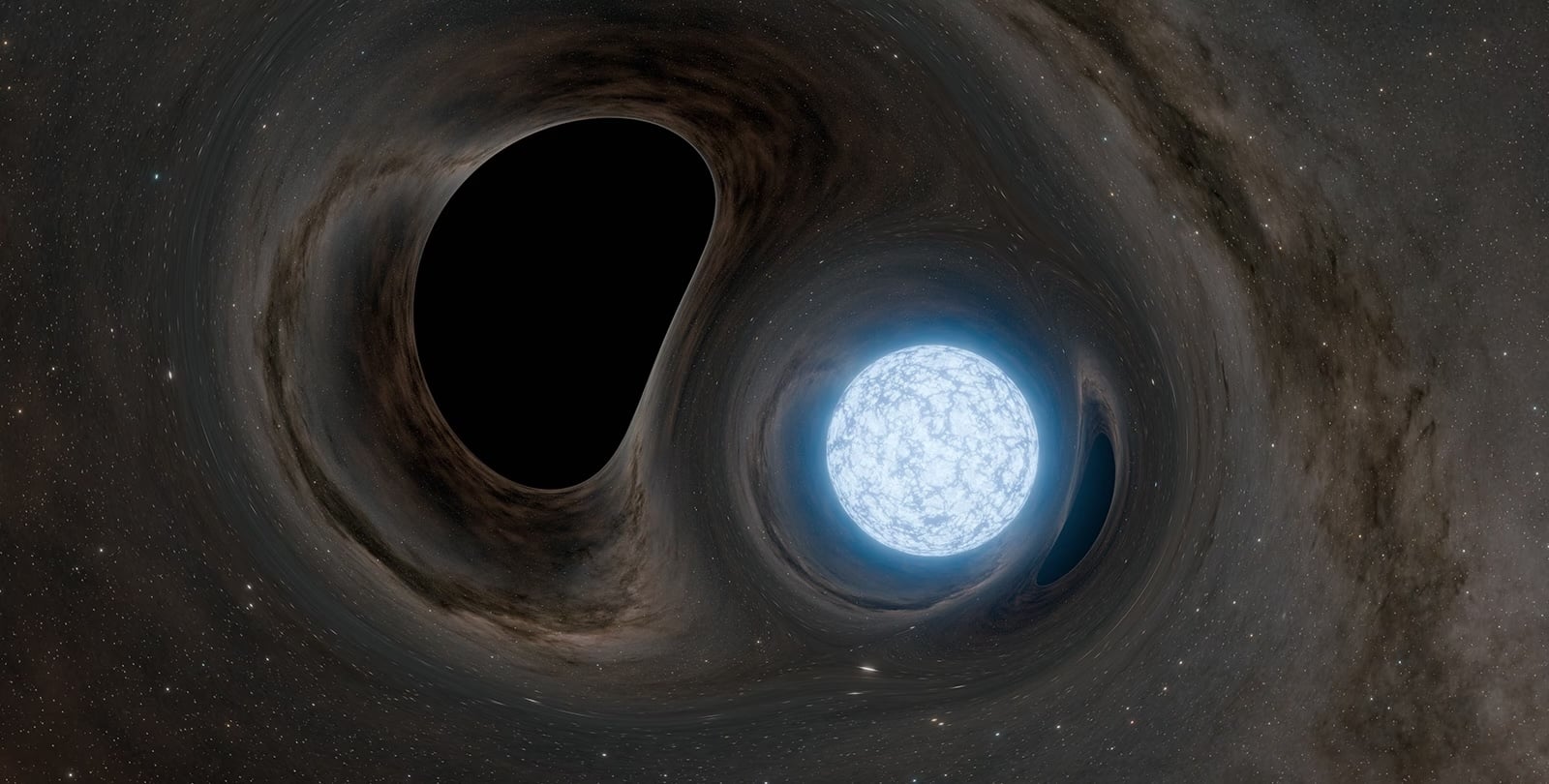
Illustration of black hole consuming a neutron star Illustration of black hole consuming a neutron star

Across the universe, some of the most dramatic events occur when a black hole meets a neutron star. A neutron star is the ultra-dense remains of a massive star that exploded—imagine all the mass of our Sun compressed into a sphere just a few tens of kilometres wide. When a black hole and neutron star spiral toward each other, the result is one of nature's most violent spectacles.

Before diving into their collision, it's worth understanding just how extreme these objects are. A black hole is a region of space where gravity is so strong that nothing, not even light can escape once it crosses the "event horizon." Black holes form when the most massive stars collapse at the end of their lives, creating a point of infinite density surrounded by this inescapable boundary.

A neutron star, meanwhile, is what forms when a slightly less massive star explodes in a supernova. The explosion is so violent that it crushes protons and electrons together into neutrons, creating matter so dense that a teaspoon would weigh about 6 billion tons on Earth. These city-sized spheres spin incredibly fast—sometimes hundreds of times per second—and have magnetic fields trillions of times stronger than Earth's.

Central neutron star at the heart of the Crab Nebula (Credit : ESA/Hubble)

Central neutron star at the heart of the Crab Nebula

(Credit : ESA/Hubble)

Researchers at Caltech led by Caltech assistant Professor of theoretical astrophysics Elias Most, used powerful supercomputers to simulate what happens in the final moments before a collision between these two types of objects. About one second before the black hole swallows the neutron star, something remarkable occurs: the neutron star's surface cracks open, like an eggshell! The black hole's immense gravity stretches and tears the neutron star's crust, creating "starquakes" similar to earthquakes on our planet. When the surface cracks, the neutron star's magnetic field—which can be billions of times stronger than Earth's—gets violently shaken. This creates ripples called Alfvén waves that eventually produce a burst of radio signals that future telescopes might detect.

As the neutron star gets closer to the black hole, even more extreme physics takes over. When the neutron star finally plunges into the black hole, it creates what scientists call "monster shock waves,” the most powerful shock waves predicted in the universe. These are like cosmic tsunamis, starting small but growing into incredibly violent bursts of energy.

Perhaps most surprisingly, the simulations revealed something never seen before: the birth of a black hole pulsar. When the black hole consumes the neutron star, it also absorbs the neutron star's powerful magnetic field. But black holes don't want this magnetic baggage, so they essentially fling it around as they spin, creating magnetic winds that sweep through space like a lighthouse beam. This creates a brief cosmic lighthouse that lasts less than a second, emitting bursts of X-rays and gamma rays before going dark forever.

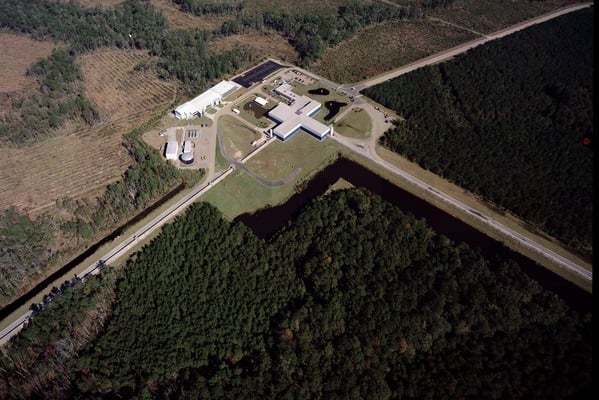
These simulations help astronomers know what to look for when scanning the skies. While we've detected gravitational waves from black hole collisions using instruments like LIGO (Laser Interferometer Gravitational-wave Observatory), we haven't yet seen the light shows that might accompany neutron star-black hole mergers. The research suggests that these cosmic crashes might produce detectable radio signals both when the neutron star cracks and when the monster shock waves form. Future telescopes, including Caltech's planned array of 2,000 radio dishes in Nevada, might be able to catch these brief cosmic screams.

The Livingston Observatory of LIGO (Credit : Caltech/MIT/LIGO)

The Livingston Observatory of LIGO (Credit : Caltech/MIT/LIGO) Scientists are now working to detect these mergers up to a minute before they happen using gravitational wave detectors. This would give astronomers precious time to point their telescopes at the right spot in the sky to catch the light show that accompanies these cosmic catastrophes.

Scientists are now working to detect these mergers up to a minute before they happen using gravitational wave detectors. This would give astronomers precious time to point their telescopes at the right spot in the sky to catch the light show that accompanies these cosmic catastrophes.

Source : 

RELATED VIDEOS


{ https://www.universetoday.com/ }

Hoe vind je dit bericht?
Geschreven door peter om 23:06 Stuur door

Meer van UFO'S of UAP'S, ASTRONOMIE, RUIMTEVAART, ARCHEOLOGIE, OUDHEIDKUNDE, SF-SNUFJES EN ANDERE ESOTERISCHE WETENSCHAPPEN - DE ALLERLAATSTE NIEUWTJES

↑ Terug naar de berichten