Ontdek de Fascinerende Wereld van UFO's en UAP's: Jouw Bron voor Onthullende Informatie!
Ben jij ook gefascineerd door het onbekende? Wil je meer weten over UFO's en UAP's, niet alleen in België, maar over de hele wereld? Dan ben je op de juiste plek!
België: Het Kloppend Hart van UFO-onderzoek
In België is BUFON (Belgisch UFO-Netwerk) dé autoriteit op het gebied van UFO-onderzoek. Voor betrouwbare en objectieve informatie over deze intrigerende fenomenen, bezoek je zeker onze Facebook-pagina en deze blog. Maar dat is nog niet alles! Ontdek ook het Belgisch UFO-meldpunt en Caelestia, twee organisaties die diepgaand onderzoek verrichten, al zijn ze soms kritisch of sceptisch.
Nederland: Een Schat aan Informatie
Voor onze Nederlandse buren is er de schitterende website www.ufowijzer.nl, beheerd door Paul Harmans. Deze site biedt een schat aan informatie en artikelen die je niet wilt missen!
Internationaal: MUFON - De Wereldwijde Autoriteit
Neem ook een kijkje bij MUFON (Mutual UFO Network Inc.), een gerenommeerde Amerikaanse UFO-vereniging met afdelingen in de VS en wereldwijd. MUFON is toegewijd aan de wetenschappelijke en analytische studie van het UFO-fenomeen, en hun maandelijkse tijdschrift, The MUFON UFO-Journal, is een must-read voor elke UFO-enthousiasteling. Bezoek hun website op www.mufon.com voor meer informatie.
Samenwerking en Toekomstvisie
Sinds 1 februari 2020 is Pieter niet alleen ex-president van BUFON, maar ook de voormalige nationale directeur van MUFON in Vlaanderen en Nederland. Dit creëert een sterke samenwerking met de Franse MUFON Reseau MUFON/EUROP, wat ons in staat stelt om nog meer waardevolle inzichten te delen.
Let op: Nepprofielen en Nieuwe Groeperingen
Pas op voor een nieuwe groepering die zich ook BUFON noemt, maar geen enkele connectie heeft met onze gevestigde organisatie. Hoewel zij de naam geregistreerd hebben, kunnen ze het rijke verleden en de expertise van onze groep niet evenaren. We wensen hen veel succes, maar we blijven de autoriteit in UFO-onderzoek!
Blijf Op De Hoogte!
Wil jij de laatste nieuwtjes over UFO's, ruimtevaart, archeologie, en meer? Volg ons dan en duik samen met ons in de fascinerende wereld van het onbekende! Sluit je aan bij de gemeenschap van nieuwsgierige geesten die net als jij verlangen naar antwoorden en avonturen in de sterren!
Heb je vragen of wil je meer weten? Aarzel dan niet om contact met ons op te nemen! Samen ontrafelen we het mysterie van de lucht en daarbuiten.
It's surely the biggest question of all – does God exist?
For centuries, the answer has been a huge subject of debate, argued over by priests, academics, and the public alike.
And it is surely intertwined with the matter of why humans are here on this planet – dating right back to the Big Bang 14 billion years ago, or even longer.
God – depicted in films and TV such as Monty Python, The Simpsons and Bruce Almighty – is of course not unique to Christianity.
But regardless of religion, dire events like wars, earthquakes and personal tragedies often make humans question the existence of an almighty deity.
No scientific evidence of God's existence has been found – although many would argue the proof we are alive is proof of God.
So is there a God, and if so, what form does God take?
Now, researchers give their definitive answer to the eternal question.
The existence of God is surely intertwined with the matter of why humans are here on this planet. This image shows God depicted in dome fresco by Johann Michael Rottmayr at Karlskirche (St. Charles's Church), Vienna, Austria
An expert says society has 'anthropomorphized' God - making God into a superman or 'the big guy in the sky'. Pictured, God depicted on The Simpsons (1992)
n popular culture, God has long been portrayed as an older bearded man in white robes, notably in Italian artist Michelangelo's 'The Creation of Adam'.
Forming part of the Sistine Chapel's ceiling in the Vatican, the 16th century work depicts the moment humanity was created through the hands of God.
Even in the Bible, God is referred to as 'he' and 'him', while a passage in the Old Testament even supports the traditional all-white depiction.
It reads: 'His clothing was as white as snow; the hair of his head was white like wool. His throne was flaming with fire, and its wheels were all ablaze. river of fire was flowing, coming out from before him.'
Despite the use of pronouns to refer to God (both 'he' and 'she'), God does not exist either as a man or as a woman, according to religious experts.
Instead, God exists in a subjective sense – as a guide and source of strength for millions of people – and not in a human form.
Dr Ilia Delio, theologian at Villanova University in Pennsylvania, says society has long attributed human characteristics to God – but that doesn't make God human.
'We have anthropomorphized God – making God into a super 'man', the big guy in the sky we can either accept or reject,' she told MailOnline.
The Creation of Adam, a fresco painting by Michelangelo at the Sistine Chapel in Vatican City, shows the moment humanity was created through the hands of God
In the 2003 film 'Bruce Almighty', God, played by Morgan Freeman, offers the eponymous character (played by Jim Carrey) divine powers
Why is god referred to as 'he' and 'she'?
God is referred to as 'he' and 'she' by Christians and priests, even though God transcends gender.
God is never described with sexual characteristics in the Bible but the use of 'he' or 'she' is considered more appropriate than the alternative - 'it'.
'But this is not God - it is a projection of our need for a god.'
God is 'not an object to behold' but a 'subject', 'the name of Being itself' and 'a symbol for unconditional life', Dr Delio added.
'Whoever argues for or against God has not understood the word God,' she told MailOnline.
'Hence, God is not an object to argue about but the ground of all that is, not beholden to the limits of the human mind.'
Alexandros Batalias, PhD candidate in AI and theological anthropology at Cambridge University, agrees that God is not an object, but 'a subject'.
'Throughout the history of Christianity, theologians and philosophers have sought to use rational arguments and evidence to demonstrate the existence of God,' he told MailOnline.
'But the reality of God is not provable because it transcends human understanding.
'There is no way to construct an argument or theory that can objectively prove the existence of God, as God is not an object to be analyzed or measured.'
In Monty Python and the Holy Grail (1975), God, voiced by Graham Chapman, is parodied as a cynical tyrant who is sick of people grovelling
Regardless of religion, dire events like wars, earthquakes and personal tragedies often make humans question the existence of an almighty deity (file photo)
What is the Big Bang?
The Big Bang is a cosmological model, a theory used to describe the beginning and the evolution of our universe.
It says that the universe was in a very hot and dense state before it started to expand 13.7 billion years ago.
This theory is based on fundamental observations.
In 1920, Edwin Hubble observed that the distance between galaxies was increasing everywhere in the universe - meaning galaxies had to be closer to each other in the past.
Whether or not God created the universe is a hotly contested matter – one which may not ever have a definitive answer.
Although, many scientists would admit there is not available evidence to disprove this theory, much like there's not any experiment that could detect God.
Scientists generally agree that the universe sprang into existence when the Big Bang occurred around 14 billion years ago.
While some Christians think the Big Bang needed a divine creator to occur, many academics have refuted this suggestion, including the late Stephen Hawking.
The legendary English physicist said the Big Bang was inevitable due to the law of gravity, contesting Sir Isaac Newton's belief that the universe must have been designed by God as it could not have been created out of chaos.
In his 2010 book 'The Grand Design’, Hawking said 'the universe can and will create itself from nothing', sparking a religious debate.
'It is not necessary to invoke God to light the blue touchpaper and set the universe going,' he said, adding: 'Spontaneous creation is the reason there is something rather than nothing.'
Meanwhile, British evolutionary biologist Richard Dawkins famously identified seven milestones that categorize the belief in the existence of a deity.
In a 2010 book, Professor Stephen Hawking (pictured, 2007) said modern physics left no room for a Creator - and that science could explain the origins of the universe
It ranges from 100 per cent sure there is a God (theist) to 100 per cent sure there is no God (atheist) – with 50 per cent sure (completely impartial) in the middle.
While some may argue the existence of a God may depend largely on personal belief and faith, Dawkins, an atheist, thinks the concept of personal god qualifies as a delusion.
In The God Delusion, he wrote: 'There is something infantile in the presumption that somebody else has a responsibility to give your life meaning and point.
'The truly adult view, by contrast, is that our life is as meaningful, as full and as wonderful as we choose to make it.'
God makes a comeback in Gen Z: Those in teens and early 20s are half as likely to call themselves atheists compared to their parents, poll shows
Those aged 18-24 - who are all Gen Z - are the most spiritual age group in the UK, with just 13 percent identifying as atheists.
Another 62 percent describe themselves as 'very' or 'fairly' spiritual, the research by OnePoll found.
And when asked what the biggest factors in declining Christianity rates in the UK, Gen Z cited the 'inability to grapple with scandals involving abuse' as well as generational change.
RELATED VIDEOS
Is There Proof God Exists? Yes
The Big Question - Is there a God? BBC Documentary
I Asked AI for Ten Proofs of God's Existence, and Got Them
1091 PicturesAn artist’s rendition of the alien life form allegedly spotted in Varginha, Brazil.
De Varginha UFO Encounter: Feit of Fictie?
Inleiding
De Varginha UFO-ontmoeting, die zich in januari 1996 in de kleine stad Varginha in Brazilië voordeed, heeft wereldwijd veel aandacht getrokken. Het verhaal omvat waarnemingen van vreemde wezens, onverklaarbare verschijnselen en een vermeende cover-up door de autoriteiten. Dit artikel biedt een wetenschappelijke analyse van de gebeurtenissen, de betrokken getuigenissen en de gevolgen van deze zaak. We zullen de feiten scheiden van fictie en proberen een objectief beeld te schetsen van deze intrigerende gebeurtenis.
1. Achtergrond en context
De Varginha UFO-ontmoeting moet worden gezien tegen de achtergrond van de toenemende belangstelling voor UFO's en buitenaards leven in de jaren negentig. De Verenigde Staten en andere landen hadden al verschillende meldingen van UFO-waarnemingen geregistreerd, wat leidde tot een breed scala aan theorieën en speculaties over de mogelijkheid van buitenaards leven. In deze context kwam de Varginha-zaak als een schokkende gebeurtenis naar voren, met meldingen van meerdere getuigen die vreemde wezens en UFO's claimden te hebben gezien.
2. De gebeurtenissen van januari 1996
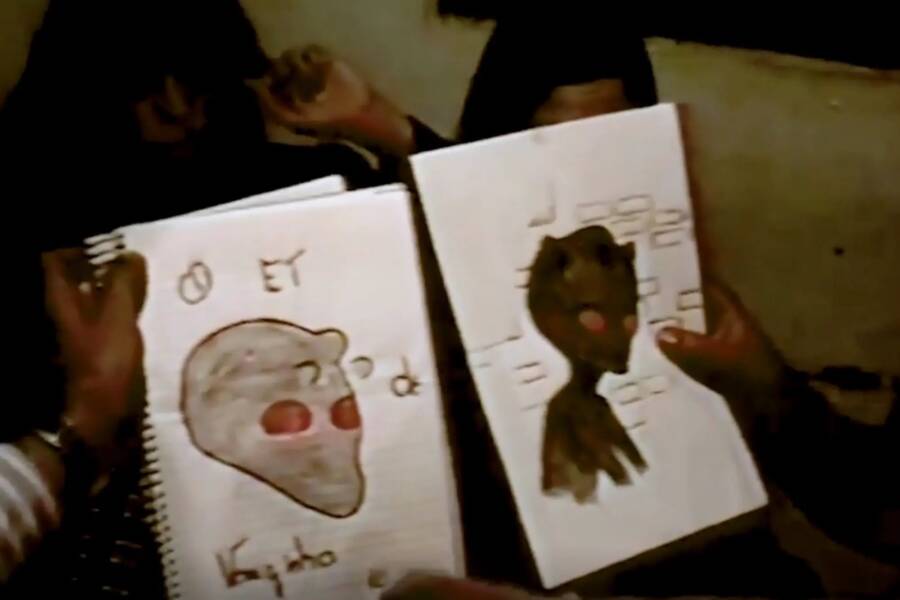
De eerste meldingen van een UFO in Varginha kwamen op 20 januari 1996. Meerdere getuigen, waaronder drie jonge vrouwen, beweerden een vreemd wezen te hebben gezien in een nabijgelegen gebied. De beschrijvingen van het wezen varieerden, maar veel getuigen gaven aan dat het een humanoïde vorm had, met een grote kop, grote ogen en een slank lichaam. Dit leidde tot speculatie dat het een buitenaards wezen zou kunnen zijn.
3. Getuigenissen en waarnemingen
De getuigenissen van de vrouwen, die bekend kwamen te staan als de "Varginha-drie", zijn cruciaal voor het begrijpen van de zaak. Hun beschrijvingen van het wezen en de omstandigheden waarin ze het zagen, zijn gedetailleerd en overtuigend. Wetenschappers hebben echter opgemerkt dat getuigenissen vaak beïnvloed kunnen worden door factoren zoals stress, groepsdruk en media-invloed. Het is essentieel om deze factoren in overweging te nemen bij het evalueren van de geloofwaardigheid van de getuigen.
Sketches drawn of the Varginha alien.
Daarnaast zijn er verschillende andere getuigen die ook vreemde verschijnselen in de lucht hebben gemeld, waaronder een 'vliegend voorwerp' dat in de buurt van Varginha zou zijn gezien. De media hebben deze meldingen verder versterkt en bijgedragen aan de groeiende hysterie rond de zaak.
4. Wetenschappelijke analyse van de waarnemingen
De Varginha UFO-ontmoeting, die plaatsvond in januari 1996 in de Braziliaanse stad Varginha, is een van de meest intrigerende en controversiële UFO-incidenten in de moderne geschiedenis. Voordat we de specifieke waarnemingen van de Varginha-ontmoeting analyseren, is het belangrijk om de context van UFO-waarnemingen in het algemeen te begrijpen.
In de jaren '90 was er een groeiende belangstelling voor UFO's, mede dankzij de opkomst van massamedia en het internet. Veel mensen waren gefascineerd door het idee van buitenaardse levensvormen en mogelijke bezoeken aan de aarde. In deze periode waren er tal van meldingen van UFO-waarnemingen over de hele wereld. De Varginha-incidenten vallen op door de aantal getuigen en de aard van de meldingen.
De eerste waarnemingen in Varginha begonnen op 20 januari 1996, toen verschillende bewoners van de stad beweerden een vreemd object in de lucht te hebben gezien. Dit object werd vaak beschreven als een soort vliegende schotel, die op een lage hoogte en met hoge snelheid over de stad vloog. Dit type waarneming is typerend voor UFO-incidenten, waarbij getuigen vaak moeite hebben om het object nauwkeurig te beschrijven.
Een belangrijke component van het Varginha-incident was de melding van een vreemd wezen dat zou zijn gezien door meerdere getuigen. De beschrijvingen van dit wezen varieerden, maar de meeste getuigen meldden een klein, humanoïde figuur met een grote kop en grote ogen. Deze beschrijvingen vertonen overeenkomsten met de zogenaamde "greys", een type buitenaards wezen dat in populaire cultuur vaak wordt afgebeeld. De waarnemingen van dit wezen vonden plaats na de vermeende crash van het UFO-object, wat de speculaties over de aanwezigheid van buitenaardse wezens verder voedde.
De analyse van deze waarnemingen moet rekening houden met verschillende factoren. Ten eerste is er het psychologische aspect van getuigenverklaringen. Mensen kunnen onder invloed van stress, angst of groepsdruk onjuiste of vervormde waarnemingen doen. In het geval van Varginha waren veel getuigen locals die deel uitmaakten van een hechte gemeenschap, wat de kans op groepspsychologie kan vergroten.
Daarnaast is er de rol van de media. De berichtgeving over het Varginha-incident was intens, met verschillende nieuwsorganisaties die het verhaal oppikten. Dit leidde tot een soort 'mediahype', waardoor getuigen zich mogelijk meer onder druk gezet voelden om hun verhaal te delen of hun ervaringen te verrijken.
Een ander aspect dat in overweging moet worden genomen, is de mogelijkheid van misidentificatie. Veel UFO-waarnemingen kunnen verklaard worden door natuurlijke fenomenen, zoals meteorieten, drones of zelfs militaire oefeningen. In het geval van Varginha zijn er geen concrete bewijzen gepresenteerd die de claims van de getuigen ondersteunen, wat leidt tot speculatie en twijfel.
Tot slot is het belangrijk om te erkennen dat ondanks de talrijke getuigenissen, het ontbreken van fysiek bewijs en de inconsistentie in de verhalen de geloofwaardigheid van de waarnemingen in twijfel trekken. De combinatie van psychologische factoren, media-invloed en de mogelijkheid van misidentificatie maakt de Varginha UFO-ontmoeting tot een fascinerend onderwerp van studie, maar biedt weinig harde feiten die het bestaan van buitenaardse wezens bevestigen. Het blijft een mysterie, dat zowel de verbeelding prikkelt als de sceptici voedt.
Een wetenschappelijke analyse van de Varginha-ontmoeting vereist een kritische benadering van de beschikbare gegevens. Het is belangrijk om te kijken naar de fysieke en psychologische factoren die van invloed kunnen zijn geweest op de getuigen. Studies naar getuigenissen over UFO-waarnemingen hebben aangetoond dat mensen vaak neigen naar overdrijving of vervorming van hun ervaringen, vooral in stressvolle situaties. Het is ook mogelijk dat de getuigen beïnvloed zijn door de media, waardoor ze hun waarnemingen onbewust hebben aangepast aan wat ze eerder hadden gehoord of gezien.
Bovendien zijn er geen fysieke bewijzen gevonden die de claims van de getuigen ondersteunen, zoals sporen, vegetatieveranderingen of andere materiële getuigenissen. Dit roept vragen op over de echtheid van de waarnemingen en benadrukt de noodzaak van een gedegen bewijsvoering om dergelijke claims te ondersteunen.
Varginha UFO Crash_ Alien Contact, Government Denial and CoveruP
5. De rol van de autoriteiten en de media
Een ander belangrijk aspect van de Varginha-zaak is de rol van de autoriteiten en de media. Er zijn beweringen gedaan dat de Braziliaanse regering betrokken is bij een cover-up van de gebeurtenissen. Sommige getuigen meldden dat ze door militaire personen werden ondervraagd en dat er pogingen werden gedaan om informatie te verbergen.
De rol van de media kan ook niet worden onderschat. Sensationele verslaggeving kan bijdragen aan de verspreiding van ongefundeerde claims en de publieke perceptie van de gebeurtenissen beïnvloeden. Het is belangrijk om vast te stellen hoe de media de zaak hebben gepresenteerd en in hoeverre dit heeft bijgedragen aan de hysterie rond de Varginha-ontmoeting.
Newspaper reports about the alleged Varginha alien encounters
6. Alternatieve verklaringen
Een wetenschappelijke analyse van de Varginha-ontmoeting moet ook alternatieve verklaringen in overweging nemen. Veel UFO-waarnemingen kunnen worden verklaard als natuurlijke fenomenen, zoals meteorieten, ballonnen of vliegtuigen. Het is ook mogelijk dat de getuigen het wezen dat ze zagen verkeerd hebben geïnterpreteerd, bijvoorbeeld als een zeldzaam dier of een mens met een aandoening die zijn uiterlijk beïnvloedt.
De Varginha UFO-encounter, die plaatsvond in januari 1996 in de Braziliaanse stad Varginha, is een van de meest besproken en controversiële UFO-incidenten in de geschiedenis. Het verhaal omvat waarnemingen van onbekende objecten, vreemde wezens en zelfs militaire betrokkenheid. Terwijl veel mensen geloven in de mogelijkheid van buitenaardse levensvormen, zijn er verschillende alternatieve verklaringen voor deze gebeurtenis.
Een van de meest voor de hand liggende alternatieve verklaringen is dat de waarnemingen te wijten zijn aan misinterpretaties van natuurlijke fenomenen. De opnames van een onbekend vliegend object zouden bijvoorbeeld kunnen worden verklaard door de aanwezigheid van militaire vliegtuigen of andere luchtvaartactiviteiten in de regio. Ook kunnen de beschrijvingen van de vreemde wezens het resultaat zijn van een combinatie van angst, spanning en het spelen van de verbeelding in een situatie die al veel aandacht trok.
Daarnaast zijn er verklaringen die wijzen op psychologische factoren. In een tijd waarin UFO’s en buitenaardse levensvormen veel in de media werden besproken, kan de sociale druk om dergelijke ervaringen te delen invloed hebben gehad op de getuigen. Dit fenomeen, bekend als "massahysterie", kan leiden tot een collectieve overtuiging dat men iets heeft gezien dat in werkelijkheid niet heeft plaatsgevonden. Mensen kunnen ook onbewust hun ervaringen beïnvloeden door verhalen van anderen, wat leidt tot een vervorming van de waarheid.
Een andere alternatieve verklaring betreft de mogelijkheid van een experimentele militaire operatie. Sommige onderzoekers hebben gesuggereerd dat de waarnemingen van de wezens mogelijk verband houden met geheime militaire projecten, zoals genetische experimenten of de ontwikkeling van nieuwe technologieën. Dit zou de aanwezigheid van militaire voertuigen en personeel in de regio kunnen verklaren, evenals de geheimhouding die vaak met dergelijke operaties gepaard gaat. In dit scenario zouden de ‘buitenaardse’ wezens in werkelijkheid mensen kunnen zijn die betrokken zijn bij deze experimenten of zelfs slachtoffers van een ongeluk.
Verder zijn er ook verklaringen die wijzen op de invloed van folklore en lokale mythologie. Varginha en de omliggende gebieden hebben een rijke geschiedenis van verhalen over vreemde wezens en het bovennatuurlijke. Dit kan hebben bijgedragen aan de interpretatie van de waarnemingen als UFO-incidenten. De verhalen van de ‘Varginha-wezens’ kunnen in deze context worden gezien als een moderne herinterpretatie van oude legendes, waarbij culturele invloeden de perceptie van de werkelijkheid vormgeven.
Tot slot is er de mogelijkheid van hoaxes of opzettelijke misleiding. In de nasleep van het incident zijn er verschillende meldingen geweest van mensen die claimden betrokken te zijn bij het verhaal, wat zou kunnen wijzen op een poging om aandacht of publiciteit te genereren. Het creëren van een verhaal rondom UFO’s kan financieel of sociaal voordelig zijn voor sommige individuen of groepen.
In conclusie, hoewel de Varginha UFO-encounter een fascinerend onderwerp blijft voor UFO-enthousiastelingen en onderzoekers, zijn er tal van alternatieve verklaringen die kunnen helpen bij het begrijpen van de gebeurtenissen. Van misinterpretaties tot psychologische effecten en militaire experimenten, de werkelijkheid achter deze mysterieuze waarnemingen kan veel complexer zijn dan het idee van buitenaardse wezens die onze aarde bezoeken.
7. Conclusies en implicaties
De Varginha UFO-ontmoeting blijft een fascinerend onderwerp voor zowel UFO-enthousiastelingen als skeptici. Hoewel de getuigenissen overtuigend zijn, zijn er onvoldoende bewijs en wetenschappelijke ondersteuning om de claims van een echte ontmoeting met buitenaardse wezens te bevestigen. Het is cruciaal om kritisch te blijven en alle beschikbare gegevens zorgvuldig te analyseren.
De zaak benadrukt ook de bredere impact van UFO-waarnemingen op de samenleving en hoe deze gebeurtenissen kunnen bijdragen aan de vorming van culturele mythes en legendes. De Varginha-ontmoeting is een voorbeeld van hoe menselijke ervaringen en de behoefte aan verklaringen kunnen leiden tot de opkomst van complottheorieën en de verspreiding van desinformatie.
Eindconclusie
In het licht van de beschikbare gegevens en een wetenschappelijke analyse van de Varginha UFO-ontmoeting, lijkt het erop dat de zaak meer te maken heeft met menselijke psychologie, media-invloed en culturele context dan met echte ontmoetingen met buitenaardse wezens. Terwijl de Varginha-ontmoeting blijft intrigeren, is het essentieel om een kritische en wetenschappelijke benadering te hanteren bij het onderzoeken van dergelijke claims.
Bronnen
[UFO Research journal articles]
[Psychological studies on eyewitness testimony]
[Media influence on public perception of UFOs]
[Alternative explanations for UFO sightings]
RELATED VIDEOS
"Brazil's Roswell" Still a Mystery More Than 25 Years Later
The Alien Files: UFOs Under Investigation (Full Episode S1|E9)
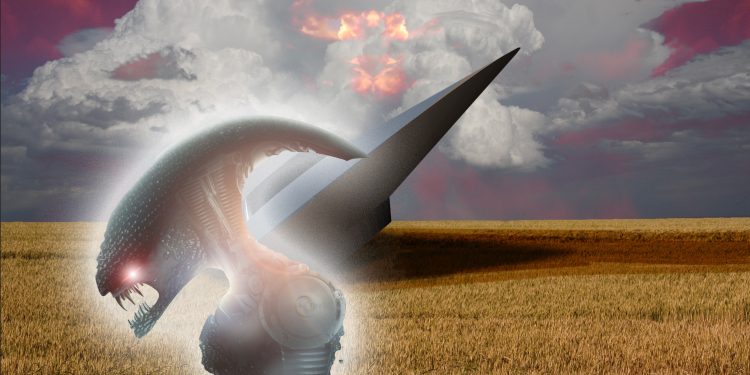
An illustration showing a crashed saucer and an alien being, comparing it to the Varginha UFO incident.
Image credit: YAYIMAGES.
The Varginha UFO encounter is a well-known and controversial event that occurred in Brazil in January 1996. The incident involved multiple eyewitness accounts of strange creatures in Varginha, as well as reports of a crashed UFO and the recovery of alien bodies by the Brazilian military.
Despite official denials and attempts to downplay the incident, the Varginha UFO encounter has captured the imagination of UFO enthusiasts and skeptics alike. In this article, we will explore the details of the case, the evidence presented, and the ongoing debate surrounding this enigmatic event.
The Varginha UFO Incident
The Varginha UFO encounter began on the morning of January 20, 1996, when three young women claimed to have seen a strange creature in a field near their school. According to their description, the creature had large red eyes, a small nose, and a small mouth and was about 1.6 meters tall. The girls also reported a strong ammonia-like odor. The woman said to authorities they had “seen the devil.”
Over the next few days, more sightings of the creature were reported in the area, and rumors began to circulate that the Brazilian military was involved in the investigation. On January 22, a farmer claimed to have found a crashed UFO on his property and reported the incident to the military. It was later alleged that the military had recovered alien bodies from the crash site.
The Varginha UFO encounter is one of the most controversial cases of alleged extraterrestrial contact, and the evidence presented has been a subject of debate and skepticism. While many eyewitnesses have come forward with their accounts, there is a lack of physical evidence to support the claims.
The Brazilian military has denied any involvement in the incident, and official reports suggest that the sightings were a case of misidentification of local wildlife. Despite this, some ufologists argue that there is a cover-up and that the government is concealing the truth about the Varginha encounter.
Interestingly, James Fox, director of the recently released documentary “Moment of Contact,” made a stunning claim about the Varginha UFO incident.” In a podcast interview, Fox revealed that one of the recovered creatures from the 1996 incident reportedly made telepathic contact with two doctors who treated its injuries at the Humanitas hospital in Brazil. According to Dr. Roger K. Leir’s book “UFO Crash in Brazil: A Genuine UFO Crash with Surviving ETs,” the doctor’s testimony was transcribed from various witnesses obtained by the author. The alleged telepathic communication from the extraterrestrial reportedly expressed regret for humanity.
The Varginha UFO encounter remains a highly debated and divisive topic among UFO enthusiasts and skeptics. While some argue that the eyewitness accounts and circumstantial evidence suggest an extraterrestrial presence, others are skeptical and attribute the sightings to hoaxes, misidentification, or mass hysteria.
In recent years, the incident has been the subject of documentaries, books, and even a monument in the city of Varginha. The case continues to intrigue and fascinate people around the world, with many questions still left unanswered.
Conclusion
The Varginha UFO encounter is a fascinating and perplexing case that continues to captivate the imaginations of UFO enthusiasts and skeptics alike. While the evidence presented is inconclusive, the incident highlights the enduring fascination with the possibility of extraterrestrial life and the desire for answers to the unknown. Despite the ongoing debate and controversy, the Varginha encounter remains an important part of UFO lore and a reminder of the mystery and wonder of the unknown.
The idea of extraterrestrials meddling with humanity’s most destructive weapons is the stuff of science fiction—or is it? Retired U.S. Air Force Captain Robert Salas has reignited this intriguing conversation. Speaking during a congressional hearing, Salas recounted extraordinary experiences involving unidentified flying objects (UFOs) and their apparent interactions with nuclear missile systems. His bold assertions challenge conventional perspectives on both UFOs and global security.
UFOs at Nuclear Sites?
Salas, who served as a captain in the U.S. Air Force, captured attention during a public hearing when he revealed details of UFO sightings at nuclear facilities worldwide. Speaking to Congresswoman Nancy Mace, Salas emphasized that these events appear to carry a stark message: humanity’s nuclear weapons are under extraterrestrial scrutiny.
Referencing an infamous incident at Montana’s Malmstrom Air Force Base in 1967, Salas described how a glowing red UFO reportedly deactivated ten nuclear missiles. The event, which occurred on the night of March 24, left his team baffled. Salas recalled, “No equipment was fried. Nothing was damaged. The missiles simply went offline.” The shutdown was attributed to a mysterious electrical pulse disrupting the logic coupler, a critical component of the missile guidance system.
Within 24 hours, all systems were restored, but the implications of the incident lingered. Salas asserted that the UFO pilots demonstrated an alarming familiarity with advanced missile technology—an unsettling thought during the height of the Cold War.
When asked about the intent behind these encounters, Salas offered a provocative interpretation. He believes the extraterrestrial visitors are a pacifist species, intent on cautioning humanity about the dangers of nuclear weapons. Using candid language, Salas speculated, “They’re telling us, ‘WTF, nuclear weapons.’”
While he later apologized for his blunt phrasing, Salas’s message struck a chord. His testimony aligns with claims made by other experts who argue that UFOs have shown persistent interest in nuclear sites, often exhibiting behaviors that suggest advanced intelligence and deliberate intent.
Salas’s perspective is reinforced by another reported encounter just days before the Malmstrom incident. His crew commander allegedly witnessed a similar event at a different nuclear facility, further bolstering claims of a pattern in UFO behavior around missile sites.
A Hidden History
For years, Salas was bound by a non-disclosure agreement, preventing him from discussing these classified incidents publicly. However, with increasing interest in UFO phenomena—now officially referred to as unidentified aerial phenomena (UAP)—Salas has become a prominent voice in the ongoing debate.
His testimony raises unsettling questions: Could extraterrestrial entities be monitoring humanity’s most dangerous technologies? If so, what does this mean for global security and our understanding of our place in the universe?
Salas’s claims, while controversial, add weight to the broader discussion about UAPs and their potential implications. As the search for answers continues, one thing is certain: the question of whether we are alone in the universe is more complex—and perhaps more urgent—than ever.
RELATED VIDEOS
UFO Sightings at Nuclear Bases (Full Episode) | UFOs: Investigating the Unknown
UFOs DISABLED U.S. Nuclear Missiles At HEIGHT Of Cold War, According To Former USAF Officials
Mysterious Missile Malfunction | UFOs: Investigating The Unknown | National Geographic UK
Yes, humans have achieved ‘teleportation’ with a quantum supercomputer, but it’s not your Sci-Fi teleportation. Scientists want to teleport an entire human—can they do it? Let’s find out with this new Earth-Shattering discovery!
Scientists at Oxford found a way to connect two separate quantum computers so they can work together as one. They did this using something called quantum teleportation.
But this isn’t the kind of teleportation you see in sci-fi movies—nothing physically moves. Instead, information is transferred instantly from one place to another without actually traveling through space.
Quantum computers are super powerful, but they need millions of qubits to solve big problems. The problem is, cramming millions of qubits into one machine is nearly impossible. Instead of making one giant quantum computer, the researchers figured out how to link multiple smaller quantum computers together—like connecting tiny puzzle pieces to make a bigger, more powerful system.
Scientists have teleported quantum information before, but this is the first time they have teleported logical gates—the basic building blocks of a computer program. This means the linked quantum computers can now work together to run complex programs, just like a single, bigger quantum machine.
In short: They found a way to link quantum computers together using teleportation, making them work as one big system. This could help quantum computers become more powerful and practical in the real world.
Researchers at the University of Oxford connected two separate quantum processors using a special “photonic network interface,” making them work together as one fully connected quantum computer.
This breakthrough could help solve complex problems that regular computers cannot handle. To be truly useful, quantum computers need to process millions of qubits (the basic unit of quantum information). However, fitting so many processors into one machine would make it extremely large.
The new approach links smaller quantum devices together, allowing them to share the work. In theory, this method can connect as many processors as needed
While quantum teleportation has been done before, this study is the first to teleport “logical gates,” which are the basic building blocks of quantum algorithms, across a network. This could lead to a future “quantum internet,” where distant quantum processors form a super-secure network for communication and computing.
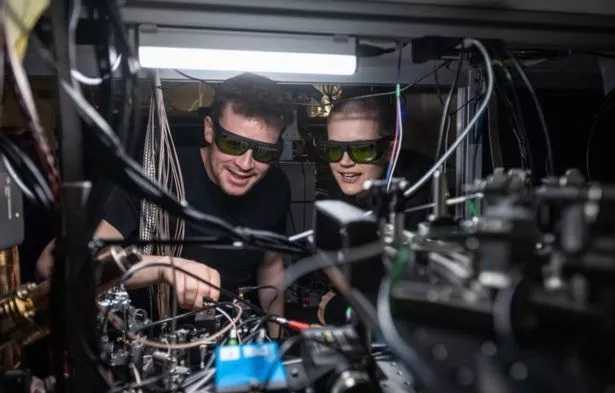
Dougal Main and Beth Nichol working on the distributed quantum computer (John Cairns)
Lead researcher Dougal Main explained that, unlike previous teleportation experiments, their method allows separate quantum systems to interact. By carefully designing these interactions, they created logical quantum gates between qubits in different quantum computers, effectively linking them together as one system.
To test their method, the team ran Grover’s search algorithm, which can find items in large, unorganized datasets much faster than a regular computer. The success of this experiment shows how linking multiple quantum devices can lead to powerful, scalable quantum computers—potentially solving complex problems in hours that would take today’s supercomputers years to complete. (Study)
This is not your Sci-Fi Teleportation but it’s Magical
Scientists first proved that teleportation was possible in 1993. A team from IBM wrote a paper explaining how they could teleport a quantum state (not a physical object). Five years later, researchers from California and the U.K. successfully teleported a photon—a tiny particle of light—through a special cable.
Teleportation, like flying cars and time travel, sounds like science fiction, but scientists believe that improvements in quantum computing could make it real.
So far, most teleportation experiments have used photons. But in 2020, scientists found that teleporting electrons might also be possible. Electrons could be better for teleportation because they can hold their quantum states longe
Quantum computing is based on the weird science of quantum entanglement, which has nothing to do with our everyday experience of Newtonian mechanics, like masses, forces, and their related effects.
Instead of physically sending qubits from one computer to another, they used quantum teleportation to transfer quantum information instantly. This is possible due to a phenomenon called quantum entanglement, in which two particles (qubits) are mysteriously linked, no matter how far apart they are.
Scientists entangle two qubits (tiny quantum particles). Entangled qubits are like a magical pair—if you change one, the other instantly changes, no matter how far apart they are. This means they stay connected, even if one is on Earth and the other is on the Moon.
They used light (photons) to transfer quantum information between computers. This act acts like a bridge, allowing separate quantum processors to “talk” to each other.
The team didn’t just teleport individual qubits; they teleported logical gates (the basic operations of a quantum computer). This allowed the separate quantum computers to process data together as if they were part of the same system.
Quantum entanglement: Where two particles, such as a pair of photons, remain correlated even when separated by vast distances. This allows them to share information without having to travel physically.
Quantum teleportation: The transfer of quantum information over long distances almost instantly, using entanglement.
Scientists Want to Teleport a Human—Could This Breakthrough Make It Possible?
Moving an entire human from one place to another—like in sci-fi movies—is not possible yet. The human body has about 10^27 atoms, and each atom is made of even smaller particles like electrons, protons, and neutrons. These tiny parts also have their own even smaller parts, like quarks and muons, each with a unique quantum state.
To teleport a person, we’d have to calculate an unimaginably huge number of quantum states and rebuild them perfectly in a new location.
In the past, sci-fi writers thought teleportation meant breaking matter apart, sending it somewhere, and putting it back together. But quantum entanglement shows that teleportation isn’t about moving physical matter—it’s about transferring information that describes a quantum state, according to physicist Paul Davies.
If we can overcome the challenge of processing power—something that better quantum computers might help with—could teleporting a human be as easy as scanning their body and sending the data like an email attachment?
However, a physics rule (the uncertainty principle) says we can’t know both the speed and position of a particle at the same time. This means no matter how carefully we scan every particle in your body, the copy will never be 100% perfect.
What could these small errors mean? Maybe your teleported self looks fine but suddenly enjoys broccoli, even though you used to hate it. Or worse, the errors could be serious, causing big problems when your body is reassembled.
Even if we succeed in addressing all of these challenges, we must consider a philosophical question: do the atoms in your body and all their quantum states constitute the being you consider to be, well, you?
Experimental and theoretical physicist John Clauser—who, along with his colleagues won the 2022 Nobel Prize in physics for their work on quantum entanglement—has a take on this question that might give you pause.
“Imagine you’re told that if you step into this box, every atom in your body will be disassembled, effectively leaving your body totally destroyed, thereby killing you,” Clauser says. “Furthermore, you’re also told that afterwards, a replicant of you starts walking around . . . taking over your life as you once knew it . . . would you step into that box? I certainly wouldn’t!”
While the direct teleportation of matter remains speculative, some theoretical frameworks suggest alternative approaches: If the human mind can be fully understood as a quantum system, it might one day be possible to “upload” and “download” consciousness.
Emerging studies in quantum biology suggest that quantum phenomena may play a role in human consciousness.
Dr. Hameroff’s research focuses on the role of microtubules—protein structures within cells—in consciousness. He proposed, alongside Sir Roger Penrose, the Orch OR (Orchestrated Objective Reduction) model of consciousness in the 1990s.
This theory suggests that consciousness arises from quantum computing processes within the brain’s microtubules, with influences from the fundamental structure of spacetime at the quantum level. According to the model, this could explain phenomena like perception, self-awareness, and potentially even spirituality and the afterlife, connecting consciousness to the basic fabric of the universe.
Dr. Stuart Hameroff has been interested in the mystery of consciousness for almost his entire life. Instead of studying brain science or psychology, Hameroff became interested in anesthetics—drugs that cause loss of consciousness—because of their connection to consciousness. (Click here to read the full article)
“I thought about neurology, psychology, and neurosurgery, but none of those seemed to address the problem of consciousness,” says Hameroff, a retired anesthesiology professor from the University of Arizona. He remembers when he first came to the university and met the chair of the anesthesia department. The chair said, “If you want to understand consciousness, figure out how anesthesia works because we don’t know how it works.”
Dr. Hameroff suggests that at its core, consciousness can be understood as “awareness,” which he equates to having a “phenomenal experience”—the subjective, first-person experience of the world around us or our inner thoughts and feelings.
In recent years, research showing quantum effects in biological systems, including microtubules, has given some critics reason to reconsider. Dr. Hameroff believes the focus on AI and computation has shifted attention away from the true nature of consciousness. Despite the criticism, he continues to defend the theory, even exploring the possibility that consciousness could predate life itself, a view he admits leans into the spiritual realm.
Quantum Entanglement in Neurons May Actually Explain Consciousness
In their newly published paper, Shanghai University physicists Zefei Liu and Yong-Cong Chen and biomedical engineer Ping Ao from Sichuan University in China explain how entangled photons emitted by carbon-hydrogen bonds in nerve cell insulation could synchronize activity within the brain. (Source)
Their findings come just months after another quantum phenomenon known as superradiance was identified in cellular frameworks, drawing attention to a highly speculative theory on consciousness called the Penrose-Hameroff ‘orchestrated-objective reduction’ model.
Scientists have had a whole other reason to staple their skeptic hat on tight when it comes to quantum theories of consciousness – the sloppy tides of biology have long been considered too chaotic, too noisy, and too ‘big’ for quantum mechanics to emerge in any significant way.
Proposed by the highly respected physicist Roger Penrose and the American anesthesiologist Stuart Hameroff, the model suggests networks of cytoskeleton tubules that lend structure to cells – in this case, our neurons – act as a kind of quantum computer that somehow shapes our thinking.
The movement of these connected photons through the brain’s biochemistry might help link processes that are important for the brain’s ability to synchronize.
The word “might” is doing a lot of work here. While there are many scientific discoveries that support parts of this idea, there’s currently only evidence that entangled photons affect biological processes in photosynthesis.
That doesn’t mean there aren’t examples of quantum biology in animals. There is growing evidence that the electron spins in certain proteins, called cryptochromes, can be affected by magnetic fields, which may help explain how some animals navigate long distances.
We’re still far from proving that anything beyond classical chemistry happens in our brains, or that our brain functions are controlled by a quantum force. But it may be time to reconsider whether quantum phenomena have any impact on at least some of the brain’s basic functions.
RELATED VIDEOS
Quantum Teleportation FINALLY Achieved After 27 Years
Quantum Teleportation Made Possible! Scientists Achieved Near-Perfect Results
Quantum Teleportation is real!! Here's how it works | Documentary Unwind
The Man Who Attracts UFOs: Chris Bledsoe’s Astonishing Encounters
Throughout human history, reports of unidentified flying objects (UFOs) and mysterious orbs of light have fascinated people around the world. Few individuals, however, have experienced such persistent and profound encounters as Chris Bledsoe. His story, which has drawn attention from government agencies, intelligence officials, and the UFO research community, goes beyond conventional alien sightings. It delves into deep spiritual themes, messages of enlightenment, and unexplained healing phenomena.
The Life-Changing Encounter
Chris Bledsoe’s journey into the unknown began on January 8, 2007. A successful builder from North Carolina, Bledsoe was struggling with severe financial losses, a debilitating illness (Crohn’s disease), and overwhelming stress. In an attempt to clear his mind, he joined a few friends on a fishing trip near the Cape Fear River. As the sun set, he wandered away from the group and experienced an event that would change his life forever.
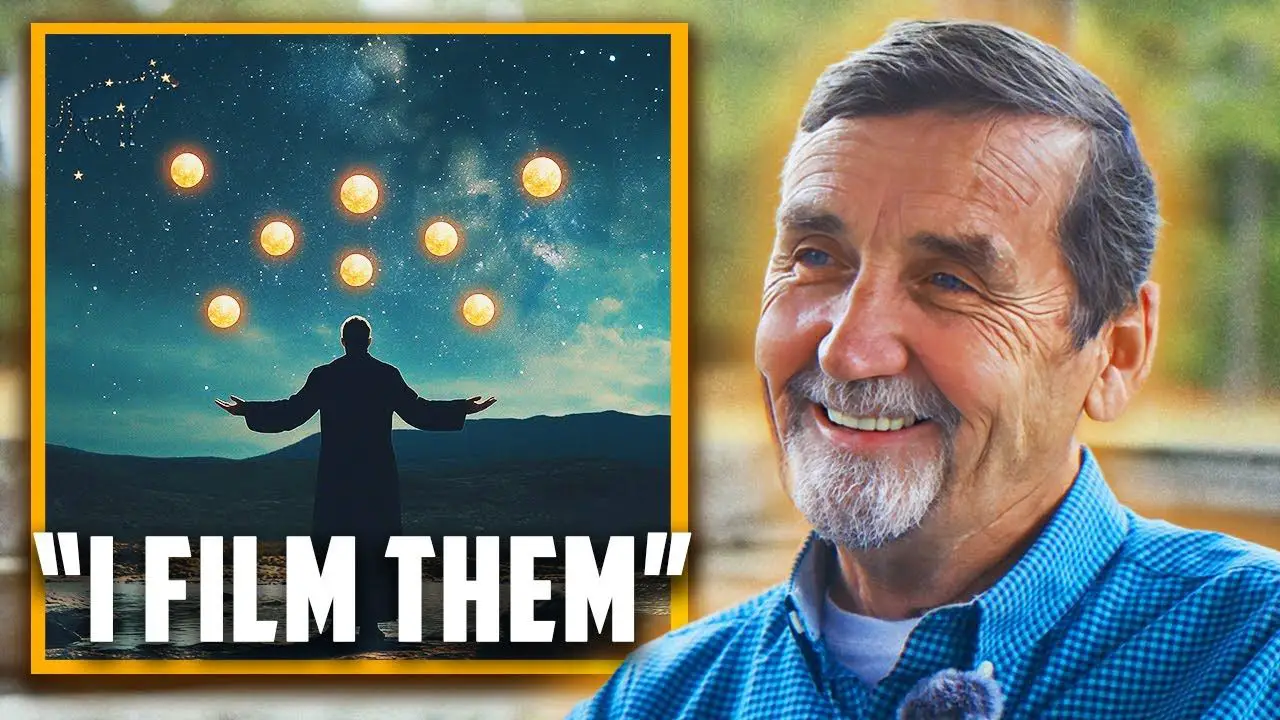
Bledsoe witnessed what he first assumed to be the setting sun, only to realize it was an enormous, glowing orb hovering just above the trees. Soon, another similar orb appeared beside it. Overcome with fear, he crouched behind a hill, hoping to stay hidden. However, a third orb suddenly appeared directly above him, marking the beginning of a mysterious four-hour period of lost time.
Missing Time and the Aftermath
When Bledsoe finally returned to his friends, they were alarmed. They claimed he had been missing for hours, not the brief twenty minutes he believed had passed. Even more disturbing, his teenage son, Chris Jr., had also gone missing and later described an encounter with strange, small beings with large, red eyes who paralyzed him with their gaze.
That night, strange lights filled the sky, witnessed by Bledsoe, his friends, and his son. Their panic escalated when three luminous orbs descended over the river, moving in ways that defied conventional explanations. Fearful for their safety, the group hastily fled the area, only to encounter a massive, glowing craft blocking their path. The object hovered silently, emitted an intense light, and then disappeared into the sky at an incredible speed.
Government and Scientific Interest
Bledsoe’s experience did not remain a local curiosity. His encounters attracted the attention of multiple government agencies, including the CIA, NASA, the Department of Defense (DOD), and the National Reconnaissance Office (NRO). Notably, senior intelligence officers and scientists visited him to study the phenomenon firsthand.
One of the earliest and most persistent researchers was Hal Puthoff, a physicist with deep ties to intelligence agencies and UFO studies. Puthoff originally sought to debunk Bledsoe’s claims but became convinced of their authenticity after spending years observing Bledsoe’s experiences. Similarly, Jim Semivan, a retired senior CIA officer, publicly stated his belief in Bledsoe’s encounters, reinforcing the credibility of his testimony.
The Spiritual Component: The Lady and Prophetic Messages
Perhaps the most intriguing aspect of Bledsoe’s encounters is their deeply spiritual nature. In 2012, five years after his initial experience, he had a vision of a radiant female entity he refers to as “The Lady.” She was described as a glowing, divine figure who imparted messages about love, humanity’s future, and the balance between good and evil forces.
Bledsoe claims The Lady warned of a deceptive narrative involving an alleged “evil alien threat,” which he believes is being used to manipulate public perception. He also received information about a significant celestial event set to occur in 2026, which he shared with Pentagon officials years before they publicly acknowledged interest in the year’s potential significance.
Miraculous Healings and Unexplained Phenomena
One of the most astonishing elements of Bledsoe’s experiences is his apparent healing from Crohn’s disease. He had suffered from the illness for years, yet after his 2007 encounter, he never experienced symptoms again and stopped taking medication entirely. Additionally, there have been several accounts of inexplicable healings linked to his presence, including that of a young boy with a rare genetic disorder who, after meeting Bledsoe, went on to recover and live a normal life.
The Role of the Vatican and Global Interest
Bledsoe’s case has drawn interest from religious institutions, including the Vatican. High-ranking members of the Church, along with government scientists, have studied his claims, leading to speculation about a possible link between UFO phenomena and theological events. Some researchers have drawn parallels between Bledsoe’s experiences and historical religious apparitions, such as the famous 1917 Fatima event in Portugal, where thousands witnessed strange lights and an apparition of a divine female figure.
A New Perspective on UFO Phenomena
Unlike many UFO narratives that focus on alien abductions or military secrecy, Bledsoe’s experiences suggest a more spiritual interpretation of the phenomenon. He describes the glowing orbs as angelic or divine beings rather than extraterrestrial spacecraft. His story aligns with an emerging perspective that UFO encounters may not be purely physical events but rather manifestations of higher-dimensional consciousness or interwoven with human spirituality.
The Man Who Attracts UFOs - Chris Bledsoe - Full Documentary
Final Thoughts
Chris Bledsoe’s encounters challenge conventional narratives about UFOs and the unknown. His story is not just about lights in the sky but about a transformation that blends the mystical with the scientific. With high-level government and religious organizations taking an interest in his experiences, his case remains one of the most compelling in modern UFO history. Whether one sees it as an extraordinary spiritual journey or an enigma yet to be unraveled, Bledsoe’s story undeniably expands the conversation on the true nature of these unexplained phenomena.
As humanity continues to explore the mysteries of the universe, Bledsoe’s testimony serves as a reminder that the answers we seek may not only lie among the stars but also within ourselves.
The Black Knight Satellite is a phenomenon that has captivated the imagination of conspiracy theorists, astronomers, and space enthusiasts for decades. Alleged to be an extraterrestrial satellite orbiting Earth, the Black Knight has become a symbol of the unknown and a testament to humanity's enduring curiosity about the cosmos. This analysis aims to explore the origins, theories, cultural impact, and scientific scrutiny surrounding the Black Knight Satellite, providing a comprehensive understanding of its place in both popular culture and space exploration discourse.
Historical Context
The narrative of the Black Knight Satellite can be traced back to the early 20th century, although the most prominent stories emerged in the 1950s and 1960s. The first significant mention of an anomalous object in Earth's orbit can be linked to Nikola Tesla, who, in 1899, claimed to have received signals from space. Tesla’s experiments with radio waves led him to believe that he was receiving communications from extraterrestrial sources. This early speculation set the stage for future claims about unidentified objects in Earth's orbit.
In 1954, a report surfaced from a publication called "The New York Times," which mentioned a "mysterious satellite" detected by the U.S. Air Force. This coincided with the beginning of the space race, following the launch of Sputnik 1 by the Soviet Union in 1957. The backdrop of Cold War tensions and the fear of unknown threats contributed to a heightened sense of paranoia and fascination with objects in space.4
Detail of the controversial photo taken during Space Shuttle mission STS-88, described as showing a drifting thermal blanket or "space debris". Alien enthusiasts, however, claim it is the elusive Black Knight Satellite.
Extraterrestrial Origins: The most popular theory posits that the Black Knight Satellite is an alien spacecraft sent to monitor Earth. Proponents of this theory argue that the satellite has been orbiting our planet for thousands of years, long before human technological advancements. This notion is often fueled by various alleged photographs and signals that enthusiasts claim to be evidence of the satellite’s existence.
Space Junk or Natural Phenomena: Skeptics often argue that the Black Knight Satellite is simply space debris or a natural phenomenon. Numerous objects, including defunct satellites and fragments from space missions, orbit Earth. Scientific explanations suggest that what some interpret as the Black Knight could be conventional space debris that has been misidentified.
Psychological and Cultural Constructs: The Black Knight Satellite may also be viewed as a psychological phenomenon, reflecting humanity's fears and hopes regarding extraterrestrial life. In an age of rapid scientific advancement, the idea of an alien presence resonates with a deep-seated desire for connection beyond Earth. This theory suggests that the Black Knight Satellite is more a product of human imagination than an actual object.
Key Events and Evidence
What is the Black Knight Satellite and Why is NASA keeping it a Secret?
Several key events and pieces of evidence have been cited in support of the Black Knight Satellite theory:
Photographic Evidence: In 1998, astronauts aboard the Space Shuttle Endeavour captured an image of an unusual object during a mission. The image quickly became associated with the Black Knight Satellite. However, critics have pointed out that the object in the photo is likely a piece of space debris, as the shuttle was known to encounter various fragments in orbit.
Radio Signals: Some enthusiasts claim that mysterious radio signals have been detected, purportedly from the Black Knight Satellite. The most famous of these was a series of signals received by amateur radio operators, which they believed to be communications from the satellite. However, these signals have never been conclusively linked to any specific source, and many scientists argue that they could originate from various natural or artificial phenomena.
NASA's Involvement: Conspiracy theorists often cite NASA’s alleged cover-up of the Black Knight Satellite as evidence of its existence. They claim that the agency has been aware of the satellite for years but has chosen to remain silent. However, NASA has consistently stated that there is no evidence to support the existence of the Black Knight Satellite.
Cultural Impact
The Black Knight Satellite has permeated popular culture, inspiring a plethora of literature, films, and art. Its influence can be seen in:
Literature: Numerous books have been written about the Black Knight Satellite, exploring its potential origins and implications for humanity. Authors often weave the satellite into narratives about extraterrestrial life and government conspiracies, contributing to the lore surrounding the object.
Film and Television: The Black Knight Satellite has appeared in various films and television shows, often as a plot device that represents the unknown. These portrayals reflect societal anxieties about technology, surveillance, and alien life, further embedding the Black Knight into the cultural consciousness.
Internet and Social Media: The rise of the internet has allowed for the rapid dissemination of information, conspiracy theories, and speculative ideas about the Black Knight Satellite. Social media platforms have become breeding grounds for discussions, videos, and memes related to the satellite, perpetuating its mythos.
Scientific Scrutiny
From a scientific perspective, the claims surrounding the Black Knight Satellite have been met with skepticism. Many scientists argue that extraordinary claims require extraordinary evidence, and the evidence provided for the existence of the Black Knight lacks the rigor and validation typically expected in scientific discourse.
Astronomical Observations: Through astronomical observations and satellite tracking, scientists have cataloged numerous objects in Earth's orbit. None of these observations have provided credible evidence of a satellite fitting the description of the Black Knight. Instead, the data supports the existence of known satellites and space debris.
Sound Science vs. Pseudoscience: The debate surrounding the Black Knight Satellite often highlights the tension between sound science and pseudoscience. While scientific inquiry relies on empirical evidence and peer-reviewed research, the Black Knight narrative often thrives on anecdotal evidence and speculative interpretations.
The Role of Confirmation Bias: Confirmation bias plays a significant role in the persistence of the Black Knight Satellite myth. Individuals seeking evidence of the satellite may selectively interpret data and observations to fit their beliefs, ignoring contradictory evidence. This psychological phenomenon underscores the challenges faced by those attempting to debunk conspiracy theories.
Conclusion
The Black Knight Satellite serves as a fascinating case study at the intersection of science, culture, and human psychology. While the claims surrounding its existence remain unsubstantiated, the satellite has become a symbol of humanity's quest for knowledge about the universe. It reflects our hopes, fears, and the inherent curiosity that drives exploration beyond our planet.
As we continue to explore the cosmos, the allure of the Black Knight Satellite may persist, reminding us of the mysteries that lie beyond our reach. Whether as a subject of conspiracy theories or a cultural artifact, the Black Knight will likely continue to inspire debate and intrigue for years to come.
References
Tesla, Nikola. "My Inventions: The Autobiography of Nikola Tesla."
Fenton, Keith. "The Black Knight Satellite: The Story Behind the Legend."
NASA. "Satellites and Space Debris: Tracking Objects in Orbit."
McGowan, Christopher. "The Myth of the Black Knight Satellite: A Scientific Perspective."
Various authors. "The Black Knight Satellite: A Compilation of Theories and Evidence."
RELATED VIDEOS
The Black Knight Satellite (Ancient Aircraft) | SHOCKING REVELATIONS and HIDDEN TRUTHS!
Columbia Shuttle meets the Black Knight Satellite.Awesome!
The MYSTERY of the BLACK KNIGHT SATELLITE finally SOLVED in 2024
Who Were the Anunnaki, Really? A Special Investigation
The modern era has witnessed an incredible surge in the popularity of all forms of media concerning the mythology of the ancient Mesopotamians. Fueling this ever-growing trend are the writings of a number of researchers who propose connections between several Sumerian myth cycles and the theory that the human race was engineered or created by a group of extraterrestrial beings. Known as Ancient Astronaut Theory, this field is largely reliant upon the translations of cuneiform tablets supposedly made by Zecharia Sitchin, whose series of Earth Chronicles books form the foundation upon which the modern church of the alien gods has been built.
Central to Sitchin’s narrative is a group of mythic beings known as the Anunnaki, whom he claimed crossed their own DNA with that of Homo erectus in order to create mankind—for the purpose of using humans as slaves to mine gold and other minerals. Today these Anunnaki are often portrayed as the equivalent of the Old Testament creator God.
But what does the cuneiform corpus actually say about the Anunnaki and other mythic beings? How does the version of these beings and their activities presented in Ancient Astronaut media compare with how they were truly represented in the ancient world?
To begin with, Anunnaki translates to “princely blood” or “seed of Anu”, not “those who came down” or “those who came from heaven to earth”, as many modern sources have claimed. The Anunnaki are “the Sumerian deities of the old primordial time;” a pantheon of gods who were the children of the sky god Anu and his sister, Ki. Significantly, some scholars have come to realize that the Anunnaki should more appropriately be considered demi-gods or semi-divine beings. Apparently, Anu’s sister Ki was not originally considered a deity and was only ascribed the status of a goddess much later in the history of the myth cycle.
Akkadian cylinder seal dating to circa 2300 BC depicting the deities Inanna, Utu, and Enki, three members of the Anunnaki.
“Some authorities question whether Ki was regarded as a deity since there is no evidence of a cult and the name appears only in a limited number of Sumerian creation texts. Samuel Noah Kramer identifies Ki with the Sumerian mother goddess Ninhursag and claims that they were originaally the same figure. She later developed into the Babylonian and Akkadian goddess Antu, consort of the god Anu (from Sumerian An).”
Essentially, this would mean that the Anunnaki were born of a union between a sky god and a mortal female, who was later deified in mythic traditions.
Four copper-alloy statuettes dating to c. 2130 BC, depicting four ancient Mesopotamian gods, wearing characteristic horned crowns.
Furthermore, “Ki” is the Sumerian sign for “earth”, and Anu’s consort is sometimes considered the personification of the earth itself. This is similar to Biblical tradition, where mortals were created out of the dust of the earth (Genesis 2:7). The concept of a group of half-divine beings born of mortal women is very similar to the Biblical and extra-Biblical tradition of the Nephilim.
One of the most heavily referenced ancient texts which describes the Nephilim is the Extra-Biblical Book of 1 Enoch attributed to the patriarch Enoch, son of Jared and father of Methuselah. 1 Enoch is considered an apocryphal text today, and is rejected by most mainstream theological establishments, but this was not always the case. Many of the early Church Fathers, such as Athenagoras, Clement of Alexandria, Irenaeus, and Tertullian accepted the book as scripture, and fragments of 10 copies of 1 Enoch in Aramaic have been found among the Dead Sea Scrolls. 1 Enoch is also quoted in the Biblical Book of Jude, and it has been estimated that there are as many as several hundred more references throughout the New Testament itself.
Joshua 1:1 as recorded in the Aleppo Codex, 10th century AD
The most famous portions of 1 Enoch feature an elaboration on certain events before the deluge recorded in the Bible (specifically Genesis chapter 6, verses 1-4). According to 1 Enoch, a group of 200 fallen angels known as the Watchers, led by an individual named Semyaza (or Semjaza) descended upon Mount Hermon, where they swore an oath to father lineages with human women. Each of these “took unto themselves wives, and each chose for himself one, and they began to go in unto them and to defile themselves with them”, a union which resulted in the birth of “great giants”.
These giants eventually “consumed all the acquisitions of men”, and, “when men could no longer sustain them, the giants turned against them and devoured mankind.” (1 Enoch, Ch. 6-7) These activities provoke the action of God, who curses the giants to war against one another “that they may destroy each other in battle”, and sends the archangels to bind the Watcher leadership “in the valleys of the earth”. (1 Enoch 10) As is well known today, the Hebrew texts refer to the powerful beings born to the Watchers as The Nephilim.
Location of the Sanctuary of the Anunnaki
Scholars have found profound similarities between the mythologies of the Anunnaki and the Nephilim. In 1971, Edward Lipinski published a scholarly analysis of several ancient texts, including the Old Babylonian version of the Epic of Gilgamesh, all which feature important details revealing the true location of the sanctuary of the Anunnaki in ancient Eastern thought and cosmology. Lipinski found that: “In fact, the Old Babylonian version of the [Gilgamesh Epic] identifies Hermon and Lebanon with the dwelling of the Anunnaki”.
While later mythologies suggest alternate locations for the home of the Anunnaki, Lipinski explains that the oldest Mesopotamian and Near Eastern Canaanite texts point to the Cedar forest of Mount Hermon.
Mount Hermon is located at the southern end of the Anti-Lebanon mountain range, straddling the borders of Syria and Lebanon. Hermon’s highest peak reaches 9,232 feet (2814 meters). Gilgamesh was renowned in the ancient world for obtaining knowledge from the pre-flood (or “antediluvian”) world, as stated by the Ugarit Epic of Gilgamesh (lines 5-9):
“He explored everywhere the seats of power, he knew the totality of wisdom about all things. He who traveled the distant road to Utter-napisti, who crossed the ocean, the wide sea, as far as the sunrise: he brought back tidings from the antediluvian age.”
These passages bring us full circle with Lipinski’s interpretation of the Old Babylonian version of the Gilgamesh epic, where the ancient king journeyed to Mount Hermon—abode of the Anunnaki.
Gilgamesh, the Giant
The concept of ancient knowledge from the pre-flood world is actually inherent in many Eastern traditions. For example, there is a similar story in the apocryphal Book of Jubilees about Kainam, a son of the Biblical Arphaxad:
“And the son grew, and his father taught him writing, and he went to seek for himself a place where he might seize for himself a city. And he found a writing which former generations had carved on the rock, and he read what was thereon, and he transcribed it and sinned owing to it; for it contained the teaching of the Watchers in accordance with which they used to observe the omens of the sun and moon and stars in all the signs of heaven. And he wrote it down and said nothing regarding it; for he was afraid to speak to Noah about it lest he should be angry with him on account of it.” (Jubilees 8:1-5)
Interestingly, there are several ancient sources, which suggest that Gilgamesh himself was a half-god or semi-divine being of gigantic stature. According to the Sumerian Kings List, Gilgamesh was the 5th king of Uruk, who reigned sometime between 2800 and 2600 BC. While there are traditions considering the father of Gilgamesh to be king Lugalbanda, the Sumerian Kings List states that his true father was a “lillu-spirit, a high priest of Kulaba”, and he is described in the epic as “two-thirds god”.
Gilgamesh is believed to have attained victory over the kings of Kish, centralizing Uruk’s power, and tradition has him expanding the city of Uruk, including its temple precinct and walls. In several fragments of a twelfth-century-BC copy of the Gilgamesh Epic discovered at ancient Ugarit, Gilgamesh is described as “Surpassing all (other) kings (!), renowned for bodily stature” (line 16) and again as “Gilgames, renowned for bodily stature, hero born in Uruk, butting wild bull!” (lines 18-19). Lines 34-36 of the Ugarit Gilgamesh offer specific details on Gilgamesh’s size: “Eleven cubits was his height, four cubits the width of his chest. A triple cubit was his foot and a reed-length his legs”. According to these measurements, Gilgamesh would have stood between 16 and 18 feet tall (4.8 to 5.4 meters tall). In connection to Gilgamesh being a giant, the fragmentary Book of Giants from the Dead Sea Scrolls names several Nephilim giants as Ohya, Mahway, Hahya, and Gilgamesh.
Gilgamesh, the king-hero from the city of Uruk, battling the 'bull of heavens'.
Returning to the subject of Mount Hermon, Gilgamesh is not the only ancient giant directly associated with this prominent locale. Several Old Testament books ( The Book of Numbers, Deuteronomy, and The Book of Joshua) record the battle of Moses and the Israelites against Og, an Amorite king of Bashan. In Deuteronomy 3:11 (KJV), Og is described as “of the remnant of giants”, and his bed (or sarcophagus) is measured as nine cubits long and four cubits wide, meaning that Og himself may have been 12 or 13 feet in height (approx. four meters tall).
In Joshua 4:5 (KJV), it is revealed that Og “reigned in mount Hermon, and in Seclah, and in all Bashan”, a region which would include the slopes of Mount Hermon and the Golan Heights.
Entities of the Underworld
Still another factor connecting the Anunnaki with the story of the Watchers and their offspring is their status as underworld beings. In Mesopotamian cycles, the Anunnaki are frequently depicted as “fates” or judges of the dead who occupy the subterranean realm or function as “spirits of the earth”. In tablets discovered at Nippur from around 2000 BC, the Anunnaki are “the seven judges”, underworld entities that accompany Ereshkigal, queen of the subterranean realm. When Ishtar descends and is brought before the assembly, they fasten their “eyes of death” upon her, causing her to perish.
An early nineteenth-century drawing of a statuette of Hecate, with whom Ereshkigal was syncretized.
The mountain abode of the Canaanite god, El is also frequently associated with secret or hidden natural springs and underground rivers. Lipinski associates these connotations with the sources of the Jordan River, one of which is the spring of Banias, originating at the foot of Mount Hermon. He furthermore elaborates that the mountain was considered in ancient times to cover “one of the outlets of the Deep or Ocean from which came the waters of the Flood…an eruption of the subterranean ocean on which the earth was believed to rest.”
In 1 Enoch, God commands the archangel Michael to “Go, bind Semjaza and his associates who have united themselves with women…bind them fast for seventy generations in valleys of the earth…”(1 Enoch 10:11-12), while Raphael is commanded, “Bind Azazel hand and foot, and cast him into the darkness: make an opening in the desert, which is in Dudael, and cast him therein.”(1 Enoch 10:4)
Ancient Hittite relief carving from Yazılıkaya, a sanctuary at Hattusa, depicting twelve gods of the underworld, whom the Hittites identified as the Mesopotamian Anunnaki.
There are also references to the fate of the Watchers in New Testament books, including Second Peter, which states, “…God spared not the angels that sinned, but cast them down to hell, and delivered them into chains of darkness…” (2nd Peter, 2:4, KJV). The word translated as “hell” in this verse is actually the Greek Tartarus, referencing the deepest underworld of Greek mythology—the prison of the Titans.
Not only were the Titans giants, but like the Anunnaki, they were the offspring of an earth goddess (Gaia) and a sky deity (Uranus). Some scholars consider it likely that the Greek mythos was largely based on the older Eastern Mythologies. The same concept is repeated again in the Book of Jude, verse 6, which mentions, “the angels which kept not their first estate, but left their own habitation, he hath reserved in everlasting chains under darkness”.
One of the giant Titans, Atlas, who was punished to bear the heavens on his shoulders for all time.
It is widely known that the archetypal myth cycles of the Mesopotamian and Near Eastern traditions share a common origin, and that the subjects of these cycles also appear in the Biblical, extra-Biblical, and even Quranic texts. The purpose of this article is to identify the specific mythic concept behind the Anunnaki in the ancient world.
Contrary to much of the popular literature and other media of today, the evidence recorded by the academic research of scholars and a comparative study of the actual cuneiform and other ancient texts indicates that the true identity of the Anunnaki is to be found in the Eastern tradition of a group of half-gods, spawned by cross-breeding between divine beings and mortal females at Mount Hermon in the Anti-Lebanon mountain range.
These beings are often associated with knowledge from the world before a great deluge and were later assigned roles in the underworld. This would suggest that rather than making the Anunnaki the equivalent of the “Elohim” who created man in the Book of Genesis, they should more properly be compared to the Nephilim and the fallen angels described in Genesis Chapter 6, 1 Enoch, and other extra-biblical texts.
Top image: Tablet sculptured with a scene representing the worship of the Mesopotamia Sun-god in the Temple of Sippar.
The search for life beyond Earth is about to take a giant leap forward. NASA’s Habitable Worlds Observatory (HWO) is shaping up to be one of the most ambitious space telescopes ever designed, with a mission unlike any before it: to identify Earth-like planets around distant stars and analyze their atmospheres for potential signs of life.
This next-generation observatory builds on decades of astronomical discoveries, including those made by the James Webb Space Telescope (JWST), Hubble, and upcoming missions such as the Nancy Grace Roman Space Telescope. With cutting-edge technology and a focus on exoplanet habitability, HWO could finally answer one of humanity’s biggest questions: Are we alone in the universe?
The Evolution of Space Telescopes: From Hubble to HWO
As experts have explained, HWO isn’t an isolated endeavor, they see it as the culmination of years of innovation in astrophysics. Over the past two decades, scientists have launched multiple space observatories, each pushing the boundaries of our understanding:
James Webb Space Telescope (JWST): Since its 2021 launch, JWST has provided groundbreaking insights into the earliest galaxies, the birth of stars, and the chemistry of exoplanet atmospheres.
Euclid Space Telescope(2023): Designed to map the large-scale structure of the universe, Euclid is helping scientists understand the mysterious forces of dark matter and dark energy.
SPHEREx & PLATO (2025–2026): SPHEREx will conduct an all-sky infrared survey of millions of galaxies, while PLATO will specialize in finding Earth-sized exoplanets orbiting distant stars.
Nancy Grace Roman Space Telescope (2027): Known as the “Mother of Hubble”, Roman will revolutionize deep-space imaging with a field of view 100 times larger than Hubble’s.
Each of these missions plays a critical role in preparing for HWO, which will take exoplanet research to a whole new level.
What Makes the Habitable Worlds Observatory Different?
Unlike its predecessors, HWO is specifically designed to search for habitable worlds. While JWST and other telescopes have analyzed exoplanet atmospheres, they were not built primarily for detecting biosignatures—chemical signs of life. HWO will change that.
Key Features of HWO:
Large Segmented Mirror: Expected to be 6 to 8 meters in diameter, allowing for extremely detailed observations.
Advanced Coronagraph: This technology will block out the blinding light of stars, revealing the faint glow of planets in orbit.
Multi-Wavelength Observations: HWO will study planets in visible, ultraviolet, and infrared light, providing a complete picture of their atmospheres.
Biosignature Detection: The telescope will search for key gases like oxygen, ozone, and methane, which could indicate biological activity.
NASA astrophysicist Dr. Aki Roberge explains, “HWO will be capable of detecting planets that are not just Earth-sized, but truly Earth-like—worlds with atmospheres and conditions that could support life.”
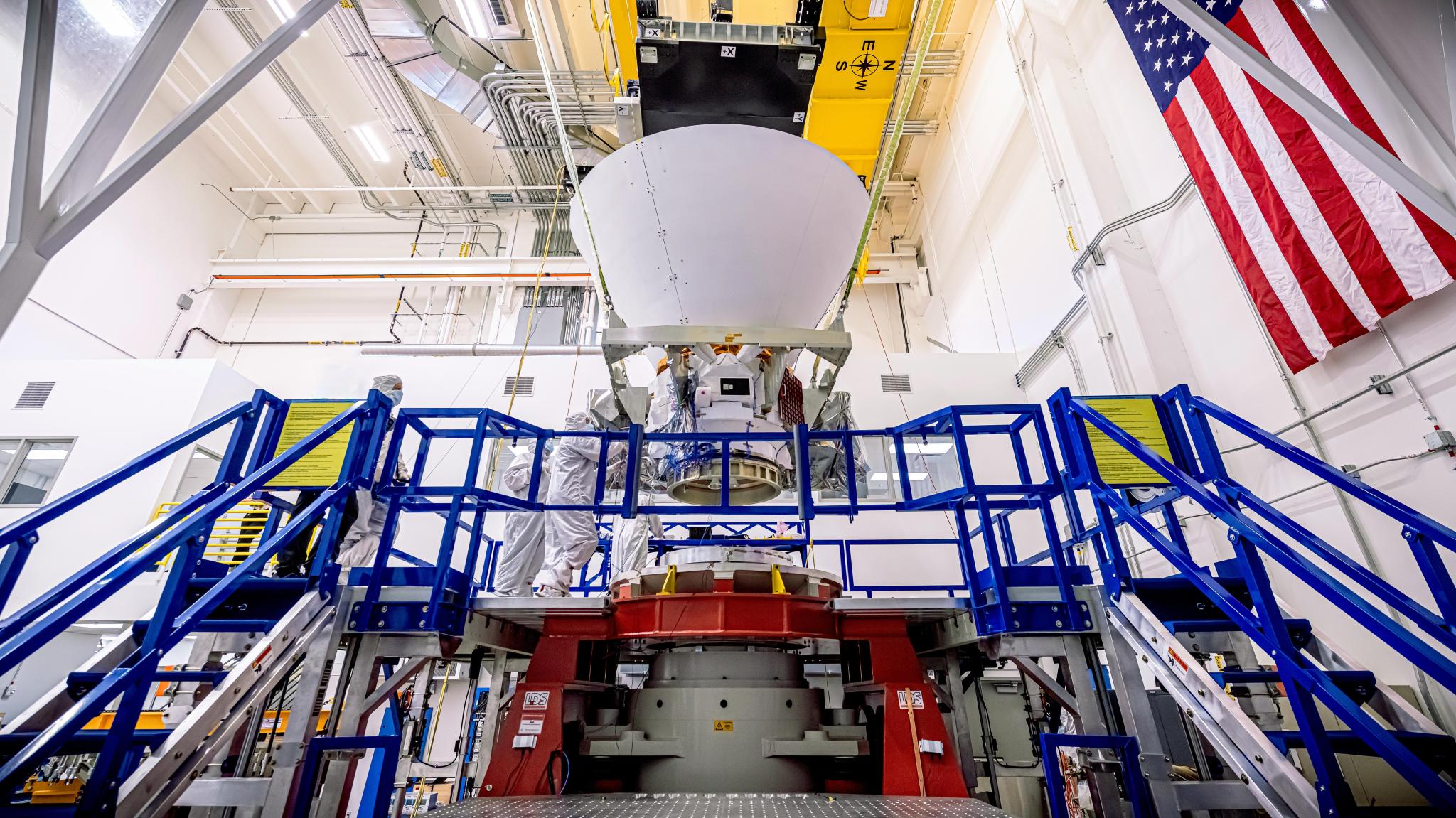
NASA’s SPHEREx observatory undergoes testing at BAE Systems in Boulder, Colorado, in August 2024. Launching no earlier than Feb. 27, 2025, the mission will make the first all-sky spectroscopic survey in the near-infrared, helping to answer some of the biggest questions in astrophysics.
BAE Systems/NASA/JPL-Caltech
A Super-Hubble for the 2030s
HWO is being designed to go far beyond exoplanet studies. Scientists expect it to redefine our understanding of the universe, tackling some of the biggest mysteries in cosmology:
Dark Matter & Dark Energy: Studying the forces that shape the universe.
Galactic Evolution: Observing how galaxies change over billions of years.
Stellar & Planetary Formation: Analyzing how solar systems like ours emerge and evolve.
Although HWO is still in its early development phase, a significant milestone was achieved on August 1, 2024, when NASA established the Habitable Worlds Observatory Technology Maturation Project Office (HTMPO). This office will oversee the telescope’s design, technology testing, and mission planning.
By the late 2020s, NASA hopes to finalize the Mission Concept Review (MCR), moving HWO into Phase A development. If all goes as planned, the telescope could launch in the 2030s, ushering in a new era of space exploration.
The Habitable Worlds Observatory combines elements from the earlier LUVOIR and HabEx concepts.
What If HWO Finds Life?
The implications of this mission could be game-changing. If HWO detects a biosignature in an exoplanet atmosphere, it would mark one of the most profound discoveries in human history. As NASA researchers put it, “If life exists beyond Earth, HWO will be the telescope that finds it.”
Even if no biosignatures are detected, HWO will still provide invaluable insights into planetary diversity, helping scientists understand what makes a world truly habitable.
NASA is currently seeking scientists to join the HWO Community Science and Instrument Team (CSIT), a group tasked with refining the mission’s scientific goals. This is a crucial step toward defining what instruments the telescope will carry and how it will operate.
The next decade will be a defining moment for astrobiology. With JWST, Roman, and HWO working together, we may finally uncover the truth about life in the cosmos.
Scientists are pioneering a new approach to detecting extraterrestrial life by leveraging chemotaxis—a natural phenomenon where organisms move toward specific chemicals. This breakthrough could significantly enhance the search for microbial life on Mars and beyond.
A New Strategy for Finding Life on Other Worlds
The search for life beyond Earth has long focused on detecting biosignatures—chemical traces of biological activity. However, a German research team has introduced a potentially game-changing method: rather than simply looking for traces of life, why not trigger living organisms to reveal themselves?
Led by Max Riekeles of the Technical University of Berlin, the team developed a novel approach using L-serine, an amino acid known to stimulate movement in microorganisms. If extraterrestrial microbes exist on Mars, this method could make them more detectable.
“Our astrobiology research group is highly interdisciplinary, comprising biologists, aerospace engineers, medical engineers, chemists, geologists, and physicists,” Riekeles explained. “We often hold collaborative discussions to bring together diverse perspectives and brainstorm innovative solutions.”
Why L-Serine Could Be Key to Detecting Martian Microbes
L-serine is not just another amino acid—it has cosmic significance. Scientists have detected it in meteorites and on the asteroid Ryugu, suggesting that it has existed since before the formation of the Solar System. Since both Earth and Mars were bombarded by carbon-rich asteroids in their early history, it’s reasonable to assume L-serine is present on Mars as well.
“If life developed on Mars with a similar biochemistry to known life on Earth, it seems plausible that L-serine could also be a potent chemoattractant for hypothetical Martian microbes,” Riekes continued. “Additionally, the environmental conditions of early Mars, which were warmer and likely supported liquid water, resemble those of early Earth, making a similar biochemistry of putative Martian microbes plausible.”
To test this hypothesis, the researchers studied extremophiles—microbes that thrive in extreme environments similar to those found on Mars. They selected three species:
Bacillus subtilis spores, capable of surviving extreme heat up to 100°C.
Pseudoalteromonas haloplanktis, found in Antarctica and adapted to temperatures as low as -2.5°C.
Haloferax volcanii, an archaeon that thrives in highly saline conditions, resembling environments that could exist on Mars.
Each of these microorganisms responded to L-serine by actively moving toward it, confirming its effectiveness in stimulating microbial motion.
A Simple, Space-Ready Life Detection Device
The team designed a minimalist, easy-to-use detection system that could be adapted for planetary missions. Their device consists of two chambers—one containing a microbial sample and the other filled with L-serine—separated by a thin membrane. If microbes are present and motile, they will swim toward the amino acid, providing a clear signal of life.
However, refining this device for real-world deployment poses additional challenges. Space missions require ultra-compact, resilient, and automated equipment. The researchers are now working to make their apparatus smaller, sturdier, and capable of functioning autonomously in space.
Beyond Mars: Expanding the Search for Life
While Mars remains the primary target, this technology could be used on other celestial bodies suspected to harbor life. Europa, one of Jupiter’s moons, has a subsurface ocean beneath its icy crust, making it an ideal candidate for this type of microbial detection.
The Berlin-based team is also exploring applications beyond space exploration. Similar technology could be adapted for water quality testing on Earth, offering new ways to detect microbial contamination in drinking water and environmental monitoring.
“We are continuing to develop the device to improve its Technology Readiness Level,” Riekeles said. “Our focus is on making it smaller, more robust, and fully automated to meet the requirements of space exploration. While we are driving the development process internally, we plan to collaborate with third parties, like space agencies, to ensure it becomes flight-ready.”
RELATED VIDEOS
Mars: Life on the Red Planet | BBC Earth Science
NASA's Perseverance Rover Discovers Signs of Past Life on Mars
Meer van UFO'S of UAP'S, ASTRONOMIE, RUIMTEVAART, ARCHEOLOGIE, OUDHEIDKUNDE, SF-SNUFJES EN ANDERE ESOTERISCHE WETENSCHAPPEN - DE ALLERLAATSTE NIEUWTJES


 Is there a God? Scientists give their definitive answers to the eternal question