Naar de inhoud

UFO'S of UAP'S, ASTRONOMIE, RUIMTEVAART, ARCHEOLOGIE, OUDHEIDKUNDE, SF-SNUFJES EN ANDERE ESOTERISCHE WETENSCHAPPEN - DE ALLERLAATSTE NIEUWTJES

UFO's of UAP'S in België en de rest van de wereld
akke.beakke.be
Ontdek de Fascinerende Wereld van UFO's en UAP's: Jouw Bron voor Onthullende Informatie! Ben jij ook gefascineerd door het onbekende? Wil je meer weten over UFO's en UAP's, niet alleen in België, maar over de hele wereld? Dan ben je op de juiste plek! België: Het Kloppend Hart van UFO-onderzoek In België is BUFON (Belgisch UFO-Netwerk) dé autoriteit op het gebied van UFO-onderzoek. Voor betrouwbare en objectieve informatie over deze intrigerende fenomenen, bezoek je zeker onze Facebook-pagina en deze blog. Maar dat is nog niet alles! Ontdek ook het Belgisch UFO-meldpunt en Caelestia, twee organisaties die diepgaand onderzoek verrichten, al zijn ze soms kritisch of sceptisch. Nederland: Een Schat aan Informatie Voor onze Nederlandse buren is er de schitterende website www.ufowijzer.nl, beheerd door Paul Harmans. Deze site biedt een schat aan informatie en artikelen die je niet wilt missen! Internationaal: MUFON - De Wereldwijde Autoriteit Neem ook een kijkje bij MUFON (Mutual UFO Network Inc.), een gerenommeerde Amerikaanse UFO-vereniging met afdelingen in de VS en wereldwijd. MUFON is toegewijd aan de wetenschappelijke en analytische studie van het UFO-fenomeen, en hun maandelijkse tijdschrift, The MUFON UFO-Journal, is een must-read voor elke UFO-enthousiasteling. Bezoek hun website op www.mufon.com voor meer informatie. Samenwerking en Toekomstvisie Sinds 1 februari 2020 is Pieter niet alleen ex-president van BUFON, maar ook de voormalige nationale directeur van MUFON in Vlaanderen en Nederland. Dit creëert een sterke samenwerking met de Franse MUFON Reseau MUFON/EUROP, wat ons in staat stelt om nog meer waardevolle inzichten te delen. Let op: Nepprofielen en Nieuwe Groeperingen Pas op voor een nieuwe groepering die zich ook BUFON noemt, maar geen enkele connectie heeft met onze gevestigde organisatie. Hoewel zij de naam geregistreerd hebben, kunnen ze het rijke verleden en de expertise van onze groep niet evenaren. We wensen hen veel succes, maar we blijven de autoriteit in UFO-onderzoek! Blijf Op De Hoogte! Wil jij de laatste nieuwtjes over UFO's, ruimtevaart, archeologie, en meer? Volg ons dan en duik samen met ons in de fascinerende wereld van het onbekende! Sluit je aan bij de gemeenschap van nieuwsgierige geesten die net als jij verlangen naar antwoorden en avonturen in de sterren! Heb je vragen of wil je meer weten? Aarzel dan niet om contact met ons op te nemen! Samen ontrafelen we het mysterie van de lucht en daarbuiten.

Archief

A Recent Impact on Mars Shook the Planet to Its Mantle

A Recent Impact on Mars Shook the Planet to Its Mantle

New research suggests an impact recently rattled Mars deeper than thought.

Hirise HiRISE images a recent impact crater in the Cerberus Fossae region, seen on March 4, 2021. Credit: NASA/MRO/HiRISE

Something really rang the Red Planet’s bell. Research involving two NASA missions—the Mars Reconnaissance Orbiter, and the late InSight lander—has shed light on meteorite impacts and the seismic signals they produce. In a crucial finding, these signals may penetrate deeper inside Mars than previously thought. This could change how we view the interior of Mars itself.

Mars interior The interior of Mars, and InSight’s detection of impacts versus geologic activity. Credit: NASA/JPL-Caltech.

The study comes from two papers published this week in the journal of Geophysical Research Letters. The primary data comes from NASA’s InSight mission, the first dedicated geodesy mission to Mars. Insight landed in the Elysium Planitia region of Mars on November 26th, 2018, and carried the first ever dedicated seismometer to the Red Planet. During its four years of operation, Insight detected over 1,300 ‘marsquakes,’ until the mission’s end in 2022. Most were due to geologic activity, while a few were due to distant meteorite impacts. Occasionally, InSight would even see ‘land tides’ due to the passage of the moon Phobos overhead.

SEIS InSight

InSight uses its robotic arm to place a wind shield over the SEIS seismometer. µCredit: NASA/JPL-Caltech.

A Distant Mars Impact

As on Earth, the detection of seismic waves gives us the opportunity to probe the interior of Mars, providing clues as to the density, depth and thickness of the crust, mantle and core. To be sure, impacts have been correlated to seismic waves captured by InSight in the past. A fresh crater seen by NASA’s Mars Reconnaissance Orbiter (MRO) in 2022 was correlated to an impact in the Amazonis Planitia region. But this was the first time an impact in the quake-prone Cerberus Fossae area was linked to InSight detections. The find is especially intriguing, as the area is quarter of a world away from the InSight landing site, at 1,640 kilometers (1,019 miles) distant.

Fossae A wider context view of the Cerberus Fossae region on Mars, courtesy of Mars Odyssey.  NASA/JPL-Caltech.

The discovery of the 21.5-meter (71 foot) crater about the length of a semi-truck immediately presented scientists with a mystery. The smoking gun impact crater was more distant than thought. Typically, the Martian crust was thought to have a dampening effect on distant impacts. This means that the impact-generated waves took a more direct route via a ‘seismic highway,’ through the deeper mantle of the planet itself.

This discovery has key implications for what we generally think about the interior of Mars. This may also imply that our understanding and model for the planet’s interior may be due for an overhaul.

“Composition of the crust and how seismic waves from impacts travel through them is one factor,” Andrew Good (NASA-JPL) told Universe Today. “No current plans for follow-on seismometers on Mars, but there is a seismometer planned for the Moon in the near future,” says Good, in reference to the Farside Seismic Suite planned for 2026.

A New View of the Interior of Mars?

InSight team member Costantinos Charalambous of Imperial College London explains the finding in more detail, in an email to Universe Today:

The detection of this impact changes our understanding of Mars’ interior, particularly its crust and upper mantle, both immediately and in the longer term. However, in the latter case, it will take further work to know quite how!

The immediate shift in our understanding is that many more of the seismic events we detected at InSight have penetrated much deeper into the planet than we thought. Previously, we had thought that the crust would trap most of the high-frequency seismic energy, guiding it around the planet from the point of impact to InSight’s seismometer. We thought any high-frequency energy that penetrated more deeply into the mantle was quickly lost. But it now appears the Martian mantle is much better at propagating this seismic energy than we thought, allowing it to travel more quickly and farther. This tells us that the mantle has a different elemental composition that previously assumed, likely with a lower iron oxide content than earlier models predicted.

Additionally, because this impact was detected in Cerberus Fossae – a region where many recorded marsquakes likely originate – it provides a unique opportunity to distinguish seismic signatures generated by seismic activity driven by deeper, internal (tectonic) forces versus shallower, external (impact) sources.

Therefore, in the longer term, we will be re-examining the data from seismic events that we had previously assumed didn’t penetrate deeper into Mars. This work is ongoing, but these findings suggest new features of Mars’ upper mantle that we are seeking to confirm. Watch this space!

MRO’s Hunt For Impacts

Just how researchers imaged the tiny crater is the amazing second part of the story. NASA’s venerable MRO generates tens of thousands of images of the surface of Mars. These come mainly via the spacecraft’s onboard Context Camera. For years, researchers have used a machine learning algorithm to sift through the images. This looks for fresh impact sites that do not appear in previous frames. These areas are in turn flagged for closer scrutiny with the mission’s 0.5-meter High-Resolution Imaging Science Experiment (HiRISE) camera. The AI program was developed by NASA’s Jet Propulsion Laboratory.

Crater cluster A crater cluster on Mars, one of the first spotted courtesy the MRO AI search program. Credit: NASA/JPL-Caltech/MSSS.

To date, the team has found 123 new craters within 3,000 kilometers (1,864 miles) of the InSight landing site. 49 of these (including the Cerberus Fossae impact) are potential matches with InSight seismology data.

“Done manually, this would be years of work,” says InSight team member Valentin Bickel (University of Bern, Switzerland) in a recent press release. “Using this tool, we went from tens of thousands of images to just a handful in a matter of days.”

InSight’s Legacy

InSight provided a wealth of seismology and geological information about Mars. The Seismic Experiment for Interior Structure (SEIS) instrument worked as planned. The Heat Flow and Physical Properties Package (HP^3) failed, however, to reach its target depth for returning useful science about the planet’s interior. Unfortunately, no dedicated follow on geology mission is set to head to Mars. This sort of exciting science will probably have to wait until the hoped for crewed missions of the 2030s.

InSight was a collaborative effort between NASA, the German Space Agency (DLR) and the French Space Agency (CNES). Other international partners also participated in the ground-breaking mission.

Still, it’s great to see missions like InSight still generating scientific results, long after they’ve fallen silent.

RELATED VIDEO

THE MARS - Secrets and Facts - Documentary

{ https://www.universetoday.com/ }

Hoe vind je dit bericht?
Geschreven door peter om 18:07 Stuur door

Ontplofte Starship-raket bedelft Caribisch eiland onder ruimtepuin, misnoegde bewoners eisen actie van SpaceX: “Ruim je rotzooi op”

AFP / Lori Kaine
© AFP / Lori Kaine

Ontplofte Starship-raket bedelft Caribisch eiland onder ruimtepuin, misnoegde bewoners eisen actie van SpaceX: “Ruim je rotzooi op”

Toen de Starship-raket van SpaceX vorige maand boven Caribisch gebied uit elkaar spatte, leverde dat bijzondere beelden op. Maar voor de bewoners van de Turks- en Caicoseilanden betekende het vooral één ding: rondslingerend puin in hun dorpen en op hun stranden. Terwijl SpaceX liever wegkijkt, zijn zij gedwongen om de honderden kilo’s ruimteafval zelf op te ruimen.

De explosie op 16 januari vulde de lucht met brokstukken en het spektakel leek regelrecht uit een Hollywoodfilm te komen. Maar de nasleep is voor de archipel, ten zuidoosten van de Bahama’s, minder glamoureus. Overal vinden bewoners brokstukken van het ruimtetuig terug.


SpaceX Starship debris falls across the sky over Turks and Caicos

De brokstukken die worden aangetroffen, variëren in grootte: van zo klein als een derde van een vingernagel tot zo groot als een auto. Het gaat onder meer om afgebroken kabels en hittebestendige tegels van de Starship-raket. Inmiddels roepen de bewoners SpaceX op om de eigen rommel op te ruimen.

Brokstukken die Lori Kaine al verzamelde.  © Lori Kaine

“Ik ben geïnteresseerd in de lanceringen en wat Musk doet”, zegt Amos Lucker, eigenaar van een autoverhuurbedrijf op het eiland Providenciales, aan ‘CNN’. “Maar ik vind dat hij ook verantwoordelijk moet zijn voor de opkuis.”

Na de explosie riep SpaceX mensen op om geen brokstukken aan te raken of op te rapen, omdat dit gevaarlijk kon zijn. Maar volgens Lori Kaine, eveneens een bewoonster van Providenciales, kreeg ze dit pas te horen nadat ze al bezig was geweest met opruimen.

In een poging het juiste te doen, belde Kaine de hotline van SpaceX om te melden wat ze had gevonden. Het duurde een week voordat het bedrijf reageerde. Uiteindelijk kreeg ze te horen dat het nog dagen zou duren voordat iemand kon komen kijken. Op het moment dat ‘CNN’ erover berichtte, had Kaine nog steeds meer dan 90 kilo aan Starship-brokstukken liggen in haar garage.

Brokstukken van ontplofte SpaceX-raket lichtten de hemel op.
Brokstukken van ontplofte SpaceX-raket lichtten de hemel op.  © AD

SpaceX heeft inmiddels gesproken met vertegenwoordigers van de Turks- en Caicoseilanden, waaronder het nationale rampenbestrijdingsteam. De enige officiële aanbeveling die uit die gesprekken kwam? Dat bewoners handschoenen moeten dragen bij het oprapen van SpaceX-puin.

Hoewel er geen gewonden zijn gevallen door het neerstortende puin, is er minstens één geval van materiële schade gemeld. Daarnaast is er nog de impact op het kwetsbare ecosysteem en de mogelijke gevolgen voor de atmosfeer.

De Idyllische Turks- en Caicoseilanden. Nu slingert er ruimteafval rond.
De Idyllische Turks- en Caicoseilanden. Nu slingert er ruimteafval rond.  © Photo News

Ondertussen wachten de bewoners nog steeds op actie. “We proberen gewoon een dringend verzoek in te dienen om ons op zijn minst financieel te ondersteunen bij de schoonmaak, die nu volledig door vrijwilligers wordt gedaan”, klinkt het. Ze hopen dat er een formele evaluatie komt, inclusief tests om na te gaan of het water verontreinigd is en verkennend onderzoek met bijvoorbeeld drones om grote brokstukken op zee op te sporen, die schadelijk kunnen zijn voor kwetsbare ecosystemen. “Maar dat vereist veel coördinatie en een aanzienlijke hoeveelheid financiering – en beide zijn hier beperkt.”

Kaine gaf aan steeds sceptischer te worden over de reactie van SpaceX op de situatie en over het Starship-programma in het algemeen. Ze heeft helemaal geen interesse in het bijhouden van de brokstukken die ze heeft verzameld; haar enige doel is om ervoor te zorgen dat de wegen en stranden waar ze zo vaak komt schoon blijven en vrij van gevaarlijke materialen.

De Turks- en Caicoseilanden toen er nog geen vuilte aan de lucht was.
De Turks- en Caicoseilanden toen er nog geen vuilte aan de lucht was.  © Getty Images

“Jullie moeten dit gewoon komen opruimen", zo richtte Kaine zich tot SpaceX. “En mijn zorgen over deze lanceringen groeien alleen maar - vooral nu ik er meer over lees - er is zo weinig informatie beschikbaar.”

LEES OOK.

{ https://www.hln.be/ }

Hoe vind je dit bericht?
Geschreven door peter om 17:16 Stuur door

USAF Pilot Ordered To Destroy Aircraft Carrier-Sized UFO, Claiming It Was Alien Spaceship

USAF Pilot Ordered To Destroy Aircraft Carrier-Sized UFO, Claiming It ...

USAF Pilot Ordered To Destroy Aircraft Carrier-Sized UFO, Claiming It Was Alien Spaceship

In 2008, the UK Ministry of Defence (MoD) began disclosing the secret files concerning UFO/UAP phenomena that had been hidden for 50 years. The ministry’s recent release was in 2013. One astonishing incident, which was revealed in the MoD files, happened in 1957 over East Anglia, England. It involves the two U.S. fighter planes that were ordered to shoot down an aircraft carrier-sized UFO. (Archive Source)

The accounts of the incident were made public concerning the recollections of two retired pilots from the USAF 406th Fighter Interceptor Wing, which came to light when they met at a reunion at RAF Manston in 1988. One pilot said he was seconds away from firing 24 rockets at the object, which moved erratically and gave a radar reading like “a flying aircraft carrier.”

On May 20, 1957, 25-year-old USAF lieutenant Milton Torres was with the 514th Fighter Interceptor Squadron in the 406th Air Expeditionary Wing based at RAF Manston in Kent. Lt. Torres was the pilot of one of two F-86D jets at RAF Manston airfield when the incident occurred in the late evening on May 20.

Lt. Torres and the other pilot Dave Roberson were in the “alert shack” at RAF Manston when they received instructions to take to the air. The two pilots raced to their respective F-86Ds and took off well within the allotted five minutes.

Torres Milton Torres Milton. Credit: YouTube Screencap

Torres testified:

“I can remember the call to scramble quite clearly, however, I cannot remember specifics such as the actual vector to turn after take off. We were airborne well within the 5 minutes allotted to us, and basically scrambled to about Flight Level 310. Our vector took us out over the North Sea just east of East Anglia. Normally, Dave Roberson, the other member of the set of two fighters would be the lead ship. I can only suggest that I was leading due to an in-place turn of some sort.

I remember in quite specific terms talking as lead to the GCI3 site (whose call sign I cannot recall). I was advised of the situation quite clearly. The initial briefing indicated that the ground was observing for a considerable time a blip that was orbiting the East Anglia area.

There was very little movement and from my conversation with the GCI, all the normal procedures of checking with all the controlling agencies revealed that this was an unidentified flying object with very unusual flight patterns. In the initial briefing, it was suggested that the bogey was motionless for long intervals.

The instructions came to go ‘gate’ to expedite the intercept. Gate was the term used to use maximum power (in the case of the F86-D that meant full afterburner) and to proceed to an Initial Point at about 32,000 feet. By this time, my radar was on, and I was looking prematurely for the bogey.

The instructions came to report any visual observations, to which I replied ‘I’m in the soup and it’s impossible to see anything!’ The weather was probably high alto stratus, but between being over the North Sea and in the weather, no frame of reference was available, i.e. no stars, no lights, no silhouettes – in short nothing. GCI continued the vectoring and the dialogue describing the strange antics of the UFO.”

Aware that he was reaching the upper limit of his jet’s capabilities, Torres requested to come out of the afterburner, but ground control denied his request. At that time, he prepared to execute the order to “fire a full salvo of rockets at the UFO.” The F-86D carried 24 rockets that contained the power of a 75mm artillery shell.

As Torres prepared all 24 of his rockets for firing, he could hear the other F-86D pilot also responding to orders from ground control. “I wasn’t paying too much attention… but I clearly remember him giving a ‘Roger’ to all the transmissions. I can only suppose he was as busy as I was.”

Read also:

Torres was given a final turning maneuver to execute and was told to look 30 degrees to port. His radar screen displayed the UFO at 30 degrees and about 15 miles distant. He said: “The blip was burning a hole in the radar with its incredible intensity. It was similar to a blip I had received from B-52s and seemed to be a magnet of light.”

USAF pilot Milton Torres UFO encounter Pair of USAF F-86D Sabres from 514th Fighter Interceptor Wing. Photo courtesy of Duncan Curtis.

According to Torres, the radar return “had the proportions of a flying aircraft carrier.” He added: “By that I mean the return on the radar was so strong that it could not be overlooked by the fire control system on the F-86D… The larger the airplane the easier the lock on. This blip almost locked itself… it was the best target I could ever remember locking on to. I had locked on in just a few seconds, and I locked on exactly 15 miles, which was the maximum range for lock on.”

Suddenly, Torres noticed that the object on the radar screen was moving. He was left with the impression that the UFO was moving at no less than Mach 10 (over 7,000 miles per hour) when it disappeared.

According to Torres, the UFO “didn’t follow classic Newtonian mechanics. It made a right turn almost on a dime. The (Royal Air Force radar) scope had a range of 250 miles. And after two sweeps, which took two seconds, it was gone. And I was flying almost at Mach 1.”

He returned to the base and was debriefed the next day by an unnamed man who “looked like a well-dressed IBM salesman.”

“He threatened me with a national security breach if I breathed a word about it to anyone,” Torres said.

The documents contain no official explanation for the incident, which came at a time of heightened tension between the West and the Soviet Union. Planes were on constant stand-by at British bases for a possible Soviet attack.

Torres Milton, MAJOR, USAF Retired

Torres Milton, MAJOR, USAF Retired, PhD, passed away peacefully at home in Miami, Florida, on Sunday, October 25, 2015. Credit: Legacy.com

The files blame other UFO sightings on weather balloons, clouds or normal aircraft. Torres said he had been waiting for 50 years for an explanation. “I shall never forget it. On that night I was ordered to open fire even before I had taken off. That had never happened before.”

Speaking to Miles O’Brien of Cable News Network (CNN), Torres said he is convinced the UFO he had encountered was designed by an “alien” intelligence and was not manufactured on Earth. He also noted: “It was some kind of space alien craft. It was so fast, it was so incredible… it was absolutely death-defying.” (Source)

UFO expert David Clarke said the sighting may have been part of a secret U.S. project to create phantom aircraft on radar screens to test Soviet air defenses. “Perhaps what this pilot had seen was some kind of experiment in electronic warfare or maybe it was a UFO,” he said. “Something very unusual happened.”

References:

RELATED VIDEOS


1957 🇬🇧 #UFOB [CASE] CNN Pilot Dr. Milton Torres tells about his experience.

Shoot-down order over England, 1957 - Dr. Milton Torres, former USAF fighter pilot

1957 🇬🇧 #UFOB [CASE] Pilot Dr Milton Torres was ordered to shoot a UFO down.

{ https://howandwhys.com/ }

Hoe vind je dit bericht?
Geschreven door peter om 22:02 Stuur door

Ex-US Navy Officer Saw ‘Non-human Entities’ In His Bedroom After ‘Gimbal UFO’ Encounter

Ex-US Navy Officer Saw ‘Non-human Entities’ In His Bedroom After ...

Ex-US Navy Officer Saw ‘Non-human Entities’ In His Bedroom After ‘Gimbal UFO’ Encounter

By Vicky Verma

The Gimbal UFO event stands as a significant pillar in the UAP (Unidentified Aerial Phenomena) disclosure, introducing US military whistleblowers who claim to have witnessed the phenomena they describe as “non-human.” In 2020, the U.S. Department of Defense released three pivotal UAP videos that triggered widespread discussions within the UFO community, prompting inquiries into the information held by the US government regarding these phenomena.

These videos capture UFO encounters from November 2004 and two separate incidents from January 2015, each identified by distinctive nicknames: Flir (2004), Go Fast (2015), and Gimbal (2015). They depict pilots tracking unidentified objects in the sky. Among these, the renowned 2015 UFO “Gimbal” footage was recorded by US fighter pilots near the nuclear aircraft carrier USS Theodore Roosevelt, as an unidentified object appeared on their radar. Despite the pilots mentioning, “There’s a whole fleet of them, look on the SA,” the footage only displays a single mysterious object at the center of the frame.

Apart from Ryan Graves, a former Lt. U.S. Navy and F/A-18F pilot, there is another least discussed whistleblower who experienced the famous Gimbal UFO event. Matthew Roberts, a former cryptologist in the US Navy with 16 years of service, shared his experience and encounters with non-human entity during a Netflix series “Encounters.” He was present on the USS Theodore Roosevelt in 2015 during an event involving the now-famous “Gimbal footage.”

After going on several military missions and teaching other code experts while working on land, Matthew Roberts moved to the Office of Naval Intelligence (ONI) for three years. His time at ONI ended in March 2020, and that is when he chose to quit the military, even though he was close to retiring in four years. The reason for leaving was the intense and personal experiences he had with unidentified aerial phenomena (UAP) while at ONI, which he writes about in his book named “Initiated.”

Roberts described his initial reaction to the gimbal footage: “I was watching this footage, and I could see no kind of aviation surfaces that you would expect to see — wings, tail, rudders. There’s none of that.” He struggled to comprehend the unconventional movement of the object, stating, “I couldn’t really make sense of why this thing was kind of up in the air like it was.”

As he looked more closely at the video, Roberts realized something important: “I knew it didn’t belong to us or anyone else. So, the only other possibility, I think, is that it’s technology from non-human intelligence.”

Given his classified role and access to sensitive information, Roberts was aware that such encounters were not isolated incidents for the Navy: “I was kind of aware this was not a one-off event for the Navy. These things happen frequently, all the time, going against the wind.” Roberts confessed to being captivated by the footage, watching it obsessively. Despite his access to classified information, he had no awareness of the actions taken by the upper chain of command concerning these encounters.

In 2017, after transferring to the Office of Naval Intelligence, Roberts claimed to have had follow-on experiences with what he described as nonhuman entities. He recounted unsettling encounters where he would wake up feeling his body being moved across the bed and experiencing a hand grabbing his arm. Roberts believed these encounters were evidence of non-human intelligence.

“In 2017, I moved to the Office of Naval Intelligence, where I was going to work as an analyst. Shortly after I got there, I began having experiences related to the phenomenon. It was like the start of seeing nonhuman entities in my room at night. I would wake up several times a week, feeling my body sliding across the bed, and I knew they were taking me. One time, I woke up because I felt a hand grab my arm. I tried to raise my hands to my face, but I couldn’t move. I could see the outline of a shadowy figure with a torso, two arms, and a head standing over me.

Back when I was in the Navy and saw the footage, I already knew there was something nonhuman out there. So, when these entities started appearing in my room, I knew all of this was real. I had the comfort of knowing I wasn’t going crazy; I understood what it was. There’s a lot of sensor and radar evidence. I believe that if they just release all the footage and say, “Hey, this is what we have, we don’t even have to explain it, we don’t know,” there would be no doubt about whether the phenomenon is real. Everyone would know it.”

Read also:

Thinking about all the sensor and radar evidence, Roberts said that if they share all the available videos, people would not doubt if the UFO phenomenon is real. He said, “Everyone would know it.” Roberts’ account provides a unique perspective on the UFO phenomenon, combining his military background, access to classified information, and personal experiences with what he believes to be non-human entities.

Mick West, known for debunking UAPs, provided his explanation for the objects: arguing that mundane things – tech glitches, camera glare, balloons, and birds – are more likely than aliens. However, Journalist Daniel Lavelle asked Matthew Roberts about West’s theory to which Roberts politely replied “All aircraft – nationally, internationally – have to broadcast who they are. If they’re not broadcasting that, that’s very unusual. Mick West, bless his soul, he has never been in the military.”

In his book “Initiated: UAP, Dreams, Depression, Delusions, Shadow People, Psychosis, Sleep Paralysis, and Pandemics,” Roberts wrote about his personal interactions with UFOs, aliens (whom he now calls “The Progenitors”), and his intense psychological battle to cope with extraordinary paranormal experiences.

Initiated

Initiated by Matthew Roberts

The book describes how Roberts went through strange experiences: encountering UFO aliens, other bizarre entities along with a series of other happenings forced him to question his sanity. “Initiated” tells the story of how Roberts went through tough times but came out on the other side as a changed person. He can now say he is truly “initiated.”

During his AMA on Reddit, Roberts described the non-human entities: “I saw ones that had blue skin and were tall. I saw very tall white ones that resembled Jack Skellington. I saw one that looked like a yard gnome. I saw some that appeared to radiate white light. I don’t know where they were from they never revealed that.”

Matthew Roberts explains that he never tried to film any of the encounters with non-human entities in his bedroom. When asked if he considered setting up a recording device, he mentions that these encounters often happen when individuals are in an altered state or when the entities appear in the sky with a craft, conveniently when the person does not have his cell phone.

He considered recording the experiences but decided against it. He reasons that it would not convince everyone, as some might think he faked it. Roberts believes the argument over the authenticity of any images would overshadow the main point, which is encouraging people to seek and have their own experiences with consciousness. He emphasizes that he does not need people to believe him; instead, he wants others to explore consciousness firsthand.

Roberts asserts that the truth of these experiences has been documented for thousands of years by various individuals, citing such authors as William Walker Atkinson, Mabel Collins, Joseph Campbell, Dr. John Mack, and Dr. Robert Moore. He challenges the notion that he could have orchestrated the biggest hoax in human history, suggesting that there may be something genuinely significant in these experiences.

He points to the wealth of evidence available for those willing to examine it, citing a podcast by Mark Gober called “Where is My Mind,” where accomplished scientists discuss their work on consciousness. Roberts believes that understanding consciousness surviving death is a crucial aspect of our existence, mentioning the Bigelow Institute for Consciousness Studies (BICS) and the substantial prizes offered for evidence of consciousness after death.

He suggested that these entities seem to have a significant level of control over the experiences people have, which contributes to why some individuals perceive these encounters as malevolent or evil. He acknowledged that many people who invest time and money into gathering evidence of these phenomena often end up without conclusive results.

In highlighting the rarity of tangible evidence, Roberts mentioned a particular case involving Peter Khoury, where there was reportedly some DNA evidence. However, he does not go into detail about the specifics of that case.

Roberts shared that his conscious experiences with these entities began in late 2017 and continued until the spring of 2018. During this period, he claimed to have been taken several times a week. He recounts instances of sleep paralysis as a child, where he felt a heavy presence and heard whispers. He mentioned a specific incident when he was a small boy, wrapping himself up tightly in a blanket to prevent the entities from whispering in his ear, a practice he later remembered and replicated as an adult.

In his book, Roberts takes a “mythopoetic approach to alien intrusion,” drawing parallels between his experiences and myths, religious texts, and the Hero’s Journey described by Joseph Campbell. He believes that within these encounters, individuals undergo a transformative process, akin to the cycle of death and resurrection, ultimately leading to a change in oneself.

Because of the intense experiences he had, Matthew Roberts decided to quit his military job. He then went to study psychology to learn more about the mind and emotions related to UFO phenomena. He is also working on another book that explains how his way of thinking influenced the unusual experiences he went through.

RELATED VIDEOS

Naval Intelligence Officer Describes UFO Encounter

Former Navy Pilot Ryan Graves on His UFO Encounter

Navy pilots describe encounters with UFOs

{ https://howandwhys.com/ }

Hoe vind je dit bericht?
Geschreven door peter om 21:37 Stuur door

[Video] Ex-US Army Officer Revealed That He Saw A Child-Size Alien After Roswell Crash

Afbeeldingsresultaten voor [Video] Ex-US Army Officer Revealed That He Saw A Child-Size Alien After Roswell Crash

[Video] Ex-US Army Officer Revealed That He Saw A Child-Size Alien After Roswell Crash

ByVicky Verma

The Roswell incident is one of the most popular unsolved mysteries in the world. Dozens of US military officers claimed that the crash involved the extraterrestrial craft with aliens, while skeptics tried hard to deny it. Besides, the US government covered the whole incident calling it a military program (Project Mogul).

Moreover, there are abundant theories that justify the extraterrestrial’s link to the crash that happened in New Mexico in July 1947.

A day after the legendary crash at a ranch near Roswell, the 509th Bomb Group issued a press release and revealed the news of the crashed UFO to the world. 1st Lt. Walter Haut, the public information officer at the 509th Bomb Group based in Roswell, was the first person who disclosed the incredible information to the press.

1st Lt. Walter Haut1st Lt. Walter Haut

Unfortunately, a new press release was issued later, that certainly was to change the facts of the first one, and now the crashed UFO turned into crashed weather balloon. It made Haut a figure of public ridicule.

Read also:

Lt. Walter Haut was the close friend of Colonel William Blanchard who is regarded as the key player behind the scenes in the recovery of the Roswell disk. Haut swore to Col. Blanchard that he would keep the Roswell secrecy until his last breath. But in 2002, he came up with an idea to slightly reveal what he knew about the Roswell incident without breaking his words.

A video of Lt. Haut has recently been released. It was recorded in 2000, and in the video, he claimed to have seen a body of a “beat-up alien” the “size of a 10-year-old child” after the Roswell UFO crash. The video was first published by UFO researcher Anthony Bragalia, and it was recorded by Haut’s friends Dennis Bathaser and Wendy Connors.

Julie Shuster, Haut’s daughter was worried that the secrets of Roswell would be left behind as the world started losing the first-hand witnesses of the case such as Major Jesse Marcel, the first person who arrived at the crash site. Marcel might have left a cryptic journal behind on the Roswell subject, but Haut was adamant to leave the clear information behind.

Julie Shuster Julie Shuster, daughter of Walter Haut was a former director of the Roswell International UFO Museum and Research Center. She died in 2015.

Shuster, along with UFO researcher Don Schmitt persuaded her father to have a written document on his exclusive information on Roswell and save it for the future. Haut agreed and signed an affidavit, stating that he had seen a craft from outer space.

“It was not from this Earth, it was something manufactured off this Earth,” he said.

After his death in 2005, the affidavit was first published in a book entitled “Witness to Roswell: Unmasking the Government’s Biggest Cover-Up” (2007), authored by Thomas Carey and Schmitt.

In the affidavit, Haut revealed that there were two crash sites at Roswell, and he witnessed the first object that crashed in 1947. Shuster said that her father did see the bodies, and the craft was about 25 feet in diameter.

Carey and Schmitt became Haut’s friends, who later revealed to them the biggest secret. Carey described that the ship was of the size of a Volkswagen Beetle and was of an egg’s shape. To verify former army press officer claims, Carey and Schmitt found other witnesses with similar information.

Back to Haut’s confessional video, Bragalia said that a Digital Voice Stress Analysis (DVSA) expert looked at Haut’s testimony and concluded that he was telling the truth. Additionally, he said that the government could have been holding the aliens’ bodies in a secured locations “with access only by those with a need to know.”

References:


The Roswell UFO Report: Fact or Fiction?

{ https://howandwhys.com/ }

Hoe vind je dit bericht?
Geschreven door peter om 21:12 Stuur door

Terrifying simulation reveals exactly what will happen if asteroid Bennu crashes into Earth in 2182

Terrifying simulation reveals exactly what will happen if asteroid Bennu crashes into Earth in 2182

Of the thousands of space rocks whizzing through the solar system, there is one that has astronomers more worried than any other.

Astronomers predict that the 500-metre-wide asteroid Bennu has a one in 2,700 chance of hitting the planet in 2182 - similar odds to flipping a coin 11 times and getting the same outcome each time.

While the chances of an impact are slim, a terrifying new simulation has revealed exactly what would happen if this deadly asteroid crashed into Earth.

Researchers found that, in addition to a huge blast triggering earthquakes and tsunamis, Bennu's impact would kick up enough dust to trigger a two-year-long 'impact winter'.

Using a supercomputer and cutting-edge climate simulations, researchers from Pusan National University in South Korea predicted what would happen as Bennu injected millions of tonnes of dust into the atmosphere.

As dust blocks out light from the sun, the world would become cold and dry with temperatures falling 4˚C (7.2˚F) and global rainfall reducing by 15 per cent.

In some areas, including North America, precipitation would plummet between 30 and 60 per cent, making it nearly impossible to grow crops.

Lead author Dr Lan Dai, says: 'This would likely cause massive disruptions in global food security.'

Scientists have calculated what would happen if the asteroid Bennu hit the Earth. Their simulations show that the world would become colder, darker, and drier in a years-long 'impact winter' (stock image)

Scientists have calculated what would happen if the asteroid Bennu hit the Earth. Their simulations show that the world would become colder, darker, and drier in a years-long 'impact winter' (stock image) 

The 500-metre wide asteroid Bennu (pictured) has a one in 2,700 chance of hitting the planet in 2182 - similar odds to flipping a coin 11 times and getting the same outcome each time.

The 500-metre wide asteroid Bennu (pictured) has a one in 2,700 chance of hitting the planet in 2182 - similar odds to flipping a coin 11 times and getting the same outcome each time.

Unlike the Chicxulub asteroid that wiped out the dinosaurs, a collision with Bennu wouldn't necessarily trigger a mass extinction event.

Asteroids the size of Bennu are believed to hit Earth every 100,000-200,000 years, so it is likely that our early ancestors have already survived one of these impacts.

But what both Chicxulub and Bennu's impact would have in common is the massive disruption of global climate patterns.

Just like the theorised 'nuclear winter' that would follow a thermonuclear war, the explosion of an asteroid impact would eject a vast column of dust into the atmosphere.

If Bennu hit Earth, Dr Dai and his co-authors estimate that 100 to 400 million tonnes of dust would linger above Earth for around two years.

Those dust particles would act like a vast planet-wide umbrella, shading Earth from the sun's radiation and reflecting heat energy back out into space.

At its peak, the amount of shortwave radiation reaching Earth would fall by 28 per cent in the worst-case scenario.

Likewise, global temperature averages would fall by 1.6°C (2.9°F), 2.7°C (4.9°F), 3.4°C (3.1°F), and 4.0°C (7.2˚F) for dust injections of 100, 200, 300, and 400 million tonnes of dust respectively.

If Bennu (illustrated) hit Earth it would first cause an explosion big enough to trigger earthquakes and tsunamis. However, the more lasting impact would come from the 100-400 million tonnes of dust that would be ejected into the atmosphere

If Bennu (illustrated) hit Earth it would first cause an explosion big enough to trigger earthquakes and tsunamis. However, the more lasting impact would come from the 100-400 million tonnes of dust that would be ejected into the atmosphere 

The simulations show that the dust would banket Earth, blocking out the sun and leading to massive reductions in light (purple graph), surface temperature (pink graph), and precipitation (green graph)

The simulations show that the dust would banket Earth, blocking out the sun and leading to massive reductions in light (purple graph), surface temperature (pink graph), and precipitation (green graph)

What would happen in Bennu hit Earth?

Initial impact 

  • Bennu would release the energy equivalent of 1,450 megatons of TNT, triggering earthquakes and tsunamis around the world. 

Climate changes

  • As Bennu injects 100-400 million tonnes of dust into the atmosphere, it would cool the planet.
  • Average temperatures would fall 4˚C (7.2˚F).
  • Average rainfall would decrease 15 per cent with some areas receiving 60 per cent less rain.

Food crisis

  • These changes would make many regions unable to grow crops.
  • Photosynthesis would fall up to 30 per cent.
  • Crop yields in East Asia could fall by as much as 50 per cent.

Eurasia and North America would experience the most severe and rapid cooling as the dust concentrates in the northern hemisphere during the winter.

The simulation shows that global cooling will persist for up to four years after the impact, with a slow recovery starting after 24 months.

In the worst-case scenario, the rapid 'impact winter' would be equivalent to the disastrous global cooling caused by the Toba eruption which occurred around 74,000 years ago.

Believed to be the worst natural disaster in the past 2.5 million years, the Toba supervolcano triggered a six-year winter which led to mass die-offs and the near extinction of the human species.

Additionally, the researchers predict that the disruption to patterns of evaporation over the oceans will lead to 'massive drying' in many parts of the world.

Six months after the impact, global mean precipitation will be 0.46mm per day less, a reduction of around 15 per cent.

However, this will be accompanied by large increases in precipitation in some areas of the subtropics and severe droughts in others.

To make matters worse, the Bennu dust cloud would also cause rapid erosion of the ozone layer as radiation and heat become trapped in the upper atmosphere.

These maps show the predicted reductions in temperature (top) and precipitation (bottom) for the first two years after an impact. These show that the temperatures would fall by 4¿C (7.2¿F) and global rainfall would reduce by 15 per cent

These maps show the predicted reductions in temperature (top) and precipitation (bottom) for the first two years after an impact. These show that the temperatures would fall by 4˚C (7.2˚F) and global rainfall would reduce by 15 per cent

These conditions would trigger huge reductions in the productivity in land (top) and marine (bottom) ecosystems. That would lower crop yields and destabilise global agriculture. On these maps darker regions show areas of greater reduction.

These conditions would trigger huge reductions in the productivity in land (top) and marine (bottom) ecosystems. That would lower crop yields and destabilise global agriculture. On these maps darker regions show areas of greater reduction. 

The researchers predict that the global ozone column could be depleted by 32 per cent.

Although it would be offset by the blanketing dust, this could lead to dangerous increases in levels of UV radiation which causes sunburns, blindness, and cancer.

In their paper, published in Science Advances, the researchers say these changes would 'severely reduce the habitat suitability for humans'.

Dr Dai says: 'The abrupt "impact winter" would provide unfavourable climate conditions for plants to grow, leading to an initial 20–30 per cent reduction of photosynthesis in terrestrial and marine ecosystems.'

During the first summer after the impact, the rate at which ecosystems grow and store biomass, known as net primary productivity, would fall by 36 per cent on land and 25 per cent in the oceans.

Meanwhile, crop yields in East Asia could fall by as much as 50 per cent, potentially triggering widespread starvation.

However, some of Earth's ecosystems could actually stand to benefit from such a disaster.

Although they initially take a hit, the simulation shows that marine ecosystems would not only survive but thrive in the years after the impact.

If Bennu contains a large amount of iron, it could actually help marine ecosystems flourish by effectively fertilising the oceans. Pictured: A sample of Bennu prepared for testing

If Bennu contains a large amount of iron, it could actually help marine ecosystems flourish by effectively fertilising the oceans. Pictured: A sample of Bennu prepared for testing

As the iron enters the ocean it would lead to an algae bloom, like this one seen over a tropical reef, which would support support the marine ecosystem. The researchers say this could help humanity feed itself during the years of impact winter

As the iron enters the ocean it would lead to an algae bloom, like this one seen over a tropical reef, which would support support the marine ecosystem. The researchers say this could help humanity feed itself during the years of impact winter 

After just six months, plankton in the ocean would have already recovered and would continue to increase to levels not even seen under normal climate conditions.

article image

This unexpected bloom would be caused by a high proportion of iron in the asteroid's dust.

Iron is a key nutrient for plankton's growth but many areas such as the Southern Ocean and the eastern tropical Pacific are naturally iron-poor.

As the dust from the asteroid settles it would trigger a bloom of photosynthesising diatoms which in turn would attract zooplankton, small predators which feed on the diatoms.

'The simulated excessive phytoplankton and zooplankton blooms might be a blessing for the biosphere and may help alleviate emerging food insecurity related to the longer-lasting reduction in terrestrial productivity,' says Dai.

KILLING OFF THE DINOSAURS: HOW A CITY-SIZED ASTEROID WIPED OUT 75 PER CENT OF ALL ANIMAL AND PLANT SPECIES

Around 66 million years ago non-avian dinosaurs were wiped out and more than half the world's species were obliterated.

This mass extinction paved the way for the rise of mammals and the appearance of humans.

The Chicxulub asteroid is often cited as a potential cause of the Cretaceous-Paleogene extinction event.

The asteroid slammed into a shallow sea in what is now the Gulf of Mexico.

The collision released a huge dust and soot cloud that triggered global climate change, wiping out 75 per cent of all animal and plant species.

Researchers claim that the soot necessary for such a global catastrophe could only have come from a direct impact on rocks in shallow water around Mexico, which are especially rich in hydrocarbons.

Within 10 hours of the impact, a massive tsunami waved ripped through the Gulf coast, experts believe.

Around 66 million years ago non-avian dinosaurs were wiped out and more than half the world's species were obliterated. The Chicxulub asteroid is often cited as a potential cause of the Cretaceous-Paleogene extinction event (stock image)

Around 66 million years ago non-avian dinosaurs were wiped out and more than half the world's species were obliterated. The Chicxulub asteroid is often cited as a potential cause of the Cretaceous-Paleogene extinction event (stock image)

This caused earthquakes and landslides in areas as far as Argentina. 

While investigating the event researchers found small particles of rock and other debris that was shot into the air when the asteroid crashed.

Called spherules, these small particles covered the planet with a thick layer of soot.

Experts explain that losing the light from the sun caused a complete collapse in the aquatic system.

This is because the phytoplankton base of almost all aquatic food chains would have been eliminated.

It's believed that the more than 180 million years of evolution that brought the world to the Cretaceous point was destroyed in less than the lifetime of a Tyrannosaurus rex, which is about 20 to 30 years.

{ https://www.dailymail.co.uk/ }

Hoe vind je dit bericht?
Geschreven door peter om 18:48 Stuur door

BREAKING NEWS - NASA gives major update on stranded astronauts' rescue mission after Trump demanded they be brought home

BREAKING NEWS - NASA gives major update on stranded astronauts' rescue mission after Trump demanded they be brought home

NASA is bringing forward a new rescue mission for stranded astronauts after mounting political pressure.

Insiders say the space agency will bring Sunita Williams and Butch Wilmore home around March 19 — about two weeks earlier than the original early April return.

By that date, they will have spent 286 days in space. 

Williams and Willmore have been stuck on the International Space Station (ISS) since June 2024, bringing them close to eight months on the orbiting laboratory when they were originally scheduled for an eight-day stay.

The new plan should allow the spacecraft that will bring Williams and Wilmore home to depart from the ISS earlier than previously scheduled. 

The move comes less than one week since President Donald Trump told Elon Musk to 'go get' the pair after they were 'virtually abandoned by the Biden administration.'

Thus, Musk and Trump may see this scheduling change as a political win. 

But NASA sources told Ars Technica that this contingency plan was set into motion before Trump took office and was just recently greenlit. 

NASA is expected to announce a new return date for astronauts Sunita Williams and Butch Wilmore, who have been stuck on the ISS for more than eight months

NASA is expected to announce a new return date for astronauts Sunita Williams and Butch Wilmore, who have been stuck on the ISS for more than eight months

The Space X Crew-10 mission was initially scheduled to launch in February, but a technical issue with the new Dragon capsule SpaceX intended to use prompted NASA to push the launch back to March. 
This decision also delayed Williams and Wilmore's flight back to Earth from the International Space Station (ISS), with NASA giving an estimated return date of early April. 

That's because the stranded astronauts are planning to hitch a ride home on the SpaceX Crew-9 return flight. The Crew-9 astronauts and their spacecraft have been at the ISS with Williams and Wilmore since September 29.

But they cannot depart from the space station until the Crew-10 astronauts arrive to replace them. 

That is because NASA protocol necessitates a 'handover period,' or a window of time where the previous ISS crew overlaps with the incoming crew to share information with them and ensure a smooth transition between the two teams. 

Therefore, getting the Crew-10 mission off the ground sooner would also allow Williams and Wilmore to come home earlier. 

The Dragon capsule SpaceX was originally planning to use for this mission — called C213 — is still under development, and the Crew-10 mission was supposed to be its maiden voyage.

But SpaceX and NASA are currently working to resolve a technical issue with C213 Dragon, which may be related to batteries on the spacecraft, Ars Technica reported. 

As a result, NASA decided that C213 would not be ready to launch until late April. 

At first, NASA opted to push back the Crew-9 return date in order to accommodate the Crew-10 mission delay. 

But at this point, if NASA waited for C213 to be ready to launch the Crew-10 mission, the astronauts currently on board the ISS 'would start to approach "redlines" on food, water and other supplies,' Ars Technica reported.  

So, in the interest of returning NASA's stranded astronauts to Earth 'as soon as possible' (as SpaceX CEO Elon Musk recently promised to do) NASA and SpaceX have reportedly decided to replace C213 with the C210 vehicle, which was used for the Crew-7 mission that returned to Earth in March 2024. 

Known as 'Endurance,' this spacecraft will now be used to launch the Crew-10 mission no earlier than March 12, sources told Ars Technica. 

If Crew-10 launches on time, Williams, Wilmore and the Crew-9 astronauts could return to Earth on March 19. 

By that date, Williams and Wilmore will have spent 286 days in space, which is far longer than their mission was originally intended to be. 

One June 5, these two NASA astronauts flew to the ISS for what was supposed to be an eight-day aboard the floating laboratory. 

But their spacecraft, Boeing's Starliner, was mired by technical issues before, during and after the launch, prompting NASA to delay the astronauts' return while the agency worked with Boeing to resolve the issues.

Ultimately, Starliner was deemed unfit to carry Williams and Wilmore home, and thus the spacecraft returned to Earth uncrewed in September. 

Since then, the two astronauts have been waiting to come home aboard the Crew-9 spacecraft, which arrived at the ISS later that same month. 

On January 28, Elon Musk made a post on his social media platform, X, stating: 'The [President of the United States] has asked [SpaceX] to bring home the 2 astronauts stranded on the as soon as possible. We will do so. Terrible that the Biden administration left them there so long.'

President Donald Trump confirmed the plan in a post on his own social media site, Truth Social: 'I have just asked Elon Musk and [SpaceX] to “go get” the 2 brave astronauts who have been virtually abandoned in space by the Biden Administration. 

'They have been waiting for many months on [the ISS]. Elon will soon be on his way. Hopefully, all will be safe. Good luck Elon!!!'

The statements spurred confusion as they seemed to convey that Musk himself would be flying to the ISS (which is not the case) and undermined the fact that SpaceX had already been tasked with bringing Williams and Wilmore home. 

With NASA now moving to bring the Starliner crew home two weeks earlier just days after these statements were made, it may appear as though the schedule change was politically motivated. 

But Ars Technica reported that the scheduling change was made spurred by 'pragmatism,' not politics.

Prior to the Crew-10 spacecraft swap, Endurance was not scheduled to fly again until later this spring, when it would launch the private Axiom-4 mission to the space station.

As a result, Axiom-4's will be delayed, sources said. 


NASA's stranded astronauts face more time in space as rescue mission is delayed yet again | ITV News

{ https://www.dailymail.co.uk/ }

Hoe vind je dit bericht?
Geschreven door peter om 18:16 Stuur door

Alien life may look nothing like life on Earth — so how should we go about looking for it?

th?id=OIP.wdW35aS0WXOgmmtT6fZXrwHaE7&w=321&h=200&c=8&rs=1&qlt=90&o=6&dpr=1.5&pid=3.1&rm=2

Alien life may look nothing like life on Earth — so how should we go about looking for it?

An abstract illustration showing a silvery material branching off into many different paths
Evolution, the process of change, governs life on Earth − and potentially different forms of life in other places. 
(Image credit: Just_Super/E+ via Getty Images)

We have only one example of biology forming in the universe — life on Earth. But what if life can form in other ways? How do you look for alien life when you don't know what alien life might look like?

These questions are preoccupying astrobiologists, who are scientists who look for life beyond Earth. Astrobiologists have attempted to come up with universal rules that govern the emergence of complex physical and biological systems both on Earth and beyond.

I'm an astronomer who has written extensively about astrobiology. Through my research, I've learned that the most abundant form of extraterrestrial life is likely to be microbial, since single cells can form more readily than large organisms. But just in case there's advanced alien life out there, I'm on the international advisory council for the group designing messages to send to those civilizations.

Detecting life beyond Earth

Since the first discovery of an exoplanet in 1995, over 5,000 exoplanets, or planets orbiting other stars, have been found.

Many of these exoplanets are small and rocky, like Earth, and in the habitable zones of their stars. The habitable zone is the range of distances between the surface of a planet and the star it orbits that would allow the planet to have liquid water, and thus support life as we on Earth know it.

The sample of exoplanets detected so far projects 300 million potential biological experiments in our galaxy — or 300 million places, including exoplanets and other bodies such as moons, with suitable conditions for biology to arise.

The uncertainty for researchers starts with the definition of life. It feels like defining life should be easy, since we know life when we see it, whether it's a flying bird or a microbe moving in a drop of water. But scientists don't agree on a definition, and some think a comprehensive definition might not be possible.

Related: 

NASA defines life as a "self-sustaining chemical reaction capable of Darwinian evolution." That means organisms with a complex chemical system that evolve by adapting to their environment. Darwinian evolution says that the survival of an organism depends on its fitness in its environment.

The evolution of life on Earth has progressed over billions of years from single-celled organisms to large animals and other species, including humans.

Introduction to Evolution and Natural Selection
Exoplanets are remote and hundreds of millions of times fainter than their parent stars, so studying them is challenging. Astronomers can inspect the atmospheres and surfaces of Earth-like exoplanets using a method called spectroscopy to look for chemical signatures of life.

Spectroscopy might detect signatures of oxygen in a planet's atmosphere, which microbes called blue-green algae created by photosynthesis on Earth several billion years ago, or chlorophyll signatures, which indicate plant life.

NASA's definition of life leads to some important but unanswered questions. Is Darwinian evolution universal? What chemical reactions can lead to biology off Earth?

Evolution and complexity

All life on Earth, from a fungal spore to a blue whale, evolved from a microbial last common ancestor about 4 billion years ago.

The same chemical processes are seen in all living organisms on Earth, and those processes might be universal. They also may be radically different elsewhere.

In October 2024, a diverse group of scientists gathered to think outside the box on evolution. They wanted to step back and explore what sort of processes created order in the universe — biological or not — to figure out how to study the emergence of life totally unlike life on Earth.

Two researchers present argued that complex systems of chemicals or minerals, when in environments that allow some configurations to persist better than others, evolve to store larger amounts of information. As time goes by, the system will grow more diverse and complex, gaining the functions needed for survival, through a kind of natural selection.

A person holds up a unique mineral with silver reflective and yellow transparent sections

Minerals are an example of a nonliving system that has increased in diversity and complexity over billions of years.  (Image credit: Doug Bowman, CC BY)

They speculated that there might be a law to describe the evolution of a wide variety of physical systems. Biological evolution through natural selection would be just one example of this broader law.

In biology, information refers to the instructions stored in the sequence of nucleotides on a DNA molecule, which collectively make up an organism's genome and dictate what the organism looks like and how it functions.

If you define complexity in terms of information theory, natural selection will cause a genome to grow more complex as it stores more information about its environment.

Complexity might be useful in measuring the boundary between life and nonlife.

However, it's wrong to conclude that animals are more complex than microbes. Biological information increases with genome size, but evolutionary information density drops. Evolutionary information density is the fraction of functional genes within the genome, or the fraction of the total genetic material that expresses fitness for the environment.

Organisms that people think of as primitive, such as bacteria, have genomes with high information density and so appear better designed than the genomes of plants or animals.

A universal theory of life is still elusive. Such a theory would include the concepts of complexity and information storage, but it would not be tied to DNA or the particular kinds of cells we find in terrestrial biology.

Implications for the search for extraterrestrial life

Researchers have explored alternatives to terrestrial biochemistry. All known living organisms, from bacteria to humans, contain water, and it is a solvent that is essential for life on Earth. A solvent is a liquid medium that facilitates chemical reactions from which life could emerge. But life could potentially emerge from other solvents, too.

Astrobiologists Willam Bains and Sara Seager have explored thousands of molecules that might be associated with life. Plausible solvents include sulfuric acid, ammonia, liquid carbon dioxide and even liquid sulfur.

Alien life might not be based on carbon, which forms the backbone of all life's essential molecules — at least here on Earth. It might not even need a planet to survive.

Advanced forms of life on alien planets could be so strange that they're unrecognizable. As astrobiologists try to detect life off Earth, they'll need to be creative.

One strategy is to measure mineral signatures on the rocky surfaces of exoplanets, since mineral diversity tracks terrestrial biological evolution. As life evolved on Earth, it used and created minerals for exoskeletons and habitats. The hundred minerals present when life first formed have grown to about 5,000 today.

For example, zircons are simple silicate crystals that date back to the time before life started. A zircon found in Australia is the oldest known piece of Earth's crust. But other minerals, such as apatite, a complex calcium phosphate mineral, are created by biology. Apatite is a primary ingredient in bones, teeth and fish scales.

Another strategy to finding life unlike that on Earth is to detect evidence of a civilization, such as artificial lights, or the industrial pollutant nitrogen dioxide in the atmosphere. These are examples of tracers of intelligent life called technosignatures.

It's unclear how and when a first detection of life beyond Earth will happen. It might be within the solar system, or by sniffing exoplanet atmospheres, or by detecting artificial radio signals from a distant civilization.

The search is a twisting road, not a straightforward path. And that's for life as we know it — for life as we don't know it, all bets are off.

RELATED VIDEOS


What would intelligent aliens look like? How Extraterrestrials may evolve

How Close Are We To Meeting Aliens? | Extraterrestial Encounters

Alien Colony Earth - Human Harvest (Full Documentary)

{ https://www.livescience.com/ }

Hoe vind je dit bericht?
Geschreven door peter om 17:44 Stuur door

Watch humanoid robots waltzing seamlessly with humans thanks to AI motion tracking software upgrade

Watch humanoid robots waltzing seamlessly with humans thanks to AI motion tracking software upgrade

ExBody2: Advanced Expressive Humanoid Whole-Body Control

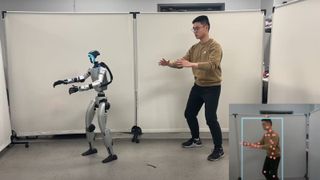
Humanoid robots could soon move in a far more realistic manner — and even dance just like us — thanks to a new software framework for tracking human motion.

Developed by researchers at UC San Diego, UC Berkeley, MIT, and Nvidia, "ExBody2" is a new technology that enables humanoid robots to perform realistic movements based on detailed scans and motion-tracked visualizations of humans.

The researchers hope that future humanoid robots could perform a much wider range of tasks by mimicking human movements more accurately. For example, the teaching method could help robots operate in roles requiring fine movements — such as retrieving items from shelves — or moving with care around humans or other machines.

Robot mirroring human.

(Image credit: Exbody 2)

ExBody2 works by taking simulated movements based on motion-capture scans of humans and translating them into usable motion data for the robot to replicate. The framework can replicate complex movements using the robot, which would let robots move less rigidly and adapt to different tasks without needing extensive retraining.

Related: 

Discover the 8 Weirdest Robots in the World in 2025

This is all taught using reinforcement learning, a subset of machine learning in which the robot is fed large amounts of data to ensure it takes the optimal route in any given situation. Good outputs, simulated by researchers, are assigned positive or negative scores to "reward" the model for desirable outcomes, which here meant replicating motions precisely without compromising the bot's stability.

The framework can also take short motion clips, such as a few seconds of dancing, and synthesize new frames of movement for reference, to enable robots to complete longer-duration movements.

Dancing with robots

In a video posted to YouTube, a robot trained through ExBody2 dances, spars and exercises alongside a human subject. Additionally, the robot mimics a researcher's movement in real time, using additional code titled "HybrIK: Hybrid Analytical-Neural Inverse Kinematics for Body Mesh Recovery" developed by the Machine Vision and Intelligence Group at Shanghai Jiao Tong University.

At present, ExBody2's dataset is largely focused on upper-body movements. In a study, uploaded Dec. 17, 2024 to the preprint server ArXiv, the researchers behind the framework explained that this is due to concerns that introducing too much movement in the lower half of the robot will cause instability.

"Overly simplistic tasks could limit the training policy's ability to generalize to new situations, while overly complex tasks might exceed the robot's operational capabilities, leading to ineffective learning outcomes," they wrote. "Part of our dataset preparation, therefore, includes the exclusion or modification of entries that featured complex lower body movements beyond the robot's capabilities."

The researchers' dataset contains more than 2,800 movements, with 1,919 of these coming from the Archive of Motion Capture As Surface Shapes (AMASS) dataset. This is a large dataset of human motions, including more than 11,000 individual human movements and 40 hours of detailed motion data, intended for non-commercial deep learning — when a neural network is trained on vast amounts of data to identify or reproduce patterns.

Having proven ExBody2's effectiveness at replicating human-like movement in humanoid robots, the team will now turn to the problem of achieving these results without having to manually curate datasets to ensure only suitable information is available to the framework. The researchers suggest that, in the future, automated dataset collection will help smooth this process.

RELATED VIDEOS


Meet Ameca, the world's 'most advanced' humanoid robot

5 Most Realistic Humanoid Robots in The World

This Is The First LIQUID Robot, And It’s Unbelievable

15 Most Incredible Giant Robots In The World

7 STRANGEST New Robots

{ https://www.livescience.com/ }

Hoe vind je dit bericht?
Geschreven door peter om 17:12 Stuur door

10 Stunning Ancient Megaliths That Eclipse Stonehenge

10 Stunning Ancient Megaliths That Eclipse Stonehenge

These ancient structures offer glimpses into early civilizations' ingenuity, cultural practices, and perhaps even their understanding of the cosmos.

Known as

Megalithic wonders span the globe, each cloaked in mystery and awe-inspiring history. While Stonehenge often steals the spotlight, several other megaliths rival—and sometimes surpass—it in scale, age, and intrigue. These ancient structures offer glimpses into early civilizations’ ingenuity, cultural practices, and perhaps even their understanding of the cosmos.

Let’s explore 10 awe-inspiring megalithic sites that challenge Stonehenge’s legacy and continue to baffle archaeologists.

1. The Carnac Stones: A Sea of Ancient Monoliths

A photograph of the stones at Carnac. Wikimedia Commons. A photograph of the stones at Carnac. Wikimedia Commons.

In Brittany, France, the Carnac Stones stretch across the landscape in linear and circular formations. Dating back approximately 6,000 years, this site comprises around 3,000 stones, some towering over 20 feet (6.5 meters). While some stones appear to mark graves, others stand alone, hinting at ceremonial or astronomical purposes.

2. Nan Madol: A Lost City of Stone

The Ancient Ruins of Nan Madol. Image Credit: Wikimedia Commons. The Ancient Ruins of Nan Madol. Image Credit: Wikimedia Commons.

Off the coast of Micronesia lies Nan Madol, a series of artificial islets constructed from basalt columns. This ancient city, dating back over 1,000 years, is believed to have been a ceremonial and political hub for the Saudeleur dynasty. Its unique construction and remote location make it one of the most mysterious megalithic sites in the world.

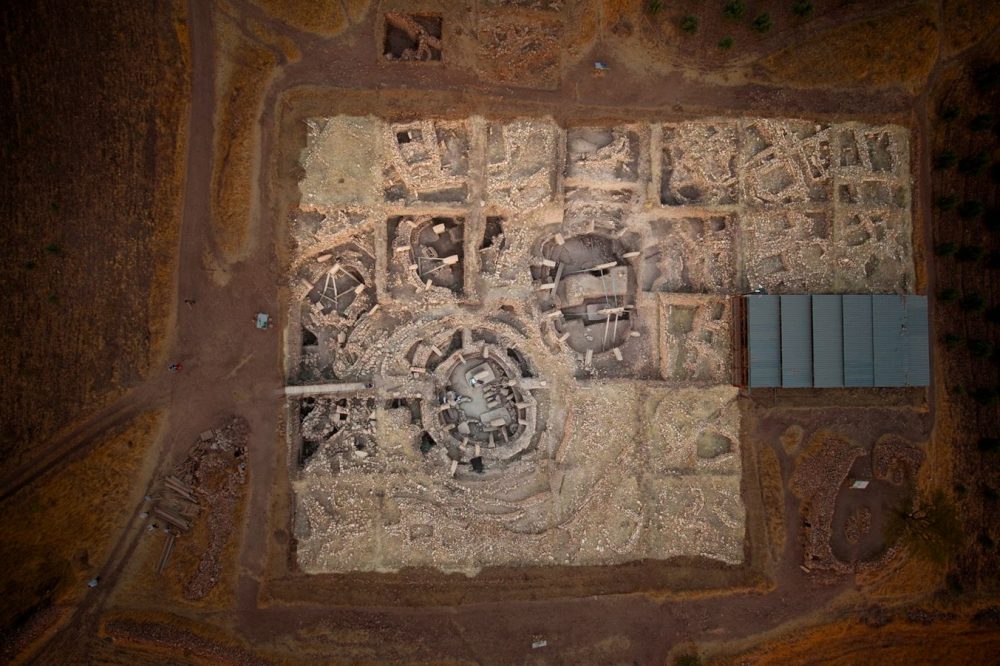
3. Göbekli Tepe: The World’s Oldest Sanctuary

Aerial view of the megalithic complex. Credit: Gobekli Tepe Project / UNESCO Aerial view of the megalithic complex. Credit: Gobekli Tepe Project / UNESCO

Hidden in southeastern Turkey, Göbekli Tepe predates Stonehenge by over 6,000 years. This extraordinary site, believed to be more than 11,000 years old, consists of towering T-shaped pillars carved with intricate depictions of animals such as foxes, boars, and vultures. Thought to be a ceremonial gathering spot for hunter-gatherers, Göbekli Tepe challenges our understanding of prehistoric societies and their capabilities. The exact purpose of this site remains a subject of ongoing debate, adding to its allure.

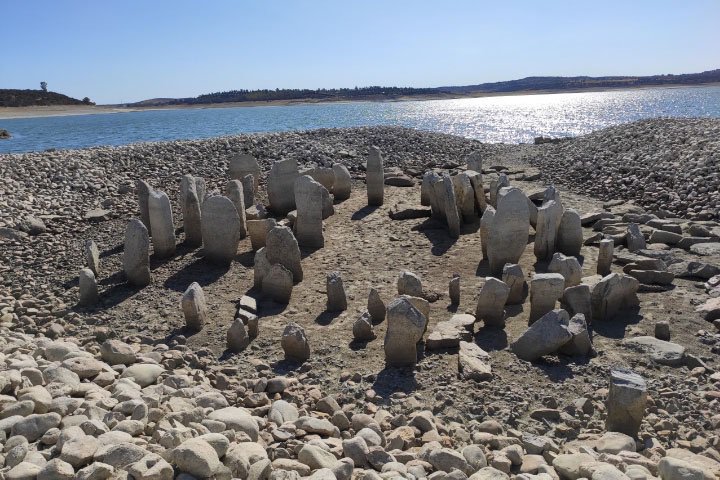
4. The Spanish Stonehenge: Resurfacing Through Time

The Dolmens of Guadalperal in Spain. Image Credit: Wikimedia Commons. The Dolmens of Guadalperal in Spain. Image Credit: Wikimedia Commons.

Known as the Dolmen of Guadalperal, this megalithic marvel in western Spain dates back nearly 7,000 years. Submerged beneath a reservoir for decades, the site occasionally emerges during droughts, revealing its central oval arrangement of around 150 standing stones. Some stones feature carvings of human figures and possible river symbols, sparking debates about their cultural significance.

5. Ale’s Stones: Sweden’s Mysterious Ship

Ale’s Stones consists of 59 massive boulders arranged in the shape of a ship. Wikimedia Commons. Ale’s Stones consists of 59 massive boulders arranged in the shape of a ship. Wikimedia Commons.

Perched on a cliff near the village of Kåseberga, Ale’s Stones consists of 59 massive boulders arranged in the shape of a ship. Weighing up to 4,000 pounds (1,800 kilograms) each, the stones’ purpose remains uncertain, with theories ranging from a solar calendar to a burial site. Estimated to be between 1,000 and 2,500 years old, Ale’s Stones continues to intrigue archaeologists and visitors alike.

6. Avebury: Stonehenge’s Larger Cousin

Located in southwest England, Avebury boasts the world’s largest stone circle, with a diameter of approximately 1,378 feet (420 meters). Wikimedia Commons. Located in southwest England, Avebury boasts the world’s largest stone circle, with a diameter of approximately 1,378 feet (420 meters). Wikimedia Commons.

Located in southwest England, Avebury boasts the world’s largest stone circle, with a diameter of approximately 1,378 feet (420 meters). This massive structure, dating back to around 2500 BCE, is surrounded by two smaller stone circles and features avenues leading to nearby prehistoric sites. As part of a sprawling Neolithic landscape, Avebury highlights the complexity of ancient communities and their impressive engineering skills.

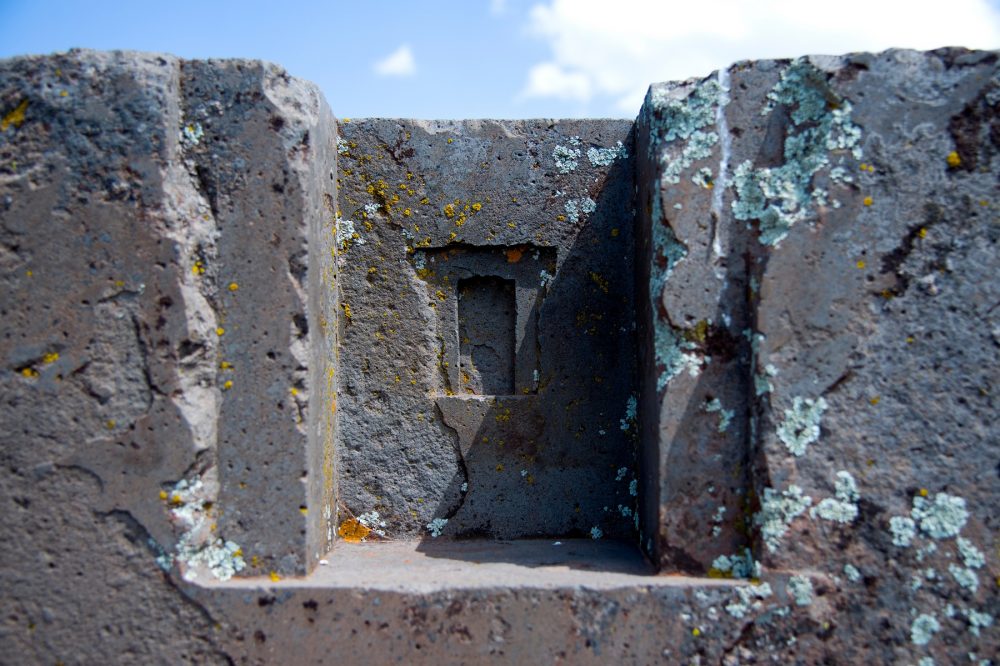
7. Puma Punku: The Precision of Ancient Bolivia

A close-up image of one of the intricately decorated stones at Puma Punku. Shutterstock. A close-up image of one of the intricately decorated stones at Puma Punku. Shutterstock.

High in the Andes lies Puma Punku, a megalithic site within the Tiwanaku complex in Bolivia. The site is famous for its precisely cut andesite blocks, some weighing over 100 tons. Dating back at least 1,500 years, Puma Punku’s advanced engineering continues to baffle experts, who struggle to explain how such precision was achieved without modern tools.

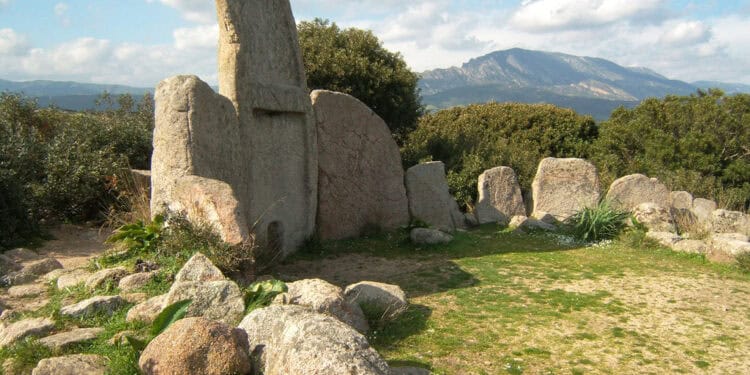
8. The Giants’ Tombs of Sardinia

Known as Known as “Tombe dei Giganti,” the structures are characterized by large stone slabs arranged in a semi-circular fashion.

Scattered across Sardinia, these megalithic tombs date back to the Bronze Age, roughly 3,500 years ago. Known as “Tombe dei Giganti,” the structures are characterized by large stone slabs arranged in a semi-circular fashion. These enigmatic tombs are thought to be burial sites, but their exact rituals and cultural significance remain unknown.

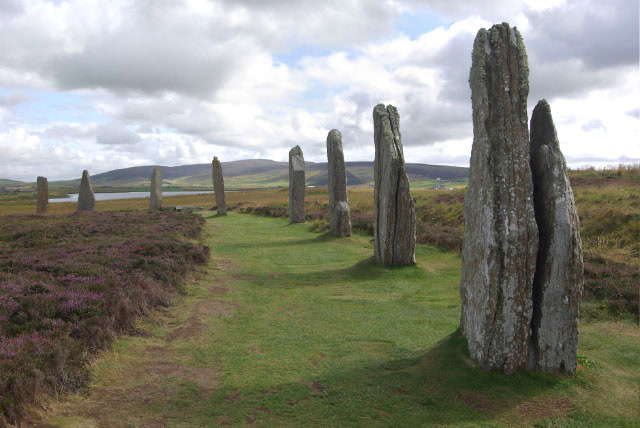
9. The Ring of Brodgar: Scotland’s Sacred Circle

A nice view if the stones of the Ring of Brodgar. Wikimedia Commons. A nice view if the stones of the Ring of Brodgar. Wikimedia Commons.

Situated on Orkney’s largest island, the Ring of Brodgar is a majestic stone circle dating back to approximately 2500 BCE. Originally composed of 60 stones, of which 36 remain, this site measures 341 feet (104 meters) in diameter. Nearby burial mounds suggest the circle served as a ceremonial site honoring the dead, blending rituals and astronomy into its purpose.

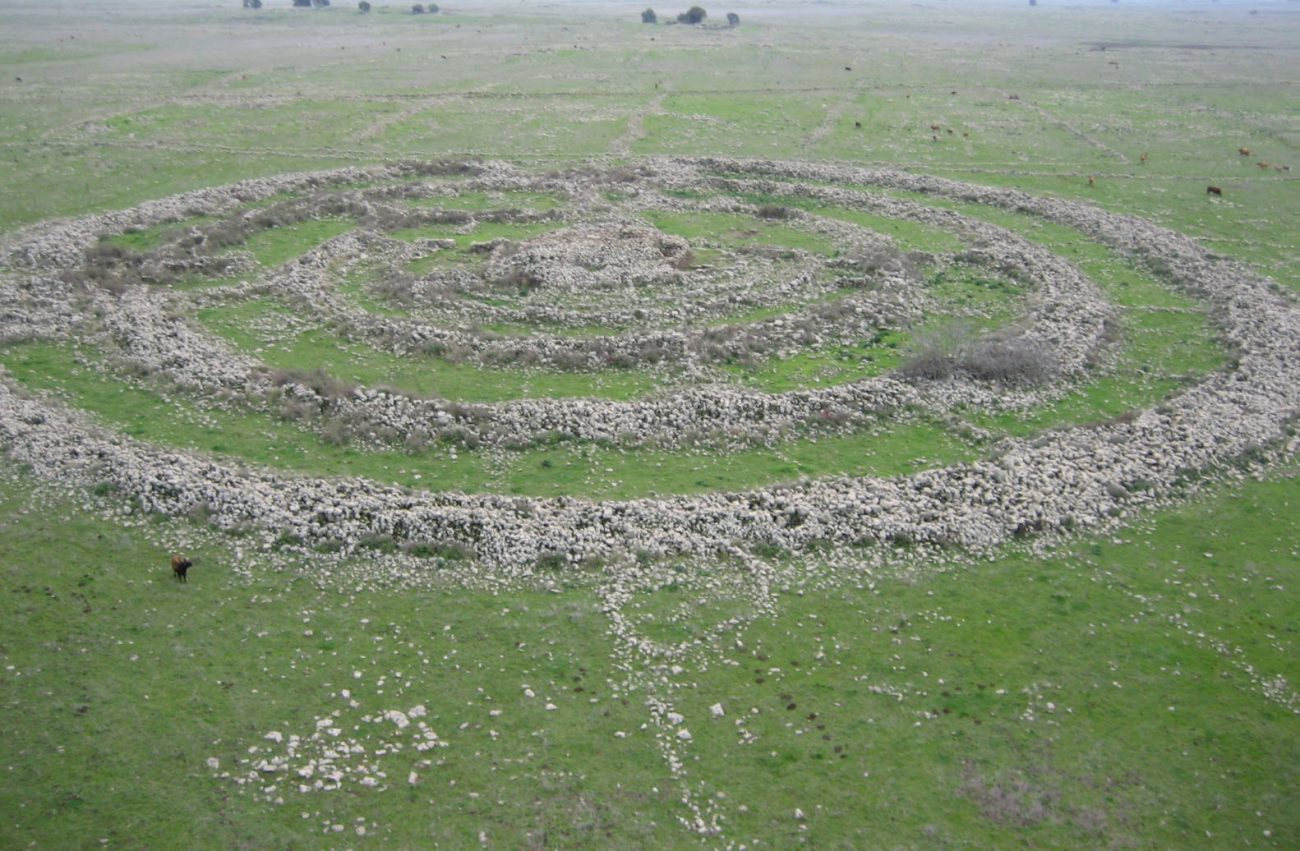
10. Rujm el-Hiri: The Wheel of Giants

Gilgal Refā'īm is an ancient megalithic monument in the Golan Heights (Early Bronze Age II, 3000–2700 BCE). Image Credit: Wikimedia Commons. Gilgal Refā’īm is an ancient megalithic monument in the Golan Heights (Early Bronze Age II, 3000–2700 BCE). Image Credit: Wikimedia Commons.

Nestled in the contested Golan Heights, Rujm el-Hiri is a striking series of concentric stone circles surrounding a central tumulus. Dubbed the “Wheel of Giants” or the “Levantine Stonehenge,” this site dates back around 6,000 years. Though its purpose remains unclear, theories suggest it may have been used for burials or astronomical observations.

RELATED VIDEOS


10 AMAZING Megalithic Structures! Largest, Ancient Structures in the World!

Secrets of the Megaliths: Discovering the Truth Behind Ancient Wonders

10 AMAZING MEGALITHIC SITES from around the world that are NOT Göbekli Tepe or Stonehenge

{ https://curiosmos.com/ }

Hoe vind je dit bericht?
Geschreven door peter om 16:45 Stuur door

Meer van UFO'S of UAP'S, ASTRONOMIE, RUIMTEVAART, ARCHEOLOGIE, OUDHEIDKUNDE, SF-SNUFJES EN ANDERE ESOTERISCHE WETENSCHAPPEN - DE ALLERLAATSTE NIEUWTJES

↑ Terug naar de berichten