Naar de inhoud

UFO'S of UAP'S, ASTRONOMIE, RUIMTEVAART, ARCHEOLOGIE, OUDHEIDKUNDE, SF-SNUFJES EN ANDERE ESOTERISCHE WETENSCHAPPEN - DE ALLERLAATSTE NIEUWTJES

UFO's of UAP'S in België en de rest van de wereld
akke.beakke.be
Ontdek de Fascinerende Wereld van UFO's en UAP's: Jouw Bron voor Onthullende Informatie! Ben jij ook gefascineerd door het onbekende? Wil je meer weten over UFO's en UAP's, niet alleen in België, maar over de hele wereld? Dan ben je op de juiste plek! België: Het Kloppend Hart van UFO-onderzoek In België is BUFON (Belgisch UFO-Netwerk) dé autoriteit op het gebied van UFO-onderzoek. Voor betrouwbare en objectieve informatie over deze intrigerende fenomenen, bezoek je zeker onze Facebook-pagina en deze blog. Maar dat is nog niet alles! Ontdek ook het Belgisch UFO-meldpunt en Caelestia, twee organisaties die diepgaand onderzoek verrichten, al zijn ze soms kritisch of sceptisch. Nederland: Een Schat aan Informatie Voor onze Nederlandse buren is er de schitterende website www.ufowijzer.nl, beheerd door Paul Harmans. Deze site biedt een schat aan informatie en artikelen die je niet wilt missen! Internationaal: MUFON - De Wereldwijde Autoriteit Neem ook een kijkje bij MUFON (Mutual UFO Network Inc.), een gerenommeerde Amerikaanse UFO-vereniging met afdelingen in de VS en wereldwijd. MUFON is toegewijd aan de wetenschappelijke en analytische studie van het UFO-fenomeen, en hun maandelijkse tijdschrift, The MUFON UFO-Journal, is een must-read voor elke UFO-enthousiasteling. Bezoek hun website op www.mufon.com voor meer informatie. Samenwerking en Toekomstvisie Sinds 1 februari 2020 is Pieter niet alleen ex-president van BUFON, maar ook de voormalige nationale directeur van MUFON in Vlaanderen en Nederland. Dit creëert een sterke samenwerking met de Franse MUFON Reseau MUFON/EUROP, wat ons in staat stelt om nog meer waardevolle inzichten te delen. Let op: Nepprofielen en Nieuwe Groeperingen Pas op voor een nieuwe groepering die zich ook BUFON noemt, maar geen enkele connectie heeft met onze gevestigde organisatie. Hoewel zij de naam geregistreerd hebben, kunnen ze het rijke verleden en de expertise van onze groep niet evenaren. We wensen hen veel succes, maar we blijven de autoriteit in UFO-onderzoek! Blijf Op De Hoogte! Wil jij de laatste nieuwtjes over UFO's, ruimtevaart, archeologie, en meer? Volg ons dan en duik samen met ons in de fascinerende wereld van het onbekende! Sluit je aan bij de gemeenschap van nieuwsgierige geesten die net als jij verlangen naar antwoorden en avonturen in de sterren! Heb je vragen of wil je meer weten? Aarzel dan niet om contact met ons op te nemen! Samen ontrafelen we het mysterie van de lucht en daarbuiten.

Archief

Danish Police Investigate Mysterious UAP Sighting

Danish Police Investigate Mysterious UAP Sighting

UFO-Egg-sun-Lynx-1024x576.jpg

“Drone@ Sighting Over Koege Port Amid Global UAP Surge

Koege, Denmark — Danish police are investigating a report of approximately 20 drones spotted over the Koege Marina, southwest of Copenhagen, on Friday night. The incident, which has sparked widespread curiosity and concern, is part of a growing trend of unexplained aerial phenomena (UAP) sightings across Europe and the United States, including a recent surge in reports from New Jersey.

The Incident: Drones Over Koege

According to Danish police, the incident began when a witness reported seeing a swarm of 20 drones hovering over the Koege Marina. By the time officers arrived, only four large drones remained visible. Witnesses described the drones as moving in a coordinated manner before disappearing into Koege Bay at high speed.

“It was unlike anything I’ve ever seen,” said Lars Jensen, a local fisherman who observed the event. “They moved too smoothly, too quietly. And then they were gone.”

Police have launched an investigation to determine the origin and purpose of the drones. No permits had been issued for drone flights in the area at the time, raising questions about who was operating the devices and why. Authorities are also exploring potential links to Russian hybrid warfare tactics, given recent reports of similar incidents in other European countries amid the ongoing war in Ukraine.

Global Context: A Surge in UAP Sightings

The Koege incident is not an isolated event. In recent months, sightings of drones, orbs, and other UAPs have surged worldwide, prompting investigations and speculation.

  • Europe: Similar drone swarms have been reported in Sweden, Norway, and Germany, with many incidents linked to suspected Russian activity. Experts warn that these drones could be used for espionage, sabotage, or psychological operations.
  • United States: In New Jersey, residents have reported a wave of UAP sightings, including pulsating orbs and darting lights. In December 2024, multiple witnesses in Sussex County described seeing a fleet of glowing orbs hovering over the town of Newton for nearly an hour. Similar events were reported in Princeton and Atlantic City, with some residents capturing footage of the phenomena.
  • Global Trends: According to the National UFO Reporting Center, UAP sightings worldwide increased by 40% in 2024, with many reports describing drone-like objects and orbs of light.

Theories and Investigations

The surge in UAP sightings has sparked a range of theories and investigations:

  1. Russian Hybrid Warfare: Many experts believe the drones could be part of a Russian hybrid warfare campaign, designed to destabilize Western nations and gather intelligence.
  2. Extraterrestrial Activity: Some researchers argue that the objects could be evidence of extraterrestrial intelligence, citing their advanced movements and lack of identifiable technology.
  3. Advanced Military Technology: Others speculate that the drones could be classified military aircraft developed by the U.S. or other nations.
  4. Natural or Man-Made Phenomena: Skeptics suggest that the sightings could be the result of misidentified natural phenomena or experimental civilian drones.

Local Impact: New Jersey’s UAP Hotspot

While the Koege incident has captured international attention, New Jersey has emerged as a hotspot for UAP activity. In recent months, the state has seen a surge in sightings, with residents reporting everything from drones to pulsating orbs.

  • Sussex County: In December 2024, residents of Newton reported seeing a fleet of pulsating orbs hovering over the town for nearly an hour.
  • Princeton: A group of students at Princeton University captured footage of a darting light that defied explanation.
  • Atlantic City: Tourists and locals alike have reported seeing strange lights over the Atlantic Ocean, with some describing the objects as “otherworldly.”

Government Response: Calls for Transparency

The surge in UAP sightings has prompted calls for transparency from governments worldwide. In November 2024, the U.S. Congress held hearings on UAPs, but officials provided few answers. Similarly, European governments have been tight-lipped about the recent drone sightings, fueling speculation and concern.

“We need to know what’s going on,” said Sarah Thompson, a high school teacher in Newton, New Jersey. “If these objects are a threat, we deserve to know.”

Conclusion: A Mystery Unfolding

The Koege drone sighting is just one piece of a larger puzzle—a global mystery that continues to unfold. Whether the objects are drones, extraterrestrial craft, or something else entirely, one thing is clear: the sky is no longer the limit.

As investigations continue, the world waits for answers.

References and Further Reading:

{ https://lynxotic.com/latest-news/ }

Hoe vind je dit bericht?
Geschreven door peter om 23:35 Stuur door

Unexpected Mechanism Explains Formation of Pluto-Charon System

Unexpected Mechanism Explains Formation of Pluto-Charon System

Planetary scientists at the University of Arizona say they have discovered an entirely new type of cosmic collision.

Pluto and Charon are the largest binary system in the known population of trans-Neptunian objects in the outer Solar System. Their shared external orbital axis suggests a linked evolutionary history and collisional origin. Their radii, 1,200 km and 600 km, respectively, and Charon’s wide circular orbit of about 16 Pluto radii require a formation mechanism that places a large mass fraction into orbit, with sufficient angular momentum to drive tidal orbital expansion. Denton et al. numerically modeled the collisional capture of Charon by Pluto using simulations that include material strength. Image credit: Denton et al., doi: 10.1038/s41561-024-01612-0.

Pluto and Charon are the largest binary system in the known population of trans-Neptunian objects in the outer Solar System. Their shared external orbital axis suggests a linked evolutionary history and collisional origin. Their radii, 1,200 km and 600 km, respectively, and Charon’s wide circular orbit of about 16 Pluto radii require a formation mechanism that places a large mass fraction into orbit, with sufficient angular momentum to drive tidal orbital expansion. Denton et al. numerically modeled the collisional capture of Charon by Pluto using simulations that include material strength.

Image credit: Denton et al., doi: 10.1038/s41561-024-01612-0.

For decades, planetary researchers have theorized that Pluto’s unusually large moon Charon formed through a process similar to Earth’s Moon — a massive collision followed by the stretching and deformation of fluid-like bodies.

This model worked well for the Earth-Moon system, where the intense heat and larger masses involved meant the colliding bodies behaved more like fluids.

However, when applied to the smaller, colder Pluto-Charon system, this approach overlooked a crucial factor: the structural integrity of rock and ice.

“Pluto and Charon are different — they’re smaller, colder and made primarily of rock and ice,” said Dr. Adeene Denton, a postdoctoral researcher with the Lunar and Planetary Laboratory at the University of Arizona.

“When we accounted for the actual strength of these materials, we discovered something completely unexpected.”

Using advanced impact simulations, the authors found that instead of stretching during the collision, Pluto and the proto-Charon temporarily stuck together, rotating as a single snowman-shaped object before separating into the binary system we observe today.

A binary system occurs when two celestial bodies orbit around a common center of mass.

“Most planetary collision scenarios are classified as ‘hit and run’ or ‘graze and merge’,” Dr. Denton said.

“What we’ve discovered is something entirely different — a ‘kiss and capture’ scenario where the bodies collide, stick together briefly and then separate while remaining gravitationally bound.”

“The compelling thing about this study is that the model parameters that work to capture Charon, end up putting it in the right orbit. You get two things right for the price of one,” said Professor Erik Asphaug, also from the Lunar and Planetary Laboratory at the University of Arizona.

The study also suggests that both Pluto and Charon remained intact during their collision, preserving much of their original composition.

This challenges previous models that suggested extensive deformation and mixing during the impact.

Additionally, the collision process, including tidal friction as the bodies separated, deposited considerable internal heat into both bodies, which may provide a mechanism for Pluto to develop a subsurface ocean without requiring formation in the more radioactive very early Solar System — a timing constraint that has troubled planetary scientists.

“Charon is captured relatively intact in our scenario, retaining its core and most of its mantle, which implies that Charon could be as ancient as Pluto,” the researchers said.

  • Their work appears today in the journal Nature Geoscience.
  • C.A. Denton et al. Capture of an ancient Charon around Pluto. Nat. Geosci, published online January 6, 2025; doi: 10.1038/s41561-024-01612-0
RELATED VIDEOS

Pluto-Charon Binary System

Pluto: The Rise and Fall of Our Ninth Planet | Star Gazers

Pluto, Comets, Asteroids, and the Kuiper Belt

{ https://www.sci.news/ }

Hoe vind je dit bericht?
Geschreven door peter om 22:14 Stuur door

Drone Fleet On Live Cam Over Ocean Off New Jersey, Dec 7, 2025, UFO UAP Sighting News.

Drone Fleet On Live Cam Over Ocean Off New Jersey, Dec 7, 2025, UFO UAP Sighting News. 

%20MUFON,%20%E7%9B%AE%E6%92%83%E3%80%81%E3%82%A8%E3%82%A4%E3%83%AA%E3%82%A2%E3%83%B3,%20%20UFO,%20UFOs,%20%D0%9D%D0%9B%D0%9E%20,%20NLO,%20sighting,%20sightings,%20alien,%20aliens,%20ET,%20anomaly,%20anomalies,%20ancient,%20astrobiology,%20vreemdelinge,%20%203%20copy%204.png

Date of sighting: Dec 7, 2025

Location of sighting: Sea Side Park Cam, New Jersey, USA
 
Guys check this out. UFOs are flying all over the place on the live cam today. I have used cams as UFO searching tools for two decades and just thing more people need to utilize them for research tools. These UFOs changed positions and were in a triangle formation a little bit. Just saw two more on live cam a few minutes ago. Go check, you may see some UFOs AKA New Jersey Drones.
Scott C. Waring 
 

Drone Fleet On Live Cam Over Ocean Off New Jersey, Dec 7, 2025, UFO UAP Sighting News.

{ https://www.ufosightingsdaily.com/ }

Hoe vind je dit bericht?
Geschreven door peter om 22:01 Stuur door

Here's How Pluto and Charon Became a Bizarre Double Planet

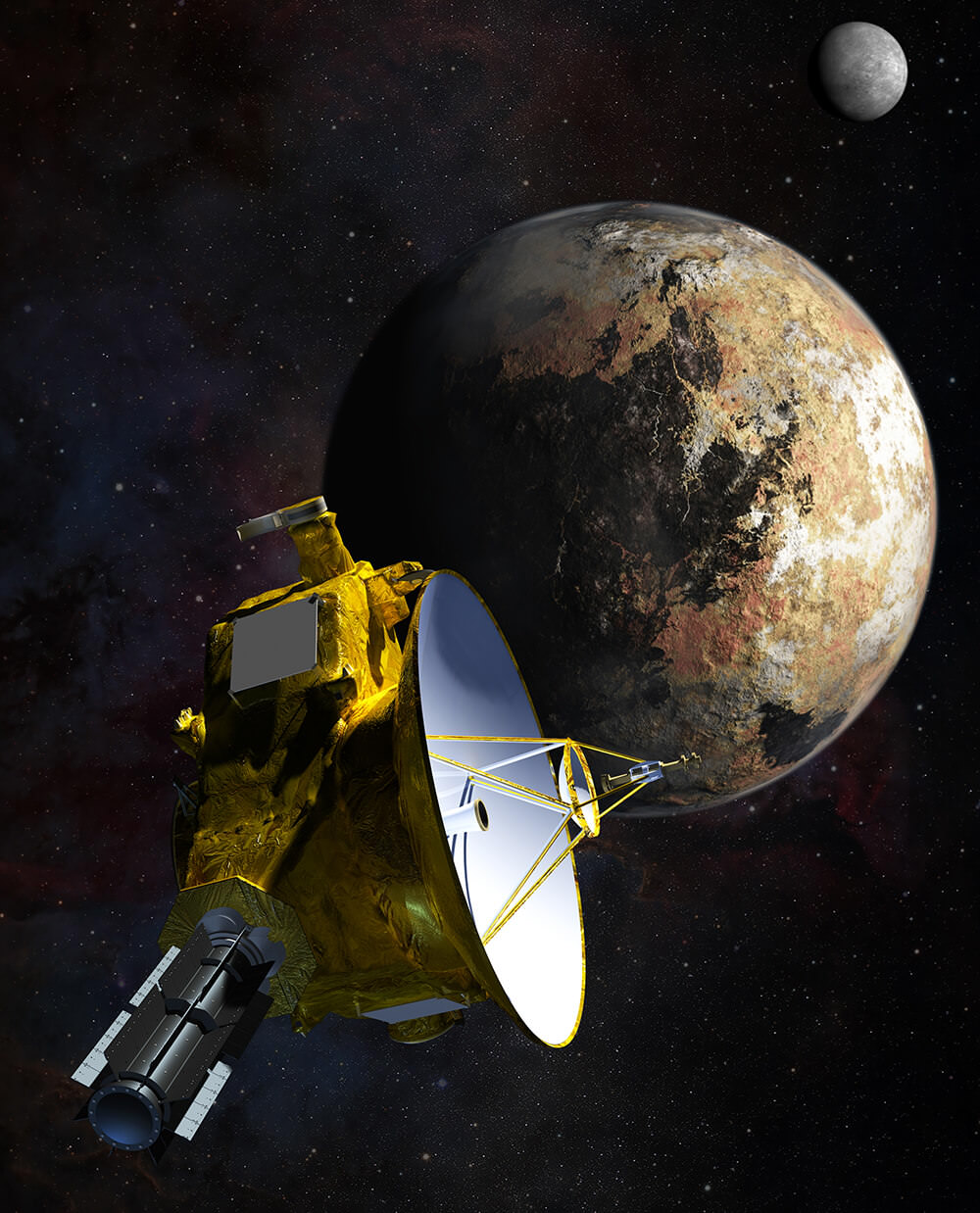
Artist's impression of New Horizons' close encounter with the Pluto–Charon system. Credit: NASA/JHU APL/SwRI/Steve Gribben

Here's How Pluto and Charon Became a Bizarre Double Planet

On July 14th, 2015, the New Horizons probe made history by accomplishing the first flyby of Pluto and its largest satellite, Charon. The stunning images this mission took of these icy worlds have helped scientists address some of the key questions about Pluto and its massive moon, which have been shrouded in mystery for decades (owing to their great distance from Earth). One of the biggest mysteries that scientists have contemplated since Charon was first discovered in 1978 is how it came together with Pluto in the first place.

For decades, astronomers suspected that Pluto and Charon formed through a process similar to Earth and the Moon. This theory, known as the Giant Impact Hypothesis, states that roughly 4.5 billion years ago, primordial Earth was struck by a Mars-sized body named Theia. In a new study, a team of researchers from the University of Arizona challenged this assumption and offered an alternate theory known as “kiss and capture.” Their findings could help scientists better understand how planetary bodies in the outer Solar System form and evolve.

The study was led by Adeene Denton, a NASA postdoctoral fellow at the University of Arizona’s Lunar and Planetary Laboratory and the Southwest Research Institute (SwRI). She was joined by Erik Asphaug, a Planetary Science Professor in the School of Earth and Space Exploration (SESE) and the Lunar and Planetary Laboratory (LPL) at the University of Arizona; Robert Melikyan, an LPL Graduate Student, and Alexandre Emsenhuber, a Postdoctoral Researcher from the Space Research and Planetary Science (SRPS) at the University of Bern. The paper that describes their findings, “Capture of an Ancient Charon around Pluto,” was published in the journal Nature Geoscience. 

Previously, scientists believed that Pluto and Charon formed from a massive collision, similar to the Giant Impact Hypothesis. According to this theory, a Mars-sized planet named Theia collided with a primordial Earth roughly 4.5 billion years ago. This impact turned both bodies into molten debris that eventually coalesced to form the Earth and Moon, eventually settling into the Earth-Moon system. According to the team’s study, this theory does not fit when it comes to Pluto and Charon because it fails to take into account the structural strength of cold, icy worlds.

Using the University of Arizona’s high-performance computing cluster, the team conducted advanced impact simulations. This showed that when Pluto and a proto-Charon collided, they became temporarily stuck together and formed a single snowman-shaped object – not unlike Arrokoth, the first Kuiper Belt Object (KBO) that New Horizons surveyed on December 31st, 2018. Over time, they separated to become the binary system we observe there today. Said Denton in a U of A News story:

“Pluto and Charon are different – they’re smaller, colder and made primarily of rock and ice. When we accounted for the actual strength of these materials, we discovered something completely unexpected. Most planetary collision scenarios are classified as ‘hit and run’ or ‘graze and merge.’ What we’ve discovered is something entirely different – a ‘kiss and capture’ scenario where the bodies collide, stick together briefly, and then separate while remaining gravitationally bound.”

Their results also suggest that Pluto and Charon remained largely intact during their collision and retained much of their original composition. This challenges previous models that suggest that colliding bodies will exchange material during the impact. This is based on studies of the Apollo moonrocks, which indicated that the Earth and Moon are similar in composition, a finding that led scientists to conclude that the Earth-Moon system formed together. What’s more, their research offers a potential explanation for how Pluto may have developed an internal ocean.

pluto-vr-nytimes-1024x682.jpg

View from the surface of Pluto, showing its large moon Charon in the distance. Credit: New York Times

The collision process, they state, combined with the tidal friction caused by the separation of Pluto and Charon, would have caused considerable internal heating for both bodies. This could have provided the necessary mechanism for creating a subsurface ocean, contrary to a previous theory where scientists have argued that Pluto formed during the very early Solar System when there were far more radioactive elements. However, scientists have expressed doubts about this theory because of the timing constraints it imposes.

Denton and her colleagues are now planning follow-up studies to explore several related questions about this system of icy bodies. This includes how tidal forces influenced Pluto and Charon’s early evolution when they were much closer together, how this formation scenario aligns with Pluto’s current geological features, and whether similar processes could explain the formation of other binary systems. Said Denton:

“We’re particularly interested in understanding how this initial configuration affects Pluto’s geological evolution. The heat from the impact and subsequent tidal forces could have played a crucial role in shaping the features we see on Pluto’s surface today.”

Further Reading: 

RELATED VIDEOS


Space Facts: Here's How Pluto and Charon Became a Bizarre Double Planet...

Pluto & Charon: A Double Dwarf Planet System?

The Past And The Future Of Pluto And Charon

{ https://www.universetoday.com/ }

Hoe vind je dit bericht?
Geschreven door peter om 21:13 Stuur door

The Lunar Surface Remelted, Obscuring an Easy Answer to its True Age

A few hundred million years after its formation, the Moon was subject to intense volcanic activity. The distance between the Earth and the Moon was much smaller back then than it is today. Lunar surface rocks reflect a younger age due to a "melting" event at the time. MPS / Alexey Chizhik, CC BY-NC-ND

The Lunar Surface Remelted, Obscuring an Easy Answer to its True Age

How old is the Moon? Astronaut-gathered samples from the lunar surface put its age at about 4.35 billion years. However, other evidence suggests it’s much older, around 4.53 billion years old. A team of scientists published a recent paper that suggests the Moon’s surface age was “reset” in a melting event.

The generally accepted theory about the Moon’s formation goes like this: about 4.5 billion years ago and about 200 million years after the solar system began to form, something happened. A single Mars-sized object named Theia (or possibly a series of objects) collided with or was somehow captured by infant Earth. That tumultuous crash sent a lot of molten rock and debris into space. Eventually, most of it coalesced to form the infant Moon, which settled into orbit around Earth. Debris from the inner solar system bombarded the pair for millions of years thereafter.

Fast-forward to the present day, where we can study rocks collected from the lunar surface during the Apollo missions. Scientists analyzed those samples and found them to be about 4.35 billion years old. That suggests the Moon is NOT 4.53 billion years old. Which is true? It turns out there’s strong evidence for an older Moon. It exists in some zircon minerals on the lunar surface. They’re at least 4.51 billion years old. thermal models and simulations also suggest a lunar age somewhere between 4.43 and 4.53 billion years. So, why are lunar surface rocks almost 200 million years younger?

Dating the Moon

As it turns out, both numbers could be true. The Moon could have formed very early, but it experienced something that changed its geological clock. According to UC Santa Cruz professor Francis Nimmo and a team of researchers, the Moon likely did form 4.51 million years ago in that catastrophic collision with baby Earth. But, 180 million years later, it may have experienced a “remelting”. That reset the ages of lunar rocks to around 4.35 billion years. That’s why the surface samples collected by the Apollo astronauts show a younger age.

Sample collection on the lunar surface. Apollo 16 astronaut Charles M. Duke Jr. is shown collecting samples with the Lunar Roving Vehicle in the left background. Image: NASA Sample collection on the lunar surface. Apollo 16 astronaut Charles M. Duke Jr. is shown collecting samples with the Lunar Roving Vehicle in the left background. Image: NASA

“We predict that there shouldn’t be any lunar rocks that are older than 4.35 billion years because they should have experienced the same resetting,” said Nimmo. “Because this heating event was global, you shouldn’t find rocks anywhere on the Moon that are significantly older than that.”

Nimmo and his colleagues suggest that a global remelt of lunar rocks could account for the existence of younger surface rocks. The Apollo rocks suggest something happened, and the return of rocks from China’s Chang’e 6 mission could offer more evidence for that theory. For their paper, the authors used modeling to show that the Moon may have experienced sufficient tidal heating to cause this remelting approximately 4.35 billion years ago, which could “reset” the apparent formation age of these lunar samples.


Chang'e-6 lander on the lunar surface, as seen by a mini-rover nearby. Chang’e-6 lander on the lunar surface, as seen by a mini-rover nearby. (Credit: CLEP / CNSA)

Modeling a Lunar Surface Reset

What could cause a global melting strong enough to reset the age of the Moon’s rocks? Nimmo suggest that the Moon experienced tidal heating due to the evolution of its orbit around Earth. This happened because the Moon was closer to Earth, and the orbit was pretty unstable during certain epochs. Thanks to the immense tidal pull from Earth, the Moon could have been heated, which led to the alteration of its geology and the “age reset” of its rocks.

It turns out that the Moon isn’t the only place in the solar system where this could happen. The volcanic moon Io in orbit around Jupiter experiences the same type of tidal attraction as it orbits. That helps explain Io’s extensive volcanic activity and surface “paving” by the frequent eruptions from its volcanic features. It also explains why we don’t see widespread craters on Io.

If the same thing happened to the infant Moon after its original formation, cooldown, and subsequent bombardment, we wouldn’t see any of its original craters. They’d have been covered by subsequent eruption and melting when the Moon’s orbit was stabilizing.

Why is the Lunar Surface Age Important?

The formation and evolution of the solar system and its many different bodies is still a hot area of study. Among other things, scientists want to understand the timing of events that shaped solar system objects. For that, they need a better understanding of the geology of each object. More data leads to better models of every aspect of solar system formation—from the first “push” in the protosolar nebula to such events as collisions, tidal heating, orbital dynamics, and surface evolution of different worlds. That’s where planetary science missions come in handy. They provide “in situ” data about each world (or object, in the case of asteroids, moons, comets, and rings), and they fill in gaps in the history of each place.

“As more data becomes available—particularly from ongoing and future lunar missions—the understanding of the Moon’s past will continue to evolve,” Nimmo said. “We hope that our findings will spark further discussion and exploration, ultimately leading to a clearer picture of the Moon’s place in the broader history of our solar system.”

For More Information

{ https://www.universetoday.com/ }

Hoe vind je dit bericht?
Geschreven door peter om 21:00 Stuur door

NASA Lays Out Two New Options for Mars Sample Return

This photomontage shows tubes containing samples from Mars, as collected by NASA’s Perseverance rover. (NASA / JPL-Caltech / MSSS)

NASA Lays Out Two New Options for Mars Sample Return

Months after deciding that its previous plan for bringing samples back from Mars wasn’t going to work, NASA says it’s working out the details for two new sample return scenarios, with the aim of bringing 30 titanium tubes filled with Martian rocks and soil back to Earth in the 2030s.

One scenario calls for using a beefed-up version of NASA’s sky crane to drop the required hardware onto the Red Planet’s surface, while the other would use heavy-lift commercial capabilities provided by the likes of SpaceX or Blue Origin.

NASA Administrator Bill Nelson said the space agency plans to flesh out the engineering details for each option over the course of the next year and make its choice in 2026. But that all depends on what Congress and President-elect Donald Trump’s administration want to do.

skycrane-1024x736.jpg

An artist’s conception shows NASA’s sky crane system lowering a rover onto the Martian surface. One option calls for a similar system to be used to put a sample retrieval platform on Mars. (NASA Illustration / Ashwin R. Vasavada)

Nelson noted that China is planning to launch a Mars sample return mission in 2028.

“I don’t think we want the only sample return coming back on the Chinese spacecraft, and that’s just simply a grab-and-go kind of mission, whereas ours has been a very methodical process. … I think that the administration will certainly conclude that they want to proceed, so what we wanted to do was to give them the best possible options so that they can go from here,” he told reporters.

For years, NASA has been working on a plan that started out with the collection and caching of samples by the Perseverance rover in Mars’ Jezero Crater, which is considered prime territory for harboring potential evidence of ancient life. Those samples would have been gathered up and brought to a sample retrieval platform, where they would have been sent into Martian orbit on a rocket known as the Mars Ascent Vehicle. The samples would be transferred to a Mars orbiter built by the European Space Agency. That orbiter would then deliver the samples back to Earth for laboratory study.

It was a complex plan, and last year, NASA determined that the operation would have taken until 2040 to get the samples back, with a price tag of $11 billion. “That was just simply unacceptable,” Nelson said.

NASA asked its experts as well as commercial space ventures to come up with ideas for lowering the cost and speeding up the schedule, which resulted in the two options presented today.

The sky crane option would build upon the technology that used a rocket-powered, free-flying platform to lower NASA’s Curiosity and Perseverance rovers to the Martian surface. “You’re looking at cost in the range of $6.6 billion to $7.7 billion,” Nelson said.

The estimated price tag for the commercial heavy-lift option is in the range of $5.8 billion to $7.1 billion. “You all know that SpaceX and Blue Origin have already been ones that have expressed an interest, but it could be others as well, and a team is evaluating and researching all industry capability to include the schedule and the budget to determine the best strategy going forward,” Nelson said.

Both options would use many of the same elements proposed under the previous plan, but would trim costs by using a smaller Mars Ascent Vehicle as well as a simpler design for the sample retrieval platform, powered by a radioisotope thermoelectric generator rather than solar panels. The samples would be brought back from Mars and sent down to Earth by ESA’s Earth Return Orbiter. NASA said ESA is currently evaluating the options proposed by NASA.

The newly proposed schedule could lead to launches in the 2030-31 time frame, and delivery of the samples by as early as 2035. “But it could go out to 2039,” Nelson said. “Now, a good reason for why it could get extended out is if the Congress and the new administration do not respond.”

Nelson said Congress would have to commit at least $300 million during the current fiscal year to keep the Mars sample return campaign on track. “If they want to get this thing back on a direct return earlier, they’re going to have to put more money into it, even more than $300 million in fiscal year ’25, and that would be the case every year going forward,” he said.

Trump has been bullish on Mars exploration, in part due to the influence of SpaceX founder Elon Musk. So bullish, in fact, that Trump wants to have astronauts on the Red Planet by 2028, potentially forcing another overhaul of the Mars sample return campaign.

“We will reach Mars before the end of my term,” Trump said during a campaign rally last October. “Elon promised me he was going to do that. … He told me that we’re going to win, and he’s going to reach Mars by the end of our term, which is a big thing. Before China, before anybody.”

RELATED VIDEOS

The robotic arm on NASA’s Perseverance rover reached out to examine rocks in an area on Mars nicknamed the “Cratered Floor Fractured Rough” area in this image captured on July 10, 2021 (the 138th sol, or Martian day, of its mission).

Credits: NASA/JPL-Caltech

NASA Rover Finds 'Possible Signs Of Life' On Mars

Mars Sample Return: Bringing Mars Rock Samples Back to Earth

Mars Sample Return Conceptual Animation

Testing Mars Sample Return

{ https://www.universetoday.com/ }

Hoe vind je dit bericht?
Geschreven door peter om 20:39 Stuur door

Roswell Incident: The UFO Mystery That Shaped History

Roswell Incident: The UFO Mystery That Shaped History

UFO Roswell Incident

The Roswell Incident of 1947 remains one of the most enduring mysteries of modern history, capturing imaginations and fueling debates about extraterrestrial life and government secrecy. This enigmatic event, often regarded as the birthplace of UFO folklore, is rooted in an unusual discovery made in the summer of 1947 near Roswell, New Mexico.

The Discovery of Strange Debris

In July 1947, rancher Mac Brazel stumbled upon peculiar debris scattered across his field. The material appeared lightweight, resilient, and unrecognizable. Unsure of what he had found, Brazel reported his discovery to Sheriff George Wilcox, who, in turn, involved the local military base. This seemingly mundane incident quickly spiraled into a headline-grabbing event when the U.S. Army Air Forces issued a press release claiming they had recovered a “flying disk.”

Frank Joyce, a local radio reporter, broadcast the story, which sparked a global frenzy. However, within hours, the military retracted their statement, attributing the debris to a weather balloon. For decades, this official explanation remained unchallenged, and the Roswell story faded into relative obscurity.

A Revival of Interest

The Roswell Incident resurfaced in the late 1970s when retired Major Jesse Marcel, the intelligence officer who initially handled the debris, publicly claimed that what he recovered was not from Earth. Marcel described materials that were lightweight yet indestructible and included strange “memory metal” that returned to its original shape when folded. He also reported finding beams with hieroglyphic-like symbols. Marcel’s testimony reignited curiosity and skepticism, leading to a surge of UFO-related investigations.

UFO researchers Stanton Friedman and others uncovered over 60 witnesses connected to the Roswell event. These accounts painted a picture of a crashed alien spacecraft, extraterrestrial bodies, and a meticulous military cover-up. The growing body of anecdotal evidence fueled public belief in the possibility of extraterrestrial visitation.

The Role of Science Fiction and Cultural Fascination

Roswell’s legend was amplified by the cultural backdrop of the mid-20th century. The Cold War era, with its heightened mistrust of government and fear of nuclear annihilation, created fertile ground for conspiracy theories. Hollywood’s science fiction boom, featuring flying saucers and alien invasions, further entrenched the imagery of UFOs in the public consciousness.

The Roswell narrative also borrowed elements from earlier hoaxes, such as the Aztec UFO crash story described in Frank Scully’s 1950 book Behind the Flying Saucers. While the Aztec story was debunked, it shared remarkable similarities with Roswell’s tale, including descriptions of alien bodies and indestructible materials.

Debunking the Myth: Project Mogul

In the 1990s, researchers unearthed a plausible earthly explanation for the Roswell debris. Project Mogul, a top-secret U.S. military initiative, used large balloons equipped with radar reflectors to detect Soviet nuclear tests. These balloons, made from materials resembling tinfoil and balsa wood, closely matched the descriptions given by witnesses. The hieroglyph-like symbols reported by Jesse Marcel Jr. were later attributed to decorative patterns on tape used in constructing the radar reflectors.

While Project Mogul offers a rational explanation for the Roswell debris, it fails to satisfy UFO enthusiasts who believe the military orchestrated a cover-up to conceal evidence of extraterrestrial life.

Lingering Questions and Enduring Belief

Despite scientific explanations, Roswell continues to captivate millions. Annual UFO festivals in Roswell draw enthusiasts, while polls show that a significant portion of the public believes aliens have visited Earth. The persistence of the Roswell legend underscores humanity’s curiosity about the unknown and a deep-seated distrust of authority.

Was Roswell the site of an alien crash, or was it merely a misunderstood military project? The lack of definitive evidence leaves the story open to interpretation. For believers, Roswell is proof that “we are not alone.” For skeptics, it’s a cautionary tale of how myths can grow from small, misunderstood events.

VIDEO:

UFO Roswell Incident (Full Episode) | Undercover History Updates | National Geographic

The Roswell Incident represents more than a historical mystery—it’s a cultural phenomenon that speaks to our collective fascination with life beyond Earth. Whether it was a spaceship or a secret balloon project, the event at Roswell continues to inspire debate, research, and wonder. In the absence of concrete answers, the Roswell mystery remains an enduring testament to the human imagination and the search for truth.

RELATED VIDEOS


The Roswell UFO Crash Investigated | The UFO Uncoverup | Stanton Friedman | TUU

Roswell: The UFO mystery that still haunts America | Planet America

Have UFO Investigators Found Debris From The 1947 Roswell Incident? | Alien Highway

UFOs Roswell Part 1 (Session 11) | The Citizen Hearing on UFO Disclosure

UFOs Roswell Coverup - Part 2 (Session 12) | The Citizen Hearing on UFO Disclosure

{ https://www.latest-ufo-sightings.net/ }

Hoe vind je dit bericht?
Geschreven door peter om 17:47 Stuur door

Betty Andreasson’s Multiple UFO Experiences, Underwater Base & Humans In Glass Container

Betty Andreasson UFO case

Betty Andreasson’s Multiple UFO Experiences, Underwater Base & Humans In Glass Container

The abduction of Betty Andreasson Luca is considered to be one of the most documented cases in the history of Ufology. The woman from Massachusetts experienced multiple abductions, and her case is widely studied by UFO researchers. It became popular after the publication of the best-selling novel “The Andreasson Affair,” which came out in the late 1970s. She attended many radio shows and TV interviews where she discussed her encounter with grey aliens and even drew sketches of the incident.

Robert Luca: The Andreasson-Luca Affair

Betty Andreasson was born on January 7, 1937, to Waino and Eva Aho. She went to school in Westminster and Gardner MA and had a great interest in art since childhood, which later became her passion. Betty married twice and with her first husband, she gave birth to seven children. She met her second husband Bob Luca in 1977.

Betty Andreasson Luca Betty Andreasson Luca

According to the official reports, on the evening of January 25, 1967, Betty was at home with her seven children and parents. At around 6:30 p.m., she was busy in the kitchen when the lights in the house started blinking strangely. Soon after it, the kitchen’s window was hit by a reddish light beam, and the whole house went out of electricity. The children got terrified with the scene and Betty tried to calm them down. Her father looked out to find the source of the light and saw five strange-looking humanoid creatures walking right towards the house. Before he could understand the situation, the beings walked inside the house through the door which put the whole family in a state of shock.

Read also:

hypnotic regression sessions Betty Andreasson during one of her hypnotic regression sessions

One creature went to Betty’s father while the other four came to her, and one of them started talking with her telepathically. The one who was made telepathic contact with Betty was about 5 feet tall, while others were shorter than him. The description by the witnesses was similar to the modern illustration of grey aliens. They had only slits on their mouth, three fingers in one hand, and wore a blue-colored one-piece suit.

Betty was frightened but at the same time, she felt calm by the friendly nature of the beings. They did not harm any member of the family and even released her daughter from a state of unawareness. Then she was taken outside and boarded on their saucer-shaped craft with a small dome that was standing in the backyard. After that, the ship went up in the air and merged with the mothership where Betty went through medical tests and was under the effects of strange equipment. Later, she was taken to some strange place where she felt much pain which, according to her, was a “spiritual experience.”

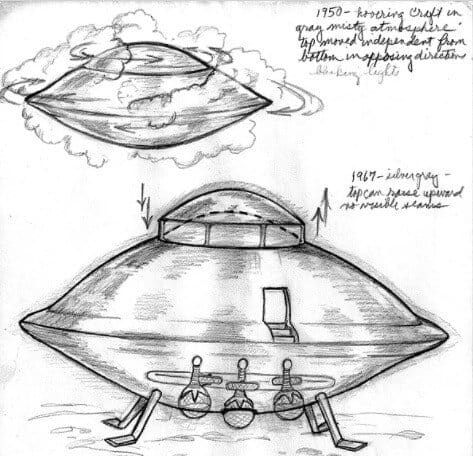
UFO sketch by Betty Andreasson UFO sketch by Betty Andreasson

Later that night, Betty returned home at 10:40 p.m. and found her family still in a frozen state, where one of the aliens was watching them in her absence. Then the family was put to bed by the beings and the aliens left. What’s more, she forgot about her abduction until undergoing hypnotherapy in later years.

Betty said in some of her interviews that the creatures were angelic in nature but not biblical. She is a religious person, had only some school education and did not understand much about UFOs. Only after this bizarre experience, she understood that whatever she had experienced that 

In 1975, Dr. Allen J Hynek posted an ad in the newspaper to learn more about the abduction experiences and asked help from common people. Betty answered his ad by sending a letter, but it was rejected due to its unusual details. It was only in 1977 when her case was deeply investigated by the experts including a solar physicist, an electronics engineer, an aerospace engineer, a telecommunications specialist, and a UFO investigator.

Her case was first investigated by Jules Vaillancourt, a Mutual UFO Network investigator in 1977. He said: “What I found most amazing about Betty was her ability to draw. The detail of the (space) craft and the beings she drew under hypnosis were such that it really made me believe there was something to this.”

He also added that the detective who had given a psychological stress evaluation to Betty and her daughter believed in her story. She even spoke the language of aliens under hypnosis. Her case investigation continued for 12 months where she and her daughter had gone through hypnosis sessions, lie detector tests, and a psychiatric interview. Both mother and daughter passed them with a genuine reaction. Author and UFO researcher Raymond E. Fowler wrote five books on her UFO experiences that include the famous “The Andreasson Affair” series.

During one of her hypnotic regression sessions, she remembered one of the early abductions that occurred to her in childhood. It took place in 1950 when she was taken from her home into a spacecraft as usual. But this time, the craft was flying toward an ocean or sea. She was terrified that the craft would crash into the water. But the ship submerged into the water and entered into a kind of tunnel. Betty could see everything underwater, as the place was filled with light. What she said next under hypnosis is so bizarre that even gave a chill to Fowler.

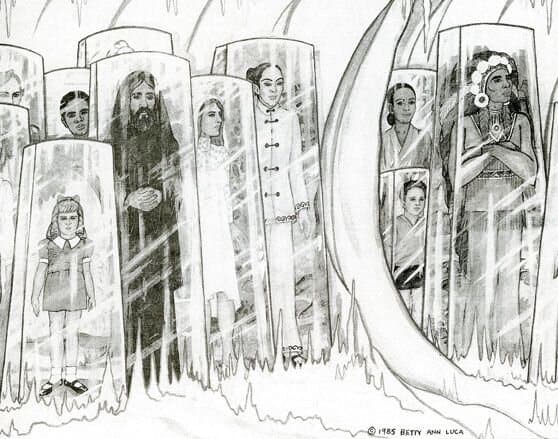
Museum of Time Betty Andreasson drew what Fowler called Museum of Time

She saw people from all eras, different races, encased in the glass container. Fowler called it “The Museum of Time.” Betty said that people in the container were in old-fashioned clothes, and there were uncountable cubicles with humans inside at that underwater base.

Fowler wrote that when he listened to her one of the regression session recordings, his mind blew up as he found it difficult to believe. “A cold chill coursed through my body when Betty was describing people and animals enclosed in glassy cubicles in an icy cavern.”

Betty Andreasson and Bob Luca Betty Andreasson and her second husband Bob Luca

Betty traveled a lot across the country, attending numerous TV interviews and radio shows and lecturing about her UFO experiences. She and her husband Bob Luca had been unsettled for many years until 1995 when they moved to Virginia. They lived in VA for 5 years and then moved to Florida. Shed died on March 18, 2022.

  1. https://www.thegardnernews.com/news/20181023/local-halloween-lore-andreasson-affair
  2. https://www.bibliotecapleyades.net/vida_alien/alien_andreasson.htm
  3. https://www.expandedperspectives.com/the-andreasson-affair/
  4. https://www.ufocasebook.com/Andreasson.html
  5. https://www.jar-magazine.com/encounters/103-are-undersea-bases-used-for-alien-abductions

RELATED VIDEOS

Somewhere in the Skies: The Andreasson Abduction

The Betty Andreasson alien abduction incident in South Ashburnham, Massachusetts, January 25, 1967

The Terrifying Alien Abduction of Betty Andreasson: The True Story - Read Aloud

UFO researcher Raymond E. Fowler talks about the 1967 Betty Andreasson alien abduction case

{ https://howandwhys.com/ }

Hoe vind je dit bericht?
Geschreven door peter om 01:22 Stuur door

Unknown Object Punched “Softball Sized Hole” in Aircraft, Prompting Emergency Landing and FAA Investigation

B7UiSx9i?format=jpg&name=900x900

(Credit: Instagram/OnlyInDade)

Unknown Object Punched “Softball Sized Hole” in Aircraft, Prompting Emergency Landing and FAA Investigation

Few details have emerged about an incident that prompted the emergency landing of an Atlas Air flight at Miami International Airport late Thursday evening, following the release of a preliminary assessment by Federal Aviation Administration (FAA) officials.

According to information released by the FAA, the aircraft, Atlas Air Flight 95, experienced failure of its second engine shortly after departure during an evening flight on January 18, 2024.

The engine failure prompted an emergency landing, and the aircraft safely landed at Miami International at around 10:30 p.m. local time.

The aircraft, a Boeing 747, had been traveling to Luis Muñoz Marin International Airport, Puerto Rico, at the time of the incident.

“Mayday, mayday, 1095 heavy. Uh, engine fire, request access back to the airport,” the pilot could be heard saying in FAA audio that surfaced following the incident.

“No, we’ll go ahead and land,” the pilot then says. “We have five souls onboard.”

According to an FAA preliminary report, “post flight inspection revealed a softball size hole above #2 engine,” although no additional details were released at that time. It remains unclear whether the hole resulted from an impact with an airborne object or if the damage was caused by other circumstances yet to be determined.

Ground-based observers were able to see the aircraft as flames billowed from its second engine, with videos surfacing online that captured the alarming scene as the blazing aircraft passed overhead.

emergency landing

(Credit: Instagram/OnlyInDade)

“Oh my God, it’s on fire,” a woman is heard saying in one video of the incident, which appeared on the Instagram community channel Only in Dade (onlyindade).

The woman can be heard calling to her mother, wondering aloud if the plane would be attempting to make an emergency landing.

The FAA identifies three categories of emergency landings, which include forced landings, where an aircraft must land immediately after its ability to fly has been impacted because of factors that include engine failure, as with the January 18 incident.

Additional categories include precautionary landings, which result from circumstances where further flight is inadvisable, and ditching, which occurs when a forced or precautionary landing must occur on water.

According to FAA guidelines, air traffic controllers are required to prioritize and give way to any aircraft that declares a need for an emergency landing.

As of Friday afternoon, the FAA had not revealed any additional details about what circumstances might have led to the hole discovered above the aircraft’s second engine on Thursday night.

The agency said in a statement that it plans to conduct further investigations into the possible cause of the damage that caused the aircraft’s emergency landing.

RELATED VIDEOS

Cargo plane experiences engine malfunction over South Florida skies, safely lands at MIA

Boeing plane catches fire mid-flight

{ https://thedebrief.org/category/space/ }

Hoe vind je dit bericht?
Geschreven door peter om 00:59 Stuur door

James Webb Space Telescope Has Helped Solve a Mystery That Left Astronomers Baffled For Years

An artist's conception of the James Webb Space Telescope orbiting 1 million miles from Earth.

An artist's conception of the James Webb Space Telescope orbiting 1 million miles from Earth. 
Credit: NASA GSFC / CIL / Adriana Manrique Gutierrez

James Webb Space Telescope Has Helped Solve a Mystery That Left Astronomers Baffled For Years

James Webb Space Telescope Has Helped Solve a Mystery That Left ...

( NASA/ESA/CEERS Survey)

One of astronomy’s most perplexing mysteries has been resolved, according to scientists involved with new findings made possible by NASA’s James Webb Space Telescope.

According to new findings, tiny faint objects have been located surrounding galaxies that, in the past, have displayed anomalous emissions of hydrogen, a discovery made possible by Webb’s powerful NIRCam instrument.

Astronomers have long wondered why light from hydrogen atoms can be detected, given that they should be blocked from view by gas formed in the aftermath of the Big Bang.

The new findings reveal mergers between galaxies as the likely source of these mysterious hydrogen emissions.

When astronomers view extremely distant galaxies, they appear as they would have looked long ago due to the time it takes the light they produce to travel across space. Hence, observations made by the James Webb Space Telescope are not only revealing the most distant regions of the universe in unprecedented detail, but also how they looked in much earlier times.

However, these galaxies are very faint, and hence powerful telescopes are required to make the observations, a task that Webb is well equipped to accomplish.

Very active star formation occurred within the universe’s earliest galaxies, giving rise to their other name: stellar nurseries. These regions of space produced a specific variety of light emitted from hydrogen known as Lyman-α emission.

Essentially, Lyman-α emission is produced by hydrogen atoms when an electron falls from a higher energy level to the lowest one it can be in, which can be likened to the electron’s home base. This light has a very specific color spectra that can only be discerned with the help of special instruments, which can be likened to being a “fingerprint” for this kind of activity.

Lyman-α emitting galaxy

NIRCam image of the Lyman-α emitting galaxy EGSY8p7

(Credit: NASA/ESA/Ceers survey)

Long ago, these stellar nurseries were enveloped in large amounts of neutral hydrogen gas, and the even the spaces between galaxies once contained far more gas than what is observed today. Light emissions produced by hydrogen are easily absorbed by this gas, causing astronomers to predict that the Lyman-α emission that populated these regions of the early Universe, despite their abundance, would effectively remain invisible to astronomers today.

Yet, mysteriously, some early hydrogen emissions have been successfully observed by astronomers, a phenomenon that has until recently remained unexplained. But how could hydrogen that should have been scattered throughout the universe by now, if not absorbed altogether, still be visible today?

University of Cambridge astronomer Callum Witten, who specializes in the study of galaxies and active galactic nuclei, calls this question “one of the most puzzling issues” astronomers have faced in trying to resolve this cosmic mystery.

“Many hypotheses have previously been suggested to explain the great escape of this ‘inexplicable’ emission,” Witten, the principal investigator on a new study that explores this phenomenon, said in a recent statement.

However, thanks to the power and precision of the James Webb Space Telescope, new insights appear to have shed light on this longstanding mystery.

With help from Webb’s Near-Infrared Camera (NIRCam), Witten and his colleagues were able to observe much smaller and dimmer galaxies clustered around the brighter ones from which mysterious hydrogen emissions were previously noted. However, these lesser galaxies are not static, but instead appear to be dynamically interacting and combining.

“Where Hubble was seeing only a large galaxy, Webb sees a cluster of smaller interacting galaxies,” said Sergio Martin-Alvarez, a team member from Stanford University involved with the study, who adds that Webb’s latest revelations have “had a huge impact on our understanding of the unexpected hydrogen emission from some of the first galaxies.”
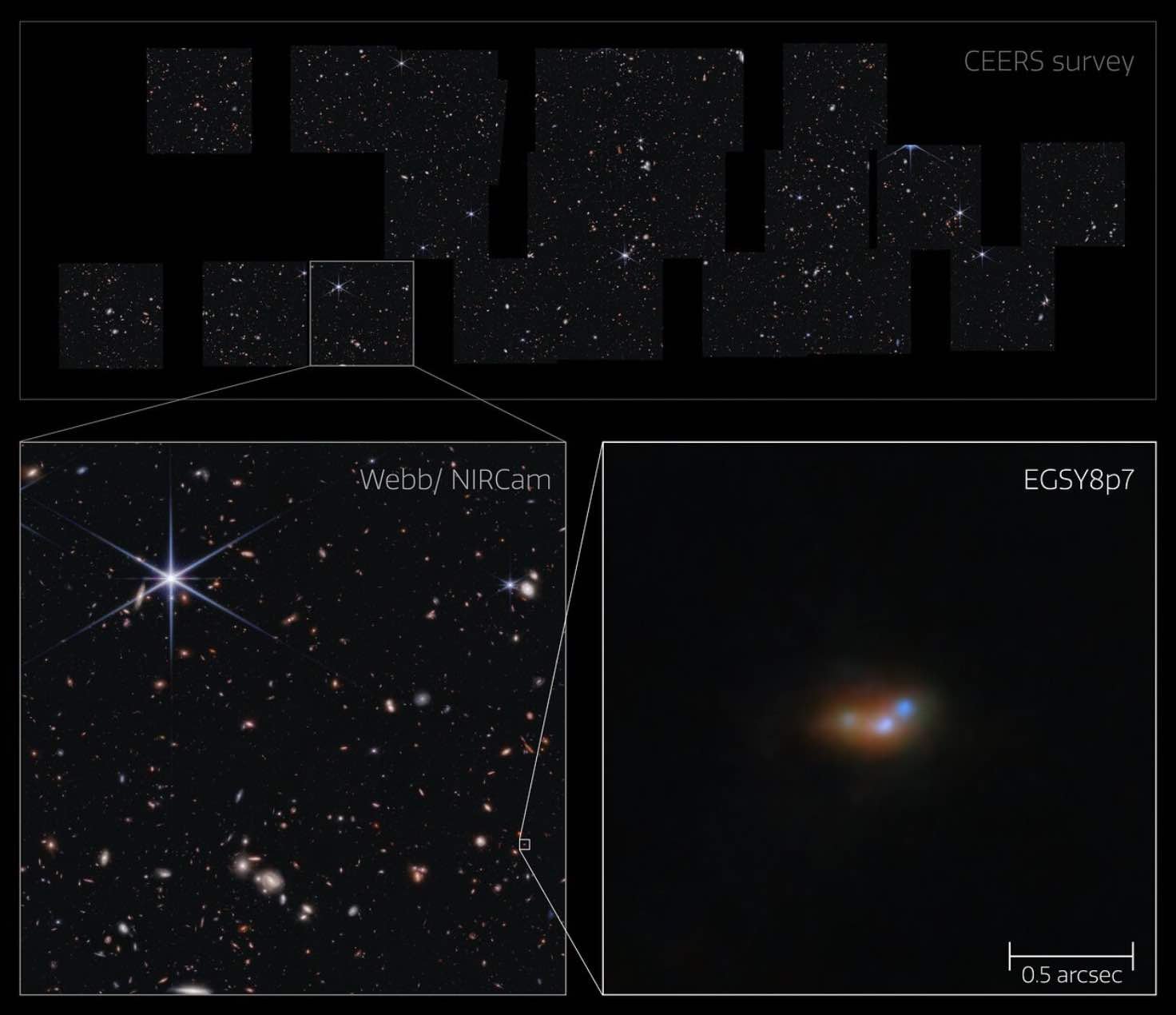
James Webb Space Telescope NIRCam image depicting Lyman-α emitting galaxy EGSY8p7 in the CEERS survey field (Credit: NASA/ESA/CEERS survey).

Using state-of-the-art simulations, the team then explored the physics behind what they observed, learning that the fast accumulation of stellar mass that results from galaxy mergers had likely driven the strong hydrogen emissions being observed. Based on the new observations, this appeared to have occurred through channels that had been cleared of neutral gasses that had originally been prevalent.

The team believes that the merging of these smaller, previously unobserved galaxies is very likely to be the solution to the lasting riddle of inexplicable early hydrogen emissions, and now aims to follow up their recent observations by looking at galaxies in other stages of merging, which they believe will not only help them to better understand how hydrogen emission is ejected, but also to reveal new clues to the evolution of galaxies.

The team’s research was the subject of a new paper, “Deciphering Lyman-α emission deep into the epoch of reionization, that was recently published in the journal Nature Astronomy.


James Webb Telescope's Mind-Blowing Discoveries in 3 Years!

{ https://thedebrief.org/category/space/ }

Hoe vind je dit bericht?
Geschreven door peter om 00:38 Stuur door

Meer van UFO'S of UAP'S, ASTRONOMIE, RUIMTEVAART, ARCHEOLOGIE, OUDHEIDKUNDE, SF-SNUFJES EN ANDERE ESOTERISCHE WETENSCHAPPEN - DE ALLERLAATSTE NIEUWTJES

↑ Terug naar de berichten