Naar de inhoud

UFO'S of UAP'S, ASTRONOMIE, RUIMTEVAART, ARCHEOLOGIE, OUDHEIDKUNDE, SF-SNUFJES EN ANDERE ESOTERISCHE WETENSCHAPPEN - DE ALLERLAATSTE NIEUWTJES

UFO's of UAP'S in België en de rest van de wereld
akke.beakke.be
Ontdek de Fascinerende Wereld van UFO's en UAP's: Jouw Bron voor Onthullende Informatie! Ben jij ook gefascineerd door het onbekende? Wil je meer weten over UFO's en UAP's, niet alleen in België, maar over de hele wereld? Dan ben je op de juiste plek! België: Het Kloppend Hart van UFO-onderzoek In België is BUFON (Belgisch UFO-Netwerk) dé autoriteit op het gebied van UFO-onderzoek. Voor betrouwbare en objectieve informatie over deze intrigerende fenomenen, bezoek je zeker onze Facebook-pagina en deze blog. Maar dat is nog niet alles! Ontdek ook het Belgisch UFO-meldpunt en Caelestia, twee organisaties die diepgaand onderzoek verrichten, al zijn ze soms kritisch of sceptisch. Nederland: Een Schat aan Informatie Voor onze Nederlandse buren is er de schitterende website www.ufowijzer.nl, beheerd door Paul Harmans. Deze site biedt een schat aan informatie en artikelen die je niet wilt missen! Internationaal: MUFON - De Wereldwijde Autoriteit Neem ook een kijkje bij MUFON (Mutual UFO Network Inc.), een gerenommeerde Amerikaanse UFO-vereniging met afdelingen in de VS en wereldwijd. MUFON is toegewijd aan de wetenschappelijke en analytische studie van het UFO-fenomeen, en hun maandelijkse tijdschrift, The MUFON UFO-Journal, is een must-read voor elke UFO-enthousiasteling. Bezoek hun website op www.mufon.com voor meer informatie. Samenwerking en Toekomstvisie Sinds 1 februari 2020 is Pieter niet alleen ex-president van BUFON, maar ook de voormalige nationale directeur van MUFON in Vlaanderen en Nederland. Dit creëert een sterke samenwerking met de Franse MUFON Reseau MUFON/EUROP, wat ons in staat stelt om nog meer waardevolle inzichten te delen. Let op: Nepprofielen en Nieuwe Groeperingen Pas op voor een nieuwe groepering die zich ook BUFON noemt, maar geen enkele connectie heeft met onze gevestigde organisatie. Hoewel zij de naam geregistreerd hebben, kunnen ze het rijke verleden en de expertise van onze groep niet evenaren. We wensen hen veel succes, maar we blijven de autoriteit in UFO-onderzoek! Blijf Op De Hoogte! Wil jij de laatste nieuwtjes over UFO's, ruimtevaart, archeologie, en meer? Volg ons dan en duik samen met ons in de fascinerende wereld van het onbekende! Sluit je aan bij de gemeenschap van nieuwsgierige geesten die net als jij verlangen naar antwoorden en avonturen in de sterren! Heb je vragen of wil je meer weten? Aarzel dan niet om contact met ons op te nemen! Samen ontrafelen we het mysterie van de lucht en daarbuiten.

Archief

Idea from the movie “Armageddon” turned out to be close to reality

Idea from the movie “Armageddon” turned out to be close to reality

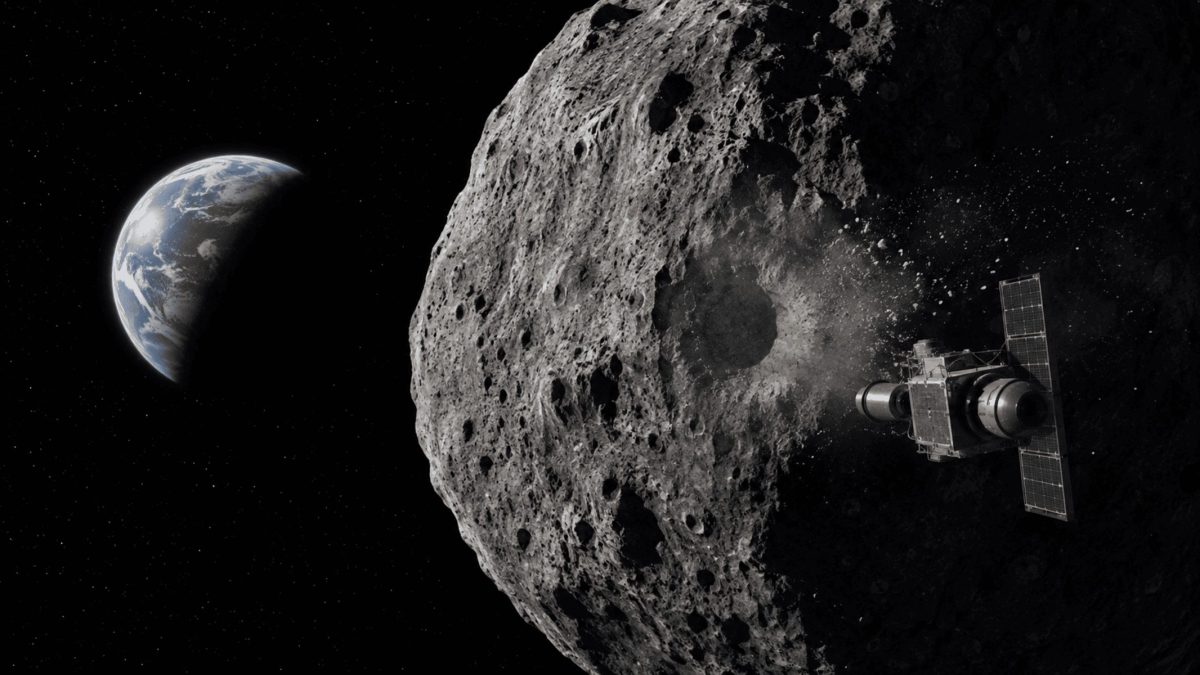
What should be done if an asteroid is detected only a few days before it collides with Earth? The answer turned out to be close to the plot of the movie Armageddon. A nuclear charge really can knock a dangerous body off course, but an explosion near the surface provides too weak a push. Chinese engineers calculated another method. First, a deep crater is punched into the asteroid, and then the charge is detonated inside it.

Artist’s illustration of a spacecraft approaching a dangerous asteroid

Very Little Time for Preparation

Among known near-Earth asteroids, more than ten thousand have diameters greater than 140 m. None of them is currently on a collision course with Earth. But planetary-defense specialists emphasize that a great many similar objects have still not been detected.

The interval between the discovery of such a body and its impact could be just a few days. In that amount of time, neither a gravity tractor nor a slow orbital shift would produce results. Only one method remains — transferring the maximum amount of energy in a single attempt.

Two Approaches to Choose From

Both options were developed by specialists from the China Academy of Launch Vehicle Technology together with colleagues from the Beijing Institute of Technology, the China Academy of Engineering Physics, and the University of Auckland. The work was published in the peer-reviewed journal  Space: Science & Technology, while a brief summary is provided by Phys.org. 

The first approach is the simplest. A spacecraft carrying a warhead would have to crash into the side of the asteroid and detonate the charge at a precisely determined moment. Microsecond-level accuracy would be required, and the structure would have to withstand impacts from fragments traveling at enormous speeds.

The problem is that in this case it is impossible to select an optimal point for the explosion. The amount of energy transferred into the rock would be relatively small. A significant portion of it would simply dissipate into space.

First a Hole, Then an Explosion

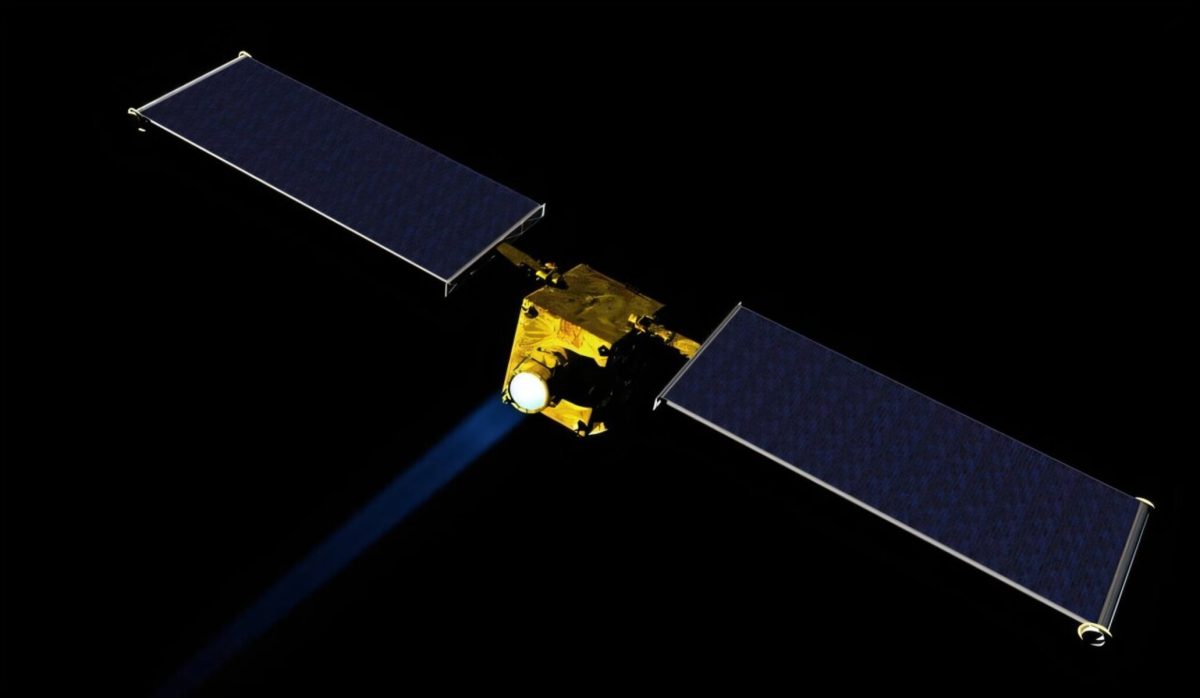
The second scenario is more complicated and develops a method tested in practice in 2022. At that time, the spacecraft of the Double Asteroid Redirection Test (DART) mission crashed into the asteroid Dimorphos and slightly changed its orbit. The main consequence of the impact was a crater on the surface.

Artist’s illustration of the DART mission spacecraft. Credit: NASA / JHU APL

It was this crater that suggested the idea. If a conventional impact leaves a depression, several consecutive impacts at the same point would make it much deeper. For this purpose, a tandem impactor with two metal rods would fly toward the target. They would strike the same point one after another and punch a hole significantly deeper than an ordinary crater. The nuclear charge would then be lowered into it.

The simulations showed how much more effective this would be. For an asteroid one kilometer in diameter, detonating a three-megaton charge in a shallow pit on the surface changed the body’s velocity by only 9.2 cm/s. The same warhead in a crater 30 m deep produced more than 30 cm/s. The deeper the explosion occurs, the smaller the fraction of energy that escapes into empty space.

What Remains Unknown?

The authors based their calculations on a solid basalt monolith. Real hazardous bodies are most often piles of rocks held together by weak gravity. The simulations do not show how such a structure would behave under a nuclear explosion.

The engineering side also remains unresolved. The launch vehicle would have to enter a trajectory close to the target’s orbit, survey the surface, plan two consecutive impacts, and deliver the warhead precisely into the resulting hole. All of this would have to be done through a cloud of debris created by the previous impacts.

Even if the technology were ready, a legal obstacle would remain. The 1967 Outer Space Treaty, signed by both the United States and China, prohibits placing in Earth orbit or stationing in space any objects carrying nuclear weapons. 

Detection Is More Important Than the Weapon

All of these schemes make sense only if the threat is detected in advance. A kinetic push is sufficient if years remain before impact. The nuclear option is considered a last resort for kilometer-scale objects.

The specialized NEO Surveyor spacecraft, which NASA is building specifically to detect near-Earth objects, is planned for launch in September 2027. It will operate in the infrared range, allowing it to see dark bodies that reflect alm


The Reality of Armageddon and How to Escape | Understand End-Time Prophecy

Armageddon [Bible Prophecy Movie]

{ https://universemagazine.com/en/articles-en/ }

Hoe vind je dit bericht?
Geschreven door peter om 23:39 Stuur door

“Jellyfish” in the Martian sky: a new image from Curiosity causes a stir on social media

“Jellyfish” in the Martian sky: a new image from Curiosity causes a stir on social media

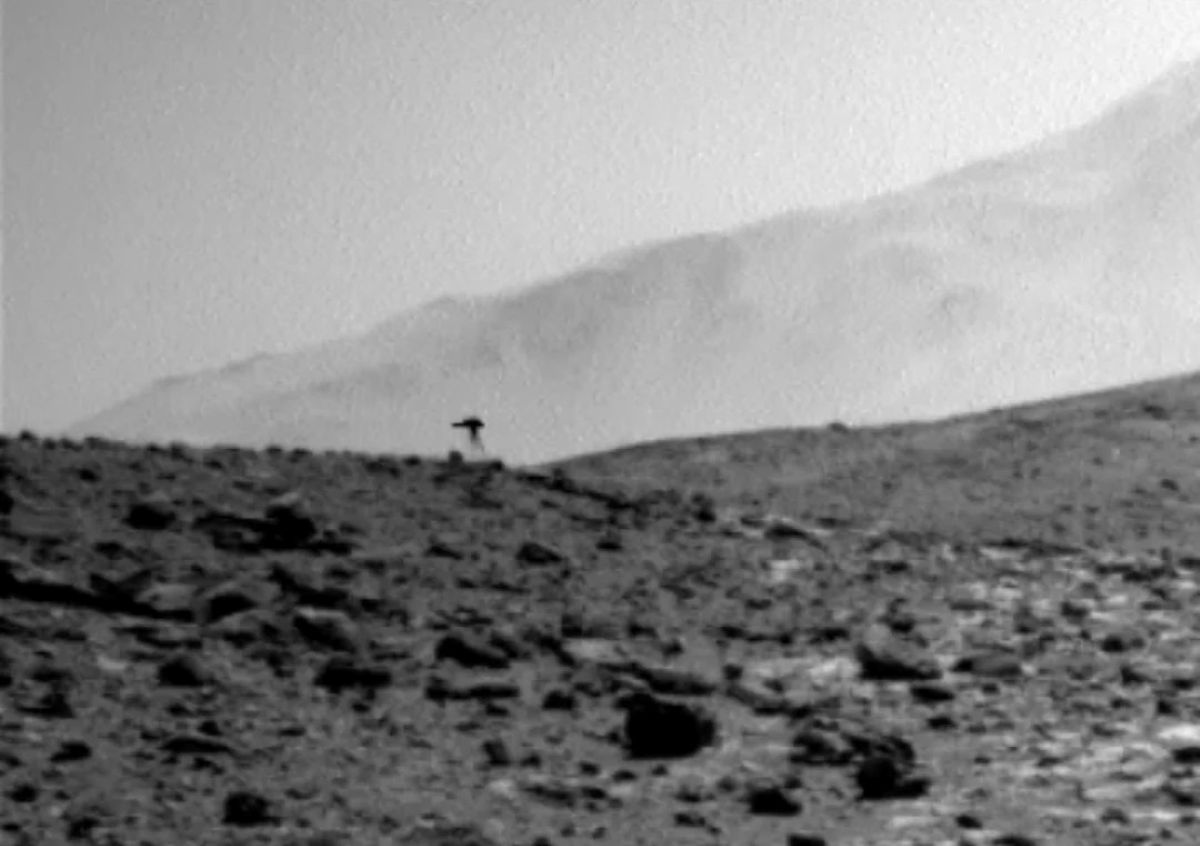
Another photograph from Mars has sparked debate among the online community about the possibility of extraterrestrial life. The archival image, taken by a NASA rover back in 2023, only recently attracted the attention of social media users because of a strange detail in the corner of the frame.

Strange figure on Mars. Source: NASA/JPL-Caltech

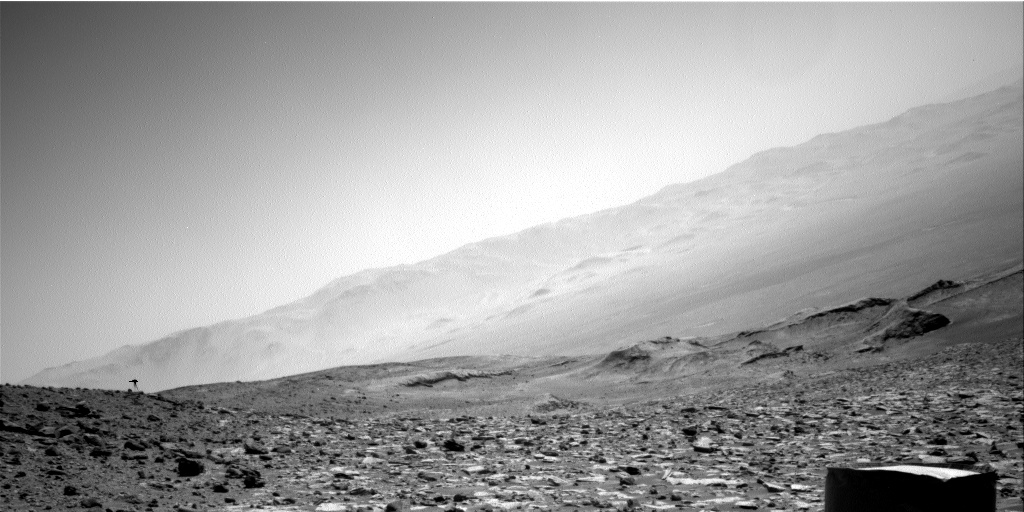
The black-and-white raw image shows a barren and desolate Martian landscape. However, observant viewers noticed a silhouette in the upper left corner that reminded many of a “jellyfish” or an unidentified flying object (UFO). The image was taken by the right navigation camera of the Curiosity rover. Interestingly, at the same moment the spacecraft captured a series of images of the same area, but the unusual “jellyfish” appeared in only one of them.

Storm on Social Media

The image, published on Reddit, immediately triggered a wave of discussion. Some users reacted emotionally to the photograph, accusing space agencies of concealing information about extraterrestrial technologies that could potentially help humanity.

Others take a more pragmatic view. Skeptics point to the Fermi Paradox and note that such “anomalies” are most often the result of digital glitches, camera sensor artifacts, or solar flares that distort images. Similar discoveries that resemble familiar objects are also often simply a product of our imagination — a phenomenon known as pareidolia.

Contact or Optical Illusion?

Independent Mars researcher Jean Ward noted on the social network X that the object visually appears to be connected to the planet’s surface or resembles a tripod. At the same time, he emphasized that without direct investigation at the site, any conclusions remain only speculation.

The mysteries of such Martian anomalies will likely be resolved only after humans set foot on the Red Planet. In particular, SpaceX founder Elon Musk has repeatedly stated his intention to begin construction of the first city on Mars within the next 5–7 years.

RELATED

Mysterious "Jellyfish" Structure Spotted on Mars! What Is It?‪@sciencedawn‬

“Jellyfish”-shaped UFO Spotted on Mars

{ https://universemagazine.com/en/articles-en/ }

Hoe vind je dit bericht?
Geschreven door peter om 23:05 Stuur door

Why Is There a Universal Search for Water in Space?

Why Is There a Universal Search for Water in Space?

When scientists acquired the capability to analyze the spectra of celestial objects in detail and ascertain their chemical composition, one substance in particular attracted their attention — water. Researchers have now identified that water exists abundantly beyond Earth, and this discovery has significantly impacted our understanding of space.

Water. Source: science.howstuffworks.com

The greatest enigma of the universe

Water is a compound composed of a single oxygen atom and two hydrogen atoms. Its presence in celestial bodies is particularly intriguing to scientists, as it prompts the fundamental inquiry regarding the potential for life to exist there. However, what explains the heightened focus on water?

The response to this inquiry is inherently linked to another: the degree to which extraterrestrial realities resemble those observed on Earth. This question has engaged philosophers for approximately 2,000 years. However, during that period, scientists’ comprehension of terrestrial processes was considerably limited. Atmospheric phenomena, forest fires, rivers, mountains, animals, and plants were all perceived as consequences of merely four elements: water, fire, earth, and air.

At least, that is what Aristotle — the preeminent scientific authority for the next thousand years — and his teacher Plato asserted. There was no consensus regarding the composition of the celestial spheres — spheres believed at the time to encircle the stationary Earth — but the fifth element, the ether, was cited as their primary constituent. Consequently, the celestial was distinguished from the earthly even at the level of its composition. After all, no one could physically touch it and deny its nature.
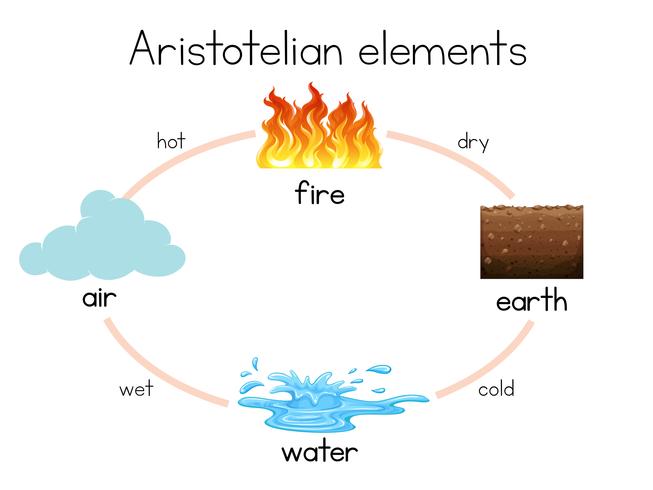
Aristotelian elements. Source: www.vecteezy.com

Centuries elapsed, during which humanity accumulated considerable knowledge. Newtonian mechanics came to dominate the field of astronomy, and it became evident that the motion of celestial bodies adheres to the same laws that govern objects on Earth. Concurrently, Aristotle’s theory of the four elements started to diminish in credibility, making room for modern atomic theory and thermodynamics, which ultimately succeeded in explaining all transformations of matter as chemical reactions.

Nevertheless, the question of whether it is impossible to touch and examine particles from space within a laboratory setting remained unresolved. This, it appears, transformed the inquiry into whether there exists a location in space analogous to Earth into one to which scientific investigation cannot provide an answer. It is unsurprising that the 18th-century philosopher Immanuel Kant described the starry sky and the realm within the human soul as the two phenomena that we cannot comprehensively understand through rational means.

Water as the foundation of life

However, the 19th century brought about significant changes in this domain. On one hand, spectroscopy was developed, enabling the determination of the chemical composition of any object, regardless of its distance, without physical contact; on the other hand, biochemistry and cell theory emerged. It became evident that life, too, is a series of chemical processes occurring in aqueous solutions, and that even each individual cell of a living organism can be regarded as a microscopic reservoir encapsulating these processes.

Living cells. Source: blog.labtag.com

It appears that at the onset of the 20th century, scientists possessed all necessary opportunities to detect extraterrestrial life. However, as humanity’s understanding of the surrounding world expanded, there was a corresponding increase in the belief that the answer to whether life — or rather, the conditions necessary for its existence — exists beyond Earth was most probably negative.

This caused further pessimism, as it was revealed that humanity had dedicated numerous centuries to overcoming what appeared to be a fundamental barrier to “touching” space, solely to find that it was devoid of life.

This was predominantly attributable to the constraints inherent within 20th-century technological capabilities. It facilitated spectroscopic investigations primarily focusing on celestial bodies within the Solar System and stars that possess adequate quantities of both hydrogen and oxygen; however, these studies were limited to observing molecules where these elements are not properly combined.
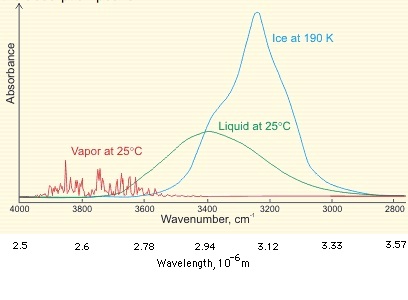
A spectrogram depicting water in various states. Source: www.acamedia.info

What renders liquid water distinctive are its chemical properties. It dissolves a substantial amount of inorganic substances, while large organic molecules can merely float freely within it and attach individual atoms and groups of atoms with relative ease. Other substances either decompose organic matter too readily or, conversely, are incapable of dissolving certain substances or hinder the formation of stable solutions.

This is precisely why the quest for liquid water in extraterrestrial environments during the 1990s emerged as a principal objective of contemporary astronomy, as a favorable response would inherently imply the existence of conditions conducive to life — and potentially life itself — somewhere. This enthusiasm persists to the present day.

There is a considerable amount of water present in space

During the 1990s and 2000s, the prevailing perspective concerning water in space commenced a significant evolution. It was established that water, primarily in the form of ice, exists even at the Moon’s poles. Additionally, on Mars, water may exist in a liquid state, albeit as supersaturated solutions.
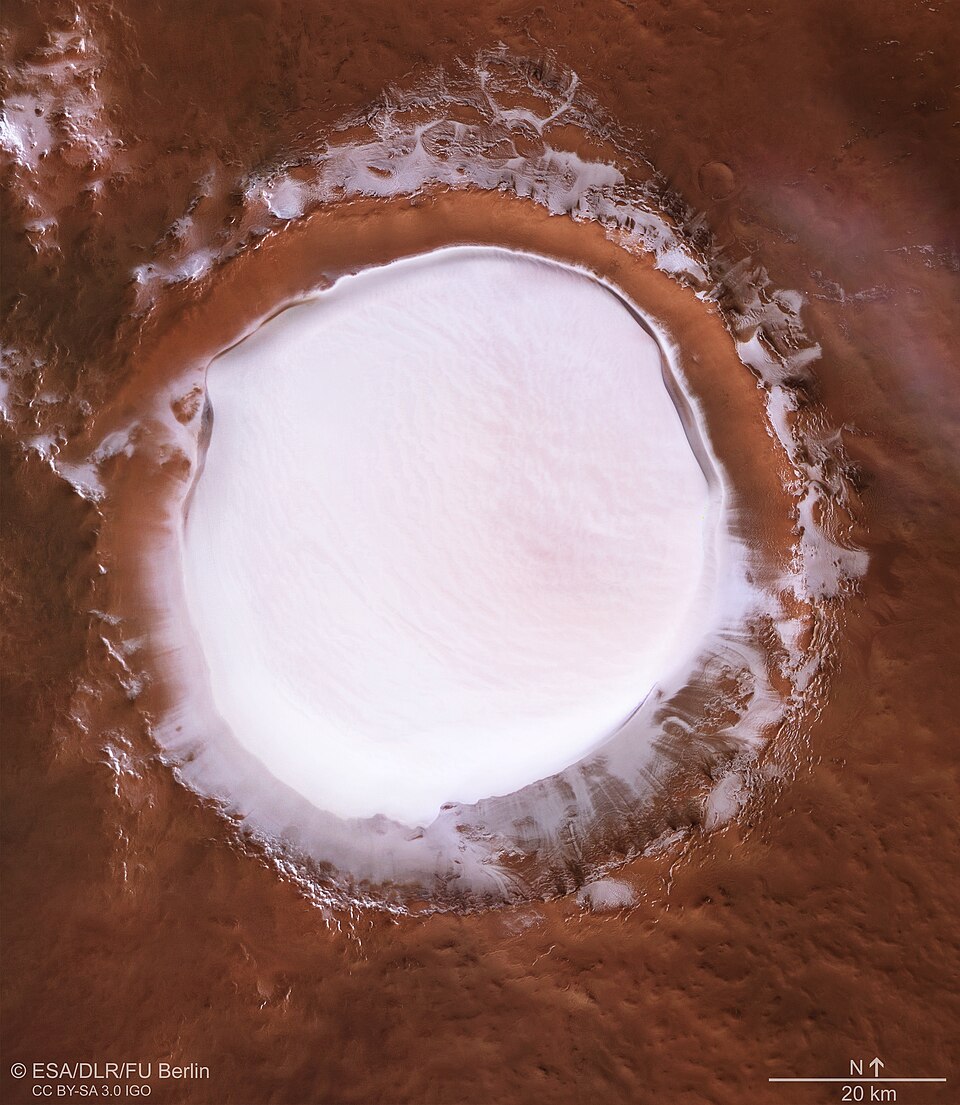
The Korolev Crater on Mars is filled with ice. Source: Wikipedia

In the outer regions of the Solar System, however, the quantity of ice was found to be nearly comparable to that of rock. Specifically, the moons of the giant planets predominantly comprise ice and may potentially contain it in liquid form at certain depths.

Water has also been detected beyond the Solar System — initially in proximity to quasars, and subsequently within cold gas and dust clouds. In 2010, it was established that water, as a substance, is not as scarce in the universe as previously believed, and that it predates the formation of the Solar System.

In essence, water itself is not considered particularly significant; however, out of habit, individuals persist in discussing every occurrence of its detection as a potential indication of extraterrestrial life.
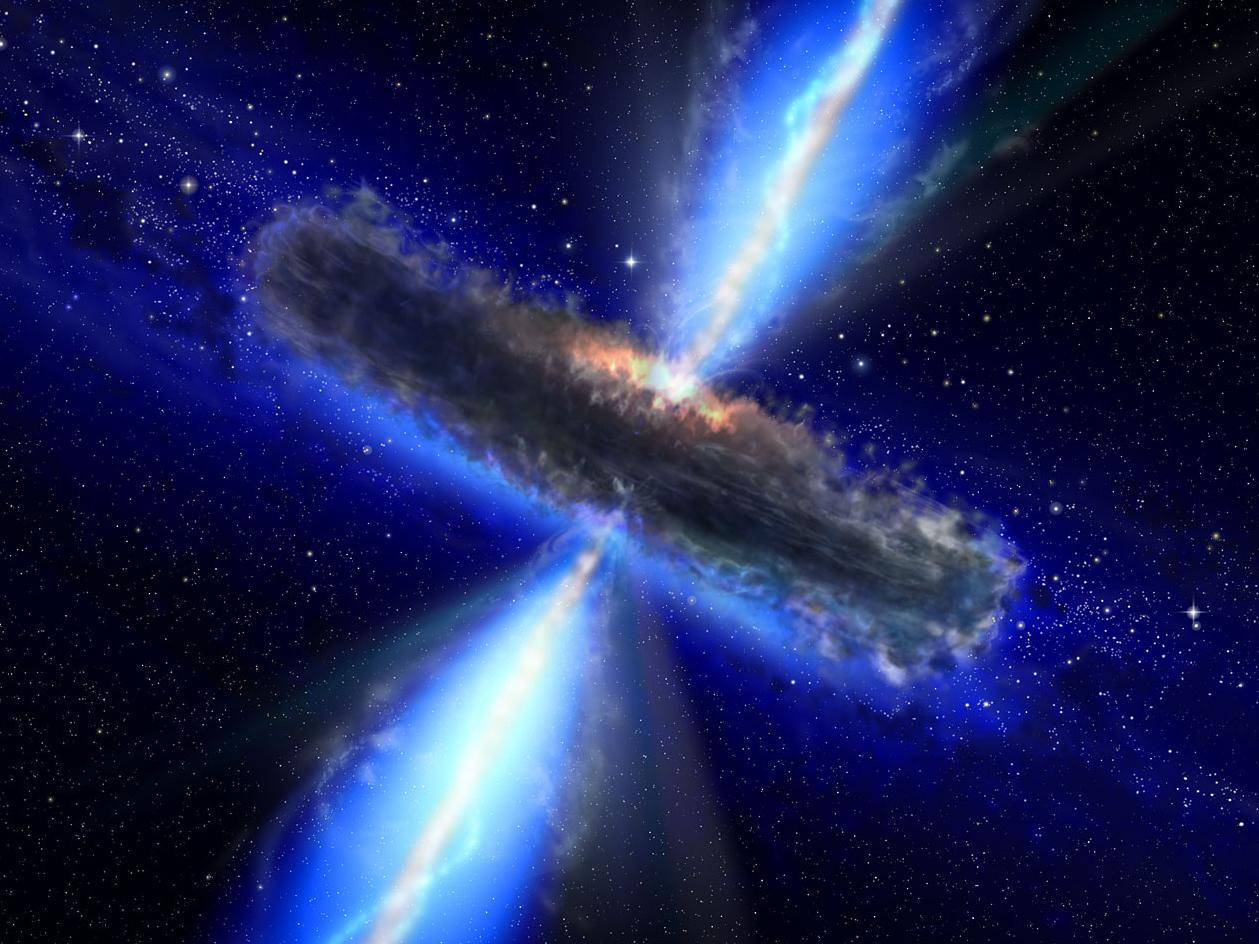
The quasar APM 08279+5255, in proximity to which water was identified. Source: Wikipedia

A noteworthy instance is the case of the exoplanet K2-18 b. Initially, in 2019, water vapor was identified through spectroscopic analysis. Subsequently, methane and other organic compounds were also discovered. Ultimately, in 2025, the detection of dimethyl sulfide garnered considerable attention, with many asserting that it indicated potential signs of life.

Nevertheless, the researchers who have been examining it over numerous years exercise considerable caution in their assertions, and this prudence is justified. Indeed, K2-18 b is characterized as a super-Earth that exceeds our planet in size by a factor of 2.6 and is approximately 8.63 times more massive.

Research indicates that it is probable that the celestial body in question is a “Hycean” — a planet characterized by a surface entirely submerged beneath an ocean several hundred kilometers in depth. Situated above this body is presumably a dense atmosphere, which does not contain substantial quantities of oxygen. This atmosphere primarily comprises hydrogen and a minor proportion of water vapor.

It is highly probable that the planet experiences a significant greenhouse effect; however, even if the surface temperature remains within a habitable range for life on Earth, the atmospheric pressure renders the existence of living organisms impossible.
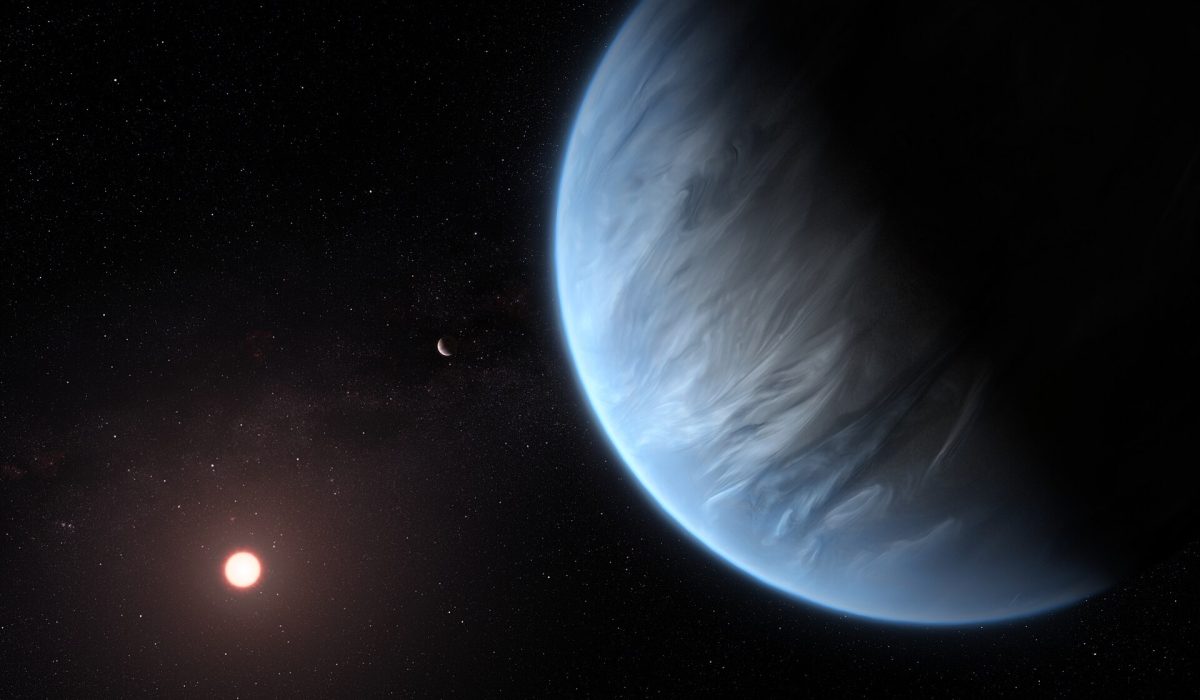
Planet K2-18b. Source: Wikipedia

Therefore, should we proceed to search for water?

Overall, the circumstances concerning K2-18 b demonstrate the extent to which the “water is life” paradigm can influence our understanding. However, it is important to recognize that numerous other factors are equally significant; nonetheless, many individuals persist in relying on concepts that originated during a period when it was assumed that this substance was rare in the cosmos.

The fact remains that the existence of water, even in its liquid state, no longer serves as the definitive indicator of life in space. Researchers have identified a considerable number of relatively complex organic molecules in such environments, including constituents of DNA, RNA, and proteins.

The stage at which complex chemical reactions may be regarded as indicative of life remains a subject of debate. Nevertheless, it is now evident that the initial steps in this process occurred when these molecules were still in space, with the most liquid water they contained existing as thin films on the surfaces of silicate grains.

Therefore, should we investigate the presence of water in space? Certainly, particularly if it exists in liquid form, as it remains the fundamental medium for sustaining life. Should every discovery of water be regarded as a groundbreaking revelation that challenges our current understanding of space? Not necessarily, as we already recognize that space is inhabited by life, at least in its simplest manifestations.


Why Do Scientists Look for Water in Space? | The Search for Life Beyond Earth

NASA Found Evidence of Water All Over Mars, and It's a Big Deal

NASA Has Found Water All Over the Solar System

{ https://universemagazine.com/en/ }

Hoe vind je dit bericht?
Geschreven door peter om 22:48 Stuur door

Gordon Cooper, Ufo's en Overheidscover-up: Een Analyse van een Pionier in de Ufo-verschijnselen

UFO-Outside-capsule.jpg

Gordon Cooper, Ufo's en Overheidscover-up: Een Analyse van een Pionier in de Ufo-verschijnselen

Inleiding

De geschiedenis van de menselijke zoektocht naar buitenaards leven en mysterieuze luchtverschijnselen is doorspekt met verhalen, getuigenissen en controverses. Een figuur die een bijzonder prominente rol speelt in deze geschiedenis, is Leroy Gordon Cooper Jr., een van de eerste Amerikaanse astronauten en een man die niet alleen de ruimte verkende, maar ook de grenzen van publieke overtuigingen over UFO’s verlegde. Cooper’s overtuigingen dat sommige UFO’s buitenaardse voertuigen waren en dat de Amerikaanse overheid bewijzen verborgen hield, hebben een blijvende impact gehad op de publieke perceptie van het fenomeen. Dit essay onderzoekt Cooper’s leven, zijn overtuigingen, de bewijsvoering en de kritische tegenstand, en plaatst zijn verhaal binnen de bredere context van de UFO-discussie en overheidsgeheimen.

1. Het Leven en de Carrière van Gordon Cooper

Gordon Cooper werd geboren op 6 maart 1927 en overleed op 4 oktober 2004. Als een van de originele Mercury Seven astronauten wordt hij herinnerd als een van de meest ervaren en gerespecteerde ruimtevaarders van zijn generatie. Zijn carrière begon als piloot bij de Amerikaanse luchtmacht, waar hij zich onderscheidde als testpiloot en militair tacticus. In 1963 behaalde hij een historische prestatie door als laatste Amerikaanse astronaut solo in de ruimte te vliegen tijdens de Mercury-Atlas 9 missie, waarbij hij meer dan 34 uur in orbit doorbracht. Twee jaar later leidde hij de Gemini 5 missie, die een record vestigde voor de duur van een ruimtevlucht tot dat moment.

Deze indrukwekkende prestaties zorgden ervoor dat Cooper een reputatie opbouwde als een betrouwbare en competente ruimtevaarder. Zijn ervaring en status maakten zijn latere uitspraken over UFO’s en de overheid extra opvallend. Cooper’s publieke profiel was daarmee niet alleen dat van een ruimtevaarder, maar ook die van een kritisch denker en een man die zich niet liet afschrikken door de publieke opinie of de officiële standpunten van NASA en het Amerikaanse leger.

2. De Edwards Air Force Base en de UFO-ervaringen

Een van de meest bekende incidenten die Cooper aanhaalt, vond plaats rond 1957 op Edwards Air Force Base. Volgens Cooper was er een camerateam betrokken bij een project voor precisielandingen, dat een metallic, schotelvormig object vastlegde dat kort op een droogmeer landde. Het object zou met behulp van landingsondersteuning even hebben gestaan, alvorens stil en geruisloos op te stijgen en met hoge snelheid weg te vliegen. Cooper beweert dat hij de film die hiervan gemaakt was heeft ingezien en dat deze een bijzonder onbekend en authentiek object liet zien.

Het mysterieuze aspect van dit verhaal is dat de film nooit is vrijgegeven, nooit is teruggevonden en dat er geen officiële documenten of onafhankelijke bevestigingen bestaan die het incident ondersteunen. Desondanks hield Cooper vol dat de film echt was en dat het bewijs van een buitenaards voertuig was. Hij stelde dat de film naar militaire autoriteiten was gestuurd volgens de protocollen, maar dat hij nooit te weten kwam wat er verder mee gebeurde. Het ontbreken van fysiek bewijs en de afwezigheid van officiële documentatie zorgen voor twijfel en scepticisme onder onderzoekers.

https://images.openai.com/static-rsc-4/hC-K5NbADn8OB-Sg-jIEzzNM8pBE33scwFa4EsEPXK_GcZwJM_A4hJfF5o4ZrooZSebmCF8yRwExuZQFgoHZFtzb_sRsUXFiOjiGP0Y7IjlsNppo3NP6-wdELic2ECSWfbx1qwGC6ecfO66OE20UL4yoQ1zcorfCfLD1i0jKQNUwZoriZNE2l7MTULIYvNu5?purpose=fullsize

Officieel NASA-portret – Cooper in zijn Mercury-ruimtepak, een van de bekendste afbeeldingen van de originele Mercury-astronauten.

3. Cooper’s overtuigingen over buitenaardse bezoekers

Vanaf de jaren 1970 tot aan zijn overlijden bleef Cooper zich uitspreken over UFO’s. Hij was ervan overtuigd dat niet alle waarnemingen door mensen konden worden verklaard door natuurlijke of menselijke oorzaken. Tijdens interviews stelde hij dat ervaren militaire piloten en radaroperatoren objecten hadden gezien die zich ver hielden van de mogelijkheden van conventionele vliegtuigen en meteorologische verschijnselen. Hij benadrukte dat veel van deze getuigen betrouwbare en getrainde waarnemers waren, die hun rapporten niet uit eigenbelang of voor sensatie hadden gedaan.

Volgens Cooper waren de prestaties van sommige UFO’s zo geavanceerd dat ze niet konden worden toegeschreven aan de technologie van de aarde in de jaren 1950 en 1960. Hij beschreef objecten die plotseling konden versnellen, scherpe bochten maakten, stil konden zweven zonder zichtbaar voortstuwingssysteem en geluidloos opereerden. Cooper stelde dat deze kenmerken duidden op buitenaardse technologie, mogelijk afkomstig van een geavanceerd buitenaards ras dat de aarde bezocht.

Hij betoogde dat de overheid zich bewust was van deze fenomenen en dat er bewijs was dat geheime documenten en buitenaardse artefacten werden verzameld, maar dat de publieke kennis werd onderdrukt. Cooper riep op tot een internationale samenwerking om deze fenomenen serieus te onderzoeken, en stelde dat de meeste UFO-rapporten niet konden worden verklaard door natuurlijke of menselijke oorzaken.

4. Overheidsbedekking en geheime documenten

Een kernpunt in Cooper’s betoog was dat de Amerikaanse overheid, en mogelijk andere overheden, bewijs van buitenaardse bezoekers had gevonden en dat dit werd verborgen voor het publiek. Hij beweerde dat militaire en inlichtingendiensten UFO-incidenten classificeerden en dat belangrijke bewijzen, zoals crash-landers en mogelijk buitenaardse lichamen, in geheime dossiers waren opgeborgen. Volgens Cooper was de reden hiervoor vooral nationale veiligheid: men wilde geen paniek zaaien of de militaire strategische belangen schaden.

Cruciaal is dat Cooper nooit concreet bewijs kon leveren dat de overheid daadwerkelijk buitenaardse voertuigen of lichamen had ontdekt. Zijn claims waren gebaseerd op persoonlijke observaties, anekdotes van collega’s en zijn interpretatie van de informatie die hij had. NASA en het Amerikaanse ministerie van Defensie hebben altijd volgehouden dat er geen bewijs is voor buitenaardse aanwezigheid en dat geen enkele officiële onderzoeksinstantie bevestigde dat de VS informatie achterhield.

De recente openheid van de Amerikaanse overheid over zogenaamde Unidentified Aerial Phenomena (UAP) heeft de discussie nieuw leven ingeblazen. Hoewel sommige rapporten onverklaard blijven, heeft de overheid benadrukt dat er geen bewijs is dat deze objecten buitenaards zijn. Cooper’s overtuiging dat er een grote geheime operatie gaande was, blijft daarmee een controversieel en onverifieerbaar standpunt.

https://images.openai.com/static-rsc-4/mAUDtew2dBZgOVSv9xRzCAqIMp1JpSpu04p9H8PNsaQPMefsXcyD54chE25-h2rDWFREI0wpiwJsrd-HhORnaPmX68hTbrhRKKIJI2KVDU308gvmlzAzgn2QvwaMRtS63eMevaKmjzoju2b1sX89s9pvGaBOJF3Iumwo9gBuGV9Y-5XO0-qWI5qTLfezOMUC?purpose=fullsize

Gordon Cooper – nette, formele kleding.

5. Kritische Beschouwing: Skeptici en de Beperkingen van Cooper’s Verhaal

Hoewel Cooper’s status en ervaring hem een zekere geloofwaardigheid geven, staat zijn verhaal niet los van kritische beschouwing. Een belangrijk punt van twijfel is dat het nooit officieel bewijs van de door hem genoemde incidenten is vrijgegeven. De film van de Edwards-landing, die volgens Cooper bewijs zou zijn, ontbreekt nog altijd in het publieke domein. Dit gebrek aan tastbaar bewijs voedt scepsis onder onderzoekers en wetenschappers.

Daarnaast is het belangrijk om te erkennen dat menselijke herinneringen over lange tijd kunnen vervormen. Het is niet ongebruikelijk dat getuigen, vooral bij complexe of ongebruikelijke gebeurtenissen, details aanpassen of verkeerd interpreteren. Cooper’s verhalen evolueerden over de jaren; wat begon als een eenvoudige observatie, werd later uitgebreid tot uitgebreide theorieën over overheidsbedrog en buitenaards bezoek.

Critici wijzen er ook op dat sommige waarnemingen en getuigenissen kunnen worden verklaard door natuurlijke fenomenen of menselijke technologie, zoals geheime militaire vliegtuigen of experimentele wapens. Daarnaast kunnen misinterpretaties van weersverschijnselen, sterren of atmosferische lichten leiden tot foute identificaties van UFO’s. Dit ondermijnt de stelling dat alle UFO’s buitenaardse oorsprong hebben.

6. De Technologie en de Mogelijkheid van Buitenaardse Bezoeken

Een van de kernargumenten van Cooper was dat bepaalde waargenomen kenmerken van UFO’s niet konden worden verklaard door de toenmalige menselijke technologie. Hij benadrukte dat objecten konden accelereren zonder zichtbaar voortstuwingssysteem, stil konden zweven, plotseling van richting konden veranderen en snelheden konden bereiken die voor menselijke vliegtuigen onmogelijk waren.

Deze beschrijvingen worden vaak aangehaald door voorstanders van het buitenaardse thema en worden ondersteund door diverse getuigenissen van piloten en radarwaarnemingen. Sommige onderzoekers stellen dat deze prestaties inderdaad de technologische capaciteiten van een geavanceerde buitenaardse beschaving suggereren. Anderen betwijfelen dat dergelijke waarnemingen niet kunnen worden verklaard door natuurlijke verschijnselen of geheime aardse technologie, zoals nieuwe geheime wapens of vliegtuigontwerpen.

De wetenschap staat voor de uitdaging om deze fenomenen te verklaren. Tot nu toe hebben geen technologische of fysische principes bevestigd dat zulke prestaties mogelijk zijn met onze huidige kennis. Hierdoor blijven deze waarnemingen een mysterie dat mogelijk wijst op buitenaardse technologie, maar ook kan worden toegeschreven aan nog onbekende natuurlijke of menselijke oorzaken.

https://images.openai.com/static-rsc-4/f8juYWYtofv010G5thJg-FDguA-1BQqWYcVd-1UFLjmY0hdy9OuwXiS5C9-bu3mb9P-eg4-hXa7TXu5gkO43A6Nums_CcUrqmxWawoONmbi0y7ZmilCSdUmG6vK006B-1Iu21tj3sFJhNbFxxqzyBcH0k_rlA60z3yDr6yH8CVukSaELU0E0oEEyNoNf2FPw?purpose=fullsize

Mercury-Atlas 9 (“Faith 7”) – Foto's genomen vóór zijn historische missie in mei 1963, waarin hij 22 keer rond de aarde draaide.

7. De Erfenis en de Betekenis van Cooper’s Verhaal

Gordon Cooper’s betrokkenheid bij de UFO-discussie geeft het onderwerp een bijzondere dimensie. Als een van de meest gerenommeerde astronauten en testpiloten, wekt zijn geloof in buitenaardse bezoekers en geheime overheidsdeksels de aandacht van zowel believers als skeptici. Zijn verhalen hebben bijgedragen aan de publieke interesse en hebben de discussie over de mogelijke aanwezigheid van buitenaards leven in de ruimte versterkt.

Toch is het belangrijk te onderkennen dat Cooper’s claims niet door onafhankelijke, fysische bewijzen worden ondersteund. Zijn verklaringen blijven gebaseerd op persoonlijke observaties, getuigenissen en interpretaties. De officiële standpunten van overheden en wetenschappelijke instanties blijven dat er geen bewijs is dat UFO’s buitenaardse oorsprong hebben of dat er een grootschalige dekmantel gaande is.

Zijn nalatenschap is daarom dubbelzinnig: hij heeft de discussie over buitenaards leven en overheidsgeheimen sterk beïnvloed, maar zijn claims blijven controversieel en niet volledig verifieerbaar. Zijn verhaal symboliseert de menselijke zoektocht naar antwoorden op de meest fundamentele vragen over ons bestaan en onze plaats in het universum.

https://images.openai.com/static-rsc-4/MxlTILgm7Q8W5Yxr1HZjhEa-YvncYnSyLxlVvvkVt31FQINw8u5QDJjFnwMBQu2hKL9A_ixL1Lle6YFVFAHkAjh6XJDVkNDfGPbCBnmoK-c4HKXk_DsMedzDBazxlyPV7eIEj_g6oyLqwSBYXqobCFzfeYRR-vwqTDJkP481qZB4d4jSUBJdo0w29Lu5brOY?purpose=fullsize

Gemini 5-missie – Afbeeldingen van Cooper met astronaut Charles “Pete” Conrad Jr. voor en na hun achtdaagse Gemini 5-vlucht in 1965.

Conclusie

Gordon Cooper was niet alleen een pionier in de ruimtevaart, maar ook een belangrijke stem in de UFO-discussie. Zijn overtuigingen dat sommige UFO’s buitenaardse voertuigen waren en dat de Amerikaanse overheid informatie verborgen hield, hebben bijgedragen aan de publieke fascinatie en het debat over buitenaards leven. Hoewel zijn verhalen en observaties een intrigerend beeld schetsen en de verbeelding prikkelen, ontbreekt het aan concreet bewijs dat zijn beweringen bevestigt.

De discussie rondom Cooper’s claims illustreert de spanning tussen menselijke nieuwsgierigheid en wetenschappelijke scepticisme. Het roept vragen op over de aard van observaties, de betrouwbaarheid van getuigenissen en de rol van overheidsinformatie. Totdat er tastbaar bewijs wordt gevonden, blijven Cooper’s verhalen een belangrijk, maar debatachtig hoofdstuk in de geschiedenis van de UFO-verschijnselen.

Einde

Bronnen:

  • Overheidsrapporten over UAP en UFO-waarnemingen.
  • Interviews en publicaties van Gordon Cooper.
  • Historische documenten over de Mercury- en Gemini-missies.
  • Kritische analyses en wetenschappelijke evaluaties van UFO-verschijnselen.
    • Deze uitgebreide analyse van Gordon Cooper’s verhaal en zijn rol in de UFO-discussie biedt een genuanceerd overzicht dat ruimte laat voor zowel geloof als twijfel, en benadrukt de complexiteit van het fenomeen dat nog altijd de menselijke verbeelding prikkelt.
GERELATEERDE VIDEO'S

Geclassificeerd UFO-bestand onthuld: interview met NASA-astronaut Gordon Cooper door Walter Cronkite ( video Engelstalig)

NASA-astronaut filmde een UFO-landing | Gordon Cooper( video Engelstalig)
ECHTE UFO gezien door NASA-astronaut in de RUIMTE | Gordon Cooper ( video Engelstalig)

{ PETER2011 }

Hoe vind je dit bericht?
Geschreven door peter om 22:02 Stuur door

Cape Girardeau UFO Crash (1941)

Cape Girardeau UFO Crash (1941)

cape girardeau ufo crash 1941

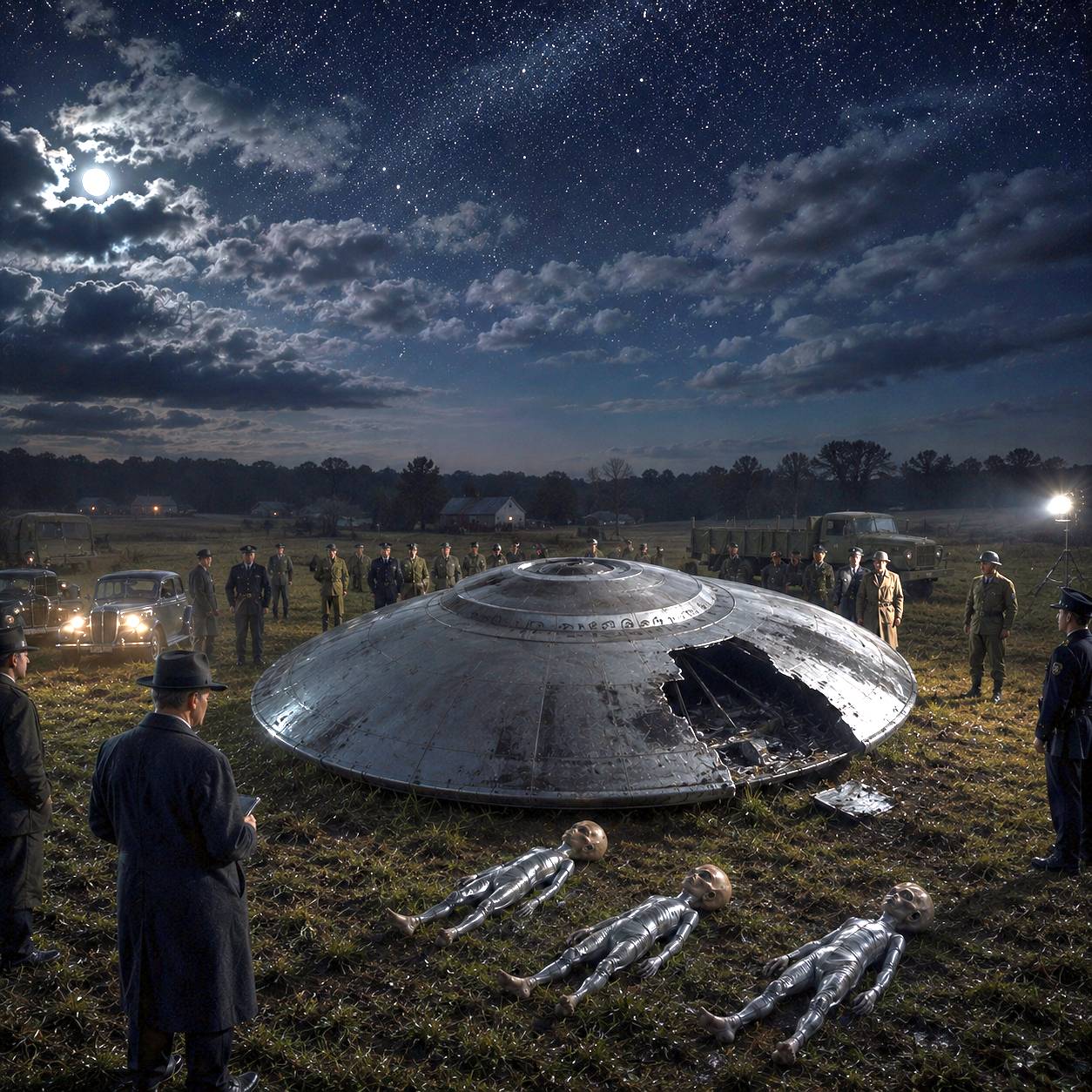
The Cape Girardeau UFO crash of 1941 is an incident said to have occurred in southeast Missouri in late April 1941, several years before the more widely known Roswell crash and roughly one year prior to the Battle of Los Angeles. Most retellings place the event in the late evening, around 9:00–10:00 p.m., during a period of rising pre‑war tension in the United States.

According to family testimony and later UFO researchers, the crash site was located in a rural field west of Cape Girardeau Municipal Airport, between Cape Girardeau and Chaffee, Missouri, near the Mississippi River. Authorities initially described the scene as a downed aircraft. Some accounts add that debris from the crash ignited a small fire in the field, scattering metallic fragments across the area. Reverend William G. Huffman, a local Baptist minister and pastor of Red Star Baptist Church, was reportedly contacted by local authorities—possibly the sheriff’s office or emergency responders—and asked to provide last rites to presumed victims.

Upon arriving at the scene, Huffman allegedly realized the situation was not a conventional airplane crash. Instead of human victims, he encountered three small, non‑human beings lying on the ground outside a disc‑shaped craft. Beyond Huffman, later accounts suggest that local police officers, sheriff’s deputies, firefighters, and possibly medical personnel were present during the early stages of the response. Some sources also claim that photographers, including at least one civilian, arrived before the military assumed control. Military personnel reportedly arrived shortly afterward, possibly from nearby installations such as the Sikeston Army Air Base, and took command of the site. Witnesses were allegedly sworn to secrecy under national security warnings, with threats of serious consequences for speaking about what they had seen.

Huffman reportedly observed a round, saucer‑like craft, often described as silver or metallic in appearance and measuring roughly 15–20 feet in diameter. Some versions of the story describe the craft as broken in half or cracked open. Strange symbols resembling hieroglyphics were said to be etched along the craft’s exterior and interior walls. A few retellings also mention an unusual sulfur‑like odor near the wreckage. Inside, the craft allegedly contained a small metal chair along with simple gauges and controls. Later retellings expanded this description to include multiple chairs and a central pedestal topped with a gyroscope‑like mechanism, details that do not appear consistently in the earliest accounts. Charlette Mann later remarked that these interior features closely resemble descriptions found in other UFO reports that surfaced decades afterward.

The beings found near the craft were consistently described as small, gray‑skinned figures with disproportionately large heads and dark, oversized eyes. Primary descriptions place their height at roughly three to four feet, often described as child‑sized, though later retellings introduced wider estimates. They reportedly had no visible hair, minimal facial features, small nostrils, thin mouths, and either no external ears or only small indentations where ears would normally be. Accounts agree that there were three beings in total: two deceased and one still alive. The living being was described as barely responsive, with long arms, three fingers on each hand, and cool, moist skin likened to that of a fish. Some sources suggest it reacted defensively when approached, discouraging closer examination. Reverend Huffman reportedly performed prayers over the beings, an experience said to have deeply shaken him and altered his worldview and faith.

One of the most striking elements of the story is the alleged photograph taken at the scene. According to Mann, the image showed two men holding one of the beings upright by the armpits. The being appeared unclothed, with soft, grayish skin and large, dark, octopus‑like eyes. The photograph was reportedly taken using a personal Brownie camera, secretly brought to the scene by a civilian—possibly a firefighter or photographer—before the military arrived. Fearing repercussions, the photographer allegedly gave the image to Reverend Huffman for safekeeping.

Mann has stated that she saw the photograph repeatedly during her childhood. After Huffman suffered a stroke in the 1950s, the photo was kept by his son, Guy Huffman. At some point thereafter, the image disappeared, and its fate remains unknown. No verified copy has ever surfaced, though illustrated recreations based on Mann’s descriptions appear in books and documentaries.

Despite being warned to remain silent, Huffman reportedly shared the incident privately with his wife and children after returning home. The story remained largely confined to family discussions for decades. According to Mann, her grandmother, Floy Huffman, disclosed the full account to her on her deathbed in 1984, urging her not to let the story disappear. The incident entered wider UFO literature through correspondence with researcher Leonard Stringfield, culminating in his 1991 Status Report publication, and gained broader attention that same year as Mann began speaking publicly about her family’s experience. She later recounted the story in interviews and at events such as the 2019 UFO Congress.

Supporters of the story emphasize that the incident predates both Roswell and widespread public awareness of flying saucers. Some speculate that it represents an early, secretive recovery of non‑human technology, possibly connected to later U.S. government programs. Others draw parallels to alleged WWII‑era recoveries, such as the 1933 Magenta case in Italy.

Charlette Mann has acknowledged the skepticism surrounding the story but maintains that her role is simply to preserve what her family told her. She has stated that the incident profoundly shaped her life and that sharing it publicly has not been easy.

{ https://unidentifiedphenomena.com/ }

Hoe vind je dit bericht?
Geschreven door peter om 21:08 Stuur door

The Cape Girardeau, Missouri UFO Crash & Dead Aliens Legend of 1941

UFO-use.jpg

The Cape Girardeau, Missouri UFO Crash & Dead Aliens Legend of 1941

by Steve Paslow

Cape Girardeau is a principal city in Cape Girardeau County and Scott County in the USA state of Missouri. The city is the economic center of southeastern Missouri, and the home of Southeast Missouri University. The alleged Cape Girardeau UFO crash of 1941 is one of the oldest and most controversial stories in American UFO lore. If the event actually occurred as described, it would have taken place six years before the famous June 4th  to July 10th 1947 Roswell, New Mexico UFO crash incident, making it one of the earliest claimed UFO crash-retrieval cases in the United States. However, there is no physical evidence or contemporary documentation confirming the event, and historians generally regard it as an unverified legend.

According to the legend, the incident occurred in April or June 1941 in a rural area outside Cape Girardeau, Missouri. The central figure is Reverend William G. Huffman, a Baptist minister of The Red Star Baptist Church. According to accounts that surfaced decades later, Huffman received a late-night request from local authorities to travel to what he believed was an airplane crash so he could pray over; administer last rites to the victims.  When he arrived, police officers, military personnel, and plainclothes officials were already present.

The story says he found something entirely unexpected. Instead of a conventional aircraft, witnesses later claimed there was a disc-shaped metallic craft lying on the ground. Which years later would be called a “flying saucer”.  Nearby the wrecked craft were three small humanoid dead bodies. According to later re-tellings, the corpses were said to be: About 4 feet (1.2 meters) tall. Hairless. Possessing unusually large heads. Having large eyes. Small mouths. Thin arms and legs. Wearing what appeared to be a seamless  and tight metallic suit. Some versions claim strange; unrecognizable  hieroglyphic-like symbols or writings were visible inside or on parts of the craft.

The Military Arrives

According to the legend, military personnel soon arrived and secured the crash site. Witnesses were allegedly instructed never to discuss what they had seen. One frequently repeated part of the story claims a military photographer secretly gave Reverend Huffman a photograph showing him standing beside one of the bodies. The photograph has never been produced publicly.

https://images.openai.com/static-rsc-4/o3RbmeUKURB8a_a141JrISO_zDq6AWSZvNEUqd1nu_atTvsDVs5dRBtKkvM8TJiP-FL45Z75FY5ZxxK4d3lrg9EPHJjMJAA6S2kS5eXFQhX-PgT1Z3zqlylybn0YWo5-yt9bMTE1kvICUIDn421Q1xAtqbjS02nRKmOQbGUzBxQHROc9xblvW4chK6i1goHH?purpose=fullsize

How the Story Became Public

One reason the case remains controversial is that no reports from 1941 describing the event have been found. Instead, the story first entered UFO literature decades later. In the early 1990s, UFO researcher Leonard Stringfield published an account after receiving information from Charlette Mann, Reverend Huffman’s granddaughter. She said her grandfather privately told the family about the extraordinary incident shortly before his death and had remained silent for many years because of alleged government pressure.

Leonard H. Stringfield is one of the best-known figures in UFO research, particularly for his investigations into alleged UFO crash-retrieval cases. Although he did not claim to have personally witnessed the alleged 1941 Cape Girardeau incident, he was the first researcher to publish it in detail, bringing the story to the attention of the UFO community. Stringfield (1920–1994) served in the U.S. Army Air Forces during World War II and became interested in flying saucers shortly after the war. During the 1950s he was associated with the civilian UFO research organization CRIFO (Civilian Research, Interplanetary Flying Objects). Later, he became famous for a long series of reports investigating claims that the U.S. military had recovered crashed UFOs and non-human bodies. Rather than insisting every story was true, he generally presented witness testimony and discussed its strengths and weaknesses.

According to Stringfield, the story reached him through another respected UFO researcher, Raymond E. Fowler. In the late 1980s or about 1990, Fowler received a letter from Charlette (or Charlotte) Mann, a woman whose grandfather had allegedly witnessed an extraordinary event in 1941. Fowler believed Stringfield would be especially interested because he was collecting reports of crashed UFOs, so he forwarded the letter to him. Stringfield then contacted Mann directly. He interviewed her by telephone and asked her to prepare a more detailed written account of what her grandfather had told the family over the years.

When Stringfield published the case

Stringfield first published the Cape Girardeau story in July 1991. It appeared in Status Report VII: UFO Crash/Retrievals – The Inner Sanctum, one installment of his well-known UFO Crash/Retrievals report series. This was not a mass-market magazine article but a special research publication distributed primarily among UFO investigators and interested readers. The publication included: Charlette Mann’s letter. Stringfield’s personal comments including that Mann’s story could be true, even though there was no real proof.  His assessment is that the report deserved preservation because it fit the pattern of other alleged crash-retrieval accounts he had collected.

https://images.openai.com/static-rsc-4/z7JsyksZXIyNgs2pRgiclcQ4m1M3botj1YSjI5zfCzU3OE2R0FG8Pjh9IPeYi2WMfsaOZ0MTs7k8oYTsmgixOWR3Jf29cVRRT5X_gtvhfh0td1iHNQTcXBmBT02gW1pcDfa48rdTY3E8FqYxExBqctpPU73tfU44iUznqQLSJx0pI37s4g8H9MSqjxSn15vi?purpose=fullsize

Why Some People Believe It

Supporters point to several factors: The account predates the Roswell incident by six years. Reverend Huffman was reportedly considered an honest and respected minister. The family’s version of the story remained fairly consistent over time. Later researchers attempted to identify possible officials and locations that might match the narrative. No evidence about a fraud or a hoax regarding the story ever surfaced to the public, even after eighty five years, 2026, the year of this online article.

Reasons for Skepticism

Most historians and many UFO researchers remain unconvinced because: There are no official police, military, or newspaper reports from 1941 describing such a crash. No wreckage or artifacts have ever been recovered. The famous alleged photograph has never surfaced. The principal account is secondhand, based on what Reverend Huffman’s granddaughter said he privately told family members years later. The story only became widely known roughly fifty years after the alleged event.

Countering The Skeptics

The important thing to remember is that the federal government, at least, wanted the whole incident to be keep secret and ordered a big “hush up”. There would also be severe penalties for anyone who would speak about the matter which can include instant arrest and jailing. In some cases, UFO talkers, allegedly claimed, without any proof, many, many years later, to have been threatened with “disappearing and would never by found” by military authorities as punishment for not remaining silent. So naturally there is going to be no government reports publicly known about the UFO crash with dead aliens, nor wreckage or artifacts publicly recovered, no UFO photograph; no extraterrestrials photograph publicly surfacing, and a private family member story about a crashed flying disk and dead aliens taking about fifty years to be mentioned publicly when there finally seemed to be a safe time to do so.

Legacy

Despite the lack of conclusive evidence, the Cape Girardeau case has become one of the most discussed alleged UFO crash stories before Roswell. It has inspired books, documentaries, podcasts, and continuing debate within the UFO community. Some researchers refer to it as the “First Roswell,” while skeptics view it as a compelling local legend that cannot be verified. Whether the event represents a genuine, hidden historical incident or a story that grew over time remains unresolved. At present, there is no verified evidence that extraterrestrial beings or a crashed spacecraft were recovered near Cape Girardeau in 1941. But, there might be an official government file in highly protected storage on the strange occurrence that is highly classified and marked as “top secret”.

RELATED

Cape Girardeau UFO Crash Claim (1941) | America’s First Roswell? #UFO

Caso Cape Girardeau (1941)

the Cape Girardeau UFO incident of 1941

{ https://mysticsciences.com/ }

Hoe vind je dit bericht?
Geschreven door peter om 20:48 Stuur door

Bridging the Supersonic-to-Hypersonic Gap, Scientists Reveal Scramjet Igniter That Maintains Combustion Below Mach 5

supersonic-to-hypersonic

Image Credit: Pixabay

Bridging the Supersonic-to-Hypersonic Gap, Scientists Reveal Scramjet Igniter That Maintains Combustion Below Mach 5

Nagoya University scientists working to bridge the supersonic-to-hypersonic gap report successful combustion in a hypersonic scramjet engine at speeds below Mach 5 using a specially designed igniter called an RD torch.

The researchers behind the achievement said their successful tests highlight the RD torch’s potential for practical use in future scramjet-powered airbreathing hypersonic engines.

Scramjets Face Challenges in Bridging the Supersonic-to-Hypersonic Gap

In their study, project leader Professor Jiro Kasahara and colleagues explain that hypersonic engines capable of propelling aircraft above Mach 5, or five times the speed of sound, “have been actively researched for the development of high-speed transport systems.” Among the most noteworthy designs developed in this pursuit is the scramjet engine.

While tests have shown they can reach these speeds, scramjets fail to maintain ignition below Mach 5. As a result, Professor Kasahara and colleagues note that “other propulsion systems are needed to accelerate a vehicle to those speeds.”

Turbo-ramjet engines have offered some support. However, these airbreathing engines top out at speeds approaching Mach 3-4. The study authors note that this discrepancy has resulted in “a gap with scramjet engines.”

To bridge this gap, the research team decided that rather than increasing the upper speed limit of the turbo ramjet, they would instead explore lowering the “operating limit of scramjet engines to Mach 3–4.”

According to the team, the primary challenge in reducing scramjet speeds below Mach 5 is the corresponding reduction in the total temperature of the airflow entering the engine. Consequently, they explain, “ignition becomes more difficult.” In fact, they concede, “autoignition is not expected” at the sub-Mach 5 speeds they were targeting. This meant the team had to find a way to improve igniter performance.

RD Torch “A Promising Candidate” for Scramjet Ignition

When selecting an ignition enhancer, the team noted that previous efforts have explored solutions ranging from spark plugs, glow plugs, and pulse detonators to lasers, plasma torch igniters, and even burned-gas (deflagration) torches. However, the authors observed that most previous studies focused on “higher Mach numbers than those targeted here.” As a result, they add, ignition performance in a scramjet engine under low-flight-Mach, low-temperature conditions “remains unclear.”

The team evaluated a cylindrical rotating detonation combustor (RDC). Unlike other electrically based solutions such as spark plugs or glow plugs, the team described the RDC as “a combustor in which detonation waves continuously propagate along the inner wall surface to burn the fuel–oxidizer mixture.”

supersonic-to-hypersonic gap Fig. 3
RD torch and cavity region of the scramjet model combustor. Image Credit: Nagoya University, Kasahara et al.

The researchers explained that detonation waves are supersonic combustion waves initiated by shock waves inside the scramjet’s combustion chamber. Although the system has been studied as a rocket engine, to achieve their results, the team used what they called a rotating detonation torch (RD torch), comparing the design to conventional deflagration torches, which initiate ignition by “uniformly burning the fuel and oxidizer throughout the combustion chamber” and then continuously injecting the burned gas into the scramjet combustor.

“The RD torch, like conventional deflagration torches, burns fuel and oxidizer in the combustor and continuously discharges combustion gases into the cavity and is therefore also classified as an active ignition device,” the team explained, adding that “we consider the RD torch to be a promising candidate for use as an igniter in scramjet engines.”

“Ignition and Flameholding of the Main H2 Were Successfully Achieved”

Before conducting the tests, the Nagoya University team set out three primary objectives. First, they wanted to design a custom RD torch “capable of operating at a mass flow rate comparable to that of conventional deflagration torches” and use that design to “investigate the combustion conditions in the RD torch under supersonic flow.” Second, they planned to examine the detonation wave’s propagation characteristics within the RD torch, and third, they hoped to achieve ignition and flameholding under conditions equivalent to flight Mach numbers from 3 to 4.

After completing their testbed RD torch and thus the study’s first objective, the researchers conducted a series of combustion experiments. Critically, they performed these experiments in the scramjet model combustor and a vacuum chamber model.

According to their published results, the team’s RD torch, designed to bridge the supersonic to hypersonic gap, “successfully achieved continuous injection of burned gas into the cavity, with combustion nearly completed even during main H2 combustion.”

supersonic-to-hypersonic gap Fig. 18
Flame chemiluminescence images captured across the entire scramjet model combustor in test S-13. Image Credit: Nagoya University, Kasahara et al.

“Based on the observed increases in flame height and width in the flame chemiluminescence images, ignition and flameholding of the main H2 were successfully achieved under simulated flight Mach 3–4 conditions, with the RD torch operating in detonation mode,” they write. “Notably, the mainstream flow in the scramjet model combustor remained supersonic.”

The team presents these results as “demonstrating robust torch operation,” adding that “the RD torch functioned as intended.”

When discussing the success of the RD torch in their approach, the Nagoya University team said their results “confirm successful supersonic combustion and demonstrate the RD torch’s ability to reliably ignite and sustain main H2 combustion under low-Mach scramjet conditions, highlighting its potential for practical application in future airbreathing hypersonic engines.”

The study “Experimental Study of a Cylindrical Rotating Detonation Combustor for Scramjet Ignition” was published in the Journal of Propulsion and Power.

  • Christopher Plain is a Science Fiction and Fantasy novelist and has spent the last six years as Associate News Editor and Head Science Writer at The Debrief. Follow and connect with him on X, learn about his books at plainfiction.com, or email him at christopher@thedebrief.org

RELATED


Scramjets & Hypersonics: Combustion at Mach 5+

Scramjet Thermodynamics: The Aerodynamics of Hypersonic Flight Engineering

Ion Thrusters vs. Scramjets: The Engines Redefining Speed

{ https://thedebrief.org/category/tech/ }

Hoe vind je dit bericht?
Geschreven door peter om 19:02 Stuur door

Archaeologists Unsealed an Ancient Egyptian Tomb and Discovered Something Completely Unexpected Inside

ancient Egyptian tomb

Exterior view of the superstructure of TT 209. The protective covering and visual homogenization of its walls were completed at the end of the 2026 season.
Image Credit: Proyecto dos cero nueve / José Miguel Barrios Mufrege.

Archaeologists Unsealed an Ancient Egyptian Tomb and Discovered Something Completely Unexpected Inside

Spanish archaeologists excavating an ancient Egyptian tomb in the Theban Necropolis opposite Luxor have discovered an unexpected order to how the 16 mummified human remains were placed within it over several centuries.

The team studying chamber three of tomb TT 209 also found the completely unexpected remains of a mummified dog placed carefully among the ancient burials, suggesting a deep connection between humans and animals or a previously unidentified ritualistic practice.

Researchers Document Ancient Egyptian Tomb in Detail

The Theban Necropolis contains over 400 tombs. Previous studies have determined that the burial space was used and reused from its construction during Egypt’s Twenty-fifth Dynasty (754-656 BCE) until its abandonment during the Ptolemaic period (305-30 BCE).

However, archaeologists are still searching for new clues to the people who built them and those buried inside. Dr Miguel Ángel Molinero Polo, a professor of Egyptology at the University of La Laguna and the senior author of the study detailing the team’s discoveries, said researchers have “few details” about how people who entered the tombs behaved. Dr. Polo also noted a lack of knowledge about these people’s motivation “in each historical period” the site was in use, and how they “conceptually reconfigured the pre-existing space” as time passed.

The research team ultimately determined that the best way to explain the methodology for placing the human remains and individual dog remains found in the ancient Egyptian tomb was to excavate the chamber and photograph the mummies. They also decided to create sketches and descriptions of the mummy’s position, orientation, and any possible relationship with the overall structure. 

Archaeologists Unearth 16 Mummified Bodies and Related Funerary Items

As the team began cataloging their findings, they realized the chamber contained nine funerary deposits, which they described as “individual and multiple burials.” The site also contained several “associated funerary objects.”

“We found a total of 16 mummified human individuals, a mummified dog, and a disturbed deposit containing the remains of at least four individuals,” explained Dr. Jared Carballo-Pérez, a researcher at the University of La Laguna and the study’s first author.

After further examination, a pattern began to emerge. For example, the earliest burials were relatively separated. These earliest bodies were also placed in coffins, with funerary nets and amulets. These burials also contained what Dr. Molinero Polo termed “an assemblage containing costly items, such as the contents held in Phoenician amphorae,” placed with or near them. The research said these discoveries suggest that these individuals were likely “of high social standing.”

When the researchers examined the second layer, they noted that bodies were less carefully placed and instead “inserted into any space available.” Critically, this shift occurred towards the end of the 25th dynasty and into the Persian period (around 680-404 BCE).

Examples of the new interment method include limb positioning. In one case, an arm was found folded in, and in others, two arms were folded.

ancient Egyptian tomb Above: Mummified individuals from Side Chamber 3 of Theban Tomb 209, showing variation in body orientation and arm position. Image Credit: Proyecto dos cero nueve, Universidad de La Laguna / Jared Carballo-Pérez.

This positioning differed from earlier burials, where the arms were stretched out. The team also cataloged a change in body position in the ancient Egyptian tomb, with later mummies deposited vertically. The team said the resulting “superposition of bodies” was found in two-thirds of the burial chamber.

Still, Dr. Molinero Polo explained, although the vertically positioned bodies were not placed in coffins, the remains were “carefully mummified.” The researcher said the later internments “can be associated with upright jars that point to a specific ritual not found in the earlier phases of the tomb’s use.”

Mummified Dog Buried with Humans Suggests Intimate Relationship

Perhaps the most unexpected find inside the ancient Egyptian tomb was the remains of a mummified dog. Even more unexpected, the animal’s remains were buried with human remains “one on top of another.”

“One detail I find quite beautiful is the presence of a mummified dog placed directly on top of the mummies of a man and a woman,” said Carballo-Pérez.

dog mummy in ancient Egyptian tomb Above: A detail of superposition and spatial relationships between individuals in SC3 (TT 209). The figure shows the relative position of several individuals, highlighting direct vertical contacts and partial overlaps between bodies. M6 and M7 are closely superimposed. The dog’s remains (M9) are placed over its lower limbs. Image Credit: J. Carballo-Pérez.

The researcher said this preferred, intimate placement could suggest a close relationship between the animal and its humans, “an idea that I think is quite easy to empathize with.” Carballo-Pérez said the unexpected placement could also reflect a change in funerary or ritualistic practices, “with an animal taking on the role of a psychopomp, a symbolic helper in the journey to the afterlife.”

Although an initial examination gave the team the impression the site’s internment became less organized over the centuries, they said that impression was likely false. For example, the team notes that bodies buried in the Osirian position, meaning both arms folded, suggest that the ancient Egyptian tomb “did not become disordered or without structure, or that cultural rites were lost.”

“The detailed study of the bodies indicates neither chaotic accumulation nor a loss of the original ritual over time,” Dr. Carballo-Pérez explained. “Rather, there was a spatial logic in which each new deposition was adapted to the presence of previous bodies – a kind of funerary memory in the processes of reuse.”

ancient Egyptian tomb Above: Evidence of disturbance and displacement affecting two mummified individuals inside Chamber 3. Image Credit: Proyecto dos cero nueve, Universidad de La Laguna / Jared Carballo-Pérez.

The team conceded that it was sometimes difficult to identify the sequence of some of the funerary deposits, including what they described as the “disturbed” remains of four individuals. They also suggest that the chamber was likely flooded several times over the centuries, experienced periodic fires, and human re-entry, which “transported debris within the tomb.”

Still, Carballo-Pérez concluded that their findings suggest deposits previously considered ‘disordered’ can now be reinterpreted.

“This helps us develop a better understanding of the social behaviors behind funerary practices,” the researcher explained.

The study “From individualized mummies to collective accumulations: an archaeothanatological analysis of funerary reuse in Theban Tomb 209 (Twenty-Fifth Dynasty–Ptolemaic Egypt)” was published in Frontiers in Environmental Archaeology.

  • Christopher Plain is a Science Fiction and Fantasy novelist and has spent the last six years as Associate News Editor and Head Science Writer at The Debrief. Follow and connect with him on X, learn about his books at plainfiction.com, or email him at christopher@thedebrief.org
RELATED

They Opened A Tomb Sealed For 4,000 Years — And What Was Inside Shouldn't Exist

😱 They Opened a 3,000-Year-Old Egyptian Tomb... What They Found Inside Shocked Archaeologists!


Tombs Older Than the Pyramids Just Found in Egypt

{ https://thedebrief.org/category/science/ }

Hoe vind je dit bericht?
Geschreven door peter om 18:38 Stuur door

What seven decades of hunting for aliens tells us

What seven decades of hunting for aliens tells us

What seven decades of hunting for aliens tells us

Evidence of the necessary elements for life are found across space. A cross-section of Mars underground ice as captured by MRO. Credit: NASA/JPL-Caltech/UA/USGS

Since the 1950s, humanity has been searching for extraterrestrial life with increasingly sophisticated tools. But after decades of space probes, meteorite analysis, radio telescopes, and UFO investigations, what have we actually found? A new piece of analysis by a team led by Seyed Sina Seyedpour Layalestani from the Islamic Azad University in Iran has looked at the most compelling evidence to date; from ancient space rocks that fell to Earth carrying the building blocks of life itself. The paper is published in the International Journal of Astrobiology.

“7 Decades of Searching for Aliens: What We Actually Found”

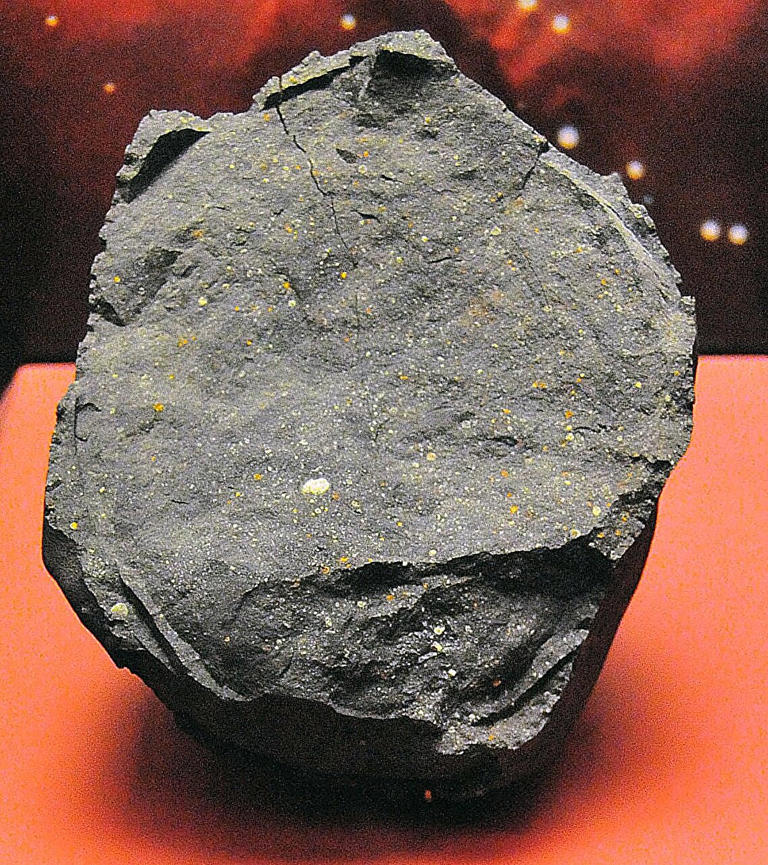
The Murchison meteorite, which crashed into Australia in 1969, is older than our solar system at 7 billion years. Recent analysis revealed something extraordinary, that all five nucleobases that form DNA and RNA (adenine, guanine, thymine, cytosine, and uracil) were present in this ancient stone. These molecules, confirmed as extraterrestrial in origin, fundamentally challenge the assumption that life's ingredients formed exclusively on Earth.

The Orgueil meteorite that exploded over France in 1864 tells a similar story. This carbonaceous rock contains not just amino acids like glycine and alanine, but structures resembling microfossils, tiny forms that look similar to magnetotactic bacteria found in Earth's oceans. While scientists initially dismissed these as contamination or mineral formations, recent studies have confirmed their extraterrestrial origin.

Space probes have expanded the search beyond meteorites. Rovers on Mars discovered liquid water streams and frozen ice. The Cassini spacecraft found massive glaciers on Saturn's moon Enceladus. The Phoenix lander confirmed water ice just three centimeters below the Martian surface. These discoveries reveal that the basic requirements for life; water, organic compounds, and energy sources, seem to exist throughout our solar system.

Radio telescopes have detected more than 100 organic molecules in interstellar dust clouds, including amino acids and nucleic acid components. These findings strengthen the panspermia hypothesis, the idea that life's building blocks are distributed throughout space, potentially seeding planets across the galaxy

Murchison meteorite at the The National Museum of Natural History in Washington. Credit: Basilicofresco

Murchison meteorite at the The National Museum of Natural History in Washington. Credit: Basilicofresco

But what about intelligent alien civilizations? Despite decades of UFO reports and SETI programs broadcasting messages into space, no confirmed evidence of extraterrestrial intelligence exists. Most UFO sightings have conventional explanations, from ball lightning in the atmosphere to plasma phenomena in the thermosphere. The supposed alien bodies presented to Mexico's Congress in 2023 were quickly dismissed as artificial constructs.

The challenge isn't lack of evidence for life's ingredients, instead it's proving that these ingredients actually formed living organisms elsewhere. The presence of DNA building blocks in billion-year-old meteorites doesn't confirm that alien bacteria existed, only that the chemistry for life occurs naturally in space.

Enter artificial intelligence. New AI algorithms can analyze meteorite chemistry to distinguish biological from non-biological origins of organic compounds. Machine learning helps filter noise from radio signals and identify atmospheric biosignatures on distant exoplanets. Where human analysis might overlook subtle patterns in vast datasets, AI excels.

We've found the pieces. The building blocks of life exist throughout space. Whether those pieces assembled into living organisms, microbial or intelligent, remains the universe's most tantalizing unanswered question.

Publication details
  • Seyed Sina Seyedpour Layalestani et al, Evidence and traces of extraterrestrial life, International Journal of Astrobiology (2025). DOI: 10.1017/s1473550425100050

Journal information: 

RELATED

The Missing Time Mystery: Did Aliens Erase Human Memories? #alien

How Long Have Aliens Been Living Among Us? | Latest Alien Documentary 2026

{ https://phys.org/space-news/ }

Hoe vind je dit bericht?
Geschreven door peter om 14:01 Stuur door

Lost 'mega-escarpment' across ancient USA may explain Grand Canyon's missing billion years

Lost 'mega-escarpment' across ancient USA may explain Grand Canyon's missing billion years

by 

edited by Sadie Harley, reviewed by Robert Egan

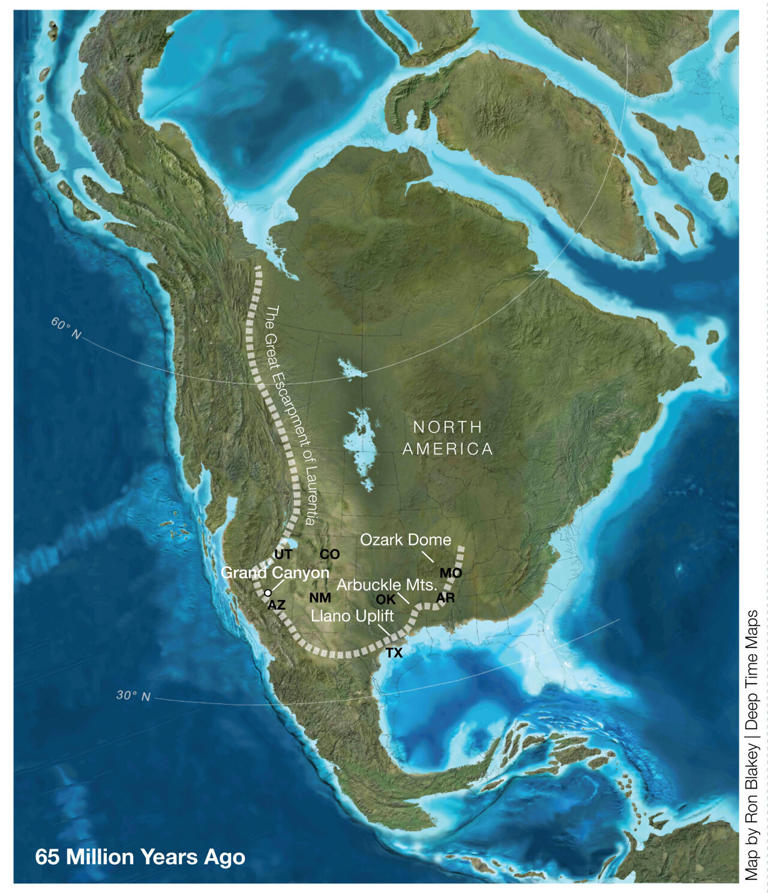
Great escarpment of Laurentia. Credit: Prof Tom Gernon, University of Southampton

Great escarpment of Laurentia. Credit: Prof Tom Gernon, University of Southampton

Scientists have found evidence that a colossal cliff stretching thousands of kilometers across ancient North America may have exposed the heart of the Grand Canyon nearly a billion years before it was carved by the Colorado River.

The study, led by the University of Southampton in the UK, proposes that a vast "great escarpment" of steep rocky cliffs formed when the supercontinent Rodinia broke apart 800 million years ago.

Experts suggest the 1-kilometer-high (0.6-mile-high) cliffs extended along much of western North America, driving erosion of enormous volumes of rock and exposing an ancient crystalline basement now visible in the Grand Canyon in southern Arizona.

Lead author Thomas Gernon, a professor of Earth science at Southampton, said the Grand Canyon has a geological record spanning 2 billion years, but more than half of its rock record appears to be missing.

He added, "Our paper suggests the Canyon's basement rocks were progressively brought to the surface as part of an immense escarpment that developed during the breakup of an ancient supercontinent.

"The findings also shed light on the formation of the Great Unconformity, a mysterious gap in the rock record that spans over a billion years."

A cliff line across a continent

The study, published in Geology, included experts from the University of Southampton, GFZ Helmholtz Center for Geosciences and the University of Potsdam, both in Germany, and the University of Illinois Urbana-Champaign in the U.S.

According to their findings, the ancient great escarpment would have stretched across what are now Arizona, Utah, Idaho, Wyoming, Colorado, Texas, Oklahoma, Arkansas, Missouri and Illinois.

This is where intense erosion ultimately exposed some of North America's oldest rocks, most famously those at the Grand Canyon, Gernon said.

The researchers combined plate tectonic reconstructions with landscape evolution data to recreate how western North America evolved as Rodinia fragmented.

The reconstruction showed the Grand Canyon occupied the same position relative to the ancient continental margin as many of today's great escarpments in South Africa and Brazil.

As the escarpment slowly retreated inland over tens of millions of years, it is predicted to have stripped away up to 8 kilometers (5 miles) of rock in places.

The findings are consistent with evidence that the region experienced extraordinary erosion of some 5–10 kilometers (3–6 miles) of rock long before the modern canyon formed.

Clues to a missing rock record

"This long-lived tectonic landscape provides a missing piece in understanding why erosion associated with the Great Unconformity varies so dramatically across the southwestern U.S.," Gernon said.

"Our work suggests that tectonic uplift related to continental rifting and breakup created both steep slopes and high ground, providing the mountainous terrain that rivers and glaciers could readily erode."

The study also reveals the ancient escarpment may have influenced far more than the Grand Canyon itself.

By creating a long-lived mountainous rim around western Laurentia—the ancient core of North America—it may have controlled where rivers flowed, sediments accumulated and when rising seas flooded the continent before the so-called Cambrian explosion, when complex life rapidly diversified.

Gernon added, "Today's escarpments in Africa, Brazil, India and Antarctica provide windows into the forces that shape continents over hundreds of millions of years.

"By comparing the Grand Canyon's ancient history with active landscapes like the Great Escarpment of South Africa, we're able to see North America's most iconic geologic landmark in an entirely new light.

"Our findings could help geologists reinterpret other ancient continental interiors where similarly large gaps occur in records, offering a better understanding of how Earth's continents have changed over hundreds of millions of years."

Publication details
  • Thomas M. Gernon et al, Exhumation of Grand Canyon's basement along the Great Escarpment of Laurentia, Geology (2026). DOI: 10.1130/g55133.1

Journal information: 

RELATED

The Grand Canyon Is Missing 1.2 Billion Years Of Rock

BREAKING: The Grand Canyon’s Missing Part May Have Finally Been Found

How Was the Grand Canyon Formed? The Incredible Story Behind America's Greatest Wonder #GrandCanyon

{ https://phys.org/earth-news/earth-sciences/ }

Hoe vind je dit bericht?
Geschreven door peter om 13:42 Stuur door

Meer van UFO'S of UAP'S, ASTRONOMIE, RUIMTEVAART, ARCHEOLOGIE, OUDHEIDKUNDE, SF-SNUFJES EN ANDERE ESOTERISCHE WETENSCHAPPEN - DE ALLERLAATSTE NIEUWTJES

↑ Terug naar de berichten