Location of discovery: Earths moon
New report claims human civilization could end in 2050The end of humanity in 2050?
Will human civilization die out by 2050? That is at least the claim of a recent report by the Breakthrough National Centre for Climate Restoration, a think tank based in Melbourne
©Provided by The Daily Digest
The threat of climate change
This research group describes climate change as “a short- and medium-term existential threat to human civilization” and emphasizes the need for a changed approach to avert catastrophe.
A point of no return
The status quo would push the climate and humanity "to a point of no return by mid-century, and the prospect of a largely uninhabitable Earth will lead to the collapse of nations and the international order," according to the report, cited by Vice.
Continuous heating
The experts assume that the current path leads to global warming of 3 degrees, which "could trigger feedbacks that amplify the triggering of further warming".
The collapse of ecosystems
The first consequence would be the collapse of essential ecosystems on Earth, such as “the coral reef system, the Amazon rainforest and the Arctic.”
©Provided by The Daily Digest
Unimaginable consequences
The consequences of this shift would be so severe that they cannot be measured because they "go beyond human experience of the last thousand years," the report continues.
©Provided by The Daily Digest
Unbearable living conditions
For humans, this would lead to unbearable living conditions, with one billion people forced to leave their homes and two billion people facing water shortages.
The collapse of agriculture
In addition, “agriculture in the subtropics would collapse and food production worldwide would be drastically reduced,” notes Vice magazine.
©Provided by The Daily Digest
Underestimated risks
Finally, the report's authors note that the risks of climate change are underestimated by policymakers, as the most pessimistic scenarios tend to be downplayed.
©Provided by The Daily Digest
The unvarnished truth
For Chris Barrie, a former Australian admiral who wrote the foreword to the report, the analysis "reveals the truth about the desperate situation of humanity and our planet and paints a disturbing picture of the concrete possibility that human life on Earth could be wiped out in the most horrific way."
The need for urgent mobilization
The only hope that remains, according to experts, is an immediate limitation of human activities that cause global warming and an urgent mobilization to deal with the consequences of climate change.
An Ancient Magma Ocean Once Covered the Moon, India’s Pragyan Lunar Rover Reveals
The Moon was probably once a gooey ball.

A year ago, India’s Pragyan rover began a nine Earth-day-long trek across a mysterious region of the Moon.
The robotic explorer encountered both smooth terrain as well as places filled with boulders likely flung out from craters. Despite this variety, the lunar dirt it observed at 23 different stops along its path was actually uniform in composition. When Pragyan probed the ingredients of this surface material, called regolith, it wound up boosting the idea that the Moon once harbored a subterranean magma ocean.
The findings appear in a new study published Wednesday in the journal Nature.
The idea is that when an ancient object careened into Earth, material sloshed off into space. Eventually it came together into a gooey ball, and cooled down in an uneven manner. The Moon was somewhat like a chocolate-covered cherry. The magma slush was filled with different elements. As the proto-Moon cooled down, light material started to crystallize. It floated to the surface. Once in place, it formed a lid. Now, with the frigid environment of space cut off from the hotter material underneath the surface, the Moon’s magma ocean couldn’t cool down as fast.
The rover found that the terrain in the 23 places it stopped, all within 50 meters of the mission’s Shiv Shakti Point landing site, was uniform and mostly made up of ferroan anorthosite.
It’s a fresh check-mark for the LMO hypothesis: If the lunar magma ocean existed in the distant past, the anorthosite would have formed as the crystals during the early cooling process rose to the surface, and made the Moon’s crust. And billions of years later, India’s Pragyan rover would roll its tires over a stretch of this land and study it up close.
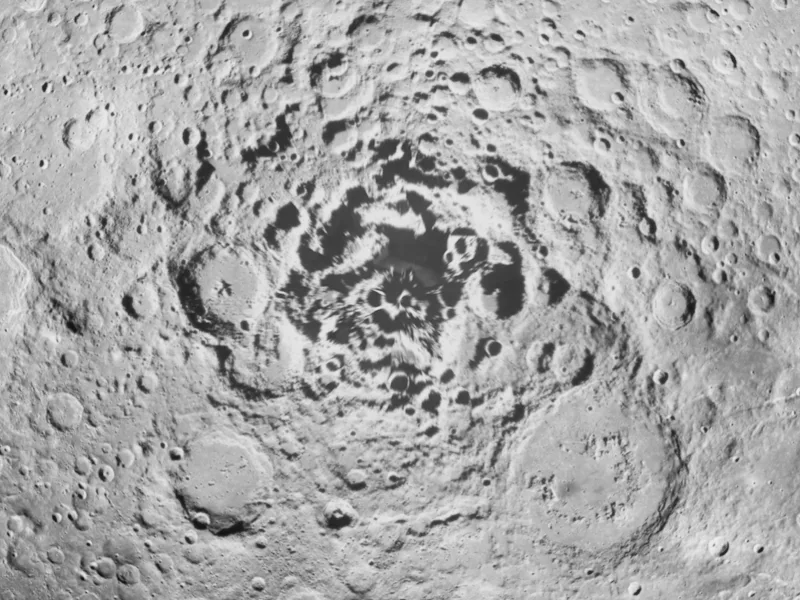
Pragyan rover is part of the country’s Chandrayaan-3 mission. Its Shiv Shakti Point landing site is located about 350 kilometers from one of the Moon’s most exciting places: the South Pole Aitken (SPA) basin.
It’s the largest impact basin in the Solar System, and the oldest on the Moon. It’s packed with clues about the Moon’s history.
NASA also wants to place astronauts there someday. According to a space agency white paper, the south pole of the Moon has good lighting conditions, including places where sunlight is continuous throughout the year. Plus, ice may be trapped here. This could be a valuable resource for astronauts, and could sustain their missions by offering a local source of water and potentially fuel.
Pragyan was exploring a prime place, for more reasons than one.
In a little more than a week, Pragyan had gained a precise analysis backed up by data from instruments delivered to the Moon via India’s two lunar missions, Chandrayaan-1 and Chandrayaan-2.
Pragyan reinforces findings from American and former Soviet Union missions half a century ago. While Pragyan regolith data wasn’t a perfect match with the findings from the 1972 missions — NASA’s Apollo 16 and the Soviet Union’s Luna 20 — it was very close. Since the three missions had landing sites that were geographically well separated, the study authors said, the similarities in regolith data across them all reinforces the hypothesis that the Moon did have a magma ocean. And that the natural satellite’s first stage of development did involve a differentiation, or split, between the light stuff that floated to the top, the heavier elements that sunk below, and the hardening of the crust that made the subterranean lunar magma ocean cool down slower.
The lunar south pole is undeniably a portal to probing the Moon’s past and the lofty ambitions of space exploration’s future.
Star Drek: UFO Crank Luis Elizondo is Back with Captivating New Tales

REMEMBER THOSE BIG HEADLINES last summer, when a retired Air Force Intelligence officer named David Grusch testified in Congress about the U.S. government’s secret UFO “retrieval” program?
“Whistleblower tells Congress a stunning tale of crashed alien spacecraft and dead pilots,” blared the Dallas Morning News.” The “stunning” part was true.
While speaking to the media, Grusch also said that World War Two Italian fascist dictator Benito Mussolini, tipped by Pope Pius XII, had helped retrieve a flying saucer and turned it over to the Americans. Even the New York Post noted that Grusch “did not provide any evidence for these claims.”
Still, cable news outlets and YouTube content creators latched on to Grusch like a pack of vampires.
Skeptics pleaded, yet again: Show us the evidence.
And then in mid-2023 a reporter discovered that Grusch, who had worked in Pentagon satellite intelligence agencies, had had a mental health and substance abuse crises in 2014 and 2018 . The flying saucer brigade cried foul, but also pledged to keep up the fight. Actual “proof” of a spaceship or an alien, they assured us, was imminent.
As it happens, that is the title and battle cry of a new book published this week by Luis Elizondo, another prominent former intelligence officer-turned UFO truther. Imminent: Inside the Pentagon’s Hunt for UFOs, is generating a fresh wave of media buzz and excitement among UFO believers. Might it live up to the hype and finally prove the existence of our extraterrestrial overlords?
Don’t hold your breath.
The author makes the same eye-popping claims about recovered UFO wreckage that we heard of last summer. Elizondo, in his book, says it’s part of an ultra-black “legacy program” that stretches back to the late 1940s, when the first saucers crashed at Roswell. And how did he learn about this when he was working in the Office of the Undersecretary of Defense for Intelligence, from 2008 until his retirement in 2017?
“Senior officials told me continuously and confidentially that big aerospace companies have been part of the Legacy Program to retrieve and reverse-engineer crash materials. The big names included Lockheed Martin, TRW, McDonnell Douglas, Northrop Grumman, Boeing, Raytheon, BAE Systems, and the Aerospace Corporation, all of which have long been principal members of the U.S. military industrial complex.”
What is more far-fetched: A ginormous, decades-long conspiracy that involved hundreds to thousands of employees staying quiet about recovered space aliens and otherworldly crafts, or senior Pentagon officials “continuously” sharing details of humanity’s biggest secret with only Elizondo and a few select others in the I.C.

If this doesn’t trigger your innate bullshit detector, then what about Elizondo’s claim that he is endowed with telepathic powers after being trained by the army as a psychic “super-soldier”? Or his chapter on translucent, basketball sized orbs that terrorized the Elizondo household after he was “recruited” into a secret Pentagon program that researched UFOs? The strange objects, he writes, floated through walls and “behaved as if guided by some intelligence.” He wondered if they were probes “sent to scope out my house” or if an “advanced intelligence was looking into me.”
Before you dismiss Elizondo as just another UFO kook or grifter (or both), it’s important to understand the backstory here: He is a big reason why a topic once associated with Bigfoot and crop circles is now treated by the media as a legitimate subject and the focus of serious attention in Congress. Let’s briefly unwind how that happened.
Learning Curves
Like many readers of Spy Talk, I first learned of Elizondo in December of 2017, when he was featured prominently in the mainstream media, starting with Politico, the Washington Post, and the New York Times. All three outlets (which were granted access to Elizondo months ahead of time), portrayed him as a career intelligence officer who had recently left the Pentagon in protest because a secret UFO investigative program he had led was ignored and not given sufficient resources.
It is impossible to overstate the importance of this initial coverage; three highly respected journalism organizations independently corroborated Elizondo’s impressive credentials in the classified world, and they all verified the existence of some kind of odd Pentagon program in the late 2000s that investigated “unidentified aerial phenomena,” or UAP—which could have been anything from drones and birds to otherworldly crafts. Elizondo described himself to the journalists as the program manager and framed his “mission” in national defense parlance.
Politico, the Washington Post and the New York Times all published their stories near simultaneously in mid-December, 2017, and all carried much the same narrative. The sensational news about the Pentagon’s “shadowy” UFO program and Elizondo’s explanation of how it was thwarted went viral on the internet and was quickly picked up, verbatim, by all the broadcast networks, which conducted fawning interviews with him.
Overnight, it seemed, UFOs went from tabloid fodder to a serious news story. Elizondo joined a brand new UFO entertainment company (set up by former Blink182 frontman-turned novelist-turned entrepreneur Tom DeLonge), which was credited with legitimizing the topic. They produced a “documentary” series for the History Channel that cast Elizondo as a heroic truth-teller and re-created his supposed UFO investigations for the Pentagon. By this time, I had already interviewed Elizondo numerous times for articles that examined his unlikely UFO stardom and the military’s tortured historical relationship with UFOs. I had also voiced my criticism of the media’s largely uncritical coverage of Elizondo and his small coterie of UFO-promoting intelligence professionals , which included former top Pentagon intelligence official Chris Mellon, scion of the Pittsburgh banking fortune. The UFO mania they created infected even supposedly level-headed members of Congress, like former House Speaker Harry Reid and Senators Kirsten Gillibrand and Chuck Schumer.
“We managed to convince them the phenomena were real and America needed to take action to determine the capabilities of these craft and the identity and intentions of their operators,” Mellon wrote in Politico last year.
Where’s the Beef?
They definitely have the Big Mo, no matter the holes in their story. When the debut of Elizondo’s History Channel docuseries arrived in 2019, I published a piece with The Intercept that dismantled the core claim that had propelled Elizondo to fame and UFOs into a national security story. There was no evidence, I reported, that Elizondo had ever been the director of a Pentagon UFO program, much less participated in one. The Defense Department affirmed this to me then and has since held to its position, including as recently as this week.
Yes, I know what you’re thinking: That’s exactly what the Pentagon would do, since it has been covering up the truth about flying saucers for 80 years.
Fair enough. You don’t have to believe in little green men from Mars to know that a culture of secrecy in the CIA and its cohort of alphabet soup agencies has bred public distrust of “deep state” federal institutions. Then there is the government’s own, real history of deceit, which Elizondo leaned into earlier this week during an interview with CBS after he was asked whether he thought the government was lying about UFOs.
“Well, we know that the government never lies, right?” he said sarcastically, rolling his eyes. “Iran-Contra, Pentagon Papers, Afghanistan withdrawal.”
This statement, and his book’s theme of a massive UFO coverup by the government, taps into a dangerous cynicism roiling contemporary American politics. At the same time, who can blame him for wanting to cash in on our boundless appetite for feverish conspiracy narratives? We are inveterate junkies for this UFO stuff, no matter who is peddling it.
We—or at least many people—want to believe we’re not alone in the universe. The media, because it is an easy mark for a good saucer yarn, enables that belief. This is how the American public’s saucer habit was first established, when, at the dawn of the Cold War, thinly sourced wire service reports were picked up by many outlets across the country, thereby producing “the illusion of a national trend,” as two media scholars wrote in a 2019 paper.
The same pack journalism mentality that stirred a flying saucer phenomenon nearly 80 years ago is responsible today for a fabulist narrative that has renewed America’s fascination with UFOs. Throughout this history, self appointed military “whistleblowers” have periodically appeared on the scene to warn about the presence of space aliens in our midst. Belatedly, the Pentagon is trying to address the underlying cause of this trend. Good luck. Their effort is well meaning, I think, but too little and too late. UFOs will always alight in the public mind and their official disclosure will always be … imminent.
AI Focused, UFO With Three Alien Faces In Top of Craft! 👽 UAP Sighting News. VIDEO!

4000 jaar oude Babylonische tabletten voor het eerst ontcijferd: het zijn grimmige voortekenen gebaseerd op maansverduisteringen

The British Museum - Takori234/Wikimedia commons - CC BY-SA 4.0
Deskundigen zijn er eindelijk in geslaagd enkele zeer oude Babylonische tabletten te ontcijferen, maar wat ze zeggen is helemaal niet geruststellend. Laten we er meer over te weten komen.
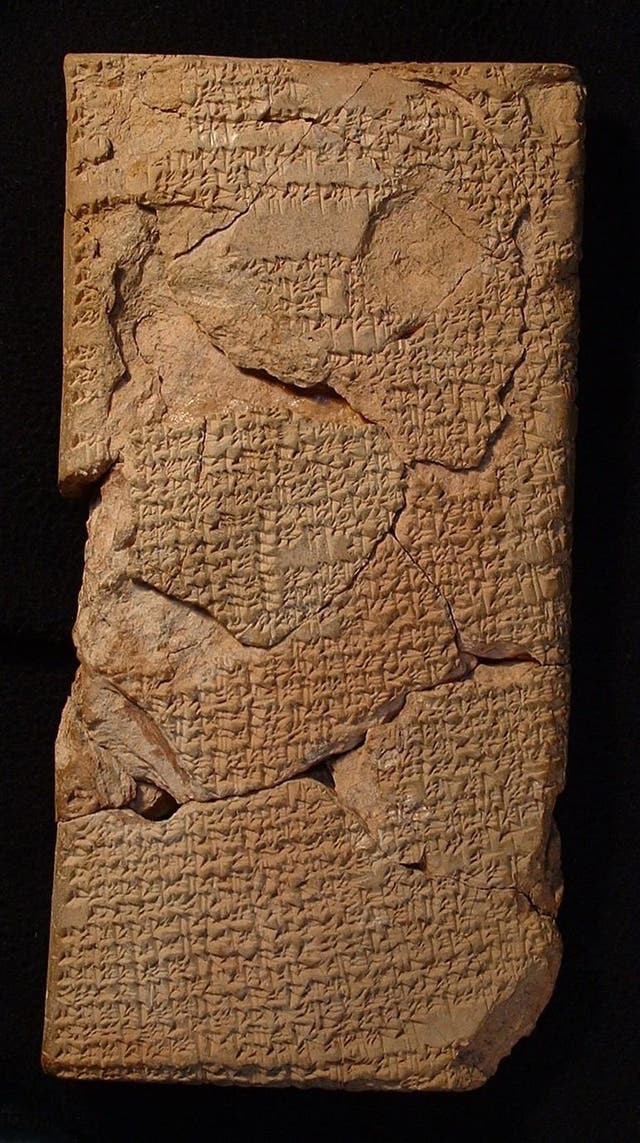
Meer dan honderd jaar geleden werden Babylonische tabletten met spijkerschrift van 4000 jaar oud ontdekt. Ze worden momenteel bewaard in het British Museum in Londen, Engeland, maar zijn in al die tijd nooit ontcijferd. Tenminste, tot vandaag.
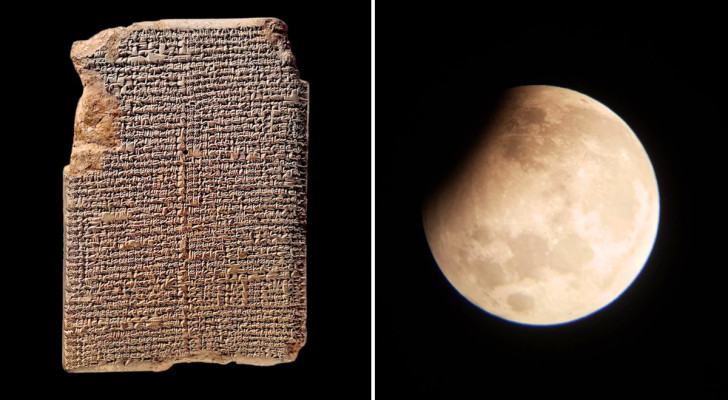
Wetenschappers hebben eindelijk wat licht geworpen op hun betekenis, maar het nieuws is verre van geruststellend. Blijkbaar bevatten de tabletten informatie over maansverduisteringen, waarvan sommige zijn geïnterpreteerd als voortekenen van belangrijke negatieve gebeurtenissen voor de mensheid. Andrew George, Babylonisch docent aan de Universiteit van Londen, en onderzoeker Junko Taniguchi, leggen in hun studie uit dat de vier kleitabletten "de oudste voorbeelden vertegenwoordigen van compendiums van voortekenen van maansverduisteringen die tot nu toe zijn ontdekt.

The British Museum
Volgens de auteurs van het onderzoek berekenden degenen die de tabletten hebben gemaakt de nachttijd, de beweging van de schaduwen, de datum en de duur van maansverduisteringen om hun voortekenen te formuleren. Op basis van bepaalde kenmerken van eclipsen voorspelden de oude Babyloniërs de gevolgen ervan. Een van de voortekenen verwijst bijvoorbeeld naar het feit dat als de zonsverduistering “in één keer vanuit het midden donker wordt en in één keer licht wordt”, dit ongeluk zou betekenen voor de koning en de stad Elam, een regio in Mesopotamië waar Iran zich vandaag bevindt.
Als de zonsverduistering in het zuiden zou beginnen en vervolgens opklaarde, spreekt de voorspelling over de “val van Subartu en Akkad”, twee andere gebieden in het oude Mesopotamië. Andere negatieve gebeurtenissen werden verwacht in het geval van een zonsverduistering gedurende de avond. Waarschijnlijk baseerden astrologen uit die tijd hun voorspellingen op eerdere gebeurtenissen, die al hadden plaatsgevonden na maansverduisteringen.
Volgens Andrew George zouden de voortekenen in feite afkomstig kunnen zijn van gebeurtenissen die daadwerkelijk hebben plaatsgevonden, ook al waren de meeste voorspellingen naar alle waarschijnlijkheid geformuleerd door de eigenaardigheden van de eclipsen op een volledig theoretische manier met de verschillende voortekenen te associëren. In het oude Babylon geloofde men namelijk dat kosmische gebeurtenissen de toekomst konden voorspellen. De studie zegt dat, volgens mensen uit die tijd, “gebeurtenissen in de lucht gecodeerde signalen waren die daar door de goden waren geplaatst als waarschuwingen over de toekomstperspectieven van degenen die op aarde leefden. Zij die de koning raad gaven, hielden de nachtelijke hemel in de gaten en vergeleken hun waarnemingen met het academische corpus van teksten over hemelse voortekenen".
Aangenomen wordt dat de tabletten afkomstig zijn uit Sippar, het huidige Irak. Toen ze 4000 jaar geleden werden gemaakt en geschreven, breidde het Babylonische rijk zich uit naar verschillende gebieden van Mesopotamië. Tussen 1982 en 1914 werden ze onderdeel van de collectie van het British Museum, maar pas nu zijn ze voor het eerst ontcijferd.
Bewijs van “Sneeuwbalaarde” gevonden op 700 miljoen jaar oud gesteente

Oleg Kuznetsov/Wikimedia Commons - CC BY-SA 4.0
De afgelopen decennia hebben we meer inzicht gekregen in de geologische geschiedenis van onze planeet: we kunnen nu gebeurtenissen traceren die honderden miljoenen, zo niet miljarden jaren geleden plaatsvonden. Een van de meest fascinerende gebeurtenissen is ongetwijfeld die van de Sneeuwbalaarde, een tijdperk waarin onze planeet volledig bedekt was met ijs. Dit is een theorie die vrij wijdverspreid is in de wetenschappelijke gemeenschap, maar sommige onderzoekers hebben er mogelijk bewijs van gevonden dat even uitzonderlijk als zeldzaam is. Laten we eens kijken wat het is.
We bevinden ons tussen Ierland en Schotland, waar een bepaalde rotsformatie mogelijk het meest complete bewijs levert van de Sneeuwbalaarde. De ontdekking werd gedaan door een team onderzoekers van het University College in Londen, die hun bevindingen publiceerden in het Journal of Geological Society. Volgens het onderzoek bestaat deze rotsformatie uit lagen die zich tussen 662 en 720 miljoen jaar geleden hebben gevormd, tijdens het Sturtien. Dit zijn de woorden van de onderzoekers over de ontdekking:
De rotslagen die zijn blootgelegd op de Garvellachs zijn uniek in de wereld. Onder de rotsen die zijn afgezet tijdens de onvoorstelbaar koude ijstijd van het Sturtien bevinden zich 70 meter oudere carbonaatrotsen die zijn gevormd in tropische wateren. Deze lagen laten een tropisch zeemilieu zien met florerend cyanobacterieel leven dat geleidelijk kouder werd en het einde markeerde van een miljard jaar gematigd klimaat op aarde.
Met name een rotspunt op de Garvellachs-eilanden in Schotland lijkt de abrupte overgang van een gematigd klimaat naar een met ijs bedekte, sneeuwbalachtige aarde aan te tonen.

NOAA At The Ends of the Earth Collection - Public Domain
Het bewijzen van de theorie van de Sneeuwbalaarde is niet alleen nuttig om meer te weten te komen over de geschiedenis van onze planeet, maar ook om de evolutie van levensvormen te begrijpen. Van eencellige organismen en algen tot veel complexere vormen en de Cambrische explosie: de Sneeuwbalaarde zou, kortom, een fundamenteel moment kunnen zijn in de evolutie van het leven op onze planeet. Het probleem is om te begrijpen hoe en volgens welke verschijnselen.
Een vrij algemeen geaccepteerde theorie ziet extreme kou als een van de factoren die eencelligen ertoe bracht om met elkaar samen te werken en zo de eerste meercellige organismen te vormen. Tegelijkertijd zou de snelheid van deze evolutie verklaard kunnen worden door de relatief korte tijden van uitzetting en terugtrekking van het ijs, dankzij het albedo-effect. In de praktijk geldt dat hoe meer ijs er op het aardoppervlak zit, hoe meer het de zonnestralen reflecteert en daardoor afkoelt: een vicieuze of virtueuze cirkel, afhankelijk van hoe je het bekijkt.
Het team van het University College London kwam tot deze conclusies na het verzamelen van zandsteenmonsters uit rotsformaties tussen Noord-Ierland en Schotland. Daarna analyseerden de onderzoekers bepaalde mineralen in het gesteente, zirkonen genaamd, die gedateerd kunnen worden door de aanwezigheid van uranium dat met regelmatige tussenpozen vervalt tot lood. Deze monsters werden gevormd tussen 662 en 720 miljoen jaar geleden, precies aan het begin van het Cryogene tijdperk.
Als de resultaten van het onderzoek worden bevestigd door verder onderzoek, dan kunnen we kijken naar onweerlegbaar bewijs van de Sneeuwbalaarde. Aan de andere kant lijkt het vrij duidelijk dat we van de vroegere eenvoudige organismen zijn overgegaan op complexere organismen. Tussen de twee perioden in is er een planeet bedekt met ijs dat, eenmaal gesmolten, leidde tot een van de grootste veranderingen die ooit op aarde zijn gezien.
Ex-Pentagon Official Reveals U.S. UFO Retrieval Program and Alien Bodies

In a groundbreaking revelation, former Pentagon official Luis Elizondo has made startling claims regarding the U.S. government’s involvement in a UFO retrieval program. According to Elizondo, this program not only deals with unidentified aerial phenomena (UAP) but also involves the recovery of non-human biological specimens, suggesting the presence of extraterrestrial life.
Elizondo, who previously headed the Pentagon’s Advanced Aerospace Threat Identification Program (AATIP), has brought to light information that has long been speculated by UFO enthusiasts and researchers. He asserts that the Department of Defense has been actively involved in retrieving crashed spacecraft, some of which are believed to be of non-human origin. These claims, if proven true, would mark one of the most significant disclosures in the history of extraterrestrial research.
During a NewsNation special, Elizondo elaborated on the existence of this program, stating that the U.S. government has been engaged in these activities for decades. He also named various government agencies and aerospace companies that allegedly possess these spacecraft. The implications of such a program are profound, as it suggests that the government has been reverse-engineering alien technology for potential use in defense and other sectors.
Elizondo’s revelations also touch on the infamous Roswell incident of 1947, one of the most well-known UFO events in history. He claimed that not just one, but two unidentified aerial phenomena crashed during the Roswell event. While one managed to escape, the other was reportedly recovered by the U.S. government. This aligns with long-standing rumors that Roswell was a cover-up for the recovery of alien technology and possibly even extraterrestrial beings.
These allegations point to a legacy of UAP retrieval and reverse engineering that has spanned multiple decades. The U.S. government’s interest in these phenomena, according to Elizondo, is not merely scientific curiosity but a deep-seated pursuit of advanced technology that could potentially change the course of human history.
Perhaps the most shocking aspect of Elizondo’s claims is the mention of non-human biological specimens. He suggests that alongside the recovery of spacecraft, the U.S. government has also retrieved alien bodies. These biologics, as he refers to them, are evidence of non-human intelligences that have been interacting with humanity.
VIDEO:
Elizondo emphasizes that this is not a recent discovery; the U.S. government has allegedly been aware of the existence of these non-human entities for decades. This revelation raises numerous questions about the nature of these beings, their intentions, and the extent of their interactions with humanity.
If Elizondo’s statements are accurate, they could lead to a paradigm shift in how we understand our place in the universe. The idea that we are not alone, and that other intelligences have been engaging with us, challenges many of our fundamental beliefs about life, technology, and even security.
The potential existence of a UFO retrieval program also raises ethical and legal questions. If the government has indeed been hiding such information, it could lead to calls for greater transparency and accountability. Moreover, the prospect of reverse-engineering alien technology could have far-reaching consequences, both beneficial and potentially dangerous, for global security.
In conclusion, Luis Elizondo’s claims about a U.S. UFO retrieval program and the recovery of alien bodies open up a vast array of possibilities and concerns. While these revelations are yet to be fully verified, they undoubtedly add fuel to the ongoing debate about UFOs and extraterrestrial life. As more information emerges, the world will be watching closely to see how these claims unfold and what they mean for the future of humanity.
Ken je de Fermiparadox over buitenaards leven?Artikel door thedailydigest.com
©Aangeboden door The Daily Digest
De Fermiparadox: waar zijn de buitenaardse wezens?
Naar schatting bevinden zich alleen al in de Melkweg tussen de 200 en 400 miljard sterren. Daarvan zijn er veel vergelijkbaar met de zon, miljoenen jaren ouder en met aardachtige planeten in de buurt. Maar we hebben vermoedelijk nog nooit definitief bewijs gehad van buitenaards leven. Waarom is dat eigenlijk?
©Aangeboden door The Daily Digest
De Nobelprijswinnende natuurkundige achter de paradox
Enrico Fermi was een Nobelprijswinnaar voor natuurkunde en is over het algemeen bekend vanwege zijn rol in de ontwikkeling van de eerste kernreactor en zijn bijdrage aan het Manhattanproject.
"Waar is iedereen?"
In 1950 startte hij onbedoeld dit wetenschappelijke debat met een eenvoudige vraag tijdens de lunch: "Waar is iedereen?". De vraag lokte gelach uit, maar sommige genieën krabden zich echt achter de oren.
De obsessie van Enrico Fermi
Volgens collega Herbert York raakte Fermi geobsedeerd door het vinden van een antwoord en maakte hij een reeks berekeningen over de waarschijnlijkheid van buitenaards leven.
"Hij kwam tot de conclusie dat we al lang geleden en vele malen bezocht hadden moeten zijn", aldus York. Jammer genoeg overleed Fermi in 1954 aan kanker.
©Aangeboden door Showbizz Daily Netherlands
Een schatting maken van de kosmische populatie met de Vergelijking van Drake
De Vergelijking van Drake, voorgesteld door astronoom Frank Drake in 1961, voorziet in een methode om een nog nauwkeurigere schatting te maken van het aantal communicerende beschavingen in ons sterrenstelsel.
Van 1000 tot 100.000 beschavingen in de Melkweg
Tijdens de eerste bijeenkomst over de vergelijking van Drake, waaraan mensen als Carl Sagan deelnamen, werd gespeculeerd dat het aantal beschavingen in de Melkweg tussen de 1000 en 100.000.000 zou liggen. Pessimisten stellen echter dat dit een zwaar overdreven aantal is.
Dus, waar is iedereen? En waarom zijn ze niet op bezoek geweest?
De grote vraag of we wel of niet alleen zijn in het universum is fascinerend. Bij gebrek aan enig concreet bewijs hebben veel grote geesten gespeculeerd over waarom we nog niet zijn bezocht door E.T.'s (of in ieder geval niet officieel). Hier zijn enkele van de belangrijkste hypotheses...
Uitdagingen van interstellair reizen: een groot obstakel voor contact
De enorme afstanden tussen sterren kunnen onoverkomelijke uitdagingen vormen voor interstellaire reizen. Dit is een mogelijke verklaring waarom er nog geen buitenaardse beschaving de aarde heeft bezocht.
Veel tijd om een sterrenstelsel te koloniseren
Een fysieke onmogelijkheid zou ook een mogelijke verklaring kunnen zijn. Want, mocht interstellair reizen mogelijk zijn, dan zou het volgens wetenschappelijke berekeningen tussen de 5 miljoen en 50 miljoen jaar duren om het sterrenstelsel te koloniseren.
Foto: Planet Volumes / Unsplash
Het grote filter: buitenaards leven en intelligentie zijn zeldzaam of niet bestaand
Zouden we echt alleen zijn in het enorme universum? Of in ieder geval de enige intelligente beschaving met geavanceerde technologie?
Intelligentie is niet meer onvermijdelijk
Zoals astronoom Charles Lineweaver (foto) suggereert, is intelligentie niet meer 'onvermijdelijk' dan bijvoorbeeld grote neuzen zoals die van olifanten.
Wij zijn de enige ruimtesoort
Natuurlijk heeft de prachtige planeet Aarde maar één ruimtesoort voortgebracht, namelijk: ons. Het niet bereiken van het noodzakelijke intelligentieniveau wordt wel 'het grote filter' genoemd.
Zelfvernietigend gedrag: een gemeenschappelijk lot?
Een afschuwelijke hypothese, gerelateerd aan de ontwikkeling van de atoombom in de 20e eeuw en de dreiging van klimaatverandering, is dat elke beschaving met zulke geavanceerde technologie waarschijnlijk zichzelf heeft vernietigd.
Zelfvernietiging of overleving
Amerikaans astronoom Carl Sagan en de Sovjet-collega Iosif Sjklovski speculeerden in 1966 dat technologische beschavingen de neiging zouden hebben om zichzelf te vernietigen binnen een eeuw na de ontwikkeling van interstellaire communicatiecapaciteit of om deze impulsen te overwinnen en miljarden jaren te overleven.
Is de wens om te koloniseren universeel?
Misschien is de aanname dat, als er buitenaards leven zou zijn, het zou proberen de rest van het melkwegstelsel te koloniseren (of op zijn minst te communiceren) een zelfprojectie. Ja, dat is wat onze samenleving zou doen, maar dat bij buitenaardse wezens in de schoenen schuiven gaat misschien te ver.
Wetenschapper zegt dat buitenaardse intelligentie hem zou verbazen
Zoals de Amerikaanse evolutiebioloog Stephen Jay Gould schreef: "Ik heb al moeite genoeg met het voorspellen van de plannen en reacties van de mensen die het dichtst bij me staan... Het zal me verbazen als ik met zekerheid kan zeggen wat een of andere buitenaardse bron van intelligentie kan doen"
Bevinden we ons in the middle of nowhere?
Het heelal is beangstigend groot. Volgens York is een van Fermi's beste veronderstellingen over waarom buitenaardse wezens nog niet op bezoek zijn geweest, dat de aarde en ons sterrenstelsel "heel ver verwijderd liggen van de agglomeratie van het galactische centrum".
Foto: Kellepics / Pixabay
De dierentuinhypothese: houden buitenaardse wezens ons in de gaten?
Volgens deze theorie weten geavanceerde buitenaardse beschavingen misschien wel van ons, maar kiezen ze ervoor om van een afstandje te observeren en zo min mogelijk in te grijpen om onze natuurlijke evolutie niet te verstoren.
Buitenaardse wezens zijn misschien bang om contact te zoeken
Het is denkbaar dat buitenaardse wezens de voorkeur geven aan isolatie en om hun eigen redenen ervoor kiezen om zich te verbergen of contact met andere beschavingen te vermijden, wat nog een laag complexiteit toevoegt aan de Fermiparadox. Dit staat bekend als de 'Dark forest hypothesis' of 'Donkerboshypothese'.
Kiezen de buitenaardse wezens ervoor om de fysieke vorm weg te vagen?
Zoals Nick Bostrom, de bedenker van de simulatietheorie, suggereert, zullen geavanceerde wezens zich misschien helemaal ontdoen van de fysieke vorm en zich in plaats daarvan richten op het creëren van enorme virtuele omgevingen.
©Aangeboden door The Daily Digest
De planetariumhypothese: het universum is niet echt
Sciencefictionschrijver Stephen Baxter opperde dat alles wat we in het universum zien, inclusief alle wetenschappelijke berekeningen, een illusie is die is gecreëerd door een superieure beschaving.
Leven we in een simulatie?
Met andere woorden, we hebben dusver geen buitenaardse wezens gezien omdat zij ze zo hebben ontworpen dat wij ze nooit zien. In de zin van Bostrom zouden we ook in een simulatie kunnen leven en is het universum gewoon virtueel.
Buitenaardse taal decoderen: zijn we technologisch voorbereid?
Projecten zoals SETI scannen actief het heelal op tekenen van buitenaards leven, waarbij geavanceerde apparatuur wordt gebruikt om te luisteren naar signalen die afwijken van de kosmische achtergrondruis, in de hoop uiteindelijk contact te kunnen leggen.
Duidelijke signalen
Maar zelfs als ze proberen te communiceren, is onze huidige technologie volgens Sagan mogelijk niet in staat hun signalen te detecteren of te begrijpen, wat heel anders kan zijn dan wat we hadden voorspeld.
Zijn de buitenaardse wezens al hier?
Sommige theoretici suggereren dat er buitenaards leven op aarde zou kunnen zijn in vormen die we niet herkennen, zoals microscopische organismen of niet-biologische intelligenties, die wachten tot we een hoger begripsniveau bereiken. En zelfs Whoopi Goldberg heeft het al gezegd: "Ze zijn er al. En ze zijn er al een tijdje".
15 Facts About 'Men in Black'

On July 2, 1997, Will Smith and Tommy Lee Jones teamed up as Agents Jay and Kay, respectively, to quietly control the large alien population living in New York City. The comic book-adapted buddy comedy spawned three sequels, which as a franchise went on to gross more than $1.9 billion. The original film in the series—which was released nearly 25 years ago—was the second-highest-grossing film of 1997, only overshadowed by Titanic’s immense success. Here are some intergalactic facts about the series.
Smith had back-to-back number one Fourth of July weekend hits in the mid-1990s: In 1996, Independence Day dominated the box office, and the next year Men in Black opened in first place. Though 1999’s Wild Wild West was one of Smith’s lowest openings, bringing in just $27,687,484 during its opening weekend, it was a strong enough total to top the box office charts. In 2002 and 2008, Men in Black II and Hancock, respectively, solidified Smith’s moniker.
Sonnenfeld cut his teeth as a director of photography on the Coen brothers’ Blood Simple, Raising Arizona, and Miller’s Crossing; he also worked with Penny Marshall on Big and Rob Reiner on When Harry Met Sally… and Misery before segueing into directing the Addams Family films and Get Shorty. Besides all three Men in Black films, Sonnenfeld also directed Smith in 1999’s Wild Wild West.
In fairness, he can look a little grumpy.
Jeff Vespa/GettyImages
Before Sonnenfeld signed on to direct Men in Black, a director by the name of Les Mayfield was originally hired. Tommy Lee Jones joined the cast in the beginning, back when Chris O’Donnell was being considered for what eventually became Will Smith’s role. Much to Sonnenfeld’s surprise, he loved working with Jones. “I saw Tommy do a TV interview a few years ago, and he was so mean I remember thinking, ‘Thank god I never have to work with this jerk,”’ Sonnenfeld recalled to Entertainment Weekly. “But I ended up loving every minute of it. He can be difficult if you don’t have clear opinions, but we got along extraordinarily well.”
Going back to Ufology in the 1940s and ’50s, several people wrote accounts and books about these so-called "men in black." The Mothman Prophecies author John Keel was the first person credited with using the "MIB" abbreviation in his writings. Albert K. Bender claimed “he was visited by three men in dark suits who threatened him with imprisonment if he continued his inquiries into UFOs,” and Gray Barker wrote several nonfiction books featuring the men in black, including 1956's They Knew Too Much About Flying Saucers and 1984's MIB: The Secret Terror Among Us. Barker’s sister, Blanch, recalled how he once told her why he wrote the books: “There’s good money in it.”
In the early ’90s, Lowell Cunningham penned the Men in Black comic book series, which was based on his own ideas of the men in black agents. “I was taken with the whole idea of these powerful men who show up and keep the peace,” Cunningham told The New York Times in 1997. “I shaped the men in black to be active agents, out there responding to threats, cleaning them up if they’ve already occurred. They describe themselves as the thin black line between reality and chaos.” He goes on to say one day he saw a black car drive by him and thought, “That’s the kind of car the men in black would drive.”
In real life, Frank was a pug named Mushu, who appeared briefly in the first film but had a more expanded role in the sequel. “I had to find a pug for the original Men in Black," Mushu’s owner, Cheryl Shawver, told The National Enquirer in 2002. "I saw an ad in the paper and bought Mushu for just a few hundred dollars. He travels by crate in business class with Cristie [the trainer]. He goes under the seat. He stays in the hotel room with her, sleeps on her bed. She orders his meals from room service: steak, chicken. He drinks only bottled water when he’s on the road. He’s a VIP!”
Tommy Lee Jones and his 'Men In Black' co-stars.
Getty Images/GettyImages
In the wake of the 2014 Sony hack, reports surfaced that among the leaked documents was an e-mail from former Sony studio head Amy Pascal stating that the studio was planning on mashing up the 21 Jump Street and Men in Black franchises for one star-studded movie. The premise would entail Jonah Hill and Channing Tatum playing cops, but it’s unclear if Jones and/or Smith would reprise their roles. In an e-mail to Pascal, Hill said: “Jump Street merging with MIB—I think that’s clean and rad and powerful.”
Back in 2013, it was reported a Men in Black 4 was in the works, with 22 Jump Street scribe Oren Uziel writing the script. Though a fourth installment led by Smith and Jones hasn't materialized yet, 2019 did see the release of Men in Black: International with Chris Hemsworth and Tessa Thompson as the leads.
The scientific website BadAstronomy.com broke down all of the astronomical incidents in the first Men in Black film and discussed what was good (a.k.a. accurate) about the movie and what wasn’t. For instance, Agent Kay says, “You want to stay away from that guy. He’s, uh, he’s grouchy. A three-hour delay in customs after a trip for 17 trillion miles is gonna make anybody cranky,” but BadAstronomy corrects the error: “The nearest known star to the Sun is Proxima Centauri, which is roughly 25 trillion miles away. So 17 trillion still falls a bit short. Still, I give them some credit.”
Rush Hour 2 almost dethroned Men in Black from the top spot in 2001, but with a gross of $250 million, Men in Black held onto its position. 22 Jump Street comes in third, and Men in Black II and Men in Black 3 rank fourth and fifth on the list, respectively.
The actor, who played a bug-like alien named Edgar, talked about how he came up with his distinct walk in the movie. While watching bug documentaries helped, there was another ingredient that put it over the top.
“I was walking by a sporting goods store one day, and I saw these braces that the basketball players wear,” he said. “I went in and I tried one on and I realized you could lock it off, you could tape the hinges so that you can’t bend either way. So I bought two of them and I took them home and I put them on. So, I slightly bent my leg and locked off the braces so I couldn’t move either way, but it was slightly bent and I taped off both my feet and I tried to walk and it created this restrained, physical odd thing.”
One night while on the set of Men in Black II, Smith told Sonnenfeld his idea for a third film. “At the beginning, something has happened and Agent Kay is missing and I have to go back to the past to go try to save young Agent Kay,” Sonnenfeld recalled to CNN. “In doing so, myself and the audience find out all sorts of secrets about the world that we didn’t even know were out there.” All Sonnenfeld could muster was, “Can we just finish this one?” Over a decade later, the plot to Men in Black 3 did revolve around time travel and saving a young Agent Kay, played by Josh Brolin.
Smith previously experienced success with his rap-duo group DJ Jazzy Jeff & the Fresh Prince, but co-writing and singing the Men in Black theme song was his first taste of solo success. The song was featured on both the film’s soundtrack (which sold more than 3 million copies) and Smith’s debut solo album, Big Willie Style, which was released a few months after the film came out. The theme song won Smith a Grammy for Best Rap Solo Performance, and cemented Smith as a triple threat: a bona fide television and movie star, and a rapper.
Rick Baker won seven Oscars for his makeup effects during his career, including one for his Edgar the Bug work on Men in Black. In 2015, Baker announced his retirement.
“I said the time is right, I am 64 years old, and the business is crazy right now,” Baker told 89.3 KPCC about why he was getting out of the biz. “I like to do things right, and they wanted cheap and fast. That is not what I want to do, so I just decided it is basically time to get out.”
In 2000, Men in Black Alien Attack replaced Back to the Future Part III Locomotive Display when it opened at Universal Studios Florida in Orlando. Smith and Torn filmed a short video and supplied their voices, which play as the riders use laser guns to shoot animatronic aliens. At 70,000 square feet, it was the largest dark ride built for a Universal park at the time.
The Ray-Bans from 'Men in Black' are an iconic part of the franchise.
Getty Images/GettyImages
The sunglasses Smith and Jones sport in the film are Ray-Ban Predator II glasses. According to a 1997 article in Promo magazine, a special coating was applied to the glasses to limit reflection, which meant removing the logo. Without the logo, nobody would know what type of glasses they were (Sonnenfeld edited out a previous line in the movie where Jones says “that’s why they call them Ray-Bans”).
Ray-Ban tried to convince the studio to reinstate the logo, but they refused. After some coercing, Smith compromised and name-dropped the company in the “Men in Black” song: “Black tie with the black attitude / New style, black Ray-Bans, I’m stunnin’, man.” The popularity of the movie and the song’s music video gave the $100 Predators a four- to five-fold increase in sales, and a boost to Ray-Ban’s entire catalog of shades.
Webb Telescope Reveals “Best Habitable Zone Exoplanet Currently Known,” and It Could Be Home to Alien LifeNew data obtained by NASA’s James Webb Space Telescope has helped identify what researchers are calling “one of the most promising habitable zone exoplanet candidates” yet discovered. The new data reveals what could also be a watery world that may be home to alien lifeforms.
The newly discovered exoplanet LHS 1140 b is believed to be a likely candidate planet for habitable conditions, including an atmosphere and the potential for a liquid water ocean.
The research, led by researchers with the University of Montreal, reveals that LHS 1140 b is unlikely to be a small gas giant or “mini-Neptune,” constituting a large, mostly gaseous planet with a thick atmosphere abundant in hydrogen.
The data was collected by the Webb telescope last December and built on previous data collected by NASA’s Hubble Space Telescope, as well as the Spitzer and TESS telescopes.
Ryan MacDonald, a NASA Sagan Fellow in the University of Michigan’s Department of Astronomy and one of the participants in the recent research, said the discovery “is the first time we have ever seen a hint of an atmosphere on a habitable zone rocky or ice-rich exoplanet.”
“Detecting atmospheres on small, rocky worlds is a major goal from JWST, but these signals are much harder to see than for giant planet atmospheres,” he added.
MacDonald, who played a significant role in analyzing LHS 1140 b’s atmosphere, says that LHS 1140 b represents one of the best small exoplanets astronomers have discovered in the habitable zone so far, given that it can support a thick atmosphere.
“[W]e might just have found evidence of air on this world,” MacDonald said in a statement.

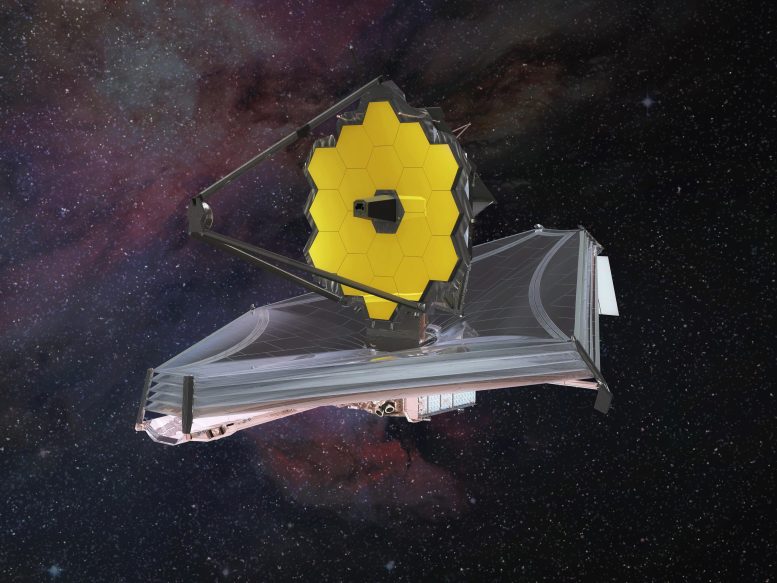
As the most advanced space telescope to date, the James Webb Space Telescope excels in the study of exoplanets. Its cutting-edge technology allows astronomers to probe the atmospheres of distant worlds, analyzing their makeup and assessing their potential to support life.
Credit: Northrup Grumman
One reason LHS 1140 b has astronomers talking has to do with how close it is. At just 48 light-years away within the constellation Cetus, LHS 1140 b is likely one of the closest exoplanets to our solar system that also resides within its host star’s habitable region, sometimes also known as the “Goldilocks Zone” since such planets can offer temperatures suitable for the existence of liquid water, as opposed to its frozen or gaseous states.
However, there are still a number of questions about LHS 1140 b, including its size. Astronomers are hoping to determine if the exoplanet is indeed a rocky or water-rich super-Earth or if it might still be a gas-rich mini-Neptune after all.
Charles Cadieux, a doctoral student at the University of Montreal and the lead author of a new study on the promising exoplanet discovery, says that LHS 1140 b presently represents what may be “our best bet to one day indirectly confirm liquid water on the surface of an alien world beyond our solar system.”
Such a discovery, if confirmed, would be “a major milestone in the search for potentially habitable exoplanets,” Cadieux said.
Although many aspects of LHS 1140 b’s size and nature remain mysterious, some of the data recently obtained with help from the James Webb Space Telescope seem to contradict the idea that the exoplanet is a mini-Neptune. Specifically, the team points to evidence that suggests LHS 1140 b has an atmosphere rich in nitrogen, making it similar to Earth.
Additional data will be required from future observations by Webb before the exoplanet’s nitrogen-rich atmosphere can be confirmed. However, one of the more promising details in the current data suggests that LHS 1140 b possesses less density than what astronomers would expect for a rocky planet with a composition like Earth’s, which could mean that as much as a fifth of the planet’s mass could consist of water.
In other words, LHS 1140 b could be a water world, which astronomers say may likely resemble a snowball. A liquid ocean may exist on the portion of its surface that continually faces its host star, given that it possesses a synchronous rotation similar to that of our own planet’s Moon, with one side constantly facing the Earth.
Current estimates suggest that if LHS 1140 b is indeed a snowball super-Earth or a water world, it may possess a “bull’s eye” ocean on its star-facing side that would be roughly half the surface area of the Atlantic Ocean. Given its constant exposure to radiation from its nearby star, this bull’s eye of liquid water ocean would also maintain a regular estimated temperature of around 20 Celsius (68 Fahrenheit).

Exoplanets are worlds that orbit stars other than the sun.
(Image credit: Science Photo Library via Getty Images)
“This is our first tantalizing glimpse of an atmosphere on a super-Earth in the habitable zone,” MacDonald said of his team’s discovery, which they believe to be one of the best candidates ever discovered for such habitability studies. Compared with other potentially habitable exoplanets, the relatively calm state of its host star also makes studies of LHS 1140 b’s atmosphere less likely to suffer from interference resulting from starspots.
Although MacDonald says that initial observations are extremely promising, additional observations by the Webb telescope will help astronomers confirm whether the exoplanet does possess a nitrogen-rich atmosphere
For now, MacDonald and his team are excited about what their current findings seem to have revealed.
“Our initial reconnaissance of LHS 1140 b with JWST has revealed this to be perhaps the best habitable zone exoplanet currently known for atmospheric characterization,” MacDonald said.