Ontdek de Fascinerende Wereld van UFO's en UAP's: Jouw Bron voor Onthullende Informatie!
Ben jij ook gefascineerd door het onbekende? Wil je meer weten over UFO's en UAP's, niet alleen in België, maar over de hele wereld? Dan ben je op de juiste plek!
België: Het Kloppend Hart van UFO-onderzoek
In België is BUFON (Belgisch UFO-Netwerk) dé autoriteit op het gebied van UFO-onderzoek. Voor betrouwbare en objectieve informatie over deze intrigerende fenomenen, bezoek je zeker onze Facebook-pagina en deze blog. Maar dat is nog niet alles! Ontdek ook het Belgisch UFO-meldpunt en Caelestia, twee organisaties die diepgaand onderzoek verrichten, al zijn ze soms kritisch of sceptisch.
Nederland: Een Schat aan Informatie
Voor onze Nederlandse buren is er de schitterende website www.ufowijzer.nl, beheerd door Paul Harmans. Deze site biedt een schat aan informatie en artikelen die je niet wilt missen!
Internationaal: MUFON - De Wereldwijde Autoriteit
Neem ook een kijkje bij MUFON (Mutual UFO Network Inc.), een gerenommeerde Amerikaanse UFO-vereniging met afdelingen in de VS en wereldwijd. MUFON is toegewijd aan de wetenschappelijke en analytische studie van het UFO-fenomeen, en hun maandelijkse tijdschrift, The MUFON UFO-Journal, is een must-read voor elke UFO-enthousiasteling. Bezoek hun website op www.mufon.com voor meer informatie.
Samenwerking en Toekomstvisie
Sinds 1 februari 2020 is Pieter niet alleen ex-president van BUFON, maar ook de voormalige nationale directeur van MUFON in Vlaanderen en Nederland. Dit creëert een sterke samenwerking met de Franse MUFON Reseau MUFON/EUROP, wat ons in staat stelt om nog meer waardevolle inzichten te delen.
Let op: Nepprofielen en Nieuwe Groeperingen
Pas op voor een nieuwe groepering die zich ook BUFON noemt, maar geen enkele connectie heeft met onze gevestigde organisatie. Hoewel zij de naam geregistreerd hebben, kunnen ze het rijke verleden en de expertise van onze groep niet evenaren. We wensen hen veel succes, maar we blijven de autoriteit in UFO-onderzoek!
Blijf Op De Hoogte!
Wil jij de laatste nieuwtjes over UFO's, ruimtevaart, archeologie, en meer? Volg ons dan en duik samen met ons in de fascinerende wereld van het onbekende! Sluit je aan bij de gemeenschap van nieuwsgierige geesten die net als jij verlangen naar antwoorden en avonturen in de sterren!
Heb je vragen of wil je meer weten? Aarzel dan niet om contact met ons op te nemen! Samen ontrafelen we het mysterie van de lucht en daarbuiten.
Paul Amadeus Dienachborn in 1884 near Zurich, was a simple professor of French and German, but what happened to him (regardless of the explanations that can be given) was truly incredible. His extraordinary story is based on his personal journal, which was first published in Greek in 1972. During a year-long coma, Dienach wrote about his incredible experiences living in the year 3906. His journal entries are extremely detailed, revealing a life he claimed to have lived centuries in the future.
Dienach was a Swiss-Austrian teacher who struggled with fragile health. His father was a German-speaking Swiss, and his mother was an Austrian from Salzburg. Despite his health issues, Dienach was determined to live a fulfilling life. In the autumn of 1922, he traveled to Greece, hoping the mild climate would improve his condition.
While in Greece, Dienach taught French and German language lessons to support himself. One of his students, George Papahatzis, had a deep appreciation for Dienach and remembered him as a “very cautious and very modest man who used to emphasize the details.” Papahatzis described Dienach as a dedicated teacher who was passionate about sharing his knowledge.
Dienach’s background was marked by a love for learning and helping others. He grew up in a suburb of Zurich and spent his teenage years in a nearby village. He later studied subjects focused on cultural history, classical languages, and helping others. His interests and passions defined his life’s work.
Sadly, Dienach’s life was cut short when he likely died of tuberculosis in Athens, Greece, or while returning home through Italy in early 1924. Despite his passing, Dienach’s journal remains, offering a fascinating glimpse into his extraordinary experiences and insights.
Before Paul Dienach died, he gave his diary to Papahatzis, asking him to translate it from German to Greek to improve his language skills. Papahatzis thought it was a novel, but as he translated, he discovered it was actually Dienach’s diary… from the future!
Papachatzis was a Professor of Administrative Law at Panteion University from 1943 to 1967 when he was dismissed from the Greek military junta of 1967–74. He was among the prominent Greek Professors of the first period of the Panteion University after its foundation in 1927, which contributed to the university’s curriculum. He also served as Rector of the university from 1964 to 1965.
Dienach likely had a rare brain disease called encephalitis lethargica. The first time he fell asleep because of it, he was out for 15 minutes. The second time, he was in a coma for a year. While in a Geneva hospital, Dienach claimed his mind entered the body of a man named Andreas Northam, living in the year 3906 AD.
After waking up, Dienach didn’t tell anyone about his experience, fearing they’d think he was crazy. Instead, he wrote down everything he remembered about the future. He even quit his job to focus on writing as much as possible.
Dienach described the world and people of 3906 AD based on what he could understand as a man from the 20th century. It was hard for him to grasp everything he saw since he wasn’t familiar with their technology or way of life. The story of Paul Amadeus Dienach is reported in the 2015 book “Chronicles from the Future” by Achilleas Sirigos.
The book has so many details that some people think the author must have lived in a spiritual way in the year 3906 or in some future world. This is because of how detailed the book is. On the other hand, 1921 wasn’t very exciting, so there wasn’t much to inspire writers or spark their creativity.
In his memoirs, Dienach says that people in the future understood his strange medical condition, which they called “conscious slide.” They told him about the events from the 21st to the 39th century. However, they didn’t tell him about the 20th century, fearing that if he returned to his time (which he did), knowing the future might change history or his life.
Papahatzis began reading and translating the diary from French to Greek. In the 800 pages, Dienach wrote about how, during his coma, his consciousness left his body and entered the body of someone from the year 3906. Dienach repeatedly says in the diary that he is not a writer or someone with a lot of imagination or attention to detail.
Dienach lived in the future as Andreas Northam
In his diaries Dienach tells of how he lived, for a year, reincarnated as Andreas Northam, an Italian scientist in hospital following an accident on board a flying car, in 3906. Going beyond the events of his alleged existence in the 40th century.
2000-2300: humanity is still grappling with the problems of overpopulation, environmental pollution, economic inequalities, local wars, and food shortages for all.
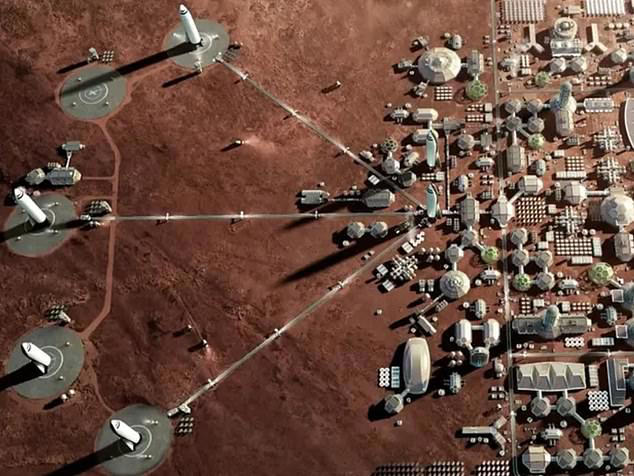
2204: The large colonization of Mars by 20 million people is completed, but sixty years later, there will be an environmental catastrophe on the red planet that will leave no escape for anyone. As a consequence, humanity will never attempt to colonize any planet again for many centuries to come.
2309: environmental and humanitarian problems become increasingly worse, causing a major natural disaster and leading all nations into atomic war. Western nations prevail over China, and the consequences of the atomic bomb lead to a dramatic decline in the world population and large mass migrations.
2396: this catastrophe leads to the establishment of a Global Parliament where all nations are represented and united without distinction. In this new world order, power is entrusted to scientists, technocrats, and humanitarian figures. Money as we know it no longer exists, wealth has decreased, and the population can finally redistribute every resource equally. From this moment, we start counting again from year 1. However, there is still resistance to this change from some national governments, which will continue for a couple of centuries. After another five centuries, humanity will have become accustomed to the idea of global belonging, bringing the Dark Ages to an end in 3400.
3382: from this year, something phenomenal happens—a mutation of the human brain that allows a new ability called hyper-vision. It leads to the discovery of astounding concepts never before imagined.
3400-4000: The Golden Age begins after more than 1000 years of the “Dark Age.” In the government, there are no longer scientists and technocrats, but the so-called Universal Creators—personalities who incorporate skills from every field of human knowledge. This new world society is free from all the material and conceptual chains that have hindered the spiritual development of humankind. You work for just two years (from 19 to 21) in “glothners” or electrical production factories; after this period, you officially become cives, citizens of the world. The State, now a global body, takes care of the livelihood of the one billion people that Earth hosts, inevitably preserving it with birth control.
What’s interesting is that history up to the year 3906 seems to follow the ideas of Giambattista Vico (1668–1744). He believed that human history is a never-ending cycle of highs and lows. Humanity always faces challenges that lead to difficulties and sadness. Each time, humanity has to correct its negative actions with big changes. No matter how much technology or spiritual growth we achieve, we are doomed to never reach a permanent state of happiness.
Some fact check:
The man you saw in the thumbnail is actually not Paul Dienach. That is the mug shot of Daniel ‘Lohill’. The photograph was mislabeled as Daniel ‘Lohill’ at the time it was taken in 1908; the real name of this handsome rogue is Daniel TOHILL, and he was convicted of theft in Napier, New Zealand, and sentenced to 4 months of hard labor on March 2, 1908. (Source)
Daniel Tohill (incorrectly labelled as Daniel Lohill), born in 1881 in New Zealand. Charged with theft and sentenced to 4 months hard labor on 2 March 1908 in Napier. Image credit: New Zealand Police Museum.
Does that mean Paul Dienach’s story is a hoax? Not really. The Why Files gave a good explanation…
Paul Dienach lived in Zurich in the 1920s. This isn’t very long ago, and Zurich keeps records of everyone who lived there at that time. Athens does too, where Dienach was supposed to be teaching, but there are no records of anyone by that name.
George Papahatzis, the translator and publisher of the story, said he tried to find Dienach years later but couldn’t. He thinks Dienach might have changed his name before moving to Switzerland, where he was safe during World War I, which makes it hard to find out his real name.
Papahatzis also said that the original handwritten diary is missing. He claimed that while living in Greece during the war, Greek soldiers seized the notes because they were in Germany and never returned them. This sounds suspicious.
Others have noticed that the story is similar to an H.P. Lovecraft tale called “The Shadow Out of Time.” Lovecraft’s story is written like a diary, where the main character goes into a coma and wakes up at a different time. Dienach’s story is about waking up in the future, and Lovecraft’s story was published in 1936. If Dienach’s story was inspired by Lovecraft, then it couldn’t have been written in the 1920s.
It’s unlikely that Papahatzis was fooled by a hoax. He was a respected law professor and intellectual in Greece, even serving on their highest court. He was very interested in law, social studies, and humanities, which are themes in Dienach’s diary. It seems more likely that the book was an intellectual exercise on human spirituality, with Papahatzis adding a sci-fi twist.
Some people might find this hard to believe, but a well-known author named Caroline Leavitt said something similar happened to her. While she was in a coma, she felt like she was living someone else’s life. We still don’t understand a lot about dreams and how they connect to our minds. This makes us wonder if there’s more to our abilities as humans than we think. (Source)
Can you have sex in space? How astronauts stuck on board the ISS could join the '220-mile-high club' (although NASA insists that no humans have done it before!)
Sex in space is not physically impossible, although it would be difficult
Butch and Suni's predicament has left a few dirty minded space fans with one burning question - could they have sex to pass the time?
On social media, commenters rushed to speculate how the pair could spend their six months, with one cheekily tweeting: 'I hope they brought birth control with them.'
While Butch Wilmore and Suni Williams are both married to partners back on Earth, experts predict that space tourists will be getting in on in orbit within 10 years.
But from the logistical issues of intimacy in microgravity to the unfortunate effects of orbit on erectile dysfunction, joining the 220-mile-high club might not be as fun as it seems.
Astronauts Butch Wilmore and Suni Williams hit the headlines this month , after NASA revealed that they would be stuck on the International Space Station together for six months, despite originally expecting to be there for eight days. Butch and Suni's predicament has left a few dirty minded space fans with one burning question - could they have sex to pass the time?
On social media, commenters rushed to speculate on how the pair could spend their six months, with one cheekily tweeting: 'I hope they brought birth control with them'
Another commenter added that the astronauts would be 'coming home with a baby on board'
Is sex in space possible?
Experts say that sex in space is physically possible but not recommended.
There is nothing stopping astronauts from overcoming the challenges of having sex in microgravity.
However, low libido and erectile dysfunction may make things difficult.
The biggest risks are associated with pregnancy.
Experts are not sure whether microgravity and radiation will damage a developing foetus.
Some studies have suggested that developing in space could lead to birth defects in children.
Has anyone ever had sex in space?
According to NASA's official line, no human has ever had sex in space and there is very little reason to doubt this is true.
While astronauts are only human, they are also highly-trained professionals operating in an extremely high-stress environment.
While the ISStheoretically spacious enough for an amorous couple, there are very few private areas and the station is constantly monitored.
However, NASA did once unknowingly send a newly married couple on the same mission to space.
In 1992, the Space Shuttle Endeavor was launched with Mark Lee and Jan Davis on the crew who had secret married the year before.
Both NASA and the newlyweds deny that the couple made use of this unique opportunity, but we can never know for certain.
As a direct consequence of this, NASA made a formal ruling that married couples could not fly together and since 2010 has explicitly said it does not allow sex between astronauts.
Experts say there is nothing theoretically stopping astronauts from having sex in space but there are dangers for reproduction. Pictured, Jennifer Lawrence and Chris Pratt in the 2016 film Passengers
NASA says that no one has ever had sex in space, but the best possible contenders would be Jan Davis and Mark Lee (pictured) who are the only married couple to visit space
Whether or not anyone has actually had sex in space, there doesn't seem to be anything to prevent people from trying.
Dr Adam Watkins, Associate Professor in reproductive and developmental physiology, at the University of Nottingham told MailOnline: 'Sex in space is physically possible, but would not be as easy as it is here on Earth.'
Dr Watkins notes that simple constraints such as a lack of privacy would make sex on the ISS difficult but the biggest problem is likely to be the lack of gravity.
While this might call for some more acrobatic solutions, there is nothing that human ingenuity can't overcome.
For an interesting example, you can look at how astronauts train to do CPR while in orbit.
To stop the first-aider drifting away while trying to apply compressions to their patient, the ISS uses a 'CPR bench' which straps the rescuer to the equipment.
Sex in space would be logistically challenging, but astronauts have found their way around similar problems such as how to deliver CPR. Pictured, ESA astronaut Samantha Cristoforetti demonstrates how to deliver CPR in microgravity
With months to kill aboard the space station, there is certainly nothing stopping astronauts figuring out how to give this device a second purpose.
German astronaut Ulrich Walter once said in an interview that humans could also look to the animal kingdom for inspiration.
Dolphins will sometimes enlist the help of a third to push the couple together and prevent them from drifting apart while mating.
Walter suggested that open-minded astronauts might also enlist the help of a willing friend to push them together.
Alternatively, Paul Root Wolpe, a former NASA Bioethicist, has described how the humble Velcro strap could be the answer.
Mr Wolpe told DW: 'Everything on the walls of the space station is covered in Velcro, so you could take advantage of that by velcroing one partner to the wall.
'You have to get creative in this space.'
But even if a couple could overcome the logistical issues, physiological barriers might still get in the way.
Exposure to conditions in space causes intense disruptions to astronauts' hormonal cycles including reduced levels of oestrogen.
That hormonal imbalance leads to a lower libido, which might stop astronauts wanting to have sex in the first place.
Dr Watkins says: 'There can be some biological issues such as getting, and maintaining an erection in space is more difficult than here on earth due to the blood pressure changes that occur while in space.'
Additionally, in microgravity, blood doesn't pump around the body in the normal way but instead tends to rush towards the head.
Inside the 'bedroom' of the ISS (pictured) there isn't a lot of room for moving about but the velcro on the walls has been suggested as a way of overcoming the logistical challenges of sex in space
Astronauts need to use straps and velcro to avoid drifting away while sleeping, it is possible that similar methods could be used to prevent two people drifting apart. Pictured astronaut Gregory C. Johnson rests in the Shuttle Atlantis
Does space cause erectile dysfunction?
Some research suggests that the rush of blood to the head in microgravity could make it harder to sustain an erection.
Studies in rats have shown that simulated microgravity and radiation lead to long-term erectile dysfunction.
However, a number of male astronauts have confirmed that it is possible to get an erection in space.
Former NASA astronaut Mike Mullane went so far as to suggest that being in space had a Viagra-like effect.
AS well as affecting astronauts' eyesight and giving them puffy faces, this rush of blood can also leave male astronauts unable to maintain an erection.
A paper published last year found that simulated spaceflight in rats leads to 'long-term impairment of neurovascular erectile function'.
While NASA has stayed surprisingly quiet on these suggestions, a few former astronauts have stepped in to dispel any concerns.
In an Ask Me Anything Reddit thread, former NASA astronaut Ron Garan was asked whether erections were possible in space.
In response, Mr Garan simply replied: 'I know of nothing that happens to the human body on Earth that can't happen in space.'
Some astronauts such as Mike Mullane, a former NASA astronaut, are far less subtle.
In his book, Riding Rockets, Mr Mullane wrote: 'I had an erection so intense it was
He added: 'I could have drilled through kryptonite.'
Overall, while having sex in space is likely unpleasant, time-consuming, and awkward, it is probably possible.
Sex in space may be made difficult by the fact that microgravity lowers oestrogen levels which reduces the libido while also leading to erectile dysfunction (file photo)
However, just because sex in space is possible, that doesn't necessarily mean it is advisable.
The biggest problem for any astronauts thinking about getting intimate is the risk of pregnancy.
Most female astronauts take birth control to delay their periods while in space but this is by no means compulsory.
Likewise, since NASA has a blanket ban on sex in space there are no other means of contraception aboard the station.
A number of studies have shown that getting pregnant in space is extremely difficult and potentially even impossible.
However, Dr Watkins notes that since no one has ever gotten pregnant in space we just can't know what the consequences will be.
Dr Watkins says: 'DNA damage from the high levels of cosmic radiation is a real concern. Astronauts who spend six months in space are exposed to roughly the same amount of radiation as 1,000 chest X-rays.
The biggest risk of sex in space is that any children might have severe birth defects due to radiation. In a recent experiment (pictured) scientists found that mouse embryos were able to develop without any cell damage
'A pregnant woman, and her developing fetus, would also be exposed to that cosmic radiation while in space. This could be harmful to the embryos and the fetus.'
But an earlier study published in 2020 conversely found that mouse embryos developed in space 'contain severe DNA damage'.
Likewise, since only a few people have gone to space we don't have enough data to really know what the effects would be on an unborn child.
Dr Watkins concludes: 'Until recently, reproduction in space has not been a major priority for the different space agencies.
'Now that there are plans to colonise the moon and even Mars, how we would populate other worlds has become more of a focus and will need to be addressed if we are to establish, maintain and grow human colonies off Earth.'
On board the ISS there is a toilet which has several attachments.
As there is no gravity in space, liquids do not flow but accumulate in floating globules.
To counter this problem, there are hoses which are used and provide pressure to suck the fluid from the body.
Each astronaut has their own personal attachment.
When a toilet is not available or the astronaut is on a space-walk, the astronauts use MAGs (maximum absorbency garments) which are diapers that soak up all the waste.
They are effective for short missions but have been known to leak occasionally.
Nasa is aiming to develop a suit which allows for long-term spacesuit usage and complete independent disposal of human waste.
On the moon missions there was no toilet and the all-male crew had 'condom catheter's that attached to the penis and the fluid was fed to a bag that resided outside of the suit.
According to an 1976 interview with astronaut Rusty Schweickart, the condom catheters came in three sizes: small, medium and large.
Despite the practical advantages of having the right size, the astronauts often ordered the large ones and this resulted in a leakage of urine in the suit.
To combat this, Nasa renamed the sizes as large, gigantic, and humongous to appease the male ego.
There has yet to be an effective female equivalent developed, something Nasa aims to change for the Orion missions.
Witnessing the Northern Lights is something that features on many people's bucket-lists.
Now, one lucky astronaut has trumped seeing them from Earth, and instead has posted an incredible video of the aurora from space.
Matthew Dominick, a NASA astronaut currently on board the International Space Station (ISS), tweeted his bird's-eye view of the Northern Lights.
The stunning footage has garnered huge attention, with fans dazzled by the unique view of the aurora.
Even NASA itself was impressed, with the NASA Earth X account replying: 'These videos never get old.'
Witnessing the Northern Lights is something that features on many people's bucket-lists. Now, one lucky astronaut has trumped seeing them from Earth, and instead has posted an incredible video of the aurora from space
Mr Dominick launched to the ISS on March 3, 2024 as commander of NASA’s SpaceX Crew-8 mission.
He’s serving as a flight engineer aboard the orbiting laboratory and was expected to spend around six months on the ISS, although his return to Earth could be pushed back amid the issues with the Boeing Starliner.
While he spends most of his time on the ISS conducting scientific experiments, Mr Dominick also regularly snaps photos and films footage from his unique vantage point.
'Timelapse of the moon setting into streams of red and green aurora followed by a sunrise lighting up Soyuz with a light blue,' he wrote in the caption with his latest video.
'The aurora have been amazing the past few days.'
His video has already been viewed almost 800,000 times, and several fans have replied, expressing their amazement.
'Man that is just amazing... what a sight,' one user wrote.
Another added: 'you are becoming the ultimate space photographer, great work again!'
While he spends most of his time on the ISS conducting scientific experiments, Mr Dominick also regularly snaps photos and films footage from his unique vantage point
His video has already been viewed almost 800,000 times, and several fans have replied, expressing their amazement
And one joked: 'What a strange world. Fun to visit, I'm sure.'
Auroras are caused by disturbances in Earth's 'magnetosphere' (its system of magnetic fields) due to powerful activity on the sun.
High-energy particles travel from the sun towards us at hundreds of miles per second before bombarding our magnetosphere.
At this point, some of the energy and small particles can travel down the magnetic field lines at the north and south poles into our planet's atmosphere.
There, the particles interact with gases in our atmosphere, resulting in beautiful displays of light in the sky, known as auroras.
Oxygen gives off green and red light, while nitrogen glows blue and purple.
The Northern and Southern Lights are natural light spectacles triggered in our atmosphere that are also known as the 'Auroras'.
There are two types of Aurora - Aurora Borealis, which means 'dawn of the north', and Aurora Australis, 'dawn of the south.'
The displays light up when electrically charged particles from the sun enter the Earth’s atmosphere.
There are two types of Aurora - Aurora Borealis (file photo), which means 'dawn of the north', and Aurora Australis, 'dawn of the south.' The displays light up when electrically charged particles from the sun enter the Earth’s atmosphere
Usually the particles, sometimes referred to as a solar storm, are deflected by Earth’s magnetic field.
But during stronger storms they enter the atmosphere and collide with gas particles, including hydrogen and helium.
These collisions emit light. Auroral displays appear in many colours although pale green and pink are common.
Elon Muskhas big ambitions to colonize Mars by 2050, and a new scientific discovery could make those dreams a reality.
A team of scientists have proposedan 'innovative' way to warm the Red Planet by more than 18 degrees Fahrenheit in just a matter of months, which they believe would be enough to sustain human life.
They proposed injecting large quantities of Martian dust into the atmosphere to improve its ability to trap heat, just like water vapor and carbon dioxide do on Earth.
Shooting about 10 liters of dust, consisting of iron and aluminum, per second for at least a decade could warm the planet from -85F to 86F.
A groundbreaking new discovery suggests that Elon Musk's dream of terraforming Mars might not be as far-fetched as people think.
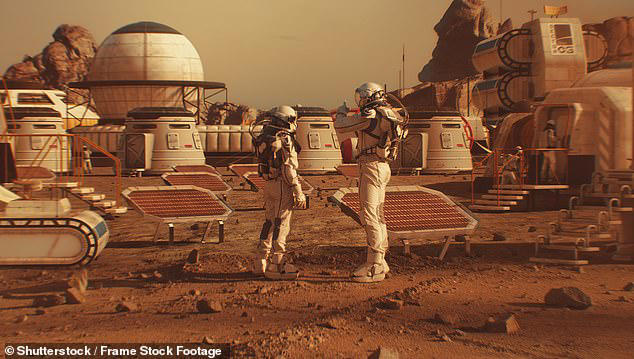
Elon Musk dreams of building a Martian city that could sustain a million people by 2050.
Musk himself has said that he plans to use the natural resources on Mars to 'terraform' its existing atmosphere and make the planet warmer, wetter and overall more like Earth.
The idea of being stuck in space might sound like the plot of the latest science fiction blockbuster. But it has become a reality for Suni Williams and Butch Wilmore - two unlucky astronauts who are potentially stuck on the International Space Station (ISS) until 2025, despite only expecting to be there for eight days. Although the views might be out of this world, the ISS is far from the ideal destination for an impromptu eight-month trip. With little spare room and zero gravity, even simple tasks like eating or going to the toilet can be extremely difficult. And whether it's in their phone box-sized bedrooms or on the vacuum-powered toilet, the astronauts aboard the orbiting station can often be cramped, smelly, and uncomfortable.
Going to bed on Earth might be one of the simplest things imaginable. But without the assistance of gravity, lying down or even resting your head on a pillow essentially becomes impossible. Aboard the ISS, the astronauts' main sleeping quarters are located in the Harmony Module near one end of the space station. In each of the four walls, there are four 'sleep stations', each about the same size as a phone booth. Rather than trying to lie on a mattress, the astronauts cocoon themselves in sleeping bags tethered to the inside of the station. Although the sleep stations do close to give the astronauts some privacy and darkness, drifting off can be quite tricky.
The ISS can be quite loud as the station's life support systems whirr through the night and the station is regularly bathed in the intense light from the sun as it orbits. For this reason, eye masks and earplugs are standard issue for astronauts looking to get some much-needed rest. One of the biggest risks of sleeping in space is not a bad night's rest but the build-up of CO2. Without gravity, CO2 from the astronaut's breath can form a 'bubble' around their head, potentially suffocating them in their sleep. Thankfully, the NASA sleeping pods are well-ventilated so that the astronauts can breathe fresh air all night. NASA assigns its astronauts eight hours of sleep time after a 16-hour working day, but most astronauts generally get about six hours of shut-eye after spending some of their time resting and relaxing.
Astronauts on the ISS start their day by brushing their teeth and having a wash. But as with everything in space, this is far more complicated than it would be on Earth. Without gravity, water's surface tension causes it to act like a sticky mass, forming large floating orbs that attach themselves to nearby surfaces. This rules out the possibility of having a shower, so astronauts bathe twice a day using washcloths, with one used for washing and the other for rinsing. Hair is kept clean using rinseless shampoo and astronauts even give each other haircuts by using a vacuum to suck away the freshly cut hair. When it comes to brushing your teeth, this is actually quite easy since water sticks to the toothbrush in microgravity. Since floating wastewater would be a danger to the electronics, astronauts either spit their toothpaste into a piece of paper or just swallow it.
Perhaps the biggest question on everyone's mind is how astronauts are able to go to the toilet while in space. The toilet on the ISS, or 'orbital outhouse' as it is jokingly called by astronauts, is located in the Tranquility module. Unlike a terrestrial toilet, the ISS toilet has two separate receptacles for solid and liquid waste. For urine, the astronauts use a hose with a funnel on the front to catch the liquid before it escapes into the rest of the station. And for solid waste, there is a small hole with a lid which uses fan-powered suction to help everything end up where it needs to go. However, astronauts have reported that this set-up takes some practice to use and the process can reportedly become somewhat messy.
In an earlier tour of the ISS, Suni Williams pointed out the various gloves, wet wipes, and disinfectant supplies kept in the toilet to make sure everything remains hygienic. Once the astronauts have done their business, faeces is sucked into rubbish bags where it is dehydrated and compressed. These bags are sometimes returned to Earth for study but are usually burned up in the atmosphere. Urine, meanwhile, is sent through the station's Water Recovery System and transformed back into usable water.
Most of an astronaut's day aboard the ISS is spent working, and shifts usually last 16 hours with a few breaks for meals. Work may involve carrying out routine maintenance of the space station and making repairs to the various systems. In some cases, that could involve 'extra-vehicular activity', otherwise known as spacewalks, in which the astronauts step outside the station. A large part of their work is scientific, with astronauts carrying out various experiments to learn more about the effects of space radiation and microgravity.
In the highly demanding environment of space, astronauts need to eat a lot of nutritious food to stay healthy. That means getting three square meals a day plus snacks to make up a diet of at least 2,500 calories. Since resupplies are infrequent and fresh produce is heavier to transport, the majority of astronauts' food is dehydrated for long-term storage. Astronauts use a water gun to rehydrate the packaged food, before heating it in a microwave. Astronauts are also provided with powdered drinks that can be rehydrated and drunk through a straw. However, between 2015 and 2017 astronauts also had access to the ISSpresso which was the first ever espresso coffee machine designed for space.
Astronauts eat their meals in the Unity module which is fitted with all the necessary food preparation equipment as well as antibacterial materials on the walls. Due to their busy schedules, the crew won't often eat together during the week with the exception of Sunday when the team will come together for a group meal. To maintain some sense of normalcy, the astronauts eat at a table, strapping their legs to chairs and using magnetic trays to hold their food in place. The biggest difference in an astronaut's diet is that booze is absolutely off the cards. NASA has forbidden drinking alcohol on any mission on the grounds that astronauts need to be alert and healthy at all times. To this day, Buzz Aldrin remains the only person to have consumed alcohol in space after he drank a small amount of wine during a secret communion service in the moon lander.
In addition to eating well, astronauts need a lot of exercise to remain fit and healthy. NASA astronauts are required to do two hours of exercise every day while on the ISS and are carefully monitored for fitness and health. Without the need to fight against gravity, astronauts' muscles can quickly shrink, leading to potential health complications. This is part of the reason that many astronauts are unable to walk for a time after re-entering Earth's gravity. The ISS has three main pieces of exercise equipment for the astronauts to use which are located in the Tranquility module.
Astronauts can either choose to use an exercise bike called CEVIS, a treadmill called T2, or a weight-lifting system called ARED. In the absence of gravity, the machines use a combination of pistons, flywheels, and elastic bands to simulate the force of an astronaut's weight. During their time on the ISS, Williams and Wilmore, have even been taking part in weightless Olympics-inspired workouts in order to stay occupied and stay positive amid uncertainty.
This study suggests he may be onto something.
'It’s not that often you get some really quite new, innovative idea for terraforming,' Colin McInnes, a space engineer at the University of Glasgow not involved with the work, told Science Magazine.
'The gap between where Mars is and where Mars could be for habitability is narrower than we might think,' he added.
Related video:
What Has Curiosity Learned About Mars In 10 Years Since Landing? (Dailymotion)
The researchers' approach is actually based on the same atmospheric mechanism that's driving climate change here on Earth: the greenhouse effect.
Currently, Mars' atmosphere is so thin that heat from the sun easily escapes the planet's surface.
The microscopic size and spherical shape of Martian dust mean that it isn't great at absorbing radiation or reflecting heat back down to the surface.
But the research team believes they could use the iron and aluminum in the dust to engineer nine-micrometer-long rods.
That's roughly twice the size of a Martian dust particle, but smaller than a speck of glitter.
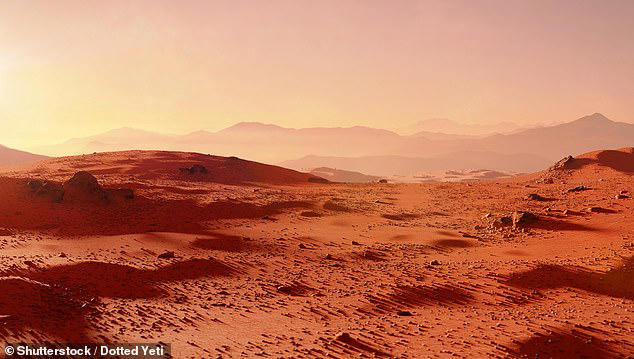
Currently, the surface of Mars is a freezing, barren desert. But scientists have come up with a simple way to warm up the Red Planet.
Terraforming Mars' atmosphere would bring us one step closer to establishing a human colony on the red planet.
When the researchers tested how their particles would absorb heat radiation and reflect it down to the planet's surface, they found 'unexpectedly huge effects,' Samaneh Ansari, a Ph.D. student at Northwestern University and the study's lead author, told Science Magazine.
This approach would require about two million tons of particles per year, but manufacturing them would be relatively easy because the ingredients are right there on Mars.
That sets this new approach apart from previous schemes to globally warm the Red Planet.
By comparison, this method would be roughly 5,000 times more efficient, the researchers claimed.
This strategy would still take decades, but it seems logistically easier than any other ideas proposed so far.
Warming up Mars would be a critical first step towards making this planet a suitable home for humans, or any other life form for that matter.
It would free up the little water that's frozen in polar ice caps beneath the planet's surface, and make Mars a more suitable place for agriculture and out own bodies.
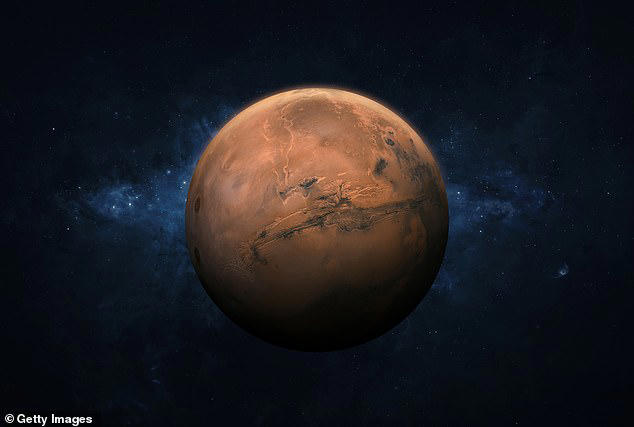
Mars' atmosphere is too thin to trap heat at the surface. Scientists want to inject it with engineered dust to make it more insulating.
This is all great news for Musk. But warming up Mars is just one step down a long road he'll need to travel before he can colonize the Red Planet.
Even with this new atmosphere, humans still wouldn't be able to breathe the air on Mars because it doesn't contain enough oxygen.
Plus, the air pressure on Mars is 150 times lover than on Earth, which would cause human blood to boil.
Musk will have to solve these problems and more before he builds a bustling Martian metropolis. But this new research brings him a little bit closer to realizing his dream.
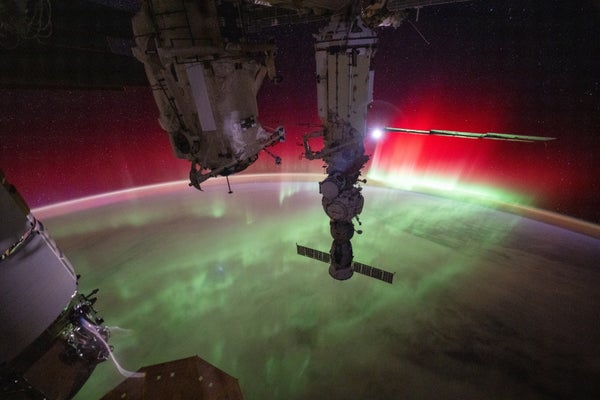
Astronaut Matthew Dominick captured this time-lapse imagery of an aurora dancing through the skies over Earth's polar latitudes in streams of flickering red and green light.
A recent uptick in solar activity has lit up the polar skies with auroras: streams of red or green light that happen when charged particles from the Sun race along the lines of Earth’s magnetic field to collide with the upper atmosphere. This usually happens close to the North and South Poles, but auroras have been visible at lower latitudes several times in recent months. Astronauts aboard the ISS arguably have the best view of all, and Matthew Dominick just proved it.
One of thousands of images Dominick captured with his new lenses over the weekend.
Matthew Dominick, NASA
Lights, Camera, Space Station
NASA astronaut Matthew Dominick took thousands of photos of the spectacular auroras over the weekend and put them together in this short time-lapse video.
"We received a cargo shipment this week with lots of cool stuff, to include some new camera lenses," wrote Dominick on Sunday. "Spent a good part of the weekend with a 15mm, T1.8 lens. Made a whole bunch of timelapses."
In another post, Dominick added, "The aurora have been amazing the past few days"
Part of the station (and a docked Soyuz crew capsule) hovers in the foreground, the glittering stars of deep space in the distance, and the green and red lights of the auroras dance across Earth's upper atmosphere. At about the 45-second mark, the light of sunrise (which happens about every 90 minutes as the ISS zips around the planet) bathe the docked Soyuz capsule in a pale blue glow.
This video was pieced together from individual time-lapse images.
Another image, not part of the short video, shows part of the ISS in the foreground, with the aurora glowing in Earth's atmosphere — and beyond that, the dense swath of stars that make up the Milky Way's disk.
"Still looking though 1000s of frames, lots of which have aurora, but the Milky Way in this one stood out," wrote Dominick.
Dominick captured the aurora and the Milky Way, and some city lights down on Earth, in this single image.
Matthew Dominick, Nasa
The new lenses were part of a supply shipment loaded aboard a Cygnus cargo vessel, which docked at the ISS last Tuesday. Cygnus also brought fresh fruit and vegetables, a new supply of coffee, nearly 2,800 pounds of research equipment, more than 3,500 pounds of new hardware for the station, and more than 2 tons of other supplies for the crew.
Those supplies included some clothes and personal food items for stranded Starliner crew members Butch Wilmore and Suni Williams, who are now scheduled to return home on a SpaceX Crew Dragon spacecraft sometime in early 2025.
NASA astronaut Matthew Dominick took this photo of the aurora display caused by a coronal mass ejection from the International Space Station. “Felt so lucky to grab this shot,” he wrote on X, formerly Twitter.
Matthew Dominick/NASA
Astronaut Matthew Dominick captured this stunning time-lapse of the Northern Lights from the International Space Station.
A new James Webb Space Telescope analysis of the giant, metal-rich asteroid Psyche reveals signs of hydration in the form of rust. This could help pin down the mysterious rock's origins.
An illustration of the metal-rich asteroid Psyche. James Webb Space Telescope data suggests the hydroxyl groups on Psyche are probably bound to metal on the asteroid's surface, forming rust.
(Image credit: NASA/JPL-Caltech/ASU)
Scientists using the James Webb Space Telescope (JWST) have identified a component of water on the mysterious metal-rich asteroid Psyche. The findings suggest the hydration exists as rust and may shed light on how this enigmatic object formed.
The asteroid 16 Psyche is pretty unusual for the main asteroid belt between Mars and Jupiter. Measuring an enormous 173 miles (280 kilometers) at its widest, the potato-shaped object was once thought to be wholly metallic. Psyche's supershiny surface had led researchers to suggest the asteroid was possibly the iron-rich heart of a planetesimal (a planetary building block) and could unravel how Earth and the other terrestrial planets formed. Some have valued the asteroid’s rare metal components at $100,000 quadrillion — a literal goldmine in space.
This hypothesis about the rock’s composition, in fact, is what motivatedNASA's ongoingPsyche mission. Launched in October 2023, it's expected to reach the asteroid in 2029 to study it in-depth.
But all that glitters isn't gold — or even metal. Over the past decade, new data about Psyche's density and reflectance spectra — the intensity of different wavelengths of sunlight reflected off the asteroid's surface ― suggest it is most likely a mixed silicate and metal world.
In 2017, researchers discovered tantalizing traces of another component: water. Spectra from the infrared region, at long wavelengths that we perceive as heat but can't see, showed the signature of hydroxyl units — the OH molecule, which forms part of water.
These results suggested Psyche's surface may contain small amounts of water, as either ice or hydrated minerals. But the results were inconclusive, since the spectrum, collected using NASA's ground-based Infrared Telescope Facility in Hawaii, may have been corrupted by water in Earth's atmosphere. Besides, the researchers hadn't found a more definitive signature of water from a slightly higher infrared wavelength. That signature has helped other astronomers "detect widespread molecular water on the Moon but had not yet been used for asteroids," study author Stephanie Jarmak, a planetary scientist at the Harvard and Smithsonian Center for Astrophysics, told Live Science in an email.
An artist's illustration of the James Webb Space Telescope. (Image credit: Alamy)
To determine if Psyche really has water, Jarmak and scientists from several U.S. and German institutes turned to two of JWST's infrared-sensing instruments: the Near Infrared Spectrograph (NIRSpec) and the Mid-Infrared Instrument (MIRI), which can detect shorter and longer infrared wavelengths, respectively. By directing these instruments toward the asteroid in March 2023, the scientists collected snapshots of the spectrum reflected by Psyche's north pole, which was then facing the telescope. Their results have been accepted by the Planetary Science Journal and are available as a preprint via arXiv.
The NIRSpec data showed the hydroxyl signature, confirming its presence on the asteroid. What's more, Jarmack noted, the high-quality data allowed comparisons with hydroxyl signatures from other meteorites, revealing that Psyche's hydroxyl signature resembled that from certain rust-bearing, carbon-rich meteorites. This finding led the researchers to conclude that hydroxyls are bonded to metals on Psyche, forming rust.
But the MIRI data lacked the conclusive signature of water. Still, the researchers can't rule out the presence of water, as it could be present on other parts of Psyche that JWST couldn't see. It's also possible that water is present but at concentrations below MIRI's detection limit, making it less than half the concentration of water on the moon, which is itself only a raindrop's equivalent in 2.25 pounds (1 kg) of soil.
Apart from forming rust, Psyche's hydroxyl groups provide hints about how the asteroid formed. If the hydroxyl formed within the asteroid, this could indicate Psyche was born in the cold, outer bounds of the solar system and tottered inward over millions of years. However, the existing evidence suggests water-bearing asteroid impactors that slammed into Psyche and shaped it also brought the hydroxyl.
Future plans include studying exactly where the hydrated metals are found on Psyche's surface, Jarmak said, adding that these include "observations of Psyche's south pole that contains a large crater that may have resulted from an encounter with a hydrated impactor."
Metal-rich asteroids are lucrative sources of rare minerals and the subject of future space mining ventures. However, despite its estimated value, Psyche isn't among them — at three times Earth's distance from the sun, it's too far for extraction efforts to be cost-effective.
Scientists hoping to find proof of life on mars have found evidence of a reservoir of water that could at one point have sustained life.
The body of water resides deep under the surface of Mars within fractured igneous rocks, holding enough to fill an ocean that would cover the entire surface of Earth's planetary neighbour.
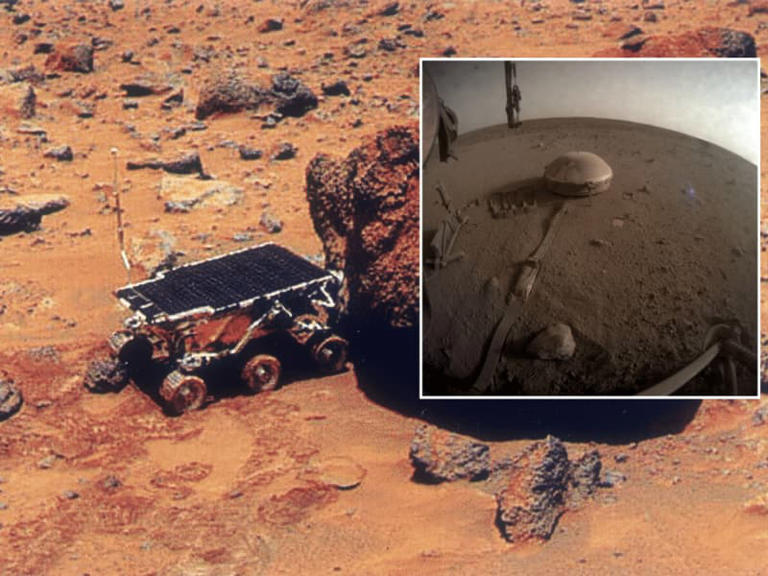
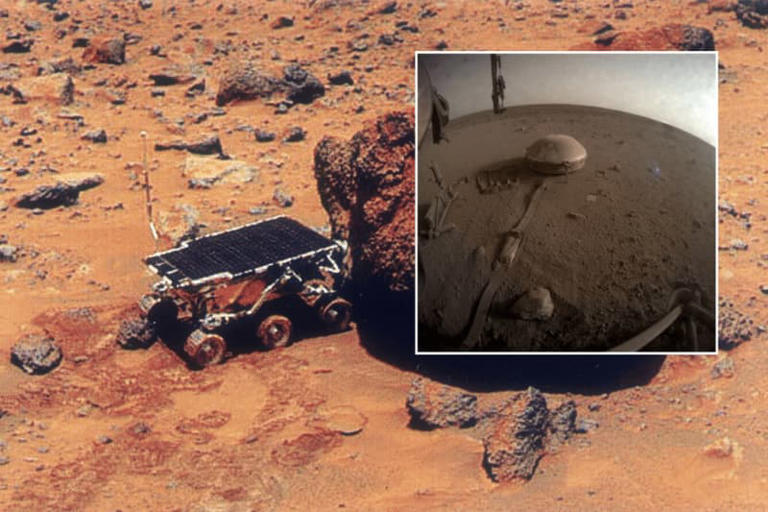
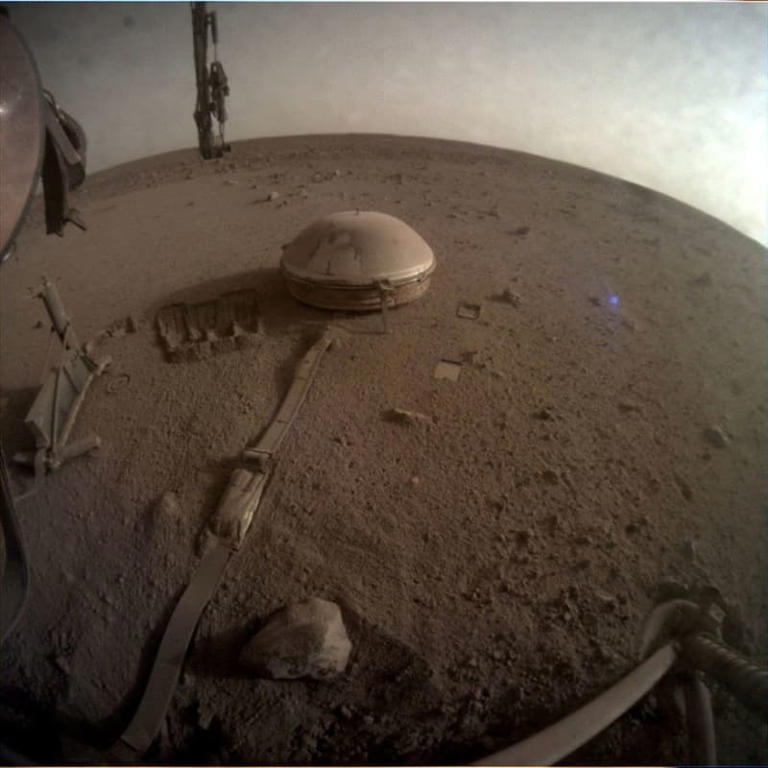
The discovery follows seismic data obtained by NASA's robotic InSight lander during a mission that helped decipher the interior of Mars.
The water, located about 7.2 to 12.4 miles (11.5 to 20 km) below the Martian surface, potentially offers conditions favourable to sustain microbial life, either in the past or now, the researchers said.
University of California planetary scientist and co-author of the study Vashan Wright said: "At these depths, the crust is warm enough for water to exist as a liquid. At more shallow depths, the water would be frozen as ice."
The InSight lander touched down in 2018 to study the deep interior of Mars, gathering data on the planet's various layers, from its liquid metal core to its mantle and its crust. The InSight mission ended in 2022.
Fellow co-author Michael Manga said: "On Earth, we find microbial life deep underground where rocks are saturated with water and there is an energy source. InSight was able to measure the speed of seismic waves and how they change with depth.
"The speed of seismic waves depends on what the rock is made of, where it has cracks and what fills the cracks. We combined the measured seismic wave speed, gravity measurements and rock physics models. The rock physics models are the same as the ones we use to measure properties of aquifers on Earth or map oil and gas resources underground."
The data indicated the presence of this reservoir of liquid water within fractured igneous rocks - formed in the cooling and solidification of magma or lava - in the Martian crust, the planet's outermost layer.
Wright said: "Mid-crust whose rocks are cracked and filled with liquid water best explains both seismic and gravity data
"The water exists within fractures. If the InSight location is representative and you extract all the water from the fractures in the mid-crust, we estimate that the water would fill a 1-2 km deep (0.6-1.2 miles) ocean on Mars globally."
The Martian surface is cold and desolate today but once was warm and wet. That changed more than 3 billion years ago. The study suggests that much of the water that had been on the Martian surface did not escape into space, but rather filtered down into the crust.
Manga added: "Early Mars had liquid water on its surface in rivers, lakes and possibly oceans. The crust on Mars could also have been full of water from very early in its history, too,
"On Earth, groundwater underground infiltrated from the surface, and we expect this to be similar to the history of water on Mars. This must have occurred during a time when the upper crust was warmer than it is today."
Water would be a vital resource if humankind ever is to place astronauts on the Martian surface or establish some sort of long-term settlement.
Mars harbours water in the form of ice at its polar regions and in its subsurface. But the depth of the apparent underground liquid water would make it difficult to access.
AI Focused Three UFO photos Netal, South Africa July 17, 1956, UAP Sighting News. Video.
Date of sighting: July 17, 1956 Location of sighting: Netal, South Africa
Guys this is awesome, all three of these photo from 1956 sharpen up with ai into a perfectly focused set of photos. It's just mind boggling how ai fixes the photos, not by adding what isn't there but by reading the pixelization and accurately recreating the real scene. This is 100% proof that eyewitness Elizabeth Klarer did in fact encounter a UFO on July 17, 1956 and it's amazing!
Scott C. Waring
Report states:
Her photo series of an "extraterrestrial spaceship" (as she called it) was taken in the presence of two witnesses whom she wanted to show the site of her first contact. With them she drove through the Zulu-Land, the foothills of the mighty Drakens-Mountains, when she noticed a flash of light between the mighty thunderstorm clouds. Immediately she stopped, left the car together with her companions, in her hand the Brownie Box Camera she had brought with her. A moment later she recognized the metallic disc in the dark-clouded sky, obviously slowly approaching. Immediately, like in a reflex action, Elizabeth shot seven photos before the disc suddenly shot away. In the same moment a thunderstorm started, a shower of hail went over the field. Elizabeth Klarer confirmed the authenticity of her photos in an notarized affidavit. She stood behind her story until she died in February 1994, in the age of 83 years.
AI Focused UFO Over Green Bay, Wisconsin Jan 2007,UAP Sighting News.
Date of sighting: January 2007
Location of sighting: Green Ba, Wisconsin, USA
Source:Reddit
Guys this was released back in 2007 on Reddit and as they said there...it has never been debunked, so I wanted to go over it and look at it with ai which really cleared it up. The grainy photo suddenly became crystal clear and wow, you gota see the video for more.
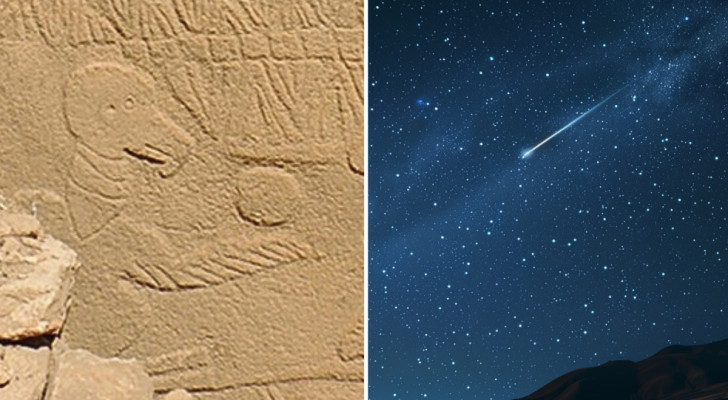
Waaruit is de beschaving ontstaan? Een studie heeft misschien het antwoord gevonden in Turkije: het lijkt erop dat alles begon na de inslag van een oude komeet.
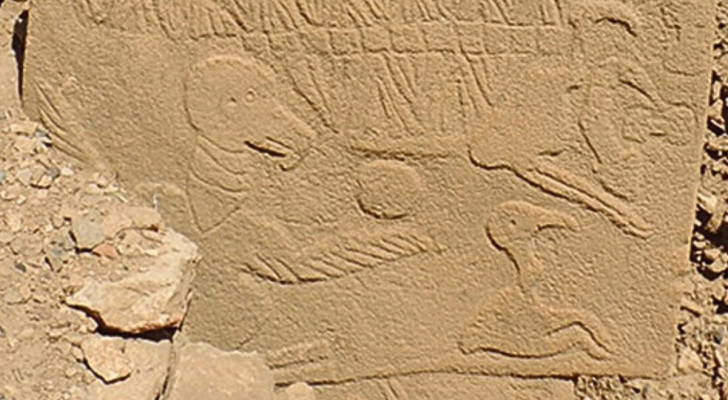
Gravures op de archeologische vindplaats Göbekli Tepe
Archeologen onderzochten gravures op een Turkse vindplaats die naar schatting 7000 jaar ouder zijn dan de Grote Piramide van Gizeh. In een poging om ze te interpreteren kwamen ze tot de conclusie dat ze de inslag van een oude komeet op aarde zouden kunnen voorstellen. Concreet gaat het om de archeologische vindplaats Göbekli Tepe, waarvan experts denken dat het de oudste zonnekalender op onze planeet zou kunnen zijn. Dit 12.000 jaar oude monument is de meest gedateerde architectonische constructie gewijd aan aanbidding die ooit is ontdekt.
Op de tempelachtige omheiningen van de site zijn complexe symbolen gegraveerd. Het onderzoeksteam verklaarde dat deze naar alle waarschijnlijkheid een weergave zouden kunnen zijn van een kosmische gebeurtenis die een keerpunt vormde voor de menselijke beschaving. Als dat zo is, zou dat betekenen dat de oude mensen astronomische informatie gebruikten om een zonnekalender te maken die vergelijkbaar is met de kalender die duizenden jaren later door de Grieken werd uitgevonden.
De impact van de komeet en de lunisolaire kalender
Time and Mind
Martin Sweatman, scheikundig ingenieur aan de Universiteit van Edinburgh, Schotland, en eerste auteur van het onderzoek, zei: "Het lijkt erop dat de inwoners van Göbekli Tepe scherpe waarnemers van de hemel waren, wat te verwachten was gezien het feit dat hun wereld was verwoest door de inslag van een komeet."
Na een dergelijke gebeurtenis lijkt het erop dat de Ouden gegraveerde V-vormige symbolen gebruikten om de individuele dagen op hun kalender aan te geven: door het tellen van de gravures identificeerden de onderzoekers 365 dagen op een van de pilaren, verdeeld in twaalf maanmaanden en 11 extra dagen. Sommige vogelachtige figuren hebben een V op hun nek en zouden volgens de auteurs godheden kunnen voorstellen. Als de interpretaties kloppen, zou dit monument de oudste lunisolaire kalender worden die ooit is ontdekt.
Een komeet begon de beschaving 13.000 jaar geleden
Time and Mind
Maar wat weten we over de hemelse gebeurtenis die dit alles heeft veroorzaakt? Onderzoekers geloven dat het prehistorische monument is opgericht ter ere van de dag waarop fragmenten van een komeet 13.000 jaar geleden op de aarde neerstortten. In feite lijkt een van de pijlers van de site de meteorieten van de Tauriden af te beelden, waarvan de stroom de regen van fragmenten zou hebben veroorzaakt die 27 dagen duurde.
Zo'n inslag rond 10.850 voor Christus zou een kleine ijstijd kunnen hebben ingeluid over een periode van meer dan 1.200 jaar, wat zou hebben geleid tot het uitsterven van verschillende diersoorten. Paradoxaal genoeg maakte de komeet “ruimte” voor het ontstaan van een beschaving in de Vruchtbare Halve Maan in het Midden-Oosten, die de overgang markeerde van jagen en verzamelen naar landbouw. Bovendien behield het monument millennia lang een prominente rol in de cultus van de beschaving, wat mogelijk zelfs leidde tot het ontstaan van een nieuwe religie. Zoals Sweatman uitlegde, kan de inslag van de komeet “de beschaving hebben aangewakkerd, een nieuwe religie hebben doen ontstaan en de ontwikkeling van de landbouw hebben gestimuleerd om het koude klimaat het hoofd te kunnen bieden. Het is aannemelijk dat de pogingen van de Ouden om vast te leggen wat ze zagen, de eerste stappen waren in de richting van de ontwikkeling van het schrift duizenden jaren later."
Meer van UFO'S of UAP'S, ASTRONOMIE, RUIMTEVAART, ARCHEOLOGIE, OUDHEIDKUNDE, SF-SNUFJES EN ANDERE ESOTERISCHE WETENSCHAPPEN - DE ALLERLAATSTE NIEUWTJES


 Paul Dienach: Man whose Consciousness Inexplicably Traveled to the Year 3906 AD due to a Strange, Time-Traveling Phenomenon during Coma.