Naar de inhoud

UFO'S of UAP'S, ASTRONOMIE, RUIMTEVAART, ARCHEOLOGIE, OUDHEIDKUNDE, SF-SNUFJES EN ANDERE ESOTERISCHE WETENSCHAPPEN - DE ALLERLAATSTE NIEUWTJES

UFO's of UAP'S in België en de rest van de wereld
akke.beakke.be
Ontdek de Fascinerende Wereld van UFO's en UAP's: Jouw Bron voor Onthullende Informatie! Ben jij ook gefascineerd door het onbekende? Wil je meer weten over UFO's en UAP's, niet alleen in België, maar over de hele wereld? Dan ben je op de juiste plek! België: Het Kloppend Hart van UFO-onderzoek In België is BUFON (Belgisch UFO-Netwerk) dé autoriteit op het gebied van UFO-onderzoek. Voor betrouwbare en objectieve informatie over deze intrigerende fenomenen, bezoek je zeker onze Facebook-pagina en deze blog. Maar dat is nog niet alles! Ontdek ook het Belgisch UFO-meldpunt en Caelestia, twee organisaties die diepgaand onderzoek verrichten, al zijn ze soms kritisch of sceptisch. Nederland: Een Schat aan Informatie Voor onze Nederlandse buren is er de schitterende website www.ufowijzer.nl, beheerd door Paul Harmans. Deze site biedt een schat aan informatie en artikelen die je niet wilt missen! Internationaal: MUFON - De Wereldwijde Autoriteit Neem ook een kijkje bij MUFON (Mutual UFO Network Inc.), een gerenommeerde Amerikaanse UFO-vereniging met afdelingen in de VS en wereldwijd. MUFON is toegewijd aan de wetenschappelijke en analytische studie van het UFO-fenomeen, en hun maandelijkse tijdschrift, The MUFON UFO-Journal, is een must-read voor elke UFO-enthousiasteling. Bezoek hun website op www.mufon.com voor meer informatie. Samenwerking en Toekomstvisie Sinds 1 februari 2020 is Pieter niet alleen ex-president van BUFON, maar ook de voormalige nationale directeur van MUFON in Vlaanderen en Nederland. Dit creëert een sterke samenwerking met de Franse MUFON Reseau MUFON/EUROP, wat ons in staat stelt om nog meer waardevolle inzichten te delen. Let op: Nepprofielen en Nieuwe Groeperingen Pas op voor een nieuwe groepering die zich ook BUFON noemt, maar geen enkele connectie heeft met onze gevestigde organisatie. Hoewel zij de naam geregistreerd hebben, kunnen ze het rijke verleden en de expertise van onze groep niet evenaren. We wensen hen veel succes, maar we blijven de autoriteit in UFO-onderzoek! Blijf Op De Hoogte! Wil jij de laatste nieuwtjes over UFO's, ruimtevaart, archeologie, en meer? Volg ons dan en duik samen met ons in de fascinerende wereld van het onbekende! Sluit je aan bij de gemeenschap van nieuwsgierige geesten die net als jij verlangen naar antwoorden en avonturen in de sterren! Heb je vragen of wil je meer weten? Aarzel dan niet om contact met ons op te nemen! Samen ontrafelen we het mysterie van de lucht en daarbuiten.

Archief

The McMinnville UFO Photos Still Mystify

The McMinnville UFO Photos Still Mystify

In May 1950, two down-to-Earth Oregon farmers took a couple of photos that were out-of-this world. They have never been successfully debunked.

1*myIjW8pU9aIhymUBIN3pSw.jpeg

1*AOThJXNX2jzHwB5kfyyVRw.jpeg

After becoming a public sensation in June 1947 with the famous Kenneth Arnold sighting, flying saucers were the talk of America. There were numerous reports being made, many witnesses, and unconfirmed photos. However, there were no clearly unstaged photos of actual craft that made the grade with their uncontested quality.

In 1950, When the Nation Wanted Proof, It Flew Over a Farm in Oregon

On May 11, 1950, Paul and Evelyn Trent saw history gliding over their farm in the form of a single 100-foot flying saucer, and snapped two famous pictures of it from different angles, thirty seconds apart. The story blew wide open a month and a half later.

On June 26, 1950, Life magazine printed what everyone then agreed were two of the best flying saucer photos ever taken. They were not images of blurry lights in the sky or birds or weather balloons. They were real, structural, and metallic. The only valid question was whether they were authentic mysteries or just hoaxes.

Flying Saucer Moment of Zen

Do these photos look like the side mirror to a 1947 pick-up truck suspended by a thread, or a garbage can lid tossed into the air, two theories floated by skeptics?

The best place to start in an article about photo analysis of something potentially extraordinary is to take a moment to look at the full size scan of the photos. Take a good look at them on the best screen you have. The full story’s on the other side…

1*E0umARV-rmXoNJDrbo3rCg.jpeg

Trent Farm | Sheridan, Oregon | May 11, 1950 | Public Domain

1*IS3s5D8YR-4xB_nwofaWHA.jpeg

In the intervening years, these two photos the Trents exposed in half-a-minute flurry have been studied by the Air Force, the CIA’s Condon Report, and multiple researchers. They’ve appeared in articles thousands of times. The Trents, by the way, never made any money for any of those uses.

People are still split on the real-versus-hoax divide, but the edge over time goes to acceptance that they were taken unstaged.

They Weren’t Looking for a Flying Saucer

Located just off the Salmon River Highway, Paul and Evelyn Trent worked their small farm in Sheridan, Oregon in the years just after the Second World War. It was a timber and farming community just a short drive from Oregon’s fertile Willamette Valley. It was a hard life, but they were hard-working people.

Sheridan is about ten miles away from the Yamhill County seat of McMinnville that’s always listed as the location where the photographs were taken. These days, McMinnville throws an annual UFO Festival with a parade to keep that fiction alive.

To put the timeframe into perspective: WWII ends in 1945, Kenneth Arnold sees flying saucers up in Washington State in June 1947, a few weeks later there’s the Roswell, New Mexico crash, and three years later, the Trents take their pictures. Things were hopping, ufologically speaking.

1*FuWwIzy4aC6OIjkYKyCgyQ.jpeg

1*bp1JwyXPOtlTUGa-poC_GA.jpeg

Paul and Evelyn Trent | Life, 1950

SIDEBAR: Before I was born, my parents moved to the Oregon coast the same year these photos were taken, and settled about 40 miles from this location. For Oregonians, this was a local story.

At the End of a Long Day

Even though it was overcast, there was still decent light that evening — May 11, 1950 — when Evelyn left the house around 7:30 p.m. to do her evening chores. They had chickens and rabbits that needed to be fed.

Evelyn was walking back to the house. Only three million TV sets existed in America back then, and they didn’t have one of them. They kept farmer’s hours — early to bed, early to rise.

She saw a two-toned disc-shaped craft silently gliding over their field. She knew instantly that this was not something she had seen before.

Evelyn ran back into the house to get Paul to come out and look at it. He saw it, too, noting that it made no noise and issued no smoke or vapor around it.

Her husband grabbed his Universal Roamer camera from inside the house. The Roamer used 60mm roll film (i.e. Kodak 120 or 620 stock) and to advance the film to shoot another picture involved a few seconds turning a tiny chrome knob a few full revolutions. Paul was proud of this camera nonetheless, even if the film cost a fortune. He bolted out, hoping that the object was still there.

By the time Paul got back outside with his Universal Roamer, the object started moving away. Acting quickly, Paul snapped off these two famous shots in about thirty seconds. As the object flew away from the Trent farm, the photos framed it on the left by the Trent’s garage and on the right and bottom by a range of mountains. The second exposure turned out to be critical because Paul changed his position to get it, running several yards to keep it in sight, and this later allowed for a detailed photographic analysis.

What They Didn’t Do Next

Something that bolsters the Trent’s account and their implied honesty is what they didn’t do next. They didn’t go to the newspapers. They didn’t even develop the film right away. This was so unusual that when the story did break a month and a half later in Life, the magazine began its article this way.

It seems just crazy. If it happened today, those photos would be on Instagram seconds after taking them. Why wait?

Three reasons: film was expensive and Paul was tight with a dollar as he had to be. Plus, the Trents weren’t looking for publicity anyway. The third and most disquieting reason was that they were worried that they’d seen some sort of government experiment, possibly a secret one. If they told people about the pictures, they could get in trouble.

Eventually, the roll was developed, of course, and the Trents showed the photos to a few friends and allowed them to be posted at their church. Frank Wortman was so taken by them that he told the McMinnville Telephone-Register about them. The first time they were published was June 8, 1950 on the front page.

1*Z5TNgJ8YYXw8fHWHl0c_PA.jpeg

MinMcnville Telephone-Register | June 8, 1950

No one could dismiss these photos as lights in the sky or weather balloons. They were clearly a craft of some kind. The only way they weren’t what they said they were would be if the Trents had plotted the whole thing. Their behavior after taking them, and their reputations as honest, decent folk, made that seem like a long-shot.

The next two days saw newspapers in Portland, Oregon and Los Angeles, California run their own articles. That was followed by the story picking up global momentum through the International News Service (INS) and the Associated Press (AP).

If you want to appreciate how the public felt about this topic, wrap your head around this. For a mere dime, anyone could order a copy of the Telephone-Register. In all, the paper went to press three times, and over 10,000 reprints of the paper were shipped out during the three weeks following its initial publication.

It was a hot story which made what happened next inevitable.

Life magazine, being the nation’s largest circulation magazine, reprinted the photos in its June 26, 1950 issue. People couldn’t get enough of that issue either.

1*NlcCieSLTwRZH5V4qApmmw.jpeg

1*_bU-CX0aw8tH99ugF-e36g.jpeg

Life, June 26, 1950

As their brush with history played itself out, the unassuming Trents ended up in New York taping “We the People.” They didn’t play the circuit, though. They did the show and went back home to the farm.

As the story spread, a few articles dubbed McMinnville, “Saucerville.” While that brings a smile, the Trents were also getting a less-welcome form of attention.

In the backwash of this publicity, both the FBI and the Air Force sent investigators to the Trent house where they took their own photos, searched the premises and questioned the family. All of which is odd behavior if you’re positive that UFOs don’t exist.

TV personality and radio host Frank Edwards at the Mutual Broadcasting Network claimed to have taken enlargements of the photos to the Pentagon. He had to self-brag the accomplishment.

Although the Trents seemed to enjoy their moment in the national spotlight, they made no money from it, and quickly tired of the attention. Toward the end of their lives, they stated they wished they had never taken them.

No One is Positive about the Negatives

The story of what happened to the negatives has its own mystery to it. I’ve read many articles about these photos and they are not consistent about the specifics. In addition, two researchers who studied them have each told me their best information.

This is my take, and I’ll update this section, if/when other voices are heard from.

********

For starters, in 1950, people were less interested in photographic instant gratification. Even after the Trents gave their film to the local drugstore, they had to wait an entire week for the roll to be developed! After the Trents got the pictures for themselves, the man who had them next was Bill Powell, the reporter for the McMinnville newspaper. He blew them up “every which way” and couldn’t figure out how they could have been faked and, if that was a theory, how the honest, decent and relatively simple people he’d interviewed for hours could have conspired to do it.

The Trents said that when they went to New York to tape the “We the People” program that the show’s producers instructed them to bring the negatives along to New York. According to the Trents, the show “borrowed” them, and the Trents never saw the negatives again. When they asked about them, they were told they were “misplaced.”

Where they went after that is to the UPI press offices where they remained “lost” for 17 years.

1*T2u8PIoHNJCODDavzAagnA.jpeg

1*-sy8b8kUZynRD04W_HbCPg.jpeg

Trent Photos | Actually Sheridan, Oregon | Graphics by Stellar Productions

A different version of this story comes from UFO historian Richard Dolan. Writing in his exhaustive UFOs and the National Security State, Dolan states the Trents received visits from both the FBI and the Air Force after the local news article. So, too, did reporter Powell, who presumably at the time had possession of the negatives. An Air Force agent demanded those negatives and never returned them. Powell repeatedly requested them back, but had no luck.

Confused? Me, too. Either the Trents gave them to a national TV show that gave them to UPI, or Powell gave them to government officials. Sounds mutually exclusive, particularly given what happened next.

********

What can be said for certain, however, is that the negatives went missing in 1950.

1*aLcvltJ1tEpeOOs2L6hVJg.jpeg

Rouen, France (top), McMinnville, U.S. (bottom)

As an interesting sidebar, a French military pilot near Rouen, France took a photo of a UFO almost four years after the Trent photos on March 5, 1954. It’s a virtual match to the one that shows the “conning tower” type of configuration.

The story picks up again in the late ’60s. The US Air Force, in conjunction with the University of Colorado, commissioned an investigation into the UFO phenomenon (aka the “Condon Committee”). After being lost for 17 years, the negatives apparently turned up in a UPI file, and were handed over to the Condon Committee for analysis.

The Condon Conclusion

Armed with the actual negatives, astronomer William K. Hartmann was put in charge of the committee’s section on photographic evidence. He constructed the disqualifiers that a winning photo would have to get past: misidentifications, outright lies, bad image quality, and clear images that lacked sufficient data for good analysis. Only two cases made it past that barrier and the Trent’s case was one of them. After years of exhaustive scientific inquiry, in 1968, the Condon Report said of the photos:

Hartmann calculated by photometry that the craft was just over a kilometer away from the camera in the first shot. He also concluded that it was about 30 meters, or 100 feet, in diameter.

The Condon Report’s conclusion not only re-established the Trent case at the forefront of UFO lore, it sparked a rash of theories by skeptics who attempted to discredit the photos. As these things go, the debunkery spawned more investigation,

Following the conclusion of the Condon report, reports indicate the negatives were returned to UPI, and in 1970 they were sent back to the News-Register (formerly the Telephone Register) in McMinnville. When they arrived back at the paper, now twenty years since coming from the Trent’s camera, the negatives had apparently been tampered with considerably. Someone had cropped the negatives, trimming down the edges and reducing their overall size so that parts of the original image were missing.

Why would someone crop the negatives?

There are only two good reasons. The first would be for clarity. If you look at the images in Life, they have clearly been cropped to remove the nearby telephone lines. It makes for a more dramatic photo. It also creates a second reason — that they were cropped so people wouldn’t see the telephone lines and think that the photos were hubcaps or a gas tank lid suspended from a wire or a string.

Other Voices

The Condon Report, despite being an overall negative view of UFO reality, seemed to strongly support the reality of the photos, as analyzed by Hartmann. That’s where things stood for about six years.

That’s when skeptics like Robert Schaeffer and the late Phillip Klass decided to weigh in. They never could dismiss the clarity of the photos or what they imply, if authentic, so they focused on the hoax aspect. They even had a favorite suspect, the side-view mirror on a pick-up truck that Paul drove, suspended from one of those telephone wires. In 1974, they concluded that there were possible inconsistencies in the verbal evidence and how it was supported (or not) by the photographic evidence. Most specifically, they believe the photos were taken in the morning, not in the evening as claimed. My view? That is a big stretch, and it’s dealt with at length in the extremely comprehensive report of the next person to take a crack at the case.

In 1975–1976, optical physicist Dr. Bruce Maccabee borrowed the negatives from the Trents. Maccabee made his bones in optical data processing at the US Naval Surface Warfare Center, so he can be considered an expert opinion. He put the photos to every test he knew, looking to expose fraud, if he found it. He not only interviewed people, he looked into what a faked photo of such a UFO hanging from a string would look like, to check for similarities. Maccabee wrote a voluminous report and concluded, based on factors like shadows, sunlight, etc., that they were not hoaxed but the real deal.

“The Trent photo case is a classic because of its ‘age’ and also because the object is depicted so clearly that it is either a model (hoax) or it is an ‘extraordinary flying object.’ The case is also a perfect illustration of the fact that, when trying to prove an extraordinary sighting is factual, it is not sufficient to have clear photographs and several witnesses. Ever since the photos were published, explanations have been offered by people who never spoke to the Trents. These explanations have often been based on imperfect or incomplete investigations of the case. Unfortunately, scientists were not interested in the case at the time that the photos were published, so the Trents were not interviewed in depth, the negatives were not carefully analyzed, and valuable datas was lost forever.”

Maccabee concluded that the photographs showed a “real, physical” object in the sky above the Trent farm. Maccabee argued that the brightness of the object’s underside suggested it was at some distance from the camera, not a smaller object close to it. He believed the Trent’s story and he believed their photographic evidence. He has written an exhaustive report. If you want to do a deep dive into this subject, do read it here.

For his part, Maccabee now believes the photos are in the possession of the Trent family, something I’m looking into.

Postscript

To this day, the photos have taken on a life of their own, seen by many as the most significant images in UFO history, and grounding one of most reliable cases ever. There’s no doubt that as we develop technology to analyze the “deep fake” capabilities that computers have given us, there will be new opportunities to take a fresh look at these classics. Questions will again be raised but the through-line is that their authenticity remains the majority opinion over a sustained seventy year existence.

Over the years, the Trents continued to grant interviews about the photos. Small details shifted with time, as happens with any fading memory, but the account they told was overall consistent and it held on to its credibility over the years.

The Trents never tried to make money from the photos, or assert the right to license them. In 1998, Paul spoke about this. “I took the pictures, but I don’t want them. First thing I know is we’d have too much trouble.”

Evelyn agreed, “Like I said, I would never take another picture. Just too much publicity.”

Fact or Faked?

We are left where many UFO stories leave us — in frustration. Researchers investigate, believers promote, and skeptics doubt. This leaves so many good cases in the gray basket of credibility which renders them useless to people new to the topic. Some say yes, some say no, so the answer is maybe, maybe not.

I hate that being the historical resting place for these photos.

I’ve spent hours looking at them. I’ve read books that mention them, and the reports and documents investigating them. I’ve talked to informed people. I have a friend who took care of the Trents when they were in a nursing home at the end of their lives. She describes Paul and Evelyn as decent people who could not tell a lie.

At the end of the day, I believe that the Trents saw something extraordinary that spring night in 1950. They did the best they could with the equipment and experience they had to record it accurately. Then, when the images became public, they spoke as truthfully as they could about what they saw.

The photos are real.

1*n2Ixe_8yRpFHPvndrTUzLA.jpeg

1*AOThJXNX2jzHwB5kfyyVRw.jpeg

Thorent Ptos | Moment of Zen | Public Domain

{ https://medium.com/ }

Hoe vind je dit bericht?
Geschreven door peter om 14:53 Stuur door

China is Going Back to the Moon Again With Chang'e-6

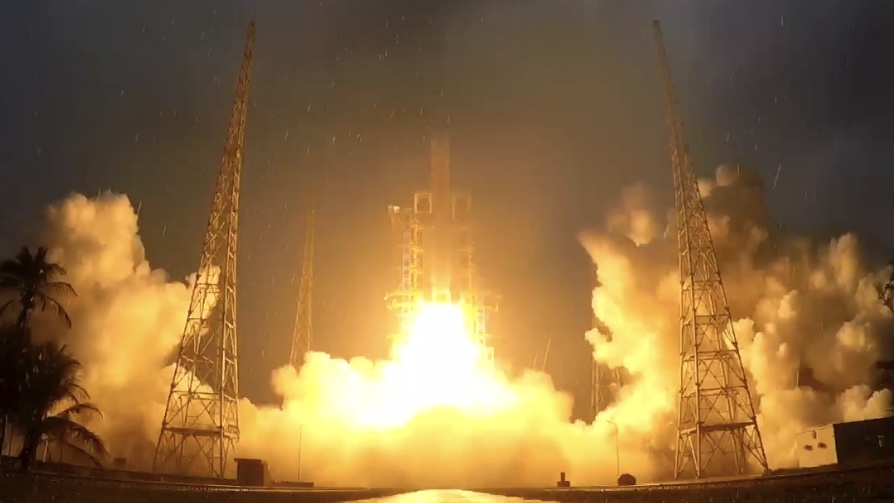
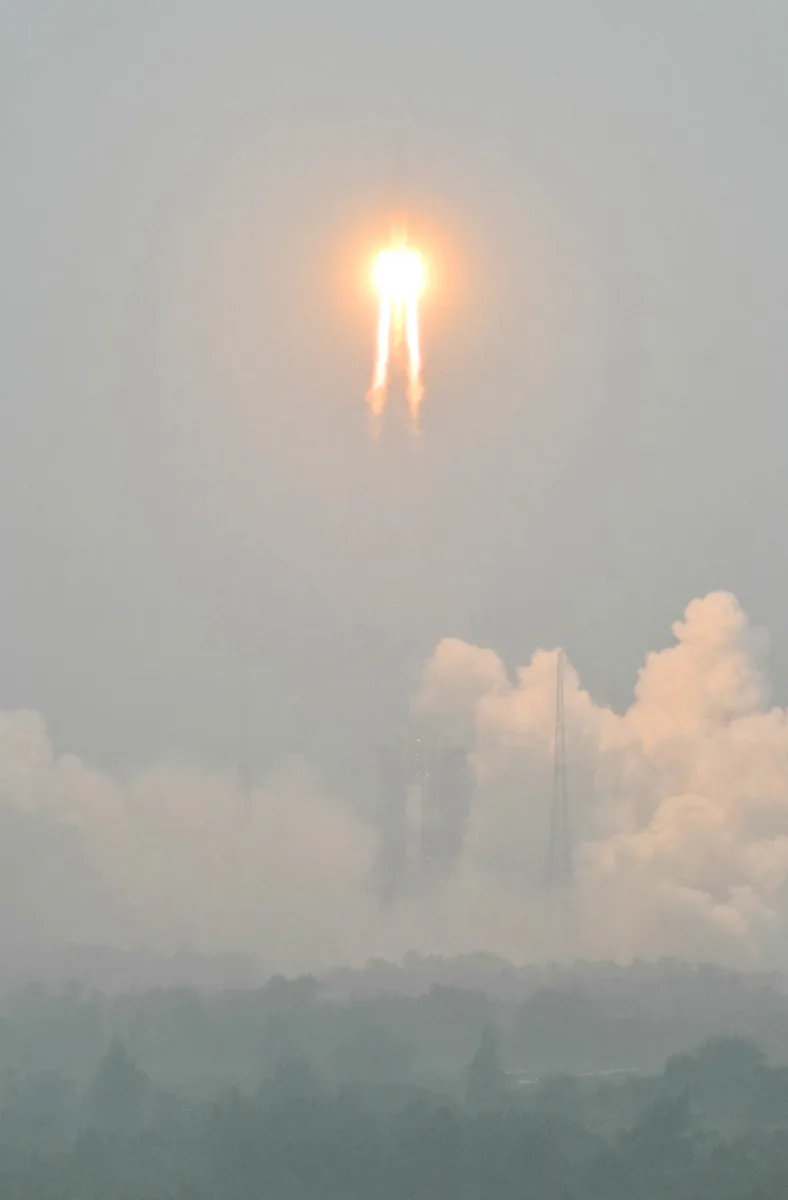
China's Chang'e-6 mission launches from the Wenchang Spacecraft Launch Site. Credit: CGTN

China is Going Back to the Moon Again With Chang'e-6

On Friday, May 3rd, the sixth mission in the Chinese Lunar Exploration Program (Chang’e-6) launched from the Wenchang Spacecraft Launch Site in southern China. Shortly after, China announced that the spacecraft separated successfully from its Long March 5 Y8 rocket. The mission, consisting of an orbiter and lander element, is now on its way to the Moon and will arrive there in a few weeks. By June, the lander element will touch down on the far side of the Moon, where it will gather about 2 kg (4.4 lbs) of rock and soil samples for return to Earth.

The mission launched four years after its predecessor, Chang’e-5, became China’s first sample-return mission to reach the Moon. It was also the first lunar sample return mission since the Soviet Luna 24 mission landed in Mare Crisium (the Sea of Crisis) in 1976. Compared to its predecessor, the Chang’e-6 mission weighs an additional 100 kg (220 lbs), making it the heaviest probe launched by the Chinese space program. The surface elements also face lesser-known terrain on the far side of the Moon and require a relay satellite for communications.

Speaking of surface elements, the China Academy of Space Technology (CAST) has since released images showing how the mission also carries a rover element. This payload was not part of mission data disclosed by China before the flight. But as SpaceNews’ Andrew Jones pointed out, the rover can be seen in the CAST images (see above) integrated onto the side of the lander.

“Little is known about the rover, but a mention of a Chang’e-6 rover is made in a post from the Shanghai Institute of Ceramics (SIC) under the Chinese Academy of Sciences (CAS),” he wrote. “It suggests the small vehicle carries an infrared imaging spectrometer.” This rover is no doubt intended to assist the lander with investigating resources on the far side of the Moon. This is consistent with China’s long-term plans for building the International Lunar Research Station (ILRS) around the southern polar region in collaboration with Roscosmos and other international patterns.

Similar to NASA’s plans for the Lunar Gateway and Artemis Base Camp, this requires that building sites be selected near sources of water ice and building materials (silica and other minerals). Ge Ping, the deputy director of the Center of Lunar Exploration and Space Engineering (CLESE) with the China National Space Administration (CNSA), related the importance of the sample-return mission to CGTN (a state-owned media company) before the launch:

“The Aitken Basin is one of the three major terrains on the Moon and has significant scientific value. Finding and collecting samples from different regions and ages of the Moon is crucial for our understanding of it. These would further study of the moon’s origin and its evolutionary history.”

In addition, the Chang’e-6 orbiter carries four international payloads and satellites including a French radon detector contributed by the ESA. Known as the Detection of Outgassing Radon (DORN), this payload will study how lunar dust and other volatiles (especially water) are transferred between the lunar regolith and the lunar exosphere. Then there’s the Italian INstrument for landing-Roving laser Retroreflector Investigations (INRRI), similar to those used by the Schiaparelli EDM module and InSight lander, that precisely measures distances from the lander to orbit.

change-6-spacecraft-stack-3may2024-postlaunch-CAST-1024x680.jpg

The Chang’e-6 spacecraft stack shows a lunar rover attached to the mission lander. Credit: CAST

There’s also the Swedish Negative Ions on Lunar Surface (NILS), an instrument that will detect and measure negative ions reflected by the lunar surface. Lastly, there’s the Pakistani ICUBE-Q CubeSat developed by the Institute of Space Technology (IST) and Shanghai Jiao Tong University (SJTU), which will take images of the lunar surface using two optical cameras and measure the Moon’s magnetic field. The data these instruments provide will reveal new information about the lunar environment that will inform plans for long-duration missions on the surface.

By 2026, the Chang’e-6 mission will be joined by Chang’e-7, including an orbiter, lander, rover, and a mini-hopping probe. The data provided by the program will assist China’s plans to land taikonauts around the lunar south pole by 2030, followed by the completion of the ILRS by 2035.

Further Reading: 

{ https://www.universetoday.com }

Hoe vind je dit bericht?
Geschreven door peter om 22:24 Stuur door

De LaGuardia-cilinder en de gelijkenis ervan met het Cecconi-incident in 1979 boven Italië

De LaGuardia-cilinder en de gelijkenis ervan met het Cecconi-incident in 1979 boven Italië

Door Bob Spearing, MUFON-directeur internationale onderzoeken

Op 25 maart 2024 verscheen er een verhaal in de New York Post over een vliegtuigpassagier genaamd Michelle Reyes die per ongeluk een zwart cilindervormig object met een mogelijke witte koepel boven New York City filmde terwijl ze haar vliegtuig in de tegenovergestelde richting passeerde. Uiteraard meldde ze het incident onmiddellijk aan de FAA. Ze was bang dat het een gevaar voor de veiligheid was. Ze ontving op dit moment geen antwoord van de FAA. Dit is niet verrassend!

f3e227af-e0b6-452a-9350-2688c33c1f53.png?rdr=true

Tom Wertman, directeur van de staat Ohio bij MUFON en lid van het fotoanalyseteam van het MUTUAL UFO Network, die zelden met stomheid geslagen is, kon het cilindervormige voertuig niet identificeren. Vogel is uitgesloten, wat vaak het geval is bij een snel wazige flybay op de voorgrond van een cameralens. Bovendien bevond het vliegtuig zich op een vrij grote hoogte voor vogels, waardoor de soort vogel die het zou kunnen zijn ernstig werd beperkt.

CNN en verschillende nieuwsorganisaties hadden hun vaste opmerkingen, zoals Ben Hansen, die suggereerden dat het abnormaal was. In dit geval zou MUFON het ermee eens zijn dat dit zeker geen vogel is, maar een technologisch object. Ballon is uitgesloten. De snelheid van het object kan niet worden bepaald, aangezien het vliegtuig enkele honderden kilometers per uur vloog en het object zich in slechts één of twee frames in de tegenovergestelde richting bevond.

MUFON pakte de waarneming echter anders aan. We hebben gezocht naar mogelijk correlerende gevallen en we hebben één zeer significant geval gevonden dat neigt naar een afwijkend object! Wij bij MUFON blinken uit in deze manier van correlaties met andere historische casussen.

Er is een tweede rapport van een soortgelijke zwarte cilinder met een melkwitte koepel die in 1979 in Italië plaatsvond. Het volledige rapport staat hieronder, maar ter vergelijking voor de lezer: we hebben ook een tekening uit de Cecconi-zaak uit 1979 en die is duidelijk te zien parallel met de La Guardia-foto van 25 maart 2024. Het bijgevoegde artikel hieronder toont een foto van het object uit 1979 gefotografeerd door piloot Cecconi! Ironisch genoeg zijn er door de piloot 80 foto's gemaakt, maar slechts één is openbaar. Waarom?

Als je naar de foto van Michele Reyes kijkt en deze vergelijkt met de opvatting van de kunstenaar over het Cecconi oObject uit 1979, valt niet te ontkennen dat we 45 jaar later naar hetzelfde object of een object met een vergelijkbare constructie kijken.

Van website:

  • https://www.xaluannews.com/modules.php?name=News&file=article&sid=3179667#google_vignette

Op 18 juni 1979 keerde de toenmalige pilootmaarschalk Giancarlo Cecconi (geboren in 1933, in Florence) terug van een fotografisch onderzoek uitgevoerd op de Ligurische Apennijnen.

The UFO with the airfield below

r/HighStrangeness - Old photos from the 1979 Cecconi incident, captured by the pilot and verified by multiple witnesses. The images show a cigar shape in broad daylight

Toont deze foto een echte UFO

Hij vloog over het gebied tussen Rovigo en de Colli di Abano Terme, toen hij via de radio vanuit de verkeerstoren van de militaire luchthaven van S. Angelo di Treviso, waar hij gestationeerd was, de uitnodiging ontving om verbinding te maken met de vliegbasis van Istrië ( TV), waarvan de radar een ongeïdentificeerd vliegend object had gesignaleerd, ongeveer op de verticale lijn van Quinto di Treviso en dus in de directe omgeving van de bovengenoemde luchthaven.

r/HighStrangeness - Old photos from the 1979 Cecconi incident, captured by the pilot and verified by multiple witnesses. The images show a cigar shape in broad daylight

r/HighStrangeness - Old photos from the 1979 Cecconi incident, captured by the pilot and verified by multiple witnesses. The images show a cigar shape in broad daylight

A picture claiming to show a real UFO

De heer Cecconi, die behoorde tot de 14 'Group of the 2' Fighter Bomber Reconnaissance Wing van de Italiaanse luchtmacht, bevond zich aan boord van een G 91/R, uitgerust met vier VINTEN-camera's, zo geplaatst: twee aan de zijkanten van de voorkant van de cockpit, één in de voorste positie en de vierde in de buikpositie. Hiermee had hij in feite de fotografische onderzoeken uitgevoerd waarvoor hij de leiding had gehad. Vervolgens sprak hij met het personeel van het grondcontroleorgaan af om het door de radar gedetecteerde object te gaan identificeren.

Op het moment van de waarneming kwam het bij hem op dat het een zonne-UFO zou kunnen zijn; Toen besefte hij dat het iets anders was. Het was een prachtige dag en hij besefte al snel dat die “zwarte vlek” heel andere kenmerken had.

Het leek hem in de vorm van een matzwarte ‘brandstoftank’ en op het enigszins afgeplatte bovenste gedeelte zag hij een stroomlijnkap met twee ‘snorren’; dit lag ten grondslag aan iets helders en wits dat, naar zijn mening, een soort melkwitte “koepel” was. De kenmerken van het oppervlak lieten de breking van licht niet toe. Het object bleek een lengte te hebben van ongeveer 6-8 meter en een breedte van ongeveer 3 meter.

A newspaper clipping of the UFO encounter

Ten tijde van de ontmoeting met het ongewone ‘vliegtuig’ bevond dit zich verticaal op de militaire luchthaven van Treviso op een hoogte van ongeveer 1300 meter.

Nadat hij contact had gemaakt met de UFO, maakte hij een eerste serie foto’s met de camera aan de voorkant en nadat hij in zeer korte tijd de “strop” had gemaakt (manoeuvre die bestaat uit het omkeren van de koers), merkte hij op dat het object bevond zich nog steeds in dezelfde positie, zodat hij deze keer nog een serie foto's kon maken met de camera's aan de zijkant.

Hij begreep dat het iets was met een zekere stijfheid en leidde dit af uit het feit dat, toen het vliegtuig hem naderde met een snelheid van ongeveer 300 knopen (450-500 km / u), het object “… geen last had van enige turbulentie… ”. De piloot had bij andere gelegenheden de gelegenheid gehad om UFO Solar te zien. Ze voelden echter de turbulentie veroorzaakt door de nabijgelegen passage van het vliegtuig en hun beweging kon zelfs een kwartier duren; dit object daarentegen leek statisch te blijven en trilde niet, ook al was de heer Cecconi het op een afstand van ongeveer honderd meter gepasseerd.

Tijdens de waarneming, die ongeveer vijf minuten duurde, kon de heer Cecconi meer dan tachtig foto's maken waarop het object altijd in dezelfde frontale positie, of in een lichte hoek, te zien was; in feite was dit vanaf de zijkant nooit helemaal zichtbaar, het was alsof het ‘ding’ het vliegtuig wilde ‘richten’.
Volgens de getuige leek hij zich defensief op te stellen. De zijkant werd nooit volledig belicht en het was hem nooit gelukt hem volledig vanaf de zijkant te fotograferen; hiervoor was hij onder de indruk.

Terwijl de piloot een bocht aan het voltooien was, zei het radarcentrum van Istrana tegen hem: “we zijn het kwijt! Het staat niet meer op het scherm!”. Het was plotseling verdwenen tussen de treffers op de radar door.

Ook vanuit de verkeerstoren van de luchthaven S. Angelo meldden ze dat het object binnen enkele ogenblikken op onverklaarbare wijze uit het zicht was verdwenen. Hij keek waar de UFO had moeten zijn, maar kon hem niet meer zien.

Nadat het vliegtuig was teruggekeerd naar de basis in Treviso, hebben de specialisten, zoals gebruikelijk, de filmcontainers verwijderd, in ontvangst genomen en naar het laboratorium van de afdeling Ontwikkeling en Drukken gebracht.

Zodra de foto's ontwikkeld waren, controleerde hij ze en vroeg een vriend (fotolabmedewerker) om een ​​kopie.

Jaren gingen voorbij en nadat de heer Cecconi met pensioen ging, vroegen ufologen het Ministerie van Defensie om de documentatie over deze zaak vrij te geven, en hen werd verteld dat: “het object in kwestie, onmiddellijk geïdentificeerd, met scherp werd gefotografeerd en ondubbelzinnig werd geïdentificeerd door de persoonlijke fototolk in een cilindrische ballon, gemaakt met zwarte plastic zakken.”.

Het antwoord liet de ufologen verbijsterd achter, vooral gezien de ervaring en voorbereiding van de heer Cecconi, die prat ging op een curriculum als weinig anderen en een van de bekendste en meest gewaardeerde piloten was op het gebied van ernst en competentie.

{ https://mufon.com/ }

Hoe vind je dit bericht?
Geschreven door peter om 18:53 Stuur door

Authorities Raid UFO Museum, Seize Supposed Alien Mummy’s Foot And Other Artifacts

Authorities Raid UFO Museum, Seize Supposed Alien Mummy’s Foot And Other Artifacts

Silhouette of alien in light beam

ISTOCKPHOTO

A mysterious “mummy’s foot” supposedly belonging to an alien was recently discovered and seized by authorities during a raid on a UFO museum.

The raid of the UFO museum in Argentina coincides with journalist and UFOlogist Jaime Maussan’s ongoing claims that he discovered two three-fingered “non-human alien corpses” in the city of Cusco, Peru.

Maussan’s “1,000-year-old aliens” were allegedly found in Peruvian diatom (algae) mines and, according to Maussan, who has on multiple occasions over the past few months presented sets of “alien corpses” to Congress in Mexico and claiming that 30% of the corpses’ DNA is “not from any known species.”

Because of his presentations in Mexico, Maussan became the subject of a criminal investigation by Peruvian officials.

In a similar investigation, Interpol agents and the Department of the Protection of the Cultural Heritage of the Federal Police to raid the Museo del Ovni (“UFO Museum” in English) in the locale of Victoria in Argentina.

Around 60 exhibits were seized in the raid, including the supposed foot of an alien mummy.


According to a local radio station, “After fieldwork, the feds detected a post on a YouTube channel, which documented that there was a piece similar to the one reported in the museum in question, which would be protected by the National Law on the Protection of the Archaeological and Paleontological Heritage.”

Silvia Perez Simondini, who runs the museum, has claimed that, while the alien mummy’s foot was in fact discovered in Lima, Peru, after several failed attempts to donate the artifact to various institutions, including the embassy and museums of natural science, he decided to exhibit it in his UFO museum where it has been on display for many years.

Prior to the raid on Simondini’s UFO museum, officials from the Peruvian Ministry of Culture interrupted a press conference hosted by ufologist Jaime Maussan where the subject was a supposed three-fingered alien mummy with a “new type of DNA.” Officials in that case, however, were unable to confiscate the alien mummy as it was not brought to the event.

{ https://brobible.com/ }

Hoe vind je dit bericht?
Geschreven door peter om 18:27 Stuur door

Here are the 7 best places to search for life in the solar system

Here are the 7 best places to search for life in the solar system

Here are the 7 best places to search for life in the solar system Europa. Credit: NASA / JPL

If humanity is ever going to find life on another planet in the solar system, it's probably best to know where to look. Plenty of scientists have spent many, many hours pondering precisely that question, and plenty have come up with justifications for backing a particular place in the solar system as the most likely to hold the potential for harboring life as we know it. Thanks to a team led by Dimitra Atri of NYU Abu Dhabi, we now have a methodology by which to rank them.

The methodology, published in a recent preprint paper on arXiv, is focused on a new variable—the Microbial Habitability Index (MHI). MHI is intended to measure how habitable a specific environment is for the various types of extremophiles found in extreme places here on Earth.

As with many great engineering challenges, the authors broke down the process of developing an effective MHI into a series of steps. First, they defined a series of six environmental variables that can affect the habitability of a particular environment for life. They then defined six types of environments that are generally thought to exist on many potentially habitable worlds. They then picked seven of those habitable worlds and collected all the data they could on the environmental factors for each type of environment on each potentially habitable world.

With that data, they compared the values found in those environments to the values that extremophiles can live in. The results aren't particularly surprising to anyone interested in solar system astrobiology, but quantifiable data back them up. It seems Europa, Mars, and Enceladus are the most likely candidates to find bacterial life.

Credit: Universe Today

To get to this conclusion required a lot of data collection and quantification, though. First, the team had to define what environmental factors were the most important for the potential habitability of life. They settled on six: temperature, pressure, UV radiation, Ionizing radiation, pH, and salinity. Life can only survive in a narrow band of these values, and they serve as a reasonable basis for starting to think about what environmental features are necessary to support life.

Luckily, scientists have also collected data on life forms that thrive in the extremes of each of those six factors. From Serpentinomonas sp. B1 that can survive in pHs as high as 12.5 to Thermococcus piezophilus CDGS that can withstand pressures of up to 125 MPa, Earth's extremophiles give a good indication of what life might be able to contend with on other planets. Utilizing the highs and lows of the factors they selected, the scientists were able to determine the bounds an environment would have to conform to support life as we know it.

Those environments were the next things the scientists turned their attention to. They came up with a list of six potentially biologically interesting environments that were found to harbor life on Earth and then defined the ranges of the six environmental factors in each of those environments on Earth. Included in the list were: Icy Poles, Surface Continent, Subsurface Continent, Subsurface Ices, Ambient Ocean, Deep Ocean Floor, and Hydrothermal Vents. Each of those environments on Earth harbors life in some form, so the authors posit they could do so on some other world as well.

Credit: Universe Today

To find the most habitable places in the solar system, the researchers went down the list of worlds in the solar system. They eliminated most based on an outlier in one or more of the environmental factors they had defined as essential to biological life. At the end of their eliminations, though, they were left with seven potentially habitable worlds: Mars, Europa, Enceladus, Titan, Ganymede, Callisto, and (somewhat surprisingly) Pluto.

After getting all the selections out of the way, the authors got to the data collection phase. They collected data as much data as they could find about every time of environment that had been found on each of the worlds. Not every world is blessed with each of those environments, though. For example, Mars has no hydrothermal vents that we know of. However, that doesn't mean that other environments on the Red Planet wouldn't make a good candidate for astrobiology.

After collecting what data they could, they compared that data to the range defined by whether a microbe could withstand the ranges of environmental factors they would be subjected to at a given environment and, in so doing, came up with the MHI. The best way to summarize the outcome of their calculations is through a table showing the number of environmental factors that fall within the habitable range of extremophiles for each of the six environments selected as part of the study. The table is reproduced below.

Here are the 7 best places to search for life in the solar system Table from the paper showing the habitability of the six different environments on the six different worlds the authors picked as the most habitable. Credit: Arti et al.

The denominator in each of the entries signifies how many of the environmental factors the researchers could find data on. If the number is less than six, the researchers could not find data on one or more of the factors. The numerator in each fraction is the number of those environmental factors that lie within the bounds of environmental habitability for each. So, for example, the 1/4 value in the Subsurface Ice row of the Titan column means that there were data points available for four of the six environmental factors and that one of those environmental factors laid within the bounds set by the minimum and maximum of the livable conditions of extremophiles.

The chart clearly indicates that the most likely place that life could exist in the solar system is Enceladeus' hydrothermal vent system, which scores a five out of five on potential environmental factors—it is missing data on ionizing radioactivity. But the icy moon isn't alone at the top of the potentially habitable list. Mars and Europa both harbor environments that could be habitable to life, though the other candidates on the list seem less hospitable.

Credit: Universe Today

Ultimately there are a series of missions that will be focused on finding any microbial life that might exist at many of these locations, including Europa Clipper and the Mars Sample Return mission. This paper provides yet another reason why Enceladus should have its own mission in the works. But for now, having the framework that lets researchers and engineers focus their efforts on the most likely places to find one of the most sought-after discoveries in human history will help focus their efforts. Maybe something will come of it in the long run.

More information: 

{ https://phys.org/space-news/ }

Hoe vind je dit bericht?
Geschreven door peter om 18:12 Stuur door

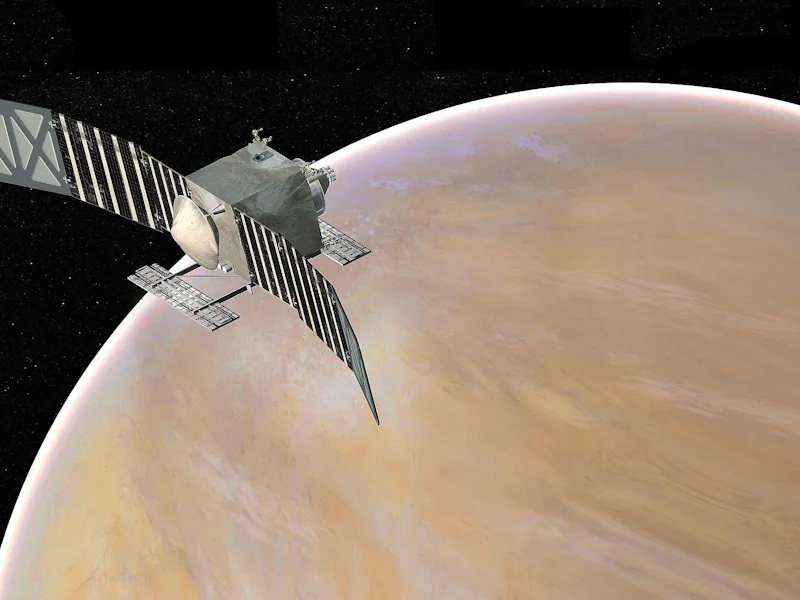
Why Venus May Be Our Best Bet For Finding Life In the Solar System

Why Venus May Be Our Best Bet For Finding Life In the Solar System

Venus and Earth once looked a lot alike. Could our planet’s forgotten early twin also contain life?

One of the weirdest places in our Solar System may actually be a great place to search for alien life: the skies of Venus.

We don’t have evidence of life — or even indisputable evidence that life could survive — in any world but the one we currently live in. However, recent years have raised the tantalizing prospect that our Solar System, in which we thought we were alone, may be dotted with diverse, and deeply weird, homes for life: In dark water beneath the ice of Europa and Enceladus, in briny underground refugia on Mars, and even drifting in the acidic clouds of Venus.

“If it had liquid water in the past, and if we can really confirm that, then yes – Venus would likely be the planet I would place my bet on,” University of Wisconsin-Madison planetary scientist Sanjay Limaye tells Inverse.

Limaye and his colleagues, along with several other teams of researchers, presented their work in a recent collection of papers in the journal Astrobiology.

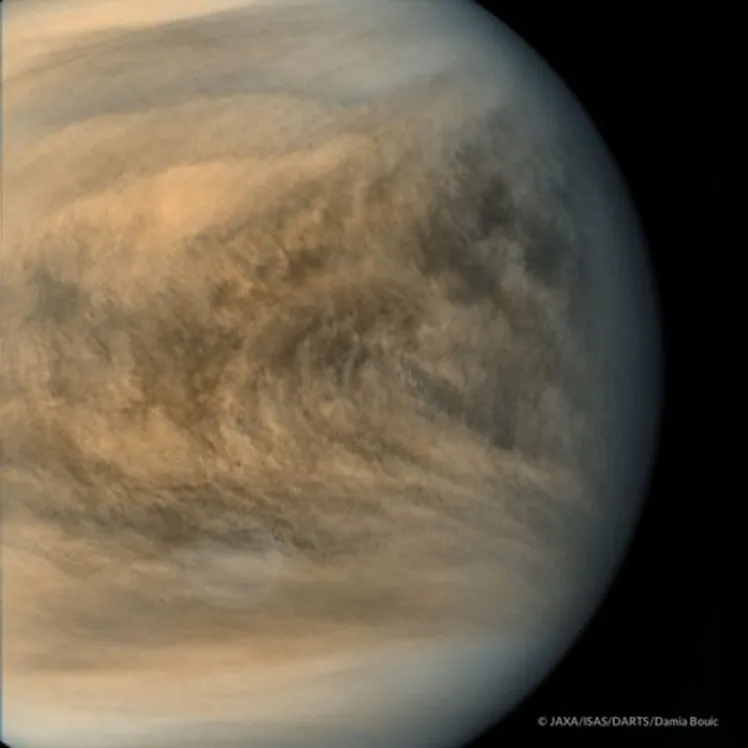
photo of a cloudy planet in shades of gray, cream, tan, and brown.

The Japanese Space Agency (JAXA)’s Akatsuki spacecraft captured this infrared view of Venus’s equatorial clouds.

JAXA

BETTING ON VENUS

In a series of recent papers, several teams of planetary scientists and astrobiologists argue that although the surface of Venus is undeniably an uninhabitable hellscape — you can’t do organic chemistry in a place that’s hot enough to melt lead — the sulfuric acid clouds might actually contain just enough water and other key chemicals for microbes to make a living.

What we know about Venus suggests that there’s something going on in our evil twin planet’s atmosphere that we don’t understand yet, whether it’s alien life or unusual chemical reactions that we’ve never seen anywhere else is still hotly debated.

A few years ago, a team of scientists detected a chemical called phosphine in Venus’s atmosphere. Here on Earth, the chemical reactions that create phosphine only ever happen inside living things, so some astrobiologists immediately got very excited about its presence on Venus. But in a recent paper, chemist Klaudia Mráziková of the Czech Academy of Sciences and her colleagues proposed a way that chemical reactions in the atmosphere could make phosphine without any help from life — and they’re not the first, although co-author Paul Rimmer of Cambridge University tells Inverse that he thinks their scenario is the “best hypothetical abiotic source for phosphine” so far.

Meanwhile, high in Venus’s atmosphere, something is absorbing huge amounts of ultraviolet radiation from the Sun. Over the last century, planetary scientists have suggested several chemical compounds, in different combinations, that could be absorbing the UV light, but no explanation quite fits, at least so far. And in a weirdly compelling coincidence, the shape of whatever’s absorbing the light, and the way it changes with the Venusian seasons, bears a striking resemblance to algal blooms in Earth’s oceans. Like the phosphine, it could be alien microbes busily doing photosynthesis, or it could be fascinating undiscovered chemistry.

And then there are the Mode 3 particles. These weirdly shaped particles in the lower cloud layers of Venus are less than a ten-thousandth of an inch wide, but that’s surprisingly large for particles floating in clouds. The Pioneer Venus mission discovered them in early 1971, when one of its instruments measured the tiny shadows of particles passing by. They’re not tiny spheres, but amorphous blobs, and some scientists wonder whether they might be cells living in the droplets of liquid that make up the clouds.

As incredible a discovery as that would be, the Mode 3 particles could also be an optical illusion; the result of overlapping shadows of round droplets, or a problem with the Pioneer Venus instrument’s calibration. They could also be grains of dust blown aloft from the dead surface of Venus, or something else entirely.

All of these mysteries could be clues pointing to alien life in the Venusian clouds – or they could be a stack of coincidences, which future astrobiologists will one day use as a cautionary tale. We just don’t know yet.

“There are far more unanswered questions about Venus than any other planet,” says Limaye.

A TALE OF TWO PLANETS

Venus is both the most and the least Earth-like planet we know of. It’s about the same size as our home world, and it’s also a rocky world, shrouded by an atmosphere, in the habitable zone of our Sun. But Venus is also a hellworld that rotates backwards, where temperatures on the ground could melt lead and the clouds rain sulfuric acid. But some scientists argue high above the deadly heat and crushing pressure of the surface, the acidic clouds actually aren’t so bad, that is if you’re a microbe evolved to like that sort of thing.

“Venus is often overlooked as a target for astrobiology,” Massachusetts Institute of Technology astrobiologist Janusz Petkowski tells Inverse. “This is an unfair assessment.” Petkowski and his colleagues recently published a paper in the journal Astrobiology presenting a case for a habitable niche in Venus’s clouds.

Once upon a time (almost 4 billion years ago, that is), the young planets Venus and Earth probably looked a lot alike. The fledgling Venus may even have had seas of liquid water, much like the environments where life probably emerged from chemistry on Earth. Researchers like Petkowski and Limaye argue that if Venus and Earth were similar during their youth, there’s no reason life couldn’t have emerged on Venus just like it did on Earth (it’s also plausible that the same thing was happening on Mars at around the same time).

But, as siblings sometimes do, the two planets took very different paths in their adolescent years. For various reasons, Venus’s atmosphere acted like a greenhouse, holding in heat until the seas boiled away and the clouds turned noxious and acidic. But that process took at least a hundred million years, and Petkowski, Limaye, and others are betting that some Venusian life may have evolved quickly enough to survive as the seas evaporated and the clouds got more and more acidic. If they’re right, then colonies of microbes could still be drifting in the upper layers of Venus’s atmosphere, where temperatures are more hospitable, clinging to droplets of fluid or tiny grains of dust that make up the clouds.

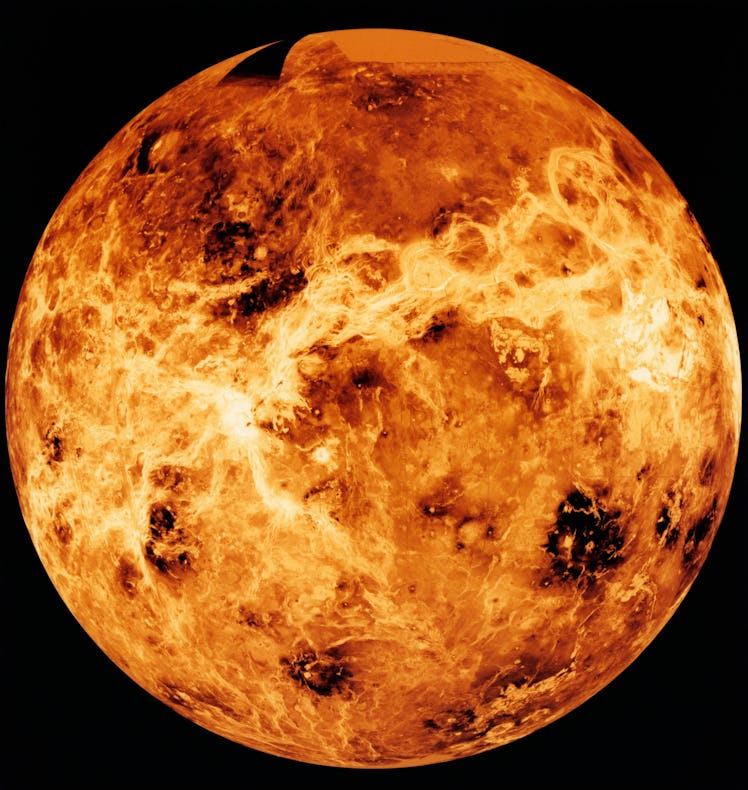
The planet Venus is captured by the Magellan probe's mapping radar. | Location: Venus.  (Photo by Le...

This elevation map, made by the Magellan spacecraft’s radar, shows what lies beneath the clouds of Venus.

LEE CORKRAN/SYGMA/GETTY IMAGES

LIFE, UH, FINDS A WAY

“No life on Earth could actually survive in Venus’s clouds,” says Petkowski.” “But if we define habitability as an environment that allows any kind of organic chemistry to survive – maybe even life with different chemical composition and different biochemical solutions – then Venus’s clouds could be potentially habitable.”

The cloud layers of Venus’s upper atmosphere stay between freezing and boiling — exactly the right temperature range for life — but they’re made mostly of droplets of sulfuric acid, mingled with a few microscopically tiny droplets of water. No environment on Earth is remotely similar. But seeing how the scrappiest, stubbornest Earth life has adapted to milder versions of these challenges, astrobiologists can learn how life might adapt to the harsh conditions of Venus.

Here on Earth, for example, some microbes that live in acidic hot springs have found ways to neutralize the acid around them. Venus’s clouds are much more acidic than even the most caustic hot springs here on Earth, but given millions of years to adapt, it’s possible that microbes could keep pace with their changing environment. Petkowski and his colleagues suggest that multi-layered cell walls or acid-resistant membranes could also help microbes keep the acid out and the water in.

For now, that’s all speculation, but in recent lab experiments, Worcester Polytechnic Institute chemist Maxwell Seager and his colleagues found that some amino acids (chemical compounds that form the building blocks for proteins) are completely fine hanging out in a mixture of 98 percent sulfuric acid and 2 percent water. In previous experiments, the same team learned that nucleic acids (the molecules that store the genetic code) are also undaunted by super-acidic conditions.

That could be good news for life, but surviving the acid clouds is just one part of the challenge. Life — at least life as we know it — needs water to survive, and if there’s water in Venus’s clouds, it exists in the form of microscopic droplets, and even those are probably few and far between. In the driest places on Earth — carefully climate-controlled libraries — some resourceful microbes use nearby salt to pull just a few molecules of water out of the air. It’s not hard to imagine microbes on Venus doing something similar while clinging to a droplet of liquid in a cloud.

But could microbes spend their whole lives in the air? Some microbes here on Earth spend part of their life cycle in the clouds, but on Venus, sinking too deep into the haze below means a boiling death. Petkowski and colleagues say that resourceful microbes could lock themselves into armored balls called spores when their environments get too hot; inside the spore, a dormant microbe could wait until wind currents lift them back up to where things are cooler.

In other words, life finds a way. Or at least, it theoretically could. We need a lot more information to know for sure, or even to say how likely this scenario could be.

illustration of a hemispherical metal object falling through yellow clouds

This artist’s illustration shows what the DAVINCI probe might look like as it falls through Venus’s atmosphere.

NASA

WILL WE EVER FIND A SMOKING GUN?

Upcoming missions to Venus may help answer some questions about what’s really going on in the sulfuric acid clouds: How much water is there? Are there organic molecules? Did Venus ever have liquid water on its surface? All of these are pieces of a much larger question: Could the clouds of Venus be habitable, even for a kind of life that we’ve never seen on Earth?

A commercial spaceflight company called Rocket Lab plans to launch its Venus Life Finder mission in December 2024. Venus Life Finder will look for organic molecules in the upper cloud layers. Finding these molecules won’t prove there’s life on Venus (despite the mission’s ambitious name), but it would show that the acidic clouds are home to the kind of chemistry that makes life work. This would be an encouraging sign.

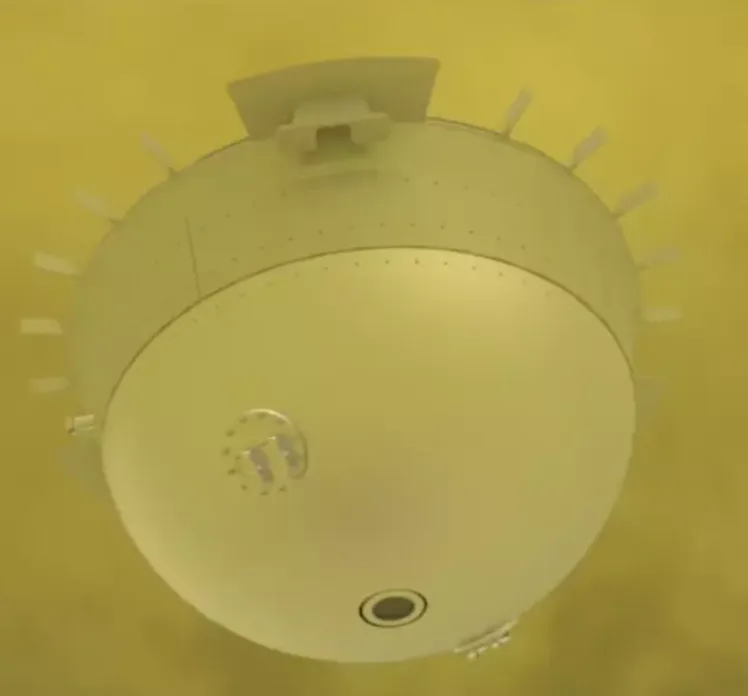
NASA’s DAVINCI mission, which is planned for a 2029 launch, will study Venus’s atmosphere from orbit — and drop a probe into it. A couple of years later, in 2031, NASA’s VERITAS mission will study the planet’s surface and it’s interior. At around the same time, the European Space Agency’s EnVision mission will also use radar to study the interior of Venus from space.

All of these missions could help scientists understand whether Venus ever had liquid water on its surface, and how the planet’s atmosphere evolved over time (ratios of different chemical isotopes in a planet’s atmosphere can contain clues about its history). They may also help find explanations for the phosphine and even the mysterious UV absorber.

However, all of these missions are still years away even if everything goes according to plan. As JWST and Artemis have both shown us, it seldom does; they call it rocket science for a reason. And none of them will be capable of actually detecting life among the clouds of Venus , only clues about whether it could survive there. The only way to find real proof of life on Venus, according to researchers like Petkowski and Limaye, will be to scoop up a sample of the Venusian clouds and bring it home.

And that possibility is still decades away.

“It will take at least a couple of decades or longer, given the rate at which the previously selected missions are taking to actually be implemented,” says Limaye. “It will be a long time before we actually detect life elsewhere. It's not going to be a single experiment. It's going to take a lot of effort and different experiments and investigations and missions to determine.”

In the meantime, we can speculate, and scientists can find new ways to analyze the data they have. And we can all enjoy the possibility that our Solar System may be a lot wilder and a lot livelier than we thought.


{ https://www.inverse.com/ }

Hoe vind je dit bericht?
Geschreven door peter om 17:36 Stuur door

China Creates a High-Resolution Atlas of the Moon

The Geologic Atlas of the Lunar Globe. Credit: CAS via Xinhua handout

China Creates a High-Resolution Atlas of the Moon

Multiple space agencies are looking to send crewed missions to the Moon’s southern polar region in this decade and the next. Moreover, they intend to create the infrastructure that will allow for a sustained human presence, exploration, and economic development. This requires that the local geography, resources, and potential hazards be scouted in advance and navigation strategies that do not rely on a Global Positioning System (GPS) developed. On Sunday, April 21st, the Chinese Academy of Sciences (CAS) released the first complete high-definition geologic atlas of the Moon.

This 1:2.5 million scale geological set of maps provides basic geographical data for future lunar research and exploration. According to the Institute of Geochemistry of the Chinese Academy of Sciences (CAS), the volume includes data on 12,341 craters, 81 impact basins, 17 types of lithologies, 14 types of structures, and other geological information about the lunar surface. This data will be foundational to China’s efforts in selecting a site for their International Lunar Research Station (ILRS) and could also prove useful for NASA planners as they select a location for the Artemis Base Camp.

Credit: CAS via Xinhua handout

Ouyang Ziyuan and Liu Jianzhong, a research professor and senior researcher from the Institute of Geochemistry of the CAS (respectively), oversaw these efforts. Since 2012, they have led a team of over 100 scientists and cartographers from relevant research institutions. The team spent more than a decade compiling scientific exploration data obtained by the many orbiters, landers, and rovers that are part of the Chinese Lunar Exploration Program (Chang’e), and other research about the origin and evolution of the Moon.

ccording to the CAS, the atlas includes an “upgraded lunar geological time scale” for “objectively” depicting the geological evolution of the Moon, including the lunar tectonics and volcanic activity that once took place. As a result, the volume could not only be significant in terms of lunar exploration and site selection. Still, it could also improve our understanding of the formation and evolution of Earth and the other terrestrial planets of the Solar System – Mercury, Venus, and Mars. As Jianzhong indicated in a CAS press release,

“The world has witnessed significant progress in the field of lunar exploration and scientific research over the past decades, which have greatly improved our understanding of the moon. However, the lunar geologic maps published during the Apollo era have not been changed for about half a century and are still being used for lunar geological research. With the improvements of lunar geologic studies, those old maps can no longer meet the needs of future scientific research and lunar exploration.”

Credit: CAS via Xinhua handout

Jianzhong also claims that the atlas could help inform future sample collection on the Moon. This includes the Chang’e-6 mission (consisting of an orbiter and lander), which launched this past Friday (May 3rd). The orbiter element will reach the Moon in a few days, and the lander element is expected to touch down the far side of the Moon by early June. By 2026, it will be joined by the Chang’e-7 mission, consisting of an orbiter, lander, rover, and a mini-hopping probe. While Chang’e-6 will obtain lunar soil and rock samples, Chang’e-7 will investigate resources and obtain samples of water ice and volatiles.

According to Gregory Michael, a senior scientist from the Free University of Berlin, the release of this atlas represents the culmination of decades of work, and not just by Chinese scientists:

“This map, in particular, is the first on a global scale to utilize all of the post-Apollo era data. It builds on the achievements of the international community over the last decades, as well as on China’s own highly successful Chang’e program. It will be a starting point for every new question of lunar geology and become a primary resource for researchers studying lunar processes of all kinds.”

Aside from updating data on lunar features and geology, the new maps reportedly double the resolution of the Apollo-era maps. These maps were compiled by the US Geological Survey in the 1960s and 70s using data from the Apollo missions. Among them was a global map at the scale of 1:5,000,000, though other regional maps and those that showed the terrain near the Apollo landing sites were of higher resolution. Geological and geographical information on the Moon has advanced considerably since then, requiring updated maps that reflect the objective of returning to the Moon with the intent to stay.

Credit: CAS via Xinhua handout

In addition to the Geologic Atlas of the Lunar Globe, the CAS also released a book called Map Quadrangles of the Geologic Atlas of the Moon. This document includes 30 sector diagrams that collectively form a visualization of the entire lunar surface. Both are available in Chinese and English, have been integrated into a digital platform called Digital Moon, and will eventually become available to the international research community.

Further Reading: 

{ https://www.universetoday.com/ }

Hoe vind je dit bericht?
Geschreven door peter om 17:22 Stuur door

Mysterious Object Spotted Over LaGuardia Airport Raises Eyebrows: Possible UFO Sighting

Mysterious Object Spotted Over LaGuardia Airport Raises Eyebrows: Possible UFO Sighting

ngcb1

In a bizarre turn of events, a mysterious cylindrical object was reportedly sighted hovering near New York’s LaGuardia Airport, prompting speculation and intrigue among witnesses and experts alike. The incident, captured on camera by Michelle Reyes from her airplane window, has sparked discussions about the possibility of extraterrestrial activity in our skies.

Michelle Reyes, accompanied by her daughter, was aboard a flight over New York City when she inadvertently stumbled upon the enigmatic sight. Initially intending to capture the scenic view of the city skyline, Reyes was taken aback when she noticed an unusual object darting across her line of sight. Describing it as a “flying cylinder,” Reyes was quick to rule out conventional explanations, as the object appeared to be moving autonomously at a remarkable speed.

Following the sighting, Reyes took proactive measures by reaching out to relevant authorities, including the Federal Aviation Administration (FAA), to report the potential safety hazard. Despite her efforts, she received limited acknowledgment, highlighting the challenges faced by individuals attempting to report such incidents.

The perplexing nature of the sighting garnered attention from UFO investigator Ben Hansen, known for his work on Discovery’s “UEFA Witness.” After an extensive analysis of the footage, Hansen expressed his belief in the authenticity of the video, debunking claims of fabrication or hoax. His assessment adds weight to the possibility that the object spotted near LaGuardia Airport may indeed be of extraterrestrial origin.

One intriguing aspect of the sighting is the corroborating testimony from another passenger on the same flight, confirming the presence of a similar object. This additional witness account strengthens the credibility of Reyes’ report, indicating that multiple individuals observed the anomaly, further validating its significance.

Despite efforts to rationalize the sighting, experts have struggled to provide a definitive explanation. While some speculate that the object could be a drone, its exceptional speed and unconventional behavior cast doubt on such assertions. Moreover, the absence of a coherent response from aviation authorities only serves to deepen the mystery surrounding the incident.

In light of this compelling evidence, it is imperative that such sightings be taken seriously and thoroughly investigated. The potential implications of encountering unidentified aerial phenomena cannot be understated, warranting a concerted effort to discern the truth behind these enigmatic encounters.

As we continue to grapple with the unexplained, incidents like the one witnessed over LaGuardia Airport serve as a reminder of the vastness of the unknown and the limitless possibilities that lie beyond our comprehension. Whether it be a fleeting glimpse of extraterrestrial visitors or a trick of the light, the quest for answers persists, fueling our curiosity and expanding our understanding of the universe.

{ https://www.latest-ufo-sightings.net/ }

Hoe vind je dit bericht?
Geschreven door peter om 17:07 Stuur door

UFO With Entities Did Land In Rendlesham Forest & Filmed On Cine Camera, Revealed In New USAF Airman Testimony

Rendlesham Forest UFO film

UFO With Entities Did Land In Rendlesham Forest & Filmed On Cine Camera, Revealed In New USAF Airman Testimony

The Rendlesham Forest UAP incident is one of the legendary UFO encounter cases in the history of UFOlogy. In 1980, Lt. Col. Charles Halt, a deputy commander of the US Air Force Base, received the news of strange sightings near twin NATO airbases of RAF Woodbridge and RAF Bentwaters in Suffolk, England. In the early morning of December 26, Airman First Class John Burroughs reported the sighting that included vague descriptions, ranging from unusual supernatural light, glittering triangular spaceships, and scorched footprints on the ground.

It is always argued whether the Suffolk UFO landing actually happened or it was just a hoax. On the official note, there is no physical evidence to prove this claim, only testimonies provided by credible witnesses. As the years passed, a piece of new information indulged which opened many untold stories of this case.

Gary Heseltine, a former police detective and UFO investigator recounts the complex story of the Rendlesham Forest UFO incidents, which is considered the second most famous UFO case after Roswell in 1947. Heseltine researched the case for over five years, analyzing various published materials and uncovering lesser-known information.

In his book, “NON-HUMAN: The Rendlesham Forest UFO Incidents: 42 Years of Denial“, he presented amazing new military testimony from a previously unknown witness. The book discusses the political aspects of the incident, suggesting that the narrative may have been controlled by a few individuals for years. Heseltine argues that the UK and US governments have downplayed the true significance of the case.

This series of events occurred between December 26 and December 28, 1980. A mysterious flying object flew at such an incredible speed that violated the laws of physics. Moreover, despite the very high speed, the alien spacecraft did not make any noise.

The incident involves a young airman’s claim of witnessing a translucent UFO about 30 ft in diameter landing in a farmer’s field. This claim has been debated for many years. Later, round-shaped prints were found on the ground clearly from a heavy object, which were at a distance of about 3 meters from each other. Burns were also seen near these grooves on the ground.

On December 28, when soldiers were sent for a more thorough study of the area, they noted the excess of radiation. And at this time, a UFO reappeared, it flew by with incredible speed, illuminating everything around with bright red lights. The light emanating from the ship was so strong that the sensors of the night sights burned out, and the lights continued to hover and shine over the forest and field for some time.

Heseltine discovered a new witness account that sheds new light on the landing of a triangular-shaped UFO in the forest, an event previously recounted publicly only by Staff Sgt Jim Penniston and Airman John Burroughs. Heseltine reveals that after extensive research, he has obtained corroboration from a military witness, Sergeant Adrian Bustinza, confirming the occurrence of a UFO landing.

In a four and half hour transatlantic telephone interview (which was audio recorded) he admitted that he had been involved in a second UFO related event, a landing of a translucent craft approximately 30 feet in diameter which was surrounded by a ring of US Air Force Security police officers, writes Heseltine. (Source)

Rendlesham Forest

Retired Colonel Charles Halt and Retired police detective Gary Heseltine in Rendlesham Forest in 2010

The landing was filmed on video and cine cameras, marking it as the second UFO landing event. Heseltine emphasizes that Bustinza’s involvement was significant because he was part of the security perimeter around the craft, as was Larry Warren, an honorably discharged military eyewitness, and was the first to go public about the Bentwaters UFO cover-up.

Sergeant Bustinza’s account corroborates Warren’s version of events, confirming that the entire incident was being filmed. Additionally, Bustinza states that Colonel Gordon Williams, the Base Commander of the twin US bases of RAF Bentwaters and RAF Woodbridge, was present at the second landing. Despite Colonel Williams’ denial of involvement, both Bustinza and Warren assert that he was present during the event.

“When I arrived [at the scene], it was going in and out through the trees and at one stage it was hovering,” Sgt. Adrian Bustinza said. (Source)

Interestingly, Heseltine mentioned that both Bustinza and Warren state that entities or lifeforms were seen near the craft, engaging in what seemed like a silent confrontation with Colonel Williams. This detail adds a mysterious and intriguing element to the story.

Read also:

Heseltine highlights the significance of Sergeant Adrian Bustinza’s corroboration, as it confirms the existence of the second UFO landing. He asserts that the US Air Force has attempted to cover up this event, but now, with the corroboration from a first-person witness, the truth is emerging.

Moreover, while examining old documentation of the case, Heseltine found a direct admission made by Lt. Col. Charles Halt, the deputy base commander at the time, to an American researcher named Ray Boeche in April 1985. Halt admitted that the second UFO landing did occur, and the craft was surrounded by USAF Security police officers, with Col. Williams present. This admission from Lt. Col. Halt adds further weight to the claims made by Bustinza and Warren.

Alien Abduction

Interestingly, video footage was published in 2018 by the British tabloid newspaper, The Sun, where Retired Lt. Colonel Charles Halt can be heard saying that John Burroughs “may have been abducted” and that the men were “unaccounted” for hours. The video was reportedly captured in 2010 when Halt and retired British police detective Gary Heseltine revisited Rendlesham Forest for a documentary that was never made. The footage was recorded by Heseltine’s wife when the two were talking about the UFO incident during a break.

Halt said: “He [Burroughs] may have been abducted, who knows… You know, there is LOST TIME, we know that? They were not on the radio… You’ve got men out in the forest that you can’t… unaccounted for hours.”

1980 UFO incident Official memo of Lt. Colonel Charles Halt about 1980 UFO incident

Even though the USAF had always denied any UFO landing in the Rendelsem forest, Burroughs shared the shocking news about his health. He said that he had been subjected to a high amount of radiation during the investigations of the mysterious craft on three consecutive nights in December 1980.

The US military classified Burrough’s medical records, so neither he nor his lawyer were able to get it. Even the USAF denied that he had been working with them during the time of the incident as claimed by Burrough. Somehow, they got a document from the British Ministry of Defence in which it was written that the site had a high level of radiation during the UFO incident.

Finally, after decades, the US Veterans Association and the Department of Defence agreed to pay for his treatment. Besides, in the radiation document, the US military acknowledged the unexplained aerial phenomenon that occurred at the site and caused a physical injury to Burrough.

{ https://www.howandwhys.com/ }

Hoe vind je dit bericht?
Geschreven door peter om 00:59 Stuur door

China Just Launched its Chang'e-6 Mission To Grab Samples From the Elusive Far Side of the Moon

China Just Launched its Chang'e-6 Mission To Grab Samples From the Elusive Far Side of the Moon

Liftoff for the Moon’s newest robotic visitor.

 
TOPSHOT - A Long March 5 rocket, carrying the Chang'e-6 mission lunar probe, lifts off as it rains a...
Hector Retamal / AFP / Getty Images

China has launched the Chang’e-6 rover to the Moon.

Chang’e-6 is the latest of the Chang’e fleet, named after the Chinese goddess of the Moon. On Friday, the rover launched atop a Chinese Long March-5 rocket from Wenchang Space Launch Site in south China's Hainan Province. Chang’e-6 has successfully deployed into space, and it’s now heading for the enigmatic far side of the Moon.

Its predecessor, Chang’e-5, collected about 2 kilograms of lunar material from the near side of the Moon in late 2020. This was the first time since the 1970s that humanity had brought samples from the Moon to Earth. In early 2019, Chang’e-4 was the first mission ever to land on the far side of the Moon. Chang’e-6 builds upon all that work.

WHY GO TO THE FAR SIDE OF THE MOON?

The battered, cratered surface of the Moon. This is the far side, which humans cannot see from Earth...

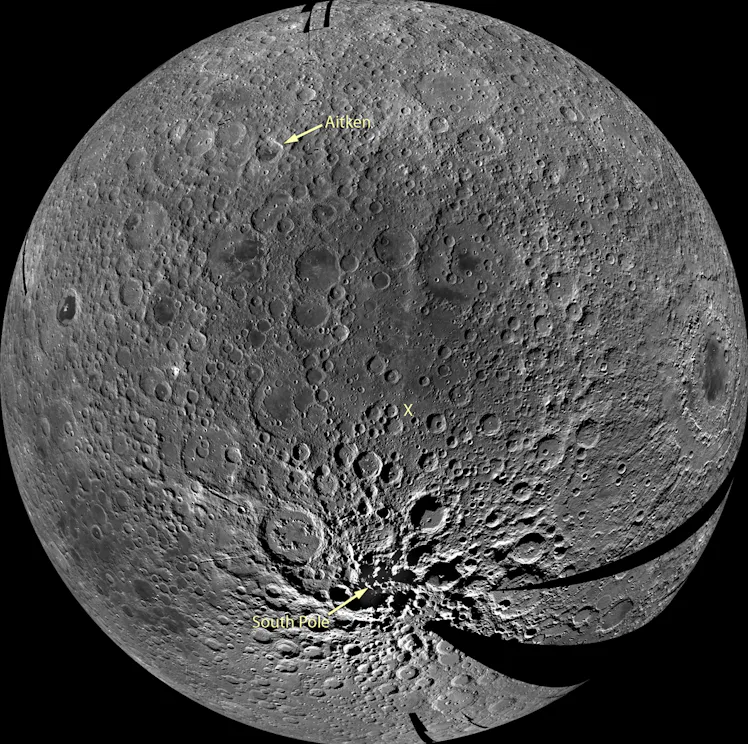
This monochrome mosaic is centered in the middle of the South Pole-Aitken basin. It comes from NASA’s Lunar Reconnaissance Orbiter. 

NASA/GSFC/ARIZONA STATE UNIVERSITY

Chang’e-6 will be a blend of both those earlier missions: It will retrieve samples from the far side of the Moon. Chang’e-6 will land in the largest and oldest known impact basin on the Moon. Known as the South Pole-Aitken (SPA) basin, it “stretches across nearly a quarter of the Moon,” according to the team that operates NASA’s Lunar Reconnaissance Orbiter.

It’s a fascinating place. The terrain is quite dramatic. The craters are also thought to have formed 3.9 billion years ago when life was just beginning to form on Earth. If the craters owe their existence to a chaotic episode of rocky bombardment, that same rocky rainfall likely struck Earth and the other terrestrial planets.

According to Chinese state media Xinhua, Chang’e-6 will deploy its robotic arm about 48 hours after landing. It will scoop up rocks and lunar dirt, called regolith. It will also excavate samples with a drill. The 53-day mission will culminate in samples, sealed away and ferried into an orbiter, flying to Earth. They’re expected to land in Inner Mongolia at the end of June.

Chang’e-6 is also carrying scientific instruments from other countries. “The Chang'e-6 mission is carrying four payloads developed through international cooperation. Scientific instruments from France, Italy, and the European Space Agency/Sweden are aboard the Chang'e-6 lander, and a small satellite from Pakistan is aboard the orbiter,” according to Xinhua.

In a year packed with lunar visits from other robots, like Odysseus of Houston-based Intuitive Machines, and Japan’s SLIM lander, Chang’e-6 is set to keep the momentum of 2024 Moon exploration building.

{ https://www.inverse.com/ }

Hoe vind je dit bericht?
Geschreven door peter om 00:37 Stuur door

Meer van UFO'S of UAP'S, ASTRONOMIE, RUIMTEVAART, ARCHEOLOGIE, OUDHEIDKUNDE, SF-SNUFJES EN ANDERE ESOTERISCHE WETENSCHAPPEN - DE ALLERLAATSTE NIEUWTJES

↑ Terug naar de berichten