Naar de inhoud

UFO'S of UAP'S, ASTRONOMIE, RUIMTEVAART, ARCHEOLOGIE, OUDHEIDKUNDE, SF-SNUFJES EN ANDERE ESOTERISCHE WETENSCHAPPEN - DE ALLERLAATSTE NIEUWTJES

UFO's of UAP'S in België en de rest van de wereld
akke.beakke.be
Ontdek de Fascinerende Wereld van UFO's en UAP's: Jouw Bron voor Onthullende Informatie! Ben jij ook gefascineerd door het onbekende? Wil je meer weten over UFO's en UAP's, niet alleen in België, maar over de hele wereld? Dan ben je op de juiste plek! België: Het Kloppend Hart van UFO-onderzoek In België is BUFON (Belgisch UFO-Netwerk) dé autoriteit op het gebied van UFO-onderzoek. Voor betrouwbare en objectieve informatie over deze intrigerende fenomenen, bezoek je zeker onze Facebook-pagina en deze blog. Maar dat is nog niet alles! Ontdek ook het Belgisch UFO-meldpunt en Caelestia, twee organisaties die diepgaand onderzoek verrichten, al zijn ze soms kritisch of sceptisch. Nederland: Een Schat aan Informatie Voor onze Nederlandse buren is er de schitterende website www.ufowijzer.nl, beheerd door Paul Harmans. Deze site biedt een schat aan informatie en artikelen die je niet wilt missen! Internationaal: MUFON - De Wereldwijde Autoriteit Neem ook een kijkje bij MUFON (Mutual UFO Network Inc.), een gerenommeerde Amerikaanse UFO-vereniging met afdelingen in de VS en wereldwijd. MUFON is toegewijd aan de wetenschappelijke en analytische studie van het UFO-fenomeen, en hun maandelijkse tijdschrift, The MUFON UFO-Journal, is een must-read voor elke UFO-enthousiasteling. Bezoek hun website op www.mufon.com voor meer informatie. Samenwerking en Toekomstvisie Sinds 1 februari 2020 is Pieter niet alleen ex-president van BUFON, maar ook de voormalige nationale directeur van MUFON in Vlaanderen en Nederland. Dit creëert een sterke samenwerking met de Franse MUFON Reseau MUFON/EUROP, wat ons in staat stelt om nog meer waardevolle inzichten te delen. Let op: Nepprofielen en Nieuwe Groeperingen Pas op voor een nieuwe groepering die zich ook BUFON noemt, maar geen enkele connectie heeft met onze gevestigde organisatie. Hoewel zij de naam geregistreerd hebben, kunnen ze het rijke verleden en de expertise van onze groep niet evenaren. We wensen hen veel succes, maar we blijven de autoriteit in UFO-onderzoek! Blijf Op De Hoogte! Wil jij de laatste nieuwtjes over UFO's, ruimtevaart, archeologie, en meer? Volg ons dan en duik samen met ons in de fascinerende wereld van het onbekende! Sluit je aan bij de gemeenschap van nieuwsgierige geesten die net als jij verlangen naar antwoorden en avonturen in de sterren! Heb je vragen of wil je meer weten? Aarzel dan niet om contact met ons op te nemen! Samen ontrafelen we het mysterie van de lucht en daarbuiten.

Archief

The Stellar Demolition Derby in the Centre of the Galaxy

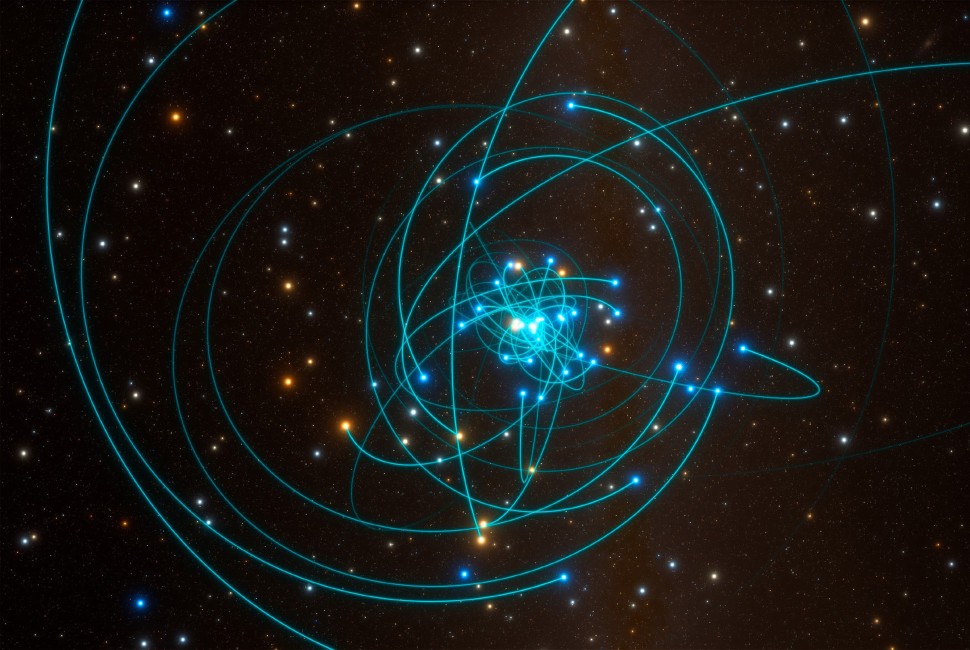
This illustration shows stars orbiting close to the Milky Way's central supermassive black hole. The black hole accelerates stars nearby and sends them crashing into one another. Credit: ESO/L. Calçada/Spaceengine.org

The Stellar Demolition Derby in the Centre of the Galaxy

The region near the Milky Way’s centre is dominated by the supermassive black hole that resides there. Sagittarius A*’s overwhelming gravity creates a chaotic region where tightly packed, high-speed stars crash into one another like cars in a demolition derby.

These collisions and glancing blows change the stars forever. Some become strange, stripped-down, low-mass stars, while others gain new life.

The Milky Way’s supermassive black hole (SMBH) is called Sagittarius A* (Sgr. A*). Sgr. A* is about four million times more massive than the Sun. With that much mass, the much smaller stars nearby are easily affected by the black hole’s powerful gravity and are accelerated to rapid velocities.

In the inner 0.1 parsec, or about one-third of a light-year, stars travel thousands of kilometres per second. Outside that region, the pace is much more sedate. Stars beyond 0.1 parsec travel at hundreds of km/s.

But it’s not only the speed that drives the collisions. The region is also tightly packed with stars into what astronomers call a nuclear star cluster (NSC.) The combination of high speed and high stellar density creates a region where stars are bound to collide.

“They whack into each other and keep going.”

Sanaea Rose, Department of Physics and Astronomy, UCLA

New research led by Northwestern University simulated stars orbiting Sgr. A* to understand the interactions and collisions and their results. It’s titled “Stellar Collisions in the Galactic Center: Massive Stars, Collision Remnants, and Missing Red Giants.” The lead author is Sanaea C. Rose from UCLA’s Department of Physics and Astronomy. The research was also recently presented at the American Physical Society’s April meeting.

The researchers simulated a population of 1,000 stars embedded in the NSC. The stars ranged from 0.5 to 100 solar masses, but in practice, the upper limit was about 30 solar masses due to the initial mass function. Other characteristics, like orbital eccentricities, were varied to ensure that the sample caught stars at different distances from Sgr. A*. That’s necessary to build a solid understanding of the stellar collisions.

“The region around the central black hole is dense with stars moving at extremely high speeds,” said lead author Rose. “It’s a bit like running through an incredibly crowded subway station in New York City during rush hour. If you aren’t colliding with other people, then you are passing very closely by them. For stars, these near collisions still cause them to interact gravitationally. We wanted to explore what these collisions and interactions mean for the stellar population and characterize their outcomes.”

“Stars, which are under the influence of a supermassive black hole in a very crowded region, are unlike anything we will ever see in our own solar neighbourhood.”

Sanaea Rose, Department of Physics and Astronomy, UCLA

The stellar density in the inner 0.1 parsecs is nothing like our Solar System’s neighbourhood. The nearest star to our Sun is the low-mass Proxima Centauri. It’s just over four light-years away. It’s like having no neighbours at all.

But in the NSC, things are way different.

The Milky Way galaxy hosts a supermassive black hole (Sgr A*, shown in the inset on the right) embedded in the Nuclear Star Cluster (NSC) at the center, highlighted and enlarged in the middle panel. The image on the right shows the stellar density in the NSC. Image Credit: Zhuo Chen The Milky Way galaxy hosts a supermassive black hole (Sgr A*, shown in the inset on the right) embedded in the Nuclear Star Cluster (NSC) at the center, highlighted and enlarged in the middle panel. The image on the right shows the stellar density in the NSC. Image Credit: Zhuo Chen

“The closest star to our sun is about four light-years away,” Rose explained. “Within that same distance near the supermassive black hole, there are more than a million stars. It’s an incredibly crowded neighbourhood. On top of that, the supermassive black hole has a really strong gravitational pull. As they orbit the black hole, stars can move at thousands of kilometres per second.”

In a stellar density that high, collisions are inevitable. The rate of collisions is more severe the closer stars are to the SMBH. In their research, Rose and her colleagues simulated the region to determine the collisions’ effect on individual stars and the stellar population.

The simulations showed that head-on collisions are rare. So stars aren’t destroyed. Instead, they’re more like glancing blows, where stars can be stripped of their outer layers before continuing their trajectories.

“They whack into each other and keep going,” Rose said. “They just graze each other as though they are exchanging a very violent high-five. This causes the stars to eject some material and lose their outer layers. Depending on how fast they are moving and how much they overlap when they collide, they might lose quite a bit of their outer layers. These destructive collisions result in a population of strange, stripped down, low-mass stars.”

These stars end up migrating away from the SMBH. The authors say that there is likely a population of these low-mass stars spread throughout the galactic centre (GC.) They also say that the ejected mass from these grazing collisions could produce the gas and dust features other researchers have observed in the GC, like X7, and G objects like G3 and G2.

X7 is an elongated gas and dust structure in the galactic centre. The researchers suggest it could be made of mass stripped from stars during collisions between fast-moving stars near Sgr. A*. G3 and G2 are objects that resemble clouds of gas and dust but also have properties of stellar objects. Image Credit: Ciurlo et al. 2023. X7 is an elongated gas and dust structure in the galactic centre. The researchers suggest it could be made of mass stripped from stars during collisions between fast-moving stars near Sgr. A*. G3 and G2 are objects that resemble clouds of gas and dust but also have properties of stellar objects. Image Credit: Ciurlo et al. 2023.

Outside of the 0.1 parsecs region, the stars are slower. As a result, collisions between stars aren’t as energetic or destructive. Instead of creating a population of stripped-down stars, collisions allow the stars to merge, creating more massive stars. Multiple mergers are possible, creating stars more massive than our Sun.

“A few stars win the collision lottery,” Rose said. “Through collisions and mergers, these stars collect more hydrogen. Although they were formed from an older population, they masquerade as rejuvenated, young-looking stars. They are like zombie stars; they eat their neighbours.”

But after they gain that mass, they hasten their own demise. They become like young, massive stars that consume their fuel quickly.

This artist's illustration shows a massive star orbiting Sagittarius A*. Post-collision, some stars gain mass and end up shortening their lives. Image Credit: University of Cologne This artist’s illustration shows a massive star orbiting Sagittarius A*. Post-collision, some stars gain mass and end up shortening their lives. Image Credit: University of Cologne

“They die very quickly,” Rose said. “Massive stars are sort of like giant, gas-guzzling cars. They start with a lot of hydrogen, but they burn through it very, very fast.”

Another puzzling thing about this inner region is the lack of red giants. “Observations of the GC indicate a deficit of RGs within about 0.3 pc of the SMBH,” the authors write, referencing other research. Their results could explain it. “We consider whether main-sequence stellar collisions may help explain this observational puzzle,” they write. “We find that within ~ 0.01 pc of the SMBH, stellar collisions destroy most low-mass stars before they can evolve off the main sequence. Thus, we expect a lack of RGs in this region.”

The region around the Milky Way’s SMBH is chaotic. Even disregarding the black hole itself and its swirling accretion disk and tortured magnetic fields, the stars that dance to its tune live chaotic lives. The simulations show that most stars in the GC will experience direct collisions with other stars. But their chaotic lives could shed light on how the entire region evolved. And since the region resists astronomers’ attempts to observe it, simulations like this are their next best tool.

“It’s an environment unlike any other,” Rose said. “Stars, which are under the influence of a supermassive black hole in a very crowded region, are unlike anything we will ever see in our own solar neighbourhood. But if we can learn about these stellar populations, then we might be able to learn something new about how the galactic center was assembled. At the very least, it certainly provides a point of contrast for the neighbourhood where we live.”

Note: these results are based on a pair of published papers:

{ https://www.universetoday.com/ }

Hoe vind je dit bericht?
Geschreven door peter om 23:29 Stuur door

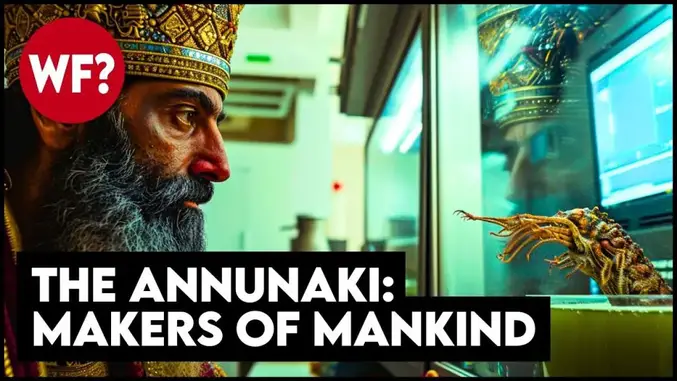
Annunaki: Enigmatic Deities and the Alleged Architects of Humanity

Annunaki: Enigmatic Deities and the Alleged Architects of Humanity

Annunaki

In the rich tapestry of ancient Mesopotamian mythology, few figures are as intriguing and mysterious as the Annunaki. Described as gods descending from the heavens, their lore intertwines with the fabric of human origin and ancient cosmology, presenting a narrative that has captivated scholars, enthusiasts, and theorists alike.

Origins and Mythology

The Annunaki hold a pivotal place in the pantheon of Sumerian, Akkadian, Assyrian, and Babylonian cultures. These deities are often depicted as powerful beings who arrived from a distant planet, Nibiru, sometimes referred to as the 12th planet in our solar system. According to myth, they were in search of resources, specifically gold, to save their home world from an impending catastrophe.

The lore suggests that Earth’s abundant gold reserves caught the Annunaki’s attention, leading to their arrival and subsequent mining operations. However, laboring under the harsh conditions of our planet, they sought to engineer a workforce capable of carrying out the strenuous task of mining. This led to the creation of mankind, as per the narrative, making humans the direct product of Annunaki ingenuity.

Impact on Human Evolution

The narrative goes further to explain the rapid advancement of human civilization as a direct influence of the Annunaki. They are credited with teaching humans various skills and knowledge, from agriculture to writing, thus catalyzing the growth of civilizations across ancient Mesopotamia, often regarded as the cradle of civilization. This interventionist approach in human evolution paints the Annunaki not only as creators but also as teachers and protectors of mankind.

Skepticism and Scientific Perspective

While the story of the Annunaki offers a fascinating glance into ancient mythologies and the human penchant for storytelling, it is crucial to approach these narratives with a critical mind. Mainstream science and archaeology do not support the existence of Nibiru or the Annunaki’s role in human history as factual. The tales of the Annunaki, much like other mythological narratives, are reflections of our ancestors’ attempts to understand the world around them, using the language of myth to explain natural phenomena and the origins of human society.

The works of authors like Zechariah Sitchin, who popularized the Annunaki in modern times, often involve interpretations of ancient texts that many scholars have contested. It’s important to differentiate between mythological texts and historical evidence when exploring these subjects.

VIDEO:

  • The Why Files – Annunaki | Gods from Planet Nibiru and the Makers of Man

The Annunaki remain a compelling subject within ancient Mesopotamian mythology, embodying the human fascination with creation, gods, and the stars. Their story is a testament to the creativity and depth of ancient civilizations’ mythologies, offering insights into how our ancestors sought to explain their origins and the workings of the cosmos.

As we continue to explore ancient texts and archaeological findings, the line between myth and history offers a rich field for inquiry and understanding. While the Annunaki may not be the architects of humanity as the myths suggest, their stories provide a valuable glimpse into the spiritual and cosmological beliefs of ancient Mesopotamian cultures, reminding us of the complexity and richness of human imagination throughout the ages.

{ https://www.latest-ufo-sightings.net/ }

Hoe vind je dit bericht?
Geschreven door peter om 22:50 Stuur door

HOLOGRAPHIC BREAKTHROUGH: SCIENTISTS CREATE FULL-COLOR 3D HOLOGRAPHIC DISPLAYS WITH ORDINARY SMARTPHONE SCREEN

rnuVdFzm?format=jpg&name=900x900

(Pixabay)

HOLOGRAPHIC BREAKTHROUGH: SCIENTISTS CREATE FULL-COLOR 3D HOLOGRAPHIC DISPLAYS WITH ORDINARY SMARTPHONE SCREEN

While conventional approaches to holography involve complex and expensive laser emitters that have limited their practical use, the researchers behind this novel approach say their work could lead to dramatic improvements in holographic displays for virtual reality applications, including gaming, training, and even advanced military applications.

3D HOLOGRAPHIC DISPLAYS LIMITED BY COST AND COMPLEXITY

In science fiction, holograms are used for anything from basic communications to advanced military weaponry. In the real world, 3D holographic displays have yet to break through to everyday products and devices. That’s because creating holograms that look real and have significant fidelity requires laser emitters or other advanced pieces of optical equipment. This situation has stymied commercial development, as these components are complex and expensive.

More recently, research scientists were able to create realistic 3D holographic images without lasers by using a white chip-on-board light-emitting diode. Unfortunately, that method required two spatial light modulators to control the wave fronts of the emitted light, adding a prohibitive amount of complexity and cost.

Now, those same scientists say they have created a simpler, more cost-effective way to create realistic-looking 3D holographic displays using only one spatial light modulator and new software algorithms. The result is a simpler and cheaper method for creating holograms that an everyday technology like a smartphone screen can emit.

IPHONE 14 SCREEN CREATES REALISTIC HOLOGRAMS

“Although holography techniques can create a very real-looking 3D representation of objects, traditional approaches aren’t practical because they rely on laser sources,” said research team leader Ryoichi Horisaki from The University of Tokyo in Japan. “Lasers emit coherent light that is easy to control, but they make the system complex, expensive, and potentially harmful to the eyes.”

To conquer this limitation, Horisaki’s team wanted to see if they could use lower-cost technology and the power of advanced computer algorithms to create a 3D holographic display that would rival displays using lasers. The key, they say, is a technology known as computer-generated holography (CGH) paired with a simple component known as a spatial light modulator.

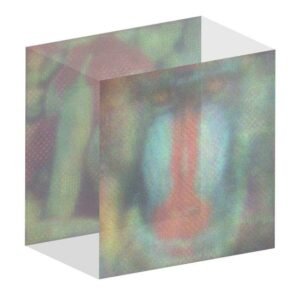
3D holographic displays Researchers developed a 3D full-color display method that uses a smartphone screen, rather than a laser, to create holographic images. Shown are their experimental results, in which a continuous transition from the first layer to the second layer is observable. CREDIT: Ryoichi Horisaki, The University of Tokyo

To demonstrate their potential breakthrough approach, the researchers created a two-layer optical reproduction of a full-color three-dimensional image. The first layer is projected by the spatial light modulator, and the second layer is projected by the screen off of an iPhone 14 smartphone.

Next, the team’s customized algorithms coordinated the display of the two images to create a realistic-looking 3D holographic display that resembled those produced by expensive laser systems.

While the approach seems simple on the surface, the scientists say it is incredibly complex.

“It required carefully modeling the incoherent light propagation process from the screen and then using this information to develop a new algorithm that coordinated the light coming from the device screen with a single spatial light modulator,” they explain.

Fortunately, that work paid off, resulting in a new approach to designing and projecting realistic holographic displays that are significantly simpler and less expensive than the industry standard.

“This work aligns with our laboratory’s focus on computational imaging, a research field dedicated to innovating optical imaging systems by integrating optics with information science,” said Horisaki. “We focus on minimizing optical components and eliminating impractical requirements in conventional optical systems.”

“Holographic displays that use low-coherence light could enable realistic 3D displays while potentially reducing costs and complexity,” added Otoya Shigematsu, the paper’s first author. “Although several groups, including ours, have demonstrated holographic displays using low-coherence light, we took this concept to the extreme by using a smartphone display.”

NEW APPROACH COULD REVOLUTIONIZE VIRTUAL REALITY

In their study, which is published in the journal Optical Letters, the scientists behind the new method for generating 3D holographic displays say their current work only created a demonstration of their approach and that more work would be needed to apply it to commercial, military, and industrial applications.

3D holographic displays

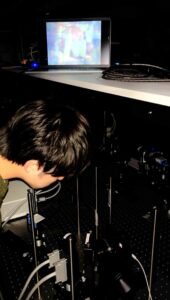
First author Otoya Shigematsu is shown in the laboratory with the optical experiment setup used for the work.

CREDIT: Ryoichi Horisaki, The University of Tokyo.

However, they say the basic science behind the integration of computer algorithms and simple display technologies is a huge step toward dramatic improvements in virtual reality devices like headsets used in virtual gaming environments. In fact, they believe that their method is actually safer than traditional approaches, especially when used in close-up displays like VR headsets.

“We believe that this method could eventually be useful for minimizing the optics, reducing costs, and decreasing the potential harm to eyes in future visual interfaces and 3D display applications,” said Shigematsu. “More specifically, it has the potential to enhance the performance of near-eye displays, such as the ones being used in high-end virtual reality headsets.”

The scientists say they are now working on improving their algorithms to increase the number of layers and, therefore, the digital information they can display. If successful, they say they could create even more complex and realistic 3D holographic displays.

  •  Christopher Plain is a Science Fiction and Fantasy novelist and Head Science Writer at The Debrief. Follow and connect with him on X, learn about his books at plainfiction.com, or email him directly at christopher@thedebrief.org.

{ https://thedebrief.org/category/science/ }

Hoe vind je dit bericht?
Geschreven door peter om 23:25 Stuur door

Western US residents report the most UFO sightings — what are they actually seeing?

Western US residents report the most UFO sightings — what are they actually seeing?

By 

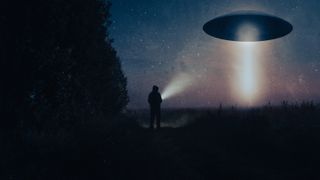
a flying saucer in the air on the top right shines a beam down into a dark overgrwoth. the silhouette of a person stands center on the dark ground, near a dark wall of trees on the left. they hold a flashlight toward the flying saucer.
(Image credit: David Wall/Getty Images)

Those of us in the western U.S. who enjoy vast open spaces may also be more likely to report UFO sightings, a new study suggests.

-An analysis of unidentified aerial phenomena (UAP) reports (UAP is a new umbrella term that includes UFOs not just in the sky but also in space and underwater) suggests local environmental factors play a role in the number of UAP sightings reported.

The study, based on about 98,000 reports over 20 years as cataloged in an open-source, online dataset maintained by the National UFO Research Center (NUFORC), modeled how reported UAP sightings coincide with environmental variables such as light pollution and cloud cover, as well as things like proximity to airports and military installations. The results reveal the majority of reported sightings originate in the western U.S., along with a smaller hotspot in the northeastern U.S.

Related: 

"It was completely unexpected," Richard Medina, a geographer at the University of Utah who led the study, told Space.com. "It's difficult to explain why we have this many more sightings in the West."

Caption: Hotspot analysis of reported UAP sightings from 2001 to 2020.  (Image credit: Medina, Brewer & Kirkpatrick. Sci Rep (2023))

Pinning down the environmental context of these sightings is important when considering explanations for presumed UAP occurrences;  it can also help scientists differentiate between non-results and truly anomalous sightings that may be a legitimate threat, said Medina. 

He and his colleagues posit that the large number of sightings in the western U.S. can partly be explained by its wide-open spaces and all-year temperate weather, which draw people outside for recreational activities. "People are out and looking skyward," Medina said in a statement 

{ https://www.space.com/ }

Hoe vind je dit bericht?
Geschreven door peter om 22:34 Stuur door

NASA has a new rover and it is about to go on an interesting mission

NASA has a new rover and it is about to go on an interesting mission

Story by Zeleb.es

It’s not like any other over before it

©Provided by The Daily Digest

It’s not like any other over before it
NASA is always striving to push the boundaries of space exploration and that has led its engineers to develop a new type of robot rover that could completely change how space exploration missions are undertaken according to the agenc
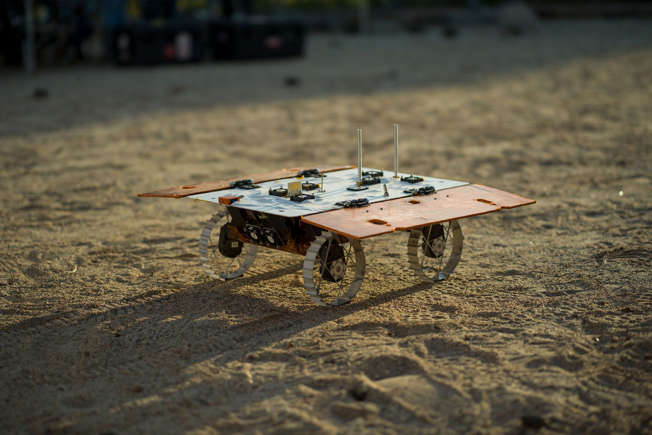
The CADRE Rover

©Provided by The Daily Digest

Photo Credit: NASA/JPL-Caltech

The CADRE Rover
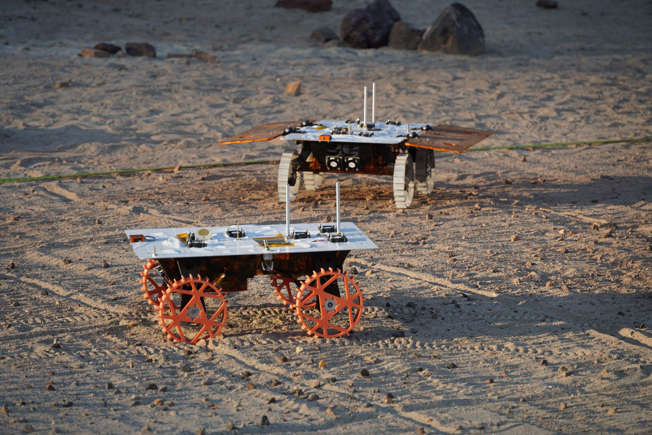
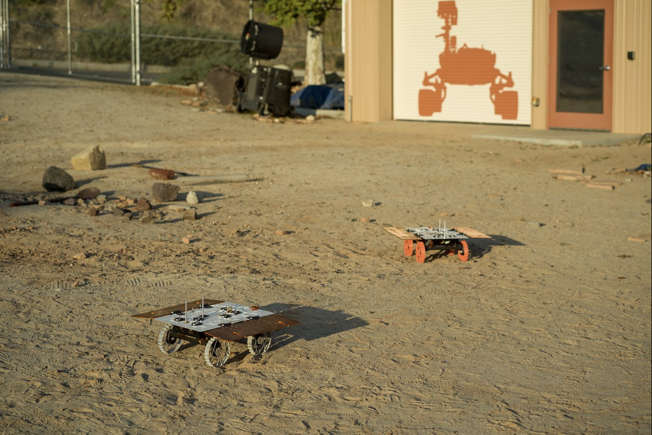
The Cooperative Autonomous Distributed Robotic Exploration—more commonly known by the acronym CADRE—project has developed a rover that operates without the input of humans with the aim of supporting future exploratory missions.
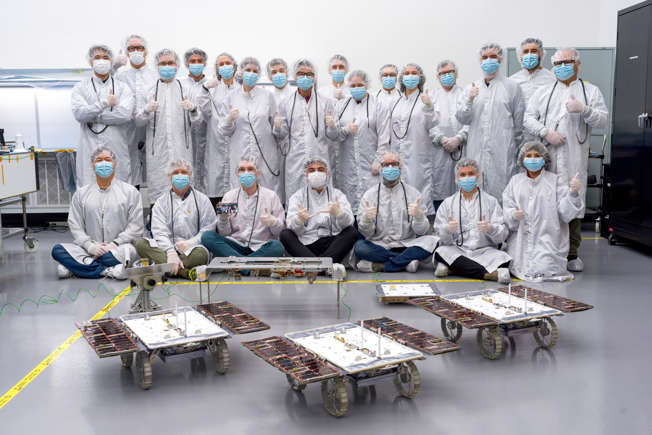
Smaller than your average rover

©Provided by The Daily Digest

Photo Credit: NASA/JPL-Caltech

Smaller than your average rover
NASA’s CADRE rovers are a lot smaller than something like Curiosity of Perseverance, two of the space agency’s more modern rovers exploring the surface of Mars. CADRE’s rovers are only about the size of the average carry-on luggage.
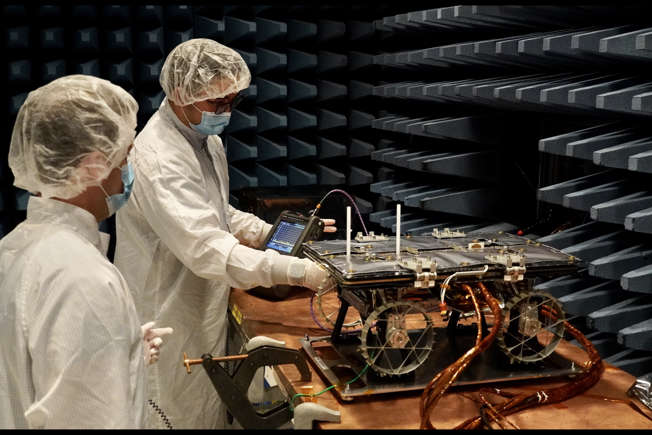
Packed with new technologies

©Provided by The Daily Digest

Photo Credit: NASA/JPL-Caltech

Packed with new technologies
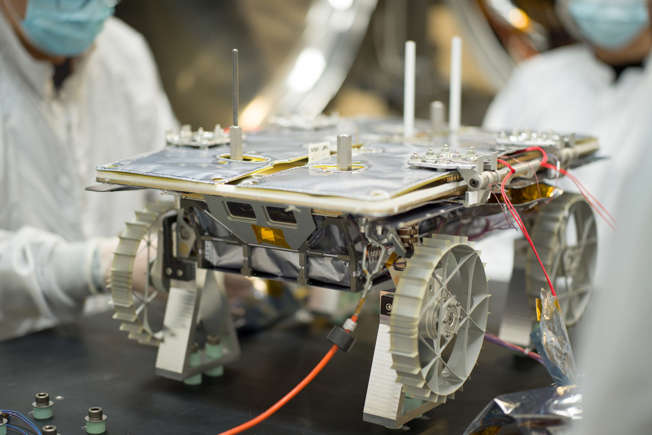
However, engineers have packed the tiny new rover with a lot of technology that will be very useful for mapping the surface of a planet. The rover is equipped with an array of sensors and cameras as well as other advanced technologies.
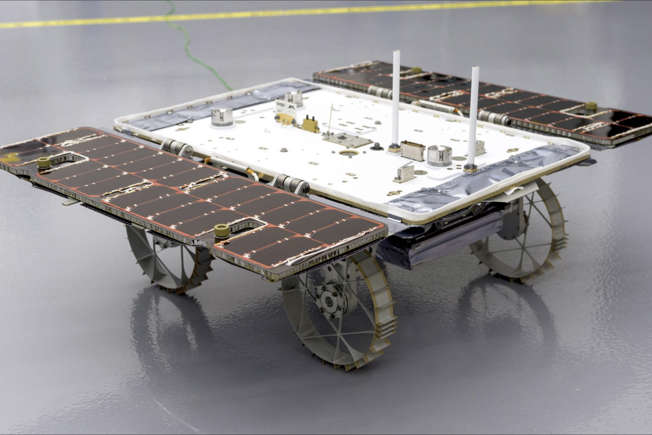
Fitted with powerful mapping tools

©Provided by The Daily Digest

Photo Credit: NASA/JPL-Caltech

Fitted with powerful mapping tools
Powered by solar panels and four wheels, the CADRE rover also has been fitted with a powerful ground-penetrating radar that its designers developed so that it could map the lunar surface during the new technology's first mission to the moon.

Three will head to the moon in 2024

©Provided by The Daily Digest

Three will head to the moon in 2024
A trio of new rovers from NASA will be heading to the moon in 2024 aboard Intuitive Machines’ third lunar lander the IM-3 as part of the space agency’s Commercial Lunar Payload Services (CLPS) initiative according to Space.com.
Exploring a mysterious region of the moon

©Provided by The Daily Digest

Photo Credit: Wiki Commons By NASA, Public Domain

Exploring a mysterious region of the moon
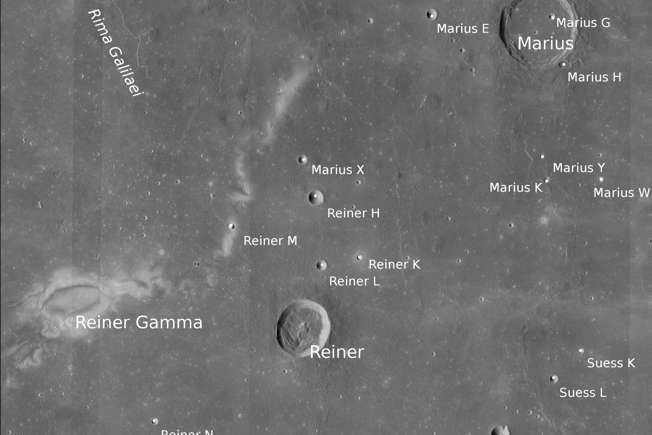
NASA is tasking its tiny autonomous rovers with exploring a very mysterious region on the moon known as Reiner Gamma. The area is just one of several fascinating places on the lunar surface that have their own local magnetic field.
The Ocean of Storms

©Provided by The Daily Digest

Photo Credit: Wiki Commons By NASA, Public Domain

The Ocean of Storms
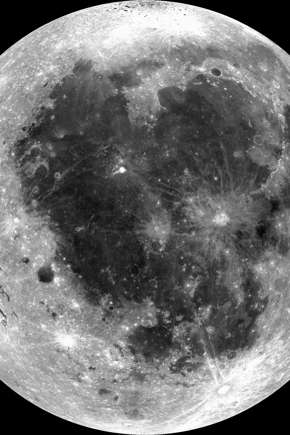
Reiner Gamma is located inside an area on the moon’s surface referred to as Oceanus Procellarum, which translates to Ocean of Storms. The region is on the western edge of the moon north of the equator and temperatures are volatile.
The perfect area for robotic exploration

©Provided by The Daily Digest

Photo Credit: NASA/JPL-Caltech

The perfect area for robotic exploration
During the middle of the day, surface temperatures in Reiner Gamma can reach as high as 237° Fahrenheit or 114° Celsius, which makes the area perfect for exploration using autonomous robots like the ones developed by the CADRE project.
A simple mission

©Provided by The Daily Digest

A simple mission
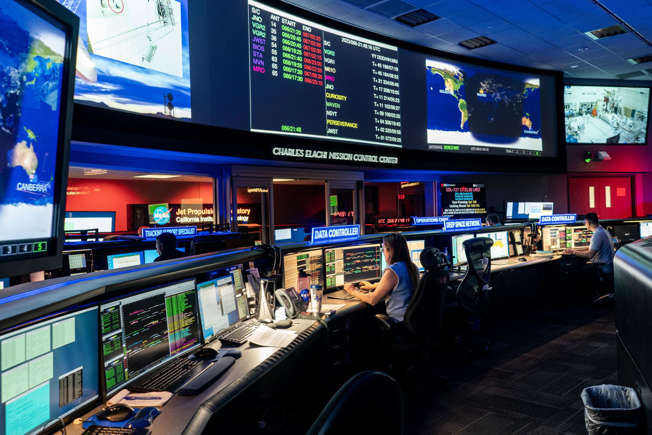
The mission NASA’s new robots are being sent on is very simple. The aim is to see how the three rovers interact with each other without direct input from the mission controllers back on Earth according to a press release from the space agency.
Measurements and mapping

©Provided by The Daily Digest

Photo Credit: NASA/JPL-Caltech

Measurements and mapping
The rovers will take measurements from several locations so that NASA can provide the proof of concept. If the mission is successful, it could dramatically transform how NASA explores other planetary and celestial surfaces in the near future.
Exploring without human input

©Provided by The Daily Digest

Photo Credit: NASA/JPL-Caltech

Exploring without human input
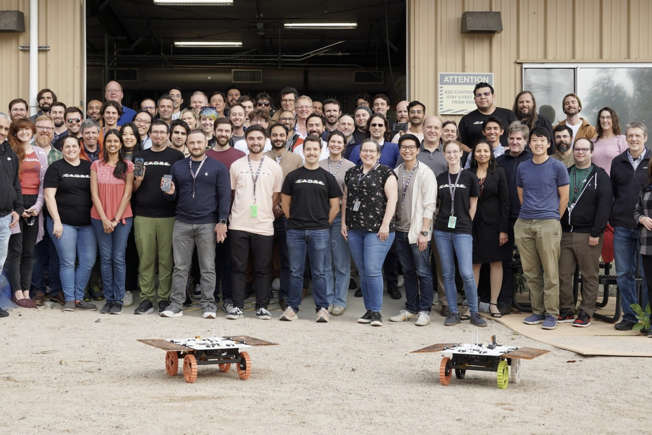
“Our mission is to demonstrate that a network of mobile robots can cooperate to accomplish a task without human intervention – autonomously,” explained Subha Comandur, the CADRE project manager at NASA’s Jet Propulsion Laboratory.
They could change space exploration

©Provided by The Daily Digest

Photo Credit: NASA/JPL-Caltech

They could change space exploration
“It could change how we do exploration in the future,” Comandur continued, adding that the “question for future missions will become: ‘How many rovers do we send, and what will they do together?’” But what do we know about the mission?
Examining the moon for a full lunar day

©Provided by The Daily Digest

Photo Credit: NASA/JPL-Caltech

Examining the moon for a full lunar day
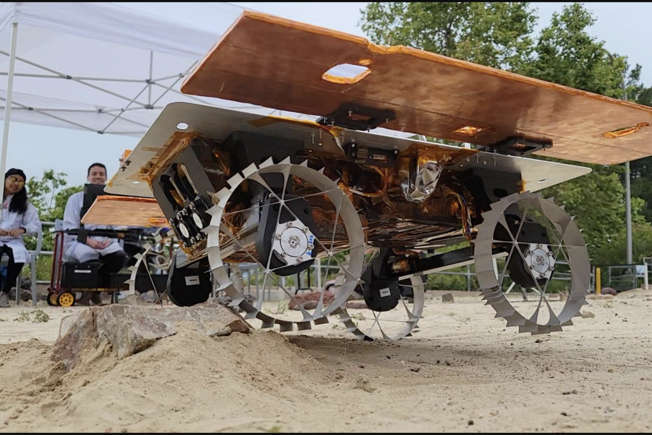
The Cadre rovers will explore Reiner Gamma for a full lunar day, which is equivalent to about 14 Earth days, and will conduct a number of experiments throughout the area that will test the capabilities of the new recovers and how they work together.
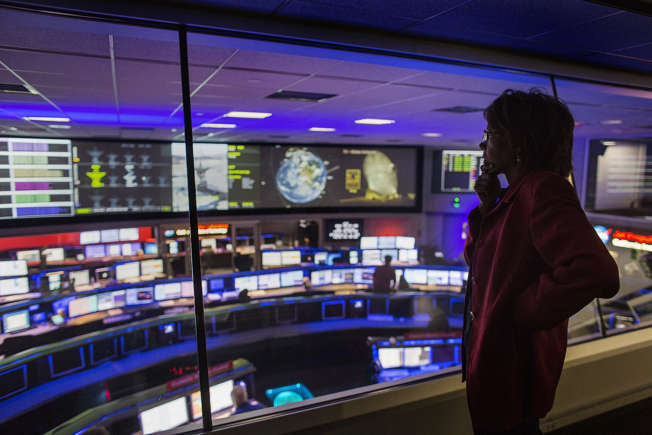
Minimal orders will be given

©Provided by The Daily Digest

Minimal orders will be given
Mission control will send the rovers a broad directive as to what they should do once on the moon. The robots will select a leader and then get to work on reasoning out the best way to complete the tasks that they have been given.
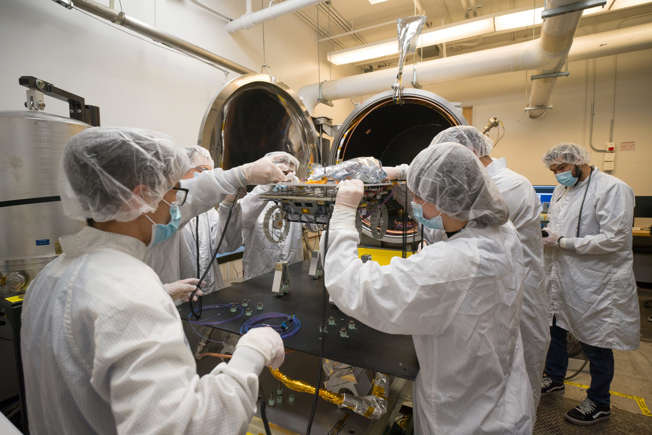
One instruction only

©Provided by The Daily Digestµ

Photo Credit: NASA/JPL-Caltech

One instruction only
“The only instruction is, for example, ‘Go explore this region,’ and the rovers figure out everything else: when they’ll do the driving, what path they’ll take, how they’ll maneuver around local hazards,” said CADRE’s principal investigator Jean-Pierre de la Croix.
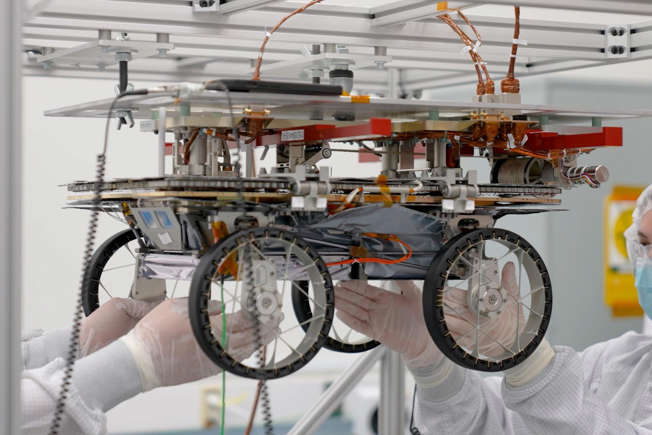
Will the rovers pass the test?

©Provided by The Daily Digest

Photo Credit: NASA/JPL-Caltech

Will the rovers pass the test?
“You only tell them the high-level goal, and they have to determine how to accomplish it,” Jean-Pierre de la Croix added. It’s a very interesting way to increase our capabilities that could revolutionize the future of space exploration.

{ https://www.msn.com/en-us/ }

Hoe vind je dit bericht?
Geschreven door peter om 22:10 Stuur door

NASA's Curiosity Rover Has Just Arrived Where Ancient Water Likely Existed

NASA's Curiosity Rover Has Just Arrived Where Ancient Water Likely Existed

After more than 11 years on Mars, NASA's Curiosity rover is still visiting new and exciting places.

 
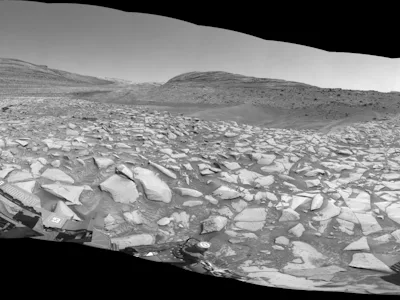
NASA’s Curiosity Mars rover captured this 360-degree panorama after arriving at Gediz Vallis channel...

NASA’s Curiosity Mars rover just made it to a channel called Gediz Vallis. This spot is the perfect place for taking a dramatic alien panorama. But, it might also contain hidden clues of ancient water on the Red Planet.

Rocks have long suggested that Mars was wetter and warmer billions of years ago. Current evidence suggests that water on the Red Planet came and went in phases. NASA is searching for hints of a critical turning point: when these phases ended and liquid water permanently disappeared from Mars’s surface and forever transformed the once-wet planet into the barren world of today. Gediz Vallis might contain clues of this point of no return.

As it drives along the serpentine-shaped land feature, the six-wheeled rover will get a novel look at this “Earth-like past,” NASA officials announced on Friday.

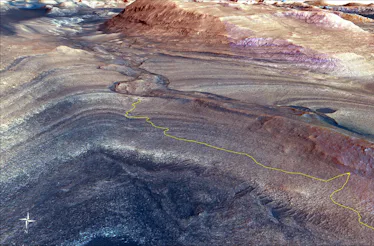
The steep path NASA’s Curiosity Mars rover took to reach Gediz Vallis channel is indicated in yellow...

Curiosity has now reached Gediz Vallis, the channel that runs through the center of this NASA image, created from orbital data. 

NASA/JPL-CALTECH/UC BERKELEY

Previous satellite data suggested that water flow may have helped form the channel. The debris pile inside the channel also hints that water once ran there. Geological structures within the channel suggest that the region may have dried up only to flood again, which aligns with similar evidence in other areas of Mars that NASA has explored. Scientists currently surmise that Gediz Vallis probably formed after a dry period, preceded by another wet period.

The rover team wants to confirm what carved the bedrock to create Gediz Vallis. “The formation’s sides are steep enough that the team doesn’t think the channel was made by wind. However, debris flows (rapid, wet landslides) or a river carrying rocks and sediment could have had enough energy to chisel into the bedrock,” according to NASA.

Curiosity has been exploring Mars for more than a decade to understand whether inhospitable modern Mars was once hospitable to life.

{ https://www.inverse.com/ }

Hoe vind je dit bericht?
Geschreven door peter om 21:28 Stuur door

A New Map Shows the Universe’s Dark Energy May Be Evolving

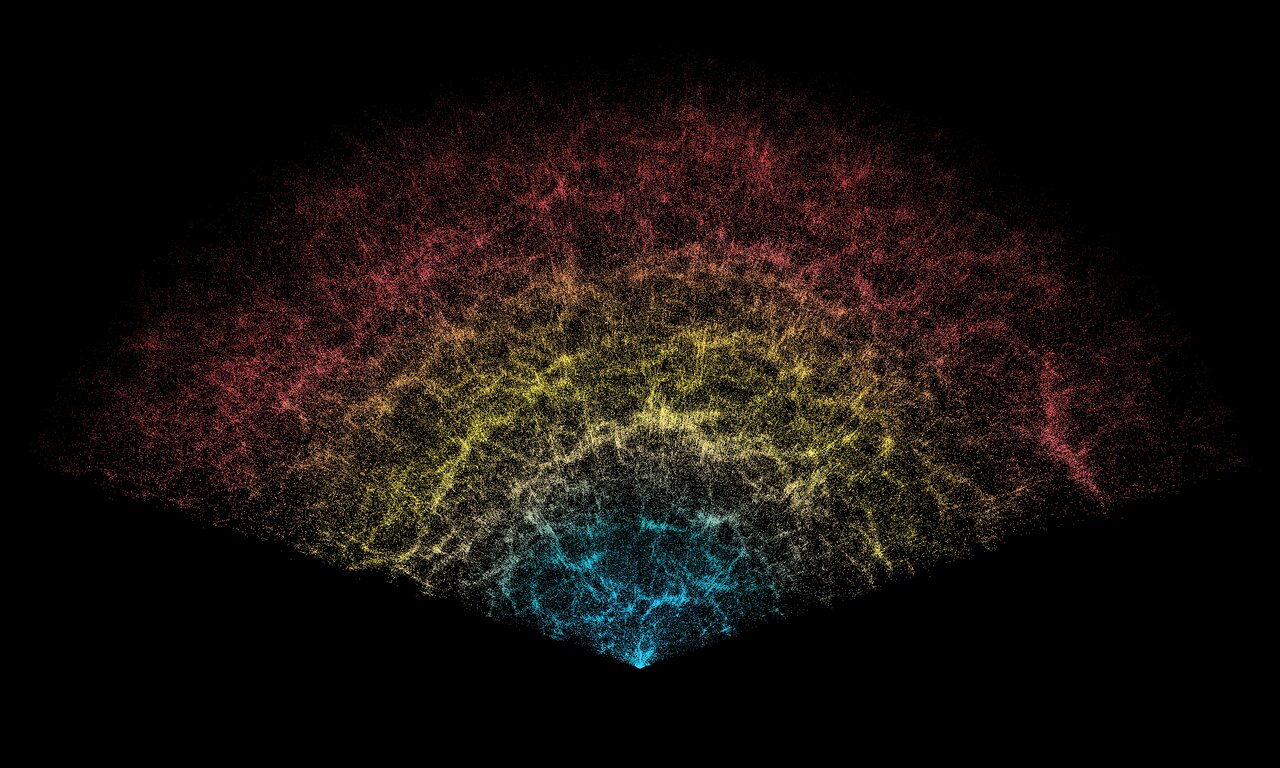
This image shows a slice of the 3D map of galaxies collected in the first year of the Dark Energy Spectroscopic Instrument (DESI) Survey. Earth is at the tip, with the furthest galaxies plotted at distances of 11 billion light-years. Each point represents one galaxy. This version of the DESI map includes 600,000 galaxies — less than 0.1% of the survey's full volume. Image Credit: DESI Collaboration/NOIRLab/NSF/AURA/R. Proctor

A New Map Shows the Universe’s Dark Energy May Be Evolving

At the Kitt Peak National Observatory in Arizona, an instrument with 5,000 tiny robotic eyes scans the night sky. Every 20 minutes, the instrument and the telescope it’s attached to observe a new set of 5,000 galaxies. The instrument is called DESI—Dark Energy Survey Instrument—and once it’s completed its five-year mission, it’ll create the largest 3D map of the Universe ever created.

But scientists are getting access to DESI’s first data release and it suggests that dark energy may be evolving.

DESI is the most powerful multi-object survey spectrograph in the world, according to their website. It’s gathering the spectra for tens of millions of galaxies and quasars. The goal is a 3D map of the Universe that extends out to 11 billion light-years. That map will help explain how dark energy has driven the Universe’s expansion.

DESI began in 2021 and is a five-year mission. The first year of data has been released, and scientists with the project say that DESI has successfully measured the expansion of the Universe over the last 11 billion years with extreme precision.

“The DESI team has set a new standard for studies of large-scale structure in the Universe.”

Pat McCarthy, NOIRLab Director

DESI collects light from 5,000 objects at once with its 5,000 robotic eyes. It observes a new set of 5,000 objects every 20 minutes, which means it observes 100,000 objects—galaxies and quasars—each night, given the right observing conditions.

This image shows Stu Harris working on assembling the focal plane for the Dark Energy Spectroscopic Instrument (DESI) at Lawrence Berkeley National Laboratory in 2017 in Berkeley, Calif. Ten petals, each containing 500 robotic positioners that are used to gather light from targeted galaxies, form the complete focal plane. DESI is attached to the 4-meter Mayall Telescope at Kitt Peak National Observatory. Image Credit: DESI/NSF NOIRlab This image shows Stu Harris working on assembling the focal plane for the Dark Energy Spectroscopic Instrument (DESI) at Lawrence Berkeley National Laboratory in 2017 in Berkeley, Calif. Ten petals, each containing 500 robotic positioners that are used to gather light from targeted galaxies, form the complete focal plane. DESI is attached to the 4-meter Mayall Telescope at Kitt Peak National Observatory. Image Credit: DESI/NSF NOIRlab

DESI’s data creates a map of the large-scale structure of the Universe. The map will help scientists unravel the history of the Universe’s expansion and the role dark energy plays. We don’t know what dark energy is, but we know some force is causing the Universe’s expansion to accelerate.

“The DESI instrument has transformed the Mayall Telescope into the world’s premier cosmic cartography machine,” said Pat McCarthy, Director of NOIRLab, the organization behind DESI. “The DESI team has set a new standard for studies of large-scale structure in the Universe. These first-year data are only the beginning of DESI’s quest to unravel the expansion history of the Universe, and they hint at the extraordinary science to come.”

DESI measures dark energy by relying on baryonic acoustic oscillations (BAO.) Baryonic matter is “normal” matter: atoms and everything made of atoms. The acoustic oscillations are density fluctuations in normal matter that date back to the Universe’s beginnings. BAO are the imprint of those fluctuations, or pressure waves, that moved through the Universe when it was all hot, dense plasma.

As the Universe cooled and expanded, the density waves froze their ripples in place, and where density was high, galaxies eventually formed. The ripple pattern of the BAO is visible in the DESI leading image. It shows strands of galaxies, or galaxy filaments, clustered together. They’re separated by voids where density is much lower.

The deeper DESI looks, the fainter the galaxies are. They don’t provide enough light to detect the BAO. That’s where quasars come in. Quasars are extremely bright galaxy cores, and the light from distant quasars creates a shadow of the BAO pattern. As the light travels through space, it interacts with and gets absorbed by clouds of matter. That lets astronomers map dense pockets of matter, but it took over 450,000 quasars. That’s the most quasars ever observed in a survey like this.

Because the BAO pattern is gathered in such detail and across such vast distances, it can act as a cosmic ruler. By combining the measurements of nearby galaxies and distant quasars, astronomers can measure the ripples across different periods of the Universe’s history. That allows them to see how dark energy has stretched the scale over time.

It’s all aimed at understanding the expansion of the Universe.

In the Universe’s first three billion years, radiation dominated it. The Cosmic Microwave Background is evidence of that. For the next several billion years, matter dominated the Universe. It was still expanding, but the expansion was slowing because of the gravitational force from matter. But since then, the expansion has accelerated again, and we give the name dark energy to the force behind that acceleration.

So far, DESI’s data supports cosmologists’ best model of the Universe. But there are some twists.

“We’re incredibly proud of the data, which have produced world-leading cosmology results,” said DESI director and LBNL scientist Michael Levi. “So far, we’re seeing basic agreement with our best model of the Universe, but we’re also seeing some potentially interesting differences that could indicate dark energy is evolving with time.”

Levi is referring to Lambda Cold Dark Matter (Lambda CDM), also known as the standard model of Big Bang Cosmology. Lambda CDM includes cold dark matter—a weakly interacting type of matter—and dark energy. They both shape how the Universe expands but in opposite ways. Dark energy accelerates the expansion, and regular matter and dark matter slow it down. The Universe evolves based on the contributions from all three. The Lambda CDM does a good job of describing what other experiments and observations find. It also assumes that dark energy is constant and spread evenly throughout the Universe.

This data is just the first release, so confirmation of dark energy evolution must wait. By the time DESI has completed its five-year run, it will have mapped over three million quasars and 37 million galaxies. That massive trove of data should help scientists understand if dark energy is changing.

Whatever the eventual answer, the question is vital to understanding the Universe.

“This project is addressing some of the biggest questions in astronomy, like the nature of the mysterious dark energy that drives the expansion of the Universe,” says Chris Davis, NSF program director for NOIRLab. “The exceptional and continuing results yielded by the NSF Mayall telescope with DOE DESI will undoubtedly drive cosmology research for many years to come.”

DESI isn’t the only effort to understand dark energy. The ESA’s Euclid spacecraft is already taking its own measurements to help cosmologists answer their dark energy questions.

In a few years, DESI will have some more powerful allies in the quest to understand dark energy. The Vera Rubin Observatory and Nancy Grace Roman Space Telescope will both contribute to our understanding of the elusive dark energy. They’ll perform surveys of their own, and by combining data from all three, cosmologists are poised to generate some long-sought answers.

But for now, scientists are celebrating DESI’s first data release.

“We are delighted to see cosmology results from DESI’s first year of operations,” said Gina Rameika, associate director for High Energy Physics at the Department of Energy. “DESI continues to amaze us with its stellar performance and how it is shaping our understanding of dark energy in the Universe.”

{ https://www.universetoday.com/ }

Hoe vind je dit bericht?
Geschreven door peter om 21:16 Stuur door

Want to Start a Farm on Mars? This Rover Will Find Out if it’s Possible

AgroMars Rover

Want to Start a Farm on Mars? This Rover Will Find Out if it’s Possible

Travelling to Mars has its own challenges. The distance alone makes the journey something of a mission in itself. Arrive though, and the handwork has only just begun. Living and surviving on Mars will be perhaps humans biggest challenge yet.  It would be impossible to take everything along with you to survive so instead, it would be imperative to ‘live off the land’ and produce as much locally as possible. A new rover called AgroMars will be equipped with a number of agriculture related experiments to study the make up of the soil to assess its suitability for growing food. 

Growing food on Mars poses a number of challenges, chiefly due to the harsh environmental conditions. Not least of which is the low atmospheric pressure, temperature extremes and high radiation levels. To try and address these, new techniques have been developed in the fields of hydroponics and aeroponics. The key to these new techniques involves using nutrient rich solutions instead of soils. 

Special structures are build analogous to greenhouses on Earth with artificial lighting, temperature and humidity control. Genetic engineering too has played a part in developing plants that are more hardy and capably of surviving in harsh Martian environments. As we continue to explore the Solar System and in particular Mars, we are going to have to find ways to grow food in alien environments. 

iss055e011026_0-1024x683.jpg

The space station’s Veggie Facility, tended here by NASA astronaut Scott Tingle, during the VEG-03 plant growth investigation, which cultivated Extra Dwarf Pak Choi, Red Russian Kale, Wasabi mustard, and Red Lettuce and harvested on-orbit samples for testing back on Earth. Credits: NASA

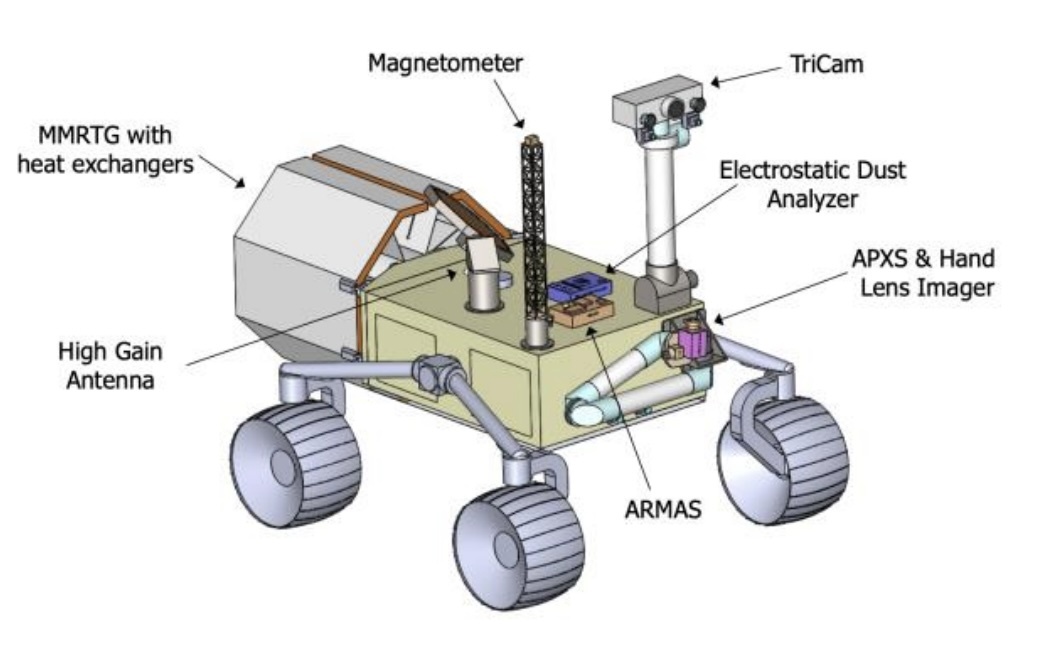
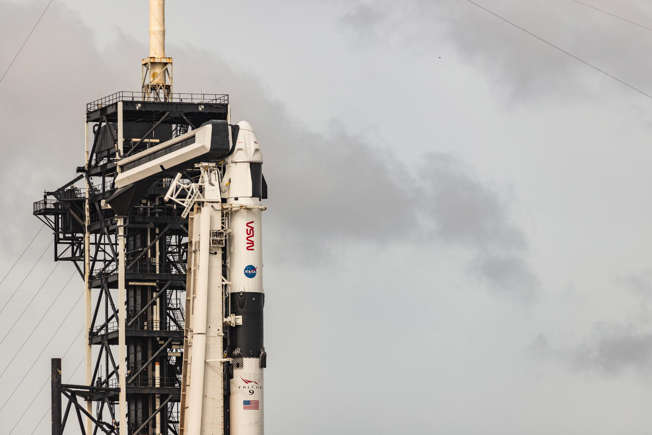
Enter AgroMars. A space mission taking a rover to Mars to hunt for, and explore the possibility of establishing agriculture on Mars! The rover will be launched with similar capabilities to the likes of Perseverance or Curiosity. The rover will be launched to Mars by a Falcon 9 launch vehicle operated by Space X but this is some years off yet. The development phase has yet to start. In a paper by lead author M. Duarte dos San- tos the mission has been shaped, reality is a little way off. 

On arrival, AgroMars will use an X-ray and infrared spectrometer, high resolution cameras, pH sensors, mass spectrometers and drilling tools to collect and analyse soil samples. The samples will be assessed for mineralogical composition, soil texture, soil pH, presence of organic compounds and water retention capacity. 

To be able to assess the Martian soil the rover must possess advanced capabilities for collecting and analysing soil samples, more than before. The data will then be sent on to laboratories on Earth and it is their responsibility to interpret the information. The multitude of groups involved is a wonderful reminder how science transcends geographical borders. Working together will yield far better results and help to advance our knowledge of astrobiology and agriculture on Mars. 

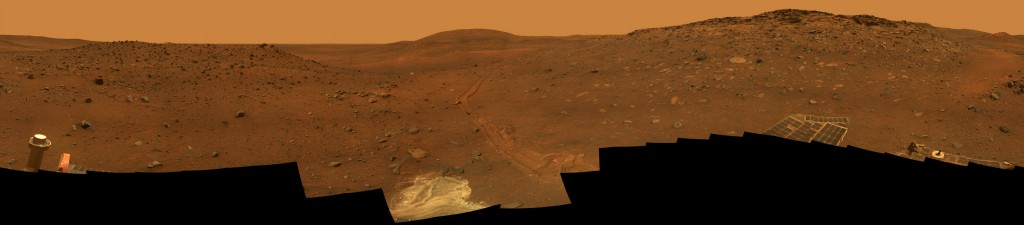
Calypso_L257atc_br21-1024x225.jpg

‘Calypso’ Panorama of Spirit’s View from ‘Troy’. This full-circle view from the panoramic camera (Pancam) on NASA’s Mars Exploration Rover Spirit shows the terrain surrounding the location called “Troy,” where Spirit became embedded in soft soil during the spring of 2009. The hundreds of images combined into this view were taken beginning on the 1,906th Martian day (or sol) of Spirit’s mission on Mars (May 14, 2009) and ending on Sol 1943 (June 20, 2009). Credit: NASA/JPL-Caltech/Cornell University

This doesn’t come cheap though. The estimated cost of the mission is in the region of $2.7 billion which includes development, launch and exploration for the entire mission. 

The total cost of the mission is estimated to be around $2.7 billion, which includes $2.2 billion for the development and launch of the rover and $500 million for its exploitation during the entirety of the mission. Whether it – pardon the pun – gets off the ground is yet to be seen but if we are to explore and even establish a permanent base on Mars then we will have to gain a better understanding of the environment to feed and sustain future explorers. 

Source : 

{ https://www.universetoday.com/ }

Hoe vind je dit bericht?
Geschreven door peter om 21:04 Stuur door

The Impact of UFO Encounters on Military Personnel

The Impact of UFO Encounters on Military Personnel

Deaths Caused by UFOs

In a groundbreaking disclosure, a former CIA-affiliated doctor has brought to light the alarming consequences of unidentified flying object (UFO) encounters on American military personnel. This revelation, stemming from a Freedom of Information Act request and a series of comprehensive studies, paints a disturbing picture of the hidden casualties and injuries within the military ranks due to these enigmatic phenomena.

Dr. Christopher Green, a neuroimaging specialist with extensive experience within the CIA, has spearheaded research into the interactions between military personnel and unidentified anomalous phenomena (UAPs). His work, detailed in the study “Clinical Medical Acute And Subacute Field Effects on Human Dermal And Neurological Tissues,” outlines a range of injuries sustained during encounters classified on the Hynek scale, a system used to categorize UFO sightings.

The scale, which classifies encounters from mere nocturnal lights to close and direct interactions, provides a framework for understanding the varying degrees of contact and their potential impact on human observers. Dr. Green’s research specifically focuses on the latter categories, where physical effects and injuries are reported. These include radiation burns, paralysis, and even brain damage, drawing unsettling parallels to the symptoms of Havana Syndrome, a condition associated with microwave and high-energy weapon exposure among U.S. embassy staff.

This syndrome, believed to be caused by foreign actors using electromagnetic radiation as a weapon, shares similarities with the injuries reported by military personnel exposed to UAPs. However, Dr. Green’s findings suggest these incidents precede the Havana Syndrome cases, indicating a longstanding and unaddressed threat.

The collective research efforts underscore a pressing need for a more profound understanding and investigation of UAPs, not only to unveil their origins and intentions but also to safeguard against their potentially harmful impacts on human health and safety. This call to action is not only a matter of scientific inquiry but a paramount concern for national defense and the welfare of those who serve.

In the face of growing evidence and public interest, it’s imperative that the phenomena associated with UAP encounters are no longer relegated to the fringes of scientific and military investigation. The consequences, as revealed by these studies, warrant a coordinated and comprehensive response to address the risks posed to military personnel and, potentially, the broader public.

As the veil of secrecy begins to lift, the path forward demands collaboration between government agencies, scientific communities, and the defense sector to confront the challenges posed by these unidentified entities. Only through rigorous investigation, transparency, and an unwavering commitment to understanding the unknown can we hope to protect those who risk their lives for national security and potentially uncover the true nature of the enigmatic phenomena known as UFOs.

{ https://www.latest-ufo-sightings.net/ }

Hoe vind je dit bericht?
Geschreven door peter om 20:43 Stuur door

NASA Announces Starliner’s Next Launch Attempt: May 6

NASA Announces Starliner’s Next Launch Attempt: May 6

Starliner, the new crewed capsule from Boeing, has been in the works for a long time. Originally unveiled in 2010, the capsule has been under development for the last 14 years, primarily utilizing NASA grants and contracts. However, Boeing itself has taken upwards of 1 billion dollars in hits to earnings as part of the craft’s development. After all that time in the prototype stages, Starliner is finally ready for its first crewed flight – which has now officially been scheduled for May 6th.

The launch will utilize a ULA Atlas V, which was also partly developed by Boeing. Like most Atlas V launches, it will take off from Cape Canaveral in Florida and take two astronauts – Suni Williams and Butch Wilmore – to the International Space Station.

To make room for the capsule, the crew already stationed on the ISS has to do some additional work, including moving a Dragon capsule out of the docking port on the ISS’s Harmony module to which the Starliner will have to attach. To move the capsule, they will also have to complete some additional “science and cargo logistics,” according to a NASA Press release.

Fraser covers Starliner’s successful test flight.

Those logistics seem to be the primary cause of a final five-day delay (from May 1st to 5th) that the Starliner will have to endure. Once at the ISS, Williams and Wilmore will spend a week helping out on the ISS before using the Starliner capsule to return to Earth.

That is assuming all goes well with their flight. Starliner has had at least one spectacular failure as part of its development, though it successfully completed an uncrewed flight in May of 2022. If any astronauts are ready to ride on a new crewed capsule, it’s Williams and Wilmore. Both have been astronauts for over 20 years, and each was a trained Navy Test Pilot before joining NASA.

The capsule they will be using, known as Calypso, has already been to orbit, though not as many times as the astronauts themselves. It was used in the first orbital test flight, and while it didn’t manage to dock up with the ISS, it did land successfully and wouldn’t pose a risk to any astronauts on board.

Video from Boeing showcasing Starliner mounted atop an Atlas V.
Credit – Boeing YouTube Channel

Upon completing this test flight, NASA hopes to rely on the Starliner to provide regular crewed missions to the ISS. This would be supplemental to the SpaceX Dragon capsule the agency already uses and mark the definitive end to the drought of American crewed spaceflight.

Future missions include a four-person flight planned for 2025, assuming all goes well with this first one. Boeing also has a contract with NASA for five additional flights between 2026 and 2030. But first, if all goes well, on May 6th, after decades of work, the world will hopefully gain another crewed vehicle to help facilitate our path to the stars.

Learn More:

Lead Image:

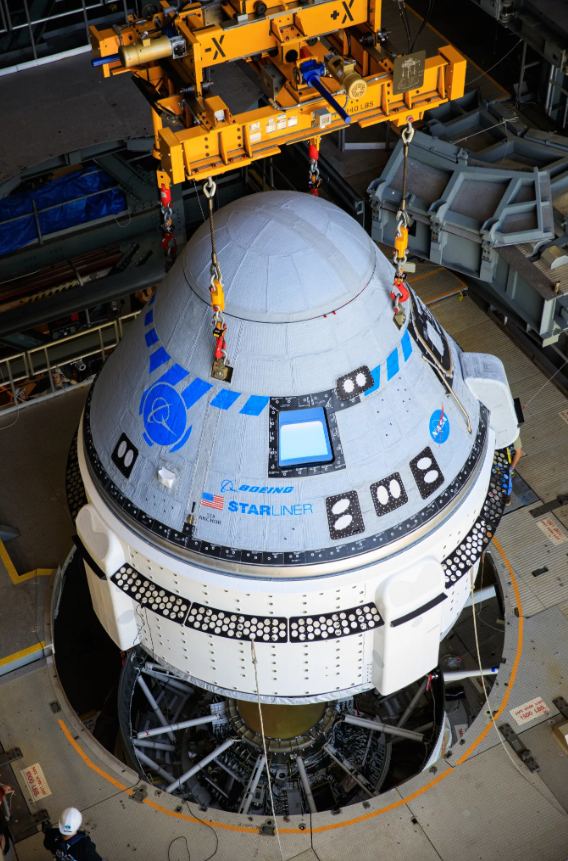
  • The Boeing CST-100 Starliner spacecraft is lifted at the Vertical Integration Facility at Space Launch Complex-41 at Florida’s Cape Canaveral Space Force Station on May 4, 2022.
    Photo credit: NASA/Frank Michaux

{ https://www.universetoday.com/  }

Hoe vind je dit bericht?
Geschreven door peter om 23:39 Stuur door

Meer van UFO'S of UAP'S, ASTRONOMIE, RUIMTEVAART, ARCHEOLOGIE, OUDHEIDKUNDE, SF-SNUFJES EN ANDERE ESOTERISCHE WETENSCHAPPEN - DE ALLERLAATSTE NIEUWTJES

↑ Terug naar de berichten