Ontdek de Fascinerende Wereld van UFO's en UAP's: Jouw Bron voor Onthullende Informatie!
Ben jij ook gefascineerd door het onbekende? Wil je meer weten over UFO's en UAP's, niet alleen in België, maar over de hele wereld? Dan ben je op de juiste plek!
België: Het Kloppend Hart van UFO-onderzoek
In België is BUFON (Belgisch UFO-Netwerk) dé autoriteit op het gebied van UFO-onderzoek. Voor betrouwbare en objectieve informatie over deze intrigerende fenomenen, bezoek je zeker onze Facebook-pagina en deze blog. Maar dat is nog niet alles! Ontdek ook het Belgisch UFO-meldpunt en Caelestia, twee organisaties die diepgaand onderzoek verrichten, al zijn ze soms kritisch of sceptisch.
Nederland: Een Schat aan Informatie
Voor onze Nederlandse buren is er de schitterende website www.ufowijzer.nl, beheerd door Paul Harmans. Deze site biedt een schat aan informatie en artikelen die je niet wilt missen!
Internationaal: MUFON - De Wereldwijde Autoriteit
Neem ook een kijkje bij MUFON (Mutual UFO Network Inc.), een gerenommeerde Amerikaanse UFO-vereniging met afdelingen in de VS en wereldwijd. MUFON is toegewijd aan de wetenschappelijke en analytische studie van het UFO-fenomeen, en hun maandelijkse tijdschrift, The MUFON UFO-Journal, is een must-read voor elke UFO-enthousiasteling. Bezoek hun website op www.mufon.com voor meer informatie.
Samenwerking en Toekomstvisie
Sinds 1 februari 2020 is Pieter niet alleen ex-president van BUFON, maar ook de voormalige nationale directeur van MUFON in Vlaanderen en Nederland. Dit creëert een sterke samenwerking met de Franse MUFON Reseau MUFON/EUROP, wat ons in staat stelt om nog meer waardevolle inzichten te delen.
Let op: Nepprofielen en Nieuwe Groeperingen
Pas op voor een nieuwe groepering die zich ook BUFON noemt, maar geen enkele connectie heeft met onze gevestigde organisatie. Hoewel zij de naam geregistreerd hebben, kunnen ze het rijke verleden en de expertise van onze groep niet evenaren. We wensen hen veel succes, maar we blijven de autoriteit in UFO-onderzoek!
Blijf Op De Hoogte!
Wil jij de laatste nieuwtjes over UFO's, ruimtevaart, archeologie, en meer? Volg ons dan en duik samen met ons in de fascinerende wereld van het onbekende! Sluit je aan bij de gemeenschap van nieuwsgierige geesten die net als jij verlangen naar antwoorden en avonturen in de sterren!
Heb je vragen of wil je meer weten? Aarzel dan niet om contact met ons op te nemen! Samen ontrafelen we het mysterie van de lucht en daarbuiten.
NASA Announces Starliner’s Next Launch Attempt: May 6
Starliner, the new crewed capsule from Boeing, has been in the works for a long time. Originally unveiled in 2010, the capsule has been under development for the last 14 years, primarily utilizing NASA grants and contracts. However, Boeing itself has taken upwards of 1 billion dollars in hits to earnings as part of the craft’s development. After all that time in the prototype stages, Starliner is finally ready for its first crewed flight – which has now officially been scheduled for May 6th.
The launch will utilize a ULA Atlas V, which was also partly developed by Boeing. Like most Atlas V launches, it will take off from Cape Canaveral in Florida and take two astronauts – Suni Williams and Butch Wilmore – to the International Space Station.
To make room for the capsule, the crew already stationed on the ISS has to do some additional work, including moving a Dragon capsule out of the docking port on the ISS’s Harmony module to which the Starliner will have to attach. To move the capsule, they will also have to complete some additional “science and cargo logistics,” according to a NASA Press release.
Fraser covers Starliner’s successful test flight.
Those logistics seem to be the primary cause of a final five-day delay (from May 1st to 5th) that the Starliner will have to endure. Once at the ISS, Williams and Wilmore will spend a week helping out on the ISS before using the Starliner capsule to return to Earth.
That is assuming all goes well with their flight. Starliner has had at least one spectacular failure as part of its development, though it successfully completed an uncrewed flight in May of 2022. If any astronauts are ready to ride on a new crewed capsule, it’s Williams and Wilmore. Both have been astronauts for over 20 years, and each was a trained Navy Test Pilot before joining NASA.
The capsule they will be using, known as Calypso, has already been to orbit, though not as many times as the astronauts themselves. It was used in the first orbital test flight, and while it didn’t manage to dock up with the ISS, it did land successfully and wouldn’t pose a risk to any astronauts on board.
Video from Boeing showcasing Starliner mounted atop an Atlas V. Credit – Boeing YouTube Channel
Upon completing this test flight, NASA hopes to rely on the Starliner to provide regular crewed missions to the ISS. This would be supplemental to the SpaceX Dragon capsule the agency already uses and mark the definitive end to the drought of American crewed spaceflight.
Future missions include a four-person flight planned for 2025, assuming all goes well with this first one. Boeing also has a contract with NASA for five additional flights between 2026 and 2030. But first, if all goes well, on May 6th, after decades of work, the world will hopefully gain another crewed vehicle to help facilitate our path to the stars.
The Boeing CST-100 Starliner spacecraft is lifted at the Vertical Integration Facility at Space Launch Complex-41 at Florida’s Cape Canaveral Space Force Station on May 4, 2022. Photo credit: NASA/Frank Michaux
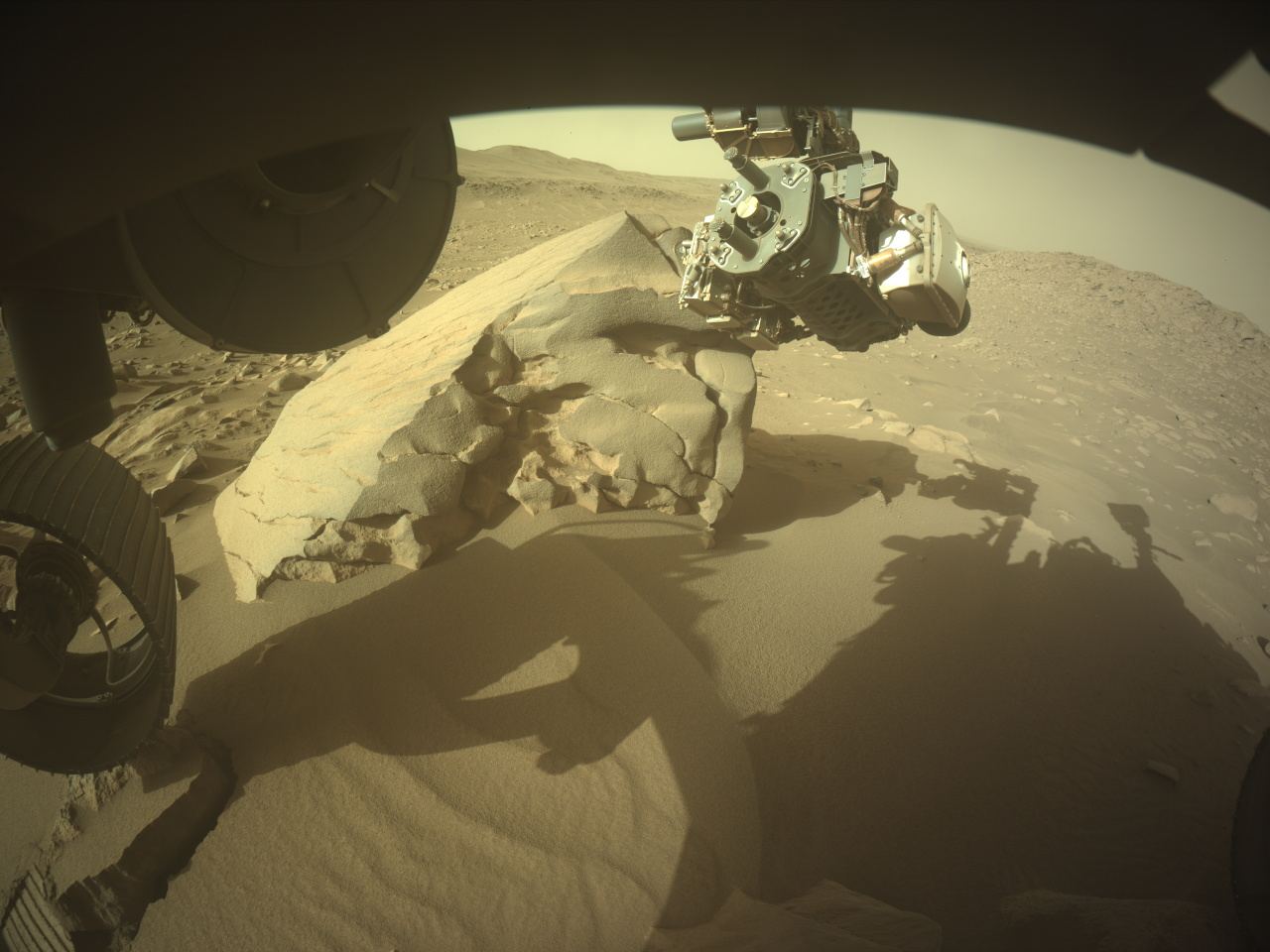
This Martian rock, named Bunsen Peak, contains minerals that formed in thepresence of water. On Earth, these water-deposited carbonate minerals are good at preserving ancient organic material. Image Credit: NASA/JPL-Caltech
If there’s a Holy Grail on Mars, it’s probably a specific type of rock: A rock so important that it holds convincing clues to Mars’ ancient habitability.
Perseverance might have just found it.
If scientists could design the perfect rock for Perseverance to find, it would be one that displayed evidence of ancient water and was the type that preserves ancient organic material. The rover may have found it as it explores the Margin Unit, a geologic region on the inner edge of Jezero Crater’s rim. The Margin Unit was one of the reasons Jezero Crater was selected for Perseverance’s mission.
“To put it simply, this is the kind of rock we had hoped to find when we decided to investigate Jezero Crater.”
Ken Farley, Perseverance project scientist, Caltech.
The Margin Unit is in a narrow band along the crater’s western rim. Orbital observations showed that it’s one of the most carbonate-rich regions on the planet. “Its presence, along with the adjacent fluvial delta, made Jezero crater the most compelling landing site for the Mars 2020 <Perseverance> mission,” presenters at the 2024 Lunar and Planetary Science Conference wrote.
The Margin Unit lies near the western rim of Jezero Crater. White dots show Perseverance’s stopping points, and the blue line shows the rover’s future route. Image Credit: R.C. Wiens et al. 2024
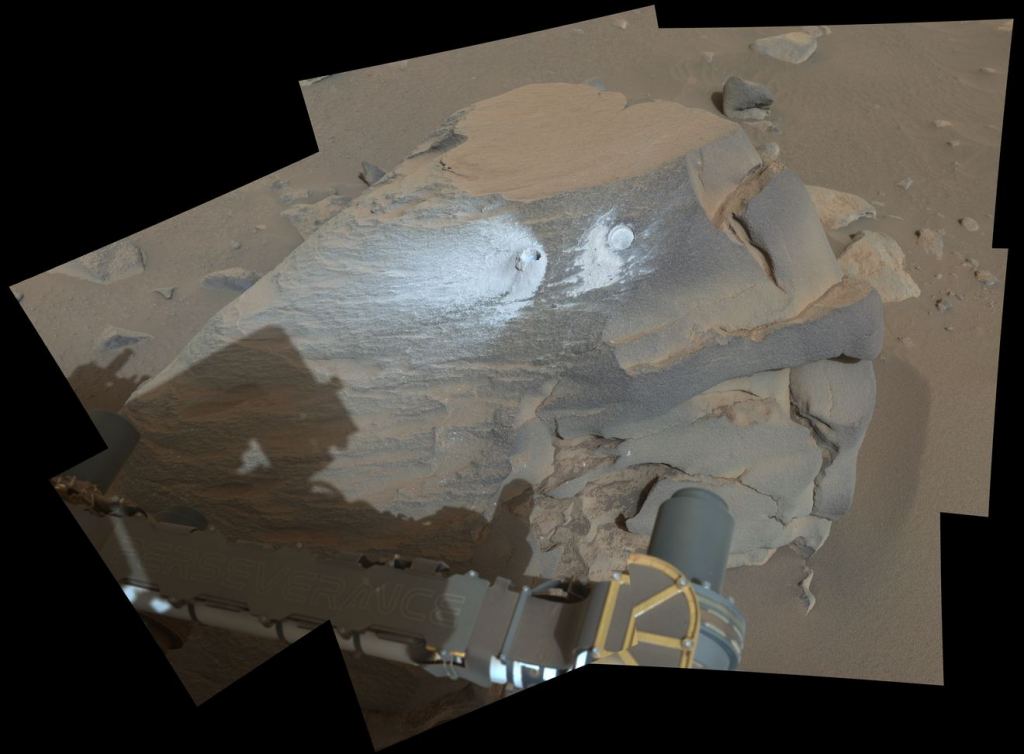
The decision to send Perseverance to the Jezero Crater and the Margin Unit seems to be paying off. Bunsen Peak caught scientists’ attention because it stands tall compared to its surroundings. One of the rock’s faces also has an interesting texture. Scientists thought the rock would allow for nice cross-sections, and since it stood vertically, there’d be less dust when working on it. Surface dust is a problem for Perseverance because it can obscure the rock’s chemistry.
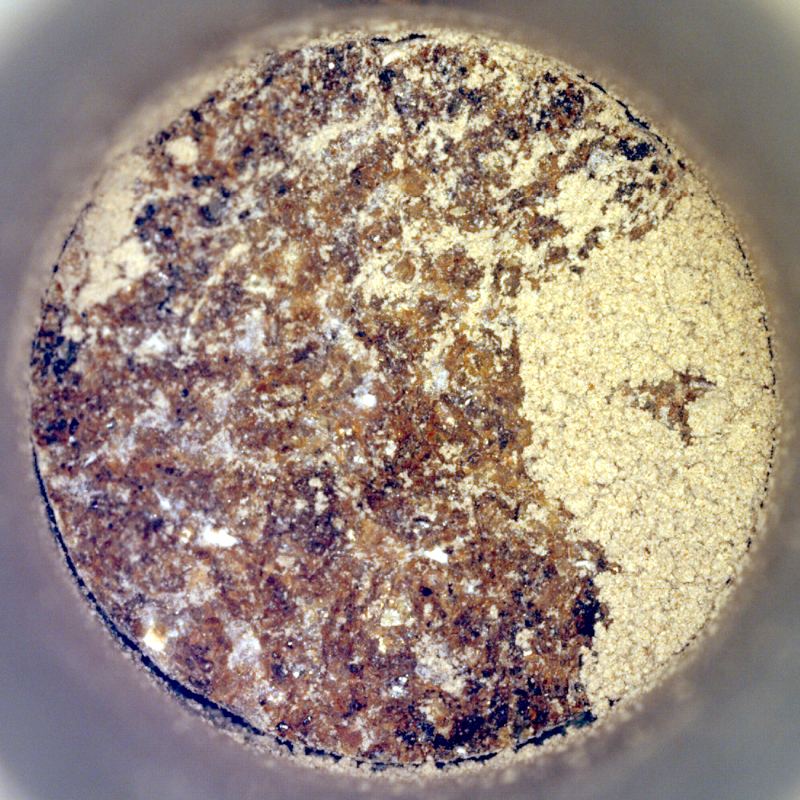
The Perseverance team decided to sample it and cache the sample along with the rest of its cores for eventual return to Earth. But first, they scanned the rock’s surface with SuperCam and PIXL, the rover’s spectrometers. Then, they abraded the rock’s surface and scanned it again. The results show that Bunsen Peak is 75% carbonate grains cemented together by nearly pure silica.
This image mosaic shows the Bunsen Peak rock that has ignited scientists’ excitement. The rover abraded a circular patch to test its composition and extracted a core sample for return to Earth. The lighter surfaces are dust-covered, so Perseverance avoided those areas as the dust can obscure the rock’s chemistry from the rover’s instruments. Image Credit: NASA/JPL-Caltech/ASU/MSSS
“To put it simply, this is the kind of rock we had hoped to find when we decided to investigate Jezero Crater,” said Ken Farley, project scientist for Perseverance at Caltech in Pasadena, California. “Nearly all the minerals in the rock we just sampled were made in water; on Earth, water-deposited minerals are often good at trapping and preserving ancient organic material and biosignatures. The rock can even tell us about Mars’s climate conditions that were present when it was formed.”
This image shows the bottom of the Bunsen Peak sample core. The sample contains about 75% carbonate minerals cemented by almost pure silica. Image Credit: NASA/JPL-Caltech
Here on our planet, carbonate minerals can form directly around microbe cells. Once encapsulated, the cells can quickly become fossils, and are preserved for a long time. This is what happened to stromatolites here on Earth, and they now constitute some of the earliest evidence of life on our planet.
These minerals are a high priority for return to Earth. This sample is number 24, named Comet Geyser, because everything gets a name when you intend to transport it to Earth from another planet.
There’s something specific that makes this sample even more intriguing. They’re microcrystalline rocks, meaning they’re made of crystals so small that only microscopes can see them. On Earth, microcrystalline rocks like Precambrian chert hold fossilized cyanobacteria. Could the same be true of Bunsen Peak?
“The silica and parts of the carbonate appear microcrystalline, which makes them extremely good at trapping and preserving signs of microbial life that might have once lived in this environment,” said Sandra Siljeström, a Perseverance scientist from the Research Institutes of Sweden (RISE) in Stockholm. “That makes this sample great for biosignature studies if returned to Earth. Additionally, the sample might be one of the older cores collected so far by Perseverance, and that is important because Mars was at its most habitable early in its history.”
Comet Geyser is Perseverance’s third sample from the Margin Unit. There’s still more work to do, but the samples support what scientists thought about Jezero Crater before Perseverance landed there: it was once a paleolake.
“We’re still exploring the margin and gathering data, but results so far may support our hypothesis that the rocks here formed along the shores of an ancient lake,” said Briony Horgan, a Perseverance scientist from Purdue University. “The science team is also considering other ideas for the origin of the Margin Unit, as there are other ways to form carbonate and silica. But no matter how this rock formed, it is really exciting to get a sample.”
It wasn’t that long ago that we knew very little about Mars. In the absence of knowledge, imagination took over. American astronomer Percival Lowell wrote three books about canals on Mars, popularizing the idea that intelligent life was extant on Mars and engineering the planet’s surface.
Astronomers didn’t buy the idea, which turned out to be untrue. But now we know that Lowell was at least partially, though inadvertently, correct. There are no canals, but there may have been lakes.
There was no intelligent life, but there may have been simple life in those lakes. Once we get Comet Geyser and the other samples back to Earth, we may find out for sure.
Arrokoth and Other Kuiper Belt Objects Contain Pristine Ices, Study Suggests
A duo of planetary scientists from Brown University and the SETI Institute has found that the Kuiper Belt object (486958) Arrokoth, which was the target of the January 1, 2019 flybyby NASA’s New Horizons mission, may have ancient ices stored deep within it from when the object first formed billions of years ago. Using a new model they developed to study how comets evolve, the researchers suggest this feat of perseverance isn’t unique to Arrokoth but that many objects from the Kuiper Belt may also contain the ancient ices they formed with.
This composite image of Ultima Thule was compiled from data obtained by NASA’s New Horizons spacecraft as it flew by the object on January 1, 2019. The image combines enhanced color data (close to what the human eye would see) with detailed high-resolution panchromatic pictures. Image credit: NASA / Johns Hopkins University Applied Physics Laboratory / Southwest Research Institute / Roman Tkachenko.
“We’ve shown here in our work, with a rather simple mathematical model, that you can keep these primitive ices locked deep within the interiors of these objects for really long times,” said Dr. Sam Birch, a planetary scientist at Brown University.
“Most of our community had thought that these ices should be long lost, but we think now that may not be the case.”
Until now, planetary scientists had a hard time figuring out what happens to ices on these space rocks over time.
The new study challenges widely used thermal evolutionary models that have failed to account for the longevity of ices that are as temperature sensitive as carbon monoxide.
The model Dr. Birch and SETI Institute researcher Orkan Umurhan created for the study accounts for this change and suggests that the highly volatile ices in these objects stick around much longer than was previously thought.
“We are basically saying that Arrokoth is so super cold that for more ice to sublimate — or go directly from solid to a gas, skipping the liquid phase within it — that the gas it sublimates into first has to have travel outwards through its porous, sponge-like interior,” Dr. Birch said.
“The trick is that to move the gas, you also have to sublimate the ice, so what you get is a domino effect: it gets colder within Arrokoth, less ice sublimates, less gas moves, it gets even colder, and so on.”
“Eventually, everything just effectively shuts off, and you’re left with an object full of gas that is just slowly trickling out.”
The study suggests that Kuiper Belt objects can act as dormant ‘ice bombs,’ preserving volatile gases within their interiors for billions of years until orbital shifts bring them closer to the Sun and the heat makes them unstable.
This new idea could help explain why these icy objects from the Kuiper Belt erupt so violently when they first get closer to the Sun.
All of a sudden, the cold gas inside them rapidly gets pressurized and these objects evolve into comets.
“The key thing is that we corrected a deep error in the physical model people had been assuming for decades for these very cold and old objects,” Dr. Umurhan said.
“This study could be the initial mover for reevaluating the comet interior evolution and activity theory.”
Altogether, the study challenges existing predictions and opens up new avenues for understanding the nature of comets and their origins.
The results from this study could help guide CAESAR’s exploration and sampling strategies, helping to deepen our understanding of cometary evolution and activity.
“There may well be massive reservoirs of these primitive materials locked away in small bodies all across the outer Solar System — materials that are just waiting to erupt for us to observe them or sit in deep freeze until we can retrieve them and bring them home to Earth,” Dr. Birch said.
Unveiling the Cosmos: Rep. Tim Burchett’s Quest for UFO Answers and Faith
In the vast expanse of the universe, the intersection of faith and the unknown often prompts profound questions. Rep. Tim Burchett, a Tennessee Republican, is at the forefront of a movement within Congress seeking transparency and answers about Unidentified Flying Objects (UFOs). His unique stance intertwines his Christian faith with a belief in extraterrestrial life, a topic he delves into on an upcoming episode of NewsNation’s “Reality Check” podcast.
Rep. Burchett’s inquiry into UFOs is not just a quest for knowledge but a journey that harmonizes with his spiritual beliefs. The congressman argues that the existence of aliens and their mention in biblical texts do not contradict Christian faith but rather enrich it. According to Burchett, such references expand the understanding of the universe and God’s creation, moving beyond the confines of Earth.
The congressman points to passages in the Bible, like those in the Book of Ezekiel, which he interprets as possible encounters with extraterrestrial beings or spacecraft. He suggests that these descriptions of “wheels within wheels” and “living creatures” could hint at otherworldly visitors. Burchett’s openness to these interpretations challenges conventional readings of the scriptures and invites a broader contemplation of divine creation.
This exploration of the unknown is timely, as public interest in UFOs and what the government may know about them has surged. Burchett’s leadership in calling for more congressional hearings and whistleblower testimonies reflects a growing demand for transparency. These efforts seek to bridge the gap between unexplained aerial phenomena and public understanding, potentially reshaping perceptions of our place in the cosmos.
Moreover, Burchett’s perspective finds resonance beyond political or religious boundaries. The Vatican’s acknowledgment of the possibility of non-human intelligent life exemplifies a wider acceptance of these discussions within religious communities. This openness suggests a readiness to welcome the idea of extraterrestrial intelligence within the framework of faith.
As Rep. Burchett continues to advocate for more investigations and disclosures regarding UFOs, his approach underscores a pivotal moment where faith, politics, and the quest for cosmic truths converge. The congressman’s work not only propels a national conversation about extraterrestrial life but also prompts a reevaluation of humanity’s understanding of the universe through the lens of faith.
In anticipation of new hearings and revelations, the public’s interest remains keenly focused on what the future may hold. Rep. Burchett’s endeavors exemplify a courageous willingness to question, explore, and integrate the unknown with the spiritual, charting a course for a more inclusive and expansive view of the universe and our place within it.
A passenger on a commercial flight from from Florida to New York City captured a mysterious metallic-looking UFO through the window of the plane.
“Watch It fly by over the top of the clip first few seconds… video was taken from a friend flying back from Florida to NYC. By far the clearest video I’ve ever seen,” the person who shared the footage on Reddit wrote.
When viewed at normal speed it is somewhat difficult to pick out the UFO in the sky with all of the background noise.
However, when slowed down, the object looks a lot like the classic flying saucer type of UFO.
“Here’s what I know about the footage,” The Hidden Underbelly 2.0said about the video. “This was captured on March the 25th, 2024 from a flight leaving from Florida to New York City and this was what was caught at the New York City end of the flight.
“Now when we look at this object we can see that it’s tapered in and I don’t see the propellers where we would expect to see.
“If this was a drone and flying this close to a commercial airliner somebody would be in trouble if this was a drone. As for another plane, well, where’s the wings?”
Earlier this month a fleet of UFOs was spotted and recorded in the night sky over Lowville, New York.
According to the eyewitness, “You’ll see in the video, the lights that appeared, and just as they came slowly in the frame, the lights went out I have seen star link and this was not that.
“I have also seen in person military exercises using flares at night and this was also not that.
“I am big into looking at stars and very aware of the world around me and I slammed on my brakes.
“The first time I saw it didn’t get my phone out in time. I waited a minute or two and then it appeared once more and got the video just after it started, I waited around another 10 minutes and did not appear again, it seemed like it lit up pretty much in the same spot as the first time.”
Before settling down at BroBible, Douglas Charles, a graduate of the University of Iowa (Go Hawks), owned and operated a wide assortment of websites. He is also one of the few White Sox fans out there and thinks Michael Jordan is, hands down, the GOAT.
A map published Monday details the locations of thousands of UFO encounters across the British Isles.
An enormous steel monolith appeared in Hay-on-Wye, Wales, (arguably the greatest town in the world) in March, prompting many locals to suggest the object is some type of alien technology, according to CBS News. In reality, the monoliths are 10- to 12-foot-tall pieces of metal artwork that have shown up in Utah, California, Romania and New Mexico, according to Vox, and now it is hanging out in Wales — a nation known for its ancient cultures that predate what the Romans never did for us.
Even though the monolith is probably just a poorly executed art prank, there are still countless reports across the British Isles of visitors from other worlds. Analysis by InYourArea revealed thousands of UFO sightings and other types of strange phenomena throughout the tiny nation since 2020.
In 2023 there were 395 UFO sightings, according to data collated from the research team at UFO Identified, social media, newspaper reports, 50 Freedom of Information Act requests and reports made directly to the group. This is a 20% drop compared to 2022, when almost 500 reports were made.
In 2021 and 2020, there were 413 and 484 UFO reports respectively. Some of these sightings included the traditional “glowing orbs” we’ve seen in multiple videos shared online. A flying saucer was also spotted over Worksop, Nottinghamshire.
Another report included 15 bright lights being chased through the sky by an Apache helicopter and two fighter jets.
More recent reports suggest thatStansted Airportin London is a “UFO hotspot” as mystery objects seemingly hurl themselves all over the skies above the runways. Pilots for thecheap and unhinged(like me) airline RyanAir said he saw a “black”objectabout 65 feet from his aircraft in November 2023 as he made his way out of Stansted.
Extraordinary tape of Calvin Parker, who features in Netflix's Files of the Unexplained, reveals man abducted by an 'alien' in Pascagoula fought the creature off by grabbing it 'by her skinny-a** little neck'
Files Of The Unexplained is a new edition to Netflix and is available to watch now
A new Netflix series covering an alien abduction that saw a man claim that he strangled a female 'alien' after she poked her finger up his nose has aired on the streaming platform.
Files Of The Unexplained explores 'eight haunting encounters that may make you start second-guessing everything you have ever known.'
The first episode of the series focuses on the experiences of Calvin Parker when he was aged 19, after he maintained that he fought off an 'alien' by '[getting] her round her skinny-a** neck'.
According to Mr Parker, the alleged incident occurred when he was fishing on the banks of the Pascagoula River in Mississippi with his friend Charles Hickson.
The pair claimed that a UFO landed nearby and they were grabbed by strange creatures with lobster-like claws.
Files Of The Unexplained explores 'eight haunting encounters that may make you start second-guessing everything you have ever known.'
Calvin Parker and Charles Hickson claimed they were abducted by aliens while fishing in 1973
After undergoing regressive hypnosis with alien abduction researcher Budd Hopkins, Calvin says he was able to unlock memories of the supposed occurrence.
Recordings obtained by The Sun in 2019 asks him a series of questions about the Pascagoula incident in October 1973.
In the audio clip, Calvin says that he can remember seeing strange orange and blue lights coming towards him before a UFO lands next to his car parked near the pier.
He continued his version of events by saying that four odd-looking creatures 'built like football players' emerged.
Elaborating on the incident, he said that the strange creature stuck her finger in his nose and had 'a bad attitude'.
Calvin adds: 'I've seen her before, I really hate her, I hate her.
'She has something in her hand, she's takes the thing down my nose, around my nose and she's reaching for my lip.
He then alleged that he was undressed by a female alien, and subsequently felt as though he was being injected with a dangerously hot unknown substance, continuing: 'I feel like she changed all my blood out of my veins, I've never felt anything that hot in all my life.'
Calvin then told an astonishing tale of how he was seemingly able to escape from the creature's grasp after she had come back into an unidentified room.
He says: 'She's coming back in the room, the door opens and I can leave. She walked in and I grabbed her.
'I got her round her skinny-a** little neck and I'm choking her right now and she's fixing to go with me.
'And I'm beating her head against this mirror and there's some kind of black stuff coming out. And then through the door the thing that brought me in and I felt a stinging again.'
Calvin finished by his astonishing version of the alleged events by saying that he was released by the creature, leaving him free to return to the pier where he reunites with Charlie, who also publicly claimed to have been abducted by aliens.
Ufologists have long been fascinated by an alleged close encounter on Pascagoula River, Mississippi, in 1973
Mr Hickson died aged 80 in 2011, but maintained that the alien abduction story was true despite heavy scepticism from many quarters.
British UFO investigator Philip Mantle, who has published Calvin's book, Pascagoula - The Closest Encounter - said: 'To my surprise the hypnosis session produced quite a lot of information that had not previously been available.
'Calvin goes on to describe his encounter with a 'female alien' on board the UFO who he believed was going to kill him.
'Calvin at one point attacked this female alien in an attempt to kill her first and allow him to escape. Calvin also claims that this female alien hurt him.
Files Of The Unexplained is available to watch on Netflix now.
UFOs over Italy and Florida and they want you to believe it's alien
The first video shows an unknown cylindrical object with rings hovering in the sky over Lucca, Italy. The sighting captured on February 18 2024 raises many questions as to what the object might have been.
The second video showcases yet another unidentified object in motion, captured during a flight from Florida to New York City on March 25, 2024. Resembling a classic flying saucer, this entity, akin to its counterpart over Lucca, Italy, lacks discernible propellers characteristic of drones or wings typical of aircraft, as well as visible propulsion systems.
While the allure of extraterrestrial origins persists, it's almost certain that most of the UFO sightings we seen in the sky nowadays is not alien but actually ours, covert, highly advanced technologies concealed within classified projects.
Organizations involved in these classified projects want to believe you that these objects are alien because allegations of an alien presence could provide cover for their clandestine operations employing advanced technologies.
Consequently, should governments and mainstream media begin espousing narratives of an alien threat, it's prudent to maintain a critical perspective. Much of the alleged information may be fabricated or distorted to serve motives such as a false flag operation by using these highly advanced technologies.
And if that happened they can blame it on the aliens.
In the vast and often uncharted territories of UFOlogy and extraterrestrial research, a groundbreaking case emerges that challenges our understanding of the unknown. Among the myriad of stories about encounters with otherworldly beings, one narrative stands out due to its tangible, albeit mysterious, evidence: radioactive implants discovered inside a woman, pointing to a possible extraterrestrial intervention.
The Discovery of Radioactive Implants
The case revolves around an individual who, after experiencing a UFO encounter, was found to have peculiar implants inside her body. These implants are not just unusual in their presence but are distinguished by their radioactive nature. Such a characteristic is not typically associated with earthly materials used in medical implants, suggesting a possible origin that is not of this world.
The implants were described as being of a bio-organic composition, unlike any known substances on Earth. This discovery raises intriguing questions about their purpose and origin. Are these devices a form of biological surveillance? Or could they be tools for monitoring and potentially manipulating their human hosts?
Investigative Insights
The investigation into these mysterious implants has been spearheaded by experts in the field of alien abductions, who have dedicated decades to unraveling the phenomena of UFO encounters and abductions. One expert, with over 40 years of research under his belt, has accumulated evidence of various alien implants extracted from individuals claiming to have been part of extraterrestrial hybridization programs.
These programs, as alleged by those who have experienced them, involve the collection of human genetic material by alien species. The end goal appears to be the creation of hybrid entities, combining human and extraterrestrial DNA. The implants found in victims are thought to play a crucial role in this grand scheme, serving purposes that range from genetic manipulation to tracking and control of the human subjects.
A Galactic Conspiracy?
The existence of radioactive alien implants supports the theory that Earth is the stage for a cosmic agenda, orchestrated by advanced beings from the far reaches of the galaxy. This agenda, as some researchers suggest, could be focused on genetic experiments that blur the lines between species, creating hybrids that serve purposes unknown to us.
Speculations abound regarding the intentions behind these interventions. Some view them as part of a benevolent effort to elevate human consciousness and evolution, integrating humanity into a broader galactic community. Others, however, perceive these actions as malevolent, aimed at controlling or even replacing the human race.
The Bigger Picture
The implications of such discoveries are profound, opening up a Pandora’s box of ethical, philosophical, and existential questions. What does it mean for humanity if we are indeed not alone, and more so, if we are under the surveillance and manipulation of alien species? The evidence of radioactive implants is a piece of the larger puzzle, suggesting that our understanding of the universe and our place within it may be on the cusp of a paradigm shift.
VIDEO:
Evidence Of Radioactive Alien Implants Found Inside Woman | UFO Witness
While the evidence of radioactive alien implants offers a tantalizing glimpse into the unknown, it also underscores the need for rigorous scientific investigation and an open-minded approach to the mysteries of the cosmos. As we stand on the brink of potentially groundbreaking discoveries, it is crucial to navigate these uncharted waters with both skepticism and curiosity, ever mindful of the vast, unexplored frontiers that lie beyond our current understanding.
In an era where the unexplained often takes a backseat to the concrete evidence of science, the existence of a secret Pentagon program dedicated to investigating Unidentified Aerial Phenomena (UAPs) or Unidentified Flying Objects (UFOs) sounds like the plot of a sci-fi thriller. Yet, it’s not the fabric of fiction but a reality that was once shrouded in the highest levels of secrecy within the U.S. government. This initiative, known as the Advanced Aerospace Threat Identification Program (AATIP), represents a fascinating chapter in the ongoing quest to understand phenomena that defy conventional explanation.
The AATIP emerged from the shadows into public awareness primarily through a groundbreaking exposé, bringing to light the U.S. Government’s clandestine efforts to study UAPs. This program was not the concoction of conspiracy theorists but a well-funded, serious endeavor backed by the Department of Defense, tasked with the systematic study of unidentified flying objects. The initiative was spearheaded by Luis Elizondo, a career intelligence officer, who led the program until his resignation in 2017. Elizondo’s leadership and subsequent decision to come forward played a pivotal role in unveiling the program’s existence and its findings to the world.
What makes the AATIP notably significant is the high caliber of its investigations and the credibility of the sources involved. Fighter pilots, radar operators, and military personnel provided firsthand accounts of encounters with objects demonstrating capabilities far beyond existing technology. These accounts are not mere anecdotes but are supported by radar data and, in some cases, video footage, adding a compelling layer of veracity to the UFO sightings.
One of the most famous incidents investigated by the AATIP occurred in 2004, involving Navy Commander David Fravor’s encounter with an object described as a “Tic Tac” due to its shape. This object exhibited extraordinary flight characteristics, including instantaneous acceleration and abrupt stops, capabilities that remain unexplained by modern aerodynamics.
VIDEO:
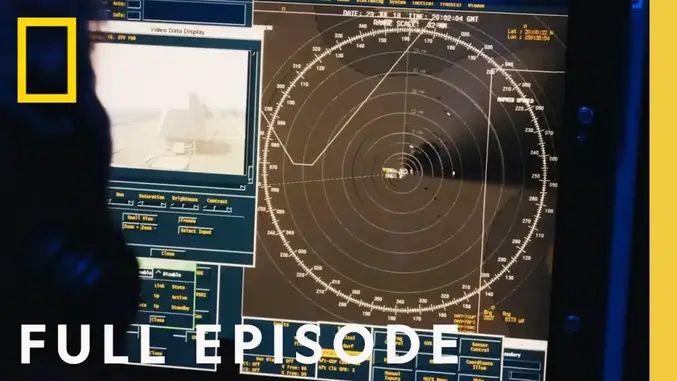
Secret Pentagon Program (Full Episode) | UFOs: Investigating the Unknown
Despite the groundbreaking nature of its investigations, the AATIP faced internal challenges, particularly regarding the dissemination of its findings within the Pentagon and to the public. Elizondo’s frustration with the bureaucratic hurdles and the stigma associated with UAP research led to his resignation. His departure was not an act of defiance but a strategic move to bring the program’s discoveries to the public eye, catalyzing a broader conversation about the phenomenon.
The revelation of the AATIP has significantly impacted the public and scientific discourse surrounding UAPs. No longer relegated to the fringes of serious study, the acknowledgment of these phenomena by the Pentagon has paved the way for a more open and rigorous examination. It raises fundamental questions about our understanding of technology, physics, and perhaps most intriguingly, the possibility of otherworldly visitors.
The AATIP’s legacy is not just in its pursuit of the unknown but in its contribution to destigmatizing the study of UAPs. By bringing the conversation into the mainstream, it challenges us to confront the limits of our knowledge and the vastness of the unknown with an open mind. The program serves as a reminder that the pursuit of understanding is an endless journey, one that requires curiosity, courage, and, above all, an unwavering commitment to the truth.
Meer van UFO'S of UAP'S, ASTRONOMIE, RUIMTEVAART, ARCHEOLOGIE, OUDHEIDKUNDE, SF-SNUFJES EN ANDERE ESOTERISCHE WETENSCHAPPEN - DE ALLERLAATSTE NIEUWTJES


 NASA Announces Starliner’s Next Launch Attempt: May 6