Archief
NASA and Boeing Release New Rendering of their X-66 Sustainable Experimental Airliner


NASA and Boeing Release New Rendering of their X-66 Sustainable Experimental Airliner
Climate change is arguably the single greatest threat facing the world today. According to the (AR6) by the UN Intergovernmental Panel on Climate Change (IPCC), average global temperatures are set to increase between 1.5 and 2 °C (2.7 to 3.6 °F) by mid-century. To restrict global temperatures to an increase of 1.5 C and avoid the worst-case scenarios, the nations of the world need to achieve net zero emissions by then. Otherwise, things will get a lot worse before they get better, assuming they ever do.
This means transitioning to cleaner methods in terms of energy, transportation, and aviation. To meet our climate commitments, the aviation industry is developing technology to significantly reduce air travel’s carbon footprint. To help meet this goal, NASA and Boeing have come together to create the X-66 Sustainable Experimental Airliner, the first experimental plane specifically focused on helping the U.S. achieve net-zero aviation. Last week, NASA released a new rendering of the concept, giving the public an updated look at the future of air travel.
This configuration is identical to the one unveiled by NASA and Boeing at the Experimental Aviation Association‘s (EAA) AirVenture Oshkosh airshow last year. As you can see from the renderings (above and below), the design features the Transonic Truss-Braced Wing concept. Developed by Boeing, this design features extra-long, thin wings stabilized by diagonal struts. This configuration is based on “Subsonic Ultra-Green Aircraft Reach (SUGAR)” research, a series of studies that began in 2011 to evaluate the benefits of truss-bracing and hybrid electric technologies.

Combined with an advanced propulsion system, a sophisticated systems architecture, and advanced materials, this configuration could reduce fuel consumption and the resulting emissions by up to 30% (compared to top-of-the-line commercial aircraft). Development of the X-66 began in early 2019 through the Sustainable Flight Demonstrator (SFD) project, which is an integral part of NASA’s Sustainable Flight National Partnership (SFNP) – where NASA Aeronautics partners with industry, academia, and other agencies to accomplish the goal of net-zero aviation by 2050.
To build the X-66A, Boeing has been working with NASA to modify a McDonnell Douglas MD-90 single-aisle passenger aircraft. Modifications include a shortened fuselage and the replacement of its wings with the longer, thinner truss-braced variant. The engines have also been relocated from the tail section to under the wings and replaced with gas-electric models. Boeing transported the MD-90 aircraft to its facility in Palmdale, California, in August of 2023 and has since removed its engines and completed the 3-meter (10-foot) model wing they will use for aerodynamic testing.
The project’s ultimate goal is to inform a new generation of more sustainable, single-aisle aircraft, which account for the largest share of air travel worldwide. The program is also part of the U.S. Aviation Climate Action Plan, which seeks to not only meet the nation’s ambitious climate goals but also to improve the quality of life for those living near airports and under flight paths through reductions in noise and pollutants. As NASA Administrator Bill Nelson remarked in a press statement last year:
“At NASA, our eyes are not just focused on stars but also fixated on the sky. The Sustainable Flight Demonstrator builds on NASA’s world-leading efforts in aeronautics as well [as] climate. The X-66A will help shape the future of aviation, a new era where aircraft are greener, cleaner, and quieter, and create new possibilities for the flying public and American industry alike.”
Further Reading:
A 790,000 Year-Old Asteroid Impact Could Explain Seafloor Spherules


A 790,000 Year-Old Asteroid Impact Could Explain Seafloor Spherules
Our solar system does not exist in isolation. It formed within a stellar nursery along with hundreds of sibling stars, and even today has the occasional interaction with interstellar objects such as Oumuamua and Borisov. So it’s reasonable to presume that some interstellar material has reached Earth. Recently Avi Loeb and his team earned quite a bit of attention with a study arguing that it had found some of this interstellar stuff on the ocean seabed. But a new study finds that the material has a much more local origin.
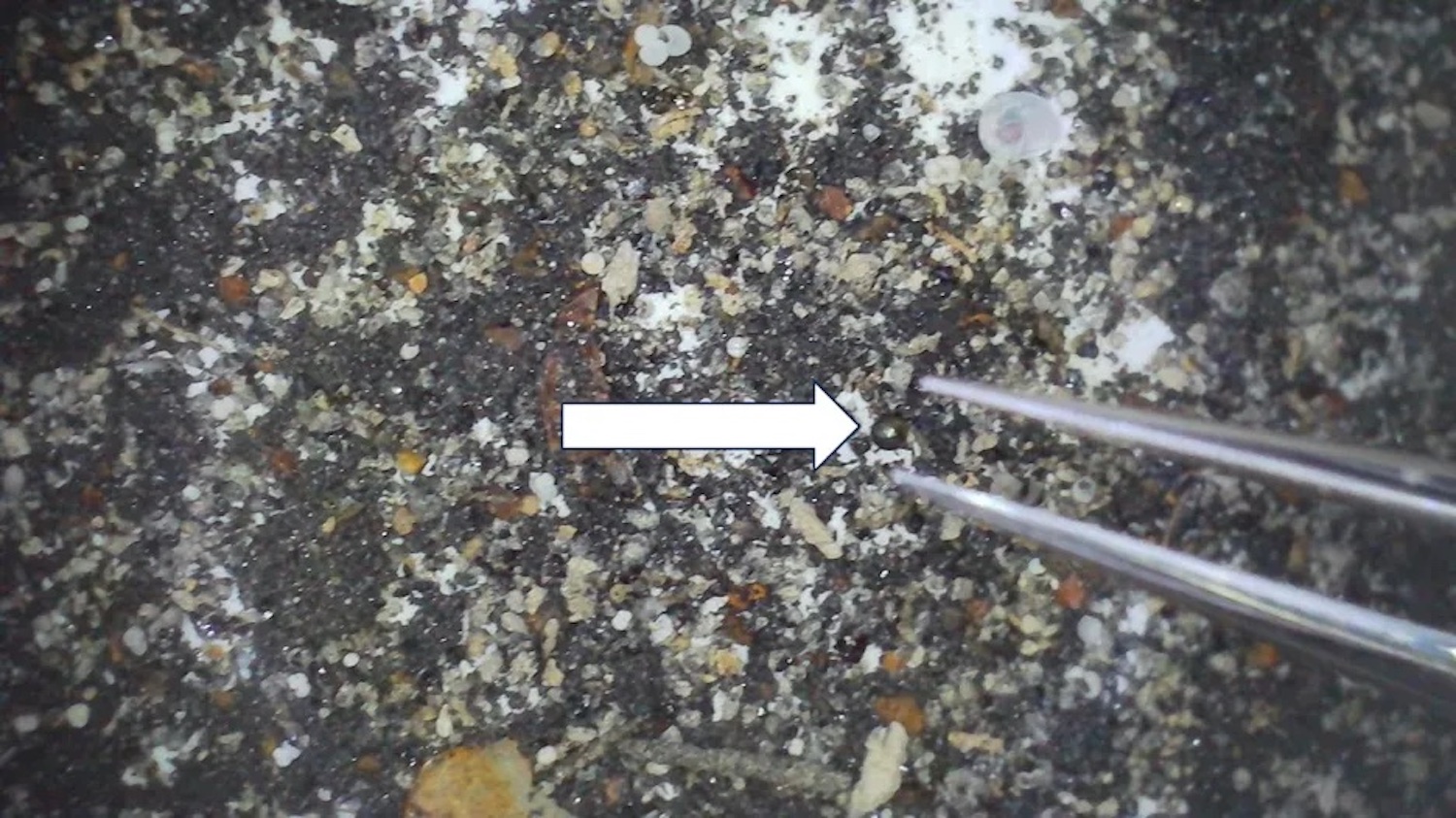
The original study is based on a 2014 meteor that entered the Earth’s atmosphere off the coast of Papua New Guinea. Observations of its impact trajectory suggested it might have been extraterrestrial in origin. And since we had an idea of where it hit, why not look for its debris? This led Loeb’s team to the seafloor near Papua New Guinea, where they found small, iron-rich spheres known as spherules. The study analyzed the composition of these spherules and found the isotope distribution was so unusual they must have an interstellar origin.
The iron isotopes of these spherules show a local origin.
Credit: Desch, et al
While that sounds compelling, there are a few caveats. The first is that the trajectory of the 2014 meteor isn’t that precisely known. We know the general impact region, but the data simply isn’t good enough to prove that these spherules came from this particular meteor. The second is that “unusual” isotopes aren’t uncommon within our solar system. As the new study shows, there is a distribution of iron isotope ratios for objects originating in the solar system, specifically the ratios of 57Fe and 56Fe. The ratio for the “alien” spherules is well within that range. So well that the odds of them being interstellar is less than 1 in 10,000. So these spherules have a local origin.
But they were likely formed from an impact event, so this new study went further. Is there a known impact from which these spherules originated? Turns out there is. The region in which they were found is part of what’s known as the Australasian tektite strewn field. It is a vast field that spans southeast Asia to Antarctica and was caused by a large impact 790,000 years ago. The team looked at other isotope ratios and found they are consistent with other known Australasian tektites.
So these particular spherules have a local origin. But that doesn’t mean interstellar meteorites don’t exist. Given what we know, there are almost certainly interstellar objects on Earth just waiting to be found. We just have to keep looking for them.
Reference:
- Loeb, A., et al. “Recovery and Classification of Spherules from the Pacific Ocean Site of the CNEOS 2014 January 8 (IM1) Bolide.” Research Notes of the AAS 8.1 (2024): 39.
- Desch, Steve. “Be, La, U-rich spherules as microtektites of terrestrial laterites: What goes up must come down.” arXiv preprint arXiv:2403.05161 (2024).
Mars Was Hiding Another Giant Volcano


Mars Was Hiding Another Giant Volcano
Olympus Mons is well known for being the largest volcano in the Solar System. It’s joined on Mars by three other shield volcanoes; Ascraeus, Pavonis and Arsia but a recent discovery has revealed a fifth. Provisionally called Noctis volcano, this previously unknown Martian feature reaches 9,022 metres high and 450 kilometres across. Its presence has eluded planetary scientists because it has been heavily eroded and is on the boundary of the fractured maze-like terrain of Noctis Labyrinthus.
Mars seems to like shield volcanoes. They are a type of volcano that have a broad gently sloping profile and are generally composed of basaltic lava flows. The flows spread out over large distances during eruptions before eventually solidifying and creating long gently sloping faces. They tend to be the result of divergent plate boundaries where tectonic plates gently drift apart. It’s not just Mars that hosts them, here on Earth Mauna Loa and Mauna Kea in Hawaii are great examples of shield volcanoes.
Olympus Mons, captured by the ESA’s Mars Express mission from orbit.
Credit: ESA/DLR/FUBerlin/AndreaLuck
Noctis volcano was found on the edges of Noctis Labyrinthus, a region whose name means Labyrinth of the Night. It’s a fascinating surface feature with a complex valley, canyon and ridge system within Valles Marineris. It’s a distinctive feature on the Martian surface with disorderly, intersecting valleys and plateaus. Thought to be the result of erosion and tectonic activity the region has masked the new volcano, until now.

A team of scientists, led by SETI Institute planetary scientist Dr Pascal Lee said “We were examining the geology of an area where we had found the remains of a glacier last year when we realised we were inside a huge and deeply eroded volcano.” There were a number of signs that revealed the volcanic activity in the region and led to the volcano’s discovery. Located on the eastern edge of Noctis Labyrinthus there were a number of meseas – or flat topped mountains – arranged in an arc that seemed to reach a peak before descending away from an apparent summit area. A gentle slope softly slips away over distances of over 200km and close study seems to reveal the remains of a caldera. The study revealed what looked like a collapsed crater that once contained a lava lake and there was significant evidence of lava flows in the area including pyroclastic deposits.
The study of Mars over the years since the invention of the telescope and more recently the advent of space flight has revealed a complex geological history. The features across the planet seem to reveal significant modification too perhaps from thermal erosion, glacial erosion and fracturing of the crust.
The team conclude that the volcano is a shield volcano that has been built up of layers of accumulations of pyroclastic material, lava and ice. The ice it seems, just like volcanic lava, has built up over repeated years of snow and ice build up on the flanks of the volcano. With the fractures, likely driven by plate uplifts in the general Tharsis region, lava was able to seep through different regions of the volcano. Where the ice has been buried and subsequently melted, catastrophic collapses have occurred compounding the challenge of identifying it.
Source :
THIS DAY IN UFO HISTORY: The Phoenix Lights March 13, 1997, Phoenix, Arizona, USA, 27 Years Later! UAP Sighting News.

THIS DAY IN UFO HISTORY: The Phoenix Lights March 13, 1997, Phoenix, Arizona, USA, 27 Years Later! UAP Sighting News.
Antikythera Mechanism Found On Mars, Alien Tech Revealed! NASA Source, UFO Sighting News.

Antikythera Mechanism Found On Mars, Alien Tech Revealed! NASA Source, UFO Sighting News.
Taiwan university prof take photo of UFO sighting on March 31, 2010, UFO Sighting News.

Taiwan university prof take photo of UFO sighting on March 31, 2010, UFO Sighting News.
Space Force budget (secret space programs are integrated) exceeds NASA

Space Force budget (secret space programs are integrated) exceeds NASA
- US Congress cuts funding to NASA while corporations are funding more space missions.
- Detailed breakdown of UAP historical report cites glaring deficiencies. Article proclaims Pentagon is heading for disaster due to AARO UAP report – catastrophic disclosure more likely.
- AARO Report: Lies, flawed, unresponsive, clueless, and knavish analyzed by Robert Powell (A must read).
- Webinar Trailer released- Ancient Alien Experiments and Crypto Terrestrials.
- Space Force budget exceeds NASA but will surge as elements of secret space programs are integrated.
- UFO Disclosure Project Attorney Danny Sheehan recounts his encounter with secret Project Blue Book files in 1977 that contained photos of retrieved flying saucer craft.
- Could Romanian President entering race for NATO leadership be a reward for him suppressing news of the discovery of an ancient Hall of Records under Bucegi Mountains in 2003?
- President Eisenhower’s role in agreements reached with Aliens revealed by Great Granddaughter in New Book.
- New JP video highlights ETs monitoring humanity’s consciousness and the importance of the love ethic.
- The wise Reptilian entity depicted in Japanese art is similar to Naga beings in Vedic art and literature.
- Analysis of AARO historical report discussing July 1952 shootdown attempt against a flying saucer involved in Washington flyover.
Mysterious Triangular UFO Spotted in the Skies of Bratislava

Mysterious Triangular UFO Spotted in the Skies of Bratislava

In an extraordinary event that has captured the attention of UFO enthusiasts and skeptics alike, a remarkable sighting occurred in the night sky over Ru¸inov, a bustling borough of Bratislava, Slovakia, on March 14, 2024. This incident has swiftly climbed the ranks in the annals of UFO sightings, stirring a whirlwind of speculation and intrigue.
The Sighting in Detail
Just before the clock struck 11 pm on that fateful evening, a resident and amateur UFO enthusiast known online as “ufoslovakia” managed to capture jaw-dropping footage of an unidentified flying object. But this was no ordinary sighting. The footage reveals a distinct triangular-shaped craft, looming ominously above. What makes this sighting particularly fascinating is the suggestion from the footage that we might be looking at a single, massive object rather than three separate entities.
The Eyewitness and the Video
“ufoslovakia,” known for his passion for filming and sharing aerial anomalies, could hardly believe his eyes. Through his lens, he witnessed what could very well be one of the most definitive pieces of visual evidence of UFO activity in recent history. The clarity and detail of the footage have left viewers in awe, prompting debates and discussions across various platforms.
What Makes This Sighting Unique?
Triangular UFO sightings have been reported globally, but the Bratislava incident stands out for several reasons. First, the quality of the footage is unusually high, providing a clear view of the object’s shape and movements. Secondly, the size of the craft, as suggested by the footage, indicates that this could be an unusually large object, distinguishing it from more common reports of smaller, drone-like objects.
Skeptics and Believers Alike Are Intrigued
While some skeptics propose explanations ranging from advanced military aircraft to atmospheric phenomena, the distinct characteristics observed in the Bratislava sighting challenge conventional understandings. Enthusiasts point to the lack of sound, the steady flight pattern, and the uniformity of the object’s lights as indicators that this sighting cannot be easily dismissed.
VIDEO
This remarkable sighting in Bratislava has added a fascinating chapter to the ongoing narrative of UFO sightings. Whether you’re a staunch believer in extraterrestrial visitors, a curious skeptic, or simply someone fascinated by the unknown, this incident invites you to explore the endless possibilities that our universe holds.
Aliens and the Origins of Human Life: Insights from David Grusch on The Joe Rogan Experience

Aliens and the Origins of Human Life: Insights from David Grusch on The Joe Rogan Experience
In an enthralling episode of The Joe Rogan Experience, David Grusch joined Joe Rogan to delve into the enigmatic possibility of extraterrestrial influence on the development of human life. This thought-provoking discussion explored various aspects of alien life, the hypothesis of extraterrestrial seeding of life on Earth, and the implications of such interventions.
The Hypothesis of Extraterrestrial Seeding
David Grusch presented a captivating hypothesis that extraterrestrial beings could have played a pivotal role in the genesis or acceleration of life on Earth. This theory suggests that aliens, through genetic intervention, could have fast-tracked the evolution of emerging intelligent life forms on our planet. The underlying idea is that such interventions would not only boost the natural progression of evolution but also imbue these life forms with an innate drive for innovation, control, and the expansion of influence.
Beyond Biological Limitations
A significant portion of the discussion was dedicated to the concept that advanced extraterrestrial entities might have evolved beyond the biological constraints known to human beings. Grusch and Rogan speculated about the existence of beings that operate in realms undetectable to us, free from the limitations of physical space and the conventional life-death cycle. This advanced state would allow them to engage in and influence processes in ways that are currently beyond human comprehension.
Technological Evolution and Communication
Reflecting on the rapid evolution of human communication technologies, from face-to-face interaction to instant global connectivity, the conversation touched upon the potential for future advancements. This led to discussions about the possibility of instant physical presence across vast distances, drawing parallels between human technological progress and the speculated capabilities of advanced extraterrestrial beings.
Theoretical Frameworks and Cosmic Perspectives
The dialogue ventured into discussions on theoretical frameworks that could potentially explain the universe’s complexities, including Eric Weinstein’s Geometric Unity. The notion that the universe itself could be considered a creator or a form of god was explored, suggesting a meta-perspective on the origins and nature of creation. This perspective invites contemplation on the universe’s ability to generate complex systems, potentially including other universes.
Exploring Existential Questions
The conversation between Grusch and Rogan raised profound existential questions regarding the nature of the universe, the origin of life, and the concept of a cyclical universe that undergoes endless cycles of expansion and contraction. They discussed the limitations of human understanding and the exciting potential for discoveries that lie beyond our current observations of the cosmos.
VIDEO:
- Aliens CREATED Humans?! David Grusch on Joe Rogan
David Grusch’s appearance on The Joe Rogan Experience provided a fascinating exploration of the hypothesis that extraterrestrial life forms might have contributed to the creation or acceleration of human life. This discussion spanned the potential for biological and technological advancements beyond our current understanding, theoretical frameworks for comprehending the universe, and the deep existential questions these ideas evoke. The possibility of alien influence on human evolution invites us to reconsider our place in the cosmos and the untapped mysteries of the universe.