Naar de inhoud

UFO'S of UAP'S, ASTRONOMIE, RUIMTEVAART, ARCHEOLOGIE, OUDHEIDKUNDE, SF-SNUFJES EN ANDERE ESOTERISCHE WETENSCHAPPEN - DE ALLERLAATSTE NIEUWTJES

UFO's of UAP'S in België en de rest van de wereld
akke.beakke.be
Ontdek de Fascinerende Wereld van UFO's en UAP's: Jouw Bron voor Onthullende Informatie! Ben jij ook gefascineerd door het onbekende? Wil je meer weten over UFO's en UAP's, niet alleen in België, maar over de hele wereld? Dan ben je op de juiste plek! België: Het Kloppend Hart van UFO-onderzoek In België is BUFON (Belgisch UFO-Netwerk) dé autoriteit op het gebied van UFO-onderzoek. Voor betrouwbare en objectieve informatie over deze intrigerende fenomenen, bezoek je zeker onze Facebook-pagina en deze blog. Maar dat is nog niet alles! Ontdek ook het Belgisch UFO-meldpunt en Caelestia, twee organisaties die diepgaand onderzoek verrichten, al zijn ze soms kritisch of sceptisch. Nederland: Een Schat aan Informatie Voor onze Nederlandse buren is er de schitterende website www.ufowijzer.nl, beheerd door Paul Harmans. Deze site biedt een schat aan informatie en artikelen die je niet wilt missen! Internationaal: MUFON - De Wereldwijde Autoriteit Neem ook een kijkje bij MUFON (Mutual UFO Network Inc.), een gerenommeerde Amerikaanse UFO-vereniging met afdelingen in de VS en wereldwijd. MUFON is toegewijd aan de wetenschappelijke en analytische studie van het UFO-fenomeen, en hun maandelijkse tijdschrift, The MUFON UFO-Journal, is een must-read voor elke UFO-enthousiasteling. Bezoek hun website op www.mufon.com voor meer informatie. Samenwerking en Toekomstvisie Sinds 1 februari 2020 is Pieter niet alleen ex-president van BUFON, maar ook de voormalige nationale directeur van MUFON in Vlaanderen en Nederland. Dit creëert een sterke samenwerking met de Franse MUFON Reseau MUFON/EUROP, wat ons in staat stelt om nog meer waardevolle inzichten te delen. Let op: Nepprofielen en Nieuwe Groeperingen Pas op voor een nieuwe groepering die zich ook BUFON noemt, maar geen enkele connectie heeft met onze gevestigde organisatie. Hoewel zij de naam geregistreerd hebben, kunnen ze het rijke verleden en de expertise van onze groep niet evenaren. We wensen hen veel succes, maar we blijven de autoriteit in UFO-onderzoek! Blijf Op De Hoogte! Wil jij de laatste nieuwtjes over UFO's, ruimtevaart, archeologie, en meer? Volg ons dan en duik samen met ons in de fascinerende wereld van het onbekende! Sluit je aan bij de gemeenschap van nieuwsgierige geesten die net als jij verlangen naar antwoorden en avonturen in de sterren! Heb je vragen of wil je meer weten? Aarzel dan niet om contact met ons op te nemen! Samen ontrafelen we het mysterie van de lucht en daarbuiten.

Archief

Saturn’s “Death Star Moon” Mimas Probably has an Ocean Too

Saturn's moon, Mimas, captured by NASA's Cassini spacecraft in 2010. (Credit: NASA/JPL-Caltech/Space Science Institute)

Saturn’s “Death Star Moon” Mimas Probably has an Ocean Too

A recent study published in Nature presents a groundbreaking discovery that Saturn’s moon, Mimas, commonly known as the “Death Star” moon due to its similarities with the iconic Star Wars space station, possesses an internal ocean underneath its rocky crust. This study was conducted by an international team of researchers and holds the potential to help planetary geologists better understand the conditions for a planetary body to possess an internal ocean, which could also possess the conditions for life as we know it. While Mimas was photographed on several occasions by NASA’s Cassini spacecraft, including a close flyby in February 2010, what was the motivation behind this recent study regarding finding an internal ocean on Mimas?

Dr. Gabriel Tobie, who is a planetary scientist at Nantes Université in France and a co-author on the study, tells Universe Today, “One of the initial motivations to study Mimas was to understand why it is so different from the neighboring moon, Enceladus, which is characterized by a very active surface with direct communication with a global surface ocean. On Enceladus, we know that all the observed activity is controlled by tidal forces generated by Saturn. Mimas is closer to Saturn and should normally experience even more intense tidal forces. So why Mimas’ lack sign of activity?”

Discovered by William Herschel on September 17, 1789, Mimas is best known for its Death Star appearance due to Herschel Crater, which spans 139 kilometers (86 miles) in diameter, or just over one-third the diameter of Mimas at 396 kilometers (246 miles). Unlike other ocean worlds like Europa and Enceladus, whose surfaces are largely devoid of craters due to the frequent resurfacing from their respective internal oceans, the surface of Mimas possesses countless craters with no indications of resurfacing. Therefore, the debate for Mimas possessing an internal ocean has raged for years, including a 2014 study published in Science and a 2017 study published in JGR: Planets.

2022 video discussing the possibility of an ocean on Mimas based on research at the time.

Dr. Tobie continues by telling Universe Today, “It was initially thought that Mimas remained frozen since its formation and that the conditions to initiate ice melting in its interior were never met. This new finding we report in this study shows that Mimas in fact is not that different than Enceladus. It also has a global ocean, but in contrast to Enceladus, such an ocean was formed very recently, explaining the lack of surface activity.”

After analyzing data from NASA’s Cassini, the researchers concluded that an internal ocean exists on the heavily cratered Mimas approximately 20-30 kilometers (12-18 miles) beneath its surface, forming less than 25 million years ago, which is young in geologic terms. Additionally, the team concluded the juncture where the internal ocean and ice interact reached less than 30 kilometers (18 miles) from the surface only 2-3 million years ago, indicating the ocean is potentially still developing and growing. Therefore, what implications does finding an ocean on Mimas have for other potential ocean worlds in our solar system?

Saturn’s moon, Mimas, captured by NASA’s Cassini spacecraft in 2010. (Credit: NASA/JPL-Caltech/Space Science Institute)

Dr. Alyssa Rhoden, who is a Principal Scientist at the Southwest Research Institute (SwRI) in Boulder, Colorado and co-authored an article in Nature discussing the groundbreaking discovery, tells Universe Today, “As far as stealth ocean moons go, Mimas pretty much takes the cake. Its surface betrays nothing of the ocean underneath. Icy moons around Uranus, for example, do show some geologic activity on their surfaces that have (in absence of other options) have been attributed to oceans enabling tidal stresses and/or enhanced heating to drive processes like convection. More importantly, Mimas is showing us that it’s not too late for moons to undergo massive changes. Maybe triggering ocean formation later in a moon’s lifetime is more common in this size range of moons than we initially considered.”

As noted, an internal ocean on Mimas indicates it could possess habitable conditions for life as we know it like Europa and Enceladus. This is because scientists have hypothesized that internal oceans are created from internal heat generated from the moons being tugged and pulled as they orbit their respective planets, also known as tidal heating. While such internal oceans are completely absent from receiving sunlight due to their outer surfaces, scientists hypothesize that the internal heat that creates the ocean could also harbor hydrothermal vents where life has been observed to exist here on Earth. Therefore, what implications does finding an ocean on Mimas have for finding life beyond Earth?

“Finding an ocean on Mimas demonstrates that habitable environments may be found even in small objects far from the Sun, which is already a great discovery,” Dr. Tobie tells Universe Today. “However, the chance to detect any sign of life on such objects is extremely low, as there is no direct communication between the subsurface ocean and the surface.  Enceladus, with its very active jets, is a much better target to address the question of life beyond Earth. Mimas, however, provides an opportunity to study the first stage of ocean formation and potentially chemical complexification before life emerged, a fundamental stage which is still unknown on Earth.”

In terms of follow-up studies, Dr. Tobie tells Universe Today that the methods used for this recent study could also be applied for other moons in the solar system, specifically moons orbiting Uranus, along with providing an opportunity to use Cassini data to re-evaluate not only Mimas, but other mid-sized moons orbiting Saturn, including Enceladus.

With this groundbreaking discovery, Mimas joins several other planetary bodies within the solar system that can be called ocean worlds, which include the aforementioned Europa and Enceladus, but also the dwarf planets, Ceres and Pluto; Jupiter’s moons, Ganymede and Callisto; Saturn’s largest moon, Titan; and Neptune’s moon, Triton. It is through these fantastic and mysterious worlds that scientists from around the world are studying to better understand the conditions for life to exist, both here on Earth and beyond.2

“The main take-away from Mimas is that we ought to test ideas, even if they seem unlikely,” Dr. Rhoden tells Universe Today. “Mimas’ surface doesn’t show evidence of an ocean, so it was easy to dismiss the ocean hypothesis when it was first proposed. But to come to a scientific conclusion, we have to back up inferences with tests. Sometimes, we find that the tests confirm our expectations, and sometimes, we get to be surprised.”

What new discoveries will scientists make about Mimas and other ocean worlds in the coming years and decades? Only time will tell, and this is why we science!

  • As always, keep doing science & keep looking up!

{ https://www.universetoday.com/ }

Hoe vind je dit bericht?
Geschreven door peter om 20:41 Stuur door

Astronomers Employ Novel Technique for Searching for Alien Technosignatures

Astronomers Employ Novel Technique for Searching for Alien Technosignatures

Technosignatures are any measurable property that may provide evidence of extraterrestrial technology. The search for extraterrestrial intelligence (SETI) is a branch of astrobiology that focuses on finding technosignatures, as their detection would provide evidence for intelligent life beyond Earth. Traditionally, targeted radio surveys have been the mainstay of SETI research, and many SETI projects currently underway still take place in the radio band. The newly-proposed technique, the SETI Ellipsoid, is a strategy for technosignature candidate selection that assumes that extraterrestrial civilizations who have observed a galactic-scale event — such as supernova SN 1987A — may use it as a point to broadcast synchronized signals indicating their presence.

Using improved 3D locations for stars from Gaia Early Data Release 3, Cabrales et al. identified 32 SN 1987A SETI Ellipsoid targets in the TESS continuous viewing zone with uncertainties better than 0.5 light-years. Image credit: ALMA / ESO / NAOJ / NRAO / Alexandra Angelich, NRAO / AUI / NSF.

Using improved 3D locations for stars from Gaia Early Data Release 3, Cabrales et al. identified 32 SN 1987A SETI Ellipsoid targets in the TESS continuous viewing zone with uncertainties better than 0.5 light-years.

Image credit: ALMA / ESO / NAOJ / NRAO / Alexandra Angelich, NRAO / AUI / NSF.

Dr. Bárbara Cabrales from the SETI Institute and the Berkeley SETI Research Center at the University of California, Berkeley, and her colleagues show the SETI Ellipsoid method can leverage continuous, wide-field sky surveys, significantly enhancing our ability to detect potential technosignatures.

By compensating for the uncertainties in the estimated time-of-arrival of such signals using observations that span up to a year, they implement the SETI Ellipsoid strategy in an innovative way using state-of-the-arc technology.

“New surveys of the sky provide groundbreaking opportunities to search for technosignatures coordinated with supernovae,” Dr. Cabrales said.

“The typical timing uncertainties involved are of a couple months, so we want to cover our bases by finding targets that are well-documented over the course of about a year.”

“In addition to that, it’s important to have as many observations as possible for each target of interest, so that we can determine what looks like normal behavior and what might look like a potential technosignature.”

In examining data from the continuous viewing zone of NASA’s TESS mission, covering 5% of all TESS data from the first three years of the mission, the authors utilized the advanced 3D location data from Gaia Early Data Release 3.

This analysis identified 32 prime targets within the SETI Ellipsoid in the southern TESS continuous viewing zone, all with uncertainties refined to better than 0.5 light-years.

While the initial examination of TESS light curves during the Ellipsoid crossing event revealed no anomalies, the groundwork laid by this initiative paves the way for expanding the search to other surveys, a broader array of targets, and exploring diverse potential signal types.

Applying the SETI Ellipsoid technique to scrutinize large archival databases signifies a monumental step forward in the search for technosignatures.

Utilizing Gaia’s highly precise distance estimates, the study demonstrates the feasibility of cross-matching these distances with other time-domain surveys like TESS to enhance monitoring and anomaly detection capabilities in SETI research.

The SETI Ellipsoid method, combined with Gaia’s distance measurements, offers a robust and adaptable framework for future SETI searches.

Astronomers can retrospectively apply it to sift through archival data for potential signals, proactively select targets, and schedule future monitoring campaigns.

“The SETI Ellipsoid method, jointly with Gaia distances, provides a straightforward and flexible method for SETI searches that can be adapted to fit different modern surveys and source events,” the researchers said.

“It can be applied retroactively to look for signals in archival data, as well as propagated forward in time to select targets and schedule monitoring campaigns.”

  • Their paper appears in the Astronomical Journal.
  • Bárbara Cabrales et al. 2024. Searching the SN 1987A SETI Ellipsoid with TESS. AJ 167, 101; doi: 10.3847/1538-3881/ad2064

{ https://www.sci.news/ }

Hoe vind je dit bericht?
Geschreven door peter om 20:25 Stuur door

Mysterious hidden ‘structures’ hundreds of metres deep discovered on dark side of moon

Mysterious hidden ‘structures’ hundreds of metres deep discovered on dark side of moon

Story by Vishwam Sankaran 
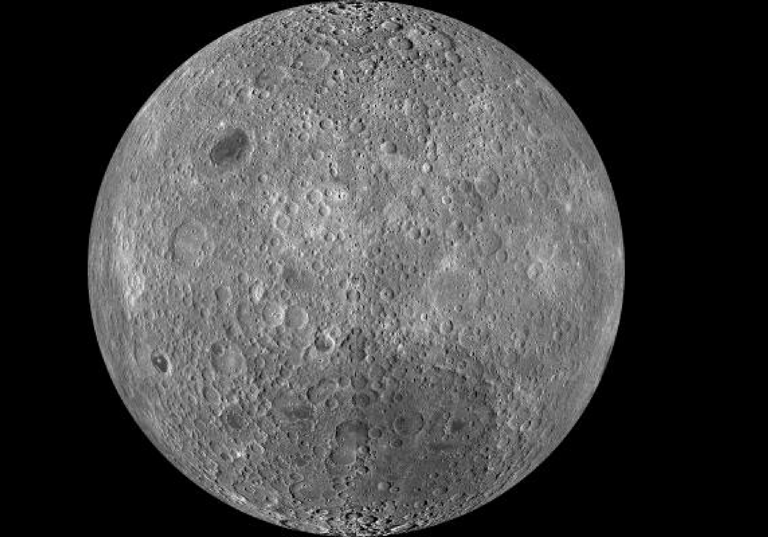
Composite image of the lunar farside taken by the Lunar Reconnaissance Orbiter in June 2009
© Nasa

China’s Chang’e-4 mission rover has helped scientists visualise “hidden” structures deep below the surface of the moon’s far side – an advance that reveals billions of years of lunar history.

The Yutu-2 rover helped make the discovery through its Lunar Penetrating Radar (LPR) that imaged deep into the moon’s surface by listening to echoes of sound that bounced back off structures under the lunar surface and hidden from view.

The same rover and the mission’s lander had made history in 2019 as the first human objects to land on the far side of the moon – the side that faces away from the Earth.

Scientists had previously used the rover’s ground penetrating radar (GPR), but those earlier efforts could help map only the top 40m, or about 130ft, of the moon’s surface. This new discovery has found the “hidden” structures at depths of about 300m (984ft).

The new data suggests the first 130ft under the lunar surface is made up of layers of dust, soil, and rocks.

Radar analysis also revealed the presence of a buried crater that formed when a large object slammed into the lunar surface as well as helped map ancient lava flows under the moon.

“The GPR sends electromagnetic pulses into the lunar interior and receives echoes from subsurface layers. We use the high-frequency channel data to detect the structure of the upper 40 m along the rover’s path, primarily consisting of rock debris and soil,” researchers explained in the study.

Scientists speculate that the broken rocks surrounding this formation was likely debris produced by the impact.

“Through this investigation, we have discovered multiple layers in the upper 300 m, which likely indicate a series of basalt eruptions that occurred billions of years ago,” they wrote.

The new study, published recently in the Journal of Geophysical Research: Planets, revealed lunar lava likely flowed across the landscape in this part of the moon billions of years ago.

Researchers found volcanic rock layers are thinner the closer they are to the lunar surface.

“The thickness variation of these lava flows suggests a decrease in eruption scale over time,” they noted.

Based on this evidence, they said the lunar volcanic activity cooled gradually since the moon’s formation over 4.5 billion years ago, when a Mars-sized object slammed onto Earth and broke off a chunk that eventually coalesced into the moon.

“The thickness of the strata decreases with the decreasing depth, suggesting a progressively smaller lava effusion rate over time,” scientists concluded.

From news to politics, travel to sport, culture to climate – The Independent has a host of free newsletters to suit your interests. To find the stories you want to read, and more, in your inbox, click here.

{ https://www.msn.com/en- }

Hoe vind je dit bericht?
Geschreven door peter om 18:34 Stuur door

Scientists map 1,000 feet of hidden 'structures' deep below the dark side of the moon

Scientists map 1,000 feet of hidden 'structures' deep below the dark side of the moon

We see what looks like the lower part of the gray moon against a black background
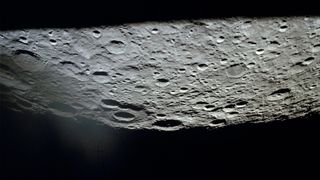
The farside of the moon, as photographed by Apollo 13, hangs upside-down over the blackness of space. 
(Image credit: NASA)

Since it first landed in 2019, China's Chang'e-4 — the first spacecraft to ever land on the far side of the moon — has been taking stunning panoramas of impact craters and sampling minerals from the moon's mantle. Now, the spacecraft has enabled scientists to visualize the layer cake of structures that comprise the upper 1,000 feet (300 meters) of the moon's surface in finer detail than ever before. 

Their results, which were published Aug. 7 in the Journal of Geophysical Research: Planets, reveal billions of years of previously hidden lunar history. 

A rover that traveled aboard Chang'e-4, named Yutu-2, is equipped with a technology called Lunar Penetrating Radar (LPR). This device enables the rover to send radio signals deep into the moon's surface, said lead study author Jianqing Feng, an astrogeological researcher at the Planetary Science Institute in Tucson, Arizona. "Then, it listens to the echoes dancing back," Feng told Live Science. Scientists can use those "echoes," or radio waves that bounce off of underground structures, to create a map of the lunar subsurface. In 2020, scientists used Yutu-2’s LPR to map the upper 130 feet (40 m) of the moon's surface — but hadn't gone deeper until now.

Related:

These new data suggest the top 130 feet of the lunar surface are made up of multiple layers of dust, soil, and broken rocks, Feng said.  Hidden within these materials was a crater, formed when a large object slammed into the moon. Feng and his colleagues hypothesized that the rubble surrounding this formation was ejecta — debris from the impact. Farther down, the scientists discovered five distinct layers of lunar lava that seeped across the landscape billions of years ago.

The Crater Daedalus on the lunar farside as seen from the Apollo 11 spacecraft in lunar orbit  (Image credit: NASA)

Scientists think our moon formed 4.51 billion years ago, not long after the solar system itself, when a Mars-size object slammed into Earth and broke off a chunk of our planet The moon then continued to be bombarded by objects from space for roughly 200 million years. Some impacts cracked the moon's surface. Like Earth, the moon’s mantle at that time contained pockets of molten material called magma, which seeped out through the newly formed cracks in a series of volcanic eruptions, Feng said. 

The new data from Chang'e-4 shows that process slowing down over time: Feng and his colleagues found that the layers of volcanic rock grew thinner the closer they were to the moon's surface. This suggests that less lava flowed in later eruptions compared with earlier ones. "[The moon] was slowly cooling down and running out of steam in its later volcanic stage," Feng said. "Its energy became weak over time."

Volcanic activity on the moon is thought to have petered out about 1 billion years ago (though scientists have discovered some evidence of younger volcanic activity as recently as 100 million years ago). For this reason, the moon is often considered "geologically dead." However, there could still be magma deep underneath the lunar surface, Feng said. 

Chang'e-4 isn't done with its work on the moon yet. Feng hopes that in the future, the craft will give us insight into different, unexpected geological formations. 

Editor's note: 

  • This story was updated on Aug. 22 to correct the date of Chang'e-4's lunar touchdown to 2019, rather than 2018. Chang'e-4 launched on Dec. 7, 2018 and landed on the moon on Jan. 3, 2019.

{ https://www.livescience.com/ }

Hoe vind je dit bericht?
Geschreven door peter om 18:13 Stuur door

I found a rectangle structure or alien ship on Earths moon in a NASA photo. UFO Sighting News.

I found a rectangle structure or alien ship on Earths moon in a NASA photo. UFO Sighting News.

Unknown.jpeg

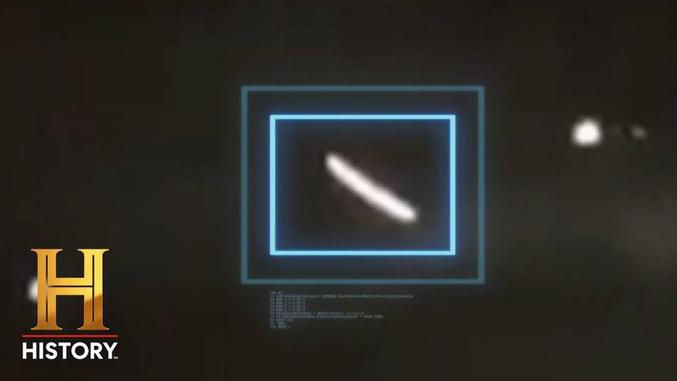
I thought this structure was very interesting and just wanted to share it with you all. Some of my readers on X are telling me it's not a building at all, but a spaceship. Indeed it could be. The object is half a mile across making it something very special since it's loaded with alien technology. It would be cool if someone like Elon Musk actually tried to retrieve this alien craft. 

Scott C. Waring 

{ https://www.ufosightingsdaily.com/ }

Hoe vind je dit bericht?
Geschreven door peter om 18:00 Stuur door

UFO Sighting Astonishes Chinese Authorities

UFO Sighting Astonishes Chinese Authorities

UFO Incident SHOCKS Chinese Officials

In an event that caught the attention of the world, an unprecedented aerial phenomenon brought one of China’s busiest airports to an unexpected halt, igniting widespread curiosity and concern among both the public and government officials. This incident, occurring on July 7th, 2010, at Hangzhou’s Xiaoshan International Airport, not only disrupted air traffic but also propelled China into a new era of engagement with unidentified aerial phenomena (UAP).

The Incident That Shook the Skies

On a seemingly ordinary day, the routine flow of flights at Xiaoshan International Airport was abruptly interrupted when pilots and air traffic controllers reported the sighting of an unidentified flying object (UFO) hovering above the runway. The appearance of this enigmatic object was so alarming that it led to the temporary shutdown of the airport, affecting 18 flights and diverting them to alternative locations. The maneuverability and unusual shape of the UFO sparked a wave of speculation and intrigue, with neither civilian observers nor military experts able to offer a definitive explanation for what was witnessed.

The Ripple Effect

The impact of the sighting extended far beyond the immediate disruption of air traffic. Behind the scenes, it set off a wave of concern among Chinese officials, prompting an investigation into the nature and origins of the phenomenon. This event marked a turning point for China, a nation known for its reticence on matters of national security and unidentified aerial phenomena. The incident at Xiaoshan International Airport became a catalyst for a broader reconsideration of China’s stance on UFOs and UAPs.

China’s Evolving Approach to UAP Investigation

Historically shrouded in secrecy, China’s approach to UAP research has been as enigmatic as the phenomena themselves. However, the incident served as a wake-up call, revealing the necessity for a more open and systematic investigation into these unidentified aerial conditions. By June 2019, the People’s Liberation Army Air Force’s Early Warning Academy publicly acknowledged the increasing frequency of such phenomena and announced the establishment of a new task force dedicated to their study.

This acknowledgment represented a significant shift in policy, showcasing China’s readiness to engage more transparently with the global community on the issue of UAPs. Furthermore, China’s strategy for investigating UFO reports involves close collaboration with independent UFO organizations across the nation. These groups, boasting memberships in the millions, operate with the understanding that their activities are monitored by Chinese authorities, ensuring a controlled yet surprisingly open platform for UFO research.

Pioneering the Use of AI in UAP Analysis

Perhaps most notably, China has declared its intention to become the world’s first country to employ artificial intelligence (AI) in the analysis of UAP-related data. This innovative approach aims to uncover patterns and insights that may elude human researchers, representing a leap forward in the methodical study of UAPs. By harnessing AI, China is positioning itself at the forefront of UAP research, seeking to understand the phenomena in a way that could redefine the global conversation on UFOs and extraterrestrial life.

VIDEO:

The UFO incident at Xiaoshan International Airport has undeniably propelled China into a new phase of openness and innovation in the realm of UAP research. By breaking away from decades of secrecy and embracing collaboration and advanced technology, China is not only challenging its own historical stance but also encouraging a global reevaluation of how societies approach the mystery of UFOs. As the world watches, the journey of unraveling the enigma of unidentified aerial phenomena continues, with China now playing a pivotal role in this global quest for understanding.

 { https://www.latest-ufo-sightings.net/ }

Hoe vind je dit bericht?
Geschreven door peter om 17:28 Stuur door

Atlantic current shutdown is a real danger, suggests simulation

Atlantic current shutdown is a real danger, suggests simulation

The most detailed computer model run so far shows that melting ice sheets could cause the collapse of the major ocean current that warms Europe, but it's still unclear how likely this is to happen

By Michael Le Page

New Scientist Default Image

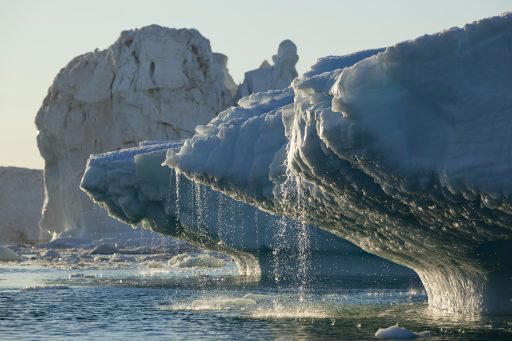
An ocean current that flows from the tropics to the North Atlantic has a big influence on Europe’s climate

Jens Carsten Rosemann/Getty Images

Is there a serious risk of the Atlantic current that warms Europe slowing to a halt as the planet heats up? Yes, according to the most detailed computer simulation run so far – but the likelihood of this scenario is still very uncertain.

“We’ve demonstrated with our current setup that it is indeed possible,” says René van Westen at Utrecht University in the Netherlands.

At present, warm water that is extra salty due to evaporation flows north from the tropics along the surface of the Atlantic Ocean, keeping Europe much warmer than it would otherwise be. As this water cools, it sinks because its high salinity increases its density. It then flows back to the tropics and into the southern hemisphere along the ocean bottom.

This is known as the Atlantic meridional overturning circulation, or AMOC. Studies of past climate suggest that episodes of dramatic cooling around Europe during the past 100,000 years or so are linked to a slowdown or complete shutdown of the overturning current – a so-called tipping point, where small changes can make a system flip into a different state.

The cause is thought to be the melting of ice sheets. If lots of fresh water enters the North Atlantic, it reduces the salinity and thus density of surface water, meaning less of it sinks.

But modelling this has proved tricky. Most simulations of a shutdown involve adding unrealistically large quantities of fresh water all at once. And in some recent simulations with more advanced models, no shutdown has occurred, leading some to doubt whether this is a potential tipping point at all.

Now van Westen’s team has done the most sophisticated simulation so far, requiring a total of six months on the Netherlands’ national supercomputer, called Snellius. That was very expensive, he says.

Unlike in previous simulations, the team added fresh water gradually, rather than in one go. This produced a positive feedback that amplified the effect: as less water sank because of the reduced salinity, less salty water flowed north, reducing salinity still further.

This eventually shut down the overturning circulation, causing temperatures to rise in the southern hemisphere, but plummet in Europe. For instance, in the model, London cools by 10°C (18°F) on average and Bergen in Norway by 15°C (27°F). Other consequences include local sea level rises in places such the US East Coast.

What’s more, some of the changes seen in the model ahead of the collapse correspond with changes being seen in the real Atlantic in recent decades.

However, to produce this collapse, the researchers had to run the model for 2500 years. And they had to add a huge amount of freshwater – less than in previous simulations, but still around 80 times more than is currently entering the ocean as Greenland’s ice sheet melts. “So that is absurd and not very realistic,” says van Westen.

Moreover, the simulation didn’t involve any global warming. The team now plans to rerun the simulation to include it.

“This is the most state-of-the-art model where such an experiment has been done,” says Peter Ditlevsen at the University of Copenhagen, Denmark, who was co-author of a 2023 study that forecast that the Atlantic overturning current could collapse between 2025 and 2095 based on how sea surface temperatures are changing.

While the model suggests it will take a lot of fresh water and many centuries to halt the overturning circulation, there are several reasons to think climate models underestimate the risk of non-linear changes like the Atlantic tipping point, says Ditlevsen.

Climate models have to divide the world into large cubes to make computations feasible, which has a smoothing effect, he says. The models are also tuned based on how well they simulate the 20th-century climate, when there was a linear relationship between greenhouse gas emissions and the resulting changes, which might not hold true in the future.

“We should expect the models to be less sensitive than the real world,” says Ditlevsen.

{ https://www.newscientist.com/ }

Hoe vind je dit bericht?
Geschreven door peter om 16:41 Stuur door

Instorting AMOC zou Europa in zeer koud weer dompelen

Instorting AMOC zou Europa in zeer koud weer dompelen

Artikel door Dominique Dewitte
Instorting AMOC zou Europa in zeer koud weer dompelen
© Aangeboden door Business AM

Samengevat. Wetenschappers van de Universiteit Utrecht hebben een kritiek klimaatkeerpunt gemodelleerd dat grote delen van Europa in een diepe vrieskou zou kunnen dompelen, veel eerder dan gedacht. Dit keerpunt betreft de instorting van de AMOC, een belangrijke stroming in de Atlantische Oceaan, die warm water naar het noorden brengt en het weer in Europa mild houdt.

De ineenstorting van deze stroming zou wereldwijd het weer veranderen, met Europa als zwaarst getroffen regio. Het scenario benadrukt de urgentie van klimaatonderzoek en de noodzaak voor proactieve aanpassingen om potentiële catastrofale gevolgen te beperken.

In het nieuws. Onderzoekers hebben een complex klimaatmodel gebruikt om de ineenstorting van de Atlantic Meridional Overturning Circulation (AMOC) te simuleren, een cruciaal systeem van oceaanstromingen dat Europa warm houdt.

  • Op dit moment stroomt warm water dat extra zout is door verdamping vanuit de tropen langs het oppervlak van de Atlantische Oceaan naar het noorden, waardoor Europa veel warmer blijft dan het anders zou zijn.
  • Men schat dat de AMOC nu al 15% zwakker is dan in 1950. Volgens het Britse Met Office “suggereren klimaatmodellen dat de AMOC in de 21e eeuw zal verzwakken naarmate de broeikasgassen toenemen.
  • De studie wijst op smeltende ijskappen als mogelijke oorzaak voor deze ineenstorting door veranderingen in zoutgehalte en temperatuur, wat de dichtheid van water beïnvloedt.
  • De langzame afname van de AMOC zou in minder dan een eeuw kunnen leiden tot een plotselinge instorting, iets wat voorheen als een theoretisch concept werd beschouwd.

Mogelijke totale instorting tussen 2025 en 2095

Zoom in. Recent onderzoek suggereert dat klimaatverandering de stroming van de AMOC vertraagt, met een mogelijke totale instorting tussen 2025 en 2095.

    • Het Nederlandse team heeft geavanceerde modellering gebruikt om vroege waarschuwingssignalen van dit kantelpunt te identificeren. Dat leidt tot nieuwe inzichten in de stabiliteit van de AMOC.

Zoom out. Een ineenstorting zou leiden tot bijna onomkeerbare klimaateffecten op menselijke tijdschalen, met name voor Europa, waar temperaturen drastisch kunnen dalen.

  • Er is een dringende behoefte aan meer onderzoek om een duidelijker tijdsbestek vast te stellen, inclusief modellen die toenemende niveaus van CO2 en globale opwarming omvatten.
  • De auteurs roepen op tot “het beste hopen maar op het ergste voorbereid zijn” door te investeren in onderzoek voor betere schattingen van kantelpunten, het beoordelen van potentiële impact en het ontwikkelen van aanpassingsstrategieën
Hoe vind je dit bericht?
Geschreven door peter om 16:28 Stuur door

BREAKING: SATELLITE FAILURE SCUTTLES FIRST-OF-ITS-KIND IN-SPACE TEST OF PHYSICS-DEFYING QUANTUM DRIVE

HCtTWL0q?format=jpg&name=900x900

BREAKING: SATELLITE FAILURE SCUTTLES FIRST-OF-ITS-KIND IN-SPACE TEST OF PHYSICS-DEFYING QUANTUM DRIVE

Rogue Space Systems has announced the failure of its Barry 1 satellite, which occurred before the company could test a controversial quantum drive propellantless propulsion system.

In a posted statement, the company said Barry 1 was able to complete a portion of its primary mission, including tests of their Scalable Compute Platform (SCP). Unfortunately, they lost contact with the satellite before they could perform any tests of IVO Ltd.’s Quantum Drive.

“Rogue’s Barry-1 satellite didn’t make it all the way through LEOP (Launch and Early Orbit Phase),” said IVO founder and President Richard Mansell in an email to The Debrief. “Sadly, we never even got to turn on the Drives!”

POWER SYSTEM ISSUES HAUNTED QUANTUM DRIVE HOST SATELLITE SINCE LAUNCH

According to the Rogue Space Systems statement, Barry 1 experienced ongoing power-system issues on the satellite’s bus immediately after its November 11th, 2023 launch and all throughout LEOP. Then, after two months of operations, the company said on February 9th, 2024 that they lost all communication with the satellite.

“Rogue Space Systems operations team is announcing the suspension of the active phase of our first on-orbit mission,” the company explained. In that same statement, Rogue says they are currently investigating the cause of the failure and are also trying to reestablish communications with Barry 1.

There has been no statement from Rogue on whether or not the bus failure was related to the original third-party equipment failure that delayed the mission’s original launch last October. However, the company did note their frustration at not being able to complete the Quantum Drive test, as well as their intent to pursue future launch opportunities with IVO.

“I’d like to take the opportunity to praise IVO for being a great customer,” said company CEO Jon Beam, “and we are in discussions on a second attempt during one of our upcoming new missions.” This includes a slate of Rogue hosting missions scheduled for some time in 2025.

In an email to The Debrief, IVO’s Mansell confirmed they are exploring future launch opportunities with Rogue. However, they are also exploring other potential options that may get their Quantum Drive to space as soon as possible.

“We have appreciated all that Rogue has done for us and look forward to hitching another ride with them,” Mansell said. “At the same time, they know that the sooner we can obtain a ride to space, the better. Therefore, we are also exploring additional opportunities to get to orbit.”

“The more Quantum Drives we can get into space, the better,” he added.

DRIVE PART OF CONTROVERSIAL CLASS OF PROPULSION SYSTEMS

Unlike a conventional satellite propulsion system that uses some form of propellant, the Quantum Drive is part of an emerging yet controversial class of experimental propulsion systems that claim to generate measurable thrust without any propellant. Such claims go against the conventional understanding of momentum and inertia by directly violating Sir Isaac Newton’s second laws of motion.

More than one of these experimental propellant-less propulsion systems has appeared to create thrust in a lab environment, including the controversial EMDrive, whose thrust was confirmed both by Chinese scientists and NASA Eagle Works lab boss Harold G. Sonny White.

Still, before the Quantum Drive, none of these concepts had the opportunity to be tested in the vacuum of space, and all of their claims of thrust produced in the lab are still hotly debated by conventional physicists. As such, the failure of Barry 1 to perform the Quantum Drive test has been met with a combination of frustration and hope in the Alternative Propulsion Community.

“The new era of space exploration is characterized by pushing technology to the limits, failing fast, and learning from mistakes,” Tim Ventura, host of the bi-weekly Alternative Propulsion Engineering Conference (APEC), told The Debrief. “I would compare IVO’s setback to the countless Starship prototypes that exploded on the pad during testing – a small loss today in pursuit of larger gains for all humanity tomorrow.”

Fortunately for supporters of the controversial propulsion concept behind these types of drives, the Quantum Drive itself did not fail, but was simply unable to be tested.

For future test flights, Mansell said that IVO will be using the same basic design of the Quantum Drive that showed thrust in the lab. However, they do expect to include some recent improvements as well as any customizations needed to conform the drives to their host satellites.

“The overall configuration of the Drives will not change,” Mansell told The Debrief. “While waiting for the Barry-1 tests, we have been continuously working to improve the Drives. Those improvements will be part of the next set that goes to space.”

  • Christopher Plain is a Science Fiction and Fantasy novelist and Head Science Writer at The Debrief. Follow and connect with him on X, learn about his books at plainfiction.com, or email him directly at christopher@thedebrief.org.

{ https://thedebrief.org/category/space/ }

Hoe vind je dit bericht?
Geschreven door peter om 01:35 Stuur door

THE SOL FOUNDATION, ACADEMIA’S NEW UAP THINK TANK, RELEASES VIDEOS OF LECTURES FROM ITS INAUGURAL SYMPOSIUM

OvPYW9EY?format=jpg&name=900x900

THE SOL FOUNDATION, ACADEMIA’S NEW UAP THINK TANK, RELEASES VIDEOS OF LECTURES FROM ITS INAUGURAL SYMPOSIUM

On November 17-18, 2023, a symposium of academics, current and former government officials, and other leading voices in the study of unidentified anomalous phenomena (UAP) convened for the inaugural Sol Foundation Initiative for UAP Research and Policy event in Palo Alto, California.

Hosted by the Nolan Laboratory and the Stanford School of Medicine, the event’s stated objectives were to “propose tangible government policies, programs of research, and investment strategies that can meet the challenge of the phenomena,” along with elevating the dialogue and generating new approaches toward resolving it.

The invitation-only event was the first public manifestation of the Sol Foundation and its objectives since the think tank’s official launch on August 15, 2023.

“Welcome to Stanford,” said Garry Nolan, Ph.D., the Sol Foundation’s Executive Director of the Board, as the symposium commenced. “The objective here is to legitimize and professionalize and then to seek from you your ideas.”

Over the course of the next two days, speakers that included Harvard astronomer Avi Loeb, Ph.D., computer scientist and venture capitalist Jacques Vallée, Ph.D., University of North Carolina, Wilmington religious studies professor Diana Walsh Pasulka, Ph.D., Canadian House of Commons member Larry Maguire MP, former NOAA Administrator Rear Admiral Timothy Gallaudet, Ph.D., U.S. Army Colonel Karl Nell, former Deputy Assistant Secretary of Defense for Intelligence Christopher Mellon, and many others presented papers and short talks on various approaches toward the study and resolution of UAP, as well as what the impact of these phenomena could represent across various sectors of society

At the event’s conclusion on Saturday, November 18, a surprise appearance was also made by David Grusch, a former U.S. intelligence officer who first came forward publicly last June with allegations about the existence of a secret program involving UAP and craft of non-human origin acquired by the U.S. government that has been illegally withheld from Congress for decades.

“This is why we have the Sol Foundation,” said Grusch, who it has since been revealed was also a co-founder of the California-based foundation, while joining the event remotely from Washington DC. “We need to basically create a parallel track of research and independent discovery that aren’t necessarily dependent on the U.S. government to provide us all the answers.”

Now, for the first time, videos of presentations featured during the November 2023 symposium will be made available to the public and can be viewed on the Sol Foundation’s official YouTube channel.

“The objective of that is to show openly what it is that the Sol Foundation wants to talk about,” Garry Nolan told The Debrief in advance of the videos appearing online

“That’s an all-of-society approach. Everything from science to religion, to sociology, to government. We represented aspects of that in all of these talks.”

“Those will all be going public,” Nolan said, adding that the foundation “will welcome now the engagement that comes from that.”

Sociocultural anthropologist Peter Skafish, the Sol Foundation’s Director of Research, told The Debrief that one of the uniting goals he and Nolan shared in launching the Sol Foundation and selecting the speakers for its first symposium involved their acknowledgment of the different approaches toward understanding UAP and that providing an academic floor where they could all be discussed would be a necessity.

“We understood the different parts,” Skafish said. “The intellectual, and social, and political, and I would say ontological quandary of UAP. We both had experience with interacting with people out of federal government on this. We both understood the complexities of the kinds of experience with this that experiencers have.”

“We both understood the need to do this—to study this—in a way that is rigorously and normatively academic and intellectual,” Skafish said, “and adheres to all the standards and takes place within the institution.”

“Yet we also understand that you’re going to have to break some rules,” Skafish added, “and transform some things to pull this off because we don’t actually know that our existing frameworks fit here.”

Drawing from his personal background in the social sciences, Skafish emphasized that information gleaned from those who have had firsthand experiences with UAP, while being viewed as lacking in substance for professionals in the physical sciences, are of great value to sociologists, historians, psychologists, and others in similar disciplines.

“We need to listen to people,” Skafish said. “We wanted to make sure that people, both in attendance but also looking at this from the outside, would understand that it’s not just going to be a matter of having certain kinds of hard data, whether it’s from the government or from astronomical projects.”

“It’s gonna be about the testimony that human beings have to offer about this,” Skafish told The Debrief, “and learning to listen to that in both an open and a responsible manner.”

In the months since the event, an ongoing series of controversies have peppered the UAP landscape, which include an effort to stifle a U.S. Senate-sponsored bill designed to facilitate UAP disclosure, as well as the resignation of Sean Kirkpatrick, the Director of the All-domain Anomaly Resolution Office (AARO), and subsequent assertions by the scientist about a pro-UAP stratagem that he says has advanced the UAP narrative from within various areas of government for more than a decade.

The Sol Foundation, too, has become the target of some of the recent controversy and at least a few of the disparaging appraisals that seem to be inescapable artifacts of modern social media culture. Asked about these criticisms and the recent statements made by the former AARO director, Skafish told The Debrief that he is sympathetic to both sides of the current debate. However, he sees his and Nolan’s work as attempting to navigate beyond the discord that often preoccupies those who follow the UAP topic.

“Rather than weigh in on which perspective is true and which is false,” Skafish says, “I’m sympathetic to, actually, all parties here, including very skeptical parties.”

Skafish told The Debrief that the Sol Foundation works to remain focused on how it can provide guidance and make research-oriented contributions to the field.

“I would say what we’re trying to do is really take, ourselves, an evidence-based approach about matters of fact which are social, historical, political [and] legal in nature, and get to the bottom of things to the extent that can be done,” Skafish said.

“If there’s not a ‘there’ there, fine. If there is a ‘there’ there, and we have credible testimony coming from a lot of people in federal government about that, then Congress certainly should pursue that. And academics as well, and journalists should also be pursuing that, asking questions about it, and we’ll eventually settle the matter that way.”

“There is so much emotion in the discussion,” Nolan added, also acknowledging recent commentary featured in Scientific American and from those in the broader scientific community who do not seem to reflect the Sol Foundation’s willingness to engage with the UAP topic.

“I don’t want to get distracted by that,” Nolan said. “Let’s actually now start talking about the data.”

Nolan said that while there has been an obvious effort toward reaching a renewed degree of government transparency on the UAP issue in recent years, he also believes there has been enough pushback from officials to elicit a renewed effort by academics like himself in properly engaging with the topic and interpreting the available data.

“If there’s nothing there to see, let me see the data,” Nolan argues. “And if the remaining five percent you can’t classify yet—and I mean classify in the terms of a scientific classification—then don’t say that there’s no evidence of anything. Don’t conclude that there’s no evidence of anything if in the remaining five percent the evidence exists.”

Reflecting on the November symposium and the lectures the Sol Foundation has now made available for viewing online, Skafish told The Debrief that he felt those in attendance at the event were as important as the speakers it featured.

“That audience was as important to me in organizing as the lineup of speakers was,” Skafish said, “and we were very deliberately careful in evaluating the requests for invitations to make sure that we had people from a broad swath of professions and institutions present.”

“We want the Sol Foundation to be a kind of nerve center in which serious professionals across academia, across government, within investment and technology communities, within civil society institutions such as religious bodies, to be able to come together and be able to network, to listen to cutting-edge research on this, and to be able to incubate their own projects while they’re in a space with a lot of other like-minded individuals.”

“We really see ourselves as being in service to people who are serious about this,” Skafish said.

“And our meetings are going to be an opportunity for that.”

{ https://thedebrief.org/category/science/ }

Hoe vind je dit bericht?
Geschreven door peter om 01:22 Stuur door

Meer van UFO'S of UAP'S, ASTRONOMIE, RUIMTEVAART, ARCHEOLOGIE, OUDHEIDKUNDE, SF-SNUFJES EN ANDERE ESOTERISCHE WETENSCHAPPEN - DE ALLERLAATSTE NIEUWTJES

↑ Terug naar de berichten