Naar de inhoud

UFO'S of UAP'S, ASTRONOMIE, RUIMTEVAART, ARCHEOLOGIE, OUDHEIDKUNDE, SF-SNUFJES EN ANDERE ESOTERISCHE WETENSCHAPPEN - DE ALLERLAATSTE NIEUWTJES

UFO's of UAP'S in België en de rest van de wereld
akke.beakke.be
Ontdek de Fascinerende Wereld van UFO's en UAP's: Jouw Bron voor Onthullende Informatie! Ben jij ook gefascineerd door het onbekende? Wil je meer weten over UFO's en UAP's, niet alleen in België, maar over de hele wereld? Dan ben je op de juiste plek! België: Het Kloppend Hart van UFO-onderzoek In België is BUFON (Belgisch UFO-Netwerk) dé autoriteit op het gebied van UFO-onderzoek. Voor betrouwbare en objectieve informatie over deze intrigerende fenomenen, bezoek je zeker onze Facebook-pagina en deze blog. Maar dat is nog niet alles! Ontdek ook het Belgisch UFO-meldpunt en Caelestia, twee organisaties die diepgaand onderzoek verrichten, al zijn ze soms kritisch of sceptisch. Nederland: Een Schat aan Informatie Voor onze Nederlandse buren is er de schitterende website www.ufowijzer.nl, beheerd door Paul Harmans. Deze site biedt een schat aan informatie en artikelen die je niet wilt missen! Internationaal: MUFON - De Wereldwijde Autoriteit Neem ook een kijkje bij MUFON (Mutual UFO Network Inc.), een gerenommeerde Amerikaanse UFO-vereniging met afdelingen in de VS en wereldwijd. MUFON is toegewijd aan de wetenschappelijke en analytische studie van het UFO-fenomeen, en hun maandelijkse tijdschrift, The MUFON UFO-Journal, is een must-read voor elke UFO-enthousiasteling. Bezoek hun website op www.mufon.com voor meer informatie. Samenwerking en Toekomstvisie Sinds 1 februari 2020 is Pieter niet alleen ex-president van BUFON, maar ook de voormalige nationale directeur van MUFON in Vlaanderen en Nederland. Dit creëert een sterke samenwerking met de Franse MUFON Reseau MUFON/EUROP, wat ons in staat stelt om nog meer waardevolle inzichten te delen. Let op: Nepprofielen en Nieuwe Groeperingen Pas op voor een nieuwe groepering die zich ook BUFON noemt, maar geen enkele connectie heeft met onze gevestigde organisatie. Hoewel zij de naam geregistreerd hebben, kunnen ze het rijke verleden en de expertise van onze groep niet evenaren. We wensen hen veel succes, maar we blijven de autoriteit in UFO-onderzoek! Blijf Op De Hoogte! Wil jij de laatste nieuwtjes over UFO's, ruimtevaart, archeologie, en meer? Volg ons dan en duik samen met ons in de fascinerende wereld van het onbekende! Sluit je aan bij de gemeenschap van nieuwsgierige geesten die net als jij verlangen naar antwoorden en avonturen in de sterren! Heb je vragen of wil je meer weten? Aarzel dan niet om contact met ons op te nemen! Samen ontrafelen we het mysterie van de lucht en daarbuiten.

Archief

Astronomers spot 18 black holes gobbling up nearby stars

Astronomers spot 18 black holes gobbling up nearby stars

The detections more than double the number of known tidal disruption events in the nearby universe.
Hoe vind je dit bericht?
Geschreven door peter om 22:09 Stuur door

Astronomers Discover 18 New Tidal Disruption Events

Astronomers Discover 18 New Tidal Disruption Events

A tidal disruption event occurs when a star winds up so close to a supermassive black hole that the tidal forces exceed the star’s self-gravity and shred the star; as the black hole feasts, it gives off an enormous burst of energy across the electromagnetic spectrum.

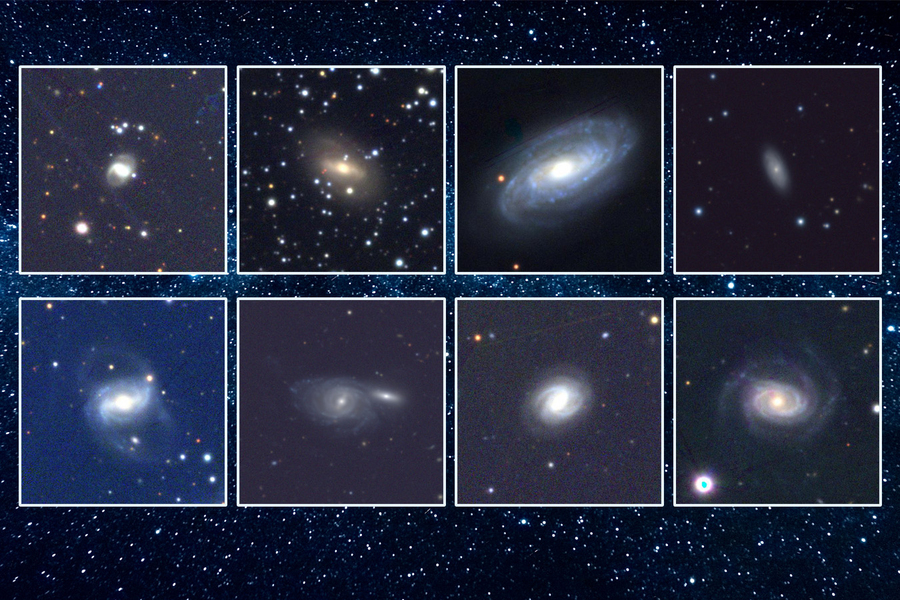
Masterson et al. identified 18 new tidal disruption events -- extreme instances when a nearby star is tidally drawn into a black hole and ripped to shreds. Image credit: Masterson et al., doi: 10.3847/1538-4357/ad18bb.

Masterson et al. identified 18 new tidal disruption events — extreme instances when a nearby star is tidally drawn into a black hole and ripped to shreds.

Image credit: Masterson et al., doi: 10.3847/1538-4357/ad18bb.

“The majority of the new sources don’t show up in optical bands,” said Megan Masterson, a graduate student in MIT’s Kavli Institute for Astrophysics and Space Research.

“If you want to understand tidal disruption events (TDEs) as a whole and use them to probe supermassive black hole demographics, you need to look in the infrared band.”

Masterson and her colleagues recently detected the closest TDE yet, by searching through infrared observations.

The discovery opened a new, infrared-based route by which astronomers can search for actively feeding black holes.

That first detection spurred the group to comb for more TDEs.

For their new study, the researchers searched through archival observations taken by NASA’s NEOWISE mission.

They looked through the mission’s archived observations using an algorithm that picks out patterns in infrared emissions — likely signs of a transient burst of infrared radiation.

They then cross-referenced the flagged transients with a catalog of all known nearby galaxies within 600 million light-years.

They found that infrared transients could be traced to about 1,000 galaxies.

The authors then zoomed in on the signal of each galaxy’s infrared burst to determine whether the signal arose from a source other than a TDE, such as an active galactic nucleus or a supernova.

After ruling out these possibilities, the team then analyzed the remaining signals, looking for an infrared pattern that is characteristic of a TDE — namely, a sharp spike followed by a gradual dip, reflecting a process by which a black hole, in ripping apart a star, suddenly heats up the surrounding dust to about 1,000 K before gradually cooling down.

The team’s analysis revealed 18 clean signals of tidal disruption events.

The authors took a survey of the galaxies in which each TDE was found, and saw that they occurred in a range of systems, including dusty galaxies, across the entire sky.

“If you looked up in the sky and saw a bunch of galaxies, the TDEs would occur representatively in all of them,” Masteron said.

“It’s not that they’re only occurring in one type of galaxy, as people thought based only on optical and X-ray searches.”

“It is now possible to peer through the dust and complete the census of nearby TDEs,” said Harvard University’s Professor Edo Berger.

“A particularly exciting aspect of this work is the potential of follow-up studies with large infrared surveys, and I’m excited to see what discoveries they will yield.”

The new discoveries help to resolve some major questions in the study of TDEs.

For instance, prior to this work, astronomers had mostly seen TDEs in one type of galaxy — a post-starburst system that had previously been a star-forming factory, but has since settled.

This galaxy type is rare, and astronomers were puzzled as to why TDEs seemed to be popping up only in these rarer systems.

It so happens that these systems are also relatively devoid of dust, making a TDE’s optical or X-ray emissions naturally easier to detect.

Now, by looking in the infrared band, astronomers are able to see TDEs in many more galaxies.

The team’s new results show that black holes can devour stars in a range of galaxies, not only post-starburst systems.

The findings also resolve a missing energy problem. Physicists have theoretically predicted that TDEs should radiate more energy than what has been actually observed.

But the authors now say that dust may explain the discrepancy. They found that if a TDE occurs in a dusty galaxy, the dust itself could absorb not only optical and X-ray emissions but also extreme ultraviolet radiation, in an amount equivalent to the presumed ‘missing energy.’

The 18 new detections also are helping astronomers estimate the rate at which TDEs occur in a given galaxy.

When they figure the new TDEs in with previous detections, they estimate a galaxy experiences a tidal disruption event once every 50,000 years.

This rate comes closer to physicists’ theoretical predictions. With more infrared observations, the team hopes to resolve the rate of TDEs, and the properties of the black holes that power them.

“People were coming up with very exotic solutions to these puzzles, and now we’ve come to the point where we can resolve all of them,” said MIT’s Dr. Erin Kara.

“This gives us confidence that we don’t need all this exotic physics to explain what we’re seeing.”

“And we have a better handle on the mechanics behind how a star gets ripped apart and gobbled up by a black hole. We’re understanding these systems better.”

  • The team’s paper was published in the Astrophysical Journal.
  • Megan Masterson et al. 2024. A New Population of Mid-infrared-selected Tidal Disruption Events: Implications for Tidal Disruption Event Rates and Host Galaxy Properties. ApJ 961, 211; doi: 10.3847/1538-4357/ad18bb

{ https://www.sci.news/ }

Hoe vind je dit bericht?
Geschreven door peter om 21:59 Stuur door

12 Archaeological Finds That Show the Bible is Real

12 Archaeological Finds That Show the Bible is Real

Story by Matty Jacobson 
12 Archaeological Finds That Show the Bible is Real
©Source: Wikimedia Commons
12 Archaeological Finds That Show the Bible is Real
Over the centuries, archaeologists have made discoveries that confirm the historical accuracy of the Bible. From artifacts to cities, here are 12 remarkable finds that provide evidence for the Bible's reliability.
Seal of King Hezekiah Discovered in Jerusalem
©Source: Wikimedia/Funhistory at English Wikipedia
Seal of King Hezekiah Discovered in Jerusalem
In 2009, archaeologists uncovered a seal belonging to King Hezekiah, who ruled Jerusalem in the 8th century BC. The artifact features his name and iconography, verifying the king's identity and reign as described in 2 Kings.

This rare discovery substantiates that Hezekiah was a real historical figure, confirming the Bible's account of his rule during a pivotal period. The artifact also validates the scripture's depiction of governmental practices at the time.
Ancient Biblical Scrolls Found Intact in Qumran Caves
©Source: Wikimedia/SteinsplitterBot
Ancient Biblical Scrolls Found Intact in Qumran Caves
In 1947, Bedouin shepherds stumbled upon jars in Qumran housing incredibly preserved Dead Sea Scrolls. These manuscripts contain Hebrew texts of every Old Testament book except Esther, verifying the Bible's historical integrity.

The Dead Sea Scrolls provide tangible proof that biblical accounts were recorded accurately, remaining unchanged for over a thousand years. They also open a window into early Judaism and the roots of Christianity.
Archaeologists Unearth Biblical Pool of Bethesda
©Source: Wikimedia/Fallaner
Archaeologists Unearth Biblical Pool of Bethesda
According to John 5:2-9, Jesus healed a paralyzed man by the pool with five porches in Bethesda. In the 19th century, archaeologists found this large reservoir near Jerusalem's Sheep Gate surrounded by four colonnaded porticoes. Coincidence? I think not.

This discovery of the rare pentagonal pool confirms the existence and recognition of Bethesda during the Second Temple times. It also verifies the setting of this Gospel narrative regarding one of Christ's miracles.
House of King David Reference Found on Ancient Inscription
©Source: Wikimedia/GeorgianJorjadze
House of King David Reference Found on Ancient Inscription
In 1993, archaeologists discovered the earliest extra-biblical reference to the dynasty of King David on the Tel Dan inscription. The fragment explicitly uses the phrase "House of David" validating the biblical King's line.

This artifact provides concrete evidence that David had a ruling family - a fact often disputed by a multitude of scholars worldwide. It confirms that the biblical account of a Davidic line of kings is factual, not mythical.
Ancient Remains of the Coastal City Tyre Unearthed
©Source: Wikimedia/NedaKewan
Ancient Remains of the Coastal City Tyre Unearthed
In Ezekiel 26, the prophet predicts the destruction of Tyre at the hands of Nebuchadnezzar. Excavations have revealed sieges, collapsed walls, and ruins - evidence of this demise.

With ancient cities, absence of evidence doesn't mean evidence of absence. In Tyre's case, the unequaled, lasting ruins testify to the Bible's account coming true concerning the city's great collapse.
Siloam Pool Where Jesus Healed Blind Man Identified
©Source: Wikimedia/Markbarnes
Siloam Pool Where Jesus Healed Blind Man Identified
According to the Gospel of John, Jesus commanded a blind man to wash the mud from his eyes in the Pool of Siloam located southeast of Jerusalem.

In 2004, archaeologists uncovered the remains of this very pool dating back to the Second Temple Period, providing geographical context for the Gospel account.
Inscription Bearing Name of Pontius Pilate Found at Herod's Palace
©Source: Wikimedia/BRBurton
Inscription Bearing Name of Pontius Pilate Found at Herod's Palace
In 1961, Italian archaeologists excavating Herod's palace near Bethlehem uncovered a limestone block bearing the inscription "Pontius Pilate, Prefect of Judea" confirming he governed during the time of Jesus. This artifact cements Pilate as a verifiable biblical figure who sentenced Jesus to crucifixion. It also supports the historical accuracy of crucifixion as a punishment used by the Romans during that period.

This discovery verifies Caesarea as Pilate's center of administration, where he would travel from Jerusalem. As part of Herod the Great's coastal palace, the identification of this stone lintel definitively proves Pilate and Herod both occupied this complex. The artifact's origin from this important site also anchors the pivotal biblical moments between these two rulers in a real geographic location during a volatile political era in Judea's history.
Hometown Proof: Remains of Nazareth Houses Excavated
©Source: Flickr/James Emery
Hometown Proof: Remains of Nazareth Houses Excavated
Some historians questioned Nazareth's existence since the New Testament mentions it as Jesus' childhood town. However, house remains were uncovered in 2009 proving a small village existed there in Jesus' time.

This evidence categorically refutes skepticism over whether Nazareth was still inhabited between the 7th century BC and the late 1st century AD when Jesus lived there. It bolsters the scriptural authenticity regarding Christ's upbringing.
Western Wall Ruins Demonstrate Jewish Temple Destruction
©Source: Wikimedia/SkybirdForever
Western Wall Ruins Demonstrate Jewish Temple Destruction
According to historical sources, the Second Temple fell in 70 AD after a Roman siege. The sole survivor - the Western Wall - still stands in Jerusalem's Old City testifying to this catastrophic biblical event.

The remains of Judaism's holiest site prove its documented destruction, providing visible confirmation regarding this pivotal moment. They also illustrate the Wailing Wall's enduring spiritual significance.
Seaside Town Capernaum is Confirmed as Jesus' Base
©Source: Wikimedia/ABRAHAM GRAICER
Seaside Town Capernaum is Confirmed as Jesus' Base
In the Gospels, Capernaum by the Sea of Galilee serves as Jesus' home base during his ministry. In 1838, American explorer Edward Robinson pinpointed its location, with excavations uncovering fishing equipment, houses, and roads.

Archaeological evidence substantiates Capernaum as a fishing village inhabited from the 2nd century BC to the 11th century AD. This proves Jesus could have made it central for performing miracles and preaching to crowds as recounted in Gospel passages.
Rare Limestone Inscription Confirms Pontius Pilate's Role
©Source: Wikimedia/Reinhard Dietrich
Rare Limestone Inscription Confirms Pontius Pilate's Role
In 1961, archaeologists recovered a partial inscription bearing "Pontius Pilate, Prefect of Judea" who authorized Jesus' crucifixion per the Bible. This stone lintel was reused in Herod's palace near Bethlehem.

As the only non-biblical reference to Pilate, it puts to rest doubts over his existence and governance in Judea. It also supports the scriptural timeline, placing his rule from 26 to 36 AD aligning with Jesus' death.
Evidence of Christ's Path on Via Dolorosa Street Unearthed
©Source: Shutterstock/DyziO
Evidence of Christ's Path on Via Dolorosa Street Unearthed
The winding Via Dolorosa through Jerusalem's Old City is believed to have been the route Jesus walked, carrying his cross. Excavations revealed flagged paving stones from Hadrian's time.

This discovery dates the pathway to the 1st century AD, coinciding with the Holy Week timeline. The unearthed street spans the entire Via Dolorosa, lending credence that Christ trod this path during his agonizing journey.
Nearby Garden Tomb Offers Evidence Supporting Christ's Burial
©Source: Golgotha
Nearby Garden Tomb Offers Evidence Supporting Christ's Burial
Just outside Jerusalem's Old City walls, a rock-cut tomb reflecting the 1st-century burial style resides in a garden setting. This site's location and features suggest it is a strong candidate for Jesus' grave.

While its precise authenticity is debated, this tomb's characteristics match John's description. Nearby rock features also point to evidence of crucifixion taking place there, indicating the site's credible link to Jesus' death and burial.
Artifacts Support Biblical Exodus Account of Enslaved Israelites
©Source: Alexandra Tranta
Artifacts Support Biblical Exodus Account of Enslaved Israelites
For years skeptics doubted the Biblical Exodus story due to the absence of artifacts in Egypt's archaeological records. However, evidence found confirms slavery practices, brick-making methods, and living conditions align with scriptural accounts.

These small fragments provide subtle clues that echo the biblical story of Hebrew enslavement by Egypt's pharaohs. They present strands in a complex historical tapestry that lends plausibility to the scriptural narrative.
Tangibility from Texts to Towns that Affirms Scripture
©Source: Wikimedia/Leon Brooks
Tangibility from Texts to Towns that Affirms Scripture
Spanning thousands of years, these 12 archaeological discoveries shed light on biblical events and figures that reshaped spiritual history. The unearthed ruins, artifacts, and inscriptions make tangible what was once only ink on parchment.

From the monumental Jerusalem temple remains to a fragment bearing Pilate's name, the physical evidence paints a portrait aligned with scriptural accounts - affirming its historical authenticity through the ages.
Hoe vind je dit bericht?
Geschreven door peter om 21:46 Stuur door

The legend of Area 51—and why it still fascinates us

The legend of Area 51—and why it still fascinates us

Secluded in the Nevada desert, the military base has long been associated with alien and UFO sightings. Here's the real history behind the conspiracy theories.

11-area-51
UFO believers look for suspicious spacecraft during a UFO and Vortex Tour in Sedona, Arizona. This composite image is a combination of six photographs taken in 2017 through night vision goggles.
PHOTOGRAPH BY COMPOSITE JENNIFER EMERLING

Each year, Area 51’s mythology draws tourists from around the world. People come to the air base near Rachel, Nevada, in hopes to catch a glimpse of otherworldly spacecrafts.

The legend of Area 51 has been discredited for years—but some of its history is based on true events. Here’s what you need to know about Area 51.

Where is Area 51?

About 120 miles northwest of Las Vegas, somewhere between mile markers 29 and 30 along Nevada’s “Extraterrestrial Highway” (State Highway 375), lies an unmarked dirt road. Although no buildings are visible from the asphalt, the track leads to Groom Lake or Homey Airport—as it’s called on civilian aviation maps.

For those in the know, this road leads to a military base with many unofficial names: Paradise Ranch; Watertown; Dreamland Resort; Red Square; The Box; and The Ranch; Nevada Test and Training Range; Detachment 3, Air Force Flight Test Centre (Det. 3, AFFTC); and Area 51.

09-area-51

Earthlings are welcome at the restaurant and bar Little A’Le’Inn in Rachel, Nevada—a popular stop on the pilgrimage to Area 51.

PHOTOGRAPH BY JENNIFER EMERLING

04-area-51

The UFO Research Center library opened to the public in 1992 as part of the UFO Museum in Roswell, New Mexico. The library holds an extensive collection of reference materials on the history of extraterrestrial encounters and related phenomena.
PHOTOGRAPH BY JENNIFER EMERLING

05-area-51

The UFO Research Center library opened to the public in 1992 as part of the UFO Museum in Roswell, New Mexico. The library holds an extensive collection of reference materials on the history of extraterrestrial encounters and related phenomena.
PHOTOGRAPH BY JENNIFER EMERLING

Before World War II, the area near Groom Lake was used for silver and lead mining. Once the war began, the military took over the remote area and began conducting research: mainly nuclear and weapons testing.

Why build a secret base in the desert?

06-area-51

About 200,000 people visit the International UFO Museum and Research Center in Roswell, New Mexico each year.
PHOTOGRAPH BY JENNIFER EMERLING

When the CIA started developing spy reconnaissance planes during the Cold War, then-CIA Director Richard Bissell, Jr. realised a private base was needed to build and test prototypes.

In 1955, he and Lockheed aircraft designer Kelly Johnson selected the secluded airfield at Groom Lake to be their headquarters. The Atomic Energy Commission added the base to the existing map of the Nevada Test Site and labeled the site Area 51.

Within eight months, engineers developed the U-2 plane, which could soar at an altitude of 70,000 feet—much higher than any other aircraft at the time. This allowed pilots to fly well above Soviet radar, missiles, and enemy aircraft. 

15-area-51

After a U-2 was shot down by a Soviet anti-air missile in 1960, the CIA began developing the next generation of spy plane at Area 51: the titanium-bodied A-12. Nearly undetectable to radar, the A-12 could fly across the continental United States in 70 minutes at 2,200 miles an hour. The plane also was equipped with cameras that could, from an altitude of 90,000 feet, photograph objects just one-foot long on the ground.

Aliens and UFOs become part of Area 51 lore

Area 51 became forever associated with aliens in 1989 after a man claiming to have worked there, Robert Lazar, gave an interview with a Las Vegas news station. Lazar claimed that Area 51 housed and studied alien spacecraft and that his job was to recreate the technology for military use.

10-area-51

The world’s only spaceship-shaped McDonald’s attracts UFO tourists in Roswell, New Mexico.
PHOTOGRAPH BY JENNIFER EMERLING

However, Lazar’s credentials were soon discredited: according to school records Lazar never went to the Massachusetts Institute of Technology or California Institute of Technology, as he claimed. At the time though, engineers at Area 51 were studying and recreating advanced aircraft—just aircraft acquired from other countries, not from outer space.

Nevertheless, with all of the high-tech flights out of Area 51—including more than 2,850 takeoffs by the A-12—reports of unidentifiable flying objects skyrocketed in the area.

08-area-51

An alien face is woven into the chain link fence outside a shopping center in Roswell, New Mexico.
PHOTOGRAPH BY JENNIFER EMERLING

“The aircraft’s titanium body, moving as fast as a bullet, would reflect the sun’s rays in a way that could make anyone think, UFO,” sources told journalist Annie Jacobsen for her 2011 book on Area 51.

Is the truth out there?

The government formally acknowledged the existence of Area 51 for the first time in 2013 when the CIA declassified documents about the development of the U-2 and A-12. Previously, locals knew something odd was happening in the desert but details were scarce and hard to verify.

Area 51 is still an active base—but the purpose it has served since the 1970s is a top-secret mystery. It will be a few more decades, at least, until current work is declassified and available to the public.

01-area-51

Two humans and their backseat stowaway drive to Roswell, New Mexico, famous for a supposed alien spaceship crash in 1947. Some conspiracy theorists believe remains from the Roswell crash were taken to Area 51, a secret military base near Rachel, Nevada, to study.
PHOTOGRAPH BY JENNIFER EMERLING

The site continues to be a pillar of U.S. alien mythology. A 2019 interview with Lazar on a popular podcast inspired a “Storm Area 51” event, in which about 6,000 people showed up in the desert to look for evidence of aliens. (It ultimately morphed into a festival celebrating all things alien.)

Even today, Area 51 draws believers and skeptics who frequent the small but thriving trail of alien-themed museums, restaurants, motels, parades, and festivals—all in hopes of discovering that the truth really is out there.

  • Photographer Jennifer Emerling has spent time photographing UFO culture in the American West. See more photos from the project on her website Welcome, Earthlings and her Instagram.
  • Editor's note: This story was originally published on September 20, 2019. It has been updated.
Hoe vind je dit bericht?
Geschreven door peter om 21:10 Stuur door

Area 51: A Nexus of Modern Mythology and Advanced Technology

ngcb1

In the heart of the Nevada desert lies a place shrouded in as much mystery as it is in secrecy: Area 51. This highly classified remote detachment of Edwards Air Force Base has been the focal point of numerous conspiracy theories, mainly concerning UFOs and extraterrestrial life. Among the most captivating figures in this saga is Bob Lazar, whose controversial claims have stirred public curiosity and skepticism alike.

The Allure of Area 51

Area 51’s mystique is not just a product of modern folklore; it is rooted in its clandestine history and groundbreaking technological developments. The base’s existence was unacknowledged by the U.S. government until 2013, fueling speculation about its purpose and contents. The secrecy surrounding Area 51 is primarily due to its role as a testing ground for advanced aircraft and surveillance technology during the Cold War.

Bob Lazar: Catalyst of the Area 51 Mythos

Bob Lazar catapulted Area 51 into the public eye in 1989 with his explosive claims. Lazar alleged that he was employed at a subsidiary site near Area 51, known as S-4, where he purportedly worked on reverse engineering extraterrestrial technology. He claimed this technology was harnessed from recovered alien spacecraft and mentioned the use of an element, Moscovium (Element 115), as a power source, an element that was not synthesized until 2003. Lazar’s descriptions of the aircraft’s interiors and his assertion of alien involvement in human affairs over millennia added layers to the Area 51 narrative.

Skepticism and Scrutiny

While Lazar’s assertions have been influential, they have not escaped scrutiny. Investigations into his educational and professional background raised questions, with no records supporting his claims of studying at MIT and Caltech. Lazar countered this by suggesting a government cover-up of his identity. Despite his story’s inconsistencies, he remains a prominent and divisive figure in the discussion of Area 51 and UFOs.

Area 51 in Popular Culture

Area 51’s intrigue has transcended into popular culture, notably depicted in films like “Independence Day.” The portrayal of Area 51 as a storage site for alien technology and spacecraft in the movie further entrenched its association with extraterrestrial phenomena in the public imagination.

Advanced Technology and Aircraft Testing

Beyond the tales of alien technology, Area 51’s true significance lies in its role as a testing site for groundbreaking aviation technology. Projects like the U-2 spy plane, A-12, and the F-117 Nighthawk stealth fighter were all developed and tested here. The base has been pivotal in advancing the United States’ aerial and reconnaissance capabilities, particularly during the tense periods of the Cold War.

The Expansion of Area 51

Recent satellite imagery indicates that Area 51 has expanded since the end of the Cold War. This suggests its ongoing importance in military and aerospace development, likely focusing on new types of drone aircraft and possibly other advanced technologies.

VIDEO:

  • Area 51: Aliens, UFOs, Bob Lazar & Advanced Technology

Area 51 remains an enigmatic symbol at the intersection of fact and fiction. While it continues to be a hotbed for conspiracy theories and extraterrestrial folklore, its real contributions to technology and national security are undeniable. The base stands as a testament to human ingenuity and the endless pursuit of technological advancement, even as it keeps fueling our imagination about the unknown and the unexplained. As long as its full history and current operations remain concealed, Area 51 will continue to captivate and mystify as a true ‘Dreamland’.

{ https://www.latest-ufo-sightings.net/ }

Hoe vind je dit bericht?
Geschreven door peter om 20:38 Stuur door

Hoe veel verschillen wij van eerdere mensensoorten?

Hoe veel verschillen wij van eerdere mensensoorten?

Hoe veel verschillen wij van eerdere mensensoorten?

©Getty Images

Hoe veel verschillen wij van eerdere mensensoorten?
Gefeliciteerd Homo sapiens! We zijn erin geslaagd om niet uit te sterven en hebben het goed gedaan, in tegenstelling tot andere archaïsche mensensoorten. In tegenstelling tot wat vaak wordt gedacht, verliep onze evolutie niet lineair. In feite leefden er in dezelfde periode andere mensensoorten naast ons. Wij Homo sapiens vermengden ons zelfs met sommigen van hen. Toch waren wij uiteindelijk de enige overlevenden.

Maar wat onderscheidt deze vroege mensensoorten van ons? Klik door de galerij om meer te ontdekken.

Australopithecus afarensis

©Getty Images

Australopithecus afarensis
Het geslacht Australopithecus is een bekende voorouder van de moderne mens. Onder hen werd de soort Australopithecus afarensis beroemd toen Lucy werd ontdekt, een skelet dat werd gevonden in 1974. (afbeelding).

Australopithecus afarensis

©Getty Images

Australopithecus afarensis
De Australopithecus afarensis leefde ongeveer 3 tot 3,7 miljoen jaar geleden in Oost-Afrika. Ze hadden een tenger postuur en kleine hersenen. Hun lengte varieerde van 96 cm tot 165 cm en hun gewicht van 25-64 kg.

Australopithecus afarensis

©Getty Images

Australopithecus afarensis
Fossielen van de Australopithecus afarensis werden ontdekt in Kenia, Ethiopië en Tanzania. Deze soort was voornamelijk vegetariër.

Homo habilis

©Getty Images

Homo habilis
De Homo habilis, de vroegste mensensoort die tot het geslacht "homo" behoort, stamt af van de Australopithecus. De Homo habilis kwam voor in Zuid- en Oost-Afrika en leefde ongeveer 1,4 tot 2,3 miljoen jaar geleden.

Homo habilis

©Getty Images

Homo habilis
Vergeleken met de Australopithecus zagen ze er meer gepolijst en gebogen uit, maar toch bleven ze kleiner dan de huidige mens, met een gemiddeld gewicht van ongeveer 34 kg.

Homo habilis

©Getty Images

Homo habilis
In tegenstelling tot hun voorgangers at de Homo habilis vlees. Ze kregen erkenning voor hun vaardigheden in het maken van gereedschap, waardoor ze hun naam kregen. Het betekent letterlijk "handige mens".

Homo rudolfensis

©Getty Images

Homo rudolfensis
Er werd slechts één schedel opgegraven in het Turkana-bekken in Kenia, en later een onderkaak in Malawi, beide zeldzame fossielen van deze oude mensensoort. De gevonden schedel levert het bewijs van grotere hersenen vergeleken met de Homo habilis.

Homo rudolfensis

©Getty Images

Homo rudolfensis
Er is nog steeds een wetenschappelijke discussie gaande over de classificatie van Homo rudolfensis binnen het homo genus. Sommigen beweren dat het een Australopithecus met grotere hersenen kan zijn geweest. Deze soort bestond ongeveer 1,7 miljoen jaar geleden en viel samen met Homo habilis en Homo erectus.

Homo erectus

©Getty Images

Homo erectus
In tegenstelling tot het vorige voorbeeld zijn er veel fossielen van de Homo erectus, die dateren van 110.000 tot 1,89 miljoen jaar geleden. De Homo erectus was de mensensoort die het langst overleefde!

Homo erectus

©Getty Images

Homo erectus
Ze hadden een groter lichaam en kleinere tanden dan de Homo habilis en leken meer op de moderne mens. Ze hadden echter langere benen en kortere armen dan wij.

Homo erectus

©Getty Images

Homo erectus
De Homo erectus, die ongeveer 68 kg woog, was ongeveer net zo groot als wij en was tussen de 150 cm en 180 cm. Ze waren de eerste mens die zich buiten Afrika waagden.

Homo ergaster

©Getty Images

Homo ergaster
De Homo ergaster bewoonde Oost- en Zuidelijk Afrika van 1,4 tot 1,9 miljoen jaar geleden. Net als bij de Homo rudolfensis is er een voortdurende wetenschappelijke discussie gaande over de vraag of de Homo ergaster een aparte soort is of een ondersoort van de Homo erectus.

Homo ergaster

©Getty Images

Homo ergaster
Homo ergaster en Homo erectus leefden in dezelfde periode naast elkaar op aarde. De Homo ergaster had een magerder postuur dan de Homo erectus, maar ze aten hetzelfde, hadden dezelfde levensstijl en gebruikten allebei gereedschap.

Homo floresiensis

©Getty Images

Homo floresiensis
De Homo floresiensis werd in 2003 door wetenschappers gevonden in de Liang Bua-grot op het eiland Flores, in Indonesië. Aangenomen wordt dat deze oude mensensoort ongeveer 50.000 tot 100.000 jaar geleden bestond.

Homo floresiensis

©Getty Images

Homo floresiensis
Ze waren veel kleiner dan de huidige mens, maar toch waren het bekwame jagers. Archeologen ontdekten jachtgereedschap dat werd gebruikt om een uitgestorven olifantensoort, de stegodon, te vangen. Onderzoekers suggereren dat deze mensen, waarvan wordt aangenomen dat ze afstammen van de Homo erectus, zich hebben aangepast aan het leven op een eiland door tot dwergen te evolueren.

Homo heidelbergensis

©Getty Images

Homo heidelbergensis
De Homo heidelbergensis bewoonde verschillende gebieden over de hele wereld van 200.000 tot 600.000 jaar geleden. Fossielen suggereren dat ze oostelijk en zuidelijk Afrika, Europa en mogelijk China hebben verkend.

Homo heidelbergensis

©Getty Images

Homo heidelbergensis
Zij waren de eerste mensensoort die in staat was om in koudere omgevingen te leven. Ze hadden dan ook aanleg voor het maken van vuur, het ontdekken en bouwen van schuilplaatsen en het maken van gereedschap en wapens zoals speren.

Homo antecessor

©Getty Images

Homo antecessor
De eerste fossielen van de Homo antecessor werden tussen 1994 en 1996 opgegraven in Atapuerca, Spanje. Deskundigen hebben hun leeftijd vastgesteld op 800.000 tot 1,2 miljoen jaar.

Homo antecessor

©Getty Images

Homo antecessor
De Homo antecessor vertoonde, in tegenstelling tot andere voorouders, overeenkomsten met de moderne mens, zoals hun gezichtsstructuur en jachtgewoonten.

Homo naledi

©Getty Images

Homo naledi
In 2015 werden in het grottenstelsel van Rising Star in Zuid-Afrika in totaal 1.550 fossielen ontdekt. Deze fossielen behoorden toe aan een soort die bekend staat als Homo naledi. Wetenschappers schatten dat deze soort tussen 236.000 en 335.000 jaar geleden bestond.

Homo naledi

©Getty Images

Homo naledi
Ze hadden kenmerken die leken op die van Australopithecus en mensen, met kleine hoofden en hersenen die leken op die van ons.

Homo neanderthalensis

©Getty Images

Homo neanderthalensis
De Neanderthalers, mogelijk de bekendste oude mensensoort, leefden ongeveer 24.000 tot 200.000 jaar igeleden. Ze worden vaak afgeschilderd als "holbewoners" en er wordt aangenomen dat ze de meest verwante uitgestorven voorouders van onze soort zijn.

Homo neanderthalensis

©Getty Images

Homo neanderthalensis
Neanderthalers waren kleiner dan de moderne mens, maar ze hadden een sterk postuur. Ze woonden in Eurazië tijdens de ijstijden en pasten zich aan het koude klimaat aan. Neanderthalers blonken uit in het maken van geavanceerde wapens, gereedschappen, kleding en het bouwen van schuilplaatsen.

Homo neanderthalensis

©Getty Images

Homo neanderthalensis
Neanderthalers waren niet alleen intelligenter dan andere soorten, maar ze hadden ook grotere hersenen. Bovendien vertoonden ze culturele uitingen zoals rituele begrafenissen, kunst en muziekinstrumenten.

Homo neanderthalensis

©Getty Images

Homo neanderthalensis
Hoewel de Neanderthalers uitgestorven zijn, bestaat hun genetisch materiaal nog steeds bij moderne niet-Afrikaanse mensen door kruisingen.

Denisovans

©Getty Images

Denisovamens
In 2010 werden de overblijfselen van deze bijzondere mensensoort ontdekt in een Siberische grot. Er wordt geschat dat ze ongeveer 400.000 jaar geleden leefden.

Denisovans

©Getty Images

Denisovamens
Er wordt gedacht dat de Denisovamens zich van de Neanderthalers hebben afgescheiden en niet naar Europa, maar naar Azië zijn gemigreerd. Ze vermengden zich ook met de huidige mens en zijn mogelijk de laatste archaïsche mensensoort die uitstierf.

Homo longi

©Getty Images

Homo longi
In 1933 werd in Harbin, in het noordoosten van China, een schedel ontdekt. Deze schedel, die bekend staat als de "Drakenman", was groter dan de moderne mens en had duidelijke kenmerken zoals vierkante oogkassen en prominente wenkbrauwranden.

Homo longi

©Getty Images

Homo longi
In 2021 erkenden wetenschappers het uiteindelijk als een afzonderlijke mensensoort. Het fossiel wordt geschat op ongeveer 146.000 jaar oud. De classificatie van Homo longi als soort is echter nog steeds omstreden, waarbij sommige wetenschappers suggereren dat hij tot de Denisovamens behoort.

Bronnen:

  • (Grunge)

{ http://starsinsider.com/ }

Hoe vind je dit bericht?
Geschreven door peter om 17:38 Stuur door

Chimera: Chinese wetenschappers ontwikkelen materiaal dat onzichtbaar is

Chimera: Chinese wetenschappers ontwikkelen materiaal dat onzichtbaar is

Artikel door Dominique Dewitte
Chimera: Chinese wetenschappers ontwikkelen materiaal dat onzichtbaar is
© Aangeboden door Business AM

Samengevat. Chinese wetenschappers hebben een nieuw materiaal gemaakt dat lijkt op de huid van drie dieren: de kameleon, glaskikker en baardagaam. Het materiaal dat de naam Chimera meekreeg, zou naar eigen zeggen dingen onzichtbaar maken voor bijvoorbeeld radar en camera’s.

Deze uitvinding kan gebruikt worden om dingen te verbergen in een militaire omgeving, of in de natuur om dieren te bestuderen zonder ze te storen. Het is een grote stap vooruit in het maken van dingen die onzichtbaar zijn.

In het nieuws. Onderzoekers van twee universiteiten in China hebben dit bedacht. Ze gebruikten ideeën van drie verschillende dieren, schrijft de South China Morning Post.

  • De onderzoekers schrijven over hun uitvinding in het vakblad Proceedings of the National Academy of Sciences. Ze gebruikten speciale materialen die licht en warmte anders weerkaatsen.
  • Deze nieuwe uitvinding maakt gebruik van speciale stoffen die licht en warmte op een slimme manier kunnen sturen.

Zoom in. De uitvinding lijkt op de huid van de kameleon, glaskikker en baardagaam. Deze dieren kunnen van kleur veranderen, doorzichtig worden of hun warmte regelen.

  • Chimera was een mythisch beest dat drie verschillende dieren combineerde – een leeuw, een geit en een slang.
  • De uitvinders hebben ervoor gezorgd dat het materiaal bijna niet te zien is voor camera’s die warmte meten.
  • Een experimentele versie van de Chimera metasurface werd ontwikkeld in een proces van vijf stappen, waaronder het gebruik van plastic en metalen gaas.

Zoom out. Volgens de onderzoekers zijn de potentiële toepassingen van de technologie enorm, van militair gebruik tot natuurbehoud.

  • In het leger kan Chimera helpen om spullen of mensen onzichtbaar te maken in verschillende gebieden. Zo kunnen ze niet opgemerkt worden door radars, warmtecamera’s en gewone camera’s, zeggen de wetenschappers.
  • Deze uitvinding kan ook in de natuur worden aangewend. Bijvoorbeeld voor het bestuderen van dieren zonder ze te storen.
Hoe vind je dit bericht?
Geschreven door peter om 16:23 Stuur door

James Webb telescope discovers gargantuan geyser on Saturn's moon, blasting water hundreds of miles into space

James Webb telescope discovers gargantuan geyser on Saturn's moon, blasting water hundreds of miles into space

An illustration of NASA's Cassini orbiter soaring through a giant vapor jet over the moon Enceladus
An illustration of NASA's Cassini orbiter soaring through a giant vapor jet over the moon Enceladus 
(Image credit: NASA/JPL-Caltech)
Scientists caught Saturn's icy moon Enceladus spraying a "huge plume" of watery vapor far into space — and that plume likely contains many of the chemical ingredients for life. 
Scientists detailed the eruption — glimpsed by the James Webb Space Telescope (JWST) in November 2022 — at a conference at the Space Telescope Science Institute in Baltimore on May 17. 

"It's immense," Sara Faggi, a planetary astronomer at NASA's Goddard Space Flight Center, said at the conference, according to Nature.com. According to Faggi, a full research paper on the massive plume is pending.

Related: 

This isn't the first time scientists have seen Enceladus spout water, but the new telescope's wider perspective and higher sensitivity showed that the jets of vapor shoot much farther into space than previously realized — many times deeper, in fact, than the width of Enceladus itself. (Enceladus has a diameter of about 313 miles, or 504 kilometers.)

Scientists first learned of Enceladus' watery blasts in 2005, when NASA's Cassini spacecraft caught icy particles shooting up through large lunar cracks called "tiger stripes." The blasts are so powerful that their material forms one of Saturn's rings, according to NASA. 

Analysis revealed that the jets contained methane, carbon dioxide and ammonia — organic molecules containing chemical building blocks necessary for the development of life. It's even possible that some of these gases were produced by life itself, burping out methane deep beneath the surface of Enceladus, an international team of researchers posited in research published last year in The Planetary Science Journal.

Water is another piece of evidence in the case for possible life on Enceladus. Enceladus is totally encrusted in a thick layer of water ice, but measurements of the moon's rotation suggest that a vast ocean is hidden beneath that frozen crust. Scientists think the spurts of water sensed by JWST and Cassini come from hydrothermal vents in the ocean floor — a hypothesis supported by the presence of silica, a common ingredient in planetary crusts, in the vapor plumes. 

NASA scientists are discussing future return missions to seek out signs of life on Enceladus. The proposed Enceladus Orbilander would orbit the moon for about six months, flying through its watery plumes and collecting samples. Then, the spacecraft would convert into a lander, descending on the surface of the icy moon. Orbilander would carry instruments to weigh and analyze molecules, as well as a DNA sequencer and a microscope. Cameras, radio sounders and lasers would remotely scan the moon's surface, The Planetary Society reported.

Another proposed mission involves sending an autonomous "snake robot" into the watery depths below Enceladus' surface. The robot, dubbed the Exobiology Extant Life Surveyor, features cameras and lidar on its head to help it navigate the unknown environment of Enceladus' ocean floor. 

{ https://www.livescience.com/ }

Hoe vind je dit bericht?
Geschreven door peter om 00:59 Stuur door

Two US Marines Claimed Corbell’s Huge Mojave Triangle UFO Is Definitely Not Flares

Mojave Triangle UFO Twentynine Palms

Two US Marines Claimed Corbell’s Huge Mojave Triangle UFO Is Definitely Not Flares

UFO investigator and filmmaker Jeremy Corbell released another captivating footage for UFO enthusiasts. Along with investigative journalist George Knapp, Corbell claims to obtain spectacular footage of a UFO with five shiny lights in the V-formation as in the “Phoenix Lights,” hovering over a Marine base in the California desert.

Corbell has provided a detailed description of this incident and considered it a “Mass UFO sighting” as it involves a substantial amount of diverse documentation, including videos, photos, and recorded direct eyewitness testimonies from active military personnel. But still, it carries numerous doubts. Before discussing them, let us first take a look at the sighting details shared by Corbell.

According to Corbell, the incident occurred on the evening of April 20, 2021, at the Marine Corps Air Ground Combat Center Twentynine Palms – Camp Wilson, a significant United States military base. The sighting lasted approximately 10 minutes and was witnessed by more than 50 people. They consistently reported observing a triangular-shaped craft during the encounter. It did not make any sound and was reported to be the size in the range from a football field to that of a three-bedroom, two-story house.

Corbell explained that he received a tip about the incident, prompting him to investigate further. Within a remarkable 36 hours after the event, he managed to connect with individuals who were present at the base during the sighting. He compared the sighting to the famous Phoenix Lights incident, citing the resemblance of a perfect V-shaped row of lights.

The craft was first observed at 8:20 pm PST and after a few minutes of observation, witnesses captured it on their iPhones. At 8:29 p.m., another remarkable occurrence took place. Illumination rounds were discharged into the night sky, above the UAP craft, leaving a visible trace and providing additional evidence of the incident. Astonishingly, at 8:30 pm, witnesses reported that the UAP seemingly “blinked out” or disappeared, just moments before the illumination rounds approached the vicinity of the unidentified craft.

Skeptical of military involvement, Corbell shared the first video of the sighting on his podcast “Weaponized” and discussed it in detail with Knapp. The footage captured the astonishment and confusion of witnesses as they saw the unidentified object in the sky. While the video did not clearly show the body of the craft, the audio and eyewitness accounts confirmed its presence.

Corbell shared the second video, which featured the reactions of U.S. Marines who were present. Their comments reflected a mix of bravado and genuine awe, acknowledging that something extraordinary was unfolding before their eyes, says Knapp. They ruled out the possibility of flares and recognized the uniqueness of the situation.

Corbell Rules Out Flares As An Explanation For UFO

Corbell debunks the theory that the sighting could be attributed to flares. He points out that the lights observed in the footage were a different color, more reddish, compared to the illuminating flares typically used, which are brighter and have a different hue. Flares also descend on parachutes, while the unidentified craft remained stationary for the duration of the sighting, with only slight forward movement at one point.

Although the triangle shape of the craft is not visible in the video, eyewitnesses on the ground reported seeing it. In a stroke of luck, another detachment of Marines shot up illuminating flares in an attempt to get a better look at the craft. The subsequent footage shows the descent of these flares onto the object, providing a side-by-side comparison between the appearance of flares and the lights observed on the craft.

Interestingly, as the flares descend, the lights on the craft appear to blink out in succession. However, according to eyewitnesses, the entire craft itself disappeared, as they could see more clearly than the footage captured.

Corbell raises an intriguing question about the behavior of the craft. If it is intelligently controlled, how might it react to the presence of flares being deployed above it to illuminate the area? This line of inquiry suggests that the craft’s response, or lack thereof, could indicate an advanced level of control and intelligence behind its movements.

Interview with Two US Marines who saw UFO

Corbell conducted a groundbreaking interview with two active-duty US Marines who witnessed this remarkable UFO sighting. The conversation, which was recorded and obtained by Corbell, provides a gripping firsthand account of the event, offering a glimpse into the experiences of these Marines during the encounter.

Taking place approximately 36 hours after the initial sighting, the interview captures the raw emotions and astonishment felt by the Marines as they recall the extraordinary incident. Both Marines, one serving as a mortar man and the other as artillery, share their perspectives on the sighting, revealing intriguing details about the event.

Corbell begins the conversation by asking for specific details, such as the location and time of the sighting. The Marines state that the event occurred around 8:25 pm near 29 Palms, California, adjacent to Camp Wilson, a Marine base. The Marines mention that the sighting attracted considerable attention, with over 50 people gradually gathering to witness the mysterious lights that seemed to appear out of nowhere.

MOJAVE TRIANGLE UAP Illumination rounds(Top) were fired to show a better view of the UFO (Below). Credit: Jeremy Corbell

When asked about people’s reactions to the sighting, the Marines explain that the majority of witnesses were unable to identify the object. They note that, despite being military personnel, the sighting was unprecedented for them and left everyone puzzled.

Corbell then inquires about the evidence the Marines captured, referring to the video and photo that were shared with him. The Marines confirm that the footage was indeed recorded by one of them, emphasizing that the lights remained stationary for a solid 10 minutes. They assert that the lights were not flares, as flares typically descend rather than stay in one spot for an extended period.

In response to Corbell’s question about their belief in the presence of a craft, one Marine confidently states that he would have to believe so, referencing a photo he took showing a black triangular shape beneath the lights. He dismisses the possibility of the object being flares or illumination rounds based on his experience working with artillery. The other Marine explains that the size, color, and behavior of the lights were unlike anything they had encountered before, drawing comparisons to their own illumination rounds.

Read also:

Corbell seeks further clarification, asking if the craft was hovering silently. Both Marines affirm that there was absolutely no sound, emphasizing the stationary nature of the object. When pressed about the size, one Marine compares it to a stealth bomber, although acknowledging that a stealth bomber cannot hover. He suggests that the object might have been even larger than a stealth bomber.

As the conversation progresses, the Marines recount additional intriguing details. They describe objects that emerged from the craft and circled it shortly before it went dark. They explain that these objects were the orange lights seen in the footage, which were actually the illumination rounds discharged above the craft. After the lights disappeared, helicopters began rapidly approaching the area, circling it extensively. The Marines note the presence of a convoy of over 60 trucks that also headed towards the site.

Corbell concludes the interview by asking the Marines to reflect on their experience. One Marine admits that he cannot determine what exactly they witnessed, as it was unlike anything he or his comrades had ever seen before. However, he firmly states that it was not anything recognizable from the US military and believes it was a UFO. The other Marine expresses his curiosity, emphasizing that the event remains highly documented, yet its nature and origin remain a mystery.

Another explanation by John Greenewald, Jr.

Renowned researcher John Greenewald, Jr. offers an alternative explanation for the UFO sighting over Twentynine Palms. Drawing from his experience working on the television show UFO Hunters, Greenewald suggests that the event could be linked to military training exercises rather than an unidentified aerial phenomenon.

Greenewald recalls his time on the show, where they encountered numerous cases similar to this sighting. To provide context, he highlights the Weapons and Tactics Instructor (WTI) course 2-21 taking place at the Marine Corps Air Ground Combat Center on the same date as the UFO sighting. He presents photographs released by the Department of Defense (DoD) that depict military aircraft on runways during the training exercise.

Greenewald refers to nighttime videos released by the DoD, recorded on April 20, 2021, which showcase the significant military activity in the area. He emphasizes that the DoD’s official release clearly indicates the date and location of the videos. Greenewald acknowledges the presence of live training ranges in the Twentynine Palms area but notes that there was no mention of the UFO event coinciding with the military training exercise in the podcast transcript he examined.

Drawing from his past experiences, Greenewald suggests that many incidents occurring over military training ranges are often misinterpreted as UFOs when they are more likely related to military activities. He recalls solving cases involving Air Force One sightings, military aircraft, and drones, which were initially thought to be UFOs. Greenewald explains that the extensive work done behind the scenes often reveals the true nature of such incidents.

To provide further evidence, Greenewald refers to the additional context provided by The Black Vault, sourced from submitted material. He mentions the presence of B-Roll footage showing five aircraft flares being shot in night vision, which resembles the lights observed in the “UAP” videos. Greenewald questions the coincidence of both the flares and the UFO event occurring on the same date.

Greenewald concludes by sharing the Department of Defense’s response to the claims. A spokesperson confirms the presence of military aviation assets and the ongoing Weapons and Tactics Instructor Course in Twentynine Palms at the time. However, they state that there is no record of communication or allocation of resources to investigate a UAP sighting, and the authenticity of the report cannot be verified.

While Greenewald’s explanation points to military training exercises as a plausible cause for the UFO sighting, further investigation and analysis are necessary to reach a definitive conclusion.

Both Jeremy Corbell and John Greenewald, Jr. present their respective explanations based on their knowledge and perspectives. Corbell highlights the firsthand accounts of eyewitnesses, including active military personnel, who describe a triangular craft with specific characteristics and behavior. He emphasizes the mass UFO sighting and the subsequent air and ground response, suggesting that the event warrants further investigation.

On the other hand, Greenewald provides an alternative perspective grounded in his experience working on UFO-related projects and analyzing military activities. He draws attention to the military training exercises taking place at the same time as the sighting and presents evidence, such as photographs and videos released by the Department of Defense, suggesting that the lights observed could be related to flares and other military operations.

Ultimately, it is up to us to evaluate the evidence and draw our own conclusions. Both Corbell and Greenewald contribute to the ongoing discussion surrounding UFO sightings, offering differing viewpoints that highlight the need for continued research and analysis in order to better understand these phenomena.

{ https://www.howandwhys.com/ }

Hoe vind je dit bericht?
Geschreven door peter om 00:44 Stuur door

Perseverance is Definitely Inside an Ancient Lake on Mars

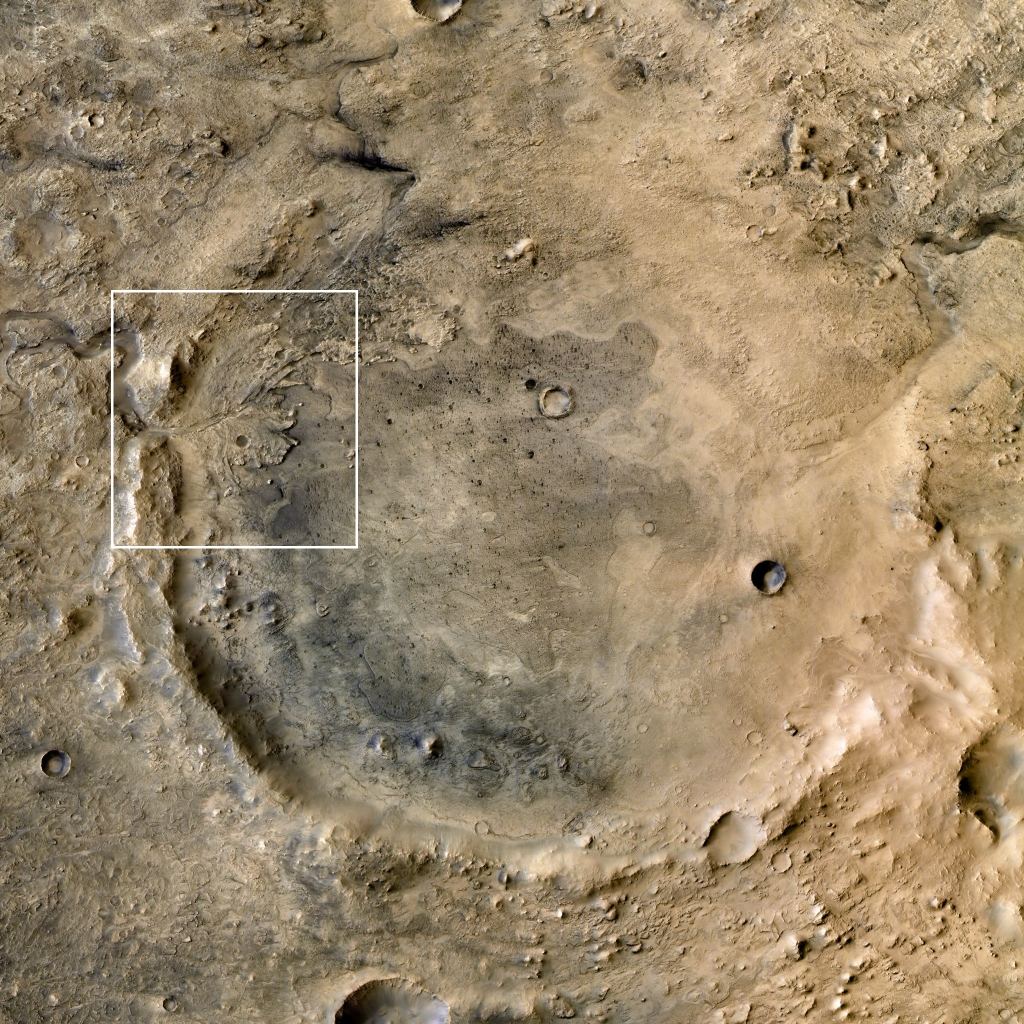
Aerial view of Jezero Crater on Mars

Jezero Crater on Mars. Credit: NASA/JPL-Caltech/ASU

Perseverance is Definitely Inside an Ancient Lake on Mars

The search for life on alien worlds has captivated us for hundreds of years. In some respect, the search for life has expanded to the search for water since it is not unreasonable to assume if there is water then there is a good chance there is life too. When NASA selected the landing site for Perseverance, they were looking for such a body of water and settled upon the Jezero Crater. Images from orbiters reveal a crater that looks like it has been filled with water in the past but further investigations were needed to confirm. Now it seems, Perseverance has risen to the challenge. 

Perseverance is a car sized rover that arrived on Mars on 18 February 2021 and carried with it the innovative Ingenuity helicopter, the first powered aircraft on another world. The main objective of the mission was to identify ancient Martian environments capable of supporting life and if possible, finding evidence of ancient microbial life through collecting rock and soil samples. Since its arrival in 2021, the rover has been travelling around the 50km wide crater studying the geology and atmosphere as it goes. 

Mars Perseverence rover sent back this image of its parking spot during Mars Solar Conjunction. Courtesy NASA/JPL-Caltech Mars Perseverence rover sent back this image of its parking spot during Mars Solar Conjunction. Courtesy NASA/JPL-Caltech

A paper recently published in Science Advances journal declares that the crater was indeed filled at some point in its geological past, with water! More that it has deposited layers of sediments on the floor of the crater which have gone through periods of erosion as the lake shrank but are now visible in space images of the region. 

Although there have been nearly 3 years of operation on Mars, the really interesting stuff occurred between May and December 2022 when Perseverance drove from the crater floor onto the ancient river delta, a region believed to be 3 billion years old. During its journey, Perseverance used RIMFAX (the Radar Imager for Mars’ Subsurface Experiment) to shoot radar signals into the ground every 10cm. The pulses reflected from depths of about 20metres from below the surface showing that the base of the sediment was here and they had located the top of the buried crater. 

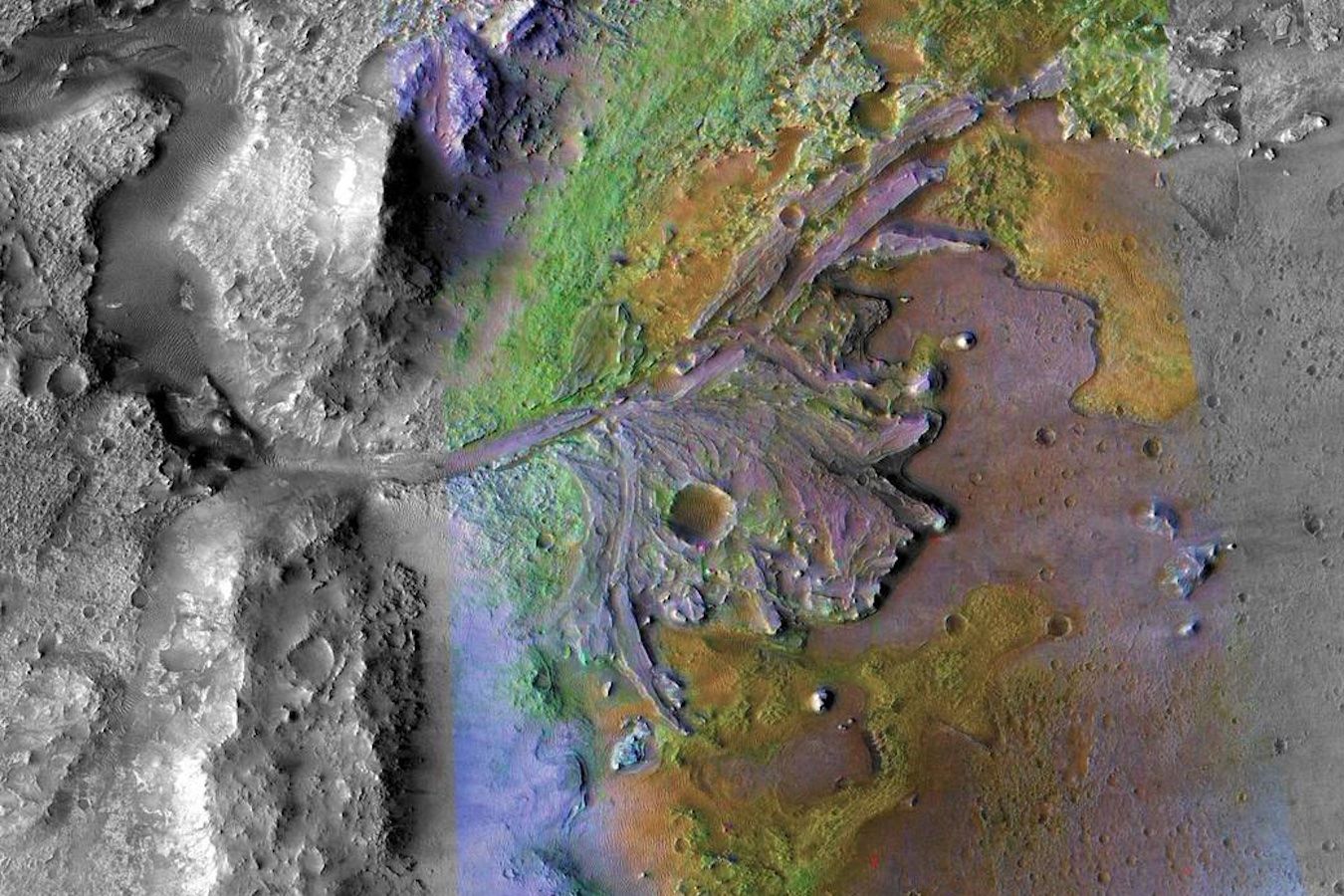
The Jezero Crater and delta. Credit NASA

The data from RIMFAX showed sediment from two distinct periods bordered by periods of erosion as the environmental factors affected the sediments. The team reported that the original crater floor was not completely flat and that erosion must have taken place prior to the deposition of the sediments in the lake. 

Despite the discovery of sediments, the team have yet to identify any fossilised remains or primitive life. The journey however has just begun. Over the last few decades we have found mounting evidence that water is common across the universe. It seems to that the processes we see on Earth are also common. Perhaps then we may be permitted to assume that other processes are replicated across the Cosmos, perhaps those that lead to the evolution of life! Time will tell if this latter assumption plays out. 

Source : 

{ https://www.universetoday.com/ }

Hoe vind je dit bericht?
Geschreven door peter om 23:59 Stuur door

Meer van UFO'S of UAP'S, ASTRONOMIE, RUIMTEVAART, ARCHEOLOGIE, OUDHEIDKUNDE, SF-SNUFJES EN ANDERE ESOTERISCHE WETENSCHAPPEN - DE ALLERLAATSTE NIEUWTJES

↑ Terug naar de berichten