Naar de inhoud

UFO'S of UAP'S, ASTRONOMIE, RUIMTEVAART, ARCHEOLOGIE, OUDHEIDKUNDE, SF-SNUFJES EN ANDERE ESOTERISCHE WETENSCHAPPEN - DE ALLERLAATSTE NIEUWTJES

UFO's of UAP'S in België en de rest van de wereld
akke.beakke.be
Ontdek de Fascinerende Wereld van UFO's en UAP's: Jouw Bron voor Onthullende Informatie! Ben jij ook gefascineerd door het onbekende? Wil je meer weten over UFO's en UAP's, niet alleen in België, maar over de hele wereld? Dan ben je op de juiste plek! België: Het Kloppend Hart van UFO-onderzoek In België is BUFON (Belgisch UFO-Netwerk) dé autoriteit op het gebied van UFO-onderzoek. Voor betrouwbare en objectieve informatie over deze intrigerende fenomenen, bezoek je zeker onze Facebook-pagina en deze blog. Maar dat is nog niet alles! Ontdek ook het Belgisch UFO-meldpunt en Caelestia, twee organisaties die diepgaand onderzoek verrichten, al zijn ze soms kritisch of sceptisch. Nederland: Een Schat aan Informatie Voor onze Nederlandse buren is er de schitterende website www.ufowijzer.nl, beheerd door Paul Harmans. Deze site biedt een schat aan informatie en artikelen die je niet wilt missen! Internationaal: MUFON - De Wereldwijde Autoriteit Neem ook een kijkje bij MUFON (Mutual UFO Network Inc.), een gerenommeerde Amerikaanse UFO-vereniging met afdelingen in de VS en wereldwijd. MUFON is toegewijd aan de wetenschappelijke en analytische studie van het UFO-fenomeen, en hun maandelijkse tijdschrift, The MUFON UFO-Journal, is een must-read voor elke UFO-enthousiasteling. Bezoek hun website op www.mufon.com voor meer informatie. Samenwerking en Toekomstvisie Sinds 1 februari 2020 is Pieter niet alleen ex-president van BUFON, maar ook de voormalige nationale directeur van MUFON in Vlaanderen en Nederland. Dit creëert een sterke samenwerking met de Franse MUFON Reseau MUFON/EUROP, wat ons in staat stelt om nog meer waardevolle inzichten te delen. Let op: Nepprofielen en Nieuwe Groeperingen Pas op voor een nieuwe groepering die zich ook BUFON noemt, maar geen enkele connectie heeft met onze gevestigde organisatie. Hoewel zij de naam geregistreerd hebben, kunnen ze het rijke verleden en de expertise van onze groep niet evenaren. We wensen hen veel succes, maar we blijven de autoriteit in UFO-onderzoek! Blijf Op De Hoogte! Wil jij de laatste nieuwtjes over UFO's, ruimtevaart, archeologie, en meer? Volg ons dan en duik samen met ons in de fascinerende wereld van het onbekende! Sluit je aan bij de gemeenschap van nieuwsgierige geesten die net als jij verlangen naar antwoorden en avonturen in de sterren! Heb je vragen of wil je meer weten? Aarzel dan niet om contact met ons op te nemen! Samen ontrafelen we het mysterie van de lucht en daarbuiten.

Archief

Area 51 Insider Witnesses: Disc-Shaped UFOs and Extraterrestrial Encounters

Area 51 Insider Witnesses: Disc-Shaped UFOs and Extraterrestrial Encounters

UFOS in Area 51

Nestled within the Nevada desert, Area 51 has long been a focal point of intrigue and speculation for enthusiasts of the unexplained and scholars of extraterrestrial phenomena alike. This highly classified military base, officially acknowledged by the U.S. government only in recent years, remains shrouded in secrecy, fueling theories about alien spacecraft, extraterrestrial encounters, and advanced technology far beyond human capabilities.

Eyewitness Accounts and Whistleblower Testimonies

Among the myriad of tales surrounding Area 51, few are as compelling as the accounts of individuals who claim to have worked within its confines, witnessing the unimaginable. These whistleblowers speak of disc-shaped crafts and non-human entities, often referred to as “Greys,” housed within the depths of the facility. Such testimonies offer a tantalizing glimpse into a world where the lines between science fiction and reality blur.

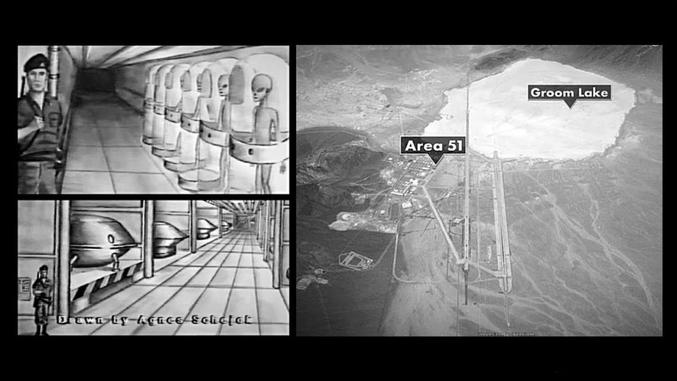
One notable account comes from a supposed former sentry at S-4, a sector allegedly located near Area 51. This individual described observing multiple disc-shaped crafts, each with unique characteristics, some of which appeared capable of hovering and others that boasted sleek, aerodynamic designs reminiscent of descriptions in popular UFO lore. These crafts were said to be stored on platforms, suggesting they were either the subject of reverse engineering efforts or perhaps even ready for flight.

Government Secrecy and Surveillance

The veil of secrecy enveloping Area 51 extends beyond the base itself, encompassing alleged monitoring and intimidation tactics aimed at silencing those daring to reveal its secrets. Whistleblowers have reported experiences ranging from phone tapping and mail interception to outright threats, painting a picture of a government desperate to keep the lid on potentially Earth-shattering revelations. Such measures only serve to deepen the mystery and stoke the fires of speculation regarding the activities conducted far from the public eye.

VIDEO:

  • Eyewitness to disc-shaped craft and aliens at Area 51 discussed by UFO researcher Wendelle Stevens

The narrative surrounding Area 51 challenges us to question the boundaries of our understanding and the lengths to which governments might go to protect secrets of cosmic significance. It beckons the brave and the curious to look to the skies and ponder what might be, fueling a relentless quest for truth in a world brimming with mysteries yet to be unraveled.

As we stand on the precipice of discovery, the stories of Area 51 remind us that reality may indeed be stranger than fiction, urging us to keep our minds open to the infinite possibilities that lie beyond our current grasp. The journey into the unknown continues, with each whispered tale and leaked document adding a new piece to the ever-expanding puzzle of our universe.

{ https://www.latest-ufo-sightings.net/ }

Hoe vind je dit bericht?
Geschreven door peter om 17:46 Stuur door

'It's getting closer and closer for sure.' How SETI is expanding its search for alien intelligence (exclusive)

SPACE.com Columnist Leonard David

'It's getting closer and closer for sure.' How SETI is expanding its search for alien intelligence (exclusive)

large satellite dishes point upward at the night sky

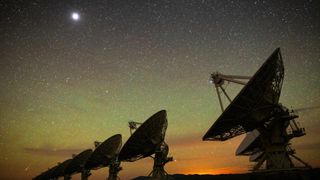
New Mexico’s Very Large Array (VLA) – on the SETI trail. 
(Image credit: Bettymaya Foott, NRAO/AUI/NSF)

To spot potential intelligent life out there in the great beyond, first you must cast a net wide by using an array of techniques and technologies. 

Any "fishing expedition" for E.T. includes close-in studies of life in extreme environments right here on Earth, to help us recognize any signatures we might find on Mars or deep diving through the icy shell of Jupiter's moon, Europa. The search can also blend in the use of space-based telescopes to inspect Earth-like planets circling their home stars. Then there's cupping a proverbial ear to the cosmos using radio telescopes to pick up any bustling interstellar civilization or perhaps look for far-off laser-pulsed communiqués from extraterrestrial homebodies.

These and other efforts are actively pursued by the SETI Institute in Mountain View, California, right there in the high-tech heartbeat of Silicon Valley. More than a hundred institute scientists are busily carrying out research in astronomy and astrophysics, astrobiology, as well as exoplanets, climate and bio-geoscience and the Search for Extraterrestrial Intelligence (SETI).

Related: 

Space.com caught up with Bill Diamond, President and CEO of the SETI Institute for an exclusive, mind-stretching close-encounter discussion regarding the mounting evidence for extraterrestrial intelligence. 

Spoiler alert! It's not that old tried, true and tired query "are we alone?" Rather, it's more like "just how crowded is it?"

Early stages

There's a lot going on today in terms of searching for and trying to understand potential extraterrestrial life in the universe, Diamond said.

"Much of the first several decades of SETI, the effort has been quite minimal, looking with fairly 'insensitive' instruments in fairly narrow parts of the radio spectrum in random parts of the sky. So hardly anything that could be considered a comprehensive endeavor," said Diamond.

But even today, in many ways, SETI work is still in the early stages. However, more and more is taking place with an increasing number of instruments and technologies around the world. "There's an extensive and expanded effort ongoing now," Diamond said.

COSMIC collaboration

For example, there's the Commensal Open-Source Multimode Interferometer Cluster Search for Extraterrestrial Intelligence — mercifully shortened to COSMIC SETI. 

All 27 antennas that constitute the Very Large Array (VLA) in New Mexico have been outfitted with new gear to perform 24/7 SETI observations under a collaboration between the SETI Institute and the National Radio Astronomy Observatory, the group that operates the VLA. 

Yes, that's the same VLA showcased in the 1997 sci-fi film "Contact," replete with actress Jodie Foster adorned with a tight-fitting stereo headset. In reality, the VLA was never used for SETI, Diamond noted, but now it is.

SETI Institute's Allen Telescope Array, situated northeast of San Francisco. This array has undergone high-tech upgrades.   (Image credit: Simon Steel/SETI Institute)

Detectable signatures

"COSMIC is really the most comprehensive SETI search on a single instrument in history. That's very exciting," Diamond said, and gives the COSMIC effort access to a complete and independent copy of the data streams from the entire VLA.

COSMIC will analyze data for the possible presence of "technosignatures" - detectable signatures and signals that shout out the presence of distant advanced civilizations. 

In scientific circles, technosignatures are viewed as a subset of the far more established search for "biosignatures" — evidence of microbial or other primitive life loitering on some of the billions of exoplanets we now know exist.

Newly augmented

"For classical radio SETI, there's more going on now around the world than there has ever been," Diamond said. That uptick also includes the SETI Institute's newly augmented Allen Telescope Array situated northeast of San Francisco. It was named after Paul Allen, co-founder of Microsoft, given his generous financial backing of the facility in its early phases.

The Allen Telescope Array (ATA) has undergone antenna redesign and now is outfitted with high-end computers, signal processors, and other electronics making it far faster than ever before, Diamond adds. "The instrument is performing at a level that it has never performed at since it was built. All of that is fairly new in the two to three years."

One output from ATA has been its use by SETI Institute scientists to delve into powerful Fast Radio Bursts (FRBs), a head-scratching phenomenon wanting of explanation. 

Philanthropic gift

A passionate booster in ATA's overhaul was Franklin Antonio, a co-founder of Qualcomm, a communications chip company. Antonio's support as an institute technical advisor continues with his philanthropic gift to the SETI Institute of $200 million after his passing last May.

That bequest is sparking an action plan that will enhance the institute's multi-disciplinary, multi-center research, education and outreach make-up, Diamond said.

Also on the institute's agenda is taking in and evaluating ideas from SETI researchers anywhere in the world to tap into a pool of money for such things as technology, software, or to run an experiment. 

"If we like what you're doing, we'll fund it," Diamond said. "We will kind of take the place of NASA for the time being as the only place in the world where you can submit a proposal to do SETI work."

Those three words

Roll back time to Columbus Day in 1992 when NASA initiated a formal, more intensive, SETI program. But less than a year later, Congress short-circuited the program. 

Is it time for the government to re-embrace the search for extraterrestrial intelligence?

"Yes, absolutely," Diamond responded. NASA, he said, has a trio of science questions it's spearheading: How does the Universe work? How did we get here?  Are we alone?

Almost every time NASA leadership publicly speaks, said Diamond, they invoke those three words — Are we alone?

"We all want to know. NASA clearly wants to know as it's one of their science priorities," Diamond said. "So isn't it time they get back in the business of trying to answer that question?"

Artistic view of the NASA data-gathering Transiting Exoplanet Survey Satellite (TESS). Scientists are now sifting through its findings for possible technosignatures indicating an extraterrestrial civilization.  (Image credit: NASA)

Planets are everywhere

NASA's own Kepler space telescope served as the space agency's first planet-hunting mission. During nine years of deep space scoping, Diamond emphasized, it showed our galaxy contains billions of exoplanets. "It told us that planets are everywhere and a lot of them are potentially habitable."

NASA is starting to chip away at SETI work, Diamond noted. A NASA-funded grant to a SETI Institute scientist is using observations from the space agency's Transiting Exoplanet Survey Satellite (TESS). The intent is to purge out of the TESS data possible technosignatures aided by artificial intelligence/machine learning tools.

"So yes, I think the winds of change are blowing a little bit in favor of the government getting back into this business. And, in my opinion, I think they should step up and do it," Diamond said

Launched on March 6, 2009, the Kepler space telescope became NASA's first mission to detect Earth-size planets in the habitable zones of their stars.  (Image credit: NASA)

Neighborhood watch

With all the in-motion SETI research underway, just how prepared are we for a confirmed, door-ringing neighborhood watch revelation?

"The straight answer to that question is no, we are not necessarily ready, although it depends on what the answer is," Diamond responded. It's only a matter of time before this question is answered, he added, at one level or another. 

We should begin to think about how we convey this information, possible impacts to society, to religion, to politics, to technology, to governments, said Diamond. 

"I do think that with all these technologies, modalities, instruments looking in different ways," Diamond concluded, "it's getting closer and closer for sure."

{ https://www.space.com/ }

Hoe vind je dit bericht?
Geschreven door peter om 01:14 Stuur door

“CHIMERA” METAMATERIAL ACHIEVES PREVIOUSLY IMPOSSIBLE MULTI-TERRAIN INVISIBILITY

4GTijFSK?format=jpg&name=900x900

“CHIMERA” METAMATERIAL ACHIEVES PREVIOUSLY IMPOSSIBLE MULTI-TERRAIN INVISIBILITY

A new metamaterial that taps into the power of animals who camouflage themselves in nature has achieved the first successful multi-terrain invisibility, making it effectively invisible to visible, microwave, and thermal scanning techniques.

Dubbed Chimera after the multi-faceted monster of Greek mythology, the new material can achieve its previously impossible capabilities in a range of environments, much like the animals who inspired its development, offering significant potential for both scientific and military applications.

MULTI-TERRAIN INVISIBILITY INSPIRED BY UNIQUE CLASS OF ANIMAL

In nature, certain animals have adapted themselves to appear virtually invisible to both predators and prey. The most famous of these is the chameleon, which can adapt its outer appearance to match its environment almost perfectly.

However, the chameleon is not the only poikilotherm lauded for its ability to achieve a form of invisibility to aid its survival. For example, the bearded dragon is noted for its ability to conceal itself thermally by matching the temperature of its environment, while the glass frog can make itself transparent so that predators cannot see it directly.

Now, a team of researchers says they have combined the adaptive ability of all three animals to produce a metamaterial that is effectively invisible across microwave, visible, and infrared spectra to achieve previously impossible multi-terrain invisibility.

CHIMERA COMBINES ADAPTIVE ABILITIES OF THREE DIFFERENT POIKILOTHERMS

“Although camouflage technology has been a long-standing topic, the enthusiasm towards a practical[1]oriented invisibility has never weakened,” the researchers explain in the recently published research paper. “Past decades have witnessed a proliferation of metasurface-based invisibility owing to the advent of metasurfaces that can freely customize the electromagnetic waves. However, state-of-the-art works only achieve broadband invisibility in an individual terrain with its specific electromagnetic background.”

To surpass these limitations, the researchers studied the camouflage techniques used by animals that achieve some form of invisibility across a range of electromagnetic spectra, including microwave, visible, and thermal (infrared). Specifically, they studied how poikilotherms like the chameleon, the bearded dragon, and the glass frog can hide themselves and then incorporated all three abilities into one metamaterial they called Chimera.

multi-terrain invisibility

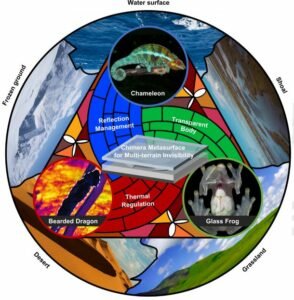
Conceptual illustration of the Chimera metasurface with multi-terrain adaptive invisibility. The proposed metasurface, just like the Chimera made up of three animals in Greek mythology, incorporates the environment-adaptation traits of three poikilotherms. The photo of the bearded dragon is reproduced from previous literature (5). Chameleon, glass frog, and terrain photos are reproduced from Visual China Group Co., Ltd. All the photos are used with permission.

“In this study, we introduce a multi-terrain invisibility metasurface that integrates biomimetic camouflage strategies, enabling dynamic invisibility across diverse terrains characterized by varying electromagnetic properties,” they explain. “This innovation is designed to effectively counter advanced synthesized detection methods encompassing microwaves, infrared, and visible light.”

Their new material achieves three distinct methods of multi-terrain invisibility. According to the researchers, the first ability is a “chameleon-like broadband in situ tunable microwave reflection mimicry” of a wide spectrum of natural terrains across a range of 8 to 12 GHz, including a water’s surface, shoal, beach/desert, grassland, and frozen ground environments. The same material can remain as optically transparent as an “invisible glass frog” while also successfully mimicking the bearded dragon’s “electrothermal effect” that can decrease the maximum thermal imaging difference between it and its local environment down to a paltry 3.1 degrees Celsius. This tiny temperature difference, the researchers note, “cannot be recognized by human eyes.”

By understanding the mechanisms behind all of these capabilities, the researchers say they have created a three-tiered “Chimera” incorporating the natural camouflage capabilities of all three animals into one surface. So, while some previous methods that mimic one of these capabilities in a narrow range of environments have been shown to create a limited amount of invisibility, the researchers say that their breakthrough metamaterial can accomplish all three at the same time and operate effectively across a wide range of natural environments.

“Compared to previous tunable invisibility strategies, our demonstration artificially reconstructs the environment-adaptive behaviors of chameleons, bearded dragons, and glass frogs in an integrated manner with the outstanding camouflage properties of broad bandwidth, polarization insensitivity, and angular allowance,” they explain.

ACHIEVING MULTITERRAIN INVISIBILITY COULD HAVE SCIENTIFIC AND MILITARY APPLICATIONS

While the Jilin University researchers behind the new metamaterial say they are still in the laboratory stages, the potential uses for Chimera they identify include uses for scientists and researchers hoping to remain effectively invisible while studying animals in their natural habitat to potential military uses that involve hiding soldiers and their equipment from electromagnetic detection including microwave, optical and infrared scanning.

“Our work has potential practical applications,” they write. “On one hand, the continuous low-dispersion in-situ tunability between quasiperfect reflection and strong absorption provides an abundance of states to mimic the electromagnetic characteristics of various real-world terrains, thus avoiding recognition by microwave radars from natural surroundings. On the other hand, the proposed metasurface may also reduce the long-distance detected probability of infrared detectors and optical video equipment by reappearing the thermal regulation of bearded dragons and the self-transparency of glass frogs.”

Finally, they also note that their Chimera metasurface retains potential compatibility with currently available infrared and visible camouflage materials and equipment, which may accelerate their implementation.

“Our work extends the applicable range of camouflage techniques from the constrained scenario to more terrains and advances reconfigurable electromagnetic devices to a multistable and circuit-topology-dynamic stage,” they conclude.

  • Christopher Plain is a Science Fiction and Fantasy novelist and Head Science Writer at The Debrief. Follow and connect with him on X, learn about his books at plainfiction.com, or email him directly at christopher@thedebrief.org.

{ https://thedebrief.org/category/science/ }

Hoe vind je dit bericht?
Geschreven door peter om 00:43 Stuur door

Nebraska Police Officer Abducted By Aliens From Nearest Galaxy Found Out Earth Was Their Energy Source

Nebraska Police Officer Abducted By Aliens From Nearest Galaxy Found ...

Nebraska Police Officer Abducted By Aliens From Nearest Galaxy Found Out Earth Was Their Energy Source

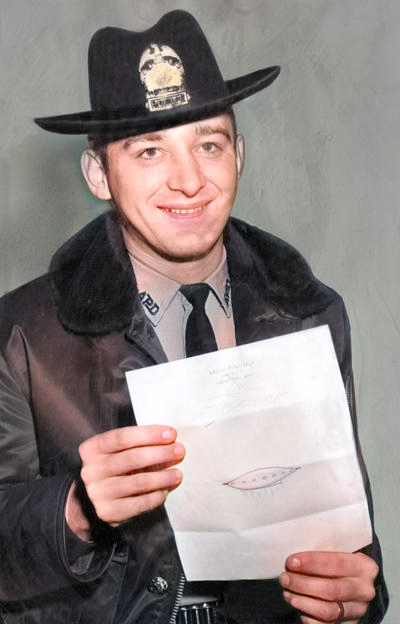
On the night of December 3, 1967, a young police officer in Ashland, Nebraska named Herbert Schirmer saw an alien spaceship and met with aliens in it. This encounter is one of the most discussed UFO cases among ufologists. It was around 2:30 a.m., and 22-year-old Herb Schirmer was driving his patrol car along U.S. Highway 6 toward Nebraska 63. Suddenly, he felt something unusual and got disoriented. Sometime before, at around 1 a.m. and 1:35 a.m., he had checked the local barn and found the cattle behaving strangely.

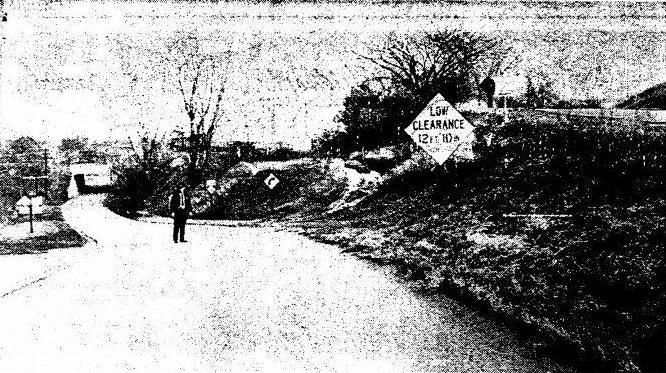
At around 2.30 a.m., Schirmer crossed Highway 6 after checking on some facilities and reached its intersection with Highway 63. He noticed some strange red lights on his right, hovering over the ground.

Image

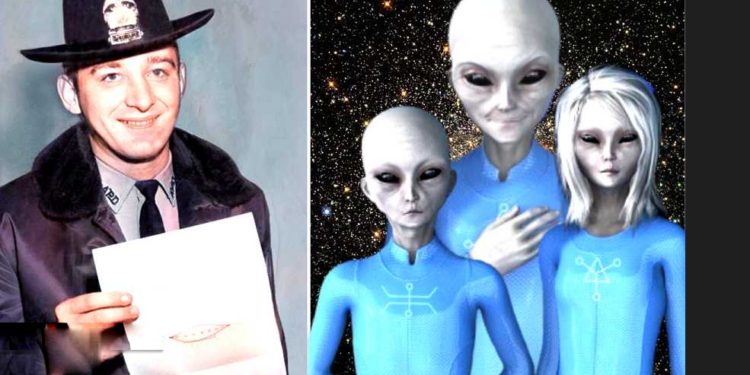
Police Officer Herb Schirmer drew the sketch of the UFO he had seen in Dec 1967 Image via THE WORLD-HERALD

Schirmer assumed that it was just a truck, so he passed the intersection, drove his car to the object, stopped at 40 feet, and switched on his cruiser’s headlights. He was totally amazed to see that the object was nothing like a truck. It was shining brightly and had a metallic body. The policeman also noticed that the blinking lights were coming from the saucer’s window.

In a report, he later wrote: “At 2:30 a.m. On December 3, 1967, I saw a UFO at the junction of (U.S. Highway) 6 and (Nebraska Highway) 63. Believe it or not.”

Read also:

He described the object to be oval-shaped, 20 feet wide, and 15 feet tall. He also said that when he approached the UFO, it rose to 50 feet off the ground, emitted a loud beep sound, suddenly shot a light beam to the ground and vanished in the sky.

At that moment, Schirmer thought his encounter with the alien spacecraft was over. But when he returned to his station, it was 3 a.m., so he lost 20 minutes between the spacecraft’s disappearance and returning to his station.

alien spaceship The image of the road where Herb Schirmer had seen an alien spaceship

When he got home, Schirmer went to bed but could not fall asleep because of a severe headache. He found a red scar under his left ear.

Schirmer used to make notes in his log, and he wrote down everything about his UFO encounter.

As soon as the news hit the media, Schirmer’s phone was flooded with prank calls. One man called him and said he was from Mars. Once, he was flagged down by a local tire shop owner who said: “Herb, if you ever see another flying saucer, and it lands, you tell them (aliens) I want to sell ’em a set of tires.”

Schirmer joined the US navy at the age of 17 and also served in the Vietnam war although he had never supported the war. After the navy, he decided to join law enforcement.

The policeman struggled to remember what had happened to him in the 20 minutes following the UFO encounter. After several months in 1968, a psychologist from the University of Wyoming, Dr. Leo Sprinkle conducted a hypnosis session with him, during which it was possible to partially restore information erased from his memory. Those hypnotic sessions were conducted by the Condon Committee, a University of Colorado project, funded by the U.S. Air Force.

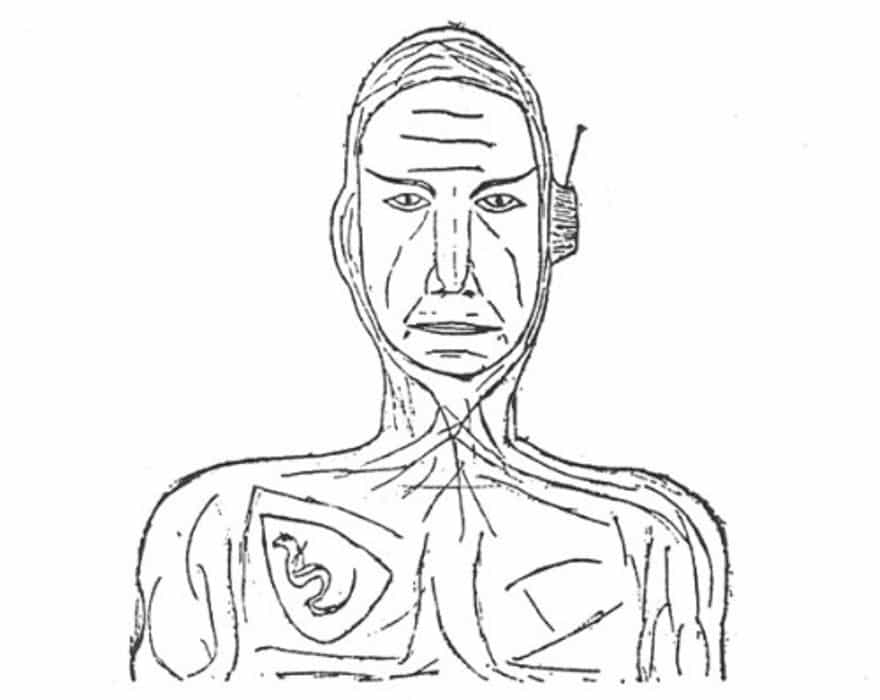
Schirmer said that the engine of his car stalled and the radio turned off. He saw something white, and a fuzzy figure that resembled a man came out of the spacecraft and approached his police cruiser.

1967 Nebraska alien encounter

Schirmer’s sketch of the alien

Schirmer replied, “Yes, sir,” and then the alien asked him to go with him.

Herbert The aliens told Herb that Earth was their energy source

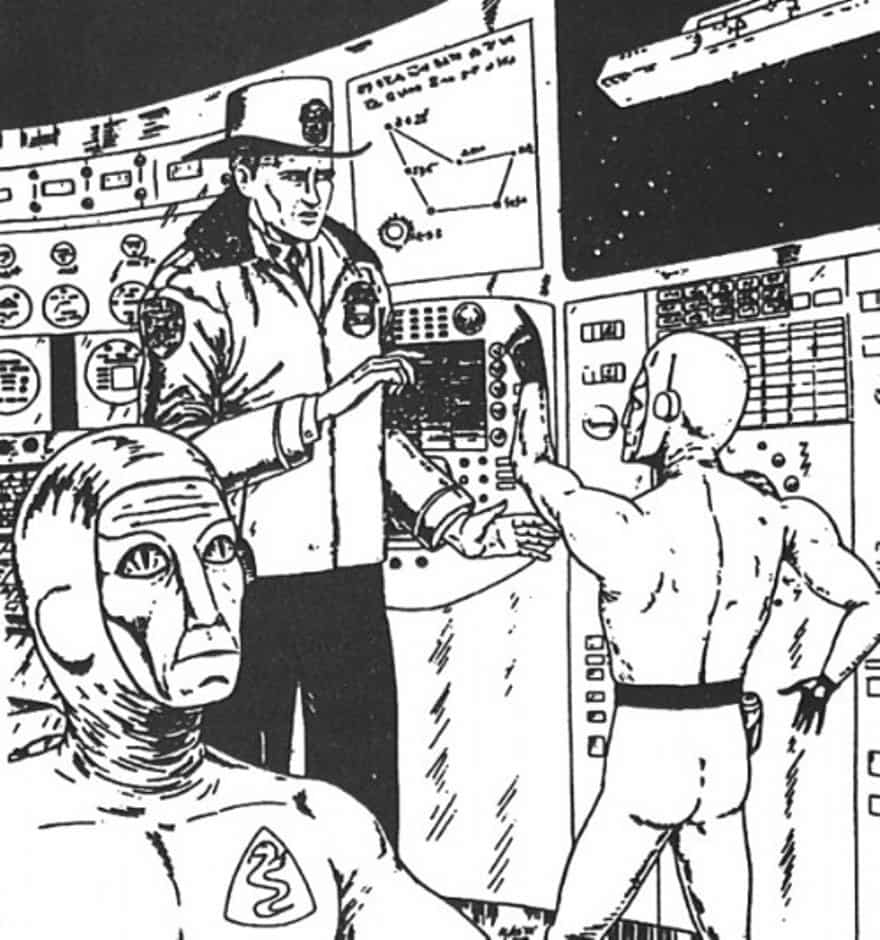
The alien took him into his spacecraft which was full of lights, cables, and various instruments. The policeman met several aliens onboard who were smaller in size. They told him that there were other flying objects of the same kind, flying in the atmosphere of our planet.

He also said that aliens had bases in the United States, but they themselves came from the nearest galaxy and stayed on Venus for a while. The aliens said their propulsion system was based on reverse electromagnetism, and Earth was their energy source. Their goal was to prevent humanity from destroying the Earth.

After further investigation, which included hypnotic regression, Sprinkle, worried about a perceived bias on his part, wrote:

“The writer [Sprinkle] believes that there is sufficient empirical evidence to support the views that the following phenomena exist: hypnotic processes or varying levels of awareness; extra sensory perception and psychokenetic (sic) processes (ESP or psi processes); and spacecraft (“flying saucers”) from extraterrestrial sources which are controlled by intelligent beings who seem to be conducting an intensive survey of the earth.

Because these views are different from those of many persons in contemporary society, the writer [Sprinkle] offers his impressions with the recognition that other observers may have obtained different, and even conflicting, impressions of the interview with Sgt. Schmirer.”

The Condon Committee unanimously dismissed Schirmer’s message as sheer delusion and hallucination. Dr. Sprinkle had a different opinion but could not convince them. The state of mind of his patient was not brilliant.

“Evaluation of psychological assessment tests, the lack of any evidence, and interviews with the patrolman, left project staff with no confidence that the trooper’s reported UFO experience was physically real,” Condon Committee concluded.

However, the abduction story of Schirmer continued hitting the headlines throughout the 1970s. He left Ashland and settled in the Pacific Northwest.

Schirmer died in 2017, but before his death, Cartoonist Michael Jasorka released a graphic novel: “December 3, 1967: An Alien Encounter” at a launch party on Dec. 3, 2011, in Los Angeles. In the novel, he illustrated Schirmer’s story in black and white color. The artist, who also believes this story, dedicated the novel to Schirmer.

The case has been picked apart by UFO researchers ever since, and it is hard to know what to make of it all. It is certainly notable that Schirmer has always stuck by his story even in the face of ridicule and his own life falling apart around him, so is this perhaps indicative of him maybe telling the truth, or at least what he truly believes to be the truth? Or is this just the ramblings of someone who has lost their grip on reality? It is difficult to say for sure, and the case of Herbert Schirmer remains unsolved.

{ https://www.howandwhys.com/ }

Hoe vind je dit bericht?
Geschreven door peter om 00:29 Stuur door

Elon Musk's Neuralink Is Now Inside A Human Being

Elon Musk's Neuralink Is Now Inside A Human Being

Few details are available, but this is Neuralink’s first big step toward its lofty ambition of connecting humans to computers.

 
An illustration of Neuralink is being displayed in Suqian, Jiangsu Province, China, on January 30, 2...
Costfoto/NurPhoto/Shutterstock

Last May, neurotech startup Neuralink received the federal green light to test its brain implant in human clinical trials. Now, less than a year later, Neuralink’s founder Elon Musk announced on X (formerly Twitter) that its brain-computer interface (or BCI) device was successfully placed in a human recipient.

“The first human received an implant from @Neuralink yesterday and is recovering well. Initial results show promising neuron spike detection,” Musk posted late Monday.

Dubbing the name for the brain implant “Telepathy,” Musk offered no other details or specifics on the participant or the procedure itself; Neuralink did not immediately respond to Inverse’s email requesting comment.

According to a company blog post, its clinical trials — described as part of Neuralink’s Precise Robotically Implanted Brain-Computer Interface (or PRIME) Study — involve placing and installing their quarter-sized N1 brain implant, using a robot along a region of the brain controlling movement intention. The chip is designed to pick up the user’s brain signals, which are used to control an external device.

“[Telepathy] [e]nables control of your phone or computer, and through them almost any device, just by thinking. Initial users will be those who have lost the use of their limbs,” Musk added in another post. “Imagine if Stephen Hawking could communicate faster than a speed typist or auctioneer. That is the goal.”

While this announcement is just the first step in Neuralink’s optimistic, if not lofty, ambitions for the reach of its neurotechnology (and likely Musk’s own personal goal for transhumanism), development has been undercut each step of the way by controversy and skepticism.

Documents obtained by the Physicians Committee for Responsible Medicine, a medical whistleblower group, and seen by a September Wired investigation reveal Neuralink’s monkey subjects were euthanized after suffering debilitating health effects, which included “tattered brains,” brain swelling, and partial paralysis. These reports have contradicted Musk’s claim, posted in September on X, that “no monkey has died as a result of a Neuralink implant.” The medical ethics group has since issued a letter to the Securities and Exchange Commission to investigate Musk for fraud, potentially misleading his investors regarding the safety of his company’s brain implant.

While Neuralink has received significant attention and spotlight for its brain microchip, the tech behind BCIs is anything but novel or revolutionary. Several other companies like Synchron, Precision Neuroscience, and Paradromics were already working in this space and conducting human clinical trials. Synchron, for example, was the first company to receive the federal go-ahead to test its brain implant in 2021. One of the first participants in Synchron’s in-human studies, Phillip O’Keefe of Melbourne, Australia, who has a progressive neurodegenerative disease, was able to send a tweet using his new brain implant. Precision Neuroscience, as well, began its first-in-human study this past summer.

{ https://www.inverse.com/ }

Hoe vind je dit bericht?
Geschreven door peter om 00:08 Stuur door

JACQUES VALLÉE: PURSUING UNIDENTIFIED AERIAL PHENOMENA AND ‘IMPOSSIBLE FUTURES’

ffMhw0er?format=jpg&name=900x900

JACQUES VALLÉE: PURSUING UNIDENTIFIED AERIAL PHENOMENA AND ‘IMPOSSIBLE FUTURES’

ON APRIL 17, 2013, attendees at an independently organized TEDx event in Geneva, Switzerland, were offered a glimpse at a seemingly impossible future.

Presented under the theme of “eCulture 360° and Wikinomics”, the event offered something unique even to a gathering of some of the most renowned international speakers on science and technology: the organizers billed it as a “TEDx with the opportunity to meet Jacques Vallée, one of the founder[s] of ARPANET, the first version of the Internet.”

Vallée’s lecture at the event, titled “The Age of Impossible: Anticipating Discontinuous Futures,” dealt with how the speed at which modern technology accelerates has resulted in events that would have seemed impossible to many people only years before they transpired. With examples ranging from the collapse of General Motors in 2009 to Bernie Madoff’s role in the financial crisis of 2007-2008, Vallee presented what he called a “Typology of the Impossible” that hinged on four main kinds of scenarios: events that escalated too quickly, convergences of “low-p scenarios,” events that appear to violate current cultural norms, and finally, scenarios that involve the appearance of a “completely alien concept within a particular culture.”

“There are many things in our culture today that fit that model,” Vallée said at one point during the talk, as he described historical instances where things that seemed unimaginable at one time later became technological norms. Such things, Vallee said, “are possible, but we cannot imagine them. The public is not aware that they can be done. History provides many examples, and the internet itself is an example of something that was unimaginable.”

After discussing his own part in helping create ARPANET, Vallée went on to share several more examples from recent history where unforeseen scientific advancements occurred, seemingly out of the blue.

“And finally,” the scientist said, never evincing a change in his measured tone and demeanor, “the Pentagon could not imagine that fast, erratic, mobile, oval objects in the sky were anything other than mental illusions, and they…” After a brief pause, Vallée cryptically added, “and you can fill out the answers in the next few years.”

Despite his success as a venture capitalist and “co-creator of the Internet”, most of the attendees at the 2013 TEDx event in Geneva were likely aware of what Vallée is best known for: his decades of involvement with the study of unidentified aerial phenomena. As a young computer scientist and astronomer in the 1960s, Vallee not only worked alongside Northwestern University astronomer J. Allen Hynek, the official scientific advisor to the U.S. Air Force’s Project Blue Book but also authored Anatomy of a Phenomenon, one of the earliest popular books written on the UFO subject by a professional scientist. Though he never uttered any of the popular names or abbreviations for the phenomenon, it was obvious what Vallee had been alluding to during this brief, passing reference to “oval objects” during his talk.

At least at that time, what had not been so obvious had been why Vallée specifically referenced the Pentagon’s relationship to UAP, nor why a series of seemingly impossible future events might come to pass involving this subject “in the next few years.”

THE CALL FROM DR. VALLÉE came through earlier than I expected.

The scientist’s voice, softened by age yet still resonant with the French he learned as a youth in Pontoise before emigrating to America many decades ago, was unmistakable to me, having heard it in many interviews and documentaries over the years. Vallée, now 83, is a man whose work in the study of unidentified aerial phenomena is only one finger on the glove of his impressive resume, spanning decades of work in astronomy, physics, computer science, and venture capitalism.

As evidenced by his billing at the TEDx event in 2013, one could indeed argue that Vallée is partly responsible for the creation of the Internet, although the affable Frenchman is modest on this point, nearly to a fault. This much was evident almost immediately as we began our discussion, and I wasted no time in bringing up the talk in Geneva and some of the intriguing hints he had dropped at that time.

“I’ve seen the development and the unfolding of a number of technologies,” Vallée told me during our call. “Very often what happens is that a discovery is made, and everyone agrees that it is important, and people write papers, and so on. And then it disappears.” 

Vallée Vallée with collaborator and fellow author Chris Aubeck (Credit: Chris Aubeck)

“You know, the Arpanet was essentially dead for a while,” Vallée recalls from his years working on the project decades ago. “Until [the] National Science Foundation picked up the funding, thinking that there would be several internets.” Initially a simple matter of accounting, the NSF initially believed it would be easier to fund three separate projects that looked at using networks through which computers could connect for purposes of communication.

“And then they picked it up from the DOD, and it became the Internet, as we know it now.”

Vallée offered several similar examples of predecessors to the Internet—not all of them American innovations—a point which Vallée emphasized as he shifted back to our subject of greater mutual interest: UAP.

“When I watched the meetings in Congress recently, all they talk about is American cases,” Vallee said. “And among American cases, all they talk about is military cases.”

“I can tell you, having developed a lot of databases over the years, the U.S. is less than 2% of the habitable surface of the Earth,” Vallée said.

“So, if this is extraterrestrial, what about the other 98%?”

THE PATH THAT BROUGHT

Vallée into the tempest that is the study of unidentified aerial phenomena is a long one, which stems back to his early years in Pontoise at an age when the world was still at war.

“There are things you don’t forget,” Vallée said during our call, describing his memories of seeing American aircraft being shot down over his town when he was five years old.

“I remember seeing the crew dropping out in parachutes and the Germans shooting at them.”

By 1945, the war had ended, although fears of a return to conflict lingered throughout parts of Europe. To the north, reports of ghostly “rockets” over countries like Sweden in the summer of 1946 kept many guessing whether the Soviets were conducting tests, perhaps with a form of secret new aerial weapon they had captured from the Germans. The following year, an all-new kind of paranoia would erupt across the Atlantic, as American newspapers were flooded with stories of “flying saucers” seen careening through the skies, especially in airspace around sites of importance to U.S. national security.

By the Autumn of 1954, as the wave of sightings of strange objects was cresting over North America, France was having its own torrent of reports of similar phenomena. Major newspapers like L’Aurore and France-Soir were carrying stories about unidentified flying objects almost daily, and Vallée began collecting clippings of stories like those of Marius Dewilde, a railroad worker who described his observation of a pair of diminutive “robots” next to a dark machine resting on the train tracks.

The reports seemed incredible, and very well might have remained so had it not been for what occurred the following year in May 1955, when Vallée had his own sighting.

“My mother saw it first,” he would later recall of the incident. She had been working in the garden when Vallée, sixteen at the time, heard her screaming for him and his father. Vallée made his way from the attic where his father’s woodworking shop was located, and down three flights of stairs just in time to observe a metallic disc-shaped object “with a clear bubble on top” as it hovered over the nearby church of Saint-Maclou.

Pontoise A modern view of Pontoise with the Cathédrale Saint-Maclou visible in the distance (Credit: Rozinante/CC BY-SA 4.0).

The object reminded them of the parachutists the family had watched descending from the skies during the war. His mother, who continued watching it, recalled how it sped away, leaving only a few wisps of white vapor where the object had been. Vallée would later learn that a schoolmate nearby had also noticed the object, observing it through binoculars.

Despite his father’s disapproval, Vallée maintained his interest in these unusual aerial objects. “I realized,” he would later write in his journal, “that I would forever be ashamed of the human race if we simply ignored ‘their’ presence.” The young Frenchman began to educate himself on the topic by reading the works of Aimé Michel, one of the earliest serious French researchers to undertake the study of unusual aerial phenomena. It was an interest he maintained through his college years, completing his degree in mathematics at the University of Paris in 1959 and going on to receive his M.S. from the University of Lille Nord de France two years later. By 1961, Vallée was employed at the Paris Observatory as an astronomer with its artificial satellite service, tracking space objects through theodolites by night.

“Naively, I started work here with great enthusiasm, assuming that we would be engaged in genuine research,” Vallée would recall of his years at the observatory. “That is not what I found.” In July of 1961, he and the other astronomers recalled a few instances where they observed objects passing overhead that they could not identify. “The next morning,” he recalled of one incident, his superior “simply confiscated the tape and destroyed it.” Vallée inquired as to why they hadn’t sent this seemingly important information along with their normal Telex tape dispatches to U.S. Navy officials in Paris.

“The Americans would laugh at us,” his superior scoffed.

Having his fill of the prevailing attitudes in Paris, by 1962, Vallée had emigrated to the United States, first working at the University of Texas, Austin, as a research associate in astronomy, and thereafter for a short stint at the McDonald Observatory, where he helped to compile the first informational map of the planet Mars with fellow French astronomer Gérard de Vaucouleurs. However, by the summer of 1963, Vallée was looking ahead at new opportunities, one of which arrived following a meeting in September with astronomer J. Allen Hynek, chair of Northwestern University’s astronomy department, who helped the young scientist find work as a systems analyst on campus. Hynek, at the time the scientific advisor to the U.S. Air Force’s Project Blue Book UFO investigation, was a natural ally; not only would he serve as a mentor to Vallée, who went on to receive his Ph.D. from the institution in 1967, but for years thereafter the two would remain close colleagues in the pursuit of their mutual interest.

Jacques Vallée: Pursuing Unidentified Aerial Phenomena and 'Impossible ...

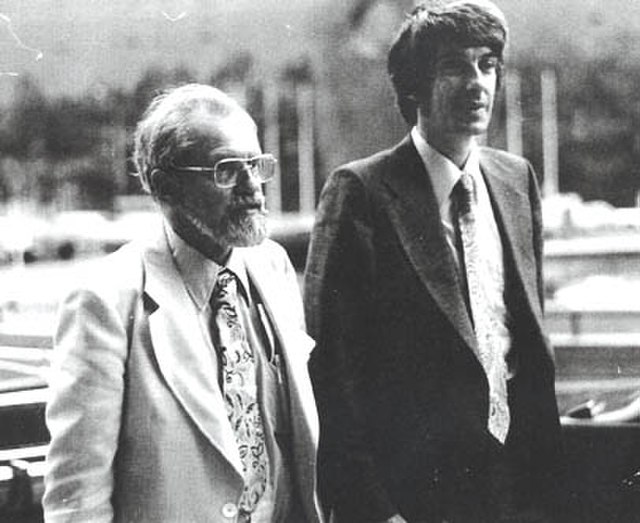
An undated photo of astronomer J. Allen Hynek and Jacques Vallée

(public domain).

However, by the late 1960s, it seemed evident that scientific opinions on the UFO subject in the United States had finally begun to sour, despite the efforts of Hynek, Vallée, and a close network of like-minded scientists looking into the problem. By the end of 1968, the University of Colorado UFO Project, a U.S. Air Force-funded study headed by physicist Edward U. Condon, had delivered its findings; in an introductory summary to the lengthy report, Condon wrote that “nothing has come from the study of UFOs in the past 21 years that has added to scientific knowledge,” adding that “further extensive study of UFOs probably cannot be justified in the expectation that science will be advanced thereby.”

Vallée, musing over the Condon study during our call, remembered his incredulity at the time he first heard about its conclusions.

“That’s an interesting chapter in science,” he said. “Or the failure of science.”

By then, Vallee had already returned to France. As he, his wife Janine, and their son, Oliver, were acclimating to life in Europe again, Vallée was quietly readjusting his approach to the UFO question.

“Once I was back in France, in a way, it served to give me the space to rethink what we had done,” Vallée told me. “I mean, I knew the Condon Committee was a joke… and that science was somewhere else. So it forced me to ask some fundamental questions that I would not have asked if I had stayed at Northwestern.”

“So I thought, where does all this come from, anyway?”

Vallée began haunting the old Paris bookshops, acquiring rare historical texts and early treatises on the sciences. An interesting question had begun to form in his mind, as he recorded in a journal entry on October 29, 1967: What about the forgotten accounts of Little People, of Elementals, of Leprechauns? If these beings are part of the same phenomenon we see now, what does that mean for their nature? Are we necessarily dealing with extraterrestrials?

“I found that the phenomenon has always been there,” Vallée says of his years spent mining observations of unusual aerial phenomena from texts that date back to classical antiquity. “Of course, they are describing it in the language of the time,” he notes, “but they are describing something that’s very, very much like what I get from witnesses today.”

The fruits of such musings culminated in Vallée’s seminal 1969 effort, Passport to Magonia, widely regarded as one of his most influential early works and, paradoxically, the effort that cast him as a pariah in the eyes of many of his ufological peers.

Magonia Mass market paperback edition of Passport to Magonia (Credit: Archives for the Unexplained).

“At first, it was completely rejected.” he says, recalling one UFO magazine that featured his likeness shortly after Magonia was published, accompanied by the headline, “Vallée has gone off the deep end.” Today, Vallée laughs about the chiding he received from his peers, and I note a hint of nostalgia about those early works behind the dry chuckle that emerges.

“Maybe the truth was in the deep end.”

OVER THE COURSE OF the ensuing decades, Vallée would continue to challenge the extraterrestrial hypothesis favored particularly among American UFO researchers. Parallel to this effort, his professional career brought him into work with the Institute for the Future in the mid-1970s, where he worked as principal investigator on the National Science Foundation computer networking project that gave rise to one of the earliest iterations of the ARPANET conferencing system. In the following decade, Vallée would become involved in venture capitalism, first as a partner at Sofinnova, then moving on to become a general partner in multiple different Silicon Valley funds, including his involvement in private investments today.

As his professional career flourished, Vallée never lost sight of his fascination with strange aerial phenomena. He authored a string of follow-ups to Magonia on the topic of UFOs throughout the 1970s and 80s, each continuing to build on the premise that the phenomenon could be far more complex than conventional opinions on UFOs would offer. His pioneering work continued to garner attention along the way, even serving as the inspiration for Claude Lacombe, a French scientist portrayed by actor François Truffaut in Stephen Spielberg’s classic film Close Encounters of the Third Kind. 
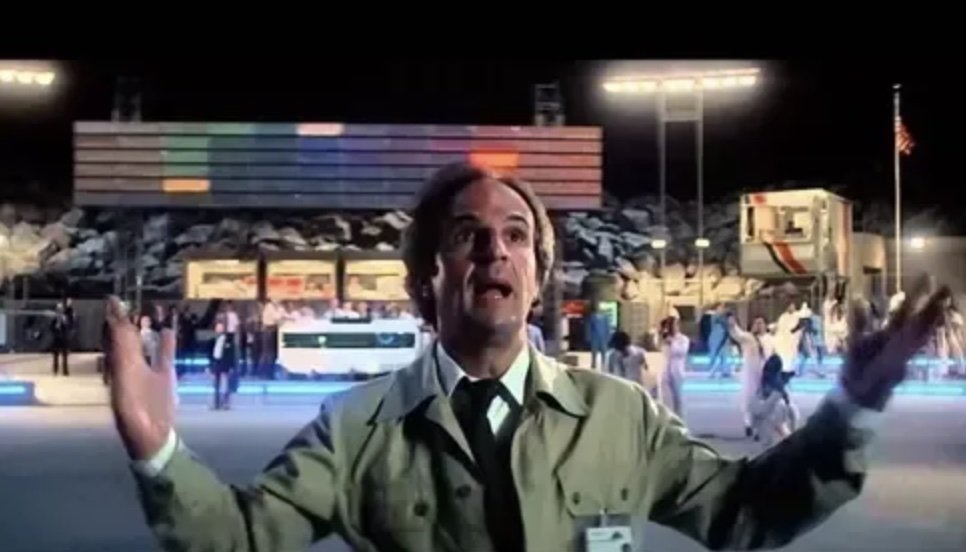
Lacombe

Actor François Truffaut in Stephen Spielberg’s Close Encounters of the Third Kind (fair use).

In the 1990s, Vallée authored a trilogy of books that focused on the prospects of alien contact. However, he always maintained a healthy distance from drawing conclusions about what any exotic technologies behind UFOs might represent. It was also during this period that Vallée began working with real estate developer Robert Bigelow’s National Institute for Discovery Science (NIDS), a privately funded scientific research effort that looked at UFOs and related phenomena.

In July 2014, Vallée presented a paper at the GEIPAN International Workshop in Paris, France, titled “Unidentified Aerial Phenomena: A Strategy for Research,” offering both a snapshot of what he had learned about the complexities of the phenomenon over several decades of study, as well as what he believed might be a path toward more fruitful future research.

“After years of ideological arguments based on anecdotal data the field of UAP research appears ready to emerge into a more mature phase of reliable study,” Vallée wrote in the paper’s abstract. Citing the mounting scientific interest in UAP around the world, based in part on documents conveying an official military interest in these phenomena, the scientist argued that the path forward would require the analysis of hard data, paired with intelligently informed theoretical studies.

“Without pre-judging the origin and nature of the phenomena, a range of opportunities arise for investigation,” Vallée wrote, warning that “such projects need to generate new hypotheses and test them in a rigorous way against the accumulated reports of thousands of observers.”

The problem was that in 2014, despite the existence of several notable independent catalogs containing information on historical incidents, there was no single collection of reliable UAP reports—a centralized database, in other words—upon which such studies could rely. This had been part of what prompted Vallée to assemble such a database for NIDS, work that would later carry over as Bigelow’s efforts moved out of the private sector and into the official world as part of the Defense Intelligence Agency’s Advanced Aerospace Weapons Systems Application Program (AAWSAP).
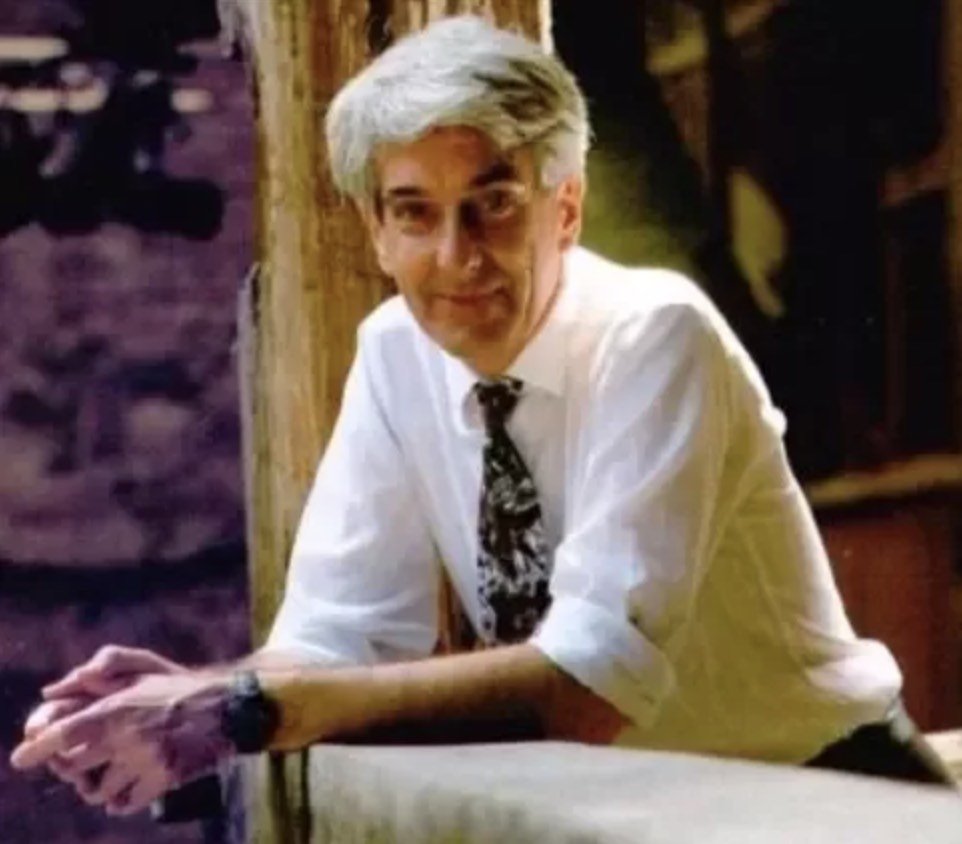
Vallée

(Credit: Jacques Vallée/fair use)

“In the United States the National Institute for Discovery Science (“NIDS”) and the Bigelow Aerospace Corporation have initiated a series of special catalogues to safeguard their own reports from public sources and from their staff,” Vallée wrote in his 2014 paper, adding that he had been asked to develop a UAP data warehouse containing 11 individual databases.

“The project is known as ‘Capella,’” it stated.

According to slides accompanying Vallée’s 2014 presentation, the Capella project focused on several areas that ranged from patterns emerging from UAP data to possible physics underlying the phenomenon and its impact on humans.

During our call, Vallée spoke candidly about the project and what he hopes it might still be used to achieve.

“There is such a database. It is the one we built as part of the AATIP/BAASS project in Las Vegas,” Vallée told me. Comprising roughly 260,000 cases from countries around the world, the scientist said during our call that the Capella database had been one of the major focal points of the program.

“Contrary to what people believe, [Capella] is the largest part of the budget that was spent on the classified project,” Vallée said. This included paying for translations of incident reports from Russian, Spanish, Portuguese, and several other languages into English, and providing funding for teams that conducted additional research on-site.

“It was a large effort for two years, Vallée said, though he added that in reality, “probably close to fifty or sixty years of work went into the database.” Although Capella constitutes what is arguably the most extensive database containing information on UAP ever built, don’t expect to see it any time soon; it remains classified as a part of the data developed under the DIA’s AAWSAP program managed by James Lackatski between 2008 and 2010.

  • space junk

“The database is still classified, to my knowledge,” Vallée said during our call, prompting me to ask whether such a vast amount of historical information on the UAP subject shouldn’t be made publicly available.

Speaking with The Debrief in December 2021, Mark Rodeghier, Ph.D., director of the J. Allen Hynek Center for UFO Studies and a longtime colleague of Vallée, expressed frustration over previous statements made by Colm Kelleher, Ph.D., another of the scientists who worked on the AAWSAP program, who noted that much of the AAWSAP data will likely remain classified.

“I mean, isn’t that discouraging, disappointing, [and] ridiculous,” Rodeghier told The Debrief. “It’s not work on how we can get a hypersonic missile. It’s UFO investigations. How can that be classified at this point? And the answer, of course, is that it shouldn’t be classified now.”

During our call, Vallée expressed similar sentiments to Rodeghier’s, although he also defended Capella’s current classified status on account of some of the information it protects.

“You make a good point,” Vallée told me. “That’s the kind of thing that should be accessible to science,” although adding that “it will be accessible to very highly competent people who can continue to look at it under the proper classification.”

“I think it’s properly classified,” Vallée added, “because it contains a lot of medical data that should be private.” However, he said that he thinks that over time, perhaps portions can be “sanitized” for release to the public, “so that we don’t invade the privacy of individuals who have reported those things, especially their medical data.”

“It’s not classified for any military or intelligence reason as far as I know,” Vallée said. “But I’m not part of the project anymore.” Vallée noted that even he no longer has access to Capella, although several longtime colleagues of his who still work in government do.

“I’m very proud to have worked on that,” Vallée said. “It’s probably the high water mark in the computer study of UFOs so far.”

“But as we know, the high water mark is going to go even higher after this.”

DESPITE HIS OWN LEVEL of involvement with government UAP studies, as well as the level of interest generated by videos of unidentified objects collected by the U.S. military—the existence of which Vallée himself hinted at in Geneva as early as 2013—the 83-year-old scientist still doesn’t necessarily hold military UAP data in higher regard than that collected by civilians.

“The military cases in the databases I know of are less than ten percent in every country,” Vallee said during our call. “They are really good because the military has radar. They have, of course, planes that can chase the objects… pilots who are very well trained and very well positioned to give a description.”

“Those are excellent reports,” Vallée concedes. “But what about the farmer in the field, who sees [an object] close to him, and has traces, and has materials? Who has felt physiological reactions?”

“What about those cases?” he asks. “They are full of information.”

Vallée’s appreciation for UAP information collected from non-governmental sources is particularly evident in his latest book, Trinity: The Best-Kept Secret, coauthored with Italian journalist Paola Leopizzi Harris. In it, they unravel the story of two men, Jose Padilla and Reme Baca, who claim to have witnessed the crash of an unusual aircraft near San Antonito, New Mexico, in August 1945. Padilla, who went on to become a State Trooper in Rowland Heights, California, maintained that as children, he and Baca had seen a large, dull-gray avocado-shaped object—along with its frantic occupants—where it had apparently crashed near his family’s ranch. The object, they say, was later recovered by the military.
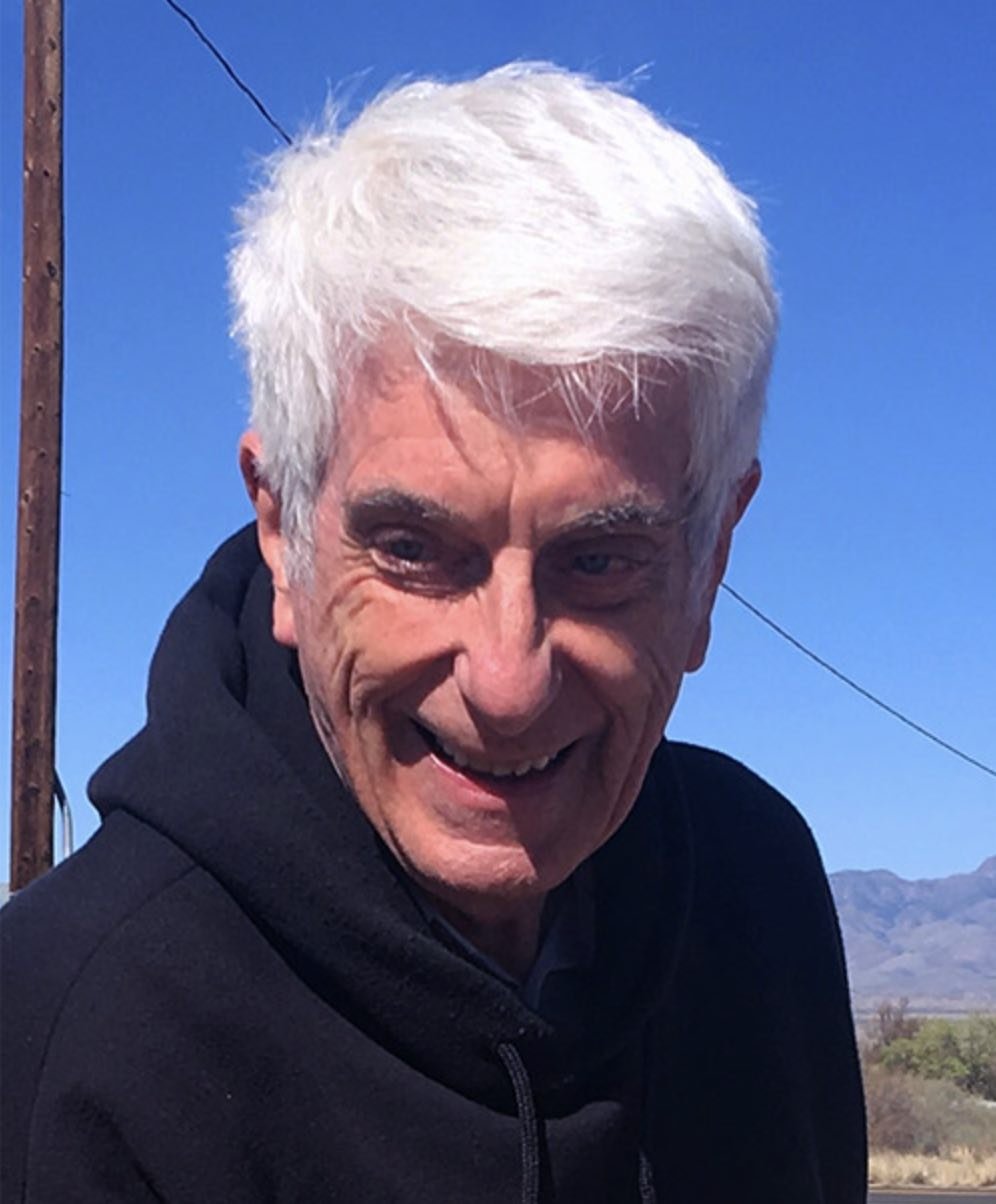
Vallée

Vallée while conducting field research in New Mexico in advance of the publication of Trinity: The Best-Kept Secret  (Credit: Jacques Vallée).

In a newly updated second edition of the book, Vallée and Harris present additional witness testimony they have gathered about the alleged incident, which includes an observation of the crash remembered by the family of Lt. Colonel William J. Brothy, who at the time had been piloting a B-25 on a training mission. According to Brothy, he and his crew had flown over the site and recalled, “There were a lot of pieces.”

In Trinity, Vallée emphasizes what he believes are undeniable similarities between descriptions of the 1945 incident and a UAP landing in New Mexico observed by police officer Lonnie Zamora in 1964. Then, the following year another strikingly similar incident occurred near Valensole, France, involving the close observation of a landed craft and its apparent pilot or occupant.

“There is a case in Valensole, in France, and the case in Socorro. The object is identical to the Trinity object,” Vallée said. “And the [occupants] are identical to the creatures that Mr. Padilla is describing to me at Trinity, that he saw.”

“I was involved in Socorro, and I was involved in Valensole. Those are cases I know very well,” Vallée said, adding that Trinity contains new information on the Socorro case, once referred to by Hector Quintanilla, director of the U.S. Air Force’s Project Blue Book at the time of the incident, as being “the best documented case on record.”

Today, much of Vallée’s research is focused on the collection and study of material samples believed to have been collected from UAP. Compared with his earlier work, which challenged popular notions about extraterrestrials being associated with UAP, this might surprise longtime followers of the scientist’s work. For Vallée, however, it is only the next phase in the many decades he has spent working toward resolving the mystery.

“It’s all one thing,” Vallée said during our call. “The first book I wrote was Anatomy of a Phenomenon, which… I took as a study of extraterrestrial intelligence in general, and how it was I thought UFOs illustrated the idea of life elsewhere and intelligence elsewhere… that’s definitely the place from which we started.”

“Then, when I started working with Dr. Hynek, and I started working with—in those days, it was just called ‘computer catalogs,’ it wasn’t dignified as databases or data warehouses—but those catalogs held thousands of cases. My first complete catalog was donated to the Condon Committee at the University of Colorado, when they did the study funded by the Air Force.”

“Which,” Vallée notes, “to my surprise, concluded the problem didn’t exist. So, we’ve come a long way from that.”

Given his level of involvement in working to resolve the UAP question—an effort now spanning more than six decades, including his involvement in official government UAP investigations in several countries and having authored some of the most popular books ever written on the subject—perhaps the most surprising thing expressed by Vallée during our discussion had been his predictions about how he thinks his own work will be remembered by future generations.

“I think everything I’ve done, and everything my contemporaries have done, is going to be forgotten,” he said, mirroring his observations of the invention, and subsequent reinvention, of so many other innovations in science over time, not least among them the World Wide Web.

“And then in a few years, it’s going to be reinvented by, you know, great people at Stanford and Harvard in a new way,” he tells me, accompanied by the distinctive chuckle I had by now come to expect after one of his witty responses.

“That’s always the way science works.”

  • Micah Hanks is Editor-in-Chief and Co-Founder of The Debrief. Follow his work at micahhanks.com and on Twitter: @MicahHanks. 

{ https://thedebrief.org/category/science/ }

Hoe vind je dit bericht?
Geschreven door peter om 00:00 Stuur door

Verrassende feitjes over Adam en Eva

Verrassende feitjes over Adam en Eva

Verrassende feitjes over Adam en Eva

©Shutterstock

Verrassende feitjes over Adam en Eva
Het verhaal van Adam en Eva is een van de bekendste bijbelverhalen en legde de basis voor de scheppingsleer. Bovendien is het het eerste verhaal waarin het concept van de erfzonde naar voren komt. Waar sommigen mensen het als fictie beschouwen, wat geldt voor veel Bijbelverhalen, zien anderen het als iets dat echt gebeurt is. Of je het nu wel of niet gelooft, in deze galerij kom je interessante en minder bekende feitjes tegen over Adam en Eva.

Nieuwsgierig? LEES verder voor meer!

Er is meer dan één Adam en Eva-verhaal

©Getty Images

Er zijn meerdere verhalen over Adam en Eva
Het verhaal van Adam en Eva komt inderdaad niet alleen in de bijbel voor. Er zijn soortgelijke scheppingsverhalen te vinden in andere culturen en religies.

Er is meer dan één Adam en Eva-verhaal

©Getty Images

Er zijn meerdere verhalen over Adam en Eva
Chnemoe, de oude Egyptische god van de vruchtbaarheid, zou mensen uit klei hebben geschapen. Ook van Prometheus, de Griekse god van het vuur, wordt gezegd dat hij op die manier de mens heeft geschapen.

De bouwstenen voor Adam en Eva

©Getty Images

De herkomst traceren
Het verhaal is zowel aan het Babylonische scheppingverhaal Enuma Elish ontleent als die van Gilgamesj, een epische held uit Mesopotamië. In het eerste verhaal wordt gezegd dat de mens geschapen zou zijn door het gebruik van stof.

De bouwstenen voor Adam en Eva

©Getty Images

De herkomst traceren
In het tweede verhaal creëeren de goden een mannelijke metgezel voor Gilgamesj. De held verliest op een gegeven moment zijn onsterfelijkheid nadat hij voor de truc van een slang is gevallen. Dan stormt er een vrouw binnen die de mannen van een vredig bestaan weerhoudt. Klinkt dit jullie bekend?

Adam had twee vrouwen

©Getty Images

Adam had twee vrouwen
Adam had een eerdere vrouw genaamd Lilith, die uit de Hof van Eden werd verdreven omdat ze zich tegen haar man verzette. Lilith, een prominent figuur in de joodse mythologie, werd toen een demoon.

Adam had twee vrouwen

©Getty Images

Adams tweede vrouw
Pas toen werd Eva uit een van Adams botten geschapen. De interpretaties dit deel van het verhaal lopen uiteen. De meesten van ons geloven dat het om een rib ging, zo blijkt ook uit de vertaling van het Hebreeuws.

Het bot van Adam?

©Shutterstock

Het bot van Adam?
De term die in de oorspronkelijke tekst wordt gebruikt, is 'tsela'. Hoewel het in de context van Eva's schepping gewoonlijk als 'rib' wordt vertaald, verwijst het in feite naar de zijkant of 'een deel dat uitsteekt ten opzichte van de verticale as van een menselijk lichaam'. Daarom is Eva wellicht geschapen uit een van Adams botten die in het buitenste deel van zijn lichaam zitten.

Het bot van Adam?

©Shutterstock

Het bot van Adam?
Sommige onderzoekers wijzen op Adams baculum (penisbot) als oorzaak van de schepping. Zij stellen dat mensen, in tegenstelling tot veel andere zoogdieren, geen baculum hebben en dat Eva daaruit zou zijn geschapen. Als gevolg hiervan zouden volgende generaties mensen zonder baculum geboren worden.

Hadden Adam en Eva navels?

©Getty Images

Hadden Adam en Eva navels?
Vraagt men dit oprecht af? Door fundamentalistische christenen wordt verondersteld dat zij geen navels hadden.

Hadden Adam en Eva navels?

©Getty Images

Hadden Adam en Eva navels?
Veel kunstenaars hebben er misschien niet bij stilgestaan (of misschien juist wel) dat Adam en Eva ontzettend vaak met navels worden afgebeeld.

Was het de duivel die Eva verleidde?

©Getty Images

Was het de duivel die Eva verleidde?
In de joodse theologie bestond Satan aanvankelijk niet. Daardoor kwam de duivel in het oorspronkelijke verhaal niet voor. Het is echter mogelijk dat de slang later met de duivel in verband werd gebracht.

Was het de duivel die Eva verleidde?

©Shutterstock

Was het de duivel die Eva verleidde?
De islamitische versie van het verhaal is opvallend anders. Allah schepte Adam en beval de engelen om hem te vereren, maar Iblis (ook bekend als Satan) koos ervoor om niet naar hem te luisteren. Uit de Koran blijkt dat de slang inderdaad de belichaming van het kwaad is.

Wat was eigenlijk de verboden vrucht?

©Getty Images

Wat was nou precies de verboden vrucht?
De verboden vrucht wordt in de Bijbel niet expliciet beschreven als een appel, in tegenstelling tot wat vaak wordt gedacht.

Wat was eigenlijk de verboden vrucht?

©Getty Images

Wat was nou precies de verboden vrucht?
De vrucht wordt niet uitgebreid beschreven. De Hebreeuwse term 'peri' heeft meerdere betekenissen, waaronder vijgen, druiven en zelfs tarwe. Hierdoor zijn meerdere interpretaties mogelijk.

Waarom denken mensen dan dat het een appel was?

©Shutterstock

Waarom denken mensen dan dat het een appel was?
Dit is te wijten aan een grappige woordspeling uit de 4e eeuw. Het Latijnse woord 'malus' lijkt een dubbele betekenis te hebben: 'kwaad' en 'appel'. Jerome, een geleerde die de bijbel in het Latijn heeft vertaald, gebruikte dit woord om de vrucht van de boom van de kennis van goed en kwaad te beschrijven.

Waar komt het idee van een appel dan vandaan?

©Getty Images

Waarom denken mensen dan dat het een appel was?
John Milton, een dichter uit de 17e eeuw, omschreef de verboden vrucht in zijn boek 'Paradise Lost' tweemaal als een appel, waardoor nog meer mensen hierin geloven.

Pijn bij de bevalling wordt toegeschreven aan Eva

©Getty Images

Pijn bij de bevalling wordt toegeschreven aan Eva
In Genesis 3:16 staat:"Ik zal uw moeite in uw zwangerschap zeer groot maken; met pijn zult u kinderen baren." Dit stuk uit de bijbel heeft de bevalling er voor vrouwen niet makkelijker op gemaakt.

Pijnlijke bevalling als straf

©Getty Images

Pijn bij de bevalling wordt toegeschreven aan Eva
Hier zijn echter weer twijfels omtrent de vertaling. In alle andere voorbeelden van de Bijbel wordt de Hebreeuwse term etzev vertaald als 'arbeid', 'zwoegen' of 'werk'. In de context van een bevalling wordt het echter geïnterpreteerd als 'pijn' 'verdriet' of 'angst'.

Adam en Eva volgens de Islam

©Getty Images

Islamitische versie van Adam en Eva
Zoals gezegd wordt het verhaal van Adam en Eva ook in de Koran beschreven. Er is echter een opmerkelijk verschil: zowel Adam als Eva worden verleid om een vrucht uit de boom te plukken. Daarnaast komt in de islamitische versie het idee van de erfzonde niet voor. Ze aten dus allebei van de boom en werden gestraft voor hun zonde, zonder dat de hele mensheid er voor altijd de dupe van was.

Adam en Eva volgens de Islam

©Getty Images

Islamitische versie van Adam en Eva
Nadat ze uit het paradijs waren verdreven, brachten ze 200 jaar zonder elkaar door. Ze kwamen elkaar daarna echter weer tegen en kregen twee zonen samen, Qābīl en Hābīl. Net als in het verhaal van Kaïn en Abel vermoordt een van de broers op tragische wijze de ander. Adam en Eva kregen nog veel meer kinderen, twintig tweelingen zelfs!

De pre-Adamieten theorie

©Getty Images

De pre-adamitische theorie
Deze theorie dateert uit 1655 en stelt dat er vóór Adam en Eva al mensen op aarde waren.

De pre-Adamieten theorie

©Getty Images

De pre-adamitische theorie
Volgens de theorie werd aangenomen dat niet ieder mens op aarde een nakomeling van Adam en Eva was. Degenen die niet als nakomelingen werden beschouwd, werden als minder belangrijk en gemakshalve als 'minder blank' gezien, wat leidde tot de grondgedachte die volgens sommige mensen slavernij rechtvaardigde.

De locatie van de Tuin van Eden

©Getty Images

De locatie van de Hof van Eden
Waar de Hof van Eden zich bevindt is al lang een raadsel, waardoor veel mensen nieuwsgierig blijven. De bijbel geeft ons een paar hints.

De locatie van de Tuin van Eden

©Getty Images

De locatie van de Hof van Eden
In Genesis 2:10 staat: "In de tuin van Eden was de bron van een rivier, die de tuin vochtig hield. Deze rivier splitst zich in vier andere rivieren" (afhankelijk van de vertaling). Dit zijn de rivieren Pison, Gichon, Tigris en de Eufraat.

De locatie van de Tuin van Eden

©Getty Images

De locatie van de Hof van Eden
Er wordt gedacht dat de Hof van Eden zich mogelijk in Mesopotamië (het huidige Irak en Koeweit) of in het huidige Turkije of Armenië bevond. Waar hij precies lag blijft echter onbekend.

Genetische Adam en Eva

©Getty Images

De genen van Adam en Eva
Volgens een onderzoek bestond de mitochondriale Eva tussen 100.000 en 230.000 jaar geleden, terwijl de Y-chromosomale Adam ongeveer 75.000 jaar ouder was.

Genetische Adam en Eva

©Getty Images

De genen van Adam en Eva
Er wordt in dit onderzoek verwezen naar gemeenschappelijke mitochondriale voorouders van de mens van nu. Deze voorouders waren niet aan elkaar gekoppeld en waren ook niet de eerste mensen op aarde.

Bron:

  • (Grunge)

{ http://starsinsider.com/ }

Hoe vind je dit bericht?
Geschreven door peter om 23:29 Stuur door

Atmosphere Pressure Changes Could Explain Mars Methane

New simulations are helping inform the Curiosity rover’s ongoing sampling campaign. Credit:NASA/JPL-Caltech/MSSS

Atmosphere Pressure Changes Could Explain Mars Methane

One ongoing mystery on Mars is the sporadic detection of atmospheric methane. Since 1999 detections have been made by Earth-based observatories, orbital missions, and on the surface by the Curiosity Rover. However, other missions and observatories have not detected methane at all, and even when detected, the abundances appear to fluctuate seasonally or even daily.

So, where does this intermittent methane come from? A group of scientists have proposed an interesting theory: the methane is being sucked out of the ground by changes in pressure in the Martian atmosphere. The researchers simulated how methane moves underground on Mars through networks of underground fractures and found that seasonal changes can force the methane onto the surface for a short time.

In their paper, published in the Journal of Geophysical Research: Planets, the scientists say their simulations predict short-lived methane pulses prior to sunrise for Mars’ upcoming northern summer period, which is a candidate time frame for Curiosity’s next atmospheric sampling campaign.

“Our work suggests several key time windows for Curiosity to collect data,” said John Ortiz, a graduate student at Los Alamos National Laboratory who led the research team. “We think these offer the best chance of constraining the timing of methane fluctuations, and (hopefully) down the line bringing us closer to understanding where it comes from on Mars.”

The presence of methane (CH4) in the Martian atmosphere is of great interest to planetary scientists and exobiologists because it could indicate present or past microbial life. Or, it could also be related to nonbiological processes, such as volcanism or hydrothermal activity.

The problem with detecting methane is that it doesn’t last long. Once released into the atmosphere, it can be quickly destroyed by natural atmospheric processes. Therefore, any methane detected in Mars’ atmosphere means it must have been released recently, which only adds to the intrigue.

On Earth, most methane is produced by living creatures such as microorganisms in sedimentary strata, or in the guts of ruminants (cows, sheep, deer, etc.). For methane produced through abiotic or non-living processes, there is a high likelihood it could have been produced millions or even billions of years ago, lying trapped in underground rock formations.

But still, finding methane on Mars is a big deal because of the potential for biological sources, such as methanogenic microbes.

This graphic is the result of an analysis that gives a percentage chance of the methane originating in each grid square centered on Gale Crater. Image Credit: Giuranna et al. (2019)

In 2004, the Mars Express Orbiter (MEO) detected methane in the Martian atmosphere. In 2013 and 2014 Curiosity detected spikes in methane in the atmosphere at Gale Crater. Interestingly, MEO detected a methane spike again, at the same location that Curiosity did, only one day later.

Ortiz and his team wanted to better understand Mars’ methane levels, and used high-performance computing clusters to simulate how methane travels through networks of underground fractures, and then released into the atmosphere when driven by atmospheric pressure fluctuations. They also modeled how methane is adsorbed onto the pores of rocks, which is a temperature-dependent process that may contribute to the methane level fluctuations.

The team said their simulations predicted methane pulses from the ground surface into the atmosphere just before the Martian sunrise in the planet’s northern summer season, which just recently ended. This corroborates previous rover data suggesting that methane levels fluctuated not only seasonally, but also daily. With these insights, the Curiosity rover team can figure out when and where to look for methane, which could aid in the rover’s main goal, searching for signs of life.

“Understanding Mars’ methane variations has been highlighted by NASA’s Curiosity team as the next key step towards figuring out where it comes from,” Ortiz said. “There are several challenges associated with meeting that goal, and a big one is knowing what time of a given sol (Martian day) is best for Curiosity to perform an atmospheric sampling experiment.”

Paper: 

{ https://www.universetoday.com/ }

Hoe vind je dit bericht?
Geschreven door peter om 22:33 Stuur door

Astronomers spot 18 black holes gobbling up nearby stars

Astronomers spot 18 black holes gobbling up nearby stars

The detections more than double the number of known tidal disruption events in the nearby universe.
Hoe vind je dit bericht?
Geschreven door peter om 22:09 Stuur door

Astronomers Discover 18 New Tidal Disruption Events

Astronomers Discover 18 New Tidal Disruption Events

A tidal disruption event occurs when a star winds up so close to a supermassive black hole that the tidal forces exceed the star’s self-gravity and shred the star; as the black hole feasts, it gives off an enormous burst of energy across the electromagnetic spectrum.

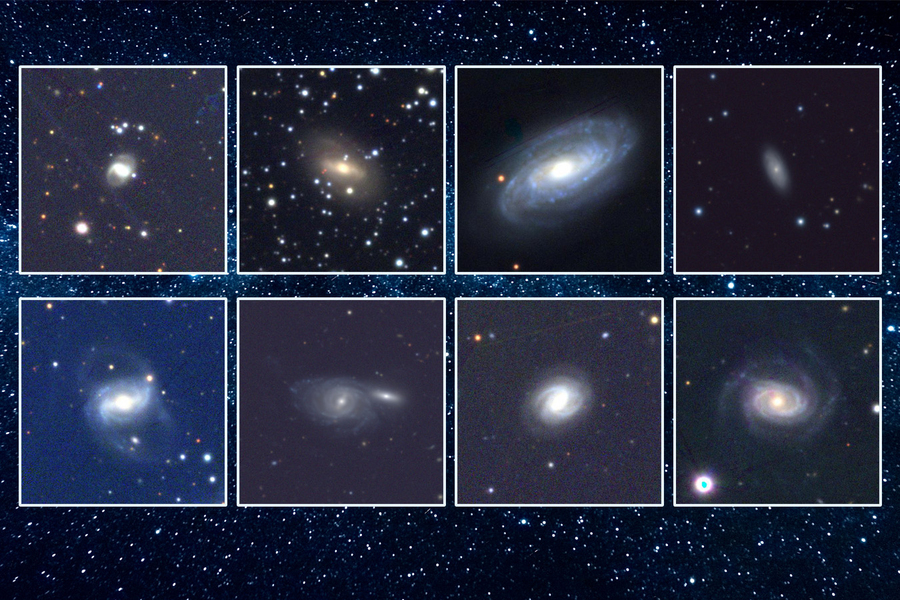
Masterson et al. identified 18 new tidal disruption events -- extreme instances when a nearby star is tidally drawn into a black hole and ripped to shreds. Image credit: Masterson et al., doi: 10.3847/1538-4357/ad18bb.

Masterson et al. identified 18 new tidal disruption events — extreme instances when a nearby star is tidally drawn into a black hole and ripped to shreds.

Image credit: Masterson et al., doi: 10.3847/1538-4357/ad18bb.

“The majority of the new sources don’t show up in optical bands,” said Megan Masterson, a graduate student in MIT’s Kavli Institute for Astrophysics and Space Research.

“If you want to understand tidal disruption events (TDEs) as a whole and use them to probe supermassive black hole demographics, you need to look in the infrared band.”

Masterson and her colleagues recently detected the closest TDE yet, by searching through infrared observations.

The discovery opened a new, infrared-based route by which astronomers can search for actively feeding black holes.

That first detection spurred the group to comb for more TDEs.

For their new study, the researchers searched through archival observations taken by NASA’s NEOWISE mission.

They looked through the mission’s archived observations using an algorithm that picks out patterns in infrared emissions — likely signs of a transient burst of infrared radiation.

They then cross-referenced the flagged transients with a catalog of all known nearby galaxies within 600 million light-years.

They found that infrared transients could be traced to about 1,000 galaxies.

The authors then zoomed in on the signal of each galaxy’s infrared burst to determine whether the signal arose from a source other than a TDE, such as an active galactic nucleus or a supernova.

After ruling out these possibilities, the team then analyzed the remaining signals, looking for an infrared pattern that is characteristic of a TDE — namely, a sharp spike followed by a gradual dip, reflecting a process by which a black hole, in ripping apart a star, suddenly heats up the surrounding dust to about 1,000 K before gradually cooling down.

The team’s analysis revealed 18 clean signals of tidal disruption events.

The authors took a survey of the galaxies in which each TDE was found, and saw that they occurred in a range of systems, including dusty galaxies, across the entire sky.

“If you looked up in the sky and saw a bunch of galaxies, the TDEs would occur representatively in all of them,” Masteron said.

“It’s not that they’re only occurring in one type of galaxy, as people thought based only on optical and X-ray searches.”

“It is now possible to peer through the dust and complete the census of nearby TDEs,” said Harvard University’s Professor Edo Berger.

“A particularly exciting aspect of this work is the potential of follow-up studies with large infrared surveys, and I’m excited to see what discoveries they will yield.”

The new discoveries help to resolve some major questions in the study of TDEs.

For instance, prior to this work, astronomers had mostly seen TDEs in one type of galaxy — a post-starburst system that had previously been a star-forming factory, but has since settled.

This galaxy type is rare, and astronomers were puzzled as to why TDEs seemed to be popping up only in these rarer systems.

It so happens that these systems are also relatively devoid of dust, making a TDE’s optical or X-ray emissions naturally easier to detect.

Now, by looking in the infrared band, astronomers are able to see TDEs in many more galaxies.

The team’s new results show that black holes can devour stars in a range of galaxies, not only post-starburst systems.

The findings also resolve a missing energy problem. Physicists have theoretically predicted that TDEs should radiate more energy than what has been actually observed.

But the authors now say that dust may explain the discrepancy. They found that if a TDE occurs in a dusty galaxy, the dust itself could absorb not only optical and X-ray emissions but also extreme ultraviolet radiation, in an amount equivalent to the presumed ‘missing energy.’

The 18 new detections also are helping astronomers estimate the rate at which TDEs occur in a given galaxy.

When they figure the new TDEs in with previous detections, they estimate a galaxy experiences a tidal disruption event once every 50,000 years.

This rate comes closer to physicists’ theoretical predictions. With more infrared observations, the team hopes to resolve the rate of TDEs, and the properties of the black holes that power them.

“People were coming up with very exotic solutions to these puzzles, and now we’ve come to the point where we can resolve all of them,” said MIT’s Dr. Erin Kara.

“This gives us confidence that we don’t need all this exotic physics to explain what we’re seeing.”

“And we have a better handle on the mechanics behind how a star gets ripped apart and gobbled up by a black hole. We’re understanding these systems better.”

  • The team’s paper was published in the Astrophysical Journal.
  • Megan Masterson et al. 2024. A New Population of Mid-infrared-selected Tidal Disruption Events: Implications for Tidal Disruption Event Rates and Host Galaxy Properties. ApJ 961, 211; doi: 10.3847/1538-4357/ad18bb

{ https://www.sci.news/ }

Hoe vind je dit bericht?
Geschreven door peter om 21:59 Stuur door

Meer van UFO'S of UAP'S, ASTRONOMIE, RUIMTEVAART, ARCHEOLOGIE, OUDHEIDKUNDE, SF-SNUFJES EN ANDERE ESOTERISCHE WETENSCHAPPEN - DE ALLERLAATSTE NIEUWTJES

↑ Terug naar de berichten