Eyewitness Exits Church To see Huge UFO Hovering In The Sky, July 12, 2026, UAP Sighting News.

Eyewitness Exits Church To see Huge UFO Hovering In The Sky, July 12, 2026, UAP Sighting News.
UFO Representative Claims 'Deep State' Is Planting Fake Evidence in New Alien Files
China increases surveillance of geostationary satellites from an unusual orbit
This summer, a spacecraft entered Earth orbit whose trajectory immediately puzzled specialists in several countries. It is moving in such a way that the entire ring occupied by communications and military reconnaissance satellites will gradually come within its field of observation. The official mission description was limited to a few words about studying the space environment. Independent analysts are convinced that its actual purpose is different.
A Long March 3B rocket lifts off from the Xichang Satellite Launch Center on June 16 carrying the Shijian-31 satellite.
Credit: CASC
Shijian-31 was launched on June 16 aboard a Long March 3B rocket from the Xichang Satellite Launch Center. The China Aerospace Science and Technology Corporation, or CASC, described its purpose in a single sentence about studying the space environment and released no images of the satellite.
Aviation warnings and the type of launch vehicle indicated a geostationary transfer orbit. Observers later detected the spacecraft moving along a highly elliptical Molniia-type orbit already used by several other Chinese satellites. This time, however, the familiar configuration was applied in a way that had never been seen before, SpaceNews reports.
The 63.4-degree inclination characteristic of such orbits keeps the apogee above the same latitude. Without this condition, Earth’s uneven mass distribution would gradually rotate the elongated ellipse within its own orbital plane. The point farthest from Earth would drift toward the equator and then farther south, requiring engine burns to compensate for the movement.
In the conventional use of this orbit, the farthest point lies over the Northern Hemisphere. The spacecraft remains visible from high latitudes for several hours at a time, allowing a pair of such satellites to maintain continuous communications over the Arctic and detect the thermal signatures of missile launches.
In the case of Shijian-31, the apogee is located not over northern latitudes but in the equatorial region. This is precisely where the geostationary belt lies, at an altitude of approximately 35,786 kilometers, occupied by communications, reconnaissance, and early-warning satellites.
Its orbital period is 12.5 hours rather than the 12 hours typical of this configuration. Because of this difference, each successive orbit shifts by approximately 15.7 degrees in longitude, allowing the entire belt to enter the spacecraft’s field of view over 23 days.
The highest point of the orbit is approximately 39,900 kilometers, several thousand kilometers above the belt itself. This approach provides a complete view without requiring close approaches to foreign spacecraft, which are the maneuvers that usually provoke diplomatic protests.
Integrity ISR was the first company to draw attention to the unusual trajectory in a June 26 publication based on data from the Space-Track catalog. A month later, the observations were confirmed by ComSpOC, a company that monitors activity in near-Earth space and described it as an orbit unlike anything previously seen.
It will be difficult to obtain a clear view of the spacecraft itself or determine what equipment it carries. Its perigee is slightly below 2,000 kilometers, far above most imaging spacecraft in low Earth orbit, while thousands of kilometers separate it from U.S. inspection satellites operating near the geostationary belt.
At the same time, descending to the geostationary satellites themselves would not be difficult. A braking maneuver at perigee involving a velocity change of only 50 meters per second would lower the apogee to approximately 36,671 kilometers. The resulting trajectory would pass directly through the belt’s operational zone, while requiring very little fuel.
Victoria Samson, an expert at the Secure World Foundation, described the mission in comments to SpaceNews as highly unusual and difficult to characterize based on the currently available data. She noted that the spacecraft had been in orbit for only a month, so its subsequent behavior could reveal much more.
The mission is likely part of a broader trend toward the deployment of inspection satellites and growing attention to activity at geostationary altitudes. The United States operates the Geosynchronous Space Situational Awareness Program, or GSSAP, in this region. Russia relies on Luch-2 after the failure of its previous spacecraft in January, while China has previously explored even more unconventional options, including a lunar swing-by to enter a retrograde geosynchronous orbit.
AARO’s Latest UAP Report Finds No Evidence of Exotic Technology, But Mysteries Remain

Welcome to this edition of The Intelligence Brief… This week, the Pentagon’s All-domain Anomaly Resolution Office (AARO) finally released its long-delayed Fiscal Year 2025 report on unidentified anomalous phenomena, revealing the latest findings from the Office’s growing number of UAP cases. In our analysis, we’ll be looking at 1) what the latest report reveals about AARO’s growing database of nearly 2,000 UAP reports, 2) why satellite flares continue to account for many recent sightings, 3) the report’s intriguing references to unresolved incidents near sensitive military installations and critical infrastructure, and 4) what AARO’s latest findings suggest about the challenges investigators still face in explaining a small but persistent number of UAP reports.
“AARO seeks to capitalize on a diverse set of sensor technology capabilities and intelligence analytic tradecraft… to improve the USG’s effort to investigate and respond to UAP in the air, maritime, and space domains at scale and speed.”
If you enjoy the news and perspectives offered by The Debrief, make sure that you aren’t missing our stories by making us one of your “preferred sources” on Google News. You can simply follow this link to add The Debrief to your list of favorites, and you can read more about Google’s preferred sources in our article here.
This week, the Pentagon’s All-domain Anomaly Resolution Office (AARO) finally released its 2025 annual report on unidentified anomalous phenomena, or UAP.
You read that correctly: the long-delayed report for fiscal year (FY) 2025 has been MIA since its expected release date last October, and finally appeared at AARO’s website just three months (or so) ahead of the scheduled release date for its next annual report. Hey, better late than never.
According to AARO’s latest findings, there were no cases it resolved that point to advanced foreign technology or extraordinary capabilities exhibited by UAP, but close to 200 reports from its latest batch remain unexplained due to insufficient data.
AARO also reiterated two conclusions that have remained consistent across previous reports: investigators have found no evidence that the U.S. government or any private organization has recovered or exploited materials derived from UAP, and the office has received no verified reports of adverse health effects directly associated with UAP encounters.
Beyond that, here’s a look at some of the report’s primary findings.
Offering an overview of the office’s investigations of cases collected between June 2, 2024, and May 30, 2025, the new report conveys that AARO received 319 new UAP cases during the reporting period, bringing its total case holdings to 1,870 since the office’s creation.
274 incidents occurred in the air domain, while 44 involved objects observed in space, and one occurred in the maritime domain. “The single maritime domain UAP case AARO received involved a report from U.S. Navy assets operating off the coast of Virginia,” AARO’s report states. “The report described approximately 100 airborne UAP and two, likely uncrewed, surface systems. AARO is actively investigating this event in coordination with the reporting unit.”
The brief description of this single maritime incident AARO received is intriguing, although very little context is provided, and it is unclear whether it may be describing UAVs and uncrewed launch platforms observed at sea, which might be attributable to a U.S. foreign adversary.
As for those “objects observed in space,” AARO’s report makes it clear that none of the space-domain cases originated from space-based sensors, but instead mostly came from civilian pilots reporting through the Federal Aviation Administration (FAA). The other two originated from U.S. Space Command ground-based sensors.
“AARO applied all-source analysis techniques and three-dimensional modeling to render a high confidence assessment for each of these cases as being attributable to satellite flaring,” the report reads.
The fact that satellite flaring has significantly contributed to recent alleged UAP sightings is nothing new. In 2022, following a series of sightings by pilots involving what were characterized as “racetrack UAPs,” it was determined that the sightings resulted from an optical illusion created by SpaceX Starlink satellites.
While 114 of the 319 new cases AARO has received have been resolved, it says that 191 cases have been placed into AARO’s “active archive,” which involves reports that presently lack sufficient data required to make an assessment.
“UAP cases held in active archive inform AARO’s locational and trend analyses and remain open to future resolution should further information or improved analytical techniques enable a more conclusive resolution,” the report states. Additionally, there were nine cases referred to members of the Intelligence Community and AARO’s science and technology partners for further technical analysis.
The report also identifies several trends among the incoming reports. In terms of appearance, spherical shapes remain the winning category, comprising close to 40 percent of reported UAP morphologies, with lights representing around 33 percent. Around 25 percent of sightings lacked enough information to give any clear indication of shape at all.
In terms of altitude, most airborne sightings occurred between 10,000 and 35,000 feet, while reports above 45,000 feet declined significantly from the previous reporting period; notably, AARO attributes this to its progress in identifying satellite flares.
Fortunately, no flight safety-related incidents were reported for the period discussed in the FY 2025 report, although there were two cases that “contained descriptions of electronic or avionic interference reported as attributable to UAP in proximity to an operational aircraft.” AARO says it remains unclear whether those effects were directly related to the observed UAP.

Perhaps one of the most significant elements of the new report is that there were reportedly several new cases logged near sensitive military installations and critical infrastructure. “Some narrative reports were suggestive of phenomena whose performance characteristics exceed the known state-of-the-art within a given domain,” the report states, though adding that “No technical data accompanied these reports.”
“If validated, the attendant phenomena underlying these reports may represent a currently unmitigated threat vector,” the report states. “Part of AARO’s mission is to provide data and analysis that helps mitigate potential UAP-related national security threats or operational hazards.”
The report additionally documents a significant increase in reports involving unmanned aerial systems operating near U.S. nuclear infrastructure, with 50 incidents referred to AARO by the National Nuclear Security Administration and Nuclear Regulatory Commission—a 178 percent increase over the previous year’s total.
It is clearly stated that none of these objects were genuine UAP or exhibited anything unusual. “The reports contained descriptions of UAS morphologies ranging from small hobbyist-sized UAS to larger multi-rotor models. Quadcopters were the most reported morphology,” AARO’s report states.
As with past AARO annual reports, the FY 2025 updates leaves much to the imagination—a fact that is very in keeping with recent UAP imagery and documentation released by the Pentagon through its PURSUE initiative. Still, the report’s findings—vague as they are—do indicate one fundamental issue: objects or phenomena that remain difficult to attribute to any known sources continue to be tracked by U.S. defense personnel.
With nearly 2,000 reports in its current collection, AARO concedes that while it has found no evidence of links to any extraordinary phenomena, there are also still a good number of cases that remain unresolved, and which warrant further attention.
Perhaps that’s the real takeaway—not that AARO has found evidence of anything extraordinary, but that some reports do continue to defy straightforward explanation.
That concludes this week’s installment of The Intelligence Brief. You can read past editions of our newsletter at our website, or if you found this installment online, don’t forget to subscribe and get future email editions from us here. Also, if you have a tip or other information you’d like to send along directly to me, you can email me at micah [@] thedebrief [dot] org, or reach me on X: @MicahHanks.
A New Theory May Explain One of the Dead Sea Scrolls’ Biggest Mysteries

For decades, scholars have debated whether the Qumran sect associated with the Dead Sea Scrolls actually used its unusual 364-day calendar, or viewed it as more of a theoretical ideal.
Now, a new study published in the Tarbiz Quarterly for Jewish Studies suggests that neither explanation is fully accurate. Instead, Prof. Eshbal Ratzon argues that the community used the calendar for a time before seasonal drift and changing Hasmonean politics prompted them to abandon the system.
Ratzon, a professor at Tel Aviv University, set out to answer a question that has puzzled scholars for decades. Unlike the approximately 365.25-day solar year, the Qumran calendar consisted of exactly 364 days. The calendar used 364 days because the number divides evenly into 52 seven-day weeks, so every festival would always fall on the same weekday each year.
To the Qumran sect, this order in the calendar demonstrated what they saw as God’s perfect design. They believed God set the calendar at Creation and that people could not change it. This belief clashed with Jerusalem’s religious leaders, whose priests used a lunisolar calendar that most Jewish people followed during the Second Temple period.
The mathematics that gave the calendar its perceived order also led to practical issues. A 364-day year lags behind the solar year by about a day and a quarter each year, causing festivals to drift by nearly a month over two decades. After several decades, a spring harvest festival could fall in winter. For a group that linked its holidays to agriculture, this gradual shift was a serious problem.
Two main theories have shaped the debate for years. One suggests that the sect occasionally added extra days to correct the drift, while the other argues that the 364-day calendar was only a theoretical model and not used in daily life. Ratzon argues that the Dead Sea Scrolls do not clearly support either view. Nearly twenty of the recovered scrolls concern calendars or astronomy, highlighting the importance of the subject within the community. The Book of Jubilees, a key text for the sect, goes further by criticizing the lunar calendar and presenting the 364-day system as the original calendar given to Moses at Sinai.
“The Qumran calendar has long been regarded as one of the Qumran sect’s defining features, but also as one of the most baffling mysteries of the Dead Sea Scrolls,” Ratzon said.
Ratzon’s reconstruction sees the abandonment of the calendar as a two-stage process, rather than a single failure. The growing seasonal drift made the calendar increasingly impractical. At the same time, the sect’s relationship with the Hasmonean rulers improved under Alexander Jannaeus, who supported religious decisions closer to the sect’s views and disagreed with the Pharisees who led the Temple in Jerusalem.
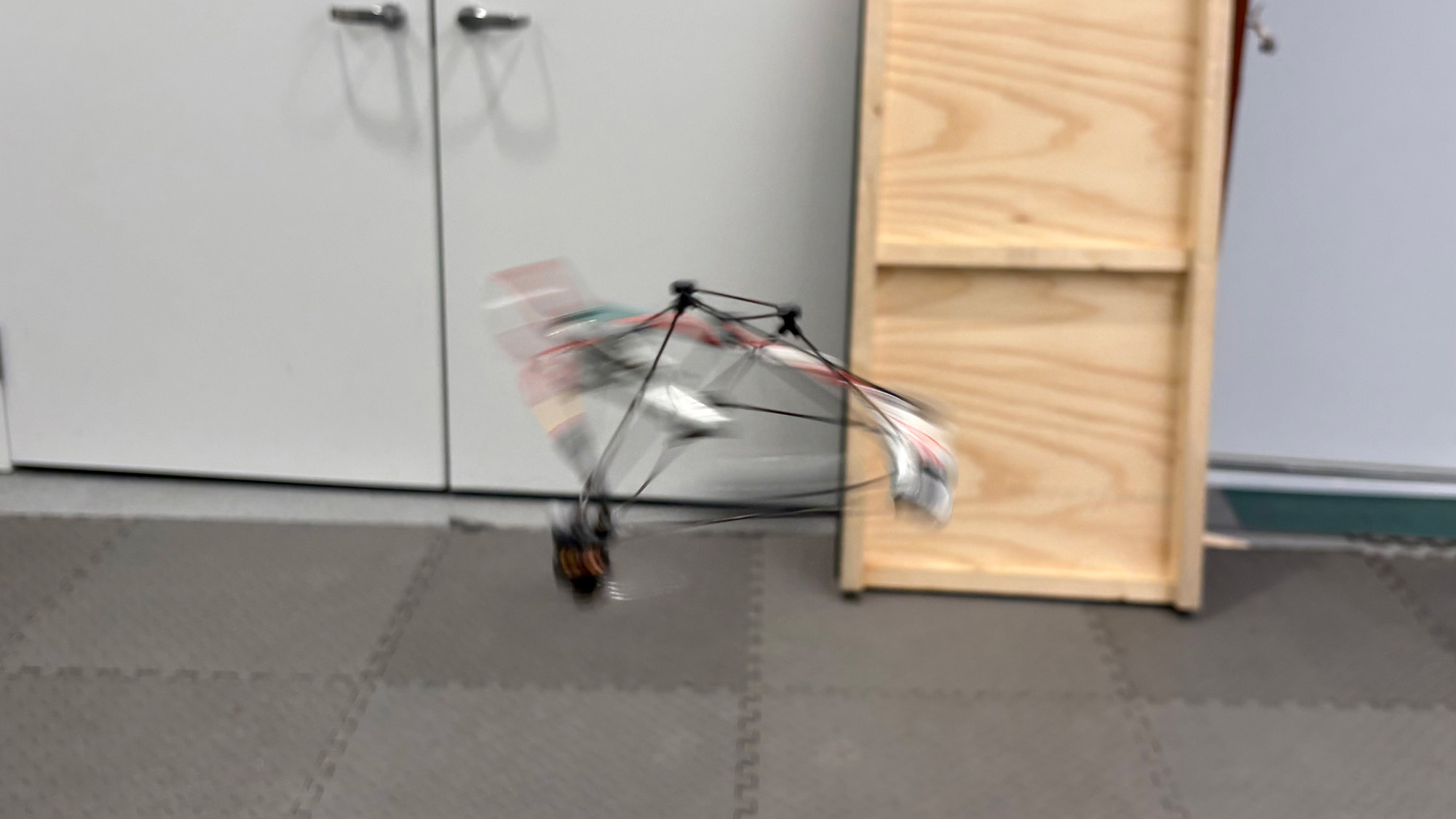
Meet Phantom Twist, a stealthy new drone that hides in plain sight by tricking your eyes
High-speed rotation exploits the concept of motion blur to conceal a new drone while it's in flight.
‘There Has Been A Massive Cover Up’ When It Comes To UFO Disclosure By The US Government, Claims Dr. Phil
by

Dr. Phil McGraw read the Pentagon’s recently released UFO files before the public and claims that after doing so, he believes there has been a huge cover-up by the United States government.
Why was Dr. Phil given access to the Pentagon’s UFO files before the general public? According to NewsNation, while the administration was weighing disclosure, it sought a trusted voice rather than an astrophysicist to gauge how the public might react to the files. He is also part of the Religious Liberty Commission that President Donald Trump established.
“I think we have to look at what’s going on with all of this in different pieces,” McGraw said on Reality Check with Ross Coulthart. “What are we going to disclose to the American public, but once we tell them what we tell them, what are we going to do with reaction?”
He also stated that he believes the government’s excuse of being scared to reveal information to the public because it’s “too shocking” is not true, and he finds it patronizing to the public.
“I have sat with people, and I’ve seen them deal with difficult situations time and again,” McGraw said. “I think we are very resilient as the human race.”
As for the UFO files themselves, Dr. Phil claims the imagery released so far is intentionally grainy, that far better gun camera video and radar tracks exist and that Reps. Tim Burchett and Anna Paulina Luna are helping him press for their release.
“There are two things that have jumped out at me as I’ve gone through all of this, and certainly in the one that we had the opportunity to dig into before it became public, two things,” Dr. Phil said. “Number one, there has been a massive cover up. And two, there’s no question there are unexplained phenomena happening in our atmosphere here.”
Dr. Phil McGraw’s observations come as Oliver Stone’s son Sean also claims that the government is hiding anti-gravity UFO technology.
“If we’re working with anti-gravity propulsion, say goodbye to oil and gas, that whole industry is gone,” Sean Stone told The Scoop. “And that’s a big reason why some people speculate that the UFO thing has been so suppressed. It’s like, well, once we understand that like you don’t need propulsion from a jet blasting off, you know, jet fuel and stuff, man, that’s that’s like how much of your world economy just got destroyed, you know, by that, you know, your oil and gas industry, you’re talking what, trillions of dollars, you know, globally, right? I mean, it’s huge.”
In related news, President Donald Trump has ordered federal agencies to cancel non-disclosure agreements with former government employees and contractors who have cooperated with the United States government in investigations into UFOs.
“President Trump recently directed the Department of War and the intelligence community to allow former government employees or contractors, that have relevant information about the disclosure of UAP, to come forward to meet with designated government representatives — AARO [All-domain Anomaly Resolution Office] or the President’s UAP taskforce, ‘PURSUE’ — and have their prior NDAs abrogated,” Fox News reports a senior administration official said.
Evidence Mounts That Martian Intelligent Life Was Silica Based, Not Carbon Based. UFO UAP Sighting News.

Juno takes temperature of Jupiter's fiery moon Io

Published in the Journal of Geophysical Research: Planets, these findings break new observational ground for both fiery and icy worlds beyond our planet.
Io's extreme volcanism is powered by tidal heating. The moon is constantly stretched and squeezed by Jupiter's immense gravity as it travels in a slightly elliptical orbit, generating internal heat output many times greater than Earth's. Until now, virtually everything known about that heat came from infrared observations, which sense only the temperature of the surface. The latest findings are based on data collected by the spacecraft's Microwave Radiometer (MWR) instrument.
"The Juno Microwave Radiometer directly observed Io's heat output by looking below the surface," said Scott Bolton, study co-author and Juno's principal investigator at Southwest Research Institute in San Antonio. "The surprising discovery that we could see below a rocky moon's surface has important implications for studying Earth's volcanoes. Juno has taught us that if we look with an MWR-type instrument near a volcano on Earth, we might see a similar signature in the subsurface temperature gradient, providing new information on how terrestrial volcanoes work."

Juno's Microwave Radiometer was designed by Bolton to peer beneath Jupiter's cloud tops to investigate the dynamics and composition of the gas giant's deep atmosphere. The MWR's six microwave antennas serve as a single instrument, simultaneously detecting microwaves at a wide range of wavelengths, from about half an inch to 20 inches (1.3 to 51 centimeters). During the mission's extended phase, the MWR instrument has provided the opportunity to observe three of the planet's Galilean moons: Ganymede, Europa and Io.
"The technique is novel in that each wavelength explores different depths, providing a new way to characterize the deep atmosphere of giant planets and the subsurface crusts of icy and rocky moons," said Bolton. "At Ganymede and Europa, we explored tens of miles below the surface, assuming their ice shells were mostly pure water, but the ability to probe volcanic rock on Io was an unexpected discovery."
During flybys on Dec. 30, 2023, and Feb. 3, 2024, the solar-powered Juno spacecraft came within about 930 miles (1,500 kilometers) of the moon's surface.

"The instrument measured Io's thermal emission at depths ranging from a few inches to tens of feet. Everywhere we looked, we found the temperature rising by more than 40 degrees Fahrenheit just several feet into the surface—a gradient far steeper than solar heating alone can explain," said Shannon Brown, the paper's lead author at NASA's Jet Propulsion Laboratory in Southern California.
The data suggest two possible explanations. First, heat could be rising steadily through a conductive crust. While this background heat flow—measured at 1 to 3 watts per square meter—is relatively gentle on a local scale (roughly equivalent to a small nightlight glowing under every square yard), across the entire moon it represents a release of energy up to 30 times Earth's average. Alternatively, the signal could be coming from cooling lava flows, capped by roughly 30 to 35 feet (9 to 11 meters) of solidified crust, that cover about 10% of the moon's surface at any given time.
"Io provides a unique window into how tidal heating works throughout the cosmos, a fundamental process that provides energy and heat to worlds that are far from their parent star," said Bolton. "This process can not only create the most volcanic body in the solar system, in the case of Io, but also fuel the subsurface oceans on the moons of giant planets, such as Europa and Ganymede. Until this point, we could only observe the heat escaping at the surface or through eruptions. Now we can characterize how the heat is moving from the interior toward the surface."
Another major insight gained from the two flybys is just how smooth Io is. Before the recent findings, the moon was known for its tall mountains, but the MWR indicates that apart from this visible topography, the surface features expansive smooth patches that stretch for 60 miles (100 kilometers) or more. Because Juno flew by overlapping regions of Io at different angles, the team was able to map how the surface reflects microwaves, much like an airline passenger might see the ocean flash with sunlight only at specific angles.
"Away from its mountains, the surface is more like the Great Plains of North America, and even though Io is a rocky body, the surface material has a very low density—more like pumice or fluffy volcanic ash than solid rock," said Brown.
Journal information:
NASA whistleblowers claim 'alien presence' is hidden in altered moon photos
NASA's most famous astronauts secretly claimed that they encountered an alien presence on the moon and were told to keep it quiet for decades.
Physicist Maaneli Derakhshani told the American Alchemy podcast that multiple Apollo missions allegedly captured photos of UFOs around the moon during the 1960s and 1970s, only to have those images altered before the public saw them.
Derakhshani, who researches lunar and Martian surface anomalies, detailed instances where famous NASA photos taken by astronauts on the surface of the moon had been clearly altered when compared to public copies of the same images.
The scientist said: 'One scan from the Lunar and Planetary Institute - this is an archive that NASA has managed since the 1970s - and it's an Apollo 14 photograph with Ed Mitchell standing on the lunar surface.'
'You see his long shadow stretched out and... essentially the lunar sky is completely black in this version. You zoom in everywhere, it's completely black,' Derakhshani revealed.
'However, if you look at the "March to the moon" version of that same frame, which is managed by Johnson Space Center and Arizona State University, there is a blue orb in the lunar sky very clearly. It's very obvious above Mitchell.'
Derakhshani and podcast host Jesse Michels also noted that several astronauts, including Neil Armstrong, the first human on the moon, have reportedly claimed they received telepathic messages from extraterrestrials warning them not to return.
The bombshell whistleblower stories come as NASA prepares to land on the lunar surface by 2028 – ending a nearly six-decade absence which has sparked unproven conspiracy theories as to why the US never returned to the moon.

Physicist Maaneli Derakhshani claimed on the American Alchemy podcast that NASA photos from the moon have been altered to erase signs of UFOs

Physicist Maaneli Derakhshani (left) and American Alchemy host Jesse Michels (right) discussed the many claims of an alien cover-up involving NASA astronauts and the moon
During the final moon mission, Apollo 17 astronauts Eugene Cernan and Harrison Schmitt took many photos while visiting the lunar surface in 1972.
However, Derakhshani revealed on the podcast that one famous frame showed three solid blue lights in the black sky above a lunar hill. When brightened, the area between the lights gets brighter, suggesting they might be attached to a larger object.
NASA’s own description of this image during the first batch of declassified UFO files released in May noted that a 'special investigation' had been opened because experts examining it believed the lights may be part of a large physical object in space.
The scientist noted that other photos from the same mission captured blue metallic-looking streaks in space, but when zoomed in and brightened, the streaks resembled insectoid-like objects with faint trails from an alleged engine.
Skeptics, including astrophysicist Neil deGrasse Tyson, have claimed that the images were only displaying cosmic rays, but Derakhshani called the odds of this statistically improbable, as the objects were solid round lights – not gaseous streaks or lens flares.
Despite releasing tranches of photos and hours of audio recordings from the Apollo moon missions as part of the Trump Administration's UFO disclosure campaign, NASA and the Pentagon continue to deny that proof of alien life has been found.
Derakhshani added that the altered pictures and other sightings were not definitive proof of aliens, but said the patterns are hard to explain as natural geology, camera glitches or ordinary space debris.
However, the strongest evidence of a NASA cover-up may come from the alleged confession of an actual NASA astronaut who claimed he was ordered to destroy potential proof of UFO sightings near the moon.

This archival photograph depicts the lunar surface as viewed from the landing site of Apollo 12. This image features a highlighted area of interest slightly to the right of the vertical axis of the frame, above the horizon, in which unidentified phenomena are visible

This archival photograph depicts the lunar surface as viewed from the landing site of Apollo 12. This image features highlighted areas above the horizon in which unidentified phenomena are visible
'There's also Ken Johnston Sr, who was one of the pilots who trained the NASA astronauts and was a backup astronaut for the Apollo missions if I remember correctly,' Derakhshani said in the July 20 episode on YouTube.
'He says he was told to destroy a bunch of first-generation or early-generation Apollo negatives because they had some anomalies on them and they're not supposed to be there, and they don't want to release them publicly and he actually saved some of them and put some of his copies online.'
The Daily Mail has reached out to NASA for comment.
Michels then brought up the alleged confessions of astronauts Cernan and Armstrong, who both reportedly mentioned having similar experiences during their lunar flights involving a warning received from extraterrestrials.
'There are all these apocryphal stories of Neil Armstrong telling similar stories in Washington, DC, saying, "We were told not to come back to the moon,"' the host said.
Michels referenced a previous interview with Steve Colbern, a lab analyst who participated in surgeries to remove alleged alien implants from people, who also claimed Armstrong was overheard at a party for high-level political guests repeating this warning.
Meanwhile, Cernan reportedly told his friend and Japanese NASA museum curator Josen Takano that during the trip to the moon, he received some type of telepathic message, saying: 'We don’t really want you here.'
The next mission scheduled to circle the moon, Artemis III, is expected to take place at some point in 2027. The following mission, a year later, Artemis IV, is expected to be the first lunar landing since the Apollo program.