Naar de inhoud

UFO'S of UAP'S, ASTRONOMIE, RUIMTEVAART, ARCHEOLOGIE, OUDHEIDKUNDE, SF-SNUFJES EN ANDERE ESOTERISCHE WETENSCHAPPEN - DE ALLERLAATSTE NIEUWTJES

UFO's of UAP'S in België en de rest van de wereld
akke.beakke.be
Ontdek de Fascinerende Wereld van UFO's en UAP's: Jouw Bron voor Onthullende Informatie! Ben jij ook gefascineerd door het onbekende? Wil je meer weten over UFO's en UAP's, niet alleen in België, maar over de hele wereld? Dan ben je op de juiste plek! België: Het Kloppend Hart van UFO-onderzoek In België is BUFON (Belgisch UFO-Netwerk) dé autoriteit op het gebied van UFO-onderzoek. Voor betrouwbare en objectieve informatie over deze intrigerende fenomenen, bezoek je zeker onze Facebook-pagina en deze blog. Maar dat is nog niet alles! Ontdek ook het Belgisch UFO-meldpunt en Caelestia, twee organisaties die diepgaand onderzoek verrichten, al zijn ze soms kritisch of sceptisch. Nederland: Een Schat aan Informatie Voor onze Nederlandse buren is er de schitterende website www.ufowijzer.nl, beheerd door Paul Harmans. Deze site biedt een schat aan informatie en artikelen die je niet wilt missen! Internationaal: MUFON - De Wereldwijde Autoriteit Neem ook een kijkje bij MUFON (Mutual UFO Network Inc.), een gerenommeerde Amerikaanse UFO-vereniging met afdelingen in de VS en wereldwijd. MUFON is toegewijd aan de wetenschappelijke en analytische studie van het UFO-fenomeen, en hun maandelijkse tijdschrift, The MUFON UFO-Journal, is een must-read voor elke UFO-enthousiasteling. Bezoek hun website op www.mufon.com voor meer informatie. Samenwerking en Toekomstvisie Sinds 1 februari 2020 is Pieter niet alleen ex-president van BUFON, maar ook de voormalige nationale directeur van MUFON in Vlaanderen en Nederland. Dit creëert een sterke samenwerking met de Franse MUFON Reseau MUFON/EUROP, wat ons in staat stelt om nog meer waardevolle inzichten te delen. Let op: Nepprofielen en Nieuwe Groeperingen Pas op voor een nieuwe groepering die zich ook BUFON noemt, maar geen enkele connectie heeft met onze gevestigde organisatie. Hoewel zij de naam geregistreerd hebben, kunnen ze het rijke verleden en de expertise van onze groep niet evenaren. We wensen hen veel succes, maar we blijven de autoriteit in UFO-onderzoek! Blijf Op De Hoogte! Wil jij de laatste nieuwtjes over UFO's, ruimtevaart, archeologie, en meer? Volg ons dan en duik samen met ons in de fascinerende wereld van het onbekende! Sluit je aan bij de gemeenschap van nieuwsgierige geesten die net als jij verlangen naar antwoorden en avonturen in de sterren! Heb je vragen of wil je meer weten? Aarzel dan niet om contact met ons op te nemen! Samen ontrafelen we het mysterie van de lucht en daarbuiten.

Categorie: ARCHEOLOGIE ( E, Nl, Fr )

Ancient Egypt secrets emerge from breakthrough Giza discovery

Ancient Egypt secrets emerge from breakthrough Giza discovery

An important breakthrough

©The Daily Digest

An important breakthrough
Egyptian officials declared a significant archaeological breakthrough in 2023 with the discovery of a previously unknown corridor within the Great Pyramid of Giza, one of the seven wonders of the ancient world. This marks the first such find in a millennium, potentially paving the way for further revelations about this ancient structure.

A great discovery

©Provided by The Daily Digest

A great discovery

At the north entrance of the pyramid

©Provided by The Daily Digest

At the north entrance of the pyramid
At a press conference in front of the Pyramid of Giza in early March of 2023, Egypt's Minister of Tourism and Antiquities, Ahmed Issa, said that the tunnel was discovered on the north side of the pyramid.

What does the tunnel look like?

©Provided by The Daily Digest

What does the tunnel look like?
Egypt's Ministry of Tourism and Antiquities said in the statement that the mysterious tunnel was nine meters long or 30 feet long and more than two meters or six feet wide.

Groundbreaking technology

©Provided by The Daily Digest

Groundbreaking technology
Thanks to an endoscopic camera with a diameter of 5 mm, which penetrated between the stones without causing any damage, scientists were able to take pictures. These show a stone cavity with a gabled roof.

An international scientific mission

©Provided by The Daily Digest

An international scientific mission
This secret room was discovered as part of an international research project called ScanPyramids. Since 2015, German, French, Japanese and Canadian universities have been collaborating with Egyptian archaeologists to study the pyramids and learn more about the construction methods used to build the pyramids more than 4,500 years ago.

Look through the stones

©Provided by The Daily Digest

Look through the stones
ScanPyramids' mission is to use non-invasive technologies to look through the stones to discover previously unknown internal structures within the pyramids.

©Provided by The Daily Digest

"We didn't want to dig indiscriminately"
Ground-penetrating radar and ultrasonic testing are the techniques used to discover this space through the stones. "We already knew in 2017 that there was a cavity behind it, we just didn't want to dig indiscriminately (...), so additional measurements were needed," explains research engineer Sébastien Procureur, who worked on the project.

A space that remains mysterious

©Provided by The Daily Digest

A space that remains mysterious
"Discovering an empty space in a pyramid is something special," explains German professor Christian Große, leader of the research team. "But the fact that this space is large enough to accommodate several people makes it even more important."

What was it for?

©Provided by The Daily Digest

What was it for?
According to Zahi Hawass, a famous Egyptian archaeologist, it is "very possible" that this room is "protecting something". It could even house a huge treasure: "In my opinion, it protects the true burial chamber of the Egyptian monarch Khufu," adds the Egyptologist.

©Provided by The Daily Digest

"There is not the direct connection that we could hope for"
Sébastien Procureur remains more skeptical: "That's a bit of the bad news: there isn't the hoped-for direct connection to the 'Big Void' (the so-called 'great void' at the heart of the pyramid where the pharaoh's body is said to be)". However, research is ongoing to clarify this question.

The Great Pyramid of Khufu

©Provided by The Daily Digest

The Great Pyramid of Khufu
The Pyramid of Khufu is the largest of the Pyramids of Giza. For thousands of years it was the tallest, most voluminous and most massive man-made structure in the world. It was built about 45 centuries ago (ca. 2551-2528 BC) to house the body of the pharaoh Khufu, the second ruler of the dynasty.

A fascinating construction

©Provided by The Daily Digest

A fascinating construction
An achievement that has always impressed and fascinated scientists. Its many architectural features are further mysteries that have not been solved until now. The researchers' only certainty today is the relatively short construction period: just 25 years.

The existence of the 'Big Void' was discovered in 2017

©Provided by The Daily Digest

The existence of the 'Big Void' was discovered in 2017
The "Big Void" is one of the questions that are still unanswered about the Khufu pyramid. Its existence was discovered by the Scan Pyramids teams in 2017. It is a "cavity at least 35 meters long and about 3 meters high," as Sébastien Procureur explains in an interview for Sciences et Avenir magazine.

What is in the 'Big Void'?

©Provided by The Daily Digest

What is in the 'Big Void'?
Archaeologists don't yet know what's in the 'Big Void'. Hypotheses vary, it could simply be a cavity formed during the construction of the pyramid or, what scientists hope, the real burial chamber of the pharaoh Khufu.

The Mystery of Pharaoh Khufu

©Provided by The Daily Digest

The Mystery of Pharaoh Khufu
The tomb of Khufu could contain all the treasures of this ancient king, but also the corpse of the pharaoh, which has not yet been discovered.

The research goes on

©Provided by The Daily Digest

The research goes on
Only one thing is certain: the pyramid has not yet revealed all its secrets to us. The Scan Pyramids teams intend to deepen their research to gather new data and make more discoveries.

RELATED VIDEOS

The Forgotten Secrets of Ancient Egypt: Pyramids' Forbidden Truths 🤯

Scientists Just Discovered Something INSIDE the Great Pyramid…

PYRAMIDS OF EGYPT MYSTERIES Finally Explained | How the Egypt Pyramids Were Really Built

{ © The Daily Digest }

Hoe vind je dit bericht?
Geschreven door peter om 16:17 Stuur door

9,000-Year-Old Structures Deep Beneath the Great Lakes Reveal Archaeological Evidence of an Ancient “Lost World”

Underwater archaeologists examine the features at the base of Lake Huron
(Image Credit: John O'Shea/Tane Casserly)

9,000-Year-Old Structures Deep Beneath the Great Lakes Reveal Archaeological Evidence of an Ancient “Lost World”

It began with a curious discovery: a series of unusual structures located more than 100 feet below the surface of Lake Huron, first detected in 2008.

What resulted was an ongoing investigation of curious sunken features beneath the Great Lakes, which are helping to reveal clues to a lost chapter in the prehistory of the ancient Americas, and the lives of its late Paleoindian-period inhabitants.

Close to 9,000 years ago, humans who once thrived on a land bridge that existed in a now submerged region deep within Lake Huron were assembling campsites, hunting pits, and “drive lanes” to aid in hunting caribou using the region’s local stone.

Following their discovery nearly two decades ago, researchers at the University of Michigan have continued to document these remarkable archaeological features, which are regarded as the earliest evidence of human activity ever discovered at the bottom of the Great Lakes.

Lost World of the Ancient Caribou Hunters

Since their initial detection, John O’Shea, curator of Great Lakes Archaeology in the Museum of Anthropology and professor in the Department of Anthropology, has become something of an evangelist for the remarkable discoveries preserved at the bottom of Lake Huron, frequently giving talks to historical societies and archaeology groups about their significance.

“We have been working continuously out in Lake Huron since 2008, and will be continuing the work this summer,” O’Shea recently told The Debrief. Since the initial detection of stone structures on the lake’s bottom, O’Shea says that several additional features have been identified, adding to the expanding picture of what the lives of the region’s ancient caribou hunters must have been like.

John O'Shea Professor John O’Shea, shown while working in the field (Image Credit: John O’Shea)

“To date, we have identified 80 locations with likely stone constructions,” O’Shea says. Most of these newly identified structures include drive lanes like those initially discovered in 2008, in addition to hunting blinds, and also caches of stone where ancient hunters had left behind material that could later be used to fashion lithic tools needed for hunting and processing caribou.

O’Shea says these 9,000-year-old features are mainly associated with the Lake Stanley low stand in Lake Huron.

“A summary of the research current to 2015 is published in the Museum of Anthropology Memoir series,” O’Shea told The Debrief. “I recently presented an update of developments since that time at the recent Society for Historical Archaeology meetings in Detroit this past January.”

A Sunken World Resurfaces

Involved since their initial discovery in the early 2000s, O’Shea said in a statement in 2009 that the discovery marked “the first time we’ve identified structures like these on the lake bottom,” adding that they were of great importance “because the entire ancient landscape has been preserved and has not been modified by farming, or modern development.”

“That has implications for ecology, archaeology and environmental modeling,” O’Shea said.

Reflecting on how the research initially came about during a 2023 lecture, O’Shea said the two factors that led to the discoveries had been the initial publication of data about the subsurface features of the Great Lakes by NOAA. Around this same time, O’Shea had been reading a book about the methods used by modern-day Siberian reindeer herders.

“In that book they were talking about how do these very small groups of families manage a herd of thousands of semi-domesticated reindeer?” he said. “And it turns out when they wanted the reindeer to move from one pasture to another, they went out … and cut brush, and laid it on the ground, and this was enough to deflect the movement of the animals.”

“And it was kind of seeing these two things together,” O’Shea says. “You know, out there, there’s gonna be rock. Maybe they were doing this.” What followed was a high-risk National Science Foundation-funded research effort, and soon afterward, the confirmation that such practices had indeed once occurred on portions of the ancient landscape now submerged.

Those discoveries also led to the publication of a paper, in which O’Shea and his co-author Guy Meadows, the director of the Marine Hydrodynamics Laboratories and a professor in the departments of Naval Architecture and Marine Engineering, and Atmospheric, Oceanic and Space Sciences at the University of Michigan, detailed the ancient features which had been preserved on the lake bottom for thousands of years.

Lake Huron archaeology
Above: Acoustic images of the base of Lake Huron revealing a Lake Stanley-age watercourse, along with possible hunting structures and camp sites
(Image Credit:O’Shea,Meadows/PNAS/https://www.pnas.org/doi/full/10.1073/pnas.0902785106)

One of the most significant features of their study was a 1,148-foot structure that appears to be the remnants of an ancient caribou drive lane, not unlike the Siberian varieties O’Shea had read about, and also similar to ones still seen today on Victoria Island and in other locations in subarctic Canada.

A Lost Land Bridge is Revealed

Stretching for more than 100 miles between Presque Isle, Michigan, and Point Clark, Ontario, the 9000-year-old features are located on the surface of an ancient ridge that was still exposed many thousands of years ago.

This ten-mile-wide feature, formally known as the Alpena-Amberley ridge, once formed a natural bridge across the region, where water from melting glaciers at the end of the last Ice Age steadily began filling the region’s basins more than 10,000 years ago. For a time, the ridge offered a unique opportunity for the region’s ancient hunters, whose mark was left in stone on the ancient landscape long before it was consumed by Lake Huron’s rising waters.

Many similar sites from this period are believed to exist along coastal regions as well, although, unlike the Great Lakes, those areas have been so covered by sediment over time that their rediscovery now would be almost impossible. By contrast, the archaeological features on the base of Lake Huron are almost devoid of the sediments that entomb their coastal counterparts and are also remarkably well preserved.

It was long suspected that the ancient Alpena-Amberley ridge would be a prime candidate for preserved archaeological remains, but their discovery had remained elusive until 2008. By narrowing their search based on models of the ridge as it would have appeared before Huron’s water levels began rising between 10,000 and 7,500 years ago, reconstructions of the ancient land bridge soon produced several candidate locations to begin their search.

That educated guesswork paid off, and with the assistance of computer science professor Robert Reynolds from Wayne State University, the team discovered archaeological features during scans of their three primary candidate locations using sonar technologies and remote-controlled underwater vehicles equipped with cameras.

Answers to Ancient Questions

For many years, very little was known about the earliest inhabitants of the region, primarily because the archaeological evidence of their presence had been submerged by the rising waters that became the Great Lakes.

Thanks to the ongoing efforts of O’Shea and his colleagues, some of the previously unanswered questions about this mysterious period in America’s prehistory have gradually come into focus. Much of this work was chronicled in the 2015 volume Caribou Hunting in the Upper Great Lakes: Archaeological, Ethnographic, and Paleoenvironmental Perspectives, for which O’Shea was an editor, and which offers a comprehensive overview of the underwater Paleoindian archaeology of the Great Lakes.

“Without the archeological sites from this intermediate time period, you can’t tell how they got from point A to point B, or Paleo-Indian to Archaic,” O’Shea said of the 2009 research.

“This is why the discovery of sites preserved beneath the lakes is so significant.”

O’Shea and Meadows’ study, “Evidence for early hunters beneath the Great Lakes,” appeared in Proceedings of the National Academy of Sciences.

  • Micah Hanks is the Editor-in-Chief and Co-Founder of The Debrief. A longtime reporter on science, defense, and technology with a focus on space and astronomy, he can be reached at micah@thedebrief.org. Follow him on X @MicahHanks, and at micahhanks.com.
RELATED VIDEOS

A Lost Civilization Is Sitting on the Bottom of the Great Lakes — 9,000 Years Hidden

What Lies Beneath the Great Lakes Will CHANGE History Forever

9,000-Year-Old Prehistoric Megastructure Found Beneath Lake Michigan — Discovery Shatters History

{ https://thedebrief.org/category/science/ }

Hoe vind je dit bericht?
Geschreven door peter om 22:53 Stuur door

Huge hidden cave under castle with prehistoric hippo bones 'once in a lifetime' find

Huge hidden cave under castle with prehistoric hippo bones 'once in a lifetime' find

Rosie Mercer - BBC Wales

A cave hidden beneath an 11th Century castle in Pembrokeshire is a "truly remarkable site" which could rewrite Britain's prehistory, researchers say.

Exterior shot of Pembroke Castle

Pembroke Castle has long been an important archaelogical area

 (Image: University of Aberdeen)

Small digs of the cave under Pembroke Castle, known as Wogan Cavern, have so far uncovered "extremely rare" evidence of early humans and animals - including the bones of a hippopotamus which roamed Wales 120,000 years ago.

The University of Aberdeen will now lead a larger five-year exploration of the site, which archaeologists hope could reveal "a great deal about our early prehistoric forebears".

"There is no other site like it in Britain – it is a once in a lifetime discovery," said Dr Rob Dinnis from the University of Aberdeen.

University of Aberdeen Pembroke Castle, on the banks of a river and surrounded by trees. It has tall and uneven stone walls

Pembroke Castle, the birthplace of Henry Tudor, is a popular tourist attraction

Wogan Cavern, thought to have been dug out by the Victorians, is accessed via a spiral staircase from the castle.

Measuring 23m (75ft) in length, with a height of up to 10m (32ft), the cave has been described as "enormous".

It was long assumed that there was little archaeological material left at the site, but small excavations between 2021 and 2024 uncovered evidence of both humans and animals over more than 100,000 years - including stone tools and mammoth, hippo and woolly rhinoceros bones.

Inside the cave where an excavation is taking place

Archaeologists say the site is a "once in a lifetime discovery"

(Image: University of Aberdeen)

The bones have been described as well preserved, and researchers said the cave was emerging as one of the most important prehistoric archives in Britain.

Dinnis, who directed the initial digs and will lead the new excavation project, said he was optimistic about what they would uncover.

"Despite the limited work done so far, we can already say that Wogan Cavern is a truly remarkable site," he said.

University of Aberdeen A molar from a woolly rhino, discovered during earlier digs at the cave

A molar from a woolly rhino, discovered during smaller digs at the cave

"Not only is there extremely rare evidence for early Homo sapiens, there are also hints at even earlier human occupation, probably by Neanderthals.

"There is no other site like it in Britain – it is a once in a lifetime discovery. With this new project we can learn a great deal about our early prehistoric forebears, about how they lived and what their worlds looked like.

"We are optimistic that the cave can chart a long sequence of human activity, from hunter-gatherers living there immediately after the last Ice Age around 11,500 years ago, back to Britain's earliest Homo sapiens between 45,000 and 35,000 years ago, and maybe also earlier traces likely left by Neanderthals.

"We have also found hippo bones, which probably date to the last interglacial period, around 120,000 years ago. The site could therefore tell us about how multiple changes in climate and environment affected people living there over 100,000 years or more."

University of Aberdeen Archaeologist wearing a boiler suit is digging at the site

The five-year excavation is set to begin in May

The university will lead on the exploration supported by the Pembroke Castle Trust, which said the finds from Wogan Cavern would be curated and kept in Pembroke.

For Pembroke Castle – the birthplace of Henry Tudor and a popular tourist attraction – the project represents an exciting new chapter in its history.

"This is incredibly exciting news for everyone at the castle," said manager Jon Williams.

"We have watched with great interest as Wogan Cavern has started to reveal its secrets – it's very different from the medieval history we usually deal with at the castle."

The new excavations are scheduled to begin at the end of May.

{ https://www.bbc.com/ }

Hoe vind je dit bericht?
Geschreven door peter om 16:41 Stuur door

Archaeologists Unearthed a 6,200-Year-Old Megastructure. Its Purpose Is Still a Mystery.

Archaeologists Unearthed a 6,200-Year-Old Megastructure. Its Purpose Is Still a Mystery.

Tim Newcomb

3e9b934681e52d6b7878a3c39f2ee25c

Archaeologists Found an Ancient Megastructure

Jakub Specjalski - Getty Images

Here’s what you’ll learn when you read this story:

  • Archaeologists in Romania have uncovered portions of an ancient megastructure from around 6,200 years ago.

  • The oak-floor building was located at the entrance to a settlement that included roughly 45 houses.

  • The megastructure is only the sixth of its kind ever found, and experts are planning further research and excavation at the site.

Excavations in the hills of northeastern Romania have unearthed one of the world’s oldest known megastructures, a massive communal building dating to around 4000 B.C.E. that still holds plenty of secrets after only a quarter of the site has been excavated.

The building sits at the center of a settlement called Stăuceni-Holm in Romania’s Botoșani County, a site first identified in the 1960s but not excavated until 2023. It belongs to the Cucuteni-Trypillia culture, a network of farming communities that spread across modern-day Romania, Moldova, and Ukraine from roughly 4800 to 3000 B.C.E. According to a study published in PLOS ONE, the structure is only the sixth megastructure from this culture ever to be excavated, and radiocarbon dating makes it one of the earliest examples on record.

Romania dig reveals 6,200-year-old megastructure with unknown purpose

Romania dig reveals 6,200-year-old megastructure with unknown purpose

© Zehra Rekibe Başol/Pexels

At roughly 350 square meters, the building dwarfs the ordinary houses around it, and its prominent position near the settlement's entrance suggests that it played a special communal role. The Stăuceni-Holm settlement itself is relatively modest, home to an estimated 320 to 350 people, far smaller than some Cucuteni-Trypillia mega-sites in Ukraine that likely housed thousands. Yet even this smaller community built the same kind of oversized gathering place, a pattern that suggests megastructures were a standard organizational feature of the culture rather than a phenomenon limited to its largest towns. With three-quarters of the site still unexcavated, researchers expect the building has much more to reveal about how these early European communities lived and governed themselves.

The megastructure’s scale suggests that it held great significance for the people who built it. The rectangular building of over 3,700 square feet sat between defensive ditches and a palisade system at the entrance to the settlement. At three to five times larger than any of the homes, the structure offers a stark contrast to the rest of the settlement.

Inside, the oak wood floor covered in burnt clay contained a dense concentration of pottery pieces, including a “remarkable” example of a carved bull’s head attached to a bowl. Excavations also revealed a conical idol with an unknown purpose, although it’s a common find among Cucuteni sites. Three ladles were found, including one with painted patterns, along with a grooved pottery vessel painted in red ochre. Flint tools were found throughout the building.

Originally, the megastructure may have had an upper floor built like an open-air terrace. The inner portion had several rooms, likely for living, cooking, storage, and maybe even ritual purposes. Amid the remains of cereals and fruits, the team found henbane seeds, a psychotropic plant common in both medicinal and ritual use over 6,000 years ago.

While early geomagnetic surveys indicated the building featured hearths and storage pits, actual excavation proved that wrong. The authors wrote that at this stage of the research it’s “unrealistic to consider the function of the building as storage building or a communal place for consumption of food.” And there’s no real indication it was strictly a cult building. “Perhaps the megastructure was just a bigger house for a bigger family, a communal building for decision making, or a meeting place for special high-ranking inhabitants reflecting the change toward a more hierarchized organization of the community,” they wrote.

You Might Also Like

{ https://ca.news.yahoo.com/ }

Hoe vind je dit bericht?
Geschreven door peter om 16:20 Stuur door

Egypt's Great Pyramid history shattered as new 'evidence' reveals how the ancient structure was really built

Egypt's Great Pyramid history shattered as new 'evidence' reveals how the ancient structure was really built

The mystery of how Egypt’s Great Pyramid was built may finally be solved.

For decades, experts have struggled to explain how ancient workers lifted and positioned millions of huge stone blocks - some weighing up to 15 tons - without modern machinery. No written records reveal how they did it.

Now, a new study suggests the Pyramid of Khufu was built using a hidden spiral ramp running inside the structure.

Computer scientist Vicente Luis Rosell Roig believes workers used an ‘edge ramp’ - a sloping path along the pyramid’s outer edges that was gradually covered as each new layer was added.

Instead of relying on massive external ramps, this would have allowed workers to move stones steadily upward, one level at a time.

The scale of the project is staggering. The pyramid stretches around 755 feet along each side of its base and rises to about 481 feet.

Historians estimate it was built from roughly 2.3 million stone blocks - a feat that required extraordinary planning and coordination during Pharaoh Khufu’s reign.

The new model also sheds light on how long the construction may have taken.

The construction of Egypt's Great Pyramid has long baffled archaeologists, with no surviving ancient texts explaining how its massive stone blocks were lifted and assembled so quickly

Simulations suggest blocks could have been placed every four to six minutes - a fast, consistent pace.

At that rate, the pyramid could have been completed in just 14 to 21 years.

When quarrying, transport, and breaks for workers are factored in, the total timeline rises to around 20 to 27 years, in line with existing estimates.

Crucially, the theory could also explain why mysterious empty spaces have been detected inside the pyramid. It suggests parts of the hidden ramp could still be inside.

'Old Kingdom technology precluded iron tools, wheeled heavy transport, and compound pulleys, but allowed copper chisels, water-lubricated sledges, ropes, levers, earthen works, and Nile barges,' Rosell Roig said in a study in NPJ Heritage Science, published in March 2026.

'Accordingly, we bound ramp slope, lane width/clearance, and friction, and evaluate the dispatch headway (time between placing successive blocks) required to satisfy the 20–27-year window, encoding these constraints as model parameters.'

For centuries, experts have debated how ancient builders managed to raise such massive materials with limited technology while maintaining the pyramid's precise geometry.

Many earlier ramp theories struggled to explain how construction could continue efficiently without creating obstacles or requiring vast amounts of additional material.

Now, a new study proposes that the Pyramid of Khufu may have been built using a sophisticated hidden ramp system capable of moving stone blocks every few minutes

Now, a new study proposes that the Pyramid of Khufu may have been built using a sophisticated hidden ramp system capable of moving stone blocks every few minutes

Rosell Roig's research aimed to address these challenges by combining multiple forms of analysis into a single system.

According to the study, he built a computer model that simulated how stones were moved and how the structure stayed stable as it rose layer by layer.

At the center of the system is the ramp itself, a gradual path built into the pyramid's outer structure rather than relying on massive external ramps.

article image

Sections of the outer stone layers were temporarily left open to form the upward path, then filled in as work progressed, removing visible evidence of the ramp once construction was complete.

Rosell Roig described this method as 'a helical path formed by omitting and backfilling perimeter courses,' allowing the ramp to rise alongside the structure.

Timing proved to be one of the most important elements of the study. The model calculated that maintaining steady block placement intervals would allow construction to proceed within realistic historical timeframes.

When expanded to include additional logistical steps such as quarrying stone and transporting materials along the Nile, the overall construction window increased but remained consistent with accepted estimates.

Structural stability was another major focus, with staged finite-element analysis used to simulate the pressure created as each new layer of stone was added to the growing monument. 

The results showed that 'stresses and settlements remain within plausible limits for Old Kingdom limestone under self-weight,' indicating the structure could support its own immense mass throughout construction.

The model was also tested against physical observations already detected inside the pyramid. Imaging technology has revealed unexplained internal spaces, and the study found that the proposed ramp geometry corresponds with those features.

This design would have allowed workers to move stone blocks steadily upward without constructing massive external ramps that would have required enormous amounts of additional material

This design would have allowed workers to move stone blocks steadily upward without constructing massive external ramps that would have required enormous amounts of additional material

That alignment suggests the voids may not be accidental gaps, but structural elements created as part of the building process.

A key strength of the model is its ability to be tested. Rather than offering an unprovable idea, the research outlines measurable physical markers that archaeologists could investigate.

These include 'falsifiable predictions (edge-fill signatures, corner wear),' referring to specific patterns expected where ramps were filled in or where heavy traffic would have caused repeated wear.

According to Rosell Roig, the model helps solve several long-standing questions about how the pyramid was constructed efficiently without leaving visible traces.

He wrote that the system 'helps reconcile throughput, survey access, and zero-footprint closure,' meaning it allows construction to remain efficient while preserving the pyramid's final appearance.

By combining logistics, geometry and structural modeling into a single framework, the study presents what it describes as a workable construction pathway grounded in measurable constraints.

If future archaeological investigations confirm the predicted physical evidence, the findings could reshape modern understanding of how one of the world's most famous monuments was built, not through brute force alone, but through careful planning, engineering precision and a construction method designed to disappear into the finished structure itself.

RELATED VIDEOS


How the Egyptians Built the Great Pyramid of Giza with 2.3 Million Stone Blocks

The Great Pyramid: How Did They Really Build It?

Inside the Great Pyramid! Evidence That Changes Everything About Ancient Egypt. AI Reconstruction

{ https://www.dailymail.co.uk/sciencetech/index.html }

Hoe vind je dit bericht?
Geschreven door peter om 21:53 Stuur door

A lost biblical landmark may have just been found after three millennia

A lost biblical landmark may have just been found after three millennia

Story by Octavio Curiel
 
Ancient stone ruins and excavated structures in a desert landscape surrounded by mountains.
© Source: Shutterstock

An ancient city, long studied and debated, has revealed a new piece of its past. Recent excavations in Jerusalem have uncovered a monumental rock-cut moat that is reshaping how historians understand the city’s defenses during biblical times. For decades, archaeologists suspected the existence of such a structure, yet its full form remained elusive.

The discovery, located in the historic City of David, exposes a trench carved directly into bedrock, measuring approximately nine meters deep and thirty meters wide. This scale suggests not only technical sophistication but also a highly organized society capable of executing ambitious construction projects nearly 3,000 years ago.

What makes this finding particularly compelling is how it aligns with ancient textual descriptions of Jerusalem’s layout. References found in biblical passages, including mentions of large-scale construction like the Millo, now appear to correspond more closely with physical evidence, offering new layers of interpretation for both historians and readers of these texts.

The Long Search for a Missing Defensive Structure

Archaeologist brushing dirt from an ancient Greek artifact during a field excavation
© Source: Shutterstock

For generations, scholars attempted to piece together clues pointing to Jerusalem’s ancient northern defenses. Fragmented findings hinted at a significant man-made cut in the rock, but its full extent remained unclear, leaving a noticeable gap in the archaeological map.

Excavations in the Givati Parking Lot area provided the missing link. As new sections of the trench were uncovered and compared with earlier discoveries, researchers were able to connect the dots, revealing a continuous defensive feature that had gone unrecognized in its entirety for over a century.

This breakthrough illustrates how archaeology often depends on patience and accumulation. A single discovery rarely tells the whole story, but when combined with previous findings, it can transform scattered evidence into a coherent narrative.

The Scale and Purpose Behind an Ancient Engineering Feat

Archaeological excavation at Gobekli Tepe with stone pillars and workers in a sheltered dig area
© Source: Shutterstock

The dimensions of the moat immediately stand out. This was not a simple ditch or natural formation, but a deliberate and labor-intensive excavation carved into solid stone. Such an undertaking would have required extensive planning, manpower, and authority.

Beyond its physical presence, the trench functioned as a powerful defensive barrier. Anyone approaching the most critical parts of the city would have faced a formidable obstacle, slowing movement and limiting access. This suggests a strategic approach to urban defense, where geography and engineering worked together to protect key areas.

Scientists Opened a 5,000-Year-Old Vault Under the Pyramids — What They Found Is Terrifying

At the same time, the moat likely served a symbolic purpose. Its sheer size would have communicated strength and control, reinforcing the authority of those who governed the city. In ancient societies, architecture often played a dual role, blending functionality with messaging.

A City Divided Between Power and Daily Life

Tourists with headlamps examining cave walls inside an ancient underground chamber
© Source: Shutterstock

According to researchers, the trench effectively separated Jerusalem into two distinct zones. On one side lay the upper city, associated with governance, administration, and religious activity near the Temple Mount. On the other, residential neighborhoods extended to the south, representing everyday urban life.

This division was more than physical. It created a controlled boundary between the centers of power and the general population, influencing how people moved through the city. Access points would have been limited and closely monitored, especially during periods of tension or conflict.

The location of the discovery beneath a modern parking area highlights another reality of archaeological work. Ancient cities often lie buried beneath contemporary infrastructure, requiring careful excavation through layers of history. Each layer adds complexity, but also the possibility of connecting past discoveries in meaningful ways. The identification of this moat also contributes to ongoing debates about historical references such as the Millo. While it does not definitively confirm these accounts, it provides a tangible feature that aligns with descriptions of large-scale urban construction and fortification.

Hoe vind je dit bericht?
Geschreven door peter om 20:27 Stuur door

The Ancient City of Mohenjo-Daro, a “Lost” Archaeological Enigma, Could Be Centuries Older Than Previously Thought

(Image Credit: Solophar/Wikimedia/CC 4.0)

The Ancient City of Mohenjo-Daro, a “Lost” Archaeological Enigma, Could Be Centuries Older Than Previously Thought

A century ago, when the ancient ruins of the lost city of Mohenjo-Daro were rediscovered, archaeologists hadn’t anticipated that their discovery would reveal evidence of a thriving hub of the ancient world, which had remained hidden for nearly 3,700 years.

Among the earliest discoveries at the location were what had been thought to be the remains of a Buddhist stupa. However, once major excavations were underway, much more would be revealed over the next several decades, as archaeologists unearthed the buried remains of a massive ancient city, complete with a surprisingly modern layout and rectilinear buildings, that had remained hidden under the sands of what is, today, recognized as modern southeastern Pakistan for thousands of years.

Part of what made Mohenjo-Daro so fascinating was its age: the city, eventually revealed to have been among the most expansive settlements ever seen during the time of the ancient Indus Valley Civilization, was also one of the oldest major cities in the region, with an estimated age of around 4,500 years.

Mohenjo Daro Ruins seen at the ancient site of Mohenjo-Daro, which in 1980 became recognized as a Unesco World Heritage Site (Image Credit: Gaffar772/Wikimedia/CC 3.0)

However, recent geoarchaeological studies reported by the Sindh Directorate General of Antiquities & Archaeology (DGAA) now suggest that those original estimates may have been off by several centuries, meaning that the enigmatic Mohenjo-Daro is likely far older than previously believed.

An Archaeological Enigma

Mohenjo-Daro has captivated archaeologists since its discovery due in part to the remarkable level of sophistication exhibited by its ancient builders.

From its structural elements, which, in many ways, resemble urban planning for modern cities, to its remarkably advanced water infrastructure, which includes sewers, baths, and wells, many elements of Mohenjo-Daro set it apart from other cities of its era.

Mohenjo-Daro Great Bath

The “Great Bath” at Mohenjo-Daro, as it appeared in 2014

(Image Credit: Saqib Qayyum/CC 3.0/Wikimedia).

Going beyond just appearances, the remarkable architecture present at the ancient site, whose name translates to mean “Mound of the Dead Men,” points to an equally sophisticated social structure, which is suggestive of both cultured urban life and a central government that would be required for the management and oversight of its once-40,000-strong population.

And yet, as mysterious as the question of its origins is that of Mohenjo-Daro’s demise; the site appears to have been abandoned by around 1,700 BCE, along with most other major urban hubs that once represented the flourishing Indus Valley Civilization.

Older Than Once Thought?

Now, in new geoarchaeological work undertaken by the Sindh Directorate General of Antiquities and Archaeology (DGAA), it appears that Mohenjo-Daro could be even older than previous estimates, which placed its rise to around 2,500 BCE.

According to new timelines for the construction of an ancient mudbrick wall encircling the site’s western Stupa Mound, one of the site’s most prominent features, recent radiocarbon dating suggests that this portion of the city dates to sometime between 2,600 and as early as 2,700 BCE, which points to activity at the site at least a century earlier than once thought.

Mohenjo Daro Portions of Mohenjo-Daro’s ancient walls constructed from mudbrick, as seen at the famous archaeological site in 2013 (Image Credit: Smn121/Wikimedia/CC 4.0)

According to a statement released by the DGAA regarding their geoarchaeological re-dating of the site, these mudbrick walls “were expanded and maintained until around 2200 BCE and possibly even longer.”

“Future investigations will trace the plan of the city wall around the Stupa Mound to try and locate gateways and to determine how this wall functioned and when it began to erode,” the DGAA said.

Lingering Questions

While the new radiocarbon dates push back the timelines for Mohenjo-Daro’s earliest construction phases, several questions about the ancient site remain.

Among the site’s many mysteries, the presence of localized areas in which bricks appear to have been fused, as well as human remains suggestive of a “massacre” that may have occurred at some point, has helped give rise to beliefs involving an ancient invasion or other cataclysmic event that occurred at Mohenjo-Daro that might have contributed to its demise.

However, scholars have disputed such claims for more than half a century. As the renowned archaeologist and Indus Valley scholar George F. Dales wrote in 1964, “The details of the story of the decline and fall of the Indus civilization are, as yet, far from clear, but a pattern of contributing factors is taking shape. This pattern does not include invasion and massacre as basic factors. On the contrary, it appears that a series of natural disasters occurred–possibly as swiftly, certainly more devastating than any hypothetical invasion.”

In fact, to this day, the enigmatic Mohenjo-Daro remains threatened by the forces of nature. As the BBC reported in 2012, salty groundwater is now gradually eroding the mudbricks of the site’s ancient walls, which for thousands of years remained protected before their excavation began in the early 20th century.

“It is definitely a complicated site to protect, given the problems of salinity, humidity and rainfall,” remarked the Pakistani archaeologist Dr. Asma Ibrahim at the time, adding that “most of the attempts at conservation by the authorities have been so bad and so amateur they have only accelerated the damage.”

Given such circumstances, if efforts to preserve this ancient enigma aren’t improved, the famous city of Mohenjo-Daro—unearthed after many thousands of years—could potentially become a “lost” archaeological wonder all over again.

  • Micah Hanks is the Editor-in-Chief and Co-Founder of The Debrief. A longtime reporter on science, defense, and technology with a focus on space and astronomy, he can be reached at micah@thedebrief.org. Follow him on X @MicahHanks, and at micahhanks.com.
RELATED VIDEOS

Mohenjo-Daro: The Lost City That Vanished | Ancient Mystery Documentary

The 4,500-Year-Old City With Advanced Plumbing | Mystery of Mohenjo-daro

The Mystery of Mohenjo-daro: A 4500-Year-Old Advanced City #history #facts

{ https://thedebrief.org/category/science/ }

Hoe vind je dit bericht?
Geschreven door peter om 22:35 Stuur door

Incredible discoveries in city that’s ‘older than the pyramids’ could rewrite history

Incredible discoveries in city that’s ‘older than the pyramids’ could rewrite history

0cc80350-58f4-48b5-933e-b7a87b53af14-d4cf.jpg?quality=90&strip=all&w=646

The city of Moenjo-daro, which was one of the largest cities of the Bronze Age (Picture: Quratulain/Cover Media)

One of the ancient world’s great urban centres is much older than previously thought, according to new research which could transform our understanding of how civilisation developed.

Fresh excavations at Mohenjo-daro, in present-day Pakistan, suggest its origins date back several centuries earlier than had been previously established.

Situated along the Indus River in Sindh’s Larkana district, Mohenjo-daro covers more than 620 acres and is thought to have supported up to 40,000 people at its peak – making it one of the largest cities of the Bronze Age.

New radiocarbon dating from excavations carried out between 2025 and 2026 indicates that the site was already occupied during the Early Harappan, or Kot Diji, phase between about 3300 and 2600 BC. That makes the city even older than the pyramids.

coverimages55601345-894f.jpg?quality=90&strip=all&w=646

New discoveries at the site could reshape understanding of how urban centres developed (Picture: Junhi Han/Cover Media)

Researchers say this challenges the long-held view that urban life in the Indus Valley emerged rapidly around 2600 BC, instead pointing to a more gradual process of development.

The project, led by Pakistan’s Dr Asma Ibrahim and Ali Lashari along with Dr Jonathan Mark Kenoyer from the University of Wisconsin focused on an area west of the site’s Stupa Mound.

Archaeologists re-examined a large mudbrick structure first uncovered in 1950 by Mortimer Wheeler, who had interpreted it as a flood-control embankment. New analysis suggests a different conclusion.

Using stratigraphic study and radiocarbon dating, researchers found the structure to be a multi-phase mudbrick city wall, built and expanded over several centuries rather than serving a purely defensive or hydraulic function.

Samples from its lowest levels date its earliest construction to around 2700–2600 BC, towards the end of the Early Harappan period.

coverimages55601347-e036.jpg?quality=90&strip=all&w=646

Fresh evidence at Moenjo-daro suggests that the city developed in phases (Picture: Cover Media)

Further evidence beneath the wall revealed even earlier settlement activity, including pottery typical of the Kot Diji phase. This indicates the city evolved from an existing community, rather than being constructed from scratch during the later, more developed phase of the civilisation.

Upper levels of the wall show continued construction during the Mature Harappan period, after 2600 BC, when Mohenjo-daro reached its height.

Researchers say the wall was expanded and maintained until at least 2200 BC, suggesting long-term planning and resource management.

Although the latest findings focus on the city’s earliest phases, Mohenjo-daro has continued to yield discoveries from much later periods.

Mohenjo-daro is known for its advanced urban planning, including grid-like streets, standardised baked bricks and sophisticated drainage systems, as well as monumental structures such as the Great Bath.

Mohenjo-daro is known for its advanced urban planning, including grid-like streets (Picture: Solophar/Cover Media)

However, one of its greatest mysteries remains unsolved: the Indus script, found on seals and tablets, has yet to be deciphered. If and when it is, the story of the city’s emergence could become far more accessible.

Without written records, archaeologists rely on physical evidence and scientific techniques to reconstruct the city’s past.

The findings mark a shift in understanding the rise of urban life in the Indus Valley, say researchers.

Rather than a sudden emergence of cities, the evidence suggests a gradual, multi-phase development, with early communities laying the foundations for one of the world’s earliest civilisations.

MORE: 

MORE: 

MORE: 

RELATED VIDEOS


Mohenjo Daro – The 5000 Year Old Advanced City That Shocked Archaeologists

Mohenjo Daro: Mound of the Dead Men

The Indus Valley Civilization: The Enigma of Mohenjo Daro 2600–1900 BCE

How Mohenjo-daro Was Built | Indus Valley Civilization City Timelapse #construction #timelapsebuild

{ https://metro.co.uk/news/ }

Hoe vind je dit bericht?
Geschreven door peter om 21:30 Stuur door

12,000-year-old pyramid ruins uncovered off Louisiana coast could be evidence of a lost city

12,000-year-old pyramid ruins uncovered off Louisiana coast could be evidence of a lost city

Amateur explorer says he found ‘12,000-year-old city’ off US coast

Amateur explorer says he found ‘12,000-year-old city’ off US coast

Islands.

A new Atlantis has emerged from the sands.

An amateur archaeologist has potentially made the discovery of a lifetime after uncovering the alleged ruins of a lost metropolis off Louisiana that predated modern US history.

“All I know is that someone built the city 12,000 years ago,” retired architect George Gelé claimed in a resurfaced WWLTV interview from 2022.

Gelé.

“Somebody floated a billion stones down the Mississippi River and assembled them outside what would later become New Orleans,” declared Gelé. WWLTV

In the clip, Gelé claimed that for 50 years, he has been capturing sonar images of submerged structures off Chandeleur Islands, a chain of uninhabited barrier islands situated in the Gulf of Mexico around 50 miles east of New Orleans.

The mysterious buildings reportedly number in the hundreds and are located 30 feet below the water’s surface and are buried underneath an additional 100 feet of sediment.

The crown jewel of this so-called lost city is a so-called 280-foot pyramid jutting up from the ocean floor, which the architect claims emits a powerful electromagnetic signature that affects passing boats. In fact, he believes that these aquatic remnants are “geographically related to the Great Pyramid of Giza in Egypt.”

All together, these pieces form a former civilization, dubbed Crescentis, which dates back 11,700 years to the end of the last Ice Age when rising seas inundated the coast.

Man with rock.

Gelé with a block of granite he claims had a “rain gutter.” WWLTV

Gelé based his theory on mounds of mysterious granite stones found beneath Chandeleur Sound that are comprised of material not naturally found in Louisiana, leading the amateur archaeologist to believe that they were transported there.

“Somebody floated a billion stones down the Mississippi River and assembled them outside what would later become New Orleans,” declared the metropolitan forensics enthusiast, who has personally bankrolled and executed over 40 underwater research excursions in the region since 1974.

While this discovery has not been published in any peer-reviewed journals, Gelé is not the only one who things there’s something fishy going on beneath the sound.

Rock on table.

Gelé claimed the rocks (like the one pictured) had been transported there. WWLTV

Local shrimper Ricky Robin, who ferried Gelé to the site on numerous occasions, claims that his boat gadgets started behaving strangely when he passed over the location of the alleged pyramid.

“I thought right away it was pieces of the pyramid because it was right around where that compass spun,” the prawner claimed. “Everything will go out on your boat. All your electronics like you were in the Bermuda Triangle.”

The Chandeleur Islands

Gelé believes the waters near the Chandeleur Islands hide the ruins of an old civilisation 

(Image: Getty Images)

He claimed that other anglers had also swooped up strange square rocks in their nets.

However, other researchers have suggested that the structures could have a simpler explanation.

A Texas A&M study from the 1980s asserted that the stones could’ve been ballast discarded by Spanish or French galleons so they wouldn’t be as cumbersome in the shallows, Ancient Origins reported.

Meanwhile, in 2011, archaeology professor Rob Mann postulated that the granite could be the remnants of an attempt to erect an artificial reef in the 1940s. Although he claimed that searching underwater wouldn’t yield any more answers.

Claim of a 12,000-year-old submerged city off Louisiana sparks debate

Claim of a 12,000-year-old submerged city off Louisiana sparks debate

However, Gelé is not convinced.

“This is a piece of architecture, this is not ballast,” he declared while examining one of the stones, which sported a groove that he claimed was a “rain gutter.”

“Whether or not they (the people of Crescentis) had somebody on their shoulder flew in with a UFO, I don’t know,” he said. “All I know is that they left a whole bunch of granite rocks out there.”

RELATED VIDEOS

A 12,000 Year Old City Discovered Under the Ocean

Divers Uncover Real Underwater Cities Hidden for Thousands of Years

{ https://nypost.com/archaeology/ }

Hoe vind je dit bericht?
Geschreven door peter om 20:58 Stuur door

10 Weird Archaeological Facts That Will Blow Your Mind

10 Weird Archaeological Facts That Will Blow Your Mind

Orlando Hollywood Studios, ‘The Great Movie Ride’ featuring Indiana Jones finding the Ark of the Covenant.

Archaeology isn’t just about dusty ruins and ancient pottery—it’s full of bizarre discoveries that challenge what we think we know about the past. From mysterious artifacts to unusual burial practices, here are 10 of the strangest archaeological facts ever uncovered!

1. The Ancient Egyptians Used Honey to Treat Wounds 

Over 4,000 years ago, Egyptian doctors used honey as an antiseptic to prevent infections. They believed it had magical healing properties, but modern science confirms they were onto something—honey is naturally antibacterial and still used in medicine today!

AI-generated image (provided by author).

2. The Romans Had Heated Floors Over 2,000 Years Ago 

While people in medieval Europe shivered in their castles, the ancient Romans were enjoying underfloor heating! They built a system called hypocaust, where hot air from a furnace flowed beneath raised floors—basically, ancient central heating.

AI-generated image (provided by author).

3. The Mystery of the Screaming Mummies 

Some mummies have been found with terrifying, open-mouthed expressions, leading to myths of cursed souls trapped in eternal screams. But archaeologists say this happens because the jaw drops open after death—still creepy though!

AI-generated image (provided by author).

4. The 5,000-Year-Old "Chewing Gum" 

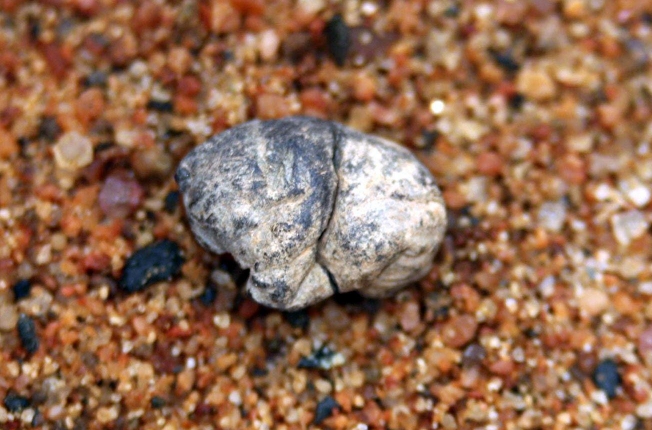
Archaeologists in Sweden found a piece of ancient chewing gum made from birch bark tar, complete with human teeth marks! It’s believed Stone Age people chewed it for fun, to clean their teeth, or as medicine—kind of like prehistoric bubble gum.

Chewing Gum

5. The "Vampire" Burials of Medieval Europe 

Graves from the Middle Ages reveal skeletons with stakes through their hearts, rocks in their mouths, or even decapitated heads. These were suspected vampires, buried in ways to prevent them from rising from the dead.

AI-generated image (provided by author).

6. The 2,000-Year-Old Fast Food Joint 

In Pompeii, archaeologists found a well-preserved street food stall (thermopolium) with painted menus showing the food they served. Turns out, fast food isn’t a modern idea—Romans were grabbing quick bites over 2,000 years ago!

An ancient Roman fast food counter that was unearthed in Pompeii last year will open to the public.

(Luigi Spina / AFP).

7. The Alien-Like Elongated Skulls  

Ancient skulls with unnaturally long shapes have been found worldwide, from South America to Asia. Some believe they’re proof of alien contact, but archaeologists explain they were intentionally reshaped using tight bindings, possibly as a status symbol.

One of the elongated skulls found in the Mayan cenote in Mexico. 

(Bradley Russell / National Geographic).

8. The Lost City of the Monkey God 

Deep in the Honduran jungle, explorers uncovered ruins of a mysterious, forgotten civilization, which legends call "The White City" or "City of the Monkey God." Even weirder? Many of the researchers got sick after excavation, leading to rumors of an ancient curse.

AI-generated image (provided by author).

9. The 2,000-Year-Old Roman Concrete That Won’t Break 

Ancient Roman concrete is stronger than modern concrete, especially in seawater. Scientists discovered it gets stronger over time due to a chemical reaction with seawater, making it almost indestructible—unlike today’s crumbling bridges!

AI-generated image (provided by author).

10. The 10,000-Year-Old Carvings of "Giants" 

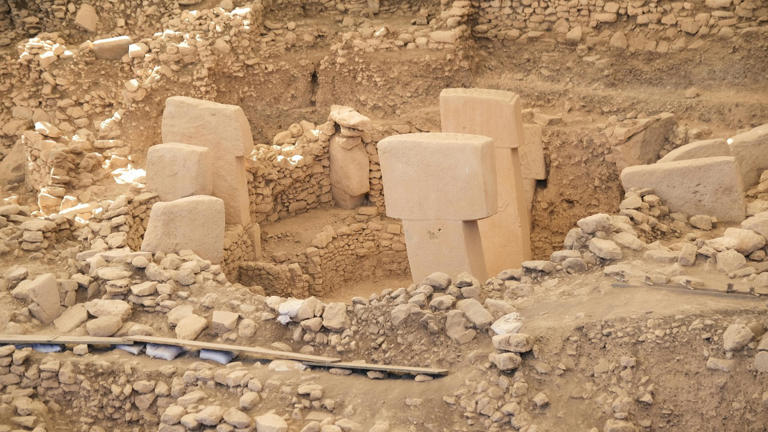
At Göbekli Tepe in Turkey, archaeologists found huge stone pillars covered in carvings of strange, humanoid figures. Built over 6,000 years before the Egyptian pyramids, the site has led some to speculate about lost civilizations—or even ancient giants!

Archaeological site of Göbeklitepe in Turkey.

(Wikimedia Commons).

Final Thoughts

Archaeology is full of mysteries, and every discovery raises new questions about our past. From vampire burials to unbreakable Roman concrete, history is weirder than we ever imagined! Which fact surprised you the most?

  • Top image: Orlando Hollywood Studios, ‘The Great Movie Ride’ featuring Indiana Jones finding the Ark of the Covenant.
  • Source: Jared/CC BY-SA 2.0.


The Most Mysterious and Bizarre Archaeological Discoveries on Earth That Shocked Scientists

{ https://www.ancient-origins.net/ }

Hoe vind je dit bericht?
Geschreven door peter om 22:58 Stuur door

Meer van UFO'S of UAP'S, ASTRONOMIE, RUIMTEVAART, ARCHEOLOGIE, OUDHEIDKUNDE, SF-SNUFJES EN ANDERE ESOTERISCHE WETENSCHAPPEN - DE ALLERLAATSTE NIEUWTJES

↑ Terug naar de berichten