Naar de inhoud

UFO'S of UAP'S, ASTRONOMIE, RUIMTEVAART, ARCHEOLOGIE, OUDHEIDKUNDE, SF-SNUFJES EN ANDERE ESOTERISCHE WETENSCHAPPEN - DE ALLERLAATSTE NIEUWTJES

UFO's of UAP'S in België en de rest van de wereld
akke.beakke.be
Ontdek de Fascinerende Wereld van UFO's en UAP's: Jouw Bron voor Onthullende Informatie! Ben jij ook gefascineerd door het onbekende? Wil je meer weten over UFO's en UAP's, niet alleen in België, maar over de hele wereld? Dan ben je op de juiste plek! België: Het Kloppend Hart van UFO-onderzoek In België is BUFON (Belgisch UFO-Netwerk) dé autoriteit op het gebied van UFO-onderzoek. Voor betrouwbare en objectieve informatie over deze intrigerende fenomenen, bezoek je zeker onze Facebook-pagina en deze blog. Maar dat is nog niet alles! Ontdek ook het Belgisch UFO-meldpunt en Caelestia, twee organisaties die diepgaand onderzoek verrichten, al zijn ze soms kritisch of sceptisch. Nederland: Een Schat aan Informatie Voor onze Nederlandse buren is er de schitterende website www.ufowijzer.nl, beheerd door Paul Harmans. Deze site biedt een schat aan informatie en artikelen die je niet wilt missen! Internationaal: MUFON - De Wereldwijde Autoriteit Neem ook een kijkje bij MUFON (Mutual UFO Network Inc.), een gerenommeerde Amerikaanse UFO-vereniging met afdelingen in de VS en wereldwijd. MUFON is toegewijd aan de wetenschappelijke en analytische studie van het UFO-fenomeen, en hun maandelijkse tijdschrift, The MUFON UFO-Journal, is een must-read voor elke UFO-enthousiasteling. Bezoek hun website op www.mufon.com voor meer informatie. Samenwerking en Toekomstvisie Sinds 1 februari 2020 is Pieter niet alleen ex-president van BUFON, maar ook de voormalige nationale directeur van MUFON in Vlaanderen en Nederland. Dit creëert een sterke samenwerking met de Franse MUFON Reseau MUFON/EUROP, wat ons in staat stelt om nog meer waardevolle inzichten te delen. Let op: Nepprofielen en Nieuwe Groeperingen Pas op voor een nieuwe groepering die zich ook BUFON noemt, maar geen enkele connectie heeft met onze gevestigde organisatie. Hoewel zij de naam geregistreerd hebben, kunnen ze het rijke verleden en de expertise van onze groep niet evenaren. We wensen hen veel succes, maar we blijven de autoriteit in UFO-onderzoek! Blijf Op De Hoogte! Wil jij de laatste nieuwtjes over UFO's, ruimtevaart, archeologie, en meer? Volg ons dan en duik samen met ons in de fascinerende wereld van het onbekende! Sluit je aan bij de gemeenschap van nieuwsgierige geesten die net als jij verlangen naar antwoorden en avonturen in de sterren! Heb je vragen of wil je meer weten? Aarzel dan niet om contact met ons op te nemen! Samen ontrafelen we het mysterie van de lucht en daarbuiten.

Categorie: ARCHEOLOGIE ( E, Nl, Fr )

10 Weird Archaeological Facts That Will Blow Your Mind

10 Weird Archaeological Facts That Will Blow Your Mind

Orlando Hollywood Studios, ‘The Great Movie Ride’ featuring Indiana Jones finding the Ark of the Covenant.

Archaeology isn’t just about dusty ruins and ancient pottery—it’s full of bizarre discoveries that challenge what we think we know about the past. From mysterious artifacts to unusual burial practices, here are 10 of the strangest archaeological facts ever uncovered!

1. The Ancient Egyptians Used Honey to Treat Wounds 

Over 4,000 years ago, Egyptian doctors used honey as an antiseptic to prevent infections. They believed it had magical healing properties, but modern science confirms they were onto something—honey is naturally antibacterial and still used in medicine today!

AI-generated image (provided by author).

2. The Romans Had Heated Floors Over 2,000 Years Ago 

While people in medieval Europe shivered in their castles, the ancient Romans were enjoying underfloor heating! They built a system called hypocaust, where hot air from a furnace flowed beneath raised floors—basically, ancient central heating.

AI-generated image (provided by author).

3. The Mystery of the Screaming Mummies 

Some mummies have been found with terrifying, open-mouthed expressions, leading to myths of cursed souls trapped in eternal screams. But archaeologists say this happens because the jaw drops open after death—still creepy though!

AI-generated image (provided by author).

4. The 5,000-Year-Old "Chewing Gum" 

Archaeologists in Sweden found a piece of ancient chewing gum made from birch bark tar, complete with human teeth marks! It’s believed Stone Age people chewed it for fun, to clean their teeth, or as medicine—kind of like prehistoric bubble gum.
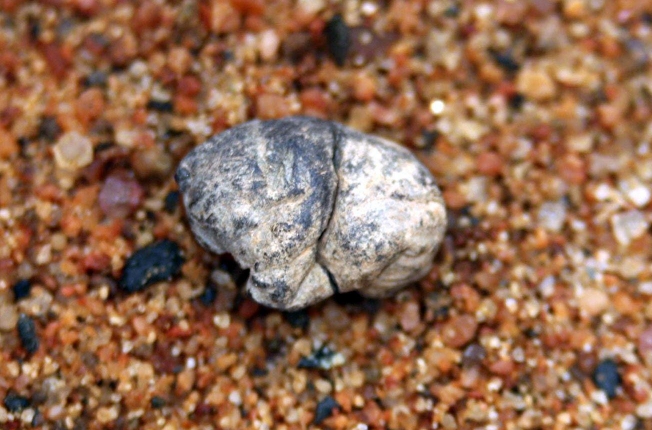
Chewing Gum

5. The "Vampire" Burials of Medieval Europe 

Graves from the Middle Ages reveal skeletons with stakes through their hearts, rocks in their mouths, or even decapitated heads. These were suspected vampires, buried in ways to prevent them from rising from the dead.

AI-generated image (provided by author).

6. The 2,000-Year-Old Fast Food Joint 

In Pompeii, archaeologists found a well-preserved street food stall (thermopolium) with painted menus showing the food they served. Turns out, fast food isn’t a modern idea—Romans were grabbing quick bites over 2,000 years ago!

An ancient Roman fast food counter that was unearthed in Pompeii last year will open to the public.

(Luigi Spina / AFP).

7. The Alien-Like Elongated Skulls  

Ancient skulls with unnaturally long shapes have been found worldwide, from South America to Asia. Some believe they’re proof of alien contact, but archaeologists explain they were intentionally reshaped using tight bindings, possibly as a status symbol.

One of the elongated skulls found in the Mayan cenote in Mexico. 

(Bradley Russell / National Geographic).

8. The Lost City of the Monkey God 

Deep in the Honduran jungle, explorers uncovered ruins of a mysterious, forgotten civilization, which legends call "The White City" or "City of the Monkey God." Even weirder? Many of the researchers got sick after excavation, leading to rumors of an ancient curse.

AI-generated image (provided by author).

9. The 2,000-Year-Old Roman Concrete That Won’t Break 

Ancient Roman concrete is stronger than modern concrete, especially in seawater. Scientists discovered it gets stronger over time due to a chemical reaction with seawater, making it almost indestructible—unlike today’s crumbling bridges!

AI-generated image (provided by author).

10. The 10,000-Year-Old Carvings of "Giants" 

At Göbekli Tepe in Turkey, archaeologists found huge stone pillars covered in carvings of strange, humanoid figures. Built over 6,000 years before the Egyptian pyramids, the site has led some to speculate about lost civilizations—or even ancient giants!

Archaeological site of Göbeklitepe in Turkey.

(Wikimedia Commons).

Final Thoughts

Archaeology is full of mysteries, and every discovery raises new questions about our past. From vampire burials to unbreakable Roman concrete, history is weirder than we ever imagined! Which fact surprised you the most?

  • Top image: Orlando Hollywood Studios, ‘The Great Movie Ride’ featuring Indiana Jones finding the Ark of the Covenant.
  • Source: Jared/CC BY-SA 2.0.

The Most Mysterious and Bizarre Archaeological Discoveries on Earth That Shocked Scientists

{ https://www.ancient-origins.net/ }

Hoe vind je dit bericht?
Geschreven door peter om 22:58 Stuur door

Mystery of 'second Sphinx' deepens as new footage reveals shafts that could lead to hidden structure

The possibility of a second sphinx in Egypt has sparked renewed debate after new footage revealed dozens of deep shafts surrounding a mysterious mound at Giza.

The video documented more than 100 shafts clustered around the site in the northwest corner of the plateau, near the western cemetery of Giza, a region historically filled with burial shafts and ancient tomb complexes.

The renewed interest follows claims by researcher Filippo Biondi last week that scans detected a large anomaly deep beneath the mound, which he believes may be a long-lost sphinx.

The footage, released by independent researcher Trevor Grassi of the Archaeological Rescue Foundation, captured dozens of square shafts carved into bedrock, many reportedly extending deep underground but filled primarily with sand.

Grassi, who has spent nearly two decades researching Giza, said the video shows him physically walking along the perimeter of the mound, passing shaft after shaft cut directly into the limestone, some only about three feet across, while others measure roughly eight feet wide.

He said the unusually dense concentration of shafts surrounding the mound raises new questions about what may lie beneath the surface.

The footage is among the first to document the full perimeter of the site, offering what supporters of a second sphinx described as critical context for the ongoing debate.

While no definitive proof of a second sphinx has been discovered, researchers say the location warrants further investigation, given the number of openings and the underground anomaly previously detected at the site.

The video documented more than 100 shafts clustered around the site, which supporters believe could conceal underground structures

The video documented more than 100 shafts clustered around the site, which supporters believe could conceal underground structures

The video documented more than 100 shafts clustered around the site, which supporters believe could conceal underground structures

The video documented more than 100 shafts clustered around the site, which supporters believe could conceal underground structures


In the video, the camera follows a walking path along the northern edge of the mound, revealing what Grassi described as 'endless shafts all over the place going straight down, all blocked with sand.'

Grassi emphasized that many of the shafts seen in the footage appear to extend more than 100 feet underground, noting that he had personally lowered equipment into several openings to measure their depth.

Biondi took the world by storm last week during his appearance on the Matt Beall Limitless podcast, where he claimed to have scanned a mound of solidified sand on the surface, which he believes sits above the proposed second sphinx.

Using satellite radar technology capable of detecting subtle ground vibrations, Biondi said the data points to a massive structure concealed beneath a 180-foot-high mound of hardened sand, which he described as composed of solidified sand rather than natural bedrock.

Preliminary scans show vertical shafts and passageways strikingly similar to those already found beneath the original Sphinx, with dense vertical lines believed to represent the solid walls of underground shafts rather than empty voids.

'We are very confident to announce this… we have a confidence of about 80 percent,' said Biondi.

However, Zahi Hawass, Egypt’s former minister of antiquities, has dismissed similar claims in the past, saying the areas around the pyramids and the Sphinx have been extensively studied and excavated over decades without uncovering evidence of a second monument. 

Grassi spent 12 years studying under independent researcher John Anthony West, who helped popularize the controversial theory that erosion patterns on the Great Sphinx were caused by ancient rainfall, suggesting the monument could be thousands of years older than traditionally believed.

Biondi took the world by storm last week during his appearance on the Matt Beall Limitless podcast, where he claimed to have scanned a mound of solidified sand on the surface, which he believes is above the second sphinx

Biondi took the world by storm last week during his appearance on the Matt Beall Limitless podcast, where he claimed to have scanned a mound of solidified sand on the surface, which he believes is above the second sphinx

Grassi emphasized that many of the shafts (bottom right) seen in the footage appear to extend more than 100 feet underground, noting that he had personally lowered equipment into several openings to measure their depth

Grassi emphasized that many of the shafts (bottom right) seen in the footage appear to extend more than 100 feet underground, noting that he had personally lowered equipment into several openings to measure their depth

Grassi was able to look past the gated opens in some of the shafts

Grassi was able to look past the gated opens in some of the shafts

He first traveled to Egypt in 2018, joining geologist Robert Schoch, who worked alongside West on the erosion theory, and he is now investigating Biondi's claims.

'You've got a hundred of them within 100 meters [328 feet] right there,' Grassi said in the footage, arguing that such a concentration makes it unlikely they are isolated burial chambers. 

Zahi Hawass, Egypt's former minister of antiquities, has dismissed similar claims, saying the areas around the pyramids and the Sphinx have been extensively studied for decades without revealing evidence of a second monument. 

The theory of a second Sphinx at Giza is not new, as Egyptologist Bassam El Shammaa first proposed the idea in 2007, based on ancient pyramid texts, including the Dream Stele that Biondi also used to state his case.

The Dream Stele, positioned between the paws of the Great Sphinx, appears to depict two sphinx figures.

'If you look at all the temples, if you look at all the architecture and the way that everything in Egypt is set up, there are always two obelisks,' said Grassi in a YouTube video.

'There are always two statues. There are always two sphinxes. There's always a perfect balance. 

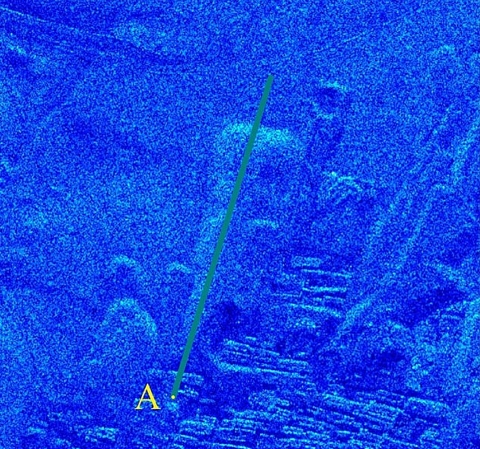
Biondi claimed that the red line labeled 'A' leads to a possible second sphinx

Biondi claimed that the red line labeled 'A' leads to a possible second sphinx

Archival photographs from the 1900s appeared to show the area without the sand pile, indicating that it may have formed as a spoil heap, sand removed from nearby excavations and deposited in a central location

Archival photographs from the 1900s appeared to show the area without the sand pile, indicating that it may have formed as a spoil heap, sand removed from nearby excavations and deposited in a central location

'There are always the two brain hemispheres, the two rising sun and setting sun. Everything is balanced in Egypt, and this is central as a tenet of the Egyptian religion.' 

The mound itself is positioned along what researchers describe as a mirrored alignment across the plateau, extending from the known Sphinx through a central axis between the two largest pyramids. 

The footage focuses heavily on the large number of shafts surrounding the mound. 

Many of the openings appear only a few feet across, while others are significantly wider and cut deep into the limestone bedrock. 

According to Grassi, many of the shafts are currently filled with sand deposited during earlier excavations. 

He argued that the sheer number of shafts packed tightly together suggests they may function as ventilation or access points for a larger underground network rather than isolated tombs.

Biondi is part of the team that claimed to have uncovered enormous shafts below the Great Sphinx

Biondi is part of the team that claimed to have uncovered enormous shafts below the Great Sphinx 

'When you have this many shafts concentrated like this, it's really got to be light and ventilation shafts for a massive tunnel system,' he said.

Historical images referenced in the footage suggested the mound itself may not have existed before the early 20th century. 

Archival photographs from the 1900s appeared to show the area without the sand pile, indicating that it may have formed as a spoil heap, sand removed from nearby excavations and deposited in a central location.

Grassi argued that this detail strengthens the possibility that buried features could exist beneath the mound, since spoil piles sometimes accumulate above previously excavated areas. 

'All we have to do is pull some sand out of there, and we'll know if they connect straight into this,' he said, adding that clearing sand from existing shafts would be non-invasive and would not require drilling into the site. 

Filippo Biondi | BREAKING NEWS: Second SPHINX found under Giza Plateau

Breaking News: Second Sphinx Discovered

{ https://www.dailymail.co.uk/sciencetech/index.html }

Hoe vind je dit bericht?
Geschreven door peter om 21:20 Stuur door

Tracking the footsteps of West Africa's prehistoric metalworkers

Tracking the footsteps of West Africa's prehistoric metalworkers

Aerial view of the Didé Ouest 1 iron reduction site following the 2018 excavation, showing an unusual deposit of used tuyères arranged in two semicircles. Credit: Camille Ollier

The discovery of a 2,400-year-old metalworking workshop in Senegal provides new insights into the history of iron production in Africa. Despite decades of archaeological research, the origins of iron metallurgy in sub-Saharan Africa remain largely unclear. Yet this technological revolution—crucial for producing efficient agricultural tools—emerged there at least 3,000 years ago.

While investigating an archaeological site in eastern Senegal, an international team led by the University of Geneva (UNIGE) uncovered exceptionally well-preserved remains of an ironworking workshop dating back to the 4th century BCE and used for nearly eight centuries. The discovery, published in African Archaeological Review, provides new insights into late prehistoric metallurgical practices in Africa.

In Europe, the Iron Age is generally dated from around 800 BCE to the end of the 1st century CE. However, these chronological frameworks vary widely across different regions of the world. The earliest evidence for iron production is thought to date to the 2nd millennium BCE in Anatolia—modern-day Turkey—and the Caucasus. This technique spread from there to Europe, but did it develop independently in Africa? The question remains open.

Excavations carried out by a team coordinated by UNIGE, in partnership with the Institut Fondamental d'Afrique Noire (IFAN) in Dakar, shed new light on the emergence of iron metallurgy in West Africa. At the site of Didé West 1 (DDW1), near the Falémé River valley in eastern Senegal, archaeologists uncovered an exceptionally well-preserved iron-smelting workshop in 2018 that was in use from the 4th century BCE to the 4th century CE. Its longevity is particularly striking, as such sites are typically used for only a few generations.

Well-preserved 'tuyères' and bloomery furnaces

The workshop consists of a large heap containing around a hundred tons of slag, a semicircular arrangement of about thirty used "tuyères"—clay pipes that channel air into the furnace—and 35 circular furnace bases, each approximately 30 cm deep. This iron and steel production was likely carried out on a small scale to meet local needs, particularly for the manufacture of agricultural tools.

"Thanks to its exceptional state of preservation, its age, the length of time it remained in use, and its distinctive technical features, this site is truly unique. It offers a rare opportunity to study the continuity and adaptation of an iron smelting technique over the long term," says Mélissa Morel, postdoctoral researcher at the Laboratory of Archaeology of Africa & Anthropology (ARCAN) within the Biology Section of the Faculty of Science at UNIGE, and lead author of the article.

Documenting practices

Since 2012, the team has been studying both past and present techniques used by potters and blacksmiths in the Falémé Valley. The work of its members has identified several distinct ancient traditions of iron‑ore smelting. At DDW1, the spatial organization, furnace morphology and associated waste products point to the tradition known as FAL02. It is characterized by small circular furnaces topped with a removable chimney, as well as large clay "tuyères."

A key feature is that these "tuyères" do not have a single air outlet but multiple small openings connected to the main channel by perpendicular side ducts. This design allows air to be distributed to the bottom of the furnace. Another distinctive characteristic is the use of palm nut seeds as packing material at the base of the furnace—a practice not previously documented.

"Despite the very long period during which this workshop operated, this tradition remained remarkably stable, undergoing only minor technical adjustments. This continuity contrasts with other African metallurgical contexts and highlights the importance of understanding the technical and cultural choices made by early metallurgists in iron production," explains Anne Mayor, director of the ARCAN laboratory in the Biology Section of the Faculty of Science at UNIGE and senior lecturer and researcher at the Global Studies Institute, who led the project.

The team's research is continuing at other sites in Senegal to compare smelting practices and gain a better understanding of how ironworking techniques developed and spread. To date, only around a dozen sites dating to the first millennium BCE have been well documented and reliably dated across West Africa.


Ancient African Ironworking The Birthplace of Metallurgy

The Untold History of Ancient African Metallurgy
Hoe vind je dit bericht?
Geschreven door peter om 20:11 Stuur door

Controversy Rages Over Second Sphinx Claim at Giza

Controversy Rages Over Second Sphinx Claim at Giza

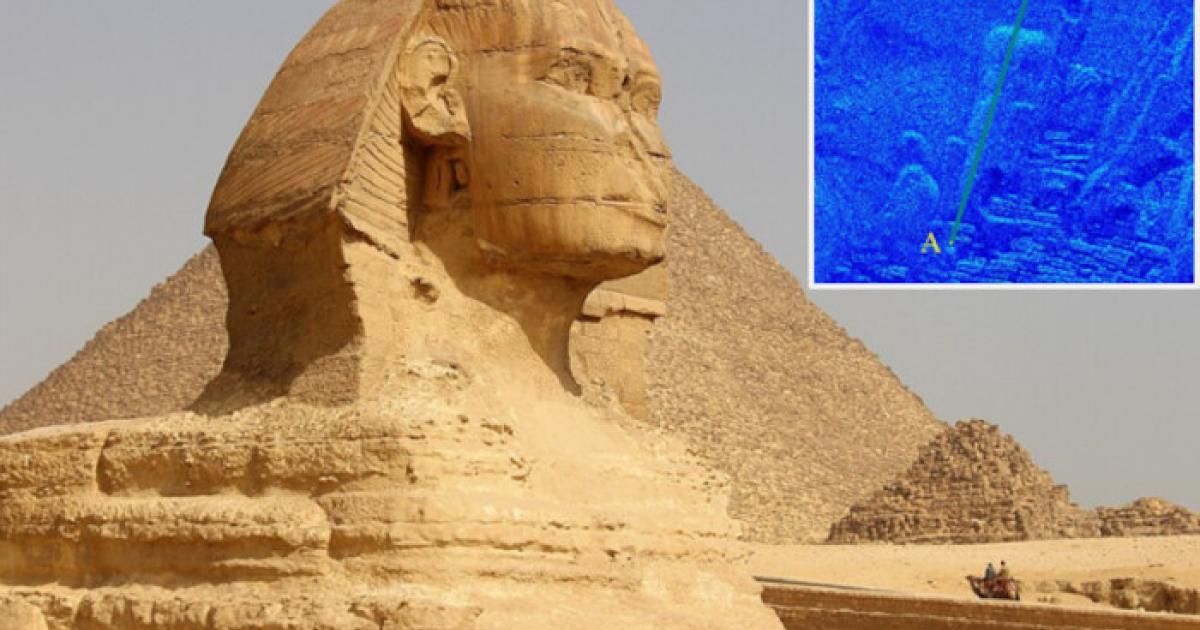
The Great Sphinx of Giza with the Pyramid of Khafre in the background. Insert scan of the proposed location of second sphinx.

Gary Manners

Could a second Sphinx be buried beneath the sands of Egypt's most famous ancient site? A team of Italian researchers using cutting-edge radar technology claims to have detected a massive underground anomaly at the Giza Plateau that mirrors the profile of the iconic Great Sphinx. The announcement has ignited fierce debate, with some researchers hailing it as a potential breakthrough and mainstream Egyptologists dismissing it as unsupported speculation. The controversy cuts to the heart of an enduring question: how much of ancient Giza still lies hidden beneath the sand?

Uncovering the Subterranean Anomaly

The bold assertions stem from the Khafre Research Project, spearheaded by radar engineer Filippo Biondi and his colleagues. By employing Synthetic Aperture Radar (SAR) Doppler tomography, the team analyzed subsurface variations across the ancient site. According to reports from the New York Post, Biondi claims the radar scans revealed organized geometric formations and deep chambers. The data suggests the presence of a sprawling underground megastructure featuring vertical shafts and interconnected pathways.

Preliminary scans from the Giza Plateau presented by Filippo Biondi

Preliminary scans from the Giza Plateau presented by Filippo Biondi, who claims to have captured a structure that mirrors the Great Sphinx.

(Filippo Biondi/The Khafre Project)

At the heart of their hypothesis is the detection of a 108-foot-tall dune made of hardened sand, which researchers believe conceals the monument. Biondi notes that the first Sphinx sits in a shallow depression, making it plausible that a twin could be hidden beneath this elevated mound. The team reported a precise geometric correlation between the visible pyramids and the suspected second monument, suggesting a deliberate ancient design. Biondi expressed high confidence in the data, stating that the structural network mirrors the passages found beneath the known Sphinx reports the Daily Mail.

Scan from the Giza Plateau which Khafre Project researchers claim shows that a second sphinx lies beneath a sand dune where A is shown, adjacent to the Great Sphinx shown as B

Researchers from The Khafre Project claim that a second sphinx lies beneath a sand dune where A is shown, adjacent to the Great Sphinx shown as B

(Filippo Biondi/The Khafre Project)

The Dream Stele and Ancient Clues

To support their technological findings, the research team points to historical artifacts and ancient Egyptian mythology. A key piece of evidence cited is the Dream Stele, a granite slab erected by Pharaoh Thutmose IV between the paws of the Great Sphinx of Giza. The stele is famously carved with a pair of the mythical feline creatures, which some interpret as an indication that two such statues were originally built. This dual iconography has long fueled theories among alternative historians about a lost companion to the iconic guardian.

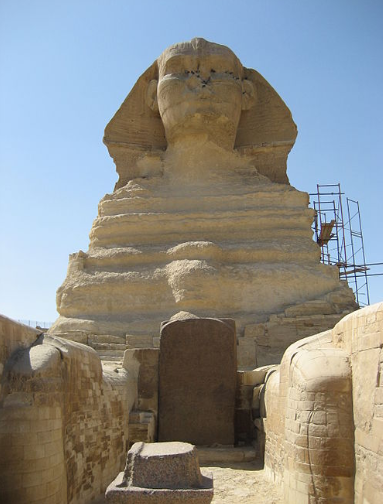
The Dream Stele of Thutmose IV

The Dream Stele of Thutmose IV located between the paws of the Great Sphinx.

(Chanel Wheeler/CC BY-SA 2.0)

The idea of undiscovered structures at Giza is not entirely new, as ancient texts and accounts have often hinted at hidden realms. The Greek historian Herodotus wrote of a vast Egyptian labyrinth, while esoteric traditions speak of a legendary Hall of Records preserving ancient knowledge. Furthermore, Egyptologist Bassam El Shammaa previously proposed the existence of a second Sphinx, theorizing it was destroyed by a lightning strike based on mythological texts. These enduring narratives provide a compelling backdrop to the recent radar anomalies detected by the Italian team.

Expert Skepticism and the Need for Excavation

Despite the excitement generated by the satellite imaging, the archaeological community has responded with significant caution and criticism. Prominent Egyptologist Zahi Hawass has firmly dismissed the claims of a second Sphinx and an underground city as baseless fabrications. He emphasized that extensive excavations of the Giza Plateau over many decades have yielded no evidence of such monumental structures. Experts argue that radar data alone is insufficient to confirm the presence of human-made monuments, as natural geological formations can produce similar subsurface anomalies.

Radar specialists have also highlighted the inherent challenges of interpreting deep subsurface signals without physical corroboration. Experts warn that remote sensing requires controlled excavation to validate any findings, and anomalies must be treated with care.

Hawass was particularly pointed in his criticism, stating that the rumors about columns beneath the Pyramid of Khafre are:

 "nothing but fabrications propagated by individuals with no expertise in ancient Egyptian civilization or the history of the pyramids."

The Italian research team is reportedly awaiting permission from Egyptian authorities to conduct further physical investigations of the mound.

What Comes Next?

The debate over the second Sphinx raises broader questions about how new technologies should be applied in archaeology and how claims should be communicated to the public. Remote sensing tools like SAR Doppler tomography have genuinely advanced the field, helping to identify targets for excavation at sites around the world. However, as this case illustrates, the leap from a subsurface anomaly to the announcement of a second Sphinx is a significant one, and the lack of peer-reviewed publication has drawn criticism from the scientific community. Until an underground chamber or monument is physically uncovered, the existence of a second Sphinx remains a tantalizing but unproven hypothesis.

The Giza Plateau has already surprised archaeologists in recent years, with discoveries of hidden air voids and new passages within the pyramid complex. Whether or not a second Sphinx ultimately emerges from the sand, the renewed focus on what may lie beneath Giza is a reminder that the ancient world still has secrets to reveal. Biondi and his team continue to analyze their data and have expressed hope that Egyptian authorities will grant permission for a physical investigation of the site. For now, the world watches and waits.

  • Top image: The Great Sphinx of Giza with the Pyramid of Khafre in the background.
  • Source: Emőke Dénes / CC BY-SA 4.0, insert; Filippo Biondi/The Khafre Project

By Gary Manners

RELATED VIDEOS


References


{ https://www.ancient-origins.net/news-history-archaeology }

Hoe vind je dit bericht?
Geschreven door peter om 00:00 Stuur door

12,000-year-old pyramid ruins uncovered off Louisiana coast could be evidence of a lost city

12,000-year-old pyramid ruins uncovered off Louisiana coast could be evidence of a lost city

Hoe vind je dit bericht?
Geschreven door peter om 16:10 Stuur door

Amateur sleuth finds 'lost city' with giant pyramid that sends compasses into a frenzy

Amateur sleuth finds 'lost city' with giant pyramid that sends compasses into a frenzy

Retired architect George Gele claims to have uncovered the ruins of a sprawling 'lost city' he's dubbed 'Crescentis' near Louisiana's Chandeleur Islands.

By Liam Randall

The Chandeleur Islands

Gelé believes the waters near the Chandeleur Islands hide the ruins of an old civilisation 
(Image: Getty Images)

An amateur archaeologist asserts to have made the find of a lifetime - a vast "lost city" submerged off the coast of the United States, predating modern history.

The centerpiece of his discovery is a colossal 280-foot-tall pyramid resting on the seafloor, which Gelé alleges emits a significant electromagnetic force.

Gelé suggests that the sunken structure is so potent that it disrupts navigation equipment.He maintains that the pyramid releases energy surges that send boat compasses into disarray.

Local shrimper Ricky Robin, who has transported Gelé to the site for numerous expeditions, corroborated these unusual claims. He compared the area to the notorious Bermuda Triangle, reports the Daily Star.

Retired architect George Gelé

Retired architect George Gelé claims to have discovered a lost city 
(Image: WWLTV/Youtube)

Robin told local station WWL-TV, "Everything will go out on your boat. All your electronics like you were in the Bermuda Triangle."

The fisherman even remembered the moment his tech malfunctioned: "I thought right away it was pieces of the pyramid because it was right around where that compass spun."

Gelé has named the location "Crescentis" and believes the structures lie approximately 30 feet beneath the surface, covered by an astounding 100 feet of silt. Despite the absence of peer-reviewed scientific support, he remains convinced of its importance.

He proposes the site was submerged by the ocean at the conclusion of the last Ice Age, roughly 11,700 years ago, and asserts the configuration is "geographically related to the Great Pyramid of Giza." The architect's key evidence is a collection of enigmatic granite mounds discovered underwater - a type of rock not naturally occurring in the Louisiana terrain.

Gelé stated: "Somebody floated a billion stones down the Mississippi River and assembled them outside what would later become New Orleans."

While the concept of an American Atlantis is captivating, skeptics aren't quite prepared to revise the history books. Multiple scientists propose the "pyramids" might actually be something far more ordinary.

A Texas A&M University study from the 1980s indicated the granite blocks were probably ballast stones discarded by Spanish or French vessels to reduce their weight in shallow waters. In 2011, archaeology professor Rob Mann proposed the mounds could be remnants from an effort to construct an artificial reef in the 1940s.

A former state archaeologist concurred the site appears to be the outcome of large barges dumping stone, though he noted: "But why and why there? Those are questions that need to be answered." While Gelé is aware of the theories, he remains doubtful, pointing out that granite is a costly material and unlikely to be discarded as waste. For now, the enigma of the Louisiana pyramid continues to lie at the bottom of the sea.

RELATED


{ https://www.the-express.com/news/science }

Hoe vind je dit bericht?
Geschreven door peter om 15:44 Stuur door

Second sphinx buried under sand suggests ‘megastructure’ below the Pyramids of Giza

Second sphinx buried under sand suggests ‘megastructure’ below the Pyramids of Giza

Sphinx

Tara Todras-Whitehill/REUTERS

The Pyramids of Giza might only be the tip of the iceberg.

Italian researchers claim they might’ve found signs of a Sphinx located beneath the Pyramids of Giza, suggesting the existence of a sprawling subterranean citadel.

Giant sphinx.

The Great Sphinx, which Biondi claims has a twin beneath the sand.

Pius Lee – stock.adobe.com

Radar engineer Filippo Biondi dropped this alleged historical bombshell during a recent episode of the “Matt Beall Limitless” podcast, the Daily Mail reported.

He said, “There is something very huge that we are measuring” beneath the Giza Plateau, which features the Great Pyramid of Khufu, the Pyramid of Khafre, the Pyramid of Menkaure and the Great Sphinx.

He and his team said they were tipped off to the alleged underground guardian by explaining that lines between the pyramids to the known Sphinx also point to a parallel mound under which the second feline facsimile supposedly resides — like a cryptic puzzle from an “Indiana Jones” movie.

Satellite images of the Giza Plateau have reportedly captured this dune, which the signal processing researcher claims measures approximately 108 feet tall.

“The first Sphinx sits slightly below the surrounding surface, in a shallow depression, so it is possible the second Sphinx could be hidden beneath this higher mound,” he said.

Blue scan.
Scans hinting at a complex megastructure beneath the Giza Plateau. X / Matt Beall Podcast

He noted that this mound was made of hardened sand that would facilitate its existence, rather than an impenetrable bedrock as well.

Biondi said the “precise geometrical correlation” between the visible structures and this mysterious dune has made him about 80 percent confident his theory.

The researcher also referenced the fact that the Dream Stele — a granite slab sitting in front of Sphinx number one — is carved with a pair of the mythical cats, suggesting that there were always supposed to be a second sculpture.

His theory implies that there was an actual function to the propagandistic symbol, which was constructed by Pharaoh Thutmose IV around 1401 BC — when the civilization was at its zenith — to ostensibly justify his divine right to the throne.

Diagram.
Scans showing the alleged parallels between the Great Sphinx and its supposed subterranean doppelganger. X / Matt Beall Podcast

The hieroglyphics reportedly describe how the Sphinx was a deity that appeared to a young Prince Thutmose IV as he slept in its shade, promising him the Egyptian throne in exchange for clearing off the sand that had entombed it.

To get to the bottom of the matter, team scanned the ground beneath the “first Sphinx, all the pyramids, the conjunction between the Sphinx and the Khafre pyramid” — the second largest on the Giza plateau.”

He claimed they found “vertical shafts, horizontal passages” that pointed to an “underground megastructure.” The lowest shaft had tunnels that branched outward, per the researcher.

These reportedly mirrored a network of shafts and passages beneath the above-ground Sphinx, illustrating an “incredible symmetry.”

Coincidentally, Biondi is not the only researcher to claim the existence of a second Sphinx. Egyptologist Bassam El Shammaa first raised the theory more than a decade ago, citing ancient Egyptian records and mythology that describe a lightning bolt striking the Sphinx.

He postulated that this image could allude to a second monument that was destroyed after being cursed by a powerful Egyptian god.

In 2021, Egyptian tourism official Reda Abdel Halim told local media that they had not only found a second Sphinx, but that it measured 246-feet high, with a head 67-feet high, and hands extended over 50.8 feet, similar to its visible counterpart.

Egypt’s former Minister of Antiquities Zahi Hawass has thrown cold water on such theories, arguing that extensive excavations of the area have yielded nothing.

Biondi stressed the need to “study” the “phenomenon” more carefully.

“We are still analyzing the data,” said the engineer, who is currently awaiting permission from Egyptian authorities to dissect the mound.

RELATED VIDEOS


{ https://www.thedailybeast.com/ }

Hoe vind je dit bericht?
Geschreven door peter om 16:58 Stuur door

Mysterious 'three-sided pyramid' similar to those in Egypt spotted on Mars in NASA footage

Mysterious 'three-sided pyramid' similar to those in Egypt spotted on Mars in NASA footage

Story by Conor Sheeran

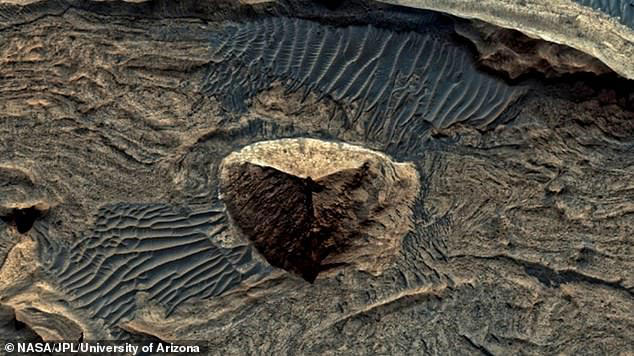
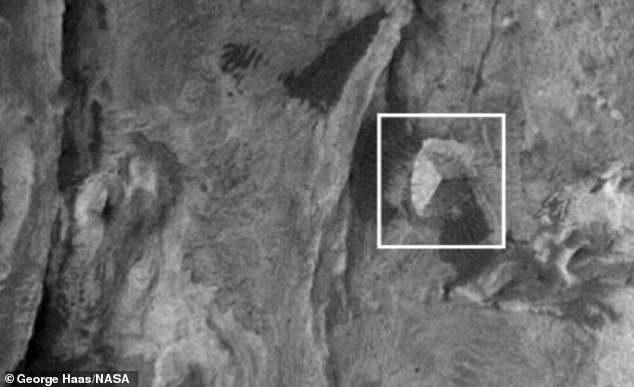
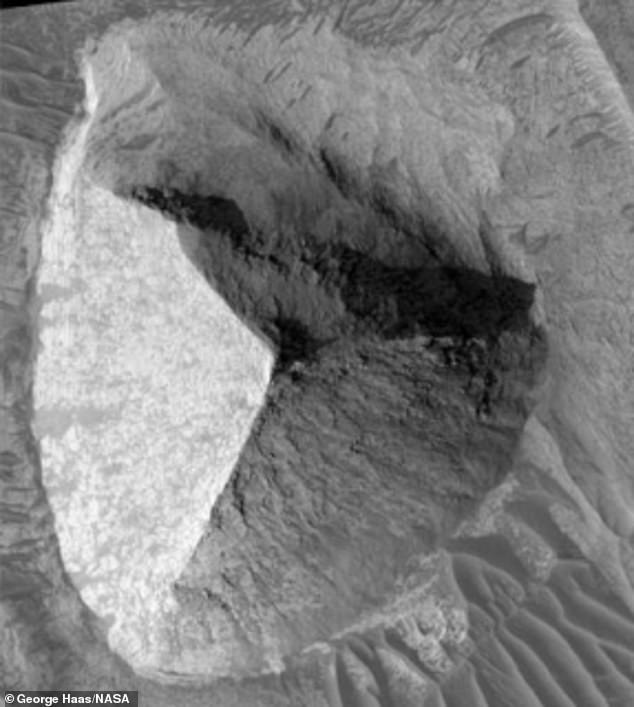
A mysterious pyramid-like structure spotted on Mars has sparked theories that an ancient civilization similar to our own may have once existed on the Red Planet.

A viral post has flooded the internet this week, highlighting a NASA video of the Martian surface that some claim shows a three-sided pyramid.

The formation was initially spotted by researcher Keith Laney in footage captured by NASA’s Mars Global Surveyor (MGS) in 2001. He was scanning the imagery for unusual structures when he came across what he believes could be an artificial formation.

He is quoted as saying: 'Were this found anywhere on Earth, we'd surely be digging into it.'

The footage was recently reshared by documentary filmmaker Brian Dobbs, who claimed: 'On Mars, there is a three-sided pyramid the size of the Great Pyramid in Egypt.'

Dobbs acknowledged the structure is far from proof of ancient life, but said it raises questions about whether another species could have once inhabited the planet.

The so-called 'pyramid' sits in the western region of Candor Chasma, one of the largest canyons within Valles Marineris, the second-largest canyon system in the solar system.

The region is known for steep cliffs, landslides and layered rock formations, which scientists say can naturally create unusual and highly geometric surface features.

A mysterious pyramid-like structure spotted on Mars has sparked theories that an ancient civilization such as ours could have once existed on the red planet

A mysterious pyramid-like structure spotted on Mars has sparked theories that an ancient civilization such as ours could have once existed on the red planet

The formation has been observed across five separate images taken by NASA’s Mars Global Surveyor and Mars Reconnaissance Orbiter missions between 2001 and 2016. 

 The earliest image, taken on July 4, 2001, showed the formation illuminated from the west, highlighting one face of the structure while the others fell into shadow. A follow-up image in April 2002 captured similar features under different lighting conditions, again revealing a three-sided shape.

Later, more detailed images from the Mars Reconnaissance Orbiter, including one taken in 2007 with a much higher resolution, revealed additional surface features that were not visible in earlier photographs. These images showed sharper edges and more defined symmetry across the structure’s faces.

Further images taken in 2014 and 2016 continued to show the same triangular formation, with shifting sunlight casting varying shadows that emphasized its geometric appearance. In some cases, one side of the structure appeared almost completely dark, while others were partially illuminated.

Researchers noted that despite differences in image quality, sun angle and seasonal conditions, the formation consistently displayed a uniform, three-sided symmetry across all observations.

Dobbs is just one of many believers who have questioned whether potentially alien or artificial buildings on Mars, such as pyramids, could exist.

Speaking to the Daily Mail last year, Mars researcher George Haas echoed Laney's findings and other investigations into similar objects on the planet's surface.

'You don't have to be a geologist to know the difference between a rock and a sculpture, something that's geometric,' he explained.

The 'pyramid' sits in the Western Region of Candor Chasma, one of the largest canyons in the Valles Marineris, which is in itself the second longest and deepest canyon system in the whole Solar System

The 'pyramid' sits in the Western Region of Candor Chasma, one of the largest canyons in the Valles Marineris, which is in itself the second longest and deepest canyon system in the whole Solar System

A viral post has flooded in internet this week, showing a NASA video of the Martian world, which many have claimed to find a three-sided pyramid on the surface

A viral post has flooded in internet this week, showing a NASA video of the Martian world, which many have claimed to find a three-sided pyramid on the surface

In a research paper co-authored with other investigators, Haas reported that 'the structural form of this three-sided pyramid observed within the western region of Candor Chasma is real and exhibits a level of geometry and symmetry that supports a high probability of artificial origins.'

Laney commented on Haas's findings, saying that the pyramid is 'most definitely artificial.'

At the end of 2025, unearthed CIA documents revealed that the agency had conducted mysterious experiments in an effort to learn more about Mars.

According to the agency, these missions revealed that an ancient civilization that built at least one pyramid did exist, lending credence to Laney's research.

Codenamed 'Project Stargate,' the researchers allegedly transported a subject's consciousness back in time via astral projection.

The subject described seeing a mysterious pyramid and a road that suggested an ancient civilization lived on the planet.

'It sort of looks... I kind of got an oblique view of a ah... pyramid or pyramid form,' one of the test subjects of Project Stargate said.

Additionally, former CIA agent Joe McMoneagle also revealed that the agency had conducted experiments that spotted similar-looking pyramids across the surface of Mars.

McMoneagle described a pyramid larger than the ones in Egypt, filled with 'monster rooms.' 

Without actually setting foot on Mars, it will be difficult to determine the exact makeup of pyramids such as these, but that hasn't stopped rampant speculation of how they were created. 

{ https://www.dailymail.co.uk/sciencetech/index.html }

Hoe vind je dit bericht?
Geschreven door peter om 23:10 Stuur door

A SECOND Sphinx detected in Egypt as scans hint at 'underground megastructure'

Ancient Egyptians may have left behind a cryptic clue to a hidden second Sphinx,  carved directly into stone more than 3,000 years ago.

The Dream Stele, positioned between the paws of the Great Sphinx, appears to depict two sphinx figures, hinting that the legendary monument may once have had a twin.

Now, Italian researchers who, in 2025, claimed to have uncovered massive underground structures beneath the Giza Plateau believe they have identified the second guardian buried deep beneath the sands. 

Filippo Biondi revealed the discovery on Thursday while speaking on the Matt Beall Limitless podcast, explaining that lines drawn from the pyramids to the known Sphinx point to an identical mirrored location where the buried structure is believed to lie.

'We are finding precise geometrical correlation, 100 percent of correlation, in this symmetry,' he said, adding: 'We are very confident to announce this… we have a confidence about 80 percent.'

Using satellite radar technology capable of detecting subtle ground vibrations, Biondi claimed the data points to a massive structure concealed beneath a 180-foot-high mound of hardened sand, which he said is composed of solidified sand rather than natural bedrock. 

Preliminary scans show vertical shafts and passageways strikingly similar to those already found beneath the original Sphinx, with dense vertical lines believed to represent the solid walls of underground shafts rather than empty voids. 

Beyond the possible second Sphinx, Biondi believes the findings hint at something even larger, an extensive underground complex beneath the Giza Plateau itself.

'Down underneath the Giza Plateau, there is something very huge that we are measuring,' he said. 'There is an underground megastructure.'

Preliminary scans captured a structure appear to mirror the Great Sphinx. Researchers believe a second sphinx is hiding below the sands not too far from the iconic structure

Preliminary scans captured a structure appear to mirror the Great Sphinx. Researchers believe a second sphinx is hiding below the sands not too far from the iconic structure

The Dream Stele, also known as the Sphinx Stele, was erected between the front paws of the Great Sphinx of Giza by Pharaoh Thutmose IV around 1401 BC, during Egypt's 18th Dynasty. 

The ancient inscription, like many created during the New Kingdom, was intended to reinforce the ruler's divine right to the throne.

Legend has it that the stele justified Thutmose IV's unexpected rise to power by recounting a dream where the Sphinx promised him the throne in exchange for restoring the monument, blending political propaganda with religious legitimacy and documenting early restoration efforts.

However, Biondi and his team believe there is more truth than myth behind the imagery, saying the carvings showing two sphinx figures may not have been symbolic at all, but instead a clue to the layout of the monuments themselves.

 He and his team are not the only researchers to suggest a second Sphinx may be buried beneath the Giza Plateau, as Egyptologist Bassam El Shammaa first raised the theory more than a decade ago.

El Shammaa cited ancient Egyptian records and mythology describing lightning striking the Sphinx, which he believes may refer to a second monument that was later destroyed, possibly after being cursed by one of Egypt’s most powerful deities.

Egypt's former Minister of Antiquities Zahi Hawass has long dismissed El Shammaa's theory, noting in 2017 the area has been dug by so many archaeologists, and it yielded nothing.

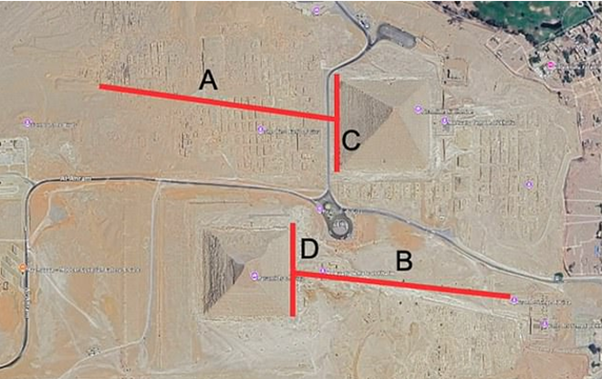
However, Biondi explained that when they traced a line from the center of the Khafre Pyramid to the existing Sphinx, the alignment created a precise geometric path across the plateau, forming what he described as a mirrored reference line used to identify the second location. 

The team believes an ancient stele shows that there were two sphinx statues constructed in Egypt

The team believes an ancient stele shows that there were two sphinx statues constructed in Egypt

When that same alignment was mirrored from the center of the Great Pyramid, it pointed to another location on the opposite side, the exact spot where scans now suggest a second Sphinx may be buried beneath a mound of hardened sand.

Satellite images of the Giza plateau, which features the Great Pyramid of Khufu, the Pyramid of Khafre, the Pyramid of Menkaure and the Great Sphinx, revealed a mound on the surface, and Filippo believes it is above the second sphinx.

'That small mountain has a height of approximately 108 feet,' he explained. 'The first Sphinx sits slightly below the surrounding surface, in a shallow depression, so it is possible the second Sphinx could be hidden beneath this higher mound.'

Scans of the original Sphinx also revealed a network of shafts and chambers beneath the monument, features he now believes are mirrored beneath the suspected second structure

Scans of the original Sphinx also revealed a network of shafts and chambers beneath the monument, features he now believes are mirrored beneath the suspected second structure

article image

He noted that researchers are still working to compare elevations between the known Sphinx and the mound to determine whether their heights align, including measuring how far each sits relative to the surrounding plateau surface. 

'We have to study this more carefully,' he said. 'It makes sense to compare the elevations, but we are still analyzing the data.'

Despite the remaining uncertainties, Biondi said the team believes the structure, if it exists, is likely buried beneath the mound rather than exposed above ground.

'Probably the second Sphinx is under that small mountain,' he said. 'Because it is high, about 108 feet above the background.'

Biondi said scans of the original Sphinx also revealed a network of shafts and chambers beneath the monument, features he now believes are mirrored beneath the suspected second structure. 

The scans captured shafts on the first Sphinx and shafts on the hypothetical second Sphinx, he explained, noting that the similarities between the two sites are becoming increasingly difficult to ignore.

Pictured is Filippo Biondi (left), who with his team, claimed to have uncovered a megastructure beneath the Giza Platue

Pictured is Filippo Biondi (left), who with his team, claimed to have uncovered a megastructure beneath the Giza Platue

The scans identified the second sphinx where A is shown, sitting adjacent to the Great Sphinx shown as B

The scans identified the second sphinx where A is shown, sitting adjacent to the Great Sphinx shown as B

Biondi also said that preliminary images from the new scans show not only vertical shafts but also horizontal passages extending from deeper sections underground.

Scans of what the team calls the third, and lowest, shaft also revealed horizontal tunnels branching outward. 

He added that researchers are now tracing those passageways, which appear to mirror similar horizontal routes previously identified beneath the first Sphinx, suggesting what he described as 'incredible symmetry' between both structures. 

'There is an incredible symmetry between the first and the second,' Biondi added.

According to Biondi, the vertical features seen in the scans do not represent empty openings, but rather the dense outer walls of underground shafts.

Despite the dramatic implications, he emphasized that fieldwork remains essential before any definitive conclusions can be made.

Pictured is the outline where the researchers believe the second sphinx is

Pictured is the outline where the researchers believe the second sphinx is

'For the second Sphinx, it is important to go in situ with geologists and carefully study the mound,' Biondi said. 'We are very confident that it is not bedrock.... the sand has been solidified.'

The team has already begun preparing formal plans to move forward if permission is granted.

'We have located some special entrances where we can work in situ. It means that we have written a project proposal that can be submitted to the Egyptian authorities,' said Biondi.

In this project proposal, we have specifically indicated that some shafts are visible, which are located between the first Sphinx and the Khafre pyramid. 

He said researchers have identified two or three shafts in the area, including one particularly large shaft that appears to be blocked by debris, which he said was measured during field visits and appears to obstruct deeper access points, adding that clearing those blockages could be the key to unlocking what lies beneath.' 

The debris, according to Biondi, can also be easily removed, allowing him and his team safe access to the underground structures below, potentially opening what he described as entrances into a larger underground network beneath the plateau.

RELATED VIDEOS 

{ https://www.dailymail.co.uk/sciencetech/index.html }

Hoe vind je dit bericht?
Geschreven door peter om 22:04 Stuur door

Mysterious 'ruins' off Louisiana coast spark theories of 12,000-year-old lost city

Mysterious 'ruins' off Louisiana coast spark theories of 12,000-year-old lost city

An amateur archaeologist claims to have uncovered the ruins of an ancient city that once thrived off the coast of Louisiana roughly 12,000 years ago.

Retired architect George Gelé said he has found clues that 'hundreds of buildings' are buried beneath the waters near the Chandeleur Islands, a chain of uninhabited barrier islands about 50 miles east of New Orleans in the Gulf of America.

For nearly five decades, he has captured underwater sonar images that he believes reveal the remnants of major structures, including what he describes as a 280-foot-tall pyramid rising from the seafloor.

Gelé claimed the pyramid emits a surge of electromagnetic energy that has caused boat compasses to spin wildly as vessels passed overhead. 

Dubbed the city of Crescentis, Gelé told local station WWL-TV that the submerged formations, located roughly 30 feet below the water and buried beneath an additional 100 feet of sediment, appear to be 'geographically related to the Great Pyramid of Giza' in Egypt.

While his findings have not been published in peer-reviewed scientific journals, Gelé argued the site may date back to the end of the last Ice Age, when rising seas about 11,700 years ago submerged vast coastal landscapes.

The foundation of his theory rests on mysterious granite mounds discovered beneath Chandeleur Sound, a material not naturally found in Louisiana, which he believes were deliberately transported and assembled.

'Somebody floated a billion stones down the Mississippi River and assembled them outside what would later become New Orleans,' Gelé said, after more than five decades studying the site.

Retired architect George Gelé said he has found clues that 'hundreds of buildings' are buried beneath the waters off the coast of Louisiana

Retired architect George Gelé said he has found clues that 'hundreds of buildings' are buried beneath the waters off the coast of Louisiana 

He claims the city was located near the Chandeleur Islands, a chain of uninhabited barrier islands about 50 miles east of New Orleans in the Gulf of America

He claims the city was located near the Chandeleur Islands, a chain of uninhabited barrier islands about 50 miles east of New Orleans in the Gulf of America

Gelé has personally funded and conducted more than 40 underwater research expeditions in the area since 1974.

While he officially revealed his discoveries to the world in March 2022, his interview on WWL-TV has resurfaced.

During the interview, local shrimper Ricky Robin, who took Gelé to the site multiple times, claimed that the compass on his boat spun completely around near the area where the tip of the pyramids was suspected.

'Everything will go out on your boat. All your electronics like you were in the Bermuda Triangle,' said Robin. 

He added that other local fishermen have shared stories about catching strange, square rocks in their nets.

'I thought right away it was pieces of the pyramid because it was right around where that compass spun,' Robin said. 

While the idea of a lost city is captivating, several scientists have offered more conventional explanations for the mysterious underwater mounds.

Gelé himself explored alternative explanations for the granite masses during a 2014 presentation, including the possibility that the stones came from a construction dump or debris left behind by multiple shipwrecks.

For nearly five decades, he has captured underwater sonar images that he believes reveal the remnants of major structures. He has also collected granite pieces that he believes once formed the now underwater city

For nearly five decades, he has captured underwater sonar images that he believes reveal the remnants of major structures. He has also collected granite pieces that he believes once formed the now underwater city

However, he noted that construction debris only appears on the top surface of the mounds, and granite blocks are expensive construction materials, and would not be discarded so easily. 

article image

A separate study conducted by Texas A&M University in the late 1980s also concluded that the underwater granite likely originated from shipwreck activity, or from piles of ballast stones discarded from vessels, WWL-TV reported.

Historians believe the stones may have been dumped from Spanish or French ships to lighten their loads as they approached shallow waters on routes leading to New Orleans.

Local newspaper The Advocate later examined the mystery in 2011, speaking with LSU archaeology professor Rob Mann, who offered another explanation for the unusual formations.

He suggested the granite could be remnants of an effort to build an artificial reef in the 1940s, created by dumping construction materials into the water.

'I think simply searching underwater at this point won't give us any more answers,' Mann told the newspaper.

Gelé has personally funded and conducted more than 40 underwater research expeditions in the area since 1974. Pictured are granite pieces he pulled from the waterse

Gelé has personally funded and conducted more than 40 underwater research expeditions in the area since 1974. Pictured are granite pieces he pulled from the waterse

'When the historical archive work is done, looking at records and newspapers, that's when we will know what it is.'

The publication also interviewed the state's archaeologist at the time, who agreed that the formations appeared to be the result of large barge loads of stone being dumped at the site.

'But why and why there?' he said. 'Those are questions that need to be answered.'

{ https://www.dailymail.co.uk/sciencetech/index.html }

Hoe vind je dit bericht?
Geschreven door peter om 18:34 Stuur door

Meer van UFO'S of UAP'S, ASTRONOMIE, RUIMTEVAART, ARCHEOLOGIE, OUDHEIDKUNDE, SF-SNUFJES EN ANDERE ESOTERISCHE WETENSCHAPPEN - DE ALLERLAATSTE NIEUWTJES

↑ Terug naar de berichten