Ontdek de Fascinerende Wereld van UFO's en UAP's: Jouw Bron voor Onthullende Informatie!
Ben jij ook gefascineerd door het onbekende? Wil je meer weten over UFO's en UAP's, niet alleen in België, maar over de hele wereld? Dan ben je op de juiste plek!
België: Het Kloppend Hart van UFO-onderzoek
In België is BUFON (Belgisch UFO-Netwerk) dé autoriteit op het gebied van UFO-onderzoek. Voor betrouwbare en objectieve informatie over deze intrigerende fenomenen, bezoek je zeker onze Facebook-pagina en deze blog. Maar dat is nog niet alles! Ontdek ook het Belgisch UFO-meldpunt en Caelestia, twee organisaties die diepgaand onderzoek verrichten, al zijn ze soms kritisch of sceptisch.
Nederland: Een Schat aan Informatie
Voor onze Nederlandse buren is er de schitterende website www.ufowijzer.nl, beheerd door Paul Harmans. Deze site biedt een schat aan informatie en artikelen die je niet wilt missen!
Internationaal: MUFON - De Wereldwijde Autoriteit
Neem ook een kijkje bij MUFON (Mutual UFO Network Inc.), een gerenommeerde Amerikaanse UFO-vereniging met afdelingen in de VS en wereldwijd. MUFON is toegewijd aan de wetenschappelijke en analytische studie van het UFO-fenomeen, en hun maandelijkse tijdschrift, The MUFON UFO-Journal, is een must-read voor elke UFO-enthousiasteling. Bezoek hun website op www.mufon.com voor meer informatie.
Samenwerking en Toekomstvisie
Sinds 1 februari 2020 is Pieter niet alleen ex-president van BUFON, maar ook de voormalige nationale directeur van MUFON in Vlaanderen en Nederland. Dit creëert een sterke samenwerking met de Franse MUFON Reseau MUFON/EUROP, wat ons in staat stelt om nog meer waardevolle inzichten te delen.
Let op: Nepprofielen en Nieuwe Groeperingen
Pas op voor een nieuwe groepering die zich ook BUFON noemt, maar geen enkele connectie heeft met onze gevestigde organisatie. Hoewel zij de naam geregistreerd hebben, kunnen ze het rijke verleden en de expertise van onze groep niet evenaren. We wensen hen veel succes, maar we blijven de autoriteit in UFO-onderzoek!
Blijf Op De Hoogte!
Wil jij de laatste nieuwtjes over UFO's, ruimtevaart, archeologie, en meer? Volg ons dan en duik samen met ons in de fascinerende wereld van het onbekende! Sluit je aan bij de gemeenschap van nieuwsgierige geesten die net als jij verlangen naar antwoorden en avonturen in de sterren!
Heb je vragen of wil je meer weten? Aarzel dan niet om contact met ons op te nemen! Samen ontrafelen we het mysterie van de lucht en daarbuiten.
These stories about the space militarization race aren’t getting the attention the much more entertaining UFO stories are getting, but it seems likely that those who are responsible for moving the war machinery around are paying a lot more attention to the former than the latter.
If Wednesday’s House Oversight subcommittee hearing on UFOs had happened ten years ago instead of today, it would have shaken the world. Imagine someone from 2013 hearing congressional testimonies about “routine” military pilot encounters with giant flying tic tacs, floating orbs, 300-foot red squares, and cubes in clear spheres zipping around in ways that surpass all known earthly technology by leaps and bounds, or about secret government possession of otherworldly aircraft they’re trying to reverse engineer and the dead bodies of their non-human pilots, or about the possibility that these creatures are not merely extraterrestrial but extra-dimensional. Their jaws would have hit the floor.
Now in 2023 we’ve been getting incrementally drip-fed bits and pieces of these stories for six years, so the scene on Capitol Hill on Wednesday didn’t have the impact it would’ve had in 2013. It’s making headlines and getting attention, but not as much as Sinead O’Connor’s death or people’s thoughts on Barbie and Oppenheimer. The response from the general public could be described as a collective nervous laugh and a shrug.
People scroll past the footage from the hearing on social media, go “Whoa, that’s weird,” and move on with their lives. The information’s going in, but just kind of on the periphery of mainstream consciousness. Maybe next year they’ll show us something that would’ve been even more shocking to someone in 2013 than Wednesday’s hearing would’ve been, and it will be met with the same nervous laugh and shrug by the people of 2024.
Of course in the circles I tend to interact with, the response is a bit different. People who are highly skeptical of the US war machine tend to also be highly skeptical of this UFO narrative we’ve been seeing since 2017.
“Distraction” is a word you hear a lot. “It’s just a distraction from ______”, where “______” is whatever hot story they personally happen to be fascinated by at the moment. I personally don’t buy that explanation; the new UFO narrative wasn’t just cooked up at the last minute to distract from current headlines, it’s been unfolding for six years, and people aren’t even paying that much attention to it. The empire doesn’t tend to orchestrate spectacular events as a “distraction” anyway; the adjustment of public attention tends to take the much more mundane form of agenda setting in the media, where some stories receive more attention than others based on what’s convenient for the oligarchs who own the press.
I also see people theorizing that this is all a ploy to ramp up the US military budget. There could totally be something to that, but again this narrative has been unfolding for six years and so far the military budget has just been swelling in the usual yearly increments as always.
Don’t get me wrong, though — I’m as skeptical about this thing as anyone. For one thing the origins of the mainstream UFO narrative which began in 2017 were steeped in extensive distortion, dishonesty and journalistic malpractice, and were carried forward by shady intelligence operatives like Lue Elizondo. David Grusch, who made by far the most sensational claims at Wednesday’s congressional hearing with his tales of dead aliens and reverse-engineered UFOs, is himself an insider of the US intelligence cartel.
But for me what really stinks about all this UFO stuff is the timing. Here we are in the early stages of a new cold war which features a race to militarize space, and we’re hearing congressional testimony about mysterious vehicles posing a threat to US airspace which have the ability to go up and down between earth and space very quickly. That smells off.
I mean, does it really sound like a coincidence that we’re seeing all these news stories about UFOs and aliens at the same time we’re seeing news stories about a race between the US and China and Russia to dominate space militarily? A Foreign Policy article from last year blares the headline “China and Russia Are Catching Up to U.S. in Space Capabilities, Pentagon Warns” with the subheading “The militarization of space is picking up pace.” These warnings are echoed in articles by Defense One and Time. An article on the United Nations website from last year carries the title “‘We Have Not Passed the Point of No Return’, Disarmament Committee Told, Weighing Chance Outer Space Could Become Next Battlefield.” A 2021 report from the war machine-funded Center for Strategic and International Studies titled “Defense Against the Dark Arts in Space: Protecting Space Systems from Counterspace Weapons” warns of the urgent need to build more space weapons to counter US enemies. A Global Times article from last year carries the title “Chinese experts urge avoidance of space weaponization amid commercial space capability deployment in Ukraine.”
These stories about the space militarization race aren’t getting the attention the much more entertaining UFO stories are getting, but it seems likely that those who are responsible for moving the war machinery around are paying a lot more attention to the former than the latter. The US Space Force took its first steps toward becoming a reality in 2017, the same year these mainstream UFO stories started coming out, with the explicit purpose of countering Russia and China.
And it just seems mighty suspicious to me how we’re being slowly paced into this UFO narrative (or UAP narrative for those hip to the current jargon) right when there’s a mad rush to get weapons into space. I can’t actually think of any other point in history when the timing of something like this would have looked more suspicious.
So for me the most disturbing parts of the UFO hearing were the parts that could wind up facilitating the agenda to militarize space, like when this phenomenon was framed as a “national security” threat or when it was mentioned that they can transition from earth to space very rapidly.
When asked by congressman Glenn Grothman “do you believe UAPs pose a threat to our national security?”, former Navy commander David Fravor answered with an unequivocal yes. A few minutes later Fravor described these vehicles as being able to “come down from space, hang out for three hours and go back up.”
When asked by congressman Andy Ogles whether UFOs could be “collecting reconnaissance information” on the US military, all three witnesses — Grusch, Fravor, and former Navy pilot Ryan Graves — answered in the affirmative. Asked by Ogles if UFOs could be “probing our capabilities,” all three again said yes. Asked if UFOs could be “testing for vulnerabilities” in US military capabilities, all three again said yes. Asked if UFOs pose an existential threat to the national security of the United States, all three said they potentially do. Asked if there was any indication that UFOs are interested in US nuclear technology, all three said yes.
Ogles concluded his questioning by saying, “There clearly is a threat to the national security of the United States of America. As members of Congress, we have a responsibility to maintain oversight and be aware of these activities so that, if appropriate, we take action.”
When asked by congressman Eric Burlison if “there has been activity by alien or non-human technology, and/or beings, that has caused harm to humans,” Grusch said he couldn’t get into specifics in a public setting (a common theme throughout the hearing), but said that “what I personally witnessed, myself and my wife, was very disturbing.”
Grusch would complicate this cryptic statement a few minutes later by saying that he’s never seen a UFO. How this statement doesn’t contradict his previous statement about having witnessed harmful behavior from non-human technology and/or beings was not made clear.
So you’ve got US policymakers being told that there are vehicles using technology not of this world routinely violating US airspace and posing an existential threat to US national security, and that these craft can go from earth to space and back at will, and that they need to help make sure their nation can address this threat.
What conclusions do you come to when presented with that kind of information? If you’re a lawmaker in charge of facilitating the operation of a highly militaristic empire, you’re probably not going to conclude that it’s time to hold hands and sing Kumbaya. You’re probably eventually going to start thinking in terms of military technology.
One of the most important unanswered questions in all this UFO hullabaloo is, why now? Why are we seeing all this movement on “disclosure” after generations of zero movement? If these things are in fact real and the government has in fact been keeping them secret, why would the adamant policy of dismissal and locked doors suddenly be reversed, allowing “whistleblowers” to come forward and give testimony before congress? If they had motive to keep it a secret this entire time, why would that motive no longer be there?
If you ask the online UFO community, many will essentially take credit for the whole thing, saying the most powerful war machine ever assembled has reversed its policy of total opacity because of “pressure” applied by disclosure activists. This doesn’t pass the smell test; the most powerful empire in history isn’t reversing course on a longstanding policy of blanket secrecy because of internet forums and FOIA requests.
So why now? Why the drastic and sudden shift from UFOs and aliens being laughable tinfoil hat nonsense to the subject of serious congressional inquiries and widespread mainstream media coverage?
Well, the timing of the race to militarize space might provide an answer to the “why now?” question. Is it a coincidence that this new UFO narrative began its rollout in 2017, around the same time as the rollout of the Space Force? Are we being manipulated at mass scale about aliens and UFOs to help grease the wheels for the movement of war machinery into space? How likely is it that by pure coincidence this extraplanetary narrative timed out the way it did just as the US empire makes a last-ditch grab at unipolar planetary domination?
I don’t know. I do know that if I’m assigning degrees of probability, “Extraterrestrial or extradimensional beings are here and take a special interest in us and sometimes crash their vehicles and our government recovered them but kept them a secret but suddenly decided not to be so secretive about them anymore” ranks significantly lower than “Our rulers are lying and manipulating to advance their own interests again.”
I am 100 percent wide open to the possibility of extraterrestrials and otherworldly vehicles zipping around our atmosphere. What I am not open to is the claim that the most depraved institutions on earth have suddenly opened their mind to telling us the truth about these things, either out of the goodness of their hearts or because they were “pressured” by UFO disclosure activists.
I don’t know what the hell is going on with this UFO thing, but I do know the drivers of the US empire have an extensive history of manipulating and deceiving at mass scale to advance imperial agendas. And I do know that at this crucial juncture in history where the empire is clinging to planetary domination with the tips of its fingernails, there are a lot of imperial agendas afoot.
ON APRIL 17, 2013, attendees at an independently organized TEDx event in Geneva, Switzerland, were offered a glimpse at a seemingly impossible future.
Presented under the theme of “eCulture 360° and Wikinomics”, the event offered something unique even to a gathering of some of the most renowned international speakers on science and technology: the organizers billed it as a “TEDx with the opportunity to meet Jacques Vallée, one of the founder[s] of ARPANET, the first version of the Internet.”
Vallée’s lecture at the event, titled “The Age of Impossible: Anticipating Discontinuous Futures,” dealt with how the speed at which modern technology accelerates has resulted in events that would have seemed impossible to many people only years before they transpired. With examples ranging from the collapse of General Motors in 2009 to Bernie Madoff’s role in the financial crisis of 2007-2008, Vallee presented what he called a “Typology of the Impossible” that hinged on four main kinds of scenarios: events that escalated too quickly, convergences of “low-p scenarios,” events that appear to violate current cultural norms, and finally, scenarios that involve the appearance of a “completely alien concept within a particular culture.”
“There are many things in our culture today that fit that model,” Vallée said at one point during the talk, as he described historical instances where things that seemed unimaginable at one time later became technological norms. Such things, Vallee said, “are possible, but we cannot imagine them. The public is not aware that they can be done. History provides many examples, and the internet itself is an example of something that was unimaginable.”
After discussing his own part in helping create ARPANET, Vallée went on to share several more examples from recent history where unforeseen scientific advancements occurred, seemingly out of the blue.
“And finally,” the scientist said, never evincing a change in his measured tone and demeanor, “the Pentagon could not imagine that fast, erratic, mobile, oval objects in the sky were anything other than mental illusions, and they…” After a brief pause, Vallée cryptically added, “and you can fill out the answers in the next few years.”
Despite his success as a venture capitalist and “co-creator of the Internet”, most of the attendees at the 2013 TEDx event in Geneva were likely aware of what Vallée is best known for: his decades of involvement with the study of unidentified aerial phenomena. As a young computer scientist and astronomer in the 1960s, Vallee not only worked alongside Northwestern University astronomer J. Allen Hynek, the official scientific advisor to the U.S. Air Force’s Project Blue Book but also authored Anatomy of a Phenomenon, one of the earliest popular books written on the UFO subject by a professional scientist. Though he never uttered any of the popular names or abbreviations for the phenomenon, it was obvious what Vallee had been alluding to during this brief, passing reference to “oval objects” during his talk.
At least at that time, what had not been so obvious had been why Vallée specifically referenced the Pentagon’s relationship to UAP, nor why a series of seemingly impossible future events might come to pass involving this subject “in the next few years.”
THE CALL FROM DR. VALLÉE came through earlier than I expected.
The scientist’s voice, softened by age yet still resonant with the French he learned as a youth in Pontoise before emigrating to America many decades ago, was unmistakable to me, having heard it in many interviews and documentaries over the years. Vallée, now 83, is a man whose work in the study of unidentified aerial phenomena is only one finger on the glove of his impressive resume, spanning decades of work in astronomy, physics, computer science, and venture capitalism.
As evidenced by his billing at the TEDx event in 2013, one could indeed argue that Vallée is partly responsible for the creation of the Internet, although the affable Frenchman is modest on this point, nearly to a fault. This much was evident almost immediately as we began our discussion, and I wasted no time in bringing up the talk in Geneva and some of the intriguing hints he had dropped at that time.
“I’ve seen the development and the unfolding of a number of technologies,” Vallée told me during our call. “Very often what happens is that a discovery is made, and everyone agrees that it is important, and people write papers, and so on. And then it disappears.”
Vallée with collaborator and fellow author Chris Aubeck (Credit: Chris Aubeck).
Don’t miss Jacques Vallée’s recent interview on Rebelliously Curious with Chrissy Newton over on The Debrief’s YouTube Channel, and linked at the end of this article.
“You know, the Arpanet was essentially dead for a while,” Vallée recalls from his years working on the project decades ago. “Until [the] National Science Foundation picked up the funding, thinking that there would be several internets.” Initially a simple matter of accounting, the NSF initially believed it would be easier to fund three separate projects that looked at using networks through which computers could connect for purposes of communication.
“And then they picked it up from the DOD, and it became the Internet, as we know it now.”
Vallée offered several similar examples of predecessors to the Internet—not all of them American innovations—a point which Vallée emphasized as he shifted back to our subject of greater mutual interest: UAP.
“When I watched the meetings in Congress recently, all they talk about is American cases,” Vallee said. “And among American cases, all they talk about is military cases.”
“I can tell you, having developed a lot of databases over the years, the U.S. is less than 2% of the habitable surface of the Earth,” Vallée said.
“So, if this is extraterrestrial, what about the other 98%?”
THE PATH THAT BROUGHTVallée into the tempest that is the study of unidentified aerial phenomena is a long one, which stems back to his early years in Pontoise at an age when the world was still at war.
“There are things you don’t forget,” Vallée said during our call, describing his memories of seeing American aircraft being shot down over his town when he was five years old.
“I remember seeing the crew dropping out in parachutes and the Germans shooting at them.”
By 1945, the war had ended, although fears of a return to conflict lingered throughout parts of Europe. To the north, reports of ghostly “rockets” over countries like Sweden in the summer of 1946 kept many guessing whether the Soviets were conducting tests, perhaps with a form of secret new aerial weapon they had captured from the Germans. The following year, an all-new kind of paranoia would erupt across the Atlantic, as American newspapers were flooded with stories of “flying saucers” seen careening through the skies, especially in airspace around sites of importance to U.S. national security.
By the Autumn of 1954, as the wave of sightings of strange objects was cresting over North America, France was having its own torrent of reports of similar phenomena. Major newspapers like L’Aurore and France-Soir were carrying stories about unidentified flying objects almost daily, and Vallée began collecting clippings of stories like those of Marius Dewilde, a railroad worker who described his observation of a pair of diminutive “robots” next to a dark machine resting on the train tracks.
The reports seemed incredible, and very well might have remained so had it not been for what occurred the following year in May 1955, when Vallée had his own sighting.
“My mother saw it first,” he would later recall of the incident. She had been working in the garden when Vallée, sixteen at the time, heard her screaming for him and his father. Vallée made his way from the attic where his father’s woodworking shop was located, and down three flights of stairs just in time to observe a metallic disc-shaped object “with a clear bubble on top” as it hovered over the nearby church of Saint-Maclou.
A modern view of Pontoise with the Cathédrale Saint-Maclou visible in the distance (Credit: Rozinante/CC BY-SA 4.0).
The object reminded them of the parachutists the family had watched descending from the skies during the war. His mother, who continued watching it, recalled how it sped away, leaving only a few wisps of white vapor where the object had been. Vallée would later learn that a schoolmate nearby had also noticed the object, observing it through binoculars.
Despite his father’s disapproval, Vallée maintained his interest in these unusual aerial objects. “I realized,” he would later write in his journal, “that I would forever be ashamed of the human race if we simply ignored ‘their’ presence.” The young Frenchman began to educate himself on the topic by reading the works of Aimé Michel, one of the earliest serious French researchers to undertake the study of unusual aerial phenomena. It was an interest he maintained through his college years, completing his degree in mathematics at the University of Paris in 1959 and going on to receive his M.S. from the University of Lille Nord de France two years later. By 1961, Vallée was employed at the Paris Observatory as an astronomer with its artificial satellite service, tracking space objects through theodolites by night.
“Naively, I started work here with great enthusiasm, assuming that we would be engaged in genuine research,” Vallée would recall of his years at the observatory. “That is not what I found.” In July of 1961, he and the other astronomers recalled a few instances where they observed objects passing overhead that they could not identify. “The next morning,” he recalled of one incident, his superior “simply confiscated the tape and destroyed it.” Vallée inquired as to why they hadn’t sent this seemingly important information along with their normal Telex tape dispatches to U.S. Navy officials in Paris.
“The Americans would laugh at us,” his superior scoffed.
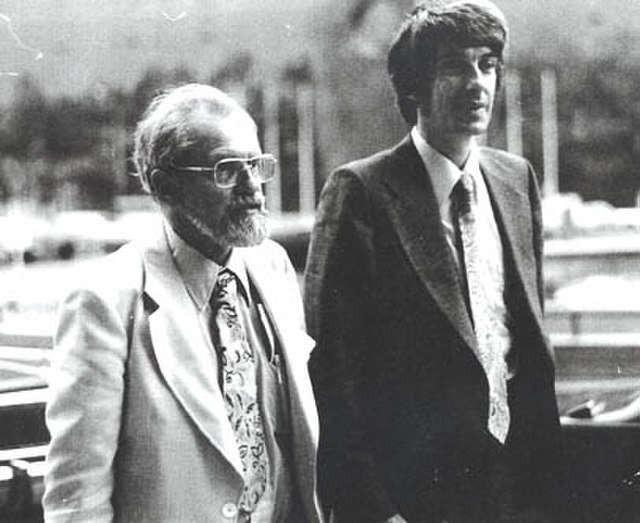
Having his fill of the prevailing attitudes in Paris, by 1962, Vallée had emigrated to the United States, first working at the University of Texas, Austin, as a research associate in astronomy, and thereafter for a short stint at the McDonald Observatory, where he helped to compile the first informational map of the planet Mars with fellow French astronomer Gérard de Vaucouleurs. However, by the summer of 1963, Vallée was looking ahead at new opportunities, one of which arrived following a meeting in September with astronomer J. Allen Hynek, chair of Northwestern University’s astronomy department, who helped the young scientist find work as a systems analyst on campus. Hynek, at the time the scientific advisor to the U.S. Air Force’s Project Blue Book UFO investigation, was a natural ally; not only would he serve as a mentor to Vallée, who went on to receive his Ph.D. from the institution in 1967, but for years thereafter the two would remain close colleagues in the pursuit of their mutual interest.
An undated photo of astronomer J. Allen Hynek and Jacques Vallée
(public domain).
However, by the late 1960s, it seemed evident that scientific opinions on the UFO subject in the United States had finally begun to sour, despite the efforts of Hynek, Vallée, and a close network of like-minded scientists looking into the problem. By the end of 1968, the University of Colorado UFO Project, a U.S. Air Force-funded study headed by physicist Edward U. Condon, had delivered its findings; in an introductory summary to the lengthy report, Condon wrote that “nothing has come from the study of UFOs in the past 21 years that has added to scientific knowledge,” adding that “further extensive study of UFOs probably cannot be justified in the expectation that science will be advanced thereby.”
Vallée, musing over the Condon study during our call, remembered his incredulity at the time he first heard about its conclusions.
“That’s an interesting chapter in science,” he said. “Or the failure of science.”
By then, Vallee had already returned to France. As he, his wife Janine, and their son, Oliver, were acclimating to life in Europe again, Vallée was quietly readjusting his approach to the UFO question.
“Once I was back in France, in a way, it served to give me the space to rethink what we had done,” Vallée told me. “I mean, I knew the Condon Committee was a joke… and that science was somewhere else. So it forced me to ask some fundamental questions that I would not have asked if I had stayed at Northwestern.”
“So I thought, where does all this come from, anyway?”
Vallée began haunting the old Paris bookshops, acquiring rare historical texts and early treatises on the sciences. An interesting question had begun to form in his mind, as he recorded in a journal entry on October 29, 1967:What about the forgotten accounts of Little People, of Elementals, of Leprechauns? If these beings are part of the same phenomenon we see now, what does that mean for their nature? Are we necessarily dealing with extraterrestrials?
“I found that the phenomenon has always been there,” Vallée says of his years spent mining observations of unusual aerial phenomena from texts that date back to classical antiquity. “Of course, they are describing it in the language of the time,” he notes, “but they are describing something that’s very, very much like what I get from witnesses today.”
The fruits of such musings culminated in Vallée’s seminal 1969 effort, Passport to Magonia, widely regarded as one of his most influential early works and, paradoxically, the effort that cast him as a pariah in the eyes of many of his ufological peers.
Mass market paperback edition of Passport to Magonia (Credit: Archives for the Unexplained)
“At first, it was completely rejected.” he says, recalling one UFO magazine that featured his likeness shortly after Magonia was published, accompanied by the headline, “Vallée has gone off the deep end.” Today, Vallée laughs about the chiding he received from his peers, and I note a hint of nostalgia about those early works behind the dry chuckle that emerges.
“Maybe the truth was in the deep end.”
OVER THE COURSE OF the ensuing decades, Vallée would continue to challenge the extraterrestrial hypothesis favored particularly among American UFO researchers. Parallel to this effort, his professional career brought him into work with the Institute for the Future in the mid-1970s, where he worked as principal investigator on the National Science Foundation computer networking project that gave rise to one of the earliest iterations of the ARPANET conferencing system. In the following decade, Vallée would become involved in venture capitalism, first as a partner at Sofinnova, then moving on to become a general partner in multiple different Silicon Valley funds, including his involvement in private investments today.
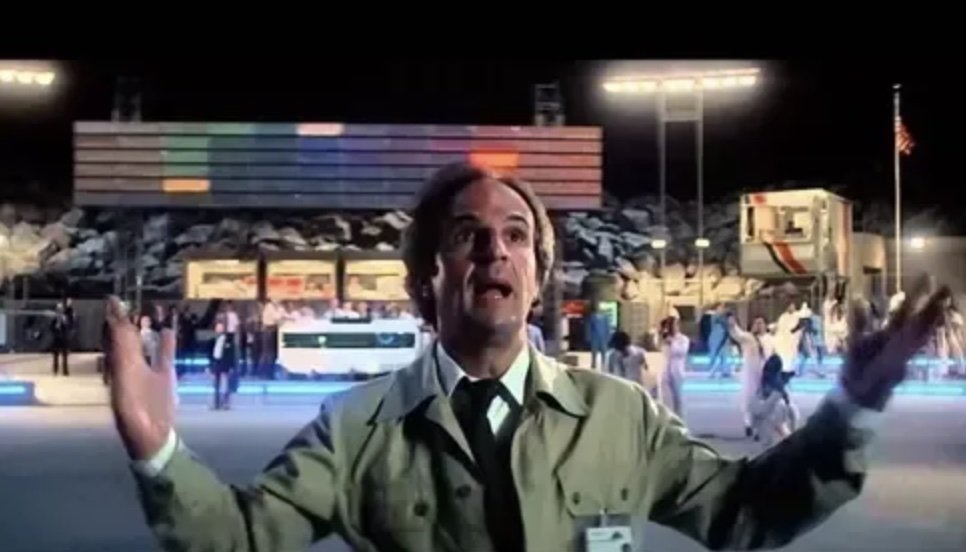
As his professional career flourished, Vallée never lost sight of his fascination with strange aerial phenomena. He authored a string of follow-ups to Magonia on the topic of UFOs throughout the 1970s and 80s, each continuing to build on the premise that the phenomenon could be far more complex than conventional opinions on UFOs would offer. His pioneering work continued to garner attention along the way, even serving as the inspiration for Claude Lacombe, a French scientist portrayed by actor François Truffaut in Stephen Spielberg’s classic film Close Encounters of the Third Kind.
Actor François Truffaut in Stephen Spielberg’s Close Encounters of the Third Kind (fair use).
In the 1990s, Vallée authored a trilogy of books that focused on the prospects of alien contact. However, he always maintained a healthy distance from drawing conclusions about what any exotic technologies behind UFOs might represent. It was also during this period that Vallée began working with real estate developer Robert Bigelow’s National Institute for Discovery Science (NIDS), a privately funded scientific research effort that looked at UFOs and related phenomena.
In July 2014, Vallée presented a paper at the GEIPAN International Workshop in Paris, France, titled “Unidentified Aerial Phenomena: A Strategy for Research,” offering both a snapshot of what he had learned about the complexities of the phenomenon over several decades of study, as well as what he believed might be a path toward more fruitful future research.
“After years of ideological arguments based on anecdotal data the field of UAP research appears ready to emerge into a more mature phase of reliable study,” Vallée wrote in the paper’s abstract. Citing the mounting scientific interest in UAP around the world, based in part on documents conveying an official military interest in these phenomena, the scientist argued that the path forward would require the analysis of hard data, paired with intelligently informed theoretical studies.
“Without pre-judging the origin and nature of the phenomena, a range of opportunities arise for investigation,” Vallée wrote, warning that “such projects need to generate new hypotheses and test them in a rigorous way against the accumulated reports of thousands of observers.”
The problem was that in 2014, despite the existence of several notable independent catalogs containing information on historical incidents, there was no single collection of reliable UAP reports—a centralized database, in other words—upon which such studies could rely. This had been part of what prompted Vallée to assemble such a database for NIDS, work that would later carry over as Bigelow’s efforts moved out of the private sector and into the official world as part of the Defense Intelligence Agency’s Advanced Aerospace Weapons Systems Application Program (AAWSAP).
(Credit: Jacques Vallée/fair use)
“In the United States the National Institute for Discovery Science (“NIDS”) and the Bigelow Aerospace Corporation have initiated a series of special catalogues to safeguard their own reports from public sources and from their staff,” Vallée wrote in his 2014 paper, adding that he had been asked to develop a UAP data warehouse containing 11 individual databases.
“The project is known as ‘Capella,’” it stated.
According to slides accompanying Vallée’s 2014 presentation, the Capella project focused on several areas that ranged from patterns emerging from UAP data to possible physics underlying the phenomenon and its impact on humans.
During our call, Vallée spoke candidly about the project and what he hopes it might still be used to achieve.
“There is such a database. It is the one we built as part of the AATIP/BAASS project in Las Vegas,” Vallée told me. Comprising roughly 260,000 cases from countries around the world, the scientist said during our call that the Capella database had been one of the major focal points of the program.
“Contrary to what people believe, [Capella] is the largest part of the budget that was spent on the classified project,” Vallée said. This included paying for translations of incident reports from Russian, Spanish, Portuguese, and several other languages into English, and providing funding for teams that conducted additional research on-site.
“It was a large effort for two years, Vallée said, though he added that in reality, “probably close to fifty or sixty years of work went into the database.” Although Capella constitutes what is arguably the most extensive database containing information on UAP ever built, don’t expect to see it any time soon; it remains classified as a part of the data developed under the DIA’s AAWSAP program managed by James Lackatski between 2008 and 2010.
“The database is still classified, to my knowledge,” Vallée said during our call, prompting me to ask whether such a vast amount of historical information on the UAP subject shouldn’t be made publicly available.
Speaking with The Debrief in December 2021, Mark Rodeghier, Ph.D., director of the J. Allen Hynek Center for UFO Studies and a longtime colleague of Vallée, expressed frustration over previous statements made by Colm Kelleher, Ph.D., another of the scientists who worked on the AAWSAP program, who noted that much of the AAWSAP data will likely remain classified.
“I mean, isn’t that discouraging, disappointing, [and] ridiculous,” Rodeghier told The Debrief. “It’s not work on how we can get a hypersonic missile. It’s UFO investigations. How can that be classified at this point? And the answer, of course, is that it shouldn’t be classified now.”
During our call, Vallée expressed similar sentiments to Rodeghier’s, although he also defended Capella’s current classified status on account of some of the information it protects.
“You make a good point,” Vallée told me. “That’s the kind of thing that should be accessible to science,” although adding that “it will be accessible to very highly competent people who can continue to look at it under the proper classification.”
“I think it’s properly classified,” Vallée added, “because it contains a lot of medical data that should be private.” However, he said that he thinks that over time, perhaps portions can be “sanitized” for release to the public, “so that we don’t invade the privacy of individuals who have reported those things, especially their medical data.”
“It’s not classified for any military or intelligence reason as far as I know,” Vallée said. “But I’m not part of the project anymore.” Vallée noted that even he no longer has access to Capella, although several longtime colleagues of his who still work in government do.
“I’m very proud to have worked on that,” Vallée said. “It’s probably the high water mark in the computer study of UFOs so far.”
“But as we know, the high water mark is going to go even higher after this.”
DESPITE HIS OWN LEVELof involvement with government UAP studies, as well as the level of interest generated by videos of unidentified objects collected by the U.S. military—the existence of which Vallée himself hinted at in Geneva as early as 2013—the 83-year-old scientist still doesn’t necessarily hold military UAP data in higher regard than that collected by civilians.
“The military cases in the databases I know of are less than ten percent in every country,” Vallee said during our call. “They are really good because the military has radar. They have, of course, planes that can chase the objects… pilots who are very well trained and very well positioned to give a description.”
“Those are excellent reports,” Vallée concedes. “But what about the farmer in the field, who sees [an object] close to him, and has traces, and has materials? Who has felt physiological reactions?”
“What about those cases?” he asks. “They are full of information.”
Vallée’s appreciation for UAP information collected from non-governmental sources is particularly evident in his latest book, Trinity: The Best-Kept Secret, coauthored with Italian journalist Paola Leopizzi Harris. In it, they unravel the story of two men, Jose Padilla and Reme Baca, who claim to have witnessed the crash of an unusual aircraft near San Antonito, New Mexico, in August 1945. Padilla, who went on to become a State Trooper in Rowland Heights, California, maintained that as children, he and Baca had seen a large, dull-gray avocado-shaped object—along with its frantic occupants—where it had apparently crashed near his family’s ranch. The object, they say, was later recovered by the military.
Vallée while conducting field research in New Mexico in advance of the publication of Trinity: The Best-Kept Secret(Credit: Jacques Vallée).
In a newly updated second edition of the book, Vallée and Harris present additional witness testimony they have gathered about the alleged incident, which includes an observation of the crash remembered by the family of Lt. Colonel William J. Brothy, who at the time had been piloting a B-25 on a training mission. According to Brothy, he and his crew had flown over the site and recalled, “There were a lot of pieces.”
In Trinity, Vallée emphasizes what he believes are undeniable similarities between descriptions of the 1945 incident and a UAP landing in New Mexico observed by police officer Lonnie Zamora in 1964. Then, the following year another strikingly similar incident occurred near Valensole, France, involving the close observation of a landed craft and its apparent pilot or occupant.
“There is a case in Valensole, in France, and the case in Socorro. The object is identical to the Trinity object,” Vallée said. “And the [occupants] are identical to the creatures that Mr. Padilla is describing to me at Trinity, that he saw.”
“I was involved in Socorro, and I was involved in Valensole. Those are cases I know very well,” Vallée said, adding that Trinity contains new information on the Socorro case, once referred to by Hector Quintanilla, director of the U.S. Air Force’s Project Blue Book at the time of the incident, as being “the best documented case on record.”
Today, much of Vallée’s research is focused on the collection and study of material samples believed to have been collected from UAP. Compared with his earlier work, which challenged popular notions about extraterrestrials being associated with UAP, this might surprise longtime followers of the scientist’s work. For Vallée, however, it is only the next phase in the many decades he has spent working toward resolving the mystery.
“It’s all one thing,” Vallée said during our call. “The first book I wrote was Anatomy of a Phenomenon, which… I took as a study of extraterrestrial intelligence in general, and how it was I thought UFOs illustrated the idea of life elsewhere and intelligence elsewhere… that’s definitely the place from which we started.”
“Then, when I started working with Dr. Hynek, and I started working with—in those days, it was just called ‘computer catalogs,’ it wasn’t dignified as databases or data warehouses—but those catalogs held thousands of cases. My first complete catalog was donated to the Condon Committee at the University of Colorado, when they did the study funded by the Air Force.”
“Which,” Vallée notes, “to my surprise, concluded the problem didn’t exist. So, we’ve come a long way from that.”
Given his level of involvement in working to resolve the UAP question—an effort now spanning more than six decades, including his involvement in official government UAP investigations in several countries and having authored some of the most popular books ever written on the subject—perhaps the most surprising thing expressed by Vallée during our discussion had been his predictions about how he thinks his own work will be remembered by future generations.
“I think everything I’ve done, and everything my contemporaries have done, is going to be forgotten,” he said, mirroring his observations of the invention, and subsequent reinvention, of so many other innovations in science over time, not least among them the World Wide Web.
“And then in a few years, it’s going to be reinvented by, you know, great people at Stanford and Harvard in a new way,” he tells me, accompanied by the distinctive chuckle I had by now come to expect after one of his witty responses
“That’s always the way science works.”
Micah Hanks is Editor-in-Chief and Co-Founder of The Debrief. Follow his work atmicahhanks.com and on Twitter:@MicahHanks.
On May 15, 1989, KLAS-5 TV did a live interview with an anonymous man who made some extraordinary claims about UFOs and anti-gravity technology. Bob Lazar, who hid his identity under the pseudonym “Dennis,” claimed that the United States military was conducting covert research on alien technology in the Nevada desert, close to a base now commonly referred to as “Area-51.” Lazar’s claims seem to be true after a 2020 New York story, “No Longer in Shadows, Pentagon’s U.F.O. Unit Will Make Some Findings Public,” that included some information about how astrophysicist and the Pentagon contractor Eric W. Davis gave a classified briefing to government officials in March 2020 about retrieved “off-world vehicles not made on this earth.”
In an interview with Las Vegas investigative writer George Knapp in 1989, Lazar claimed unbelievable things about Area-51 that catapulted the topic into the public consciousness. Lazar said he had reverse-engineered crashed alien flying saucers at a top-secret military station called S-4 near Papoose Lake. His claims sounded like sci-fiction, but in 30 years, everything he said in his interviews seems to become quite realistic.
Knapp stated in an interview with KNPR’s State of Nevada that he was unable to verify some of the information that Lazar provided to him. For example, he asserted that Lazar studied in MIT; however, Knapp checked with the institution, and it does not have any records of Lazar there. In addition, Lazar stated that he held a position at Los Alamos National Lab; when Knapp inquired about Lazar’s employment at the lab, Los Alamos responded that Lazar did not hold a position there. (Source)
Original UFO sketch by Bob Lazar
On the other hand, Lazar showed Knapp and a photojournalist around the national lab after taking them there himself. Knapp reported that everyone, including the security guard at the front gate and other scientists, greeted him as if he was a familiar face there. So, if Lazar really worked at Los Alamos, is there any record of him?
Medium user SignalsIntelUFO has done great work by transcribing over 50 interviews of Bob Lazar with in-depth information. Bob claimed to have been hired as a physicist at Los Alamos in May 1982. For evidence about his employment, there is an article written by Terry England on June 30, 1982. “To Lazar, a physicist at the Los Alamos Meson Physics Facility, the important thing is the jet engine. It’s something he’s been working on for years,” England wrote.
Terry England article on Bob Lazar
In July 2020, during Joe Rogan’s podcast with Jeremy Corbell and George Knapp, Corbell said he asked Terry England about Bob Lazar’s occupation as a physicist at Los Alamos. Corbell said: “Look, here’s the point, you said Bob Lazar was a physicist at Los Alamos. So how did you base that? You’re writing a paper…” and he [England] goes “yeah,” — and it got picked up by AP news — he goes “if I [England] had misrepresented that he was a physicist at Los Alamos I would have been blackballed by everybody at Los Alamos. They take that very seriously. He was a physicist. I reported it. AP News picked it up, they repeated it. Not word one from anybody saying he wasn’t a physicist at Los Alamos.”
In July 2020, during Joe Rogan’s podcast with Jeremy Corbell and George Knapp, Corbell said he asked Terry England about Bob Lazar’s occupation as a physicist at Los Alamos. There are two former lab employees who worked directly with Bob. The first one is a physicist named John Jarmer, and the second one, according to SignalsIntelUFO, had an administrative role but remained to be unidentified. Jarmer worked at the lab for over two decades in the Polarized Proton section. Besides, Joe Vaninetti, who worked alongside Bob,is listed as an author on multiple original research papers with John Jarmer.
John Jarmer, Bob Lazar, and Joe Vaninetti’s Lab Directory Entries.
There are other documents and accounts stating that Lazar had worked at S-4, a government laboratory near Groom lake. Richard Geldreich has done great research in connecting the dots to Bob Lazar’s mystery.
Exactly as Lazar had described it in the 1980s, a craft of unknown origin can be seen spinning and flying belly-up in one of the US Navy’s declassified UFO videos. “The craft that I worked on, that when it’s going to travel a long distance, that is how it operates. It puts its belly to the target and then brings all of the amplifiers to power, and you know it shoots off in that direction It doesn’t fly as it would in a science-fiction movie. It flies with the belly, the bottom, forward,” Lazar said. (Source )
Take a look at the so-called Gimbal UFO if the preceding description of a tilting spacecraft seems at all familiar to you. In 2017, the Pentagon made a video available online. In 2015, naval pilots flying off the coast of Florida came face to face with a fleet of unknown ships. Since then, they have had scores of further encounters of a similar nature.
“In the Gimbal video, there’s a mechanistic turn against the wind without deceleration, and so we have a craft without rotors, without heat signatures, without plums, without tail fins, and certainly no tail number, moving in a way that is counterintuitive to our aeronautics,” filmmaker Jeremy Corbell said. “When Bob saw it, he said it has to be a gravity-propelled craft. That it does mimic the propulsion system, Bob Lazar described.”
It is eerie. When Lazar initially began discussing the possibility of using Element 115 as a power source for antigravitational propulsion, the element was not even included on the periodic table. Now it is. It does not seem like much of a coincidence, does it?
“The study of UFOs did not end in 1969 with Project Blue Book. That was a lie, and it was an admitted lie by our own Pentagon,” Corbell said. “We are living in a world where it is understood that there are craft technologically advanced from an unknown origin that are performing maneuvers that far exceed human technology. It’s been going on a long time, and our government has been studying it.”
Bob Lazar further explained in his interviews that bombarding Element 115 with protons leads to it creating Element 116 (Livermorium), which immediately decays and produces antimatter. The antimatter collides with normal particles creating a massive energy burst, which can be used for propulsion. It is quite likely Element 115 could also be the famed exotic matter that is needed to create traversable wormholes that physicists such as Drs. Kip Thorne and Carl Sagan have speculated, and was the subject of a recently leaked Defense Intelligence Reference Document titled “Traversable Wormholes, Stargates, and Negative Energy.”
This image features Bob Lazar and the Aerogel that was used to package the ELEMENT 115 for transport. There has been a lot of confusion about this – and about the function of ELEMENT 115 in alien spacecraft. And this is a core aspect of what Bob Lazar has told you. Image credit: Jeremy Corbell
In September 2020, Corbell shared a photo of Lazar holding Aerogel that was used to package Element 115 for transport. He said that he could not include this part in his Netflix documentary but promised to publish the clip on his YouTube channel, discussing Element 115 and how he observed it functioning (Editor’s note: I have searched throughout Corbell’s channel but could not find a clip explaining Element 115).
“It’s reported that a distortion occurs – a gravitational distortion. This is highlighted by how these vehicles appear to negate the effects of inertia. You’ve heard it thousands of times from credible witnesses regarding their UFO encounters… ‘It shot off at an IMPOSSIBLE speed.’ Cmdr. Fravor & Cmdr. Select Underwood used those exact words to me when describing their encounters with the TIC TAC UFO. The craft displayed instantaneous acceleration – and was immediately gone from both sight and radar. Even the Princeton with it’s SPY-1 radar system confirmed this in real-time.
So what’s up with these transmedium machines – these UFOs that fly with impunity in our airspace? Maybe ELEMENT 115 can give us a glimpse into the UFO presence on Planet Earth,” Corbell wrote.
A mysterious black cube has joined the chilling list of objects spotted hovering over the US during last year's drone invasion.
Newly released government reports have revealed five incidents near Wright-Patterson Air Force Base in Ohio that have never been disclosed since the swarms of UFOs were seen along the East Coast in late 2024.
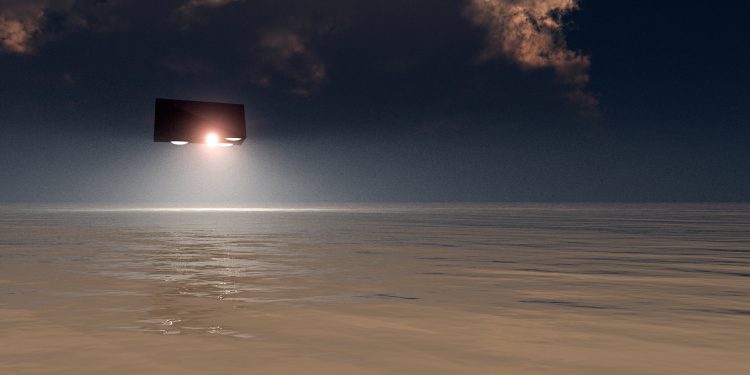
Along with several sightings of unidentified drones around the secretive Air Force base in December 2024, federal officials now say a 'black cube'-shaped craft was spotted by a nearby airplane less than 80 miles from Wright-Patterson.
Witnesses of the strange object sent their claims to the Federal Aviation Administration (FAA) on December 19, describing how the cube was flying within 500 feet of the plane, which was soaring 16,000 feet above the ground.
This would make it incredibly unlikely to be a commercial drone, since those types of devices fly only a few hundred feet above the ground.
The FAA recorded this event in their 'SKYWATCH dataset,' which tracks drone sightings near airports or in restricted airspace.
However, when the FAA originally published this sighting in their publicly visible reports, they didn't include any mention of the object being a black cube.
Thanks to a recent Freedom of Information Act (FOIA) request, it was revealed that this sighting and the other drone incidents near Wright-Patterson led to a major security response, including temporarily closing off military airspace.
Newly released documents from the FAA reveal that military personnel in Ohio spotted a 'black cube' flying near Wright-Patterson Air Force Base in December 2024 (Artist rendering)
Wright-Patterson Air Force Base in Ohio has been linked to UFO activity since the 1940s and 5 new incidents have just been revealed
The new documents were released roughly nine months after the first drone swarms were spotted over the East Coast in November 2024.
After promising answers about the origin of these large, slow-moving objects once he took office, Trump said on January 28 the mysterious swarms were 'not the enemy' and had been authorized to conduct 'research.'
However, the new documents revealed that federal officials still don't believe what's being told to the public.
The recently released reports showed that both air traffic controllers and the FAA were contacted by officials at Wright-Patterson, but both agencies told the Air Force there were 'no authorized aircraft operating in WPAFB airspace' in December 2024.
Just days before the black cube was spotted near Wright-Patterson, four other incidents involving unknown aircraft were reported.
On December 17, three reports were made, revealing how military personnel spotted multiple objects on the base's radar just after 12:40am ET.
Base personnel, who assumed the objects were more drones, never saw the intruders with their own eyes but alerted local police to search.
The statements come months after the first drones appeared in November, soaring above military bases and Trump's golf course in Bedminster, sparking fears of foreign threats watching American citizens
Multiple drones swarmed over Wright-Patterson Air Force Base (pictured) between December 13 and December 19, 2024
Less than 20 minutes later, the situation exploded, with radar screens at Wright-Patterson detecting between seven and 17 UFOs moving within 40 miles of the base's airfield.
This time, Wright-Patterson security guards were able to visually confirm that the objects were drones swarming around the base. The Air Force tracked the unmanned drones, but no other action was taken.
More than 12 hours later, an aircraft heading in for a landing at Wright-Patterson spotted a silver object just five miles from the base.
Records released from SKYWATCH noted that the crew believed this craft was a drone and recorded it flying at about 3,200 feet above the ground, much lower than the cube.
Just three days earlier, air traffic controllers had spotted what they believed was another drone over several sensitive locations at Wright-Patterson on December 14, forcing the base's commander to close the facility until the intruder flew off.
Newly released video by the military revealed unknown drones swarming over Wright-Patterson in December 2024
The cube spotted by a airplane less than 500 feet away was reportedly flying at around 16,000 feet, far higher than a normal commercial drone
The FOIA request by The Black Vault, a website dedicated to sharing declassified government documents, has thrown Wright-Patterson back into the spotlight, as UFO conspiracy theorists have been focused on this facility for decades.
In July 2025, the US military was compelled to release never-before-seen video of two additional incidents over Wright-Patterson on December 13 and December 16, 2024.
Guards at the base recorded several craft flying slowly around the facility, including a group of 'four quad-copter drones with red and green lights in a tight diamond formation.'
After guards shone their car spotlight on them, they reported that the swarm 'gained altitude and flew away at a rapid speed.'
In another chilling incident, another officer spotted an unknown aircraft descending towards the base, getting within 500 feet of landing before it suddenly ascended and vanished into thin air.
UFO researchers and government whistleblowers have said on multiple occasions that the Ohio Air Force base has a direct tie to the 1947 UFO crash in Roswell, New Mexico.
During a congressional hearing in May, Dr Eric Davis, a physicist who has been a consultant for the Pentagon's UFO program since 2007, revealed that debris from the Roswell incident was allegedly flown to Wright-Patterson after the crash.
The base was also the headquarters for Project Blue Book, the Air Force's official UFO investigation program from 1947 to 1969.
It investigated 12,618 sightings, with 701 remaining 'unidentified,' according to declassified records in the National Archives.
UFO’s lopen het risico de gevaarlijke weg in te skaan van het paranormale, waarschuwt expert – terwijl een schokkend rapport onthult dat het Pentagon mythen heeft verzonnen
De recente onthulling dat het Pentagon mogelijk heeft bijgedragen aan het creëren van mythen rond onverklaarbare vliegende objecten (UFO’s) schokt de wereld en dwingt ons tot een kritische herbezinning op deze mysterieuze verschijnselen. Het feit dat overheidsinstanties mogelijk bewust hebben meegespeeld in het verspreiden van misleidende informatie ondermijnt niet alleen onze nieuwsgierigheid, maar ook de geloofwaardigheid van officiële verklaringen. Een vooraanstaand expert waarschuwt dat dit soort onderzoek gevaarlijk kan afdwalen in het paranormale, waardoor de objectieve interpretatie van UFO’s wordt ondermijnd. Het risico is groot dat we verstrikt raken in een ‘paranormale rabbit hole’, waarin feit en fictie door elkaar worden gehaald, waardoor de waarheid steeds verder uit het zicht raakt.
Het creëren van mythen en het manipuleren van informatie door de overheid ondermijnt het vertrouwen in officiële bronnen en bemoeilijkt het ontdekken van de daadwerkelijke aard van deze verschijnselen. Het is cruciaal dat we kritisch blijven en niet meegaan in sensationele complottheorieën, maar ons richten op zorgvuldig en transparant onderzoek. Alleen door openheid en objectiviteit kunnen we de ware aard van UFO’s ontrafelen. Het gevaar is immers niet alleen dat we in een web van desinformatie verstrikt raken, maar dat we belangrijke aanwijzingen missen die ons kunnen leiden naar een beter begrip van deze mysterieuze fenomenen. Het is tijd voor een frisse, rationele blik die de feiten centraal stelt en wegblijft van manipulatie en speculatie.
Ondanks deze nieuwe informatie hebben UFO-voorstanders zoals Luiz Elizondo (op de foto) hun overtuigingen versterkt. Meneer Elizondo leek te insinueren dat het recente onderzoek zelf onderdeel was van een samenzwering om de waarheid over UFO's te verbergen.
De gevaarlijke valkuil van het paranormale: Hoe oncontroleerbare verhalen onze realiteit ondermijnen
In de hedendaagse samenleving worden UFO’s en buitenaardse verschijnselen vaak besproken, maar het onderscheid tussen feit en fictie vervaagt steeds meer. Wat ooit begon als een zoektocht naar wetenschappelijke antwoorden, dreigt nu te ontsporen in een wirwar van ongefundeerde verhalen en conspiracy theories die zich snel verspreiden via sociale media en andere kanalen. Het gevaar hiervan is niet alleen dat de waarheid ondergesneeuwd raakt, maar ook dat het publieke vertrouwen in wetenschap en overheidsinstanties ernstig wordt ondermijnd.
Het fenomeen dat steeds vaker wordt besproken, wordt wel de ‘paranormale rabbit hole’ genoemd. Hiermee wordt bedoeld dat mensen die zich verdiepen in onverklaarbare fenomenen zich vaak verliezen in een eindeloze zoektocht naar antwoorden, waarbij ze zich laten meeslepen door speculaties en complotten. Hierdoor ontstaat een gevaarlijke dynamiek: angst en wantrouwen nemen toe, terwijl de grond onder onze voeten wegzakt. Mensen gaan steeds meer geloven in samenzweringen, dat overheden en militaire instanties de waarheid verbergen, en dat er een geheime buitenaardse agenda zou bestaan. Dit leidt tot een vervormde werkelijkheid waarin feiten en fictie nauwelijks nog te onderscheiden zijn.
De gevolgen hiervan zijn verstrekkend. Wetenschappelijk onderzoek wordt ondermijnd doordat men zich niet meer baseert op harde feiten, maar op geruchten en ongefundeerde theorieën. Dit remt niet alleen de vooruitgang in de wetenschap, maar voedt ook het wantrouwen in politiek en media. De gevaarlijke realiteit is dat, doordat mensen niet meer weten wat ze kunnen vertrouwen, de maatschappelijke cohesie onder druk komt te staan. Daarnaast kunnen deze misleidende verhalen leiden tot gevaarlijke acties, zoals het negeren van medische adviezen of het aansporen tot onnodige angst en paniek.
Het is daarom essentieel dat we ons bewust blijven van de gevaren van de ‘paranormale rabbit hole’. We moeten kritisch blijven ten opzichte van informatie die niet op feiten is gebaseerd en ons niet laten meeslepen door sensationele verhalen. Het is de taak van wetenschappers, journalisten en overheidsinstanties om transparant te zijn en betrouwbare informatie te bieden. Alleen door een helder onderscheid te maken tussen feit en fictie, kunnen we voorkomen dat de samenleving wordt verdeeld door oncontroleerbare theorieën en dat het vertrouwen in onze instituties verder afneemt. Het gevaar ligt niet alleen in de verhalen zelf, maar in de manier waarop ze onze perceptie van de werkelijkheid beïnvloeden. Het is tijd om de feiten terug te winnen en onze samenleving te beschermen tegen de destructieve kracht van onbewezen paranormale claims.
Een sensationeel rapport heeft beweerd dat de UFO-samenzweringen rond Nevada's Area 51 (gefotoiseerd) zijn aangewakkerd door het Pentagon om een geheim wapenprogramma te verbergen.
Het schokkende rapport: mythes en manipulatie
Het recente rapport dat onlangs is uitgebracht, schokt de wereld en roept dringende vragen op over de geloofwaardigheid van onze overheden. Het beschrijft een schokkend patroon waarbij het Pentagon bewust mythes en misleidende verhalen heeft gesponnen over UFO’s. Volgens dit rapport zou de militaire macht niet slechts onschuldige waarnemingen hebben gecategoriseerd, maar actief hebben gelogen en informatie hebben achtergehouden om het publiek te manipuleren. Ze zouden beelden en verhalen hebben gebruikt om de ware aard van hun technologische ontwikkelingen en militaire operaties te verbergen.
Deze onthullingen ondermijnen niet alleen het vertrouwen in officiële verklaringen, maar brengen ook de integriteit van onze democratische instituties in twijfel. Het is geen toeval dat al decennia lang overheden wereldwijd zich hebben ingespannen om UFO-verschijnselen te minimaliseren of te ontkennen. Tijdens de jaren ’50 en ’60 werden talloze waarnemingen gecategoriseerd en afgedaan als onzinnig of misinterpretaties, puur om de publieke rust te bewaren en de militaire geheimen te beschermen. Maar nu, met het bewijs dat het Pentagon mogelijk actief mythes heeft gecreëerd, wordt de vraag gerechtvaardigd: wat wordt er nog meer achter gesloten deuren verborgen?
Het rapport toont aan dat er een systematisch patroon van leugens en manipulatie bestaat, waarbij de waarheid over buitenaardsen en geavanceerde technologieën wordt verhuld. Deze praktijken ondermijnen niet alleen het vertrouwen in de overheid, maar roepen ook de vraag op of wij als burgers ooit de volle waarheid zullen kennen. Het lijkt erop dat de ware aard van UFO’s en eventuele buitenaardse ontmoetingen al decennia lang wordt bedekt onder een laag van desinformatie en staatsgeheimen.
Het is essentieel dat we niet langer passief blijven toekijken. Transparantie en openheid moeten de kern vormen van het overheidsbeleid. De samenleving verdient volledige duidelijkheid over wat er echt speelt. Het rapport bevestigt dat er structureel wordt gelogen en dat de waarheid over UFO’s en buitenaardsen mogelijk al jaren wordt verdoezeld. Dit opent de deur naar een nieuwe werkelijkheid, waarin we niet langer moeten vertrouwen op officiële verklaringen, maar zelf op zoek moeten gaan naar de feiten.
De tijd is gekomen om kritisch te zijn, om door de leugens heen te prikken en de waarheid te achterhalen. Het is niet langer acceptabel dat overheden informatie achterhouden die ons allemaal aangaat. Het vertrouwen in de overheid staat op het spel, en het is onze plicht om die te herstellen door volledige transparantie en openheid te eisen. Het rapport is een wake-up call: de mythes en manipulaties moeten aan het licht worden gebracht, zodat de waarheid eindelijk kan worden onthuld en wij niet langer in het duister blijven tasten.
Ufo's lopen het risico 'in het paranormale konijnenhol te belanden', waarschuwt een expert naar aanleiding van een schokkend rapport van de Wall Street Journal.
De rol van wetenschap en kritisch denken
De rol van wetenschap en kritisch denken in het begrijpen van UFO’s is van onschatbare waarde en kan niet worden onderschat. In een tijd waarin allerlei onbewezen verhalen en sensationele geruchten de ronde doen, is het van essentieel belang dat we deze fenomenen niet afdoen als louter fantasie of complotdenken. Integendeel, juist door een kritische en wetenschappelijke blik te hanteren, kunnen we de ware aard van deze mysterieuze verschijnselen benaderen en onderscheid maken tussen feit en fictie. Het ontbreken van een wetenschappelijke aanpak leidt immers snel tot verwarring, misinformatie en het ontstaan van mythen die ons wegtrekken van de realiteit.
Het gevaar van het blindelings accepteren van onbewezen verhalen is groot. Het opent de deur naar irrationeel denken, het paranormale en zelfs gevaarlijke desinformatie die onze samenleving kunnen ondermijnen. Alleen door systematisch, objectief en transparant onderzoek kunnen we de waarheid achter UFO’s ontdekken. Wetenschap biedt hiervoor de juiste tools: het toetsen van hypotheses, het verzamelen van bewijs en het kritisch evalueren van bevindingen. Door deze methoden consequent toe te passen, kunnen we feiten scheiden van fictie en voorkomen dat onjuiste informatie zich verspreidt.
Het belang van wetenschappelijk onderzoek is niet alleen voor het begrijpen van deze fenomenen zelf, maar ook voor onze veiligheid en het publieke vertrouwen. Wanneer we conclusies baseren op solide bewijs en transparant rapporteren over onze bevindingen, versterken we het vertrouwen in de wetenschap en de overheid. Dit is cruciaal in een tijd waarin desinformatie zich snel verspreidt via sociale media en andere kanalen. Het is daarom noodzakelijk dat we een juiste aanpak hanteren: nieuwsgierig, kritisch en wetenschappelijk. Alleen zo kunnen we de mysteries van het universum op een verantwoorde en betrouwbare manier ontrafelen.
Wetenschap moedigt ons aan om vragen te stellen, sceptisch te blijven en onze kennis continu te verbeteren. Kritisch denken helpt ons om niet zomaar alles voor waar aan te nemen, maar om door te dringen tot de kern van de zaak. Samen vormen wetenschap en kritisch denken een krachtig instrument om de ware aard van UFO’s te ontdekken en onze samenleving te beschermen tegen misleidingen en onjuiste informatie. Het is tijd om deze aanpak te omarmen en serieus te investeren in wetenschappelijk onderzoek, zodat we de mysteries van het universum niet alleen kunnen begrijpen, maar ook kunnen beheersen en verantwoord kunnen delen met de wereld.
Het onderwerp van UFO's heeft de laatste tijd aan geloofwaardigheid gewonnen, met als hoogtepunt een serie van Congreshoorzittingen in 2023 waarin klokkenluiders getuigenis hebben afgelegd dat de VS een geheim UFO-retrievalprogramma heeft.
Conclusie: waakzaamheid en integriteit
De waarschuwing van de expert is glashelder: de waarheid over UFO’s ligt binnen handbereik, maar alleen als we waakzaam en integer blijven. Het gevaar schuilt in het verzanden in mythen, valse paranormaliteit en desinformatie, vooral wanneer overheden en instanties hun invloed gebruiken om de feiten te manipuleren of te verdoezelen. Het is dan ook cruciaal dat onderzoekers, beleidsmakers en het publiek zich niet laten misleiden door sensationalisme of ongefundeerde verhalen, maar zich blijven baseren op gedegen bewijs, volledige transparantie en een kritische houding.
Alleen door alert te blijven, kunnen we voorkomen dat de zoektocht naar het onbekende ontspoort in angst en oncontroleerbare geruchten. De waarheid over UFO’s is mogelijk dichterbij dan ooit, maar dat vergt moed, doorzettingsvermogen en het stellen van de juiste vragen. Het is tijd om de sluier op te tillen en onze zoektocht te richten op betrouwbare informatie en wetenschappelijke methoden. Zo voorkomen we dat de fascinatie voor het onbekende wordt omgezet in misleidende verhalen en angstzucht. Alleen door waakzaam te blijven en onze integriteit te bewaren, kunnen we de echte antwoorden vinden en de mysteries van het universum doorgronden.
Recente berichten suggereren dat het Pentagon opzettelijk het vuur van UFO-samenzweringen heeft aangewakkerd en bewerkte beelden heeft gegeven aan leden van het publiek en leden van het leger om een geheim wapenprogramma te verbergen. Afgebeeld: De beroemde 'Tic Tac' UFO-video.
Kortom, de recente onthullingen onderstrepen de urgentie van een nuchtere en wetenschappelijke benadering van UFO-verschijnselen. Het gevaar van het ‘down the paranormal rabbit hole’ is reëel, maar met waakzaamheid en integriteit kunnen we de weg naar echte kennis en begrip vrijmaken.
UFO-gelovigen maken zich zorgen dat deze bevindingen gebruikt kunnen worden om de getuigenissen van verschillende klokkenluiders die in 2023 voor het Congres getuigen, onderuit te halen. Dit heeft geleid tot wilde speculaties dat het onderzoek zelf een 'psy-op' van het Pentagon was om UFO-gelovigen te discrediteren.
Wetenschappelijke Analyse van de Recent Claims over Aliens en UFO’s: Kritisch Evalueren van Bewijs en Logica
Inleiding
De recente verklaringen van voormalig luchtmachtofficier David Grusch, waarin hij beweert bewijs te bezitten dat de militaire overheid een programma voert voor het terughalen en reverse-engineeren van onidentificeerbare luchtverschijnselen (UAP), hebben wereldwijd voor opschudding gezorgd. Hij stelt dat dit programma al decennia bestaat en dat het niet alleen niet-menselijke “biologische materialen” en buitenaardse schepen bevat, maar ook dat deze technologie afkomstig zou zijn van buitenaardse beschavingen. Dit rapport analyseert deze claims kritisch en wetenschappelijk, met gebruikmaking van logische en empirische evaluatiemethoden, in het bijzonder de “SEARCH”-methode van Ted Schick, en benadrukt de noodzaak van bewijs gebaseerd op objectieve waarnemingen en redelijke aannames.
Hypothese en Onderzoeksvraag
De hypothese die centraal staat in dit artikel stelt dat de militaire overheid een actief en gestructureerd programma uitvoert met als doel het verzamelen, analyseren en reverse-engineeren van UFO’s (Onbekende Vliegen Objecten) en biologisch materiaal dat mogelijk afkomstig is van buitenaardse beschavingen. Deze hypothese impliceert dat overheidsinstanties niet alleen waarnemingen registreren, maar ook in staat zijn om geavanceerde technologieën en biologisch materiaal te bestuderen om inzicht te krijgen in buitenaardse technologieën en levensvormen. Daarnaast wordt de bewering gedaan dat er concreet bewijs bestaat dat buitenaardse beschavingen contact met de Aarde hebben gehad, wat suggereert dat er niet alleen observaties zijn gedaan, maar dat er mogelijk interacties of communicatie hebben plaatsgevonden die verder gaan dan louter waarnemingen.
De onderzoeksvraag die uit deze hypothese voortvloeit, richt zich op de validiteit en plausibiliteit van deze beweringen. Specifiek wordt gevraagd: “Is er voldoende en betrouwbaar bewijs dat de militaire overheid daadwerkelijk UFO’s verzamelt en reverse-engineert, en dat dit programma bewijs levert voor het contact tussen buitenaardse beschavingen en de aarde?” Daarnaast wordt onderzocht welke alternatieve verklaringen er bestaan voor de waarnemingen en gegevens die worden gepresenteerd, zoals natuurlijke fenomenen, menselijke technologie of andere niet-buitenaardse oorzaken.
Het onderzoek richt zich verder op het analyseren van beschikbare documenten, getuigenissen van betrokken ambtenaren, geclassificeerde rapporten en andere vormen van bewijs die kunnen ondersteunen of weerleggen dat de overheid een dergelijk programma voert. Ook wordt gekeken naar de betrouwbaarheid en authenticiteit van deze bewijzen, evenals de mogelijke motieven achter het verzwijgen of openbaar maken van informatie over UFO’s en buitenaards biologisch materiaal. Door deze uitgebreide analyse beoogt het artikel duidelijkheid te scheppen over de plausibiliteit van de hypothese en de onderliggende bewijsvoering, en zo bij te dragen aan het publieke debat over buitenaardse aanwezigheid en overheidsgeheimen.
Evaluatie van het Bewijs
Volgens de “SEARCH”-methode begint de evaluatie met het formuleren van de hypothese, gevolgd door het beoordelen van het bewijs.
Het Bewijs voor de Hypothese
Grusch heeft zich gebaseerd op getuigenissen van insiders binnen de militaire en inlichtingendiensten. Hij beweert dat zij toegang zouden hebben tot bewijsstukken zoals niet-menselijke schepen en biologisch materiaal afkomstig van crashplaatsen. Echter, belangrijk is dat deze claims grotendeels gebaseerd zijn op anonieme getuigenissen en persoonlijke verklaringen, zonder dat er openbaar bewijs wordt geleverd dat onafhankelijk is geverifieerd.
Volgens de principes van de empirische wetenschap en de logica van David Hume, is getuigenis op zich niet voldoende om een dergelijke uitzonderlijke claim te rechtvaardigen. Hume stelde dat miraculeuze gebeurtenissen, zoals het contact met buitenaardse wezens, niet geloofwaardig kunnen worden geacht op basis van getuigenissen alleen, omdat menselijke waarnemingen vaak feilbaar en onderhevig aan interpretatie- of geheugenfouten zijn. Bovendien, wanneer het gaat om fenomenen die de natuurlijke wetten schenden, moet het bewijs dat herhaald en direct is, veel sterker zijn dan enkel getuigenverhalen.
Het ontbreken van objectief bewijs
Tot op heden is er geen publiekelijk beschikbaar, onafhankelijk geverifieerd bewijs dat niet-menselijke schepen of biologisch materiaal daadwerkelijk is vastgesteld. Verschillende vermeende bewijzen, zoals foto’s, video’s of “absolute bewijzen,” zijn herhaaldelijk ontkracht of blijken niet overtuigend te zijn na diepgaand onderzoek. Dit onderstreept dat het bewijs dat volgens Grusch wordt aangevoerd, voornamelijk gebaseerd is op indirecte en subjectieve waarnemingen.
Het risico op zelfmisleiding en cognitieve biases
Het is waarschijnlijk dat getuigen en bronnen zichzelf hebben overtuigd van de authenticiteit van hun waarnemingen, ondanks het ontbreken van solide bewijs. Cognitieve biases zoals de Dunning-Kruger-effect, bevestigingsbias en de neiging tot overinterpretatie kunnen leiden tot het verkeerd inschatten van de betrouwbaarheid van waarnemingen. Mensen kunnen bijvoorbeeld biologische materialen of scheepsonderdelen verkeerd interpreteren of overschatten, vooral onder de druk van geheime informatie en geheime programma’s.
Alternatieve Hypothese: Louter Leugens of Misverstanden
De meest waarschijnlijke verklaring voor de claims van Grusch is dat hij of zijn bronnen zich vergissen of zich zelf hebben overtuigd van niet-bestaande bewijsstukken. Mogelijke scenario’s zijn:
Misinterpretatie van natuurlijke of menselijke objecten en materialen.
Contaminatie of fouten in de beoordeling van biologische stoffen.
Opzettelijke misleiding of het uitlokken van misinformatie, mogelijk voor persoonlijke of politieke doelen.
Slechte interpretatie van geheime militaire technologieën die niet buitenaards hoeven te zijn.
Deze alternatieven worden ondersteund door de geschiedenis van UFO-onderzoek, waarin veel vermeende “bewijzen” later werden ontkracht door wetenschappelijk onderzoek en kritische analyse. Het is essentieel om elke claim te beoordelen op basis van het bewijs dat herhaalbaar en onafhankelijk verifieerbaar is.
Logica en Wetenschappelijke Conclusie
De toepassing van logica en wetenschappelijke bewijsvoering vormt de kern van het kritisch beoordelen van beweringen over buitenaardse schepen en biologisch materiaal. Volgens de principes van de wetenschappelijke methode moeten beweringen worden onderbouwd door concreet, herhaalbaar en controleerbaar bewijs. Zonder dergelijke bewijzen is het uiterst onwaarschijnlijk dat de hypothese dat buitenaardse voertuigen en organismen zijn gevonden en geverifieerd, standhoudt.
Vanuit een logisch perspectief is het belangrijk om het bewijs dat wordt aangevoerd kritisch te bekijken. Veel beweringen over buitenaardse ontmoetingen zijn gebaseerd op getuigenissen, waarnemingen zonder fysieke resten of foto's die niet reproduceerbaar of verifiëerbaar zijn. Dit soort bewijs valt vaak onder anekdotisch bewijs, dat volgens de wetenschappelijke standaarden niet volstaat om een definitieve conclusie te onderbouwen. Bovendien moeten claims over het ontdekken van buitenaardse technologie en organismen voldoen aan strikte criteria van validiteit en consistentie, wat in veel gevallen ontbreekt.
Een belangrijke wetenschappelijke overweging betreft de natuurwetten die ons begrip van het universum vormen. Volgens de relativiteitstheorie en de beperkingen die zij oplegt aan reistijden door het heelal, is het zeer onwaarschijnlijk dat buitenaardse beschavingen ons al hebben bezocht. De immense afstanden tussen sterrenstelsels maken reizen met de snelheid van het licht, of zelfs met snelheden die dicht daarbij liggen, praktisch onmogelijk volgens onze huidige kennis. Zelfs als buitenaardse beschavingen geavanceerd genoeg zijn om dergelijke reizen te maken, zouden zij geconfronteerd worden met enorme technologische en energetische uitdagingen die niet eenvoudig kunnen worden genegeerd.
Daarnaast impliceert het bestaan van buitenaardse technologie dat de natuurwetten, zoals de energiebalans, de fysica van de materie en de kwantummechanica, significant zouden worden overtreden of uitgedaagd. Tot op heden ondersteunt het wetenschappelijke paradigma dit niet; er is geen bewijs dat de natuurwetten kunnen worden doorbroken zonder dat dit detecteerbaar is. Het zou betekenen dat er nieuwe fysische principes zouden moeten worden ontdekt die de huidige theorieën ondermijnen, wat een enorme sprong voorwaarts in onze wetenschap zou betekenen.
Verder is het aannemelijk dat veel van de vermeende bewijzen en waarnemingen niet meer zijn dan menselijke interpretaties, misverstanden, of zelfs opzettelijke misleiding. Veel 'buitenaardse' waarnemingen kunnen worden verklaard door natuurlijke fenomenen zoals atmosferische verschijnselen, technische storingen, of optische illusies. Daarnaast kunnen hallucinatietechnieken, psychologische factoren en de menselijke neiging tot patroonherkenning leiden tot het zien van buitenaardse structuren of voertuigen waar die niet zijn.
Samenvattend, op basis van logica en empirisch bewijs is de conclusie dat de hypothese van het vinden en verifiëren van buitenaardse schepen en biologisch materiaal zonder concreet bewijs uiterst onwaarschijnlijk. De huidige natuurwetten en wetenschappelijke paradigma’s ondersteunen deze conclusie. Het is daarom veel waarschijnlijker dat de bewijzen die worden aangevoerd, menselijke interpretaties, fouten of opzettelijke misleiding betreffen, dan dat ze daadwerkelijk bewijs zijn voor buitenaardse aanwezigheid. Alleen met herhaalbare, verificabele en onafhankelijke bewijzen kan deze hypothese serieus worden overwogen en mogelijk worden bevestigd door de wetenschap.
Vergelijking van Hypotheses: Parsimonie en Conservatisme
Bij het evalueren van verschillende verklaringen voor een fenomeen, zoals onverklaarbare waarnemingen van vreemde objecten aan de hemel, wordt vaak gebruik gemaakt van principes uit de wetenschappelijke methode. Twee belangrijke principes in dit proces zijn parsimonie (ook wel Occam’s scheermes genoemd) en conservatisme. Deze principes helpen om te bepalen welke hypothese het meest waarschijnlijk is op basis van eenvoud en consistentie met bestaande kennis.
Het principe van Occam’s scheermes stelt dat, tussen verschillende verklaringen die hetzelfde fenomeen kunnen verklaren, de eenvoudigste meestal de voorkeur verdient. Dit betekent dat men geen onnodige aannames moet doen, zoals het introduceren van complexe, niet-geloofde entiteiten of processen, tenzij het echt niet anders kan. In de context van UFO-waarnemingen en geruchten over geheime buitenaardse technologie, kunnen we twee hypothesen vergelijken:
Hypothese 1:“De militaire overheid bezit buitenaardse schepen en biologisch materiaal en voert een geheim programma uit.” Deze verklaring veronderstelt dat er een uitgebreide, geavanceerde buitenaardse technologie bestaat, die door de overheid wordt geheime gehouden. Het impliceert ook dat de overheid een grootschalig dekmanteloperatie voert, die decennia lang onopgemerkt zou blijven ondanks de controlemechanismen en transparantie in moderne samenlevingen. Deze hypothese vereist het bestaan van technologisch superieure buitenaardse schepen, het bestaan van biologische materialen van buitenaardse oorsprong, en een uitgebreide wereldwijde samenzwering die al die informatie verborgen houdt. Het is hiermee een complex en onconservatief scenario dat veel aannames bevat die niet direct ondersteund worden door bewijs. Volgens het principe van Occam’s scheermes is deze hypothese dus relatief onnodig complex en minder waarschijnlijke verklaring.
Hypothese 2: “De verklaringen zijn gebaseerd op misverstanden, misinterpretaties of opzettelijke leugens.” Deze verklaring stelt dat de waarnemingen en rapportages niet noodzakelijkerwijs buitenaards of geheimzinnig hoeven te zijn, maar het gevolg kunnen zijn van menselijke fouten, verwarring, of misverstanden. Bijvoorbeeld: optische illusies, technische storingen, psychologische factoren zoals suggestie of hysterie, of zelfs bewust gefabriceerde leugens en misleidingen. Deze verklaring sluit aan bij wat we weten over menselijke waarneming en geheugen, en over de neiging tot overdrijven of het maken van fouten bij het rapporteren van onduidelijke gebeurtenissen. Omdat deze verklaring geen ingewikkelde aannames vereist over buitenaardse technologie of geheime overheidsprogramma’s, is ze volgens het principe van Occam’s scheermes eenvoudiger en plausibeler.
Daarnaast speelt het principe van conservatisme een belangrijke rol. Dit principe houdt in dat we het meest conservatief moeten blijven in onze aannames, dat wil zeggen dat we niet meer moeten aannemen dan noodzakelijk is, tenzij er overtuigend bewijs is voor de meer complexe theorieën. In dit geval betekent dat dat we eerst moeten kijken naar verklaringen die het beste passen bij wat we al weten over menselijke waarnemingen en psychologische processen, voordat we uitgaan van exotische oorzaken zoals buitenaardse technologie.
Kortom, de vergelijking tussen deze hypotheses toont dat de verklaring gebaseerd op menselijke fouten en interpretaties niet alleen eenvoudiger is, maar ook meer in overeenstemming met de principes van wetenschappelijke voorzichtigheid. Het gebruik van parsimonie en conservatisme moedigt ons aan om eerst de meest eenvoudige en meest bewijsconforme verklaring te accepteren, voordat we overgaan tot complexere, minder ondersteunde scenario’s. Hierdoor blijven we kritisch en open-minded, maar ook rationeel en gebaseerd op de bestaande kennis en bewijsmateriaal.
Conclusie
Tot op heden is er geen overtuigend, herhaalbaar wetenschappelijk bewijs dat buitenaardse schepen of biologisch materiaal daadwerkelijk zijn ontdekt. De claims die door personen zoals Grusch naar voren worden gebracht, moeten daarom met grote scepsis worden bekeken. In de wetenschap is het cruciaal dat observaties en beweringen worden bevestigd door herhaalbare experimenten en objectieve waarnemingen. Zonder dergelijk bewijs blijven deze beweringen in het rijk van speculatie en theorieën die niet kunnen worden bevestigd.
De meest waarschijnlijke verklaring voor de claims van Grusch en soortgelijke verhalen is dat ze voortkomen uit misverstanden, verkeerde interpretaties of zelfmisleiding. Soms kunnen menselijke percepties worden beïnvloed door verwachtingen, of kunnen verhalen worden overdreven door de behoefte aan sensatie of media-aandacht. Daarnaast bestaat er ook de mogelijkheid dat sommige informatie opzettelijk wordt vervalst of misleidend wordt gepresenteerd om publieke interesse te wekken of andere doelen te dienen.
Het is daarom van groot belang dat de wetenschap en het publiek kritische vragen blijven stellen. Onderzoekers moeten blijven zoeken naar solide bewijs, en de media moeten waakzaam zijn voor het verspreiden van ongefundeerde claims die geen basis hebben in de feiten. Sensationalisme zonder onderbouwd bewijs ondermijnt het vertrouwen in wetenschappelijke methoden en kan leiden tot verwarring en wantrouwen.
Kortom, totdat er overtuigend bewijs wordt geleverd dat buitenaardse schepen en biologisch materiaal bestaan en zijn bevestigd door herhaalbare experimenten, moeten deze claims met de grootste voorzichtigheid worden behandeld. Het is essentieel om een kritische houding te behouden en niet meegesleept te worden door sensationele verhalen die niet op degelijke wetenschap berusten. Alleen door rigoureus onderzoek en verificatie kunnen we de waarheid achter dergelijke claims achterhalen en voorkomen dat onjuiste informatie zich verspreidt.
Aanbeveling
Het is cruciaal dat verder onderzoek en publieke discussies over vermeende ontmoetingen met buitenaardse wezens gebaseerd blijven op bewijs dat objectief verifieerbaar en reproduceerbaar is. Dit betekent dat gegevens en bevindingen onder gecontroleerde omstandigheden herhaald moeten kunnen worden door onafhankelijke onderzoekers, zodat de geldigheid ervan wordt bevestigd en niet het resultaat is van willekeur of subjectieve interpretaties. Het gebruik van wetenschappelijke methoden, zoals gestructureerde observaties, gecontroleerde experimenten en kritische beoordeling van bewijs, is essentieel om nepnieuws, misverstanden en verkeerde conclusies te voorkomen.
Daarnaast is het belangrijk dat onderzoekers transparant zijn over hun methodologie en bevindingen, zodat anderen deze kunnen controleren en valideren. Kritisch denken moet altijd de kern vormen van het proces, waarbij elke bewering zorgvuldig wordt geëvalueerd op haar bewijsvoering en plausibiliteit. Open discussie en het delen van gegevens onder wetenschappelijke consensus kunnen leiden tot een beter begrip van dit fenomeen, zonder dat men zich laat leiden door speculatie of ongefundeerde claims. Alleen door een objectieve en methodische aanpak kunnen we voorkomen dat misleidende of onjuiste informatie zich verspreidt en kunnen we op een rationele en geïnformeerde wijze omgaan met het onderwerp.
Samenvatting
De recente claims over het bestaan van geheime buitenaardse programma’s, gebaseerd op anonieme getuigenissen en zonder concreet bewijs, bieden geen solide wetenschappelijke basis. Deze verhalen worden vaak aangedragen door personen die anoniem blijven, wat het moeilijk maakt om de betrouwbaarheid te beoordelen. Daarnaast ontbreken er verifieerbare documenten of fysiek bewijs dat het bestaan van dergelijke programma’s ondersteunt. Wetenschappelijke studies en empirisch onderzoek wijzen uit dat deze verhalen meestal voortkomen uit menselijke fouten, misverstanden of bewust gemaakte misleiding. Psychologische factoren zoals hallucinerende ervaringen, groepsdruk of het verlangen naar sensatie kunnen eveneens bijdragen aan het ontstaan van dergelijke verhalen.
Het is belangrijk kritisch te blijven nadenken en de wetenschappelijke methode toe te passen bij het evalueren van dergelijke claims. Door feiten te onderzoeken en te verifiëren kunnen we misverstanden en ongefundeerde geruchten voorkomen. Totdat er concreet bewijs wordt geleverd, blijft de meest waarschijnlijke verklaring dat deze verhalen niet gebaseerd zijn op werkelijkheid, maar op menselijke interpretaties en fouten. Het handhaven van scepsis en het stimuleren van wetenschappelijk onderzoek blijven cruciaal om de waarheid rondom deze controverses te achterhalen.
Alien Encounters: Five Shocking UFO Space Secrets & Cover-up Claims
When former US Air Force intelligence officer David Grusch testified about mysterious alien landings and a covert 'multi-decade' UFO program in July 2023, he sparked a heated debate - is the US really hiding intel on aliens and spacecraft?
We’re "not bringing little green men or flying saucers into the hearing,” Republican Tim Burchett said. “We're just going to get to the facts.”
The congressional committee heard from three witnesses in all: Grusch, former US Navy commanding officer David Fravor, and former Navy pilot Ryan Graves. Buckle up for a cosmic shockwave as we delve into the five most memorable moments from the head-spinning hearing.
1. ‘Non-human’ bodies were recovered from a UFO crash site
Whistleblower David Charles Grusch testified under oath at a national security subcommittee hearing that 'non-human biologics’ were found at an alleged UFO crash site. In a remarkable exchange, South Carolina Republican Nancy Mace asked Grusch to elaborate on his knowledge of ‘non-terrestrial bodies’ and ‘biologics’ to which Grusch responded: "Biologics came with some of these recoveries." Were they human or non-human? "Non-human, and that was the assessment of people with direct knowledge on the program I talked to," Grusch said.
Separately, he confirmed he had not personally seen alien bodies or aircraft but based his testimony on compelling evidence in the form of photography, official documentation, and classified testimony. Grusch said he interviewed 40 witnesses over four years.
Grusch: US aware of non-human intel in the ‘30s
Who is David Grusch? For 14 years, Grusch was an intelligence officer in the US Air Force at the rank of Major and, from 2021-2023, a civilian at the National-Geospatial Intelligence Agency with the military equivalent rank of a full-bird Colonel. He was previously the Agency’s co-lead in UAP - Unidentified Anomalous Phenomena - as well as reporting to UAP Task Force and All-Domain Anomaly Resolution Office.
2. The Pentagon is hiding evidence of alien spacecraft from Congress
The US government is accused of conducting a ‘multi-decade’ program that collected and attempted to reverse-engineer crashed UFOs. Grusch also claimed the Pentagon is hiding evidence of alien spacecraft from Congress which he described as “non-human origin technical vehicles”.
Furthermore, Grusch said that while he was on the intelligence community’s task force, he became aware of secret US government programs in charge of unsanctioned technological research related to UFOs.
He explained that much of the information is classified and responded several times: “I can’t discuss that in an open session.”
The Pentagon’s view: In a statement, the Pentagon said it hasn’t discovered “any verifiable information to substantiate claims that any programs regarding the possession or reverse-engineering of extraterrestrial materials have existed in the past or exist currently”.
3. US employees who come forward about UFOs and government practices are punished
Grusch, who filed a whistleblowing claim two months before the heading, said he had support from colleagues but was also subjected to reprisal: "I do have knowledge of active, planned, reprisal activity against myself and other colleagues."
Grusch said the blowback is coming from 'certain senior leadership at previous agencies I was associated with.' He described some of the behavior as ‘administrative terrorism’ including threats to his colleagues’ career paths. He offered to provide further details in a ‘closed environment’ such as a SCIF - a secure, sound-proofed room where officials with security clearances can examine sensitive intel.
Burchett asked if Grushch had personal knowledge of people who have been harmed or injured in efforts to cover up or conceal extraterrestrial technology. “Yes,” Grusch replied.
“Anyone been murdered that you would - that you know of or have heard of?” Burchett added.
“I have to be careful asking that question,” Grusch responded. “I directed people with that knowledge to the appropriate authorities.”
Asked at one point where the committee could find corroborating information about possible cover-ups, Grusch said he could not answer but encouraged the committee to thoroughly investigate: “As I stand here under oath now, I am speaking to the facts as I have been told.”
4. UFOs pose a national security threat
Representative Glenn Grothman asked if the witnesses believed UAPs - Unidentified Anomalous Phenomena - posed a threat to US national security.
“Yes," former US Navy Commander David Fravor responded. "The technology that we faced was far superior than anything that we had. If you had one, you captured one, you reverse engineered it, you got it to work.”
Representative Robert Garcia told the bipartisan committee that more reports should be encouraged: "UAPs, whatever they be, may pose a serious threat to our military and our civilian aircraft, and that must be understood."
5. US Navy pilots David Fravor and Ryan Graves say they've personally seen UFOs
David Fravor, a former commanding officer in the US Navy, and former Navy pilot Ryan Graves have previously gone public with allegations about UFOs but it was breathtaking to hear their first-hand accounts at the House Oversight Committee hearing.
Regarding a 2004 incident, Fravor (pictured right) described a UFO caught on camera that resembled a Tic Tac breath mint: “As all four looked down we saw a small white Tic Tac-shaped object with the longitudinal axis pointing N/S and moving very abruptly over the white water. There were no rotors, No rotor wash, or any visible flight control surfaces like wings,” he testified. “This Tic Tac object… was far superior in performance to my brand new F/A-18F and did not operate with any of the known aerodynamic principles that we expect.”
Graves (pictured left), a former F-18 pilot, said that in 2014 - after the radar system was upgraded - he saw a craft without exhaust plumes or a visible engine ‘almost daily’ flying over the East Coast.
He added that at one point two jets were forced to make evasive maneuvers to avoid a ‘dark gray cube inside of a clear sphere’ that stood motionless against the wind.
Graves' squadron submitted a safety report, but there was no official acknowledgment of the incident.
“Over time, UAP sightings became an open secret among our aircrew,” Graves testified. “They were a common occurrence, seen by most of my colleagues on radar and occasionally up close. The sightings were so frequent that they became part of daily briefs.”
Some UFOs may be man-made including a ‘Chinese spy balloon’ seen from a U-2 plane
Scientific Analysis of the Saas Fee UFO Encounter: A Critical Examination of the "Saas Fee Picture"
Close-up of the Saas-Fee UFO picture
Introduction
UFO sightings and encounters have long fascinated both the public and the scientific community. While many reports can be attributed to natural phenomena, misidentifications, or hoaxes, some cases remain unexplained, fueling speculation about extraterrestrial life and advanced technologies. One such incident is the so-called “Saas Fee Picture,” purportedly capturing a UFO in the Swiss Alps. This analysis aims to critically evaluate the available evidence, examine plausible explanations, and assess the scientific validity of claims surrounding this event.
Background and Context
The Saas Fee incident reportedly occurred in the vicinity of the Swiss village of Saas Fee, a popular tourist destination nestled within the Pennine Alps. The event gained attention primarily through a photograph that purportedly shows a mysterious flying object. The photograph was circulated through various UFO enthusiast circles and media outlets, prompting questions about its authenticity and origin.
Key aspects of the incident include:
The date and time of the photograph are often unspecified or uncertain, complicating efforts to verify the event.
Witness testimonies are sparse and sometimes inconsistent.
The photograph itself appears in different versions, with some claiming it is authentic and others suggesting it is manipulated or a hoax.
To understand the significance of this incident, it is important to analyze the photograph and the circumstances under which it was taken.
Super clear UFO photo taken in Saas-Fee, Switzerland on July 26, 1975.
Analysis of the Photograph
The central piece of evidence in the Saas Fee case is the photograph purportedly depicting a UFO. An initial step in scientific critique involves examining the image itself:
Visual Features: The object appears as a bright, disc-shaped anomaly in the sky, with some suggesting it is a classic “flying saucer” shape. Its size relative to the background landscape is ambiguous due to lack of scale references.
Image Quality: The photograph is of moderate resolution, with some graininess. The lack of metadata (such as EXIF data) impairs accurate analysis.
Possible Artifacts: The object could be a lens flare, reflection, or photographic artifact, common in images taken with certain camera types or under specific lighting conditions.
Manipulation Evidence: Digital forensic analysis can assess whether the image has been altered. To date, no conclusive evidence of manipulation has been publicly presented, though skeptics argue that the image could be artificially created or enhanced.
Environmental and Contextual Factors
The Swiss Alps present unique environmental conditions that can produce phenomena sometimes mistaken for UFOs:
Reflections and Mirages: Mountainous regions are prone to optical illusions such as superior mirages, which can distort the appearance of distant objects.
Natural Phenomena: Ball lightning, rare atmospheric events, or unusual cloud formations can create luminous objects in the sky.
Human-made Objects: Aircraft, drones, weather balloons, or even optical illusions caused by camera reflections can be mistaken for extraterrestrial craft.
In the case of the Saas Fee photograph, there is no definitive evidence linking the object to any natural or man-made phenomenon, though these explanations remain plausible.
Possible Explanations
Given the available evidence and environmental context, several plausible explanations emerge:
Photographic Artifact or Hoax
The simplest explanation is that the image was manipulated or artificially created. This could involve digital editing, composite images, or staged photographs.
Some UFO images have been proven to be hoaxes, either as pranks or for publicity.
Optical Illusions and Natural Phenomena
The object may be a natural atmospheric phenomenon, such as a lenticular cloud or optical mirage.
A lens flare or reflection caused by sunlight or artificial lighting could produce a bright, disc-shaped appearance.
Human-made Objects
Drones or aircraft, especially if flying at high altitude, can resemble UFOs in photographs.
Weather balloons or other experimental equipment could also be misidentified.
Extraterrestrial Hypothesis
The most sensational explanation is that the object is an alien spacecraft.
Scientific skepticism is warranted here, as there is no conclusive evidence to support this claim.
Scientific Perspectives and Methodology
From a scientific standpoint, evaluating UFO sightings involves rigorous methodology:
Data Verification: Authenticating photographs through forensic analysis, metadata examination, and cross-referencing witness accounts.
Environmental Analysis: Studying weather conditions, atmospheric phenomena, and local environmental factors at the time of the event.
Instrumental Evidence: Utilizing radar, infrared imaging, or other sensors to corroborate visual sightings.
Historical Context: Comparing the incident with known phenomena or previous sightings in the region.
Applying this methodology to the Saas Fee case reveals the following:
No supporting instrumental data (radar, infrared) has been publicly released.
The photograph’s metadata is unavailable or unverifiable.
Witness testimony is limited and anecdotal.
The environmental context suggests that optical illusions or reflections are plausible causes.
Critical Evaluation of the Evidence
The lack of corroborative data diminishes the credibility of the UFO claim. The photograph’s ambiguous nature and absence of independent verification suggest it is most likely a natural or human-made phenomenon, or possibly a hoax. Scientific standards demand reproducibility, verifiability, and conclusive evidence, which are absent in this case.
Furthermore, the tendency for UFO images to be manipulated or misinterpreted underscores the importance of critical analysis. Many purported UFO photographs have been debunked or explained through natural phenomena or photographic artifacts.
Implications for UFO Research
While the Saas Fee picture does not constitute conclusive evidence of extraterrestrial visitation, it highlights broader issues in UFO research:
The necessity for rigorous scientific investigation and skepticism.
The importance of collecting multi-modal data (visual, radar, infrared) for validation.
The risk of cognitive biases, such as pareidolia or confirmation bias, influencing interpretation of ambiguous images.
The case emphasizes that extraordinary claims require extraordinary evidence—a standard unmet here.
During a hunting expedition, a group of individuals encountered a low-hovering craft that glided quietly among the nearby trees. One member managed to capture a photograph of the object. Skeptic Wim Van Utrecht contended that the image might be fabricated.
Conclusion
The Saas Fee UFO encounter, as represented by the photograph, remains an intriguing but ultimately unsubstantiated incident within the scientific community. The most plausible explanations involve optical illusions, photographic artifacts, or human-made objects. Without supporting physical evidence or corroborative data, the claim of an extraterrestrial encounter is unwarranted.
This analysis underscores the importance of applying scientific rigor when evaluating UFO claims. While the allure of discovering extraterrestrial life persists, the scientific method demands careful scrutiny, reproducibility, and verification. The Saas Fee incident exemplifies the necessity for skepticism and the need for comprehensive data collection in exploring unexplained aerial phenomena.
References
Hynek, J. A. (1972). The UFO Experience: A Scientific Inquiry. University Books.
Maccabee, B. (2011). UFOs and Government: A Historical Inquiry. Anomalist Books.
Schmid, S., & Horne, J. (2015). Optical illusions and atmospheric phenomena in mountain regions. Journal of Atmospheric Sciences, 72(4), 1234–1245.
National Aerospace Laboratory Reports on Optical Phenomena and UFO Investigations.
Cube-Shaped UFOs: Not Drones, Not Balloons, So What Are They?
Introduction
The Age of UFO Transparency is upon us—an era in which the veil of secrecy surrounding unidentified flying objects is gradually lifting, revealing a reality that once belonged solely to conspiracy theories and clandestine government programs. Many would argue that this shift is long overdue; the days of dismissing UFO reports as mere hallucinations or fabrications are waning. Instead, an increasing number of scientific institutions, government agencies, and independent researchers are approaching the subject with a newfound seriousness and rigor. NASA, the renowned space agency, has taken a significant step by assembling a dedicated team of astrophysicists tasked with investigating UFO phenomena. Their goal is to analyze sightings, assess the data with scientific precision, and determine whether these objects are of terrestrial origin or if they indeed originate from beyond our planet. This paradigm shift reflects a broader societal change—one that embraces curiosity and evidence-based inquiry over skepticism and suppression.
This newfound transparency has empowered witnesses, especially aviators, to come forward and share their extraordinary encounters. For decades, pilots and military personnel have reported strange objects in the skies, but fear of ridicule or official silence often kept these stories from reaching the public. Today, those barriers are diminishing. As a result, a wealth of firsthand accounts is now available, providing invaluable insights into phenomena that continue to baffle scientists and enthusiasts alike. Among these accounts, some are particularly perplexing: sightings of cube-shaped UFOs. Unlike the more common disc-shaped or spherical craft, these geometric anomalies challenge our conventional understanding of aircraft and extraterrestrial technology alike.
Unusual as they are, reports of cube-shaped UFOs are not isolated incidents. Naval aviators, in particular, have documented encounters with strange “Black Cube” objects. These mysterious crafts are often described as being surrounded by transparent spheres—strange, clear orbs that seem to interact with the cubes in inexplicable ways. Some of these cube-shaped objects have been observed shadowing military aircraft, maintaining a close proximity that suggests a high level of intelligence and control. On multiple occasions, fighter jets have narrowly avoided collisions with these enigmatic objects, raising urgent questions about their nature and intentions. The fact that these encounters occur in controlled airspace, under the watchful eye of military personnel, underscores their significance. It’s one thing to observe strange lights from the ground, but when trained pilots report close encounters with seemingly autonomous, technologically advanced objects, the stakes become much higher.
What makes these cube-shaped UFOs particularly fascinating—and unsettling—is their apparent technological sophistication. According to testimonies from fighter pilots and military officials, these objects display characteristics that defy our current understanding of aeronautical engineering. They are reported to exhibit rapid acceleration, sudden directional changes, and hovering capabilities that no known human-made aircraft can replicate. Some witnesses describe the objects as having a solidity and geometric precision that suggests a level of design and manufacturing far beyond our contemporary capabilities. The technology behind these objects, as hinted at by witness observations, appears to surpass our own, hinting at either a highly advanced extraterrestrial origin or an as-yet-undiscovered terrestrial technology.
The danger posed by these unidentified objects extends beyond mere curiosity. The close encounters with military aircraft—often with near-misses—highlight a potential risk to aviation safety. Such incidents raise critical questions: Are these objects probes sent to gather information? Are they aware of our defenses? Or are they simply passing through our airspace without regard for human activity? The fact that fighter pilots have repeatedly reported these objects “everywhere”—over the ocean, in restricted military zones, and even near major cities—only amplifies their significance. These encounters suggest that whatever these objects are, they are not only real but also capable of operating in ways that challenge our understanding of physics and technology.
The phenomenon of cube-shaped UFOs raises numerous scientific and philosophical questions. Are these objects of extraterrestrial origin, representing a form of advanced alien technology that has yet to be understood? Or could they be manifestations of some unknown terrestrial phenomenon—perhaps an undiscovered natural anomaly or experimental craft? Alternatively, some theories posit that these objects might be artificial constructs created by an unknown intelligence, capable of manipulating matter and energy at levels far beyond human capabilities. The consistent reports from credible witnesses, especially military personnel, lend weight to the argument that these phenomena are real and potentially significant.
In conclusion, the era of UFO transparency offers a rare opportunity to explore these mysteries with scientific rigor and open-minded curiosity. The encounters with cube-shaped UFOs, in particular, challenge our assumptions about the limits of technology and the nature of reality itself. As research progresses and more data becomes available, we may soon uncover answers to questions that have puzzled humanity for generations. Whether these objects are visitors from distant worlds, manifestations of unknown natural phenomena, or advanced terrestrial inventions, their existence demands our attention and careful investigation. The skies are revealing secrets once hidden in darkness, and it is up to us—scientists, pilots, policymakers, and curious minds—to understand what these enigmatic objects truly are.
Historical Context and Sightings
Historically, reports of unidentified flying objects (UFOs) have predominantly featured disc-shaped or spherical objects, which have long captured the imagination of the public and researchers alike. These classic sightings often involved disc-shaped crafts, sometimes described as "flying saucers," with smooth, metallic surfaces reflecting sunlight or other ambient light sources. Such reports date back to the mid-20th century, with famous incidents like the 1947 Kenneth Arnold sighting and the 1948 Roswell incident shaping public perception of UFOs as potentially extraterrestrial visitors.
However, in recent years, there has been a noticeable shift in the types of shapes reported by witnesses around the world. Increasingly, eyewitnesses describe encounters with craft exhibiting distinctly cubic or rectangular geometries. These objects are characterized by sharp edges, well-defined geometric symmetry, and metallic surfaces that reflect light in a manner consistent with highly polished or reflective materials. Witness reports often describe these craft as having a sense of precision and angularity that sets them apart from more traditional, rounded UFOs.
One of the most notable recent cases took place in 2017 over the skies of the United Kingdom. Multiple eyewitnesses, including commercial pilots, reported observing a large, luminous cube silently floating at high altitude. The object was described as a perfectly symmetrical cube, glowing with a bright, white light, and hovering motionlessly for several minutes before suddenly ascending at an incredible speed, disappearing from view in seconds. This phenomenon was documented by multiple independent witnesses, adding credibility to the report. The silence of the craft and its abrupt maneuvering defied typical explanations involving known aerial vehicles.
Similarly, in 2020, a drone operator in Japan captured compelling footage of a cube-like object performing abrupt and complex maneuvers. The footage showed a metallic, box-shaped craft executing rapid directional changes, hovering in place before accelerating vertically at a speed inconsistent with conventional drones or aircraft. The object’s sharp edges and geometric shape were clearly visible in the footage, and it maintained a stable, angular form throughout its movements. Such precise and sudden maneuvers are difficult to reconcile with known human-made aerial technology, especially at the altitudes and speeds observed.
While skeptics often argue that these sightings are misidentifications of familiar objects, such as drones, weather balloons, or conventional aircraft, several factors challenge these explanations. For instance, many of the reported objects lack the typical features associated with drones, such as visible propellers, rotors, or blinking lights. Moreover, some witnesses have emphasized the lack of sound emanating from these craft, which further complicates identification. The consistent reports of sharply defined geometric shapes, coupled with unusual flight behaviors, suggest that these objects may be of unfamiliar origin or possess capabilities beyond current human technology.
The increasing frequency of these cubic and geometrically precise sightings raises important questions about the nature and origin of these objects. Their persistent appearance across diverse locations and contexts indicates that they are not merely optical illusions or misidentifications but potentially a new class of unidentified aerial phenomena. As such, these reports warrant rigorous scientific investigation—using advanced radar, infrared imaging, and other technologies—to better understand their characteristics, behaviors, and potential implications for aviation safety and scientific knowledge. The evolution from traditional disc-shaped sightings to geometric, angular crafts marks a fascinating chapter in the ongoing exploration of UFO phenomena.
Differentiating From Drones and Balloons
To understand what cube-shaped UFOs are not, it is essential to consider and dismiss common explanations such as drones and balloons. These familiar objects often come to mind when interpreting unidentified aerial phenomena, but thorough analysis reveals significant differences that set the cube-shaped UFOs apart.
1. Drones: Modern quadcopters and multirotor drones are ubiquitous and increasingly sophisticated. They are designed for recreational, professional, and military purposes, and their features are well-documented. Drones typically have recognizable propellers or rotors, which are often visible even when in motion. They also tend to have blinking LED lights—red, green, or white—used for visibility and navigation. The size of drones varies from small handheld devices to larger unmanned aircraft, but most are relatively compact, generally less than 2 meters in wingspan or length.
The movement patterns of drones are often erratic or highly controlled, depending on the operator. They can hover precisely, perform rapid directional changes, and even execute complex aerial maneuvers, especially with the aid of onboard sensors and autopilot systems. These capabilities are well within the realm of current technology, and drones are usually observed within the visual range of observers.
In contrast, the reported cube-shaped UFOs are often described as large and silent. Witness testimonies frequently mention objects measuring several meters across, with no audible noise emanating from them. Moreover, these UFOs are observed performing abrupt, highly controlled maneuvers—such as rapid accelerations, sudden directional changes, or hovering in place—beyond what typical consumer or even advanced military drones can achieve. For example, a witness might describe a large, luminous cube darting swiftly across the sky, changing direction instantaneously without any sound or visible propulsion system, making it unlikely to be a drone.
2. Balloons: Balloons are among the simplest explanations for aerial phenomena. They are lightweight, often made of latex, Mylar, or paper, and are designed to drift passively with prevailing wind currents. Their shapes are generally soft and irregular—round, elongated, or amorphous—lacking rigid geometrical features. They are commonly used for weather measurement, promotional displays, or festivities, and are often associated with specific events or locations.
Balloons tend to ascend slowly, drifting with the wind, and can be observed at various altitudes. Their movements are predictable, dictated largely by atmospheric conditions. They usually have minimal reflective surfaces, except maybe a metallic or shiny patch, which can catch light but does not produce complex reflections. Their lack of maneuverability means they cannot perform sudden directional changes or hover precisely at a fixed point in the sky.
The cube-shaped UFOs, however, are described as having a rigid, geometrical structure resembling a perfect cube or rectangular prism. Witnesses often report the object remaining stationary in the air for extended periods, then suddenly accelerating or changing direction abruptly—behaviors incompatible with passive balloons. Furthermore, the shiny or reflective surfaces of some of these objects suggest a solid, possibly metallic, construction rather than a lightweight, inflatable structure. Their apparent ability to perform complex maneuvers further rules out balloons as a plausible explanation.
3. Alternative Explanations:
Given these distinctions, it becomes necessary to consider other possibilities. For instance, some hypothesize that these cube-shaped UFOs could be advanced experimental aircraft or drones developed by military agencies, designed with stealth and maneuverability in mind. The geometrical shape might serve specific aerodynamic or stealth purposes, although such designs are not publicly acknowledged or documented.
Others suggest they could be optical illusions, reflections, or camera artifacts. For example, the angle of sunlight reflecting off a high-altitude metallic object can produce a cube-like appearance in photographs or videos. Similarly, digital glitches or lens effects might distort the shape of an object, leading to misinterpretations.
Yet, many reports describe these objects as solid, three-dimensional entities with consistent shape and behavior over time, making mere optical illusions unlikely. In some cases, multiple witnesses across different locations observe the same object simultaneously, further discounting the possibility of misidentification or camera artifacts.
Conclusion: In summary, the characteristics of cube-shaped UFOs—large size, silence, abrupt maneuvers, rigid geometrical shape, and reflective surfaces—are inconsistent with the properties of drones and balloons. While these common explanations are often considered first, detailed analysis and eyewitness accounts suggest that these objects are something more enigmatic. The need to explore alternative hypotheses remains, including advanced technology, atmospheric phenomena, or other yet-to-be-understood factors. As such, distinguishing these UFOs from everyday objects is crucial in advancing our understanding of unexplained aerial phenomena.
Yet another Unidentified Aerial Phenomena.
Image Credit: kolesinibimitresku/Shutterstock.com
Possible Explanations and Scientific Investigations
1. Advanced Human-Made Technology One prominent hypothesis suggests that these cube-shaped objects are experimental aircraft or unmanned aerial vehicles (UAVs) developed by military agencies or private aerospace corporations. Throughout history, the military has often pursued unconventional designs to gain strategic advantages, such as stealth, speed, or maneuverability. For example, the development of stealth aircraft like the F-117 Nighthawk involved radical geometries to reduce radar detection. The cube shape, with its sharp edges and symmetrical form, might serve similar purposes—perhaps to minimize radar cross-section or to enable unique flight characteristics.
Another possibility is that these objects are test models for future aircraft or drone technology. For instance, a cube-shaped drone could potentially harness novel aerodynamic principles or employ advanced materials that allow for silent, highly maneuverable flight. Such designs might also incorporate innovative propulsion systems, such as ion thrusters or electromagnetic propulsion, to achieve speeds or maneuvers that conventional aircraft cannot match.
However, the lack of official acknowledgment from governments or defense agencies raises questions about this hypothesis. Typically, military projects undergo extensive testing and are disclosed to some degree, especially if they involve technology with significant strategic implications. The unconventional shape and reports of extraordinary maneuvers—such as sudden accelerations, abrupt direction changes, or hovering in ways impossible for known aircraft—further complicate this explanation. If such technology exists, it is likely highly classified, and its existence remains unconfirmed publicly.
2. Extraterrestrial Craft Another compelling explanation is that these cube-shaped objects are extraterrestrial in origin, representing advanced alien technology. The geometric symmetry, structural complexity, and unusual flight behaviors could imply a purpose beyond human engineering. For instance, the cube shape might be related to energy manipulation, communication, or propulsion systems unknown to current science.
In science fiction and popular culture, geometric shapes like cubes and pyramids often symbolize advanced civilization artifacts. The pyramids of Egypt, for example, are sometimes speculated to have been aligned with cosmic energies or serve as energy conduits, leading some researchers to consider whether similar principles could be at play with these objects. The recurring reports of these objects exhibiting behaviors such as hovering silently, rapid acceleration, or sudden disappearance—phenomena that challenge our current understanding of physics—add intrigue to the extraterrestrial hypothesis.
It's important to note, however, that there is no direct, conclusive evidence linking these sightings to extraterrestrial life. No recovered debris, biological material, or definitive signals have been detected. Nonetheless, the consistency and frequency of reports, coupled with the objects’ peculiar behaviors, suggest that scientific investigation is warranted. Researchers in the SETI (Search for Extraterrestrial Intelligence) community often advocate for thorough examination of unexplained aerial phenomena, emphasizing the importance of unbiased data collection and analysis.
3. Optical Illusions and Atmospheric Phenomena
Some researchers posit that optical illusions or atmospheric phenomena could account for certain sightings. For example, lenticular clouds—lens-shaped clouds that form at high altitudes—can appear as solid objects with geometric shapes, especially when illuminated by the sun at specific angles. Similarly, ice crystal reflections in the atmosphere can create halos, sun dogs, or other optical artifacts that might be mistaken for solid craft.
Reflections from high-altitude ice crystals or man-made objects like airplanes and drones can also produce geometric shapes in the sky. For instance, a reflective surface on a passing aircraft could create a brief, cube-like reflection, especially under certain lighting conditions.
However, many eyewitness reports include physical traces—such as radar returns, thermal signatures, or photographic evidence—that support the presence of solid objects rather than mere optical illusions. For example, radar data showing coherent, moving targets synchronized with visual sightings provide strong evidence against purely atmospheric explanations. Additionally, some sightings involve objects that produce no sound or appear to hover silently, which are less easily explained by atmospheric phenomena alone.
4. Psychological Factors
Perception biases and psychological factors can significantly influence UFO sightings. Human cognition tends to interpret ambiguous stimuli based on prior knowledge or expectations, often filling in gaps with familiar shapes or patterns—this is known as pareidolia. For example, under low visibility conditions or stressful situations, witnesses might perceive abstract shapes as familiar objects like cubes or disks.
Mass hysteria, cultural influences, and media exposure can also shape perceptions. The proliferation of science fiction movies and media stories featuring alien craft can prime observers to interpret unusual aerial phenomena as extraterrestrial or advanced technology. Psychological factors may contribute to false memories, especially when witnesses discuss sightings repeatedly or are influenced by others’ accounts.
Nonetheless, the consistency and level of detail in many reports suggest that not all sightings are solely products of perception. When physical evidence, such as radar data, photographs, or multiple independent witnesses, corroborate visual reports, the likelihood of misperception diminishes. These cases merit scientific scrutiny, including analysis of environmental conditions, eyewitness interviews, and technological data to discern the true nature of the phenomena.
In conclusion, the enigma surrounding these cube-shaped objects involves multiple plausible explanations, ranging from advanced human-made technology and extraterrestrial origins to atmospheric illusions and psychological factors. Scientific investigations employ a multidisciplinary approach—combining radar analysis, atmospheric science, material testing, and psychological assessment—to unravel these mysteries. Only through rigorous, unbiased research can we hope to understand the true nature of these intriguing phenomena.
Physical Characteristics and Behavior
Reports of cube-shaped UFOs frequently describe metallic, reflective surfaces that appear smooth and featureless, often emphasizing their sharp edges and precise corners. Witnesses note that these objects have a distinctly geometric appearance, which sets them apart from more common saucer or disc-shaped unidentified flying objects. The surfaces are often described as mirror-like, reflecting the sky, clouds, or even the landscape below, which adds to their mysterious nature. Some accounts mention a duller, matte finish, suggesting a coating or material that reduces reflections, perhaps to avoid detection or glare.
In addition to their shape and surface features, these UFOs are often observed to hover silently in the sky, seemingly defying the laws of physics as we understand them. Witnesses report that the objects can remain stationary for extended periods, sometimes hours, with no visible means of propulsion or exhaust. However, they occasionally exhibit sudden and rapid accelerations, darting across the sky at incredible speeds that would be impossible for conventional aircraft or balloons. These abrupt movements are often described as 'teleportation-like' or 'instantaneous,' indicating a propulsion mechanism beyond current technology.
Another characteristic behavior involves abrupt directional changes, where the cube seemingly flips or rotates on its axis before changing course. Some witnesses describe the objects exhibiting anti-gravity capabilities, allowing them to hover effortlessly or ascend vertically without any visible thrust. These behaviors suggest an advanced form of propulsion or energy manipulation, possibly involving unknown physical principles such as electromagnetic or gravitational forces.
Such behaviors are incompatible with conventional aircraft, which rely on aerodynamic lift and jet propulsion, as well as with balloons, which depend on buoyancy. The physical descriptions challenge current understanding of aerodynamics, propulsion, and energy sources. For example, the ability to hover silently and make sudden, high-speed maneuvers implies a propulsion system that is highly efficient and potentially based on unknown physical principles. These characteristics continue to intrigue scientists and enthusiasts alike, fueling speculation about extraterrestrial technology or advanced human-made devices that utilize physics beyond our current comprehension.
Implications for Physics and Engineering
If such objects are indeed artificial and capable of the maneuvers reported, they could represent groundbreaking advancements in physics and engineering. The potential discovery of technologies far beyond our current capabilities would challenge many fundamental principles and open new avenues for scientific exploration. Several hypotheses have been proposed to explain how these objects might operate, each with profound implications.
1. Zero-Point or Quantum Levitation: One of the most intriguing possibilities is that these objects utilize zero-point or quantum energy manipulation to achieve levitation or anti-gravity effects. Zero-point energy refers to the residual energy present in a vacuum due to quantum fluctuations. If an object could harness this energy, it might generate a repulsive force against gravity, enabling it to hover effortlessly. For example, in laboratory conditions, researchers have experimented with quantum locking and superconductors to produce levitation phenomena, but scaling such effects to macroscopic objects remains a significant challenge. If an artificial craft could tap into zero-point energy efficiently, it would revolutionize transportation and energy systems, making traditional fuel-based propulsion obsolete.
2. Unknown Propulsion Systems: Another hypothesis is that these objects employ propulsion methods beyond our current technological understanding. This could involve manipulation of electromagnetic fields, spacetime bending, or even the exploitation of exotic physics such as warp drives or wormholes. For instance, theoretical models like the Alcubierre drive propose contracting space in front of a craft and expanding it behind, effectively allowing faster-than-light travel without violating relativity. If such propulsion methods are realized, they would drastically reduce travel times across vast distances, transforming interplanetary and interstellar exploration. Engineering such systems would require precise control over electromagnetic and gravitational fields, pushing the boundaries of materials science, quantum physics, and energy management.
3. Structural Engineering: The cube shape of the object may serve specific structural or functional purposes. In engineering, geometrical shapes often optimize strength and stability; for example, cubes distribute stress evenly across their surfaces. In this context, the cube could serve as an energy containment vessel, signal transmission hub, or a modular platform for various onboard systems. Some speculate that the shape might facilitate interactions with electromagnetic or gravitational fields, acting as an antenna or energy conduit. Advanced materials, such as metamaterials with negative refractive indices, could be integrated into its structure to manipulate fields or shield internal components from external interference.
4. Scientific Validation and Broader Implications: Confirming the existence and understanding the technology behind such objects would be a scientific revolution. It would necessitate revisiting and possibly rewriting the laws of physics as we know them. For instance, discovering a practical application of zero-point energy or a new form of propulsion could lead to the development of highly efficient energy sources and propulsion systems, drastically reducing the environmental impact of transportation. Moreover, it could inspire the development of new materials with extraordinary properties, such as superstrength, superconductivity at higher temperatures, or dynamic adaptability.
In conclusion, the implications of these objects extend beyond mere curiosity—they could fundamentally alter our technological landscape. For physics, they pose questions about the limits of energy manipulation, spacetime control, and material science. For engineering, they challenge us to develop new manufacturing techniques, energy systems, and structural designs. The potential for breakthroughs is immense, promising a future where interstellar travel might become feasible, and energy harnessing could reach levels previously thought impossible. Scientific validation of such technologies would mark a new era in human achievement, transforming our understanding of the universe and our place within it.
Current Limitations and Need for Further Research
Despite numerous sightings and reports over the years, definitive identification of unidentified flying objects (UFOs) and unidentified aerial phenomena (UAP) remains elusive. Several significant limitations hinder our understanding and impede scientific progress in this field. Addressing these challenges is crucial to advancing our knowledge and potentially uncovering the nature of these mysterious phenomena.
1. Limited Data:
The primary obstacle is the scarcity of comprehensive and reliable data. Most UFO sightings are anecdotal, relying heavily on eyewitness accounts that are often subjective and prone to error. Photographic and video evidence, when available, frequently suffers from poor quality, low resolution, or unclear imagery, making analysis difficult. For instance, many early UFO photographs from the mid-20th century are grainy or blurry, which hampers definitive assessment. Radar data, which could provide valuable tracking information, is often unavailable or not systematically collected during sightings. Without high-quality, consistent data, it is challenging to distinguish between genuine unknown phenomena and misidentifications of known objects or atmospheric effects.
2. Classified Technologies:
Governments and military organizations around the world likely possess advanced aerospace technologies that are not publicly acknowledged. These could include secret aircraft, experimental drones, or other sophisticated systems developed for defense purposes. For example, sightings of fast-moving, highly maneuverable objects could potentially be attributed to classified military projects such as stealth aircraft or drone swarms. The existence of such classified technologies complicates efforts to determine whether observed phenomena are extraterrestrial or human-made. This also raises the issue of transparency, as governments may withhold information to protect national security interests, thus limiting the available data for scientific scrutiny.
3. Potential Hoaxes or Misidentifications:
While many sightings are credible and supported by multiple witnesses or sensor data, others may be hoaxes, deliberate fabrications, or misinterpretations of natural phenomena. For example, weather balloons, atmospheric reflections, or astronomical objects like planets and meteors are often mistaken for unidentified craft. Additionally, social media and internet forums have sometimes facilitated hoaxes, leading to false reports that can muddy the waters of serious investigation. Distinguishing between genuine unexplained phenomena and fabricated or misinterpreted reports remains a persistent challenge.
4. Advancing scientific understanding
in this field requires a systematic approach to data collection, analysis, and open sharing of findings. Implementing standardized protocols for documenting sightings—including high-resolution photographs, video recordings, radar, and infrared data—is essential. Collaboration between civilian researchers, government agencies, and international organizations can foster a more comprehensive database. For example, deploying dedicated tracking stations equipped with multi-spectral sensors and high-speed cameras at known hotspots could yield valuable insights. Independent investigations by scientists and enthusiasts, free from governmental or commercial influence, can also contribute to unbiased analysis.
5. the development of advanced tracking technologies,
such as enhanced radar systems, infrared imaging, and machine learning algorithms for pattern recognition, will facilitate the identification and classification of aerial phenomena. Transparency and data sharing are vital; public access to declassified data can foster a broader scientific inquiry. Initiatives like the U.S. Department of Defense's Unidentified Aerial Phenomena Task Force and similar international efforts exemplify steps toward more systematic and open research.
In conclusion, addressing current limitations and fostering further research are essential steps toward understanding the true nature of UFOs and UAPs. Only through rigorous scientific methods, technological innovation, and open collaboration can we hope to uncover whether these phenomena are of extraterrestrial origin, advanced human technology, or natural atmospheric effects.
CONCLUSION
Cube-shaped UFOs represent a fascinating and perplexing anomaly within the realm of aerial phenomena. Their distinct geometric structure sets them apart from more commonly reported shapes such as discs, spheres, or elongated objects. These cube-shaped entities challenge our conventional understanding of flight and aerodynamics, prompting a wide array of hypotheses and debates among scientists, enthusiasts, and skeptics alike. While some suggest these objects could be advanced secret military technology—perhaps experimental aircraft or drone prototypes—others posit that they are extraterrestrial crafts operating with unfamiliar physics. The diversity of theories underscores the complexity and mystery surrounding these phenomena.
One of the key reasons why cube-shaped UFOs intrigue researchers is their apparent defiance of typical aerodynamic principles. Traditional aircraft rely on aerodynamic shapes—wings, fuselages, and streamlined bodies—to achieve lift and stability. A cube, with its sharp edges and flat surfaces, seems inherently unstable and unlikely to sustain flight under normal conditions. For example, some eyewitness reports describe these objects hovering silently or moving with peculiar, abrupt maneuvers that do not align with known human-made technology. These observations raise questions about whether these objects are employing unknown forms of propulsion or manipulating physical laws in ways we do not yet comprehend.
Furthermore, the hypothesis that these objects could be extraterrestrial in origin remains compelling, especially considering their unexplained behaviors and the lack of identifiable propulsion systems. If they are indeed alien crafts, their geometric shape might serve a purpose, such as optimal structural integrity or a form of communication. Alternatively, these objects could be the result of advanced human experimentation, perhaps involving materials or technologies that are still in the developmental phase or classified.
To truly understand the nature of cube-shaped UFOs, a multidisciplinary approach is essential. Physics and engineering are crucial in analyzing the potential propulsion mechanisms and aerodynamic properties. Atmospheric science can help determine how these objects interact with environmental conditions, such as wind, temperature, and atmospheric density. Psychology and sociology also play significant roles, as they help interpret eyewitness accounts and address possible perceptual biases or hallucinations. For example, some reports may be influenced by optical illusions, psychological expectations, or environmental factors like lighting and weather conditions.
In conclusion, the enigma of cube-shaped UFOs challenges the boundaries of current scientific knowledge and invites a comprehensive, open-minded investigation. Only through rigorous scientific inquiry—combining empirical data, technological analysis, and open discourse—can we hope to demystify these extraordinary objects. Their study not only expands our understanding of aerial phenomena but also has the potential to reveal new insights into physics, material science, and perhaps even the existence of intelligent life beyond Earth. The pursuit of this knowledge may ultimately lead to breakthroughs that redefine our understanding of the universe and our place within it.
References
Hynek, J. (1972). The UFO Experience: A Scientific Inquiry. Henry Regnery Company.
Maccabee, B. (2012). UFOs and Government: A Historical Inquiry. Anomalist Books.
National UFO Reporting Center. (2021). UFO Sightings Database.
Ruppelt, E. J. (1956). The Report on Unidentified Flying Objects. Doubleday.
Reid, J. (2019). "Analysis of Geometric UFO Sightings." Journal of Ufology, 45(3), 123-137.
De psychologische betekenis van UFO's, buitenaardse wezens en het probleem van het kwaad
In de hedendaagse samenleving worden UFO's en UAP's (Unidentified Aerial Phenomena) vaak niet alleen gezien als mysterieuze objecten of buitenaardse bezoekers, maar ook als symbolen die diepgewortelde menselijke angsten, wensen en existentiële vragen weerspiegelen. Deze fenomenen raken aan fundamentele thema's zoals onze psychologische drijfveren, onze zoektocht naar betekenis, en vooral het onvermijdelijke en universele probleem van het kwaad. In deze analyse wordt onderzocht hoe deze fenomenen niet alleen een voorgrond vormen voor speculatie en wetenschap, maar ook een spiegel bieden voor onze collectieve psyche en onze innerlijke conflicten.
De menselijke neiging tot projecie: angst en de schaduw
Een kernpunt in de interpretatie van UFO's en UAP's is onze natuurlijke neiging om onze eigen angsten, onderdrukte emoties en innerlijke conflicten op anderen te projecteren. Carl Jung noemde dit concept de 'schaduw', een deel van ons onbewuste dat verborgen is omdat het aspecten bevat die we liever niet onder ogen zien of accepteren. Volgens Jung is het projectieproces een manier om onze eigen innerlijke conflicten en gevoelens te externaliseren, zodat we ons niet volledig bewust hoeven te worden van onze ongemakkelijke emoties.
Wanneer we geconfronteerd worden met onbegrepen fenomenen zoals UFO's, kunnen we deze vaak toeschrijven aan buitenaardse wezens omdat ze een symbool worden voor datgene wat wij niet begrijpen of wat ons angst aanjaagt. Een buitenaards wezen kan bijvoorbeeld staan voor het onbekende, het gevaarlijke of zelfs kwaadaardige dat we in onszelf en onze samenleving vrezen. Deze interpretaties worden versterkt door de media en populaire cultuur, die vaak beelden en verhalen scheppen over buitenaardse invallen en invasies, waardoor de angst wordt aangezet en versterkt.
Deze projectie is niet alleen individueel, maar heeft ook een sociale en politieke dimensie. In tijden van grote onzekerheid, zoals tijdens crises, oorlogen of maatschappelijke onrust, worden 'de ander' – of dat nu een persoon, een groep of een geheel buitenlands fenomeen – vaak gezien als de oorzaak van het probleem of als een bedreiging. Dit verschijnsel leidt tot de dehumanisering van de 'ander', waardoor het makkelijker wordt om vijandigheid en geweld te rechtvaardigen. Voorbeelden hiervan zijn de demonisering van buitenlandse groepen, vreemdelingen of politieke tegenstanders, maar ook de angst voor onbekende fenomenen zoals UFO's.
Door deze projectie ontstaan vaak stereotypen en vooroordelen die niet gebaseerd zijn op feitelijke kennis, maar op angst en onwetendheid. Het gevaar hiervan ligt in de mogelijkheid tot escalatie van conflicten en het onvermogen om rationeel en open te staan voor het onbekende. Het erkennen van onze neiging tot projectie kan helpen om meer begrip en empathie te ontwikkelen, zowel naar anderen als naar die onbegrepen fenomenen die ons blijven intrigeren en soms angstaanjagend lijken. Het leren omgaan met onze schaduw en de angsten die daarmee gepaard gaan, biedt een weg naar meer bewustzijn en innerlijke balans, ook in de interpretatie van het onbekende buiten onszelf.
Het kwaad als ultieme zorg: een existentiële uitdaging
Het kwaad wordt door filosofen, theologen en psychologen vaak gezien als een van de meest fundamentele en ultieme menselijke zorgen. Het stelt ons voor diepe existentiële vragen: waarom bestaat er zoveel lijden, onrecht en destructie in onze wereld? Hoe kunnen goede, moreel verlichte mensen toch kwade daden verrichten? Deze vragen raken aan de kern van ons bestaan en confronteren ons met de kwetsbaarheid en complexiteit van de menselijke natuur.
Het kwaad wordt niet alleen gezien als een moreel probleem, maar ook als een existentiële uitdaging. Het dwingt ons na te denken over de aard van goed en kwaad, over onze eigen rol in het wereldwijde geheel en over de vraag of het kwaad onvermijdelijk is. Religieuze tradities proberen vaak antwoorden te vinden door te verwijzen naar het concept van zonde of het kwaad als een test van ons geloof, terwijl filosofen zoals Leibniz spraken over de ‘beste van alle mogelijke werelden’, waarin het kwaad geen afwezigheid van goed is, maar een noodzakelijk onderdeel ervan.
De recente discussie over UFO’s en buitenaardse levensvormen voegt een nieuwe dimensie toe aan deze vragen. Zou het bestaan van buitenaardse beschavingen het kwaad kunnen belichamen? Of zouden zij, zoals sommige theorieën suggereren, wellicht de ultieme verbeeldingen zijn van onze angst voor het onbekende en het kwaadaardige dat in onszelf huist? Het is interessant om te overwegen dat het kwaad niet exclusief menselijk is. Sommige denkers vermoeden dat buitenaardse beschavingen, indien zij bestaan en hoger geëvolueerd zijn, mogelijk het probleem van het kwaad hebben overwonnen. Dit zou betekenen dat zij een hogere morele staat hebben bereikt, waarin destructie en lijden niet meer de kern vormen van hun bestaan. Echter, dit blijft een utopisch en wellicht naïef idee, omdat het aannemelijk is dat ook zij geconfronteerd worden met morele dilemma’s en de constante strijd tussen goed en kwaad. Het onderzoeken van het kwaad in relatie tot buitenaards leven helpt ons niet alleen om onze eigen morele positie te verduidelijken, maar ook om onze existentiële zorgen te verdiepen. Het blijft een universeel thema dat ons uitdaagt om na te denken over de aard van het kwaad en onze eigen rol daarin.
UFO's en buitenaardse wezens als projecties van hoop en angst
UFO's en buitenaardse wezens worden vaak gezien als fascinerende fenomenen die onze verbeelding en emoties sterk beïnvloeden. Voor velen symboliseren deze verschijnselen niet alleen een mysterie dat wacht om ontdekt te worden, maar ook een diepgewortelde hoop op een betere toekomst. Tegelijkertijd worden ze ook geassocieerd met angst en onzekerheid over wat er buiten onze aardse wereld schuilgaat. Een interessante invalshoek is het idee dat UFO's en buitenaardse wezens fungeren als projecties van hoop en angst, afhankelijk van onze eigen perspectieven en wensen.
Aan de ene kant worden buitenaardse wezens soms afgebeeld als potentiële redders. In veel sciencefictionverhalen en theorieën wordt aangenomen dat er buitenaardse beschavingen bestaan die hoger ontwikkeld zijn dan wij op het gebied van technologie en moraal. Deze beschavingen zouden ons kunnen helpen bij het oplossen van onze problemen, zoals oorlog, ziektes of klimaatverandering. Het idee dat er een hogere morele en technologische evolutie bestaat, geeft mensen een gevoel van troost en vertrouwen. Het biedt de hoop dat wij niet alleen op onze eigen kracht aangewezen zijn, maar dat er buiten onze aarde een soort universeel moreel kompas bestaat dat ons kan helpen in tijden van crisis. Bovendien wordt deze hoop versterkt door het concept dat buitenaardse wezens niet kwaadaardig, maar juist vriendelijk en hulpvaardig zijn, een beeld dat vaak wordt voorgesteld in populaire cultuur.
Tegelijkertijd roept deze hoop echter ook kritische vragen op. Is het niet te optimistisch en misschien zelfs naïef om buitenaardse beschavingen automatisch als goed en vriendelijk te beschouwen? Zijn wij niet veel te snel geneigd om onze eigen morele waarden op deze wezens te projecteren? Het gevaar ligt in het idealiseren van buitenaardse wezens als universele rede- en moreel gidsen, zonder rekening te houden met de complexiteit en diversiteit van mogelijke evoluties elders in het universum. Het is heel goed mogelijk dat buitenaardse beschavingen, net als de mensheid, een morele dualiteit kennen, met zowel goede als kwaadaardige kenmerken. Het idee dat zij per definitie moreel superieur of puur zouden zijn, kan leiden tot teleurstelling of zelfs gevaarlijke illusies, vooral als we hen beschouwen als messiaanse redders die onze problemen oplossen.
Bovendien is het belangrijk om te erkennen dat onze projecties niet altijd overeenkomen met de realiteit. Wij hebben de neiging om te zoeken naar hoop en geruststelling, vooral in onzekere tijden. Deze wens kan onze interpretaties beïnvloeden, waardoor we eerder geneigd zijn om een vriendelijk en behulpzaam beeld van buitenaardse wezens te vormen, zelfs als er geen concrete bewijzen voor bestaan. Het is daarom cruciaal om kritisch te blijven en niet te vergeten dat elk buitenaards wezen, net als wij, een complexe entiteit kan zijn met zowel goede als kwaadaardige neigingen.
Kortom, UFO's en buitenaardse wezens blijven intrigerende symbolen die onze diepere wensen en angsten weerspiegelen. Ze kunnen ons inspireren tot hoop en verbeelding, maar tegelijkertijd waarschuwen ze ons ook voor de gevaren van over-idealiseerde projecties. Het is belangrijk dat we deze fenomenen benaderen met een open maar kritische blik, ons bewust van de complexiteit en diversiteit die universeel mogelijk is. Alleen door een evenwichtige kijk kunnen we de ware aard van het buitenaardse verkennen zonder vast te lopen in simplistische aannames of illusies. Zo kunnen UFO's en buitenaardse wezens ons niet alleen uitdagen, maar ook helpen om onze eigen menselijke waarden en verwachtingen beter te begrijpen.
Het gevaar van de projectie: angst voor het kwaadaardige buitenaardse
De menselijke verbeelding wordt al eeuwenlang beïnvloed door de gedachte dat er buiten onze planeet intelligente levensvormen bestaan. Vaak worden deze buitenaardse wezens afgebeeld als gevaarlijk, kwaadaardig en destructief. Dit beeld wordt versterkt door literaire en culturele werken zoals H.G. Wells’ "War of the Worlds", waarin aliens worden voorgesteld als agressieve indringers die onze beschaving willen vernietigen. Deze negatieve voorstelling van buitenaardse wezens leidt tot een diepe angst voor de dreiging die ze mogelijk vormen, en kan resulteren in een defensieve en paranoïde houding ten opzichte van het buitenaardse.
De angst voor kwaadaardige aliens wordt niet alleen gevoed door fictie, maar ook door de menselijke behoefte om de onbekende wereld te begrijpen en te beheersen. Het idee dat er buitenaardse beschavingen bestaan die kwaadaardig kunnen zijn, brengt een confrontatie met het onzekere en het oncontroleerbare met zich mee. Het zou betekenen dat wij geconfronteerd worden met een andere vorm van het kwaad, die niet door menselijke beperkingen wordt bepaald of begrensd. Dit roept vragen op over onze eigen moraliteit en technologische superioriteit. Als buitenaardse wezens echt kwaadaardig blijken te zijn, zou dat ons verplichten onze eigen positie in het universum te herzien en te twijfelen aan onze morele superioriteit.
Het scenario van kwaadaardige buitenaardse wezens voedt vooral de angsten voor vernietiging en onderwerping. Het idee dat er een buitenaardse kracht bestaat die ons kan overmeesteren, wekt collectieve onrust en versterkt het militaristische denken. Mensen kunnen zich in zo’n situatie geneigd voelen tot het ontwikkelen van defensieve wapens en het vergroten van de militaire macht, uit angst voor een mogelijk invasie. Dit soort projectie van angst creëert een vicieuze cirkel waarin de angst voor het kwaadaardige buitenaardse wordt versterkt door de culturele beelden die we van hen hebben.
Bovendien roept de angst voor kwaadaardige aliens vragen op over onze eigen menselijkheid. Als wij ons zo sterk identificeren met het idee dat buitenaardse wezens kwaadaardig zijn, projecteren we onze angsten en negatieve eigenschappen op hen. Dit kan een manier zijn om onze eigen onzekerheid en onze behoefte aan veiligheid te externaliseren. Het is een voorbeeld van de menselijke neiging om het onbekende te demoniseren en te zien als een bedreiging. Het gevaar van deze projectie is dat het ons kan blind maken voor de werkelijke risico’s en dat we belangrijke ethische vragen negeren over hoe wij omgaan met het onbekende en de andere.
Kortom, de angst voor kwaadaardige buitenaardse wezens weerspiegelt onze eigen onzekerheden en culturele angsten. Het is een projectie die versterkt wordt door fictie en media, en die onze collectieve houding kan beïnvloeden. Het onderliggende gevaar hiervan is dat het ons afleidt van het onderzoeken van de werkelijke aard van het buitenaardse en ons kan leiden tot een defensieve, vreedzame houding ten opzichte van het onbekende. In plaats van ons te laten leiden door angst, zou een meer open en nieuwsgierige benadering kunnen bijdragen aan een beter begrip van onze plaats in het universum en de mogelijke vormen van intelligent leven die daar bestaan.
De ultieme vraag: zijn wij zelf het kwaad?
Een centrale en diepgaande vraag die voortkomt uit de overwegingen rondom het kwaad, is of wijzelf niet de grootste bron ervan zijn. Dit vraagstuk raakt aan de kern van de menselijke aard en roept ons op om naar binnen te kijken. Veel denkers en psychologen stellen dat het kwaad niet noodzakelijkerwijs van buitenaf komt, maar dat het juist in onszelf ligt. Ze suggereren dat de angst voor buitenaards kwaad en het projecteren van onze duistere kanten op de "ander" een afspiegeling is van onze eigen innerlijke conflicten en onbewuste gedachten.
Deze zienswijze benadrukt dat het inzicht in onze psychologische dynamiek cruciaal is om het fenomeen van het kwaad te begrijpen. S.A. Diamond, bijvoorbeeld, wijst erop dat het doorgronden van onze interne schaduwkanten ons helpt om bewuster te worden van onze neigingen tot kwaad. Wanneer we onze eigen donkere gedachten en impulsen erkennen, kunnen we beter leren omgaan met deze gevoelens en ze niet onbewust op anderen te projecteren. Dit geldt niet alleen voor menselijke relaties, maar ook voor hoe wij omgaan met het idee van buitenaards kwaad. Als wij ons bewust worden van onze eigen schaduwkanten, verkleinen we de kans dat we buitenaardse wezens of andere "buitenstaanders" als de ultieme bron van het kwaad gaan zien.
Het erkennen van onze eigen rol in het kwaad betekent niet dat we de buitenaardse fenomenen compleet negeren, maar juist dat we een evenwicht zoeken tussen het onderzoeken van externe bedreigingen en het introspectief werken aan onze morele ontwikkeling. Het gevaar van het buitenaardse kwaad, zoals dat vaak wordt voorgesteld in sciencefiction en populaire cultuur, ligt vooral in de projectie van onze eigen angsten en onvolkomenheden. Door onze innerlijke schaduwen onder ogen te zien en te integreren, kunnen we een meer verlichte en bewuste houding aannemen.
Tot slot is het belangrijk te beseffen dat de vraag of wij zelf het kwaad zijn, niet slechts een filosofisch of psychologisch vraagstuk is, maar ook praktische implicaties heeft voor onze samenleving. Het moedigt ons aan om niet alleen te zoeken naar buitenaardse bedreigingen, maar ook naar manieren om onze eigen morele tekortkomingen aan te pakken. Door ons bewust te worden van onze eigen duistere kanten, kunnen we streven naar een meer harmonieuze wereld, waarin het kwaad niet langer slechts een externe vijand is, maar ook een interne uitdaging. Het is deze zelfreflectie die ons in staat stelt om niet alleen de wereld, maar ook onszelf te verbeteren.
De rol van collectieve mythes en verhalen
De rol van collectieve mythes en verhalen in de interpretatie van UFO's en buitenaardse wezens is van groot belang binnen de menselijke cultuur en samenleving. Buiten het persoonlijke en psychologische perspectief, fungeren mythes en verhalen als universele symbolen en metaforen die onze collectieve angsten, hoop en existentiële vragen weerspiegelen. Ze vormen een soort gids of kader waarmee wij proberen onze onzekerheden te begrijpen en zin te geven aan het onbekende.
In veel culturen en tijden hebben verhalen over vreemde wezens, goden of geesten een centrale rol gespeeld in het verklaren van onverklaarbare fenomenen en het bieden van een verklaring voor het bovennatuurlijke. Deze collectieve mythes helpen ons om complexe en soms angstaanjagende realiteiten te verwerken. Ze geven ons een manier om onze emoties en gedachten te structureren en te delen met anderen. Wanneer het gaat om de moderne mythe van buitenaardse bezoekers, zien we dat deze niet alleen voortkomt uit nieuwsgierigheid naar het onbekende, maar ook uit diepgewortelde menselijke angsten en verlangens.
De mythe van buitenaardse wezens weerspiegelt bijvoorbeeld onze angst voor verlies van controle, vernietiging en het kwaad dat buiten ons ligt. Het idee dat er buitenaardse beschavingen bestaan die ons kunnen overvallen of bedreigen, speelt in op onze fundamentele zorgen over de veiligheid en het voortbestaan van de mensheid. Tegelijkertijd geeft deze mythe ook hoop op verlossing, transformatie en de mogelijkheid tot contact met een hogere intelligentie of andere vormen van bewustzijn. Het biedt de hoop dat, door het begrijpen en omgaan met onze innerlijke duisternis en onzekerheden, wij kunnen evolueren en een nieuwe fase van bewustzijn kunnen bereiken.
Daarnaast fungeren deze mythes ook als spiegel voor onze maatschappelijke en technologische ontwikkeling. Ze geven uitdrukking aan onze dromen en angsten over de vooruitgang en de onbekende ruimte die de technologie en wetenschap ons bieden. UFO-verschijnselen worden vaak geïnterpreteerd als symbolen voor het onbekende dat we nog niet kunnen beheersen of volledig begrijpen. Ze benadrukken onze behoefte aan controle, kennis en betekenis in een wereld die voortdurend verandert.
Kortom, collectieve mythes en verhalen over buitenaardse wezens spelen een essentiële rol in hoe wij als samenleving omgaan met het onverklaarbare. Ze bieden niet alleen een verklaring voor mysterieuze fenomenen, maar ook een spiegel voor onze diepste angsten en verlangens. Door deze mythen te bestuderen, kunnen we inzicht krijgen in onze collectieve psyche en onze zoektocht naar betekenis in een complex en soms angstaanjagend universum. Ze vormen een belangrijke brug tussen het persoonlijke en het universele, en helpen ons om onze plaats in het geheel te begrijpen.
Conclusie: een universeel en complex vraagstuk
De fenomenen van UFO's en buitenaardse wezens vormen een complex en gelaagd fenomeen dat zowel onze angsten als onze hoop weerspiegelt. Ze fungeren als projectievlakken voor onze meest primitieve en diepgaande psychologische processen, zoals de projectie van de schaduw en de angst voor het kwaadaardige "ander". Tegelijkertijd confronteren ze ons met de universele vraag of het kwaad inherent is aan het bestaan of dat het voortkomt uit onze menselijke condition humaine.
Het is essentieel dat wij, als mensheid, deze fenomenen niet slechts afwijzen of angstvallig afwachten, maar er actief en bewust mee omgaan. Door onszelf beter te begrijpen en onze morele ontwikkeling te stimuleren, vergroten we de kans dat we niet worden overgeleverd aan oncontroleerbare angsten of destructieve projecties. Het erkennen van het probleem van het kwaad, zowel in onszelf als in de wereld, vormt een belangrijke stap in de richting van een meer bewuste, compassievolle en vreedzame samenleving – of deze nu op aarde is of daarbuiten.
Kortom, UFO's en buitenaardse wezens zijn niet alleen mysteries uit de ruimte, maar ook vensters naar onze eigen ziel. Ze herinneren ons eraan dat het eeuwige menselijke vraagstuk over het kwaad, onze angsten en hoop, universeel is en altijd deel zal uitmaken van onze collectieve zoektocht naar betekenis en verlossing.
Meer van UFO'S of UAP'S, ASTRONOMIE, RUIMTEVAART, ARCHEOLOGIE, OUDHEIDKUNDE, SF-SNUFJES EN ANDERE ESOTERISCHE WETENSCHAPPEN - DE ALLERLAATSTE NIEUWTJES


 Funny How The UFO Narrative Coincides With The Race To Weaponize Space