Naar de inhoud

UFO'S of UAP'S, ASTRONOMIE, RUIMTEVAART, ARCHEOLOGIE, OUDHEIDKUNDE, SF-SNUFJES EN ANDERE ESOTERISCHE WETENSCHAPPEN - DE ALLERLAATSTE NIEUWTJES

UFO's of UAP'S in België en de rest van de wereld
akke.beakke.be
Ontdek de Fascinerende Wereld van UFO's en UAP's: Jouw Bron voor Onthullende Informatie! Ben jij ook gefascineerd door het onbekende? Wil je meer weten over UFO's en UAP's, niet alleen in België, maar over de hele wereld? Dan ben je op de juiste plek! België: Het Kloppend Hart van UFO-onderzoek In België is BUFON (Belgisch UFO-Netwerk) dé autoriteit op het gebied van UFO-onderzoek. Voor betrouwbare en objectieve informatie over deze intrigerende fenomenen, bezoek je zeker onze Facebook-pagina en deze blog. Maar dat is nog niet alles! Ontdek ook het Belgisch UFO-meldpunt en Caelestia, twee organisaties die diepgaand onderzoek verrichten, al zijn ze soms kritisch of sceptisch. Nederland: Een Schat aan Informatie Voor onze Nederlandse buren is er de schitterende website www.ufowijzer.nl, beheerd door Paul Harmans. Deze site biedt een schat aan informatie en artikelen die je niet wilt missen! Internationaal: MUFON - De Wereldwijde Autoriteit Neem ook een kijkje bij MUFON (Mutual UFO Network Inc.), een gerenommeerde Amerikaanse UFO-vereniging met afdelingen in de VS en wereldwijd. MUFON is toegewijd aan de wetenschappelijke en analytische studie van het UFO-fenomeen, en hun maandelijkse tijdschrift, The MUFON UFO-Journal, is een must-read voor elke UFO-enthousiasteling. Bezoek hun website op www.mufon.com voor meer informatie. Samenwerking en Toekomstvisie Sinds 1 februari 2020 is Pieter niet alleen ex-president van BUFON, maar ook de voormalige nationale directeur van MUFON in Vlaanderen en Nederland. Dit creëert een sterke samenwerking met de Franse MUFON Reseau MUFON/EUROP, wat ons in staat stelt om nog meer waardevolle inzichten te delen. Let op: Nepprofielen en Nieuwe Groeperingen Pas op voor een nieuwe groepering die zich ook BUFON noemt, maar geen enkele connectie heeft met onze gevestigde organisatie. Hoewel zij de naam geregistreerd hebben, kunnen ze het rijke verleden en de expertise van onze groep niet evenaren. We wensen hen veel succes, maar we blijven de autoriteit in UFO-onderzoek! Blijf Op De Hoogte! Wil jij de laatste nieuwtjes over UFO's, ruimtevaart, archeologie, en meer? Volg ons dan en duik samen met ons in de fascinerende wereld van het onbekende! Sluit je aan bij de gemeenschap van nieuwsgierige geesten die net als jij verlangen naar antwoorden en avonturen in de sterren! Heb je vragen of wil je meer weten? Aarzel dan niet om contact met ons op te nemen! Samen ontrafelen we het mysterie van de lucht en daarbuiten.

Categorie: Diversen (Eng, NL en Fr)

Can Iran see the US stealth jets? Experts reveal exactly how 'invisible' the aircraft are - as an F-35 is hit by suspected Iranian fire

As US forces step up their bombardment of Iranian defences, the battered regime appears to have found a counter to one of America's most feared weapons.

Iran's military claims to have hit an F–35 Lightning II stealth fighter jet with anti–aircraft artillery.

This would be the very first time that an American F–35 has been struck in combat by enemy fire.

Now, experts reveal that the $100million state–of–the–art fighter jet might not be as invisible as the US would like to think.

US Central Command confirmed that the fighter jet was forced to make an emergency landing while 'flying a combat mission over Iran.'

'The aircraft landed safely, and the pilot is in stable condition,' Captain Tim Hawkins said. It is unclear if the pilot, who landed at a US base in the Middle East, was injured.

The F–35's stealth technology should render it all but undetectable by conventional military radar systems, making the hit enormously unlikely. 

However, researchers say that Iranian air defences aren't relying on radar alone to keep tabs on America's invisible fighters – with a 'passive infrared' system also being used.

Iran's military claims to have scored a direct hit on a US F-35 Lightning II stealth fighter, marking the first time an American F-35 has been hit by enemy fire
Iran's military claims to have scored a direct hit on a US F–35 Lightning II stealth fighter, marking the first time an American F–35 has been hit by enemy fire  
The F-35 (pictured) should be all but undetectable by conventional military radar systems, but experts claim it is not entirely 'invisible'

The F–35 (pictured) should be all but undetectable by conventional military radar systems, but experts claim it is not entirely 'invisible' 

What gives the F–35 its stealth ability?

The F–35 Lightning II is a fifth–generation stealth fighter jet developed by Lockheed Martin and used extensively by the United States and Israel.

What makes this long–range fighter so deadly is its ability to avoid or confound enemy radar systems, letting it strike targets without being hit back.

Radar systems work by sending out bursts of electromagnetic signals and listening carefully for how those waves bounce back – like a bat hunting by echolocation.

To avoid detection, the F–35 is specially shaped so that radar signals deflect off its surface like light on a slanted mirror.

The fighter also has the capacity to keep its weapons inside the body of the plane, safely protected by its radar–baffling panels. 

This breaks up the plane's radar signature, making it significantly harder for enemy systems to spot.

To further enhance this effect, the entire plane is coated with a radar–absorbing material that soaks up incoming electromagnetic signals rather than bouncing them back.

The F-35's specially shaped panels and radar-absorbing coating mean that it only has the radar cross section of a small bird, making it extremely hard to detect and hit

The F–35's specially shaped panels and radar–absorbing coating mean that it only has the radar cross section of a small bird, making it extremely hard to detect and hit 

The F–35 Lightning II

Primary function: Multirole fighter

Contractor: Lockheed Martin

Power plant: One Pratt & Whitney F135–PW–100 turbofan engine

Thrust: 43,000 pounds

Wingspan: 35 feet (10.7 meters)

Length: 51 feet (15.7 meters)

Height: 14 feet (4.38 meters)

Payload: 18,000 pounds (8,160 kilograms)

Top speed: Mach 1.6 (~1,200 mph)

Range: More than 1,350 miles with internal fuel (1,200+ nautical miles), unlimited with aerial refuelling

Ceiling: Above 50,000 feet (15 kilometres)

Maximum G–rating: 9.0 

Standard armament: 25mm GAU–22/A cannon, two AIM–120C/D air–to–air missiles, two 2,000 lb GBU–31 JDAM guided bombs

Although the F–35's physical wingspan is 35 feet (10.7 metres), its radar cross–section is about the size of a small bird.

How invisible is the F–35?

Although stealth technology is often compared to an 'invisibility cloak', this greatly exaggerates the F–35's abilities.

Dr Can Kasapoğlu, senior fellow at the Hudson Institute, told the Daily Mail: 'The F–35 is not invisible; it is low observable. 

'It is designed to delay detection, degrade tracking, and avoid engagement zones rather than eliminate detection entirely.'

Dr Kasapoğlu adds: 'Any aircraft can be detected under the right conditions; the key issue is when and with what quality.'

Certain types of radar, such as very–high frequency (VHF) and ultra–high frequency (UHF) systems, can beat most stealth systems.

However, the key is that these detections aren't 'weapons grade' – meaning they aren't high enough quality to guide a missile to impact.

Even as early as 2023, Iran claimed it had the capacity to detect American F–35s flying over the Gulf. 

However, this doesn't mean that Iran had the ability to shoot down American stealth fighters, only to roughly know where they are.

A more plausible explanation for the reported hit on an F–35 is that the Iranian military was using a 'passive infrared' system.

Instead of actively sending out radar signals to spot jets, infrared systems scan the sky for the telltale heat signature of a fighter's engine.

Even though the F–35's engine is specially designed to reduce its infrared signature, it isn't enough to prevent short–range detection.

This means that the Iranian attack was more likely to have been an opportunistic close–range ambush rather than a deliberate long–range strike.

Dr Kasapoğlu suggests that the Iranian 358 loitering munition is a 'natural culprit'.

This nine–feet–long (2.7 m) surface–to–air missile flies slowly in a figure of eight over the battlefield, waiting to spot a target with its infrared detector.

Experts say the F-35 might have been hit by an Iranian 358 loitering munition (pictured). These missiles use a passive infrared detection system rather than radar, allowing them to beat the F-35's stealth technology at short range

Experts say the F–35 might have been hit by an Iranian 358 loitering munition (pictured). These missiles use a passive infrared detection system rather than radar, allowing them to beat the F–35's stealth technology at short range

If an F–35 had got close enough, it could have been struck with almost no warning as the 358 locked on to its engine signature. 

In Yemen last year, Houthi rebels demonstrated how even relatively crude infrared systems could be used to great effect to counter stealth technology.

US F–35s flying against Houthi air defences were forced to take evasive actions to avoid being hit by surface–to–air missiles, with one pilot reportedly dodging several attacks.

However, Dr Kasapoğlu maintains that this is a one–off, unattributed case that doesn't require the US to radically change its strategy.

article image

If passive infrared detectors are being used, they are likely part of a 'layered detection approach' rather than a standalone capacity.

This means the F–35's ability to strike targets long before it is detected will still be a valuable asset.

'No fundamental shift is required for now. It reinforces the need for disciplined mission planning and continuous suppression of enemy air defences in complex environments,' Dr Kasapoğlu says.

'The F–35 remains a reliable fifth–generation platform and a cornerstone of US airpower.'

RELATED VIDEOS


{ https://www.dailymail.co.uk/news/index.html }

Hoe vind je dit bericht?
Geschreven door peter om 00:00 Stuur door

Terrifying study predicts exactly how many people will DIE by 2050 if we don’t take urgent action to curb climate change

Terrifying study predicts exactly how many people will DIE by 2050 if we don’t take urgent action to curb climate change

A terrifying study has predicted exactly how many people will die by 2050 if we don't take urgent action to curb climate change. 

Researchers from the Catholic University of Argentina set out to understand how rising temperatures will affect physical activity – and as a result, premature deaths. 

The team analysed data from 156 countries between 2000 and 2022, and used it to predict what the coming decades will look like.

Worryingly, their findings suggest that by 2050, each additional month with an average temperature above 27.8°C will increase physical inactivity by 1.5 per cent globally. 

This translates to a predicted 470,000 to 700,000 additional premature deaths every year – and up to $3.68 billion in productivity losses.

Based on the findings, the researchers are calling for urgent action. 

'Rising temperatures are projected to increase the prevalence of physical inactivity, translating into additional premature deaths and productivity losses, especially in tropical regions,' they said. 

'Prioritising heat–adaptive urban design, subsidised climate–controlled exercise facilities, and targeted heat–risk communication is essential to mitigate these emerging health and economic burdens, in addition to ambitious emissions reductions.'

The team analysed data from 156 countries between 2000 and 2022, and used it to predict what the coming decades will look like

The team analysed data from 156 countries between 2000 and 2022, and used it to predict what the coming decades will look like

Climate change is making the world hotter, with the last three years confirmed to be the hottest on record. 

As a result, exercising in many parts of the world is becoming more difficult. 

Writing in their study, published in The Lancet Global Health, the researchers, led by Christian García–Witulski, explained: 'Heat exposure imposes physiological constraints through elevated cardiovascular strain and heightened perceived exertion, creating substantial barriers to outdoor physical activity.'

To understand how rising temperatures might impact the ability to exercise, the team analysed data from 156 countries from 2000 to 2022. 

Their results paint a bleak picture of what's to come – particularly in low– and middle–income countries. 

By 2050, each additional month with an average temperature above 27.8°C will increase physical inactivity by 1.5 per cent globally, and by 1.85 per cent in low– and middle–income countries, but with no clear impact in high–income countries.

Unsurprisingly, the biggest increase in inactivity will be in hotter regions, according to the researchers. 

This includes Central America, the Caribbean, Eastern Sub–Saharan Africa, and Equitorial Southeast Asia – where inactivity could increase by as much as four per cent per  month spent above 27.8°C.

Unsurprisingly, the biggest increase in inactivity will be in hotter regions, according to the researchers

Unsurprisingly, the biggest increase in inactivity will be in hotter regions, according to the researchers

'The implications for global health are immediate,' the researchers wrote. 

'Without stronger mitigation, rising temperatures alone could undermine – or even reverse – a substantial share of WHO's target of cutting global physical inactivity by 15% by 2030, while simultaneously slowing economic growth through heatrelated drops in worker productivity.' 

article image

The researchers also provide several ideas for measures that could be taken to ease the impact of rising temperatures.

Heat–risk messages could be integrated into exercise guidelines, they suggest, while money could be funneled towards cooler exercise facilities. 

'Treating physical activity as a climate–sensitive necessity – rather than a discretionary lifestyle choice – will be essential to prevent a heat–driven sedentary transition and its accompanying surge in cardiometabolic diseases and economic losses,' they concluded. 

THE PARIS AGREEMENT: A GLOBAL ACCORD TO LIMIT TEMPERATURE RISES THROUGH CARBON EMISSION REDUCTION TARGETS

The Paris Agreement, which was first signed in 2015, is an international agreement to control and limit climate change.

It hopes to hold the increase in the global average temperature to below 2°C (3.6ºF) 'and to pursue efforts to limit the temperature increase to 1.5°C (2.7°F)'.

It seems the more ambitious goal of restricting global warming to 1.5°C (2.7°F) may be more important than ever, according to previous research which claims 25 per cent of the world could see a significant increase in drier conditions. 

The Paris Agreement on Climate Change has four main goals with regards to reducing emissions:

1)  A long-term goal of keeping the increase in global average temperature to well below 2°C above pre-industrial levels

2) To aim to limit the increase to 1.5°C, since this would significantly reduce risks and the impacts of climate change

3) Governments agreed on the need for global emissions to peak as soon as possible, recognising that this will take longer for developing countries

4) To undertake rapid reductions thereafter in accordance with the best available science

Source: European Commission 

{ https://www.dailymail.co.uk/news/index.html }

Hoe vind je dit bericht?
Geschreven door peter om 22:14 Stuur door

See stunning photos of the Atacama Desert — the driest on Earth — blooming in winter for 1st time in a decade

See stunning photos of the Atacama Desert — the driest on Earth — blooming in winter for 1st time in a decade

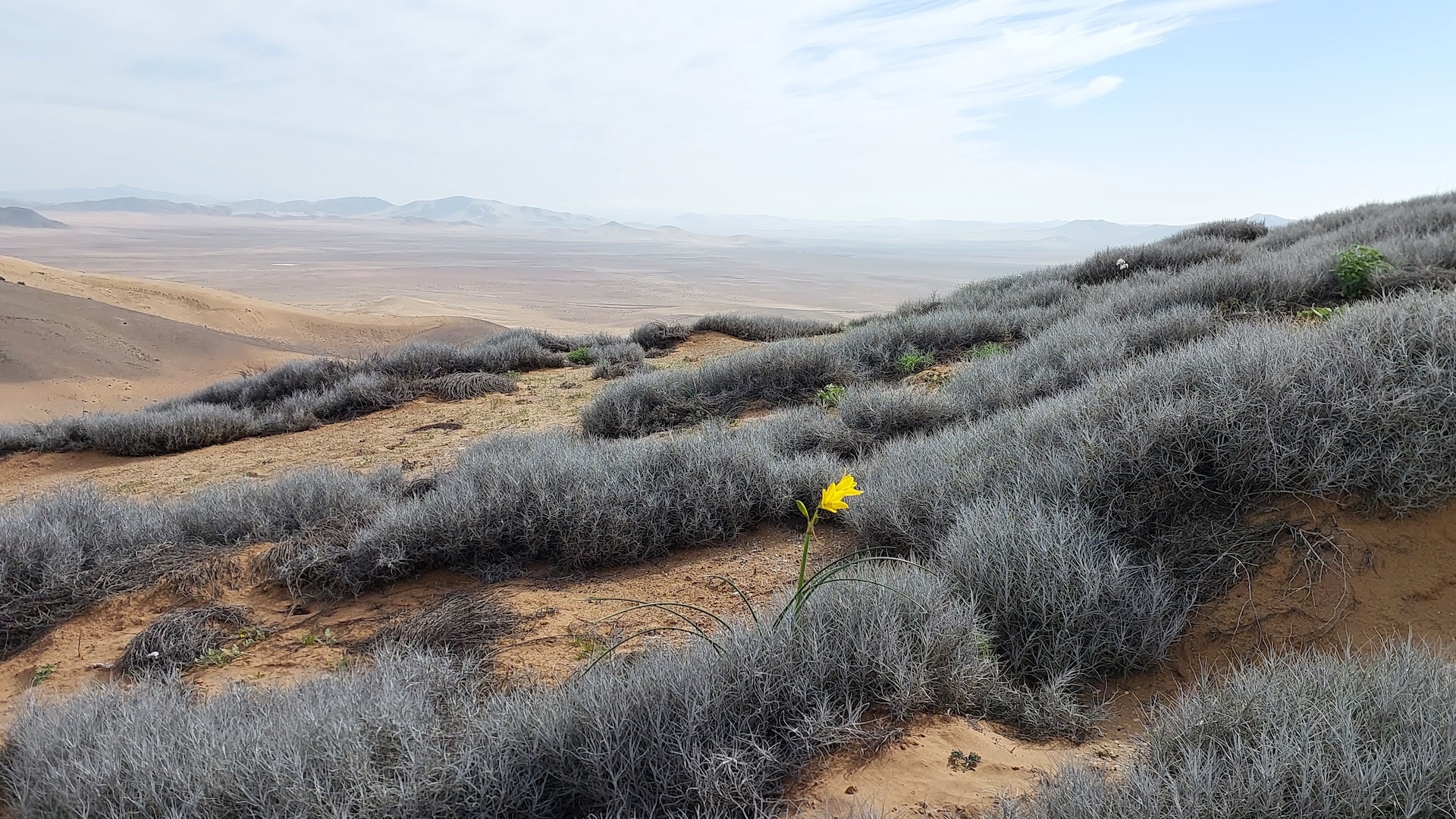
Three panels showing different desert flower blooms with dew drops on the petals

Flowers popped up in the driest place on Earth earlier this month thanks to a strong El Niño, which increases precipitation in Chile.  (Image credit: César Esteban Pizarro Gacitúa)

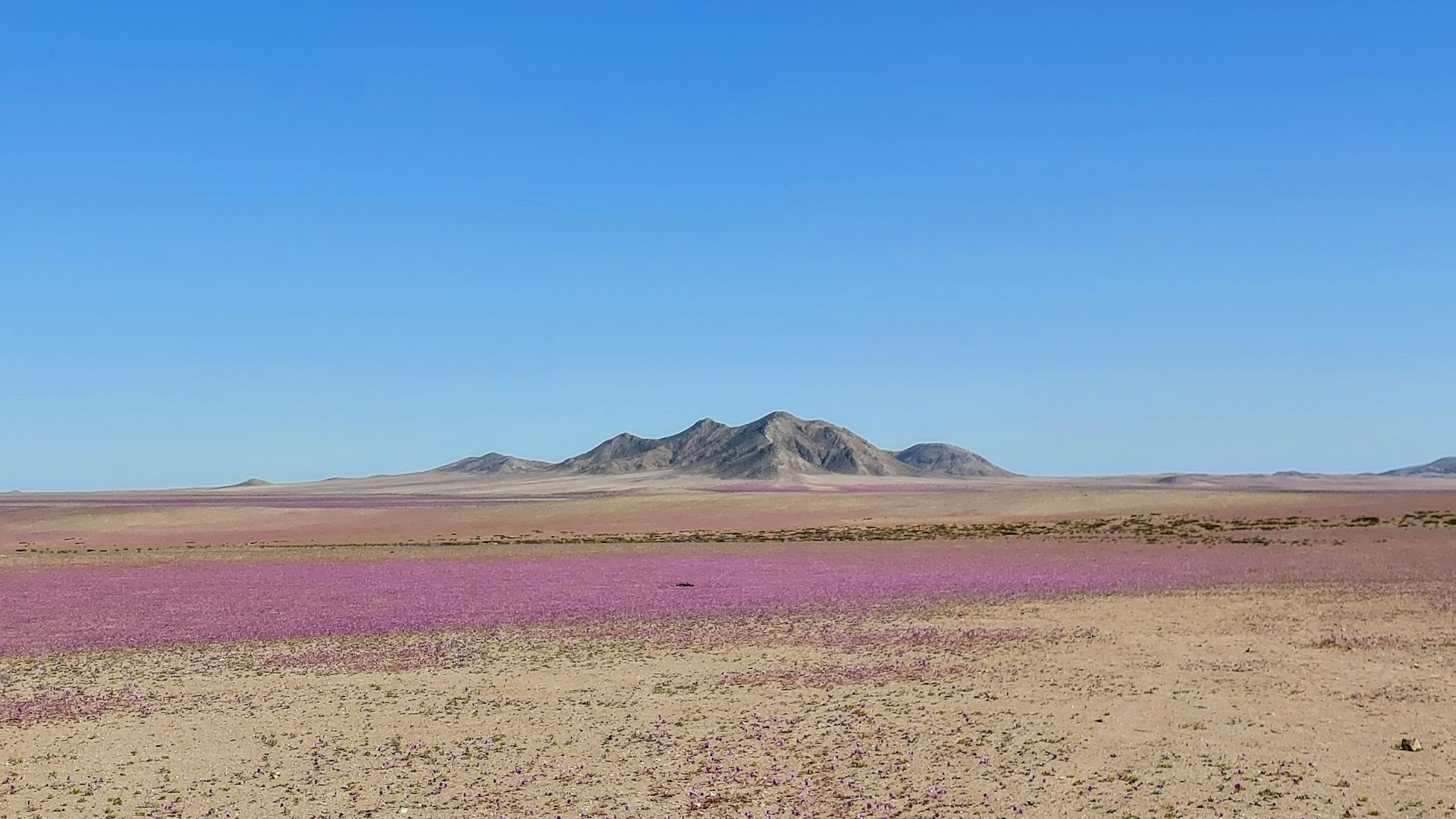
For the first time in a decade, plants in the Atacama Desert have started flowering in the middle of winter, covering a portion of the driest desert on the planet in white and violet hues. 

The rare bloom is the result of rain in northern Chile during the Southern Hemisphere's fall. About 0.4 inches (11 millimeters) fell in mid-April, which combined with the morning fog known locally as "camanchaca" to activate vegetation that can remain dormant for up to 15 years. 

Two of the first species to color the landscape this year were the "pata de guanaco" (Cistanthe grandiflora), with its bright fuchsia-colored flowers, and the white "sighs of the field" (Nolana baccata).

You may like
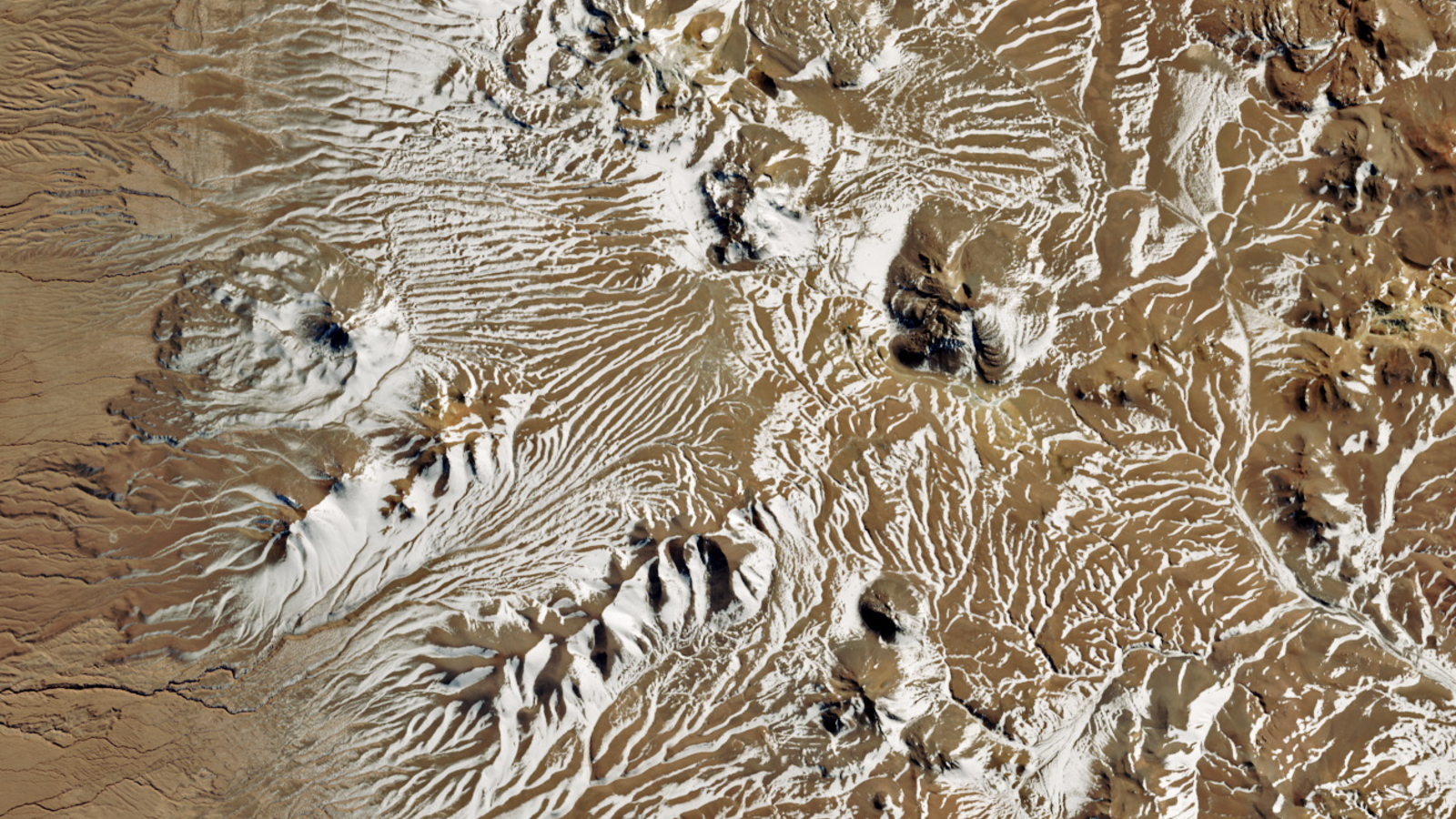
  • A satellite photo of a desert covered in streaks of white snow

Rare dusting of snow covers one of the driest place on Earth and shuts down massive radio telescope

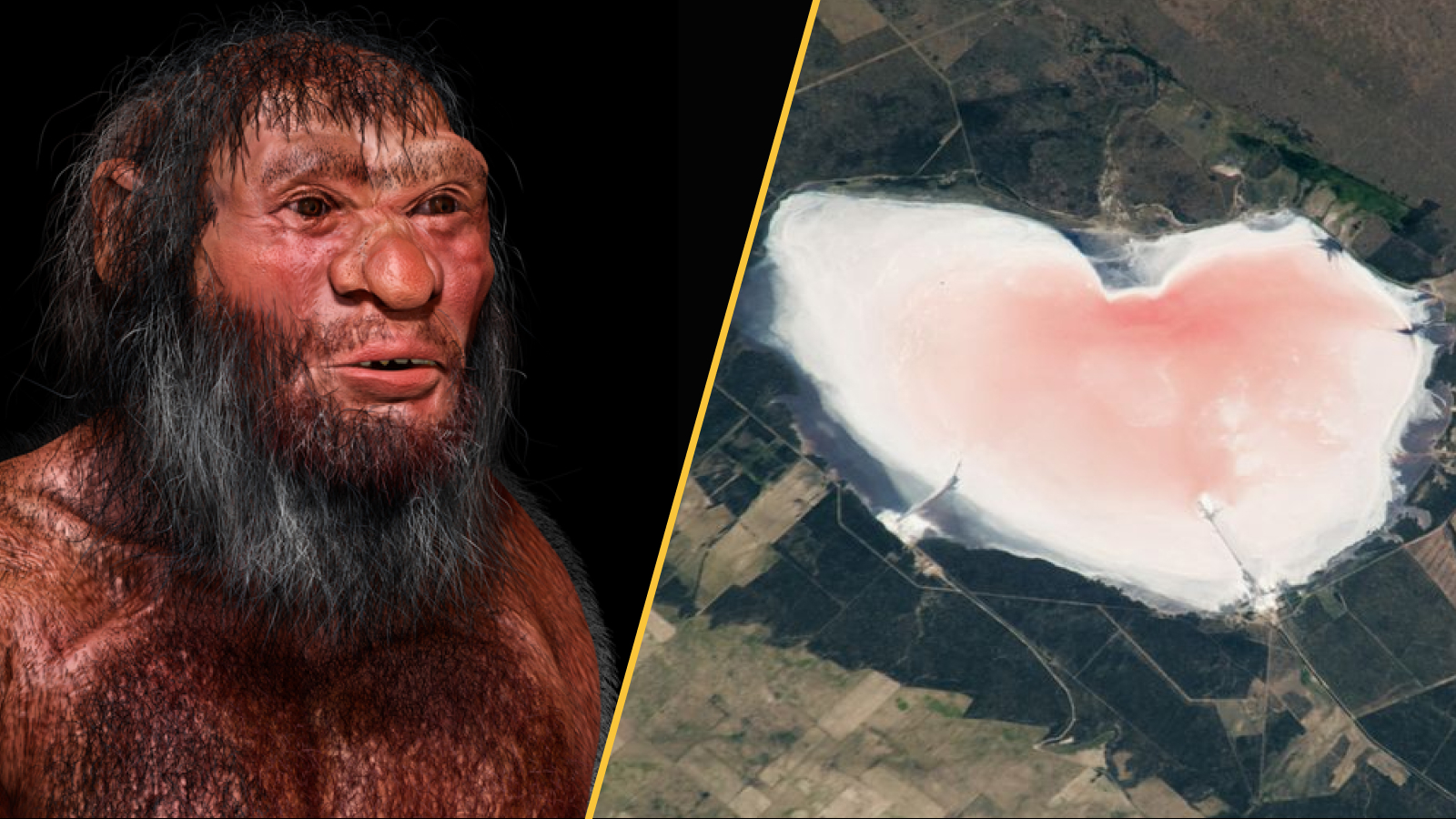
  • On the left, a reconstruction of a Denisovan. On the right, Salinas Las Barrancas.

China turns desert into carbon sink, a viking giant in a mass grave, real-life inception, and a Valentine's gift idea from nature

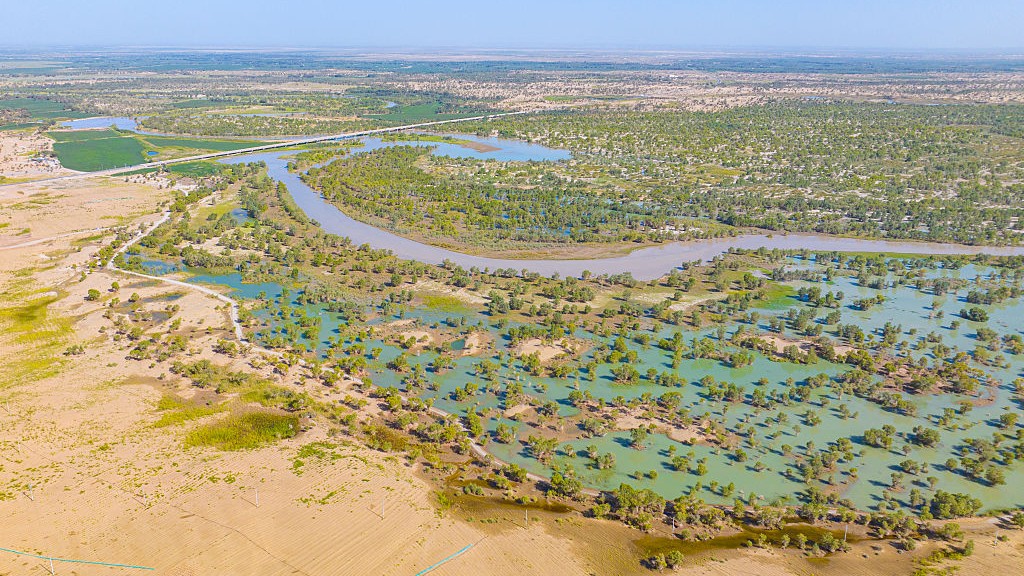
  • View of the Tarim River at the edge of China's Taklamakan Desert.  We see waterways and vegetation on the river banks.

China has planted so many trees around the Taklamakan Desert that it's turned this 'biological void' into a carbon sink

The flowering has occurred in an area covering between 115 and 155 square miles (300 to 400 square kilometers), said César Pizarro, head of the Biodiversity Conservation section and Scientific Research at the National Forestry Corporation (Conaf) in Atacama. A full flowering desert, which occurs in spring (September to October) due to winter rains, can extend over about 5,800 square miles (15,000 square km), with more than 200 species in bloom.

Typically, the desert flowers bloom in spring in years when at least 0.6 inches (15 mm) of rain falls between June, July and August. This is related to the El Niño phenomenon — which increases precipitations in Chile above average.

Related: 

In 2015, the rains fell in March, activating the vegetation in winter, just as is happening now. 

That year it also rained in July and August, causing the desert to explode with flowers in spring. 

But it's unclear if the same thing will occur this time. The National Oceanic and Atmospheric Administration (NOAA) forecast indicates that current ENSO-neutral conditions — a period when neither El Niño or La Niña are happening — will likely persist for one more month before transitioning to La Niña . This means that the drought will return, and the Atacama Desert will not have enough humidity to reactivate the vegetation during the cycle.

If precipitation occurs in the coming weeks, atmospheric humidity would be higher than normal, potentially causing a flowering desert in September. However, this is not forecast.

Alternatively, if La Niña occurs soon, the flower patches blooming this winter are probably the last ones that will be seen this decade (because of the El Niño, La Niña cycles), and there will not be a huge flowering next spring, Francisco Squeo, president of the Institute of Ecology and Biodiversity (IEB) and researcher in the Department of Biology at the University of La Serena, told Live Science.

The rare winter flowering of the Atacama Desert is not without problems. The main one, according to María Fernanda Pérez, associate professor of ecology at the Pontifical Catholic University of Chile , is that pollinators do not arrive as quickly as the plants react to rain. "If the seeds germinate and flower but the pollinators do not arrive, the seeds run out," she told Live Science.

A three-paneled image showing close-ups of purple flowers and a wide shot of a field of lilac flowers

Fuschia Cistanthe grandiflora flowers, shown on the left and right, were among the first flowers to pop up thanks to a rare desert bloom in the Atacama. The purple flowers (center) bloomed later.  (Image credit: César Esteban Pizarro Gacitúa)

This is likely happening now, as there are currently no bees, moths, beetles or other pollinators present due to low temperatures, according to Pizarro. Only mites and a few reptiles, birds and mammals have been seen.

Herbaceous plants — like those flowering in the Atacama Desert — have a self-pollination mechanism that activates if a pollinator does not arrive in a given year. But this backup occurs late in flowering. 

A major scientific unknown is what happens if this decoupling between flowering and pollinators caused by anomalous events , persists over time, as no seeds would be added to the reserve of those that remain dormant for the next reactivation.

"This very arid soil houses a treasure. [A] seed bank that has been resilient," she said.

With climate change, anomalous events like this year's winter bloom could become more frequent, potentially meaning annual plants do not reproduce. The flowering desert would only be left with bulbous plants, drastically reducing its diversity, or leaving room for invasive species, Pizarro said.

RELATED VIDEOS

{ https://www.livescience.com/planet-earth }

Hoe vind je dit bericht?
Geschreven door peter om 17:50 Stuur door

12 of the fastest fighter jets in the world, ranked

12 of the fastest fighter jets in the world, ranked

Story by Joe Hindy
12 Of The Fastest Fighter Jets In The World, Ranked
©Bfk92/Getty Images
12 Of The Fastest Fighter Jets In The World, Ranked
Fighter jets are some of the most popular types of aircraft with enthusiasts. They look cool, they go fast, and their dogfighting is super entertaining to watch. Fighter jets are also featured in video games such as the "Ace Combat" series, and several fighter jets were featured in "Top Gun". Not only are they quick, but they're also agile, pulling off all kinds of crazy moves midair. In addition, fighter jets are also some of the most expensive vehicles in any given military, often costing billions of dollars to design, develop, and ship.

Agility, technology, and weapon systems are often used to measure the strength of a fighter jet. However, speed is also crucial. There are a variety of fast aircraft out there, including the SR-71, which can eclipse Mach 3 speeds at incredibly high altitudes. Prototype planes such as the Lockheed YF-12 have reportedly gone as fast as Mach 3. However, not a lot of data exists on prototype aircraft. Modern fighter jets can't go that fast, but many can do Mach 2 without issue.

Unfortunately, jet speeds are not always exacting rates you can figure out. Not only can planes fly faster at higher altitudes, but Mach values change depending on how far up you are above sea level. Mach 1 is roughly 760 mph at sea level and drops to 659 mph at 60,000 feet. The less dense air at higher altitudes allows planes to move faster while colder air causes sound to move slower. Thus, it's not unusual for most aircraft to have multiple reported speeds.
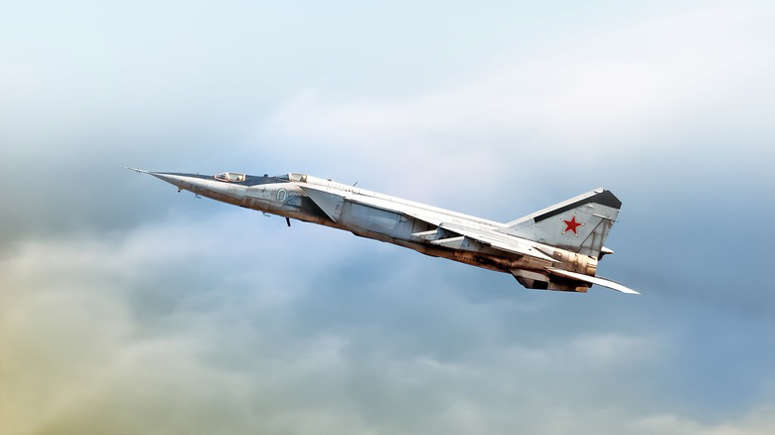
Mikoyan-Gurevich MiG-25 Foxbat
©vaalaa/Shutterstock
Mikoyan-Gurevich MiG-25 Foxbat
The Mikoyan-Gurevich MiG-25 Foxbat travels at a top speed of Mach 2.8, or roughly 2,150 mph at high altitude. That makes it the second fastest jet on Earth behind only the SR-71. The fighter jet has been deployed by multiple militaries since its first flight in 1964. MiGs are primarily used in Russia. These days, only two remain in service and both of them belong to the Syrian Air Force. In addition to fighting, the MiG-25 was also commonly used for recon work. Iraq used the fighter jet often during the Gulf War, specifically for reconnaissance.

It was designed primarily to fly as fast and as high as possible. Its speed is truly impressive, but don't overlook its 67,000-foot maximum altitude. That's what really gives it an advantage over other fighters. The downside is that the jet was quite difficult to maneuver, and it required tons of maintenance to remain effective. In fact, it required a engine replacement every 150 flight hours. It was eventually phased out for the MiG-31, which was slower overall, but featured more advanced technology and better maneuverability.

The MiG-25 Foxbat set several speed and altitude records in its early days. It also had a huge effect on aerospace technology moving forward. The U.S. created the F-15 to counter the MiG-25, but ultimately, the MiG-25's high maintenance costs and focus on speed over agility caused it to age poorly.

North American XB-70 Valkyrie
©Andreas Stroh/Shutterstock
North American XB-70 Valkyrie
The North American XB-70 Valkyrie is a unique bomber-style of fighter jet. Most stat sheets put this jet as having a top speed of around 2,050 mph, which, depending on the altitude, is about Mach 3. It wasn't able to cruise at those speeds and spent most of its time in the sky at a slower, but still impressive Mach 2.5. It was experimental its entire lifetime, but there is enough speed data to know how fast it could go. The plane achieved these speeds by way of six jet engines and being made of lighter, more heat-resistant materials.

In addition to its high speed, the aircraft could also go as high as 70,000 feet, which is much higher than most fighter jets. It was developed in the 1950s and 1960s, and it was meant as a replacement to the iconic B-52 bomber. It never officially went into production, but the U.S. Air Force got its hands on two of them to test the aerodynamics of large supersonic aircraft.

This is where things get really interesting. The bomber's design was eventually switched to recon work where it was rebranded as the RS-70. A few more design tweaks and a former President Lyndon B. Johnson naming flub later, and the RS-70 would finally go into production as the legendary SR-71. Of course, the SR-71 can go faster than the XB-70, but it also isn't a fighter jet.
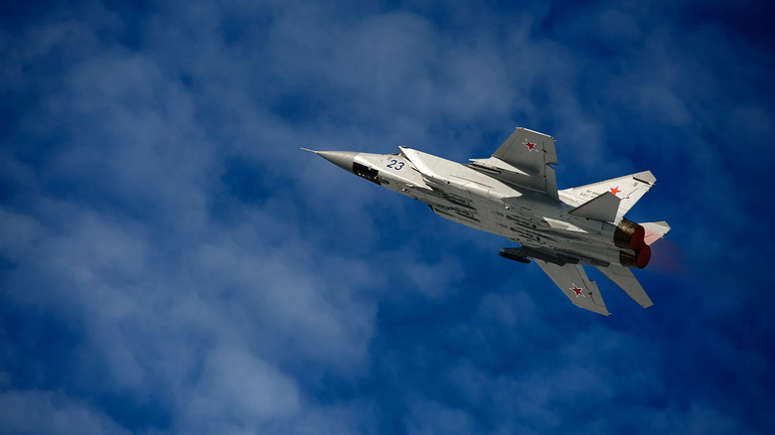
Mikoyan MiG-31
©Nero59/Shutterstock
Mikoyan MiG-31
The Mikoyan MiG-31 Foxhound is the fighter jet that officially replaced the MiG-25 Foxbat. It has a top speed of roughly 1,900 mph. It can do faster bursts for short periods of time, but it risks permanent damage when doing so. The replacement had some notable improvements over the outgoing MiG-25. It was easier to fly at lower altitudes, had improved agility, could fly longer ranges, and its engines didn't need replaced as frequently. The MiG-31 was also made of stronger, lighter materials along with better overall technology. The only downside was that it couldn't go as fast as its predecessor.

The MiG-31 is still used today in several countries. Russia sent it out to Finland, Syria, Kazakhstan, and other places. There are also multiple variants, such as the MiG-31F, MiG-31B, and MiG-31M. These hosted different types of technology, improvements from the original, and other weapons to perform multiple types of missions. There is even an experimental version, dubbed the MiG-31LL, that Russia uses for aircraft testing.

Unlike its predecessor, this one is still widely used. Russia intends to fly them until at least 2030. These days, the Russian Air Force predominately uses the MiG-31BM variant, which is the most recent production model with several improvements over the original. The Russians are in the process of modernizing their fighter jets so that they can deploy as long as possible.
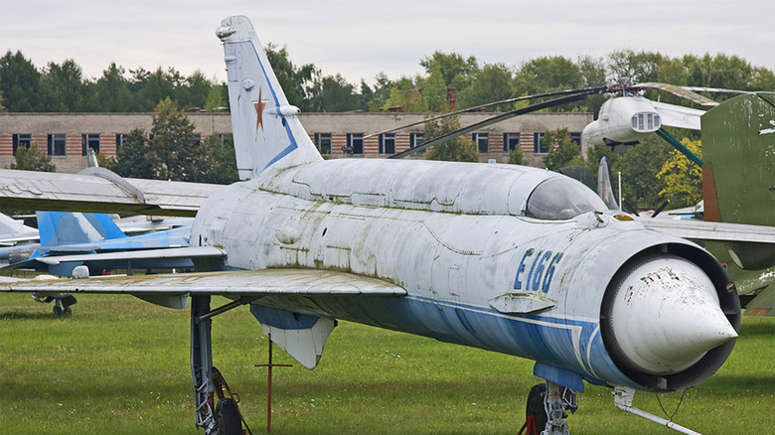
Mikoyan-Gurevich Ye-152
©Alastair T. Gardiner
Mikoyan-Gurevich Ye-152
The Mikoyan-Gurevich Ye-152 is part of the Mikoyan-Gurevich Ye-150 family of fighter jets initially designed for the Soviet Air Defense Forces. Among the family, which includes over half a dozen major variants and even more subvariants, the Ye-152 is the fastest one with a top speed of roughly 1,880 mph at an altitude of 50,525 feet. That's fast enough to put in the upper echelon of quick fighter jets. The jet was powered by a Tumansky R-15B-300 turbojet engine. That is of note because it was the same engine as the MiG-25 Foxbat, except the MiG-25 had two of them. The Ye-152 only had one.

The Ye-152-1 in particular set multiple FAI-recognized speed and altitude world records. That puts it leagues above most other fighter jets. Unfortunately, due to a variety of factors, the Ye-150 series of fighter jets never reached production. Reports state that electronic issues, engine reliability problems, and developmental delays ultimately led to the project being abandoned in the early 1960s. Those same engine reliability problems plagued the MiG-25 Foxbat as well.

Only four Ye-150 family models were ever produced. Today, only the Ye-152M remains. It lives in the Central Air Force Museum in Monino, Russia. Its legacy carries on in other ways. The R-15 series of turbojet engines would eventually get some much needed upgrades. A variant of the engine was put into a Ye-266M, which is an experimental variant of the MiG-25. That lone jet currently holds the world altitude record for ground-launched aircraft at 123,523 ft.
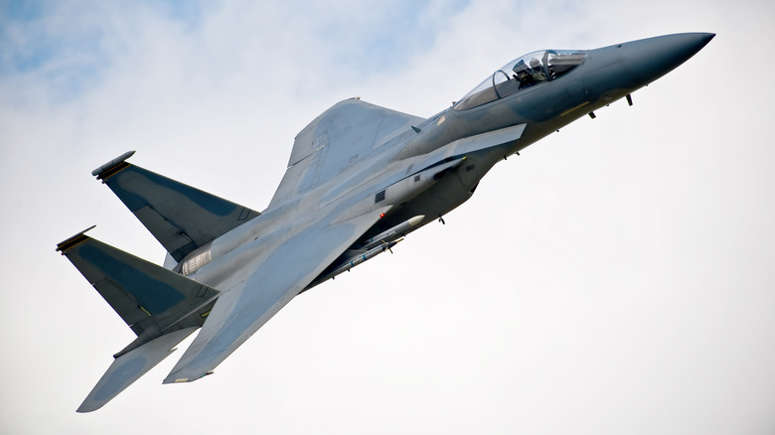
McDonnell Douglas F-15 Eagle
©Robhowarth/Getty Images
McDonnell Douglas F-15 Eagle
The McDonnell Douglas F-15 Eagle is one of the best fighter jets in the U.S. Air Force arsenal. It blends an excellent mix of maneuverability and speed, and some variants can reach speeds of up to 1,875 mph. In general, the base models aren't as fast, but can still do about 1,650 mph. The jet was produced in the 1970s in response to Russia's MiG-25 and MiG-31. Variants were produced throughout the jet's run, including some newer ones for the Persian Gulf War in the early 1990s. The fighter jet is still in service today in a few countries, including the U.S., Japan, and Israel.

The jet has a number of variants, including the F-15E Strike Eagle. Most of them are capable of the same 1,650 mph that the standard version has. In addition, the F-15 has some cool technology. The aforementioned F-15E, for example, can accelerate from idle to maximum power in just four seconds. It also houses a heads-up display that displays a video picture at night that makes everything look like it does during the day. The F-15 series in general was the first U.S. aircraft to have thrust that exceeded the jet's weight, allowing it to accelerate while 100% vertical.

It doesn't have the pop culture relevance of other fighter jets like the F/A-18 Super Hornet from "Independence Day" or the F-14 Tomcats from "Top Gun: Maverick", but it's every bit as awesome as its movie star brethren. Some variants of the F-15 are heading toward retirement, but they are expected to remain in use by the U.S. Air Force for at least a while longer.
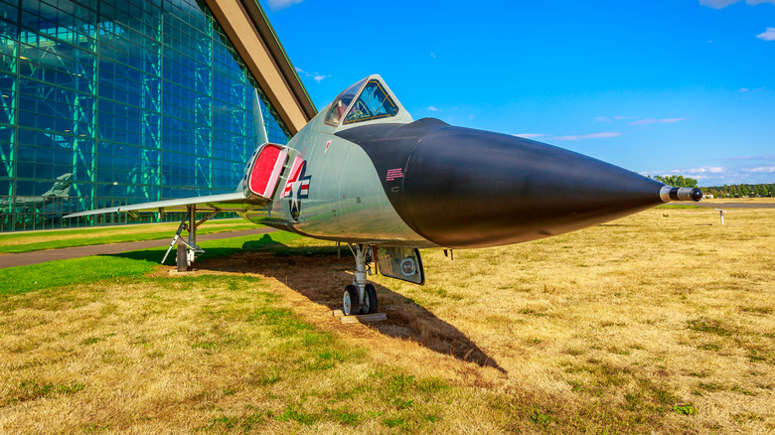
Convair F-106 Delta Dart
©Png Studio Photography/Shutterstock
Convair F-106 Delta Dart
The Convair F-106 Delta Dart is the beginning of a series of fighter jets that have very similar speeds. This one has a top speed of roughly 1,587 mph. It uses the same engine as the F-105 Thunderchief, and the two can go roughly the same speed depending on the altitude. The F-105 was a bomber whereas the F-106 was an interceptor. The aircraft went into production in 1956 and became fully operational for the U.S. Air Force in 1959, just in time for the Vietnam War. It would eventually retire from service in the late 1980s after more powerful fighter jets took its place.

Convair's F-106, a single engine jet fighter, was quite quick for its day. The F-106A variant of the aircraft broke world speed records back in 1959. It was beaten in 1971 by the McDonnell Douglas F-4 Phantom, which housed a dual-engine design. The single engine record would stand for one more year before it was beat by the Ye-152. Enthusiasts dispute that the Ye-152 eclipsed the record, but even if it did, the F-106 was still one quick fighter jet.

There are still some F-106s around today. Most of them are in museums. There is at least one fun story about the F-106. In 1970, a pilot was flying one in Montana. The pilot lost control and ejected from the jet. For some reason, this caused the jet to cease its spinning and the unpiloted F-106 landed itself in a snow-covered field. After minor repairs, that F-106 re-entered service where it would spend another 16 years before retiring to a museum.

Grumman F-14 Tomcat
©Kirkikis/Getty Images
Grumman F-14 Tomcat
The Grumman F-14 Tomcat is another iconic jet used by the United States armed forces — this time with the U.S. Navy. Its top speed is roughly 1,554 mph. It's perhaps best known as one of the fighter jets used in the original "Top Gun" movie. The jet was excellent even outside of cinema. It could guide six missiles against six different targets while keeping track of 18 additional enemy aircraft up to 195 miles away. In fact, it was such a technological marvel in the 1970s that Russia tried to fish one out of the ocean to figure out how it worked.

The dual-engine jet is certified as a Mach 2 class fighter and joins several others in the 1,500-mph club. While its speed didn't set it apart from others all that much, the fact that it could do so many things did. It was developed as the successor to the popular F-4 Phantom II. Some of its features included variable wings that adjusted based on speed and altitude along with a rotary cannon for up close dogfighting.

Grumman's F-14 got even more advanced over the years. For example, it was fitted with laser-guided bombs during NATO's 1995 intervention in Bosnia. The jet was eventually retired in the early 2000s with the U.S. destroying most of its stock to keep its design secret. The remaining stock are predominately in museums these days. It was replaced by the F/A-18 Super Hornet, which saw its own cinema action in "Top Gun: Maverick".
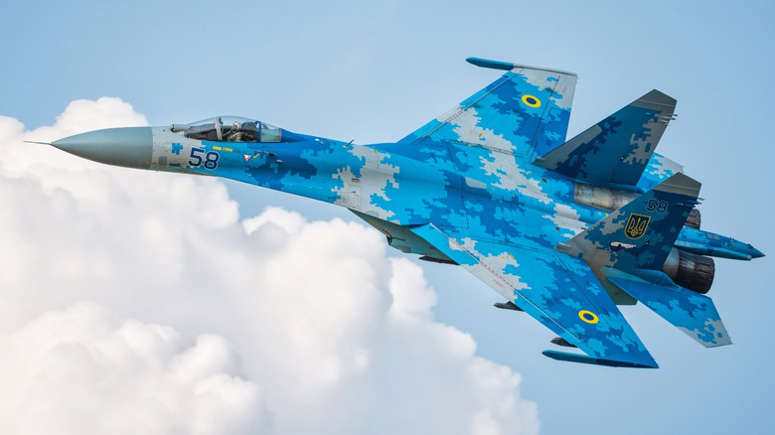
Sukhoi Su-27
©Dawid Lech/Shutterstock
Sukhoi Su-27
The Sukhoi Su-27 is a legendary fighter jet often compared to the F-15 Eagle. The Su-27 has a top speed of about 1,550 mph, which translates to Mach 2.35 at altitude. The reason for the comparison is that the Soviet Union specifically designed this fighter jet in response to the F-15. It's not quite as quick but matches the F-15 in other areas. It can fly as high as 59,000 ft and it can fly for more than 1,800 miles before needing to refuel. Those are impressive numbers.

The Su-27 officially entered service in 1982 and were immediately implemented in Russia, Ukraine, Belarus, Kazakhstan, Indonesia, and a few others. India joined the Su-27 party in 2002. China also ordered some in 2004 while Mexico added some in 2006. The Su-27 has seen combat as recently as 2023 after Russian forces invaded the Ukraine in 2022.

Powering the Su-27 are two AL-31F turbofan engines. Modern versions have some tweaked engines for performance boosts as well. It's only natural that a jet fighter in production as long as the Su-27 gets some mechanical modifications over the course of its life. It's likely that these will remain in service for decades if it adheres to the notion that military aircraft tend to last about 50 years. However, the Su-35 and Su-57, the successors to the Su-27 with similar top speeds, are already out, so the Su-27's days may be numbered.
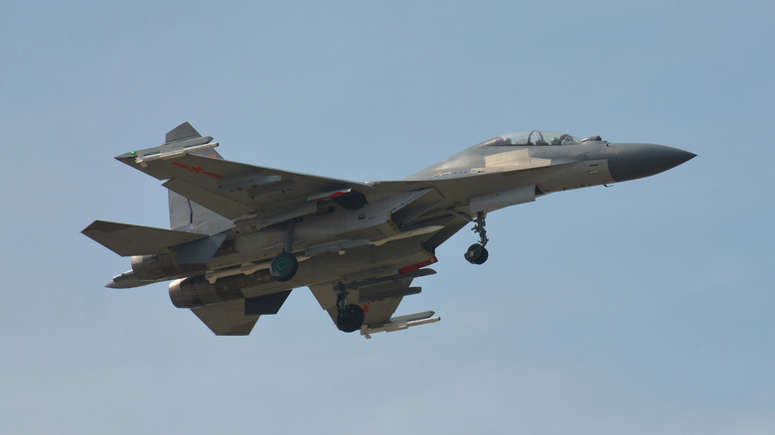
Shenyang J-15
©David Colman/Getty Images
Shenyang J-15
The Shenyang J-15 Flying Shark is an interesting piece of military technology. The base speed of the J-15 is Mach 2.4, or about 1,550 mph depending on altitude. It's one of the newest fighter jets on the list as it was introduced to the world in 2013. It's used exclusively by the People's Liberation Army Naval Air Force in China. As such, it's a little difficult to nail down the full spec sheet of this fighter jet. It's a cousin of the Shenyang J-11 that was released in 1998. However, the J-15 is not technically based on the J-11 despite their similar names.

Instead, the J-11 and J-15 are China's versions of the Sukhoi Su-27 and Su-33, respectively. Thus, it makes sense that these fighter jets are about as fast and well equipped as their Sukhoi counterparts. Early models even used the same AL-31 powerplant as their Su counterparts before switching to the Chinese-made WS-10 in 2022. There are some differences outside of the engine, but at a distance, you'd be forgiven for mistaking one for the other.

The only question mark is how fast the WS-10 engines are. The Chinese have reported the rated speed was Mach 2.4 back in 2017. That's before the WS-10 engines came into service, so there isn't a lot of documentation about how fast the newer engine is with the J-15. Given the dates, the rated speed is most likely with the older AL-31 engine, so newer J-15s may be even faster. There are roughly 50 in operation right now and the jet is still in production today.
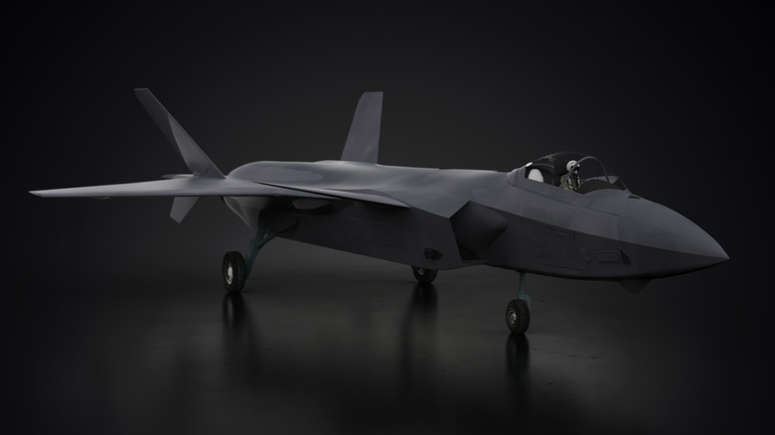
Chengdu J-20
©Bbevren/Getty Images
Chengdu J-20
The Chengdu J-20 is the newest jet fighter on this list courtesy of China. It has a rated speed of Mach 2, which is roughly 1,320 mph depending on altitude. However, Popular Mechanics lists the J-20 as achieving a top speed of Mach 2.55, which is roughly 1,650 mph at altitude. That makes the J-20 the fastest fighter jet that China has right now, but it also doesn't seem like it can sustain flight at that speed for very long. The jet was built with the Chinese-made WS-10 engine, but later variants are getting the newly made WS-15 engines in 2023. The new engines would make its top speed similar to the F-22 Raptor's 1,550 mph. That means there are three potential rated speeds for this jet.

For most fighter jets, almost the complete history is available, including variants, experimental versions, and prototypes. The Chengdu J-20 is right at the beginning of what will likely be a decades-long trek through the Chinese military industrial complex, so there are a lot of things that can still happen with it. There are already a few variants, including the J-20B which is the variant equipped with the new engines. There will be more, so it may end up being even faster by the time it retires.

For now, the Chengdu J-20 is in production and service right now. China seems to have north of 200 of them in service right now, and they make up a decent percentage of China's jet fighters.
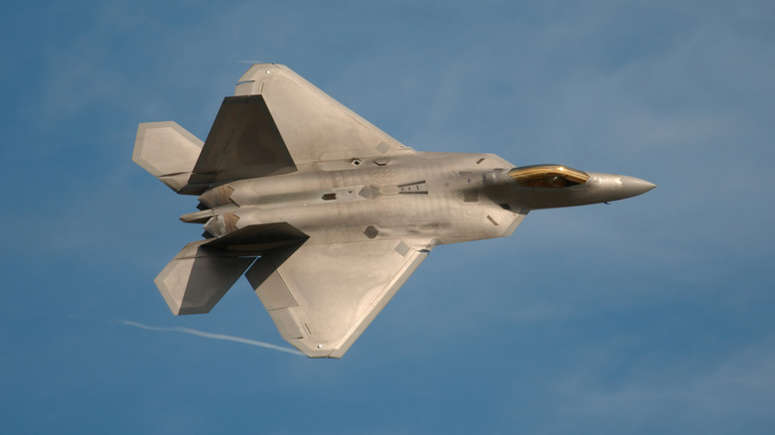
Lockheed Martin F-22 Raptor
©Johnnypowell/Getty Images
Lockheed Martin F-22 Raptor
The Lockheed Martin F-22 Raptor was pressed into service in 2005 when it went into full production. It's rated top speed is somewhere around 1,550 mph, which is more or less the norm for Mach 2-class fighter jets. In addition to its excellent speed, the F-22 Raptor also boasts some serious hardware and technology, including the ability to cruise at Mach 1.5 without using afterburners. In addition, it can carry over 2,000 pounds of munitions and detect enemies well over 200 miles away. There isn't much this fighter can't do when compared to its peers.

While the F-22 is still in U.S. Air Force service today, there is a push to retire some of them early. They are expensive to maintain, and some of the older ones in the fleet would require costly preparation to make them combat ready again. Congress has blocked it so far, but it seems the Air Force is trying each year to get the job done. The broken-down F-22s only make up about 20% of the total number in the fleet, so the U.S. will still have F-22s flying around after some of them are retired.

Other than the older models being retired, the F-22 has caused other problems in military circles. They are quite expensive at $125 million per jet, and the Air Force already has a weighty budget. Additionally, the U.S. is already working on the next generation of fighter jets for its arsenal.
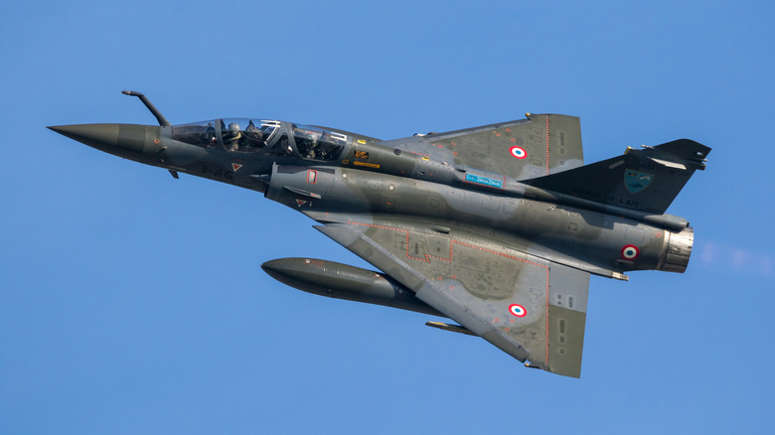
Dassault Mirage 2000
©VanderWolf Images/Shutterstock
Dassault Mirage 2000
The Dassault Mirage 2000 is last on the list, but it is by no means a slow fighter jet. It boasts a maximum speed of Mach 2.2 at high altitude, which translates to roughly 1,450 mph. It began life in 1978 with some variants distributed as recently as 1991. This one is still in use in many countries around the world, including Abu Dhabi, Egypt, France, Greece, India, and Taiwan. The most recent variants came out in the mid-2010s, so this is very much a modern jet fighter.

As such, it has a lot of modern amenities. It can attach up to nine weapons and includes two internally mounted machine guns. There is also digital weapons and navigations systems, something older fighters don't have. The original version was built for the French Air Force, which uses the upgraded models today. It's so popular that there are over 500 of them in operation, which is quite a large number for military aircraft. There are also single- and double-seater versions of the jet along with a variant specifically designed to carry nuclear weapons.

It's hard to say how long the Dassault Mirage 2000 will be in service, but it'll likely be a while. They're still being actively manufactured and air forces on multiple continents use them for a variety of purposes. This one never broke any speed or altitude records like others on this list, but it's still pretty quick overall.

Want the latest in tech and auto trends? Subscribe to our free newsletter for the latest headlines, expert guides, and how-to tips, one email at a time. You can also add us as a preferred search source on Google.


Hoe vind je dit bericht?
Geschreven door peter om 21:19 Stuur door

Wetenschappers lossen miljarden jaar oud mysterie op over het begin van complex leven

national-cancer-institute-c-wqrSCjVf4-unsplash-954x718_1.jpg

Wetenschappers lossen miljarden jaar oud mysterie op over het begin van complex leven

Al het complexe leven op aarde deelt een gemeenschappelijke oorsprong. Maar hoe meercellig leven exact is ontstaan uit eencelligen, was lange tijd een raadsel.

Diep in de zee leven microscopisch kleine organismen die Asgard-archaea heten. De beestjes zijn vernoemd naar de mythologische wereld van de Noorse goden. Deze oeroude microben zijn de verre voorouders van alle complexe levensvormen, inclusief wijzelf. Wetenschappers van de Universiteit van Texas hebben deze microben bestudeerd en hebben zo een oeroude vraag beantwoord.

Hoe werden twee onverenigbare microben één?

Neem even een stap terug. Alle planten, dieren en schimmels (wetenschappelijk samengevat als eukaryoten, alle organismen waarvan de cellen een celkern hebben) zijn vermoedelijk ontstaan doordat twee totaal verschillende microben samensmolten. Eén daarvan was een Asgard-archaeon, de andere een bacterie. Die bacterie leefde uiteindelijk verder als het mitochondrium, vandaag de dag het mini-orgaantje in onze cellen dat energie aanmaakt.

Het grote probleem waar wetenschappers hun hersenen over kraakten was dat de Asgard-archaea altijd werden gevonden op plekken zonder zuurstof, bijvoorbeeld op de bodem van de diepe oceaan. De bacterie waarmee ze samensmolten had echter zuurstof nodig om te overleven. Hoe kwamen die twee dan ooit bij elkaar?

“De oorsprong van eukaryoten is een van de langlopende mysteries binnen de biologie”, vertelt Kathryn Appler, postdoctoraal onderzoeker aan het Institut Pasteur in Parijs en medeauteur van de studie, aan Scientias.nl. “Welke microbiële afstammingslijnen betrokken waren, wat hun samenwerking op gang bracht en waar dit precies plaatsvond: dat waren allemaal nog openstaande vragen.”

Een verrassende vondst

Voor het onderzoek verzamelde het team enorme hoeveelheden genetisch materiaal van microben uit allerlei omgevingen. Uit die data konden ze meer dan 13.000 nieuwe microbiële genomen in kaart brengen. Een genoom is de complete genetische blauwdruk van een organisme. Daarmee konden ze het aantal bekende Asgard-genomen bijna verdubbelden.

En uit de data bleek iets onverwachts: de Asgard-archaea die het nauwst verwant zijn aan eukaryoten en dus het meest op onze gemeenschappelijke voorouder lijken, werden aangetroffen in ondiepe kustgebieden, waar wél zuurstof aanwezig is dus. Sterker nog, hun genen wijzen erop dat ze zuurstof actief kunnen gebruiken bij hun stofwisseling.

“We waren verrast dat een meerderheid van de genomen uit bepaalde Asgard-groepen afkomstig was uit ondiepe kustomgevingen”, zegt Appler. “De meeste eerdere studies suggereerden dat Asgard-archaea geen zuurstof verdroegen.”

Zuurstof als sleutel tot complex leven?

De timing van deze bevinding sluit aan op wat geologen al wisten. Zo’n 1,7 miljard jaar geleden maakte de aardatmosfeer een radicale omslag door: zuurstofniveaus schoten toen omhoog. Kort daarna verschenen de eerste sporen van eukaryoten in het fossielenarchief. Dat is geen toeval, zo blijkt nu.

Appler is voorzichtig in haar conclusies: “Het is mogelijk dat zuurstof de omgeving vormgaf waarin eukaryoten ontstonden. Ik kijk uit naar verdere gesprekken met geologen terwijl we de omgevingscontext van deze cruciale evolutionaire stap verder ontrafelen.”

Wat mogen we hier wel en niet uit concluderen?

De studie lost misschien een belangrijk raadsel op, maar Appler zegt wel dat voorzichtigheid geboden blijft. “Het is belangrijk te benadrukken dat het om moderne nakomelingen gaat en dat wij als wetenschappelijke gemeenschap proberen een gebeurtenis te reconstrueren die miljarden jaren geleden plaatsvond.” En dat vergt de nodige bescheidenheid.

We schreven vaker over dit onderwerp, lees bijvoorbeeld ook Eerste meercellige dieren ontstonden heel anders dan gedacht en Stokoude biologische sporen onthullen vroegste leven op aarde meer dan 3 miljard jaar geleden. Of lees dit artikel: Hoe nagemaakt ruimtepuin ons iets vertelt over het ontstaan van het leven op aarde.

Uitgelezen? Luister ook eens naar de Scientias Podcast: 

Bronmateriaal

{https://scientias.nl/nieuws/astronomie-ruimtevaart/ }

Hoe vind je dit bericht?
Geschreven door peter om 15:53 Stuur door

Eco Engineers: 5 Animals That Can Reshape Earth's Waterways

Eco Engineers: 5 Animals That Can Reshape Earth's Waterways

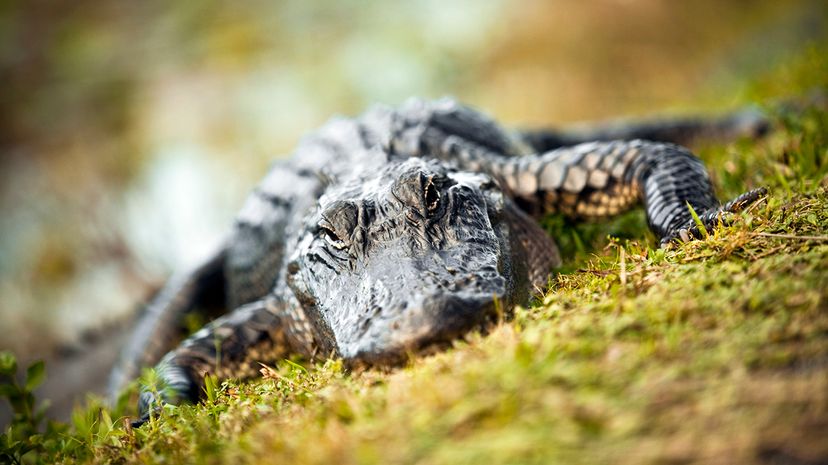
American alligator
American alligators in the Florida Everglades use their snouts and claws to create massive trenches known as "gator holes."  Paul Giamou/Getty Images

Nutrients, water and living space. Those are some of life's basic needs. Anything that alters their distribution is going to be a key factor in the struggle for survival. Change the waterways, the landscape or the availability of food and an entire ecosystem can be reshaped.

Certain species wield that power to great effect. One of the most fascinating topics in biology is the role of ecosystem engineers. Scientists define these as "organisms that directly or indirectly modulate the availability of resources to other species by causing physical state changes to biotic or abiotic materials."

In simple terms, ecosystem engineers alter their physical surroundings in ways that have major impacts on the livelihood of other organisms. A perfect example would be the American alligator (Alligator mississippiensis).

Out in the wild, the big reptiles like to make their own swimming pools. Using their snouts and claws, they create massive trenches known as "gator holes" in the limestone around Florida's Everglades. In short order, these things flood with water. The depressions also tend to remain full of water, even well into the dry season — a time when standing water is scarce.

For other life forms, these gator holes provide badly-needed oases. Frogs and turtles pour into these convenient little ponds, while plants surround their rims, attracting all kinds of insects. So, as unlikely as it sounds, Florida alligators are environmental stewards. They create brand-new homes for their neighbors and — in the process — strengthen the biodiversity of the Everglades.

Other ecosystem engineers leave different marks. Today, we're looking at five that reshape rivers, link ponds together and transform mangrove creeks. Mapmakers of the world, you'll want to keep your erasers handy when these beasties come to town.

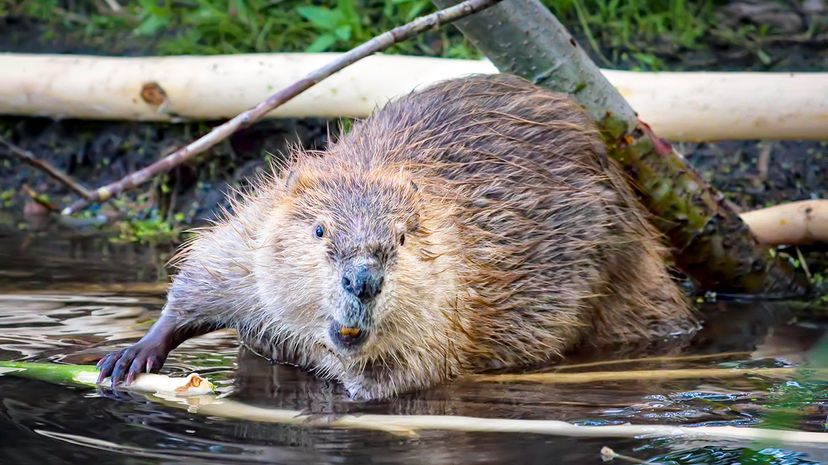
5: Beavers

beaver Beavers can wreak havoc digging canals and building dams that often block rivers.  Dean Fikar/Getty Images

The term "busy as a beaver" is high praise indeed. Beavers are insanely hard-working rodents; a lone individual can cut down up to 200 trees in a single year. Famously, they build sturdy homes — or "lodges" — for themselves out of branches, mud and other materials. They can also make their own large-scale ponds by damming streams.

With a well-placed dam, a beaver family will be able to regulate water flow. On the structure's upstream side, backlogged water may give rise to a standing pond where none previously existed. This not only gives beavers a place to build their lodges, it also affords easy access to surrounding trees. Often, a couple of inches (5 centimeters) or feet (0.6 meters) of water covers the bases of nearby pines and hardwoods that once stood on dry ground. As a result, beavers can swim right up to these trees. They also like to dig canals that branch out of the new ponds, penetrating deeply into the local forests.

These new beaver-created wetlands provide homes for smaller animals like amphibians. Plus, the rodents' dams make great natural filters, blocking excess nitrogen from our creeks and streams.

However, not all the side-effects are positive. When a beaver dam fails, it's liable to flood towns or farms. The aftermath can be expensive: In the southeastern U.S. alone, these floods are responsible for an estimated $22 million in yearly damages to the timber industry. It's not surprising, then, that many people view beavers as pests. If you've got a beaver problem, know that humane solutions are out there.

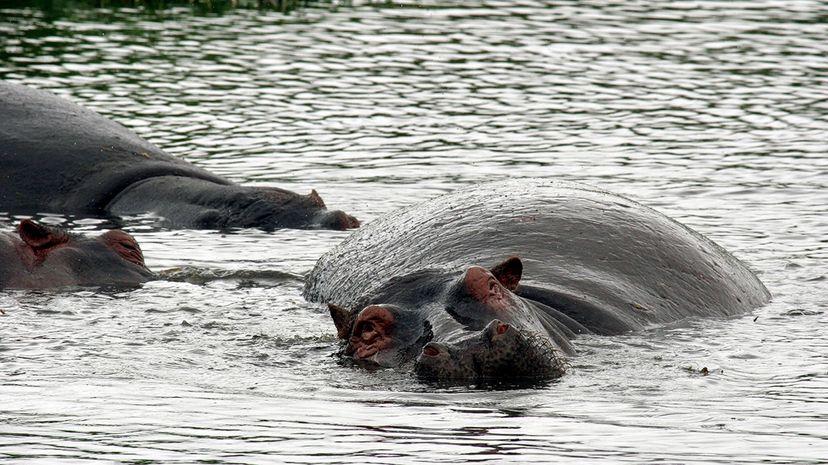
4: Hippos

hippos Hippos carve up and revamp Africa's waterways just by going about their daily business.  Arterra/Getty Images

Landscaping is child's play for these guys. Put a group of hippos into a floodplain with lots of nice, soft soil and they'll start reconfiguring the turf like crazy. The massive creatures like to plow through the reed beds that ring bodies of water. This creates deep depressions in the underlying soil, which in turn become channels. Also, on hot days, hippos will sometimes relax in the cool comfort of freshwater pools.

However, these don't offer much in the way of food. So when hunger strikes, the hippos leave their little pools to feed elsewhere. All of this coming and going produces what Discover magazine once called "hippo highways."

Worn down into deep, plant-free ravines by wandering hippos, these footpaths can be as much as 16 feet (5 meters) wide and — just like gator holes — they're quick to fill up with water. What's more, hippo highways linking the pools to big rivers can also be established. If the area should flood, these connection points may become an outlet for surging water. They also enable swamplands to expand. And under the right circumstances, the trench-like trails will divert a great deal of sediment from rivers into lagoons or ponds.

So to make a long story short, just by going about their daily business, hippos can carve up and revamp Africa's waterways. Neat. But if hippopotamuses are true blue ecosystem engineers, then how do they affect other organisms?

Well, one 2015 analysis determined that hippo dung is an important source of nutrition for at least some of the fish and insects that share the animal's native range. Don't underestimate the power of poop.

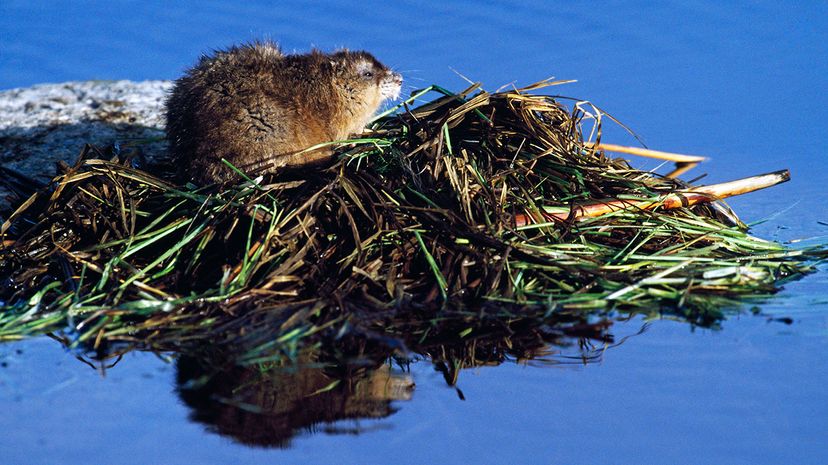
3: Muskrats

muskrat hut The burrows muskrats build have big implications for the waterways because they promote erosion, which can cause riverbanks to collapse.  Design Pics/David Ponton/Getty Images

Beavers may be the poster children for ecosystem engineers, but other rodents also deserve some acknowledgement for their roles in shaping habitats.

Consider the muskrat. Like beavers, muskrats are known to create dome-shaped lodges out of things like twigs and leaves. But this isn't their only method of building shelters. Muskrats who live alongside rivers, ponds or ditches tend to eschew lodges in favor of deep holes they've burrowed into the banks. The critters begin by diving under the water, where they start working on a tunnel about 6 to 18 inches (15.2 to 45.7 centimeters) below the surface. From there, the muskrats dig farther and farther at an upward slant. Eventually, they produce a warm, dry living chamber that's only accessible through underwater entrances. Not a bad way to keep uninvited guests out.

Such burrows can have big implications for the waterways they're connected to. For one thing, the structures promote erosion, which can cause banks to collapse. This prompts water to race into the afflicted area, disrupting the river flow. Over time, if enough water is re-routed toward the collapsed bank, the river's curvature might change — thanks partly to the rodents. And much to the annoyance of human land developers, when a muskrat burrows into a manmade dam, unwanted drainage often follows.

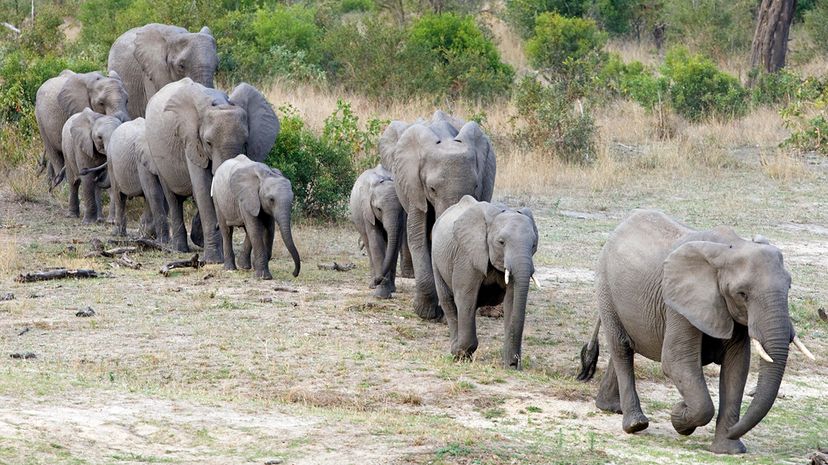
2: Elephants

elephant herd African elephants transform the landscape and waterways in multiple ways.  Wim van den Heever/Getty Images

It's hard to keep a full belly when you weigh 7 tons (6.35 metric tons). African elephants are larger than life and have appetites to match. On a typical day, an adult will spend 12 to 18 hours eating, devouring as much as 600 pounds' (272 kilograms') worth of food in the process. All that munching is vital to the ecosystem. So are the bowel movements that come later.

Elephant dung is a nutritious fertilizer for the soils of Africa; it's also a vehicle by which many seeds are dispersed. Furthermore, by knocking down trees and eating shrubs, these colossal animals convert forests into grasslands.

A 2009 study revealed even more about the transformative powers that African elephants have over their habitats. Appearing in an issue of the journalBioScience, this study reported on the ecosystem engineers in Botswana's Okavango Delta. Elephants, the co-authors noted, are great at building water channels. The tusked herbivores like to cover the same land routes over and over again, making trails in the process. Sometimes, multiple generations of elephants will re-use the exact same footpaths. As time goes by, the heavy animals can't help but compress the soil, turning their walkways into trenches.

According to study authors, when elephants move back and forth between two bodies of water, their sunken trails become nice conduits. Thus, rivers or ponds that were once isolated can be merged via elephant-made canals.

And that's not the only service that elephant routes provide. In 2010, environmental scientists Roy Sidle and Alan Ziegler published a seven-year study on an Asian elephant trail in northern Thailand. By inspecting both water and sediment levels, they determined that this pathway helped send monsoon runoff directly into the local streams.

1: Burrowing Crabs

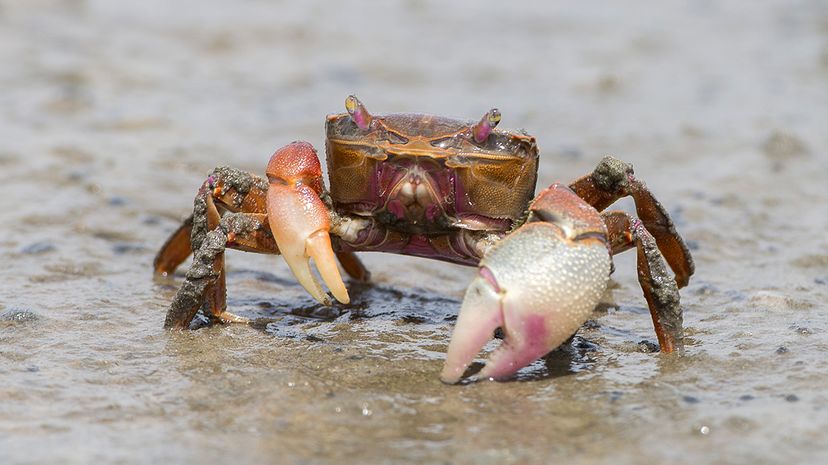
Burrowing crab Burrowing crabs trenches along mangrove swamp shorelines so deep they often collapse.  Nortondefeis via Wikimedia Commons

It's time to take a break from our own phylum. A number of crustaceans are great diggers, including the so-called fiddler crabs (genus Uca), which shelter in tunnels measuring up to 3 feet (0.9 meters) or more in depth. (The holes are quite a construction project, given the fact that most fiddler species are less than 2 inches (5 centimeters) wide.

And then we've got the "burrowing crabs" of the genus Chasmagnathus. Unrelated to the fiddlers, these guys live in the mangrove swamps, salt marshes and estuaries of eastern Asia. For many years, a South American species formerly known as Chasmognathus granulatus was assigned to this genus, but in 2006, it was reclassified and renamed Neohelice granulata — though, confusingly, some scientists still use the old name.

Often found in the mangrove swamps of Brazil and Argentina, Neohelice granulata is an efficient, deep-digging burrower. Like muskrat holes, the tunnels these small crabs builds are liable to weaken the surrounding turf. On mangrove swamp shorelines, this has the effect of widening tidal creeks, whose mud and clay-based banks are rendered more vulnerable to erosion by the digging invertebrates. And that's just part of the story. Because burrowing crabs have such a pronounced effect on sediment composition, their tunnels can also cause completely new creeks to form within these mangrove systems.

So despite being rather miniscule animals, burrowing crabs can shake up entire waterway networks. Will nature ever cease to amaze us?

Hoe vind je dit bericht?
Geschreven door peter om 18:37 Stuur door

Science news this week: China's AI kung fu robots, physicists' re-creation of the Big Bang soup, and a teenager buried with her father's bones on her chest

Science news this week: China's AI kung fu robots, physicists' re-creation of the Big Bang soup, and a teenager buried with her father's bones on her chest

A Unitree robot and a quark moving through a quark-gluon fluid China's AI kung fu robots and physicists' re-creation of the Big Bang soup were two of this week's top science stories.  (Image credit: Unitree | Jose-Luis Olivares, MIT)

This week's science news was filled with some astonishing — and creepy — displays of technology's accelerating progress.

Top of the bill was a stunning demonstration of Chinese company Unitree Robotics' humanoid robots, which somersaulted, flipped and kicked in a kung fu performance at this year's Lunar New Year festival. The robots' eerily fluid movements were a sight to behold on their own. But compare them with the stiff and cumbersome moves by similar robots just a year earlier, and it's clear how much the tech — has advanced, thanks to better algorithms and cluster control platforms.

Also in China, the world's first megawatt-class flying wind turbine produced enough power to electrify a house for two weeks. And elsewhere, Microsoft made waves with a laser breakthrough that could see terabytes of data stored on ordinary glassware for up to 10,000 years.

Physicists make a Big Bang soup

A colorful image shows a opalescent sphere carving a streak through a rainbow colored surface, kicking up white streaks behind it

Physicists at CERN recreated the soupy conditions of the very early universe.  (Image credit: Jose-Luis Olivares, MIT)

In the most ambitious instance of experimental home cooking we covered this week, physicists at the Large Hadron Collider (LHC) recreated the primordial state of the early universe and found it was more like soup than first thought.

The discovery comes from the LHC's Compact Muon Solenoid, which smashed together two heavy atomic nuclei at near light speed to create an extremely short-lived quark-gluon plasma, believed to be the stuff of our universe in the first microseconds following the Big Bang.

The findings could have enormous implications for how our cosmos, and the stuff it's made of, first formed.

Life's Little Mysteries

A person wearing blue long-sleeve scrubs and white gloves holds a piece of paper standing over a metal table with a body covered in a white sheet with only its feet sticking out on top. The bare feet face the camera and have a label attached to the right foot's big toe

Rigor mortis is the result of some complex cellular processes.  (Image credit: Darrin Klimek via Getty Images)

Not long after death, a sea change takes hold within the human body — a sequence of natural, cellular-level steps that result in a process called rigor mortis. But what are these steps? And why does rigor mortis happen to nearly all human bodies?

Teenager buried with her father's bones

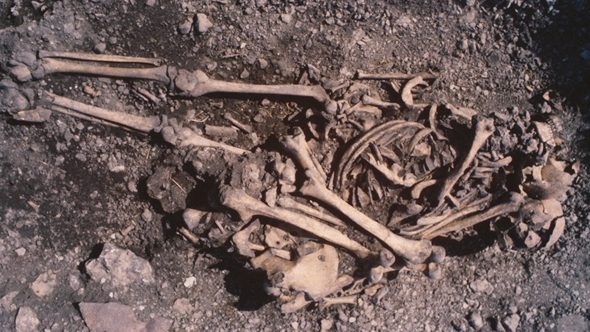
a human skeleton with other human bones on top, being excavated from the ground

A hunter-gatherer cemetary on a Swedish island has revealed the complex familial relationships of ancient societies.  (Image credit: Göran Burenhult (CC BY))

Archaeologists who performed a DNA analysis of skeletons excavated from a Neolithic cemetery in Sweden have uncovered some surprising family burial practices this week, showing that some of Europe's last hunter-gatherers had detailed knowledge of their family lineages.

The society, called the Pitted Ware culture, was a hunter-gatherer community that lived on the western Swedish island of Gotland 5,500 years ago. Evidence of burials and reburials, with graves shared by up to third-degree relatives, suggests people of this culture paid scrupulous attention to their social connections and honored them long after death.

Discover more archaeology news

Also in science news this week

Science long read

A cartoon showing a series of figures carrying different dark blue numbers walking across a green and yellow circuit board. In the background, a human brain floats in the center of blue concentric circles with a circuit board pattern in the shape of the brain

Could AI take mathmeticians' jobs? Or will it drown them in slop?  (Image credit: James Boldry for Live Science)

At a secret meeting in Berkeley, California, last year, some of the world's leading mathematicians gathered to discuss the fate of their profession. The agenda was clear: Was artificial intelligence (AI) on the precipice of taking their jobs? And would the best math no longer be produced by humans?

Yet during the discussion, an even more troubling question appeared. In the past, confidence and a good argument were signs a proof was right, as only the best would be convincing to the rest of the field. Now, however, AI is spewing out hundreds of proofs that could be flawed but are too complex to verify. In this long read, Live Science investigated mathematicians' fight to figure out if the machines are right.

Something for the weekend

If you're looking for something a little longer to read over the weekend, here are some of the best analyses, opinions and crosswords published this week.

Science news in pictures

Photo of comet with a close-up of its coma showing off a distinctive spiral shape

The 'snail-shell' comet, also known as Comet 29P/Schwassmann-Wachmann  (Image credit: Eliot Herman)

This photo shows Comet29P/Schwassmann-Wachmann, an ice ball three times the length of Manhattan, erupting into a cosmic snail shell as it circles the inner solar system.

29P/Schwassmann-Wachmann is an example of a cryovolcanic comet, which explodes after its icy shell soaks up too much solar radiation. This causes the icy gas and dust on its surface to sublimate outward, forming a fuzzy cloud.

{ https://www.livescience.com/technology }

Hoe vind je dit bericht?
Geschreven door peter om 23:48 Stuur door

“If Melting Ice Releases These Microbes, These Genes Could Spread”: Ancient Bacteria Frozen for 5,000 Years Show Resistance to Modern Antibiotics

Image by PublicDomainPictures from Pixabay.

“If Melting Ice Releases These Microbes, These Genes Could Spread”: Ancient Bacteria Frozen for 5,000 Years Show Resistance to Modern Antibiotics

Laboratory tests of defrosted strains of  5,000-year-old ancient bacteria recovered from the Scarisoara Ice Cave in Romania revealed one strain resistant to several modern antibiotics used to treat a wide range of infections.

Although the ancient samples of the resistant strain, dubbed Psychrobacter SC65A.3, were retrieved from a frozen ice deposit deep in a Romanian cave, the research team behind the discovery said there is a real threat that melting ice could lead to these infectious organisms entering the modern environment, where they could pass along some of their antibiotic resistance genes to modern-day bacteria.

The 5,000-year-old strains also showed the ability to inhibit the growth of other antibiotic-resistant bacteria, suggesting their genetic profiles could be used to develop therapies to combat modern, drug-resistant strains and offer new insights into how antibiotic resistance spreads.

“Studying microbes such as Psychrobacter SC65A.3 retrieved from millennia-old cave ice deposits reveals how antibiotic resistance evolved naturally in the environment, long before modern antibiotics were ever used,” explained Dr. Cristina Purcarea, a senior scientist at the Institute of Biology Bucharest of the Romanian Academy and a senior author of the study detailing the discovery.

ancient bacteria

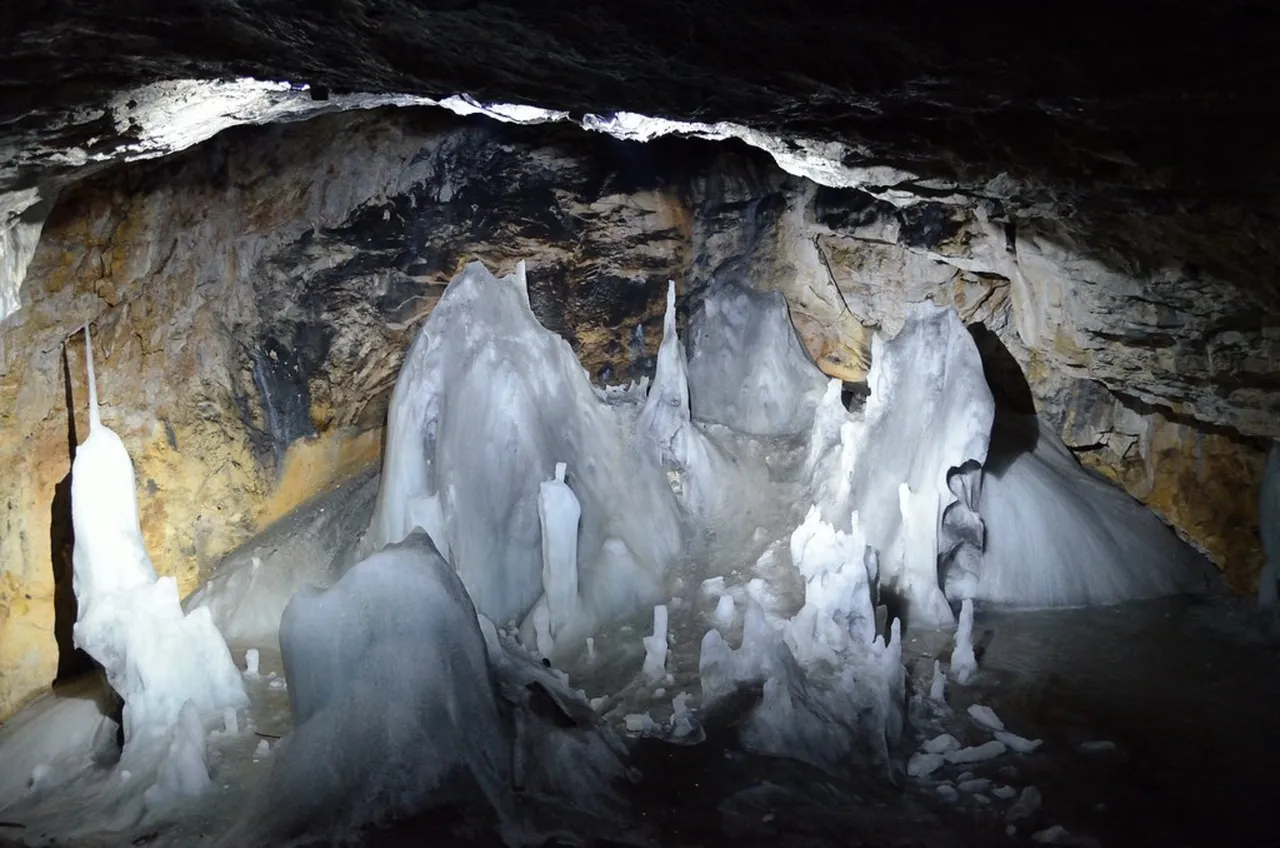
Scarisoara Ice Cave in Romania. Image Credit:
Paun V.I.

5,000-year-old antibiotic-resistant bacteria found in Romanian ice cave

Scarisoara Ice Cave holds one of the world’s largest underground glaciers, with ice estimated to be more than 10,000 years old.

(flickr/Florina) / Others

5,000-Year-Old Ancient Bacteria Retrieved from Deep Inside an Ice Cave

According to a statement, Dr. Purcarea and colleagues drilled a 25-meter ice core into the frozen floor of a section of the ice cave known as the Great Hall. Collecting samples from this depth enabled the team to study ice deposited over the past 13,000 years.

antibiotic resistance ancient bacteria

The team drilled a 25-meter ice core from the area of the cave known as the Great Hall.

Credit: Itcus C.

Next, the team placed the ice core samples in labeled, sterile bags to avoid contamination. While remaining frozen, the ice core samples were transported back to the lab for examination.

During their initial analysis, the researchers isolated various bacterial strains and sequenced their individual genomes. Along with revealing the genetic identity of each strain, the research team said sequencing the genomes of bacteria that survive in these extreme climates also helped identify which genes confer low-temperature survivability.

During this process, the team identified the presence of Psychrobacter SC65A.3, a bacterial genus known for its adaptation to cold environments. Notably, some Psychrobacter strains cause infections in animals and humans.

Ancient Psychrobacter Strain Demonstrates Resistance to 10 Modern Antibiotics

In a series of tests designed to measure the resistance of the SC65A strain to commonly used modern-day antibiotics, the team selected 28 antibiotics from 10 classes used to treat bacterial infections. According to the team, several of those antibiotics “have previously been identified to possess resistance genes or mutations that give them the ability to resist drug effects.”

After running a series of tests using the Psychrobacter strains collected from the Romanian Ice cave, the team found that the ancient bacteria appeared to successfully resist 10 of the 28 tested modern-day antibiotics. This data was consistent with the genetic analysis, which identified several genes associated with antibiotic resistance.

“The Psychrobacter SC65A.3 bacterial strain isolated from Scarisoara Ice Cave, despite its ancient origin, shows resistance to multiple modern antibiotics and carries over 100 resistance-related genes,” Purcarea explained.

The researcher also noted that the 10 antibiotics are widely used “to treat a range of serious bacterial infections in clinical practice.” For example, the tests revealed resistance to rifampicin, vancomycin, and ciprofloxacin, which are used to treat diseases such as tuberculosis, colitis, and UTIs.

The ancient, 5,000-year-old bacteria also showed resistance to trimethoprim, clindamycin, and metronidazole, which are used to treat infections of the lungs, skin, or blood, and the reproductive system. The researchers note that SC65A.3 is the first Psychrobacter strain to show resistance to these three antibiotics.

If Melting Ice Releases These Microbes, These Genes Could Spread

When discussing the significance of the team’s findings, Dr. Purcarea said their ability to resist modern antibiotics could represent a potential health risk, especially if they were allowed to share genetic material with modern bacteria.

“If melting ice releases these microbes, these genes could spread to modern bacteria, adding to the global challenge of antibiotic resistance,” the researcher explained.

Conversely, the researchers found several potential benefits in the ancient Psychrobacter strain. For example, they found 11 specific genes that may stop or even kill the growth of other bacteria, viruses, or fungi. Purcarea said this strain produces “unique enzymes and antimicrobial compounds” that could lead to the development of new antibiotics, industrial enzymes, and other biotechnological innovations.

“It can also inhibit the growth of several major antibiotic-resistant ‘superbugs’ and showed important enzymatic activities with important biotechnological potential,” Purcarea explained.

During the genetic analysis, the team found nearly 600 genes they described as having “unknown functions.” Given the organisms stron resistance profile, they said these uncharacterized genes could represent an “untapped source” for discovering novel biological mechanisms that could be exploited.

“These ancient bacteria are essential for science and medicine,” Purcarea concluded, “but careful handling and safety measures in the lab are essential to mitigate the risk of uncontrolled spread.”

The study “First genome sequence and functional profiling of Psychrobacter SC65A.3 preserved in 5,000-year-old cave ice: insights into ancient resistome, antimicrobial potential, and enzymatic activities” was published in Frontiers in Microbiology.

  • Christopher Plain is a Science Fiction and Fantasy novelist and Head Science Writer at The Debrief. Follow and connect with him on X, learn about his books at plainfiction.com, or email him directly at christopher@thedebrief.org.

{ https://thedebrief.org/category/science/ }

Hoe vind je dit bericht?
Geschreven door peter om 23:48 Stuur door

Prehistoric killer superbug discovered in 5,000–year–old ice is resistant to 10 modern antibiotics, study warns

Prehistoric killer superbug discovered in 5,000–year–old ice is resistant to 10 modern antibiotics, study warns

The next pandemic could come from an ancient underground ice cave, scientists have warned. 

Researchers from the Romanian Academy have discovered a bacterial strain that has been frozen in Romania's Scarisoara Ice Cave for 5,000 years. 

Carefully extracting a sample, the researchers tested it against 10 common antibiotics, including those used to treat tuberculosis, colitis, and UTIs.

Their results showed that, despite dating back five millenia, the strain is already resistant to all 10 antibiotics. 

Worryingly, the researchers predict the bacteria will wreak havoc if it manages to escape the ice. 

And as global temperatures continue to rise, this terrifying prospect becomes more realistic by the day.  

'The Psychrobacter SC65A.3 bacterial strain isolated from Scarisoara Ice Cave, despite its ancient origin, shows resistance to multiple modern antibiotics and carries over 100 resistance–related genes,' said study author Dr Cristina Purcarea.

'If melting ice releases these microbes, these genes could spread to modern bacteria, adding to the global challenge of antibiotic resistance.'

Researchers from the Romanian Academy have discovered a bacterial strain that has been frozen in Romania's Scarisoara Ice Cave for 5,000 years

Researchers from the Romanian Academy have discovered a bacterial strain that has been frozen in Romania's Scarisoara Ice Cave for 5,000 years

The researchers sequenced the bacteria's genome, and found 11 genes that are potentially able to kill or stop the growth of other bacteria, fungi, and viruses. In addition, they uncovered almost 600 genes with unknown functions

The researchers sequenced the bacteria's genome, and found 11 genes that are potentially able to kill or stop the growth of other bacteria, fungi, and viruses. In addition, they uncovered almost 600 genes with unknown functions

From the International Space Station to the acidic soil around volcanoes, bacteria have evolved to surive just about anywhere. 

Worryingly, the bacteria was found to be resistant to all 10 – including trimethoprim, clindamycin, and metronidazole. 

These antibiotics are routinely given to patients to treat UTIs, infections of lungs, skin, blood or the reproductive system.  

'The 10 antibiotics we found resistance to are widely used in oral and injectable therapies used to treat a range of serious bacterial infections in clinical practice,' Dr Purcarea said. 

The researchers then sequenced the bacteria's genome, and found 11 genes that are potentially able to kill or stop the growth of other bacteria, fungi, and viruses.

article image

In addition, they uncovered almost 600 genes with unknown functions. 

According to the experts, this suggests the superbug uses a 'yet untapped source for discovering novel biological mechanisms'. 

While most pandemics have been caused by viruses, scientists have previously warned that the next one could be sparked by an antibiotic-resistant bacteria like this one.  

'These ancient bacteria are essential for science and medicine, but careful handling and safety measures in the lab are essential to mitigate the risk of uncontrolled spread,' Dr Purcarea concluded. 

KILLER VIRUSES COULD BE RELEASED FROM MELTING ICE IN THE ARCTIC, STUDY WARNS 

Glaciers that are melting amid rising global temperatures could be the cause of the next deathly pandemic, a study said. 

Scientists investigated how climate change may affect the risk of 'spillover' – a virus jumping to another species – by examining samples from Lake Hazen in the Arctic. 

Lake Hazen, seen from above in this NASA image, is the largest High Arctic freshwater lake in the world

Lake Hazen, seen from above in this NASA image, is the largest High Arctic freshwater lake in the world

They found that the chance of a spillover event increases with the melting of glaciers, as the meltwater can transport pathogens to new hosts. 

A warming climate could bring viruses in the Arctic into contact with new environments and hosts, increasing the risk of this 'viral spillover', the experts warn. 

'Spillover risk increases with runoff from glacier melt, a proxy for climate change,' say the researchers in their paper, published in Proceedings of the Royal Society B. 

'Should climate change also shift species range of potential viral vectors and reservoirs northwards, the High Arctic could become fertile ground for emerging pandemics.' 

Scientists warn melting ice could release 5,000-year-old superbug that resists 10 modern antibiotics

Psychrobacter SC65A.3 is a 5,000-year-old cold-adapted bacte ..

{ https://www.dailymail.co.uk/sciencetech/index.html }

Hoe vind je dit bericht?
Geschreven door peter om 20:50 Stuur door

Meer van UFO'S of UAP'S, ASTRONOMIE, RUIMTEVAART, ARCHEOLOGIE, OUDHEIDKUNDE, SF-SNUFJES EN ANDERE ESOTERISCHE WETENSCHAPPEN - DE ALLERLAATSTE NIEUWTJES

↑ Terug naar de berichten