She took blood samples, and concluded that the victims suffered from generalized hypertermia, superficial chronic headache, burnings, intense heat, nauseas, tremors in the body, giddiness, asthenia and presented very small orifices in the skin where they were hit by the rays.
She wrote: "All of them had suffered lesions to the face or the thoracic area." The lesions, looking like radiation injuries, "began with intense reddening of the skin in the affected area. Later the hair would fall out and the skin would turn black. There was no pain, only a slight warmth. One also noticed small puncture marks in the skin. The victims were men and women of varying ages, without any pattern."
In describing their experiences with these light beams, most victims claimed that "They were immediately immobilized, as if a heavy weight pushed against their chest. The beam was about [seven or eight centimetres] in diameter and white in color. It never hunted for them but hit them suddenly.
"When they tried to scream, no sound would come out, but their eyes remained open. The beam felt hot, 'almost as hot as a cigarette burn,' barely tolerable. "After a few minutes the column of light would slowly retract and disappear." Most symptoms usually disappeared after seven days. "
At Agulhas Fincadas, Mrs. Maria Lopes, inhabitant of Vila Gorete, to the margins of Rio Tapajós, in the neighborhoods of Santarém (Pará), tells her case involving "strange devices" that absorb energy from human beings, known as Chupa-Chupa.
"I saw an object to settle quiet in the bushes here close... It had left two men and a woman, who had started to move with two fishing," counts Maria.
Other people in the place had been paralyzed when observing the scene.
Many had hurt themselves when trying to escape one of the strange objects. In many cases, the marks left by the rays on the victims skin were marks that could have up to eight small holes. In these occurrences, the Chupa-Chupa term was proven right as many of them had lost up to approximately 300 ml of blood, from these wounds.
This was the case of Claudomira, resident in the Island of Colares. She claims that her family already did not sleep right with fear of the devices.
"In one of these days, after midnight, I woke up because of a strong flash, a sort of focussed bright green light ray that came down from the top roof to my left chest. I tried to shout, but my voice did not function. I felt an esquisite heat... Later, that beam of light diminished and I saw that I was burnt."
Claudomira told that she sighted a strange object, much similar to an umbrella, from which a being of clear skin, oriental eyes, and great ears.
According to her, the creature was dressed in tight green clothes and had a sort of pistol in the hand, which emitted the luminous beam. At this moment, Claudomira felt perforated as by needles on her breast.
"After this, I felt a migraine headache and a great weakness, that left me collapsed for several days."
The next day, she had been directed to the Sanitary Unit of the town, where she was taken care of by Doctor Wellaide Cecim Carvalho, who sent her to the Medical Institute Renato Chaves, in Belém, for backup examinations.
Her ill-being and the constant migraines lasted many days, followed by fatigue and weakness. Years later, Claudomira still did not feel cured.
"My health never came back to be the same since that night."
She is not the only one to have passed for such situation. Some estimate that thousands of people, also men, had suffered the attacks of the Chupa-Chupa in the years between 1970 and 1980, and they still occur today, though less frequently.
"Emotional and physical sequels are very common in these cases," affirmed Dr. Wellaide Cecim Carvalho, who took care of Claudomira.
Although she was skeptical and she believed that the occurrences of Chupa-Chupa were popular belief or some witchcraft, Dr. Wellaide ended up convinced of the veracity of the cases when she was confronted with their increasing frequency.
"With the increase of hurt people, I started to give more attention each time in the existing injuries. I saw things that do not exist in my medical books," she said.
According to her, the victims of Chupa-Chupa presented strangest burnings, not as those provoked by fire or hot water, as she thought herself, but very similar to ones produced by cobalt irradiation."
The injuries varied in intensity. First it started with an intense reddishness in the hit area, known as hiperemia. Later, the skin of the affected region started to fall (alopecia) and days later the skin peeled off.
In this period of development, said Wellaide, it was possible to note holes, similar to perforations by needles.
One of the most interesting cases she took care of happened with a lady who had cardiac problems. She arrived at the doctor's office very nervous and immediately she showed her left breast, in which were two strange holes.
She complained of giddiness, shortness of breath, and weakness - characteristic symptoms already known by people hit by the phenomenon. The doctor tried to calm her and she returned to her home.
But at about 03:00 pm, however, Dr. Wellaide was called to the residence of the woman, who had become very sick. Her whole body was still, and she gasped for air, but she did not have fever and did not vomit.
Seeing the seriousness of the situation, the doctor took her to a hospital in Belém.
Hours later, she received the medical papers and the certificate of death forwarded by the Medical Institute Legal Renato Chaves, which stated a heart stroke as cause of the death.
The intriguing fact is that at no time, doctors in Belém had mentioned something about the injuries on her body and did not even say if they had effected backing examinations.
Regarding the possible effects of the UFOs on the supply of electricity, Sr. Geraldo Aranha de Oliveira (aged 37) of the C.E.I.P.A. (Pará Electricity Plant) explained:
"In 1977 the C.E.I.P.A. sub-station consisted of three Scania 125 kw engines supplying light to the city from 6 pm till midnight. I don’t recall having ever seeing a UFO over the plant. I merely remember that, at that period, lots of lightning conductor rods were burnt out and, at times, some fuses too."
COMAR (Comando Aéreo Regional, the Regional Air Command of the Brazilian Air Forces), arrived in Belém, and made a series of researches in the region, under the project name "Operation Plate." (Operation Saucer)
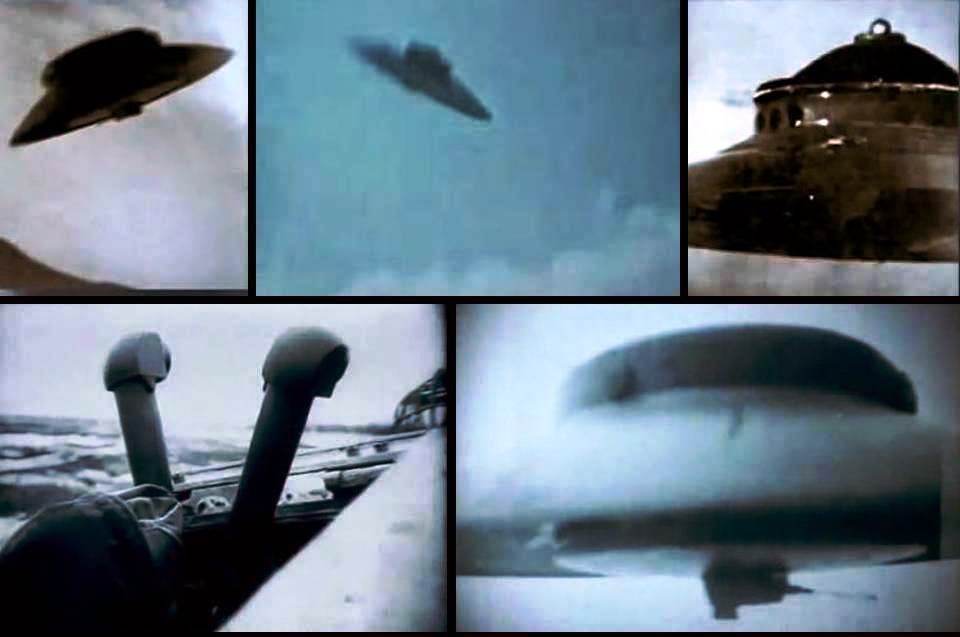
Captain Uyrangê Bolivar Soares Nogueira de Hollanda Lima, head of information office, directed all the operations in the region. During the investigations, the Air Force obtained four films and hundreds of photographs of flying disks in the basin of Marajó.
They also were a great help to the population, providing psychologists assistance, to eliminate the panic that sized the entire region.
The beams of light from the craft were described as being so bright that they resembled those used to illuminate night sporting events. They were "always sharply defined, directed with perfect precision towards any target – houses, people, boats, trees, even the Brazilian Air Force's helicopters deployed over the island during the investigations."
On one occasion, one of these powerful beams is reported to have forced one of the helicopters to land, although the exact technical reason is not given. (Giese, 1996)
According to a statement by Sr. Sebastião V. Miranda, former resident of Colares, "the Brazilian Air Force spent more than 35 days in the town, and installed various devices near the Bacurí beach."
Sra. Alba Câmara Vilhena, a married lady living at 683 rua 15 de Novembro, added: "At the time of the "Chupa-chupa" everybody was scared to sleep at night, and so almost every night we went away to be with relatives. On one occasion some people saw one of the craft. It was round, and all luminous.
"Just at that moment, a helicopter of the F.A.B. (Brazilian Air Force) was flying quite near to our house. Then we saw the UFO direct a very powerful beam on to the helicopter, obliging it to land on the São Pedro Airfield. That happened at about 8.00 pm one evening."
Professor Raimundo Sebastião Aranha said: "At that period I was closely connected with some of the Air Force's enquiries. They were seeking more information about the "Chupa-chupa."
He said the Air Force had with them masses of equipment: cars, helicopters, radio transmitters, cameras, powerful glasses, etc. He recalls that, in addition to the rank and file Air Force recruits, there was a whole group of officers, and he had the impression that there was a foreigner among them.
"The helicopters that appeared from time to time, bringing materials and personnel, attempted to chase the UFOs but without much success. Indeed, on the contrary, it was the UFOs that chased them!"
One night several months later, on May 24 1978, a journalist and photographer, who had been sent to cover the local UFO encounters, were in their car when despite the heavy rain they were woken up "by a powerful beam of light which – however unbelievable, it may seem – passed through the metallic structure of the roof of the vehicle."
Not surprisingly they leapt out of the car to see that "a tube-shaped light beam, about [twenty-five centimetres] in diameter, was coming down from above onto the roof of the car and passing through the metal panelling."
On this and other occasions, they managed to take numerous photographs which they claim that their newspaper later sold to "a North-American group."
On another night while trying to use flash equipment to photograph one of these craft "the UFO emitted such a vivid beam of light that it smashed the windscreen" of their car. (Giese, 1996)
Several newspapers started to write that the alleged UFOs were weather balloons, or secrets satellites, although there was no possible reason to think that. Local authorities were of course extremely angry because of such articles. Elói Santos, councilman of the old Enclosure for bullfighting stated:
"It is not possible to deny that Belém is, today, a frightened city. We are not technicians, and we do not argue with the conclusion of the authorities. But we did surprise them with declarations of the witnesses who saw light crossing their roofs to penetrate in their skin, removing a little of blood and leaving visible marks of needles and burnings on their epidermis."


 Daily UFO Headlines 12/11/14