Ontdek de Fascinerende Wereld van UFO's en UAP's: Jouw Bron voor Onthullende Informatie!
Ben jij ook gefascineerd door het onbekende? Wil je meer weten over UFO's en UAP's, niet alleen in België, maar over de hele wereld? Dan ben je op de juiste plek!
België: Het Kloppend Hart van UFO-onderzoek
In België is BUFON (Belgisch UFO-Netwerk) dé autoriteit op het gebied van UFO-onderzoek. Voor betrouwbare en objectieve informatie over deze intrigerende fenomenen, bezoek je zeker onze Facebook-pagina en deze blog. Maar dat is nog niet alles! Ontdek ook het Belgisch UFO-meldpunt en Caelestia, twee organisaties die diepgaand onderzoek verrichten, al zijn ze soms kritisch of sceptisch.
Nederland: Een Schat aan Informatie
Voor onze Nederlandse buren is er de schitterende website www.ufowijzer.nl, beheerd door Paul Harmans. Deze site biedt een schat aan informatie en artikelen die je niet wilt missen!
Internationaal: MUFON - De Wereldwijde Autoriteit
Neem ook een kijkje bij MUFON (Mutual UFO Network Inc.), een gerenommeerde Amerikaanse UFO-vereniging met afdelingen in de VS en wereldwijd. MUFON is toegewijd aan de wetenschappelijke en analytische studie van het UFO-fenomeen, en hun maandelijkse tijdschrift, The MUFON UFO-Journal, is een must-read voor elke UFO-enthousiasteling. Bezoek hun website op www.mufon.com voor meer informatie.
Samenwerking en Toekomstvisie
Sinds 1 februari 2020 is Pieter niet alleen ex-president van BUFON, maar ook de voormalige nationale directeur van MUFON in Vlaanderen en Nederland. Dit creëert een sterke samenwerking met de Franse MUFON Reseau MUFON/EUROP, wat ons in staat stelt om nog meer waardevolle inzichten te delen.
Let op: Nepprofielen en Nieuwe Groeperingen
Pas op voor een nieuwe groepering die zich ook BUFON noemt, maar geen enkele connectie heeft met onze gevestigde organisatie. Hoewel zij de naam geregistreerd hebben, kunnen ze het rijke verleden en de expertise van onze groep niet evenaren. We wensen hen veel succes, maar we blijven de autoriteit in UFO-onderzoek!
Blijf Op De Hoogte!
Wil jij de laatste nieuwtjes over UFO's, ruimtevaart, archeologie, en meer? Volg ons dan en duik samen met ons in de fascinerende wereld van het onbekende! Sluit je aan bij de gemeenschap van nieuwsgierige geesten die net als jij verlangen naar antwoorden en avonturen in de sterren!
Heb je vragen of wil je meer weten? Aarzel dan niet om contact met ons op te nemen! Samen ontrafelen we het mysterie van de lucht en daarbuiten.
Zaterdag 10 september 2022
Rare sky phenomenon caught on camera in China
Rare sky phenomenon caught on camera in China
Check out this strange circular rainbow cloud spotted in China on August 21, 2022.
This is called a "scarf cloud", which occurs when a thunderstorm's updraft creates a pileus cloud and the sun's angle interacts with the ice crystals in the pileus cloud.
The scarf cloud is formed by the cooling and condensation of moist air forced up and over the peak. When the sunlight is at the right angle, the light diffracts between the droplets and the ice crystals in the cloud, creating a rainbow color.
Long cigar shaped UFO moving slowly over Orange Park, Florida 4-Sep-2022
This really long bright cigar-shaped UFO was seen and recorded in the sky above Orange Park, Florida on 4th September 2022.
Witness report:
Observed this long rectangular/cigar shaped might moving slowly from the northeast to east. I filmed it for about 10 seconds before it went behind the treeline. Estimate that it was probably 5 miles away and would have been in the vicinity of buckman bridge in Jacksonville.
Indonesia’s 31,000-year-old Amputee Shatters the History of Surgery
Archaeologists in Borneo, Indonesia have unearthed the skeleton of a man who was an amputee, and he underwent his complicated medical procedure some 31,000 years ago!
Until now, all archaeological evidence has suggested the first medical procedures began when humans started inhabiting agricultural settlements during the so-called Neolithic Revolution, which began around 10,000 years ago. Historians of human physiological development generally agree that having bodies designed to walk over 20 miles (32.2 kilometers) a day, for foraging, hunting and fishing, would have been subjected to multiple medical issues when farming began.
Archaeologists in China and Egypt have discovered ancient remains with signs of amputated toes and fingers, with one prosthetic toe dating back 3,000 years . And in 2016 StatNews reported on the discovery of a 6th-century-AD skeleton found in a Frankish Empire-era cemetery in Austria. With an “iron-and-wood prosthetic foot,” this amputee represented the oldest skeleton found in Europe with a prosthetic limb.
Now, according to a new paper published in the journal Nature, a team of researchers has identified the oldest evidence of an amputee surgery, in Borneo, dating way back to 29000 BC.
Liang Tebo burial features of the 29000 BC amputee of Borneo, Indonesia: a) A single adult inhumation (TB1); the skull is to the right of the scale bar; b) in situ nodule of red ochre (a natural earth pigment) next to the mandible; c) Maxilla and mandible. Scale bar, 5 centimeters or 2 inches.
The Assumption That Farming Led to Amputee Tech is False
When humans first turned to agriculture around 10,000 years ago, no matter where on the globe or what type of crops were being grown, the height, strength and general health of the people rapidly declined. This demonstrable fact has led to the widely-accepted assumption that the onset of farming also brought about the necessity of more advanced surgical procedures.
In this new study, however, lead researcher and author, Professor Tim Ryan Maloney of Griffith University, Australia demonstrates that the “assumption” couldn’t have been further from the truth. His new study on the discovery of a 31,000-year-old amputee in Borneo demonstrates the origins of surgery began in prehistoric times, way before farming.
Legacy of Borneo’s 31,000-year-old Amputee Surgeons
The new paper focuses on a discovery made in 2020 on the Sangkulirang–Mangkalihat Peninsula of East Kalimantan (Indonesian Borneo). Approximately 2.5 kilometers (15.53 miles) from the Marang River, a matrix of caves and rock shelters are peppered across the karst terrain. Excavations in the vast three-chambered Liang Tebo limestone cave revealed evidence of prehistoric human occupation, including rock art that was painted at least 40,000 years ago, representing some of the earliest rock art ever created.
In 2020, archaeologists dug a trench in which they discovered an adult skeleton (TB1) who had “the distal third of their left lower leg surgically amputated.” The scientists write in their paper that the amputation most probably occurred when the person was a child and that they lived for another 6–9 years after the operation. And dating to “at least 31,000 years ago” this find changes everything that was previously assumed about the origins of surgical procedures.
Surgically amputated site of the left tibia and fibula showing the evidence of amputation.
The Liang Tebo cave skeleton’s limb amputation suggests groups of modern humans foraging in Asia “had developed sophisticated medical knowledge and skills long before the Neolithic farming transition,” according to the new Nature study. The paper says the surgical amputation of TB1’s left lower leg 31,000 years ago “has important implications for our understanding of the evolution of pre-Holocene (the last 11,700 years) human medico-socio-cultural practices.” Until now, scientists generally assumed that complex surgical procedures like this were way beyond the capabilities of foraging cultures .
What is perhaps most interesting about this discovery is that until about 100 years ago in Western medicine, successful surgical amputations without antibiotics generally resulted in blood infections and often death. But in the 31,000-year-old case of TB1, the new study implies that “the Late Pleistocene ‘surgeon(s)’ who amputated this individual’s lower left leg must have possessed detailed knowledge “of limb anatomy and muscular and vascular systems to have prevented fatal blood loss and infection.”
Artist ‘s impression of Tebo1, the oldest amputee on record. The individual had their lower left leg amputated as a child and survived into early adulthood in an artistic community 31,000 years ago in Borneo, Indonesia.
Now that the “great assumption” about Neolithic tech has been shattered, some new assertions are being made based on the discovery of the 31,000-year-old amputee.
The ancient surgeons must have used plants (and perhaps maggots) to clean, dress and disinfect the man’s severed leg wound. They must also have administered some kind of pain relief while controlling their patient’s temperature, diet and recovery movements, to have prevented post-op infection.
Furthermore, the fact that the man recovered after the amputation in what is a very challenging karst stone terrain suggests a very caring community of people looked after him after the operation, and for the rest of his life.
The scientists concluded their paper by suggesting early human colonists in what are today the rainforests of Borneo were challenged by the warmer and much more humid climate. Experiencing an increase in wound infections the people responded by making rapid advances “in medical technology.” Thus, they must have developed new pharmaceuticals from the bountiful and biodiverse environment in which they lived as hunter-gatherers.
Top image:Left: Liang Tebo burial features of the 29000-BC amputee of Borneo, Indonesia: a) A single adult inhumation (TB1); the skull is to the right of the scale bar; Middle: Artist ‘s impression of Tebo1, the oldest amputee on record; Right: Surgically amputated site of the left tibia and fibula showing the evidence of amputation.
Source: Maloney, et al. / Nature; Jose Garcia ( Garciartist) and Griffith University / Nature; Maloney, et al. / Nature
MYTHISCH VERZONKEN EILANDENRIJK BIJ WALES BESTOND WELLICHT ECHT: OUDE LANDKAART KOMT OVEREEN MET BODEMVONDSTEN
Jeannette Kras
Verdwenen eilanden die in oude literatuur worden beschreven, spreken ook nu nog tot de verbeelding. Zo zijn er twee eilanden voor de westkust van Wales die op een belangrijke landkaart uit de Middeleeuwen zijn weergegeven en die opduiken in de lokale folklore en poëzie.
Het is heel aannemelijk dat deze eilanden echt hebben bestaan, maar door de zee zijn opgeslokt ergens rond de zestiende eeuw na Christus. Wetenschappers hebben nieuw bewijsmateriaal gevonden en dat aan elkaar gekoppeld. Daarmee wordt er meer bekend over de mogelijke evolutie van de kustlijn van West-Wales.
Op basis van geologische gegevens en een middeleeuwse landkaart maken onderzoekers van de Universiteit van Swansea en de Universiteit van Oxford een reconstructie van het ontstaan en de ondergang van de twee mythische eilanden die waarschijnlijk niet ver van de Britse kust af hebben gelegen en mogelijk generaties lang bewoond zijn door mensen. Er werd in de folklore gesproken over Cantre’r Gwaelod (‘The Lowland Hundred’), een gezonken koninkrijk.
De studie is geïnspireerd op de Gough Map, de oudste bewaard gebleven kaart van Groot-Brittannië. Deze bijzondere kaart vindt waarschijnlijk zijn oorsprong in de dertiende eeuw na Christus en wordt bewaard in de Bodleian Library van de Universiteit van Oxford.
Vergaan eilandrijk De middeleeuwse cartografen verantwoordelijk voor de Gough Map gingen uiterst zorgvuldig te werk. De kaart toont twee eilanden in Cardigan Bay in het westen van Wales, die niet meer bestaan. Elk eiland is afgebeeld op ongeveer een kwart van de grootte van het eiland Anglesey in Noord-Wales. De ene ligt tussen Aberystwyth en Aberdovey en de andere tussen Aberdovey en Barmouth in het noorden.
De studie, gepubliceerd in vakblad Atlantic Geoscience, onderzoekt cultuurhistorische bronnen en geologisch bewijs van de kustlijn en de zeebodem. Zo komen de wetenschappers tot een model van hoe de kust is geëvolueerd sinds de laatste ijstijd, die ongeveer tienduizend jaar geleden eindigde. Al met al biedt het team een plausibele verklaring voor de ‘verloren’ eilanden.
Gletsjerafzettingen en erosiekrachten De eilanden zouden de overblijfselen zijn geweest van laaggelegen land dat bedekt was met relatief zachte gletsjerafzettingen, die zijn ontstaan tijdens de laatste ijstijd. In de duizenden jaren daarna heeft erosie het land uitgesleten en bleven de eilanden over, waarna die rond de zestiende eeuw ook waren weggesleten en verdwenen.
Wanneer fijnere sedimenten van gletsjerafzettingen in de loop van de tijd door erosie verdwijnen, blijven het grovere grind en de keien op de zeebodem achter. De ligging van de eilanden valt samen met de locatie van onderzeese ophopingen van grind en keien, die lokaal ook wel ‘sarns’ worden genoemd.
Ptolemaeus “We weten dat de kust van West-Wales in de loop van de tijd aanzienlijk is veranderd. Bewijs van de Romeinse cartograaf Ptolemaeus suggereert dat de kustlijn tweeduizend jaar geleden misschien zo’n dertien kilometer verder in zee lag dan nu het geval is”, legt professor Simon Haslett van Swansea University uit. “De Gough Map is buitengewoon nauwkeurig als je bedenkt welke primitieve middelen de middeleeuwse cartografen slechts tot hun beschikking hadden. De makers hebben de twee eilanden duidelijk gemarkeerd op de landkaart.”
Eerste klimaatvluchtelingen “Dit onderzoek vergroot ons begrip van de mogelijke processen die langs de kust van Cardigan Bay plaatsvonden en die ertoe hebben geleid dat het er nu zo uitziet. Het kan ook helpen bij toekomstig onderzoek naar de postglaciale evolutie van vergelijkbare laaglanden in andere delen van Noordwest-Europa”, vertelt Haslett.
“Het begrijpen van de kustlijndynamiek is nog nooit zo belangrijk geweest. Sommige steden in het gebied dat we hebben bestudeerd, zijn extra kwetsbaar voor klimaatverandering. Het zou goed kunnen dat dit gaat leiden tot de eerste klimaatvluchtelingen in het Verenigd Koninkrijk”, aldus de onderzoeker.
The Lowland Hundred Onderzoeker professor David Willis van de Universiteit van Oxford voegt hier nog aan toe: “Ons bewijsmateriaal biedt een verklaring voor het ontstaan van het verhaal van Cantre’r Gwaelod (‘The Lowland Hundred’). Dit verloren land zou in een ver verleden verwoest zijn door een catastrofale overstroming. Er wordt in de middeleeuwse poëzie naar verwezen in het Black Book of Carmarthen en neemt ook in latere folklore een belangrijke plaats in.” Hoe bijzonder is het dat dit eilandenrijk niet alleen in sprookjes, maar wellicht ook in het echt heeft bestaan.
HET REGENT DIAMANTEN OP NEPTUNUS WAARDOOR NIEUWE IJSSOORT ONTSTAAT: HET BIZARRE SUPERHETE ZWARTE IJS
Jeannette Kras
Het regent diamanten, niet op aarde helaas, wel op Neptunus en Uranus. Volgens een nieuwe studie komen diamantregens zelfs nog vaker voor dan gedacht.
De wetenschappers ontdekten dat zuurstof de vorming van diamantregen stimuleert. Ook vonden ze bewijs dat door de diamanten een hele vreemde toestand van water zou kunnen ontstaan, die wordt omschreven als ‘superheet, zwart ijs’.
Dit superionische ijs ontstaat onder hoge druk en hoge temperaturen. Onder deze extreme omstandigheden breken watermoleculen uit elkaar en vormen zuurstofatomen een kristalrooster waarin de waterstofkernen vrij rondzweven. Omdat deze vrij zwevende kernen elektrisch geladen zijn, kan superionisch water elektrische stroom geleiden en de ongebruikelijke magnetische velden op Uranus en Neptunus verklaren.
Zwart, zwaar en superheet ijs Een zwart ijsblokje is vier keer zo zwaar als een gewoon ijsblokje en heeft een temperatuur van duizenden graden Celsius. Deze vorm van water is misschien wel een van de meest voorkomende in het universum. De kernen van ijsreuzen als Neptunus en soortgelijke exoplaneten zouden weleens vol kunnen zitten met het zwarte goedje.
De studie, die in Science Advances verscheen, simuleert de omstandigheden op ijsreuzen door in het laboratorium met een enorm sterke laser op een stuk PET-plastic te schieten. Wonderlijk genoeg lijken deze processen chemisch gezien erg op elkaar en ontstaan er op deze manier nanodiamantjes en superionisch ijs. De bevindingen vormen een basis voor een nieuwe manier om nanodiamanten te fabriceren, die nuttig zijn voor het toedienen van medicijnen, om medische sensoren te maken, voor niet-invasieve chirurgie, duurzame productie en kwantumelektronica.
Schieten op plastic In het vorige experiment bestudeerden de onderzoekers een plastic materiaal gemaakt van een mengsel van waterstof en koolstof, belangrijke componenten van de algehele chemische samenstelling van Neptunus en Uranus. Maar naast koolstof en waterstof bevatten de ijsreuzen ook andere elementen, zoals grote hoeveelheden zuurstof.
In het meer recente experiment gebruikten de onderzoekers PET-plastic – vaak gebruikt in voedselverpakkingen, plastic flessen en containers – om de samenstelling van deze planeten nauwkeuriger te reproduceren. “PET heeft een goede balans tussen koolstof, waterstof en zuurstof om de activiteit in ijsplaneten te simuleren”, zegt Dominik Kraus, professor aan de Universiteit van Rostock.
Schokgolf Er werd dus met een laser op een dun vel PET-plastic geschoten. De sterke laserflitsen die het folie-achtige materiaal raakten, verhitten het kort tot 6000 graden Celsius en genereerden zo een schokgolf die de materie gedurende enkele nanoseconden tot miljoenen keren de atmosferische druk comprimeerde. De wetenschappers konden vaststellen dat kleine diamanten, zogenaamde nanodiamanten, zich onder extreme druk vormden.
“Het effect van de zuurstof was een versnelling van de splitsing van koolstof en waterstof om zo de vorming van nanodiamanten te stimuleren”, zei Kraus. “Het betekende dat de koolstofatomen gemakkelijker konden combineren en diamanten konden vormen.”
De onderzoekers voorspellen dat diamanten op Neptunus en Uranus veel groter worden dan de nanodiamanten die in deze experimenten werden geproduceerd. In de loop van duizenden jaren zouden de diamanten langzaam door de ijslagen van de planeten kunnen zinken en samenkomen in een dikke laag rond de vaste planetaire kern. Het team vond ook bewijs dat zich in combinatie met de diamanten superionisch water zou kunnen vormen, ook wel ‘heet, zwart ijs’ genoemd.
Veel ijsreuzen De bevindingen kunnen ook van invloed zijn op ons begrip van planeten in verre sterrenstelsels, te meer omdat wetenschappers nu denken dat ijsreuzen de meest voorkomende planeten buiten ons zonnestelsel zijn. “We weten dat de kern van de aarde voornamelijk uit ijzer bestaat, maar veel experimenten onderzoeken nog steeds hoe de aanwezigheid van lichtere elementen de omstandigheden van smelting en andere faseovergangen kan veranderen”, zegt onderzoeker Silvia Pandolfi. “Ons experiment laat zien hoe deze elementen de omstandigheden kunnen veranderen waarin diamanten zich vormen op ijsreuzen. Als we planeten nauwkeurig willen modelleren, moeten we zo dicht mogelijk bij de werkelijke samenstelling van de planeten komen.”
Ruwe diamanten Het onderzoek helpt ons niet alleen om andere planeten beter te begrijpen, het is ook een stap vooruit in de productie van nanodiamanten op aarde. “De manier waarop nanodiamanten momenteel worden gemaakt, is door een hoop koolstof of diamant te nemen en die op te blazen met explosieven”, zegt wetenschapper Benjamin Ofori-Okai. “Dit creëert nanodiamanten van verschillende groottes en vormen en is moeilijk te controleren. Wat we in dit experiment zien, is een andere reactiviteit van dezelfde soort diamant onder hoge temperatuur en druk. In sommige gevallen lijken de diamanten sneller gevormd te worden dan in andere gevallen, wat suggereert dat de aanwezigheid van de andere chemicaliën dit proces kan versnellen. Laserproductie zou een schonere en gemakkelijker gecontroleerde methode kunnen zijn om nanodiamanten te produceren. Als we manieren kunnen bedenken om sommige dingen aan de reactiviteit te veranderen, kunnen we ook veranderen hoe snel ze vorm krijgen en dus hoe groot ze worden.”
Ethanol Vervolgonderzoek is al in de maak: de onderzoekers willen soortgelijke experimenten uitvoeren met vloeibare monsters die ethanol, water en ammoniak bevatten – waar Uranus en Neptunus voor een groot gedeelte uit zijn opgebouwd – waardoor ze nog beter kunnen begrijpen hoe de diamantregen precies ontstaat op andere planeten.
Human and Neanderthal brains were roughly the same size.
Credit: Adapted from Alamy
More than 500,000 years ago, the ancestors of Neanderthals and modern humans were migrating around the world when a fateful genetic mutation caused some of their brains to suddenly improve. This mutation, researchers report in Science1,2, dramatically increased the number of brain cells in the hominins that preceded modern humans, probably giving them a cognitive advantage over their Neanderthal cousins.
“This is a surprisingly important gene,” says Arnold Kriegstein, a neurologist at the University of California, San Francisco. However, he expects that it will turn out to be one of many genetic tweaks that gave humans an evolutionary advantage over other hominins. “I think it sheds a whole new light on human evolution.”
When researchers first fully sequenced a Neanderthal genome in 20143, they identified 96 amino acids — the building blocks that make up proteins — that differ between Neanderthals and modern humans in addition to a number of other genetic tweaks. Scientists have been studying this list to learn which of these helped modern humans to outcompete Neanderthals and other hominins.
Cognitive advantage
To neuroscientists Anneline Pinson and Wieland Huttner at the Max Planck Institute of Molecular Cell Biology and Genetics in Dresden, Germany, one gene stood out. The gene, TKTL1, encodes a protein that is made when a fetus’s brain is first developing. A single genetic mutation in the human version of TKTL1 changed one amino acid, resulting in a protein that is different from those found in hominin ancestors, Neanderthals and non-human primates.
The team suspected that this protein could be driving neural progenitor cells — which develop into neurons — to proliferate as the brain develops, specifically in an area called the neocortex, which is involved in cognitive function. That, they reasoned, could be a contributor to modern humans’ cognitive advantage over human ancestors.
To test this, Pinson and her team inserted either the human or ancestral version of TKTL1 into the brains of mouse and ferret embryos. The animals with the human gene developed significantly more neural progenitor cells. When the researchers engineered neocortex cells from a human fetus to produce the ancestral version, they found that the fetal tissue produced fewer progenitor cells and fewer neurons than it normally would. The same was true when they inserted the ancestral version of TKTL1 into brain organoids — mini-brain-like structures grown from human stem cells.
Brain size
Fossil records suggest that human and Neanderthal brains were roughly the same size, meaning that the neocortices of modern humans are either denser or take up a larger portion of the brain. Huttner and Pinson say that they were surprised that such a small genetic change could affect neocortex development so drastically. “It was a coincidental mutation that had enormous consequences,” Huttner says.
Neuroscientist Alysson Muotri at the University of California, San Diego, is more sceptical. He points out that different cell lines behave differently when made into organoids and would like to see the ancestral version of TKTL1 tested in more human cells. Furthermore, he says, the original Neanderthal genome was compared with that of a modern European — human populations in other parts of the world might share some genetic variants with Neanderthals.
Pinson says that the Neanderthal version of TKTL1 is very rare among modern humans, adding that it’s unknown whether it causes any disease or cognitive differences. The only way to prove that it has a role in cognitive function, Huttner says, would be to genetically engineer mice or ferrets that always have the human form of the gene and test their behaviour compared with animals that have the ancestral version. Pinson says she is now planning to look further into the mechanisms through which TKTKL1 drives the birth of brain cells.
Repair Work Underway, Preparations Continue for Next Launch Opportunity
NASA’s Space Launch System (SLS) rocket is seen at Launch Pad 39B Thursday, Sept. 8, 2022, at NASA’s Kennedy Space Center in Florida as teams work to replace the seal on an interface, called the quick disconnect, between the liquid hydrogen fuel feed line on the mobile launcher and the rocket.
Photo Credit: (NASA/Chad Siwik)
Engineers are making progress repairing the area where a liquid hydrogen leak was detected during the Artemis I launch attempt Sept. 3, and NASA is preserving options for the next launch opportunity as early as Friday, Sept. 23.
Technicians constructed a tent-like enclosure around the work area to protect the hardware and teams from weather and other environmental conditions at Launch Pad 39B. They have disconnected the ground- and rocket-side plates on the interface, called a quick disconnect, for the liquid hydrogen fuel feed line, performed initial inspections, and began replacing two seals – one surrounding the 8-inch line used to fill and drain liquid hydrogen from the core stage, and another surrounding the 4-inch bleed line used to redirect some of the propellant during tanking operations. The SLS rocket and Orion spacecraft are in good condition while remaining at the launch pad.
Once the work is complete, engineers will reconnect the plates and perform initial tests to evaluate the new seals. Teams will check the new seals under cryogenic, or supercold, conditions no earlier than Sept. 17 in which the rocket’s core stage and interim cryogenic propulsion stage will be loaded with liquid oxygen and liquid hydrogen to validate the repair under the conditions it would experience on launch day. Engineers are in the process of developing a full plan for the checkouts.
NASA has submitted a request to the Eastern Range for an extension of the current testing requirement for the flight termination system. NASA is respecting the range’s processes for review of the request, and the agency continues to provide detailed information to support a range decision.
In the meantime, NASA is instructing the Artemis team to move forward with all preparations required for testing, followed by launch, including preparations to ensure adequate supplies of propellants and gases used in tanking operations, as well as flight operations planning for the mission. NASA has requested the following launch opportunities:
Sept 23: Two-hour launch window opens at 6:47 a.m. EDT; landing on Oct. 18
Sept. 27: 70-minute launch window opens at 11:37 a.m.; landing on Nov. 5
NASA’s teams internally are preparing to support additional dates in the event flexibility is required. The agency will evaluate and adjust launch opportunities and alternate dates based on progress at the pad and to align with other planned activities, including DART’s planned impact with an asteroid, the west coast launch of a government payload, and the launch of Crew-5 to the International Space Station.
Listen to a replay of today’s media teleconference on the status of the Artemis I mission. Artemis I is an uncrewed flight test to provide a foundation for human exploration in deep space and demonstrate our commitment and capability to extend human existence to the Moon and beyond.
Disk Shaped UFO Sighted Over Freeway In Los Angeles, California. September 3, 2022
This footage was captured while the witness was driving along the freeway and he took three quick videos and upload them to Instagram. In the footage we can see what looks like a disk shaped UFO just cruising along to the shock of the witness. This was sighted over Los Angeles, California on September 3, 2022 around 9:30am
Thanks to 19th Galaxy for allowing me the use of this footage and to view the original:
UFOs Sighted From The ISS, SpaceX & Bogotá, Colombia. As Seen On The Live Show. September 7, 2022
Guys, This video i did without me talking as these are some of the footages i've showed on my live show so if you would like to hear my opinions on the footages please check out the show:
Clip 1.This was sighted durning the Russian cosmonauts spacewalk on September 2, 2022 and in the footage this object comes into view with the camera operater asking "What is that object?" and following the UFO with the camera until it's out of view. Go to the 7.22.55 to 7.27.55 mark in the video to see and hear.
Clip 2.This object was spotted durning the SpaceX launch of 51 Starlink satellites Sunday, September 4, 2022 at 10:09 p.m. This UFO flies past the rocket but could this be more ice? Go to 22:44 mark in the video and have a look.
Strange UFO Seen in Shakopee, Minnesota, Sept 2022 👽
Video shared on Reddit by Smencil and filmed on September 3, 2022 at 5:46PM in Shakopee, Minnesota. There’s more to say, more to explore together and we invite you now to join this new journey with us on Section 51 ! Subscribe now !
New UFO Video allegedly declassified by the Pentagon
"The Pentagon has declassified a new video from 4/24/19 involving the USS Zumwalt, detecting six unidentified objects on it, including one crossed the deck according to the report. Spokeswoman Susan Gough announced that they have no information about its origin."
UFO Lights in Austria, Feb 2015
Video shared on Instagram and filmed in Gesause National Park in Austria in February 2015. No further information...
Strange Lights in the Sky, USA, July 2021
Video shared on Reddit by Shibby_Laterr187 and filmed in USA, uploaded on Odysee in July 2021. No further information...
The UFO Lie: Shocking truth of Pentagon AAWSAP program | The Basement Office
Everything you were told is wrong. In 2017, the New York Times released a bombshell story revealing AATIP, the Pentagon's "UFO program" and Lue Elizondo, the director of that program.
It proclaimed a shocking truth:
UFOs are real. Since then, that story has been reprinted hundreds and thousands of times across the world and Mr. Elizondo has reached the status of cultural icon. But we've since learned that the whole story... was wrong. In this episode, we reveal the real story of the Pentagon's AAWSAP program - led by scientist James Lacatski - and it's even crazier than you could possibly imagine: $22 million in taxpayer money spent on werewolves, ghosts, goblins, and "dinobeavers" at the infamous Skinwalker Ranch in Utah. But UFO advocates, who are currently lobbying Congress to spend money on UFO investigations, hope you never find out about that. | Season 3, Episode 1
Hi folks, I work hard to put these videos together everyday and all I ask is that you take a moment to "like", "share" and or "subscribe" to the channel. Thank you so much, UFO Video Addicts
US Navy fighter pilot Clarence Clem talks about a UFO hovering over the Hanford nuclear site in 1945
In July 2014, UFO historian Jan Aldrich revealed that his research group, Project 1947, had secured World War II-era documents from Headquarters Fourth Air Force, which referred to overflights of the Hanford site by “unidentified aircraft”.
One of them, dated January 23, 1945, and directed to the Commanding General of the Army Air Forces and the Assistant Chief of Air Staff, Training, states:
Resulting from an unidentified aircraft flying over the Hanford Engineering Company Plant at Pasco, Wash. on at least three nights in the past month (this Company is engaged in undisclosed projects for the War and Navy Departments) this HQ was requested by [Western Defense Command], about ten days ago, to move one [battery] of searchlights from Seattle to the Pasco plant. The Thirteenth Naval District has made arrangements for Naval Air Station, Pasco, to employ both radar and fighter aircraft in attempting interception of these unidentified aircraft. The airspace over the Hanford Company is both a Danger area and a Restricted area. Our battery of searchlights has been in place since 15 January; one incident has occurred since that date in which a brief radar contact was made—attempted night interception again failed.
So here we have an official document referring an unidentified aircraft flying over the Top Secret Hanford atomic materials production plant on three occasions in January 1945. At least one of those “aircraft” was tracked on radar and successfully eluded the U.S. Navy fighter sent up to intercept it. In conclusion, declassified military documents confirm the events described by former USN fighter pilot Bud Clem. Unfortunately, when Robert Hastings attempted to notify Clem of the discovery of those documents by Jan Aldrich, in July 2014, he learned that Clem had died the previous month. UFO incursions at U.S. atomic/thermonuclear weapons sites, from the 1940s onward, are detailed in thousands of declassified Army, Air Force, Navy, FBI, and CIA documents.
Moreover, hundreds of U.S. military veterans have now discussed their involvement in one or more of those incidents in video interviews. One of them, former U.S. Navy Lieutenant Junior Grade Clarence R. “Bud” Clem, says that a UFO monitored one of our fissile materials facilities—the Hanford plutonium-production plant in Washington State—on three different nights in January 1945, some seven months before Hiroshima and Nagasaki were bombed. Clem says that members of his Navy Hellcat F6F fighter squadron chased them away.
UFOs and Nukes researcher Robert Hastings first learned of the incidents when Clem wrote to him in 2009, but it was not until December 2013 that funds became available to capture the former fighter pilot on video.
Breaking: NASA Just Released First-Ever Images Of Venus’ Surface Taken With Visible Light
The Parker Solar Probe has taken the first visible-light photographs of Venus’s surface. Normally, the planet’s surface is shrouded by dense cloud cover, but the probe was recently able to picture the nightside of Venus using its Wide-Field Imager (WISPR) in wavelengths that the human eye can observe.
The Parker Solar Probe took images of the night side of Venus, revealing surface features in dark and light markings.
Image via NASA.
Brian Wood, lead author on the new study and physicist at the Naval Research Laboratory in Washington, DC, said: “Venus is the third brightest thing in the sky, but until recently we have not had much information on what the surface looked like because our view of it is blocked by a thick atmosphere. Now, we finally are seeing the surface in visible wavelengths for the first time from space,”
Unexpected Capabilities
The first WISPR images of Venus were taken in July 2020 as Parker embarked on its third flyby, which the spacecraft uses to bend its orbit closer to the Sun. WISPR was designed to see faint features in the solar atmosphere and wind, and some scientists thought they might be able to use WISPR to image the cloud tops veiling Venus as Parker passed the planet.
“The objective was to measure the speed of the clouds,” said WISPR project scientist Angelos Vourlidas, co-author on the new paper and researcher at Johns Hopkins University Applied Physics Laboratory.
But instead of just seeing clouds, WISPR also saw through to the surface of the planet. The images were so striking that the scientists turned on the cameras again during the fourth pass in February 2021. During the 2021 flyby, the spacecraft’s orbit lined up perfectly for WISPR to image Venus’ nightside in entirety.
“The images and video just blew me away,” Wood said.
Glowing like an Iron from the Forge
Clouds obstruct most of the visible light coming from Venus’ surface, but the very longest visible wavelengths, which border the near-infrared wavelengths, make it through. On the dayside, this red light gets lost amid the bright sunshine reflected off Venus’ cloud tops, but in the darkness of night, the WISPR cameras were able to pick up this faint glow caused by the incredible heat emanating from the surface.
“The surface of Venus, even on the nightside, is about 860 degrees,” Wood said. “It's so hot that the rocky surface of Venus is visibly glowing, like a piece of iron pulled from a forge.”
As it passed by Venus, WISPR picked up a range of wavelengths from 470 nanometers to 800 nanometers. Some of that light is the near-infrared – wavelengths that we cannot see, but sense as heat – and some is in the visible range, between 380 nanometers and about 750 nanometers.
Venus in a New Light
In 1975, the Venera 9 lander sent the first tantalizing glimpses of the surface after landing on Venus. Since then, Venus’ surface has been revealed further with radar and infrared instruments, which can peer through the thick clouds by using wavelengths of light invisible to the human eye. NASA’s Magellan mission created the first maps in the 1990s using radar and JAXA’s Akatsuki spacecraft gathered infrared images after reaching orbit around Venus in 2016. The new images from Parker add to these findings by extending the observations to red wavelengths at the edge of what we can see.
The WISPR images show features on the Venusian surface, such as the continental region Aphrodite Terra, the Tellus Regio plateau, and the Aino Planitia plains. Since higher altitude regions are about 85 degrees Fahrenheit cooler than lower areas, they show up as dark patches amidst the brighter lowlands. These features can also be seen in previous radar images, such as those taken by Magellan.
As Parker Solar Probe flew by Venus on its fourth flyby, its WISPR instrument captured these images, strung into a video, showing the nightside surface of the planet.
Credits: NASA/APL/NRL
The first of these photographs were captured by the Parker Solar Probe in July 2020, during its third flyby of Venus to tilt its orbit closer to the Sun. Scientists opted to analyze the Venusian clouds with the capacity to resolve fine detail in the solar atmosphere but were shocked to discover the planet’s complete nightside as well. The camera captured a faint glow emanating from the planet since WISPR also records certain infrared wavelengths that the planet emits owing to its extraordinarily hot surface, which is roughly 860 degrees Fahrenheit even at night.
Show only Left Show only Right Surface features seen in the WISPR images (left) match ones seen in those from the Magellan mission (right). Credits: NASA/APL/NRL (left), Magellan Team/JPL/USGS (right)
Nicola Fox, division director for the Heliophysics Division at NASA Headquarters, explained: “We’re thrilled with the science insights Parker Solar Probe has provided thus far. Parker continues to outperform our expectations, and we are excited that these novel observations taken during our gravity assist maneuver can help advance Venus research in unexpected ways,”
Beyond looking at surface features, the new WISPR images will help scientists better understand the geology and mineral make-up of Venus. When heated, materials glow at unique wavelengths. By combining the new images with previous ones, scientists now have a wider range of wavelengths to study, which can help identify what minerals are on the surface of the planet. Such techniques have previously been used to study the surface of the Moon. Future missions will continue to expand this range of wavelengths, which will contribute to our understanding of habitable planets.
This information could also help scientists understand the planet’s evolution. While Venus, Earth, and Mars all formed around the same time, they are very different today. The atmosphere on Mars is a fraction of Earth’s while Venus has a much thicker atmosphere. Scientists suspect volcanism played a role in creating the dense Venusian atmosphere, but more data are needed to know how. The new WISPR images might provide clues about how volcanos may have affected the planet’s atmosphere.
In addition to the surface glow, the new images show a bright ring around the edge of the planet caused by oxygen atoms emitting light in the atmosphere. Called airglow, this type of light is also present in Earth’s atmosphere, where it’s visible from space and sometimes from the ground at night.
Flyby Science
While Parker Solar Probe’s primary goal is solar science, the Venusian flybys are providing exciting opportunities for bonus data that wasn’t expected at the mission’s launch.
WISPR has also imaged Venus’ orbital dust ring – a doughnut-shaped track of microscopic particles strewn in the wake of Venus’ orbit around the Sun – and the FIELDS instrument made direct measurements of radio waves in the Venusian atmosphere, helping scientists understand how the upper atmosphere changes during the Sun’s 11-year cycle of activity.
In December 2021, researchers published new findings about the rediscovery of the comet-like tail of plasma streaming out behind Venus, called a “tail ray”. The new results showed this tail of particles extending nearly 5,000 miles out from the Venusian atmosphere. This tail could be how Venus’ water escaped from the planet, contributing to its current dry and inhospitable environment.
While the geometry of the next two flybys likely won’t allow Parker to image the nightside, scientists will continue to use Parker’s other instruments to study Venus’ space environment. In November 2024, the spacecraft will have a final chance to image the surface on its seventh and final flyby.
The Future of Venus Research
Parker Solar Probe, which is built and operated by the Johns Hopkins Applied Physics Laboratory in Laurel, Maryland, isn’t the first mission to gather bonus data on flybys, but its recent successes have inspired other missions to turn on their instruments as they pass Venus. In addition to Parker, the ESA (European Space Agency) BepiColombo mission and the ESA and NASA Solar Orbiter mission have decided to gather data during their flybys in the coming years.
More spacecraft are headed to Venus around the end of this decade with NASA’s DAVINCI and VERITAS missions and ESA’s EnVision mission. These missions will help image and sample Venus’ atmosphere, as well as remap the surface at higher resolution with infrared wavelengths. This information will help scientists determine the surface mineral make-up and better understand the planet’s geologic history.
“By studying the surface and atmosphere of Venus, we hope the upcoming missions will help scientists understand the evolution of Venus and what was responsible for making Venus inhospitable today,” said Lori Glaze, director of the Planetary Science Division at NASA Headquarters. “While both DAVINCI and VERITAS will use primarily near-infrared imaging, Parker’s results have shown the value of imaging a wide range of wavelengths.”
The congressional document reveals that someUFOs are not man-made and pose a national security threat to the United States. Finally, the subject of unidentified aerial phenomena (UAP) is considered serious due to the lack of information about them and increasing military encounters. Meanwhile, UFO enthusiasts are waiting for the Pentagon to release a 23-minute video that will reportedly leave viewers “rattled.” Luis Elizondo claimed that it shows UFOs moving in a strange pattern.
It is more than 4 years since the New York Times article revealed the existence of the secret program (AATI) funded by the United States Army to investigate UFOs. Luis Elizondo ran the Advanced Aerospace Threat Identification Program (AATI) from 2007 to 2012. Since then, he has spoken about various incidents that happened to the US pilots and possibilities of alien existence.
Elizondo, who resigned from the Pentagon in 2017, has made several bold statements since then. His claims literally change the US government’s perspective on viewing UFOs. Moreover, he refused to talk more as he is afraid of being arrested.
In 2021, he stated to have seen the UFO footage, describing it as showing unidentified floating objects for 23 minutes. He made this revelation while talking to the YouTube channels Fade to Black and Witness Citizen UAP. During the talk, Elizondo revealed that the UFO video was extremely compelling.
According to Elizondo, the video is said to show multiple UFOs which are moving in ways and strange “patterns” that humans do not conventionally understand – with data recorded using US military systems.
Lue Elizondo was a former US Army intelligence officer who helped trace terrorists after 9/11. credit: The Sun
He also mentioned this video in his interview with GQ. He stated: “It was the overwhelming weight of evidence and data. I was talking to pilots routinely. There’s videos out there [in government, that the public haven’t seen] – there’s one that’s 23 minutes long. There’s another one where this thing is 50 feet away from the cockpit. I mean, it ain’t ours. We know that. Sometimes you just couldn’t believe it – you’d have seven or eight incidents in a single day. I’d get these emails from an admiral or a ship’s captain saying, ‘Lue, what do you want me to do? I can’t keep people below deck forever. These things are swarming my ship, they’re all over the place.’ That’s tough. I kept promising the cavalry was coming and I’d have answers for them and the cavalry never came. Senior leadership didn’t want to deal with it.”
While discussing the 23-minute UFO video, Elizondo mentioned that it is a very compelling footage. “I did not say what it was. I sent it out to some highly trained experts in the ISR (Intelligence, surveillance, and reconnaissance) community. And when they came back to me, the title of the email was quote unquote ‘that UFO video’.”
He added: “It is definitive and its perplexing, every time you think you are like ‘thats what I am looking at’ – bang, it changes.”
When quizzed by host Jimmy Church on the way the object moved, its speed and if it was “beyond our capabilities,” Elizondo said it was enough to make officials “raise our eyebrows and say woah.”
Here is the transcript of Luis Elizondo’s interview with Sean of Witness Citizen, where he talked about the 23-minute video and 50-foot photo:
Elizondo: You know, the problem is that this battle isn’t over. We won a major battle with the report coming out of the UAP report, it was historic like you said, in the very first sentence of the very first paragraph. It says this is a preliminary report which means there are other reports, you know, congratulations, you won, you got it, right? And then it said that there were 144 incidents and only one they were able to identify. By the way, that was only in the last year and a half, it was from November 2019 and forward. By the way, it only involved the navy, right, so yeah, so people say, well there was one from the Nimitz, okay.
Sean: That equipment sucks or…
Elizondo: This is… well, so, you’ve got a lot of stuff happening, right? So, you know, we’re just now starting this journey together.
Sean: Yeah, you know, it is kind of overwhelming for a lot of people but I’ll tell you, the message is getting out there in the right way and the way that I kind of… uh… evaluate, that is talking to my wife because she’s not very into this stuff, so not that, she’s not against it, we did see something together but she’s not like me, she doesn’t have a podcast. But the news comes on, they talk about the report, I come home later, ask her about it, what was your takeaway? And she says, well, I guess they only identified one out of what a hundred something, and I’m like, yes…
Elizondo: Right.
Sean: …That’s exactly right, honey.
Elizondo: Exactly, by the way, some of these things were really, really close, so you know, you tell me.
Sean: Wow, that’s crazy, yeah… Oh, when are we going to see that 50-foot away pic?
Elizondo: Oh, man, that’s not up to me, but yeah, there’s a couple there that will rattle you pretty good, um… Yeah, there’s one I won’t go into detail, but the video is about 23 minutes long, it’s pretty good, man, gotta get that popcorn and some 3D glasses and maybe some coca-cola or something…
In order to have a glimpse of what the Navy and Air Force might capture in their camera, see the video below by the U.S. Navy that has been recently released, showing the support ship Shahid Baziar, from Iran’s Islamic Revolutionary Guard Corps Navy, unlawfully towing the Saildrone Explorer. From this video, one may wonder how many high-quality UFO videos are in possession of the US Navy.
Elizondo clarifies that his job was never intended to study UFOs. It was to hunt terrorists and spies – and then use those same skills to hunt UFOs. “It’s the same thing,” he said. He further noted: “I didn’t care if it was supernatural technology, bottom line is there is something over controlled US airspace performing in ways we can’t – we’ve got to figure it out.” (Source)
He compared the growing push for disclosure on what the US knows about the mysterious craft to when mankind first came out of caves to look at the stars, or when man-made fire. He said the world may see a “paradigm shift” in our thinking – just like when the astronomer Galileo established the Earth was not the center of the Solar System.
“They tried to persecute him, to put him to the death – but at the end [the revelation] didn’t disrupt society and it benefited the species,” Elizondo said.
Most Mysterious Recent Archaeological Finds Scientists Still Can't Explain
Archaeologists put in relentless efforts to discover new historically significant sites and artifacts every single day. The discovery of such sites is always a remarkable achievement but the next job for archaeologists commences here onward as they have to explain its purpose, importance and history. It is not an easy job for them as well as other experts working with them in related fields. At times they get stuck in pursuing an answer to certain questions and they may not be successful for quite a long time. Resultant, certain archaeological sites and artifacts remain unexplained. This means there are several recent discoveries which are still without any logical explanation
What is the greatest challenge facing humans as we prepare for the first crewed missions to Mars? Solar and cosmic radiation? Atrophying bone and muscle? Growing food? How about laundry? It’s strange but true, right now we don’t have a way to clean laundry in space.
In the microgravity environment of space, just about every single aspect of how we do our laundry here on Earth becomes a deadly hazard with a single point of failure. All that sudsy water, heat cycling, spinning mass, and even the buildup of static electricity, lint, or fumes could compromise a mission or even cost lives. But surely it’s just a matter of engineering, right? If other hygiene activities like showering have been successfully adapted for life in space, why not laundry?
Making Do Without
For shorter missions it’s just not needed. The longest Apollo and Shuttle missions were generally about two weeks long, which you may know from experience you can pack for. Lugging all that laundry around is still lighter and cheaper than bringing a washer and dryer with you, especially if you’d be shipping them to space at a cost of roughly $50,000 per kilogram.
Every space station we’ve built so far has orbited just a few hundred miles above the Earth, so while missions can last up to a year, laundry is just part of the resupply process. Fresh new clothes and linens, rigorously washed many times on Earth to remove lint, are launched aboard a resupply mission. Used clothes and linens are later packed into the resupply vessel which then undocks, de-orbits, and burns up as it re-enters Earth’s atmosphere. While this sanitizes the clothing with unparalleled effectiveness, it also makes them impossible to wear again.
But for the journey to Mars, which takes six or seven months in microgravity with no chance for resupply, with current methods every astronaut would require at least 35 kilos (75 pounds) of laundry per transit. Certainly to go beyond Mars, we reach a point where cleaning laundry in microgravity, and reclaiming used air and water, becomes more mass- and power-efficient than bringing hundreds of pounds of limited-use garments per person on every mission.
Non-Liquid Solutions
One key strategy is to somehow make clothes soil slower. Simple things like wearing the same clothes on alternating days helps. Spacecraft environments are engineered to maintain a comfortable temperature and humidity, which reduces sweating. Also in microgravity clothes tend to float away from the skin, slowing their absorption of sweat and oils.
Pushing the envelope starts with experiments like NASA’s Intravehicular Activity Clothing Study and Advanced Clothing System (ACS), and JAXA’s J-Wear, which have effectively demonstrated that antimicrobial materials and treatments can make clothing last for weeks instead of days. The two main strategies are including copper oxide or silver in the fabric, or dousing the fabric in antimicrobial compounds.
Commander Ken Bowersox of Crew 6 washed his shorts in a plastic bag!
Credit: NASA
Another way to save mass is to find ways to use soiled laundry. During the Mir program Russian scientists designed a bacteria farm that could digest cosmonauts’ undergarments and produce methane for power or propulsion. More recently ISS Expedition 6 Science Officer Don Pettit used folded dirty underwear in lieu of actual soil to fashion planters for tomato and basil seeds. Expedition 6 also saw Commander Ken Bowersox wash his shorts in a plastic bag. This never became a common practice on the ISS.
Counterintuitively, fluid-less options like vacuum exposure, ultraviolet, and microwaves have been found to only half work. While they kill many bacteria, they can have trouble penetrating biofilms and do not remove the bacteria’s waste products or physical remains – which is what causes the malodor of used clothing.
Weightless Washing
Perhaps the earliest practical attempt at a microgravity washing machine is the Advanced Microgravity Compatible Integrated Laundry System (AMCILS), conceptualized by UMPQUA Research Company in the 1980s. This washer-dryer combo notably relied on water jets to agitate the clothes and microwaves to dry them. As of 2017 a prototype completed parabolic zero-G testing.
In 2021 six teams of summer interns at NASA’s Glenn Research Center each spent a week designing a space washing machine. The overall Best Design award went to a team that used a central corkscrew rather than a drum, to soak and agitate the laundry. NASA has hinted that the program may grow in the coming years, taking on the scale of programs like the Human Exploration Rover Challenge.
In August of 2020 parties from NASA and Tide’s parent company Proctor and Gamble jointly signed a Space Act Agreement to develop low-toxicity detergent use in microgravity, compatible with the water reclamation system on the ISS. The result of the Agreement is P&G Telescience Investigation of Detergent Experiments (PGTIDE), to-date the most rigorously flight-tested space laundry experiment.
jsc2021e064546 (11/30/2021)
Jessica Zinna, Tide Scientist at P&G, prepares a load of laundry that will be washed in Tide’s laundry detergent solution for P&G Telescience Investigation of Detergent Experiments (PGTIDE). The detergent will be on board SpaceX CRS-24.
Following the signing of a Space Act Agreement with NASA, Tide is developing a detergent solution for space that will aid in planned space travel such as the Artemis Moon missions and a crewed roundtrip Mars mission.
Image courtesy of P&G.
The PGTIDE experiment consists of three distinct efforts. Launching in December of 2021, Objective 1’s payload is a sample of Tide Infinity, the experimental detergent. In the O-1 experiment Astronauts on the ISS produced a variety of stains on a variety of fabrics and tested the effectiveness of Tide Infinity at removing them. The experiment was repeated on the ground to control for the effect of microgravity on the detergent. Throughout this phase scientists monitored the stability of Infinity during months of microgravity and the higher ambient radiation levels of space.
Objective 2 payloads, including Tide To Go Pens and Wipes and Tide Rescue Spray, launched to the ISS in July of this year. The main O-2 experiment will have astronauts treat a sample group of pre-stained fabrics from Earth and a group of fabrics they stain in flight. The dependent variable will be the stain removal efficacy of unmodified To Go products in space over the course of several months.
Lastly, NASA and Tide researchers may design a combo washer-dryer that uses the Infinity detergent with as little power and water as possible. The washer-dryer would be intended for use in the low-gravity environment of a Moon or Mars colony, so unfortunately we may still be years away from true deep space washing.
Tide Infinity And Beyond
Picture your favorite science fiction scene. Maybe it’s a great battle. Maybe it’s an impassioned speech that has stuck with you for years. Maybe it’s a moment where you realize just how deep a friendship runs between two characters. Now ask yourself, in that scene, are their socks clean?
Doing laundry in space is not as flashy as, for example, a full-flow staged combustion engine. But it may prove equally important for going to Mars and beyond. Both technologies are essentially ways to get more performance for less mass. And in space, dropping mass is the only way forward.
For as long as we have been recording our lives in history, humanity has been preoccupied with longevity and immortality. So far, we haven’t even gotten close.
In the rest of the animal kingdom, however, we’ve seen amazing instances of death defiance. From animals that keep living even after being cut in half, to animals that can withstand crazy temperatures and radiation, to long-living animals, and immortal beings. Immortal?! Wait for it – we’re getting there.
Star Formation in the Center of the Milky Way Started at the Core and Then Worked its way out
One of the biggest questions facing astronomers today concerns star formation and its role in the evolution of galaxies. In particular, astronomers are curious whether the process began in the central regions of galaxies, where stars are more tightly bound. Previous observations have shown that numerous galaxies experienced intense periods of star formation in their centers roughly one billion years after the Big Bang. For some time, astronomers have wanted to conduct similar observations of the Milky Way’s Galactic Center to study rapid star formation more closely.
Unfortunately, it has been very difficult for astronomers to study the center of the Milky Way because of how bright and densely packed the region is, which makes it difficult to discern individual stars and clusters. Thanks to a new analysis of a high-resolution infrared survey, a team of astronomers has created the first reconstruction of the star formation history in the Galactic Center. According to their findings, most young stars in this region formed in loose stellar associations that dispersed outwards to fill the Galactic Disk over the course of many eons (as opposed to tightly-knit massive clusters).
This is an image of the center of the Milky Way. The bright white area right of center is home to the supermassive black hole Sagittarius A star. Credit: By NASA/JPL-Caltech/ESA/CXC/STScI
While astronomers use our galaxy to learn about the properties of galaxies in general, there are notable differences between the Milky Way and others. For starters, our galaxy has a relatively low rate of stellar formation (only a few solar masses a year), whereas “starburst” galaxies experience episodes that last a few million years where they produce tens or even hundreds of solar masses per year. Interestingly, that high formation rate was the norm among galaxies ten billion years ago, with tens of solar masses produced every year.
But in the Milky Way’s central region, about 1,300 light-years around our galaxy’s supermassive black hole (SMBH), star formation rates over the past 100 million years have been observed to be ten times higher than on average. In short, our galaxy’s core is as productive as a starburst galaxy or as productive as galaxies were ten billion years ago. Astronomers have been hoping to study this region to learn more about the factors influencing star formation in galaxies. Unfortunately, this has been far more difficult than studying other galaxies because of how our Solar System is embedded in the Milky Way’s disk.
Our observatories must contend with the massive amounts of light-obscuring dust between Earth and the Galactic Center. To circumvent this problem, astronomers rely on instruments that observe the Universe in the infrared, millimeter-wave, or radio wavelengths. These can image the radiation absorbed by the dust, or passes through it, thus revealing objects that are otherwise obscured in visible light. Another issue (already mentioned) is how the Galactic Center is so crowded, making it difficult to discern individual stars (except for the very bright ones that stand out from the rest).
Astronomers know that stars continue to form in the Galactic Center, as indicated by ionized radiation and x-ray emissions. But it has been extremely difficult to spot young stars, those that formed in the past few million years. Prior to this analysis, astronomers could only account for two massive star clusters and a few isolated young stars at the center of our galaxy – about 10% of the expected stellar mass. This has left many questions unanswered about the locations of all the other young stars and their properties.
The central region of the Milky Way in infrared light, acquired by NASA’s Spitzer Space Telescope. Credit: NASA/JPL-Caltech/S. Stolovy (Spitzer Science Center/Caltech)
To address this question, Nogueras-Lara, Neumayer, and Schödel consulted data from the GALACTICNUCLEUS campaign, a survey that uses the HAWK-I infrared camera – part of the Very Large Telescope (VLT) at the Paranal Observatory in Chile. Together they took nearly 150 short-exposure pictures of the Milky Way’s central region in the J, H, and Ks infrared bands and examined an area totaling 64,000 square light-years around the Galactic Center. These pictures were then combined via holographic imaging to correct for atmospheric distortion and map the region in much finer detail than ever before.
Whereas only a few tens of stars had been previously mapped, the GALACTICNUCLEUS survey provided individual data for 3 million stars in the Galactic Center. Moreover, the team noticed that the area known as Sagittarius B1 contains considerably more young stars than other regions, made evident by the way they ionize surrounding gas clouds. With these high-resolution observations, Nogueras-Lara and his colleagues were able to study the region’s stars in detail for the first time – including the statistical distribution of stellar luminosity.
This is particularly important because luminosity distribution changes gradually (and in a predictable fashion) for stars that formed around the same time. Given such a distribution, it is possible to reconstruct a history of star formation based on those that formed more than 7 billion years ago, between 2 and 7 billion years ago (the “intermediate bracket”), and within the last 2 billion years. Upon analyzing their data, the team found that Sag B1 had an older “intermediate bracket” population and a large population of stars that were 10 million years old or younger. As Nogueras-Lara said in an MPIA press release:
“Our study represents a big step forward in finding the young stars in the Galactic Center. The young stars we found have a total mass of more than 400,000 solar masses. That is nearly ten times higher than the combined mass of the two massive star clusters that were previously known in the central region.”.
The all-sky view that the Gaia survey would have of a simulated Milky-Way-like galaxy.
Credit: Sanderson et al.
Interestingly, the stars were also found to be dispersed and not part of a massive cluster, which suggests they were born in one or more looser stellar associations that rapidly dissolved as they orbited the Galactic Center over several million years. While these results pertain specifically to Sag B1, they could mean that young stars in the Galactic Center were generally born in loose associations that have since dispersed into separate stars. This would explain why the young populations are so much harder to resolve and require high-resolution surveys in multiple wavelengths.
Another interesting finding was that there is also an older population of stars in Sag B1. In the innermost regions of the Galactic Center, there are stars more than 7 billion years old but virtually no stars in the intermediate range. This could mean that star formation began in the innermost part of the Galactic Center and then spread to the “nuclear disk,” the small disk of stars surrounding the center. Indications of this inside-out mechanism of star formation have already been observed in other galaxies, and these latest results suggest this is also true of the Milky Way.
Looking ahead, the team hopes to conduct follow-up observations using the K-band Multi-Object Spectrograph (KMOS) instrument on the VLT. By adding spectral observations to the overall luminosity distribution they observed, they hope to identify some of the very young stars in the Galactic Center directly. In addition, there are plans to track the proper motions of the newly-discovered stars based on data obtained by missions like the ESA’s Gaia Observatory. While stars that formed in the same association get dispersed over time, their motion is still likely to be very similar, indicating a common origin.
Ergo, tracking the proper motion of stars in Sag B1 will allow astronomers to deduce if the young stars observed there were indeed born in one or more loose associations. As Nadine Neumayer summarized:
“Both kinds of measurements will serve to hopefully confirm, but definitely refine, the results of the now-published work. At the same time, we and our colleagues will start exploring what the new insights into star formation in the Galactic Center can tell us about high-productivity star formation in other galaxies.”
China's Yutu-2 rover has spotted two intact spheres of translucent glass up to an inch thick on the far side of the moon.
Images returned by the rover, which landed on the moon in January 2019, show the glass globules looking like a couple of tiny ball bearings.
Small glass 'spherules' are actually common on the moon, although they're typically less than 0.03 of an inch (3mm) in diameter.
These newly-found glass spheres are much bigger, measuring around 0.5-inch to 1-inch (1.5 cm to 2.5 cm), according to the scientists.
Glass forms on the moon when silicate material – rock-forming minerals – are subjected to high temperatures.
It's known that volcanic glass deposits were formed during explosive eruptions in the moon's history, when it was volcanically active.
Today, new glass can be formed on the moon due to the heat generated from impacts by meteorites with the lunar surface.
Pictured are the centimeter-sized glass globules collected by the Apollo 16 missions (a, b) and those observed by Yutu-2 (c, d)
Images returned by the rover show the glass globules looking like a couple of tiny ball bearings
GLASS ON THE MOON
Glass is ubiquitous in lunar regolith - the dusty blanket of sediment on its surface.
Glass forms on the moon when silicate material – rock-forming minerals – are subjected to high temperatures.
It's known that volcanic glass deposits were formed during explosive eruptions in the moon's history, when it was volcanically active.
Today, new glass can be formed on the moon due to the heat generated from impacts by meteorites with the lunar surface.
The new findings have been described in a paper authored by a team led by planetary geologist Zhiyong Xiao of Sun Yat-sen University, Guangzhou, China.
'Transparent and translucent glasses on the Moon are less than 1 mm in diameters, and larger ones are dark and opaque,' they say.
'The globules were formed or exposed recently as evidenced by their intact shapes and surface exposure.'
Exact composition of the glass is yet to be determined, however.
'Glass is ubiquitous in lunar regolith, and volcanism and hypervelocity impacts are the major mechanisms of forming lunar glasses,' the team say.
'Volcanic glasses on the Moon occur as quenched skin of basaltic rocks or as glass spherules in pyroclastic deposits.'
Volcanic glasses were returned by NASA's Apollo missions in the late 1960s and early 1970s, although some of these were darker and larger than the spotted specimens – up to 1.5 inches thick.
This is not the first time Yutu-2 has come across odd lunar features – last year, it returned photos of a 'mystery hut' in the horizon, which researchers initially had trouble identifying.
On closer inspection, it was revealed in January that it was a rabbit-shaped rock, surrounded by its own rocky 'droppings' and morsels of food.
Images show the locations of glass globules along the Yutu-2 rover path on the moon. (a) Red dot marks the location of the Chang'e-4 mission to the moon (which included Yutu-2). (b) Route of the Yutu-2 rover before July 2020, and the landing site is marked in red. Tips of the green arrows point to the locations of the confirmed and possible glass globules
Volcanic glasses were returned by NASA's Apollo missions in the late 1960s and early 1970s. Here, lunar volcanic glasses are displayed at the Natural History Museum in Vienna from the Apollo 15 mission in 1971
YUTU-2 MISSION
Yutu-2 is the robotic lunar rover component of China's Chang'e 4 mission to the far side of the Moon.
It launched on December 7, 2018, entered lunar orbit on December 12, and made the first soft landing on the far side of the Moon January 3, 2019.
Yutu-2 is exploring Von Kármán crater, where an ancient lunar impact may have exposed the Moon's mantle.
The finding is a coincidence as the name of the rover, Yutu, happens to be Chinese for 'Jade Rabbit'.
Yutu-2 has been traversing the 115-mile-wide (186km) Von Kármán crater ever since it landed on the moon attached to the Chang'e-4 spacecraft on January 3, 2019.
Chang'e 4 was China's fourth mission to the moon and the second to send a rover.
Glass is ubiquitous in lunar regolith - the dusty blanket of sediment on the moon's surface, according to scientists
The Yutu 2 rover (pictured) became the first spacecraft to land on the dark side of the moon in January 2019
The Chang'e 1 and 2 missions were orbiters, while Chang'e 3 landed on the near side of the moon with the first Yutu rover.
Beijing also launched Chang'e-5 in November 2020, which successfully returned the first moon samples to Earth in more than 40 years.
China has also just approved three more missions to the Moon – Chang'e 6, 7 and 8 – launching from 2024 onwards.
China's Yutu 2 team said an oddly-shaped rock looks like a small but 'lifelike' crouching bunny like a statue set in stone, surrounded by its own rocky 'droppings' and morsels of food
NASA, meanwhile, is gearing up to send humans to the moon 'no earlier than 2025', as part of its Artemis mission, a follow-up to the Apollo missions.
The Artemis mission will be the first to land humans on the moon since Apollo 17 in December 1972.
NASA is also working on a project to build the first lunar space station, codenamed the Lunar Gateway, as part of a long-term project to send humans to Mars.
NASA will land the first woman and first person of color on the moon in 2025 as part of the Artemis mission
Artemis was the twin sister of Apollo and goddess of the moon in Greek mythology.
NASA has chosen her to personify its path back to the moon, which will see astronauts return to the lunar surface by 2025 - including the first woman and the next man.
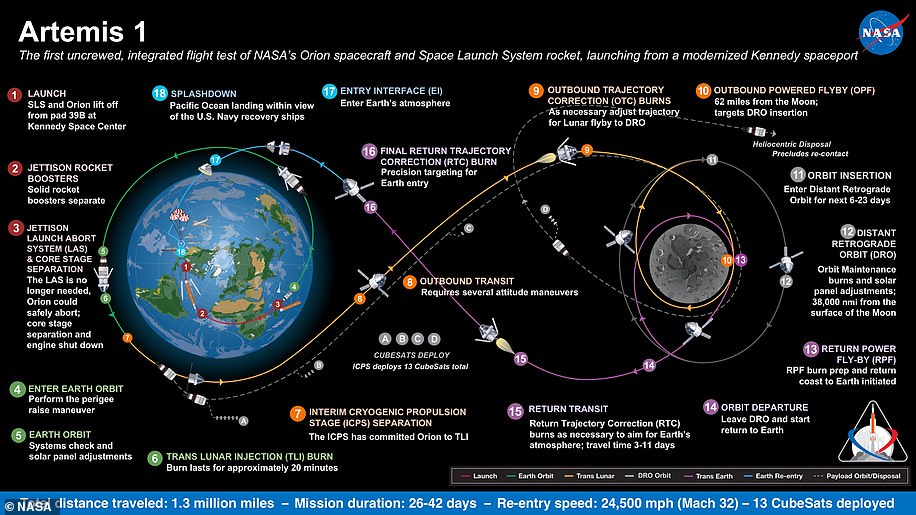
Artemis 1, formerly Exploration Mission-1, is the first in a series of increasingly complex missions that will enable human exploration to the moon and Mars.
Artemis 1 will be the first integrated flight test of NASA’s deep space exploration system: the Orion spacecraft, Space Launch System (SLS) rocket and the ground systems at Kennedy Space Center in Cape Canaveral, Florida.
Artemis 1 will be an uncrewed flight that will provide a foundation for human deep space exploration, and demonstrate our commitment and capability to extend human existence to the moon and beyond.
During this flight, the spacecraft will launch on the most powerful rocket in the world and fly farther than any spacecraft built for humans has ever flown.
It will travel 280,000 miles (450,600 km) from Earth, thousands of miles beyond the moon over the course of about a three-week mission.
Artemis 1, formerly Exploration Mission-1, is the first in a series of increasingly complex missions that will enable human exploration to the moon and Mars. This graphic explains the various stages of the mission
Orion will stay in space longer than any ship for astronauts has done without docking to a space station and return home faster and hotter than ever before.
With this first exploration mission, NASA is leading the next steps of human exploration into deep space where astronauts will build and begin testing the systems near the moon needed for lunar surface missions and exploration to other destinations farther from Earth, including Mars.
The will take crew on a different trajectory and test Orion’s critical systems with humans aboard.
Together, Orion, SLS and the ground systems at Kennedy will be able to meet the most challenging crew and cargo mission needs in deep space.
Eventually NASA seeks to establish a sustainable human presence on the moon by 2028 as a result of the Artemis mission.
The space agency hopes this colony will uncover new scientific discoveries, demonstrate new technological advancements and lay the foundation for private companies to build a lunar economy.
Scientists think the spheres were made by a recent meteor impact.
The two spheres spotted by Yutu 2
(Image credit: Xiao et al., Science Bulletin)
China's Yutu-2 rover has spotted two strange glass spheres on the far side of the moon.
Glistening like translucent pearls against the moon's dry and dusty landscape, the lunar "spherules"' are the first of their kind to be found on the lunar surface and formed fairly recently, researchers say.
Glass has been spotted on the moon before; by both the Yutu-2 rover and NASA’s Apollo 16 mission. It forms whensilicon-rich minerals, such as pyroxene and feldspar, are rapidly superheated.
However, this is the first time glass spheres have been found on the moon. Scientists don't know the exact origins of these spherules, but they think the little balls, or globules, may have been made during an explosive eruption in the moon's volcanic history or after a high-speed impact with a meteorite. The researchers will publish their findings Feb. 26 in the journal Science Bulletin.
"The globules simply blow our mind, since they are so unique on the moon," lead author Zhiyong Xiao, a planetary geologist at Sun Yat-sen University in China, said in a statement. "It is a bit unfortunate that when we first found these glasses, the rover had just passed by them and no compositional data were obtained, but such globules might be pretty common at the lunar farside."
Glass spherules, also known as microtektites, have been found on Earth around the sites of meteorite impacts, Live Science previously reported. Upon being struck by a meteorite, chunks of planetary crust are thrown up into the air, and the molten silicate minerals contained therein combine to form tiny glass beads that are sprinkled like crumbs over the surrounding landscape.
The recently discovered microtektites, measuring 0.6 to 1 inch (15 to 25 millimeters) in diameter, are larger than those found on Earth. However, they are smaller than the glass chunks that Apollo 16 astronauts found near an impact crater on the moon's near side, the largest of which measured 1.57 inches (40 mm) in diameter
The microtektites discovered by Yutu-2 were also found near impact craters, leading the researchers to believe that the tiny spheres formed from a feldspar-rich igneous rock, called anorthosite, that melted and reformed in the immediate aftermath of a meteor collision.
"The first discovery of macro-sized translucent glass globules on the moon confirms that lunar anorthosites are excellent raw materials to manufacture glasses with good light-admitting quality," Xiao said. "Their existence on the moon indicates that impact events on the other planetary bodies could also form tektite-like impact glasses."
Collecting these ball-bearing-like spheres and studying their composition and ages could help scientists understand the impact history of the moon, as well as provide useful information about potential building materials on the lunar surface.
"At the dawn of constructing human bases to the moon, lunar anorthosites are a promising and widespread resource," Xiao said.
The Yutu-2 rover, whose name means "jade rabbit" in Mandarin, was launched from China's Chang'e 4 lunar lander in January 2019 after successfully completing the first-ever soft landing on the moon's far side. Trundling across the moon's 115-mile-wide (186 kilometers) Von Kármán crater, the rover's short time on our lunar neighbor has been eventful. During that time, the rover has taken a detailed scan beneath the moon's surface, spotted a mysterious "gel-like" substance believed to be more lunar glass and even glimpsed an object that first appeared to be a mysterious hut but was later revealed as a rabbit-shaped rock.
Chang'e 4 is China's fourth mission to the moon and its second to land a rover on the lunar surface. China also landed its Zhurong rover on Mars last year and is currently building the Tiangong space station, which is set for completion by the end of 2022. China has also declared that it will establish a lunar research station on the moon's south pole by 2029.
A much-less-controlled lunar landing of a Chinese spacecraft is projected to take place on March 4, when a now-defunct rocket stage from a 2014 moon mission is expected to smash into the moon's surface while traveling at 5,771 mph (9,288 km/h), Live Science previously reported.
UFO with possible docking station caught near the sun
In recent weeks, many strange UFO-like objects have been observed by the various solar satellites.
Besides hexagon and circular objects, a huge rectangular craft with possible docking station for incoming and outgoing smaller UFOs at the rear of the mothership has been caught at the moment it passing the sun.
The video show some of these possible alien craft.
Two F-14 fighter jets chased a large triangular UFO and disappeared, Puerto Rico, December 28, 1988
On December 28, 1988, at approximately 7:45 pm, a large triangle craft roughly the size of a baseball field was seen moving steadily along in the region near the naval air station in Puerto Rico, according to many witnesses (over a hundred). Three F-14s intercepted the moving UFO and apparently tried to force it to change its course.
As the navy fighter planes engaged the large craft, it slowed down its forward speed almost to a standstill. One plane, in particular, stayed mostly to the right of the UFO and another stayed behind the UFO making close approaches at times. The third plane apparently stayed a bit farther out. The F-14 in the rear came close to the object, but as it flew either over or under the object, it was not seen again. Small red lights were also seen at times flying outside the large craft and may have served to protect the craft. It was as if the fighter plane had somehow been drawn into the large craft. The second aircraft made a sweep closer to the large object and was seen by one ground witness—using binoculars—to suddenly disappear—possibly being taken in by the UFO. The third F-14 reportedly high-tailed it out of the area on afterburner with glowing red lights chasing after it apparently in pursuit, according to ground witnesses.
Meer van UFO'S of UAP'S, ASTRONOMIE, RUIMTEVAART, ARCHEOLOGIE, OUDHEIDKUNDE, SF-SNUFJES EN ANDERE ESOTERISCHE WETENSCHAPPEN - DE ALLERLAATSTE NIEUWTJES


 Rare sky phenomenon caught on camera in China









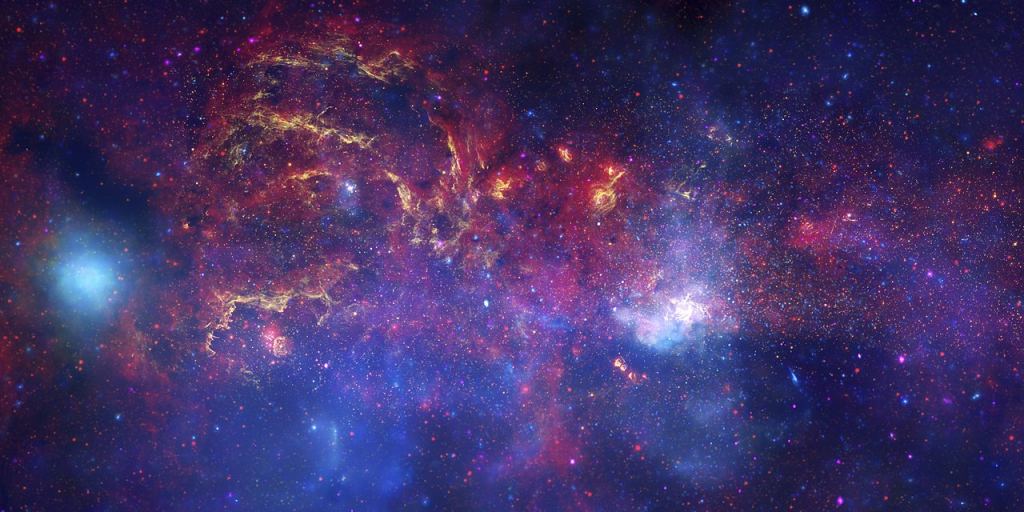
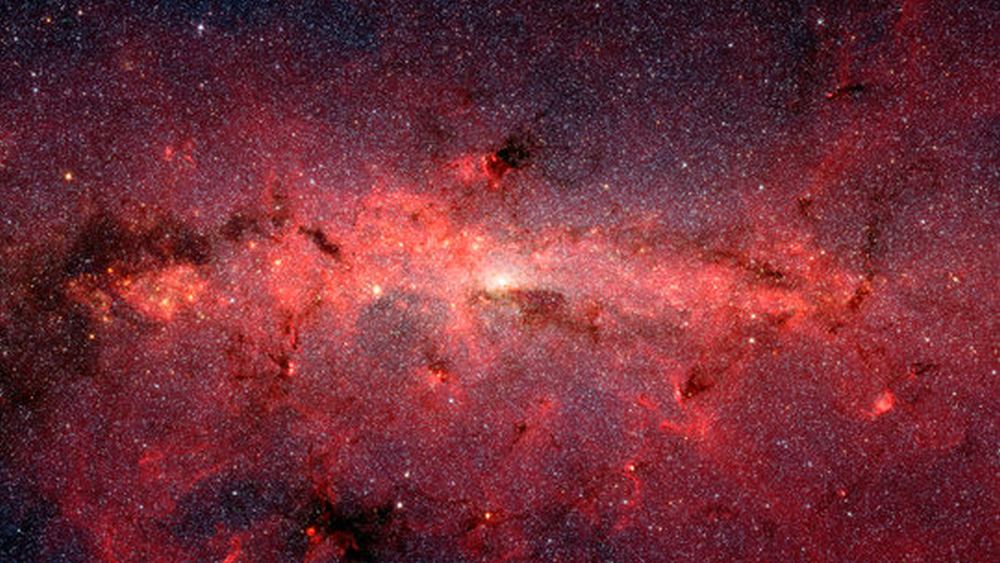
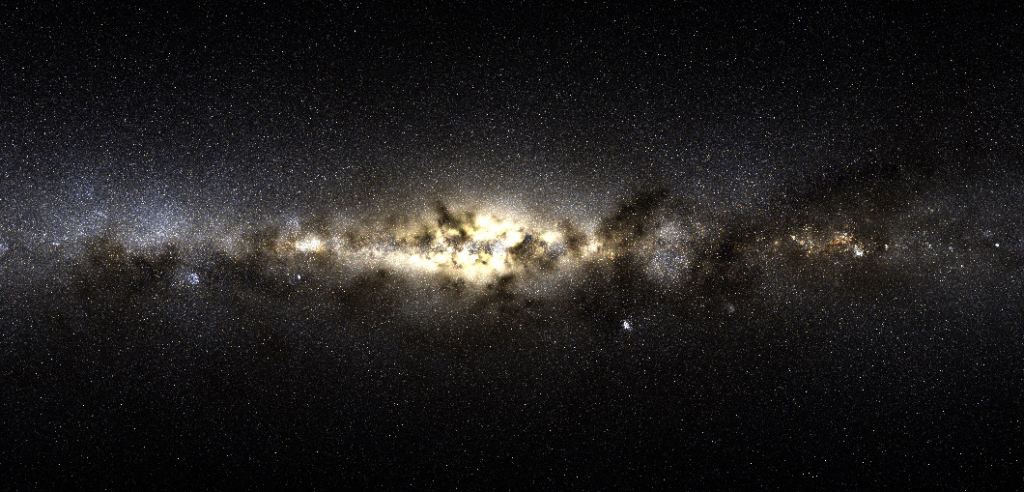


 'Mystery hut' spotted on the far side of the moon by China's...
 China approves THREE more missions to the moon: Chang'e 6, 7...
 China aims to finish its first space station by the end of...
 China DENIES responsibility for a rocket set to slam into...