Huge object passing the Sun at tremendous speed

Huge object passing the Sun at tremendous speed
Neil deGrasse Tyson’s Skeptical Take on Alleged “Mexican” Alien Bodies

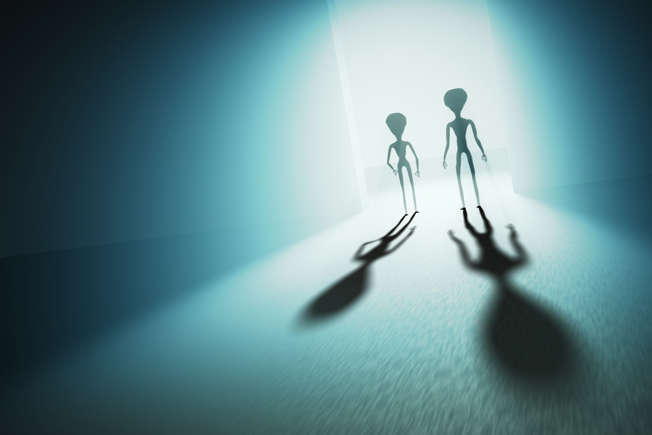
In a world where the line between science and science fiction often blurs, the debate over extraterrestrial life remains a captivating subject. Renowned astrophysicist Neil deGrasse Tyson recently addressed a peculiar incident involving alleged alien bodies presented to the Mexican congress, bringing his unique blend of scientific rigor and charismatic skepticism to the forefront.
The Extraterrestrial Claim: A Peruvian Mystery
The story begins with a sensational claim: two alien bodies, purportedly discovered in the Nazca Plains of Peru, were presented in the Mexican Congress. These remains, presented as evidence of extraterrestrial life, sparked curiosity and controversy alike. The Nazca Plains, famous for their enigmatic geoglyphs, some theorize, could be ancient runways for alien spacecraft. This backdrop adds a layer of mystery to the already intriguing claim.
Neil deGrasse Tyson: A Voice of Scientific Reason
Enter Neil deGrasse Tyson, the famed astrophysicist known for his ability to demystify complex scientific concepts. Tyson was invited to Mexico to personally inspect these alleged alien remains but chose to decline. His reasoning? The investigation of such a claim should fall into the hands of biologists and biochemists, not an astrophysicist. Tyson’s stance is a testament to the multidisciplinary nature of scientific inquiry.
The Scientific Method: Rigor Over Revelation
Tyson emphasizes the importance of the scientific method in evaluating such extraordinary claims. He argues that true scientific discovery is not the product of a single experiment or assertion but the result of collaborative verification across various independent laboratories. Objective truth, according to Tyson, emerges from a consensus among diverse and often skeptical scientific voices.
Skepticism and the Call for Extraordinary Evidence
The heart of Tyson’s argument lies in a principle famously stated by Carl Sagan: “Extraordinary claims require extraordinary evidence.” The claim of alien life is extraordinary by all standards, necessitating not just evidence but evidence of a compelling and incontrovertible nature. Tyson suggests comprehensive tissue analysis of the bodies, conducted by various independent labs, to establish the veracity of the extraterrestrial claim.
The Humanoid Conundrum: Questioning the Alien Anatomy
Adding an intriguing twist to his skepticism, Tyson questions the anthropomorphic nature of these alien bodies. He points out that genuine extraterrestrial life should arguably exhibit a degree of difference from humans that is at least as significant as the difference between humans and any other Earth life form, like a banana. The humanoid appearance of these alleged aliens, with their head, arms, and legs, seems suspiciously familiar and less alien.
A Call for Rational Discourse in the Age of Misinformation
In a world awash with misinformation and sensational claims, Tyson’s call for rigorous scientific investigation serves as a beacon of rationality. He advocates for a measured approach that balances open-mindedness with skepticism, ensuring that the pursuit of truth remains anchored in empirical evidence and collaborative validation.
VIDEO:
https://www.youtube.com/watch?v=1ZF3cARJMGU
As we continue to explore the mysteries of the universe, figures like Neil deGrasse Tyson remind us of the importance of scientific literacy and critical thinking. Whether or not these alleged alien bodies are eventually proven to be extraterrestrial in origin, the episode underscores the ongoing human quest to understand our place in the cosmos. In this quest, science remains our most reliable guide, navigating us through the realms of the known and the yet-to-be-discovered.
Komen deze voorspellingen van Stephen Hawking daadwerkelijk uit?©Getty Images
Komen deze voorspellingen van Stephen Hawking daadwerkelijk uit?
Stephen Hawking (1942-2018) stond bekend om zijn werk op het gebied van zwarte gaten en de algemene relativiteitstheorie. Maar de beroemde natuurkundige stapte vaak buiten zijn eigen onderzoeksveld en gebruikte zijn erkenning om te benadrukken wat hij zag als de grote uitdagingen en existentiële bedreigingen voor de mensheid in de komende decennia. Variërend van onderwerpen als buitenaardse wezens tot het einde van de wereld, haalden zijn uitspraken de krantenkoppen en bleken ze soms controversieel.
Nieuwsgierig? Klik door voor enkele van zijn beroemdste voorspellingen.
©Shutterstock
De aarde verlaten
Al tientallen jaren vertelt de theoretische natuurkundige de mensen dat ze moeten beginnen met het proces om zich permanent op andere planeten te vestigen.
©Shutterstock
De aarde verlaten
Hawking beweerde dat de mensheid uiteindelijk het slachtoffer zou worden van een ramp die zo groot was dat we zouden uitsterven, misschien wel eerder vroeger dan later.
©Shutterstock
De aarde verlaten
In 2016 vertelde hij de BBC het volgende: "Hoewel de kans op een ramp voor de planeet Aarde in een bepaald jaar vrij klein kan zijn, wordt het in de loop van de tijd steeds groter en wordt het een bijna zekerheid in de komende duizend of 10.000 jaar.
©Shutterstock
Andere planeten en zonnestelsels koloniseren
Om het voortbestaan van de mensheid te garanderen, geloofde Hawking dat we andere planeten en zonnestelsels zouden moeten koloniseren.
©Shutterstock
Andere planeten en zonnestelsels koloniseren
"Verspreiding is misschien het enige dat ons van onszelf redt. Ik ben ervan overtuigd dat de mens de aarde moet verlaten", zei hij in 2017 op een Noors wetenschaps- en kunstenfestival.
©Shutterstock
De opkomst van kunstmatige intelligentie
Hawking zag de kansen van de vooruitgang op het gebied van kunstmatige intelligentie, maar waarschuwde ook voor de gevaren.
©Shutterstock
De opkomst van kunstmatige intelligentie
In 2014 vertelde hij de BBC dat "de ontwikkeling van volledige kunstmatige intelligentie het einde van het menselijk ras zou kunnen betekenen".
©Shutterstock
De opkomst van kunstmatige intelligentie
Hawking geloofde dat de kunstmatige basisintelligentie die tot nu toe was ontwikkeld al heel nuttig was gebleken. De technologie die hij gebruikte om te communiceren bevatte bijvoorbeeld een basisvorm van AI.
©Shutterstock
De opkomst van kunstmatige intelligentie
Maar Hawking vreesde de gevolgen van geavanceerde vormen van machine-intelligentie die mensen zouden kunnen evenaren of overtreffen.
©Shutterstock
Genbewerking
In zijn postume verzameling artikelen en essays 'Brief Answers to the Big Questions' voorspelde Hawking dat genetische manipulatietechnieken zullen leiden tot een ras van "supermensen".
©Shutterstock
Genbewerking
"Ik ben er zeker van dat mensen in de loop van deze eeuw zullen ontdekken hoe ze zowel intelligentie als instincten zoals agressie kunnen veranderen," schreef hij.
©Shutterstock
Genbewerking
"Zodra zulke supermensen verschijnen, zullen er aanzienlijke politieke problemen zijn met niet-verbeterde mensen, die niet in staat zullen zijn om te concurreren," schreef hij. "Vermoedelijk zullen ze uitsterven of onbelangrijk worden. In plaats daarvan zal er een ras zijn van zelfontwerpende wezens die zich steeds sneller verbeteren."
©Shutterstock
De grootste bedreiging voor de aarde
In hetzelfde boek voorspelde Hawking dat de grootste bedreiging voor de aarde een botsing met een asteroïde is, net zoals de asteroïde die de dinosauriërs doodde.
©Shutterstock
De grootste bedreiging voor de aarde
Daar hebben we echter "geen verdediging" tegen, schreef Hawking. Aan de andere kant zag hij de opwarming van de aarde als een meer directe bedreiging.
©Shutterstock
Klimaatverandering
Hawking was vooral bezorgd over een zogenaamd omslagpunt, waarbij de opwarming van de aarde onomkeerbaar zou worden.
©Shutterstock
Klimaatverandering
Hij uitte ook zijn bezorgdheid over het besluit van Amerika om zich in 2017 terug te trekken uit de Overeenkomst van Parijs.
©Shutterstock
Klimaatverandering
"Trump's actie [het terugtrekken uit het Akkoord van Parijs] kan de aarde over de rand duwen, om te worden zoals Venus, met een temperatuur van 250 graden en zwavelzuurregens," vertelde Hawking aan de BBC.
©Shutterstock
Klimaatverandering
De Intergouvernementele Werkgroep inzake klimaatverandering (IPCC) van de VN waarschuwt ook voor het potentiële risico op het bereiken van omslagpunten in het klimaat, naarmate de temperaturen stijgen.
©Shutterstock
De aarde zal in een vuurbal veranderen
Hawking theoretiseerde dat de planeet tegen 2600 in een gigantische vuurbal zou veranderen door overbevolking en energieverbruik. Dit zou de aarde onbewoonbaar maken.
©Shutterstock
De aarde zal in een vuurbal veranderen
"Met de klimaatverandering, de dreigende inslagen van asteroïden, epidemieën en de bevolkingsgroei wordt onze eigen planeet steeds precairder," vertelde hij de BBC in 2017.
©Shutterstock
De aarde zal in een vuurbal veranderen
Dit was een van de redenen waarom Hawking het idee verdedigde dat mensen zich permanent op andere planeten zouden vestigen.
©Shutterstock
Buitenaards contact
Aangezien Hawking het grootste deel van zijn leven naar de ruimte heeft gekeken, is het niet verwonderlijk dat hij nadacht over de vraag of er andere levensvormen bestaan.
©Shutterstock
Buitenaards contact
Er is zelfs een hele tak van wetenschap, SETI (Search for Extra-Terrestrial Intelligence) genaamd, die zich bezighoudt met het luisteren naar signalen van intelligente wezens elders in het universum.
©Shutterstock
Buitenaards contact
Hawking waarschuwde echter tegen actieve pogingen om buitenaardse beschavingen te begroeten.
©Shutterstock
Buitenaards contact
In 2010 vertelde hij Discovery Channel: "Als buitenaardse wezens ons bezoeken, zou de uitkomst hetzelfde zijn als toen Columbus in Amerika landde, wat niet goed afliep voor de inheemse Amerikanen."
©Shutterstock
Het beste idee dat de mensheid zou kunnen uitvoeren
Toen het tijdschrift Time hem in 2010 vroeg welke wetenschappelijke ontdekking of vooruitgang hij tijdens zijn leven zou willen zien, antwoordde Hawking met "kernfusie". Dit zou een nieuwe bron van koolstofvrije energie zijn, waarbij twee waterstofatomen samensmelten om een heliumatoom en veel energie te produceren.
©Shutterstock
Het beste idee dat de mensheid zou kunnen uitvoeren
"Ik zou graag zien dat kernfusie een praktische energiebron wordt. Het zou een onuitputtelijke energiebron zijn, zonder vervuiling of opwarming van de aarde," zei hij.
Bronnen:
Uitgestorven reus groef deze gigantische tunnels 10.000 jaar geleden (FOTO'S)Deze enorme tunnels zijn gegraven door oude luiaards zo groot als olifanten.
De grootste tunnel is ruim 600 meter lang. Sommige zijn groot genoeg voor auto's om er doorheen te rijden, maar ze zijn niet door de mens gemaakt. Reusachtige grondluiaards hebben ze uitgegraven lang geleden. Dit opvallende tunnelcomplex in Zuid-Amerika spreekt tot de verbeelding.
Reusachtige luiaards hebben ze uitgegraven
De wanden van de tunnels zijn bedekt met gigantische klauwafdrukken van de vloer tot het plafond. Geologen noemen de tunnels 'paleo-holen', waarvan wordt aangenomen dat ze zijn gegraven door een inmiddels uitgestorven soort gigantische grondluiaard.
Heinrich Frank, een professor aan de Federale Universiteit van Rio Grande in Brazilië, ontdekte de tunnels bij toeval tijdens een rondleiding op een bouwplaats. In het kleine stadje Novo Hamburgo werden de tunnels begin jaren 2000 voor het eerst ontdekt, wat leidde tot jarenlang onderzoek en ontdekking van nog meer tunnels.
(Skwadra by Tagtik/Illustration picture: Unsplash)
Het mysterieuze Voynichmanuscript: worden zijn geheimen ooit ontrafeld?©Aangeboden door The Daily Digest
Het mysterie van het Voynichmanuscript
Wist je dat er nog steeds boeken op de wereld zijn die we nog niet ontcijferd hebben? Eén daarvan is het oude Voynichmanuscript met zijn handgeschreven, geïllustreerde code. Geleerden noemen het onbekende schrijfsysteem 'Voynichees'.
240 pagina's met onontcijferde code
©Aangeboden door The Daily Digest
De code is geschreven op ongeveer 240 bladzijden perkament, met illustraties van planten, zwevende hoofden, dierenriemtekens, fantastische wezens (waaronder draken), kastelen, badende vrouwen en astronomische symbolen.
Afbeelding: Towfiqu Barbhuiya / Unsplash
©Aangeboden door The Daily Digest
Waar komt het Voynichmanuscript vandaan?
Analyse van het perkament en de stijl van de symbolen en tekeningen geeft aan dat het wellicht is geschreven in Italië tijdens de Renaissance. Het dateert van ergens in de 15e of 16e eeuw.
©Aangeboden door The Daily Digest
Delen met verschillende wetenschappen
Onderzoekers hebben op basis van de illustraties de inhoud ingedeeld in zes delen: botanisch, astronomisch en astrologisch, biologisch, kosmologisch, farmaceutisch en recepten.
©Aangeboden door The Daily Digest
Niets bekend over de auteur of betekenis
Afgezien van deze algemene structuur hebben onderzoekers niets over het document kunnen herleiden. De precieze oorsprong, de auteur en het doel ervan zijn nog steeds onbekend. Er zijn ontelbare uren besteed aan pogingen om het te doorgronden.
©Aangeboden door The Daily Digest
Verschillende eigenaren door de eeuwen heen
Het manuscript is volgens de overlevering al in verschillende handen geweest. Daaronder waren die van de keizer Rudolf II van het Heilige Roomse Rijk, die regeerde in de 16e eeuw. Na verschillende keren van eigenaar te zijn veranderd, dook de mysterieuze tekst op bij een geheime boekverkoop in 1903.
Afbeelding: Loren Biser / Unsplash
©Aangeboden door The Daily Digest
Waarom heet het 'Voynich'?
Het manuscript dankt zijn naam aan de antiquair die het in 1912 kocht van het Collegio Ghisleri van de jezuïeten bij Rome. Zijn naam was Wilfrid M. Voynich.
©Aangeboden door The Daily Digest
Zijn uiteindelijke bestemming
De weduwe van de boekhandelaar verkocht het mysterieuze document aan antiquair Hans P. Kraus, die het in 1969 schonk aan de Rare Book and Manuscript Library van Yale-universiteit. En daar bevindt het zich vandaag de dag nog steeds, wachtend op de persoon die de juiste betekenis ervan ontdekt.
Afbeelding: Tim Bish / Unsplash
©Aangeboden door The Daily Digest
Hoe ziet het Voynichmanuscript eruit?
Het boek heeft een grootte van 23,5 × 16,2 × 5 cm, waarbij de perkamentpagina's in 18 katernen zijn samengevouwen. Hoewel velen beweren dat het 240 pagina's telt, hangt dit aantal vooral af van hoe de uitvouwingen van het manuscript worden geteld.
©Aangeboden door The Daily Digest
Hoe weten we zijn leeftijd?
Het perkament waarop het document is geschreven komt volgens koolstofdatering uit het begin van de 15e eeuw (1404-1438). Analyses van de schilderstijl suggereren ook dat het document uit die eeuw stamt.
©Aangeboden door The Daily Digest
De mysterieuze geschriften van het Voynichmanuscript
Naar verluidt is het manuscript een soort middeleeuwse farmaceutische en medische gids. Niet alle planten die erin beschreven worden zijn echter geïdentificeerd. Er schijnt ook een verband te zijn met enkele astrologische aspecten, maar elke interpretatie daarvan berust slechts op speculatie.
©Aangeboden door The Daily Digest
Velen hebben geprobeerd het te ontcijferen
Onder degenen die geprobeerd hebben de code te kraken, bevinden zich geleerden als Alan Turing, bekend van het breken van de Enigma-code tijdens de Tweede Wereldoorlog. Ook cryptanalist Elizabeth Smith Friedman, die eveneens vijandelijke codes ontcijferde in beide wereldoorlogen, deed een poging.
©Aangeboden door The Daily Digest
Een doorbraak in 2017?
In september 2017 meldde Yale Medicine Magazine dat de amateurontcijferaar Nicholas Gibbs het Voynichmanuscript zou hebben ontcijferd.
©Aangeboden door The Daily Digest
Handboek voor dames
Gibbs schreef in de Times Literary Supplement dat het manuscript "een handboek zou zijn met geselecteerde remedies uit de gangbare behandelingen van de middeleeuwen, [en] een handleiding voor de gezondheid en het welzijn van de welvarendere dames in de samenleving".
©Aangeboden door The Daily Digest
Maar... hij werd weersproken
Dr. Lisa Fagin Davis van de Medieval Academy of America weerlegde volgens de Times Literary Supplement de beweringen van Gibbs: "Eerlijk gezegd ben ik een beetje verbaasd dat de TLS het heeft gepubliceerd... Als ze dit bericht alleen maar naar de Beinecke Library hadden gestuurd, zouden die het in een oogwenk hebben weerlegd".
©Aangeboden door The Daily Digest
Een computerprogramma om het te ontcijferen
Volgens de website Snopes.com probeerden enkele Canadese onderzoekers in 2016 de code te kraken. Ze gebruikten daarbij een zelfgemaakt computerprogramma.
Afbeelding: David Pupaza / Unsplash
©Aangeboden door The Daily Digest
Een algoritme voor 380 talen
Een algoritme werd geprogrammeerd om 380 verschillende taalversies van de 'Universele verklaring van de rechten van de mens van de Verenigde Naties' te ontcijferen. Op basis van die steekproef stelden ze vast dat 80% van de woorden in het Voynichmanuscript een Hebreeuwse oorsprong zou kunnen hebben.
Foto: Kevin Ku / Unsplash
©Aangeboden door The Daily Digest
Google Translate
Maar geen enkele Hebreeuwse vertaler kon de tekst omzetten in coherent Engels. Ze namen zelfs hun toevlucht tot een hulpmiddel dat iedereen kent: Google Translate.
©Aangeboden door The Daily Digest
Eén zin en enkele woorden
Met de app slaagden ze erin een zin te krijgen: 'Ze deed aanbevelingen aan de priester, man des huizes en mij en mensen'. Bovendien, meldt Snopes dat ze een paar woorden vonden: 'kruiden', 'boer', 'licht', 'lucht' en 'vuur'.
©Aangeboden door The Daily Digest
Google Translate was niet de beste optie
Het resultaat was al met al toch teleurstellend. Bovendien hechtte de wetenschappelijke gemeenschap weinig belang aan het project, want het algoritme ontcijferde moderne talen, geen middeleeuwse, en Google Translate is ook geen betrouwbaar middel gebleken om dit soort documenten te vertalen.
©Aangeboden door The Daily Digest
Misschien is het allemaal nep!
Terwijl sommigen nog steeds proberen het manuscript te ontcijferen, stellen andere theorieën dat het gewoon wartaal is van occulte filosofen. Volgens weer anderen, zoals Snopes aangeeft, is de Voynichtekst een gebedenboek van een ketterse christelijke sekte.
©Aangeboden door The Daily Digest
De zoektocht gaat door...
En zo herhaalt het onderzoek zich, steeds weer, waarbij slechts één zekerheid overblijft: dat het Voynichmanuscript uniek is in zijn mysterie. Zal iemand er ooit in slagen het te ontcijferen? We zullen zien of er ooit achter zullen komen...
Deze maan slingert mogelijk bewijs voor buitenaards leven in het rond en nieuw onderzoek suggereert dat wij dat heelhuids kunnen opvangenDe waterpluimen van Enceladus bevatten mogelijk bouwstenen voor leven. En nu hebben onderzoekers bewijs geleverd dat we deze kunnen detecteren wanneer ruimtevaartuigen monsters nemen.
In de speurtocht naar buitenaards leven richten veel optimistische blikken zich op Enceladus, de ijskoude maan van Saturnus. En met goede reden. Ondanks het ijzige oppervlak herbergt deze kleine maan een vloeibare, ondergrondse oceaan. Bovendien ontsnappen er uit scheuren in het ijzige oppervlak grote waterpluimen, die een verscheidenheid aan organische verbindingen bevatten. Tot nu toe was het echter onduidelijk of de organische verbindingen in die pluimen bestand zouden zijn tegen de snelheid waarmee deze omhoog schieten. Maar een nieuwe studie stemt nu hoopvol.
Gedurende zijn missie van twee decennia ontdekte de Cassini-ruimtesonde van NASA dat Enceladus waterpluimen met een snelheid van ongeveer 400 m/s uit zijn oppervlak spuwt. Deze uitbarstende pluimen creëren een uitstekende kans om monsters te verzamelen en de samenstelling van de oceanen van Enceladus te onderzoeken, om zo te bepalen of deze maan mogelijk leven herbergt. Maar zoals gezegd was het tot nu toe onzeker of organische stoffen wel intact zouden blijven wanneer ze met zulke hoge snelheden worden weggeschoten.
Aerosol-impact-spectrometer
Om dit te onderzoeken, maakten wetenschappers gebruik van een bijzondere aerosol-impact-spectrometer. Deze is ontworpen om de botsingsdynamica van afzonderlijke aerosolen en deeltjes bij hoge snelheden te bestuderen. “Dit specifieke apparaat is wereldwijd uniek omdat het in staat is individuele deeltjes te selecteren en ze te versnellen of vertragen naar vooraf bepaalde eindsnelheden,” legt onderzoeker Robert Continetti uit. “We kunnen het gedrag van de deeltjes onderzoeken over verschillende groottes, variërend van enkele micron in diameter tot honderden nanometers. Dit geldt voor diverse materialen. Bovendien kunnen we bestuderen hoe de deeltjes verstrooien en hoe hun structuren veranderen bij een botsing.”
Het experiment
Voor het experiment maakten de onderzoekers eerst ijskorrels met elektrospray-ionisatie. Hierbij wordt water door een naald geperst die onder hoge spanning staat, waardoor het water in steeds kleinere druppels uiteenvalt. Deze druppels werden vervolgens in een vacuüm gebracht, waar ze bevroren. Het team mat de massa en lading van de ijskorrels, volgden ze terwijl ze door de spectrometer bewogen en timede vervolgens het exacte moment van impact tot op de nanoseconde.
Intact
Uit de bevindingen blijkt dat aminozuren zelfs intact blijven bij botsingen met snelheden tot 4,2 km/s. Dit betekent dat deze belangrijke moleculen ongeschonden uit de waterpluimen op Enceladus kunnen komen. Ze blijken opgewassen tegen de enorme snelheid waarmee de waterpluimen uit het oppervlak schieten. En dat ondersteunt het idee dat ze gedetecteerd kunnen worden wanneer ruimtevaartuigen monsters nemen. “Om te begrijpen welk soort leven mogelijk is in ons zonnestelsel, is het belangrijk om te weten of de moleculen in de monsters wel of niet beschadigd zijn,” verklaart Continetti. “Op die manier kunnen we eigenschappen herkennen die wijzen op wat het tot een op zichzelf staande levensvorm maakt. Ons werk toont aan dat dit mogelijk is met de waterpluimen van Enceladus.”
De bevindingen hebben ook implicaties voor de aanstaande Europa Clipper missie, die in 2024 wordt gelanceerd en op Jupiter zal afstevenen. Europa, een van de grootste manen van Jupiter, is ook een oceaanwereld en heeft een vergelijkbare ijzige samenstelling als Enceladus. Wetenschappers hopen dat Europa Clipper of toekomstige missies naar Saturnus een specifieke set moleculen in de ijskorrels kunnen identificeren die kunnen wijzen op het bestaan van leven in de ondergrondse oceanen van deze manen. Daarom is het van groot belang dat deze moleculen intact blijven ondanks hun snelle uitstoting van de maan, en dat ze succesvol worden verzameld door een ruimtesonde. En zoals nu blijkt, kunnen tekenen van leven dus inderdaad succesvol op deze ijskoude manen worden gedetecteerd. Dat brengt ons weer stap dichter bij het ontrafelen van die ene fascinerende vraag: bestaat er buitenaards leven?
Digging Deeper to Find Life on Ocean Worlds


Digging Deeper to Find Life on Ocean Worlds
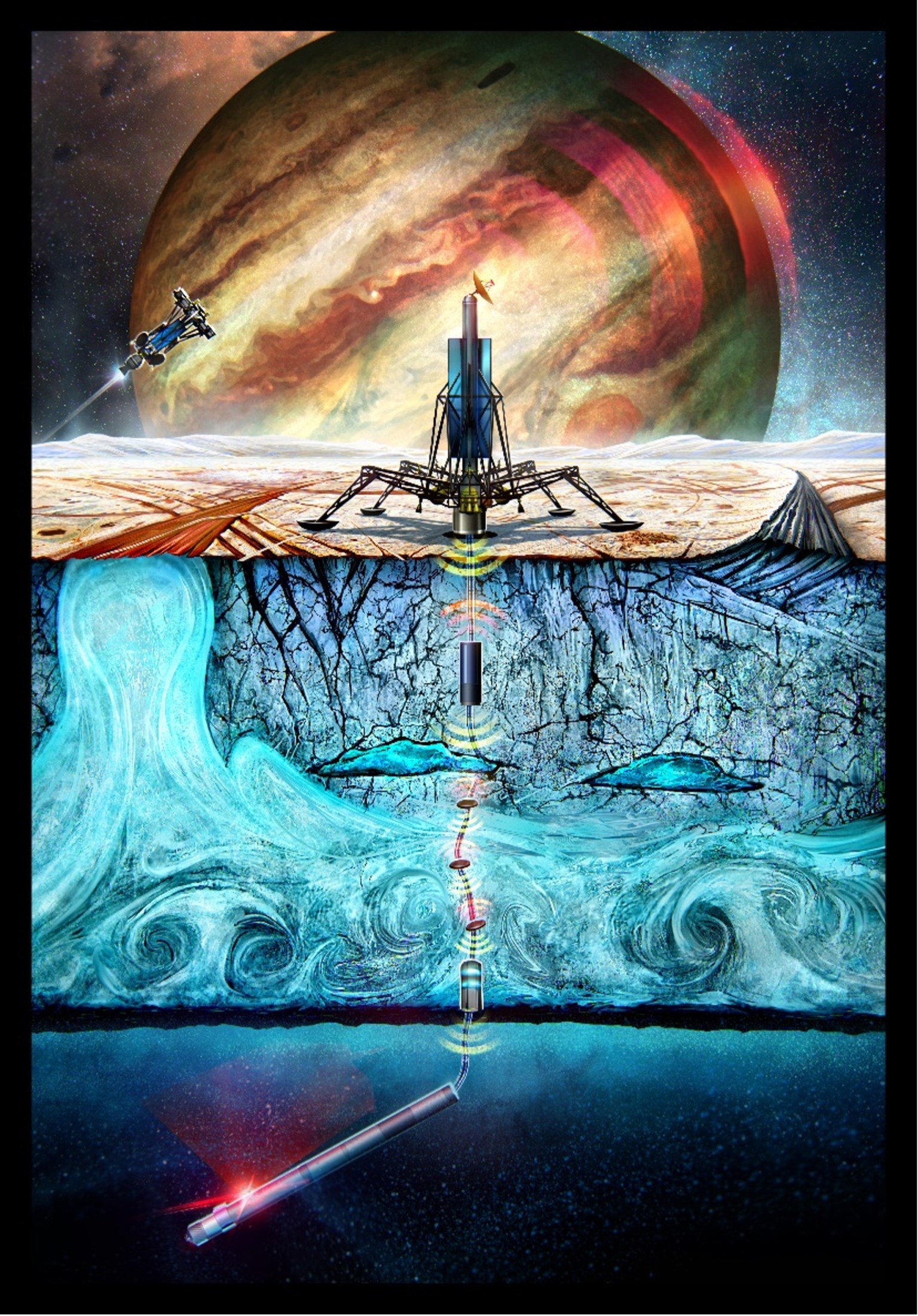
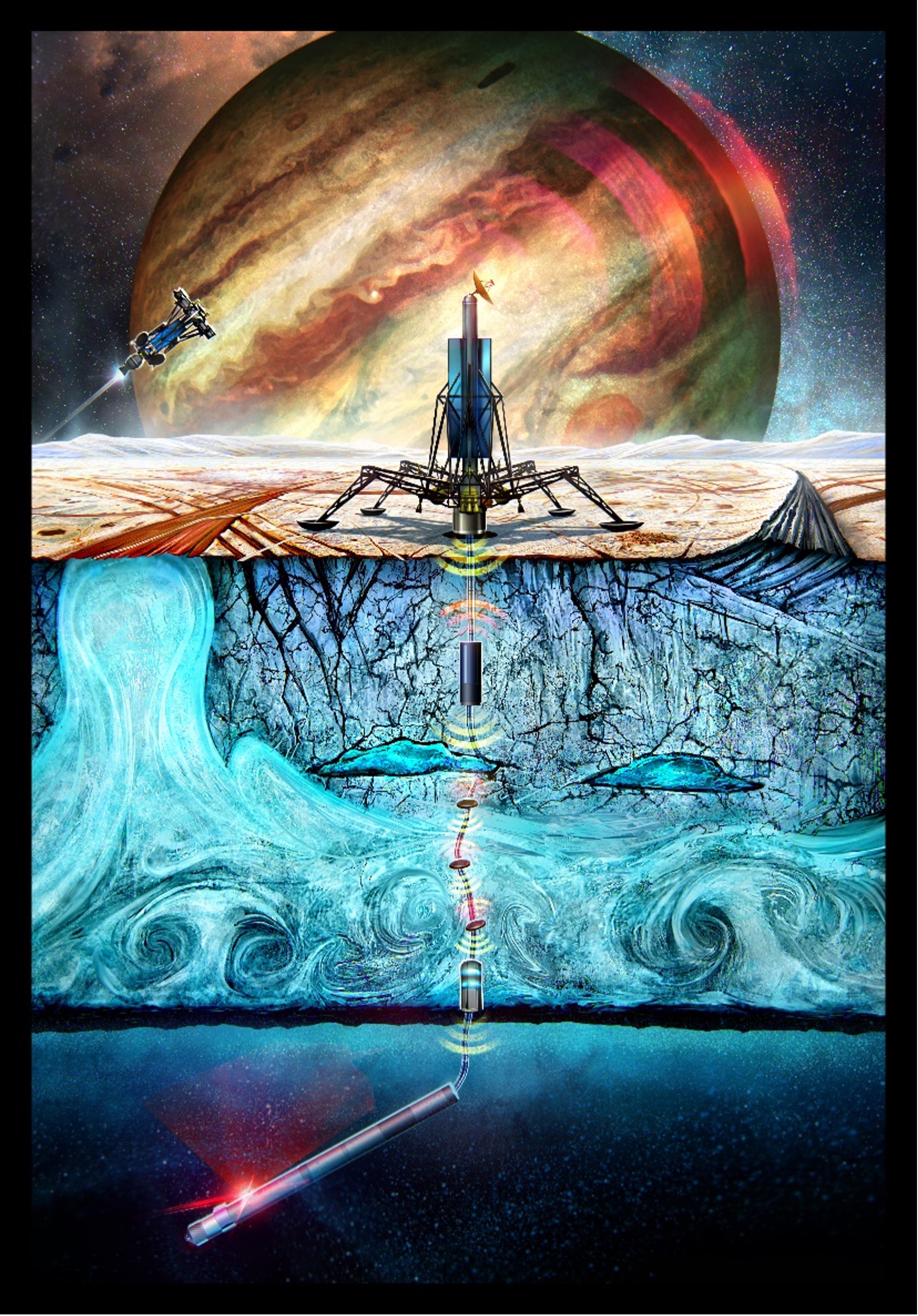
In February 2023, researchers from around the country gathered at a NASA-sponsored workshop to discuss the latest developments and a roadmap for a cryobot mission concept to drill through the icy crusts of Europa and Enceladus and search for life.

“Follow the water” has been the mantra of the astrobiology community in search of alien life in the universe. Water is a fundamental building block of all terrestrial life as we know it and—as discovered by various space missions—water is abundant throughout the solar system, and perhaps, the universe. Ancient eroded features on Mars show clear evidence of a wet history, and the ongoing quest of the Perseverance rover aims to uncover clues as to whether or not Mars once hosted a population of microbes. However, there is only so much we can learn from the fossil record. To truly understand the nature of possible alien life, we must directly investigate the source—the liquid water.
Enter “Ocean Worlds.” Over the past two decades, scientists have discovered that a vast number of icy moons orbit the outer giant planets in our solar system. Many of these moons show strong evidence for harboring global oceans beneath their icy crusts. In fact, these moons likely have far more liquid water than all of Earth’s oceans combined, and some may even have the right conditions to foster life. Two moons, in particular, have captured the imaginations of astrobiologists due to their amenable conditions for life and their relative ease of interrogation: Jupiter’s moon, Europa and Saturn’s moon, Enceladus. Both show strong evidence of a global subsurface ocean beneath a kilometers-thick water-ice crust—but how can we access this liquid water?
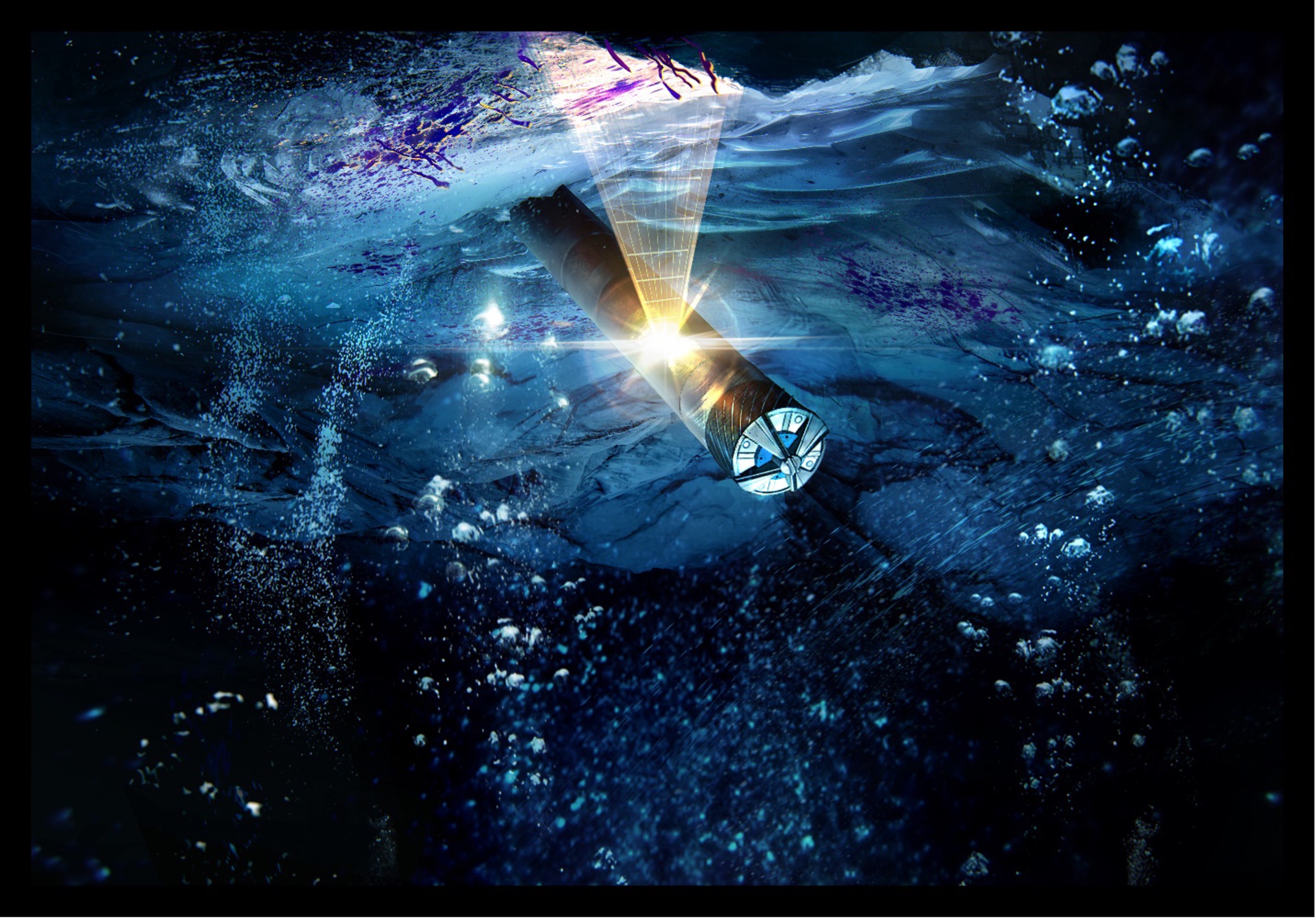
Various concepts for ocean access have been investigated over the past decades, ranging from robots that descend through crevasses to drills of varying types. One concept that has emerged as a leading candidate is the cryobot. A cryobot is a self-contained cylindrical probe that uses heat to melt the ice beneath it. The melted water then flows around the probe before refreezing behind it. Thermal ice drilling is so simple and effective that it has become a common tool for studying terrestrial glaciers and ice sheets. But how can we translate this technology to a system that can penetrate planetary icy crusts, which are colder, thicker, and more uncertain?
This dilemma has been a core focus of researchers—many of whom are supported by NASA’s Scientific Exploration Subsurface Access Mechanism for Europa (SESAME) and Concepts for Ocean worlds Life Detection Technology (COLDTech) programs—for the past several years. In February 2023, NASA’s Planetary Exploration Science Technology Office (PESTO) convened a workshop at the California Institute of Technology, which brought together nearly 40 top researchers from diverse fields and institutions around the country to discuss progress in maturing this technology and to assess the challenges that remain. Recent studies have made significant progress in refining our understanding of the ice shell environment, detailing a mission architecture, and maturing critical subsystems and technologies. In particular, workshop participants identified four key subsystems that drive the roadmap for developing a flight-ready architecture: the power, thermal, mobility, and communication subsystems.

First, the heart of a cryobot is a nuclear power system that generates the sustained heat required to melt through kilometers of ice. Various nuclear power systems that could suit a cryobot system have been identified, including the familiar Radioisotope Power Systems (RPS) that have powered many deep-space missions, and fission reactors that may be developed in the coming years. Two key constraints that drive the power system design are: (1) sufficient total power and density to facilitate efficient melting (about 10 kW), and (2) integration within a structural vessel to protect the power system from the high pressures of the deep ocean. These challenges are both solvable and have some historical precedent: NASA’s Cassini mission had a 14 kW thermal power system, and several Radioisotope Thermoelectric Generators (RTGs) were deployed to the bottom of the ocean in the 1960s and 1970s as power sources for navigation beacons, which operated in comparable pressures to the Europan ocean. However, a cryobot power system will require a concerted effort and close collaboration with the Department of Energy throughout the maturation of the mission concept.
Second, a thermal management system is required to manage the heat produced by the onboard nuclear power system, maintain safe internal temperatures, and distribute heat to the environment for efficient performance. This system requires two independent pumped fluid circuits: one that circulates an internal working fluid through channels embedded in the skin and another that circulates melted ice water with the surounding environment. Some of these technologies have been demonstrated at reduced and full scale, but more work is needed to validate performance at the range of ice conditions expected in the outer solar system.
In addition, the icy shells of Europa and Enceladus will contain impurities such as dust and salt, which, when sufficiently concentrated, may require auxilliary systems to penetrate. A combination of “water jetting” and mechanical cutting has been demonstrated to be effective at clearing debris ranging from fine particulate to solid blocks of salt from beneath the probe. Some impurities such as larger rocks, voids, or water bodies may remain impenetrable, requiring the cryobot to incorporate a downward-looking mapping sensor and steering mechanism—both of which have been demonstrated in terrestrial prototypes, though not yet in an integrated system. High-priority future work includes a more rigorous and probabilistic definition of the icy environments to quantify the likelihood of potential mobility hazards, and an integrated demonstration of hazard mitigation systems on a flight-like cryobot system. Europa Clipper will also provide key observations to constrain the prevalence and characteristics of hazards for a cryobot.
Finally, a cryobot mission requires a robust and redundant communication link through the ice shell to enable the lander to relay data to an orbiting relay asset or directly to Earth. Fiber optic cables are the industry standard for communicating with terrestrial melt probes and deep-sea vehicles, but require careful validation for deployment through ice shells, which are active. The movement of ice in these shells could break the cable. A team led by Dr. Kate Craft at the Johns Hopkins Applied Physics Laboratory has been investigating the propensity of tethers embedded in ice to break during ice-shear events, as well as methods to mitigate such breakage. While preliminary results from this study are highly encouraging, other teams are exploring wireless techniques for communicating through the ice, including radio frequency, acoustic, and magnetic transceivers. These communication systems must be integrated onto the aft end of the probe and depoyed during its descent. Current projects funded under the NASA COLDTech program are taking the first steps toward addressing key risks for the communications system. Future work must validate performance across a broader range of conditions and demonstrate integration on a cryobot.
While the power, thermal, mobility, and communication subsystems took center stage, workshop participants also discussed other key systems and technologies that will require maturation to enable a cryobot mission. These topics include an integrated instrument suite with accommodations for liquid sampling and outward-facing apertures, planetary protection and sterilization strategies, materials selection for corrosion mitigation, ice-anchoring mechanisms, and autonomy. However, none of these technologies were identified as major risks or challenges in the cryobot mission concept roadmap.
Overall, the consensus finding of workshop participants was that this mission concept remains feasible, scientifically compelling, and the most plausible near-term way to directly search for life in situ on an ocean world. Continued support would allow scientists and engineers to make even further progress toward readying cryobots for future mission opportunities. The potential for the direct detection of life on another world seems more possible than ever.
This research was carried out at the Jet Propulsion Laboratory, California Institute of Technology, under a contract with the National Aeronautics and Space Administration (80NM0018D0004).
UFO With Entities Did Land In Rendlesham Forest & Filmed On Cine Camera, Revealed In New USAF Airman TestimonyThe Rendlesham Forest UAP incident is one of the legendary UFO encounter cases in the history of UFOlogy. In 1980, Lt. Col. Charles Halt, a deputy commander of the US Air Force Base, received the news of strange sightings near twin NATO airbases of RAF Woodbridge and RAF Bentwaters in Suffolk, England. In the early morning of December 26, Airman First Class John Burroughs reported the sighting that included vague descriptions, ranging from unusual supernatural light, glittering triangular spaceships, and scorched footprints on the ground.
It is always argued whether the Suffolk UFO landing actually happened or it was just a hoax. On the official note, there is no physical evidence to prove this claim, only testimonies provided by credible witnesses. As the years passed, a piece of new information indulged which opened many untold stories of this case.
Gary Heseltine, a former police detective and UFO investigator recounts the complex story of the Rendlesham Forest UFO incidents, which is considered the second most famous UFO case after Roswell in 1947. Heseltine researched the case for over five years, analyzing various published materials and uncovering lesser-known information.
In his book, “NON-HUMAN: The Rendlesham Forest UFO Incidents: 42 Years of Denial“, he presented amazing new military testimony from a previously unknown witness. The book discusses the political aspects of the incident, suggesting that the narrative may have been controlled by a few individuals for years. Heseltine argues that the UK and US governments have downplayed the true significance of the case.
This series of events occurred between December 26 and December 28, 1980. A mysterious flying object flew at such an incredible speed that violated the laws of physics. Moreover, despite the very high speed, the alien spacecraft did not make any noise.
The incident involves a young airman’s claim of witnessing a translucent UFO about 30 ft in diameter landing in a farmer’s field. This claim has been debated for many years. Later, round-shaped prints were found on the ground clearly from a heavy object, which were at a distance of about 3 meters from each other. Burns were also seen near these grooves on the ground.
On December 28, when soldiers were sent for a more thorough study of the area, they noted the excess of radiation. And at this time, a UFO reappeared, it flew by with incredible speed, illuminating everything around with bright red lights. The light emanating from the ship was so strong that the sensors of the night sights burned out, and the lights continued to hover and shine over the forest and field for some time.
Heseltine discovered a new witness account that sheds new light on the landing of a triangular-shaped UFO in the forest, an event previously recounted publicly only by Staff Sgt Jim Penniston and Airman John Burroughs. Heseltine reveals that after extensive research, he has obtained corroboration from a military witness, Sergeant Adrian Bustinza, confirming the occurrence of a UFO landing.
In a four and half hour transatlantic telephone interview (which was audio recorded) he admitted that he had been involved in a second UFO related event, a landing of a translucent craft approximately 30 feet in diameter which was surrounded by a ring of US Air Force Security police officers, writes Heseltine. (Source)
The landing was filmed on video and cine cameras, marking it as the second UFO landing event. Heseltine emphasizes that Bustinza’s involvement was significant because he was part of the security perimeter around the craft, as was Larry Warren, an honorably discharged military eyewitness, and was the first to go public about the Bentwaters UFO cover-up.
Sergeant Bustinza’s account corroborates Warren’s version of events, confirming that the entire incident was being filmed. Additionally, Bustinza states that Colonel Gordon Williams, the Base Commander of the twin US bases of RAF Bentwaters and RAF Woodbridge, was present at the second landing. Despite Colonel Williams’ denial of involvement, both Bustinza and Warren assert that he was present during the event.
“When I arrived [at the scene], it was going in and out through the trees and at one stage it was hovering,” Sgt. Adrian Bustinza said. (Source)
Interestingly, Heseltine mentioned that both Bustinza and Warren state that entities or lifeforms were seen near the craft, engaging in what seemed like a silent confrontation with Colonel Williams. This detail adds a mysterious and intriguing element to the story.
Read also:
Heseltine highlights the significance of Sergeant Adrian Bustinza’s corroboration, as it confirms the existence of the second UFO landing. He asserts that the US Air Force has attempted to cover up this event, but now, with the corroboration from a first-person witness, the truth is emerging.
Moreover, while examining old documentation of the case, Heseltine found a direct admission made by Lt. Col. Charles Halt, the deputy base commander at the time, to an American researcher named Ray Boeche in April 1985. Halt admitted that the second UFO landing did occur, and the craft was surrounded by USAF Security police officers, with Col. Williams present. This admission from Lt. Col. Halt adds further weight to the claims made by Bustinza and Warren.
Interestingly, video footage was published in 2018 by the British tabloid newspaper, The Sun, where Retired Lt. Colonel Charles Halt can be heard saying that John Burroughs “may have been abducted” and that the men were “unaccounted” for hours. The video was reportedly captured in 2010 when Halt and retired British police detective Gary Heseltine revisited Rendlesham Forest for a documentary that was never made. The footage was recorded by Heseltine’s wife when the two were talking about the UFO incident during a break.
Halt said: “He [Burroughs] may have been abducted, who knows… You know, there is LOST TIME, we know that? They were not on the radio… You’ve got men out in the forest that you can’t… unaccounted for hours.”
Official memo of Lt. Colonel Charles Halt about 1980 UFO incidentEven though the USAF had always denied any UFO landing in the Rendelsem forest, Burroughs shared the shocking news about his health. He said that he had been subjected to a high amount of radiation during the investigations of the mysterious craft on three consecutive nights in December 1980.
The US military classified Burrough’s medical records, so neither he nor his lawyer were able to get it. Even the USAF denied that he had been working with them during the time of the incident as claimed by Burrough. Somehow, they got a document from the British Ministry of Defence in which it was written that the site had a high level of radiation during the UFO incident.
Finally, after decades, the US Veterans Association and the Department of Defence agreed to pay for his treatment. Besides, in the radiation document, the US military acknowledged the unexplained aerial phenomenon that occurred at the site and caused a physical injury to Burrough.
'Aliens' landed at Chernobyl after nuclear disaster to 'suck radiation from air'
EXCLUSIVE: Netflix's Encounters has UFO and alien enthusiasts frothing over dramatic claims that aliens may actually be coming to Earth to help us humans out in times of nuclear disaster
Could aliens have landed at Chernobyl following the disaster? (Image: AFP/Getty Images)Aliens touched down at the Chernobyl Nuclear Power Plant after the disaster to suck dangerously-high levels of toxic radiation from the air, according to a Netflix doc.
Encounters was released on the streaming platform and has UFO and alien enthusiasts frothing over dramatic claims that aliens may actually be coming to Earth to help us humans out.
The four-part docuseries explores many mass UFO sighting across the world from the last 50 years or so and delves into an alleged sighting of an alien aircraft at the Chernobyl power plant after the nuclear disaster in April 1986.
READ MORE:
In episode four, Dr Jensine Andresen – a researcher of extraterrestrial intelligence (ETI) and unidentified aerial phenomena (UAP) – said many saw a UFO land at the site at the height of the roaring blaze.

"Right at the height of the fire, many people observed a UFO come," she said, adding it "stayed for three minutes".
Though the show doesn’t include any testimony from witnesses at Chernobyl, she also claimed there was a light at Unit 4.
And, with an alleged sudden drop in toxic radiation as soon as the UFO was gone, Dr Andresen said conspiracies that aliens were helping humans in draining radiation from the area were fuelled.
She said: "At the height of the fire in Chernobyl, the reading was 3000 milli-roentgen, which is a unit of ionising radiation."

She added another reading was taken a few minutes later and that the radiation had "apparently dropped to 800" – something Dr Andresen said was incomprehensible.
She added: “That seems like a very conscious attempt to remediate the danger caused by the malfunction there."
The episode also explores a UFO seen in the Japanese city of Fukushima in 2011, in which members of the public claimed to have seen bizarre lights on the same day as the nuclear accident at the Fukushima Daiichi power plant.
People who tuned in to the Netflix doc were quick to share their amazement on X, with many users astounded at the claims aliens may not be here to hurt us after all.

"I have to say after watching Encounters on Netflix I never truly went back to look at the lights over Fukushima and honestly I was shocked how many showed up after the blast," said @OBreenie.
"And I was shocked to learn it happened at Chernobyl as well."
UFO enthusiast @UFOS_UAPS posted: "Nuclear. They [aliens] love to hang around." To which another replied: "Yes but also how the levels were lowered in Chernobyl after one came and hovered for I believe 3 minutes – and the levels were lower in Fukushima as well – I was like how did I not know that."
Another posted in amazement: “Holy moly this is finally something new. I was unaware of these sightings but I understand the nuclear connection."
So, could those little green men actually be here to help us silly humans out in times of nuclear catastrophe? We'll let you make your own mind up...
Special forces soldier going for late night ciggie stumbles on 'UFO test flight'
UFO investigator Ross Coulthart has revealed a special forces soldier who left his hospital ward for a smoke spotted a UFO hovering in a clearing in a 'brief flutter above the trees'

Ross Coulthart believes the US military is in possession of 'non-human' technology
(Image: rosscoulthart/X)
A special forces soldier sneaking a late-night ciggie may have stumbled across a UFO “test flight”. He was recovering in an air force base hospital when he saw the craft hovering before leaving at astonishing speed.
And he claims it was being worked on by military and civilian personnel. The encounter was revealed to UFO investigator Ross Coulthart who believes the US military is in possession of “non-human” technology.
He said the soldier was at Eglin Air Force Base in Florida when he left his hospital ward to smoke. He did so at two in the morning and spotted the UFO hovering in a clearing.
READ MORE:
Read more news about UFOs and unidentified objects, here.
Coulthart said: “As he watched the object quite literally almost dematerialised it moved so fast. All he saw was brief flutter above the trees… 20mins later he watched it return.
“I don’t think this guy’s lying. When I looked at a Google Maps description of location it’s precise to a tee.”

“It was clearly high security… he was gobsmacked that he was allowed to see it. I don’t think they were aware that he was there.”
He told the Chris Cuomo Project podcast: “I have dozens of accounts like that from US military personnel who’ve seen things they probably shouldn’t.”
In the summer, fighter pilots from Eglin AFB showed US politicians a photo of one of four UFOs they encountered over the Gulf of Mexico. Military top brass initially blocked them from sharing details of the incident.
Congressman Matt Gaetz, who saw a photo of one of the craft, said: “The image was of a UAP that I am not able to attach to any human capability.”
NASA’s Psyche Spacecraft Beams Back Its First Images
Already 26 million km (16 million miles) from Earth, NASA’s Psyche spacecraft will arrive at its target asteroid Psyche in 2029. The Psyche team wanted to test all of the science instruments early in the long journey to make sure they are working as intended, and to ensure there would be plenty of time to calibrate and adjust them as needed. The imager instrument, which consists of a pair of identical cameras, captured a total of 68 images, all within a star field in the constellation of Pisces.
Psyche’s first images make up this mosaic showing a starfield in the constellation of Pisces.
Image credit: NASA / JPL-Caltech / ASU.
Psyche is a NASA mission to study a metal-rich asteroid with the same name, located in the main asteroid belt between Mars and Jupiter.
This is NASA’s first mission to study an asteroid that has more metal than rock or ice.
The spacecraft launched October 13, 2023, at 10:19 a.m. EDT aboard a SpaceX Falcon Heavy rocket from Kennedy Space Center.
By August 2029, it will begin exploring the asteroid that scientists think — because of its high metal content — may be the partial core of a planetesimal, a building block of an early planet.
The Psyche imager takes pictures through multiple color filters, all of which were tested in these initial observations.
With the filters, the Psyche team will use photographs in wavelengths of light both visible and invisible to the human eye to help determine the composition of the asteroid.
The imager team will also use the data to create 3D maps of the asteroid to better understand its geology, which will give clues about Psyche’s history.
“These initial images are only a curtain-opener,” said Psyche imager instrument lead Jim Bell, a researcher at Arizona State University.
“For the team that designed and operates this sophisticated instrument, first light is a thrill.”
“We start checking out the cameras with star images like these, then in 2026 we’ll take test images of Mars during the spacecraft’s flyby.”
“And finally, in 2029 we’ll get our most exciting images yet — of our target asteroid Psyche.”
“We look forward to sharing all of these visuals with the public.”
Earlier in the mission, in October, the Psyche team powered on the magnetometer, which will provide crucial data to help determine how the asteroid formed.
Evidence that the asteroid once had a magnetic field would be a strong indication that the body is a partial core of a planetesimal, a building block of an early planet.
The information could help us better understand how our own planet formed.
On November 8, amid all the work with the science instruments, the team fired up two of the four electric propulsion thrusters, setting a record: the first-ever use of Hall-effect thrusters in deep space.
Until now, they’d been used only on spacecraft going as far as lunar orbit.
By expelling charged atoms, or ions, of xenon gas, the ultra-efficient thrusters will propel the spacecraft to the asteroid and help it maneuver in orbit.
Less than a week later, on November 14, the technology demonstration built into the spacecraft, an experiment called Deep Space Optical Communications (DSOC), set its own record.
The experiment achieved first light by sending and receiving optical data from far beyond the Moon.
The instrument beamed a near-infrared laser encoded with test data from nearly 16 million km (10 million miles) away — the farthest-ever demonstration of optical communications.
Shocking Revelation: Underwater UFOs Haunting the California Coastline – Unearth the Truth!

Unveiling the Mystery of Catalina Island’s UFO Sightings
The serene and picturesque Catalina Island, off the coast of California, is often synonymous with leisurely getaways and marine adventures. However, in recent years, it has become a focal point for a completely different reason – UFO sightings. These unexplained aerial phenomena have turned the island into a hotbed of extraterrestrial speculation, drawing both curiosity and skepticism from around the globe.
Eyewitness Accounts: Lights in the Sky and Sea
The local residents of Catalina Island have their share of stories that defy conventional explanation. One of the most compelling accounts comes from Brad Castle, a fisherman who experienced an extraordinary event in 2007. While navigating the waters near Catalina, Castle and his companion were startled by an intense, brilliant light that illuminated the ocean around them. This unexpected encounter left them questioning the nature of what they saw – was it a natural phenomenon or something more mysterious?
Kathleen Hill, a long-time resident and amateur astronomer, has also contributed to the growing archive of sightings. Her observations of stationary, orange lights forming pyramid shapes in the sky challenge our understanding of known celestial bodies and aircraft behaviors. Her video footage, capturing these lights in 2012, adds a layer of visual evidence to the island’s UFO narrative.
Debunking the Myths: Natural Phenomena or Alien Activity?
While some residents attribute these sightings to extraterrestrial activities, skeptics argue for more earthly explanations. Bioluminescence, a natural light produced by marine organisms, could account for some underwater sightings. However, this explanation falls short in addressing the full scope of experiences reported, particularly those involving aerial phenomena.
The idea of Catalina Island being a hub for alien activity is fueled by its geographical features. The deep waters surrounding the island provide an ideal setting for concealing underwater bases, as some enthusiasts speculate. This theory, though lacking in scientific backing, continues to intrigue and attract UFO researchers and enthusiasts to Catalina.
The Global Context: Catalina in the UFO Sightings Landscape
UFO sightings are not unique to Catalina Island. Globally, reports of unidentified flying objects have been part of human history for decades. Government agencies, like the Pentagon, have even released declassified footage of UFO encounters, acknowledging the existence of unidentified aerial phenomena. This global context adds credibility to the sightings at Catalina, situating them within a larger pattern of similar events worldwide.
VIDEO:
https://www.youtube.com/watch?v=CKUE7LX-oos
The mystery surrounding UFO sightings over Catalina Island remains unsolved. Whether these phenomena are natural occurrences, undisclosed military exercises, or indeed signs of extraterrestrial life, continues to be a subject of debate. As technology advances and more eyes turn towards the skies and seas, perhaps the truth behind these captivating lights will eventually surface.
https://www.youtube.com/watch?v=n_UsFX0op8k
The Cisco Grove mystery: Close encounter with UFOs, Humanoids and Robots
23 Meter UFO Landed In Washington On Google Earth, UFO Sighting News. Video.
Date of discovery: Dec 8, 2023
Ufo's in de geschiedenis: waarnemingen, ontvoeringen en mysteries
Sinds het Pentagon afgelopen mei toegaf dat het sinds 2004 minstens 400 waarnemingen van 'ongeïdentificeerde vliegende objecten' heeft geregistreerd in de Verenigde Staten, is de publieke belangstelling voor dit fenomeen toegenomen.

Het was 50 jaar geleden dat de ufo-kwestie voor het laatst in het Congres werd besproken. Maar dit jaar was de verrassing nog groter, omdat de adjunct-directeur van de inlichtingendienst van de marine in de VS, Scott Bray, verzekerde dat ufo-waarnemingen "frequent en aanhoudend" zijn.
Arnold verklaarde dat, terwijl hij op zoek was naar een vermist vliegtuig, hij boven Mount Rainier (Washington) niet minder dan negen objecten met abnormale bewegingen zag die samen in een lijn vlogen. Hij beschreef ze als "extreem heldere objecten", met een "onregelmatige vliegwijze" die zich met "enorme snelheid" verplaatsten.
Het is door deze waarneming dat de mythe van de ovaalvormige ufo is ontstaan en de term 'vliegende schotel' begon te worden gebruikt, aangezien, in zijn eigen woorden, "ze onregelmatig vlogen, als een schotel die in het water werd gegooid".
Anderen gaan echter veel verder terug in de tijd. In het Zuid-Amerikaanse Chili werden in de 19e eeuw verschillende vreemde dingen gezien. Zo meldde Maria Graham in haar boek 'Journal of a Residence in Chile' (1822) dat ze een reeks vreemde lichten boven de zee had gezien. Ook zag commandant Buenaventura Martínez Díaz in 1853 dat hij en voorwerp had gezien dat "de wolken doorkruiste in de vorm van een vonk."

En op 15 mei 1861 berichtte de Chileense krant La Esperanza over de dagen van verschrikking die de inwoners van de stad Talca beleefden. Niet vanwege een ufo, maar vanwege de aanwezigheid van een wezen dat van een andere planeet leek te komen.
Foto: Stephen Leopardi/Unsplash

In die Chileense precedenten springen "drie onverklaarbare luchtverschijnselen" het meest in het oog. De krant El Constituente had het over drie waarnemingen in maart, juli en november 1868. Ze waren allemaal in Copiacó, een stad waar vele jaren later, in 2013, nog eens een waarneming werd gemeld.

Sindsdien zijn er duizenden ufo-waarnemingen gemeld, door strijdkrachten van verschillende landen, vliegtuigpiloten of gewone mensen. Waarnemingen die in veel gevallen een wetenschappelijke verklaring hebben, maar die in andere gevallen verontrustend mysterieus blijven.

Van 1948 tot 1969 werd in de Verenigde Staten Project Blue Book gelanceerd, een overheidsinitiatief om ufo's te onderzoeken als een mogelijke bedreiging voor de nationale veiligheid. Dit alles in een tijd waarin de luchtmacht 12.618 waarnemingen rapporteerde, waarvan er vandaag de dag nog 701 ongeïdentificeerd blijven.

Project Blue Book werd in 1969 afgesloten vanwege de hoge kosten. De conclusie van het onderzoek luidde dat de ufo's geen bedreiging vormden voor de nationale veiligheid en dat er geen bewijs was dat het om buitenaardse vaartuigen ging, noch om technologische ontwikkelingen die de moderne wetenschap te boven gaan.
In 1947, hetzelfde jaar van de waarneming van Kenneth Arnold, vond ook een van de meest legendarische ufo-gebeurtenissen plaats: het Roswell-incident. Een ongeïdentificeerd vliegend object stortte neer in een veld in deze stad in New Mexico, en onmiddellijk daarna volgde een ontmoeting met buitenaardse wezens.

De Amerikaanse regering probeerde de commotie rond het Roswell-incident te sussen door te beweren dat het om een weerballon ging en niet om een vliegende schotel, zoals velen aanvankelijk beweerden. Volgens een opiniepeiling van CNN uit 1997 denkt echter bijna twee derde van de Amerikanen nog steeds dat het een ufo was die er was neergestort.
Er waren vermeende getuigen die toen verklaarden dat ze hadden gezien hoe militairen het ongeïdentificeerde object en de lichamen van de buitenaardse wezens uit het gebied van het incident hadden weggehaald. Toch was er geen echt bewijs.
Momenteel leeft Roswell van het toerisme van ufo- en alien-liefhebbers uit de hele wereld die blijven zoeken naar antwoorden. De stad heeft zelfs een drukbezocht 'UFO Museum'.
En als Roswell een mythische plek is binnen het ufo-fenomeen, dan wat gezegd van Area 51, een gebied midden in de Nevadawoestijn? Velen geloven dat de Amerikaanse regering er zowel ufo's als lichamen van aliens verbergt.

In 2013 declasseerde de CIA documenten waarin officieel werd erkend dat Area 51 een geheime militaire basis was waar niets buitenaards werd verborgen, maar dat het werd gebruikt om de luchtbewakingsprogramma's U-2 en OXCART te testen tegen de Sovjets tijdens de Koude Oorlog.
Zeven voormalige leden van de luchtmacht van de Verenigde Staten beweerden in 2010 dat ze tussen de jaren zestig en tachtig ufo's hadden waargenomen in de buurt van kernwapeninstallaties.
Over een van de waargenomen ufo's zei Robert Salas, een voormalige kapitein van de luchtmacht: "Onze raketten begonnen in wat men een niet-actieve toestand noemt te komen; ze konden niet worden gelanceerd. Ze werden gewoon gedeactiveerd, terwijl dit object om ons heen was."
Ufoloog Robert Hastings, die de persconferentie organiseerde waarop deze waarnemingen werden gemeld, zei: "Deze heren geloven dat de planeet wordt bezocht door wezens uit een andere wereld, die geïnteresseerd zijn in de geschiedenis van nucleaire wapens die begon aan het einde van de Tweede Wereldoorlog."
Op 20 mei 1957 kregen volgens de krant The Times twee Amerikaanse piloten het bevel een ufo neer te halen die boven het Engelse platteland zweefde. Enkele veteranen van het leger, zoals die op de afbeelding, hebben het verhaal publiekelijk verteld.
Volgens Milton Torres (een van de betrokken piloten) bewoog het object "onregelmatig". Bovendien was het zo groot als "een vliegend vliegdekschip" en "hing het enkele ogenblikken in de lucht voordat het verdween met een geschatte snelheid van 12.000 kilometer per uur."
Door de zaak van korporaal Armando Valdés kwam de Chileense ufologie wereldwijd onder de aandacht. Armando zag in 1977 samen met zeven andere soldaten een ufo. Ze zagen vreemde lichten in de lucht en daarna verdween Armando gedurende 15 minuten.
In een interview met Agence France Presse in november 1978 zei Armando dat hij zes of zeven stappen zette weg van de groep, richting het licht, en dat hij geen idee had wat er daarna gebeurde. Hij zei: "Iets trok me aan. Het was als een interne communicatie met het licht."
Korporaal Armando, die zich de vorige dag had geschoren, had een baard van vijf tot zes dagen. Bovendien duidde zijn polshorloge de datum 30 april aan in plaats van 26, en liep de klok 15 minuten achter.
Foto: age barros/Unsplash
Op 27 september 1989 meldde het persbureau TASS dat voetballende jongens in een stadspark in Voronezh (Rusland) een roze gloed in de lucht zagen, een dieprode bal die zweefde, en een alien met drie ogen. De kinderen waren de enige getuigen, maar een politieagent meldde dat hij "een object in de lucht zag vliegen".
De Phoenix Lights (soms ook wel de 'Lichten boven Phoenix' genoemd) waren een reeks op grote schaal waargenomen ufo's boven Arizona, Nevada en de Mexicaanse staat Sonora, op 13 maart 1997. Er werden verschillende soorten lichten gezien door duizenden mensen.
Fife Symington, de voormalige gouverneur van Arizona en een voormalig luchtmachtofficier, verklaarde op CNN: "Ik zag een enorm deltavormig schip stilletjes over Squaw Peak vliegen, een bergketen in Phoenix. Het was echt indrukwekkend. Ik was stomverbaasd, omdat ik me naar het westen keerde op zoek naar de Phoenix Lights in de verte."
Oumuamua was een mysterieus object dat in 2017 door het zonnestelsel trok en werd ontdekt en drie dagen lang gevolgd door verschillende telescopen tot het verdween. Het incident veroorzaakte een groot debat in de wereld van de wetenschap. De meesten verzekerden dat het om een zeldzame asteroïde of komeet ging, maar anderen beweerden dat het misschien een enorm buitenaards ruimteschip was.
Volgens de gemaakte berekeningen was Oumuamua ongeveer 400 meter lang en 40 meter breed, en had het een roodachtig oppervlak. Het meest verrassende kenmerk was dat de baan ervan niet lineair was, maar eerder chaotisch, zeer snel draaiend en met zeer uitgesproken richtingsveranderingen.
Volgens astronomen Shmuel Bialy en Abraham Loeb (foto) is Oumuamua mogelijk een volledig operationele sonde die opzettelijk door een buitenaardse beschaving naar de buurt van de aarde is gestuurd.
Loeb is een groot verdediger van het feit dat Oumuamua het eerste ontdekte object in het zonnestelsel is dat daarbuiten is ontstaan. Hij herinnerde ons in een interview met de BBC eraan dat het ongewone kenmerken heeft die het tot een nooit eerder gezien zeldzaam object maken.
De laatste vermeende waarnemingen deden zich voor en namen exponentieel toe tijdens de maandenlange lockdown van de COVID-19-pandemie. Plots was − volgens de getuigenissen op sociale media met foto's en video's − het luchtruim gevuld met ufo's.
Om enkele historische waarnemingen te noemen in de wereld: de waarneming op Antarctica (1965); het ufo-incident in Teheran (1976); die van Manises (1979), de Canarische Eilanden (1976-1979) en Ochate (1981), alle drie in Spanje; het Colares-incident in 1977 (Brazilië) ...

De Republikeinse kandidaat voor het Congres in Miami, Bettina Rodríguez, heeft gezegd dat ze in 2009 werd ontvoerd door aliens. Ook de Argentijnse artiest Andrés Calamaro heeft bevestigd dat hij een ufo zag in de jaren tachtig, toen hij op tournee was met zijn groep Los Plateros.
Het ufo-fenomeen is nog steeds zeer interessant en bevat, zoals alle regeringen toegeven, mysteries. Voor veel van deze incidenten is er geen wetenschappelijke verklaring, al kan dat zijn omdat we niet over alle gegevens beschikken. Hoe dan ook: vliegende schotels zijn iconische, literaire en cinematografische elementen.
Foto: Unintended Concept / Unsplas
Captured on Camera: Multiple UFO Sightings Amidst Alleged Extraterrestrial Encounters

In recent years, the topic of UFO sightings has transitioned from fringe conspiracy theories to a subject of legitimate inquiry and discussion. With multiple reports of unidentified flying objects gracing our skies, the world stands at the precipice of potentially groundbreaking discoveries, leaving us with more questions than answers.
Historically, UFO sightings were often dismissed or explained away by mundane factors. However, a paradigm shift is occurring. Regions like the Middle East, previously not known for UFO activity, are now emerging as hotspots for such sightings. These mysterious metallic orbs, observed in various locations worldwide, defy conventional explanations and challenge our understanding of aviation technology.
Amidst this surge in sightings, reports have surfaced about a former intelligence official disclosing classified information to the US Congress. Allegedly, the government possesses “intact and partially intact” alien vehicles. This claim, if true, signifies a monumental leap in our understanding of extraterrestrial life and technology.
David Grush, a former combat officer and member of the Unidentified Aerial Phenomena Task Force, has stated that alien technology, ranging from partial fragments to fully intact vehicles, has been recovered and studied for decades. The implications of such findings are profound, suggesting that we might not be alone in the universe.
The increase in UFO sightings, especially during the lockdown period of 2020, has piqued public interest. Sightings were reported both during the day and night, sparking widespread speculation and debate. This surge coincided with a time when the world was grappling with the unprecedented challenges of a global pandemic, leading to heightened public vigilance and curiosity about the unknown.
NASA has formed an independent study team, consisting of 16 experts from diverse fields, to examine UFOs. This initiative underscores the growing scientific interest in understanding these phenomena. The lack of comprehensive data and its fragmented nature remain significant hurdles. However, the team’s efforts to collate and analyze available information could pave the way for new insights into these unexplained occurrences.
As we delve deeper into the mysteries of UFO sightings, the quest for understanding continues. The revelations and research efforts by various government and independent agencies are drawing us closer to potentially answering some of the most intriguing questions about our universe and existence.
VIDEO:
With each reported sighting and piece of evidence, we inch closer to possibly unravelling the enigma of UFOs and their origins. Whether these sightings are of extraterrestrial origin or represent advanced technologies yet unknown to us, the pursuit of knowledge continues, igniting the imagination and curiosity of people worldwide.
NASA benadrukt ongelooflijk uitzicht op de maan aan boord van ruimtevaartuig OrionHubble Benadrukt Verbluffende Afbeelding van Vlindervormige Nevel
De afbeelding werd gemaakt op het moment dat het ruimtevaartuig de maan naderde voor een terugstuwraketpassage en toont een spectaculair uitzicht op het maanoppervlak, met nadruk op de Oceanus Procellarum, ook bekend als de Oceaan der Stormen, met zijn donkere en gladde landschap.
Het centrum van de afbeelding toont de indrukwekkende Marius-krater, met een diameter van 41 kilometer, en aan de rechterkant bevindt zich de Kepler-krater.
Fly Slowly Through Enceladus' Plumes to Detect Life

Enceladus is blasting water into space from the jets at its southern pole. This makes it the ideal place to send a dedicated mission, flying the spacecraft through the plumes with life-detection instruments s. A new study suggests that a spacecraft must proceed carefully through the plumes, keeping its speed below 4.2 km/second (2,236 miles per hour). Using a specialized, custom-built aerosol impact spectrometer at these speeds will allow fragile amino acids to be captured by the spacecraft’s sample collector. Any faster, they’ll shatter, providing inclusive results.
One of the biggest surprises of the 20-year Cassini mission to the Saturn system was the discovery of the active geysers at Enceladus. At only about 500 km (310 miles) in diameter, the ice-covered Enceladus should be too small and too far from the Sun to be active. Instead, this little moon is one of the most geologically dynamic objects in the Solar System.
Cassini’s stunning backlit images of this moon show plumes erupting in Yellowstone-like geysers, emanating from tiger-stripe-shaped fractures in the moon’s surface. The discovery of the geysers took on more importance when Cassini later determined the plumes contained water ice and organics. Since life as we know it relies on water and a source of energy, this small but energetic moon has been added to the short list of possible places for life in our Solar System.
During three of Cassini’s passes of Enceladus in 2008 and 2009, the spacecraft’s Cosmic Dust Analyser measured the composition of freshly ejected plume grains. The icy particles hit the detector target at speeds of 6.5–17.5 km/s, and vaporized instantly. While electrical fields inside the instrument were able to separate the various constituents of the resulting impact cloud for analysis, for a future mission, scientists would like to measure the particles in the plumes without completely vaporizing them.
Back in 2012, researchers from the University of California San Diego started working on a custom-built unique aerosol impact spectrometer, designed to study collision dynamics of single aerosols and particles at high velocities. Although it wasn’t built specifically to study ice grain impacts, it turns out this instrument might be exactly what planetary scientists are looking for to use at Enceladus, or even at Jupiter’s moon Europa, where there is growing evidence of active plumes of water vapor erupting from its surface.
Robert Continetti’s one-of-a-kind aerosol impact spectrometer was used in this experiment. Ice grains impact the microchannel plate detector (far right) at hypervelocity speeds, which can then be characterized in-situ.
Continetti and several colleague have now tested the device in a laboratory, showing that amino acids transported in ice plumes — like at Enceladus — can survive impact speeds of up to 4.2 km/s. Their research is published in The Proceedings of the National Academy of Sciences (PNAS).
“This apparatus is the only one of its kind in the world that can select single particles and accelerate or decelerate them to chosen final velocities,” said Robert Continetti, a professor from UC San Diego, in a press release. “From several micron diameters down to hundreds of nanometers, in a variety of materials, we’re able to examine particle behavior, such as how they scatter or how their structures change upon impact.”
From Cassini’s measurements, scientists estimate the ice plumes at Enceladus blast out at approximately .4 km/s (800 miles per hour). A spacecraft would have to fly at the right speeds to make sure the particles could be captured intact.

Currently slated for launch in October of 2024, the Europa Clipper will travel to Jupiter (it will orbit Jupiter instead of Europa directly). It has a spectrometer on board to determine the composition of the surface and scan any plumes spouting water into space. Continetti and colleagues hope that their research will help determine what impact speeds would be optimal. But they also hope any future probes to Saturn might be able to identify a specific series of molecules in the ice grains that could point to whether life exists in the subsurface oceans of these moons. The challenge is having the molecules survive their speedy ejection from the moon and collection by the probe. They are confident their detector can do it.
“The implications this has for detecting life elsewhere in the Solar System without missions to the surface of these ocean-world moons is very exciting, but our work goes beyond biosignatures in ice grains,” said Continetti. “It has implications for fundamental chemistry as well. We are excited by the prospect of … looking at the formation of the building blocks of life from chemical reactions activated by ice grain impact.”
99% of Space Junk is Undetectable. That Could Change Soon

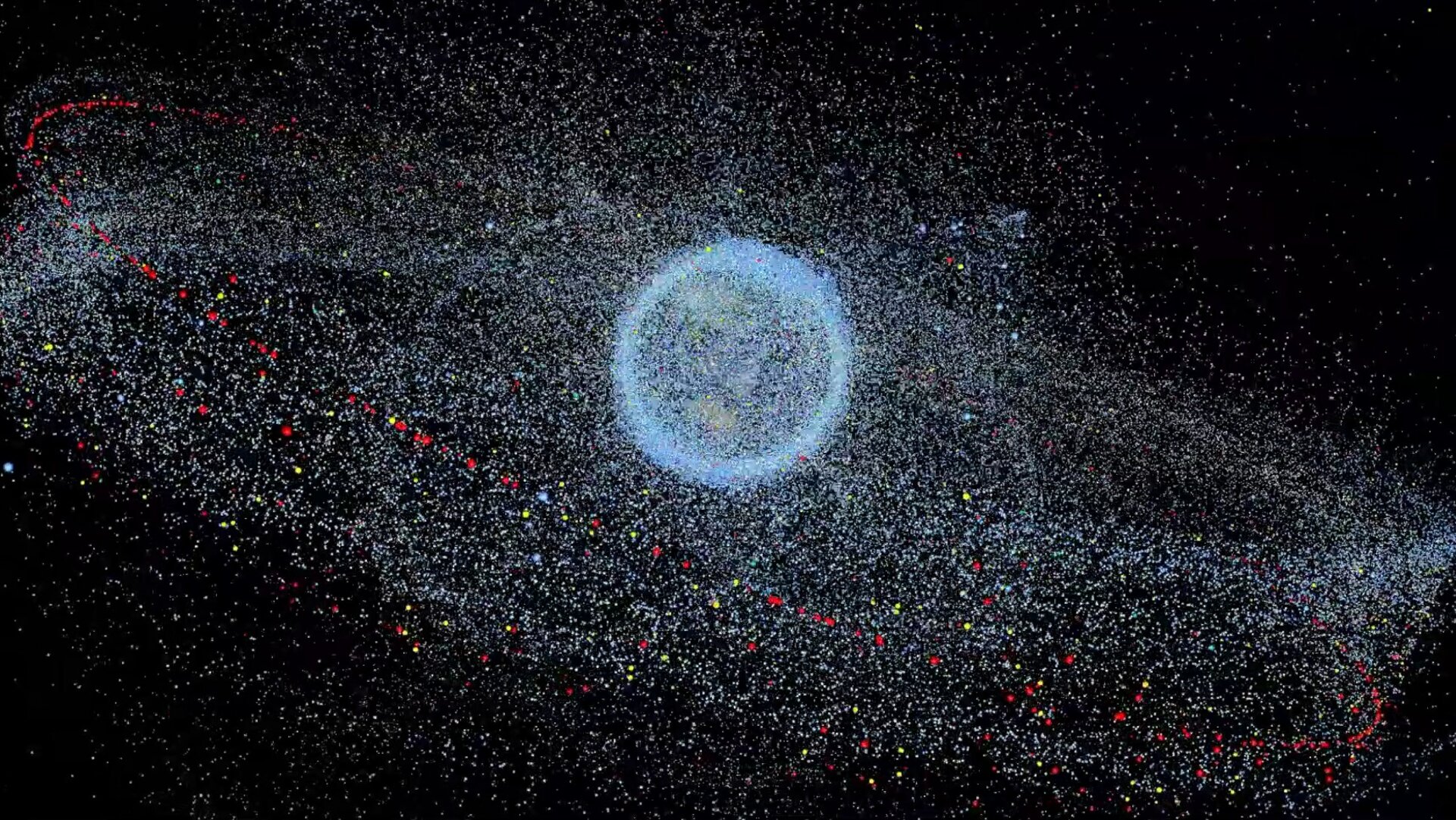
Private and military organizations are tracking some of the 170 million pieces of space junk orbiting the planet, but they’re limited to how small an object they can detect. Only chunks larger than a softball can be tracked with radar or optical systems, and that only accounts for less than 1% of the junk out there.
But a new technique is being developed to resolve space junk to pieces smaller than one millimeter in diameter.
Called Space Debris Identification and Tracking (SINTRA), the project will test out a new technique that uses the state-of-the-art sensors to detect plasma waves created by fields of debris. The new sensors are used along with existing sensors, such as ground-based radar, tracking satellites, and optical sensors in order to identify and track space debris in the one-millimeter size range.
“Right now, we detect space debris by looking for objects that reflect light or radar signals,” said Nilton Renno, from the University of Michigan and a professor of climate and space sciences, and engineering and aerospace engineering. “The smaller the objects get, the harder it becomes to get sunlight or radar signals strong enough to detect them from the ground.”
SINTRA is a 4-year project that will help advance the sensors needed for detecting orbital debris signatures. SIINTRA is a collaborative project funded by the Intelligence Advanced Research Projects Activity’s Space Debris Identification and Tracking Program. The project includes military contractor Blue Halo as well as several universities, such as the University of Michigan and the University of Alaska Fairbanks as well as MIT Lincoln Laboratory, Naval Research Laboratory, Los Alamos National Laboratory, and JHU Applied Physics Laboratory.

The idea behind SINTRA is to search for the electrical signals emitted by clouds of space debris. Colliding pieces of space debris explode into tiny fragments, some of which vaporize into a charged gas due to the heat created by the impact.
“When the cloud of charged gas and debris fragments expands, it creates lightning-like energy bursts, similar to signals produced by static sparks that appear after rubbing a freshly laundered blanket,” said Mojtaba Akhavan-Tafti, an assistant research scientist in climate and space sciences and engineering, and a lead scientist on the project for the University of Michigan.
The charged gas and debris fragments can create electric field pulses whenever they come close enough to each other, producing additional electrical bursts. These signals last for only a fraction of a second, but they could help track pieces of space debris and clouds of microscopic fragments that form when debris collides.
For example, when two pieces of aluminum collide at typical orbital speeds, they emit an electrical burst strong enough for a 26-meter dish with a high-quality radio receiver to detect from the ground, according to the University of Michigan team’s most recent computer simulations. The electric field pulses should similarly be detectable with more sensitive radio arrays, such as NASA’s Deep Space Network.
![]()
If successful, SINTRA would enable the first tracking capability for the ultra-small debris population, reducing risk to worldwide space operations. Space debris in low Earth orbit (LEO) have an average impact velocity of 36,000 km/hr (22,500 MPH). Therefore, even the smallest of debris can cause significant damage to operational satellites.
But there’s a lot of work yet to do in making the SINTRA concept work. The frequency of the electrical signals can vary with the speed of the collision; additionally, what the debris is made of also changes many variables, which could complicate detection.
In a press release from the University of Michigan, Akhavan-Tafti said that to see the electric signals, they need to be stronger than the ground instrument’s background signals and pass through Earth’s upper atmosphere.
For the project, the team will start by measuring real signals with NASA’s Deep Space Network, and analyze data from hypervelocity experiments at the Naval Research Laboratory and NASA’s Ames Research Center. Using the facilities’ lasers, the team can launch different kinds of debris at targets over a range of orbital speeds and measure the characteristics of the electric emissions resulting from the impact. If such experiments reveal a way to detect a wide range of electrical signals generated during space debris collisions, they could determine not just where space debris is, but what it looks like and is made of.
In a press release earlier this year, the US Intelligence Advanced Research Projects Activity agency said the goal of the SINTRA program is to fill gaps in current space debris-monitoring systems, which currently only track and monitor debris objects larger than four inches across. They said the detection, tracking, and characterization of lethal non-trackable space debris would support the safe operation of valuable space assets worldwide.
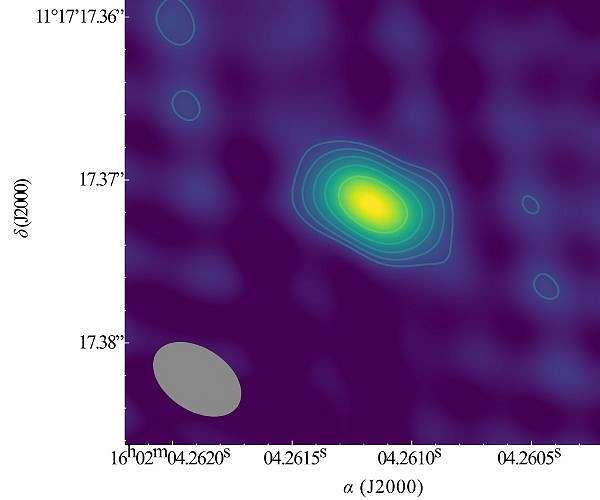
Another Fast Radio Burst is Coming from a Hypernebula. Also, Hypernebulae are a Thing

If nothing else catches your attention in the title then surely ‘hypernebula’ does! There are some amazing processes scattered around the cosmos, of particular interest are the fast radio bursts (FRB). These brief flashes of radiation happen without warning…until now. A team in the Netherlands have identified a second FRB as coming from within a hyper nebula – a dense and highly magnetised cloud of plasma that is illuminated by a powerful but unknown source!
FRBs are short outbursts of radio waves which last only a fraction of a second. They seem to originate from distant galaxies and one of the first to be discovered was FRB 20121102A. A second FRB source has been confirmed in the paper by the Netherlands team, this one known as FRB 20190520B. It was discovered by the FAST telescope in China and appears to be associated with hyper nebula just like the other repeating FRBs. Investigations go further revealing that it seems to be associated with a more constant source of radio waves.
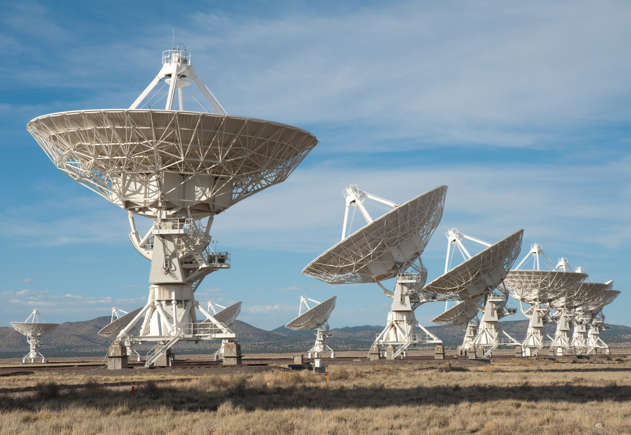
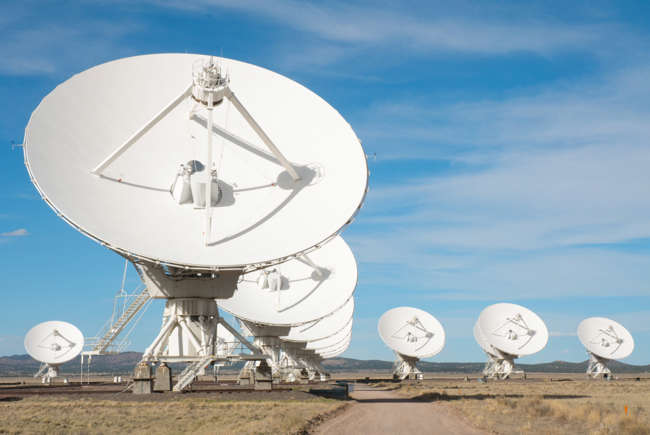
The team followed up on their observations using the Very Long Baseline Interferometer (VLBI) which is a network of radio telescopes spread across Europe. Interferometry involves combining the signal form multiple dishes in different places. Using interferometry like this enables astronomers to capture images with a resolution far greater than they could achieve from the individual dishes.
Their observations from the team, led by Shivani Bhandari suggest the size of the host hyper nebula was of the order of 30 light years across, three times the size of the Crab Nebula. They were also able to measure the luminosity revealing it was around a hundred thousand times that of the Sun. This suggests the source may well be an extremely magnetic neutron star known as a magnetar (a neutron star is the highly compressed dense core of a star that went supernova).
Magentars are curious objects but one thing we do know is that they can produce a powerful stream of charged particles that create the surrounding nebulosity and it is from here that the radio source is being emitted. The magnetar inside FRB 20190520B is likely to be generating radio emissions which are prt of the driving force of the FRBs. The team have worked through their data and believe the magnetar to be around 4 and 1,900 years old making and the hyper nebula to be around 900 years old. Compared to most objects in the Universe, these are very very young.
One of the magic things about science is that there are often alternative theories. In the case of these repeating FRBs it may be that the hyper nebula is powered not by magnetism but by gravitation. In systems where there is a black hole or neutron star devouring matter from a nearby companion there could be a burst of radio waves as a result of powerful emissions.
Whether driven by magnetism or gravitational potential energy, these two FRBs are the first two that seem to repeat and are associated with a hyper nebula. Interestingly they are both hosted in low mass dwarf galaxies. They clearly show high levels of activity in young and energetic FRBs but it is interesring that even their older counterparts still emit radio bursts. There are many mysteries about FRBs but these latest observations hope to start to unravel their mysteries.
Source :