Naar de inhoud

UFO'S of UAP'S, ASTRONOMIE, RUIMTEVAART, ARCHEOLOGIE, OUDHEIDKUNDE, SF-SNUFJES EN ANDERE ESOTERISCHE WETENSCHAPPEN - DE ALLERLAATSTE NIEUWTJES

UFO's of UAP'S in België en de rest van de wereld
akke.beakke.be
Ontdek de Fascinerende Wereld van UFO's en UAP's: Jouw Bron voor Onthullende Informatie! Ben jij ook gefascineerd door het onbekende? Wil je meer weten over UFO's en UAP's, niet alleen in België, maar over de hele wereld? Dan ben je op de juiste plek! België: Het Kloppend Hart van UFO-onderzoek In België is BUFON (Belgisch UFO-Netwerk) dé autoriteit op het gebied van UFO-onderzoek. Voor betrouwbare en objectieve informatie over deze intrigerende fenomenen, bezoek je zeker onze Facebook-pagina en deze blog. Maar dat is nog niet alles! Ontdek ook het Belgisch UFO-meldpunt en Caelestia, twee organisaties die diepgaand onderzoek verrichten, al zijn ze soms kritisch of sceptisch. Nederland: Een Schat aan Informatie Voor onze Nederlandse buren is er de schitterende website www.ufowijzer.nl, beheerd door Paul Harmans. Deze site biedt een schat aan informatie en artikelen die je niet wilt missen! Internationaal: MUFON - De Wereldwijde Autoriteit Neem ook een kijkje bij MUFON (Mutual UFO Network Inc.), een gerenommeerde Amerikaanse UFO-vereniging met afdelingen in de VS en wereldwijd. MUFON is toegewijd aan de wetenschappelijke en analytische studie van het UFO-fenomeen, en hun maandelijkse tijdschrift, The MUFON UFO-Journal, is een must-read voor elke UFO-enthousiasteling. Bezoek hun website op www.mufon.com voor meer informatie. Samenwerking en Toekomstvisie Sinds 1 februari 2020 is Pieter niet alleen ex-president van BUFON, maar ook de voormalige nationale directeur van MUFON in Vlaanderen en Nederland. Dit creëert een sterke samenwerking met de Franse MUFON Reseau MUFON/EUROP, wat ons in staat stelt om nog meer waardevolle inzichten te delen. Let op: Nepprofielen en Nieuwe Groeperingen Pas op voor een nieuwe groepering die zich ook BUFON noemt, maar geen enkele connectie heeft met onze gevestigde organisatie. Hoewel zij de naam geregistreerd hebben, kunnen ze het rijke verleden en de expertise van onze groep niet evenaren. We wensen hen veel succes, maar we blijven de autoriteit in UFO-onderzoek! Blijf Op De Hoogte! Wil jij de laatste nieuwtjes over UFO's, ruimtevaart, archeologie, en meer? Volg ons dan en duik samen met ons in de fascinerende wereld van het onbekende! Sluit je aan bij de gemeenschap van nieuwsgierige geesten die net als jij verlangen naar antwoorden en avonturen in de sterren! Heb je vragen of wil je meer weten? Aarzel dan niet om contact met ons op te nemen! Samen ontrafelen we het mysterie van de lucht en daarbuiten.

NASA faces backlash after revealing four astronauts for key Artemis III moon mission

NASA has named the four astronauts selected for a mission that will bring humans one step closer to returning to the moon. 

Artemis III, scheduled for 2027, will test rendezvous and docking operations between the Orion spacecraft and commercial human landers in low-Earth orbit as part of preparations for future lunar exploration.

But the reveal of the crew quickly drew criticism on social media, where users pointed out that none of the astronauts selected for the historic mission are women.

NASA's Randy Bresnik, Frank Rubio and Andrew Douglas will join European Space Agency (ESA) astronaut Luca Parmitano in orbital tests ahead of the lunar landing.

The announcement, made in a press conference, sparked outrage on X, where many users deemed the lack of women was a 'real shame.'

One user posted: 'Not a single woman flying on Artemis III is an insane choice.'

'What a huge blow to those who were inspired by Christina on Artemis II,' another shared, referring to Christina Koch, who was the first woman to fly to the moon earlier this year when she and three men soared around the dark side of the lunar surface. 

While the announcement has sparked frustration, it takes Americans one step closer to returning to the moon in 2028.

NASA astronauts Randy Bresnik (left), Frank Rubio (second from right) and Andrew Douglas (right) will join European Space Agency astronaut Luca Parmitano for Artemis III

NASA astronauts Randy Bresnik (left), Frank Rubio (second from right) and Andrew Douglas (right) will join European Space Agency astronaut Luca Parmitano for Artemis III

NASA administrator Jared Isaacman said: 'To the Artemis III crew, we wish you Godspeed on the journey ahead.'

The Artemis III mission is expected to last about two weeks, roughly four days longer than the Artemis II mission around the moon earlier this year. 

This is the Artemis program's final testing mission, and if it's successful, NASA then plans to land a crew on the moon with Artemis IV.

What was intended as a moment of celebration quickly sparked criticism, with many pointing out that no women were selected for the mission. 

One X user shared: 'I’m kinda mind-blown that there’s no woman on the Artemis III crew, bro. You, as NASA, saw so many people hyping up Christina going to the moon because it means a lot to people that a woman is doing things that are inspiring and cool.'

Another posted: 'Artemis II was so big on point with Christina being a capable woman, showing others we can do whatever we put our minds to. Disappointed, NASA.'

Isaacman addressed the concerns following the announcement: 'I don’t think anyone should be reading into this.'

He added that NASA 'put forth the best astronauts to undertake and complete the mission’s objectives,' but did not provide details on how the astronauts were chosen.

'We are certainly humbled as a crew to be able to be your crew that executes this Artemis III mission in space,' said Bresnik, Artemis III commander.

Douglas, mission specialist, added: 'My brain... it is going a mile a minute right now. But my heart, it is so warm. It is so full.' 

Many of the critics pointed to how Artemis II's Christina Koch showed women are more than capable of going on such missions

Many of the critics pointed to how Artemis II's Christina Koch showed women are more than capable of going on such missions

The Artemis III mission is expected to last about two weeks, roughly four days longer than the Artemis II mission around the moon earlier this year

The Artemis III mission is expected to last about two weeks, roughly four days longer than the Artemis II mission around the moon earlier this year

article image

The crew brings a wealth of experience to the mission.

Bresnik has flown on both the Space Shuttle and International Space Station, while Rubio holds the record for the longest single spaceflight by an American after spending 371 consecutive days in orbit.

Parmitano, one of Europe's most experienced astronauts, has completed two missions and multiple spacewalks. 

Douglas, a former US Coast Guard officer selected by NASA in 2021, will be making his first trip to space. 

NASA's Artemis III mission will see the agency's Space Launch System (SLS) rocket launch the Orion spacecraft and its crew from Kennedy Space Center in Florida into low-Earth orbit.

Once there, Orion will perform a series of tests never attempted before, including rendezvous and docking maneuvers with experimental lunar landers being developed by Blue Origin and SpaceX.

The mission will unfold as a carefully choreographed sequence involving multiple launches of some of the world's most powerful rockets. NASA will test how Orion interacts with the commercial landers, including communications, software, propulsion systems and docking interfaces.

Blue Origin's lander pathfinder will launch first and remain in orbit awaiting the crew. Orion will then carry the astronauts into space, where they will rendezvous and dock with the vehicle for roughly two days of testing and technology demonstrations, including entering the lander itself.

After separating from Blue Origin's spacecraft, Orion will remain in orbit while SpaceX launches its Starship pathfinder. 

The two vehicles will then dock for about a day of additional evaluations before Orion begins its journey home. 

The mission will conclude with the crew splashing down in the Pacific Ocean, where they will be recovered by teams from NASA and the US Navy.


NASA reveals the four astronauts who will head to space for the Artemis III mission

Artemis III astronauts revealed for 'complex' NASA mission

{ https://www.dailymail.com/sciencetech/index.html }

Hoe vind je dit bericht?
Geschreven door peter om 20:48 Stuur door

Paracas Skulls: Alien Mystery or Human Ingenuity?

Paracas Skulls: Alien Mystery or Human Ingenuity?

A dramatic, atmospheric close-up of a single elongated Paracas child skull resting on a museum display block. AI-generated image created to illustrate the mysterious and striking appearance of the Paracas elongated skulls.

The desolate, wind-swept desert of the Paracas Peninsula on the southern coast of Peru holds one of the most enduring mysteries of the ancient world. In 1928, the renowned Peruvian archaeologist Julio Tello made a staggering discovery beneath the harsh sands. He unearthed a massive and complex graveyard, a sprawling necropolis containing hundreds of elaborate mummy bundles. While the intricate textiles wrapping the dead were marvels of ancient craftsmanship, it was the skeletal remains hidden within that would capture the world's imagination.

Tello had discovered the remains of the Paracas culture, a civilization that flourished from approximately 800 BC to 100 BC. But the skulls of these individuals were profoundly unusual. Over three hundred crania were unearthed, displaying extreme, sweeping elongation that radically altered the natural shape of the human head. For nearly a century, these enigmatic remains have sparked fierce debates, inspiring fantastical theories of extraterrestrial visitation and unknown hominid species.

Anatomy of an Anomaly: Beyond Human Limits?

A slightly wider shot showing three actual Paracas elongated skulls lined up in the Museo Regional de Ica.

A slightly wider shot showing three actual Paracas elongated skulls lined up in the Museo Regional de Ica. It provides a great sense of scale and proves this wasn't an isolated anomaly. (Jonski/CC BY-SA 4.0)

The sheer physical presence of the Paracas Skulls is startling. When compared to a standard human cranium, the morphological differences are immediately apparent and deeply perplexing. Proponents of alternative history often point out that some of these skulls possess a cranial capacity up to 25 percent larger than a conventional human head. Furthermore, the bone density and overall weight of certain specimens are reported to be significantly heavier than average.

These startling volumetric anomalies are the primary reason the Paracas Skulls have become central to "ancient alien" hypotheses. Critics of the mainstream archaeological narrative argue that while you can alter the shape of a skull through mechanical pressure, you cannot fundamentally change its total volume or mass. Additionally, some researchers have noted the apparent absence of a sagittal suture, the connective tissue joint that runs down the center of the skull, in some of the most extreme Paracas specimens.

These anatomical quirks have led to bold declarations that the beings buried on the Peruvian coast were not entirely human. The position of the foramen magnum, the opening at the base of the skull where the spinal cord attaches, has also been cited as anomalous. In some Paracas skulls, this opening appears to be positioned further back than in typical humans, suggesting a completely different center of gravity and, consequently, a unique method of bipedal locomotion.

The Science of Artificial Cranial Deformation

A closer shot of one of the elongated skulls at the Regional Museum of Ica,

Another angle of the elongated skulls at the Regional Museum of Ica, showing the distinct shape of the cranial vault.

(CC BY-SA 4.0/Marcin Tlustochowicz)

Despite the sensational claims of extraterrestrial origins, the broader scientific community provides a thoroughly terrestrial, culturally rooted explanation. The extreme shapes seen in the Ica Museum specimens are widely recognized by bioarchaeologists as the result of artificial cranial deformation. This intentional body modification practice was astonishingly common across various ancient global cultures, from the Huns in Eurasia to the Maya in Mesoamerica.

In the ancient Andes, artificial cranial deformation was a highly formalized practice. According to foundational studies in geometric morphometrics, the process began shortly after birth. An infant's skull is highly pliable, as the cranial plates have not yet fused. The Paracas people would bind a newborn’s head between wooden boards, using tight woolen textiles to direct the growth of the bone upward and backward.

This extreme and arguably painful process was not a random act of cruelty, but a deeply significant cultural tradition. Intentional cranial modification served as a potent, visible marker of identity and social status. In the highly stratified Paracas society, an elongated head was a permanent crown, instantly identifying the individual as a member of the ruling elite or a specific noble lineage. It was a physical manifestation of power and divine connection, literally separating the nobility from the common populace.

Controversial DNA Claims: "Not Human"

An intricate, ancient Paracas textile

An intricate, ancient Paracas textile. Since the skulls were found inside elaborate mummy bundles wrapped in these exact textiles by Julio Tello, this provides crucial archaeological context.

(Metropolitan Museum of Art/Public Domain)

The debate surrounding the Paracas Skulls reached a fever pitch in 2014 when preliminary DNA testing results were announced to the public. Independent researchers and authors, notably Brien Foerster, commissioned genetic analysis on samples of hair, bone, and teeth taken from several skulls. The initial findings broadcast across alternative media were nothing short of explosive.

The geneticists involved reportedly stated that the mitochondrial DNA, inherited solely through the maternal line, featured mutations that were entirely unknown in any human, primate, or animal species known to science. The narrative quickly shifted from cultural body modification to the sensational idea of a new, unknown hominid. Some reports even suggested the DNA indicated the beings were "not human, Neanderthal, or Denisovan," fueling wild speculation that a separate, perhaps unearthly, race had governed ancient Peru.

These claims generated a whirlwind of media attention and cemented the Paracas Skulls as a cornerstone of modern fringe mythology. For believers, the DNA results were the ultimate vindication, definitive proof that mainstream history was concealing a massive secret about human origins. However, the academic community met these dramatic announcements with intense skepticism, demanding peer-reviewed data, transparent methodologies, and rigorous contamination controls.

Paleogenomics and the Terrestrial Truth

A sweeping aerial photograph of the dramatic golden cliffs and Pacific Ocean coastline at the Paracas National Reserve in Ica, Peru

A sweeping aerial photograph of the dramatic golden cliffs and Pacific Ocean coastline at the Paracas National Reserve in Ica, Peru, the exact coastal desert region where Julio Tello excavated the Paracas Necropolis in 1928 and unearthed the elongated skulls.

(masT3rOD/CC BY 2.0 )

To understand the truth hidden within the ancient bones, one must look to the rigorous field of modern paleogenomics. Extracting ancient DNA (aDNA) is an incredibly delicate process. Remains that have been handled by archaeologists, museum curators, and independent researchers for decades are highly susceptible to modern genetic contamination. Without highly sterilized clean-room environments, the DNA sequenced is often that of the people who recently touched the artifact, leading to confused or "anomalous" data sets.

Recent advancements in population genetics have painted a much clearer, albeit entirely human, picture of pre-Columbian Peruvian populations. Modern, peer-reviewed sequencing has consistently shown that the individuals buried on the Paracas Peninsula were of distinct Native American ancestry. However, as noted in recent articles detailing the DNA analysis, there are fascinating, complex genetic markers that hint at vast, ancient migration patterns, possibly including distant European or Eurasian admixture that challenges our standard timeline of global exploration.

While the DNA does not point to the stars, it does point to a human history that is far more dynamic and interconnected than previously imagined. The Paracas people were master weavers, sophisticated engineers, and survivors in a harsh, unforgiving coastal desert. They developed complex societal structures and religious beliefs that drove them to literally reshape the bodies of their children in pursuit of the divine.

A Legacy Written in Bone

Nasca/Paracas-era mantle (100–300 AD) features ninety intricately needle-knitted figures along its border.

One of the most extraordinary surviving Andean textiles in the world, this Nasca/Paracas-era mantle (100–300 AD) features ninety intricately needle-knitted figures along its border.

(Brooklyn Museum/Public Domain)

Ultimately, stripping away the extraterrestrial mythos does not diminish the profound wonder of the Paracas Skulls; rather, it elevates the ingenuity and resilience of ancient humanity. These elongated craniums are a testament to the lengths to which a culture will go to define itself, to assert its power, and to connect with the spiritual realm. They are a permanent, physical record of an ancient society's deeply held beliefs.

The necropolis discovered by Julio Tello continues to yield secrets, offering vital insights into the health, genetics, and daily lives of a lost civilization. The textiles that wrapped these modified elites remain some of the most complex and beautiful woven artworks ever created in the ancient world. The true magic of Paracas lies not in an alien intervention, but in the astonishing capabilities of the human hands that carved out a civilization on the edge of the Pacific.

As paleogenomics continues to evolve, we will undoubtedly learn even more about the intricate lineage of the Paracas people. For now, their elongated skulls remain safely housed in museums, silent sentinels of a bygone era. They serve as a powerful reminder that human history is wildly diverse, infinitely complex, and deeply fascinating all on its own.

  • Top image: A dramatic, atmospheric close-up of a single elongated Paracas child skull resting on a museum display block. AI-generated image created to illustrate the mysterious and striking appearance of the Paracas elongated skulls.

By Marius Albertsen 

FAQs

  1. Why did the Paracas people elongate their skulls? The Paracas culture practiced artificial cranial deformation as a visible, permanent marker of high social status, elite lineage, and group identity. It visually separated the ruling class from the common people.
  2. How did they achieve the elongated skull shape? The process began during infancy when the cranial bones were still soft and pliable. The baby's head was tightly bound using wooden boards and heavy textiles to force the skull to grow upward and backward over several months.
  3. Did DNA testing prove the Paracas Skulls are alien? No. While early, unverified claims suggested unknown mutations, rigorous scientific ancient DNA (aDNA) testing has confirmed that the skulls belong to human beings of Native American descent, with some tests indicating complex ancient migration patterns.

References

  • Blom, D.E. 2006. Artificial Cranial Deformation in South America: A Geometric Morphometrics Study. Journal of Archaeological Science. Available at: https://www.sciencedirect.com
  • Fehren-Schmitz, L. et al. 2025. Paleogenomics of Ancient Peru: North Coast Population History. Nature Scientific Reports. Available at: https://www.nature.com/srep/
RELATED VIDEOS

Scientists Just Tested DNA From Peru's 'Alien' Skulls — The Results Shocked Everyone

Researchers Examined The Paracas Skulls And Found Something Impossible

I Tested Paracas Skull DNA, and It Changed Everything | Brien Foerster

{ https://www.ancient-origins.net/news-history-archaeology }

Hoe vind je dit bericht?
Geschreven door peter om 18:34 Stuur door

This Man Says the Fifth Dimension Is a Place Where You Can Fly, Heal, Teleport, and Even Meet “Astral Police”

Dr. Bruce Goldberg astral travel

This Man Says the Fifth Dimension Is a Place Where You Can Fly, Heal, Teleport, and Even Meet “Astral Police”

Dr. Bruce Goldberg is a retired dentist turned master hypnotherapist who has been regressing and progressing thousands of people into higher dimensions through hypnosis. His wildest revelations about the 5th Dimension will rewire how you see reality: In the 5th Dimension, you don’t walk… you teleport. You don’t travel… you fly. You don’t hope for healing… you instantly heal with thought alone. Whatever you think, manifests. Your mind literally creates your environment there. But it’s not chaos; there are rules.

Dr. Bruce Goldberg’s ideas about astral travel are not ordinary. He does not describe it as a simple dream, fantasy, or strange feeling during sleep. In an interview with DEN Meditation, he presents astral travel as a real spiritual experience where the soul, or what he calls the energy body, leaves the physical body and enters another dimension.

His view is built around hypnosis, dreams, out-of-body experiences, the higher self, karma, and the fifth dimension. According to him, these things are all connected. He believes that when people dream, meditate deeply, or enter hypnosis, they may not just be imagining things. In his view, they may actually be moving into another level of reality.

This is where his idea of the fifth dimension becomes important. Goldberg says the fifth dimension is the astral plane. In simple words, he believes there is a dimension beyond the physical world, and people can enter it through dreams, hypnosis, meditation, or out-of-body experiences.


He does not treat dreams as random mental noise. He says dreams can be real spiritual journeys. According to him, when a person is dreaming, they are in an alpha brainwave or REM state, but spiritually they are also out of the body. He says this is when the person enters the fifth dimension.

That is one of the most interesting parts of his claim. For many people, dreams are just dreams. They are memories, emotions, fears, or imagination. But Goldberg sees them as doorways. He believes dreams can show past lives, future lives, parallel lives, and even communication from the higher self.

In his view, astral travel is not just about floating above your body or seeing your room from outside yourself. It is much bigger than that. He believes it can take a person into spiritual planes where they can receive guidance, healing, and knowledge about their soul’s journey.

Goldberg also connects astral travel with hypnosis. He says hypnosis is not mind control. He explains it more like a focused mental state. The person is relaxed, aware, and open to deeper levels of the mind. In this state, Goldberg believes the person can access the subconscious mind and connect with the higher self.

The higher self is one of the main ideas in his whole system. He describes the higher self as the perfect part of the soul. It is not simply a voice in the mind. It is the wiser and more complete version of the person. In his view, the higher self knows the soul’s past, future, karma, and purpose.

Goldberg says that when he does therapy, he is not really the healer. He says the patient’s higher self does most of the healing. His job is only to connect the person with that higher self. He even describes himself as a kind of “social director” who helps connect the right parties together.

This is why astral travel matters so much in his teaching. It is not just an exciting paranormal experience. For him, it is a method of reaching the higher self. Once a person reaches the right part of the astral plane, they can receive guidance, healing, and spiritual protection.

But Goldberg also gives a warning. He does not describe the astral plane as one single peaceful place. He says there are two major parts of the astral plane: the lower astral plane and the upper astral plane.

The lower astral plane, according to him, is not a place people should visit. He says it is connected to confusion, fear, negative beings, psychic attack, and dangerous spiritual experiences. He describes it as a noisy and unpleasant place where a person may feel lost or disturbed.

He says people may end up in the lower astral plane if they leave the body in the wrong way. In his explanation, if a person exits through the third chakra, around the solar plexus or belly area, they can only reach the lower astral plane. This is why he says technique and protection are important.

Goldberg says the better way is to leave through the crown chakra, which is at the top of the head. According to him, this allows the person to reach the upper astral plane instead of the lower one.

The upper astral plane is very different in his description. He says it is peaceful, beautiful, clear, and positive. He says people feel alert, happy, and calm there. In his view, this is the place where the higher self is usually found.

He also says many people may mistake the upper astral plane for heaven. But he makes an important distinction. He says it is not heaven in the final religious sense. It is simply a higher, positive dimension where spiritual growth and communication can happen.

Goldberg also gives signs to tell the difference between the lower and upper astral planes. The lower astral plane may feel foggy, misty, unclear, and confusing. The upper astral plane may feel earth-like, bright, peaceful, and beautiful.

This part of his teaching is important because he is not telling people to enter any out-of-body state blindly. He believes astral travel should be done with spiritual protection and with the purpose of reaching the upper astral plane.

He also talks about sounds connected with different planes. He says the Earth plane has the sound of thunder. Because of this, he advises people not to practice out-of-body techniques during thunderstorms. He says it will not hurt them, but it may pull them back into the body and make the process harder.

For the astral plane, he says the sound is like the roar of the sea, similar to holding a seashell near the ear. This is part of his larger idea that every dimension has its own character, sound, body, and purpose.

Goldberg’s map of reality does not stop at the astral plane. He talks about many planes. The Earth plane is the physical world. The astral plane is the fifth dimension. Beyond that, he describes the causal plane, mental plane, etheric plane, soul plane, and even higher levels.

He says the causal plane holds the Akashic records. These records, in his view, are like a spiritual database. They contain information about a person’s past lives, future lives, and parallel lives. He even compares them to a fifth-dimensional computer chip.

This is connected to astral travel because dreams and out-of-body experiences may give people access to these records. Goldberg says when people dream about ancient Egypt, Rome, Greece, or Sumeria, it may not always be imagination. He believes the dream may be showing material from a past life or from the Akashic records.

This is one of the most fascinating parts of his ideas. He believes dreams can be previews or memories of lives outside the present one. A dream about another time period may be a clue to a past life. A dream about the future may be a glimpse of a future life. A strange dream about a different version of yourself may even connect to a parallel life.

Goldberg says he developed the concept of future life progression. Past-life regression was already known, but he says he was one of the first to focus deeply on future lives. In his view, hypnosis can take people not only backward in time, but forward as well.

Astral travel, for him, is part of this larger spiritual time system. The soul is not trapped in one lifetime. It moves through many lives, many planes, and many lessons. The physical body is only one temporary vehicle.

He also describes different spiritual bodies. On Earth, we use the physical body. On the astral plane, we use the astral body. On the etheric plane, we use the etheric body.

He says the astral body is different from the physical body. According to him, it is taller, thinner, and younger-looking. This is one reason he says many of his patients enjoy visiting the astral plane. They experience themselves in a lighter and more attractive form.

The etheric body, however, is different. He says it looks exactly like the physical body. He believes this body is deeply connected to health. He even talks about “etheric plane surgery,” where healing is done on the etheric body and then transferred to the physical body.

These are extraordinary claims, and they should be treated as his spiritual and hypnotic views, not as proven science. But within his belief system, they are very important. He sees astral travel as part of a whole spiritual anatomy. Humans are not just physical bodies. They have different energy bodies for different dimensions.

Goldberg also connects astral travel with healing. He believes that when a person reaches the upper astral plane and connects with the higher self, real healing can happen. The higher self can guide the person, protect the person, and even help repair deeper energetic problems.

This is why he sees hypnosis as a spiritual tool. For him, hypnosis is not just relaxation. It is a doorway. It helps the person move inward, leave ordinary awareness, and reach the higher self through the fifth-dimensional experience.

In the interview, he also says people can contact positive ETs and even time travelers in the upper astral plane. This is where his ideas become even more unusual. For Goldberg, astral travel is not only spiritual. It can also connect with extraterrestrials, future humans, and beings from other dimensions.

He shares a personal story about meeting a time traveler in his fifth-dimensional sanctuary. He says this being appeared as a young blond man who looked like a surfer and wore a white robe. The being said his name was Traxa and claimed to be from the 36th century.

Goldberg connects this meeting with his career and with the radio host Art Bell. He says Traxa gave him a clue by asking him to spell the name backward. “Traxa” backward sounded like “ask Art,” which Goldberg took as a sign connected to Art Bell’s show. In his view, this was an example of guidance coming through fifth-dimensional contact.

Whether someone believes this story or not, it shows how seriously Goldberg takes the astral plane. He does not see it as symbolic only. He treats it as a real meeting place where souls, guides, ETs, and time travelers can communicate.

He also tells stories of teleportation and time travel that he connects with altered states of consciousness. One story involves a girl who supposedly went back in time to save her younger self from being hit by a car. Another story involves a woman being saved from traffic by a mysterious person who then vanished.

Goldberg also claims he once teleported to Montego Bay, Jamaica. He says he was living in Baltimore, wished he could return to the beach, changed into beach clothes, lay down, and then found himself on the beach in Jamaica. He says he swam, spoke to a woman, and later returned.

Read also:

These claims are shocking, and they are not accepted as proven facts by mainstream science. But they fit his larger worldview. He believes consciousness, energy, astral travel, teleportation, and time travel are related. In his system, the human being is not limited by the physical body in the way we normally think.

Goldberg also connects astral travel with karma. He believes every soul has lessons to learn and debts to balance. This is what he calls the karmic cycle. The soul moves through lives and dimensions until it reaches a state of balance.

He says the purpose of spiritual development is to merge with the higher self. When the soul becomes perfected and karma is balanced, it can ascend beyond the normal cycle. He connects this with the idea of atonement, which he breaks down as “at-one-ment,” meaning becoming one with the higher self.

In this sense, astral travel is not just entertainment. It is part of the soul’s journey toward perfection. It allows a person to learn, heal, remember, and connect with higher levels of awareness.

His view of the fifth dimension is also not the same as how physicists might talk about dimensions. In science, dimensions are usually mathematical or physical concepts. Goldberg uses the term in a spiritual way. For him, the fifth dimension is a living plane of consciousness, filled with beings, records, healing, and guidance.

This is important for readers to understand. When Goldberg says “5D,” he is not speaking in the normal scientific sense. He is speaking from a metaphysical and hypnotic tradition. His fifth dimension is the astral plane.

One of the most useful parts of his explanation is the difference between safe and unsafe astral experiences. He says people should not try out-of-body travel carelessly. They should aim for the upper astral plane, use protection, and connect with the higher self.

He says the lower astral plane creates fear, confusion, psychic attack, and contact with negative beings. The upper astral plane creates peace, clarity, happiness, and healing. This contrast is central to his teaching.

Goldberg’s ideas will sound incredible to some people and unbelievable to others. Skeptics will say these experiences are dreams, imagination, altered brain states, or psychological symbols. Believers may see them as proof that consciousness can travel beyond the body.

Still, the reason his ideas are interesting is because he connects many unusual subjects into one system. Dreams are not separate from hypnosis. Hypnosis is not separate from the higher self. The higher self is not separate from healing. Healing is not separate from the astral plane. The astral plane is not separate from past lives, future lives, ET contact, time travelers, and karma.

For Goldberg, everything is connected through consciousness.

His basic message is that humans are much more than physical bodies. We are souls moving through many lifetimes and many dimensions. The body sleeps, but the soul may travel. The mind dreams, but the higher self may be teaching. The person enters hypnosis, but the deeper soul may be reaching the fifth dimension.

This is why his comments on astral travel are so central to the interview. Astral travel is not a side topic for him. It is one of the main keys to understanding his whole view of existence.

In simple words, Dr. Bruce Goldberg says that astral travel is the process of leaving the physical body and entering the fifth dimension. The fifth dimension, in his view, is the astral plane. The lower part of it is dangerous and confusing, while the upper part is peaceful and healing.

RELATED 

How About Seeing the 5th Dimension in Real Life?

The 5th Dimension Is Something You can’t Imagine

11 Signs You are Living in 5D and Why You are Chosen - 5th Dimension - 5D Ascension

{ https://howandwhys.com/ }

Hoe vind je dit bericht?
Geschreven door peter om 18:08 Stuur door

[VIDEO] “Leaked Over Area 51?” — Suspected Boeing F-47 NGAD Sixth-Generation Fighter Captured in Thermal Footage Near Groom Lake

[VIDEO] “Leaked Over Area 51?” — Suspected Boeing F-47 NGAD Sixth-Generation Fighter Captured in Thermal Footage Near Groom Lake

Thermal footage filmed near Groom Lake and the Nevada Test and Training Range is fuelling speculation that the U.S. Air Force may already be flying a classified Boeing F-47 NGAD technology demonstrator years before operational deployment.

F-47

The sudden emergence of thermal footage allegedly showing a classified sixth-generation combat aircraft over Nevada’s heavily restricted Nevada Test and Training Range has injected unprecedented public visibility into the U.S. Air Force’s secretive Next Generation Air Dominance ecosystem at a moment of accelerating strategic competition with China.

Air Force

(DEFENCE SECURITY ASIA) — The sudden emergence of thermal footage allegedly showing a classified sixth-generation combat aircraft over Nevada’s heavily restricted Nevada Test and Training Range has injected unprecedented public visibility into the U.S. Air Force’s secretive Next Generation Air Dominance ecosystem at a moment of accelerating strategic competition with China.

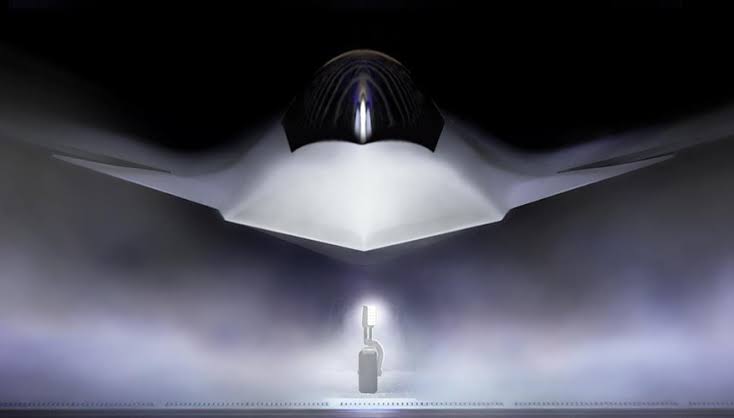
The aircraft captured near Groom Lake appears to display an advanced tailless-canard blended-wing configuration consistent with speculative Boeing F-47 renderings, potentially marking the clearest publicly accessible imagery yet associated with America’s future air-superiority architecture.

If authentic, the footage suggests that risk-reduction demonstrators connected to the NGAD programme are already conducting operationally representative flight profiles years before the projected first flight window publicly associated with the production-standard Boeing F-47.

The implications extend far beyond aviation enthusiasts because any confirmation that a mature NGAD demonstrator is already flying would indicate the United States has progressed deeper into sixth-generation tactical aviation integration than previously understood by foreign intelligence services.

Movies
The video surfaced amid intensifying Pentagon emphasis on survivable long-range strike capabilities designed to penetrate increasingly dense anti-access and area-denial environments established by China’s People’s Liberation Army across the Indo-Pacific battlespace.

Unlike the F-22 Raptor generation, which emerged during an era of overwhelming U.S. post-Cold War aerospace superiority, the F-47 programme is being engineered specifically to survive highly networked kill chains integrating advanced radar systems, infrared search-and-track arrays, hypersonic weapons, and satellite-enabled targeting architectures.

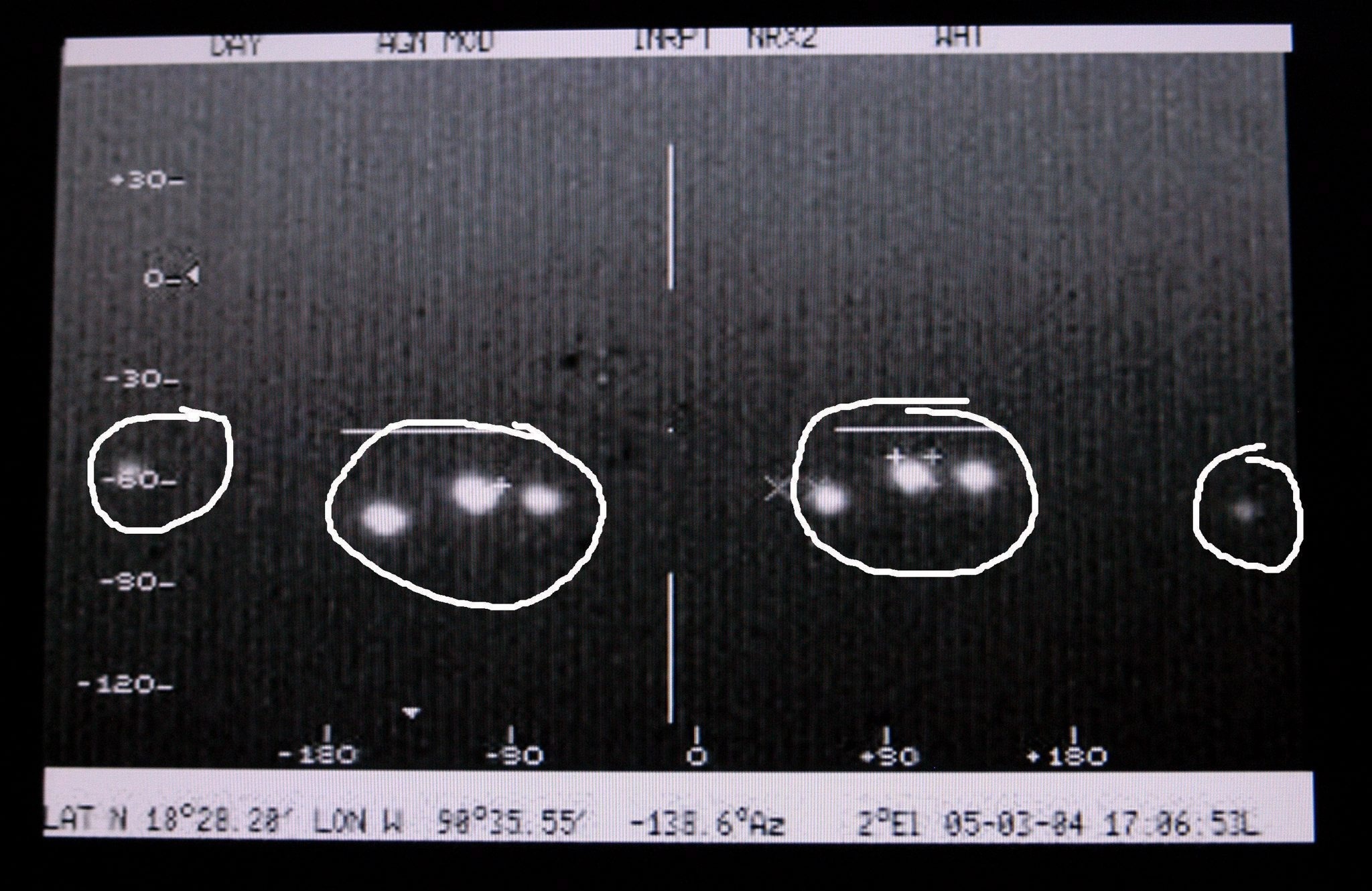
The thermal capture was uploaded on June 5, 2026 by the YouTube channel PROJECT FEAR, whose operators conducted repeated observation trips overlooking the Nevada Test and Training Range from public terrain near Rachel, Nevada.

The footage reportedly involved collaboration with Anders Otteson of Uncanny Expeditions, whose earlier thermal observations of unidentified triangular aircraft in the same region had already intensified speculation surrounding classified aerospace activity over Area 51.

According to Otteson, the aircraft passed approximately 300 to 400 yards overhead, allowing its unusual aerodynamic planform and forward canards to resolve with greater clarity than previous civilian thermal captures associated with Groom Lake operations.

The aircraft’s apparent tailless configuration, cranked-kite wing geometry, and stealth-oriented edge alignment collectively mirror multiple publicly circulated conceptual depictions linked to Boeing’s NGAD design studies and historical tailless demonstrator programmes.

The timing of the footage is strategically significant because Boeing secured the Engineering and Manufacturing Development contract for the F-47 programme in March 2025 under a deal initially valued at approximately US$20 billion, equivalent to roughly RM76 billion.

That contract represented not merely a fighter procurement decision but a strategic industrial verdict on which aerospace architecture Washington believes can dominate contested airspace against peer competitors throughout the 2030s and potentially into the 2050s.


Has the F-47 Already Taken Flight? Groom Lake Footage Sparks Big Questions.

Area 51’s Strategic Role in America’s Black Aerospace Pipeline

Groom Lake has historically functioned as the operational bridge between classified aerospace experimentation and deployable combat capability, making any unusual aircraft activity there strategically consequential rather than merely speculative.

The same restricted complex hosted developmental testing associated with programmes such as the F-117 Nighthawk, early stealth demonstrators, and advanced reconnaissance platforms before their eventual public acknowledgment reshaped modern military aviation doctrine.

The Nevada Test and Training Range offers uniquely valuable operational conditions because its immense restricted airspace enables low-observable flight testing beyond the persistent surveillance envelope normally imposed by civilian radar and commercial aviation activity.

The suspected F-47-related aircraft reportedly conducted a relatively low-altitude and comparatively slow overhead pass, an unusual profile suggesting either deliberate observational exposure or operational testing emphasizing low-speed handling and sensor management characteristics.

Such low-profile flight behaviour diverges from traditional high-altitude classified test patterns and instead resembles historical “show-of-presence” flights sometimes associated with confidence validation or strategic signalling within black programme communities.

The platform’s blended-wing-body characteristics align with broader U.S. Air Force efforts to reduce radar cross-section while simultaneously increasing internal fuel volume necessary for Pacific-theatre combat operations exceeding 1,000 nautical miles in combat radius.

That range requirement reflects growing Pentagon concern that future wars against China would involve sustained long-distance air operations across the Western Pacific without reliable access to vulnerable forward operating bases.

A sixth-generation aircraft emphasizing range, thermal suppression, stealth shaping, and manned-unmanned teaming would fundamentally alter force-posture calculations surrounding Taiwan contingency planning and broader Indo-Pacific deterrence strategies.

The NTTR’s role in validating these technologies also suggests the aircraft may represent a technology demonstrator rather than a finalized operational platform, particularly given continuing uncertainty regarding NGAD’s ultimate procurement scale and cost structure.

The strategic importance of the programme intensified after earlier Pentagon concerns that projected NGAD fleet costs could exceed sustainable procurement thresholds, temporarily slowing programme momentum before Boeing’s selection revived development confidence.

F-47 The United States Air Force has dramatically accelerated development of the Boeing F-47 sixth-generation fighter by requesting US$5.03 billion (RM19.11 billion) for Fiscal Year 2027, signalling Washington’s intensifying concern over China’s rapidly advancing next-generation combat aviation programs.

Thermal Signature Anomalies and Next-Generation Stealth Engineering

One of the most analytically significant aspects of the footage involves the apparent absence of a conventional exhaust plume despite the aircraft reportedly generating substantial acoustic signatures during flight operations.

Conventional fighter aircraft typically produce highly visible infrared exhaust patterns detectable even by consumer-grade thermal optics, particularly during low-altitude nighttime operations involving significant engine thrust output.

The lack of a clearly identifiable exhaust bloom has therefore become central both to scepticism surrounding the footage and to arguments supporting the possibility of advanced thermal-management technologies integrated into sixth-generation propulsion systems.

Analysts have increasingly linked the anomaly to adaptive-cycle engine concepts associated with the Next Generation Adaptive Propulsion programme, particularly Pratt & Whitney’s XA-103 architecture emphasizing thermal suppression and fuel efficiency.

Adaptive-cycle propulsion enables dynamic airflow modulation between fuel-efficient cruise performance and high-thrust combat operations, potentially reducing infrared detectability while extending operational range across Indo-Pacific combat distances.

Infrared suppression has become strategically critical because modern air warfare increasingly relies on passive detection systems designed specifically to counter low-observable radar signatures through advanced heat-tracking methodologies.

China’s rapid deployment of infrared search-and-track capabilities aboard advanced platforms such as the J-20 has intensified U.S. emphasis on reducing not merely radar visibility but also thermal and electronic signatures across the electromagnetic spectrum.

The footage reportedly displayed a strong overall airframe thermal return without distinct engine plume definition, a phenomenon potentially consistent with distributed heat-management systems dispersing exhaust temperatures across broader structural surfaces.

Such engineering approaches would significantly complicate enemy missile lock-on processes during beyond-visual-range engagements, particularly against increasingly sophisticated dual-mode seekers combining radar and infrared guidance technologies.

Even if partially influenced by sensor-processing limitations inherent to consumer-grade thermal equipment, the footage nevertheless highlights how sixth-generation survivability may depend increasingly on multispectral stealth rather than radar reduction alone.

The Boeing F-47 NGAD America's Secret Weapon That Will Completely Dominate Every 6th Gen Fighter

Boeing F-47 and the Emerging Sixth-Generation Battlespace

The Boeing F-47 programme represents far more than a successor to the F-22 because it forms the central manned component within a broader distributed combat ecosystem integrating autonomous collaborative combat aircraft and AI-enabled battlespace management.

The United States Air Force has repeatedly emphasized that NGAD should be understood as a “family of systems” rather than a standalone fighter platform operating independently of networked unmanned assets.

Under this operational doctrine, the manned F-47 would likely function as an airborne command-and-control node directing loyal-wingman drones, electronic warfare systems, and distributed sensor networks deep inside contested airspace.

This architecture reflects lessons emerging from modern conflicts demonstrating that survivability increasingly depends upon distributed kill chains rather than concentration of capability within single exquisite platforms vulnerable to mass missile saturation.

The suspected aircraft’s tailless-canard geometry is strategically important because such designs prioritize aerodynamic efficiency and stealth edge alignment while potentially enabling high-energy maneuverability during long-range engagements.

Scenarios Indicate Accelerated Development Cycles in Stealth Aviation

Scenarios Indicate Accelerated Development Cycles in Stealth Aviation
©Photo By Usaf/Getty Images. 403339 02: An F-117 Nighthawk Flies Over The Sierra Nevada Mountain Range March 27, 2002 Near Edwards Air Force Base, Ca. The Demonstration Project Is Designed To Provide The F-117 And Its Pilots With The Ability To Receive And Transmit Mission And Target Data In Real-Time From The Air.

(Photo By Usaf/Getty Images)

Both proposed scenarios suggest that stealth aircraft development cycles are progressing at an accelerated pace. This acceleration could lead to more sightings of advanced aircraft before any official announcements are made.

Historically, canard configurations created radar-reflection penalties incompatible with earlier stealth requirements, yet sixth-generation computational design techniques may now permit canard integration without unacceptable low-observable compromises.

The aircraft’s apparent cranked-kite wing structure also aligns with aerodynamic concepts associated with sustained supersonic cruise efficiency and optimized lift distribution during long-duration penetration missions.

These characteristics are particularly relevant for Indo-Pacific operational scenarios where U.S. aircraft may need to transit enormous distances while retaining sufficient fuel and weapons capacity for high-intensity combat operations.

Boeing’s victory over rival industry competitors in securing the F-47 contract additionally carried enormous industrial consequences because the programme could determine American tactical aviation leadership for several decades.

The approximately US$20 billion initial EMD contract, equivalent to RM76 billion, therefore represents both a military investment and a strategic industrial commitment intended to preserve U.S. aerospace dominance amid rising Chinese aviation capability.

Thermal footage near Area 51 fuels F‑47 stealth jet speculation

Thermal footage near Area 51 fuels F‑47 stealth jet speculation

Public Exposure, Strategic Signalling, and Intelligence Implications

The apparent visibility of the aircraft to civilian observers raises complex questions regarding whether the flight represented accidental exposure, operational complacency, or intentional strategic ambiguity directed toward foreign intelligence audiences.

Historically, selective visibility surrounding classified aerospace projects has occasionally functioned as a controlled signalling mechanism intended to shape adversary perceptions without revealing programme specifics or validated operational capabilities.

Allowing glimpses of advanced platforms can influence enemy procurement decisions, force-posture planning, and deterrence calculations by introducing uncertainty regarding the maturity of hidden technologies.

The timing of the footage coincides with growing global attention surrounding sixth-generation fighter competition involving the United States, China’s J-36 and J-50-related speculation, and multinational European GCAP and FCAS programmes.

Within this context, even ambiguous footage potentially contributes to psychological deterrence by reinforcing perceptions that Washington remains technologically ahead in stealth aviation and advanced propulsion integration.

The strategic signalling effect becomes particularly relevant as Beijing accelerates military modernization efforts emphasizing anti-access missile systems, advanced fighters, and long-range sensor networks across the Indo-Pacific region.

At the same time, intelligence analysts remain cautious because low-resolution thermal imagery inherently creates interpretive ambiguity capable of generating exaggerated conclusions unsupported by verifiable evidence.

The footage does not conclusively prove the operational existence of a production-standard F-47 platform, nor does it confirm the aircraft’s exact configuration, propulsion architecture, or programme affiliation.

Nevertheless, the consistency between the captured planform and previously circulated NGAD-related renderings significantly narrows the range of plausible alternative explanations compared with earlier unidentified aerospace sightings.

That convergence between speculative concept art and observable aerodynamic geometry explains why multiple aerospace analysts now regard the footage as potentially the most credible civilian glimpse yet into America’s next-generation air-dominance ecosystem.

Why the Alleged NGAD Sighting Matters for Future Air Warfare

If the aircraft genuinely represents an NGAD technology demonstrator, the footage indicates the United States may already be transitioning from conceptual sixth-generation research toward practical operational validation under realistic flight conditions.

Such progress would reshape assessments of future airpower balance because China and Russia have both invested heavily in counter-stealth technologies specifically intended to neutralize earlier-generation U.S. low-observable advantages.

A functioning sixth-generation demonstrator integrating multispectral stealth, adaptive propulsion, AI-enabled networking, and long-range persistence would therefore restore uncertainty into adversary strategic planning calculations.

The emphasis on tailless stealth shaping and thermal management additionally suggests future fighter survivability will increasingly depend on defeating integrated sensor fusion rather than relying exclusively upon radar invisibility.

This evolution reflects broader changes in military technology where passive infrared tracking, space-based surveillance, and distributed radar architectures collectively threaten traditional assumptions regarding stealth survivability.

Potential role as manned NGAD component

Potential role as manned NGAD component

©Photo by Carsten Koall/picture alliance via Getty Images. 08 June 2026, Berlin: A woman walks past the autonomous CA-1 Europe fighter jet at the Helsing company stand. Exhibitors of weapons technology at the industry conference of the "New Age Defense" initiative.

Photo: Carsten Koall/dpa (Photo by Carsten Koall/picture alliance via Getty Images)

If confirmed authentic, the observed aircraft could serve as the manned platform within the U.S. Air Force's Next Generation Air Dominance (NGAD) 'family of systems.' This role would involve coordinating with autonomous drones and penetrating advanced air defense networks.

The aircraft’s reported low-speed overhead transit may also indicate testing related to sensor calibration, autonomous coordination, or variable-cycle propulsion management rather than pure high-speed performance evaluation.

Such operational experimentation would align with the Pentagon’s broader doctrinal shift toward adaptive combat ecosystems emphasizing persistence, survivability, and data integration over legacy dogfighting paradigms.

For Indo-Pacific military planners, confirmation that NGAD demonstrators are already flying would significantly influence calculations regarding force structure, aerial refueling requirements, forward basing vulnerability, and coalition interoperability strategies.

It would also intensify pressure on allied air forces participating in parallel sixth-generation efforts to accelerate timelines amid fears of widening capability divergence within Western aerospace ecosystems.

Although uncertainty remains unavoidable without official confirmation from the U.S. Air Force or Boeing, the Groom Lake thermal footage has nevertheless transformed NGAD from abstract procurement language into a visible symbol of the coming sixth-generation airpower era.


U.S Most Powerful and Deadliest F-47 Sixth-Gen Fighter Jet is Monstrous

{ https://defencesecurityasia.com/en/home/ }

Hoe vind je dit bericht?
Geschreven door peter om 17:40 Stuur door

The Pentagon Disinformation That Fueled America’s UFO Mythology

The Wall Street Journal - Breaking News, Business, Financial & Economic ...

Illustration by Chase Gaewski/WSJ

The Pentagon Disinformation That Fueled America’s UFO Mythology

U.S. military fabricated evidence of alien technology and allowed rumors to fester to cover up real secret-weapons programs

A tiny Pentagon office had spent months investigating conspiracy theories about secret Washington UFO programs when it uncovered a shocking truth: At least one of those theories had been fueled by the Pentagon itself.

The congressionally ordered probe took investigators back to the 1980s, when an Air Force colonel visited a bar near Area 51, a top-secret site in the Nevada desert. He gave the owner photos of what might be flying saucers. The photos went up on the walls, and into the local lore went the idea that the U.S. military was secretly testing recovered alien technology.

But the colonel was on a mission—of disinformation. The photos were doctored, the now-retired officer confessed to the Pentagon investigators in 2023. The whole exercise was a ruse to protect what was really going on at Area 51: The Air Force was using the site to develop top-secret stealth fighters, viewed as a critical edge against the Soviet Union. Military leaders were worried that the programs might get exposed if locals somehow glimpsed a test flight of, say, the F-117 stealth fighter, an aircraft that truly did look out of this world. Better that they believe it came from Andromed

This episode, reported now for the first time, was just one of a series of discoveries the Pentagon team made as it investigated decades of claims that Washington was hiding what it knew about extraterrestrial life. That effort culminated in a report, released last year by the Defense Department , that found allegations of a government coverup to be baseless.

In fact, a Wall Street Journal investigation reveals, the report itself amounted to a coverup—but not in the way the UFO conspiracy industry would have people believe. The public disclosure left out the truth behind some of the foundational myths about UFOs: The Pentagon itself sometimes deliberately fanned the flames, in what amounted to the U.S. government targeting its own citizens with disinformation.

At the same time, the very nature of Pentagon operations—an opaque bureaucracy that kept secret programs embedded within secret programs, cloaked in cover stories—created fertile ground for the myths to spread.

These findings represent a stunning new twist in the story of America’s cultural obsession with UFOs. In the decades after a 1938 radio broadcast of H.G. Wells’ “The War of the Worlds” spread panic throughout the country, speculation about alien visitors remained largely the province of supermarket tabloids, Hollywood blockbusters and costumed conferences in Las Vegas.

More recently, things took an ominous turn when a handful of former Pentagon officials went public with allegations of a government program to exploit extraterrestrial technology and hide it from Americans. Those claims led to the Pentagon’s investigation.

Now, evidence is emerging that government efforts to propagate UFO mythology date back all the way to the 1950s.

This account is based on interviews with two dozen current and former U.S. officials, scientists and military contractors involved in the inquiry, as well as thousands of pages of documents, recordings, emails and text messages.

At times, as with the deception around Area 51, military officers spread false documents to create a smokescreen for real secret-weapons programs. In other cases, officials allowed UFO myths to take root in the interest of national security—for instance, to prevent the Soviet Union from detecting vulnerabilities in the systems protecting nuclear installations. Stories tended to take on a life of their own, such as the three-decade journey of a purported piece of space metal that turned out to be nothing of the sort. And one long-running practice was more like a fraternity hazing ritual that spun wildly out of control.

Investigators are still trying to determine whether the spread of disinformation was the act of local commanders and officers or a more centralized, institutional program.

The Pentagon omitted key facts in the public version of the 2024 report that could have helped put some UFO rumors to rest, both to protect classified secrets and to avoid embarrassment, the Journal investigation found. The Air Force in particular pushed to omit some details it believed could jeopardize secret programs and damage careers.

The lack of full transparency has only given more fuel to conspiracy theories. Members of Congress have formed a caucus, composed mainly of Republicans, to examine unidentified anomalous phenomena, or UAP, in bureaucratic speak. The caucus has demanded the intelligence community disclose which agencies “are involved with UAP crash retrieval programs.”

MAGA skepticism about the “deep state” further feeds the notion that government bureaucrats have been keeping those secrets from the American public. At a November hearing of two House Oversight subcommittees, Rep. Nancy Mace, a Republican from South Carolina, cast doubt on the Pentagon’s report. “I’m not a mathematician, but I can tell you that doesn’t add up,” she said.

The Pentagon Disinformation That Fueled America’s UFO Mythology

A picture taken on 05 May 2004 by a Mexican military crew during their daily patrol, where they detected 11 unidentified flying objects. The video released Monday 10 May 2004.

‘Stupid enough’

Sean Kirkpatrick, a precise, bespectacled scientist who once spent years studying vibrations in laser crystals, was nearing retirement from government service when he received the call that would change his life.

By 2022 he had ascended to chief scientist at the Missile and Space Intelligence Center at the Redstone Arsenal near Huntsville, Ala. As he sat at his desk at 6:30 one morning, drinking coffee and skimming through intelligence reports that had come in overnight, his Tandberg desk phone—essentially a classified version of FaceTime—rang.

It was a deputy undersecretary from the Pentagon, who was putting on a tie as he told Kirkpatrick about a new office Congress ordered the department to set up to examine unidentified anomalous phenomena. “The undersecretary and I put together a shortlist of who could do it, and you’re at the top,” the official relayed, adding that they had settled on Kirkpatrick because he both had a scientific background and had built a half-dozen organizations within the intelligence community.

Is that the real reason, Kirkpatrick countered, “or am I the only one stupid enough to say, ‘yes?’”

In short order, Kirkpatrick had the All-domain Anomaly Resolution Office up and running. Just the latest in an alphabet soup of special government projects set up to study UFOs stretching back more than half a century, AARO, as it is known, operated out of an unmarked office near the Pentagon, with a few dozen staffers and a classified budget.

The mission fell into two buckets. One was to collect data on sightings, particularly around military installations, and assess whether they could be explained by earthly technology. Amid growing public attention, the number of such reports has skyrocketed in recent years, to 757 in the 12 months after May 2023 from 144 between 2004 to 2021. AARO linked most of the incidents to balloons, birds and the proliferation of drones cluttering the skies.

Many pilot accounts of floating orbs were actually reflections of the sun from Starlink satellites, investigators found. They are still examining whether some unexplained events could be foreign technology, such as Chinese aircraft using next-generation cloaking methods that distort their appearance.

The office found that some seemingly inexplicable events weren’t so strange after all. In one, a 2015 video appeared to show a spherical object buzzing past a jet fighter at an almost impossible speed. “Oh, my gosh dude,” the pilot can be heard saying in the video, laughing. But later, investigators determined there was nothing much to see—whatever the object was, the camera angle and relative speed of the jet had made it appear to be going much faster than it was.

The office’s second mission proved to be more peculiar: to review the historical record going back to 1945 to assess the claims made by dozens of former military employees that Washington operated a secret program to harvest alien technology. Congress granted the office unprecedented access to America’s most highly classified programs to allow Kirkpatrick’s team to run the stories to ground.

As Kirkpatrick pursued his investigation, he started to uncover a hall of mirrors within the Pentagon, cloaked in official and nonofficial cover. On one level, the secrecy was understandable. The U.S., after all, had been locked in an existential battle with the Soviet Union for decades, each side determined to win the upper hand in the race for ever-more-exotic weapons.

But Kirkpatrick soon discovered that some of the obsession with secrecy verged on the farcical. A former Air Force officer was visibly terrified when he told Kirkpatrick’s investigators that he had been briefed on a secret alien project decades earlier, and was warned that if he ever repeated the secret he could be jailed or executed. The claim would be repeated to investigators by other men who had never spoken of the matter, even with their spouses.

It turned out the witnesses had been victims of a bizarre hazing ritual.

For decades, certain new commanders of the Air Force’s most classified programs, as part of their induction briefings, would be handed a piece of paper with a photo of what looked like a flying saucer. The craft was described as an antigravity maneuvering vehicle.

The officers were told that the program they were joining, dubbed Yankee Blue, was part of an effort to reverse-engineer the technology on the craft. They were told never to mention it again. Many never learned it was fake. Kirkpatrick found the practice had begun decades before, and appeared to continue still. The defense secretary’s office sent a memo out across the service in the spring of 2023 ordering the practice to stop immediately, but the damage was done.

Investigators are still trying to determine why officers had misled subordinates, whether as some type of loyalty test, a more deliberate attempt to deceive or something else.

After that 2023 discovery, Kirkpatrick’s deputy briefed President Joe Biden’s director of national intelligence, Avril Haines , who was stunned.

Could this be the basis for the persistent belief that the U.S. has an alien program that we’ve concealed from the American people? Haines wanted to know, according to people familiar with the matter. How extensive was it? she asked.

The official responded: “Ma’am, we know it went on for decades. We are talking about hundreds and hundreds of people. These men signed NDAs. They thought it was real.“

The finding could have been devastating to the Air Force. The service was particularly sensitive to the allegations of hazing and asked that AARO hold off on including the finding in the public report, even after Kirkpatrick had briefed lawmakers on the episode. Kirkpatrick retired before that report was finished and released.

In a statement, a Defense Department spokeswoman acknowledged that AARO had uncovered evidence of fake classified program materials relating to extraterrestrials, and had briefed lawmakers and intelligence officials. The spokeswoman, Sue Gough, said the department didn’t include that information in its report last year because the investigation wasn’t completed, but expects to provide it in another report scheduled for later this year.

“The department is committed to releasing a second volume of its Historical Record Report, to include AARO’s findings on reports of potential pranks and inauthentic materials,” Gough said.

A bunker in Montana

Kirkpatrick investigated another mystery that stretched back 60 years.

In 1967, Robert Salas, now 84, was an Air Force captain sitting in a walk-in closet-sized bunker, manning the controls of 10 nuclear missiles in Montana.

He was prepared to launch apocalyptic strikes should Soviet Russia ever attack first, and got a call around 8 p.m. one night from the guard station above. A glowing reddish-orange oval was hovering over the front gate, Salas told Kirkpatrick’s investigators. The guards had their rifles drawn, pointed at the oval object appearing to float above the gate. A horn sounded in the bunker, signaling a problem with the control system: All 10 missiles were disabled.

Salas soon learned a similar event occurred at other silos nearby. Were they under attack? Salas never got an answer. The next morning a helicopter was waiting to take Salas back to base. Once there he was ordered: Never discuss the incident.

Salas was one of five men interviewed by Kirkpatrick’s team who witnessed such events in the 1960s and ’70s. While sworn to secrecy, the men began sharing their stories in the ’90s in books and documentaries.

Kirkpatrick’s team dug into the story and discovered a terrestrial explanation. The barriers of concrete and steel surrounding America’s nuclear missiles were thick enough to give them a chance if hit first by a Soviet strike. But scientists at the time feared the intense storm of electromagnetic waves generated by a nuclear detonation might render the hardware needed to launch a counterstrike unusable.

To test this vulnerability, the Air Force developed an exotic electromagnetic generator that simulated this pulse of disruptive energy without the need to detonate a nuclear weapon.

When activated, this device, placed on a portable platform 60 feet above the facility, would gather power until it glowed, sometimes with a blinding orange light. It would then fire a burst of energy that could resemble lightning.

The electromagnetic pulses snaked down cables connected to the bunker where launch commanders like Salas sat, disrupting the guidance systems, disabling the weapons and haunting the men to this day.

But any public leak of the tests at the time would have allowed Russia to know that America’s nuclear arsenal could be disabled in a first strike. The witnesses were kept in the dark.

To this day Salas believes he was party to an intergalactic intervention to stop nuclear war which the government has tried to hide. He is half right. The experience left the octogenarian deeply skeptical of the U.S. military and its ability to tell the truth. “There is a gigantic coverup, not only by the Air Force, but every other federal agency that has cognizance of this subject,” he said in an interview with the Journal. “We were never briefed on the activities that were going on, the Air Force shut us out of any information.”

Concealing the truth from men like Salas and deliberate efforts to target the public with disinformation unleashed within the halls of the Pentagon itself a dangerous force, which would become almost unstoppable as decades passed. The paranoid mythology the U.S. military helped spread now has a hold over a growing number of its own senior officials who count themselves as believers.

The crisis grew to a boil over a piece of metal mailed to a late-night radio host in 1996, which the sender said they had been told was part of a crashed spaceship.


UFOs Unlocked: Inside the Pentagon’s secret files | This Is America

 { https://www.tovima.com/}

Hoe vind je dit bericht?
Geschreven door peter om 22:58 Stuur door

21 celebrities who believe aliens are real — including those who claim to have seen a UFO

21 celebrities who believe aliens are real — including those who claim to have seen a UFO

"Disclosure Day" director Steven Spielberg thinks we're not alone in the universe. He's not the only one.

Britt Hayes, Brianna Zigler

https:%2F%2Fmedia.zenfs.com%2Fen%2Fentertainment_weekly_785%2F3385993bada85081a282e4f5fce02e7a

Steven Spielberg; Whoopi Goldberg; Kacey Musgraves
Credit: Getty(3)

If you think we're not alone in the universe, you're not the only one.

And neither is Steven Spielberg. The legendary director has now made four films about aliens, including the new sci-fi drama Disclosure Day, so he's something of an expert on whether the truth is out there. But he's just one of dozens of celebrities who have openly discussed their belief in extraterrestrial life and unidentified aerial phenomena. Some of them, like Goldie Hawn, even claim to have had a firsthand encounter with aliens.

Here's a rundown of 21 celebrities who believe aliens are real, and what they've said about our extraterrestrial neighbors.

1. Steven Spielberg 

https:%2F%2Fmedia.zenfs.com%2Fen%2Fentertainment_weekly_785%2Fba3a83f9f5faee596a162d13088c3db3

Steven Spielberg promoting 'Disclosure Day'
Credit: Kate Green/Getty

Of course we have to start with Spielberg, the director of Close Encounters of the Third Kind (1977), E.T. the Extra-Terrestrial (1982), War of the Worlds (2005), and this year's Disclosure Day.

"It's my first film that will be considered science fiction that I do not consider to be science fiction," the director told the Associated Press about his latest film. "It's much more reflective of the world as it is evolving and discoveries that are being made as we speak."

Not only does Spielberg believe in aliens, he also told Stephen Colbert that he wants to be the first to greet them if and when they arrive — even though Barack Obama already called dibs.

2. Whoopi Goldberg 

https:%2F%2Fmedia.zenfs.com%2Fen%2Fentertainment_weekly_785%2F4dfc35072c3e43dbb45689940f1870cb

Whoopi Goldberg at the Tribeca Festival in 2026
Credit: Slaven Vlasic/Getty

It's one of the precious few certainties in life that Whoopi Goldberg will always give us something to talk about on The View, from taking set-cleaning duties into her own hands to getting candid about her career. One subject that's come up a few times: Goldberg's belief in aliens.

During a 2024 episode, guest Kumail Nanjiani said he believes aliens are out there, prompting Goldberg to chime in with her own take. "They're already here," she said. "They're already... They've been here for quite some time."

"And what are they doing?" Nanjiani asked. "They're watching us," replied Goldberg, as if it were a matter of fact.

3. Tom DeLonge

https:%2F%2Fmedia.zenfs.com%2Fen%2Fentertainment_weekly_785%2Fc36eba074b0adc08469693df582d2f59

Tom DeLonge performing on stage in 2023
Credit: Matt Winkelmeyer/Getty

No list of celebrities who believe in aliens would be complete without Blink-182's Tom DeLonge, who has dedicated much of his adult life to proving it. He even founded a company, To the Stars, which promotes UAPs (i.e., UFOs) and fringe science.

In 2023, after the House Oversight subcommittee on national security hosted hearings on UAPs with testimony from witnesses and whistleblowers, DeLonge took to Instagram to celebrate. "The UFO Hearings today made history," he wrote. "I am so proud of the three witnesses today that blew the lid off the UFO secrecy that has been intact for decades."

4. Woody Harrelson

https:%2F%2Fmedia.zenfs.com%2Fen%2Fentertainment_weekly_785%2F39319d215cc2e8e97a8b301f2af079ab

Woody Harrelson at the Cannes Film Festival in 2026
Credit: Andreas Rentz/Getty

Woody Harrelson doesn't just think aliens exist — he might've seen them in real life. During a 2025 appearance on The Late Show, Harrelson opened up to Stephen Colbert about a close encounter he had in 1974.

The event happened when Harrelson was a teenager living in Ohio. "Suddenly I noticed, like everybody's out in the street, and so I went out, and we look up. It was nighttime and there were these lights that were just kind of blinking, and then it would just shoot all the way across the sky," he recalled. "And then there'd be one over there, shoot over here, and there were several. They just kept going across the sky."

He continued, "Everybody, we watched it for a while. It took a few minutes and then finally just, whoosh, went somewhere else. Some other world."

5. Goldie Hawn, Kurt Russell, and Wyatt Russell

https:%2F%2Fmedia.zenfs.com%2Fen%2Fentertainment_weekly_785%2F563bff91c67cf9a63b88a001eb3ed9f7

Kurt Russell, Goldie Hawn, and Wyatt Russell in 2015
Credit: Michael Buckner/Getty

Goldie Hawn also had a close encounter in her younger days. As she recalled in 2023, it happened while she was sleeping in a friend's car after a dance rehearsal in California. "I saw these two or three triangular-shaped heads. They were silver in color, slash for a mouth, tiny little nose, no ears," she said. "They were pointing at me, pointing at me in the car as if they were discussing me, like I was a subject."

Hawn's longtime partner Kurt Russell had his own sighting, which he recounted to Jimmy Kimmel in 2018. Russell, who has a pilot's license, was flying his son Oliver to Phoenix when he saw what he believed to be a UAP.

"There's this bank of lights, six lights in the shape of a triangle... right over the airport," said Russell, who ultimately decided not to report the sighting. "Years later, I come home and Goldie's watching this show on UFOs, and the most reported one of all time was in Phoenix, and I said, 'Wait a minute, that's the night Ollie and I were landing in Phoenix.'"

Hawn and Russell's son, fellow actor Wyatt Russell, is also a firm believer. During his own Jimmy Kimmel Live appearance in 2023, the younger Russell backed up his mom's claims. "It's true!" he said before sharing his own story of seeing a UAP in Canada.

We're still waiting for Hawn's other famous offspring, Kate Hudson, to weigh in.

6. Ana Gasteyer

https:%2F%2Fmedia.zenfs.com%2Fen%2Fentertainment_weekly_785%2F4b2435d9e00a9452632e00a297f64aa6

Ana Gasteyer posing at the Groundlings' 50th anniversary event in 2024
Credit: Michael Tullberg/Getty

"I do believe in extra-terrestrial life, I think it's sort of absurd to think that there wouldn't be any," former Saturday Night Live star Ana Gasteyer told Entertainment Weekly in 2016 while promoting the short-lived sci-fi sitcom People of Earth.

"I mean, it's kind of a big universe, right?" she continued. "I'm not sure that there are like, green people that want to take over the world or anything like that. But there's definitely something, like a vibrating cube or something on another planet. It seems naïve to think that we're the only intelligent life in the universe."

7. Demi Lovato

https:%2F%2Fmedia.zenfs.com%2Fen%2Fentertainment_weekly_785%2F346df2ab514f6cb08cbda2e326bbc4b1

Demi Lovato at 92NY in 2026
Credit: Jamie McCarthy/Getty

Demi Lovato has many titles: singer, actor, activist, and UFO believer. Lovato even leveraged her stardom to produce a four-part series on the subject, Unidentified.

Speaking with EW in 2021, Lovato explained the genesis of her interest in extraterrestrial life. "I had a pretty profound experience on my 28th birthday," Lovato said. "I made [alien] contact, and it was a pretty mind-blowing experience."

As for what the aliens are up to, Lovato explained, "I think they're very caring, very intelligent beings that are just looking out for the best interest of our planet, because we need some help."

8. Dave Foley

https:%2F%2Fmedia.zenfs.com%2Fen%2Fentertainment_weekly_785%2Fb11c3809134c2e1ce0c04b2f96c05cec

Dave Foley in New York City in 2025
Credit: Jamie McCarthy/Getty

Kids in the Hall comedian Dave Foley has long been fascinated by aliens and UFOs, but he didn't have an encounter of his own until 2022. "After years of interest in the UFOs without ever seeing anything, I saw something," Foley wrote on social media, accompanied by a drawing of what he saw.

"It moved silently, at great speed, hovered and pulsated with light," Foley continued. "I should point out, the white lights were on the front of the craft, assuming that it was moving forward and those lights pulsated separately from the body of the craft, which also pulsated."

When asked if he was fooling around, Foley said, "Absolutely not a bit," and explained that "Many people who have encountered the phenomenon are afraid to discuss it because of the thoughtless and uninformed derision it inspires. Many who do discuss it have had their lives ruined by that derision."

9. Jordan Peele

https:%2F%2Fmedia.zenfs.com%2Fen%2Fentertainment_weekly_785%2F843fa09d758c468c2c49600be2bf5aef

Jordan Peele at the Toronto International Film Festival in 2025
Credit: Mat Hayward/Getty

Jordan Peele looked to the skies for his third film, the 2022 sci-fi thriller Nope. Though based on an original idea, the California desert setting and sense of awe and spectacle recall Spielberg's Close Encounters of the Third Kind. When asked if he's similarly adopted Spielberg's perspective on aliens, Peele unequivocally told EW, "I believe there are aliens out there."

Peele expanded on his take during an appearance on Late Night with Seth Meyers, telling the host that he likes to think he'd be the one human spared in a takeover of Earth. "Sometimes I think if aliens came down, I would turn on all of y'all, like, in a heartbeat," said Peele. "I feel like there might be room for one prime human." He'll have to jockey for that position with Spielberg and Obama.

10. Megan Fox

https:%2F%2Fmedia.zenfs.com%2Fen%2Fentertainment_weekly_785%2F18ace5eb3c30bcf28ae79b4b926d2f59

Megan Fox in Las Vegas in 2024
Credit: Jerod Harris/Getty

Megan Fox doesn't just believe in aliens — she believes in "everything." As the Jennifer's Body star told MTV News' Josh Horowitz in 2014, that includes Bigfoot, ghosts, and extraterrestrials. When pressed about the lack of concrete evidence of alien encounters, Fox asked, "If they are a more advanced species, why would we be able to find them if they don't want to be found?"

"It just seems like a convenient excuse," said a skeptical Horowitz, to which Fox made a fair point: "But until we find things, they had been previously unfound, yet they still exist." Much to consider.

11. Tom Cruise

https:%2F%2Fmedia.zenfs.com%2Fen%2Fentertainment_weekly_785%2F2b61004429f7518adaf570a4528bfc68

Tom Cruise at the Saturn Awards in 2026
Credit: JC Olivera/Getty

The alien discussion in Hollywood always comes back to Spielberg. In 2005, while promoting the director's adaptation of War of the Worlds, Tom Cruise said that "of course" he believes in aliens.

"Are you really so arrogant as to believe we are alone in this universe?" Cruise responded when posed the question by a German publication. "Millions of stars, and we're supposed to be the only living creatures? No, there are many things out there, we just don't know."

12. Keanu Reeves

https:%2F%2Fmedia.zenfs.com%2Fen%2Fentertainment_weekly_785%2F4645be6479996684966ef9d364939a60

Keanu Reeves in Los Angeles in 2026
Credit: Rebecca Sapp/Getty

Just a few years later, Keanu Reeves was promoting his own modern remake of a sci-fi classic, The Day the Earth Stood Still (2008), prompting multiple interviewers to ask the actor for his take on intelligent life in the universe. "We can't be alone," Reeves told NBC. "The cosmos is too vast."

"There's so much unexplained and unexplainable phenomena that's presented to us," Reeves said in an interview with Parade, adding, "We can't be the only sentient entity. It might not look like us, but it's going to be out there."

13. Jaden Smith

https:%2F%2Fmedia.zenfs.com%2Fen%2Fentertainment_weekly_785%2Ffb14cb04e76399ca5709428334a61c18

Jaden Smith at Paris Fashion Week in 2026
Credit: Arnold Jerocki/Getty

When it comes to aliens, Jaden Smith agrees with his Day the Earth Stood Still costar. He even asked a former president about them. "I talked to President Obama about extraterrestrials," Smith told Wonderland magazine. "He said he could neither confirm nor deny the existence of aliens, which means they're real. If people think we're the only people that live in this universe, then something is wrong with them."

14. Miley Cyrus

https:%2F%2Fmedia.zenfs.com%2Fen%2Fentertainment_weekly_785%2F5cfe737e4d3e752ecab96335581b42dd

Miley Cyrus at the Palm Springs International Film Festival in 2026
Credit: Taylor Hill/FilmMagic

Speaking with fashion designer Rick Owens for Interview Magazine, Miley Cyrus detailed a strange experience that was hard to explain. "I was driving through San Bernardino with my friend, and I got chased down by some sort of UFO," the "Flowers" singer said.

"But the best way to describe it is a flying snowplow," she continued. "It had this big plow in the front of it and was glowing yellow. I did see it flying, and my friend saw it, too. There were a couple of other cars on the road and they also stopped to look, so I think what I saw was real."

However, Cyrus admitted she'd "bought weed wax from a guy in a van in front of a taco shop, so it could have been the weed wax." Still, the experience profoundly affected her. "I was shaken for, like, five days. It f---ed me up," she said. "I couldn't really look at the sky the same. I thought they might come back."

15. Halle Berry

https:%2F%2Fmedia.zenfs.com%2Fen%2Fentertainment_weekly_785%2F3d7d5019a8f1e80e5d3a6b420382de97

Halle Berry during a SiriusXM interview in 2026
Credit: Jamie McCarthy/Getty

Halle Berry starred in two seasons of the CBS sci-fi drama Extant, produced by Spielberg and his Amblin Television team. The short-lived series follows Berry's astronaut Molly Woods, who returns to Earth after a 13-month solo mission to discover that she has somehow gotten pregnant.

At a premiere screening for the show in June 2014, Berry told the Los Angeles Times that she does believe there's something else out there. "I'm not so egotistical to think that we're the only ones living in this vast, vast universe," Berry said candidly. "I do think there's other life out there."

16. Dwayne Johnson

https:%2F%2Fmedia.zenfs.com%2Fen%2Fentertainment_weekly_785%2F1df72803ed738a9de4615b02d4264e91

Dwayne Johnson at a Hollywood Walk of Fame ceremony in 2026
Credit: Alberto E. Rodriguez/Getty

Roughly 10 years ago, Dwayne "The Rock" Johnson admitted that he believes in the existence of extraterrestrials.

In a 2016 Vice interview with Johnson and costar Kevin Hart for their movie Central Intelligence, Johnson was asked if he believes in any conspiracy theories. He answered first by wondering "how we would qualify aliens."

Probed on whether he does believe in aliens, Johnson responded plainly, "Yeah, of course. I believe that we're not the only ones; it'd be arrogant to think that."

17. Kacey Musgraves

https:%2F%2Fmedia.zenfs.com%2Fen%2Fentertainment_weekly_785%2F035e5dac8a437222157f4b8770dce9d7

Kacey Musgraves at the Academy of Country Music Awards in 2026
Credit: Bauer-Griffin/FilmMagic

In April, country singer Kacey Musgraves went on record as having seen not one, not two, but three UFOs during a flight to Fort Worth.

The "Follow Your Arrow" singer shared in an Instagram video that she and her manager witnessed three spherical aircrafts during their flight.

"We just had the craziest f---ing orb UFO experience," the singer said. "We just watched these orbs, there was three of 'em. I noticed them — I'm a noticer, I'm always noticing things. I was about to lay down and take a nap, and I saw these lights that caught my eye and just didn't look normal. And I watched them for a minute, and they definitely were trailing each other."

She first noticed them while flying over Little Rock, Ark., and she watched them for about 45 minutes.

However, this wasn't the first time that the singer encountered UFOs. In 2015, she told Us Weekly that she's seen "several."

18. Dan Aykroyd

https:%2F%2Fmedia.zenfs.com%2Fen%2Fentertainment_weekly_785%2Fb66e3cb5858ce5b81faf6bc02f5ce3e4

Dan Aykroyd in Toronto in 2025
Credit: Mathew Tsang/Getty

We also can't possibly ignore Dan Aykroyd, who's transitioned from ghostbusting to alien-spotting.

The SNL alum has had a long-standing fascination with ghosts and aliens, once claiming to Larry King that he's seen four UFOs. In 2005, he hosted the documentary Dan Aykroyd Unplugged on UFOs, and for three seasons, he's served as the host of the History Channel show The UnBelievable With Dan Aykroyd.

In 2024, Aykroyd told the New York Post that a love affair with nature's oddities runs in his family: "My great-grandfather was a spiritualist, a paranormal researcher. And so, I just grew up with that stuff. And my mother saw a UFO in the late '40s in Ottawa, Canada… And she was always interested in it."

19. January Jones

https:%2F%2Fmedia.zenfs.com%2Fen%2Fentertainment_weekly_785%2Fc8d66b2162d05eb90556766a5bbec31b

January Jones at the Academy Museum in 2026
Credit: Kevin Winter/Getty

In a 2020 interview on Jimmy Kimmel Live, January Jones revealed that she believes the truth is out there — because she's seen it for herself.

The Mad Men star told Kimmel that when she was in her 20s in Iowa, she was in a field when she saw a strange light in the sky zoom around and then disappear. Jones was alone when she spotted the strange phenomenon, but she claimed her companion believed her when she told him about it. "But people say things all the time," she admitted to Kimmel.

When Kimmel asked Jones if she believes in paranormal things in general, she responded, laughing, "I'm into everything. Unsolved things… I don't care if anyone else knows, I just need to know."


Demi Lovato, Miley Cyrus and more celebrities who believe in aliens | Page Six Celebrity News

{ https://profiles.yahoo.com/brands/entertainment-weekly/ }

Hoe vind je dit bericht?
Geschreven door peter om 22:33 Stuur door

Aagje Vanthomme keek al naar ‘Disclosure Day’, de nieuwe film van Steven Spielberg: “Dit is geen gewone sciencefictionfilm”

Vanaf woensdag kunt u in de cinema gaan kijken naar Disclosure Day, van Steven Spielberg.

Vanaf woensdag kunt u in de cinema gaan kijken naar Disclosure Day, van Steven Spielberg. 

© RV / VTM NIEUWS

Aagje Vanthomme keek al naar ‘Disclosure Day’, de nieuwe film van Steven Spielberg: “Dit is geen gewone sciencefictionfilm”

Vanaf woensdag kunnen filmliefhebbers in de bioscoop kijken naar ‘Disclosure Day’, de nieuwe film van Steven Spielberg. VTM NIEUWS-journaliste Aagje Vanthomme mocht de film al in première bekijken en bleef verwonderd achter in de bioscoopzaal. “Spanning, actie en mysterie combineren met kinderlijke verwondering: dat kan alleen hij.”

Sandie Stroobants Sandie Stroobants - Showbizzjournalist

KIJK. Nieuwe film van Steven Spielberg gaat over over buitenaards leven

Steven Spielberg talks "Disclosure Day" and says aliens "have been here and they are here"

Voor Spielberg zelf is het al zijn vierde film over buitenaardse wezens. Eerder maakte hij namelijk ook al ‘Close Encounters’, ‘E.T.’ en ‘War of the Worlds’. “Voor sommige mensen is het wetenschappelijke fictie en voor anderen is het wetenschappelijke realiteit”, legt de regisseur uit. “Sinds ik ‘Close Encounters’ maakte 50 jaar geleden geloof ik er al in, maar ik heb altijd gezegd: zolang ik met mijn eigen ogen geen UFO gezien heb, ga ik niet categoriek beweren dat er leven van daar naar hier gekomen is. Maar ik ben van gedachten veranderd omdat de indirecte bewijzen overweldigend zijn.”

Spielberg gelooft dat buitenaards leven al bewezen is

Aagje zelf was alvast onder de indruk van de film. “Dit is geen gewone sciencefictionfilm. Als Steven Spielberg achter de camera kruipt, krijg je iets veel beters. Want spanning, actie en mysterie combineren met kinderlijke verwondering: dat kan alleen hij.”

BEKIJK OOK DE VOLGENDE VIDEO'S

Disclosure Day Review

Steven Spielberg on "Disclosure Day" and alien visitations

{ https://www.hln.be/nieuws/ }

Hoe vind je dit bericht?
Geschreven door peter om 21:12 Stuur door

Buitenaards leven: zweven tussen waarheid en fictie

© Universal Pictures

Buitenaards leven: zweven tussen waarheid en fictie

Zijn we alleen in het universum of niet? Er zijn weinig vragen die de mensheid al zo lang bezighouden. De laatste tijd duikt het onderwerp weer regelmatig op in het nieuws. Zo gaf de Amerikaanse regering recent nog geheime documenten vrij over zogenoemde unidentified flying objects. Ze leveren geen bewijs voor buitenaards leven, maar wakkeren de speculaties wel verder aan. Wat is fictie en waar ligt de waarheid?

Het is de ultieme menselijke obsessie: de blik omhoog. We turen al decennia naar de sterren, hopend op die ene regelmatige frequentie die bewijst dat we geen kosmische toevalstreffer zijn. Volgens de statistieken van de Drake-vergelijking - de formule die het aantal intelligente beschavingen in onze melkweg berekent - zouden we al lang gezelschap moeten hebben. Maar de ruimte blijft oorverdovend stil.

daf95101-247e-49d1-9bf5-f4a053c43765.jpg

Af en toe wordt die stilte onderbroken door onverklaarbare fenomenen. Elk jaar ontvangt het Belgisch UFO-meldpunt meldingen van vreemde luchtverschijnselen boven België. In 2025 zelfs opvallend veel: 237. Een deel daarvan is te verklaren door bijvoorbeeld bewegende lichtstralen van entertainmentshows of lozingen van ruimtepuin. Voor sommige onbekende vliegende objecten wordt geen verklaring gevonden. Ze tarten fysieke wetten met onmogelijke snelheden en bewegingen. Het is deze grijze zone tussen 'onverklaard' en 'buitenaards' waar onze collectieve fascinatie voor buitenaards leven bloeit.

Niet alleen de media, ook defensiespecialisten brengen non-believers aan het twijfelen. De Verenigde Staten maakten in mei honderden ufo-dossiers openbaar, zodat het publiek zelf een mening kan vormen. En NASA bericht met de regelmaat van de klok over missies naar andere planeten om buitenaards leven te bestuderen. Dat het dan water, micro-organismen of metalen betreft – en geen kosmische kolonies van eenogige wezens – tempert weliswaar het enthousiasme, maar alleen al de zoektocht doet veel mensen vermoeden dat het misschien allemaal minder ondenkbaar is dan tot nu toe werd aangenomen.

Andere tijden, andere film
Deze existentiële spanning is de ideale voedingsbodem voor verhalen die onze verbeelding op hol laten slaan. En daar spelen auteurs, gameontwikkelaars en scenaristen maar al te graag op in. Het spanningsveld tussen nieuwsgierigheid, onzekerheid en angst is een ideale voedingsbodem voor meeslepende avonturen en bracht zo al ontelbare boeken, documentaires, series, videogames en films over buitenaardse wezens voort. Soms lijken ze op ons, soms helemaal niet. In een van de meest iconische sciencefictionprenten E.T. koos regisseur Steven Spielberg in 1982 voor een verrassende mix: een vreemd maar vriendelijk wezentje met menselijke emoties.

Bijna 45 jaar later pakt Spielberg uit met een nieuwe film over hetzelfde thema. Maar waar in E.T. alles nog draaide om verwondering, fantasie en het warme idee van contact met het onbekende, weerspiegelt Spielberg in Disclosure Day de tijdsgeest van nu: een wereld die geconfronteerd wordt met onverklaarbare signalen en informatie die 80 jaar lang angstvallig werd achtergehouden door de overheid. We zijn niet langer op zoek naar een kosmische vriend; we vragen ons af wat er gebeurt als de waarheid ons inhaalt. Hoe reageren we als samenleving als straks toch blijkt dat we niet alleen zijn?

Ieder zijn waarheid
De impact van Disclosure Day zal nog lang na de aftiteling voelbaar zijn. Mede dankzij de realistische vertolkingen van een absolute sterrencast met kleppers als Emily Blunt, Josh O’Connor, Eve Hewson, Colman Domingo en Colin Firth. Eén ding is nu al zeker: eens deze film op de wereld wordt losgelaten, laaien de discussies weer helemaal op.

Ontdek Spielbergs nieuwe sci-fi vanaf 10 juni in de bioscoop en beslis zelf: geloof jij dat we alleen zijn?

© Universal Pictures

{ https://www.hln.be/nieuws/ }

Hoe vind je dit bericht?
Geschreven door peter om 21:07 Stuur door

Disclosure Day Review: Steven Spielberg’s Coda to a Lifetime of Alien Movies

Disclosure Day Review: Steven Spielberg’s Coda to a Lifetime of Alien Movies

Almost half a century after Close Encounters of the Third Kind, Steven Spielberg seeks to get us all up on that starship with the big-hearted Disclosure Day.

Emily Blunt in Disclosure Day Review

Photo: Universal Pictures

I always felt bad for Larry, Josef Sommer’s character in Close Encounters of the Third Kind (1977). In Steven Spielberg’s magnum opus about UFOs and the governments who cover them up, Larry is a true believer that, like Richard Dreyfuss’ Roy and Melinda Dillon’s Jillian, traveled all the way to Devils Tower in Wyoming, sneaking past federal authority checkpoints and lies… only to miss the aliens at the last minute because of some knockout gas.

That of course was part and parcel for Spielberg’s vision of an obsessive, almost maniacal need to know. Only the most dedicated, driven and, ahem, visionary folks like Roy get to learn the truth and board a starship with little gray men. Everyone else should be so lucky to see the epic John Williams concert and UFO light show at the top of the mountain. Otherwise we wind up like Larry: left behind in the dark, wondering what really happened on that evening of night skies.

The Spielberg who made Close Encounters is a different man. He’s indicated as much over the years by saying he regrets his amazing ending of Roy abandoning his life and family to go on a space odyssey. Becoming a parent in real life will have that effect. But he’s also become more fixated on the stakes of our world and society as a collective. The man who once made grandiose adventures about the lone individual facing nature in Jaws, or a little boy fixing his fractured childhood by befriending another extraterrestrial in E.T., has spent most of the last 20 years making dramas about who Americans are as a people, a culture, and (perhaps quaintly these days) a force for moral good. You watch how he frames Abraham Lincoln or Kay Graham, and you know he believes in the dream in his bones.

It’s so strong that his civic-minded egalitarianism has even drifted into the fifth(!) alien film in his career, Disclosure Day. In many respects, Disclosure Day positions itself to be a king returning to his throne. The paterfamilias of the modern blockbuster is reclaiming a style of moviemaking he perfected decades ago, yet has barely acknowledged at all in the last 15 years, save for 2018’s Ready Player One. But after two achingly personal passion projects like West Side Story (2022) and The Fablemans (2023)—alas two masterpieces that were sadly commercial flops—Spielberg is returning to his roots in a movie with car chases, government big bads, and of course aliens.

Yet the film is at its best when the director stops showing off the craft and a boundless energy that eludes men a third his age and instead pivots to the more magnanimous view of humanity, and for that matter aliens, which has evolved in the filmmaker’s later years. If Disclosure Day is a coda on the man in the beard’s fixation with unexplained lights in the sky, it is also a reclamation for the Larrys of the world; a wide-eyed, awe-inspired gaze into a future where no one gets left behind and the truth is shared with all. Human and extraterrestrial alike.

To get to that kind of graceful epiphany, however, Disclosure Day spends a lot of time running through some standard blockbuster storytelling, or at least what was the standard 20 years ago when Spielberg and other filmmakers were still making zippy escapism for adults. Two such grown-ups are Margaret Fairchild (Emily Blunt) and Dr. Daniel Kellner (Josh O’Connor). To the outside world, and even to the characters, these are two folks who should have little in common. Margaret is a professionally stifled weatherwoman at a local TV station in Kansas City who wants more out of her life; Daniel works for WARDEX, a government-adjacent agency that for the last 50 or so years has coordinated UAP research and cover-ups for the Department of Defense.

Yet Margaret and Daniel’s paths are inextricably linked after Dan goes the full Edward Snowden route and steals reams of classified documentation, files, and even video evidence that prove aliens are real, they’ve been visiting us for longer than there’s been a U.S. government, and we know where some of the literal bodies are buried because our leaders put them there. He even gets his hand on something that’s only cryptically referred to as… The Device.

Curiously, the moment Daniel and his mentor, an aloof but immediately endearing Colman Domingo, get the information out of government control is the moment that Margaret starts getting visions of repressed childhood memories and discovers she somehow can speak all languages and knows everything that can and will happen to Daniel—especially as WARDEX boogeyman Noah Scanlan (Colin Firth) begins closing in with his men in black. Noah isn’t without sympathy, but it has stark limits when he resorts to threatening (or worse) Daniel’s girlfriend Jane (Eve Hewson).

Longtime Spielberg collaborator and screenwriter David Koepp recently confirmed to me that the final scene of Disclosure Day is the first sequence Spielberg wrote. It is also one of the things that was left largely untouched after Koepp and Spielberg began reworking the director’s treatment. This shows in the final film. Without giving away what the finale of Disclosure Day exactly is, rest assured it features some massive secrets which allow Spielberg to return to the cinematic vernacular of 1970s cinema, both his own with his penchant for characters staring up in bewildered, wondrous close-up, as well as some of his contemporaries like Sidney Lumet and Alan J. Pakula.

It’s pure Spielbergian magic. The movie that gets to those final moments is a lot more checkered, although not without its charms and entertainment.

Blunt and O’Connor make for compelling leads who find themselves as the everyman and woman in extraordinary situations. Blunt, particularly, walks a fine line that skirts close to saying something sacrilegious or heretical as her mysterious and definitely alien-touched journalist carries an air of the prophet about her. There is something radical being teased by this characterization, but it’s perhaps intentionally left unexamined. Mostly the religious implications of what discovering aliens walking among us would mean for Old World texts and tenets are softly, even patronizingly slow-walked in a subplot involving Hewson’s Jane, a former novitiate nun who is forced to consider some profound implications about God’s Garden of Eden apparently being a lot bigger than the good book suggested.

But the biggest hurdles Disclosure Day faces is repeatedly raising some explosive ideas and then demurring from unpacking them. One glorious exception in the film involves a crackling intellectual confrontation between Firth’s cynical justifications for control and concealment, and Domingo’s full-throated advocacy for radical transparency and dissemination. Domingo is indeed the performance of the film, offering an avuncular and twinkly personification of truth-telling. His debate with Firth is about extraterrestrials, but one senses it is as much of a plea for humanity needing grown-up conversations about empathizing with their fellow man… and facing the unknown with a sense of charity and openness.

I honestly wish Domingo’s Hugo was the protagonist, and his motivations more front and center, as one senses that they’re Spielberg’s own convictions as well. But Hugo is ultimately peripheral to the central dynamics of Spielbergian everymen and women finding themselves in preposterous thrill ride sequences. At one point there’s even a rental car left dangling from the sides of a train.

Nonetheless, there is still some of that old school fairy dust from the storyteller who knows how to turn rolling boulders and bobbing buoys into cinematic legend. One sequence in particular involves Firth’s antagonist using “the Device” to manipulate a human character into acting against their self-interests is a tour de force scene of dread and violation. Bright and shiny science fiction suddenly takes on an air of dark magic, or possession horror, and it is yet one more reminder that it’s a shame Spielberg himself never tried his hand fully in the chiller genre.

What makes Disclosure Day ultimately worthwhile, however, exists beyond the thrills. This is a movie with a warm, even grandfatherly sense of equanimity to it; of a storyteller bringing perspective and newfound affection to one of his favorite subject matters. The film does not seek to glorify UAP accounts like Close Encounters, or turn it into something sweet (E.T.) or horrifying (War of the Worlds). It is a movie that wants viewers to be radically open to all ideas and perspectives, even those that might seem scary.

It wants us all on that starship alongside Dreyfuss, and its effectiveness is self-evident when the ending holds out its hand and leaves you eager to climb aboard.

  • Disclosure Day opens on Friday, June 12.

Disclosure Day - Movie Review

Early Reviews of Steven Spielberg’s Disclosure Day Are Out, and They Are....

{ https://www.denofgeek.com/ }

Hoe vind je dit bericht?
Geschreven door peter om 20:43 Stuur door

Trump's 'UFO Files' Spark Action as 1,000 Scientists Issue Strict Warning: 'No Reply Should Be Sent' to Aliens

IAA's new guidelines focus on verification, transparency and misinformation in an age of deepfakes and instant panic.

Canary Island UFO Sightings

A photograph of the 1976 Canary Island UFO sightings GreyMan12345, CC BY-SA 4.0 , via Wikimedia Commons/Wikimedia Commons

The International Academy of Astronautics has updated its post detection rules in 2026, telling scientists to verify any possible alien signal first and, crucially, to send no reply to extraterrestrial intelligence until there has been international consultation.

The guidance lands amid renewed attention on UFO material released under Donald Trump's administration and was published on 1 June 2026, with the IAA saying it is meant to steer scientists, institutions and the public through any future contact scenario.

'No Reply Should Be Sent' Until The World Has Had Its Say

At the heart of the refreshed rules is a blunt instruction. If astronomers receive a signal or other credible sign of alien intelligence, 'no reply should be sent' until there has been an international discussion on what, if anything, humanity should say back.

The document urges scientists to 'cooperate' on 'whether a potential response to a confirmed detection of extraterrestrial intelligence should be made, and if so, what its contents should be', adding that any talks 'should be conducted through the United Nations and other broadly representative international bodies.'

'Pending the outcome of such consultations, no reply should be sent,' the declaration states.

The guidance also hints that a separate agreement will spell out the mechanics of those talks 'to ensure a coordinated and responsible approach.'

A new Post‑Detection Sub‑Committee of the IAA SETI is due to pull in lawyers, ethicists and social scientists to advise on how to brief the public if contact is ever confirmed.

Updated 'Alien Protocols' For An Age Of Deepfakes And Panic

The news came after the IAA acknowledged that the information landscape has changed radically since 2010. Social media, deepfake technology and what one committee member politely called 'automated misinformation' mean any hint of an alien signal could go viral long before it is properly checked.

'The information environment we operate in today is vastly more complex than it was in 2010,' Professor Michael Garrett, chair of the IAA SETI Committee and professor of astrophysics at the University of Manchester, said in a statement.

'In an era of deepfakes, automated misinformation, and instant global connectivity, unverified claims could trigger confusion or panic. These new protocols guide SETI scientists in maintaining the highest standards of evidence before making announcements to the world.'

The declaration leans heavily on Carl Sagan's old line that 'extraordinary claims require extraordinary evidence.'

The first step, as before, is to verify any candidate technosignature and seek independent checks by other organisations using other instruments.

'We do not shout "alien" the moment we see a strange blip,' Garrett added. 'The scientific method demands we check, check again, and then ask others to check. Only when we have reached a consensus that a signal is credible do we bring it to the world.'

The guidelines also call for safeguards for researchers who find themselves at the centre of an alleged detection, warning they may face harassment or doxxing. They urge teams to monitor 'viral' rumours and hoaxes and to distinguish clearly between firm analysis and speculation.

Carefully Tell The World – But Keep The Evidence Safe

While the new protocols stress caution, they also insist that the global public should not be cut out of the loop if something real is found.

'Institutions and organisations should be responsive to reasonable requests from news organisations, social media platforms, and other public communications media,' the report reads. 'Responses to inquiries should be prompt, accurate, and honest.'

The guidance adds that communication about ongoing work 'may be necessary to dispel rumours and provide accurate and reliable information.'

If a suspected alien signal is later shown not to be extraterrestrial in origin, that conclusion 'should be promptly disclosed and clearly communicated.'

Once a detection is properly verified, scientists are obliged to report it 'in a full, complete and open manner to the public, the scientific community, and the Secretary General of the United Nations.'

They are also advised to protect the evidence itself, potentially by shielding particular radio frequencies if the signal arrives as an electromagnetic transmission.

At the same time, the update quietly concedes that scientists are under no duty to disclose every step of their verification efforts in real time, including to the media or on social platforms. They are, however, encouraged to use those channels responsibly, and to label unconfirmed conclusions as such.

Trump's UFO Files And The FBI's Old Warnings

The IAA's more sober, process‑driven playbook lands just as Trump‑era UFO disclosures drag some frankly wild Cold War claims back into the spotlight.

A tranche of declassified FBI material, released in what supporters have billed as a Trump‑ordered 'UFO data dump', includes memos, testimony and film of reported sightings. One memo dated 12 January 1955 recounts an interview with members of the Detroit Flying Saucer Club.

According to the file, club member Randall Cox told agents that aliens were sending messages to Earth claiming every other planet in the galaxy had already 'conquered outer space', and that humans were the 'lowest form of universal existence.'

Cox is quoted as saying the purpose of contact was to prepare people to 'receive landings from outer space.'

The Bureau took the reports seriously enough to investigate whether they posed any security risk, though the saucers were ultimately described as 'friendly to the US.'

Another note describes Cox repeating a claim that John Fry, a technician at Sandia Air Force Base, had allegedly piloted a flying saucer from New Mexico to New York in 30 minutes, a feat that would shred known physics.

Agents, it must be said, were sceptical. They warned that Cox's associate John Hoffman had been 'carried beyond the realm of scientific fact into that of possible scientific fiction', and highlighted similarities with Dorothy Martin, a 1950s cult leader who wrongly predicted a world‑ending flood in December 1954, later insisting the Earth had been spared because of her followers' 'light and faith.'

The latest declassification push was driven by Secretary of War Pete Hegseth under Trump's direction, according to US reports.

Congressman Tim Burchett hailed the first release on X, taking aim at the 'Deep State' and promising that what is still to come will make people say 'Holy Crap.'

The new guidance comes from the International Academy of Astronautics (IAA), a research body whose SETI committee brings together more than 1,000 experts from 97 countries.

First drafted in 1989 and last updated in 2010, its 'post‑detection protocols' set out how scientists should behave if instruments ever pick up a credible signal or other sign of extraterrestrial intelligence, and how those findings should be communicated beyond the lab.

Read more

{ https://www.ibtimes.co.uk/trending }

Hoe vind je dit bericht?
Geschreven door peter om 20:18 Stuur door

Are UFOs Real? Close Encounters of the First, Second and Third Kinds

Are UFOs Real? Close Encounters of the First, Second and Third Kinds

Tic-tac looking UFO Pilots from a Navy aircraft in 2014 described a "little white Tic-Tac-looking object," similar to the one seen here, moving above the water off California before it disappeared.  Geraint Rowland Photography/Getty Images

You don't have to be a Steven Spielberg fan to recognize the famous scene — a giant UFO hovering over Wyoming's Devils Tower, dotted with bright neon lights against a black sky. It's from the 1977 movie "Close Encounters of the Third Kind," and it's a perfect example of Hollywood science-fiction fantasy.

Or maybe not?

OK — "Close Encounters of the Third Kind" is fiction, but it's inspired by more than just a smart screenwriter. According to both the Mutual UFO Network (MUFON) and the National UFO Reporting Center (NUFORC), the remote, northern American West is a hot spot for reports of alien encounters. Of course, not all are close encounters of the "third" kind.

Like the 1977 film, if you're lucky enough to see a creature of this other world, congratulations! That's a close encounter of the third kind. But what about close encounters of the first and second kind? What are those? (We'll get to that in a minute.) And who came up with them?

Close encounter

In ufology, a close encounter is an event in which a person witnesses an unidentified flying object (UFO) at relatively close range, where the possibility of mis-identification is presumably greatly reduced. This terminology and the system of classification behind it were first suggested in astronomer and UFO researcher J. Allen Hynek's book The UFO Experience: A Scientific Inquiry (1972). Categories beyond Hynek's original three have been added by others but have not gained universal acceptance, mainly because they lack the scientific rigor that Hynek aimed to bring to ufology.

Distant sightings more than 150 meters (500 ft) from the witness are classified as daylight discs, nocturnal lights, or radar/visual reports.[Sightings within about 150 meters (500 ft) are sub-classified as various types of close encounters. Hynek and others argued that a claimed close encounter must occur within about 150 meters (500 ft) to greatly reduce or eliminate the possibility of misidentifying conventional aircraft or other known phenomena.

Hynek's scale became well known after being referenced in the classic sci-fi film Close Encounters of the Third Kind (1977), which is named after the third level of the scale. Promotional posters for the film featured the three levels of the scale, and Hynek himself makes a cameo appearance near the end of the film

1. J. Allen Hynek and UFOs

A UFO encounter classification system may seem like it was made up by RV-dragging, desert-dwelling conspiracy theorists, but it was created by J. Allen Hynek, a well-respected astronomer, defense researcher, and director of The Ohio State University's McMillin Observatory.

The U.S. Air Force approached Hynek with concerns about a growing number of reports of unexplained aircraft sightings throughout the country in the late 1940s. Hynek studied more than 200 reports and found that about 20 percent couldn't be identified. Hynek reported that he didn't see these "unidentified flying objects" as being of particular interest, but the public did, and the term caught on in the American zeitgeist.

Hynek continued to study well-publicized UFO sightings and consulted on the Air Force's Project Blue Book. But it wasn't until October 1973 when he investigated a Pascagoula, Mississippi, case in which two men reported being abducted by aliens that he decided there should be a classification for UFO sightings. Hynek believed the men were truthful and even gave the press sketches of the aliens who took the men hostage. He launched the Center for UFO Studies (CUFOS) soon after.

ufo A close encounter of the first kind would be described as seeing a UFO that doesn't leave any sort of trace that it was there.
David Wall/Getty Images

Classifying UFO Encounters

The Mississippi event also prompted Hynek to write his 1972 book "The UFO Experience: A Scientific Inquiry," in which he famously laid out the three classes of "close encounters:"

  • Close encounter of the first kind: Someone simply observes a UFO but it leaves no evidence.
  • Close encounter of the second kind: A UFO leaves physical traces it was present, such as burns on the ground or broken branches.
  • Close encounter of the third kind: A person makes contact with a UFO or other life form.

"A close encounter of the first kind is a visual sighting of a UFO. The second kind involves the UFO leaving some kind of a physical effect in its wake, and the third kind would involve the sighting of a UFO occupant," says Dr. Barna Donovan, a professor of communication and media studies at Saint Peter's University in Jersey City, New Jersey. Donovan also teaches a class on the history of conspiracies and is the author of "Conspiracy Films: A Tour of Dark Places in the American Conscious."

Though Hynek died in 1996, other researchers have taken up the charge and since added additional encounter types: a close encounter of the fourth kind covers alleged alien abductions while a close encounter of the fifth type includes — according to most sources — communication exchange between humans and non-Earth creatures.

"This broad five-point typology is the most effective way of categorizing alleged UFO encounters, although by the time researchers get to the close encounters of the fourth and fifth kind, they are dealing with the most controversial aspects of the phenomenon," Donovan says.

Though Hynek's classification system is the one most used by science-based UFO researchers, it's not the only one. Some UFOlogists, as they're called, use sub-classifications within each kind. These subtypes further classify encounter by factors such as where the creature was seen (inside or outside the UFO) and whether lights were seen at night or during the day.

And if you want to get really into it, you can rate each encounter on the Rio Scale, which was developed at the 51st International Astronautical Congress, 29th Review Meeting on the Search for Extraterrestrial Intelligence in 2000. The Rio Scale uses factors like reliability and quality of reporting to give each encounter a rating. Zero means a totally insignificant encounter, and 10 indicates an "extraordinary" sighting worthy of serious study.

Why Classify UFO Encounters Anyway?

Of course, both of these systems raise a question: Why bother spending much time on classification systems when aliens aren't real? Donovan — who is himself a skeptic — says it's the roughly 10 percent of cases that can't be explained that are of interest to science.

"About 90 percent of sightings are misidentified aircraft, weather phenomena or sleep disorders [like sleep paralysis] of people reporting abduction experiences and experimentation upon by aliens," he says. But the other percentage is proof of one of two things: either a legitimate extraterrestrial presence or some type of phenomenon that science can't yet explain. To enthusiasts with a healthy imagination, either one is a massively exciting prospect.

However, perhaps an equally interesting aspect of alien encounter classifications is just how much the people who report alien abductions vary in age, location and background. While a small percentage actively seek encounters, Donovan says that most people are skeptics who often try to explain away what they've seen.

"It is not good to want to believe too much," he says. "People should be well versed in the ways of skeptical, critical observational methods." That said, Donovan points to cases like the Hill Abduction of 1961 as one of the very few textbook abductions that science can't fully explain more than 60 years later.

Donovan finds the unexplained sightings by the military — which are of the first and second kind only — the most fascinating and most likely to be actual proof of non-Earth-based life. These reports, some of which were confirmed by the Pentagon, are more recent and often recorded by the government via radar and military cameras. The visual evidence is often documented in several places by multiple witnesses removed from one another, which is far harder to explain away than phenomena like the "Marfa Lights" (likely headlines reflecting in the distance) or the 1947 "Roswell Incident."

contact with aliens The more rare close encounter of the third kind is when a person reportedly sees or even makes contact with a lifeform from outside of planet Earth.
David Wall/Getty Images

Hynek's scale

Main scale

Hynek devised a six-fold classification for UFO sightings.[5][6] The six levels are arranged according to increasing proximity:

NumberTitleDescription
1 Nocturnal lights Lights in the night sky.
2 Daylight discs UFOs seen in the daytime, generally having discoidal or oval shapes.
3 Radar-visual UFO reports that have radar confirmation—these supposedly try to offer harder evidence that the objects are real, although radar propagation can be occasionally discredited due to atmospheric propagation anomalies.
4 Close encounters of the first kind (CE1) Visual sightings of an unidentified flying object, seemingly less than 500 feet (150 m) away, that show an appreciable angular extension and considerable detail.
5 Close encounters of the second kind (CE2) A UFO event in which a physical effect is alleged; this can be interference in the functioning of a vehicle or electronic device, animals reacting, a physiological effect such as paralysis or heat and discomfort in the witness, or some physical trace like impressions in the ground, scorched or otherwise affected vegetation, or a chemical trace.
6 Close encounters of the third kind (CE3) UFO encounters in which an animated entity is present—these include humanoids, robots, and humans who seem to be occupants or pilots of a UFO.

Close encounters of the third kind (CE3) may imply first contact.

Bloecher subtypes

UFO researcher Ted Bloecher proposed six sub-types for the close encounters of the third kind in Hynek's scale:

  1. Aboard: an entity is observed only inside the UFO.
  2. Both: an entity is observed inside and outside the UFO.
  3. Close: an entity is observed near to a UFO, but not going in or out.
  4. Direct: an entity is observed—no UFOs are seen by the observer, but UFO activity has been reported in the area at about the same time.
  5. Excluded: an entity is observed, but no UFOs are seen and no UFO activity has been reported in the area at that time.
  6. Frequence: no entity or UFOs are observed, but the subject experiences some sort of "intelligent communication".

Extensions of Hynek's scale

After Hynek's death in 1986, his colleague Jacques Vallée extended Hynek's classification system by two steps, specifically close encounters of the fourth and fifth kinds, as published in Vallée's book Confrontations: A Scientist's Search for Alien Contact (1990). The Mutual UFO Network (MUFON) immediately adopted the extensions to the classification scale and has used them ever since.

Close encounters of the fourth kind (CE4)

A close encounter of the fourth kind is a UFO event in which a human is abducted by a UFO or its occupants. This type was not included in Hynek's original close encounters scale.Hynek's former associate Jacques Vallée argued in the Journal of Scientific Exploration that the fourth kind should refer to "cases when witnesses experienced a transformation of their sense of reality", to also include non-abduction cases where absurd, hallucinatory or dreamlike events are associated with UFO encounters. The film The Fourth Kind (2009) makes reference to this category.

Close encounters of the fifth kind (CE5)

As stated in Vallée's Confrontations (1990), a close encounter of the fifth kind is where an alien abductee receives some manner of physical effect from their close encounter, typically either injury or healing. Several years after Vallée's classification updates, some preferred that a close encounter of the fifth kind instead refer to human-initiated contact with extraterrestrial life forms or advanced interstellar civilizations, claiming direct communication between aliens and humans. This alternate interpretation of what a close encounter of the fifth kind (CE5) should represent has been attributed to Steven M. Greer. While technically not an extension of the Vallée scale that measures result-oriented data, this replacement of the originally coined CE5 classification has become popular in marketing human-initiated contact events. In a CE5 event, individuals or groups use specific protocols to establish communication or interaction with extraterrestrial beings. These protocols primarily involve the use of contact meditation and use of sounds or signals. Close encounters of the fifth kind is also referred to as human-initiated close encounter.


The Three Types Of Alien Encounters
Hoe vind je dit bericht?
Geschreven door peter om 18:41 Stuur door

After Swiss Scientists Injected ‘Repair’ Microrobots into the Injured Spinal Cords of Fish and Mice, Something Incredible Happened

microrobots spinal cord

Credit: ETH Zurich.

After Swiss Scientists Injected ‘Repair’ Microrobots into the Injured Spinal Cords of Fish and Mice, Something Incredible Happened

Scientists from ETH Zurich in Switzerland have announced a series of successful experiments involving the repair of injured spinal cords in zebrafish and mice after being injected with magnetically controlled microrobots containing pluripotent stem cells.

According to a statement announcing the ETH team’s work, both the zebrafish and mice injected with the microrobots showed improved movement and normalized exploratory behavior within just a few days after treatment.

Although the initial studies were confined to lab animals, the team hopes their magnetically controlled microrobot approach to the precision delivery of pluripotent stem cells could eventually be adapted for humans with spinal cord injuries.

Spinal Cord Repair Microrobots Treat Nerve Cells That Resist Regeneration

Unlike some cells in the human body, nerve cells within the spinal cord rarely regenerate on their own. If the spinal cord is injured, scarring can further reduce the ability of the nerve fibers within the cord to regrow. For people living with spinal cord injuries, this scenario can offer a bleak prognosis for recovery.

In recent decades, scientists have turned to the natural regenerative properties of pluripotent stem cells. Although the use of stem cells was initially controversial due to the need to extract neonatal stem cells, scientists ultimately learned to convert ordinary stem cells into pluripotent stem cells capable of becoming any cell type in the human body.

The most promising approach involves implanting stem cells at the site of the injury and then using electrical stimulation to promote the growth of new cells. However, according to the ETH team behind the new approach, the current method has several drawbacks.

First, stimulating the cells requires the use of implanted electrodes. Second, the team notes that after transplantation, many of the stem cells “do not always survive or integrate properly into the existing tissue.”

To improve healing and increase the chance of restoring spinal cord nerve cell function, they said their new approach combines therapeutic stem cells with magnetoelectric nanoparticles and uses magnetic fields to guide them to the “precise site of an injury” and “stimulate the stem cells to accelerate repair.”

NPCbots Combine Stem Cells and Magnetically Controlled Nanoparticles

To construct their magnetically guided spinal cord repairing robot, the team built what they termed a “biohybrid microrobot.”

First, the team creates pluripotent stem cells from adult cells by genetically manipulating them in the lab. The result is what researchers call an “induced” pluripotent stem cell (iPS). According to the study authors, these newly pluripotent iPS cells are used to derive living neural progenitor cells (NPCs), meaning “they have the potential to differentiate into various types of nervous system cells.”

Next, the team creates customized magnetic nanoparticles consisting of two layers. The inner layer responds to the “commands” from the magnetic fields used to control them, and an outer layer that converts this response into an electrical signal.

According to Professor Salvador Pané i Vidal of the Multi-Scale Robotics Lab at ETH Zurich, each tiny robot has a reservoir near the center “where we trap the cells.” The professor said the best way to accomplish this is to inject the nanoparticles into a solution with the NPC, “and wait for the two components to bind.”

After 30 minutes, the process is complete, and the team is left with a batch of nanobots, each around 6 micrometers in size. Since the new robots combine a magnetic bot and a reservoir of NPCs, the team named them ‘NPCbots.’

In preparatory cellular experiments, the researchers used hundreds of thousands of NPCbots. However, several million were required for animal trials.

Zebrafish and Mice Regain Movement After Injections

To test the efficacy of their new NPCbots, the ETH team injected millions of them into the spinal cord of zebrafish larvae with spinal cord injuries. To improve the chances of nerve regeneration, the NPCbots were injected directly into the site of the injury.

After injecting the microrobots, the injury site was subjected to electromagnetic fields. Although the repair was not immediately evident, the team noted that after three days, the zebrafish with the injured spinal cords “exhibited nearly normal swimming and exploratory behaviour.”

microrobots spinal cord

At the start and after three days: the top images show the uninjured spinal cord of a zebrafish; those in the middle show the injured spinal cord; and those at the bottom illustrate how the nerve cells grow thanks to the microrobots. Image Credit: ETH Zurich.

Next, the team injected millions of NPCbots into mice with completely separated spinal cords. According to the team, the results were “very promising.”

“After 28 days, the animals’ nerve cells had reconnected at the site of the injury,” they explained.

The team said further observation of the treated mice revealed “increasingly normal movement patterns,” including improvements in gait, stride length, and coordination. The ETH team also noted that the mice’s exploratory behavior “improved significantly.”

microrobots spinal cord repair

Schematic illustration of nerve cell recovery in zebrafish and mice.

Image Credit: ETH Zurich.

When discussing the mouse experiments, the team described the result as “particularly significant” because zebrafish spinal cords regenerate, whereas mouse spinal cords do not. They also noted that the treatment was “well tolerated by the animals,” with no reported immune reactions or adverse effects.

Minimally Invasive and More Precise Treatments with Microbots

Unlike science fiction movies, where tiny robots repair tissue mechanically, the research team said that the stem cells carried by the NPCbots are exposed to electrical stimulation, “greatly enhancing their differentiation after transplantation.” This means the nanoparticles convert the electric signals from the EM field into electrical impulses, stimulating healing.

  • UAP annual report

{ https://thedebrief.org/category/science/ }

Hoe vind je dit bericht?
Geschreven door peter om 16:28 Stuur door

The Catholic Church Fired an In-House Exorcist for Saying UFOs Are Actually Demons. I Can Explain.

The Catholic Church Fired an In-House Exorcist for Saying UFOs Are Actually Demons. I Can Explain.

th?id=ONUT.ZZIOp1cw0Zdmf-8KIFIR1w&pid=News&w=316&h=200&c=14&rs=2&qlt=90&dpr=1.3

Photo illustration by Slate. Photos by Getty Images Plus.

Yes, the church still employs exorcists. No, they aren’t allowed to call UFOs demons.

Hoe vind je dit bericht?
Geschreven door peter om 23:25 Stuur door

Traces of alien worlds: Unexpected composition of object 3I/ATLAS baffles astronomers

Traces of alien worlds: Unexpected composition of object 3I/ATLAS baffles astronomers

Last year, the mysterious interstellar object 3I/ATLAS made a fascinating journey through the inner reaches of our Solar System. After passing by several planets, it vanished forever into the depths of space, leaving no chance of a second encounter.  However, it left behind a vast amount of data collected by ground-based and space-based observatories. For scientists, this is an invaluable and extremely rare opportunity to study a “visitor” that originated far beyond the boundaries of our star system.

Illustration of the interstellar object 3I/ATLAS. Source: ibtimes.com

Researchers recently made a stunning discovery by analyzing data from the MIRI instrument aboard NASA’s advanced James Webb Space Telescope.

According to the European Space Agency, in December the telescope detected traces of methane emanating from 3I/ATLAS. This occurred approximately two months after the interstellar comet passed its perihelion—the point of closest approach to the Sun. Jokingly, one could say that the comet “let off some gas” as it flew through our cosmic neighborhood.

Secrets beneath the ice

The significance of this discovery cannot be overstated. This is the first time in history that astronomers have managed to obtain a chemical fingerprint of an interstellar object and detect methane in it. According to a study published in The Astrophysical Journal Letters, the MIRI instrument revealed not only the presence of methane but also the distribution of water and carbon dioxide.

The image above shows the interstellar comet 3I/ATLAS, photographed using the MIRI instrument on NASA’s James Webb Space Telescope, along with outlines illustrating the distribution of various gases at the time the comet was observed. Water vapor extends far beyond the nucleus, as much of it is released from ice grains in the coma, while carbon dioxide and methane are most concentrated near the comet’s nucleus. The image below shows a spectrum, and the markers indicate the signatures of various gases that the telescope has detected escaping from the comet. Source: NASA, ESA, CSA, STScI

Since the intense gas outburst occurred after perihelion—when comets typically heat up the most and lose the most material—scientists have reached an interesting conclusion. They speculate that the methane was hidden very deep beneath the comet’s thick icy shell. According to NASA, methane is an extremely volatile substance that sublimates very easily—that is, it transforms from ice into gas.

A completely different chemistry

The chemical composition of 3I/ATLAS has greatly surprised astronomers. The ratio of methane to water detected was found to be abnormally high compared to the typical comets we are used to seeing. In addition, the latest observations have confirmed that the object is exceptionally rich in carbon dioxide, making it even more unique.

Representatives of the European Space Agency emphasize that these findings unequivocally point to one thing: the chemical composition and formation environment of 3I/ATLAS differ significantly from the conditions under which the vast majority of comets in our solar system formed.

We previously reported on how the interstellar object 3I/ATLAS contained traces of extraterrestrial fuel.


The Baffling Mystery of 3I/ATLAS | Alien Tech or Cosmic Relic? The Unexpected Magnetic Field Growing

They Finally Exposed the Core: The Terrifying Secrets of 3I/ATLAS

{ https://universemagazine.com/en/articles-en/ }

Hoe vind je dit bericht?
Geschreven door peter om 22:33 Stuur door

In Antarctica, Scientists Just Discovered a Massive Hidden Structure Deep Below the Frozen Surface

(Image Credit: L. Huffman/Unsplash)

In Antarctica, Scientists Just Discovered a Massive Hidden Structure Deep Below the Frozen Surface

A massive, semi-continent-sized subsurface structure has been discovered by scientists beneath Antarctica’s frozen surface.

The discovery, reported by an international team of scientists, reveals the presence of an unusually shaped feature which researchers with Durham University’s Department of Geography characterize as a “vast geological structure hidden beneath the East Antarctic Ice Sheet.”

The discovery was recently detailed in a study featured in Nature Geoscience.

A Massive Fan-Shaped Structure

Composed of several gigantic basins located beneath more than three kilometers of the southern continent’s icy exterior, the unusual structure has been dubbed the “East Antarctic Fan-shaped Basin Province.”

The massive feature is large enough to be considered continental in scale all by itself and incorporates some of the best-known subglacial features in the region, which include the famous Wilkes and Aurora basins.

The fan-shaped geological megas-structure also features the basin, which comprises Antarctica’s Lake Vostok, which is recognized as the largest subglacial lacustrine feature anywhere on the planet.

“We propose that the fan-like landscape is the product of distributed intraplate rotational extension before the breakup of Gondwana, with three continental-scale consequences,” the team writes in their study.

While the individual basins have all been characterized in past work, the international team reports that the new research marks the first time they have been studied in connection to a singular structure, which they believe was formed through the geological process of distributed rotational extension.

Giant fan-shaped structure found under east Antarctica

Fault-controlled basins and interpreted structural frame in the newly identified EAFBP.

Credit: Nature Geosci

Origins of a Giant Subglacial Structure

At some point in Antarctica’s deep geological history, the continent’s subglacial crust spread out from a central point, resulting in the distinctive fan-shaped appearance it possesses today.

Likening the feature to an open hand, with each of the basins representing gaps between fingers, the research team says it is possible that the newly-characterized East Antarctic Fan-shaped Basin Province “could be one of the largest examples of rotational extension ever seen in continental crust.”

The question of how it formed remains a mystery, although there are several possible explanations.

One involves its formation over the course of several tectonic phases, which researchers believe may be linked to the formation of the ancient supercontinent of Gondwana. According to this theory, the present-day Antarctic land mass’s eventual separation from modern Australia may have played a key role in the breakup that formed the structure in question.

However, remaining questions about the age of the unusual feature also raise possibilities about other geological processes that could have led to its creation.

Today, the structure plays a crucial role in the movement of ice, whereby the distribution of subglacial lakes and basins is primarily governed by its shape. Researchers think this could be important because it would mean the fan-shaped feature may significantly impact the stability of regions of Antarctica that are susceptible to the effects of climate change.

Investigating a Subglacial Mega-Structure

By combining subglacial topographical studies with examinations of geological data, the researchers have tentatively concluded that deep tectonic processes within the continent’s lithosphere, comprising the Earth’s crust and upper mantle, likely played a major role in shaping the structure.

The team combined these data with observations of seismic data, gravity measurements, and magnetic readings as well to help shape the crustal and lithospheric models used as the basis for their study.

According to Durham University researchers, the orientation and elevation of the subglacial topography was calculated based on what the researchers characterize as “rebounded topography,” in which the elevation of land surfaces in East Antarctica were calculated based on how the terrain would respond if none of the ice that currently weights it down were present.

“Laterally, to the west, it caused compression and the consequent uplift of the Gamburtsev Mountains,” the team reports, while to the east, “the northernmost Transantarctic Mountains segment was rotated clockwise by ~20°, overriding the West Antarctic Rift System’s hot lithosphere,” which segmented the mountains into three distinct blocks.

Meanwhile, to the north, the team says the “transcurrent edge of the fan formed the lithospheric weakness that controlled the breakup of Gondwana by driving the propagation of Antarctica–Australia separation and shaping the resulting semi-circular passive continental margins.”

“These processes have influenced the present-day East Antarctica sub-ice landscape and the evolution of the overlying ice sheet,” the researchers say, which includes “the development of glacial troughs and outlet glaciers.”

The team’s recent study, “A fan-shaped subglacial basin province in East Antarctica formed by rotational extension,” was published in Nature Geoscience on June 3, 2026.

  • Micah Hanks is the Editor-in-Chief and Co-Founder of The Debrief. A longtime reporter on science, defense, and technology with a focus on space and astronomy, he can be reached at micah@thedebrief.org. Follow him on X @MicahHanks, and at micahhanks.com.

Distributed rotational extension

Analysis suggests the structure was formed by a process known as distributed rotational extension.

This is where the continental crust has spread out from a central point. The pattern is similar to a hand, with the base of the thumb as the fixed point, and fingers spread out, showing the stretching. The gaps between the fingers are like the triangular basins that form as they open.

Giant fan-shaped structure found under east Antarctica

Proposed two-phase kinematic conceptual model of formation of the EAFBP. Credit: Nature Geoscience (2026). DOI: 10.1038/s41561-026-01991-6

Understanding Antarctica's geological history

The East Antarctic Fan-shaped Basin Province could be one of the largest examples of rotational extension ever seen in continental crust.

It may have developed through multiple tectonic phases linked to the evolution of the Gondwana supercontinent and the later separation between Antarctica and Australia and could even have influenced this break-up.

The discovery also raises fresh questions—particularly around the precise age of the structure and the geodynamic mechanisms that generated it.

However, the significance of the discovery extends beyond historical insight.

The shape of the bedrock hidden beneath the ice sheet continues to influence ice flow today, controlling the distribution of subglacial basins and lakes. This could potentially affect the stability of parts of the Antarctic Ice Sheet that are particularly sensitive to climate change.

Rebounded topography

To investigate the structure, researchers combined subglacial topography with geological observations, gravity, magnetic and seismic data, and crustal and lithospheric models.

They found that the observed structure is a result of a deep tectonic process within the Antarctic lithosphere.

Dr. Guy Paxman from our Department of Geography was part of the research team.

He led on calculating what the elevation of the land surface of East Antarctica would be if all the ice were removed (which would cause the land to rebound upwards by as much as one kilometer).

This "rebounded topography" was used in analysis of the orientation and elevation of the topography of the newly discovered structure.


Ancient Structure Discovered Beneath Antarctica That Shouldn’t Exist | History For Sleep

{ https://thedebrief.org/category/science/ }

Hoe vind je dit bericht?
Geschreven door peter om 21:06 Stuur door

Scientists Detect Massive Structure Under Antarctica

Scientists Detect Massive Structure Under Antarctica

It's likely one of the largest of its kind.

Armadillo et al.; Futurism; Shutterstock

Researchers have uncovered the existence of a monumental geological structure buried two miles beneath the frigid ice of Antarctica.

According to a new paper, published in the journal Nature, the massive structure is made up of several previously known glacial landforms, like the Wilkes and Aurora subglacial basin region of East Antarctica, as well as Lake Vostok, the largest known subglacial lake on the planet.

These features have been studied separately for years, a press release notes, but have never been recognized as individual pieces to a larger puzzle.

Called the East Antarctic Fan-shaped Basin Province, the newly-identified structure likely represents one of the largest Earth features of its kind. While more work will be needed to corroborate the findings, the theorized formation could be crucial for understanding how Antarctica came to be, and how its three major ice sheets may respond to a warming climate.

To map the structure, scientists compiled datasets from a buffet of sources, like geological observations, gravity measurements, magnetic data, and models of the Earth’s crust, among others.

Added together, those datasets led researchers to conclude the geological feature likely formed through a process known as “distributed rotational extension,” where continental crust slowly stretches outward from a central point over a period of millions of years.

“Because these basins underlie about half of the East Antarctic Ice Sheet, they are likely to heavily influence both ice-flow and landscape evolution, making them essential to Antarctic glacial and hydrological processes,” the study’s authors write.

More on Antarctica: 

RELATED VIDEOS

Scientists Just Found a 12,000-Year-Old Structure Beneath Antarctica — And It Changes Everything

What Antarctic Experts Found Beneath 4,600ft of Ice | Secrets In The Ice | Science Channel

Exploring Secret Areas of Antarctica for 3 Days 🇦🇶

{ https://futurism.com/category/science-energy }

Hoe vind je dit bericht?
Geschreven door peter om 20:46 Stuur door

Inside NASA's $1 BILLION plan to destroy the ISS: As the latest leak sparks evacuation fears, experts reveal how the doomed space station will be destroyed in 2030

Inside NASA's $1 BILLION plan to destroy the ISS: As the latest leak sparks evacuation fears, experts reveal how the doomed space station will be destroyed in 2030

Over 25 years since the first astronauts floated aboard the International Space Station, time is now running out for Earth's orbiting outpost.

Last week, NASA astronauts were ordered to prepare for an emergency evacuation while Russian cosmonauts attempted to repair a 'worsening' leak.

While no escape flights were ultimately necessary, this near miss has sparked concerns that the ISS has reached the end of its useful lifespan.

Now, experts have revealed the step–by–step details of the $1 billion plan to bring the doomed station crashing down to Earth.

Speaking at the ASCEND 2026 aerospace conference, Ryan Landon, director of Operations at NASA Johnson Space Centre, said that the ISS would be allowed to start falling to Earth sometime in 2028.

With a mass of 450,000 kilograms, about the same as 280 family cars, the ISS will slowly fall out of orbit if it isn't being periodically boosted upwards.

However, simply letting the station's orbit 'decay' naturally would result in an uncontrolled re–entry that would scatter potentially deadly debris across Earth.

This means that NASA will push the station out of orbit, bringing the remaining material down at a remote location in the Pacific Ocean.

After Russian attempts to fix a leak on the International Space Station trigger an evacuation scare, experts have revealed the $1 billion plan to bring the doomed station down to Earth

After Russian attempts to fix a leak on the International Space Station trigger an evacuation scare, experts have revealed the $1 billion plan to bring the doomed station down to Earth 

The ISS and its crew of seven astronauts from around the world orbit at an altitude of 250 miles (400km) above the Earth.

To maintain this relatively low orbit, the station has to move incredibly fast, travelling at speeds of 17,500mph (28,000km/h) and whizzing over our heads 16 times a day.

Normally, the station maintains its speed by using propellant to thrust back up into orbit and avoid tumbling into the thicker layers of the atmosphere.

However, starting from 2028, NASA plans to simply let this process take its natural course.

According to the latest plans published in 2024, the station will still be operational during this time, and on–board activities, including research, will continue as normal.

Left unchecked, this process would eventually bring the station crashing into the atmosphere, where most of the materials would be burned up by friction.

But this type of uncontrolled re–entry is far too risky for an object as large as the ISS.

Dr James Beck, space debris expert and director of UK–based space consultancy Belstead Research, told the Daily Mail: 'It is certain that parts will reach the surface of the Earth, and most likely quite a lot of parts.

Last week, NASA astronauts were forced to take shelter in their SpaceX Dragon capsule (pictured) in case of a disaster aboard the orbiting station

Last week, NASA astronauts were forced to take shelter in their SpaceX Dragon capsule (pictured) in case of a disaster aboard the orbiting station 

How will the ISS be brought back to Earth?

  1. Starting from 2028 the ISS will be allowed to gradually fall from 250 miles to 200 miles above Earth.
  2. In 2029, the last human crew will depart the ISS and take anything of historical importance they can carry.
  3. As the ISS falls from 200 miles to 175 miles, a modified SpaceX Dragon capsule will dock with the station.
  4. Once the station hits the point of no return at 175 miles, the Dragon capsule will begin to guide the ISS into an elliptical orbit.
  5. When the time is right, the space tug will deliver one last kick and push the station into Earth within less than half an orbit.
  6. The ISS and tug will hit the atmosphere at 17,000 mph and be destroyed.  

'The open question is how many, and whether there can be sufficient control over where this occurs.'

Dr Beck explains that there is an internationally agreed 'casualty risk limit' of one in 10,000 for any re–entry.

This limit is typically reached once a spacecraft gets to a mass of around 500 to 1,000 kg, whereas the ISS weighs 450 tonnes.

Dr Beck says: 'It should be expected that a few hundred objects which could cause casualties on the ground would be produced.'

The space agency can't limit how much debris reaches the ground, so they need to control exactly where this debris ends up so that no one gets hurt.

This requires boosting the station backwards, slowing it down at a precise point in its orbit so that it eventually falls in an uninhabited area in the Pacific called Point Nemo.

Known as the 'Spaceship Graveyard', Point Nemo is the furthest location from any inhabited location anywhere on Earth, which significantly reduces the danger of space debris.

According to NASA's calculations, the ISS will need to change its speed by about 127 miles per hour (204 km/h), which is a tiny fraction of its total speed.

NASA plans to use a modified Dragon capsule to push the ISS out of orbit (artist's impression), so that it falls within an uninhabited part of the Pacific Ocean

NASA plans to use a modified Dragon capsule to push the ISS out of orbit (artist's impression), so that it falls within an uninhabited part of the Pacific Ocean 

The International Space Station: Key facts

Length: 356ft (109m)

Weight (in Earth gravity): 419,725kg

Average altitude: 250 miles (400km)

Average speed: 17,500mph (28,000km/h)

Earth orbits per day: 16

Maximum docking capacity: Eight spacecraft

Permanent crew size: Seven astronauts

Maximum crew capacity: 13 

However, this will consume about nine tonnes of propellant, which is far more than the ISS's own thrusters can provide.

In 2024, NASA awarded Elon Musk's SpaceX a contract worth slightly under $1 billion (£749.69 million) to build a 'tugboat' capable of delivering that push.

This will be a modified version of the SpaceX Crew Dragon capsule used to deliver astronauts and cargo that will dock with the station before firing up its motor and pushing the ISS down to Earth.

This vehicle will need to carry six times as much propellant and produce three to four times as much power as the current generation of SpaceX spacecraft.

NASA officials now say that the last cargo capsule will depart the ISS around mid–2029, ahead of the official end of operations in 2030.

Once the last crew have gone, the station will continue to fall over several months until it reaches the 'point of no return' at an altitude of 175 miles (280 km).

Roughly 18 months before the ISS crashes down in 2031, the modified Dragon capsule will dock with the station and prepare to deliver the finishing blow.

Speaking at a press conference in 2024, Dana Weigel, NASA’s ISS manager, explained that the tug would do this over several stages over 18 months.

NASA estimates it will cost $1bn (£800m) to convert a Dragon capsule (pictured) into a vehicle capable of pushing the ISS out of orbit

NASA estimates it will cost $1bn (£800m) to convert a Dragon capsule (pictured) into a vehicle capable of pushing the ISS out of orbit 

Ms Weigel said: 'At the right time, it will perform a complex series of actions... over several days to deorbit the space station.

'First, the deorbit vehicle will perform orbit shaping burns to put the station in a low elliptical orbit, and then, eventually, it will perform a final re–entry burn'.

NASA expects that most of the space station will be destroyed, but 40 to 100 tonnes of denser materials could still make it through the atmosphere.

Once the space station hits thicker air at an altitude of around 150 miles (250 km), there is also a risk that the tugboat could lose control of the station and begin to tumble.

article image

In 1979, NASA's 75–tonne space station, Skylab, tore itself apart as it crashed through the atmosphere during a planned re–entry, sending debris falling over parts of Western Australia.

However, NASA's assessment found that leaving the ISS in orbit is far more dangerous than attempting to bring it down intentionally.

The agency's 2024 assessment concluded: 'The International Space Station requires a controlled re–entry because it is very large, and uncontrolled re–entry would result in very large pieces of debris with a large debris footprint, posing a significant risk to the public worldwide.

'Ensuring the space station is well maintained continues to be the safest operational approach while also planning for deorbit at the space station’s end of life.'

EXPLAINED: THE $100 BILLION INTERNATIONAL SPACE STATION SITS 250 MILES ABOVE THE EARTH

The International Space Station (ISS) is a $100 billion (£80 billion) science and engineering laboratory that orbits 250 miles (400 km) above Earth.

It has been permanently staffed by rotating crews of astronauts and cosmonauts since November 2000. 

Crews have come mainly from the US and Russia, but the Japanese space agency JAXA and European space agency ESA have also sent astronauts. 

The International Space Station has been continuously occupied for more than 20 years and has been expended with multiple new modules added and upgrades to systems

The International Space Station has been continuously occupied for more than 20 years and has been expended with multiple new modules added and upgrades to systems 

Research conducted aboard the ISS often requires one or more of the unusual conditions present in low Earth orbit, such as low-gravity or oxygen.

ISS studies have investigated human research, space medicine, life sciences, physical sciences, astronomy and meteorology.

The US space agency, NASA, spends about $3 billion (£2.4 billion) a year on the space station program, with the remaining funding coming from international partners, including Europe, Russia and Japan.

So far 244 individuals from 19 countries have visited the station, and among them eight private citizens who spent up to $50 million for their visit.

There is an ongoing debate about the future of the station beyond 2025, when it is thought some of the original structure will reach 'end of life'.

Russia, a major partner in the station, plans to launch its own orbital platform around then, with Axiom Space, a private firm, planning to send its own modules for purely commercial use to the station at the same time. 

NASA, ESA, JAXA and the Canadian Space Agency (CSA) are working together to build a space station in orbit around the moon, and Russia and China are working on a similar project, that would also include a base on the surface. 


The End of The International Space Station

{ https://www.dailymail.com/sciencetech/index.html }

Hoe vind je dit bericht?
Geschreven door peter om 18:41 Stuur door

Haunting photos show 'UFO' Biden admin used $500,000 missile to shoot down... what it turned out to be was far more 'embarrassing'

A mysterious object initially described as a possible UFO and shot down by a $500,000 missile under former president Joe Biden's administration has since been identified as a Boy Scout balloon. 

In February 2023, F-16s scrambled to confront an octagonal object hovering 20,000 feet above Lake Huron before blasting it from the sky with an AIM-9 Sidewinder missile, according to video released last month by the Department of War.

The 45-second clip captured a black, orb-like object in US airspace, with a dangling string visible in the fighter jet's crosshairs moments before it was blown apart. 

The shootdown, carried out by a Minnesota Air National Guard F-16 Viper, was ordered by former President Biden 'out of an abundance of caution and at the recommendation of military leaders.'

But Sean Kirkpatrick, former head of the federal All-Domain Anomaly Resolution Office (AARO), revealed that the object actually belonged to a Boy Scout troop. 

'The balloon had circumnavigated the globe eight times before we shot it down with a half-million-dollar missile,' he said at a conference in April.

Kirkpatrick added that the orb in question was part of an ongoing, unspecified research project. 

'You can imagine the response on the Hill when I briefed that,' he said.

An object initially described as a possible UFO and shot down by a $500,000 missile under the Biden administration in 2023 was revealed to have been a Boy Scout balloon

An object initially described as a possible UFO and shot down by a $500,000 missile under the Biden administration in 2023 was revealed to have been a Boy Scout balloon 

In February 2023, F-16s scrambled to confront an octagonal object hovering 20,000ft above Lake Huron before blasting it from the sky

In February 2023, F-16s scrambled to confront an octagonal object hovering 20,000ft above Lake Huron before blasting it from the sky

During an April press conference, Sean Kirkpatrick, former head of the federal All-Domain Anomaly Resolution Office (AARO), said the orb was part of an ongoing, unspecified research project

During an April press conference, Sean Kirkpatrick, former head of the federal All-Domain Anomaly Resolution Office (AARO), said the orb was part of an ongoing, unspecified research project

The shootdown was ordered by former President Joe Biden 'out of an abundance of caution and at the recommendation of military leaders'

The shootdown was ordered by former President Joe Biden 'out of an abundance of caution and at the recommendation of military leaders'

The Boy Scout orb was destroyed amid the Chinese spy balloon incident, as criticism grew over the government's delay in acting while public concern spiked and citizens became 'freaked out,' according to an congresswoman who spoke to CNN.

In the span of just two weeks, US fighter jets shot down three other high-altitude objects over North American airspace, beginning with one off the South Carolina coast on February 4, 2023. 

FBI analysis of the recovered wreckage found that the balloon was part of a Beijing surveillance network with antennas used to collect and locate communications over US missile bases. 

'It's not a major breach. Look, the total amount of intelligence gathering that's going on by every country around the world is overwhelming,' Biden said at the time. 

In the following days, one object was shot down off the coast of Alaska and was later identified as a hobbyist balloon belonging to the Northern Illinois Bottlecap Balloon Brigade, as reported by The Guardian.

The group reported one of its hobby balloons 'missing in action' on February 11, 2023 - the same day a US F-22 shot down an unidentified airborne object using a $439,000 missile. 

Meanwhile, the hobby balloon itself was estimated to be worth only about $12. 

Then came the object downed over the Great Lakes at around 2.42pm on February 12, 2023, which again cost the US government nearly $1 million in missiles to destroy. 

Tim Phillips, a former interim director of AARO, told The New York Post: 'After the Chinese spy balloon embarrassment, DOD was shooting at every (Unidentified Anomalous Phenomena) they detected'

Tim Phillips, a former interim director of AARO, told The New York Post: 'After the Chinese spy balloon embarrassment, DOD was shooting at every (Unidentified Anomalous Phenomena) they detected'

The 45-second clip captured a black, orb-like object with a dangling string visible in the fighter jet's crosshairs moments before it was blown apart

The 45-second clip captured a black, orb-like object with a dangling string visible in the fighter jet's crosshairs moments before it was blown apart

It was revealed that a US Air Force F-16 missed its first attempt before firing a second AIM-9X Sidewinder missile that struck the target

It was revealed that a US Air Force F-16 missed its first attempt before firing a second AIM-9X Sidewinder missile that struck the target 

Harary believes the focus has been on the Chinese balloon 'because the other three were not manmade.' 'Still to this day, they don't want to reveal it to the public,' he said of the government's alleged knowledge of extraterrestrial life. 'They think there will be a panic. That's the thing'
Tim Phillips, a former interim director of AARO, told The New York Post: 'After the Chinese spy balloon embarrassment, DOD was shooting at every (Unidentified Anomalous Phenomena) they detected.'

Kirkpatrick described another incident during April's conference in which a US fighter pilot reported encountering a UFO with 'stealth-like capabilities' and was authorized to fire a missile. 

But what was ultimately destroyed was a star-shaped Mylar balloon from Walmart that read 'Happy Birthday.' 

Many of the military's alleged UFO videos, including some released by the Trump administration, actually show ordinary manmade objects that were misidentified by Reaper drone operators. 

'They've been on mission and they've got to get back to base to rearm and refuel. And you've got a bored operator looking around. And they pick something up and aren't sure what it is,' Phillips told the outlet.
'We're actually seeing, good reporting coming out of the fleet, coming out of the operation wings and squadrons, where they're willing to report this stuff,' he added.

'And this is part of that outreach where we get our scientists to talk to the Reaper operators and actually go side by side and try to do some education.'

Shortly after the Lake Huron shootdown, it was revealed that a US Air Force F-16 missed its first attempt before firing a second AIM-9X Sidewinder missile that struck the target, according to Fox News. Each missile costs around $400,000. 

In the span of just two weeks, US fighter jets shot down three other high-altitude objects over North American airspace, beginning with one off the South Carolina coast on February 4, 2023

In the span of just two weeks, US fighter jets shot down three other high-altitude objects over North American airspace, beginning with one off the South Carolina coast on February 4, 2023

FBI analysis of the recovered wreckage in South Carolina waters found that the balloon was part of a Beijing surveillance network

FBI analysis of the recovered wreckage in South Carolina waters found that the balloon was part of a Beijing surveillance network 

Kirkpatrick described another incident during April's conference in which a US fighter pilot reported encountering a UFO with 'stealth-like capabilities,' only for it to be a $12 balloon from Walmart

Kirkpatrick described another incident during April's conference in which a US fighter pilot reported encountering a UFO with 'stealth-like capabilities,' only for it to be a $12 balloon from Walmart

The mission over the Great Lakes came as the White House continued to laugh off suggestions that aliens are involved in the UFO sightings

The mission over the Great Lakes came as the White House continued to laugh off suggestions that aliens are involved in the UFO sightings

Despite a Pentagon memo describing the flying object as a 'small, metallic balloon', audio of conversation from inside the jets showed that the pilots went back and forth over how to define the UFO. 

'I wouldn’t really call it a balloon… I don’t know what… I can see it outside with my eyes,' one of the pilots can be heard saying. 

Military officials later described the object as an 'octagonal structure', which was shot out of the sky because it was 'a safety flight hazard and a threat due to its potential surveillance capabilities.' 

But audio recordings, released by The Drive, shed light on the puzzling nature of the military operation as it erupted over US airspace. 

After coming-face-to-face with the object, one of the pilots noted: 'I wouldn't really call it a balloon. I can see it outside with my eyes.' 

'Looks like something… there’s some kind of object that’s distended… it’s hard to tell, it’s pretty small,' he added. 

The mission over the Great Lakes came as the White House continued to laugh off suggestions that aliens are involved in the UFO sightings, amid increased pressure for officials to explain recent developments. 
The barrage of downed high-altitude objects also prompted the White House to announce the creation of a new UFO task force to study the security threat posed by unidentified objects entering US airspace. 

RELATED  VIDEOS

'Octagonal' object shot down by military aircraft over Lake Huron, US officials confirm

The Lake Huron Octagon

CHILLING VIDEO: US F-16 DESTROYS UFO Over Michigan? Watch US Fighter Jet Lock Onto Unknown Object

{ https://www.dailymail.com/sciencetech/index.html }

Hoe vind je dit bericht?
Geschreven door peter om 23:30 Stuur door

Something Dark Is Going On At Los Alamos: Melissa Casias’ Mysterious Death Joins Chilling List Of Scientists Linked To UFO & Secret Tech Programs

Melissa Casias

Something Dark Is Going On At Los Alamos: Melissa Casias’ Mysterious Death Joins Chilling List Of Scientists Linked To UFO & Secret Tech Programs

Melissa Casias’s case is real and tragic, but the evidence available shows she was a Los Alamos National Laboratory employee who disappeared in June 2025 and was later identified after her remains were found in a New Mexico forest.

According to public reporting and a New Mexico State Police release republished by the Los Alamos Reporter, a hiker found human remains in the McGaffey Ridge area of Carson National Forest on May 28, 2026. Investigators said a handgun was located alongside the remains, which were later identified as Melissa Casias. The cause and manner of death had not yet been determined.

The UFO and secret-technology angle comes mostly from online speculation and broader interest in a separate wave of “missing scientists” theories. The Wall Street Journal reported that a fringe conspiracy theory about missing scientists had attracted FBI attention, but also noted that investigators and critics had not found evidence proving a coordinated plot.

 Scientific American likewise argued that basic statistics can explain why clusters of cases can look connected even when they are not. In other words, the pattern may feel suspicious without being proof of a hidden project.

Chris Cuomo on NewsNation discussed the possibility of conspiracy, classified work, and UAP-related secrecy, but it also includes caution from Morgan Wright that people should not jump from evidence to narrative too early. It also says Casias was an administrative assistant, not a scientist with nuclear-program access, and that she had no access to restricted data or “anything dealing with nukes” according to the guest’s explanation. That matters because it weakens the idea that she was deep inside a secret technology project.

CNN writes Casias was last seen walking southbound on State Road 518 in June 2025, and that her personal items were left at home. People reported the same broad facts and added that a handgun was found next to the remains. None of those reports provide evidence of aliens, black-budget technology, or clandestine experimentation.

A key point is that the cause of death was not established in the initial reports. That leaves room for uncertainty, but uncertainty is not the same as proof of a cover-up. People often treat unresolved details as a doorway to huge conclusions. In reality, unresolved details often stay unresolved because investigators are still collecting and testing evidence.

The public timeline also matters. Casias disappeared on June 26, 2025, and her remains were found on May 28, 2026, in Carson National Forest. That delay is troubling and understandably painful for her family, but delay alone does not establish a secret-program explanation.

Why the UFO link spread

The UFO connection appears to be more about surrounding culture than about the case itself. Los Alamos has long been associated in public imagination with nuclear history, advanced  science, and secrecy, so any employee from there can quickly become part of a larger mystery story. That association is powerful even when the person involved worked in an administrative role rather than a technical one.

NewsNation interview with Morgan Wright touches this point. It says the government should be more transparent about “the UAP phenomenon,” and suggests that secrecy creates a vacuum that conspiracy theories rush to fill. That is a fair description of how online narratives grow. Once a case sits near a lab, a weapon program, or a classified site, people begin connecting unrelated dots because the setting feels dramatic.

Claims about “secret technology” are especially weak here because the known facts do not show that Casias held a  scientific or technical role connected to classified research. NewsNation reports that Casias was an administrative assistant and that she likely had only limited clearance consistent with administrative work, not access to restricted technical material. If true, that would make her much less likely to be involved in any hidden weapons or advanced propulsion project.

Read also:

This is where sensational stories become misleading. They often blur “worked at a sensitive place” into “must have known something huge.” That move sounds exciting, but it collapses under scrutiny. The public record here does not show Casias was connected to any hidden aircraft, reverse-engineered non-human craft, or black-site program.

There is no public evidence that links Casias’s death to non-human intelligence. No report cited in the available sources says investigators found materials, witnesses, signals, or physical traces suggesting aliens or anomalous technology. What exists is a death investigation, a recovered body, and a lot of online interpretation.

The interview brings up UFO files, classified labs, and missing people in New Mexico in the same conversation, which makes the topic feel unified even when the facts are not. That style works well for television because it is emotionally sticky, but it is not evidence. A compelling story is not the same thing as a proven one.

Even the more cautious sources about the broader “missing scientists” wave do not support an alien angle.  Scientific American argued that statistical clustering and selective attention can make ordinary cases appear linked. That same logic applies here. A tragic case near a famous lab can be folded into a UFO narrative because people already expect secrets there.

There are still unanswered questions in Casias’s case, and those questions are legitimate. The exact cause and manner of death were still under investigation in the public reports. The reason for the handgun’s presence, the circumstances of her final hours, and the full forensic findings were not established in the early coverage.

Those unknowns create space for speculation, but speculation should stay separate from fact. A missing person case can involve suicide, accident, foul play, or a mix of confusing circumstances. Without a completed forensic conclusion, any single theory is premature. The interview transcript itself warns against deciding too early and says the biggest danger is going from evidence straight to narrative.

That warning is useful here. People want a clear explanation, especially when a person worked near a famous lab and the story already sounds unusual. But unusual does not automatically mean extraordinary. Sometimes a mysterious-looking case turns out to be a human tragedy with no hidden dimension.

Melissa Casias was a Los Alamos administrative employee who went missing, was later found dead, and became the subject of online speculation because her case sat inside a broader moment of fascination with secrecy, labs, and UFOs. That broader moment helped push her case into a larger conspiracy frame. But the evidence made public so far does not prove any connection to secret technology or non-human intelligence.

That does not mean people invented the concern from nothing. Some details, like the recovery of remains far from where she was last seen and the presence of a handgun, naturally invite questions. It is also true that secrecy around government work creates public suspicion. Still, suspicion is only the beginning of inquiry, not the end of it.

So the responsible conclusion is simple. The case is tragic and still serious, but the UFO and hidden-project angle remains unproven and speculative. At this point, the story is about a death investigation, not confirmed alien contact, not confirmed black-budget technology, and not confirmed non-human intelligence.

RRLATED VIDEOS

The Missing Scientists, Classified UFO Files Released and The 2027 Warning
The Disappearance of Melissa Casias and the Missing Scientists | Los Alamos Mystery

I Looked Into the Missing Scientists. I Wish I Hadn't.

{ https://howandwhys.com/ }

Hoe vind je dit bericht?
Geschreven door peter om 22:49 Stuur door

Brazilian Influencer Gains 2.2 Million Followers After UFO Video, Now Says He’s Terrified

Mayk Leão ufo

Brazilian Influencer Gains 2.2 Million Followers After UFO Video, Now Says He’s Terrified

Mayk Leão, an influencer from Brazil, says he filmed strange lights near his rural home in Campo Largo, Paraná, and believes he had contact with something not from this planet.

News articles say he lives alone on a small farm in an isolated area with no neighbors nearby, no tap water, and no mobile signal. On Sunday, May 31, 2026 what should have been a normal day of taking care of the animals turned into something he describes as a possible UFO encounter.

He first noticed that the animals were very nervous and running around the property. Worried that it might be a wild animal, such as a jaguar, he grabbed his bow and arrows and went to investigate.

Image credit : X | Brazilian influencer Mayk Leão claims UFO sighting over his rural farm, now fears for life after mysterious men were seen near his home

At the edge of his land, he found the electric fence down and heard strange noises that frightened him. He says the sound was hard to describe. It was like metallic tones layered on top of each other, a sort of crack, roar, or snapping sound, as if a single source was making several metallic noises at once. He recorded two Instagram Stories with the audio of these sounds.

Later that afternoon, he says he heard another sound above his house, like a ratchet or gear mechanism, similar to a very large ship or boat passing overhead. At that moment, he already felt he might be going crazy, but he kept filming so that at least his followers could hear what he was hearing.

He describes the experience as if he had “received” the sounds in his head, not just heard them with his ears, and this impression keeps replaying in his mind and makes it hard for him to sleep.

Around nightfall, from his veranda, he saw strange lights on a mountain ridge visible from the house. He says the lights were neither high enough to be above the hill nor low enough to touch the ground, and that the object appeared to be hovering over the trees near a river.

He filmed the scene using maximum zoom on an iPhone 15, capturing a bright object with grouped lights on the distant slope. According to him, the object stayed there for about 20 to 40 minutes before the lights went out and disappeared. After the lights vanished, he remained outside talking to his followers on live video.

He then says he saw something very large finishing a pass over his house, which made him feel he had been in front of “something that was not from here,” an intelligence he believes was greater than ours

Encouraged by a follower, he drew what he saw to try to represent the shape of the supposed craft. He did not go to the site of the lights because it is more than three kilometers away, with rough terrain, dense forest and a river, and he was afraid. He insists he did not edit the videos in any way.

Before this episode, he had about 46,000 followers. As the stories and videos spread, they went viral, with one of the videos alone reaching more than two million views. His audience jumped to more than 950,000 followers in a short time, and the case became one of the most talked-about topics on social networks in Brazil.

He describes the experience as both scary and beautiful and says it is one of the most intense things he has ever lived through. At the same time, he reports that he has been unable to sleep properly for two days because of the fear and the flood of messages he receives.

Reaction online has been mixed. Many people support him and send messages saying they have had similar experiences or believe he really saw a UFO. Others attack him, insult him and even threaten him. Some accuse him of creating a hoax for self‑promotion or to help promote a science‑fiction film about aliens that is about to be released.

There are also people saying the lights could be drones, but Mayk says locals in the area do not have that kind of equipment. With the case going viral, he says he has received messages from all over the world. According to him, ufologists have offered to visit the farm, examine the place and analyze the original, unedited videos.

He is crying as he explains that he is emotionally shaken and scared by everything that happened after he filmed the strange lights and the supposed UFO, and by how this is affecting his life.

In the interviews and lives, he says he has not been able to sleep properly for about two days, both because of fear of what he saw and because of the huge number of people contacting him. He explains that the sounds he heard in the forest and above his house were very disturbing and feel like they are still “inside his head,” as if he had received a kind of vibration or communication instead of just hearing a normal noise.

Read also:

Plox, a Brazilian online news portal, reports that the Brazilian Air Force (FAB) says that its radars did not detect any object in the area of Campo Largo at the time of the video. They state that the monitoring and control of Brazilian airspace in that region were completely normal, with nothing out of the ordinary showing up in their systems.

The influencer claims he witnessed a UFO-like object near his farm

According to Mayk Leao, the incident began when he noticed an unusual behaviour among the nearly 280 animals living on his rural property, many of which had been rescued through an animal welfare NGO he supports, reports Mixvale.

Concerned, he went outside to investigate and found a section of the property's electric fence down. Soon after, he heard what he described as a series of metallic clicking sounds and loud noises unlike anything he had experienced before.

Leao said that he began recording the sounds and later spotted mysterious lights hovering above the treeline near a mountain range. He also used the maximum zoom on his iPhone 15, he captured the footage of flashing lights he claims remained visible for roughly 20 to 40 minutes before moving in the direction of his house. Then its just disappeared.

The story quickly gained attention online, largely because Leao had never previously been associated with UFO-related content. Known for sharing videos about rural life and animal rescue, he saw his social media following surge from around 46000 to more than 950000 in just a matter of days.

Mayk Leao also claims mysterious visitors appeared after his alleged UFO sighting

Days later, Mayk Leao posted the clip; he shared another footage of himself in a mental breakdown condition, claiming that his life changed dramatically after he filmed what he believes was a UFO near his rural property.

According to the influencer, an unfamiliar black vehicle with heavily tinted windows began appearing near his home. Leao has since shared the emotional videos online, saying the incidents have left him fearful for his safety and increasingly concerned about who may be watching him.

Social media reacts to Mayk Leao's viral videos

As soon as the couple of videos surfaced on social media, it quickly sparked a debate. One user wrote on X, "TF!! Are these things even real?!! Sometimes I don't know what to believe on these socials!!

While one asked, "Who tf is Mayk Leão?" "Someone famous in his neighbourhood?"

"This is ridiculous. Spotting a UFO is nothing to any government. Now when you actually have an encounter with the beings inside the UFO, that’s when they’ll start coming around. Stop this fearmongering."

"Look at this shit; if that UFO shows up in the middle of the Penha Complex, there wouldn't be any drama, but it goes and shows up to the Freddie Mercury of Paraná, and then it's all this little drama," one added.

"And with all his fear, he thought a video for the public might be the best idea? 😂😂😂"

While one joke, "At least he’s handling it well."

"Not buying this; it gives me the vibes of that guy that has aliens manifest in his living room, but it’s always the same angle," and more.

X | Who is Mayk Leão, the man behind the viral footage of mysterious lights that sparked UFO speculation worldwide?
Image credit : X | Who is Mayk Leão, the man behind the viral footage of mysterious lights that sparked UFO speculation worldwide?

However, IndiaTimes cannot confirm on the viral claims by Mayk Leao as the story is completely based on the social media buzz.

Who is Mayk Leao?

Mayk Leao is a 31-year-old Brazilian content creator and nursing technician who gained international attention in June 2026 after sharing a video of mysterious lights that he alleged were linked to a UFO sighting.

Prior to his sudden rise in popularity, Leão led a relatively low-profile life in the rural outskirts of Campo Largo, which is located in the metropolitan area of Curitiba in Paraná, Brazil. Through his Instagram account, he regularly documented everyday life on his small farm, where he cared for around 280 rescued animals.

Conclusion

I am no expert here. I read an explanation on Metabunk where people argues “UFO” in Mayk Leão’s video is probably something ordinary on the ground, not an alien craft, and that the whole case is strongly influenced by social media hype and  movie marketing vibes.

Other users on the site say the lights in the video do not move like an object in the sky and appear clearly below the distant ridge, which fits something on the hillside rather than in the air. Some speculate it could be construction equipment, emergency vehicles or a convoy, not a craft hovering over the river as Mayk believes. One user points out that Mayk did not know there was a campsite and homesteads in that direction, which could make distant vehicle lights look mysterious to him.

I do not know if that’s the case. You decide.

{ https://howandwhys.com/ }

Hoe vind je dit bericht?
Geschreven door peter om 22:28 Stuur door

Meer van UFO'S of UAP'S, ASTRONOMIE, RUIMTEVAART, ARCHEOLOGIE, OUDHEIDKUNDE, SF-SNUFJES EN ANDERE ESOTERISCHE WETENSCHAPPEN - DE ALLERLAATSTE NIEUWTJES

↑ Terug naar de berichten