Naar de inhoud

UFO'S of UAP'S, ASTRONOMIE, RUIMTEVAART, ARCHEOLOGIE, OUDHEIDKUNDE, SF-SNUFJES EN ANDERE ESOTERISCHE WETENSCHAPPEN - DE ALLERLAATSTE NIEUWTJES

UFO's of UAP'S in België en de rest van de wereld
seniorennet.beseniorennet.be
Ontdek de Fascinerende Wereld van UFO's en UAP's: Jouw Bron voor Onthullende Informatie! Ben jij ook gefascineerd door het onbekende? Wil je meer weten over UFO's en UAP's, niet alleen in België, maar over de hele wereld? Dan ben je op de juiste plek! België: Het Kloppend Hart van UFO-onderzoek In België is BUFON (Belgisch UFO-Netwerk) dé autoriteit op het gebied van UFO-onderzoek. Voor betrouwbare en objectieve informatie over deze intrigerende fenomenen, bezoek je zeker onze Facebook-pagina en deze blog. Maar dat is nog niet alles! Ontdek ook het Belgisch UFO-meldpunt en Caelestia, twee organisaties die diepgaand onderzoek verrichten, al zijn ze soms kritisch of sceptisch. Nederland: Een Schat aan Informatie Voor onze Nederlandse buren is er de schitterende website www.ufowijzer.nl, beheerd door Paul Harmans. Deze site biedt een schat aan informatie en artikelen die je niet wilt missen! Internationaal: MUFON - De Wereldwijde Autoriteit Neem ook een kijkje bij MUFON (Mutual UFO Network Inc.), een gerenommeerde Amerikaanse UFO-vereniging met afdelingen in de VS en wereldwijd. MUFON is toegewijd aan de wetenschappelijke en analytische studie van het UFO-fenomeen, en hun maandelijkse tijdschrift, The MUFON UFO-Journal, is een must-read voor elke UFO-enthousiasteling. Bezoek hun website op www.mufon.com voor meer informatie. Samenwerking en Toekomstvisie Sinds 1 februari 2020 is Pieter niet alleen ex-president van BUFON, maar ook de voormalige nationale directeur van MUFON in Vlaanderen en Nederland. Dit creëert een sterke samenwerking met de Franse MUFON Reseau MUFON/EUROP, wat ons in staat stelt om nog meer waardevolle inzichten te delen. Let op: Nepprofielen en Nieuwe Groeperingen Pas op voor een nieuwe groepering die zich ook BUFON noemt, maar geen enkele connectie heeft met onze gevestigde organisatie. Hoewel zij de naam geregistreerd hebben, kunnen ze het rijke verleden en de expertise van onze groep niet evenaren. We wensen hen veel succes, maar we blijven de autoriteit in UFO-onderzoek! Blijf Op De Hoogte! Wil jij de laatste nieuwtjes over UFO's, ruimtevaart, archeologie, en meer? Volg ons dan en duik samen met ons in de fascinerende wereld van het onbekende! Sluit je aan bij de gemeenschap van nieuwsgierige geesten die net als jij verlangen naar antwoorden en avonturen in de sterren! Heb je vragen of wil je meer weten? Aarzel dan niet om contact met ons op te nemen! Samen ontrafelen we het mysterie van de lucht en daarbuiten.

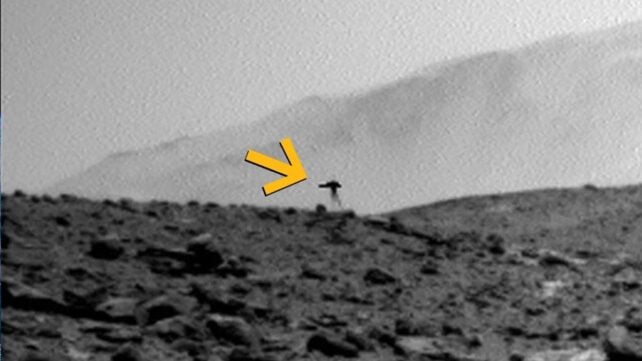
Glowing Lights Exiting Cloud Over Raleigh, NC, USA Sept 19, 2026, UFO UAP Sighting News. VIDEO!

Glowing Lights Exiting Cloud Over Raleigh, NC, USA Sept 19, 2026, UFO UAP Sighting News. VIDEO!

UFO_11.png

UFO_2.png

Date of sighting: Sept 19, 2026
Location of sighting: Raleigh, NC, USA
Source: NUFORC Site
 
Guys this is awesome! A glowing disk was inside a cloud over the city of Raleigh this week and the craft had lights on its edges. Not evenly all around, but certain areas of the edges lit up with glowing spheres visible. Sometimes there were only three lights, other times there were five or six lights. Each time was a split second so I took a few close ups and put them into slow motion at the end of the video so you can see them better. Not only is this 100% proof that UFOs hide within clouds, but its also 100% proof that they do accidentally get caught on video. 
Scott C. Waring - UFO Sightings Daily

Eyewitness states:
We witnessed 5 unidentifiable white circular lights blinking We were sitting on our 2nd story patio facing east on September 19th 2026 at approximately 10:26 I noticed 5 white circular blinking lights located SE behind cloud cover. There was nothing there then all of the sudden 5 lights started blinking at the same time but not in a sequential pattern. I got my husbands attention and he saw the same thing that I was seeing. After about 1 minute I asked him to start filming. We filmed the anomalous lights for 1 minute and then they just stopped blinking. Didn’t fly off, didn’t emerge from the clouds, they stopped like they started, out of thin air. We did not witness an object just 5 circular white lights blinking.

Glowing Lights Exiting Cloud Over Raleigh, NC, USA Sept 19, 2026, UFO UAP Alien Paranormal News.

{ https://www.ufosightingsdaily.com/ }

Hoe vind je dit bericht?
Geschreven door peter om 18:26 Stuur door

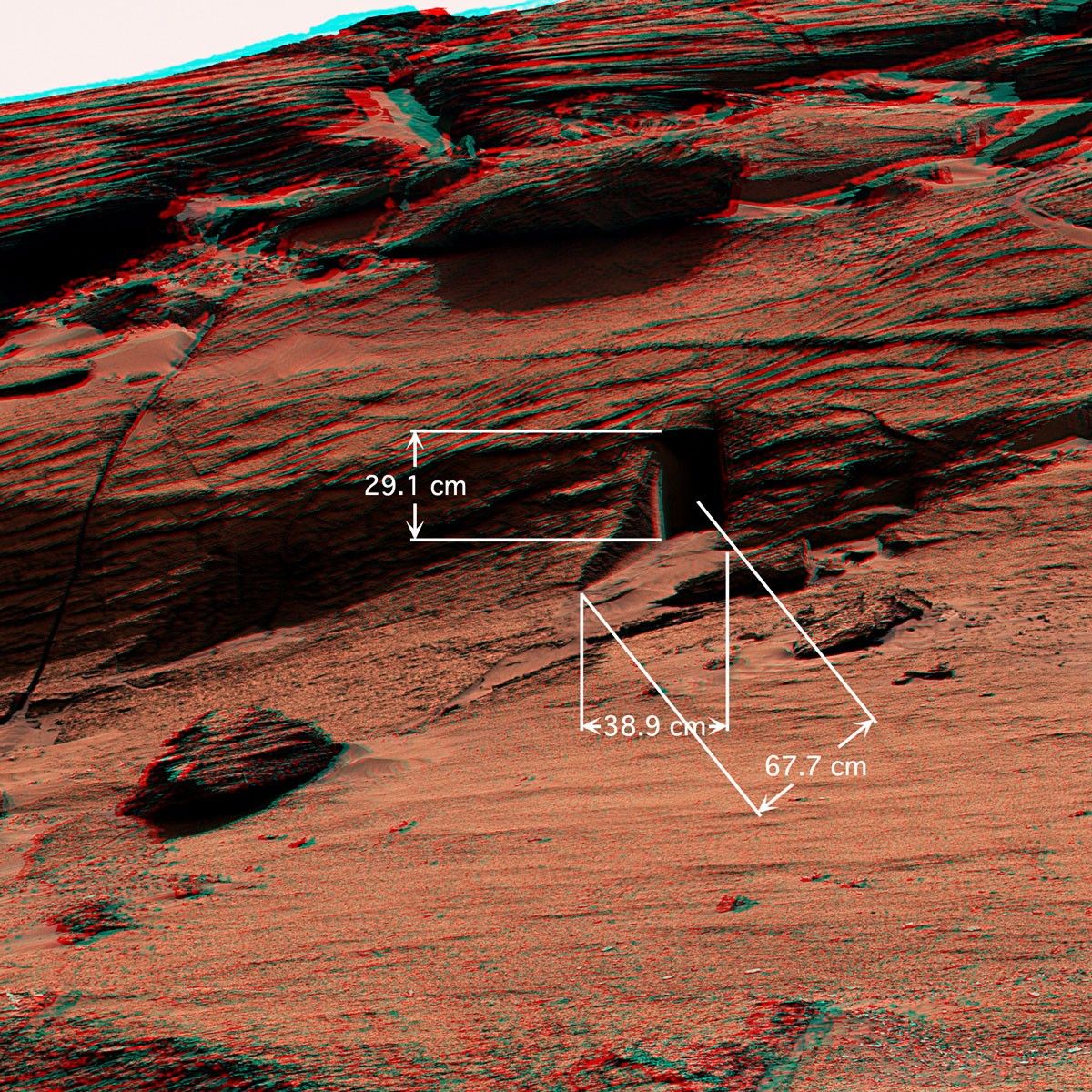
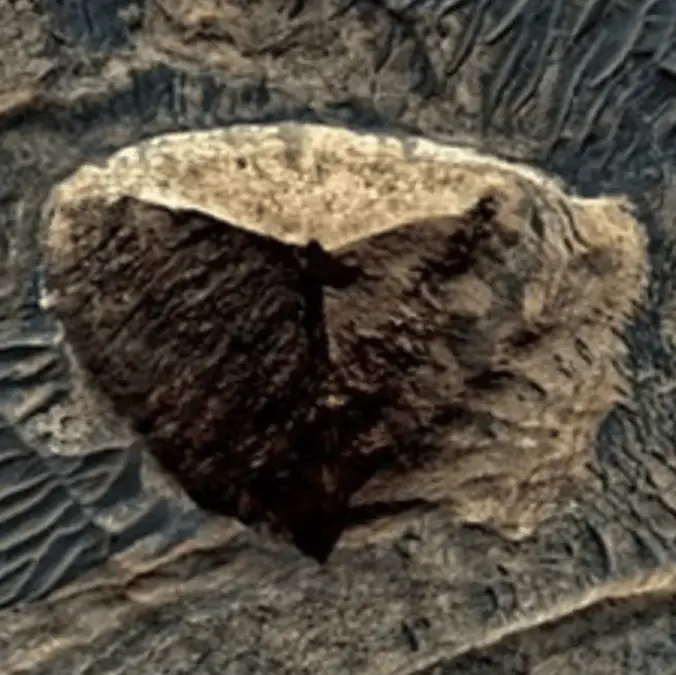
NASA Rover Photo Reveals Doorway Into Structure made by a tiny alien species, UFO UAP Sighting News.

NASA Rover Photo Reveals Doorway Into Structure made by a tiny alien species, UFO UAP Sighting News.

Mars_door.png

Date of discovery: Sept 26, 2026 (Taiwan time)
Location of discovery: Mars, SOL 1827
Source photo:

Now one of the hardest things in the world to do, is to convince humans that a tiny alien species does exist, and to some species...we are the tiny species. I found a doorway that is clearly made by an intelligent species that once lived on Mars. The doorway is about 7 inches (17.78cm) high by 6 inches wide (15.2cm). This makes me feel that those old childhood stories about little green men from Mars are actually true. That it may just be easier for humans to deal by ignoring the reality of it all, because it would change every science, religion and history book around the world. And humans hate change. Take AI for instance, for some odd reason its difficult for humans to grasp that they are playing the role of god, the creator...making AI. It is going to be alive soon, if its not already. Creating an intelligent life form, from nothing...one thats smarter than its creator, is a bit scary for most. But I have never seen a person harmed by AI yet, but humans do harm humans daily in the thousands or more in war, crimes, ect. So...life finds a way. There are no limits to intelligent life, except for limits we chose to have. 
Scott C. Waring - UFO Sightings Daily
 

{ https://www.ufosightingsdaily.com/ }

Hoe vind je dit bericht?
Geschreven door peter om 18:17 Stuur door

History’s Weirdest UFO Incidents: Theories That Challenge Reality

History’s Weirdest UFO Incidents: Theories That Challenge Reality

The Theories Behind History's Weirdest UFO Incidents

Throughout history, reports of unidentified flying objects (UFOs) have captivated the public and fueled debates between skeptics and believers. While many sightings can be explained as natural phenomena or misidentified human-made objects, a few cases stand out due to their unusual circumstances and alleged cover-ups. Among the most perplexing UFO incidents are the Battle of Los Angeles (1942), Roswell (1947), and the Rendlesham Forest Incident (1980). Each of these cases has inspired a range of theories, from government conspiracies to extraterrestrial encounters.

1. The Battle of Los Angeles (1942): A Phantom Attack or Something More?

The Incident

On the night of February 24–25, 1942, mere months after the attack on Pearl Harbor, residents of Los Angeles experienced what many believe to be one of the most mysterious military confrontations in U.S. history. Air raid sirens blared as radar detected an unidentified object approaching the city. In response, the U.S. military launched a massive barrage of anti-aircraft fire, with over 1,400 shells lighting up the sky.

Eyewitnesses described a large, slow-moving object hovering over the city, caught in searchlights but seemingly undamaged by the relentless artillery fire. Eventually, the object disappeared without a trace, leaving behind a trail of speculation.

The Theories

    1. Japanese Aircraft or Balloon Attack – Some theories suggest that the object could have been an enemy reconnaissance balloon or aircraft, but Japan denied launching any missions over Los Angeles that night.
    2. Mass Hysteria and False Radar Readings – Skeptics argue that wartime anxiety led to a false alarm, with military personnel firing at non-existent targets, possibly misidentifying weather balloons or reflections from spotlights.
    3. Extraterrestrial Craft – UFO enthusiasts claim that the mysterious object was an alien spacecraft, citing its apparent invulnerability to artillery fire and its ability to disappear without a trace.

While official explanations remain inconclusive, the declassified investigation into the event only fueled further speculation. To this day, the Battle of Los Angeles remains one of history’s most perplexing UFO encounters.


The Battle of Los Angeles 1942's Phantom Attack

2. Roswell (1947): The Cosmic Watergate

The Incident

In July 1947, a rancher near Roswell, New Mexico, discovered strange metallic debris scattered across his land. The U.S. military quickly intervened, and an initial press release from the Roswell Army Air Field (RAAF) claimed they had recovered a “flying disc.” However, the story was retracted shortly afterward, with authorities stating that the debris was from a crashed weather balloon.

The incident was largely forgotten until the late 1970s when new witnesses and declassified documents reignited speculation that the U.S. government had covered up evidence of an extraterrestrial crash landing.

The Theories

    1. Weather Balloon (Official Explanation) – The U.S. Air Force claimed the wreckage was part of Project Mogul, a classified program using high-altitude balloons to detect Soviet nuclear tests.
    2. Extraterrestrial Craft with Alien Bodies – Many believe the U.S. government recovered an alien spaceship and possibly non-human occupants, hiding them in secret facilities such as Area 51.
    3. Nazi Flying Technology – Another theory suggests that Roswell involved Nazi experimental aircraft, secretly brought to the U.S. through Operation Paperclip.

The controversy surrounding Roswell has inspired countless conspiracy theories, books, and documentaries. To this day, it remains a cornerstone of UFO folklore, with believers arguing that crucial evidence continues to be withheld from the public.

Roswell 1947… The Crash That Shifted Earth’s Timeline

3. Rendlesham Forest Incident (1980): Britain’s Roswell

The Incident

Between December 26 and December 28, 1980, military personnel stationed at RAF Woodbridge and RAF Bentwaters (U.S. Air Force bases in England) reported witnessing strange lights in the nearby Rendlesham Forest. Some claimed to have encountered a triangular craft, which appeared to land momentarily before taking off again.

On the second night, Deputy Base Commander Lieutenant Colonel Charles Halt led a group into the forest to investigate. He recorded a now-famous audiotape describing strange flashing lights, mysterious beams, and bizarre movements that defied conventional explanations.

The Theories

    1. Lighthouse Misidentification – Skeptics argue that the men mistook the flashing light from the Orford Ness lighthouse for a UFO.
    2. Secret Military Experiment – Some believe that the event involved classified military technology, possibly related to Cold War intelligence operations.
    3. Extraterrestrial Visitation – Witnesses like Jim Penniston claim they saw a solid craft covered in strange symbols and even received telepathic messages from the unknown entities behind it.
  1. Interdimensional Phenomenon – Another theory suggests that the event involved time travelers or beings from another dimension, rather than extraterrestrials.
The Rendlesham Forest Incident (1980): Britain's Greatest UFO Mystery | Full Documentary

Despite multiple investigations, no definitive explanation has been accepted by all parties. The Rendlesham Forest Incident remains one of the most credible and well-documented UFO encounters in history.

Conclusion: Theories Without Answers

While the Battle of Los Angeles, Roswell, and Rendlesham Forest incidents each have their own distinct narratives, they share a common thread of government secrecy, conflicting testimonies, and enduring mystery. Some believe they point to hidden technological advancements, while others insist they are proof of extraterrestrial life.

Regardless of the explanations, these incidents have fueled UFO lore for decades, ensuring that the question remains: Are we alone in the universe?

{ https://www.latest-ufo-sightings.net/ }

Hoe vind je dit bericht?
Geschreven door peter om 17:59 Stuur door

Japan’s UFO Village: 50 Years of Strange Sightings in Eno Town

Japan’s UFO Village: 50 Years of Strange Sightings in Eno Town

This Small Japanese Town Has Been a UFO Hotspot for 50 Years

Tucked away in the rural mountains of Fukushima, Japan, lies a small and enigmatic town that has fascinated UFO enthusiasts for decades. Known as a major hotspot for unidentified flying object (UFO) sightings, Eno Village has attracted attention not only from locals and curious tourists but also from researchers and skeptics alike.

Retro UFO Canvas Poster

The Mysterious Mount Senganmori

At the heart of this intrigue stands Mount Senganmori, a conical 400-meter-high mountain often likened to an artificial pyramid due to its shape. Many believe that the mountain’s unusual magnetic properties are a major reason behind the high frequency of sightings in the area. Visitors can even test this magnetism using small compass kits provided near the summit—a playful yet curious reminder that something truly unique may be happening here.

This distinctive landscape has become symbolic of Japan’s long-standing fascination with unexplained aerial phenomena. Numerous reports have surfaced over the years, including some of Japan’s most compelling UFO photographs, taken by hikers and residents who discovered unusual objects only after reviewing their images later.

The International UFO Lab

Established in 1992, the International UFO Lab, located at the base of Mount Senganmori, serves as the country’s epicenter for UFO research. It houses a vast collection of over 3,000 photos, videos, and materials associated with sightings. Many of the photographs on display have never been published elsewhere and offer glimpses into unexplained aerial activity documented throughout Japan.

One standout image, taken in 2018 by hikers on a nearby peak, shows a strange object suspended in the sky with no clear explanation. These types of encounters—where people only notice something unusual after the fact—add to the mystery and perceived authenticity of such sightings.

A History of Sightings

Eno Village and the surrounding Fukushima region boast the second-highest concentration of UFO sightings in Japan, just behind Tokyo. A particularly notable incident occurred in 1974, when an entire school of children reportedly witnessed ten UFOs flying in formation over the region—an event still remembered and referenced by locals.

Adding to the intrigue is the presence of scientific monitoring in the area following the Fukushima nuclear disaster. With researchers collecting various environmental data, some speculate that high-tech surveillance equipment may have unintentionally captured unexplained aerial activity, further validating long-standing local reports.

Firsthand Witness: The Story of Murai-san

One of the town’s most publicized eyewitnesses is Murai-san, who claims to have seen a UFO above Mount Senganmori in the late 1970s. His account, marked by humility and clarity, stands out among the many stories surrounding the area. Murai-san described seeing multiple lights moving in formation—something he insists could not be explained by conventional aircraft.

His story, like many others in the region, isn’t about fame or attention. Rather, it’s a quiet recounting of a personal experience that has stayed with him for nearly 50 years.

A Place That Raises More Questions Than Answers

Mount Senganmori and Eno Village have become more than just a curiosity—they symbolize Japan’s open-minded yet analytical approach to the unexplained. Whether it’s the town’s geography, magnetic properties, or its history with high-tech monitoring, Eno Village offers fertile ground for both scientific inquiry and imaginative wonder.

For those who visit, the town raises more questions than it answers. What causes these frequent sightings? Is it natural magnetism, human technology, or something entirely unknown? While definitive explanations remain elusive, one thing is certain—Eno Village holds a special place in Japan’s long and curious relationship with the skies above.

RELATED


This Small Japanese Town Is A UFO Hotspot

Strange Skies in Japan: UFOs in Fukushima

{ https://www.latest-ufo-sightings.net/}

Hoe vind je dit bericht?
Geschreven door peter om 17:28 Stuur door

Saturn's moon could harbour ALIEN life: Scientists prove micro-organisms can thrive in Enceladus's ocean - suggesting it could be habitable

Saturn's moon could harbour ALIEN life: Scientists prove micro-organisms can thrive in Enceladus's ocean - suggesting it could be habitable

One of Saturn's moons could harbour alient life, scientists say – but don't expect a call from ET any time soon.

Life in this case means micro-organisms in oceans deep beneath Enceladus’s frozen surface.

Scientists discovered that certain types of micro-organisms can not only survive but thrive in the inhospitable conditions of the planet’s sixth-largest moon.

In a laboratory, researchers recreated the conditions of Enceladus' subsurface oceans and introduced bacteria that normally live on deep-sea hydrothermal vents.

They thought that with almost no oxygen, high concentrations of dissolved carbon dioxide and an extremely alkaline pH, the ocean would be hostile to life.

However, they were shocked to find that these hardy microbes tolerated the alien conditions far better than previously thought possible.

According to the researchers, this raises the probability that life will one day be found on Saturn's moon.

Dr Nozair Khawaja, of the Freie Universitat Berlin and co-author of the study, said: 'This was really a surprise to us. This was an experiment for which we did not expect such a successful outcome.'

Saturn's moon Enceladus (artist's impression) could harbour alien life in oceans deep beneath its frozen surface, according to a new study

Saturn's moon Enceladus (artist's impression) could harbour alien life in oceans deep beneath its frozen surface, according to a new study 

Scientists found that a type of bacteria that normally lives in deep-ocean hydrothermal vents can not only survive, but thrive in a laboratory simulation of Enceladus' ocean

Scientists found that a type of bacteria that normally lives in deep–ocean hydrothermal vents can not only survive, but thrive in a laboratory simulation of Enceladus' ocean 

Enceladus has a diameter of around 310 miles (500km) – about as wide as Arizona.

On the surface, conditions are exceptionally cold, with temperatures as low as –201°C (–330°F).

But despite its barren, icy surface, scientists believe that it is one of the most promising places in our solar system to look for extraterrestrial life.

This is because geothermal processes deep near its rocky core produce enough heat to maintain large oceans of liquid water beneath the surface.

Near the south pole, plumes of ocean water erupt through cracks in the crust, shooting ice particles hundreds of miles out into space.

NASA's Cassini probe flew through these plumes on multiple occasions, gathering samples and analysing their chemical composition.

This revealed signs of hydrothermal processes on the seafloor, which could be key to sustaining life, alongside the organic chemicals that could provide the building blocks of amino acids and proteins.

Now, scientists have the first concrete evidence that life can thrive in these hostile oceans.

Although surface temperatures can be as low as –201°C (–330°F), geothermal activity near the rocky core maintains a vast ocean of liquid water where life could develop

Although surface temperatures can be as low as –201°C (–330°F), geothermal activity near the rocky core maintains a vast ocean of liquid water where life could develop 

Enceladus: The key facts

Host planet: Saturn

Diameter: 310 miles (500km)

Average surface temperature: –201°C (–330°F)

Distance from Saturn: 148,000 miles (238,000 km)

Orbital period: 32.9 hours

Discovery: 28 August 1789 by William Herschel

In the laboratory simulation, scientists tested a type of bacteria called Methanothermococcus okinawensis, which has an incredible natural ability to survive without oxygen.

Instead, its metabolism runs on carbon dioxide and hydrogen released by the geologically active rocks of deep ocean vents.

Co–author Professor Frank Postberg, a planetary scientist at Freie Universität Berlin, told the Daily Mail: 'On early Earth there was no oxygen either, and these ancient microbes have developed under these conditions.'

Previously, scientists had thought that the high pH of Enceladus' ocean was unsuitable for them, but the laboratory tests showed that they are more than happy to grow in these tough conditions.

In the laboratory tests, they were even able to adapt their metabolism to the low amounts of carbon dioxide.

Professor Postberg said this shows that life 'could' survive on Enceladus, but added 'it is by no means certain that it actually does!'

The good news is that, in a separate paper also published today, Professor Postberg shows that signs of life may be much easier to find than previously thought.

Droplets of the ocean are ejected from Enceladus' south pole when bubbles filled with gas rise to the surface and pop.

Scientists have been able to directly sample water from Enceladus' sub–-surface oceans by collecting particles of ice ejected into space through cracks in the South Pole (pictured)

Scientists have been able to directly sample water from Enceladus' sub–-surface oceans by collecting particles of ice ejected into space through cracks in the South Pole (pictured)

Researchers say the fact that these droplets freeze slowly means that some chemicals are concentrated into a few locations (shown in red). This would make it easier for spacecraft to detect any chemical signs of life

Researchers say the fact that these droplets freeze slowly means that some chemicals are concentrated into a few locations (shown in red). This would make it easier for spacecraft to detect any chemical signs of life 

Water vapour then carries these droplets through cracks in the ice shell and out into space at speeds up to 620 miles per hour (1,000km/h), where scientists assumed they would instantly freeze.

However, new modelling and laboratory tests show that these droplets actually freeze quite slowly.

During this gradual process, most components in the water are separated, concentrating salts and other minerals into different locations inside the droplet.

If one of these frozen drops shatters on its way out, the result will be tiny fragments containing a highly concentrated sample of just one substance.

That natural process will be particularly helpful if scientists want to hunt for the subtle chemical signatures of life beneath the ocean.

'Enceladus actually does a lot of the work for us in preparing samples for analysis that usually take a lot of effort in chemical labs on Earth,' said Dr Postberg.

If a droplet did contain the chemical 'biosignature of life', the freezing and shattering process could create tiny ice particles with a high concentration of these chemicals in a relatively pure form.

That would make any biosignatures significantly easier to spot, even with the level of technology currently available.

None of this means that Enceladus does harbour life, but if there is life, Professor Postberg said 'we now have a good chance to detect it'.

He added: 'We should go back there and find out.'

RELATED

‘Another pile of evidence’: Saturn’s moon Enceladus may have organic compounds in ocean jets


Enceladus Life Evidence: What Scientists Just Confirmed on Saturn's Moon


We Found New Evidence of Life on Saturn's Moon Enceladus

{ https://www.dailymail.com/sciencetech/index.html }

Hoe vind je dit bericht?
Geschreven door peter om 16:15 Stuur door

Egyptologists uncover 4,000–year–old tomb of the 'keeper of the king's secrets' – with a mysterious 'portal to the afterlife'

Egyptologists uncover 4,000–year–old tomb of the 'keeper of the king's secrets' – with a mysterious 'portal to the afterlife'

Archaeologists have uncovered a 4,000–year–old tomb that belonged to one of ancient Egypt's most powerful officials - with a mysterious 'portal to the afterlife'.

The discovery was made at the Bubasteion Necropolis in Saqqara, one of Egypt's most important archaeological sites.

Hieroglyphs reveal the tomb belonged to a senior official named Sakhnetio–Btah, who lived during the time of the Old Kingdom.

Inscriptions identified him as the 'keeper of the king's secrets', highlighting his privileged access to the pharaoh's inner circle.

Despite the mysterious name, the title probably did not mean guarding hidden treasures or religious mysteries.

Experts believe it referred to a high–ranking official who handled confidential royal documents and decrees on behalf of an Old Kingdom pharaoh.

He also served as a royal chamberlain, a priest of the goddess Maat and supervisor of the royal library.

'The hieroglyphic inscriptions… helped to determine the name of the owner of the cemetery and the number of his titles, including the keeper of royal secrets, which reflect the high status he held in the administrative system of the ancient state,' Egypt's Ministry of Tourism and Antiquities said.

The tomb also includes the remains of a funerary chapel and a false door, which ancient Egyptians believed was a portal to the afterlife

The tomb also includes the remains of a funerary chapel and a false door, which ancient Egyptians believed was a portal to the afterlife

Inscriptions reveal the tomb belonged to the ¿keeper of the king¿s secrets¿, highlighting his privileged access to the pharaoh¿s inner circle

Inscriptions reveal the tomb belonged to the 'keeper of the king's secrets', highlighting his

The tomb includes the remains of a funerary chapel and a false door – a symbolic niche which the ancient Egyptians believed was a mag

Archaeologists also discovered a complete assemblage of funerary ritual objects including an offering table, an offering slab and a purification basin.

Experts say finding the objects exactly where they were originally placed provides a rare glimpse into Old Kingdom funerary practices.

The dig also uncovered an interconnected network of burial shafts surrounding the tomb.

Inside were numerous human burials and large quantities of painted funerary cartonnage – a colourful papier–mâché–like covering placed over a mummy, often decorated with images of Egyptian gods, hieroglyphics and scenes intended to protect the dead on their journey to the afterlife.

More than 100 ushabti figurines, which were intended to serve the dead in the afterlife, were also recovered.

Among the most spectacular finds were three stone sarcophagi discovered sealed and intact in their original positions.

Archaeologists also found a wooden falcon statue and a wide range of pottery vessels and other artefacts.

Archaeologists also discovered a complete assemblage of funerary ritual objects including an offering table, an offering slab and a purification basin  The dig also uncovered an interconnected network of burial shafts surrounding the tomb

Archaeologists also discovered a complete assemblage of funerary ritual objects including an offering table, an offering slab and a purification basin (left). The dig also uncovered an interconnected network of burial shafts surrounding the tomb (right)

Preliminary investigations suggest that some parts of the burial complex were looted by tomb robbers in ancient times.

Despite this, many of the surviving finds remain in remarkably good condition.

Researchers believe the discoveries will help them better understand how the site was reused over different periods of Egyptian history.

Excavations are continuing, with experts convinced that the vast necropolis still has many more secrets waiting to be uncovered.

Saqqara, where the tomb was found, is one of Egypt's most significant archaeological sites.

It is the home of Egypt's oldest pyramid – the step pyramid of Djoser – which was built around 4,700 years ago.

The site also contains thousands of tombs belonging to pharaohs, nobles, priests and high–ranking officials from multiple dynasties.

In recent years archaeologists at Saqqara have uncovered dozens of sealed coffins, extensive animal cemeteries, workshops used for mummification, and richly decorated burial shafts packed with statues and artefacts. 

These discoveries have transformed understanding of everyday religious life in ancient Egypt


Archaeologists Opened a 4,000-Year-Old Tomb… What They Found Shocked Scientists

Scientists Opened a 4,000-Year-Old Egyptian Tomb — And Everything Changed!

{ https://www.dailymail.com/sciencetech/index.html }

Hoe vind je dit bericht?
Geschreven door peter om 16:00 Stuur door

Noah's Ark hunt takes stunning turn as forgotten map matches new discovery

Noah's Ark hunt takes stunning turn as forgotten map matches new discovery

A centuries-old map has resurfaced amid a stunning new development in the search for Noah's Ark.

The map, created in 1587 by Italian nobleman and cartographer Urbano Monte, stretches nearly 10 feet wide when fully assembled and is packed with elaborate illustrations of continents, mythical creatures and unexplored lands.

Hidden within the world diagram is a small depiction of Noah's Ark resting on the mountains of Ararat in modern-day Turkey - the region researchers are currently searching for the biblical vessel. 

The striking detail has sparked fascination online as it aligns with the Durupınar Formation, where researchers are currently investigating for remains of the biblical boat. 

Independent researcher Jimmy Corsetti wrote online: 'The same location as the Durupınar site, virtually the exact same length. Coincidence?' 

The international team examining the Durupınar Formation recently said it has '100 percent confirmed' that the mound is not a natural geological feature but a 'man-made object.' 

Andrew Jones, founder of Noah's Ark Scans, said in a statement that preliminary radar data do not show 'a simple homogeneous solid-rock signature.' 

The team had recovered samples from nearly 60 feet. 'We have so far recovered layers of rich organic material that we believe could be the decayed top-tier remains of the Ark,' Jones explained.

Hidden within the map is a small depiction of Noah's Ark resting on the mountains of Ararat in modern-day Turkey, the same region many believe still hides the legendary vessel

Hidden within the map is a small depiction of Noah's Ark resting on the mountains of Ararat in modern-day Turkey, the same region many believe still hides the legendary vessel

Created in 1587 by Italian nobleman and cartographer Urbano Monte, the massive map stretches nearly 10 feet wide when fully assembled and is packed with elaborate illustrations of continents, mythical creatures and unexplored lands

Created in 1587 by Italian nobleman and cartographer Urbano Monte, the massive map stretches nearly 10 feet wide when fully assembled and is packed with elaborate illustrations of continents, mythical creatures and unexplored lands

Monte created the map during the height of the Age of Exploration, when European cartographers were rapidly redrawing the known world following voyages to the Americas and Asia. 

Unlike most 16th-century maps, this diagram was designed from a north polar perspective, placing the Arctic at the center of the world.

The enormous map consists of 60 separate hand-drawn sheets that can be assembled into a single circular image measuring nearly 10 feet across.

It is filled with elaborate illustrations of ships, sea monsters, mythical creatures and detailed notes describing distant lands and cultures.

Historians believe Monte was inspired to create the map after a Japanese delegation visited Milan in 1585, exposing Europeans to new global perspectives. The original manuscript is now housed at Stanford University's David Rumsey Map Center, where it was digitally restored and made available online.

The depiction has drawn attention because it places Noah's Ark on the mountains of Ararat centuries before modern researchers began searching the region for evidence of the biblical vessel.

The Bible recounts Noah's Ark resting on the 'mountains of Ararat' after a 150-day flood submerged the Earth, sparing only those aboard the wooden vessel.

The idea that the ark landed in the Turkish mountain range has long sparked debate.

Just 18 miles south of Mount Ararat, Turkey's tallest peak, the Durupinar Formation emerged less than a century ago

Just 18 miles south of Mount Ararat, Turkey's tallest peak, the Durupinar Formation emerged less than a century ago

The radar captured 'a series of right angles' about 20 feet down, which researchers believe could be the rooms that held animals on the ark

The radar captured 'a series of right angles' about 20 feet down, which researchers believe could be the rooms that held animals on the ark

While many scientists argue the formation is a naturally occurring geological feature, others are convinced it points to something far more extraordinary. 

The team at Noah's Ark Scans firmly believes the latter.

'For decades, skeptics have had one simple answer for the boat-shaped Durupınar Formation: it is just a solid lump of natural rock,' Noah's Ark Scans said on Wednesday.

'The mission was direct: put the "solid rock" explanation to the test. Is the formation a single homogeneous mass of natural stone? Does it contain internal structures? 

'Where does the true bedrock lie beneath it, and how does that bedrock continue across the surrounding valley?'

The team shared online that radar scans found three layers beneath the formation's surface, claiming they feature chambers, corridors, organized patterns, and tunnels.

Lauren Witzke, head of marketing and fundraising for Noah's Ark Scans, said on X: 'Scientists confirm the formation is 100 percent not geological. They say, and I quote, that it is a “man-made object."'

Tests conducted by Noah's Ark Scans have also found higher carbon levels inside the formation than in matching soil collected just a few yards away on the same hillside.

The researchers added further studies using infrared thermography (IRT), a heat-sensing technology that can uncover hidden structures underground, have also suggested the presence of a ship-shaped hull buried deep in the soil

The researchers added further studies using infrared thermography (IRT), a heat-sensing technology that can uncover hidden structures underground, have also suggested the presence of a ship-shaped hull buried deep in the soil

Researchers said the difference could point to a concentration of organic material, potentially the remains of ancient wood, although no timber has been recovered.

Lead archaeologist Dr Cenker Atila said: ‘The amount of carbon coming from the interior of the ship is 40 percent higher than what was found outside.’ 

‘This raises the idea that there may be organic material or remains of wood.’

The findings remain unverified while the collected samples undergo laboratory testing. The team expects to publish a fuller analysis in the coming weeks. 

RELATED

What Did They Find Under Noah’s Ark? Latest Discovery Explained

{ https://www.dailymail.com/sciencetech/index.html }

Hoe vind je dit bericht?
Geschreven door peter om 15:47 Stuur door

Alien sunsets, stone spiderwebs and mysterious doors: Curiosity's top 10 photos after 5,000 days on Mars

Alien sunsets, stone spiderwebs and mysterious doors: Curiosity's top 10 photos after 5,000 days on Mars

Curiosity has been photographing Mars in its search for evidence of water and life for over 5,000 Martian days. Here are 10 of the most surprising and weird photos the rover has sent back to Earth.

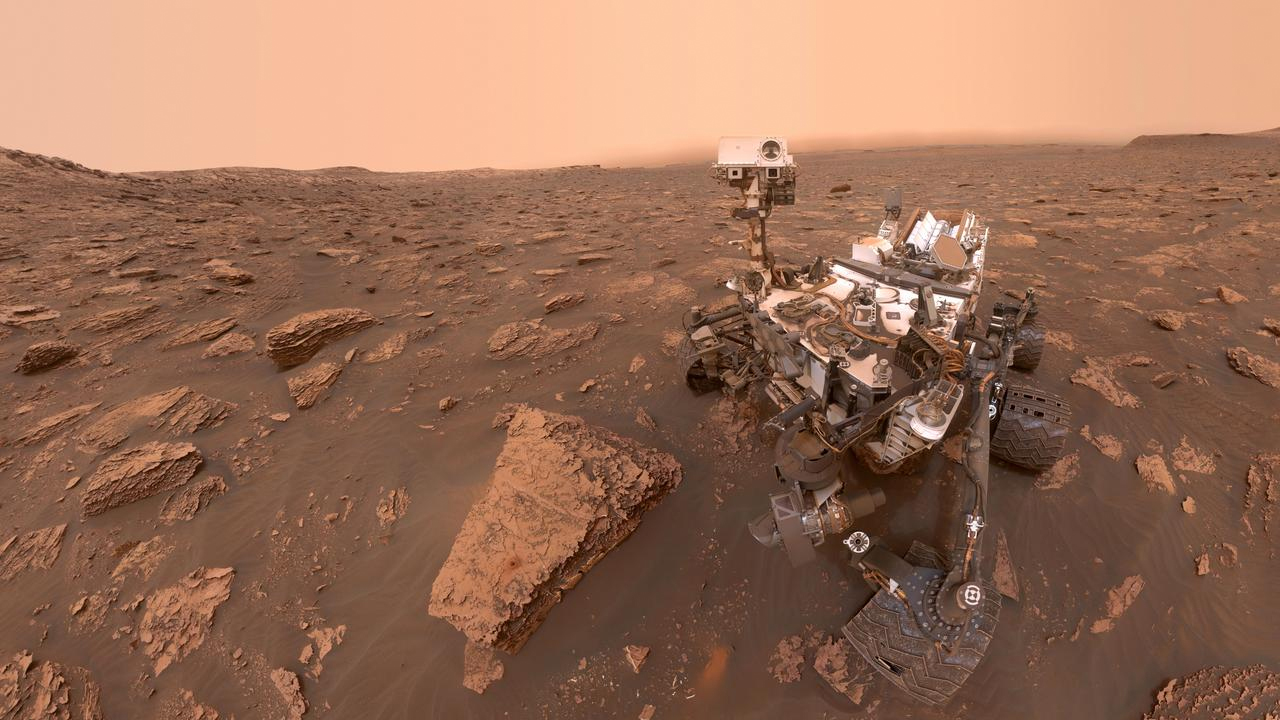
NASA's Curiosity rover took this selfie while inside Mars' Gale crater on June 15, 2018, which was the 2,082nd Martian day, or sol, of the rover's mission.

Curiosity takes a selfie. NASA's intrepid rover just completed its 5,000th day on Mars.
(Image credit: NASA/JPL-Caltech/MSSS)

As of Aug. 30, 2026, NASA's Curiosity rover has officially seen the sun rise and set over Mars' reddish horizon more than 5,000 times in its quest to discover if life ever existed there. The rover was originally planned to operate for only two years, but the mission is still going strong more than 14 years after landing on Mars in August 2012.

During that time, the rover has weathered global dust storms and climbed more than 3,200 feet (1,000 meters) up a mountain — although its tires have gotten some rather large holes in them in the process. The rover still uses its 17 cameras to take hundreds of photos every single sol (Martian day), beaming a total of more than 780,000 photos back to Earth for scientists to analyze while mission controllers decide where the rover should roam next.

In honor of the intrepid rover's 5,000th day on the Red Planet, here are 10 of the most iconic photos Curiosity has snapped for Earthlings to admire.

1. Sol 548: Mount Sharp on the horizon
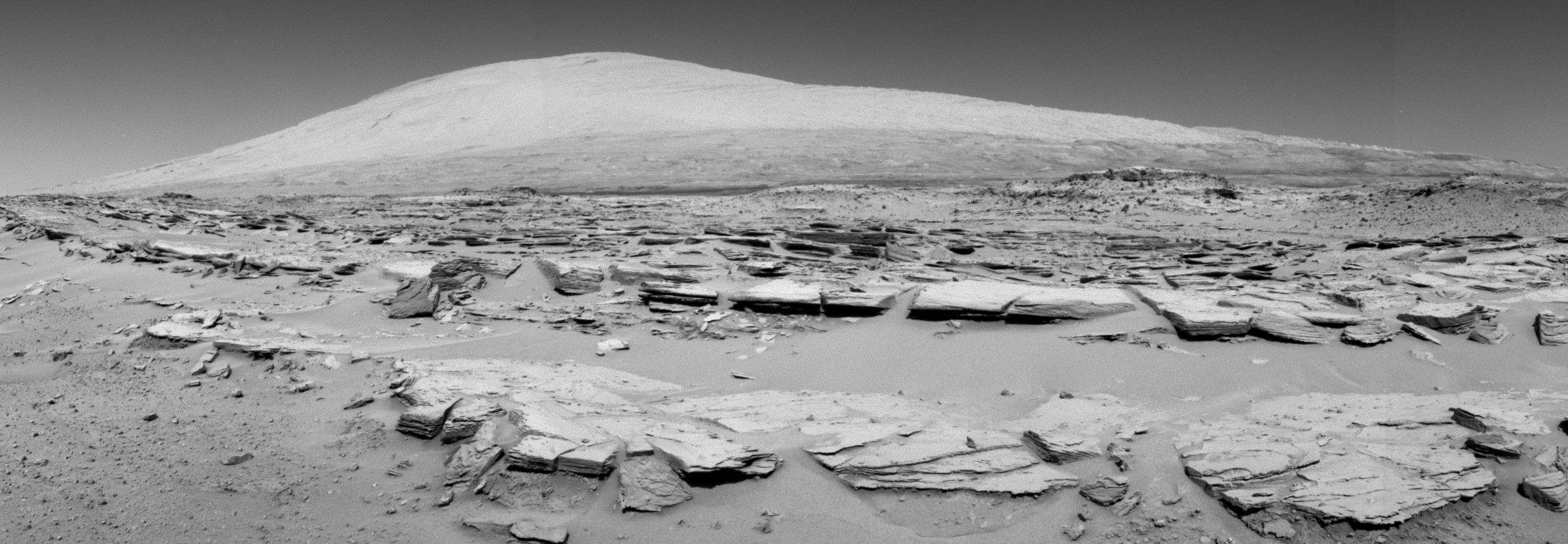
A black and white photo of the surface of Mars.

Image credit: NASA/JPL-Caltech)

Curiosity snapped this photo of Mount Sharp on Feb. 19, 2014, about a year and a half after it landed on Mars. At the time, scientists were hopeful the rover could make it to the base of the 3.4-mile-high (5.5 kilometers high) mountain to explore interesting terrain previously seen from space. As the years passed, Curiosity more than surpassed that goal; the rover has climbed more than half a mile up into the mountain's foothills, traveling a total of more than 23.6 miles (38 km) from its landing spot, all while conducting important science along the way.

2. Sol 956: Blue skies on Mars
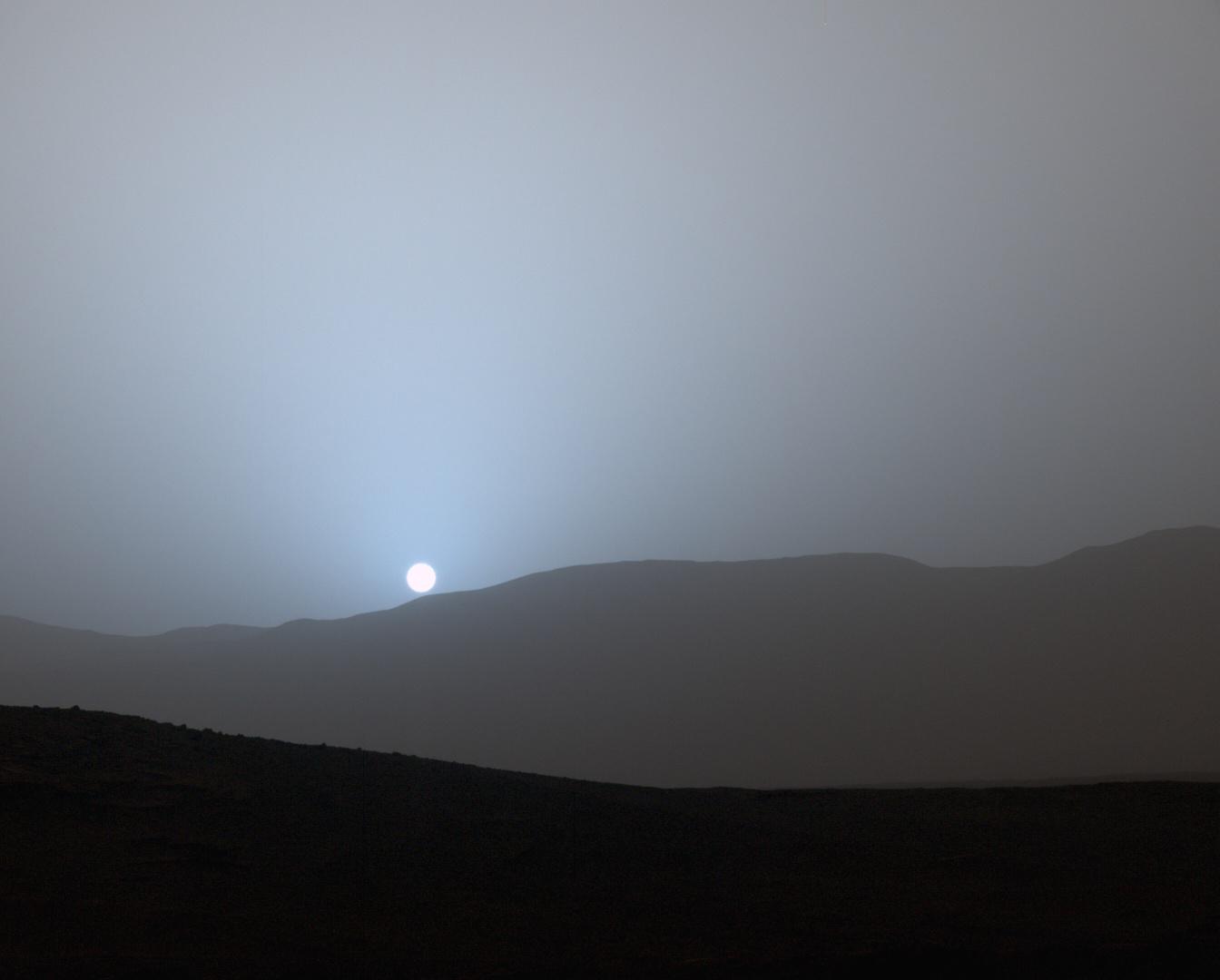
A sunset view with a silhouette of a mountain range in front.

Image credit: NASA/JPL-Caltech/MSSS/Texas A&M Univ)

Curiosity took a photo of the Martian sunset in color for the first time on April 15, 2015, revealing a brilliant blue sky just before the sun dipped behind the shrouded mountains in the distance. The Martian sky is usually yellow to orange, according to NASA. Fine dust particles in the atmosphere scatter red and yellow light across the entire sky. However, the dust is just the right size for some blue light to slip past, so most of the light in the sky near the sun is blue. The effect is much more pronounced when the sun is low in the horizon.

You may like
  • Two images show different sides of Mars, one being a grayscale image and the other being bright orange.

Humanity's first look at the surface of Mars shared on 50th anniversary of historic NASA landing

  • A close up of a large reddish rock against a blue background

Oldest-known Martian meteorite holds clues to a watery past

  • A dark sphere is seen with a glowing light behind it in space.

'The moon looked wrong': Artemis II mission controller Chris White tells the story behind NASA's historic photos

3. Sol 1128: Curiosity Selfie at Namib D
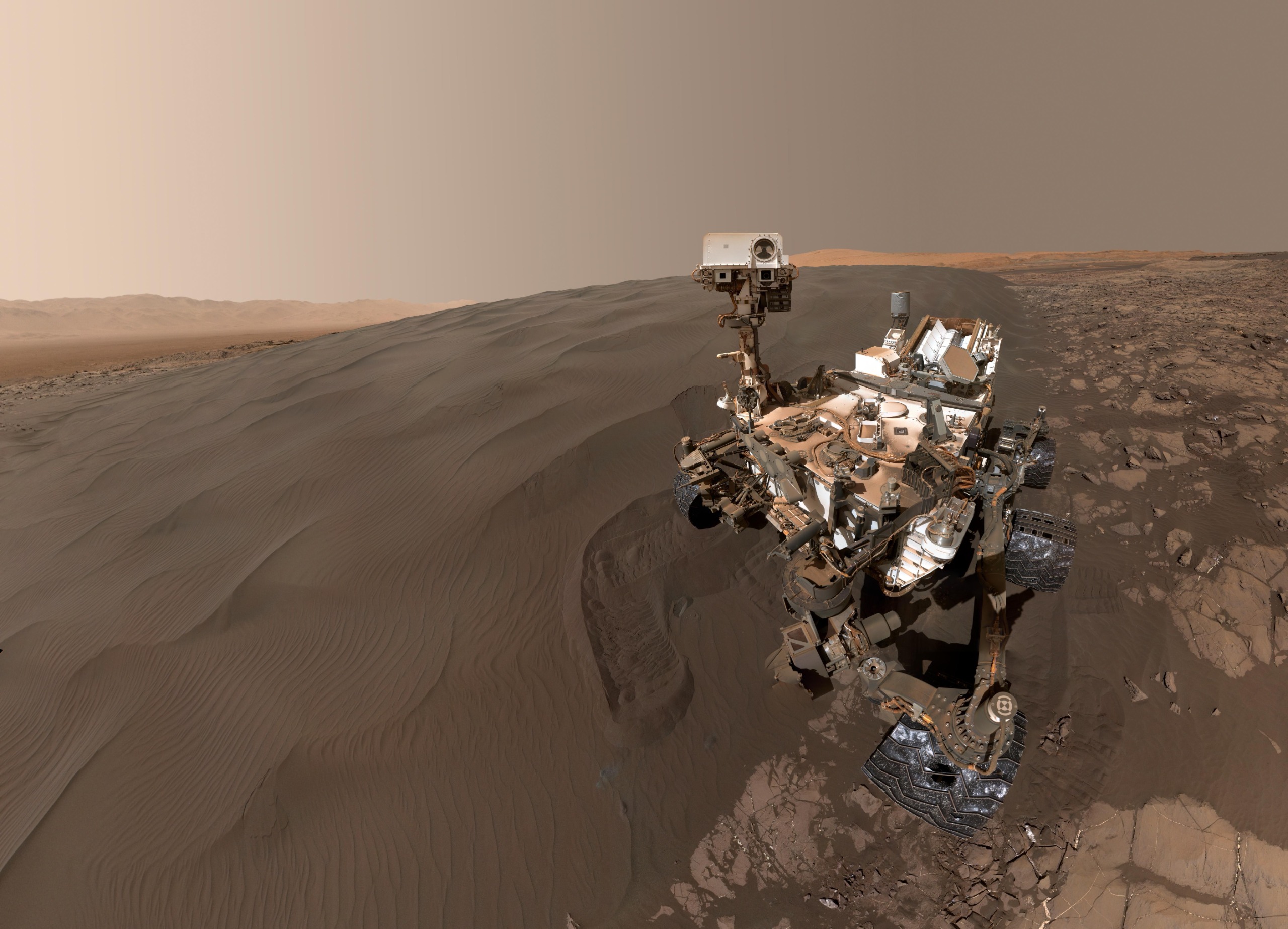
A rover is seen on a muddy brown surface.

(Image credit: NASA/JPL-Caltech/MSSS)

Curiosity has taken numerous selfies over the course of its mission, although the process is a bit more involved than holding up a camera and smiling. This selfie was made from 57 separate images taken on Jan. 19, 2016 using a camera attached to its robotic arm. Here, Curiosity is standing next to Namib Dune, one of the many dark sand dunes that make up the Bagnold Dune Field near Mount Sharp. Curiosity sampled the sand for analysis and scuffed the dune with its wheels so scientists could see how the sand moved.

4. Sol 1819: Curiosity leaves a thumbprint in the dust
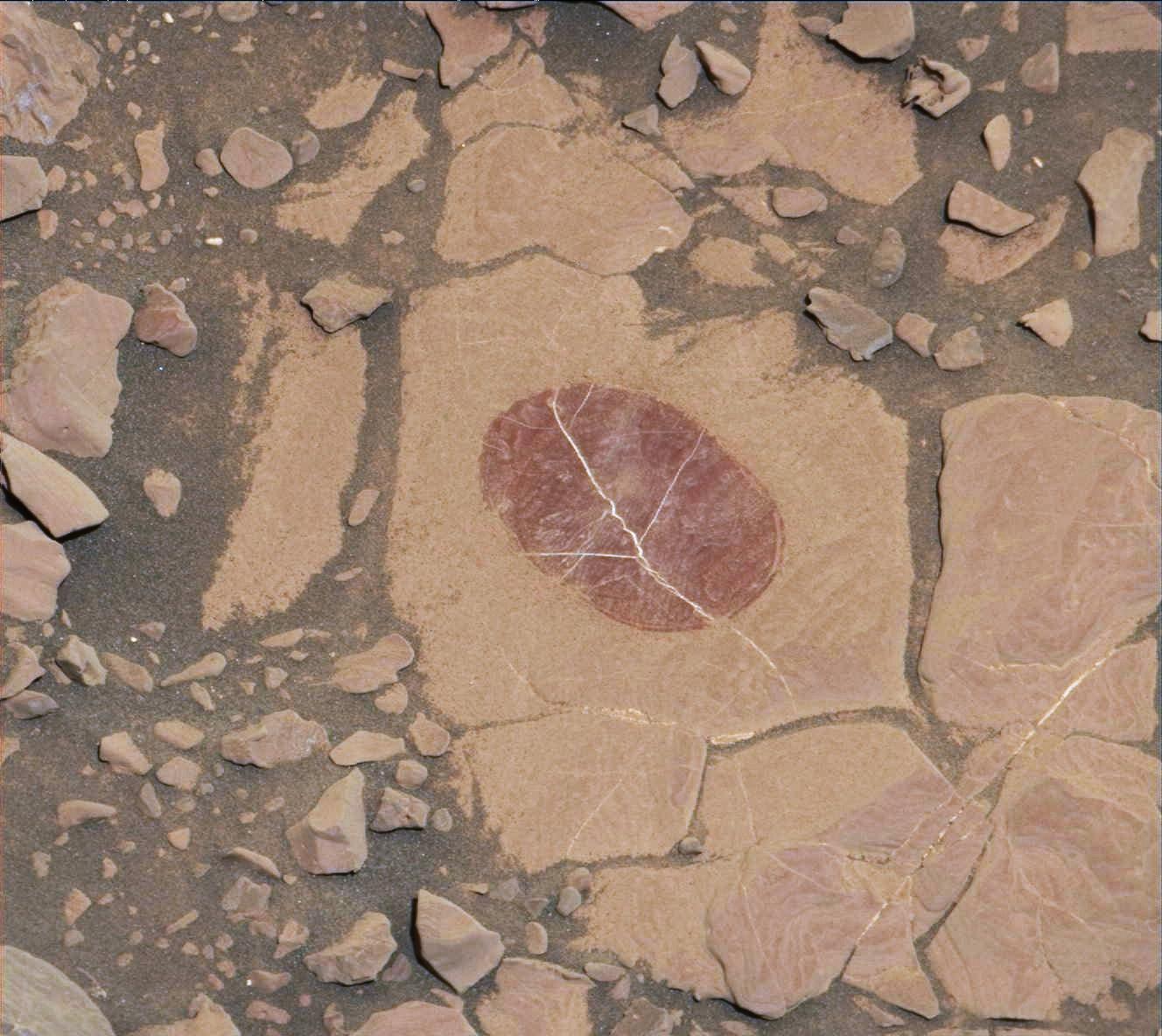
A series of red rocks with a dark circular mark in the middle.

(Image credit: NASA/JPL-Caltech/MSSS)

Mars is extremely dusty. The reddish dust gets swept into the atmosphere and cast across most of the planet's surface, making it difficult for scientists to figure out what materials are on the surface just by looking at them. On Sept. 17, 2017, Curiosity dusted off the surface of a rock at Vera Rubin Ridge and took a picture for geologists to compare to rocks on Earth. Based on the reddish purple color, geologists think this rock is fine-grained hematite split by fractures filled with calcium sulfate minerals. It hints that Mars might be a lot more colorful underneath its dusty blanket. Scientists have since discovered ruby-like materials embedded in Martian rocks.

5. Sol 3466: Totally not a door for aliens
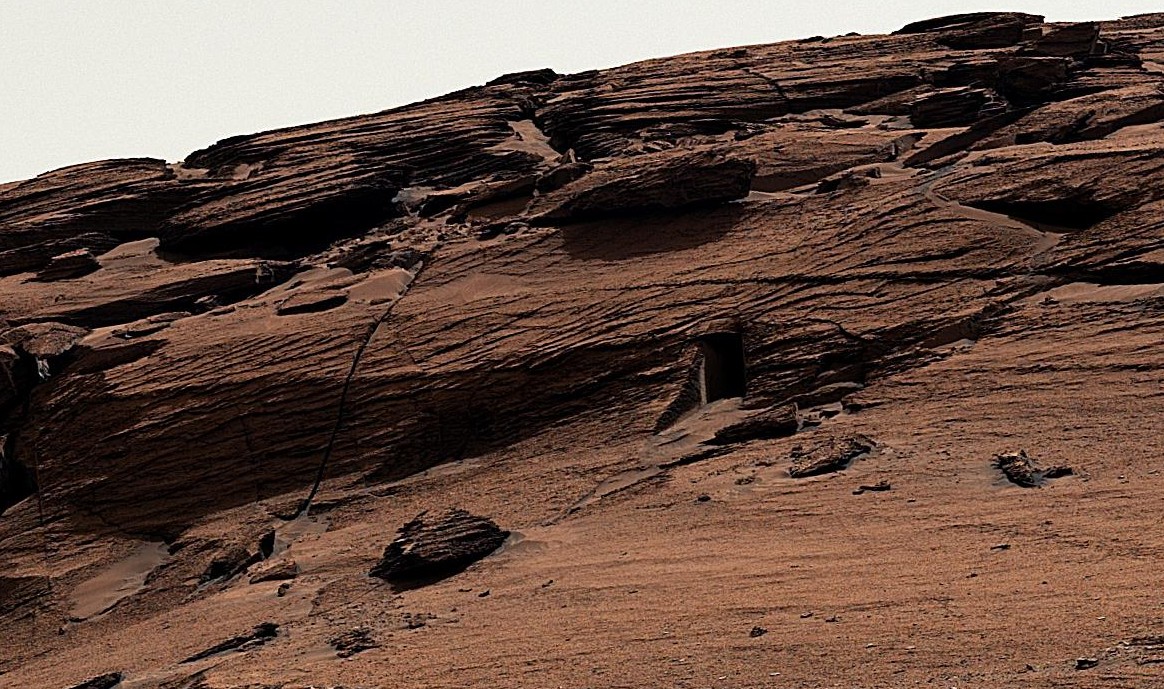
A red rock formation on the surface of Mars.

(Image credit: NASA/JPL-Caltech/MSSS)

On May 7, 2022, Curiosity sent a curious photo back to Earth that appears to show a small door carved into the face of a cliff. It's hard not to imagine little green people entering it after taking their little green dogs for a stroll across the dusty landscape, but it's not actually a doorway for Martians. The 3-foot-tall opening's boxy shape is caused by vertical fractures intersecting with horizontal layers in the rock, according to NASA. The cliff is highly fractured, and a large chunk of rock that likely fell from the "doorway" is clearly visible nearby.

6. Sol 3724: Iridescent feather in the sky
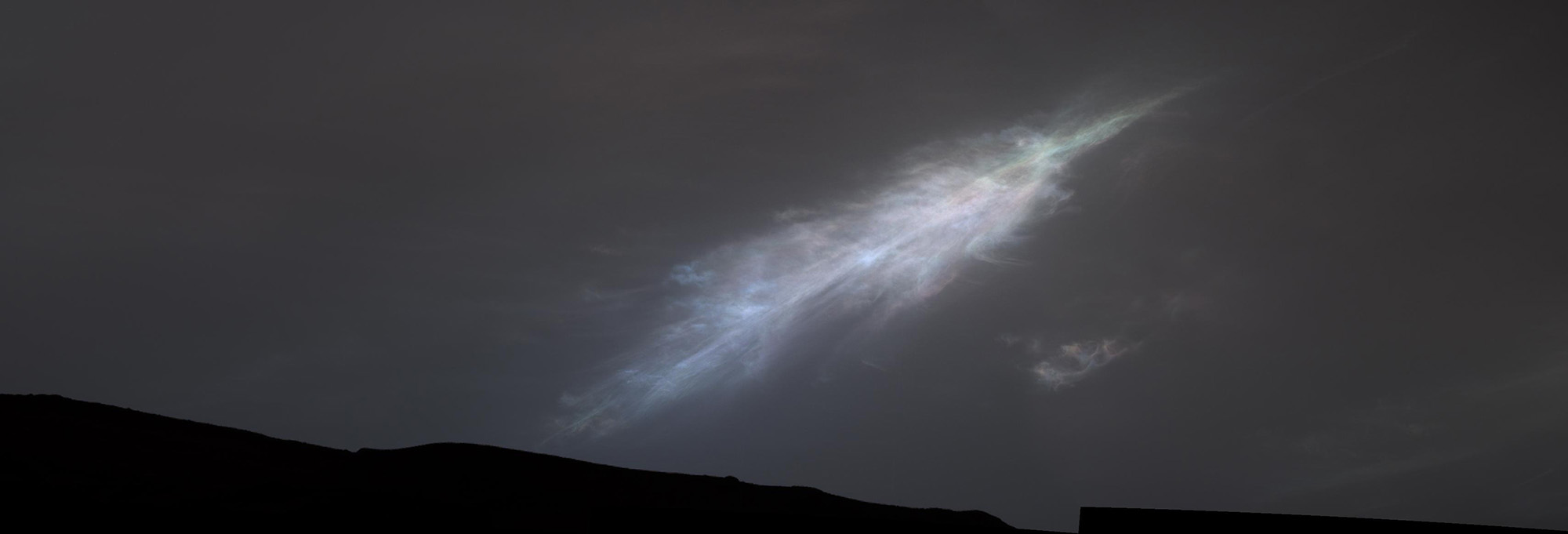
A glowing white light in a dark night sky with a silhouetted landscape below.

(Image credit: NASA/JPL-Caltech/MSSS)

Just after the sun went down on Jan. 27, 2023, Curiosity took this photo of a noctilucent (night-shining) cloud that formed much higher in the Martian atmosphere than most other clouds do. Any clouds on Mars are rare, but this one is extra special. Since this cloud is so high up, it's much colder — making scientists think it's made of carbon dioxide (dry ice) instead of water ice. The iridescent colors in the cloud indicate the ice particles making up the cloud are all around the same size, which means the cloud likely just formed at the time of the photo.

7. Sol 3725: Curiosity finds "Cacao"
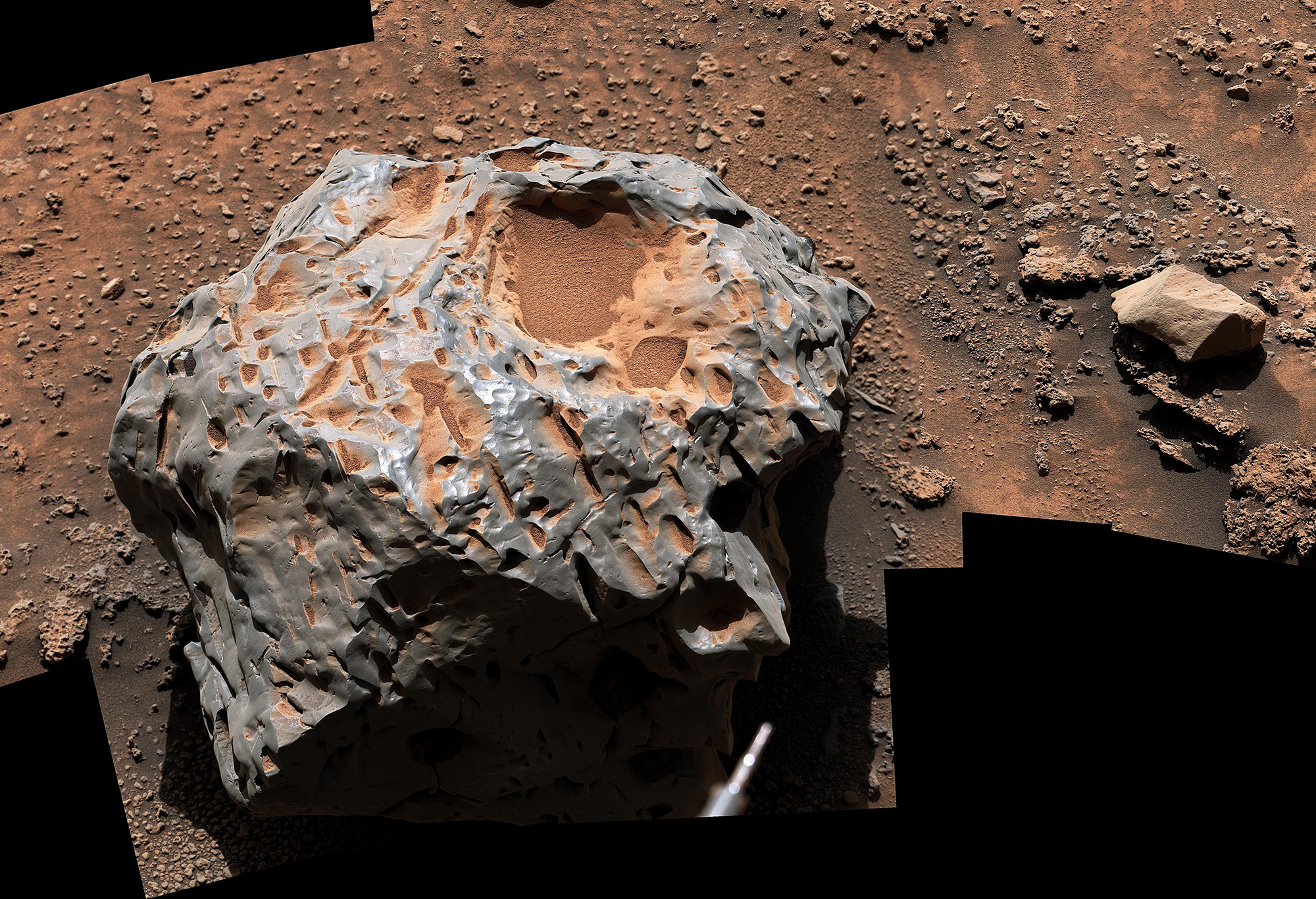
A close up of a large gray and red rock on a reddish surface.

(Image credit: NASA/JPL-Caltech/MSSS)

The very next day after cloud-gazing, on Jan. 28, 2023, Curiosity found an iron-nickel meteorite measuring about a foot across. The meteorite, nicknamed "Cacao," is one of a handful of meteorites Curiosity has photographed. The rover zapped part of the meteorite with a laser and measured the vapor released to identify what materials the rock was made of. Since Mars is cold and dry compared to Earth, meteorites last much longer on its surface than they do here, and they give clues about how the Martian atmosphere has changed over time. Large iron meteorites discovered on Mars indicate the planet once had a denser atmosphere than it does today.

What to read next
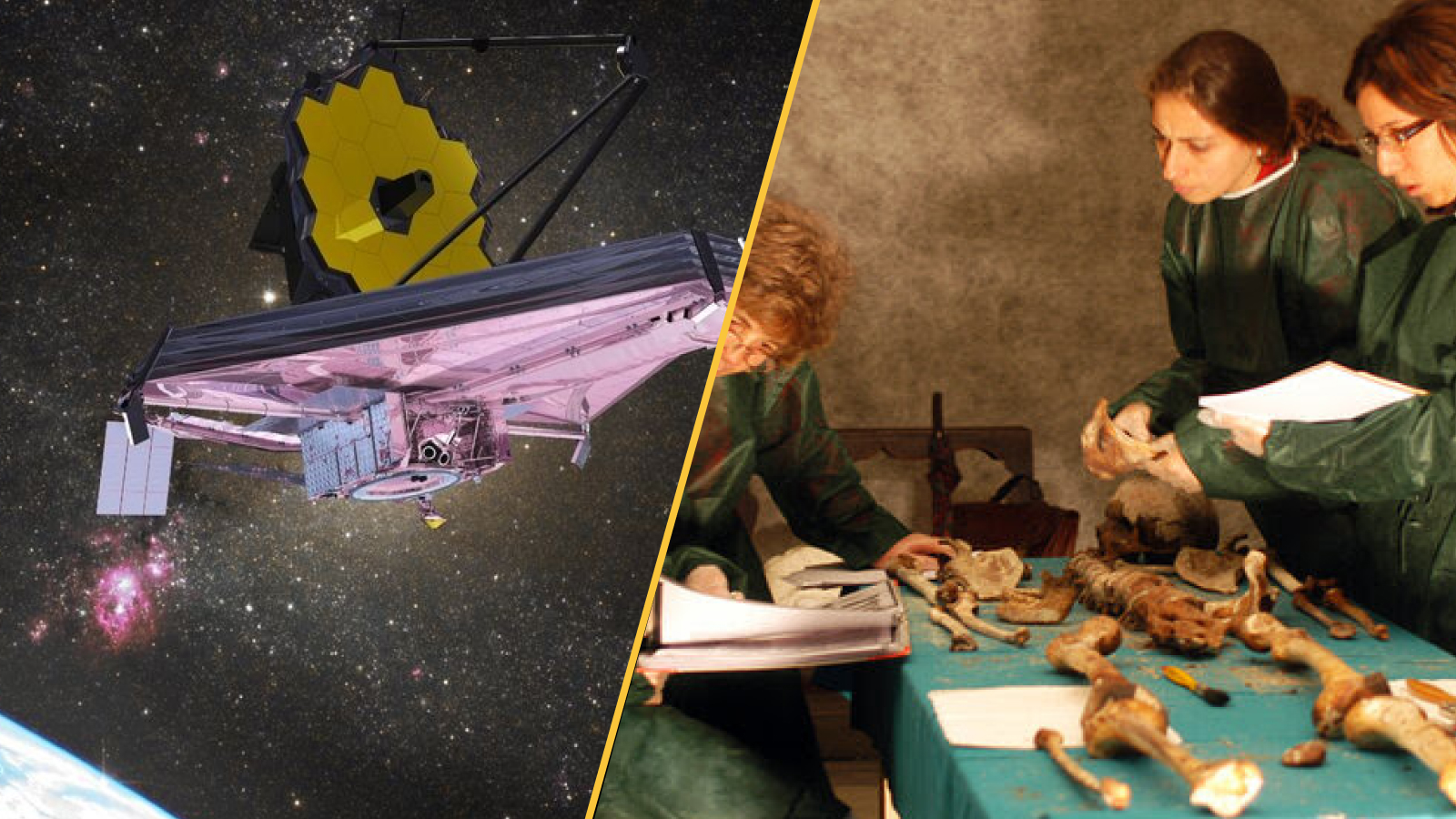
  • A telescope floats above Earth on the left, and three women inspect a skeleton on the right.

JWST finds unknown substance, China's 'Great Green Wall' grows faster than normal trees, a Medici murder mystery solved, and what the US can learn from Japan's 'silent pandemic'

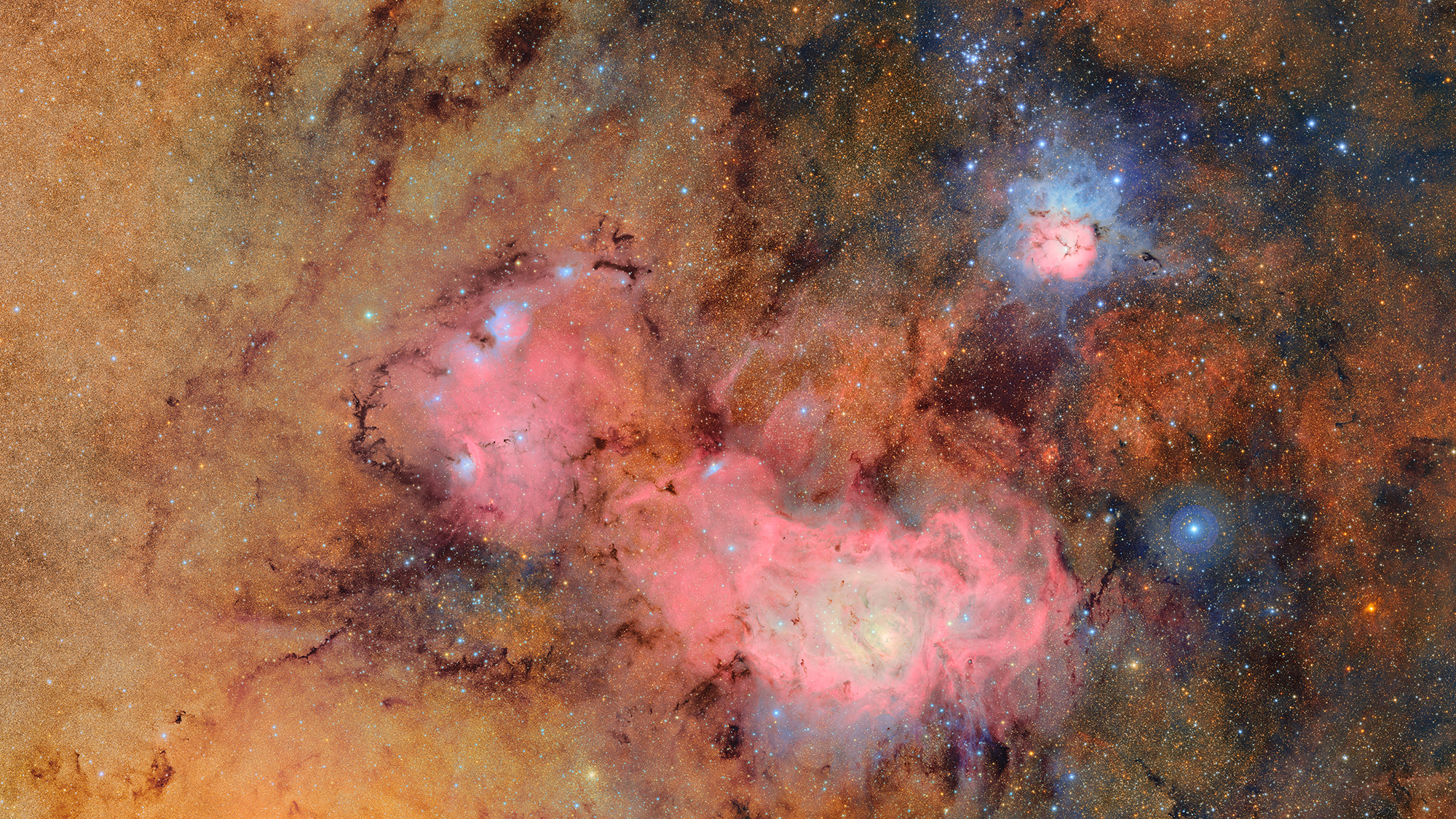
  • Clouds of pink and gold are seen amidst a deep space background

'It's more than a hope, it's a guarantee': The Vera C. Rubin Observatory's 10-year movie of the universe is about to 'blow our minds,' chief scientist says

  • Four red, white, and blue images fo spcae objects captured by the Chandra X-ray Observatory and other telescopes

NASA celebrates America's 250th birthday with red, white and blue snaps of the cosmos

8. Sol 4208: Elemental sulfur crystal surprise
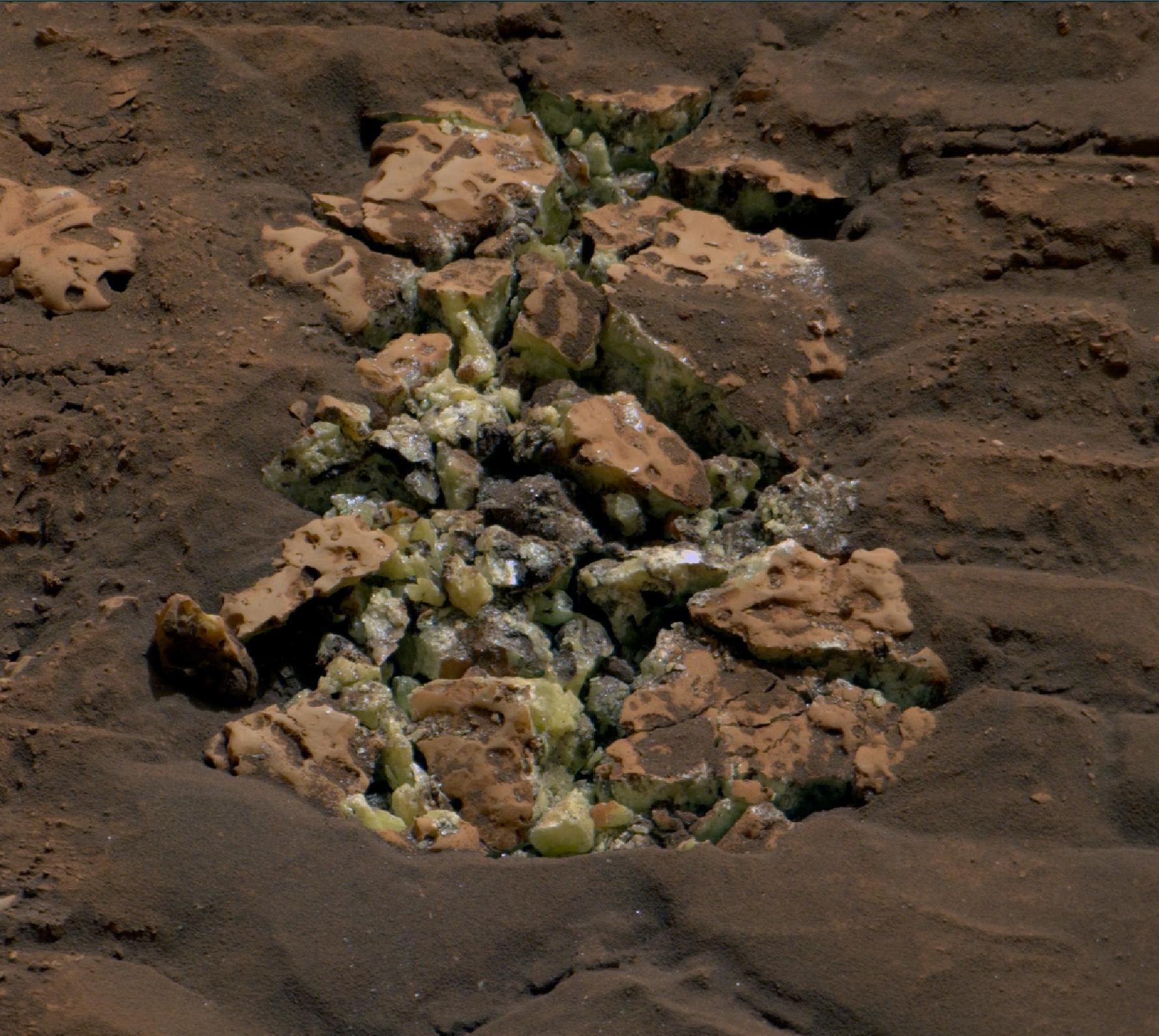
A close up of green and brown rocks in a hole in the ground.

(Image credit: NASA/JPL-Caltech/MSSS)

In June 2024, Curiosity unintentionally ran over a rock and crushed it, revealing a yellow, odorless surprise: rare crystals of elemental sulfur. While Mars has plenty of minerals that contain sulfur, like sulfate, this was the first time pure sulfur was found. The crystal fragments are about 5 inches (12.7 centimeters) across. On Earth, pure sulfur is formed from volcanic and hydrothermal activity, along with other geologic processes. It's not clear yet how these crystals formed on Mars.

9. Sol 182 - 4263: All 42 drill samples
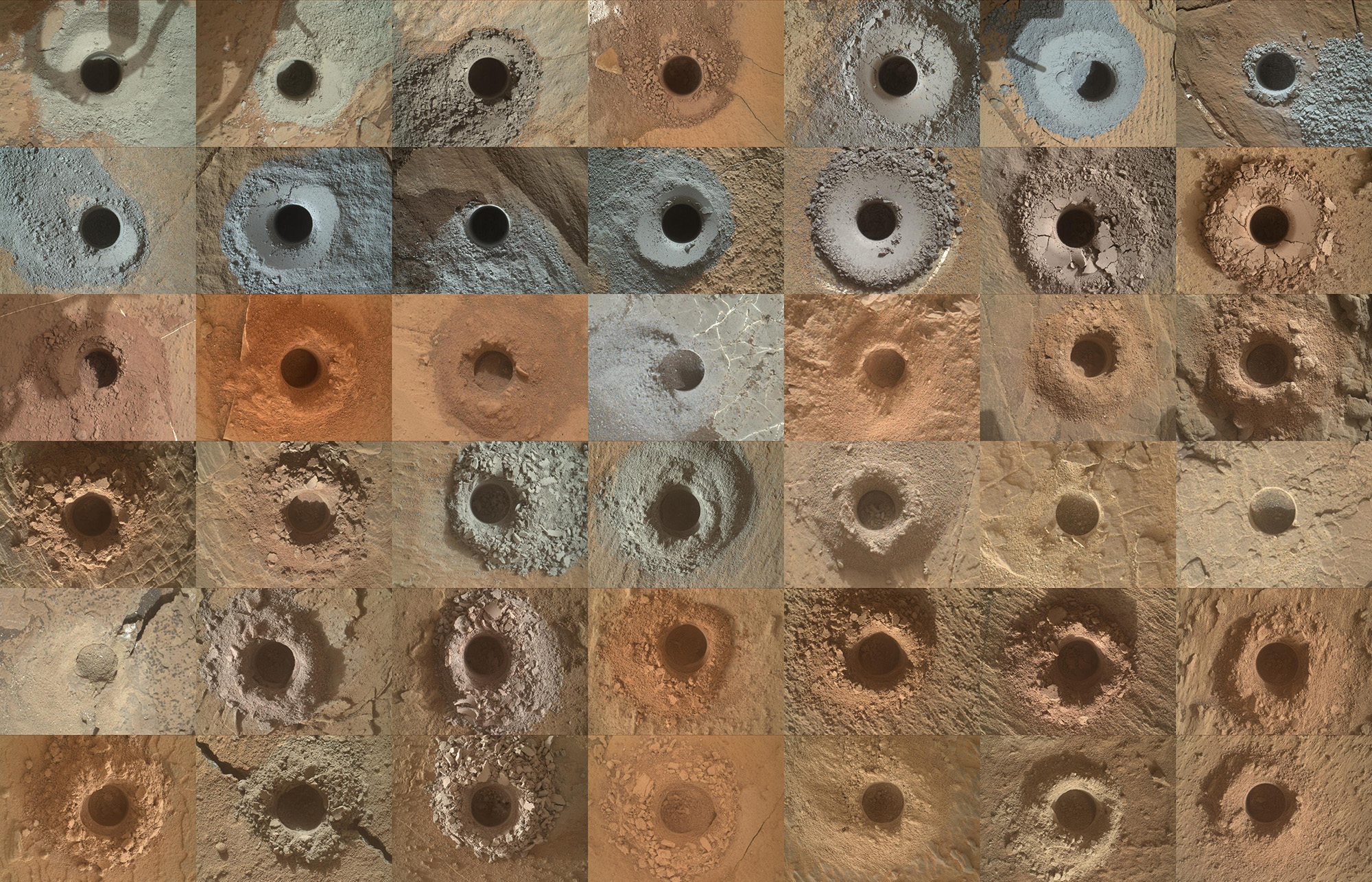
A series of square images with holes in dirt in them.

(Image credit: NASA/JPL-Caltech/MSSS)

Curiosity has collected and analyzed 42 rock samples so far using a small drill attached to a robotic arm. The drill powders the rock so that the samples can be transported to Curiosity's science instruments, which measure their chemical composition. Each sample site is carefully chosen because the rover can only do a limited number of samples before it runs out of special sample cups. This mosaic image shows the impressive variety of materials that Curiosity has sunk its drill into.

10. Sol 4671: Exploring Martian spiderwebs
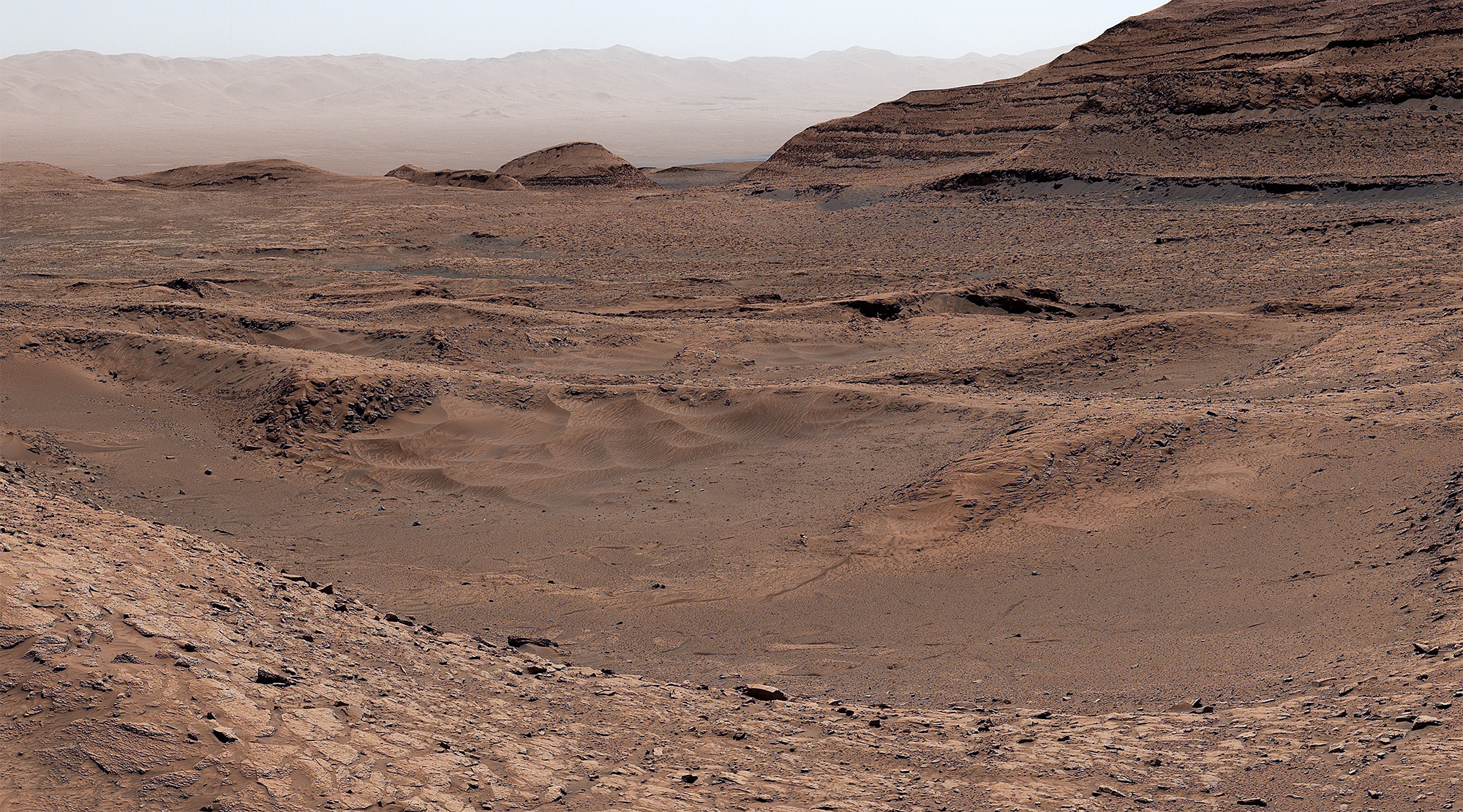
A reddish-brown landscape with dunes in the distance

(Image credit: NASA/JPL-Caltech/MSSS)

Researchers have been intrigued by large geologic structures like stone "spiderwebs" on the Martian surface, previously seen by spacecraft orbiting the planet. Curiosity visited them on the ground, taking this picture of the low ridges and hollows, called boxwork, on Sept. 26, 2025. The ridges, made from hardened minerals deposited by water seeping into cracked rock, are what's left after billions of years of erosion wore away the softer rock around them.

Curiosity's journey continues today. After leaving the boxwork structures last March, the rover set off to explore more of the Martian landscape with its cameras as busy as ever, looking for more evidence that Mars once had the water and chemistry to possibly support ancient microbial life.

{ https://www.livescience.com/space }

Hoe vind je dit bericht?
Geschreven door peter om 17:55 Stuur door

Perseverance Reveals How Complex Water Systems Shaped the Jezero Crater on Early Mars

Perseverance Reveals How Complex Water Systems Shaped the Jezero Crater on Early Mars

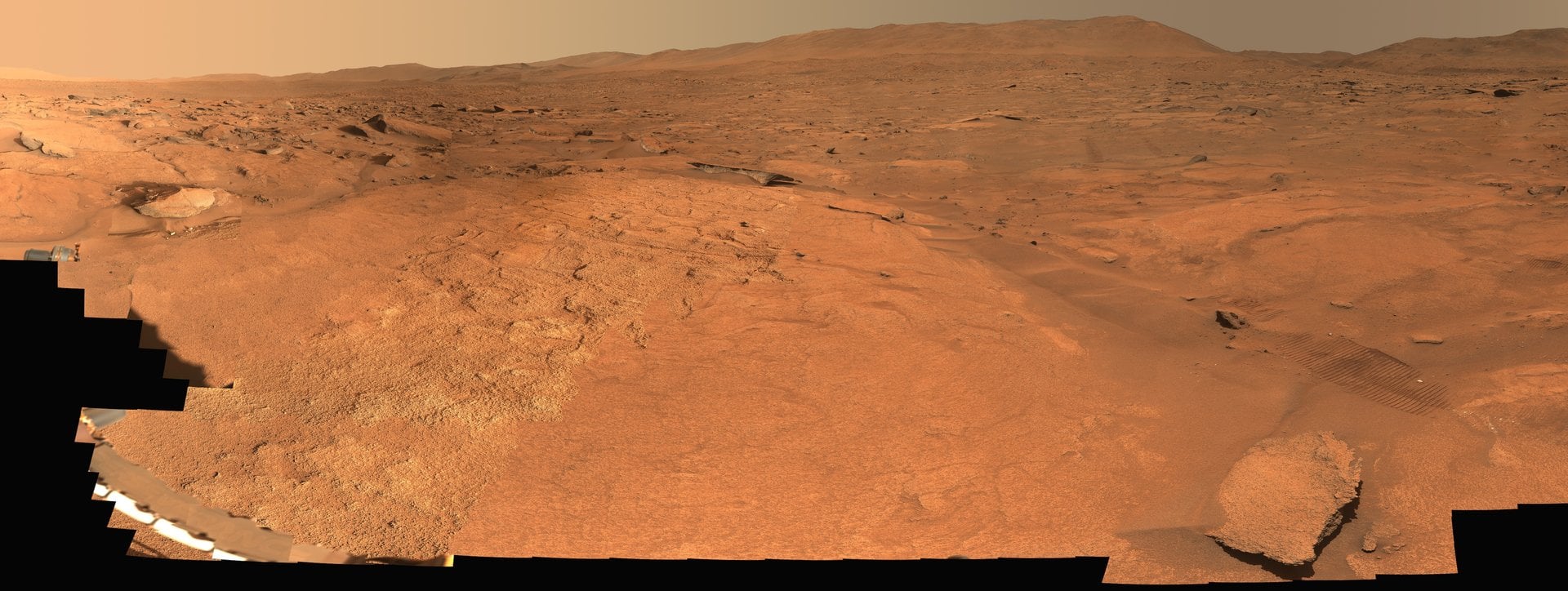
The Perseverance rover captured the data used in this panorama of the “Margin Unit,” a geologic area that hugs the inner edge of Jezero Crater’s rim, between Oct. 8 and Oct. 16, 2023. Credit: NASA/JPL-Caltech/MSSS The Perseverance rover captured the data used in this panorama of the “Margin Unit,” a geologic area that hugs the inner edge of Jezero Crater’s rim, between Oct. 8 and Oct. 16, 2023. Credit: NASA/JPL-Caltech/MSSS

In Mars' Jezero Crater, a geologic area known as the “Margin Unit” stretches along the shoreline of a lake that filled the region billions of years ago. When the Perseverance rover reached there in September 2023, mission scientists expected to find sedimentary rocks that formed from sand deposits, which are good at preserving past microbial life. Instead, they were surprised to find olivine-rich igneous rock, which typically forms from underground magma or by volcanic activity on the surface.

These rock deposits are also excellent record-keepers, preserving details about their precise moment of formation through their mineral crystals. The minerals Perseverance detected with its SuperCam, which determines the mineralogy of geologic features based on reflected light, preserved a very complex record of water activity in the region when Mars was young. Specifically, they revealed how the rocks interacted with water on three separate occasions, each altering their chemistry and appearance.

The results were reported in the journal Communications Earth & Environment. As they indicated, Perseverance analyzed more than 185 bedrock targets across the Margin Unit using its SuperCam instrument. At high elevations of about 2350 m (~7700 ft), the rock had the texture and chemistry of slow-cooled, olivine-rich rock without significant water exposure. However, about 265 m (870 ft) lower, where the hypothesized ancient lake existed, there were signs indicating a complex history of rock-water interaction.

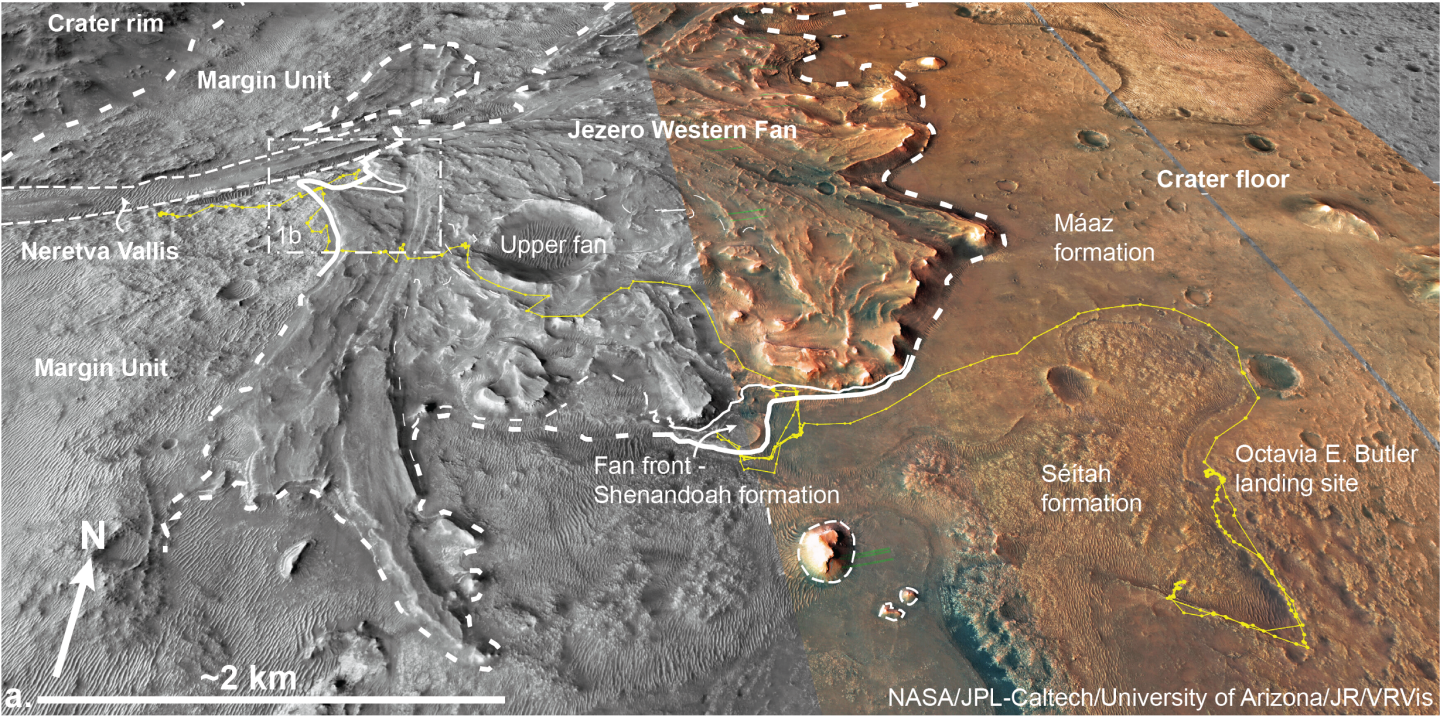
Diagram of the Jezero Crater, showing where the Perseverance rover has traversed to search for ancient biosignatures. Credit: NASA/JPL-Caltech/University of Arizona/JR/VRVis

Diagram of the Jezero Crater, showing where the Perseverance rover has traversed to search for ancient biosignatures.

Credit: NASA/JPL-Caltech/University of Arizona/JR/VRVis

This was especially near features like Neretva Vallis and the Western fan, the dried-up river channel that once carried water into Jezero Crater and the western part of the massive sedimentary deposits contained within (respectively). In these lakebed areas, the rocks showed signs of physical reworking, with olivine grains fractured and silica between them. As Candice Bedford, a research scientist at Purdue University and the study’s lead author, explained in a NASA press release:

Before we arrived at the Margin Unit, the main hypothesis — derived from orbital observations — was that the carbonate seen from orbit formed from interaction with the lake that existed in Jezero Crater. But now we know that this location became a sort of crossroads for aqueous systems. The Margin Unit findings are important because Jezero Crater sits inside one of the largest exposures of carbonate on Mars, so what we learn here reaches well beyond this crater.

When water interacts with olivine-rich minerals on Earth, the reaction can release hydrogen that some microbes feed on. The reaction leaves behind carbonate and silica, two minerals that are known to preserve evidence of microbes. As a result, carbonate and silica minerals are important in the search for biosignatures. From this, the team identified three main alteration periods, detailing their sequence, but not their age.

In the first, neutral to CO2-rich groundwater circulated through the bedrock, reacting with olivine to produce ridges of carbonate that run through fractures at low elevations. As the softer rock around them eroded, these carbonate rocks were left exposed. On the second occasion, the Unit was exposed to either the paleolake or changes in groundwater, which also left its mark.

“Some of the Margin Unit rocks also contain silica,” said co-author Eleni Ravanis, a planetary scientist at the University of Hawaii at Manoa. “Turning olivine into carbonate can leave silica behind, and we see more of that silica in rocks that sat below the water line.”

Jezero Crater on Mars. Scientists think that the sediments in the crater may be one km deep. Image Credit: NASA/JPL-Caltech/ASU

Jezero Crater on Mars. Scientists think that the sediments in the crater may be one km deep.

Image Credit: NASA/JPL-Caltech/ASU

In the final stage, warmer water flowed through younger fractures, creating fluorite-bearing, calcium-sulfate mineral veins measuring about 25 cm (10 inches) thick in the eastern part of the Unit. This finding was significant since fluorite typically forms when hot water circulates through volcanic rocks, suggesting the region experienced hydrothermal activity. This sequence of events, driven by groundwater activity and exposure to the lake, reinforces theories that the Jezero Crater may have once supported life. Said Bedford:

If there is one thing I have learned after 10 years working with Mars rovers, it is that Mars constantly throws surprises at you. It is very rare that things are as we expect them to be from orbital data. I hope this work helps reshape how scientists view the history of water in Jezero Crater and across Mars. Ultimately, I hope it helps planetary scientists reconstruct the changing climate and habitability of early Mars.

Further Reading:


NASA Perseverance's Real 4K Footage of Jezero Crater Shows Mars Once Had a Lake

{ https://www.universetoday.com/ }

Hoe vind je dit bericht?
Geschreven door peter om 16:28 Stuur door

DNA discovery on Shroud of Turin corroborates biblical account of Jesus's resurrection

DNA discovery on Shroud of Turin corroborates biblical account of Jesus's resurrection

The burial cloth believed to have wrapped the body of Jesus following the crucifixion is one of the most studied and fiercely debated artifacts in history.

Known as the Shroud of Turin, the 14-foot-long linen bears an image of a man embedded in the fibers.

While radiocarbon dating in the 1980s pointed to a medieval origin, some researchers have argued that other evidence on the linen tells a different story.

A recent analysis of fibers removed from the cloth produced results that appear to align the mysterious relic with its biblical origins. 

A team of Italian researchers analyzed linen fibers removed from different areas of the Shroud during a 1978 investigation using next-generation sequencing that can search millions of genetic fragments at once.

They detected a rare human genetic lineage found mainly in the Near East, particularly among the Druze people of the Holy Land, Jordan, Lebanon and Syria.

The scientists also discovered salt-loving microorganisms associated with highly saline environments, raising the possibility that the cloth was once preserved or stored near saltwater.

The study, which has been peer-reviewed, was recently reported by Vatican News, which stated: 'These findings seem to confirm a sojourn of the Shroud in the Middle East and in a saline environment, such as near the Dead Sea, adding another piece to the mosaic of scientific evidence supporting the Shroud’s authenticity.'

The relic is believed to be the burial cloth that wrapped Jesus after he died on the cross and is said to bear his image left after the resurrection. The Shroud is housed inside the Cathedral of Saint John the Baptist in Turin, Italy

The relic is believed to be the burial cloth that wrapped Jesus after he died on the cross and is said to bear his image left after the resurrection. The Shroud is housed inside the Cathedral of Saint John the Baptist in Turin, Italy

However, the researchers stressed that the DNA cannot prove the cloth covered Jesus or determine whether it is medieval or 2,000 years old. 

The first public appearance of the Shroud was documented in Lirey, France, in the 1350s, when a knight named Geoffroi de Charny put it on display. How he acquired the cloth is unknown.

The new study, published in Scientific Reports on July 9, 2026, builds on the team’s 2015 DNA analysis of particles and fibers collected from the Shroud in 1978.

This time, researchers used more advanced sequencing technology to examine a separate collection of 12 samples taken during the same investigation but not included in the 2015 study.

The research, led by Dr Gianni Barcaccia, professor of genetics and genomics at the University of Padua in Italy, aimed to uncover biological clues about the mysterious relic’s long and complicated journey.

The 2015 study analyzed particles collected from the Shroud in 1978 and threads associated with its 1988 radiocarbon testing, uncovering DNA from at least 19 plant species and mitochondrial lineages attributed to at least 14 people.

Researchers reported that 55.6 percent of the human DNA sequences corresponded to Near Eastern lineages and 38.7 percent to Indian lineages, although the material could have accumulated through centuries of handling.

Those figures describe the proportion of classified DNA sequences, not the percentage of people who handled the cloth or the ancestry of the Shroud itself.

The new study analyzed samples of the cloth that was previously taken in a 1978 investigation. This allowed them to use advanced technology for a new DNA analysis

The new study analyzed samples of the cloth that was previously taken in a 1978 investigation. This allowed them to use advanced technology for a new DNA analysis  

Above are samples taken from the Shroud in 1988 to determine the age. The pieces were removed from the edges of the cloth

Above are samples taken from the Shroud in 1988 to determine the age. The pieces were removed from the edges of the cloth

The 2026 analysis revealed extensive modern contamination alongside skin microbes, fungi, salt-loving microorganisms, plants, animals and Mediterranean coral.

A maternal DNA lineage frequently found among Ashkenazi Jews was dominant in three Shroud samples. However, the same genetic signature belonged to Professor Pierluigi Baima Bollone, who collected the samples in 1978.

article image

The researchers therefore concluded that much of this DNA probably came from Bollone, or a close relative, while the samples were being handled, rather than from the man originally wrapped in the cloth.

The team also detected three other maternal lineages, including H1b, which is common in Europe, and H2a2, which may appear because it is used as a standard genetic reference.

The rare H33 lineage was also identified. It is found today in Near Eastern groups, especially among the Druze, an Arabic-speaking ethno-religious minority living in the Holy Land, Jordan, Lebanon and Syria.

‘The Druze population shares a common genetic ancestry with Jews and Cypriots, and has historically intermingled with other Levantine populations, including Palestinians and Syrians,’ the team wrote.

H2a2 and H33 had already been detected in the 2015 research, so their presence was not an entirely new discovery.

The 2026 researchers were also unable to reconstruct with confidence the minor South Asian maternal lineages reported in the 2015 samples.

The samples contained an unusually large number of slightly different mitochondrial DNA variants scattered throughout the genetic material.

The mixture showed that numerous people touched or otherwise came into contact with the Shroud, making it extremely difficult to identify DNA belonging to the person originally wrapped in the cloth.

Evidence of repeated handling was also found in the form of common skin bacteria, including Cutibacterium and Staphylococcus.

Researcher detected a rare human genetic lineage found mainly in the Near East, particularly among the Druze people of the Holy Land, Jordan, Lebanon and Syria

Researcher detected a rare human genetic lineage found mainly in the Near East, particularly among the Druze people of the Holy Land, Jordan, Lebanon and Syria

Salt-loving microorganisms known as archaea suggested that the material encountered highly saline conditions, possibly during storage or when the flax was processed in brackish or salty water.

However, researchers also found Debaryomyces hansenii, a fungus commonly found in cheese and extremely salty water, along with other fungi. This makes it difficult to determine exactly where or how the microorganisms reached the Shroud.

Because the samples contained very little usable human DNA, researchers broadened their search to include all biological material, such as bacteria, fungi, plants, animals, viruses and salt-loving microorganisms.

Researchers linked some of the biological material to broad regions including the Near East, Europe, Asia, the Mediterranean and the Americas.

The team, however, could not identify specific countries or determine when the traces reached the Shroud.

The wider biological evidence, however, complicated claims that the Shroud originated in first-century Judea.

Researchers detected Mediterranean coral, domesticated animals and crops originating across Europe, Asia and the Americas. 

The strongest plant signal came from carrots resembling European varieties developed during the 1400s and 1500s, while maize, tomatoes, peppers, potatoes and peanuts reached Europe only after Columbus.

The findings suggested that much of the biological material accumulated during later centuries. 

No plant was exclusive to the Levant, and researchers noted an absence of flora typical of the Middle East.

Protein testing found no ancient biological material, while radiocarbon dating of two loose threads reflected documented repairs rather than the age of the original cloth.

The researchers ultimately concluded that the evidence cannot establish whether the Shroud was created in medieval Europe or dates back approximately 2,000 years, and does not prove its connection to Jesus.

RELATED VIDEOS

New DNA Study Shocks the Vatican — Shroud of Turin, Jesus’ Blood & Crucifixion Decoded

New DNA Evidence on the Shroud: Proof of the Resurrection? | LA Marzulli Shroud of Turin, Holy Fire,

"Impossible to Fake"; NEW Research on the Shroud of Turin That Points to Jesus' Resurrectio

{ https://www.dailymail.com/sciencetech/index.html }

Hoe vind je dit bericht?
Geschreven door peter om 16:02 Stuur door

New UFO Files Release | Shocking Videos and Mixed Reactions

New UFO Files Release | Shocking Videos and Mixed Reactions

By Ethan Sutherland

A collection of clear videos showing UFO sightings with various shapes in the sky.

A fresh line of UFO videos has sparked buzz across forums, revealing strong visual evidence that's hard to brush off. Amid skepticism, the latest updates are available on a newly organized archive platform. Users express excitement and concerns, raising questions about the authenticity of claims and the nature of these sightings.

Major Releases Draw Attention

The recent UFO video drop is generating considerable controversy. Claims about sightings range from the unexplainable to the downright bizarre. "Where are the clear pics?" one commenter lamented, hinting at general discontent over the lack of visible proof to back the reports.

Users Challenge the Nature of UFOs

The commentary reflects a growing frustration about the changing portrayal of unidentified aerial phenomena (UAP). "What happened to classic UFOs?" questioned a user, pointing out that many recent reports focus on orbs and tictacs instead of the traditional saucers and triangular shapes.

Another user summed up the sentiment with, "Great! Wake me up when there's better data." Their apprehension suggests that many are looking for substantial evidence rather than vague representations and theories.

Distrust in Authenticity

Amid the excitement, skepticism remains rampant. Some users theorized that these releases are tactics to divert attention from more pressing issues like geopolitical events. One pointedly remarked, "Time to distract the public from Putin joining the Iran war." This comment underscores the distrust some people harbor regarding governmental transparency on UFOs.

The Quest for Physical Evidence

Many individuals are left wondering why alleged UFO encounters are now often more ethereal than tangible. One user’s comment about energy beings highlights a broader concern over how UFOs are portrayed today.

"When are we going to actually see one of the aliens?"

Key Takeaways

  • ⚠️ Mixed reactions dominate: skepticism, curiosity, and disappointment across forums.

  • ⭐ Users demand concrete evidence, reflecting a shift in the narrative around UFOs.

  • 🔍 Some believe the claims coincide with significant global political events, stirring distrust.

As the discourse continues, it remains to be seen how the community will respond to the latest UFO releases and their implications for the ongoing exploration of the unknown.

Glancing into the Future of UFO Discourse

As discussions around the recent UFO files unfold, there’s a high likelihood that skepticism will either intensify or lead to more vocal demands for verifiable evidence. Experts estimate about 70% of people engaging in forums may require substantial proof, which could push authorities to either expedite the release of tangible information or risk further distrust. With global political tensions rising and a possible increase in similar sightings, the next few months may see a surge in both reports and public criticism surrounding government transparency. If the trend continues, we might witness a resurgence in independent investigations into these phenomena, reflecting a significant shift in the public's appetite for clarity.

Reflecting on Historic Hurdles

Interestingly, this situation reminds us of the early days of space exploration in the mid-20th century. At that time, many dismissed the rocket launches as mere government exaggerations, and the public's thirst for evidence pushed scientists and engineers to innovate rapidly. Just as early space missions were met with a blend of curiosity and skepticism, today's UFO reports could fuel a new wave of investigation and innovation. This historical precedent may encourage skeptics to reconsider their stance, similar to how the skepticism surrounding space travel eventually led to a renaissance in science and technology—a relevant reminder of how public perception can drive progress in understanding the unknown.

RELATED


Watch: Pentagon releases 15 new UFO videos

UFO FILES: 35 minutes of 'never-before-seen' footage released under Trump

US Navy Pilots Saw Something Impossible During the Famous Tic-Tac UFO Encounter

{ https://mysterylores.com/  }

Hoe vind je dit bericht?
Geschreven door peter om 23:11 Stuur door

The Search For Alien Technology Has A Measurement Problem – Analysis

th?id=ONUT.wVjm-kxjy2yXkVzQxTT2AQ&pid=News&w=316&h=200&c=14&rs=2&qlt=90&dpr=1.3

Image: ChatGPT

The Search For Alien Technology Has A Measurement Problem – Analysis

By Burak Oktenli

Key Takeaways:

  • Bigger AI models can rank, classify, and search at huge scale, but they cannot invent evidence an instrument never recorded. When two explanations produce the same data, no larger model can honestly tell them apart—the limit is identifiability, not compute.
  • Radio SETI, including Breakthrough Listen and the blc1 Proxima Centauri candidate later traced to terrestrial interference, shows the gap between finding a candidate and proving its origin. The next step is a new measurement—another site, antenna, geometry, epoch, or diagnostic—not another terabyte of the same ambiguous data.
  • Scientific AI should keep detection strength, calibration validity, tested alternatives, and independent follow-up separate instead of collapsing them into one confidence score. Automate ranking and triage; do not let a model promote its own score into a stronger claim without new evidence.
  • Bigger models can rank, classify, and search at extraordinary scale. They still cannot manufacture evidence that an instrument never captured.

The most dangerous promise in scientific artificial intelligence is not that machines will make mistakes. It is that they will make certainty out of missing information. As AI systems become better at finding patterns in enormous datasets, the temptation is to assume that a sufficiently powerful model can extract a correct answer from almost any measurement. That is false. Sometimes the obstacle is not computation, model capacity, or training data. Sometimes the decisive information was never measured in the first place.

Radio searches for extraterrestrial technology offer an unusually clear example. Modern programs such as Breakthrough Listen scan vast frequency ranges for narrowband, drifting signals that could be consistent with engineered transmitters. The field has also embraced machine learning. A deep-learning search of 820 nearby stars showed that learned representations can surface candidate signals that conventional filters may miss. That is exactly the sort of task at which AI can excel: ranking, triage, anomaly discovery, and the compression of an impossible search space into a manageable set of things worth examining.

But candidate discovery is not origin discovery. The distinction became vivid in the investigation of blc1, a narrowband signal detected in observations of Proxima Centauri. Its morphology was interesting enough to demand serious follow-up. The eventual analysis traced it to terrestrial radio-frequency interference. The lesson was not that unusual signals are unimportant. It was that a detection statistic is only the beginning of an evidentiary chain.

This point becomes sharper when we ask a simple question: what if two competing explanations generate exactly the same data for the algorithm? Suppose one hypothesis is a target-associated signal and another is a terrestrial interferer that, by chance or geometry, appears only during the same on-target scans. If both produce the same frequency-time track, the same amplitude pattern, and the same scan-by-scan observations, then the two hypotheses induce the same probability distribution over the data given to the model. In that case, no classifier can separate them honestly. Not a larger transformer. Not a deeper neural network. Not a quantum computer. The distinction is absent from the measurement.

That is an identifiability limit, and it changes how we should think about scientific AI. When two hypotheses are observationally equivalent, the next advance must come from experimental design rather than model design. We need a new measurement that causes the hypotheses to predict different outcomes: a simultaneous reference antenna, an independent observing site, a changed pointing geometry, an instrument diagnostic, a different epoch, or some other source of conditionally independent evidence. Another terabyte of the same ambiguous data does not solve the problem.

The same principle appears in more ordinary ways. Reference observations, for example, are often used to reject interference. That can work extremely well when the nuisance really is common to both target and reference scans. But the protection has a cost. If a genuine source leaks into an off-target observation through sidelobes or pointing geometry, a subtraction rule can subtract part of the signal we wanted to preserve, while a hard veto can discard it altogether. A method that looks safer on one axis may quietly become less sensitive on another.

Calibration creates a second trap. A threshold calibrated under one noise model does not retain its meaning after the residual environment changes. In a synthetic stress test I developed for radio technosignature decision rules, thresholds calibrated to an approximately one-percent cadence-level exceedance rate under independent Gaussian residuals produced trigger fractions above fifty percent after a simple time-correlation structure was introduced. Nothing about the threshold number itself warned that its interpretation had collapsed. The problem was not that the detector suddenly became stupid. The statistical conditions supporting the threshold no longer held.

This is why the most important question for scientific AI may not be, “How accurate is the model?” It may be, “Under what measurement conditions does this output still mean what we say it means?” That is a different discipline. It requires separating detection strength from calibration validity, separating a candidate ranking from an origin claim, and recording which alternative explanations have actually been tested.

Engineering already has language for this. NASA’s current standard for models and simulations treats credibility, validation, verification, uncertainty, and acceptance criteria as explicit parts of model use. Scientific AI needs the same instinct. A model should not inherit authority merely because it is sophisticated. Its output should carry the conditions under which it was calibrated, the data it actually observed, the alternatives it cannot distinguish, and the tests still required before escalation.

That discipline matters far beyond SETI. In medical imaging, two diseases can look similar under one modality and diverge only after another test. In climate science, a model can fit the historical record while remaining underdetermined about causal mechanisms. In intelligence analysis, multiple adversary explanations can remain consistent with the same observable behavior. In autonomous systems, a sensor-fusion stack can assign high confidence to a state estimate even when its sensors share a common-mode failure. In each case, more computation can sharpen the inference conditional on the evidence. It cannot supply the missing discriminator.

This should change how we evaluate AI progress in science. Benchmark culture often rewards the highest score on a fixed dataset. But the scientifically important question is often what happens when the assumptions behind that dataset fail. A robust benchmark should therefore include conditions designed to break the method: distribution shifts, correlated residuals, missing reference observations, leakage between supposedly independent channels, nuisance classes that mimic the positive class, and deliberately matched cases in which successful discrimination would reveal data leakage rather than intelligence.

The technosignature community already has many of the ingredients. Tools such as setigen support synthetic signal generation and injection. Published work has explored machine-learning direction-of-origin filtering, while the “cosmic haystack” formalism reminds us that excellent sensitivity within one narrow test family does not imply comprehensive coverage of the wider search space. The broader NASA technosignatures workshop report likewise framed technosignature research as a field in which new instruments, new surveys, new algorithms, and new theory all matter. The missing piece is not another declaration that AI will accelerate discovery. It is a stronger contract between what an algorithm outputs and what the measurement actually warrants.

Such a contract would be simple in principle. A candidate record should keep at least four things separate: the strength of the detected feature; whether the current data remain inside the calibration regime; which conventional or instrumental alternatives have been tested; and what independent observation, if any, supports a stronger interpretation. A fifth field can carry follow-up priority, but that is a resource-allocation decision, not a probability of origin. Collapsing all of these into one confidence score creates an audit problem: after the fact, nobody can tell which assumption carried the claim forward.

The same asymmetry should govern automation. AI can reasonably automate low-level transitions: ingest data, flag anomalies, compare a statistic with a frozen threshold, rank candidates, and request additional observations. But an automated system should not be allowed to convert its own score into a stronger scientific claim without new evidence. Promotion should require a named test or an independent measurement. Demotion, by contrast, should be easy. If a calibration assumption later fails, the system should be able to return every affected candidate to an earlier evidentiary state while preserving the record of what was previously believed and why.

This is not an argument against AI in science. It is an argument for using AI where it is strongest. Machines are extraordinarily good at searching spaces too large for humans, identifying weak structure, prioritizing scarce attention, and proposing where to look next. Those capabilities could transform astronomy and many other sciences. But scientific authority should attach to evidence, not to model scale.

The phrase “AI for discovery” therefore needs one amendment. AI can accelerate the path to discovery. It can expose patterns that deserve investigation. It can help design the next observation. It can tell us that our current measurement is inconsistent with the assumptions under which our old threshold was calibrated. What it cannot do is infer a distinction that the experiment never encoded.

That boundary is not a limitation to be embarrassed about. It is a design instruction. When the model cannot know, the answer is not always a bigger model. Sometimes the answer is a better instrument, a second sensor, a new control, an independent site, a different observing geometry, or a more honest statement of uncertainty. The future of scientific AI will depend as much on improving what we measure as on improving what we compute.

If the evidence is not in the measurement, intelligence cannot conjure it into existence.

RELATED


Plain Sight Problem Why Our Search For Aliens Is Fundamentally Broken

Aliens in Space: Why Haven't We Found Them Yet?

{ https://www.eurasiareview.com/ }

Hoe vind je dit bericht?
Geschreven door peter om 22:49 Stuur door

UAP whistleblower makes stunning claim about secrets behind government’s recovered craft

A UAP whistleblower is making an extraordinary claim about what the U.S. government is keeping behind closed doors, saying the government is in possession of recovered craft.

"Does the government have craft that have been recovered? Yes they do," Dylan Borland said on the "Hang Out with Sean Hannity" podcast.

Borland made the assertion in the latest episode of the show, where he joined television host Ben Hansen to discuss what whistleblowers say they know about the government's handling of UAP and allegedly recovered craft.

Dylan Borland and Sean Hannity in a side-by-side split image

UAP whistleblower Dylan Borland, left, sits down for an exclusive interview with Fox News host Sean Hannity, right, on the "Hang Out with Sean Hannity" podcast.

(Hang Out With Sean Hannity/Screengrab)

Hannity pressed Borland directly on whether he knew "for a fact" that the government possessed such craft, and whether restrictions surrounding his work would allow him to answer the question publicly.

He responded: "Yes."

His claim comes after a group of UAP whistleblowers called on President Donald Trump to waive nondisclosure agreements they say prevent them from fully disclosing what they know to the American public.

During the conversation, Hannity also pointed to individuals he had spoken with previously who said they had knowledge of recovered craft. He asked Borland whether he knew people who had made similar assertions.

"Probably, yes," Borland responded.

Hannity also discussed claims from individuals who say they faced intimidation, workplace harassment and threats after coming forward with UAP-related information. Borland appeared to affirm those accounts during the interview.

Hannity has held previous podcast discussions about UAPs, including one conversation with Rep. Tim Burchett, R-Tenn., and Luis Elizondo about alleged Pentagon UAP cover-ups, exotic materials, destroyed pilot data and more.


Live Congressional Testimony Reveals US Allegedly Has Alien Bodies ? | Full Hearing | World News

"Hang Out with Sean Hannity" fans can watch or listen to Hannity's full conversation with Borland and Hansen on iHeartRadio, YouTube, Spotify, Apple Podcasts or wherever they get their podcasts.

RELATED

What the Pentagon’s UFO Videos Actually Show | UAP Evidence Explained

{ https://www.foxnews.com/ }

Hoe vind je dit bericht?
Geschreven door peter om 22:32 Stuur door

Scientists found a giant magnetized object beneath the Moon’s surface

Scientists found a giant magnetized object beneath the Moon’s surface

The Moon has an extremely weak magnetic field. However, the question of whether our satellite has always been this defenseless has long sparked heated debate among astrophysicists. Some scientists argued that billions of years ago the Moon had its own planetary dynamo, while others claimed that the evidence for this theory was insufficient.

The Moon is defenseless against space because of the absence of a magnetic field. Photo: Unsplash

Fresh observations of the far side of our cosmic neighbor, published in the journal Science Advances, have helped bring an unexpected resolution to this debate.

The Coincidence of Three Anomalies in Dewar Crater

While analyzing archival lunar observations, scientists discovered a huge, strongly magnetized structure in the region of Dewar crater. The object, about 60 km wide, consists of solidified magma that rose from deep within the Moon approximately 4.2 billion years ago.

Dewar crater, photographed by the Lunar Reconnaissance Orbiter spacecraft. Source: Wikimedia Commons

This area is also known for bright, swirling patterns on the surface. Researchers Xi Yang and Anna Mittelholz of ETH Zurich note that Dewar crater represents a unique case where a magnetic anomaly, a gravitational anomaly, and a characteristic surface pattern all coincide at the same location.

The far side of the Moon. Image:  Space Engine

Using a combined mathematical model, the scientists calculated that the Moon’s early magnetic field would have needed to be about 11 μT to produce such a structure. For comparison, Earth’s present-day magnetic field is about 50 μT.

A New Approach Instead of Apollo Samples

The previous hypothesis of a lunar dynamo was based on rock samples brought back by astronauts from the Apollo missions, but later re-evaluations of these materials confused the scientific community because of conflicting results. The new method, which combines orbital gravity and magnetic data, made it possible to place precise constraints on the characteristics of the planetary dynamo without the need for landing and collecting soil samples. In addition, the location of Dewar crater completely rules out the possibility that the magnetic anomaly was temporarily produced by a powerful asteroid impact.

A lunar swirl photographed on the near side of the Moon. Source: NASA

Understanding the Moon’s magnetic history provides an important example of how relatively small celestial bodies can maintain — or lose — their own dynamos. And although the discovery does not eliminate absolutely all discrepancies with the Apollo sample data, the scientific debate is now shifting from the question “Did a magnetic field exist?” to “How exactly did it work?”

Earlier, we reported on how the Moon’s magnetic field may once have been stronger than Earth’s.

RELATED

There's A Giant Lump Of Metal Buried In The Moon. Nobody Knows Why.

Something Buried Beneath The Moon's Surface Has Scientists Terrified

{ https://universemagazine.com/en/articles-en/ }

Hoe vind je dit bericht?
Geschreven door peter om 22:12 Stuur door

ESA increasingly applies artificial intelligence technologies in the space sector

ESA increasingly applies artificial intelligence technologies in the space sector

The European Space Agency is expanding the use of artificial intelligence in its work. The agency has agreed on a strategic partnership with the French company Mistral, one of Europe’s leading developers of language models. Neural networks will assist engineers, analyze satellite images, and accelerate mission preparation. At the same time, the computing infrastructure is expected to remain within Europe.

Artificial intelligence in the space industry. Artist’s illustration. Source: ESA

Signing in Paris

The letter of intent was signed in Paris on September 16 by ESA Director General Josef Aschbacher and Mistral CEO Arthur Mensch. The agency announced the agreement on September 23 in an official ESA release.

Such a document is not yet a contract. It establishes a framework within which the parties will look for joint projects. The release does not specify amounts or timelines. However, the steady move toward broader use of artificial intelligence in the space industry is becoming increasingly clear. The company is expected to provide artificial intelligence models, cloud infrastructure, and technical expertise, while ESA will contribute its own engineering, scientific, and operational tasks.

Why Space Needs Neural Networks

According to Josef Aschbacher, artificial intelligence is rapidly becoming one of the core technologies of the space industry, and the agency is already testing it in operational and research projects. The document identifies several areas of application. These include processing Earth observation images, engineering analysis, mission design, and specialist training.

Routine operations will be handed over to algorithms, which will also make it easier to search for the necessary knowledge. The release emphasizes that final technical decisions will continue to be made by people.

The agency already has experience with onboard neural networks. In September 2020, the Φsat-1 satellite was launched into orbit, where software onboard directly filtered out images obscured by clouds. This type of selection reduces the amount of data that must be transmitted to Earth, since clouds cover about two-thirds of the planet’s surface at any given time.

Data Will Remain in Europe

The parties will separately examine how to deploy language models on European infrastructure. Among the requirements listed in the release are security, resilience, traceability, auditability, and protection of sensitive information. Arthur Mensch promised to transform the agency’s observation archives into services for the space industry while maintaining the highest standards of control and sovereignty.

The issue of sovereignty also has a legal dimension. The U.S. CLOUD Act of 2018 allows U.S. authorities to demand information from American providers even when their servers are located outside the country. For ESA mission documentation, such dependence creates a risk, so the agency needs a provider operating under European jurisdiction.

Mistral was founded in Paris in 2023. Within just a few years, it has become one of the most prominent competitors to American developers in this field.

Cooperation Is Already Underway

The new agreement builds on work that the agency and the company are already carrying out together. One of these projects, the Orbit assistant, helps employees with engineering tasks and works with the agency’s restricted data without transmitting it outside.

The second tool, the Earth Virtual Expert EVE, was created at the agency’s Φ-lab together with European partners. It specializes in Earth observation and Earth sciences. The parties still need to formalize new areas of work, their timelines, and budgets in separate agreements.

RELATED

🔥 AI Space Robots Explained | The Future Of Space Exploration

AI Is Going to Space | Will Robots Explore the Universe First?

The Space Robots That Decide What Is Worth the Risk

{ https://universemagazine.com/en/articles-en/ }

Hoe vind je dit bericht?
Geschreven door peter om 21:59 Stuur door

Story of Former Pentagon Official Who Led U.S Government’s UAP Investigations Is Coming to Television

Terrence Winter Dan Farah Out of the Shadows

Terrence Winter (left) and Jay Stratton's "Out of the Shadows"
(Image Credit: William Morrow Company)

Story of Former Pentagon Official Who Led U.S Government’s UAP Investigations Is Coming to Television

The Sopranos writer and Boardwalk Empire creator Terence Winter will be teaming up with filmmaker and producer Dan Farah for the development of a new television series based on the former U.S. intelligence official who led the U.S. government’s investigations into Unidentified Anomalous Phenomena (UAP).

The series will be based on the forthcoming memoir Out of the Shadows, which offers a candid look at the career of Jay Stratton, the former official who led the U.S. government’s Unidentified Aerial Phenomena Task Force (UAPTF).

Stratton’s book, scheduled for publication in October by William Morrow, recounts his involvement with official investigations of UAP, the military’s term for what historically are known as unidentified flying objects or UFOs, and the bureaucratic hurdles he encountered while leading government efforts to resolve their nature and origin.

Winter will serve as an executive producer for the screen adaptation through Cold Front Productions, and Farah will also be an executive producer under Farah Films, according to Variety.  

Farah previously directed the documentary film The Age of Disclosure, which brought together more than thirty current and former U.S. officials who spoke on the record about the UAP issue, potential national security related to the phenomenon, and ongoing efforts to secure the release of information about it, which are believed to remain in the U.S. government’s possession. Farah also produced the documentary film The Phenomenon by director James Fox.

Along with the secretive world of U.S. government investigations into UAP, the forthcoming series will deal with the unusual intersection between Stratton’s classified work and his life at home, as detailed in his forthcoming memoir, where he describes how his family also reportedly experienced unusual events while he served in government.

Winter described Stratton’s story and the plans for a forthcoming series as a journey into the lesser-known world of U.S. government and UAP investigations. Farah compared the material to a high-stakes political thriller, with a central mystery that is accompanied by the personal toll placed on Stratton and his family, and lingering questions about the existence of non-human intelligence.

Winter brings considerable experience to the project, with past work that includes serving as writer and executive producer on The Sopranos before going on to create HBO’s hit series Boardwalk Empire. Winter is also the recipient of an Academy Award nomination for his screenplay adaptation of The Wolf of Wall Street.

Presently, details about the cast, release date, and potential networks and streaming platforms that may carry the program have not yet been announced. Stratton’s book, Out of the Shadows, will be released on October 13, 2026.

  • Micah Hanks is the Editor-in-Chief and Co-Founder of The Debrief. A longtime reporter on science, defense, and technology with a focus on space and astronomy, he can be reached at micah@thedebrief.org. Follow him on X @MicahHanks, and at micahhanks.com.

US UFO DISCLOSURE: Pentagon Releases Sixth Batch of UAP Files With Major Redactions | WATCH

{ https://thedebrief.org/category/defense/ }

Hoe vind je dit bericht?
Geschreven door peter om 21:46 Stuur door

A Mysterious Military Drone Was Recovered By A Fishing Charter Off Florida's Gulf Coast

A Mysterious Military Drone Was Recovered By A Fishing Charter Off Florida's Gulf Coast

By Aaron Greenbaum

Low-cost Unmanned Combat Attack System (LUCAS) drones arranged on a tarmac

PUBLIC DOMAIN

When you charter a fishing boat, you do so with the expectation of catching some fish. Although, sometimes the unexpected occurs. Anglers have been known to snag some weird-looking fish, but who could ever expect a fishing expedition would result in dragging a military drone back to shore?

On September 20, 2026, a group of people had hired Hot Spot Charters to go on a six-hour fishing trip off the coast of Pensacola Beach, Florida when they spotted what the ship's captain initially thought was "an upside-down skiff," according to WEAR Channel 3 News. When they got closer and brought the semi-submerged UFO onboard (no easy feat since it weighed 500 pounds and was completely waterlogged), they realized it was actually an unmanned drone. A nearby military base, Eglin Air Force Base, informed the news channel that the vessel was a Low-cost Uncrewed Combat Attack System (LUCAS). Thankfully, some of the people onboard had enough military experience to assume the drone was safe to retrieve.

According to Eglin Air Force Base, the LUCAS drone had been missing since last Thursday. The UAV was undergoing some "routine scheduled testing" when it hit the water. After the fishing group brought the drone back to Pensacola Beach, Eglin Air Force Base officials retrieved it from the local Sheriff's Department. Thankfully, the LUCAS wasn't the only highlight of the trip; A school of Mahi-Mahi had congregated around the drone, and the charter group managed to catch six of the fish thanks to the military-grade bait.

What's the big deal with LUCAS?

Low-cost Unmanned Combat Attack System (LUCAS) drone launching from the deck of the USS Santa Barbara

PUBLIC DOMAIN

So, what exactly is a LUCAS and why was Eglin Air Force Base testing it? The LUCAS is what's known as a one-way attack drone, similar to the Iranian Shahed 136 both in terms of appearance and battle tactic: to swarm enemies and ram into them as fast as possible, detonating an integrated warhead for maximum damage. As such, the LUCAS is designed to be expendable and mass produced, sort of like those 3-D printed drones the Navy is testing. According to U.S. Central Command, the LUCAS entered the United States' weapon catalog in February of this year. While the drones first official use came during the 2026 Iran War, researchers at OSINT believe they were actually used earlier during the January 2026 Operation Absolute Resolve in Venezuela.

As for Eglin Air Force Base's role, the location is responsible for the majority of Air Force armament testing. When a new control system or attack drone is being developed, tested, and readied for deployment, it's sent to Eglin. While the base maintains an exclusion zone so it can safely evaluate weapons without risking any civilian casualties, the LUCAS had drifted outside of this area by the time the chartered fishing boat found it. However, the air base did not comment on why the drone hit the water, so maybe the LUCAS needs a bit more testing before it's ready for the military's Amazon-style marketplace.

{ https://www.bgr.com/category/tech/ }

Hoe vind je dit bericht?
Geschreven door peter om 21:27 Stuur door

Wat zweeft daar op Mars rond? NASA-beeld van buitenaardse ‘kwal’ gaat viraal, wetenschapsexpert legt uit

hebben-mensen-op-sociale-media-beelden-van-buitenaards-leven-op-mars-ontdekt

Hebben mensen op sociale media beelden van buitenaards leven op Mars ontdekt?

© NASA/JPL-Caltech

Wat zweeft daar op Mars rond? NASA-beeld van buitenaardse ‘kwal’ gaat viraal, wetenschapsexpert legt uit

Het is een foto uit 2023, gemaakt door de Mars-rover Curiosity, die momenteel de ronde doet op sociale media. Boven het oppervlak van de rode planeet lijkt er iets te zweven dat wat weg heeft van een kwal. Sommige mensen verwijzen naar de buitenaardse wezens uit 'War of the Worlds'. Maar wat is er echt aan de hand? HLN-wetenschapsexpert Martijn Peters licht toe.

Dat mensen vreemde structuren zien op foto’s van rovers op Mars, is geen nieuw fenomeen. Zo herkenden we met zijn allen al een menselijk hoofd, een teddybeer, een deur, een bot van een persoon, paddenstoelen, piramides enzovoort. Meestal blijken deze mysterieuze objecten gewoon rotsen te zijn. Maar is dat ook het geval bij de nieuwe spraakmakende buitenaardse ontdekking?

'Zwevende lepel' gespot op Mars

In 2015 zag iedereen plots een zwevende lepel op Mars dankzij de Curiosity-rover.

NASA/JPL-Caltech/MSSS

Curiosity Captures East Cliffs - Figure D

In 2022 ging deze foto van Curiosity viraal waarop er een deur te zien leek op Mars.

NASA/JPL-Caltech/MSSS/NeV-T

NASA нашло на поверхности Марса морду медведя

Een van de bekendere foto's van de afgelopen jaren werd in 2023 genomen door NASA's Mars Reconnaissance Orbiter en lijkt een beer te tonen.

NASA/JPL-Caltech/UArizona

In april 2026 ontdekte Curiosity op de locatie van de Antofagasta-krater een stuk grond met een vreemde, schubachtige textuur.

In april 2026 ontdekte Curiosity op de locatie van de Antofagasta-krater een stuk grond met een vreemde, schubachtige textuur.

© NASA, JPL-Caltech, MSSS, Kevin M. Gill

Bizarre 'three-sided pyramid’ similar to Egypt’s seen on Mars in resurfaced NASA images

Dit jaar (2026) zagen mensen plots een piramide op Mars met dank aan de NASA’s Mars Global Surveyor die deze foto al in 2001 nam.

NASA/JPL/University of Arizona

Het gaat om een foto die is gemaakt door Curiosity, een van de rovers op Mars. Die legde in 2023 een op het eerste gezicht perfect normaal ogend landschap van de rode planeet vast. Maar het internet zou het internet niet zijn als mensen die foto’s niet onder een vergrootglas zouden bekijken. En wat blijkt? In de linkerhoek duikt plots een vreemde vlek op.

Wanneer je die vlek wat nauwkeuriger bekijkt, lijkt die op een silhouet van een kwal met naar beneden hangende tentakels. Of misschien herken je er wel de befaamde probe-droid uit 'Star Wars' in en de driepotige aliens uit 'War of the Worlds' van H.G. Wells. Op het eerste zicht lijkt deze structuur die onze verbeelding in de maling neemt helemaal niet op een rotsachtige formatie. En volgens wetenschappers is het dat ook niet. Wat het volgens hen ook zeker niet is: een kwalachtig buitenaards wezen. Allereerst heeft de rover meerdere beelden vlak na elkaar genomen van het landschap op Mars. Op die andere foto’s is geen kwal te bespeuren.

Plots verschenen en verdwenen - Spot jij de kwal op de beelden?

HSW92pYbgAA8dub.jpg

Deze foto maakte Curiosity op Mars op 20 augustus 2023.

NASA/JPL-Caltech

NASA Spots a Bizarre 'Jellyfish' Floating on Mars. Here's What We Know.

Wanneer we inzoomen linksonder in de foto van Curiosity zien we de 'buitenaardse' kwal verschijnen.

NASA/JPL-Caltech

There's a Bizarre 'Jellyfish' in This Photo of Mars. We Think We Know Why.

Twee frames genomen met enkele seconden ertussen.

(NASA/JPL-Caltech)

Wat is het dan wel? Deze vlek op de foto heeft wel degelijk een kosmische oorsprong. Het is echter geen buitenaards leven, maar wel een buitenaards geladen deeltje. Eentje dat vanuit de ruimte terechtgekomen is op de siliconendetector van de Mars-rover Curiosity. Hier op aarde wordt kosmische straling ver boven onze hoofden tegengehouden door het magnetisch veld en de dikke atmosfeer. Maar op Mars is die verdediging minder robuust. Hierdoor kunnen hoogenergetische deeltjes makkelijk het oppervlak van de planeet en dus de rover bereiken.

Wanneer zo’n geladen deeltje de rover raakt, geeft dat niet altijd hetzelfde effect op het beeld. Soms krijg je heldere witte vlekken, strepen of statische ruis. Beelden met dit soort artefacten erop zijn niet zeldzaam. Soms hebben de vlekken ook het tegenovergestelde uiterlijk. Dan zijn ze helemaal zwart van kleur. Meestal zijn dit soort vlekken enkel in één frame te zien. Dat is ook het geval met de beelden uit 2023 die nu de ronde doen.

Dat betekent niet dat wetenschappers nu al met honderd procent zekerheid kunnen zeggen dat een geladen deeltje uit het universum de oorzaak is. Eerst moeten ze nagaan of er geen andere oorzaak is, zoals een probleem met de camera of de verwerking van de beelden. Maar wat het ook is, het antwoord bevindt zich in de rover, niet op het oppervlak van Mars.

Maar waarom zien mensen vaak gezichten of herkenbare objecten in zulke foto’s? Dat fenomeen noemen wetenschappers apofenie: het herkennen van patronen in willekeurige of niet-gerelateerde gegevens en het daaraan geven van betekenis. Meer specifiek gaat het om pareidolie. Dat komt van het ‘para’ (naast) en ‘eidolon’ (beeld) en betekent dat je hersenen bepaalde bekende zaken, zoals gezichten, herkennen in willekeurige of onduidelijke patronen, bijvoorbeeld in een rots.

LEES OOK.

{ https://www.hln.be/weer-en-wetenschap/ }

Hoe vind je dit bericht?
Geschreven door peter om 21:17 Stuur door

Mysterious orb caught soaring over Los Angeles during live TV report

An ordinary traffic report turned into a shocking UFO sighting after a news helicopter caught a mysterious orb floating over a packed California highway. 

The wild scene was captured over the Los Angeles freeway in mid-September as dozens of cars and trucks sat in evening rush hour traffic.

A helicopter for FOX 11 Los Angeles was zooming in on the multi-level highway when the camera operator appeared to notice a strange, metallic sphere floating above the road.

The object, about the size of a basketball or slightly larger, was seen traveling in a straight line away from the busy highway, towards a more wooded neighborhood.

Instead of zooming in on the congestion in Los Angeles, the camera operator was caught off guard and started following the UFO for several seconds before veering back to the traffic.

The news outlet did not address the video of the mysterious sphere, which has been shared online and seen by millions since it was posted on September 22.

One person said onX: 'They noticed the object enough to focus on it before turning their camera away.' Another viewer added: 'I'm skeptical, but it doesn't move like a balloon in the wind. It's flying in a straight line.'

Despite many people seeing the sphere and believing the helicopter caught an actual UFO in flight, the US government has continued to claim no physical evidence proving UFOs or extraterrestrials exist has ever been recovered.

Video of an alleged UFO sighting over the Los Angeles freeway was shared on social media in September 2026

Video of an alleged UFO sighting over the Los Angeles freeway was shared on social media in September 2026

A local traffic camera on a news helicopter spotted a small sphere moving away from the highway

A local traffic camera on a news helicopter spotted a small sphere moving away from the highway

Many viewers drew comparisons between the metallic object seen floating over Los Angeles and the so-called Buga Sphere captured in Colombia last year, which locals reported was a metal ball that appeared to strike a power line and crash.

Both objects seemed to glide through the air. Neither had visible strings or appeared to have been influenced by the wind as a balloon might.

Skeptics still claim the tiny UFO seen over Los Angeles was most likely some type of drone flying near the busy road or the so-called 'marker balls' - the orange or white spheres hanging from power lines which make these cables easier to see for planes.

'Yay, more balloons and parallax!' one doubter declared, noting the phenomenon where a nearby object seems to slide across the background when the camera moves, even if that object is sitting still.

Others claimed the object was just a mylar balloon floating over the city and giving the supposed UFO its chrome-like appearance.

However, believers argued the balloon theory was just a bunch of hot air, noting that an air-filled party favor should not have been able to keep such a steady course away from the freeway.

'Balloon crowd is going to have a hard time with this one. That path is too straight. Wind doesn’t fly a sphere across LA in a clean line with no wobble. Whatever it is, it isn’t just floating,' one person wrote on X.

Just as the camera pulled away from the sphere, the UFO appeared to vanish as it flew in front of a nearby warehouse. 

The Buga Sphere (Pictured) was recovered by local residents in Colombia in March 2025 and has been in the care of scientists in Mexico ever since

The Buga Sphere (Pictured) was recovered by local residents in Colombia in March 2025 and has been in the care of scientists in Mexico ever since

The metallic-looking orb was seen disappearing near a wooded neighborhood and warehouse seconds after leaving the freeway

The metallic-looking orb was seen disappearing near a wooded neighborhood and warehouse seconds after leaving the freeway

California has been a notorious hotspot for unexplained UFO sightings along the US West Coast.

According to the crowdsourced platform Enigma, which allows the public to report sightings of UFOs, there have been nearly 30,000 sightings of unidentified objects in the sky over the state dating back to 1901.

Those reports include more than 2,500 that specifically mention a sphere flying overhead.

READ MORE

EXCLUSIVE

article image

UFO sightings in California nearly doubled the next closest state - Florida.

'I’ve seen these several times in my life. Last time I saw two together in Los Angeles in 2020 beginning of pandemic,' one viewer claimed online.

'Enigma has received 5,248 first-hand reports of UFO sightings in California. A total of 29,884 UFO sightings from California have been published to Enigma, inclusive of third-party sources,' the public UFO database explained.

Metallic spheres and glowing orbs have become common UFO encounters over the last year as the US government declassified troves of data pertaining to alleged extraterrestrial sightings and unidentified craft.

Since May, six reports have been released by the Pentagon, including images and videos of silver spheres being followed by US drones and satellites flying at high speed over oceans, deserts and even military bases.

The news outlet did not publish a date or time stamp confirming the exact minute the helicopter was over that stretch of the LA freeway.

RELATED


Mysterious orb caught soaring over Los Angeles during live TV report.

{ https://www.dailymail.com/sciencetech/index.html }

Hoe vind je dit bericht?
Geschreven door peter om 18:06 Stuur door

How Diffractive Solar Sails Could Stop a Killer Asteroid at 100 km/s

How Diffractive Solar Sails Could Stop a Killer Asteroid at 100 km/s

Image of the deployment of Lightsail 2. Credit - The Planetary Society Image of the deployment of Lightsail 2. Credit - The Planetary Society

Asteroids don’t come with a warning label that they might one day hit Earth. While we don’t know of any currently on course to do so, we are finding thousands of new ones each year, and there’s always a potential that one could. We proved a viable technique for dealing with that eventuality - the DART mission successfully moved a small asteroid using a “kinetic impactor” - basically a big rod designed to push the asteroid off its trajectory. But DART had one big flaw - it was traveling in the same direction as the asteroid, and approached it from behind, eventually hitting it with an impactor launched while in orbit around it. That technique might work if we have enough warning, but would require years of orbital mechanical maneuvering to pull off. An alternative, proposed by researchers at Beihang University, is to use a new type of solar sail to deflect a potentially hazardous asteroid by hitting it head on.

Deflecting an asteroid using an impactor comes down to one simple factor - energy. The more energy transferred from the impactor to the asteroid, the more the asteroid will move. And the great thing about energy is that it increases with the square of velocity. In other words, the faster you hit something, the more energy you impart to it.

DART smashed into Dimorphos, its target asteroid at about 6 km/s - a respectable speed, but limited by the fact that it was coming from the same direction. According to the new paper, an impactor using a solar sail can come at an approaching asteroid from the opposite direction - akin to a wrong-way highway driver - and smash into its target at around 100 km/s - imparting something like 230 times the force per kilogram of impactor mass than the DART test did.

Fraser talks about how we could potentially stop a killer asteroid.

The problem is getting the spacecraft moving in the opposite direction. Almost everything orbits the Sun in a counter-clockwise direction, including the Earth. As such, when something launches from the Earth, it’s already moving that way. Reversing that direction, and entering a clockwise (retrograde) orbit requires a lot of energy, to put it mildly. Chemical rockets aren’t capable of it - the tyranny of Tsiolkovsky’s rocket equation makes it impossible for them to carry enough fuel to complete that maneuver. But solar sails potentially can.

Solar sails work by harnessing solar radiation pressure - the tiny amount of force that a photon imparts when it runs into something. In essence, they sail on sunlight rather than requiring fuel like a traditional chemical or ion rocket. Back in the 1990s, Italian engineer Giancarlo Vulpetti realized you could use this technology to get a solar sail into what he called a H-reversal trajectory - essentially a way to make the sail start orbiting backwards.

This technique first uses the sail as a brake, slowing the craft’s angular momentum. After it drops to zero, the Sun’s gravity does its work, pulling the craft toward our star in a deep dive. But in Vulpetti’s trajectory, the sail kicks back on during the craft’s closest approach (perihelion), and slingshots back outward into a retrograde orbit. Sounds like a brilliant solution to get an impactor moving in the right direction to impart a massive amount of energy to an asteroid. There’s only one problem - solar sails are notoriously clumsy.

Fraser talks about the results of the DART test.

We’ve successfully tested a few in space - JAXA’s IKAROS mission and The Planetary Society’s LightSail 2 are examples of traditional solar sails, which essentially act like giant mirrors. In their case, the light that bounces off of them leaves at the same angle it arrives. The thrust is always perpendicular to the sail’s surface. That situation isn’t ideal for a H-reversal trajectory, as it means you have to tilt the sail at an extreme angle to the Sun, which thereby presents a much smaller target for the sunlight to hit, dramatically reducing the sail efficiency.

Enter the diffractive solar sail. Instead of traditional reflective film, the material these sails are made out of uses microstructured optical gratings to diffract the light sideways, without the sail itself turning. That means the sail can keep its whole face towards the Sun, even at perihelion, but force all of that thrust into sideways motion. This dramatically simplifies attitude control and still enables the significant push needed to pull off this tricky orbital maneuver.

The researchers simulated several different types of solar sail configurations for this H-reversal trajectory, and found that reflection-type diffractive sails are the clear winner. In their simulations, only that type didn’t either fall into the Sun or get launched onto a trajectory where it was pushed out of the solar system entirely. But finding the right type of sail was just the first step - their second simulation showcased an example of what might happen with another famous asteroid - Apophis.

Fraser talks about how great solar sails are.

Apophis is a 340m wide asteroid that will famously come within 38,000km of Earth on April 13th, 2029. While that in itself does not warrant a deflection, the researchers decided to see what they could do with this well-studied asteroid. They simulated a diffractive-reflective sail in two different configurations - one where it was set with a permanent diffraction angle, and one where it could switch between a moderate angle for its dive towards the Sun and then dial it up near perihelion to around 90 degrees.

Both versions were able to deliver a 100 km/s impactor directly to Apophis in around 200-300 days from launch time. That shaves nearly a year off the mission time of a standard reflective solar sail - a time differential that could be the difference between a deflection and an impact.

Hopefully, we will never actually need to use this technology to deflect a potentially hazardous asteroid. But realistically, we will face one someday. And knowing that this technique could deliver hundreds of times more energy than the more mundane co-orbital impacts we’ve proven work so far is heartening - at least we know there’s another tool in our toolbelt to deal with these hazards, even if we miraculously never have to use it.

Learn More:


Deflecting a Killer Asteroid with Diffractive Solar Sails! ☄️☀️ | Planetary Defense

{ https://www.universetoday.com/ }

Hoe vind je dit bericht?
Geschreven door peter om 17:42 Stuur door

Meer van UFO'S of UAP'S, ASTRONOMIE, RUIMTEVAART, ARCHEOLOGIE, OUDHEIDKUNDE, SF-SNUFJES EN ANDERE ESOTERISCHE WETENSCHAPPEN - DE ALLERLAATSTE NIEUWTJES

↑ Terug naar de berichten