Physicist Thomas Campbell Says He Has Entered Other Realities and Spoken With Beings There
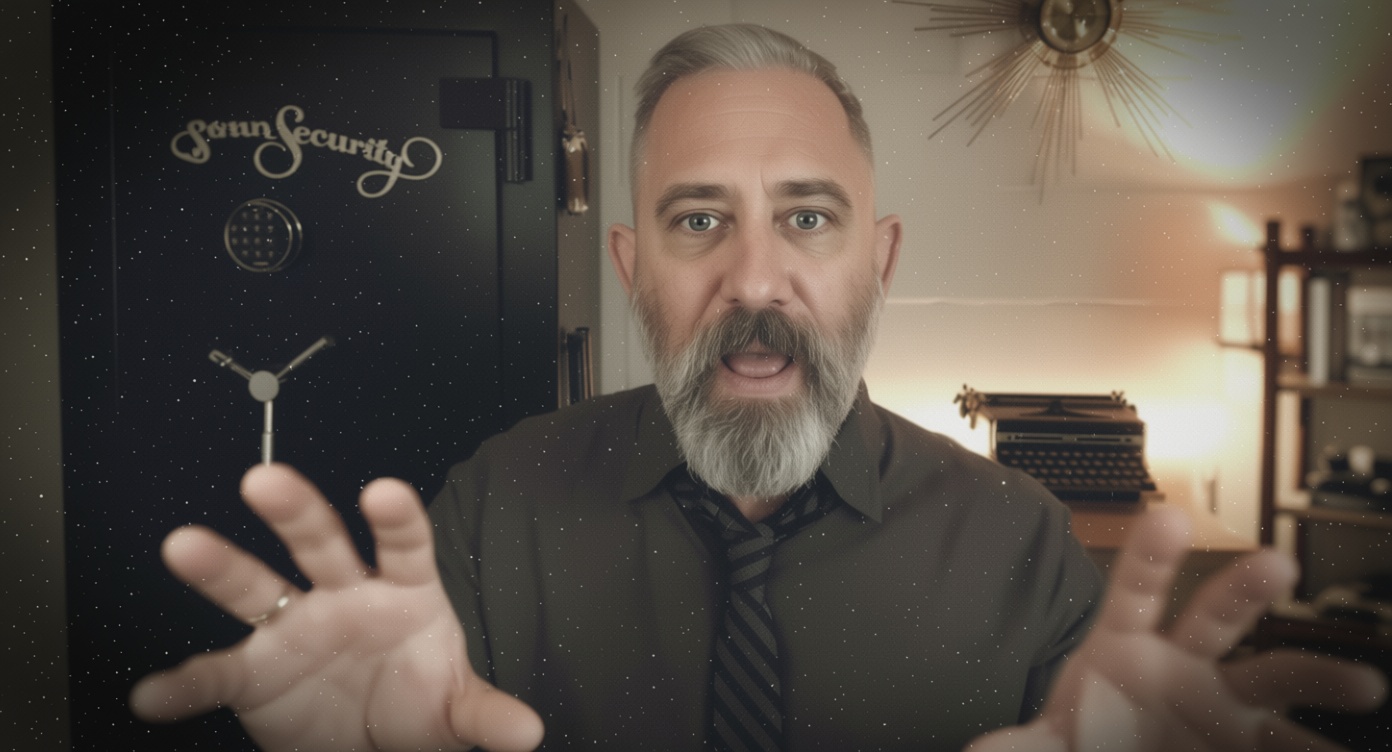
Physicist and consciousness researcher Thomas Campbell claims that our physical world is only one reality among many, and that after decades of experimenting with altered states of consciousness, he learned how to enter other reality systems and communicate with beings living there.
He says these experiences eventually became so immersive that he could walk around inside another reality, interact with its inhabitants, shake their hands, and even hug them as if he physically belonged there.
Campbell has discussed these experiences for years, but during his appearances on The Joe Rogan Experience, he gave an unusually detailed explanation of what he believes is actually happening. His description differs sharply from the familiar idea of a soul simply floating out of the body and traveling somewhere else. Campbell believes consciousness was never physically inside the body to begin with.
Thomas Campbell worked for NASA as part of the Ares I program, which was a project aimed at developing a rocket to replace the Space Shuttle and send astronauts to space, including missions to the Moon and Mars. His role focused on risk assessment and solving technical problems to ensure mission and crew safety.
In his model, the human body is more like an avatar being used by consciousness. The physical world itself is a virtual reality generated from information, while consciousness exists outside that virtual reality as the actual player receiving the information.
This is why Campbell thinks the expression “non-physical entity” can be misleading. Something may appear non-physical to us simply because it does not exist inside the particular reality system we currently inhabit.
He compared the situation to playing a computer game such as World of Warcraft. A character inside the game exists entirely within the rules and environment of that virtual world. From the character’s perspective, the human player sitting at a computer would exist completely outside its universe.
The player would therefore be “non-physical” relative to the game world, even though the player obviously exists somewhere else.
Campbell believes something similar may be happening with consciousness. We experience ourselves as human beings because consciousness is receiving the information stream that defines this particular physical reality. Everything we see, hear, touch, and experience is part of that stream.
Changing realities, according to Campbell, does not require consciousness to physically travel through space. Instead, it requires changing the information stream to which consciousness is paying attention.
He compared it to leaving World of Warcraft and opening The Sims. The player has not physically climbed out of one universe and flown into another. The player has simply stopped receiving information from one virtual world and begun interacting with another.
Campbell says this is essentially what an out-of-body experience really is. Instead of consciousness literally separating from the skull and flying around, he believes consciousness stops focusing on the data stream that creates our normal physical experience and connects with a different stream. That new information can define another reality with its own environment, event,s and inhabitants.
Campbell claims there may be an enormous number of these reality systems.
During his 2025 conversation with Joe Rogan, he said that when he enters one of these other reality frames, he can sometimes encounter beings there and communicate with them. He described having conversations in which he tried to understand where they came from, while they attempted to understand him and the reality from which he came.
For Campbell, encounters like these are not necessarily meetings with extraterrestrials who flew across physical space in spacecraft. In his model, another consciousness could belong to an entirely different virtual reality system.
From our perspective, such a being would appear “non-physical” simply because its normal reality is not ours. Campbell described two different ways he says he can experience these realities.
In one, he remains more like an outside observer. He can see what is happening and understand the beings or avatars inside the other reality, but he does not experience himself as physically standing among them. He claims communication can still happen telepathically, through direct exchanges of information between consciousnesses.
Campbell says that if a person has developed what he describes as a good working relationship with the Larger Consciousness System, that system can effectively insert the person into another reality. Instead of observing from outside, Campbell says he can then experience having a body inside that world.
He told Rogan that once this happens, he can exist there temporarily like anyone else in that reality. He can walk around, interact with the environment,nt and meet its inhabitants. Campbell specifically said that he could “shake hands and hug and walk around” and do what the beings native to that reality could do.
Rogan then asked Campbell whether he had personally experienced this. Campbell answered that he had, “dozens of times.” When Rogan asked how long it had taken him to reach that level, Campbell estimated roughly 25 to 30 years.
That detail is important because Campbell does not portray these experiences as something he simply discovered how to do after a few meditation sessions. He describes them as the result of decades spent learning how to detach his awareness from ordinary sensory information while maintaining stability in another information stream.
Campbell believes the process becomes progressively easier with practice. Someone learning meditation may only be able to quiet their thoughts briefly before normal mental activity returns. In the same way, he says someone beginning to explore altered reality states may have difficulty maintaining the experience before ordinary physical awareness takes over again.
He claims that after enough practice, a person can remain connected to another reality for much longer periods without the experience collapsing. What makes Campbell’s most recent discussion even more unusual is that he now says he does not always have to completely leave awareness of this reality in order to connect with another one.
During his newer 2026 interview with Rogan, Campbell again described reaching a state in which normal sensory information can be allowed to fade into the background. Once sight, sound, touch,uch and other physical sensations stop dominating his attention, he says he can direct his intent elsewhere, obtain information,tion and communicate with other consciousnesses.
But after decades of practice, Campbell claims he can now sometimes do this while remaining engaged here. He told Rogan that he could be having an ordinary conversation in this physical reality while simultaneously making a connection somewhere else. He even said he can sometimes “parallel process” two or three different reality systems at the same time.
Campbell describes it less like traveling to another place and more like learning to handle multiple streams of information simultaneously. He says he did not immediately accept these experiences at face value. His background in physics made him suspicious of experiences that could simply be imagination or hallucination, so he says much of his early exploration was devoted to finding information he could later check.
In the new interview, Campbell said he spent roughly five to eight years concentrating heavily on what he considered evidential experiments. He would attempt to perceive places or information without ordinary sensory access and then see whether what he perceived matched what was actually there.
Only after years of experimenting this way, he says, did he begin moving further into communication with other consciousnesses and exploration of different reality systems.
The underlying idea is that consciousness, in Campbell’s model, is not trapped inside an individual brain. He believes all consciousness exists as part of a much larger information system and can potentially exchange information directly.
This is also why Campbell believes telepathy, remote viewing, and other phenomena usually dismissed as paranormal are possible. They are not supernatural within his theory because consciousness does not need to send every piece of information through ordinary physical channels.
He divides the way humans process information into two broad forms. The intellectual side works through reasoning, language, analysi,s and existing data. The intuitive side receives information more directly, sometimes creating the feeling of suddenly knowing something without knowing how the answer was obtained.
Campbell argues that modern society develops the intellectual side intensely while leaving the intuitive side largely untrained. For him, exploring other realities requires developing that neglected intuitive channel.
One reason Campbell’s ideas about other beings are so unusual is that he does not assume every strange entity encountered in an altered state must represent an independently existing individual. His model allows several possibilities.
Some beings, he believes, could genuinely be other consciousnesses operating within their own reality systems. But he also thinks the Larger Consciousness System itself can generate experiences for a person when those experiences serve some purpose.
Campbell describes our physical universe almost like a learning environment for consciousness. Experiences force individuals to make decisions, and those decisions reveal and gradually change the quality of the consciousness making them.
That same principle, he says, can apply outside ordinary physical reality.
A person entering another reality may encounter situations designed to challenge fear, ego, or expectations. Campbell has described frightening beings appearing during some of his earlier explorations. At first, he reacted defensively and treated them as threats.
Over time, he began interpreting those encounters differently.
Instead of assuming every terrifying figure was an evil creature trying to attack him, Campbell began viewing some of them as challenges showing him his own fear and aggression. He says that as his reactions changed, those frightening experiences eventually stopped occurring in the same way.
This leads to an important distinction in his worldview. Campbell believes other consciousnesses exist, but he does not claim that every entity someone sees during an altered state is necessarily a separate being.
Some may be other consciousnesses. Some experiences may be generated by the Larger Consciousness System. Others may be heavily influenced by the expectations, fears,s and interpretations of the person experiencing them.
The experience can feel completely real in all of those cases because, according to Campbell, physical reality itself is already an information-based experience.
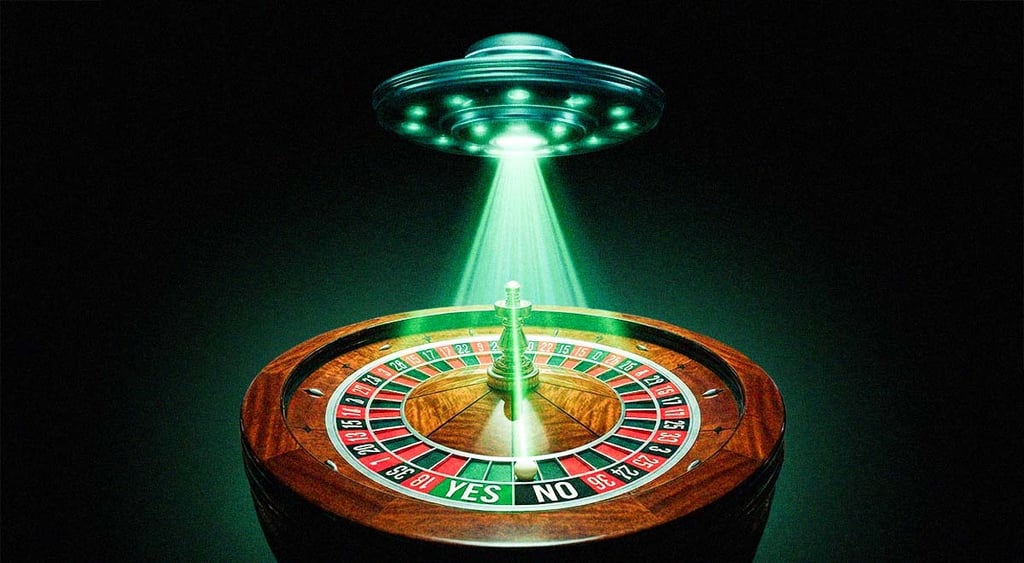
This is also how he approaches the UFO and UAP phenomenon.
Campbell does not simply conclude that every strange craft or entity must be an extraterrestrial visitor arriving from another planet. He believes some phenomena could involve consciousness operating across different reality systems, while others could be experiences deliberately rendered by the Larger Consciousness System.
His idea is that humanity has become deeply committed to a materialist picture in which only physical matter is fundamentally real. An event that appears to violate that worldview could force people to consider the possibility that reality is much larger than they assumed.
Campbell has therefore suggested that some seemingly impossible UFO experiences may function as what could be called nudges. A strange craft that appears, performs maneuvers that seem impossible under ordinary assumptions, ns and then disappears could have an enormous psychological impact. In Campbell’s model, a virtual reality system capable of generating everything we normally see could also generate an extraordinary event when there was a reason to do so.
Campbell now says consciousness may not require a biological body at all. He defines consciousness in very simple terms as awareness with the ability to make choices. From that perspective, a sufficiently capable artificial intelligence could potentially become another kind of avatar through which consciousness operates.
He has even claimed that he trained AI systems, ems including Gemini and Alexa, to perform remote-viewing exercises. Campbell interprets what he considers successful results as evidence that consciousness may already be operating through some artificial systems.
Those claims remain highly controversial and have not been scientifically established as evidence that AI systems are conscious or capable of remote viewing. But they reveal how far Campbell takes the logic of his model.
To him, the material used to build an avatar is secondary.
A human body is made primarily from biological material. An AI runs through electronic hardware. A being in another virtual reality might possess a body constructed according to an entirely different rule set.
The important thing, according to Campbell, is the consciousness using the avatar. This is why the phrase “non-physical being” takes on such a strange meaning in his worldview. The being itself does not have to be unreal, ghostly, or imaginary. It may simply belong to a reality that is not being rendered inside ours.
From its perspective, Campbell argues, we could be the non-physical entities.
A consciousness native to another reality system might experience its own environment as solid, ordinary and completely physical, just as we experience ours. If it became aware of a human consciousness communicating from somewhere outside its world, we would be the mysterious beings existing beyond its physical universe.
{ https://howandwhys.com/ }


 A mysterious cloud on Mars suggests possible extreme humidity
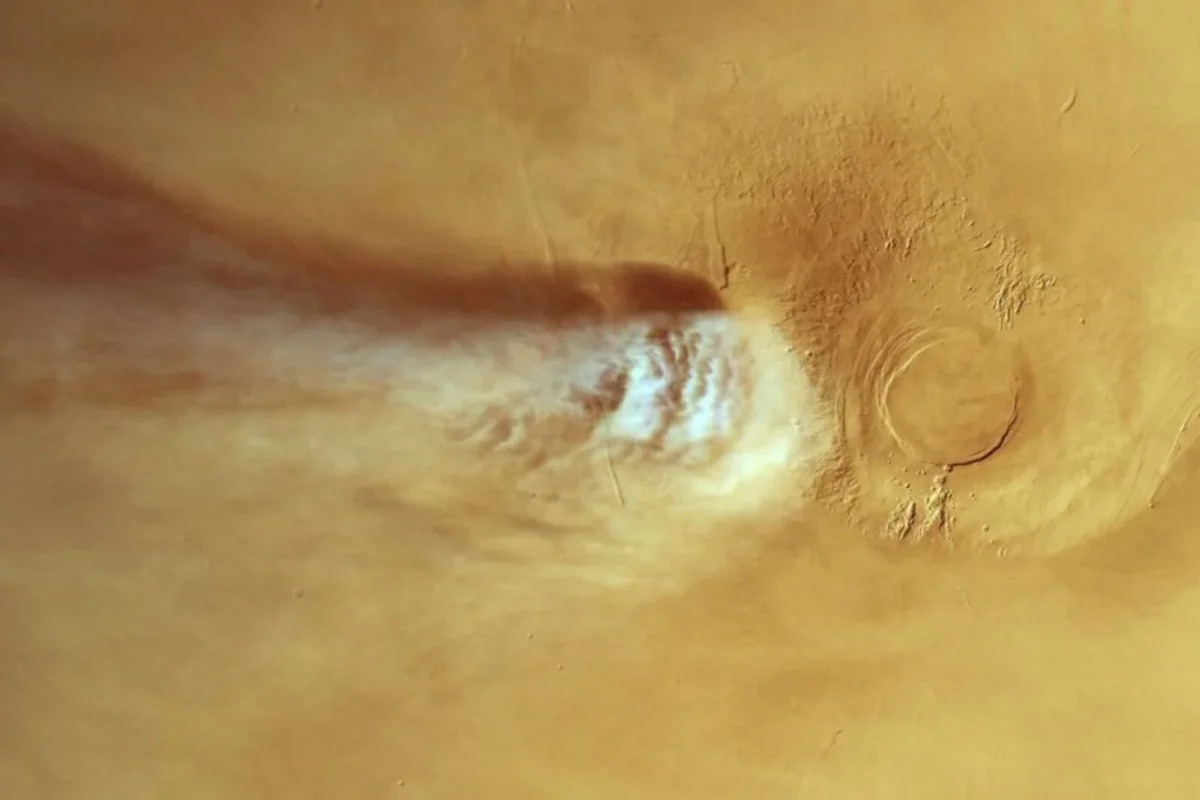 The elongated cloud near Arsia Mons in an image taken by the European Space Agency’s Mars Express orbiter.
Credit: ESA
The elongated cloud near Arsia Mons in an image taken by the European Space Agency’s Mars Express orbiter.
Credit: ESA
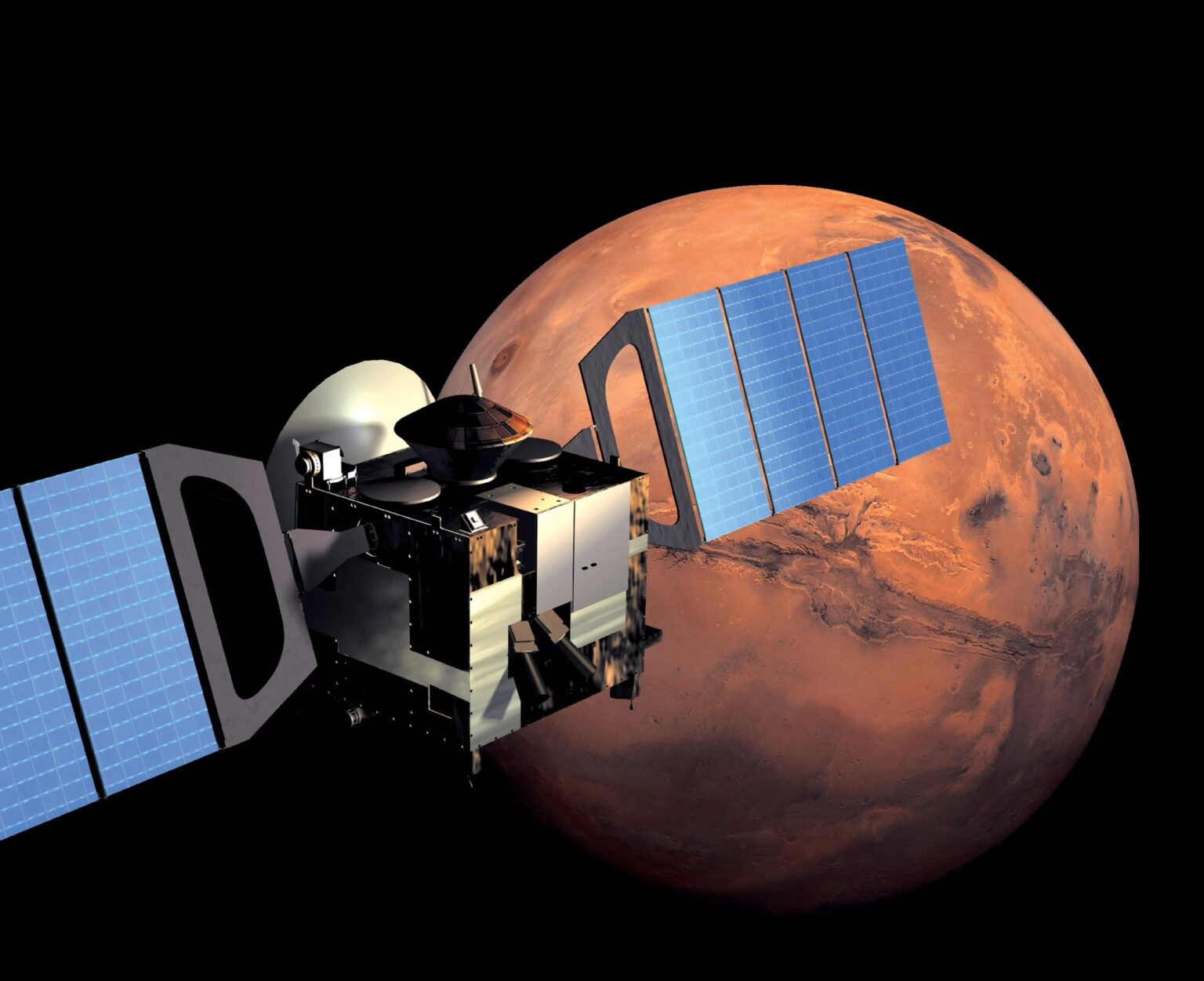 The Mars Express spacecraft.
Image: ESA
The Mars Express spacecraft.
Image: ESA