Ontdek de Fascinerende Wereld van UFO's en UAP's: Jouw Bron voor Onthullende Informatie!
Ben jij ook gefascineerd door het onbekende? Wil je meer weten over UFO's en UAP's, niet alleen in België, maar over de hele wereld? Dan ben je op de juiste plek!
België: Het Kloppend Hart van UFO-onderzoek
In België is BUFON (Belgisch UFO-Netwerk) dé autoriteit op het gebied van UFO-onderzoek. Voor betrouwbare en objectieve informatie over deze intrigerende fenomenen, bezoek je zeker onze Facebook-pagina en deze blog. Maar dat is nog niet alles! Ontdek ook het Belgisch UFO-meldpunt en Caelestia, twee organisaties die diepgaand onderzoek verrichten, al zijn ze soms kritisch of sceptisch.
Nederland: Een Schat aan Informatie
Voor onze Nederlandse buren is er de schitterende website www.ufowijzer.nl, beheerd door Paul Harmans. Deze site biedt een schat aan informatie en artikelen die je niet wilt missen!
Internationaal: MUFON - De Wereldwijde Autoriteit
Neem ook een kijkje bij MUFON (Mutual UFO Network Inc.), een gerenommeerde Amerikaanse UFO-vereniging met afdelingen in de VS en wereldwijd. MUFON is toegewijd aan de wetenschappelijke en analytische studie van het UFO-fenomeen, en hun maandelijkse tijdschrift, The MUFON UFO-Journal, is een must-read voor elke UFO-enthousiasteling. Bezoek hun website op www.mufon.com voor meer informatie.
Samenwerking en Toekomstvisie
Sinds 1 februari 2020 is Pieter niet alleen ex-president van BUFON, maar ook de voormalige nationale directeur van MUFON in Vlaanderen en Nederland. Dit creëert een sterke samenwerking met de Franse MUFON Reseau MUFON/EUROP, wat ons in staat stelt om nog meer waardevolle inzichten te delen.
Let op: Nepprofielen en Nieuwe Groeperingen
Pas op voor een nieuwe groepering die zich ook BUFON noemt, maar geen enkele connectie heeft met onze gevestigde organisatie. Hoewel zij de naam geregistreerd hebben, kunnen ze het rijke verleden en de expertise van onze groep niet evenaren. We wensen hen veel succes, maar we blijven de autoriteit in UFO-onderzoek!
Blijf Op De Hoogte!
Wil jij de laatste nieuwtjes over UFO's, ruimtevaart, archeologie, en meer? Volg ons dan en duik samen met ons in de fascinerende wereld van het onbekende! Sluit je aan bij de gemeenschap van nieuwsgierige geesten die net als jij verlangen naar antwoorden en avonturen in de sterren!
Heb je vragen of wil je meer weten? Aarzel dan niet om contact met ons op te nemen! Samen ontrafelen we het mysterie van de lucht en daarbuiten.
Berichten van 1 februari 2017 tot 28 februari 2017
How New Hubble Telescope Views Could Aid Interstellar Travel
By Charles Q. Choi, Space.com Contributor
Astronomers are using the Hubble Space Telescope to study the clouds of material along the paths of the Voyager 1 and Voyager 2 spacecraft through interstellar space.
Credit: NASA, ESA, and Z. Levay (STScI)
Astronomers using the Hubble Space Telescope have gotten their best looks yet at the mysterious interstellar clouds surrounding the solar system, a new study finds.
These observations could shed light on the challenges that future interstellar missions dispatched to the nearest stars might face, the researchers said.
In 2012, NASA's Voyager 1 probe crossed the so-called heliopause — the giant bubble of electrically charged particles and magnetic fields surrounding the sun — and, in the process, became the first spacecraft to enter interstellar space. Voyager 1 and its twin, Voyager 2, launched in 1977, giving the world some of its first good looks at Jupiter, Saturn, Uranus, Neptune and the moons of these planets. [Photos from NASA's Voyager 1 and 2 Probes]
NASA notes that Voyager 1 and 2 are currently zipping through space at roughly 38,000 mph (61,000 km/h). Voyager 1 is about 12.8 billion miles (20.6 billion kilometers) from Earth, making it the farthest human-made object ever built. In about 40,000 years, it will pass within 1.6 light-years of the star Gliese 445, in the constellation Camelopardalis, the agency says.
Voyager 2 hasn't entered interstellar space yet; it's about 10.5 billion miles (17 billion km) from Earth, NASA says. In 40,000 years, the probe will pass within 1.7 light-years of the star Ross 248, the agency says.
The two Voyager spacecraft remain in contact with Earth through NASA's Deep Space Network of telecommunications links. The probes are still collecting data that scientists can analyze to learn more about the interstellar medium — the clouds of gas and dust that lie between the stars. The interstellar medium holds the building blocks of stars and planets, and is replenished when stars and planets die.
In the future, the $100 million Breakthrough Starshot project, unveiled in 2016, aims to launch tiny spacecraft to the nearest star system to the sun, Alpha Centauri. It consists of three stars: Alpha Centauri A, Alpha Centauri B and a small red dwarf named Proxima Centauri. Recently, astronomers discovered that Proxima Centauri hosts a small, potentially habitable rocky planet, raising scientists' hopes that Starshot might be able to send probes to an alien world in our lifetimes.
These new projects and discoveries make any data that the two Voyager spacecraft gather on the interstellar medium potentially key for exploration, the researchers said.
"It's important for us to be aware of what kinds of objects are present beyond our solar system, since we are now beginning to think about potential interstellar space missions, such as Breakthrough Starshot," said study lead author Julia Zachary, an undergraduate astronomy student at Wesleyan University in Middletown, Connecticut.
To learn more about the interstellar medium, Zachary and her colleagues examined data that NASA's Hubble Space Telescope collected regarding the same interstellar gas and dust that Voyager 1 and 2 are currently analyzing.
In this artist's conception, NASA's Voyager 1 spacecraft has a bird's-eye view of the solar system. The circles represent the orbits of the major outer planets: Jupiter, Saturn, Uranus, and Neptune.
Credit: NASA, ESA, and G. Bacon (STScI)
"An analogy we like to use is that of Google Maps," Zachary told Space.com. "If the Voyager spacecraft are the Google Maps cars going around neighborhoods, taking pictures and giving you the street view, then Hubble provides the overview."
Until 2015, Hubble had not gazed at any nearby stars lying along the paths of the Voyager spacecraft. The scientists used Hubble to analyze the light from these stars to learn more about the interstellar clouds the radiation passed through.
The scientists discovered at least two interstellar clouds along Voyager 2's path, and one or two interstellar clouds along Voyager 1's path. They were also able to measure the density of electrons in the clouds along Voyager 2's path, and found that one had a greater electron density than the other.
"We think the difference in electron density perhaps indicates a difference in composition of overall density of the clouds," Zachary said.
In addition, the researchers successfully detected a broad range of elements in the interstellar medium, such as electrically charged ions of magnesium, iron, carbon and manganese. They also detected neutrally charged oxygen, nitrogen and hydrogen.
All in all, "we think the Voyager spacecraft are moving into a very rich and complex interstellar environment," Zachary said.
Zachary and her colleagues Seth Redfield, an associate professor in the Wesleyan University Department of Astronomy; and Jeffrey Linsky, a research professor in the University of Colorado Boulder Department of Astrophysical and Planetary Sciences, detailed their findings Jan. 6 at the 229th American Astronomical Society meeting in Grapevine, Texas.
The Fermi Paradox is one of the major unanswered questions in astrobiology. It started with physicist Enrico Fermi, who in 1950 asked his co-workers over lunch: “Where are they?” What he meant was intelligent extraterrestrials. If there are billions and billions of stars and probably even more planets, why have we not already been in contact with extraterrestrial (ET) civilizations?
This is even more puzzling since our Sun and Earth are relatively young, meaning that life could have originated on other worlds long before it did here, and intelligent beings on those planets could easily be millions of years ahead of us.
There are two principle answers to the paradox: The alien civilizations are (1) present but for some reason we can’t detect them, or (2) they simply are not there, or at least not in our vicinity. In regard to the first option, Star Trek’s prime directive comes to mind, or perhaps a scientific variation of the Zoo hypothesis (aliens don’t interfere with us because we are an unstable emerging civilization).
There are in fact so many possible solutions to the Fermi Paradox that whole books are written about it. Nevertheless, assuming aliens are around us, shouldn’t there be some evidence? Well, not necessarily. Carl Sagan pointed out that if an ET civilization is far ahead of us, their actions would appear to us as magic. Just imagine us flying a spy drone over our Stone Age ancestors!
What about the so-called UFO sightings that we astrobiologists are sometimes asked about (see, for example, the top UFO cases of 2012 as judged by the Mutual UFO Network). On one hand, I believe that we scientists are sometimes too dismissive of eyewitness reports, and too quick to rationalize them away as natural phenomena or hallucinations. On the other hand, we rely on the scientific method, and reported sightings are not reproducible events that we can test in the laboratory.
What about the second answer—that aliens simply do not exist? The Drake equation, which is usually used to estimate the number of extraterrestrial civilizations in the universe, includes a term for the probability of life originating on a planet. If this term is near zero, the number of expected ET civilizations is near zero. Usually we assume that life on Earth was not a singular event, and that it would have happened elsewhere under similar conditions, but we don’t know for sure. We still don’t know how life occurred on Earth, and what ingredients were needed. It’s possible that the rise of intelligent civilizations is such a rare event that the next civilization with our kind of technology is thousands or even millions of light years away.
Or perhaps there’s another possibility, which I raised once at a SETI meeting when we were examining the question of why we haven’t had a positive detection yet. Imagine using a walkie-talkie in modern New York, and wondering why no one responds on your frequency. It’s because everyone is on Facebook or Twitter! So it might be with ET, who may be using technology well advanced of our own.
This artist's concept illustrates an interstellar probe—a giant light sail—approaching the potentially habitable planet Proxima b in our nearest neighboring star system Alpha Centauri. A new study suggests that such a sail could launch from Earth to reach and enter orbit around the nearest stars on a timescale of centuries. Credit: PHL/UPR Arecibo/Abel Mendez
Interstellar travel, a timeworn staple of science fiction, can already be science fact if one has cash to spare. For just $100 million or so, a customer could actually purchase a top-of-the-line commercial rocket and ride right out of the solar system. But patience would be key. If launched tomorrow toward the nearest port of call—Proxima b, a potentially habitable Earth-mass planet recently discovered in the triple star system of Alpha Centauri about four light-years away—that rocket would take 80,000 years to arrive.
Instead of spending $100 million on a slow boat to the stars, in April of last year the billionaire entrepreneur Yuri Milner announced he would use that same sum to forge a new path to Alpha Centauri within a human lifetime. Called Breakthrough Starshot, the initiative calls for largely abandoning rockets in favor of “light sails”—gossamer-thin reflective sheets that, once unfolded in space, could be propelled to very high speeds by laser beams. Starshot’s tentative plans involve using conventional rockets to place thousands of one-gram, four-meter-wide light sails in Earth orbit as early as the 2040s. Each sail would be embedded with a one-centimeter-wide chip containing cameras, sensors, thrusters and a battery. From Earth orbit, each featherweight spacecraft would be boosted toward Alpha Centauri at 20 percent light-speed by a minutes-long pulse from a ground-based, 100-gigawatt laser array. The interstellar crossing would take just a little over 20 years, so the probes could reach Alpha Centauri in the 2060s.
But such high speeds come at a high price. Even the most conservative cost estimates for Starshot far exceed Milner’s initial $100-million investment—the multi-decadal project could easily consume $10 billion, and perhaps much more, largely due to the enormous expense of building the ground-based laser array. Government assistance and international collaboration would likely be required. Moreover, the light sails that survive the 20-year voyage would pass through the Centauri system in a flash, moving so fast they would have only seconds to capture high-quality close-up images and other data from Proxima b and any neighboring planets that may be there. As they fall deeper into the dark between the stars, the light sails would attempt to transmit their precious findings back to Earth using laser beams no more powerful than the signal from a typical cell phone.
A SLOWER SAIL TO THE STARS
Some critics say these problems make Starshot’s rush to Alpha Centauri look like a poor investment. “When we read about [Starshot], we found it wasteful to spend so much money on a flyby mission which is en route for decades, while the time for a few snapshots is only seconds,” says Michael Hippke, an independent researcher in Germany. Working with René Heller, an astrophysicist at the Max Planck Institute for Solar System Research in Göttingen, Hippke has developed an alternative mission profile that he says could offer greater scientific returns for a fraction of the cost. Rather than using multibillion-dollar laser arrays to boost small light sails to relativistic speeds for one-time flybys, Heller and Hippke propose using starlightalone to send larger sails on more leisurely journeys that would take them to all three stars in the Alpha Centauri system and leave them parked in orbits there. Their findings appear in the February 1 edition of The Astrophysical Journal Letters.
The crux of their proposal is not only to use sunlight to accelerate outbound light sails, but also rely on the light and gravitation of Alpha Centauri’s triple stars at journey’s end. Heller and Hippke have calculated that a mind-bogglingly low-density sail weighing approximately 100 grams but spread across 100,000 square meters (that’s about 15 football fields!) could do the trick. Such a sail’s construction appears possible, based on rapid progress in material science. Incrementally adjusting its angle as it approaches to soak up more radiation pressure from the stars, that sail could bleed off enough speed to be captured into orbit within the system.
To reach the potentially habitable planet Proxima b, these “photogravitational” assists counterintuitively require first sending the light sail swooping blisteringly close to the bright, sunlike stars Alpha Centauri A and B—even though they are nearly two trillion kilometers farther from us than Proxima b’s smaller, dimmer host star, Proxima Centauri. This is because the greater radiation pressure from Alpha Centauri A and B provides more deceleration, and thus a faster approach, for any light sail targeting the system. But the twin stars’ radiation pressure has its limits; if Heller’s and Hippke’s 100,000-square-mter light sail came in any faster than 4.6 percent light-speed, it would simply overshoot the system. All together, they envision their sail’s journey to Alpha Centauri A and B taking nearly a century, followed by another half-century voyage to the final destination—a stable orbit around Proxima.
This schematic animation shows how a giant, low-density light sail traveling at nearly 5 percent the speed of light could decelerate and enter orbit in the Alpha Centauri star system.
“You would need to travel about seven times as long as Starshot’s 20-year mission, but in return you would get years or decades of close-up exploration instead of only seconds,” Heller says. Comparing the ratio of exploration time with travel time for both cases, Heller adds, “Starshot could use one hundred-millionth of the mission’s lifetime for in situ science whereas we could use of the order of one hundredth—or about a million times more.” Plus, by using sunlight to launch the sail, the new proposal obviates the need for a multibillion-dollar gigawatt-scale laser array.
Even so, their proposed 150-year voyage could not start tomorrow. Heller’s and Hippke’s proposal utilizes a rare configuration of Alpha Centauri’s stars that only occurs once every 80 years, when their orbits all align in a plane that intersects the trajectory of any incoming probe from our own solar system. Alpha Centauri’s 80-year triple-alignment next occurs in 2035, far too soon for any conceivable light sail from Earth to be anywhere close to the system; instead, Heller and Hippke suggest it might be more realistic to target the subsequent alignment, in 2115.
As far-off as that is, the timing could be much worse, Heller says: Sending their sail directly to Proxima Centauri would demand much slower interstellar speeds due to the smaller star’s weaker radiation pressure and braking ability, raising the total travel time to nearly a millennium.
PATIENCE, PLEASE
For Hippke, a multigenerational mission ending in orbit around Alpha Centauri would be worth the wait, even if he would never see its returns. “Our children and grandchildren will receive the amazing photos from these space probes. Imagine alien rivers, volcanoes and perhaps exotic life!” Opting for a mission with a century timescale also opens possibilities for exploring other nearby bright stars, Hippke says. The massive star Sirius, for example, is just over twice as far away as Alpha Centauri—but because it shines some 25 times brighter than our sun, it offers a stronger radiation-pressure braking effect, allowing light sails to approach at much higher speeds. If nothing else, the possibility of sending light sails to orbit many nearby stars suggests a natural next-generation, longer-term follow-up to Starshot’s more urgent mission goals.
Despite these perks, Avi Loeb, an astronomer at Harvard University and chair of Breakthrough Starshot’s Scientific Advisory Committee, remains unconvinced this alternative proposal offers realistic advantages over Starshot’s plan to use gigawatt-class lasers to boost smaller sails to the stars. “In using starlight to reach relativistic speeds, one must use an extremely thin sail,” Loeb says, noting that the weaker push of sunlight calls for a correspondingly lower-density light sail. Hippke and Heller say their sail could in theory be constructed from low-weight, high-strength material such as graphene, but Loeb questions whether making and using a few-atoms-thick 100,000-square-meter sheet of graphene for an interstellar probe would actually be any easier than building a massive laser array. “Such a surface is orders of magnitude thinner than the wavelength of light that it aims to reflect, and so its reflectivity would be low,” Loeb says. “It does not appear feasible to reduce the weight by so many orders of magnitude and yet maintain the rigidity and reflectivity of the sail’s material.” In other words, a 100,000-square-meter graphene sail could prove far too flimsy to actually fly. Additionally, Starshot plans to fly thousands of sails, not just one—even if each successful interstellar crossing yielded only a few seconds of close-up observations, they could quickly accrue across multiple successive flybys.
Perhaps the biggest issue, Loeb says, is whether ambitious plans for multigenerational projects can really survive their inescapable encounters with human mortality. “If one ignores the duration of the journey, one can always use conventional rockets and reach Alpha Centauri in 80,000 years for a very modest cost,” he says. “But the people who work on Starshot are more ambitious. We want to get there within our lifetime.”
ALLEGED APOLLO 20 CIGAR UFO FINALLY FOUND IN A MOON CRATER ON GOOGLE EARTH MAP
William Rutledge is well known in UFO research circles for the extraordinary claims he made about his work for NASA on the Apollo missions.
Rutledge alleged that he was part of the crew on the top secret Apollo 20 mission which deployed a team of astronauts to the surface of the Moon to investigate the Delporte crater. The Delporte crater had been the site of an alien craft crash and NASA and the government of the United States were keen to recover their technology. They discovered ample technological components which was later put to use in America’s own military industrial project and the bodies of two alien creatures, one of whom appeared to be alive.
GOOGLE EARTH FOOTAGE OF THE DELPORTE CRATER CONFIRMS UFO STORY
Rutledge and the rest of the team were sworn to secrecy by the United States government but he made the bold decision to break his silence when he was in his late 70s. At this time, he was retired and living with his wife in the African country of Rwanda and did not believe that his safety or his livelihood would be endangered by his revelations at that time.
Rutledge proceeded to record his story on videos which he uploaded to YouTube. They were promptly removed by persons unknown, presumably the Central Intelligence Agency. Rutledge told that prominent UFO research Scott Waring that he was frightened and intimidated by the speed of the CIA’s reaction but he refused to be silence. Instead, he uploaded the videos to a smaller content platform similar to YouTube. These videos lasted a little longer but were also removed promptly by state agents. During the brief period that they were online, they were downloaded and duplicated by a number of individuals who brought the public’s attention to Rutledge’s sensational story. For his trouble, Rutledge was subjected to a long-standing public campaign of ridicule.
But despite the attempts to silence, discredit and humiliate Rutledge, there were many people who believed his story. Therefore when Google made satellite images of the lunar surface available to the public view they decided to scour the surface in search of the enormous ship Rutledge described. What UFO researchers discovered when assessing the Delporte Crater appeared to vindicate Rutledge’s story. The images recovered clearly show a cigar-shaped vessel of approximately 3000 metres in length.
Following the dissemination of these images, Google sprang into action and removed the zoom option for this particular portion of the Moon. The swiftness with which the government and their corporate allies have acted to keep the public from viewing anything related to the Apollo 20 mission has only served to bolster the integrity of Rutledge’s original story. If there was no truth in his story, they wouldn’t be making such a phenomenal effort to cover it up.
Date of discovery: 1970s
Location of discovery: Delporte Crater, Earths moon
Pillar lights were seen over a Korean city this week. Similar pillar lights have been seen all over the world for unknown reasons. Scientists try to explain it, but it seems few scientists can settle down on one theory and this amazing and beautiful phenomenon continues to go unexplained. I will place another video with pillar lights from around the world below to compare. Could they be caused by a fleet of UFOs? Or are they light beings, watching over an area together? Maybe, but it looks natural, like the Aurora Borealis. Like its a cosmic connection between the Earth and the rest of the universe. I am however worried...about it being caused by CERN. The last thing we want is a black hole to form that would eat the earth from inside out. This could be CERN messing around again. Scott C. Waring
News states: Unidentified flying objects in Busan night sky, columns of light like UFO appear, and it is gone for a long time. There are many speculations among the citizens, but it is the explanation of the refraction phenomenon of light caused by squid fishing boats with strong lighting. Reporter Kim Jongho. Something shaped like a pillar appeared in the night sky. Over ten pillars remain in the same place over time. The so-called 'light pillars' in Busan on the last three nights. A lot of citizens witnessed the sea. [Preferential w / Busan Munhyun-dong: It's growing in convex lens form. So this is not an object or something, but I thought it was where the light was reflected or something.] By the way, Moonhyun-dong was located at the back of Pusan Hangang Bridge, at Dongzam-dong National Maritime Museum, and at Yeongju-dong Observatory at Yeongdo-dong Observatory. Along with the sightings spread to the SNS, there were also citizens who were worried about UFO, Aurora, and "Analysis of Disaster". However, the Meteorological Agency explained that it is a phenomenon caused by the strong lighting on the squid fishing boat and the ice crystal, an ice crystal in the clouds. [Eum Ki-cheol / Busan Regional Weather Bureau: (squid grilled pear) Reflecting on the cloud or something like that, from the side we see, the light is said to be a 'light pole' because it looks like a pole. Experts explain that this phenomenon is sometimes seen on the east coast, where squid catches are frequent, even if not frequently.
Helicopter follows and waits patiently for UFO to leave the area In Palm Springs, Feb 4, 2017, UFO Sighting News.
These are two examples of real UFO sightings at Palm Springs, but not the one from this report.
Date of sighting: February 4, 2017 Location of sighting: Palm Springs, California, USA Source: MUFON #81924 Wow, I read this report and I really wish I was in Palm Springs to see it. This guy saw a helicopter hunting a red orb UFO that had landed on the mountain top. Of course the helicopter can only watch and wait for the aliens to get the message to leave. I included two photos above of past UFO sightings in Palm Springs, because the report didn't come with one. Scott C. Waring Eyewitness states:
In my front yard checking my security camera. We have the Palm Springs mountain directly across from our home and often look up at it when the moon is out because of the glow from the moon on the snow I enjoy. What I saw first was a helicopter flying around the top of the mountain by the arial tramway.(we have request reports of missing hikers on the mountain)and when I saw the helicopter shining a spot light on the mountain,I though they were looking for someone,and went inside and got my wife to outside and take a look. I was in the Marine Corp with a helo squardren as a medic and got to see quite a few different styles of helicopter so I knew what I was looking at, especially after I heard the rotors of the helicopter and the search light. I then went inside and got my field telescope to see what was going on.
The helicopter seem very focused on the one particular area but did fly around to different spots. The area they focused on when I zoomed in on the area I saw a large red sphere that remained on. The helicopter never shined the light directly on the object but behind and to the right side of it. I assumed it was a team of people maybe rescue crews looking for others? I made a comment to my wife about how skilled this pilot must have been,I had an outstanding view of the helicopter even at 7 pm in the evening and because it really isn't that far from our home.the pilot remained absolutely still in midair over the object for very long periods of time without moving at all,completely stationary.and that was on the side of the mountain about 10,100 feet up, 400 feet from the very top of the mountain by the tram itself.
My wife had a few looks of it too and we still were wondering what on earth was going on up there. I made a few comments as time was going by like how very strange this all was,was this a downed plane? I brought the tripod and telescope closer to end of the property in my front yard to get even closer look and to my absolute astonishment as I was looking at the helicopter shining the spotlight again,this sphere changed different colors first white then light blue then red again and paused changing colors. With my wife right beside me and as I was looking through the scope the red sphere changed shape, flattened like a pancake and from the exact spot it was on flew straight to the right due north with the helicopter observing it,it traveled about a quarter of a mile then stopped changed direction and traveled due south and disappeared out of view. It wasn't flying fast at all more like a controlled glide.
It observed flat from the side but as I was able to keep it in view with the telescope I could clearly see 3 lights, 2 brilliant red (like rubies) the front and rear and a smaller white on the side, the object appeared see through and triangular in shape and when observing it,it had a dreamlike quality to it, it was exceptionally beautiful to look at and it never made a sound.As I'm writing this seeing how it happened less than 2 hours ago I'm absolutely amazed at what I saw,my wife got to view this object and the helicopter also but didn't see the object change color or shape as I witnessed. I have mixed feeling,shock comes to mind,I never thought in a million years that the red object that we were observing would actually take flight and fly away. We lost sight of it as it went behind the lower edge of the mountain going south with the helicopter still flying around the top of the mountain by the Tram. I wonder now, we're they looking for occupants on the side of the mountain? I will submitted a drawing if asked. An added noted note: Palm Springs Tramway is a very popular attraction during the winter months here.
When we were observing the helicopter flying around and then seeing the red sphere the tramway that runs every fifteen minutes with a trolling going up and coming down the mountain,not one cable car came up or down the mountain,chances are for the length of time we were looking we would have seen one of the cable cars or both. Also during the entire event through the telescope we saw different (teams?) of people with high powered flashlights trying to get over to where the helicopter was shining the spot light by this object but with the recent snow fall from storms weren't having much luck,or so it seemed.
UFO sighting caught on tape over Whitby, Canada 4-Feb-2017
This UFO video of a bright objects hovering in the sky above Whitby, ON, Canada was filmed on Saturday, 4th February 2017.
Witness report:
Observed 5-6 pulsing lights moving slowly back and forth low in sky 30+km away from position. At approximately 9 -10 p.m on February 4th 2017 on Ashburn Rd. In Whitby,Ontario we first observed 4 lights, 3 of which in rough triangle formation viewed head on to west of position while driving. Stopped to observe objects and took approx. 1.30 min video. Observed objects hovering and moving lazily in no specific flight path. Objects(5-6) appeared to pulse and glow with orange/yellow light ONLY when hovering.Would dim considerably when moving. Two objects appeared to “exchange” light or energy with one dimming and the other brightening in close proximity. Objects also appeared to “fly” in very close proximity on purpose with no apparent regard to their proximity. Objects would move from hovering position approx. North of first position and back and forth in an indeterminate manner almost “lazily”. Observed this for approximately 1.5 hours. Dimmer lights appeared to travel north and back to original position. At first we thought the objects could be helicopters or planes but we observed them glowing and dimming and doing odd, lazy movements in sky approx. 50° to 60° over horizon. No spotlights seen. Objects appeared to have red and green lights when dim. Felt that objects were NOT normal aircraft due to odd behaviour. Was exhilarated at prospect of encountering unknown objects in sky never having seen anything like it before. Did not feel any particular negative feelings, just that we were seeing something unusual. Attempted to move to higher ground to observe objects more clearly. Watched them in two positions over approx. 1 hour. As far as we know we were the only people to observe this event. Never truly lost sight of objects and left after 1.5 hours as it was late and we were tired.
How New Hubble Telescope Views Could Aid Interstellar Travel
By Charles Q. Choi, Space.com Contributor |
Astronomers are using the Hubble Space Telescope to study the clouds of material along the paths of the Voyager 1 and Voyager 2 spacecraft through interstellar space.
Credit: NASA, ESA, and Z. Levay (STScI)
Astronomers using the Hubble Space Telescope have gotten their best looks yet at the mysterious interstellar clouds surrounding the solar system, a new study finds.
These observations could shed light on the challenges that future interstellar missions dispatched to the nearest stars might face, the researchers said.
In 2012, NASA's Voyager 1 probe crossed the so-called heliopause — the giant bubble of electrically charged particles and magnetic fields surrounding the sun — and, in the process, became the first spacecraft to enter interstellar space. Voyager 1 and its twin, Voyager 2, launched in 1977, giving the world some of its first good looks at Jupiter, Saturn, Uranus, Neptune and the moons of these planets. [Photos from NASA's Voyager 1 and 2 Probes]
NASA notes that Voyager 1 and 2 are currently zipping through space at roughly 38,000 mph (61,000 km/h). Voyager 1 is about 12.8 billion miles (20.6 billion kilometers) from Earth, making it the farthest human-made object ever built. In about 40,000 years, it will pass within 1.6 light-years of the star Gliese 445, in the constellation Camelopardalis, the agency says.
Voyager 2 hasn't entered interstellar space yet; it's about 10.5 billion miles (17 billion km) from Earth, NASA says. In 40,000 years, the probe will pass within 1.7 light-years of the star Ross 248, the agency says.
The two Voyager spacecraft remain in contact with Earth through NASA's Deep Space Network of telecommunications links. The probes are still collecting data that scientists can analyze to learn more about the interstellar medium — the clouds of gas and dust that lie between the stars. The interstellar medium holds the building blocks of stars and planets, and is replenished when stars and planets die.
In the future, the $100 million Breakthrough Starshot project, unveiled in 2016, aims to launch tiny spacecraft to the nearest star system to the sun, Alpha Centauri. It consists of three stars: Alpha Centauri A, Alpha Centauri B and a small red dwarf named Proxima Centauri. Recently, astronomers discovered that Proxima Centauri hosts a small, potentially habitable rocky planet, raising scientists' hopes that Starshot might be able to send probes to an alien world in our lifetimes.
These new projects and discoveries make any data that the two Voyager spacecraft gather on the interstellar medium potentially key for exploration, the researchers said.
"It's important for us to be aware of what kinds of objects are present beyond our solar system, since we are now beginning to think about potential interstellar space missions, such as Breakthrough Starshot," said study lead author Julia Zachary, an undergraduate astronomy student at Wesleyan University in Middletown, Connecticut.
To learn more about the interstellar medium, Zachary and her colleagues examined data that NASA's Hubble Space Telescope collected regarding the same interstellar gas and dust that Voyager 1 and 2 are currently analyzing.
In this artist's conception, NASA's Voyager 1 spacecraft has a bird's-eye view of the solar system. The circles represent the orbits of the major outer planets: Jupiter, Saturn, Uranus, and Neptune.
Credit: NASA, ESA, and G. Bacon (STScI)
"An analogy we like to use is that of Google Maps," Zachary told Space.com. "If the Voyager spacecraft are the Google Maps cars going around neighborhoods, taking pictures and giving you the street view, then Hubble provides the overview."
Until 2015, Hubble had not gazed at any nearby stars lying along the paths of the Voyager spacecraft. The scientists used Hubble to analyze the light from these stars to learn more about the interstellar clouds the radiation passed through.
The scientists discovered at least two interstellar clouds along Voyager 2's path, and one or two interstellar clouds along Voyager 1's path. They were also able to measure the density of electrons in the clouds along Voyager 2's path, and found that one had a greater electron density than the other.
"We think the difference in electron density perhaps indicates a difference in composition of overall density of the clouds," Zachary said.
In addition, the researchers successfully detected a broad range of elements in the interstellar medium, such as electrically charged ions of magnesium, iron, carbon and manganese. They also detected neutrally charged oxygen, nitrogen and hydrogen.
All in all, "we think the Voyager spacecraft are moving into a very rich and complex interstellar environment," Zachary said.
Zachary and her colleagues Seth Redfield, an associate professor in the Wesleyan University Department of Astronomy; and Jeffrey Linsky, a research professor in the University of Colorado Boulder Department of Astrophysical and Planetary Sciences, detailed their findings Jan. 6 at the 229th American Astronomical Society meeting in Grapevine, Texas.
The dishes of the Karl G. Jansky Very Large Array depicted making the first-ever localization of a Fast Radio Burst.
Danielle Futselaar [www.artsource.nl]
For as long as astronomers have known about Fast Radio Bursts (FRBs), they’ve been stumped. About a decade ago, researchers discovered in archived 2001 data an extremely fast — just a few milliseconds — burst of radio emissions. They’d never seen anything like it before, and didn’t know where it came from or what could cause it.
Finally, we’re starting to get a few answers.
Astronomers announced today at the 229th meeting of the American Astronomical Society that, for the first time, they’d pinpointed the origins of one of these FRBs: a small dwarf galaxy about 2.5 billion light-years away. Today’s news, which is also detailed in articles in Nature and The Astrophysical Journal Letters, also found a new source of persistent, weaker radio emissions nearby; presumably the two are related but it’s not clear.
It’s big step in the study of the cosmos, but we’ve still got a ways to go before we fully understand FRBs.
Seeing Clearly
The first break came in 2012, when the Arecibo Observatory in Puerto Rico detected the first-ever repeating FRB, dubbed FRB 121102 (after the date of the first detection, Nov. 02, 2012). Before that, each one had been a single, one-off event. That alone was instructive: FRBs (or this one, at least) must not be the result of cataclysmic events, since something was still around to send the repeated signals. But even better, it meant other observatories could look in the same area to try to spot future repeat. It was “A good place to go fishing,” said lead author Shami Chatterjee of Cornell.
Luckily, the universe obliged.
“The FRB was extremely generous to us,” said Casey Law of UC Berkeley, one of the co-authors, because the Karl G. Jansky Very Large Array (VLA) observed a total of 9 bursts in its 83 hours of observing time in 2016. This narrowed down FRB 121102’s origins considerably, but still not enough. Subsequent observations from around the world, in radio and visual light spectra, found the source galaxy, in the direction of Auriga. Finally, we learned for sure FRBs (or, at least, this one) originated outside the galaxy, as had been suspected.
These observations also revealed a steady source of radio emissions within 100 light-years of the FRB’s precise location. The two could be results of the same process, or be otherwise related, but the answers will have to wait until more observations come in.
Start of Something Big
So, mystery solved, right? Not quite. We still don’t know what actually causes FRBs, but at least now astronomers have some improved hypotheses. One option is a variety of exotic star, a highly magnetic kind of neutron star, which could cause just the right kind of emissions astronomers are seeing. Another possibility is a massive black hole within FRB 121102’s host galaxy, which could cause the radio signals.
Still, the scientists cautioned, this is still just a single data source. It’s still the only known repeating FRB, after all; maybe there are multiple types of FRB, or this particular one is just an outlier.
But that’s good news! “New mysteries in astronomy are somewhat rare,” Sarah Burke-Spolaor of the National Radio Astronomy Observatory, so FRBs are increasingly becoming the exciting new thing. There are more hypothesized models causing FRBs than actual detected bursts, said Chatterjee, “a great situation for us to be in.”
With any luck, the next few years will answer more of these questions — and pose new ones.
It’s not just a cloudy day somewhere here on Earth. For Hubble, it’s always a cloudy day along the paths of the Voyagers 1 and 2.
Mind you, Hubble can’t see the car-sized probes that far out. But Hubble has actively been working with the Voyager probes to measure and define interstellar space.
The results are … weird.
“It looks like in our local neighborhood, there’s a big blob of stuff,” Julia Zachary, an undergraduate at Wesleyan University, said in a press conference at the 229th meeting of the American Astronomical Society. “That’s actually a cloud of interstellar dust.”
Those clouds extend out for several light-years. Voyagers 1 and 2 are headed in separate directions. When Hubble glances in the direction of each probe, it uses four total stars as guide posts. For Voyager one, those stars are Gliese 686 and Gliese 676A. For Voyager 2, that’s Gliese 780 and Gliese 754.
The Voyagers use their still-operational instruments to measure interactions between “outward moving solar wind and inward pressure from the interstellar medium.” Optically, Hubble can characterize what the materials in the path are.
The Hubble telescope’s images reveal that the clouds of dust can obscure the view of stars, dimming them in the same way a cloudy day on Earth can blot out the Sun. This is a problem for Gliese 754, the dimmest of the stars at 12th magnitude.
“Unfortunately we’ve had some trouble detecting magnitude features from (Gliese 754),” Zachary says.
There’s only a few years left to make these kinds of studies. The Voyagers are currently the only operational probes at or near the edge of interstellar space, but the decay of the Plutonium-238 inside each craft will reach a half-life within a decade that will dampen the ability of power output to match up with spacecraft needs. Even now, only the lowest power instruments, like the magnetometers and particle detectors, are online. After the P-238 energy is exhausted, the Voyagers will likely go dark.
The Voyagers are some of NASA’s oldest operating spacecraft. But be careful how you put that.
“Well … they’re not old,” Zachary said. “They’re only 40. It’s old for a space craft, let’s put it that way."
There have been a number of recent “flying saucer” sightings that don’t necessarily fit the category of UFOs since they were seen on the ground. However, they stirred up talk of spacecrafts, aliens and all the usual speculation on what these saucer-shaped UGOs (unidentified grounded objects) might be. Here’s an update on three of them.
The Internet went crazy this week over Google Earth images of NASA’s Jet Propulsion Laboratory in Pasadena, California, where an object that looked suspiciously like a flying saucer was seen on the runway and in the nearby grass. Since the images dated back to 2014, it was unlikely NASA was hiding a flying saucer out in the open for everyone with access to Google Earth to see.
Sure enough, a NASA engineer from JPL showed he had the right stuff by debunking the rumors with a selfie posted on Twitter of himself, a fellow engineer and the mysterious object – which is actually a … well, Dr. Nacer Chahat doesn’t really say what it is but instead makes a wonderful observation based on current U.S. events:
Here is what you think is a UFO. The only alien is me.
Most speculation now centers on the object being a storage container or the cover of some kind of underground bunker. What’s inside? That’s a mystery for another day.
Next up is the flying saucer sighting in Antarctica using … you guessed it … Google Earth: The Saucer-Seeker’s Friend (trademark pending). Images of what appears to be a round disc sticking out from under a rock ledge also made the rounds this week on the web. One of the theories proposed was that it was actually a pond made from melting glacier ice which was distorted because those satellites are just so darned high. Sure enough, if you pull back on that Google image and look around, you see other ponds that didn’t go viral because they suffer from an ailment known as “not round like a saucer.”
Finally, yet another “OMG! It was right there out in the open on the freeway!” saucer sighting came from somewhere on I-74 in Central Illinois where a truck was spotted hauling a large saucer-shaped object. For those who want to believe but don’t want to get fooled again, the saucer was quickly identified as part of an X-47B. Well, that explains it.
What? You don’t know what an X-47B is? That’s Grumman’s experimental fighter-sized unmanned drone designed to take off and land on aircraft carriers and refuel in the air. It’s scheduled to be deployed in 2019 but you may see one flying around Area 51 or on the road in Illinois.
There is an unusual theme that has remained present in certain modern UFO circles over the years. Granted, the UFO subject is rather “odd” in itself, without the inclusion of supplemental weirdness to further complicate an already complex subject. But add to it the running theme that certain UFO researchers have actually been killed in pursuit of the mystery, and it brings a different air to the phenomenon entirely.
Such circumstances have appeared as recently as last year, when the Telegraph and a number of other outlets reported the death of conspiracy researcher Max Spiers. “This is really strange. It does seem that UFO researchers are now being targeted, probably to slow the rate of information being leaked to the public,” said researcher Scott C. Waring, who offered little in the way of evidence for the claim that UFO researchers were being targeted, let alone who might be doing the targeting. In contrast to this, Former Ministry of Defense UFO investigator Nick Pope countered Waring’s statements in a tweet, saying that, “The death of Max Spiers was a tragedy, but having run the UK Government’s UFO project I promise we don’t go around killing UFO researchers.”
Among the other suggested “casualties” that have appeared over the years have been Edward Ruppelt, the first director of the USAF’s Project Blue Book, who died at just 37-years of age. Others include researchers Morris K. Jessup, Charles Hall, and pilot Fredrick Valentich, whose disappearance over Australia’s Bass Strait in 1978 is perhaps the most legitimately strange of those listed here.
However, perhaps no UFO-related death had been so often recounted as that of Captain Thomas F. Mantell of the Kentucky Air National Guard, who died while pursuing a UFO in a P-51 Mustang on January 7, 1948.
The essential facts about the case are as follows: shortly after a large, flying object was reported by observers near Godman Field at Fort Knox, a group of pilots already in the air were advised to try and locate and pursue the mystery craft. Mantell was the first to spot the object, and after stating his intention to move in closer and engage the craft, he ascended to an unsafe altitude above 25,000 feet, and blacked out (only one of the four Mustangs in Mantell’s group contained an oxygen mask). Mantell’s aircraft subsequently went spiraling to the ground, resulting in a fatal crash that would send a shock wave throughout the early UFO community.
Even Edward Ruppelt believed the object Mantell was chasing had been conclusively explained as having been an experimental Skyhook balloon. However, a number of UFO books and articles over the years have expressed skepticism about the identity of the “balloon”, arguing that Mantell was killed while chasing a bonafide unidentified flying object. Putting that long-held dispute aside, the Mantell incident is of significance for other reasons; namely due to the fact that, as Ruppelt and others would argue, widely-publicized incidents like the Mantell crash and the “Gorman dogfight” that occurred over Fargo, North Dakota later that same year, each played a significant role in shaping public opinion on the UFO subject for decades to come.
Altogether, Ruppelt seemed to recognize the kind of fear brewing in the American public following situations like the Mantell incident. In his view, it was largely unwarranted, of course, having been based on the mistaken notion that it had been a “saucer” Mantell was chasing in the first place, and the subsequent judgement that his active pursuit led to his death. Hence, for those who looked no further than to read, “man killed while pursuing saucer,” how else were they to interpret the situation?
At times, to be one who studies the enduring UFO enigma seems to require being able to balance the study of valid objects of mysterious origin in the skies, with a knowledge of sociology, psychology, and human perception. In other words, when it comes to the study of UFOs, things are very seldom as they seem, and almost never as they are later reported in written accounts.
This is not to say, of course, that there is nothing worthy of study at all; however, the repeated retelling of “classics” like the Mantell incident, and in such a way that it implies conspiracies when, in fact, little evidence exists which actually points to such conclusions, does little to help the cause.
Sometimes, we have to accept what facts we are given, and whatever conclusions they lead to… regardless of how disappointing or unsensational they may be. Sensationalism sells, but the facts are what lead at the end of the day; only then can we begin to glean any “truth” that may be willing to present itself.
Devon county in England has been a hotbed of UFO activity. The sighting a few days ago only lends more fuel to the fire. Why do the people who live in Devon see so many strange objects in the sky?
Ever since the 12th century, when religious pilgrims reported seeing a glowing dragon emerge from the sea and disappear into the sky, the entire southwest of England has had many a strange sighting. The most recent sighting occurred only a few days ago, when Mark Emmins, a musician, spotted the object over the town of Exmouth. He wrote on his Facebook page,
It stood still in the sky for some hours and then decided to move and then vanish. We got photos too.
The photographs were taken by Tyron Osborne, a friend of Emmins. They noted that the object hovered for several hours until it eventually moved eastward out of sight.
In July of 2016, John Mooner spotted a strange orange object hovering over his town of Newton Abbot. He grabbed his Nikon camera, and snapped several images. John Mooner stated in an interview with The Plymouth Herald,
The object was definitely not any type of known aircraft. The object was glowing bright orange and had a white pulsing light on the top left side. The object was large and just hung there silently over the housing estate it gave me the creeps.
I believe I have seen the same thing. On hearing the sound of a helicopter I looked out to see if it was another police chopper. I am a serving soldier and I can say I’ve never seen anything move in the way these objects were.
Perhaps one of the most famous cases out of the Devon area occurred in 1967. Known as the Devon Flying Cross UFO, the case made headlines around the globe. Two police constables Roger Willey and Clifford Waycott, chased a strange cross shaped UFO in their police car in the early hours of October 24th. Constable Willey told the press at the time,
It was travelling about tree-top height over wooded countryside near Holsworthy, Devon. We drove towards it and it moved away. It then led us on a chase as if it was playing a game with us.
Front page of The Times in 1967
The Flying Cross Incident led to multiple other sightings of a similar object throughout Devon during that year. In fact, the year of 1967 was a major UFO flap year, with UFO sightings occurring all over the planet. A few interesting cases of that year are the Shag Harbour UFO Crash, the Falcon Lake UFO Encounter, and the Malmstrom Air Force Base UFO Incident. Whether these strange objects are drawn to the area, or there is simply something wrong with the drinking water, Devon is definitely well known for its history with UFOs. If you are ever near the area, it’s best to look up once in awhile. You may just catch of glimpse of something odd.
What Are Good Reasons For The Government To Hide Proof Of Alien Contact?
I am going to try and deal with some potentially realistic scenarios. Keep in mind the government plans for the worst case scenario but hopes for the best. So these describe the worst case scenarios of the public finding out. Any worst case scenario that is impossible to tame or deal with would indicate it might be best to keep the info hidden until they need to tell us.
High tech: Is this really a 'TR3B craft' with three glowing engines?
Spaced out: This snap was taken during the Apollo 17 mission
Also, we should remember any species that is capable of surviving for the hundreds of years it would take to get here under less than light speed or any species capable of faster than light travel would also be hundreds and hundreds of years more advanced than us. Both long distance slow travel and faster than light travel are so incredibly difficult that it would far exceed our science. So much so that their technology would seem almost like magic to us. It would be like showing someone from the middle ages tv’s, jet planes and open heart surgery. They might have active nanotech, the ability to manipulate gravitons, antimatter, and magnetic monopoles or some other exotic technologies we haven’t even dreamed of yet.
To be very clear: These are hypothetical scenarios based on the question. Personally, I know of no evidence that leads any direct credence to any of these. While each might be possible there is no known evidence of any of these scenarios.
Aliens are suspected to have visited but only a very long time ago and there is no evidence of hostility. It would not make sense to get the public up in arms over something that happened hundreds or thousands of years ago. Such a revelation would create a host of issues from religious to political as well as boldening fringe groups, militants, and wackos. Why create alarm if it was so long ago, there is no evidence they are harmful and we don’t even know if they would come back?
Aliens visited but only a few times and there is either no evidence of hostility or not enough to make a determination of if they are potentially friend or foe. In this scenario, the aliens might be peaceful or might not but if you get the whole world and the internet talking about it. You will eventually have high profile and visible people making stupid or dangerous statements that could be misinterpreted by the aliens. Our movies are bad enough in how we depict aliens but if we have talking heads talking about how we need to put killer satellites in space to defend against what may in fact be peaceful aliens we risk creating a more tense situation than is necessary. When the aliens do return they will see us going crazy over aliens.That is probably not the way the government wants to make first contact.
Aliens have visited us could be hostile and they have technology that we cannot hope to compete with. This is the worst of all possible scenarios. They seem to be potentially hostile and they have weapons that would make it near impossible to beat them in a conflict. Widespread panic would engulf the world including doomsday cults and those that want to worship the aliens.Religious leaders would have to explain how aliens fit into systems that are inherently human biased.Speculation and talk of how to defend or fight such aliens in the media and public would make a potentially bad situation against a superior enemy worse. It might even move them to make a preemptive strike as opposed to accepting some kind of surrender or treaty.
The aliens are friendly, social and responsible. They are working with the government to quietly and slowly acclimate us to the idea of there being aliens without admitting it until we are ready to reduce panic and social unrest.Even if the aliens were good natured they could easily see how exposing themselves to us could disrupt our societies. Thus they would tell the government to deny any existence but they would encourage us to explore the concepts in movies, TV and books and plays. Occasional leaks would happen because such a coverup cannot be perfect but those only help to seed the idea that aliens might exist.In this scenario, they are actually keeping it quiet so they can do a slow and phased exposure to this idea. First they would show life on Mars and other planets in a simple and harmless form and might even fake such results (if these planets are barren) just to get the dialog going. Once we have accepted life can exist on other planets other revelations would come in a very slow pace maybe once every 5 or 10 years such as receiving a strange but brief broadcast signal. Eventually these kinds of events and experiences would ramp up until we get to the point of actually trying to send messages to the aliens. The aliens which might very well already be here would pretend to be sending the messages from very far away and thus replies take 10 or more years. Eventually, they would plan for our first public first contact. Using a scenario like this most of the threats from the above scenarios could be avoided.
We know that they exist but we only know from receiving very distant and very faint communications.In this scenario, the government would want to tread very lightly and take it very slowly. They might not want to communicate back and confirm we are here until they know more about the aliens. There is no evidence the aliens have ever visited us and based on the source of the communications any trip or message would take a very long time to arrive. They would likely want to wait and learn more as well as ramp up our space spending so we can try to have sufficient technology to deal with any political or hostile situations that might arise.
There is evidence of aliens and it points to them either interfering directly with human development or the genetics of all life on our planet.The potential questions and issues surrounding alien-initiated Panspermia are too many to name.It would throw most religions into a tailspin because it would mean life was created by aliens and not by some deity. Many religions would fracture and either declare such evidence to be false and demonic or might even move to start embracing the aliens as gods and worshipping them. Others would leave the churches and yet others might join them seeking some kind of help as they fear the implications of such a revelation. Socially this would mean a great deal of upheaval given the numbers of religious people worldwide.Scientifically it would validate some science and throw others out the window. We would then have to begin looking at how this alien abiogenesis was accomplished and how much of the development of life was altered and how much was from natural evolution. All data on evolution would need to be carefully scrutinized.On top of all of that, the question would be if they are still here or not and how much they have continued to interfere with human development. Are we just a big experiment to them?
No matter how you look at it, although proof of extraterrestrial life in any form especially a sentient form would be both a big boon and a big strife to our society. It would likely be a transformative event on the scale of nuclear bombs. Using nuclear weapons as an example, governments were researching and developing the technology for them for decades and denied any knowledge of their existence until the USA actually dropped the first ones. Such things that shake up a society you do not take lightly. I trust the government would take finding aliens very carefully too.
Much thought has gone into what might be the Potential cultural impact of extraterrestrial contact. These include many additional scenarios to the ones above including loss of identity as a species, being forced to remove weapons of mass destruction, risks from technology we do not yet know how to use, legal issues over personhood and rights of aliens and so much more.
United States spaceship preparing to depart a LEO space dock.
Should NASA build spacefaring logistics infrastructure?
by Mike Snead
In the 1990s, I began to focus on how to build an integrated spacefaring logistics infrastructure to open outer space to true commercial human spacefaring operations. While the United States has had the technological ability to do this since the 1990s, a sound political need for the infrastructure was missing. Politicians place great care in spending any scant discretionary infrastructure funds they control. A political misstep, such as the infamous Alaskan “bridge to nowhere”, costs them dearly as “wasted” funding ends up being spent elsewhere. While America needs to build an integrated spacefaring logistics infrastructure to transition to a true commercial human spacefaring nation, we cannot afford a misstep by building the wrong “bridge” to space.
As the operational history of the Space Shuttle program shows, building and running a space railroad is not where NASA shines.
For the past decade, I have been advocating that the United States needs to build an integrated spacefaring logistics infrastructure to enable it to undertake commercial space-based sustainable energy. A substantial part of my efforts has been explaining how such infrastructure, as illustrated above and in this short video, are not far-term concepts as most presume, but are now ready for engineering development and capability deployment.
Recently, some space advocates, such as Blue Origin founder Jeff Bezos, are now recognizing the need for spacefaring infrastructure, but are calling on this to be done by NASA. The purpose of this article is to explain why this should instead be done by a new federal government corporation established specifically to build and operate the required integrated spacefaring logistics infrastructure. NASA is an inappropriate choice to lead this effort. As the operational history of the Space Shuttle program shows, building and running a space railroad is not where NASA shines. As discussed below, there is much for NASA to do in pathfinding America’s transition into a commercial spacefaring nation concurrently with the building of this infrastructure.
Spacefaring logistics thinking in the 1950s
American space planners have long recognized the need to build an integrated spacefaring logistics infrastructure to enable routine human spacefaring operations to and beyond low Earth orbit (LEO). This thinking goes back to the early 1950s, when Wernher von Braun and other leading American space visionaries first started to describe these concepts. The two illustrations below, by space artist Terry Sunday, illustrate von Braun’s early concepts. The primary elements of such an infrastructure—reusable aircraft-like space access, LEO spaceports, and reusable spaceships to transit space—have been understood for 60 years.
Reusable spaceplane and rotating wheel space station. (Credit: Terry Sunday, Digital Space Art; used with permission.)
Reusable lunar lander approaching the lunar surface. (Credit: Terry Sunday, Digital Space Art; used with permission.)
As mentioned, some prominent space advocates are now calling for the Trump Administration to direct NASA to build spacefaring infrastructure. Perhaps, looking back to President Kennedy’s daring proposal to land a human on the Moon within the decade, these advocates seek a comparable dramatic proposal to have NASA build spacefaring logistics infrastructure. Is this a good idea? No, for reasons discussed below.
Infrastructure building is not central to NASA’s core mission
Infrastructure primarily serves and enhances commerce. At this time, there is no sound reason to build a spacefaring infrastructure primarily designed to support human space exploration, such as a science-focused lunar base or the first human Mars missions, as the 1950s infrastructure proposals were intended to support. Today, the need is for spacefaring infrastructure to enable new space-based sustainable energy, space mining, and space manufacturing industries to be built and operated. Building and operating this interplanetary industrial railroad does not fall within NASA’s core competencies and, in fact, conflicts with its primary science, technology development, and robotic and human exploration missions. NASA does not need the organizational and budgetary drama that such an undertaking would bring. The Space Shuttle program presented similar issues and building an operational infrastructure will be a much greater organizational challenge.
The coming space industrialization revolution
Having written in The Space Review last year about the clear national energy and environmental security needs for the United States to transition this century to space-based sustainable energy, I believe this will drive an immense American space industrialization revolution. Starting from scratch, by 2100 roughly 800 five-gigawatt space solar power platforms will need to be constructed in geosynchronous Earth orbit (GEO) for the United States to replace fossil fuels; for the world, this grows to 10,000 platforms. The two-gigawatt Hoover Dam was a remarkable American engineering success of the 1930s. For perspective, by 2100 the power generation equivalent of 25,000 Hoover Dams must be built in GEO for the world’s transition from fossil fuels to go smoothly and peacefully. That a space industrialization revolution will be needed to accomplish this major human civilization milestone is very apparent. That this will far overshadow, in the scale of human spacefaring operations, any human space exploration effort, is also quite apparent. Space industrialization will drive American non-military space policy and investment, both private and federal, for most of the rest of this century.
View west over the Cacapon River Valley in West Virginia. (Credit: Mike Snead)
National infrastructure is a federal responsibility
At the formal end of the American Revolutionary War in 1783, George Washington returned to Mount Vernon with the expectation of leading a quiet life of retirement. After eight years of warfare, he had certainly earned it. Yet, within months he became restless. Already quite familiar with western Virginia, he rode west, stopping on the journey at a mountaintop in today’s West Virginia looking west across the Cacapon River valley towards America’s new “frontier”—the Ohio Valley—beyond the distant hills. The view above is much as Washington saw it in 1784.
And just as Washington recognized that infrastructure was needed to transit the Appalachian Mountains, America must now build an integrated spacefaring logistics infrastructure to climb out of Earth’s gravitational well.
What Washington was seeking was a way to build infrastructure—portage roads and canals—to connect the Potomac and Ohio Rivers so that the vast untapped economic wealth of the Ohio River Valley, a key concession by Great Britain with the peace agreement, could flow to the new United States. Already, settlers were heading west in large numbers. In an agrarian society, land was wealth and the Ohio Valley had immense tracts of federal land that would be sold. Without infrastructure, however, it was impractical to establish easy commerce back east across the Appalachian Mountains. Instead, commerce was forced downriver to New Orleans, then Spanish territory. Washington and many other American leaders understood that it would be quite easy for the Ohio Valley to come under Spanish control, or even British control through Canada. Washington understood that infrastructure was the key to securing America’s western border.
Returning to Mount Vernon, he set to work to build infrastructure. He became the president of two canal companies with the intent of enabling canal boat travel up the Potomac. This effort failed because America then lacked the engineering expertise to undertake this effort. His infrastructure-building outreach effort to the other states was more successful. In part, this led to the 1787 Constitutional Convention, with Washington as its (somewhat reluctant) president, that wrote the current US Constitution. This constitution gave substantially more authority to a federal government, making this government responsible for regulating American interstate commerce and promoting the general welfare of the country.
These two new federal responsibilities became the centerpiece of American infrastructure building that began in the early 1800s. To move beyond a local agrarian society, America needed both intrastate and interstate commerce, which required the construction of infrastructure. Where there was no ready commercial market to justify private infrastructure investment—typical for opening a new physical or technological frontier—Congress often enabled the federal government to get the effort underway. The National Road to cross the mountains to the Ohio Valley was the start of these federal efforts.
Like the Ohio Valley in the late 1700s, there is an immense potential economic value to be created from space-based sustainable power. Like the situation with the Ohio Valley in Washington’s time, there is no current way to exploit this space economic value. And just as Washington recognized that infrastructure was needed to transit the Appalachian Mountains, America must now build an integrated spacefaring logistics infrastructure to climb out of Earth’s gravitational well, first to serve LEO, then, the entire Earth-Moon system, and, finally, the inner solar system. Only this will encourage and enable establishing American commercial space power, mining, and manufacturing industries. (For details on what this new infrastructure may entail, readers are referred to “Spacefaring Logistics Infrastructure: The Foundations of a Spacefaring America”.)
A spacefaring logistics federal government corporation is needed
I argue that the establishment and operation of this spacefaring logistics infrastructure must be overseen and regulated by the federal government to ensure acceptable safety, operability, and equitable private access as well as beneficial government utilization. Achieving this will best be accomplished through new public-private partnerships and commercial contracts undertaken by a new federal government corporation often referred to as a port authority. From the cited article:
For such large public works programs, a special authority, commission, or not-for-profit corporation is generally established to provide the necessary public oversight, planning direction, and financial control. Rather than assign the infrastructure development responsibility to an existing government agency, this approach has these advantages:
The purpose, responsibilities, required operational capabilities, internal structure, implementation timeline, and public accountability can be clearly defined.
A clear line of authority can be established and potential conflicts of interest or internal organizational competition for project funding, resources, and priorities can be avoided.
A new budget line item for the organization can be created which helps to segregate needed public funding for the infrastructure effort from other governmental costs.
The authority can be legally enabled to: issue bonds, in the name of the government, to raise the capital required for the development and construction of the infrastructure; to issue contracts for the construction and operation of the infrastructure; and, to raise revenue to help retire the incurred debt.
The authority can be staffed by people whose primary motivation is to successfully build and operate the infrastructure rather than being internally reassigned to undertake a task of which they may have little personal interest.
Infrastructure needs to be well organized to operate with acceptable safety, efficiency, and effectiveness. As with major past American infrastructure programs, like the Panama Canal and the Interstate Highway System, the federal government needs to now take the helm.
In the new Trump Administration, getting this spacefaring infrastructure ball rolling will require two steps. First, a national sustainable energy security policy is needed to identify space-based sustainable energy as the nation’s primary means of transitioning from fossil fuels and ending fossil fuel carbon emissions. This establishes the need for space industrialization and, consequently, for an integrated spacefaring logistics infrastructure. And, second, introduce legislation to establish a new federal government corporation, perhaps generally modeled after the Tennessee Valley Authority, to create and oversee the commercial operation of an integrated American spacefaring logistics infrastructure.
What’s in this for NASA?
Building 10,000 space-based sustainable energy platforms by 2100 will require space mining and space manufacturing, as well as the ability to conduct acceptably-safe and routine commercial human operations throughout the central solar system. Just as happened with the emergence of commercial aviation and, especially, jet-powered aviation, the federal government will need to take a proactive role to lead the development of critical-path technologies and to undertake pathfinding human space exploration missions as a precursor for follow-on commercial space operations on the Moon and throughout the central solar system. This is NASA’s cup of tea, so to speak. The Orion spacecraft and the Space Launch System will provide the initial capabilities NASA will need to get back to the Moon to start this process. While NASA scientists will certainly undertake science missions as part of these efforts—perhaps even using the new infrastructure to support a manned Mars mission—a significant part of their efforts will be helping American industry develop the industrial mastery needed to mass-produce GEO power platforms in space from extraterrestrial resources.
Conclusion
As the Trump Administration begins, America is now in a very good position technologically to begin to build the spacefaring logistics infrastructure needed to become a true spacefaring nation. America has the ability to build fully-reusable, airworthiness-certified passenger space access and in-space transportation systems, and to deploy a substantial initial infrastructure in LEO. Undertaking these in a hodgepodge manner through disconnected private enterprise efforts will not be successful. Infrastructure needs to be well organized to operate with acceptable safety, efficiency, and effectiveness. As with major past American infrastructure programs, like the Panama Canal and the Interstate Highway System, the federal government needs to now take the helm. Specifically, a new federal government corporation should be established to lead both government and private enterprise spacefaring logistics infrastructure efforts.
Mike Snead is a professional engineer and Associate Fellow of the American Institute of Aeronautics and Astronautics (AIAA). He president of the Spacefaring Institute™ (spacefaringinstitute.com) and writes the Spacefaring America blog (spacefaringamerica.net). He can be reached through the contact form on the Spacefaring Institute web page.
The mysterious ‘Wandjina’ of Aborigines: ancient gods came from the Pleiades
The mysterious ‘Wandjina’ of Aborigines: ancient gods came from the Pleiades.The paintings have received all sorts of interpretation: the stylized representation of being human, or even owls, up to the theorists of the Ancient Astronauts, according to which the ancient travelers Wandjina would not land descended to Earth in antiquity.
In 1938, Dr. Andreas Lommel, a member of the Institute Frobenius, he lived for several months in the north-western part of Australia, in the region of Kimberly, with an Aboriginal tribe called Unambal, a culture that has existed for at least 60,000 years. During this period, Lommel noted and photographed the daily lives of these hunter-gatherers still in the stone age.
What most he caught the attention of researchers was the discovery of a cave considered sacred by the aborigines, in which were represented the enigmatic Wandjina, cave paintings of mythological beings associated with the creation of the world.
Kimberly is the only place in the world where these strange beings are represented. According to the researchers, it is very ancient accomplishments, as much as the aboriginal culture that created them.
The tradition of Unambal wants the members of the tribe paint the images periodically, in order to ensure the continuity of tradition and not lose the memory. For these men it is something very important. There are many who believe that extraterrestrials have had a direct role in the creation of the world and the legends tell of the Aboriginal truly extraordinary events. Despite the antiquity of Unambal, traditional law and culture are still active and alive.
The Worora, the Ngarinyin and the Wunumbul are the three tribes who worship the Wandjina and consider themselves the guardians of the oldest rock art in Australia.
What seems to be the most interesting is the style used by Aborigines to represent these enigmatic divine beings: white faces, no mouth, big eyes blacks and a head surrounded by a halo, or some kind of helmet. It is natural that looking at the Kimberley pictograms the extraordinary similarity immediately known with the stereotypical image of an extraterrestrial, a ‘gray‘ to be exact.
Precisely for this reason, there are many who wonder why the Aborigines have painted the Wandjina just this way: because they have white skin if the artist wanted to represent another aboriginal black leather? Because the eyes are paintings always so disproportionate to the face and nose? And why all these beings have no mouth?… The Wandjina pictograms use common colors: black, red, yellow on a white background. They appear alone or in groups, either vertically or horizontally depending on the size of the rock, and can be represented with figures and objects, such as the Rainbow Serpent.
Around the heads of Wandjina there are lines or blocks of color, depicting lightning, clouds or rain. The Wandjina can punish lawbreakers with floods, lightning and tornadoes. Aboriginal people are still convinced that the images possess these powers, and therefore must be approached and treated with respect.
Flying object captured over Pittsburgh, Pennsylvania on January 31, 2017
Filer’s Files #6 -2017 UFOs Are Entering Earth - PART I
In special reports, this week’s files cover: French Minister of Defense UFOs Exist, Are UFOs Entering and Leaving Our Atmosphere, Peru – Crashed UFO Was Likely Shot Down
Unidentified Aerial Phenomena sightings were reported over Arizona, Arkansas, California, Florida, Georgia. Illinois, Maryland, Nevada, New Jersey, New York, North Carolina, Oregon, Pennsylvania, South Carolina, and Texas.
Unidentified Aerial Phenomena sightings were reported over Australia, Bangladesh, Chile, Mexico, Romania, Sweden, and England in the United Kingdom.
The Filer Research Institute feels the scientific study of UFOs is for the benefit of humankind and is an important endeavor. The US Air Force investigated UFOs publicly for more than twenty years under Project Blue Book; and I continue this advanced research. I believe the God of the universe has spread life throughout the cosmos and UFO’s are visiting us in ever-increasing numbers.
George A. Filer III
New Jersey State Director
MUFON Eastern Region Director
Www.nationalUFOcenter.com. Now receiving 3 million hits a month
Forward these files to your friends and neighbors.
Robert Galley, French Minister of Defense states, “I must say that if listeners could see for themselves the mass of reports coming in from the airborne gendarmerie, from the mobile gendarmerie, and from the gendarmerie charged with the job of conducting investigations, all of which reports are forwarded by us to the National Center for Space Studies, then they would see that it is all pretty disturbing.
I believe that the attitude of spirit that we must vis-a-vis this phenomenon is an open one, that is to say that it doesn’t consist in denying a priori, as our ancestors of previous centuries did deny many things that seem nowadays perfectly elementary.” M. Robert Galley, French Minister of Defense, interviewed on radio by Jean-Claude Bourret, February 21, 1974.
Are UFOs Entering and Leaving Our Atmosphere
The Defense Support Program (DSP) satellite has been detecting Fast Walkers (UFOs) entering our atmosphere for decades. The DSP analyzes the temperature, location and trajectory of a hot infrared source could build up both a description of the type of missile as well as its target dramatically reducing the chances of a surprise ICBM attack. The satellite weighed about 2,000 pounds and had a 12-foot long Schmidt infrared telescope with a linear array of 2,048 lead sulfide detectors that detected infrared energy. The satellite rotated six times per minute as the sensor “scanned” the entire face of the Earth. The sensor provided below-the-horizon coverage by spotting the missile’s exhaust plume and carried sensors for detecting nuclear explosions in the atmosphere. The first DSP satellite was launched from Cape Canaveral on November 6, 1970, atop a Titan 3C rocket.
By late June 1973, the four DSP satellites in orbit had detected a total of 1,014 missile launches. They had proven quite successful and had relieved some of the tension that was always present during the Cold War. DSP also presented some surprises to its operators. The satellites began detecting infrared returns within and above the atmosphere that were entering and leaving the atmosphere. Some of these returns were caused by sunlight reflecting off the satellites or meteorites and these events were soon designated “Fast Walkers.” DSP satellites, which are operated by the Air Force Space Command, detect missile or spacecraft launches and nuclear explosions using sensors that detect the infrared emissions from these intense sources of heat. During Desert Storm, for example, DSP was able to detect the launches of Iraqi Scud missiles and provide timely warnings to civilians and military forces in Israel and Saudi Arabia.
Warrant Officer Joe Stefula reports, “Our DSP satellites track the launch of various missiles using various types of sensors but chiefly with Infrared sensors. In addition to the missiles the sensors also are able to pick up unidentified flying objects (UFOs) that are entering and leaving our atmosphere called Fast Walkers.” UFO buffs were able to correlate ground UFO reports with ascending and descending UFOs
Slower anomalous objects are referred to has Slow Walkers. The DSP satellite system once composed of 18 units in deep space orbit picks up several UFO intruders or “Fast Walkers” ascending and descending several times a day. Some military personnel claim 12 intruders are seen each day. AeroJet General engineer and MUFON member Ron Regehr, helped design the satellites picking up the intruders. Insiders report there is a great deal of excitement as the UFOs sometimes trigger the early warning system. Often they are referred to as Uncorrelated Targets indicating they are not in the computer data base for all known objects in space. Russia, China and the US will correlate and jointly chase certain UFOs.
Going back to the 1980’s, an obsolete SPACECOM publication titled “Uncorrelated Target Processing Handbook” contains additional information about UCT’s. In 1995, Dr. Armen Victorian and researcher Ray Fowler were told by the SPACECOM Public Affairs Office that the handbook was a 1st Command and Control Squadron (1CACS) publication used for space surveillance tasking and guidance. Fowler, in his 1991 book “The Watchers”, states:
“…the handbook states that the 1st Command and Control Squadron (1CACS) is responsible for processing all UO’s that are reported to Cheyenne Mountain Space Surveillance Center (SCC) from the worldwide Space Surveillance Network (SSN). This includes UCT’s.”
On April 18, 1989, Captain Thomas Niemann at the U.S. Space Command in Colorado Springs said those military facilities “routinely tracks 6,900 man-made objects in space”. Each day, he says, and average of ‘one or two’ objects enter the Earth’s atmosphere which do not correlate’ with any known object.The source for his comment is ‘The Rocky Mountain News’ (Denver, Colorado) dated April 23, 1989. In other words unidentified flying objects are tracked entering Earth’s atmosphere. This correlates with sightings reported by the public giving evidence of UFO operations.
The Massachusetts Institute of Technology’s (MIT) 1994 Project Report STK-221, titled, “Proceedings of the 1994 Space Surveillance Workshop, Volume 1” reads:
“….the observations on the object come into Space Defense Operations Center (SPADOC) as Uncorrelated Targets (UCTs)… …UCTs may also enter the system from objects which are new to the network. New satellites can arise in a number of ways, the most obvious being a newly launched satellite or from debris related to a launch. Other processing in SPADOC has specific responsibility for identifying these objects and cataloguing them as quickly as possible. But, on occasion, pieces of debris may be missed and this will eventually result in UCTs entering the system. Other sources of UCTs include maneuvers or orbital separations.”
In a 7th April, 1994 reply letter to Dr. Armen Victorian, SPACECOM stated:
Copies of any serious UCT event are sent to the Missions Systems Integration Board (MSIB). MSIB is composed of all NORAD and SPACECOM directorates, and senior level representatives from Naval Space Command, Army Space Command and Air Force Space Command.”
These are: Near Earth UCT’s and Deep Space UCT’s. The ‘Near Earth’ UCT’s are subsequently relegated into categories as well, being significant and nonsignificant, depending upon size and payload potential. All information relevant to ‘deep space’ UCTs are classified in the interest of National Security. A deep space object is not man-made and has an ‘extraterrestrial’ component to the UFO or UCT situation.
So, what are Uncorrelated Targets? And do they really have anything to do with the UFO phenomenon?
When a Space Surveillance Network (SSN) detection and tracking site discovers what could be new and/or uncatalogued object in space, it is first given the label “Unknown Observation” (UO). If routine attempts to identify the UO fail, it is quickly “tagged” as an “Uncorrelated Target” (UCT) and further attempts are made to associate it with a previously known object which has moved in space, wrongly tagged by the SSN system, or otherwise lost. Publically available information concerning these capabilities is remarkably myriad. For example, NASA’s 2008 “Handbook for Limiting Orbital Debris” states:
“Individual SSN sensors are normally tasked each day to track a tailored set of satellites, taking advantage of each sensor’s location and capabilities. If the sensor can correlate the observations with a catalogued satellite, the observations are tagged accordingly and are sent to
Cheyenne Mountain Operations Center (CMOC). If the observations cannot be associated with a known object, the observations are sent as Uncorrelated Targets (UCTs). Sometimes these UCTs can be correlated automatically with catalogued objects in Cheyenne Mountain, since the SCC database might have more accurate or more recent orbital data than the sensor. If no correlation is possible, the observations are retained as UCTs and can be compared with other UCTs at a later date by Space Control Center (SCC) analysts.”
Furthermore, UCT data is almost always classified SECRET. The STRATCOM “Dedicated SSN Sensors Security Classification Guide”, dated September 30th, 2005, states:
“Data collected on satellites with SECRET Element Sets is classified SECRET… … Signature data (e.g. Visual Magnitude Imagery, SOI) taken on deep space Uncorrelated Targets (UCTs) is classified SECRET and becomes UNCLASSIFIED if UCT data is correlated to an unclassified known object.”
Photo from US Satellite.
US State Department Cables WarnDo Not Discuss UFOs entering Earth orbit
Researcher Larry Bryant has identified one such cable dated from November of 2005 in which the US State Department specifically instructed US Embassy personnel in the Ukraine NOT discuss ‘UFOs entering Earth Orbit’, or concerns the Department of Defense has with such matters.
According to the contents of a U. S. State Department “cable” message recently acquired from the Wikileaks… huge cache of such official communications, certain State officials have warned their personnel to refrain from discussing (even among themselves) the reality that planet Earth apparently is being reconnoitered by alien spacecraft (aka UFOs). The document in question, dated Nov. 9, 2005, reportedly was sent to a diplomat at the U. S. embassy in Kiev, Ukraine, stating:
“It is critical all embassy staff understand that they are not to discuss under any circumstance concerns DOD [U. S. Department of Defense] has with UFOs entering orbit, once again the seriousness of this matter cannot be overstated.”
Hillary ClintonSecretary of State; in office January 21, 2009 – February 1, 2013 … This article is part of a series about Hillary Clinton claims she will look into the UFO situation if elected president.
Uncorrelated Target data is with only one special exception, classified SECRET. UCTs fall into four “categories”, which are: “Nonsignificant ”, “Significant”, “Critical” or “False”. Furthermore, UCTs fall into two “classifications”, which are either “Near Earth” or “Deep Space”. All UCT data is sent from the initial detecting and tracking site to STRATCOM J3 (Operations), the Joint Functional Component Center – Space (JFCC-S) and the Joint Space Operations Center (JSOC).
NORAD too receives UCT data to fulfill its “Integrated Tactical Warning and Attack Assessment” (ITW/AA) mission, which includes missile warning and target prediction. Some UCTs undergo a process known as “Space Object Identification” (SOI) whereby UCT data is processed with the aim of actually identifying the object. SOI includes the measuring of a UCTs reflective brightness, determining its radar cross section (RCS), and even eavesdropping on any transmission, if manmade. UCT processing focuses on bodies that are in orbit, or reaching orbit, or have ballistic trajectories expected of missile launches. Thus, UFO’s – if one considers the erratic and unpredictable manner they are said to behave – may be difficult for the SSN to verify or assess.
Or, the other possibility is that the SSN is far more adaptive and sensitive than what publicly available information says.
How do we know all this? We know, because it can be all found in military doctrine dating back thirty years. There is a tracking system with cooperation of many countries.
Tracking would not seem to be the final answer to protect earth from possible invaders. We can speculate that there is a system to fight off some alien forces. .
Reports from China, Russia, France, Italy, and Peru claim to have downed UFOs in their posseion.
Regulations, Instructions, Manuals, Directives, and Handbooks
There exist a number of NORAD, STRATCOM and old US Space Command (SPACECOM) publications which are of great interest. Unfortunately many are classified, and, thus, totally unrealizable, or, releasable only after heavy redaction.
The earliest publication we have on record that mentions UCT’s is an obsolete SPACECOM regulation titled “US 55-12 Space Surveillance Network (SSN) Operations”, dated 1st June, 1992. The version is heavily redacted, but nevertheless contains information essential to the study of possible UFO detection in space. At a hefty 191 pages and classified SECRET by “multiple sources”, UK researcher Dr. Armen Victorian, briefly wrote about its contents in 1996 after securing a copy. I talked to Armen several times but did not find is secret in obtaining data from the Defense intelligence community. The unclassified sections of “US 55-12 Space Surveillance Network (SSN) Operations” are, however, still of interest. The first page of states:
“This regulation provides policy and guidance for operations of the worldwide Space Surveillance Network (SSN). It applies to Headquarters US Space Command (HQ USSPACECOM); the component commands: Headquarters Air Force Space Command (AFSPACECOM), the Naval Space Command (NAVSPACECOM), and Army Space Command (USARSPACE); the Space Surveillance Centre (SSC), the Alternative Space Surveillance Centre (ASSC); and the SSN sensors…”
A 6-month summation of UCT reports has a massive listing of thousands of UCT detections on large computer paper that was about a hundred pages. The UCT reports occur very frequently, sometimes 12-times daily. The UCTs are picked up by both ground and orbiting radar sensors. The UCT listings give latitude and longitude coordinates all over the Earth. Many come in over the Poles and then move inland and apparently go to a series of bases.
The source for the enclosed list is “The Uncorrelated Target Processing Handbook” dated 16 February 1993. It is 24 pages long, signed by
Owen E. Jensen, Col, USAF – Commander, 73rd Space Group and edited by Captain G.L. Wilson. Agencies are likely to have closed down and re-activated under a different name since then for “duplicity purposes.” Detachment 1, 73d Space Group – San Vito dei Normanni AS, Italy
Tyndall, Florida, Ent AFB, Colorado
Detachment 2, 73d Space Group – RAF Feltwell, United Kingdom (shown)
These are: Near Earth UCT’s and Deep Space UCT’s. The ‘Near Earth’ UCT’s are subsequently relegated into categories as well, being SIGNIFICANT and NONSIGNIFICANT, depending upon size and payload potential.
Strangely, all information relevant to ‘DEEP SPACE’ UCTs are classified in the interest of National Security. Obviously a deep space UCT is not likely to be an enemy ICBM and is most likely an alien spaceship. Near Earth friendly UCTs are likely identified with an IFF system similar to our own separating friend from foe. A spaceship coming in from deep space could be a foe that would require warning or may even may be attacked by Earth’s Defense Forces.
There appears to be an increase in the number of UCTs entering our atmosphere. Remote viewers indicate there are about a dozen bases they have been able to detect on Colony Earth.
Several are also on our moon. The Earth is considered as the best world in this part of the solar system and can provide water, various types of food, minerals and entertainment. There is indication several nations have treaties providing various products in exchange for technical information to various aliens
For example Russia is ahead of the US in the space race. China and India have sent probes to the moon. National Security Action Memo No. 271 to the NASA Administrator James Webb, reveals there is “co-operation with USSR on UFOs and outer space matters” and is dated Nov 12th 1963!
There is also an indication of a space war with undesirable aliens who are expanding militarily and conquering various planets. We have several reports of alien spaceships shot down or seriously affected by our radars, weapons and Earth’s weather.
GEODSS atop the Haleakala crater, Hawaii
AN/FSQ-114 Ground-Based Electro-Optical Deep Space Surveillance (GEODSS) Units are:
Det. 1, 21st Operations Group, White Sands Missile Range, N.M.;
Det. 2, 21st Operations Group, Diego Garcia, British Indian Ocean
Det. 3, 21st Operations Group, Maui, Hawaii. Mission: Space surveillance (shown)— to detect, track and identify more than 2,500 objects in deep-space orbits. Provides photometric space object identification. Aperture opening: 40 inches Range: 3,000 miles to greater than 22,000 miles.
Editor’s Note – Uncorrelated targets coming into and leaving the atmosphere are picked up 2 to12 times a day. Correlated targets are various types of space junk tracked and kept in Air Force computers while uncorrelated targets are unknowns. Our Earth is an oasis in space and UFOs likely stop for resupply, relaxation and recreation. As part of an ongoing initiative to transform the U.S. military, on June 26, 2002, Secretary of DefenseDonald Rumsfeld announced that U.S. Space Command would merge with USSTRATCOM.
Peru – Crashed UFO Was Likely Shot Down
Marine Corps Lance Corporal John Weygandt, who was part of the Disclosure Project, was sent to Peru in March 1997, to provide perimeter security for a radar installation that he was told tracked drug traffic aircraft in Peru and Bolivia. He states, “About midnight, while I was on guard duty, Sergeant Allen and Sergeant Atkinson told me, an aircraft crashed and they need us to go and secure the crash site.” Early that morning we drove six Hummers close to the crash site just when it started to get light. Well, we found the area real easy because there was a huge gash in the land where something had crashed. Everything was burned and it was like something had almost cut warm butter with a knife. It was like something on fire or had some kind of energy like a laser had cut it. It was really strange. I was in the front with Sergeant Allen and Sergeant Atkinson and we were ten or twenty meters ahead of everyone else. We were the first ones to see this thing. It had gone up the hill and then off in the side of the ravine and ridge. This was a 200-foot ridge, of solid rock. A huge craft was buried at a 45-degree angle in the side of the cliff there at the ridge. It was straight up and down.
The craft was dripping a greenish-purple syrup-like liquid. The liquid was everywhere and fluctuated like it was alive and changing to a different shade of greenish purple. The craft was humming like a bass guitar and had a slowly turning light. Most of the craft seemed buried into the cliff but vents, like a fish gill were on the back. The liquid got on my clothes and ate holes in them and burned off some the hair on my arms. There were three holes in the ship that may have been hatches that were not flush with the main body of the craft. There was another hatch the same width and diameter of the top hatch and it was kind of crooked to the side and it was half open. I didn’t see any lights or anything coming out of it but I felt this… presence. It is real strange. I think the creatures calmed me. It was weird and I think they were trying to communicate with me, telepathically. The Corporal estimated the craft was ten meters in width and about 20 meters in length and shaped like something between an egg and a teardrop. The skin of the craft had bumps and notches and appendages on it. It was really organic and almost like art. It looked like something that could be made in a shop. It looked like it could have been handmade but out of what materials I do not know. It was definitely nothing like titanium. It looked like metal but there was no reflection. The sun was shining on it and I could see the different shades of the craft and it didn’t reflect anything. Suddenly the Sergeants were yelling at me to get the hell out of there.
After we climbed back up, the Department of Energy people were there. I was arrested and cuffed, both hands down. I had all my gear taken from me by men in black cammies who threatened me and subdued me and put me on a cot. They had no name tags. At the crash site there were about thirty of these guys wearing hazard suits.
Patriot Missile
I had been told aircraft were flying in and out of the atmosphere at mach ten plus. When you have objects that reenter the atmosphere and then stop on a dime and then turn around and go exactly the opposite direction – that is kind of strange. Meteors don’t do that. The craft was not from Earth. I knew that when I looked at it. I wondered if those facilities were built for the intent to track UFO’s and their cover was to track drug aircraft. They had laser range finders and all kinds of high tech stuff that I have never seen before. I couldn’t really explain it.
They [the laser range finders] that looked like big telescopes and some sort of Command Center manned by a multi –national force. So these craft were tracked from this particular radar and were logged. I’m confident that when I saw the aircraft, it had been hit by something. Perhaps by a Patriot Missile System or laser weapons. Something had taken it out.
Editor’s Note: Corporal Weygandt described a craft damaged by enemy action, either ours or an opposing alien force. His testimony on Page 274 of “Disclosure: Witnesses Reveal the Greatest Secrets” by Steven Greer M.D. is excellent and indicates lethal deadly force was being used against alien intruders during the Clinton Administration. We can assume this war continues.
Mars Cylinders
Using Google to check out mars, I noticed these two rectangular objects located on mars that should not be there.
One is 3.5 miles long and one mile wide by Google measure they are located at 41*33’44.02″ north and 22*22’06.86″ west.
Both objects are sitting next to a crater. Picture is provided from Google earth. Just an observation.
Filer’s Files #6 -2017 UFOs Are Entering Earth - PART II
UFO Sightings in the United States
Arizona
Kingman — we been watching this object coming from the south for several months.
On January 1, 2017, it looks like a planet then it looks like we don’t know what it is with multiple bright lights. Thanks to MUFON CMS
Arkansas Disc
Dollywood — I was in the USAF and assigned to SAC. I worked directly with B-52s with a security clearance. While I sat on the runways waiting for my Bombers to come down I have seen hundreds of planes in flight and maneuvering. I was driving to Dollywood with my sister, mother and daughter who were asleep at the time. In my windshield I noticed an object in the sky at about a 45 degree angle that I assumed it was a plane. I looked back a few minutes later and it appeared to be in the same position. I decided it was unknown and a UFO, I hollered at my sister and told her to look up and give me the camera. At this time it went from 0 to fast quick and in a hurry. First it moved 90 degrees up, and out of sight. I did manage to snap only one picture. My sister still remembers me shouting to look. I tinted and enlarged the object and low and behold it’s a regular ole round Flying Saucer so I am now providing pictures. Thanks to MUFON CMS
California Object
Fountain Valley — I went outside in the backyard to smoke a cigarette ON January 26, 2017.
I immediately saw weird looking lights so I grabbed my phone from my jacket pocket and started filming it.
This time I have the original unedited video which I am submitting, sorry about the audio I was talking to myself.
Thanks to MUFON CMS
Florida Lights
Bradenton – My friend and I were sitting in my car in my driveway on January 29, 2017, and she said, it was a yellow orb orangish yellow orb with fire flaming off the top. It came up between the two houses from the top of the trees and continued to go up.
I own drones and I have no drone and it says it in the video that could fly as high as this thing went it went so high it looked like a star and then it disappeared into the clouds.
It never flickered like a star and it did not stay in one area it was a constant ascending but the flame at the top was flickering red flame.
Thanks to MUFON CMS
Georgia Light
Woodstock— I saw this over downtown on January 24, 2017, at 6.30 PM. The object had red and green lights flashing with a bright white light?
Note: In the video the object appears to be white and is flashing. The witness saw red and green flashing lights. The object hovered for over a minute, began moving and then dropped from the sky. An aircraft was heard overhead towards the end of the video. It is obvious that the video was taken with a cell phone. This is a strange video and I don’t have an explanation? Thanks to William Puckett, Director Http://www.UFOsnw.com
Illinois Sightings
Edinburg— I watched a UFO show on TV the other night where an air plane pilot had crashed but his body was not in the cockpit. He had spotted a UFO before that so it was very interesting. You know my visitors are still around as on January 24, 2017 at 6:32 pm.
I show them to others out here, but, they say they don’t see anything or we don’t believe in that stuff. Lately every once in awhile early morning, you can hear this loud noise flying slowly over the house. I have never heard the loud noise before. I look out the window but there isn’t anything there. It’s weird noise unlike helicopters or planes. Whatever it is they will land in the field across from my house. These things follow me so lately so I look out my window and don’t sleep until daylight. Take Care, Pam Stark
Maryland Light
Ocean City — I was up early on a Sunday morning and headed out for my morning cup of coffee on January 29, 2017. I live two blocks from the beach. As I headed out I noticed a beautiful sunrise, and walked to the beach to take some pictures to post on Facebook, and Instagram. I took all the pictures in less than a minute, at 7:20 am. I took my photos from 7-11 and went home. I looked at the photos for the first time, and noticed the strange object in my pictures. I had not noticed it while taking the pictures. I find the path of movement in a line to be very compelling. The forth picture was taken facing a different direction, without the pier in the picture. I’m interested in hearing what professionals believe are in the photos Thanks to MUFON CMS
Editors Note: It is likely the object in the photo is a sun’s reflection on the lens.
Nevada Sphere
Las Vegas— On January 14, 2017 around 4:05 PM, I decided to take some photos of the setting sun which just had started breaking through the clouds near the snow-capped mountains. I took three pictures with my android phone near Fort Apache and Blue Diamond Roads. The next day I opened one of the photos to show a friend and noticed a strange grey-tinted circular shaped image in my photo. The image is grey-ish and does have a pale curved cross indication on it when zoomed in closer. I am not able to judge distance to the object. None of us had ever seen anything like it.
One of the other photos has the circular shaped orb image in the distance. The image on the photos is not a dust spot as it moves in each photo. Thanks to MUFON CMS
New York Light
Howard Beach – I was driving with my dog late night coming back home when suddenly in front of my car appeared a ball of light about 300 feet away. This object can manipulate light as if it were in some invisible bubble. In the middle of this bubble was a sphere. The sphere itself was like a bluish ball of plasma that was emitting light. But the whole bubble of light was very dim. Two young guys noticed it and started hollering at the ball of light and yelled out, ” Wow did you just see that light?”. The light around this object grew and then shrunk, about 6-8 times before disappearing. Since then I had five more sightings. When I looked directly into the sphere, it stopped growing and got smaller and it just stayed there.
My ex girlfriend told me about being abducted. She said she had a personal experience with the tall grays. My new girl friend also has had experiences with ET’s. Extraterrestrials are real! Thanks to MUFON CMS
North Carolina Lights
Jacksonville — These are photos taken from separate trail cameras on January 24, 2017.
I have set up cameras at different locations on my property. My wife did spotted three glowing lights in the northern sky the night before I retrieved these from my cams.
There may or may not be any correlation between her seeing lights and the pictures my trail cams captured.
Thanks to MUFON CMS
Oregon Light
Beaverton, January 23, 2017 I saw a light emanating from a subject for about two minutes. Then it moved back and then disappeared.
Note: The video suggests that the object could have been a helicopter. However, the witness heard no sound and no sound was present on the video.
The video appears to have been taken with a cell phone.
Thanks to William Puckett, Director Http://www.UFOsnw.com
Pennsylvania
Pittsburgh– I was taking my dog outside. I first noticed the object because it flew from over the field across my house. I had no idea what to think about the object when I first saw it, my only instinct was to get out my phone and start recording because it definitely wasn’t something I had ever seen before. I first saw the object when it flew over the trees across from my house and flew quite quickly in a straight pattern over and away from my house. It was shaped like a dome with a slight point on top, and some type of string like appendage hanging from it. It was dark in color. My feelings on the object are quite mixed. I’ve always been on the fence as far as paranormal occurances. But when I saw this thing I was just so intrigued, and I genuinely can’t explain what this might be. I lost sight of object when it disappeared over the hills behind my house. There is a filter on the video I’m sending because I had put it on my Snapchat story.
South Carolina Light
Piedmont— I was driving home from work in the evening on January 25, 2017, and I noticed what appeared to be an airplane in the sky but it didn’t seem to be moving.
When I got home I tried recording the steady light on my phone but it looked like a light spec.
So I got my digital camera and zoomed in as close as I could. The white light was no longer white. It was like green and purple and only light, no actual object. Thanks to MUFON CMS
Texas Lights
Houston — My sister called me and told me to go outside because there were some weird lights in the sky on January 27, 2017. My mom and sister were both inside the car so I got inside. They pointed to the lights that was moving to one side and then it disappeared. Then it appeared again and it moved towards another light and they circled together for a couple of seconds. The lights were randomly appearing and moving for around 10 minutes. At one point the light was moving up and there were five lights blinking one after the other. The lights kept moving in weird way, which made me think of a UFO. I’m going to include a 18 second video and see if you can determine if they were UFOs. After around 10 minutes the lights stopped appearing. I went inside after and looked over the videos I took Thanks to MUFON CMS
Worldwide UFO Sightings
Australia Disc
Grafton— My partner was videoing me on a practice bull ride on January 19, 2017, like I do every week before a rodeo. It wasn’t until playing back the video watching my ride a few times over a week, that I noticed these flying objects. I thought earlier were big birds, are definitely an object that fits the description of a ufo, not a bird! My partner and I have played the video back several times to see the ships in the sky! My mother and other family members are also gob smacked with what they can see on the video! Before noticing them as UFO’s, I didn’t feel any different than any other dayI feel a presence of something definitely out there, and am watching over my shoulder! It was only by chance, of my video, that I discovered the flying objects that were so quick, faster than the speed of light with some movements, like they disappear. I have now picked up maybe 6 or 7. Thanks to MUFON CMS
Bangladesh Cylinder
Habiganj — I was inside a watch tower of a wildlife sanctuary to photograph birds when my friend using his cell phone told me there was something in the east as the sun was rising. He helped by pointing it out and I saw a falling vibrating leaf. It was vibrating like something else. A few months ago I also saw the same thing from the same place. I was not able to focus but shot the falling path of that object was not straight down. It was falling from upper right corner to the lower left corner. I was able to see it for 8-10 seconds, but didn’t get a chance to focus. I asked my friend for more details. He first thought it was a coin shaped star but suddenly it moves by itself for a little and stops. Honorable MUFON authority, maybe I am not allowed to request here in my description but this is my second time sending you my sightings. You can see something in these photos of what is continuously happening with me. I need some experts advice. Thanks to MUFON CMS
Chilean Navy Release
Jan 8, 2017 – A nine-minute Navy video of a UFO displaying highly unusual behavior and … The CEFAA, a Chilean government agency which investigates UFOs, …
Mexico Light
Oaxaca De Juarez — We were having dinner at the New Year celebration on January 1, 2017, when my mother called us alarmed, We saw the courtyard lit in pink just like it was a sunset, we thought it was an artificial light.
We were scared by the gas tank, and when we left we saw a flying saucer over our house at not less than 250 feet. We got the camera which is a Reflex Canon that records hd.. video.
Take the following videos, we dont believe this yet but we know what we saw.
Thanks to MUFON CMS
Romania Disc
I’m living in Romania and some parts of our country particularly in the mountains have really strange stories about extraterrestrial activities! The Carpathian Mountains are near the cities. Busteni and Azuga have a secret army base.
But the reason why I write to you is that couple years ago during a summer camp with kids on June 29, 2012, up in the mountains not so far from the mentioned area I was taking random pictures. When I get home I started to erase the bad pictures and I got to the picture I’m talking about. I realize that I take a picture of something which I didn’t see. I sent my picture to the Romanian UFO Society and they said that I was taking a photo of a UFO but they didn’t have the technical support to clear the picture! They forwarded my picture to a German society but they never answered back! I would like to ask u if u can to clear this picture and to explain to me what I have seen there! Thanks to MUFON CMS
A mysterious UFO-shaped cloud baffled skiers when it appeared in the sky over Sweden. The bizarre cloud floated in the sky over ski resorts Åre and Duved on Thursday, prompting some to speculate that Martians had arrived for a day on the slopes. Many rushed to take pictures of the unusual phenomenon and posted them on social media. “I thought it was pretty cool,” one of them, Elvira Kuper, told broadcaster SVT.
Experts explained it was a so-called lenticular cloud, which forms over mountain peaks when the air is forced to rise as it hits the hillside. As it cools it condenses into a cloud. Thanks to their peculiar shape, they are often mistaken for UFOs.
Norwich– My girlfriend and I were laying in bed between 11-12 PM, when an extremely loud vibration noise startled us. We opened the window to look outside, when suddenly a huge black triangle moved directly over the top of the house at an extremely low altitude on June 30, 2015. The lights along with the black underneath of the craft, made a perfect triangle shape. The craft appeared solid due to it blotting out the stars. The lights were completely static, with a larger dim white light at the centre of the craft. We both observed the object as it slowly drifted off into the distance until it was out of sight.
Upon seeing the craft I knew it was not a conventional aircraft due to the extremely slow speed, along with the steady unblinking lights. We both left shaken. A craft of that size flying at such a low altitude over a populated area seemed strange so it could be a secret military aircraft such as the TR-3B. Thanks to MUFON CMS
Support Earth Changing Research
Please Help
Sending you these files and keeping up a website is expensive; we are just trying to break even. I have macular degeneration of my eyes so have trouble editing these files and need to hire more help.A donation of only $50 that includes next year’s subscription and our book. Please include your e-mail address and mailing address.
Our research is uncovering amazing truths by solving challenging projects deemed too difficult by other firms. We have had some success in finding missing persons. We could use your help in getting more results from our research. I have put together a DVD of the last seventeen years of Filer’s Files for you with hundreds of great photographs and UFO sightings. Additionally, I have decided to include my book within the DVD that includes George Ritter’s exciting abduction story told by Linda Moulton Howe. Broadcaster David E. Twichell joined me to write the book. We are asking for a donation of only $50 that includes next year’s subscription and our book. Please include your e-mail address and mailing address.
Have been digging through the giant DVD you sent recently. As a relatively recent joiner, I was unaware of the years’ worth of consistent reports of the same types of objects all over. This has been very educational. Just wanted to thank you for all you’ve done. Bruce W. Freeman Attorney at Law
Sign me up right now for Filer’s Files.
I have put together a DVD of the last seventeen years of Filer’s Files for you with hundreds of great photographs and UFO sightings that will explain the phenomena and the importance to your life and your family. Additionally, I have included my book within the DVD that includes George Ritter’s exciting abduction story told by Linda Moulton Howe. Broadcaster David E. Twichell joined me to write the book. We are asking for a donation of only $50 that includes next year’s subscription and our book. Please include your e-mail address and mailing address. Please use this link to receive this offer.
JOIN MUFON!
Become a MUFON member today! Benefits of membership include a subscription to the monthly UFO Journal that contains current investigations, sightings reports, articles by world-renowned researchers and more. To join now, click here JOIN NOW
Humanoid Robots to Flying Cars: 10 Coolest DARPA Projects
By Denise Chow, Staff Writer
Credit: DARPA
INTRO : The way of the future
The U.S. Defense Advanced Research Projects Agency, or DARPA, has a reputation for working on some of the most cutting-edge, futuristic projects — many that could easily be mistaken for science fiction. The agency, which falls under the watch of the U.S. Department of Defense, is responsible for developing new technologies for the military.
From humanoid robots to flying armored cars, here are 10 of the coolest DARPA projects.
1. WildCat and BigDog
As their names suggest, WildCat and BigDog are four-legged, headless robots designed to walk, run and carry heavy loads through potentially dangerous terrain, much like deployed troops. DARPA awarded contracts to Boston Dynamics to develop WildCat and BigDog for use by the military.
BigDog, created in 2005, is 3 feet (0.91 meters) long, and stands 2.5 feet (0.76 m) tall. The robot, which is roughly the size of a small mule, is capable of hauling 400 pounds (181 kg) of cargo, and can navigate difficult terrain and inclines up to 35 degrees.
WildCat, however, is quicker and more agile. The robot can gallop up to 16 mph (25 km/h) on flat surfaces, and is part of a DARPA mission to develop robots that can assist human soldiers on a variety of ground missions.
Sometimes life imitates art, as is the case with DARPA's project to develop interfaces that enable soldiers to control and partner with semi-autonomous bipedal machines that, "act as the soldier's surrogate." Sound familiar? Hollywood director James Cameron explored the idea in his 2009 blockbuster hit "Avatar."
In its 2013 budget, DARPA allocated $7 million to its "Avatar Project," which could enable soldiers to control surrogate robots in dangerous combat situations.
Credit: DARPA
3. Excalibur
To reduce the amount of "collateral damage" in war, particularly during battles fought in urban settings, DARPA is developing laser weapons that are small and efficient enough to be used in combat. These experimental laser weapons will be 10 times lighter than existing high-power laser systems currently in use, DARPA officials have said.
The lasers, developed for airplanes, may also be used for laser communications, target designation and airborne self-protection, agency officials added.
Credit: DARPA
4. Falcon Project
DARPA's Falcon Project was announced in 2003 as a joint program with the U.S. Air Force. The project aimed to develop a reusable, unmanned, rapid-strike hypersonic vehicle.
A prototype Hypersonic Technology Vehicle 2 (HTV-2) first flew in April 2010 and again in August 2011. The ultra-fast, arrow-shaped drone flew at blistering hypersonic speeds of Mach 20 (about 20 times the speed of sound), more than 22 times faster than commercial jetliners. During the flight, surface temperatures on the vehicle reached 3,500 degrees Fahrenheit (1,930 degrees Celsius), which is hotter than a blast furnace capable of melting steel.
During both test flights, operators lost contact with the HTV-2 prototypes. In July 2013, DARPA confirmed it would not conduct a third flight of the HTV-2, but research on the project will continue until summer 2014 to gain better understanding of hypersonic flight.
Credit: DARPA
5. Transformer
Imagine a militarized version of Chitty Chitty Bang Bang. This is the thrust of DARPA's Transformer project, which aims to develop a flying armored car. The four-person vehicle will be able to drive normally but also take to the skies to avoid road obstructions or other threats on the ground.
The vehicle is being designed to take off and land from the vertical position, and will be able to fly up to 250 nautical miles on a single tank of fuel. Eventually, these flying tanks may be used for strikes, raids, counterinsurgency operations, reconnaissance, medical evacuation and supply missions.
Credit: DARPA
6. Atlas
DARPA's Atlas project was revealed to the public on July 11, 2013. The bipedal humanoid robot stands 6-feet tall (1.8 m), and is designed to assist with a range of emergency services, including search and rescue operations. The U.S. Department of Defense is not interested in using the Atlas robot in combat situations, officials have said.
Atlas was developed by Boston Dynamics and was based on some of the company's earlier robot creations.
Credit: DARPA
7. Navigation chip
Advances in GPS technology revolutionized tracking and navigation, but what about areas where GPS is unavailable, or the signals are interrupted? To help soldiers find their way around areas of GPS blackout, DARPA researchers are developing a tiny navigation chip that is smaller than a penny.
The so-called timing & inertial measurement unit (TIMU) chip incorporates three gyroscopes, three accelerometers and a highly accurate master clock into a single miniaturized system that can provide precise information for navigation, including orientation, acceleration and time.
DARPA officials have said the navigation chips will not replace GPS, but rather are designed to work when GPS is unavailable or doesn't work.
Credit: Boeing
8. X-37
The Boeing-built X-37 reusable space plane started as a NASA project in 1999, but was eventually transferred to DARPA in 2004 before the Air Force took control of the project two years later.
The unmanned X-37 Orbital Test Vehicle, which resembles a miniaturized version of the space shuttle, rides into orbit atop a rocket and returns to Earth and lands as a space plane. The X-37 launched on its first orbital mission in April 2010.
Previously, DARPA reported it was developing the X-37 to rendezvous and refuel older satellites or perform minor repairs in space using a robotic arm. Speculation mounted, however, that the X-37 was being used by DARPA and the Air Force as a vehicle for space-based weapons. In 2010, a high-ranking Air Force official involved with the project dismissed the rumors, and stressed that the X-37's main purpose is to test space technology.
Credit: PNAS, 2013
9. Brain-Machine interfaces
Imagine if your brain could communicate with an external device, such as a thought-controlled mechanical arm or a device to restore sight. DARPA researchers are investigating potential communication pathways between the human brain and machines to build, assist, augment or repair human cognitive or sensory-motor functions.
Research on these so-called brain-machine interfaces began in the 1970s, and work by DARPA researchers is focused on neuroprosthetics that aim to restore damaged sight, hearing and movement. One of DARPA's brain-machine interface projects is Proto2, a thought-controlled prosthetic arm. Proto2 consists of a dexterous hand and fingers that can perform 25 joint motions.
Credit: DARPA
10. Microscale pumps
DARPA-funded researchers created the world's smallest vacuum pump system that can be used for any electronics or sensors that require a vacuum. In 2008, DARPA's Chip-Scale Vacuum Micro Pumps (CSVMP) program set out to develop the smallest, most power-efficient pumps ever created.
The vacuum pumps could be used to build tiny chemical sensors, such as ultra-sensitive gas analyzers to detect chemical or biological attacks, or to design new sensors or instruments for micro-drones. The penny-size vacuum pumps were created by researchers at the University of Michigan, MIT and Honeywell International.
NASA Jupiter Probe Makes 4th Flyby of Giant Planet
By Mike Wall, Space.com Senior Writer
.
NASA's Juno spacecraft has flown by Jupiter for the fourth time.
Juno skimmed about 2,670 miles (4,300 kilometers) above Jupiter's cloud tops at 7:57 a.m. EST (1257 GMT) this morning (Feb. 2), zooming by at 129,000 mph (208,000 km/h) relative to the giant planet, NASA officials said.
All eight of Juno's science instruments were on and collecting data during the flyby if all went according to plan, they added.
This false-color view of Jupiter's polar haze was created by citizen scientist Gerald Eichstädt using data from the JunoCam instrument on NASA's Juno spacecraft. The image was taken on Dec. 11, 2016, when the spacecraft was 285,000 miles (459,000 kilometers) from Jupiter.
Juno launched in August 2011, on a $1.1 billion mission to learn more about Jupiter's composition, magnetic field and interior structure, including whether or not the gas giant harbors a solid core. The probe arrived at Jupiter on July 4, 2016.
Juno is in a highly elliptical orbit that brings it close to the gas giant just once every 53 days. Most mission-relevant data is gathered during these flybys, the previous three of which occurred last August, October and December.
Though mission scientists are still analyzing the information collected during these previous encounters, they have already learned some interesting things.
"Revelations include that Jupiter's magnetic fields and aurora are bigger and more powerful than originally thought and that the belts and zones that give the gas giant's cloud top its distinctive look extend deep into the planet's interior," NASA officials wrote in a statement today. "Peer-reviewed papers with more in-depth science results from Juno's first three flybys are expected to be published within the next few months."
Juno was originally supposed to shift into a 14-day orbit in October, but an issue with engine valves caused mission controllers to call off a planned thruster firing that would have made that happen. The Juno team is still investigating the possibility of moving the probe onto a shorter orbital path, NASA officials said.
Juno's mission is scheduled to end in February 2018 with an intentional death plunge into Jupiter's thick atmosphere.
'Overly Optimistic'? NASA's 2020 Mars Rover Faces Challenges
By Leonard David, Space.com's Space Insider Columnist
An independent review has identified several areas of concern in the development of NASA's next Mars rover, which the space agency aims to launch in July 2020.
The technologies required for the 2020 Mars rover mission's sample-collecting system appear to be relatively immature, for example, and five of the robot's seven science instruments feature a "condensed development schedule," said a new report by NASA's Office of Inspector General (OIG).
These and several other issues may affect Mars 2020 project managers' ability to achieve the mission's technical objectives, meet project milestones (such as the intended launch date) and control costs, said the OIG report, which was published Monday (Jan. 30). [NASA's Mars Rover 2020 Mission in Pictures (Gallery)]
The OIG conducts objective oversight of NASA programs and operations and independently reports its findings to the space agency's administrator, Congress and the public.
"Overly optimistic" project?
As noted in the OIG document, since 1964, NASA has spent more than $21 billion on missions exploring Mars, including four robotic rovers on the Martian surface, five static landers and numerous orbiters.
Mars 2020 is NASA's next big Red Planet surface mission. The $2.4 billion robot's body is heavily based on the Curiosity rover, which has been exploring Mars since August 2012. The new mission aims to hunt for signs of past Red Planet life and collect and store samples that will be retrieved by a future mission, among other goals.
Mars 2020 has several schedule-related issues that could indicate the project is "overly optimistic," the new report said. The largest risk is the rover's sample and caching subsystem, according to the document.
Three of the sampling system's critical technologies were below technology-readiness level (TRL) 6 at the mission's preliminary design review (PDR) in February 2016 — meaning their prototypes "had not yet demonstrated the capability to perform all the functions required," the report's authors wrote.
"The immaturity of the critical technologies related to the sampling system is concerning, because, according to Mars 2020 project managers, the sampling system is the rover's most complex new development component, with delays likely to eat into the project's schedule reserve, and in the worst-case scenario, [they] could delay launch," the report added. "As of December 2016, the project was tracking the risk that the sampling system may not be ready for integration and testing — the period when a spacecraft is built, undergoes final testing and is prepared for launch — in May 2019, as planned."
Several other challenges confront Mars 2020 project managers, the OIG document reported.
Among these are "late delivery of actuators (the components responsible for moving and controlling parts and instruments on the rover); foregoing an engineering model of the Mars Oxygen In-Situ Resource Utilization Experiment (MOXIE) designed to assess the feasibility of producing oxygen on Mars as a cost-savings measure; ensuring the rover does not exceed its designed mass limit of 1,050 kilograms [2,315 lbs.]; and addressing foreign-partner funding issues that may affect their ability to timely deliver components to the project."
Overall, five of the 2020 rover mission's seven identified "critical technologies" were not at the recommended TRL 6 by the time of PDR in February 2016, according to the OIG report. But the document notes that, by December 2016, Mars 2020 project personnel were showing all seven technologies as having reached TRL 6.
Mass monitoring
The OIG also noted that the Mars 2020 team is redesigning the new rover's wheels in an attempt to protect against the wear and tear that Curiosity has experienced during its 4.5 years on the Red Planet.
Mars 2020's wheels will be twice as thick as Curiosity's and add 22 lbs. (10 kg) of mass to the new rover. Mars 2020 engineers are also considering making software changes to improve the rover's ability to match wheel drive with the Red Planet terrain, the new report said.
Although project managers do not foresee further mass growth of the Mars 2020 rover, they are monitoring the mass and volume of the turret at the end of the six-wheeled robot's arm, the OIG report stated. If necessary, additional steps can be taken to keep the rover's mass below 2,315 lbs. (1,050 kg). These steps could include removing a proposed helicopter technology demonstration from the mission. (This minicopter would fly ahead of the rover, helping to scout out optimal driving routes and spots of scientific interest on the Martian surface, according to the OIG report.)
Planned actions
NASA is taking measures to address the issues raised by the report, OIG officials said.
"We provided a draft of this report to NASA management, who concurred with our recommendations and described planned actions to address them," the OIG report stated.
Leonard David is author of "Mars: Our Future on the Red Planet," published by National Geographic. The book is a companion to the National Geographic Channel series "Mars." A longtime writer for Space.com, David has been reporting on the space industry for more than five decades. Follow us @Spacedotcom, Facebook or Google+. Originally published on Space.com.
As part of Conspiracy Week at the Photographer’s Gallery, Gordon MacDonald’s latest exhibition takes a look through the archives of Wendelle C Stevens, the pioneering alien researcher who made us question whether we’re really alone in the universe.
Few topics that have consistently divided opinion as much as UFOs. Since we first cast our eyes towards the stars, humans have been fascinated by the idea that something might be staring right back down at us. Whether or not you believe we’ve been physically visited by aliens on planet earth, their invasion into popular culture is evident, and even today they captivate believers and non-believers alike.
For writer and publisher Gordon MacDonald, the question of whether or not UFOs exist is somewhat besides the point. It’s this ‘agnostic approach’ that’s the subject of Divisive Moments, an exhibition Gordon has curated for the Conspiracy Week at The Photographers’ Gallery this month.
Photograph by Billy Meier From the UFO Photo Archives of Wendelle Stevens Collection of Gordon MacDonald
The exhibition pulls together the extensive archives of the pioneering Lt. Colonel Wendelle C Stevens, one of the most famous UFO researchers who, after leaving the U.S. Air Force, dedicated his life to the study of extra-terrestrials and UFOs. With Stevens having passed away, the exhibition containing over 400 slides of research and photography offers an unbiased insight into the world of a notorious UFO hunter, a rarity when dealing with conspiracies.
Photograph by Billy Meier From the UFO Photo Archives of Wendelle Stevens Collection of Gordon MacDonald
Can you tell about how Divisive Moments came about?
It generated as an exhibition from a proposal I put out about conspiracy and photography; we realised it’s a massive area of research, so I began focusing on UFO photography. I started researching Wendelle C Stevens, who had a massive archive that became orphaned when he died in 2010 and got sold across the internet so I started hunting it down.
How does the exhibition differ from the conventional conversations about UFOs?
Well firstly by it being in a photography gallery. It’s about what these photos mean in our culture. I refuse to discuss whether the photos are real or fake and I would hope the audience would go into it with the same idea; if they were proven either way it would take away all the magic of them. I myself believe that committing to a belief when looking at things like this takes away the enjoyment of it.
From the UFO Photo Archives of Wendelle Stevens Collection of Gordon MacDonald
UFOs hold a special place in the heart of many people, as well as conspiracy theorists – what do you put this down to,
Partly down to their mysterious nature. Wendelle’s photo archives have been orphaned and normally in that case when images lose their research base they’re used by people for other reasons, but when you take UFO photos out of context they’re still the same. I think people want see something that doesn’t necessarily have resonance, they enjoy the mystery behind them. There’s two possibilities; either we’re visited regularly by interstellar craft, or people have decided to make fantastic fiction and project it out into the world. But both of those are amazing for me.
UFO photography is notorious for its low quality, do you feel this enhances their artistic value?
It certainly defines them. But within the exhibition there are both low and high quality images. For me the point is how people view them; you can look at one picture from two different perspectives, it can be the same photograph but people read their beliefs into them. I took a more agnostic view that these photos were simultaneously truth and untruth.
Stereoscope of Mount Washington, 1870-71 Considered by many as the first UFO photograph Collection of Gordon MacDonald
Is the excitement surrounding UFOs as pronounced as it was back in the ’70s?
I think if you’re talking about popular culture there still is that excitement; there’s regularly things about aliens in films and TV, I don’t think it’s new anymore as a subject of fiction which I guess is why it doesn’t feel as vibrant as it did in pop culture.
But, if you look on the internet this is where the conversation has gone. If you look at sites like Gaia, there are constant and massive conversations about aliens, mostly from believers and conspiracy theorists. So I think it’s moved to a more populated but more hidden area.
From the UFO Photo Archives of Wendelle Stevens Collection of Gordon MacDonald
At least the aliens have embraced the Internet…
Yes, they’ve gone digital! Well, the conversation used to be in a different medium; thousands of Wendelle’s books have been sold and there used to be films about government conspiracies surrounding aliens. But I’m interested in people’s reactions; if you start digging into UFOs, you see the most adamant and forceful people, it’s often akin to religion.
From the UFO Photo Archives of Wendelle Stevens Collection of Gordon MacDonald
Do you hope the exhibition leaves you asking more questions rather than answering any?
That’s the most important part about art; to make you ask more questions. Exhibitions should leave questions about what they bring to the world, and if someone leaves with an answer I would really like to hear it.
This epic short film reveals what life will look like once we've conquered the Solar System
The future of humanity.
If the state of the world is getting you down right now, and all you want to do is escape these Earthly shackles, take comfort in the fact that the brightest minds on the planet are trying really, really hard to make that happen.
The dream of leaving Earth behind to set up shop on a lunar or Martian base is far from realised just yet, but in the meantime, this epic short film by digital artist Erik Wernquist gives you a glimpse of what it’s actually going to look like if when humans conquer the Solar System.
In less than 4 minutes, Wanderers takes us on a mind-bending journey through the Solar System, as humans from the future base-jump off the tallest known cliff in the Solar System - Verona Rupes on Uranus’ moon Miranda - and float through the clouds of Saturn.
And just to top it all off, we get to see the incredible sights of human space exploration while Carl Sagan reads us his 1994 book Pale Blue Dot:
Hey, who's cutting onions in here?
"Wanderers is a vision of humanity's expansion into the Solar System, based on scientific ideas and concepts of what our future in space might look like, if it ever happens," Wernquist explains.
"The locations depicted in the film are digital recreations of actual places in the Solar System, built from real photos and map data where available."
Some creative license has obviously been taken by Wernquist in the film - for example, we don't really know what it's going to be like if we started mining asteroids, or viewing Saturn's rings from the safety of a blimp.
But considering we're still figuring out what our neighbouring planets even look like, it's about as accurate a representation as we're going to get right now of what it would be like to cruise through the dense atmosphere of Saturn's moon Titan, or beam light into the darkness from underground moon colonies.
"Without any apparent story, other than what you may fill in by yourself, the idea with the film is primarily to show a glimpse of the fantastic and beautiful nature that surrounds us on our neighbouring worlds - and above all, how it might appear to us if we were there," says Wernquist.
If you missed some of the best bits, or are wondering where some of the incredible scenes are taking place, here are a bunch of annotated stills from the film to bask your imagination in.
Cape Verde - Mars:
A group of people await the arrival of a few dirigibles at the edge of the Victoria Crater on Mars.
Verona Rupes - Miranda, moon of Uranus:
Base jumping off the tallest cliff in the Solar System, located on Uranus' moon Miranda.
The rings of Saturn:
Iapetus Ridge - Iapetus, moon of Saturn:
Simulating a shot taken in low orbit over Saturn's moon Iapetus, this scene shows domed settlements along the equatorial ridge that runs along the moon's circumference.
Europa View - Europa, moon of Jupiter:
A group of people hiking across the icy plains of Jupiter's moon, Europa. Jupiter and another of its moons, Io, are seen in the background.
A 'terrarium' inside an unnamed asteroid in the Main Asteroid Belt:
"This shot shows the inside of [an] asteroid," says Wernquist.
"[It] is a highly speculative vision of an impressive piece of human engineering - a concept that science fiction author Kim Stanley Robinson calls a "terrarium" in his novel 2312. It is also not unlike what Arthur C. Clarke described in his novel Rendezvous with Rama."
'Ringsurf' - the Rings of Saturn:
"There are, as of yet, no real photos from within the rings, so this is my best guess of what it may look like," says Wernquist.
"This shot is created from scratch (as in, no photos used), but I was very inspired by this photo by the Cassini Spacecraft from 2004."
If You Have Rhesus (RH) Negative Blood, You Are Alien…
Studies conducted on rhesus negative blood types show that they are missing the Rhesus factor, a protein substance present in the red blood cells of other humans. Theories suggest that people with Rhesus (RH) negative blood may be from outside this world…
Others suggest they are fallen angels from the heavens above or they belong to an alien race from somewhere in the vast darkness of space. What is clear is that those who have with Rhesus (RH) negative blood are different and unique.
A person who has RH negative O blood is able to serve as a donor to any person regardless of their blood type. But if they need blood, only their own type will suffice. They represent 15% of the human race and are mostly from northern Europe.
The four common blood types of today include A, B, AB and O. The differences between each blood type is dependent on the proteins in the blood, but when it comes to RH negative blood types, which make up about 10 to 15 percent of the population, they don’t have these proteins.
The question that is on the minds of scientists now, is where this group of RH negative blood type people originates from. Looking back about 35,000 years, scientists believe that the blood type is linked to specific tribes and groups. Europeans have the greatest incidence of this blood type, but only 3% of African-Americans have it, and only 1% of Asian people have it.
Some common characteristics of people with this blood type include having a higher IQ, having a lower body temperature, having more awareness (physically and emotionally), having red hair, being sensitive to heat, and having blue, green or hazel colored eyes.
This blood type is shrouded in even more mystery }}{}}when we look at pregnant women. RH negative women who become pregnant have difficulty delivering a baby with an RH positive blood type, as their bodies naturally attack and try to kill the fetus. Thus, they are given a special sterilized solution. (Anti-D or RHo (D)immunoglobulin)
But, why would the woman’s body attack the offspring it’s been helping give life to?
This is where a relatively new theory comes in and suggests that it’s possible alien life has influenced this blood type. What’s even stranger is that almost every person who has reported being abducted by (or interacted with) aliens has the RH negative blood type.
It’s certainly very possible that aliens visited our planet, as they’ve done for centuries, and somehow tooled around with the genetics of mankind. After all, history from all over the world has shown time and time again, through ancient texts and depictions, that we’ve been visited by beings not of this world.
What do you think about the blood type that is missing a key link to evolutionary humans? Could it be that some of us have alien blood running through our veins?
Ten astonishing UFO cases that SHOOK THE WORLD in 2016
Published on Jan 2, 2017
Ten astonishing UFO cases that SHOOK THE WORLD in 2016
THE past 12 months has seen major interest in the UFO subject with developments in some of the world's most notorious cases. The number of alleged sightings continues to grow and interest remains high in some of the most mysterious unresolved cases including Roswell, Rendlesham, and Warminster.
Nigel Watson, author of The UFO Investigations Manual, said: "2016 was a bumper year for UFO sightings, attempts at alien contact and new pieces of evidence to support the view that ‘they’ are visiting us.
"The theories, reports and sightings are intriguing and often startling and virtually unbelievable, yet it is hard to dismiss them all as fabrications or the product of over active imaginations.
"If there are aliens visiting us they are having a good laugh at our bemusement."
In his view, these were the 10 most significant developments of the past 12 months:
POLAIRE.Vivantes ! Deux algues sont revenues d’un voyage de l’extrême, soit 2 ans dans la Station spatiale internationale (ISS) et 16 mois à l’extérieur, seulement protégées du vide par un filtre neutre réduisant les effets des radiations. Ces survivantes ne sont pas n’importe qui. L’algue verte Sphaerocystissp. est originaire des eaux de l’archipel des Svalbard en Norvège et la cyanobactérieNostocsp. fréquente habituellement les glaces de l’Antarctique. Ces organismes sont bien adaptés aux conditions environnementales extrêmes des régions polaires et à l’alternance d’une longue nuit sans lumière (et donc sans photosynthèse possible) et d’une exposition au soleil pendant toute la durée des étés australs. "Nous savions déjà qu’elles sont capables de supporter la déshydratation totale, des températures de plus de 60°C, des froids aussi bas que -25°C et même un certain degré d’exposition aux rayons ultraviolets (UV)", justifiait le Dr Thomas Leya du Franhofer IZI’s bioanalytics and bioprocesses de Postdam (Allemagne) au moment du départ des algues, le 23 juillet 2014 par un vaisseau cargo Progress. Pour supporter l’expérience, ces organismes ont été délicatement desséchés, une dessiccation qu’ils supportent dans leur milieu naturel.
Une résistance prouvée aux rayons UVC
RADIATIONS. Ces deux souches sont revenues sur Terre le 18 juillet 2016 par une capsule Soyouz. Les chercheurs ont mis plusieurs mois pour vérifier qu’elles reprenaient bien leur croissance. Et le résultat –incroyable– vient juste de tomber. Les fonctions vitales sont bien reparties. Mais les chercheurs ne veulent pas seulement savoir si les algues peuvent survivre en orbitre terrestre. Ils s’intéressent aussi à la réponse des cellules dans le vide aux rayonnements UVA, UVB et UVC. "Nous nous attendions à ce que les organismes survivent au vide et aux températures fluctuant entre -20°C et +50°C aussi bien qu’aux rayonnements UVA et UVB, explique Thomas Leya dans le communiqué du Franhofer Institute. Mais nous avons été surpris de voir que les souches algales sont restées indemnes d’une exposition à des rayonnements UVC extrêmement destructeurs". Les biologistes vont désormais étudier les stratégies d’adaptation des cyanobactéries et des algues vertes. Les rayons UV peuvent en effet endommager l’ADN humain. Aussi est-il intéressant de voir si l’ADN de ces algues a été endommagé, dans quelles régions de l’ADN et dans quelles proportions.
Les retombées de ces recherches sont multiples. L’intérêt le plus évident porte sur l'exploration de Mars. En cas de colonisation de la planète rouge, les algues qu’on imagine pousser dans des serres, pourraient produire de la nourriture et de l’oxygène. En sciences de la vie, cette expérience redonne une certaine vigueur à l’hypothèse d’une origine extraterrestre de la vie sur Terre. Mais les sciences appliquées sont aussi concernées. Les composants protecteurs des algues pourraient ainsi être extraits pour des crèmes solaires anti-UV. Et l’industrie agroalimentaire pourrait s’emparer des compléments nutritionnels présents dans ces organismes.
Cette performance survivaliste devrait relancer les expéditions à la découverte de ces algues et cyanobactéries de l’extrême. En 18 ans de recherche, Thomas Leya a collecté près de 500 organismes des régions polaires. Un infime échantillon d’une biodiversité qui compte des centaines de milliers d’espèces vivant dans des conditions extrêmes et qui peuvent être productrices de molécules de grand intérêt.
De wereld bevindt zich in een kritische fase en misschien is dat de reden dat de Duitse ruimteschepen zich de laatste tijd veelvuldig vertonen.
Zo kan het gebeuren dat een gezin in Chili heel verbaasd reageert wanneer ze voor hun ogen een paar grote sigaarvormige ruimteschepen waarnemen.
Enkele dagen geleden is er in Chili een prachtige opname gemaakt van enkele van de inmiddels bekende sigaar UFO’s. Ze zagen er als volgt uit:
Hieronder staat de video-opname waarin de vader van een gezin opgewonden kreten slaakt als hij in de verte een sigaarvormig object in de lucht ziet hangen.
De rest van het gezin gelooft hem niet zo erg en denkt dat hij zich vergist, totdat er een tweede UFO verschijnt die nog duidelijker is. Dat is het punt waarop de moeder van het gezin het uitschreeuwt.
Rond de 2 minuut 20 zie je de tweede UFO door een wolk gaan.
Dit soort schepen wordt dikwijls in verband gebracht met de grote UFO’s zoals die door de Duitsers zijn ontworpen.
Dit lijkt me authentiek gezien de opgewonden reacties. Goed mogelijk dat het twee Duitse moederschepen zijn, ook wel "Andromeda-Gerät" (Andromeda Apparaat) genoemd.
George Adamski maakte in de 50'er jaren van de vorige eeuw een prachtige serie foto's van zo'n sigaar die meerdere kleinere Flugscheiben (vliegschijven) lanceerde.
Nu zul je je misschien afvragen hoe de Duitsers ongezien zulke grote ruimteschepen (139 meter) hebben kunnen bouwen. Het antwoord is echter redelijk simpel, prefab! Net zoals ze destijds hun duikboten in delen/modules bouwden. Het is daarom goed mogelijk dat de afzonderlijke modules op een normale scheepswerf gebouwd zijn en de eindmontage op een geheime locatie plaatsvond. Wil je in het geheim produceren, dan laat je alle onderdelen door verschillende fabrieken maken zodat de samenhang van die onderdelen ontbreekt en hou je de eindmontage onder eigen toezicht.
Police Cars and A Plane Go In The Direction Toward Suspected UFO Sighting
A couple has claimed that they saw police cars racing to the area of UFO sighting. The woman reported to Mutual UFO Network (MUFON) that they could not understand what took place as they drove home. The anonymous reporting witness said that she was with her boyfriend in the car when she noticed a bright light in the sky. She thought it was a planet, but her boyfriend did not believe so as the UFO started getting closer and closer.
Before they knew it, the mysterious aerial thing was flying directly over their car. The UFO came so close to them that they could see details underneath the craft. They saw red and green blinking lights in the belly of the wingless, rectangular and long craft.
The duo could not comprehend what they witnessed while driving about a mile to their home. When they arrive in their home, they saw some police cars towards the direction of the suspected UFO sighting. They could still see the UFO from their house. They noticed the UFO went back higher in the sky, hovered in the same spot for around ten minutes, and went back in the direction it first appeared.
The couple captured a video of the UFO while it hovered high up in the sky. It was reportedly getting higher in the sky slowly and further away until it disappeared to the couple’s sight.
Interestingly, soon after the disappearance of the strange object in the sky, the couple saw a plane at a tremendous speed that appeared to follow the UFO. They heard a loud sound from the aircraft as if it was going incredibly fast.
The unusual incident reportedly took place in Santa Rosa, California at 6:45 pm on January 28, 2017. MUFON is investigating the case.
Mass UFO activity over Las Vegas, Nevada 28-Jan-2017
Another amazing footage by Youtube user Steven Barone. These sightings happened on 28th January 2017 over Las Vegas, Nevada. Check out the one at 22 minutes!
Witness report:
I shot this video from my backyard in the Summerlin area of Las Vegas, Nevada on the night of January 28, 2017. They could have been brighter at times but I was very happy to see that a group of UFOs had returned to the Black Mountains in Henderson, Nevada. It has been six months or so since I last observed UFOs in groups over in this spot. I left the video running at actual speed even though it’s more than thirty minutes long because of suggestions I have been getting from viewers. It should have occurred to me to turn the night vision camera on earlier. No doubt some folks will claim that these are ATVs moving around on the mountain but they aren’t. What gives that away is the fact that the UFOs are lining up in a perfectly horizontal row on several occasions which would be nearly impossible if they were on the ground because the terrain on the mountain is so uneven. I think that there is an excellent possibility that these UFOs belong to the same group I film regularly in the Blue Diamond Hills on the west side of the valley closer to my home.
Here’s a new footage of an unidentified flying objects flying across the sky above Fort Myers, Florida. This was filmed on 1st February
Witness report:
4 objects appeared, fifth came around 20 sec. later. 4 moved in formation. Then sep. moving south. Not drones. I came out of work at app. 1125pm est on break. East side of parking lot. Saw first object through trees app. 20 degrees moving towards me. Thought it was work helicopter, then app. 5 sec later 3 more objects came behind first one. Hurried and snapped 2 pictures while walking towards middle of parking, heading east. Thought then it was drones but objects made no noise and started turning south while ascending to app. 250-300ft. Snapped another picture from middle of parking, looked to see if anyone else was out there, heard voices but didnt see anyone. Started recording video then and continued walking towards end/ back of the east parking area. Thats when 5th object appeared still from east but this one was heading more sw, 4 object were now heading south, at this time heard what sounded like a shotgun. Stopped recording, got in car pulled on work road and started driving down bacck side of work heading south, objects were now about 500 to 750 feet up, there was low clouds moving through area at this time, 5th object was still catching up to other 4, i was looking out left side driver window, trying to get to darker area of work, object moved higher into clouds. There was no erratic movement, thought maybe they might have been chinese lanterns. They moved smooth and when they turned south still maintained stright line movement but gradual ascension. Didn’t get opportunity to record again, whole episode lasted between 5 to 10 minutes, about 1/8th of a mile east is open grazing field areas, maybe 1/4 mile is cow fields, all east and south of where i work. Airport is further east, about 2 miles. Wasnt windy out, light breeze, about 42 degrees f. Went back into work, showed coworkers pictures and video, asked what they thought, all said not drones or lanterns, or plane or helicopter,
Our Supermassive Black Hole Could Be 'Supercharging' Stars' Magnetism
By Elizabeth Howell, Seeker
Credit: Guillochon & McCourt
For a supermassive black hole that's so close to us, we still have a lot to learn about Sagittarius A* (Sgr A*), the singularity in the center of the Milky Way.
As astronomers work to learn more about the environment it, a new paper in Astrophysical Journal Letters makes predictions about what would happen to young, highly magnetized stars in Sgr A*'s vicinity. It's the first time a star's magnetic field has been included in simulations where a black hole tidally disrupted a star, meaning the star is pulled apart and stretched.
"Magnetic fields are a bit tricky numerically to simulate," James Guillochon, an astrophysicist at the Harvard-Smithsonian Center for Astrophysics, told Seeker. In the past, it's been hard to put magnetic fields in context with other influences on a star, such as gas pressure and gravity. This is especially true towards the boundary or atmosphere of the star.
The simulations show that if a star gets a "glancing blow" from a black hole, it can survive the encounter and its magnetic field amplifies strongly, by a factor of about 30. But if the star gets very close to the black hole, the star is tidally destroyed and the magnetic field maintains its strength.
A Hubble Space Telescope infrared view of the center of the Milky Way galaxy. The inset shows X-rays in the region around Sagittarius A*, the supermassive black hole in the galaxy's heart.
Credit: X-ray: NASA/UMass/D.Wang et al., IR: NASA/STScI
"One of the immediate impacts is that we might see highly magnetized stars in the centers of galaxies, and that includes our own galactic center," Guillochon added. "We also would expect this to affect the resulting flare that arises from the disruption of the star by the supermassive black hole. Half the matter of the star falls on to the black hole and feeds it, and that generates a luminous flare of a billion or 10 billion solar luminosities."
A star disruption should theoretically be visible in our own galactic center, but Guillochon says that only happens about once every 10,000 years or so. Luckily, the stream of the disrupted star can persist for centuries, feeding the black hole.
Guillochon co-wrote a paper a couple of years ago about G2, a gas cloud falling into the galactic center in 2014 that produced far less activity than expected. It suggests that G2 could have been produced by the disruption of a red giant star, and its gas envelope is still feeding the black hole today.
He suggested that G2-like clouds would form by "clumping up" due to cooling instabilities, which would put regular deliveries of a G2-type cloud once every decade. When the material is highly magnetized, co-author Michael McCourt has previously suggested that the fields can help stabilize the clouds and prevent them from breaking apart. If the pattern holds true, highly magnetized clouds would continue to pass near the black hole over the next several decades.
That said, the challenge of learning about stars that survive disruption in the galactic center is they tend to be lower mass and hard to see. How many of them are magnetized, and how strongly, remains an open question, Guillochon said. Below is a short animation simulating a star's magnetic field being torn apart by a black hole.
WATCH VIDEO:The Race To See The Black Hole At Our Galaxy's Core
Artist's conception of Earth's solar system (not to scale).
Credit: NASA/JPL
Approximately 4.5 billion years ago, gravity pulled a cloud of dust and gas together to form our solar system. While scientists aren't certain of the exact nature of the process, observations of young stellar systems combined with computer simulations have allowed them to develop three models of what could have happened so many years ago.
Birth of the sun
A massive concentration of interstellar gas and dust created a molecular cloud that would form the sun's birthplace. Cold temperatures caused the gas to clump together, growing steadily denser. The densest parts of the cloud began to collapse under its own gravity, forming a wealth of young stellar objects known as protostars. Gravity continued to collapse the material onto the infant object, creating a star and a disk of material from which the planets would form. When fusion kicked in, the star began to blast a stellar wind that helped clear out the debris and stopped it from falling inward.
Although gas and dust shroud young stars in visible wavelengths, infrared telescopes have probed many of the Milky Way Galaxy's clouds to reveal the natal environment of other stars. Scientists have applied what they've seen in other systems to our own star.
After the sun formed, a massive disk of material surrounded it for around 100 million years. That may sound like more than enough time for the planets to form, but in astronomical terms, it's an eye blink. As the newborn sun heated the disk, gas evaporated quickly, giving the newborn planets and moons only a short amount of time to scoop it up.
Formation models
Scientists have developed three different models to explain how planets in and out of the solar system may have formed. The first and most widely accepted model, core accretion, works well with the formation of the rocky terrestrial planets but has problems with giant planets. The second, pebble accretion, could allow planets to quickly form from the tiniest materials. The third, the disk instability method, may account for the creation of giant planets.
The core accretion model
Approximately 4.6 billion years ago, the solar system was a cloud of dust and gas known as a solar nebula. Gravity collapsed the material in on itself as it began to spin, forming the sun in the center of the nebula.
With the rise of the sun, the remaining material began to clump together. Small particles drew together, bound by the force of gravity, into larger particles. The solar wind swept away lighter elements, such as hydrogen and helium, from the closer regions, leaving only heavy, rocky materials to create terrestrial worlds. But farther away, the solar winds had less impact on lighter elements, allowing them to coalesce into gas giants. In this way, asteroids, comets, planets and moons were created.
Some exoplanet observations seem to confirm core accretion as the dominant formation process. Stars with more "metals" — a term astronomers use for elements other than hydrogen and helium — in their cores have more giant planets than their metal-poor cousins. According to NASA, core accretion suggests that small, rocky worlds should be more common than the more massive gas giants.
The 2005 discovery of a giant planet with a massive core orbiting the sun-like star HD 149026 is an example of an exoplanet that helped strengthen the case for core accretion.
"This is a confirmation of the core accretion theory for planet formation and evidence that planets of this kind should exist in abundance," said Greg Henry in a press release. Henry, an astronomer at Tennessee State University, Nashville, detected the dimming of the star.
In 2017, the European Space Agency plans to launch the CHaracterising ExOPlanet Satellite (CHEOPS), which will study exoplanets ranging in sizes from super-Earths to Neptune. Studying these distant worlds may help determine how planets in the solar system formed.
"In the core accretion scenario, the core of a planet must reach a critical mass before it is able to accrete gas in a runaway fashion," said the CHEOPS team. "This critical mass depends upon many physical variables, among the most important of which is the rate of planetesimals accretion."
By studying how growing planets accrete material, CHEOPS will provide insight into how worlds grow.
The disk instability model
But the need for a rapid formation for the giant gas planets is one of the problems of core accretion. According to models, the process takes several million years, longer than the light gases were available in the early solar system. At the same time, the core accretion model faces a migration issue, as the baby planets are likely to spiral into the sun in a short amount of time.
"Giant planets form really fast, in a few million years," Kevin Walsh, a researcher at the Southwest Research Institute (SwRI) in Boulder, Colorado, told Space.com. "That creates a time limit because the gas disk around the sun only lasts 4 to 5 million years."
According to a relatively new theory, disk instability, clumps of dust and gas are bound together early in the life of the solar system. Over time, these clumps slowly compact into a giant planet. These planets can form faster than their core accretion rivals, sometimes in as little as 1,000 years, allowing them to trap the rapidly vanishing lighter gases. They also quickly reach an orbit-stabilizing mass that keeps them from death-marching into the sun.
As scientists continue to study planets inside of the solar system, as well as around other stars, they will better understand how gas giants formed.
Pebble accretion
The biggest challenge to core accretion is time — building massive gas giants fast enough to grab the lighter components of their atmosphere. Recent research probed how smaller, pebble-sized objects fused together to build giant planets up to 1,000 times faster than earlier studies.
"This is the first model that we know about that you start out with a pretty simple structure for the solar nebula from which planets form, and end up with the giant-planet system that we see," study lead author Harold Levison, an astronomer at SwRI, told Space.com in 2015.
In 2012, researchers Michiel Lambrechts and Anders Johansen of Lund University in Sweden proposed that tiny pebbles, once written off, held the key to rapidly building giant planets.
"They showed that the leftover pebbles from this formation process, which previously were thought to be unimportant, could actually be a huge solution to the planet-forming problem," Levison said.
Levison and his team built on that research to model more precisely how the tiny pebbles could form planets seen in the galaxy today. While previous simulations, both large and medium-sized objects consumed their pebble-sized cousins at a relatively constant rate, Levison's simulations suggest that the larger objects acted more like bullies, snatching away pebbles from the mid-sized masses to grow at a far faster rate.
"The larger objects now tend to scatter the smaller ones more than the smaller ones scatter them back, so the smaller ones end up getting scattered out of the pebble disk," study co-author Katherine Kretke, also from SwRI, told Space.com. "The bigger guy basically bullies the smaller one so they can eat all the pebbles themselves, and they can continue to grow up to form the cores of the giant planets."
A Nice model
Originally, scientists thought that planets formed in the same part of the solar system they reside in today. The discovery of exoplanets shook things up, revealing that at least some of the most massive objects could migrate.
In 2005, a trio of papers published in the journal Nature proposed that the giant planets were bound in near-circular orbits much more compact than they are today. A large disk of rocks and ices surrounded them, stretching out to about 35 times the Earth-sun distance, just beyond Neptune's present orbit. They called this the Nice model, after the city in France where they first discussed it.
As the planets interacted with the smaller bodies, they scattered most of them toward the sun. The process caused them to trade energy with the objects, sending the Saturn, Neptune, and Uranus farther out into the solar system. Eventually the small objects reached Jupiter, which sent them flying to the edge of the solar system or completely out of it.
Movement between Jupiter and Saturn drove Uranus and Neptune into even more eccentric orbits, sending the pair through the remaining disk of ices. Some of the material was flung inward, where it crashed into the terrestrial planets during the Late Heavy Bombardment. Other material was hurled outward, creating the Kuiper Belt.
As they moved slowly outward, Neptune and Uranus traded places. Eventually, interactions with the remaining debris caused the pair to settle into more circular paths as they reached their current distance from the sun.
Along the way, it's possible that one or even two other giant planets were kicked out of the system. Astronomer David Nesvorny of SwRI has modeled the early solar system in search of clues that could lead toward understanding its early history.
"In the early days, the solar system was very different, with many more planets, perhaps as massive as Neptune, forming and being scattered to different places," Nesvorny told Space.com
Water gatherers
The solar system didn't wrap up its formation process after the planets formed. Earth stands out from the planets because of its high water content, which many scientists suspect contributed to the evolution of life. But the planet's current location was too warm for it to collect water in the early solar system, suggesting that the life-giving liquid may have been delivered after it was grown.
But scientists still don't know the source of that water. Originally, they suspected comets, but several missions, including six that flew by Halley’s comet in the 1980s and the more recent European Space Agency's Rosetta satellite, revealed that the composition of the icy material from the outskirts of the solar system didn't quite match Earth's.
The asteroid belt makes another potential source of water. Several meteorites have shown evidence of alteration, changes made early in their lifetimes that hint that water in some form interacted with their surface. Impacts from meteorites could be another source of water for the planet.
Recently, some scientists have challenged the notion that the early Earth was too hot to collect water. They argue that, if the planet formed fast enough, it could have collected the necessary water from the icy grains before they evaporated.
While Earth held onto its water, Venus and Mars would have likely been exposed to the important liquid in much the same way. Rising temperatures on Venus and an evaporating atmosphere on Mars kept them from retaining their water, however, resulting in the dry planets we know today.
Last year a very rare celestial detection has occurred. Scientists have directly traced an incredibly intense, blindingly bright burst of radio waves — known as an FRB — back to its home galaxy. Surprisingly, this impressive cosmic radio flasher has somewhat humble origins, according to three new studies detailing the findings.
This set off an explosion of highly speculative yet lowly informed news. Accounts of close encounters of all kinds hit the media sphere. So many conclusions and proclamations were made in the favor of a signaling extraterrestrial intelligence. E.T. was the assumption by many many people. Other people made claims of a second mini big bang.
Known as F.R.B. 121102, originated about 3 billion light-years away from Earth, from inside a dwarf galaxy — a collection of stars much smaller than large galaxies like the Milky Way. F.R.B. stands for “Fast Radio Burst.” These flickers of light were just discovered in 2007, and although they last for just a fraction of a second, they release more energy than our entire sun will radiate in 10,000 years. Eighteen FRBs have been detected, but scientists estimate that one of these bursts occurs somewhere in the sky about once every 10 seconds. FRBs have been observed several times in the past decade, and there has been lots of debate about their possible source – galactic or extragalactic (inside or outside our galaxy). This latest event has been observed from three different locations, allowing astronomers to make a good guess at its source.
It comes from a highly unlikely source. The fact that FRB 121102 originated from a dwarf galaxy was a bit unexpected, said Cees Bassa, an astronomer at the Netherlands Institute for Radio Astronomy (ASTRON).
“We were not sure what to expect, but I think the whole team was surprised to see that our exotic source is hosted by a very puny and faint galaxy,” Bassa said in a statement from the Max Planck Institute for Radio Astronomy in Bonn, Germany (where some of the co-authors are based).
The repeated appearance of FRB 121102 could also offer clues to its origin.
This effect fits certain parameters of a neutron star. If the flashes are caused by a neutron star, they might be expected to occur regularly. Spinning neutron stars that radiate beams of light are known as pulsars, and they appear to flicker on and off because of a lighthouse effect: The beam sweeps across Earth as the pulsar spins, moving in and out of view with a regular frequency. Astronomers are now studying FRB 121102 with radio, optical, X-ray and gamma-ray telescopes to search for clues. That narrows down the possible causes. Top guesses lean towards it being a magnetar. It is a fast-spinning neutron star with a strong magnetic field) or a jet from a supermassive black hole.
The more exotic of the possibilities are two other classes of extreme events are also known to occur frequently in dwarf galaxies: long-duration gamma-ray bursts, or very bright flashes of high-energy light, and superluminous supernovas, or very bright exploding stars.
It comes down to the fact that it is way too early to make any firm conclusions about what the source of this immense energy wave.
We must give it time and let the ladies and gentlemen with the telescopes finish what they are doing.
It won’t be a new big bang. That’s a screwy idea put about by semi-educated reporters. You can safely ignore that. Comparing a faint whisper in a telescope to all the energy there ever was is a complete misapprehension of the scales involved.
I would be very surprised if it were an artificial event, as any civilization producing a signature large enough to be seen across intergalactic distances would surely be in the process of causing some cataclysm they had no hope of surviving. I do hope that isn’t the cause. It would be unutterably sad if our only evidence for extraterrestrial life was it extinguishing itself.
I am reasonably certain this is a natural, or physical, event of some kind. If natural, it still amounts to a cataclysm, as before, because of the magnitude. That is not a good thing for any nearby life, of course.
But, if it is an artificial emission, we should be very afraid. We should hope and pray to all our deities that the intelligence that can create such energy bursts is one that we never encounter. The level of energy we are discussing is what is released in a fraction of a second. In that fraction of time, more energy is expelled than our entire Sun will radiate in 10,000 years.
This would be in the grasp of a Type #3 civilization on the Kardashev scale of galactic intelligence. This is a civilization that can harness the power of galaxies of stars. Our puny human civilization does not even rank on this scale. We are less than zero. This civilization will have no more in common with us than we do to viruses. This disparity could conceivably even be greater than that.
I would bet that they have no idea we are here at all. Our bubble of radio waves we have emitted with all technology is infinitesimally small. Only a few thousand of systems have been a washed in our hyper-weak radio signals. That may sound bleak but it is not. It is a great thing. Because all conventional wisdom could point to a hyper-intelligence that would not distinguish us from background dirt.
Columns of fire underneath ice of Lake Baikal: Mystery solved
Source: Pravda.Ru photo archive
Lake Baikal, the world's deepest freshwater lake, is known for its mysteries and legends. Many travelers and local residents can often eyewitness strange phenomena happening on the lake - mirage and fiery flashes. In ancient times, merchant convoys would disappear when traveling on the ice o the frozen lake in winter. Naturally, people would explain unusual phenomena with mysticism of the lake. The water reservoir itself would be referred to as "standing fire" or "bai gal" in the Buryat language, which explains the origin of the word 'Baikal.'
Nowadays, one may indeed witness columns of fire erupting through the ice of the frozen lake. However, the flames of fire on the surface of Lake Baikal in winter time have a rational, scientific explanation.
Journalists from the city of Irkutsk have recently filmed the legendary phenomenon on video. A local resident, a fisherman, showed how to make the ice on the lake burn. The man pierced the ice with an ice pick and bounced back. At first, one could hear the sound of a deflating car tire. The next moment, a flame of fire appeared on the surface of the ice. The flame was about one meter high. A minute later, the flame began to fade. Several minutes afterwards, there was only a small hole left on the ice of the natural burner.
Fishermen said that the flame could at times burn longer, depending on how much gas there was underneath the layer of ice. Dangerous places can be found easily: they look like white ice with bubbles in it.
Member of the St. Petersburg Academy of Sciences, Johann Gmelin, was one of the first scientists, who explained the natural phenomenon. The scientist said in the early 19th century that Lake Baikal was rich with hydrocarbons. Years later, it was discovered that the lake was rich with oil, gas hydrates and bitumen. In summer time, combustible gases in the lake manifest themselves as pop-up bubbles. In winter time, they appear as bubbles in the layer of ice. Traveling on the ice of Lake Baikal can be dangerous because of those bubbles.
Gas is concentrated mainly in the deltas of the rivers that flow into the lake. In ancient times, merchants would often decide to brave the ice of Lake Baikal to make their routes shorter. Some of those convoys would mysteriously disappear under the ice, because the ice was unexpectedly too thin in certain places, Irkutsk-based publication Kopeika wrote.
In 1950 vroeg natuurkundige Enrico Fermi zich af waarom we, gezien de ouderdom van het universum, we toch nergens sporen zien van buiten aardse beschavingen. Gezien de ouderdom van het universum hadden deze ons al lang kunnen bereiken. Zelfs met meer of minder conventionele middelen. We hadden al lang de sporen daarvan moeten zien in de vorm van sondes, vaartuigen en radio signalen. En dat is een logische gevolg trekking. Maar hebben we wel goed gekeken?
Ouderdom van ons zonnestelsel
De gangbare gedachte onder astronomen is dat ons universum zo’n 13 miljard jaren oud is, en dat is een enorme lange periode. Afgezet tegen deze enorme lange periode is de leeftijd van ons zonnestelsel, zo’n 4.5 miljard jaren, nog redelijk jong. De plek van ons als mens daarin stelt op die schaal al helemaal niks voor. Om het een beetje te visualiseren, op een schaal van tien meter die de tijd voortelt dat onze aarde bestaat, is de aanwezigheid van de mens nog niet een tiende van de dikte van een haar. Uiteraard is dit bij benadering, maar het beeld is duidelijk: we komen net kijken.
Dit houdt wel in dat wanneer er andere technische beschavingen bestaan, deze onnoembaar ouder en geavanceerder kunnen zijn dan wij als mensheid. Of ze ook werkelijk bestaan en op ons voorliggen is uiteraard vraag twee, en ook daarover is het antwoord nog steeds open.
Buitenaards leven
De opvattingen over het bestaan van en waar buitenaards leven zich mogelijk kan bevinden is de laatste 15 jaren radicaal veranderd. Het klinkt wat ongelooflijk, maar veel stellingen die men zo’n 15 jaar alleen kon vinden op diverse websites die, onder andere, het ufo fenomeen rationeel probeerden te verklaren, zijn tegenwoordig toch gemeengoed geworden. Enkele voorbeelden daarvan zijn dat het universum wel moet wemelen van planeten, en buitenaards leven lang niet zo zeldzaam, of zelfs niet bestaand, als werd aangenomen.
Uiteraard kon een en ander niet worden bewezen, maar berustten dergelijke stellingen meer op redenatie. En dat is geen echte wetenschap.
Wat toen nog science fiction leek, is nu dan toch echte wetenschap geworden. En astronomen zijn dan ook driftig op zoek naar waar we dat buitenaards leven dan mogelijk ook kunnen vinden. Tot op heden zonder succes. De technieken om het te vinden zijn, in tegenstelling wat menigeen denkt, nog steeds erg beperkt.
Top op heden kunnen zelfs de exoplaneten die worden ontdekt niet rechtstreeks worden bekeken.
Toch staat vast dat de kans op leven in ons universum, en dan met name in ons sterrenstelsel, zeker niet 0 kan zijn. Onze eigen aarde is daar het bewijs voor. En om bij onze aarde en zonnestelsel te blijven: Onze plek in het het sterrenstelsel is niet uniek. Onze zon blijkt een doorsnee ster te zijn zoals er miljarden en miljarden meer zijn. Planeten blijken ook niet bepaald schaars, en de eerste planeten waar leven mogelijk zou kunnen zijn, zijn ook al gevonden.
Alleen… Nog steeds geen spoor van buitenaards leven.
De zoektocht naar buitenaards leven
Een van de eersten die een serieuze poging deed te zoeken naar sporen van buitenaards leven, was het Seti project. Seti speurt het sterrenstelsel af naar buitenaardse radio signalen. Het idee hiervoor werd origineel geopperd door wijlen astronoom Carl Sagan in de jaren 70 van de vorige eeuw. Pas in 2000 was de Nasa zover om ook daadwerkelijk te starten met het project.
Tegenwoordig staat Seti los van de Nasa en is een zelfstandige instelling.
Logo van het Seti institute
De manier van werken van Seti is beperkt. Met radio telescopen en antennes van het Deep Space Network, worden signalen tussen de 1 en 10 Ghz, tussen 1 en 3 voor de telescopen, opgevangen, opgeslagen en later geanalyseerd. Er werd voor deze frequenties gekozen omdat deze het makkelijkste te onderscheiden van de altijd aanwezige achtergrond straling is en deze frequenties het makkelijkste doordringen door interstellaire gaswolken.
Over de kansen om op deze manier ook daadwerkelijk iets te vinden, lopen de kansen uiteen. Nemen we een voorbeeld aan onze aarde, dan zien we dat onze communicatie de laatste decennia is verschoven van analoge signalen naar digitaal. Digitale signalen zijn minder goed te onderscheiden van de normale achtergrond ruis die het universum van nature al uitstraalt.
Daarnaast is het ook maar de vraag of leven op andere planeten zich op de zelfde wijze hebben ontwikkelt en ook radio signalen gebruikt (heeft). Of, en een niet te verwaarlozen kans, zijn dergelijk signalen al lang geleden gekomen, en ook weer gegaan. Daarnaast moeten we uiteraard ook net in de goede richting luisteren en het geluk hebben dat we ook op de juiste frequentie luisteren.
Kortom, een hoop zaken waar het mis kan gaan. Toch hoeft het maar een keer raak te zijn. Er hoeft maar één keer een signaal te worden opgevangen wat ook bevestigd kan worden, en de wereld heeft de zekerheid dat “we” niet alleen zijn. Iets wat op zich al een grote impact kan hebben op hoe we als mens over het algemeen onze plek in het universum zien.
Verder zijn astronomen ook hard op zoek naar exoplaneten. Dit is echter niet het zelfde als zoeken naar buitenaards leven. Het is nog steeds ontzettend moeilijk dergelijk planeten te vinden, en de enige manier om van dergelijke planeten ook maar iets over een eventuele atmosfeer of samenstelling te weten te komen is wanneer deze planeet voor de ster langs komt waar ze om heen draait. Door middels spectraal analyse het licht te analyseren dat wordt weerkaatst door de betreffende planeet kan men dan iets meer details te weten komen.
Kepler, de planeten “jager” van de Nasa
Kortom, we zijn nog steeds niet in staat met de spreekwoordelijke stofkam ons sterrenstelsel uit te kammen op zoek naar buitenaards leven.
Aangenomen wordt dat het er is, maar de echte middelen om te zoeken ontbreken voorlopig nog.
Grote kans dat we de sporen zo over het hoofd zien, tenzij we er letterlijk over struikelen.
Dichter bij huis dan?
Fermi zei het al, als ze er zijn, waarom zien we geen sondes, voertuigen en radiosignalen. Het ging de geschiedenis in als de zogenaamde Fermi Paradox. Je zou dan ook verwachten dat we dan toch in ieder geval wel hebben gekeken of er ook dergelijke sporen te vinden zijn. Dat is echter nooit gebeurd. Sterker nog, de algemene tendens is dat het idee van sporen van buitenaardse beschavingen in onze eigen omgeving zo onmogelijk wordt geacht, dat dergelijke sporen al bij voorbaat worden afgedaan als onzinnig.
Enrico Fermi
Fermi stelde dat indien buitenaards leven bestond, het in middels tijd genoeg gehad zou hebben om ons hele sterrenstelsel te bevolken. Waarom zien we de sporen dan niet? Een stelling, of paradox, die ook onder astronomen wel is aanvaard. Maar wetenschap werkt niet altijd even logisch, en ondanks dat men wel aanneemt dat buitenaards leven moet bestaan, is het idee dat het inderdaad tot hier gekomen is toch net een stapje te ver.
De grote drempel? De enorme afstanden die overbrugd moeten worden om tot hier te komen worden geacht als niet te overbruggen te zijn. Toch stelde Fermi ook dat zelfs met meer of minder conventionele middelen ons zonnestelsel al ver in het verleden bereikt had kunnen zijn.
Een paradox op zich! Astronomen en wetenschappers nemen de Fermi paradox wel serieus, maar niet de consequenties die daaruit dan ook volgen. Ons zonnestelsel zou al lang geleden bereikt kunnen zijn.
Maar waarom wordt het idee dat er sporen aanwezig kunnen zijn van buitenaardse beschavingen dan bij voorbaat ook uitgesloten?
Zoals hierboven al genoemd: De enorme afstanden tussen de sterren is de grote boosdoener. Het zou zelfs met lichtsnelheid nog niet praktisch zijn om te reizen tussen de sterren. En aangezien niks sneller kan zijn dan de snelheid van het licht, lijkt het niet erg aannemelijk dat dergelijke sporen in ons zonnestelsel zijn te vinden.
Bij missies naar Mars, de maan en de rest van ons zonnestelsel wordt er dan ook geen rekening mee gehouden dat dergelijke sporen aanwezig kunnen zijn, en wordt dit bij eventuele ontdekkingen dan ook niet als mogelijke oorzaak gezien. Dit terwijl er in enkele gevallen toch wel enige reden lijkt te zijn om in enkele gevallen toch wel net even verder te kijken. Verder op meer hierover.
Toch lijkt het niet erg zinvol om speciaal te zoeken naar dergelijke sporen. Waarschijnlijk zal de tijd en geld die dergelijke projecten onvermijdelijk gaan kosten, niet in verhouding met de te verwachtte successen.
Twijfel
Ondanks dat sporen van buitenaards leven in het zonnestelsel niet erg waarschijnlijk lijken, kan ook niet zonder meer worden gesteld dat dergelijke sporen er ook niet zijn. De maan en Mars lijken dan ook de aangewezen kandidaten om eens nader onder de loep te nemen. Niet alleen zijn beiden het “makkelijkst” te bereiken en te onderzoeken, er hoeft wat dat betreft ook weinig tot niets verder in geïnvesteerd te worden.
Wat de maan betreft zijn er al duizenden opnamen van het oppervlakte gemaakt. Hetzelfde geldt voor Mars, waar nog bij komt dat er daar op dit moment ook actief onderzoek wordt gedaan, en er nog meer onderzoek op stapel staat.
Voor beide hemellichamen geldt dat er zaken zijn die toch wel iets meer aandacht verdienen, maar waar toch wel erg snel van wordt aangenomen dat deze een natuurlijke oorzaak hebben. En daarmee begeven we ons al snel op glad ijs.
Gekkigheid
Met glad ijs wordt bedoeld dat het menselijk oog zich wel erg snel voor de gek laat houden. Wie kent niet de opnamen van het maan oppervlakte bezaait met kraters. We herkennen ze direct, de kraters. Vreemd genoeg, als we dergelijke foto’s op de kop zetten, zien we geen kraters meer, maar zijn de kraters magisch veranderd in bulten. Ook zijn we meesters in het zien van dingen die er niet zijn. Menselijke hersenen zijn kampioen in het herkennen van vormen. Ook als deze er niet zijn. Wie heeft nog nooit een vorm herkend in wolken?
Hoe we ons jaren voor de gek hebben laten houden wat Mars betreft blijkt wel uit het beruchte gezicht op Mars. Op 25 Juli 1976 maakte de Viking missie een opname van de Cydonia vlakte op Mars. Wat het liet zien was toch iets wonderlijks. Een heus gezicht met alle details er op en er aan.
Het gezicht op Mars door de jaren heen
Hoewel vele experts al waarschuwden dat het gezichtsbedrog was, wilden velen, inclusief ondergetekende, dat toch niet zonder meer zomaar aannemen. Het leek toch wel erg goed op een gezicht. Het verdiende in ieder geval toch een keer een grondiger blik.
En zo geschiedde.. In april 1998 maakte de Mars Global Surveyor nieuwe opnamen, en bleef er van de “face” niet zoveel meer over. Toch waren er nog steeds trekken van een gezicht in te herkennen, en menigeen was nog steeds niet overtuigt. Toen in 2001 het Europese Mars Express nogmaals een foto maakte, was de droom toch echt over. Van de “face” bleef niks anders over dan een tafelberg die door een grillig oppervlakte en lichtval de illusie van een gezicht gaf.
Foto’s van de maan, en later dus ook Mars, waren al jaren het onderwerp van discussie. Foto’s werden tot op de pixel uitgeplozen op zoek naar zaken die er niet op thuis zouden horen. En uiteraard werd dat ook gevonden. Van ruïnes, naar gebouwen tot hele steden. Op de maan en Mars was van alles loos. Volgens de ontdekkers van dergelijke gekkigheid dan. Aan deze “verzamel woede” van dergelijke zaken is tot op de dag van vandaag ook geen einde gekomen. De meest vreemde zaken zijn de revue al gepasseerd onderhand, en er zal ongetwijfeld nog veel meer volgen. Het meeste kan zo afgedaan worden als onzinnig. Het meeste.. Maar toch niet alles..
De zin van de onzin scheiden.
Uiteraard gaan we niet mee in alle “ontdekkingen” waarbij, met name, de Nasa er steevast van
Opportunity Mars rover is begonnen aan zijn 14e jaar op Mars!
langs krijgt en keer op keer wordt beschuldigt van een coverup. De realiteit is teleurstellend simpel. Er is simpelweg geen belangstelling voor al die dingen waar toevallig een vorm in valt te onderscheiden. Een nader onderzoek naar dergelijke gevallen kost te veel tijd en zal daarnaast ook nogal wat vergen van de Mars rovers. Het mag toch al uitzonderlijk genoemd worden dat deze nog steeds werken. Marsrover Opportunity werd naar Mars gestuurd voor een drie maanden durende missie, en is nu al begonnen aan zijn 14e(!) jaar op Mars.
Elke anomalie onderzoeken zet dus ook geen zoden aan de dijk. Toch is er heel soms toch wel eens een voorval die er uit springt, en dan wel de moeite van een tweede blik waard lijkt. Wanneer het voor de verandering eens geen vage pixels of vormen zijn, dan zou men denken dat in een dergelijk geval ook de Nasa nieuwsgierig genoeg is om poolshoogte te nemen. Al was het maar om zekerheid te hebben niks over het hoofd te zien.
Het verschil tussen vage pixels en vormen en werkelijke anomalieën is wellicht niet altijd even goed duidelijk, maar in sommige gevallen springen ze er wel uit. Toch wordt ook in dergelijke gevallen geen uitzondering gemaakt. In dergelijke gevallen komt er meestal dan wel een mogelijke verklaring voor iets uitzonderlijks, maar houdt men zich verder aan de planning. En juist dat lijkt een gemiste kans.
Wat nader te bekijken?
Wat dan wel nader te bekijken is een lastige vraag. Echter, als men Fermi’s paradox wel serieus wil nemen, zal er toch wel iets nader bekeken moeten worden om de paradox te bevestigen of juist te ontkrachten. Simpelweg zeggen dat er geen sporen van een buitenaardse beschaving zijn te bespeuren verliest wel de waarde wanneer er ook niet een enkele poging is ondernomen om ook daadwerkelijk te kijken.
Maar waar moet je dan zoeken?
Begin April 2014 maakte de Curiosity marsrover twee opnamen waarop een felle lichtbundel te zien was. En dat riep een paar vragen op.
Licht op Mars.Reflectie,kosmische straling, zonlicht op de lens, of iets anders?
De bewuste opnamen werden op twee opvolgende dagen gemaakt en op beiden was een lichtbundel te zien. De locatie van het licht was op de foto’s verschillend, maar wel beiden op de rand van een krater.
De bewuste foto’s werden gemaakt met een van de stereoscopische camera’s, de rechter in dit geval. De linker camera, die een seconde later ook een foto maakte, wist het licht echter niet vast te leggen.
Was het licht maar even zichtbaar, of was er wat anders aan de hand?
De Nasa opperde drie mogelijke oorzaken, waarmee het eigenlijk ook toegaf er ook geen definitief antwoord voor te hebben. Het kon, aldus Nasa, zijn dat het de reflectie was van een of andere rots, zonlicht dat door de behuizing van de camera scheen, of straling die invloed op de lens had.
Alle drie de verklaringen klinken logisch en waarschijnlijk zal een van deze verklaringen ook wel de juiste zijn. Maar.. Reflectie op een planeet waarvan het oppervlakte bestaat uit kurkdroog zand, stof en rots? In dat geval zou je verwachten dat de nieuwsgierigheid dan toch groot genoeg zou zijn wat er dan eventueel zou kunnen reflecteren. Kosmische straling die op twee verschillende momenten exact het zelfde effect geeft lijkt wat minder voor de hand te liggen. Uiteraard kan zonlicht wat door de behuizing sijpelt wel voor een effect zorgen. Maar waarom is dan op beide foto’s het lichtschijnsel exact op de krater rand te zien?
Kortom, drie mogelijke verklaringen waar je uit mag kiezen, maar geen zekerheid. De krater rand werd dus niet nader bekeken, en daarmee ging ook de, al was het maar een kleine, kans voorbij iets uitzonderlijks aan te treffen.
Uiteraard is niet alles wat glimt van buitenaardse origine, maar hoe groot is de kans dat op een planeet als Mars überhaupt iets glimt, en wil je dan niet weten wat glimt? Zeker als je enkel maar mogelijke verklaringen hebt en geen zekerheid.
Daarnaast kennen veel mensen de foto’s gemaakt door de diverse Marsrovers en satellieten rond Mars wel. Duizenden en duizenden foto’s onderhand. Allemaal stuk voor stuk uitgeplozen door mensen die schijnbaar niks anders te doen hebben dan zaken als Bigfoot, stoplichten en zelfs een kikker te vinden, om vervolgens de Nasa te beschuldigen van een coverup.
Schijnbaar ontgaat dergelijke mensen dat wanneer de Nasa iets wil verbergen, het niet zo slim is om dan ook dergelijke foto’s wel openbaar te maken.
Zoals eerder gezegd, het menselijk brein is meester in het zien van dingen die er niet zijn, of het herkennen van vormen. Wat er niet is, vult het brein perfect aan voor u!
Maar ondanks dat duikt zo nu en dan iets op wat met de beste wil ter wereld niet anders geïnterpreteerd kan worden dan wat je er ook in herkent. Onderstaande foto zou, als het een lucht-opname boven onze oude vertrouwde aarde was geweest, ongetwijfeld de aandacht van hordes archeologen hebben getrokken. De opname is echter gemaakt boven Mars in 2014 door de Global Mars Surveyor.
Dit heeft toch erg veel weg van een ruïne. De moeite van een nadere blik waard?
Bovenstaande foto lijkt toch moeilijk iets anders te laten zien dan dat er toch echt iets onder het zand begraven ligt. Al is dit nog steeds geen bewijs voor wat dan ook, maar dergelijke duidelijke “afwijkingen” zouden toch wel meer aandacht verdienen dan er nu aan wordt besteed.
Met een beetje zoekwerk zijn er wel meer officiële vrij gegeven foto’s te vinden waarbij iets meer aandacht wel gerechtvaardigd lijkt.
De Maan
Ook onze maan spreekt nogal eens tot de verbeelding. Een stuk dichterbij dan Mars en voor iedereen met een beetje telescoop ook een stuk beter te bekijken. En ook hier legio fotomateriaal voor de doorgewinterde complotter. Niet verrassend wordt ook hier de Nasa verweten van alles onder de dek-mantel te houden.
Toch is ook hier wel een en ander wat de aandacht trekt. Niet alleen op het oppervlakte, maar ook voormalig astronauten hebben in het verleden diverse uitspraken gedaan over uitzonderlijke zaken en voorvallen op en rond de maan.
Onderstaande docu geeft wel een aardig overzicht van wat er allemaal te vinden is op de maan. Uiteraard ook hier weer “deskundigen” met diverse conclusies die u over het algemeen ook direct weer kunt vergeten, maar het beeld is duidelijk: Ook op de maan zijn enkele locaties te vinden die inderdaad best wel eens wat nader bekeken mogen worden.
Astronauten
Ook astronauten hebben, volgens eigen zeggen, op en rond de maan enkele opvallende gebeurtenissen meegemaakt.
Drie astronauten die in hun eigen woorden vertellen wat ze gezien hebben. Het is maar een gedeelte van nog meer welke hier iets over te zeggen hebben.
Zijn deze mensen nou helemaal gek geworden, of moeten we ze toch serieus nemen?
Met een beetje graaf werk valt er nog veel meer aan voorvallen te vinden die al plaatsvonden van af de Gemini missies, de Apollo missies tot en met de Space Shuttle missies. Voor een groot deel kon naderhand een plausibele verklaring worden gevonden, maar voor veel toch ook niet.
Nu betekend onverklaard natuurlijk nog steeds niet buitenaards. Het betekend echter wel dat we veel niet weten.
Tegenstrijdige wetenschap.
De Fermi Paradox, maar ook iets als de Drake Equation (https://nl.wikipedia.org/wiki/Vergelijking_van_Drake) worden in de wetenschap, of astronomie zo u wil, serieus genomen. De consequenties echter niet. Wie aan de hand van de Fermi Paradox wil aantonen dat we “ET” ons zonnestelsel nooit heeft bereikt, zal dan ook op de koop moeten toenemen dat een buitenaardse beschaving, op welke manier dan ook, ons wel heeft kunnen bereiken. Dat is ook wat Fermi stelde: Ons zonnestelsel had al met meer of minder conventionele middelen bereikt kunnen zijn. De meeste astronomen eten echter van twee walletjes wat dat betreft door ook te stellen dat de afstanden tussen de sterren te groot zijn om ooit ons zonnestelsel te bereiken. Op een dergelijke wijze kan er echter nooit een eerlijke dialoog zijn. Je kunt niet beide hebben.
Uiteraard blijft het wel een geldig argument. De afstanden zijn enorm. Zo enorm dat zelfs reizen met lichtsnelheid niet praktisch is. Toch blijken veel astronomen en wetenschappers te twijfelen wanneer er ontwikkelingen plaatsvinden waarbij men actief de aandacht wil trekken van eventuele buitenaardse beschavingen.
Begin 2015 had Seti het plan opgevat om een complete soort van encyclopedie van de mensheid de ruimte in te slingeren richting plekken waarvan werd geacht dat deze de grootste kans maakten om buitenaards leven te bevatten. Opmerkelijk genoeg kwam hier nogal wat bezwaar op uit de academische wereld. Vreemd genoeg was er de vrees dat een dergelijke boodschap ook wel eens bij een niet zo welgevallige beschaving terecht kwam, en het dan wellicht niet handig was deze op de aarde opmerkzaam te maken. Onder andere Stephen Hawking was een van hen.
Sommigen zagen hun eigen toekomst, en/of die van hun kinderen in gevaar komen.
Voyager 1 heeft ons zonnestelsel inmiddels verlaten
En tot slot, in 1977 werden beide Voyager sondes uitgerust met een beeld-plaat waarop informatie was gezet over onze planeet en de mens. Onder andere wijlen Carl Sagan was betrokken bij het samenstellen er van. De hoop is dat ergens in de verre toekomst deze informatie terecht komt bij een buitenaardse beschaving. De makers verwachten dat de informatie in ieder geval een miljard(!) jaren leesbaar blijft.
Resumerend is de conclusie dan eigenlijk toch dat ook de wetenschap er toch niet zo zeker op is dat een buitenaardse beschaving ons zonnestelsel heeft weten te bereiken. Als men de kans dat een, of beide, Voyager sondes ooit een buitenaardse beschaving weet te bereiken zo groot acht dat beiden een beeld-plaat met informatie meekreeg, dan valt het niet te verdedigen dat de kans dat iets dergelijks andersom ook kan gebeuren, of al is gebeurd, niet bestaat.
Het zelfde geldt voor het zenden van berichten naar plekken waar men eventuele buitenaardse beschavingen denkt te kunnen aantreffen. Geen enkele wetenschapper zou daar bezwaar tegen hebben wanneer zij de kans dat een dergelijke beschaving tot hier zou kunnen komen, niet aanwezig was. Toch was er nogal wat bezwaar en juist om die reden. De vrees dat “ET” op een dag voor onze neus zou staan.
Concluderend
In de 13 delige serie Cosmos, van wijlen astronoom Carl Sagan zei Sagan over het zoeken naar sporen van intelligent leven..
The first indication of intelligent life on Earth lies in the geometric regularity of its constructions
De in 1996 overleden astronoom Carl Sagan
Vrij vertaald, de eerste sporen van intelligent leven ligt in de geometrische regelmaat van zijn constructies. En wellicht is dat ook wat we hier en daar toch zien. Het allergrootste gedeelte van de vormen die we menen te herkennen in foto’s van Mars en de maan kan toegeschreven worden aan gezichtsbedrog, de herkenningswoede van ons brein wat overal vormen in wil zien. Toch slaat hier en daar wel de twijfel toe. Enkele vormen lijken maar moeilijk anders te verklaren dan wat er ook is te zien.
Hoe onvoorstelbaar het ook lijkt om iets als een “bouwwerk” aan te treffen op de maan of op Mars, simpelweg negeren omdat aangenomen wordt dat het onmogelijk is, lijkt niet erg slim. Zeker niet als je er niet eens actief naar hoeft te zoeken en er zo over struikelt.
Als slot: De kans dat er echt iets als buitenaardse bouwwerken worden aangetroffen blijft natuurlijk uitermate klein. Maar we leven nu in een wereld waarin exoplaneten steeds meer en steeds makkelijker gevonden worden. Bij elke nieuwe vondst is de eerste vraag of er ook leven op kan bestaan. Gelijk daarop gevolgd met de vraag zullen we er ooit ook zelf kunnen komen.
We zenden zelf sondes naar alle hoeken van ons zonnestelsel, en zelfs verder sinds de Voyager 1 in 2013 het zonnestelsel heeft verlaten.
De mens heeft daarmee, hoe pril ook, de eerste stap gezet op weg naar interstellair reizen. Ooit zal Voyager bij een andere ster aankomen, en wellicht daar eventuele bewoners verbazen. De kans dat iets dergelijks andersom gebeurt mag dan miniem zijn, er is een kans.
We kijken in alle richtingen naar sporen van buitenaards leven, maar vergeten in onze eigen achtertuin te kijken.
In movies humans fight off alien occupation forces, explode alien ships, and mind-control aliens with the power of love. How on earth can we think that would happen? There are many Hollywood attempts to describe humanities exploits against various alien species as they wage war in a quest for world dominance. Fortunately very few are actually close to how an invasion may actually occur let alone be thwarted. Most couldn’t be further from the truth…
In Falling Skies, Noah Wyle is all set to fight off an alien invasion with the power of being a gosh darn nuisance. It’s actually one of the more realistic takes on a way to stop occupation. What’s unrealistic is the idea that occupation would occur in the first place. They’d just destroy us, and although it wouldn’t be a fun ride, it would make for an interesting few hours of television. Instead, we have to watch good, old-fashioned earthling spunkiness take care of a vastly superior force.
One of the primary ways we stop an alien invasion in movies and television is by finding the alien’s one big weakness. There’s some hinting at that in Falling Skies. “These things can be hit,” a gruff man with a gun says, “And they can be hit hard.” They have a vulnerability. In Skyline — spoiler alert — it was true love. The problem with every such One Big Weakness is the audience starts picking apart why the key was that one weakness and no other.
In Signs it was water, but did it have to be fresh water? Wasn’t it raining anywhere? Snow? And what about the water in the human body? Even though most of the body’s water is suspended in cells, there’s a lot of moisture left over. What happens if the aliens look exactly like us? That’s got enough in that one sentence to be a whole different article on its own…
Sure, we’re all happy to suspend our disbelief – with a crane if we have to – because laser fights and big alien ships are cool and we like to watch them. But any alien force so advanced that it can cross vast reaches of outer space would make short work of us. Remember, we’re not just talking about technological advancement here. Space travel comes with a whole host of chemical, physical and biological challenges that have to be met.
How does this alien race combat bone loss, exposure to cosmic rays, cramped quarters on a ship, and perfectly recycling its waste while on board a spacecraft? If its technology allows it to shorten the voyage, how does it keep all outside contaminants out, and can it use that technology against us? If it’s tech forces it to take long voyages across space, how does it keep its immune system — and those of its offspring — going strong, and could it use that against us? In War of the worlds it took a flu infection to stop a pretty effective invasion, dead in it’s tracks. What’s more disturbing is the fact that there’s more viruses and bacteria on Earth than humans. In fact it could be said that Earth is a microorganism planet first, and a human planet second. Then again, an alien invasion film might simply be a film in which every human on the planet dies within 24 hours, and just as the last person’s eyes are closing in death – they see an alien ship land and an alien creature step out of it to plant a flag in the dirt. We may all be dead before we even know they’re here.
When it comes to actual technology, we don’t even have to consider. Independence Day is and shall remain an object of ridicule for saying that alien ships can be given a virus via a laptop, and that alien ships which can survive a nuclear attack can’t put a shield on the one area of their ships vulnerable to a crop-duster. Any way you slice it, they have interstellar travel and we have iPads. There’s not even a contest.
The biggest problem with most alien films is the assumption that they’d want anything that might keep us alive for even a second. There’s a possibility they’d want slaves, pack animals or meat, but what are the chances we’d be any good to them at all? Life is a light dust of carbon between an nitrogen-oxygen vapor and an iron core. Our biosphere would probably be a nuisance to them. It’s hard to match complex biology. It’s easy and profitable to harvest elements, though, and if they came across space, that very well might be what they were looking for. Perhaps the best, most realistic, movie that could be made about alien contact is the two hellish hours a small band of survivors of the initial strike would last as they saw the planet ripped apart and broken down under them.
The point is, if they don’t want us alive, we won’t be. We can fight and we can hack and we can find weaknesses and we can band together. We can do whatever we’d like. We’d still all be killed.
U.I.P Summary:
If an alien invasion were to take place it would probably be over before we knew it was even happening. The proverbial aliens landing on the white house lawns will probably never happen. My luck after stating that it probably will now but I’m sure any alien race landing there now may not get on with its current resident… Then again… Clint DEFCON 1 Morris
Top Secret Nazi maps and documents confirm the existence of Agartha — a subterranean civilization inside our planet
One of the most interesting questions that many people have pondered over the centuries is whether our planet is at least partially hollow and inhabited. Many of us have read the legendary stories about the Nazis who explored the polar regions of our planet and even created secret bases in Neuschwabenland, Antarctica.
Many researchers have also published material about Operation Highjump and Admiral Byrd’s journeys where extremely advanced airships (disc shaped UFOs) were seen flying around and even engaging him militarily. Not long ago, a Top Secret map belonging to the Third Reich was recovered in which there are several secret passages depicted which were used by German U-Boats to access mysterious underground regions, as well as a complete map of both hemispheres and the mysterious kingdom of Agartha.
The possibility that the earth is hollow, and that it can be accessed through the North and/or South poles, and that ancient secret breakaway civilizations flourish within it, has spurred the imagination of people through centuries. These declassified maps have added fuel to the existing speculation.
It might just turn out to be true after all, that somehow, and somewhere, there is an access which leads to a completely different world, one that has been kept in secrecy for years by our world leaders and post WWII governments.
We have also come across a letter, supposedly written by Karl Unger, who was aboard the German U-Boat 209, commanded by Heinrich Brodda, in which he states that the crew had reached the interior of the Earth and that they did not consider coming back.
The official Nazi instructions to reach Agartha:
And here is the translation in English:
The stories above are backed up by maps made by famous cartographer and artist Heinrich C. Berann for the National Geographic Society in 1966. In this map, the Antarctic continent can be observed without its thick layer of ice.
But the most intriguing detail are the presence of underwater passages spanning across the entire continent and seem to converge at the exact location which is identified as the opening towards the Hollow Earth or Inner Earth. Here are the official Nazi maps of the inner world:
Hitler was obsessed with mysticism and the inexplicable, he was very interested in UFO’s and ancient history, and many of his followers knew that and supported him. The possibility that the earth is at least partially hollow, and that it can be accessed through the North and South poles, and that secret civilizations flourish within it, has gained popularity in recent years. It might just turn out to be true after all, that somehow, and somewhere, there is an access which leads to a completely different world, one that has been kept in secrecy for reasons that are just now coming to light.
Edward Snowden Reveals Intricate Details about Earth’s Innermost Inhabitants
Among the groundbreaking disclosures forwarded by Edward Snowden to humanity, one speaks of the possibility of the inner earth being populated by an advanced civilization that had been monitoring us ever since the beginning.
By some he’s considered a traitor, but some think of him as a hero. Edward Snowden had the courage to reveal secrets that the world deserved to know, and among the relevant facts made public, few are told regarding UFOs and extraterrestrial beings.
According to some documents copied from the CIA, the U.S. government has long known about the existence of highly intelligent species, more advanced than humanity. While we were busy gazing the starts for an otherworldly race of humanoids with their disc-shaped UFOs, they were in fact under our very noses, probably for millions of years, and far ahead of us in technological development.
Taking a closer look at Earth’s geology and we’ll see its rigid crust, a rather thin layer of rock that divides the continents and the ocean floor. The crust sits on tectonic plates that shift slowly in time in the lithosphere. At the bottom of the tectonic plates, around 80 to 100 kilometers below the surface, the asthenosphere begins.
Earth’s inner flow occurs in the asthenosphere, and the convection phenomenon at this level is believed to assist the perpetual motion of tectonic plates, but the exact method and visual aspect of the frontier between the lithosphere and asthenosphere is not yet clear. The CIA stocks data tracking systems and deep-sea sonar imagery, but the high-level confidentiality status prohibits the scientists’ access in the absence of specific security clearance.
This type of intelligent Homo Sapiens may have evolved differently, considering the much more stable climate inside the planet. The general consensus is that we’re just ants from their point of view, and there is a small chance that they’ll intervene in our world’s affairs, of those from the surface who struggle with their not so beneficent existence.
“So if you have an an alien civilization trying to listen for other civilizations, or our civilization trying to listen for aliens, there’s only one small period in the development of their society when all of their communication will be sent via the most primitive and most unprotected means.
So when we think about everything that we’re hearing through our satellites or everything that they’re hearing from our civilization (if there are indeed aliens out there), all of their communications are encrypted by default.
“So what we are hearing, that’s actually an alien television show, or you know, a phone call… is indistinguishable to us from cosmic microwave background radiation.”
Having these uncertainties in reference to Earth’s inner structure and layer appearance leaves room for serious suspicions, since the Earth’s mantle could provide better living conditions than its surface. Jules Verne may have been onto something big that might prove to be as real as it can get, while we are taught to believe that everything related to fiction is rejected by the dull reality we live in.
But is this really the case? Is the material realm that we live in fully explored and understood by humanity’s scientific tools? Or is it rather a mirage from which we cannot escape unless we open our eyes and see beyond the illusions?
Despite the fact we had no problems with the occupants of the hallow earth so far, or recorded none that we would know of, the military are considering detonating a nuclear warhead that will seal the deep caves which connect the surface of the Earth with the settlers of the mantle, ultimately preventing the alleged passage from opening again. At least that’s what Snowden revelead in a recent interview.
The idea of our governments irrationally intervening into such important matters is not a foreign idea.NASA nuked the moon in 2009, destroying whatever alien outpost was located out there, and if you remember the Colares UFO incident where the military had gathered unquestionable proof of extraterrestrial existence but afterwards decided to evacuated the local population and set the dust on the entire report until recently. Even the US military officials warned about little green men and the threath they’ll pose in the near future.
With all these neglijent moves, the inner earth’s inhabitants might be up to something. With a wave of mysterious sounds that were heard all over the world, including the one from the Caribbeans that can be heard from outer space, there’s a good chance our intra-terrestrial neighbors are up to something.
If we’re going to assist to a clash between the earthly powers and the mythical dwellers of the far reaches of the Earth we’re yet to find out. Hopefully, this historic period of hasty transition will bring full disclosure for the human race. Everyone deserves to be aware and understand what’s going on.
Disney Research is about to reinvent the hug. In a new publication titled “A Hybrid Hydrostatic Transmission and Human-Safe Haptic Telepresence Robot,”a team of four authors announced the development of a robot that has joints and can mimic human movement, even manipulating objects with an impressive degree of finesse. It can either work autonomously or be remotely operated by someone who can see everything through the robot’s “eyes.”
The project took about two years to build, according to John Peter Whitney, an Assistant Professor at Northeastern’s University’s Mechanical and Industrial Engineering and one of the publication’s authors.
Whitney is currently working with a collaborator at Stanford University to explore the practical implications. One major usage could be needle biopsies, wherein a needle is inserted into a specific location to take a tissue sample. Normally, this necessitates a clinician putting a patient in an MRI machine, scanning, taking them out, inserting the needle, putting the patient back in to scan again, and so forth. This new technology could provide the clinician with the ability to insert the needle while they’re viewing the live imaging. They’d even be able to feel the needle going in. The robotic arms could also be used in “glove box”-type applications, handling radioactive or other hazardous materials.
“If you want to build robots that interact closely with humans, [it helps to] be able to make the arms very light. In the same way that a humans have proprioception,” Whitney says. “Humans muscles have senses that inform the brain where its arms are … this [robot] can directly feel the environment in the same way. So all the fine interactions between hand and environment are well-preserved, and that allows you to perform more delicate operations, or just move faster with an equivalent level of safety.”
Whitney says that today’s robots are programmed to go from A to B and/or to stop if something gets in the way. What this new tech from Disney Research looks to do is provide more sensitivity and nuisance to robotic motion, meaning machines won’t have to choose between either aborting mission or smashing something (or someone) into pieces.
Disney's robot, threading a needle.
We might not be too far removed from a future where apps supplement much of the work therapists do. Robots and high-tech, lifelike dolls are becoming increasingly popular companions, replacing humans for those who prefer their company a little less carbon-based. And don’t forget the brief trend of businesses/safe spaces marketing just cuddles or nap-buddies. So with all that in mind — could Disney’s new robot be commissioned to give out nice, warm hugs?
“Of course,” Whitney said. “Of course … either [autonomously] or with a direct human operator, it’s reasonable to consider both forms of operation.”
Aww.
Photos via YouTube / DisneyResearchHub, YouTube / DisneyResearchHub
A bat-like robot may soon be the superhero we’ve been waiting for.
Inspired, a team of engineers from the California Institute of Technology and the University of Illinois developed technology that mimics the bat for their “Bat Bot.” Their work was published Tuesday in the journal Science Robotics this week about the exciting new innovation in aerial technology. Bat Bot has skin-like silicone wings, carbon-fiber “bones,” and 3D-printed joints, which all give it the ability to glide through the air with precision.
The bat’s evolutionary complexities make it an awesome flying machine: With more than 40 joints and 200 bones in its tiny frame, the nocturnal mammal is both agile and wickedly fast, with some species achieving speeds of up to 60 miles per hour.
“When I see a bat flying upside down with such elegant wing movement, I get mesmerized,” Soon-Jo Chung, co-author of the research, told reporters this week in a teleconference. “It’s like the holy grail of aerial robotics.”
A GIF of Bat Bot shows its range of motion.
Previous prototypes of this intricate skeleton incorporated every aspect of the bat, which resulted in a bulky and dense structure that could hardly get off the ground, but Bat Bot uses only the most critical components of a bat’s biology for flight. The new structure, combined with very light materials, makes for a robot that weighs in at just 93 grams (a fifth of a pound).
“It’s impractical, or impossible, to include all 40 joints in the robot design,” said Chung. “Hence, we have systematically identified nine joint movements, five of which are actively controlled. Those active joints are mainly synchronized for flapping motions and independent left and right wing folding motions for controlling direction and up-and-down movements.”
As Chung explains, the wings move independently. The tail has two sides that move asymmetrically and it’s able to fill its wings with air to rise, and expel the air to descend, a process called “dynamic soaring.” It can perform sophisticated moves like diving, cutting at sharp angles, and twisting upside down. The researchers are even programming it to hang upside down like an actual bat.
The Bat Bot was inspired by the Egyptian Fruit Bat.
Autonomy
It’s also autonomous — sort of. It is programmed to “learn” to control and regulate its flying and to sense obstacles in its path. It’s been tedious for the researchers, as even the slightest error can send Bat Bot plunging.
It’s different from drone technology in that it doesn’t use propellers, making it safer for situations when it has to work near humans. The bot has a small motor, but it is more energy-efficient because it doesn’t rely as heavily on it and uses the wind to push itself in any direction. It will also fly in very tight spots, making it ideal for disaster relief and construction sites.
So, will “B2” — its nickname — ever be able to control its own direction while in-flight?
“That’s a different level of autonomy to think about in the future,” Chung tells Inverse.
Possible Uses for Bat Bot
“You can imagine a robotic, flapping-wing system operating in tight quarters shared with human first responders and in places where humans cannot go,” says Seth Hutchinson, a study’s co-author. “An aerial robot equipped with radiation detectors, 3D cameras, and temperature and humidity sensors could be used for situations like one created by the Fukushima disaster, where ground robots cannot work effectively and you don’t want humans to be involved.”
The robot will also be able to move between floors to find survivors, deliver medicine, and even assess buildings for faults in structural integrity.
Though, with all of this wonderful innovation comes a trade-off. The more complex the technology, the more challenging the repair.
“As you increase the complexity of the vehicle or robot, you also increase the complexity of a lot of problems you have to solve,” said Hutchinson. “You gain a lot of performance abilities but you pay by having to work harder as an engineer.”
Some of those problems have been the battery in the motor, which only lasts about six minutes (though its ability to harness the wind affords it more time) and the inherent instability of the bot, being that it is so flimsy.
The researchers still have a lot of kinks to work out before the Bat Bot’s technology can be used by commercial drones, but they expect it to be marketable within a couple of years. In the meantime, those noisy hovering drones will just have to do.
Bat Bot is only the latest story of researchers looking to the animal kingdom for inspiration. The Salto jumping robot — a lightweight robot that can jump several feet in the air — was revealed in December, also by researchers from University of California, Berkeley. They were inspired by the galago: a nocturnal African primate nicknamed the “bush baby.”
Boeing’s new Starliner spacesuits look simple, yet modern.
In fact, they look exactly like what someone ten years ago would have envisioned when making a science fiction film about 2017.
Love or hate the new spacesuits, they are built for one essential function:
“The most important part is that the suit will keep you alive,” astronaut Eric Boe said in a press release. “It is a lot lighter, more form-fitting and it’s simpler, which is always a good thing. Complicated systems have more ways they can break, so simple is better on something like this.”
Boeing
However, don’t let the sleek design of the Starliner spacesuits fool you, as they come equipped with many neat features such as:
“The spacesuit acts as the emergency backup to the spacecraft’s redundant life support systems,” Richard Watson, subsystem manager for spacesuits for NASA’s Commercial Crew Program said. “If everything goes perfectly on a mission, then you don’t need a spacesuit. It’s like having a fire extinguisher close by in the cockpit. You need it to be effective if it is needed.”
I for one am a fan of the new suits as they are less bulky than what we are used to seeing and offer much more mobility.
We’ll have to wait and see how the Starliner spacesuits fare when the suits face their first real test on the way to the International Space Station in 2018.
These Supermassive Black Holes Have Completely Stumped Scientists
Black-hole-powered galaxies called blazars are the most common sources detected by NASA's Fermi. As matter falls toward the supermassive black hole at the galaxy's center, some of it is accelerated outward at nearly the speed of light along jets pointed in opposite directions. When one of the jets happens to be aimed in the direction of Earth, as illustrated here, the galaxy appears especially bright and is classified as a blazar.
Credit: M. Weiss/CfA
IN BRIEF
NASA has found evidence of supermassive black holes in galaxies that formed when the universe was just 1.4 billion years old.
This discovery could completely change our understanding of how black holes came together when the universe was just in its infancy.
FROM OUT OF THE DARKNESS
In some ways, astronomy is a lot like time travel. Even with the best telescopes, what we see now has already happened, and in some cases, it happened billions of years ago. The radiation and other signals we pick up take so long to travel to us that the farther away the event was, the longer it takes for us to know about it. Such information can provide scientists with a window into the past, and sometimes, even give us a glimpse at the very foundations of our universe.
Recently, NASA used the Fermi Gamma-Ray Space Telescope to intercept intense gamma radiation from some far away, ancient galaxies. The galaxies formed roughly 12 billion years ago and could clue us in to how black holes formed during the universe’s (relative) infancy.
The rays come from super energetic space objects call blazars, which are compact quasars. These objects are found at the centers of active elliptical galaxies that are also home to supermassive black holes. As matter falls into these black holes, they shoot out energy, which moves nearly at the speed of light. Knowing this, we can tell from where and when the energy came.
A DEEPER LOOK
Astronomers are excited by the prospect of studying such old black holes. “Despite their youth, these far-flung blazars host some of the most massive black holes known,” said Roopesh Ojha of NASA’s Goddard Space Flight Centre in a press release. He continued, “That they developed so early in cosmic history challenges current ideas of how supermassive black holes form and grow, and we want to find more of these objects to help us better understand the process.”
Tools such as the Fermi Space Telescope are allowing scientists to reach deeper into space than ever before. Subsequently, that means that we are able to look deeper into the universe’s past. But as with many huge discoveries, the findings present more questions than immediate answers. “The main question now is how these huge black holes could have formed in such a young universe. We don’t know what mechanisms triggered their rapid development,” said another team member, Dario Gasparrini of the Italian Space Agency’s Science Data Centre.
Given what we know about black holes, how these supermassive objects, which pump out two trillion times the energy of our Sun, were able to form is a mystery. Answers to questions like this will help us understand how the universe looked throughout its development, and maybe even what’s in store for the future. For now, NASA will continue to look for more blazars to study, as their orientation causes them to appear clearly on our high-powered equipment. According to Marco Ajello from Clemson University in South Carolina, “We think Fermi has detected just the tip of the iceberg, the first examples of a galaxy population that previously has not been detected in gamma rays.”
An Expedition Is Heading to Antarctica to Uncover How Life Started on Our Planet
Brook Peterson/Flickr
IN BRIEF
A team of researchers is developing advanced metal-detecting technology to be used in the first ever UK-led Antarctic meteorite expedition in 2020.
If successful, the expedition will help scientists decode the origins of the solar system and cement the UK as a leader in meteoritics and planetary science.
THE ORIGINS OF LIFE
A UK-led team from the University of Manchester is headed to Antartica in hopes of finding ‘lost’ meteorites that could provide clues to how life started on Earth. Meteorites give researchers an opportunity to study and understand how the solar system was formed. Iron meteorites, formed from the cores of planetesimals (small planets destroyed by planetary impact), could even give insight into how plants are created.
NASA
Because it is sheathed in snow and ice, the region provides a stark contrast for dark meteorites that end up on Earth. But to date, very few of these iron-based meteorites have been found. The team leading the expedition believes that more iron meteorites are somewhere just beneath the Antarctic surface –because of its composition, the ice melts faster around iron-rich rocks versus non-metallic meteorites, causing them to sink and get trapped under the ice.
This theory was enough to grant a team of researchers funding to develop some kind of advanced metal-detecting technology to be used in the first ever UK-led Antarctic meteorite expedition for 2020.
“[…] The continent constantly reveals so many secrets about our Earth such as our past climate from ice and sediment cores so it’s great to work with UK researchers to help them solve another puzzle about Earth’s, and our Solar System’s, formation,” said Professor David Vaughan, Director of Science at British Antarctic Survey, who will be working with the team.
CHALLENGES ABOUND
The expedition will cover three different sites across the continent. What makes it particularly difficult is the distance of each site from the nearest research stations—meaning the team will have to conduct work amid freezing temperatures, and gale-force winds on a difficult terrain.
The team however, is looking forward to the challenge. Proposals for such an expedition premised on this hypothesis has been in discussion as far back as 2012.
“We now have the opportunity to commence on a truly exciting scientific adventure. If successful, our expeditions will help scientists to decode the origins of the Solar System and cement the UK as a leader in meteoritics and planetary science,” said Dr. Geoffrey Evatt who heads the team of multidisciplinary researchers preparing for the trek.
A preliminary visit to Antarctica is scheduled for 2019 where the team can study the terrain for their 2020 main expedition. Prior to this, a smaller, test mission will be conducted on the Arctic island of Svalbard, hopefully by 2018.
The snow and ice at the most northern and southern parts of the world are melting an alarming rate owing to the ongoing effects of climate change. Most people are aware of the terrible damage that this could pose for life on planet Earth, but few people are aware of the incredible opportunities this ecological disaster is presenting for archaeologists. In the coldest regions of the world, the receding of ice and snow is exposing extraordinary archaeological findings, including two ancient pyramids which have been discovered in Alaska.
The pyramids were first discovered by a team of geologists who were on a hiking expedition across the glorious Alaskan landscape. They found that only the upper section of the pyramid had been exposed at that time. When they investigated the rock formation, they concluded almost instantly that it was not a natural construction. They noted that the rocks had been stacked carefully on top of one another in a similar manner to other ancient megaliths such as the famed pyramids built by the Ancient Egyptians.
Following this discovery, a scheduled Chinese underground nuclear test led to more revelations about the mysterious pyramids. Scientists collated a huge amount of seismic data about the area to assure that the underground nuclear test would be safe. This led to them confirming the existence of the two pyramids buried deep beneath the Alaskan snow. They also suggested that the pyramids were larger than the towering Great Pyramid of Giza.
This discovery of the pyramids has surprised some people, but their existence came as no surprise to anthropological researchers such as Linda Moulton Howe. The indigenous people of Alaska have long spoken about the existence of pyramids in the region which play a central role in some of their ancient mythology. They describe the pyramid as a Bermuda Triangle-esque area which is controlled by an evil spirit named Kushtaka who captures lost travelers who wander too close to the pyramids.
This article (The World’s Oldest Pyramids Discovered In Alaska) is free and open source. You have permission to republish this article under a Creative Commons license with full attribution and a link to the original source on Disclose.tv
An Alternative to the “Night of Lights” Might be a “Night of Remembering”
J. Burkes MD
Contactees report having recurrent dreams sometimes called the "night of lights" in which the nighttime sky is full of UFOs. It is a wish dream that I must admit that I've fancied too. In my opinion however this will not likely take place anytime in the conceivable future, as such an awesome event would trigger a terribly violent human response. I suggest something very different might happen if current trends continue.
Thirty-two years ago I met Dr John Mack in Moscow at a physicians’ peace conference. It was 1985, the year that our “International Physicians for the Prevention of Nuclear War” won the Nobel Prize for educating government leaders and the public about the dangers of nuclear arms race. Later John Mack MD went on to write the important book “Abduction.” There he describes the strange way in which some contact experiencers called “abductees” suddenly recall having encounters with aliens that they believe happened decades before.
This kind of sudden "remembering" happening initially on a small scale is less threatening than a “night of lights” with our skies full of “craft.” This is especially so for those clandestine groups that I imagine believe it is their job to keep a lid on the flying saucer situation. Such elite factions operating in secrecy are often referred to as the “control groups.” They are likely quasi-governmental quasi-corporate entities in my opinion are likely responsible for the UFO cover-up.
THE MENTAL LINK
Psychological and parapsychological factors play important roles in the UFO contact drama unfolding all around us. Unfortunately many so-called "mainstream" UFOlogists fail to grasp that a consciousness connection is the key to understanding the human-UFO intelligence relationship. In my opinion theirs is an uninformed and unenlightened perspective on the flying saucer phenomenon. Mainstream ufology’s approach stands in marked contrast to the contactee network that I promote and like to call the “Contact Underground.” We view the mental aspects of the phenomenon to be central to deciphering the mystery of Unidentified Flying Objects.
SIGHTINGS ARE NOT RANDOM EVENTS
After years of study I now believe that there is no such thing as a random sighting. I am suggesting that every true sighting of a UFO with few exceptions occurs while there is a telepathic link between the witnesses and the intelligence responsible for the phenomenon. Thus sightings should be viewed as staged events in which individuals are specifically targeted to have an encounter.
If true then the implications of this proposition are staggering. Approximately ten percent of the world’s population admits to having a UFO sighing. On a planetary basis this translates into over 600 million people. If the consciousness connection is as widespread and robust as I suggest it is, then each of those hundreds of millions of individuals might at some time in the future start to remember in the way that Dr Mack’s patients did.
A COLD WAR WITH UFOs
A hidden aspect of the human UFO relationship has been a kind of secret cold war between flying saucers and terrestrial military forces. Given the extraordinary secrecy surrounding this issue it is understandable that the few reports we read about military encounters are probably the tip of the iceberg. In other words there have been many hostile engagements.
In my judgment there have been losses of personnel and material on both sides. This is a rather dispassionate way of stating that humans and what we call “ETs” are being killed.
Given this sorry state of affairs, “the night of lights” in which the sky is full of saucers would understandably be perceived as being an “invasion.” A less dangerous plan to help humanity understand that we are not alone in the universe might involve having increasing numbers of people gradually recalling additional encounters from their past.
For those of us who want a peaceful outcome to the UFO situation, this “remembering of prior contacts” scenario would probably be much safer for both any extraterrestrials flying around Earth and those that might be tempted to try to shoot them down.
About the author: Dr Burkes volunteered as a Working Group Coordinator for the CE-5 Initiative from 1992 till 1998. He has continued to study the flying saucer phenomenon working with MUFON and the Peruvian contact network now called Rahma. Joseph Burkes MD is co-author of the book “Paths to Contact” edited by Jeff Becker. Dr Burkes retired from the Southern California Pemanente Group after thirty years service in 2008. He is a board certified internal medicine physician and is licensed to practice in California.
Energy of cosmos began to operation across the Earth.
Energy to the approaching cosmic cloud.
It is well documented several incidents of unreal, the visible energy beams flashed in the sky to the space in which the foreign photon cloud.
At the same time, people began to be heard around the world and recorded scary noises – noise, which acts as the Earth would itself moaned and wailed.
All phenomena – including measurements of previously unseen never electrified turbulent sun – they seem to be centered around a deadly cloud of photon, which some have called „a potential cosmic event doomsday“.
Something very strange is going on in recent years in the atmosphere on the planet Whether it comes to aliens, changes in the earth’s core or CHEMTRAILS, HAARP? People all around the world take photos of this strange phenomena. Why are they appear and what is the meaning of them? What is going on? Can it affect a human evolution? What do you think about that?
Meer van UFO'S of UAP'S, ASTRONOMIE, RUIMTEVAART, ARCHEOLOGIE, OUDHEIDKUNDE, SF-SNUFJES EN ANDERE ESOTERISCHE WETENSCHAPPEN - DE ALLERLAATSTE NIEUWTJES


 How New Hubble Telescope Views Could Aid Interstellar Travel

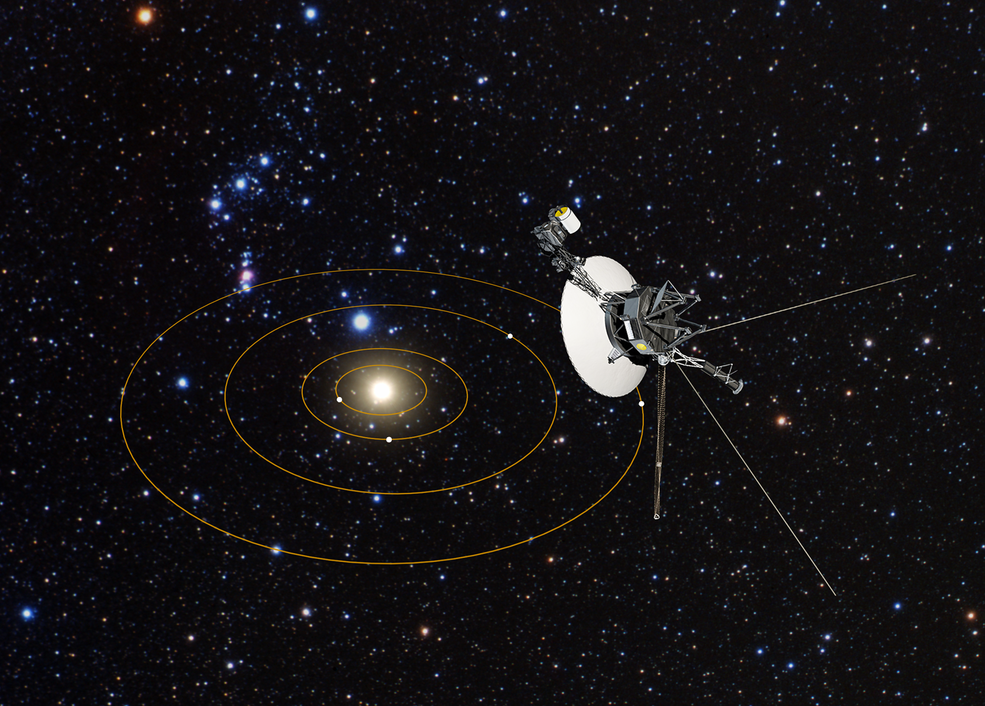





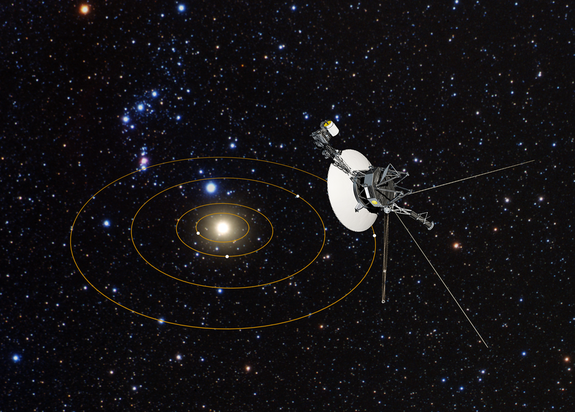





 World's Oldest Pyramids Found in Alaska Shocks Scientific Community
 Mysterious Alaska Pyramid Fears Said Behind US Nuke Test


