Ontdek de Fascinerende Wereld van UFO's en UAP's: Jouw Bron voor Onthullende Informatie!
Ben jij ook gefascineerd door het onbekende? Wil je meer weten over UFO's en UAP's, niet alleen in België, maar over de hele wereld? Dan ben je op de juiste plek!
België: Het Kloppend Hart van UFO-onderzoek
In België is BUFON (Belgisch UFO-Netwerk) dé autoriteit op het gebied van UFO-onderzoek. Voor betrouwbare en objectieve informatie over deze intrigerende fenomenen, bezoek je zeker onze Facebook-pagina en deze blog. Maar dat is nog niet alles! Ontdek ook het Belgisch UFO-meldpunt en Caelestia, twee organisaties die diepgaand onderzoek verrichten, al zijn ze soms kritisch of sceptisch.
Nederland: Een Schat aan Informatie
Voor onze Nederlandse buren is er de schitterende website www.ufowijzer.nl, beheerd door Paul Harmans. Deze site biedt een schat aan informatie en artikelen die je niet wilt missen!
Internationaal: MUFON - De Wereldwijde Autoriteit
Neem ook een kijkje bij MUFON (Mutual UFO Network Inc.), een gerenommeerde Amerikaanse UFO-vereniging met afdelingen in de VS en wereldwijd. MUFON is toegewijd aan de wetenschappelijke en analytische studie van het UFO-fenomeen, en hun maandelijkse tijdschrift, The MUFON UFO-Journal, is een must-read voor elke UFO-enthousiasteling. Bezoek hun website op www.mufon.com voor meer informatie.
Samenwerking en Toekomstvisie
Sinds 1 februari 2020 is Pieter niet alleen ex-president van BUFON, maar ook de voormalige nationale directeur van MUFON in Vlaanderen en Nederland. Dit creëert een sterke samenwerking met de Franse MUFON Reseau MUFON/EUROP, wat ons in staat stelt om nog meer waardevolle inzichten te delen.
Let op: Nepprofielen en Nieuwe Groeperingen
Pas op voor een nieuwe groepering die zich ook BUFON noemt, maar geen enkele connectie heeft met onze gevestigde organisatie. Hoewel zij de naam geregistreerd hebben, kunnen ze het rijke verleden en de expertise van onze groep niet evenaren. We wensen hen veel succes, maar we blijven de autoriteit in UFO-onderzoek!
Blijf Op De Hoogte!
Wil jij de laatste nieuwtjes over UFO's, ruimtevaart, archeologie, en meer? Volg ons dan en duik samen met ons in de fascinerende wereld van het onbekende! Sluit je aan bij de gemeenschap van nieuwsgierige geesten die net als jij verlangen naar antwoorden en avonturen in de sterren!
Heb je vragen of wil je meer weten? Aarzel dan niet om contact met ons op te nemen! Samen ontrafelen we het mysterie van de lucht en daarbuiten.
HYBRID HUMANS: Author Daniella Fenton claims ancient ETs engineered human race
Ancient astronauts travelled through a "wormhole" in the Pleiades star cluster but couldn't survive on Earth, it's claimed.
Extraterrestrials decided instead to "alter the genetic make up" of early human ancestors so they became more intelligent.
The proof is in the fusion of Chromosome-2 around 780,000 years ago based on the book Hybrid Humans written by Daniella Fenton.
Chromosone-2 is found in all large-brained humans, including Neanderthals and Denisovans, but no other primate species.
"The three species went on to become advanced humans with art, culture and increasingly complex technologies," said Mrs Fenton.
"The fusions site in on an active gene which expresses itself in brain structure, immunity and reproductive functions - important systems for upgrading to a new human species.
"Instead of a small number of humans having the fusion and a large group not having it, instead there was a rapid total replacement with all humans on Earth having 46 rather than 48 chromosomes, this tells us it gave enormous benefits to become so dominant.
"Approximately 800,000 years ago human brain size went into a sudden rapid increase in size and complexity which has long been a mystery to archaeologists."
DANIELLA FENTON
THEORY: Author Daniella Fenton said the DNA of humans changed dramatically due to alien science
She went on: "This was not the only change at this time and two very extraordinary changes are the sudden appearance of miR-941, which played a crucial role in human brain development.
"The gene is highly active in controlling decision-making and enabling language abilities and appeared suddenly formed out of junk DNA."
What Mrs Fenton claims are the "signature of aliens" is dramatic changes to a neocortex gene called ARHGAP11B – associated with sight and hearing in mammals.
The official explanation for Chromosome-2, the second largest in humans, does not involve aliens.
Researcher JW IJdo concluded Chromosome-2 "marks the point at which two ancestral ape chromosomes fused to give rise to human Chromosome-2."
DANIELLA FENTON
HYBRID HUMANS: The book claims aliens engineered mankind 780,000 years ago
“Approximately 800,000 years ago human brain size went into a sudden rapid increase in size and complexity which has long been a mystery to archaeologists.”
Daniella Fenton
The Australian author, who studied equine genetic and is a spirtualist and certified shaman, claims to have physical evidence to support the ancient alien theory.
Her husband Bruce is also a writer who worked on the research.
They researched a book called Alcheringa which promotes the theory an alien spaceship exploded in our atmosphere hundreds of thousands of years ago and the survivors, who couldn't survive without the mother ship, engineered Homo sapiens.
Mrs Fenton claims the melted wreckage of the crashed craft explains the mysterious Australites tektite buttons, unexplained dark glass objects thought to be ejected in meteorite impacts.
She claimed that geologists have dated the remains of a 1km sized melted object to around 780,000 years ago.
She added: "According to a NASA study the resulting liquid glass (containing around 80% silica from melted quartz crystal) formed spheres in space which then instantly froze and began to fall into our atmosphere.
"As they entered they heated and melted to form unique button shapes before landing right across Australasia.
"These Australite tektite buttons are unique in the 4.5 billion year history of our planet and remain a total mystery to science because they can’t understand how they formed."
The Hybrid Human theory also believes the alien astronauts arrived from the Pleiades star cluster, thought to contain several thousand stars.
It is among the nearest star cluster to Earth and the one which is most visible to the naked eye.
It is believed one planet could exist around the star HD 23514 due to the exceptional number of hot dust particles surrounding it.
Mrs Fenton points to how Pleiades has been referenced repeatedly by various cultures.
She said: "All around the world ancient cultures talk about ancestral beings from the Pleiades and portals that connect those stars with this planet, this includes mythology in Japan, Indonesia, Mexico, American Indians, ancient Egypt, Sumeria and Aboriginal Australia."
Are Aliens in their UFOs paraphysical extradimensional entities?
Are Aliens in their UFOs paraphysical extradimensional entities? –
– by Norio Hayakawa,
Personally I believe this to be the case, even though it seems impossible to prove this by science as we understand it.
Therefore this is simply in the realm of personal belief.
I happen to believe in the existence of what I describe as paraphysical extradimensional sentient entities who are capable of temporarily materializing and dematerializing at will to a pre-selected observer or a group of observers (i.e, the “experiencers”) for reasons yet unknown, simply presenting to them as a physical extraterrestrial phenomenon and visitation.
Some people describe them as “interdimensional”, i.e., denoting their ability to interact between their dimension and ours. I like to use the term “extradimensional”, i.e., simply denoting their origin as from outside our physical dimension.
Some researchers point out that these entities with their “UFOs” seem to be able to affect our physical parameters (such as radar, etc.).
However, I personally believe that their intrusion into our physical realm is limited to a very brief period of time (such as a few seconds or a few minutes at a time).
In other words, I am talking about their inability to survive in our physical dimension, except for a very brief period of time.
What are their intentions?
Are some of them benevolent by nature?
Are some of them malevolent?
I have proposed all of the above because, as much as we like to believe, the UFO phenomenon does not seem to represent any conclusive evidence whatsoever of actual physical ET visitations.
So far, there is not a single, physical, tangible, solid as well as credible documentary evidence whatsoever that we have ever been visited by physical extraterrestrial biological entities in any physical extraterrestrial spacecraft of any kind.
The big question is “Are we the only sentient, intelligent physical biological entities in this entire universe?”
Unfortunately, we just do not know yet – – and this is the best answer we can give for right now.
The bottom line is that, so far, we have not come up with any concrete evidence whatsoever that there are intelligent, sentient, physical extraterrestrial biological entities commonly known as “Aliens” anywhere.
But is “life” limited to just physical, sentient, intelligent biological existence in this humongous universe?
Maybe there could be countless number of sentient, paraphysical entities of extradimensional origin in this huge cosmos – – that could include both the benevolent and the malevolent kinds.
Scientists Have Created Shape Shifting Liquid Metal That Can Be Programmed
This metal can be applied to many operations in the future, including soft robotics and even flexible computer displays.
By Danielle De La Bastide
In a terrifying breakthrough similar to the metal morphing villain in Terminator 2, scientists at the University of Sussex and Swansea University have discovered a way to apply electrical charges to liquid metal and coax it into 3D shapes such as letters and even a heart.
This discovery has been called an “extremely promising” new kind of material that can be programmed to alter its shape.
Yutaka Tokuda, the Research Associate, working on this project at the University of Sussex, says: “This is a new class of programmable materials in a liquid state which can dynamically transform from a simple droplet shape to many other complex geometry in a controllable manner.
“While this work is in its early stages, the compelling evidence of detailed 2D control of liquid metals excites us to explore more potential applications in computer graphics, smart electronics, soft robotics and flexible displays.”
The scientists used electric fields to shape the liquid; these areas are created by a computer meaning that both the position and form of the liquid metal can be manipulated dynamically.
Professor Sriram Subramanian, head of the INTERACT Lab at the University of Sussex, said: “Liquid metals are an extremely promising class of materials for deformable applications; their unique properties include voltage-controlled surface tension, high liquid-state conductivity and liquid-solid phase transition at room temperature.
One of the long-term visions of us and many other researchers is to change the physical shape, appearance, and functionality of any object through digital control to create intelligent, dexterous and useful objects that exceed the functionality of any current display or robot.”
The research was presented last month at the ACM Interactive Surfaces and Spaces 2017 conference in Brighton.
Carnegie Mellon Metal Alloy
This development is not the only one to emerge within the science community, research engineers at Carnegie Mellon University have created a new metal alloy that exists in a liquid state at room temperature and can capacitate liquid metal transistors, flexible circuitry and perhaps even self-repairing circuits in the far-flung future.
Created at the Soft Machines Lab at Carnegie Mellon by researchers Carmel Majidi, Michael Dickey, and James Wissman, this alloy is the result of a marrying of indium and gallium. It would only take two drops of this liquid metal to form or break a circuit thereby opening or closing an entry, similar to a traditional transistor.Better yet, it only requires a voltage of 1 - 10 volts.
Electronic Blood
These molten metals or “electronic blood” are set to completely change computing for upcoming generations. IBM has also been developing its own form of electric sustenance since 2013, REPCOOL, or Redox flow electrochemistry for power delivery and cooling, is a project modeled after the structure and power supply of the brain, where our blood capillary system both cools and supplies energy to this vital organ. With electronic blood, the researchers believe the same effect can be applied to overheated computers.
"Compared to today's top computers, however, the human brain is roughly 10,000 times denser and 10,000 times more energy-efficient. The research team believes that their approach could reduce the size of a computer with a performance of 1 petaflop/s from the dimensions of a school classroom to that of an average PC, or in other words to a volume of about 10 liters," said Dr. Bruno Michel from IBM Research.
The first applications of this Electronic Blood should take place in 2030.
An Amateur Astronomer Accidentally Caught The First-Ever Photo of an Exploding Star
"It's like winning the cosmic lottery."
MICHELLE STARR
Even with all the photos that have been taken of space, there are still new things to be seen.
And you don't always need to be a scientist to find them.
The first blooming light of a star that went supernova has been photographed for the first time - by an amateur astronomer testing a new camera.
Victor Buso from Rosario, Argentina has become the first person to ever capture the optical (or visible) light before and after the "shock breakout" of an exploding star.
This is the point right when the star explodes - when the supersonic shockwave from the star's core breaks out of the surface of the star, causing the gas there to heat and brighten very quickly.
In other words, that's the very, very first burst of light from a supernova.
They're super-difficult to capture, because the exact timing of a supernova is impossible to predict, and the shock breakout lasts such a short duration of time.
Astronomers have been chasing the phenomenon for years.
"It's like winning the cosmic lottery," said Alex Filippenko of UC Berkeley, who led a team following up observations of the supernova in the months that followed.
Indeed, obtaining the photographs involved a concatenation of lucky circumstances for Buso.
He was testing his camera on 20 September 2016, mounted on a 40-centimetre (16-inch) telescope.
To do this, he picked spiral galaxy NGC 613, located at a distance of about 80 million light-years away in the southern constellation Sculptor - a nice target because it was directly overhead.
Over the course of about one and a half hours, he took pictures of the galaxy at 20 seconds of exposure time, to avoid saturation by nearby city lights. During the first 20 minutes, the photos all appeared the same.
But then Buso noticed something - a single brightening point of light at the end of one of the spiral galaxy's arms.
It wasn't long before astronomers learned of the find, and realised that Buso had captured something extraordinary.
Negatives of Buso's photographs showing the supernova brightening over time.
(Víctor Buso images; Melina Bersten data)
According to the researchers, the chances of such a discovery are one in 10 million - maybe even one in 100 million.
"Buso's data are exceptional," Filippenko said. "This is an outstanding example of a partnership between amateur and professional astronomers."
The research team used the Lick and Keck observatories to monitor the supernova, since named SN 2016gkg, for two months following Buso's discovery.
Spectral data revealed it to be a Type IIb supernova - a massive star that has already lost most of its mass prior to exploding.
The team calculated that SN 2016gkg started at around 20 times the mass of our Sun and lost three quarters of its mass, possibly to a companion star.
By the time it went supernova, it had shrunk down to around 5 solar masses.
The long-sought visual data will help astronomers find out more information about a star's structure just before it explodes, as well as information about the explosion itself.
"Professional astronomers have long been searching for such an event," Filippenko said.
"Observations of stars in the first moments they begin exploding provide information that cannot be directly obtained in any other way."
The research has been published in Nature, with Buso as one of the co-authors.
A space capsule carrying 2 passengers failed during launch, Apollo 7 celebrated its 50th anniversary and 2 missions are getting ready for upcoming target arrivals. These are just some of the top stories this week from Space.com.
Photo Credit: Bill Ingalls/NASA
1. Crew capsule fails during launch
A Russian Soyuz rocket was beginning its journey to the International Space Station when the spacecraft failed during its ascent on Thursday (Oct. 11). The passengers — Russian cosmonaut Aleksey Ovchinin and US astronaut Nick Hague — are in good condition after the malfunction sent the capsule falling back to Earth in a steep re-entry.
A spacecraft at the end of our solar system fired its engines briefly on Oct. 3 to speed up towards Ultima Thule, an object found far away in the Kuiper Belt. This is the first maneuver by NASA's New Horizons mission in which it used its own photos to make small path corrections to help arrive at the distant target.
The 50th anniversary of the first crewed Apollo flight happened on Thursday (Oct. 11). In addition to providing a crucial milestone for the program and the subsequent moon landing months later, Apollo 7 was also the first time humans broadcast live footage from space.
Researchers now say that the largest body in the asteroid belt — a dwarf planet named Ceres — experienced "true polar wander." In this phenomenon, the surface of a celestial body drifts over what lies beneath it, because the outer and inner parts of the dwarf planet spin at different rates.
Expert scientists came together to reflect on the field of astrobiology and published a paper on Wednesday (Oct. 10) with recommendations for NASA. The National Academies of Sciences, Engineering and Medicine gathered the panel together, and among many other things, their report emphasized a key challenge: identifying biosignatures, or the chemical changes that characterize life.
SpaceX made its first rocket landing on the West Coast this week. A Falcon 9 rocket launched from California's Vandenberg Air Force Base on Oct. 7 and brought an Argentine satellite into orbit.
NASA's OSIRIS-REx mission is scheduled to arrive at its target, asteroid Bennu, this December. The spacecraft performed a slowdown maneuver on Oct. 1 to reach it, and should be travelling at one-third of its previous speed as a result.
NASA released a statement on Oct. 8 saying that it expects the Hubble Space Telescope to start working again soon. Last weekend the space agency announced the probe was in safe-mode because of a failure in one of the telescope's steering mechanisms.
The two-stage Space Launch System megarocket is slated to perform a lot of future exploration for NASA. But a new report said the project is behind schedule and several billion dollars over budget.
The U.S. Air Force recently awarded a total of about $2 billion to 3 aerospace companies: Blue Origin, United Launch Alliance and Northrop Grumman Innovation Systems. The contracts are in place to bring about competitive launch system prototypes that would support the transport of national security payloads.
Here's What the Failed Soyuz Rocket Launch Looked Like to an Astronaut in Space
By Meghan Bartels, Space.com Senior Writer
Current International Space Station Cmdr. Alexander Gerst expected to be welcoming two additional crewmembers to the orbiting laboratory Thursday (Oct. 11) — but instead, he found himself photographing their failed launch.
NASA astronaut Nick Hague and Russian cosmonaut Alexey Ovchinin launched aboard a Soyuz rocket at about 4:47 a.m. EDT (0847 GMT) from Baikonur Cosmodrome in Kazakhstan. But just a couple of minutes after liftoff, a failure in the rocket's booster triggered a ballistic re-entry for the pair of would-be space travelers. Investigations into the Soyuz launch failure will be performed by NASA and the Russian space agency Roscosmos. [In Photos: The Harrowing Soyuz Launch Abort in Pictures]
European Space Agency astronaut Alexander Gerst captured this incredible view of a failed crew launch to the International Space Station on Oct. 11, 2018.
Credit: A. Gerst/ESA/NASA
The astronauts landed safely and were picked up by a search-and-rescue team that was deployed as part of standard launch procedure.
Although the dramatic launch barely made it to space before the capsule tumbled back to Earth, it was certainly visible from space. Gerst was able to spot the rocket's climb from on board its hoped-for destination, capturing a majestic streak of white piercing Earth's atmosphere.
European Space Agency astronaut Alexander Gerst photographed the space station's view of a failed crew launch on Oct. 11, 2018.
Credit: A. Gerst/ESA/NASA
"Glad our friends are fine," Gerst wrote in a statement accompanying the image. "Thanks to the rescue force of over 1,000 search-and-rescue professionals! Today showed again what an amazing vehicle the Soyuz is to be able to save the crew from such a failure. Spaceflight is hard. And we must keep trying for the benefit of humankind."
An image of the failed Oct. 11, 2018, launch from the ground near Baikonur Cosmodrome in Kazakhstan.
Credit: Bill Ingalls/NASA
Gerst and his colleagues on the space station were alerted to the launch failure and the safe landing of Hague and Ovchinin in a call from mission control management on the ground. Their schedule was adjusted because they didn't need to help new crewmembers acclimate to the station.
The three astronauts currently in orbit are due to return to Earth and be replaced by a new trio of astronauts in December. However, it's not yet clear how schedules will be adjusted to reflect Thursday's failed launch to ensure continuous staffing of the orbiting laboratory.
You’ll never guess what scientists call the moons of moons — well, you probably would. It’s submoons, but NewScientist’s Leah Carey has a better idea: moonmoons.
Saturn’s moon Iapetus might, in theory, have its own submoon.
Moonmoons
We know that moons orbit planets, planets orbit stars, stars orbit the center of the galaxy, and even galaxies sometimes orbit each other. But are moons also orbited by something, and if yes, then what do you call these objects?
In a new analysis published in arXiv, Juna Kollmeier at Carnegie Observatories in Pasadena, California, and Sean Raymond at the University of Bordeaux,
“Each of the giant planets within the Solar System has large moons but none of these moons have their own moons (which we call submoons).”
The problem with (ahem) ‘submoons’ is that we’ve never seen one. There doesn’t seem to be one in the solar system, or at least we haven’t seen it yet.
“In all known planetary systems, natural satellites occur in a restricted dynamical phase space: planets orbit stars and moons orbit planets. It is natural to ask, can submoons orbit moons? If so, why don’t any of the known moons of the Solar System have their own submoons?”
But this, Kollmeier and Raymond argue, doesn’t mean that they don’t exist.
Could Earth's moon have its own moon? Science says: in theory.
Credit: NASA/JPL/Space Science Institute
Goldilocks moons
The biggest problem with such objects would be the moon’s planet. Moons are much smaller than their host planets, and therefore they have a much much smaller gravitational pull. If the moon would be too close to the planet, it would risk losing its submoon to the planet’s tidal force; if it would be too far, it might simply not be able to hold its submoon, which could shoot off in space.
So the conditions have to be just right, but they are possible, according to the researchers’ calculations. In theory, the Earth’s moon could have its own submoon, as could Saturn’s moons Titan and Iapetus and Jupiter’s moon Callisto. Except they don’t. So we might have to wait a bit before we can validate the theory.
But if we do identify submoons, it would do much more than just fulfill a stellar curiosity — it could help us learn more about how these systems, and the host planets, form in the first place.
“[..] the absence of submoons around known moons and exomoons where submoons can survive provides important clues to the formation mechanisms and histories of these systems. Further studies of the potential formation mechanisms, long-term dynamical survival, and detectability of submoons is encouraged.”
Regarding the name for these hypothesized objects, researchers would like to stick to ‘submoons’ — but that doesn’t mean they don’t like the alternatives. Taking to Twitter, Kollmeier says she’s also happy with some alternatives, including moonmoon. So as far as I’m concerned, moonmoons are now a thing.
Juna A. Kollmeier@thejunaverse
If you ask me, they are "Submoons" (hence the title of our article!!!) But the internet has brought forth a wide variety of names and associated joy and for this, I'm delighted: Moonlet, Moonmoon, Moonito, Moonette, Moonlet, Grandmoon, Metamoon...#letsasklevi
An artist conception of what the system around Kepler-186f could look like.
Credit: NASA AMES/SETI INSTITUTE/JPL-CALTECH.
Although we’ve yet to find life outside planet Earth, astrobiology has certainly come a long way in the past decade alone. Our once crude assumptions are now more finessed and, thanks to the Kepler Space Telescope, we now know of thousands of exoplanets, some potentially habitable and only a couple light-years away. Bearing recent developments in mind, a new congressionally mandated report from the National Academies of Sciences, Engineering, and Medicine outlines some of the key steps NASA needs to take in order to bring alien hunting to the next level.
A plan to hunt alien life
The 196-page report starts by making a point of the fact that recent scientific advances have provided opportunities to strengthen the role of astrobiology in NASA. For instance, NASA’s Curiosity rover and Mars Reconnaissance Orbiter (MRO) have found evidence of organic molecules, atmospheric methane, briny surface water, and even an underground Martian lake filled with liquid water. Elsewhere, on Saturn’s moons Enceladus and Europa, scientists found evidence of plumes that shoot up hundreds of miles and which contain water and other organic compounds. In fact, it’s Europa — and not Mars — that is the most promising place where scientists think we’ll find life outside our planet.
It was also recently that biologists found strange Earth lifeforms which live deep underwater or underground, with no direct contact with the sun’s energy input. This means that life may be less capricious than once thought.
The committee that authored the new report, which is chaired by the University of Toronto’s Barbara Sherwood Lollar, claims that we need to expand our search for biosignatures. To this aim, they propose compiling a more “sophisticated catalog and framework will be important to enhance our ability to detect both life that might be similar to terrestrial life, and potential life that differs from life as we know it.”
In particular, the authors of the report call for NASA to focus on exploring the possibility of finding life below the surface of a planet or moon. They also recommend that NASA seeks to deploy better technologies, such as powerful telescopes and starlight-blocking instruments capable of more complex probing of alien planets.
But accurately finding and interpreting biosignatures will be a challenge. For instance, many biosignatures can be produced by abiotic chemical reactions. Methane is often touted as an important byproduct of biological activity, but it could very well be produced by non-biological processes.
The James Webb Space Telescope (artist's concept above) will be one of the primary instruments scientists use to continue the search for planets outside our solar system.
Credits: NASA
The report is also careful to mention how such an ambitious mission is actually a planetary goal. NASA needs to build or strengthen collaborations with other institutions and private organizations, the authors note.
Along with a similar survey of exoplanets released last month, the new report will be included into two decadal surveys covering astronomy, astrophysics, and planetary sciences. These decadal surveys ought to form the backbone of NASA’s decision-making process about which missions to pursue or prioritize.
Stephen Hawking warned superhumans would use gene editing to take over.
The late physicist Stephen Hawking’s last writings predict that a breed of superhumans will take over, having used genetic engineering to surpass their fellow beings.
In Brief Answers to the Big Questions, to be published on Oct. 16 and excerpted today in the UK’s Sunday Times (paywall), Hawking pulls no punches on subjects like machines taking over, the biggest threat to Earth, and the possibilities of intelligent life in space.
Artificial Intelligence
Hawking delivers a grave warning on the importance of regulating AI, noting that “in the future AI could develop a will of its own, a will that is in conflict with ours.” A possible arms race over autonomous-weapons should be stopped before it can start, he writes, asking what would happen if a crash similar to the 2010 stock market Flash Crash happened with weapons. He continues:
In short, the advent of super-intelligent AI would be either the best or the worst thing ever to happen to humanity. The real risk with AI isn’t malice, but competence. A super-intelligent AI will be extremely good at accomplishing its goals, and if those goals aren’t aligned with ours we’re in trouble. You’re probably not an evil ant-hater who steps on ants out of malice, but if you’re in charge of a hydroelectric green-energy project and there’s an anthill in the region to be flooded, too bad for the ants. Let’s not place humanity in the position of those ants.
Earth’s bleak future, gene editing, and superhumans
The bad news: At some point in the next 1,000 years, nuclear war or environmental calamity will “cripple Earth.” However, by then, “our ingenious race will have found a way to slip the surly bonds of Earth and will therefore survive the disaster.” The Earth’s other species probably won’t make it, though.
The humans who do escape Earth will probably be new “superhumans” who have used gene editing technology like CRISPR to outpace others. They’ll do so by defying laws against genetic engineering, improving their memories, disease resistance, and life expectancy, he says
Hawking seems curiously enthusiastic about this final point, writing, “There is no time to wait for Darwinian evolution to make us more intelligent and better natured.”
Once such superhumans appear, there are going to be significant political problems with the unimproved humans, who won’t be able to compete. Presumably, they will die out, or become unimportant. Instead, there will be a race of self-designing beings who are improving themselves at an ever-increasing rate. If the human race manages to redesign itself, it will probably spread out and colonise other planets and stars.
Intelligent life in space
Hawking acknowledges there are various explanations for why intelligent life hasn’t been found or has not visited Earth. His predictions here aren’t so bold, but his preferred explanation is that humans have “overlooked” forms of intelligent life that are out there.
Does God exist?
No, Hawking says.
The question is, is the way the universe began chosen by God for reasons we can’t understand, or was it determined by a law of science? I believe the second. If you like, you can call the laws of science “God”, but it wouldn’t be a personal God that you would meet and put questions to.
The biggest threats to Earth
Threat number one one is an asteroid collision, like the one that killed the dinosaurs. However, “we have no defense” against that, Hawking writes. More immediately: climate change. “A rise in ocean temperature would melt the ice caps and cause the release of large amounts of carbon dioxide,” Hawking writes. “Both effects could make our climate like that of Venus with a temperature of 250C.”
The best idea humanity could implement
Nuclear fusion power. That would give us clean energy with no pollution or global warming.
RUSSISCHE LANCERING VAN DE SOYUZ RAKET GESABOTEERD?
Afgelopen donderdag ging het mis met de lancering van een Soyuz raket richting ISS ruimtestation.
Dat is opvallend, want er zijn sinds 1983 geen ongelukken meer geweest met de meest betrouwbare raket ter wereld.
Enkele dagen geleden zagen we de lancering van een Russische Soyuz raket richting ISS ruimtestation die misging waardoor de astronauten een noodlanding op aarde moesten maken.
We schreven over dat voorval in het kader van een ijkpunt dat door remote viewer Ed Dames is genoemd in de aanloop naar de Killshot c.q. komst Nibiru.
Echter, er zit misschien nog een heel ander aspect aan deze zaak. Op de laatste dag van augustus schreven wij onder andere het volgende:
Het internationale ruimtestation ISS is geraakt door een kleine meteoriet, die de nodige schade heeft veroorzaakt. Volgens NASA werd er door een lek lucht weggezogen en de instantie is druk bezig om dit euvel te herstellen. Er zou geen onmiddellijk gevaar zijn.
Hoe zoiets er in de praktijk uit ziet is te zien op de volgende afbeelding, waarop zichtbaar is dat op een bepaald moment alle vijf parkeerplaatsen bij het ISS bezet waren.
Het is de aan het ISS gekoppelde Soyuz module waar de problemen door zijn ontstaan. Volgens de Russische techneuten is er een scheurtje in het schip ontstaan van ongeveer 1,5 mm door de inslag van wat men noemt een micro meteoriet.
Hierdoor wordt lucht en zuurstof vanuit de ISS gezogen, iets dat natuurlijk niet te lang moet duren. Op dit moment bevinden zich zes astronauten aan boord van het ISS en is men druk bezig met het uitwerken van plannen om het probleem op te lossen.
Enkele dagen later kwamen de Russen met de mededeling dat het er veel op leek dat het gaatje in de capsule van de Soyuz niet was veroorzaakt door een meteoriet, maar dat het een geboord gat zou zijn.
We zijn nu bijna zes weken verder en enkele dagen geleden kwamen de Russen inderdaad tot de conclusie dat het geen meteoriet was, geen fabricagefout, maar wel degelijk een met opzet geboord gat.
Dmitry Rogozin, hoofd van de Russische NASA, Roskosmos, vertelde dat een onderzoekscommissie tot die conclusie was gekomen. Dit was de eerste stap van het onderzoek en er zal nu een tweede commissie worden benoemd om uit te zoeken wie dat gat heeft geboord. Eerdere suggesties waren dat dit door één van de bemanningsleden zou zijn gedaan om een zieke collega op die manier terug te krijgen naar de aarde. De bemanning ontkent dit en noemt het verhaal beschamend.
In ieder geval, gaten hebben niet de gewoonte om zichzelf te boren en dus zal ergens iemand dit hebben gedaan.
Dan hebben we enkele dagen geleden de lancering van een Soyuz raket die hopeloos fout gaat. En dat is vreemd, want deze Soyuz raket is de meest betrouwbare raket op aarde en al sinds 1967. Er zijn in totaal 139 lanceringen geweest, waarbij het twee keer is fout gegaan bij lanceringen. Eén keer in 1975 en één keer in 1983. Daarnaast zijn er twee dodelijke ongelukken geweest tijdens terugkeer in de dampkring en die vonden plaats in 1969 en 1971. Sinds 1983 is er niets meer misgegaan met een Soyuz raket tot afgelopen week en dit vlak nadat Rosmoscos heeft vastgesteld dat er met opzet een gat is geboord in de Soyuz capsule van een vorige missie.
Toeval? Of is er iets of iemand in de weer om de Russische ruimtevaart te boycotten?
Rond dezelfde tijd dat er een gat verschijnt in de Soyuz module, verschijn er toevallig dit bericht:
Rusland zal vanaf 2019 geen Amerikaanse astronauten meer meenemen naar het International Space Station (ISS). Dat heeft de vicepremier van Rusland Yury Borisov laten weten.
Uiteraard weten wij ook niet wie erachter zit en met welke motieven, maar het lijken teveel toevalligheden op een rij.
Mochten er lezers zijn met slimme ideeën, laat het ons weten.
Is president Kennedy het zwijgen opgelegd? Wat hij wist over aliens en het mysterieuze Majestic 12
Werd John F. Kennedy vermoord vanwege zijn interesse in buitenaards leven? Een geheime memo van de Amerikaanse CIA maakt duidelijk dat de president 10 dagen voor zijn dood om inzage vroeg in UFO-documenten.
In een brief geadresseerd aan de CIA-baas vroeg Kennedy om vertrouwelijke documenten over UFO’s en het bestaan van aliens.
De memo is één van de twee brieven aan de Amerikaanse spionagedienst waarin Kennedy om opheldering vraagt.
Veel meer
De interesse van de president in UFO’s en aliens, zo kort voor zijn dood, strookt met complottheorieën over de moord.
Verhalen dat Kennedy omgelegd zou zijn uit angst dat hij achter de waarheid zou komen over het bestaan van aliens, werden bevestigd na het uitlekken van de geheime stukken.
Schrijver William Lester kreeg de documenten voor een boek dat hij heeft geschreven over Kennedy’s interesse in UFO’s.
De brieven voeden de theorieën dat de CIA veel meer over het bestaan van UFO’s weet dan zij ons wil doen geloven.
Duizenden stukjes
Kennedy had bovendien gezegd dat hij ‘de CIA in duizenden stukjes wilde versplinteren en deze door de wind laten wegblazen’.
James Forrestal was een belangrijke mentor van president Kennedy. In 1947 werd Forrestal de eerste Amerikaanse minister van Defensie.
Hij was van mening dat de Amerikanen op de hoogte moesten worden gebracht van het bestaan van buitenaards leven en aanverwante technologieën.
Forrestal moest onder president Truman zijn ontslag indienen omdat hij zijn informatie had gedeeld met verschillende hooggeplaatste functionarissen, waaronder toenmalig congreslid Kennedy.
Direct gevaar
Nadat hij in 1960 de presidentsverkiezingen won, hoorde Kennedy van Eisenhower dat het geheimzinnige agentschap Majestic 12 zijn eigen weg was ingeslagen.
Eisenhower waarschuwde Kennedy dat Majestic 12 een direct gevaar vormde voor de Amerikaanse vrijheden en de democratie.
Dezelfde krachten die de dood van Forrestal orkestreerden, dwarsboomden Kennedy waar ze maar konden.
Kennedy wilde de CIA dwingen geheime informatie over UFO’s te delen met andere overheden, maar dat zou hij nooit voor elkaar krijgen.
Er is iets gaande in de ruimte en wat het ook is, wij mogen het niet weten.
Na de sluiting van zonne-observatorium kortgeleden en het uitschakelen van de webcams bij anders observatoria, worden nu belangrijke ruimtetelescopen in een slaapstand gezet.
Er is de laatste tijd iets bijzonders gaande in de ruimte, want er zijn zoveel “toevallige” gebeurtenissen dat het absoluut geen toeval meer kan zijn. Waar het alle kenmerken van heeft is dat er iets heel bijzonders gaande is in de ruimte en dat er alles aan wordt gedaan om dingen aldaar verborgen te houden.
We hebben enige tijd geleden de onverwachte sluiting meegemaakt van het Sunspot zonne-observatorium in Amerika. Van de ene op de andere dag werd dit gesloten na een inval van de FBI met veel bombarie.
Daarnaast werden ook ongeveer gelijktijdig een fiks aantal webcams van andere observatoria wereldwijd afgesloten, zonder opgaaf van redenen.
Tot op de dag van vandaag is er geen bevredigende verklaring gekomen voor het sluiten van het Sunspot observatorium en de sluiting van al die webcams.
Er zijn ook nog een aantal merkwaardige voorvallen geweest met een paar van de NASA ruimtelescopen.
Zoals met de Hubble ruimtetelescoop die opeens moest worden afgesloten.
De ruimtetelescoop Hubble (Hubble Space Telescope, HST) bestaat uit een aantal precisie-instrumenten voor astronomische waarnemingen. Hij is genoemd naar de Amerikaanse astronoom Edwin Hubble en draait sinds de lancering door NASA op 24 april 1990 als een kunstmaan rond de aarde. De Hubble wordt gebruikt voor optische waarnemingen. De telescoop bezit ook een infraroodcamera. Voor observaties in het röntgengolflengtegebied wordt gebruikgemaakt van het Chandra X-Ray Observatory.
Op 8 oktober kwam het bericht van NASA dat er problemen zouden zijn met de Hubble telescoop en dat deze in een soort slaapstand ging waardoor er geen beelden meer beschikbaar kwamen. De reden dat de telescoop niet meer functioneerde zou worden veroorzaakt door een kapotte gyroscoop.
Het tweede bovengenoemde telescoop platform, Chandra X-Ray Observatory, heeft eveneens problemen en moest ook plotsklaps worden afgesloten. Dit werd afgelopen vrijdag medegedeeld door NASA, alhoewel dit systeem sinds woensdag al niet meer werkt. Hier komen ze helemaal met een vage reden, namelijk een “system complication”.
Dan wordt door sommigen ook nog de crash met de Soyuz erbij gehaald en het feit dat er problemen zijn met de communicatie van de NASA rovers op Mars, maar het feit dat belangrijke telescopen uit de lucht worden gehaald is eigenlijk veel meer sinister.
Dit zijn de ogen waarmee in de ruimte wordt gekeken, net zoals het observatorium dat door de FBI werd gesloten en de webcams van de andere observatoria die plotseling niet meer werken.
Wat bevindt zich daar in de ruimte waardoor opeens al deze paniekmaatregelen worden genomen.
Alles wat met de ruimte te maken heeft en waarmee dingen gezien kunnen worden, worden in grote haast geblokkeerd. In dat kader zijn de volgende foto's die vanmorgen vroeg door een lezer in Kaatsheuvel zijn genomen, heel interessant (dank!).
EEN WOLK IN EEN WOLKENLOZE LUCHT VALT OP ( VIDEO )
µWanneer buitenaardsen de aarde bezoeken weten ze dat de mens niet erg oplettend is/een beperkt waarnemingsspectrum heeft en daar maken ze handig gebruik van.
Voor buitenaardsen is de meeste geschikte manier om een beetje anoniem over de aarde te surfen om zich voor te doen als een wolk. De meeste mensen lopen tenslotte met hun neus richting grond of met hun ogen vastgeplakt aan het scherm van hun mobiele apparaten waardoor ze toch weinig of niets opmerken van wat er zich boven hun hoofden afspeelt.
Wanneer men wél naar de lucht zou kijken, dan bestaat de kans dat ze dingen ziet zoals het volgende.
Een volkomen wolkeloze hemel met daarin toch één wolk. Een wolk die de vorm heeft van een UFO, die daar op dat moment niet thuishoort.
Andere keren vermommen ze zich niet als een wolk, maar verstoppen ze zich achter bestaande wolken en gaat het soms mis zoals te zien is op de volgende opname die enkele dagen geleden is gemaakt op het eiland Martinique.
Een enorm ruimteschip dat even zichtbaar wordt achter de wolken.
Dan krijgen we het volgende bericht van een lezer (dank!):
Dit is een foto die we gemaakt hebben op 6 oktober 2018 om 10:20 uur in de buurt van Leer; Duitsland.
Dit lijken toch wel verdacht veel op ufo's vermomd als wolk.
En inderdaad, als je goed kijkt, dan zie je drie UFO’s die eruit zien als een wolk en wederom in een lucht waarin die wolken niet thuishoren.
Daarnaast hebben de wolken voor buitenaardse bezoekers nog een functie en wel die van een soort dimensieportaal van waar ze aankomen of vertrekken.
Nog steeds een prachtig voorbeeld daarvan werd gefilmd in 2014 toen enkele mensen ’s avonds hun camera hadden opgesteld in Mexico om daar opnames te maken van een komende maansverduistering.
Dit voorval vond plaats afgelopen 7 oktober en een dag later gebeurt het volgende in Mexico.
Enkele weken geleden, op 8 oktober, is er een maansverduistering in Mexico. Een aantal mensen staat klaar met een mobiele telefoon om hier opnames van te maken, totdat ze een vreemde wolk waarnemen. Dat is vreemd want verder is de lucht onbewolkt.
Het is ook geen gewone wolk, het is klaarblijkelijk een onweerswolk want de bliksemflitsen schieten er doorheen en uit.
Dan, ineens, zie je rechts een sigaarvormige UFO in beeld komen die met een fenomenale snelheid op de wolk afschiet.
Minder dan een seconde later is hij in de wolk verdwenen en komt tegen alle natuurwetten in niet aan de andere kant tevoorschijn.
Volgens de op onze aarde bekende en geldende natuurwetten kan dit niet. Een object wat met een dergelijke hoge snelheid komt aanvliegen kan niet binnen zo'n relatief kleine wolk tot stilstand worden gebracht. En toch gebeurt het; kijk en val niet van je stoel.
Daarom, ruk je ogen los van het smart-scherm en kijk naar boven, je weet nooit wat voor onverwachte dingen zich daar voor kunnen doen.
Super-Fast Stars in the Milky Way May Be Visitors from Beyond
By Doris Elin Salazar, Space.com Contributor
The positions and reconstructed orbits of 20 high-velocity stars, superimposed on top of an illustration of our galaxy, the Milky Way. Researchers identified these stars using data from the second release of ESA's Gaia mission. The seven stars in red are shooting away from the galaxy and might be traveling fast enough to someday escape its gravity. But the 13 stars seen in orange represent those that might be racing toward the Milky Way. They could be stars from another galaxy.
Credit: ESA (artist's impression and composition); Marchetti et al. 2018 (star positions and trajectories); NASA/ESA/Hubble (background galaxies); CC BY-SA 3.0 IGO
The cosmic "merry-go-round" that is our rotating Milky Way galaxy may not be the reason stars are whizzing by and seemingly flying off at high speeds.
A team of astronomers noticed something interesting when they were sifting through the recently published second data release from the Gaia mission. The European Space Agency (ESA) launched the Gaia spacecraft in 2013, and the new data release includes observations made between July 25, 2014, and May 23, 2016, according to ESA.
The data offers the positions of nearly 1.7 billion stars, and their motions can tell astronomers a lot about what our galaxy used to be like. Stars travel at different speeds and the very fastest are called hypervelocity stars. Using a level of precision that sometimes "equates to Earthbound observers being able to spot a Euro coin lying on the surface of the moon," ESA officials said in a statement describing the mission, Gaia is able to gather observations about these hypervelocity stars.
The European Space Agency released a new map from the Gaia spacecraft of nearly 1.7 billion stars, giving the best-ever view of the Milky Way and neighboring galaxies in color.
Credit: ESA/Gaia/DPAC
Researchers thought the black hole at the center of the Milky Way was responsible for flinging out these stars. They thought the stars originated from the center of the galaxy, and that this black-hole interaction caused their high-speed journeys toward an exit of the Milky Way.
"Of the seven million Gaia stars with full 3D velocity measurements, we found twenty that could be traveling fast enough to eventually escape from the Milky Way," said Elena Maria Rossi, one of the authors of the new study, which was detailed in a recent statement by the Royal Astronomical Society in the U.K.
Or, they could be "intergalactic interlopers."
"Rather than flying away from the Galactic centre, most of the high-velocity stars we spotted seem to be racing towards it," co-author Tommaso Marchetti said in the statement. "These could be stars from another galaxy, zooming right through the Milky Way."
"Stars can be accelerated to high velocities when they interact with a supermassive black hole," Rossi added. "So the presence of these stars might be a sign of such black holes in nearby galaxies. But the stars may also have once been part of a binary system, flung towards the Milky Way when their companion star exploded as a supernova."
Rossi said studying these hypervelocity stars will answer questions about how nearby galaxies behave.
To find out where they come from — some potential origins include the Large Magellanic Cloud or the Milky Way's halo — new data will be needed. Royal Astronomical Society officials said at least two more Gaia data releases are scheduled in the 2020s.
The study detailing these findings was published Sept. 20 in the journal Monthly Notices of the Royal Astronomical Society.
These Spheres Are Tiny Homes And Take Just A Day To Install
An engineer who used to work at Rolls-Royce has designed stunning Conker style living pods that cost only $24,000 to build and which can be installed in only one day. The UK engineer believes that the pods might be a solution to one of the biggest issues in the United Kingdom, housing availability.
Conker Living Pods Might be the Solution to Affordable Housing
More and more young people are struggling to find affordable housing, while those who have managed to obtain a mortgage struggle to meet the monthly repayments each month. University students are often the people who are hit the most with regards to finding affordable housing. Jag Virdie came up with one solution, living pod homes.
Living pods are not something news, we have heard about them before, but typically they are very small and cubicle like. However, the living pods do not have this issue, and they are aesthetically pleasing. Virdie used a quote from Henry Royce when he said, “Take the best that exists and make it better. When it does not exist, design it.”
The Living Pod is 3.9 Meters in Diameter
This is just what Virdie did with the Conker style living pods. He designed a living pod that takes on the appearance of a Conker or football. The living pod is constructed from material made in Britain and it is 3.9 meters in diameter along with being 10 square meters in area. The pods offer waterproofing against the inclement weather along with having a heat-retention system that is efficient. The living pods can be customized to the needs of the buyer plus they are fast and easy to install, taking just one day.
Virdie said:
"Our mission is to change the way buildings are designed today, by disrupting the norm, challenging construction practices at their core."
Living Pods Can Link Together to Make Bigger Homes
The living pods can also be linked together so people can make them as large as they need to include additional bathrooms, kitchens or studies. The idea for the design came from an idea that Virdie had when building a tree house for his own children. With him having extensive experience in designing cars for Rolls-Royce this put him in good stead for designing a pod house.
Purchasing the living pod house is very simple, first register interest, check the location, then go onto customizing the Conker home you require. In the future, this may well be the solution for governments to use to do away with homelessness.
The Missing Link: Scientists Discover Fish With 'Feet'
The oceans are so vast that many parts have yet to be explored. Deep down there are creaturesand fish that have not yet been discovered or which are rarely captured on film. This applies to the Mona Canyon located just off the coast of Puerto Rico when the NOAA Okeanos exploration came across a fish with legs that was walking on the ocean floor.
Species of Angler Fish
The researchers found a deep sea fish with the name of the Pink Frogmouth, which is rarely seen, also given the name of the Sea Toad. This is an anglerfish using fins that have been modified and turned into fins allowing the fish to walk around the seafloor. Scientists believe that the fish has been living on the bottom of the sea for so long that the front along with the back fins have adapted into feet so that the fish could get around on the bottom of the sea floor more easily.
The Pink Frogmouth Can Also Swim in the Ocean
A video was captured showing the Pink Frogmouth fish walking along the bottom of the ocean floor and it one of the strangest things to witness. As fish generally swim about in the ocean this fish with its downturned mouth looks almost alien as it shuffles along on the ocean floor. The fish walks using two smallish fins at the back and front. However, it does enjoy the best of both worlds as it also has larger fins situated in the middle of its body allowing it to swim just as any other fish swims around the ocean.
The Pink Frogmouth fish usually lives in a depth range of between 200 and 978 meters. The fish has been spotted living in the Atlantic along with the Mediterranean Oceans where it dines on shrimp. The Pink Frogmouth fish looks like something straight out of a horror movie. It now only needs to develop further to allow it to breathe on land and it could walk right up out of the ocean.
The United States Space Force is a newly proposed military branch that President Donald Trump announced during a meeting of the National Space Council on June 18, 2018. If the proposal is enacted, it will become the sixth armed forces branch, joining the Navy, Army, Marine Corps, Air Force and Coast Guard.
Trump's announcement took many by surprise, especially in the Pentagon. Some saw the sudden proposal as a strategy to compel Congress and the Department of Defense into supporting a military branch focused solely on space. Others saw it as answering the need to address the growing rivalry and presence of China and Russia in space.
"It is not merely enough that we have American presence in space," Trump said during his public proposal. "We must have American dominance in space."
Vice President Mike Pence officially unveiled the plans for the U.S. Space Force a short two months later on Aug. 9, 2018.
So, what is the Space Force?
As much as it sounds like the Space Force will be astronaut soldiers wielding blaster rifles, the reality is much more mundane. Rather than deploying soldiers in space, the Space Force will focus on national security and preserving the satellites and vehicles that are dedicated to international communications and observation.
Immediately following Pence's announcement in August, the Pentagon released a report that detailed some of the Department of Defense's immediate actions for creating the Space Force:
Establish a Space Development Agency – This is an agency tasked with developing and testing new and improved national-security capabilities and technology in space.
Establish a Space Operations Force – This force will be a collection of space experts from throughout the military who will provide needed expertise to combat commanders and anyone else throughout the Space Force.
Create a United States Space Command – Led by a four-star general or flag officer, the new space command would direct and improve operations for space war fighting.
These three components would later be united to become the final Space Force.
Why is a Space Force needed?
Russia and China are the U.S.'s two greatest space competitors and also potential military threats. And both have demonstrated formidable space capabilities.
In 2007, for example, China launched a missile that climbed skyward for 500 miles until it impacted one of the country's own defunct weather satellites, which rained down in thousands of pieces. In a similar unnerving event in 2014, a piece of supposed Russian space junk called Object 2014-E28 turned out to be an autonomous robot of sorts that was capable of docking onto satellites.
During his August 2018 address, Pence said that China was investing in hypersonic missiles capable of evading U.S. detection. And both Russia and China had integrated anti-satellite attacks as part of their wartime protocols.
Given that the U.S. government and military rely heavily on satellites for forecasting weather, collecting high-resolution images for intelligence and directing missiles with GPS satellites, the threat became obvious.
Does something like this already exist?
China, Russia and the United States have military sectors already dedicated to space. Russia revived the Russian Space Forces in 2015 as a branch of the Russian Aerospace Forces. In the same year, China established the People's Liberation Army Strategic Support Force as the space and cyberwarfare branch of the People's Liberation Army.
The U.S. has the Air Force Space Command, which is integrated into the U.S. Air Force. But many have argued that an independent branch should be established to focus exclusively on space. "Whether it's a Space Force or something else, it is absolutely critical to have someone who thinks about this day and night," Terry Virts, a retired NASA astronaut and former Air Force fighter pilot, told SpaceNews.
Representative Mike Rogers, R-Ala., first made such a proposal. He called it the U.S. Space Corps during the 2016 Space Symposium in Colorado Springs, Colorado.
The proposal was eventually included as an amendment to the House of Representatives 2018 National Defense Authorization Act, which spelled out the Department of Defense's budget and policies for the 2018 fiscal year. The House passed the bill with the amendment, but members of the Senate viewed the amendment with skepticism and ultimately vetoed it.
Trump then commandeered the debate in June 2018 and announced the administration would form the U.S. Space Force.
What's next?
Many details remain uncertain, such as how much a new military branch would cost and whether Congress would ever fund it.
"It's hard to see a scenario where the Space Force doesn't need a bunch of additional money to not only fund the reorganization but also all the new programs and capabilities," Brian Weeden, a space policy expert at Secure World Foundation in Washington, D.C., told Politico.
The White House pushed for Congress to invest an initial $8 billion in national security space systems over the next five years. But creating an entirely new branch of the military is expected to cost much more. A leaked memo from the Air Force in mid-September shows estimates of it requiring as much as $13 billion in its first five years.
Because the program would also draw resources and a necessary 13,000 personnel away from other military branches, some fear it would weaken the U.S. military overall.
The Pentagon, nevertheless, immediately got to work on laying out the proposal. Less than two months later, in early August 2018, Pence announcedthat the new branch would be established as soon as 2020.
Planet Earth: Facts About Its Orbit, Atmosphere & Size
By Charles Q. Choi, Space.com Contributor
Credit: NASA
Earth, our home, is the third planet from the sun. It's the only planet known to have an atmosphere containing free oxygen, oceans of water on its surface and, of course, life.
Earth is the fifth largest of the planets in the solar system. It's smaller than the four gas giants —Jupiter, Saturn, Uranus and Neptune — but larger than the three other rocky planets, Mercury, Mars and Venus.
Earth has a diameter of roughly 8,000 miles (13,000 kilometers) and is round because gravity pulls matter into a ball. But, it's not perfectly round. Earth is really an "oblate spheroid," because its spin causes it to be squashed at its poles and swollen at the equator.
Water covers roughly 71 percent of Earth's surface, and most of that is in the oceans. About a fifth of Earth's atmosphere consists of oxygen, produced by plants. While scientists have been studying our planet for centuries, much has been learned in recent decades by studying pictures of Earth from space.
Earth's orbit
While Earth orbits the sun, the planet is simultaneously spinning on an imaginary line called an axis that runs from the North Pole to the South Pole. It takes Earth 23.934 hours to complete a rotation on its axis and 365.26 days to complete an orbit around the sun.
Earth's axis of rotation is tilted in relation to the ecliptic plane, an imaginary surface through the planet's orbit around the sun. This means the Northern and Southern hemispheres will sometimes point toward or away from the sun depending on the time of year, and this changes the amount of light the hemispheres receive, resulting in the seasons.
Earth's orbit is not a perfect circle, but rather an oval-shaped ellipse, similar to the orbits of all the other planets. Our planet is a bit closer to the sun in early January and farther away in July, although this variation has a much smaller effect than the heating and cooling caused by the tilt of Earth's axis. Earth happens to lie within the so-called "Goldilocks zone" around the sun, where temperatures are just right to maintain liquid water on our planet's surface.
Statistics about Earth's orbit, according to NASA:
Average distance from the sun: 92,956,050 miles (149,598,262 km)
Perihelion (closest approach to the sun): 91,402,640 miles (147,098,291 km)
Aphelion (farthest distance from the sun): 94,509,460 miles (152,098,233 km)
Length of solar day (single rotation on its axis): 23.934 hours
Length of year (single revolution around the sun): 365.26 days
Equatorial inclination to orbit: 23.4393 degrees
Earth's formation and evolution
Scientists think Earth was formed at roughly the same time as the sun and other planets some 4.6 billion years ago, when the solar system coalesced from a giant, rotating cloud of gas and dust known as the solar nebula. As the nebula collapsed because of its gravity, it spun faster and flattened into a disk. Most of the material was pulled toward the center to form the sun.
"It was thought that because of these asteroids and comets flying around colliding with Earth, conditions on early Earth may have been hellish," Simone Marchi, a planetary scientist at the Southwest Research Institute in Boulder, Colorado, previously told Space.com. But in recent years, new analyses of minerals trapped within ancient microscopic crystals suggests that there was liquid water already present on Earth during its first 500 million years, Marchi said.
Radioactive materials in the rock and increasing pressure deep within the Earth generated enough heat to melt the planet's interior, causing some chemicals to rise to the surface and form water, while others became the gases of the atmosphere. Recent evidence suggests that Earth's crust and oceans may have formed within about 200 million years after the planet took shape.
Internal structure
Earth's core is about 4,400 miles (7,100 km) wide, slightly larger than half the Earth's diameter and about the same size as Mars' diameter. The outermost 1,400 miles (2,250 km) of the core are liquid, while the inner core is solid; it's about four-fifths as big as Earth's moon, at some 1,600 miles (2,600 km) in diameter. The core is responsible for the planet's magnetic field, which helps to deflect harmful charged particles shot from the sun.
Above the core is Earth's mantle, which is about 1,800 miles (2,900 km) thick. The mantle is not completely stiff but can flow slowly. Earth's crust floats on the mantle much as a piece of wood floats on water. The slow motion of rock in the mantle shuffles continents around and causes earthquakes, volcanoes and the formation of mountain ranges.
Above the mantle, Earth has two kinds of crust. The dry land of the continents consists mostly of granite and other light silicate minerals, while the ocean floors are made up mostly of a dark, dense volcanic rock called basalt. Continental crust averages some 25 miles (40 km) thick, although it can be thinner or thicker in some areas. Oceanic crust is usually only about 5 miles (8 km) thick. Water fills in low areas of the basalt crust to form the world's oceans.
Earth gets warmer toward its core. At the bottom of the continental crust, temperatures reach about 1,800 degrees Fahrenheit (1,000 degrees Celsius), increasing about 3 degrees F per mile (1 degree C per km) below the crust. Geologists think the temperature of Earth's outer core is about 6,700 to 7,800 degrees F (3,700 to 4,300 degrees C) and that the inner core may reach 12,600 degrees F (7,000 degrees C) — hotter than the surface of the sun.
Magnetic field
Earth's magnetic field is generated by currents flowing in Earth's outer core. The magnetic poles are always on the move, with the magnetic North Poleaccelerating its northward motion to 24 miles (40 km) annually since tracking began in the 1830s. It will likely exit North America and reach Siberia in a matter of decades.
Earth's magnetic field is changing in other ways, too. Globally, the magnetic field has weakened 10 percent since the 19th century, according to NASA. These changes are mild compared to what Earth's magnetic field has done in the past. A few times every million years or so, the field completely flips, with the North and the South poles swapping places. The magnetic field can take anywhere from 100 to 3,000 years to complete the flip.
The strength of Earth's magnetic field decreased by about 90 percent when a field reversal occurred in ancient past, according to Andrew Roberts, a professor at the Australian National University. The drop makes the planet more vulnerable to solar storms and radiation, which can could significantly damage satellites and communication and electrical infrastructure.
"Hopefully, such an event is a long way in the future and we can develop future technologies to avoid huge damage," Roberts said in a statement.
When charged particles from the sun get trapped in Earth's magnetic field, they smash into air molecules above the magnetic poles, causing them to glow. This phenomenon is known as the aurorae, the northern and southern lights.
Earth's atmosphere
Earth's atmosphere is roughly 78 percent nitrogen and 21 percent oxygen, with trace amounts of water, argon, carbon dioxide and other gases. Nowhere else in the solar system is there an atmosphere loaded with free oxygen, which is vital to one of the other unique features of Earth: life.
Air surrounds Earth and becomes thinner farther from the surface. Roughly 100 miles (160 km) above Earth, the air is so thin that satellites can zip through the atmosphere with little resistance. Still, traces of atmosphere can be found as high as 370 miles (600 km) above the planet's surface.
The lowest layer of the atmosphere is known as the troposphere, which is constantly in motion and why we have weather. Sunlight heats the planet's surface, causing warm air to rise into the troposphere. This air expands and cools as air pressure decreases, and because this cool air is denser than its surroundings, it then sinks and gets warmed by the Earth again.
Above the troposphere, some 30 miles (48 km) above the Earth's surface, is the stratosphere. The still air of the stratosphere contains the ozone layer, which was created when ultraviolet light caused trios of oxygen atoms to bind together into ozone molecules. Ozone prevents most of the sun's harmful ultraviolet radiation from reaching Earth's surface, where it can damage and mutate life.
Water vapor, carbon dioxide and other gases in the atmosphere trap heat from the sun, warming Earth. Without this so-called "greenhouse effect," Earth would probably be too cold for life to exist, although a runaway greenhouse effect led to the hellish conditions now seen on Venus.
Earth-orbiting satellites have shown that the upper atmosphere actually expands during the day and contracts at night due to heating and cooling.
Chemical composition
Oxygen is the most abundant element in rocks in Earth's crust, composing roughly 47 percent of the weight of all rock. The second most abundant element is silicon, at 27 percent, followed by aluminum, at 8 percent; iron, at 5 percent; calcium, at 4 percent; and sodium, potassium and magnesium, at about 2 percent each.
Earth's core consists mostly of iron and nickel and potentially smaller amounts of lighter elements, such as sulfur and oxygen. The mantle is made of iron and magnesium-rich silicate rocks. (The combination of silicon and oxygen is known as silica, and minerals that contain silica are known as silicate minerals.)
Earth's moon
Earth's moon is 2,159 miles (3,474 km) wide, about one-fourth of Earth's diameter. Our planet has one moon, while Mercury and Venus have none and all the other planets in our solar system have two or more.
The leading explanation for how Earth's moon formed is that a giant impact knocked the raw ingredients for the moon off the primitive, molten Earth and into orbit. Scientists have suggested that the object that hit the planet had roughly 10 percent the mass of Earth, about the size of Mars.
Life on Earth
Earth is the only planet in the universe known to possess life. The planet boasts several million species of life, living in habitats ranging from the bottom of the deepest ocean to a few miles into the atmosphere. And scientists think far more species remain to be discovered.
Researchers suspect that other candidates for hosting life in our solar system — such as Saturn's moon Titan or Jupiter's moon Europa — could house primitive living creatures. Scientists have yet to precisely nail down exactly how our primitive ancestors first showed up on Earth. One solution suggests that life first evolved on the nearby planet Mars, once a habitable planet, then traveled to Earth on meteorites hurled from the Red Planet by impacts from other space rocks.
"It's lucky that we ended up here, nevertheless, as certainly Earth has been the better of the two planets for sustaining life," biochemist Steven Benner, of the Westheimer Institute for Science and Technology in Florida, told Space.com. "If our hypothetical Martian ancestors had remained on Mars, there might not have been a story to tell."
Mysterious moon swirls have finally been explained
"This was the final piece in the puzzle of understanding the magnetism that underlies these lunar swirls."
by Chelsea Gohd, Space.com
Light and dark markings swirl over the moon, looking like cream swirled into coffee or clouds against a slate gray sky. These lunar swirls may result from ancient, magnetic lava just below the moon's surface, according to one new study.
A joint study between researchers at Rutgers University and the University of California, Berkeley, pointed to the moon'sinternally generated magnetic fieldand past volcanic activity to explain the lunar swirls.
An image of the Reiner Gamma lunar swirl from NASA's Lunar Reconnaissance Orbiter.NASA LRO WAC science team
Researchers have known for some time that lunar swirls share space with localized magnetic fields and that when those fields deflect particles from solar wind, parts of the moon's surface weather more slowly than other parts. "But the cause of those magnetic fields, and thus of the swirls themselves, had long been a mystery," Sonia Tikoo, co-author of the study and a researcher at Rutgers University-New Brunswick's Department of Earth and Planetary Sciences, said in a statement. "To solve it, we had to find out what kind of geological feature could produce these magnetic fields — and why their magnetism is so powerful."
The researchers developed mathematical models for these localized fields, or "geological magnets" as they're described in the statement. These models showed that each lunar swirl must exist above a narrow, magnetic object located just below the lunar surface.
Even stranger, researchers think that these subsurface magnetic objects are ancient, long, narrow lava tubes formed by flowing lava or lava dikes, which are vertical sheets of magma in the crust of a moon or planet. Past experiments have shown that, when heated above 1,112 degrees Fahrenheit (600 degrees Celsius) in a zero-oxygen environment, certain minerals in moon rocks break down and release metallic iron, making the rocks extremely magnetic.
So, when the moon was erupting lava over 3 billion years ago, these magnetic lava tubes or lava dikes were likely created and became highly magnetic as they cooled down, according to the statement.
"No one had thought about this reaction in terms of explaining these unusually strong magnetic features on the moon," Tikoo said in the statement, referring to the lava becoming magnetic moon rock under the surface and causing lunar swirls. "This was the final piece in the puzzle of understanding the magnetism that underlies these lunar swirls."
This study was published July 26 in the Journal of Geophysical Research: Planets.
'Definitely Not Aliens': These Photos of SpaceX's Night Rocket Launch and Landing Are Amazing!
By Mike Wall, Space.com Senior Writer
Los Angeles Mayor Eric Garcetti captured this shot of the Falcon 9 plume over the lights of LA on Oct. 7, 2018.
Credit: Office of the Mayor/Eric Garcetti
All rocket launches are spectacular, but SpaceX took things to another level over the weekend.
On Sunday night (Oct. 7), a SpaceX Falcon 9 rocket successfully launched the SAOCOM 1A Earth-observation satellite from Vandenberg Air Force Base on California's Central Coast. And the two-stage booster's first stage landed back at Vandenberg less than 8 minutes after liftoff, pulling off SpaceX's first-ever terra-firma touchdown on California soil.
The plume generated by the Falcon 9 launch from California’s Vandenberg Air Force Base on Oct. 7, 2018, looked like something NASA’s Hubble Space Telescope might spy in the vast distances between the stars. Photo by Los Angeles Mayor Eric Garcetti.
Credit: Office of the Mayor/Eric Garcetti
"Nope, definitely not aliens. What you're looking at is the first launch and landing of the @SpaceX Falcon 9 rocket on the West Coast. The rocket took off from Vandenberg Air Force Base at 7:21 p.m. and landed safely back on Earth," Los Angeles Mayor Eric Garcetti tweeted Sunday night, along with an amazing photo of the Falcon 9 cloud hanging over the city.
Skywatcher Doug Macmillan captured this shot of the plume created by the SpaceX Falcon 9 rocket that launched Argentina’s SAOCOM-1A radar-imaging satellite from California’s Vandenberg Air Force Station on Oct. 7, 2018. Macmillan was in Del Cerro Park in the Palos Verdes Peninsula, which is near Los Angeles.
Credit: Doug Macmillan
Another photo posted by Garcetti captured the pulses of the first stage's small reaction-control thrusters, which etched a big Wi-Fi symbol in the sky. Those thrusters were firing to keep the booster on course for its historic touchdown. (SpaceX has now pulled off 30 first-stage landings, but all the previous ones had occurred at Florida's Cape Canaveral Air Force Station or on robotic "drone ships" stationed in the Atlantic or Pacific oceans.)
The pulses fired by the Falcon 9 first stage’s small reaction-control thrusters as the booster headed back to Earth carved a Wi-Fi symbol into the sky, as captured in this shot by Los Angeles Mayor Eric Garcetti.
Credit: Office of the Mayor/Eric Garcetti
Astrophotographer Sean Parker viewed the launch from Joshua Tree National Park in southeastern California and was suitably excited by the sky show.
"That was pretty FN awesome, @elonmusk @SpaceX #falcon9," Parker tweeted yesterday (Oct. 8), along with a photo of himself exulting in the desert beneath the glowing cloud.
This photo captures all of the SpaceX action on Oct. 7, 2018: A Falcon 9 rocket launching the SAOCOM-1A satellite from California’s Vandenberg Air Force Station; the plume created by the liftoff; and the Falcon 9’s first stage coming back to land at Vandenberg (short orange arc at right).
Credit: SpaceX
And then there are the close-up views of the launch and landing, which SpaceX snapped. These photos are spectacular in a different way, highlighting power and precision rather than abstract and ephemeral beauty. But they are spectacular nonetheless.
A SpaceX Falcon 9 rocket launches Argentina’s SAOCOM-1A radar-imaging satellite from California’s Vandenberg Air Force Station on Oct. 7, 2018. The rocket’s first stage came back to Earth for a landing at Vandenberg less than 8 minutes after liftoff.
Credit: SpaceX
SAOCOM 1A, by the way, was developed by Argentina's national space agency. The satellite will observe Earth in radar light from its perch about 385 miles (620 kilometers) above the planet, primarily to measure soil-moisture levels. This information will aid predictions of crop yields and also help planners and emergency-management officials monitor disasters such as floods and fires.
The first stage of a SpaceX Falcon 9 rocket made history with this landing at Landing Zone 4 at California’s Vandenberg Air Force Station on Oct. 7, 2018. The touchdown marked SpaceX's first-ever West Coast landing of a Falcon 9 rocket.
Credit: SpaceX
SAOCOM 1A has a twin, SAOCOM 1B, which will make similar observations. SAOCOM 1B will also launch aboard a Falcon 9, perhaps as early as next year.
Mike Wall's book about the search for alien life, "Out There," will be published on Nov. 13. Follow him on Twitter @michaeldwall.
Why Unidentified Aerial Phenomena Are A National Security Risk And Also An Opportunity For Progress
A career’s worth of intelligence work for the U.S. Government has taught me one key lesson: national security is a lot like playing a game of chess. You have to anticipate your opponent’s every move in order to remain one step ahead.
Disclosing your strategy will be used against you. But if you recognize certain opportunities, you can win the match.
When I headed the government’s highly sensitive Advanced Aerospace Threat Identification Program (AATIP), I worked with a team to assess whether a particular chess piece — in this case in the form of an unfamiliar aerial technology — was a threat to our side of the chess board.
If it was, we had to know how to counter it.
Since the Government views Unidentified Aerial Phenomena (UAP) as a potential national security issue, they’re secretive by necessity. They don’t want to reveal any information to a potential enemy.
But there are risks to keeping that information classified.
Say the person who first learned how to harness fire never shared it with the next generation, or the person who invented the telescope threw it away when he was done using it. What if the creator of the wheel decided it was too labor intensive for others to build and decided, “Forget it”?
As a species, we’re meant to evolve. And we needed those advancements to get to where we are today. Reports of strange crafts with seemingly inexplicable properties have been circulating within the U.S. Government for at least 70 years, which suggests it isn’t going away. There is “something out there.”
Declassifying certain information about UAP and sharing it with the public could lead to new technological discoveries, new forms of medical research, and a broader view of how humanity understands reality.
Here’s why:
A government must assume anything is a threat until it has been proven otherwise.
When determining whether an unknown entity is friend or foe, the U.S. Government looks at factors including capabilities, intentions, vulnerabilities, and exploitability. A close look at these factors reveals just how little UAPs are understood.
Advancements in our understanding of physics at the quantum level have helped shed faint light on the potential science behind UAPs. But these advancements have also shown us that UAPs have superior technical knowledge as well. If these capabilities fell into the hands of a foreign adversary, it would be a decisive game-changer.
Likewise, the intentions of UAPs haven’t been made clear to us at this point. There could be a number of reasons for their presence, ranging from peaceful curiosity to a probe for battlespace preparation. The possibilities are numerous.
UAP vulnerabilities, however, remain a complete mystery. Some have hypothesized that there’s a correlation between UAPs and our nuclear capabilities, while others have suggested that nuclear-generated electromagnetic pulses are a potential weakness.
Regardless, we still don’t really know what vulnerabilities UAPs might have short of speculation. Right now, it’s anyone’s guess.
From a national security perspective, exploitation is the holy grail of endeavors. It’s critical to determine whether UAP technology could be reverse-engineered and used to our benefit, but we can’t exploit such technology unless we first understand it.
When it comes to UAPs, the U.S. knows less than it should, and perhaps much less than our adversaries.
The potential rewards outweigh the risks.
There is always a risk involved when it comes to communicating national security issues to the public. But it’s subjective. The significance of that risk depends on who you ask.
If you ask a military leader, for example, they would say government secrecy about advanced aerospace phenomena is crucial because you want to avoid broadcasting your capabilities and intentions to your potential enemy.
A politician would view UAPs completely differently. They may ask, “Is this something potential voters need to know, or will concealing it cause my constituents to lose faith in me? How does this discussion affect the voters and my ability to represent them?”
A religious figure, on the other hand, would likely be more concerned with the religious and philosophical implications UAPs might have on his or her faith.
There are countless examples throughout history of individuals challenging the prevailing systems of power with radical scientific ideas.
When Galileo told the church hundreds of years ago that Earth was not the center of the solar system, for example, they nearly killed him for it.
As someone without a political or religious agenda, I’m free to say the rewards outweigh the risks in this situation. For example, in December 2017 our team at To The Stars Academy of Arts & Science helped release U.S. military footage of UAPs. No government imploded, no religion dissolved.
Like Galileo, our mission is simple. Collect and disseminate the truth about the unknown. As long as the risks don’t compromise national security, the rewards can benefit all.
Scientific truths help push society forward.
At this point, there’s no question about whether UAPs are out there — they are. People can choose to either continue to live with their heads buried in the sand, or they can take a proactive approach to the phenomenon.
Centuries ago, when mankind first stood on the shores of a beach and contemplated sailing across the horizon, the chorus shouted, “You’re crazy! You’re going to fall off the Earth! There are sea monsters!”
But now, in the 21st century, people travel across oceans every day. What our ancestors thought were sea monsters are great white sharks, blue whales, and giant squid. It turns out that they’re just another part of our natural environment.
Once people committed to discovering the truth for themselves, it was no longer mystical, it was just nature.
But because government processes demand secrecy when it comes to classified information, false knowledge about UAPs spreads rapidly. Secrecy empowers people selling their snake oil and YouTubers profit from peddling their ill-informed narratives about UFOs. Soon people start believing Elvis lives on the mothership — just as they once believed you could fall off the edge of the Earth.
The more knowledge people have, the better they will be able to master their own destinies, and not be held hostage to the monsters of their imaginations.
What if we actually do inhabit a Universe where life, at least complex life is unbelievably rare. So rare that in the immense dark fathoms of deep time, with near infinite real estate, intelligent life arose exactly once. Us. There is no pantheon of intergalactic minds. “We’re first” is one of the three classes of answers to the Fermi Paradox, the other two being “we’re rare” and “we’re fucked.”
Few scientists I’ve spoken to take “we’re first” answers seriously. It seems statistically unlikely; the Galaxy is filled with planets very much like ours orbiting stars very much like ours, and this planet is actually about two billion years younger than average in our galaxy, giving plenty of other places a considerable head start on developing life.
I tend to agree with that understanding but what if? What if it is not true.
What if we are the first? The first (and so oldest) aliens, the first in the time stream who will time travel or the first in the universe who will discover interstellar travel. This would explain why there have not been visitors from the future because we are the very first to invent the time machine and do that. I love author Larry Niven’s thoughts on this: If time travel is possible, the universe will keep being changed (by time-travellers) until a state is reached where time travel is never invented. That universe will not change. And we’re living in it.
It would also explain why we haven’t seen aliens, maybe it’s because WE are the first “aliens” to travel interstellar and colonize the galaxy, only to discover other species who are just a couple million or a couple of thousand years behind us.
I think people (scientists are just people who know science) tend to dismiss the “we’re first” position too easily because it seems born out of hubris, wishful thinking, dreams of exceptionalism, or religious nonsense.
I can see a more plausible scenario, goes like this:
Resources needed to sustain a growing population are always limited to the planet the species is on. Space exploration is great, but it will not produce the additional water, air, carbon dioxide or space needed to grow.
Technology consumes resources, as does population growth.
Societies like ours that are dedicated to growth and consumption eventually deplete their resources and vanish. That kind of conscious, then, might well be deemed an aberration, cosmically speaking.
That tendency is clearly due to a particular kind of “consciousness” that humans have evolved. But rather than being an unequivocally good thing, that kind of consciousness may ultimately be self-defeating.
Societies that thrive are those that learn to live in a mildly-adjusted “harmony” with nature–or homeostasis, really–where they are not taking more from the environment than they are giving back.
A population that is living in that manner (whether consciously, as we know of consciousness), or in a more automatic way, like other species on this planet) do not (or unable to) do much in the way of space exploration or technology development–and in any case they are liable to be limited to a relatively small area, given the size of the universe.
So there are likely to be a relatively large number of planets containing life that have never ventured out looking for others.
Of those that have ventured out, their “visitation possibilities” are extremely limited.
Any such visitation would probably be limited to say, a probe containing automated-interaction systems of some kind. The best design would probably limit the probe’s life to 1,000 years, at most. (Even were it totally self-sustaining, jungle overgrowth, earthquakes, and other natural disasters would inevitably overtake it, in time.) Or it might touch down, stay a few years, and then move on. Either way, any such contact would be fleeting and ephemeral, recorded only in myth and legend.
Any records of such contact would be irretrievably lost by a species such as ours, with the kind of consciousness that goes around burning each other’s libraries on the theory that if what they say is in our religious texts, they’re redundant, and if not, they’re heretical.
But let’s consider the alternatives. If intelligence is common in the Universe, we would have seen signs. Even with interstellar distances what they are, some narcissistic and evangelical civilization would have sent, at the very least, unmanned probes to other stars to bring knowledge of their existence and/or spread their knowledge and principles. There’s no reasonable counter-argument; even if most civilizations destroy themselves before they reach that stage, it is hugely unlikely that all would. Even if most civilizations prefer navel-gazing, it is hugely unlikely that all would.
So intelligence is not common (the only other possibility is that we are under some sort of pointless quarantine). It is really not hard to believe this rarity. It took more than a billion years since life evolved for intelligence to arise. Our Galaxy has roughly 100,000,000,000 stars. If only 1 in 1,000 has planets with conditions to make life possible, and life only starts in 1 out of 1,000 potential incubators, and intelligence only arises in 1 out of 1,000 cases where life starts, well, that makes 100 intelligent civilizations arising in the Galaxy at some point. Say the propensity to self-destruct or navel-gaze accounts for 95% of them (not that unlikely)–now it’s not that hard to begin that of the remaining handful we may be either the first or far enough away for expanding probes of the others to not have reached us.
What about the other 100,000,000,000 galaxies? Here, distances are so immense that almost certainly nobody would attempt to travel or communicate. We can’t know if we’re first. We know we’re rare. So if we self-destruct, it will be a real pity…
Bottom line: The probability that is life out there is enormous. That probability that it evolved technology (and still exists) is very much smaller. The probability that they are within hailing distance is smaller yet. The probability that any such “hailing” would be recognized, and then remembered, is smaller still.
How many times a day do you see a man walking his dog or a friend posting pictures of their cat? why would this be any different for extraterrestrials? There are other types of alien creature that may have been brought to or accompanied aliens on their visits to our planet.
In 1670, skywatchers saw a nova, a star that appeared where none had been before. Today’s astronomers have learned it was a collision between an aging white dwarf star, and less massive brown dwarf.
Astronomers now think this hourglass-shaped image of the object known as CK Vulpeculae is the result of a collision of a brown dwarf and a white dwarf.
In the 1600s, western astronomers were just emerging from centuries of medieval thought, when the heavens were thought to be unchanging. You can imagine their astonishment when – in July of 1670, in what had been a blank, dark sky – some observers witnessed a bright pinprick of light that appeared, faded, reappeared, and then disappeared entirely from view. At that time, astronomers called such an event a nova or new star. This one was located in front of the constellation Cygnus the Swan and so received the name Nova sub Capite Cygni (a New Star below the Head of the Swan). Modern astronomers have learned it wasn’t a new star. It wasn’t even a spectacular collision of two main-sequence stars, as announced in 2015. Instead, using data from the ALMA telescope in Chile, astronomers now believe the event was a collision between an aging white dwarf star and a brown dwarf (star with too little mass to ignite thermonuclear fusion and thereby shine as most stars do).
The new work is based on observations with the Atacama Large Millimeter/submillimeter Array (ALMA) in northern Chile. The astronomers studied the debris from this explosion, which takes the form of dual rings of dust and gas resembling an hourglass with a compact central object (see image at top). Sumner Starrfield of Arizona State University is a co-author on a paper published in the peer-reviewed journal Monthly Notices of the Royal Astronomical Society. He said in a statement:
It now seems what was observed centuries ago was not what we would today describe as a classic ‘nova.’ Instead, it was the merger of two stellar objects, a white dwarf and a brown dwarf. When these two objects collided, they spilled out a cocktail of molecules and unusual isotopes, which gave us new insights into the nature of this object.
How did they conclude that the collision was between a white dwarf and a brown dwarf, and not two main-sequence stars, as had been reported earlier? They did it by studying the light from two more-distant stars, shining behind the the dusty remains of the merger. These studies let the astronomers detect the telltale signature of the element lithium, which is easily destroyed in the interior of a main sequence star, but not inside a brown dwarf. Astronomer Stewart Eyres of the University of South Wales (@astrostewey on Twitter) and lead author on the paper explained:
The presence of lithium, together with unusual isotopic ratios of the elements carbon, nitrogen and oxygen point to material from a brown dwarf star being dumped on the surface of a white dwarf. The thermonuclear ‘burning’ and an eruption of this material resulted in the hourglass we see today.
According to the researchers, the white dwarf would have been about 10 times more massive than the brown dwarf, though much smaller in size. As the brown dwarf spiraled inward, intense tidal forces exerted by the white dwarf would have ripped it apart. Starrfield remarked:
This is the first time such an event has been conclusively identified.
The constellation Cygnus the Swan, with Vulpecula.
Bottom line: In 1670, skywatchers saw a nova, a star that appeared where none had been before. Today’s astronomers have learned it was a collision between an aging white dwarf star, and less massive brown dwarf.
Alien Human Hybrids are Amongst Us (Richard Dolan Live)
Ok this is Richard Dolan speaking live on his youtube channel - he is a well respected UFO researcher
My thoughts - he is right, aliens hybrids are now living amongst us, he speaks at one point about a train carriage filled with mind reading alien human hybrids, the freaky bit for me is this took place just a few miles from where I live.
As I scour the virtual world for new information on UFOlogy I usually find much of the same. Same stories retold in ever increasing lunacy. So many people claim to know so many things in which they can not know. I see that more often than not people’s imagination gets the better of them. “Gets the better of them” is a polite way to say that their imagination beats them like they owe it money. So many people, in so many places, believe some strongly delusional stuff. Yes… I am looking at you, Stephen Bassett. I fart in your general direction Dr Steven Greer.
If even only 1/10th of one percent of accounts in UFOlogy have some merit beyond delusion and self-interest, there would still be a myriad of alleged craft with varying occupants zipping around our atmosphere. I am a UFO experiencer myself (see my previous writings). I know that something very real and quantifiable is happening to a vast many people. But I do not have the foggiest clue as to who, where, why, and what I and my family saw that fateful afternoon. I would really like to know, as would a billion people would I am sure.
But the big dirty truth is that no one knows who they are. I can say that with a reasonably high sense of certainty.
Spend any amount of time in the waters of mainstream UFOlogy and you will contract the digital equivalent of Malaria. You will have been infected with parasites, heavy nausea, cold chills, and explosive disrupted bowel movements. At least your mind will feel like that. So much nonsense, so many clicks, so little thought. I have seen claims of dozens of different aliens visiting our pale blue dot. Grays, Nordics, Reptilians, and Blue avians for an example short list. There are hundreds of other less popular ones as well. All English language understanding bipedal humanoid aliens. One alien that looks like us is beating insurmountable odds. Parallel evolution is so unlikely to ever occur. It may in a cosmic blue moon occur but for it to happen dozens of times in our little corner of infinity is impossible. Not improbable but outright impossible. Not everything is possible, the Universe has laws that itself follows most of the time.
How can all these aliens be coming to Earth on such a regular timetable and that we do not have any credible evidence to support it? The easy answer is that they are not. All these volumes of alleged aliens mingling on Earth are just fantasy. Not even a good fantasy. This could change in the light of credible verifiable evidence. Anything, a single cell or material scraping from extraterrestrial materials biological or otherwise would be nice. No real evidence has ever come forward that could withstand even the most tertiary scientific examination. There have been many hoaxes in bygone days, and even more ongoing today. Without any evidence, there is no reason to believe any of it.
Several governments have opened up their versions of Area 51 and have released their UFO files. Thousands and thousands of reports of sightings have been released to a fevered UFOlogy community. Many very good descriptions of encounters but not a single word on the origins of these silent thieves in the night. Not one word! There is only one way to interpret that. They do not know. If they knew they would tell us. Why wouldn’t they? It would mean absolutely nothing to most people. Knowing that they come from a star system 89658 light years away, tells us nothing useful. Not even something like that has ever been uttered.
The only time you hear of any explanation of sourcing is from the lunatic fringe. Nothing has ever been uttered by a reputable source… Ever! Not surprising when you really think about it. No one that could possibly know anything has ever uttered one syllable of useful data to help us suss out the source of the UFO enigma.
I am fascinated by the quality of good reports that the gifted UFO researchers such as Paul Dean have deduced and compiled. Some very interesting government documents exist that shed light on the cover-up of information they have waged on us for nearly 60 years.
All those documents are great but they do not hold my interest very long. I already know they are real and exist in our skies. No need to convince me of that. I have the luxury of knowing. None of the big questions is being answered. I believe they can not possibly be answered. At least not yet in our intellectual evolution.
There would be no way for the extraterrestrials to tell us anything of any substance. When two different life forms meet and have no common genetic heritage don’t expect much informative information exchange. A true alien is not going to understand us and we certainly will not understand them. We would have zero things in common. We could sit across a table from them for a year and never get past “My name is Trevor… what is yours?”. A real-life encounter with aliens will be stranger and more baffling than we can imagine. Humans can not even have a meaning conversation with any other creatures besides fellow homo sapiens. We can’t have a good conversation with anything on earth except with ourselves. All those life forms have a common genetic evolutionary heritage with us. We evolved on the same planet, with the same sun, and same moon. We have a lot of things in common with all life forms on Earth and that provides zero help. We would never understand a truly alien intelligence. End of story. Without a galactic “Rosetta Stone” we are hopelessly lost in translation.
Even if we squeezed into a parallel Universe where we could understand each other. How can they reference infinity in a form we can fathom. When we sent Voyager 1 probe out of Earth orbit and shot it into deep space we attached a gold plaque. It contained a graphic representation of pulsars in our vicinity. They provided a pulsar map that has directions to find Earth in the vast blackness. A pulsar map is nice but won’t work if you are too far away. This kind of map is only at best good within our own galaxy. Only works in our backyard.
How could an alien tell us or give us coordinates we could understand without any common language or mutual understanding on how distances and time work. If they are any substantial distance from Earth we will not see anything in common. We may not be able to gather the data due to it being further away then we can usably use in any definition. It possibly is going to be impossible to get any meaningful location information ever. The Universe is a big place and our map is woefully incomplete.
I propose that the source of these visitors does not ultimately matter. It is more important to try to assess intention and purpose. Those two are also more than likely beyond our understanding for the same reasons.
I would not worry about them too much. They are not blasting aeroplanes out of the sky or melting the Presidents face like in Mars Attacks (Unless they are waiting for Trump to win…then I say go for it). I would hypothesize that they are here just for observation and fact gathering. We could be one hell of a strange sociological experiment for some intelligence somewhere. They have been here a long time and we are still here. To our Earthbound brains, we will see gross indifference with the same eyes as we see hostility. Is grave indifference what we are experiencing in UFOlogy? Almost like a scientific detachment… Hmmm.
10 plekken in de Verenigde Staten die mysterieuzer zijn dan Area 51. Hier moet je geweest zijn
In de Verenigde Staten bevinden zich talloze vreemde plekken. Zo zijn er stenen die uit zichzelf bewegen in de woestijn en is er een eiland waar de bevolking plotsklaps is verdwenen.
Er bevinden zich dingen op Amerikaanse bodem die zelfs de meest hoogopgeleide wetenschappers niet kunnen verklaren.
Dit zijn 10 plaatsen in de VS die mysterieuzer zijn dan Area 51.
1. Onderwater-Stonehenge, Michiganmeer
Je bent vast bekend met Stonehenge, een prehistorisch monument in Engeland. Een professor zei in 2007 dat hij een soortgelijk monument in het Michiganmeer had ontdekt.
Volgens WhereTraveler is het monument cirkelvormig en bevat één van de stenen een rotstekening van een mastodont.
De enige verklaring die wetenschappers tot dusver hebben is dat de stenen er zijn geplaatst toen het meer droog stond, tijdens de laatste ijstijd.
2. Skinwalker Ranch, Utah
De inheemse Ute-stam blijft ver uit de buurt van de UFO Ranch, beter bekend als Skinwalker Ranch, nabij Ballard in de staat Utah.
Volgens de Utes zijn Skinwalkers wraaklustige wezens die rondwaren op en rond de ranch.
In de jaren negentig werd de Skinwalker Ranch bewoond door een familie die de mythes rond de ranch wilde ontkrachten.
Al na twee jaar ontvluchtte de familie de ranch vanwege onverklaarbare gevallen van veeverminking, graancirkels en zwevende objecten, schrijft Thought Catalog.
3. Horseshoe Canyon, Utah
In de Horshoe Canyon zijn 2000 jaar oude rotstekeningen te vinden. Anasazi-indianen hebben er tekeningen achtergelaten die silhouetten van vreemde wezens laten zien.
Volgens sommigen zijn het tekeningen van aliens, demonen of goden uit de onderwereld, aldus het Natural History Museum in Utah.
4. Coral Castle, Florida
Edward Leedskalnin uit Litouwen zou in de jaren twintig op 26-jarige leeftijd naar Florida zijn verkast. Het enige probleem was dat hij geen huis, geen geld en geen hulp had.
Door de jaren heen bouwde hij in zijn eentje een gigantisch landgoed, zonder gereedschap. Sommige stenen waar Coral Castle (foto) uit bestaat wegen tot wel 27 ton.
De stenen passen perfect in elkaar en bevatten geen cement. Hoe heeft Edward dit voor elkaar gespeeld?
5. Medicijnwiel Bighorn, Wyoming
In Lovell in Wyoming hebben indianen een steencirkel gemaakt die werd gebruikt om astronomische gebeurtenissen te voorspellen, schrijft Atlas Obscura.
De 24 meter grote steencirkel lijkt op een wiel en bevindt zich bovenop Medicine Mountain, die het grootste deel van het jaar bedekt is met sneeuw.
Het bouwwerk wordt tot op de dag van vandaag gebruikt door de indianen en anderen om de zomerzonnewende te voorspellen.
6. Oregon Vortex, Oregon
De Oregon Vortex trekt veel toeristen omdat het daar lijkt alsof je in enkele seconden tijd groter en kleiner kunt worden.
Wetenschappers denken dat deze hotspot een soort draaikolk is bestaande uit magnetische energie, die ervoor zorgt dat het lijkt alsof je groter wordt als je richting het noorden loopt en kleiner als je naar het zuiden loopt, aldus Oregon Live.
7. Georgia Guidestones, Georgia
In Elberton County in Georgia staan de enorme Georgia Guidestones, die ook doen denken aan Stonehenge.
Het zijn enorme granieten zuilen die fungeren als een astronomische kalender.
Het mysterieuze stenen monument, dat gebouwd is in 1979, bevat 10 richtlijnen om de aarde en samenleving opnieuw in te richten in het geval van een apocalyps.
8. Roswell, New Mexico
In juli 1947 zou bij het plaatsje Roswell in New Mexico een UFO zijn gecrasht. Die zomer schreef de Roswell Daily Record dat er een vliegende schotel was geborgen en werd bewaard op een ranch.
Ook de Roswell Army Air Field sprak in een persverklaring van een ‘vliegende schijf’, schreef The Week.
Later werd het verhaal aangepast en beweerde men dat er een weerballon was gecrasht. Volgens complottheoretici is dit één van de voorbeelden dat de Amerikaanse overheid buitenaardse activiteit in de doofpot stopt.
9. Mystery Hill, New Hampshire
Er is een plek in Amerika die ook wel ‘Amerika’s Stonehenge’ wordt genoemd. Op Mystery Hill in New Hampshire staan stenen muren die 4000 jaar oud zouden zijn.
Sommigen claimen dat ze gebouwd zijn door de indianen, terwijl anderen zeggen dat ze zijn achtergelaten door een groep Ierse monniken.
Niemand weet hoe de stenen daar zijn gekomen.
10. Sedona-vortexen, Arizona
In Sedona zouden zich plekken bevinden waar de elektromagnetische energieën van de aarde elkaar kruisen. Deze plekken worden ook wel vortexen of leylijnen genoemd.
Er zijn verschillende plekken aangewezen als hotspots, waarvan Airport Mesa, Cathedral Rock, Bell Rock en Boynton Canyon de populairste zijn.
Gedacht wordt dat het plekken zijn waar intense energie de aarde binnenkomt en verlaat, bericht Visit Sedona.
Over the last few years there have been a spate of reports of unexplained balls of ice falling from cloudless skies, several of which have impacted dangerously close to homes and unsuspecting individuals on the ground. While the prevailing theory seems to be that these mysterious icy meteorites form on the exterior of aircraft overhead, cases have been reported in areas well outside of flight paths – not to mention the fact that reports of these icy deathtraps pre-date the advent of aviation.
A Spanish megacryometeor from 2007.
In the meteorological world, these unexplained balls of ice are known as megacryometeors and have been documented by only a few scientific studies. However, due their rarity, unpredictability, and ephemeral nature, evidence is scant. This week, another incident of a falling megacryometeor adds to the mystery surrounding this icy apparitions and nearly killed an Illinois man. What is causing these fearsome frozen phenomena to fall?
The latest incident occurred in Liberty Township, a small town in rural western Illinois. Dennis Nover was walking his dogs around 6:00 p.m. under clear skies when he heard a “whooshing” sound disturb the air nearby. Immediately after, Nover heard and felt a thud so powerful it reportedly shook his neighbor’s house. “It sounded like a whoosh. I just thought it was the wind in the trees. If that thing had hit me, it would have taken my head off,” Nover told the Chesterton Tribune, adding that his dogs started barking at the object after impact.
Dogs know high strangeness when they see it.
Nover inspected the debris and found a basketball-sized chunk of clear ice lodged in a two-feet-deep crater in his yard. Nover took a sample of the meteor to the Department of Meteorology at nearby Valparaiso University, but researchers there have yet to find any conclusive indicators of where the ice came from. Had it been from an aircraft’s wastewater system, it would have been polluted and or blue from disinfectant; this sample is perfectly clear.
This case adds to the growing body of evidence surrounding these mysterious megacryometeors. While some sort of unknown meteorological phenomenon might be to blame, there aren’t any currently known processes by which atmospheric ice could accumulate in such large masses. The best guess is that these icy projectiles are falling from the exterior of aircraft, but that doesn’t account for the incidents recorded before commercial aviation nor can it explain the recent spike in these mysterious occurrences.
A similar close call was caught on CCTV in London earlier this year.
That is, unless there are more planes flying at high altitude overhead that we don’t know about. With so much unexplained activity going on in the skies or in space lately, there’s no telling what could be causing these megacryometeors.
What’s going on? NASA’s Chandra and Hubble Space Telescopes went into Safe Mode
Remember: At first Sunspot Solar Observatory went down, followed up with the temporarily shut down of the live cams of 6 more observatories.
The Soyuz mission launch failure this week, next the Hubble Telescope goes offline and now the Candra x-ray telescope goes offline.
Besides NASA already has lost contact with the Opportunity Mars Rover and they have a big issue with a data transmission with the Curiosity Mars Rover mainly due to a massive sandstorm on the planet Mars.
According to a news report NASA said that the Hubble Space Telescope has entered safe mode after a gyroscope failure, the agency's Chandra X-ray Observatory has now gone into a similar protective state.
NASA announced the issue Friday, though it happened on Wednesday. When Chandra enters safe mode, it swaps over to hardware backup units, orients its solar panels to gather maximum sunlight and points its mirrors away from the sun.
Instruments go into safe mode to protect themselves during hardware or software failures or glitches, leaving only essential survival systems operating. The space agency is now investigating the cause of the safe-mode transition.
Chandra is designed to make X-ray observations of distant space features, including quasars, supernovas and black holes. It's part of NASA's Great Observatories program, which includes Hubble and the Spitzer Space Telescope.
It is highly unusual that both NASA’s craft are going into safe mode within days and with so many incidents happened the past month it can no longer be a coincidence.
There is something serious going on in space and it seems they do not want us to see.
One year ago this month, To The Stars Academy of Arts & Science launched. The public benefit corporation was founded by Tom DeLonge, the former co-lead vocalist of blink-182 and the current lead guitarist and vocalist of Angels & Airwaves. The corporation is divided into three divisions: aerospace, entertainment, and science. Delonge originally became interested in all things otherworldly while doing research for a series of graphic novels. During a four-hour discussion with several former government officials at the launch of the corporation, he confirmed that UFOs are real.
No, that does not mean that aliens will suddenly invade our ears and switch bodies. An “unidentified flying object” is a vague term; it could mean any number of things, not all of them alien. Given the technology we have, from heat-sensing to enhanced images to metal detection, it’s amazing that anything is unidentifiable anymore.
It Doesn’t Get Much More Official Than This Guy
Luis Elizondo worked for the Department of Defense. He is the former director of programs to investigate unidentified aerial threats and headed the Advanced Aerospace Threats Program. The AATP formed in 2007 with a $22 million budget. The budget may sound big, but in context, it was small enough to go unnoticed by the public and unacknowledged by the government.
The AATP only lasted for five years when funding ran out. Elements of the program remain classified and many speculate that the program may still exist in some capacity. This is basically the plot to Men in Black and we’re obsessed.
“We may not be alone,” Elizondo said publicly this time last year.
Photo: Chris Clor (Getty Images)
Who Killed UFO Sightings?
The number of UFO sightings drastically rose, then declined, over the past 28 years. The National UFO Reporting Center reported only 315 UFO sightings in 1990, but by 1998, the number spiked to 2,000 UFO sightings. The number went up to 4,000 for 2006 and peaked at 8,670 in 2014. It has since gone down drastically, to only 1,329 at the end of June 2018.
There’s a lot to unpack here. What made the UFO sightings go up in the ’90s? Popular films like E.T. and the Alienfranchise? Aging Baby Boomers? (Those who report UFOs are more likely to be elderly.) What’s behind the decline? Millennials killing everything?
Phone Home
Perhaps the advent of cell phones can explain the decline in UFO sightings. According to the Pew Research Center, 90 percent of American adults owned cell phones in 2014. Only 55 percent owned smartphones. Compare that to 2018, when 95 percent of Americans own cellphones and over 75 percent own smartphones. Are we too engrossed with our screens to look up at the sky? Or are UFOs impossible to see due to poor air quality?
Photo: MARK GARLICK/SCIENCE PHOTO LIBRARY (Getty Images)
Now that Tom DeLonge is helping legitimize UFOs, perhaps more research will follow. To The Stars Academy has already released some videos of UFOs. They claim it’s only the beginning. Who knows how much is already known, or how much out there will be forever unknown. These efforts will continue to seek out the truth, whatever it is, but also to discover new technologies, materials, and energy sources.
The universe is huge. This is comforting and also terrifying. Even if no further information is found, the fact that UFOs have been documented is major news. Up until now, the U.S. government has denied all accounts. Going forward, we’re prepared for a number of scenarios: Independence Day, To Serve Man, Mars Attacks!, or even Star Trek. Whatever happens, keep looking up. You don’t want to miss it because your nose is buried in your phone.
UFOs appeared in the sky of Hohhot, Inner Mongolia,Beijing, Tianjin, Hebei, Shanxi and more, Oct 2018 UFO Sighting News.
Date of sighting: Oct 11, 2018
Location of sighting:Mongolia Source: MUFON This UFO made a remarkable appearance over Mongolia this week. The governments of the region will probably claim its a rocket or fireworks or swamp gas, but we its a UFO. Watch the video and see how this amazing craft deliberately makes a trail that glows so that the humans below will see it. This is how alien are doing disclosure, little by little till we are no longer surprised or scared. Scott C. Waring Eyewitness states:
At around 19:00 on October 11th, UFOs appeared in the sky of Hohhot, Inner Mongolia. Many onlookers took out their mobile phones and called them "ufo." It is reported that the object appeared in the sky in Beijing, Tianjin, Hebei, Shanxi and other places during the same period, and it has appeared for the second time.
TOTAL SHUTDOWN Of Space... What Are They Hiding? By Secureteam10 Oct 2018, Video, UFO Sighting News.
Date of video: Oct 2018 Source:Secureteam10 of Youtube This is Tylor of Securet team ten talking about a serious subject that often goes overlooked...NASA trying to stop humans from seeing whats in space. This is true...NASA Johnson Space Center has a photoprocessing room that has one mission...to edit out alien objects from the photo. Telescopes and satellites are going off line this week and I Scott Waring have been monitoring the Curiosity Mars rover...which has gone off line too! NASA is putting up a wall between the public and space to stop us from learning whats really out there. Its time for them to fess up and tell us why! Scott C. Waring
This is no joke. Unidentified flying objects (UFOs) – objetos voladores no identificados (ovnis) in Spanish – apparently have a flight route established in Costa Rica and use it often, this according to Alejandro Sáenz, an amateur ufologist who has often seen objects in the sky and his wife, Cindy Picado, who regularly observe and photograph the flying objects from their home located in San Isidro de Heredia
Alejandro Sáenz and his wife, Cindy Picado, say they have taken photos and videos of many UFOs in Costa Rica
Sáenz, an architect by profession, says he records his sightings in photos and videos of the peaks of some mountains used by the aliens ships as orientation guides, routes, which according to him, intensify in the month of September, the month with more sightings of the usual.
On the left and below, among the trees, there is a UFO in the Zurquí. Photo: Alejandro Sáenz.
“They emerge from the Barva volcano, from there they head to the Zurquí, then to the Turrialba volcano and Irazú. Then they pass through La Carpintera and descend on Pico Blanco in Escazú and the wind turbines of Santa Ana,” Sáenz said.
A UFO over the Irazú volcano, one of the highest sighting spots. Photo: Alejandro Saenz.
The architect commented that he has pictures of UFOs in each of those places, taken with a Nikon Coolpix 900 camera with a 125x digital zoom. He explained that in his house he has a room with a balcony facing east, to be able to take the opportunity to be aware of the movements of the flying objects.
“From there we look towards the Turrialba and the Irazú volcanoes. We always get up at dawn to take pictures,” he said.
Another room in the house has a view to the south, so from there he locates the other sites he mentioned. He, along with his wife, Cindy Picado, have taken many pictures of UFOs and have a website where they usually share those images.
On the Pico Blanco in Escazú. Photo: Alejandro Sáenz
“In pure observation, we have been able to determine that they use the peaks of the mountains as highways, they pass over the mountain ranges, these points serving as guides. We have already seen them several times bordering the entire perimeter to reach a certain altitude, very close to the mountain, we calculate at about eighty meters,” he explained.
UFO phenomenon investigator, Max Cordero, said that there is a high probability that what Saenz says is true.
“We do not know it with certainty because it is only a theory, but there are many possibilities that these flying objects follow previously traced routes and recharge energy on the road. The mountains, the volcanoes and the hills are known as energetic places, where it is assumed that their ships can be supplied with energy,” he said.
UFO Craziness
The architect points out that September is characterized by the large number of flying objects that are observed. In fact, he pointed out that between September 14 and 15 “it was very moving”.
Sáenz said that they saw one on September 7 and that it caught his attention because it was very striking, so much so that it registered very well in two fixed shots where the object’s advancement can be seen between the Turrialba and Irazú volcanoes.
The wind turbines in Santa Ana. Photo: Alejandro Saénz
“It is very outstanding because the image is in high resolution and perhaps stands out for the landscape and reflection that the unit (UFO) has,” he said.
In summary, the couple (Sáenz who is more into videos and Cindy, who is an expert in photography) saw UFOs on September 7, 13, 14 and on the 15th they grabbed it again with a spectacular video, which according to him, is one of the best he has seen in Costa Rica.
The architect said that on those days they saw multiple objects.
Saenz explained how on the day his “chiquitín” (little kid) was in the (September 14) parades and then dropped him off at school, he took the opportunity to take some shots fo the San Isidro church.
Through La Carpintera. Photo: Alejandro Sáenz.
“I took a picture of Cindy and at that moment I did not see anything, but when I saw the pictures later, I noticed that there was an object behind, where the church clock can be seen,” said Saenz.
Cordero, for his part, commented that the months of most sightings are those of summer, because there are fewer obstacles in the sky, but he does not contradict what Saenz and his wife have seen, especially in September.
“I think when we see more UFOs (which are not necessarily spaceships) when the sky is clearer and in September it does not get that much. Maybe it’s luck they have,” he said.
There’s something undeniably appealing about a good conspiracy theory. I mean, what if there is a secret cabal that’s ruling the world? What if there really is an Illuminati controlling the actions of millions? What if there really are aliens? And they’re among us?!
Self-avowed “world’s leading expert on UFOs, the unexplained and conspiracy theories” Nick Pope acts as writer and on-screen host for the documentary “Aliens At The Pentagon” and it’s an entertaining 66 minutes of paranoia, daft video sequences, and an occasional nugget of information that will make you actually wonder whether there is a seed of truth here after all.
While the film ostensibly revolves around the now infamous New York Times article from 2017 that revealed the various US Military projects investigating unknown aerial phenomena, almost the entire film is actually a tour of the history of UFOs. It all starts back in 1947 at, yes, you guessed it, Roswell, New Mexico. June 24, 1947: Pilot Kenneth Arnold reports seeing 9 unidentified flying objects zipping over the Cascade Mountains in Washington State. For the next few weeks, UFO reports come in from all over the USA. July 7, 1947, something crashed into the desert near Roswell, New Mexico, initially reported as a UFO, but then explained away as debris from a weather balloon.
Pope asks “Could the personnel from this elite military unit really have misidentified debris from a weather balloon as a flying saucer?” Apparently, the military wasn’t so sure and created a series of research projects to accumulate and investigate unidentified sightings: Project Sign, Project Grudge and, most famously, Project Blue Book. Project Blue Book investigated over 12,000 sighting reports and ended with over 700 left unexplained. In 1966, researchers at the University of Colorado, Boulder were contracted to analyze the Blue Book data, producing “A Scientific Study of Unidentified Flying Objects” in 1968. Their final report: nothing sufficient to justify further funding. And Project Blue Book was shut down.
But what if (cue dramatic music and dopey stock footage) that was just a coverup because they really had found credible evidence of alien life here on Earth? Pope makes sure you get the point: “Are we to believe that from 1970 forward, the United States has ignored all unidentified reports in US airspace? This is ridiculous! UFO’s didn’t go away!”
The entire documentary has this sort of sensibility, with National Enquirer-style breathless, click-bait writing and precious little time allocated to explanations that don’t further the conspiracy theory of UFOs actually existing. Even if you’re a fan or believer (as ‘The X-Files’ would phrase it), the film is hopelessly saddled with video footage that is only a tiny step up from clip-art, sequences of a half-dozen young people “sitting at a press conference, asking questions”, or animations that are the equivalent of what a high school video club could produce. These sequences appear again and again too, so while I appreciate the desire to tell the story visually, it weakens the entire argument as viewers mentally trip up on the amateur editing and video sequences.
Oh, and did I mention the typos and other mistakes in the film? Earlier I cited pilot Kenneth Arnold seeing 9 unidentified objects over Washington State? The animated sequence to illustrate this has 8, not 9, UFOs zipping along. Apparently, accurate counting is not a requirement for UFO conspiracists. Then there’s AATIP, the project created by the military to track unidentified objects through the ’70s, ’80s and onward. It might have been an acronym for Advanced Aerospace Threat Identification Project, but it also is explained as the Advanced Aerial Threat Identification Project, which is illustrated in the video throughout as the “Advanced Arial Threat Identification Project.
Apparently ,the graphics person had typefaces on the mind: Arial is, of course, a typeface you have included with your PC or Mac system. Having this show up once is disappointing, but this graphic is used again and again in the latter portion of the film, an egregious error that further undermines the legitimacy of the film.
Pope goes on to talk about billionaire and UFO conspiracy believer Robert Bigelow, whose aerospace company builds modules for the space station. He also funds the Mutual UFO Network MUFON; he believes. He wants others to believe too. Bigelow Aerospace was also awarded the AATIP contract 2007-2012 from the Pentagon, which makes this all quite relevant. Running AATIP at Bigelow Aerospace was Luis Elizondo, quoted extensively in the movie after having resigned from AATIP and Bigelow Aerospace. He subsequently revealed that AATIP was all about investigating UFOs. Got it?
Tom DeLonge of rock group Blink 182 is also a believer, and he created the To The Stars Academy of Arts and Science where they seem to work in conjunction with the AATIP team to accumulate reports of UFO sightings, interview people involved, and collect all the data before the government arrives and silences everyone. Paranoia? Oh, yeah, a little bit. It’s about at this point that Pope starts to go on about “secret UFO technology that will let humanity travel to the stars” and posits that these secrets are all held by the deep state.
Yes, by this point you’ve either gone deep, deep down the rabbit hole and start to really wonder about all the “coincidences” in your life, or laughed as you bail on the movie. Which is too bad, because Pope brings up some really interesting questions. While the film might not actually mention the NY Times article until almost 50min into a 66min movie, there are some curious incidents that are hard to explain.
But then again, perhaps there really is a level of random chaos in the universe and while it’s appealing to think of great conspiracies (and yes, Pope also mentions the Illuminati), it’s also possible that people say and do dumb things.
Then again, perhaps this very review is part of a great “false flag alien invasion” where I’m part of the group deliberately creating a belief in aliens and manufacturing a threat that doesn’t exist. Heck, there’s a name for it: Project Bluebeam. Purpose: to “literally” bring about a new world order with no nation-states. Pope talks about this possibility too, kind of blowing the lid off our great and nefarious plot.
But…. now ya know.
Turns out I’m a alien too. Thanks for reading this, puny human. My friends from Planet Znigthar will be showing up any day now…
Inside Story of “Project Blue Book” –The UFO Era & Birth of the Extraterrestrial Hypothesis
Are we alone in the universe? A new TV series confronts the question that still fascinates humans decades after the end of “Project Blue Book,” during which the U.S. Air Force documented and scrutinized 12,000 UFO sightings from 1952 to 1969, led by J. Allen Hynek, a former astrophysicist at The Ohio State University.
Is the world’s fascination with the possibility of UFOs more a religion or a natural intuitive sense that life is “out there” based on current scientific research and recent planet-search discoveries? Carl Sagan believed that “the interest in unidentified flying objects derives, perhaps, not so much from scientific curiosity as from unfulfilled religious needs.”
Set against a suspenseful undercurrent of political intrigue — the project comes to life in a new dramatic television History Channel series, which shares some of the long-buried secrets of this mysterious initiative.
At a New York Comic Con panel on Oct. 6, actors and creators of the History Channel’s “Project Blue Book” introduced the audience to the story of federal agents hunting UFOs and the manipulation of the truth happening behind the scenes. Based on declassified files in the federal archive — including 700 cases of UFO-related incidents that remain unsolved.
Each of the perplexing and unsettling UFO sightings that appears in the series is based on an actual event described in the recently declassified government records, executive producer and writer Sean Jablonski told the panel audience. “Every case you see — that really happened,” Jablonski explained.
Game of Thrones star, Irish actor Aiden Gillen is playing one of the more polarizing scientists in the murky history of UFO research, cast in the lead role of Hynek, created and written on spec by David O’Leary and produced by Robert Zemeckis (Carl Sagan’s Contact) chronicles the true top secret U.S. Air Force-sponsored investigations into UFO-related phenomena in the 1950s and ’60s.
No one could have foreseen the extent to which the idea of UFOs would pervade popular culture prior to the publication in 1897 of H.G. Wells War of the Worlds (see video below) and Kurd Lasswitz’s On Two Planets –both the vanguard of an enormous number of treatments of the alien theme in science fiction.
The modern UFO era and the birth of the extraterrestrial hypothesis began on June 24,1947, when Kenneth Arnold, flying his private plane near Mount Rainier in Washington, reported nine disk-shaped objects flying in formation at speeds he estimated to be over 1,000 miles per hour.
Arnold, a respected businessman and deputy U.S. marshal, was taken seriously and his description of the objects as flying “like a saucer if you skipped it across the water” led to newspapers to coin the term “flying saucer.”
The alien hypothesis first officially emerged in 1948 with the Air Force “Project Sign,” which concluded that UFOs were of extraterrestrial origin. The report was later declassified and burned by General Hoyt Vandenburg.
If UFOs exist, how do they traverse the universe? According to conventional wisdom, one can only travel through time in a linear fashion at no faster than the speed of light. At that rate, it would take millions of years to traverse the universe, and who has time for that? If there’s a way to manipulate space and time curvatures, then we have all the time we need.
World renowned experts from physicist Sir Martin Rees of Cambridge University to astrobiologist Davies have asked that if we were to encounter alien technology far superior to our own, would we even realize what it was. A technology a million or more years in advance of ours would appear miraculous.
In fact, Davies suggests in Eerie Silence, that advanced technology might not even be made of matter. That it might have no fixed size or shape; have no well-defined boundaries. Is dynamical on all scales of space and time. Or, conversely, does not appear to do anything at all that we can discern. Does not consist of discrete, separate things; but rather it is a system, or a subtle higher-level correlation of things.
Are matter and information, Davies asks, all there is? Five hundred years ago, Davies writes, ” the very concept of a device manipulating information, or software, would have been incomprehensible. Might there be a still higher level, as yet outside all human experience, that organizes electrons? If so, this “third level” would never be manifest through observations made at the informational level, still less at the matter level.
We should be open to the distinct possibility that advanced alien technology a billion years old may operate at the third, or perhaps even a fourth or fifth level -all of which are totally incomprehensible to the human mind at our current state of evolution.
Fast forward to 2017, The Blue Book series follows Hynek, recruited by the U.S. Air Force to spearhead this clandestine operation that researched thousands of cases, many of which were never solved. Each episode will draw from the actual files, blending UFO theories with authentic historical events from one of the most mysterious eras in United States history. “Blue Book is inspired by the true covert events of an era in American history shrouded in mystery,” said Paul Buccieri, President, A+E Studios and A+E Networks Portfolio Group
Hynek served as scientific advisor to UFO studies undertaken by the U.S. Air Force under three consecutive projects: Project Sign , Project Grudge, and Project Blue Book. He later developed the “Close Encounter” classification system.
Project Blue Book was the third and longest-lived of three consecutive UFO investigations conducted by the Air Force, officially lasting from 1952 through 1969. It was preceded by Project Sign (1947–1949) and Project Grudge (1949–1952), and Hynek, already established as a brilliant astronomer working the Harvard-Smithsonian Center for Astrophysics during its formative years, was recruited as a scientific advisor on all three.
What makes Hynek so interesting is that his outlook gradually from being a skeptic about the existence and origin of UFOs to eventually becoming convinced that the steady stream of sightings and unexplained phenomena could not be explained away as things like weather balloons, satellites or swamp gas.
By the time Blue Book came into existence, Hynek — while careful not to say definitively that UFOs did exist and were of extra-terrestrial origin — was arguing that the field required serious study, a position that put him at odds with many fellow scientists and the U.S. military.
Hynek grew increasingly disenchanted with Blue Book during his tenure on the investigation, criticizing the Air Force’s research methods and general indifference to the subject. Blue Book was shut down in 1969 having officially determined that UFOs were not a threat to national security and were not of extra-terrestrial origin — a conclusion that Hynek hinted was already pre-ordained.
The Daily Galaxy via History Channel, Deadline.com and Hollywood Reporter
Top 10 Most-Viewed Headlines of 2018 (Click and View)
Voyager 2, launched in 1977, is now about 11 billion miles (17.7 billion km) from Earth. NASA says the spacecraft has detected an increase in cosmic rays, which might mean it’s close to becoming only the 2nd human-made object, after Voyager 1, to enter interstellar space.
This graphic shows the position of the Voyager 1 and Voyager 2 probes relative to the heliosphere, a protective bubble created by the sun that extends well past the orbit of Pluto. Voyager 1 crossed the heliopause, or the edge of the heliosphere, in 2012. Voyager 2 is still in the heliosheath, or the outermost part of the heliosphere.
NASA’sVoyager 2probe, launched in 1977, is on a journey toward interstellar space. NASA says the spacecraft has nw detected an increase in cosmic rays – fast-moving particles that originate outside our solar system – which suggests that the spacecraft might be close to crossing into interstellar space.
Voyager 1
Voyager 2
Voyager 2 is a little less than 11 billion miles (about 17.7 billion km) from Earth, or more than 118 times the distance from Earth to the sun. Since 2007 the probe has been traveling through the outermost layer of the heliosphere – the vast bubble around the sun and the planets dominated by solar material and magnetic fields. Voyager scientists have been watching for the spacecraft to reach the outer boundary of the heliosphere, the beginning of interstellar space as the place where the sun’s constant flow of material and magnetic field stop affecting its surroundings.
Once Voyager 2 exits the heliosphere, it will become the second human-made object, after Voyager 1, to enter interstellar space.
Since late August 2018, the instruments on Voyager 2 have measured about a five percent increase in the rate of cosmic rays hitting the spacecraft compared to early August.
Cosmic rays are fast-moving particles that originate outside the solar system. Some of these cosmic rays are blocked by the heliosphere, so mission planners expect that Voyager 2 will measure an increase in the rate of cosmic rays as it approaches and crosses the boundary of the heliosphere.
In May 2012, Voyager 1 experienced an increase in the rate of cosmic rays similar to what Voyager 2 is now detecting. That was about three months before Voyager 1 crossed the heliopause and entered interstellar space.
However, Voyager team members note that the increase in cosmic rays is not a definitive sign that the probe is about to cross the heliopause. Voyager 2 is in a different location in the heliosheath – the outer region of the heliosphere – than Voyager 1 had been, and possible differences in these locations means Voyager 2 may experience a different exit timeline than Voyager 1.
The fact that Voyager 2 may be approaching the heliopause six years after Voyager 1 is also relevant, because the heliopause moves inward and outward during the sun’s 11-year activity cycle. Solar activity refers to emissions from the sun, including solar flares and eruptions of material called coronal mass ejections. During the 11-year solar cycle, the sun reaches both a maximum and a minimum level of activity.
Voyager Project Scientist Ed Stone said in a statement:
We’re seeing a change in the environment around Voyager 2, there’s no doubt about that. We’re going to learn a lot in the coming months, but we still don’t know when we’ll reach the heliopause. We’re not there yet — that’s one thing I can say with confidence.
Bottom line: The Voyager 2 spacecraft has detected an increase in cosmic rays, which suggest it’s close to becoming only the 2nd human-made object, after Voyager 1, to enter interstellar space.
A mysterious light was spotted inChinalast night, leaving residents baffled.
Witnesses shared pictures and videos of an identified object appearing to light up the night sky like a massive torch, seen above the regions of Beijing, Chongqing, Shanxi and Inner Mongolia at about 6:45pm local time.
A UFO expert claimed that the footage looked like the trail of a rocket motor.
Witnesses shared pictures and videos of an object lighting up the night sky like a massive torch, seen above Beijing, Chongqing, Shanxi and Inner Mongolia at about 6:45pm
A leading UFO expert claimed that the footage looked like the trail of a rocket motor
The series of perplexing videos were posted yesterday on Chinese micro-blogging site Weibo as stunned net users discussed what it could be.
They described the two-minute phenomenon as bright white rays shaped either like a 'massive tail' or an 'artificial light' beaming from the clouds and slowly moving across the sky.
'Aliens are coming!' said one user on Weibo.
The perplexing videos were posted yesterday on Weibo as net users discussed what it could be
Net users described the two-minute phenomenon as bright white rays shaped either like a 'massive tail' or an 'artificial light' beaming from the clouds, sparking a UFO scare
'Is the UFO leaving China after celebrating its national holiday?' another asked, referring to last week's Golden Week holiday.
A military magazine editor and blogger by the name of Weaponmagazine-Xiaoning said the footage could be of Chinese military testing a top secret hypersonic aircraft, DF-ZF. The hypersonic glide vehicle was previously known by the Pentagon as WU-14.
However, officials in China have yet to confirm the latest round of testing.
Residents in Beijing were also startled by a similar sighting on April 27, when a strange beam of light was spotted in the night sky, said to be caused by a rocket launch from Taiyuan's satellite launch centre.
Leading UFO expert Nigel Watson said the footage looked like the trail of a rocket motor
A military magazine editor and blogger by the name of Weaponmagazine-Xiaoning said the footage could be of Chinese military testing a top secret hypersonic aircraft
Leading UFO expert Nigel Watson, author of UFOs of the First World War, told MailOnline that the footage looked like the trail of a rocket motor, similar to the phenomenon seen following a SpaceX Falcon 9 rocket launch on Sunday night.
'In both cases they are night launches where the rocket exhaust gases look very spectacular and can easily make people think this is a UFO,' Mr Watson pointed out.
'Fortunately, these are examples of terrestrially produced out-of-this-world spectaculars, not the work of the notorious big-eyed greys of UFO legend,' he added.
'Crazy' Rocky Surface of Asteroid Ryugu Revealed in MASCOT Lander Images
By Megan Gannon, Space.com Contributor
BERLIN — A shoebox-sized European space robot turned up a few surprises when ithopped around on an asteroidlast week.
In newly released images, the surface of the asteroid Ryugu is "even crazier" than expected, said Ralf Jaumann of the German Aerospace Center's (DLR) Institute of Planetary Research, the scientific director of the MASCOT mission. "Everything is covered in rough blocks and strewn with boulders," he added inan image release.
With a diameter of about 3,000 feet (900 meters), Ryugu is one of 17,000 known near-Earth asteroids, and it's made up of some of the most primordial material in the solar system. Studying the space rock's properties and composition could help scientists understand the building blocks of planet formation. [These Asteroid Ryugu Photos from the MASCOT Landing are Amazing]
While researchers will be poring over the new data from the DLR-made MASCOT lander in the coming weeks and months, they're already starting to piece together a clearer picture of the asteroid.
MASCOT's first view of asteroid Ryugu's south pole.
"There was a possibility that MASCOT might get stuck in its holding cavity [on Hayabusa2]," Tra-Mi Ho, MASCOT project manager from the DLR, told Space.com during a meeting with reporters in Berlin on Friday (Oct. 12). "When we got the signal that it separated, we were very happy."
MASCOT then made a 6-minute free fall from a height of 167 feet (51 m) to the asteroid's southern hemisphere. After analyzing data from the descent, mission researchers think the robot hit a large boulder and bounced several times before eventually landing on its back like a turtle with its camera pointed at the sky — not an ideal position for collecting data. MASCOT has no wheels or propulsion system, but thanks to its swinging arm, the lander was able to right itself with a little push.
"We also were very surprised that the area of bouncing was much more constrained than it was, based on our simulations," Ho said. The gravity on Ryugu is one-66,500th of Earth's, so even a tiny push off the surface is enough to send the lander hopping (or potentially floating away from the asteroid).
MASCOT points east while descending toward asteroid Ryugu.
MASCOT's battery life lasted a little longer than expected, allowing the robot to collect data over 17 hours and 7 minutes, or more than two asteroid days, at the landing site dubbed "Alice's Wonderland." The lander was carrying four experiments: the MASCAM camera and a radiometer, both made by the DLR; a magnetometer built by the Technical University of Braunschweig; and an infrared spectrometer made by the French space agency, CNES.
MASCAM produced about 66 images with useful scientific content, Nicole Schmitz, a DLR researcher with MASCAM, told Space.com. Pointing to boulders in some of the images, she said, "It's very remarkable how big some of them are."
"The appearance of the surface is extremely surprising, because we have seen on other bodies in the solar system that there is also lots of dust and smooth parts of the surface," Schmitz added. "We don't really see any smooth parts on the asteroid so far. … We will still have to put together what it all means."
Another view from MASCOT as it descended toward asteroid Ryugu.
While the surface of the asteroid appears to be a ghostly gray in the images released by the DLR, its actual color is quite dark.
"The asteroid is extremely dark, close to black," Schmitz said. "When you see these images, we enhanced the illumination, because otherwise you would see nothing."
Hans-Ulrich Auster, a researcher at TU-Braunschweig, said magnetometer measurements indicated that the asteroid has a weak magnetic field and MASCOT's landing behavior offered clues about the stiffness of the asteroid.
"We saw here that 90 percent of the energy was lost [during landing] so that might be an indication that the surface is not as hard as stone," Auster said. "On the other hand, we can see it's not as soft as a comet."
The landing came less than two weeks after Hayabusa2 deployed two other tiny hopping rovers, the Japanese-built MINERVA-II1A and MINERVA-II1B.
"With MINERVA and MASCOT, you have three landers for the first time landing on an asteroid and even jumping across the surface performing several kinds of experiments on quite distant regions, which gives you a more global context for the characteristics of the asteroid," Ho said. "Definitely, it's the most populated asteroid in space history."
The $150 million Hayabusa2 mission launched into space in December 2014. The spacecraft is carrying yet another small rover, MINERVA-II2, which is scheduled to be deployed to Ryugu's surface next year. Hayabusa2 is also slated to collect a sample of Ryugu rock and send it back to Earth at the end of 2020 so that the pristine cosmic material can be analyzed by scientists directly.
Des disques vieux de 10 000 ans découverts dans des grottes chinoises montrent le site d’un crash d’OVNI
Des EXTRATERRESTRES ont régné sur le monde dans des civilisations antiques et une collection de disques vieux de 10 000 ans le prouvent, selon plusieurs affirmations déroutantes.
Des séquences vidéo bizarres montrent des pierres découvertes par l’archéologue Chi Pu Tei en 1937 alors qu’il tentait de trouver refuge dans les montagnes Kunlun-Kette en Chine.
Les membres de l’équipe sont entrés dans les grottes et ont découvert des inscriptions sur les murs.
Au fond de la grotte, ils ont découvert plusieurs tombes, alignées les unes derrière les autres, contenant d’étranges squelettes d’apparence surprenante, chacun ne dépassant pas 1 mètre de haut.
Plus de 700 disques inhabituels, recouverts d’œuvres d’art inexplicables, ont été enterrés à côté d’eux.
Et aujourd’hui, des images vidéo sont apparues pour tenter d’expliquer l’histoire.
La chaîne YouTube ‘We Are If’ a publié un clip affirmant que les disques dépeignent le lieu du crash d’un vaisseau spatial extraterrestre il y a 12 000 ans.
Et les pierres ont apparemment été abandonnées 2 000 ans plus tard.
Le narrateur poursuit en expliquant que les étranges petites figures trouvées à leurs côtés pourraient être des descendants du peuple Dropa Many.
La tribu Dropa aurait été un groupe de plusieurs centaines de nains ne mesurant pas plus de 1m20.
Ils prétendent aussi que les tunnels suggèrent qu’une communauté extraterrestre vivait sous terre.
Et cela peut expliquer les “extraterrestres” qui se trouvent à l’intérieur des disques.
L’histoire a été téléversée sur YouTube hier, où elle a déjà accumulé des centaines de hits.
“Je parie que ces disques contiennent beaucoup plus d’informations qui n’ont pas encore été découvertes”, peut-on lire dans un commentaire.
Un autre a ajouté : “C’est fascinant.”
Et un troisième a dit : “On se pose vraiment des questions sur les extraterrestres.”
Robots and artificial intelligence are rapidly spreading to more and more areas of our daily lives in a sometimes uneasy alliance. Of all these developments, though, the one which most strongly hints at the strange-but-inevitable future in which humans and robots share the Earth as equals is the rise of sex robots. I guess it was inevitable that as soon as we were able to make walking, talking robots, people would begin finding ways to do naughty things them. Our reproductive drives are among the strongest in the human experience, and taking the human element out of the equation somewhat simplifies things.
Emphasis on “somewhat.”
Of course, there are dangers and downsides to sexbots. Like any technology, they can malfunction or be hacked, and sex robots also open the possibility that people will use them for acts which are illegal or dangerous with real humans. Nevertheless, many groups including the Church of Satan believe that sex robots will be a positive development for humankind, offering the “freedom of choice to satisfy your most secret desires with no-one to be bothered” or harmed by whatever you happen to do once your clothes come off. Or stay on, you do you.
QUERY: WAS THE INTERACTION EQUALLY ACCEPTABLE FOR BOTH PARTIES?
While ethicists, roboticists, and psychologists debate the merits and negatives of sex with robots, interesting questions have arisen. For one: if you asked your sex robot to whip you, choke you, pour hot wax on you, or engage in other acts of BDSM play (bondage, discipline, sadism, or masochism), would the robots be able to comply? Should they be able to comply? After all, chief among Isaac Asimov’s Three Laws of Robotics is that the law “a robot may not injure a human being or, through inaction, allow a human being to come to harm.” The second law states that “a robot must obey the orders given it by human beings except where such orders would conflict with the First Law.” Put these in the context of BDSM sexbots, and it’s easy to see how complicated things could get.
While Asimov’s laws aren’t necessarily followed by everyone in the robotics industry, they have for decades served as a sort of baseline for how we conceptualize human-robot interactions. Thus, these laws can serve as food for thought for how we might shape laws concerning all sorts of robotic companions, including sex robots. This week, Gizmodo surveyed a group of lawyers, ethicists, computer scientists, and philosophers whether or not (hypothetical) BDSM sex robots would violate Isaac Asimov’s Three Laws of Robotics, and the answers, as you might imagine, were mixed and thought-provoking.
Most, however, seemed to center on the fact that “harm” and the types of pain inflicted by BDSM practices aren’t quite the same thing andthat harm inflicted by a BDSM robot would be presumably welcomed by the human user. Should robots be able to whip us if we ask them to? I mean, why not? With a few bucks’ worth of parts from the local hardware store and some duct tape, you could rig up your electric drill to do the same thing. Why not give the drill a human face and natural language processing to make the whole thing more exciting?
While these types of questions might seem silly, commercial sex robots are already available for sale and recent developments suggest it will only be a few users before full-on robot brothels start popping up around the world. We’ll soon have to grapple with questions of BDSM robots, suicide-by-robot, and other ethical gray areas which will appear as robots rise up to take their place alongside humankind.
Filmmakers Mined the Dangerous Sci-Fi Worlds of 'Alien' and 'Dune' for 'Prospect'
By Marshall Honorof, Space.com Contributor
The directors and star of Prospect gather for a press panel at New York Comic Con 2018.
Credit: Marshall Honorof/Space.com
NEW YORK — The biggest sci-fi films from the last few years are big, slick affairs. "Guardians of the Galaxy" (2014), "Star Wars: The Last Jedi" (2017), "Star Trek Beyond" (2016), "Ready Player One" (2018), even "Interstellar" (2014) — there's no denying that modern sci-fi has a clean, big-budget feel that's light-years removed from its scrappy, gritty, '70s revival roots.
However, that's not a problem for "Prospect": an indie darling sci-fi film, inspired by the rough, dirty, dangerous worlds of classics like "Alien" (1979), "Dune" (1984) and even the original "Star Wars" (1977). The production won the prestigious Adam Yauch Hörnblowér Award at South by Southwest 2018, and is scheduled for a wide release in Regal cinemas on Nov. 2. At New York Comic Con 2018, the film's co-directors, Zeek Earl and Chris Caldwell, joined star Sophie Thatcher to discuss the movie in a private press room.
The setup is deceptively simple: Damon (Jay Duplass) and Cee (Sophie Thatcher) are a father-and-daughter prospecting team in the far future. They travel to a planet with a toxic atmosphere to mine rare stones, where they encounter Ezra (Pedro Pascal), a potentially dangerous competitor. The twist: Because of the poisonous dust in the air, every character has to spend nearly the entire film in a bulky environmental suit. [Biggest Space Movies to Watch in 2018]
The overall feeling is a little claustrophobic, a little uncomfortable and more than a little reminiscent of high-intensity classics like "Planet of the Apes" (1968), "THX 1138" (1971) or even "Mad Max" (1979). In order to achieve this feeling, the panelists said, the most important thing was to employ practical effects.
"It's inspired by classic sci-fi films, like 'Star Wars' and 'Alien,' that aren't in front of a green screen," Caldwell said. "Aesthetically, a lot of it is based on the classics: 'Star Wars,' 'Alien,' 'Blade Runner.' But we are very excited and hopeful to be participating in this more intellectual science-fiction. One of the things that we were really striving to do with the film was to capture this feeling where you don't hold the viewer's hand."
Color palette also played a big role in making the world feel lived-in and worn-down. Grays, browns and blacks were the order of the day, mimicking the aesthetic of early space exploration.
"We looked at a lot of the original Hasselblad photography from the early Apollo missions to try to get that texture," Caldwell said. "It's a very digital movie, but we wanted to pull in some of that retro texture. We also had 'the blue rule.' For the most part, only Sophie's suit was allowed to have a strong blue presence. We tried to take that out of the rest of the film."
Prospect is an acclaimed indie sci-fi film that's about to get a wide theatrical release.
Credit: Gunpowder & Sky
Casting choices
Thatcher was impressed with the film's story right from the get-go. In fact, it's what inspired her to sign on.
"Reading the script, that's what drew me in," she said. "[Cee] starts off as more timid. As she grows and is forced to be with Ezra, she starts standing up for herself and speaking for herself."
Pascal — who, unfortunately, could not attend NYCC this year — felt the same way.
"[Pascal] really connected with the script, really liked the language," Earl said. "He loved that challenge to take on.
"That guy is so stupid talented," Earl added. "He surprised us on a continual basis. He's hilarious. He's getting cast in all this big action stuff, but at any point, if he wants to do comedy, he'd have the entire crew cracking up."
Duplass, who made his bones directing weird films like "Baghead" (2008), "Cyrus" (2010) and "Jeff, Who Lives at Home" (2011), wound up pulling double-duty as both an actor and a seasoned indie film on-set consultant.
"Jay Duplass is such a pro," Earl said, relating a story of how Duplass stopped him in the middle of a difficult shoot and insisted that a dehydrated Earl get some more water before continuing. "He was a mentor on set. He connected with the DIY spirit of the whole thing."
Sci-fi on a shoestring budget
Most indie films don't have a ton of money to work with, and Prospect was no exception. In order to create a credible sci-fi world, the trick was to start writing with a small budget in mind — not to imagine something grand, then cut the production down to the bone.
"We had to prove to financiers that this wasn't just a stupid idea," Earl said. "Just like we rewrote the script four times, we rewrote the budget 10 times." Even the movie's signature toxic dust didn't cost much to make; Earl shot it in his own dusty basement, and edited it into almost every other scene in the film.
"This movie is built to be inexpensive," he continued. "It's not like we were taking some story and figuring out how to do it cheap. We were thinking while we were writing about what the implications are on set. It was designed to be that way," Earl said.
"I would encourage people who are trying to get their first feature of the ground to be thinking financially as well, to be strategic in your development," Caldwell said. "Because everything is interconnected. The way that we got a shot to [make a movie] like this was that it was inexpensive."
Drawing inspiration
The movie's filmic inspirations are easy enough to guess, but Earl and Caldwell also drew on their favorite books to develop the world of "Prospect."
"My favorite growing up was 'Dune,'" Earl said.
"I've been digging into 'Foundation' recently, just because it's relevant to some of the ideas we're trying to play with," Caldwell said.
As for the 17-year-old Thatcher, she said that when she was cast, she wasn't familiar with the sci-fi inspirations that delighted her co-directors. But they managed to bond over other films that feature bold women in otherworldly situations.
"The first time I met Zeek and Chris, we drew connections through Miyazaki movies with young female protagonists. I grew up on those films. That was my inspiration for [Cee]." She also cited Carey Mulligan and Michelle Williams, whose acting styles she hopes to emulate.
One journalist asked Thatcher if it was possible that someday in the future, someone might cosplay Cee at an event like NYCC — and if so, what she would think of it.
Her response was both straightforward and hopeful: "I will be flattered!"
On October 11, 1973 two Pascagoula residents reported being abducted and examined by extraterrestrials. It was an allegation that sparked a media frenzy, focusing national attention onto the Mississippi Gulf Coast and locals' eyes skyward.
PASCAGOULA - This week will be 45 years since Calvin Parker and Charles Hickson told the world they were immobilized, picked up and examined by a UFO and put back on the banks of the Pascagoula River, just a few blocks from the city’s downtown.
It was a quieter time — no high-rise bridge, no interstate.
I was in high school and remember hearing the story, seeing pictures in the paper of the wrinkly beings that came out of the ship and sensing the massive reaction along the Mississippi Gulf Coast.
You could follow it on radio stations at night — people looking for UFOs, people believing they saw them, hundreds of cars jamming an area when it was announced UFOs were expected.
My friends and I visited the site one night on a small road to an abandoned shipyard, but we didn’t get far into the area. Too dark, too creepy.
In town, families were putting aluminum foil in their windows or piling into cars to plow the marsh grass and reeds to check out the site for themselves.
It was scary if you thought about it for long. No one wanted to stay home alone at night. Parents either believed or scoffed and ridiculed.
The national media and talk shows ate it up. Only one of the men, Hickson, 42, made the circuit telling his story.
I remember my mother watching one talk show interview and sighing, embarrassed by his heavy accent, a way of talking that was so unremarkable in Mississippi but so foreign on the national stage.
Within six months, things had died down. I stayed on the fence. I didn’t see any reason to believe them. After all, the bridge tender for the U.S. 90 drawbridge didn’t see anything, and the men had described a ship 8 feet tall, emitting a bright blue light. It was so bright, Parker, 18, thought at first it was the police arriving to make them move off the property.
It’s been 45 years since Charlie Hickson and Calvin Parker reported being abducted by aliens while fishing at the former Shaupeter Shipyard in Pascagoula. The location has changed significantly since then but is near the U.S. 90 bridge in Pascagoula.
Amanda McCoy amccoy@sunherald.com
I didn’t feel the need to defend or deny it happened.
I moved away and went about my life.
In the early 1980s, my father went looking for Charlie Hickson and found him at a home in Gautier. Dad was satisfied that Hickson had met with aliens and was pleased to learn that Hickson, by then, had connected the experience to world peace and the realm of the spirit.
I moved back to the Mississippi Coast, married in 1987 and raised a family.
I hadn’t given the incident much thought until last year, when my 22-year-old son walked into our television room and practically yelled, “Why didn’t you tell me UFOs picked up two guys in Pascagoula?”
A gas station attendant told him about it. He looked it up before confronting us.
First probing
“You know the references to ‘probing’ you see in the movies today? That goes back to these two,” my son said.
Aliens moving a mechanical eye over a helpless human, checking them out in different positions started here? No, it wasn’t the first time aliens had picked up someone, I thought.
However, it appears this is when the idea of probing took off. Hickson and Parker’s story, an early abduction tale, grew legs and ran. Literally overnight, it received attention from around the world and aspects have been “embedded in popular culture” ever since.
So is the tale of Roswell, New Mexico, and its “alien” crash. Authorities say the Roswell UFO incident is the most written about, the most widely known and the most debunked. Still, that city has run with its distinction and draws tourists from around the world – alien eyes on the downtown light posts, a museum and alien-themed stores.
There’s not even a marker here.
Pascagoula is, however, thinking about its alien past. The Main Street coordinator is holding a book signing for Parker’s new book on Thursday. Maybe there will be a guided tour of the site next year.
We are proud to invite the citizens of Pascagoula to come out on October 11 to meet Calvin Parker and hear his story on the 45th anniversary of the encounter. Reserve your book by emailing mainstreetpascagoula@gmail.com before they're gone!
All along, Pascagoula seemed more curious, maybe embarrassed, but it hasn’t really embraced the story. At the time, locals shunned these men.
Oct. 11, 1973, is the anniversary of Hickson and Parker. It’s time to look at one of this area’s deepest mysteries. Here’s what I learned based on interviews with law enforcement, Parker, news reporters, locals and accounts published by Hickson and Parker.
A look at the facts
First, there were two people involved, whose accounts are very similar. And though one began telling his story right away and the other wrote his book 44 years later, the accounts have retained the same basic details.
(Hickson participated in a movie, talk shows and lectures and died in 2011. Parker dropped out of the UFO scene as quickly as he could and returned to Jones County. He pops up only a few times in connection with UFOs. A decade ago, he moved back to the Coast andpublished his account this year.)
The two men were more connected than was originally presented. Both were from Jones County.
Charlie Hickson was a foreman at F. B Walker and Sons Shipyard and hired Calvin Parker, 18, whose father was Hickson’s long-time friend. Their families shared meals when Parker was growing up.
Parker, a welder, had just come down from Jones County for a job and agreed to rent a room from Hickson and his wife at their apartment in Gautier, making Hickson both his boss and his landlord.
Hickson was a Korean War veteran who had experienced battles and Parker was a reticent teenager who respected his elders but thought for himself. He wanted to make extra money before he married a Jones County girl.
He had been on the job only one day.
Two different reactions
We’ve heard Hickson’s story. He would tell it at church gatherings. But Parker is the young man who walked away from the notoriety and went home to work the oil fields with his new wife in tow. He said every now and then someone would recognize him and he’d leave a job.
He wanted to earn a good living and live a normal life. He said he had money in his pocket when he came to the Coast to work and did well after. Though Hickson tried for years to make a living off the incident, Parker, now 64, says there were times when he paid Hickson’s electric bill to help him make ends meet toward the end of his life.
Parker is the one who looked so sullen and withdrawn in the well-known photo that shows them soon after the incident. He’s a dramatic contrast to Hickson.
In this Oct. 18, 1973 file photograph taken in Gautier, Miss., Charles Hickson, left, and Calvin Parker Jr., of Pascagoula, Miss., recount the experience of their alleged abduction by aliens from the banks of the Pascagoula River where they were fishing.
Gary Holland Mississippi Press via AP file
He was the one the sheriff’s deputies said was “climbing the walls” when left alone in an interrogation room to talk with Hickson.
It was Parker’s reaction that convinced law officers that something bad had happened. In the background, deputies could hear Parker begging Hickson, “Don’t talk to them Charlie, those people will come back and get us. They don’t want us to talk.”
Now that he looks back, he says he believes he was drugged by a mechanical creature. He described something like the effects of a date-rape drug that left him unable to move. There was a puncture in his left arm where something grasped onto him and he remembers a sound that went with the injection.
Parker was terrified he had been infected by alien beings or was radioactive and could harm people around him.
He was annoyed and astonished, angry and worn out and felt the incident wasn’t thoroughly investigated with attention to detail.
And when he was through with the interviews and interrogations that happened within days of the incident, he threw away the clothes and shoes he was wearing when it happened and bathed in bleach water before he returned to Jones County and home.
Sheriff’s Capt. Glenn Ryder was on duty when the call came in around 11 p.m.
Glenn Ryder was a captain with the Jackson County Sheriff’s department when he took the call from Charlie Hickson that he and Calvin Parker had allegedly been abducted by aliens. He investigated the call that night of October 11, 1973. He says he believes something happened to the two men that night.
Amanda McCoy amccoy@sunherald.com
The two men had tried the newspaper and say they called Keesler Air Force Base in Biloxi before trying the Sheriff’s Office.
Originally, Parker asked Hickson to keep it quiet. He said, “I felt this case was personal and no one needed to know.”
But Hickson was determined to talk about it. They agreed that they would tell the officials that Parker passed out and didn’t remember anything, leaving Hickson clear to tell the story without contradiction.
More recently, Parker said he let that lie stand because “I wasn’t sure what had happened or who it was, so I didn’t want to go back home and say to people … ‘I took a ride on a spaceship.’”
Besides, he said, “I was supposed to be married in November.”
‘These things held me’
They were both devoted fishermen, but they disagree on where they started fishing that night.
They left work at 5 p.m., retrieved Hickson’s fishing equipment in Gautier and headed to the river.
Hickson said they started at the foot of the grain elevator (a huge landmark) and worked their way down to the pier at the old Shaupeter Shipyard.
Parker said they went straight to the Shaupeter pier, arriving about 6 p.m.
The entry road to the shipyard was rough going with high grass so they parked about 100 yards from the water and pushed their way through walking, Parker said.
They both said they had no way of keeping up with the time.
But between 7 p.m. and 8 p.m., Parker was fed up with fishing there and wanted to leave.
They were between the U.S. 90 bridge and the CSX railroad bridge when it happened. Both bridges had bridge tenders that did not corroborate the story.
Parker said he turned around, saw “hazy blue lights” and thought police were looking at his car.
Charles Hickson stands at the site along the Pascagoula River where he claims he was abducted by a UFO. Photo taken Dec. 15, 1977 when he was being interviewed by a film crew.
Mike Ramsey Sun Herald file
It turned out to be a large, oval shaped craft about eight feet tall, Parker said, floating two feet off the ground.
When the door slid open, the light was blinding, like a welding arc, he said, and three gray creatures with wrinkled skin were on them in an instant, also floating two feet off the ground.
Two grabbed Hickson and one got hold of Parker’s left arm.
Both said they were paralyzed except for their eyes and were floated into the open door.
Inside was bright with no real fixtures. Both described being given a thorough going over with an electronic-type “eye” and being told through telepathy not to be afraid.
Hickson described a feeling of helplessness.
“These things held me while the eye scanned my whole body,” he has said.
The beings moved him so they could check him in different positions.
Parker reported a smaller, fourth being with big eyes that looked “more human-like” that he speculated had communicated with him.
They were returned to the river bank. Hickson was on the ground and conscious. Parker was standing and unable to put his arms down.
Hickson thought he might be in shock, like a man frozen in battle.
“The craft just went straight up and disappeared out of sight.”
‘I believe them’
The Pascagoula newspaper picked it up the next day from the morning sheriff’s reports, published it by mid-morning and the Associated Press sent it out nationally. But calls were already coming in to the Sheriff’s Office from media, so there’s a belief the incident was leaked.
The men were interviewed and scrutinized by UFO investigators within two days of reporting their story (one of them a professor of astronomy at Northwestern University who had been a consultant with the Air Force unit investigating UFOs called Blue Book). Keesler Air Force Base checked them for radiation and found none.
Their story was clear, reported quickly and believed.
The sheriff said he believed them. Later, Sheriff Fred Diamond modified his statement to say he believed Charles Hickson believed the story he was telling. That’s different from saying he believed two men were picked up by a space craft. But in one of his first press conferences on radio, he said. “I believe them.”
Diamond ordered a 2 ½ hour polygraph test, given by a New Orleans firm less than three weeks after the incident (Oct. 30, 1973).
The agent administering the test signed a statement that said, “It is my opinion that Charles Hickson told the truth” about the following things: He believes he saw a space ship, he believes he was taken into the space ship and he believes he saw three space creatures.
Hickson and Parker were probed, and before 1973, not too many people made that claim.
They were brought in, examined against their will and moved around so an electronic eye could check them out.
They each had a small puncture wound on one arm.
They were pioneers in UFO abduction.
Front page of The Daily Herald, now Sun Herald, on Oct. 12, 1973, after the alleged alien abduction
There was another early story on the East Coast. In 1961, Betty and Barney Hill claimed they were abducted, but it took years to sort out their case and for it to become mainstream. They now have a historical marker. Estelle Parsons and James Earl Jones played them in a 1970s TV movie.
Hickson and Parker told their story, and it blew up overnight. Within weeks, Hickson was on Johnny Carson and Dick Cavett late night talk shows. The Los Angeles Times and The Rolling Stone sent reporters. Papers around the world carried articles. Within seven days, the Jackson County Sheriff’s Department logged more than 2,000 calls from the curious and the afraid and were approached for an interview by Tom Snyder’s talk show, “Tomorrow.”
At the time, pranks didn’t help matters. Men wrapped in aluminum foil strolled Beach Boulevard, someone launched shiny balloons in downtown and others rigged floating pranks in neighborhoods. The sheriff asked for help from federal agencies, but got little response.
The whole thing died down within six months and resurfaces on certain anniversaries, when the Associated Press or the Sun Herald would look for Calvin Parker and re-interview Charles Hickson.
Did it happen or not?
Others in town saw weird things around that same time.
Capt. Ryder said there were three sightings of an unexplained flash of light reported the night it happened, but he did not include those in the official police report.
He said the report was simple. He interviewed Hickson and Parker, checked out the site and found nothing.
Ryder said he later learned there had been sightings of unexplained lights all along the Coast in the nights before Hickson and Parker.
The Sun Herald found a retired professional from a local industry, who described in detail something she still can’t explain under the condition that she remain anonymous.
It was before Christmas 1973, about two months after Hickson and Parker.
She was standing outside her car at a gas station near Market Street and Ingalls Avenue in Pascagoula, when she and others saw a flaming object fly along the river.
“I was putting gas in my car and there were two or three others out of their cars. It was about 8 p.m., good and dark.
“For some reason, I was facing north and what I saw was on my left. We all looked … I don’t always remember things, but boy, I remember this.
“It started out up-river, at about the (U.S. 90) bridge and it came down to the beach, always over the river.”
She said it was just above the tree line and disappeared when it reached the beach. It lasted 3-4 seconds. But in that time, the object traveled more than a mile.
It flew over the spot where Hickson and Parker said they were abducted.
The image is so vivid that 45 years later, she can draw it — the shape of a hat with a stubby brim. It had flames all over it moving clockwise, not like a reentry trail. The object moved parallel to the river.
“We just looked at each other, put our eyes down and kept doing what we were doing,” she said. “We were all embarrassed for some reason.
“And to this day, I think why would we be embarrassed?” she said. “It was like somebody walked up and flashed you, and you’re like, ‘No, we didn’t see that.’”
Karen Nelson can be reached at 228-896-2310 or @NelsonNews_atSH
It’s been 45 years since Charlie Hickson and Calvin Parker reported being abducted by aliens while fishing at the former Shaupeter Shipyard in Pascagoula. Since then Calvin Parker, pictured, has kept a low-profile. That is until now. He has recently published a book about his experience. Amanda McCoyamccoy@sunherald.com
The Jackson County Sheriff’s Department staff photo from near the time of the alleged alien abduction of Charlie Hickson and Calvin Parker. Courtesy of Glenn Ryder
Calvin Parker walks where he believed that a UFO landed 45 years ago and took him and Charlie Hickson aboard while they were fishing at the former Shaupeter Shipyard in Pascagoula. Parker has recently published a book about his experience. Amanda McCoyamccoy@sunherald.com
Thirty years after he was abducted by aliens on the shore of the Pascagoula River, Charles Hickson stood by his story until his death. His account of the story is told in the book, “UFO Contact at Pascagoula.” John FitzhughSun Herald file
It’s been 45 years since Charlie Hickson and Calvin Parker reported being abducted by aliens while fishing at the former Shaupeter Shipyard in Pascagoula. Since then Calvin Parker, pictured, has kept a low-profile. That is until now. He has recently published a book about his experience. Amanda McCoyamccoy@sunherald.com
Enkele dagen geleden schreven wij een artikel over de vele vogels die zomaar dood uit de lucht vallen en waarbij het lijkt alsof ze tegen een muur zijn gevlogen.
Dat klinkt natuurlijk een beetje gek: een muur in de lucht of is er toch iets wat dit vreemde fenomeen kan verklaren?
Wij zijn gezegend met vele hele intelligente lezers die stuk voor stuk niet geprogrammeerd zijn door de propagandamachines en die omdat ze open staan voor dingen, vaak in staat zijn om complexe puzzels op te lossen.
Zoals het raadsel van de dode vogels, waarover wij enkele dagen geleden schreven.
Het volgende ontvingen wij van een lezer (dank!):
Sherlock Holmes zei ooit:
"When you have eliminated the impossible, whatever remains, however improbable, must be the truth" Ofwel, streep alles door wat géén optie is en je houdt over wat de waarheid is, ookal is die onwaarschijnlijk.
Dus wat gebeurt er NIET met die vogels, dat we weten.
-ze vliegen niet tegen een toren of mast aan -ze vliegen niet tegen een vliegtuig aan -ze zijn niet collectief ziek (waardoor ze op exact hetzelfde moment vallen)
Wat we wel weten is:
-het overkomt alle soorten vogels
-het lijkt te gaan om groepen vogels die op hetzelfde moment iets raken -het verschijnsel is zeer lokaal -ze vliegen tegen iets aan wat onzichtbaar is. -er zijn soms inwendige verbrandingseffecten, wat wijst op een sterk elektrisch veld.
Mijn conclusie daarom is:
Ze vliegen tegen een gecloakt ruimteschip aan, wat een sterk elektrisch veld nodig heeft om te blijven hangen. De vogels raken daartoe eerst het elektrische veld van een schip, daarna wellicht ook nog de romp.
Ik denk eigenlijk dat het veld alleen genoeg is om elektrisch gekookt te worden. Wellicht gaat het om een veld van een miljoen Watt of meer, wat op de grond de bekende 'Close encouters' effecten kan veroorzaken bij apparaten.
Onwaarschijnlijk?
Ja, maar wat is er vandaag de dag nou nog raar. Het vogelfenomeen koppel ik aan het gegeven dat ook steeds vaker vliegtuigen met iets onzichtbaars in botsing komen.
Tot zover de lezer.
Dat klopt inderdaad. Er zijn de laatste jaren ook opvallend veel meldingen van vliegtuigen die op grote hoogte met iets in botsing komen. Vaak veel te hoog om een vogelaanvaring of iets dergelijks te kunnen zijn.
Het verschijnsel doet zich voor van Amerika tot China.
Maar, als dat een mogelijke verklaring is voor de dode vogels, hoe zit het dan bijvoorbeeld met de massale vissensterfte?
Iemand had daarover het volgende idee (dank!):
UFO's zijn ook extreem aanwezig....... onder water! En daar zou ook best eens dit magnetische veld voor problemen kunnen zorgen en dan een volgende stap...... het zou ook wel eens de oorzaak kunnen zijn van de desoriëntatie van allerlei zeedieren die vervolgens stranden.
Inderdaad, want wat wij nogal eens geneigd zijn om te vergeten is dat er ook onderwater grote UFO activiteit plaatsvindt en er waarschijnlijk ook diverse onderwaterbases zijn van waaruit zij opereren.
Milton William Cooper werd ooit omschreven door Bill Clinton als: "De meest gevaarlijke man in Amerika". Dat was ook de reden dat hij uiteindelijk werd vermoord, omdat hij ondermeer bleef hameren op de betrokkenheid van de Amerikaanse regering bij de gebeurtenissen op 11 september dat jaar.
Cooper groeide op in een luchtmachtfamilie en daardoor bracht hij zijn jeugd door op allerlei verschillende plaatsen over de hele wereld. Bill ging later ook zelf in het leger, eerst bij de luchtmacht en later bij de marine. Hij kwam terug uit Vietnam als een onderscheiden veteraan, deed daarna verschillende dingen zoals het besturen van een kleine universiteit, hij opende een kunstgallerij en hield zich bezig met schrijven.
Zijn meest bekende boek is "Behold a Pale Horse", wat een gedetailleerde blik achter de schermen werpt van geheime genootschappen alsmede overheden die contact hebben met buitenaardsen.
Gedurende zijn tijd bij de marine, maakte hij een aantal dingen mee die voorgoed zijn leven zouden veranderen, zoals het volgende:
Hij was een erg avontuurlijke en een beetje gekke, nog jonge man en dacht dat het wel spannend zou zijn om werkzaam te zijn op een onderzeeër, waarvoor hij zich dan ook vrijwillig aanmeldde. Tijdens één van de oefeningen waren ze op weg van Portland/Seattle naar Pearl Harbor en had hij dienst op de uitkijk, waar hij zijn levensveranderende ontdekking deed met wat hij zag. Plotseling zag hij een schotel-achtig object vanuit de zee omhoog komen (ter grote van een vliegdekschip), die om zijn as draaide en meteen tussen de wolken verdween. Omdat wat hij zag gebeuren zich op ongeveer 2 zeemijl afstand van hem afspeelde, leek het langzaam te gaan, maar in feite ging het zeer snel omdat het uit het water kwam, om z`n as draaide en direct uit zicht was.
Hij melde het voorval dat hij iets gezien had bij zijn meerdere, waarop deze ook op dek kwam kijken. En warempel een paar minuten later komt datzelfde DING terug uit de lucht met volle snelheid, en verdween weer in zee zonder ook maar een spetter/plons te veroorzaken. Het was net of de zee zich opende waardoor het object zonder iets te raken erin kon vliegen. U moet zich voorstellen dat wat hij gezien had, zo groot was als een vliegdekschip en zoiets kan NOOIT in zee terechtkomen zonder ook maar een plons.... althans niet in de wereld zoals wij die kennen. Het ritueel herhaalde zich meerdere keren waarvan beide mannen ooggetuige waren.
In juni dit jaar is er opnieuw een rapport uitgelekt waarin inderdaad wordt bevestigd dat UFO’s of AVV’s zoals ze ook wel worden genoemd, net zo makkelijk onderwater bewegen als daar boven. AVV staat voor anomalous aerial verhicle, wat zoveel betekent als “afwijkend vliegend object”.
Zou dit de verklaring kunnen zijn voor de vele dode vogels en vissen? Een verhoogde UFO activiteit op en rondom de aarde, misschien in verband met de komende heftige periode waar deze planeet doorheen zal gaan?
LEES HIER HET EERSTE ARTIKEL!
ALSOF ZE TEGEN EEN ONZICHTBARE MUUR ZIJN GEVLOGEN ( VIDEO )
Sinds een aantal jaren kennen we het fenomeen van vogels die spontaan dood neervallen vanuit de lucht.
Nog steeds doet dit verschijnsel zich voor en de situatie begint alarmerend te worden, want verklaringen zijn er niet en het lijkt alsof deze dieren tegen een onzichtbare muur zijn gevlogen.
Iets waar in de mainstream media weinig of geen aandacht aan wordt geschonken is het fenomeen van dode dieren dat zich overal op onze planeet voor doet. Het is een verschijnsel dat al een aantal jaren bezig is en er lijkt maar geen einde aan te komen.
Iemand die veel ziet en hoort, niet in het minst dankzij zijn talrijke abonnees, is Tyler van het Youtube kanaal Secureteam.
In de onderstaande video vraagt Tyler zich lichtelijk wanhopig af wat er in 's hemelsnaam aan de hand is met/op onze wereld en dan met name de situatie van de vele dode vogels en ook andere dieren.
Zoals hij zegt zijn er de afgelopen jaren miljarden dieren om het leven gekomen en niemand heeft eigenlijk daarvoor een duidelijke reden kunnen vinden. Of als ze die wel hebben, dan wordt die zeker niet met het publiek gedeeld.
Het blijft een mysterieuze zaak met die vogels die zomaar spontaan dood uit de lucht lijken te vallen en soms met honderden tegelijk op een bepaalde locatie neer komen. Het gebeurt niet in een bepaald gebied, maar eigenlijk over de hele wereld en je hebt zelfs mensen die het dode vogels op het dak horen regenen.
Tyler weet te vertellen dat de vogels getraumatiseerd zijn en dat dit niet komt doordat ze op de grond zijn gevallen, maar wel omdat het lijkt alsof ze tegen een onzichtbare muur zijn gevlogen. Zo vliegen ze rond en zo opeens is daar iets dat ze niet zien en waar ze toch tegenaan klappen.
En keer op keer komen er zogenaamde experts die een onderzoek in zullen stellen met evenveel niet bevredigende antwoorden omtrent de oorzaak van dit alles. Dit is ook weer niet zo vreemd, want ze weten het gewoon niet.
Het fenomeen dode vogels is ook niet beperkt tot een bepaald soort vogel; het zijn werkelijk allemaal totaal verschillende exemplaren.
Om een indruk te krijgen waar we over praten, volgt hierna een lijst met gebeurtenissen betreffende dode dieren van de afgelopen maand.
5th October 2018 - Hundreds of birds drop dead in Warsaw, Poland. Link
5th October 2018 - Thousands of dead fish and snails found in a lake in Bangalore, India. Link
4th October 2018 - Hundreds of dead fish wash up, due to red tide in Fort Lauderdale, Florida, America. Link
3rd October 2018 - 23 lions have died from 'mysterious illness', causing alarm in Gir Forest National Park, India. Link
3rd October 2018 - Massive fish kill, due to red tide, 'never seen this before' in Mexico Beach, Florida, America. Link
29th September 2018 - 32,000+ birds killed due to avian flu in Guizhou province, China. Link
28th September 2018 - Large die off of various fish in the Cache la Poudre River, Colorado, America. Link
27th September 2018 - Hundreds of crabs washing up dead on Lee County beaches in Florida, America. Link
27th September 2018 - Hundreds of dead fish found in a river in Barco, Portugal. Link
24th September 2018 - 400 cattle dead due to drought and disease in Casitas, Peru. Link
23rd September 2018 - 750,000 fish die in a fish farm in Kolbeinagjogv, Faroe Islands. Link
22nd September 2018 - Tens of Thousands of dead fish wash ashore along a river in Hatay Province, Turkey. Link
21st September 2018 - 43,000 birds killed due to avian flu in Trilistnik, Bulgaria. Link
20th September 2018 - Hundreds of thousands of dead clams wash up on Revere Beach, Massachusetts, America. Link
20th September 2018 - Dozens of birds fall dead from sky, 'a mystery' in Tsawwassen, B.C, Canada. Link
18th September 2018 - 5,500 pigs and 3.4 Million chickens killed by Hurricane Florence in North Carolina, America. Link
17th September 2018 - 350 dead penguins found washed up on beaches in Parana, Brazil. Link
17th September 2018 - 3 dolphins dead after 11 stranded on a beach in Cornwall, England. Link
17th September 2018 - Thousands of dead fish wash up due to red tide on Panama City beach, Florida, America. Link
17th September 2018 - Thousands of dead fish wash up on a beach in Karachi, Pakistan. Link
14th September 2018 - 26,000 birds killed due to avian flu in California, America. Link
14th September 2018 - Thousands of fish die in a lake in Hanoi, Vietnam. Link
14th September 2018 - 70 dead penguins found washed up on beaches in Santa Catarina, Brazil. Link
13th September 2018 - Hundreds of dead fish wash up on a beach in Texas, America. Link
11th September 2018 - 30,000 birds killed due to bird flu in Tuaran district, Malaysia. Link
10th September 2018 - 33 TONS of dead fish wash up, due to red tide in Pinellas, Florida, America. Link
9th September 2018 - 150 cattle dead from anthrax in 3 villages in Turkey. Link
7th September 2018 - 58 dead whales have now washed up the past 2 months in Ireland and Scotland. Link
4th September 2018 - Thousands of dead fish wash up in Provincetown, Mass., America. Link
Tyler heeft nog meer alarmerende berichten over de stand van het wild in de wereld. Zo schijnt het dat over slechts twee jaar tweederde van alle in het wild levende dieren en insecten verdwenen zullen zijn.
Dit zijn meer dan schokkende berichten, want dat betekent dat we letterlijk leven op een stervende planeet.
Iets veroorzaakt dit alles. Is het de mens en de roekeloze manier waarop er met de aarde wordt omgesprongen of is het toch iets anders?
Weird UFO emitting bright light filmed by Beijing Residents
A mysterious UFO emitting a white light was captured on film by stunned onlookers across China on Thursday evening, in what appears to be the result of some unknown high-altitude craft activity over Beijing.
Similar sightings were reported in north China's Inner Mongolia Autonomous Region and northwestern Shaanxi Province.
According to RT some speculated that it may have been the failed Soyuz mission carrying Roscosmos and NASA astronauts to the ISS, but that took place at 4:40pm China Standard Time Thursday, and the UFO sightings weren't reported until around 7pm local time.
One expert said it resulted from exhaust gas released by a man-made aircraft flying at an altitude high enough to reflect sunbeams while others suggest it was missile test launched from Taiyuan.
Below a video of the captivating spiral effect left in the wake of the unknown craft.
Scientists have built an amoeba-like robot with 32 individually controlled legs in a bid to find the perfect combination of stability and control.
The theory for the unusual robot comes from previous experience with robot building that found a robot with more legs is often easier to control.
The robot is called Mochibot and is based on a shape called a rhombic triacontahedron - a polyhedron with 32 vertices and 30 faces made of rhombuses (or rhombi).
Scroll down for video
The robot Mochibot (pictured) and is based on a shape called a rhombic triacontahedron - a polyhedron with 32 vertices and 30 faces made of rhombuses (or rhombi)
The ideal shape for an robot that can travel in any direction at any moment is a sphere.
However, this shape is flawed because they rely on only a single point of contact with the floor, making the machine unstable.
Mochibot is based on a sphere but the team made some improvements to make it easier to control.
Its deformability allows it to adapt to the terrain and how much ground contact it has.
The innovative design moves by retracting the arms inthe direction of motion and simultaneously extending arms on the other side.
To stop it flattens itself out parallel to the ground, as per IEEE Spectrum.
The deformability comes from the individually telescoping legs as each one is made of three sliding rails (which behave like linear actuators).
This allows them to extend to just over half a meter in length or contract to less than a quarter meter.
In practice, these extreme differences are not practical and the maximum diameter of Mochibot is about a meter (40 inches).
It weighs 10 kilograms (22 pounds) including the batteries, and has plenty of room inside for a payload.
A variety of cameras, sensors, or sampling devices could be integrated into the arms.
It’s somewhat similar to one of the tensegrity robots that Nasa has been working on for a while but Mochibot isn’t squishy in the same way that a tensegrity robot is.
The Nasa robot can survive being thrown from a roof, the Mochibot is not quite this durable.
Tensegrity robots locomote by flopping over themselves in a series of motions so complex that it’s taken machine-learning algorithms to figure out how to get them to move efficiently.
This makes them unfathomably complicated and very difficult to steer in a particular direction.
Mochibot’s big advantage over a tensegrity robot is that it can move smoothly and continuously in any direction you like by altering its shape.
Nasa said in a report on its tensegrity robots: 'Nasa desires lightweight, deployable and reliable devices.
'Thus, the long term goal of this work is to develop actively controlled tensegrity structures and devices, which can be deployed from a small volume and used in a variety of applications including limbs used for grappling and manipulating the environment or used as a stabilizing and balancing limb during extreme terrain access.'
The maximum diameter of Mochibot (pictured) is about a meter (40 inches). It weighs 10 kilograms (22 pounds) including the batteries, and has plenty of room inside for a payload. A variety of cameras, sensors, or sampling devices could be integrated into the arms
It’s somewhat similar to one of the tensegrity robots that Nasa has been working on for a while but Mochibot (pictured) isn’t squishy in the same way that a tensegrity robot is. The Nasa robot can survive being thrown from a roof, the Mochibot is not quite this durable
The plethora of legs give the urchin-like robot an advantage over wheeled exploration robots as well as all directions can be optimal for movement, rather than just forward and backward.
The designers also suggest that Mochibot is better at dealing with deformable terrain like sand or loose rock, because its method of rolling locomotion is much less traction dependent.
For applications like planetary exploration or disaster response, Mochibot has the potential to be a versatile platform.
Mochibot has the potential to be a versatile platform. It’s highly mobile, very redundant, and looks like it could manage a hefty science payload
It’s highly mobile, very redundant, and looks like it could manage a hefty science payload.
The next step is to experiment with different kinds of terrain, making sure that Mochibot can roll itself up and down slopes and over rocks and gullies without any problems.
Robots are an integral part of life and they continue to cease the attention of the public with the ever-widening guises and uses they come in.
Boston dynamic's robo-dog went viral when a video surfaced of the machine climbing stais and opening doors.
Since then the company has developed a humanoid robot called Atlas.
According to the company, Atlas is a 'high mobility, humanoid robot designed to negotiate outdoor, rough terrain'.
Atlas measures 1.5m (4.9ft) tall and weighs 75kg (11.8st).
WHAT IS BOSTON DYNAMICS' ATLAS HUMANOID ROBOT?
Atlas the most human-like robot in Boston Dynamic's line-up.
It was first unveiled to the public on 11 July 11 2013.
According to the company, Atlas is a 'high mobility, humanoid robot designed to negotiate outdoor, rough terrain'.
Atlas measures 1.5m (4.9ft) tall and weighs 75kg (11.8st).
The humanoid walks on two legs, leaving its arms free to lift, carry, and manipulate objects in its environment.
Atlas is able to hold its balance when it is jostled or pushed by an external force. Should it fall over, the humanoid robot is capable of getting up again on its own
Stereo vision, range sensing and other sensors allow Atlas to walk across rough terrain and keep its balance.
'In extremely challenging terrain, Atlas is strong and coordinated enough to climb using hands and feet, to pick its way through congested spaces,' Boston Dynamics claims.
Atlas is able to hold its balance when it is jostled or pushed.
If the humanoid robot should fall over, it can get up on its own.
Atlas is designed to help emergency services in search and rescue operations.
The robot will be used to shut-off valves, opening doors and operate powered equipment in environments where human rescuers could not survive.
The US Department of Defence said it has no interest in using Atlas in warfare.
Executive producer and writer David O’Leary told a panel at Comic-Con this week, ‘On the subject of UFOs, part of the story is the cover-up, the lying, the misinformation campaign to control public perception.’
Aidan Gillen participates in History’s “Project Blue Book” panel (Photo by Richard Shotwell/Invision/AP)
Aidan Gillen participates in History’s “Project Blue Book” panel
(Photo by Richard Shotwell/Invision/AP)
In one chilling encounter, Air Force pilots encountered radar blips which seemed to ‘disappear’ every time their planes got near in 1952.
In Project Blue Book, researchers led by a former astronomy professor, J Allen Hynek (played by Gillen) analysed 12,618 UFO sightings.
While the research officially concluded that there were no aliens, Hynek became a passionate believer in UFOs, who wrote books on the subject and founded the Center for UFO Studies.
Nigel Watson, author of the UFO Investigations Manual, said, ‘The USAF set up Project Blue Book on 25 March 1952. It had a policy of demystifying UFO reports and its powers to investigate cases were severely reduced.
‘Blue Book became the public face for official UFO investigations, but it mainly operated as a repository of information and an outlet for debunking cases.
‘After collecting 12,618 sighting reports, of which 701 remained unsolved, it ended on 30 January 1970, based on the view that: “Careful consideration of the record as it is available to us leads us to conclude that further extensive study of UFOs probably cannot be justified in the expectation that science will be advanced thereby.’It’s worth noting, however, that the Project Blue Book archives are now freely available online – and they don’t contain any evidence of crashed spaceships or alien autopsies.
Watson, says, ‘At least 10,000 UFO reports collected by the US, Project Blue Book, have been put online and many other governments have released their UFO files.
Photo NewsDe lancering in Kazachstan liep gisteren mis.
WETENSCHAPDe twee bemanningsleden van de Sojoez-capsule die gisteren een noodlanding moest maken, zullen in het voorjaar van 2019 opnieuw naar het internationaal ruimtestation ISS kunnen gaan. Dat heeft het Russische ruimtevaartagentschap Roskosmos meegedeeld.
De lancering op de basis Bajkonoer in Kazachstan was gisteren misgelopen. De capsule kon gelukkig wel een noodlanding maken. De twee inzittenden -Nick Hague en Alexey Ovchinin- bleven ongedeerd. Ze keren vandaag terug naar Moskou.
“Die jongens zullen zeker vliegen”, laat de directeur van Roskosmos via Twitter weten. “We plannen hun vlucht in het voorjaar van volgend jaar.”
De bemande lanceringen van Sojoez-raketten worden opgeschort tot de juiste oorzaak van het ongeval bekend is. Daardoor dreigt ook het schema voor de bemanningswissels in het ISS in de war te raken.
Roskosmos benadrukt wel dat het in principe mogelijk is om het internationaal ruimtestation onbemand achter te laten. “In theorie kan het ISS zonder bemanning worden gelaten. Er is een onbemande procedure vastgelegd”, zegt Sergei Krikalyov, de Roskosmos-directeur voor de bemande ruimtevluchten. “Maar we zullen al het mogelijke doen om dat te vermijden.”
Uitstel van experimenten
De verschillende experimenten aan boord van het ISS zullen in ieder geval wel vertraging oplopen. Dat zegt het Europees ruimtevaartagentschap ESA. Hoeveel experimenten exact beïnvloed worden, is nog niet duidelijk. De tests zullen wel degelijk plaatsvinden, maar op een later tijdstip benadruk ESA-topman Jan Wörner.
De drie astronauten die zich op dit moment in het ruimtestation bevinden, voeren onder meer testen uit naar het effect van gewichtloosheid op mensen.
REUTERSAlexey Ovchinin en Nick Hague met tussenin Dmitry Rogozin, de directeur van Roskosmos.
Chinese soldaat ziet vliegende schotel crashen op legerbasis. Dit zei hij over de inzittenden
Enkele dagen geleden verscheen op de website van het Amerikaanse National UFO Reporting Center (NUFORC) een buitengewoon waarnemingsverslag.
Het gaat om een waarneming die op 30 juni 1997 is gedaan op een legerbasis in de Chinese provincie Shanxi, en die op 27 september jongstleden is gemeld door een Chinese oud-soldaat.
De gepensioneerde Chinese soldaat was naar eigen zeggen getuige van een UFO-crash op de basis.
Twee gewonde aliens
De crash trok veel aandacht, gezien de locatie en het feit dat er twee gewonde aliens zouden zijn geborgen.
Op de bewuste dag zag de soldaat van het 28e Leger een vliegende schotel crashen op de basis. Hij rende naar de rampplek en zag een zilverkleurig object ter grootte van een satellietschotel.
Hij schatte dat de UFO zo’n twee meter hoog en zes meter breed was.
De UFO leek aan de buitenkant niet beschadigd te zijn, wat erop wijst dat het object waarschijnlijk niet uit de lucht is geschoten door het Chinese leger.
Vacht
De soldaat dacht dat de UFO mogelijk was geraakt door de bliksem, aangezien het die avond onweerde.
De deur van de UFO was open en ernaast lagen twee slanke aliens, waarvan één dood of bewusteloos leek te zijn. De andere alien was zwaargewond.
De twee aliens waren ongeveer een meter lang en hun huid was bedekt met een vacht. De wezens leken volgens de soldaat een beetje op buidelratten.
Hij voegde toe dat de bewusteloze alien van het mannelijke geslacht was en de zwaargewonde van het vrouwelijke.
Onbekende taal
Toen hij de gecrashte UFO naderde, sprak de gewonde aliens in een onbekende taal tegen hem. Hij was te bang om nog dichterbij te komen.
Later die avond werden de wrakstukken en gewonde aliens geborgen door de militaire politie. De hele basis werd afgesloten.
Alle getuigen kregen te horen dat ze hierover geen informatie naar buiten mochten brengen.
Onderzoek
Wat er met de gewonde aliens en gecrashte UFO is gebeurd, is onbekend. Eén ding is duidelijk: de Chinese overheid doet net als andere overheden onderzoek naar buitenaardse technologieën.
De Chinese overheid heeft nog geen commentaar gegeven op deze vermeende crash.
Meer van UFO'S of UAP'S, ASTRONOMIE, RUIMTEVAART, ARCHEOLOGIE, OUDHEIDKUNDE, SF-SNUFJES EN ANDERE ESOTERISCHE WETENSCHAPPEN - DE ALLERLAATSTE NIEUWTJES


 'Humans are ALIEN hybrids' Shock claim ancient astronauts 'engineered mankind'


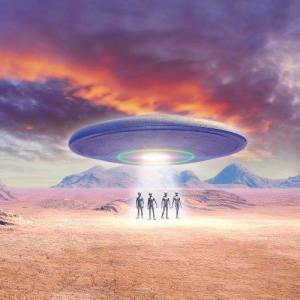


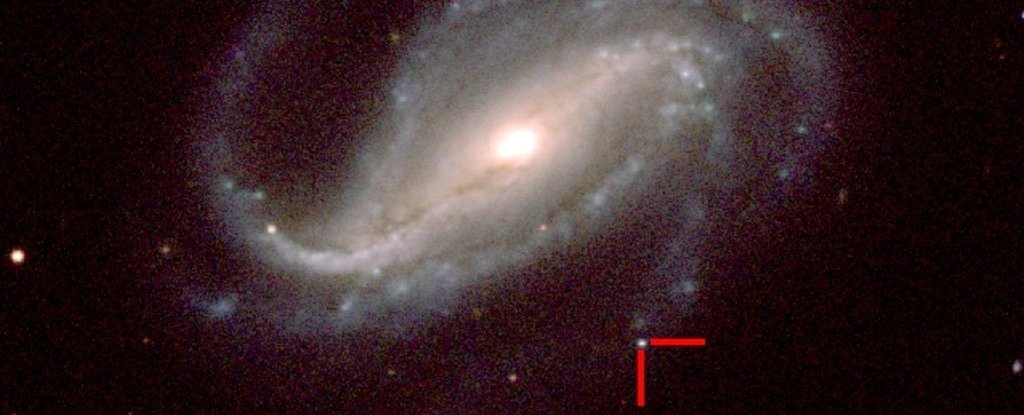
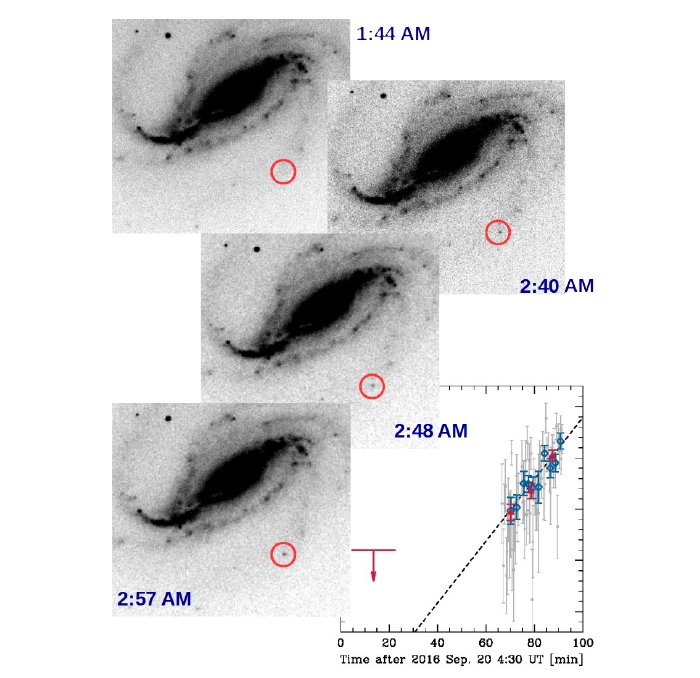


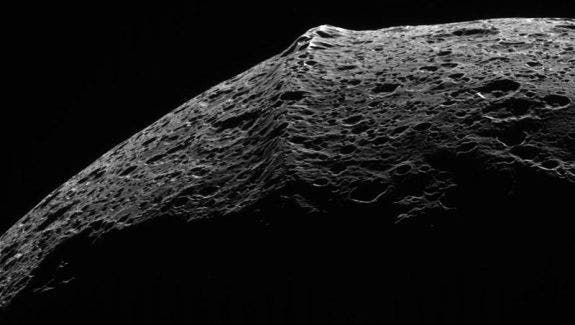


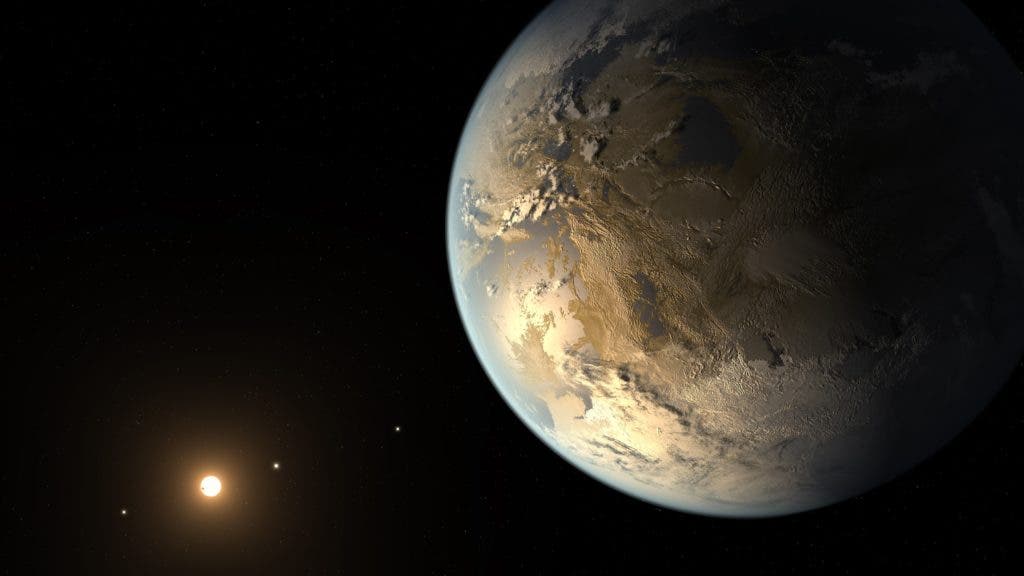









 The walk of shame: Company staff are forced to parade the...
 Wealthy Chinese diner flaunts an extravagant £45,000 meal on...
 Chinese man kills his neighbour's family because their dog...



 The terrifying robot snake that can scale ladders, swim...
 Swarms of robot bees can pollinate plants if climate change...
 Universities will offer courses on how to work alongside...
 Meet the farmer of the future: Angus the 1,000lb 'moverbot'...