Knights Templar and their secret quest for ancient technology

Knights Templar and their secret quest for ancient technology
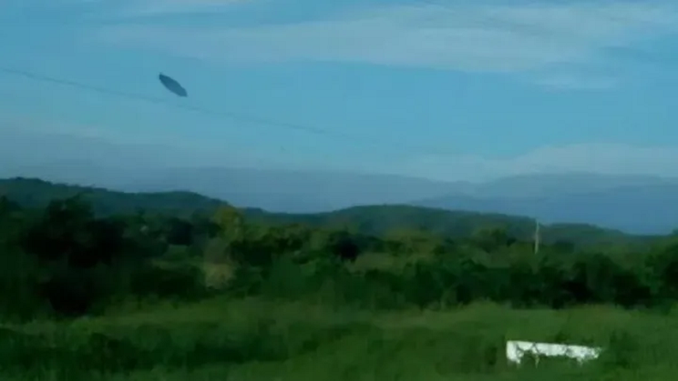
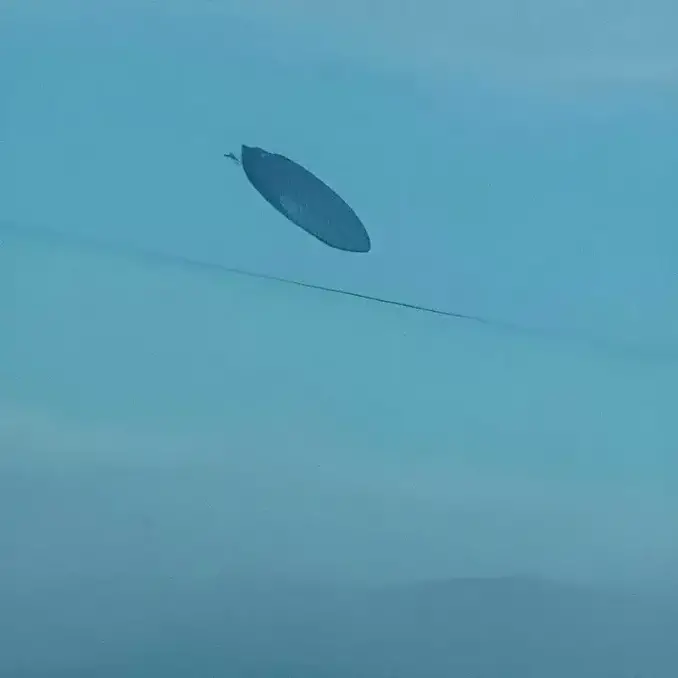
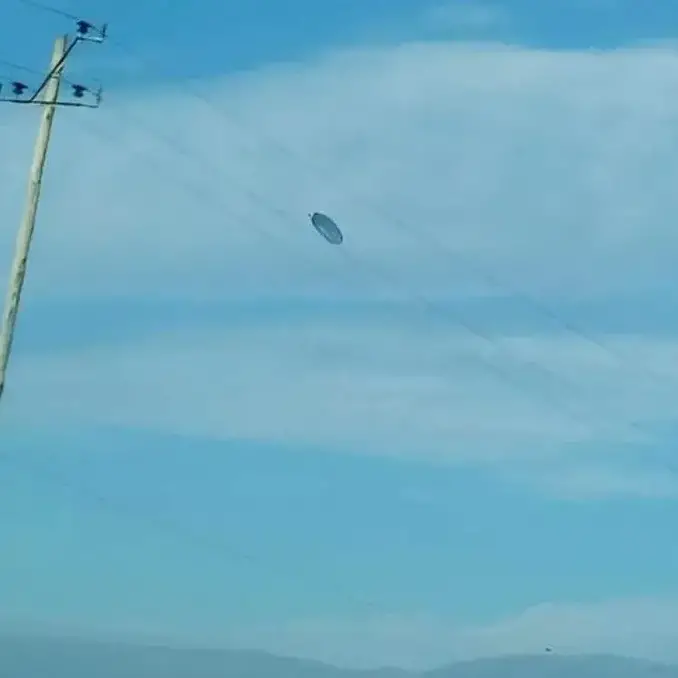
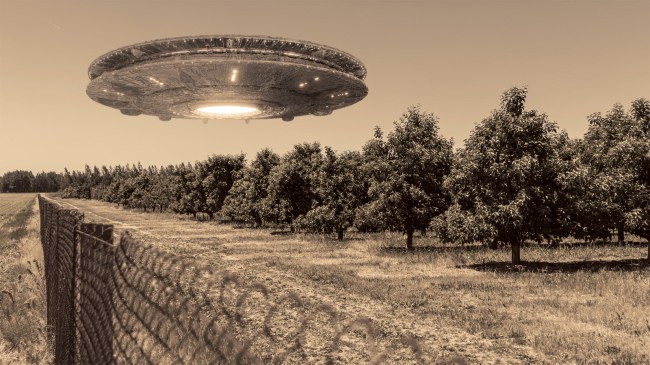
Old Couple in Argentina Take Photos Of UFO, Feb 1, 2024, UFO Sighting News.

Mysterious UFO Encounter in Tucumán: A Remarkable Sighting
In the serene landscapes of Tucumán, Argentina, a recent event has captivated both locals and the global community, sparking conversations about the unknown and the unexplained. A couple, while on a scenic drive to their vacation home in San Pedro de Colalao, experienced an extraordinary phenomenon that would leave an indelible mark on their lives and fuel the endless curiosity surrounding unidentified flying objects (UFOs).
On a crisp morning of February 1st, amidst the tranquil beauty of Tucumán’s countryside, Rina and René, a couple enjoying the early hours of their road trip, found themselves witnesses to a sight beyond their wildest imaginations. Intent on capturing the natural beauty surrounding them, they were unexpectedly thrust into a scenario that challenges our understanding of the skies above.
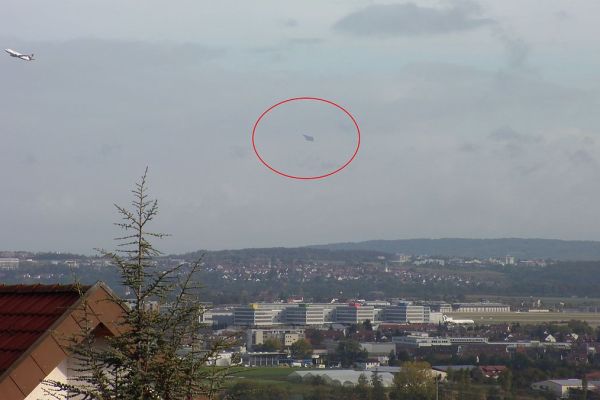
As they neared San Pedro de Colalao, a destination known for its breathtaking vistas and as a beacon for tourists seeking solace in nature, Rina aimed her camera at the sky, hoping to photograph the local avian life. What she captured instead was not the wildlife they anticipated, but an oval-shaped object, distinct against the blue expanse, defying conventional explanations.
This object, described by the couple as resembling a “flying saucer,” hovered momentarily, sharing the sky with them for a brief three minutes before vanishing without a trace. The photographs taken by Rina offer a tangible testament to their encounter, showcasing an anomaly that, at first glance, mirrors the countless descriptions of UFOs chronicled over the decades.
The incident gains further significance when placed in the context of Argentina’s rich history of UFO sightings. Notably, the event occurred mere hours from Capilla del Monte, a locale synonymous with extraterrestrial folklore and the site of an annual festival dedicated to celebrating the enigmatic.
This sighting in Tucumán adds to a growing compendium of similar occurrences worldwide, prompting a reevaluation of our skies and what secrets they may hold. It echoes past events that have captured global attention, such as the incident in Varginha, Brazil, often likened to Roswell for its profound impact and the mysteries it harbors.
Don’t forget to follow us on Facebook for the latest UFO news, videos & photos.
Link: www.facebook.com/LatestUFOSightings/
As the conversation around UFOs evolves, driven by both scientific inquiry and a universal sense of wonder, incidents like the one experienced by Rina and René serve as a reminder of the vast, unexplored frontiers that exist not only beyond our planet but within the confines of our atmosphere. The photographs and testimonies they have shared contribute to the tapestry of evidence that challenges us to look up and question what we know about the world around us.
In the end, the Tucumán sighting underscores the enduring allure of the unknown and the human drive to understand the mysteries of the universe. It invites us to ponder, explore, and, perhaps most importantly, keep our minds open to the infinite possibilities that lie just beyond our grasp.
Ex-US Marine Saw Massive UFO Being Loaded With Weapons By Secret Military In Indonesia JungleOn June 12, 2023, Dr. Steven M. Greer, a renowned founder of the Disclosure Project, presented a compelling three-hour UFO conference. This conference featured whistleblowers who shared their astonishing testimonies. For 33 years, Dr. Greer has dedicated himself as a volunteer to the Disclosure Project. His most recent event before this was held 22 years ago on May 9, 2001, where 22 individuals from various government sectors participated.
In this long disclosure event, Dr. Greer presented his investigations on secret programs, and he was joined by six courageous whistleblowers who shared compelling information about covert operations. Among them was Michael Herrera, a former United States Marine, who shared an astonishing account from 2009 where he and five comrades saw a giant UFO being loaded with weapons while serving in Indonesia. During this incident, they were threatened at gunpoint by unmarked US forces at the scene.
Herrera was assigned to the 2nd Battalion 5th Marines, described as the most decorated infantry battalion within the Marine Corps. This battalion was part of Operation Ketsana, a humanitarian mission in the Philippines in 2009. Herrera’s unit was affiliated with the 31st Marine Expeditionary Unit, primarily conducting maritime operations across Southeast Asia in partnership with the seventh naval fleet.
Herrera was on the USS Denver and went to help after a big tsunami and earthquake hit Padang City in Indonesia. It was surprising because it was Herrera’s first time doing a mission like this. When Herrera and his team got there on October 8, they got some important information. They found out that some of President Obama’s family might be there. They knew it was a dangerous place because of the threat from terrorist activities prevalent in Indonesia.
Their job was to keep the area safe and give people things they needed like medical supplies, food, water, and shelter. Herrera was picked to be one of the main people for this job. When they landed in Padang, it was all broken and damaged. Everything looked bad with fires and floods everywhere. They quickly went to a higher place so they could see better and plan. They had to be ready for anything.
Herrera and his team, armed with M16A4 rifles, advanced about 300 meters, maintaining a tactical column formation. Their primary goal was to maintain situational awareness, be prepared for potential engagements, and execute their mission amidst the harrowing conditions.
Herrera had a camera and was taking pictures of a damaged area from a high spot. But he noticed something strange: a weird object in the jungle. This thing looked different from the trees around it. It changed colors from light gray to dark black and spun around. This was so memorable for Herrera that he could not forget it for 14 years. He and his team took pictures and videos of this odd object.

‘The craft was rotating in a clockwise motion while changing colors. It had an audible hum to it, like the sound of a transformer or a guitar amp. It was an octagonal shape with a pyramid at the top of it that was black,’ Herrera said
As they got closer to the strange object, Herrera and his team saw a group of soldiers. These soldiers looked American — a group of soldiers or, as Herrera described them, a “Rogue military force.” What made this encounter even more unsettling was their distinctly American appearance and gear. These were not just any soldiers; they were equipped similarly to elite Special Operations units, dressed in black camouflage and donning OTVs.
Finding these soldiers made things even more confusing. Why were they there? Were they part of a secret mission? Or something even stranger? Herrera’s story made people think a lot about what really happened that day. His story mixed a strange flying object, its odd behavior, and meeting mysterious soldiers. This made people wonder about secret things happening in the world.
As the tension escalated, Herrera and his team were on high alert. These soldiers looked like U.S. Special Forces but acted differently. Their clothes, weapons, and tools showed they were well-trained. Even though Herrera and his team were outnumbered, they stayed calm. They did not talk to the strange soldiers and moved away carefully. Their main goal was to keep safe and learn more about the unknown flying object and the mysterious soldiers.
Many questions arise about this strange meeting. Maybe these soldiers were doing secret missions without permission? Or were they guarding the strange flying object? Herrera thought maybe they were there to protect the craft and was curious about where it came from.
The flying object Herrera saw had unique features. He noticed its color changes and its pyramid-like top. It also made a sound like a guitar amp or a machine.
“They had no insignias on, they had no ranks,” Herrera began, describing the unidentified soldiers who confronted him and his team. The soldiers’ attire and equipment far surpassed the standard-issue gear Herrera and his unit possessed. Their M4A4 rifles were enhanced with Advanced Combat Optical Gunsights (ACOGs) and PEC 16 IR illumination devices, indicating advanced capabilities and possibly specialized training.

Things got intense quickly. Herrera remembered these soldiers yelling at him and his team. They made scary threats, suggesting they could harm them severely or even make them disappear. The soldiers were very thorough. They checked everyone’s identity carefully, using devices that looked like they were scanning their military cards. This made Herrera believe they were very organized and knew what they were doing.
Herrera also saw some trucks that looked suspicious. The trucks had special containers, and there were rumors that these might be used for illegal activities, like smuggling people. This worried Herrera because the area was already facing many problems.
The strangest part was when Herrera saw an odd flying object. It appeared suddenly and then left quickly without making any noise or causing any disturbance. Herrera and his team were shocked and did not know what to make of it.
“So as we’re going back between these guys, as well as what’s going on in the background at that time, there were four of these trucks which were f-350s.” However, it was what these trucks were transporting that took center stage in Herrera’s recounting.
He described the craft in vivid detail: “It floated right above the tree line.” He emphasized its unique shape, stating, “On each corner, it emanated a light. It was either red, yellow, green, or blue – only those four colors. I can distinctly remember.” This octagonal craft, with its mesmerizing lights, seemed to defy conventional understanding, as Herrera continued to describe its departure.
“As soon as it was able to break that tree line,” Herrera recounted, “it shot over to the left, basically where the ocean was, at a speed so fast I would estimate probably three, four, five thousand miles an hour – instantaneous like that.” The craft’s rapid movement, devoid of any discernible sonic boom or disturbance, left Herrera and his team in a state of shock and bewilderment.
From Herrera’s story, it sounded like he saw something very strange and unexpected. He did not understand what it was, and it left him with many questions. His story highlights the mystery of what he saw and suggests that there is a lot more to learn about such strange occurrences.
After this weird encounter, Herrera was approached by someone from the Air Force. This person, even though not wearing a name tag, made Herrera sign a paper promising not to talk about what happened. The paper had confusing terms on it, and Herrera was left puzzled and scared about what might happen if he spoke up.
Read also:
As Herrera concluded his account, he made a compelling plea to Washington, urging political figures to address the situation. “There are people who are either being hurt or killed by this,” he emphasized, highlighting the gravity of the events he witnessed.
According to DailyMail, Herrera left the Navy in October 2011, his certificate of release showing four years of active duty and medals for “national defense service,” “global war on terrorism service,” “humanitarian service,” “sea service deployment” and a “sharpshooter rifle badge.” He made several million dollars as an entrepreneur and now runs a private security company called Valkyrie Eye.
In this interview with Jimmy Chruch on FADE TO BLACK Radio, Herrera said that during the operation, he had a Panasonic camera capable of capturing both stills and videos. Throughout their mission, he took several photographs and videos, capturing the devastation and potentially more. Herrera concealed this vital evidence in his dump pouch, which seemed to go unnoticed by the individuals overseeing the mission.
When Herrera and his team got back to their ship, strange things started happening. As they gave back their weapons, they felt worried. They were scared about what might happen if their bosses found out about their strange experiences.
After their tough trip, Herrera and his team went to Subic Bay in the Philippines for a break. They tried to relax and have fun. But when Herrera went back to his ship, he found his camera in his locker. Sadly, the battery and memory card were gone. When he tried to use it again, it did not work. Herrera felt upset because he realized how important the missing camera parts were to his story.
Herrera shared more about what he learned from his experience. He talked to people who told him about secret groups that do bad things. These groups hurt people and try to keep their actions hidden. But Herrera also met some good people who wanted to tell the truth about these secret operations.
During an event with Dr. Greer, Herrera thought the containers they saw might have drugs. But someone from the group told him they were not drugs. This new information made everyone wonder: What were they really hiding? Why was it so secret? And how does this affect Herrera and his team?
Herrera said that these mysterious people have been doing secret stuff since the 1990s. Most of them come from JSOC, which is like the top experts in the military. He was careful when talking about them to keep things secret and protect people’s identities.
He remembered when these mysterious folks reached out to him. Instead of asking for his contact details, they gave him theirs. This made Herrera curious. He wanted to know why they did not harm him during a mission in 2009.
Herrera met these secretive people in a safe place out West. When he got there, they had strict rules to make sure no one was listening in on their talk. What Herrera learned surprised him.
He originally thought their main thing was illegal drug deals. But it turned out to be something even stranger. They seemed interested in people from certain backgrounds or groups, like the Bureau of Indian Affairs. These people were seen as spiritually wise and not influenced by mainstream beliefs, making them important for what the group was doing.
“They screen individuals with specific conscious abilities and higher consciousness. They particularly focus on people from third-world countries since these individuals haven’t been indoctrinated by television and lack certain resources. Consequently, their minds aren’t as clouded, making them more spiritually adept. Additionally, they recruit individuals from the Bureau of Indian Affairs for similar reasons: these individuals are spiritually more adept and have a higher level of consciousness, making them suitable participants for these programs.”
Herrera describes a group that works everywhere, not just in one country. They keep their actions hidden and use very advanced machines. To most people, these machines might look like they come from outer space, but they’ are made by humans. Because no one knows much about them, they can act fast and quietly.
A surprising thing Herrera says is that this group sometimes shoots down crafts that seem to be from outer space. They do this a few times every year. They also have strong weapons that can destroy other countries’ copied machines. Herrera tells stories of private planes that accidentally go into their area and get shot down. No one knows what happened to these planes or the people inside.
“They shoot down two to three ET crafts a year, retrieve them, and then take them away for analysis or whatever they do with them. Additionally, they shoot down aircraft from other agencies for reverse engineering purposes. Most of the time, these retrieved crafts are destroyed; they don’t return them. They often blow them up or discard them.
The airspace isn’t always open 24/7; it’s restricted, especially during operations or testing. When restricted, it’s limited up to 60,000 feet. Regrettably, some private aircraft have suffered tragic consequences because they didn’t divert their course. These planes were targeted with advanced weapons, which aren’t just experimental — they’re regularly used. After such incidents, they dispose of the wreckage, and bodies, and issue missing persons reports. They are adept at keeping their secrets, and that’s how their operations function.”
Herrera talks about a building that looks normal from the outside but is full of secret work inside. Even though it looks old and worn out, inside, it is busy with top-secret tasks. Most people working there come from places with lots of problems, like war or poverty. For them, the place might seem like a dream compared to what they had before.
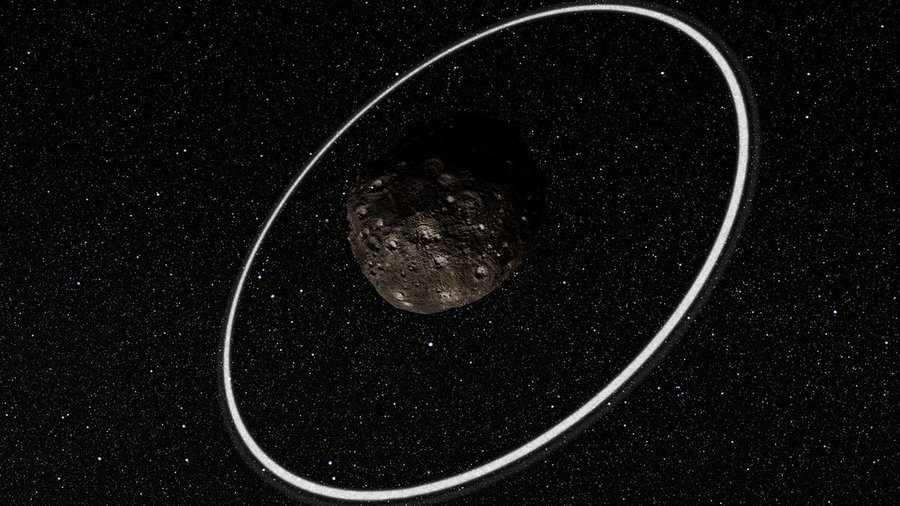
Hidden moon may hold together rings of strange comet-like object between Jupiter and NeptuneA little moonlet, too small to be seen from Earth, could be playing cosmic sheepdog by shaping the thin rings around the distant minor planet Chariklo, according to new computer simulations.
Chariklo is a Centaur — a breed of small body that orbits the sun on a path sandwiched somewhere between Jupiter and Neptune. Centaurs are thought to come in from the Oort Cloud, which is a vast halo of trillions of frozen cometary bodies that extends possibly a light-year from the sun. Over the course of millions of years, they drift inward, either to be ejected from the solar system by the gravity of the giant planets, or to transition into Jupiter-family comets — comets with orbital periods of less than 20 years that are governed by the gravity of mighty Jupiter.
At about 155 miles (250 kilometers) in diameter, Chariklo is the largest known Centaur. In 2013, Chariklo was seen to pass in front of a distant star from our point of view, causing the star's light to wink out briefly. Observations showed that not only did the solid body of Chariklo block the light, but so too did a pair of thin rings around the Centaur. Stellar occultations have shown that another Centaur, Chiron, also has rings, although they do not seem entirely stable.
Related:
Rings around minor planets have only been recently discovered, and only a small number of such systems are currently known," Amanda Sickafoose, a senior scientist at the Planetary Science Institute in Arizona, said in a press statement.
Chariklo's two rings are located about 243 miles and 252 miles (391 and 405 km), respectively, from the center of Chariklo, although measurements can vary slightly. The rings themselves are narrow, just 4.3 miles and 1.9 miles (7 and 3 km) wide.
These rings are not like the rings of the giant planets, which are retained by the gravity of such huge worlds. Computer models show that Chariklo's rings should be short-lived, and that they should widen and then disperse. So what's keeping them in place?
Sickafoose and Mark Lewis, a computer scientist at Trinity University in San Antonio, performed N-body computer simulations of the rings made up from millions of particles, and showed that the influence of a small moonlet could keep the rings narrow and prevent them from dispersing.
"We've shown that one of the possibilities for thin rings to exist around small bodies is that they are being sculpted by a small satellite," Sickafoose said.
Shepherd moons are nothing new; all the gas giant planets have them, most notably Saturn, where the tiny moons Daphnis, Epimetheus, Janus, Pan and Prometheus carve gaps in Saturn's rings and then herd the ring material to keep it tidy.
Chariklo's shepherd moon, if it existsl, would be about 1.9 miles (3 km) across and contain a mass on the order of 10 trillion kilograms (about 22 trillion pounds here on Earth). Although it is too small to be directly observed from Earth at Chariklo's distance — the Centaur's elongated orbit gets as close to the sun as 1.2 billion miles (1.9 billion km) and as far away as 1.7 billion miles (2.8 billion km) — its presence could be detected during stellar occultations.
There is one other possible explanation for the rings' staying power. If we suppose that a gravitational anomaly exists within Chariklo — a denser part of rock, for example — then gravitational resonances between the rings and the anomaly could help tie the rings down. The rings do orbit in a nearly 1:3 resonance with the Centaur, meaning that Chariklo rotates three times (once every seven hours) for every one rotation of the rings. However, the rings are also placed suspiciously close to the Roche limit. This is the distance from a central body within which gravity prevents particles from accreting into a moon. Being right on the edge of this limit means that the ring particles should be able to start sticking together to build a new moon. A shepherd moon's gravity would be able to intervene to prevent this.
"A satellite in this situation can perturb the ring material and prevent it from accreting," said Sickafoose.
Related:
"We think that the ring particles are primarily made of water ice, like those at the gas giants," said Sickafoose. Indeed, the James Webb Space Telescope detected water-ice there in 2023. However, things that we don't know include how "hard" or "soft" the particles are when they collide, or the distribution of particle sizes in the rings.
It is also unknown how the rings formed in the first place. Have they been outgassed by cryovolcanism on the surface of Chariklo, or are they the remains of a small body that got too close to Chariklo, inside the Roche limit, and was torn apart?
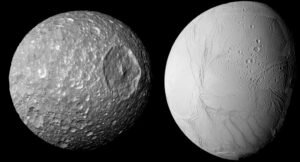
SATURN’S ‘DEATH STAR’ MOON MIMAS IS HIDING A SECRET BENEATH ITS ICY SHELL. ASTRONOMERS NOW SAY IT’S ‘A PRIME CANDIDATE FOR STUDY’An international team of researchers has announced the discovery of a secret, planet-wide ocean hidden beneath the icy crust of Saturn’s smallest moon, Mimas.
Notorious for its resemblance to the “Death Star” in the Star Wars movie franchise, these findings not only mark Mimas as a space body worthy of further study but also place it on a rather exclusive list of ocean worlds.
“This discovery adds Mimas to an exclusive club of moons with internal oceans, including Enceladus and Europa,” explained Dr. Nick Cooper, a co-author of the study and Honorary Research Fellow in the Astronomy Unit of the School of Physical and Chemical Sciences at Queen Mary University of London.
Mimas, left, Enceladus, right.
NASA / JPL-Caltech / Space Science Institute.
“The existence of a recently formed liquid water ocean [also] makes Mimas a prime candidate for study, for researchers investigating the origin of life,” the researchers adds.
Previous research by the Southwest Research Institute had hinted at the presence of a subsurface ocean on Mimas, but this latest finding seems to solidify the case.
Cooper also notes that this discovery was a collaborative effort, which not only includes himself and Dr. Lainey, but a group of international colleagues who were co-authors on the study. Cooper also tips his hat to the folks at NASA who are also responsible for the growing list of successes connected to the research done by Cassini.
“This has been a great team effort,” said Cooper, “with colleagues from five different institutions and three different countries coming together under the leadership of Dr. Valéry Lainey to unlock another fascinating and unexpected feature of the Saturn system, using data from the Cassini mission.”
Within this announcement, the researchers note that the discovery of a moon beneath the surface of Minas unlocks the possibility of further understanding the formation of oceans in the cosmos. Perhaps even more tantalizing, Cooper, Lainey, and their colleagues believe that such a young body of water this close to home could be a boon to astrobiologists trying to unravel the mysteries of life.
“The discovery of Mimas’s young ocean has significant implications for our understanding of the potential for life beyond Earth,” the researchers explain. “It suggests that even small, seemingly inactive moons can harbor hidden oceans capable of supporting life-essential conditions. This opens up exciting new avenues for future exploration, potentially leading us closer to answering the age-old question: are we alone in the universe?”
Inside the 'UFO cult' led by a 'sex maniac': Netflix's new documentary reveals how journalist who claimed he was an 'alien prophet' used his power to 'bed thousands of women'
A French sports-car journalist promised 'out of this world' ecstasy and enlightenment to anyone (particularly women) who followed the teachings that he claimed to have learned via his alien abduction.
Now Claude Vorilhon — who adopted the name 'Raël' as his UFO ministry began in the 1970s — is under scrutiny again in a four-part docuseries premiering on Netflix.
In addition to accusations that Raël coerced women into signing 'a contract' making them 'sexually exclusive' to him, and wild accounts of nude 'sensual meditation,' the doc delves into the Raëlians dubious claim to have mastered human cloning.
As debates over ethics of human cloning reached to a fever pitch during the George W. Bush presidency, Raël was even dragged before Congress to testify.

Claude Vorilhon (above) — who adopted the name 'Raël' as his UFO ministry began — is under scrutiny again in a new docuseries on Netflix. In addition to accusations that Raël made women 'sex slaves,' the doc delves into Raël's dubious claim to have mastered human cloning

As Brigitte McCann, a Calgary-based journalist who went undercover inside the group and witnessed these events firsthand put it: 'Ultimately, they were sex slaves'

In 1992, the movement bought 284 acre property in Quebec, Canada, which they called Le Jardin du Prophète ('the Garden of the Prophet'). It was in Canada that the darkest allegations of sexual abuse by Raël and some of his chief lieutenants first emerged
But the journey of this oft-described 'UFO cult' to those tense public hearings on Capitol Hill spanned decades of controversy and sensational TV appearances.
In the early 1980s, the Raëlians bought a campsite in the South of France, which they used for mass nude worship ceremonies to 'welcome the Elohim' — the Biblically themed race of ancient aliens whom Claude or 'Raël' claimed his wisdom from.

Debates over ethics of human cloning reached to a fever pitch during the George W. Bush presidency - with Raël (above) even dragged before Congress to testify
The group called their French wilderness retreat Eden.
'He had a key phrase, 'If you want to remove the pants from your head, you must first remove the pants from your ass,"' according to an ex-follower named Jean-Paul.
'To find myself in a group unashamedly naked. It wasn't easy but we did it.'
During the 1990s, Raël and his followers became the subject of numerous daytime TV talk shows and news programs as the group's following grew more international.
In 1992, the movement bought a 284-acre property in Quebec, Canada, which they called Le Jardin du Prophète ('the Garden of the Prophet'). They built a museum to UFO research there in order to, they claimed, raise money for their 'Elohim Embassy.'

In the early 1980s, the Raëlians bought a campsite in the South of France, which they used for mass nude worship ceremonies to 'welcome the Elohim' — the Biblically themed race of ancient aliens whom Claude or 'Raël' claimed his wisdom from

Netflix's 'Raël: The Alien Prophet' is now streaming

Above, Raël (former sports-car reporter Claude Vorilhon) - after the movement's spread to Canada - poses with his then-wife Sophie, whom he married with the permission of her mother, who was also a member of the group, while she was only 16 years old
It was in Canada that the darkest allegations of sexual abuse by Raël and some of his chief lieutenants first emerged.
As Brigitte McCann, a Calgary-based journalist who went undercover inside the group and witnessed these events firsthand put it: 'Ultimately, they were sex slaves.'
Within the culture of Raëlians, however, they were known as the 'Order of Angels.'
McCann reported that she saw ceremonies where naked 'Angels' tended to the prophet's every whim.
Nadine Gary, a member of the order, who had been recruited by her mother at 18, described how Raëlians explained the order to themselves: 'They are at the service of the Elohim and to honor and to serve Raël.'
'So I thought, "You must be part of this order" and when I became an angel, it was moving. I felt immense love.'
During this period, Raël married a 16-year-old girl, Sophie, with the permission of her own mother, herself a member of the fringe 'alien worshipping' group.
But the scandals and controversy surrounding the group reached it highest point during the George W. Bush presidency, after the Raëlians incorporated a human cloning research company in the Bahamas, Clonaid.
In March of 2001, Raël and others were called before the House Energy and Commerce Subcommittee to testify on the ethics of their enterprise, as lawmakers debated a ban on human cloning.
That same spring, the US Food and Drug Administration's Office of Criminal Investigations inspected a Clonaid lab, located in a rented room from a high school in Nitro, West Virginia.
Ultimately, the FDA, Clonaid and the former West Virginia state legislator who had helped Clonaid purchase its lab equipment, Mark Hunt, reached an agreement to not conduct their attempts to clone Hunt's son in the United States.
Undaunted, the Raëlians' Clonaid group announced their first alleged human cloning success on December 2002 - at a Holiday Inn in Hollywood, Florida.
Dr. Brigitte Boisselier, who served as the scientific director of the movement’s cloning company Clonaid, sat for interviews with the makers of the new Netflix doc.
President Bush called the very idea of human cloning 'deeply troubling' and Democrats worried that the scandals surrounding Clonaid and Raël would blowback on therapeutic cloning research in medicine, which they felt was badly needed.

Above, Dr. Brigitte Boisselier, who served as the scientific director of the movement’s cloning company Clonaid, announced the group's first, alleged cloning success at a December 2002 press conference - held at a Holiday Inn in Hollywood, Florida

Whether the Raëlians' claims of a human cloning breakthroughs were real or just science fiction, the group could not back away from the concept which had been central to Claude Vorilhon's vision since the 1970s
But, whether the Raëlians' claims of a cloning breakthroughs were real or just science fiction, the group could not back away from the concept which had been central to Claude Vorilhon's vision since the 1970s.
In a 1975 book, 'Raël' described his meeting with aliens deep within the crater of a volcano in France. The beings, he said, had explained that all of humanity was created from the DNA of their more advanced alien race, the 'Elohim.'
These beings encouraged him, he wrote, to pursue human cloning and, as the Washington Post put it, 'unlock the secret to immortality.'
At a minimum, Claude Vorilhon and his Raëlians have achieved a kind of immortality, the kind that comes with the notoriety of a 'true crime' docu-series. Netflix's 'Raël: The Alien Prophet' is now streaming.
Three Structures On Mars & An Alien Statue 3 Miles High, UFO Sighting News. Video.
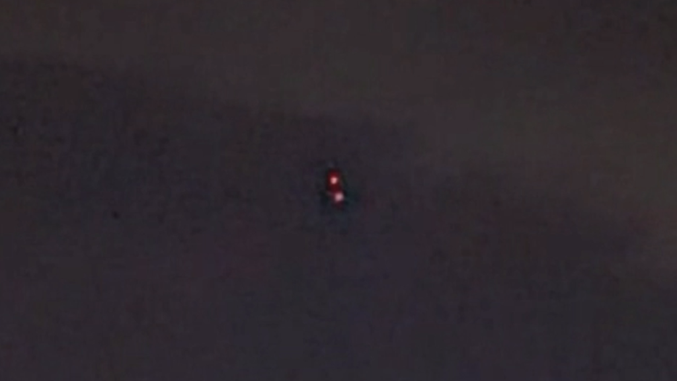
Mysterious Lights Over Oregon: A Mesmerizing UFO Sighting

In the early hours of December 6, 2023, the tranquil skies of Oregon became the canvas for an extraordinary event that has since captured the imaginations of thousands. Residents were treated to an enigmatic display that defies easy explanation, sparking a flurry of interest in UFO sightings across the region and beyond.
According to eyewitness reports, a mysterious object illuminated the night sky, holding its position with an eerie steadiness that ruled out the usual suspects of airplanes or satellites. For nearly three minutes, this unidentified flying object (UFO) mesmerized onlookers with its unwavering presence, before it abruptly ceased its luminescence and vanished into the darkness, leaving no trace behind.
The sighting’s location, far from any towers or known aerial traffic routes, adds a layer of intrigue to the incident. Witnesses were quick to note the object’s distinct characteristics: it maintained a consistent size and brightness, and its sudden disappearance was as puzzling as its initial appearance.
This event has fueled speculation and debate among UFO enthusiasts and skeptics alike. The absence of any identifiable source or explanation has led many to wonder about the possibilities of extraterrestrial visitation. It’s a reminder of the vast, unexplored mysteries that lie beyond our understanding, hovering in the skies above.
For those fascinated by the unknown, this sighting in Oregon is a vivid testament to the enduring allure of the unexplained. It serves as a beacon, drawing the curious and the open-minded into a world where the possibilities are as limitless as the universe itself.
As the search for answers continues, this incident joins the annals of UFO sightings that have both puzzled and captivated humanity. Whether a visitor from distant stars or a natural phenomenon yet to be explained, the Oregon sighting of December 6, 2023, remains a compelling invitation to look up and wonder.
For enthusiasts eager to dive deeper into the mystery of UFO sightings, this event represents yet another fascinating chapter in the ongoing quest to understand the unexplained. As we gaze into the skies, the question remains: what other secrets are waiting to be uncovered?
In the spirit of discovery, we invite you to stay tuned for further updates and to share your thoughts and theories. Whether you’re a seasoned UFO researcher or simply a curious observer, there’s never been a more exciting time to explore the unknown.
Remember, the truth may be out there, and the next sighting could provide the key to unlocking it. Keep your eyes on the skies, and you just might be the next witness to the extraordinary.
The 10 best UFO documentaries to watch now:max_bytes(150000):strip_icc():format(webp)/ufo-documentaries-ew-020524-tout-d14b128ebaa549ff8d96ac1ef6070d87.jpg)
Explore UFOs, UAPs, and the existence of alien life from multiple fact-based perspectives in these films.
PERCEPTION MANAGEMENT PRODUCTIONS/ YOUTUBE; NETFLIX; CURATOR PICTURES/ AMAZON
The 2020s have been an exciting time for UFO enthusiasts, as the U.S. government has finally admitted that yes, their pilots do see a lot of strange things in the sky, and yes, they are looking into it. As UFOs become UAPs (unidentified aerial phenomena), however, we’re still no closer to answering some of the major questions that keep believers up at night: Who’s piloting these crafts? Where do they come from? What do they want from us?
There are a few different ways to look at the phenomenon. Maybe they’re physical beings piloting actual spaceships. Or perhaps the explanation is more mystical; some experts speculate that alien encounters and religious experiences have more in common than one might think. The films featured here all look at the topic from different angles, exploring multiple hypotheses and coming to provocative conclusions. We still don’t know exactly what’s out there — decide for yourself after watching the 10 best UFO documentaries.
:max_bytes(150000):strip_icc():format(webp)/The-Ariel-Phenomenon-ufo-doc-020524-f2d62cff8be841ff984b705579bc8184.jpg)
STRING THEORY FILMS, LLC
Director Randall Nickerson spent more than a decade gathering material for this recent documentary, which tells the story of a massive otherworldly sighting and the psychological effects of not being believed. On September 16, 1994, 60 children claimed they saw a UFO on their school grounds in rural Zimbabwe; their accounts were dismissed, but the group is still sticking to their story nearly 30 years later. The Ariel Phenomenon follows one of those witnesses as she returns to the site of the event as an adult, bringing in a BBC reporter and a Harvard professor to corroborate her story — and those of her classmates — for the first time.
:max_bytes(150000):strip_icc():format(webp)/I-Know-What-I-Saw-ufo-doc-020524-82a3e8d6ee714f35af2e8c7dbdc1ef3e.jpg)
UFOTV/AMAZON
James Fox is a mainstay of the UFO sighting scene, and his film for the History Channel is considered one of the most thorough and well-researched documentaries on the “nuts and bolts” side of extraterrestrial research. Fox’s focus here is on the link between the U.S. military and the UFO phenomenon: What do they know, how long have they known it, and why aren’t they sharing this information with the public? His approach is straightforward and fact-based, utilizing footage from congressional hearings and press conferences, along with interviews with retired military and government officials, to lend an air of legitimacy to the subject.
:max_bytes(150000):strip_icc():format(webp)/Love-and-Saucers-ufo-doc-020524-cc93513dbaec458b90f7051562f1975e.jpg)
CURATOR PICTURES/ AMAZON
David Huggins, a New Jersey-based artist who claims to have had a consensual sexual relationship with a female alien that lasted for several years, could be nothing more than a joke. What makes this documentary about Huggins so good though is that it doesn’t treat him as one, instead using his story as a jumping-off point into an earnest exploration of the nature of belief, and, indeed, of reality itself. Sequences of Huggins explaining his artwork — a series of paintings depicting his encounters that numbers in the hundreds — to skeptical gallery-hoppers skillfully strike a tricky tonal balance, and the addition of a religious studies professor who compares Huggins’ experiences to those of medieval saints brings a fresh, fascinating perspective.
:max_bytes(150000):strip_icc():format(webp)/Mirage-Men-ufo-doc-020524-1d4fd3c362494f6ba643ca381ae9a16a.jpg)
PERCEPTION MANAGEMENT PRODUCTIONS/ YOUTUBE
This provocative documentary, based on the book of the same name by Mark Pilkington and John Lundberg, presents a radical alternative theory of UFOs: That they’re all lies. What the directors posit is that, 60 years ago, the U.S. military deliberately concocted the extraterrestrial phenomenon as a way to distract the public from classified weapons research, and that the government has been manipulating belief in aliens ever since. Interviews with former members of the AFOSI (Air Force Office of Special Investigations) officers support Pilkington and Lundberg’s case, and the film has a spooky aura that makes you feel as if you’re being watched. But by who?
:max_bytes(150000):strip_icc():format(webp)/Moment-of-Contact-ufo-doc-020524-251a16fc08b24374a4fe916522a782a4.jpg)
JAMES FOX PRODUCTIONS/ YOUTUBE
Another documentary investigation of a global extraterrestrial event, this film focuses on the Varginha UFO Incident, which began in the winter of 1996 when three teenage girls saw a four foot tall creature with a huge head and red eyes they described as “the devil” in Varginha, Brazil. Things get even weirder from there, and this latest film from documentarian James Fox shines a light on a lesser-known example of a so-called UFO “flap” in his deep-dive, interview-based style.
:max_bytes(150000):strip_icc():format(webp)/Out-of-the-Blue-ufo-doc-020524-6ca76eac24b1463ea5e6da3dc571723c.jpg)
UFOTV/YOUTUBE
Billing itself as “the definitive investigation of the UFO phenomenon,” this 2003 film was originally produced for the Sci-Fi Channel, and its reputation has only grown in the years since its release. It also marked the directorial debut of James Fox, a name that appears no less than four times on this list. Fans praise the documentary for the depth of its research and its level-headed approach to what can be a very out-there topic. It’s convinced of the existence of UFOs, and argues this point passionately, which was a risky stance to take 20 years ago — but, given recent revelations, it’s a stance that’s aged as well as the documentary itself.
:max_bytes(150000):strip_icc():format(webp)/Phenomenon-ufo-doc-020524-1607267d20d14ebf9b18e8b54d02e107.jpg)
1091/YOUTUBE
Documentarian and UFO expert James Fox’s 2020 follow-up to I Know What I Saw incorporates new information that’s come to light in the decade since that previous film’s release, creating an informative overview of what we know about what the U.S. government knows about UFOs (or, to use the more official term, UAPs). The documentary covers revelations from The New York Times’ bombshell 2017 investigation into the Pentagon’s clandestine UFO program, pairing it with new evidence for a movie that comes with the endorsement of both Jacques Vallée and now-deceased U.S. Senator Harry Reid.
:max_bytes(150000):strip_icc():format(webp)/Unacknowledged-ufo-doc-020524-abd78676220645e487b35ad761d12ecf.jpg)
THE ORCHARD
UFOlogist Steven M. Greer is the founder of the Disclosure Project, a group that advocates for classified information on extraterrestrials to be made available to the public. This crowdfunded 2017 documentary is part of that mission, collecting theories and stories from the early ‘60s through the present day that all point towards a government cover-up of the truth about aliens. Like I Know What I Saw, this film relies heavily on interviews with retired military personnel to give it credibility, along with archival footage to bolster Greer’s convincing case.
:max_bytes(150000):strip_icc():format(webp)/Unsolved-Mysterie-ufo-doc-020524-662a105236964442bc8024145dacd9e4.jpg)
NETFLIX
The long-running newsmagazine show has performed dozens of investigations into extraterrestrial encounters, but this 2022 episode, part of the recent series revival on Netflix, is among the best. Its focus is on the UFO sightings that occurred all over West Michigan in 1994, where multiple people — including a National Weather Service meteorologist — saw what they described as clusters of lights flying over Lake Michigan before abruptly disappearing. This episode is structured around first-person interviews, and while it offers no clear answers, it’s pretty darn compelling.
:max_bytes(150000):strip_icc():format(webp)/Witness-of-Another-World-ufo-doc-020524-abce74724ac847d695be59c5c77de2d3.jpg)
1091/YOUTUBE
Like Ariel Phenomenon and Love & Saucers, this UFO documentary from director Alan Stivelman focuses on the human consequences of extraterrestrial contact. The film follows Juan, an Argentinian gaucho whose life was so shattered by an alien encounter that he still lives as a hermit and refuses to talk about what happened to him even 30 years later. Astronomer and UFOlogist Jacques Vallée appears to shed additional light on Juan’s story, and dramatic effects sequences dramatize the emotional impact of his close encounter.
{ https://ew.com/ }
Saturn’s Moon Mimas Harbors Global Ocean beneath Its Icy Shell, Study Suggests
From detailed analysis of Mimas’ orbital motion based on data from NASA’s Cassini mission, planetary researchers from Sorbonne Université, Nantes Université, Queen Mary University of London, Université de Franche-Comté and Jinan University show that its heavily cratered icy shell hides a recently formed (less than 2-3 million years ago) global ocean, at a depth of 20-30 km.
Mimas’ surface, like the surfaces of most of the other major Saturnian moons without atmospheres, is not pure ice but contains some dark impurities; the relatively dark markings appear along the lower portion of the walls of the 130-km-wide Herschel Crater (the peak in the middle of the crater is about as tall as Mount Everest; the impact that made it likely almost destroyed the moon) and some of the smaller craters; scientists interpret this darkening as evidence for the gradual concentration of impurities from evaporating icy materials in areas where the dark impurities slide slowly down the crater wall.
Image credit: NASA / JPL / Space Science Institute.
Evidence that some moons may have oceans beneath their surface is growing, but the detection of such watery worlds is challenging.
Mimas — the innermost, and smallest (radius = 198.2 km, or 123 miles), regular moon of Saturn — is an unlikely candidate, owing to differences in its surface properties compared with other icy moons, such as Enceladus.
This theory is challenged by Sorbonne Université researcher Valery Lainey and colleagues, who assess observations of the small moon made by Cassini.
Previous research suggested two possibilities for Mimas’ interior: either an elongated rocky core or a global ocean.
The new study reveals changes to the rotational motion and orbit of the small moon that are affected by its interior.
Applying the solid-body model would require the rocky core to be elongated, almost pancake-shaped, which does not match the observations.
Instead, the measurements of Mimas’ position suggest that the evolution of its orbit is better explained as being influenced by an internal ocean.
The researchers calculate that the ocean lies beneath an icy shell approximately 20-30 km deep.
Their simulations suggest that it appeared between 25 and 2 million years ago.
As such, signs of such a subsurface ocean would not have had time to make a mark on the surface.
The results imply that the recent processes on Mimas may have been common in the early stages of formation for other icy worlds.
“Mimas is a small moon, and its heavily cratered surface gave no hint of the hidden ocean beneath,” said co-author Dr. Nick Cooper, a researcher at Queen Mary University of London.
“This discovery adds Mimas to an exclusive club of moons with internal oceans, including Enceladus and Europa, but with a unique difference: its ocean is remarkably young.”
Secrets Unveiled: Inside Britain’s Covert UFO Investigations

In the realm of unexplained aerial phenomena, Britain’s clandestine exploration into unidentified flying objects (UFOs) stands out as a riveting chapter of intrigue and enigma. Far from the public eye, dedicated investigators have delved into the depths of some of the most perplexing and bewildering sightings, drawing on a wealth of eyewitness accounts and physical evidence that challenges the boundaries of our understanding.
At the forefront of this quest was former federal agent Ben Hansen, who embarked on a mission to uncover the truth behind a series of UFO sightings across America. Hansen’s journey was not solitary; it was supported by the extensive archives of the late Dr. J. Allen Hynek, the chief scientific adviser of Project Blue Book. Through this unprecedented access, Hansen sought to unlock the secrets of the past to illuminate the nature of present and future UFO encounters.
The range of UFO sightings investigated is as diverse as it is fascinating. Witnesses have reported everything from fiery orbs streaking across the sky to egg-shaped objects hovering near military installations, and dark, triangular craft moving silently through the night. One notable account involved a witness who, during a routine afternoon, observed what appeared to be a meteor; however, its behavior—a smoke trail without the typical mist of a meteor—suggested something far more mysterious.
Another unsettling encounter involved a civilian who, after witnessing a fireball UFO, was confronted by armed military personnel in an area where they had not been present moments before. This incident hinted at a possible military interest or involvement in tracking or possibly engaging with these unidentified objects.
Among the various leads followed, one particularly intriguing theory emerged: the existence of underground bases beneath Native American reservations, specifically around the Archuleta Mesa. Rumors and whispers of jointly operated human-alien facilities, where extraterrestrials were allowed to conduct experiments on humans in exchange for advanced technology, have persisted. Witnesses have claimed to see egg-shaped UFOs entering and exiting these hidden installations, fueling speculation about the nature of the activities within.
The investigations also revisited historical cases, such as the Socorro incident, where a traffic policeman witnessed an egg-shaped craft and beings in white coveralls—a sighting that remains unparalleled in its details and implications. Such cases underscore the persistent nature of UFO phenomena and the challenge they pose to conventional explanations.
Britain’s secret investigation into UFOs reveals a tapestry of unexplained phenomena that continues to challenge, fascinate, and inspire. Through the dedication of investigators like Ben Hansen and the courage of countless witnesses, the pursuit of understanding these mysterious sightings endures. As we stand on the brink of potentially groundbreaking discoveries, the quest for truth remains as compelling as ever, promising to unravel the mysteries that lie beyond our current gras
Wat de natuurkunde zegt over tijdreizen©Shutterstock
Wat de natuurkunde zegt over tijdreizen
Het concept van tijdreizen boeit lezers en bioscoopbezoekers al tientallen jaren. Maar hoewel mensen gefascineerd zijn door het idee, is niemand erin geslaagd om het tijdreizen meer tot realiteit te maken dan voorheen. Het lijkt een droom die net iets te ver buiten bereik ligt. Maar in een tijdperk waarin de wetenschap de grenzen van het mogelijke blijft verleggen, weten we eigenlijk wel - in theorie - wat de fysica van tijdreizen zou kunnen inhouden?
Nieuwsgierig? LEES HIERONDER VERDER om te ontdekken wat we tot nu toe weten over het vooruitzicht van reizen door de tijd.
©Shutterstock
Hoe tijd werkt
Het zal je misschien verbazen dat natuurkundigen nog steeds niet precies weten hoe tijd werkt. Voorlopig lijkt reizen naar de toekomst mogelijk (aangezien we er elke dag naartoe razen).
©Shutterstock
Hoe tijd werkt
Maar als het aankomt op het mogelijk ontmoeten van onze over-over-overgrootouders door naar het verleden te reizen, ziet het er extreem moeilijk, of bijna volledig onmogelijk uit.
©Getty Images
Albert Einstein
Albert Einstein heeft bijgedragen aan ons huidige begrip van tijdreizen. Zijn relativiteitstheorie beschrijft ruimte, tijd, massa en zwaartekracht.
©Getty Images
Relativiteitstheorie
Tijd was relatief voor Einstein. Een belangrijk resultaat van relativiteit is dat de tijdstroom niet constant is. Tijd kan versnellen of vertragen, afhankelijk van de omstandigheden.
©Shutterstock
Tijd is relatief
Het feit dat het kan versnellen of vertragen is waar het concept van tijdreizen zijn intrede doet als mogelijkheid, met gevolgen in de echte wereld.
©Shutterstock
Lichtsnelheid
Tijd verloopt sneller met een hogere snelheid, maar om het effect te merken zou je met de snelheid van het licht moeten reizen.
©Shutterstock
Zwaartekracht
Op dezelfde manier gaat tijd langzamer voorbij in een intens zwaartekrachtsveld, bijvoorbeeld in een zwart gat.
©Shutterstock
Zwaartekracht
De zwaartekracht van de aarde is sterker bij je voeten, dus je voeten verouderen eigenlijk langzamer dan je hoofd!
©Shutterstock
GPS-satellieten
Voor ons zijn de relativistische effecten van tijd te subtiel om op te merken. Maar ze hebben wel degelijk invloed op de satellieten die worden gebruikt voor het Global Positioning System (GPS).
©Shutterstock
Klok aanpassen
De klokken in de lucht tikken sneller dan de klokken op aarde. Daarom moeten de klokken in de lucht constant worden bijgesteld om de nauwkeurigheid te garanderen. Als dat niet gebeurt, kan je navigatie-app ongeveer 10 km per dag onnauwkeurig zijn!
©Shutterstock
Reizen in de toekomst
Relativiteit betekent dat het mogelijk is om naar de toekomst te reizen. Of je nou reist met de lichtsnelheid of tijd doorbrengt in een intens zwaartekrachtsveld, je ervaart een relatief korte hoeveelheid aan subjectieve tijd.
©Shutterstock
Reizen in de toekomst
In de rest van het universum zouden daarentegen tientallen jaren of eeuwen voorbijgaan. Dus wanneer je terugkeert, zou je verder in de toekomst zijn dan de tijd die je hebt ervaren.
©Shutterstock
Terug in de tijd
Relativiteit opent wel enkele deuren voor terug in de tijd reizen, maar op dit moment zijn deze nog niet verder dan het theoretische stadium.
©Shutterstock
De theorie van de gesloten tijdachtige kromme
Een studie uit 1949, gepubliceerd door Kurt Gödel, stelde voor dat een gesloten tijdachtige kromme, een pad waar ruimte en tijd in zichzelf teruglopen, tijdreizen naar het verleden mogelijk zou kunnen maken.
©Shutterstock
De theorie van de gesloten tijdachtige kromme
Een groot probleem met deze theorie is echter dat er nergens in het universum zo'n gesloten lus bestaat. Het is pure theorie.
©Shutterstock
De theorie van de gesloten tijdachtige kromme
Zonder bewijs voor het bestaan van een gesloten tijdachtige kromme, is er geen manier om deze te reconstrueren. Emily Adlam, filosoof aan de Chapman Universiteit in Californië, zegt: "Zelfs als we veel grotere technologische krachten hadden dan we nu hebben, lijkt het onwaarschijnlijk dat we in staat zouden zijn om doelbewust gesloten tijdachtige krommen te creëren."
©Shutterstock
Kosmische snaren
In 1991 kwam de natuurkundige Richard Gott met de theorie dat zo'n gesloten cirkel mogelijk zou zijn als er twee "kosmische snaren" waren die in tegengestelde richting langs elkaar heen bewogen.
©Shutterstock
Kosmische snaren
Wat geweldig zou zijn... als kosmische snaren bestonden! Deze snaren zijn nog steeds hypothetisch en volgens sommige theorieën zouden ze het hele vroege universum hebben gevormd.
©Shutterstock
Wormgaten
Een ander fenomeen dat volgens de relativiteit mogelijk is, zijn wormgaten. Theoretisch is het mogelijk dat ruimtetijd wordt gevouwen als een stuk papier, waardoor een tunnel kan worden geperforeerd om een kortere weg te creëren tussen twee ver van elkaar verwijderde punten, oftewel een wormgat.
©Shutterstock
Wormgaten
Het probleem met wormgaten is weer dat hoewel in theorie is aangetoond dat ze zouden kunnen bestaan, als een wiskundige mogelijkheid, het fysieke bestaan van wormgaten iets heel anders is.
©Shutterstock
Intens zwaartekrachtsveld
Als wormgaten zouden bestaan, zouden ze niet erg lang bestaan. Sterker nog, als het twee zwarte gaten zijn die zich hebben samengevoegd, zoals wordt getheoretiseerd, dan zou hun intense zwaartekrachtsveld instorten onder hun eigen zwaartekracht.
©Shutterstock
Problemen met omvang
Er is nog meer slecht nieuws voor toekomstige tijdreizigers: deze wormgaten zouden microscopisch klein zijn, te klein voor een bacterie, laat staan voor een mens om er doorheen te gaan.
©Shutterstock
Negatieve energie
Om het omvang- en zwaartekrachtprobleem op te lossen zou er een grote hoeveelheid negatieve energie in het atoom nodig zijn. De energie van het atoomveld moet over het algemeen echter meer positieve energie bevatten, dus zelfs als er kleine zakjes negatieve energie in het atoomveld zouden ontstaan, is het geen erg realistisch beeld.
©Shutterstock
Kwantummechanica
Terwijl relativiteit het gedrag beschrijft van grote objecten zoals mensen en sterrenstelsels, verklaart kwantummechanica het hele kleine: kleiner dan atomen, zoals elektronen en fotonen.
©Shutterstock
Non-lokaliteit
Uit de kwantummechanica zijn vreemde waarnemingen naar voren gekomen, met name non-lokaliteit. Dit is waar een verandering in de toestand van een deeltje op één locatie onmiddellijk een ander "verstrikt" deeltje ergens anders kan beïnvloeden.
©Getty Images
Non-lokaliteit
Einstein noemde dit "spookachtige actie op afstand". Het is vele malen experimenteel aangetoond, maar veel natuurkundigen zijn ongelukkig met de mogelijkheid van niet-lokaliteit.
©Shutterstock
Non-lokaliteit
Om het effect onmiddellijk te laten zijn, zou de informatie namelijk sneller moeten gaan dan de lichtsnelheid. Dit wordt als onmogelijk beschouwd.
©Shutterstock
Retrocausaliteit
Als reactie hierop zijn sommige natuurkundigen met een alternatieve manier gekomen om de experimenten te interpreteren. Sommigen suggereren dat wanneer iets er direct lijkt te zijn, het eigenlijk naar de toekomst is gereisd en weer terug. Dit introduceert retrocausaliteit, oftewel gebeurtenissen die in de toekomst plaatsvinden hebben een effect op het verleden.
©Shutterstock
Retrocausaliteit
Als dit het geval is, is ons lineaire concept van tijd niet noodzakelijk correct. Het betekent in feite dat informatie uit de toekomst altijd terugkeert om het verleden te beïnvloeden. Het is goed om in gedachten te houden dat deze theorie ook niet door iedereen wordt geaccepteerd. Sommigen vinden deze theorie nog ongehoorder dan non-lokaliteit.
©Shutterstock
Conclusie
Kortom, we hebben geen volledig antwoord. Relativiteit en kwantumfysica zijn niet met elkaar te combineren, maar ze werken wel om bepaalde aspecten van ons universum te verklaren. Misschien is er een overkoepelende, verenigende theorie die ze met elkaar verbindt, maar die is nog niet ontdekt. Voorlopig blijft tijdreizen buiten bereik - net als de meer mysterieuze aspecten van het universum.
Bronnen:
I Saw the Movie ‘They’ Don’t Want You to SeeThe movie that I, like a million other women, really wanted to see this weekend was Barbie. A celebration of friendship! Of girlhood! Of the color pink! But my editor had a different idea: Would I go see that movie about child sex trafficking? The one that a lot of people online are angry about?
“Uh, sure,” I replied. I am a team player.
When I arrived at the Tysons Corner AMC in McLean, Virginia, on Sunday, the lobby was filled with people wearing fuchsia body-con dresses, blond wigs, and thigh-high boots. None of these happy moviegoers, however, was heag in the same direction as I was. Instead, my theater contained a few dozen somber-looking people who had elected to see a $15 Sunday-afternoon screening of one of the most disturbing films of the year.
Sound of Freedom, which came out on the Fourth of July, follows a man named Tim Ballard, who quits his job at the Department of Homeland Security to personally rescue two Honduran children from a sex-trafficking ring in Colombia. Ballard is a real person with “extreme biceps, extreme blue eyes, and extreme bleach-blond hair,” as my colleague Kaitlyn Tiffany wrote in 2021. He really did start an organization that conducts sting operations to free people from traffickers. But according to one journalistic investigation by Vice, his nonprofit, Operation Underground Railroad, has exaggerated the details of some of its international rescues as well as its role in domestic law enforcement.
[Read: The great (fake) child-sex-trafficking epidemic]
Sound of Freedom was attracting controversy long before its release. Finished in early 2018, the film was bought by Fox, and then when Disney acquired Fox it immediately shelved the film. Right away, that gave the movie a kind of forbidden, subversive appeal. Eventually, the distribution rights were sold to Angel Studios, a company in Utah that produced the Christian historical drama The Chosen. Since Sound of Freedom started showing in theaters, some viewers have alleged instances of sabotage intended to prevent them from seeing the film. This week, Sound of Freedom broke $100 million in revenue. Last week, former President Donald Trump held a screening at his golf club in New Jersey, where, channeling Paris Hilton, he called it “the hottest movie anywhere in the world.” On Tuesday night, House Speaker Kevin McCarthy held a screening of the movie for members of Congress.
The film’s critics argue that the movie exaggerates the prevalence of child exploitation in a way that helps advance QAnon conspiracy theories about a satanic ruling elite that molests children and feasts on their blood. But the movie’s fans say, This is the film the Democratic elite doesn’t want you to see!
Sound of Freedom is neither of these things. It’s fine—not great but not terrible, either. It doesn’t make any reference to “deep state” bloodsucking or congressional sex cabals. It’s a straightforward, if plodding, action movie about a man on a righteous quest—with zero character development and way too many close-ups of people either crying or smoking cigars.
Although the movie doesn’t depict anything particularly graphic, the subject of child abuse is still difficult to watch dramatized on the big screen. It was upsetting. But so was talking about it afterward with other audience members, many of whom seemed convinced that some significant number of their countrymen condone child trafficking. Sound of Freedom, in other words, is just the latest flash point in an apparently endless culture war that encourages Americans to believe the absolute worst about one another.
In the movie, Ballard is played by Jim Caviezel, who also starred as Jesus in 2004’s The Passion of the Christ, and has himself dabbled in the dark whimsy of Q. In 2021, he spoke at a right-wing conference in Oklahoma, where he warned attendees about “the adrenochrome-ing of children,” an absurd theory that says global elites are using a chemical harvested from kidnapped children to keep themselves looking spry. At one point in the movie, asked why he was so determined to rescue the kids, Caviezel’s character pauses, and his eyes well up with tears. “God’s children aren’t for sale,” he says. My theater broke into applause and shouts of “Amen!”
[From the June 2020 issue: The prophecies of Q]
The movie has united religious conservatives and Trump supporters, as well as a small sampling of the chronically paranoid—or at least it appeared to have done so at my showing. (I chose this particular theater because, when I looked online, a lot of people had bought tickets—probably because McLean has more right-leaning voters than many other places in the Washington, D.C., area.)
Kate Cox, a retiree from McLean wearing little flower earrings, told me before the movie that she was “a pro-life Catholic” concerned about the border. “That’s exactly what this is about,” she said. “They’re taking these people and selling them into sex slavery.” Cox and her girlfriends were also worried about the fentanyl coming in from Mexico: How hard would it be to put up a wall?
“And the homelessness!” added Peggy, a friend of Cox’s who declined to share her last name. “Cities are falling apart.” Cox nodded. “Say what you will about Trump, and 99 percent of it’s true,” she said, “but this didn’t happen under Trump.”
Unlike Barbie, with its huge marketing budget and corporate partnerships, word of mouth seems to be the main attendance-driver for Sound of Freedom: Most of the people I spoke with on Sunday had bought a ticket on a loved one’s recommendation.
“One of my friends told me to see this movie,” Nicole Gutierrez, a Swiss native who lives in D.C., told me. “This is a much bigger business than we think it is. Hollywood, politicians—they’re all involved.” She pulled out her phone to show me a text that her friend had sent a few minutes earlier. “Maybe you know what it means.” Her friend had sent the letter C, followed by an eye emoji, followed by the letter A. “I think he means the CIA,” I said. Gutierrez raised her eyebrows. “Everybody’s involved,” she said. “The White House, of course.”
In a bonus clip after the credits, Caviezel encourages viewers in a whispery voice to scan a QR code and buy a ticket for someone who can’t afford it. “We can make Sound of Freedom the Uncle Tom’s Cabin of 21st-century slavery,” he says, likening the film to the novel that helped inspire the 19th-century abolitionist movement. After that, as the lights came up, a woman in my row who introduced herself as Cheska stood up to announce that she was there to talk about her 23-year-old daughter, who had been missing for a year and a half. “I’m expecting a miracle,” she said. “She’s going to be returned soon.” Warning that the End Times were upon us, Cheska asked us to pray for her and for one another. A few people again said, “Amen,” and at least one woman gave her a hug.
As I left the theater, I approached another group of friends to hear what they thought. They all declined to share their last names, but were happy to tell me how powerful they’d found the movie. “Men want to protect people,” a dark-haired middle-aged man named George said, “so it’s embarrassing that there’s anyone out there that would ever do that to a child.” He brought up the new Jason Aldean song, “Try That in a Small Town,” in which the country artist promises vigilante justice. “I like that song that no one wants to talk about,” George said. Real men would beat up a child abuser.
“You realize you’re talking to some of the few conservatives in the area?” George’s bearded friend Steven asked me, with a wink. “You know what surprises me,” he went on, “is why the left hates this movie. I don’t get it.” He looked at me as though he expected an answer.
If people on the left are repelled by this movie, it’s for the same reasons people on the right feel so obligated to see it. Our political leaders, our social circles, and our chosen media have signaled in our echo chambers exactly how we should feel about it—and so much else, besides. Bud Light. Gas stoves. School libraries. The Target Pride section. Elon Musk’s Twitter. Luke Combs’s “Fast Car.” The entire Walt Disney Company. Lizzo playing James Madison’s flute.
It’s exhausting. All I wanted to do was put on a pink dress and enjoy a movie about a plastic doll.
THE UFO MOVIE THEY DON’T WANT YOU TO SEE

By Chris Salce
UFOs and Aliens have been making significant headlines around the world recently. Brian Dunning’s The UFO Movie They Don’t Want You to See investigates some of the UFO reports in those headlines as well as asking one of life’s biggest questions, “Is there life in outer space?”

Part I of a Series
The UFO Movie They Don’t Want You to See is not just a movie, it’s a documentary that utilizes and even teaches critical thinking. It might as well have been called “A Logical Take on UFOs.” Skeptic, and the host of the Skeptoid podcast, Brian Dunning has exposed the truth behind over 900 urban myths, legends, and fantastic stories. It’s a master class on how to engage a logical take. Thus a logical review of Dunning’s new movie is essential.
We Are Not Alone
First, the movie presents a pretty compelling case that we are not alone in the universe. The universe is just too large, there are just too many planets and stars, and the conditions that make life possible are just too common, relatively speaking.* Life very likely exists, if not elsewhere in our galaxy, then elsewhere in the universe. At the same time, however, the same thing that makes alien life so likely—the vastness of the universe—makes it exceedingly unlikely that it will ever visit us. The distances are just too great, and the speed of light (the fastest anything can move) too slow, for life that evolved elsewhere to ever visit us in person. Interestingly, Dunning argues that some alien life likely already does know about us (or will soon); our planet teems with evidence of our existence. He also thinks that we (via a telescope) will likely detect evidence of life on another distant planet soon (within the century maybe). But physical visitation, by advanced biological alien beings, in advanced craft, near or on Earth, is almost statistically impossible.
What Are UFOs?
Why, then, are there so many UFO sightings? If they aren’t aliens, what are they? Dunning points out that there is good data on this: huge collections of UFO reports and what they turned out to be. In all of history, every time a UFO sighting has been verifiable (and not just an unverifiable incredible story, fuzzy video, or blurry photo), it has always, without exception, turned out to be one of three things:
Although the data proves this, Dunning goes on to illustrate his point by explaining four of the most famous UFO stories and videos of all time—evidence that believers have claimed to be the most rock-solid proof of alien visitation: The Rendlesham Forest incident, the Ariel School incident, the 1967 Malstorm AFB incident, Jimmy Carter’s UFO sighting, and the Gimel, Go Fast, Tic Tac, and Green Triangles videos. In each case, the explanation falls into one of the three above categories; it is beyond any reasonable doubt, in each case, that nothing extraordinary happened. What’s more, in each case, some illusion, trick of perception, or fault of memory is at play. The explanation was not, and never has been an extraordinary craft—for example, an alien craft, or one vastly beyond our current technology.
Want to prove yourself right? Try to prove yourself wrong
That’s not to say that it could never be, but Dunning rightly points out that a claim that a UFO is an extraordinary craft is an extraordinary claim—and extraordinary claims require extraordinary evidence. And when one wants to prove an extraordinary claim, with extraordinary evidence, one must try to falsify the extraordinary claim; you must consider and rule out all the non-extraordinary explanations.
This is one of the most basic rules of both scientific and critical thinking. Because anyone can find some evidence for anything, if you want to prove yourself right, but try to do only that, you inevitably will—even if what you believe is blatantly false. If you want to actually prove yourself right, you must try to prove yourself wrong; only if you honestly try to do that and fail, will you actually have good reason to believe that you are right. This is how scientists protect themselves against self-deception; they'll even invite others to try to prove them wrong.
What the UAP Task Force Needs, But Is Lacking
This brings me to the overarching conclusion of the documentary: the government’s Unidentified Arial Phenomena Task Force (UAPTF) is not actually up to its stated task. He shows a government official describing the experts that the UAP Task Force has brought on board: academics like physicists and metallurgists. Although that sounds impressive, these are the kinds of experts you would only need if a UFO turned out to be a spectacular craft (that was recovered). But since in the entire history of UFO sightings this has never happened, the task force is stacked with the experts that it is least likely to need.
What it needs is experts who can rule out the, historically and statistically, most likely explanations: celestial bodies, airborne clutter, and ground-bound objects. You need a host of (observational) astronomers, experienced personnel who are experts at looking at the sky and identifying what is in it. You need UFO skeptics,** who have spent their lives falsifying claims that UFOs are aliens; critical thinkers who know all the trip-ups that lead people to faulty conclusions. And you need NTSB air crash investigators—mainly because they know best what kind of illusions and faulty perceptions lead pilots, and the rest of us, astray. The task force doesn't seem to have them.
In Part II of this series: The possible criticism of the documentary.
Notes:
“…fascinated by UFOs, he wants to go into this film unbiased and will examine all evidence with science…”
Possibly, my favorite thing about this documentary is how Brian Dunning takes digs at the media when exaggerating and embellishing UFO sightings throughout the years. We all know that the media often takes liberties with how they look at things and decide how they want to tell their stories in order to push an agenda across. The UFO Movie gives an example of that when discussing the Rendlesham Forest UFO sightings from 1980. It shows the process of how the media added to the incident and distorted the event as the years went on. It does not necessarily call out any one network, but it is interesting nonetheless.
With all the positives The UFO Movie has, it does have a negative here and there. One is that there are times in the film when it feels as if I was back in high school watching an educational documentary about space, especially when Dunning is speaking straight into the camera numerous times. It is almost as if Dunning is hosting a docuseries about UFOs rather than a documentary film. I feel that Dunning’s presence would have worked better if he had narrated more of the film rather than addressed the camera every few minutes.
The UFO Movie They Don’t Want You to See does something quite interesting – it sees things from both sides of the argument. The film does a good job of analyzing the famous Gimbal and Nimitz videos to the point where it just about debunks the videos as evidence of UFOs. While doing such things as debunking widely known UFO sightings, it also does a decent job at giving some idea of their being life in outer space. I do wish that there was more evidence that was touched on in the documentary. Does this documentary make me go one way or the other in my beliefs of if other lifeforms exist? No, but it does give some hope that there can be life in outer space. It also makes you wonder who “they” are that don’t want you to see this, a question that you would have to look into and discover yourself.
https://www.psychologytoday.com/us
Alien Space Station Sucking Energy From A Star, Sky Map, UFO Sighting News. 3X the size of Earth!
Date of discovery: Feb 6, 2024
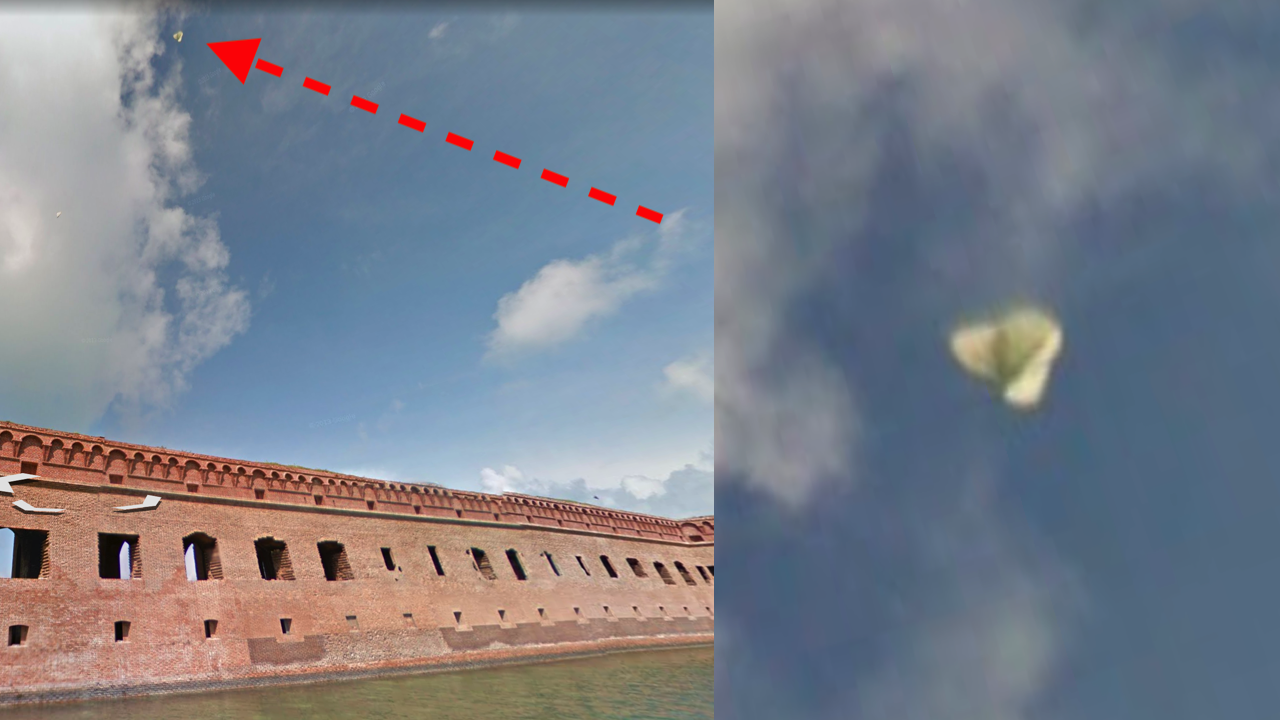
UFO Fleet Over Fort Jefferson, Key West, Florida, Google Earth, UFO Sighting News. Video.
Date of discovery: Feb 1, 2024
n/@24.62852593,-82.87192757,10.73709393a,0d,19.33298687y,300.74894082h,141.82152
242t,0r/data=CowBGmISXAolMHg4OGNlNTY3YWNhZDViOGY1OjB4NDhlOThkYjAyZDhjNTlhZCo
zRm9ydCBKZWZmZXJzb24KSGlzdG9yaWMgMTl0aC1jZW50dXJ5CkNpdmlsIFdhciBmb3J0GAIgA
SImCiQJ71TtC_UdJ0ARMi0HX18dJ0AZrk2-
iwIRV0Ah6sfuQs4QV0AiGgoWVFQ1RWdlUG1oODBwZWF3aThYamV0QRACOgMKATA
Het griezelige mysterie van de Japanse Duivelszee©Shutterstock
Het griezelige mysterie van de Japanse Duivelszee
De Bermudadriehoek staat bekend om zijn mysterieuze verdwijningen. Er is echter een minder bekende regio in de Stille Oceaan die net zo berucht is vanwege zijn verhalen over onverklaarbare verdwijningen en schijnbaar bovennatuurlijke activiteiten.
Gefascineerd? Lees hieronder verder en ontdek de fascinerende geheimen van de Duivelszee.
©Public Domain
Wat is de Duivelszee?
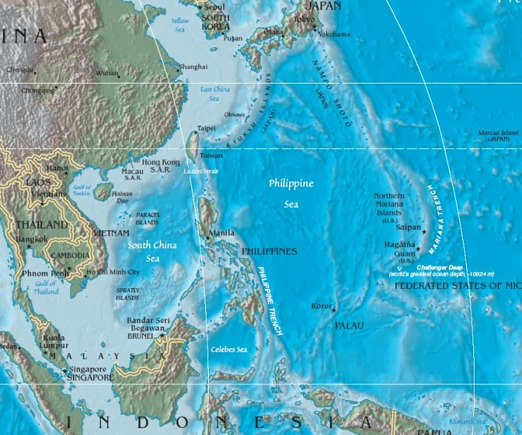
De Duivelszee, ook wel bekend als de Drakendriehoek, is een geografisch gebied in de Stille Oceaan, vlakbij de Japanse kust.
©Shutterstock
Waar is het?
De Triangle ligt bij Miyake, een eiland 60 mijl (100 km) ten zuiden van Tokio.
©iStock
De Bermudadriehoek van de Stille Oceaan
Het gebied staat ook bekend als de Bermudadriehoek in de Stille Oceaan vanwege de paranormale verschijnselen die zich in de verraderlijke wateren voordoen.
©iStock
Reputatie
De beruchte reputatie van de Duivelszee houdt al tientallen jaren stand, want er doen verhalen de ronde over verschillende schepen die er zijn verdwenen.
©iStock
Ongewone activiteit
Volgens de legende is geen enkel schip, hoe sterk ook, bestand tegen de paranormale energie die het omringt.
©iStock
Mysterieuze verdwijningen
Halverwege de jaren 50 verdwenen veel grote schepen met hun hele bemanning.
©Shutterstock
Mysterieuze verdwijningen
Tussen 1950 en 1954 zouden er in totaal negen vrachtschepen zijn verdwenen in de Stille Oceaan. Er wordt beweerd dat al deze schepen radiozenders hadden en dat er geen weersproblemen werden geregistreerd.
©Getty Images
Onderzoek
De Japanse regering werd achterdochtig en stuurde een eigen team wetenschappers aan boord van de Kaiyō Maru (foto), maar ook zij keerden nooit terug.
©iStock
Tragedie
Het wrak van de Kaiyō Maru werd later geborgen, maar de verblijfplaats van de 31 bemanningsleden blijft een mysterie.
©Shutterstock
Invasie
Het mysterie van de Duivelszee gaat terug tot Kublai Khan, de vijfde Grote Khan van het Mongoolse Rijk, toen hij Japan probeerde binnen te vallen. In de 13e eeuw stak hij de Drakendriehoek over om Japan binnen te vallen, maar hij verloor de meeste van zijn schepen en 40.000 bemanningsleden nadat ze waren getroffen door twee tyfoons.
©Shutterstock
Kwade draken
De term 'drakendriehoek' komt eigenlijk uit traditionele Chinese fabels, waarin sprake is van draken die onder water leven.
©Shutterstock
Kwade draken
Volgens deze oude verhalen vielen draken passerende boten aan om hun honger te stillen. Deze legendes hebben de vele raadselachtige verhalen over de Duivelszee sterk beïnvloed.
©Shutterstock
Theorieën
Velen hebben geprobeerd het mysterie van de Duivelszee te ontrafelen door verschillende theorieën te ontwikkelen, zoals elektromagnetische interferentie of tijdvervorming.
©iStock
De "Vile Vortex" theorie
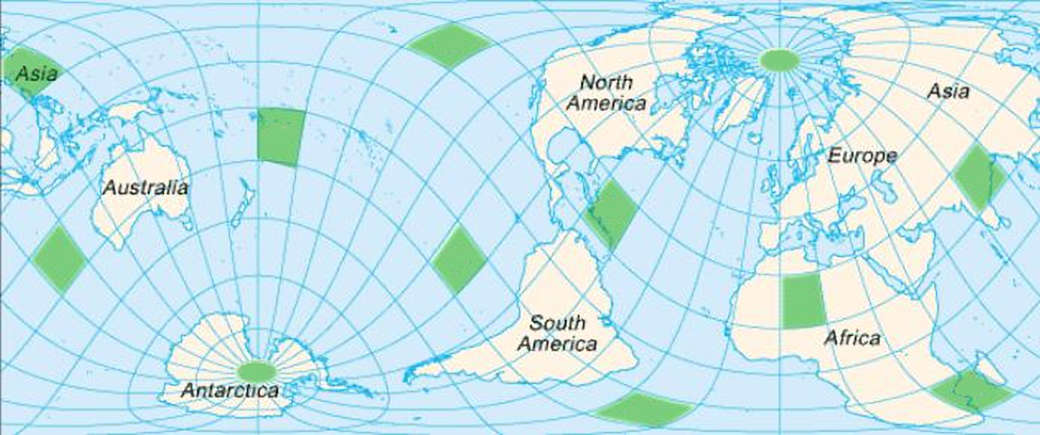
Geleerde Ivan T. Sanderson stelde dat de Drakendriehoek één van de 12 Vile Vortexen van de wereld is.
©Public Domain
De "Vile Vortex" theorie
Zijn theorie is dat een "Vile Vortex" een specifiek geografisch gebied is dat in verband wordt gebracht met "elektromagnetische aberraties" die de oorzaak zijn van onverklaarbare verdwijningen. De Bermudadriehoek is de bekendste van deze Vile Vortexes.
©iStock
Paranormale activiteit theorie
In 1989 schreef Charles Berlitz, een theoreticus over paranormale activiteit, een boek waarin hij beweerde dat het gebied een "kwaadaardige natuur" had die het onnatuurlijk en onstabiel maakte.
©iStock
Paranormale activiteit theorie
Hij sprak uitgebreid over UFO´s en hoe er al eeuwenlang meldingen zijn van vreemde objecten die boven Japan zijn waargenomen.
©iStock
Zoektocht naar de waarheid
Om deze tegenstrijdige theorieën te weerleggen, publiceerde de Amerikaanse auteur Larry Kusche in 1995 een boek waarin hij beweerde echte antwoorden te geven op het mysterie van de Duivelszee.
©iStock
Rationele theorieën
Volgens het onderzoek van Kusche werd het regeringsschip, de Kaiyō Maru, vernietigd door een vulkaan of een vloedgolf.
©Getty Images
Het geweld van de natuur
Wetenschappers monitoren regelmatig onderwatervulkanen langs oceaanruggen en bestuderen de uitstoot van lava, kooldioxide en andere elementen in de oceaan
©Shutterstock
Verkeerde informatie
Kusche betwistte ook Berlitz' bewering dat de vermiste schepen massieve schepen waren met een aanzienlijke lading, en suggereerde in plaats daarvan dat het vissersboten waren.
©iStock
Gevaarlijke missies
Volgens Kusche waren de middelen van de marine in de jaren 1950 schaars of onbetrouwbaar en daarom konden veel schepen, zelfs die met radiozenders, geen hulp inroepen.
©iStock
De trieste realiteit
Uit zijn correspondentie met Japanse marineambtenaren leidde Kusche af dat de meeste schepen waarschijnlijk voor de Japanse kust waren neergestort en gezonken.
©iStock
Een twist!
Hij ontdekte ook een cruciaal detail: de Kaiyō Maru was niet gestuurd om de mysterieuze verdwijningen te onderzoeken.
©iStock
De waarheid over de Kaiyō Maru
De Kaiyō Maru was in plaats daarvan een onderzoeksschip dat informatie verzamelde over lokale vulkanische activiteit.
©iStock
Wat zeggen?
Het lijkt erop dat de Japanners zich niet bewust waren van de wereldwijde interesse in de Duivelszee totdat Kusche contact opnam met de Amerikaanse ambassade in Tokio.
©iStock
Gevarenzone
Het gebied was niet eens door de overheid aangewezen als gevarenzone!
©iStock
Feiten
Het verhaal achter de Drakendriehoek (of de Duivelszee) kreeg zoveel aandacht over de hele wereld dat er verschillende theorieën werden opgeroepen, wat resulteerde in een volledig verzonnen verhaal.
Bronnen:
SKINWALKER RANCH: HOTSPOT VAN PARANORMALE VERSCHIJNSELEN
Skinwalker Ranch: A Global Phenomenon

Skinwalker Ranch in Utah, USA, has captivated the imagination of paranormal enthusiasts worldwide. Known for its mysterious and unexplained phenomena ranging from UFO sightings to cryptid encounters, it stands as a beacon for those seeking answers to the unknown. However, the intrigue of Skinwalker Ranch is not an isolated case. Similar hotspots exist globally, each with their own unique tales of the unexplained, suggesting that Skinwalker Ranch is ‘Not Alone’ in its paranormal phenomena. This article delves into these global counterparts, shedding light on the universal nature of these enigmatic occurrences.
Across the world, there are numerous locations that, like Skinwalker Ranch, have become synonymous with paranormal activity and unexplained phenomena. These sites attract researchers, thrill-seekers, and the curious, all looking to uncover the truth behind the legends.
The existence of these global counterparts to Skinwalker Ranch underscores a broader pattern of paranormal phenomena that transcends geographical and cultural boundaries. These locations, each with their own unique stories and legends, contribute to a growing body of anecdotal evidence suggesting that our world is far more mysterious and unexplained than conventional understanding allows.
Researchers and enthusiasts continue to study these phenomena, employing a range of scientific and investigative techniques in an attempt to shed light on the mysteries. From advanced surveillance technology to multidisciplinary approaches that include physics, environmental science, and folklore, the quest for answers is as diverse as the phenomena themselves.
Skinwalker Ranch is not an anomaly but rather a part of a global network of paranormal hotspots. These locations, scattered across the world, share similarities in the nature and frequency of their unexplained phenomena. The global distribution of such sites suggests that the phenomena associated with Skinwalker Ranch are part of a larger, more complex puzzle that challenges our understanding of reality. As investigations continue and technology advances, perhaps one day, the veil of mystery surrounding these locations will be lifted, offering insight into the true nature of our enigmatic world.
Microplastics dringen door tot in elke uithoek van je lichaam (en daardoor verandert mogelijk je gedrag)
Er is al veel onderzoek gedaan naar microplastics in het milieu en hun negatieve effecten op zeeleven, maar er was tot op heden nog relatief weinig bekend over de mogelijke gezondheidsrisico’s bij zoogdieren. Daarom heeft de Amerikaanse professor Jaime Ross de neurologische effecten en ontstekingsreacties in het lichaam van muizen bestudeerd. De dieren kregen verschillende doses microplastics binnen via het drinkwater, waarna Ross en haar team van de University of Rhode Island de opeenhoping van microplastics in verschillende organen en andere weefsels van de muizen onderzochten. Al snel bleek dat de microplastics overal in het lichaam waren doorgedrongen, waardoor vooral bij de oudere labmuizen het gedrag duidelijk veranderde.
“Wij bouwen voort op eerder onderzoek, waaruit is gebleken dat deze microplastics vrij bewegen door het milieu en zich opstapelen in het menselijk lichaam. Er is echter nog erg weinig bekend over de gezondheidseffecten van microplastics, zeker bij zoogdieren”, legt Ross uit. “Dit heeft ertoe geleid dat onze groep de biologische en cognitieve consequenties van blootstelling aan microplastics is gaan bestuderen.”
Vreemde bewegingen en gedrag
De onderzoekers dienden drie weken lang verschillende hoeveelheden microplastics toe aan jonge en oude muizen via het drinkwater. Naderhand zagen zij allerlei gedragsveranderingen bij de dieren en wijzigingen van biomarkers in de lever en de hersenen, die gelinkt zijn aan het immuunsysteem. De labmuizen gingen vreemd bewegen en gedroegen zich apart. De wetenschappers linkten dit gedrag aan dementie bij mensen. Bij de oudere dieren waren deze dingen nog duidelijker te zien dan bij de jonge proefdieren. “We vonden dit heel opvallend. Dit waren helemaal geen hoge doses microplastics, maar toch zagen we na een korte periode al duidelijke veranderingen”, zegt Ross.
“Niemand weet precies wat deze microplastics in het lichaam doen en hoe lang ze er achterblijven. We willen graag meer weten over de gevolgen van microplastics in het menselijk lichaam op latere leeftijd. Ben je dan vatbaarder voor systeemziekten (aandoeningen waarbij het afweersysteem ontregeld is en het eigen lichaam aanvalt, red.)? Kan je lichaam de microplastics makkelijk weer uitscheiden? Reageren lichaamscellen verschillend op deze gifstoffen?” vraagt de wetenschapper zich af.
Door de bloed-hersenbarrière heen
De onderzoekers sneden de labmuizen open en bestudeerden allerlei verschillende weefsels, waaronder de hersenen, lever, nieren, het spijsverteringsstelsel, het hart, de milt en de longen. De microplastics waren in alle organen doorgedrongen, zelfs in de hersenen. Ook werden ze in de urine en uitwerpselen gevonden. “Aangezien we de microplastics in ons experiment via het drinkwater toedienden, hadden we wel verwacht dat we de gifstoffen in het maagdarmstelsel, de lever en de nieren zouden terugvinden”, vertelt Ross.
“Maar dat de microplastics ook in het hart, de longen en de hersenen zaten, maakt duidelijk dat ze het spijsverteringsstelsel kunnen verlaten en elke hoek van het lichaam kunnen bereiken. Het is heel lastig voor stoffen om door de bloed-hersenbarrière heen te breken – dit is een beschermingsmechanisme om virussen en bacteriën tegen te houden – maar het blijkt een peulenschil voor deze plasticdeeltjes om tot diep in het breinweefsel door te dringen.”
Minder van het cruciale eiwit GFAP
Het lijkt erop dat de microplastics in de hersenen ervoor zorgen dat er minder van het cruciale eiwit GFAP wordt aangemaakt. “Een lager GFAP-niveau is gelinkt aan de eerste fases van neurodegeneratieve ziekten, zoals Alzheimer en depressie”, vertelt Ross. “We waren erg verrast om te zien dat de microplastics in de hersenen verantwoordelijk waren voor een verandering in GFAP-aanmaak.” Dit is een van de belangrijkste onderwerpen voor het vervolgonderzoek. “We willen beter begrijpen hoe het kan dat plasticdeeltjes het zelfhelend vermogen van het brein aantasten en hoe blootstelling aan microplastics kan leiden tot neurologische stoornissen en ziekten, zoals Alzheimer”, besluit Ross.
Bevroren, uitgedroogd en afgeschoten: dit piepkleine diertje sterft alleen als de zon uitdooft

Piepklein, maar niet klein te krijgen. Dat is het beerdiertje in een notendop. Maar er valt nog zoveel meer over te vertellen.
En dat doen we aan de hand van tien interessante feitjes waarmee je op een verjaardag of bij de koffiemachine op het werk moeiteloos de blits kan maken. Want beerdiertjes zijn hartstikke cool!
1. Klein en overal te vinden (ook in Nederland!)
Beerdiertjes – ook wel waterberen genoemd – zijn heel kleine, meercellige organismen. Ze kunnen tot een halve millimeter lang worden en hebben acht pootjes, waarmee ze kunnen lopen én rennen. Hét beerdiertje bestaat niet; er zijn meer dan 1000 soorten beerdiertjes bekend! En die leven in uiteenlopende omgevingen; van bergtoppen tot diepe zeeën en van tropische regenwouden tot op Antarctica. Ook in Nederland komen beerdiertjes voor. Zo zijn ze bijvoorbeeld aangetroffen op de stranden langs de Oosterschelde.
2. Beerdiertjes zijn stokoud
Zo’n 66 miljoen jaar geleden sloeg op aarde een planetoïde in. Het bleek de laatste nagel aan de doodskist van de dinosaurussen en tal van andere soorten te zijn. Het is misschien wel de bekendste massa-extinctie die de aarde trof. En hoe catastrofaal de gevolgen ook waren; het beerdiertje heeft deze massa-extinctie overleefd. Net als de vier(!) grote massa-extincties daarvoor, want wetenschappers denken dat het beerdiertje al zo’n 540 miljoen jaar op aarde voorkomt.
3. Het beerdiertje gaat waarschijnlijk nog wel even mee
Hoewel de beerdiertjes al heel wat jaren meegaan en menig catastrofe het hoofd hebben weten te bieden, denken veel onderzoekers dat er voor de minuscule beestjes nog veel meer in het verschiet zit. Zo suggereerde een studie in 2017 dat eigenlijk alleen het sterven van de zon tot het uitsterven van de taaie beerdiertjes zou kunnen leiden. Het zou betekenen dat beerdiertjes nog zo’n 10 miljard jaar voor de boeg hebben.
4. Kou is geen probleem…
Waar wij bij een paar graden vorst al flink beginnen te klagen, geven beerdiertjes geen krimp. Sterker nog: je kunt ze jaren invriezen en er vervolgens als je ze ontdooit, getuige van zijn hoe ze hun leven moeiteloos weer oppakken! Dat ontdekten onderzoekers een jaar of vijf geleden, toen ze beerdiertjes aantroffen in Antarctisch mos dat 30 jaar eerder voor onderzoeksdoeleinden was ingevroren. Ze ontdooiden twee beerdiertjes en zagen vervolgens hoe één ervan zijn in 1983 stilgelegde leven weer succesvol oppakte en een week of zes na zijn ontdooiing zelfs eitjes legde die ook nog eens bijna allemaal uitkwamen. Ook een eitje dat in het mos werd aangetroffen, kwam na ontdooiing – en dus met zo’n 30 jaar vertraging – uit en het beerdiertje dat daar uit kwam zetten, plantte zich ook weer succesvol voort.
Een beerdiertje. Afbeelding: Schokraie E, Warnken U, Hotz-Wagenblatt A, Grohme MA, Hengherr S, et al. (2012)
(via Wikimedia Commons).
5. …en gevaarlijke UV-straling ook niet
Beerdiertjes hebben in naam der wetenschap al heel wat te verduren gekregen. Zo werden ze vorig jaar bijvoorbeeld nog onder een kiemdodende ultraviolette lamp gelegd. Doel was om te achterhalen hoeveel UV-straling verschillende soorten beerdiertjes konden hebben. De meeste beerdiertjes bleken behoorlijk taai te zijn. Een dosis die voor bacteriën en rondwormen al na vijf minuutjes fataal is – bleek de meeste beerdiertjes pas na 24 uur fataal te worden. En één van de onderzochte soorten gaf helemaal geen krimp, waarop de onderzoekers besloten de dosis ultraviolet licht vier keer te verhogen. En ook deze keer gaven de mysterieuze beerdiertjes zich niet zomaar gewonnen. Ongeveer zestig procent van deze kranige beerdiertjes leefde na toetakeling nog zeker een maand door!
6. Je kunt ze ook afschieten
Alsof dat experiment nog niet heftig genoeg was, gingen wetenschappers – op jacht naar de grenzen van het beerdiertje – eerder dit jaar nog een stap verder. Ze stopten bevroren beerdiertjes in een geladen geweer en schoten ze vervolgens met hoge snelheid af. Het onderzoek wees uit dat beerdiertjes inslagen tot ongeveer 900 meter per seconde kunnen overleven. “Het zijn taaie beestjes,” zo concludeerde onderzoeker Mark Butchell, die middels het experiment wilde vaststellen of beerdiertjes die tijdens een inslag op aarde samen met gesteente naar de maan worden geslingerd, dat kunnen navertellen. De experimenten suggereren dat het onder bepaalde omstandigheden denkbaar is. Of ze vervolgens ook van de maan hun thuis zouden kunnen maken, is trouwens dan weer heel twijfelachtig.
7. Of uit laten drogen
Wanneer wij enkele dagen op rij niet drinken, raken we uitgedroogd. En dat is niet best. Het beerdiertje is een stuk minder afhankelijk van vocht; experimenten wijzen uit dat het diertje tot wel tien jaar zonder water kan! Zodra ze minder dan vijf procent van hun normale hoeveelheid water herbergen, gaan ze in standby-modus en maken en passant eiwitten aan die delen van hun lichaam in een soort glasachtige substantie veranderen en er zo voor zorgen dat hun cellen tegen uitdroging beschermd zijn. En als ze dan toch weer nattigheid voelen? Dan kunnen ze – zelfs als ze jaren op water gewacht hebben – in twintig minuten tijd weer tot leven komen.
Het beerdiertje van dichtbij
(Eye of Science).
8. Ze zijn al in de ruimte geweest
Ruimtevaarder worden: wie droomt daar nu niet van? Voor sommige beerdiertjes is die droom al werkelijkheid geworden. In 2007 schoot ESA een bonte verzameling beerdiertjes de ruimte in. “Onze belangrijkste ontdekking is dat het vacuüm in de ruimte – en daarmee gepaard gaande uitdroging – en kosmische straling geen probleem waren voor beerdiertjes,” zo concludeerde onderzoeker Ingemar Jönsson in 2008. Hetzelfde gold voor de extreme kou waaraan de beerdiertjes in de ruimte werden blootgesteld. In de jaren erna volgden nog meer experimenten in de ruimte en stuk voor stuk bevestigden ze dat het beerdiertje over het algemeen niet erg onder de indruk is van de daar geldende omstandigheden. Wetenschappers kunnen dat nog altijd lastig verklaren en daarom zijn eerder dit jaar beerdiertjes naar het internationale ruimtestation gestuurd. Tijdens experimenten wordt gekeken wat er met de genen van beerdiertjes gebeurt wanneer ze in de ruimte vertoeven. Welke genen worden uitgezet of juist geactiveerd? En wat gebeurt er dan? Onderzoekers hopen zo meer inzicht te krijgen in de overlevingsstrategieën van het beerdiertje en daar kunnen toekomstige astronauten dan misschien weer hun voordeel mee doen. Zo kan het leiden tot nieuwe manieren om biologische materialen – zoals voedsel, maar ook medicijnen – beter te wapenen tegen extreme temperaturen, uitdroging en kosmische straling.
9. Ze leggen enorme drollen (relatief gezien dan)
Beerdiertjes mogen dan veel weghebben van superhelden; in bepaalde opzichten zijn ze ook weer net als wij. Zo moeten ze soms ook gewoon poepen. Maar de beerdiertjes zouden geen beerdiertjes zijn als ze ook op dat gebied niet de show zouden stelen. Zo heeft onderzoek uitgewezen dat de piepkleine beestjes enorme drollen fabriceren die soms bijna net zo groot zijn als zijzelf! En jawel, daar zijn beelden van. Klik!
10. Liften is wel gevaarlijk
Het beerdiertje lijkt onverwoestbaar, maar toch vonden wetenschappers vorig jaar iets wat in sommige gevallen zelfs voor het beerdiertje een slecht idee is: liften. Beerdiertjes leggen namelijk enorme afstanden af door mee te liften met slakken. Dit gebeurt trouwens ongevraagd. Als een slak over een beerdiertje glijdt, dan wordt een beerdiertje meegenomen en deze blijft dan aan de slak plakken. En dat is niet zonder gevolgen. Slechts 34 procent van de beerdiertjes wist het contact met het slakkenslijm te overleven.
De mensheid was bijna uitgestorven: een piepklein groepje oermensen hield 100.000 jaar lang de soort in stand

Het had niet veel gescheeld of er waren helemaal geen mensen geweest. Er was een punt in de geschiedenis waarop er amper 1300 vruchtbare menselijke voorouders waren. Samen hielden zij de populatie maar liefst 117.000 jaar in stand, blijkt uit een nieuwe methode om de bevolkingsomvang te meten.
Er was altijd een onverklaarbare periode waarin er op de wereld nauwelijks fossielen zijn gevonden van oermensen. Konden we ze simpelweg niet vinden of waren ze er niet? Dat laatste lijkt waar, althans volgens de nieuwe FitCoal-methode van een internationaal team van wetenschappers uit China, Italië en de VS. FitCoal staat voor fast infinitesimal time coalescent process. Daarmee konden de onderzoekers de opeenstapeling van rekenfouten omzeilen die gewoonlijk gepaard gaat met het berekenen van de omvang van populaties in het verleden.
Knappe overlevers
De wetenschappers gebruikten genoomsequenties van 3154 hedendaagse mensen. Het lukte hen om daaruit demografische conclusies te trekken over onze verre voorouders. En wat bleek: de voorlopers van de mensen maakten in het Vroege Pleistoceen een langdurige en extreme bottleneck door waarin zo’n 1280 zich voortplantende oermensen de populatie 117.000 jaar in stand hielden.
“Dat FitCoal deze enorme bottleneck met slechts een paar sequenties heeft kunnen vaststellen, is echt een doorbraak”, vertelt onderzoeker Yun-Xin Fu, geneticus aan de University of Texas. Uit de resultaten van het onderzoek naar de hedendaagse genoomsequenties bleek dat onze vroege voorouders een extreem verlies aan mensenlevens doormaakten en daardoor flink inboetten aan genetische diversiteit.
Gat in fossiele data
“Het gat in de Afrikaanse en Euraziatische fossiele gegevens kan worden verklaard door deze bottleneck in de Vroege Steentijd. Die valt samen met de eerder vastgestelde periode waarin weinig fossiel bewijs is gevonden”, zegt medeonderzoeker Giorgio Manzi, antropoloog aan de Sapienza University van Rome. Dat de mensheid in die tijd bijna was uitgestorven, komt waarschijnlijk vooral door klimaatverandering. Een ijstijd zorgde voor afkoeling, extreme droogte en het uitsterven van andere soorten, die waarschijnlijk door de vroege mensen werden gegeten.
Op dit plaatje is heel duidelijk te zien hoe weinig het scheelde of de mensheid was uitgestorven.
Afbeelding: Science
Het is bizar hoeveel gevolgen dat bijna einde van de mensheid nu nog heeft. Naar schatting ging zo’n twee derde van de toenmalige genetische diversiteit verloren door deze bottleneck. De langdurige periode waarin er slechts een handje vol mensen was dat zich wist voort te planten, bedreigde dan ook de mensheid zoals we die nu kennen.
Nieuwe soorten
Daar staat tegenover dat die bottleneck ook lijkt te hebben bijgedragen aan nieuwe soortvorming waarbij twee oude chromosomen zijn samengekomen en chromosoom 2 vormden, die we nu bij mensen aantreffen. Daarmee is mogelijk de laatste gemeenschappelijke voorouder ontdekt van de Denisovans, Neanderthalers en moderne mensen.
Maar daarmee is nog lang niet alles gezegd. “Deze conclusie leidt tot een nieuwe richting in de menselijke evolutie, omdat hij vele vragen oproept, zoals waar deze mensen leefden, hoe ze de catastrofale klimaatverandering overleefden en of natuurlijke selectie tijdens de bottleneck de ontwikkeling van de hersenen heeft versneld”, legt onderzoeker Yi-Hsuan Pan uit van de East China Normal University (ECNU).
Nog maar het begin
Nu het erop lijkt dat de mensheid bijna was uitgestorven tussen 930.000 en 813.000 jaar geleden, gaan de onderzoekers hard op zoek naar antwoord op deze vragen om te achterhalen hoe het kan dat zo’n piepkleine groep mensen wist te blijven bestaan in zulke moeilijke omstandigheden. Dat de populatie daarna juist weer extreem snel wist te groeien, is veel gemakkelijker te verklaren: waarschijnlijk kwam dat doordat de mens het vuur onder controle kreeg en het klimaat weer wat aangenamer werd.
“Deze conclusies zijn nog maar het begin. We willen nu een completer beeld krijgen van de menselijke evolutie tijdens deze overgangsperiode in het Vroege tot Midden-Pleistoceen. Daarmee kunnen we het mysterie dat de vroege menselijke evolutie nog steeds is, verder ontrafelen”, aldus onderzoeker Li Haipeng, geneticus aan onder meer de Chinese Academy of Sciences (SINH-CAS).
Repeated signals from the center of the Milky Way could be aliens saying hello, new study claims
Related:
"Until now, radio SETI has primarily dedicated its efforts to the search for continuous signals," study coauthor Vishal Gajjar of the SETI Institute, a nonprofit organization dedicated to the search for intelligent life in the universe, said in a statement. "Our study sheds light on the remarkable energy efficiency of a train of pulses as a means of interstellar communication across vast distances. Notably, this study marks the first-ever comprehensive endeavor to conduct in-depth searches for these signals."
The researchers are listening in to the middle of the Milky Way because it is dense with stars and potentially habitable exoplanets. What's more, if intelligent aliens at the core of the Milky Way wanted to reach out to the rest of the galaxy, they could send signals sweeping across a wide array of planets, given their privileged position at the center of the galaxy. Using narrow bandwidths and repeated patterns would be a prime way for aliens to reveal themselves, as such a combination is extremely unlikely to occur naturally, study co-author Steve Croft, a project scientist with the Breakthrough Listen program, said in a separate statement.
The method uses an algorithm that can search through 1.5 million telescope data samples in 30 minutes. Though researchers did not find any telltale signs in their first search, they say that the speed of the algorithm will help improve searches in the future.
"Breakthrough Listen captures huge volumes of data, and Akshay’s technique provides a new method to help us search that haystack for needles that could provide tantalizing evidence of advanced extraterrestrial life forms," Croft said.
Astrobotic’s Doomed Moon Lander Will Return To Earth In a Blaze of Glory

A camera on Peregrine’s payload deck sent home this image on January 15.
Instead of landing on the Moon, Peregrine is set to burn up in Earth's atmosphere later this week.
BY KIONA SMITH
Gene Roddenberry’s ashes are set to burn up in Earth’s atmosphere later this week, along with those of half the main cast of his original Star Trek series, as well as a lunar rover, a small flock of robots, and millions of dollars in scientific instruments, all of which were originally supposed to land on the Moon.
Astrobotic’s Peregrine One lander was originally scheduled to be in lunar orbit early next week, preparing for a landing on the Moon’s near side in late February. Instead, the spacecraft is now headed back to Earth, where it will disintegrate in Earth’s upper atmosphere – so at least it’s going out in a blaze of glory. Here’s everything you need to know about the doomed mission and what went wrong.
As of this morning, January 16, the Peregrine Mission One spacecraft is on its way back to Earth after a 238,000-mile flight out to cross the path of the Moon’s orbit. The ill-fated spacecraft is scheduled to re-enter Earth’s atmosphere and disintegrate dozens of miles above the ground. Astrobotic says both the company and NASA are tracking the spacecraft’s path, and its re-entry won’t pose any safety risk to anyone on the ground.
The return to Earth is based on recommendations from NASA, other U.S. government agencies, and other members of “the space community” to prevent Peregrine from turning to a potentially hazardous piece of space debris orbiting the Moon or Earth, says Astrobotic in a recent update on its website.
“Ultimately, we must balance our own desire to extend Peregrine's life, operate payloads, and learn more about the spacecraft, with the risk that our damaged spacecraft could cause a problem in cislunar space,” the company says.
Shortly after the mission’s launch from Cape Canaveral on January 8, things began to go wrong. It looks like a valve between the spacecraft’s oxidizer tank and a tank of high-pressure helium got stuck in the open position, according to Astrobotic. Here’s what that actually means:
It actually takes several ingredients to fuel a spacecraft. The stuff that actually burns, producing hot gas that gets pushed out the back end of the spaceship to create thrust, is called the propellant, and it’s usually something like liquid hydrogen, hydrazine, or even kerosene. But nothing burns without oxygen, so rocket engines need a second ingredient, called the oxidizer, to mix with the propellant so it can actually ignite.
Most of the time, the propellant and the oxidizer are stored in separate tanks, so they only combine when and where engineers want them to (most variations on that are catastrophically bad). Some spaceships – like Peregrine One – use pressurized helium to push the oxidizer and the propellant into the combustion chamber. Helium is a good choice because it won’t react with the oxidizer or the propellant.
But when the valve that’s supposed to push a small amount of helium into the oxidizer tank gets stuck, you end up with way too much helium in the tank – and like an overinflated balloon, the tank pops. Oxidizer goes everywhere except where the spaceship actually needs it to go, and suddenly, there’s not enough oxidizer to mix with the propellant to steer the spaceship to a safe landing on the Moon.
“While this is a working theory, a full analysis report will be produced by a formal review board made up of industry experts after the mission is complete,” says Astrobotic. “All available data is being downloaded from the lander to support this assessment.”
By January 14, the leak had started slowing down, and by January 15, Astrobotic reported, “The propellant leak caused by the anomaly has practically stopped.”
But by then, it was too late.
“Due to the anomaly, the fuel to oxidizer ratio is well outside of the normal operating range of the main engines, making long controlled burns impossible,” the company wrote in an update on its website.

The brand new rocket, United Launch Alliance's (ULA) Vulcan Centaur, lifts off from Space Launch Complex 41d at Cape Canaveral Space Force Station in Cape Canaveral, Florida, on January 8, 2024, for its maiden voyage, carrying Astrobotic's Peregrine Lunar Lander.
GREGG NEWTON/AFP/GETTY IMAGES
If it had succeeded, Peregrine would have been the first U.S.-based lander to reach the Moon since Apollo 17 visited in 1972, and the first private mission ever to pull it off.
The most recent successful Moon landing was India’s Chandrayaan-3, which touched down near the lunar south pole in August 2023. Just a few days earlier, Russia’s Luna-25 lander “ceased to exist as a result of a collision with the surface of the Moon” in the same region. Like the Peregrine lander for the U.S., Luna-25 would have been Russia’s first Moon landing in more than 50 years (or technically ever: the last Russian spacecraft to land on the Moon was actually built by the Soviet Union, not the modern Russian Federation).
India is now the fourth country ever to make a “soft landing” — as opposed to a crash, either accidental or on purpose — on the Moon, following the Soviet Union (but not post-Soviet Russia), the United States, and China. But nobody’s track record for Moon landings is perfect; India lost its Chandrayaan-2 lander in 2019 thanks to a software glitch.
An Israeli spacecraft also crashed on the Moon in 2019, spilling a payload of tardigrades and DNA onto the lunar surface. Oops.
Peregrine Mission One was originally meant to orbit the Moon for several weeks before landing on February 23. Its controversial payload of human remains and DNA made headlines, but the spacecraft is also carrying a payload of several instruments for NASA, a quintet of tiny robots for the National Autonomous University of Mexico (UNAM) and the Mexican space agency (AEM), a lunar rover from Carnegie Mellon University, and several other privately-funded instruments and experiments.

This diagram (not to scale) shows Peregrine’s new trajectory.
ASTROBOTIC
Several of those instruments managed to switch on and collect some data during the flight to lunar distance (meaning the distance at which the Moon orbits Earth, as opposed to “lunar orbit,” which would mean orbit around the Moon). Two NASA instruments successfully measured cosmic rays from deeper in our galaxy and space weather driven by our Sun’s activity.
“This data helps characterize the interplanetary radiation environment for humans and electronics,” says NASA in a statement.”
And although the five tiny robots from UNAM and AEM, called Colmena, didn’t get to trundle adorably around the lunar surface, they did get to power up and collect some data during the flight — making them the first Mexican instrument to operate in cislunar space.
Meanwhile, the doomed lander also carries the cremated remains of Star Trek creator Gene Roddenberry (mingled with those of his wife and son), Star Trek actors Nichelle Nichols, DeForest Kelley, and James Doohan, science fiction author Arthur C. Clarke, and others, along with DNA samples from several former U.S. presidents. Some of the ashes — a payload from “memorial spaceflight” company Celestis — were intended for interment on the lunar surface, while others were planned to carry on into deep space, but they will now return to Earth and burn up on re-entry later this week.
For Roddenberry, at least, Peregrine wasn’t his only memorial spaceflight. Other portions of the late screenwriter’s ashes traveled into space aboard the Space Shuttle Columbia in 1992 among the personal possessions of astronaut Jim Wetherbee, and aboard a Celestis orbital mission, which burned up during re-entry in 2002 (on purpose that time). Counting the Peregrine mission, Roddenberry’s remains have flown to space more times than many living astronauts.
UFO sighting: US officials tried to stop Australians reporting chilling incident/cloudfront-ap-southeast-2.images.arcpublishing.com/nzme/L5BT74ZP7YRHMCAXZDWH67GBOA.jpg)
CHANCES THAT ODD SOIL SAMPLES COLLECTED AT MARS’ JEZERO CRATER CONTAIN SIGNS OF ANCIENT LIFE JUST INCREASED DRAMATICALLYA new analysis of subsurface deposit and erosion patterns beneath the dry lakebed in Mars’ Jezero crater indicates the process took place over eons, dramatically improving the chances that soil samples collected at the site by NASA’s Perseverance could contain signs of ancient life.
Although the exact timeline for a joint European Space Agency/NASA mission to retrieve Perseverance’s soil samples has not yet been set, the fact that the lake in Jezero crater had existed across numerous geological phases significantly increases the odds of finding signs of ancient life within those samples.
Over the last few decades, images captured by satellites orbiting Mars have long hinted at the idea of eroded subsurface layers in the region. However, researchers knew that up close analysis by Perseverance’s ground penetrating radar was the only way to confirm those suspicions.
“From orbit, we can see a bunch of different deposits, but we can’t tell for sure if what we’re seeing is their original state or if we’re seeing the conclusion of a long geological story,” said David Paige, a UCLA professor of Earth, planetary and space sciences and first author of the paper detailing the findings. “To tell how these things formed, we need to see below the surface.”
Fortunately, Perseverance’s mission planners included the Radar Imager for Mars’ Subsurface Experiment, or RIMFAX, as one of the seven instruments on board the rover. Like ground penetrating radar used on Earth, the RIFMAX fires radar waves directly into the Mars surface, then reads their reflections as they bounce off different sedimentary layers.

Mars Perseverance Rover RIMFAX ground penetrating radar measurements of the Hawksbill Gap region of the Jezero Crater Western Delta, Mars. Hawksbill Gap.
CREDIT: Svein-Erik Hamran, Tor Berger, David Paige, University of Oslo, UCLA, California Institute of Technology Jet Propulsion Laboratory, NASA
“The periods of deposition and erosion took place over eons of environmental changes, the radar indicates, confirming that inferences about the Jezero crater’s geologic history based on Mars images obtained from space are accurate,” the UCLA and the University of Oslo researchers explain,
Although Perseverance has completed numerous missions and made countless significant findings about the red planet since its landing in February of 2021, few tasks undertaken by the SUV-sized rover have tantalized researchers and the public as much as the soil samples it collected and stored away for an eventual return to Earth. Not only did the original mission planners choose to study Jezero in hopes that there had been an ancient lake at the site, but the exact areas the vehicle has studied within the 30-mile wide crater were selected as the likeliest places to find signs of ancient life.
“The changes we see preserved in the rock record are driven by large-scale changes in the Martian environment,” Paige said of the timescale revealed by the findings. “It’s cool that we can see so much evidence of change in such a small geographic area, which allows us [to] extend our findings to the scale of the entire crater.”
Ultimately, the sooner those samples can be returned to Earth, the sooner researchers can use the most advanced tools and techniques to analyze them. Given these latest findings, researchers may end up finding signs of ancient extraterrestrial life in the exact place they hoped to discover them.
“If life ever existed on Mars, the Perseverance rover’s verification of lake sediments at the base of the Jezero crater reinforces the hope that traces might be found in the crater,” the researchers explain.
Goed nieuws voor de zoektocht naar (dode) Marsmannetjes: ook de krater waarin Marswagentje Perseverance rondrijdt, was ooit gevuld met water

Hele Marsmannetjes moet je niet verwachten, maar de hoop om sporen van leven te vinden op de rode planeet is wel weer opgelaaid. Nieuw onderzoek heeft namelijk aangetoond dat de krater waarin Marsrover Perseverance momenteel rondrijdt ooit gevuld was met water.
Toen het meer in deze Jezero-krater kromp, bleven er sedimenten achter op de bodem, maar ook in de rivieren die het water aanvoerden. Langzaam kwam de hele krater en het gebied eromheen droog te staan en ontstond een delta met de specifieke kenmerken die nu nog zichtbaar zijn.
Eindelijk bevestigd
De periodes waarin sedimentatie werd afgewisseld met erosie vonden plaats gedurende vele eeuwen waarin de omgeving steeds veranderde, zo blijkt uit radargegevens. Het maakt duidelijk dat de aannames, die op basis van beelden uit de ruimte zijn gedaan over de geschiedenis van de Jezero-krater, dus echt kloppen.
“Vanuit een baan om de aarde kunnen we een heleboel verschillende afzettingen zien, maar we kunnen niet met zekerheid zeggen of wat we bekijken de oorspronkelijke staat is, of dat we het slot zien van een lang geologisch verhaal”, zegt UCLA-professor David Paige. “Om echt te weten hoe deze dingen zijn ontstaan, moeten we onder het oppervlak kijken.”
Stukje volharding
Marsrover Perseverance doet zijn naam eer aan. Al sinds 2021 onderzoekt het ding, zo groot als een auto, minutieus de kraterbodem van 48 kilometer breed. Met maar liefst zeven wetenschappelijke instrumenten aan boord bestudeert hij de samenstelling van de grond, kijkt naar de atmosfeer en verzamelt monsters. De monsters moeten door een toekomstige expeditie terug naar de Aarde worden gebracht om ze te onderzoeken op sporen van leven.
RIMFAX
Om met de radar echt iets te kunnen zeggen over de structuur en de samenstelling van de ondergrondse lagen is eerst op Aarde jarenlang onderzoek gedaan met het zogenoemde RIMFAX-instrument (afkorting van Radar Imager for Mars’ Subsurface Experiment). Het resultaat is indrukwekkend: de ondergrondse beelden tonen gesteentelagen die zich laten lezen als de dwarsdoorsnee van een snelweg. “Sommige geologen vinden dat het vermogen van de radar om onder het oppervlak te kijken een beetje op bedrog lijkt”, zegt onderzoeker Paige.
Een kijkje onder het oppervlak van Mars.
Afbeelding: Svein-Erik Hamran, Tor Berger, David Paige, University of Oslo, UCLA, California Institute of Technology Jet Propulsion Laboratory, NASA
Mooi inkijkje
Maar wat kan het schelen als het zo’n mooi inkijkje oplevert in de Marsbodem. De radar wist twee periodes van sedimentafzettingen te onderscheiden, met daar tussenin twee periodes van erosie. Omdat de bodem onder de delta niet perfect vlak is, heeft er waarschijnlijk een periode van erosie plaatsgevonden voor de afzetting van de sedimenten. Die zijn overigens heel regelmatig en horizontaal van vorm, net als de sedimenten in meren op Aarde. In eerdere studies werd al gesuggereerd dat er sedimenten in het meer zouden zijn, maar dat is door dit onderzoek pas bevestigd.
Een tweede periode van afzettingen ontstond toen schommelingen in het waterpeil ervoor zorgden dat de rivier een veel bredere delta vormde. Ooit strekte die zich uit tot ver in het meer, maar door erosie is hij veel kleiner geworden. “De veranderingen die in het gesteente terug te vinden zijn, duiden op enorme wijzigingen in de omgeving op Mars”, zegt Paige. “Het is mooi dat we zoveel bewijs zien van veranderingen in zo’n klein gebied, waardoor we onze bevindingen kunnen uitbreiden naar de hele krater.
MARS ROVER SPOTS MYSTERIOUS POLYGONS HIDDEN BENEATH THE RED PLANET’S SURFACEResearchers operating China’s Zhurong rover say they have spotted a series of mysterious polygons hidden beneath the planet’s surface, similar to polygons NASA spotted on the surface of Mars in 2012. The newly discovered features, however, were detected more than 35 kilometers beneath the planet’s surface.
While researchers believe that these polygon structures could have formed due to extreme environmental shifts in Mars’ ancient past, their exact nature and formation remain a mystery.
The discovery was initially made during the rover’s one-year mission, which lasted from May 2021 to May 2022, in the Utopia Planitia region. Described by researchers from the Institute of Geology and Geophysics under the Chinese Academy of Sciences as the largest impact crater in the entire solar system, the researchers behind this mysterious find say that Utopia Planitia “has both experienced and recorded variations of the Martian palaeoclimate.”
By using the rover’s ground penetrating radar, researchers scoured a 1.2-kilometer-wide area for various geological features. As a result, 16 mysterious polygons were spotted below a depth of 35 meters, meaning they were likely formed billions of years in the planet’s past.
Zhurong rover landing site and images of polygonal terrain in Utopia Planitia. Image Credit NASA/Zhang et al.

A mysterious string was spotted on the Martian surface.
Image credit: NASA
Rover operators have also spotted an unusual “flower” on Mars, a feature described as a “door,” and a number of pieces of debris left behind my previous missions. Just last October, rover operators even recorded a Martian whirlwind racing across the planet’s surface.
As for the recently discovered mysterious polygons hidden beneath the Martian surface, the researchers say they were potentially formed sometime between 3.7 and 2.9 billion years ago. While the exact process is unknown, the researchers say that their creation almost certainly involved large amounts of water, perhaps from water trapped underground that was pulled to the surface or even from ancient snowfall on the red planet.
From UFOs to UAPs: A recent history of unidentified objects in the sky
Are we alone in the universe?
It's a question that humans have been asking for thousands of years, with cultures across the world long believing in life beyond the stars.
But recently, there's been a noticeable shift as discussions about UFOs (or unidentified flying objects) and extraterrestrial life have moved from outside the mainstream to inside the corridors of power.
Since 2022, UFOs — which are now commonly called UAPs (or unidentified anomalous phenomena) — have featured in US congressional hearings, and even NASA has weighed in.
So why is this subject now being taken seriously by some politicians and scientists?
The modern UFO craze started in the 1940s.
World War II had just ended and the Cold War was imminent. New weapons were being developed by rival superpowers.
In June 1947, a private pilot named Kenneth Arnold claimed that he saw strange objects flying near Mount Rainier in the US state of Washington, and reported it to authorities and the press.
A journalist asked him to describe their movement, and he likened it to how a saucer might move if you skipped it across water.
"[This] very enterprising journalist knew a headline when he heard one, and called them 'flying saucers', and it stuck," Greg Eghigian, a professor of history at Pennsylvania State University, tells ABC RN's Rear Vision.
But in modern UFO lore, this was just a curtain-raiser.
In July 1947, a rancher found some odd-looking debris near Roswell, New Mexico.
He took it to the sheriff, who passed it onto the nearby Roswell Army Air Field base. Those at the base initially said it was a "flying disc", but the official line was then clarified and it was said that it was a weather balloon.
Confusion and fascination ensued.
The object was actually a "high-altitude surveillance balloon to look for Soviet nuclear tests in the atmosphere … [which] was a secret program", says Chris Impey, a university distinguished professor of astronomy at the University of Arizona.
"[But] this military officer [said] 'oh it's a flying saucer' and of course, then it's off to the races and now you have Roswell as the ground zero for UFOs."
Behind growing public excitement and fear about UFOs, the US government had some serious questions.
"There was this concern that American airspace was being trespassed [by a foreign adversary]," Professor Eghigian says.
From the 1940s until the 1960s, a series of US government programs were set up "to see whether or not this stuff represents a threat", he says.
By the time the final project ended in 1969, it had collected over 12,000 UFO reports. And while most of these were able to be explained, 701 of the reports were classified as "unidentified".
"[But] all of these projects came to the conclusion … that there is no evidence that these things represent any kind of national security threat," Professor Eghigian says.
As the US government was looking into UFO sightings, some members of the public became convinced they were evidence of extraterrestrial life.
Professor Eghigian says the work of author and former naval aviator Donald Keyhoe in the 1950s helped kick off the modern alien craze.
"Basically [Keyhoe wrote] that the conclusion that a lot of experts are reaching is that the only thing that could explain this phenomenon [of sightings] are extraterrestrials."
UFOs then took on an even more public dimension in the 1960s and 1970s.
There were alleged alien encounters, like the story of Betty and Barney Hill, who claimed to have been abducted in New Hampshire in 1961.
Even former US President Jimmy Carter claimed to have seen UFOs.
By the early 1990s, the Cold War was over. Fears of high-tech global conflicts dissipated and, with them, the UFO craze.
But there was one big exception: A US senator from Nevada named Harry Reid, who had "a fairly long-standing interest in things that were paranormal", Professor Eghigian says.
From 2007 to 2012, Mr Reid helped funnel millions of dollars in government funding into a secretive Pentagon project called the Advanced Aerospace Threat Identification Program, to look into UFOs.
And, in 2017, it all came out and into the public eye.
The New York Times reported on "the Pentagon's mysterious UFO program", and featured video footage of unknown objects travelling in the sky.
"Up until that point, everybody had assumed that our government really wasn't engaged with this. Or if they were, it was very, very secret, and that we'd never find out about it," says Leslie Kean, one of the journalists who worked on the story.
Critically, the existence of this program was not proof of extraterrestrials or that aliens have visited Earth.
Instead, it showed the US government was taking the matter of unidentified objects seriously and was trying to work out what the objects were.
"[But] nothing has been the same since — [the story] radically changed the landscape," Ms Kean says.
"Legislation was passed requiring that the intelligence community provide reports on this; they set up a task force to investigate UFOs," she says.
"It just kept building and building, and as of today, there have been three open congressional hearings dealing with this."
Notably, ever since then, US officials have been using the term UAP, a broader term and one which doesn't have the same baggage as "UFO".
In 2023, David Grusch, who worked with the US's National Geospatial-Intelligence Agency and the National Reconnaissance Office, and who had been involved with UAP investigations, went public.
He was "a very highly respected intelligence official [who became] a whistleblower", Ms Kean says.
Mr Grusch spoke with Ms Kean in an article that included several big claims.
"He believed, based on what up to about 40 people told him, who are directly involved with this, that the [US] government had in its possession intact crafts and also partial crafts that had crashed or had been retrieved that were not made by human beings," Ms Kean says.
In sworn testimony to US Congress, he repeated some of his claims, including how he heard that there was "non-human" biological matter from the pilots of these crafts.
"It shifted the conversation from one where government officials were talking about UFOs … to one in which a government official was talking about UFOs and saying it's aliens," says Shane Harris, the intelligence and national security reporter at the Washington Post.
"[But] a number of lawmakers, I think, found this to be problematic," Mr Harris says, because his information was all second-hand.
The Pentagon has denied the claims.
Meanwhile, NASA has started to do its own investigations into UAPs and it released a report in September.
But those hoping for proof of other life forms would have been disappointed.
"We didn't learn very much. They definitely said we find no evidence of aliens visiting," Professor Impey says.
He says for many UAP sightings, NASA simply said the data was "not good enough" to make conclusions.
For Professor Eghigian, the renewed interest in UAPs is unsurprising.
Firstly, there have been huge developments in technology in recent years which make it easier for militaries and intelligence services "to detect unusual aerial activities that they might have missed in an earlier age".
"[Also] we've got to remember that the UFO phenomenon has always thrived in any environment"And of course, the pandemic did just that. It fed this widespread sense of uncertainty, a sense of powerlessness."
He says this environment helped "fuel some of those more dubious" voices within the "UFO-curious world".
But after the recent flurry of UAP excitement, Ms Kean is one of many who believes that the truth is out there.
"There are a lot of efforts underway to try to get to the bottom of this. And I just think we can sit back and watch. Hopefully, we're on a train that's not stopping."
LINK VIDEOS - PETER2011
Off-World Humans: 3-Meter-Tall Beings Came to Earth & Had Secret Contact with Italians – They Lived in Giant Underground BasesOne of the most underrated and least discussed UFO contact cases in the past century is the “Friendship case.” The story of this case included many incidents and hundreds of witnesses that made it true. From 1956 until 1990, the Italians had been dealing with mass UFO sightings and contacts with extraterrestrials called Friends. It is noted that Italy was the hub of extraterrestrial activities with over 12,000 UFO cases that were reported in the 20th century.
According to aerospace expert and journalist Dr. Roberto Pinotti, it all began in 1956, when some Italians were involved in regular contact with human-like entities “Friends” that arrived on Earth to help mankind. These beings supposedly had their bases along the coast of the Adriatic Sea in the Italian peninsula.
Writer Nikola Duper claimed that he himself was involved in contact with those beings and had a face-to-face meeting with them. According to him, the human-like extraterrestrials had come to Earth from the Milky Way, and other galaxies located thousands of light-years away. He wrote that the beings lived in underground bases along the Adriatic coast at a depth of at a depth of about 20 km/12 miles. The first, “historical” base was located under the area of Ascoli Piceno, a small town in central Italy. (Source)
Duper wrote:
“Now, I shall briefly refer things that derive exclusively from what I was involved in personally, during an extensive part of my life, and from our direct conversations with the Friends. I have viva voce recordings of these, with the Friends’ own voices.
“Friendship” gathers together various extraterrestrial populations that are different from each other, both as regards physical characteristics (there are tall, small and giant Friends, etc.) and provenance (there are Friends from other Universes and dimensions). However, all of them share a fundamental choice towards Good. “Friendship” is a sort of transversal confederation on the basis of a common ideal of life and thought, though great diversifications remain between populations and individuals and between personal choices. This is the very opposite of ideological standardization.
The population whom we personally interacted with is composed of individuals (men and women, like us) who are physically very beautiful, some about three meters (ten feet) tall, while others are tiny. However, these are secondary aspects only. What is important is what they represent, beyond the various typologies and endless “folkloristic” singularities.
The Friends are our elder brothers. They are human. Indeed, in comparison it’s we terrestrials who are less than human. They are much more human than we are, and that is why they do not show themselves. They are “too” human… For us it is easy to flatter them, but envying them is even easier, due to their perfect humaneness…
Other populations in the Universes have chosen Evil, which is often represented by the adoration of Energy and Knowledge-Science. This dualism between Good and Evil is fundamental in order to understand both the still ongoing Struggle and why it is so hard for truth to be disclosed to the inhabitants of our planet.
The Struggle between Good and Evil has always existed and is real, not an invention or a stage effect. (The wicked are not the result of a failed scientific experiment, but can freely choose to change and follow Good).
This Struggle between Good and Evil also entered the life of the terrestrials in our group, and transformed them into “particular” beings.
We had various types of experiences, both mental and moral and phenomenal (face-to-face encounters with some of the Friends, conversations with them, sightings of saucers and other flying objects with different shapes, very close sightings of materializations and dematerializations, visits and even long stays inside the underground bases, etc.). These marked our personal lives deeply and indelibly and caused us to become particularly vulnerable to the laws, regulations and conventions of our own reality and society where we continued to live and work -with the exception of a few of us who chose to spend the rest of their lives together with the Friends. What we experienced with the Friends goes beyond any imagination. As a consequence, absolute silence with other people has been the most normal reaction from us, together with our continuous thinking about our experiences over the decades. It was, and still is, a kind of “mental mulling” and constantly growing awareness of what happened, together with the realization that it cannot easily be put into words. Some of us paid a very high price for our being “singled out”, and abandoned established work and social life patterns.”
Stefano Breccia during Amicizia contacts
Author Stefano Breccia mentioned in his book “Mass Contacts” about the incident where three young boys met with the beings near Ascoli Piceno when they were heading to Rocca Pia. Breccia wrote that one of the beings was 8 feet tall. In his book “50 Years of Amicizia,” he shared a clear photograph of one tall man who was 10 feet tall and claimed he was one of the Friends.
Breccia revealed personal accounts and evidence of repeated encounters with human extraterrestrials (ETs) in his book who had secret underground bases on our planet. The contacts took place in Pesc ara, and writer Bruno Samaciccia was considered the main contactee. (Source)
Bruno referred to the off-world humans with whom he made contact as the “W56.” The ‘W’ stood for ‘double victory’ and was also a reference to George Washington. The W56 were a group of humans who came from various parts of the cosmos. Beyond being scientifically and spiritually advanced and taller than people on our planet (they ranged from one to six meters in height), they were a lot like us.
Bruno Sammaciccia (left), with Gaspare De Lama, and Bruno’s German Shepherd dog. (Source)
One unintentionally amusing episode describes when Dimpietro, a 3-meter tall extraterrestrial, commonly referred to by the friends as “the poplar,” decided it was time to introduce himself to Sammaciccia’s wife Rafaella. When she came home, she found Dimpietro sitting on the kitchen floor of their flat in Milan because he didn’t want to scare her with his height. Unfortunately, when she saw the human “poplar” in her kitchen, she was so frightened that she fled into the bedroom and remained there until her husband returned. Dimpietro was the commander of the largest base in central eastern Italy, while there were smaller bases below Lake Como near Milan, in Bologna, in Rome, in Pescara, in Pineto, and elsewhere.
On their first encounter, the friends were told: “This is a critical time in human history. We are not here to conquer because there is nothing to conquer. We have been on Earth for many centuries, living in secret bases around the planet.” And in response to concerns about their strongly ethical perspective on life compared to that of humans: “Our goodness and truth will be stronger than human doubts.”
Nikola Duper criticizes the content of Stefano Breccia’s book, describing it as not only wrong but also dangerous for the credibility of the whole story. As a result, Nikola Duper requests that the front page of Breccia’s book be excluded from the article and emphasizes that the story they are telling has nothing to do with “Mass Contacts.” The only part of the book that Nikola Duper acknowledges as mostly true are the words of Bruno Sammaciccia.
As Breccia was an electrical engineer, he had a great interest in alien technology. In his study of Ufology, he learned many things about UFOs. In his book, he revealed that the flying saucers are not always the primary means of transport but function as a temporary laboratory and base. Besides, after the mission was completed, the flying saucers were often disassembled, and robots would build another one for 2 hours. He shared much technical information about the UFOs, from their navigation system to the metals used to build them. Unfortunately, the tragic death of Breccia in 2012 shocked the whole UFO community.
Read also:
Dr. Pinotti wrote several books on UFOs and spent more than 40 years in UFO research. His house in Florence is stuffed with alien memorabilia and newspaper clipping that has blurry UFO images. He is also the founder of Italy’s National UFO Centre (Centro Ufologico Nazionale).
In the fall of 2017, he shocked everyone by publishing photographs of an alien wearing dark shades and a control cabin of UFO in his book “UFO Contacts In Italy.” He claimed the photographs had been taken by two men who saw a flying saucer that landed in Francavilla, Italy on the Adriatic Coast in 1957. In his book, he described that the UFO was 24 meters wide, and the control cabin was 10 meters.
He said: “You can see inside the cockpit with seating, control panel, and other objects.” He added that eight of these photographs were first published by the Italian consul Alberto Perego in his book “Sono Extraterrestri” in 1958. But they were never published outside Italy.
Philip Mantle, Former MUFON representative for England called the alleged photographs neither fake nor authentic. At the same time, he recalled the credibility of Dr. Pinotti who was formerly an officer of the NATO Italian Army III Missile Brigade. He even called Dr. Pinotti’s UFO organization one of the world’s oldest and most authoritative private UFO study organizations.
Did you know that in 1954, during a football match in Florence, multiple UFOs flew over the stadium, catching the attention of 10,000 people? It was the first time in the history of Italy when in broad daylight, so many people witnessed the event at the same time, including Italian footballer Ardico Magnini.
Newspaper headline says “A wave of flying saucers over Italy” that occurred in September 1957.
Image credit: Fondazione Corriere della Sera
Magnini said: “I remember everything. It was something that looked like an egg that was moving slowly, slowly, slowly. Everyone was looking up and there was some glitter coming down from the sky, silver glitter. We were astonished we had never seen anything like it before. We were absolutely shocked.”
Dr. Pinotti took a deep interest in the material of what Magnini described as silver glitter. He mentioned that a 10-year-old boy from Florence had seen this strange substance falling on the roofs of the houses like snow for one hour. On analysis, it was found out that the mysterious substance “contained the elements boron, silicon, calcium, and magnesium, and that it was not radioactive.” So, it is confirmed that Italy had UFO sightings even before the Friendship case.
Scientists Believe They Have Solved UFO ‘Foo Fighter’ Mystery Of World War 2
BY

STOCKPHOTO
Scientists believe they have discovered what the “foo fighter” UFOs actually were that sparked alien fears among pilots during World War 2.
The U.S. 415th Night Fighter Squadron was the first to describe a UFO as a foo fighter during the war and the term would go on to be used throughout the conflict.
In the January 15, 1945 edition of Time, numerous United States Air Force pilots reported “balls of fire” that they called foo fighters following them closely at high speed during the night for over a month.
Now, scientists at the University of California, the University of Arizona and and Harvard-Smithsonian believe they have finally figured out what these foo fighters actually were: plasmas in the thermosphere.
“These plasmas are electromagnetic entities that have a variety of shapes and sizes. They have repeatedly approached spacecraft and the space shuttles and are attracted to electromagnetic activity including thunderstorms,” said co-author of the study, Dr. Rudolph Schild, of the Center for Astrophysics, Harvard-Smithsonian.
“They have been filmed from space, descending into the lower atmosphere and appear to be attracted to airplanes, fighter jets, nuclear power plants, and ‘hot spots’ of radiation, such as Hiroshima, which was destroyed by an atomic bomb.
“Based on video, photographic and computerized analysis, including reports by military officers and astronauts, we believe these plasmas account for at least some of the numerous reports of UFOs and Unidentified Aerial Phenomenon over the last several thousand years including the ‘foo fighters’ observed by German, Japanese and Allied pilots during WWII.”
Plasmas are what causes lightning and the Northern Lights.
According to the Telegraph, Plasma-like entities “have numerous shapes, travel in different directions, with some moving quickly while others hover in place. They even appear to target or follow each other and sometimes collide, leaving what resembles a plasma-dust trail in their wake.”
Study co-author, Dr. Christopher Impey of the department of astronomy at the University of Arizona, said, “This does not mean these plasmas are alive, or engaging in intelligent purposeful behavior.”
However, some scientists believe plasmas may represent an alternate form of life that is not carbon-based.
The research team next hopes to launch satellites that generate electromagnetic pulses equipped with infrared and X-ray cameras so they can more closely study plasmas.
UFO Invasion? 291 New Sightings Since 2019 in Government Report Under Review

(Photo by Albert Antony on Unsplash)
WASHINGTON — There has been a recent increase in UFO sightings, but an official U.S. government report has a message for you — please move along, there’s nothing to see here, and the aliens won’t harm you.
The annual intelligence document, delivered to Congress on Oct. 17, 2023, details 291 new sightings of Unidentified Anomalous Phenomena (UAP) from 2019, raising the total cases reviewed by the All-Domain Anomaly Resolution Office (AARO) to over 800 as of April 30, 2023.
The AARO, leading the U.S. Department of Defense’s (DOD) efforts, focuses on documenting and analyzing potential extraterrestrial sightings. Most reports originate from restricted military airspace, reflecting a bias due to reports from military personnel and sensors in these areas. However, reports from commercial pilots have diversified the geographic distribution of UAP sightings (formerly known as UFOs) across the United States.

World Map Illustrating Geographic Distribution of UAP Reports FY 2023.
(Credit: AARO)
“Analyzing and understanding the potential threats posed by UAP is an ongoing collaborative effort involving many departments and agencies,” says Pentagon Press Secretary Brig. Gen. Pat Ryder in a media release. “The Department thanks the Office of the Director of National Intelligence (ODNI) and other contributing departments and agencies for their collaborative efforts to produce this report. The safety of our service personnel, our bases and installations, and the protection of U.S. operations security on land, in the skies, seas, and space are paramount. We take reports of incursions into our designated space, land, sea, or airspaces seriously and examine each one.”
The 2023 UAP report covers reports from Aug. 31, 2022 to April 30, 2023, as well as any unreported cases from previous periods. In total, AARO received 291 UAP reports during this period, with 274 occurring within this timeframe and another 17 from 2019-2022 not included in earlier reports.
How Could Laser-Driven Lightsails Remain Stable?

It’s a long way to the nearest star, which means conventional rockets won’t get us there. The fuel requirements would make our ship prohibitively heavy. So an alternative is to travel light. Literally. Rather than carrying your fuel with you, simply attach your tiny starship to a large reflective sail, and shine a powerful laser at it. The impulse of photons would push the starship to a fraction of light speed. Riding a beam of light, a lightsail mission could reach Proxima Centauri in a couple of decades. But while the idea is simple, the engineering challenges are significant, because, across decades and light-years, even the smallest problem can be difficult to solve.
One example of this can be seen in a recent arXiv paper. It looks at the problem of how to balance a lightsail on a laser beam. Although the laser could be aimed directly toward a star, or where it will be in a couple of decades, the lightsail would only follow the beam if it is perfectly balanced. If a sail is slightly tilted relative to the beam, the reflected laser light would give the lightsail a slight transverse push. No matter how small this deviation is, it would grow over time, causing its path to drift ever away from its target. We will never align a lightsail perfectly, so we need some way to correct small deviations.
How a small deviation can send a lightsail off course.
Credit: Mackintosh, et al
For traditional rockets, this can be done with internal gyroscopes to stabilize the rocket, and engines that can dynamically adjust their thrust to restore balance. But a gyro system would be too heavy for an interstellar lightsail, and adjustments of the beam would take months or years to reach the lightsail, making quick changes impossible. So the authors suggest using a radiative trick known as the Poynting–Robertson effect.
That little forward component of light can slow down the asteroid ever so slightly. This effect causes dust to drift toward the inner solar system over time.
In this paper, the authors consider a two-dimensional model to see how the Poynting–Robertson effect might be used to keep our lightsail probe on course. To keep things simple, they assumed the light beam to be a simple monochromatic plane wave. Real lasers are more complex, but the assumption is reasonable for a proof of concept. They then showed how a simple two-sail system can use the effects of relative motion to keep the craft in balance. As the sails tilt off course slightly, a restorative force from the beam counters it. Thus proving the concept could work.
However, the authors noticed that over time the effects of relativity come into play. Earlier studies have taken the Doppler effect of relative motion into effect, but this study shows the relativistic version of chromatic aberration would also come into play. The full relativistic effects would need to be accounted for in a realistic design, which would require sophisticated modeling and optics.
So a lightsail still seems like a possible way to reach the stars. We just have to be careful not to make light of the engineering challenges.
Reference:
UFOs in America: Unraveling the Enigma Through “On the Trail of UFOs”

The quest for understanding unidentified flying objects (UFOs), or as they’re now often termed, unidentified aerial phenomena (UAP), has captivated humanity for decades. The documentary series “On the Trail of UFOs” takes viewers on a comprehensive journey across the United States, delving into America’s rich history of UFO encounters and attempting to demystify the phenomena that have puzzled and intrigued us for so long.
The series begins with a pivotal moment in recent UAP history: the 2017 release of footage showing a Navy aircraft’s encounter with an unidentified object, marking a significant shift in public and governmental acknowledgment of UFOs. This event sets the stage for “On the Trail of UFOs,” as it follows Shannon, a podcast host and investigator, who explores firsthand witness accounts, historical events, and the evolving landscape of UFO research.
One of the series’ key themes is the historical context of UFO sightings in America, tracing back to airship waves in the late 19th and early 20th centuries. These sightings, often described with a sense of wonder and bewilderment, laid the groundwork for modern encounters. The documentary highlights how the descriptions of UFOs have mirrored the technological advancements of the times, evolving from airships to the sleek, unidentified craft of today, such as the now-infamous “Tic Tac” UFOs encountered by military pilots.
A significant focus of the series is the Phoenix Lights incident of 1997, one of the most widely witnessed and well-documented UFO events in history. The documentary provides compelling accounts from witnesses and experts, including Dr. Lynne Kitei, who offers a detailed description of her own sightings leading up to the mass event. The Phoenix Lights not only captured the public’s imagination but also sparked a renewed interest in UFO research, challenging skeptics and believers alike to question what lies beyond our current understanding.
“On the Trail of UFOs” also delves into the government’s role in UFO research, from historical projects like Blue Book to the more recent revelations surrounding the Advanced Aerospace Threat Identification Program (AATIP). The documentary critically examines the motivations behind government-sanctioned investigations and the push for transparency and disclosure in the UFO community. Through interviews with former military and intelligence officials, the series sheds light on the complexities of the government’s involvement in UFO research.
At the heart of the documentary are the personal stories of those who have witnessed UFOs. These accounts, ranging from awe-inspiring to deeply unsettling, underscore the profound impact such encounters can have on individuals. The series emphasizes the importance of listening to and documenting these experiences, arguing that the key to understanding UFOs may lie in the collective stories of those who have seen them up close.
“On the Trail of UFOs” presents a nuanced exploration of the UFO phenomenon in America, blending historical context, personal narratives, and investigative journalism. By highlighting the evolution of UFO sightings and the ongoing search for answers, the documentary series invites viewers to look beyond the sensationalism and consider the broader implications of our encounters with the unknown. As the conversation around UAPs continues to evolve, “On the Trail of UFOs” serves as a timely reminder of the enduring human curiosity about what lies beyond our world.
Mysterious Metallic Orbs Flying ‘All Over the World,' Pentagon Says at NASA UFO Panel
IMAGE: YOUTUBE/NASA
Government officials have spotted mysterious metallic orbs flying all around the world, in addition to many other types of Unidentified Anomalous Phenomena (UAP), according to the first public meeting of NASA’s UAP independent study team, which was held on Wednesday.
Speakers at the meeting emphasized the need to collect more high-quality UAP data and lamented the stigma surrounding this topic, which they said makes it less likely for people to report unidentified phenomena. Indeed, multiple speakers noted that members of NASA’s UAP study team have been subjected to harassment as a result of their work in this field.
“It is really disheartening to hear of the harassment that our panelists have faced online all because they're studying this topic,” said Nicky Fox, associate administrator for the NASA’s Science Mission Directorate, during the meeting. “NASA stands behind our panelists and we do not tolerate abuse. Harassment only leads to further stigmatization of the UAP field, significantly hindering scientific progress and discouraging others to study this important subject matter.”
NASA’s UAP study team was convened in 2022 with the mission of investigating the origin and nature of UAPs with rigorous scientific standards using mostly unclassified data. NASA and other agencies, such as the Pentagon, use the term UAP instead of the more widely known UFO, which stands for unidentified flying object, in part to expand the scope of these studies beyond the aerial domain to include unexplained phenomena in oceans, space, and on the ground.
The team is made up of 16 members with a range of backgrounds, including NASA astronaut Scott Kelly, oceanographer Paula Bontempi, and David Spergel, a Princeton astrophysicist who serves as the chair of the study. The livestreamed meeting on Wednesday offered a sneak peek of some of the major findings of the study, which will be released to the public in a full report later this summer.
The meeting included a presentation by Sean Kirkpatrick, director of the US Department of Defense’s All-Domain Anomaly Resolution Office (AARO), who shared tantalizing reports of unexplained metallic orbs seen at various locations on Earth.
The presentation followed up on Kirkpatrick’s appearance before the Senate Armed Services Committee in April, where he initially described an image of one of these orbs that was taken by a U.S. military MQ-9 Reaper drone during a routine mission in the Middle East in 2022.
“This is a typical example of the thing that we see most of,” Kirkpatrick said during the Wednesday meeting. “We see these all over the world and we see these making very interesting apparent maneuvers. This one in particular, however, I would point out, demonstrated no enigmatic technical capabilities and was no threat to airborne safety.”
“While we are still looking at it, I don't have any more data other than that,” Kirkpatrick added. “Being able to come to some conclusion is going to take time, until we can get better resolved data on similar objects that we can then do a larger analysis on.”
Kirkpatrick also shared newly-released footage of UAPs spotted during an aircraft training mission in the Western United States that have been provisionally identified as commercial aircraft. He noted that AARO receives an average of 50 to 100 reports of UAPs per month, though sometimes that sightings spikes due to weird events, like the Chinese balloon incident in February or Starlink launches. Only about 2 to 5 percent of reported UAP sightings turn out to be “really anomalous,” Kirkpatrick said.
“The majority of unidentified objects reported to AARO and in our holdings demonstrate mundane characteristics of readily explainable sources,” Kirkpatrick explained. “While a large number of cases in AARO’s holdings remain technically unresolved, this is primarily due to a lack of data associated with those cases.”
“Meanwhile, for the few objects that do demonstrate potentially anomalous characteristics, AARO is approaching these cases with the highest level of objectivity and analytical rigor,” he continued. “AARO has shared these cases with the appropriately cleared NASA team members in order to discuss and help recommend potential scientific areas of study that NASA may want to take lead on.”
To that point, many speakers at the meeting addressed the dire lack of high-quality data on UAPs, which has scuttled attempts to explain some of the most ambiguous sightings. The study team will include recommendations for collecting better data and building more efficient information-sharing systems in their report, which could help to finally solve many of the most perplexing UAP sightings—though at least some of the truth will likely remain out there.
“The current existing data and eyewitness reports alone are insufficient to provide conclusive evidence about the nature and origin of every UAP event,” said study chair David Spergel during the meeting. “They're often uninformative due to lack of quality control and data curation. To understand UAP better, targeted data collection, thorough data curation, and robust analyses are needed. Such an approach will help to discern unexplained UAP sightings, but even then there's no guarantee that all sightings will be explained.”
The Vilvoorde Humanoid Encounter
The strange encounter of “Mr. V” in Vilvoorde, Belgium in December 1973 was not just one out of several UFO incidents in Belgium at the time, but also one of a worldwide wave of humanoid sightings. The incident would leak into the wider public arena through the well-respected UFO magazine ‘Flying Saucer Review’.

Artist’s impression of the Vilvoorde Humanoid }Unlike many such sightings, the Vilvoorde incident isn’t one of claims of telepathic communication or abduction, and it is perhaps this simplicity of detail that makes the encounter so intriguing. The incident would unfold in the middle of a standard Belgian housing estate, just outside the industrial town of Flanders. Mr. V, who has always wished to remain anonymous, is the only known witness to the mysterious incident. An incident which very well may still have secrets to divulge.
Contents [hide]
READ THE WHOLE STORY ON https://www.ufoinsight.com/
LINKS VIDEOS - PETER2011
Major 'magnetic anomaly' discovered deep below New Zealand's Lake Rotorua

New maps have revealed a hidden hydrothermal system beneath a legendary lake in New Zealand, which serves as the setting for a famous Māori love story.
Lake Rotorua sits at the heart of a massive ancient crater of a dormant volcano on New Zealand's North Island. The lake has a storied history: it is where the daughter of an influential chief is said to have overcome forbidden love by swimming across the lake to be with a young warrior.
The Rotorua area is also well known for hydrothermal activity, with the Tourism New Zealand website stating that clouds of steam drift around the lake's shore, and that sulfur gives a "magical green-blue" color to the water.
Researchers at GNS Science, a research institute in New Zealand, have now mapped Lake Rotorua's floor in never-before-seen detail, revealing eruption craters, an ancient river and a large magnetic anomaly in the southern part of the lake. These new maps prove for the first time that Rotorua's mainland hydrothermal systems extend into the lake's hidden depths.
Cornel de Ronde, a principal scientist at GNS Science, told Live Science that seeing the maps was like wearing glasses for the first time when you didn't realize you needed them. "You finally put those glasses on, and you can see the fine print," he said.
Related:
The maps cover 21 square miles (55 square kilometers), which is around 68% of the lake's floor, according to a statement released by GNS Science. The Royal New Zealand Navy collected some of the data, mapping the lake floor's physical features using a multibeam echo sounder — a type of sonar. They also carried out magnetic surveys, which revealed the magnetic anomaly.
"Normally with volcanic rocks, when you run a magnetometer over the top of them, you get very positive anomalies, but in this case we're getting negative anomalies, likely due to very low magnetic susceptibilities," de Ronde said.
Volcanic rocks typically contain the highly magnetic mineral magnetite, but in Lake Rotorua, researchers believe hydrothermal fluids have passed through the rock and transformed the magnetite into pyrite, or fool's gold, which has almost no magnetic signal. This hydrothermal process would severely diminish the magnetic signal and explain the negative anomaly.
The researchers also found other evidence of hydrothermal activity in the same general area as the magnetic anomaly. A heat flow map shows heat, which is probably hot water, rising up to the lake floor from beneath. Craters are also visible in this same region, which de Ronde noted are likely hydrothermal eruption craters.
Despite all of this activity, water temperatures near the bottom of the lake are usually around a cool 57 degrees Fahrenheit (14 degrees Celsius), according to de Ronde. That's because the lake is so large that there's enough cool water to counteract heat coming up from below, and the temperature only fluctuates by around 1.8 degrees F (1 degree C) over a month.
"Nobody swimming in the lake would notice it, but with instrumentation, we do," de Ronde said.
Editor's note: Updated at 5:46 p.m. EST to note that the hydrothermal process would severely diminish the magnetic signal, not flip it, as had been previously stated.
This Man Remembers 95% Of His Alien Abduction: Reptilian Aliens Left Sobering Message for HumanityThere are many cases where individuals claim to have been abducted by aliens. Such stories lack perfect evidence of alien abduction but the injuries, body marks, lost memories, and details given by the witnesses sign a strange phenomenon that had happened to them. One such interesting incident occurred with Jim Sparks, who claimed to had been in a relationship with extraterrestrials, also known as “the Keepers,” for a long time.
Jim Sparks, the author of the book “The Keepers,” is considered to be the only alien contactee who remembers 95% of his encounters with aliens. It includes time travel, invisibility, multi-dimensionality, and manipulation of gravity and electromagnetic fields.
Originally, Sparks’ real name was Vincent Sparacino, he was born in an Italian family on November 15, 1954. He spent his childhood in Southern Florida and then moved to Texas in 1979. Later, he bought raw land in North Carolina and started living a happy life with his wife as a landowner but at the same time, he preserved land for trees.
Jim Sparks
Sparks’ first encounter with the otherworldly beings took place in 1988 at the age of 34. He said it was 3:30 a.m., and he was fully conscious of what was happening around him. He woke up by the low-pitched, whirling sound in his head. Soon, he realized that his body was paralyzed, and he could move neither his arms nor legs.
“I’m usually pulled the same way, which I call the ‘hard way’, and it’s completely physical. My whole body is taken. I wake up from my natural sleep, and then there’s the whirling sensation in the pit of my stomach and it feels like its’ coming up into my chest. when it gets up to my heart area, my heart starts beating fast, just racing in my head, and the whirling sound starts picking up rpm and is tremendously loud. It starts low and rises in pitch and screams in your head. The fear is like you’re going to die. Your heart is racing a million miles an hour and then you get this acceleration feeling, but I always feel like I’m being pulled down; I never feel like I’m being pulled up. It’s like I go down a rollercoaster, only a hundred times faster, and whoom-you black out and you’re there, where it is you’re going to be, usually on board a craft.”
Sparks was 100% sure that he was pulled from his bed through the ceiling as other abductees have also claimed. The aliens have the technology that can create a field capable to move humans and other things through solid matter. What’s more, it could make things invisible. Sparks remembered that after he regained his consciousness, he found himself in a craft.
His next encounter happened in May 1995, but this one was a life-changing experience. During this meeting, he encountered reptilian humanoids. He was again pulled up through the ceiling, again paralyzed, blacked out, and was taken to an abandoned amusement park. He felt no fear that time, he even enjoyed the ride.
“As my eyes opened, I saw that I was at least a thousand feet above the ground and slowly descending. Below me was an abandoned carnival park. I was floating over a large, old-fashioned wooden rollercoaster and I wasn’t scared! I was calm and relaxed, and the ride was so gentle I was actually enjoying it.”

When Sparks landed on the ground, he found out that he was surrounded by dozens of tall humanoid creatures. Two-meter-tall aliens were standing around him in a closed circle, and everyone was looking at the alien on Sparks’ left. His face was covered with a luminous hologram superimposed by a human face.
The reptoids communicated through telepathy with Sparks. And it seemed to him that they were all directing their thoughts to the alien on his left. That is, it turned out that they had one mind.
Read also:
He could see the moving lips of the alien with a human face, but he heard a voice in his head. The reptoids told him telepathically that their civilization had long been in contact with the government leaders and heads of power. As a result, it was possible to reach certain agreements that are kept secret from people, since humanity was not ready for the truth.
In particular, an agreement was reached with the governments to improve the environmental conditions on the planet with the help of alien devices and technologies provided to them, but they violated this agreement.
“It was also agreed that, in the meantime, steps would be taken to correct the environmental condition of your planet with our advice and technology. We say advice, because we respect the fact that this is your planet, not ours. Your government also broke this agreement.”
Linda Moulton Howe helped Jim Sparks to tell the world his story
According to the alien, the water of the Earth is contaminated, plants, trees, and forests are dying, also several breaks have formed in the human food chain. “You have an amount of nuclear and biological weapons which include nuclear and biological contamination.”
The planet is overpopulated to a critical level, and this can lead to the end of humanity. Then, the aliens suggested better ways to derive energy and provide food to people without destroying Earth. And some people in the governments are familiar with these technologies, but they are not taking any action because they take clean energy and abundant food as a security threat.
At the end of the conversation, the aliens said that in the near future, they would share more information with Sparks because of his work of saving trees.
Before they went away, Sparks requested them to show him their real appearance. The aliens warned him that it might scare him, but he insisted. Near the aliens, a greenish luminous spot appeared in the air, which gradually became brighter. It highlighted the enormous growth of the creatures, whose bodies were covered with powerful muscles. Their heads were like snakes. These were representatives of the reptoid civilization. The diamond-shaped eyes shone with red pupils.
“Their faces looked like a cross between a lizard and a snake — nothing at all like the little grey guys.”
After the communication with aliens, Sparks realized that the Reptoids were interested in saving humanity only to fulfill their needs because the disorientation in the human civilization could impose a serious threat to their own efforts.
He was well aware of the fact that if he told his story by himself, there might have been consequences and probably he would end up in some mental hospital, so he took the help of famous American investigative journalist Linda Moulton Howe to spread his story.
SpaceX's Dragon reentry and splashdown with Ax-2 astronauts looks amazing in these nighttime photos and videos
NASA STUDY TEAM ON UNIDENTIFIED ANOMALOUS PHENOMENA CALLS FOR BETTER DATA, ENDING HARASSMENT AND STIGMASOn Wednesday, members of a NASA independent study team held a public briefing on its current efforts to categorize and evaluate data related to unidentified anomalous phenomena, or UAP, in a meeting that included participation from DoD and FAA officials involved in similar efforts.
According to NASA, UAP can be defined as “observations of events in the sky that cannot be identified as aircraft or known natural phenomena from a scientific perspective.”
During opening remarks at Wednesday’s event, Daniel Evans, assistant deputy associate administrator for research with NASA’s Science Mission Directorate, said that the team updated its terminology to convey that UAP represented all-domain “anomalous” phenomena rather than merely aerial observations. However, Evans clarified that most of the data NASA has currently evaluated as part of its independent study still involves observations of aerial phenomena.
During opening remarks, Evans also expressed his displeasure “that several of the study members “have been subjected to online abuse due to their decision to participate on this panel.” Evans added that NASA’s security team “is actively addressing this issue.”
Speaking after Evans, NASA Associate Administrator Nikola Fox also addressed the harassment that several of NASA’s independent study team members have faced.
“NASA stands behind all panelists,” Fox said, “and we don’t tolerate abuse. Harassment only leads to further stigmatization of the UAP field.”
Following Evans and Fox, David Spergel of the Simons Foundation and Chair of NASA’s UAP independent study team discussed the necessity for obtaining better quality data.
“We need high-quality data,” Spergel said, addressing the often-sporadic data collection methods used to collect information on UAP, adding that most of the data that has been reviewed by NASA’s independent study team have not been collected using properly calibrated scientific instruments.
“We design our telescopes to work at night,” Spergel said, noting visual anomalies that arise from reflections and other optical issues that cause what astronomers call “ghosting.”
“Those kinds of anomalies degrade the quality of the data,” Spergel added, emphasizing the need for utilizing properly calibrated instrumentation in efforts to collect data on UAP.
Following Spergel, Dr. Sean Kirkpatrick, director of the DoD’s All-domain Anomaly Resolution Office (AARO), gave a short presentation on his office’s findings, noting that AARO is proud to work alongside NASA and its independent study “as the U.S. government moves toward greater transparency on this issue.”
Kirkpatrick said that only a small number of UAP incidents include objects that demonstrate anomalous characteristics, noting there were “no maritime reports and no space reports” in the current data shared by AARO.
However, Kirkpatrick shared several slides that included updated versions of those previously shared during a Senate hearing earlier this year, which conveyed AARO’s latest data on typically reported characteristics of UAP, as well as recommendations for NASA’s independent study.

Sean Kirkpatrick, director of the DoD’s All-domain Anomaly Resolution Office (AARO) speaking during Wednesday’s NASA event
(Credit: NASA TV).
Kirkpatrick also addressed a video depicting a metallic orb filmed over the Middle East that was first revealed during the Senate session several weeks ago, noting that similar objects have been seen “all over the world,” adding that “we see these making very interesting apparent maneuvers.”
Responding to a question from study member Nadia Drake about the number of reports currently in AARO’s collection, Kirkpatrick said, “We are now over 800,” noting that close to 100 new reports were obtained from recently acquired Federal Aviation Administration (FAA) data on UAP.
In 2021, The Debrief was the first to report that the FAA was actively collecting information on UAP, which it had been providing to AARO’s predecessor agency, the Unidentified Aerial Phenomena Task Force (UAPTF). It is unclear whether this data had been provided directly to AARO or if Kirkpatrick and his Office had been required to request it from the agency.
Kirkpatrick added that “less than single-digit percentages of the total dataset” comprised those objects which AARO deems to be “possibly really anomalous,” comprising maybe 2-5 percent of the total numbers collected. Kirkpatrick added that the next annual report produced by his office is currently being completed and prepared for release later this year.
Echoing earlier statements from NASA’s independent study team members, Kirkpatrick said he and AARO staff have also been subjected to harassment.
“My team and I have also been subjected to lots of harassment,” Kirkpatrick said, “especially coming out of my last [Senate] hearing because people don’t understand the scientific method.”
“People want answers now,” Kirkpatrick said, which he said feeds the negative stigmas against UAP reporting and studies, emphasizing the importance of NASA serving as a leader in public scientific discussion of the phenomenon.
“NASA should lead the scientific discourse [on UAP],” Kirkpatrick said, adding that it represents “a hard target problem.”
During his presentation, Kirkpatrick characterized anomalous phenomena as “anything that is not readily understandable by the operator or the sensor.”
Kirkpatrick said that within the last few days, the first “Five Eyes” meeting had been held with his Office on the topic, referencing cooperative efforts between the UK, Canada, Australia, New Zealand, and the United States on UAP studies.
Following Kirkpatrick’s presentation, Mike Freie, Technical Advisor at the Air Traffic Surveillance Services Office with the FAA, spoke about his agency’s mission and data related to UAP that it collects.
Freie discussed the various types of surveillance systems the FAA uses, which include Cooperative Surveillance and Non-Cooperative Surveillance systems, the latter comprising short and long-range radar, automatic dependent surveillance-broadcast (ADS-B), and surface surveillance systems used in coverage of surface on approach and departure paths of aircraft.
Freie emphasized that no classified DOD systems or other sensitive information were utilized in the data he shared.
“There is a process by which air traffic controllers can report UAP sightings or events,” Freie said. “Historically, those have been in the range of 3-5 reports per month,” Freie said, noting that Starlink launches appear to have caused a recent uptick in reports by pilots. A similar rise in reports followed the appearance of a Chinese surveillance balloon that passed over the U.S. earlier this year.
“That’s 3-5 reports per month across the entire 14,000 controllers per month,” Freie also clarified, noting it was a “very small percentage.”
Freie said that data on UAP is retained for an undefined period of several months, likely in an unprocessed form.
Following a break for lunch, team member and science journalist Nadia Drake addressed the number of credible UAP sightings in recent years while also emphasizing the need for applying science toward the issue.
“There is no conclusive evidence suggesting an extraterrestrial origin for UAP,” Drake said, citing the necessity for additional scientific data before UAP can be characterized and their origins can be determined.
“In science, skepticism is not a bias, nor is it a bad word,” Drake added.
Paula Bontempi, Dean of the Graduate School of Oceanography at the University of Rhode Island, spoke about NASA’s focus on transparency, and the availability of information the agency produces, adding that NASA’s experience with long-term missions makes it well-equipped to study UAP.

Federica Bianco speaking during Wednesday’s live NASA event
(Credit: NASA TV).
Following Bontempi, Federica Bianco with the University of Delaware said that machine learning methods could be applied toward automation and retrieval of data to aid in the study of UAP.
“The current status of the UAP data… will make this really hard,” Bianco added while noting that NASA’s studies of UAP could nonetheless “be an opportunity to really increase the reach of science.”
David Grinspoon, Senior Scientist at the Planetary Science Institute, addressed the potential relevance of several existing NASA efforts to the study of UAP, despite there being no evidence study members had found that could positively link such aerial phenomena with extraterrestrial technologies.
“Within the scientific community, there is a widespread, but by no means universal belief that there are extraterrestrial civilizations,” Grinspoon said. “The same rationale which supports the idea that ET civilizations may exist and may be detectable also supports the idea that finding extraterrestrial artifacts in our own solar system is at least plausible.”
“NASA is the lead agency for solar system exploration,” Grinspoon said. “It already has an active program of detecting objects in our solar neighborhood, using both ground-based and space-based facilities, and it could leverage those capabilities to search for objects in space with anomalous motion, anomalous trajectories, unusual light curves, anomalous spectral signatures, or other characteristics.”
“Most of the solar system has not been searched for artifacts and anomalies,” Grinspoon added. “These modest data analysis efforts could potentially be applied to existing and planned planetary missions.”
“If NASA applies the same rigorous methodology toward UAPs that it applies to the study of possible life elsewhere, then we stand to learn something new and interesting.”
“Whatever the ultimate explanation is of those phenomena,” Grinspoon said.
Karlin Toner, Senior Advisor in Data Policy Integration with the FAA, mirroring the statements of earlier speakers, noted the apparent stigmas against “reporting or even researching such phenomena.”
“That said, by encouraging military aviators to disclose anomalies that they’ve seen or detected, the DoD is receiving many more reports,” noting Dr. Kirkpatrick’s earlier mention of close to 800 reports in AARO’s current holdings.
“I would propose to this panel that NASA can help make it safer for researchers to explore data in the civil aerospace domain simply by starting that work internally,” Toner said.
Following Toner’s remarks, Joshua Semeter, Director of the Center for Space Physics at Boston University, said that cases involving infrared and other sensory detections of UAP collected with advanced tracking systems in use by the U.S. military allow for direct calculations of parameters that include altitude and velocity.
“This multi-sensor approach is absolutely critical to charting a path forward for UAP investigation,” Semeter said.
To illustrate this point, Semeter referenced one of three historic Navy UAP videos, popularly known as “Go Fast,” noting that information that included the elevation angle of the camera, azimuth angle, target range, and other relevant data are all featured on the screen. Based on such information, Semeter said the object in the footage was not moving as quickly as the footage seems to convey, a conclusion consistent with previous analysis of the footage that concluded the parallax effect could account for the apparent speed of the object.
Ex-NASA Employee Saw Hi-res UFO/Alien Craft Photos, Ready To Testify Before CongressIs that the first time NASA became interested in alien civilizations? NASA whistleblowers, who claimed to have closely worked in some of the top missions, do not think so. Former NASA employee, Donna Hare reportedly saw a photo of a distinct UFO. Her colleague explained that it was his job to airbrush such evidence of UFOs out of photographs before they were released to the public.
On May 9, 2001, over twenty military, intelligence, government, corporate and scientific witnesses came forward at the National Press Club in Washington, DC to establish the reality of UFOs or extraterrestrial vehicles, extraterrestrial life forms, and the resulting advanced energy and propulsion technologies. As part of the Disclosure Project, Donna Hare, a photographic scientist testified to have worked for NASA contactor Philco Ford in the early 1970s. She had a high-security clearance to walk in NASA’s photo lab and other departments.
During the Disclosure Project press conference, Hare revealed that NASA covered up and eliminated space anomalies such as UFOs from the satellite photos. Hare has got several awards in the space programs. She dedicated most of her time as a technical illustrator to space programs. She created lunar maps and landing slides and had been working for 15 years as a sub-contractor for NASA.

Hare claimed to have had access to a place known as “Building Eight,” from where she made contacts with high-ranking officials. Once, she walked into a restricted area which was NASA’s photo lab. She noticed the lab had photographs of the Moon taken from satellites. She was with a friend who pointed at one of the photographs and surprisingly, she saw a round white dot.
Read also:
Below is the transcript of Hare’s part in the Disclosure Program (Full Video link here):
“Good morning everyone! My name is Donna Hare, and I worked at Philco Ford aerospace from 1967 to 1981. During that time, I was a design illustrator draftsman. I did the launch slides, landing slides, and also projected plotting boards lunar maps for NASA. We were a contractor but most of the time, I worked in Building 8. I had the opportunity to do extra work during downtime which was between missions, and I walked into a photo lab which was the NASA lab across the hallway. I had a secret clearance which is not that high but I was able to go into restricted areas.
At the time, I was talking to one of the techs in there and he drew my attention to a NASA photograph. It had a “Dot” on it, and I asked what it was. Well, he drew my attention to it and I said is that a dot on the emulsion? He was smiling and he had his hands crossed… This was an aerial photograph of the Earth, I’m assuming the Earth because it had pine trees on it and the shadows of the craft or whatever it was were at the same angle as the trees and by its very nature, a UFO. And I wanted to clarify that to the gentleman that was talking to me… So, I did not know what this was but I realized at this point that it’s very secret.
I asked him what he was gonna do with this piece of information. He said they always airbrush these out before they sell them to the public, so they’re pissed pesky little creatures appearing on this photograph they wanted to get rid of. After that, I decided I would ask questions to other people that worked there (away from the site and not on site).
A guard told me that he was asked to burn some photographs and not to look at them, and there was another guard guarding him who was in green fatigues watching him burn the photographs and he said he was too tempted he looked at one.
I knew someone in quarantine with the Apollo astronauts he told me that the Apollo astronauts saw crap on the moon when we landed. He said that the astronauts are told to keep this quiet.”
Hare was told by one of the sources that during one of the moon landings, three UFOs had landed. Subsequently, there was a codeword “Santa Claus” for these crafts. She said she would be willing to testify before Congress. (Source)
In 2000, Gary McKinnon, a British Hacker who got so fed up with the government hiding information related to UFOs and free energy that he decided to hack the most secured servers of NASA and the Pentagon. McKinnon said that he had seen real photographs of UFOs in computer files at the Johnson Space Center Building. He even took a screenshot of one of the cigar-shaped UFOs in-between space and the earth’s atmosphere. Unfortunately, it was removed from his computer after being seized.
Below is the recreation of the famous ‘NOT MAN MADE’ craft that was seen by McKinnon when he hacked & accessed NASA computers. (Source)
Gary claims he discovered a satellite picture of a cigar-shaped alien craft with domes on the sides, like this artist’s impression
credit: PROJECT8BALL
MUGON - JANUARY 2024 UFO Sightings Statistical Report
|
|
|
Wordt 2024 het jaar van verantwoorde AI?Het begin van 2024 wordt gekenmerkt door een golf van voorspellingen over het traject van kunstmatige intelligentie, variërend van optimistisch tot voorzichtig. Toch is er een duidelijke consensus ontstaan: AI is de menselijke ervaring al aan het veranderen. Om bij te blijven moet de mensheid evolueren.
Voor iedereen die de opkomst van het internet en de sociale media heeft meegemaakt, kan de AI-revolutie een déjà vu-gevoel oproepen – en twee fundamentele vragen oproepen: Is het mogelijk om het huidige momentum vast te houden zonder de fouten uit het verleden te herhalen? En kunnen we een wereld creëren waarin iedereen, inclusief de 2,6 miljard mensen die offline blijven, zich kan ontplooien?
Om AI in te zetten voor een rechtvaardige en mensgerichte toekomst zijn nieuwe, inclusieve vormen van innovatie nodig. Maar drie veelbelovende trends bieden hoop voor het komende jaar.
Ten eerste blijft AI-regulering wereldwijd een topprioriteit. Van de AI-wet van de Europese Unie tot het uitvoerend bevel van oktober 2023 van president Joe Biden van de VS, hebben voorstanders van verantwoorde AI gereageerd op vrijwillige toezeggingen van Big Tech-bedrijven met beleidsvoorstellen die geworteld zijn in gelijkheid, rechtvaardigheid en democratische principes. De internationale gemeenschap, onder leiding van het onlangs opgerichte adviesorgaan op hoog niveau voor AI van de Verenigde Naties (waarvan een van ons, Dhar, lid is), is klaar om het komende jaar veel van deze initiatieven te bevorderen, te beginnen met het tussentijdse rapport over Governing AI for Humanity.
Bovendien zou dit het jaar kunnen zijn waarin we de echokamers van de elite ontmantelen en een wereldwijd kader van ethische AI-professionals creëren. Door het bereik van initiatieven als de National Artificial Intelligence Research Resource Task Force – opgericht door de Amerikaanse 2020 AI Initiative Act – uit te breiden en implementatiestrategieën te lokaliseren met behulp van instrumenten als de UNESCO Readiness Assessment-methodologie, zouden wereldwijd inclusieve bestuurskaders vorm kunnen geven aan AI in 2024.
Op nationaal niveau zal de nadruk naar verwachting liggen op het reguleren van AI-gegenereerde inhoud en het in staat stellen van beleidsmakers en burgers om het hoofd te bieden aan AI-gedreven bedreigingen voor burgerparticipatie. Nu een groot aantal landen, die meer dan 40% van de wereldbevolking vertegenwoordigen, zich opmaken voor cruciale verkiezingen dit jaar, zullen er proactieve maatregelen nodig zijn om de dreigende golf van verkeerde en desinformatie te bestrijden. Dit omvat initiatieven om het publieke bewustzijn te vergroten, brede mediageletterdheid in verschillende leeftijdsgroepen te bevorderen en polarisatie aan te pakken door het belang van empathie en wederzijds leren te benadrukken.
Terwijl overheden debatteren over de rol van AI in de publieke sfeer, zullen verschuivingen in de regelgeving waarschijnlijk leiden tot hernieuwde discussies over het gebruik van opkomende technologieën om belangrijke beleidsdoelen te bereiken. India’s gebruik van AI om de efficiëntie van de spoorwegen te verbeteren en het door AI aangedreven digitale betaalsysteem van Brazilië zijn hier goede voorbeelden van.
In 2024 zullen entiteiten zoals het VN-ontwikkelingsprogramma naar verwachting de integratie van AI-technologieën in digitale openbare infrastructuur (DPI) onderzoeken. Initiatieven voor het vaststellen van standaarden, zoals het aankomende Global Digital Compact van de VN, kunnen dienen als kaders voor meerdere belanghebbenden voor het ontwerpen van inclusieve DPI. Deze inspanningen moeten gericht zijn op het opbouwen van vertrouwen, prioriteit geven aan behoeften van de gemeenschap en eigenaarschap boven winst, en vasthouden aan “gedeelde principes voor een open, vrije en veilige digitale toekomst voor iedereen”.
Maatschappelijke groeperingen bouwen al voort op dit momentum en gebruiken de kracht van AI voor goede doeleinden. De non-profit Population Services International en de in Londen gevestigde start-up Babylon Health zijn bijvoorbeeld bezig met de uitrol van een AI-gestuurde symptoomchecker en zoekfunctie voor zorgverleners, waarmee ze laten zien dat AI gebruikers kan helpen bij het beheren van hun gezondheid. Ook organisaties als Polaris en Girl Effect werken aan het overwinnen van de barrières voor digitale transformatie binnen de non-profitsector en pakken problemen aan als dataprivacy en gebruikersveiligheid. Door gecentraliseerde financieringsmechanismen te ontwikkelen, internationale expertnetwerken op te zetten en bondgenootschap te omarmen, zouden filantropische stichtingen en openbare instellingen kunnen helpen dergelijke initiatieven op grotere schaal toe te passen.
Nu non-profitorganisaties de overstap maken van het integreren van AI in hun werk naar het bouwen van nieuwe AI-producten, moet ons begrip van leiderschap en vertegenwoordiging in technologie ook veranderen. Door achterhaalde percepties van hoofdrolspelers in het huidige AI-ecosysteem uit te dagen, hebben we de kans om het ware, diverse gezicht van innovatie te vieren en baanbrekers van verschillende geslachten, rassen, culturen en regio’s te benadrukken, terwijl we de opzettelijke marginalisatie van minderheidsstemmen in de AI-sector erkennen.
Organisaties als het Hidden Genius Project, Indigenous in AI en Technovation bouwen al aan de “who’s who” van de toekomst, met speciale aandacht voor vrouwen en mensen van kleur. Door hun werk collectief te steunen, kunnen we ervoor zorgen dat zij een leidende rol spelen bij het vormgeven, inzetten en overzien van AI-technologieën in 2024 en daarna.
Debatten over wat het betekent om “mensgericht” te zijn en welke waarden onze samenlevingen moeten leiden, zullen onze betrokkenheid bij AI bepalen. Kaders met meerdere belanghebbenden, zoals de UNESCO-aanbeveling over de ethiek van kunstmatige intelligentie, kunnen een broodnodige leidraad vormen. Door zich te richten op gedeelde waarden zoals diversiteit, inclusiviteit en vrede, kunnen beleidsmakers en technologen principes schetsen voor het ontwerpen, ontwikkelen en inzetten van inclusieve AI-tools. Het integreren van deze waarden in onze strategieën vereist ook betrokkenheid bij gemeenschappen en een standvastige toewijding aan rechtvaardigheid en mensenrechten.
Aangezien AI hard op weg is om net zo alomtegenwoordig te worden als het internet, moeten we leren van de successen en mislukkingen van de digitale revolutie. Als we op de ingeslagen weg voortgaan, lopen we het risico dat we de wereldwijde welvaartskloof bestendigen of zelfs vergroten en kwetsbare gemeenschappen wereldwijd verder van ons vervreemden.
Maar door onze toewijding aan eerlijkheid, rechtvaardigheid en waardigheid te herbevestigen, kunnen we een nieuw mondiaal kader creëren dat elk individu in staat stelt de vruchten te plukken van technologische innovatie. We moeten het komende jaar gebruiken om partnerschappen met meerdere belanghebbenden te cultiveren en een toekomst te bevorderen waarin AI welvaart voor iedereen genereert.
De auteur Yolanda Botti-Lodovico is Policy and Advocacy Lead voor de Patrick J. McGovern Foundation. Vilas Dhar is voorzitter van de Patrick J. McGovern Foundation.
Copyright: Project Syndicate, 2024
Marsrover vindt overblijfselen van een groot meer – is er misschien leven?Geavanceerde ruimtetechnologie groef diep onder het oppervlak van Mars, en het gevonden materiaal heeft de vermoedens van veel wetenschappers bevestigd.
Op 18 februari 2021 rolde de NASA-rover Perseverance voor het eerst in de buurt van de Jezerokrater op Mars, die een diameter van 30 meter heeft en 250 meter diep is.
Zijn missie was duidelijk: Perseverance moest in de kleihoudende krater zoeken naar tekenen van leven.
De robot met zes wielen bevindt zich nog steeds op de rode planeet, en onlangs zorgde hij voor een nieuwe doorbraak.
Volgens de onderzoekers zijn de afzettingen het resultaat van een krater die ooit vol water zat – waarschijnlijk in de vorm van een groot meer.
Ze denken dat het meer langzaam kromp, waardoor een grote delta ontstond die later erodeerde en de geologische kenmerken vormde die nu aan het oppervlak zichtbaar zijn.
Dat is een belangrijke ontdekking, en het bevestigt de vermoedens dat hier ooit water stroomde.
‘De radarbeelden laten zien dat de sedimenten regelmatig en horizontaal zijn – net als sedimenten in meren op aarde,’ zei David Paige, professor aard-, planeet- en ruimtewetenschappen aan de UCLA en hoofdauteur van de studie, in een persbericht.
De resultaten ondersteunen de theorie die NASA-wetenschappers al lang aanhangen: dat het koude, droge, levenloze Mars ooit warm, nat – en misschien bewoonbaar – was.
Perseverance verzamelt nu zo snel als de technologie het toelaat monsters uit de Jezerokrater.
De bodem- en gesteentemonsters zullen uiteindelijk naar de aarde worden gestuurd, en de wetenschappers achter dit onderzoek hopen er sporen van leven in te vinden.
Exploring the Unexplained: A New Era of UFO Sightings and Investigations
In recent times, the discourse surrounding Unidentified Flying Objects (UFOs), or as they are now more commonly referred to, Unidentified Aerial Phenomena (UAPs), has shifted dramatically. No longer relegated to the fringes of conspiracy theories and science fiction, the investigation into these mysterious occurrences has garnered serious attention from scientists, journalists, and government officials alike. This renewed interest marks a pivotal moment in our quest to understand the phenomena that have puzzled humanity for decades.
The Pentagon’s Renewed Focus on UAPs
The narrative surrounding UAP investigations reached a significant turning point with the resignation of Sean Kirkpatrick, the head of the Pentagon’s office dedicated to exploring these unexplained events. Citing harassment and a culture moving away from rational, evidence-based critical thinking, Kirkpatrick’s departure underscores the contentious atmosphere that envelops this field of study. Despite these challenges, the Pentagon’s continued interest in UAPs signifies a commitment to unraveling the mysteries that loom in our skies.
Harvard’s Astronomical Findings and the Quest for Extraterrestrial Technology
Compelling contributions to the UAP discourse also come from the academic realm, with Harvard astronomer Avi Loeb‘s intriguing discovery of metallic spherules in the Pacific Ocean. Suggesting these could be remnants of an extraterrestrial technological object, Loeb’s work exemplifies the scientific community’s growing willingness to explore theories that were once dismissed outright. This openness to considering non-human origins for unidentified aerial objects is a leap forward in the search for answers.
Eyewitness Accounts and Government Whistleblowers
The claims made by former intelligence officer David Grusch about the U.S. military’s possession of non-human technology add another layer of complexity to the ongoing investigations. Grusch’s assertions, though controversial, have reignited debates over the transparency and ethical considerations of withholding such potentially groundbreaking discoveries from the public. These revelations, coupled with congressional hearings on the matter, indicate a significant shift in how UAP sightings are perceived at the highest levels of government.
The Role of Journalists and the Media
Journalists like Leslie Kean have played a pivotal role in bringing UAP stories to the mainstream, challenging the stigma associated with UFO investigations. Through diligent reporting and collaboration with military and government insiders, Kean has helped pave the way for a more open dialogue about the phenomena, encouraging both skeptics and believers to engage in a more informed discussion.
This US Scientist Saw Roswell Alien Survivor Who Revealed They Live UndergroundCould there be another civilization living among us? UFO expert Anna Whitty has put forth a theory suggesting that aliens have been residing in Earth’s oceans for protection and have always been present on our planet. Whitty’s claims are based on the official statement of Dr. Shirley Wright, who allegedly interviewed the only survivor of the Roswell crash in 1947.
A two-hour documentary called “Roswell 75: The Final Evidence” features Whitty along with other experts, discussing the UFO crash and the potential presence of advanced humanoid aliens on Earth. In the documentary, Dr. Wright mentioned that the aliens inquired about human exploration inside the ocean, they asked “how far into the ocean” the humans traveled.
Dr. Shirley Wright, a former colleague of Albert Einstein stated that she interviewed aliens found at the Roswell crash site in 1947. She noted that aliens are actually just humans, but an advanced form. She claimed to have been present when the US government interviewed an alien survivor from the Roswell crash. According to Dr. Wright, the alien said that not all of them live above the ground and that many reside underground on our planet.
In 1993, an interview with Dr. Shirley Wright was made public where she claims to have witnessed the examination of Roswell UFO crash debris and encountered nine alien bodies. The interview reveals detailed descriptions of the aliens’ physical characteristics, their suits, and their apparent ability to survive in Earth’s atmosphere, while also highlighting the limited information they were willing to disclose about their lifestyle and reproductive methods.
Dr. Shirley Wright was a dedicated teacher and scientist, earning PhDs in Physical Chemistry and Physical Science. She was a chemistry professor at MDCC for over 50 years. She was a student of Dr. Albert Einstein at Princeton.
Credit: legacy.com
According to Dr. Wright, while discussing her security clearance, she revealed: “The only reason we could go is that it’s a crack or did they deactivate it… after school, it was immediately deactivated.” This suggests that her access to the Roswell incident was facilitated by her clearance, which was granted specifically for the purpose of examining the extraterrestrial crash.
When asked about her encounter with the alien survivor, Dr. Wright admitted: “I was back at the motel in a city nearby, and I had been told that I would be able to keep the being alive.” This statement raises questions about the nature of her involvement and the significance of her role in handling and studying the extraterrestrial being.
Describing the appearance of the aliens, Dr. Wright vividly recalled: “They were very light, soft, a grayish-green, really. They had a slim, lean physique, no nose but markings where a nose opening would be, prominent eyes, and a mouth. They had no eyebrows, but they had ears and a very forked head.” These detailed descriptions paint a picture of the otherworldly beings she encountered during her extraordinary experience.
Additionally, Dr. Wright noted: “Their eyes were enormous, the most obvious thing you’d see on their face. They were almost brown-black, very dark.” This emphasizes the distinctiveness of the aliens’ eyes and adds to the mystique surrounding their appearance.
Regarding their attire, Dr. Wright observed: “They had suits on, very much like what we call suits. The fabric, however, was unfamiliar to me as a chemist. It didn’t resemble any fabric I recognized.” This intriguing detail raises questions about the technology and materials used by these extraterrestrial visitors.

Dr. Wright also touched upon the aliens’ apparent ability to adapt to Earth’s atmosphere, stating, “They could apparently survive in our atmosphere. They seemed to indicate that the atmosphere was quite similar, although not identical to ours.” This revelation hints at the remarkable adaptability of these beings and their advanced understanding of different planetary conditions.
In the realm of their lifestyle and reproductive methods, Dr. Wright admitted: “We tried to find that out, but we were very cautious not to antagonize them. They didn’t reveal much about it, but they mentioned living underground, in what we would call subterranean conditions.” This suggests a unique aspect of their civilization and their preference for dwelling beneath the surface.
Anna Whitty told the Daily Star that if whatever Wright had documented through her interview is correct, then it is more believable for the aliens to come from under the sea rather than from another planet. “If what Shirley said is right, it is more likely that aliens come from somewhere under the sea or caves or something like that, rather than another planet, it makes sense because there’s a lot of evidence on the planet that there has been a massive cataclysm every few thousand years,” Whitty said.
“If humans on the surface are being reset to the Stone Age every several thousands of years, and these people are somewhere where they are more protected because they are underground, then perhaps their development in technology and intelligence is continuing on an upwards trajectory whereas we’re reset. It’s also possible that maybe they aren’t beings at all, but they can make you think you’re seeing what you’re not seeing,” she added.

Read also:
Whitty’s theory of aliens being “underwater entities” is supported by several incidents and testimonies. One such incident occurred in July 2019 when footage filmed on the USS Omaha showed a UFO diving into the water off San Diego. No wreckage or recovered craft were found. Retired US Air Force Lt. Col. Richard French, who served as a lead investigator of Project Blue Book in the 1950s, claimed to have witnessed two aliens repairing their ship submerged underwater in Newfoundland.
French testified about his experiences in front of former members of Congress at the Citizen Hearing in 2013, stating that he saw the aliens and their crafts below the water surface. He described clear water that allowed him to observe the beings and their activities. Despite his role as a UFO debunker, French confirmed that it was a UFO sighting involving extraterrestrials.
Other accounts support the idea of extraterrestrial presence in the ocean. Former Gunner’s Mate John Baughman, stationed on the USS Carl Vinson in 2010, reported seeing a Tic Tac-shaped UFO underwater. He described a solid object that rapidly collapsed and disappeared as it descended into the depths.
There have also been encounters with unidentified submerged objects (USOs). The crew of a Soviet submarine witnessed six disc-like objects approaching their vessel at high speeds. Unable to escape, they were forced to surface. Through the periscope, they observed the objects emerging from the water and swiftly departing.
Classic alien abduction cases also involve encounters with underwater bases. Betty Andreasson Luca, a Massachusetts woman, experienced multiple abductions and recalled being taken to a spacecraft flying over the ocean. The craft submerged into the water, entering a tunnel illuminated by light. Filiberto Cardenas claimed to have been taken to a secret underwater hangar witnessed by his friend’s family. He described entering a tunnel at high speed underwater and arriving at a large hangar beneath the sea.
These incidents and testimonies provide evidence for the presence of extraterrestrial activity in the ocean and support Whitty’s theory of aliens as “underwater entities.”
Atoombatterij zo klein als een muntje gaat 50 jaar mee zonder opladen
Dankzij atoombatterijen hoeven smartphones nooit meer opgeladen te worden en kunnen drones eeuwig in de lucht blijven, zo stelt de maker. Het kan echter nog wel even duren voordat we de batterij op de markt zien.
Het batterijtje bevat 63 nucleaire isotopen, die niet schadelijk zouden zijn voor het milieu en de mens. Hij kan 100 microwatt leveren bij 3 volt.
© Betavolt
Een batterij op kernenergie klinkt op het eerste gezicht misschien niet heel veilig.
Maar de technologie wordt al jaren gebruikt voor bijvoorbeeld ruimtemissies en onderzeeërs.
En onlangs heeft een grote batterijfabrikant een prototype uitgebracht van een atoombatterij, die een groot aantal kleine apparaten maar liefst 50 jaar van energie zou kunnen voorzien zonder te hoeven worden opgeladen.
A Super-Earth (and Possible Earth-Sized) Exoplanet Found in the Habitable Zone

Astronomers have found a new Super-Earth orbiting an M-dwarf (red dwarf) star about 137 light-years away. The planet is named TOI-715b, and it’s about 1.55 Earth’s radius and is inside the star’s habitable zone. There’s also another planetary candidate in the system. It’s Earth-sized, and if it’s confirmed, it will be the smallest habitable zone planet TESS has discovered so far.
TOI-715 is an average red dwarf. It’s about one-quarter the mass and about one-quarter the radius of our Sun. TOI-715b is close to the star, and its tight orbit takes only 19 days to complete one trip around the dwarf star. Since red dwarfs are much dimmer than the Sun, this puts the Super-Earth in the star’s conservative habitable zone.
New research published in the Monthly Notices of the Royal Astronomical Society presents the discovery. It’s titled “A 1.55 Earth-radius habitable-zone planet hosted by TOI-715, an M4 star near the ecliptic South Pole.” The lead author is Georgina Dransfield, from the School of Physics & Astronomy at the University of Birmingham.
The habitable zone is a rather crude way to identify planets that may have liquid water. Its boundaries are unclear and even contradictory since stellar spectral type, planetary albedo, mass, and even how cloudy its atmosphere is can determine if a planet has liquid water.
The idea of a conservative habitable zone (CHZ) is more helpful. It comes from a 2014 paper by Kopparapu et al. It’s a region around a star where a rocky planet receives between 0.42 and 0.842 as much solar insolation as Earth does. Any rocky planet receiving that much energy is in the CHZ, regardless of distance.

The graphic shows optimistic and conservative habitable zone boundaries around cool, low-mass stars. The numbers indicate the names of known Kepler planet candidates. Yellow represents candidates with less than 1.4 times Earth-radius. Green represents planet candidates between 1.4 and 2 Earth radius. Note: the newly discovered planets are not shown.

Credit: Penn State.
Discovering a Super-Earth in a star’s CHZ is always exciting. It fuels our sense of wonder about other planets and the possibility that some may harbour other life. For that reason, they’re more intriguing than planets like Hot Jupiters for instance, which have zero possibility of hosting liquid water or life. Not even the hardiest extremophiles can survive a Hot Jupiter’s wicked environment.
But this discovery is also exciting for a couple of other reasons.
“At long last, the era of JWST has arrived, and with it, the age of detailed exoplanetary atmospheric characterization.”
From “A 1.55 Earth-radius habitable-zone planet hosted by TOI-715, an M4 star near the ecliptic South Pole.”
Now that we’ve discovered thousands of exoplanets, astronomers are seeing trends in the population. One of the things they noticed is a gap in the small planet population between 1.5 and 2 Earth radii. It’s known as the small planet radius gap or the sub-Neptune radius gap (also called the Fulton gap and the photoevaporation valley.) At 1.55 Earth radii, TOI-715b is inside the gap.
A histogram of planets with given radii from a sample of 900 Kepler systems. The decreased occurrence rate between 1.5 and 2.0 Earth radii is apparent. It’s sometimes called the Fulton Gap because it comes from Fulton et al. 2017.
Image Credit: Fulton et al. 2017.
It’s extremely unlikely that no planets form in this radius gap. Planets must start out larger and lose mass to end up in the gap. So, the Fulton Gap tells us something about how some planets lose mass. Astronomers think that planets in the gap start out larger, but their stars strip away some of their mass by photoevaporation, shrinking them. That’s why it’s sometimes called the photoevaporation valley. There’s a lot of uncertainty around the valley and photoevaporation, and astronomers want to study planets in the valley to see what they can learn.
“The importance of the radius valley lies in its potential to teach us about planetary formation and post-formation evolution, and hence, planets inside this gap are crucial in furthering our understanding of the factors that sculpt it,” the authors explain.
There’s some uncertainty if this radius gap exists around M-dwarfs or not. It’s possible that M-dwarfs have a density gap rather than a radius gap. “A recent study by Luque & Pallé (2022), however, indicates that M-dwarf planets may have a density gap rather than a radius gap separating two populations of small planets (rocky and water worlds),” the authors write.
Whether it’s a radius gap or a density gap, TOI-715b should have something to tell us about exoplanets, photoevaporation, and the nature of exoplanet distribution around red dwarfs. But to discover what it has to tell us requires further, detailed observations. That’s the second reason why this Super-Earth is so intriguing.
Ever since we started finding exoplanets, scientists have looked forward to the day when the James Webb Space Telescope is operational. “At long last, the era of JWST has arrived, and with it, the age of detailed exoplanetary atmospheric characterization,” the authors write in their paper. The JWST has the ability to observe the spectra of exoplanet atmospheres and determine their constituents. But even though the JWST is enormously powerful, some targets present better opportunities for transmission spectroscopy than others.
The JWST hasn’t studied TOI-715b yet, but it can measure an exoplanet’s transit spectrum and its eclipse spectrum, as shown in this spectrum of the exoplanet WASP-80b. During a transit, the planet passes in front of the star, and in a transit spectrum, the presence of molecules makes the planet’s atmosphere block more light at certain colours, causing a deeper dimming at those wavelengths. During an eclipse, the planet passes behind the star, and in this eclipse spectrum, molecules absorb some of the planet’s emitted light at specific colours, leading to a smaller dip in brightness during the eclipse compared to a transit.
Image Credit: BAERI/NASA/Taylor Bell.
TOI-715b is a prime target because it’s close to its star. Since TOI-715 is a small red dwarf, and the planet orbits it every 19 days, the exoplanet’s transits in front of its star are deeper and more frequent. That means the JWST doesn’t need much time to observe the planet’s atmosphere, making it an efficient use of the space telescope’s time. “In the context of atmospheric characterization by transmission spectroscopy, bright, nearby M dwarfs are ideal planetary hosts as small temperate planets will transit frequently, enabling high signal-to-noise detections of atmospheric features with fewer hours of telescope time,” the authors explain.
This figure from the study shows the conservative habitable zone in blue. The y-axis shows the Transmission Spectroscopy Metric, a measure of how amenable a planet’s atmosphere is to the JWST spectroscopic measurements. The x-axis shows stellar insolation. TOI-715b is shown in two instances: as a rocky world and as a water world. If it’s a water world, it’s more accessible to effective spectroscopy by the JWST. TOI-715’s other planet candidate is shown in green. Other interesting exoplanets are also shown, including the TRAPPIST-1 planets in yellow.
Image Credit: Dransfield et al. 2024.
Can this Super-Earth be habitable? Lacking the JWST’s spectroscopy, we’re reduced to speculating. It’s in the conservative habitable zone, but that doesn’t get us very far. Still, there are some hopeful signs.
TOI-715 is a little older than our Sun at about 6.6 billion years old. The star shows a “low degree of magnetic activity,” according to the authors. That’s probably why the star shows an absence of flaring in the TESS light curves compared to younger M-dwarfs. Red dwarfs are known to exhibit extremely powerful flaring that can sterilize planets. They can also strip away atmospheres, which could be responsible for the exoplanet photoevaporation valley.
This artist’s illustration shows a red dwarf star emitting a powerful flare. Red dwarf flaring can limit the habitability of planets in their habitable zones.
Credits: NASA’s Goddard Space Flight Center
Another planet may be orbiting TOI-715. It’s currently only a candidate named TIC 271971130.02, but if confirmed, it will be the smallest habitable zone planet TESS has ever found. But follow-up observations are needed to confirm it.
The TOI-715 system is a compelling target for further study. TOI-715b is waiting its turn, but eventually, the JWST will examine its atmosphere. If those results support habitability, astronomers’ excitement will only grow. At the same time, we may learn more about the radius or density gap, an obstacle to a more thorough understanding of exoplanets.
Add in the fact that the star may host another habitable zone planet, the smallest one found yet by TESS, and the TOI-715 system becomes even more importan
Half the Entire Sky, Seen in X-Rays

There’s an old trope in science fiction about someone suddenly getting X-ray vision and looking through solid objects. It turns out to be a physical impossibility with our Mark I eyeballs. However, astronomers have found a way around that challenge that lets us study the Universe with X-ray vision.
It’s called x-ray astronomy and it’s been around for 60 years. It reveals some of the most energetic and violent events and objects in the cosmos. Those include things like bright quasars, supernova explosions, streams of hot gas between galaxies, and hot, young stars.
Recently, astronomers in the eROSITA consortium at the Max Planck Institute for Extraterrestrial Physics announced the latest trove of X-ray data from the eROSITA survey. It covers half the X-ray sky and reveals information about 900,000 distinct X-ray sources. That’s more than all the ones ever detected in X-ray astronomy’s decades of history, including discoveries made with Chandra and other orbiting observatories.
eROSITA is a soft x-ray imaging telescope aboard the Spectrum-RG satellite. Its first all-sky survey, called eRASS1, took place over 7 months beginning on December 12, 2019. At its most sensitive setting, the telescope detected 170 million X-ray photons. That allowed the cameras to measure their energies and arrival times.
The astronomy team, led by principal investigator Andrea Merloni, put together a first-release catalog of data. They also published more than 50 new science papers based on their findings. After finishing this first survey, the instrument carried out three more scans of the entire sky between June 2020 and February 2022. That huge treasuring of x-ray data will be released shortly. The video below explains more about the mission.
X-ray astronomy focuses on hot and energetic objects and events in the Universe. Those would be the cores of galaxies (where supermassive black holes lurk), supernova explosions, newborn stars, and other places where matter gets heated to high temperatures.
This preliminary data eRASS1 data set pinpoints about 710,000 supermassive black holes, 180,000 x-ray emitting stars in the Milky Way, and 12,000 clusters of galaxies. It also covers a small number of other exotic sources like X-ray-emitting binary stars, supernova remnants, pulsars, and other objects.
“These are mind-blowing numbers for X-ray astronomy,” says Andrea Merloni, eROSITA principal investigator and first author of the eROSITA catalog paper. “We’ve detected more sources in 6 months than the big flagship missions XMM-Newton and Chandra have done in nearly 25 years of operation.”
The eROSITA first data release is a rich, “multi-layered” look at the sky at several X-ray energies. Each energy level tells astronomers something about the objects and events emitting the X-rays. And, for each set of images and data, the consortium provides more information. There are lists of source classes, sky positions, energies, and precise arrival times of the photons to the instrument. “We’ve made a huge effort to release high-quality data and software,” added Miriam Ramos-Ceja, who leads the eROSITA Operations team. “We hope this will broaden the base of scientists worldwide working with high-energy data and help push the frontiers of X-ray astronomy.”
eROSITA’s science objectives are to use X-rays as a way to detect the hot intergalactic medium of 50 to 100,000 galaxy clusters and groups. It also looks at hot gas in filaments between them. Those filaments glow in X-rays. The instrument is also tasked with detecting accreting black holes hidden in galaxies. Finally, it studied the physics of galactic X-ray sources (which include pre-main-sequence stars, supernova remnants, and X-ray binaries).
eROSITA X-ray image with the newly discovered filament between two galaxy clusters. The distribution of galaxies (white contours, upper left), as seen from the Two Micron All Sky Survey, follows the structure of the filament. In the SLOW simulation, which is tailored to reproduce the main features of the Local Universe, this individual system with both clusters and the filament spine is reproduced as well.At least one of the papers released with the new survey data uses x-ray data to constrain cosmological models using clusters of galaxies. In one release image, we see a newly discovered filament of material. It stretches between one portion of the galaxy cluster Abell 3667 and the nearby cluster Abell 3651. This may help astronomers determine how much matter exists in the so-called “warm-hot intergalactic medium”. It gives insight into the formation of large-scale structures (like galaxy clusters) in the Universe.
This X-ray image shows the full extent of the Virgo Cluster in X-rays as seen by eROSITA. The bright white spot at the center is the central galaxy M87. The hazy white glow around M87 is the very hot gas between galaxies. It extends out more in some directions than others, and isn’t circular. This is evidence that the Virgo Cluster is still in the process of forming.
Credit: McCall al. (2024)
The nearby Virgo Cluster of galaxies also shows up in the eRASS1 survey and provides a way to study large-scale filamentary structures. In particular, astronomers want to understand the physical effects operating in the outskirts of these massive galaxy clusters. Using the new survey data, plus other all-sky images, a science team explored the structure of the cluster’s outskirts. That included high-energy emissions around galaxies and groups within the cluster. They also studied a so-called 320-kiloparsec-long “x-ray extension” near the galaxy M49.
eROSITA has enabled a huge leap forward in X-ray astronomy since its launch in June 2019. It began operations in October of that year, providing high-resolution X-ray vision of the cosmos. As it scanned the sky, it glimpsed changes in a distant quasar called SMSS J114447.77-430859.3. Those changes give some clues to the growth of the black hole at the heart of the quasar. It observed changes in the brightness variations at the heart of the quasar, indicating that the black hole swallows some of the material that strays into its event horizon. Other material escapes in the form of powerful winds.
The instrument has also detected a newly forming black hole in the early Universe and traced the existence of hot gas all around our own Milky Way Galaxy. The instrument had its first light on October 22, 2019. Currently, it’s in safe mode and technicians are assessing its health and status.