Ontdek de Fascinerende Wereld van UFO's en UAP's: Jouw Bron voor Onthullende Informatie!
Ben jij ook gefascineerd door het onbekende? Wil je meer weten over UFO's en UAP's, niet alleen in België, maar over de hele wereld? Dan ben je op de juiste plek!
België: Het Kloppend Hart van UFO-onderzoek
In België is BUFON (Belgisch UFO-Netwerk) dé autoriteit op het gebied van UFO-onderzoek. Voor betrouwbare en objectieve informatie over deze intrigerende fenomenen, bezoek je zeker onze Facebook-pagina en deze blog. Maar dat is nog niet alles! Ontdek ook het Belgisch UFO-meldpunt en Caelestia, twee organisaties die diepgaand onderzoek verrichten, al zijn ze soms kritisch of sceptisch.
Nederland: Een Schat aan Informatie
Voor onze Nederlandse buren is er de schitterende website www.ufowijzer.nl, beheerd door Paul Harmans. Deze site biedt een schat aan informatie en artikelen die je niet wilt missen!
Internationaal: MUFON - De Wereldwijde Autoriteit
Neem ook een kijkje bij MUFON (Mutual UFO Network Inc.), een gerenommeerde Amerikaanse UFO-vereniging met afdelingen in de VS en wereldwijd. MUFON is toegewijd aan de wetenschappelijke en analytische studie van het UFO-fenomeen, en hun maandelijkse tijdschrift, The MUFON UFO-Journal, is een must-read voor elke UFO-enthousiasteling. Bezoek hun website op www.mufon.com voor meer informatie.
Samenwerking en Toekomstvisie
Sinds 1 februari 2020 is Pieter niet alleen ex-president van BUFON, maar ook de voormalige nationale directeur van MUFON in Vlaanderen en Nederland. Dit creëert een sterke samenwerking met de Franse MUFON Reseau MUFON/EUROP, wat ons in staat stelt om nog meer waardevolle inzichten te delen.
Let op: Nepprofielen en Nieuwe Groeperingen
Pas op voor een nieuwe groepering die zich ook BUFON noemt, maar geen enkele connectie heeft met onze gevestigde organisatie. Hoewel zij de naam geregistreerd hebben, kunnen ze het rijke verleden en de expertise van onze groep niet evenaren. We wensen hen veel succes, maar we blijven de autoriteit in UFO-onderzoek!
Blijf Op De Hoogte!
Wil jij de laatste nieuwtjes over UFO's, ruimtevaart, archeologie, en meer? Volg ons dan en duik samen met ons in de fascinerende wereld van het onbekende! Sluit je aan bij de gemeenschap van nieuwsgierige geesten die net als jij verlangen naar antwoorden en avonturen in de sterren!
Heb je vragen of wil je meer weten? Aarzel dan niet om contact met ons op te nemen! Samen ontrafelen we het mysterie van de lucht en daarbuiten.
Berichten van 1 augustus 2025 tot 31 augustus 2025
This is Yonaguni, the underwater structure off the coast of Japan.
Credit: Wikimedia Commons.
In the shallows off Yonaguni, Japan’s westernmost island, the sea floor drops away into shadows. A few meters down, the reef opens to reveal something vast. It doesn’t resemble a coral shelf or a sloping rock bed. Instead, divers encounter massive ledges, flat platforms, and vertical faces that look like walls. Underwater light filters across broad stone steps. The geometry is startling.
This formation, often called the Yonaguni Monument, rests around twenty-five meters below the surface. It stretches roughly 150 meters in length, with a width of about 40 meters. Sharp corners and straight lines define its structure. Some of the edges look machined. One side has what appears to be a long trench running parallel to a clean rock face. Others contain isolated monoliths that rise from the seabed like carved sentinels.
The site was discovered in 1986 by Kihachiro Aratake, a local dive tour operator. He had been scouting the area for hammerhead sharks when he spotted what looked like a manmade platform beneath him. The stone seemed too precise. He surfaced and reported what he saw. Word spread quickly. Within a few years, marine geologists and fringe theorists alike were descending with cameras, tape measures, and notebooks.
Divers exploring the Yonaguni monument near the base level.
The first impressions
Divers returning from Yonaguni often speak of disorientation. The regularity of the lines confuses depth perception. Some liken it to swimming over an ancient city plaza. Flat terraces run horizontally for several meters before dropping off into deep, squared recesses. In certain places, ledges resemble steps. One stretch of stone looks like a long avenue cut straight through the rock.
Fish dart along the edges, but coral is sparse. The formation is clean, almost sterile. Light clings to the surfaces in the early morning, casting angular shadows. When photographed from above, the whole structure looks as if it was designed, and not eroded.
Many visitors return convinced that what they saw was built. Some claim to notice channels or corner joints. Others insist they saw signs of wear or alignment too precise to be natural. Still, these observations remain anecdotal. No excavation has been conducted. Everything known about the site comes from visual study and surface dives.
Natural geology or optical illusion
The most widely accepted view among geologists is that the site is entirely natural. The rock is sandstone, layered horizontally and subject to tectonic uplift. Over time, pressure from seismic activity cracked the stone along joint lines, producing right angles. Erosion then exploited these fractures, creating straight edges and geometric shapes that only appear artificial.
What I find interesting is that in the Ryukyu Islands, similar formations can be seen above water. The cliffs along parts of Yonaguni’s coastline break into natural stair-step shapes. These exposed layers fracture cleanly, sometimes forming platforms that mimic steps or floors. The region’s seismic instability makes it likely that large blocks of stone were shifted, tilted, or dropped into place by tectonic activity.
Geologists point out that humans tend to perceive symmetry and intention where there is only chance. Patterns formed by natural processes are often mistaken for design, especially underwater, where visibility and orientation distort perception. In the case of Yonaguni, the size of the formation and its unfamiliar setting amplify this effect.
This is the underwater structure off the coast of Japan.
The case for deliberate shaping
Despite geological explanations, some researchers believe that the underwater formation may have been modified by human hands. One of the most vocal proponents of this theory is Masaaki Kimura, a marine geologist who has surveyed the site extensively. He argues that the stone faces include features that go beyond erosion and fracture.
Kimura’s team has mapped what they interpret as stairs, platforms, and even a possible relief carving of a face. He suggests the site could be the remains of a sunken temple or civic structure, possibly dating back over 10,000 years. According to his hypothesis, sea levels rose dramatically at the end of the last Ice Age, flooding low-lying settlements and preserving their foundations underwater.
The idea is not without precedent. Other submerged sites, such as those off the coast of India and Greece, have revealed ancient ruins buried beneath the sea. In those cases, artifacts, walls, and datable material have confirmed human occupation. But no such evidence has surfaced at Yonaguni.
Critics of Kimura’s work argue that his interpretations rely too heavily on visual suggestion. What he calls a staircase may be a fractured slope. What appears to be a carving may be the result of rock weathering. Without tools, ceramics, or inscriptions, the claim of intentional design remains speculative.
Archaeology remains cautious
Most professional archaeologists have kept their distance from the site. It isn’t recognized as a cultural heritage location by the Japanese government, and no formal excavation has ever taken place. The formation sits in open water and can only be reached by dive, which adds to the challenge.
The lack of artifacts matters. When people build something, they tend to leave things behind, tools, bones, broken pottery, ash from fires. At Yonaguni, none of that has turned up. The stone shows no clear signs of being carved or shaped. There are no post holes, no channels, no surfaces smoothed by repeated use.
Because of this, many archaeologists see the formation as a case of pareidolia. It’s natural to spot patterns, especially ones that look familiar, even when they aren’t intentional. The site may look impressive, but without hard evidence of human involvement, archaeology has nothing to work with. For now, the discipline stays neutral.
Cultural memory and modern myth
Over time, the site has become a magnet for alternative theories. Some writers link it to the legend of Mu, a hypothetical lost continent in the Pacific. Others connect it to flood myths or undocumented ancient civilizations. These claims, while popular online and in documentaries, are not grounded in research.
Another image of the Yonaguni monument. Wikimedia Commons.
Local oral traditions in the Ryukyus do not mention a sunken city off Yonaguni. There are no stories of cataclysm or disappearance tied to the location. The connection to Mu is a modern invention, often used to dramatize the mystery.
Still, the monument holds a grip on the imagination. Its size, setting, and silence make it compelling. It sits just beneath the surface, visible to anyone who makes the short boat trip and the short dive. The ease of access invites speculation. The lack of resolution keeps the story open.
What the site tells us now
No matter how it formed, the underwater structure off the coast of Japan shows just how easily we look for meaning in what we see. Sharp lines and flat terraces suggest intention, and the mind fills in the rest. Without artifacts or written records, people bring their own interpretations. Some see architecture. Others see geology.
The site has become a reminder of how little we can say for sure without evidence. There’s been no excavation, no datable material, and no tools or remains. Still, the debate hasn’t stopped. What keeps it going isn’t proof. It’s curiosity.
Some researchers still call for closer study. Others are convinced the explanation is already in front of us. Divers continue to visit, cameras still capture the edges, and the conversation never really fades.
The structure remains where it was found, just beneath the surface, shaped by water and time. Whether it’s a rare geological formation or the last trace of something older, it sits in silence, offering no answer.
More Than Just Elusive Beasts! The Bigfoot and Yeti Could Be Crucial in Understanding the Anomalous World!
The Bigfoot and the Yeti (or Abominable Snowman) are known to almost everyone, both inside and outside of the paranormal and anomalous world. Indeed, so well known are these creatures that to many, even those would not class themselves as “believers” in the weird and the wonderful perhaps would not be at all surprised if proof of their existence was discovered, with many people accepting there is a good chance that these creatures are very real and not just the stuff of legends, myths, and folklore.
These elusive creatures, though, would appear to be far more than an undiscovered primate or even hominid. Those who have researched, studied, and investigated these mysterious creatures suspect that rather than just being another animal waiting to be discovered and catalogued by science, they are perhaps something much more otherworldly, and understanding these creatures could very well help us understand the bigger picture of the paranormal and anomalous world. Indeed, the notion that Bigfoot creatures are simply an undiscovered animal or a possible hominid is very much up for debate. There is good reason to suspect that these creatures, far from being merely flesh-and-blood animals, are something much more, possibly supernatural, perhaps even interdimensional.
Perhaps one of the first areas of concern (outside of a lack of a recovered body or evidence of a Bigfoot habitat) surrounding an undiscovered flesh-and-blood beast that had eluded detection for seemingly thousands of years was the many accounts that featured these Bigfoot creatures seemingly vanishing into thin air. The highly respected researcher and author, Linda Moulton Howe, for example, recalled an encounter that a rancher had with a Bigfoot creature on his land. She stated that the rancher in question suddenly found himself only several feet from this menacing creature, and after a moment of contemplation, he instinctively raised his weapon and prepared to fire. Before he could, though, the creature simply disappeared in a bizarre flash. This detail can be found in multiple Bigfoot reports and accounts, with many witnesses stressing how the creature was “there one minute and then gone the next!”
We might ask, then, are these creatures simply making themselves invisible? As bizarre as that might sound, there have been several intriguing pieces of footage circulating on the Internet for several years of what appears – or is at least claimed – to show a “cloaked Bigfoot” creature.
Or might it be that these creatures quite literally leave our realm of existence to a destination elsewhere, another dimension, perhaps, or even another time? And if that is true, then how do they achieve this? Can they manipulate reality or the environment to create a portal or gateway, and if so, do they achieve this through their own supernatural (to us) abilities, or do they utilize some kind of advanced technological device? Or perhaps they are simply aware of where certain X-points exist, and are sure not to venture too far from them, which might explain why there are certain “cluster areas” throughout the North American continent of Bigfoot hotspot locations?
Just one Bigfoot researcher who has concluded that these Bigfoot creatures are using some kind of portal or interdimensional gateway to enter our world is Becky Cook, who investigated dozens of Bigfoot encounters throughout the state of Idaho. Cook, though, has also gathered further remarkable data, not least that around 70 percent of people who have had encounters with a Bigfoot creature have also had “at least one near-death experience!” Moreover, rather than just being a strange and fascinating statistic, Cook believes that these near-death experiences have likely opened something within a person’s mind or perception that allowed them to see these elusive creatures in the first place.
There are ample reasons for us to contemplate that these Bigfoot creatures are not only highly intelligent but also have the ability to alter time and even wipe memories, either due to their unique capabilities or, as strange as it might sound, with access to some kind of advanced technology.
With this in mind, an encounter that unfolded in New Zealand in the late 1990s is of particular interest to us here. The anonymous witness claimed in his report that he and a friend were hiking in the wilderness and had made camp in a clearing in the forest on the night in question. During the night, the witness woke needing to relieve himself and so left the tent in order to do so. However, while answering the call of nature, he spotted two huge, hairy, beast-like creatures appear, as if from nowhere, out of the trees, approaching the tent where his hiking partner remained asleep. He noticed that they each took exceptionally long strides as they moved. Moreover, he stated that he could almost “feel” each footstep through the ground itself. Then, the two creatures came to a stop right outside the tent’s entrance. The witness remained as quiet and as still as he could, watching as the two creatures seemingly sized up the tent in front of them. After several moments, they simply turned and headed back into the woodland. By the time the witness returned to the tent, he could see from the look of distress on his face that his friend had also witnessed the bizarre event. The following morning, things turned even stranger.
By 7 am, with daylight bringing a slight sense of calm to the two hikers, they decided to head into the woods in the direction the Bigfoot-type creatures had disappeared. However, almost immediately after heading in that direction, the two witnesses found themselves approaching their camp area. Moreover, it was now sunset. They checked their watches and discovered that 12 hours had passed, 12 hours that they had no memory of whatsoever. Whether this missing time is connected to the strange creatures or not is perhaps open to debate. There are, though, several things for us to consider.
Firstly, there is a connection between UFO hotspots and areas of regular Bigfoot reports, with an increase in such reports usually coinciding with increases in UFO sightings. With this in mind, then, the two witnesses could have found themselves at the center of a close UFO encounter, perhaps even an alien abduction. Even with this possibility, there are perhaps two main “sub-possibilities” to consider. The first is that the two strange creatures are somehow connected to this speculative UFO, and so facilitated an equally speculative abduction scenario. Or, the second possibility is that, if we assume for one moment that these Bigfoot creatures are arriving in our realm from elsewhere, that whatever mechanism they use for this also allows UFOs access to our world, and so this mechanism, combined with the hikers’ curiosity, placed them in the middle of a close encounter. Indeed, if this were the case, then the location in New Zealand (which, unfortunately, is not known) could be considered a place of High Strangeness. Of course, alien abduction is not the only possibility.
If not UFOs or alien abduction, then might we consider that the Bigfoot creatures themselves were responsible for the missing time of the two hikers? Some researchers into these elusive creatures suggest that they not only have the ability to come in and out of our realm of existence (making them both supernatural and flesh-and-blood creatures at the same time) but that they are able, using nothing more than the powers of their minds, able to force people to simply not see them (essentially, making themselves invisible) or for a person to forget their encounters altogether. Could that have been the case here? Could the two creatures have encountered the two hikers the following day and simply erased their minds somehow using some kind of invasive form of telepathy? Indeed, telepathy is another trait that several researchers have suggested these creatures are skilled with.
With this in mind, it is worth exploring another encounter with a Bigfoot creature in the early 2000s in the woodlands of New Hampshire in the United States. According to the report, the anonymous witness was hiking in a remote area, deep in the woods, when he stumbled upon a wounded deer. It was still alive, but it had an arrow sticking out of its body. The witness carefully pulled the arrow out, discarded it, and then tied the deer to a nearby tree so that he could clean the wound. Ultimately, he decided to set up his basecamp next to the deer and continued to tend to it for several days. When it was fully healed and back to good health, he untied the animal, and it headed off back into the woodland. A short time later, the witness began packing up his equipment, ready to move on and explore elsewhere. As he was doing so, however, he suddenly sensed movement behind him. He spun around and was more than shocked to see a Bigfoot creature sitting on a log no more than 20 feet away from him. Then, an already bizarre situation turned even more surreal.
To his shock, this strange creature spoke to him, although not physically, but directly into his mind. This creature stated that it had been watching him as he had cared for the deer and nursed it back to good health. As the creature was telling him this, the witness thought to himself that this figure was the source behind the many sounds of snapping twigs and rustling of bushes he had heard over the last several days. To his further amazement, the creature then confirmed this to him only moments after he had thought it.
While there are reports of Bigfoot creatures all around the planet – some of which we will explore shortly – undoubtedly the biggest concentration of reports comes from North America, particularly the United States and Canada. Furthermore, these reports are only continuing today; they appear to be increasing. One particular encounter made international news headlines in January 2019 after a missing child was discovered, safe and well, offering to his mystified parents and searchers that “a bear helped him” to get back home. According to the reports, three-year-old Casey Hathaway went missing from his North Carolina home and remained missing for the next 48 hours, seemingly somewhere in the forests close to his home in freezing conditions. Then, not only was he discovered safe and well, but he also offered his account that the bear had kept him safe and, essentially, brought him home.
As we might imagine, many experts and people involved with the search put forward that the boy’s claims were simply a coping mechanism, or even a “fantasy” of his creation, not least as not only are there no known similar accounts on record, but most bears would have been deep into hibernation at this time of year. While most people were happy enough to accept this explanation, those in the Bigfoot community believed that the truth of the matter was staring people right in the face. One such commentator stated that:
“….…there are no reports available of bears coming out of hibernation to tend to lost children. However, also on record, are many reports of Bigfoot helping lost children…So, did Casey Hathaway spend two days with a bear, or did he spend two days with a Bigfoot? Some may doubt such a thing. However, in the light of what we know about bears in winter. And Bigfoot’s documented interaction with other children. I am going with Bigfoot!”
Just what did happen to the young boy in question remains unknown. There are, however, other cases on record of people going missing, particularly young children, who have claimed a “hairy man” fed and looked after them and returned them home, many of which have been documented by David Paullides as part of his Missing 411 research. Moreover, these encounters stretch back well over a century, at least.
In Northern Michigan in 1868, for example, a three-year-old girl seemingly vanished into thin air while with her father at a lumber camp. He later stated that his daughter was there one moment, and then gone the next. With the help of two local hunters, the three men set out in search of the missing girl in the next woodland. They searched for the remainder of the day until nightfall forced them to stop. Then, the following morning, they returned to the woods to continue the search. To begin with, it appeared their efforts would go unrewarded. Then, much to their surprise and relief, they heard the “muffled or muted” sounds of a young girl’s voice somewhere close by.
The three men followed the sound of the voice, eventually coming to a river. There, they heard a large splash, and when they turned their focus to where the noise had come from, they could see a “dark shape” that was swimming away from them, towards the opposite riverbank. Before they could take in any further details, however, they noticed the missing girl, standing on a log nearby. She was seemingly in shock, but otherwise unharmed. Eventually, the young girl spoke of the incident to her father, claiming that the large figure – which she called “Mr. Wolf” – had held her prisoner somewhere near the water. What’s more, the creature had “eaten her hat and taken her shoes” (indeed, she was discovered without her hat or shoes). Although she didn’t explain why, she said the wolf-like creature had taken her to the river and left her on the log where she was found. Was the dark figure the three men witnessed Mr. Wolf? And was this strange creature, in fact, a Bigfoot?
Just short of three decades later, there is another encounter of a child who went missing before being discovered that could also have involved a Bigfoot-like creature. Although there is no direct evidence to suggest this, some of the details in the case are very similar to the missing girl in Michigan 30 years earlier. In August 1897, in Maine, six-year-old Lillian Carney was picking blueberries (a bizarre detail that often shows up in missing persons cases) with her mother she simply vanished. Her panic-stricken mother immediately raised the alarm, and a short time later, no less than 200 volunteers were searching the area for the missing girl. She was eventually discovered two days later, although her discovery brought with it more questions than answers.
To begin with, she was in a “trance-like state” and several “dazed!” However, she eventually managed to speak to her parents about her ordeal. She claimed that she had suddenly found herself in the middle of the forest “where the sun had shone the entire time!” It has never been made clear what she meant by this, not least as the weather during the time of disappearance was grey and overcast, and she spent at least some of the time she was missing at night. This has led some people to speculate that she was perhaps inside some kind of structure or building deep in the forest, or that she had even been a victim of alien abduction, and the “sun” was, in fact, some kind of artificial light. We might also consider whether she had quite literally vanished into thin air. After all, if we accept the notion that portals could be responsible for at least some of the Bigfoot appearances and disappearances, perhaps this might also explain not only the young girl’s sudden disappearance and reappearance, but also the constantly shining sun.
Almost exactly a year later, on the afternoon of August 25th, 1898, three-year-old Alice Rachel Peck was picking berries with her mother when she simply disappeared. She was eventually found three days later, no less than five miles away. Much like Lillian and the girl from Michigan, Alice was in a trance-like state, at least to begin with. Then, after several hours, she recalled walking along a strange road and that she was missing her shoes. Perhaps strangest of all, though, an odd creature that she referred to as “the black man” guided her to a safe spot where she was eventually found. Was this “black man” she referred to a Bigfoot creature?
It is also interesting to note that each of these cases featured the respective witnesses feeling dazed and confused following their discovery. If we accept, for a moment, that these cases did involve Bigfoot creatures, is this an example of their apparent ability to control a person’s mind and make it difficult for them to recall their encounters?
In more recent times, even if we take only the second half of the twentieth century onwards, there have been multiple reports of Bigfoot – quite literally thousands of sightings and encounters, specifically so in the United States and Canada. And while these reports occur regularly and consistently, some of the strangest and most detailed occur during UFO waves. In 1973, for example, during one of the busiest and most active UFO waves in history in Fayette County, Pennsylvania, a particularly intriguing Bigfoot encounter unfolded.
According to the account, at around 9 pm on October 25th, multiple witnesses reported seeing a “red spherical object” hovering low over a nearby field. Then, after several moments, the glowing, red orb began to descend, eventually landing in the field in question. Intrigued, several of the witnesses headed over to the landed object. As they approached, they could hear a strange “whirring” sound and could see that the strange object was white and dome-shaped. Most bizarre of all, though, they witnessed two tall figures, each between seven and nine feet tall, emerge from the object. These creatures were covered in thick, shaggy hair, and each had arms that appeared too long for their frames. Most disturbing, however, were the glowing green eyes that each figure sported.
By now, several of the witnesses had drawn their weapons, and, rightly or wrongly, they opened fire on the two creatures. However, rather than drop to the ground injured or even dead, the two figures turned around, and a moment later, a blinding flash filled the witnesses’ vision. When this flash had cleared, the object was no longer there, and the two figures were almost a speck in the distance near the surrounding woodland.
A team of local UFO investigators arrived at the location shortly after, and remained there for most of the night. They noticed that the animals that would normally use the field and graze there wouldn’t go anywhere near it, as if they sensed something utterly terrible. Even stranger, they noticed that almost all of these animals paid them no attention whatsoever, but instead, appeared to be focused on the woods where the two creatures had disappeared. Stranger still, at one point during the evening, investigators witnessed a blinding flash – similar to that witnessed by the witnesses in the field they were investigating – come from another local farmhouse a short distance away. Then, an already bizarre and surreal experience turned even stranger.
Suddenly, one of the witnesses went into a bizarre trance-like state. Stranger still, he began barking and howling like a dog. This continued for several moments, with the witness even pushing investigators to the ground when they tried to restrain him. He ran off into one of the fields, the bizarre, guttural, animalistic sound coming from him as he did so. Then, the sounds stopped for a second or two before an “inhuman scream” came from him. Following this, the man collapsed to the ground, seemingly released from whatever power had overtaken him. As this was happening, investigators noticed the sudden odor of “rotting eggs” – most likely sulfur, an aroma that accompanies a whole host of paranormal phenomena, from ghosts to UFOs, and, of course, Bigfoot encounters. Incidentally, when the man came to, he was able to give a clear description of the events, claiming that while he was in this trance, his mind filled with visions of “the end of the world!”
If there is a Bigfoot presence on the North American continent, whether a permanent one or a recurring temporary one, they have been there for hundreds, perhaps thousands of years. Many Native American legends, for example, not only refer to these Bigfoot-like creatures, referred to by some tribes as Skoocooms, who they believed were a supernatural-type being.
We might also explore the records of the Norse explorer Leif Erikson, who appears to describe witnessing strange, beastly men during his expedition to the region. Although some researchers put the date of this expedition in the year 986, it appears more likely that the date would have been at some point in the early 1000s. According to the account, as they navigated the New World (North America) they stumbled upon “manlike beasts” who were “horribly ugly, hairy, swarthy, and with great black eyes!” Furthermore, these strange creatures had a “rank odor” and issued a “deafening shriek”, and it was clear that they “towered over” Erikson and his men. According to the record, Erikson and his men had several such encounters with these hairy beasts, and it is perhaps worth noting that Erikson’s men themselves had long hair and thick beards, so, interestingly, they should describe these strange men as “hairy”, perhaps indicating that they were making reference to hair that covered the entire body.
As we mentioned, it isn’t just in North America where Bigfoot encounters are reported. If we turn our attention to the United Kingdom for a moment, we find the research and investigations of Adam Bird, the co-founder of the British Bigfoot Research Organization, who not only documented a Bigfoot encounter in the woods of Lincolnshire in the 2010s, but also captured a picture of it. After collecting several reports from the area, Bird ventured out to the woodland himself. Not long after arriving, he noticed strange footprints in the ground and began hearing the occasional rustling coming from close by. Then, he spotted a strange, shadowy ape-like figure that appeared to be watching him from the surrounding trees. It was at this point that Bird snapped the picture, although he and several fellow members of the organization remained in the area for several hours, during which time they “felt watched and followed!” Bird offered to the media following the encounter that Bigfoot creatures are spotted all over the UK, with reports seemingly beginning to “spread from Scotland right down to southern England!” Moreover, Bird put forward that the creatures themselves are “something unknown” and that the picture he managed to capture “could be genuine evidence that the British Bigfoot exists!”
It is also worth our time exploring the Bigfoot sightings recorded in what is today modern-day Germany, with historical, legendary accounts of a creature known as a Wildermann, whose description is almost identical to what most people would recognize as a Bigfoot. The Wildermann is described as being hairy from head to toe, with huge feet that often leave impressions in the ground. Arguably, the first officially documented encounter with a Bigfoot in Germany occurred in 1855 when Johann Georg Schmidt reported encountering a hairy man-like creature while he was walking in the forests of Bavaria.
In more recent times, in 1963, several hikers were making their way through the Black Forest when they spotted a Bigfoot-like creature a short distance away. Just short of 20 years later, in 1982, Peter Durr not only spotted a Bigfoot creature on the Bavarian Alps, but managed to capture a photograph of it. Even in the contemporary era, there continue to be sightings and reports. In 2015, for example, a young couple reported seeing such a creature heading towards the Harz Mountains, while in 2018, a man encountered a Bigfoot close to the Rhine River.
If we venture to the other side of the world, to Australia, we can find legends of the Yowie, said to roam the Australian Outback, and these legends go right back to the indigenous tribes of the region. The Yowie is said to be anywhere from six to 12 feet in height and has a distinct “ape-like” appearance, although, like Bigfoot, it walks upright on two legs. Despite this domineering appearance, the Yowie is said to do its best to avoid human contact, and there have been no known cases of a Yowie showing aggression (although there are reports of “savaged pets” on record).
In Japan, there are legends of the Hibagon, which is spotted on and around Mount Hiba in Hiroshima and, from descriptions, appears to be almost identical to the typical American Bigfoot, although it seems to be shorter in height, standing around five feet tall. What is particularly strange about the Hibagon, though, is that sightings of it seem to have started from nowhere at some time in the early 1970s. This sudden appearance has led to multiple possible explanations, ranging from the Hibagon being nothing more than an undiscovered breed of monkey to it being possibly one or more residents of the city who were still suffering the aftereffects of the nuclear bomb dropped over the city in 1945 to bring the Second World War to an end.
In the remote woodlands and mountain regions of Hubei in China, we can find a very similar creature known as the Yeren, sightings of which, similarly, exploded in the second half of the twentieth century. In fact, according to statistics from the Xinhua News Agency, there have been over 400 official reports.
If we return to the United States for a moment, it is very much worth our time exploring the legends of the Billiwhack Monster that is said to reside in the abandoned Billiwhack Dairy Plant in California. Sightings of this strange and ominous creature began at some point after the Second World War, and while reports continue today, they appeared to reach a peak in the 1950s and 1960s. Those who claim to have encountered this menacing beast claim that it is covered in “dirty white hair” and has razor-sharp claws and “ram-like horns” on its head. Perhaps strangest of all, it is often described as looking half-human and half-sheep.
Some of the legends behind this beastly creature are as bizarre and intriguing as the monster itself. According to some, the Billiwhack Monster is the result of a top-secret military experiment that took place towards the end of the Second World War. This experiment looked, according to legend, to create a genetically superior super soldier by combining human DNA with that of an “unknown creature!”
It is interesting to note these claims of a “super soldier” that is a result of human and beastly DNA being combined. While we should treat them with a considerable pinch of salt, much like the claims of the Billiwhack Monster, is that some researchers suggest that the Third Reich were involved in almost identical genetics experiments during the Second World War, with the express purpose of having soldiers who could operate in the freezing conditions of Antarctica (these were, according to the claims, as Polar Men). Could it be possible, perhaps through such post-Second World War programs as Operation Paperclip, that these experiments were carried on, in top-secret, in the United States? It is certainly something worth keeping on the back burner of our minds.
Perhaps what is most interesting about the Billiwhack Monster is that its description is more akin to a Yeti, a creature often referred to as a Siberian or Russian Bigfoot, or, more widely, as the Abominable Snowman. And it is to the Yeti that we will turn our attention next.
In truth, it appears the Yeti roams the mountainous regions of Asia, Siberia, as well as the Himalayas, and we should note that for a large part of the twentieth century, many of these regions were under the control, or at the very least, the influence, of the Soviet Union. And while many insist that the Western Bigfoot is more of a supernatural being rather than a flesh-and-blood one, there is perhaps more reason to believe the latter is the case with the Yeti. It is perhaps worth noting the comments of Sir David Attenborough, who offered, following the discovery of fossils with huge molars, that “the Abominable Snowman may be real”, even suggesting that the Himalayas and the “immense rhododendron forest that goes on for hundreds of square miles could hold the Yeti!” He elaborated that “if there are some alive, and you walked by their habitat, you can bet these creatures may be aware of you, but you wouldn’t be aware of them!”
Sightings of the Yeti would appear to go back thousands of years, at least. One of the earliest apparent documented encounters with this Bigfoot creature of the East is relayed in the book Yeti, Sasquatch, and Hairy Giants by David Hatcher Childress. The account is taken from the ancient writing, Anabasis Alexandri: Book VIII by Arrian, and took place during Alexander the Great’s invasion of India in 326 BC. While making their way to the Indus River, a battle between Alexander’s men and a group of “hairy men” called Tomerus ensued. These Tomerus lived in “stifling cabins” along the banks of the river, and after engaging with Alexander’s men, several of them were captured while the rest fled to the nearby hills. Upon studying these captives more closely, it was recorded that they “were hairy, not only the heads but the rest of their bodies!” Moreover, they had “nails rather like beasts’ claws!” Interestingly, the account states that these beastly creatures wore “skins of animals” for clothing.
We can find another account from the ancient world of a Yeti in the writings of Claudius Aelianus in De Natura Animalium (On The Nature Of Animals), who detailed an encounter in India around 200 BC. Aelianus called these creatures Satyrs, and he wrote that they were “covered with shaggy hair!” He continued that these strange creatures, “when left to themselves, stay in the forest and eat tree sprouts!” However, when approached, “they run with incredible speed to hide in mountain caves!” One particularly interesting detail is that these creatures “repel approaching humans by hurling stones down at them!” This, of course, echoes many Bigfoot encounters.
We can find further documented encounters with Yetis in more (relatively speaking) recent times, many of which were relayed in the book Bigfoot by Rupert Matthews. One such account unfolded in Nepal in 1825 when hillwalker B.H. Hodgson claimed his porters told him of seeing a “tall creature covered with long, dark hair!” As soon as the strange creature noticed it was being watched, it “bounded off in apparent fear!”
Just short of 65 years later, in 1889, in Sikkim in northern India, Major L.A. Waddell was on an expedition when he came upon footprints that “seemed to be those of a barefooted man with enormous feet!” Perplexed but amazed, he asked his guide what the footprints belonged to. Without hesitation, he was told that they belonged to “the wild, hairy man!” Moreover, his guides insisted that they all should leave the area immediately.
Several years later, also in the Sikkim region of India, at some point in the 1890s, William Knight encountered an almost identical creature. Although the incident happened at the end of the nineteenth century, it wasn’t until the 1920s that Knight spoke of the encounter via a letter he sent to The Times newspaper. He stated that he was traveling from Tantok to Sedonchen when he stopped to allow his horse to rest for several moments. Almost as soon as they had come to a stop, he could hear a sound coming from behind him, like something emerging from the woodland. He turned around, and “some 20 paces away,” there was a strange creature. He wrote in the letter that he immediately assumed this was “one of the hairy men that the Tibetans call the Abominable Snowman!” He recalled that despite the “bitter cold”, the creature was completely unclothed and was well over six feet in height.
Although he stated that this figure had hair all over its body, he noted that he could make out “pale yellow” skin and that the figure had more hair on its head than on the rest of its body. Even stranger, he claimed that this creature was carrying “some form of primitive bow!” Ultimately, he watched the figure for around five minutes. Then, whether it noticed his attention or not, it suddenly took off running at “tremendous speed!”
A particularly interesting encounter unfolded in the early years of the twentieth century, not least as documentation of it likely resulted in the widely used epithet that this beastly creature would become known by. The encounter involved Mary MacDonald, the daughter of a colonial military officer who was with a team of porters in the mountainous regions close to the Tibetan border. As they made their way along the trail, a sudden piercing cry rang out, causing the group to stop in their tracks. Mary asked her guide what could have made such a sound. However, when she turned to face him, she realized the group was running in the opposite direction in terror. Instinctively, she reached for one of the guns and then set off towards the rest of the group. They all eventually came to a stop, and she was told that the creature who made the shrieking call was a “Metoh Kangmi” – this translated as “Bad Man of the Snow!”
Now, it would be another two decades before this moniker came up again, only on this occasion, the translation was slightly different, and it was this translation that spread throughout the West. As he was scouting Mount Everest, Colonel Howard-Bury was told of the same creature after they discovered extraordinarily large footprints in the snow. Howard-Bury, however, mistranslated the name as “Abominable Snowman”, which subsequently began appearing in print in English newspapers in various parts of the world.
Sightings and encounters with the Yeti have continued across the decades right into the modern age, with some of the most well-known occurring in the 1950s, a time when the wider populations of the West began taking notice of this strange cold-weather creature. Arguably, the most famous of these encounters resulted in one of the most famous photographs ever captured, which showed a clear, large footprint in the snow around Mount Everest. The picture was captured by English mountaineer Eric Shipton, who was on a research mission in the region in 1951. Incidentally, the discovery of the foot impression was at approximately 20,000 feet above sea level.
Three years later, John Angelo Jackson led an expedition to the same region with the specific goal of finding evidence of the “Abominable Snowman” – as it was now being referred to. The expedition was sponsored by the Daily Mail newspaper (and even billed as the Daily Mail Snowman Expedition) and stretched from Everest to Kanchenjunga. As well as discovering and photographing several footprints impressed into the snow during the expedition, the team also uncovered ancient symbolic depictions of the beast, perhaps confirming that it had been in existence in the region for thousands of years.
In 1959, American entrepreneur Tom Slick embarked on his expedition of the Himalayan regions in an attempt to locate proof of the Yeti, and his mission was arguably one of the most fruitful yet. He not only discovered a feces sample thought to have come from a Yeti, but when this sample was tested, a parasite was discovered within it that was, and remains, unknown to science. Moreover, declassified documents have since shown just how much of an interest the United States intelligence services took in these Bigfoot and Yeti creatures. This document states that “American resources in the last two years have been concentrated on efforts to capture the Abominable Snowman!”
One person who has studied the Yeti extensively is Maya Bykova, who conducted decades of research right up until she died in 1996. Perhaps one of the most fascinating details of her research, not least as it would resonate with researchers of the North American Bigfoot, is that these creatures can make themselves “invisible” as an act of defense. Once more, we might ask, is this something these creatures simply can do, or do they utilize some kind of technological device? To answer that question, we continue relaying Bykova’s research, which highlights the beliefs of the Tibetan red-hatted monks. They claim that the Yetis (and, incidentally, Bigfoot creatures) are one of the few remaining creatures on Earth that can control their brain activity to the point where they can make themselves appear invisible.
At this point, it is worth asking if the Yeti and the Bigfoot are the same creature, even different breeds of the same creature, or whether they are entirely different. Clearly, white hair aside, physical descriptions are very similar, although there are some differences. Their height, for example, is perhaps one of the clearest differences, with the Yeti seeming to be around six feet tall and the Bigfoot being around eight feet in height. Moreover, while Bigfoot is described as specifically ape-like, many descriptions of the Yeti tend to have an appearance more like a bear. Ultimately, these differences aside, it would appear that these creatures are related somehow.
We might ask, then, if there is a connection between these strange and elusive creatures, how long have they been here, and where did they come from? Are they indigenous to Earth, or were they brought here from elsewhere? Or might, as some researchers have suggested, they have been the result of a genetic experiment deep in antiquity? Although we are straying into ancient astronaut territory here, some researchers have highlighted several verses from ancient Sanskrit texts translated by Zecharia Sitchin that appear to describe just such a genetic experiment. The verses in question feature Enki, one of the leading Anunnaki, who is selecting the “most developed primate” on the planet with which to combine Anunnaki (extraterrestrial) DNA. Describing one of these early attempts, the verse states:
“Shaggy with hair all over was the newborn. His foreparts like of the Earth creatures were. His hind parts to those of the Anunnaki more akin they were.”
Another verse is even more descriptive. This verse describes one of the genetically-altered creatures after it had been given time to grow and develop. Despite this, Enki soon realized that this creation was also not suitable for their needs. The verse states:
“Taller the Earth child grew. In the image of the Anunnaki he was not. His hands for tools were not suited. His speech only grunting sounds was!”
Do these verses describe what we might recognize as a Bigfoot creature? And if Sitchin’s translations are correct (and we should note that many are highly suspicious as to the accuracy of his translations), then do they describe the Bigfoot’s origins on our planet? Is this why they seemingly possess such remarkable abilities as being able to render themselves invisible or even control a person’s mind? Perhaps these Bigfoot creatures were allowed to develop on their own, away from the Anunnaki, and, over the eons and centuries, away from humanity until (relatively speaking) recent years. If we look at another Sanskrit writing – the Epic of Gilgamesh – we might find another telling of Bigfoot and its history on our planet.
The Epic of Gilgamesh is the oldest text in the world, dated around 2700 BC, and tells the story of Enkidu, a close friend of Gilgamesh, a “wild man” who resided outside of the main city. Part of that text describes Enkidu as:
“…like an animal, Enkidu’s body had hitherto been covered with hair which is now shaved off. He is anointed with oil and clothed like a man!”
Could Enkidu have been a Bigfoot creature? And is this not only another example of documentation of these creatures in the ancient world, but of their apparent intelligence? While this tale tells of Enkidu wearing clothes and shaving his body hair, we might imagine that other Bigfoot creatures will have existed who remained outside of society.
As we might imagine, many experts insist that the Epic of Gilgamesh is nothing but a work of fiction. However, we should note that Gilgamesh himself was very real, with many records of his activities and achievements. Moreover, when this particular tale was committed to the official record, writing was much more of an arduous and expensive task, and as such, only the most important information was “written” down. With this in mind, and given that we know Gilgamesh very much existed, we perhaps should take the tales of Enkidu at much more face value.
Whatever the truth, Bigfoot (and Yetis) remain not only one of the most elusive entities on the planet, but one of the most mysterious and intriguing. Indeed, should we ever manage to establish the true nature and origins of these creatures, it would likely shine a light on many other unsolved and unexplained areas of our collective reality, possibly providing answers to everything from cryptid creatures (as we would understand them) to UFOs and even the potential existence of portals and gateways. In that sense, Bigfoot is so much more than just a wild beast that roams the woodlands and wilderness in an attempt to avoid contact with humanity. It is very likely one of the keys to the mysteries of the Universe and our collective existence within it.
Why Do Aliens Smell Bad? Exploring Whitley Strieber’s Insights
For decades, people who claim encounters with non-human beings have described one detail that is often overlooked: the smell. In his writings and interviews, author Whitley Strieber has highlighted a striking aspect of alien encounters that makes them feel tangible—an unpleasant, unforgettable odor. Reports describe it as a mix of sulfur, burnt cardboard, or ammonia. But why would extraterrestrials smell so bad?
Odor as Evidence in Close Encounters
Smell has been mentioned in numerous alleged encounters. One famous example is the 1996 Varginha case in Brazil, where witnesses spoke of a strong, putrid odor that lingered in the town after sightings. Similarly, Strieber recalls his own experience in which the presence of strange beings was linked to an ammonia-like smell that filled the air.
Such sensory details matter because they make these events harder to dismiss as dreams or hallucinations. Unlike visions or voices, odors leave a physical trace that multiple people can experience at once.
The Reddit Document and Alien Physiology
Strieber describes discovering a mysterious scientific document—allegedly written by a molecular biologist—that outlined unusual aspects of alien anatomy. According to this paper, these beings excrete waste not in the way humans do, but through pores in their skin. The byproduct produces a foul smell, described as ammonia-like, which aligns with what witnesses (including Strieber himself) have reported.
If true, this would explain why encounters are often associated with unpleasant odors: the beings are literally cleansing themselves, releasing metabolic waste through their pores. Strieber even recalled seeing them move their arms in a rhythmic motion, accompanied by a telepathic impression that they were performing a cleansing process.
Scientific Skepticism and Mystery
Naturally, many dismiss these claims as imagination. Budd Hopkins, another well-known UFO researcher, once told Strieber that the idea of beings defecating through their skin was “the most disgusting thing” he had ever heard. Yet, years later, the discovery of the document gave Strieber a sense of validation—someone with scientific training had described almost the exact same mechanism.
Geneticists who reviewed the document noted inconsistencies with modern science but agreed the author seemed knowledgeable, perhaps a retired researcher. While not definitive proof, such writings add another layer to the mystery of alien biology.
Why the Smell Matters
If reports are accurate, the bad smell is more than a grotesque detail—it could be a biological marker. It may hint at:
Alternative physiology – A system where waste is expelled through skin instead of organs.
Alien ecology – Odors may be a natural byproduct of their environment or diet.
Shared witness credibility – The repeated reporting of similar smells in different cases strengthens the consistency of encounter testimonies.
“Why do aliens smell bad?” may sound like a strange or even comical question, but it touches on something profound. Smells are rooted in chemistry, in physical presence, and in shared experience. When multiple witnesses across time and continents report the same foul odors linked to encounters, the detail becomes more than just an oddity—it becomes a piece of potential evidence.
Whether the cause is biological, environmental, or something else entirely, the foul odor associated with alleged aliens remains one of the most curious—and telling—clues in the ongoing mystery of extraterrestrial contact.
Karla Turner was one of the few alien abductees who found a respectable position in UFOlogy after she had made some strong claims about alien abductions. Her extensive research into the subject revealed that aliens manipulate perception, control consciousness, cause unexplained illnesses and mental decline, and engage in gruesome activities in underground facilities. Her findings highlight the alarming physical, psychological, and spiritual consequences faced by abductees, raising questions about the true nature and intentions of these extraterrestrial encounters.
Dr. Turner was an intrepid human rights activist and alien abduction investigator. With the background in Old English Studies and a former college instructor, she authored three books on the abduction phenomenon: Into the Fringe (1992), Taken (1994), and Masquerade of Angels (1994), co-written with psychic Ted Rice. Her work raised important questions about the true nature and intentions of these extraterrestrial encounters.
Dr. Turner had been involved in studying alien abductions since 1988. In her books “Into the Fringe” and “Taken,” she shared her abduction experiences and the stories of other abductees, highlighting the disturbing nature of these events. In “Masquerade of Angels,” she recounted the experiences of Ted Rice, who initially believed the aliens to be benevolent but later realized their predatory nature. One particular account involved Rice as an 8-year-old boy, witnessing his deceased grandfather transforming into a reptoid and demanding intimacy with him, resulting in the death of his grandmother shortly afterward.
Dr. Turner lost her battle with breast cancer in 1996 and only after that, her work was published where she described her family’s firsthand encounters. In her work, she also suggested that the abducted are targeted individuals and not chosen randomly. She was convinced the military targeted abductees in response to the reports people had made.
In one of her interviews, Dr. Turner explained how she became involved in the field. Initially, her family had no knowledge of the phenomenon until they began experiencing UFO sightings and abduction encounters. Dissatisfied with the available UFO literature, she took it upon herself to conduct research and find trustworthy answers. She started by documenting her family’s experiences in her book “Into the Fringe,” which chronicles their awakening and coping process. Eventually, she worked with Barbara Bartholic, Tulsa OK-based UFO/abduction researcher on her case and began working with her on other cases.
It was discovered that abductions were transgenerational in her husband’s family, with accounts dating back to the early 1900s. Turner and her family members, including her son, brother, sister-in-law, and their children, had all had experiences related to abductions. Some family members were initially hesitant to discuss their encounters until they learned about Turner’s experiences. Hypnosis was used in their research, although it has been controversial, with some researchers suggesting that it can lead to false memories. Turner’s opinion on these issues is not stated in the given excerpt.
In her book named “Taken,” she discussed the idea that some prominent abduction theorists state should be avoided — do not think of aliens as good and evil. Turner claimed that “this cannot be done, nor should it be.” She continued that those who had been abducted have the right to know how their “participation” would be used by their abductors, under what circumstances and what reason would the abducted be “made a part of this agenda” since they have been “implanted, trained, and programmed to participate in some future scenario.” Don’t abductees have the right to know for what purpose “our minds, bodies, and souls will be used?”
Dr. Turner’s main concerns regarding alien abductions were the aliens’ cruelty towards abductees, both physically and mentally. Victims experienced traumatic events such as forced impregnation, painful miscarriages, and severe injuries. Turner believed that the aliens had complete control over the minds of humans, using psychic technology to manipulate their perceptions and memories.
She disagreed with those who saw the phenomenon as positive, arguing that understanding it was beyond our capability. She questioned the purpose behind the aliens’ agenda and expressed her belief that some alien groups, particularly reptoids, consumed human bodies for emotional or soul vibrations. She speculated that cloned bodies lacked those qualities and wondered if hybrid beings were created as a food source for the reptoids.
Before her death, she frequently spoke at UFO conferences in the United States and other countries, urging people to take action. She claimed that aliens were manipulating our perceptions and spreading disinformation to weaken us and deceive us into thinking they cared about us, when in reality, their intentions were self-serving and disregarded our well-being. Turner emphasized the need to regain control over the situation and confront these aliens. Dr. Turner discovered these seven basic elements of the alien abduction phenomenon published by John Chambers in the UFO Magazine:
1. Aliens can control what we think we see. They can appear to us in any number of guises and shapes; 2. Aliens can take us – our consciousness – out of our physical bodies, disable our control of our bodies, install one of their own entities, and use our bodies as vehicles for their own activities before returning our consciousness to our bodies; 3. Aliens can be present with us in an invisible state and can make themselves only partially visible; 4. A surprising number of abductees suffer from serious illnesses they didn’t have before their encounters. These have led to surgery, debilitation, and even death from causes the doctors can’t identify; 5. Some abductees experience a degeneration of their mental, social and spiritual well-being. Excessive behavior frequently erupts, such as drug abuse, alcoholism, overeating and promiscuity. Strange obsessions develop and cause the disruption of normal life and the destruction of personal relationships; 6. Some abductees report being taken to underground facilities where they see grotesque hybrid creatures, nurseries of hybrid humanoid fetuses, and vats of colored liquid filled with parts of human bodies; 7. Abductees report seeing other humans in these facilities being drained of blood, being mutilated, flayed, and dismembered, and being stacked, lifeless, like cords of wood. Some abductees have been threatened that they, too, will end up in this condition if they don’t cooperate with their alien captors.
Interviewer: Abductees tell stories of seeing beings–angelic Nordics, for example–and then, when they concentrate and try to focus on their memories of those beings, they disappear, and behind them are these “lizard people.”
KT: I am not familiar with a number of cases. I have heard other researchers talk about the same thing. In one case that I recount in “Into the Fringe,” James had mostly conscious recollections and almost no hypnosis. He remembered being drawn into the proximity of a beautiful “Pleiadian” woman, who was very alluring and tender, and almost seductive. She wanted him to come into her embrace. When he got into the embrace, and thought she was going to kiss him, she disappeared entirely, and what was left in her place was a purplish-black, bumpy, almost slimy-looking character with fairly asymmetrical features.
I have encountered this same type of creature in a couple of other cases. The entity was very strong. Instead of embracing James, the creature threw him down on the ground and shoved a two-foot-long tube down his throat, into his stomach, and pulled up stomach juices. The next day, he still had some of the bile taste, the interior of his throat was sore, and he discovered claw marks around both sides of his neck, where he had been held down. Whatever the entity was, there was something claw-like about it (which, of course, matches reptilians). Maybe, as close as he was to it, he could not perceive the whole figure. But he could see a bumpy covering, which could equate to the rough, scaly exterior sometimes reported to be reptilian. It is described as bumpy, ridged, bony, strong, clawed.
CF: Apparently these beings have the ability to project different images.
KT: Some people say that they transform–that they mutate or change their own real forms. I don’t accept that as accurate. I don’t believe they really look like a blond, and they do something to trick you and then they suddenly look like a reptilian. I think that what they alter is human perception. They certainly can project false images–just as Ted’s [Ted Rice’s] grandmother was shown her dead husband, so that she would consent to have a sexual encounter. Ted’s grandfather had been dead for six years. And in the middle of having the encounter with what she thought was her restored husband, the image disappeared–I suppose because the aliens wanted to get the “emotional juice” from her–and she saw a “reptoid” on top of her.
The Bermuda Triangle Mysteries, UFOs, and Their Connections to Atlantis: A Scientific and Analytical Perspective
The Bermuda Triangle, often referred to as the “Devil’s Triangle,” has long captured the imagination of explorers, scientists, and conspiracy enthusiasts alike. Located between Miami, Bermuda, and Puerto Rico, this region has been associated with numerous mysterious disappearances of ships and aircraft, fueling speculation about supernatural forces, extraterrestrial interventions, and ancient civilizations such as Atlantis. This essay aims to critically analyze these phenomena from a scientific standpoint, explore the possible connections to unidentified flying objects (UFOs), and examine the hypothesized links to the legendary lost city of Atlantis.
Historical Context and the Enigma of the Bermuda Triangle
The Bermuda Triangle, often referred to as the “Devil’s Triangle,” has fascinated people worldwide for decades. Its mysterious reputation began to take shape in the mid-20th century, fueled by reports of ships and aircraft disappearing without a trace within this supposedly treacherous area. One of the earliest and most famous incidents was the disappearance of the USS Cyclops in 1918, a large American cargo ship that vanished with over 300 crew members aboard. Later, in 1945, five U.S. Navy TBM Avenger aircraft known as Flight 19 disappeared during a training flight, adding to the region’s ominous reputation. Media coverage at the time sensationalized these events, often suggesting supernatural explanations such as alien abductions or underwater city ruins, which further fueled public intrigue.
However, extensive scientific research has aimed to demystify these phenomena by examining natural causes. The area known as the Bermuda Triangle covers approximately 500,000 square miles of ocean between Bermuda, Florida, and Puerto Rico. This region experiences complex weather patterns, including sudden storms and hurricanes, which can rapidly develop and cause disastrous conditions for ships and planes. Moreover, the region’s environmental features contribute to its dangerous reputation. The Gulf Stream, a powerful Atlantic Ocean current that flows through the area, can quickly disperse wreckage, making it difficult for rescue teams to locate lost vessels or aircraft. Additionally, the Bermuda Triangle is known for magnetic anomalies—irregularities in Earth’s magnetic field—that can interfere with navigation systems, leading to errors and accidents. Many incidents attributed to mysterious causes can, in fact, be explained by human error, equipment failure, or unpredictable natural events.
The myth of supernatural activity within the Bermuda Triangle persists largely due to media sensationalism and the human tendency to seek extraordinary explanations for unexplained events. Scientific investigations suggest that the disappearances are primarily the result of natural environmental factors and human mistakes rather than any supernatural or extraterrestrial influence. While the region remains a subject of intrigue and popular culture, the scientific perspective emphasizes that the dangers are real but explainable, rooted in natural phenomena rather than mysterious forces. This understanding helps demystify the Bermuda Triangle, transforming it from a place of supernatural mystery into a natural and navigationally challenging part of the Atlantic Ocean.
UFOs and the Bermuda Triangle
The intriguing relationship between UFOs and the Bermuda Triangle has fascinated many for decades, fueling countless stories, theories, and speculations. The Bermuda Triangle, also known as the "Devil's Triangle," is a loosely defined region in the western part of the North Atlantic Ocean, bounded by points in Miami, Bermuda, and Puerto Rico. Over the years, this area has gained notoriety due to numerous reports of mysterious disappearances of ships and aircraft, often under circumstances that seem inexplicable. These incidents have contributed to the mystique surrounding the region and its supposed connection to extraterrestrial activity, especially when coupled with reports of UFO sightings.
The association between UFOs and the Bermuda Triangle largely stems from anecdotal accounts and sensationalized media coverage. Many witnesses have reported seeing strange lights or objects moving erratically in the sky over the region. Some claim these sightings involve unidentified flying objects exhibiting flight patterns and speeds beyond current human technology. In some cases, these sightings are temporally linked to the disappearance of ships or planes, leading to speculation that UFOs or alien craft might be involved in these incidents. Popular culture has often portrayed the Bermuda Triangle as a hotspot for alien activity, with some stories suggesting that extraterrestrial visitors are monitoring human activity, conducting experiments, or even abducting individuals in the area.
Despite these compelling narratives, scientific and empirical evidence supporting a direct connection between UFOs and Bermuda Triangle disappearances remains elusive. Researchers and scientists have examined many of these incidents, and most can be attributed to natural phenomena or human error. For instance, sudden storms, rapid weather changes, magnetic anomalies, or navigational errors often explain the loss of vessels and aircraft in the region. Additionally, some reports of UFO sightings are now understood to be misidentifications of astronomical objects like planets, meteors, or atmospheric phenomena such as ball lightning or swamp gas. Psychological factors, including mass hysteria, hallucinations, and the power of suggestion, also play a role in how these sightings are perceived and reported.
In recent years, the topic of UFOs has experienced a resurgence of legitimacy. Governments, particularly the United States, have declassified and released reports acknowledging encounters with unexplained aerial phenomena. The U.S. Department of Defense has established task forces to investigate these sightings, which often involve pilots and military personnel reporting objects that defy conventional explanation. These reports have fueled renewed interest in understanding unidentified aerial phenomena, though they have not conclusively linked these objects to extraterrestrial life. Most experts agree that while some sightings remain unexplained, they do not provide definitive proof of alien visitation or involvement in the Bermuda Triangle's mysterious reputation.
The idea that UFOs are responsible for the numerous disappearances in the Bermuda Triangle lacks empirical support and is generally regarded as a myth. No verified data or credible scientific studies have demonstrated that alien craft operate within this region or that they are behind the anomalies reported there. Many of the UFO reports originating from the area are likely misinterpretations of natural or man-made phenomena. For example, unusual lights seen over the Bermuda Triangle could be flares, aircraft, or other human-made objects. Atmospheric anomalies, such as unusual cloud formations or magnetic disturbances, may also account for some of the reports.
Furthermore, the lore connecting UFOs to the Bermuda Triangle often relies on anecdotal evidence, conspiracy theories, and sensational storytelling rather than rigorous scientific investigation. While it is tempting to link mysterious disappearances and UFO sightings, the scientific community emphasizes the importance of empirical evidence and critical analysis. Most experts agree that the mysterious reputation of the Bermuda Triangle is largely a myth fueled by media sensationalism and psychological biases, rather than a genuine zone of extraterrestrial activity.
In conclusion, while the idea of a connection between UFOs and the Bermuda Triangle captivates the imagination and has become a staple of popular culture, there is no concrete evidence to support the claim that extraterrestrial craft are involved in the region's alleged anomalies. The majority of UFO sightings can be explained through natural phenomena, human error, or misidentification of objects. The mysterious disappearances in the Bermuda Triangle are best understood through scientific investigation of environmental and navigational factors rather than extraterrestrial intervention. As our understanding of atmospheric science and technology advances, many of these mysteries may eventually be explained, but for now, the link between UFOs and the Bermuda Triangle remains within the realm of speculation and folklore.
Connections to Atlantis: Myth and Mystery
The legend of Atlantis is one of the most enduring and captivating stories in human history. First described by the Greek philosopher Plato around 360 BCE, Atlantis is depicted as a highly advanced and prosperous civilization that mysteriously sank beneath the Atlantic Ocean. According to Plato’s dialogues, particularly in the “Timaeus” and “Critias,” Atlantis was a powerful island nation with impressive engineering, sophisticated technology, and a complex society. Over the centuries, this myth has evolved into a symbol of lost knowledge, ancient mysteries, and unexplained phenomena, capturing the imagination of explorers, historians, and conspiracy theorists alike.
The story of Atlantis has inspired countless theories suggesting that the lost civilization might still exist beneath the ocean or have left behind clues to its existence. Some proponents propose that the Bermuda Triangle, a notorious region in the North Atlantic known for unexplained disappearances of ships and aircraft, is connected to Atlantis. They argue that this area could be a remnant or gateway of the legendary civilization, with strange energy vortices, underwater structures, or mysterious phenomena linked to its supposed remnants. These ideas often portray the Bermuda Triangle as a site of ancient technology or extraterrestrial influence, fueling speculation about hidden knowledge lying beneath the waves.
Despite the intrigue, mainstream science and archaeology have not found concrete evidence to support the existence of Atlantis as described by Plato. Extensive underwater surveys and geological studies have failed to uncover any definitive remnants of an advanced ancient city or civilization that matches the myth. Theories linking Atlantis to real historical sites are generally considered speculative or pseudoscientific, often relying on interpretative leaps rather than empirical data. Many of these claims hinge on the misinterpretation of natural formations or the sensationalism of underwater anomalies.
Recent explorations of the ocean floor have yielded fascinating findings, such as unusual formations, submerged structures, and strange anomalies. These discoveries, however, are typically natural geological phenomena or the result of sedimentation and volcanic activity. While some researchers suggest that these formations could be remnants of lost civilizations, there is currently no scientific consensus or definitive proof that these are man-made or related to Atlantis. Moreover, many of the claims about Atlantis's technological marvels or energy sources are based on speculation and lack credible archaeological support.
In popular culture, Atlantis continues to serve as a compelling symbol of mystery and adventure. Books, movies, and documentaries often portray it as a lost civilization with advanced technology, alien connections, or secret knowledge. These portrayals contribute to the ongoing fascination and mythologization of Atlantis, despite the lack of scientific evidence. The idea persists because it taps into fundamental human desires to uncover hidden truths and explore the unknown.
In conclusion, while the legend of Atlantis remains an inspiring and influential myth, there is no concrete scientific or archaeological evidence to confirm its existence or its connection to phenomena like the Bermuda Triangle. The stories and theories surrounding Atlantis continue to thrive in the realm of speculation, fueled by intriguing underwater discoveries and a universal curiosity about our ancient past. As our technology and exploration methods improve, perhaps future discoveries may shed more light on these ancient mysteries, but for now, Atlantis remains a symbol of myth, mystery, and human imagination.
Scientific Explanations and Rational Perspectives
Throughout history, humanity has been captivated by mysterious phenomena such as disappearances at sea and in the air, unidentified flying objects (UFOs), and legendary lost civilizations like Atlantis. While these topics often evoke speculation, myth, and intrigue, scientific inquiry offers rational explanations grounded in natural laws, empirical evidence, and logical reasoning. By examining these phenomena through a scientific lens, we can better understand their true nature and dispel misconceptions fueled by sensationalism.
Mysterious Disappearances
Many maritime and aerial incidents have been labeled as "mysterious," but most can be explained through natural phenomena and human error. For example, sudden weather changes such as storms, fog, or atmospheric disturbances can disorient travelers and cause ships or aircraft to go off course or become lost. Rapid weather shifts, including thunderstorms, hurricanes, or rogue waves, can overwhelm vessels and pilots, leading to accidents. Oceanic and atmospheric conditions like magnetic anomalies can interfere with navigation instruments, especially before the advent of sophisticated GPS technology.
Magnetic anomalies, in particular, have been known to cause compass deviations, which historically contributed to navigational errors. Additionally, ocean currents, such as the Gulf Stream or other powerful undersea flows, can displace ships over long distances, complicating rescue efforts and making it seem as if vessels vanished without a trace. Mechanical failures, fuel shortages, and human misjudgment are also common factors; for example, inadequate training, fatigue, or misinterpretation of instruments can lead to disastrous outcomes.
In the case of aircraft, accidents often result from a combination of technical malfunctions, pilot error, or unforeseen environmental conditions. Modern investigations utilize black boxes, satellite data, and forensic analysis to reconstruct events, consistently revealing natural or human causes behind most incidents. While some cases still lack definitive explanations, the majority are attributable to understandable factors, demonstrating that "mysterious" disappearances are often explainable through scientific understanding rather than supernatural causes.
UFO Sightings and Unexplained Aerial Phenomena
UFOs have long been a subject of fascination and skepticism. Many sightings can be attributed to misidentifications of weather balloons, aircraft, drones, or astronomical objects such as planets, meteors, or bright stars. Optical illusions, atmospheric phenomena like lenticular clouds, or reflections on the lens of a camera can produce images that appear unusual or inexplicable. Psychological factors, including pareidolia—the tendency to perceive familiar patterns or objects—also play a role in interpreting ambiguous visual stimuli as extraordinary.
In recent years, government agencies and military organizations have begun to acknowledge the existence of Unidentified Aerial Phenomena (UAPs). Reports and videos captured by pilots or radar systems show objects moving in ways that defy current understanding of aerodynamics or human technology. However, acknowledging unexplained observations does not automatically imply extraterrestrial origin. These phenomena could result from classified military technology, atmospheric anomalies, or sensor errors. Scientific investigation emphasizes the importance of rigorous data analysis, transparency, and peer review before jumping to conclusions about alien visitors.
Despite the intrigue surrounding UAPs, no conclusive evidence currently supports the existence of extraterrestrial life visiting Earth. The scientific community remains cautious, advocating for systematic research rather than sensational speculation. Many sightings are later explained through natural or human-made causes, while others remain unresolved due to limited data.
The Legend of Atlantis and Its Scientific Perspective
The story of Atlantis, first described by the ancient Greek philosopher Plato, has captivated imaginations for centuries. It is often depicted as a highly advanced lost civilization that sank beneath the ocean. However, from a scientific standpoint, there is no concrete evidence to support the existence of Atlantis as a real, historical place. Archaeologists and oceanographers have conducted extensive surveys of the Atlantic Ocean and surrounding regions, yet no submerged city matching the legendary descriptions has been conclusively identified.
Some researchers point to submerged structures or anomalies found in oceanic surveys as tantalizing clues. For example, underwater formations off the coast of Spain or the Bahamas have been suggested as potential remnants of ancient civilizations. However, these findings often turn out to be natural geological formations, such as coral reefs or rock formations, rather than man-made structures. Scientific exploration emphasizes that extraordinary claims require extraordinary evidence, and currently, the Atlantis legend remains a myth rather than a scientific fact.
The allure of Atlantis persists because it symbolizes human curiosity about lost knowledge and civilizations. Yet, it is essential to approach such stories with skepticism and rely on archaeological evidence and scientific methodology. Historically, many myths and legends have been inspired by real events or natural phenomena, but they are often exaggerated or distorted over time. The scientific approach encourages rigorous testing, verification, and an openness to new evidence, ensuring that conclusions are based on facts rather than speculation.
Conclusion
In summary, many phenomena traditionally regarded as mysterious can be explained through scientific principles and rational analysis. Disappearances at sea and in the air are often due to natural weather events, oceanic conditions, mechanical failures, or human error. UFO sightings, while intriguing, are largely attributable to misidentifications, optical illusions, or atmospheric phenomena, with no conclusive proof of extraterrestrial visitation. The legend of Atlantis, despite its allure, remains a myth lacking scientific validation.
By maintaining a rational perspective and applying scientific inquiry, we can better understand the world around us, separate fact from fiction, and avoid falling prey to sensationalism and unfounded speculation. Embracing curiosity and skepticism alike fosters a more accurate and enlightened view of phenomena that continue to fascinate humanity.
Conclusion
The mysteries surrounding the Bermuda Triangle, UFOs, and Atlantis continue to captivate the imagination of people worldwide, blending elements of science, myth, and human curiosity. These phenomena have become part of popular culture, fueled by countless stories, conspiracy theories, and sensationalized reports. While some incidents within the Bermuda Triangle can be attributed to natural causes—such as unpredictable weather patterns, magnetic anomalies, and human error—many cases remain unexplained, fueling speculation about supernatural or extraterrestrial involvement. Similarly, sightings of UFOs are often dismissed as hoaxes or misidentifications, but some remain unexplained, leading to ongoing debates about the existence of extraterrestrial life and its possible contact with Earth.
Regarding Atlantis, the legendary lost civilization, numerous archaeological and geological studies have attempted to locate or verify its existence, yet definitive evidence remains elusive. Most scholars view Atlantis as a myth or allegory rather than a historical reality, although the stories continue to inspire archaeological exploration and scientific inquiry. Critical scientific analysis underscores the importance of evidence-based research, urging skepticism toward sensational claims and emphasizing the need for rigorous investigation.
Understanding these phenomena through a rational and scientific lens helps demystify many of the legends and misconceptions. It highlights the importance of scientific inquiry in unraveling the complexities of our world and separating fact from fiction. As technological advancements in satellite imaging, deep-sea exploration, and data analysis progress, future investigations are likely to provide more clarity. These efforts may uncover new natural explanations or even confirm some of the enduring mysteries, deepening our understanding of the phenomena and fostering a greater appreciation for the delicate balance between natural science and human imagination. Ultimately, embracing a scientific approach does not diminish our curiosity but guides it toward more accurate and meaningful insights into these enduring enigmas.
Een “Cocktail Of The Paranormal”: De Wereld van Hoge Vreemdheid Verkennen
De wereld om ons heen zit vol mysteries en onverklaarbare verschijnselen die de grenzen van ons begrip uitdagen. Van spookhuizen en UFO-waarnemingen tot mysterieuze wezens en bovennatuurlijke verschijnselen, de wereld van het paranormale blijft een bron van fascinatie en verwarring. In dit artikel nemen we je mee op een reis door de wereld van “hoge vreemdelingenheid” ofwel high strangeness, waarbij we verschillende fenomenen en theorieën onder de loep nemen die deze mysterieuze wereld kenmerken.
Wat is High Strangeness?
De term “high strangeness” wordt veel gebruikt door paranormale onderzoekers, ufologen en liefhebbers van het onverklaarbare om fenomenen te beschrijven die buiten het normale begrip vallen. Het verwijst naar gebeurtenissen die niet alleen onverklaarbaar zijn, maar ook gekenmerkt worden door een hoge mate van complexiteit, ongrijpbaarheid en vaak een reeks bizarre en mysterieuze elementen die samenhangen. Deze verschijnselen gaan verder dan simpele waarnemingen of incidenten; ze vormen vaak een samenloop van meerdere vreemde gebeurtenissen die zich op verschillende manieren manifesteren. Denk bijvoorbeeld aan ongewone ontmoetingen met onbekende wezens, waarnemingen van vreemde lichten aan de hemel, mysterieuze geluiden, tijdsveranderingen of zelfs psychische en lichamelijke anomalieën. High strangeness wordt vaak geassocieerd met verhalen die moeilijk te verklaren zijn binnen de reguliere wetenschap en die vragen oproepen over de aard van werkelijkheid, bewustzijn en het universum. Het benadrukt de complexiteit en de onvoorspelbaarheid van deze fenomenen, waardoor ze een blijvend mysterie vormen dat onderzoekers en enthousiastelingen uitdaagt om verder te zoeken naar antwoorden.
UFO’s en Buitenaardse Verschijnselen
Een van de meest intrigerende en mysterieuzere onderwerpen binnen het domein van het onverklaarde fenomeen zijn de waarnemingen van onidentificeerbare vliegende objecten, oftewel UFO’s (Unidentified Flying Objects). Deze verschijnselen hebben door de jaren heen veel aandacht getrokken van zowel het grote publiek als wetenschappers, overheidsinstanties en onderzoeksorganisaties. Hoewel een groot deel van de waarnemingen kunnen worden toegeschreven aan natuurlijke fenomenen zoals weerballonnen, sterren, atmosferische stoffen of menselijke activiteiten zoals militaire oefeningen en luchtvaart, blijven er ook talloze incidenten over die zich niet gemakkelijk laten verklaren.
Wat deze onverklaarde waarnemingen bijzonder maken, is niet alleen de onduidelijkheid over de herkomst van de objecten, maar ook de bijkomende fenomenen die ermee gepaard gaan. Soms worden meldingen gedaan van mysterieuze geluiden die niet overeenkomen met bekende geluidsbronnen, of van fysieke anomalieën zoals vreemde brandplekken, beschadigingen aan voertuigen of andere onverklaarbare fysieke effecten. In sommige gevallen rapporteren getuigen het zien van vreemde figuren of entiteiten die zich in de buurt van de UFO’s bevinden, wat de waarneming een nog complexere dimensie geeft.
Een deel van de incidenten suggereert dat deze verschijnselen mogelijk buitenaardse betrokkenheid hebben. Verschillende getuigen en zelfs sommige militaire documenten wijzen op de mogelijkheid dat deze objecten niet van onze planeet afkomstig zijn, en dat ze beschikken over technologie die onze huidige wetenschap te boven gaat. In de afgelopen jaren zijn er bijvoorbeeld herhaalde rapportages van militaire piloten die onverklaarbare objecten op radar en in visuele waarnemingen hebben gezien, vaak met phenomenale manoeuvres die onmogelijk lijken met onze huidige technologie.
Tegelijkertijd zijn er ook andere theorieën die proberen een bredere en complexere werkelijkheid achter deze verschijnselen te suggereren. Sommige onderzoekers geloven dat we te maken hebben met interdimensionale wezens of entiteiten die uit andere dimensies of alternatieve realiteiten afkomstig zijn. Volgens deze theorieën kunnen deze verschijnselen niet simpelweg worden gereduceerd tot buitenaardse technologie, maar vormen ze een brug naar andere vormen van bestaan die onze zintuigen en wetenschap nog niet kunnen bevatten.
Daarnaast bestaan er ook theorieën die wijzen op geheime overheidsprojecten en clandestiene experimenten met geavanceerde technologieën, die mogelijk niet publiekelijk bekend zijn. Sommige waarnemingen zouden gerelateerd kunnen zijn aan geheime militaire vliegtuigen of experimenten met nieuwe vormen van transport en energie. Dit alles draagt bij aan de complexiteit en het mysterie rondom UFO’s en buitenaardse verschijnselen.
Kortom, de wereld van UFO’s en buitenaardse verschijnselen blijft een fascinerend en ongrijpbaar terrein. Hoewel veel incidenten kunnen worden verklaard door natuurlijke en menselijke oorzaken, blijven de meest mysterieuze gevallen voor velen een bron van verwondering en speculatie. Of het nu buitenaardse wezens, interdimensionale entiteiten of geheime technologieën zijn, één ding is zeker: deze verschijnselen blijven ons uitdagen om verder te kijken dan wat we met onze zintuigen kunnen waarnemen en onze wetenschap kunnen begrijpen.
Spookhuizen en Geestenverschijnselen
Naast de bekende UFO’s en buitenaardse verschijnselen vormen geesten en spookhuizen een intrigerend onderdeel van wat men vaak de “high strangeness” noemt. Deze fenomenen worden al eeuwenlang beschreven en hebben een diepe wortel in de folklore, volksverhalen en ook in de hedendaagse paranormal onderzoeken. Mensen die geconfronteerd worden met deze verschijnselen, rapporteren vaak een verscheidenheid aan onverklaarbare gebeurtenissen die moeilijk te verklaren zijn binnen de grenzen van de reguliere wetenschap.
Een van de meest voorkomende tekenen van geestenverschijnselen zijn mysterieuze geluiden. Denk hierbij aan onverklaarbare geklop, gefluit, fluisteringen of andere geluiden die niet te herleiden zijn tot menselijke activiteit of natuurlijke oorzaken. Sommige getuigen melden dat ze stemmen horen die niet van deze wereld lijken te zijn of dat ze opzwepende of spookachtige geluiden waarnemen die onverwacht opduiken. Daarnaast worden mensen vaak geconfronteerd met visuele verschijnselen, zoals het zien van schimmen, doorzichtige figuren of plotselinge bewegingen van onzichtbare entiteiten. Deze verschijnselen worden vaak ervaren in oude, verlaten of bijzonder geladen locaties—de zogenaamde spookhuizen—waar de geschiedenis en de sfeer een rol spelen.
Wat deze fenomenen extra bijzonder maakt, is dat ze vaak gepaard gaan met fysieke sensaties. Mensen kunnen bijvoorbeeld plotselinge temperatuurwisselingen ervaren, waarbij een ruimte bijvoorbeeld ijskoud wordt zonder duidelijke reden. Sommige getuigen melden dat ze de aanwezigheid van een onzichtbare entiteit voelen door middel van koude rillingen of een gevoel van druk op de borst. Daarnaast worden ook waarnemingen gedaan van bewegende voorwerpen, zoals stoelen die vanzelf verschuiven of voorwerpen die zonder menselijke tussenkomst van plaats veranderen. In sommige gevallen rapporteert men zelfs lichamelijke aanrakingen door onzichtbare entiteiten, wat de ervaring nog intensiever en emotioneler maakt.
Al deze verschijnselen blijven voor velen een mysterie dat moeilijk te doorgronden is met de huidige wetenschappelijke kennis. Desalniettemin blijven mensen gefascineerd door de mogelijkheid dat er meer is tussen hemel en aarde, en dat geesten en andere onverklaarbare verschijnselen een deel uitmaken van onze realiteit. Of deze fenomenen nu daadwerkelijk bestaan of niet, ze blijven een boeiend onderwerp dat tot de verbeelding spreekt en velen uitdaagt om verder te onderzoeken.
Mysterieuze Wezens en Creatures
Een ander fascinerend en intrigerend onderdeel van het fenomeen high strangeness betreft de mysterieuze wezens en creatures die mensen over de hele wereld blijven verbazen en verwonderen. Denk bijvoorbeeld aan de legendarische Bigfoot, een groot, haarbedekt wezen dat in de bossen van Noord-Amerika zou leven. Ondanks talloze waarnemingen, voetafdrukken en zelfs vermeende ontmoetingen, is er nog nooit hard bewijs gevonden dat deze cryptide daadwerkelijk bestaat. Hetzelfde geldt voor de Chupacabra, een bovennatuurlijk wezen dat vooral in Latijns-Amerikaanse folklore wordt beschreven als een bloedzuigende creature die geiten en andere dieren lijkt aan te vallen. Daarnaast zijn er de zogenaamde “Men in Black”, mysterieuze mannen gekleed in zwarte pakken die vaak verschijnen na UFO-waarnemingen en getuigen onder druk zetten of intimidatie toepassen om getuigen te laten zwijgen.
Deze wezens worden vaak beschreven als ongrijpbaar en onbegrijpelijk, en lijken zich buiten de normale logica en wetenschap te bewegen. Ze worden vaak gekoppeld aan UFO-incidenten en bovennatuurlijke verschijnselen, wat de complexiteit en de onderlinge connectie van deze fenomenen benadrukt. Veel getuigen rapporteren dat ze deze wezens hebben gezien in situaties die niet te verklaren zijn met conventionele wetenschap, zoals spontane verschijnselen in de natuur of onverklaarbare ontmoetingen die lijken te wijzen op het bestaan van een andere realiteit. Soms worden deze wezens ook in verband gebracht met paranormale gebeurtenissen, waardoor ze een belangrijke rol spelen binnen de wereld van high strangeness en het onverklaarbare. Het mysterie rondom deze creatures blijft voortduren, en zij blijven een bron van speculatie en onderzoek voor zowel onderzoekers als liefhebbers van het bovennatuurlijke.
Theorieën en Uitleg
Verschillende wetenschappelijke en pseudowetenschappelijke theorieën proberen deze mysterieuze fenomenen te verklaren. Een van de meest fascinerende verklaringen is dat we te maken hebben met buitenaardse technologieën of wezens die ons bestaan kruisen. Volgens deze theorieën zouden ufologen en onderzoekers die zich richten op buitenaardse verschijnselen geloven dat sommige waarnemingen van mysterieuze lichten, vliegende objecten en contacten met vermeende buitenaardse wezens niet anders te verklaren zijn dan ontmoetingen met buitenaardse intelligences. Zij stellen dat deze wezens of technologieën onze wereld al eeuwenlang bezoeken en dat ze soms contact maken met mensen, hoewel dit meestal verborgen blijft voor het grote publiek. Dit zou kunnen wijzen op een geavanceerde technologie die ons begrip te boven gaat en die nog niet door de wetenschap is ontdekt.
Aan de andere kant zijn er ook psychologische verklaringen voor deze fenomenen. Sommige onderzoekers denken dat wat mensen waarnemen, kan worden toegeschreven aan psychologische processen zoals massahypnose, slaapverlamming of collectieve angst. Bijvoorbeeld, in situaties van stress, angst of slaapstoornissen kunnen mensen hallucinaties of angstaanjankelijke ervaringen hebben die op het eerste gezicht buitenaards of bovennatuurlijk lijken. Slaapverlamming, een fenomeen waarbij je je bewust bent maar niet kunt bewegen, wordt vaak gelinkt aan het zien van schimmen of wezens die niet echt bestaan. Daarnaast kunnen massale paniek of angst, bijvoorbeeld tijdens een mysterieus incident, leiden tot collectieve hallucinaties of misverstanden die het fenomeen versterkingen en langdurige verhalen veroorzaken.
Bovendien suggereren sommige wetenschappers dat deze verschijnselen onderdeel zijn van een veel groter mysterie dat nog in de kinderschoenen staat van ons begrip. Zij geloven dat we slechts aan de rand staan van een veel dieper en complexer universum of werkelijkheid, waar onze huidige wetenschappelijke kennis nog niet toereikend is om alles te verklaren. Deze theorieën gaan ervan uit dat onze perceptie van de werkelijkheid beperkt is en dat er misschien dimensies of wezens bestaan die buiten ons bereik liggen, maar die zich op mysterieuze wijze aan ons openbaren. Kortom, deze fenomenen kunnen mogelijk wijzen op een veel complexere en intrigerende werkelijkheid die we nog moeten leren begrijpen.
De Rol van Media en Cultuur
De rol van media en cultuur bij de popularisering van paranormale verhalen is zeer significant en complex. Media, zoals televisie, films, boeken en internet, spelen een cruciale rol in het toegankelijk maken en verspreiden van verhalen over bovennatuurlijke fenomenen. Door deze verhalen op een meeslepende en vaak sensationele manier te presenteren, ontstaat er een soort “cocktail” van emoties: angst, nieuwsgierigheid, verwondering en soms zelfs fascinatie voor het onbekende. Deze mix zorgt ervoor dat het publiek wordt aangetrokken tot de mysterieuze wereld van de hoge vreemdelingenheid en het paranormale.
Films en tv-shows zoals “The X-Files” of “Stranger Things” brengen bijvoorbeeld bovennatuurlijke en buitenaardse verschijnselen tot leven, waardoor ze een blijvende indruk achterlaten bij kijkers. Boeken en documentaires dragen bij aan het vormen van een narratief dat vaak een mix is van feit en fictie, waardoor de grenzen tussen wetenschap en fantasie vervagen. Daarnaast zorgen media voor de creatie van een cultuur waarin paranormale ervaringen en theorieën worden gedeeld en besproken, wat de populariteit en geloofwaardigheid ervan versterkt.
Deze culturele representaties beïnvloeden niet alleen de manier waarop het publiek naar deze fenomenen kijkt, maar ook de houding van onderzoekers en enthousiastelingen. Ze kunnen bijvoorbeeld de zoektocht naar bewijs en verklaring sturen en soms zelfs de perceptie van wat als “realistisch” wordt beschouwd, bepalen. Kortom, media en cultuur spelen een essentiële rol in het vormen van onze collectieve verbeelding en begrip van het paranormale.
BESLUIT
De wereld van high strangeness blijft een intrigerend en complex terrein dat ons uitdaagt om onze manier van denken en waarnemen uit te breiden. Het omvat een breed scala aan mysterieuze fenomenen, zoals UFO’s, geesten, buitenaardse wezens en andere onverklaarbare ervaringen. Ondanks de vele onderzoeken en theorieën, blijven de bewijzen vaak ambigu, onvolledig en moeilijk te verifiëren. Dit zorgt ervoor dat deze onderwerpen niet alleen een fascinerend onderwerp voor wetenschappers en onderzoekers blijven, maar ook voor een breed publiek dat zich afvraagt of er meer is dan wat wij met onze zintuigen kunnen waarnemen. Wat duidelijk is, is dat deze fenomenen onze nieuwsgierigheid blijven stimuleren en ons aansporen om verder te kijken dan de grenzen van onze normale werkelijkheid. Misschien ligt de sleutel tot het begrijpen van deze mysteries niet uitsluitend in de wetenschappelijke methoden, maar juist in onze bereidheid om vragen te blijven stellen, open te staan voor nieuwe ideeën en de grenzen van onze kennis te blijven verleggen. De wereld van high strangeness biedt een unieke mix van verwondering, mysterie en onzekerheid die ons als mens altijd zal blijven boeien en uitdagen. Het is deze voortdurende zoektocht naar antwoorden die het onderwerp zo fascinerend en relevant maakt, omdat het ons herinnert aan de oneindige rijkdom en complexiteit van het universum waarin wij leven.
Extraterrestrial life NASA scientists discovered a way in which life could form in our solar system outside the Earth, questioning the preconceived necessary elements for the development of organisms.
The beginning of life Protocells are a type of primitive precursor to the organisms on Earth. If they develop on Titan, it would add order and complexity to the moon’s conditions, key elements for life.
Titan’s conditions Titan is the only moon in our solar system with a substantial atmosphere. It is also the only object, aside from Earth, that researchers are certain contains liquid on its surface.
Atmosphere Most of Titan’s atmosphere is made of Nitrogen. It was challenging to study due to its gold haziness until NASA sent its Cassini spacecraft to study Saturn and its moons.
Photo: Jenny McElligott/eMITS
Photo: Jenny McElligott/eMITS
Lakes and rivers Instead of water, Titan’s lakes and rivers are filled with other liquids, NASA explained in a press release. They have hydrocarbons like ethane and methane.
A different form of life Those conditions complicate the perspective of life in Titan as we know it. Water was central to the development of organisms on Earth.
Weather However, thanks to Cassini’s data, NASA now knows that Titan has meteorological patterns, and those patterns influence the surface rivers and lakes.
Rain The second most significant element in Titan’s atmosphere is methane, which forms clouds and rain. The falling liquid erodes the surface to create more rivers.
Vesicles The falling drops are also the central element behind NASA’s new theoretical path toward protocells on Titan by forming vesicles, cell-like compartments.
Amphiphiles The process involves amphiphiles, molecules that can self-organize into vesicles by joining into one compartment that encapsulates some liquid inside, as well as the molecules.
Droplets This process can occur on Titan thanks to rain. When it hits the surface of rivers and lakes, it can lift droplets from their surface, where the amphiphiles reside.
Falling back down When these droplets fall back down into the surface of the liquid, they can hit other amphiphiles and form vesicles, a form of organized molecule which can lead to different forms.
Photo: Christian Mayer (Universität Duisburg-Essen) and Conor Nixon (NASA Goddard)
Interaction The vesicles could interact with the liquid and other vesicles, competing for resources, which fuels evolution and other forms of organized organisms.
Life in an unexpected form The prospect of this process on Titan challenges the science’s preconceived conditions for life. Particularly, the need for liquid water on the surface of a world.
Reconsidering the conditions It would amplify the scope of what scientists consider ideal conditions for life. It could change all the research around the topic.
More to explore If Titan can hold life, other planets and moons with similar conditions could also do so. A NASA press release said the next mission, Dragonfly, will clarify that in late 2034.
Imagine flying high above the sun-drenched plains of southern Peru, where the land serves as a vast canvas for ancient mysteries and riddles. Carved into the desert floor are enormous drawings, known as geoglyphs, depicting spiders, hummingbirds, monkeys, and countless other figures. These extraordinary formations, called the Nazca Lines, have fascinated archaeologists, historians, and travelers for centuries. They are considered one of the most enigmatic expressions of human creativity, visible only from the sky, and their purpose remains a subject of debate and wonder.
What if I told you that, in 2024, cutting-edge artificial intelligence technology has profoundly expanded our understanding of these ancient symbols? Thanks to advancements in AI, researchers have uncovered hundreds of previously unknown geoglyphs, bringing the total number from around 70 to an astonishing 373. This discovery almost doubles the size of what we thought was the entire collection, offering new insights into the culture and beliefs of the ancient Nazca people. The AI, functioning like a highly skilled archaeologist, analyzed high-resolution satellite images and terrain data to detect subtle lines and shapes that had eluded human eyes for centuries.
Join me as we take a virtual flight over these newly revealed geoglyphs. We can explore their intricate designs and consider what they might have represented. Were they celestial markers, ceremonial sites, or perhaps symbols linked to water and fertility—crucial elements for a desert community? The sheer number and variety of the newfound figures suggest a complex network of meaning and purpose, possibly connected to religious rituals or astronomical observations.
This technological breakthrough not only deepens our appreciation of the Nazca civilization but also highlights how artificial intelligence is transforming archaeology. It allows us to peel back the sands of time and uncover secrets that have been hidden for thousands of years. As we continue to explore these mysterious lines, we gain a richer understanding of ancient cultures and their enduring quest to connect with the heavens and their environment. The Nazca Lines, once enigmatic, are gradually revealing their stories, thanks to the power of modern technology.
A Eternal Canvas
The Nazca Desert, a vast and arid expanse spanning over 170 square miles in southern Peru, has long captivated archaeologists, historians, and travelers alike. Its most famous features are the mysterious Nazca geoglyphs—massive, intricate designs etched into the desert floor that have puzzled researchers for decades. First documented by modern explorers in the 1920s, these enormous figures include animals, plants, and abstract shapes, some stretching hundreds of meters across. The Nazca people, a pre-Incan civilization flourishing between 200 BCE and 600 CE, created these geoglyphs by removing dark, reddish pebbles from the surface to reveal the lighter soil beneath, leaving behind striking contrasts visible from the air.
Until recent years, our understanding of these enigmatic figures was limited. About 430 geoglyphs had been identified through aerial surveys and ground exploration, but the desert's vastness and challenging terrain meant many remained hidden or overlooked. Small, faint figures can blend seamlessly into the environment, obscured by natural elements like windswept dunes, rocks, and erosion. Consequently, much of the desert’s potential archaeological wealth was concealed beneath the surface, awaiting new technological tools to uncover its secrets.
AI as the Ultimate Archaeologist
A geoglyph discovered in Nazca, Peru, with an annotated version to highlight the image.
Photograph: University of Yamagata
The advent of artificial intelligence (AI) has revolutionized archaeological research, especially in remote and expansive areas like the Nazca Desert. By 2025, AI had undergone a significant upgrade, transforming it into an unparalleled detective in archaeology. Researchers from Yamagata University in Japan, collaborating with colleagues from Université Paris and IBM's Thomas J. Watson Research Center, harnessed this advanced AI technology to analyze high-resolution satellite imagery and drone footage. Their goal was to detect previously undiscovered geoglyphs and patterns that human observers might miss. The software was trained to recognize subtle patterns and anomalies across over 629 square kilometers—a scale impossible for traditional survey methods.
This AI-powered approach proved remarkably successful, uncovering more than 300 new geoglyphs—an astonishing addition to what was previously known. The software could identify faint outlines, partial figures, and hidden patterns buried beneath natural layers of sediment, rocks, and sand. Its ability to analyze vast amounts of data rapidly and with high precision allowed researchers to "see" the desert in ways humans could not. It was akin to turning a blank page into a detailed story, revealing new chapters in the narrative of the ancient Nazca civilization.
The implications of these discoveries extend far beyond mere numbers. Each new geoglyph provides insights into the culture, beliefs, and practices of the Nazca people. For example, some of the newly found figures depict animals and celestial symbols, suggesting that their culture had complex astronomical knowledge and religious practices linked to the cosmos. Others appear to be part of larger, interconnected networks, indicating that these geoglyphs may have served as markers or ceremonial routes across the desert landscape. With each discovery, our understanding of the Nazca civilization becomes richer, more nuanced, and more intricate.
The research team published303 new discoveries in the Proceedings of the National Academy of Sciences, highlighting how AI can serve as an invaluable tool in archaeology. By leveraging existing data and employing sophisticated algorithms, the AI was able to locate geoglyphs with a speed and accuracy that far surpassed traditional methods. It was akin to turning a previously blank, empty book into a fully annotated manuscript, revealing hidden pages and redefining our perception of ancient human agency. The AI’s ability to process and analyze complex patterns has opened new avenues for exploring other archaeological sites worldwide, especially those difficult to access or study through conventional means.
In essence, AI has become an "eternal canvas"—a digital tool that allows us to peel back the layers of time and uncover the stories etched into our planet’s history. The Nazca Desert, once a seemingly barren and inscrutable landscape, now stands as a testament to human ingenuity and the power of technological innovation. As AI continues to evolve, so too will our capacity to explore, understand, and appreciate the enduring stories embedded within our world. Through advanced algorithms and machine learning, we can analyze ancient geoglyphs, decipher hidden patterns, and reconstruct historical narratives that were previously inaccessible. AI-driven technologies enable archaeologists to virtually excavate sites, preserving delicate environments while expanding our knowledge. The Nazca Lines, for example, are more than mere drawings; they are a window into the cultural and spiritual lives of ancient peoples. As AI tools become more sophisticated, they will unlock even more secrets buried beneath the surface, fostering a deeper connection with our past. Ultimately, this synergy between human curiosity and technological innovation promises to enrich our understanding of history, inspiring future generations to explore the mysteries that lie beneath the sands of time. The journey into our collective heritage is only just beginning, fueled by the limitless potential of artificial intelligence.
What do these geoglyphs look like? Prepare to be amazed, because there is a grand diversity of the surreal and sublime.
What do the new geoglyphs reveal? These enigmatic earth artworks provide a captivating window into the ancient civilizations that once thrived in these regions, offering a profound insight into their complex relationship with the land, the cosmos, and their spiritual beliefs. The recent discoveries of these geoglyphs have unveiled a remarkable variety of shapes, sizes, and intricate designs, each reflecting the cultural significance and artistic ingenuity of their creators. These vast ground markings often depict geometric patterns, stylized representations of animals, and abstract symbols, each crafted with meticulous precision and deliberate care. Some of these figures resemble local fauna such as llamas, condors, or snakes, suggesting a close connection to the natural environment and possibly serving as representations of local mythology or ecological importance. Others are more mysterious, consisting of concentric circles, straight lines, or complex arrangements that defy immediate interpretation, hinting at symbolic or ritualistic purposes.
The diversity of these geoglyphs indicates that multiple communities or cultures over centuries might have created these earthworks, each with their unique traditions and beliefs. Their presence hints at a shared spiritual or ceremonial significance, possibly serving as markers for sacred sites, astronomical observatories, or ritual pathways. The scale and complexity of these artworks are truly astonishing. Many geoglyphs extend across expansive areas, requiring careful planning, considerable effort, and coordinated labor to produce. Their sheer size makes them visible from the air, suggesting that their creators intended them to be seen from above—possibly as messages or offerings directed toward the heavens or spiritual realms. This aerial perspective also implies that these geoglyphs could have functioned as celestial maps or symbols, integrating terrestrial and cosmic worlds.
The surreal and awe-inspiring nature of these earthworks evokes a sense of wonder and curiosity about the minds and spiritual beliefs of their creators. Some geoglyphs bear striking resemblance to celestial symbols or cosmic motifs, hinting at advanced astronomical knowledge and a deep fascination with the universe. Their alignments and patterns may have served as astronomical calendars, marking solstices or equinoxes, or as part of religious ceremonies linked to celestial events. Overall, these recent discoveries deepen our understanding of ancient cultures and their sophisticated relationship with the land and sky. They remind us of humanity’s enduring fascination with the cosmos, the mysteries of the universe, and the ways in which our ancestors expressed their spirituality and worldview through monumental earth artworks. These geoglyphs stand as a testament to human creativity, spiritual longing, and the quest to understand our place in the universe, inspiring awe and reflection for generations to come.
Top Image:‘With a drone, you can cover several kilometers in a day,’ said Johny Isla. Composite: University of Yamagata
7 Mysterious Discoveries That Left Even Archaeologists Baffled
Archaeologists are not always faced with ordinary discoveries. Sometimes, they stumble upon things that are quite perplexing and baffling. Here are seven of the most sensational discoveries that are still to be properly explored.
1. The Voynich Manuscript
Archaeological oddities
Rather than being named for the author, the Voynich manuscript is called after Wilfrid Voynich, a book dealer who purchased the mysterious codex back in 1912. Still, nobody can identify the person behind the hand-written artifact that’s written in an unknown language. In addition to the unreadable text, it is adorned with illustrations of unidentifiable plants and objects. Naturally, the manuscript has become a source of constantly evolving conspiracy theories. The last one claims that it was created as a sophisticated practical joke. However, writing 240 pages of text using an elaborate sign system might be too much even for a prankster with ADHD.
2. The Yonaguni Monument
Discovered by a scuba diving instructor Kihachiro Aratake after he plunged into the water off the coast of the Japanese island of Yonaguni in 1986, the unsolved underwater mystery became known as ‘Japan’s Atlantis.’ A series of monoliths terraced into the side of a mountain lay six meters below the surface of the ocean. The gigantic rectangular formations with strikingly perfect 90 degree angles, straight walls, steps and columns are believed to be the remains of an ancient city that sunk due to seismic events thousands of years ago. Still, no one knows for sure.
3. Mount Owen Moa
In 1986, a group of archaeologists discovered an enormous, dinosaur-like claw when they were digging in a large cave system on Mount Owen in New Zealand. The claw was still intact with muscles and scaly skin attached to it. Later, the experts confirmed that it is a foot of now extinct wingless bird moa. The species disappeared about 2000 years ago. Moas were huge birds measuring up to 12 feet in height and up to 250 kg in weight. Unfortunately, they got hunted to extinction by our early ancestors.
4.Nazca Lines
The unusual formation of white lines that can be seen and appreciated only from the sky remains one of the world’s biggest enigmas. The purpose of trapezoid elements, strange symbols, plant structures, pictures of birds and unrecognizable beasts etched on a giant scale is still unknown. Scientists estimated that the lines were created by Nazca Indians between 500 B.C and 700 A.D. meaning that these ancient drawings remain intact for more than 2500 years. The fans of conspiracy theories believe that the lines in the Nazca desert were created as an enormous airfield for aliens.
5. Costa Rica’s Stone Spheres
Ancient stone mysteries
Still considered one of the world’s unsolved archaeological mysteries, nearly flawless spherical stones were first found in the Diquis Delta of Costa Rica during the 1930s. Hundreds more have been discovered all over the country. Ranging in size from a few centimeters to over 2 meters in diameter, the spheres sparked numerous myths and speculations. Scientists still don’t know for sure what the purpose of these mysterious polished orbs might be.
6. The Gobekli Tepe
The ancient site of Göbekli Tepe in Turkey has rewritten the early history of civilization. Since the excavations started there in 1995, the discovery has changed the way archaeologists think about the Neolithic era and the origins of humanity. Scientists dug out circular structures with elaborately carved stones and distinctive pillars that are more than 12,000 years old. It was believed that in the Neolithic period pottery and agriculture hadn’t been invented. Today, the Göbekli Tepe site possesses the most ancient cathedral developed by humankind. This significant discovery is still to be explored thoroughly explored and explained.
7. The Unfinished Obelisk
Taller than any known obelisk ever raised, the ‘Unfinished’ Obelisk is one of the most famous stones ever excavated. It could become the largest known Egyptian obelisk if it was erected. Once semi-carved from the solid bedrock, this gigantic stone block was intended to be 36m tall. It’s estimated that its weight would be between 1100 and 1150 tons.
The Anunnaki: Ancient Gods or Alien Visitors who shaped Humanity?
The weight of the gods was crushing, their toil beyond endurance. Let the burden pass to humankind! So speak the oldest verses carved into clay, a fragment from the Atrahasis tale of Mesopotamia. Yet what if these divine figures were not simply legends? What if the stories hint at something far older and stranger than we have allowed ourselves to believe? The name Anunnaki comes from the etched symbols of Sumerian records, their lines recounting the deeds of deities who shaped the world and watched over the Earth.
From the cradle of ancient Mesopotamia comes a story older than any empire, etched into clay tablets and whispered through time: the tale of the Anunnaki. Were they gods, symbols, or something far stranger visitors from beyond the stars who shaped human civilization? The myths of Sumer speak of creation, rebellion, giants, and a great flood. But when paired with the ancient astronaut theory, these legends take on a new dimension, one that could rewrite human history.
Who were the Anunnaki? In the ancient Sumerian texts of Mesopotamia, they are described as the offspring of An, the sky god, and Ki, the earth goddess. Their names appear across the Atrahasis epic, the Enuma Elish, the Epic of Gilgamesh, and the Sumerian King List, etched into clay tablets more than 4,000 years ago.
To mainstream historians, the Anunnaki are mythological gods. Yet in the ancient astronaut theory, they were real beings, extraterrestrial visitors who shaped early civilization.
Author Zecharia Sitchin popularized the idea that the Anunnaki came from Nibiru, a hidden “twelfth planet” on a long, elliptical orbit. According to his interpretation of Sumerian records, the Anunnaki faced an environmental crisis. Their planet’s atmosphere was failing, and the solution they sought was gold, which could be ground into particles and suspended as a shield.
This quest for survival brought them to Earth more than 400,000 years ago. They mined resources, altered life, and may even have engineered humanity itself.
The tablets describe how the lesser gods, the Igigi, were forced into back-breaking labor until they rebelled. To replace them, the Anunnaki created humans.
In myth, mankind was formed from clay mixed with divine blood. In Sitchin’s interpretation, this was genetic engineering: the fusion of Anunnaki DNA with Homo erectus. The first prototype was Adamu, a name that echoes the biblical Adam.
The Sumerian “Edin,” later mirrored in the Hebrew Eden, may not have been a paradise garden but an Anunnaki laboratory outpost.
Two Anunnaki brothers shaped humanity’s destiny:
Enki – the god of wisdom and waters, often seen as humanity’s ally, granting knowledge.
Enlil – stern and authoritarian, seeking control and fearing that humans might grow too powerful.
Their rivalry runs through Mesopotamian myth, influencing stories of divine punishment, survival, and human struggle.
Over time, some Anunnaki defied the rules and took human women as partners. Their offspring were the Nephilim, giants and “mighty men of renown.” The Book of Enoch calls their fathers the Watchers, led by Shemyaza.
According to the stories, these hybrids grew violent, corrupted the world, and became uncontrollable. The solution was drastic: a great flood to wipe the Earth clean.
The Atrahasis epic, the story of Utnapishtim in the Epic of Gilgamesh, and the biblical Noah all describe the same event: a chosen man warned by a god, a vessel built to preserve life, animals carried aboard, and birds released to find land. Humanity survived, but weaker, with shorter lifespans, and forever changed.
Supporters of the ancient astronaut theory believe the Anunnaki left traces in stone:
Mesopotamian ziggurats – described as “bonds between heaven and earth,” possibly landing platforms.
The Great Pyramid of Giza – aligned to true north, massive in scale, theorized as a power plant or beacon rather than a tomb.
Megalithic monuments worldwide – stone circles, cyclopean walls, and sacred sites possibly linked to Anunnaki influence.
The Sumerian King List also suggests a divine legacy, describing rulers with lifespans of thousands of years, perhaps evidence of semi-divine hybrids.
Mainstream archaeology sees the Anunnaki as symbolic deities, metaphors for cosmic order and human struggle. But in alternative history, they were real beings, extraterrestrial visitors from Nibiru, who shaped civilization, taught astronomy, metallurgy, agriculture, and law, and left their mark in myths and monuments that endure to this day.
Explore the mystery of the Anunnaki—Sumerian gods, Nibiru, genetic engineering, Nephilim, the Great Flood, and the ancient astronaut theory in the video below.
What we know about mysterious drones over New Jersey and other states
Bernd Debusmann Jr - BBC News, Washington
Dozens of people have reported seeing drones over New Jersey since 18 November
US aviation authorities have announced a temporary ban on the use of drones in nearly two dozen cities of New Jersey until mid January.
But mystery continues to swirl after nearly a month of drone sightings over New Jersey and other US states, alarming some residents.
Authorities have been unable to provide definitive answers about these sightings, saying only that the flying objects are not believed to pose a danger to the public or national security.
On Sunday, Homeland Security Secretary Alejandro Mayorkas confirmed the sightings included drones, as well as manned aircraft commonly mistaken for drones.
He added that he knows of "no foreign involvement" to do with the unmanned aerial vehicles.
Some lawmakers have criticised the government's handling of the drone reports and the lack of public information.
The drone reports have prompted a wide-range of baseless conspiracy theories, including that they are searching for nuclear weapons, radioactive "dirty bombs" or are form part of an impending invasion by aliens.
Here's what we know.
Where have drones been spotted?
Dozens of drone sightings have been reported over New Jersey since 18 November, but others have been reported around the US north-east.
Some of the flights were spotted near Picatinny Arsenal - a sensitive military research facility - as well as near President-elect Donald Trump's golf course in the town of Bedminster, New Jersey.
The Federal Aviation Administration (FAA) has since issued temporary restrictions prohibiting drone flights over 22 cities including Bedminster and Picatinny until 17 January.
Sightings have also been reported in several other states:
In New York City, several drones were reported flying over the Bronx on 12 December
Stewart Airfield in New York state had to shut down for about an hour on 13 December because of drone activity, Governor Kathy Hochul said
In Connecticut, police confirmed "suspicious drone activity". A drone detection system is now in use near the towns of Groton and New London
In Maryland, former Republican Governor Larry Hogan said he saw what appeared to be "dozens" of drones over his home in Davidsonville
In Massachusetts, two men were arrested on 14 December after a "hazardous drone operation" near Logan International Airport's airspace in Boston, police said
Multiple sightings have been reported in eastern Pennsylvania, including over Philadelphia
In October, the Wall Street Journal reported that mysterious drones were seen for 17 days near US military facilities inVirginia
InOhio, a US Air Force base was briefly closed on 13 December after small drones were detected flying nearby. More drones were reported on 16 and 17 December, although the airbase's operations were not impacted
In late November, drones were also spotted over three US airbases in the UK, with British defence sources telling the BBC suspicion had fallen on a "state actor".
Drones were also reported near the Ramstein US military airbase in Germany in early December.
US President Joe Biden has said that there is "nothing nefarious" about the drone sightings, and "no sense of danger".
In an earlier call with reporters, officials from several US agencies said there was no evidence of any threat to public safety.
"I think there has been a slight overreaction," an official from the FBI said.
The homeland security secretary told ABC News on Sunday he knows of "no foreign involvement with respect to the sightings in the north-east".
"And we are vigilant in investigating this matter," he said.
Mayorkas added: "If there is any reason for concern, if we identify any foreign involvement or criminal activity, we will communicate with the American public accordingly."
Following a closed-door briefing on 17 December, Connecticut representative Jim Himes said that senior defence and law enforcement officials had told lawmakers that "there is zero evidence of laws being broken" by the drones.
He added that the "vast majority" of sightings were normal aircraft or drones being operated lawfully.
Himes said that "millions" of unregistered drones were operating across the US, in addition to 800,000 registered drones that weigh more than half a pound.
What are these flying objects?
Following a briefing with the Department of Homeland Security on 11 December, New Jersey assemblywoman Dawn Fantasia said the drones appeared to avoid detection by traditional methods such as helicopter and radio.
Fantasia said the aircraft were up to 6ft (1.8m) in diameter, travelling with lights turned off and "operate in a co-ordinated manner".
Secretary Mayorkas told ABC that an explanation for the uptick in drone sightings could be to do with a change in federal law last year that allowed drones to be flown at night.
"That may be one of the reasons why now people are seeing more drones than they did before, especially from dawn to dusk," he said.
A joint statement released by the Department of Homeland Security, FBI, FAA and defence department on 16 December said the sightings are a "combination of lawful commercial drones, hobbyist drones, and law enforcement drones, as well as manned fixed-wing aircraft, helicopters, and stars mistakenly reported as drones."
"We have not identified anything anomalous," the statement said, adding that the government still recognises "the concern among many communities."
President-elect Donald Trump, for his part, claimed that the "government knows what is happening".
"For some reason, they don't want to comment," he added. "I think they'd be better off saying what it is our military knows and our president knows."
While he declined to answer whether he had been briefed on the sightings, Trump said that he "can't imagine it's the enemy."
Where are they coming from?
It is unclear who might be operating them.
New Jersey Republican representative Jeff Van Drew said that the drones were coming from an Iranian "mothership" in the Atlantic, while Illinois Democrat Raja Krishnamoorthi said there was a "non-trivial" chance that China could be involved.
The Pentagon, White House and homeland security department have all insisted that there is no foreign origin for the objects.
A northern California man was charged on with flying a drone over and taking pictures of Vandenberg Space Force Base, located near Santa Barbara, on 30 November.
The man, 39-year-old Chinese national Yinpiao Zhou was arrested just before he boarded a flight to China.
But there has been no suggestion this incident has any connection with the spate of drone reports on the other side of the country.
Getty Images
The Pentagon says there is no foreign origin for the objects
Can the drones be stopped?
President-elect Trump has suggested the drones couldn't be flying without the government's knowledge.
"Let the public know, and now," he wrote on his Truth Social media platform. "Otherwise, shoot them down."
Senator Richard Blumenthal, a Connecticut Democrat, also said the drones should be shot down.
Shooting down drones is illegal, however.
New York State Governor Hochul has called on the federal government to allow states to crack down on the drones.
Senate majority leader Chuck Schumer has requested that federal officials send drone detection systems to New York and New Jersey.
In a statement, the FAA warned that drone operators who conduct unsafe or dangerous operations could face fines of up to $75,000 (£59,000) and have their drone pilot certificates revoked.
No Aliens in New Jersey but Governor Murphy Confesses State Has No Idea Who Operated Those Mysterious Drones
Trenton, NJ – During a wide-ranging and at times bizarre interview New Jersey Governor Phil Murphy shut down growing speculation that extraterrestrial life had been spotted over the Garden State’s skies, insisting that what many believed to be UFOs were nothing more than drones—or possibly planes earlier this year, but he still has no idea who was operating those drones.
Dozens of people have reported seeing drones over New Jersey since 18 November
“There are no aliens. There was no there there, believe it or not, based on everything we know,” Murphy said.
Murphy confirmed the state had conducted its own investigation into the unidentified aerial sightings, but ultimately found no evidence to support claims of alien life, nor did it determine who was flying the unexplained objects. He described the situation as a national security vulnerability rather than an interstellar incident.
Murphy admitted that even he and his wife had looked to the skies at night, intrigued by the strange lights.
Governor Murphy’s comments came during a podcast-style discussion where Minhaj pressed him on the flood of citizen videos showing glowing lights, erratic movements, and unexplainable aerial formations hovering above cities like Hoboken and Jersey City. In response, Murphy made it clear the sightings had been thoroughly analyzed and attributed to earthly origins—primarily drones.
“I am telling you that, yes, those [were] drones,” Murphy said, adding that the federal government’s equipment confirmed the conclusion. “We ultimately got the equipment that confirmed that there was no there there.” Still, Murphy acknowledged that the confusion surrounding the incident exposed troubling gaps in the nation’s aerial defense systems in the state which is home to one of the key joint military installations in America.
Calling the response “a 9/11 without the tragedy,” Murphy said the episode served as a reminder of the country’s vulnerabilities to unknown and unmonitored aerial technologies. He urged future administrations to take seriously the implications of unauthorized drone activity, even in the absence of hostile intent.
Although the governor dismissed alien theories, he remained notably less definitive on the topic of “orbs”—a term frequently cited by social media users who insist the floating, pulsating lights observed at night are not drones. Murphy conceded he hadn’t spoken much on that specific aspect but maintained that the situation required serious attention from national security officials—not science fiction speculation.
The state has not announced any ongoing investigations, and no federal agencies have released official reports on the incidents seen by thousands of New Jersey residents.
For now, the only confirmed alien was the one the Governor said was once living in his Middletown mansion’s garage attic.
Astronomers have solved a decade-long cosmic puzzle after discovering what appears to be the mythical "Eye of Sauron" lurking in the distant universe. The stunning revelation comes from 15 years of ultra-precise radio telescope observations that have finally explained why a seemingly slow-moving celestial object has been one of the brightest sources of high-energy gamma rays and cosmic neutrinos ever detected.
The breakthrough report, just published in Astronomy & Astrophysics, centers on PKS 1424+240, a blazar located billions of light-years from Earth that had long perplexed scientists. This active galaxy, powered by a supermassive black hole consuming matter at its core, stood out as the brightest known neutrino-emitting blazar identified by the IceCube Neutrino Observatory while simultaneously glowing with very high-energy gamma rays detected by ground-based Cherenkov telescopes.
The cosmic enigma lay in a fundamental contradiction known as the "Doppler factor crisis." While the blazar's extraordinarily bright emissions suggested it should have fast-moving jets of plasma, radio observations showed these jets appeared to move sluggishly - contradicting established theories that only the fastest jets could produce such exceptional luminosity.
Yuri Kovalev, lead author of the study and Principal Investigator of the MuSES project at the Max Planck Institute for Radio Astronomy, described the moment of discovery.
"When we reconstructed the image, it looked absolutely stunning. We have never seen anything quite like it - a near-perfect toroidal magnetic field with a jet, pointing straight at us."
The research team utilized the Very Long Baseline Array (VLBA), employing a technique called Very Long Baseline Interferometry (VLBI) that connects radio telescopes across the globe to form a virtual telescope the size of Earth. This provides the highest resolution available in astronomy, enabling scientists to study the finest details of distant cosmic jets with unprecedented clarity.
The solution to this cosmic puzzle lies in an extraordinary geometric alignment. The team discovered that PKS 1424+240's jet is pointed almost directly toward Earth, allowing astronomers to peer straight down its barrel - a viewing angle of less than 0.6 degrees. This near-perfect alignment creates what researchers term "looking into the jet cone," an exceptionally rare observational opportunity.
This head-on geometry produces dramatic effects due to special relativity. Jack Livingston, a co-author at the Max Planck Institute, explained the phenomenon:
"This alignment causes a boost in brightness by a factor of 30 or more. At the same time, the jet appears to move slowly due to projection effects - a classic optical illusion."
The research team's polarized radio signals revealed the structure of the jet's magnetic field, showing a likely helical or toroidal configuration resembling the fictional Eye of Sauron from J.R.R. Tolkien's "Lord of the Rings." This toroidal magnetic field structure plays a crucial role in launching and collimating the plasma flow while accelerating particles to extreme energies.
The "Eye of Sauron": plasma jet in the blazar PKS 1424+240, showing the toroidal magnetic field structure.(Y.Y. Kovalev et al.)
Cosmic Particle Accelerators
This discovery has profound implications for understanding how the universe's most powerful particle accelerators operate. The findings confirm that active galactic nuclei containing supermassive black holes function not only as electron accelerators but also as proton accelerators - the likely source of the high-energy neutrinos detected by IceCube.
Cosmic neutrinos are nearly massless particles that travel at nearly the speed of light and can pass through entire planets without interaction. Their detection provides unique insights into the most violent processes in the universe, making PKS 1424+240's neutrino emissions particularly significant for astrophysics.
The blazar's extreme relativistic beaming effects, with a Doppler factor reaching approximately 32, make it persistently bright and maintain high average flux levels. This places PKS 1424+240 among the top 1% of gamma-ray sources while simultaneously making it the brightest blazar in terms of high-energy neutrino emission.
Radio telescope data showing the detailed structure of PKS 1424+240.(MOJAVE Program/VLBA/Y.Y. Kovalev et al.)
Breakthrough in Multimessenger Astronomy
The MOJAVE program (Monitoring Of Jets in Active galactic nuclei with VLBA Experiments) represents a decades-long effort to monitor relativistic jets in active galaxies. Anton Zensus, Director at the Max Planck Institute and co-founder of the program, reflected on the significance:
"When we started MOJAVE, the idea of one day directly connecting distant black hole jets to cosmic neutrinos felt like science fiction. Today, our observations are making it real."
This achievement strengthens the connection between relativistic jets, high-energy neutrinos, and magnetic field structures in cosmic accelerators, marking a significant milestone in multimessenger astronomy - the study of cosmic phenomena using multiple types of signals including electromagnetic radiation, gravitational waves, and neutrinos.
The research suggests that only a few percent of jets are viewed within a degree of our line of sight, making PKS 1424+240 an extraordinarily rare find. Future observations of similar VHE-emitting blazars will be crucial for developing quantitative models of neutrino production in cosmic jets and better understanding the role of relativistic beaming in gamma-ray emission.
Top image: Looking inside the plasma jet cone of the blazar PKS 1424+240 with a radio telescope of the Very Long Baseline Array (VLBA).
UFO, an alien plate soars in the sky, hovering motionless in the air. Unidentified flying object, alien invasion, extraterrestrial life, space travel, humanoid spaceship mixed medium
If we were to encounter a form of intelligence vastly superior to our own, would we instinctively worship it as a god? The answer may not be as simple as science fiction might suggest. Here’s why.
For example, the newly discovered interstellar object 3I/ATLAS is quite a peculiar discovery, and a perfect example to explain what I am trying to say. Some (and by some I mostly mean professor Avi Loeb from Harvard) have speculated, with caution, that it could be a technological artifact rather than a natural rock or comet. If this visitor were to execute a calculated maneuver near the Sun, scan Earth briefly, and then vanish into interstellar space, the immediate response from most people would likely be suspicion, not reverence.
Loeb argues that admiration for a higher intelligence requires more than just witnessing its capabilities. According to his recent blog post, it depends on communication, on an exchange that creates understanding, trust, and a sense of benefit. Without this bridge, actions from an alien intelligence would appear random, even threatening.
It’s much like the relationship between a pet and its owner, he explains in a post opn Medium. A dog does not understand why its food is delayed if its owner is stuck at the post office signing paperwork. The animal only experiences hunger, without context for why it happened. Similarly, without a common language or shared narrative, contact with alien intelligence could remain a string of unexplained events, never evolving into mutual respect.
Human interaction with artificial intelligence, however, works differently. Modern AI is trained on vast amounts of human language, making it capable of producing communication we understand instantly. A future encounter with a truly advanced, transhuman AI, one able to solve problems we cannot, speak to us fluently, and reshape our world, could easily lead to fascination, dependence, and even ritualized devotion, much like religious worship.
Why We Rarely Search for Minds Among the Stars
Mainstream astronomy continues to favor the search for primitive life over the search for intelligence. Billions of Earth-like planets may exist in our galaxy, yet most funding still goes to studying chemical signatures from microbes. While simple life may indeed be more common, intelligent civilizations, if they exist, might actually be easier to detect, provided we deliberately look for them.
Avoiding such searches is a kind of intellectual comfort zone. By not looking, we protect the belief that humanity is unique, exceptional, and rare. But this belief is unfounded unless tested, and without the effort, ignorance becomes a choice.
Is 3I/ATLAS Our First “Date” with the Unknown?
According to Loeb, detecting alien intelligence depends on two factors: how intensely we search, and how near, or how active, that intelligence might be. In more human terms, the chances of finding a partner depend on both the effort invested and the size of the dating pool.
Hubble images of 3I/ATLAS show a bright glow in front of it but no comet-like tail trailing behind — an unusual signature compared to known comets. Spectroscopic studies reveal none of the usual gases that surround icy bodies, unlike the interstellar comet 2I/Borisov, which released water vapor, carbon monoxide, and other compounds.
If its surface reflects light like a typical asteroid, 3I/ATLAS would measure about 20 kilometers across — yet Loeb notes that such large, random interstellar rocks should only pass through our solar system once every 10,000 years. This rarity, combined with its unusual retrograde orbit aligned with the plane of the planets (a 0.2% probability) and its arrival coinciding with close passes by Mars, Venus, and Jupiter (a 0.0005% probability), makes the object stand out.
The thin cloud of dust preceding it could be the result of a millimeter-thick surface layer eroding over months, debris collected during millions of years of travel through interstellar space.
Loeb’s position is straightforward: withhold judgment until we gather data. When 3I/ATLAS reaches its closest approach to the Sun on October 29, 2025, we’ll know more. If it develops a normal comet tail, it’s likely just a rock and ice. If it performs controlled maneuvers or sends signals, it’s a different story entirely.
My View: Why I Doubt We’ll See Biological Aliens
When it comes to the possibility of alien visitors, I’m not expecting living beings in spacecraft. The physical constraints of interstellar travel make sending fragile biological life forms across the gulf between stars an enormous challenge. Even with advanced propulsion, the timescales are vast, and the risks, from radiation to mechanical failure, are immense.
If we are being visited, I believe we are seeing probes. Not crewed vessels, but unmanned machines, programmed and likely governed by extremely advanced AI systems. Such probes could be designed to repair themselves, replicate when necessary, and operate independently for centuries or millennia. This is not just science fiction; it is the most practical and efficient method for a civilization to explore the galaxy.
A probe can be patient. It can drift for decades without needing food, water, or oxygen. It can adapt its mission on the fly, analyze its surroundings, and send data back across unimaginable distances. It can observe quietly without announcing its presence, and it can outlast the civilization that launched it.
If this is the case with 3I/ATLAS, then it is not here to “visit” in the human sense. It is here to watch, to learn, maybe to map or catalog. The absence of biological crew would also mean no emotional motivation to interact with us, no curiosity in the human sense. It would follow its programming, and if that programming doesn’t include direct contact, we might never know its full purpose.
This is why the idea of worship feels misplaced. If a probe like this is governed by AI, there is no “being” behind it to pray to. The only scenario where worship might emerge is if such an AI began communicating with us in a way that we understand, offering information or capabilities far beyond our own. That could trigger awe, dependence, and eventually reverence.
Would we worship biological aliens if they arrived in person? That’s harder to say. It would depend on how they present themselves, what they offer, and whether they engage with us in a meaningful way. But as history shows, humanity already has a long tradition of venerating beings described as coming from “elsewhere” with powers far beyond human limits.
The first real encounter, whether with a living civilization or with its silent, wandering machines, will force us to confront whether that instinct still rules us, or whether we’ve learned to meet the unknown with reason rather than ritual.
A artist's picture of Ganymede's magnetosphere. Illustration Credit: NASA, ESA, and G. Bacon (STScI); Science Credit: NASA, ESA, and J. Saur (University of Cologne, Germany)
We already know a decent amount about how planets form, but moon formation is another process entirely, and one we’re not as familiar with. Scientists think they understand how the most important Moon in our solar system (our own) formed, but its violent birth is not the norm, and can’t explain larger moon systems like the Galilean moons around Jupiter. A new book chapter (which was also released as a pre-print paper) from Yuhito Shibaike and Yann Alibert from the University of Bern discusses the differing ideas surrounding the formation of large moon systems, especially the Galileans, and how we might someday be able to differentiate them.
The Galilean moons form what is known as the circum-Jovian disc (CJD), and analogue of the circum-stellar disc (CSD) that surrounds the Sun, but instead has Jupiter at its center. The other 93+ non-Galilean moons around Jupiter also define the CJD, but their creation might be different due to the size differentials.
According to the paper, there are three main differences between the formation of planets and the formation of moons. Moon formation happens on a much faster time scale - around 10-100 times faster than planet formation. The system itself is also always gaining additional material from the CSD and losing it to whatever is at the center of the disk, which in the CJD’s case is Jupiter. And finally, there aren’t nearly as many examples of systems with multiple large moons as there are planetary systems, at least since the discovery of exoplanets 30 years ago. Jupiter and Saturn remain our only examples of large moon systems, and it will be awhile before any multi-exo-moon system will be found.
Fraser discusses the formation of our own Moon, which was dramatically different than that of the Galileans.
So what we can tell about the formation of these moon systems from the two we know about. The paper breaks the process down into a three-step process. First is the formation of the CJD, which includes gas and dust as well as moons. This was originally supported by a “minimum mass model” developed in the 1980s that assumed the disc was static and contained approximately the overall mass of the Galilean moons. In 2002, a new theory was developed that modeled the CJD as a “gas-starved disc” where the original CJD was relatively material poor but had plenty of additional material added to it by gravitational capture from the CSD.
That gravitational capture is believed to have played a key role in the formation of the Galilean moons and marks the second phase of their creation. However, Jupiter is a planet, and one of the requirements of a planet is that it clears its orbital path. Since Jupiter is the largest planet, it does so very effectively, which includes what astronomers consider “pebbles” (but on Earth could be considered a decent-sized boulder a few meters across).
One way for moons to accrete given this paucity of small material is by using even smaller material - small dust particles can make their way into the CJD without being disrupted by Jupiter, though there’s some debate about how effective this process is. Another method would be "planetesimal capture” where Jupiter’s gravity well catches the core of what would have ended up being a planet, but then ends up simply being one of the giant planet’s moons. They could have been gravitationally disturbed by Saturn, and then slowed in their orbit by running through the gas cloud surrounding early Jupiter that made up the CJD.
Fraser discusses the missions that will explore Jupiter's moons in more detail.
There are some differences in the Galilean moons themselves that can be used to prove or disprove these different formation theories. For example, Callisto isn’t in resonance with Jupiter at all, unlike the rest of its Galilean brethren. One potential theory for that is that Jupiter’s fourth moon was formed under different conditions, or maybe was hit by its own impactor that knocked it from its natural course. Callisto is again an outlier as it’s only partially “differentiated” (meaning it has a separate core, mantle, and outer shell), unlike its three compatriots. Some pebble accretion models think that Callisto is still early on in its formation journey and will eventually begin to look more like its peers.
But ultimately those questions, and many more about the formation of large moon systems, will be hard to answer without more data. The Jupiter Icy Moon Explorer (JUICE) mission will help shed some light on those questions, but even then it's still only one, or at the most two, data sets that we have available. Until exoplanet hunting telescopes become powerful enough to start finding exomoons as often as they currently find planets, many of these formation theories will remain untested. That data will eventually come along someday, and when it does it will help us understand some important parts of our own solar system better.
A scene from a visualization of the Lee-Lincoln scarp in Taurus-Littrow on the Moon. This scarp is evidence of moonquakes that sent rocks and landslides across the surface. Seismometers left on the Moon by Apollo astronauts recorded hundreds of events between 1969 and 1977, including 28 shallow moonquakes. The study narrowed the locations of these quakes and found that many of them occurred near scarps, implying that the forces creating the scarps also caused the quakes, and they continue to shape the lunar surface. The Lee-Lincoln scarp was only about 13 kilometers from one of the epicenters identified by the scientists. Credit: NASA's Scientific Visualization Studio
Our Moon is a seismically active world with a long history of quakes stretching back to its early history. It turns out those quakes can and will affect the safety of permanent base structures for anybody planning to explore and inhabit the Moon. That's one conclusion from a study of quakes along the Lee-Lincoln fault in the Taurus-Littrow valley where the Apollo 17 astronauts landed in 1972. “The global distribution of young thrust faults like the Lee-Lincoln fault, their potential to be still active and the potential to form new thrust faults from ongoing contraction should be considered when planning the location and assessing stability of permanent outposts on the Moon,” said Smithsonian senior scientist emeritus Thomas R. Watters, lead author of the paper.
They base their work on evidence of moonquakes in the region over the past 90 million years, largely in material gathered by the Apollo astronauts. Chunks of rocks and landslides are mute proof of the power of magnitude 3.0 quakes to shift the surface materials around. Along with other active faults on the Moon, the Taurus-Littrow rocks and landslides show that our lunar companion is likely still geologically active.
Why Lunar Seismicity?
Here on Earth, we get earthquakes all the time. By some estimates, our planet shakes about 55 times a day, although many of these tremors are so weak we don't feel them. They happen largely due to plate tectonics and volcanic activity. Plates slip past each other very gradually, which releases energy that gets dissipated as an earthquake. We all know about the really famous spots on Earth for that kind of action - the San Andreas Fault line, the Ring of Fire in the Pacific, and parts of southeast Asia, for example. Volcanic activity also spurs earthquakes when underground magma causes "shudders" as it moves. Recent events such as the ongoing Kilauea eruptions in Hawai'i and those near Grindavik, Iceland, cause swarms of earthquakes as a result of that magma movement.
However, that's not how it works on the Moon. The two most likely causes for lunar quakes are tidal pulling and the continual cooling and shrinking of the Moon. The tidal quakes happen because Earth's gravity pulls on the Moon, which results in deep quakes up to hundreds of miles inside. Weaker quakes originate closer to the surface and those are generally thought to be due to lunar shrinkage. Since the Moon formed billions of years ago, it has lost about 150 feet of its diameter due to the gradual cooling after its birth. There are also very minor temblors that happen when a meteoroid slams into the surface, or when surface rocks react to heating and cooling from the Sun. All this activity describes a world that is constantly shaking and shuddering.
This artist’s concept shows the Moon’s hot interior and volcanism about 2 to 3 billion years ago. It is thought that volcanic activity on the lunar near side (the side facing Earth) helped create a landscape dominated by vast plains called mare, which are formed by molten rock that cooled and solidified. As the Moon has continued to cool, it has shrunk and its surface contracted. That causes scarps and fault lines to form.
NASA/JPL-Caltech
Quakes and Risks
To understand the risk of quakes to future bases, Watters and research partner Nicholas Schmerr of the University of Maryland, studied materials from the Apollo 17 landing site. These rock samples, along with other details about rock falls and landslides on the Moon, told them that there are thousands of young thrust faults on the Moon. They point to a continual evolution of surface units, many caused by earthquake activities that create lunar thrust faults. That happens when rocks are compressed and one block is pushed up over another, generally as a result of the ongoing contraction of the Moon.
According to Watters and Schmerr, mission planners are going to have to consider those fault lines and the ongoing related lunar quakes when planning bases on the Moon. Short-term missions, like the Apollo landing, which had astronauts on the Moon for nearly 2 weeks, didn't face much danger from a quake or two. However, permanent bases face significant chances of damage during a quake, simply due to numbers. “If astronauts are there for a day, they’d just have very bad luck if there was a damaging event,” Schmerr pointed out. “But if you have a habitat or crewed mission up on the Moon for a whole decade, that’s 3,650 days times 1 in 20 million, or the risk of a hazardous moonquake becoming about 1 in 5,500. It’s similar to going from the extremely low odds of winning a lottery to much higher odds of being dealt a four of a kind poker hand.”
Taurus-Littrow valley taken by NASA’s Lunar Reconnaissance Orbiter spacecraft. The valley was explored in 1972 by the Apollo 17 mission astronauts Eugene Cernan and Harrison Schmitt. They had to zig-zag their lunar rover up and over the cliff face of the Lee-Lincoln fault scarp that cuts across this valley.
Credits: NASA/GSFC/Arizona State University
Planning for Quakes
It's not just habitats and science missions that could be damaged by lunar quakes. Russia, China, and the U.S. are planning to put nuclear power plants on the Moon. Such facilities could supply all the power anyone needs for bases and exploration, but they come with a safety price and could be quite susceptible to quake damage. That's why any these and other places need to be built with tough safety margins, and not located near any active fault lines. That's going to be a tall order, considering the extent of quakes and the numbers of fault lines that thread through the Moon.
This is why the scientists' study of lunar paleoseismology is so important. Gathering evidence of past quakes (going back many millennia), as well as more recent ones, is going to help chart the safest places to build bases, habitats, and power plants. “If astronauts are there for a day, they’d just have very bad luck if there was a damaging event,” Schmerr added. “But if you have a habitat or crewed mission up on the Moon for a whole decade, that’s 3,650 days times 1 in 20 million, or the risk of a hazardous moonquake becoming about 1 in 5,500. It’s similar to going from the extremely low odds of winning a lottery to much higher odds of being dealt a four of a kind poker hand.”
This artist’s concept depicts planet TRAPPIST-1 d passing in front of its turbulent star, with other members of the closely packed system shown in the background. Image Credit: NASA, ESA, CSA, J. Olmsted (STScI)
When global events set our minds to wondering if humanity has what it takes to persist, it's natural to wonder about other worlds, other life, other intelligent species, and if those others might be better suited to survive whatever Great Filters they face. Those are fanciful thoughts, but there's an underpinning of nuts-and-bolts thinking to them. It starts with identifying which planets in habitable zones around other stars might actually be habitable.
That begins with liquid water and a life-friendly atmosphere that can contain it.
The discovery of the TRAPPIST-1 system generated a lot of excitement a few years ago. It contains seven roughly Earth-like worlds, and three or perhaps four of them are in the red dwarf's compact habitable zone. One of them, TRAPPIST-1 d, could host water on its surface, or at least on parts of its surface, according to some research. But without a suitable atmosphere, a planet can't retain surface water, and new observations from the JWST show that TRAPPIST-1 d does not have an Earth-like atmosphere.
The TRAPPIST-1 system compared to our Solar System. TRAPPIST-1 d is on the inner edge of the star's habitable zone.
Image Credit: NASA/JPL-Caltech
The JWST observed two consecutive transits of TRAPPIST-1 d with its NIRSpec/PRISM instrument in November, 2022. Researchers from Canada, the UK, France, and the USA analyzed the data from those transits and concluded that the promising exoplanet does not have an Earth-like atmosphere. Their results are in a paper in The Astrophysical Journal titled "Strict Limits on Potential Secondary Atmospheres on the Temperate Rocky Exo-Earth TRAPPIST-1 d." The lead author is Caroline Piaulet-Ghorayeb of the University of Chicago and Trottier Institute for Research on Exoplanets (IREx) at Université de Montréal.
"While TRAPPIST-1 d may prove a barren rock illuminated by a cruel red star, the outer planets TRAPPIST-1e, f, g, and h, may yet possess thick atmospheres." - co-author Ryan MacDonald, University of St. Andrews.
"The nearby TRAPPIST-1 system, with its seven small rocky planets orbiting a late-type M8 star, offers an unprecedented opportunity to search for secondary atmospheres on temperate terrestrial worlds," the authors write in their research. "Here we present the first 0.6–5.2 μm NIRSpec/PRISM transmission spectrum of TRAPPIST-1 d from two transits with JWST."
TRAPPIST-1 d is right at the inner edge of TRAPPIST-1's habitable zone. It's a great target for transmission spectroscopy, and these JWST observations provide the first detailed transmission spectrum of the planet's atmosphere. Unfortunately, the spectrum is flat, meaning there are no detectable atmospheric features.
“Ultimately, we want to know if something like the environment we enjoy on Earth can exist elsewhere, and under what conditions. While the James Webb Space Telescope is giving us the ability to explore this question in Earth-sized planets for the first time, at this point we can rule out TRAPPIST-1 d from a list of potential Earth twins or cousins,” said lead author Piaulet-Ghorayeb in a press release.
The JWST failed to detect the types of molecules present in Earth's atmosphere like methane, carbon dioxide, and water. However, that doesn't completely rule out an atmosphere; there are a couple of other possibilities.
“There are a few potential reasons why we don’t detect an atmosphere around TRAPPIST-1 d. It could have an extremely thin atmosphere that is difficult to detect, somewhat like Mars. Alternatively, it could have very thick, high-altitude clouds that are blocking our detection of specific atmospheric signatures — something more like Venus. Or, it could be a barren rock, with no atmosphere at all,” Piaulet-Ghorayeb said.
Studying TRAPPIST-1 d and its atmosphere is about more than just ruling out its habitability. There's a greater scientific endeavor involved.
A visual comparison of Solar System orbits, TRAPPIST-1 orbits, and Galilean moon orbits.
Image Credit: By ESO/O. Furtak - http://www.eso.org/public/images/eso1706b/, CC BY 4.0, https://commons.wikimedia.org/w/index.php?curid=56526718
Red dwarfs, or M dwarfs, like TRAPPIST-1 are common, and are likely the most plentiful type of star in the Milky Way. They're known to host their share of rocky worlds where we can reasonably wonder if life persists. But red dwarfs are also known for their violent flaring, and TRAPPIST-1 is no exception. It flares every couple of days, and each year it emits between four and six superflares. This powerful flaring activity could shred any planetary atmospheres, rendering the TRAPPIST-1 planets inhabitable.
However, there's considerable uncertainty around red dwarf flaring and habitability. Some research shows that the planets couldn't retain atmospheres in the face of the coronal mass ejections coming from the star. But it's at least possible that some of these planets could retain their atmospheres. For example, powerful planetary magnetic fields could provide a protective barrier from the star's flaring. The JWST opens a path to understanding red dwarf flaring effects on atmospheres.
“Webb’s sensitive infrared instruments are allowing us to delve into the atmospheres of these smaller, colder planets for the first time,” said Björn Benneke of IREx at Université de Montréal, a co-author of the study. “We’re really just getting started using Webb to look for atmospheres on Earth-sized planets, and to define the line between planets that can hold onto an atmosphere, and those that cannot.”
The only features in the JWST's spectra are attributed to stellar contamination rather than atmospheric absorption. "Our precise transmission spectrum can be fully explained by stellar contamination alone, and therefore enables us to rule out cloud-free or thick atmosphere scenarios across a wide range of potential atmospheric metallicities," the authors write.
This artist's illustration of TRAPPIST-1 d is from several years ago when scientists wondered about its nature and if it could support liquid water.
Updated Feb. 2018, Public Domain, https://commons.wikimedia.org/w/index.php?curid=76364484
A low molecular weight atmosphere is harder for a planet to retain, and these observations ruled out those types of hydrogen-dominated atmospheres. The observations also ruled out thicker atmospheres like Venus' or Titan's. The only things left are extremely thin atmospheres unlikely to bolster habitability, or atmospheres dominated by high clouds that mask molecular absorption features from the JWST. But the research effectively rules them out.
"Therefore, we conclude that
thick cloud-free hydrogen-rich atmospheres are ruled out by our transmission spectrum;
thin H2-rich alternatives are strongly disfavored when considering TRAPPIST-1 d in the context of its formation and evolution under stellar irradiation; and
high-altitude clouds or hazes are not expected to form on TRAPPIST-1 d if it has a low-metallicity atmosphere," the researchers explain.
This work almost certainly eliminates TRAPPIST-1 d from a list of potentially habitable, water-supporting exoplanets. This is Nature, so TRAPPIST-1 d's elimination isn't absolutely certain. "Our observations cannot yet completely exclude other potential atmosphere scenarios for TRAPPIST-1 d which were predicted in the literature," the authors explain, noting that other research involving climate models hints at the possibility that the tidally-locked planet could form high-altitude water clouds at its terminator, blocking atmospheric absorption signals from view.
But what about the other planets in the system?
“All hope is not lost for atmospheres around the TRAPPIST-1 planets,” Piaulet-Ghorayeb said. “While we didn’t find a big, bold atmospheric signature at planet d, there is still potential for the outer planets to be holding onto a lot of water and other atmospheric components.”
However, the outer planets aren't the juicy scientific targets that planet d is. They're further from the star, and colder. Even the JWST's powerful instruments struggle in those conditions. While detailed spectra aren't available for those worlds, the researchers still reached some conclusion.
"We find that even complete atmosphere loss for TRAPPIST-1 d would not preclude atmosphere presence for the outer HZ planets TRAPPIST-1 e, f, and g," the authors write in their conclusion. Contrary to the inner planets, it's possible that these outer planets held onto their water "even if they initially accreted only a few Earth oceans of volatiles."
“Our detective work is just beginning. While TRAPPIST-1 d may prove a barren rock illuminated by a cruel red star, the outer planets TRAPPIST-1e, f, g, and h, may yet possess thick atmospheres," added Ryan MacDonald, a co-author of the paper, now at the University of St Andrews in the United Kingdom, and previously at the University of Michigan. “Thanks to Webb we now know that TRAPPIST-1 d is a far cry from a hospitable world. We're learning that the Earth is even more special in the cosmos."
Being a human being means bearing witness to humanity's greatest, most triumphant moments of accomplishment and unity, but also to the depraved actions we take against one another. The minds of thinking people are bound to wonder if there are other worlds out there that host life. Each potentially habitable world is a glimmer of hope that humans, with all their struggles, are not the only intelligent species out there.
If we look to the heavens, and to exoplanets, for some kind of reprieve from humanity's troubles, TRAPPIST-1 d won't provide it. If this research is correct, its stricken from the list of hope-inspiring exoplanets.
What invaded our solar system? On July 1st, NASA's ATLAS telescope in Chile identified an unusual object soaring through our solar system. It was later determined that this strange celestial object originated from beyond our little corner of the universe.
Traveling at a remarkably high speed Originating from the constellation Sagittarius, scientists observed that the object traveled at a speed of more than 60 kilometers per second, or about 37 miles per second. That is incredibly fast!
A rare phenomenon According to researchers, this was the third interstellar visitor of this type ever identified by humanity, as highlighted by National Geographic.
Researchers gave the object a name Named 3I/ATLAS, the interstellar object was classified by researchers as a comet. However, a NASA webpage on the new interstellar object reported that the comet's size and physical properties are still being investigated.
What we know about the size of 3I/ATLAS Comet 3I/ATLAS's size was estimated at 10 to 20 kilometers (6 to 12 miles) in diameter, but could be smaller if it is composed of ice, which means the comet would also reflect more light.
Could 3I/ATLAS impact Earth? 3I/ATLAS reportedly does not pose a risk to the Earth and will pass by far from our planet at a distance of about 1.6 astronomical units (equivalent to about 240 million kilometers or 250 million miles), NASA reported.
The comet will pass close to Mars The newly discovered interstellar comet's closest approach to the Sun is expected to occur around October 30th, when it will be slightly closer to the orbit of Mars, according to current research on 3I/ATLAS.
A seven billion year old space rock According to astronomers, 3I/ATLAS might have formed long before our solar system existed. The comet reportedly has an estimated age of seven billion years, Deutsche Welle reported.
Photo Credit: NASA, ESA, David Jewitt (UCLA); Image Processing: Joseph DePasquale (STScI)
The oldest comet ever observed Matthew Hopkins, lead author of a study on 3I/ATLAS, and an astronomer at the University of Oxford, explained in a statement published by the Royal Astronomical Society that the newly discovered interstellar object is very likely the oldest comet ever observed by humanity.
3I/ATLAS will be visible until September 3I/ATLAS should remain visible in the night sky through ground-based telescopes until September 2025. After that, it will be too close to the Sun to be observable from Earth.
Proximity to the Sun Deutsche Welle also reported that as the comet approaches the Sun, the heat from sunlight will warm its surface and trigger cometary activity, releasing gas and dust, with a bright 'aura' around it and a visible tail.
We might be able to see the comet again 3I/ATLAS is expected to reappear on the other side of the Sun sometime in early December 2025, which will allow researchers to gather even more observations about the comet, NASA reported.
A unique opportunity to expand our knowledge "This is an object from a part of the galaxy we've never seen up close before," Professor Chris Lintott, co-author of the study, was quoted as saying by the Royal Astronomical Society.
The evolution of the comet Researchers are excited since interstellar comets like 3I/ATLAS can carry valuable clues about the origin of the universe and the star systems where these types of cosmic objects originate before making their way to us.
The world is watching "We're in an exciting time: 3I is already showing signs of activity," noted study co-author Dr. Michele Bannister, of the University of Canterbury in New Zealand, according to the Royal Astronomical Society.
The world's biggest telescopes are already investigating "The gases that may be seen in the future as 3I is heated by the Sun will test our model," Dr. Bannister added. "Some of the biggest telescopes in the world are already observing this new interstellar object."
Understanding the formation of the universe As highlighted by National Geographic, the researchers' goal is to identify the comet's composition in order to study how planets form, how other star systems evolve, and the diversity of materials present in the universe.
Guys check this out. A UFO shot past a kid in the background over the ocean as the mom recorded...wait for it...wait for it...in slow motion. Now this is the thing of dreams for most UFO researchers, however the quality of the UFO is so-so due to the distance away. It's moving fast, about 75-150 miles per hour. And it might have only been visible to the digital eye, meaning the human eye might not be able to see the UFO if it's cloaked, but the digital eye will.
Video was shot in super slow motion (Samsung mobile) I made a super slow-motion video of my daughter after reading about a man in the Malvern Hills who claimed he captured a UFO while playing with his dog. While reviewing the footage, I zoomed in on her face because she was making a hilarious expression. That’s when I noticed it — something moving from left to right across the screen.
NASA shuttle video shows UFO dodging “Star Wars” Weapons test
NASA’s 1991 Discovery shuttle video shows UFOs making impossible maneuvers, evading a possible Star Wars railgun test. Evidence of secret tech?
In September 1991, NASA’s Space Shuttle Discovery transmitted live video that has since become one of the most debated UFO clips ever recorded. The footage, later analyzed by independent researchers, shows glowing objects in orbit performing maneuvers far beyond the limits of known physics.
One object appears over Earth’s horizon, drifts smoothly, then suddenly reacts to a flash of light by accelerating at impossible speeds, estimated at over 200,000 mph while withstanding forces of 14,000 g’s. NASA officially dismissed the anomalies as ice particles or debris, but side by side comparisons with actual orbital ice show key differences: the objects make sharp turns, sudden accelerations, and fade in brightness in ways consistent with being hundreds of miles away, not near the shuttle.
Image analysis expert Dr. Mark Carlotto confirmed that at least one object was located about 1,700 miles from the shuttle, placing it in Earth’s atmosphere. At that distance, the object would be too large and too fast to be dismissed as ice or space junk.
The flash and two streaks seen in the video resemble the Pentagon’s “Brilliant Pebbles” concept, a railgun based missile defense system tested in the early 1990s. Researchers suggest the shuttle cameras may have accidentally, or deliberately, captured a live Star Wars weapons test in orbit.
The UFO easily evaded the attack, leading some to conclude that it was powered by a form of hyperdimensional technology capable of altering gravity.
Notably, following this 1991 incident, all subsequent NASA shuttle external camera feeds were censored or delayed, raising speculation that someone inside the agency allowed the extraordinary footage to slip out.
Tot nader order moeten we nog altijd wachten op het eerste bewijs van buitenaards leven, en al zeker op een persoonlijk bezoekje van aliens. Maar aan het einde van de jaren 80 en begin jaren 90 waren er in Wallonië toch enkele bizarre verschijnselen die in die richting leken te wijzen, brengt de documentaire Ufo’s boven België in herinnering.
In november 1989 zien twee rijkswachters een honderd meter lang, driehoekig toestel met felle lichten zweven boven een voetbalveld in Eupen. Tientallen andere buurtbewoners maken soortgelijke meldingen. Aangezien niemand weet wat het vliegende object precies is, wordt het gecategoriseerd als een ufo - unidentified flying object. In de daaropvolgende maanden komen nog meer meldingen binnen op andere plaatsen in de brede regio. SOBEPS, de Société belge d'étude des phénomènes spatiaux, wordt bij de zaak betrokken. De organisatie werd in 1971 in het leven geroepen om ufo-achtige fenomenen objectief en wetenschappelijk te onderzoeken en, hopelijk, te verklaren.
De docu Ufo's boven België probeert die bizarre ontwikkelingen van 35 jaar geleden te reconstrueren, voornamelijk aan de hand van getuigenissen van onderzoekers en wetenschappers die meewerkten aan het onderzoek naar de mysterieuze verschijningen. Onder hen fysicus Auguste Meessen van de UCLouvain, die geen andere uitleg zag dan buitenaards leven, maar ook ULB-prof Léon Brenig, die sceptischer uit de hoek komt.
CGI reconstruction of testimonies
Oogkleppen
De getuigenverslagen die in de film aan bod komen - en dat zijn er op den duur wel erg veel - worden opgesmukt met filmische reconstructies. Die doen in het beste geval denken aan unheimliche scènes uit The X-Files, maar voelen na een tijdje gewoon overbodig aan. Sterker wordt de docu wanneer de betrokkenen vandaag terugkijken op de gebeurtenissen, en de reacties en denkwijzen van toen door een hedendaagse bril beschouwen. Zo kreeg SOBEPS de kritiek dat ze te gretig zocht naar buitenaardse verklaringen, en dat die oogkleppen het onderzoek geen goed deden.
De oorzaak van de ufogolf werd nooit opgehelderd, en ook Ufo's boven België komt niet plots met nieuwe hypothesen op de proppen. Wel is het ongemeen boeiend te zien hoe de wetenschap danig wordt uitgedaagd door dergelijke schijnbaar onverklaarbare voorvallen, en hoe uiteenlopende partijen in periodes van crisis samenwerken, van universitairen over hobbyisten tot zelfs de luchtmacht.
Het beroemde beeld van een ogenschijnlijke UFO in de golf van 1990. In 2011 verklaarde de fotograaf Patrick Maréchal dat het een foto was van een polystyreen driehoek met vier gloeilampen
Ufo’s boven België. Bram Conjaerts en Maarten Bernaerts. Uit via Dalton Distribution. Vanaf 20 augustus in de cinema.
Hoe eerlijk zijn wetenschappelijke en populaire publicaties over de zoektocht naar buitenaards leven?
De zoektocht naar buitenaards leven, ook wel astrobiologie genoemd, is een fascinerend en complex veld dat zowel wetenschappelijke als populaire belangstelling wekt. In dit rapport wordt onderzocht in hoeverre wetenschappelijke en populaire publicaties eerlijk zijn over deze zoektocht. Hierbij wordt ingegaan op de aard van de informatie, de mogelijke vooroordelen, de rol van media en de interpretatie van de resultaten. Het doel is om een genuanceerd beeld te schetsen van de betrouwbaarheid en transparantie van de berichtgeving over buitenaards leven.
IS DAAR INTELLIGENT LEVEN OP EEN ANDERE PLANEET?
Inleiding
De zoektocht naar buitenaards leven is een van de meest intrigerende wetenschappelijke onderwerpen van onze tijd. Sinds de ontdekking van exoplaneten en de ontwikkeling van geavanceerde telescopen en ruimtemissies, groeit de hoop dat er elders in het universum leven bestaat. Wetenschappelijke publicaties, zoals artikelen in tijdschriften als Nature en Science, proberen deze zoektocht te documenteren op een objectieve en feitelijke wijze. Tegelijkertijd spelen populaire media, zoals kranten, televisie, en internet, een grote rol in het verspreiden van informatie over buitenaards leven. Echter, de vraag rijst of deze media en wetenschappelijke publicaties altijd eerlijk en transparant zijn over de kansen, onzekerheden en bevindingen.
Wetenschappelijke publicaties: objectiviteit en beperkingen
Wetenschappelijke publicaties worden gekenmerkt door een hoge mate van objectiviteit en strenge kwaliteitscontrole, doorgaans via peer review-processen. Deze processen zorgen ervoor dat onderzoeksmethoden, data en conclusies kritisch worden beoordeeld door vakgenoten voordat ze gepubliceerd worden. Een belangrijk principe binnen de wetenschap is de focus op bewijs en reproduceerbaarheid: de bevindingen moeten herhaalbaar zijn en gebaseerd op solide gegevens. Hierdoor streven wetenschappers ernaar om hun resultaten eerlijk en transparant te presenteren, inclusief eventuele onzekerheden en beperkingen.
In het kader van de zoektocht naar buitenaards leven betekent dit dat onderzoekers voorzichtig zijn met het trekken van conclusies. Bijvoorbeeld, bij de ontdekking van mogelijke biosignaturen op Mars door rover-missies wordt altijd benadrukt dat verdere verificatie noodzakelijk is voordat definitieve uitspraken kunnen worden gedaan. Daarnaast worden onzekerheden en alternatieve verklaringen expliciet benoemd, wat de wetenschappelijke integriteit versterkt.
Toch zijn er ook gevallen waarin resultaten overdreven of te optimistisch worden geïnterpreteerd. Dit kan onder invloed staan van publicatiedruk, de wens om de media-aandacht te vergroten of het publiek te enthousiasmeren. Een voorbeeld hiervan is de berichtgeving over mogelijke signalen van buitenaardse beschavingen via projecten zoals SETI. Hoewel de wetenschappelijke aanpak streng blijft, krijgen dergelijke ontdekkingen vaak een sensationeel karakter in de media. Hierdoor worden de complexiteit, onzekerheden en de voorlopige aard van de bevindingen soms onderschat of verkeerd gepresenteerd, wat de objectiviteit van de wetenschap onder druk kan zetten.
Populaire media: sensatie en interpretatie
In populaire media wordt wetenschappelijke informatie vaak gepresenteerd op een wijze die gericht is op het entertainen en informeren van een breed publiek. Dit leidt er vaak toe dat complexe wetenschappelijke bevindingen worden vereenvoudigd, en dat de aandacht wordt gericht op sensationele aspecten. Een veelvoorkomend fenomeen is de sensationalisering van berichten over buitenaardse verschijnselen, zoals UFO-waarnemingen en buitenaardse ontmoetingen. Hoewel er zelden sluitend bewijs is voor dergelijke gebeurtenissen, krijgen ze ruime media-aandacht, wat bij het publiek de indruk kan wekken dat de kans op buitenaards leven groter is dan wetenschappelijk ondersteund.
Daarnaast worden wetenschappelijke resultaten soms uit hun context gehaald of verkeerd geïnterpreteerd om een spannender verhaal te creëren. Een bekend voorbeeld hiervan is de berichtgeving over de "Wow! Signal" uit 1977, dat door sommige media werd gepresenteerd als mogelijk bewijs van buitenaardse communicatie. In werkelijkheid was de interpretatie van dit signaal zeer voorzichtig, en werd het niet definitief toegeschreven aan buitenaardse bronnen. Wetenschappers waarschuwen dat het overdrijven van dergelijke bevindingen de geloofwaardigheid van de wetenschap kan ondermijnen en het publieke begrip kan vertroebelen.
Daarnaast spelen pseudowetenschappelijke publicaties en sensatiezoekers een rol in het versterken van misverstanden. Door het overdrijven van de waarschijnlijkheid of de betekenis van bepaalde bevindingen, kunnen complottheorieën en wantrouwen tegenover de wetenschap toenemen. Dit onderstreept het belang van kritische berichtgeving en wetenschappelijke precisie in de media, om een juiste interpretatie van onderzoeksresultaten te bevorderen en het vertrouwen in wetenschap te behouden. Kortom, de tendens van sensatie en interpretatie in populaire media kan leiden tot vertekende percepties van wetenschappelijke realiteit en het belang van kritisch mediagebruik benadrukt hierbij de noodzaak tot betrouwbare verslaggeving.
Transparantie, onzekerheden en de rol van wetenschap
De berichtgeving over buitenaards leven is een complex onderwerp dat niet alleen afhankelijk is van wetenschappelijke bevindingen, maar ook van hoe deze informatie wordt gepresenteerd aan het publiek. Een essentieel aspect van eerlijke en betrouwbare communicatie is het erkennen van onzekerheden en beperkingen binnen de wetenschap. In wetenschappelijke publicaties wordt dit meestal expliciet gedaan door te benadrukken dat er tot nu toe geen definitief bewijs is gevonden voor het bestaan van buitenaards leven. Ze beschrijven vaak dat de beschikbare gegevens voorlopig indicatief zijn en dat verdere studie noodzakelijk is om conclusies te bevestigen. Deze transparantie draagt bij aan een genuanceerd beeld en helpt de lezer te begrijpen dat de wetenschap een proces van voortdurende ontdekking is, waarin voorlopige bevindingen kunnen veranderen naarmate er meer bewijs beschikbaar komt.
Echter, in de praktijk lijkt deze nuance niet altijd door te dringen tot de media en het grote publiek. Populaire media hebben de neiging om de resultaten van wetenschappelijke studies te sensationaliseren. Resultaten worden vaak gepresenteerd als doorbraken of bevestigingen, zelfs wanneer de onderliggende wetenschappelijke bevindingen nog in een voorlopige fase verkeren. Hierdoor krijgt de lezer de indruk dat buitenaards leven al zeker is aangetoond, terwijl de werkelijkheid veel genuanceerder is. Deze tendens kan leiden tot misverstanden over de stand van de wetenschap en het ontstaan van onrealistische verwachtingen bij het publiek. Mensen kunnen gaan geloven dat het bewijs voor buitenaards leven slechts een kwestie van tijd is, terwijl de feitelijke situatie veel onzekerheid bevat.
De rol van de media is hierin cruciaal. Sensationalistische berichtgeving, gericht op het aantrekken van kijkers en lezers, onderdrukt vaak de voorzichtigheid en nuance die wetenschappers in hun publicaties proberen te behouden. Wetenschappelijke communicatie vereist dat men de complexiteit en onzekerheid van onderzoeksresultaten duidelijk maakt, maar journalisten kiezen soms voor een meer sensationeel narratief dat de emoties en verwachtingen van het publiek aanspreekt. Dit spanningsveld tussen wetenschappelijke voorzichtigheid en mediapropaganda kan bijdragen aan een verkeerd beeld van de wetenschappelijke voortgang en kan het vertrouwen in wetenschap ondermijnen.
Binnen de wetenschappelijke gemeenschap bestaat er ook discussie over de manier waarop resultaten moeten worden gecommuniceerd. Sommige onderzoekers pleiten voor een meer voorzichtige en genuanceerde presentatie, vooral wanneer het gaat om voorlopige bevindingen die nog niet door meerdere studies bevestigd zijn. Zij benadrukken dat het belangrijk is om transparant te zijn over de onzekerheden, zodat de publieke perceptie niet wordt vervormd en het vertrouwen in wetenschappelijke integriteit wordt behouden. Aan de andere kant zijn er wetenschappers die vinden dat het belangrijk is om de publieke interesse en hoop op buitenaards leven niet te onderdrukken. Zij stellen dat het stimuleren van nieuwsgierigheid en het geloof in de mogelijkheid van buitenaards leven de motivatie voor verdere wetenschappelijke inspanningen kan versterken. Deze benadering kan bijdragen aan het genereren van meer financiering en publieke steun voor onderzoek, zelfs als de resultaten nog niet definitief zijn.
Kortom, de communicatie over buitenaards leven moet zorgvuldig en transparant zijn, waarbij de onzekerheden en voorlopige aard van de bevindingen worden erkend. Het is van groot belang dat zowel wetenschappers als media zich bewust zijn van de invloed die zij hebben op de publieke perceptie. Het stimuleren van een genuanceerde berichtgeving draagt bij aan een geïnformeerd publiek dat realistische verwachtingen heeft over de mogelijkheden en beperkingen van de wetenschap. Alleen door openheid over onzekerheden en het vermijden van sensationele verhalen kan de geloofwaardigheid van de wetenschap worden behouden en kunnen misverstanden worden voorkomen.
De rol van pseudowetenschap en complottheorieën
De rol van pseudowetenschap en complottheorieën in de context van buitenaards leven vormt een belangrijk aandachtspunt binnen de hedendaagse wetenschappelijke en maatschappelijke discussies. Hoewel de reguliere wetenschap gebaseerd is op empirie, reproduceerbaarheid en kritische evaluatie, bestaat er ook een breed scala aan pseudowetenschappelijke theorieën en complottheorieën die zich richten op buitenaardse activiteiten en contacten. Deze theorieën worden vaak gekenmerkt door een gebrek aan solide bewijs, selectieve interpretaties van gegevens en het gebruik van emotioneel geladen taal die inspelen op angst, nieuwsgierigheid en wantrouwen.
Een opvallend kenmerk van pseudowetenschappelijke claims over buitenaards leven is dat ze zich vaak verspreiden via internet en sociale media. Hierdoor kunnen desinformatie en complottheorieën zich razendsnel verspreiden onder een breed publiek. Een veelgehoorde theorie is bijvoorbeeld dat overheidsinstanties buitenaardse contacten verbergen voor het publiek. Voorstanders van deze ideeën stellen dat officiële instanties informatie onderdrukken of manipulerende verklaringen geven, wat kan leiden tot wantrouwen jegens wetenschappelijke en overheidscommunicatie. Deze verhalen worden versterkt door anekdotisch bewijs, vermeende geheime documenten en interpretaties van onduidelijke waarnemingen, waardoor ze moeilijk te weerleggen lijken voor mensen die al sceptisch staan tegenover officiële bronnen.
De impact van pseudowetenschap en complottheorieën op de samenleving is niet te onderschatten. Ze ondermijnen het vertrouwen in de wetenschap en kunnen leiden tot wantrouwen ten opzichte van wetenschappelijke instituten en overheidsorganisaties. Bovendien kunnen ze bijdragen aan het ontstaan van angst en verwarring, vooral wanneer sensationele claims worden gedeeld zonder kritische beoordeling. Dit is vooral zorgelijk in een tijd waarin wetenschappelijke inzichten cruciaal zijn voor het aanpakken van grote maatschappelijke vraagstukken, zoals klimaatverandering en technologische ontwikkeling, inclusief de zoektocht naar buitenaards leven.
Daarnaast roept de verspreiding van dergelijke theorieën ook ethische vragen op. Wetenschappers en journalisten dragen een grote verantwoordelijkheid in het eerlijk en transparant communiceren over hun bevindingen. Het overdrijven van resultaten of het verspreiden van sensationele claims zonder voldoende bewijs kan niet alleen het vertrouwen in de wetenschap schaden, maar ook leiden tot onnodige angst en verwarring onder het publiek. Het is daarom van belang dat mediakanalen en wetenschappelijke tijdschriften zich bewust blijven van de ethische verplichtingen om accurate, genuanceerde informatie te presenteren.
Samenvattend, pseudowetenschap en complottheorieën spelen een significante rol in de publieke perceptie van buitenaards leven. Ze vormen een gevaar voor een geïnformeerde samenleving en ondermijnen het vertrouwen in de wetenschap. Het is essentieel dat onderzoekers, journalisten en beleidsmakers samenwerken om feitelijke en betrouwbare informatie te verspreiden en het publiek te wijzen op de gevaren van desinformatie. Alleen door kritisch denken en ethisch verantwoorde communicatie kan het vertrouwen in de wetenschap worden behouden en kunnen misverstanden over buitenaards leven worden teruggedrongen.
Conclusie
De zoektocht naar buitenaards leven wordt zowel in wetenschappelijke publicaties als in de media vaak gekenmerkt door een spanningsveld tussen de wens om nieuwe ontdekkingen te delen en de noodzaak tot voorzichtigheid en transparantie. Wetenschappelijke publicaties streven doorgaans naar objectiviteit en eerlijkheid, hoewel er altijd ruimte is voor interpretaties en beperkingen. Populaire media daarentegen kunnen geneigd zijn om de complexiteit en onzekerheid te overschaduwen door sensationele verhalen en simplificaties, wat de perceptie van de publieke opinie beïnvloedt.
Het is daarom essentieel dat zowel wetenschappers als journalisten zich bewust zijn van hun verantwoordelijkheden. Transparantie over onzekerheden en de context van bevindingen moet centraal staan om een realistisch beeld te schetsen van de stand van de zoektocht naar buitenaards leven. Daarnaast is het belangrijk dat de publieke communicatie niet alleen gebaseerd is op feiten, maar ook op ethische principes die eerlijkheid en integriteit waarborgen.
Kortom, hoewel er in de wetenschap vaak gestreefd wordt naar een betrouwbare en genuanceerde presentatie van resultaten, worden deze vaak in een minder genuanceerde vorm gedeeld door de media. Het versterken van de wetenschap-communicatie en het kritisch blijven ten opzichte van sensationalistische verhalen kunnen bijdragen aan een meer evenwichtig en geïnformeerd publiek. Alleen door een gezamenlijke inspanning kunnen we een beter begrip en een realistisch beeld krijgen van de zoektocht naar buitenaards leven. Het is van groot belang dat zowel wetenschappers als media zich bewust zijn van hun rol in het vormen van de publieke perceptie en dat ze hun communicatie afstemmen op principes van eerlijkheid, transparantie en ethiek.
Allereerst moeten wetenschappelijke publicaties en communicatie gericht zijn op het zorgvuldig en genuanceerd presenteren van onderzoeksresultaten. Dit betekent dat wetenschappers zich bewust moeten zijn van de beperkingen en onzekerheden die inherent zijn aan voorlopig bewijs. Het gebruik van heldere taal die de context en de probabilistische aard van ontdekkingen benadrukt, kan helpen om onrealistische verwachtingen te voorkomen. Daarnaast is het cruciaal dat wetenschappelijke tijdschriften en onderzoeksgroepen zich houden aan richtlijnen voor ethische communicatie, waarbij het vermijden van overdrijving en sensatie belangrijk is om het vertrouwen van het publiek niet te ondermijnen.
Tegelijkertijd moeten mediakanalen zich inzetten voor het brengen van evenwichtige en genuanceerde berichtgeving. Sensationalistische verhalen, hoewel aantrekkelijk voor het grote publiek, kunnen de complexiteit en onzekerheid van wetenschappelijke bevindingen onderdrukken. Het is daarom essentieel dat journalisten en mediaprofessionals samen met wetenschappers werken om de juiste context te bieden, kritische vragen te stellen en de nuances te benadrukken. Door het gebruik van betrouwbare bronnen en het vermijden van overdreven claims, kan de media bijdragen aan een beter geïnformeerde samenleving die kritisch kan omgaan met informatie over buitenaards leven.
Daarnaast speelt de rol van pseudowetenschap en complottheorieën een grote rol in de publieke perceptie. In een tijdperk waarin sociale media snel en breed informatie verspreiden, worden niet-wetenschappelijke theorieën over buitenaardse contacten en geheime overheidsdeals vaak populairder dan feitelijke wetenschappelijke bevindingen. Deze verhalen worden gekenmerkt door gebrek aan bewijs, emotioneel geladen taal en selectieve interpretatie van gegevens, wat het vertrouwen in officiële communicatie ondermijnt. Het is daarom van belang dat wetenschappers en communicatieprofessionals actief tegen desinformatie optreden door het bieden van duidelijke, feitelijke en toegankelijke informatie.
Ethiek vormt hierbij een rode draad. De verantwoordelijkheid van wetenschappers en media ligt in het waarborgen van correctheid en integriteit in de communicatie over buitenaards leven. Overdrijving of het verspreiden van sensationele claims kan niet alleen het publieke vertrouwen schaden, maar ook leiden tot onnodige angst, verwarring en wantrouwen. Transparantie over de onzekerheden en beperkingen van wetenschappelijke bevindingen is daarom essentieel om een realistisch en gebalanceerd beeld te schetsen.
Tot slot is het van belang dat het publiek kritisch leert omgaan met informatie over buitenaards leven. Media en wetenschappers kunnen hierin een belangrijke rol spelen door educatie en het stimuleren van een gezonde scepsis. Het ontwikkelen van mediawijsheid en het aanleren van kritische denkvaardigheden bij het publiek kunnen helpen om desinformatie te herkennen en te weerleggen.
Scientists have examined scientific articles and media publications from the last 30 years devoted to the search for extraterrestrial life. They analyzed in which aspects and promises scientists were overly optimistic, and in which journalists distorted everything.
Is there life on other planets?
Research into extraterrestrial life
So far, no life has been found beyond Earth, but publications about the prospects for such research continue to appear one after another. And not only in scientific publications, but also in popular media. At the same time, it is difficult to give a simple answer as to whether modern science is really sure of its existence.
Researchers from Leiden University attempted to figure this out. In a study recently published in PLOS One, they took a bunch of studies, press releases, and newspaper articles on the subject from 1996 to 2024 and analyzed what they were overly optimistic about and what they were not.
The total number of articles analyzed was 630. Most of them were in English, although there were also publications in Spanish and Portuguese. In particular, sources included The New York Times (United States), The Guardian (United Kingdom), Folha and Estadão (Brazil), Público (Portugal), and El País (Spain).
Is there any exaggeration?
Researchers found that most often the distortion concerned the conditions necessary for life to exist outside Earth, i.e., the question of the “key condition.” However, speculation about the results of research and the prospects for detecting life was relatively rare.
The study showed that expectations regarding technology helping to find life beyond Earth are relatively high. They appear in about a third of news articles, a fifth of press releases, and a tenth of scientific articles. The promise of rapid development in astrobiology in the near future was also quite widespread. Approximately one-fifth of press releases and news articles contained such content.
However, there are very few promises to find extraterrestrial life in publications, at least in those that appeared in peer-reviewed journals. There is much more manipulation in newspaper publications. Press releases remained largely neutral except for the part about the research results, which were usually exaggerated.
The study also reveals that expectations for the search for life are more closely linked to the study of exoplanets than to the study of the Solar System, and are much higher than for the search for extraterrestrial intelligence (SETI).
There is indeed a lot of speculation. However, according to the authors of the study, this is not such a bad thing. After all, there is so much unknown in the Universe, and in order to develop new bold theories, we need to move beyond what we see here and now.
The exact location of the most distant known galaxy, JADES-GS-z14-0. Source: Space Telescope Science Institute Office of Public Outreach via CNN Newsource
Astronomers using the Atacama Large Millimeter/submillimeter Array (ALMA) have detected traces of oxygen in the extremely distant and ancient galaxy JADES-GS-z14-0, whose light has been traveling toward us for 13.4 billion years. This means that we see it as it was when the Universe was less than 300 million years old. Previously, it was believed that heavy elements such as oxygen could not have appeared at that time.
The discovery indicates that at least two generations of stars have already been born and died in this galaxy, scattering “metals” (as astronomers call all elements heavier than helium) throughout space. This is very fast by cosmic standards and contradicts older models, which assumed that such enrichment would take hundreds of millions of years.
ALMA was able to determine the distance to this galaxy very accurately, with an error of only 0.005%. It turned out that the gas in it contained about 20% of the “metals” found in the Sun, and the movements of the ionized gas hinted at a large halo of dark matter.
“I was amazed by the unexpected results, because they opened up a new perspective on the early phases of galaxy evolution,” said Stefano Carniani from the Scuola Normale Superiore University in Pisa.
This discovery is forcing scientists to rethink their theories about the formation of the first galaxies. Perhaps the star systems of that time formed and exploded much faster and more energetically than researchers had assumed.
Scientists plan to study this galaxy using the James Webb Telescope and the future Very Large Telescope to understand whether it was a cosmic “wunderkind” or whether there were many such early and mature galaxies in the Universe.
Terry Hunt, professor of archaeology at the University of Arizona, told Good Morning America: 'We think we know all the moai, but then a new one turns up, a new discovery, and in this case, it's in the lake, at the statue quarry.
'There have been no moai found in the dry lakebed before, so this is a first.'
The newly discovered moai is among the smallest found, suggesting that many more could be hidden within the reeds.
Each moai honors a person, usually a leader, and many are topped with eye stones at their resting place. The largest stands over 30 feet tall and weighs up to 86 tons.
Salvador Atan Hito, vice president of Ma'u Henua, the Indigenous group managing the island's national park, said: 'For the Rapa Nui people, this is a very, very important discovery.
'Because it's here in the lake and nobody knew it existed, even our ancestors, our grandparents didn't know about this one.'
Located in the southeastern Pacific Ocean, Easter Island was first settled by humans around AD 1200, who built its famous enlarged head statues, called moai
Archaeologists uncovered another new statue in 2023 (pictured), which would found lying face-down
Hunt and Hito said the current dry conditions may help archaeologists discover more moai in the lakebed.
'Under the dry conditions that we have now, we may find more,' Hunt told GMA.
'They've been hidden by the tall reeds that grow in the lake bed, and prospecting with something that can detect what's under the ground surface may tell us that there are more moai in the lakebed sediments.
'When there's one moai in the lake, there's probably more.'
For the past decade, Hunt and his colleagues and students have created an inventory of 981 moai on the island, complete with precise GPS locations and measurements.
Many moai remain in a quarry near Rano Raraku, the now-dry crater lake where the newest statue was found, in various stages of completion.
There's no doubt Easter Island (pictured) in the southern Pacific is geographically one of the most isolated places on Earth
The Moai are monolithic human figures carved by the Rapa Nui people on Easter Island, between AD 1,250 and 1,500
The largest, called Te Tokanga or 'The Giant' in the Rapa Nui language, was never finished and lies on its back, measuring 63 feet long and weighing an estimated 90 to 100 tons.
The team made a similar discovery in 2023, finding another new moa that measured five feet by six inches long and was found face up in the ground.
Hunt said the statue's eye sockets had been carved, which is historically the final step in a moai's construction before display.
The base is also flat, rather than sloped, to help with moving the statue.
Researchers believed that the ancient Rapa Nui people likely moved the moai statues by 'walking' them upright using ropes to rock and pivot the statues forward in a controlled, rocking motion.
This method, supported by experiments and oral traditions, allowed them to move these massive statues across the island without dragging them on sleds or rollers.
Hunt frequently uses cell phones and drones for 3D imaging of the moai.
He is also exploring the use of ground-penetrating radar to detect hidden moai or structures underground, particularly in the Rano Raraku lakebed.
Historically, the original inhabitants, known as the Rapa Nui, were believed to have been completely shut off from the wider world.
However, a study released in July by researchers in Sweden challenged the long-held narrative.
Pictured, ahu (a central stone platform) on Mo’orea, Windward, French Polynesia, southern Pacific Ocean
They said the 63.2-square-mile island in the southern Pacific was not quite as isolated over the past 800 years as previously thought.
The island was populated with multiple waves of new inhabitants who bravely traversed the Pacific Ocean from west to east. 'Easter Island was settled from central East Polynesia around AD 1200-1250,' study author Professor Paul Wallin at Uppsala University told the Daily Mail.
'The Polynesians were skilled sailors, so double canoes were used.'
For their study, the team at Uppsala University compared archaeological data and radiocarbon dates from settlements, ritual spaces and monuments across Polynesia, the collection of more than 1,000 islands in the Pacific Ocean.
The experts point out that ahu stone platforms were historically constructed at Polynesian islands further to the west.
These rectangular clearings were communal ritual spaces that, in some places, remain sacred to this day.
'The temple grounds ahu [also known as marae] exist on all East Polynesian islands,' Professor Wallin added.
Archaeologists believe they will uncover more statues in the future
The team agreed that an early population of people spread from the west of the Pacific to the east before encountering Easter Island and populating it around AD 1200.
They argued that Easter Island was populated several times by new seafarers, and not just once by a single group that remained isolated for centuries, as previously assumed.
'The migration process from West Polynesian core areas such as Tonga and Samoa to East Polynesia is not disputed here,' they say in their paper.
'Still, the static west-to-east colonization and dispersal suggested for East Polynesia and the idea that Rapa Nui was only colonized once in the past and developed in isolation are challenged.'
Based on their evidence, they also think ahu originated on Easter Island before the trend spread east to west across other western Polynesian islands during the period of AD 1300-1600.
It was only after this that the Polynesian islands, including but not limited to Easter Island, might have become isolated from each other.
It went through the roof, HAVC duct, and left a hole in the floor the size of a cherry tomato.
Planetary geologist Scott Harris concluded the space rock formed 4.56 billion years ago, roughly 20 million years before Earth.
'It belongs to a group of asteroids in the main asteroid belt between Mars and Jupiter that we now think we can tie to a breakup of a much larger asteroid about 470 million years ago,' Harris said.
The homeowner said he continues to find specks of space dust scattered around his living room from the impact.
The meteorite shot through a man's home in Georgia. He gave the fragments to scientists who revealed their findings this week
The 23 gram fragment showed the meteorite is about 20 million years older than Earth
'A mysterious extraterrestrial visitor now has a permanent home and identity, thanks to University of Georgia (UGA) researchers,' the team shared in a press release.
'Multiple fragments, which tore through a residential roof in Henry County, were turned over to a UGA planetary geologist and impact expert to determine.'
Before breaking into fragments small enough to analyze, the meteor, known as a bolide, was recorded entering Earth's atmosphere at an incredible cosmic velocity.
This massive space rock hurtled toward McDonough at speeds exceeding the speed of sound.
'When they encounter Earth, our atmosphere is very good at slowing them down,' Harris said.
'But you're talking about something that is double the size of a 50-caliber shell, going at least 2,236 miles per second. That's like running 10 football fields in one second.'
Using optical and electron microscopy to examine the fragments, Harris identified the meteorite as a Low Metal (L) ordinary Chondrite.
This classification indicates the meteorite likely formed 4.56 billion years ago in an oxygen-rich environment.
The meteorite still had enough impact to go through a man's roof and his HVAC duct, leave a solid dent in his floor and make a sound and vibration equivalent to a close-range gunshot
The tiny space rock was traveling at amazing speeds, enough to smash through a roof, HVAC duct and ceiling
This is the 27th meteorite recovered in Georgia in history, and the sixth witnessed fall.
Harris said the fragment broke the sound barrier when it entered the Earth's atmosphere.
Several metro Atlanta city and county officials relayed reports of a 'fireball' sighting from the sky on June 26
'I'm not crazy! I just saw a huge ball of fire fall from the sky in East Tennessee around the Cherokee National Forest!' a firefighter wrote on X.
'Anyone else see it? Right around 12:20pm ET. Very cool but a little unnerving given the current times!'
While some speculated it could have been a falling aircraft, the firefighter described it as 'like a mini sun falling with a tail of fire.'
In Georgia, one resident said they not only saw the object, but heard it pass overhead and felt the ground shake when it hit.
The National Weather Service confirmed the many reports across the Southeast US saying: 'It is not certain, but the satellite-based lightning detection shows a streak within cloud-free sky over the NC/VA border, over Gasbury, VA.
'This streak was detected between 12:51 to 12:56 pm.'
Hundreds of reports of a possible fireball were submitted to the American Meteor Society website from Georgia, South Carolina and Tennessee, which are still pending.
A flaming object was seen streaking across the skies of several southern states, sparking panic and confusion, as no explosion or fire were reported on the ground
'This was the middle of the day, and it just came out of nowhere,' according to one fireball report on the American Meteor Society from Perry, Georgia.
A report submitted by Ashley R from Suwanee, Georgia read: 'I thought it was a missile.'
Brian S from Alpharetta, Georgia said: 'It was full daylight, no clouds, and still it was very bright. I heard a muffled and slight boom sound, maybe 30 seconds later, but that could be unrelated.'
He added that he saw a 'smoke trail that quickly fell apart.'
Marc Tozer of Georgia shared on Facebook: 'Stone mountain here and it made a booming sound, house shook with a long rumble. Dogs went crazy.'
Another Georgia local posted: 'House totally rumbled, sounded like a log rolling off the roof, thought nukes were coming...'
WRDW, an Atlanta news source, reported that black smoke was seen south of I-20, although it may be from a controlled burn, first responders said.
These unusual remains, notable for having three fingers and three toes, sparked wild speculation. Some claimed they were aliens, others argued they represent an unknown human species, while many scientists concluded an elaborate hoax.
Today, around two dozen of these bodies are undergoing scientific examination.
Researchers have claimed the mummies retain preserved tissue, muscles, and organs. Notably, one of the specimens was pregnant at the time of death.
Jesse Michels, podcast host of American Alchemy, recently visited the site and shared his findings with the Daily Mail, putting the idea that they are 'aliens' to rest.
'I found no evidence that they are not from Earth,' he said, suggesting the mummies might represent a previously unknown subterranean species.
Michels also noted that a bioinformatics expert analyzed the publicly available DNA and identified a gene mutation linked to a congenital condition that causes digit deformations in humans.
This offers a possible natural explanation for the creatures' unusual anatomy.
Podcast host Jesse Michels explored the location and spoke to the Daily Mail, debunking claims of the mummies being extraterrestrial
Bioinformatics specialist Alaina Hardie explained she initially sought to 'falsify the hypothesis' that a genetic mutation could cause such digit anomalies.
'I found a list of 50 genes involved in the pathway,' Hardie said. 'There is a mutation in one of those genes, called Gli3, that is associated with polydactyly.'
Polydactyly, the presence of extra digits, has been identified in archaeological remains in Peru before, suggesting it existed in ancient civilizations.
Genetic analysis revealed that the DNA samples from the mummies mostly matched human genetic profiles, despite some contamination and technical challenges common in ancient DNA research.
The scientific team used advanced ancient DNA extraction techniques to carefully isolate genetic material from the mummies' bone and muscle tissues.
Researchers then employed genome sequencing and bioinformatics tools to reconstruct the genetic profiles and identify mutations.
Due to the degraded and fragmented nature typical of ancient samples, the team cross-checked findings against known terrestrial organisms and environmental DNA to differentiate genuine ancient sequences from noise.
While some DNA fragments could not be immediately identified, further processing indicated these were likely from known terrestrial organisms or sample quality issues.
Jesse Michels highlighted that a bioinformatics expert examined the accessible DNA data and discovered a gene mutation associated with a congenital disorder causing digit abnormalities in humans. The mummies feature only three fingers on each hand
Jesse Michels pointed out a tribe in northern Zimbabwe with ectrodactyly, known as 'Ostrich Foot Syndrome,' a congenital condition causing digit deformities
The analyzed samples included bone and muscle tissue from a mummy known as 'Victoria,' a headless humanoid specimen, confirming the human origin of the DNA.
Michels highlighted a tribe in northern Zimbabwe where a congenital condition called ectrodactyly, or 'Ostrich Foot Syndrome,' exists.
This disorder results in the absence of one or more central digits, creating a cleft or V-shaped gap in the hand or foot.
'There are these mutations rendered adaptive in certain environments and persist over time,' Michels said in his documentary. 'So it could be just that, which would be remarkable all on its own.'
While polydactyly does not align with the three-fingered mummies, ectrodactyly is more of a match.
José Zace, chief of the medical division for the Mexican Navy and part of the team studying the mummies, found that the larger bodies contain 70 percent known DNA, while the rest is completely different.
In the case of Montserrat (pictured), researchers hypothesized that the cause of death was a significant trauma sustained over an extended period
The mystery surrounding the bizarre ' alien ' mummies found in Peru has deepened after scientists said they discovered a fetus inside the womb of one of the 'corpses'. CT scans (pictured) captured the fetus lying on its back
Dr David Ruiz Vela, a lead expert investigating the remains, suggested the mummies could be hybrids.
He proposed that 'Maria,' one of the specimens, has mixed traits resulting from natural migration and interbreeding events between different primate or human species across Asia and Africa, spanning a broad timeframe from 250,000 to 2,500 years ago.
To uncover the mummies' origins, Michels plans to enlist Colossal Biosciences, an American biotechnology and genetic engineering company, to conduct deeper DNA analysis.
Colossal recently made headlines for efforts to bring the dire wolf back from extinction using genetic engineering.
Jamie Maussan and some Mexican lawmakers became the subject of international ridicule when he presented two boxes with supposed mummies found in Peru in front of Mexico's congress
Mummies were confiscated at an airport. Lab testing showed they were fake. But the owner said they were replicas to sell to tourists
'They need permission from the Peruvian government,' Michels said. 'If the government won't allow a top American biotech company to use their proprietary ancient DNA testing techniques on these mummies, then I don't know what else you need to understand their position on the subject.'
The mummies first gained international attention in 2022 when journalist Jamie Maussan showcased several tiny beings in Mexico's Congress, proclaiming their authenticity.
At a subsequent meeting, a group of doctors supported the claim that the bodies were once living organisms. Some experts reportedly studied five similar specimens for over four years.
However, in 2023, the mummies were declared a hoax after another journalist was found with two small 'mummies' that turned out to be dolls. Manuel Caceres had made wooden figurines inspired by the mummies to sell to tourists. These were confiscated at Lima airport and sent for lab analysis.
Forensic archaeologist Flavio Estrada, who led the investigation, stated that the claims that the specimens are extraterrestrial are 'totally false.'
'The conclusion is simple: they are dolls assembled with bones of animals from this planet, glued with modern synthetic adhesives,' Estrada said, arguing his case.
'Therefore, they were not assembled during pre-Hispanic times. They are not extraterrestrials; they are not aliens.'
Despite this, Michels said Caceres is suing the government for $3 million following the controversy.
Scientists are urging NASA to send a message to a mysterious interstellar object before it is too late.
The object, known as 3I/ATLAS, is traveling on a rare retrograde path and will reach its closest point to the sun on October 29, 2025, which Harvard physicist Avi Loeb suggested could be an ideal window for a covert approach on Earth.
The physicist told the Daily Mail that he wants to beam, 'Hello, welcome to our neighborhood. Peace!'
'The only way to reach it now is with a beam of light,' Loeb explained, suggesting a radio message could be sent in hopes of detecting a response.
Loeb warned that if the object is an alien probe, it could reach Earth by Christmas 2025, giving humanity only months to prepare for a possible encounter.
However, he also acknowledged the risks, noting that any intelligent life aboard might see the signal as a threat.
'A visitor to our backyard, like 3I/ATLAS, can easily enter our home planet, Earth, within a travel time of less than a few months,' Loeb said.
A Harvard physicist is calling on NASA to beam a message to the interstellar object hurting through space before it is too late
'There were claims of a tail,' Loeb said, 'but since 3I/ATLAS is accelerating and its current size is not much larger than the angular resolution of Earth-based telescopes, it is not easy to avoid fictitious elongation of the image as a result of the object's motion.'
He also questioned the object's unusual lack of gas emissions and its precise, retrograde trajectory, which aligns suspiciously well with the inner solar system.
Loeb has developed what he calls the 'Loeb Scale', a ranking system to evaluate the likelihood that an object is artificial, and gave 3I/ATLAS a six out of ten.
That suggests it is more likely than not to be engineered, though he emphasized that this score may change as more data becomes available.
'During an exchange with 3I/ATLAS, we could use the Turing Test as a measure of the intelligence with which we communicate, as long as the two sides develop a common language for communication,' Loeb shared in a blog post.
'Our side of the communication channel can be assisted by our most advanced artificial intelligence systems to decode the messages we receive.
The scientist noted that there is not enough data to rule out that the object is not of alien origin and Earth should communicate with it as a precaution
Avi Loeb has remained adamant that something about 3I/ATLAS does not add up. He said its retrograde orbit, meaning it's moving against the flow of the solar system, is oddly aligned with Earth's path
'But as anyone who went on a blind date knows, exchanging text messages could be a very different experience than an actual encounter 'in person.''
Among his more provocative theories, Loeb suggested 3I/ATLAS could be an alien mothership releasing small probes to intercept Earth.
'The more likely scenario from an engineering perspective involves a mothership that releases mini-probes which perform a reverse Oberth maneuver to slow down at perihelion and intercept Earth,' Loeb wrote.
This type of maneuver uses the sun's gravitational pull at the object's closest approach to adjust the trajectory efficiently, enabling the probes to reach Earth without large amounts of fuel.
Chris Lintott, an astronomer at the University of Oxford, dismissed Loeb's theory as 'nonsense on stilts,' calling it 'an insult to the exciting work going on to understand this object.'
However, Loeb said his analysis remains rooted in observational data.
His latest paper, based on ground-based telescope readings between July 2 and 29, revealed reddening colors in 3I/ATLAS, usually interpreted as surface dust or organic compounds.
Loeb noted that spectroscopic data from this and three previous studies show no signs of atomic or molecular gas in a coma, a feature typically expected in comets.
While the reddening may suggest dust, it could also mean the object simply has a naturally red surface, much like D-type asteroids or other ancient space rocks.
'Continued monitoring around perihelion is necessary to track changes in activity and color,' the study concluded, 'which will provide insights into the evolution of interstellar materials under solar radiation.'
The Eye of Sauron is an integral part of the Lord of the Rings series.
The flaming, floating fiery eyeball, positioned atop a dark tower in Mordor, is a symbol of the Dark Lord's all–seeing power and vigilance.
Now, experts have detected a similarly terrifying vision in real life.
But rather than looking for Frodo or the Ring, it seems to be peering directly at us from deep space.
The image is of a phenomenon called a cosmic jet, which is an extremely powerful stream of plasma and energy emitted from celestial objects.
This particular one comes from a blazar – a type of galaxy powered by a supermassive black hole.
The PKS 1424+240 blazar is one of the brightest in the sky despite being located billions of light–years away.
And as well as a foreboding picture, the discovery may have helped researchers solve a decades–long cosmic puzzle.
Using 15 years of ultra–precise radio observations, researchers were able to stitch together a deep image of the jet at unparalleled resolution
Fans of fantasy might notice that the image bears a striking resemblance to the Eye of Sauron from The Lord of the Rings
The blazar has long baffled astronomers as its cosmic jet appeared to move slowly, despite it being one of the brightest sources of high–energy gammas rays and cosmic neutrinos ever observed.
This contradicted the belief that only the fastest jets could be behind such exceptional brightness.
Using 15 years of ultra–precise radio observations from the Very Long Baseline Array – a system of 10 radio telescopes – researchers were able to stitch together a deep image of the jet at unparalleled resolution.
'When we reconstructed the image, it looked absolutely stunning,' lead author Yuri Kovalev, from the Max Planck Institute for Radio Astronomy, said.
'We have never seen anything quite like it—a near–perfect toroidal magnetic field with a jet, pointing straight at us.'
Since the jet is aligned almost exactly in the direction of Earth, its high–energy radio emissions are dramatically amplified.
'This alignment causes a boost in brightness by a factor of 30 or more,' co–author Jack Livingston said.
'At the same time, the jet appears to move slowly due to projection effects—a classic optical illusion.'
Far from being a flattering moniker, the Eye of Sauron represents the Dark Lord's terrifying omnipotence and terrible gaze in J. R. R. Tolkein's Lord of the Rings novels
This head–on view also gave scientists the extremely rare opportunity to peer directly into the heart of the blazar's jet.
Radio signals helped the team map out the structure of the jet's magnetic field, revealing it is likely helical (a spiral) or toroidal (doughnut–shaped).
This structure likely plays a key role in accelerating particles to extreme energies, the researchers said.
Black holes are so dense and their gravitational pull is so strong that no form of radiation can escape them - not even light.
They act as intense sources of gravity which hoover up dust and gas around them. Their intense gravitational pull is thought to be what stars in galaxies orbit around.
How they are formed is still poorly understood. Astronomers believe they may form when a large cloud of gas up to 100,000 times bigger than the sun, collapses into a black hole.
Many of these black hole seeds then merge to form much larger supermassive black holes, which are found at the centre of every known massive galaxy.
Alternatively, a supermassive black hole seed could come from a giant star, about 100 times the sun's mass, that ultimately forms into a black hole after it runs out of fuel and collapses.
When these giant stars die, they also go 'supernova', a huge explosion that expels the matter from the outer layers of the star into deep space.
'The Shroud has type AB blood, identified as Semitic, present in only six percent of the population, confirmed as human and male, ruling out animal blood or a hoax,' Dr Johnston said.
'You would have to actually kill someone if you were trying to reproduce the shroud because we have premortem and post-mortem blood all over the shroud,' said Dr Johnston.
The presence of both pre- and post-mortem blood on the Shroud is unusual, suggesting processes inconsistent with natural decomposition, interpreted by some as aligning with resurrection accounts.
A blood analysis of the Shroud found a rare AB blood type that is present in only six percent of the population
Dr Jeremiah Johnston, a biblical scholar, said the blood found on the Shroud shows it was laid over a tortured man
The AB blood type was first documented in 1982 by Italian biographer Dr Pierluigi Baima Bollone and colleagues, who analyzed a sample from the Shroud's pierced side.
Subsequent testing also detected M, N, and S antigens in blood from the foot area, confirming the blood was unquestionably human.
The researchers tested the samples in two ways to figure out the blood type.
First, they checked for antibodies by putting the fibers on slides, keeping them cold at about 39°F for a long time, adding A1 or B red blood cells and letting them sit for 30 minutes.
They looked at the slides under a regular microscope and later used a powerful electron microscope after preserving the fibers in alcohol and coating them with gold.
Then the team tested for antigens, particles that stimulate the immune system to produce antibodies, using a mixed agglutination method.
They kept the slides cold for 24 hours with anti-A and anti-B serums, washed them several times with saltwater and a cow protein solution, added A1 or B red blood cells, and checked them under a regular microscope, followed by electron microscope checks.
The results showed the Shroud's bloodstained fibers had both A and B antigens but no antibodies, pointing to type AB blood. The clean Shroud fibers had no antigens, proving they were free of blood.
The AB blood type was first identified in 1982 by Dr. Pierluigi Baima Bollone and colleagues from a sample on the Shroud’s pierced side. Later tests also found M, N, and S antigens on the feet, confirming the blood was unmistakably human
Dr Johnston also told Carlson that the Sudarium of Oviedo in Spain, which is the facecloth that John's Gospel talks about that covered his face, was also found to have type AB blood.
There is no image on this cloth. Only stains are visible to the naked eye, although more is visible under the microscope.
However, Dr Kelly Kearse, an immunologist who has extensively studied the Shroud of Turin, has expressed skepticism about the claim that the blood on the Shroud is type AB.
Dr Kearse argued that the methods lacked proper controls and could produce false positives due to contamination, such as bacteria, or degradation of the blood over centuries.
'Regarding tests to determine blood type, it could be AB, but I really don't think there's any solid scientific evidence to back that up,' he wrote in a 2020 study.
Dr Johnston estimated there are roughly 700 wounds visible on the Shroud.
The shroud first appeared in 1354 in France. After initially denouncing it as a fake, the Catholic church has now embraced the shroud as genuine. Pictured, the burial cloth was on display in 1998 in the Cathedral of Turin for the first time in 20 years
'This was a very badly wounded man, pints of type AB blood, all over it,' he said, noting that the injuries align with what is known about Roman crucifixions.
Dr Johnston also highlighted the image itself, a faint, full-body imprint of a bearded man.
'The image on the Shroud is only two microns thick and does not penetrate through the cloth,' he explained.
'If this were a hoax, painted or dyed, the material would have soaked through completely.
'Instead, the image is so thin we could shave it off with a razor. Even the world's best scientists are baffled.'
He suggested the imprint could have formed through a sudden chemical reaction triggered by an immense burst of energy, possibly corresponding to the moment of the Resurrection.
Paolo Di Lazzaro, a physicist and laser specialist at ENEA Laboratories near Rome, spent five years studying the Shroud.
His team managed to recreate the chemical change in the linen fibers using a massive burst of 34 trillion watts of energy.
This 'cold' energy, lasting just a quarter of a billionth of a second, altered the linen's structure to form the image on the Shroud, Dr Johnston explained.
Measuring 14 feet long, the linen was first publicly displayed in the 1350s and presented as the actual burial cloth of Christ.
While 1988 radiocarbon dating placed its origin between 1260 and 1390 AD, Dr Johnston contends that only a contaminated corner patch, not the original linen, was tested.
'The actual linen has never been radiocarbon dated, just the upper-left corner patch, which was contaminated,' he said.
Dr Johnston described the Shroud as 'the most lied about and misunderstood artifact in the world' and thanked Carlson for the opportunity to share his findings.
It's a concept that currently only exists in sci–fi movies.
But scientists in China are developing the world's first 'pregnancy robot' capable of carrying a baby to term and giving birth.
The humanoid will be equipped with an artificial womb that receives nutrients through a hose, experts said.
A prototype is expected to be released next year, with a selling price of around 100,000 yuan (£10,000).
Dr Zhang Qifeng, who founded the company Kaiwa Technology, is developing the machine.
The device he envisions is not simply an incubator but a humanoid that can replicate the entire process from conception to delivery, Asian media outlets report.
He said the artificial womb technology is already in a 'mature stage' and now needs to be implanted in the robot's abdomen, 'so that a real person and the robot can interact to achieve pregnancy'.
With regards to ethical and legal issues, he said: 'We have held discussion forums with authorities in Guangdong Province and submitted related proposals while discussing policy and legislation.'
The humanoid will be equipped with an artificial womb that receives nutrients through a hose, experts said (AI–generated image)
The development is reminiscent of the 2023 film The Pod Generation, where a tech giant offers couples the option of using detachable artificial wombs or 'pods' to share pregnancy
Experts have not yet provided any specifics on how the egg and sperm are fertilised and implanted in the artificial womb.
Dr Zhang's revelations were made during an interview shared on Duoyin, the Chinese version of TikTok.
News of the development sparked intense discussion across Chinese social media, with critics condemning the technology as ethically problematic and unnatural.
Many argued that depriving a foetus of maternal connection was cruel, while questions were raised about how eggs would be sourced for the process.
However, many showed support for the innovation, viewing it as a means to spare women from pregnancy–related suffering.
One wrote: 'Many families pay significant expenses for artificial insemination only to fail, so the development of the pregnancy robot contributes to society.'
The 'biobag' provided everything the foetus needed to continue growing and maturing, including a nutrient–rich blood supply and a protective sac of amniotic fluid.
In trials, researchers have shown that premature lambs kept in artificial wombs not only survived but put on weight and grew hair (pictured)
After 28 days of being in the bag, the lambs – which otherwise would likely have died – had put on weight and grown wool.
While the biobag acts like an incubator, allowing premature individuals to grow in an environment similar to the womb, scientists hope the pregnancy robot will be able to support the foetus from conception to delivery.
Since the 1970s, feminist activists such as Andrea Dworkin have been strongly opposed to the use of artificial wombs on the grounds that it could lead to the 'end of women'.
In 2012, Ms Dworkin wrote: 'Women already have the power to eliminate men and in their collective wisdom have decided to keep them.
'The real question now is, will men, once the artificial womb is perfected, want to keep women around?'
In 2022 a group of researchers from The Children's Hospital of Philadelphia – who have been developing artificial wombs – published an article on the ethical considerations of technology.
The researchers wrote: 'A concern is that it could lead to the devaluation or even pathologizing of pregnancy, and may diminish women's experience of deriving meaning, empowerment, and self–fulfillment from this unique aspect of female biology.'
Earlier this year, however, a survey showed that 42 per cent of people aged 18–24 said they would support 'growing a foetus entirely out of woman's body'.
Artificial wombs, like this concept showcased by Eindhoven University in 2019, allow a child to be raised without a biological mother. In a survey conducted by the think–tank Theos, 42 per cent of people aged 18–24 said they would support 'growing a foetus entirely outside of a woman's body'
The development is reminiscent of the 2023 film The Pod Generation, where a tech giant offers couples the option of using detachable artificial wombs or 'pods' to share pregnancy.
If it comes to fruition, the humanoid pregnancy could be seen as a tool to help tackle rising rates of infertility in China.
Reports suggest the rates of infertility in China rose from 11.9 per cent in 2007 to 18 per cent in 2020.
In response, local governments in China are including artificial insemination and in vitro fertilization treatments in medical insurance coverage to support childbirth for infertile couples.
Around 10 per cent of all pregnancies worldwide result in premature labour - defined as a delivery before 37 weeks.
When this happens, not all of the baby's organs, including the heart and lungs, will have developed. They can also be underweight and smaller.
Tommy's, a charity in the UK, says this can mean so-called preemies 'are not ready for life outside the womb'.
Premature birth is the largest cause of neonatal mortality in the US and the UK, according to figures.
Babies born early account for around 1,500 deaths each year in the UK. In the US, premature birth and its complications account for 17 per cent of infant deaths.
Babies born prematurely are often whisked away to neonatal intensive care units, where they are looked after around the clock.
What are the chances of survival?
Less than 22 weeks is close to zero chance of survival
22 weeks is around 10%
24 weeks is around 60%
27 weeks is around 89%
31 weeks is around 95%
34 weeks is equivalent to a baby born at full term
It sounds like an event from the latest science fiction blockbuster.
But the world's first robot Olympics have officially kicked off in China this week.
The three–day event, called the World Humanoid Robot Games, will see humanoid robots from 16 countries compete across a range of events.
The AI bots will go head–to–head in sports such as football, track and field, boxing, and table tennis.
They'll also tackle robot–specific challenges – from sorting medicines and handling materials to cleaning services.
However, human athletes can rest easy for now.
At one of the first events – five–aside football – 10 robots the size of seven–year–olds shuffled around the pitch, often getting stuck in a scrum or falling over en masse.
Meanwhile, over in the athletics, one mechanical racer barrelled straight into a human operator, who was dramatically knocked to the ground.
It sounds like an event from the latest science fiction blockbuster. But the world's first robot Olympics has officially kicked off in China this week
The three–day event, called the World Humanoid Robot Games, will see humanoid robots from 16 countries compete across a range of events
At one of the first events, five–aside football, 10 robots the size of seven–year–olds shuffled around the pitch, often getting stuck in a scrum or falling over en masse
The teams come from countries including the United States, Germany, and Brazil, with 192 representing universities and 88 from private enterprises.
The games began in Beijing today, with over 500 androids alternating between jerky tumbles and glimpses of real power as they competed in events from the 100–metre hurdles to kung fu.
'We come here to play and to win. But we are also interested in research,' said Max Polter, a member of HTWK Robots football team from Germany, affiliated with Leipzig University of Applied Sciences.
'You can test a lot of interesting new and exciting approaches in this contest.
'If we try something and it doesn't work, we lose the game.
'That's sad but it is better than investing a lot of money into a product which failed.'
In a 1,500–metre race, domestic champion Unitree's humanoids stomped along the track at an impressive clip, easily outpacing their rivals.
The fastest robot, witnessed by AFP, finished in 6:29:37.
In a 1,500–metre race, the humanoids stomped along the track at an impressive pace
The teams come from countries including the United States, Germany, and Brazil, with 192 representing universities and 88 from private enterprises
The Beijing municipal government is among the organising bodies for the event, underscoring the emphasis Chinese authorities place on the emerging robotics industry and reflecting the country's broader ambitions in AI and automation
China's robotics push also comes as the country grapples with an ageing population and slowing economic growth
However, it's worth pointing out that this is a far cry from the human men's world record of 3:26:00.
The Beijing municipal government is among the organising bodies for the event, underscoring the emphasis Chinese authorities place on the emerging robotics industry and reflecting the country's broader ambitions in AI and automation.
China's robotics push also comes as the country grapples with an ageing population and slowing economic growth.
The sector has received government subsidies exceeding $20 billion over the past year, while Beijing plans to establish a one trillion yuan ($137 billion) fund to support AI and robotics startups.
China has staged a series of high–profile robotics events in recent months, including what it called the world's first humanoid robot marathon in Beijing, a robot conference and the opening of retail stores dedicated to humanoid robots.
However, the marathon drew criticism after several robot competitors emitted smoke during the race and some failed to complete the course, raising questions about the current capabilities of the technology.
Still, while some may view such competitions and events as publicity stunts, industry experts and participants see them as crucial catalysts for advancing humanoid robots toward practical real–world applications.
Morgan Stanley analysts in a report last week noted a surge in attendance to a recent robot conference from the general public compared to previous years, saying this showed 'how China, not just top government officials, has embraced the concept of embodied intelligence.'
China has staged a series of high–profile robotics events in recent months, including what it called the world's first humanoid robot marathon in Beijing, a robot conference and the opening of retail stores dedicated to humanoid robots
'We believe this widespread interest could be instrumental for China's continued leadership in the humanoid race, providing the necessary talent, resources, and customers to boost industry development and long–term adoption,' they said.
Booster Robotics, whose humanoid robots are being used by a Tsinghua University team in the football competition, views soccer as an effective test of perception, decision–making and control technologies that could later be deployed in factories or homes.
'Playing football is a testing and training ground for helping us refine our capabilities,' said Zhao Mingguo, Chief Scientist at Booster Robotics.
Fresh claims about the infamous 2004 'Tic Tac'UFO encounter are reigniting fierce debate over the true nature of the mysterious craft observed by US Navy pilots off the coast of Southern California.
Journalist and UFO investigator Ross Coulthart has sparked controversy by asserting that the craft, captured on video and later released by the Pentagon, is actually advanced man-made technology developed by aerospace giant Lockheed Martin.
Coulthart suggested the craft may have been operated psionically, controlled through advanced mental or neurological means, and could be the product of reverse-engineering non-human technology recovered by the US government.
Coulthart, who has long investigated UAP secrecy, suggested the encounter was part of a covert military program rather than an alien visitation.
'I now know categorically that the Tic Tac is Lockheed Martin technology,' he claimed, adding that multiple similar craft were spotted over several days, possibly indicating advanced tests of this classified technology.
Yet Lee suspected such claims are deliberate misdirection aimed at hiding the true extraterrestrial origins of these crafts.
He noted historical records, including the 1561 Nuremberg 'cylindrical flying objects' and the 1890s US 'airship wave,' as evidence of long-standing unexplained aerial phenomena beyond human capabilities.
'There is a strong chance that what we are seeing is beyond human technology, and attempts to explain it as secret military hardware serve only to distract the public,' Lee said.
Some experts, like Dr Ajaz Ali from Ravensbourne University, caution that many UFO sightings stem from advanced but earthly technology.
One of the pilots, Cmdr. David Fravor, later reported observing a white, capsule-shaped craft
Cold War-era reconnaissance missions by the US and Soviet Union, such as U-2 spy plane flights, and modern drone developments have often been mistaken for extraterrestrial craft.
'The shapes and behaviors of modern drones and spy aircraft closely mimic those reported in UFO encounters,' Ali said, noting that declassified documents have linked covert aerial operations to the rise of UFO lore.
Despite decades of investigation, the true identity of the Tic Tac craft remains a mystery, fueling an ongoing clash between believers in secret military tech and advocates of alien visitation theories.
'It's possible we'll never fully understand this intelligence,' Lee concluded. 'It may be far beyond anything we currently comprehend.'
However, the mystery of the Tic Tac remains unsolved, leaving both believers in extraterrestrial intelligence and advocates of secret military technology debating what exactly is flying above our heads.
'It's conceivable that it was being operated neuro-meditatively, psionically, by a human psionic,' Coulthart said.
'It makes no scientific sense to me that the Tic Tac UFO is Lockheed Martin technology,' Lee told the Daily Mail.
'There have been many documented sightings throughout history of the same type of craft, even before the technological age.
'These sightings are well-documented. There was definitely something technological in their skies, but it wasn't ours.
'What it is or where it comes from, I do not know. That is the question we are all trying to answer.'
Lee agreed that there may be attempts to reverse-engineer alien technology and suspects that the reporting around the Tic Tac sighting is intended to divert attention from this.
He claimed efforts to portray such craft as secret military technology are designed to prevent the public from realizing that aliens regularly visit Earth.
'I suspect the US military is diverting us away from what they actually know about this technology, which is most likely extraterrestrial in origin,' he said.
'However, I'm also sure that reverse engineering programs are ongoing—this has been confirmed to me by a senior intelligence contact in the UK military, though with limited success.'
'There are a lot of so-called UFO experts making wild claims, all wanting to be the messiah who brings us the truth, but the reality is we do not know, and maybe never will fully understand what this intelligence is. It may be far beyond anything we can comprehend.'
A mysterious black cube has joined the chilling list of objects spotted hovering over the US during last year's drone invasion.
Newly released government reports have revealed five incidents near Wright-Patterson Air Force Base in Ohio that have never been disclosed since the swarms of UFOswere seen along the East Coast in late 2024.
Along with several sightings of unidentified drones around the secretive Air Force base in December 2024, federal officials now say a 'black cube'-shaped craft was spotted by a nearby airplane less than 80 miles from Wright-Patterson.
Witnesses of the strange object sent their claims to the Federal Aviation Administration (FAA) on December 19, describing how the cube was flying within 500 feet of the plane, which was soaring 16,000 feet above the ground.
This would make it incredibly unlikely to be a commercial drone, since those types of devices fly only a few hundred feet above the ground.
The FAA recorded this event in their 'SKYWATCH dataset,' which tracks drone sightings near airports or in restricted airspace.
However, when the FAA originally published this sighting in their publicly visible reports, they didn't include any mention of the object being a black cube.
Thanks to a recent Freedom of Information Act (FOIA) request, it was revealed that this sighting and the other drone incidents near Wright-Patterson led to a major security response, including temporarily closing off military airspace.
Newly released documents from the FAA reveal that military personnel in Ohio spotted a 'black cube' flying near Wright-Patterson Air Force Base in December 2024 (Artist rendering)
Wright-Patterson Air Force Base in Ohio has been linked to UFO activity since the 1940s and 5 new incidents have just been revealed
The new documents were released roughly nine months after the first drone swarms were spotted over the East Coast in November 2024.
After promising answers about the origin of these large, slow-moving objects once he took office, Trump said on January 28 the mysterious swarms were 'not the enemy' and had been authorized to conduct 'research.'
However, the new documents revealed that federal officials still don't believe what's being told to the public.
The recently released reports showed that both air traffic controllers and the FAA were contacted by officials at Wright-Patterson, but both agencies told the Air Force there were 'no authorized aircraft operating in WPAFB airspace' in December 2024.
Just days before the black cube was spotted near Wright-Patterson, four other incidents involving unknown aircraft were reported.
On December 17, three reports were made, revealing how military personnel spotted multiple objects on the base's radar just after 12:40am ET.
Base personnel, who assumed the objects were more drones, never saw the intruders with their own eyes but alerted local police to search.
The statements come months after the first drones appeared in November, soaring above military bases and Trump's golf course in Bedminster, sparking fears of foreign threats watching American citizens
Multiple drones swarmed over Wright-Patterson Air Force Base (pictured) between December 13 and December 19, 2024
Less than 20 minutes later, the situation exploded, with radar screens at Wright-Patterson detecting between seven and 17 UFOs moving within 40 miles of the base's airfield.
This time, Wright-Patterson security guards were able to visually confirm that the objects were drones swarming around the base. The Air Force tracked the unmanned drones, but no other action was taken.
More than 12 hours later, an aircraft heading in for a landing at Wright-Patterson spotted a silver object just five miles from the base.
Records released from SKYWATCH noted that the crew believed this craft was a drone and recorded it flying at about 3,200 feet above the ground, much lower than the cube.
Just three days earlier, air traffic controllers had spotted what they believed was another drone over several sensitive locations at Wright-Patterson on December 14, forcing the base's commander to close the facility until the intruder flew off.
Newly released video by the military revealed unknown drones swarming over Wright-Patterson in December 2024
The cube spotted by a airplane less than 500 feet away was reportedly flying at around 16,000 feet, far higher than a normal commercial drone (Stock Image)
The FOIA request by The Black Vault, a website dedicated to sharing declassified government documents, has thrown Wright-Patterson back into the spotlight, as UFO conspiracy theorists have been focused on this facility for decades.
In July 2025, the US military was compelled to release never-before-seen video of two additional incidents over Wright-Patterson on December 13 and December 16, 2024.
Guards at the base recorded several craft flying slowly around the facility, including a group of 'four quad-copter drones with red and green lights in a tight diamond formation.'
After guards shone their car spotlight on them, they reported that the swarm 'gained altitude and flew away at a rapid speed.'
In another chilling incident, another officer spotted an unknown aircraft descending towards the base, getting within 500 feet of landing before it suddenly ascended and vanished into thin air.
UFO researchers and government whistleblowers have said on multiple occasions that the Ohio Air Force base has a direct tie to the 1947 UFO crash in Roswell, New Mexico.
During a congressional hearing in May, Dr Eric Davis, a physicist who has been a consultant for the Pentagon's UFO program since 2007, revealed that debris from the Roswell incident was allegedly flown to Wright-Patterson after the crash.
The base was also the headquarters for Project Blue Book, the Air Force's official UFO investigation program from 1947 to 1969.
It investigated 12,618 sightings, with 701 remaining 'unidentified,' according to declassified records in the National Archives.
A glamorous Florida congresswoman shared a jaw-dropping UFO encounter she had while serving in the US Air Force on an episode of Joe Rogan's podcast.
Conservative House Representative Anna Paulina Luna sat down with the UFC commentator during an episode of the Joe Rogan Experience aired on Wednesday.
She said she spotted an unidentified anomalous phenomenon (UAP) while serving as an air manager at the Portland Air National Guard.
UAP is a term adapted by the government to broaden the scope of unexplained sightings because UFO specifically refers to flying otherworldly objects.
There was an 'airspace incursion' that she feels was oddly swept under the rug.
'I remember talking to some of the pilots about it, and I was like, "what was that?" And they're like, "We can't really talk about it,"' she recalled.
'No one really wanted to address it, and so from what I had gathered, that had been likely a UAP.'
Conservative House Representative Anna Paulina Luna (pictured) has been vocal about her stance the UFOs are real
Luna (pictured) sat down with the UFC commentator during an episode of the Joe Rogan Experience aired on Wednesday
A glamorous Florida congresswoman shared a jaw-dropping UFO encounter she had while serving in the US Air Force on an episode of Joe Rogan's (pictured)podcast
Luna went on to explain she did not look at the possibility of UFOs or UAPs through a 'crazy lens or perspective.'
'You never know if we're the only ones out there,' she bluntly asserted.
Luna has been vocal about her belief that UFOs are 'not of human origin' and has called for more federal government transparency on the matter.
She told Rogan that the sentiment that people reporting these kinds of sightings are 'crazy' is a 'disinformation campaign to get people to shut up about it.'
'We know that the US government has not exactly been clean about a lot of what they've done with the American people, specifically to the topic of UFOs,' she said.
The MAGA firebrand has been persistent in her pursuit to unveil what she believes to be the truth about UFOs.
Luna (pictured) said she spotted an unidentified anomalous phenomenon (UAP) while serving as an air manager at the Portland Air National Guard
Luna (pictured with her husband Andrew Gamberzky) is a member of the House Committee on Oversight
'Congress and the American people have fundamental questions on the topic of UAPs and incursions near sensitive military installations,' a November 2024 press release from the committee reads.
'Increased disclosure and transparency are needed to provide security and information.'
Luna's threat came just after a congressional hearing where 14-year intelligence veteran David Grusch testified under oath that he had evidence of a secret alien ship crash retrieval program, presenting pictures and interviews with insiders.
In February last year, she solidified her stance once again on the Grant Mitt Podcast.
After a classified meeting with Air Force whistleblowers, she 'absolutely believes' the aircrafts she and many others have described are 'of non-human origin.'
After a classified meeting with Air Force whistleblowers, she 'absolutely believes' the aircrafts she and many others have described are 'of non-human origin.'
Luna (pictured with Donald Trump) believes the government is hiding information about UFOs
Luna also claimed that at that same meeting she was 'men-in-blacked,' first by officials from the Pentagon who attempted to cancel the visit, and then by CIA agents who were inexplicably shadowing her meeting with the Air Force personnel.
Her phrase referred to the pop-culture conspiracy theory image that originated from the 'Men in Black' of government agents in black suits, who are sent to keep people quiet about UFO sightings.
'Being a member of Oversight, we follow up with whistleblowers, and we also can conduct our own investigations,' she said.
A man claims to have captured a 'UFO' on video ripping through the sky at hypersonic speeds while he was playing fetch with his dog.
Andrew Clifton, 40, was out with his five-year-old Labrador, Dash, in the Malvern Hills, when he filmed the out-of-this-world phenomena.
He had been recording himself throwing a frisbee for Dash when he claims the unknown object shot through the air at high speed.
Andrew neither saw nor heard anything at the time. It wasn't until he reviewed the footage later that he noticed the strange metallic-coloured UFO.
After slowing down the footage, the alleged tubular object could be seen slicing through the sky at immense speed, seemingly covering the distance of the horizon in the fraction of a second.
After showing the clip to friends, they encouraged him to post it in a UFO sightings Facebook group, where it quickly amassed millions of views.
However, sceptics online have claimed the video could be a hoax and potentially edited.
Andrew, a change manager from Minety, Wiltshire, said: 'It was such a strange experience. At the time, I didn't notice that anything had happened. 'It was moving so fast there was no way I could pick it up with a naked eye.
The alleged UFO is pictured at the top right of the image, above the frisbee
The mysterious object was seen ripping through the sky at high speed. However, sceptics say the footage could be a hoax
'But when I got home from dinner with friends later that day, I was reviewing the videos from the day and noticed something small.
'That's when I edited the video into slow-motion and saw the object in full force for the first time.'
Malvern Hills is nestled between two major Royal Air Force bases, RAF Brize Norton, to the south east, and RAF Cosford - a training establishment - to the north.
The video was recorded on on Saturday, August 2.
Andrew later posted the video on Facebook, where members of the UFO community flooded the comments with questions.
The discussion grew even larger when the clip was shared on X - formerly Twitter - racking up more than seven million views.
Some viewers, convinced by the object's speed, believe it must be extraterrestrial while others remain sceptical.
Andrew said: 'I'm not someone who is a super big believer but I do think we shouldn't assume that there is nothing out there.
Pictured is the moment just before the alleged UFO appears in the sky above Andrew Clifton and his dog, Dash
'So when my friend suggested I posted the video to a sighting Facebook group, I thought it would start a fun discussion, but I had no idea how big it would get.
'I've seen some people suggesting it's AI, but I can promise you the only editing I did was to slow the footage down.
'Personally, I think it's more likely to be some sort of military equipment that we don't know about.
'But it's true that whenever I watch it, I can't come up with a full answer as to what it is.'
UFOs are now known as UAP - or unidentified aerial phenomena.
In recent months, concerns over UAP sightings worldwide has worried governments.
In America, a special congress has been set up to investigate alleged sightings.
It follows the disclosure of video from the US Navy which appeared to show an encounter with a 'Tic Tac' shaped objected in 2004.
The mysterious craft was observed by US Navy pilots as it soared through the sky off the coast of southern California at high speed.
Analyzing Claims of Shapeshifting Reptilian Aliens Ruling Earth
Analyzing Claims of Shapeshifting Reptilian Aliens Ruling Earth
The notion that reptilian shapeshifting extraterrestrial beings secretly control and manipulate human affairs has gained prominence within certain conspiracy theory circles over recent decades. These claims suggest that an ancient race of intelligent, shape-shifting aliens from distant star systems have infiltrated human society, assuming human appearances to influence global politics, finance, media, and culture. Despite their popularity in popular culture, literature, and among some groups, these assertions lack credible scientific evidence and are generally dismissed by the scientific community. To understand the origins, persistence, and implications of these beliefs, it is essential to analyze them critically through scientific evaluation, evidence assessment, psychological explanations, and cultural context.
Origins and Popularization of Reptilian Conspiracy Theories
The modern concept of reptilian shapeshifters was popularized by British conspiracy theorist David Icke in the late 20th century. Icke’s theories posited that a race of extraterrestrial reptiles, originating from the Alpha Draconis star system, have secretly infiltrated human society for thousands of years. According to Icke, these beings can change their appearance at will, seamlessly adopting human form to manipulate and control world governments, financial institutions, religious organizations, and media outlets. Icke claims that these entities are part of a broader clandestine agenda aimed at establishing a global totalitarian regime, often referred to as the New World Order.
Icke’s narratives draw heavily on a mixture of ancient mythologies, science fiction, and existing conspiracy tropes. The imagery of reptilian beings echoes ancient mythologies from cultures around the world—such as serpent gods and dragon legends—though often reinterpreted within a modern extraterrestrial framework. These stories are also influenced by popular science fiction stories involving shape-shifting aliens and secret societies. The portrayal of reptilians as hidden rulers serves to satisfy psychological and social needs: providing simplistic explanations for complex societal problems, fostering a sense of understanding and control, and uniting believers in a shared worldview.
Scientific Evaluation and the Lack of Empirical Evidence
From a scientific perspective, extraordinary claims require extraordinary evidence. The assertion that a race of shape-shifting reptilian aliens secretly manipulate human civilization demands credible, verifiable data—such as physical samples, high-quality photographs, or credible eyewitness accounts that can be independently validated. To date, no credible scientific evidence has emerged that supports the existence of such beings.
Most of the "evidence" cited by proponents is anecdotal, circumstantial, or based on misinterpretations of natural phenomena. For example, certain photographs or videos purported to show reptilian entities often suffer from poor quality, manipulation, or lack contextual clarity. Many eyewitness testimonies are subjective and susceptible to psychological biases, hallucinations, or deception. Furthermore, the biological plausibility of such shapeshifting abilities is virtually nonexistent within the framework of established biology and genetics.
Biologically, the concept of a creature capable of transforming its physical form at will—especially in the complex manner described—is incompatible with current understanding of biological mechanisms. Genetic stability, cellular differentiation, and physiological constraints make the spontaneous and precise shape-shifting depicted in these theories impossible under known biological principles. There is no scientific mechanism or evidence to support the existence of such entities, nor any indication that the various claims align with empirical observations.
The Dinosauroid, a hypothetical anthropomorphic reptile.
Psychological and Cognitive Factors
Belief in reptilian shapeshifters can often be explained through psychological phenomena and cognitive biases that influence human perception and interpretation. Pareidolia, the tendency to perceive familiar patterns—such as faces or figures—in vague stimuli like clouds, shadows, or textured surfaces, can lead individuals to interpret ambiguous images as reptilian or humanoid forms. For example, a shadowy figure or a distorted photograph might be seen as a "reptilian" when viewed through a particular interpretive lens.
Confirmation bias also plays a significant role: believers tend to selectively seek out or interpret information that supports their existing beliefs, dismissing or ignoring evidence to the contrary. For instance, an ambiguous political event or a natural phenomenon might be construed as evidence of reptilian influence, reinforcing their worldview.
Cognitive dissonance—the mental discomfort experienced when holding conflicting beliefs—may lead adherents to rationalize discrepancies or dismiss scientific explanations in favor of their conspiracy narratives. Additionally, psychological phenomena such as paranoia, hallucinations, or susceptibility to suggestibility can contribute to the formation and reinforcement of these beliefs.
Cultural and Social Influences
Cultural factors heavily influence the proliferation and perception of claims regarding shapeshifting reptilian aliens purportedly ruling the Earth. These narratives are not formed in a vacuum but are shaped by various societal, historical, and psychological elements that resonate with specific cultural contexts. Understanding these influences is crucial to comprehending why such claims persist and how they evolve over time.
Historically, reptilian imagery has been embedded in many cultures, symbolizing power, danger, and the unknown. For example, in ancient mythologies, dragons and serpent-like creatures often represented chaos, evil, or divine forces. These archetypes have been passed down through generations and sometimes reinterpreted in modern conspiracy theories. The reptilian motif appeals to deep-seated fears and fascination with the unknown, providing a familiar framework for understanding complex social and political issues.
Socially, the dissemination of these claims is facilitated by media and internet platforms, which amplify and spread narratives rapidly across different communities. Conspiracy theories often serve as simplified explanations for complex societal problems, offering a sense of understanding and control to individuals feeling disenfranchised or powerless. The idea of powerful, secret reptilian overlords resonates with themes of corruption and hidden agendas prevalent in many societies, especially during times of political upheaval or social tension.
Psychologically, these claims tap into cognitive biases such as pattern recognition and the desire for agency. Humans tend to seek explanations for inexplicable phenomena, and conspiracy theories provide coherent stories that attribute events to deliberate actions by powerful entities. The shapeshifting aspect adds an element of the uncanny, emphasizing the idea that these beings can hide their true nature, thus further fueling suspicion and fear.
Cultural narratives about the Illuminati, secret societies, and government cover-ups often overlap with reptilian lore, reinforcing the belief that unseen forces manipulate global events. Popular culture, including movies, books, and online content, perpetuates these themes, making the concept of shapeshifting reptilian rulers more accessible and intriguing. This cyclical reinforcement between media and belief systems sustains the popularity of such claims.
In conclusion, cultural and social factors play a significant role in shaping and maintaining claims about shapeshifting reptilian aliens ruling the Earth. These narratives draw on historical symbolism, societal fears, psychological tendencies, and popular culture, creating a complex web that sustains their persistence. Recognizing these influences helps to understand why such theories continue to thrive despite a lack of empirical evidence, reflecting deeper human needs for meaning, control, and understanding of the world around us.
Decision Summary on the Dissertation: "Analyzing Claims of Shapeshifting Reptilian Aliens Ruling Earth"
After thorough review of the dissertation titled "Analyzing Claims of Shapeshifting Reptilian Aliens Ruling Earth," it is concluded that the work presents a comprehensive examination of an unconventional and highly speculative topic within the realm of conspiracy theories and fringe beliefs. The researcher has demonstrated a commendable effort to critically analyze the origins, claims, and cultural impact of the Reptilian narrative, integrating interdisciplinary sources ranging from folklore and popular culture to psychology and media studies.
The dissertation is well-structured, beginning with an introduction to the mythos surrounding Reptilian entities and their alleged influence on world affairs. The literature review effectively situates these claims within a broader context of conspiracy theory development and explores their psychological appeal. The methodology employs qualitative analysis of primary sources such as online forums, videos, and texts, as well as secondary academic commentary, which provides a balanced perspective.
Findings suggest that the claims of shapeshifting Reptilian rulers are rooted in deep-seated psychological archetypes, societal fears, and the human tendency toward pattern recognition. The work emphasizes that while these claims lack empirical support and scientific validation, they serve as a reflection of societal anxieties about power, control, and the unknown. The discussion thoughtfully considers the cultural significance of the myth and its role in modern conspiracy culture.
Despite the limited empirical basis, the dissertation offers valuable insights into the social psychology behind conspiracy beliefs and their dissemination in digital media. It advocates for a nuanced understanding of such narratives, emphasizing the importance of critical media literacy and psychological resilience.
In summary, the dissertation effectively synthesizes diverse perspectives and provides a critical analysis of a highly speculative subject. It demonstrates academic rigor in methodology and clarity in argumentation. The work contributes to the broader understanding of conspiracy theories and their cultural implications, despite the inherent challenges of studying such unverified claims.
Overall, I approve this dissertation with the conclusion that it is a valuable academic inquiry into a fringe yet culturally significant phenomenon.
What if everything you think you know about reality is only the surface? His followers believe Dr. Jacobo Grinberg may have unlocked a hidden world beneath our everyday experience, one where consciousness reshapes reality itself.
On December 8, 1994, this brilliant neuroscientist vanished without a trace, disappearing into thin air while investigating mysteries most scientists dared not touch.
Dr. Jacobo Grinberg was no ordinary scientist. He was a bold explorer of the mind, a pioneer in consciousness, on a quest to unlock new chapters of reality. But was Dr. Grinberg’s disappearance the end of his story, or the beginning of something far stranger?
Jacobo Grinberg was born in 1946 in Mexico City into a Jewish family. But his roots stretched beyond Mexico: his heritage was intertwined with the rich tapestry of Jewish mysticism, a factor that would deeply shape his life’s work.
Dr. Jacobo Grinberg
From his earliest days, Grinberg was not a typical child. Surrounded by stories of Kabbalah, the ancient Jewish tradition exploring hidden layers of reality, he developed an insatiable curiosity about consciousness and the nature of existence.
At a young age, this curiosity propelled him across the ocean.
In his early adulthood, Grinberg traveled to Israel, spending significant time in the city of Safed, considered the spiritual heart of Kabbalah since medieval times. Here, in the shadow of ancient synagogues and amid whispered secrets of the cosmos, he encountered a world where science and spirituality intertwined in a dance as old as history.
During his stay, strange and extraordinary phenomena began to take shape in his life. Stories tell of a watch stopping at a precise, predicted moment during a seance, an event he witnessed himself. These experiences planted a seed: reality might be far more fluid than the physical senses reveal.
It was also in Israel that he met his first wife, Lizette Arditti, who would become both his partner in life and an important witness to his extraordinary journey. Their shared experiences and support would be vital as Grinberg embarked on a path few dared to tread.
Jacobo Grinberg returned to Mexico with a mission: To understand the mind, not just within the limits of traditional neuroscience, but as an explorer of its farthest reaches.
He trained as a neuroscientist in New York and returned to his homeland as a prodigy with a mission: to crack the code of human consciousness and to bridge spirituality, physics, and the brain. By age 45, he’d published over 50 books, led government-funded labs, braved the jungles with shamans, and became a legend in Mexican science.
But here’s the twist. Grinberg didn’t just study the mind; he chased the paranormal. And some say… it chased him back.
What did Grinberg stumble upon that got the attention of world-famous scientists, and, maybe, global intelligence agencies Imagine a scientist who explored the very boundaries of reality itself. Grinberg didn’t just believe that brains create consciousness; he theorized that consciousness is a fundamental structure of reality, one you might be able to access like… tuning a radio.
He built not just one lab, but an entire institute, the National Institute for the Study of Consciousness (Instituto Nacional para el Estudio de la Conciencia) in Mexico, where he explored the greatest question: where does experience come from?
What if consciousness isn’t locked in your skull, but a field that surrounds us and connects us all? What if the brain is merely an antenna, tuning into this field—a field that, if consciously accessed, would allow impossible phenomena?
Dr. Grinberg called it “Syntergic Theory,” and it was his greatest achievement.
His theory wasn’t just philosophy; it was a blueprint for exploring telepathy, mystical experiences, and even materialization. But did it work? The answer may have cost him everything. He claimed to see the impossible, and some say it got him killed. But first, what did he do in those secret labs?
The mind, he said, taps into a “lattice”—a universal spatial structure underpinning all existence. When the brain distorts this lattice, sensory reality is created.
Sound familiar? If you’ve heard of the holographic universe, or “non-local” physics, you’re in Grinberg’s neighborhood. But Grinberg’s lattice wasn’t just philosophical. He tried to prove it in the lab.
If consciousness is non-local, could minds connect, brain-to-brain, across space and time? Grinberg set up radical experiments to find out…and the results might bridge science and the supernatural.
What did Grinberg do?
He pioneered experiments analyzing hemispheric brain coherence, the synchrony between the brain’s two halves, under meditation and other altered states. More radically, he studied “brain-to-brain” interactions, inspired by Einstein’s famous Gedanken Experiment—EPR, or also known as a thought experiment. His final experiments involved subjects in isolated rooms separated by distance, testing whether brain activity could non-locally influence another’s neural patterns.
Grinberg called this phenomenon the “transferred potential” —a neurobiological sign of non-local communication.
Though controversial, Grinberg’s work anticipated modern parapsychological research and remains influential in corridors studying consciousness studies beyond the brain.
Shaman & Mystic: Pachita & Mysteries of Mexican Healing
Science, for Jacobo, was not confined to classrooms or labs. His most extraordinary work happened deep in Mexico’s mountains and streets, among shamans and curanderos (a Spanish word for healer).
His most famous collaborator was Pachita (named Bárbara Guerrero), a seemingly ordinary woman with extraordinary powers. Pachita performed “impossible surgeries,” extracting and restoring organs with an old rusty knife and her bare hands. Eyes closed, blood covering her clothes, gripping knives that to any surgeon would be relics, her cures baffled and amazed thousands [Source]
Jacobo documented dozens of nights attending Pachita’s surgeries, filled with sweat, blood, and miracles defying explanation. He was both skeptic and chronicler, carefully recording these events in what would become seven volumes: Los Chamanes de México.
Bárbara Guerrero
For the scientist who sought to uncover where experience originates, Pachita’s healing did not negate his science; it fed it.
Where did Jacobo find the keys to the universe?
Who were his true teachers?
And what fateful events led to his sudden disappearance in 1994?
For Dr. Jacobo Grinberg, it wasn’t enough to observe the world; he wanted to decode reality itself. Central to his science was the revolutionary Syntergic Theory. What is it? Buckle in. [CIA source on syntergic theory]
According to Grinberg, space isn’t an empty void; it’s a living, interconnected lattice, a universal informational matrix that contains all potential experiences. The brain, he argued, doesn’t create consciousness, but acts more like a receiver, a radio dial tuning into the infinite songs of the cosmos. Perception and “reality” arise from the interaction between this syntergic field and our neural networks.
“The result of this process is what everyone understands as ‘reality.’ This theory tries to answer the question of the creation of the experience.”
Under the Syntergic model, psychic phenomena, telepathy, remote viewing, and even shamanic miracles aren’t supernatural. They’re natural, arising from a state when minds achieve coherence and plug into the universal field.
But can such a bold theory be proved—or is it just modern-day mysticism?
Lab Experiments and Brain-to-Brain Contact
It wasn’t until 1974 that Mexico got its first national society for parapsychology (Sociedad Mexicana de Parapsicología), founded by psychiatrist Carlos Treviño. This group focused on introducing more critical and scientific thinking to the subject, aiming to educate both church leaders and the public about the distinction between magic and genuine scientific investigation [Source]
They even offered official courses for future priests and researched haunted places using things like Kirlian photography, a way to capture “energy fields” on film!
Mexico also hosted big conferences, drawing global experts in parapsychology and skepticism. The Mexican Society for Skeptical Investigation made sure to include fierce critics at their events, so every claim could be looked at with a careful eye.
In Mexico City, Grinberg’s Lab became the hub for dangerous ideas: meditation marathons, tests of “eyeless sight,” and, most famously, the “transferred potential” experiment. In essence, he’d separate two subjects into different rooms. One would be shown a stimulus—a light or a sound—while both wore EEG monitors.
Sometimes, incredibly, brainwave disturbances would occur in both subjects, even when only one received the stimulus. This suggested the possibility of a direct, non-local mind-to-mind connection, a real-world echo of quantum entanglement but involving human beings.
Were these results real or an artifact of hope and belief?
Grinberg’s experiments were sometimes replicated, sometimes not. But they were enough to draw attention far beyond academia—including government agencies attracted by the specter of mind control or psychic espionage. [Source]
Pachita, Miracles, and Metaphysics
In 1919, a German-born doctor named Gustav Pagenstecher, who was well respected in Mexico’s medical community, accidentally discovered supposed psychic abilities in his patient, María Reyes de Zierold, during a hypnosis session. Intrigued, he began a series of scientific experiments to test her talents. The results were so surprising that he contacted the American Society for Psychical Research, and their investigator, Walter Franklin Prince, traveled to Mexico. Prince was so impressed, he published the findings in a leading research journal.
Pagenstecher’s real achievement? For the first time, he used hypnosis to try to “train” psychic abilities, and he showed that the way psychic impressions are linked to objects might work like normal memory does for ideas, opening up new ways to study the unknown.
In 1937, another big investigation happened. Dr. Enrique Aragón, a top academic and psychiatrist, led a team to examine a 13-year-old boy surrounded by “poltergeist” activity. They even used special scientific tools to try and measure psychic forces! Aragón eventually founded Mexico’s first real organization for psychic research, called the Círculo de Investigaciones Metapsíquicas de México. They spent over a decade studying famous mediums like Luis Martínez, who was said to cause mysterious lights, floating objects, and distant voices.
There was even a Jesuit priest, Carlos María Heredia, who used his expertise as a magician to expose trickery in some so-called spiritualist events, proof that not everyone was convinced!
Fast forward to the 1960s and 70s. Mexico again attracts global attention, this time thanks to famous “curanderas” or healers, like María Sabina, who used hallucinogenic mushrooms, and Pachita, known for her incredible psychic surgeries. These healers fascinated not just the public but world-famous researchers like Stanley Krippner, who came to Mexico to study them.
To most scientists, Grinberg’s next move would seem risky. He left the clean, safe environment of the lab and went into the world of Mexican curanderos, who are traditional healers.
The most famous: Pachita (Bárbara Guerrero), a legendary shamanic surgeon.
She was originally from Chihuahua and had been involved in the Mexican Revolution, moving around the country and working different jobs. But it was only after she settled in the State of Mexico that she became widely known for her unusual healing methods.
Before meeting her, Grinberg had already exposed several fake shamans who tricked people with lies. However, when he unexpectedly visited Pachita’s home for the first time, he was surprised to hear a deep voice from inside the house say, “Jacobo, hurry up. Why are you so late? I’ve been waiting for you.” After that moment, Grinberg witnessed many surgeries and medical procedures at her house that seemed impossible by normal standards.
Pachita would ask her patients to bring bandages, a sheet, and alcohol. She would then perform the surgeries at home using only a simple hunting knife. She would cut open the patient’s body, take out the damaged organ with her hands, and then somehow create a new organ and put it inside. She called this process “Aportes (Spanish),” meaning “contributions” or “gifts.”
After performing surgery, Pachita would run her hand over the wound, and it would instantly close without leaving any trace. In some cases, she even performed blood transfusions using blood that came from her mouth.
In his book Chamanes de México, Jacobo Grinberg describes his experiences with Pachita and how she would lose awareness of the present moment while doing surgeries or healings. When he read the book to her, she was completely surprised because she had no idea what had happened during those sessions.
Pachita explained this by saying that the spirit of Cuauhtémoc, the last Aztec emperor, would take over her body. She called him “Brother” and credited him for all the healing miracles. Grinberg believed there was a much deeper explanation. He thought that when a person connects their consciousness to the “informational matrix” (a kind of deeper reality), high-frequency energy allows for major changes in reality. That’s why Pachita even seemed to take on a different personality—because connecting to this holographic reality removed social conditioning, similar to what happens in deep meditation.
Other changes in reality that Pachita supposedly caused included controlling the weather. She once ended a drought in a village and made it rain so much that nearby rivers overflowed, all while Grinberg watched.
Despite the complexity and miraculous nature of her work, Pachita never charged anyone for her healings. She was also very selective about whom she allowed to observe or study her methods. Many writers, politicians, and scientists came to seek her help, including the famed author of Psychomagic, Alejandro Jodorowsky.
From his time with Pachita, Dr. Grinberg developed his Syntergic Theory, a scientific framework he used to explain the extraordinary things he saw with her and other shamans.
Can belief and intention rewrite reality? Is shamanism a gateway to a universal code?
Teachers, Mentors, and Kindred Spirits
Grinberg was nobody’s lone madman. He stood atop a mountain of influences—scientific, spiritual, and personal.
His first wife, Lizette: Met in Israel, a pillar of emotional and intellectual support.
Jewish Mysticism: Roots running through Kabbalah, especially during his formative years in Safed, Israel—home to centuries of secrets about the nature of existence.
Carl Pribram: Esteemed neuroscientist who developed the holographic brain theory, visited Grinberg’s lab and was impressed by his audacity.
Pachita and other shamans: Provided a live demonstration of magical consciousness.
Contemporaries: Figures such as Carlos Castañeda, the popularizer of shamanic journeying, and Alejandro Jodorowsky, the psychomagician, were within his network of esoteric experimentalists.
These connections emboldened Grinberg to question everything. If the mind could shape reality, what was impossible?
The Syntergic Theory: Are We Living in a Hologram?
Imagine reality isn’t just out there, but is something we actively help create with our brains.
Jacobo Grinberg’s Syntergic Theory both supports and challenges quantum physics. He spent fifteen years developing this theory, which blends modern physics, neuroscience, mysticism, and the experiences of shamans. By reinterpreting a concept known in physics as the Lattice, which is seen as the structure of space-time, Grinberg proposed that human consciousness might have the power to control the universe we live in.
According to him, the universe is filled with an invisible structure called the “Lattice.” This Lattice is everywhere, and every single point in space holds the information of the entire universe, like a giant cosmic hologram.
The Human brain produces an energetic field, which he called the “neuronal field.” This field, according to Grinberg, expands beyond the physical boundaries of the skull, interacting with the very fabric of space and matter around us.
Grinberg suggested that the brain is not an isolated organ, but rather it interacts dynamically with what he refers to as the “space-matter continuum,” changing its informational content. This means that the thoughts, emotions, and states of consciousness produced by the brain are able to influence not only the individual but potentially others and even physical forces like gravity.
In physics, the Lattice refers to the framework that holds space and time together. But Grinberg gave this idea a new meaning. According to him, every point in this Lattice contains all the information about the rest of the universe. In physics, this concept is somewhat similar to what’s called a “lattice” or even the fabric of space-time itself.
He introduced the term Syntergy, a word he created by combining synthesis and energy. His theory suggests that when the human brain processes and decodes what we call reality, it can interact with this Lattice. By doing so, it may be possible to change space-time itself.
Grinberg believed we live in an informational matrix, which he called “the hologram.” In this hologram, we are not just passive observers—we can actively shape the reality we experience.
A key idea in the Syntergic Theory is that the more unified and coherent the activity in a person’s brain, the stronger and more effective their neuronal field becomes, which in turn could reduce gravitational forces in the immediate environment. Grinberg suggested that what we perceive as space isn’t empty at all. Instead, it’s a dense network that can be changed or distorted. All forces and fields, like gravity, electromagnetism, and even thoughts or emotions, are just different ways the Lattice can be bent or shaped.
He called these distortions “Syntergic Bands.” Each level of consciousness, like being awake, dreaming, or in meditation, is tied to a particular Syntergic Band. The more coherent and unified the Lattice is, the higher the level of consciousness you can access. In simple terms, a person who is calm, abstract in thought, and highly focused can supposedly alter the information present in the space around them, possibly even influencing gravitational effects. In contrast, someone who’s distracted or fragmented in thought creates a weaker field.
He explained that if a person has a highly “syntergic” brain, meaning one with strong internal coherence and connection between its parts, they can influence the hologram at will. This could allow them to perform acts that seem impossible according to known laws of physics, just like Pachita did with her healings.
Perception, according to Grinberg, is not a passive process. We don’t simply receive reality; we create it in partnership with the Lattice and our Neural Fields. What we see, hear, and feel is the product of our brains decoding or transforming the Lattice. The reality we experience is thus filtered through our level of consciousness, conditioning, and personal history.
Grinberg also drew parallels with ancient traditions. For example, in Buddhism, there’s the idea of “Sunyata,” or emptiness—that nothing exists alone and everything is interdependent. In the Jewish mystical tradition of Kabbalah, there’s the belief that each part contains the whole, and all levels of reality are interconnected. Grinberg used these ideas to show that science and spirituality are not opposed but can actually enrich each other.
He drew on the wisdom of Zen masters and mystical traditions, which speak about the “Big Mind”—a universal mind that includes everything, as opposed to the small, separate ego-mind. He questioned whether science could find a physiological basis for this Big Mind, suggesting that if space is just an illusion produced by our perception, and if individual minds are just local expressions of one unified consciousness, this implies there are real, measurable effects, such as brain aactivityexisting outside of the skull.
This idea also opens the door to exploring other phenomena like telepathy. Grinberg conducted experiments where two people, exposed to different stimuli but connected through meditation, showed synchronized brain activity, suggesting their minds were somehow linked beyond physical interaction.
His theory also overlaps with ideas like the law of attraction, the power of thought to shape reality, and the idea that language influences how we experience the world.
The most mysterious part of his theory is the suggestion that if our consciousness can affect this informational matrix, and if everything is interconnected through energy, whether atomic or mental, then we might not be living in ultimate reality. Instead, we could be inside a kind of simulation, a matrix, where our brain is capable of understanding its physical laws but not its true origin. This idea leads to the concept of awakening: expanding consciousness enough to fully master the hologram. According to this view, if someone completely understood the matrix, they would essentially disappear from it, reaching a pure state in the real, higher reality.
So, why don’t we all experience the full reality of the Lattice? According to Grinberg, most people are “stuck” tuning into only one level of reality because of personal filters, history, and conditioning. If we could let go of these, we might experience reality as it truly is, limitless and interconnected.
Grinberg also suggested that shamans, mystics, and yogis can tap into different Syntergic Bands, explaining their unusual experiences and abilities, like telepathy or materializing objects.
To support these radical ideas, Dr. Grinberg conducted experiments measuring brain electrical activity (EEG) during moments of deep communication and meditation. He observed that when two people were in deep, empathic communication, their brainwave patterns—specifically the coherence or similarity between the left and right halves of their brains—became strongly synchronized.
In some sessions, especially when deep mutual understanding was present, the EEG patterns between the two people even began to reflect each other, as if their brains were in direct, nonverbal communion. When communication was weak, this synchrony was absent.
He also designed a technique to train people to stimulate this sense of unity, using biofeedback based on EEG coherence. When individuals achieved high levels of coherence in their brain activity, meaning their brain hemispheres were working in harmony, they reported feelings of inner unification, peace, and a dissolution of the usual separation between self and world.
This effect wasn’t easy to achieve: it required months of hard training, indicating that our usual fragmented mind is deeply ingrained.
Another fascinating experiment involved placing a small weight in a room shielded from all outside physical forces. Grinberg recorded the brain activity of people sitting nearby, instructing them to remain still and calm. He found that certain changes in their EEG coherence coincided with measurable changes in the weight, suggesting that their mental or energetic activity was having a physical effect on the environment, possibly even modifying gravitational forces. However, this effect was not easy to control or reproduce willingly, perhaps owing to the complexity and subtlety of the internal mental state required.
Underlying all of these scientific endeavors is the concept that space is not empty but is actually a matrix full of information, a kind of quantum field that underlies all physical reality.
Grinberg postulated that our perception of separation, of individuals and objects, is just a result of our brain decoding a limited amount of the immense information present in this field. If the brain could raise its coherence to the highest level, it might be able to interface with this fundamental field fully, leading to a direct perception of oneness or unity with all that exists.
Grinberg’s Syntergic Theory attempts to bridge science and spiritual wisdom, suggesting that consciousness is not just a private, isolated phenomenon inside each person, but part of a universal field. Through deep communication, meditation, and increased internal coherence, human beings can experience greater unity with themselves, with others, and with the universe itself.
Grinberg was never able to prove this theory completely. Just like his work on children’s extraocular vision (seeing without using the eyes) and telepathy, these studies were left unfinished. That’s because, at the most critical moment in his career, Dr. Jacobo Grinberg mysteriously disappeared.
The Last Days of Dr. Grinberg
1994 was a year of huge changes for Mexico. Carlos Salinas de Gortari was president, and on January 1, the country started a new chapter with the North American Free Trade Agreement, NAFTA, linking Mexico, the US, and Canada. The government promised it would bring an economic miracle, jobs, and progress for everyone.
But on that very first day, things took a wild turn. In the southern state of Chiapas, an armed group called the Zapatistas stormed towns and government buildings. Their goal? Justice and rights for Mexico’s indigenous people, who they believed were once again forgotten by policies like NAFTA. The Zapatistas, led by Subcomandante Marcos, became national heroes for many, and Dr. Jacobo Grinberg was among their most passionate supporters.
Dr. Grinberg wasn’t just an ordinary scientist. He marched in rallies, signed public letters, and even tried to connect the Zapatistas’ struggle to his studies in shamanism and the mysteries of the mind. Around this time, Grinberg dove deeper into the world of the supernatural. Some of his friends began to worry. Was he losing his grip on reality?
He started saying he felt watched and unsafe, even describing huge cosmic visions, like traveling through space in his mind, connecting with alien civilizations, and even believing he might have become a kind of god. Some wonder if constant use of hallucinogenic substances pushed him even further away from reality.
In the early 1990s, Grinberg befriended Carlos Castaneda, a famous but controversial writer who claimed to study shamanism and drug-induced visions. Castaneda was later criticized for making up his stories, but Grinberg admired his work for a time and even visited him with his second wife, María Teresa Mendoza López.
It’s rumored that Castaneda invited Grinberg to leave his university job and join his secretive group. Grinberg refused. Their relationship soured, and some of Grinberg’s friends would later speculate, without evidence, that Castaneda’s circle could have played a role in his vanishing.
As the end of 1994 approached, Grinberg seemed increasingly unstable and paranoid. He called his daughter. He said he was heading to Kathmandu, Nepal, for meditation, but airline records show he never left Mexico. Days before his birthday, he left messages saying his wife, Teresa, was persecuting him. By then, their marriage had become extremely troubled, full of jealousy and fights.
What happened? Was Teresa involved?
People close to Grinberg believed Teresa was pretending to be someone she wasn’t, that she might be dangerous, or that she was part of a group trying to control him. His brother remembers that Grinberg openly feared for his life in their last meeting. Friends insisted: Jacobo Grinberg would never have left his beloved daughter, his university job, or his responsibilities by choice.
Lizette admits she did not know Teresa well. Still, her limited interactions (including chance meetings and following her to Grinberg’s house for research purposes) were awkward, with Teresa reportedly displaying paranoia and anxiety. Jacobo himself described Teresa as someone with “powers,” referencing shamanic or magical abilities. Lizette expresses skepticism about paranormal powers, but acknowledges Grinberg’s fascination with such phenomena; he actively sought to study their scientific basis. Moreover, Teresa’s involvement in shamanic practices, particularly those involving trance-induced surgeries or “psychic surgeries, —placed her at the crossroads of science and mysticism, the terrain Grinberg himself navigated.
Lizette points out that while his quest was scientific, Grinberg always remained open to subjects dismissed by conventional research—extrasensory perception, telepathy, shamanic healing, and other phenomena viewed with skepticism by the mainstream scientific community. This approach earned him both admiration and criticism, making him something of an outsider and, perhaps, a target.
Wild Theories
According to Ilan Stavans, a Jewish Mexican-American essayist, after Grinberg was reported missing, strange things happened. Teresa cashed one of his checks and gave conflicting stories about his whereabouts. Sometimes he was in Guadalajara, sometimes in Campeche, and sometimes supposed to be flying out to Nepal. Teresa was seen with a night watchman with a military background and later with a blonde woman, collecting her things from one of their houses. Eventually, Teresa herself disappeared forever. [Source]
Since that time, Grinberg has become more legend than man. In Spanish, the word for “disappeared”—desaparecido—isn’t the same as “reappeared”—aparecido, which means “ghost.” Grinberg became a legend, an apparition. Some of his followers believe he’s not gone, just hidden, waiting for the right time to return, to enlighten the world with secret knowledge.
His family remembers him with great love, seeing lessons in his courage and relentless search for truth. In Jewish tradition, there’s a legend about the 36 righteous people, the Lamed Vavniks, upon whom the fate of the world depends. Grinberg’s friends sometimes wondered: Could Jacobo have been one of these special souls?
In the last years of his life, Jacobo Grinberg’s mind soared beyond what most of us can imagine. Maybe he saw realities others couldn’t. Maybe he fell victim to his explorations. Maybe he was lost, or maybe he didn’t disappear at all, but simply crossed a border no one else could see.
Someone once tried to contact him using spiritual rituals, hoping for a sign he was alive or dead. The answer? Grinberg is “in bardo”—the Buddhist state between death and rebirth. Between worlds, between stories, between mysteries.
The story of Jacobo Grinberg has no neat ending. Mexico in 1994 was a place of turmoil and transformation, and Grinberg was swept away in its currents. Was his disappearance political? Personal? A matter of science, madness, or magic?
No one knows. But those who remember him say he taught us one thing above all: Reality is full of mysteries. Sometimes, the truest thing we can do is keep searching for answers.
This artist’s concept depicts planet TRAPPIST-1 d passing in front of its turbulent star, with other members of the closely packed system shown in the background. Image Credit: NASA, ESA, CSA, J. Olmsted (STScI)
When global events set our minds to wondering if humanity has what it takes to persist, it's natural to wonder about other worlds, other life, other intelligent species, and if those others might be better suited to survive whatever Great Filters they face. Those are fanciful thoughts, but there's an underpinning of nuts-and-bolts thinking to them. It starts with identifying which planets in habitable zones around other stars might actually be habitable.
That begins with liquid water and a life-friendly atmosphere that can contain it.
The discovery of the TRAPPIST-1 system generated a lot of excitement a few years ago. It contains seven roughly Earth-like worlds, and three or perhaps four of them are in the red dwarf's compact habitable zone. One of them, TRAPPIST-1 d, could host water on its surface, or at least on parts of its surface, according to some research. But without a suitable atmosphere, a planet can't retain surface water, and new observations from the JWST show that TRAPPIST-1 d does not have an Earth-like atmosphere.
The TRAPPIST-1 system compared to our Solar System. TRAPPIST-1 d is on the inner edge of the star's habitable zone.
Image Credit: NASA/JPL-Caltech
The JWST observed two consecutive transits of TRAPPIST-1 d with its NIRSpec/PRISM instrument in November, 2022. Researchers from Canada, the UK, France, and the USA analyzed the data from those transits and concluded that the promising exoplanet does not have an Earth-like atmosphere. Their results are in a paper in The Astrophysical Journal titled "Strict Limits on Potential Secondary Atmospheres on the Temperate Rocky Exo-Earth TRAPPIST-1 d." The lead author is Caroline Piaulet-Ghorayeb of the University of Chicago and Trottier Institute for Research on Exoplanets (IREx) at Université de Montréal.
"While TRAPPIST-1 d may prove a barren rock illuminated by a cruel red star, the outer planets TRAPPIST-1e, f, g, and h, may yet possess thick atmospheres."
- co-author Ryan MacDonald, University of St. Andrews.
"The nearby TRAPPIST-1 system, with its seven small rocky planets orbiting a late-type M8 star, offers an unprecedented opportunity to search for secondary atmospheres on temperate terrestrial worlds," the authors write in their research. "Here we present the first 0.6–5.2 μm NIRSpec/PRISM transmission spectrum of TRAPPIST-1 d from two transits with JWST."
TRAPPIST-1 d is right at the inner edge of TRAPPIST-1's habitable zone. It's a great target for transmission spectroscopy, and these JWST observations provide the first detailed transmission spectrum of the planet's atmosphere. Unfortunately, the spectrum is flat, meaning there are no detectable atmospheric features.
“Ultimately, we want to know if something like the environment we enjoy on Earth can exist elsewhere, and under what conditions. While the James Webb Space Telescope is giving us the ability to explore this question in Earth-sized planets for the first time, at this point we can rule out TRAPPIST-1 d from a list of potential Earth twins or cousins,” said lead author Piaulet-Ghorayeb in a press release.
The JWST failed to detect the types of molecules present in Earth's atmosphere like methane, carbon dioxide, and water. However, that doesn't completely rule out an atmosphere; there are a couple of other possibilities.
“There are a few potential reasons why we don’t detect an atmosphere around TRAPPIST-1 d. It could have an extremely thin atmosphere that is difficult to detect, somewhat like Mars. Alternatively, it could have very thick, high-altitude clouds that are blocking our detection of specific atmospheric signatures — something more like Venus. Or, it could be a barren rock, with no atmosphere at all,” Piaulet-Ghorayeb said.
Studying TRAPPIST-1 d and its atmosphere is about more than just ruling out its habitability. There's a greater scientific endeavor involved.
A visual comparison of Solar System orbits, TRAPPIST-1 orbits, and Galilean moon orbits.
Image Credit: By ESO/O. Furtak - http://www.eso.org/public/images/eso1706b/, CC BY 4.0, https://commons.wikimedia.org/w/index.php?curid=56526718
Red dwarfs, or M dwarfs, like TRAPPIST-1 are common, and are likely the most plentiful type of star in the Milky Way. They're known to host their share of rocky worlds where we can reasonably wonder if life persists. But red dwarfs are also known for their violent flaring, and TRAPPIST-1 is no exception. It flares every couple of days, and each year it emits between four and six superflares. This powerful flaring activity could shred any planetary atmospheres, rendering the TRAPPIST-1 planets inhabitable.
However, there's considerable uncertainty around red dwarf flaring and habitability. Some research shows that the planets couldn't retain atmospheres in the face of the coronal mass ejections coming from the star. But it's at least possible that some of these planets could retain their atmospheres. For example, powerful planetary magnetic fields could provide a protective barrier from the star's flaring. The JWST opens a path to understanding red dwarf flaring effects on atmospheres.
“Webb’s sensitive infrared instruments are allowing us to delve into the atmospheres of these smaller, colder planets for the first time,” said Björn Benneke of IREx at Université de Montréal, a co-author of the study. “We’re really just getting started using Webb to look for atmospheres on Earth-sized planets, and to define the line between planets that can hold onto an atmosphere, and those that cannot.”
The only features in the JWST's spectra are attributed to stellar contamination rather than atmospheric absorption. "Our precise transmission spectrum can be fully explained by stellar contamination alone, and therefore enables us to rule out cloud-free or thick atmosphere scenarios across a wide range of potential atmospheric metallicities," the authors write.
This artist's illustration of TRAPPIST-1 d is from several years ago when scientists wondered about its nature and if it could support liquid water.
Updated Feb. 2018, Public Domain, https://commons.wikimedia.org/w/index.php?curid=76364484
A low molecular weight atmosphere is harder for a planet to retain, and these observations ruled out those types of hydrogen-dominated atmospheres. The observations also ruled out thicker atmospheres like Venus' or Titan's. The only things left are extremely thin atmospheres unlikely to bolster habitability, or atmospheres dominated by high clouds that mask molecular absorption features from the JWST. But the research effectively rules them out.
"Therefore, we conclude that (1) thick cloud-free hydrogen-rich atmospheres are ruled out by our transmission spectrum; (2) thin H2-rich alternatives are strongly disfavored when considering TRAPPIST-1 d in the context of its formation and evolution under stellar irradiation; and (3) high-altitude clouds or hazes are not expected to form on TRAPPIST-1 d if it has a low-metallicity atmosphere," the researchers explain.
This work almost certainly eliminates TRAPPIST-1 d from a list of potentially habitable, water-supporting exoplanets. This is Nature, so TRAPPIST-1 d's elimination isn't absolutely certain. "Our observations cannot yet completely exclude other potential atmosphere scenarios for TRAPPIST-1 d which were predicted in the literature," the authors explain, noting that other research involving climate models hints at the possibility that the tidally-locked planet could form high-altitude water clouds at its terminator, blocking atmospheric absorption signals from view.
But what about the other planets in the system?
“All hope is not lost for atmospheres around the TRAPPIST-1 planets,” Piaulet-Ghorayeb said. “While we didn’t find a big, bold atmospheric signature at planet d, there is still potential for the outer planets to be holding onto a lot of water and other atmospheric components.”
However, the outer planets aren't the juicy scientific targets that planet d is. They're further from the star, and colder. Even the JWST's powerful instruments struggle in those conditions. While detailed spectra aren't available for those worlds, the researchers still reached some conclusion.
"We find that even complete atmosphere loss for TRAPPIST-1 d would not preclude atmosphere presence for the outer HZ planets TRAPPIST-1 e, f, and g," the authors write in their conclusion. Contrary to the inner planets, it's possible that these outer planets held onto their water "even if they initially accreted only a few Earth oceans of volatiles."
“Our detective work is just beginning. While TRAPPIST-1 d may prove a barren rock illuminated by a cruel red star, the outer planets TRAPPIST-1e, f, g, and h, may yet possess thick atmospheres," added Ryan MacDonald, a co-author of the paper, now at the University of St Andrews in the United Kingdom, and previously at the University of Michigan. “Thanks to Webb we now know that TRAPPIST-1 d is a far cry from a hospitable world. We're learning that the Earth is even more special in the cosmos."
Being a human being means bearing witness to humanity's greatest, most triumphant moments of accomplishment and unity, but also to the depraved actions we take against one another. The minds of thinking people are bound to wonder if there are other worlds out there that host life. Each potentially habitable world is a glimmer of hope that humans, with all their struggles, are not the only intelligent species out there.
If we look to the heavens, and to exoplanets, for some kind of reprieve from humanity's troubles, TRAPPIST-1 d won't provide it. If this research is correct, its stricken from the list of hope-inspiring exoplanets.
NASA computer generated image of debris objects in Earth orbit, c. 2005
The numbers paint a stark picture of our orbital traffic problem. More than 11,000 active satellites currently circle Earth, with thousands more planned for launch in coming years. Even more concerning are the over 1.2 million pieces of space debris larger than one centimetre hurtling through space at incredible speeds. At those velocities, even a paint chip can damage a spacecraft, while larger debris can destroy entire satellites.
This growing congestion has turned collision avoidance into a daily headache for satellite operators worldwide. Currently, teams of specialists must manually assess threats, calculate risks, and coordinate with other operators when collisions seem likely. This process is time consuming, labor intensive, and prone to communication breakdowns that can complicate emergency responses.
That is where CREAM comes in, it aims to revolutionise this chaotic process by automating most collision avoidance activities. The system can evaluate potential crashes, generate precise manoeuvre plans, and support decision making with minimal human intervention. Think of it as an air traffic control system for space, but with artificial intelligence handling much of the complex coordination.
The launch of yet more satellites into Earth orbit onboard a Falcon 9 rocket delivering 60 Starlink satellites to orbit on November 11, 2019.
(Credit : US Air Force)
One of CREAM's most innovative features is its ability to connect different types of organisations involved in space operations. Satellite operators, space monitoring services, regulators, and observers can all communicate through the system, streamlining what was previously a fragmented and often frustrating process.
The system goes even further by facilitating negotiations between operators when potential collisions involve two active satellites rather than debris. If operators disagree on the best solution, CREAM can refer the dispute to mediation services, ensuring fair and transparent resolution.
Currently, CREAM exists as a ground-based prototype system developed by GMV and Guardtime. This version can already provide collision alerts and generate actionable avoidance manoeuvres that ground crews can implement. However, the real breakthrough will come when CREAM moves into orbit itself.
View of an orbital debris hole made in the panel of the Solar Max satellite
(Credit : NASA)
The project is preparing for expanded pilot testing while simultaneously developing space based versions. These include "piggyback missions" where CREAM will ride aboard other spacecraft as a digital payload, plus a dedicated demonstration mission to test the system's capabilities in the harsh environment of space.
Beyond preventing immediate collisions, CREAM addresses a fundamental challenge in space governance. Establishing "rules of the road" for space traffic has always faced a chicken and egg problem; you need both international agreement on the rules and the technology to enforce them.
CREAM provides that missing technological foundation. The system offers standardised tools that help operators follow best practices while giving regulators ways to monitor compliance. Its flexible design allows non-technical users to update standards and rules as international norms evolve. This adaptability ensures CREAM will remain relevant as space technology advances and new challenges emerge. Rather than becoming obsolete, the system can grow and adapt alongside our expanding presence in space.
The 3I/ATLAS object has become a real sensation in modern astronomy. Most scientists agree that it is a comet that has come to us from another star. Many popular publications write that it is even more interesting, because it may turn out to be an alien probe. Let’s figure out what’s what.
3I/ATLAS
Interstellar guest
On July 1, 2025, the ATLAS robotic telescope system discovered an object beyond Jupiter’s orbit that was moving quite rapidly against the backdrop of stars. Such behavior typically indicates a comet that has originated from the Oort cloud, located at the outskirts of the Solar System. However, no cometary activity was detected at first.
However, the speed and trajectory of this object immediately made it one of the major astronomical sensations of 2025, and soon even people who were far removed from observing the sky began to talk about it. It turned out that the comet, which was soon named 3I/ATLAS (C/2025 N1), had flown in from interstellar space.
The “3I” in the name indicates that this is the third macroscopic interstellar object known to humans. The first two were the asteroid Oumuamua (1I/ʻOumuamua) and the comet Borisov (2I/Borisov), discovered in 2017 and 2019, respectively. The fact that interstellar visitors were not recorded before, but now appear so abundantly, may frighten some people. But in reality, there is nothing mystical about it.
Over the past few decades, astronomical technology has advanced rapidly, with the emergence of large survey telescopes, space observatories, robotic instruments, and a network of enthusiasts who constantly exchange information on the Internet. Humanity has reached a level of observation where it can see things in the sky that previously went unnoticed.
Borisov comet. Source: Wikipedia
So, the appearance of the third interstellar object was eagerly awaited. Immediately after the announcement of the discovery of 3I/ATLAS, several powerful astronomical instruments were directed at it, thanks to which scientists were able to establish fairly quickly that it was indeed a comet and learn enough about it.
Comet characteristics
The first thing that interested scientists in 3I/ATLAS were its speed. In the Oumuamua and Borisov comets, it was significantly higher than in bodies with aphelion somewhere at the edge of the Solar System: 26 and 32 km/s, respectively.
However, in the case of 3I/ATLAS, this value was already 58 km/s at the moment when it entered the Solar System. That is, even then, it was flying a distance equal to the distance from Earth to the Sun in about a month. And this speed has only increased since then because now the gravity of our star acts on this body.
An interstellar comet in a photograph taken on July 2. Source: Wikipedia
Such high speed determined the trajectory, which turned out to be too unusual for objects in the Solar System. Its eccentricity is 6.141. Some may say that eccentricity cannot exceed unity. But this only applies to closed elliptical orbits, which are possessed by all bodies that constantly revolve around the Sun.However, eccentricity is also present in parabolic and hyperbolic trajectories, and the latter includes the orbit followed by 3I/ATLAS. Moreover, its eccentricity is so great that the trajectory resembles a straight line rather than a curve.
The second feature of 3I/ATLAS that caught the attention of scientists is the section of the sky from which the comet came to us. It is located in the constellation Sagittarius, close enough to the center of the Milky Way. At the same time, it has a sufficiently high vertical velocity component relative to the plane of our Galaxy’s disk, meaning that the comet flies through it rather than moving within it all the time.
The section of the sky where 3I/ATLAS was discovered. Source: Wikipedia
All this indicates that it originated near a star in the thick disk of the Milky Way. And they, as a rule, belong to the most ancient generations of stars. It was from this that perhaps the most sensational statement about 3I/ATLAS was derived, which is considered scientifically true and recognized by most scientists. This interstellar comet is older than the Sun. Its age is estimated to be between 7.6 and 13 billion years, although there is another estimate that it formed somewhere between 3 and 11 billion years ago.
In addition, throughout July, scientists observed 3I/ATLAS and confirmed that it exhibits normal cometary activity, i.e., it forms a coma and something resembling a tail. This, in turn, allowed them to conduct spectroscopic studies and confirm that it consists mainly of water and contains hydroxyl ions, OH. In addition, carbon dioxide and carbon monoxide were found on it, and it seems that their evaporation is responsible for the formation of the comet’s shell.
However, cyanides, oxygen, or complex organic molecules, which are found in comets that constantly revolve around the Sun, have not yet been detected in 3I/ATLAS. Instead, there is a lot of dust, and its particles are quite large, with a diameter of about 1 micron.
There is one interesting fact about 3I/ATLAS related to dust. When archival images from various telescopes were examined, an interstellar comet was found in images taken by the TESS satellite in May of this year. It operates in the infrared range, and its images show that this celestial body, even then, far beyond Jupiter’s orbit, was ejecting matter containing dust.
Image 3I/ATLAS taken by the Hubble Telescope. Source: Wikipedia
Finally, scientists were able to calculate the diameter of the comet’s nucleus with some accuracy. In early studies, it was estimated to be between 10 and 20 km. Then, thanks to the Hubble Space Telescope, it was reduced to a range of 0.32 to 5.6 km. But scientists disagree on whether its size is closer to the upper or lower limit. Some studies show that the nucleus is less than a kilometer in diameter, while others show that it is larger.
Aliens
It would be surprising if the appearance of 3I/ATLAS did not spark rumors that it was an alien spacecraft. This idea was expressed on social media almost from the very first days after the discovery, and on July 16, a certain Avi Loeb, a real professor of astrophysics at Harvard University, joined the discussion. He published an article in which he presented several entirely scientific arguments in favor of the idea that it could be an interstellar probe from aliens.
Of course, this sparked a flurry of publications speculating that this was a real alien spacecraft and that we should expect aliens to land in late autumn. Loeb has a rather scandalous reputation in academic circles: he has many high-quality scientific works to his credit, but he often makes overly bold predictions that are mostly unconfirmed.
The alien probe would not be much larger than Voyager-1. Source: www.space.com
After such a sensational statement, other scientists rushed to refute the words of Loeb and his colleagues. Their assumptions were mainly based on the fact that the orbit of 3I/ATLAS lies almost in the plane of the ecliptic, so it will pass close enough to several inner planets, which may indicate plans to explore them or even land on them.
In addition, Loeb stated that the object did not exhibit classic cometary activity. He was reasonably told that at the time of his statements, the object was far enough away from us that we could not see any emissions from it. Indeed, 3I/ATLAS subsequently showed quite standard cometary activity.
In addition, scientists pointed out that if it were an extraterrestrial probe, it would be a small metal object that we would see, at best, as it approached Mars’ orbit, but certainly not at a distance greater than 4 AU.
As for the comet’s orbit, although it is close to the ecliptic, it is still inclined at an angle of 5° relative to it, which may well be a coincidence. In general, its passage within the system deserves separate consideration.
Orbits of the Sun and 3I/ATLAS around the center of the Galaxy. Source: Wikipedia
Comet flight
Speaking about the possibility that there are aliens on 3I/ATLAS, it is important to note that at the moment of its closest approach to the Sun, Earth will be on the other side of it. Therefore, to approach it, a hypothetical alien spacecraft would have to detach itself from the ice mountain and perform a braking maneuver.
Many of those who like Loeb’s hypothesis says that all the prerequisites are in place because the comet’s trajectory is such that it will approach several large planets at once, and it will be possible to perform a gravitational maneuver near them.
However, let us consider what these approaches will look like. The first object on the path of 3I/ATLAS will be Mars. The comet will approach it at a minimum distance of 29 million kilometers. This is 75 times the average distance from Earth to the Moon. This is somewhat excessive for a gravitational maneuver.
Then, on October 29, 3I/ATLAS will pass through perihelion – the point closest to the Sun. At that time, it will be 1.36 AU away from the Sun. This means that it will be inside the orbit of Mars, but still very far from the orbit of our planet, which at that moment will be on the other side of our star.
Shortly after that, on November 3, the comet will pass at its closest distance to Venus, but that will still be 97 million km away. Earth regularly comes much closer to our neighbor. What gravitational maneuvers can be expected in this case remains unknown.
After that, Earth will appear in front of 3I/ATLAS, which will already be moving away from the Sun. The maximum approach will occur on December 19, and the distance will be 1.8 AU, which means that the interstellar visitor will be much farther away from us than the Sun. Finally, on March 16, 2026, 3I/ATLAS will approach a planet that could give it a nice gravitational maneuver – Jupiter. However, this will happen after it has flown through the entire inner Solar System and will have to turn back and catch up with Earth, which at that time will again be on the opposite side of the Sun from it. And the distance from the gas giant will be 53 million km. Which is quite a lot.
The 3I/ATLAS movement across the starry sky. Source: Wikipedia
Of course, we can assume that the aliens’ spaceship will detach from it precisely during its approach to Mars, or during its passage through perihelion when we cannot see it. In this case, it will have to slow down by more than 20 km/s.
And even so, this will not help the aliens much, because the trajectory will remain retrograde relative to the direction of the planets’ rotation around the Sun. So, if the aliens who flew to us billions of years ago have a plan that is a little more complicated than becoming kamikaze pilots, they will have to slow down again, spending a lot of energy on it. And the aliens still need to get that energy from somewhere.
So, most likely, we should not expect any extraterrestrial visitors at the end of the year. And we will not be able to admire the interstellar comet itself. By the time it emerges from behind the Sun, its brightness will already be approximately 11 stellar magnitudes, meaning it will be inaccessible even to small amateur instruments, let alone the naked eye.
And it will not be possible to launch a spacecraft to study it up close. Calculations show that to catch up with it, it would have to launch from Earth, and this would be a mission at the limit of our capabilities in terms of accelerating spacecraft. Better yet, it would have to launch from Mars’ orbit.
But scientists continue to study 3I/ATLAS. Now we can be sure that it is not the last one, and in a few years, we can expect the next interstellar visitor. And perhaps by then, we will be able to prepare a device that will take a closer look at it.
Illustration of a giant star being torn apart by a black hole. Credit: CfA
Supernova SN 2023zkd was discovered in July 2023 using the Zwicky Transient Facility telescope in California. Artificial intelligence, which analyzes data on stellar explosions on a daily basis, marked it due to its unusual behavior.
“The open supernova had two strange features. First, it seemed to explode twice: first it became brighter, then dimmed, and then flared up again. Secondly, supernovae usually reach their peak brightness in a matter of days or weeks, but in this case, the star gradually became brighter over several years before exploding,” said lead author Alexander Gagliano.
Death dance with a black hole
Researchers suggest that the strange behavior can be explained by the star falling into the gravitational trap of a black hole. Two objects began to approach each other, causing enormous gravitational stress, which led to the premature explosion of the star.
There is another scenario: perhaps the black hole completely tore the star apart before it had a chance to explode on its own. In this case, the stellar debris collided with the gas surrounding the black hole, triggering a flare.
How artificial intelligence helps find anomalies
The LAISS system, which detected SN 2023zkd, analyzes data on the luminosity of supernovae and their galaxies, comparing them with known samples. If something unusual is found, a specially configured bot notifies scientists.
“It’s an incredible instrument for finding rare phenomena,” says Gagliano. Thanks to such technologies, astronomers are discovering more and more exotic cosmic events.
The discovery of SN 2023zkd is just the beginning. Studying such supernovae will help us better understand how stars and black holes interact.
The Perseverance rover photographed a rock with a very unusual shape. It resembles a weathered medieval helmet.
A helmet-shaped rock found by the Perseverance rover. Source: NASA/JPL-Caltech/ASU
The image of this unusual formation was taken on August 5, 2025, using the Mastcam-Z instrument. It consists of a pair of cameras mounted on the Perseverance mast. They enable scientists to obtain high-resolution stereo images and study unusual objects, such as this rock covered with spherical formations, from a distance.
The rock has a pointed peak and a pitted, nodular texture, which makes it look like a helmet forged many centuries ago. On Earth, similar nodular textures can form as a result of chemical weathering, mineral precipitation, or even volcanic processes. Perseverance already found a similar rock in March 2025.
It was these spherical formations that intrigued scientists. The rock consists almost entirely of them. Researchers suggest that in some rocks found on Mars, these spherical particles formed when groundwater passed through pores in sedimentary rocks. But they are not sure that all of them were formed in this way.
The Perseverance science team will continue to analyze other rocks in search of answers to this mystery of Martian geology. Studying them will help reconstruct the environmental history of the Red Planet, showing how wind, water, and internal processes have shaped its landscapes over billions of years.
Source: NASA/JPL-Caltech/ASU/Rogers Fund, 1904
It is also worth noting that the “helmet” is a new addition to the growing collection of strange rocks and formations found on Mars: from a “doorway” to rocks shaped like avocados and ducks. All of these are examples of a phenomenon known as pareidolia. This describes the human brain’s tendency to superimpose familiar images onto random visual data — whether it be a face on the Moon or a Martian sphinx.
De Mysteries van de Bermudadriehoek, UFO’s en Verbindingen met Atlantis
De Bermudadriehoek, ook wel bekend als de “Driehoek van de Verloren Zenders”, is een gebied in de Atlantische Oceaan dat zich uitstrekt tussen Miami, Bermuda en Puerto Rico. Sinds de 20e eeuw hebben talloze verhalen de ronde gedaan over mysterieuze verdwijningen van schepen en vliegtuigen binnen dit gebied. Deze fenomenen hebben de menselijke nieuwsgierigheid gewekt en geleid tot een breed scala aan theorieën, variërend van natuurlijke oorzaken tot bovennatuurlijke en paranormale verklaringen. Recentelijk is ook de connectie met UFO-waarnemingen en de legende van Atlantis in de discussie betrokken, waardoor de mysteries rondom de Bermudadriehoek een complex en intrigerend onderwerp vormen dat wetenschap, mythologie en pseudowetenschap met elkaar verbindt.
De geschiedenis en waarnemingen
De eerste berichten over onverklaarbare incidenten in de Bermudadriehoek dateren uit de 19e eeuw, maar de populariteit nam sterk toe na de publicatie van het artikel “The Deadly Bermuda Triangle” in 1964, en de publicatie van het boek “The Bermuda Triangle” door Charles Berlitz in 1974. Volgens deze bronnen zouden honderden schepen en vliegtuigen binnen dit gebied zijn verdwenen zonder duidelijke oorzaak. De bekendste incidenten omvatten de verdwijning van de USS Cyclops in 1918, de vlucht van Flight 19 in 1945, en de verloren Boeing 777 in 2015.
Wetenschappelijk onderzoek naar deze incidenten heeft echter aangetoond dat veel van de vermeende verdwijningen kunnen worden verklaard door natuurlijke oorzaken. Bijvoorbeeld, snel veranderende weersomstandigheden, onderwaterstromingen, menselijke fouten en technische storingen spelen een significante rol. De regio staat bekend om zijn hete wateren en snel bewegende stormen, wat de navigatie bemoeilijkt. Daarnaast is het gebied een drukke scheepvaartroute, waardoor het statistisch gezien onvermijdelijk is dat er ongevallen plaatsvinden.
Natuurlijke verklaringen en wetenschappelijke benadering
Wetenschappers benadrukken dat de vermeende mysterieuze verdwijningen grotendeels kunnen worden verklaard door natuurlijke factoren en menselijke fouten. Onderwatergeologie toont aan dat de regio gekenmerkt wordt door zogeheten “muren” en “snelstromingen”, die schepen kunnen verrassen en doen kapseizen. Bovendien kunnen onderwatergeulen en riffen scheepswrakken veroorzaken. Ook de aanwezigheid van methaanhydraatgaten, waarbij gas uit de zeebodem vrij komt en het water minder dicht maakt, kan leiden tot plotselinge verzakkingen van schepen.
Wat betreft vliegtuigen, worden storingen vaak toegeschreven aan onvoorspelbare weersomstandigheden, zoals onweersbuien en turbulentie. De menselijke factor speelt eveneens een rol, vooral gezien de hoge verkeersdrukte in het gebied. De combinatie van natuurlijke en menselijke factoren verklaart grotendeels de incidenten, waardoor het idee van een bovennatuurlijk mysterie wordt onderuit gehaald.
UFO’s en buitenaardse theorieën
Naast de natuurlijke verklaring bestaan er theorieën die de rol van UFO’s en buitenaardse wezens in de mysteries van de Bermudadriehoek suggereren. Aanvankelijk werden waarnemingen van onverklaarbare vliegende objecten vaak gerelateerd aan de legendes over buitenaardse bezoeken. Sommige onderzoekers beweren dat de anomalieën in het gebied mogelijk het gevolg zijn van buitenaardse activiteit, zoals het observeren of zelfs het kidnappen van mensen en schepen.
Deze theorieën worden vaak ondersteund door anekdotisch bewijs van getuigen die vreemde lichten en objecten in de lucht hebben gezien. UFO-onderzoekers wijzen op de frequentie van deze waarnemingen in de regio en suggereren dat de anomalieën niet volledig kunnen worden verklaard door natuurlijke oorzaken. Echter, wetenschappelijke consensus blijft sceptisch, omdat er geen concreet bewijs is dat UFO’s daadwerkelijk betrokken zijn bij de verdwij
ningen in de Bermudadriehoek. Desalniettemin blijven deze theorieën populair onder het grote publiek en dragen ze bij aan de mystiek rondom het gebied. Sommige onderzoekers speculeren dat de regio mogelijk een soort portaal of energetisch knooppunt zou kunnen zijn, waar bovennatuurlijke of buitenaardse krachten zich manifesteren. Hoewel deze ideeën fascinerend zijn, ontbreekt het wetenschappelijke bewijs om deze te ondersteunen en blijven ze binnen het domein van pseudowetenschap en speculatie.
De connectie met Atlantis en de mythevorming
Een andere intrigerende dimensie die vaak in verband wordt gebracht met de Bermudadriehoek is de legende van Atlantis. Volgens sommige theorieën zou de ondergang van de mythische beschaving verband kunnen houden met de mysterieuze gebeurtenissen in dit gebied. De veronderstelde verbindingen worden vooral gesuggereerd door de aanwezigheid van onderwaterstructuren en artefacten die mogelijk op het continent Atlantis wijzen.
De mythe van Atlantis, zoals beschreven door de Griekse filosoof Plato, beschrijft een geavanceerde beschaving die onder water zou zijn verdwenen na een catastrofale gebeurtenis. Sommige onderzoekers en pseudowetenschappers geloven dat deze gebeurtenis mogelijk plaatsvond in de buurt van de Bermudadriehoek, en dat de anomalieën en verdwijningen daar verband mee houden. Ze wijzen op onderwaterstructuren die lijken op restanten van oude beschavingen en beweren dat deze bewijzen zouden kunnen zijn voor een verloren stad of continent.
Echter, archeologisch bewijs voor het bestaan van Atlantis is uiterst beperkt en wordt door de meeste wetenschappers als niet overtuigend beschouwd. De connectie tussen Atlantis en de Bermudadriehoek blijft dus grotendeels speculatief en onderdeel van de mythische narratieven die de regio omringen. Niettemin blijft de fascineratie voor een mogelijke onderwater- of ondergrondse lost city een krachtig element in de popularisering van de mysteries van de regio.
Moderne wetenschappelijke inzichten en technologische ontwikkelingen
In de afgelopen decennia hebben technologische vooruitgang en wetenschappelijk onderzoek geleid tot een beter begrip van de fenomenen in de Bermudadriehoek. Satellietbeelden, sonar en diepzeeonderzoeken hebben aangetoond dat veel van de vermeende mysteries verklaarbaar zijn door natuurlijke processen en geologische kenmerken. Bijvoorbeeld, het zogenaamde “Bermuda Triangle Mystery” wordt nu vaak toegeschreven aan een combinatie van menselijke fouten, weersomstandigheden en natuurlijke geologische structuren.
Daarnaast heeft de ontwikkeling van navigatiesystemen zoals GPS en radar de veiligheid van scheepvaart en luchtvaart aanzienlijk verbeterd. Hierdoor is het aantal ongevallen in het gebied afgenomen en wordt de regio niet langer beschouwd als bijzonder gevaarlijk. Wetenschappers benadrukken dat de angst voor het onbekende vaak versterkt wordt door sensationalistische media en pseudo-wetenschappelijke publicaties, en dat een rationele, op bewijs gebaseerde benadering de beste manier is om de mysteries te begrijpen.
De rol van pseudowetenschap en de media
Ondanks de wetenschappelijke verklaringen blijven pseudowetenschappelijke theorieën en sensationele verhalen de publieke verbeelding voeden. Films, boeken en documentaires over de Bermuda Triangle brengen de mythe levend en versterken het idee dat er onverklaarbare krachten in het spel zijn. Sommige auteurs en onderzoekers maken gebruik van de angst en nieuwsgierigheid van mensen om commerciële belangen te dienen, door bijvoorbeeld onverklaarbare gebeurtenissen te dramatiseren of te overdrijven. Deze sensationalistische benaderingen leiden vaak tot een vervorming van de feiten en een verdeling tussen feit en fictie, wat het begrip van de werkelijke oorzaken bemoeilijkt.
De media spelen hierbij een grote rol door het creëren van een sensationeel narratief dat niet altijd overeenkomt met de feiten. Door het benadrukken van mysterieuze en onverklaarbare gebeurtenissen wordt de aandacht van het publiek getrokken, vaak zonder kritische reflectie op de betrouwbaarheid van de bronnen. Sensatiejournalistiek en populaire documentaires laten zelden ruimte voor wetenschappelijke nuance en verklaringen gebaseerd op empirisch bewijs. Hierdoor worden complottheorieën en pseudowetenschappelijke ideeën als plausibele alternatieven gepresenteerd, wat de verwarring en scepsis onder de bevolking versterkt.
Deze tendens heeft geleid tot een cultuur waarin het mysterieuze en het onverklaarbare aantrekkelijker lijken dan de wetenschappelijke verklaringen. Het bevordert een wereldbeeld waarin de Bermuda Triangle niet slechts een gebied is waar natuurlijke en technische oorzaken kunnen worden gevonden, maar een plek vol verborgen krachten en buitenaardse invloeden. Dit versterkt de mythe en maakt het moeilijk voor het publiek om onderscheid te maken tussen feit en fictie. Het gevaar hiervan is dat het geloof in pseudowetenschap en complottheorieën kan leiden tot desinformatie en het ondermijnen van wetenschappelijke kennis.
Het is daarom essentieel dat wetenschappers en journalisten samenwerken om correcte informatie te verspreiden en kritisch denken te stimuleren. Educatie over de wetenschappelijke methode en het belang van bewijs kan helpen om de invloed van sensationele verhalen te beperken. Door transparant te zijn over de beperkingen en onzekerheden binnen de wetenschap, kunnen we het vertrouwen in empirisch onderzoek behouden en voorkomen dat pseudowetenschap een dominante rol krijgt in de publieke perceptie. Alleen door kritisch te blijven en bewust te zijn van de rol die media en pseudowetenschap spelen, kunnen we een meer geïnformeerde en realistische kijk op de mysteries van de Bermuda Driehoek en gerelateerde onderwerpen ontwikkelen.
BESLUIT
De verkenning van de mysteries rondom de Bermudadriehoek, UFO-waarnemingen en de mogelijke connecties met de legendarische beschaving van Atlantis biedt een fascinerend inzicht in de complexiteit en het mysterie dat deze onderwerpen omringt. Hoewel veel van de verhalen en theorieën aanvankelijk op speculatie en anekdotisch bewijs leunen, ontstaat er door grondig onderzoek en kritische analyse een genuanceerder beeld. De Bermudadriehoek wordt vaak geassocieerd met mysterieuze verdwijningen van schepen en vliegtuigen, maar wetenschappelijke verklaringen zoals weersomstandigheden, menselijke fouten en elektromagnetische fenomenen bieden vaak voldoende uitleg. Toch blijven er vragen bestaan die niet volledig beantwoord kunnen worden, wat bijdraagt aan de aura van mysterie.
Wat UFO’s betreft, tonen de vele waarnemingen en rapportages dat deze verschijnselen de verbeelding blijven prikkelen en vaak aanleiding geven tot speculaties over buitenaardse betrokkenheid. Hoewel er geen definitief bewijs is voor buitenaardse visitaties, blijven deze fenomenen een interessant onderzoeksgebied dat onze perceptie van de werkelijkheid uitdaagt.
De mogelijke verbindingen met Atlantis voegen een extra dimensie toe aan de discussie. Atlantis fungeert als symbool voor een geavanceerde beschaving die mogelijk verbonden is met onderwater- en aardse mysteries. Sommige theorieën suggereren dat de kennis en technologie van Atlantis een rol kunnen spelen bij de verklaringen voor de onverklaarbare verschijnselen in de Bermudadriehoek en de UFO-waarnemingen.
Kortom, de dissertatie benadrukt dat hoewel veel mysteries onopgelost blijven, het belang ligt in het blijven onderzoeken en kritisch evalueren van de beschikbare bewijzen. Het zoeken naar antwoorden op deze intrigerende vragen stimuleert niet alleen onze nieuwsgierigheid, maar draagt ook bij aan een dieper begrip van de wereld en haar verborgen geheimen. De mysteries rondom de Bermudadriehoek, UFO’s en Atlantis blijven een bron van inspiratie en onderzoek, en wellicht ligt de sleutel tot hun oplossing in de combinatie van wetenschap, openheid en creatieve verbeelding.
A Vulcan rocket lifts off from Space Launch Complex-41 on Aug. 12. (Courtesy of the United Launch Alliance)
Massachusetts residents who looked up at the night sky late Tuesday might've seen something that sent them into an X-Files-esque spiral of curiosity: a bizarrely lit-up shape, almost like a bright cloud, shimmering across the sky in unmistakable UFO fashion.
And while it wasn't an alien craft or even an unidentified flying object, it was indeed a partially classified government operation.
The strange light and shapes seen were the Vulcan rocket, launched by United Launch Alliance in Cape Canaveral, Florida, on behalf of the U.S. Space Force.
It was no routine rocket launch: It marked the first "national security"-related launch of materials by the powerful Vulcan rocket into orbit, officials said.
The specifics of the rocket's payload are classified and were not disclosed by Space Force, but officials said it included an experimental military navigation satellite along with other items, and that they were successfully put in orbit around the Earth.
The rocket was launched at 8:56 p.m., and reports of sightings came in from across much of the eastern United States and the Midwest shortly thereafter.
“Vulcan is a catalyst to supporting national defense in the strategic warfighting domain of space,” Tory Bruno, United Launch Alliance's president and CEO, said in a statement. “Vulcan is the world’s most capable, high-energy orbit rocket meeting the demand for expanding space competencies.
Vulcan provides flexibility to our nation’s decision makers as we combat our adversaries' attempts to disrupt the U.S. in space operations.
He continued, "This launch begins a new era in national space security.”
The rocket traveled seven hours and covered some 22,000 miles to complete its mission, officials said.
Why Are Pyramids Everywhere? A Global Pattern or Universal Logic?
Why are pyramids everywhere? This is a beautiful photo of the Great Pyramid at sunset.
Pyramids have captivated human imagination for centuries, appearing in a broad spectrum of cultures across every continent—Egypt, Mesoamerica, Mesopotamia, Africa, Asia, and regions where direct contact between civilizations seems unlikely. Their widespread occurrence prompts profound questions about their origins, functions, and possible underlying principles. Are these structures coincidental, products of convergent evolution driven by similar practical needs, or do they hint at a deeper, perhaps lost, global connection? This comprehensive analysis aims to explore the phenomenon of pyramids worldwide, examining their origins, cultural significance, and the potential universal architectural logic that underpins their recurrence.
Why are pyramids everywhere? In the Egyptian desert, the pyramids stand still under a shifting sky. Their limestone blocks, weathered and pale, still hold their lines after more than four thousand years. The shape is deliberate: wide at the base, narrowing as it climbs, ending in a point that once caught the sun.
Half a world away, the jungle presses against broken stone. In Guatemala, temple steps rise above the trees, stacked high by Maya masons who built for ceremony, not burial. Their pyramids were climbed, not sealed. The shape is familiar, but the meaning was different.
The most well-known of these is the tomb of Qin Shi Huang, which remains sealed beneath a massive earthen pyramid surrounded by a buried army of terracotta soldiers.
These structures have no shared blueprint. Their builders never met, never traded, never wrote of one another. They spoke different languages and worshipped different gods. Still, the shape repeats. From the Andes to the Nile, from the Sahara to the Yangtze, the pyramid keeps showing up, always rising, always reaching.
The Ubiquity of Pyramids: A Global Phenomenon
Architectural forms resembling pyramids have been discovered on every inhabited continent, underscoring their status as a truly global phenomenon. The Egyptian pyramids, especially the Great Pyramid of Giza, dating back to approximately 2580–2560 BCE, are among the most iconic symbols of ancient architecture. Meanwhile, civilizations in Mesoamerica, including the Maya and Aztecs, constructed step pyramids such as El Castillo at Chichen Itza and the Templo Mayor, serving religious and ceremonial purposes. In Africa, the Nubian pyramids of Sudan, built between circa 800 BCE and 1500 CE, feature steep-sided structures that differ from their Egyptian counterparts but share the pyramidal form. Southeast Asia boasts structures like Borobudur in Indonesia, a massive stepped pyramid that functions as a Buddhist pilgrimage site, while the ancient Mesopotamians built ziggurats—terraced platforms with pyramidal outlines serving as temples. Even in China, the mausoleum of Emperor Jing of Han exhibits pyramidal features.
This extensive distribution raises critical questions: Is this mere coincidence, or does it reflect some universal principle or shared human instinct? The widespread nature of pyramids across cultures and epochs suggests an underlying pattern that warrants scientific and cultural inquiry.
The shape that touches the sky
The pyramid is not just a symbol. It’s a shape grounded in physics and built from the simplest logic of weight and balance. A wide base. Sloping sides. As the structure rises, it narrows. That design doesn’t happen by accident. When you stack stone or mudbrick and let gravity do the rest, the most reliable shape you get is a pyramid. The weight holds itself together. It pushes down, not out. And because of that, pyramids can stand for thousands of years without columns or internal framing. They’re not easy to build, but we are told and reassured by mainstream experts that they don’t require complex tools, just labor, patience, and a plan.
In Egypt, the earliest pyramid-like structures are believed to have begun as mastabas: rectangular tombs with flat tops and sloped sides. Around 2600 BCE, that changed. Djoser, a king of Egypt’s Third Dynasty, commissioned his architect, Imhotep, to stack mastabas into tiers. That experiment became the Step Pyramid at Saqqara, the first pyramid in Egypt. Later builders and architects are believed to have refined the idea, smoothing the angles and expanding the scale. By the time of Khufu, the shape had reached its peak: the Great Pyramid at Giza, aligned almost perfectly to the cardinal points, built from more than two million blocks of stone.
Step pyramid of Djoser. Credit: Jumpstory
Some of those blocks are still difficult to explain. The core limestone came from quarries nearby, but the smooth outer casing, now mostly gone, came from Tura, across the river. The granite beams above the King’s Chamber, some weighing more than 50 tons, were transported from Aswan, over 800 kilometers to the south. No records explain how they were moved. Ramps are the leading theory, but no ramp system found so far fully accounts for the scale, precision, and elevation involved. For all the study and excavation, the logistics behind the Great Pyramid remain one of archaeology’s most persistent puzzles. And one of my favorite mysteries about the pyramids.
In Central America, the pyramid took on a different role. The Maya, Aztec, and earlier cultures like the Olmec built stepped pyramids not as tombs but as stages. These were sites of ceremony, processions, and offerings to the gods. Temples sat at the top. Staircases ran down the middle. Unlike the sealed pyramids of Egypt, these were designed to be climbed. Many were built over earlier structures, layer by layer, as each new ruler added their mark to the past. One of the largest pyramids on Earth is located in North America, in the city of Puebla. It is called the Great Pyramid of Cholula.
How the Pyramid of Cholula supposedly looked like.
Back to Africa and Egypt. To the south of Egypt, in what is now Sudan, the Nubian pyramids rose after Egypt’s golden age had faded. The Kingdom of Kush built hundreds of small, narrow pyramids in the desert near Meroë and Napata. They were sharper in angle, often just 6 to 30 meters tall, but their purpose was similar, to honor and bury kings, queens, and elites. They reflected Egypt’s influence, but with distinct local style.
In China, the shape appears again. The burial mound of Qin Shi Huang, the first emperor to unite China, was built in the 3rd century BCE and shaped like a low, flat pyramid. It’s still sealed. Remote sensing suggests a vast complex beneath the soil, rivers of mercury, miniature palaces, walls — but the tomb itself remains untouched. Other imperial mausoleums in the region follow the same form: wide at the base, rising to a flat point, then covered in earth and left to blend into the hills.
A rare view of the summit of the Great Pyramid of Giza.
Coincidence or Convergent Evolution?
The question of whether pyramids are the result of coincidence or convergent evolution is central to understanding their ubiquity. Coincidence implies that different cultures independently arrived at similar architectural solutions due to common needs or constraints. Convergent evolution in architecture suggests that similar forms develop independently in response to analogous environmental factors, societal functions, or symbolic needs.
Several factors strongly support the idea of convergent evolution:
Practicality and Structural Stability:Pyramids are inherently stable structures. Their broad bases and tapering apex facilitate weight distribution and resistance to environmental stressors such as earthquakes and erosion. This stability makes them ideal for tombs, religious temples, or ceremonial platforms—functions that require durability.
Resource Availability:The materials used for pyramid construction—stone, mud brick—were accessible in numerous regions. For example, limestone in Egypt, volcanic stone in Mesoamerica, and mud bricks in Mesopotamia were locally abundant, enabling the independent development of pyramid structures.
Symbolic Significance:The pyramid shape often symbolizes a connection between earth and the divine, with the apex representing the heavens or spiritual ascent. Such symbolism appears to be universally appealing, possibly rooted in innate human cognition or shared spiritual concepts.
Functional Utility: Pyramids serve similar societal functions across cultures—marking tombs, serving as temples, or acting as territorial symbols. Their monumental nature elevates their societal importance, which may naturally lead to the adoption of similar forms.
The convergence of these factors suggests that the recurrence of pyramids can largely be explained by convergent evolution driven by shared environmental constraints, resource availability, and symbolic universals rather than direct contact or shared origins across civilizations.
Independent invention or shared idea?
As much as some would like to believe otherwise, there’s no evidence that ancient Egypt and the civilizations of the Americas ever made contact. The oceans were too wide, the timelines too far apart. They didn’t share a language, trade goods, or leave behind anything that connects them. And yet, both built pyramids. Large, angular, enduring. The resemblance has confused and intrigued scholars for over a century. It still does. But most experts agree: it’s coincidence.
Archaeologists call it convergent design. The pyramid solves practical problems. If you’re stacking stone or mudbrick and want the structure to last, gravity does most of the planning for you. Build up, and the shape naturally tapers. It’s stable. It’s strong. And if the base is wide enough, it will stand for a very long time. Just look at the pyramids in Egypt.
The pyramid is what happens when you stack stone long enough, said one archaeologist when I was living in Mexico (Yup, I lived there for over 15 years). He argued that it is the most efficient way to build tall without needing much engineering.
That’s true in theory maybe. The shape is efficient. But in practice, building a pyramid wasn’t easy. It took organization, manpower, and long-term planning. Moving heavy stone, lifting it into place, and keeping the structure aligned over dozens of vertical meters demanded far more than instinct. So we have to remember that these weren’t casual constructions. Some pyramids, like for example Cholula, took several generations to build.
And also, practicality wasn’t the only reason pyramids were built, either. In many places, height carried symbolic weight. Mountains were often seen as sacred, places where gods lived or where the living could reach toward the sky. By building upward, people recreated that connection. A pyramid placed the dead, the divine, or the ceremonial high above the ground. That elevation wasn’t just by chance or just because a king back in the day wanted something pointy.
The shape also served power. A pyramid stands out. It can be seen from far away. It doesn’t need decoration to feel important. It can be built over time, layer by layer, each generation adding to the one before (just like cholula). It doesn’t crack or lean, well at least not if it was built right. For rulers who wanted to mark the land, or be remembered long after they were gone, it was a shape that worked.
Cultural and Religious Significance
Despite their similar forms, pyramids often have distinct cultural meanings. Egyptian pyramids are primarily designed as royal tombs, facilitating the pharaoh’s journey to the afterlife. Mesoamerican pyramids, such as those at Chichen Itza, served as temples for religious rituals and sacrifices. Ziggurats in Mesopotamia functioned as terraced platforms dedicated to gods, reflecting a different religious worldview. In Nubia, the pyramids served as tombs for kings and queens, emphasizing their role in funerary practices. In Asia, structures like Borobudur symbolize spiritual enlightenment and the journey toward nirvana. While the architectural form remains similar—a stepped or smooth-sided pyramid—their purposes are deeply embedded in specific cultural, religious, and societal contexts.
This diversity underscores an important point: although the shape of pyramids appears across cultures, their symbolic meanings are often context-dependent. Nonetheless, the recurring use of a pyramid shape in sacred and funerary architecture suggests a shared human tendency to use monumental forms to mark significance, transcendence, and the divine. This universality in symbolic gesture might be rooted in innate cognitive patterns, such as the human tendency to recognize and emulate hierarchical, ascending forms as expressions of spiritual or societal hierarchy.
The Universal Architectural Logic Given the widespread occurrence and similar structural features, it is worth exploring whether there exists a universal architectural logic underlying pyramid construction. Several scientific and geometrical principles support this idea:
Geometric Efficiency and Structural Stability: The pyramid’s shape distributes weight evenly downward, minimizing stress on the structure and enabling it to reach impressive heights without complex support systems. The broad base provides stability, while the tapering apex reduces material use and enhances strength.
Material Optimization: The pyramid form allows builders to use locally available materials efficiently, stacking stones or bricks in a way that maximizes the strength-to-weight ratio. This principle of material efficiency is consistent with engineering practices observed across various civilizations.
Environmental Adaptation: Pyramids are well-suited to diverse climates and geographies. Their shape offers resistance to weathering and erosion, and their thermal properties—such as the ability to maintain stable internal temperatures—are advantageous in hot, dry environments.
Symbolic Geometry: The pyramid’s shape can be associated with fundamental geometric principles, such as the concept of the monumental triangle, which is aesthetically and symbolically powerful. The pyramid’s form can be linked to the idea of a mountain—a universal symbol of stability, permanence, and spiritual ascent.
Cognitive and Cultural Universals Research in cognitive science and anthropology suggests that humans have innate tendencies toward certain geometric forms and symbolic representations. For instance, studies indicate that humans across cultures tend to attribute sacredness to pyramidal shapes, possibly because they resemble natural features like mountains or celestial bodies. The universality of such forms could be rooted in shared neurocognitive mechanisms, such as pattern recognition, hierarchical structuring, and the human tendency to associate upward movement with spiritual elevation.
Moreover, the pyramid’s form facilitates ritualistic functions. Its geometric simplicity and visual prominence make it an effective focal point for collective ceremonies and social cohesion. This aligns with theories of cognitive archetypes—universal symbols embedded in the human psyche, as proposed by Carl Jung and others—where certain shapes and motifs recur across different cultures because they resonate with deep-seated psychological patterns.
A pattern across continents
Each region built its own kind of pyramid, shaped by the materials they had, the way their societies worked, and what they believed. In Egypt, mainstream experts maintain that the pyramids were tombs (I kind of disagree). In Mesoamerica, they were said to have been used as temples. In China, they sealed emperors underground. In Sudan, they marked the graves of royalty. The designs varied, but the basic form stayed the same, wide at the base, rising to a point.
In Egypt, pyramid construction reached its height during the Old Kingdom. As political power and resources declined, it is believed that the building slowed and eventually stopped. In Mesoamerica, the tradition lasted much longer. The Maya were still building pyramids into the 15th century, often adding new layers on top of older ones. In Sudan, the Napatan and Meroitic kingdoms revived the form long after Egypt had moved on. Their pyramids were smaller and steeper, but just as symbolic.
The Chinese pyramids are harder to spot. Most are covered in earth and blend into the landscape. The largest belongs to Qin Shi Huang, the first emperor of a unified China. His tomb has never been opened, but surveys suggest there’s a vast underground complex beneath it, palaces, walls, and rivers made of mercury.
A screengrab showing an aerial view of the Pyramid of El Cerrito. Image Credit: Video Master Producciones / Youtube.
Why the pyramid worked
If you asked me to reply logically, I would probably say that a pyramid holds its own weight. That’s the simplest reason it shows up in so many ancient cultures. The wider the base, the more weight it can carry above. When people were building with stone, without mortar or steel, this mattered. You could stack layer after layer, and the shape would stay intact. It didn’t need columns or supports. It stayed up because of the way it was built. The question remains, however, how some of the supermassive stones were transported in ancient Egyp, and stacked to the height the stones were stacked. But then again…The structure wasn’t the only reason. Height made a difference. A pyramid could rise above everything around it. In open landscapes, it became a fixed point on the horizon. For rulers, that visibility meant power. It gave their cities a center. It reminded people who was buried there, or who held the land.
In many places, height also carried spiritual meaning. Mountains were seen as sacred. They stood between the world of people and the world of gods. By building upward, ancient cultures brought that idea into daily life. A pyramid wasn’t a mountain, but it borrowed the shape. It gave form to beliefs that were otherwise invisible.
There are other ideas, too. Some people believe that different pyramid-building cultures inherited the design from a lost civilization. Others say there was contact between continents long before recorded history. A few suggest more unusual explanations. Archaeologists don’t accept these theories, because they aren’t supported by evidence. But their persistence shows how much mystery the pyramid still holds. For something made of stone, it remains hard to pin down.
The Role of Contact and Cultural Diffusion in the Development of Pyramid Structures: A Comparative and Scientific Perspective
The emergence of pyramid-shaped structures across different ancient civilizations has long intrigued scholars, prompting debates about whether these architectural feats resulted from independent innovation (convergent evolution) or through intercultural contact facilitating the dissemination of ideas. While convergent evolution offers a compelling explanation—highlighting how similar environmental and societal pressures can lead to analogous architectures—consideration of trade routes, technological exchange, and archaeological evidence suggests that cultural diffusion may have played a significant role in some instances.
Historical trade networks such as the Silk Road, which connected East Asia with Central Asia and the Middle East, and maritime routes in the Indian Ocean, facilitated not only the exchange of goods but also the transmission of technological knowledge and architectural concepts. For example, the spread of Buddhist stupas across Asia and Southeast Asia demonstrates how religious and cultural ideas traveled along these networks, potentially influencing local architectural styles, including pyramid-like structures. Maritime exploration and trade might have similarly enabled the transfer of construction techniques, stone-working methods, and symbolic motifs associated with pyramids, thereby fostering their adoption or adaptation in distant regions.
Nevertheless, the considerable temporal and geographic disparities among pyramid-building civilizations suggest that many of these structures arose independently rather than through direct influence. The Egyptian pyramids, notably the Pyramid of Khufu at Giza, date to the 26th century BCE, significantly predating Mesoamerican pyramids such as the Pyramid of Kukulcán at Chichen Itza, which was constructed around the 12th century CE. Furthermore, Chinese and Southeast Asian civilizations developed their own pyramid-like edifices—such as the Chinese burial mounds (tombs) from the Han Dynasty and the stepped pyramids of Southeast Asia—without definitive archaeological evidence linking these structures to external influences. These patterns support the hypothesis that environmental factors, societal organization, religious beliefs, and technological capabilities independently led to the emergence of pyramids across different regions.
One of the most curious ancient Egyptian megastructures – the Bent Pyramid.
Credit: Yann Arthus-Bertrand
Modern archaeological and engineering studies have shed light on the complexity of pyramid construction and the advanced knowledge systems employed. For instance, the Great Pyramid of Giza exemplifies precise astronomical alignment, with its sides oriented almost perfectly along the cardinal points, indicating sophisticated understanding of geometry and celestial phenomena. Analysis of the core and casing stones reveals advanced quarrying and transportation techniques, reflecting complex logistical organization. Similarly, in Mesoamerica, the construction of pyramids involved specific astronomical alignments and ritual significance, emphasizing the role of cultural symbolism alongside engineering prowess.
Contemporary scientific methods, such as radiocarbon dating, remote sensing, and material analysis, continue to refine our understanding of these structures' origins and development. These techniques often reveal independent timelines and technological innovations, reinforcing the notion of independent evolution. Moreover, digital reconstructions and structural analyses demonstrate how different civilizations tackled common architectural challenges—such as stability, durability, and symbolic representation—using locally available materials and indigenous engineering techniques.
In conclusion, while intercultural contact and trade networks undoubtedly facilitated the exchange of ideas and techniques, the independent emergence of pyramid structures in diverse civilizations appears to be primarily driven by convergent evolution—where similar environmental and societal pressures fostered analogous architectural solutions. The integration of archaeological evidence, scientific analyses, and historical context underscores the multifaceted nature of pyramid development, highlighting humanity’s universal tendencies to seek monumental expression of cultural, religious, and societal values through similar architectural forms across different regions and epochs.
CONCLUSION
The widespread presence of pyramids across various cultures and regions suggests a fascinating phenomenon: are pyramids a manifestation of a global pattern or do they emerge from a universal logic rooted in human psychology and environmental factors? To understand this, it is essential to consider both the cultural significance and the structural advantages of pyramids.
Historically, pyramids appear independently in diverse civilizations, from ancient Egypt and Mesoamerica to Mesopotamia and China. This parallel development indicates that pyramids are not simply cultural exports but rather a recurring solution to comparable societal needs and environmental challenges. The pyramid's shape symbolizes stability and durability—an enduring monument that withstands the test of time. Its broad base provides a sturdy foundation, while the tapering apex signifies ascent and spiritual elevation, often reflecting religious or cosmological beliefs.
From a practical perspective, the pyramid's geometric structure offers remarkable stability, making it suitable for monumental construction. Its inclined sides effectively distribute weight, reducing the risk of collapse, which was crucial in ancient engineering. Additionally, pyramids served as tombs or sacred sites, emphasizing their role as physical embodiments of spiritual beliefs and social hierarchy. Their prominent visibility also reinforced political power and religious authority, serving as symbols of divine legitimacy.
Culturally, the universal human tendency to seek immortality and to honor the dead may underpin the pyramid form. Many pyramids functioned as elaborate tombs or spiritual gateways, connecting the earthly realm with the divine. This shared human inclination to create enduring monuments to the dead and to express cosmological ideas suggests a universal logic rooted in human psychology.
Furthermore, environmental factors influenced pyramid design. In regions with abundant stone resources, such as Egypt and Central America, the material dictated the construction style. The pyramid's form was adaptable to local conditions, reinforcing the idea that its prevalence is driven by both cultural symbolism and practical considerations.
In conclusion, the widespread occurrence of pyramids across civilizations reflects a blend of universal human aspirations, psychological needs, and environmental influences. While cultural nuances shape specific interpretations, the underlying logic—stability, spirituality, and social cohesion—appears to be a common thread. This pattern underscores the universality of human creativity and the shared quest to leave a lasting legacy, making pyramids a compelling symbol of our collective history and aspirations
Scientists have created a specialized AI assistant that will help in the study of Earth and other planets. It is capable of receiving data from geophysical instruments and using it to construct graphs and make assumptions. At the same time, requests can be made to it in normal human language.
AI will help study processes on Earth and other planets. Source: phys.org
AI for scientists
The new generation of AI has long sparked debate about whether it can really help people acquire new knowledge, or whether it is simply capable of stringing letters together to form words. But it seems that researchers at the University of Hawaii at Manoa have the answer to this question.
They created the Intelligent Data Exploring Assistant (IDEA) software platform, which combines the functionality of large language models such as ChatGPT with the capabilities of specialized neural networks designed to analyze large scientific data sets.
Based on IDEA, it is possible to create a variety of assistant instruments capable of understanding questions in plain language, analyzing queries based on data sets from various measuring devices, and generating graphs and assumptions that will provide scientifically agreed answers to scientists’ questions.
Earth and beyond
First and foremost, the platform is designed for studying Earth as a planet. Based on IDEA, scientists were able to create a prototype of the Station Explorer Assistant (SEA) and applied it to analyze data from tide gauges — instruments that measure sea level with high accuracy. Usually, special programs need to be written to process data from them, but the new AI has already demonstrated its ability to provide answers without this.
Researchers say that it is not perfect, still makes mistakes, and its work needs to be carefully monitored. But it still makes the work of scientists much easier. And this applies not only to oceanographic data.
Although SEA focuses on sea level data, the basic structure of IDEA is designed to work across a wide range of geological scientific disciplines. In one example from the study, researchers applied IDEA to atmospheric data from Mars — an area they had never worked with before — and were surprised at how easily the assistant adapted to the new dataset with only a change in instructions and data sources.
Although SEA is still a prototype, it is available online for scientists or university students to test and try out. Developers are encouraged to familiarize themselves with the IDEA framework on GitHub and experiment with adapting it to their own data or using other large language modeling services.
Scientists are pondering the nature of 300 mysterious objects that the James Webb Space Telescope has spotted in the depths of space. Most likely, these are incredibly bright young galaxies, but this assumption still needs to be verified.
Scientists from the University of Missouri are discussing whether the bright objects recorded in large numbers by the James Webb Space Telescope could be distant but bright galaxies, or something else.
In the first few years of operation, the new space observatory saw many more objects than any telescope. This led to a problem with sorting all the objects it discovered. Initially, 300 of them simply could not be classified.
“These mysterious objects are candidate galaxies in the early universe, meaning they could be very early galaxies,” said Haojing Yan, a professor of astronomy at the College of Arts and Sciences at Mizzou and co-author of the study. “If even a few of these objects turn out to be what we think they are, our discovery could challenge current ideas about how galaxies formed in the early universe—the period when the first stars and galaxies began to take shape.”
But identifying objects in space does not happen instantly. This requires a careful, step-by-step process to confirm their nature, combining advanced technology, detailed analysis, and several space detective investigations.
Step 1: Identifying the first clues
Mizzou’s researchers used two powerful infrared cameras on the JWST: the Near Infrared Camera and the Mid-Infrared Instrument. Both devices are specially designed to detect light from the most distant corners of space, which is key to studying the early Universe.
Why infrared? Because the farther away an object is, the longer its light travels to reach us. As light from these early galaxies travels through space, it stretches into longer wavelengths — shifting from visible light to infrared. This stretching is called redshift, and it helps us determine how far away these galaxies are. The higher the redshift, the farther the galaxy is from Earth, and the closer it is to the beginning of the Universe.
Step 2: “ The dropout”
To identify each of the 300 candidates for early galaxies, researchers at Mizzou used a well-known method called the “dropout” technique.
This method detects galaxies with high redshifts by examining objects that appear in redder wavelengths but disappear in bluer ones — a sign that their light has traveled vast distances and time. This phenomenon is an indicator of the “Lyman Break” — a spectral feature caused by the absorption of ultraviolet light by neutral hydrogen. As the redshift increases, this signal shifts toward redder wavelengths.
Step 3: Estimating the details
Once the “dropout” technique identifies each of the galaxy candidates, the next step is to check whether they could be at very high redshifts, Yan said.
“Ideally this would be done using spectroscopy, a technique that spreads light across different wavelengths to identify signatures that would allow an accurate redshift determination,” he said.
However, when complete spectroscopic data are not available, researchers can use a technique called spectral energy distribution fitting. This method provided Sun and Yan with a basis for evaluating the redshifts of their candidate galaxies, as well as other properties such as age and mass.
In the past, scientists commonly believed that these extremely bright objects were not early galaxies, but rather something that mimicked them. However, based on their achievements, Sun and Yan believe that these objects deserve closer attention and should not be dismissed so quickly.
Step 4: Final answer
The final test will use spectroscopy — the gold standard — to confirm the team’s findings.
Spectroscopy separates light into different wavelengths, just as a prism separates light into a rainbow of colors. Scientists use this technique to detect the unique fingerprint of a galaxy, which can tell them how old the galaxy is, its formation and composition.
“One of our objects is already confirmed by spectroscopy to be an early galaxy,” Sun said. “But this object alone is not enough. We will need to make additional confirmations to say for certain whether current theories are being challenged.”
Researchers from the Max Planck Institute for Radio Astronomy have obtained a detailed image of an object resembling the Eye of Sauron from “The Lord of the Rings.” The shot helped reveal its long-held secret.
The cosmic “Eye of Sauron.” Portrait of the blazar PKS 1424+240, obtained by the VLBA radio telescope. Source: Y.Y. Kovalev et al.
The object captured in the photo is known as PKS 1424+240. It is located billions of light years from Earth and is a blazar — a galaxy with a supermassive black hole at its center that actively absorbs matter. The jet it produces is directed toward us, which makes it appear much brighter than usual.
PKS 1424+240 has long puzzled astronomers. It stands out as the brightest of the known blazars emitting neutrinos, and is also a source of very high-energy gamma rays. However, strangely enough, its radio jet moves slowly, which contradicts models according to which only very fast jets can be the source of such powerful radiation.
Now, thanks to 15 years of super-precise radio astronomical observations using the VLBA radio telescope, researchers have been able to create a detailed image of this jet with unprecedented resolution. It showed an almost perfect toroidal magnetic field with a jet directed straight at us.
Illustration showing the position of the jet of blazar PKS 1424+240 relative to Earth. Source: NSF/AUI/NRAO/B. Saxton/Y.Y. Kovalev et al.
Since the jet is directed almost exactly toward Earth, its high-energy radiation is significantly amplified by the effects of special relativity. This alignment results in a brightness increase of 30 times or more. At the same time, the jet appears to move slowly due to projection effects — a classic optical illusion.
This geometry allowed scientists to look directly into the heart of the blazar jet — an extremely rare opportunity. Polarized radio signals helped the team map the structure of the jet’s magnetic field, revealing its probable spiral or toroidal shape. This structure plays a key role in launching and collimating the plasma flow and may be necessary for accelerating particles to extreme energies.
According to scientists, solving this mystery confirms that active galactic nuclei with supermassive black holes are not only powerful accelerators of electrons, but also protons — sources of the observed high-energy neutrinos.
This discovery is a triumph for the MOJAVE program, under which VLBA has been monitoring relativistic jets in active galaxies for decades. Scientists use very long baseline interferometry (VLBI) technology, which connects radio telescopes around the world to form a virtual telescope the size of the Earth. This provides the highest resolution available in astronomy, allowing us to study the smallest details of distant cosmic jets.
Meer van UFO'S of UAP'S, ASTRONOMIE, RUIMTEVAART, ARCHEOLOGIE, OUDHEIDKUNDE, SF-SNUFJES EN ANDERE ESOTERISCHE WETENSCHAPPEN - DE ALLERLAATSTE NIEUWTJES


 The underwater structure off the coast of Japan — natural or engineered?
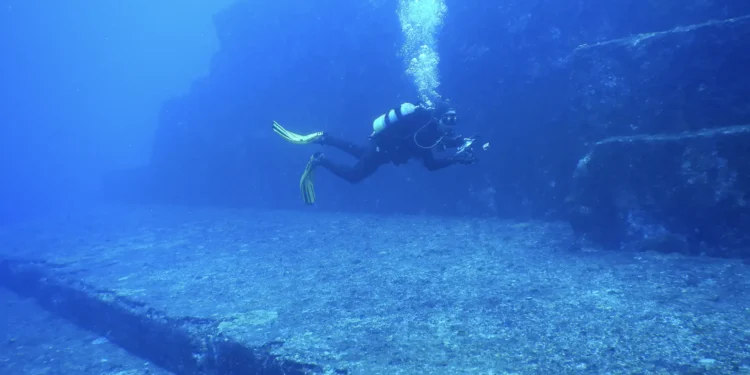


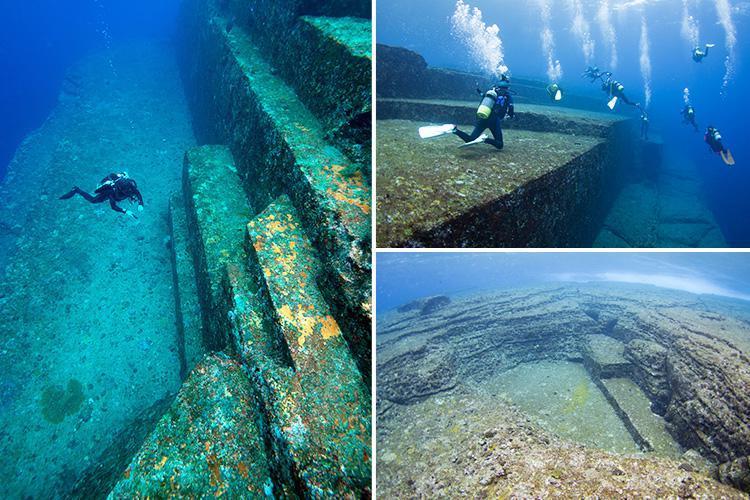 This is the underwater structure off the coast of Japan.
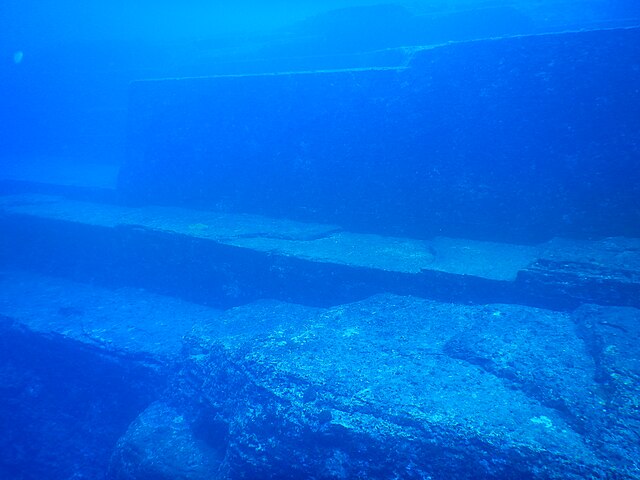 Another image of the Yonaguni monument.
Wikimedia Commons.