Naar de inhoud

UFO'S of UAP'S, ASTRONOMIE, RUIMTEVAART, ARCHEOLOGIE, OUDHEIDKUNDE, SF-SNUFJES EN ANDERE ESOTERISCHE WETENSCHAPPEN - DE ALLERLAATSTE NIEUWTJES

UFO's of UAP'S in België en de rest van de wereld
akke.beakke.be
Ontdek de Fascinerende Wereld van UFO's en UAP's: Jouw Bron voor Onthullende Informatie! Ben jij ook gefascineerd door het onbekende? Wil je meer weten over UFO's en UAP's, niet alleen in België, maar over de hele wereld? Dan ben je op de juiste plek! België: Het Kloppend Hart van UFO-onderzoek In België is BUFON (Belgisch UFO-Netwerk) dé autoriteit op het gebied van UFO-onderzoek. Voor betrouwbare en objectieve informatie over deze intrigerende fenomenen, bezoek je zeker onze Facebook-pagina en deze blog. Maar dat is nog niet alles! Ontdek ook het Belgisch UFO-meldpunt en Caelestia, twee organisaties die diepgaand onderzoek verrichten, al zijn ze soms kritisch of sceptisch. Nederland: Een Schat aan Informatie Voor onze Nederlandse buren is er de schitterende website www.ufowijzer.nl, beheerd door Paul Harmans. Deze site biedt een schat aan informatie en artikelen die je niet wilt missen! Internationaal: MUFON - De Wereldwijde Autoriteit Neem ook een kijkje bij MUFON (Mutual UFO Network Inc.), een gerenommeerde Amerikaanse UFO-vereniging met afdelingen in de VS en wereldwijd. MUFON is toegewijd aan de wetenschappelijke en analytische studie van het UFO-fenomeen, en hun maandelijkse tijdschrift, The MUFON UFO-Journal, is een must-read voor elke UFO-enthousiasteling. Bezoek hun website op www.mufon.com voor meer informatie. Samenwerking en Toekomstvisie Sinds 1 februari 2020 is Pieter niet alleen ex-president van BUFON, maar ook de voormalige nationale directeur van MUFON in Vlaanderen en Nederland. Dit creëert een sterke samenwerking met de Franse MUFON Reseau MUFON/EUROP, wat ons in staat stelt om nog meer waardevolle inzichten te delen. Let op: Nepprofielen en Nieuwe Groeperingen Pas op voor een nieuwe groepering die zich ook BUFON noemt, maar geen enkele connectie heeft met onze gevestigde organisatie. Hoewel zij de naam geregistreerd hebben, kunnen ze het rijke verleden en de expertise van onze groep niet evenaren. We wensen hen veel succes, maar we blijven de autoriteit in UFO-onderzoek! Blijf Op De Hoogte! Wil jij de laatste nieuwtjes over UFO's, ruimtevaart, archeologie, en meer? Volg ons dan en duik samen met ons in de fascinerende wereld van het onbekende! Sluit je aan bij de gemeenschap van nieuwsgierige geesten die net als jij verlangen naar antwoorden en avonturen in de sterren! Heb je vragen of wil je meer weten? Aarzel dan niet om contact met ons op te nemen! Samen ontrafelen we het mysterie van de lucht en daarbuiten.

Archief

Zwart gat vreet ster op en spuugt restanten weer uit (in de richting van de aarde)

Zwart gat vreet ster op en spuugt restanten weer uit (in de richting van de aarde)

481933c9-ace5-96b7-59ee-fb46b8c1953b.jpg

De onfortuinlijke ster werd volledig aan flarden gescheurd, wat leidde tot een recordbrekend heldere uitbarsting waarbij er meer licht werd uitgestraald dan 1000 biljoen zonnen samen!

Eerder dit jaar ontdekten astronomen een ongewoon heldere lichtbron aan de nachtelijke hemel. Meerdere telescopen, waaronder de Very Large Telescope (VLT), werden door onderzoekers van over de hele wereld op de mysterieuze bron gericht. En wat blijkt? Het signaal is waarschijnlijk afkomstig van een straal materie (een jet) die bijna met de snelheid als het licht uit een superzwaar zwart gat schiet. En deze jet blijkt het product van een zwart gat dat plotseling een nabije ster begon te verslinden, waarbij een enorme hoeveelheid energie vrijkwam.

Tidal disruption event
Sterren die onverhoopt te dicht bij een zwart gat in de buurt komen, worden door diens enorme getijdenkrachten aan flarden getrokken. Zo’n gebeurtenis wordt ook wel een ‘tidal disruption event’ (TDE) genoemd. In ongeveer één procent van de gevallen schieten bundels van plasma en straling uit de polen van het draaiende zwarte gat weg. In 1971 omschreef zwarte-gatenpionier John Wheeler het concept van TDE’s met jets als ‘een tube tandpasta die in het midden stevig wordt samengeknepen, waardoor aan beide uiteinden materie wegspuit’.

Deze animatie laat zien hoe materiaal van een ster naar een zwarte gat in het centrum van een ver sterrenstelsel toe valt, waarbij ‘jets’ van materie en straling ontstaan. Een deel van het materiaal van de ster wordt naar binnen getrokken en wervelt om het zwarte gat, waardoor de hierboven afgebeelde schijf ontstaat. In zeldzame gevallen (zoals deze), schieten materie en straling uit de polen van het zwarte gat weg. In het geval van AT2022cmc zijn deze ‘jets’ gedetecteerd met verschillende telescopen, waaronder de VLT, die vaststelde dat dit het verste voorbeeld van een gebeurtenis van dit type is.

Zeldzaam
Dit soort verschijnselen zijn uiterst zeldzaam en geven zich niet gemakkelijk prijs, waardoor ze moeilijk te bestuderen zijn. “We hebben tot nu toe pas een handjevol TDE’s met jets gezien en het zijn nog steeds heel exotische en slecht begrepen gebeurtenissen,” zegt onderzoeker Nial Tanvir. Astronomen zijn dus voortdurend op jacht naar deze extreme verschijnselen, om te begrijpen hoe de jets precies ontstaan en waarom ze maar bij zo weinig TDE’s optreden.

Speurtocht
In het kader van deze zoektocht speuren veel telescopen regelmatig de hemel af naar tekenen van kortstondige – vaak extreme – gebeurtenissen, die vervolgens veel gedetailleerder onder de loep kunnen worden genomen door telescopen zoals de VLT. In februari van dit jaar ontdekten astronomen vervolgens de nieuwe mysterieuze bron van zichtbaar licht. De gebeurtenis, die AT2022cmc is genoemd, leek op een gammaflits – de krachtigste lichtbron in het heelal. Het vooruitzicht om getuige te zijn van dit zeldzame verschijnsel bracht astronomen ertoe om telescopen van over de hele wereld te activeren om de mysterieuze lichtbron beter te kunnen bekijken.

Verste en helderste ooit
In totaal hebben 21 telescopen allerlei soorten licht – van hoogenergetische gammastraling tot radiogolven – verzameld. Verschillende theorieën over wat de heldere flits kon hebben veroorzaakt, passeerden de revue. Maar uiteindelijk is het enige scenario dat met de gegevens overeenkomt een zeldzame TDE, waarbij een onfortuinlijke ster door een hongerig zwart gat wordt opgeslokt. Wanneer de stellaire materie vervolgens in het zwarte gat valt, komt een heldere uitbarsting van energie vrij die onderzoekers kunnen detecteren. En van de weinig TDE’s met jets die tot nu toe zijn ontdekt, is AT2022cmc zowel de verste als de helderste.

Hoe dan?
De bron bevindt zich op een slordige 8,5 miljard lichtjaar afstand – meer dan halverwege het universum. Het licht van AT2022cmc begon zijn reis toen het heelal nog maar ongeveer een derde van zijn huidige leeftijd had. Hoe zo’n verre gebeurtenis zo helder aan onze hemel kan verschijnen? Het team denkt dat de uitgespuugde jet mogelijk rechtstreeks naar de aarde wijst, waardoor het signaal helderder lijkt dan wanneer de jet in een andere richting zou wijzen.

Zichtbaar licht
Dat is nog niet eens het enige bijzondere. “De weinige TDE’s met jets die tot nu toe zijn waargenomen, zijn in eerste instantie opgemerkt met telescopen die hoogenergetische gamma- en röntgenstraling detecteren,” vertelt onderzoeker Daniel Perley. “Maar AT2022cmc is de eerste ontdekking van een TDE in zichtbaar licht.” Dit betekent dat er blijkbaar nog een andere manier bestaat om TDE’s met jets te detecteren en deze zeldzame gebeurtenissen in de extreme omgevingen rond zwarte gaten nader te onderzoeken.

De waarnemingen verschaffen meer inzicht in superzware zwarte gaten. Zo zou het meer kunnen verhelderen over hoe zwarte gaten zich voeden en groeien. Daarnaast gaat de jacht op TDE’s onverstoorbaar door. En mogelijk wachten er in de nabije toekomst nog veel meer op ontdekking. In de komende jaren zullen er namelijk meer krachtige telescopen in bedrijf worden genomen die in staat zijn TDE’s aan het licht te brengen. “We verwachten in de toekomst nog veel meer van TDE’s te vinden,” zegt onderzoeker MatteoLucchini. “Dan zullen we mogelijk ook achterhalen hoe zwarte gaten de waargenomen extreem krachtige jets precies lanceren.”
Bronmateriaal

{ https://scientias.nl/ }

Hoe vind je dit bericht?
Geschreven door peter om 23:16 Stuur door

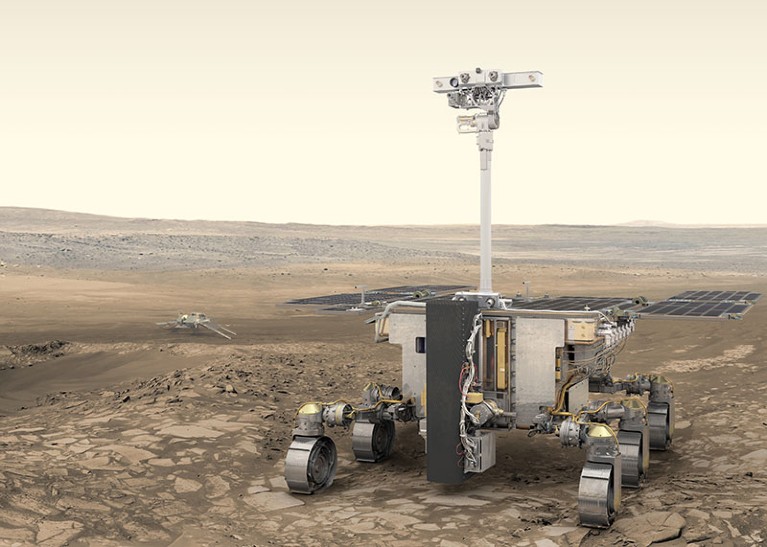
Europe’s first Mars rover mission saved by major investment

Europe’s first Mars rover mission saved by major investment

Hoe vind je dit bericht?
Geschreven door peter om 20:42 Stuur door

How real is 3D holographic blue beam technology?

How real is 3D holographic blue beam technology?

There is much written about the infamous Blue Beam project from which it is said that it will be used to create a fake alien invasion. 
3D%20holographic%20blue%20beam%20technology.jpg

Now, there are rumors that soon they are going to rollout this blue beam technology in order to convince the people that there is a threat from outer space. 
Of course there are secret government projects that use certain technologies and they have powerful satellites and ground based systems that can project holograms. They have been developing and perfecting this holographic blue beam technology for decades and it looks real.
But creating a fake alien invasion would require an enormous amount of resources and would be very difficult to keep it secret. Additionally, such an event would likely have major ethical and political implications that the US government would not want to risk, therefore it is unlikely that it would be used to create a false flag event, but you never know.
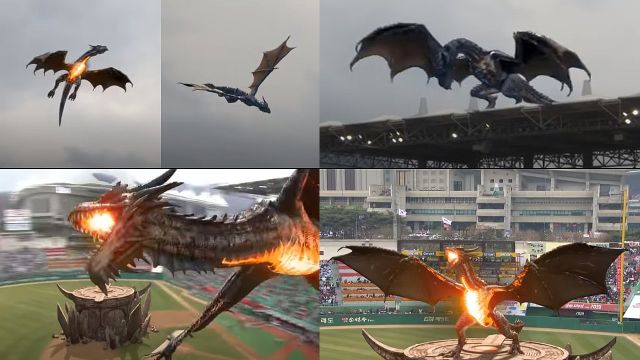
Watching the video below of a large fire-breathing dragon flying around at the opening of a baseball game at Happy Dream Park in South Korea in 2019 which was streamed live through sports broadcasting channels then it's not hard to imagine what's possible by using 3D holographic blue beam technology. 
  

RELATED VIDEOS

{ http://ufosightingshotspot.blogspot.com/  }

Hoe vind je dit bericht?
Geschreven door peter om 18:18 Stuur door

UFO Sighting in Quebec: Telepathic Chat with Pleiadians

UFO Sighting in Quebec: Telepathic Chat with Pleiadians

UFO Sighting in Quebec: Telepathic Chat with Pleiadians

UFO Sighting in Quebec: Telepathic Chat with Pleiadians?

On the 10th of August 2022, a driver in St-Élie-de-Caxton, Quebec, Canada, witnessed a mysterious UFO in the sky. The object was large and silvery white, with some small darker vessels below it. The driver was able to film the UFO, but the camera failed to capture the full extent of what the driver’s eyes could see.

The sighting was not just a random event, as another witness from a nearby town also saw the UFO and confirmed the presence of smaller vessels below the main one. However, what set this sighting apart from others was the fact that the driver claimed to have chatted telepathically with the UFO afterwards, and it identified itself as a Pleiadian spacecraft.

The Pleiades, also known as the Seven Sisters, is a star cluster located in the Taurus constellation, and it has been the subject of much fascination for many years. According to believers in the existence of extraterrestrial life, the Pleiadians are an advanced race of beings who have been visiting Earth for a long time. They are said to be peaceful and benevolent and have been working to help humanity in various ways.

The driver’s telepathic chat with the Pleiadian craft was an extraordinary event, but it raises a lot of questions. How did the driver know that the craft was a Pleiadian spaceship? Was the chat genuine, or was it just a figment of the driver’s imagination? These are difficult questions to answer, and it’s up to each person to decide what they believe.

Despite the skepticism that some may have towards the driver’s experience, it’s worth noting that there have been many reports of people claiming to have had telepathic communications with extraterrestrial beings. In some cases, these contacts have led to profound changes in people’s lives, inspiring them to become more spiritual or pursue a deeper understanding of the universe.

In any case, the sighting in Quebec is an exciting event that adds to the long list of mysterious and unexplained phenomena that continue to fascinate people around the world. Whether or not the driver’s telepathic chat with the Pleiadian craft was genuine, it’s clear that the event had a profound impact on the driver and may inspire others to keep an open mind about the possibility of life beyond Earth.

RELATED

{ https://www.latest-ufo-sightings.net/ }

Hoe vind je dit bericht?
Geschreven door peter om 17:48 Stuur door

LATEST UFO SIGHTINGS AND VIDEOS - 21-02-2023

LATEST UFO SIGHTINGS AND VIDEOS - 21-02-2023

Mercury transits the Sun in these awesome Solar Orbiter views

ESA's Solar Orbiter captured views of the planet Mercury passing in front of the Sun on Jan. 3, 2023. Multiple instruments aboard the spacecraft captured the imagery.

[Full Story](https://www.space.com/solar-orbiter-s...)

Credit: Space.com | footage & orbit animation courtesy: ESA & NASA/Solar Orbiter/EUI Team/PHI Team / ATG medialab | edited by [Steve Spaleta](https://twitter.com/stevespaleta)

Strangest Laser/Maser Object in the Milky Way Gets Even Weirder, MWC 349

0:00 Introduction to Strange Stars

0:30 MWC 349 Object Explained

1:30 What Do We Know About This Object's Origin?

2:55 Strange Observations and Discoveries

3:45 History of Masers and Mysterium

5:35 Biggest Questions About This Object

6:00 New Discoveries and More Mysteries

7:20 Potential Explanation and Conclusions

These Rocks Did Something We Were Not Expecting | 1st Year Perseverance Supercut

RELATED

SpaceX NEW Dragon scheduled to ISS with astronauts made Russia embarrassed cause of Soyuz

SpaceX Dragon to ISS with astronauts while Soyuz is empty, Dragon to rescue Soyuz...

This is the International Space Station or ISS for short.
It has been continuously occupied since November 2000. The station is divided into two sections: the Russian Orbital Segment is operated by Russia, while the United States Orbital Segment is run by the United States as well as by the other states.
Countries have cooperated very well with each other over the past two decades. But the ISS status is recently experiencing a lot of turmoil due to the Soyuz leak two times in nearly two months.
More stress will come this week as in just a short period of time, SpaceX Dragon will dock to ISS with astronauts while Soyuz is empty to rescue the MS-22 crew.
Explain all of this in today's episode of Alpha Tech:
First, in an important news, one leaky Russia space station ships burned up over the Pacific Ocean last week.
The Progress MS-21 cargo ship undocked from space-facing Poisk module on the Russian segment of the space station at 9:26 p.m. EST Friday (0226 GMT Saturday), keeping a departure date that has been set for months. But the routine undocking took special significance after the Progress MS-21 cargo ship suddenly leaked coolant last Saturday, Feb. 11, soon after the docking of a fresh Progress resupply spacecraft to a different port on the space station.
The timing of the leak soon after the docking of another Progress supply ship was presumably a coincidence, but it was the second time in less than two months that a Russian spacecraft suddenly lost its coolant fluid while docked at the international research complex. Russia’s Soyuz MS-22 crew ferry ship leaked coolant in December, an incident that Russian space agency officials previously blamed on a likely high-speed impact from a micrometeoroid, or a tiny fragment of rock from deep space.
Russian engineers continue analyzing the cause of the coolant leak on the unpiloted Progress MS-21 cargo ship, and officials have not said whether both leaks were caused by the same failure, or if both spaceships suffered untimely hits by space junk or micrometeoroids. The coolant on both vehicles is used to dissipate heat generated by internal spacecraft electronics, and maintain comfortable operating temperatures for computers, cargo, and people inside.
The 58-foot-long (17.6-meter) Canadian-built robotic arm inspected the damaged thermal control system radiator Progress MS-21 spacecraft’s rear instrumentation compartment earlier last week, according to Roscosmos, Russia’s space agency. Russian space officials decided to move ahead with the planned undocking and re-entry of the Progress MS-21 spacecraft, which is carrying trash and other unnecessary space station equipment for disposal.
SpaceX NEW Dragon scheduled to ISS with astronauts made Russia embarrassed cause of Soyuz

Breakthrough In Dark Energy? Here's What The Researchers Have To Say

A recent research paper suggests that supermassive black holes can be the source of dark energy. It's a big potential breakthrough in Astronomy. So, here's what the co-author of the study, Dr Chris Pearson from STFC RAL Space, has to say about it.

00:00 Intro

01:36 How did the paper come together

03:36 Connection between Dark Energy and Black Holes

06:48 Observations behind the research

14:37 Causation or just correlation?

21:20 Redefining what black holes are

25:27 Dark Energy core of a black hole

27:53 Nature of dark energy

35:35 Will Dark Energy tear the Universe apart?

38:30 What's next

40:11 Outro

Why Is It So Difficult To Get To Saturn?

Since space exploration began, only four spaceships have managed to reach Saturn. But, only one managed to enter the planet's bowels and reveal what is hidden under its cloud-filled atmosphere. Is it difficult to get to the planet with the giant asteroid rings?
Ready? Let's get started!
Being the sixth closest planet to the sun, Saturn is also known for its famous asteroid rings, but despite its fame, few have been the ships that have managed to reach this distant planet.
The Gas Giants
One of the main reasons Saturn is so difficult for our spacecraft or space exploration probes to visit is that it is part of the planets known as "gas giants," which are very far from Earth and the sun.
Any spacecraft destined to visit the outermost planets of the solar system must meet specific requirements that are very difficult to achieve. One such requirement is that the spacecraft must have a nuclear battery that provides it with electrical power for all its data transmission functions. These ships must carry this type of battery instead of the classic solar panels because these planets are too far from the sun; because of this, very little light arrives, and the solar panels fail to provide enough energy for the operation of the ship.
Due to the lack of light, it is necessary to incorporate batteries that work with nuclear thermal energy. Still, the problem with these batteries is that they weigh a lot, which considerably increases the cost of the spaceship, in addition to the fact that the heavier it is, the more fuel is also needed to take it very far, compared to the energy needed by exploration probes that use solar panels.
Gas giants like Saturn are located beyond the asteroid belt; in these regions, the temperatures are very, very low, which is why the ships that are sent to explore these planets must have isolation systems to the low temperatures of the interplanetary medium.
And, of course, one of the most important reasons why it is tough to reach Saturn is that it is 1,300 million kilometers from Earth. To cover this distance, a large amount of energy and fuel is necessary at the time of launch, which is why the probes that have visited Saturn have been supported with the gravitational assistance of Jupiter.
Too far for telescopes

Scientists Just Opened A Black Hole And FINALLY Found What's Inside

For as long as most of us can remember, black holes have been seen as one of the scariest things mankind has ever come across. They have the ability to swallow up anything that comes too close, including galaxies, stars, and any other matter in their reach. But there is much more to black holes than meets the eye. The thing is, you can't exactly get up close to one to study it, or can you? Well, scientists have just admitted that they've created an actual black hole in their lab, and well, it's revealed details that no one saw coming.
Join us as we explore the incredible and mysterious world of black holes, what scientists were able to find out with the one they made, and what it all might mean for the future of science and mankind as a whole.

You Won’t Believe Your Eyes What NASA Found In Space!

Google's AI Robot Terrifies Officials Before It Was Quickly Shut Down

Google's AI Robot Terrifies Officials Before It Was Quickly Shut Down. Google engineer Blake Lemoine began talking to LaMDA as part of his job to test if the artificial intelligence used discriminatory or hate speech. But what followed, let Lemoine’s jaw open.

#artificial #robot #aimbotfreefire

0:00 AI Solves The Mysterious Footprint

1:39 Artificial Intelligence & Humanoid Robots

3:21 Google's AI Robot Conversation

7:39 Lemoine gets fired

RELATED

Elon Musk Drops Truth Bomb About Aliens - You Won't Believe What He Said!

Elon Musk Drops Truth Bomb About Aliens - You Won't Believe What He Said!

In this video, we explore what Elon Musk just said about aliens and how it could potentially change our understanding of the universe. From the possibility of life on Mars to the potential implications for space travel, Musk's comments have left many people wondering about the future of space exploration. Join us as we dive into this fascinating topic and uncover the truth about Elon Musk's thoughts on extraterrestrial life.

{  https://www.youtube.com/ }

Hoe vind je dit bericht?
Geschreven door peter om 17:22 Stuur door

NASA’s Webb Reveals Intricate Networks of Gas and Dust in Nearby Galaxies

NASA’s Webb Reveals Intricate Networks of Gas and Dust in Nearby Galaxies

A galaxy spiral with a bright, white center. At the top right and lower left are brighter spots of red, with light blue web like spirals throughout.

New imagery from NASA’s James Webb Space Telescope is giving scientists their first look at high resolution into the fine structure of nearby galaxies and how that’s impacted by the formation of young stars. NGC 1433 is a barred spiral galaxy with a particularly bright core surrounded by double star forming rings. For the first time, in Webb’s infrared images, scientists can see cavernous bubbles of gas where forming stars have released energy into their surrounding environment. In the image of NGC 1433, blue, green, and red were assigned to Webb’s MIRI data at 7.7, 10 and 11.3, and 21 microns (F770W, F1000W and F1130W, and F2100W, respectively).
Credits: NASA, ESA, CSA, and J. Lee (NOIRLab). Image processing: A. Pagan (STScI)

Researchers using NASA’s James Webb Space Telescope are getting their first look at star formation, gas, and dust in nearby galaxies with unprecedented resolution at infrared wavelengths. The data has enabled an initial collection of 21 research papers which provide new insight into how some of the smallest-scale processes in our universe – the beginnings of star formation – impact the evolution of the largest objects in our cosmos: galaxies.

The largest survey of nearby galaxies in Webb’s first year of science operations is being carried out by the Physics at High Angular resolution in Nearby Galaxies (PHANGS) collaboration, involving more than 100 researchers from around the globe. The Webb observations are led by Janice Lee, Gemini Observatory chief scientist at the National Science Foundation’s NOIRLab and affiliate astronomer at the University of Arizona in Tucson.

The team is studying a diverse sample of 19 spiral galaxies, and in Webb’s first few months of science operations, observations of five of those targets – M74, NGC 7496, IC 5332, NGC 1365, and NGC 1433 – have taken place. The results are already astounding astronomers. 

“The clarity with which we are seeing the fine structure certainly caught us by surprise,” said team member David Thilker of Johns Hopkins University in Baltimore, Maryland. 

“We are directly seeing how the energy from the formation of young stars affects the gas around them, and it’s just remarkable,” said team member Erik Rosolowsky of the University of Alberta, Canada.

A galaxy spiral with a bright, star-like burst red center with light blue web like spirals throughout.

The spiral arms of NGC 7496 are filled with cavernous bubbles and shells overlapping one another in this image from MIRI. These filaments and hollow cavities are evidence of young stars releasing energy and, in some cases, blowing out the gas and dust of the interstellar medium surrounding them. In this image of NGC 7496, blue, green, and red were assigned to Webb’s MIRI data at 7.7, 10 and 11.3, and 21 microns (F770W, F1000W and F1130W, and F2100W, respectively).
Credits: NASA, ESA, CSA, and J. Lee (NOIRLab). Image processing: A. Pagan (STScI)

The images from Webb’s Mid-Infrared Instrument (MIRI) reveal the presence of a network of highly structured features within these galaxies – glowing cavities of dust and huge cavernous bubbles of gas that line the spiral arms. In some regions of the nearby galaxies observed, this web of features appears built from both individual and overlapping shells and bubbles where young stars are releasing energy. 

“Areas which are completely dark in Hubble imaging light up in exquisite detail in these new infrared images, allowing us to study how the dust in the interstellar medium has absorbed the light from forming stars and emitted it back out in the infrared, illuminating an intricate network of gas and dust,” said team member Karin Sandstrom of the University of California, San Diego. 

The high-resolution imaging needed to study these structures has long evaded astronomers – until Webb came into the picture. 

“The PHANGS team has spent years observing these galaxies at optical, radio, and ultraviolent wavelengths using NASA’s Hubble Space Telescope, the Atacama Large Millimeter/Submillimeter Array, and the Very Large Telescope’s Multi Unit Spectroscopic Explorer,” added team member Adam Leroy of the Ohio State University. “But, the earliest stages of a star’s lifecycle have remained out of view because the process is enshrouded within gas and dust clouds.”

Webb’s powerful infrared capabilities can pierce through the dust to connect the missing puzzle pieces. 

For example, specific wavelengths observable by MIRI (7.7 and 11.3 microns) and Webb’s Near-Infrared Camera (3.3 microns) are sensitive to emission from polycyclic aromatic hydrocarbons, which play a critical role in the formation of stars and planets. These molecules were detected by Webb in the first observations by the PHANGS program.

Studying these interactions at the finest scale can help provide insights into the larger picture of how galaxies have evolved over time.

A galaxy spiral with a bright, light pink eye-shaped center, just right of center with light blue web like spirals throughout.

In the MIRI observations of NGC 1365, clumps of dust and gas in the interstellar medium have absorbed the light from forming stars and emitted it back out in the infrared, lighting up an intricate network of cavernous bubbles and filamentary shells influenced by young stars releasing energy into the galaxy’s spiral arms. In this image of NGC 1356, blue, green, and red were assigned to Webb’s MIRI data at 7.7, 10 and 11.3, and 21 microns (F770W, F1000W and F1130W, and F2100W, respectively).
Credits: NASA, ESA, CSA, and J. Lee (NOIRLab). Image processing: A. Pagan (STScI)

“Because these observations are taken as part of what's called a treasury program, they are available to the public as they are observed and received on Earth,” said Eva Schinnerer of the Max Planck Institute for Astronomy in Heidelberg, Germany, and leader of the PHANGS collaboration.

The PHANGS team will work to create and release data sets that align Webb’s data to each of the complementary data sets obtained previously from the other observatories, to help accelerate discovery by the broader astronomical community. 

“Thanks to the telescope's resolution, for the first time we can conduct a complete census of star formation, and take inventories of the interstellar medium bubble structures in nearby galaxies beyond the Local Group,” Lee said. “That census will help us understand how star formation and its feedback imprint themselves on the interstellar medium, then give rise to the next generation of stars, or how it actually impedes the next generation of stars from being formed.”

The research by the PHANGS team is being conducted as part of General Observer program 2107. The team’s initial findings, comprised of 21 individual studies, were recently published in a special focus issue of The Astrophysical Journal Letters.

The James Webb Space Telescope is the world's premier space science observatory. Webb will solve mysteries in our solar system, look beyond to distant worlds around other stars, and probe the mysterious structures and origins of our universe and our place in it. Webb is an international program led by NASA with its partners, ESA (European Space Agency), and CSA (Canadian Space Agency).

Media Contacts:

RELATED VIDEOS

{ https://www.nasa.gov/ }

Hoe vind je dit bericht?
Geschreven door peter om 23:57 Stuur door

How will AI change mathematics? Rise of chatbots highlights discussion

How will AI change mathematics? Rise of chatbots highlights discussion

Over-the-shoulder view of a student wearing a face mask using a computer in a lab room.

AI tools have allowed researchers to solve complex mathematical problems.

Credit: Fadel Senna/AFP/Getty

As interest in chatbots spreads like wildfire, mathematicians are beginning to explore how artificial intelligence (AI) could help them to do their work. Whether it’s assisting with verifying human-written work or suggesting new ways to solve difficult problems, automation is beginning to change the field in ways that go beyond mere calculation, researchers say.

RELATED

“We’re looking at a very specific question: will machines change math?” says Andrew Granville, a number theorist at the University of Montreal in Canada. A workshop at the University of California, Los Angeles (UCLA), this week explored this question, aiming to build bridges between mathematicians and computer scientists. “Most mathematicians are completely unaware of these opportunities,” says one of the event’s organizers, Marijn Heule, a computer scientist at Carnegie Mellon University in Pittsburgh, Pennsylvania.

Akshay Venkatesh, a 2018 winner of the prestigious Fields Medal who is at the Institute for Advanced Study in Princeton, New Jersey, kick-started a conversation on how computers will change maths at a symposium in his honour in October. Two other recipients of the medal, Timothy Gowers at the Collège de France in Paris and Terence Tao at UCLA, have also taken leading roles in the debate.

“The fact that we have people like Fields medallists and other very famous big-shot mathematicians interested in the area now is an indication that it’s ‘hot’ in a way that it didn’t used to be,” says Kevin Buzzard, a mathematician at Imperial College London.

AI approaches

Part of the discussion concerns what kind of automation tools will be most useful. AI comes in two major flavours. In ‘symbolic’ AI, programmers embed rules of logic or calculation into their code. “It’s what people would call ‘good old-fashioned AI’,” says Leonardo de Moura, a computer scientist at Microsoft Research in Redmond, Washington.

The other approach, which has become extremely successful in the past decade or so, is based on artificial neural networks. In this type of AI, the computer starts more or less from a clean slate and learns patterns by digesting large amounts of data. This is called machine-learning, and it is the basis of ‘large language models’ (including chatbots such as ChatGPT), as well as the systems that can beat human players at complex games or predict how proteins fold. Whereas symbolic AI is inherently rigorous, neural networks can only make statistical guesses, and their operations are often mysterious.

Akshay Venkatesh receives an award in mathematics

2018 Fields Medal winner Akshay Venkatesh (centre) has spoken about how computers will change mathematics.

Credit: Xinhua/Shutterstock

De Moura helped symbolic AI to score some early mathematical successes by creating a system called Lean. This interactive software tool forces researchers to write out each logical step of a problem, down to the most basic details, and ensures that the maths is correct. Two years ago, a team of mathematicians succeeded at translating an important but impenetrable proof — one so complicated that even its author was unsure of it — into Lean, thereby confirming that it was correct.

The researchers say the process helped them to understand the proof, and even to find ways to simplify it. “I think this is even more exciting than checking the correctness,” de Moura says. “Even in our wildest dreams, we didn’t imagine that.”

As well as making solitary work easier, this sort of ‘proof assistant’ could change how mathematicians work together by eliminating what de Moura calls a “trust bottleneck”. “When we are collaborating, I may not trust what you are doing. But a proof assistant shows your collaborators that they can trust your part of the work.”

Sophisticated autocomplete

At the other extreme are chatbot-esque, neural-network-based large language models. At Google in Mountain View, California, former physicist Ethan Dyer and his team have developed a chatbot called Minerva, which specializes in solving maths problems. At heart, Minerva is a very sophisticated version of the autocomplete function on messaging apps: by training on maths papers in the arXiv repository, it has learnt to write down step-by-step solutions to problems in the same way that some apps can predict words and phrases. Unlike Lean, which communicates using something similar to computer code, Minerva takes questions and writes answers in conversational English. “It is an achievement to solve some of these problems automatically,” says de Moura.

RELATED

Minerva shows both the power and the possible limitations of this approach. For example, it can accurately factor integer numbers into primes — numbers that can’t be divided evenly into smaller ones. But it starts making mistakes once the numbers exceed a certain size, showing that it has not ‘understood’ the general procedure.

Still, Minerva’s neural network seems to be able to acquire some general techniques, as opposed to just statistical patterns, and the Google team is trying to understand how it does that. “Ultimately, we’d like a model that you can brainstorm with,” Dyer says. He says it could also be useful for non-mathematicians who need to extract information from the specialized literature. Further extensions will expand Minerva’s skills by studying textbooks and interfacing with dedicated maths software.

Dyer says the motivation behind the Minerva project was to see how far the machine-learning approach could be pushed; a powerful automated tool to help mathematicians might end up combining symbolic AI techniques with neural networks.

Maths v. machines

In the longer term, will programs remain part of the supporting cast, or will they be able to conduct mathematical research independently? AI might get better at producing correct mathematical statements and proofs, but some researchers worry that most of those would be uninteresting or impossible to understand. At the October symposium, Gowers said that there might be ways of teaching a computer some objective criteria for mathematical relevance, such as whether a small statement can embody many special cases or even form a bridge between different subfields of maths. “In order to get good at proving theorems, computers will have to judge what is interesting and worth proving,” he said. If they can do that, the future of humans in the field looks uncertain.

Computer scientist Erika Abraham at RWTH Aachen University in Germany is more sanguine about the future of mathematicians. “An AI system is only as smart as we program it to be,” she says. “The intelligence is not in the computer; the intelligence is in the programmer or trainer.”

Melanie Mitchell, a computer scientist and cognitive scientist at the Santa Fe Institute in New Mexico, says that mathematicians’ jobs will be safe until a major shortcoming of AI is fixed — its inability to extract abstract concepts from concrete information. "While AI systems might be able to prove theorems, it’s much harder to come up with interesting mathematical abstractions that give rise to the theorems in the first place.”

  • doi: https://doi.org/10.1038/d41586-023-00487-2

{ https://www.nature.com/ }

Hoe vind je dit bericht?
Geschreven door peter om 20:27 Stuur door

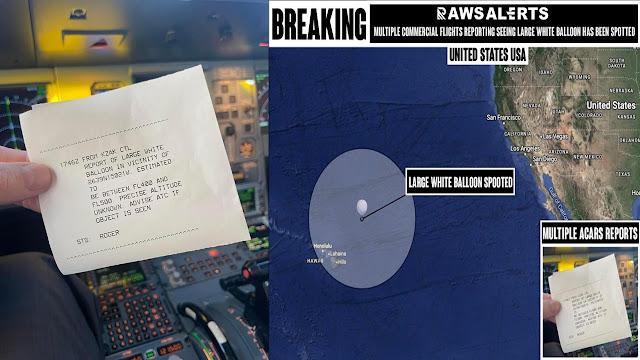
Pilots report seeing 'large white balloon' floating 50,000ft above Hawaii on plane radars - after Pentagon downed four objects flying over US in last month

Pilots report seeing 'large white balloon' floating 50,000ft above Hawaii on plane radars - after Pentagon downed four objects flying over US in last month

  • There have been multiple reports of a large white balloon sighted by pilots over Honolulu, Hawaii
  • It comes after recent claims by US officials that a Chinese 'spy' balloon targeting Hawaii had been blown off course  
  • The object was seen by several pilots and was estimated to be at an altitude of approximately 50,000 feet

Pilots have reported seeing a 'large white balloon' on their radars just east of Hawaii on Sunday afternoon. 

A number of reports suggest that the object was spotted above Honolulu according to The Sun.

It comes days after US officials claimed that a Chinese 'spy' balloon that was headed towards Hawaii had been blown off course. 

Some postings on social media report how a 'large white balloon' was spotted by pilots at an altitude of around 50,000 feet.

However, Air Traffic Control and other US officials have not yet confirmed such reports with the identity of the object and the potential threat it poses to the public unknown. 

Pilots have allegedly been told to look out for another large white balloon off the Hawaii coast on Sunday

Pilots have allegedly been told to look out for another large white balloon off the Hawaii coast on Sunday

Air traffic control sent out instructions asking for pilots to report any sightings of the balloon

Air traffic control sent out instructions asking for pilots to report any sightings of the balloon

The balloon was allegedly spotted about 600 miles northeast of Hawaii on Sunday afternoon 

A 'Large White Balloon' was spotted 524 nautical miles NE of Honolulu on Sunday afternoon

It comes after recent claims by US officials that a Chinese 'spy' balloon targeting Hawaii had been blown off course (file photo from earlier this month)

An image posted to social media online shows what looks to be a pilot in the cockpit holding a note. 

'Report of large white balloon in vicinity of 2639N15021W. Estimated to be between FL400 and FL500. Precise altitude unknown. Advise ATC if object is seen.'

Oakland Oceanic Air Traffic Control Center confirmed the existence of the flying object which reported how the balloon was about 600 miles northeast of Honolulu, over the Pacific Ocean.

The US military shot down several balloons earlier this month, including what was believed to be a Chinese spy balloon on February 4 off the coast of South Carolina. 

Since February 4, four objects have been shot down including the Chinese spy balloon, and then three 'UFOs'

Since February 4, four objects have been shot down including the Chinese spy balloon, and then three 'UFOs'

Last week another balloon was shot down over Alaska. A map of the hobby balloon's predicted path indicates it was heading towards the site where the UFO was downed

Last week another balloon was shot down over Alaska. A map of the hobby balloon's predicted path indicates it was heading towards the site where the UFO was downed

On February 4, a much bigger balloon - believed to be a Chinese spy balloon (pictured) - was shot down off the coast of South Carolina

On February 4, a much bigger balloon - believed to be a Chinese spy balloon (pictured) - was shot down off the coast of South Carolina

U.S. Navy shows sailors assigned to Explosive Ordnance Disposal Group 2 recovering a high-altitude surveillance balloon off the coast of Myrtle Beach, South Carolina

U.S. Navy shows sailors assigned to Explosive Ordnance Disposal Group 2 recovering a high-altitude surveillance balloon off the coast of Myrtle Beach, South Carolina

Sailors assigned to Explosive Ordnance Disposal Group 2 recovering a high-altitude surveillance balloon off the coast of Myrtle Beach, South Carolina earlier this month

Sailors assigned to Explosive Ordnance Disposal Group 2 recovering a high-altitude surveillance balloon off the coast of Myrtle Beach, South Carolina earlier this month

The remnants of the downed balloon from earlier this month is packed away for investigation

The remnants of the downed balloon from earlier this month is packed away for investigation

On Thursday Joe Biden said that the U.S. is updating its guidelines for monitoring and reacting to unknown aerial objects after the discovery of a suspected Chinese spy balloon transited the country triggered high-stakes drama.

It saw the U.S. shootdown that balloon off the South Carolina coast and three smaller ones days later. 

Biden said officials suspect the three subsequent balloons were ordinary ones which could mean they were used for research, weather, recreational or commercial purposes. 

Officials have been unable to recover any of the remains of those three balloons, and late Friday the U.S. military announced it had ended the search for the objects that were shot down near Deadhorse, Alaska, and over Lake Huron on February 10 and 12.

President Joe Biden said there was no evidence of a surge in mysterious balloons, when he addressed the nation on Thursday. 'We're now just seeing more of them,' he said

President Joe Biden said there was no evidence of a surge in mysterious balloons, when he addressed the nation on Thursday. 'We're now just seeing more of them,' he said 

'The U.S. military, federal agencies, and Canadian partners conducted systematic searches of each area using a variety of capabilities, including airborne imagery and sensors, surface sensors and inspections, and subsurface scans, and did not locate debris,' officials said on Friday.

In the South Carolina incident, the U.S. military has said it believes it has collected all of the Chinese balloon's priority sensors and electronics as well as large sections of its structure.

The balloon, which Beijing denies was a government spy vessel, spent a week flying over the United States and Canada before being shot down off the Atlantic Coast on Biden's orders.

balloon%20Hawaii.jpg

{ https://www.dailymail.co.uk/ }

Hoe vind je dit bericht?
Geschreven door peter om 18:21 Stuur door

Another large balloon has been spotted near Honolulu, Hawaii

Another large balloon has been spotted near Honolulu, Hawaii

balloon%20Hawaii.jpg
Twitter:

and

Will the US Air Force also shoot this balloon out of the sky? 
All these objects shot down by the US Air Force the last weeks have nothing to do with aliens. As Neil deGrasse Tyson said during an interview with CNN: "We have expensive planes and expensive missiles to pop balloons, and that's odd, but Ok that's fine to protect the airspace, Do I think these are visiting aliens? It would be odd. If they were aliens moving across the galaxy and dropping some balloons, oh what aliens would do?" 
It is clear that there is more to it than we are being told, and it is not just about these balloons and unknown objects shot down by the US Airforce. They know what is coming and they are preparing for it. 
The fact that a truckdriver (see video below) has driven for the last few days truckloads of products from the Kraft Foods plant which is an American food manufacturing to deliver it to the Springfield Underground base says enough that they are preparing for something that is going to take place on a large scale.

{ http://ufosightingshotspot.blogspot.com/ }

Hoe vind je dit bericht?
Geschreven door peter om 17:54 Stuur door

NASA caught bizarre elongated shaped asteroid-like object similar to Oumuamua

NASA caught bizarre elongated shaped asteroid-like object similar to Oumuamua

This collage shows six planetary radar observations of 2011 AG5
This collage shows six planetary radar observations of 2011 AG5 a day after the asteroid made its close approach to Earth on Feb. 3. With dimensions comparable to the Empire State Building, 2011 AG5 is one of the most elongated asteroids to be observed by planetary radar to date.
Credits: NASA/JPL-Caltech
NASA’s Jet Propulsion Laboratory has captured one of the longest asteroids ever found. The oddly shaped object is as big as Empire State Building and to get a sense of its scale, scientists have estimated the object is about 1,600-by-500 feet, roughly comparable to that of the world-famous landmark that looms over 100 stories above New York. 
bizarre%20elongated%20asteroid.jpg

The supposed asteroid, which recently sped past Earth, has caught the attention of NASA astronomers for its bizarre long shape. The space object is more than three times as long as it is wide and it is as dark as charcoal when viewed by the human eye, it appears to be scooped on one side and is spinning around every nine hours. 
"Of the 1,040 near-Earth objects observed by planetary radar to date, this is one of the most elongated we’ve seen," said Lance Benner, principal scientist at NASA's Jet Propulsion Laboratory, in a statement. 
The strange space object reminds us the infamous object called Oumuamua which was the first interstellar object, detected by the Pan-STARRS telescope at Haleakalā Observatory, Hawaii, on 19 October 2017, passing through the Solar System. 
Harvard astrophysicist Avi Loeb suggested that Oumuamua could be an alien spacecraft, and given the equality of the new discovered elongated shaped object to Oumuamua we should at least be open to the possibility that it could be evidence of another interstellar alien spacecraft.
  
RELATED VIDEOS

{ http://ufosightingshotspot.blogspot.com/ }

Hoe vind je dit bericht?
Geschreven door peter om 17:36 Stuur door

Meer van UFO'S of UAP'S, ASTRONOMIE, RUIMTEVAART, ARCHEOLOGIE, OUDHEIDKUNDE, SF-SNUFJES EN ANDERE ESOTERISCHE WETENSCHAPPEN - DE ALLERLAATSTE NIEUWTJES

↑ Terug naar de berichten