Naar de inhoud

UFO'S of UAP'S, ASTRONOMIE, RUIMTEVAART, ARCHEOLOGIE, OUDHEIDKUNDE, SF-SNUFJES EN ANDERE ESOTERISCHE WETENSCHAPPEN - DE ALLERLAATSTE NIEUWTJES

UFO's of UAP'S in België en de rest van de wereld
akke.beakke.be
Ontdek de Fascinerende Wereld van UFO's en UAP's: Jouw Bron voor Onthullende Informatie! Ben jij ook gefascineerd door het onbekende? Wil je meer weten over UFO's en UAP's, niet alleen in België, maar over de hele wereld? Dan ben je op de juiste plek! België: Het Kloppend Hart van UFO-onderzoek In België is BUFON (Belgisch UFO-Netwerk) dé autoriteit op het gebied van UFO-onderzoek. Voor betrouwbare en objectieve informatie over deze intrigerende fenomenen, bezoek je zeker onze Facebook-pagina en deze blog. Maar dat is nog niet alles! Ontdek ook het Belgisch UFO-meldpunt en Caelestia, twee organisaties die diepgaand onderzoek verrichten, al zijn ze soms kritisch of sceptisch. Nederland: Een Schat aan Informatie Voor onze Nederlandse buren is er de schitterende website www.ufowijzer.nl, beheerd door Paul Harmans. Deze site biedt een schat aan informatie en artikelen die je niet wilt missen! Internationaal: MUFON - De Wereldwijde Autoriteit Neem ook een kijkje bij MUFON (Mutual UFO Network Inc.), een gerenommeerde Amerikaanse UFO-vereniging met afdelingen in de VS en wereldwijd. MUFON is toegewijd aan de wetenschappelijke en analytische studie van het UFO-fenomeen, en hun maandelijkse tijdschrift, The MUFON UFO-Journal, is een must-read voor elke UFO-enthousiasteling. Bezoek hun website op www.mufon.com voor meer informatie. Samenwerking en Toekomstvisie Sinds 1 februari 2020 is Pieter niet alleen ex-president van BUFON, maar ook de voormalige nationale directeur van MUFON in Vlaanderen en Nederland. Dit creëert een sterke samenwerking met de Franse MUFON Reseau MUFON/EUROP, wat ons in staat stelt om nog meer waardevolle inzichten te delen. Let op: Nepprofielen en Nieuwe Groeperingen Pas op voor een nieuwe groepering die zich ook BUFON noemt, maar geen enkele connectie heeft met onze gevestigde organisatie. Hoewel zij de naam geregistreerd hebben, kunnen ze het rijke verleden en de expertise van onze groep niet evenaren. We wensen hen veel succes, maar we blijven de autoriteit in UFO-onderzoek! Blijf Op De Hoogte! Wil jij de laatste nieuwtjes over UFO's, ruimtevaart, archeologie, en meer? Volg ons dan en duik samen met ons in de fascinerende wereld van het onbekende! Sluit je aan bij de gemeenschap van nieuwsgierige geesten die net als jij verlangen naar antwoorden en avonturen in de sterren! Heb je vragen of wil je meer weten? Aarzel dan niet om contact met ons op te nemen! Samen ontrafelen we het mysterie van de lucht en daarbuiten.

Archief

See the 1998 disaster film Deep Impact come to life in a new interactive map! Simulation lets you drop asteroids on Time Square, London or any place in the world - and it tells you how many millions of people will be killed

See the 1998 disaster film Deep Impact come to life in a new interactive map! Simulation lets you drop asteroids on Time Square, London or any place in the world - and it tells you how many millions of people will be killed

  • A coder launched an asteroid scenario simulator that lets users choose a location to drop an asteroid and see the widespread destruction
  • Asteroid Launch uses Apple Maps to pull satellite footage of the Earth and overlays the selected area with visuals
  • The system lets users choose the size of the asteroid, speed of impact, makeup and angle of impact 
  • It reveals how many people would be killed by impact, fires, winds and earthquakes following the event 

A new interactive map brings the 1998 film Deep Impact to life, allowing users to drop a space rock anywhere globally to watch the devastation unfold. 

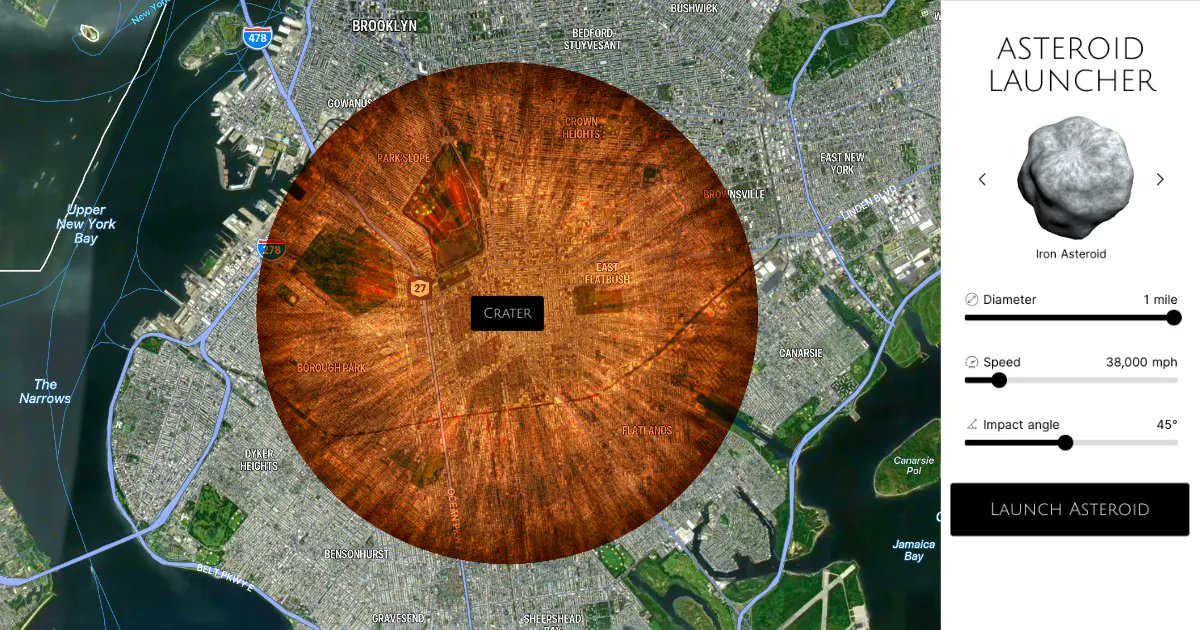
Called Asteroid Launcher, the system lets you choose a location of impact, the diameter of the asteroid, the speed at which it hits the ground and the collision angle - and hit 'launch' to see the destructions it causes and the number of people killed.

If an asteroid measuring one mile in diameter smashes into Time Square at 152,000 miles per hour, it would create a 34-mile-wide crater and vaporize 9,486,287 people with the impact equivalent to 6,403 Gigatons of TNT.

The system also shares other catastrophic events that follow, including shock waves, fireball size and wind speed.

Asteroid Launcher is the brainchild of creative coder Neal Agarwal who told DailyMail.com he was inspired by his favorite movie Deep Impact and wanted to create a website that simulated disasters.

Asteroid Launcher lets users choose a location to drop an asteroid. This simulation released a one-mile-wide asteroid on Time Square in New York City, creating a 34-mile-wide crater

Asteroid Launcher lets users choose a location to drop an asteroid. This simulation released a one-mile-wide asteroid on Time Square in New York City, creating a 34-mile-wide crater

'I love disaster movies and playing out different end-of-the-world scenarios in my head,' Agarwal told DailyMail.com.

'This project took about two months to complete, one month of research and one month for the coding and animations.' 

He explained the equations behind Asteroid Launcher from research papers by Dr. Gareth Collins and Dr. Clemens Rumpf, who study the effects of an asteroid impact.

'I chose those research papers because they have detailed equations and models of all the various effects of an asteroid impact (thermal radiation, wind, shock waves, earthquakes, ect),' Agarwal said.

'They also do a great job of summarizing the current knowledge of the field.' 

The website also shows destructive events that would follow the initial impact, such as this 74-mile-wide fireball that would give more than four million people third-degree burns and kill over nine million

The website also shows destructive events that would follow the initial impact, such as this 74-mile-wide fireball that would give more than four million people third-degree burns and kill over nine million

Another option shows the intense earthquakes that would be triggered following the impact

Another option shows the intense earthquakes that would be triggered following the impact

Asteroid Launcher details all the events, destruction and deaths that would potentially occur in the event of an actual asteroid impact.

For example, if the same size asteroid that hit Manhattan hits London while traveling at the same speed of 152,000 miles per hour, it would also create a 34-mile-wide crater that would vaporize more than 7.7 million people in the surrounding area.

In Time Square, the fireball would cover an area of 74 miles would vaporize 30,561,023 people.

And in London, the same fireball would be released during the impact, killing 56,082,822 people.

'This tool is more for helping the general public learn more about asteroid impacts,' said Agarwal. 

Another simulation using London and with the same size asteroid that hit New York would also release a fireball 74 miles wide

Another simulation using London and with the same size asteroid that hit New York would also release a fireball 74 miles wide 

Asteroid Launcher also formulates wind speeds after the asteroid hits. In the case of London, wind within 150 miles of the crater would be faster than storms on Jupiter

Asteroid Launcher also formulates wind speeds after the asteroid hits. In the case of London, wind within 150 miles of the crater would be faster than storms on Jupiter

Asteroid Launcher is the brainchild of creative coder Neal Agarwal who told DailyMail.com he was inspired by his favorite movie Deep Impact and wanted to create a website that simulated disasters

Asteroid Launcher is the brainchild of creative coder Neal Agarwal who told DailyMail.com he was inspired by his favorite movie Deep Impact and wanted to create a website that simulated disasters

'Scientists have even more precise models of asteroid impacts that they run on supercomputers - this simulation is a more simplified version.'

Asteroid Launcher uses Apple Maps to pull satellite footage of the Earth into its simulation and layer visualizations over the selected area to show users how far the destruction travels.

It also provides different options for what the asteroid is made of.

Users can drop a 2,400-foot-wide gold asteroid on Los Angeles at 247,000 miles per hour, leaving a 34-mile-wide crater in the ground and killing 5,210,549 people.

The simulated events in New York and London only happen once every 22 million years, but Earth is predicted to have a close call when one the size of three football fields is expected to come within 19,600 miles from our planet's surface in 2029.

Asteroid Apophis, named for the serpentine Egyptian god of chaos (also known as Apep), will whizz past Earth on April 13, 2029. 

While researchers have ruled out the possibility of the 1,115-foot object slamming into Earth, the close shave will present a unique opportunity to study an asteroid in detail; most others that come this close are much smaller. 

'The Apophis close approach in 2029 will be an incredible opportunity for science,’ said Marina Brozović, a radar scientist at NASA’s Jet Propulsion Laboratory in Pasadena, California, who works on radar observations of near-Earth objects (NEOs).

‘We’ll observe the asteroids with both optical and radar telescopes. With radar observations, we might be able to see surface details that are only a few meters in size.’

The simulated events in New York and London only happen once every 22 million years, but one the size of three football fields is expected to come within 19,600 miles from our planet's surface in 2029. Pictured is a simulation of how close it will get

The simulated events in New York and London only happen once every 22 million years, but one the size of three football fields is expected to come within 19,600 miles from our planet's surface in 2029. Pictured is a simulation of how close it will get

It’s expected to make its closest approach before 6 pm ET, when it will be over the Atlantic Ocean.

According to NASA, however, it will be visible in the sky hours before this point.

Apophis will first appear in the night sky over the southern hemisphere, making itself known to viewers on the east coast of Australia.

It will then travel westward to reach the equator by early afternoon before crossing over the United States by around 7 p.m.

The massive space rock will be traveling so fast it will traverse the entire width of the moon in less than a minute, NASA said in a 2019 statement.

While 19,000 miles might sound far away, the space agency says it’s rare for an object of this size to come so close

Read more:

RELATED VIDEOS, selected and posted by peter2011

{ https://www.dailymail.co.uk/ }

Hoe vind je dit bericht?
Geschreven door peter om 21:40 Stuur door

This Interactive Tool Lets you Simulate Asteroid Impacts Anywhere on Earth

8264.jpg

BY ANDY TOMASWICK

This Interactive Tool Lets you Simulate Asteroid Impacts Anywhere on Earth

Asteroid impacts rank highest on the UN’s list of potentially species-ending calamities. They’ve been the subject of countless movies and books, some of which are accurate depictions of what would happen, and some of which are not. Now, if you’ve ever been interested to see what would happen if different sizes of asteroid impact different areas of the globe, the internet has a tool for you!

Called “Asteroid Launcher,” the tool allows you to control three different aspects of your asteroid – the size, the speed, and the angle that it impacts Earth. It also lets you select when it lands. When you first open it up, for better or worse, it is pointed directly at Manhattan. From there, you can scan to any area of the world that you want and hit a “Launch Asteroid” button when you’ve picked the appropriate place, size, speed, and angle. 

Out of morbid curiosity, the author decided to see what would happen if he blasted his hometown with an asteroid with default settings. He was happy to find that he would probably have been one of the almost 15000 people that died in the 5.6-mile-wide crater the asteroid would have created. That sounds like a much better option than the other means of death the simulation describes.

Planetary Defense starts with finding the dangerous bodies in our solar system, as this UT video describes.

An 8.3-mile-wide fireball would have wiped out almost 1.9 million people, while nearly 150,000 would die from a shock wave. Over 614,000 would die from a wind blast the strength of an F5 tornado, which is apparently different than a shock wave, but luckily only a little over 2,000 people would die from the 7.1 magnitude Earthquake that the asteroid would cause. 

All told, the destruction in the general area of the world the author lives in would amount to a death toll of a little under three million people. Definitely not on the scale of what would happen if an asteroid directly hit Manhattan, but still not exactly the best day in humanity’s history. But what happens if the asteroid hits some of the 70% of the Earth that is covered in water?

Luckily, the author also lives near one of those large bodies of water known as the Great Lakes in North America. Launching a rock in their direction changes some of the parameters of the destruction outcome, such as shrinking the crater, etc. However, it doesn’t mention anything about a tsunami or similar water-based event that viewers of Deep Impact would come to expect.
Planetary Defense starts with finding the dangerous bodies in our solar system, as this UT video describes.

An 8.3-mile-wide fireball would have wiped out almost 1.9 million people, while nearly 150,000 would die from a shock wave. Over 614,000 would die from a wind blast the strength of an F5 tornado, which is apparently different than a shock wave, but luckily only a little over 2,000 people would die from the 7.1 magnitude Earthquake that the asteroid would cause. 

All told, the destruction in the general area of the world the author lives in would amount to a death toll of a little under three million people. Definitely not on the scale of what would happen if an asteroid directly hit Manhattan, but still not exactly the best day in humanity’s history. But what happens if the asteroid hits some of the 70% of the Earth that is covered in water?

Luckily, the author also lives near one of those large bodies of water known as the Great Lakes in North America. Launching a rock in their direction changes some of the parameters of the destruction outcome, such as shrinking the crater, etc. However, it doesn’t mention anything about a tsunami or similar water-based event that viewers of Deep Impact would come to expect.

Stopping a killer asteroid is arguably more important than finding it though – here’s UT’s explanation on how we would do that.

Moving the impact site over the ocean does give an estimation of a tsunami and an impressively high one at that. But unlike the other methods of destruction, it doesn’t detail how many people would be wiped out by that disaster, though it is arguably more dangerous than any other means of destruction listed in the simulation.

Overall, it’s an entertaining tool that reinforces the need for “planetary defense” as it has come to be known, and as we’ve detailed several times at UT before. Though it could do with some updates on some of its estimates and its understanding of where on the globe water is, it’s a highly entertaining look at what the impact of arguably one of the worst possible things that could happen to humanity would be.

Learn More:

Lead Image:

  • Screenshot from the Asteroid Launch tool.
    Credit – Asteroid Launcher

{ https://www.universetoday.com/ }

Hoe vind je dit bericht?
Geschreven door peter om 21:21 Stuur door

Unusual & Unique UFO Cases that Never Gotten Attention They Deserve

Unusual & Unique UFO Cases that Never Gotten Attention They Deserve

Unusual-Unique-UFO-Cases-that-Never-Gotten-Attention-They-Deserve-1024x576.jpg

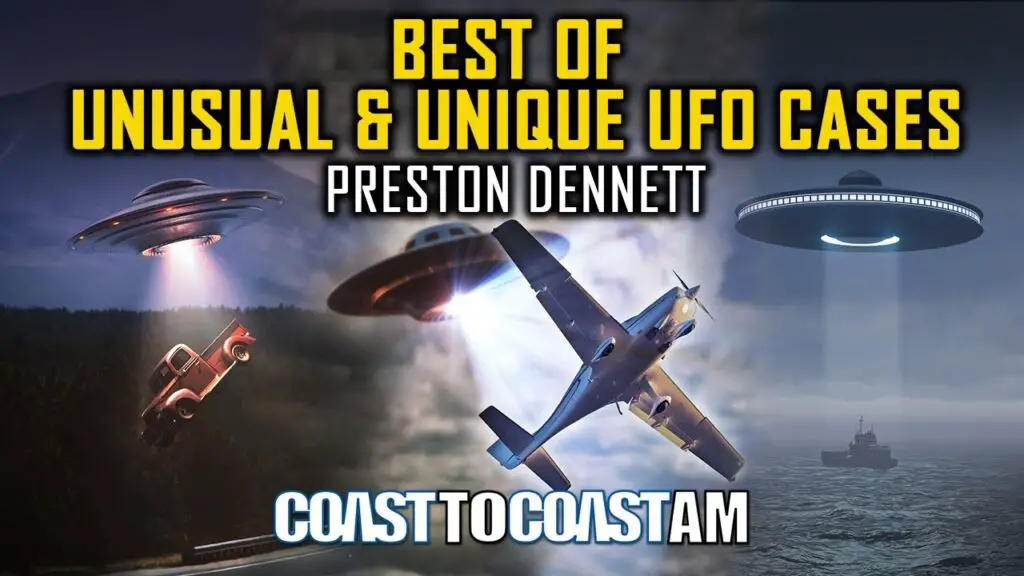
Author Preston Dennett has written numerous books about the paranormal (Amazon link). In the second half of the interview, he talked about his research and writing. He said that he enjoys choosing cases that he believes are unusual or unique. For instance, he noted that he wrote about cases involving UFOs that have been chasing and lifting occupied cars.

According to Dennett, the most common sighting of UFOs in the US is on July 4. He has also seen incidents involving planes, boats, and cars. In some cases, the objects collided with the vehicles.

He claims that encounters with these objects have a wide-reaching impact on human bodies. For instance, he said that people who have been in contact with these objects have experienced levitation. He attributes this to the altered electromagnetic properties of the body. In addition, Dennett claims that these encounters have led to the development of telekinetic and other forms of mental abilities.

  • to watch the video, press  "Bekijken op YouTube "

{ https://www.latest-ufo-sightings.net/ }

Hoe vind je dit bericht?
Geschreven door peter om 21:07 Stuur door

LATEST UFO SIGHTINGS AND VIDEOS

LATEST UFO SIGHTINGS AND VIDEOS

4 STUNNING UFO ENCOUNTERS *CAUGHT ON CAMERA* | The Proof is Out There

Check out these 4 shocking UFO encounters, in this The Proof Is Out There compilation.

00:00 - Intro

00:14 - Chapter 1 - Pilot Caught Footage of Bizarre Objects in the Sky

04:58 - Chapter 2 - Eyewitness Summoned Mysterious Aircrafts at Night

09:42 - Chapter 3 - Possible UFO Crash Landing Site in the UK?!

13:31 - Chapter 4 - Mysterious Lights seen in Florida Sky

RELATED


These shocking UFOs have been spotted over some of the biggest cities in the U.S. See more in this compilation from The Proof is Out There.

0:00 - UFO SPOTTED ON U.S. MILITARY BASE

3:28 - UFOS INFILTRATE JULY 4TH CELEBRATIONS

8:04 - UFO ATTEMPTS TO MAKE COMMUNICATION

12:49 - UFOS INVADE NEW YORK CITY

17:02 - GIANT FLAME SPOTTED IN THE FLORIDA SKY

Commercial Pilots Seeing UFOs in the Sky - Starlink with 6 Lights?

Mark Hulsey was an experienced Marine F-18 Fighter Pilot. Now he flies a Gulfstream 650 private jet for a billionaire. He relays his own unidentified aerial phenomena experience and highlights the safety issues that come up when pilots are afraid to report lights to their employer.

SpaceX launches moon lander, rover and 'flashlight,' booster lands in Florida

SpaceX launched Japanese company ispace's Hakuto-R lander with a range of payloads including "Rashid," a 22-pound (10 kilograms) rover developed by the UAE's Mohammed Bin Rashid Space Center. The rocket lifted off from Cape Canaveral Space Force Station in Florida on Dec. 11, 2022.

Another payload along for the Falcon 9 rocket ride is NASA's "Lunar Flashlight" cubesat, which will hunt for water ice inside craters near the moon's south pole.

The rocket's first stage touched down at Landing Zone 2 in Florida a little over 8 minutes after liftoff.

Credit: SpaceX

NASA Chief Gives Serious Warning About Betelgeuse Star Explosion

NASA Chief Gives Serious Warning About Betelgeuse Star Explosion. Betelgeuse, Orion constellation’s most famous star, and now a bright red supergiant star, is nearing the end of its life. It will likely explode as a supernova and be visible during the daytime from Earth. And while we do not know as of yet if it is a threat or not, scientists have already discovered a telltale way to detect when a star is about to go supernova.

RELATED

Life Inside China's New Space Station! (Tiangong)

Life Inside China's New Space Station! (Tiangong)

Last Video: How NASA Will 3D Print Houses On The Moon!

ANCIENT ALIENS : ORIGIN OF HUMANITY - FULL HD SCIFI MOVIE IN ENGLISH - ORIGINAL V MOVIES

ANCIENT ALIENS : ORIGIN OF HUMANITY - FULL HD SCIFI MOVIE IN ENGLISH - ORIGINAL V MOVIES Discovering mysterious extraterrestrial beings. More and more evidence and appearances of UFOs surround our Earth. Secrets, cover-ups, discoveries, testimonies suggest a contact, a contact with beings who came from the sky, which took place at the dawn of our existence; maybe, just ancient aliens who gave and taught life to our ancestors.

{ https://www.youtube.com/ }

Hoe vind je dit bericht?
Geschreven door peter om 19:04 Stuur door

NASA Tests a Solar Sail Segment of its Enormous Solar Cruiser Mission

hesto-solar-cruiser-2000x1200.jpg

Artist's concept of the Solar Cruiser mission. Credit: NASA

NASA Tests a Solar Sail Segment of its Enormous Solar Cruiser Mission

A team led by NASA’s Marshall Space Flight Center (MSFC) was recently selected to develop a solar sail spacecraft that would launch sometime in 2025. Known as the Solar Cruiser, this mission of opportunity measures 1653 m2 (~17790 ft2) in area and is about the same thickness as a human hair. Sponsored by the Science Mission Directorate’s (SMD) Heliophysics Division, this technology demonstrator will integrate several new solar sail technologies developed by various organizations to mature solar sail technology for future missions.

In a recent video released by NASA, we see engineers and industry partners at the MSFC in Huntsville, Alabama, unfurling a segment of the prototype solar sail. The video, taken on October 13th, shows how the teams used two 30.5 m (100-foot) lightweight composite booms to unfurl a 400 m2 (4,300 ft2) quadrant of the solar sail prototype for the first time. Once realized, the Solar Cruiser demonstrator will validate technologies that enable future missions to study the Sun, its interaction with Earth, and its extended atmosphere (aka. heliosphere).

The Solar Cruiser team includes industry partners like spacecraft and payload developer Ball Aerospace, critical systems manufacturer Roccor, LLC, and subcontractor NeXolve, which specializes in producing thin, lightweight materials and structures (such as solar sail films). Alongside NASA Marshall, they are leveraging advancements in solar sail technology from the past decade, including elements from previous missions. These include:

The video features NASA scientists Les Johnson, the Principle Investigator of the NEO Scout mission, which launched with Artemis I (one of ten secondary payloads). As he explained, the purpose of this unfurling was to test how the sail would deploy once it was in space:

“The sail deployment test that we just completed here at NASA Marshall was really a test of [the] functionality of the sail. Could you get these two hundred-foot-long booms coiled up, put in a deployer, attached to a sail that has an area of over four thousand square feet when it’s all folded and rolled, put it in a small box, and get it to deploy unaided? And the answer is yes. We had a very successful test, and the results are evident in the pictures that have been taken and the data we collected during the test.”

Solar sails rely on lightweight highly-reflective material and continuous photon pressure from the Sun’s rays (solar wind) to generate thrust. This does away with the need for propellant that makes up most of a mission’s pre-flight mass or the heavy electric propulsion systems that power Hall-Effect Thrusters (ion engines). In addition to increasing a mission’s mass, they also limit its lifetime and observation locations. This is the purpose of the Solar Cruiser, which will demonstrate a solar sail’s ability to make observations from a sunward-facing position at L1.

The design also includes four 29.5-m (~97-ft) lightweight booms, similar to the metallic Triangular, Rollable and Compressible (TRAC™) booms used by the NEA Scout mission. Designed by the U.S. Air Force and licensed to Roccor, LLC, these booms are similar to those used by the James Webb Space Telescope (JWST) to deploy its Sunshield. For the sake of the Solar Cruiser, Roccor developed TRAC booms using lighter composite materials via NASA’s Small Business Innovation Research (SBIR) program.

The sail also has embedded Reflective Control Devices (RCDs) that provide propellantless attitude control and help keep the sail stable. The sail membrane consists of a thin-film polyimide successfully flown on NanoSail-D coated with aluminum to make it reflective. This material was selected because of its flight-proven properties and how it is scalable to sails of any size – from the 10 m2 (~33 ft2) sail on NanoSail-D to sails greater than 10,000 m2 (~32,800 ft2). This is consistent with one of the main objectives of the Solar Cruiser, which is the ability to build sails of increasing size

“The key to enabling some of these missions is having larger and larger sails that are very lightweight,” he said. “And that’s why we’re moving from sails the size of NEA Scout, nine-hundred and twenty-five square feet, to seventeen-thousand eight-hundred square feet. And in the future, we will make sails that are even larger still. And the larger the sail, generally speaking, the better it has a capability to do propulsion and higher thrust.”

The study of heliophysics is vital to the National Oceanic and Atmospheric Administration (NOAA) and the Department of Defense. These government organizations are responsible for issuing alerts for space weather alerts and forecasts and monitoring things like solar flares that cause interference with communications or satellites. The Solar Cruiser will also demonstrate the capability to make sustained in-situ measurements of Earth’s magnetotail – the interaction between Earth’s magnetosphere and solar wind.

Artist’s illustration of NEA Scout visiting a Near-Earth Asteroid (NEA). Credit: NASA

Monitoring solar activity and space weather is also of interest to NASA’s human exploration programs. Before this decade is over, the Artemis Program will send astronauts to the Moon for the first time in over fifty years. The long-term aim of Artemis is to create a “sustained program of lunar exploration” that will include the creation of infrastructure and long-duration stays on the lunar surface. By the 2030s, NASA plans to send crewed missions to Mars that will consist of a six to nine-month transit and science operations on the Martian surface.

Knowing how to predict solar events will ensure astronaut health and safety and that their equipment remains operational. Just another exciting field of study that NASA and other space agencies will pursue in the coming years. And it’s fair to say that these efforts will enable new missions to expand our understanding of the Solar System and the Universe.

Further Reading:

{ https://www.universetoday.com/ }

Hoe vind je dit bericht?
Geschreven door peter om 01:45 Stuur door

NASA Tests a Solar Sail Segment of its Enormous Solar Cruiser Mission

hesto-solar-cruiser-2000x1200.jpg

Artist's concept of the Solar Cruiser mission. Credit: NASA

NASA Tests a Solar Sail Segment of its Enormous Solar Cruiser Mission

A team led by NASA’s Marshall Space Flight Center (MSFC) was recently selected to develop a solar sail spacecraft that would launch sometime in 2025. Known as the Solar Cruiser, this mission of opportunity measures 1653 m2 (~17790 ft2) in area and is about the same thickness as a human hair. Sponsored by the Science Mission Directorate’s (SMD) Heliophysics Division, this technology demonstrator will integrate several new solar sail technologies developed by various organizations to mature solar sail technology for future missions.

In a recent video released by NASA, we see engineers and industry partners at the MSFC in Huntsville, Alabama, unfurling a segment of the prototype solar sail. The video, taken on October 13th, shows how the teams used two 30.5 m (100-foot) lightweight composite booms to unfurl a 400 m2 (4,300 ft2) quadrant of the solar sail prototype for the first time. Once realized, the Solar Cruiser demonstrator will validate technologies that enable future missions to study the Sun, its interaction with Earth, and its extended atmosphere (aka. heliosphere).

The Solar Cruiser team includes industry partners like spacecraft and payload developer Ball Aerospace, critical systems manufacturer Roccor, LLC, and subcontractor NeXolve, which specializes in producing thin, lightweight materials and structures (such as solar sail films). Alongside NASA Marshall, they are leveraging advancements in solar sail technology from the past decade, including elements from previous missions. These include:

The video features NASA scientists Les Johnson, the Principle Investigator of the NEO Scout mission, which launched with Artemis I (one of ten secondary payloads). As he explained, the purpose of this unfurling was to test how the sail would deploy once it was in space:

“The sail deployment test that we just completed here at NASA Marshall was really a test of [the] functionality of the sail. Could you get these two hundred-foot-long booms coiled up, put in a deployer, attached to a sail that has an area of over four thousand square feet when it’s all folded and rolled, put it in a small box, and get it to deploy unaided? And the answer is yes. We had a very successful test, and the results are evident in the pictures that have been taken and the data we collected during the test.”

Solar sails rely on lightweight highly-reflective material and continuous photon pressure from the Sun’s rays (solar wind) to generate thrust. This does away with the need for propellant that makes up most of a mission’s pre-flight mass or the heavy electric propulsion systems that power Hall-Effect Thrusters (ion engines). In addition to increasing a mission’s mass, they also limit its lifetime and observation locations. This is the purpose of the Solar Cruiser, which will demonstrate a solar sail’s ability to make observations from a sunward-facing position at L1.

The design also includes four 29.5-m (~97-ft) lightweight booms, similar to the metallic Triangular, Rollable and Compressible (TRAC™) booms used by the NEA Scout mission. Designed by the U.S. Air Force and licensed to Roccor, LLC, these booms are similar to those used by the James Webb Space Telescope (JWST) to deploy its Sunshield. For the sake of the Solar Cruiser, Roccor developed TRAC booms using lighter composite materials via NASA’s Small Business Innovation Research (SBIR) program.

The sail also has embedded Reflective Control Devices (RCDs) that provide propellantless attitude control and help keep the sail stable. The sail membrane consists of a thin-film polyimide successfully flown on NanoSail-D coated with aluminum to make it reflective. This material was selected because of its flight-proven properties and how it is scalable to sails of any size – from the 10 m2 (~33 ft2) sail on NanoSail-D to sails greater than 10,000 m2 (~32,800 ft2). This is consistent with one of the main objectives of the Solar Cruiser, which is the ability to build sails of increasing size

“The key to enabling some of these missions is having larger and larger sails that are very lightweight,” he said. “And that’s why we’re moving from sails the size of NEA Scout, nine-hundred and twenty-five square feet, to seventeen-thousand eight-hundred square feet. And in the future, we will make sails that are even larger still. And the larger the sail, generally speaking, the better it has a capability to do propulsion and higher thrust.”

The study of heliophysics is vital to the National Oceanic and Atmospheric Administration (NOAA) and the Department of Defense. These government organizations are responsible for issuing alerts for space weather alerts and forecasts and monitoring things like solar flares that cause interference with communications or satellites. The Solar Cruiser will also demonstrate the capability to make sustained in-situ measurements of Earth’s magnetotail – the interaction between Earth’s magnetosphere and solar wind.

Artist’s illustration of NEA Scout visiting a Near-Earth Asteroid (NEA). Credit: NASA

Monitoring solar activity and space weather is also of interest to NASA’s human exploration programs. Before this decade is over, the Artemis Program will send astronauts to the Moon for the first time in over fifty years. The long-term aim of Artemis is to create a “sustained program of lunar exploration” that will include the creation of infrastructure and long-duration stays on the lunar surface. By the 2030s, NASA plans to send crewed missions to Mars that will consist of a six to nine-month transit and science operations on the Martian surface.

Knowing how to predict solar events will ensure astronaut health and safety and that their equipment remains operational. Just another exciting field of study that NASA and other space agencies will pursue in the coming years. And it’s fair to say that these efforts will enable new missions to expand our understanding of the Solar System and the Universe.

Further Reading:

{ https://www.universetoday.com/ }

Hoe vind je dit bericht?
Geschreven door peter om 01:45 Stuur door

Perseverance’s Latest Sample is Just Crumbled Regolith. When Scientists get Their Hands on it, we’ll Learn so Much About how to Live on Mars

8274.jpg

 BY ANDY TOMASWICK

Perseverance’s Latest Sample is Just Crumbled Regolith. When Scientists get Their Hands on it, we’ll Learn so Much About how to Live on Mars

The Mars Sample Return (MSR) part of Perseverance’s mission is picking up – literally. For the past few months, the rover has concentrated on picking up samples that will eventually be returned to Earth as part of the future Mars Sample Return mission. Back on Earth, plenty of advanced technologies can poke and prod the samples in ways that would never be feasible to launch with a spacecraft. However, if scientists decide to poke or prod Perseverance’s latest collections, they might have a hard time because they are made of regular regolith.

Regolith, the ever-present layer of dust on the Martian surface, is integral to our understanding of how the Martian surface has formed over the eons and what can be done to mitigate its effects on it our exploration systems. It is notorious for being the cause of the end of mission for such beloved rovers as Spirit and Opportunity, whether by entrapping one of them in an inescapable morass or shrouding their solar cells in a layer of dust such that only limited sunlight can penetrate through it.

From a scientific perspective, regolith is interesting because it would allow geologists to better understand the evolution of the Martian climate. One of Perseverance’s primary missions is astrobiology, and regolith might hold clues to what exactly was going on back when Mars was warmer and wetter. Even with it being ubiquitous throughout the planet, the best instruments we have so far been able to send there pale in comparison to the technical scrutiny brought to bear on the sample once it has been returned to Earth.

UT video detailing the Mars Sample Return mission.

From an engineering perspective, regolith, which makes up almost all of the dust in the Martian atmosphere, presents a set of difficult challenges. Anakin Skywalker’s axiom about sand in Star Wars holds a grain of truth in it, as it can be coarse and irritating and gets everywhere. The same goes for Martian regolith. It is notorious for sticking to everything, including, potentially, spacesuits and, even more dangerously, the inside of an astronaut’s lungs.

If it even gets into an astronaut’s lungs, it’s dangerous for more than just its abrasiveness. Regolith contains perchlorates, which are potentially deadly toxins to any life that might try to eek by an existence on the Red Planet. Understanding how to mitigate the effects of this dangerous substance might literally prove to be life or death for the first Martian colonists.

All of those are good reasons for Perseverance to be interested in it, and, as such, the rover recently collected two samples using its specialized regolith bit. This bit differs from its standard rock drilling and abrasion bits, as it looks like a “spike with small holes” in it, according to a JPL press release. Though it might look relatively simplistic, it was developed with thousands of hours of engineering and testing with simulated Martian regolith.

The drill bits Perseverance is using on its mission, before they were installed. Far left is the regolith bit used in the latest sample collection, while the middle ones are for rock drilling and the far right are for rock abrasion.

The drill bits Perseverance is using on its mission, before they were installed. Far left is the regolith bit used in the latest sample collection, while the middle ones are for rock drilling and the far right are for rock abrasion.
Credit – NASA / JPL-Caltech

Unfortunately, there are limitations to the MSR, especially in terms of payload capacity. Therefore, only one of the two regolith samples Perseverance recently collected will be making its way back to Earth. Even then, it will be the better part of a decade before it makes its way back, as the second stage of the MSR process is still in the planning phases. 

The other sample will be spending the rest of its days as part of an artifact from the early era of humanity’s exploration of Mars. Perseverance certainly already deserves its place in that pantheon, no matter what sample it decides to send back.

Learn More:

Lead Image:

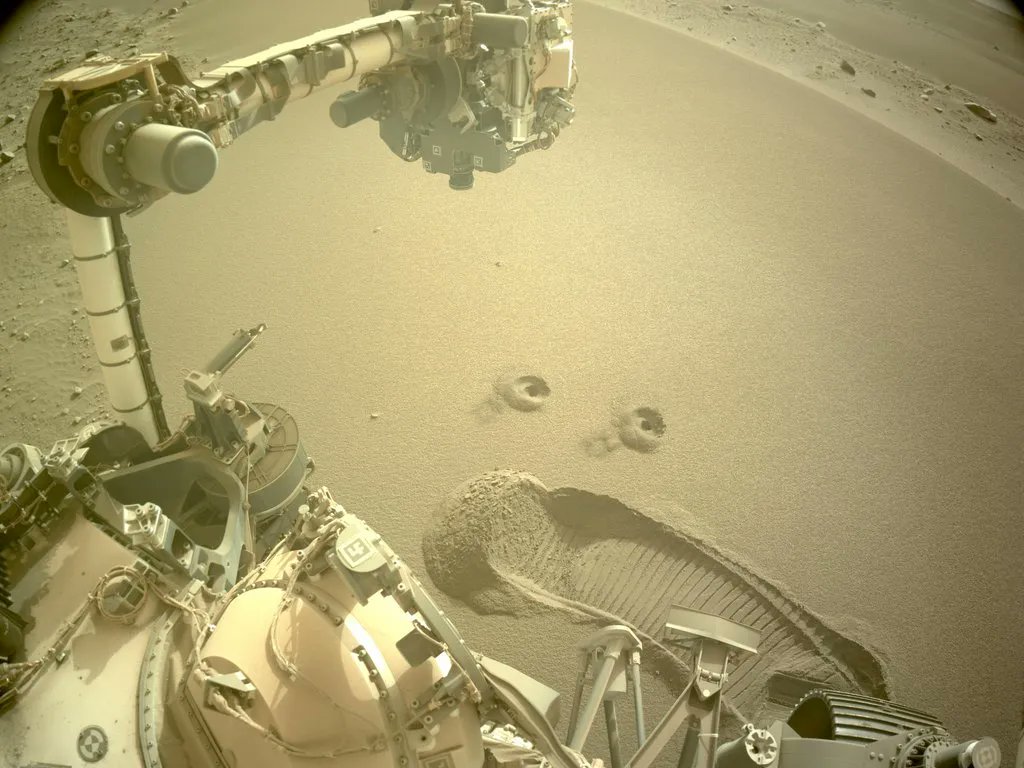
  • Two holes from the regolith drill samples that Perseverance took on December 2nd and 6th.
    Credit – NASA / JPL-Caltech
Hoe vind je dit bericht?
Geschreven door peter om 01:23 Stuur door

Crew chosen For SpaceX's first private Starship mission to the moon, UFO Sighting News.

Crew chosen For SpaceX's first private Starship mission to the moon, UFO Sighting News.

ovni,%20omni,MUFON,%20%E7%9B%AE%E6%92%83%E3%80%81%E3%82%A8%E3%82%A4%E3%83%AA%E3%82%A2%E3%83%B3,%20%20UFO,%20UFOs,%20sighting,%20sightings,%20alien,%20aliens,%20ET,%20anomaly,%20anomalies,%20ancient,%20waarneming,%20vreemdelinge,%20%20.jpg

ovni,%20omni,MUFON,%20%E7%9B%AE%E6%92%83%E3%80%81%E3%82%A8%E3%82%A4%E3%83%AA%E3%82%A2%E3%83%B3,%20%20UFO,%20UFOs,%20sighting,%20sightings,%20alien,%20aliens,%20ET,%20anomaly,%20anomalies,%20ancient,%20%20paleontology,%20%20%20copy.jpeg

Crew chosen For SpaceX's first private Starship mission to the moon, 10 total crew members, including two backup crew, will join him on the roughly week-long flight that was originally scheduled to launch in 2023. That timeline will likely push to 2024. 

Guys this is cool. A Japanese billionaire has funded the entire civilian program. This is mind-bogglings stuff. I mean most NASA missions have hard core military, CIA, NSA. I can see by the faces of these individuals picked by SpaceX that they are none of the above, they are us, the people. I can't wait to hear and see what they encounter on the mission. Photos and video is going to be raw and unedited. Don't think for a second this doesn't share the shit out of NASA. The truth coming out, and making NASA look like a fool for lying, always does make the lier look the fool. 
Scott C. Waring - Taiwan 

{ https://www.ufosightingsdaily.com/ }

Hoe vind je dit bericht?
Geschreven door peter om 23:00 Stuur door

This Went On For 12 Days Straight... Artemis Moon Images Exposed, UFO Sighting News.

This Went On For 12 Days Straight... Artemis Moon Images Exposed, UFO Sighting News.

Screen%20Shot%202022-12-10%20at%2012.56.10%20PM.png

 Here is a cool video by Secureteam10, about several anomalies that occurred over the last few weeks that you may have not heard about. Also, he shows a structure that I discovered on the moon at 3:46 into the video, good to see I'm making a difference too. But I was going to post this with or without it, Tyler is a great reporter who really helps the UFO community. 

Scott C. Waring - Taiwan 

{ https://www.ufosightingsdaily.com/ }

Hoe vind je dit bericht?
Geschreven door peter om 22:46 Stuur door

Alien Structures On Moons Surfaces Near Zhukovsky Crater, VIDEO, UFO Sighting News.

Alien Structures On Moons Surfaces Near Zhukovsky Crater, VIDEO, UFO Sighting News.

top+secret,+area+51,+military,+USAF,+Justin+Bieber,+Anglelina+Jolie,+gossip,+news,+UFO,+UFOs,+sighting,+sightings,+building,+buildings,+base,+moon,+lunar,+luna,+ovni,+omni,+anomaly,+alien,+aliens,+ET,+W56,+greys,+NASA,+wtf,+scott+c.+waring,+5.png 

Location of discovery: left of Zhukovsky crater, Earths Moon

Date of NASA photo: April 1972 (on photo)
Mission photo: Apollo 16
Photo number: AS16-P-4091
URL NASA Source:
Coordinates: center photo is 8.84°,-168.52°
 
The structures are in a photo labeled "High Resolution Center PNG 322.4 MB" 
top+secret,+area+51,+military,+USAF,+Justin+Bieber,+Anglelina+Jolie,+gossip,+news,+UFO,+UFOs,+sighting,+sightings,+building,+buildings,+base,+moon,+lunar,+luna,+ovni,+omni,+anomaly,+alien,+aliens,+ET,+W56,+greys,+NASA,+wtf,+scott+c.+waring,+4.png
 
Hey guys, I looked at a Apollo 16 photo for a mere five minutes and decided to check in an area of the photo that I imagined others would never check...the dark patches on the far left. There I found a tiny area of light that was only about 1-2% of the total photo. I focused on this area and found these structures in the craters there. Even some small craters had these amazing buildings. 
 
Example of full photo is below and shows the location of these alien buildings I found yesterday. Yes there seems to be a large face in the center of the photo, however I feel the buildings are more significant of a discovery.
 
top+secret,+area+51,+military,+USAF,+Justin+Bieber,+Anglelina+Jolie,+gossip,+news,+UFO,+UFOs,+sighting,+sightings,+building,+buildings,+base,+moon,+lunar,+luna,+ovni,+omni,+anomaly,+alien,+aliens,+full,+ET,+W56,+greys,+NASA,+wtf,+scott+c.+waring,+5.png
top+secret,+area+51,+military,+USAF,+Justin+Bieber,+Anglelina+Jolie,+gossip,+news,+UFO,+UFOs,+sighting,+sightings,+building,+buildings,+base,+moon,+lunar,+luna,+ovni,+omni,+anomaly,+alien,+aliens,+ET,+W56,+greys,+NASA,+wtf,+scott+c.+waring,+3.png
Notice the buildings are made up of many squares. These square buildings are linked together to form  larger structures. True the ascetic quality that humans want in buildings is not there...but out there, functionality comes first and those cube structures are doing the job. 
Scott C. Waring - Taiwan
 
top+secret,+area+51,+military,+USAF,+Justin+Bieber,+Anglelina+Jolie,+gossip,+news,+UFO,+UFOs,+sighting,+sightings,+building,+buildings,+base,+moon,+lunar,+luna,+ovni,+omni,+anomaly,+alien,+aliens,+ET,+W56,+greys,+NASA,+wtf,+scott+c.+waring,+2.png
top+secret,+area+51,+military,+USAF,+Justin+Bieber,+Anglelina+Jolie,+gossip,+news,+UFO,+UFOs,+sighting,+sightings,+building,+buildings,+base,+moon,+lunar,+luna,+ovni,+omni,+anomaly,+alien,+aliens,+ET,+W56,+greys,+NASA,+wtf,+scott+c.+waring,+6.png

{ https://www.ufosightingsdaily.com/ }

Hoe vind je dit bericht?
Geschreven door peter om 22:34 Stuur door

Meer van UFO'S of UAP'S, ASTRONOMIE, RUIMTEVAART, ARCHEOLOGIE, OUDHEIDKUNDE, SF-SNUFJES EN ANDERE ESOTERISCHE WETENSCHAPPEN - DE ALLERLAATSTE NIEUWTJES

↑ Terug naar de berichten