Ontdek de Fascinerende Wereld van UFO's en UAP's: Jouw Bron voor Onthullende Informatie!
Ben jij ook gefascineerd door het onbekende? Wil je meer weten over UFO's en UAP's, niet alleen in België, maar over de hele wereld? Dan ben je op de juiste plek!
België: Het Kloppend Hart van UFO-onderzoek
In België is BUFON (Belgisch UFO-Netwerk) dé autoriteit op het gebied van UFO-onderzoek. Voor betrouwbare en objectieve informatie over deze intrigerende fenomenen, bezoek je zeker onze Facebook-pagina en deze blog. Maar dat is nog niet alles! Ontdek ook het Belgisch UFO-meldpunt en Caelestia, twee organisaties die diepgaand onderzoek verrichten, al zijn ze soms kritisch of sceptisch.
Nederland: Een Schat aan Informatie
Voor onze Nederlandse buren is er de schitterende website www.ufowijzer.nl, beheerd door Paul Harmans. Deze site biedt een schat aan informatie en artikelen die je niet wilt missen!
Internationaal: MUFON - De Wereldwijde Autoriteit
Neem ook een kijkje bij MUFON (Mutual UFO Network Inc.), een gerenommeerde Amerikaanse UFO-vereniging met afdelingen in de VS en wereldwijd. MUFON is toegewijd aan de wetenschappelijke en analytische studie van het UFO-fenomeen, en hun maandelijkse tijdschrift, The MUFON UFO-Journal, is een must-read voor elke UFO-enthousiasteling. Bezoek hun website op www.mufon.com voor meer informatie.
Samenwerking en Toekomstvisie
Sinds 1 februari 2020 is Pieter niet alleen ex-president van BUFON, maar ook de voormalige nationale directeur van MUFON in Vlaanderen en Nederland. Dit creëert een sterke samenwerking met de Franse MUFON Reseau MUFON/EUROP, wat ons in staat stelt om nog meer waardevolle inzichten te delen.
Let op: Nepprofielen en Nieuwe Groeperingen
Pas op voor een nieuwe groepering die zich ook BUFON noemt, maar geen enkele connectie heeft met onze gevestigde organisatie. Hoewel zij de naam geregistreerd hebben, kunnen ze het rijke verleden en de expertise van onze groep niet evenaren. We wensen hen veel succes, maar we blijven de autoriteit in UFO-onderzoek!
Blijf Op De Hoogte!
Wil jij de laatste nieuwtjes over UFO's, ruimtevaart, archeologie, en meer? Volg ons dan en duik samen met ons in de fascinerende wereld van het onbekende! Sluit je aan bij de gemeenschap van nieuwsgierige geesten die net als jij verlangen naar antwoorden en avonturen in de sterren!
Heb je vragen of wil je meer weten? Aarzel dan niet om contact met ons op te nemen! Samen ontrafelen we het mysterie van de lucht en daarbuiten.
Is NASA hiding the truth nature of 3I/ATLAS by showing blurry images?
Is NASA hiding the true nature of interstellar visitor 3I/ATLAS? Low-resolution images and vague explanations are raising serious questions.
NASA has finally released its long-awaited images of 3I/ATLAS and for many, the results were a major disappointment. The space agency once again repeated its narrative that the object is a “normal” comet, all while presenting extremely low-grade, fuzzy images that raised more questions than answers.
The newest photos of the interstellar visitor, taken by a variety of spacecraft, satellites, and telescopes, were unveiled on November 19, 2025, during a NASA press conference, the first since the U.S. government shutdown. NASA highlighted that eight different observatories contributed to the dataset.
Among the most anticipated images were those from the HiRISE camera aboard the Mars Reconnaissance Orbiter, (see image above) which had a rare vantage point only 19 million miles from 3I/ATLAS. Yet the final product shown to the public was a blurry black-and-white smudge devoid of meaningful detail. NASA insisted the object is simply a large space rock and pushed back on claims that 3I/ATLAS is performing any maneuvers or showing any behavior inconsistent with a typical comet.
Online, NASA’s “big reveal” was mocked as a joke. Many argued the agency was withholding clearer images and downplaying the object’s anomalies. Photos now circulating from amateur astronomers, taken with $5,000 to $10,000 telescopes, appear far sharper and more informative than anything shown by NASA, despite the agency’s billions-of-dollars worth of equipment, spacecraft, staff, and infrastructure.
As geophysicist Stefan Burns noted in a comparison review, the agency’s best image of 3I/ATLAS looks like a street lamp on a foggy day.
Meanwhile, Harvard astrophysicist Avi Loeb has identified at least 12 unexplained anomalies linked to 3I/ATLAS, further fueling speculation. NASA’s quick dismissal of all alternative interpretations only intensified online theories that the agency is trying to bury any discussion of extraterrestrial possibilities.
In the end, NASA’s long-delayed reveal of 3I/ATLAS left many observers unimpressed and, honestly, what else did we expect? The low-resolution images only fuel the growing sense that something about this interstellar visitor isn’t being fully explained or fully shown. In other words, it feels like NASA is once again keeping the object’s true nature out of view.
Anyway, we don’t need NASA for answers. By the time 3I/ATLAS makes its closest approach to Earth on December 19, 2025, there will be far more reliable sources ready to confirm whether it’s just a bizarre interstellar comet or something of extraterrestrial origin on a true renaissance mission.
Polenverschuiving: Wat zegt de wetenschap en wat is de invloed op de samenleving?
Inleiding
De afgelopen weken is er opnieuw een golf van online discussies ontstaan over een vermeende “pole shift”. Deze term wordt in diverse contexten gebruikt, variërend van een natuurverschijnsel dat in de geologische geschiedenis voorkomt tot spectulatieve theorieën over snelle en catastrofale verschuivingen van de aardrotatie. In sommige online kringen richt men zich op het idee dat de Noord- en Zuidpool op korte termijn zullen veranderen, wat zou kunnen leiden tot enorme natuurrampen en maatschappelijke chaos. Aan de andere kant worden berichten vaak versterkt door angstzaaiende verhalen die niet wetenschappelijk onderbouwd zijn. Het is daarom belangrijk om deze claims kritisch en wetenschappelijk te analyseren. In dit artikel bespreken we de wetenschappelijke feiten rond pole shifts, de historische context, de verbanden met bepaalde alternatieve theorieën en de maatschappelijke impact.
Wetenschappelijke context: Wat zegt de geofysica?
Magnetische poolomkeringen
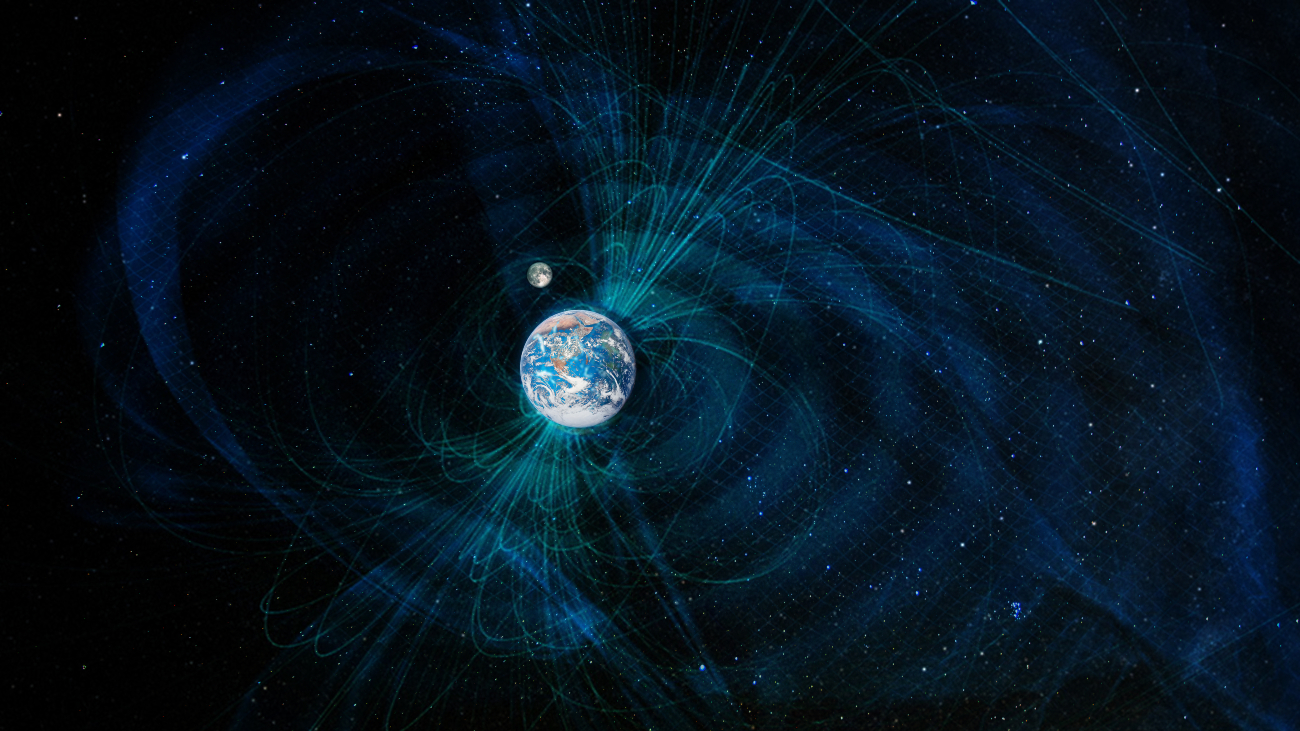
Een veel besproken verschijnsel in de geofysica is de zogenaamde magnetische pole reversal, of te wel het omkeren van het aardmagnetisch veld. Dit natuurlijke proces vindt plaats over zeer lange tijdschalen, meestal elke enkele honderdduizenden tot miljoenen jaren. Tijdens een reversie ontrafeld het aardmagnetisch veld niet plotseling, maar verloopt het langzaam en geleidelijk. Wetenschappers hebben dat bijvoorbeeld kunnen vaststellen aan de hand van ijsboringen, gesteenten en fossielen die aanwijzingen bevatten over het magnetisch veld van de aarde in het verleden.
De meest recente reversie, de Brunhes-Matuyama overgang, vond ongeveer 780.000 jaar geleden plaats. Tijdens zo’n reversie kunnen de magnetische noord- en zuidpolen even wegvallen of verwisselen, maar het aardmagnetisch veld wordt nooit compleet uitgeschakeld of plotseling omgekeerd in een korte periode. Volgens Dr. Lena Ortiz, professoraal geofysica aan de Universiteit van Melbourne, “wordt het veld zwakker en kan het wanordelijk worden voor enkele duizenden jaren, maar het proces verloopt vooral geleidelijk. Er is geen bewijs dat er een snel, wereldwijde flip kan plaatsvinden die het dagelijks leven onmiddellijk beïnvloedt.”
Werkelijke polaire verschuiving
Naast de magnetische reversies bestaat er ook het fenomeen van “true polar wander” (TPW). Bij TPW verschuift de aardrotatieas relatief ten opzichte van de aardkorst en de mantel, wat zich over miljoenen jaren voltrekt. Dit verschijnsel is een natuurlijk onderdeel van de aardontwikkeling en heeft geen directe impact op kortetermijngebeurtenissen. Dit verschijnsel leidt niet tot snelle veranderingen in het klimaat of natuurrampen, maar moet begrepen worden als onderdeel van langetermijnprocessen.
Betrouwbaarheid en waarschuwingssystemen
Tot op heden zijn er geen aanwijzingen dat een plotselinge, snelle pole shift op korte termijn zal plaatsvinden. Geofysische instellingen zoals Geoscience Australia, het European Space Agency en de US Geological Survey houden de aardmagnetische velden nauwlettend in de gaten en zullen pas waarschuwen bij concrete anomalieën. Het ontbreken van betrouwbare bewijzen betekent dat de angst voor een onmiddellijke catastrofe niet op wetenschappelijke grounds staat.
Verbanden met UFO's en paranormale theorieën
Historische en culturele aansluiting
De pole-shiftmythe koppelt zich vaak aan verhalen over buitenaardse wezens en geheime regeringsprojecten. In dat kader wordt gesuggereerd dat bepaalde overheden of aliens kennis zouden hebben van een naderend wereldomvattend verschuivingsproces dat niet aan het zicht van het publiek wordt onttrokken. Proponenten beweren dat zo’n event grote evacuaties zou uitlokken of dat geheime technologieën zouden onthuld worden.
Waarom ontstaan deze theorieën?
Deze verhalen zijn vooral populair omdat ze inspelen op de menselijke behoefte aanbetrouwbare verklaringen voor grote onzekerheden en onbegrijpelijke natuurrampen. Daarnaast spelen geheime overheidsprojecten, complottheorieën en het fenomeen van de ‘angst voor de onbekende’ een grote rol. In de context van UFO's en paranormale theorieën wordt de pole shift vaak gekoppeld aan ideeën over ‘extraterrestriële interventie’ of het bestaan van geheime bases waar zich technologieën bevinden die ons kunnen beschermen of juist doen falen. Deze verhalen worden versterkt door populaire media, films en fictie, waardoor ze aantrekkelijk zijn voor een breed publiek dat op zoek is naar antwoorden op onbekende fenomenen.
Wetenschappelijk gezien ontbreken echter bewijs en solide gegevens om deze theorieën te ondersteunen. Er is geen concreet bewijs dat buitenaardse wezens betrokken zijn bij de aardmagnetische eigenschappen van onze planeet, noch dat geheime regeringsprojecten werkzaam zijn die een wereldwijde pole shift zouden kunnen triggeren. Het koppelen van dergelijke verhalen aan “pole shifts” dient vooral om angst en verwarring te zaaien, maar mist een wetenschappelijke onderbouwing.
Door de mens veroorzaakte klimaatveranderingen zullen de geografische polen van de aarde significant verplaatsen.
Maatschappelijke impact en maatschappelijke reacties
De angst voor een pole shift of soortgelijke catastrofes kan grote maatschappelijke gevolgen hebben. In het verleden zagen we dat dergelijke angsten leidde tot de opkomst van ‘doomsday-bewegingen’ en groepen die geloven dat de wereld op korte termijn ondergaat. Dit kan leiden tot onrust, paniek en zelfs gedragsveranderingen, zoals het verzamelen van voedselvoorraden, het bouwen van bunkers of het verspreiden van desinformatie via sociale media.
Zaken als massahysterie en paniekreacties zijn niet nieuw. Anno 2024 is de digitale samenleving bijzonder gevoelig voor dergelijke berichten, waardoor desinformatie snel verspreid wordt en difficult te corrigeren is. Overheden en wetenschappers proberen vaak via officiële kanalen duidelijkheid te scheppen en feiten te communiceren, maar de virale aard van de media maakt het moeilijk om achterhaalde theorieën terug te dringen.
Daarnaast kunnen deze angsten ook leiden tot sociale vervreemding en wantrouwen jegens wetenschappelijke instellingen en overheden. Er ontstaat een ‘alternatieve waarheid’ waarin feit en fictie door elkaar lopen, wat de maatschappelijke cohesie onder druk zet. Het is daarom belangrijk dat er kritische mediawijsheid wordt bevorderd en dat er transparantie is over de wetenschappelijke stand van zaken.
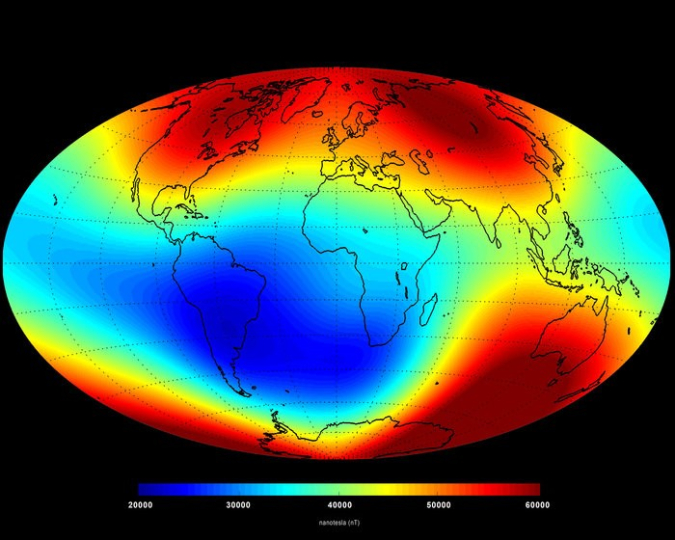
Het aardmagneetveld in kaart gebracht met satelliet data, ESA SWAM missie. De kleuren geven de sterkte van het veld aan, waarbij rood het sterkst en blauw het zwakst.
Historische context: Hoe vaak en hoe lang duren pole shifts?
Een groot misverstand is dat mensen denken dat pole shifts frequent en abrupt plaatsvinden. In de geschiedenis van de aarde zijn er wel degelijk veranderingen geweest in de positie van magnetische polen, maar dit gebeuren gebeurt over gigantische tijdsintervallen. De geologische gegevens wijzen uit dat reversies in het magnetisch veld duizenden tot honderdduizenden jaren duren, en dat er geen bewijs is voor een snelle of onmiddellijke omkering.
De meest recente magnetische reversie, Brunhes-Matuyama genoemd, vond ongeveer 780.000 jaar geleden plaats. Tijdens dat proces viel het magnetische veld tijdelijk uit, voordat het weer terugkeerde in de tegengestelde richting. Voor de mensen van toen was het ongemakkelijk, maar er was geen sprake van natuurrampen of wereldwijde chaos.
Het idee van een snelle pole shift is vooral populair in populaire cultuur en complottheorieën, maar de wetenschap wijst duidelijk uit dat zulke gebeurtenissen niet op korte termijn plaatsvinden. Wat wel mogelijk is, en dat onderzoek bevestigt, is dat het aardmagnetisch veld in de loop van miljoenen jaren kan veranderen en dat dit inderdaad gevolgen kan hebben voor bijvoorbeeld communicatie- en navigatiesystemen.
Kansen en risico’s van natuurrijke fenomenen
Hoewel de meeste wetenschappers elimineren dat een snelle pole shift zich op korte termijn zal voordoen, is het belangrijk om te realiseren dat de aarde wel degelijk onderhevig is aan natuurlijke fenomenen die het functioneren van onze planeet beïnvloeden. Zo hebben we te maken met perioden van vulkanische activiteit, aardbevingen en klimaatveranderingen. Al deze factoren kunnen, indien ze zich op grote schaal voordoen, invloed hebben op de samenleving en het ecosysteem.
De klimaatverandering bijvoorbeeld, die intense weersomstandigheden en zeespiegelstijgingen veroorzaakt, heeft nu al ingrijpende effecten op menselijke samenlevingen wereldwijd. Het is essentieel dat we deze risico’s serieus nemen en ons aanpassen aan de veranderende omstandigheden. Dit betekent investeren in preventie, duurzaamheid en het versterken van onze infrastructuur.
Daarnaast is het van belang dat we leren omgaan met onzekerheden. Dat kan door het ontwikkelen van waarschuwings- en monitoringsystemen, zoals het Europees Samenwerkingsprogramma voor aardbevingswaarneming en de NASA Magnetische Velden Tracker. Deze systemen kunnen echter geen voorspellingen doen over langetermijngebeurtenissen zoals pole shifts, maar kunnen wel helpen bij het anticiperen op andere natuurfenomenen waaraan we wel risico’s lopen.
De rol van media en wetenschap in het bestrijden van paniek
De media spelen een cruciale rol in de manier waarop informatie wordt gedeeld en geconsumeerd door het grote publiek. Bij onderwerpen die gevoelig liggen, zoals de vermeende pole shift, is het belangrijk dat journalisten hun verantwoordelijkheid nemen door feitelijke, wetenschappelijk onderbouwde informatie te presenteren. Te snelle of sensationele berichtgeving kan leiden tot onnodige paniek en verwarring.
Wetenschappers en overheidsinstellingen moeten proactief communiceren over de feiten en duidelijk aangeven wat de beperkingen van onze kennis zijn. Duidelijkheid en transparantie helpen om vertrouwen te behouden en het juiste begrip te stimuleren. Het is tevens belangrijk dat er educatie wordt ingezet om mensen mediawijs te maken en te leren onderscheid te maken tussen wetenschappelijke feiten en fictie.
Educatieve campagn campagnes en informatievoorziening kunnen ook een rol spelen in het voorkomen van hysterische reacties. Door jongeren en volwassenen te informeren over de natuurlijke processen van de aarde, de tijdschalen waarin veranderingen plaatsvinden en de huidige monitoringtechnologieën, worden paniek en desinformatie moeilijker te laten wortelen.
Pole Shift Theory EXPLAINED: The Science Behind Earth’s Great Reset
Conclusie: Wat kunnen we leren uit de wetenschap en hoe vermijden we paniek?
De angst voor een plotselinge pole shift die de wereld in korte tijd verandert, wordt door de wetenschap volledig ontkracht. Het bestuderen van aardmagnetische reversies en andere geologische processen tonen aan dat dergelijke veranderingen zeer langzaam en over lange tijdschalen plaatsvinden. Geologen, geofysici en klimaatwetenschappers werken sinds decennia aan het monitoren van de planeet, en er is geen wetenschappelijk bewijs voor een snelle of catastrofale pole shift op korte termijn.
Het is belangrijk dat we kritisch blijven nadenken over de informatie die we ontvangen en dat we vertrouwen op wetenschappelijke bronnen. Complotdenken en sensationele verhalen zorgen voor angst en verwarring, terwijl de realiteit anders is: onze aarde is dynamisch, maar haar veranderingen verlopen geleidelijk en voorspelbaar. De beste manier om onze samenleving te beschermen, is investeren in kennis, infrastructuur en preventie, en de communicatie over natuurlijke risico’s te baseren op feiten.
Tot slot moeten we begrijpen dat angst vooral ontstaat bij onwetendheid en onzekerheid. Door education, transparantie en het delen van wetenschappelijke inzichten kunnen we die angsten verminderen en een samenleving creëren die beter voorbereid is op de uitdagingen die de toekomst biedt. Het zich bewust zijn van de natuurlijke processen waarvoor de aarde staat, geeft niet alleen rust, maar ook kracht om op een verantwoorde en geïnformeerde manier met de wereld om te gaan.
Aanbevelingen en toekomstige onderzoekslijnen
Hoewel de huidige wetenschappelijke kennis duidelijk aangeeft dat een snelle pole shift in de nabije toekomst onwaarschijnlijk is, blijft het noodzakelijk om de aarde en haar magnetische velden nauwlettend te monitoren. Nieuwe technologieën en methoden ontwikkelen zich voortdurend, waardoor we beter inzicht kunnen krijgen in de langetermijntrends en potentiële gevaren.
Het stimuleren van internationale samenwerking is essentieel. Door gegevensdeling en gezamenlijke onderzoeksinitiatieven kunnen we een beter beeld krijgen van de wereldwijde veranderingen binnen onze planeet en onze atmosfeer. Daarnaast moet er meer geïnvesteerd worden in het verbeteren van de voorlichtingscampagnes, om desinformatie en paniek te voorkomen.
Ook is het van belang om het bewustzijn over natuurlijke processen te vergroten. Educatieprogramma's op scholen en in de media kunnen helpen om families en gemeenschappen voor te bereiden op verschillende scenario’s, zonder daarbij angst aan te jagen. Het verkennen van andere planeten en het ontwikkelen van technologische innovatie kunnen op lange termijn ook bijdragen aan het vergroten van onze veerkracht.
Tot slot moeten beleidsmakers en w wetenschappers samenwerken om de belangrijkste risico’s te identificeren en proactief maatregelen te nemen. Het versterken van ons maatschappelijke verdedigingssysteem tegen natuurlijke rampen en het stimuleren van duurzame ontwikkeling zijn belangrijke stappen in het voorbereiden op een onvoorspelbare en complexe wereld.
Samenvatting
In dit artikel hebben we besproken dat de angst voor een plotselinge, wereldwijde pole shift niet gebaseerd is op wetenschappelijke feiten. Magnetische pole reversals en andere natuurlijke processen vinden plaats over enorme tijdschalen en verlopen meestal geleidelijk. Hoewel het menselijk verstand geneigd is om snel te reageren op onbegrepen fenomenen, is het cruciaal om kritisch te blijven en te vertrouwen op wetenschappelijke inzichten. De maatschappelijke reactie op deze angsten moet vooral gericht zijn op educatie, wetenschap en transparantie. Alleen door kennis te vergroten en desinformatie tegen te gaan, kunnen we voorkomen dat angst ons gaat beheersen en een ongefundeerd gevoel van onveiligheid ontstaat. De aarde is niet immuun voor veranderingen, maar haar natuurlijke dynamiek vereist vooral dat wij voorbereid en geïnformeerd zijn, zodat we adequaat kunnen reageren op de uitdagingen die de toekomst brengt.
A recent YouTube video posted by Jesse Michels, a self‑identified former intelligence analyst, has ignited a fresh wave of discussion on the r/StrangeEarth subreddit. In the clip, Michels claims to possess “explosive insights” into unidentified aerial phenomena (UAP) that he says point to a sustained government cover‑up and the existence of non‑human intelligence. The video quickly gathered attention, prompting Reddit users to debate the credibility of the allegations, the potential implications for ongoing UAP hearings, and the broader conversation about alleged suppressed evidence of alien technology.
The Video and Its Claims
Michels’ presentation, which runs just under ten minutes, blends excerpts from declassified documents, alleged insider testimonies, and personal observations. He asserts that a series of recent sightings—particularly those recorded by naval pilots and commercial airliners—contain data that the U.S. government has deliberately withheld from the public. Among the most striking points he raises are references to “high‑frequency telemetry signatures” that, according to him, cannot be produced by known aerospace platforms. Michels also alludes to a “closed‑door briefing” he attended in 2022, where senior officials discussed the strategic implications of advanced propulsion technologies that appear to defy conventional physics. No independent verification of these briefings or the telemetry data has been provided, and the video contains no direct links to the primary sources he cites.
Community Reaction
Redditors responded with a mix of curiosity and skepticism. Several users highlighted the timing of the video, noting that it coincides with the U.S. Senate’s bipartisan UAP hearing scheduled for later this month. “If there really is new evidence, now would be the time to bring it to Congress,” one commenter wrote, urging transparency. Others cautioned against “hype‑driven speculation,” pointing out that past UFO claims have often resurfaced without substantive proof. A frequent theme was the call for “hard data” – radar logs, sensor readouts, or authenticated documents – to move the conversation beyond anecdote. Some participants referenced the Pentagon’s 2021 release of three Navy videos, arguing that while those clips confirmed anomalous sightings, they did not substantiate the more extraordinary claims made by Michels.
Broader Context
The resurgence of public interest in UAPs follows a series of official steps taken by the U.S. government over the past three years. In 2020, the Department of Defense established the Unidentified Aerial Phenomena Task Force, later succeeded by the All‑Domain Anomaly Resolution Office (AARO) in 2022. Congressional committees have held multiple hearings, and the Office of the Director of National Intelligence released a preliminary assessment in June 2021 that documented 144 incidents, many of which remained unexplained. Michels’ video taps into a growing narrative among fringe researchers that these institutional efforts are merely a façade, designed to “manage the narrative” while withholding transformative technology. Academic circles, however, remain cautious, emphasizing the need for peer‑reviewed analysis before drawing conclusions about extraterrestrial involvement.
Next Steps and Outlook
While the video has amplified discussion on platforms like Reddit, it has not yet prompted formal inquiries from governmental bodies. Analysts suggest that any credible new evidence would likely be presented to the upcoming Senate hearing, where lawmakers have signaled a willingness to request classified briefings. In the meantime, experts advise the public to await verification from reputable sources, such as the AARO or independent scientific institutions, before accepting Michels’ assertions. As the UAP debate continues to evolve, the balance between open inquiry and rigorous evidence remains the critical yardstick for separating legitimate discovery from speculation.
NASA SkyCam Captures Bizarre Multi-Arc Object — SpaceTracker Enhances Footage to 8K
Overview
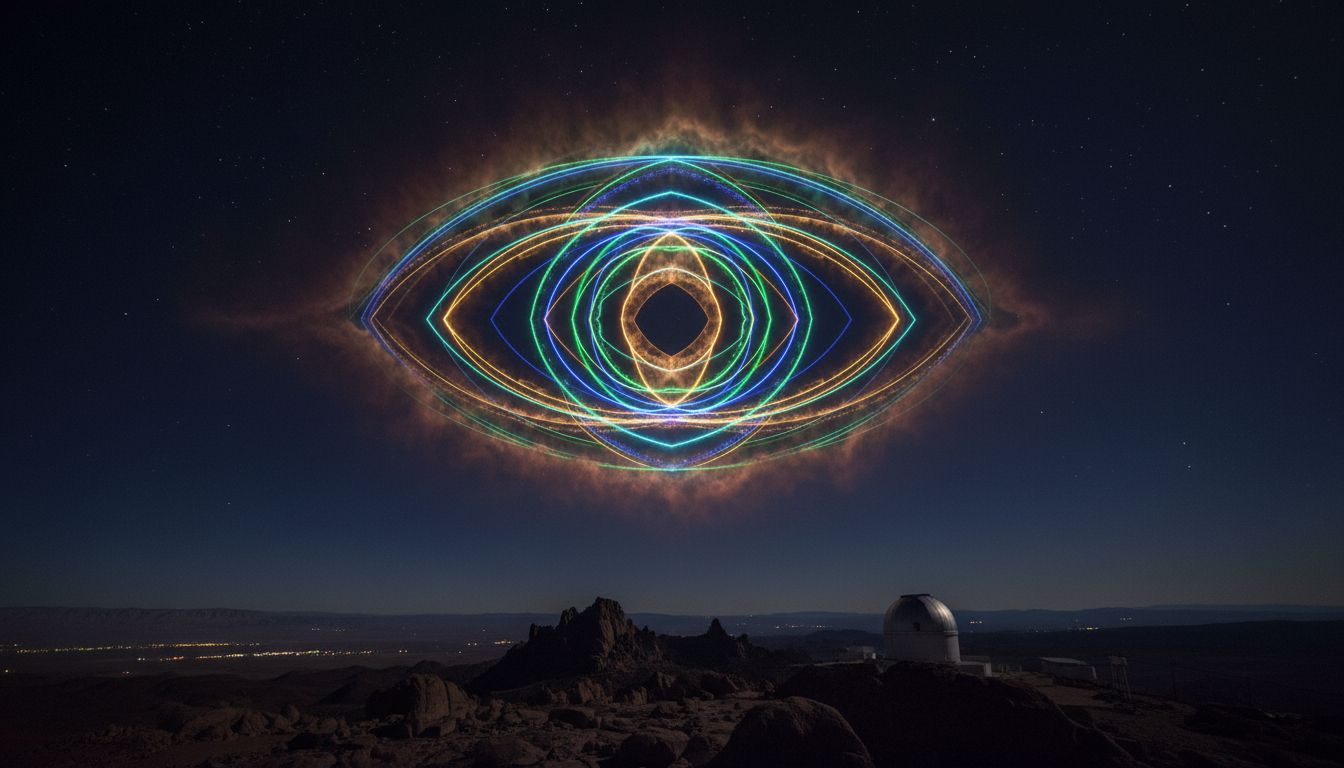
On June 12, 2025, an intriguing event was recorded by NASA’s internal SkyCam system—a highly sensitive camera mounted high in the upper atmospheric region that detected an unusual luminous phenomenon. This event involved a multi-arc formation seemingly suspended in the near-vacuum environment of the thermosphere, hundreds of kilometers above Earth’s surface. The initial footage, captured in 1080p resolution, revealed a faint but luminous structure displaying an intricate pattern of intersecting semi-circular arcs, which sparked immediate interest and skepticism within the UFO (Unidentified Aerial Phenomena, UAP) research community, aerospace analysts, and atmospheric scientists alike.
Soon after the event, a civilian open-source platform known as SpaceTracker—which specializes in processing, enhancing, and analyzing aerospace imagery—obtained and analyzed the raw footage. Using advanced image enhancement algorithms, SpaceTracker processed the clip to an unprecedented 8K resolution (7680×4320 pixels), significantly clarifying the features and revealing fine details previously obscured. The enhanced imagery, publicly released on June 20, 2025, has reignited discussions about the nature of high-altitude phenomena that do not conform to traditional explanations, such as natural atmospheric events, space debris, or known satellite activity.
This article provides an in-depth examination of the event, including the technical aspects of the image processing, expert interpretations, contextual significance within the broader UAP phenomena, and the possible scientific and exploratory avenues this incident opens.
Technical Analysis
1. Image Processing and Enhancement Techniques
The transformation from the original 1080p footage to a detailed 8K resolution involved the integration of multiple state-of-the-art image processing methodologies:
Frame Averaging:To improve the signal-to-noise ratio, multiple sequential frames were combined, reducing random noise artifacts while preserving signal details such as faint arcs and subtle halo effects.
De-noising Algorithms: Advanced noise reduction algorithms, including wavelet-based filtering and machine learning-driven denoising networks, were applied to suppress sensor noise yet retain the integrity of luminous features.
Super-Resolution Techniques:Utilizing a combination of deep learning models trained on high-fidelity imagery, the data was reconstructed to a higher resolution. These models infer details beyond the original pixel data based on contextual cues, enabling a crisper, more detailed visualization of the arcs and their geometric structures.
2. Visualization of the Phenomenon
The enhanced footage yields several notable observations:
Geometrically Consistent, Semi-circular Arcs: The arcs are roughly semi-circular, extending across a span of approximately 30 kilometers within the camera’s field of view. Their intersections form a complex, symmetrical pattern reminiscent of a geometric web or a set of overlapping spherical caps.
Luminous Core and Halo:The central region of the formation exhibits a stable, steady luminosity that persists over several seconds. Encircling the arcs, a faint, fine-grained halo—interpreted as a dust or particulate scattering layer—suggests the presence of a tenuous particulate medium around or behind the arcs.
Motion and Orientation:The entire formation exhibits coherent motion, with no observed erratic wobble or turbulence characteristic of debris or re-entry particles. It maintains a consistent orientation relative to the horizon, suggesting a possible aerodynamic or electromagnetic stability that would be atypical for conventional space debris or meteorological phenomena.
3. Data Integrity and Limitations
While the processing has uncovered significant details, it’s crucial to acknowledge the limitations:
The SkyCam system, primarily designed for spacecraft exterior monitoring, was not optimized for scientific observation of transient phenomena. This introduces uncertainties regarding calibration, exposure, and sensor linearity.
The footage's temporal resolution (frame rate)and the camera’s spectral capabilities (spectral filters, IR sensitivity, etc.) limit definitive conclusions about the physical properties—such as composition or thermal signatures—of the observed phenomenon.
Expert Commentary
1. Atmospheric Physics Perspective
Dr. Elena Morales, an atmospheric physicist specializing in high-altitude optical phenomena at the University of Colorado Boulder, approached the footage with scientific caution. She emphasized the importance of ruling out common atmospheric mechanisms:
“The geometric precision of these arcs is unusual. Atmospheric optics often produce optical illusions like parhelia or sundogs, which are caused by light interacting with ice crystals in cirrus clouds. However, these typically produce right-angled halos, not intersecting semi-circular arcs with such stability and coherence. Alternative mechanisms, like gravitational lensing or scattering from localized dust jets, can sometimes create arc-like phenomena, especially in the upper atmosphere where turbulence and particulate activity can vary.”
Morales further elaborated on potential natural causes:
High-Altitude Ice Crystals: In rare cases, high-altitude ice clouds with unique crystal geometries can produce complex light patterns.
Electrostatic or Electromagnetic Interactions: Active phenomena like lightning or transient luminous events (TLEs) such as sprites or elves could generate fleeting arcs, though their typical morphology differs from what is observed here.
2. Defense and Aerospace Analysis
Former NASA flight surgeon Lt. Cmdr. Aaron Patel, now an independent analyst, outlined the operational considerations:
“The SkyCam system is calibrated for spacecraft exterior conditions—monitoring shuttle or station surfaces—and its data integrity is solid for such applications. Its ability to resolve features at 8K enhances the credibility of the visual data. However, corroborating measurements—like radar tracking, infrared imaging, or additional ground-based observations—are crucial for understanding what exactly we’re seeing."
He highlighted the importance of cross-referencing data streams:
Radar & Lidar Data:Would help determine motion, altitude, and possible physical size estimates.
Spectroscopic Analysis: Could reveal composition or ionization states, giving clues about the nature of the material or energy involved.
3. UAP Research Community Response
The incident struck a chord within the global UAP community, especially given the increasing transparent sharing of data by aerospace agencies. Previous episodes, notably the X-Bump event in 2023—captured by the International Space Station (ISS)—showcased structured luminous patterns that defied straightforward classification.
The X-Bump involved high-altitude luminous arcs and structured light, sparking speculation about unknown atmospheric or extraterrestrial phenomena. Similarly, the current footage has drawn parallels to dust jets emitted by cometary bodies—particularly those associated with the recently observed activity of comet 3I/ATLAS, which displayed transient dust streams when passing through the inner solar system.
While the cometary hypothesis is intriguing, it remains speculative because no known cometary activity was recorded near Earth at the time of this capture. Moreover, the arcs’ stability and detailed geometry pose challenges to simple interpretations.
Context Within UAP Research
1. Historical and Recent Occurrences
The 2025 SkyCam event is part of a broader pattern of anomalous high-altitude phenomena captured through various platforms—ranging from ground-based observatories and aircraft to space station cameras and dedicated satellite sensors. Historically, such phenomena have often been dismissed as optical illusions or natural atmospheric effects, but increasingly, they are being documented with high-confidence imagery and multi-sensor corroboration.
2. Significance of the 8K Enhancement
The availability of ultra-high resolution imagery profoundly impacts the investigation process. The detailed visualization of intersecting arcs, halo effects, and stable trajectory—items difficult to detect in standard video—offers new avenues for modeling and hypothesis testing. It also challenges conventional understanding of atmospheric optics and high-altitude physics.
In particular, the detailed patterning resembles:
Structured electromagnetic phenomenaakin to plasma arcs or self-organizing luminous structures.
Potential interference with Earth's magnetic or electric fields, which could stabilize or shape such formations at high altitude.
Path Forward: Scientific and Investigative Steps
1. NASA and Federal Agency Responses
NASA’s UAP Task Force announced it is reviewing this footage along with other sensor data, emphasizing an analytical approach:
“Every phenomenon must be examined comprehensively, considering all conflicting or supporting measurements—radar, lidar, spectroscopic, and infrared. We remain committed to transparency and scientific rigor.”
Government agencies globally are encouraging the collection of additional data. NASA has planned further deployment of near-real-time high-altitude sensing arrays, and private sector organizations are mobilizing to create coordinated multi-platform observation campaigns to:
Capture similar events in different geographic regions.
Cross-validate with ground-based all-sky cameras, unmanned aerial vehicles, and satellite sensors.
2. Scientific and Technological Implications
The incident underscores the importance of:
Multi-modal detection infrastructure: The integration of optical, electromagnetic, and radar data streams for real-time anomaly detection and analysis.
Automated analysis and AI-driven pattern recognition: Machine learning algorithms can sift through large datasets, identify recurring features, and generate hypotheses.
High-fidelity simulation models: Physicists can endeavor to recreate the observed phenomena under controlled conditions, testing hypotheses related to high-altitude plasma physics, electromagnetic interactions, and particulate scattering.
2. Interdisciplinary Investigations
Given the complex nature of the observed structure, efforts involve multiple scientific disciplines:
Atmospheric physics and meteorology: To explore natural optical phenomena and rare atmospheric events.
Plasma physics: To understand whether ionized particles or electromagnetic discharges could produce similar structures.
Astrophysics and celestial mechanics: To assess any potential link with cosmic dust streams, meteor showers, or cometary activity—albeit temporally and spatially disconnected in this case.
Materials science and particle physics: To investigate the potential involvement of unknown or exotic particulate materials in the formation and sustained stability of the arcs.
Conclusion: Scientific and Mystical Significance
The enhanced SkyCam footage featuring the multi-arc formation is a remarkable addition to the growing compendium of high-altitude UAP observations. Its visually striking geometry—intersecting semi-circular arcs, a steady luminous core, and surrounding dust halo—poses significant questions for conventional physics and atmospheric science.
While natural explanations such as optical illusions, atmospheric dust, or plasma phenomena remain plausible, the coherence and stability of the structure challenge these interpretations. The precise geometry and persistence suggest either an unknown natural process, a yet-to-be-understood atmospheric physics phenomenon, or, more provocatively, an engineered or new physics-based event indicative of technological or extraterrestrial origins.
The ongoing investigations, increased data collection, and interdisciplinary research promise to broaden our understanding of these mysterious high-altitude phenomena. Whether this event ultimately leads to a scientific breakthrough or remains an intriguing anomaly, it underscores the importance of advanced observational technologies, global cooperation, and open scientific inquiry in unraveling the secrets of our skies.
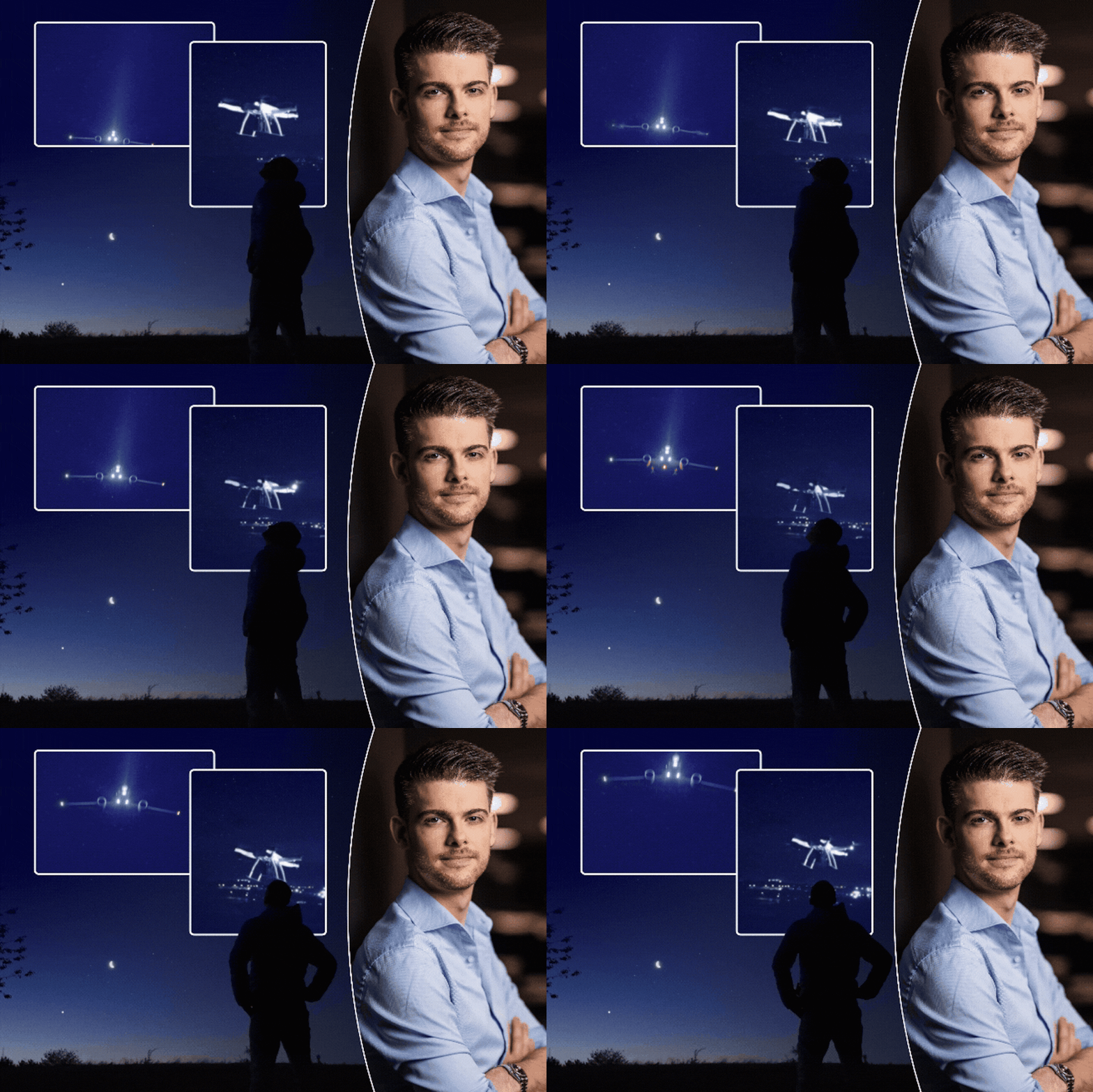
Een vliegtuig, een vogel of... een drone? HLN-wetenschapsexpert legt uit hoe je een drone van andere lichtjes aan de hemel onderscheidt
We zien ze allemaal vliegen. De afgelopen dagen doken er op verschillende plaatsen in ons land drones op. Meestal nadat de zon achter de horizon is verdwenen. Maar zijn dit ook écht allemaal drones? Hoe kan je die herkennen? En wat is er nog allemaal te zien aan onze nachtelijke hemel? HLN-wetenschapsjournalist Martijn Peters legt het uit.
Martijn Peters
Dat er drones waargenomen zijn in ons luchtruim, daar twijfelt niemand meer aan. Maar of dat ook betekent dat elke melding er effectief een is? Dat is een andere zaak. Hoe herken je dan zo’n drone en welke andere zaken kan je ‘s nachts nog spotten?
DRONES
Schaalmodel van de Boeing X-48B, een experimenteel vliegtuig ontwikkeld door Boeing en NASA, Rogers Dry Lake, NASA Dryden.
Deze toestellen bestaan in alle maten en vormen. Meestal gaat het om ‘quadcopters’, drones met vier propellers. Maar er bestaan ook militaire toestellen die wat op een klein vliegtuigje lijken. ‘s Nachts zijn ze uitgedost met kleurige ledverlichting, vaak rood en groen in een strak vierhoekig patroon. Normaal moeten drones ook een antibotsinglicht hebben. Een ander kenmerk is hun grote manoeuvreerbaarheid. Ze kunnen stilhangen en daarna plots van koers veranderen en traag of snel wegvliegen. Soms kan je bij een drone ook het hoge geluid van een motor waarnemen.
VLIEGTUIGEN EN HELICOPTERS
Drones worden regelmatig verward met vliegtuigen en helikopters. Dat was ook het geval in Denemarken waar een grote drone een trainingsvliegtuig bleek te zijn. Wanneer een vliegtuig met heldere landingslichten op jou afvliegt, lijkt het alsof er een of twee lichtpunten stilhangen in de lucht. Hetzelfde kan gebeuren met een helikopter die uitgerust is met een zoeklicht. Verwarrend, zeker als je het geluid van het toestel niet hoort. Hoor je het wel, dan merk je waarschijnlijk meteen op dat het geluid veel lager is dan dat van een drone.
Zowel een vliegtuig als een helikopter heeft bijna altijd knipperlichten. Die zijn wit, rood of groen of een combinatie daarvan. De lichtjes staan, in tegenstelling tot bij een drone, verder uit elkaar. Meestal verspreid over de neus, vleugels en staart van het toestel. Vliegtuigen en helikopters maken ook minder bruuske bewegingen. Ze vliegen in een relatief rechte lijn.
SATELLIETEN
En dan zijn er ook nog de satellieten. Die vliegen in een rechtlijnige baan door de lucht als een lichtpuntje dat niet knippert. Ze zijn meestal wit tot geelachtig van kleur en kunnen vanuit het niets verschijnen en daarna langzaam uitdoven als ze terug in de schaduw van de aarde terechtkomen. Zie je meerdere lichtpuntjes in een rij achter elkaar, dan gaat het waarschijnlijk om een satelliettreintje van Starlink. Het is geen drone, maar een fenomeen waarvoor Elon Musk en zijn bedrijf SpaceX verantwoordelijk zijn.
HELDERE STERREN EN PLANETEN
Herken je aan:
• Eén lichtpunt dat niet lijkt te bewegen
• Urenlang en meerdere dagen na elkaar zichtbaar
Soms is een heldere ster al voldoende om een drone-alarm in gang te zetten. Dat was bijvoorbeeld in Noorwegen het geval. Hoe je een ster dan kan herkennen? Allereerst gaat het om één helder lichtpunt dat niet lijkt te bewegen. Het is meestal urenlang zichtbaar en meerdere dagen na elkaar. Wat het soms verwarrend maakt is dat sterren kunnen ‘twinkelen’. Je ziet dan snelle opvallende kleurveranderingen. Dat komt omdat het licht van sterren door onze atmosfeer moet reizen om tot bij onze ogen te geraken.
Trouwens, een lichtgevende bol die aan de hemel staat en groter is dan een ster kan ook een planeet zijn. Momenteel zijn er drie zichtbaar: Venus in de ochtendschemer boven de horizon in het zuidoosten, en Saturnus en Jupiter tijdens de nacht in het zuidoosten en zuidwesten.
Een vallende ster of meteoor zal je minder snel verwarren met een drone. Dat is een heldere vuurbol die slechts enkele seconden zichtbaar is. Meteoren kunnen wel verschillende kleuren hebben afhankelijk van hun samenstelling.
BALLONNEN
Herken je aan:
• Grillig vluchtpatroon
• Als het licht is, kan je ze lang waarnemen
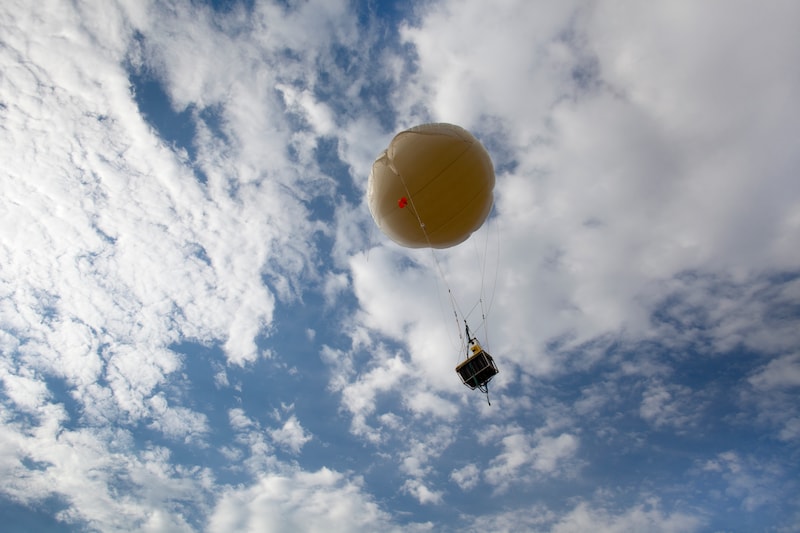
Ook ballonnen kunnen verwarring veroorzaken. Een vermeende drone bij Schiphol bleek bijvoorbeeld een ballon te zijn. Een speelgoed-, onderzoeks- of folieballon gevuld met helium kan weleens op een drone lijken, zeker wanneer ze licht weerkaatsen. Je kan ze herkennen aan hun soms grillige vluchtpatroon dat snel of traag kan zijn, afhankelijk van de wind. Je kan ze meestal ook lang waarnemen als het nog licht is.
En dan zijn er nog de vuur- en ledballonnen. Die eerste categorie kennen velen ook onder de naam ‘wensballonnen’. In principe zou je die niet meer mogen zien rondvliegen in België door brandgevaar. Maar de ledballonnen kunnen voor verwarring zorgen, omdat ze uitgerust zijn met een knipperlicht.
• Ze kunnen relatief stil in de lucht hangen en heen en weer bewegen
Sommige vliegers zijn tegenwoordig ook uitgedost met ledlampjes. Ze maken geen geluid en kunnen relatief stil blijven hangen boven een bepaalde plek, maar ook heen en weer bewegen.
Objecten die licht weerkaatsen
• Een vogel die beschenen wordt, zie je maar heel kort
• IJskristallen die licht weerkaatsen, zie je langer
Er zijn ook objecten die licht kunnen weerkaatsen en daardoor plots voor een drone aangezien worden. Bijvoorbeeld de glanzende buik van vogels, die door straatlampen of spots op de grond of gebouwen beschenen wordt. Ze lijken dan op lichtgevende bollen of schijfvormige vlekjes. Je zal ze echter maar heel kort zien.
Langer zichtbaar aan de hemel zijn ijskristallen die licht weerkaatsen. Dat kan zon- of maanlicht zijn, maar ook licht van spots op de grond bijvoorbeeld. Denk daarbij aan weerfenomen zoals lichtzuilen, bijzonnen en -manen,... enzovoort. Die kunnen - als de omstandigheden juist zijn - vlak boven de horizon hangen.
Hogerop in de lucht heb je dit soort fenomenen ook, maar die zal je minder snel verwarren met een drone, door de hoogte waarop ze bevinden. Denk dan aan zonlicht op condenssporen van een vliegtuig of een spot van een fuif op laaghangende bewolking.
Verlichting op hoge gebouwen of apparatuur
Herken je aan:
• Ze blijven op dezelfde plaats
• Ze zijn lang zichtbaar
• Meestal zijn ze rood of wit
Of misschien is het flikkerende licht wel afkomstig van verlichting op hoge gebouwen of apparatuur. Zo zijn er bijvoorbeeld de (knipperende) lichten op bouwkranen of windmolens. Je kan deze herkennen aan het feit dat ze op dezelfde plaats blijven en lange tijd zichtbaar zijn. Meestal zijn de lichten wit of rood. En woon je in de buurt van industrie, dan zie je misschien wel een verbrandingsvlam van een petrochemisch bedrijf.
Een andere, maar minder waarschijnlijke optie, is een lichtkogel of ‘flare’. Je ziet dat vooral bij militairen, maar soms ook op een feestje of voetbalmatch. Als zo’n kogel op het hoogste punt komt, ontvouwd zich een parachute waaraan een koker hangt. Dat bevat een mengsel dat bij verbranding een helder wit of rood licht produceert. Meestal herken je een lichtkogel aan een rookspoor, maar op grote afstand en in het duister is dit niet altijd zichtbaar. Wel kenmerkend is dat dit licht zal dalen aan de hemel en niet permanent blijft hangen.
Lichtreflectie van je smartphone
Herken je aan:
• Er is een heldere lichtbron in de buurt
• De lichtvlek bevindt zich op dezelfde afstand van het midden van je beeld als de lichtbron
En tot slot: ben je al met je smartphone aan het filmen en zie je plots een lichtpuntje verschijnen? Dat zou aan je toestel zelf kunnen liggen. Je ziet dan geen drone maar een lichtreflectie. Het is een weerspiegeling van een heldere lichtbron in je opnameveld. Je kan het herkennen aan het feit dat er een heldere lichtbron in de buurt is én dat de lichtvlek zich op dezelfde afstand bevindt van het midden van je beeld als de lichtbron.
A former Top Gun pilot has come forward as a new witness linked to a 1980 UFO incident dubbed 'the British Roswell'.
Decorated US fighter pilot Dan Isbell, 69, broke a 45-year silence to reveal his encounter with a 50ft triangular craft surrounded by multicolored 'plasma' light near a nuclear base he was stationed at in England on December 26, 1980.
The incident is significant as it occurred on the same day that US Air Force personnel at another English nuclear base, RAF Woodbridge, in Suffolk, saw a similar craft descending into neighboring Rendlesham Forest – then got so close they could touch the metallic object.
The Rendlesham UFO incident was captured on audio tape by a senior officer, written up in reports released three years later, and became the UK's most famous out-of-this-world encounter.
Isbell's sighting adds to the theory by UFO researchers that the strange objects were targeting military bases housing nuclear weapons, a pattern which has been highlighted in reports by the Department of Defense's UFO-monitoring office.
That night in 1980, Isbell was a 24-year-old first lieutenant working Christmas shifts as a pilot of nuclear-capable fighter jets at RAF Upper Heyford in Oxfordshire, while his superiors with families took time off.
In an interview with the Daily Mail, he said that around 10pm on December 26, he was driving his imported red Corvette along a country road between the airbase and the US servicemen's accommodation when he saw something he couldn't explain.
'In my rear view mirror I saw some unusual multicolored lights traveling very rapidly, just over the trees to the side of the road,' he said. 'As it zipped past me, it just stopped instantaneously.'
US fighter pilot Dan Isbell spoke publicly for the first time about his encounter with a massive UFO while he was stationed at RAF Upper Heyford in Oxfordshire in 1980
Isbell, pictured sitting in a flight-test-modified F-16A at the Hill Aerospace Museum in 2018, was a 24-year-old first lieutenant working a shift on the nuclear base when he witnessed the rare event
Isbell said he pulled over and watched what appeared to be a silent, floating, 50ft craft.
'It was triangular, but it had sort of a curved nose. Around the bottom, there were multi-colored changing lights, almost like a plasma,' he said.
'We were very well trained before we were declared mission-qualified, on how to identify every type of aircraft and helicopter that belonged to NATO or the Soviet Union. It was quite clear this was not conventional.'
Isbell said he started to make his way across a golf course on the side of the road towards the object, getting within 150ft.
'As I walked toward it, it began to slowly descend down,' he said.
'But then I began to realize that the stigma of a UFO sighting was death to a pilot's career. So I quickly reversed course.
'I hurried back to my car and went home. I didn't tell anyone for 45 years,' Isbell added.
In the early hours of the same day, about 110 miles away on the east English coast in Suffolk, American officers at another USAF base holding nuclear weapons saw a similar object.
The former fighter pilot shared an FBI Forensic Artist Drawing of his UFO encounters in 1980
At the time of the supposed UFO sighting, Isbell was working at night at the RAF Upper Heyford (pictured) a former Royal Air Force and US Air Force base in Oxfordshire, England
Isbell is pictured during his time as 514th Flight Test Squadron Commander between June 1994 to June 1997
After seeing a strange light descend into Rendlesham Forest, two USAF security patrolmen were sent to investigate.
According to a memo written by deputy base commander Lt. Col. Charles Halt, they saw an apparent nine-foot craft, 'metallic in appearance and triangular in shape', which 'illuminated the entire forest with a white light'.
'The object itself had a pulsing red light on top and a bank(s) of blue lights underneath,' said Halt's memo, released under the Freedom of Information Act in 1983.
'The object was hovering or on legs. As the patrolmen approached the object, it maneuvered through the trees and disappeared. At this time the animals on a nearby farm went into a frenzy.'
Two days later, while investigating marks on the trees and ground believed to be left by the craft, Halt himself witnessed strange lights and recorded his reaction on an audio tape, which was also released to researchers in 1984.
Skeptical researchers, including Ian Ridpath, say the marks on trees were foresters' axe cuts, indentations in the ground were animal burrows, and the lights were from a nearby lighthouse.
But one of the patrolmen sent out on December 26, Sgt. Jim Penniston, claims he saw the craft up close, and even sketched it in a notepad a few days later.
In 2015 the other patrolman, Airman First Class John Burroughs, received medical disability benefits for alleged radiation poisoning linked to the event, with the help of Senator John McCain, after a yearslong battle with the Pentagon which had strangely classified his medical records.
Isbell's encounter would've occurred on the same day that US Air Force personnel at another base 110 miles away at RAF Woodbridge on England's east coast reported seeing a similar craft descending into the nearby Rendlesham Forest – where a sculpture of the reported UFO now stands
This photograph shows police examining the alleged landing site of another 'triangular craft' in Rendlesham Forest in Suffolk, England, the morning of the alleged sighting on December 26, 1980
Deep marks and indentations on the trees and ground at the Rendlesham Forest were believed to be left by the UFO, however, this was disputed by skeptical researchers, including Ian Ridpath, who say they were from foresters' axe cuts
Former British police detective and UFO researcher Gary Heseltine, who wrote a book on the incident and helped Isbell come forward, says the pilot's sighting the same day as the Rendlesham incident at another UK nuclear base is significant.
'Dan Isbell is as credible a witness you could ever wish for,' Heseltine, who wrote the book Non-Human: The Rendlesham Forest UFO Incidents, told the Daily Mail.
He described Isbell as 'someone with a stellar flight career' giving 'high caliber witness testimony'.
'His account offers a remarkable circumstantial link to Britain's most famous case, the Rendlesham Forest Incident that occurred in late December 1980.'
Heseltine now runs a site for UK pilots to report UAP (unidentified anomalous phenomena) incidents, ukpilotsreportinguap.co.uk.
Isbell said it was the first, but not the last, time he had a UFO encounter.
Later in the 1980s he became a test pilot at Edwards Air Force Base in southern California. One night in 1990, he drove out on his motorbike to a secluded area near the base to stargaze.
'Suddenly this large wedge-like shape started blanking out the stars above my head,' he said.
'There were no lights anywhere on it. It was absolutely solid black, but huge… Hundreds of feet across.
In a January 1981 memo of the Rendlesham Forest incident, Deputy Base Commander Lt. Col. Charles Halt documented the December 26 sighting (reported as December 27 by Halt) describing the craft as 'metallic in appearance and triangular in shape'
UFO researcher Gary Heseltine wrote a book on the Rendlesham Forest UFO incident, Non-Human, which included Isbell's account
'I felt a little electrostatic on my skin.
'I certainly wasn't going to tell anybody about that,' he added. 'I did not hang around long enough to see the back end of it.'
Then two decades later in 2014, the now-retired pilot was in the hot tub in the back yard of his home in Silver Springs, Florida, when he said the night was lit up with a bright blue-green glow.
'It encompassed me and the hot tub,' Isbell told the Daily Mail. 'The beam came to a point above me, probably 2-300ft high.'
He said the bright light prevented him from making out the object. But then the alleged encounter got even stranger.
'The beam went out, but immediately a large sphere of plasma enveloped whatever it was,' he said.
The sphere doubled, then quadrupled in size, then vanished, he said.
'The acceleration was so fast, it just disappeared,' Isbell said.
After retiring from the Air Force, Isbell became a consultant with a security clearance, working on lasers and directed energy weapons.
He said he has decided to finally come forward with his UFO stories now, after leaving his classified role.
'I have nothing else to worry about. I have retired out of all that. They can take away my security clearance, it doesn't matter anymore,' he said
EXCLUSIVE- Police chopper was forced to take 'emergency evasive action' after being targeted by UFO over US air base last year, unearthed report reveals
A police helicopter was forced to take emergency action during a terrifying encounter with mysterious high-speed 'drones' over a US air base last year - in an incident officials would later dismiss as nothing more than a passing fighter jet.
But newly released video and incident logs of the November 22, 2024 event now tell a very different - and far more alarming - story, the Daily Mail can exclusively reveal.
Witness even described one of the unidentified flying objects as a 'tic-tac' - the same oblong shape reported by Navy aviators in a now infamous 2004 encounter.
The Daily Mail obtained images taken from a National Police Air Service (NPAS) EC135 chopper of one of the unidentified craft, which was said to have 'targeted' and come close to colliding with the helicopter mid-air around RAF Lakenheath, a US military base in England.
The incident occurred amid weeks of reports of drones and unidentified objects breaching airspace over US military bases in New Jersey, the wider northeast, and overseas.
A report by a UK aviation safety board attributed the chopper's close encounter to pilots misidentifying an American F-15 fighter jet flying in the area.
But British police logs released under the Freedom of Information Act describe multiple, hi-tech drones 'targeting' and appearing to pursue the law enforcement helicopter at high speeds.
'They were forced to take emergency evasive action in relation to a drone which came within a dangerously close proximity to them,' said an incident log from Suffolk Police, recounting a debrief of the chopper pilots.
The UK's National Police Air Service (NPAS) helicopter (stock image) had a near miss with mysterious 'drones' seen flying over a US military base in England in November 2024
A newly released police report reveals NPAS pilots said they were forced to 'take emergency evasive action' during the late-night encounter with the unidentified objects over RAF Lakenheath (pictured)
'They had to perform an emergency dive and described that they were pursued in the dive by two drones who matched their speed approx 165 knots and then pursued them for several minutes out of the area.
'They feel that drones have targeted them and chased them off at approx 140 knots [161mph].'
A UK military source, who has viewed the entire 30-minute video captured by the chopper's infrared camera, said there was more to the incident than a close brush with a fighter jet.
'In the 30-minute video with pilot audio, nobody mentions F-15s,' the source said.
'They only talk about the drones. How they're basically mirroring the helicopter's movements. How fast the drones are going. That they're basically forcing them out of the area.'
The source added that the footage shows one object pursuing the craft performing maneuvers impossible for a fighter jet.
'A fixed-wing craft is caught on the video, where you can see a corkscrew move,' the insider said. 'An F-15 cannot make a small corkscrew turn like that.'
The Daily Mail obtained a short section from the chopper video showing a small object, no more than a blob on the infrared camera, slowly moving towards the top right of the screen.
A screengrab of the helicopter video obtained by the Daily Mail shows a small object, which appears as a tiny blob on the infrared camera, slowly moving towards the top right of the screen
Radar data cited in the reported issued by the UK Airprox Board, concluded that the 'drones' were actually the lights of a US Air Force F-15 Eagle jet and showed the two aircraft coming within 1,700ft of each other
The local police incident logs from November 20-22, 2024 reveal a slew of drone sightings across three bases used by the US Air Force in the English counties of Suffolk and Norfolk: RAF Feltwell, RAF Lakenheath and RAF Mildenhall.
'Over past 2 nights there have been approx 20 drones flying over RAF's Mildenhall, Feltwell and Lakenheath. This has been between 1800-0000 hrs,' said a Suffolk Police log from November 21.
'They report that due to the size of said drones, the pilots could be 'miles and miles' away,' the log added, with 'they' appearing to refer to UK military police protecting the airbases.
'Mildenhall/Lakenheath/Feltwell - believed 10-15 drones have been at each one - and appear not to be "hobby drones",' the logs said.
One police report from Lakenheath said an officer had 'night vision goggles and can see 5-6 drones [near the highway] A1065 coming back over airfield'.
An 'informant' in the logs told police they saw 'multiple drones' which were 'very large and they make a lot of noise'.
The witness in the November 22 logs described what they saw around the airbase as 'large stationary things - tictacs - they are not birds.'
'The drones are well lit - they are not trying to hide themselves and they are flying very low now,' another log from November 22 said.
The UK Airprox Board, which investigates mid-air near misses, published a report concluding that the NPAS crew had misidentified an American F-15 fighter jet (stock image) flying in the area
Logs obtained by the Daily Mail show an 'informant' described what they saw around the airbase as 'large stationary things - tictacs'
'Informant opened the door of his house while on the line to me and call taker could hear one of the drones going over. It sounded like an aircraft.
'The drones are flying over Informant's property in both directions.'
A crime report from November 21 summarizing the incidents stated that there were '10-15 drones flying around bases and potentially into the base airspace.'
'This is third occurrence this week according to MOD police and US base have stated they have had to ground aircraft due to going across flightpaths,' the report added.
The investigation was handed over to the UK Ministry of Defence Police, which has not published the findings of its probe.
The police logs were obtained through a Freedom of Information Act request by researcher Rowland Hume, who shared the material with the Daily Mail.
Mike Morgan, a retired senior police detective who has also been researching the incident, told the Daily Mail he was disappointed in the lack of transparency from authorities.
'There is a whole series of question marks about what went on in November 2024.
The reported 'tic tac' description of the unidentified craft, echoes accounts of the infamous UFO sighting by Navy aviators in 2004 (pictured)
'I have run into repeated efforts by the authorities to avoid answering even the most basic questions, such as, how many people have been detained or how many drones seized,' Morgan said.
'What is so secret about this investigation?'
The incident was largely written off when the UK Airprox Board, the official body that investigates mid-air near misses, published a report concluding that the 'drones' seen by the NPAS crew were actually the lights of a US Air Force F-15 Eagle jet.
Radar data cited in the report showed the chopper and jet coming within 1,700ft of each other. But the report said nothing else unknown was picked up on radar.
Trained British meteorologist Stuart Onyeche, who works for a defense company and has researched the incident, told the Daily Mail that he believes the fighter jet and police chopper were both pursuing the advanced drones.
'I'm inclined to trust the initial detail and assessment of the experienced helicopter pilots that we see noted in these logs, which was that they were forced to take evasive action due to the close proximity of some kind of unmanned drone,' Onyeche said.
'It's unarguable that an F-15 was also in the vicinity as reported in the airprox, but an unanswered question is what was the F-15 being tasked to do or look for?' he added.
'Were the helicopter and F-15 in fact both converging on the unidentified 'drones'?'
Craft encroaching on airspace at US bases both home and abroad have shown signs of using advanced technology, capable of confounding anti-drone measures used by the authorities.
A joint report by the FBI, US Department of Defense and NASA obtained by the Daily Mail last year warned that their detection and signal jamming equipment had 'failed' to stop incursions by advanced drones, including at Langley Air Force Base in Virginia.
The base was swarmed with dozens of drones for weeks in December 2023, creating a security panic.
The incident was kept secret until it was revealed by defense magazine The Warzone in March 2024.
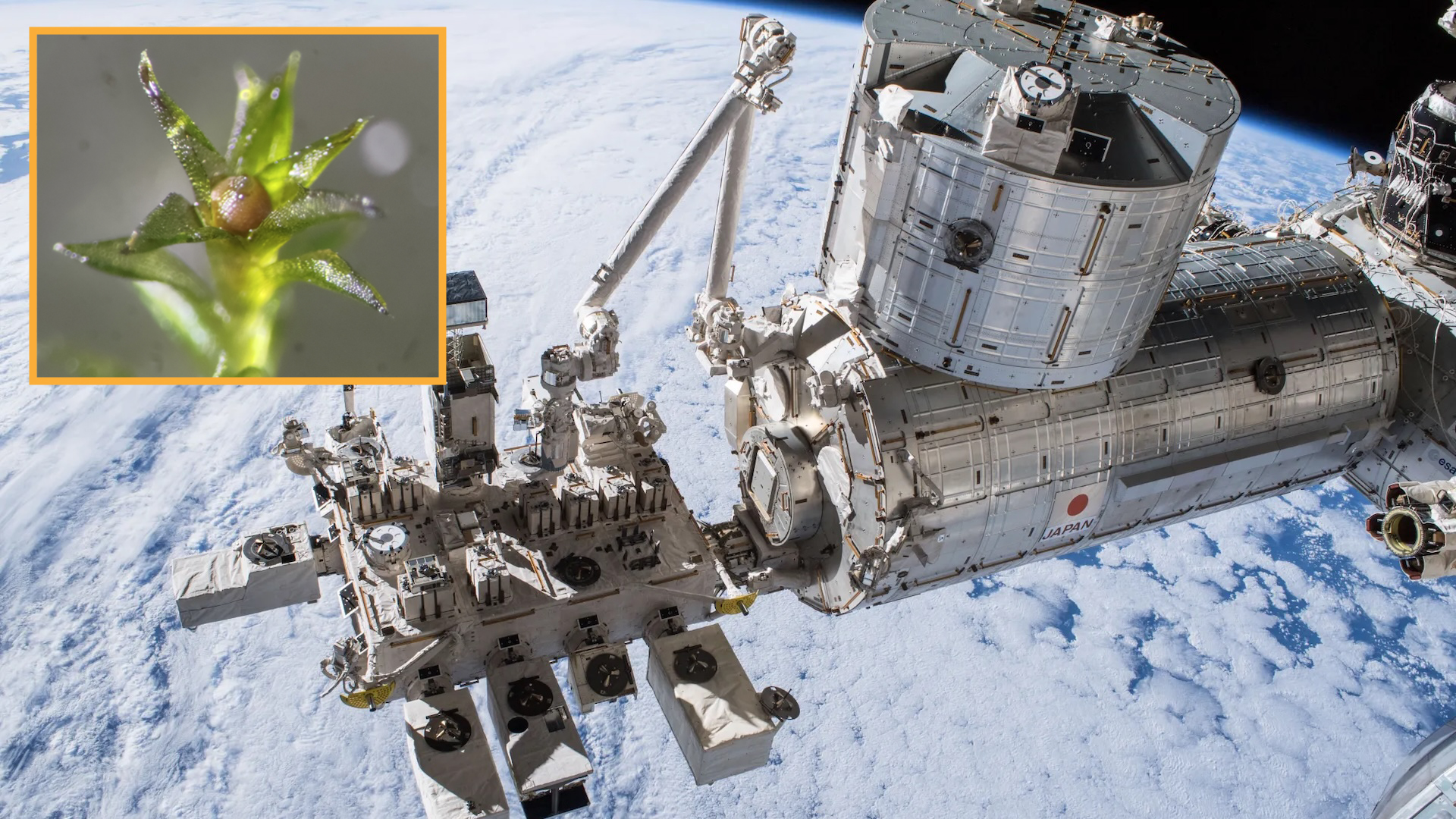
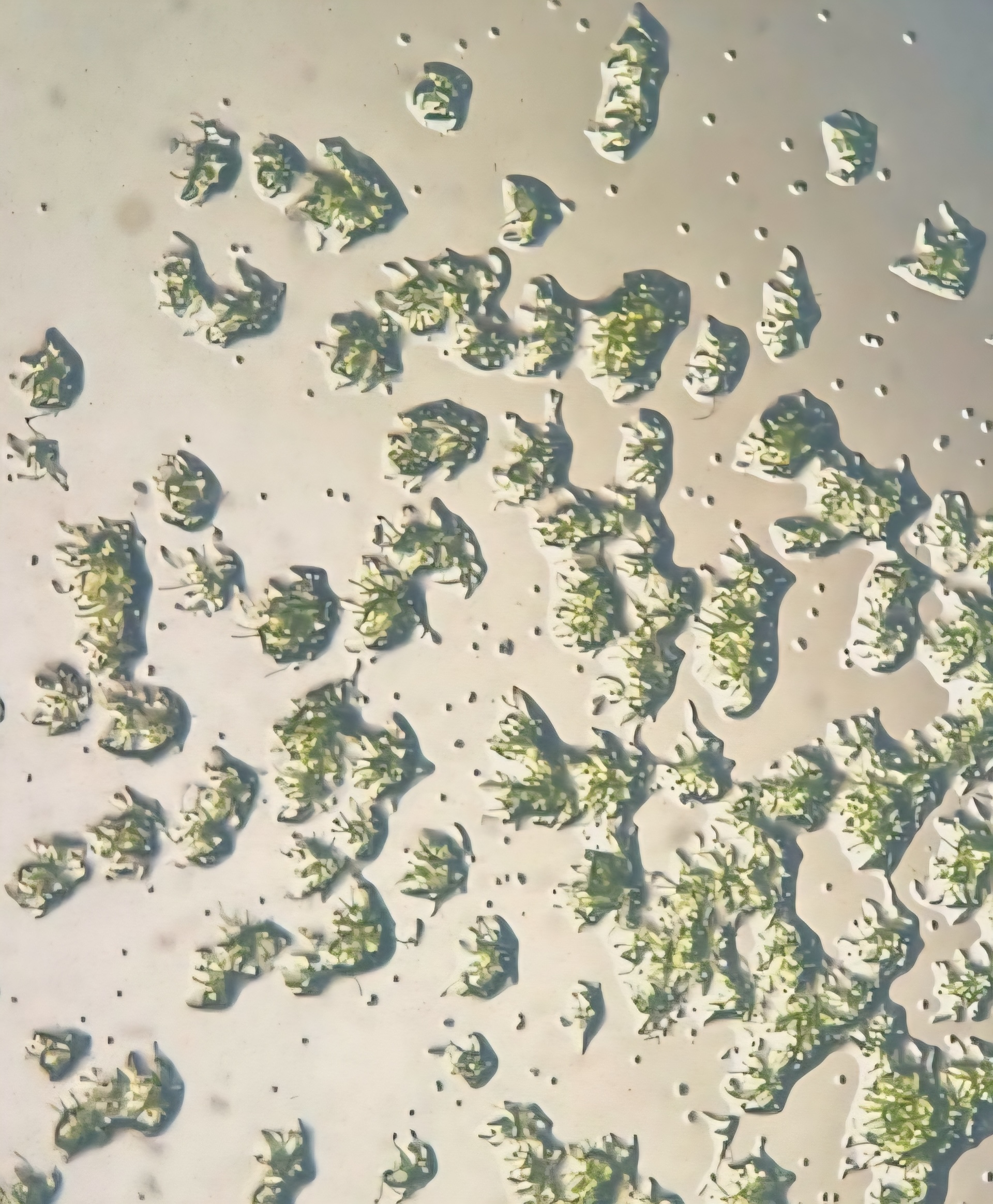
A species of moss survived for 9 months on the outside of the International Space Station, new research reveals — and 80% of the samples kept reproducing when returned to Earth.
The International Space Station's exposure facility (pictured) hosted a species of moss for 9 months. A majority of the samples survived, and then kept growing back on Earth.
(Image credit: NASA / Tomomichi Fujita)
Moss spores have survived a prolonged trip to space, scientists reveal. The spores spent nine months on the outside of the International Space Station (ISS) before returning to our planet, and over 80% of the spores were still able to reproduce when they arrived back on Earth.
The discovery improves our understanding of how plant species survive in extreme conditions, the researchers wrote in their findings, published Thursday (Nov. 20) in the journaliScience.
Moss thrives in some of the most extreme environments on Earth, from the cold peaks of the Himalayas to the dry, scorched sands of Death Valley. Moss's resilience to adverse conditions makes it an ideal candidate for surviving in the harsh environment of outer space, where extreme temperature fluctuations, altered gravity, and high radiation exposure push life-forms to their limits.
Previous experiments have explored how plants might cope in space, but so far, they have focused on larger organisms such as bacteria or plant crops. Now, researchers have shown that samples of the moss Physcomitrium patens (P. Patens) can not only survive but thrive in space.
Roughly 80% of the moss spores continued germinating after returning to Earth. (Image credit: Dr. Chang-hyun Maeng and Maika Kobayashi)
First, the researchers tested three cell types of P. patens from various stages in the moss's reproductive cycle. They found that sporophytes — cell structures that encase spores — showed the greatest stress tolerance when exposed to ultraviolet (UV) light, freezing and heat.
Sporophyte samples were then placed outside of the ISS in a special exposure facility attached to Japan’s Kibo module, where the samples lived for around nine months in 2022. After this time, the samples were returned to Earth.
"Surprisingly, over 80% of the spores survived and many germinated normally," study lead authorTomomichi Fujita, a professor of plant biology at Hokkaido University in Japan, told Live Science in an email. From this study, Fujita and his team developed a model that suggests the moss spores could actually survive for up to 5,600 days in space, or around 15 years.
Back on Earth, the team found that most of the conditions — including the vacuum of space, microgravity and extreme temperature fluctuations — had a limited impact on the moss spores. However, samples that were exposed to light, particularly high-energy wavelengths of UV light, fared less well. Levels of pigments used by the moss forphotosynthesis, such as chlorophyll a, were significantly reduced as a result of light damage, which affected later moss growth.
Even though some moss samples faced damage from the conditions of outer space, P. patens still fared much better than other plant species that have been previously tested under similar conditions. Fujita thinks the protective, spongy casing surrounding the spores may help defend against UV light and dehydration.
"This protective role may have evolved early in land plant history to help mosses colonize terrestrial habitats," he said.
While this may seem like an exercise in testing the limits of a single species, the "spores' success in space could offer a biological stepping stone for building ecosystems beyond our planet," Fujita said. In the future, he hopes to test other species and better understand how these resilient cells survive such stressful conditions.
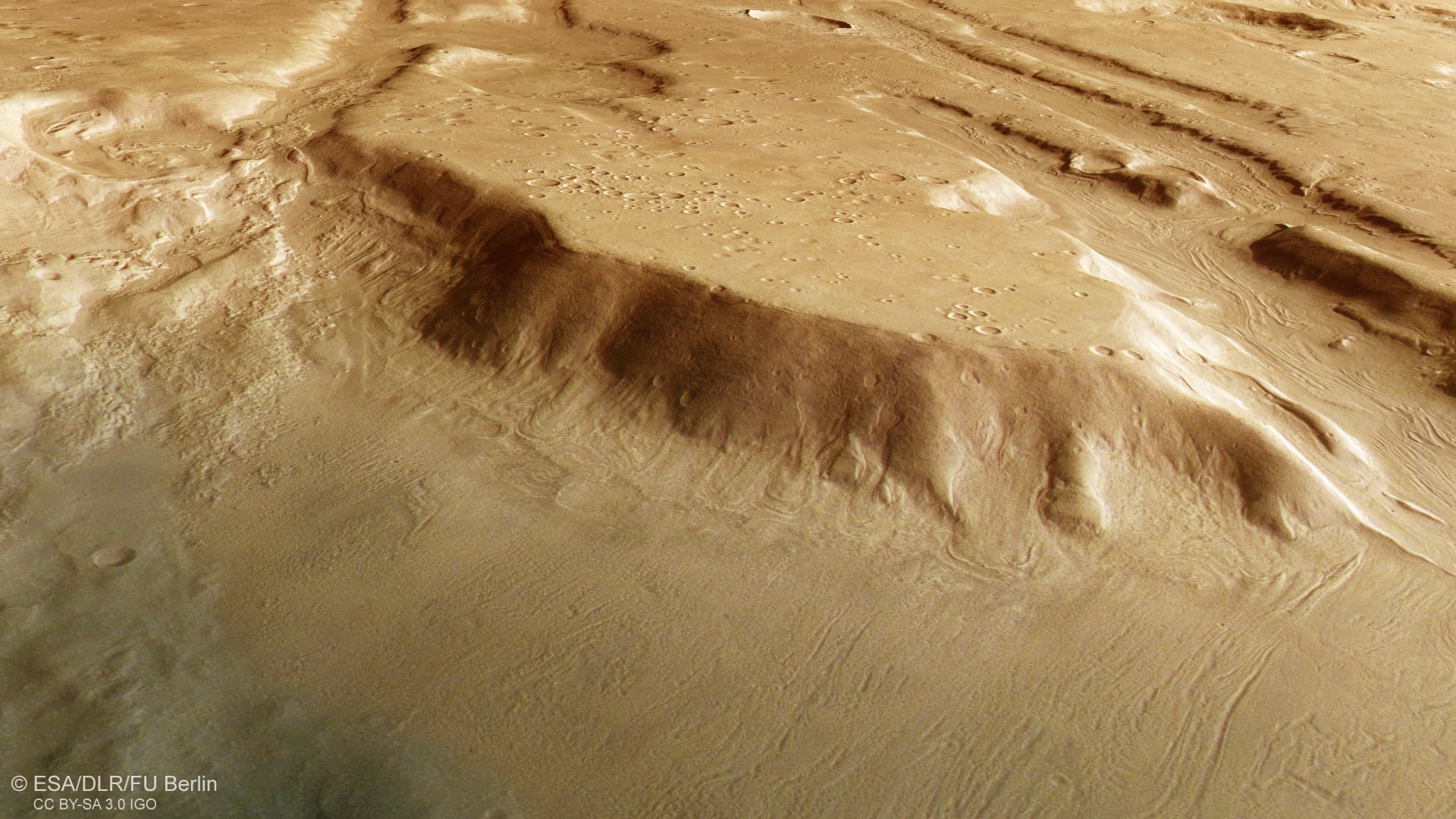
Image generated from data acquired by the ESA Mars Express’s High Resolution Stereo Camera (HRSC) on Oct. 19th, 2024. Credit: ESA/DLR/FU Berlin
Human beings are pretty familiar with the concept of "ice ages." Not only is their ample physical evidence to suggest that glacial periods occurred during the Pleistocene epoch - which lasted from ca. 2.58 million to 11,700 years ago, there are even Indigenous oral traditions that speak of lake formation and dramatic climate shifts in the distant past. Far from being mere myths, these traditions are considered preserved accounts that are corroborated by scientific findings. However, the cycles of glacial and interglacial periods that characterize the Pleistocene were merely the latest in a long line of historical shifts in Earth's climate.
According to the geological record, Earth has experienced multiple ice ages during the past 2.5 billion years, which peaked around 20,000 years ago with average temperatures being 8 °C (14.5 °F) cooler than they are today. Today, scientists are making similar finds on Mars, which also bears the marks of repeated ice ages that shaped the landscape. Like Earth, these climatic shifts were the result of long-term variations in Mars' axial tilt (obliquity), leading to fluctuating temperatures that caused ice flows to advance and retreat across the planet.
Evidence of these flows has been captured in a new series of images taken by the High Resolution Stereo Camera on the ESA’s Mars Express orbit. The images show a prominent feature known as Coloe Fossae, system of intersecting canyons located in the Ismenius Lacus quadrangle between the Northern Lowlands and the Southern Highlands. On the floors of these canyons (and the many craters that mark the region), there are visible patterns of swirling lines that indicate where material flowed during a previous ice age.
*View generated from the digital terrain model and the nadir and colour channels of the High Resolution Stereo Camera on ESA’s Mars Express.
Credit: ESA/DLR/FU Berlin*
The technical term for these patterns is lineated valley fill (LVF) or concentric crater fill (CCF), which is composed of rocky material deposited by ice flows as they advanced or retreated from an area. Scientists see these patterns on Earth with glaciers, which have left behind what is known as "till" (a combination of clay, silt, sand, and gravel) that form ridges and elongated mounds. However, these features are located in a region that sits far from the ice cap in Mars' northern polar region, indicating that glaciers once covered the region.
Similar to glacial periods on Earth, these glaciers are believed to have advanced from the Martian poles towards the mid-latitudes before retreating again during interglacial periods. Furthermore, scientists have viewed LVF and CCF features all across the mid-latitudes of Mars, suggesting that the entire planet experienced glacial activity in the past. Lastly, there's the fundamental takeaway from these and other observations, which have revealed that Mars experience multiple glacial periods as its atmosphere was slowly being stripped away, causing most of the water on its surface to disappear.
Tracking how ice flowed across the Red Planet is key to reconstructing the geological and environmental history of Mars, from which scientists can deduce how and when it made the transition from a warmer, wetter planet to the extremely cold and dry world we see today.
Click here to see the annotated version of the top image, and click on the circled regions to see the LVF features more closely.
NASAhas shared its long–awaited images of the mysterious object zipping through our solar system – finally confirming its true identity.
Since it was first spotted in July, the object – dubbed 3I/ATLAS – has captivated scientists and internet users alike, even prompting Kim Kardashian to ask NASA for answers.
Many scientists maintained it was merely a comet visiting us from a different solar system.
However, others – including a member of US Congress and a Harvard researcher – were convinced that the object was an alien spacecraft.
Now, NASA has released photos snapped by three of its Mars spacecraft as they passed just 18 million miles away from the object.
These pictures can finally put any speculation to rest, as they confirm the object's identity.
And unfortunately for alien hunters, the US space agency says that 3I/ATLAS is a comet.
'We want very much to find signs of life in the universe... but 3I/ATLAS is a comet,' said Amit Kshatriya, a senior NASA official, at a press conference on Wednesday.
NASA has shared its long–awaited images of the mysterious object zipping through our solar system – finally confirming its true identity. Pictured: a photo taken on October 2 by the HiRISE camera on NASA's Mars Reconnaissance Orbiter
These pictures can finally put any speculation to rest, as they confirm the object's trueidentity as a comet. Pictured: a photo taken on October 9 by NASA's MAVEN spacecraft
NASA's Mars spacecraft zoomed in on the comet as it passed just 18 million miles (29 million kilometers) away.
In the first image, snapped by HiRISE, the comet looks like a fuzzy white ball.
'Captured at a scale of roughly 19 miles (30 kilometers) per pixel, 3I/ATLAS looks like a pixelated white ball on the HiRISE imagery,' NASA explained.
'That ball is a cloud of dust and ice called the coma, which the comet shed as it continued its trajectory past Mars.'
Further analysis of these pictures should allow NASA to estimate the size of the comet's nucleus – its central core of ice and dust.
NASA's MAVEN spacecraft, meanwhile, snapped the comet in two unique ways using its UV camera.
'First, IUVS took multiple images of the comet in several wavelengths, much like using various filters on a camera,' NASA explained.
'Then it snapped high–resolution UV images to identify the hydrogen coming from 3I/ATLAS.'
Captured at a scale of roughly 19 miles (30 kilometers) per pixel, 3I/ATLAS looks like a pixelated white ball on the HiRISE imagery. That ball is a cloud of dust and ice called the coma, which the comet shed as it continued its trajectory past Mars
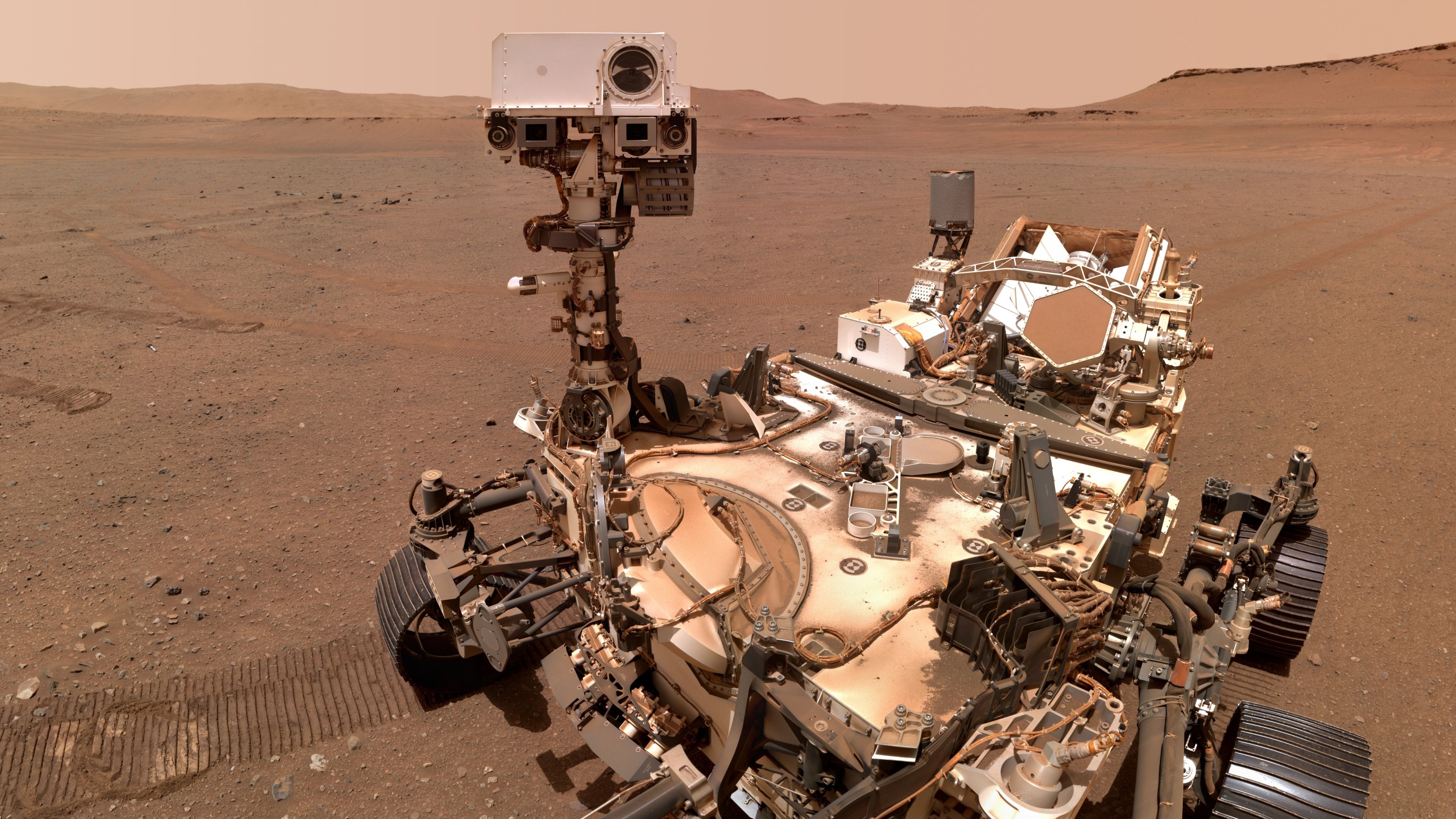
Down on the surface of Mars, NASA's Perseverance rover even caught a snap of the comet, using its Mastcam–Z camera
What is 3I/ATLAS?
Comet 3I/ATLAS is the third known object from outside our solar system to be discovered passing through our celestial neighborhood.
NASA reassures it 'poses no threat to Earth and will remain far away'.
The closest it will approach our planet is about 1.8 astronomical units (about 170 million miles).
The comet's size and physical properties are being investigated by astronomers around the world.
Scientists now hope to be able to study a combination of these images to identify a variety of molecules and better understand the comet's composition.
Down on the surface of Mars, NASA's Perseverance rover even caught a snap of the comet, using its Mastcam–Z camera.
'The exposure had to be exceptionally long to detect such a faint object. Unlike telescopes that track objects as they move, Mastcam–Z is fixed in place during long exposures,' the space agency added.
NASA has also recently shared photos of the comet taken by its STEREO observatory, and its SOHO spacecraft.
Speaking to AFP, Thomas Puzia, an astrophysicist who led the team at the Chilean observatory that made the discovery, described the widespread discussion surrounding the comet as 'amazing'.
However, he said: 'It's very dangerous and to a certain degree misleading to put speculations ahead of scientific process.
'The facts, all of them without exception, point to a normal object that is coming from the interstellar space to us.'
He added the comet was 'very exceptional in its nature, but it's nothing that we cannot explain with physics.'
NASA has also recently shared photos of the comet taken by its STEREO observatory, and its SOHO spacecraft
Meer van UFO'S of UAP'S, ASTRONOMIE, RUIMTEVAART, ARCHEOLOGIE, OUDHEIDKUNDE, SF-SNUFJES EN ANDERE ESOTERISCHE WETENSCHAPPEN - DE ALLERLAATSTE NIEUWTJES


 Is NASA hiding the truth nature of 3I/ATLAS by showing blurry images?