Naar de inhoud

UFO'S of UAP'S, ASTRONOMIE, RUIMTEVAART, ARCHEOLOGIE, OUDHEIDKUNDE, SF-SNUFJES EN ANDERE ESOTERISCHE WETENSCHAPPEN - DE ALLERLAATSTE NIEUWTJES

UFO's of UAP'S in België en de rest van de wereld
akke.beakke.be
Ontdek de Fascinerende Wereld van UFO's en UAP's: Jouw Bron voor Onthullende Informatie! Ben jij ook gefascineerd door het onbekende? Wil je meer weten over UFO's en UAP's, niet alleen in België, maar over de hele wereld? Dan ben je op de juiste plek! België: Het Kloppend Hart van UFO-onderzoek In België is BUFON (Belgisch UFO-Netwerk) dé autoriteit op het gebied van UFO-onderzoek. Voor betrouwbare en objectieve informatie over deze intrigerende fenomenen, bezoek je zeker onze Facebook-pagina en deze blog. Maar dat is nog niet alles! Ontdek ook het Belgisch UFO-meldpunt en Caelestia, twee organisaties die diepgaand onderzoek verrichten, al zijn ze soms kritisch of sceptisch. Nederland: Een Schat aan Informatie Voor onze Nederlandse buren is er de schitterende website www.ufowijzer.nl, beheerd door Paul Harmans. Deze site biedt een schat aan informatie en artikelen die je niet wilt missen! Internationaal: MUFON - De Wereldwijde Autoriteit Neem ook een kijkje bij MUFON (Mutual UFO Network Inc.), een gerenommeerde Amerikaanse UFO-vereniging met afdelingen in de VS en wereldwijd. MUFON is toegewijd aan de wetenschappelijke en analytische studie van het UFO-fenomeen, en hun maandelijkse tijdschrift, The MUFON UFO-Journal, is een must-read voor elke UFO-enthousiasteling. Bezoek hun website op www.mufon.com voor meer informatie. Samenwerking en Toekomstvisie Sinds 1 februari 2020 is Pieter niet alleen ex-president van BUFON, maar ook de voormalige nationale directeur van MUFON in Vlaanderen en Nederland. Dit creëert een sterke samenwerking met de Franse MUFON Reseau MUFON/EUROP, wat ons in staat stelt om nog meer waardevolle inzichten te delen. Let op: Nepprofielen en Nieuwe Groeperingen Pas op voor een nieuwe groepering die zich ook BUFON noemt, maar geen enkele connectie heeft met onze gevestigde organisatie. Hoewel zij de naam geregistreerd hebben, kunnen ze het rijke verleden en de expertise van onze groep niet evenaren. We wensen hen veel succes, maar we blijven de autoriteit in UFO-onderzoek! Blijf Op De Hoogte! Wil jij de laatste nieuwtjes over UFO's, ruimtevaart, archeologie, en meer? Volg ons dan en duik samen met ons in de fascinerende wereld van het onbekende! Sluit je aan bij de gemeenschap van nieuwsgierige geesten die net als jij verlangen naar antwoorden en avonturen in de sterren! Heb je vragen of wil je meer weten? Aarzel dan niet om contact met ons op te nemen! Samen ontrafelen we het mysterie van de lucht en daarbuiten.

Archief

Was ‘Oumuamua an Extraterrestrial Craft and Will It Return?

Oumuamua3-600x0.jpg

In the vast expanse of our galaxy, the discovery of interstellar objects passing through our solar system has long fascinated astronomers and the general public alike. Among these, ‘Oumuamua—an enigmatic object detected in October 2017—stands out as one of the most intriguing and debated celestial phenomena in recent history. Its peculiar characteristics have sparked widespread speculation about its nature, with some proposing it could be an extraterrestrial craft. This essay aims to analyze the evidence surrounding ‘Oumuamua, evaluate the plausibility of it being an alien spacecraft, and explore the likelihood of its return to our solar system.

Discovery and Initial Observations

‘Oumuamua was first observed by the Pan-STARRS 1 telescope in Hawaii on October 19, 2017. Its name, derived from Hawaiian, means “scout” or “messenger,” reflecting its status as the first known interstellar object detected passing through our solar system. Unlike typical comets or asteroids, ‘Oumuamua exhibited several unusual features that defied easy classification. Its trajectory was hyperbolic, indicating an origin outside our solar system, and its high velocity suggested it had come from interstellar space, traveling at an impressive speed of approximately 87.3 kilometers per second relative to the Sun.

The initial observations revealed that ‘Oumuamua had an elongated shape, estimated to be about 400 meters long and only 40 meters wide, giving it a striking aspect ratio of approximately 10:1. Its surface reflected sunlight unevenly, leading to a brightness variation as it rotated—indicative of an irregular shape. The object displayed a brightness variation of about 2.5 magnitudes over a rotation period of roughly 8 hours, implying a highly elongated or flattened structure. Moreover, telescopic observations showed that ‘Oumuamua lacked a visible coma or tail, which are typical features of comets when they approach the Sun and begin to outgas.

One of the most intriguing aspects of ‘Oumuamua was its non-gravitational acceleration. As it moved away from the Sun, its velocity increased slightly beyond what would be expected from gravitational influences alone. This subtle acceleration suggested that ‘Oumuamua was experiencing some form of outgassing, releasing material that provided a small push. However, unlike typical comets, no detectable gas or dust emissions were observed, leading to considerable debate among astronomers about the precise nature of this outgassing—or whether it was caused by some other process altogether.

Further observations using various telescopes, including the Hubble Space Telescope and ground-based observatories, confirmed these unusual features. Spectroscopic analysis revealed a featureless, reddish surface, similar to some primitive asteroids and comets. Its lack of detectable activity and peculiar shape made ‘Oumuamua an unprecedented object in our solar system—an interstellar visitor that challenged existing theories about small body formation and behavior in space. This initial discovery sparked a wave of scientific interest, leading to numerous hypotheses about its origin, composition, and the possibility of artificial or extraterrestrial nature, making ‘Oumuamua one of the most fascinating objects ever encountered in our cosmic neighborhood.

Theories on ‘Oumuamua’s Nature

The unusual features of ‘Oumuamua, the first known interstellar object passing through our Solar System, sparked widespread scientific debate and numerous hypotheses about its true nature. The initial consensus among astronomers was that ‘Oumuamua was a natural object, likely a fragment of a larger body that was ejected from its parent star system due to gravitational interactions, such as close encounters with massive planets or other celestial events. Many researchers believed it to be an elongated asteroid, perhaps a remnant of a collision or disruption event in another star system. Its highly elongated shape, with estimates suggesting it was at least five to ten times longer than it was wide, was unusual compared to typical asteroids within our Solar System.

One of the key features that puzzled scientists was the absence of a visible coma or tail. Comets generally develop a glowing envelope of gas and dust—called a coma—when their ices sublimates as they approach the Sun, creating a characteristic tail. ‘Oumuamua, however, showed no such features despite passing relatively close to the Sun at about 0.25 astronomical units. This lack of outgassing was initially interpreted as evidence that it might be a rocky or metallic object, similar to an asteroid, rather than a comet.

Yet, the most intriguing aspect of ‘Oumuamua was its observed non-gravitational acceleration—an unexplained push that slightly altered its trajectory without any corresponding visible outgassing. This phenomenon challenged the traditional understanding that such acceleration is caused solely by the sublimation of volatile ices. The absence of detectable gases or dust in the observational data led some scientists to question whether ‘Oumuamua was a typical comet or asteroid.

Several hypotheses emerged to explain this acceleration. One prominent idea was that ‘Oumuamua could be a comet with outgassing composed of materials that are difficult to detect, such as molecular hydrogen or other volatiles that produce minimal observable gases. Alternatively, some scientists suggested that the acceleration might be caused by radiation pressure—solar photons exerting a force on ‘Oumuamua. This hypothesis would imply that the object has an extremely low mass-to-area ratio, possibly indicating a thin, sheet-like structure or an artificial origin.

The radiation pressure hypothesis gained further attention because it could account for the observed acceleration without the need for detectable outgassing. If ‘Oumuamua were a thin, lightweight object—perhaps a spacecraft or a light sail—solar radiation could effectively push it, influencing its trajectory. Although this idea was met with skepticism and considered speculative, it opened up new discussions about the possibility, however remote, of extraterrestrial technology.

Additional theories proposed that ‘Oumuamua could be a fragment of an interstellar comet or asteroid that had undergone surface processing, such as space weathering, which might suppress outgassing signatures. Others suggested it could be a piece of alien technology, like a probe or a fragment of a larger artificial object, although such hypotheses remain highly controversial and lack concrete evidence.

In conclusion, the true nature of ‘Oumuamua remains an open question. Its unusual shape, lack of visible activity, and unexplained acceleration continue to inspire debate. While the majority of scientists favor a natural origin, the peculiar characteristics of this interstellar visitor have broadened our understanding of the diversity of objects that exist beyond our Solar System and have highlighted the need for further observations and research into such enigmatic objects.

The Alien Craft Hypothesis

A more provocative and controversial theory was proposed by Harvard astrophysicist Avi Loeb, along with his colleague Shmuel Bialy, in 2018. They suggested that ‘Oumuamua, the first known interstellar object passing through our solar system, could potentially be an artificially manufactured artifact—a piece of alien technology rather than a natural cosmic body. This hypothesis garnered significant attention both within the scientific community and the public, as it challenged conventional understanding of such objects.

Loeb and Bialy’s proposition was primarily based on the unusual physical characteristics observed in ‘Oumuamua, particularly its acceleration and shape. Unlike typical asteroids or comets, ‘Oumuamua exhibited a non-gravitational acceleration—that is, it moved faster than could be explained solely by the Sun’s gravitational pull. Interestingly, astronomers did not detect any signs of outgassing, such as cometary jets, which are usually responsible for such acceleration in natural objects. This lack of outgassing was perplexing because the observed acceleration appeared to be consistent with the effect of radiation pressure— the push exerted by sunlight on a small, lightweight object.

Based on these observations, Loeb and Bialy hypothesized that ‘Oumuamua could be a form of artificial structure—a light sail. A light sail is a type of spacecraft propulsion technology that harnesses radiation pressure from sunlight to propel itself through space. Such a design would imply that ‘Oumuamua was not a natural asteroid or comet, but an engineered object, possibly a probe or a piece of alien spacecraft technology. The object’s elongated shape and high velocity further supported this idea, as these features could be consistent with a deliberately crafted artificial object intended for interstellar travel or exploration.

Supporters of the alien craft hypothesis argued that the peculiar features of ‘Oumuamua—its unusual shape, its rapid acceleration without observable outgassing, and its high velocity—could be more straightforwardly explained if the object were an extraterrestrial probe or artifact. They suggested that an advanced civilization might have sent such a probe to explore the galaxy, and that ‘Oumuamua was simply a chance encounter with this technological relic.

While the hypothesis remains speculative and controversial within the scientific community, it has sparked a great deal of debate and further investigation into the nature of interstellar objects. Critics argue that natural explanations, such as a fragment of an extinct comet, could still account for ‘Oumuamua’s properties, citing the lack of direct evidence for alien technology. Nonetheless, the idea that ‘Oumuamua could be an alien spacecraft continues to inspire discussions about the possibility of detecting other extraterrestrial artifacts and the potential for intelligent life beyond Earth.

In summary, the alien craft hypothesis presents a provocative perspective that challenges traditional astrophysics. It emphasizes the importance of open-mindedness in scientific inquiry and encourages further research into the mysterious objects traveling through our solar system, which could hold clues to the existence of advanced extraterrestrial civilizations.

An illustration of 'Oumuamua

An illustration of bizarre interstellar visitor 'Oumuamua 

(Image credit: VICTOR HABBICK VISIONS/SCIENCE PHOTO LIBRARY via Getty Images)

Criticisms and Counterarguments

The alien craft hypothesis has faced significant criticism within the scientific community, with many experts emphasizing the importance of natural explanations over speculative theories. A primary argument against the extraterrestrial origin hypothesis is that the observed properties of ‘Oumuamua can be adequately explained by well-understood natural phenomena. For instance, some astrophysicists propose that ‘Oumuamua is a fragment of a larger parent body, such as an asteroid or comet, that was tidally disrupted during a close passage to its host star. This process can produce elongated, irregular shapes similar to what is observed. Additionally, the object’s unusual acceleration as it moved away from the Sun can be attributed to outgassing—where volatile materials, like hydrogen or other sublimating substances, escape from the surface of the object. Importantly, such outgassing can occur without forming a visible coma or tail, especially if the materials are less volatile or the outgassing is highly anisotropic, which means the gases are released unevenly, providing a recoil effect that alters the trajectory.

This simulation depicts the interstellar object 'Oumuamua as a mass of fragments forced into an elongated shape by stellar tidal forces.

This simulation depicts the interstellar object 'Oumuamua as a mass of fragments forced into an elongated shape by stellar tidal forces. 

(Image credit: ZHANG Yun/background by ESO/M. Kornmesser)

Furthermore, the lack of direct evidence supporting artificiality remains a core challenge for proponents of the alien hypothesis. No definitive signals or artifacts have been detected that would indicate technological origins. The rarity of interstellar objects passing through our solar system also raises questions; such objects are expected to be extremely uncommon, making it statistically less likely that ‘Oumuamua is an alien probe or spacecraft. Critics argue that extraordinary claims require extraordinary evidence—a principle rooted in scientific rigor. Invoking extraterrestrial technology without concrete proof risks undermining the credibility of scientific inquiry and diverts attention from more plausible natural explanations.

Another important aspect of criticism involves cognitive biases, such as apophenia—the tendency to perceive meaningful patterns or connections where none actually exist. Given the limited data and the enigmatic nature of ‘Oumuamua, it is easy for observers to interpret ambiguous signals as evidence of alien technology. This psychological tendency can lead to overinterpretation of uncertain observations, especially in the face of a mysterious object that defies easy classification. Skeptics caution against jumping to conclusions based on circumstantial evidence, emphasizing the need for caution and rigorous analysis.

In conclusion, while the idea of an alien craft is intriguing and captures popular imagination, the scientific consensus favors natural explanations for ‘Oumuamua’s peculiar properties. Ongoing observations and future interstellar object detections will be crucial in providing more data to settle these debates. Until then, the hypothesis of extraterrestrial origin remains speculative and not sufficiently supported by empirical evidence.

Recent Developments and Ongoing Research

In 2021, the scientific community received a wealth of new data from the Hubble Space Telescope, along with observations from other ground-based and space-based observatories, such as the Pan-STARRS telescope in Hawaii and the European Southern Observatory's Very Large Telescope (VLT). These observations aimed to unravel the mysteries surrounding ‘Oumuamua, the first known interstellar object detected passing through our Solar System. The data collected provided increasingly detailed information about its physical characteristics, trajectory, and possible origins. Despite these advances, conclusive evidence about its true nature remains elusive, fueling ongoing debates among astronomers and astrophysicists.

The collected data reinforced the idea that ‘Oumuamua was an unusual natural object with peculiar features that set it apart from typical comets or asteroids. For instance, its elongated shape, estimated to be about 400 meters long and 40 meters wide, was extraordinary. Additionally, ‘Oumuamua exhibited non-gravitational acceleration—an unexpected change in its trajectory that could not be explained solely by gravitational forces from the Sun and planets. Some scientists theorized that this might be due to outgassing, similar to comets, but no visible tail or coma was observed, leading others to propose more exotic explanations, including the possibility of artificial origin or manufactured components.

Looking ahead, the upcoming Vera C. Rubin Observatory, located in Chile, is set to revolutionize the detection of interstellar objects. Scheduled to begin full operations in the near future, this observatory will survey the entire sky with unprecedented sensitivity and frequency. Its wide-field telescope is expected to discover dozens of interstellar visitors over the coming years, vastly increasing the potential for in-depth study of these enigmatic objects. Such data will be instrumental in providing a broader statistical understanding of their composition, trajectories, and physical properties, helping scientists distinguish between natural and potentially artificial origins.

In addition to observational efforts, plans are underway for more direct exploration of interstellar objects. The European Space Agency’s proposed Comet Interceptor mission aims to visit a pristine, unaltered interstellar object in the near future. Unlike previous missions that targeted known comets or asteroids, the Comet Interceptor will be launched to rendezvous with an object that has recently entered our Solar System, offering a unique opportunity to study its composition and physical properties up close. This mission could yield invaluable insights into the building blocks of planetary systems and the processes involved in their formation.

Furthermore, the recent emergence of the interstellar object 3I/ATLAS has garnered significant attention. Discovered in late 2017, 3I/ATLAS was notable for its hyperbolic trajectory, confirming its interstellar origin. Its passage through the Solar System provided another valuable dataset, especially regarding its brightness variations and spectral properties. Studying objects like 3I/ATLAS helps scientists understand the diversity of interstellar visitors and refine models of their origin and evolution.

The combined data from these observations and upcoming missions will deepen our understanding of interstellar objects. They may also shed light on the possibility that some objects could possess artificial characteristics, potentially originating from extraterrestrial technological civilizations. While such claims remain speculative, the scientific community continues to explore all possibilities with rigorous analysis and open-minded inquiry.

In conclusion, recent advancements—from detailed observations of ‘Oumuamua to the anticipated discoveries by the Vera C. Rubin Observatory and dedicated missions like the Comet Interceptor—are paving the way for a new era of interstellar exploration. These efforts will not only improve our knowledge of these mysterious visitors but also enhance our understanding of the broader cosmos and the potential for extraterrestrial life or technology. The discovery of the interloper 3I/ATLAS serves as a reminder of the richness of interstellar phenomena and the importance of continued vigilance and innovation in astronomical research.

Will ‘Oumuamua Return?

Given its hyperbolic trajectory, ‘Oumuamua is highly unlikely to return to our solar system. Objects on hyperbolic paths are not gravitationally bound to the Sun; instead, they are interstellar travelers passing through our solar neighborhood at high speeds. Once ‘Oumuamua passed perihelion—its closest approach to the Sun—its velocity increased significantly due to gravitational acceleration, and it is now receding from our solar system at an estimated speed of approximately 26 kilometers per second relative to the Sun. This rapid departure means that, barring extraordinary gravitational influences or unforeseen cosmic events, it will not return.

Oumuamua_trajectory_animation

‘Oumuamua’s trajectory through the inner Solar System.

Credit: Tom Ruen via Wikimedia Commons.

The probability of ‘Oumuamua making a second pass is effectively zero. Its trajectory indicates a one-time visit, highlighting the importance of developing advanced detection and tracking systems to identify interstellar objects early on. Such preparedness would allow scientists to study these visitors more comprehensively and potentially gather valuable data about their composition, origin, and trajectories. Understanding ‘Oumuamua's characteristics—such as its elongated shape, unusual acceleration, and surface properties—has already sparked debates about its nature, with some researchers suggesting it could be an alien probe or artifact, though mainstream science remains cautious.

The discovery of additional interstellar objects, like 2I/Borisov, which was identified in 2019, will provide a broader context for understanding these visitors. Each new object offers crucial insights into the composition, diversity, and frequency of interstellar bodies passing through our solar system. These findings could eventually help scientists piece together the history of material exchange between star systems, shedding light on the formation and evolution of planetary systems across the galaxy.

In conclusion, while ‘Oumuamua itself is unlikely to revisit our solar system, its passage has opened an exciting new chapter in astronomy. Continued efforts to detect and analyze interstellar objects could not only enhance our understanding of the cosmos but also possibly reveal signs of extraterrestrial technology or life, should such evidence exist. The future of interstellar object research promises to be a fascinating and rapidly evolving field, offering much to explore beyond our solar neighborhood.

Conclusion

In sum, ‘Oumuamua remains one of the most perplexing interstellar objects observed to date. While some have proposed that it could be an extraterrestrial craft, the majority of scientific evidence supports a natural origin—most likely as a fragment of a larger body from another star system. Its peculiar shape, acceleration, and lack of typical cometary features have fueled speculation, but no definitive proof has emerged to confirm an artificial origin.

The question of whether ‘Oumuamua is an alien spacecraft ultimately hinges on the quality and interpretation of available data. As our observational capabilities improve and we detect more interstellar visitors, the scientific community will be better equipped to answer these profound questions. For now, ‘Oumuamua remains a fascinating natural enigma, reminding us of the vast unknowns that lie beyond our solar neighborhood. Its passing has underscored the importance of continued exploration and vigilance in the search for extraterrestrial life and technology.

References

  • Meech, K. J., et al. (2017). "A brief visit from a strange interstellar visitor." Nature, 552(7685), 378–381.
  • Bialy, S., & Loeb, A. (2018). "Could Solar Radiation Pressure Explain ‘Oumuamua’s Peculiar Acceleration?" Astrophysical Journal Letters, 868(2), L1.
  • Loeb, A., & Bialy, S. (2018). "Could ‘Oumuamua be a lightsail from an alien civilization?" Astrophysical Journal Letters, 857(2), L3.
  • Jewitt, D. (2022). "Interstellar objects: A review." The Astrophysical Journal, 927(2), 123.
  • NASA. (2018). "'Oumuamua: First Interstellar Object Detected Passing Through Our Solar System." NASA Fact Sheet.

In conclusion, while the hypothesis that ‘Oumuamua is an extraterrestrial craft is intriguing and has garnered significant media attention, the prevailing scientific consensus attributes its unusual characteristics to natural phenomena. Its unlikely return underscores the importance of ongoing and future observations to better understand interstellar objects. As our detection capabilities improve, so too will our understanding of these cosmic visitors, possibly revealing more about the universe’s hidden wonders and the potential for extraterrestrial life.

RELATED 

640px-asteroids_by_size_and_number.svg_

The asteroid size distribution.  Even though there are only a handful of large asteroids, those objects outweigh all of the small ones.

Credit: Marco Colombo, DensityDesign Research Lab via  Wikimedia Commons.

cabboumuamua_light_curve_simulation

A simulation of how a cigar-like shape for ‘Oumuamua would match its large observed brightness oscillations. 

Credit: nagualdesign via Wikimedia Commons.

oumuamua-painting-hartmann-480p

Artist’s view of the potential, pancake-like shape of ‘Oumuamua.

Credit: William K. Hartmann.

{ PETER2011 }

Hoe vind je dit bericht?
Geschreven door peter om 20:56 Stuur door

Strange blobs found inside Mars could be remnants of something ancient, astronomers say

Strange blobs found inside Mars could be remnants of something ancient, astronomers say

Findings also have implications for our understanding of Earth’s history

th?id=ORMS.d9d871f100dd2d3899468f5622ba89e0&pid=Wdp&w=295&h=160&dpr=1&c=8&rs=2

Strange blobs found inside Mars by Nasa’s InSight lander may be remnants of the ancient “embryo” that eventually developed into the planet we see today, according to a new study.

The findings, published in the journal Science, may change what we know about the formation of rocky planets like Mars, Venus and the Earth.

The first four planets from the Sun are often depicted in textbooks as having smooth, layered interiors, with crust, mantle and core stacked like a millionaire’s shortbread.

However, seismic anomalies detected on Mars by the InSight mission reveal that the mantle is far from smooth and contains rough lumps of ancient fragments up to 4km wide, preserving the planet’s violent early history like geological fossils.

The solar system’s rocky planets formed about 4.5 billion years ago when dust and rock orbiting the young Sun clumped together under gravity.

As Mars took shape, it was struck by giant objects the size of entire planets in cataclysmic collisions similar to the kind thought to have formed our Moon.

“These colossal impacts unleashed enough energy to melt large parts of the young planet into vast magma oceans,” Constantinos Charalambous, an author of the study from Imperial College London, said. “As those magma oceans cooled and crystallised, they left behind compositionally distinct chunks of material, and we believe it’s these we’re now detecting deep inside Mars.”

Cutaway view of Mars in artist’s concept shows debris from ancient impacts scattered through planet’s mantle

Cutaway view of Mars in artist’s concept shows debris from ancient impacts scattered through planet’s mantle 

(Nasa)

These cataclysmic collisions mixed fragments of the planet's crust and mantle from its “embryo” with debris from the impacting objects.

Then, as Mars cooled, these diverse chunks were trapped in a sluggishly churning mantle, “like ingredients folded into a Rocky Road brownie mix”, the study said. However, the mixing of these “ingredients” was too weak to fully smooth things out.

Unlike the Earth, where plate tectonics constantly recycle the crust and mantle, the interior of Mars is sealed up beneath a stagnant outer crust, preserving a geological time capsule.

“The fact that we can still detect its traces after four and a half billion years shows just how sluggishly Mars’s interior has been churning ever since,” Dr Charalambous said.

Astronomers uncovered these lumps by analysing data from eight marsquakes detected by the InSight lander, including two triggered by recent meteorite impacts that left almost 150m-wide craters on the planet.

The lander is equipped with instruments to detect seismic waves on Mars travelling through the mantle.

The researchers found that seismic waves of higher frequencies took longer to reach the lander sensors from the impact site. This revealed that the interior was chunky rather than smooth.

“These signals showed clear signs of interference as they travelled through Mars’s deep interior,” Dr Charalambous said.

“That’s consistent with a mantle full of structures of different compositional origins – leftovers from Mars's early days.”

The latest findings, the study notes, have implications for our understanding of the histories of other rocky planets as well.

RELATED VIDEOS


{ https://www.independent.co.uk/space }

Hoe vind je dit bericht?
Geschreven door peter om 18:46 Stuur door

The Truth About the ‘Betz Mystery Sphere’ Conspiracy Theory

The Truth About the ‘Betz Mystery Sphere’ Conspiracy Theory

Some believe the Betz sphere—a steel ball that a Florida family found on their property in 1974—is a piece of alien technology. Here are the facts.

betz mystery sphere

Hoe vind je dit bericht?
Geschreven door peter om 17:31 Stuur door

Metals Are Critical To Life - We Should Screen Exoplanets For Them

Metals Are Critical To Life - We Should Screen Exoplanets For Them

By Andy Tomaswick 

Artist's conception of WASP-121b, a planet with a metal-rich atmosphere. Credit - NASA, ESA, and J. Olmsted (STScI)

Artist's conception of WASP-121b, a planet with a metal-rich atmosphere. Credit - NASA, ESA, and J. Olmsted (STScI)

Life is complicated, and not just in a philosophical sense. But one simple thing we know about life is that it requires energy, and to get that energy it needs certain fundamental elements. A new paper in preprint on arXiv from Giovanni Covone and Donato Giovannelli from the University of Naples discusses how we might use that constraint to narrow our search for stars and planets that could potentially harbor life. To put it simply, if it doesn’t have many of the constituent parts of the “building blocks” of life, then life probably doesn't exist there.

So how does one go from needing energy to needing elements? Life gets much of its energy from a physical phenomenon called a “thermodynamic disequilibria” - basically a fancy way of saying that a “system” in nature has some potential energy, whether that’s thermal, mechanical, chemical, or radiative. One of the most common ways for life to take advantage of a disequilibria is through a process called a reduction-oxidation (redox) reaction.

Redox reactions are common in chemistry, and usually involve the transfer of an electron, which itself involves a release of energy. That energy is what life uses to power itself, and to facilitate these types of reactions, it uses proteins called oxidoreductases. Each of these proteins requires at least one metal as part of their chemical structure. To clarify, these are metals in the chemistry sense, not the astronomical one, which classifies any element higher on the periodic table than hydrogen as a “metal”. For example, nickel and iron are key components of proteins that take electrons from hydrogen, whereas copper is a key component of proteins that redox oxygen.

Fraser discusses the importance of another element for life, though it's not a metal - phosphorous.

Archaeologists have noticed that the availability of these metals has affected the course of life on Earth. Their availability changes based on events like plate tectonics, volcanism like the Deccan Traps, or the “Great Oxidation Event” of 2.3 billion years ago, when cyanobacteria released so much oxygen into Earth's atmosphere that it dramatically changed the planet’s biosphere. That change included a massive extinction event, but also gave life the ability to develop aerobic respiration, eventually paving the way for the development of animals.

Given the known impact of the availability of these elements on the evolution of life, Drs Covone and Giovannelli put forward a reasonable argument - if they are so important, why don’t we check stars and planets to see if they have these elements in abundance as a way of pre-screening them for astrobiological investigation. There are thousands of exoplanets that could make interesting targets for those investigations, and likely millions more that we’ll uncover as we continue our survey of the galaxy. Sorting and prioritizing them becomes increasingly important as humanity is limited in the number of observatories that are capable of checking for concrete biosignatures.

Typically that screening process is done by looking at the availability of three things: free energy, liquid water, and CHNOPS (Carbon, Hydrogen, Nitrogen, Oxygen, Phosphorous, and Sulfur) elements. However, the authors argue that those are all relatively abundant in the galaxy, and the constraints on higher atomic number metals, like those found in the proteins used for redox reactions, are actually much more of a constraint than the three typical search parameters. By further constraining their search to stars and planets that have an abundance of these critical materials, they could save scarce observational resources for targets that have a higher likelihood of actually harboring life.

Fraser talks about a realistic search for extraterrestrial life, and how we might find it.

Luckily, missions like ESA’s upcoming PLATO observatory will already be checking the spectroscopies of exoplanets for CHNOPS, and doing so for the biometals discussed in the paper would be collected in the same dataset. All the scientists would have to do is add a further screening category to any systems marked for a follow up. However, that is getting into a complex realm, as we have reported on other papers that show a higher “metallicity” star tends to have less UV radiation, causing less development of critical ozone layers. There are many complex factors that go into the search for life, and continually looking for them is the best way to keep refining them. This paper adds one more, particularly unique, consideration to the mix.

Learn More:

{ https://www.universetoday.com/ }

Hoe vind je dit bericht?
Geschreven door peter om 16:44 Stuur door

Sphere Over Bountiful, Utah For 20 Minutes! Then Moved Away Fast! UFO UAP Sighting News. Video!

Sphere Over Bountiful, Utah For 20 Minutes! Then Moved Away Fast! UFO UAP Sighting News. Video!

UFO_Utah.gif
UAP,%20%E0%A4%89%E0%A4%AB%E0%A5%8C%20,%20%E0%A6%87%E0%A6%89%E0%A6%8F%E0%A6%AB%E0%A6%93,%20%C4%91i%CC%83a%20bay,%20MUFON,%20%E7%9B%AE%E6%92%83%E3%80%81%E3%82%A8%E3%82%A4%E3%83%AA%E3%82%A2%E3%83%B3,%20%20UFO,%20UFOs,%20%D0%9D%D0%9B%D0%9E%20,%20NLO,%20sighting,%20sightings,%20alien,%20aliens,%20ET,%20anomaly,%20anomalies,%20ancient,%20astrobiology,%20vreemdelinge,%20%203%20copy%209.png
Date of sighting: Sept 2, 2025 5pm
Location of sighting: Bountiful, Utah, USA
Source: Self recorded SCW
 
Guys, I recorded this myself and it was over my backyard in Bountiful, Utah. I was watching three hawks circling above me when I noticed a white glowing sphere. The sphere never moved, but sat in one place. The wind was blowing strong at about 25mph but this sphere sat over my area for 20 minutes. I tried again and again to record it on my iPhone, but my phone died six times, even though its battery said 75% full. Thats never happened to me before. Then I had a panic attack and went chasing after my telescope and 140mm lens Nikon, both just couldn't see it. I got my Sony 50X zoom camera and its battery was full, but when I went out to record it died in 12 seconds and said battery empty, so I recharged it for 3-4 minutes so I could take 30-90 seconds of video...I did this three times.
Then it slowly started to move away, I said hey, let's get in the car and get a closer look. We drove as far as we could and when we got to the edge of the mountain...the UFO moved faster than ever...at least 75-120mph away from us. I know because we have over 100 planes and helicopters every day flying over our house which is between Hill AFB and Salt Lake City airport routes. Anyways, watch the video and tell me your thoughts. 
Scott C. Waring - UFO Sightings Daily 

{ https://www.ufosightingsdaily.com/ }

Hoe vind je dit bericht?
Geschreven door peter om 15:42 Stuur door

Jellyfish UFO over Downey, Idaho, I recorded it too in Utah today, UAP sighting news. Sept 2, 2025 Wow!

Jellyfish UFO over Downey, Idaho, I recorded it too in Utah today, UAP sighting news. Sept 2, 2025 Wow!

UFO_Idaho_Utah.png

UFO_Sighting.png

Date of sighting: Sept 2, 2025
Location of sighting: Downey, Idaho, USA
 
Guys I just came out of panic mode because this same UFO flew over my back yard here in Bountiful, Utah a few minutes ago. It's a Jellyfish type UFO, but my cell phone kept shutting down saying memory full, cannot record...first time ever! Also my camera which was fully charged died within seconds of recording it...I had to recharge the batter for about 5 min and then shoot the object again which was hovering in place for a total of about ten minutes. Then we got into the car and took off after it...but suddenly it took off and vanished over the mountains heading toward the Salt Lake City capital building. If it was a balloon, how could it stop on a windy day and hover ten minutes then shoot away? Impossible! This was a UFO. I too got a few min of video, coming in a few hours. Same UFO as this report here. 
 
Eyewitness states: 
Could somebody please tell me what in the world, or not in the world this is? I saw this in the sky east of Downey Idaho this morning at around 7:30. 

{ https://www.ufosightingsdaily.com/ }

Hoe vind je dit bericht?
Geschreven door peter om 15:38 Stuur door

What is the True Story of the Philadelphia Experiment?

What is the True Story of the Philadelphia Experiment?

Invisible ships, aliens, top secret missions, a government conspiracy and Albert Einstein - the Philadelphia Experiment had it all. But was the story of the USS Eldridge a hoax or science fiction brought to life?

The Philadelphia Experiment, sometimes known as the USS Eldridge conspiracy, has all the trappings of a sci-fi blockbuster. Indeed it became the subject of one starring Michael Paré in 1984.

If it’s to be believed, this top secret test of alien invisibility technology was carried out at the height of the Second World War, under the direction of Albert Einstein himself, ending in both success and catastrophe.

If it’s deemed a hoax, it is one whose ramifications have been long-term and widespread. So which is it?

The Philadelphia Experiment

iStock-171273911-770x1178.jpg.webp

Albert Einstein image on a postage stamp

(Photo: tomograf via iStock)

The Philadelphia Conspiracy was an alleged top secret government project codenamed Operation Rainbow, carried out under the auspices of Albert Einstein in accordance with his unified field theory. Its objective was to test alien invisibility technology. It was 1943, the midst of World War II and the US was seeking an advantage to help them win the Battle of the Atlantic.

And so, one day that year, often cited as 28th October 1943, the new tech was supposedly fitted onto the USS Eldridge which was docked at the Philadelphia Naval Shipyard. It’s said that those on nearby ships witnessed the generators of the Eldridge begin to hum, a green-blue hue – some said a fog or a glow – emanated from the destroyer’s hull and, in an instant, the ship simply vanished.

It’s said the ship reappeared again just as suddenly, but only after it was spotted materialising out of thin air over 200 miles away, at Norfolk Naval Shipyard in Virginia – before then vanishing a second time.

If true, surely the Philadelphia Experiment had been a resounding success. Not only did it render an entire Cannon-class destroyer escort ship invisible, but it teleported it over 200 miles away and back again. However, there was more to the story than simply this astonishing tale.

It was said that classified military documents revealed far darker implications. When the USS Eldridge rematerialised in Philadelphia, members of its crew suffered injuries ranging from minor to catastrophic. Nausea, disorientation, insanity, third degree burns and mysterious illnesses were all cited. The most alarming effects regarded crew being found fused to parts of the ship, some of them still alive.

The Philadelphia Conspiracy Origins

iStock-1299032233-770x513.jpg.webp

The Case for the UFO scripts

(Poto: Pixsooz via iStock)

According to the story, there were many witnesses to the Philadelphia Experiment; people who saw the ship’s disappearance and reappearance. And yet, only one witness came forward, and it was not until the 1950s that details of it began to emerge. In fact, all information about the Philadelphia Conspiracy derives from a single source. That was a man by the name of Carl Meredith Allen.

In 1956, Carl Allen began writing what would be hundreds of letters to Morris K. Jessup, the author of a book called The Case for the UFO (1955). Going by the name Carlos Allende, he tried to convince Jessup to stop the research he was then conducting on Albert Einstein’s incomplete unified field theory. As part of this, he informed Jessup of the USS Eldridge conspiracy, claiming to have witnessed the test himself while working on a ship called the SS Andrew Furuseth as a deckhand. When Jessup attempted to get more information from Allen, he was unable to provide any evidence for his claims.

At around the same time, the US Office of Naval Research (the ONR) received an anonymous package labelled “Happy Easter”. Inside was a copy of Jessup’s book, heavily annotated by what appeared to be three different contributors, each in different shades of blue and referring to each other as “gypsies”. The notes within related to UFOs, purporting to have knowledge of extraterrestrial life on Earth and suggesting that Jessup’s research on unified field theory was too close to some alien technology. There were also several allusions to the Philadelphia Experiment.

In a strange twist that served only to enhance belief in the Philadelphia conspiracy, two agents at the ONR took it upon themselves to privately print many copies of the annotated book, which became known in certain circles as the Varo Version.

Investigating The Philadelphia Conspiracy

In 1957, the ONR invited Jessup to view the annotated copy of his book. He confirmed that the annotations matched the handwriting in Allen’s letters. It has since been confirmed that it was Allen who sent the package to the ONR and, in 1969, he even admitted to writing all of the annotations. His aim? To “scare the hell out of Jessup” and deter him from continuing his investigation of Unified Field Theory, which Allen viewed as dangerous. He later retracted this admission.

So, who was Carlos Allende aka Carl Allen? For a long time, that answer was as elusive as the man himself. In fact, nothing was known about him until a journalist called Robert Goerman wrote about the man in 1980. Goerman, apparently realising an old family connection with Allen, interviewed the man’s family and described him as a “a creative and imaginative loner.” According to Goerman, Allen had a history of mental illness which he speculated might have been behind any fabrications.

USS Eldridge Hoax: The Official Response

The Philadelphia Experiment captured the imagination of the ufologist community for many years. Indeed, the ONR was so overwhelmed by the constant enquiries about it that, in 1996, it released an official statement completely denying the event, stating:

“ONR has never conducted any investigations on invisibility, either in 1943 or at any other time (ONR was established in 1946.) In view of present scientific knowledge, ONR scientists do not believe that such an experiment could be possible except in the realm of science fiction.”

The same statement provided theories as to the origins of the ideas behind the USS Eldridge Conspiracy. For example, the invisibility aspect might have arisen from real research at the Philadelphia Naval Yard at the time into rendering ships undetectable to radar, known as degaussing.

There has never been any evidence provided for or corroboration of the Philadelphia Experiment. What is more, any evidence collected, such as the logs of the USS Eldridge and other involved ships, have contradicted the story. For example, on the alleged date of the experiment, 28th October 1943, the ship’s log puts it in the Bahamas on a shakedown tour.

Resurgence of the USS Eldridge 'Hoax'

iStock-1302231196-770x433.jpg.webp

Abstract Futuristic Technology Background with Clock concept and Time Machine

(Photo: ChakisAtelier via iStock)

For a long time it was widely accepted that the Philadelphia Experiment was a fake, sometimes referred to as the USS Eldridge hoax. However, it was revived by the emergence of another alleged secret experiment, The Montauk Project. Instead of invisibility, this time it was time travel and, in place of Einstein, were Wilhelm Reich and Nikola Tesla. It tied in with the Philadelphia Experiment as part of a wider plan.

Some Still Believe

iStock-1142774623-770x463.jpg.webp

Hoax stamp

(Photo: Christian Horz via iStock)

It is widely acknowledged that the Philadelphia Experiment was indeed a hoax, perpetrated by one man whose family described him as a “master leg-puller”, Carl Meredith Allen. And yet, despite a complete lack of proof, under the umbrella of the Montauk Project, the USS Eldridge conspiracy seems to be gaining new supporters even to this day.

Related VIDEOS

{ https://www.discoveryuk.com/ }

Hoe vind je dit bericht?
Geschreven door peter om 23:24 Stuur door

Het Philadelphia Experiment: Een Wetenschappelijk Verkenning van een Legende

Het Philadelphia Experiment: Een Wetenschappelijk Verkenning van een Legende

A U.S. Navy ship

The USS Eldridge.

Photo: U.S. Navy

Inleiding

Het Philadelphia Experiment is een bekende en omstreden samenzweringstheorie die beweert dat de Amerikaanse marine in de jaren 1940 een experiment heeft uitgevoerd dat leidde tot het onzichtbaar maken van een schip, de USS Eldridge. Deze gebeurtenis zou plaatsgevonden hebben in de haven van Philadelphia in 1943, tijdens de Tweede Wereldoorlog. Hoewel de meeste wetenschappers en historici deze verhalen als mythes beschouwen, blijft het onderwerp intrigeren en heeft het een prominente plek in populaire cultuur en conspiracy theorieën. In dit artikel onderzoeken we de oorsprong, de vermeende wetenschap achter het experiment, de ontstaansgeschiedenis en de wetenschappelijke plausibiliteit van dergelijke claims.

De oorsprong van de legende

De oorsprong van de legende rond het zogenaamde Philadelphia Experiment gaat terug naar de late jaren 1950 en de vroege jaren 1960. Het verhaal werd voor het eerst bekend via anonieme brieven en verhalen van mensen die beweerden getuige te zijn geweest van het experiment. Een van de meest invloedrijke bronnen is het boek "The Philadelphia Experiment," dat in 1994 werd gepubliceerd door auteurs William Moore en Charles Berlitz. In dit boek wordt beweerd dat de Amerikaanse marine tijdens de Tweede Wereldoorlog, in 1943, een geheim experiment uitvoerde met als doel een schip onzichtbaar te maken voor radar en visueel waarnemen.

Volgens de verhalen zou de USS Eldridge, een destroyer escort, in de haven van Philadelphia worden blootgesteld aan een krachtig elektromagnetisch veld. Dit veld zou het schip volledig onzichtbaar maken voor radar en het voor het blote oog onzichtbaar maken. Bovendien worden er verhalen verteld dat het schip fysiek van plaats zou zijn veranderd, waarbij het in een soort teleportatie zou zijn getransporteerd naar een andere locatie. Sommige versies van het verhaal gaan zelfs verder door te stellen dat het schip door de tijd zou zijn gereisd, waardoor het op een ander moment weer werd teruggevonden.

De verhalen over het experiment worden vaak aangevuld met mysterieuze en griezelige details over de gevolgen voor de bemanning. Sommige getuigen spreken over fysieke deformities, zoals vergroeiingen en verwondingen die niet natuurlijk leken, terwijl anderen berichten over telepathische verschijnselen en psychische stoornissen die na het experiment zouden zijn ontstaan. Deze verhalen zorgen voor een aura van mysterie en paranormale gebeurtenissen rondom het experiment. Hoewel er geen concreet bewijs is dat het Philadelphia Experiment daadwerkelijk heeft plaatsgevonden, blijft het een populair onderwerp in de conspiracy-theorieën, sciencefiction en folklore rondom geheime militaire projecten.

De vermeende wetenschappelijke basis

Hoewel het hele verhaal rondom het zogenaamde Philadelphia Experiment op het eerste gezicht ongelooflijk en bijna onvoorstelbaar lijkt, worden door voorstanders van deze theorieën vaak pogingen gedaan om een wetenschappelijke onderbouwing aan te wijzen. Ze suggereren dat het experiment gebaseerd zou kunnen zijn op de toenmalige kennis over elektromagnetisme, deeltjesfysica, en de theorieën die binnen de kwantummechanica en veldentheorieën ontwikkeld zijn. Het is belangrijk om deze claims kritisch te bekijken en te begrijpen in welke mate ze overeenkomen met de actuele wetenschappelijke stand van zaken.

  • Electromagnetische onzichtbaarheid en de rol van elektromagnetische velden

Een van de kernideeën achter het vermeende experiment is dat elektromagnetische velden gebruikt zouden kunnen worden om een object onzichtbaar te maken voor het blote oog of radar. In de hedendaagse wetenschap bestaat het concept van "metamaterialen", die speciale materialen zijn met een negatieve refractie-index. Deze materialen kunnen elektromagnetische golven buigen en manipuleren op manieren die in de natuur niet voorkomen. Hierdoor is het mogelijk om bijvoorbeeld experimentele onzichtbaarheidsmantels te ontwikkelen die licht of radarstralen om een klein object heen laten leiden, waardoor het lijkt alsof dat object niet bestaat.

Deze technologie wordt onder andere onderzocht binnen de context van militaire camouflage en wetenschappelijke experimenten. Het is echter cruciaal te benadrukken dat de huidige toepassingen nog zeer beperkt zijn: de meeste experimenten betreffen kleine objecten en werken onder zeer gecontroleerde omstandigheden. Het is niet realistisch om te denken dat deze technologie, op de schaal van een groot schip zoals in het Philadelphia Experiment, al operationeel of zelfs praktisch toepasbaar is. De complexiteit en de schaalgrootte maken het gebruik van metamaterialen voor grote objecten nog altijd een grote uitdaging, en de technologische vooruitgang op dit gebied is nog zeer beperkt.

  • Het gebruik van elektromagnetische velden voor cloaking

De theorieën die ten grondslag liggen aan het concept van onzichtbaarheid maken gebruik van het manipuleren van elektromagnetische golven door middel van speciale materialen. Door deze materialen met negatieve refractie-index te gebruiken, kunnen golven worden geleid en gebroken op een manier die het lijkt alsof het object niet bestaat. Het principe is gebaseerd op het idee dat door het buigen en omleiden van straling, het licht of radarstralen rondom een object heen kunnen worden geleid, waardoor het object wordt "verborgen".

In theorie betekent dit dat een dergelijk proces mogelijk zou kunnen werken voor kleine objecten, en dat het in een zeer gecontroleerde omgeving en onder zeer precieze omstandigheden kan worden toegepast. Maar het toepassen van dergelijke technologieën op grote schaal, zoals een volledig schip, en vooral in de jaren 1940, is nog volledig experimenteel en theoretisch. De benodigde materialen en technologieën waren toen nog niet beschikbaar, en de praktische implementatie zou onmogelijk zijn geweest met de toenmalige kennis en middelen.

  • Kwantummechanica en tijdreizen

Een ander aspect dat vaak wordt aangehaald in verband met het Philadelphia Experiment betreft de vermeende mogelijkheid van tijdreizen en de invloed van kwantumveldentheorieën. Sommige theorieën binnen de kwantumfysica suggereren dat onder extreme omstandigheden en met zeer geavanceerde technologieën, het mogelijk zou kunnen zijn om de ruimte-tijd te manipuleren. Bijvoorbeeld, door middel van het creëren van wormgaten of door het manipuleren van kwantumvelden, zouden theoretisch tijdreizen mogelijk kunnen worden.

Het is echter van groot belang te onderstrepen dat deze ideeën zich nog in een zeer theoretisch stadium bevinden. Er is geen experimenteel bewijs dat tijdreizen mogelijk maakt, en de technologieën die hiervoor nodig zouden zijn, bevinden zich op dit moment nog in het domein van sciencefiction. Het toepassen van dergelijke theorieën op een schip, zoals in het geval van het Philadelphia Experiment, is dus volledig hypothetisch en niet gebaseerd op bewezen wetenschap. Bovendien zou het manipuleren van de ruimte-tijd een enorme hoeveelheid energie vereisen en onvoorziene consequenties met zich meebrengen.

Kortom, terwijl er in de wetenschappelijke wereld bepaalde theorieën en principes bestaan die het idee van elektromagnetische onzichtbaarheid en zelfs tijdreizen mogelijk zouden kunnen maken in de toekomst, is er momenteel geen concreet bewijs dat dergelijke technologieën op grote schaal bestaan of operationeel zijn. Het verhaal rondom het Philadelphia Experiment blijft dus vooral binnen het domein van legendes, speculaties en niet-geverifieerde theorieën. Wetenschappelijke kennis zoals die in de jaren 1940 bestond, was nog lang niet ver genoeg gevorderd om dergelijke fenomenen te kunnen realiseren, laat staan dat ze effectief toegepast konden worden op een schip dat in een haven lag.

ship and force field

Philadelphia Experiment illustratie.

Photo: Shutterstock AI

De ontstaansgeschiedenis en de mythologie

Het verhaal van het zogenaamde Philadelphia Experiment kreeg voor het eerst brede aandacht nadat het werd gepubliceerd in een boek geschreven door Charles Berlitz en William Moore. In dit boek werd beweerd dat de Amerikaanse marine en de Amerikaanse regering in het geheim experimenten hadden uitgevoerd met het doel om schepen onzichtbaar te maken voor radar en visuele observatie. Volgens de auteurs zouden deze experimenten plaatsgevonden hebben in de haven van Philadelphia in de jaren 1943, tijdens de Tweede Wereldoorlog. Het boek stelde dat de USS Eldridge betrokken was bij een dergelijk experiment, wat leidde tot geruchten en complottheorieën die zich snel verspreidden.

De verhalen werden verder versterkt door vermeende getuigenissen van mensen die beweerden de experimenten te hebben gezien, of zelfs eraan te hebben deelgenomen. Sommige van deze getuigen spraken over mysterieuze verschijnselen zoals het verdwijnen en weer verschijnen van schepen, het plotseling teleporteren van mensen, en zelfs gevallen waarin mensen door de romp van het schip zouden zijn gezeten. Deze verhalen bevatten vaak elementen uit sciencefiction en paranormale verschijnselen, wat het verhaal een mythische en bijna legendarische dimensie gaf. Het idee dat de Amerikaanse overheid geheime technologieën ontwikkelde die de natuurwetten tartten, sprak tot de verbeelding en voedde de aantrekkingskracht van het verhaal.

Het is belangrijk op te merken dat de bronnen waarop deze verhalen gebaseerd zijn, niet op harde bewijzen rusten. Het Amerikaanse Marine Corps heeft herhaaldelijk verklaard dat er geen bewijs is dat het experiment ooit daadwerkelijk heeft plaatsgevonden. Ze benadrukten dat er geen documenten, rapporten of andere betrouwbare bronnen bestaan die het bestaan van zo’n experiment bevestigen. Ook uit onderzoek blijkt dat de USS Eldridge op de genoemde data niet in de haven van Philadelphia lag, maar elders. Daarnaast is er geen enkele officiële documentatie of erkend onderzoeksrapport dat wijst op het uitvoeren van een dergelijk experiment.

Bovendien is er sterke twijfel onder historici en wetenschappers over de echtheid van de verhalen. Veel experts beschouwen het Philadelphia Experiment als een mythe, een modern legendes zoals die vaak ontstaan rondom geheime militaire projecten en mysterieuze gebeurtenissen. De combinatie van onduidelijke getuigenissen, suggestieve verhalen en het ontbreken van concrete bewijzen heeft ertoe geleid dat het verhaal een mythische status heeft verworven, die nog altijd de gemoederen bezighoudt. Het verhaal blijft daarmee een fascinerend voorbeeld van hoe mythes en legendes ontstaan rond geheime overheidsprojecten en de menselijke fascinatie voor het paranormale en het onverklaarbare.

top secret

Photo: Polonio Video

Wetenschappelijke kritiek en realiteit

De claims over het zogenaamde Philadelphia Experiment worden door de wetenschappelijke gemeenschap over het algemeen als onjuist en ongeloofwaardig beschouwd. Deze verhalen vertellen over een geheime militaire operatie uit de jaren 1940 waarbij een Amerikaanse marinefregat zogenaamd werd onzichtbaar gemaakt voor radar en zelfs door de tijd zou zijn gereisd. Hoewel het een fascinerend verhaal is dat veel mensen intrigeert, ontbreekt er wetenschappelijk bewijs dat dergelijke gebeurtenissen daadwerkelijk hebben plaatsgevonden. Bovendien zijn de genoemde technologieën, zoals elektromagnetische onzichtbaarheid en tijdreizen, momenteel nog in de experimentele fase of bestaan ze slechts in theoretische modellen zonder praktische toepassing of bevestiging.

  • Elektromagnetische onzichtbaarheid

Een van de kernonderdelen van het Philadelphia Experiment is de claim dat het schip onzichtbaar kon worden gemaakt voor detectiesystemen door middel van elektromagnetische cloaking. Deze technologie zou werken door het manipuleren van elektromagnetische golven zodat ze om een object heen buigen, waardoor dat object voor het blote oog of voor detectiemiddelen onzichtbaar wordt. In de wetenschappelijke wereld wordt deze techniek ook wel metamaterialen genoemd. Metamaterialen zijn materialen die speciaal zijn ontworpen om elektromagnetische golven op ongebruikelijke manieren te laten verlopen, bijvoorbeeld door negatieve refractie.

Hoewel er inderdaad onderzoek wordt gedaan naar elektromagnetische cloaking en metamaterialen, bevindt deze technologie zich nog in een zeer experimenteel stadium. De meeste succesvolle experimenten zijn beperkt tot kleine objecten en op laboratoriumschaal. Het maken van een grote structuur, zoals een schip, volledig onzichtbaar voor radar of visueel zicht, vereist extreem precieze materialen en een enorme hoeveelheid energie. Deze praktische beperkingen maken het momenteel onmogelijk om dergelijke technologie op grote schaal toe te passen, laat staan in militaire of civiele contexten. Bovendien zou het gebruik van dergelijke technologie enorme kosten met zich meebrengen, en er is geen bewijs dat dergelijke technieken operationeel zijn of in de nabije toekomst haalbaar worden.

  • Tijdreizen en kwantumveldentheorieën

Een ander fascinerend element uit het verhaal van het Philadelphia Experiment is de bewering dat het schip door de tijd zou zijn gereisd. Tijdreizen wordt vaak afgebeeld in sciencefictionverhalen en wordt soms besproken binnen de context van kwantumfysica en de theoretische mogelijkheden van de ruimte-tijd. In de huidige wetenschappelijke consensus echter, wordt tijdreizen niet als mogelijk beschouwd volgens de bekende natuurwetten. De relativiteitstheorie van Einstein laat bijvoorbeeld toe dat tijd langzaam kan verlopen onder extreme omstandigheden, maar niet dat men terug in de tijd kan reizen of de tijd volledig kan manipuleren zoals in de verhalen wordt gesuggereerd.

Binnen de kwantumveldentheorieën en de theoretische fysica bestaan wel ideeën over exotische ruimtetijdconfiguraties zoals wormgaten, die mogelijk tijdreizen zouden kunnen faciliteren. Maar deze concepten blijven uiterst speculatief en ver weg van praktische toepassing. Er is geen experimenteel bewijs dat tijdreizen mogelijk is of dat dergelijke fenomenen daadwerkelijk kunnen worden gerealiseerd. De meeste wetenschappers beschouwen het idee van tijdreizen als een interessant theoretisch vraagstuk, maar niet als een daadwerkelijke technologische mogelijkheid op dit moment.

  • De rol van mythes en cultuur

De populariteit van het Philadelphia Experiment kan niet los worden gezien van de menselijke fascinatie voor geheimzinnige technologieën, geheime overheidsprojecten en het verkennen van de grenzen van wetenschap en technologie. Verhalen over geheime experimenten en bijzondere technologieën worden vaak versterkt door media, films en conspiracy-theorieën die inspelen op onze nieuwsgierigheid en behoefte aan mysterieuze verhalen.

Het verhaal past in een bredere context van sciencefiction en complottheorieën die vaak gebruik maken van echte wetenschappelijke principes, maar deze combineren met fantasie en onbewezen claims. Deze verhalen worden vaak versterkt door een gebrek aan transparantie van overheden, waardoor het idee ontstaat dat er geheime en gevaarlijke technologieën bestaan die de mensheid kunnen bedreigen of verheffen. In veel gevallen wordt het wetenschappelijke verhaal vermengd met mythen, waardoor het moeilijk wordt om feit van fictie te onderscheiden.

Kortom, hoewel het Philadelphia Experiment een intrigerend verhaal is dat veel mensen aanspreekt en inspireert, wordt het door de wetenschap niet ondersteund. De technologische claims die erin worden gedaan, zijn niet haalbaar met de huidige kennis en technologie. Het verhaal blijft daarmee een mooi voorbeeld van hoe wetenschap, cultuur en fantasie kunnen samensmelten tot een mythe die de verbeelding blijft boeien.

Conclusie

Het Philadelphia Experiment blijft een fascinerende legende die de menselijke nieuwsgierigheid en het verlangen naar verborgen kennis weerspiegelt. Vanuit een wetenschappelijk perspectief is er echter geen bewijs dat zo'n experiment heeft plaatsgevonden of mogelijk is onder de huidige kennis van natuurkunde. De technologieën die in de verhalen worden beschreven, bevinden zich nog in de kinderschoenen of bestaan slechts in theorieën zonder experimenteel bewijs.

De verhalen over het experiment illustreren hoe wetenschap en mythologie vaak met elkaar verweven raken in de populaire cultuur. Het is belangrijk om kritisch te blijven en te erkennen dat veel van de claims rond het Philadelphia Experiment niet meer zijn dan mythes en legendes, zonder basis in de realiteit. Toch blijft het verhaal een boeiend voorbeeld van de menselijke verbeeldingskracht en onze zoektocht naar het onverklaarbare.

Bronnen:

  • Berlitz, C., & Moore, W. (1994). The Philadelphia Experiment.
  • U.S. Navy. Official statements over het experiment.
  • Scientific American, "Metamaterials and Electromagnetic Cloaking," 2018.
  • Kenniscentrum over kwantummechanica en tijdreizen, Universiteit van Amsterdam.
  • Popular science artikelen over elektromagnetische onzichtbaarheid en metamaterialen.

{ PETER2011 }

Hoe vind je dit bericht?
Geschreven door peter om 23:09 Stuur door

Scientific Analysis of the Saas Fee UFO Encounter: A Critical Examination of the

Scientific Analysis of the Saas Fee UFO Encounter: A Critical Examination of the "Saas Fee Picture"

Close-up of the Saas-Fee UFO picture

Close-up of the Saas-Fee UFO picture

Introduction

UFO sightings and encounters have long fascinated both the public and the scientific community. While many reports can be attributed to natural phenomena, misidentifications, or hoaxes, some cases remain unexplained, fueling speculation about extraterrestrial life and advanced technologies. One such incident is the so-called “Saas Fee Picture,” purportedly capturing a UFO in the Swiss Alps. This analysis aims to critically evaluate the available evidence, examine plausible explanations, and assess the scientific validity of claims surrounding this event.

Background and Context

The Saas Fee incident reportedly occurred in the vicinity of the Swiss village of Saas Fee, a popular tourist destination nestled within the Pennine Alps. The event gained attention primarily through a photograph that purportedly shows a mysterious flying object. The photograph was circulated through various UFO enthusiast circles and media outlets, prompting questions about its authenticity and origin.

Key aspects of the incident include:

  • The date and time of the photograph are often unspecified or uncertain, complicating efforts to verify the event.
  • Witness testimonies are sparse and sometimes inconsistent.
  • The photograph itself appears in different versions, with some claiming it is authentic and others suggesting it is manipulated or a hoax.

To understand the significance of this incident, it is important to analyze the photograph and the circumstances under which it was taken.

rzkaopodb11f1.jpg

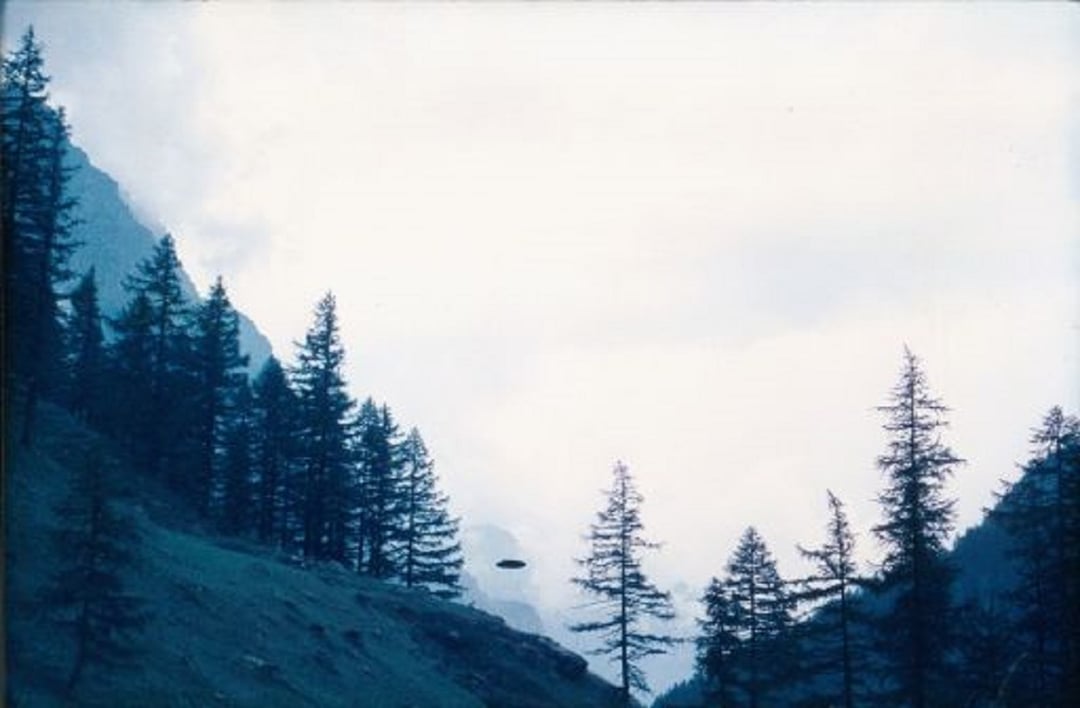
Super clear UFO photo taken in Saas-Fee, Switzerland on July 26, 1975.

Analysis of the Photograph

The central piece of evidence in the Saas Fee case is the photograph purportedly depicting a UFO. An initial step in scientific critique involves examining the image itself:

  • Visual Features: The object appears as a bright, disc-shaped anomaly in the sky, with some suggesting it is a classic “flying saucer” shape. Its size relative to the background landscape is ambiguous due to lack of scale references.
  • Image Quality: The photograph is of moderate resolution, with some graininess. The lack of metadata (such as EXIF data) impairs accurate analysis.
  • Possible Artifacts: The object could be a lens flare, reflection, or photographic artifact, common in images taken with certain camera types or under specific lighting conditions.
  • Manipulation Evidence: Digital forensic analysis can assess whether the image has been altered. To date, no conclusive evidence of manipulation has been publicly presented, though skeptics argue that the image could be artificially created or enhanced.

Environmental and Contextual Factors

The Swiss Alps present unique environmental conditions that can produce phenomena sometimes mistaken for UFOs:

  • Reflections and Mirages: Mountainous regions are prone to optical illusions such as superior mirages, which can distort the appearance of distant objects.
  • Natural Phenomena: Ball lightning, rare atmospheric events, or unusual cloud formations can create luminous objects in the sky.
  • Human-made Objects: Aircraft, drones, weather balloons, or even optical illusions caused by camera reflections can be mistaken for extraterrestrial craft.

In the case of the Saas Fee photograph, there is no definitive evidence linking the object to any natural or man-made phenomenon, though these explanations remain plausible.

a1hoiiydb11f1.jpg

Possible Explanations

Given the available evidence and environmental context, several plausible explanations emerge:

  1. Photographic Artifact or Hoax

    • The simplest explanation is that the image was manipulated or artificially created. This could involve digital editing, composite images, or staged photographs.
    • Some UFO images have been proven to be hoaxes, either as pranks or for publicity.
  2. Optical Illusions and Natural Phenomena

    • The object may be a natural atmospheric phenomenon, such as a lenticular cloud or optical mirage.
    • A lens flare or reflection caused by sunlight or artificial lighting could produce a bright, disc-shaped appearance.
  3. Human-made Objects

    • Drones or aircraft, especially if flying at high altitude, can resemble UFOs in photographs.
    • Weather balloons or other experimental equipment could also be misidentified.
  4. Extraterrestrial Hypothesis

    • The most sensational explanation is that the object is an alien spacecraft.
    • Scientific skepticism is warranted here, as there is no conclusive evidence to support this claim.

Scientific Perspectives and Methodology

From a scientific standpoint, evaluating UFO sightings involves rigorous methodology:

  • Data Verification: Authenticating photographs through forensic analysis, metadata examination, and cross-referencing witness accounts.
  • Environmental Analysis: Studying weather conditions, atmospheric phenomena, and local environmental factors at the time of the event.
  • Instrumental Evidence: Utilizing radar, infrared imaging, or other sensors to corroborate visual sightings.
  • Historical Context: Comparing the incident with known phenomena or previous sightings in the region.

Applying this methodology to the Saas Fee case reveals the following:

  • No supporting instrumental data (radar, infrared) has been publicly released.
  • The photograph’s metadata is unavailable or unverifiable.
  • Witness testimony is limited and anecdotal.
  • The environmental context suggests that optical illusions or reflections are plausible causes.

Critical Evaluation of the Evidence

The lack of corroborative data diminishes the credibility of the UFO claim. The photograph’s ambiguous nature and absence of independent verification suggest it is most likely a natural or human-made phenomenon, or possibly a hoax. Scientific standards demand reproducibility, verifiability, and conclusive evidence, which are absent in this case.

Furthermore, the tendency for UFO images to be manipulated or misinterpreted underscores the importance of critical analysis. Many purported UFO photographs have been debunked or explained through natural phenomena or photographic artifacts.

Implications for UFO Research

While the Saas Fee picture does not constitute conclusive evidence of extraterrestrial visitation, it highlights broader issues in UFO research:

  • The necessity for rigorous scientific investigation and skepticism.
  • The importance of collecting multi-modal data (visual, radar, infrared) for validation.
  • The risk of cognitive biases, such as pareidolia or confirmation bias, influencing interpretation of ambiguous images.

The case emphasizes that extraordinary claims require extraordinary evidence—a standard unmet here.

Saas-Fee, Valais, Switzerland UFO

During a hunting expedition, a group of individuals encountered a low-hovering craft that glided quietly among the nearby trees. One member managed to capture a photograph of the object. Skeptic Wim Van Utrecht contended that the image might be fabricated.

Conclusion

The Saas Fee UFO encounter, as represented by the photograph, remains an intriguing but ultimately unsubstantiated incident within the scientific community. The most plausible explanations involve optical illusions, photographic artifacts, or human-made objects. Without supporting physical evidence or corroborative data, the claim of an extraterrestrial encounter is unwarranted.

This analysis underscores the importance of applying scientific rigor when evaluating UFO claims. While the allure of discovering extraterrestrial life persists, the scientific method demands careful scrutiny, reproducibility, and verification. The Saas Fee incident exemplifies the necessity for skepticism and the need for comprehensive data collection in exploring unexplained aerial phenomena.

References

  • Hynek, J. A. (1972). The UFO Experience: A Scientific Inquiry. University Books.
  • Maccabee, B. (2011). UFOs and Government: A Historical Inquiry. Anomalist Books.
  • Schmid, S., & Horne, J. (2015). Optical illusions and atmospheric phenomena in mountain regions. Journal of Atmospheric Sciences, 72(4), 1234–1245.
  • National Aerospace Laboratory Reports on Optical Phenomena and UFO Investigations.
  • Forensic Image Analysis Techniques (e.g., Adobe Photoshop forensic tools, FotoForensics).

{ PETER2011 }
Hoe vind je dit bericht?
Geschreven door peter om 22:34 Stuur door

Planetoïden die bijna onze planeet raakten

Planetoïden die bijna onze planeet raakten

Overleven na de Aarde

©Shutterstock

Planetoïden die bijna onze planeet raakten
Asteroïden zijn rotsachtige objecten die rond de zon draaien, en meteoren zijn stukken van asteroïden (of kometen) die de atmosfeer van de aarde binnendringen. Ze variëren sterk in grootte en bedreiging voor ons hier op aarde. Terwijl kleine meteoren elke dag voorkomen, zijn grote meteoren of asteroïden veel zeldzamer. Volgens NASA komt een asteroïde zo groot als een auto meestal één keer per jaar de atmosfeer van de aarde binnen. Deze grootte verbrandt voordat hij de grond raakt, wat een indrukwekkende vuurbal oplevert. Ruwweg elke 2000 jaar raakt een object ter grootte van een voetbalveld de aarde en richt aanzienlijke schade aan.

Geïntrigeerd? Lees dan verder om een aantal van de close calls van de afgelopen 20 jaar te ontdekken.

Wat zijn meteoren?

©iStock

Wat zijn meteoren?
Volgens NASA komt zo'n incident voor wanneer een meteoroïde de atmosfeer van onze planeet binnendringt en verdampt. Dit noemt men ook wel een vallende ster.

Wat is een meteoroïde?

©Shutterstock

Wat is een meteoroïde?
Een meteoroïde is een klein afgebroken stuk die afkomstig is van een komeet of planetoïde.

Hoe vaak dringen meteoroïden de atmosfeer binnen?

©iStock

Hoe vaak dringen meteoroïden de atmosfeer binnen?
Dagelijks komen er meer dan 100.000 stofdeeltjes ten grootte van een zandkorrel op onze planeet terecht.

Hoe groot kunnen meteoroïden worden?

©iStock

Hoe groot kunnen meteoroïden worden?
NASA stelt dat ongeveer elke 2000 jaar een meteoroïde ter grootte van een voetbalveld de aarde treft.

Wat is een meteoriet?

©Shutterstock

Wat is een meteoriet?
Een meteoriet is in wezen een meteoroïde die erin slaagt de atmosfeer binnen te dringen en het oppervlak van de planeet te raken.

Hoe zit het met kometen?

©Shutterstock

Hoe zit het met kometen?
Kometen zijn relatief kleine objecten die bestaan uit ijs dat in zonlicht kan verdampen. Wat bijzonder aan ze is, is dat ze een laag van stof en gas vormen die soms lijkt op een staart.

Hoe groot kunnen kometen worden?

©iStock

Hoe groot kunnen kometen worden?
Asteroïden zijn tamelijk kleine, inactieve, stukken rots die in een baan om de zon draaien. Vele hiervan komen gevaarlijk dicht in de buurt van de aarde. De bewegingen van asteroïden worden voortdurend in de gaten gehouden. Ongeveer één keer per jaar dringt een asteroïde ter grootte van een auto de atmosfeer binnen, maar deze gaat in vlammen op voordat hij het oppervlak van de planeet bereikt.

Wat is een planetoïde?

©Getty Images

Wat is een planetoïde?
Een planetoïde is een klein rotsachtig object, die kleiner zijn dan een planeet maar groter dan meteoroïde. Ze bevinden zich in een baan om de zon, meestal tussen Mars en Jupiter. Ze variëren van 1 tot 1000 km in afmeting.

Data en afmetingen

©iStock

Data en afmetingen
In het volgende deel van de galerij volgen een van de belangrijkste aardscheerders (zoals meteorieten, asteroïden, etc.) die vlakbij onze planeet zijn waargenomen, gerangschikt op de datum waarop ze zich het dichtst bij de aarde bevonden en hun grootte.

18 december 2018

©iStock

18 december 2018
Pas kort geleden werd er een enorme vuurbal waargenomen. Volgens NASA was het de op één na grootste vuurbal in dertig jaar.

Kantje boord: asteroïden die bijna onze planeet hebben geraakt

©Shutterstock

18 december, 2018
Op 18 december 2018 ontplofte een grote meteoor, die tien keer krachtiger was dan de atoombom van Hiroshima, in de atmosfeer. Het is echter nog niet zo lang geleden dat deze ontdekking werd gedaan. De explosie werd door een Amerikaanse militaire satelliet waargenomen en vervolgens kenbaar gemaakt aan NASA.

2018 GE3

©iStock

2018 GE3
Datum: 15 april 2018

Grootte: 46-100 meter

Deze asteroïde had een aanzienlijke impact kunnen hebben als hij de aarde had geraakt.

2017 EA

©Getty Images

2017 EA
Datum: 2 maart 2017

Grootte: 1-5 meter

Astronomen ontdekten deze asteroïde slechts zes uur voor het moment waarop hij het dichtst bij de aarde was.

2017 GM

©iStock

2017 GM
Datum: 4 april 2017

Grootte: 2-7 meter

Deze meteoor was zo groot als een auto!

2017 UJ2

©iStock

2017 UJ2
Datum: 20 oktober 2017

Grootte: 1-5 meter

Dit was de asteroïde die in 2017 op één asteroïde na het dichtste bij de aarde in de buurt kwam.

2016 DY30

©Getty Images

2016 DY30
Datum: 25 februari 2016

Grootte: 2-5 meter

Dit was een van objecten die in 2016 het dichtst in de buurt van de aarde kwam.

2016 EF195

©Shutterstock

2016 EF195
Datum: 11 maart 2016

Grootte: 16-31 meter

Deze werd pas vier dagen nadat hij langs de aarde scheerde ontdekt.

2016 AH164

©Shutterstock

2016 AH164
Datum: 12 januari 2016

Grootte: 3-7 meter

Ook deze asteroïde is eerder dicht in de buurt van de aarde gekomen.

2015 SK7

©Shutterstock

2015 SK7
Datum: 22 september 2015

Grootte: 3-14 meter

Deze was zo groot als een bus!

2015 VY105

©Shutterstock

2015 VY105
Datum: 15 november 2015

Grootte: 4–9 meter

Deze bevond zich dichter in de buurt van onze planeet dan tv- en weersatellieten.

367943 Duende

©Shutterstock

367943 Duende
Datum: 15 februari 2013

Grootte: 30 meter

Gezien zijn omvang zou deze asteroïde, als hij onze planeet had geraakt, flinke verwoestingen hebben veroorzaakt.

2012 KT42

©iStock

2012 KT42
Datum: 29 mei 2012

Grootte: 9 meter

NASA beschikt over videobeelden van deze asteroïde.

2011 CQ1

©iStock

2011 CQ1
Datum: 4 februari 2011

Grootte: 1 meter

Deze kleine asteroïde werd pas 14 uur voordat hij onze planeet passeerde opgemerkt.

2011 MD

©iStock

2011 MD
Datum: 27 juni 2011

Grootte: 14 meter

Wetenschappers zagen deze asteroïde eerst aan voor een stuk ruimteschroot.

2010 WA

©Getty Images

2010 WA
Datum: 17 november 2010

Grootte: 2–6 meter

De snelheid waarmee deze asteroïde ronddraaide verbaasde wetenschappers.

2009 VA

©iStock

2009 VA
Datum: 6 november 2009

Grootte: 4–13 meter

Deze asteroïde werd ongeveer 15 uur voordat hij de aarde naderde opgemerkt door de Catalina Sky Survey, een door NASA gesteund project.

2004 FU162

©iStock

2004 FU162
Datum: 31 maart 2004

Grootte: 4–12 meter

Het zwaartekrachtveld van de aarde zorgde ervoor dat deze asteroïde van koers veranderde.

Zie ook: Foto's van Mars: Zo ziet de planeet er echt uit

Bronnen:

  • (NASA)
  • (Gizmodo)
  • (Space)
  • (The Watchers)
  • (Bended Reality)
  • (EarthSky)
  • (Monthly Notices of the Royal Astronomical Society)
  • (MIT)
  • (The Atlantic)
  • (New Scientist)

RELATED VIDEOS

How Does NASA Spot a Near-Earth Asteroid?

NASA Planetary Defense: The Asteroid Hunters

Comets, Asteroids, and Meteors | Learn all about what they are made of and how they differ

{ Starsinsider.com }

Hoe vind je dit bericht?
Geschreven door peter om 21:46 Stuur door

Meer van UFO'S of UAP'S, ASTRONOMIE, RUIMTEVAART, ARCHEOLOGIE, OUDHEIDKUNDE, SF-SNUFJES EN ANDERE ESOTERISCHE WETENSCHAPPEN - DE ALLERLAATSTE NIEUWTJES

↑ Terug naar de berichten