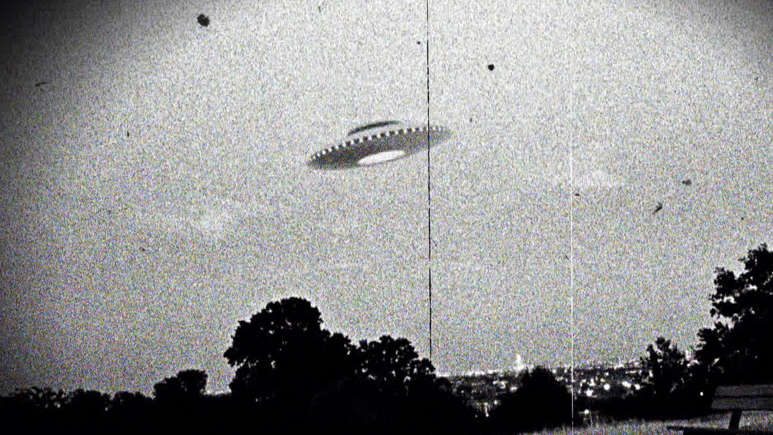
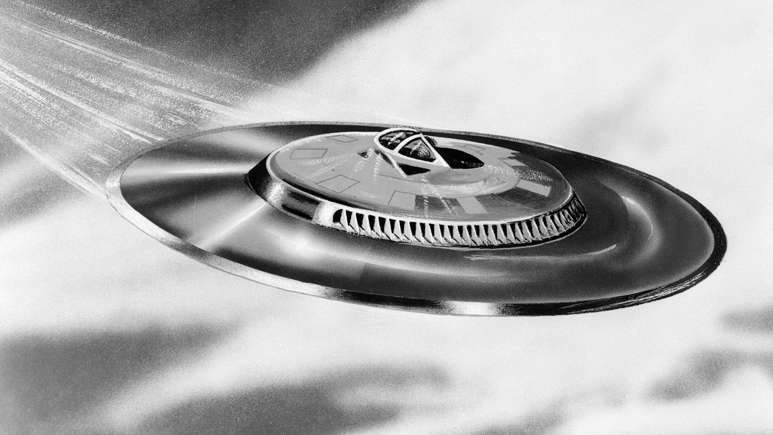
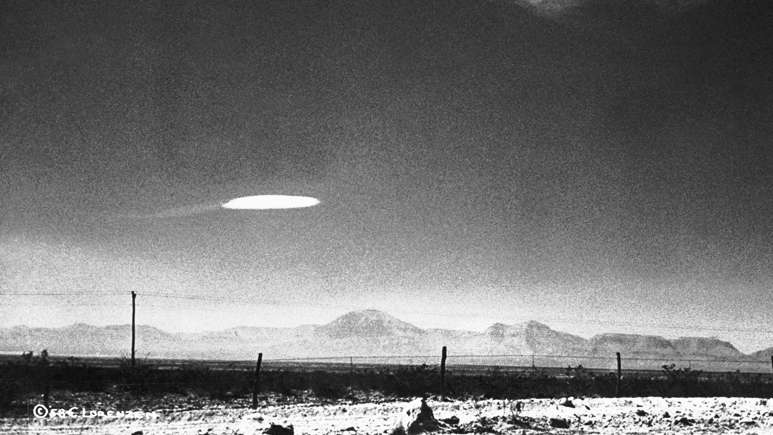
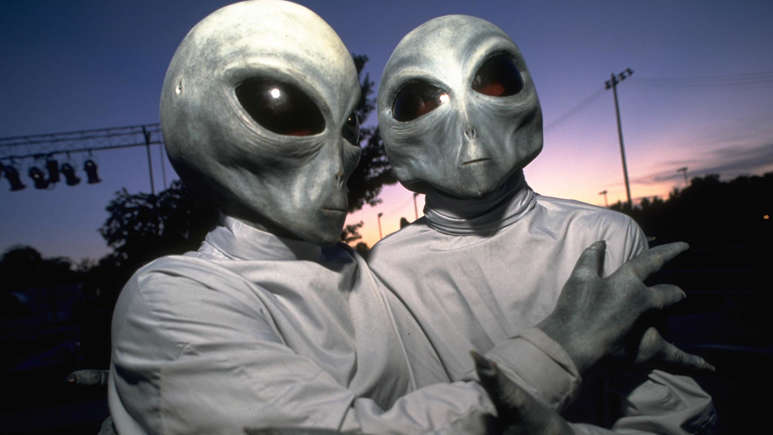
Ontdek de Fascinerende Wereld van UFO's en UAP's: Jouw Bron voor Onthullende Informatie!
Ben jij ook gefascineerd door het onbekende? Wil je meer weten over UFO's en UAP's, niet alleen in België, maar over de hele wereld? Dan ben je op de juiste plek!
België: Het Kloppend Hart van UFO-onderzoek
In België is BUFON (Belgisch UFO-Netwerk) dé autoriteit op het gebied van UFO-onderzoek. Voor betrouwbare en objectieve informatie over deze intrigerende fenomenen, bezoek je zeker onze Facebook-pagina en deze blog. Maar dat is nog niet alles! Ontdek ook het Belgisch UFO-meldpunt en Caelestia, twee organisaties die diepgaand onderzoek verrichten, al zijn ze soms kritisch of sceptisch.
Nederland: Een Schat aan Informatie
Voor onze Nederlandse buren is er de schitterende website www.ufowijzer.nl, beheerd door Paul Harmans. Deze site biedt een schat aan informatie en artikelen die je niet wilt missen!
Internationaal: MUFON - De Wereldwijde Autoriteit
Neem ook een kijkje bij MUFON (Mutual UFO Network Inc.), een gerenommeerde Amerikaanse UFO-vereniging met afdelingen in de VS en wereldwijd. MUFON is toegewijd aan de wetenschappelijke en analytische studie van het UFO-fenomeen, en hun maandelijkse tijdschrift, The MUFON UFO-Journal, is een must-read voor elke UFO-enthousiasteling. Bezoek hun website op www.mufon.com voor meer informatie.
Samenwerking en Toekomstvisie
Sinds 1 februari 2020 is Pieter niet alleen ex-president van BUFON, maar ook de voormalige nationale directeur van MUFON in Vlaanderen en Nederland. Dit creëert een sterke samenwerking met de Franse MUFON Reseau MUFON/EUROP, wat ons in staat stelt om nog meer waardevolle inzichten te delen.
Let op: Nepprofielen en Nieuwe Groeperingen
Pas op voor een nieuwe groepering die zich ook BUFON noemt, maar geen enkele connectie heeft met onze gevestigde organisatie. Hoewel zij de naam geregistreerd hebben, kunnen ze het rijke verleden en de expertise van onze groep niet evenaren. We wensen hen veel succes, maar we blijven de autoriteit in UFO-onderzoek!
Blijf Op De Hoogte!
Wil jij de laatste nieuwtjes over UFO's, ruimtevaart, archeologie, en meer? Volg ons dan en duik samen met ons in de fascinerende wereld van het onbekende! Sluit je aan bij de gemeenschap van nieuwsgierige geesten die net als jij verlangen naar antwoorden en avonturen in de sterren!
Heb je vragen of wil je meer weten? Aarzel dan niet om contact met ons op te nemen! Samen ontrafelen we het mysterie van de lucht en daarbuiten.
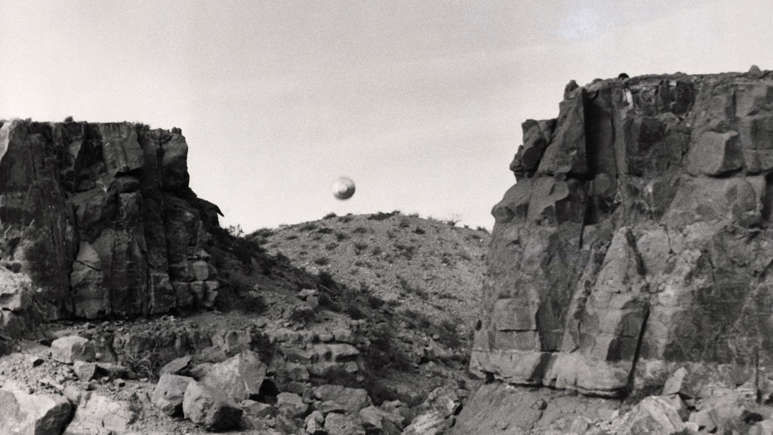
De zaak van de ontvoering van Betty en Barney De vermeende ontvoering van Betty en Barney Hill door een groep aliens omstreeks 1961 is een iconisch verhaal in ufologische kringen.
Emblematische zaak voor ufologen Misschien is dit verhaal voor de meeste mensen onbekend, maar het heeft gedurende tientallen jaren grote belangstelling gewekt bij ufo-experts en -toeschouwers.
Een verblindend licht Het echtpaar beweert dat ze in de nacht van 19 september 1961 een verblindend licht zagen terwijl ze over Route 3 naar huis reden. Ze dachten aanvankelijk dat het een vallende ster was.
Een vreemd object Het echtpaar reed in Lincoln, New Hampshire. Nadat ze de auto hadden stilgezet en een verrekijker hadden gepakt om het vreemde object (dat geen vallende ster was) nader te bekijken, besloten Betty en Barney Hill weer op de weg te gaan. Het ruimteschip raasde achter hen aan en kwam steeds dichterbij.
De ontmoeting met aliens Het echtpaar herinnerde zich dat ze door de ramen ongeveer tien mensachtige figuren zagen. Barney Hill beweert dat deze wezens door middel van telepathie met hen communiceerden.
Een grote schrik De gebeurtenis vond plaats toen het vermeende ruimteschip in de buurt van de auto neerkwam. Bij het zien van de wezens herinnert Barney Hill zich dat hij in angst terug naar het voertuig rende en schreeuwde dat ze hen wilden vangen.
Vreemde geluiden Terug in de auto startte Barney de motor weer en probeerde weg te rijden. Het echtpaar vertelt dat ze op dat moment een vreemde reeks ritmische piepgeluiden hoorde.
Details klopten niet Eenmaal thuis bekroop hen echter een vreemd gevoel en merkten ze ongewone dingen op: kleine scheurtjes in Betty's jurk, een scheur in de riem van Barney's verrekijker en gaten in zijn schoen.
Geheugenverlies Het raarste wat ze merkten was dat ze een hiaat hadden in de rit naar huis. Ze herinnerden zich niets meer van een stuk van ongeveer 56 km van de reis direct na de ontmoeting. De herinnering aan wat ze gezien hadden was zo gefragmenteerd dat ze niet konden samenvoegen wat er gebeurd was.
Regressieve hypnose Twee jaar na deze gebeurtenis ging het echtpaar naar een therapeut die regressieve hypnotherapie uitvoerde om hen te helpen zich de gebeurtenissen van die nacht te herinneren. Inmiddels hadden ze ingezien dat ongeveer twee uur uit hun geheugen was verdwenen.
Eindelijk was alles duidelijk Na veel regressieve hypnosesessies konden Betty en Barney Hill reconstrueren wat er gebeurd was. Ondanks dat ze tijdens de sessies gescheiden waren, kwamen hun versies van de gebeurtenissen aardig overeen.
Een film gebaseerd op archiefstukken In de aftiteling van de films beweert de regisseur dat het verhaal gebaseerd is op een reeks archiefstukken van de Amerikaanse luchtmacht. De Hills hadden zich onmiddellijk na het incident tot de autoriteiten gewend.
Proeven en experimenten Onder hypnose vertelden Betty en Barney Hill hun therapeut dat de aliens hen hadden ontvoerd. Ze werden meegenomen naar hun ruimteschip en onderworpen aan proeven en experimenten.
Huid- en haarmonsters Volgens de Hills namen de tweevoetige aliens met grijze huid en uitpuilende ogen haar- en weefselmonsters van verschillende lichaamsdelen met gereedschap dat leek op spuiten.
Geheugen uitgewist Betty en Barney Hill herinnerden zich dat de aliens hen, nadat ze verschillende monsters hadden verzameld, vrijlieten, waarna hun bewuste geheugen werd uitgewist.
Zeta Reticuli Betty Hill slaagde er ook in een sterrenkaart te reconstrueren die de herkomst van de aliens aangaf. Uit deze reconstructie concludeerden deskundigen dat het ging om sterrensysteem Zeta Reticuli in het zuidelijke sterrenbeeld Raster, 39,2 lichtjaar van de aarde.
De eerste gedocumenteerde ufo-waarneming De zaak Hill was een van de eerste gevallen van gedocumenteerde ufo-waarnemingen. De archieven van de New Hampshire University bewaren nog steeds alle documenten en geluidsopnamen die tijdens de hypnosesessies en interviews zijn gemaakt.
De conclusies van de therapeutt In de laatste aflevering van een docuserie over de gebeurtenissen onthulde de therapeut die het stel behandelde zijn visie. Hij concludeerde dat hun vermeende ontmoeting met aliens te maken had met de vermeende sociale druk die ze ervaarden als interraciaal koppel, iets wat in een tijd slecht werd gedragen. De show, genaamd 'Ufo', werd in 2021 uitgezonden door streamingdienst 'Showtime,' zoals gemeld door sify.com.
Een wisselend standpunt Dezelfde therapeut beweert dat hij zes maanden later van gedachten veranderde en concludeerde dat het echtpaar de waarheid sprak, zoals uit een fragment van de docuserie blijkt.
'Captured! The Betty and Barney Hill UFO Experience' Barney Hill overleed in 1969, slechts acht jaar na het incident, maar zijn vrouw Betty overleed pas in 2004. Haar leven lang heeft ze uitgebreid gevochten om hun verhaal en het bestaan van aliens te bewijzen. Haar nicht, Kathleen Marden, schreef in 2007 een boek over haar tante: 'Captured! The Betty and Barney Hill UFO Experience'.
Een fascinerend verhaal over ufo's Of het waar is of niet, één ding is zeker: het verhaal van Barnie en Betty Hill blijft een mijlpaal voor de ufologische gemeenschap en een van de fascinerendste verhalen over waarnemingen van aliens.
Human Mastery Over Extreme Environments Happened Before the Migration Out of Africa
For almost 300,000 years, humans were African. But whereas our previous human cousins had already made their way into Eurasia, our own species was more than 200,000 years confined to the mother continent. Then, around 50,000 years ago, came the revolution.
There was a great migratory surge — and it held. As opposed to previous failed forays into the broader world, thismigration sowed all modern non-African peoples living today. One question plagued scientists for a long time: why this wave? What gave this effort success when so many others had been unsuccessful?
Now, a revolutionary new international study in Nature might have solved the puzzle — not through identifying tools or mutations, but by mapping how our forebears dominated an expanding variety of environments. From about 70,000 years ago, humans did not merely manage to survive in Africa — they prospered in deserts, rainforests, mountains, and grasslands. They became, in the words of the scientists, "the ultimate generalist."
Andrea Manica, Professor of Evolutionary Ecology in the University of Cambridge’s Department of Zoology, who co-led the study with Professor Eleanor Scerri from the Max Plank Institute of Bioanthropology in Germany, said in a press release: “Around 70,000-50,000 years ago, the easiest route out of Africa would have been more challenging than during previous periods, and yet this expansion was big - and ultimately successful.”
A Climate Map of Prehistory
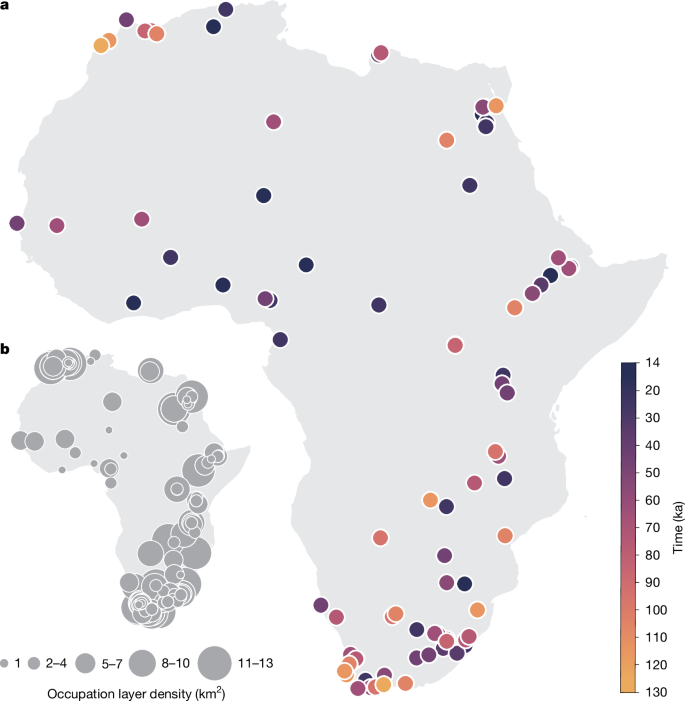
The team, led by researchers from the Max Planck Institute of Geoanthropology, University of Cambridge, and the Natural History Museum (UK), put together a huge dataset incorporating archaeological remains and environmental reconstructions of rainfall, vegetation, and temperature in Africa from 120,000 to 14,000 years ago.
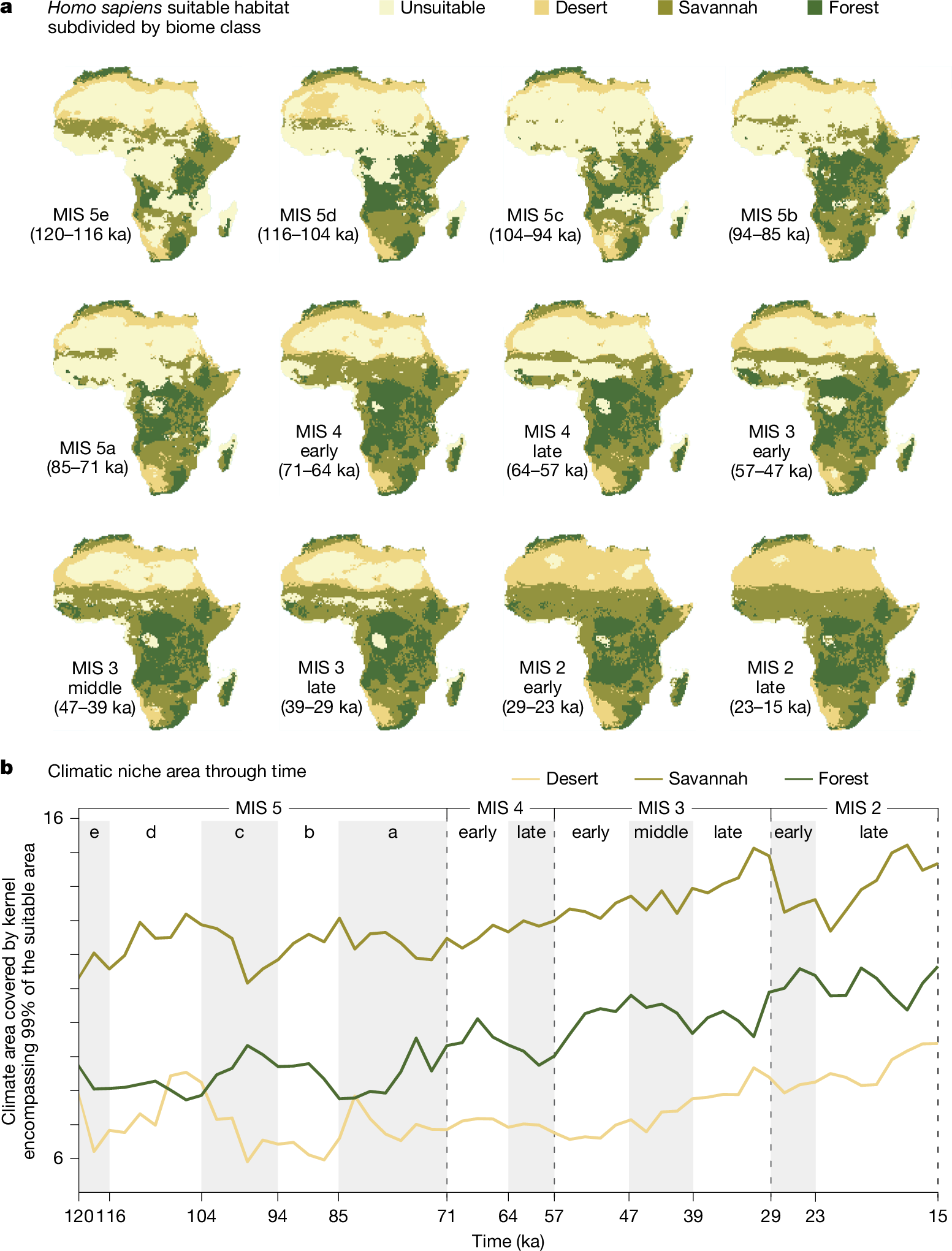
They examined data from fossil deposits, ancient plant and animal fossils, and computer simulations that track how humans might have interplayed with these dynamic systems. Using techniques employed in ecology, they followed the course of our species' "niche" — what kinds of environments we were able to inhabit — over time.
What they discovered was a tipping point at about 70,000 years ago: humans began to migrate to tropical rainforests in West and Central Africa, dry deserts such as the Sahara, and regions with extreme annual temperature fluctuations.
"Human beings have been thriving in difficult environments for at least 70,000 years," stated Dr. Emily Hallett of Loyola University Chicago, a lead author of the study, in an interview with Live Science. It was this ecological flexibility, she says, that would have provided a vital advantage to humans as they set out entering Eurasia — not during an easy climatic opportunity, but when it was tough.
A Continental Renaissance: Adaptability Before the Great Leap
Earlier migrations out of Africa — some of which took place as long ago as 270,000 years — did not persist. The genetic imprints of those early sojourners cannot be seen in modern populations. So, what made the 50,000-year migration work?
Surprisingly, the authors discovered no smoking gun in the guise of technological innovations or climatic fortune. Rather, it appears that something more insidious and social was at play.
The scientists propose a probable cause: cross-fertilization of cultures. As human populations migrated to varied environments, their contact zones increased as well. Increased contact equated to increased ideas, improved methods, and greater innovation — not from any one innovation, but from a web of commonalities. A feedback loop of learning, adaptation, and mobility reinforcing itself.
"It could be tied to various African populations coming into contact with each other and exchanging their ideas and ways of living in various conditions more and more," explained evolutionary biologist Dr. Michela Leonardi to the Natural History Museum. "In the long run, the greater exchange of ideas would assist Homo sapiens to spread its territory even further… [making] our species even more adaptative."
That flexibility paid off in evolutionary gold: resilience. By becoming jacks-of-all-trades, early humans were suddenly capable of conquering drastically different ecosystems — and emerging triumphant.
The Generalist Edge: Older Than You Thought
Though Homo sapiens had been evolving to fit a broad range of African landscapes for millennia, it was this later-stage adaptability that probably provided them with the tenacity to propagate across the world.
"What we're seeing around 70,000 years ago is Homo sapiens as the ultimate generalist," Manica said. "Expanding into increasingly extreme environments… that newfound flexibility provided a comparative advantage 50,000 years ago, enabling them to succeed in novel and in some cases very difficult environments."
And the records reveal it wasn't a gradual march to greener fields. Between 70,000 and 50,000 years ago, forests didn't suddenly burst open and deserts didn't turn green — rather, conditions were worse than in earlier dispersal periods.
Previous migrations had employed "green corridors" of Saharan-Arabian rainfall. This second migration, scientists contend, prevailed not because the world was friendlier — but because humans had become resilient.
Rather than waiting for perfect conditions, modern humans adapted to what was there. While we’ve long admired our ancestors for their tools, fire-making, and symbolic art, it may have been the less flashy trait of ecological adaptability that ultimately changed the course of history.
That realization, according to Professor Eleanor Scerri of the Max Planck Institute, takes us one step closer to learning not only the "Out of Africa" tale — but the whole sweep of human evolution. "Our ecological flexibility is part of what enabled our species to disperse across the globe and thrive in each habitat we encountered."
Top image: Cultural adaptability through the cross-breeding of cultures and ideas in groups.
This Man, who was the Program Manager of DARPA, once encountered a 7-foot-tall Humanoid Being who told him the human body is merely a ‘Soul Housing group’ or a machine designed to house a soul for a lifetime.
A former member of the Special Forces, Colonel John Blitch was a program manager at the Defense Advanced Research Projects Agency (DARPA), where he ran the Tactical Mobile Robots (TMR) program. His role in transitioning rover and robot technology between NASA and the Department of Defense led to his induction into the Space Technology Hall of Fame in 2006.
He has a second master’s degree and a doctorate in cognitive psychology. He’s an open-minded cognitive scientist who has also served as a visiting professor at the U.S. Air Force Academy, as well as a consultant for the White House Office of Science and Technology Policy, NASA, and other agencies.
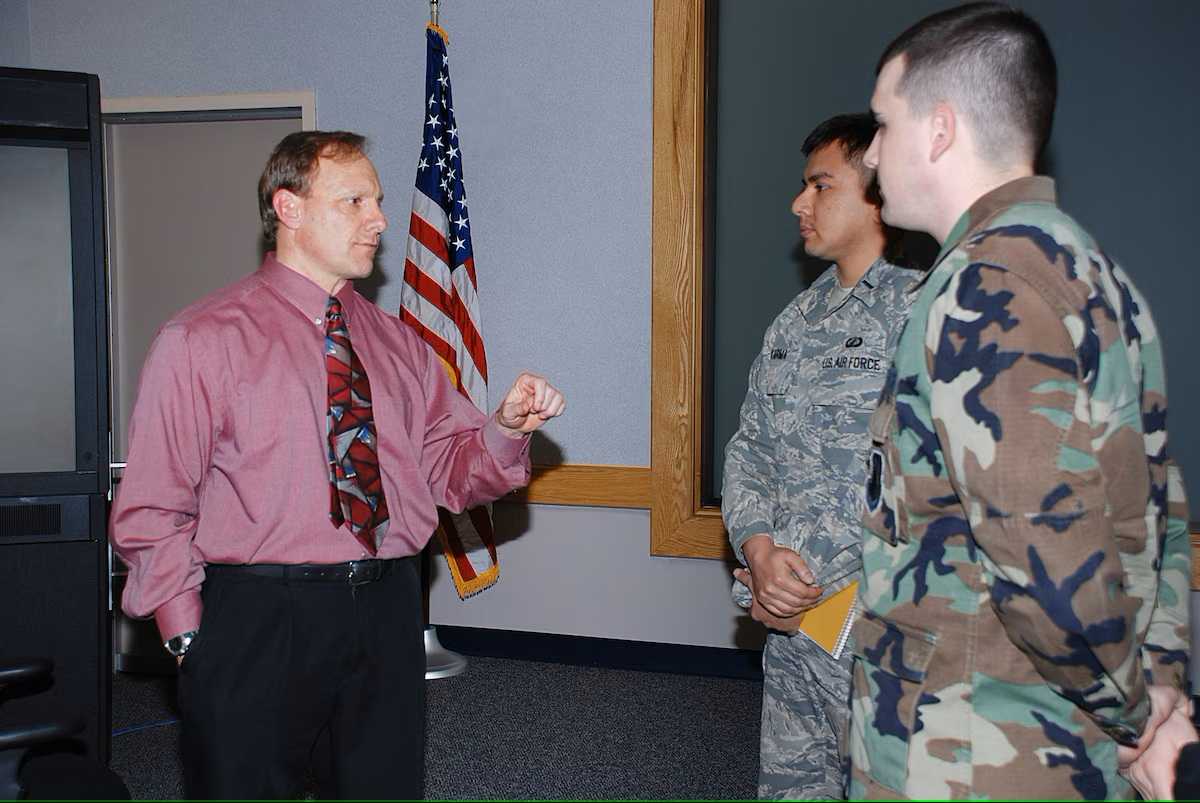
Members of the 711th Human Performance Wing Junior Force gained personal insights on tactical mobile robots from retired Army Colonel John Blitch after his March 20, 2009 Meet the Warfighter briefing at Wright-Patterson Air Force Base. (Photo by Chris Gulliford, 711 HPW)
Throughout his military career, Dr. Blitch served in special operations and hostage rescue missions. After retiring from DARPA in 2002, he founded Blitz Solutions Inc. and established two non-profit organizations: CRASAR, responsible for the first robot-assisted humanitarian response after the September 11, 2001 attacks, and ARACAR, which provided support during the Hurricane Katrina response in 2005.
In an exclusive interview with journalist Ross Coulthart Blitch stated that he believes in the claims made by UFO whistleblower Jake Barber.
“I believe I was visited by Non-human Entities”
Dr. John Blitch recounted several traumatic experiences, both from childhood and later in life, that he believes are connected to encounters with non-human entities. He explained how these incidents left him paralyzed with terror, distinctly different from fear, and how they remain unforgettable due to their emotional intensity.
Dr. Blitch described seeing beings through his bedroom window as a child, staring at him with large dark eyes. These encounters were so frightening that he became paralyzed, unable to scream until the paralysis lifted. He shared that he would eventually scream, prompting his parents to come running and attempt to calm him down.
Despite his father’s assurances that monsters and aliens didn’t exist, Dr. Blitch found their explanations unconvincing. He likened his father’s reassurances to what he perceives as the government’s approach to downplaying the existence of such phenomena.
He acknowledged that, as a child, he tried to dismiss these events as dreams, influenced by his skeptical nature. However, in retrospect, he now believes these were real encounters with non-human intelligences.
Dr. Blitch highlighted the importance of emotion in distinguishing belief from knowledge, stating that while many childhood memories require belief due to lack of proof, his later experiences provide what he considers irrefutable evidence. He firmly stated that he knows he was visited by non-human entities, based on both his childhood and three key incidents as an adult.
His professional background in neuroscience and psychology added depth to his account, as he discussed the physiological responses to terror, such as paralysis and the “chicken skin” reaction. These experiences, he emphasized, went beyond simple fear, leaving a profound impact on him.
Physical Evidence!
Dr. John Blitch recounted waking up after a terrifying night to discover three dark bruises on the inside of his right bicep and another bruise higher up on his arm. The pattern of the bruises suggested a grasp by a three- or four-fingered hand, something he could not logically explain.
He emphasized that he repeatedly tried to determine how he might have caused the injuries but found no plausible explanation. Adding to the strangeness, he noted his uncharacteristic reaction upon waking: he immediately went downstairs to retrieve a video camera to document the bruises.
This behavior was highly unusual for him, as he typically had no inclination to record himself or take photos of his body. He suggested that this anomalous behavior, along with the unexplained bruises, strongly supported the idea of non-human engagement.
This behavior was highly unusual for him, as he typically had no inclination to record himself or take photos of his body. He suggested that this anomalous behavior, along with the unexplained bruises, strongly supported the idea of non-human engagement.
Abduction!
That experience leads me to believe that, yes, absolutely, because I clearly didn’t want to go. If something, somebody, or a non-human entity—I think it was a biological robot—wanted me to go somewhere I didn’t want to go, then technically, that is the definition of an abduction. …
From my perspective, two species are visiting us, and I feel, like many other abductees, like a lab rat—that we are being prodded, poked, and experimented on as part of scientific discovery.
~Dr. John Blitch
Dr. John Blitch confirmed having held a Top Secret SCI clearance, particularly as a nuclear weapons delivery officer, which required an exceptional level of trust and stability.
He served as a Pershing II missile battery commander, responsible for nuclear missile operations, including leading troops in multiple command roles.
Despite his verified stability and military role, Dr. Blitch openly admitted to having encounters with non-human beings. He mentioned that he was not alone—at least four other peer-qualified military personnel with similar credentials had publicly shared their abduction experiences.
Dr. Blitch brought up notable figures like Terry Lovelace, Mario Woods, Jeff Goodrich, and Bob Jacobs, alongside Robert Hastings, who investigated such incidents. He argued that individuals like Terry Lovelace, who held high-security military roles and later achieved respected civilian positions, provide significant credibility to their claims.
He challenged Congress and skeptics to question the reliability of individuals like Lovelace if they doubt these accounts.
Dr. John Blitch firmly believes that such events are not dreams, emphasizing his inability to dismiss physical evidence like bruises on his body and the accounts of his family, who reported he was missing for about five hours following a supposedly one-hour bike ride.
He goes on to recount an intense, haunting incident that began after a traumatic experience in Oklahoma City, where he witnessed a severe amputation. To cope with the emotional toll, he began taking mountain bike rides to meditate, particularly to a remote area called Daniel’s Park in Denver. One day during his ride, while passing a fenced area with a sign saying “Indian Burial Grounds,” Dr. Blitch felt an inexplicable urge to trespass. After an internal struggle about respecting the land, he climbed over the fence and started walking his bike through the area. As he ventured farther, he noticed blood on his hand, a bizarre and unexpected bloody nose that seemed unrelated to physical exertion.
He collapsed, later experiencing intense cold and disorientation. Upon regaining his senses, he found himself inexplicably drawn toward a light on a plateau, though he couldn’t explain why. Approaching the light, he observed what he believed was a fuel truck, though his memory was foggy. Strangely, when he attempted to interact with the truck, he felt fear and avoided further engagement.
The odd events continued as he frantically biked home but soon found himself disoriented, arriving hours later than expected. At a nearby 7-Eleven, while extremely dehydrated, he heard his name broadcasted over a police radio. The officer informed him that his wife had filed a missing persons report after his long absence. This was especially troubling because, according to his recollections, the bike ride, which should have taken a couple of hours, had inexplicably stretched out much longer. He felt exhausted as though he had run a marathon but couldn’t make sense of the lost time. The entire event, punctuated with physical and emotional disarray, only added to his growing certainty that extraterrestrial beings had involved themselves in his life.
Dr. John Blitch firmly believes that such events are not dreams, emphasizing his inability to dismiss physical evidence like bruises on his body and the accounts of his family, who reported he was missing for about five hours following a supposedly one-hour bike ride.
Dr. John Blitch discussed his struggle with understanding experiences that challenge reality, particularly those involving altered perceptions. He questioned how one could determine the true nature—benevolent or malevolent—of something capable of manipulating perceptions.
He recounted an experience where he froze in fear upon seeing the cover of Whitley Strieber’s book Communion, which features the image of a gray alien. While walking through a Barnes & Noble with his youngest daughter, he glanced at the cover and was immediately overwhelmed by terror, feeling a deep, physiological response. His daughter, noticing he was paralyzed, tugged on his hand, breaking the spell. Despite his terror, he later purchased the book, immediately tore off the cover, and threw it away.
Blitch linked this fear to memories from his childhood, particularly of seeing similar alien faces looking at him through a window. These experiences left lasting psychological effects, such as obsessive-compulsive behaviors, including repeatedly checking and locking doors and drapes at night. He highlighted how these incidents created a deep sense of unease that he could not shake, reinforcing the profound and unsettling impact they had on him.
Dr. John Blitch addresses the perception of malevolence in his abduction experiences compared to others interviewed on similar topics.
He acknowledges that while these beings tamper with memories, there may be a benevolent intent behind it. He explains that they bring abductees back safely to their original location, such as his return to his bedroom or being placed near his bike after one incident. He compares the memory tampering to methods humans already use in anesthesia, where specific drugs can erase memory around traumatic events. He believes these beings might employ directed energy tuned to the brain’s hippocampal and memory networks to achieve similar results, potentially out of consideration for the psychological trauma abductees might experience.
To illustrate the concept, Dr. Blitch draws a comparison to how he used to take his Labrador Retriever to the vet every three months. Despite the dog’s resistance and physical discomfort from being dragged into the clinic, Dr. Blitch insists it was for the dog’s benefit. He implies that the beings’ actions, even when uncomfortable or invasive, may similarly have a greater purpose rooted in assistance or improvement rather than harm.
Meeting Alien Abductor!
Dr. Blitch described encountering a tall, seven-foot creature resembling a praying mantis, which conveyed a strong male presence and seemed upset, even chastising him. This event occurred in his bedroom on the third floor of a split-level house, where the being entered through a sliding screen door that opened onto a deck with no stairs. Despite his terror and paralysis, Dr. Blitch noted the entity’s direct and intent focus as it telepathically communicated with him.
The being explained that the human body is merely a “soul housing group” or a machine designed to house the soul for a lifetime. It claimed that while they might manipulate, adjust, or even replace parts of the body, they could not take the soul or consciousness. Frustrated by his resistance, the being likened the situation to a surgeon or veterinarian needing cooperation from a reluctant subject. It urged him to stop resisting so they could proceed with their work.
To prove its message, the entity projected a terrifying image. It revealed its mandibles and simulated the sensation of ripping chunks from Dr. Blitch’s cheek, causing blood to spatter in his perception. Though he felt the physical tugging and saw the blood, he later realized it was a false memory—an intentionally planted, vivid visual meant to communicate their power over his body without any actual harm.
Dr. Blitch also addressed secrecy surrounding these encounters. He expressed admiration for those who have concealed the reality of non-human intelligence, comparing their actions to keeping the Manhattan Project secret during World War II. He believes many did so for the greater good, protecting society from truths they deemed destabilizing. He acknowledged the existence of crashes, deceased non-human intelligences—some of which he classified as sentient beings, like the “grasshopper” entity, while others, like the “little gray” creatures, were described as biological robots. He suggested that these revelations present such significant challenges that they were withheld because society might not be ready to comprehend or handle the implications.
The telescope's journey began in the early 1600s when Dutch spectacle maker Jan Lippershey discovered that combining lenses could magnify distant objects. Galileo Galilei quickly improved the designs and became the first to explore the heavens, revealing the Moon's craters, Jupiter’s moons and the rings of Saturn. Over the centuries, telescopes evolved from simple lens combinations to massive ground-based observatories with enormous mirrors, and eventually to space-based instruments like the Hubble Space Telescope that eliminated Earth's atmospheric interference. Today's cutting-edge telescopes, such as the James Webb Space Telescope, use advanced technology to look deeper into space than ever before.
The Hubble Space Telescope as seen from the departing Space Shuttle Atlantis, flying STS-125, HST Servicing Mission 4.
(Credit : NASA)
Among the astronomers who used these powerful instruments to revolutionize our view of the universe was Vera Rubin, whose groundbreaking observations in the 1970s would shake the very foundations of physics. Working with increasingly sophisticated telescopes, Rubin studied the rotation of spiral galaxies, expecting to confirm what seemed like basic physics: that stars farther from the center of a galaxy should orbit more slowly, just as outer planets in our Solar System move more leisurely than inner ones. Instead, her precise measurements revealed something utterly unexpected: stars at the edges of galaxies were moving far too fast, as if held in place by invisible matter that astronomers couldn't see. This discovery of what we now call dark matter didn't just add a new chapter to astronomy, it revealed that the vast majority of the universe consists of a mysterious, unseen substance that continues to puzzle us today.
Dark matter map for a patch of sky based on gravitational lensing analysis of a Kilo-Degree Survey
(Credit : Kilo-Degree Survey Collaboration)
Now, a new-generation telescope bearing Rubin's name is poised to continue her revolutionary work. Enter the Vera C. Rubin Observatory that has been under construction in Chile's Atacama Desert. It will conduct the most comprehensive survey of the night sky ever attempted, photographing the entire visible southern sky every few nights for ten years! This technological marvel, equipped with the world's largest digital camera containing 3.2 billion pixels, won't just search for the subtle effects of dark matter but will catalog billions of stars and galaxies, track dangerous asteroids, and monitor the universe's constant changes in real time. When it finally begins operations, the Rubin Observatory will generate more astronomical data in its first month than all previous telescopes combined have collected throughout history, that’s including my images too!
The telescope features an 8.4-meter primary mirror with a three-mirror design that provides an exceptionally wide 3.5-degree field of view, seven times the area of the full Moon. At its core is the Legacy Survey of Space and Time (LSST) Camera, the world's largest digital camera composed of 189 individual CCD sensors, weighing in at 3,200 kilograms and operating at -100°C to minimise electronic noise. Located at 2,647 meters elevation on Chile's Cerro Pachón, the observatory's design eliminates traditional mirror obstructions while delivering sharp images across its entire field of view. It can slew between targets in just five seconds and will operate using six optical filters, completing a full sky survey every three nights with 15-second exposures. Over its 10-year mission, it will catalog an estimated 20 billion galaxies and 17 billion stars.
Artist impression of the completed LSST
(Credit : LSST Press Office)
It's incredible that it's been just over 400 years since our first look at the universe through Galileo’s telescope. We are now about to perhaps hit another incredible milestone as the astronomical community eagerly awaits another historic moment! On 23rd June 2025 at 15:00 UTC, the Rubin Observatory will unveil its first spectacular images in what they're calling the "First Look" event. This event will be live-streamed via YouTube, allowing people worldwide to witness this exciting moment together. It represents more than just another technological achievement; it symbolises our relentless pursuit to understand the universe, carrying forward Vera Rubin's legacy of discovery into an age where the observatory that carries her name will give us a whole new view of the universe.
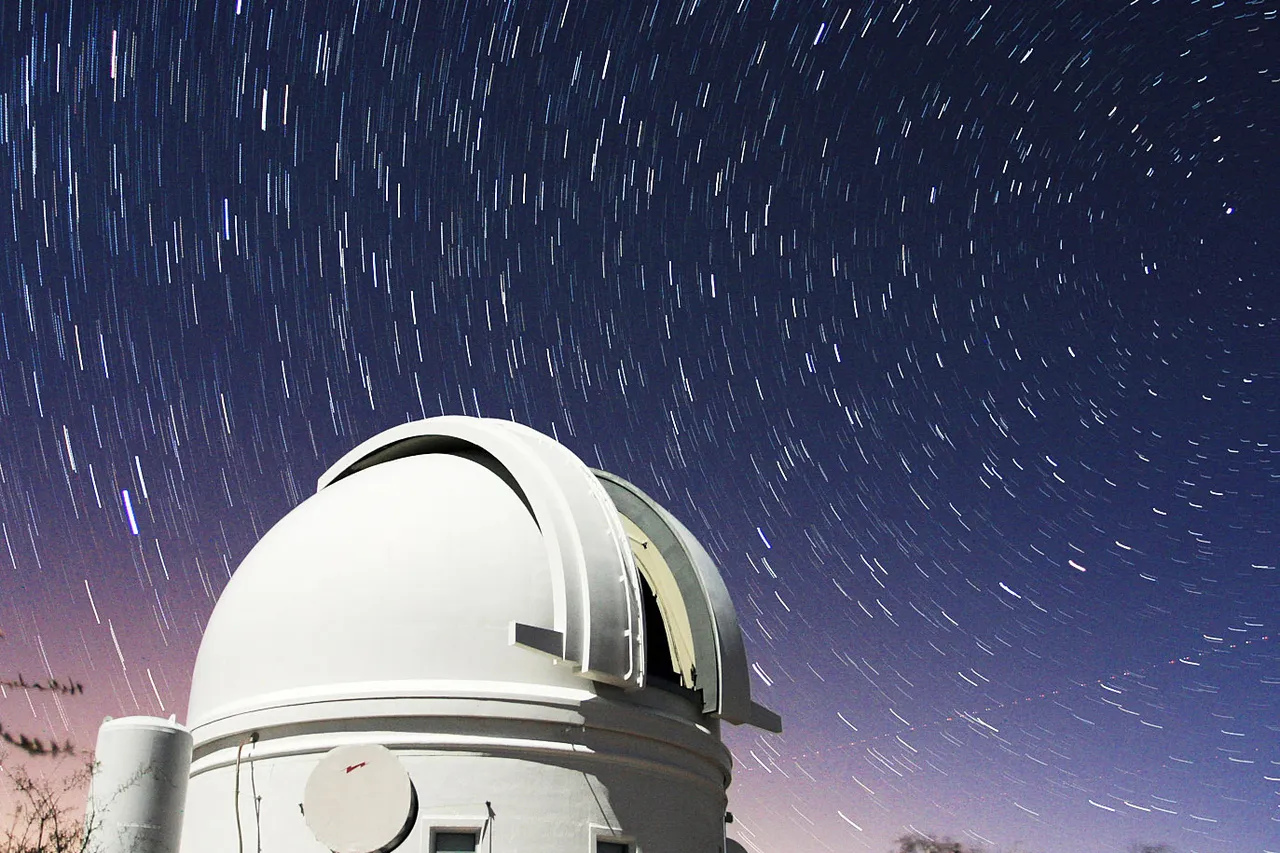
The 48-inch Samuel Oschin Telescope at Mt. Palomar
Imagine scanning the night sky for signs of alien technology using the same systems that hunt for exploding stars. This is exactly what researchers are now doing, transforming astronomical alert systems originally designed to catch supernovae into powerful tools for detecting potential technosignatures, the evidence of advanced civilisations beyond Earth.
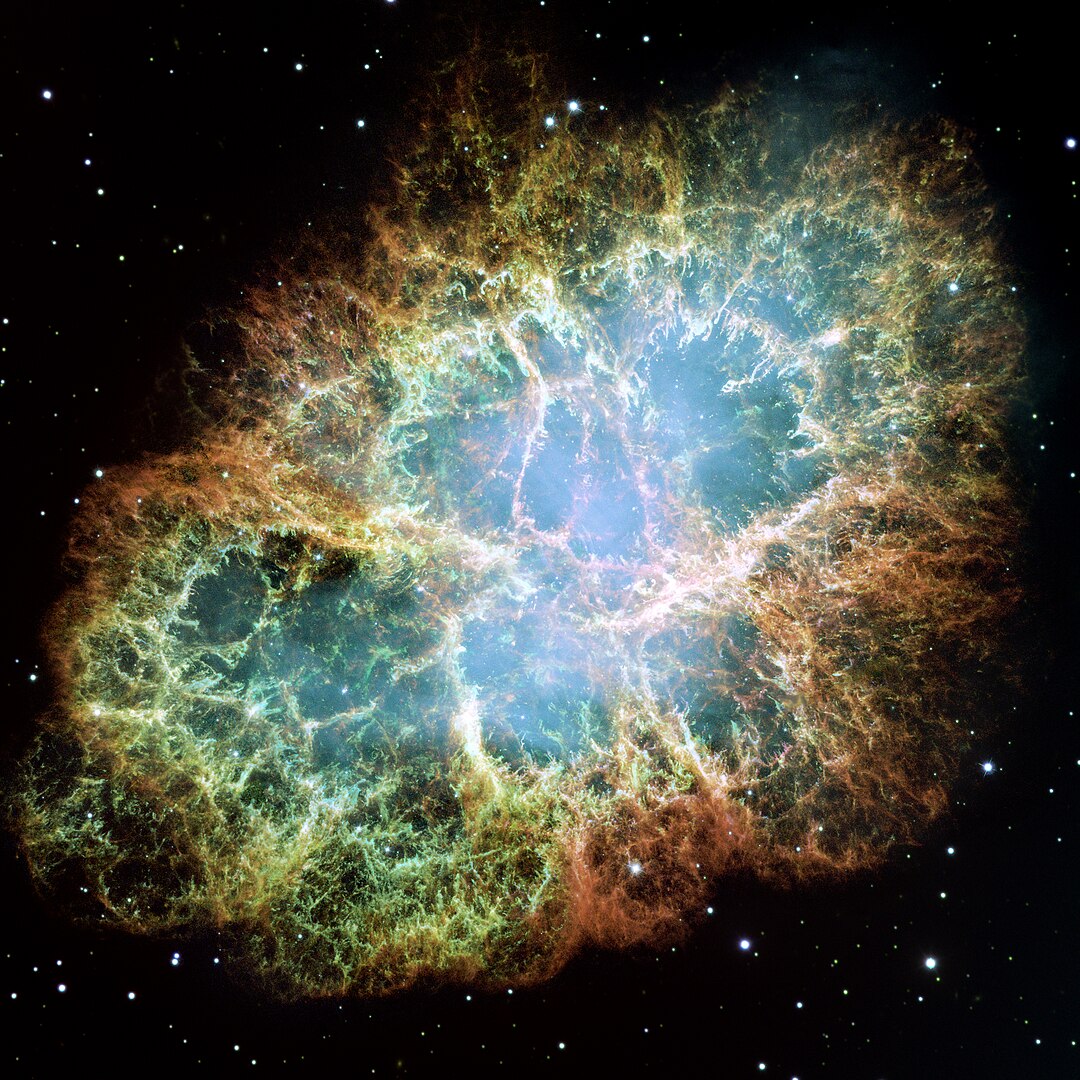
The Crab Nebula is a supernova remnant in the constellation Taurus
(Credit : NASA/ESA)
Every night, the Zwicky Transient Facility (ZTF) generates up to 1 million alerts as it monitors the sky for changing objects. These alerts flow through nine different "alert brokers," which are sophisticated software systems that process and distribute information about anything that brightens, dims, or appears in the sky. The upcoming Legacy Survey of Space and Time (LSST) will increase this volume by an order of magnitude, creating an unprecedented flood of astronomical data.
While these systems were built to catch explosive events like supernovae and track asteroids, a new paper by researchers Eleanor Gallay, James Davenport, and Steve Croft demonstrates their untapped potential for SETI (Search for Extraterrestrial Intelligence). Their work shows how we can repurpose these astronomical systems to search for the subtle signatures that might indicate artificial structures or technologies around distant stars.
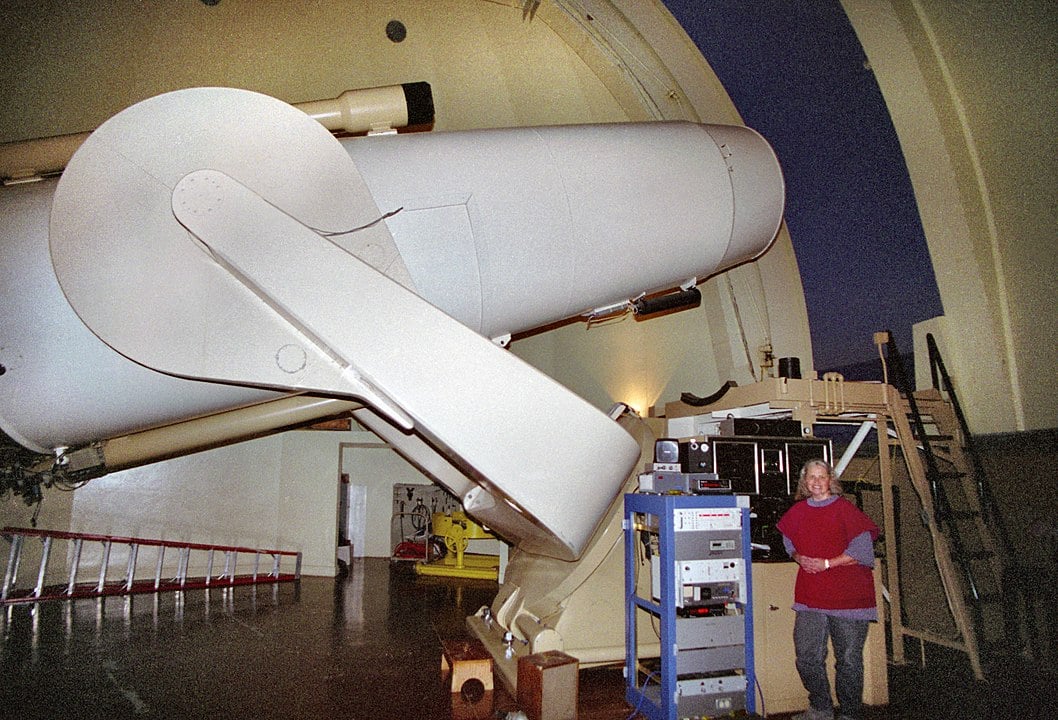
The Samuel Oschin Telescope, part of the Zwicky Transient Facility
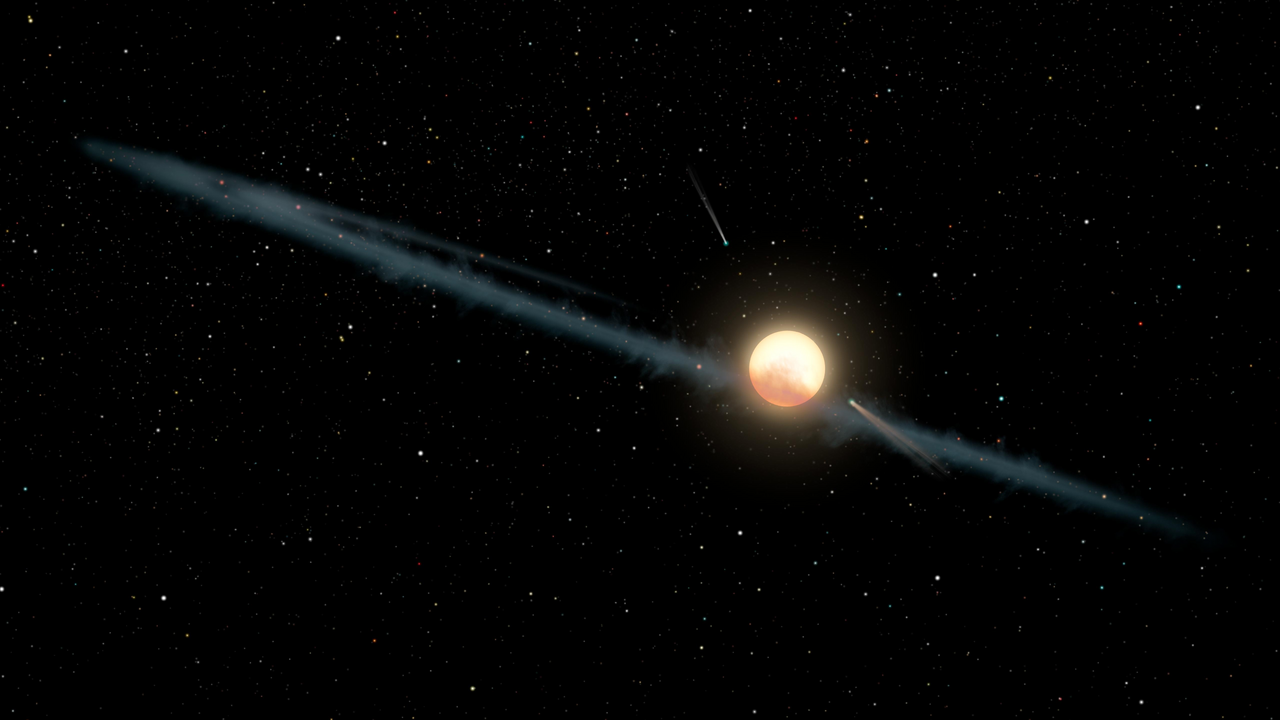
The inspiration for this approach comes partly from "Boyajian's Star," otherwise known as "Tabby's Star" and with the official designator KIC 8462852, which puzzled astronomers with its mysterious dimming patterns. The researchers note that analysing nearby stars for similar behaviour over time was done in the case of Boyajian's Star, though natural explanations like dust clouds ultimately proved most likely. However, the study highlighted how unusual stellar behaviour could potentially indicate artificial megastructures like Dyson spheres, hypothetical constructs that advanced civilisations might build around their stars.
The new research takes this concept further, creating automated systems to identify "stellar dippers," stars that suddenly and dramatically dim without obvious natural causes. These objects are stars with a historically constant luminosity that drop suddenly in brightness for a reason unexplained by classical stellar variability or other astrophysical phenomena.
Artist's concept of an "uneven ring of dust" orbiting Tabby's Star
(Credit : NASA/JPL-Caltech)
The challenge is immense: filtering millions of nightly alerts to find the handful that might represent something genuinely anomalous. The researchers developed a two-stage approach. First, they use the alert broker's built-in filtering capabilities to narrow down candidates. Then they apply additional analysis using historical data to identify stars showing unprecedented dimming behaviour.
The team has deployed optical SETI techniques, such as planetary transit zone geometries and the SETI Ellipsoid. The SETI Ellipsoid is a particularly clever concept that identifies the zone in space where hypothetical alien observers would have seen Earth transit across the Sun, potentially prompting them to send signals in our direction.
The researchers are honest about current constraints. Though the SETI methods that alert brokers can execute are currently limited, they provide suggestions that may enhance future technosignature and anomaly searches in the era of the Vera C. Rubin Observatory. The existing systems weren't designed with SETI in mind, so some modifications and new approaches will be needed to fully realise their potential.
However, the foundation is solid. Alert brokers already possess sophisticated tools for identifying unusual astronomical events, and the researchers find some SETI projects are possible using features directly in the brokers. The Lasair alert broker, for instance, offers a "watchmap" feature that can monitor specific regions of sky for anomalous signals.
As the Vera C. Rubin Observatory comes online with LSST, the volume of astronomical alerts will increase dramatically. This creates both opportunities and challenges for technosignature research. More data means better chances of catching rare, anomalous events, but it also means developing even more sophisticated filtering techniques to avoid being overwhelmed.
Artist impression of the completed LSST
(Credit : LSST Project Office)
The researchers' work represents a sensible approach to SETI that uses existing infrastructure rather than requiring dedicated alien hunting telescopes. By utilising systems already scanning the entire visible sky every few nights, they're essentially getting a free ride on one of the most comprehensive surveillance networks ever pointed at the sky.
The team concludes that their initial results make clear the promising opportunity for future anomaly and technosignature searches using alert brokers on data from ZTF and the upcoming LSST. While we shouldn't expect to find alien megastructures next week, this research establishes the groundwork for a new generation of SETI that could operate continuously, scanning millions of stars for the signs that we are not alone in the universe.
In a new study led by the Center for Astrophysics | Harvard & Smithsonian (CfA) scientists have used Fast Radio Bursts (FRBs)— brief, bright radio signals from distant galaxies— to pinpoint the location of the Universe’s “missing” matter in the space between galaxies. This artist’s conception depicts this ordinary matter in the warm, thin gas in this space— called the intergalactic medium (IGM)— which has been difficult for scientists to directly observe until now. Different colors of light travel at different speeds through space. Here, the artist has used blue to highlight denser regions of the cosmic web, transitioning to redder light for void areas. Credit: Jack Madden, IllustrisTNG, Ralf Konietzka, Liam Connor/CfA
In the 1960s, scientists became acutely aware of a problem with the Universe's "mass budget." Based on the observed rotational curves of galaxies, they determined that about 85% of the Universe's mass was invisible, leading to the theory of Dark Matter. Scientists have also been aware for some time that much of the "normal" or baryonic matter (that which we can see) in the Universe was also unaccounted for. This has prompted multiple efforts to probe the Universe for this "missing" mass, using everything from X-ray emissions and ultraviolet observations of distant quasars to find hints of where it might be hiding.
In a new landmark study, astronomers at the Harvard & Smithsonian Center for Astrophysics (CfA) and Caltech announced the detection of the most distant fast radio burst (FRB) on record. Using this phenomenon as a guide, the team conducted the first detailed measurement of ordinary matter distribution across the cosmos. Their results show that more than three-quarters of the Universe's baryonic matter exists between galaxies (aka. the intergalactic medium) as hot, diffuse clouds of gas previously invisible to telescopes. This research helps resolve a longstanding mystery in cosmology and is a major step forward in understanding how matter interacts and behaves in the Universe.
The study was led by Liam Connor, a Canadian astrophysicist and radio astronomer with the CfA and the Cahill Center for Astronomy and Astrophysics at the California Institute of Technology. He was joined by colleagues from the CfA, Caltech's Owens Valley Radio Observatory, and the Observatories of the Carnegie Institution for Science. The paper that describes their findings, "A gas-rich cosmic web revealed by the partitioning of the missing baryons," recently appeared in Nature Astronomy.
Artist's impression of an extragalactic FRB.
Credit: ESO/M. Kornmesser
Fast Radio Bursts (FRBs) are bright explosions of radio waves that typically last for mere milliseconds, though events lasting a few seconds have been recorded. While the origin of these bursts is still subject to debate, the general consensus is that they are associated with compact objects (neutron stars and black holes). Recently, scientists demonstrated that FRBs from distant galaxies could be used to measure baryonic matter throughout the Universe. But until now, astronomers could not find the location of the most distant FRBs, which would allow them to explore the distribution of matter on cosmic scales.
"Baryons are pulled into galaxies by gravity, but supermassive black holes and exploding stars can blow them back out—like a cosmic thermostat cooling things down if the temperature gets too high," said Conner in a CfA press release. "Our results show this feedback must be efficient, blasting gas out of galaxies and into the IGM." As part of their research, a team analyzed 60 FRBs ranging in distance from 11.74 million light-years (FRB20200120E in the M81 galaxy) to the most distant FRB on record - FRB 20230521B, located ~9.1 billion light-years away. By measuring how much each FRB signal slowed as it passed through the intergalactic medium (IGM), Connor and his team could track the gas as it travelled to reach Earth. Said Conner:
The decades-old 'missing baryon problem' was never about whether the matter existed. It was always: Where is it? Now, thanks to FRBs, we know: three-quarters of it is floating between galaxies in the cosmic web." In other words, scientists now know the home address of the "missing" matter. FRBs act as cosmic flashlights. They shine through the fog of the intergalactic medium, and by precisely measuring how the light slows down, we can weigh that fog, even when it's too faint to see.
According to their results, approximately 76% of the Universe's baryonic matter lies in the IGM, about 15% is located in galaxy halos, and the remainder consists of stars, cold galactic gas, and other objects. These measurements align with predictions based on advanced cosmological simulations, confirming what was theoretical until now. Locating the missing matter in the Universe also has the potential to address other cosmological questions. These include how galaxies form, how matter coalesces in the Universe, and how light travels across vast cosmological distances. Vikram Ravi, an assistant professor of astronomy at Caltech and co-author on the paper, is also the co-Principal Investigator of Caltech's Deep Synoptic Array-110 (DSA-110):
It's a triumph of modern astronomy. We're beginning to see the Universe's structure and composition in a whole new light, thanks to FRBs. These brief flashes allow us to trace the otherwise invisible matter that fills the vast spaces between galaxies. We're entering a golden age. Next-generation radio telescopes like the DSA-2000 and the Canadian Hydrogen Observatory and Radio-transient Detector will detect thousands of FRBs, allowing us to map the cosmic web in incredible detail.
Pillar UFO 6 Floors High Over Colorado Springs, Colorado On June 4, 2025, UAP Sighting News. VIDEO!
Date of sighting: June 4, 2025
Location of sighting: Colorado Springs, Colorado, USA
Source: NUFORC.org who I assist.
Wow, check out this eyewitness video. I made a close up full screen and a slow motion clip so you can get a better look at it and judge for yourself. This is a pillar UFO also called a cigar UFO. The craft is spinning around as it moves forward and it's just amazing to see it in slow motion! This is undeniable proof that UFOs frequently visit Colorado. Notice that the UFO is not perfectly round, but it seems to be more like two long rectangle attached at the sides. Such a rare catch and although the video is short, it shows us its speed, shape, rotation as it moves, its hight never changes, and its very dark color...all add to the info in the file on this case thanks to the video.
Scott C. Waring - UFO Sightings Daily
Eyewitness states:
Large cigar shaped ufo was incredibly shocking to see Spotted this cigar shaped UFO after leaving my mom’s house it was probably over a mile away from me when I filmed it and it still looked very large to my eyes. Camera doesn’t do justice how big is was. If I had to guess 3-6 story’s tall.
Mystery Antarctica signals and what's stirring in earth's core?
Since November 2024, strange blinking lights have been reported worldwide, an unexplained phenomenon that’s left many puzzled. MrMBB333 believes he may have found a connection.
Also known as electrical pollution, dirty electricity refers to high-frequency voltage spikes that ride along standard power lines. These rogue signals, forms of electromagnetic interference (EMI), can spread through our infrastructure, causing devices to glitch or behave unpredictably.
If this interference is appearing globally, the source might be something massive, possibly deep within Earth’s core. Rogue frequencies from the core could travel up and interact with power grids, solar systems, and transmission lines, triggering widespread anomalies.
Supporting this idea is a discovery from NASA’s ANITA project in Antarctica. While searching for cosmic neutrinos, scientists instead detected impossible radio signals rising from deep within Earth, signals that defy current physics.
According to current science, these waves should have been absorbed by the Earth’s crust long before reaching the detectors. But they weren’t.
When researchers checked their findings against other experiments, nothing lined up. This means they didn’t detect neutrinos, but something entirely unknown. Could this be a new kind of particle? A glitch in reality? Or something even stranger?
Although it is not known whether the strange radio signals detected deep beneath the Antarctic ice are related to the rogue signals believed to originate from Earth's core, MrMBB333 suggests there could be a connection. He proposes that similar forms of electromagnetic interference (EMI) might be disrupting global electronics and even contributing to the mysterious blinking light phenomenon.
Another possible factor at play is that the magnetic field is weakening as well as Solar Cycle 25 — the current 11-year cycle of solar activity marked by the Sun’s magnetic field reversal and increasing sunspot activity. This cycle began in December 2019 and is expected to reach its peak in 2025.
Therefore, could this solar phenomenon be interfering with the rogue electromagnetic signals from the Earth’s core are behind the strange blinking lights observed around the world?
If that’s the case, although I don’t recall the blinking light phenomenon ever appearing this intensely before, then the strange lights may begin to fade as Solar Cycle 25 winds down. Still, that doesn’t explain the origin of the mysterious radio signals rising from deep beneath Antarctica’s ice.
Night owls in the northern Mexican state of Nuevo León were witness to a spectacular cosmic treat when what appears to be a meteor streaked across the sky this weekend.
Social media was ablaze with videos and photos of the bluish-colored fireball soaring above Monterrey and the cities surrounding it. The fireball cruised across the atmosphere at about 2:10 a.m. CST, according to several reports posted by witnesses on the American Meteor Society's (AMS) fireball self-reporting site.
There, at least 16 people spanning from the northwest suburbs of Monterrey southwest toward Saltillo reported seeing the fireball, which generally streaked in a southwesterly direction. The fireball was visible as far west as the Rio Grande Valley, where five more people submitted reports to the AMS from Edinburg, in Hidalgo County, to South Padre Island in Cameron County.
Meanwhile, a group of amateur astronomers on a camping trip at a wildlife "protected zone" called Potrero Chico on the outskirts of Hidalgo, Nuevo León, that's popular among rock climbers because of its limestone cliffs, got a front row seat to the cosmic display.
"This weekend, we went camping… with 100 people to live an astronomical experience under the stars, and what do you think?????? Yes, we saw the fireball that came in at 2 a.m.," members of the group, called the Astronomical Society of Nuevo León, posted in Spanish on the group's Facebook page.
60,000 Year Old Giant Meteorite That Hit Odessa, Texas | Meteorite Men | Spark
The group further said that the fireball was bright enough to cause shadows to be cast and was so large that its brightness temporarily obscured the moon, which was more than 80% full on Sunday night.
The fireball even gained the attention of Nuevo León's civil protection service, which is responsible for emergency and natural disaster response. The service reported receiving several calls via 9-1-1 about a fireball accompanied by a loud noise from more than a dozen cities in Nuevo León, including Allende, Montemorelos, Santiago, San Pedro and Monterrey.
The Nuevo León Civil Protection also noted that sightings had been reported in the neighboring Mexican states of Coahuila and Tamaulipas, as well as in Texas, according to a statement the service posted to Facebook just before 8 a.m. on Sunday, June 15. The civil protection service further noted that the object could have been a meteor from outer space or a piece of space debris burning up in the atmosphere.
For this event, we received 2 videos and one photo.
Ancient supernovas may have blasted Earth with powerful radiation, causing dramatic changes in our climate and could do so again, posing a threat to life
An illustration of a distant supernova impacting Earth
(Image credit: Robert Lea (created with Canva))
New research suggests that the explosive death throes of massive stars, known as supernovas, may have had dramatic effects on our planet's climate over its distant history. Investigating historic incidents of these events could help scientists predict similar events in the future and prepare for them.
Supernovas occur when stars that are much more massive than the sun reach the end of their nuclear fuel supplies and can no longer support themselves against their own gravity. The complete gravitational collapse that results creates either a neutron star or a black hole, and also sends out a blast of energy and high-speed particles that can traverse star systems and entire galaxies in some cases.
It's estimated that if a supernova erupted within around 30 light-years of our planet, our atmosphere would be violently ripped away, and all life on Earth would perish. Thus, it stands to reason that if a massive star erupted within hundreds of light-years of Earth, this cosmic blast may not be fatal, but could result in extreme changes to our atmosphere, astronomers say.
Hubble Captures 3 Faces of Evolving Supernova
3-D Look at Unusual Remains of a Historical Supernova
"We have abrupt environmental changes in Earth's history," research author and senior researcher at the Institute of Arctic and Alpine Research,Robert Brakenridge, said in a statement. That's solid, we see these changes. So, what caused them?
"When nearby supernovas occur in the future, the radiation could have a pretty dramatic effect on human society. We have to find out if indeed they caused environmental changes in the past."
Brakenridge is hardly the first person to consider the possibility of past and future incidents of supernovas impacting Earth's atmosphere.
However, past studies have focused on the physics behind such an incident. Instead of doing this, Brakenridge attempted to apply these theories to empirical evidence of such events observed both on Earth and in space.
Tree rings hide a record of supernova explosions
First off, Brakenridge turned to data from a range of powerful space telescopes, which have long been collecting data about the characteristics of supernovas.
This helped the researcher build a more detailed model of how supernova radiation would interact with Earth's atmosphere than had been possible previously.
This new model revealed that a sudden burst of high-energy photons, the particles of light, from a supernova would eat away at Earth's ozone layer. This is significant because the ozone layer shields our planet from harmful radiation from the sun.
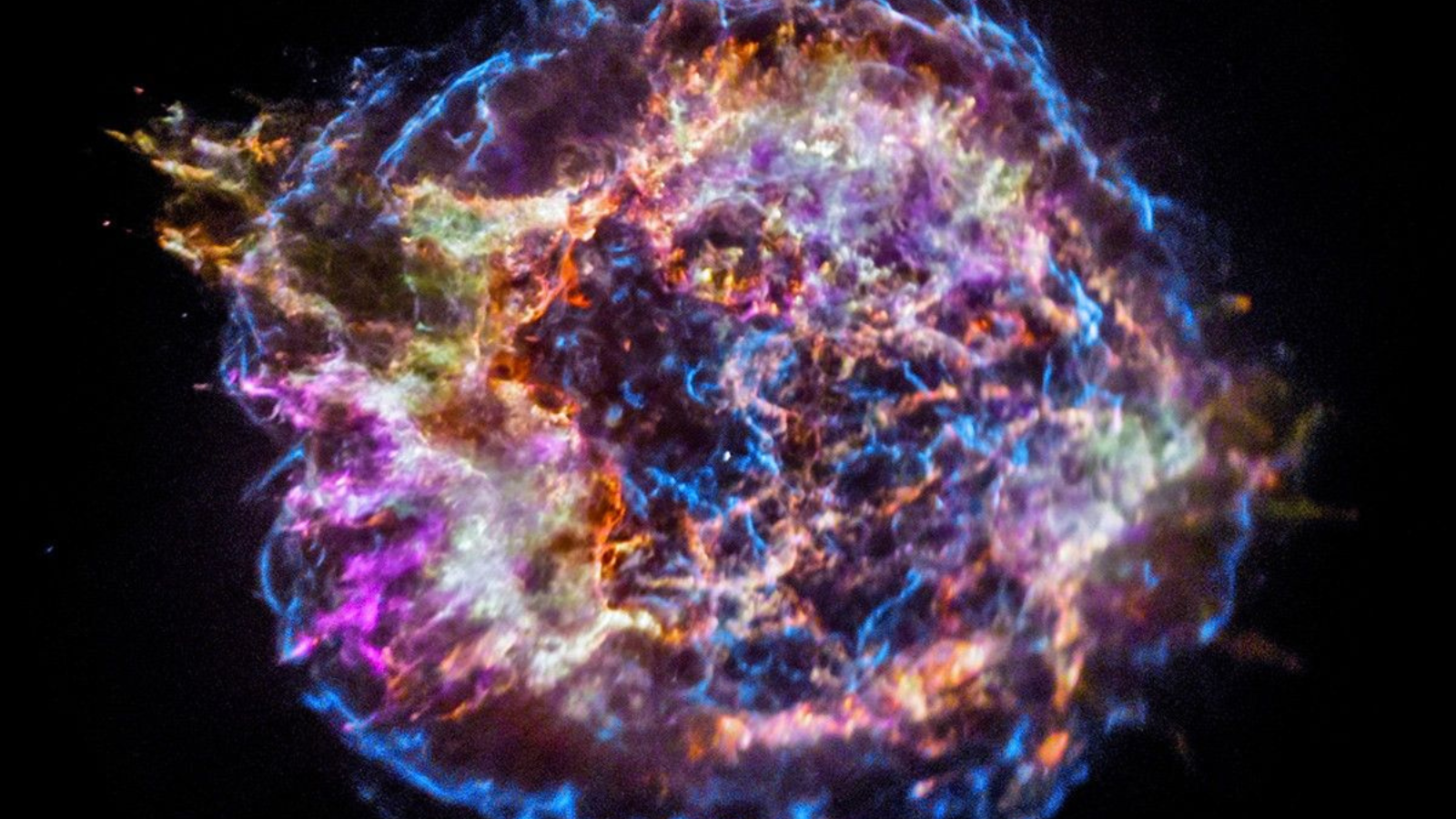
An image of Cassiopeia A (Cas A), the remnant of a massive star that exploded about 300 years ago. (Image credit: NASA/CXC/SAO)
Without this shielding, solar radiation would begin to degrade methane in the stratosphere, the second-lowest layer of Earth's atmosphere. This molecule is a major driver of Earth's greenhouse effect. That means as methane is diminished, the heat-trapping greenhouse effect would be hampered, causing Earth to cool.
In turn, this would result in Earth receiving more high-energy ultraviolet radiation from the sun, which can be extremely harmful to life. Thus, Brakenridge predicts that the follow-on effects of supernova radiation bombarding Earth could include animal extinctions, increased wildfires and global cooling.
The fact that Earth doesn't seem to be currently under bombardment by radiation from a nearby supernova (phew!) means this model can't be tested in real-time. That led Brakenridge to turn to Earth's geological record to hunt for past incidents.
Particularly useful to the scientist were tree rings that can reveal ancient atmospheric conditions. That's because trees absorb carbon from the atmosphere into their trunks, within which rings form as the tree grows and supernova radiation bombarding Earth should lead to an increase in radioactive isotopes of carbon in our planet's atmosphere.
A close up of a tree stump with distinctive rings that could reveal historic bombardment by supernova radiation. (Image credit: LarysePol / Shutterstock)
Brakenridge examined tree ring records spanning around 15,000 years, spotting 11 tell-tale spikes in radioactive carbon. The researcher theorizes these spikes could correspond with 11 times Earth was blasted with supernova radiation.
"The events that we know of, here on Earth, are at the right time and the right intensity," Brakenridge said.
Currently, the scientist can't be totally confident that these spikes are connected to supernovas.
Another possible culprit for these spikes that needs to be eliminated are solar flares from the sun. To eliminate this possibility, researchers can cross-check these tree-ring results with evidence locked away in other geological sources such as ice cores and sediment from the ocean floor.
Further investigation of the possible connection between supernova radiation and Earth's atmosphere could help humanity prepare for future events.
This may become particularly relevant when the proximate red giant star known as Betelgeuse, located around 700 light-years away, goes supernova. This is predicted to happen within the next 100,000 years.
"As we learn more about our nearby neighboring stars, the capability for prediction is actually there," Brakenridge concluded. "It will take more modeling and observation from astrophysicists to fully understand Earth's exposure to such events."
Meer van UFO'S of UAP'S, ASTRONOMIE, RUIMTEVAART, ARCHEOLOGIE, OUDHEIDKUNDE, SF-SNUFJES EN ANDERE ESOTERISCHE WETENSCHAPPEN - DE ALLERLAATSTE NIEUWTJES


 Het verhaal van de ontvoering door aliens van Betty en Barney Hill