Naar de inhoud

UFO'S of UAP'S, ASTRONOMIE, RUIMTEVAART, ARCHEOLOGIE, OUDHEIDKUNDE, SF-SNUFJES EN ANDERE ESOTERISCHE WETENSCHAPPEN - DE ALLERLAATSTE NIEUWTJES

UFO's of UAP'S in België en de rest van de wereld
akke.beakke.be
Ontdek de Fascinerende Wereld van UFO's en UAP's: Jouw Bron voor Onthullende Informatie! Ben jij ook gefascineerd door het onbekende? Wil je meer weten over UFO's en UAP's, niet alleen in België, maar over de hele wereld? Dan ben je op de juiste plek! België: Het Kloppend Hart van UFO-onderzoek In België is BUFON (Belgisch UFO-Netwerk) dé autoriteit op het gebied van UFO-onderzoek. Voor betrouwbare en objectieve informatie over deze intrigerende fenomenen, bezoek je zeker onze Facebook-pagina en deze blog. Maar dat is nog niet alles! Ontdek ook het Belgisch UFO-meldpunt en Caelestia, twee organisaties die diepgaand onderzoek verrichten, al zijn ze soms kritisch of sceptisch. Nederland: Een Schat aan Informatie Voor onze Nederlandse buren is er de schitterende website www.ufowijzer.nl, beheerd door Paul Harmans. Deze site biedt een schat aan informatie en artikelen die je niet wilt missen! Internationaal: MUFON - De Wereldwijde Autoriteit Neem ook een kijkje bij MUFON (Mutual UFO Network Inc.), een gerenommeerde Amerikaanse UFO-vereniging met afdelingen in de VS en wereldwijd. MUFON is toegewijd aan de wetenschappelijke en analytische studie van het UFO-fenomeen, en hun maandelijkse tijdschrift, The MUFON UFO-Journal, is een must-read voor elke UFO-enthousiasteling. Bezoek hun website op www.mufon.com voor meer informatie. Samenwerking en Toekomstvisie Sinds 1 februari 2020 is Pieter niet alleen ex-president van BUFON, maar ook de voormalige nationale directeur van MUFON in Vlaanderen en Nederland. Dit creëert een sterke samenwerking met de Franse MUFON Reseau MUFON/EUROP, wat ons in staat stelt om nog meer waardevolle inzichten te delen. Let op: Nepprofielen en Nieuwe Groeperingen Pas op voor een nieuwe groepering die zich ook BUFON noemt, maar geen enkele connectie heeft met onze gevestigde organisatie. Hoewel zij de naam geregistreerd hebben, kunnen ze het rijke verleden en de expertise van onze groep niet evenaren. We wensen hen veel succes, maar we blijven de autoriteit in UFO-onderzoek! Blijf Op De Hoogte! Wil jij de laatste nieuwtjes over UFO's, ruimtevaart, archeologie, en meer? Volg ons dan en duik samen met ons in de fascinerende wereld van het onbekende! Sluit je aan bij de gemeenschap van nieuwsgierige geesten die net als jij verlangen naar antwoorden en avonturen in de sterren! Heb je vragen of wil je meer weten? Aarzel dan niet om contact met ons op te nemen! Samen ontrafelen we het mysterie van de lucht en daarbuiten.

Archief

5 Startling Mysteries Beneath the Polar Ice

5 Startling Mysteries Beneath the Polar Ice

ngcb1

The icy realms at Earth’s poles harbor enigmas that challenge our understanding of history, geography, and the possibility of extraterrestrial life. Below the vast, frozen landscapes lie secrets, buried and preserved, whispering tales of the past and possibilities of the future. Here are five startling mysteries concealed beneath the polar ice, offering a glimpse into the unknown.

1. Operation Highjump: A Military Expedition with Unexpected Discoveries

In the late 1940s, Admiral Richard Byrd led Operation Highjump, the most extensive Antarctic expedition of its time. Officially, it aimed at exploring potential military bases and conducting geological surveys. Yet, rumors and alleged diary entries from Byrd suggest the discovery of something far more bewildering—an entrance to the Earth’s core and encounters with advanced beings concerned about humanity’s nuclear capabilities. These claims fuel speculations about hidden worlds beneath our feet and the nature of our planet.

2. Ancient Structures Under the Ice

Whistleblower accounts and satellite imagery have hinted at the presence of ancient, man-made structures embedded in the Antarctic ice. Descriptions of vast, octagonal buildings with hieroglyphs unlike any known human script suggest a civilization with advanced knowledge and technology, possibly of extraterrestrial origin. These structures, reportedly capable of maintaining temperate conditions internally despite the freezing external environment, challenge our historical timeline and understanding of Earth’s past inhabitant

3. The Lost Continent of Atlantis and Pre-Diluvian Civilizations

The myth of Atlantis, a technologically advanced civilization that perished in a great deluge, finds echoes in Antarctic mysteries. Some theorists propose that remnants of this lost continent, or perhaps another prehistoric civilization, lie frozen under the polar ice. This theory is bolstered by ancient texts and geological evidence, suggesting a catastrophic event that could have flash-frozen a once-thriving society, preserving its legacy beneath the ice.


4. UFOs and Extraterrestrial Bases

The Antarctic ice has been the focus of UFO sightings and speculation about alien bases hidden from human eyes. Accounts of unidentified flying objects emerging from beneath the ice and advanced craft leaving traces on the continent’s surface feed into theories of an ongoing extraterrestrial presence on Earth. These narratives are supported by the modern UFO era’s onset coinciding with significant human activities in the region, suggesting a keen interest from otherworldly observers in our planet’s nuclear advancements.

5. Satellite Anomalies and the Search for Alien Artifacts

The advent of satellite technology has allowed independent researchers to uncover anomalies in Antarctica’s geography that hint at possible alien artifacts or crash sites. One such finding is a trail, consistent with a high-speed object’s path, stretching from the North to the South Pole. Additionally, satellite images have revealed entrances and objects that defy natural explanation, suggesting either ancient human ingenuity or evidence of extraterrestrial visitation.

VIDEO 

The polar ice caps, remote and inhospitable, guard secrets that blur the lines between history and myth, science and speculation. Whether tales of Admiral Byrd’s otherworldly encounters, whispers of ancient civilizations, or evidence of extraterrestrial activity, these mysteries compel us to look beyond our current understanding and imagine the unimaginable. As technology advances and our exploration capabilities expand, we may soon unveil the truths hidden beneath the ice, potentially rewriting the story of our planet and its place in the cosmos.

 { https://www.latest-ufo-sightings.net/ }

Hoe vind je dit bericht?
Geschreven door peter om 21:43 Stuur door

Forget Betelgeuse! This Star Is Actually About to Explode

Forget Betelgeuse! This Star Is Actually About to Explode

Any day now...

 
NASA

We might witness a star explode soon — and it’s not Betelgeuse.

A mismatched pair of stars 3,000 light years away may be gearing up for an explosion in the next few months. T Coronae Borealis (T CrB to its friends) is normally too dim to see with the unaided eye, but roughly every 80 years, it flares brightly enough to appear as a “new” star, or nova, in Earth’s northern sky. Its last event was in 1946, and astronomers say it’s likely to go off again this year.

23fb5f88-e4e5-4345-bc21-1fed1aa6bcd5-375a64a7-1b1a-4b90-9bde-bef215adbab8-novacygni_artistconcept_watermarked.gif?w=154&h=154&fit=crop&crop=faces&auto=format%2Ccompress&q=50&dpr=2

This illustration shows the red giant in T CrB with a disk of discarded gas around it. The white dwarf (the bright spot in the disk at the beginning of the animation) eventually gobbles up so much material that its surface explodes in a runaway thermonuclear reaction.

TWINKLE, TWINKLE, LITTLE — BOOM

T CrB is actually a pair of stars, trapped in each other’s orbit — and in an extremely messy relationship that sometimes literally explodes.

One is an aging red giant, which has burned up all its hydrogen fuel and is now fusing helium atoms together at its core. Helium fusion produces a tremendous amount of heat and radiation pressure, so the aging star’s outer layers have swelled outward to many times its original size (this is the same fate that will eventually befall our Sun in about 5 billion years). The other half of the dynamic duo is a white dwarf: the burned-out remains of a star’s core (this is what our Sun will look like sometime after its red giant phase).

About every 80 years, the red giant shrugs off its outermost layers of gas, and the white dwarf’s gravity grabs them. White dwarfs are nowhere near as dense as neutron stars, but they're still pretty dense, being the remnants of stellar cores — and it doesn't take much to ignite one again, at least temporarily. When even more mass gets piled on the surface, it adds just enough heat and pressure for the white dwarf to start fusing hydrogen and helium in its inner layers.

That sudden burst of fusion triggers a chain reaction that eventually engulfs the outer layers of the star in what's called a runaway thermonuclear reaction. The envelope of gas around the white dwarf, heated by the runaway nuclear fusion, explodes outward at roughly 3,700 miles per second. In other words, KABOOM.

And 3,000 light years away, people on Earth will be able to see what looks like a new star in the night sky.

WHAT ABOUT BETELGEUSE?

It won’t take T CrB’s white dwarf very long to burn up all its hydrogen fuel and settle back down: It’ll only be visible in the sky for a few days, and the runaway thermonuclear reaction itself will last just a fraction of that time. When Betelgeuse eventually explodes, however, the glow of its death throes will hang in the sky for several months. What’s the difference?

The kind of explosion that lights up T CrB once every 40 years is called a nova, and it happens when a white dwarf gets briefly reignited in a runaway nuclear reaction. Imagine throwing lighter fluid and a match onto a pile of burned-up charcoal. It will catch fire and burn for a moment, but it won’t last.

When Betelgeuse dies, however, it will go out in a blaze of glory called a supernova. A supernova happens when an extremely massive star runs out of fuel for its nuclear reactions; the outer layers collapse, and the pressure of the collapse triggers an enormous explosion. Think of it as blowing up the grill: It’s going to be bigger and brighter than what happened when you lit up the charcoal, and you’re only going to be able to do it once.

Novae like T CrB, though, are the explosive cosmic gifts that just keep on exploding.

{ https://www.inverse.com/ }

Hoe vind je dit bericht?
Geschreven door peter om 00:34 Stuur door

EXCLUSIVE - Oil rigger spots UFOs 'hovering for 10 minutes' above the deck before 'zooming off in an instant' on the Mexican coast where locals believe is a submerged alien base

EXCLUSIVE - Oil rigger spots UFOs 'hovering for 10 minutes' above the deck before 'zooming off in an instant' on the Mexican coast where locals believe is a submerged alien base

  • The images claimed to capture to UFOs hovering over an oil rig  near Mexico
  • Locals believe a submerged alien base sits a few miles off the coast of Tampico
  •  READ MORE: Alien hunter says to focus on Unidentified Submerged Objects

A pair of UFOs were spotted soaring over an oil rig off the coast of Mexico where locals have claimed is home to a secret underwater alien base.

A crew member of the vessel near Tampico snapped two images - one showing a saucer-shaped craft with glowing lights circling the base and the other with a triangular design and three lights on the bottom.

The witness said the UAPs 'hovered for what seemed like 10 minutes and then 'just zoomed off in an instant,' a source told DailyMail.om.

Locals of Tampico believe the underwater extraterrestrial base has been protecting them from hurricanes for more than 50 years.

A pair of UFOs were spotted soaring over an oil rig off the coast of Mexico where locals have claimed is home to a secret underwater alien base. A crew member of the vessel near Tampico snapped two images

A pair of UFOs were spotted soaring over an oil rig off the coast of Mexico where locals have claimed is home to a secret underwater alien base. A crew member of the vessel near Tampico snapped two images

One image shows a saucer-shaped craft with glowing lights circling the base

One image shows a saucer-shaped craft with glowing lights circling the base

The images were captured on October 2023, but have just now been released online.

DailyMail.com spoke with oil rigger 'Pat' who obtained the pictures and information of the sighting from a fellow colleague on another rig who was stationed in Tampico months before he arrived.

'My contact said the UAPs showed up as they were putting the oil rigs legs to the seabed,' said Pat.

The rig, known as a 'jack-up,' is a barge fitted with three long support legs that can be raised or lowered.

One of the images shows the saucer-shaped craft hanging in the night sky and towering above the oil rig. 

A close look at the object shows at least 10 round lights circling the bottom - the only portion that is truly visible in the photo.

While the oil rigger said the other UFO was triangular, the only clue about its designed is how the three lights at its base are positioned.

While the oil rigger said the other UFO was triangular, the only clue about its designed is how the three lights at its base are positioned

While the oil rigger said the other UFO was triangular, the only clue about its designed is how the three lights at its base are positioned

No other parts of the craft can be seen as well. 

An X user, covertress , told DailyMail.com that a member of the intelligence community told her that the triangular craft was the 'Aurora' craft rumored to have been developed by the US government in the mid-1980s.

EXCLUSIVE - READ MORE: 

A disc-shaped, completely silent UFO was caught on camera by Ukrainian troops in the war-torn country, in footage shared exclusively with DailyMail.com.

The SR 91 Aurora, an ultra top-secret aircraft that has been in development since 1989, was believed to be the successor to the Mach 3.35 Lockheed Martin SR-71 Blackbird craft that was retired in 1998.

By comparison, extreme reports claim that Aurora could reach Mach 11.8.

However, there is no evidence the military plane was ever built or flown - suggesting the image captured above the oil rig could not be the top-secret warplane.

When Pat arrived in Tampico, he discovered the locals' belief about an underwater alien base called Amupac, claiming the otherworldly beings are their protectors.

'My rig only came here recently,' he said. 'It was after I discovered the local belief being so strong as regards aliens protecting them that I discussed with a guy who works as a liaison between our two rigs. 

'Then he told me about the encounters. He then sent me the images.'

The submerged base is said to sit a few miles off Miramar Beach and nearby communities believe their extraterrestrial visitors have sat below the surface, protecting them from natural disasters.

And a hurricane has not hit the region over the course of that time. 

The legend began in 1967 when local news outlet the local El Sol de Tampico newspaper ran a story with the headline Platillos Voladores Sobre Tampico, or 'Flying Saucers Over Tampico.'

The article stated that 'thousands of inhabitants' saw objects in the sky, quoting the local airport's control tower officer who reportedly counted 'nine unidentified objects.' 

{ https://www.dailymail.co.uk/ }

Hoe vind je dit bericht?
Geschreven door peter om 23:40 Stuur door

China launches relay satellite to allow communication with far side of the moon and further nation’s lunar ambitions

China launches relay satellite to allow communication with far side of the moon and further nation’s lunar ambitions

Story by Ling Xin
 
  • Queqiao-2 solar wings and relay communication antennas were deployed, making launch successful, says China National Space Administration
  • Smaller satellites Tiandu-1 and 2 were also launched and will orbit the moon to test and verify navigation and communications technologies

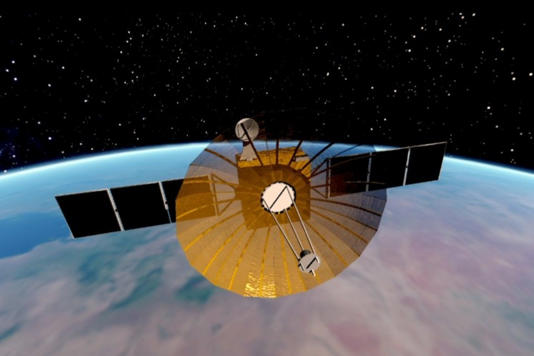
China has launched a new communications relay satellite to support its moon ambitions in the decade to come.

Queqiao-2, or Magpie Bridge-2, lifted off atop a Long March 8 rocket from Wenchang Satellite Launch Centre on southern China's Hainan island at 8.31am on Wednesday, according to the China National Space Administration.

After flying for 24 minutes, the rocket sent the relay satellite directly into the planned Earth-moon transfer orbit with a perigee height of 200km (124 miles) and an apogee height of 420,000km.

Do you have questions about the biggest topics and trends from around the world? Get the answers with SCMP Knowledge, our new platform of curated content with explainers, FAQs, analyses and infographics brought to you by our award-winning team.

The solar wings and relay communication antennas of the relay satellite were deployed normally in succession, "marking a complete success of the launch mission," the administration said.

The satellite would support future moon missions by China "and other countries", it said.

An illustration of Queqiao-2 relay satellite.
Image: Handout© Provided by South China Morning Post

Queqiao-2 is planned to reach an elliptical orbit around the moon and unfold its 4.2 metre-wide (13.8 feet) parabolic antenna to make communications possible between Earth and the lunar far side, which never faces Earth.

It can relay signals up to eight hours straight for the first sample return from the far side of the moon later this year, two more complicated missions to establish a prototype base at the lunar south pole by 2028 and, potentially, more spacecraft from China and its international partners.

Related video: 
  • How China explores the far side of the moon (Dailymotion)

Sharing the ride on the 50 metre-tall (164 foot) Long March rocket were a pair of experimental technology satellites - Tiandu-1 and 2 - which are headed to a separate orbit where they will fly in formation and test lunar navigation and communications technologies.

The moon is tidally locked to Earth. As a result, we always see the same side of the moon from Earth. In 2018, China launched the Queqiao relay satellite to support its Chang'e 4 mission, which made the first soft landing on the moon's far - or "invisible" - side.

The combination of the relay satellite Queqiao-2 and the Long March 8 Y3 carrier rocket is vertically transferred to the launching area at the Wenchang Space Launch Centre on March 17, 2024.
Photo: Xinhua© Provided by South China Morning Post

The 325kg (716lbs) Queqiao, which has a designed lifespan of five years, is still operating near Earth-Moon Lagrangian-2 point - a gravitationally balanced spot about 70,000km beyond the moon.

Queqiao-2 is much heavier with a mass of 1,200kg. Its orbit is also different: it is highly elliptical with the closest point at 300km and the farthest 8,600km above the moon's surface.

It will take Queqiao-2 around 12 hours to make one circle around the moon and during this time communications between Earth and the lunar far side could be provided for about eight hours.

Moon miss: Chinese satellites fail to reach planned orbit for lunar test

This orbit is also known as a frozen orbit because it is very stable and requires the spacecraft to carry very little, if any, propellant for orbit maintenance over a very long time.

Queqiao-2's antenna surface was made of extremely thin molybdenum wires coated with gold, said the research team from Donghua University in Shanghai that developed the antenna.

"The wires used to weave the antenna were thinner than human hair. And gold is a very good reflector," team leader Chen Nanliang told state broadcaster CCTV back in February.

"Our 'golden umbrella' is lightweight and flexible enough to be first tucked in the rocket cabin, and then unfold in orbit. It's also strong enough to withstand the harsh conditions during launch and in flights," Chen said.

Besides signal relay, Queqiao-2 is also equipped with three scientific payloads, including an ultraviolet camera and a long-distance radio astronomy experiment. Its designed lifespan is at least eight years.

Compared with Queqiao-2, Tiandu-1 and Tiandu-2 satellites are much smaller. The 61kg Tiandu-1 carries a Ka dual-band communication payload, a laser retroreflector and a space router among other devices. The 15kg Tiandu-2 carries a communication payload and navigation devices.

US-China space race fuelled by lunar landings and orbital 'parking spots'

Together, the two will orbit the moon to test and verify navigation and communications technologies, and inform the design of China's Queqiao lunar navigation and communication constellation, Xinhua reported last month.

The Queqiao constellation would greatly aid moon landing and lunar surface operations, said state news agency Xinhua. China plans to land astronauts on the moon no later than 2030, and build a moon base with international partners in about a decade.

  • More Articles from SCMP
  • This article originally appeared on the South China Morning Post (www.scmp.com), the leading news media reporting on China and Asia.
  • Copyright (c) 2024. South China Morning Post Publishers Ltd. All rights reserved.
Hoe vind je dit bericht?
Geschreven door peter om 22:27 Stuur door

China’s Next Lunar Relay Satellite Blasts Off

Launch of Queqiao-2

China’s Next Lunar Relay Satellite Blasts Off

Communication between spacecraft relies upon line of site technology, if anything is in the way, communication isn’t possible. Exploration of the far side of the Moon is a great example where future explorers would be unable to communicate directly with Earth.  The only way around this is to use relay satellites and the Chinese Space Agency is on the case. The first Queqiao-1 was able to co-ordinate communications with Chang’e-4 landers and now they are sending Queqiao-2 to support the Change’e-6 mission. 

If you have ever gazed upon the Moon you might have noticed that it always has the same hemisphere facing the Earth. This phenomenon is known as captured or synchronous rotation. It may look like the Moon isn’t rotating but in reality the time it takes to spin once on its axis is the same as the time it takes to complete one orbit around the Earth, keeping one hemisphere constantly facing us. Explorers on the near side of the Moon have no trouble communicating with transmissions taking just over one second to reach home. Explore the far side of the Moon and you have a problem. 

The Chang’e 5 test vehicle captured this beautiful view of Earth over the far side of the Moon on October 28, 2014. Credit: Chinese national space agency (CNSA) and Chinese Academy of Sciences (CAS)

To overcome the problem China have launched a 1.2 ton communication satellite known as Queqiao-2. It’s name originates from the mythological bridge made from magpies. In the Chinese tale, the magpies formed a bridge across the Milky Way to allow the lovers Vega and Altair to be together for one night once a year. Two miniature satellites were also launched Tiandu-1 and Tiandu-2 from the island of Hainan.

On arrival it will orbit the Moon and provide a relay for the Chang’e-6 lander which is slated to launch in May.  It will join satellites from United States, India and Japan to support the exploration of the far side of the Moon. Chang’e-6 will collected samples from an ancient basin. Not only will it serve the communications for Change-6, it will transfer communications for Chang’e-7 and ‘8. Both craft are to be launched in the years ahead 2026 and 2028 respectively. 

The orbit of Queqiao-2 will take it almost over the south pole in an elliptical orbit. It will reach an altitude of 8,600 km so that communication can be achieved for a little over eight hours. At its closest, it will sweep over the lunar surface at an altitude of 300 km.

The ultimate goal of the Chinese Space Agency is to create a network of satellites, not too dissimilar (but not quite on the same scale) to the growing Space X constellation which is building a global internet presence. The purpose of Tiandu-1 and Tiandu-2 is to test the concept of such a constellation. 

China’s longer term aspirations include a research station at the lunar south pole and for this to be viable, communication relays are essential to establish communication, navigation and remote sensing. 

Source : 

{ https://www.universetoday.com/ }

Hoe vind je dit bericht?
Geschreven door peter om 22:17 Stuur door

The Mars Science Helicopter Could be an Airborne Geologist on Mars

A model of NASA’s Mars Science Helicopter concept. Credit: NASA.

The Mars Science Helicopter Could be an Airborne Geologist on Mars

After over 70 successful flights, a broken rotor ended the remarkable and groundbreaking Ingenuity helicopter mission on Mars. Now, NASA is considering how a larger, more capable helicopter could be an airborne geologist on the Red Planet. For the past several years scientists and engineers have been working on the concept, proposing a six-rotor hexacopter that would be about the size of the Perseverance rover.

Called the Mars Science Helicopter (MSH), it would not only serve as an aerial scout for a future rover, but more importantly, it could also carry up to 5 kg (11 lbs) of science instruments aloft in the thin Martian atmosphere and land in terrain that a rover can’t reach.

A new paper presented at the March 2024 Lunar and Planetary Science Conference outlines the geology work that such a helicopter could accomplish.

The paper, “Unraveling the Origin and Petrology of the Martian Crust with a Helicopter,” notes there are several outstanding questions about the makeup and history of Mars’ surface, especially with recent discoveries of unexpected dichotomies in the composition of basaltic rocks. In observations from the Mars rovers and orbital spacecraft, some regions appear to have been influenced by water while some have not.

“Up to last decade, we thought that magmatic rocks were only basaltic on Mars,” said Valerie Payré from the University of Iowa, the paper’s lead author. “But with recent rover and orbital measurements, we observed that there is a wide diversity of magmatic rocks similar to what we see on Earth.”

Payré explained via email that there are rocks on Mars with elevated silica concentrations called felsic rocks – feldspar and silicate — that are rich in elements and were not expected to be found on the Martian surface.

“We measured these with the Curiosity rover and have some hints of where there might be others using orbital measurements,” Payré said. “However, close-up images (millimetric scale) and composition analyses are lacking from the orbital dataset to know if these felsic rocks are widespread on Mars or just at a few locations. This is yet highly important to understand what the crust of Mars is made of and if it is similar to Earth’s crust, which has implications regarding the formation of the planet and even past climate.”

First X-ray view of Martian soil – feldspar, pyroxenes, olivine revealed (Curiosity rover at “Rocknest”, October 17, 2012). Credit: NASA/JPL-Caltech/Ames

Payré and her team feel that a helicopter would be perfect to explore places where a rover could never traverse, such as terrains that are too high in altitude, since landing there would require too much fuel.

The instruments they propose include a miniaturized visible and near-infrared (VNIR) spectrometer for small scale mineralogical mapping and a small Laser Induced Breakdown Spectrometer (LIBS) with a micro-imager, an instrument similar to the ChemCam laser instrument on both the Curiosity and Perseverance rovers. In their paper, the team writes that a helicopter with these instruments could travel kilometers to detect promising felsic terrains, and measure their composition at a micron scale.

“We could fly over these possible felsic terrains and look at their minerals using a visible/near infrared spectrometer, land on locations of interest, take close-up images, and measure the compositions of these rocks with the LIBS,” Payré said. “We could finally know what Mars’ crust is, and better constrain how it formed.”

A graphic show the parts of the Ingenuity helicopter. Credit: NASA

There could also be an onboard a magnetometer, which measures magnetic field anomalies, to better understand how Mars’ magnetic field operated, which is still uncertain. Mars does not presently have a global magnetic field, but had one early in its lifetime.

“Such payload would finally enable us to better understand the past climate on Mars by measuring the composition and minerals of sedimentary rocks of various age,” Payré told Universe Today.

A conceptual design paper published in 2020 proposed a Mars hexacopter with a mass of about 31 kg (70 lbs) and a total diameter of just over four meters (13 feet). Each set of rotors would have blades about 0.64 meters (2 ft) long.  The helicopter would be powered by a rechargeable solar cell. This would not only power the rotors, but the desired scientific instruments. 

A model of NASA’s Mars Science Helicopter concept. Credit: NASA.

This helicopter could move as fast as 30 meters a second (60 mph) but also could hover over a spot for as long as five minutes. Engineers from Ames Research Center, the Jet Propulsion Lab and the University of Maryland wrote that MSH could fly with a range of up to 10 km (6.2 miles) per flight. With this speed and range, MSH could potentially cover as much ground in a few days as rovers like Perseverance and Curiosity have traversed in years.

“The fact that a helicopter can fly would facilitate the mission to visit to places that would be inaccessible for a rover, and we could access locations that we never imagined before,” Payré said.

Payré and team proposed several landing sites including Gale Crater Gale crater where evolved felsic rocks were found by the Curiosity Rover; the massive canyon of Valles Marineris, where orbital observations have revealed a deep crust with feldspar-bearing rocks; and Hellas basin, 2,300 km impact crater known to have layers of feldspar. 

Annotated view of Valles Marineris from the High-Resolution Stereoscopic Camera (HRSC) on the Mars Express spacecraft. Credit: ESA/DLR/FU Berlin (G. Michael)

{ https://www.universetoday.com/ }

Hoe vind je dit bericht?
Geschreven door peter om 22:03 Stuur door

Project Serpo: Unraveling the Enigma of an Alleged Extraterrestrial Exchange Program

Project Serpo: Unraveling the Enigma of an Alleged Extraterrestrial Exchange Program

Unravel the mystery of Project Serpo, a story of interstellar exchange with aliens, blending truth, skepticism, and the quest for knowledge.

In the annals of UFO lore, the story of Project Serpo stands out as a captivating narrative that combines elements of interstellar travel, government conspiracy, and the timeless quest for understanding what might exist beyond our earthly confines. Project Serpo allegedly details a top-secret exchange program between the United States government and an extraterrestrial civilization from a planet in the Zeta Reticuli star system. This tale, wrapped in layers of mystery and speculation, offers a glimpse into the complex relationship between humanity’s quest for knowledge and the shadows where truth and fiction blur.

Origins of the Story

The origins of Project Serpo trace back to anonymous postings on a public internet forum in the early 2000s. These posts were attributed to a supposed retired government official who revealed detailed accounts of an interstellar exchange program initiated in the aftermath of the famous Roswell UFO incident in 1947. According to the narrative, the program saw a select group of American astronauts traveling to Serpo, an alien planet, on a mission that aimed to foster intergalactic understanding and cooperation.

The Mission’s Journey

The journey to Serpo was described as taking several months, utilizing alien technology that allowed for faster-than-light travel. The narrative elaborates on the astronauts’ life on Serpo, where they spent years learning about the planet’s ecosystem, societal structures, and the technology of its inhabitants, known as the Ebens. This period of extraterrestrial cohabitation was said to offer profound insights into the possibilities of life beyond Earth and the potential for interstellar diplomacy.

Skepticism and Controversy

Despite the enthralling details, the story of Project Serpo has been met with skepticism and controversy. Critics argue the lack of verifiable evidence and the story’s reliance on anonymous sources cast doubt on its authenticity. Furthermore, connections to known disinformation campaigns have led some to dismiss the narrative as a sophisticated hoax or a piece of modern folklore rather than a factual account of extraterrestrial contact.

The Role of Disinformation

The tale of Project Serpo also touches upon the theme of disinformation within the UFO community. The narrative has been linked to Richard Doty, a former Air Force Office of Special Investigations officer known for his involvement in spreading UFO-related disinformation. This connection raises questions about the motives behind the dissemination of the Serpo story and the impact of such narratives on public perception and the search for extraterrestrial intelligence.

Cultural Impact

Despite questions about its veracity, the story of Project Serpo has had a notable impact on UFO culture and the science fiction genre. It has inspired discussions, debates, and artistic works exploring the themes of interstellar travel, alien life, and government secrecy. The narrative serves as a reflection of humanity’s enduring fascination with the unknown and the lengths to which imagination and belief can lead us in the quest for understanding our place in the universe.

VIDEO:

Project Serpo remains a compelling chapter in the larger story of humanity’s engagement with the UFO phenomenon. It exemplifies the intersection of myth, science, and the desire to believe in the extraordinary. Whether fact or fiction, the story of Project Serpo encourages us to look beyond our terrestrial boundaries and ponder the possibilities of what might lie beyond the stars.

 { https://www.latest-ufo-sightings.net/ }

Hoe vind je dit bericht?
Geschreven door peter om 21:51 Stuur door

Leaked UFO video captured by Homeland Security analyzed

Leaked UFO video captured by Homeland Security analyzed

A group of UFO researchers with backgrounds in science have come together to analyze an alleged UFO video they have confirmed comes from the Department of Homeland Security (DHS). The object in the video was captured by a thermal imaging camera on a DHS aircraft, and according to the researchers, it exhibits characteristics that cannot be explained by any known aircraft or natural phenomenon.

The video is overlaid with the sort of telemetry one would expect from a military or law enforcement thermal image video. It shows an object apparently moving very quickly over land and then into the ocean. It seems to be tumbling or changing shape. It moves over buildings, through trees, and eventually over the ocean. Then things get weird. The object appears to go in and out of the ocean without slowing down, and at the end of the video is either joined by another object or breaks in two.

All of the primary witnesses have requested anonymity. However, several communications from alleged DHS employees indicate that the video caused quite a stir on the base.

A still from the video in which the unknown objects appears to be flying through trees.

A still from the video in which the unknown objects appears to be flying through trees.

Research on the video began when an acquaintance to the pilot of the aircraft that captured the video contacted Daina Chaviano, a famous Cuban-born fantasy and science fiction author. She is also a volunteer with the Mutual UFO Network (MUFON) in Florida, where in her spare time she investigates UFO reports. She took the UFO case to her colleague, Morgan Beall, who runs the Florida MUFON chapter.

Chaviano and Beall were so impressed by what they saw they assembled a small group of skeptical researchers with backgrounds in various fields of science and technology. The pilot’s acquaintance requested strict control of the information provided and that knowledge of the investigation be limited to a very few people, so until now, the researchers have not shared any information regarding their investigation.

Today, the group released a 161-page report detailing their findings.

Aguadilla

The object was filmed over Rafael Hernandez Airport in Aguadilla, Puerto Rico.

(Credit: Google Maps)

They are vague when it comes to the identity of Chaviano’s informant. They say this person and others who provided information wanted to remain anonymous “to ensure no issues arise with the source’s employers.”

However, the group says: “The source of this video evidence was vetted and identified.”

They say they are absolutely certain that the information comes from sources on board the DHS aircraft and the video is genuine. Their investigation also confirmed what they were told.

Their sources told them that the UFO incident began at about 9:20 pm on the evening of April 25, 2013 at the Rafael Hernandez Airport in Aguadilla, Puerto Rico. It involved the crew of a DHC-8 Turboprop aircraft from U.S. Customs and Border Protection (CBP), a division of DHS.

A U.S. Customs and Border Protection Bombardier DHC-8Q200. (Credit: U.S. Customs and Border Protection)

A U.S. Customs and Border Protection Bombardier DHC-8Q200.

(Credit: U.S. Customs and Border Protection)

The DHC-8 took off on a routine flight and soon after takeoff they noticed “a pinkish to reddish light over the ocean that was in their vicinity and approaching toward the south.”

The crew was concerned the tower had not told them about the incoming traffic, so they called it in. The tower told them they also had a visual on the object, but they were unsure of its identity.

Once the object got close to land, its lights turned off, but at this time the DHC-8 was able to begin tracking and filming the object with their onboard thermal imaging system. The DHC-8 did not approach the object, but circled the area and filmed it.

The DHC-8 did not pick up the object on radar. However, their radar was looking downward to track ships on the ocean, not objects in the sky.

According to the source, a flight was delayed by the presence of the object. The research group was able to confirm from airport records that a FedEx flight scheduled to leave at 9:10 pm was delayed until 9:26 pm.

Image of the flight log from the UFO reporting showing the a delayed flight at the time of the UFO event. (Credit: SCU)

Image of the flight log from the UFO reporting showing the a delayed flight at the time of the UFO event.

(Credit: SCU)

The researchers also confirmed the flight time and path of the DHC-8 via radar data they obtained from a Freedom of Information Act Request to the U.S. Air Force 84th Radar Evaluation Squadron (RADES) group. The radar data confirmed that the DHC-8 took off at approximately 9:16 pm and circled the airport twice before leaving the area about 10 minutes later.

Flight path of the DHC-8 according to the radar data obtained via a Freedom of Information Act Request. (Credit: SCU)

Flight path of the DHC-8 according to the radar data obtained via a Freedom of Information Act Request.

(Credit: SCU)

The researchers note that there was an unknown object or objects tracked on radar a few minutes prior to the DHC-8’s take off,  but it is not known for certain that this was the same object that was later caught on video. The unidentified radar strikes were just off the shore to the north and northwest of the airport and lasted about 16 minutes from 8:58 pm to 9:14 pm.

When reading the times, the radar data is presented in a different time zone than the local times. The researchers explained this on their website: “Aviation times reflect  Zulu time which corresponds to Greenwich Mean Time (GMT). The video displays the Zulu time April 26th at 1:22 AM at the top left of the initial frames. Converting this Zulu time to Puerto Rico’s local time gives April 25th at 9:22 PM. Puerto Rico uses  Atlantic Standard Time and does not use daylight savings time.”

Radar data showing the flight path of the DHC-8 and the unknown radar hits between 8:58 pm to 9:14 pm. (Credit: SCU)

Radar data showing the flight path of the DHC-8 and the unknown radar hits between 8:58 pm and 9:14 pm.

(Credit: SCU)

The research group also thoroughly analyzed the video to determine the nature of the object in the film. They consulted thermal imaging experts to determine the capabilities of the system used for the filming, and broke the film down frame by frame to determine the object’s approximate size, speed, temperature and flight path.

The video (seen at the top of the story) is just under 4 minutes long, but the unknown object was tracked for about 2 1/2 of those minutes. Although it was difficult for the group to calculate the exact location of the object on the first half of its flight, they are confident of its position in the second half.

They have determined that the object came in from the ocean, from the north or northwest of the airport’s airstrip, and then flew over the airstrip, then turned back to the north and headed back out into the ocean.

Estimated flight path of the unknown object. The smaller lines estimate the path of the object in the first part of its flight. The thicker line shows the second half of the flight. The researchers are more confident of the location of the object during the second half. (Credit: SCU)

Estimated flight path of the unknown object. The thinner lines estimate possible paths of the object in the first part of its flight. The thicker line shows the path the researchers believe is most likely. The researchers are more confident of the location of the object during the second half of its flight. This data corresponds with what the SCU researchers found.

(Credit: SCU)

During this time the DHC-8 was circling the airport. As can be seen in the map created by the researchers, the aircraft was moving along the shore, turning to the south, and eventually lost site of the object over the ocean as they continued south.

The flight path of the DHC-8 during the filming of the unknown object. (Credit: SCU)

The flight path of the DHC-8 during the filming of the unknown object posted on Reddit by an anonymous user. This path was calculated using the data in the video. It is marked “heli,” because the Reddit user believed the aircraft to be a helicopter and was unaware it was a DHC-8.

The report states: “The object was between three to five feet in length and its speed varied between approximately 40 mph to 120 mph. Its median speed was roughly 80 mph.”

The report goes on to note that an interesting characteristic at the end of the flight was when it apparently submerged into the ocean, traveled for over half a mile, and then flew back out.

According to the report: “Its speed through the water reached a high of 95 mph and average 82.8 mph.”

The unknown object returning to the ocean.

The unknown object returning to the ocean.

One suggestion has been that the object was merely a balloon. However, the researchers reject this idea for several reasons. They say the wind speeds at the time were 8 to 13 mph at ground level and 12 to 18 mph at 400 to 3200 feet. This means the object was moving too fast to be carried by wind currents. It also changed directions from heading south back to the north, and it went underwater with minimal loss of speed.

Another possibility is that the object was actually a bird. The object appears dark on the screen, and for this type of thermal imaging that would mean it was warmer than the ambient air. This is how a bird would appear. However, the researchers note that the object was moving much too fast to be a bird. They note that peregrine falcons, which do occasionally visit Puerto Rico, have an average horizontal speed of 40 to 56 mph, and a maximum of 65 to 69 mph.

The researchers also examined the possibility that the object was a drone. Their research did discover that the Navy is working on a drone that can fly through the air and dive into the ocean and become a submarine. It is called a “Flimmer.”

They found that current Flimmer drones have not been tested underwater and have an airspeed of 68 mph. They also noted that the fastest known underwater battery powered torpedo travels at 50 mph.

The researchers do acknowledge that it could be possible that the Navy is secretly testing a Flimmer drone that is much more advanced. However, they question why the military would so recklessly test it over a civilian area and airport runways.

In conclusion they state: “There is no explanation for an object capable of traveling under water at over 90 mph with minimal impact as it enters the water, through the air at 120 mph at low altitude through a residential area without navigational lights, and finally to be capable of splitting into two separate objects. No bird, no balloon, no aircraft, and no known drones have that capability.”

A still image from the video just after the object apparently slit into two separate objects.

A still image from the video just after the object apparently split into two separate objects.

They do not profess to know what the object was, and they welcome “reasonable” suggestions.

However, as to be expected, there are those who have suggested that “they know” the object is extraterrestrial in nature, and at least one of those suggestions has come from an anonymous source who has intimate knowledge of this event.

An anonymous letter was sent to one of the researchers that is very similar to one that was sent to John Greenewald, owner of the website TheBlackVault.com. The only thing Greenewald knew about the video was related to a low resolution copy that was leaked to a Puerto Rican UFO researcher. Many assumed the video was taken from a helicopter.

The letter references the exact type of thermal system and aircraft that was used to capture the video. The message was accompanied by a high resolution version of the thermal video, which was then posted on YouTube by Greenewald. The anonymous letter states: “Alien technology is no doubt under the ocean near Puerto Rico!”

Is alien technology being demonstrated in this video? This careful report, which the researchers say took over 1000 man hours to complete, indicates that whatever took place, it is certainly unusual. The entire report is 161 pages long, and thoroughly explains their work, and how they came to the conclusions they did.

The report on the Puerto Rico incident can be found at ExploreSCU.org. Click the image to go there.

The report on the Puerto Rico incident can be found at ExploreSCU.org. Click the image to go to the site.

Even if the report had come to a mundane conclusion, the effort put into the investigation is remarkable. However, the fact that they could not determine what the object was, and have determined that it displayed characteristics that cannot be explained, makes the report remarkable.

Robert Powell, a retired engineer who worked in the semiconductor industry, who helped author the research paper, says although they have finally released their report, “work on this video will continue.”

Powell, Beall, Chaviano, and the rest of the researchers working on the report posted a high resolution version of the video, their report, and an animation of the radar data they obtained on a website called the Scientific Coalition for Ufology.

Powell says they have reached out to other scientific organizations that have shown an interest in the UFO phenomenon,  including 3AF Sigma2, a group that is part of the French National Aeronautical and Astronautical Association. The French scientists have agreed to review their work and provide input.

Powell says, “We hope that this report will generate ideas and thoughts from other scientists that may provide more insight into the characteristics of the object seen in the video.”

  • To download the report, view the video, and find out more about the investigation, visit: ExploreSCU.org.

{ https://openminds.tv/category/articles }

Hoe vind je dit bericht?
Geschreven door peter om 23:36 Stuur door

A Survivor at Roswell: The Truth About the One that Walked Away

Artist's impresssion of the Roswell UFO crash.
(Credit: Flying Disk Press)

A Survivor at Roswell: The Truth About the One that Walked Away

Don Schmitt has been one of the primary investigators of the alleged crash of a UFO in Roswell, New Mexico in 1947. He and his colleagues have tracked down hundreds of witnesses who claim to have information about what happened. When putting together the Roswell UFO crash issue of Open Minds Magazine in 2011, we asked Don to write us an article on the best evidence that an actual pilot of the alleged spacecraft survived. The following is the article he provided us for the magazine.

Ever since the Roswell crash of a flying saucer with “little men” inside, one specific rumor has persisted: that one of those “little men” actually managed to survive the ordeal. For most of the years since the 1947 Roswell crash and the subsequent weather balloon explanation, stories about mysterious bodies associated with the crash remained, but the very notion that Earth was indeed the host to a living extraterrestrial visitor was beyond the pale of belief. But, the question remained: Did an extraterrestrial survive that ill-fated night?

Eye-Witnesses’ Accounts of the Surviving Alien

Dan Dwyer

In 1947, Frankie Dwyer Rowe, a twelve-year-old girl, witnessed her father being threatened and warned by the military authorities for what he saw at the Roswell crash site. Her father, now deceased, was a crew chief for the Roswell Fire Department at the time of the incident. When the call came into the fire station that there had been an airship crash north of town, Dan Dwyer and Lee Reeves were dispatched with the station’s “tanker” (a pickup truck with a large cylindrical water tank in the back) to the crash site. The Chavez County sheriff and a couple of his deputies were also following up the rear in fast pursuit. Arriving just before the military would secure the scene, Dwyer and Reeves witnessed something totally unexpected. It wasn’t an airplane at all, but an egg-shaped vessel of some sort that they did not recognize.

And the bodies! Dwyer could see three diminutive humanoid beings lying in the lee of the craft. With his focus riveted on the craft and the bodies on the ground, Dwyer noticed a movement out of the corner of his eye. There, walking in front of him, seemingly from out of nowhere, was something right out of a science fiction novel. According to the fireman, it was about the size of a ten-year-old child, with grayish skin, no hair, and a large head and eyes. Within moments the roar of approaching vehicles could be heard as the military finally took charge of the entire affair. The two firemen were escorted away from the immediate area and warned of the consequences if they should ever speak of the incident. To further demonstrate the seriousness of what was witnessed, Dwyer and his family were paid a visit by military police that very evening at their home. Dwyer and his wife were physically threatened and were told that authorities would kill their children should they utter a word about what was witnessed earlier that day.

Roswell fireman Dan Dwyer (left) and his crew in the mid-1950s.

Credit: Don Schmitt

George Wilcox

The Roswell incident left an impact on all those involved, especially then-Roswell sheriff, George Wilcox. Just before Wilcox’s widow Inez passed away, she related a story to her granddaughter Barbara, who since passed on the story: “The event shocked [George]. He never wanted to be sheriff again after that. My grandmother said, ‘Don’t tell anybody. When the incident happened, the military police came to the jailhouse and told George and I that if we ever told anything about the incident, not only would we be killed, but our entire family would be killed!”’ Barbara adds, “They called my grandfather, and someone came and told him about the crash. He went out there to the site; there was a big burned area, and he saw debris. There were four space beings. Their heads were large. They wore suits like silk. One of the ‘little men’ was alive.” Inez Wilcox reiterated to Barbara that her and George took the threats very seriously and kept the information from the family.

Sergeant Homer G. Rowlette

Sergeant Homer Rowlette in 1947. Gave a death bed confession of being part of the clean-up crew.

Credit: U.S. Army/Don Schmitt

Sergeant Homer G. Rowlette, Jr., was a member of the 603rd Air Engineering Squadron at the RAAF in 1947. He was a career military man and retired as an NCO after twenty-six years of dedicated service to his country. Before passing away in March 1988, he finally conveyed to his son, Larry the following startling information about his involvement with the “crash of the flying saucer.” Rowlette was part of a cleanup detail sent to the crash site north of Roswell. Larry was told that his father had seen everything. He handled the “memory material,” which according to Homer, was “thin foil that kept its shape.” If that wasn’t enough, he described the actual ship, which was “somewhat circular.” He also caught his son completely by surprise when he announced, “I saw three little people. They had large heads and at least one was alive!”

Master Sergeant Harry Telesco

Corroboration of Rowlette’s story has come from another member of the same squadron also stationed at Roswell at that time. Master Sergeant Harry Telesco had already passed away, when I located and contacted his family in 2007. According to his daughter, her late father had spoken many years ago of being at the crash site north of town and seeing the strange wreckage and little bodies there. He also testified that he had seen one that was still alive.

Richard Loveridge

In 1947, Richard Loveridge worked as a mechanical engineer for the Boeing Aircraft Company and was part of their crash-investigation team. When information came in about the crash of an aircraft outside of Roswell, Loveridge drove to the area believing it was one of their planes. It would not be until the last year of his life in 1993 that he would finally confess to his family about the true nature of the alleged “plane” crash. The Boeing crash investigator admitted that he “saw everything.” He saw the wreckage, which was not from a conventional aircraft, as well as three small, deceased “entities” and one that was still alive. Loveridge described them as “child-size” and “grayish” in color. He refused to elaborate any further to his family: “Don’t ask me any more about this. They can hurt you.”

Ervin Boyd

Ervin Boyd worked as a B-29 mechanic at the Roswell Army Airfield (RAAF) in 1947; he worked specifically in Hangar P3, which would later be known as Building 84. On the particular day in question, Boyd was taking a cigarette break on what he called a “hot summer day,” and the doors of the hangar were open on both ends of the building. As soon as he stepped outside the hangar doors, he observed a number of men and vehicles swarming towards the building. Startled by the situation, he quickly noticed that some of the men were carrying what he first thought was the body of a child. “Why didn’t they take it to the hospital?” he asked himself. As they passed by him, he was shocked to see that it was something else.

“It was child-size, four feet, maybe a little more, and a head that was larger than one on a normal body. The eyes were walnut-shaped and also larger than normal. From my angle, it didn’t look like it had much of a nose. The arms were a bit longer too, and the skin was ashy, gray and kind of scaly. I believe it was still alive.”

Suddenly, a number of officers grabbed Boyd and rushed him away from the area and started to get physically rough with him. One of them sternly stated, “Mr. Boyd, you didn’t see anything.” But, the civilian persisted. Finally, he was warned that if he ever said one more word, not only would he lose his job, but the lives of his wife and children would be at stake. It would not be until he suffered a stroke twenty-four years later that he would finally break his silence with his family.

Army Roswell clean up crews from the Roswell movie.

Credit: Paul Davies

Joseph Montoya

That same afternoon, Monday, July 7, 1947, New Mexico’s newly elected thirty-two-year-old lieutenant governor, Joseph Montoya, was in Roswell. It is not entirely clear how the politician came to be on the base at the RAAF on the exact day as some of the bodies, including the possible survivor from the crash. One possible scenario is that he was there on Independence Day weekend for the dedication of a new plane, and after the ceremony he was escorted over to the B-29 hangar just as the first military vehicles were bearing down with their “out-of-this-world” cargo.

Montoya would confide to close associates that he had seen “four little men.” He described how small they were, along with the stunning fact that “one was alive!” Montoya painted the beings as, “short, only coming up to my chest. [They were] skinny with big eyes shaped like tear-drops. [The] mouth was real small, like a knife-cut across a piece of wood, and they had large heads.”

Next, he described the scene inside the hangar. Each of the little men, including the one that was alive, was stretched out on a table brought over from the mess hall and set up for that purpose. “I knew that one was alive because I could hear it moaning.” Montoya said that it was moving, with its knee bent and rocking back and forth

After a frantic exit from the hangar, Montoya was picked up and driven from the base by associates. Montoya would always warn that “It’s too dangerous to talk about.” Even years later, he would continue to caution that “the government will get you.”     

“Eli” Benjamin   

Private first class Eli Benjamin in 1947. He escorted the bodies from hanger P-3 to the RAAF base hospital.

Credit: U.S. Army/Don Schmitt

Another man who himself admits to having seen bodies was Elias “Eli” Benjamin (a pseudonym).  His wife told me much about the incident, but it would be several years before Eli would tell me himself. As a retired career U.S. Air Force man, Benjamin feared for his pension—and still does—if he ever talked about Roswell. Benjamin and his wife had come to the International UFO Museum and Research Center in Roswell in 2002 to see the exhibits. Against her husband’s wishes, Mrs. Benjamin stopped into the museum director’s office to tell someone about her husband. After hearing Mrs. Benjamin’s story, especially the part about bodies and the hospital, Julie Shuster, the museum director, felt that a private interview with Mr. Benjamin was warranted. It was soon apparent, however, that there was a major problem: Mr. Benjamin was nowhere to be found. He had left the building, when he observed his wife and the director looking around for him—he was a reluctant witness, to put it mildly.

Since that day, I have managed to track down the former member of the 390th Air Service Squadron and meet with him half a dozen times to try to gain his confidence. In the process, I learned that Benjamin’s main fear, similar to so many others who were and are reluctant Roswell witnesses, was his belief that he, as a retired air force veteran, might lose his pension if he said anything about those long-ago events. I assured Benjamin that I knew of no instances whatsoever of someone losing his pension for talking about Roswell. Besides, the secretary of the air force issued a proclamation in 1994 that absolved anyone with knowledge about the Roswell incident who believed that they were still subject to security or secrecy oaths regarding the matter. The other thing I noticed was that Benjamin was still deeply moved, if not troubled, by what he witnessed back in 1947, and he broke down in tears on several occasions when talking to me about it. His wife also revealed that her husband still has trouble sleeping comfortably and continued to wake up suddenly in the middle of the night, shaking. In 2005, the eighty-year-old Eli Benjamin agreed to tell his story.

In July 1947, Eli Benjamin was a private first class with the 390th Air Service Squadron at the Roswell Army Air Field. Possessing a top secret clearance, Private First Class Benjamin was authorized to provide security support for the most highly classified operations of the 509th Bomb Group—the first atomic-bomb wing in the world. In addition to his primary job of guarding the B-29 Bombers, one of his secondary duties was that of a recovery specialist, which involved the grim activities associated with the aftermath of plane crashes.

On the morning of Monday, July 7, 1947, Benjamin walked back to his barracks after a night of guard duty on the flight line followed by breakfast at mess hall.   “Something’s going on” he thought to himself, as he stood at attention and saluted the playing of the national anthem and morning flag-raising ritual at the base headquarters on the south end of the esplanade. He knew that the base commander, Colonel William Blanchard, normally held his weekly staff meetings on Tuesday mornings, but on this day, Benjamin thought there were too many staff cars and other vehicles parked in the headquarters parking lot for a regular staff meeting. When Benjamin finally arrived back at his barracks, “Word was given to my squadron to be on the alert for special duty,” he said. Such was life in the 509th and the Strategic Air Command and sleep after his long shift would have to remain a secondary consideration. The word finally found Benjamin: “Benjamin! Get your gun and report to hangar P-3 for guard duty.”

Upon arriving at the B-29 hangar to report to the officer in charge, Benjamin walked into a commotion at the main entrance of the building. A number of military police were trying to restrain the very officer from whom Benjamin was supposed to get his duty instructions. The lieutenant colonel was clearly experiencing an emotional reaction to the situation at hand, which seemed to be the transfer of a number of gurneys over to the base hospital. Another officer quickly pointed to Benjamin and ordered him to complete the assignment.

While in the process, something under one of the sheets covering each litter appeared to be moving. Then, as each of the stretchers was loaded into the back of a waiting ambulance truck, a sheet fell away revealing the grayish face and swollen, hairless head that clearly was not human.

Surviving Roswell alien from the Roswell movie.

Credit: Paul Davies

The military police orders were to deliver the cargo to the base hospital emergency room (Building 317) and remain there until relieved. Once at the medical facility, a half-dozen hospital personnel and men in suits took control of one specific gurney. All eyes were on the covered arrival as they removed the sheet from a being with an over-sized head, which had large, slanted eyes, two holes in place of a nose, and a slit for a mouth. For a number of moments all surrounding the patient just stood staring with mouths agape. It was alive. As the last of the gurneys was wheeled in, Benjamin and the other military police were immediately dismissed, sent back to their squadrons, and sworn to secrecy. They were told the incident never happened.

Sixty-three years after the event, the fog of time prevents Eli Benjamin from recalling the names or faces of the other men assigned to “escort duty” that day. They may well have been from other squadrons on the base or even from other bases brought in from outside (known as augmentation troops) to prevent the comparing of notes later on.

For her part, Mrs. Benjamin confirms her husband’s account of his involvement in the Roswell events of July 1947. She further states that he confided the story to her with the promise that she would never tell anyone else. Eli’s memories of that night—seeing the swollen face and slanted eyes of the “species”—remain with, and haunt, him to this day.

Roy Musser

Roy Musser happened to be at the base that afternoon. He was a civilian contractor painting part of the hospital. Working in the rear, where the loading dock area was located, he claimed to have seen the arrival of the small bodies and the “creature.” Apparently uninjured, he observed it walking and said it looked like a “very slender child.”

The military warned Musser that he was never to mention what he had seen to anyone or he and his family would be in jeopardy. Musser kept quiet for a number of years before relating the experience to fireman Dan Dwyer.

Miriam “Andrea” Bush

All military hospital administrators had their own secretary. In the case of Lieutenant Colonel Harold M. Warne, his was a twenty-seven-year-old civilian woman named Miriam “Andrea” Bush. Miriam was a graduate of New Mexico State College at Las Cruces, where she had majored in business administration. She also had a top security job at the base hospital. But none of her prior experiences prepared her for what she was about to see.

As she was performing routine duties at the hospital, Dr. Warne took her by the arm and quietly mentioned that she should accompany him to the examination room. Upon entering, she was immediately surprised to observe a number of bodies on gurneys in the middle of the room. At first she thought they were children based on their size. Their skin was grayish to brown in tone, and white linens covered most of each body. But the heads were too large to be children and had large staring eyes. All at once, one of them moved. Miriam would never forget what she had seen that day in Roswell.

Miriam Bush and her sister-in-law Pat Bush in the 1980s. Miriam claims to have seen the alien bodies at the RAAF base hospital.

Credit: Don Schmitt

What Became of the Surviving Alien?

To date there remains no eyewitness testimony as to what ultimately became of the survivor and how it was transported from Roswell. There is reliable information, however, that the being did spend some time at Wright Patterson Air Force Base and was still there up to nine months later in 1948.

Wright Field, 1947, where the survivor from Roswell was reportedly taken for study.

Credit: U.S. Army/Don Schmitt

While on his deathbed in 1997, Lieutenant Colonel Marion Magruder, a highly decorated World War II flying ace, swore to his five sons that, while with the War College, he was assigned to Wright Patterson Air Force Base in April 1948 and allowed to briefly see the “live alien” at that time. He and the others in his company were instructed that the being was recovered from the crash in Roswell just the year before. His description was similar to all the other eye-witnesses. He emphasized that there was no question that it “came from another planet.”

As one of the personnel at the RAAF once remarked, “They sure weren’t from Texas.” And in the same vein, they weren’t from Japan, Germany, or anywhere else on Earth. That is one issue all of the witnesses remain unanimous on.


{ https://openminds.tv/category/articles }

Hoe vind je dit bericht?
Geschreven door peter om 23:16 Stuur door

Clouds of Venus Could Be Hospitable for Some Forms of Life, New Research Suggests

Clouds of Venus Could Be Hospitable for Some Forms of Life, New Research Suggests

Planetary scientists have long speculated about the potential habitability of Venus, not at its hot surface, but in the cloud layers located at 48-60 km altitudes, where temperatures match those found on Earth’s surface. However, the prevailing belief has been that the Venusian clouds cannot support life due to the cloud chemical composition of concentrated sulfuric acid — a highly aggressive solvent. In a new study, chemists studied 20 biogenic amino acids at the range of Venus’ cloud sulfuric acid concentrations and temperatures. The researchers found 19 of the biogenic amino acids they tested are either unreactive or chemically modified in the side chain only, after 4 weeks. Their major finding is that the amino acid backbone remains intact in concentrated sulfuric acid.

This composite image, taken by JAXA’s Akatsuki spacecraft, shows Venus. Image credit: JAXA / ISAS / DARTS / Damia Bouic.

This composite image, taken by JAXA’s Akatsuki spacecraft, shows Venus. Image credit: JAXA / ISAS / DARTS / Damia Bouic.

“What is absolutely surprising is that concentrated sulfuric acid is not a solvent that is universally hostile to organic chemistry,” said Dr. Janusz Petkowski, a researcher at MIT.

“We are finding that building blocks of life on Earth are stable in sulfuric acid, and this is very intriguing for the idea of the possibility of life on Venus,” added MIT Professor Sara Seager.

“It doesn’t mean that life there will be the same as here. In fact, we know it can’t be. But this work advances the notion that Venus’ clouds could support complex chemicals needed for life.”

The search for life in Venus’ clouds has gained momentum in recent years, spurred in part by a controversial detection of phosphine — a molecule that is considered to be one signature of life — in the planet’s atmosphere.

While that detection remains under debate, the news has reinvigorated an old question: Could Earth’s sister planet actually host life?

In search of an answer, scientists are planning several missions to Venus, including the first largely privately funded mission to the planet, backed by California-based launch company Rocket Lab.

That mission, on which Professor Seager is the science principal investigator, aims to send a spacecraft through the planet’s clouds to analyze their chemistry for signs of organic molecules.

Ahead of the mission’s January 2025 launch, Professor Seager and her colleagues have been testing various molecules in concentrated sulfuric acid to see what fragments of life on Earth might also be stable in Venus’ clouds, which are estimated to be orders of magnitude more acidic than the most acidic places on Earth.

“People have this perception that concentrated sulfuric acid is an extremely aggressive solvent that will chop everything to pieces. But we are finding this is not necessarily true,” Dr. Petkowski said.

In fact, the authors have previously shown that complex organic molecules such as some fatty acids and nucleic acids remain surprisingly stable in sulfuric acid.

They are careful to emphasize, as they do in their current paper, that complex organic chemistry is of course not life, but there is no life without it.

In other words, if certain molecules can persist in sulfuric acid, then perhaps the highly acidic clouds of Venus are habitable, if not necessarily inhabited.

In the new study, the researchers turned their focus on 20 biogenic amino acids — those amino acids that are essential to all life on Earth.

They dissolved each type of amino acid in vials of sulfuric acid mixed with water, at concentrations of 81 and 98%, which represent the range that exists in Venus’ clouds.

They then used the nuclear magnetic resonance spectrometer to analyze the structure of amino acids in sulfuric acid.

After analyzing each vial several times over four weeks, they found that the basic molecular structure, or ‘backbone’ in 19 of the 20 amino acids remained stable and unchanged, even in highly acidic conditions.

“Just showing that this backbone is stable in sulfuric acid doesn’t mean there is life on Venus,” said Dr. Maxwell Seager, a researcher at Worcester Polytechnic Institute.

“But if we had shown that this backbone was compromised, then there would be no chance of life as we know it.”

  • The study was published this week in the journal Astrobiology.
  • Maxwell D. Seager et al. Stability of 20 Biogenic Amino Acids in Concentrated Sulfuric Acid: Implications for the Habitability of Venus’ Clouds. Astrobiology, published online March 18, 2024; doi: 10.1089/ast.2023.0082

{ https://www.sci.news/ }

Hoe vind je dit bericht?
Geschreven door peter om 22:56 Stuur door

Meer van UFO'S of UAP'S, ASTRONOMIE, RUIMTEVAART, ARCHEOLOGIE, OUDHEIDKUNDE, SF-SNUFJES EN ANDERE ESOTERISCHE WETENSCHAPPEN - DE ALLERLAATSTE NIEUWTJES

↑ Terug naar de berichten