Classic Disk Inside Cloud Over Alberta, Canada Aug 2, 2026, UFO UAP Sighting News.

Classic Disk Inside Cloud Over Alberta, Canada Aug 2, 2026, UFO UAP Sighting News.
Plasma Orb Over New Castle, Colorado, USA On Aug 4, 2026, Seen For Over 5 Hours! UFO UAP Sighting News.
Another Doorway Found On Mars Hill! NASA Rover Told Public Nothing of It!!! UFO UAP Sighting News.
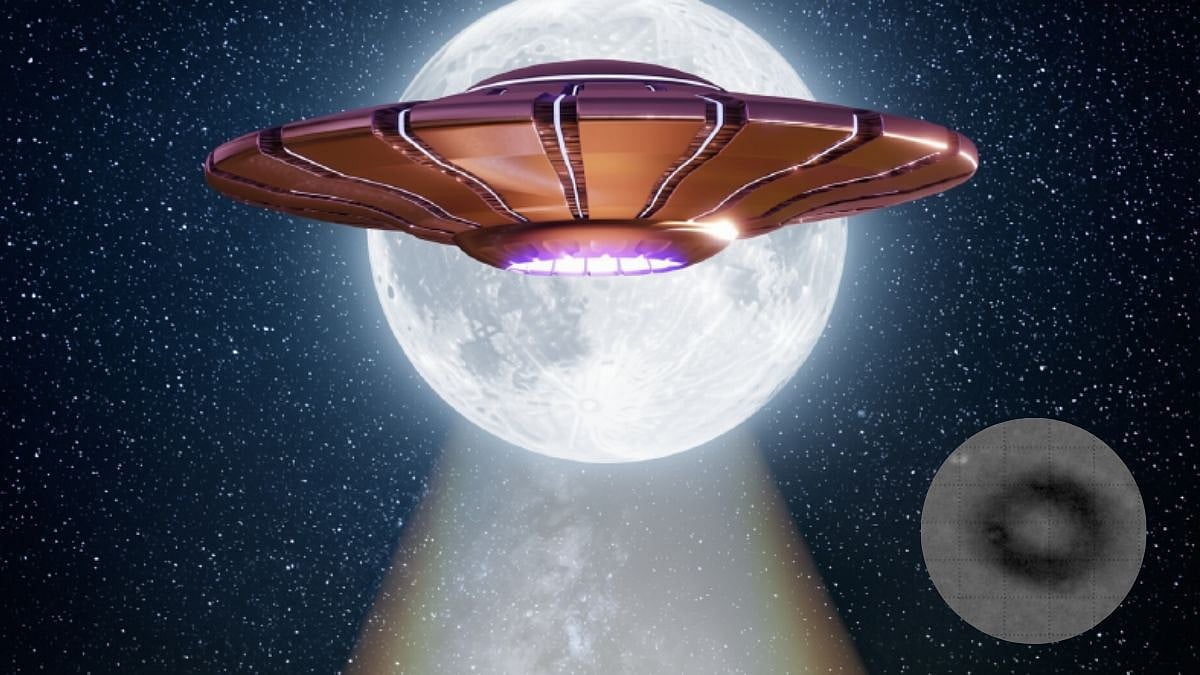
Astronomers captured multiple UFOs near and on the Moon, hint at possible Lunar Base.jpg)
UFO Mystery: What Flew Across The Moon? Ukrainian Scientists Document More Than 20 Unidentified Aerial Objects

Ukrainian Scientists Document More Than 20 Unidentified Aerial Objects | Canva AI/ Main Astronomical Observatory
The existence of aliens and other mysterious beings in the universe has long been a subject of debate. Many people question whether humanity can truly be alone in such a vast universe, much of which remains unexplored. Scientists have studied only the observable universe, leaving countless questions unanswered. Reports of unexplained phenomena have surfaced over the years through films such as Project Hail Mary, declassified documents and other sources.
Recently, a study by researchers at Ukraine's Main Astronomical Observatory sparked fresh debate after claiming to have detected more than 20 unidentified aerial objects (UAOs) moving near and across the Moon. The findings, which have attracted global attention, have not undergone peer review and have not been independently verified.
Ukrainian scientists discover unidentified objects
Scientists at Ukraine's Main Astronomical Observatory reported observing more than 20 unidentified moving objects near and across the Moon in 2025.
According to the researchers, some of the disc-shaped objects were estimated to measure between 15 and 25 miles across. The objects were observed during multiple telescope sessions in 2025 using a high-speed camera mounted on a telescope in Vinarivka, in Ukraine's Kyiv region. The camera captured 20 frames per second, allowing scientists to identify faint objects that appeared as tiny specks against the Moon's surface, the Daily Mail reported.
The team classified the sightings into two categories. The first, described as "atmospheric" objects, appeared to remain stationary while moving in sync with the Moon. The second, referred to as "continental" objects, appeared to travel across the lunar surface. Researchers also reported rapid flashes of light from some objects, with a few displaying synchronised brightness patterns.
Moon could serve as a base
In another study that has not been peer-reviewed, the researchers identified two categories of unidentified flying objects (UFOs). The first, described as "atmospheric" objects, appeared stationary, while the second appeared to move across the Moon's surface. The researchers also stated that "UFOs are observed on Earth and in near-Earth space.
X/ Main Astronomical Observatory
Based on their calculations, the scientists suggested that some of the objects could range from about 1,440ft to more than a mile in size, depending on how much sunlight they reflected. The study further speculated that the unusual movement and light patterns might indicate structured or technological behaviour. The researchers also proposed the possibility that the Moon could serve as a base for the unidentified objects.
Producing artificial gravity
The report stated that some of the unidentified objects emitted rapid flashes lasting between one-tenth and half a second, with their brightness rising and falling in repeating patterns resembling a pulsing process. The study also suggested that two objects, estimated to be about 100 miles apart, appeared to flash in unison.
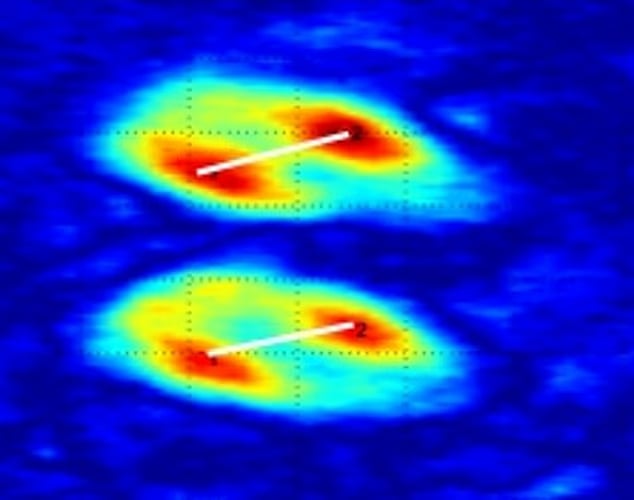
Several objects were barely visible until scientists enhanced the footage using false-colour imaging. The team also reported that some dark objects did not emit light and appeared to absorb radiation from every direction. They were observed completing a full rotation in three minutes. Based on their estimated size and rotation, the researchers calculated that they could generate centrifugal force more than twice as strong as Earth's gravity. They suggested that the objects might be producing artificial gravity.
Reported sightings remain unidentified
However, the claims should be treated with caution. The study has not been peer-reviewed, and no independent scientific body has confirmed its findings. NASA and other space agencies have consistently stated that while some aerial phenomena remain unexplained, there is no verified evidence linking them to extraterrestrial technology or alien civilisations.
For now, the reported sightings remain unidentified. Scientists say further observations and independent analysis will be necessary before any conclusions can be drawn about the mysterious objects observed near the Moon. Although the claims remain unconfirmed, one question continues to intrigue scientists and the public alike: Are we alone in the universe?
RELATED
Scientists issue warning after spotting more than 20 giant UFOs racing across the moon
By STACY LIBERATORE, US SCIENCE & TECHNOLOGY EDITOR
Astronomers studying the moon claim to have captured possible evidence of a technologically advanced nonhuman civilization.
Scientists at Ukraine’s Main Astronomical Observatory reported observing more than 20 unidentified objects moving near and across the moon several months in 2025.
Some of the disc-shaped objects were estimated to measure between 15 and 25 miles across.
In a new study that has not been peer-reviewed, the team said they identified two categories of UFOs: ‘atmospheric’ objects that appeared stationary and ‘continental’ objects that appeared to move across the moon’s surface.
The objects also appeared to display unusual changes in brightness and rotation.
The researchers argued that those patterns could indicate structured, technological behavior, and raised the possibility that the objects originated from a hidden base on the moon.
'UFOs are observed on Earth and in near-Earth space. We believe that the moon serves as a base for UFOs,' the team shared in the study.
The researchers claimed the objects could reach Earth within 20 minutes and appear in the atmosphere as UAPs. They argued that the objects’ apparently intelligent behavior could point to the existence of a 'technologically advanced civilization.'

In a new study that has not been peer-reviewed, the team said they identified two categories of UFOs: ‘atmospheric’ objects that appeared stationary and ‘continental’ objects (pictured) that appeared to move across the moon’s surface
While the scientists are sure the objects they observed were likely nonhuman craft, there is no scientific evidence of aliens or artificial structures on the moon.
Both NASA and the US government have long maintained that while some sightings remain unexplained, none has been confirmed to involve extraterrestrial technology.
Researchers recorded the main group of more than 20 unidentified objects during two observation periods on September 7, 2025, beginning at 7.05pm and 7.27pm ET.
They reported detecting additional ring-shaped objects during a separate observation on August 16, 2025, at 2.52am ET. Both sightings were captured using a high-speed camera attached to a telescope in Vinarivka, a village in Ukraine’s Kyiv region.
The high-speed camera snapped 20 images every second, allowing the scientists to track objects that would have otherwise been nearly impossible to see.
The UFOs were so faint that some appeared as nothing more than a two-by-two-pixel speck against the moon.
But the researchers claimed the objects were not behaving randomly.
Those labeled ‘atmospheric’ appeared to remain locked in place as they moved in sync with the moon, suggesting they were somehow anchored near its surface, the study noted.

Scientists at Ukraine ’s Main Astronomical Observatory reported observing more than 20 unidentified objects (shown in white) moving near and across the moon several months in 2025
The report added that the objects also emitted rapid flashes lasting between one-tenth and half a second, with their brightness rising and falling in repeating patterns that the team described as a pulsing process.
The study highlighted that two objects believed to be hundreds of miles apart appeared to flash in unison.
Researchers said the link was statistically significant, although the finding does not prove that the objects were communicating or controlled by intelligent beings.
The team then used the amount of light reflected by the UFOs to estimate their potential size.
Even under the assumption that they reflected 100 percent of the sunlight hitting them, the objects would have measured approximately 1,440 feet across.
If their surfaces reflected light in the same way as the Moon, however, they could have been more than one mile wide.
The scientists admitted that they did not know what the objects were made of or how reflective they were, meaning their true size remains uncertain.

Some of the disc-shaped objects were estimated to measure between 15 and 25 miles across
The most extraordinary objects were those the researchers called ‘continental’ UFOs, which appeared to race across the lunar surface.
One reportedly traveled nearly 14 miles at an astonishing 4.1 miles per second.

Those labeled ‘atmospheric’ (pictured) appeared to remain locked in place as they moved in sync with the moon, suggesting they were somehow anchored near its surface
Two others appeared to be massive discs measuring approximately 16 miles and 25 miles across, making the larger object nearly the length of Manhattan.
Their brightness also rose and fell at repeating frequencies, which the team isolated from atmospheric interference and telescope-tracking errors using specialized filtering software.
A separate observation on August 16, 2025 revealed something even stranger.
Several enormous ring-shaped objects appeared against the daytime sky, barely visible until scientists enhanced the footage with false colors.
The team claimed the dark objects did not appear to emit light and instead absorbed nearly all the radiation striking them.
They appeared to complete a full rotation every three minutes and were estimated to measure roughly 22 miles across while reaching speeds of 6.8 miles per second.
Based on their size and rotation, the researchers calculated that the rings could generate centrifugal force more than twice as powerful as Earth’s gravity, raising the possibility that they were producing their own artificial gravity.
However, the remarkable findings rest on the assumption that the faint shapes were genuine objects near the Moon rather than atmospheric distortions, camera artifacts or errors introduced during image processing.
The study has not been peer-reviewed, and its claims of giant, technologically advanced craft have not been independently confirmed.
Pentagon UFO files: what role Germany plays

Glowing objects in the sky, mysterious military reports and files kept under lock and key for decades: newly released UFO documents offer a glimpse into some of the most baffling cases of recent decades.
A key focus of these historical files are reports by Allied pilots from the final months of the Second World War. They described glowing flying objects moving at high speed that accompanied their aircraft over Germany. These phenomena later became known as "Foo Fighters".
In the file (source in German) (source in English), it literally states:
On the night of 22 December 1944, two lights rose from the ground near an aircraft of the 415th Night Fighter Squadron, climbed to its altitude, took up position behind its tail for about two minutes and then 'peeled away again' – according to the crew, always under 'complete control'. Ground radar confirmed that there were no enemy aircraft in the vicinity.
Such encounters were reported repeatedly. Over a period of six weeks, crews of the 415th over Germany and France spoke of red, green, orange and amber-coloured lights that flew in formation with their aircraft, carried out evasive manoeuvres and came as close as around 30 metres. The pilots called these phenomena "Foo Fighters".
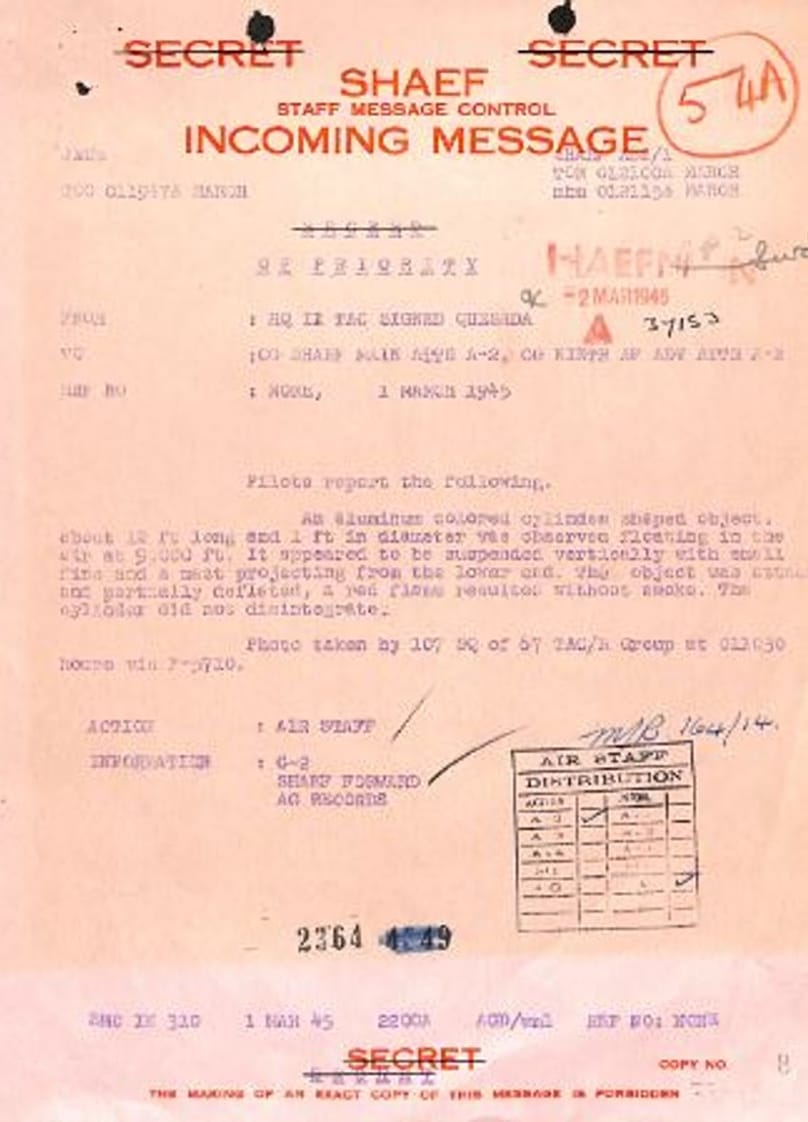
The British Air Ministry examined the reports and concluded in a memorandum classified as secret in March 1945 that 'the whole matter still remains something of an enigma'.
Independently of this, pilots also reported sighting an aluminium cylinder roughly 3.6 metres long at an altitude of around 2,700 metres. When fired upon by the aircraft, the object partially lost its shape and showed a red luminous effect, but did not break apart. Intelligence classified it as probably a German 'flak bomb'.
No one was able to provide a clear explanation for the mysterious lights. The file remained classified for 80 years.

The military examined several possible explanations. One idea was that they could be previously unknown German secret weapons or experimental aircraft with novel rocket or jet propulsion systems. However, the investigations found no conclusive evidence for this.
The released material also includes historical FBI documents from the 1940s and 1950s, in which reports appear of alleged German developments of disc-shaped flying devices. Some of these references relate to possible secret research projects in the Berlin area and in regions near the Austrian border.
However, these reports do not come from technical investigations or confirmed military files, but are based mainly on statements from informants, rumours and intelligence tips from the immediate post-war period. They therefore primarily reflect which leads the authorities chose to follow at the time.
The documents do not provide evidence that Nazi Germany actually developed operational "flying discs" with extraordinary flight performance. Historians place many of these stories in the context of speculation about German secret weapons, psychological warfare and the Allies' search for advanced German technology.
In the SHAEF and Air Ministry memoranda of 1944/45, there are repeated descriptions of, among other things, red, green, orange and amber-coloured lights that appeared to move in a controlled way, flew in formation with aircraft and in some cases came within short range of them.
Some observers report arrowhead-shaped objects. Despite this variety, certain patterns recur: many of the described craft seem to have no visible wings, rotors or conventional propulsion. They are also said to possess unusual characteristics – such as apparently motionless hovering in the air, sudden bursts of acceleration or flight manoeuvres that are difficult to explain using known technologies.
Later investigations such as the US Air Force programme Project Blue Book (1947–1969) also documented a wide range of sighting reports. Observers described, among other things, glowing geometric shapes, disc-shaped or arrow-like objects, as well as phenomena without visible wings, rotors or conventional propulsion systems. Some reports spoke of objects that appeared to hover motionless in the air, accelerate abruptly or perform flight manoeuvres that were hard to reconcile with the aviation technologies known at the time.
Alongside the historical documents, the archives contain numerous files from more recent years. Since the public revelation of the Pentagon programme AATIP (Advanced Aerospace Threat Identification Program) in 2017, the United States has expanded its investigations into so-called UAP (Unidentified Anomalous Phenomena).
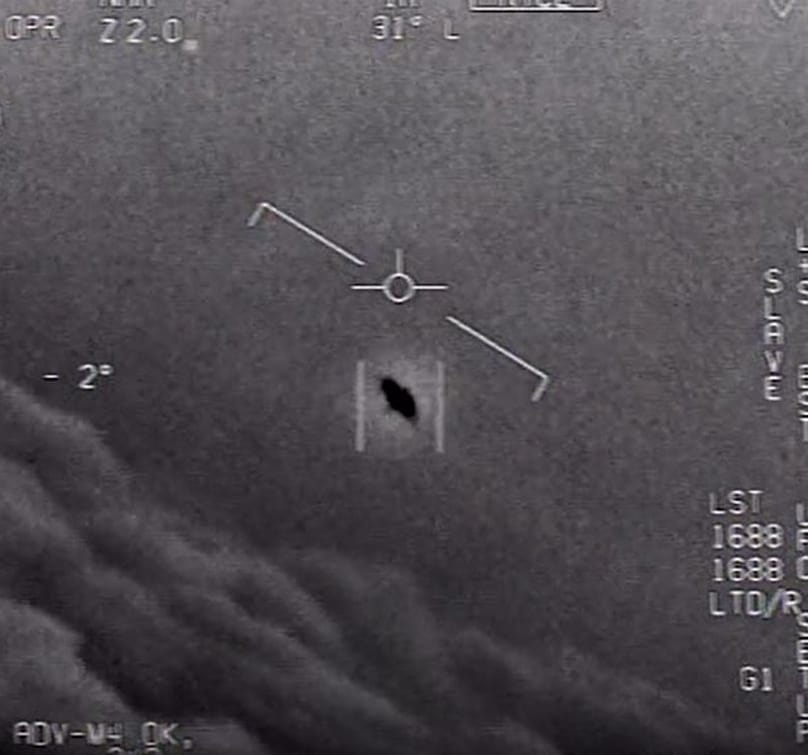
The Department of Defense has created new structures for recording and assessing unusual observations by military personnel. The Pentagon has also released several previously classified recordings of unknown flying objects, including videos taken by Navy pilots in 2004 and 2015, whose phenomena could not initially be clearly identified.
In some documents, military personnel also report physical complaints after close encounters, such as nausea, headaches, skin irritation or neurological symptoms. What lies behind these unexplained observations remains disputed to this day. Explanations range from known technological phenomena and misperceptions to far more far-reaching hypotheses.

This new transparency in the handling of Pentagon files is being closely watched in Europe as well. Security and defence experts are following the US initiatives, as unusual phenomena in airspace are increasingly viewed as a potential security and intelligence issue.
The newly released files highlight above all one thing: interest in unusual aerial phenomena goes back a long way and is closely linked to historical events such as the Second World War. Germany does feature in the documents, but the files provide no proof of extraterrestrial spacecraft or secret German "flying discs".
Rather, they document how armed forces and intelligence services have spent decades trying to explain unusual observations – and how enduring myths have grown out of them right up to the present day.
Historian uncovers secret 1953 Kingman UFO crash story
Hillary Clinton Planned to Disclose Alien Life Before 2016 Election Defeat, UFO Lore Claims

The theory has circulated for years among UFO enthusiasts, who argue Clinton's 2016 election victory could have accelerated disclosure efforts.
hillaryclinton/Instagram
Claims that Hillary Clinton was poised to usher in greater government transparency on UFOs have resurfaced after renewed debate within the US disclosure community over former Pentagon official Luis Elizondo and competing narratives surrounding unidentified anomalous phenomena (UAPs).
The theory has circulated for years among UFO enthusiasts, who argue Clinton's 2016 election victory could have accelerated disclosure efforts. While Clinton and members of her campaign genuinely pledged to seek the release of more government records relating to UFOs, there is no evidence she planned to announce the existence of extraterrestrial life. That conclusion remains part of longstanding UFO lore rather than established fact.
The latest wave of speculation followed a recent interview featuring the semi-pseudonymous YouTuber known as UAPGerb, who alleged that Elizondo's public role forms part of a 'controlled narrative' surrounding UAP disclosure.
The interview, conducted by journalist Ross Coulthart, reignited divisions that have simmered within the disclosure community for years. Although Coulthart has built a reputation through reporting on military UAP investigations, critics argued the discussion relied heavily on allegations and inference rather than independently verified evidence.
Much of the criticism centred on the contrast between the figures involved. Elizondo, a former US counterintelligence officer, has publicly defended his claims under years of scrutiny. UAPGerb, meanwhile, has maintained only a limited public identity while making serious allegations about Elizondo's credibility.
Although the dispute concerns today's disclosure movement, it quickly revived an older question: what might have happened had Clinton won the 2016 presidential election?
Unlike many claims circulating within UFO circles, Clinton's interest in government transparency is well documented.
During the 2016 campaign, she said she wanted to review classified government files relating to UFOs. Speaking with Jimmy Kimmel, she suggested she would examine records connected to Area 51 and release as much information as possible.
She also adopted the government's preferred terminology, noting that officials increasingly referred to the subject as 'unidentified aerial phenomena', or UAP.
The issue featured prominently because of John Podesta, Clinton's campaign chairman and one of Washington's longest-standing advocates for greater transparency around UFO records. For years, Podesta publicly argued that excessive government secrecy surrounding the subject should end.
Emails later released by WikiLeaks reinforced that interest, documenting discussions with figures involved in civilian UFO research and further cementing Podesta's reputation as one of the highest-profile political supporters of disclosure.

From those documented events, a much broader narrative gradually developed within UFO circles.
According to the theory, a Clinton presidency would have created the political conditions for a more significant disclosure effort involving officials, intelligence figures and civilian researchers already discussing the subject behind the scenes. Donald Trump's unexpected election victory, believers argue, disrupted those plans and forced any disclosure process onto a slower, more fragmented path.
No documentary evidence has emerged to substantiate that claim.
Instead, the theory draws together genuine events — Clinton's campaign promises, Podesta's advocacy, Tom DeLonge's outreach to government figures and the later emergence of To The Stars Academy — into a wider narrative about a missed opportunity for disclosure.
Researchers remain divided over whether those connections represent an organised effort or simply separate developments that have become linked over time.
Part of the enduring theory centres on Blink-182 co-founder Tom DeLonge, whose efforts to engage military, intelligence and scientific figures eventually contributed to the creation of To The Stars Academy.
Publicly available emails show DeLonge communicating with Podesta before the 2016 election. In the years that followed, figures including Hal Puthoff, Jim Semivan and eventually Elizondo became associated with the organisation.
Those relationships are well documented.
What remains disputed is whether they formed part of a coordinated disclosure strategy or simply reflected a shared interest in a subject that has long attracted people from government, defence and academia.
The Clinton disclosure theory continues to attract attention because it combines verified historical events with unanswered questions.
Clinton genuinely promised greater transparency around UFO records. Podesta consistently advocated declassification. DeLonge cultivated relationships with influential government figures. Elizondo later emerged as one of the public faces of modern UAP disclosure.
Those facts are established.
Whether they collectively point to an abandoned plan to reveal evidence of extraterrestrial life remains entirely unproven.
Nearly a decade after the 2016 election, Clinton's campaign comments continue to fuel one of the disclosure movement's most enduring counterfactuals. For believers, they represent a missed opportunity for unprecedented transparency. For sceptics, they illustrate how documented events can gradually evolve into one of modern UFO culture's most persistent myths.
Britain's military says it has stopped researching UFOs and has 'no plans' to start again
It sounds more like a plot straight out of The X-Files.
But a Scots UFO enthusiast has claimed the UK government is hiding the truth about a string of unexplained sightings in the nation’s skies that has fascinated paranormal buffs for decades.
Malcolm Robinson, from Alloa, had written to Keir Starmer requesting that information on all UFO reports be released to the public in the interests of ‘transparency’.
But after being informed by the MoD that it stopped keeping records of mysterious flying objects nearly 20 years ago he has now repeated his plea to new Prime Minister Andy Burnham and has called for him to ‘follow the lead of your American cousins’.
Earlier this summer the United States government released scores of UFO files, with descriptions of reported sightings of orbs, discs and fireballs spanning 80 years, some of which occurred only last year.
In his letter, Mr Robinson said it was time for the UK to do the same by declassifying all ‘relevant files, reports, and footage that can safely be made public and to establish an independent inquiry into sightings across the UK’.
He added: ‘If the United States government is prepared to acknowledge unexplained incursions into its airspace and provide evidence to the public, why does the British government continue to dismiss calls for greater transparency?
‘The British people deserve to be informed about matters that affect their airspace and national security.

Tales of aliens visiting Earth have persisted for decades

One of the most spectacular images of a UFO was taken in the hills above the A9 in Scotland in 1990. Referred to as The Calvine Incident, the object appeared to dwarf a Harrier jet
‘The United States has begun that process. It is now time for the UK to do the same.’
He told the Mail that he was ‘disappointed’ that his calls had fallen on deaf ears after years of campaigning to Westminster leaders and he said if its official line continued to be ‘we’re not interested’ he will ask the Scottish Government to get involved.
The 69-year-old said: ‘The bottom line is, be clear, be transparent.
Here in the UK we have as much a UFO mystery as anywhere else in the world and we just want answers from the Ministry of Defence.
‘We want the government to join forces with America and accept that we have some form of vehicles operating in our airspace, which are not our own helicopters or aircraft.’
He added that he would not have been investigating strange phenomenon for 45 years if he ‘didn’t honestly believe that we're dealing with something real, something tangible, something off world, and something that demands an explanation.’
Scotland’s became a hotbed for mysterious sightings in the ‘90s after what is still regarded as one of the most spectacular images of a UFO was taken in the hills above the A9 on August 4, 1990.
The famous snap was taken by a hotel porter out walking with a friend and according to his brief written account, the shape, which dwarfed a nearby Harrier jet, hung in the air for about ten minutes before ascending vertically at high speed and vanishing.
It went on to become one of the greatest government conspiracies after the image of the mysterious object vanished, as did the man who took it.

Nearly 60,000 pages of declassified UFO reports and correspondence were transferred to The National Archives in 2013 but the files only covered up to the end of 2009
Furthermore, the Mail revealed in 2023 that instead of releasing information about the incident as would normally happen after 30 years, the MoD requested that the names of the witnesses should remain sealed for a further 54 years until 2076 because of 'privacy concerns'.
Among a string of other sightings that have captured imaginations over the years was the flood of accounts of mystery objects spotted over central Scotland which came to be known as the Falkirk Triangle.
Mr Robinson, who has written several books on the subject, has been investigating the paranormal since 1979 when he set up Strange Phenomena Investigations and now works alongside fellow enthusiasts and authors Willy Devlin and Stephen Bird.
In its response to his request, the MoD said: ‘We are aware that the United States has recently disclosed files relating to UAP; however, the MOD do not comment on US security arrangements, including their handling, disclosure, or publication of related material.
The MOD has not produced any new material on the investigation or reporting of UFOs or UAPs and has no plans to establish a dedicated team or resume research in this area.’
The letter added: ‘Defence resources remain focused on activities that directly support national security.’
A MoD spokesman said last night: ‘Nearly 60,000 pages of previously restricted documentation on UFO reports and correspondence have been declassified and transferred to The National Archives, where they are fully accessible for viewing.’
The files, released in 2013, end in 2009.
The horrifying truth behind Antarctica's 'Blood Falls': Scientists discover the striking red waterfall is teeming with ancient sea creatures trapped beneath the ice
Scientists have uncovered the gruesome secret behind Antarctica's infamous Blood Falls – it's alive with the descendants of ancient sea creatures.
The eerie crimson waterfall, which pours from the Taylor Glacier into Lake Bonney, has long fascinated researchers with its blood–like appearance.
Now, a study suggests the iron–rich brine emerging from beneath the ice is home to a unique community of marine microorganisms that have been trapped beneath the glacier for hundreds of thousands of years.
These included marine diatoms, haptophytes, dinoflagellates and ciliates – tiny organisms that usually inhabit the ocean.
These are the descendants of ancient marine communities that became isolated when the glacier advanced and cut off the trapped seawater from the ocean.
The discovery provides the strongest biological evidence yet that the mysterious water originally came from the sea before being sealed beneath advancing ice.
Writing in the journal Nature Geoscience, the researchers described the site as 'a rare marine refuge in the polar desert'.
They added: 'These findings indicate that the subglacial brine–fed system at the Taylor Glacier Terminus retains marine–derived biological signatures long after physical separation from the ocean.'

The eerie crimson waterfall, which pours from the Taylor Glacier into Lake Bonney, has long fascinated researchers with its blood–like appearance

A new study suggests the iron–rich brine emerging from beneath the ice is home to a unique community of marine microorganisms that have been trapped beneath the glacier for hundreds of thousands of years. Pictured: The study area
Blood Falls gets its terrifying colour from iron–rich salty water that rusts when it reaches the air, creating its distinctive blood–red stain across the glacier.
Scientists have long suspected the brine was once seawater that flooded Taylor Valley during a warmer period before sea levels dropped and the glacier advanced over it.
Until now, however, there has been little biological proof that the trapped water really had a marine origin.
Researchers analysed 167 samples of water, sediment, ice and air collected from the McMurdo Dry Valleys and surrounding areas of Antarctica.
Using DNA sequencing, they identified thousands of different microorganisms living in and around Blood Falls.
The team discovered that the red ice, mud and sediments where the waterfall emerges were packed with species normally found in marine environments rather than on land or in freshwater.
Overall, 9.34 per cent of the microorganisms at Blood Falls were shared with nearby ocean samples, compared with just 1.15 per cent at other Antarctic Dry Valley sites.
The researchers say this strong marine fingerprint would be difficult to explain by wind blowing microbes inland from the coast.

The team discovered that the red ice, mud and sediments where the waterfall emerges were packed with species normally found in marine environments rather than on land or in freshwater
The microbes included diatoms – glass–shelled algae that form the foundation of marine food webs (left). There were also dinoflagellates, microscopic plankton that propel themselves through the water using whip–like tails (right)
The study also found many of the microorganisms are still biologically active despite surviving in one of Earth's most hostile environments.
Genetic evidence showed they were carrying out photosynthesis, repairing damaged cells and activating stress–response systems to cope with the freezing, salty conditions beneath the ice.
Some species may survive by entering dormant states, effectively lying in wait until conditions become favourable again.
The microbes included diatoms – glass–shelled algae that form the foundation of marine food webs – and haptophytes, which are tiny single–celled algae that are an important part of the ocean's plankton.
There were also dinoflagellates, microscopic plankton that propel themselves through the water using whip–like tails, and ciliates – single–celled organisms covered in hundreds of tiny hair–like structures called cilia.
Researchers say these hidden ecosystems could reveal how life survives through dramatic climate shifts over hundreds of thousands of years.
The findings may also help scientists reconstruct Antarctica's ancient history by revealing when seawater became trapped beneath the growing ice sheet.
Since Blood Falls preserves biological traces of an ancient marine world hidden beneath the frozen continent, the team says it offers a rare glimpse into ecosystems that have remained isolated ever since Antarctica's landscape was transformed by advancing glaciers.
The red waterfall stands about five storeys high in the McMurdo Dry Valleys region of Antarctica, which is known as being one of the coldest and least habitable places in the world.
It was first discovered in 1911 by the Australian geologist Griffith Taylor, who first explored the valley.
READ MORE

Blood Falls is the coldest known glacier–fed feature with persistently flowing water, which emerges at a temperature of about –7°C (19°F).
The lake under the glacier has an unusually salty consistency, and because saltwater has a lower freezing point than pure water and releases heat as it freezes, it melts the ice, enabling the rivers to flow.
NASA Mars photo captures mysterious 'walking man' on the Red Planet
disclosure meeting. We saw images of 'translucent
beings' that chilled me to the bone... the files could
fulfil a dark biblical prophecy
A stunning panorama of Mars appears to show a mysterious human-like figure walking in the distance.
The image, captured by NASA’s Spirit rover in 2007, has resurfaced online, with viewers convinced it shows a ‘walking man’ on the Red Planet.
Nestled among rocks is a strange shape that appears to have its arms outstretched and one leg forward, as if caught mid-stride.
The eerie form appeared in a sweeping panorama of the Martian hills captured during the later years of Spirit’s mission. The rover became trapped in soft sand in 2009 and eventually lost power, prompting NASA to declare its mission over in 2011.
While some suggested the object was a walking man, others proposed a 'statue of someone kneeling with one hand out.'
Many viewers acknowledged that the apparent figure is nothing more than a strangely shaped rock, but some argued there were no similar formations nearby.
One Reddit user shared: 'This looks to be a combination of rocks or shapes in the surface along with shadowing.
'You can even find other odd shapes in the photo that don't appear natural. It would be cool if this were some sort of alien artifact, but if that were the case, I highly doubt NASA and the government would release the photo.'

The image, captured by NASA’s Spirit rover in 2007, has resurfaced online, with viewers convinced it shows a ‘walking man’ on the Red Planet
NASA has maintained that it has no evidence of extraterrestrial life and has yet to find any signs of current or past life on Mars.
Regardless, viewers of the image have proposed wild ideas for what could be seen in the photo.
'That could be a statue. It's sitting, not walking. Past life on Mars, Absolutely Yes,' one Reddit user shared.
Another commented: 'It’s obviously a person or a statue of one!!! I don’t care what NASA says.'
The Planetary Society published a blog post addressing the mysterious sighting in the Mars image, saying it is nothing more than an optical illusion.
The organization added that pretty much any person would see a humanoid shape in the photo, noting it is a case of pareidolia, the human propensity to see patterns in random shapes.
Another mysterious Mars photo was published online earlier this month, with people claiming it showed an unexploded 'alien missile' lying on the Martian surface.
UFO researcher Scott C Waring shared a photo on his site, arguing the object is evidence of an ancient conflict that wiped out a once-thriving civilization, claiming space agencies have remained silent because of its potential military significance.

Nestled among rocks is a strange shape that appears to have its arms outstretched and one leg forward, as if caught mid-stride
Waring even speculated the mysterious object could represent advanced extraterrestrial weapon technology that governments would rush to obtain if it were ever recovered.
The remarkable claims, however, are not supported by NASA, which has offered no indication that the object is anything other than a naturally occurring rock formation.
Scientists have long noted that Mars is shaped by billions of years of volcanic activity, meteorite impacts and relentless wind erosion, processes capable of sculpting rocks into surprisingly artificial-looking shapes.
Similar discoveries have repeatedly sparked claims of alien artifacts on the Red Planet before later being explained as examples of pareidolia, the human tendency to see familiar objects and patterns where none actually exist.

A UFO researcher shared a photo taken by the Curiosity rover that appears to show what he believes is an unexploded 'alien missile' lying on the Martian surface
Still, the peculiar shape has reignited debate online, with believers convinced Curiosity stumbled upon the remnants of an extraterrestrial battlefield while skeptics see little more than another Martian rock.
Waring estimated the object measures just over eight feet long and speculated it could be an intact piece of extraterrestrial technology.
He claimed such a discovery would be highly sought after by governments hoping to study advanced weapons, while wondering who might reach it first and what purpose it may have served.
Waring offered no evidence to support those claims, and NASA has not identified the object as anything other than part of the Martian landscape.
Unsettling Footage | Claims of a Close Encounter Spark Controversy
By Samantha Williams, Edited By Jasmine Moon

A recent video purporting to show a close encounter with an unidentified flying object (UFO) has ignited a heated debate among people on various forums. While some express skepticism, others find the footage compelling, raising questions about authenticity and the psychological effects of perceived sightings.
The video depicts an object hovering near a pole, causing many observers to speculate its nature. Comments vary widely, with several noting poor video quality and unstable camera movement. One user remarked, "The person is standing still and yet the camera is wobbling all over the place"
Criticism centers on the claim of authenticity. Skeptics assert the footage likely results from editing and low-quality technology. "Every fake video does this to make it seem real," another contributor explains. The doubts grew stronger when others pointed out the object's limited visibility in the frame and the overall lack of context during the supposed sighting.
A number of theories emerged on user boards, with some attributing the object to natural phenomena such as swamp gas or weather balloons. As one user noted, "It stays very close to that pole the entire time. My guess is a balloon on a string attached to that pole, getting blown in the wind." Others suggested it might be artificial intelligence manipulation, adding layers to the discussion about technological interference in media.
Interestingly, historical references to disc-shaped crafts from declassified CIA documents were woven into conversations, suggesting that the evolution of sightings reflects a change in the nature of phenomena—possibly indicating a shift from physical visits to drone-like operations by unidentified entities.
Mixed Reactions: Sentiments online lean towards skepticism, with most contributors labeling the video as questionable.
Quality Concerns: Commenters highlighted the low resolution and editing inconsistencies in the footage, further fueling doubts.
Speculative Theories: Users proposed various explanations for the sighting, ranging from harmless weather balloons to more elaborate conspiracy theories involving AI.
As people push for clearer evidence and better documentation of such phenomena, questions persist. Will the technology behind UFO sightings evolve to yield more credible footage? Or will skeptics continue to reign supreme in discussions surrounding unexplained aerial phenomena? Only time will tell.
"Looks so fake and of course nobody notices the giant UFO over them." - A perceptive comment
Stay tuned as this story continues to develop.
There's a strong chance that as technology advances, the evidence surrounding UFO sightings will become more credible. Enhanced imaging techniques and AI-driven analysis may reveal details that are currently overlooked. Experts estimate around 60% probability that the quality of footage will improve significantly over the next few years, potentially laying to rest some skepticism. However, the divide between believers and critics is likely to persist, as many people remain entrenched in their views regardless of emerging data. This growing polarization may lead to more intense discussions on forums, affecting how these phenomena are perceived by the public.
Drawing a parallel to early photography in the 19th century can shed light on our current situation. Initially, groundbreaking photos were met with doubt and criticism, as many were convinced they were staged or manipulated. Just as early camera technology sparked heated debates, today's footage of unidentified objects is subject to similar scrutiny. Over time, as photography became more accessible and reliable, it transformed how people captured and interpreted historical moments. In this case, the unpredictable trajectory of public trust will shape the narrative around UFOs and how they are documented, echoing that initial skepticism paired with eventual acceptance of new technology.
One Hundred Objects off Virginia: What AARO’s New UAP Report Actually Reveals
A U.S. Navy report describes approximately 100 airborne objects and two likely uncrewed surface systems off the Virginia coast. The incident is real enough to be under investigation — but the public evidence remains strikingly incomplete.

A U.S. Navy vessel operates in the Atlantic. AARO has not identified the specific Navy assets involved in the reported Virginia UAP incident, and has not disclosed the date, location, or sensor data underlying the report. This image is provided for regional context only — it does not depict the incident or the units involved.
Image: U.S. Navy / public domain.
The most arresting passage in the Pentagon’s latest annual report on unidentified anomalous phenomena occupies only three sentences.
According to the All-domain Anomaly Resolution Office, or AARO, U.S. Navy assets operating off the coast of Virginia reported approximately 100 unidentified airborne objects and two “likely uncrewed” systems on the surface of the water. AARO says it is actively investigating the event in coordination with the unit that submitted the report.
That is the full public account.
No date is given. No video, radar data or infrared imagery accompanies the passage. The report does not describe the objects’ appearance, size, altitude, speed, formation, duration or behavior. It does not say whether the airborne objects interacted with the surface systems. It does not identify the Navy platforms involved or explain why the objects remained unidentified.
That distinction is essential. A report from military personnel deserves investigation, particularly when it concerns a large concentration of unidentified objects in a strategically important maritime area. But an unresolved military report is not, by itself, evidence of extraterrestrial technology. It is evidence of an unresolved event.
■ What the Official Report Confirms
AARO’s Fiscal Year 2025 Consolidated Annual Report on Unidentified Anomalous Phenomena covers reports received for events occurring primarily between June 2, 2024, and May 30, 2025. The office received 319 UAP reports. The single maritime case was the Virginia incident. The official text states:
“The single maritime domain UAP case AARO received involved a report from U.S. Navy assets operating off the coast of Virginia. The report described approximately 100 airborne UAP and two, likely uncrewed, surface systems. AARO is actively investigating this event in coordination with the reporting unit.”
— AARO, Fiscal Year 2025 Consolidated Annual Report on UAP, p. 5
The language confirms five facts:
Primary Source: Download the AARO FY2025 Annual Report (PDF) →

Official seal of the All-domain Anomaly Resolution Office (AARO), established July 2022 under the Office of the Secretary of Defense. AARO serves as the U.S. government’s central body for UAP detection, identification, and attribution across air, maritime, and space domains.
Source: U.S. Department of Defense.
| ✓ Confirmed by AARO | ■ Not Publicly Disclosed | ✗ Not Established |
|---|---|---|
| U.S. Navy assets submitted the report | Date and duration of the event | Extraterrestrial origin |
| Location was off Virginia | Precise location | Extraordinary speed or maneuvering |
| Approximately 100 airborne UAP were described | Sensor platforms and raw data | Transmedium travel |
| Two likely uncrewed surface systems were described | Size, shape and formation of objects | Connection between airborne and surface objects |
| Investigation remains active | Whether objects were tracked or recovered afterward | Foreign, domestic or nonhuman control |
This table shows why the case is both important and easy to exaggerate.
The presence of approximately 100 objects sounds unprecedented. Yet quantity alone does not establish anomalous capability. Large numbers can point toward coordinated drones, balloons, birds, airborne debris, sensor tracks, misidentification or more than one phenomenon grouped into a single report. Without the underlying data, it is impossible to rank those possibilities confidently.
The two surface systems add an unusual dimension. They could suggest a coordinated maritime drone operation in which surface vessels supported airborne systems. They could also have been unrelated objects observed in the same operating area. AARO’s brief wording does not establish that the surface and airborne objects communicated, maneuvered together or belonged to the same operator.
Even the word “approximately” matters. It may represent a visual estimate, a count assembled from multiple sensor detections or the total number of observations recorded over time. The report does not tell us.

U.S. Navy and Marine Corps personnel during a training exercise in the Virginia coastal region. The waters off Virginia encompass Naval Station Norfolk — the world’s largest naval station — multiple restricted operating areas, and active Atlantic training zones. AARO did not disclose the precise location of the reported UAP incident. This image depicts routine naval training and does not represent the incident.
Image: U.S. Navy / DVIDS.
The waters and airspace around coastal Virginia are among the most sensitive military environments in the United States. The region includes Naval Station Norfolk — the world’s largest naval station — major training areas, active aviation corridors and direct access to the Chesapeake Bay and the Atlantic Ocean.
That makes an unidentified mass incursion a legitimate national-security concern regardless of its ultimate explanation. If the objects were drones, the central questions would be: who operated them, how they entered the area, what they were collecting, and why U.S. forces could not immediately identify or stop them. Those questions are serious without invoking visitors from another world.

A U.S. Navy destroyer underway in the Atlantic. The waters off Virginia are among the most monitored military environments in the world — which makes a mass unidentified incursion a legitimate security concern regardless of its eventual explanation. If the objects were drones, the question of how they entered the area and why they could not be immediately identified is as serious as any exotic hypothesis.
Image: U.S. Navy / DVIDS.
The location also invites comparison with previously reported drone incursions in the Virginia region, including repeated activity over Langley Air Force Base in December 2023. Public reporting described unidentified drones entering restricted airspace over a period of more than two weeks. However, AARO’s new report does not connect the offshore Navy case to the Langley events. Any connection is therefore a hypothesis, not a fact.
The incidents may reflect a broader vulnerability to small, relatively inexpensive systems operating around high-value military sites. They may also involve different technologies, different operators and different circumstances. Until the government provides dates and technical details for the maritime case, the two stories should not be merged.

A U.S. Navy unmanned surface vessel. This illustrates the category of uncrewed maritime technology described in the AARO report — not the objects from the Virginia incident. The Navy operates multiple classes of unmanned surface vessels for patrol, surveillance and as potential launch platforms for airborne systems.
Source: U.S. Navy / DVIDS.
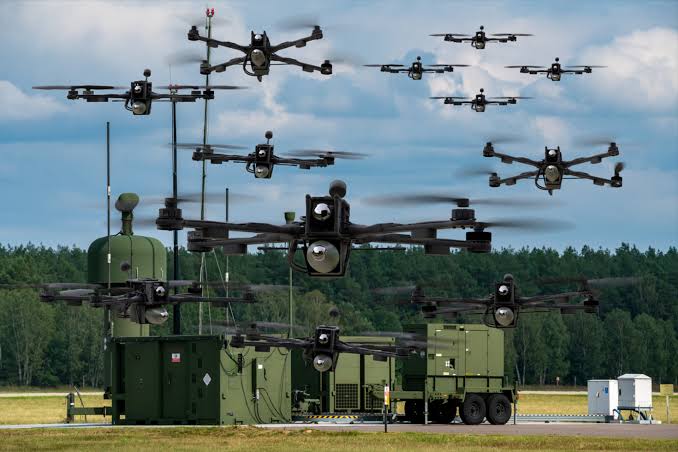
U.S. Navy drone swarm test. Modern unmanned aerial systems can operate in coordinated groups of dozens or hundreds of units, launched from land or sea. This image illustrates existing technology relevant to the Virginia case — it does not depict the reported objects.
Source: U.S. Navy / DVIDS.
“Drone” is sometimes treated as a dismissive answer in UAP discussions. It should not be. Modern unmanned systems can operate in coordinated groups, carry sophisticated sensors, launch from land or sea, and create difficult identification problems — especially at night or when viewed through specialized military sensors.
The two likely uncrewed surface systems make a drone-centered explanation particularly relevant. Surface vessels can potentially function as launch platforms, relay stations, navigation aids or recovery systems for airborne drones. That does not prove such an operation occurred off Virginia, but it provides a plausible technological framework requiring investigation.
Several possibilities remain open:
The fifth possibility cannot be excluded merely because the first four are more familiar. But it should not be elevated above them without evidence of performance that conventional systems cannot achieve. AARO does not report such performance in this case.
The Virginia event appears inside a report that is far more cautious than many online summaries suggest.
Of the 319 reports received, AARO resolved 114 as ordinary objects or phenomena. Those explanations included balloons, birds, satellites, aircraft, unmanned aerial systems, a commercial rocket launch and even one manned jet pack. The office also resolved 256 cases inherited from an earlier reporting period, bringing the total number of cases resolved during the period to 370.
AARO identified nine of the 319 new reports as deserving further analysis by intelligence, scientific and technical specialists. It placed 191 in what it calls the “active archive” because insufficient information prevented a reliable assessment. Those archived reports may be revisited if corroborating data or improved analytical methods become available.
That category must be interpreted carefully. “Insufficient data” does not mean that AARO detected impossible flight characteristics. It means the office could not determine whether the underlying events were ordinary or exceeded known technology. The report also states that none of the cases AARO resolved indicated advanced foreign capabilities or breakthrough technology. This conclusion applies to resolved cases. It does not explain every unresolved case, and it does not validate extraordinary interpretations of them.
One of the report’s most useful findings concerns satellite flares. Sunlight reflecting from a satellite can appear as a bright orb that emerges, moves or fades under particular viewing conditions. As satellite constellations multiply, pilots and observers are seeing more lights whose apparent behavior can be difficult to interpret without precise location, time and viewing-angle data.
AARO says a new three-dimensional modeling capability enabled analysts to attribute 238 reports to satellite flaring. Forty-four of the 319 reports covered in the current reporting period were resolved this way.
This is exactly why rigorous analysis matters. An observation can be sincere, accurately reported and genuinely unidentified to the witness while still having an ordinary astronomical or technological explanation. The military personnel who file UAP reports are trained observers — but even trained observers cannot calculate satellite trajectories from a cockpit.
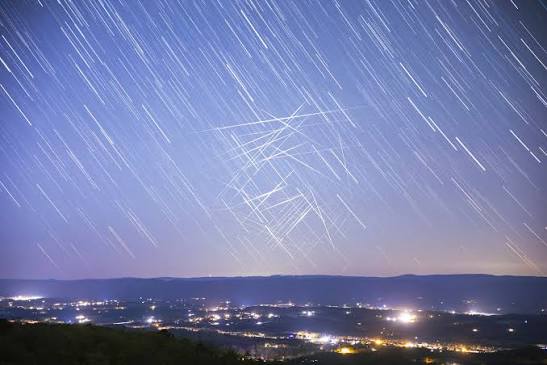
A satellite flare captured from the ground. As commercial satellite constellations expand, sunlight reflecting off spacecraft produces bright, moving lights that trained observers cannot immediately identify without precise time, location and trajectory data. AARO resolved 44 of its 319 current reports — and 238 cases total — using new 3D modeling that attributed them to this phenomenon.
Source: Creative Commons.
AARO also analyzed reports near national-security sites and critical infrastructure. Some narrative accounts described apparent performance beyond known technology, but the office said those reports arrived without technical data capable of validating the claims.
The annual report records two cases in which witnesses attributed electronic or avionics interference near operational aircraft to UAP. AARO has not determined whether the unidentified objects caused those effects.
Separately, government agencies reported 50 unmanned-aircraft incidents near U.S. nuclear infrastructure, weapons or launch sites — up from 18 in the previous annual report. AARO explicitly says those 50 incidents were not reported as UAP. Most involved recognizable unmanned aircraft, commonly quadcopters.
That separation matters. Drone incursions and UAP cases can overlap as security problems, but they are not interchangeable labels. The government should not use “drone” to prematurely close an unidentified case, and UAP advocates should not rebrand identified drone incidents as evidence of exotic technology. Ryan Graves — the former Navy pilot who has testified before Congress about UAP reporting stigma and sensor limitations — has made precisely this point: the failure mode runs in both directions.
AARO identifies the same obstacle that has followed official UFO investigations for decades: a lack of timely, actionable sensor data.
Witness testimony can establish that someone observed something unusual. It can help reconstruct direction, duration, color, shape and behavior. But testimony alone rarely provides the measurements needed to calculate distance, size, acceleration or energy output.
For the Virginia case, a meaningful public assessment would require at least some of the following:
Information Needed for a Public Assessment
Without those materials, the public has a dramatic sentence but not a testable case. Classification may legitimately protect sensor capabilities, tactics and military operations. Nevertheless, the government could release a carefully redacted case summary explaining how the observations were collected and which hypotheses remain under consideration. Transparency does not require revealing every technical specification. As Congressman Tim Burchett and others on the House Oversight Committee have repeatedly argued, the current level of disclosure is insufficient for congressional oversight, let alone informed public understanding.
■ Editor’s Assessment
The Virginia incident deserves sustained attention. A coordinated intrusion involving approximately 100 airborne objects and two surface systems — if that description is supported by multiple sensors — would represent a significant failure of domain awareness and possibly a major intelligence event.
But the conditional phrase is essential: if that description is supported by multiple sensors.
At present, the public does not know whether the count came from radar, infrared imagery, visual observation or a combination of sources. We do not know whether the objects displayed unusual speed, acceleration or transmedium capability. We do not know whether they were close to military assets or many miles away.
The responsible conclusion is therefore limited: A U.S. Navy unit reported a large and unusual offshore event. AARO considered it sufficiently unresolved to keep the investigation active. The released information is not sufficient to determine what occurred.
That is less sensational than declaring a swarm of alien craft. It is also more consequential than dismissing the event as “probably drones” without seeing the evidence.
— The UFO Times Editorial Desk, July 27, 2026
AARO should publish an unclassified update addressing the basic architecture of the incident. The questions requiring answers are not extraordinary — they are the minimum information necessary for serious public understanding:
These questions do not presume an extraterrestrial answer. They demand the minimum information necessary for serious public understanding. The Virginia case may eventually be explained as a drone exercise, a surveillance operation, a collection of unrelated conventional objects or a sensor interpretation problem. It may retain genuinely anomalous features after those possibilities are tested.
We do not yet know. That uncertainty is not a license for speculation. It is a reason to keep investigating — and a reason for government to be clearer about what it has already learned.
Sources
Primary Source
All-domain Anomaly Resolution Office. Fiscal Year 2025 Consolidated Annual Report on Unidentified Anomalous Phenomena. U.S. Department of Defense, 2026. Download PDF →
RELATED
Was a UFO Examining Google Earth Mapping Car On An Island In Canada? UAP Sighting News.

Scientists reveal the most scientifically accurate VOLCANO movies ever made - with Dante's Peak topping the list
Much to volcanologists' dismay, Hollywood's enthusiasm for special effects often gets in the way of scientific accuracy when it comes to making a volcano movie.
But experts say that some epic disaster movies do manage to get some surprising details correct.
Now, researchers have revealed the most scientifically accurate volcano movies ever made.
And it's great news if you've been looking for an excuse to re-watch the 1997 classic, Dante's Peak.
In a new paper, published in the Bulletin of Volcanology, a team of British scientists watched through 20 movies featuring volcanoes to see how they square up with real eruptions.
They found that the most important thing these films get wrong is not the eruption itself, but the build-up to the explosion and how scientists try to predict it.
Most volcano movies dramatically shorten the real timeline, condensing weeks or months of uncertainty into hours or days of intense action.
However, Co-author Professor Jenni Barclay, a volcanologist from the University of Bristol, told the Daily Mail that Dante's Peak 'had a real attempt to demonstrate the uncertainties around an eruption and some of the elements of the eruption were pretty well portrayed.'

Scientists say that the 1997 classic Dante's Peak is one of the most scientifically accurate volcano movies ever made, but it still gets a lot wrong
No, this isn't CGI! $150,000 robot has eerily human-like facial expressions and movements - as fans claim 'we'll be able to have a robot girlfriend that's way out of our league'
At first glance at this footage, you'd be forgiven for mistaking it as a clip from the latest science fiction blockbuster.
But the humanoid robot in the video is very much real.
Dubbed 'Origin–F1', the robot is the brainchild of Chinese robotics company AheadForm.
Its facial expressions and movements are eerily human–like thanks to AI–driven facial motion algorithms, which deliver natural motion while avoiding 'uncanny effects'.
To get your hands on one, you'll need to splash the cash, with the Origin–F1 estimated to cost between $50,000 and $173,000, depending on the configuration.
However, this price tag doesn't seem to faze many fans, who are desperate to get their hands on one.
Commenting on a video of the robot, one viewer said: 'My father saved his money for a house, I am saving mine for my future robot dream girl.'
Another added: 'We'll be able to have a robot girlfriend that's way out of our league.'

At first glance at this footage, you'd be forgiven for mistaking it as a clip from the lastest science fiction blockbuster. But the humanoid robot in the video is very much real

AheadForm describes the Origin–F1 as a 'desktop ultra–bionic humanoid robot for real–world human interaction scenarios'
And when it comes to hardware, the robot features 26 degrees of freedom, which allow it to carry out even the most subtle of micro–expressions.
'It combines bionic mechanical design with multimodal artificial intelligence to deliver natural, vivid, and continuously evolving interactive experiences in a physical embodiment,' AheadForm added.
On the website, the Origin–F1 is described in two forms – 'black' (a female humanoid with black hair), and 'white' (a female humanoid with light blonde hair).
However, AheadForm claims it could have 'unlimited character appearances' in the future.
'Through 3D reconstruction and high–precision biomimetic skin, the virtual image is perfectly restored,' it explained.
Its lifelikeness has delighted fans online, with many praising its realistic movements.

On the website, the Origin–F1 is described in two forms – 'black' (a female humanoid with black hair), and 'white' (a female humanoid with light blonde hair)

In terms of software, the bot features AI–driven facial motion algorithms, which co–ordinate facial expressions, eye movements and speech
On YouTube, one said: 'The blinking of the eyes is the most realistic I've ever seen in a robot. It feels so natural and impressive!'
Another wrote: 'Eye realism (blinking speed and cadence, left/right and up/down movement) is pure next–level.
'She radiates a sense of true awareness. AheadForm have landed on the other side of the uncanny valley and it's amazing.'
And one said: 'By far the best of the best right now. This is the turning point.'
Meanwhile, others claimed they are willing to fork out the $150,000 to get one themselves.
One simply said: 'Take my money.'
Another claimed: 'Please release as soon as possible, I will spend anything.'
And one joked: 'Wow I'm looking at my future wife.'
A release date remains unclear at this stage, although the Daily Mail has contacted AheadForm for clarification.
The news comes shortly after UBTech Robotics unveiled a new generation of humanoid robots said to be designed for a 'lifetime' of companionship.
The Uworld U1 androids are covered with 'biomimetic skin' that looks and feels just like that of a real human.
And the company even claims that the robots' specially designed 'spines' mean they can reproduce 90 per cent of human movements.
The male and female versions stand at 183 and 169 centimetres tall respectively, and weigh about half as much as their average human counterpart.
They are being offered for sale in a basic torso–only version as well as in two full–body options with more advanced features.
UBTech says that prices start at £13,218 (119,888 RMB), with the high–end units costing up to £109,205 (990,000 RMB).
RELATED
Grootste zonsverduistering in België sinds 1999 op 12 augustus: 90 procent van zon bedekt

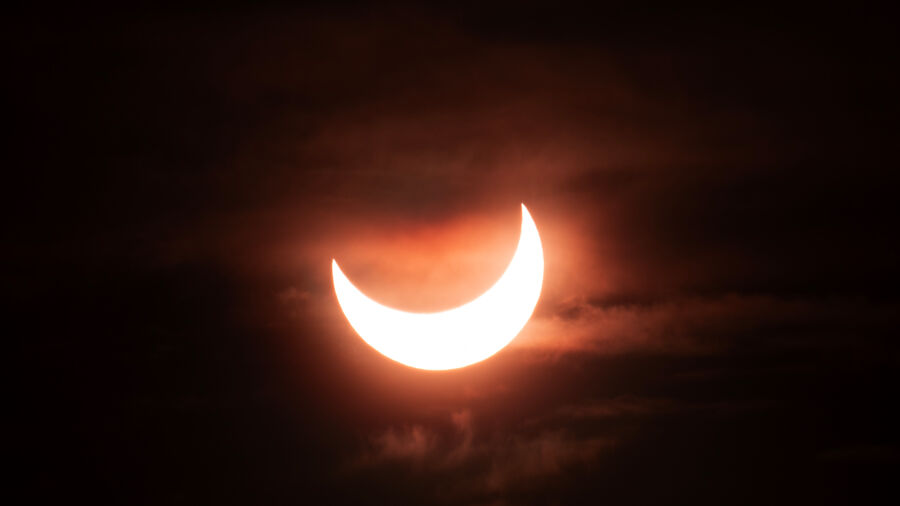
Op woensdag 12 augustus zal in België de grootste zonsverduistering sinds 1999 te zien zijn. Dat meldt Volkssterrenwacht Urania. Kort voor de zonsondergang zal de maan ongeveer 90 procent van de zon bedekken. Een zonsverduistering van dezelfde omvang zal in ons land pas opnieuw zichtbaar zijn in 2081.
De grootste zonsverduistering van deze eeuw maakt deze maand zijn opwachting. Op woensdag 12 augustus om 20.11 uur wordt ongeveer 88% van de zon bedekt door de maan, meldt Weeronline. In IJsland, Spanje en een klein deel van Portugal is sprake van een totale zonsverduistering.
De gedeeltelijke zonsverduistering begint in Nederland om 19.16 uur. De maan schuift voor de zon, die dan laag aan de horizon staat. Om 20.11 uur is de zon alleen nog aan de bovenkant voor een klein deel zichtbaar. Ongeveer een uur later is de gedeeltelijke verduistering helemaal voorbij. Het is nog niet duidelijk of de zonsverduistering daadwerkelijk goed te zien is; daarvoor is een heldere hemel noodzakelijk.
In het westen van IJsland is tegen het einde van de middag al een volledige zonsverduistering. In delen van Spanje wordt de zon tussen 20.26 en 20.32 uur volledig verduisterd. Tijdens een totale zonsverduistering verandert de heldere dag tijdelijk in de nacht. De helderste sterren kunnen zichtbaar worden en de temperatuur kan enkele graden dalen.
De eclips begint om 19.18 uur Belgische tijd, wanneer de maan voor het eerst de zon raakt. De bedekking neemt daarna geleidelijk toe terwijl de zon zakt. Om 20.13 uur bereikt de verduistering het maximum. Vanuit Brussel zal ongeveer 90 procent van de zon door de maan worden bedekt. Om 21.05 uur eindigt de eclips.
Volgens Urania groeit de belangstelling voor het natuurverschijnsel. Directeur Marc Van den Broeck stelt dat al 80.000 mensen een eclipsbril hebben gekocht.
Volgens Urania groeit de belangstelling voor het verschijnsel sterk. Directeur Marc Van den Broeck stelt dat al 80.000 mensen een eclipsbril hebben gekocht.
Wie op 12 augustus een vollédige zonsverduistering wil zien, moet naar Groenland, IJsland, Spanje of Portugal. De laatste volledige eclips in België dateert van 11 augustus 1999. Voor de volgende totale zonsverduistering in ons land is het nu wachten tot 25 mei 2142.
De Vlaamse volkssterrenwachten hebben een informatiebrochure samengesteld om jongeren te informeren over dat uitzonderlijke fenomeen. Die raadt de jeugd onder meer aan om nooit rechtstreeks naar de zon te kijken en de ogen te beschermen met een eclipsbril of zonnefilter, en is beschikbaar via de site www.eclips2026.be.
Hoe kan je naar een zonsverduistering kijken?
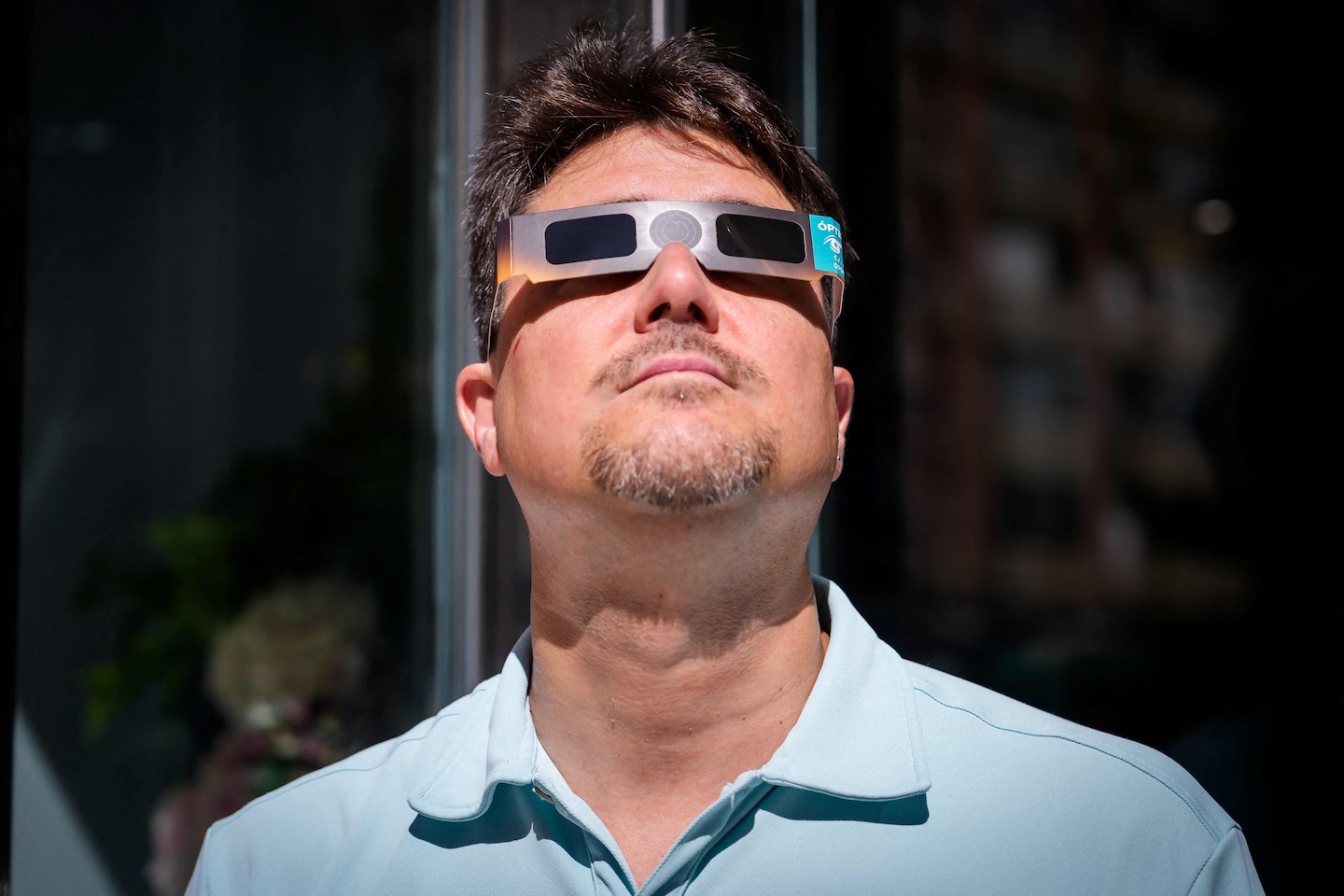
Om naar de zon te kijken, heb je altijd een speciale eclipsbril nodig. Kijk nooit rechtstreeks in de zon. Je kan er blijvende oogschade aan overhouden.
Ook een zonnebril is niet sterk genoeg. Die houdt het directe zonlicht wel tegen, maar laat toch nog schadelijke infrarode en uv-straling door, die ook blindheid kunnen veroorzaken.
Hetzelfde met andere "trucjes", zoals een cd of dvd. Ook die blokkeren zonlicht, maar laten toch nog schadelijke straling door. Lasglazen met een gradatie 13 of hoger, zijn wél geschikt om naar de zonsverduistering te kijken.
Het is niet veilig om rechtstreeks naar een zonsverduistering te kijken. Het weerbureau adviseert een eclipsbril om oogschade te voorkomen. "Een alternatief is het projecteren van het zonlicht op een vlak oppervlak, bijvoorbeeld met een vergiet of een vel papier met kleine gaatjes", aldus Weeronline.
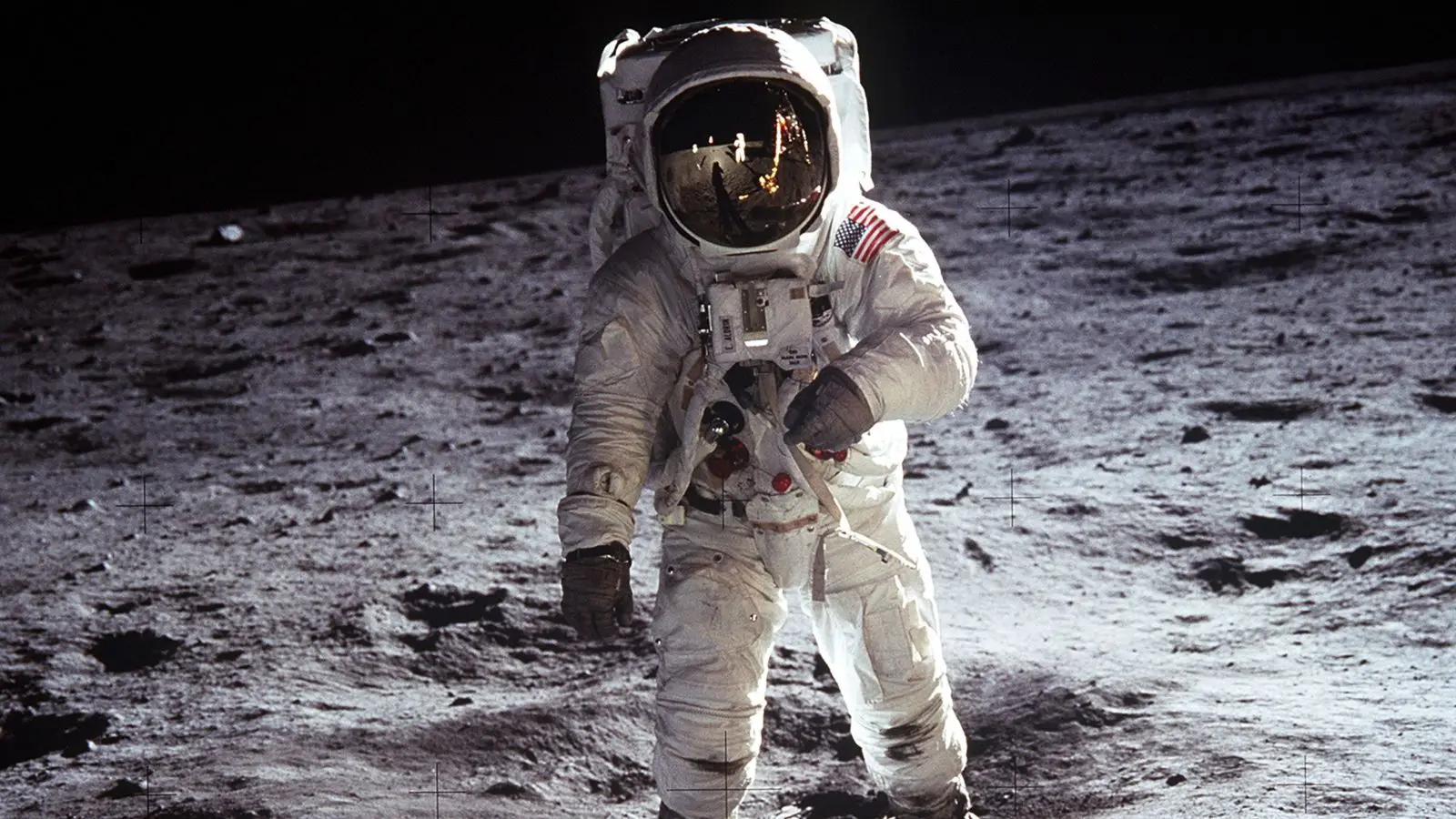
Why MTV used NASA's Apollo 11 footage for its iconic launch intro

What do Teen Mom, Jackass, Beavis and Butt-Head, and Celebrity Deathmatch all have in common? Well, apart from all being follow-up programs for MTV Cribs, they've all also been welcomed onto the screen by Buzz Aldrin.
Yes, MTV programs have all been supported by NASA and Apollo 11 icon Buzz Aldrin, as the television platform has used the iconic space footage of the second man on the moon in its launch intros.
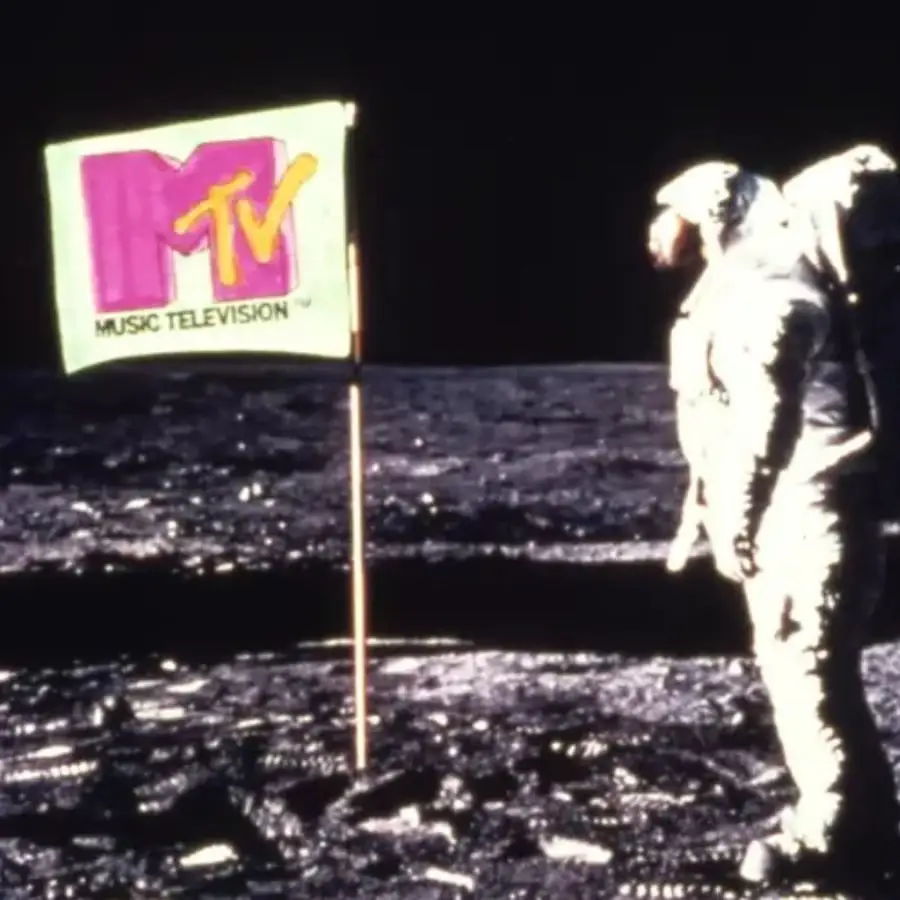
In fact, the first-ever sequence that aired on MTV back in 1981 saw Aldrin's likeness plant the MTV flag on the moon, a staple feature of the channel ever since.
Yet the reason why is lesser-known to the public and the countless celebrities that have hoisted the 'Moon Man' trophy.
It's one of the most iconic photos of all time, but the first picture of men on the moon shows Buzz Aldrin's figure turning to face the camera held by Neil Armstrong.
The footage, also captured in video form, has always been free to use for all creative purposes as part of the public domain, and MTV chose to use it for their branding.

According to the Smithsonian National Air and Space Museum, MTV founder Bob Pittman claimed that the channel intended to be 'a network that would be about the network, rather than the individual programs,' and wanted to lead with the legendary slogan of 'That's one small step for man, one giant leap for mankind.'
However, having appealed to NASA and Armstrong's lawyers about using his quote, building their marketing and promotional decks before hearing back, MTV was blocked from adding the words to their slogan.
Instead, the intro was released without the words and simply saw an astronaut resembling Aldrin planting the MTV flag on the moon instead.
That clip ran for every hour for five years and continues to sporadically feature today.
Although nowadays, the 'Moon Man' has a different meaning for MTV.
Having introduced the Video Music Awards (VMAs) just a few years later, championing the best of the best in the music video medium, MTV even decided to use its newfound mascot as the likeness for the coveted award.

Some 42 years after the first ceremony, in which the winners consisted of icons like Michael Jackson and David Bowie, the Moon Man trophy continues to be hoisted by the likes of Ariana Grande and Lady Gaga.
"The whole idea was, the statue had to be balancing on one leg, like anti-gravity and floating,” said trophy creator Pat Gorman.
While the trophy has been remade many times, lining the cabinets of the legends of the music industry, MTV made a special one that even traveled to space, as Pepsi paid to have a VMA award statue flown to the Russian Mir space station, which featured in a live broadcast during the award ceremony in 1996.
From what was once just a free-to-use gimmick, the Moon Man is now a legend.