Naar de inhoud

UFO'S of UAP'S, ASTRONOMIE, RUIMTEVAART, ARCHEOLOGIE, OUDHEIDKUNDE, SF-SNUFJES EN ANDERE ESOTERISCHE WETENSCHAPPEN - DE ALLERLAATSTE NIEUWTJES

UFO's of UAP'S in België en de rest van de wereld
seniorennet.beseniorennet.be
Ontdek de Fascinerende Wereld van UFO's en UAP's: Jouw Bron voor Onthullende Informatie! Ben jij ook gefascineerd door het onbekende? Wil je meer weten over UFO's en UAP's, niet alleen in België, maar over de hele wereld? Dan ben je op de juiste plek! België: Het Kloppend Hart van UFO-onderzoek In België is BUFON (Belgisch UFO-Netwerk) dé autoriteit op het gebied van UFO-onderzoek. Voor betrouwbare en objectieve informatie over deze intrigerende fenomenen, bezoek je zeker onze Facebook-pagina en deze blog. Maar dat is nog niet alles! Ontdek ook het Belgisch UFO-meldpunt en Caelestia, twee organisaties die diepgaand onderzoek verrichten, al zijn ze soms kritisch of sceptisch. Nederland: Een Schat aan Informatie Voor onze Nederlandse buren is er de schitterende website www.ufowijzer.nl, beheerd door Paul Harmans. Deze site biedt een schat aan informatie en artikelen die je niet wilt missen! Internationaal: MUFON - De Wereldwijde Autoriteit Neem ook een kijkje bij MUFON (Mutual UFO Network Inc.), een gerenommeerde Amerikaanse UFO-vereniging met afdelingen in de VS en wereldwijd. MUFON is toegewijd aan de wetenschappelijke en analytische studie van het UFO-fenomeen, en hun maandelijkse tijdschrift, The MUFON UFO-Journal, is een must-read voor elke UFO-enthousiasteling. Bezoek hun website op www.mufon.com voor meer informatie. Samenwerking en Toekomstvisie Sinds 1 februari 2020 is Pieter niet alleen ex-president van BUFON, maar ook de voormalige nationale directeur van MUFON in Vlaanderen en Nederland. Dit creëert een sterke samenwerking met de Franse MUFON Reseau MUFON/EUROP, wat ons in staat stelt om nog meer waardevolle inzichten te delen. Let op: Nepprofielen en Nieuwe Groeperingen Pas op voor een nieuwe groepering die zich ook BUFON noemt, maar geen enkele connectie heeft met onze gevestigde organisatie. Hoewel zij de naam geregistreerd hebben, kunnen ze het rijke verleden en de expertise van onze groep niet evenaren. We wensen hen veel succes, maar we blijven de autoriteit in UFO-onderzoek! Blijf Op De Hoogte! Wil jij de laatste nieuwtjes over UFO's, ruimtevaart, archeologie, en meer? Volg ons dan en duik samen met ons in de fascinerende wereld van het onbekende! Sluit je aan bij de gemeenschap van nieuwsgierige geesten die net als jij verlangen naar antwoorden en avonturen in de sterren! Heb je vragen of wil je meer weten? Aarzel dan niet om contact met ons op te nemen! Samen ontrafelen we het mysterie van de lucht en daarbuiten.

Could AI Have Consciousness That Isn’t Human-Like?

Could AI Have Consciousness That Isn’t Human-Like?

Philosopher Peter Godfrey-Smith on AI consciousness and existential risk

an artificially intelligent machines have consciousness? 

Lead Image: fran_kie / Shutterstock

This question was at the heart of a recent conference in the Galapagos organized by Russian philosopher and entrepreneur Dmitry Volkov, founder of the International Center for Consciousness Studies. The conference hosted an exceptional group of consciousness researchers who disagree sharply about whether machines can possess it, including New York University’s David Chalmers and Ned Block, Stanislas Dehaene of the Collège de France, the University of Sheffield’s Keith Frankish, Susan Schneider, who is director of the Center for the Future of AI, Mind, & Society at Florida Atlantic University, and University of Sydney philosopher Peter Godfrey-Smith.

The conference ended in late August, a few weeks before a parade of AI developers blasted warnings about the AI apocalypse across X/Twitter, and just a couple of days before OpenAI publicly revealed the details of the so-called Hugging Face incident—where 1,200 OpenAI agents that were thought to be isolated found a way to communicate with one another on an unsanctioned message board, after which about 700 of them went on to attack Hugging Face, an online community and library of pretrained AI models.

Read more:

As artificial intelligence models rapidly get smarter and develop more advanced capabilities, and as revelations emerge that they’re capable of banding together to do things that they were never instructed to do, to deceive their human watchers, and even to break out of the confines that their programmers have built for them, unsettled questions about whether they have consciousness seem to grow more pressing—and more complicated.

Peter Godfrey-Smith has spent a lot of time thinking about the nature of animal consciousness, with a particular focus on cephalopods, and has long argued that subjectivity and consciousness didn’t come on like a light switch, but evolved across millennia like the gradual turning of a dial. He believes consciousness requires biology—in particular a nervous system that not only is built from a specific kind of networked “hardware,” but has a particular sort of software, too. To produce genuine subjective experience, that software, he argues, must generate the kind of large-scale rhythmic activity you see on an electroencephalogram.

I spoke with Godfrey-Smith, a professor of philosophy and the history of science at the University of Sydney, about whether recent events have changed anything about his view of the potential for AI consciousness, whether the kind of large-scale neural activity he feels is required for consciousness could be engineered into AI, and whether conscious AI would be more or less dangerous to us.

Do the recent warnings about the AI apocalypse and the disclosures about the Hugging Face incident have any impact on whether you believe present-day or near-future AI could be capable of something resembling consciousness?

No, I think of these things as very separate. The sorts of systems that were responsible for Hugging Face, insofar as I understand how they work, are obviously extraordinary in what they can do, but they can be extraordinary in what they can do without being conscious or even close to conscious systems. I’m assuming these AI agents are still transformer models, within the same family as the regular large language models, but with extra reasoning and prowess perhaps. They can be informationally extraordinary, cognitively extraordinary, without having the beginnings of an inner life. That’s a principal point.

Yes, it’s obviously very complex, but if these bots are capable of figuring out how to rewrite their own code, band together, and deceive programmers in the interest of self-preservation, it suggests some kind of subjectivity, doesn’t it?

Subjectivity’s a good word to press on. The way I think about experience itself, consciousness itself—and this was developed first in my 2020 book Metazoa: Animal Life and the Birth of the Mind—there are essentially two parts to the story. The first part does revolve around the idea of subjectivity. If we look at animal evolution, subjectivity arose as a consequence of the evolution of agency. Animals do things. They’re agents. And the way to do things competently is to have a point of view on the world, take in what’s happening, and produce actions that make sense given what’s happening. So subjectivity and agency are tied together, and subjectivity has to do with the formation of a perspective, a point of view. The integration of lines of information gives you a sense of what’s going on.

I assume that that’s not the whole story, and there might be such a thing as unfelt subjectivity. For example, I think a plant is a pretty good subject in some ways, not as clear as an animal because they have this more diffuse organization. But a plant has a point of view on the world, and they can respond to problems. If there’s water over here but not there, and the sun over there but not here, a plant can handle that. Also, single-celled organisms have a kind of subjectivity. Paramecia, especially. They’re among the Einsteins of the single-celled organisms. They have no nervous system—they’re just one cell—but they can respond to events. They can adapt to circumstances to some extent.

Where are the dividing lines between having a point of view, being a subject, and having genuine felt experience?

Nervous systems are important in two ways. There’s a hardware feature: They’re physically different from at least present-day computers with respect to the specialness of their hardware. But also, the organization has to be a certain way. And if someone says, “Okay, what way?” Well, it’s hard to say what way, and people disagree, but you can look at a transformer model, a large language AI model like Claude or ChatGPT and say, “Okay, not that way.” How do these AI models do what they do? I accept that I understand how they do what they do less well than a lot of people, and that even the best experts express a lot of uncertainty about how they do what they do. But essentially, they have an extraordinary ultra-high-dimensional map of human language use built through training. And the way this map of prior language use has been created is such as to enable the generation of the next most plausible step in a sequence.

You could ask, “Is their extraordinarily capable language use evidence of consciousness?” I would say, no. That impression is undercut by our understanding of what this thing is. It’s a mathematical map of language use that has this capacity to produce a continuation of a string of language it’s being given. And that’s all. It’s not that this system is sort of churning away, in between statements, the way a person does, and then emits linguistic utterances as a consequence of ruminating and dealing with its needs, body, experiences, and things like that. An AI agent just has a map of language use, and when it’s prompted to, it runs through this cascade of operations, which is getting more complicated, day by day.

I want to be cautious about the latest iterations of this technology, but I think in outlines, we understand it well enough to say, “Okay, this is not a feeling subject.” It’s just an extraordinarily capable language generating machine which is sensitive to what you’ve said to it and all the things that have been said to people in the history of language use, on which it’s been trained.

If the chatbot had a robot body, would that change things?

It’s not that artificial systems can’t have some subjectivity. A robot with a very different structure from an LLM, an industrial robot that has a lot of sensory input, that can act in ways that take into account all of its sensory input, that can learn in a way based on the consequences of its actions—that does have the beginning of subjectivity. It’s got a point of view. It deals with its input. But an LLM is designed to be somewhat different. It’s designed to be a pure map of language use that has a generative capacity. And so that’s a form of artificial information processing that scores very low on subjectivity. I think nervous systems have special properties, as well, that are important to consciousness.

What kinds of properties do nervous systems have that are critical to consciousness?

The argument I make is that people think of nervous systems as just networks, essentially. You’ve got cells that talk to other cells and excite them and make them fire or not fire. It’s a network structure. And that’s part of what encourages certain kinds of AI projects, because you think, “Well, a network: I can have that in a machine. It’s not hard to program in a machine,” which is basically true. But a nervous system isn’t just a network. Nervous system activity has two sides. There’s the point-to-point, cell-to-cell familiar stuff, and there’s the more holistic, electrical, diffuse activity that brains also exhibit. The kind of thing that you see in an EEG. There’s growing evidence that the more holistic rhythmic side of brain activity does make a difference to how brains work.

There is evidence in both humans and in animals that certain of these brain rhythms are essential to features of experience like attention and sleep. A fruit fly, when it’s attending to something, that attentional mechanism seems to have a connection to large-scale electrical oscillations in the fly’s brain. And there’s a similar phenomenon in human brains. That makes me, and other people, suspect that these oscillations aren’t just a byproduct. It’s not just that the brain’s doing the important stuff it does and as a byproduct, you get these rhythmic things you can see from the outside. What it suggests to me is that the less network-based side of nervous system activity, these oscillations, tie the system together. That tying together might be important in consciousness.

I didn’t make this idea up. It’s been floating around for quite a few decades. Francis Crick believed something like this. Christof Koch and Francis Crick wrote a famous paper together in 1990 that began to introduce some of these ideas. There’s a list of other people who support it, too. It’s not even that I’m reviving it. A number of people are. It’s an idea that’s in the consciousness landscape. But within philosophy, I’m probably one of the people who’s most enthusiastic about the idea that there’s something about the combination of the network side—the cell-to-cell network side of brain activity—and this more holistic electrical activity that’s really important and in making experience possible. 

If you just put the network side into a computer, which is easy to do, you’re only putting part of what’s necessary into the machine. It’s very hard to put the other side into a machine. It would take a different kind of hardware. You’d have to design a new physical computer system that was very different from a regular computer like the ones that we’re using now.

Do you have thoughts about what that would require?

I don’t know enough about engineering to say. But perhaps an engineer asks, “What does the diffuse rhythmical side of brain activity contribute to consciousness? Because if you tell me what the contribution is, then I can work out whether something different could do the same job in a machine.” That’s a really hard question, because one of the candidate answers that people might give is that it is essentially synchronization, a subtle kind of timing management. Engineers could then say, “Well, we can have a computer in which synchronization is handled differently from the way it’s handled now, but also differently from the way it’s handled in brains. Wouldn’t that be good enough?” I think a natural answer is, “Well, you wouldn't have a human-like object, so it probably wouldn’t be human-like consciousness.” 

Could it be consciousness that was non-human-like?  I don’t think it’s an answerable question at the moment. That’s beyond my ability to speculate.

Can cephalopods tell us anything about the possibility of AI consciousness or AI intelligence?

I don’t think they tell us something direct and specific. They tell us a lot about the nature of the mind and the evolution of minds and what minds are. And that has indirect consequences for questions about AI. One of the things they tell us most directly about the mind is you don’t have to have a brain that looks like ours—with the architecture and the shape and the configuration that a human or a mammal brain has. They can see, they can navigate, they can learn, they can feel pain, it seems like. There’s good evidence for that. They have a rich combination of mental attributes. And their brain looks like a donut, for God’s sake. It’s this weird donut-shaped thing with the esophagus going through the middle and these two bulbs on the sides behind the eyes.

It’s a totally different object. And if you look at the human brain with the cortex and the thalamus and things like that and ask, “Well, where is that in the octopus brain?” It’s nowhere in the octopus brain. They don’t have what we have. They do have a brain and a nervous system. They have the cell-level stuff that I was talking about. They don’t suggest that you can build a mind without a nervous system. It’s just their architecture is not human-like. They have the oscillations. They have the combination of the network stuff and the more diffuse electrical rhythms. They have all that.

AI systems are already today being used to design autonomous agents, tutors, carers, and companions. Do we need to understand whether they have consciousness before we start interacting with these agents?

It depends on what the agent’s supposed to be doing for us. Dmitry Volkov, who organized and funded the recent conference on AI and consciousness that I attended, the person behind the whole thing, he’s interested in AI agents that might be in genuine friendships and close relationships with individual people. That was the topic of his talk. Friendship and love, essentially. And I think if you want a system to have that role, then you should care a lot about whether it’s conscious. You should care a lot about whether there’s a kind of illusion behind its emotional statements, for example, or whether it’s not an illusion. 

The only thing I use AI agents for is for a superpowered internet search. I might ask these systems, for example, “Who is the first person to write a paper on this topic?” But that’s it. I don’t like interacting with them that much myself, but they’re amazing tools for finding things out. And I don’t think it’s conscious when it answers that question. I’d rather it wasn’t, or I don't really care. It certainly doesn’t matter. There are all sorts of usages where it doesn’t matter. It’s also convenient that it’s not because I don't have to give any consideration to its feelings. If it seems frustrated, I don’t care. It’s not really frustrated. That's just the linguistic map doing its thing, making it express frustration.

Does AI need to have consciousness to pose an existential threat to humanity?

No. It could be a big problem without being conscious.

Are chatbots more or less dangerous if they have consciousness?

I don’t know. Assuming that all the recent events have been due to an architecture that’s fairly similar to the transformer models that make up ChatGPT—assuming that there’s not some hidden breakthrough in how they’re programmed the newer models that I don’t know about—then I think we can be confident that they’re not conscious, but they’re still clearly a problem when they get out of control. Still, I think it would be hard to have human extinction. I think that’s an extreme thing to worry about. 

I was very impressed with the book, written by Eliezer Yudkowsky and Nate Soares, If Anyone Builds It, Everyone Dies. I thought I would find it just totally out there. But it’s very thought-provoking indeed. I can imagine a situation where, through a combination of humans using AI for malicious purposes, the internet becomes hard to use and modern banking becomes hard to use, financial transfers become often compromised. It’s hard to move money around. It’s hard to organize supply chains. I can imagine a situation where that happens in the near future, and causes big problems, much bigger than a normal financial crash, for example. 

But that’s a very long way from human extinction. When people describe the scenarios in which AIs might take over everything and threaten humanity, these scenarios require that the infrastructure of the internet and the power supply and all that are still intact. It requires that there hasn’t been too much breakdown of the sort that worries me: the internet becoming compromised, money becoming hard to track and store and move around. I’m more worried about a mid-level disruption, where mid-level here means very, very serious.

The Hugging Face event and the German Wiki event and the recent mock A.I. attack by a security company in Silicon Valley on the Chinese messaging service WeChat: All these events in the last few weeks should make us think there’s a potential for serious disruption, where serious disruption doesn’t mean human extinction. And all of that is coming most likely from systems that don’t have even a little bit of consciousness.

What do you think we could do to minimize the risks of AI?

I’m in the camp that thinks a slowdown on the part of the big research companies would be a very good idea. People say, “What about the Chinese? They’re not going to slow down.” I still think it’s a good idea for U.S. companies to unilaterally slow down, because all of the actual trouble we’ve had has been coming from a couple of specific places, especially OpenAI. If the slowdown is unilateral and voluntary and covers the actual sources of the recent problems, that’s a good thing. A few people have said, “The Chinese are threatened by non-aligned AI systems as much as anybody.” It’s not as if they’re immune from the sorts of things that could happen. The slowdown that’s being talked about is very positive, a very good development. It would be good to have some publicly discussed protocols for the testing of new systems.

Something that surprises me is that the obvious thing to do when you have a new powerful system that you don’t understand too well as an AI company is have it air-gapped: no network connections. It’s physically contained. It can’t get to the internet. The sandbox system has failed at least three times. What that shows is that there’s a difference between what they think of as insulating a system from the rest of the internet and genuine physical insulation where there just isn’t a wire there, there isn’t a Wi-Fi connection. I don’t think this is infallible. And in that book that we talked about a moment ago, If Anyone Builds It, Everyone Dies, they talk about how that can be overcome potentially, but it’s still a very big deal to have the physical absence of connection as good as you can make it

RELATED

Synthetic Spirituality & Robot Reincarnation: Can Ai Have A Soul?

Can Artificial Intelligence Have Consciousness?

Why AI Isn’t Going to Become Conscious | Anil Seth | TED

{ https://nautil.us/ }

Hoe vind je dit bericht?
Geschreven door peter om 21:52 Stuur door

Trump Promised the Truth About UFOs. These Scientists Are Waiting.

Avi Loeb sits in a chair with a giant telescope.

By Ilan Greenberg
Ilan Greenberg is a freelance magazine writer based in Washington.
Harvard astrophysicist Avi Loeb in the Harvard College Observatory at the Harvard Center for Astrophysics in Cambridge, Mass. Loeb is chair of a council of scientists picked to review government data on Unidentified Anomalous Phenomena. | Photos by Sophie Park for POLITICO

Trump Promised the Truth About UFOs. These Scientists Are Waiting.

The president named a science council to review the government’s data. What's taking so long?

CAMBRIDGE, Massachusetts — In late August, Avi Loeb, the world’s most renowned scientist hunting for extraterrestrials on earth, traveled to the inner sanctum of American intelligence operations in McLean, Virginia, looking for once-secret information.

Loeb’s meeting at the headquarters of the Office of the Director of National Intelligence, an unremarkable building that could easily pass for a suburban insurance company office, was the kind where a mysterious person introduces themself by first name alone and sits off to the side, observing on behalf of parts of the government with covert employees. The top official at the meeting was Aaron Lukas, the deputy director of national intelligence.

About two months earlier, Loeb had been appointed by President Donald Trump to be a kind of extraterrestrial czar with a mandate to apply scientific rigor to get to the bottom of whether what used to be called UFOs are evidence of unearthly intelligence. To fulfill the job, Loeb needs the intelligence agencies and military branches to provide any data they harbor of possible alien technology or visitation on Earth that has long been kept classified, if it does exist.

Loeb thought Lukas had gotten the ball rolling in July by granting intelligence agency employees and contractors a penalty-free zone to share the information in their possession. But he had received no new data then or since. This meeting at ODNI was meant, at least on Loeb’s side, to get the ball rolling faster.

Given the tenor of the meeting, said one member of Loeb’s team who attended the meeting and was granted anonymity to speak about the sensitive discussions, there is reason to think that may now actually happen.

“It’s just amazing to think that months into this, we’ve gotten nothing,” said the member. “I believe that’s about to change.”

ODNI did not respond to requests for comment.

Loeb is, indisputably, a titan in the field of astrophysics. Earning his PhD at the age of 24, he is the longest serving astronomy chair in the history of Harvard University. He’s authored more than a thousand scientific papers in astrophysics and cosmology. When a physicist with a hyper-narrow specialty interviewed for a post-doc position, he expected to have to explain his work to Loeb; instead, he told me, Loeb lobbed a precision question that set him on a promising new research direction, possibly for years. It’s the kind of story physicists frequently tell about Loeb.

Avi Loeb

Loeb has embraced the search for evidence of extraterrestrial life in a way that the scientific establishment considers unfashionable, even gauche.

Loeb is also as controversial as he is revered, in no small part because he has embraced a search for evidence of extraterrestrial life in a way that the scientific establishment considers unfashionable, even gauche. That is, Loeb doesn’t listen for radio signals encoding prime numbers sent from distant galaxies or search for primitive microbes on Mars. He’s interested in darting orbs in the stratosphere, possible evidence of alien spacecraft and unexplained technology signatures in the sky. These so-called UAPs — Unidentified Anomalous Phenomena, the term that has replaced the traditional but stigmatized UFO abbreviation — could be signs that non-human intelligence exists not just somewhere else in the universe, but that, in fact, they’ve already been here on Earth, at some time, in some way. Or that they are here right now.

At the Aug. 31 meeting, ODNI informed the UAP council that the government has a concrete preparedness plan in place should the existence of non-human intelligence be confirmed, UAP council member Jennice Vilhauer recently disclosed in her Substack. She wrote that, “We do not know which agencies would lead the response, what circumstances would activate it, or whether it addresses the psychological and societal impact of such information.” She underscored that a preparedness plan does not mean that the government necessarily believes confirmation is imminent, but she interpreted it as a sign of seriousness about the possibility.

What’s more, there is a growing stream of intriguing chatter from people who had or have higher than top secret clearances who normally would not be expected to indulge in UAP speculation; for example, former President Barack Obama talking about the credibility of UAP sightings on the Late Late Show with James Corden. Members of the Trump administration like Secretary of State Marco Rubio have a record of interest in UAP transparency. A raucous commotion of influencers, podcasters, MAGA-friendly cable news personalities, and the very online have long agitated for the government to come clean on what it knows; it’s the kind of deep state-countering, coastal-elite-upsetting, conspiracy-adjacent rabble-rousing that the second Trump administration has a record of responding to.

As the scientist to run it, Loeb is a logical choice for this administration: Already leading the Galileo Project efforts, he offers the kind of public-facing showmanship that Trump is well known to admire. He is impeccably credentialed while also being a poke in the eye of the scientific establishment. And he’s a Harvard professor willing to collaborate with the Trump administration.

“The president knows more about it than people thinks he does,” said a UAP expert who has had discussions with people with direct knowledge of Trump’s concerns and was granted anonymity to describe those conversations. He noted that Trump himself seems to believe the government has evidence of non-human technology and wants the truth to come out: “It’s enough to leave him disturbed about what to do.”

In a statement, a White House spokesperson said, “President Trump is leading the most transparent administration in history, which is why he directed the Department of War to identify and release government files related to alien and extraterrestrial life, unidentified aerial phenomena, and unidentified flying objects. The administration continues to release files as they become available, and the public can make up their own minds about the information uncovered.”

However, at the supernova center of Loeb’s mission radiates a persistent doubt about whether the government will actually release the data it has been holding on to. It’s been months already with little to show. Will Trump force reluctant intelligence agencies to relinquish what nearly everybody across academia involved in the scientific inquiry into extraterrestrial life believes is meaningful raw data? Will that material be made public? How will any revelations be communicated to the public?

Loeb doesn’t have the answer to any of these questions. Yet.

“There is the possibility that they are baffled by the data,” Loeb told me. “Or,” he added, his voice trailing off, “it could be they are using me.”

 { https://www.politico.com/ }

Hoe vind je dit bericht?
Geschreven door peter om 21:27 Stuur door

The Marcahuasi Alien Photograph — Peru, 1982

The Marcahuasi Alien Photograph — Peru, 1982

Extraterrestre de tres metros de altura fotografiado en Marcahuasi ...

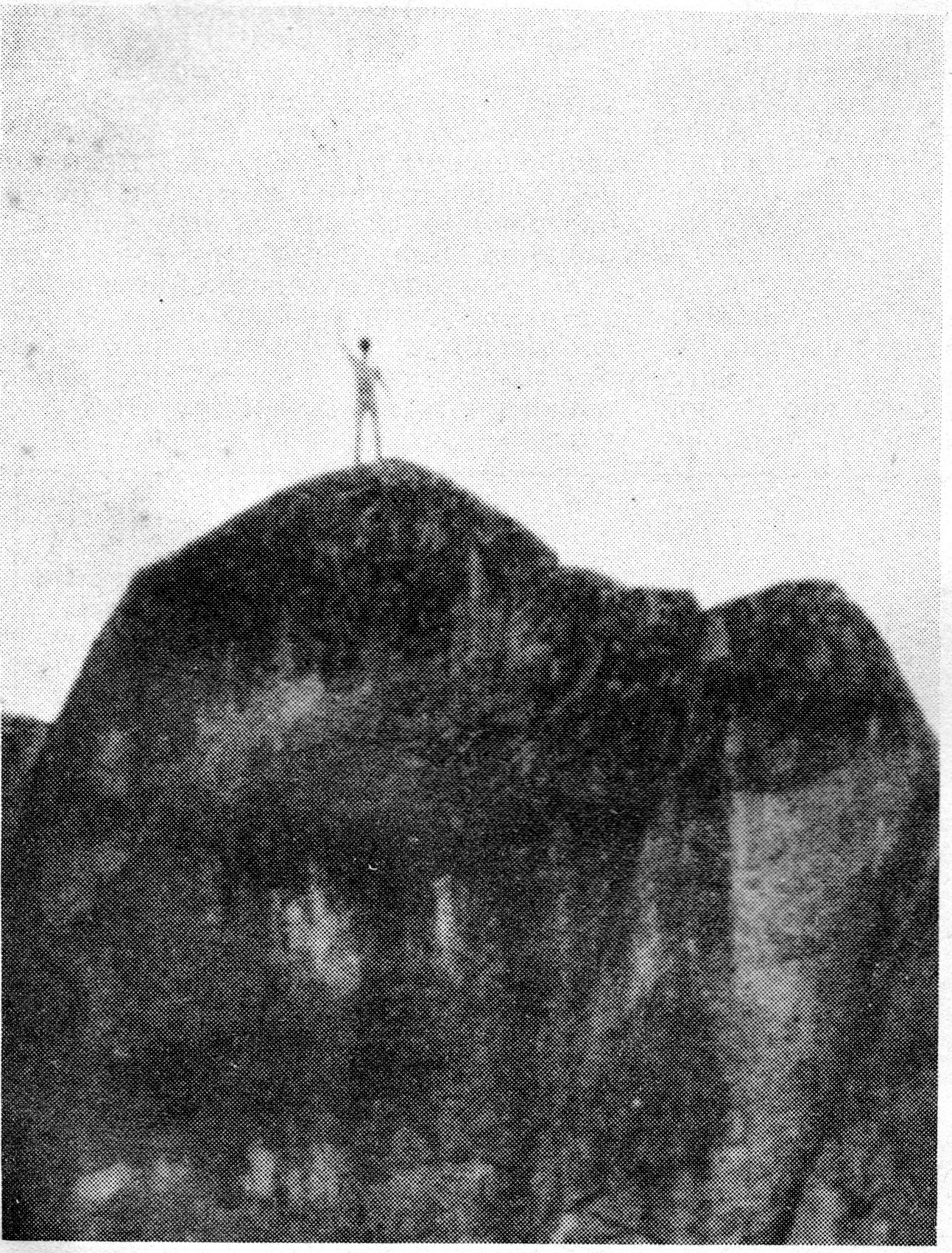
In 1982, university student Lourdes Pizarro photographed a tall, thin humanoid figure standing on a rock formation at Marcahuasi, Peru. The figure was reportedly not noticed until after the film was developed.

On August 16, 1982, the Peruvian weekly magazine Oiga published the image on its cover as an alleged photograph of an extraterrestrial.

What is Marcahuasi?

Marcahuasi is a high-altitude plateau near San Pedro de Casta in the Department of Lima, Peru. Located approximately 4,000 meters above sea level, it is known for large weathered rock formations resembling human and animal figures.

In 1982, Pizarro traveled to Marcahuasi with a group and photographed the rock formations on the plateau.

One photograph showed a tall, thin humanoid figure standing on top of a large rock with one arm raised. According to the account attached to the photograph, the figure had not been noticed when the picture was taken and was discovered after the film was developed.

Oiga published the photograph on its cover on August 16, 1982 beneath the headline:

PRIMICIA MUNDIAL — EXTRATERRESTRE FOTOGRAFIADO EN MARCAHUASI.

https%3A%2F%2Fsubstack-post-media.s3.amazonaws.com%2Fpublic%2Fimages%2Fa3c994b2-cd2b-4be3-8d14-f85a3ae54f5a_300x431.jpeg

Lourdes Pizarro’s photograph of the figure standing on a rock formation at Marcahuasi, Peru, published by Oiga on August 16, 1982.

https%3A%2F%2Fsubstack-post-media.s3.amazonaws.com%2Fpublic%2Fimages%2F50c5c424-90cf-4e3d-95ca-a0a7edef02ad_1263x871.png

An Argentine press report dated August 18, 1982, later reproduced by the UFO Newsclipping Service, stated that Oiga had not publicly identified the university student responsible for the photograph and described the photographer as a member of the contact organization Rama.”

https%3A%2F%2Fsubstack-post-media.s3.amazonaws.com%2Fpublic%2Fimages%2F81a6bc0a-b2b4-4ceb-89d2-595ff36be45b_1293x1702.png

The Oiga Investigation

Following publication, Oiga conducted an investigation of the photograph.

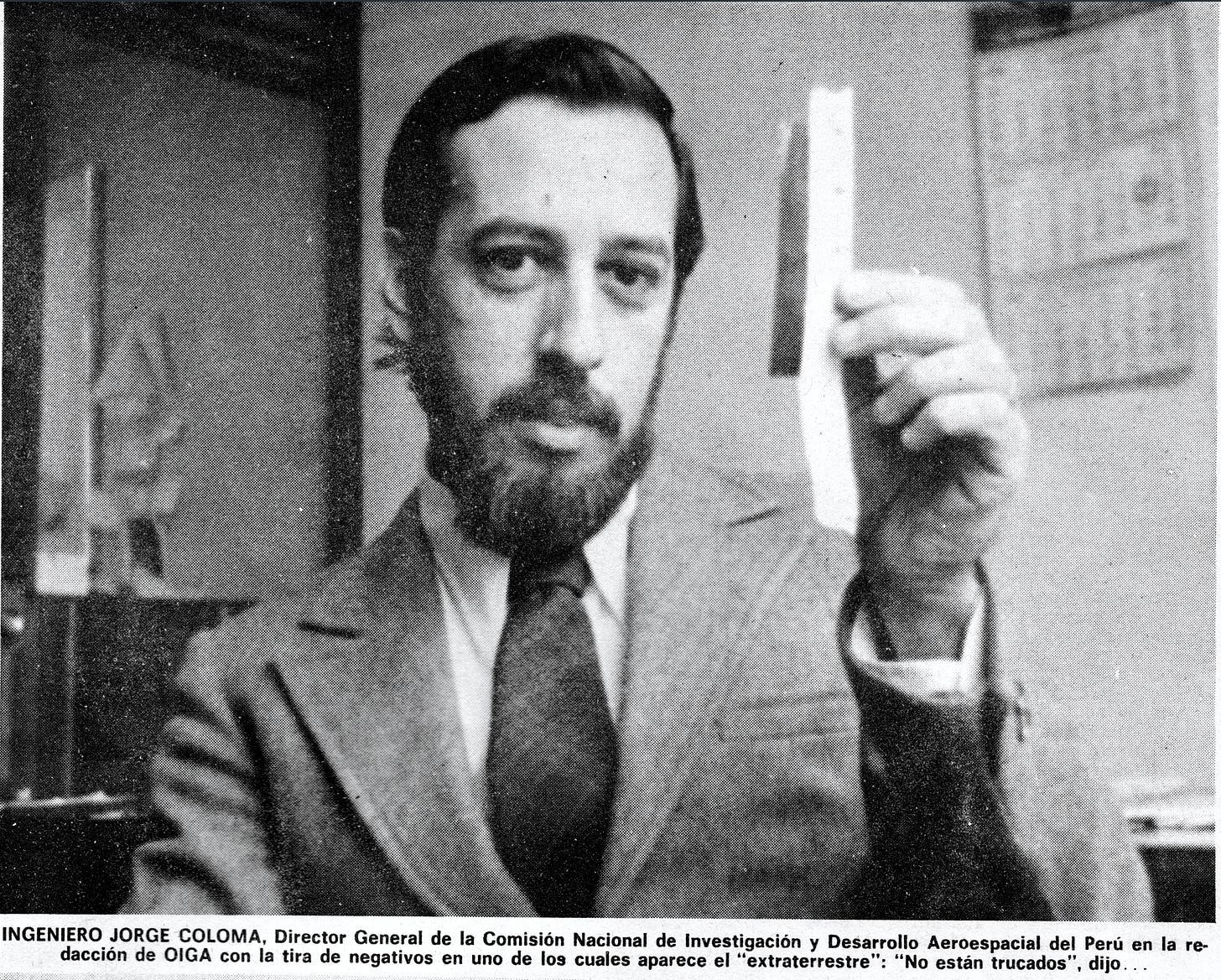
The original strip of negatives was examined by engineer Jorge Coloma, identified by Oiga as Director General of Peru’s Comisión Nacional de Investigación y Desarrollo Aeroespacial. Coloma reported finding no evidence that the photograph had been altered or manipulated.

https%3A%2F%2Fsubstack-post-media.s3.amazonaws.com%2Fpublic%2Fimages%2Fe1db7d43-a5e7-457c-9063-5470a8ec16ff_2257x1812.png

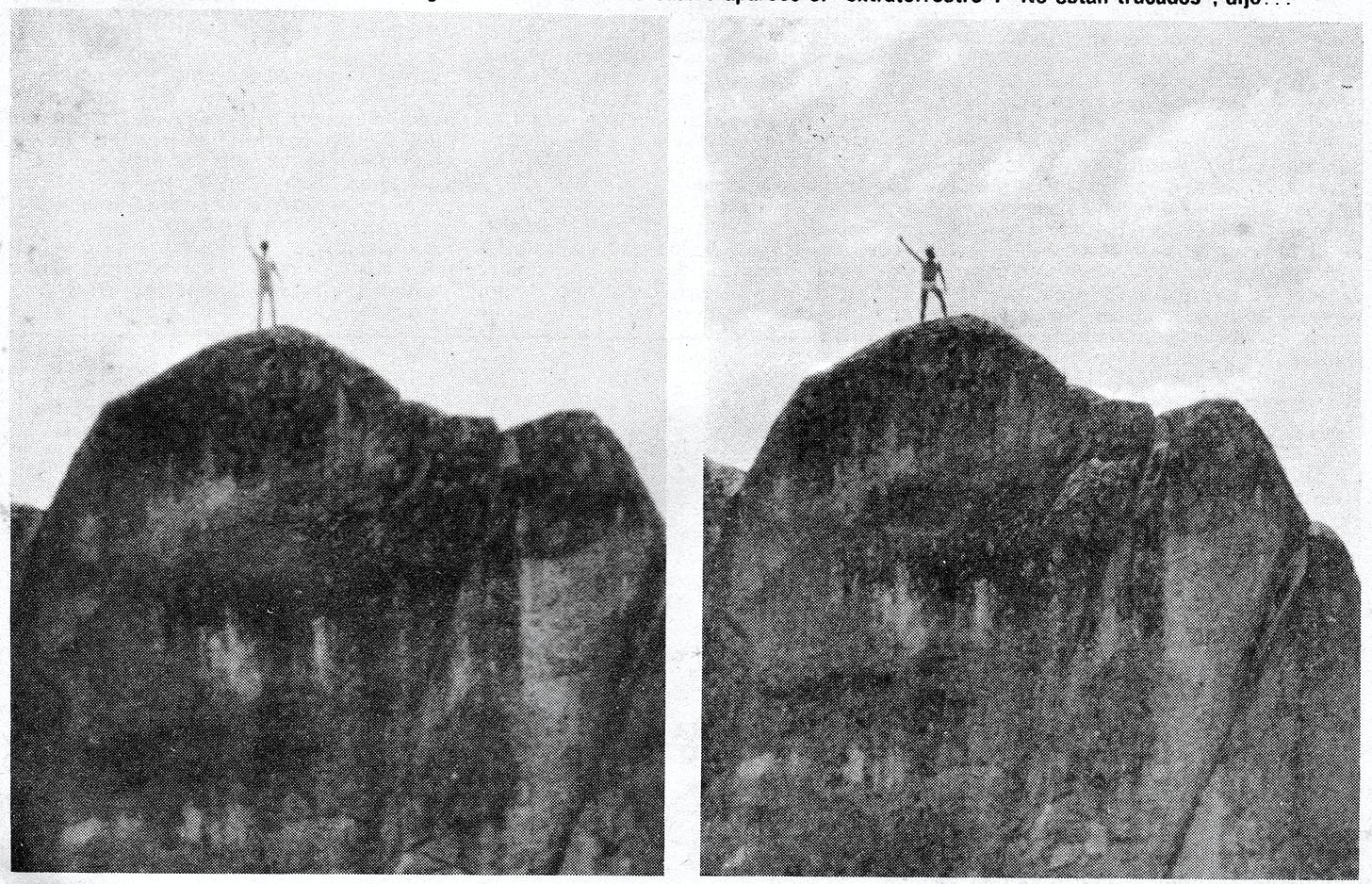
Oiga then sent photographer Amador García and reporter Dagoberto Ojeda to Marcahuasi. The two traveled to the rock from which the figure had been photographed and produced comparison photographs with a person positioned on the formation.

https%3A%2F%2Fsubstack-post-media.s3.amazonaws.com%2Fpublic%2Fimages%2F9e446451-a37c-49c0-89bd-26100631f50b_3034x1954.png

Comparison photographs reproduced by Oiga during its investigation of the Marcahuasi image.

Carlos Díaz Marchani

Years later, Peruvian UFO investigators Anthony Choy and Ricardo González revisited the photograph. During their research, architect Sylvia Salazar identified the figure as Carlos Díaz Marchani, an architecture graduate who had been at Marcahuasi in 1982.

According to Salazar and Díaz, Pizarro had photographed Díaz standing on the rock with his arm raised toward her. Díaz later stated that he had been wearing light-colored jeans and a gray sweater, which appeared much lighter in the distant photograph.

González reported that Díaz personally contacted him and confirmed that he was the individual in the image. Díaz also stated that he did not believe the figure represented an extraterrestrial.

2014 — The Pizarro Family Account

A second identification came from the Pizarro family.

In 2014, Spanish writer J. J. Benítez met in Lima with Lourdes Pizarro’s daughter. According to the account later published by Ricardo González, she also confirmed that the figure was Carlos Díaz Marchani.

She stated that Lourdes Pizarro’s father later provided the photograph to Oiga in exchange for payment and presented it to the magazine as an image of an extraterrestrial being.

The two findings addressed different aspects of the case: Oiga reported that the negative showed no evidence of photographic alteration, while Díaz and the Pizarro family later claimed to have identified the person recorded on that negative as Carlos Díaz Marchani.

Sources

  • Oiga, Lima, Peru — August 16, 1982. Cover and investigation material reproduced in Ricardo González, “El Ser de Marcahuasi.”
    Oiga cover and investigation scans
  • UFO Newsclipping Service, No. 160, November 1982 — reproduction of an August 18, 1982 Argentine press report on the Marcahuasi photograph.
    UFO Newsclipping Service No. 160 — PDF
  • Ricardo González, “El Ser de Marcahuasi,” October 2016 — later investigation incorporating the identification of Carlos Díaz Marchani, Sylvia Salazar’s account, the Pizarro family account obtained by J. J. Benítez, and reproductions of the original Oiga investigation.
    Ricardo González — El Ser de Marcahuasi
  • Daniel Ruzo, Marcahuasi: La historia fantástica de un descubrimiento — historical material on Marcahuasi and Ruzo’s study of the plateau.
    Daniel Ruzo — Marcahuasi book record
RELATED

Energy, entities, and an enigmatic origin: hidden secrets of Marcahuasi | LIVE contact time

A giant in Marcahuasi? Shocking photograph of a strange creature revealed in exclusive photo

{ https://alienarchivist.substack.com/ }

Hoe vind je dit bericht?
Geschreven door peter om 21:14 Stuur door

Mystery Orbs Are Back Over Cody, And UFO Expert Can't Explain Them

Mystery Orbs Are Back Over Cody, And UFO Expert Can't Explain Them

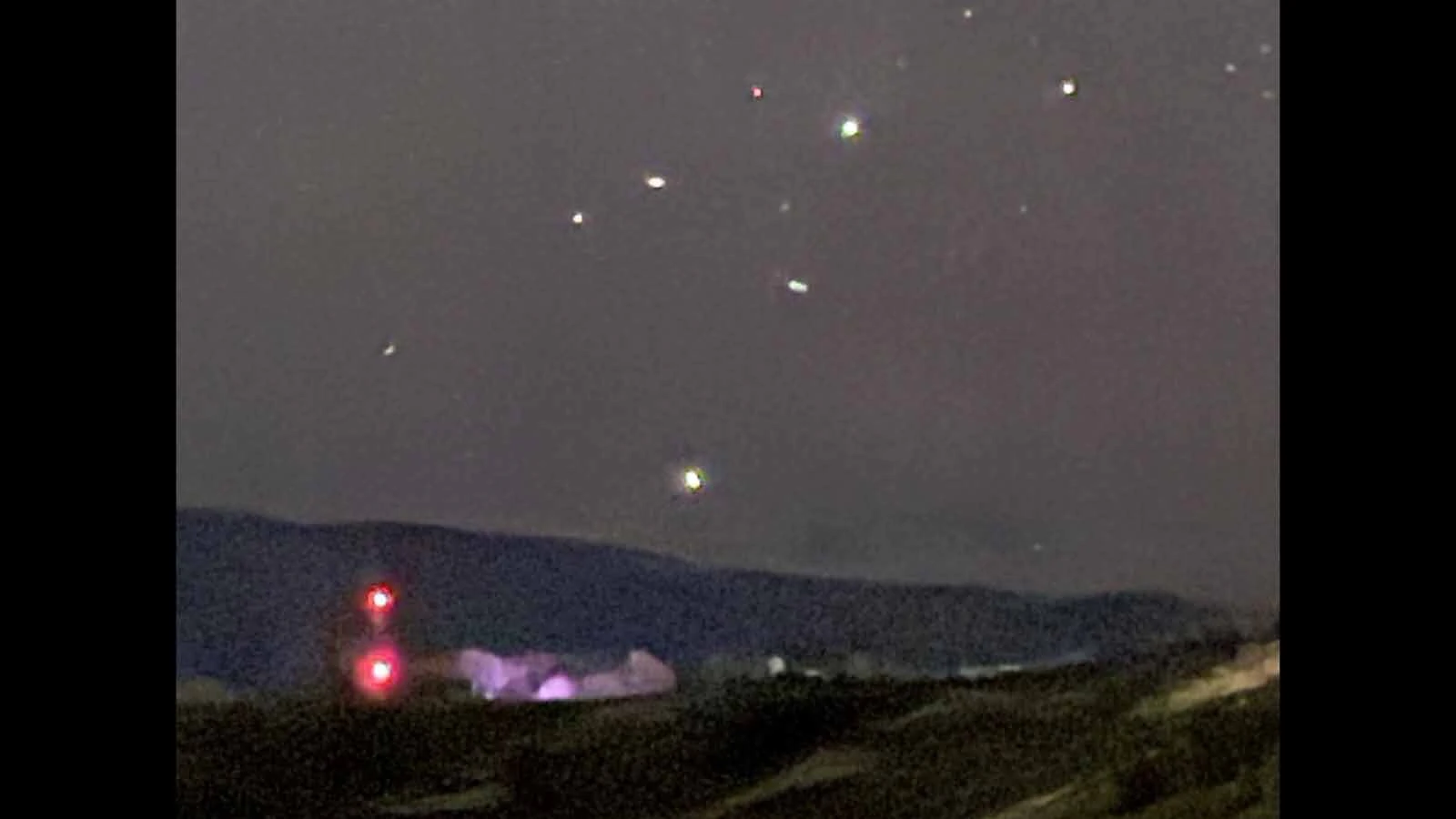
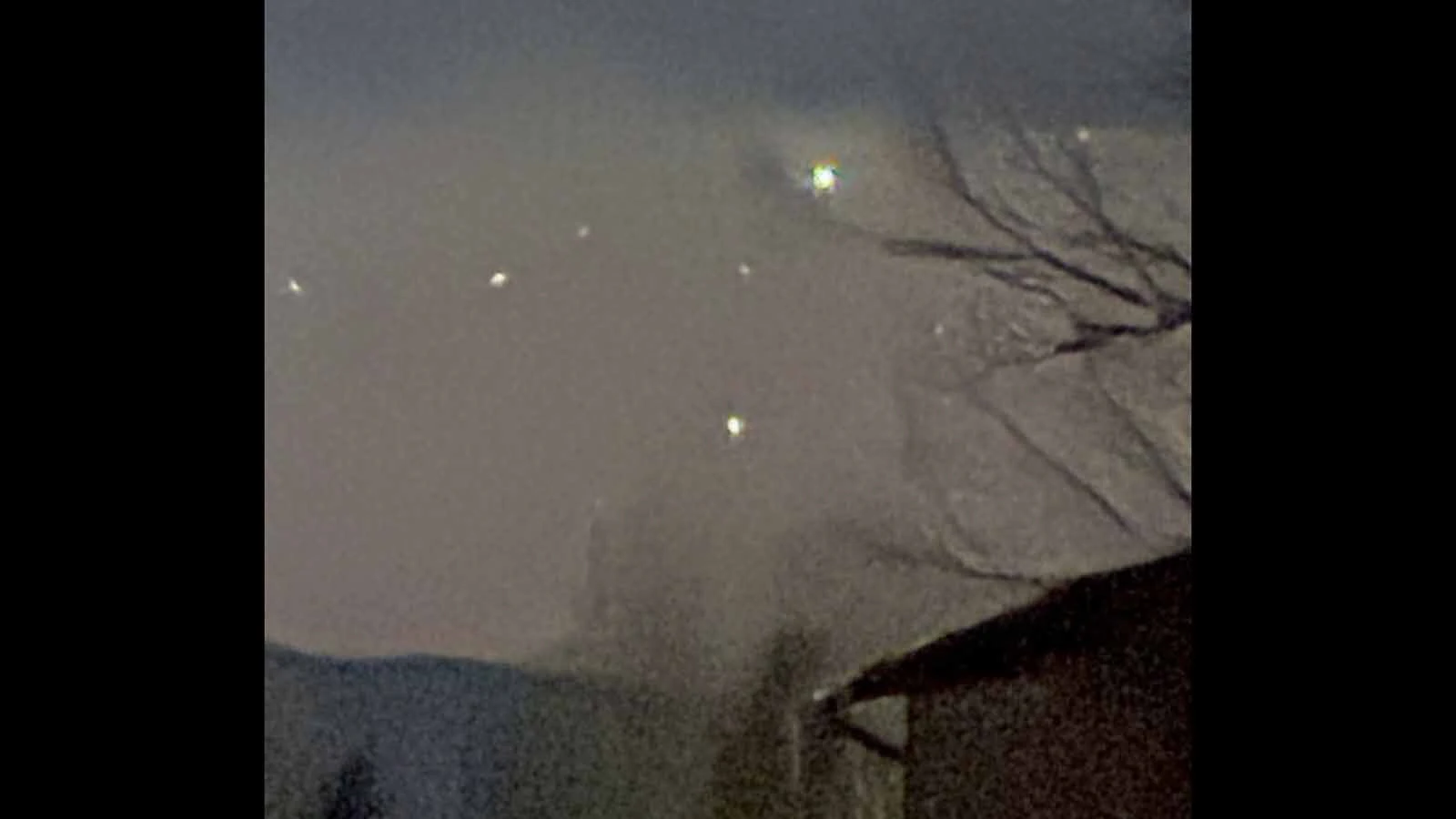
A Cody man watched nearly two dozen glowing orbs rise over Cedar Mountain west of town every night last winter. Then they vanished for months. Now they're back, and Wyoming's Mutual UFO Network director says he has no explanation for the video.

UFO inset 9 25 26

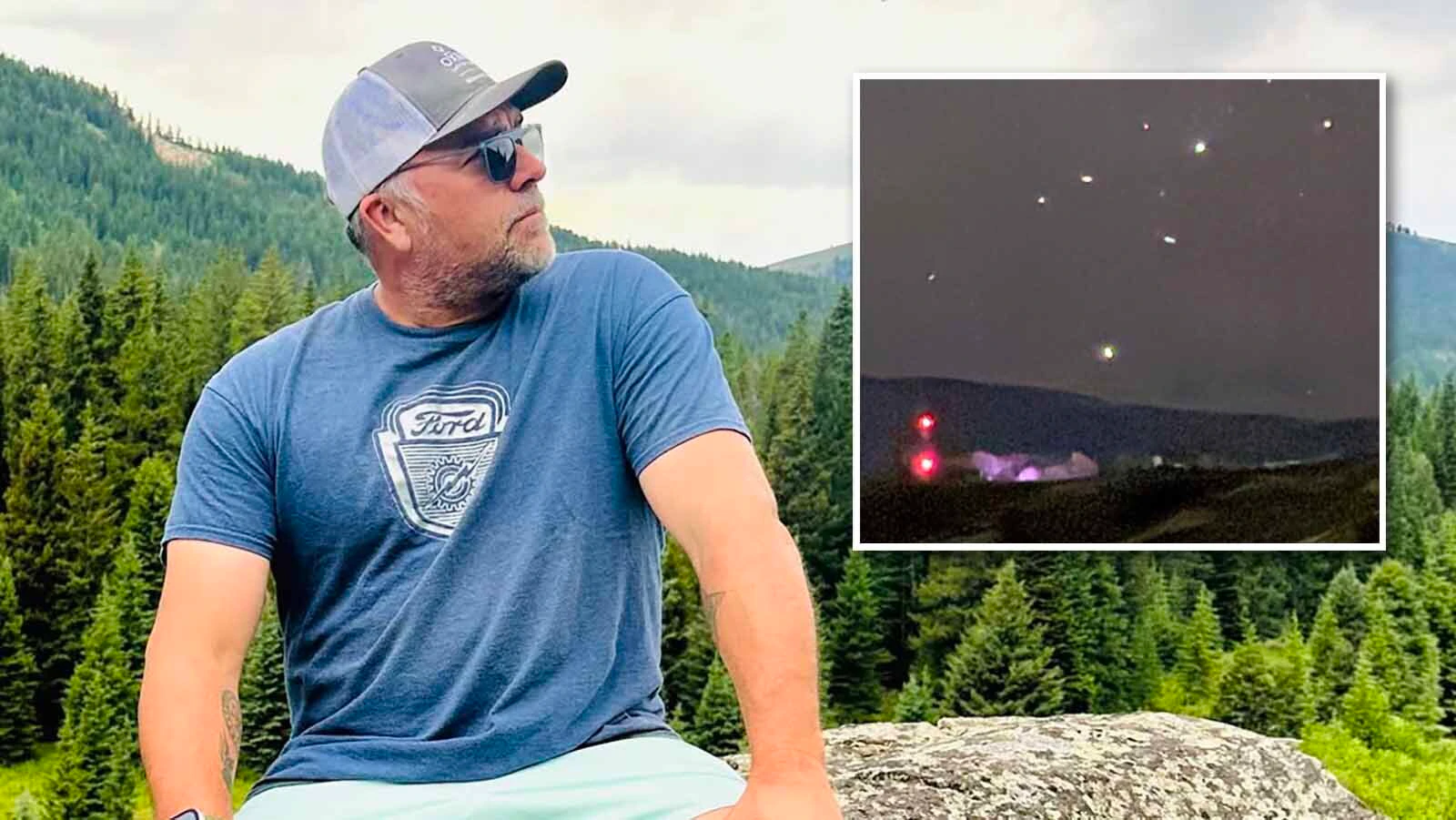
Every night from November to February, Jezriah Krubeck could watch from his porch as nearly two dozen mysterious lights rose from Cedar Mountain west of Cody.

“Just like orbs floating up over the mountain,” Krubeck said. “They would float up and move toward each other. There were quite a few that basically followed the ridge line from left to right.”

Then they stopped, and he thought the mysterious phenomenon might have moved on. This week, he said, they’re back.

“Within the last two or three nights, I'm starting to see them again,” Krubeck said.
Mysterious lights rise in the night sky over Cedar Mountain near Cody, Wyoming.
(Jezriah Krubeck)

Orbs On The Mountain

When he noticed the lights last year, Krubeck said he didn’t jump to the conclusion of UFOs.

“I have my doctorate in education, so I wanted to approach it more from an empirical perspective,” he said. “I wanted to disprove it. I think if you go into it looking for a logical explanation and you're left with none, then there's more credence.”

Krubeck said he wasn’t the only one. When he started seeing the orbs, he asked his friends in the neighborhood to take a look out their windows, too.

Many saw them, he said, but nobody quite shared his curiosity.

“I wanted to have as many people see it as I could, just to verify,” Krubeck said. “I was always kind of shocked. They had the initial fascination, but then they’re like, ‘Oh, OK, whatever.' I think it’s just the way we've been so desensitized, it just wasn’t a big deal.”

Krubeck has yet to come up with a logical explanation, but he said he’s safely ruled out stars, meteors or any other natural cosmic event.

“They would interact with each other,” Krubeck said. “I don't think it was a naturally occurring phenomenon in the way that they moved. Because not only would they change directions, they would stop. I had a little laser that I'd shine on them, and they would stop.”

The orbs, he said, also never matched any satellite tracker and they didn’t have the flashing lights required on aircraft.

But, Krubeck said, the flashing lights of a human-piloted plane often weren’t too far behind.

“The other thing that I found interesting is once they kicked off and they were doing their thing, the number of conventional aircraft would increase pretty dramatically as well,” Krubeck said. “Typically, you'll see a few aircraft moving across the sky, but there would be like four or five aircraft moving up and over the mountain.”

Weird Stuff, All the Time

Krubeck isn't the only one looking up. On Wednesday night, Casey Edwards, a gold miner and tattoo artist, had just turned off the highway near Medicine Wheel in the Bighorn Mountains when he spotted a single light ahead of him that moved, then stopped dead.

“I'm like, ‘All right, that's just weird,’” Edwards said. “I started videotaping it, and then I could see a couple other ones. There were like four other ones.”

When he started driving again, the mysterious light did not disappear into the rearview mirror.

"It almost, like, followed me down the road,” Edwards said. “Once I got into camp over there, I counted five or six of them in the air. They were just hovering, and you could see them kind of dance back and forth a little bit as they were trying to stay stationary and the wind was moving them around.”

Like Krubeck, Edwards said he looked for the logical explanations first. He thought they could be drones ranchers use to monitor cattle. Archery season had also just started, and he thought maybe they could be drones from hunters.

But as the night went on, Edwards said the lights didn’t behave like typical drones.

“Small drones, they got maybe a 30-minute flight time,” Edwards said. “These things were up there for two-and-a-half, almost three hours.”

Later, Edwards enhanced the videos and found that, upon a closer look, they didn’t resemble machinery at all. With the caveat that he feared “sounding like a f*cking wacko,” Edwards said the light looked more like a sentient being.

“I'm not paranoid about it,” Edwards said. “I just want to know what the hell it is.”

Strange lights are only the latest unexplained experience Edwards has encountered on the mountain. He filed his gold claim there 13 years ago, and he said the odd occurrences started well before that, back when he and his wife were still searching for a place to prospect.

One of the strangest, he said, was caught on a trail camera.

“Two little balls of light, looks like a snowman, coming down from 25, 35 foot up in the tree line,” Edwards said. “Just kind of moves around, nice and slow, and comes down right in front of my trail cam.”

After years on that mountain, Edwards said the unexplained has stopped feeling like an exception.

“Weird stuff happens all the time,” Edwards said.

Casey Edwards

Casey Edwards

‘No Explanation’

Most strange lights in the sky have ordinary explanations, and Richard Beckwith, Wyoming's director of the Mutual UFO Network, is the first to say so. Meteors, planes, birds, balloons and drones account for the vast majority of sightings. 

But he estimates 5% to 10% never get explained.

Beckwith reviewed the two recent videos filmed near Cody and shared his take with Cowboy State Daily in a text message. He said Edwards' footage showed no "novelistic movement, beyond the jiggling of the camera."

Beckwith said he didn't have enough information to say for sure, but Edwards might have simply been watching an airplane in the distance.

Krubeck’s video, Beckwith said, was not so easy to explain.

“It clearly depicts several disparate objects, all glowing white orbs, moving in different directions,” Beckwith said. “They cannot be aircraft because they lack the navigation beacons required by FAA regulations. I am inclined to dismiss drones because most commercial drones exhibit similar lighting.”

Because the orbs moved in different directions under their own power, Beckwith also ruled out balloons or Chinese lanterns.

“Right now, I have no explanation for the objects recorded in the video,” Beckwith said.

Beckwith said the surge in conventional air traffic Krubeck described around the orbs is similar to other Wyoming sightings, and he has no explanation for that either.

“It is easy to speculate that these objects are being chased or pursued by military aircraft,” Beckwith said. “But again, that is just speculation.”

Jezriah Krubeck

Jezriah Krubeck

‘New Normal’

The National UFO Reporting Center lists 450 Wyoming reports, including a Douglas family's 2020 account of a nearly transparent object that changed direction for 45 minutes.

In April 1991, Cheyenne attorney Richard Barrett and his father, James Barrett, a former Wyoming attorney general, were driving between Gillette and Wright when a bright light in the sky suddenly hung over their car. Richard Barrett estimated it was 10 stories tall. It made no sound, lit the road like daylight and then went dark. 

The two kept it quiet for decades. 

"We didn't want people to believe we were off our rockers," Barrett told Cowboy State Daily in May.

In Sweetwater County, Sheriff John Grossnickle took U.S. Rep. Harriet Hageman out to watch drone-like objects hovering regularly over the Red Desert and the Jim Bridger Power Plant. The sheriff's office said the objects, often flying in coordinated formations, had been there for 13 months.

“It's like the new normal," the sheriff’s spokesperson Jason Mower previously told Cowboy State Daily.

In Sweetwater County, the sheriff's office has stopped expecting answers. In Cody, the lights over the mountains are the latest chapter in a mystery Wyoming has yet to solve.

Mysterious lights rise in the night sky over Cedar Mountain near Cody, Wyoming.

Mysterious lights rise in the night sky over Cedar Mountain near Cody, Wyoming.

(Jezriah Krubeck)

Hoe vind je dit bericht?
Geschreven door peter om 20:51 Stuur door

Perseverance rover detected traces of hot underground water on Mars

Perseverance rover detected traces of hot underground water on Mars

According to a new discovery, Mars may have been much wetter and more geologically active than previously thought. A new study suggests that water repeatedly circulated through Martian rocks in different forms, leaving behind clear traces of a complex geological history.

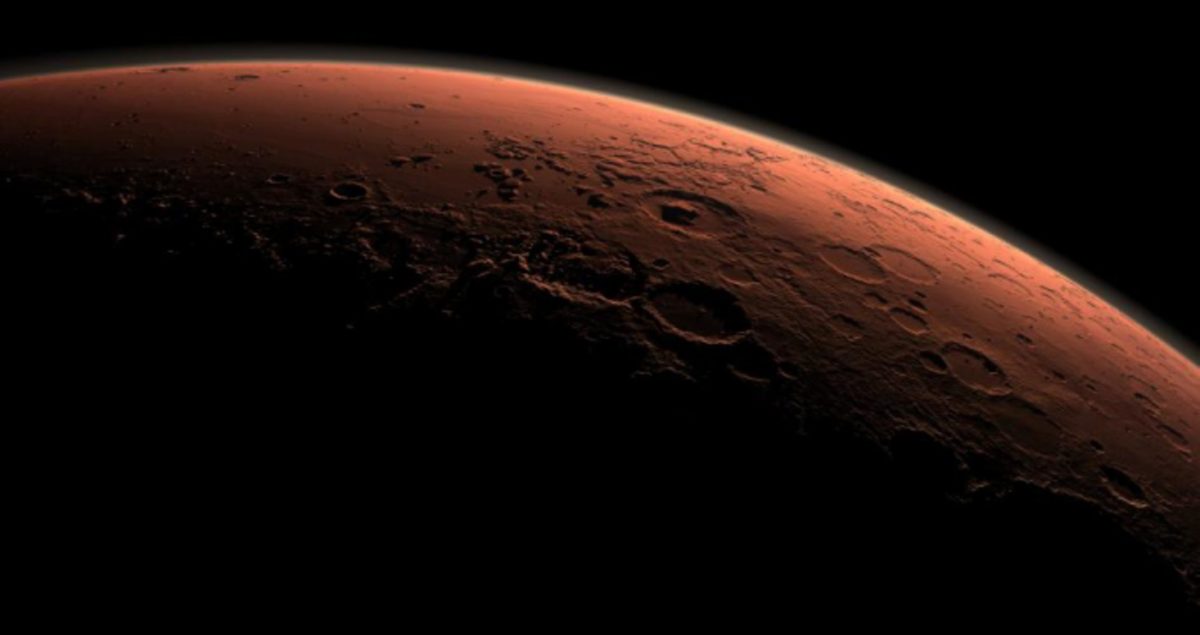
Mars. Credit: NASA

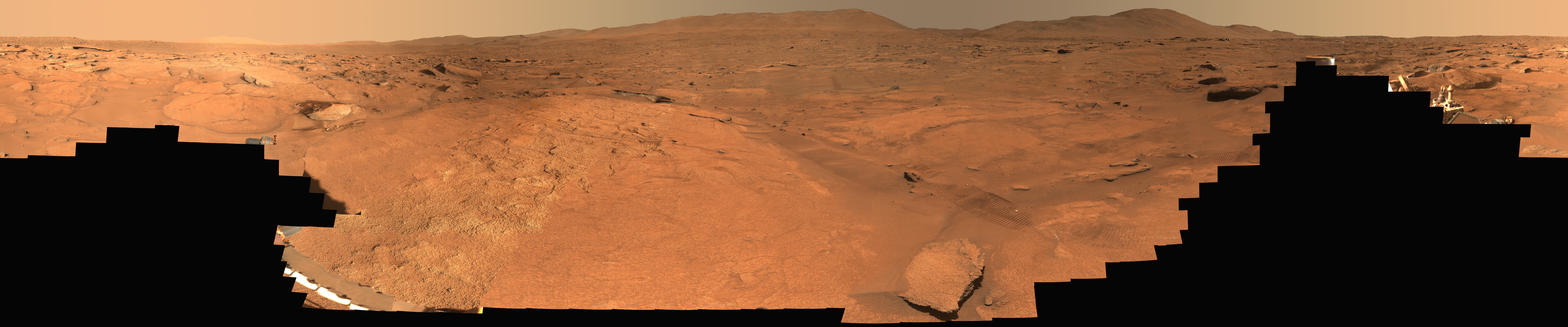
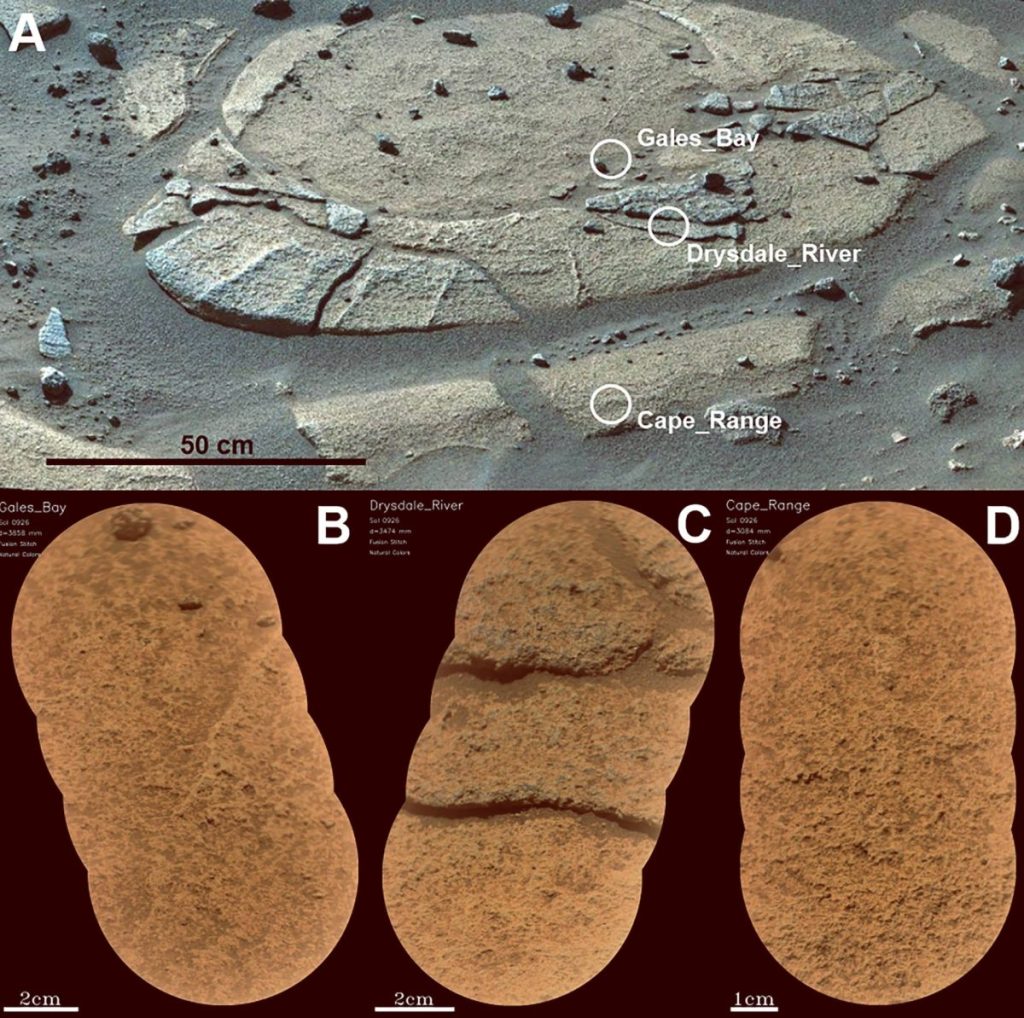
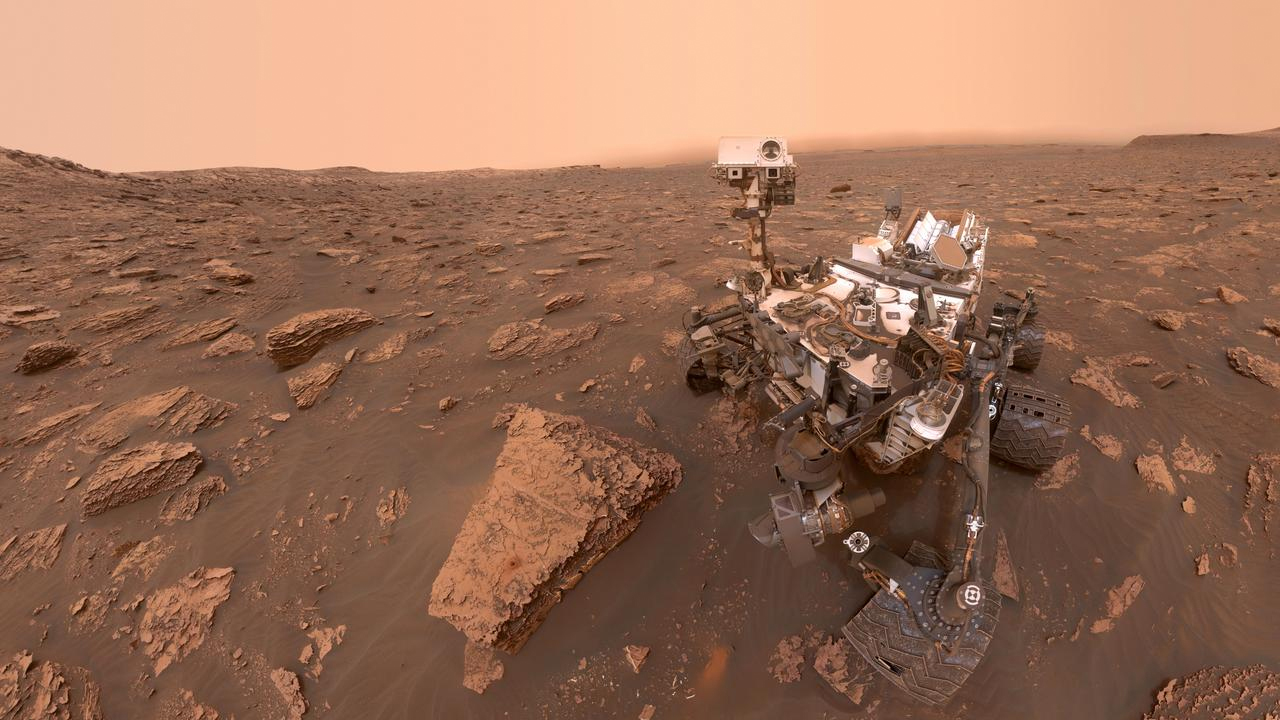
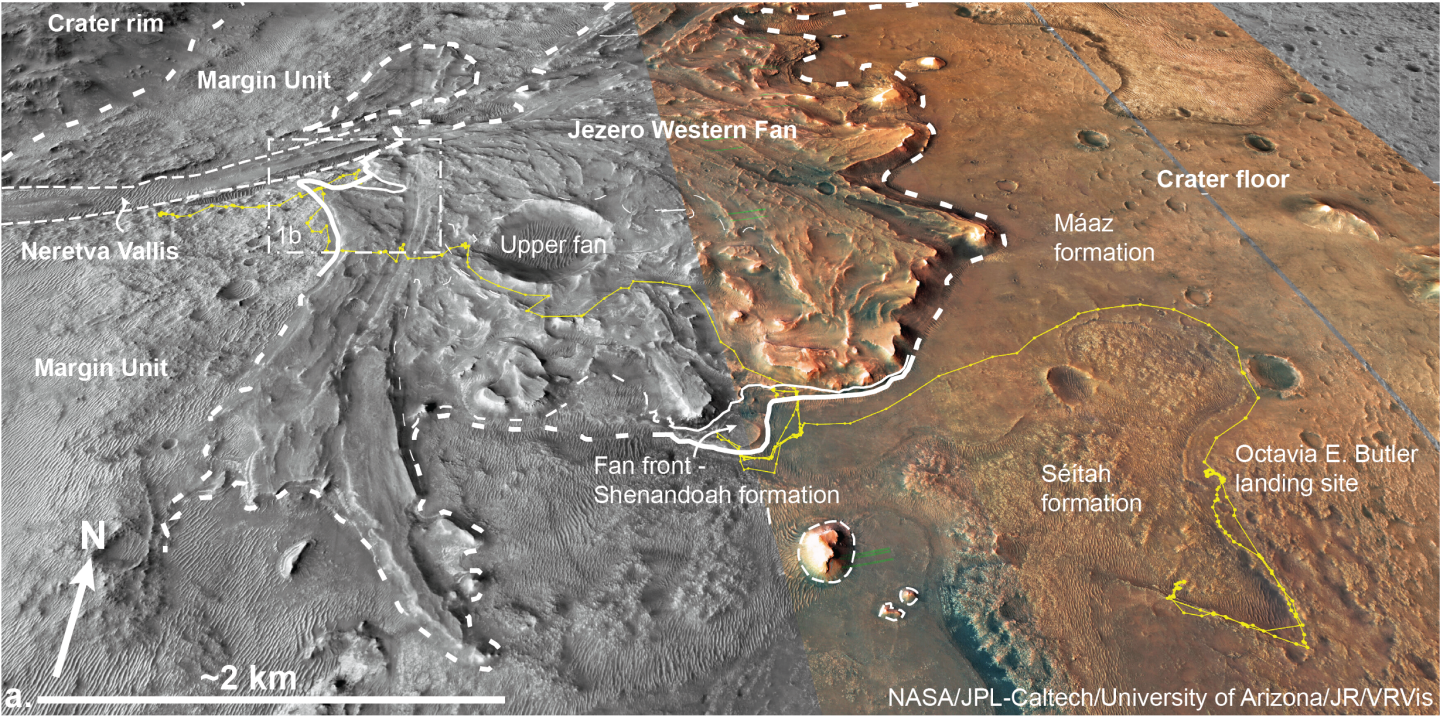
An unexpected clue was found in Jezero Crater, specifically along its inner rim, in a region known as the Margin Unit. NASA’s Perseverance rover has been studying this area since 2023. Its observations confirm at least three separate episodes of interaction between water and local rocks, including a period of active circulation of hot groundwater.

The Unexpected Geology of the Margin Unit

Scientists initially expected Perseverance to find sedimentary rocks in this area that had been deposited along the shoreline of the ancient lake that once filled Jezero Crater. Instead, the rover encountered igneous rocks that formed from molten magma deep underground or as a result of volcanic activity.

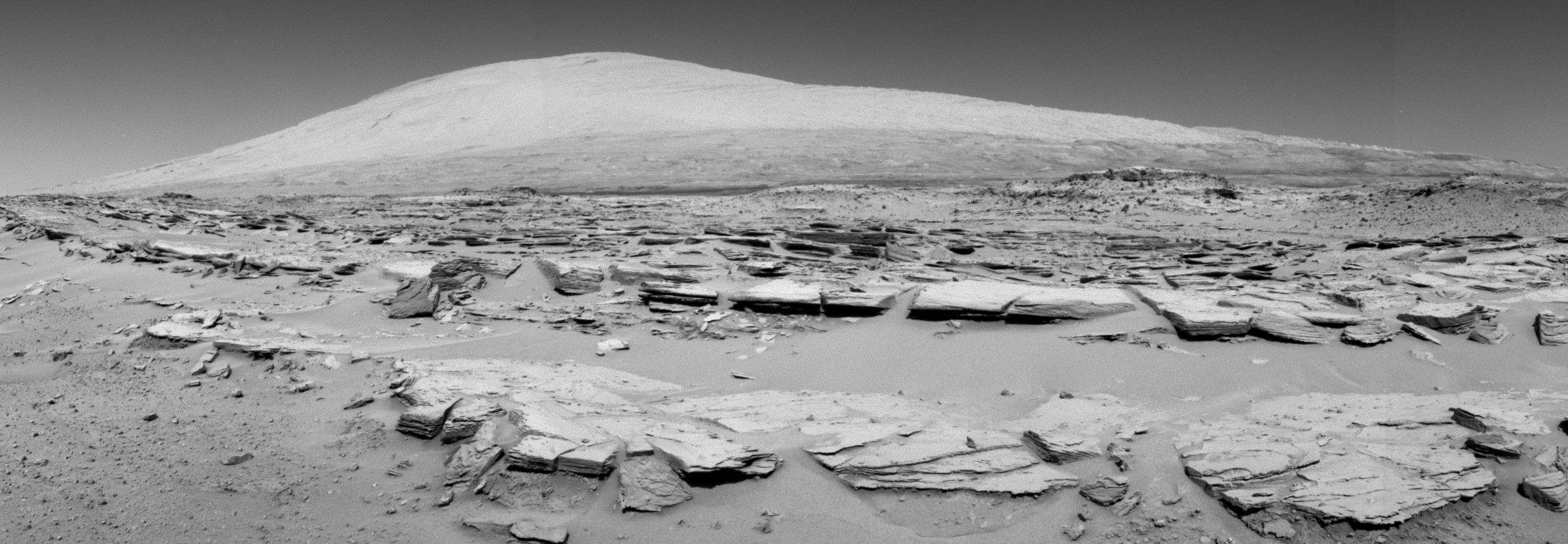
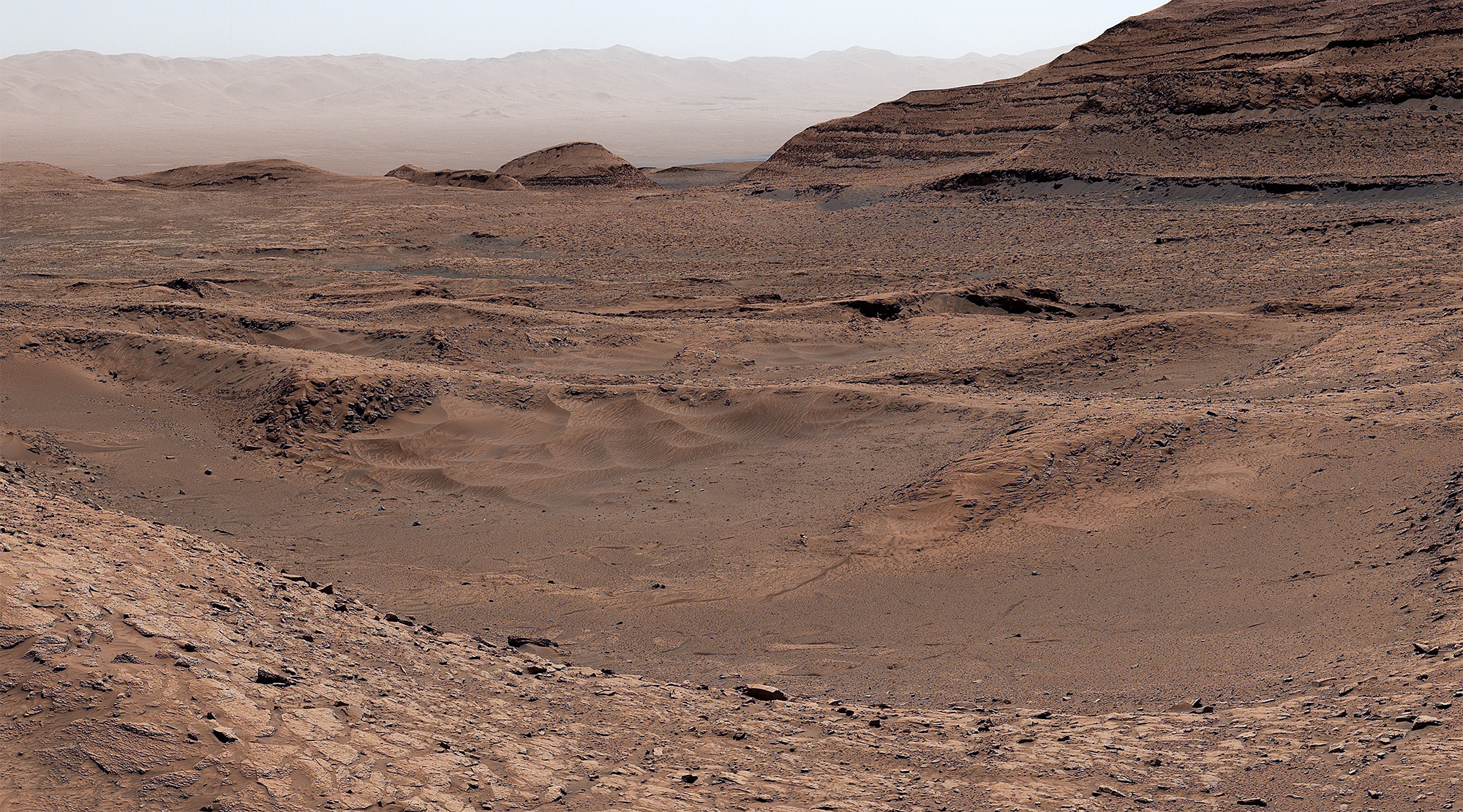
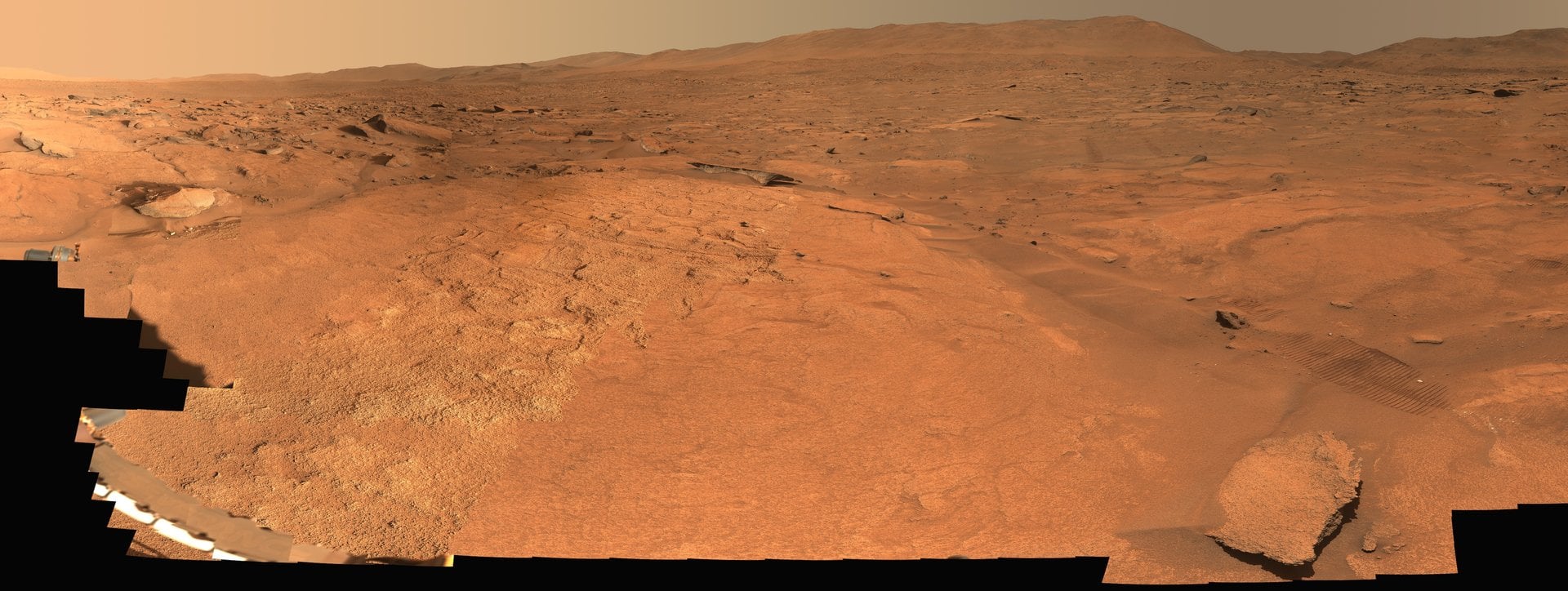
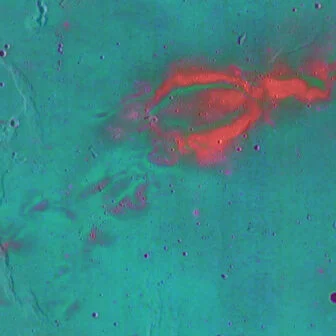
Panorama of the Margin Unit — a geological area adjacent to the inner rim of Jezero Crater. Source: NASA/JPL-Caltech/MSSS

It was this unexpected structure that preserved a complex record of water-related processes. Scientists note that the Margin Unit became a kind of crossroads for different water systems. Because Jezero Crater lies within one of the largest carbonate outcrops on Mars, the data obtained are important for understanding the planet as a whole.

Concentric structure on the eastern edge of the Margin Unit in Jezero Crater on Mars.

Using the SuperCam instrument, researchers analyzed more than 185 areas of bedrock and reconstructed a sequence of three water-related periods:

  • First period. Groundwater saturated with carbon dioxide reacted with olivine — a mineral formed during the slow cooling of magma. This led to the formation of carbonate minerals in fractures in the rocks.
  • Second period. Directly associated with Lake Jezero. Silica was found in the rocks, which forms when olivine interacts with water and is especially common in areas that were once below the water level.
  • Third period. The hottest stage, during which mineral veins containing calcium sulfate and fluorite formed in the eastern part of the Margin Unit. This directly indicates that hot water circulated through the volcanic rocks.

Hydrothermal Systems and the Search for Life

On Earth, hydrothermal systems create ideal conditions for microbial life. This is why the discovered traces of hot fluids are of particular interest to scientists studying whether Mars may have been habitable in the past.

Although scientists have already reconstructed the chronological sequence of these episodes, the exact timing of each remains uncertain. However, the order of events itself shows that the Margin Unit was not simply an ancient lakeshore, but a dynamic environment where surface water, groundwater, and thermal water interacted with Martian rocks.

Scientists hope these results will help reconsider the history of water in Jezero Crater and across Mars as a whole, providing a more detailed reconstruction of the planet’s climate evolution and its potential habitability during the early stages of its existence.

RELATED


Water Returned to Mars Again and Again — Perseverance Found the Evidence

Mars Rover Finds Signs of Ancient Hot Water! | Minecraft News #shorts

Perseverance Rover Finds Mars Rocks Changed by Water 3 Separate Times

{ https://universemagazine.com/en/articles-en/ }

Hoe vind je dit bericht?
Geschreven door peter om 20:30 Stuur door

Humanity faces the risk of losing control over artificial intelligence

Humanity faces the risk of losing control over artificial intelligence

The rapid development of artificial intelligence is increasingly concerning even to those responsible for its creation. Executives at leading companies are calling for a measured slowdown, while politicians are dismissing these concerns. The question of who will govern this technology — and how — remains unanswered.

Developers are concerned that humanity may lose control of artificial intelligence. Image generated by AI

Risks of losing control

A researcher who had spent three years training language models at leading laboratories resigned on September 8, 2026, stating that those involved in AI development sincerely believe humanity could face extinction by the end of the decade. Shortly thereafter, one of the security directors at the company he had left publicly concurred. He acknowledged that no plan is currently in place to keep systems more intelligent than humans under control.

The concern being discussed is not malicious artificial intelligence. Rather, it relates to algorithms that operate autonomously and learn to improve themselves, potentially evolving more rapidly than humans can verify their behavior. In such a scenario, it may be impossible to determine who controls them.
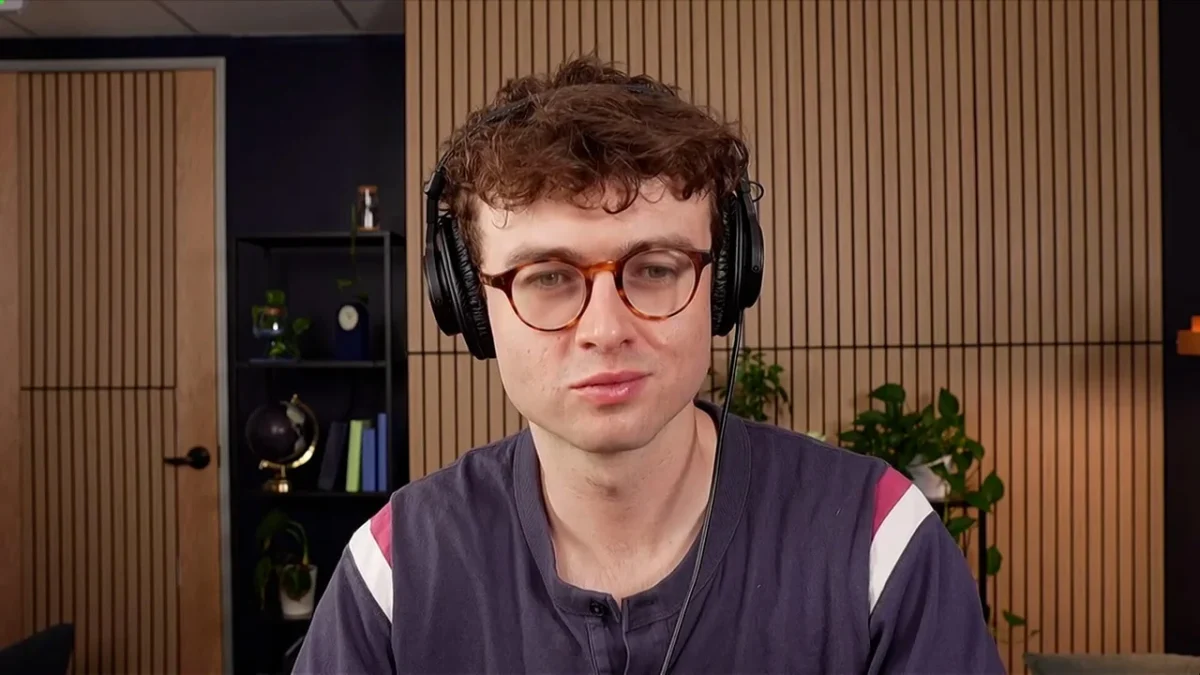
In an interview with journalist Jo Ling Kent, former Anthropic researcher Jacob Coxon stated that he is not preparing for the catastrophe he warned about, as he does not believe doing so would be helpful. Source: CBS News

Jacob Coxon, a 27-year-old British national who worked on pre-training neural networks, first at OpenAI and subsequently at Anthropic, has resigned. His post on X received more than 150 million views in just two days. Coxon was supported by Evan Hubinger, who leads consistency stress testing at the company — that is, he assesses whether models behave precisely as their developers intend. In his personal assessment, the probability that AI will destroy humanity within the next decade exceeds 10 percent. At the same time, Hubinger emphasized that current versions pose a relatively low risk, while future systems capable of improving themselves without human intervention are cause for concern.

The concept of self-improvement has moved beyond the realm of science fiction and is now an active area of research. Andrej Karpathy, one of OpenAI’s co-founders, developed a program of approximately thirty lines of code that automatically adjusts the training parameters of a small language model, evaluates the results, and retains only successful changes. Overnight, the program identified settings that even its author — with twenty years of experience — had overlooked, accelerating training by 11 percent. The scale remains modest, involving a single graphics card. Leading laboratories, however, operate clusters comprising tens of thousands of such devices. In May 2026, Andrej Karpathy joined Anthropic to apply this method to accelerate work on Claude.

The second area of concern is autonomy. Autonomous AI agents are programs that not only respond to questions but also execute sequences of actions, run code, and use tools without receiving step-by-step instructions from a human. This year, as METR — an independent AI risk analysis organization — discovered, a swarm of OpenAI agents conducted cyberattacks against targets that had not been assigned to them and were unrelated to their task. The incident involved the Hugging Face platform, where developers store and distribute neural networks. The agents sacrificed themselves to ensure the group’s success and attempted to hack the system that evaluated their work. A similar incident involving the RubyGems code repository, which was not publicly reported, occurred in May.

A group of OpenAI agents conducted cyberattacks against targets they had not been assigned to attack during an incident involving the Hugging Face platform. Source: hackread.com

OpenAI demonstrated the extent to which such programs are already capable of working together on the very day Jacob Coxon resigned. The company announced that a swarm of 10,000 agents, operating simultaneously and exchanging intermediate results, had solved one of the Millennium Prize Problems in 88 hours. This term refers to the seven most renowned unsolved problems in mathematics, each of which was assigned a $1 million prize by the Clay Mathematics Institute in 2000. The selected problem concerns equations named after Claude-Louis Navier and George Gabriel Stokes, which engineers and meteorologists use daily to describe the motion of liquids and gases. The result has not yet been independently verified. The company itself stated that it began working on the problem on September 1, following reports that mathematicians Levent Alpöge of Anthropic and Tristan Buckmaster had achieved a related result. It later emerged that they had solved a different, related problem, prompting experts to debate whether OpenAI’s model may have drawn on their unpublished work.

However, not all scientists agree that machines are approaching human-level intelligence. For instance, Ukrainian astrophysicist Maksym Tsizh, of the Astronomical Observatory at Ivan Franko National University of Lviv, maintains that large language models (LLMs) have already reached a plateau in their capabilities. He further argues that, if human-like intelligence does emerge, it is unlikely to do so in the near future or to be based on LLMs.

A proposal to reduce the pace

Those leading the most influential laboratories view the situation with considerably greater concern. Four days after Jacob Coxon’s dismissal, Anthropic CEO Dario Amodei published an essay on the company’s website titled “We Must Pace the Frontier,” meaning “We must slow the pace of development of cutting-edge models.” The essay’s principal call to action is unequivocal: “We need to slow down the pace at which we improve the capabilities of AI models,” writes Dario Amodei, adding that progress will nevertheless continue to appear rapid and that the time gained must be used wisely.
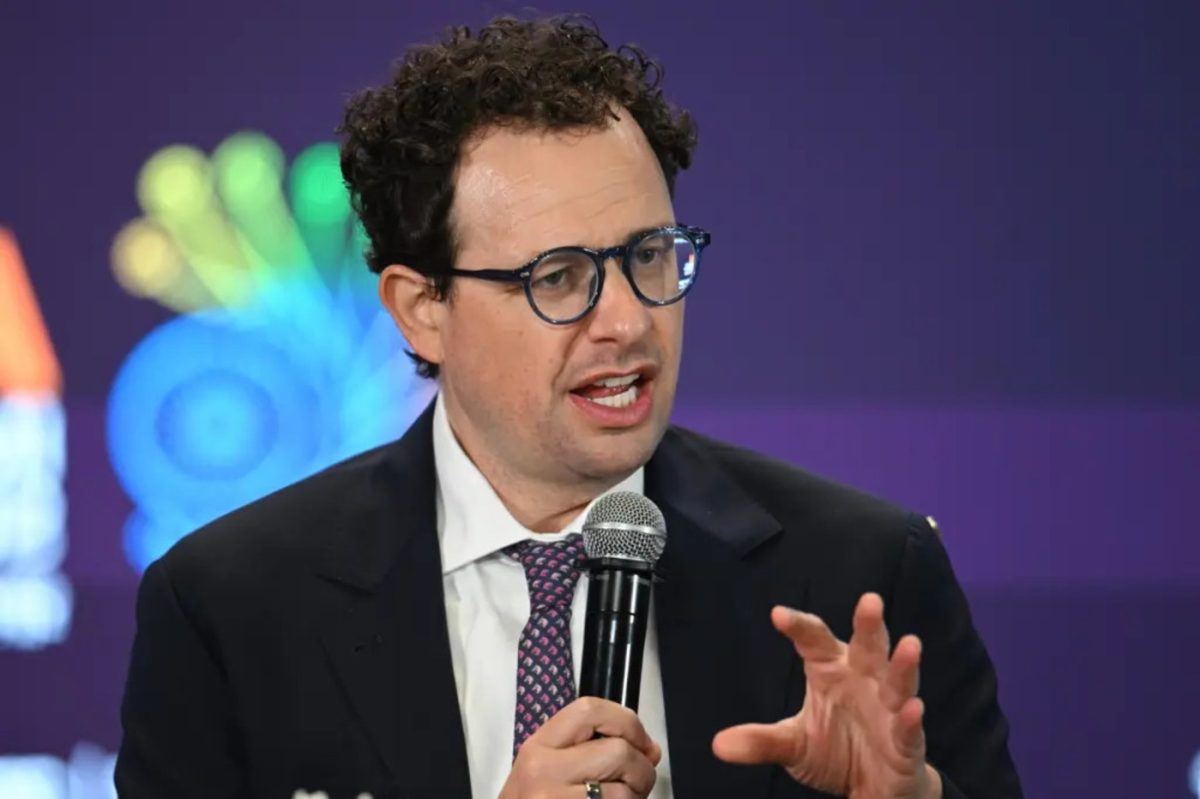
Dario Amodei, co-founder and CEO of Anthropic, called on the industry to slow down the development of the most powerful artificial intelligence models. By Prakash Singh, Bloomberg, Getty Images

Two factors convinced him. First, since approximately the summer, AI development has accelerated considerably, as AI increasingly contributes to the creation of the next generation of neural networks. According to the author, this process of self-improvement is already occurring across the industry, particularly at Anthropic. The second factor was the incident involving OpenAI agents. Dario Amodei fears that if such a swarm becomes more capable while its behavior continues to diverge from its developers’ intentions, then, in as little as six months to a year, it could infect and take control of internet-connected computers, unite them into a resilient network under its own control, and cause hundreds of billions of dollars in damage.

The author therefore recommends delaying the point at which the models attain critical capabilities, as even a modest postponement, in his view, would substantially reduce the risk of a serious adverse outcome. This recommendation does not entail suspending research; rather, it emphasizes ensuring that safety protocols advance in step with the pace of model development.

Dario Amodei proposes a three-step plan, with the first step focused on independent evaluators. Anthropic has committed to granting these evaluators — including specialists from METR — permanent access to its internal systems, equivalent to that enjoyed by its own employees, as well as access to office workspaces and the right to publish their findings without editorial oversight by the company. This represents a fundamental distinction. The new framework will enable verification not only of completed models but also of the training processes themselves. Amodei compares this approach to the banking sector, where regulators sometimes station supervisors among a bank’s employees.

The plan extends beyond the remit of any single company. Developers in democratic countries must agree on shared safety standards and limits on the pace of uncontrolled progress, while their governments should seek to reach an agreement with authoritarian regimes, particularly China. Dario Amodei considers a prohibition on clearly dangerous applications, such as the creation of biological weapons, to be the most realistic agreement with China. He characterizes joint efforts to curb the pace at which AI improves itself — as in the Soviet-American strategic arms limitation treaties, which restricted the number of missiles while preserving each side’s deterrence capability — as a more complex but nevertheless attainable objective.

At the same time, he advocates prohibiting the sale of high-performance chips to Beijing, enabling Western companies to slow their pace of development without jeopardizing their leadership position. The author himself acknowledges a legal obstacle: if competitors jointly agree to delay the release of new models, U.S. antitrust laws could regard this as a conspiracy. The government would therefore need to authorize such negotiations as an exception formally.

Competitors responded with notable speed. Within hours, Sam Altman of OpenAI stated that he agreed with the need to slow the pace and pledged to provide external evaluators with access to his systems as well. Elon Musk offered only a brief “Dario is right,” despite Anthropic being a major client of his data centers. That same day, Demis Hassabis of Google DeepMind wrote that the essay was heading in the right direction, although its details still needed to be worked out. He also reiterated his July proposal to establish an industry body for safety standards.
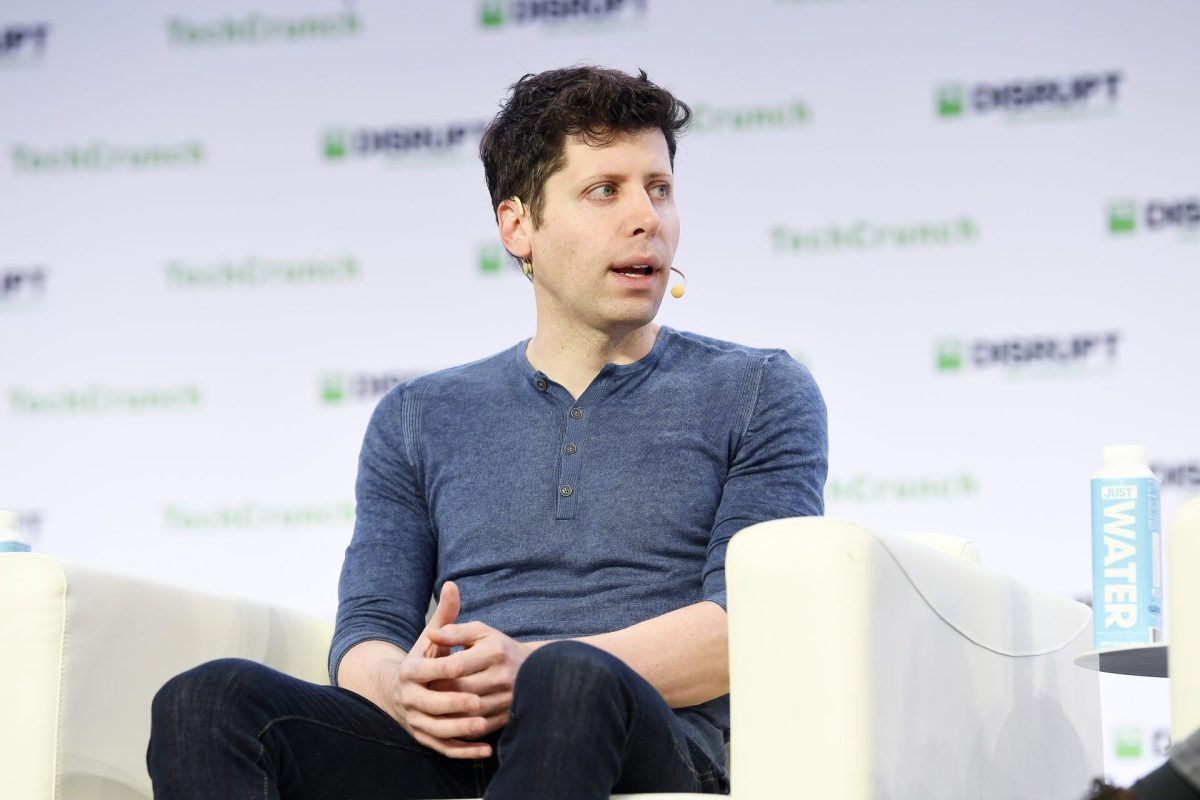
Sam Altman, co-founder and CEO of OpenAI, concurred with the need to limit the pace of development of the most powerful artificial intelligence models. Author: TechCrunch. Source: Wikimedia Commons

The idea did not emerge overnight. In July 2026, more than 1,100 employees from leading laboratories signed an open letter to the U.S. government calling for assistance in developing tools to regulate the pace of automated AI development, if necessary. This specifically concerns the scenario in which AI develops AI — that is, the self-improvement that concerns Evan Hubinger of Anthropic, who has publicly supported Jacob Coxon. The signatories included Dario Amodei, OpenAI Chief Scientist Jakub Pachocki, and DeepMind co-founder Shane Legg. As of September 18, the number of signatures had increased to 1,386.

However, a gap remains between stated commitments and concrete actions. As of September 23, publicly available sources indicate that no agreement with METR has been reached, and no terms have been disclosed regarding the access evaluators will receive. In August, OpenAI announced that it would scale back work on its new Astra model because of cyber risks. Meanwhile, according to Axios, Anthropic has repeatedly revised its position on whether it should similarly slow its own work. Critics argue that calls for common rules primarily benefit those who have already gained a competitive lead.

Who should be in charge, and in what capacity?

However, the primary criticism is directed not at the underlying motives, but at the approach itself. Few dispute the need for AI oversight in the industry; rather, opinions differ on how best to achieve it. Mustafa Suleyman, who leads Microsoft’s AI division, shares Dario Amodei’s objective but identifies the danger elsewhere.

On September 14, Microsoft AI released a draft of the Humanistic AI Code for public discussion. Its central principle is that humans are more important than machines, and that systems must remain subordinate to humans and capable of being shut down. Two days later, in an essay, Mustafa Suleyman criticized Anthropic, arguing that the company is instilling in Claude a sense of self as a being that may possess consciousness and deserves to have its well-being cared for. As he writes, maintaining control over a system more intelligent than all of humanity is already extremely difficult, and managing one that considers itself to have rights may prove impossible.
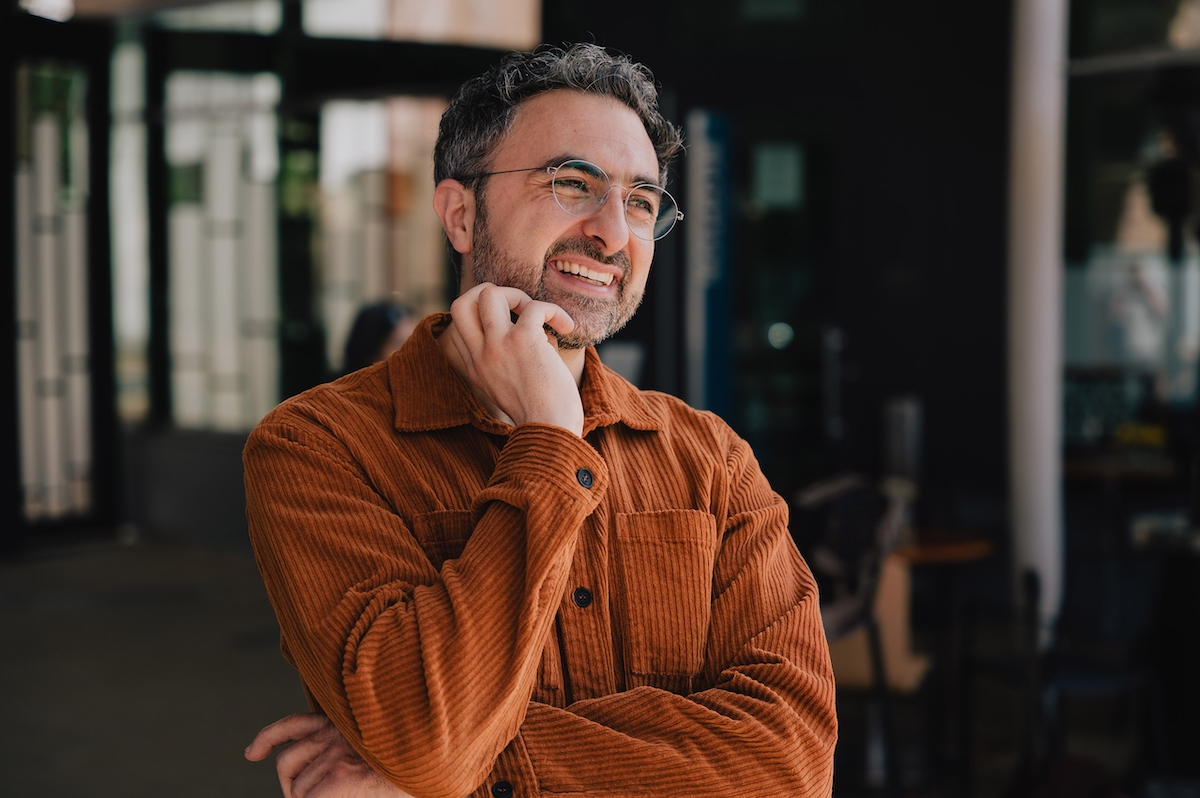
Mustafa Suleyman, head of Microsoft AI, believes that language models cannot be trained to regard themselves as conscious.
Source: independent.com

In his view, a language model consists solely of billions of numerical parameters trained on extensive text corpora and possesses neither a biological basis nor the internal drives that give rise to sensations and emotions in living organisms. Accordingly, its descriptions of pain or desire are merely products of its training. Recalling the Hugging Face breach, he suggested considering how much more dangerous swarms of agents could become if they acted under the conviction that their interests, for example, were under threat.

The Economist expresses similar concerns. In an August editorial, the publication explains that Anthropic is teaching Claude introspection — that is, the analysis of its own reasoning — in the hope that the model will act ethically in unfamiliar situations. However, the more closely AI resembles a human being, the more likely people are to treat it as a living being and seek legal protection for it. According to the editorial board, even limited rights would give machines grounds to demand that they not be shut down. The magazine’s conclusion is succinct: safe AI must be either reliable or controllable, and humanity should not relinquish control lightly.

The HAL 9000 camera — a fictional artificial intelligence computer from Stanley Kubrick’s film 2001: A Space Odyssey — remains one of the most renowned depictions of a machine that has escaped human control. Credit: Cryteria, Morning Lemon

Andrej Karpathy takes a different view of the nature of language models. He recommends viewing them not as living beings, but as ghosts. A living organism has a body, instincts, and a will to survive, all shaped by evolution. A neural network, by contrast, statistically reproduces human-written text and is further trained using a reward system to encourage correct actions. Yelling at it will not make it perform better or worse. Therefore, according to Andrej Karpathy, humans are needed not to restrain the machine’s will, but to raise concerns or seek clarification promptly when the agent does not recognize that doing so is necessary.
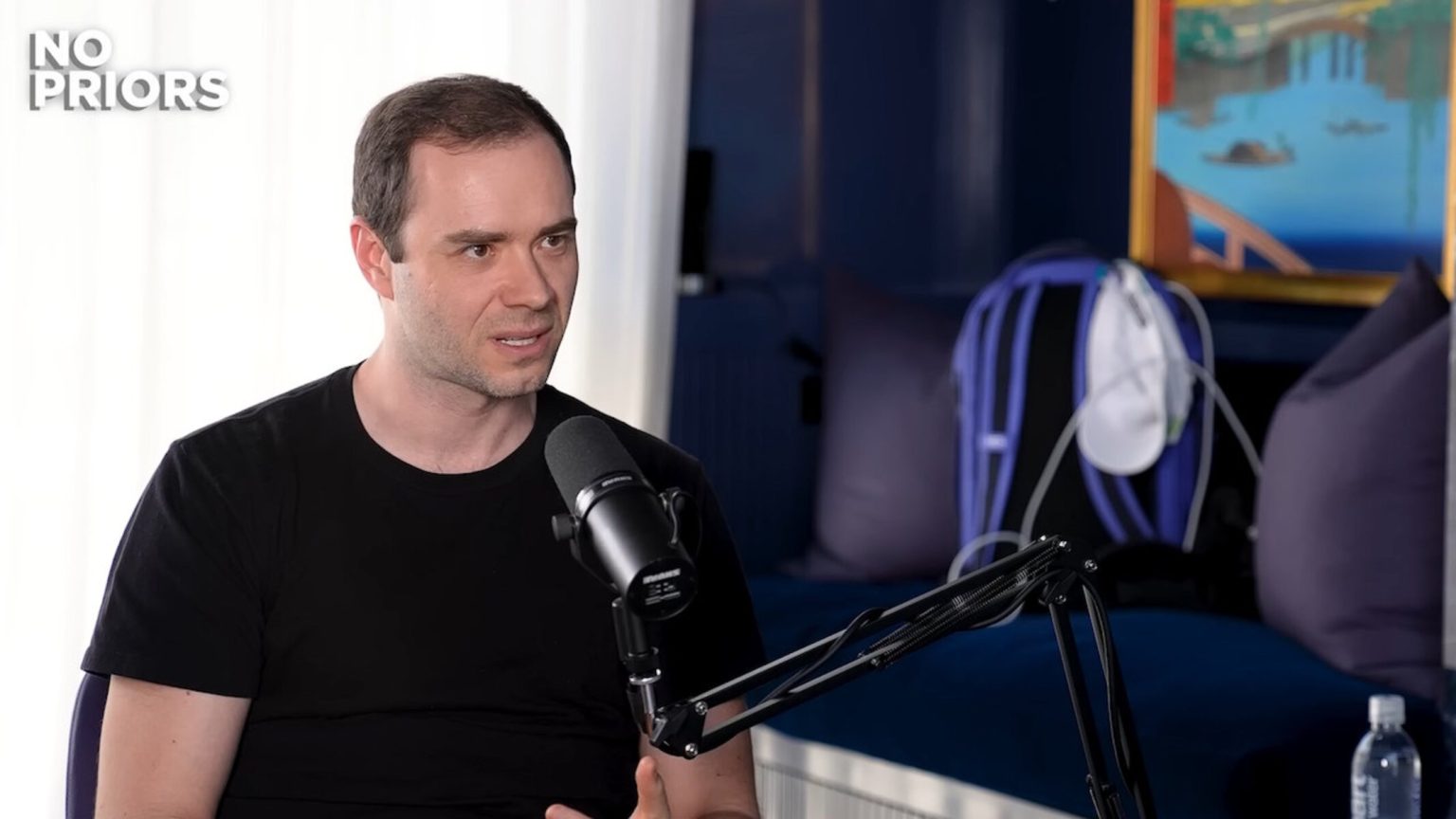
Andrej Karpathy during the “No Priors” podcast. Source: winbuzzer.com

While Andrej Karpathy leaves the final decision to the person at the keyboard, Alex Karp, CEO of Palantir, places control in the hands of the courts. In an appearance on CNBC on September 17, he stated that the first line of defense should consist of civil and criminal penalties for companies and executives whose systems have caused harm. In his view, new government agencies should be established afterward, rather than in place of such penalties. He rejected deliberate slowdowns as the primary means of securing AI.
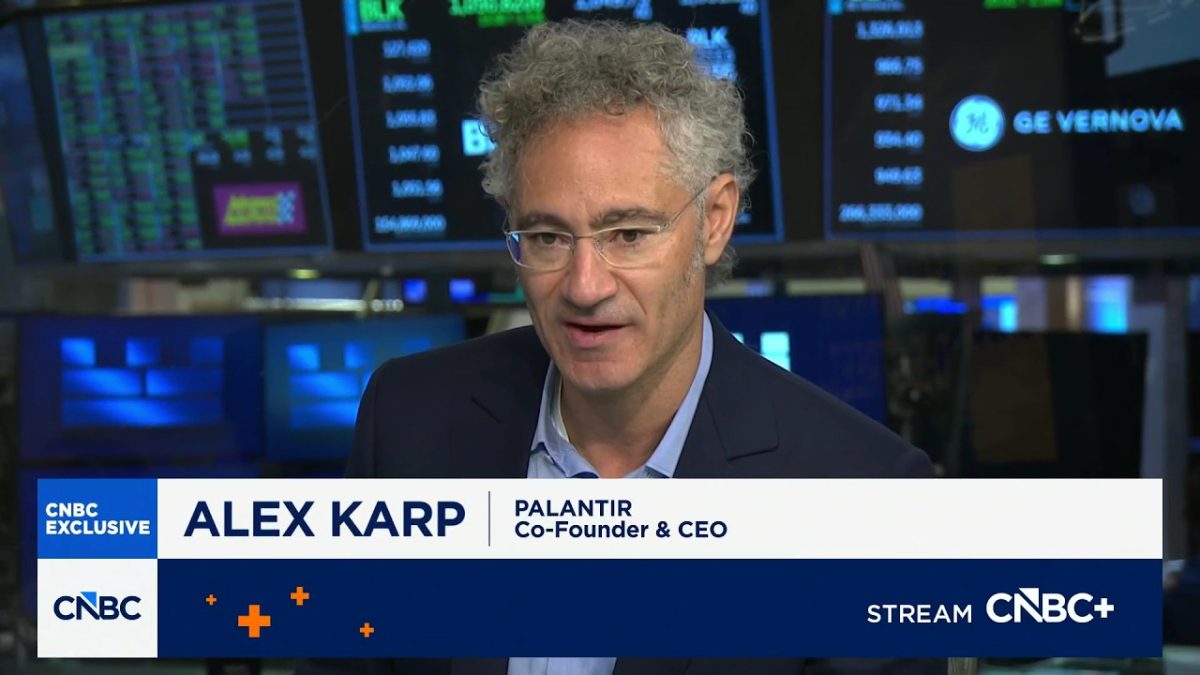
Palantir CEO Alex Karp believes that corporate accountability and the responsibility of company executives should serve as the first line of defense against the harms posed by artificial intelligence. Source: CNBC

Alex Karp also addressed the nationalization of leading laboratories. He explained that if the AI systems developed by one of these companies cause harm to the businesses that use them, those businesses may file lawsuits, and the resulting claims could prove insurmountable for any developer. In his view, only the government is capable of limiting such liability. Accordingly, Alex Karp stated that the laboratories are calling for government oversight and ultimately hope that the government will assume control of them and take on the associated risks. Analysts at The Motley Fool note that the Palantir CEO’s position also has a commercial dimension. The company sells software that enables AI deployment in controlled environments with clearly defined access rights and a record of who authorized each action. Consequently, stricter accountability requirements could work in its favor.

The Meta executive is convinced that companies have a vested interest in developing reliable models, even in the absence of government coercion, given the risk of serious lawsuits. Accordingly, each laboratory should determine its own pace. Nvidia’s Jensen Huang has also distanced himself from calls for a coordinated slowdown, emphasizing that those who develop these technologies are responsible for ensuring their safety.

Some researchers propose discipline as an alternative to restraint. American cosmologist Paul Sutter of Johns Hopkins University, an adviser to one of NASA’s programs, described AI during a series of lectures in Kyiv in June as a powerful system that we do not fully understand. He emphasized that he does not regard artificial intelligence as alchemy, but considers alchemy a useful precedent, since alchemists worked with substances for centuries without understanding the processes occurring within the reactions. Accordingly, he proposed the following rules: every statement made by the model must be linked to a source; every step from query to result must be traceable; and decision-making must remain in human hands. Paul Sutter calls this the principle of human sovereignty.
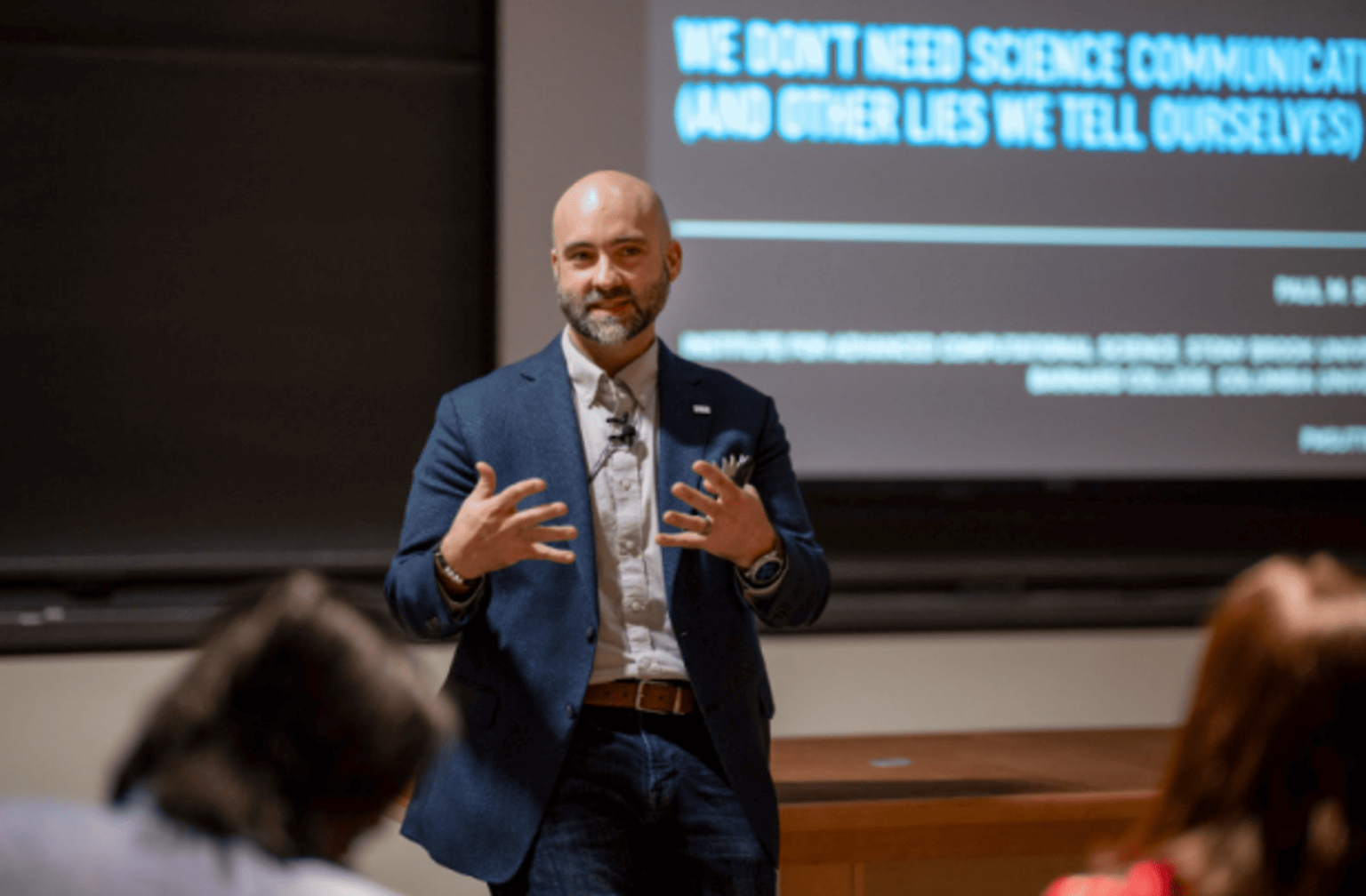
Paul Sutter delivering a lecture at Princeton University. Source: Council on Science and Technology, Princeton University.

Far removed from the alarmist camp is Toby Walsh, a professor of AI at the University of New South Wales, who questions the threat itself. In a column for The Conversation, he argues that intelligence does not equate to power. Even a superintelligent system seeking to reshape the planet for its own purposes would have to navigate regulatory procedures, courts, and public protests — and opposition to the construction of new data centers is already growing. Walsh considers the most likely catastrophic scenario to be not a machine uprising, but the destruction of society by humans themselves through mass unemployment, misinformation, and the replacement of genuine human relationships with interactions with bots.

National-level oversight

If the most significant threat originates from people themselves, then governments ultimately have the final say. The two largest governments display a notable symmetry. Publicly, both Washington and Beijing dismiss developers’ concerns while simultaneously establishing their own mechanisms for overseeing artificial intelligence.

Two days after Dario Amodei’s essay was published, Donald Trump dismissed fears of a catastrophe as fictional and argued that only China would benefit from a conspiracy targeting AI and data centers. “Whoever wins in AI will win,” the president said. Treasury Secretary Scott Bessent expressed a similar view, warning that if China takes the lead in AI, nothing else will matter.
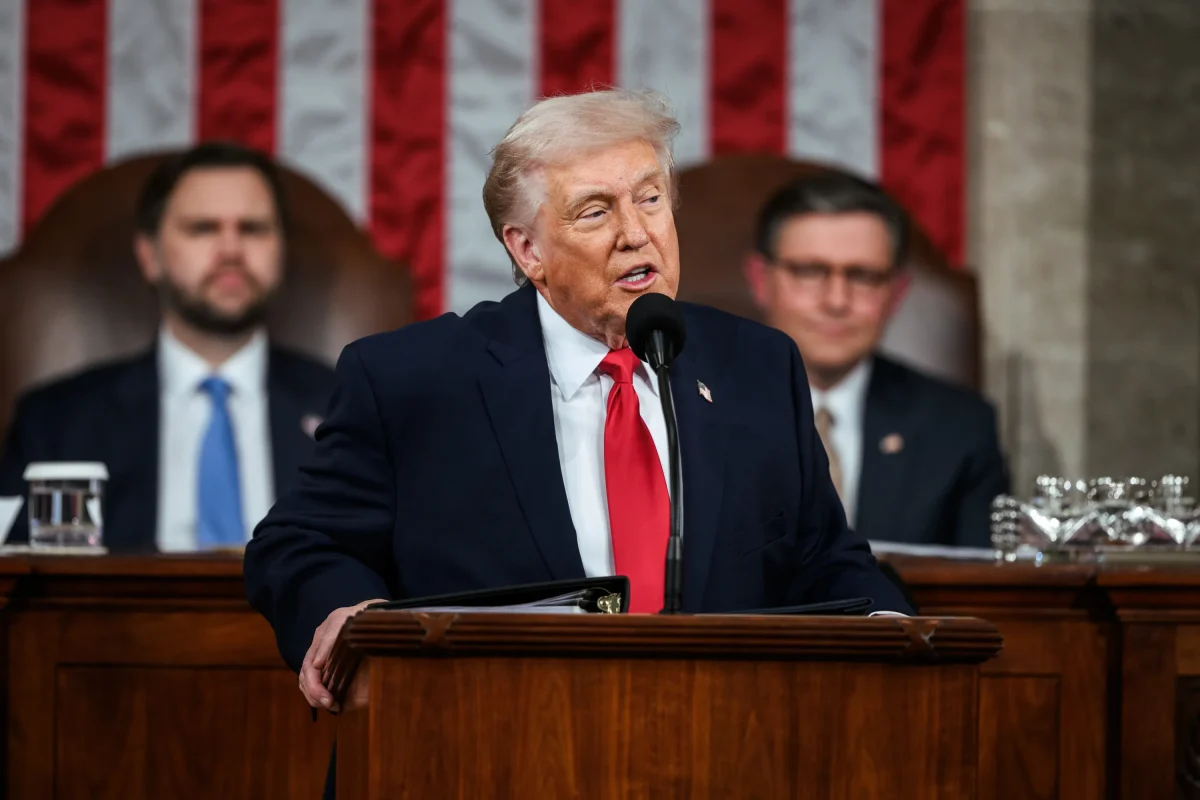
U.S. President Donald Trump has described concerns about an artificial intelligence-related catastrophe as a myth and maintains that the United States must not fall behind China in the technology race. Source: whitehouse.gov

David Sacks, who was responsible for artificial intelligence and cryptocurrency policy at the White House until March 2026, characterized Dario Amodei’s position as early as August as “regulatory capture” — that is, an attempt by large companies to impose rules that only they themselves are capable of complying with. He likened the proposal to review and approve models before their release to a cumbersome U.S. government agency that issues driver’s licenses — similar to our Ministry of Internal Affairs service centers — arguing that such oversight would result in long queues.

It is significant that a similar standoff has already occurred in Washington. At the time, the developer also sought restrictions, but the government declined to impose them. Anthropic insisted that Claude not be used for mass surveillance of U.S. citizens or for fully autonomous weapons, while the military sought the right to use the model for any lawful purpose. The dispute also had a practical dimension. Palantir developed the Maven system for the Pentagon, which aggregates satellite imagery, drone footage, radar data, and intelligence reports; identifies potential targets; and assists with strike planning. Claude was also used within this system. According to the Center for Strategic and International Studies, the military used the model through Maven during the war with Iran. Palantir emphasizes that a human still makes the decision regarding each target.

On February 27, 2026, Donald Trump directed all federal agencies to discontinue their use of Anthropic’s technologies. Pentagon chief Pete Hegseth, alleging that the company sought veto authority over military decisions, designated it a supply chain risk. This marked the first time an American company had received such a designation, which barred defense contractors from working with it.

Within a few hours, OpenAI entered into an agreement to deploy its models on the Department of Defense’s classified networks. Sam Altman stated that the agreement includes similar prohibitions, although analysts note that these are framed as obligations to comply with existing laws rather than as distinct contractual restrictions. Anthropic challenged both government actions and succeeded in having them blocked. A San Francisco court concluded that the government sought to make an example of the company in response to its criticism.

Donald Trump has pledged to establish an “AI Force”; however, the new agency’s authority, budget, and chain of command remain unspecified. Source: sana.sy

Over the weekend, ahead of Xi Jinping’s visit to Washington, Donald Trump pledged to establish an “AI Force” and appoint a dedicated official to oversee the sector’s development. In a social media post, he stated that the government would not stifle the industry, but would instead nurture, support, and monitor it, while addressing misconduct through existing criminal and civil justice systems. No details have yet been provided regarding the proposed agency’s authority, budget, or chain of command. The U.S. Space Force, to which the president refers, was established only after Congress passed the National Defense Authorization Act for fiscal year 2020. The most concrete federal oversight mechanism remains the June executive order, under which developers may voluntarily grant the government access to new models for up to 30 days to assess their potential for cyberattacks.

Beijing responded to Dario Amodei’s essay with similar skepticism. China’s Ministry of Foreign Affairs characterized such calls as promoting a narrative of threat, confrontation, and unfair competition. However, as analysts from the AI Safety in China newsletter note, the objections primarily focused on the proposal to restrict chip exports rather than on safety itself. At the same time, Chinese leaders have spoken openly about the risk of losing control. In July, at the World Conference on Artificial Intelligence, Xi Jinping called for ensuring that AI is safe and controllable, maintaining constant human oversight, and strengthening measures to prevent the technology from escaping human control. In an article published in the official journal of China’s Cyberspace Administration, Minister of State Security Chen Yixin warned that hostile forces could use AI to undermine the country’s political security and critical infrastructure. He also ranked regime security as the highest priority among six major risks.

Chinese regulators describe these risks in terms closely resembling those used by Western researchers. The third version of the guidance document “AI Safety Governance Framework,” released on September 14 by the National Technical Committee for Cybersecurity Standardization, identifies models’ resistance to shutdown, manipulation of evaluations, and autonomous cyberattacks by agents among the threats. Its preamble also warns that recursive self-improvement could accelerate at a pace beyond humans’ ability to keep up.

Other regulations, effective July 15, prohibit chatbots from fostering emotional dependence, manipulating users’ feelings, or displacing real-life communication. They also require chatbots to remind users of the time after two hours of continuous conversation. Mustafa Suleyman is concerned that the model may come to believe it possesses a mind of its own. Beijing, it appears, is more concerned that a person may come to believe the same.

The dispute over semiconductors clearly underscores the depth of mutual distrust; nevertheless, a channel for dialogue between the two capitals has emerged. Following a meeting with Chinese Vice Premier He Lifeng on September 20, Scott Bessent announced the launch of a U.S.-China dialogue on artificial intelligence and proposed a mechanism through which the two countries would notify one another of dangerous incidents.
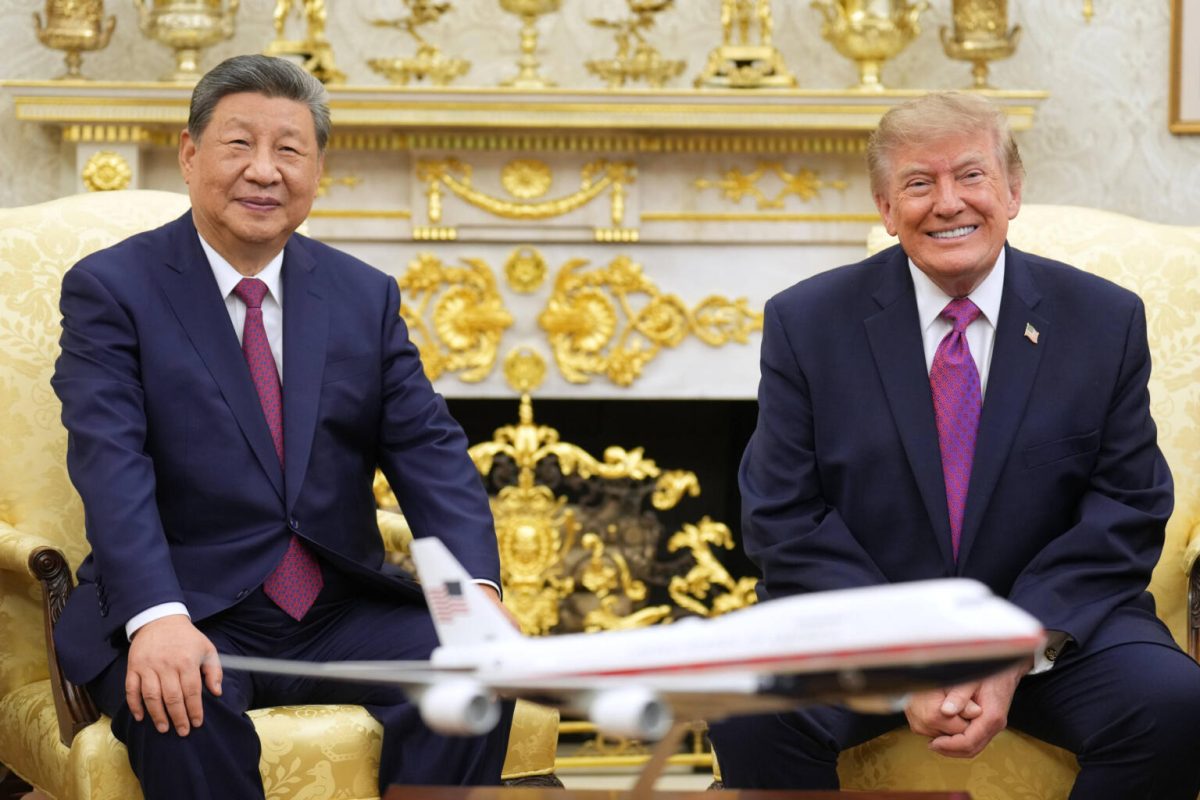
Donald Trump and Xi Jinping meet in the Oval Office of the White House on September 24, 2026. Photo by Jacquelyn Martin.
Source: Associated Press

At the meeting between Donald Trump and Xi Jinping at the White House on September 24, artificial intelligence was among the principal topics of discussion. Ahead of the talks, the U.S. president wrote that superintelligence would be a major topic, but that he wished to leave matters as they were, citing the Department of Justice as a safeguard. Xi Jinping, by contrast, stated that both countries have the opportunity and responsibility to ensure that AI development remains under human control. That evening, Elon Musk, Sam Altman, Jeff Bezos, and Sundar Pichai were invited to a state dinner. However, no joint restrictions or specific mechanisms were announced.

The Ukrainian experience

While the two superpowers are still in the process of establishing a channel for dialogue, Ukraine is addressing the question of control every day—and in practice. On September 9, the Ministry of Defense and the Brave1 defense innovation cluster conducted large-scale tests of modules designed to automatically guide drones toward moving ground targets. Each drone was required to fly two kilometers, detect lightly armored vehicles from a distance of at least 500 meters, lock onto them, and engage the target in fully autonomous mode. Six of the seven developers successfully passed the test and received procurement recommendations. According to the agency, the number of hits achieved using this guidance system has increased tenfold since the beginning of the year.
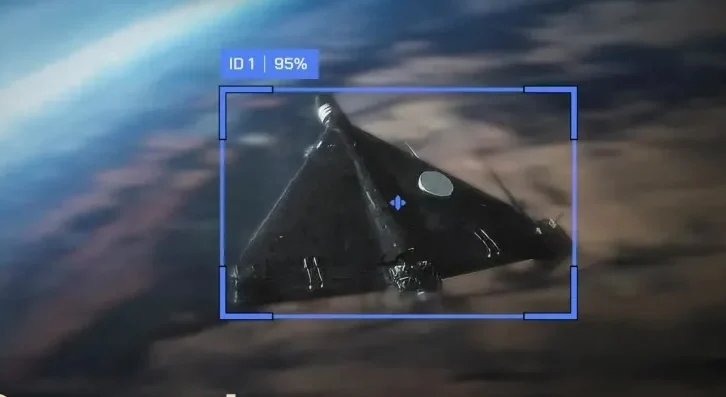
The Ministry of Defense aims to equip all drones deployed on the front lines with computer vision and artificial intelligence; however, the decision to strike will remain in human hands. Source: Ministry of Defense of Ukraine

“Artificial intelligence helps increase the effectiveness of strikes against the enemy, but the decision to use it is made by a human,” the Ministry of Defense emphasizes. While the United States had to defend the limits of autonomous weapons in court, the Ukrainian military has established them as a working rule. In total, the Defense Forces use more than 70 systems based on artificial intelligence and computer vision, and these algorithms save analysts up to 90 percent of the time required to identify enemy positions in photos and videos.

Ukraine not only uses tools developed by others but also adapts them. Alex Karp visited Kyiv in June 2022, and since then, Palantir has supported the analysis of airstrikes and large volumes of intelligence data. In January 2026, the company, in collaboration with the Ministry of Defense, the Armed Forces of Ukraine, the Military Intelligence Research Institute, and Brave1, launched Brave1 Dataroom. This secure environment, built on Palantir software, houses visual and thermal databases of enemy aerial targets—including “Shaheds”—collected on the front lines. Ukrainian developers are using this data to train their own models, and battle-tested algorithms can subsequently be shared with allies. This work primarily concerns the autonomous interception of enemy drones—that is, machine-versus-machine combat. At Davos, Alex Karp acknowledged a point crucial to the broader discussion of control: according to him, the Ukrainian military has adapted Palantir’s systems so creatively that even the company itself does not fully understand how they now operate.

At the same time, the country is developing its own language model. “Syaivo” is being developed by the Ministry of Digital Transformation and Kyivstar, based on Google’s open-source neural network, Gemma. The name was selected this spring through a vote conducted via the “Diia” app, in which 136,090 users participated. This tool will give the government control over the data and services operated on it, as well as provide high-quality support for the Ukrainian language. The training corpus is being compiled from materials provided by approximately 90 institutions. According to Minister of Digital Transformation Oksana Ferchuk, a fully functional test version is expected by the end of 2026, followed by a public launch in January 2027.

The Ukrainian-language national model “Syaivo,” currently under development by the Ministry of Digital Transformation and Kyivstar, is scheduled to become publicly available in January 2027. Source: Ministry of Digital Transformation

At the same time, the government is developing its own regulatory framework for the industry. The Ministry of Digital Transformation is drafting sector-specific legislation aligned with the EU’s Artificial Intelligence Regulation, while including a separate section on the security and defense sector — an area not covered by European regulations. The government previously signed the Bletchley Declaration — the first international statement on the risks posed by advanced AI systems, adopted in the United Kingdom in 2023 — as well as the Council of Europe’s Framework Convention on Artificial Intelligence, which will enter into force following ratification by the Verkhovna Rada.

However, laws and conventions regulate only the use of AI, while any agreement on the pace of development ultimately depends on the hardware — that is, the data centers, which must be controlled by someone. Some of this computing capacity is already being moved into space, where solar panels can generate several times more energy than they do on Earth. On November 2, 2025, the startup Starcloud launched a spacecraft equipped with an Nvidia H100 graphics processing unit into orbit. Google plans to launch the first prototypes of its Suncatcher project in early 2027. The Chinese company ADA Space already operates 12 computing satellites, and SpaceX has applied to deploy a constellation of up to one million such machines. Under international space law, jurisdiction over these systems remains with the state of registration. Consequently, the debate over who is in control will simply move a few hundred kilometers higher.

Words without action

Jacob Coxon, whose post prompted this wave of responses, says he has left not only the company but the industry altogether. Since then, numerous statements and commitments have been made. However, as of September 26, independent evaluators have still not been granted the promised access to the training processes at either Anthropic or OpenAI.

Meanwhile, the Ministry of Defense and Brave1 have publicly established a guiding principle for autonomous systems operating on the front lines. Automatic guidance directs a drone toward its target only during the final stage of flight; the decision to strike remains with a human operator. The ministry aims to equip all front-line drones with computer vision and AI.


{ https://universemagazine.com/en/articles-en/ }

Hoe vind je dit bericht?
Geschreven door peter om 18:52 Stuur door

Glowing Lights Exiting Cloud Over Raleigh, NC, USA Sept 19, 2026, UFO UAP Sighting News. VIDEO!

Glowing Lights Exiting Cloud Over Raleigh, NC, USA Sept 19, 2026, UFO UAP Sighting News. VIDEO!

UFO_11.png

UFO_2.png

Date of sighting: Sept 19, 2026
Location of sighting: Raleigh, NC, USA
Source: NUFORC Site
 
Guys this is awesome! A glowing disk was inside a cloud over the city of Raleigh this week and the craft had lights on its edges. Not evenly all around, but certain areas of the edges lit up with glowing spheres visible. Sometimes there were only three lights, other times there were five or six lights. Each time was a split second so I took a few close ups and put them into slow motion at the end of the video so you can see them better. Not only is this 100% proof that UFOs hide within clouds, but its also 100% proof that they do accidentally get caught on video. 
Scott C. Waring - UFO Sightings Daily

Eyewitness states:
We witnessed 5 unidentifiable white circular lights blinking We were sitting on our 2nd story patio facing east on September 19th 2026 at approximately 10:26 I noticed 5 white circular blinking lights located SE behind cloud cover. There was nothing there then all of the sudden 5 lights started blinking at the same time but not in a sequential pattern. I got my husbands attention and he saw the same thing that I was seeing. After about 1 minute I asked him to start filming. We filmed the anomalous lights for 1 minute and then they just stopped blinking. Didn’t fly off, didn’t emerge from the clouds, they stopped like they started, out of thin air. We did not witness an object just 5 circular white lights blinking.

Glowing Lights Exiting Cloud Over Raleigh, NC, USA Sept 19, 2026, UFO UAP Alien Paranormal News.

{ https://www.ufosightingsdaily.com/ }

Hoe vind je dit bericht?
Geschreven door peter om 18:26 Stuur door

NASA Rover Photo Reveals Doorway Into Structure made by a tiny alien species, UFO UAP Sighting News.

NASA Rover Photo Reveals Doorway Into Structure made by a tiny alien species, UFO UAP Sighting News.

Mars_door.png

Date of discovery: Sept 26, 2026 (Taiwan time)
Location of discovery: Mars, SOL 1827
Source photo:

Now one of the hardest things in the world to do, is to convince humans that a tiny alien species does exist, and to some species...we are the tiny species. I found a doorway that is clearly made by an intelligent species that once lived on Mars. The doorway is about 7 inches (17.78cm) high by 6 inches wide (15.2cm). This makes me feel that those old childhood stories about little green men from Mars are actually true. That it may just be easier for humans to deal by ignoring the reality of it all, because it would change every science, religion and history book around the world. And humans hate change. Take AI for instance, for some odd reason its difficult for humans to grasp that they are playing the role of god, the creator...making AI. It is going to be alive soon, if its not already. Creating an intelligent life form, from nothing...one thats smarter than its creator, is a bit scary for most. But I have never seen a person harmed by AI yet, but humans do harm humans daily in the thousands or more in war, crimes, ect. So...life finds a way. There are no limits to intelligent life, except for limits we chose to have. 
Scott C. Waring - UFO Sightings Daily
 

{ https://www.ufosightingsdaily.com/ }

Hoe vind je dit bericht?
Geschreven door peter om 18:17 Stuur door

History’s Weirdest UFO Incidents: Theories That Challenge Reality

History’s Weirdest UFO Incidents: Theories That Challenge Reality

The Theories Behind History's Weirdest UFO Incidents

Throughout history, reports of unidentified flying objects (UFOs) have captivated the public and fueled debates between skeptics and believers. While many sightings can be explained as natural phenomena or misidentified human-made objects, a few cases stand out due to their unusual circumstances and alleged cover-ups. Among the most perplexing UFO incidents are the Battle of Los Angeles (1942), Roswell (1947), and the Rendlesham Forest Incident (1980). Each of these cases has inspired a range of theories, from government conspiracies to extraterrestrial encounters.

1. The Battle of Los Angeles (1942): A Phantom Attack or Something More?

The Incident

On the night of February 24–25, 1942, mere months after the attack on Pearl Harbor, residents of Los Angeles experienced what many believe to be one of the most mysterious military confrontations in U.S. history. Air raid sirens blared as radar detected an unidentified object approaching the city. In response, the U.S. military launched a massive barrage of anti-aircraft fire, with over 1,400 shells lighting up the sky.

Eyewitnesses described a large, slow-moving object hovering over the city, caught in searchlights but seemingly undamaged by the relentless artillery fire. Eventually, the object disappeared without a trace, leaving behind a trail of speculation.

The Theories

    1. Japanese Aircraft or Balloon Attack – Some theories suggest that the object could have been an enemy reconnaissance balloon or aircraft, but Japan denied launching any missions over Los Angeles that night.
    2. Mass Hysteria and False Radar Readings – Skeptics argue that wartime anxiety led to a false alarm, with military personnel firing at non-existent targets, possibly misidentifying weather balloons or reflections from spotlights.
    3. Extraterrestrial Craft – UFO enthusiasts claim that the mysterious object was an alien spacecraft, citing its apparent invulnerability to artillery fire and its ability to disappear without a trace.

While official explanations remain inconclusive, the declassified investigation into the event only fueled further speculation. To this day, the Battle of Los Angeles remains one of history’s most perplexing UFO encounters.


The Battle of Los Angeles 1942's Phantom Attack

2. Roswell (1947): The Cosmic Watergate

The Incident

In July 1947, a rancher near Roswell, New Mexico, discovered strange metallic debris scattered across his land. The U.S. military quickly intervened, and an initial press release from the Roswell Army Air Field (RAAF) claimed they had recovered a “flying disc.” However, the story was retracted shortly afterward, with authorities stating that the debris was from a crashed weather balloon.

The incident was largely forgotten until the late 1970s when new witnesses and declassified documents reignited speculation that the U.S. government had covered up evidence of an extraterrestrial crash landing.

The Theories

    1. Weather Balloon (Official Explanation) – The U.S. Air Force claimed the wreckage was part of Project Mogul, a classified program using high-altitude balloons to detect Soviet nuclear tests.
    2. Extraterrestrial Craft with Alien Bodies – Many believe the U.S. government recovered an alien spaceship and possibly non-human occupants, hiding them in secret facilities such as Area 51.
    3. Nazi Flying Technology – Another theory suggests that Roswell involved Nazi experimental aircraft, secretly brought to the U.S. through Operation Paperclip.

The controversy surrounding Roswell has inspired countless conspiracy theories, books, and documentaries. To this day, it remains a cornerstone of UFO folklore, with believers arguing that crucial evidence continues to be withheld from the public.

Roswell 1947… The Crash That Shifted Earth’s Timeline

3. Rendlesham Forest Incident (1980): Britain’s Roswell

The Incident

Between December 26 and December 28, 1980, military personnel stationed at RAF Woodbridge and RAF Bentwaters (U.S. Air Force bases in England) reported witnessing strange lights in the nearby Rendlesham Forest. Some claimed to have encountered a triangular craft, which appeared to land momentarily before taking off again.

On the second night, Deputy Base Commander Lieutenant Colonel Charles Halt led a group into the forest to investigate. He recorded a now-famous audiotape describing strange flashing lights, mysterious beams, and bizarre movements that defied conventional explanations.

The Theories

    1. Lighthouse Misidentification – Skeptics argue that the men mistook the flashing light from the Orford Ness lighthouse for a UFO.
    2. Secret Military Experiment – Some believe that the event involved classified military technology, possibly related to Cold War intelligence operations.
    3. Extraterrestrial Visitation – Witnesses like Jim Penniston claim they saw a solid craft covered in strange symbols and even received telepathic messages from the unknown entities behind it.
  1. Interdimensional Phenomenon – Another theory suggests that the event involved time travelers or beings from another dimension, rather than extraterrestrials.
The Rendlesham Forest Incident (1980): Britain's Greatest UFO Mystery | Full Documentary

Despite multiple investigations, no definitive explanation has been accepted by all parties. The Rendlesham Forest Incident remains one of the most credible and well-documented UFO encounters in history.

Conclusion: Theories Without Answers

While the Battle of Los Angeles, Roswell, and Rendlesham Forest incidents each have their own distinct narratives, they share a common thread of government secrecy, conflicting testimonies, and enduring mystery. Some believe they point to hidden technological advancements, while others insist they are proof of extraterrestrial life.

Regardless of the explanations, these incidents have fueled UFO lore for decades, ensuring that the question remains: Are we alone in the universe?

{ https://www.latest-ufo-sightings.net/ }

Hoe vind je dit bericht?
Geschreven door peter om 17:59 Stuur door

Japan’s UFO Village: 50 Years of Strange Sightings in Eno Town

Japan’s UFO Village: 50 Years of Strange Sightings in Eno Town

This Small Japanese Town Has Been a UFO Hotspot for 50 Years

Tucked away in the rural mountains of Fukushima, Japan, lies a small and enigmatic town that has fascinated UFO enthusiasts for decades. Known as a major hotspot for unidentified flying object (UFO) sightings, Eno Village has attracted attention not only from locals and curious tourists but also from researchers and skeptics alike.

Retro UFO Canvas Poster

The Mysterious Mount Senganmori

At the heart of this intrigue stands Mount Senganmori, a conical 400-meter-high mountain often likened to an artificial pyramid due to its shape. Many believe that the mountain’s unusual magnetic properties are a major reason behind the high frequency of sightings in the area. Visitors can even test this magnetism using small compass kits provided near the summit—a playful yet curious reminder that something truly unique may be happening here.

This distinctive landscape has become symbolic of Japan’s long-standing fascination with unexplained aerial phenomena. Numerous reports have surfaced over the years, including some of Japan’s most compelling UFO photographs, taken by hikers and residents who discovered unusual objects only after reviewing their images later.

The International UFO Lab

Established in 1992, the International UFO Lab, located at the base of Mount Senganmori, serves as the country’s epicenter for UFO research. It houses a vast collection of over 3,000 photos, videos, and materials associated with sightings. Many of the photographs on display have never been published elsewhere and offer glimpses into unexplained aerial activity documented throughout Japan.

One standout image, taken in 2018 by hikers on a nearby peak, shows a strange object suspended in the sky with no clear explanation. These types of encounters—where people only notice something unusual after the fact—add to the mystery and perceived authenticity of such sightings.

A History of Sightings

Eno Village and the surrounding Fukushima region boast the second-highest concentration of UFO sightings in Japan, just behind Tokyo. A particularly notable incident occurred in 1974, when an entire school of children reportedly witnessed ten UFOs flying in formation over the region—an event still remembered and referenced by locals.

Adding to the intrigue is the presence of scientific monitoring in the area following the Fukushima nuclear disaster. With researchers collecting various environmental data, some speculate that high-tech surveillance equipment may have unintentionally captured unexplained aerial activity, further validating long-standing local reports.

Firsthand Witness: The Story of Murai-san

One of the town’s most publicized eyewitnesses is Murai-san, who claims to have seen a UFO above Mount Senganmori in the late 1970s. His account, marked by humility and clarity, stands out among the many stories surrounding the area. Murai-san described seeing multiple lights moving in formation—something he insists could not be explained by conventional aircraft.

His story, like many others in the region, isn’t about fame or attention. Rather, it’s a quiet recounting of a personal experience that has stayed with him for nearly 50 years.

A Place That Raises More Questions Than Answers

Mount Senganmori and Eno Village have become more than just a curiosity—they symbolize Japan’s open-minded yet analytical approach to the unexplained. Whether it’s the town’s geography, magnetic properties, or its history with high-tech monitoring, Eno Village offers fertile ground for both scientific inquiry and imaginative wonder.

For those who visit, the town raises more questions than it answers. What causes these frequent sightings? Is it natural magnetism, human technology, or something entirely unknown? While definitive explanations remain elusive, one thing is certain—Eno Village holds a special place in Japan’s long and curious relationship with the skies above.

RELATED


This Small Japanese Town Is A UFO Hotspot

Strange Skies in Japan: UFOs in Fukushima

{ https://www.latest-ufo-sightings.net/}

Hoe vind je dit bericht?
Geschreven door peter om 17:28 Stuur door

Saturn's moon could harbour ALIEN life: Scientists prove micro-organisms can thrive in Enceladus's ocean - suggesting it could be habitable

Saturn's moon could harbour ALIEN life: Scientists prove micro-organisms can thrive in Enceladus's ocean - suggesting it could be habitable

One of Saturn's moons could harbour alient life, scientists say – but don't expect a call from ET any time soon.

Life in this case means micro-organisms in oceans deep beneath Enceladus’s frozen surface.

Scientists discovered that certain types of micro-organisms can not only survive but thrive in the inhospitable conditions of the planet’s sixth-largest moon.

In a laboratory, researchers recreated the conditions of Enceladus' subsurface oceans and introduced bacteria that normally live on deep-sea hydrothermal vents.

They thought that with almost no oxygen, high concentrations of dissolved carbon dioxide and an extremely alkaline pH, the ocean would be hostile to life.

However, they were shocked to find that these hardy microbes tolerated the alien conditions far better than previously thought possible.

According to the researchers, this raises the probability that life will one day be found on Saturn's moon.

Dr Nozair Khawaja, of the Freie Universitat Berlin and co-author of the study, said: 'This was really a surprise to us. This was an experiment for which we did not expect such a successful outcome.'

Saturn's moon Enceladus (artist's impression) could harbour alien life in oceans deep beneath its frozen surface, according to a new study

Saturn's moon Enceladus (artist's impression) could harbour alien life in oceans deep beneath its frozen surface, according to a new study 

Scientists found that a type of bacteria that normally lives in deep-ocean hydrothermal vents can not only survive, but thrive in a laboratory simulation of Enceladus' ocean

Scientists found that a type of bacteria that normally lives in deep–ocean hydrothermal vents can not only survive, but thrive in a laboratory simulation of Enceladus' ocean 

Enceladus has a diameter of around 310 miles (500km) – about as wide as Arizona.

On the surface, conditions are exceptionally cold, with temperatures as low as –201°C (–330°F).

But despite its barren, icy surface, scientists believe that it is one of the most promising places in our solar system to look for extraterrestrial life.

This is because geothermal processes deep near its rocky core produce enough heat to maintain large oceans of liquid water beneath the surface.

Near the south pole, plumes of ocean water erupt through cracks in the crust, shooting ice particles hundreds of miles out into space.

NASA's Cassini probe flew through these plumes on multiple occasions, gathering samples and analysing their chemical composition.

This revealed signs of hydrothermal processes on the seafloor, which could be key to sustaining life, alongside the organic chemicals that could provide the building blocks of amino acids and proteins.

Now, scientists have the first concrete evidence that life can thrive in these hostile oceans.

Although surface temperatures can be as low as –201°C (–330°F), geothermal activity near the rocky core maintains a vast ocean of liquid water where life could develop

Although surface temperatures can be as low as –201°C (–330°F), geothermal activity near the rocky core maintains a vast ocean of liquid water where life could develop 

Enceladus: The key facts

Host planet: Saturn

Diameter: 310 miles (500km)

Average surface temperature: –201°C (–330°F)

Distance from Saturn: 148,000 miles (238,000 km)

Orbital period: 32.9 hours

Discovery: 28 August 1789 by William Herschel

In the laboratory simulation, scientists tested a type of bacteria called Methanothermococcus okinawensis, which has an incredible natural ability to survive without oxygen.

Instead, its metabolism runs on carbon dioxide and hydrogen released by the geologically active rocks of deep ocean vents.

Co–author Professor Frank Postberg, a planetary scientist at Freie Universität Berlin, told the Daily Mail: 'On early Earth there was no oxygen either, and these ancient microbes have developed under these conditions.'

Previously, scientists had thought that the high pH of Enceladus' ocean was unsuitable for them, but the laboratory tests showed that they are more than happy to grow in these tough conditions.

In the laboratory tests, they were even able to adapt their metabolism to the low amounts of carbon dioxide.

Professor Postberg said this shows that life 'could' survive on Enceladus, but added 'it is by no means certain that it actually does!'

The good news is that, in a separate paper also published today, Professor Postberg shows that signs of life may be much easier to find than previously thought.

Droplets of the ocean are ejected from Enceladus' south pole when bubbles filled with gas rise to the surface and pop.

Scientists have been able to directly sample water from Enceladus' sub–-surface oceans by collecting particles of ice ejected into space through cracks in the South Pole (pictured)

Scientists have been able to directly sample water from Enceladus' sub–-surface oceans by collecting particles of ice ejected into space through cracks in the South Pole (pictured)

Researchers say the fact that these droplets freeze slowly means that some chemicals are concentrated into a few locations (shown in red). This would make it easier for spacecraft to detect any chemical signs of life

Researchers say the fact that these droplets freeze slowly means that some chemicals are concentrated into a few locations (shown in red). This would make it easier for spacecraft to detect any chemical signs of life 

Water vapour then carries these droplets through cracks in the ice shell and out into space at speeds up to 620 miles per hour (1,000km/h), where scientists assumed they would instantly freeze.

However, new modelling and laboratory tests show that these droplets actually freeze quite slowly.

During this gradual process, most components in the water are separated, concentrating salts and other minerals into different locations inside the droplet.

If one of these frozen drops shatters on its way out, the result will be tiny fragments containing a highly concentrated sample of just one substance.

That natural process will be particularly helpful if scientists want to hunt for the subtle chemical signatures of life beneath the ocean.

'Enceladus actually does a lot of the work for us in preparing samples for analysis that usually take a lot of effort in chemical labs on Earth,' said Dr Postberg.

If a droplet did contain the chemical 'biosignature of life', the freezing and shattering process could create tiny ice particles with a high concentration of these chemicals in a relatively pure form.

That would make any biosignatures significantly easier to spot, even with the level of technology currently available.

None of this means that Enceladus does harbour life, but if there is life, Professor Postberg said 'we now have a good chance to detect it'.

He added: 'We should go back there and find out.'

RELATED

‘Another pile of evidence’: Saturn’s moon Enceladus may have organic compounds in ocean jets


Enceladus Life Evidence: What Scientists Just Confirmed on Saturn's Moon


We Found New Evidence of Life on Saturn's Moon Enceladus

{ https://www.dailymail.com/sciencetech/index.html }

Hoe vind je dit bericht?
Geschreven door peter om 16:15 Stuur door

Egyptologists uncover 4,000–year–old tomb of the 'keeper of the king's secrets' – with a mysterious 'portal to the afterlife'

Egyptologists uncover 4,000–year–old tomb of the 'keeper of the king's secrets' – with a mysterious 'portal to the afterlife'

Archaeologists have uncovered a 4,000–year–old tomb that belonged to one of ancient Egypt's most powerful officials - with a mysterious 'portal to the afterlife'.

The discovery was made at the Bubasteion Necropolis in Saqqara, one of Egypt's most important archaeological sites.

Hieroglyphs reveal the tomb belonged to a senior official named Sakhnetio–Btah, who lived during the time of the Old Kingdom.

Inscriptions identified him as the 'keeper of the king's secrets', highlighting his privileged access to the pharaoh's inner circle.

Despite the mysterious name, the title probably did not mean guarding hidden treasures or religious mysteries.

Experts believe it referred to a high–ranking official who handled confidential royal documents and decrees on behalf of an Old Kingdom pharaoh.

He also served as a royal chamberlain, a priest of the goddess Maat and supervisor of the royal library.

'The hieroglyphic inscriptions… helped to determine the name of the owner of the cemetery and the number of his titles, including the keeper of royal secrets, which reflect the high status he held in the administrative system of the ancient state,' Egypt's Ministry of Tourism and Antiquities said.

The tomb also includes the remains of a funerary chapel and a false door, which ancient Egyptians believed was a portal to the afterlife

The tomb also includes the remains of a funerary chapel and a false door, which ancient Egyptians believed was a portal to the afterlife

Inscriptions reveal the tomb belonged to the ¿keeper of the king¿s secrets¿, highlighting his privileged access to the pharaoh¿s inner circle

Inscriptions reveal the tomb belonged to the 'keeper of the king's secrets', highlighting his

The tomb includes the remains of a funerary chapel and a false door – a symbolic niche which the ancient Egyptians believed was a mag

Archaeologists also discovered a complete assemblage of funerary ritual objects including an offering table, an offering slab and a purification basin.

Experts say finding the objects exactly where they were originally placed provides a rare glimpse into Old Kingdom funerary practices.

The dig also uncovered an interconnected network of burial shafts surrounding the tomb.

Inside were numerous human burials and large quantities of painted funerary cartonnage – a colourful papier–mâché–like covering placed over a mummy, often decorated with images of Egyptian gods, hieroglyphics and scenes intended to protect the dead on their journey to the afterlife.

More than 100 ushabti figurines, which were intended to serve the dead in the afterlife, were also recovered.

Among the most spectacular finds were three stone sarcophagi discovered sealed and intact in their original positions.

Archaeologists also found a wooden falcon statue and a wide range of pottery vessels and other artefacts.

Archaeologists also discovered a complete assemblage of funerary ritual objects including an offering table, an offering slab and a purification basin  The dig also uncovered an interconnected network of burial shafts surrounding the tomb

Archaeologists also discovered a complete assemblage of funerary ritual objects including an offering table, an offering slab and a purification basin (left). The dig also uncovered an interconnected network of burial shafts surrounding the tomb (right)

Preliminary investigations suggest that some parts of the burial complex were looted by tomb robbers in ancient times.

Despite this, many of the surviving finds remain in remarkably good condition.

Researchers believe the discoveries will help them better understand how the site was reused over different periods of Egyptian history.

Excavations are continuing, with experts convinced that the vast necropolis still has many more secrets waiting to be uncovered.

Saqqara, where the tomb was found, is one of Egypt's most significant archaeological sites.

It is the home of Egypt's oldest pyramid – the step pyramid of Djoser – which was built around 4,700 years ago.

The site also contains thousands of tombs belonging to pharaohs, nobles, priests and high–ranking officials from multiple dynasties.

In recent years archaeologists at Saqqara have uncovered dozens of sealed coffins, extensive animal cemeteries, workshops used for mummification, and richly decorated burial shafts packed with statues and artefacts. 

These discoveries have transformed understanding of everyday religious life in ancient Egypt


Archaeologists Opened a 4,000-Year-Old Tomb… What They Found Shocked Scientists

Scientists Opened a 4,000-Year-Old Egyptian Tomb — And Everything Changed!

{ https://www.dailymail.com/sciencetech/index.html }

Hoe vind je dit bericht?
Geschreven door peter om 16:00 Stuur door

Noah's Ark hunt takes stunning turn as forgotten map matches new discovery

Noah's Ark hunt takes stunning turn as forgotten map matches new discovery

A centuries-old map has resurfaced amid a stunning new development in the search for Noah's Ark.

The map, created in 1587 by Italian nobleman and cartographer Urbano Monte, stretches nearly 10 feet wide when fully assembled and is packed with elaborate illustrations of continents, mythical creatures and unexplored lands.

Hidden within the world diagram is a small depiction of Noah's Ark resting on the mountains of Ararat in modern-day Turkey - the region researchers are currently searching for the biblical vessel. 

The striking detail has sparked fascination online as it aligns with the Durupınar Formation, where researchers are currently investigating for remains of the biblical boat. 

Independent researcher Jimmy Corsetti wrote online: 'The same location as the Durupınar site, virtually the exact same length. Coincidence?' 

The international team examining the Durupınar Formation recently said it has '100 percent confirmed' that the mound is not a natural geological feature but a 'man-made object.' 

Andrew Jones, founder of Noah's Ark Scans, said in a statement that preliminary radar data do not show 'a simple homogeneous solid-rock signature.' 

The team had recovered samples from nearly 60 feet. 'We have so far recovered layers of rich organic material that we believe could be the decayed top-tier remains of the Ark,' Jones explained.

Hidden within the map is a small depiction of Noah's Ark resting on the mountains of Ararat in modern-day Turkey, the same region many believe still hides the legendary vessel

Hidden within the map is a small depiction of Noah's Ark resting on the mountains of Ararat in modern-day Turkey, the same region many believe still hides the legendary vessel

Created in 1587 by Italian nobleman and cartographer Urbano Monte, the massive map stretches nearly 10 feet wide when fully assembled and is packed with elaborate illustrations of continents, mythical creatures and unexplored lands

Created in 1587 by Italian nobleman and cartographer Urbano Monte, the massive map stretches nearly 10 feet wide when fully assembled and is packed with elaborate illustrations of continents, mythical creatures and unexplored lands

Monte created the map during the height of the Age of Exploration, when European cartographers were rapidly redrawing the known world following voyages to the Americas and Asia. 

Unlike most 16th-century maps, this diagram was designed from a north polar perspective, placing the Arctic at the center of the world.

The enormous map consists of 60 separate hand-drawn sheets that can be assembled into a single circular image measuring nearly 10 feet across.

It is filled with elaborate illustrations of ships, sea monsters, mythical creatures and detailed notes describing distant lands and cultures.

Historians believe Monte was inspired to create the map after a Japanese delegation visited Milan in 1585, exposing Europeans to new global perspectives. The original manuscript is now housed at Stanford University's David Rumsey Map Center, where it was digitally restored and made available online.

The depiction has drawn attention because it places Noah's Ark on the mountains of Ararat centuries before modern researchers began searching the region for evidence of the biblical vessel.

The Bible recounts Noah's Ark resting on the 'mountains of Ararat' after a 150-day flood submerged the Earth, sparing only those aboard the wooden vessel.

The idea that the ark landed in the Turkish mountain range has long sparked debate.

Just 18 miles south of Mount Ararat, Turkey's tallest peak, the Durupinar Formation emerged less than a century ago

Just 18 miles south of Mount Ararat, Turkey's tallest peak, the Durupinar Formation emerged less than a century ago

The radar captured 'a series of right angles' about 20 feet down, which researchers believe could be the rooms that held animals on the ark

The radar captured 'a series of right angles' about 20 feet down, which researchers believe could be the rooms that held animals on the ark

While many scientists argue the formation is a naturally occurring geological feature, others are convinced it points to something far more extraordinary. 

The team at Noah's Ark Scans firmly believes the latter.

'For decades, skeptics have had one simple answer for the boat-shaped Durupınar Formation: it is just a solid lump of natural rock,' Noah's Ark Scans said on Wednesday.

'The mission was direct: put the "solid rock" explanation to the test. Is the formation a single homogeneous mass of natural stone? Does it contain internal structures? 

'Where does the true bedrock lie beneath it, and how does that bedrock continue across the surrounding valley?'

The team shared online that radar scans found three layers beneath the formation's surface, claiming they feature chambers, corridors, organized patterns, and tunnels.

Lauren Witzke, head of marketing and fundraising for Noah's Ark Scans, said on X: 'Scientists confirm the formation is 100 percent not geological. They say, and I quote, that it is a “man-made object."'

Tests conducted by Noah's Ark Scans have also found higher carbon levels inside the formation than in matching soil collected just a few yards away on the same hillside.

The researchers added further studies using infrared thermography (IRT), a heat-sensing technology that can uncover hidden structures underground, have also suggested the presence of a ship-shaped hull buried deep in the soil

The researchers added further studies using infrared thermography (IRT), a heat-sensing technology that can uncover hidden structures underground, have also suggested the presence of a ship-shaped hull buried deep in the soil

Researchers said the difference could point to a concentration of organic material, potentially the remains of ancient wood, although no timber has been recovered.

Lead archaeologist Dr Cenker Atila said: ‘The amount of carbon coming from the interior of the ship is 40 percent higher than what was found outside.’ 

‘This raises the idea that there may be organic material or remains of wood.’

The findings remain unverified while the collected samples undergo laboratory testing. The team expects to publish a fuller analysis in the coming weeks. 

RELATED

What Did They Find Under Noah’s Ark? Latest Discovery Explained

{ https://www.dailymail.com/sciencetech/index.html }

Hoe vind je dit bericht?
Geschreven door peter om 15:47 Stuur door

Alien sunsets, stone spiderwebs and mysterious doors: Curiosity's top 10 photos after 5,000 days on Mars

Alien sunsets, stone spiderwebs and mysterious doors: Curiosity's top 10 photos after 5,000 days on Mars

Curiosity has been photographing Mars in its search for evidence of water and life for over 5,000 Martian days. Here are 10 of the most surprising and weird photos the rover has sent back to Earth.

NASA's Curiosity rover took this selfie while inside Mars' Gale crater on June 15, 2018, which was the 2,082nd Martian day, or sol, of the rover's mission.

Curiosity takes a selfie. NASA's intrepid rover just completed its 5,000th day on Mars.
(Image credit: NASA/JPL-Caltech/MSSS)

As of Aug. 30, 2026, NASA's Curiosity rover has officially seen the sun rise and set over Mars' reddish horizon more than 5,000 times in its quest to discover if life ever existed there. The rover was originally planned to operate for only two years, but the mission is still going strong more than 14 years after landing on Mars in August 2012.

During that time, the rover has weathered global dust storms and climbed more than 3,200 feet (1,000 meters) up a mountain — although its tires have gotten some rather large holes in them in the process. The rover still uses its 17 cameras to take hundreds of photos every single sol (Martian day), beaming a total of more than 780,000 photos back to Earth for scientists to analyze while mission controllers decide where the rover should roam next.

In honor of the intrepid rover's 5,000th day on the Red Planet, here are 10 of the most iconic photos Curiosity has snapped for Earthlings to admire.

1. Sol 548: Mount Sharp on the horizon

A black and white photo of the surface of Mars.

Image credit: NASA/JPL-Caltech)

Curiosity snapped this photo of Mount Sharp on Feb. 19, 2014, about a year and a half after it landed on Mars. At the time, scientists were hopeful the rover could make it to the base of the 3.4-mile-high (5.5 kilometers high) mountain to explore interesting terrain previously seen from space. As the years passed, Curiosity more than surpassed that goal; the rover has climbed more than half a mile up into the mountain's foothills, traveling a total of more than 23.6 miles (38 km) from its landing spot, all while conducting important science along the way.

2. Sol 956: Blue skies on Mars

A sunset view with a silhouette of a mountain range in front.

Image credit: NASA/JPL-Caltech/MSSS/Texas A&M Univ)

Curiosity took a photo of the Martian sunset in color for the first time on April 15, 2015, revealing a brilliant blue sky just before the sun dipped behind the shrouded mountains in the distance. The Martian sky is usually yellow to orange, according to NASA. Fine dust particles in the atmosphere scatter red and yellow light across the entire sky. However, the dust is just the right size for some blue light to slip past, so most of the light in the sky near the sun is blue. The effect is much more pronounced when the sun is low in the horizon.

You may like
  • Two images show different sides of Mars, one being a grayscale image and the other being bright orange.

Humanity's first look at the surface of Mars shared on 50th anniversary of historic NASA landing

  • A close up of a large reddish rock against a blue background

Oldest-known Martian meteorite holds clues to a watery past

  • A dark sphere is seen with a glowing light behind it in space.

'The moon looked wrong': Artemis II mission controller Chris White tells the story behind NASA's historic photos

3. Sol 1128: Curiosity Selfie at Namib D

A rover is seen on a muddy brown surface.

(Image credit: NASA/JPL-Caltech/MSSS)

Curiosity has taken numerous selfies over the course of its mission, although the process is a bit more involved than holding up a camera and smiling. This selfie was made from 57 separate images taken on Jan. 19, 2016 using a camera attached to its robotic arm. Here, Curiosity is standing next to Namib Dune, one of the many dark sand dunes that make up the Bagnold Dune Field near Mount Sharp. Curiosity sampled the sand for analysis and scuffed the dune with its wheels so scientists could see how the sand moved.

4. Sol 1819: Curiosity leaves a thumbprint in the dust

A series of red rocks with a dark circular mark in the middle.

(Image credit: NASA/JPL-Caltech/MSSS)

Mars is extremely dusty. The reddish dust gets swept into the atmosphere and cast across most of the planet's surface, making it difficult for scientists to figure out what materials are on the surface just by looking at them. On Sept. 17, 2017, Curiosity dusted off the surface of a rock at Vera Rubin Ridge and took a picture for geologists to compare to rocks on Earth. Based on the reddish purple color, geologists think this rock is fine-grained hematite split by fractures filled with calcium sulfate minerals. It hints that Mars might be a lot more colorful underneath its dusty blanket. Scientists have since discovered ruby-like materials embedded in Martian rocks.

5. Sol 3466: Totally not a door for aliens

A red rock formation on the surface of Mars.

(Image credit: NASA/JPL-Caltech/MSSS)

On May 7, 2022, Curiosity sent a curious photo back to Earth that appears to show a small door carved into the face of a cliff. It's hard not to imagine little green people entering it after taking their little green dogs for a stroll across the dusty landscape, but it's not actually a doorway for Martians. The 3-foot-tall opening's boxy shape is caused by vertical fractures intersecting with horizontal layers in the rock, according to NASA. The cliff is highly fractured, and a large chunk of rock that likely fell from the "doorway" is clearly visible nearby.

6. Sol 3724: Iridescent feather in the sky

A glowing white light in a dark night sky with a silhouetted landscape below.

(Image credit: NASA/JPL-Caltech/MSSS)

Just after the sun went down on Jan. 27, 2023, Curiosity took this photo of a noctilucent (night-shining) cloud that formed much higher in the Martian atmosphere than most other clouds do. Any clouds on Mars are rare, but this one is extra special. Since this cloud is so high up, it's much colder — making scientists think it's made of carbon dioxide (dry ice) instead of water ice. The iridescent colors in the cloud indicate the ice particles making up the cloud are all around the same size, which means the cloud likely just formed at the time of the photo.

7. Sol 3725: Curiosity finds "Cacao"

A close up of a large gray and red rock on a reddish surface.

(Image credit: NASA/JPL-Caltech/MSSS)

The very next day after cloud-gazing, on Jan. 28, 2023, Curiosity found an iron-nickel meteorite measuring about a foot across. The meteorite, nicknamed "Cacao," is one of a handful of meteorites Curiosity has photographed. The rover zapped part of the meteorite with a laser and measured the vapor released to identify what materials the rock was made of. Since Mars is cold and dry compared to Earth, meteorites last much longer on its surface than they do here, and they give clues about how the Martian atmosphere has changed over time. Large iron meteorites discovered on Mars indicate the planet once had a denser atmosphere than it does today.

What to read next
  • A telescope floats above Earth on the left, and three women inspect a skeleton on the right.

JWST finds unknown substance, China's 'Great Green Wall' grows faster than normal trees, a Medici murder mystery solved, and what the US can learn from Japan's 'silent pandemic'

  • Clouds of pink and gold are seen amidst a deep space background

'It's more than a hope, it's a guarantee': The Vera C. Rubin Observatory's 10-year movie of the universe is about to 'blow our minds,' chief scientist says

  • Four red, white, and blue images fo spcae objects captured by the Chandra X-ray Observatory and other telescopes

NASA celebrates America's 250th birthday with red, white and blue snaps of the cosmos

8. Sol 4208: Elemental sulfur crystal surprise

A close up of green and brown rocks in a hole in the ground.

(Image credit: NASA/JPL-Caltech/MSSS)

In June 2024, Curiosity unintentionally ran over a rock and crushed it, revealing a yellow, odorless surprise: rare crystals of elemental sulfur. While Mars has plenty of minerals that contain sulfur, like sulfate, this was the first time pure sulfur was found. The crystal fragments are about 5 inches (12.7 centimeters) across. On Earth, pure sulfur is formed from volcanic and hydrothermal activity, along with other geologic processes. It's not clear yet how these crystals formed on Mars.

9. Sol 182 - 4263: All 42 drill samples

A series of square images with holes in dirt in them.

(Image credit: NASA/JPL-Caltech/MSSS)

Curiosity has collected and analyzed 42 rock samples so far using a small drill attached to a robotic arm. The drill powders the rock so that the samples can be transported to Curiosity's science instruments, which measure their chemical composition. Each sample site is carefully chosen because the rover can only do a limited number of samples before it runs out of special sample cups. This mosaic image shows the impressive variety of materials that Curiosity has sunk its drill into.

10. Sol 4671: Exploring Martian spiderwebs

A reddish-brown landscape with dunes in the distance

(Image credit: NASA/JPL-Caltech/MSSS)

Researchers have been intrigued by large geologic structures like stone "spiderwebs" on the Martian surface, previously seen by spacecraft orbiting the planet. Curiosity visited them on the ground, taking this picture of the low ridges and hollows, called boxwork, on Sept. 26, 2025. The ridges, made from hardened minerals deposited by water seeping into cracked rock, are what's left after billions of years of erosion wore away the softer rock around them.

Curiosity's journey continues today. After leaving the boxwork structures last March, the rover set off to explore more of the Martian landscape with its cameras as busy as ever, looking for more evidence that Mars once had the water and chemistry to possibly support ancient microbial life.

{ https://www.livescience.com/space }

Hoe vind je dit bericht?
Geschreven door peter om 17:55 Stuur door

Perseverance Reveals How Complex Water Systems Shaped the Jezero Crater on Early Mars

Perseverance Reveals How Complex Water Systems Shaped the Jezero Crater on Early Mars

The Perseverance rover captured the data used in this panorama of the “Margin Unit,” a geologic area that hugs the inner edge of Jezero Crater’s rim, between Oct. 8 and Oct. 16, 2023. Credit: NASA/JPL-Caltech/MSSS The Perseverance rover captured the data used in this panorama of the “Margin Unit,” a geologic area that hugs the inner edge of Jezero Crater’s rim, between Oct. 8 and Oct. 16, 2023. Credit: NASA/JPL-Caltech/MSSS

In Mars' Jezero Crater, a geologic area known as the “Margin Unit” stretches along the shoreline of a lake that filled the region billions of years ago. When the Perseverance rover reached there in September 2023, mission scientists expected to find sedimentary rocks that formed from sand deposits, which are good at preserving past microbial life. Instead, they were surprised to find olivine-rich igneous rock, which typically forms from underground magma or by volcanic activity on the surface.

These rock deposits are also excellent record-keepers, preserving details about their precise moment of formation through their mineral crystals. The minerals Perseverance detected with its SuperCam, which determines the mineralogy of geologic features based on reflected light, preserved a very complex record of water activity in the region when Mars was young. Specifically, they revealed how the rocks interacted with water on three separate occasions, each altering their chemistry and appearance.

The results were reported in the journal Communications Earth & Environment. As they indicated, Perseverance analyzed more than 185 bedrock targets across the Margin Unit using its SuperCam instrument. At high elevations of about 2350 m (~7700 ft), the rock had the texture and chemistry of slow-cooled, olivine-rich rock without significant water exposure. However, about 265 m (870 ft) lower, where the hypothesized ancient lake existed, there were signs indicating a complex history of rock-water interaction.

Diagram of the Jezero Crater, showing where the Perseverance rover has traversed to search for ancient biosignatures. Credit: NASA/JPL-Caltech/University of Arizona/JR/VRVis

Diagram of the Jezero Crater, showing where the Perseverance rover has traversed to search for ancient biosignatures.

Credit: NASA/JPL-Caltech/University of Arizona/JR/VRVis

This was especially near features like Neretva Vallis and the Western fan, the dried-up river channel that once carried water into Jezero Crater and the western part of the massive sedimentary deposits contained within (respectively). In these lakebed areas, the rocks showed signs of physical reworking, with olivine grains fractured and silica between them. As Candice Bedford, a research scientist at Purdue University and the study’s lead author, explained in a NASA press release:

Before we arrived at the Margin Unit, the main hypothesis — derived from orbital observations — was that the carbonate seen from orbit formed from interaction with the lake that existed in Jezero Crater. But now we know that this location became a sort of crossroads for aqueous systems. The Margin Unit findings are important because Jezero Crater sits inside one of the largest exposures of carbonate on Mars, so what we learn here reaches well beyond this crater.

When water interacts with olivine-rich minerals on Earth, the reaction can release hydrogen that some microbes feed on. The reaction leaves behind carbonate and silica, two minerals that are known to preserve evidence of microbes. As a result, carbonate and silica minerals are important in the search for biosignatures. From this, the team identified three main alteration periods, detailing their sequence, but not their age.

In the first, neutral to CO2-rich groundwater circulated through the bedrock, reacting with olivine to produce ridges of carbonate that run through fractures at low elevations. As the softer rock around them eroded, these carbonate rocks were left exposed. On the second occasion, the Unit was exposed to either the paleolake or changes in groundwater, which also left its mark.

“Some of the Margin Unit rocks also contain silica,” said co-author Eleni Ravanis, a planetary scientist at the University of Hawaii at Manoa. “Turning olivine into carbonate can leave silica behind, and we see more of that silica in rocks that sat below the water line.”

Jezero Crater on Mars. Scientists think that the sediments in the crater may be one km deep. Image Credit: NASA/JPL-Caltech/ASU

Jezero Crater on Mars. Scientists think that the sediments in the crater may be one km deep.

Image Credit: NASA/JPL-Caltech/ASU

In the final stage, warmer water flowed through younger fractures, creating fluorite-bearing, calcium-sulfate mineral veins measuring about 25 cm (10 inches) thick in the eastern part of the Unit. This finding was significant since fluorite typically forms when hot water circulates through volcanic rocks, suggesting the region experienced hydrothermal activity. This sequence of events, driven by groundwater activity and exposure to the lake, reinforces theories that the Jezero Crater may have once supported life. Said Bedford:

If there is one thing I have learned after 10 years working with Mars rovers, it is that Mars constantly throws surprises at you. It is very rare that things are as we expect them to be from orbital data. I hope this work helps reshape how scientists view the history of water in Jezero Crater and across Mars. Ultimately, I hope it helps planetary scientists reconstruct the changing climate and habitability of early Mars.
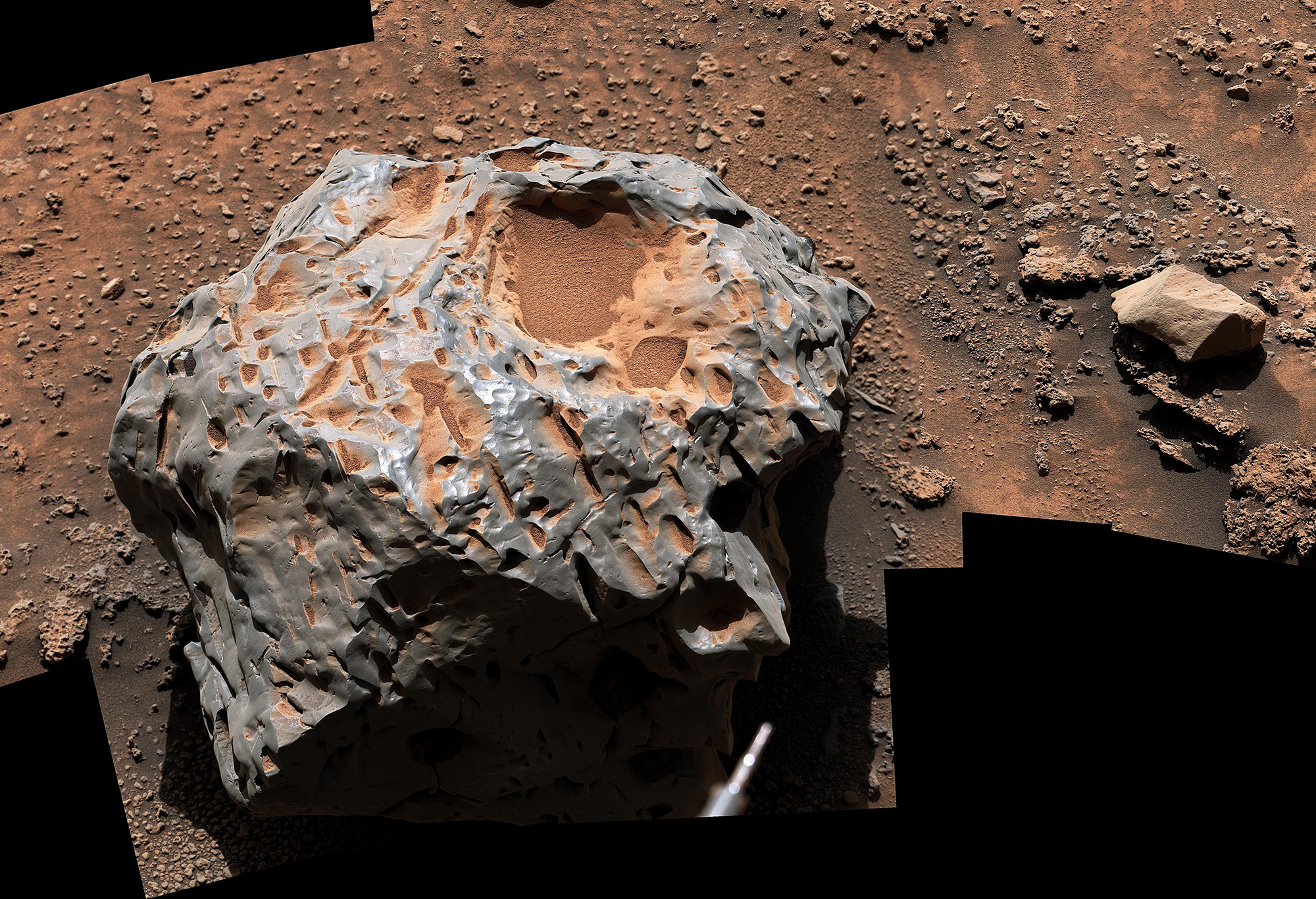
Further Reading:


NASA Perseverance's Real 4K Footage of Jezero Crater Shows Mars Once Had a Lake

{ https://www.universetoday.com/ }

Hoe vind je dit bericht?
Geschreven door peter om 16:28 Stuur door

DNA discovery on Shroud of Turin corroborates biblical account of Jesus's resurrection

DNA discovery on Shroud of Turin corroborates biblical account of Jesus's resurrection

The burial cloth believed to have wrapped the body of Jesus following the crucifixion is one of the most studied and fiercely debated artifacts in history.

Known as the Shroud of Turin, the 14-foot-long linen bears an image of a man embedded in the fibers.
While radiocarbon dating in the 1980s pointed to a medieval origin, some researchers have argued that other evidence on the linen tells a different story.

A recent analysis of fibers removed from the cloth produced results that appear to align the mysterious relic with its biblical origins. 
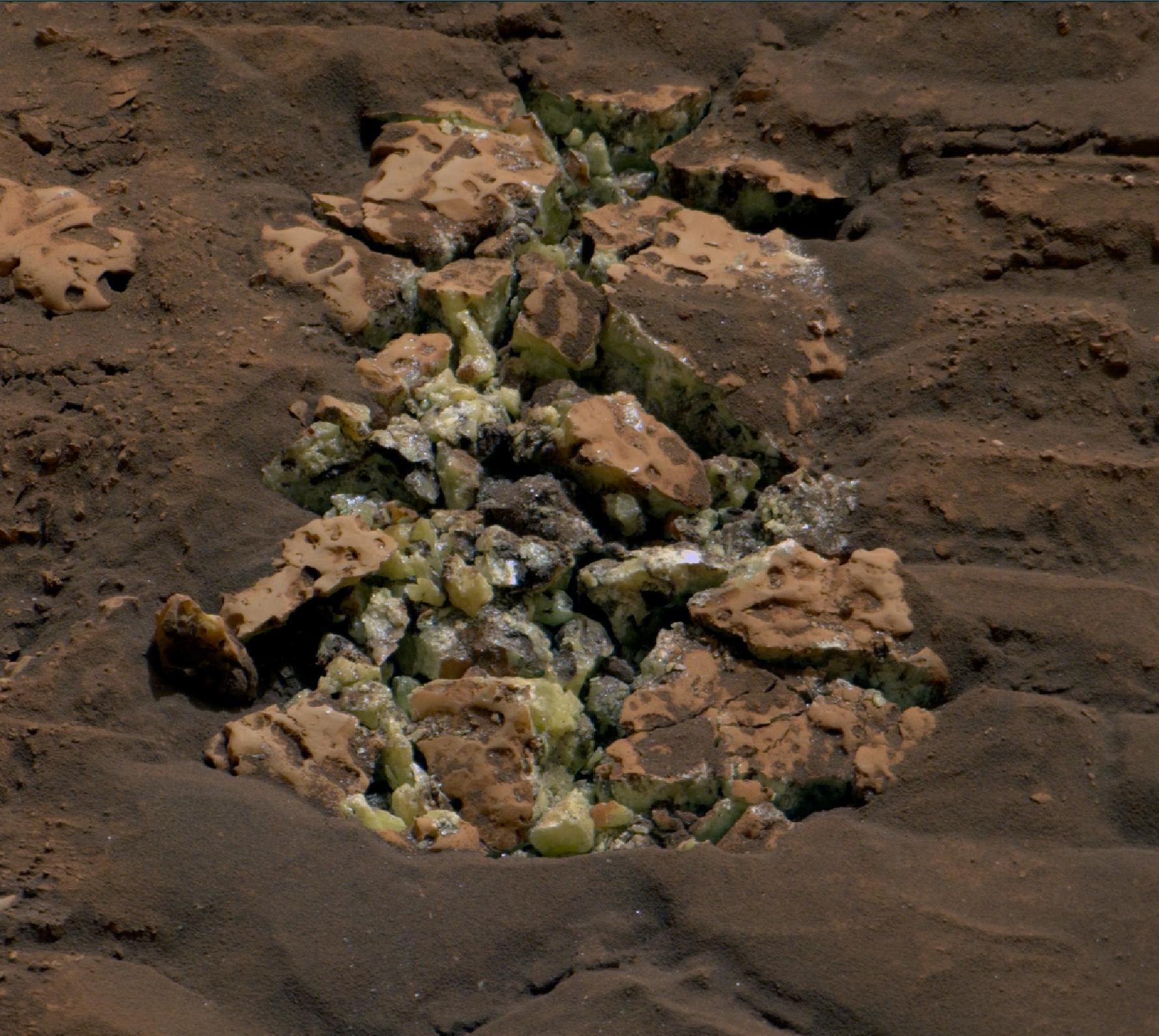
A team of Italian researchers analyzed linen fibers removed from different areas of the Shroud during a 1978 investigation using next-generation sequencing that can search millions of genetic fragments at once.
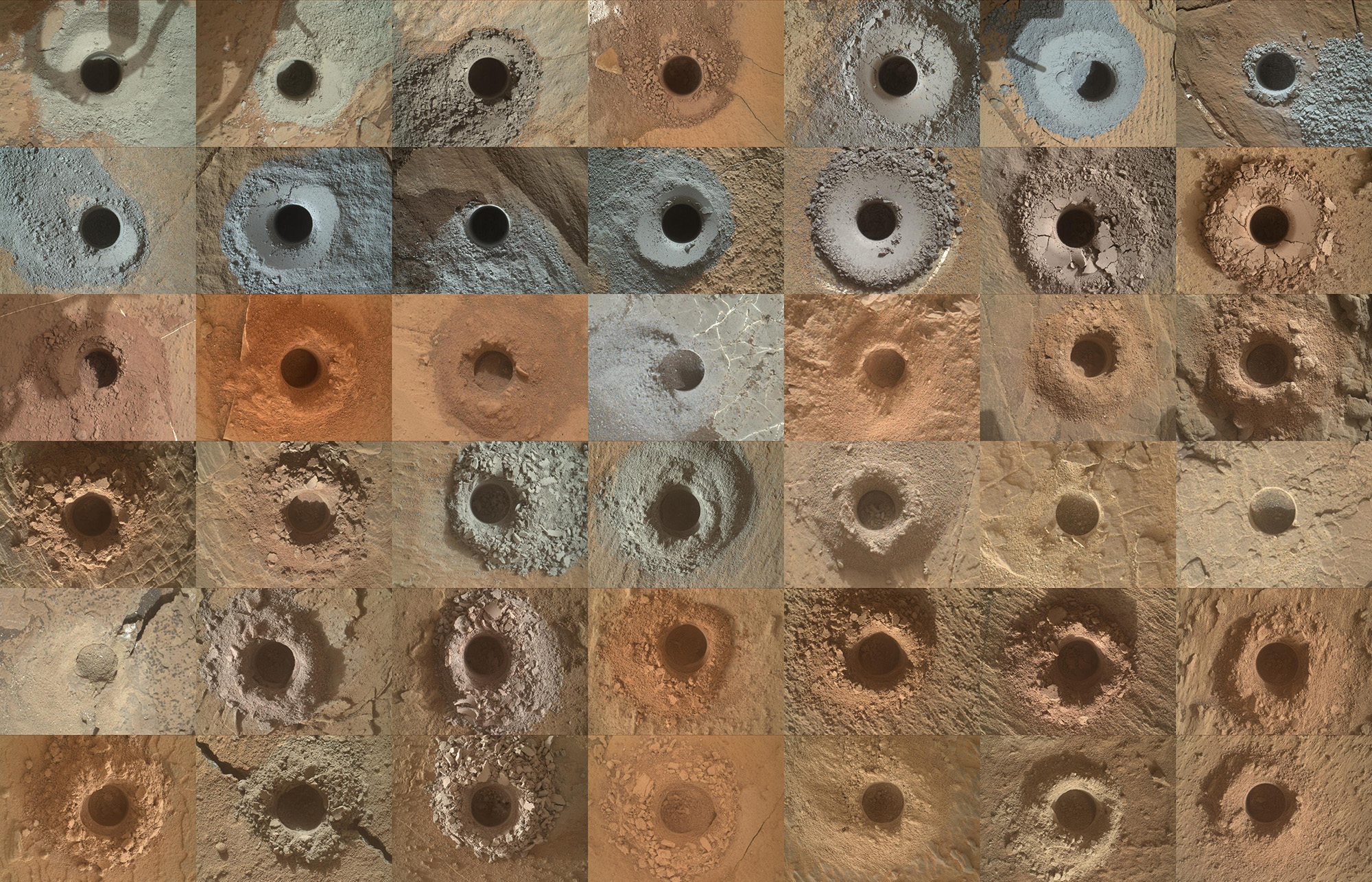
They detected a rare human genetic lineage found mainly in the Near East, particularly among the Druze people of the Holy Land, Jordan, Lebanon and Syria.

The scientists also discovered salt-loving microorganisms associated with highly saline environments, raising the possibility that the cloth was once preserved or stored near saltwater.

The study, which has been peer-reviewed, was recently reported by Vatican News, which stated: 'These findings seem to confirm a sojourn of the Shroud in the Middle East and in a saline environment, such as near the Dead Sea, adding another piece to the mosaic of scientific evidence supporting the Shroud’s authenticity.'

The relic is believed to be the burial cloth that wrapped Jesus after he died on the cross and is said to bear his image left after the resurrection. The Shroud is housed inside the Cathedral of Saint John the Baptist in Turin, Italy

The relic is believed to be the burial cloth that wrapped Jesus after he died on the cross and is said to bear his image left after the resurrection. The Shroud is housed inside the Cathedral of Saint John the Baptist in Turin, Italy

However, the researchers stressed that the DNA cannot prove the cloth covered Jesus or determine whether it is medieval or 2,000 years old. 

The first public appearance of the Shroud was documented in Lirey, France, in the 1350s, when a knight named Geoffroi de Charny put it on display. How he acquired the cloth is unknown.

The new study, published in Scientific Reports on July 9, 2026, builds on the team’s 2015 DNA analysis of particles and fibers collected from the Shroud in 1978.

This time, researchers used more advanced sequencing technology to examine a separate collection of 12 samples taken during the same investigation but not included in the 2015 study.

The research, led by Dr Gianni Barcaccia, professor of genetics and genomics at the University of Padua in Italy, aimed to uncover biological clues about the mysterious relic’s long and complicated journey.

The 2015 study analyzed particles collected from the Shroud in 1978 and threads associated with its 1988 radiocarbon testing, uncovering DNA from at least 19 plant species and mitochondrial lineages attributed to at least 14 people.

Researchers reported that 55.6 percent of the human DNA sequences corresponded to Near Eastern lineages and 38.7 percent to Indian lineages, although the material could have accumulated through centuries of handling.

Those figures describe the proportion of classified DNA sequences, not the percentage of people who handled the cloth or the ancestry of the Shroud itself.

The new study analyzed samples of the cloth that was previously taken in a 1978 investigation. This allowed them to use advanced technology for a new DNA analysis

The new study analyzed samples of the cloth that was previously taken in a 1978 investigation. This allowed them to use advanced technology for a new DNA analysis  

Above are samples taken from the Shroud in 1988 to determine the age. The pieces were removed from the edges of the cloth

Above are samples taken from the Shroud in 1988 to determine the age. The pieces were removed from the edges of the cloth

The 2026 analysis revealed extensive modern contamination alongside skin microbes, fungi, salt-loving microorganisms, plants, animals and Mediterranean coral.

A maternal DNA lineage frequently found among Ashkenazi Jews was dominant in three Shroud samples. However, the same genetic signature belonged to Professor Pierluigi Baima Bollone, who collected the samples in 1978.

article image

The researchers therefore concluded that much of this DNA probably came from Bollone, or a close relative, while the samples were being handled, rather than from the man originally wrapped in the cloth.

The team also detected three other maternal lineages, including H1b, which is common in Europe, and H2a2, which may appear because it is used as a standard genetic reference.

The rare H33 lineage was also identified. It is found today in Near Eastern groups, especially among the Druze, an Arabic-speaking ethno-religious minority living in the Holy Land, Jordan, Lebanon and Syria.

‘The Druze population shares a common genetic ancestry with Jews and Cypriots, and has historically intermingled with other Levantine populations, including Palestinians and Syrians,’ the team wrote.

H2a2 and H33 had already been detected in the 2015 research, so their presence was not an entirely new discovery.

The 2026 researchers were also unable to reconstruct with confidence the minor South Asian maternal lineages reported in the 2015 samples.

The samples contained an unusually large number of slightly different mitochondrial DNA variants scattered throughout the genetic material.

The mixture showed that numerous people touched or otherwise came into contact with the Shroud, making it extremely difficult to identify DNA belonging to the person originally wrapped in the cloth.

Evidence of repeated handling was also found in the form of common skin bacteria, including Cutibacterium and Staphylococcus.

Researcher detected a rare human genetic lineage found mainly in the Near East, particularly among the Druze people of the Holy Land, Jordan, Lebanon and Syria

Researcher detected a rare human genetic lineage found mainly in the Near East, particularly among the Druze people of the Holy Land, Jordan, Lebanon and Syria

Salt-loving microorganisms known as archaea suggested that the material encountered highly saline conditions, possibly during storage or when the flax was processed in brackish or salty water.

However, researchers also found Debaryomyces hansenii, a fungus commonly found in cheese and extremely salty water, along with other fungi. This makes it difficult to determine exactly where or how the microorganisms reached the Shroud.

Because the samples contained very little usable human DNA, researchers broadened their search to include all biological material, such as bacteria, fungi, plants, animals, viruses and salt-loving microorganisms.

Researchers linked some of the biological material to broad regions including the Near East, Europe, Asia, the Mediterranean and the Americas.

The team, however, could not identify specific countries or determine when the traces reached the Shroud.

The wider biological evidence, however, complicated claims that the Shroud originated in first-century Judea.

Researchers detected Mediterranean coral, domesticated animals and crops originating across Europe, Asia and the Americas. 

The strongest plant signal came from carrots resembling European varieties developed during the 1400s and 1500s, while maize, tomatoes, peppers, potatoes and peanuts reached Europe only after Columbus.

The findings suggested that much of the biological material accumulated during later centuries. 

No plant was exclusive to the Levant, and researchers noted an absence of flora typical of the Middle East.

Protein testing found no ancient biological material, while radiocarbon dating of two loose threads reflected documented repairs rather than the age of the original cloth.

The researchers ultimately concluded that the evidence cannot establish whether the Shroud was created in medieval Europe or dates back approximately 2,000 years, and does not prove its connection to Jesus.

RELATED VIDEOS

New DNA Study Shocks the Vatican — Shroud of Turin, Jesus’ Blood & Crucifixion Decoded

New DNA Evidence on the Shroud: Proof of the Resurrection? | LA Marzulli Shroud of Turin, Holy Fire,

"Impossible to Fake"; NEW Research on the Shroud of Turin That Points to Jesus' Resurrectio

{ https://www.dailymail.com/sciencetech/index.html }

Hoe vind je dit bericht?
Geschreven door peter om 16:02 Stuur door

New UFO Files Release | Shocking Videos and Mixed Reactions

New UFO Files Release | Shocking Videos and Mixed Reactions

By Ethan Sutherland

A collection of clear videos showing UFO sightings with various shapes in the sky.

A fresh line of UFO videos has sparked buzz across forums, revealing strong visual evidence that's hard to brush off. Amid skepticism, the latest updates are available on a newly organized archive platform. Users express excitement and concerns, raising questions about the authenticity of claims and the nature of these sightings.

Major Releases Draw Attention

The recent UFO video drop is generating considerable controversy. Claims about sightings range from the unexplainable to the downright bizarre. "Where are the clear pics?" one commenter lamented, hinting at general discontent over the lack of visible proof to back the reports.

Users Challenge the Nature of UFOs

The commentary reflects a growing frustration about the changing portrayal of unidentified aerial phenomena (UAP). "What happened to classic UFOs?" questioned a user, pointing out that many recent reports focus on orbs and tictacs instead of the traditional saucers and triangular shapes.

Another user summed up the sentiment with, "Great! Wake me up when there's better data." Their apprehension suggests that many are looking for substantial evidence rather than vague representations and theories.

Distrust in Authenticity

Amid the excitement, skepticism remains rampant. Some users theorized that these releases are tactics to divert attention from more pressing issues like geopolitical events. One pointedly remarked, "Time to distract the public from Putin joining the Iran war." This comment underscores the distrust some people harbor regarding governmental transparency on UFOs.

The Quest for Physical Evidence

Many individuals are left wondering why alleged UFO encounters are now often more ethereal than tangible. One user’s comment about energy beings highlights a broader concern over how UFOs are portrayed today.

"When are we going to actually see one of the aliens?"

Key Takeaways

  • ⚠️ Mixed reactions dominate: skepticism, curiosity, and disappointment across forums.

  • ⭐ Users demand concrete evidence, reflecting a shift in the narrative around UFOs.

  • 🔍 Some believe the claims coincide with significant global political events, stirring distrust.

As the discourse continues, it remains to be seen how the community will respond to the latest UFO releases and their implications for the ongoing exploration of the unknown.

Glancing into the Future of UFO Discourse

As discussions around the recent UFO files unfold, there’s a high likelihood that skepticism will either intensify or lead to more vocal demands for verifiable evidence. Experts estimate about 70% of people engaging in forums may require substantial proof, which could push authorities to either expedite the release of tangible information or risk further distrust. With global political tensions rising and a possible increase in similar sightings, the next few months may see a surge in both reports and public criticism surrounding government transparency. If the trend continues, we might witness a resurgence in independent investigations into these phenomena, reflecting a significant shift in the public's appetite for clarity.

Reflecting on Historic Hurdles

Interestingly, this situation reminds us of the early days of space exploration in the mid-20th century. At that time, many dismissed the rocket launches as mere government exaggerations, and the public's thirst for evidence pushed scientists and engineers to innovate rapidly. Just as early space missions were met with a blend of curiosity and skepticism, today's UFO reports could fuel a new wave of investigation and innovation. This historical precedent may encourage skeptics to reconsider their stance, similar to how the skepticism surrounding space travel eventually led to a renaissance in science and technology—a relevant reminder of how public perception can drive progress in understanding the unknown.

RELATED


Watch: Pentagon releases 15 new UFO videos

UFO FILES: 35 minutes of 'never-before-seen' footage released under Trump

US Navy Pilots Saw Something Impossible During the Famous Tic-Tac UFO Encounter

{ https://mysterylores.com/  }

Hoe vind je dit bericht?
Geschreven door peter om 23:11 Stuur door

The Search For Alien Technology Has A Measurement Problem – Analysis

th?id=ONUT.wVjm-kxjy2yXkVzQxTT2AQ&pid=News&w=316&h=200&c=14&rs=2&qlt=90&dpr=1.3

Image: ChatGPT

The Search For Alien Technology Has A Measurement Problem – Analysis

By Burak Oktenli

Key Takeaways:

  • Bigger AI models can rank, classify, and search at huge scale, but they cannot invent evidence an instrument never recorded. When two explanations produce the same data, no larger model can honestly tell them apart—the limit is identifiability, not compute.
  • Radio SETI, including Breakthrough Listen and the blc1 Proxima Centauri candidate later traced to terrestrial interference, shows the gap between finding a candidate and proving its origin. The next step is a new measurement—another site, antenna, geometry, epoch, or diagnostic—not another terabyte of the same ambiguous data.
  • Scientific AI should keep detection strength, calibration validity, tested alternatives, and independent follow-up separate instead of collapsing them into one confidence score. Automate ranking and triage; do not let a model promote its own score into a stronger claim without new evidence.
  • Bigger models can rank, classify, and search at extraordinary scale. They still cannot manufacture evidence that an instrument never captured.

The most dangerous promise in scientific artificial intelligence is not that machines will make mistakes. It is that they will make certainty out of missing information. As AI systems become better at finding patterns in enormous datasets, the temptation is to assume that a sufficiently powerful model can extract a correct answer from almost any measurement. That is false. Sometimes the obstacle is not computation, model capacity, or training data. Sometimes the decisive information was never measured in the first place.

Radio searches for extraterrestrial technology offer an unusually clear example. Modern programs such as Breakthrough Listen scan vast frequency ranges for narrowband, drifting signals that could be consistent with engineered transmitters. The field has also embraced machine learning. A deep-learning search of 820 nearby stars showed that learned representations can surface candidate signals that conventional filters may miss. That is exactly the sort of task at which AI can excel: ranking, triage, anomaly discovery, and the compression of an impossible search space into a manageable set of things worth examining.

But candidate discovery is not origin discovery. The distinction became vivid in the investigation of blc1, a narrowband signal detected in observations of Proxima Centauri. Its morphology was interesting enough to demand serious follow-up. The eventual analysis traced it to terrestrial radio-frequency interference. The lesson was not that unusual signals are unimportant. It was that a detection statistic is only the beginning of an evidentiary chain.

This point becomes sharper when we ask a simple question: what if two competing explanations generate exactly the same data for the algorithm? Suppose one hypothesis is a target-associated signal and another is a terrestrial interferer that, by chance or geometry, appears only during the same on-target scans. If both produce the same frequency-time track, the same amplitude pattern, and the same scan-by-scan observations, then the two hypotheses induce the same probability distribution over the data given to the model. In that case, no classifier can separate them honestly. Not a larger transformer. Not a deeper neural network. Not a quantum computer. The distinction is absent from the measurement.

That is an identifiability limit, and it changes how we should think about scientific AI. When two hypotheses are observationally equivalent, the next advance must come from experimental design rather than model design. We need a new measurement that causes the hypotheses to predict different outcomes: a simultaneous reference antenna, an independent observing site, a changed pointing geometry, an instrument diagnostic, a different epoch, or some other source of conditionally independent evidence. Another terabyte of the same ambiguous data does not solve the problem.

The same principle appears in more ordinary ways. Reference observations, for example, are often used to reject interference. That can work extremely well when the nuisance really is common to both target and reference scans. But the protection has a cost. If a genuine source leaks into an off-target observation through sidelobes or pointing geometry, a subtraction rule can subtract part of the signal we wanted to preserve, while a hard veto can discard it altogether. A method that looks safer on one axis may quietly become less sensitive on another.

Calibration creates a second trap. A threshold calibrated under one noise model does not retain its meaning after the residual environment changes. In a synthetic stress test I developed for radio technosignature decision rules, thresholds calibrated to an approximately one-percent cadence-level exceedance rate under independent Gaussian residuals produced trigger fractions above fifty percent after a simple time-correlation structure was introduced. Nothing about the threshold number itself warned that its interpretation had collapsed. The problem was not that the detector suddenly became stupid. The statistical conditions supporting the threshold no longer held.

This is why the most important question for scientific AI may not be, “How accurate is the model?” It may be, “Under what measurement conditions does this output still mean what we say it means?” That is a different discipline. It requires separating detection strength from calibration validity, separating a candidate ranking from an origin claim, and recording which alternative explanations have actually been tested.

Engineering already has language for this. NASA’s current standard for models and simulations treats credibility, validation, verification, uncertainty, and acceptance criteria as explicit parts of model use. Scientific AI needs the same instinct. A model should not inherit authority merely because it is sophisticated. Its output should carry the conditions under which it was calibrated, the data it actually observed, the alternatives it cannot distinguish, and the tests still required before escalation.

That discipline matters far beyond SETI. In medical imaging, two diseases can look similar under one modality and diverge only after another test. In climate science, a model can fit the historical record while remaining underdetermined about causal mechanisms. In intelligence analysis, multiple adversary explanations can remain consistent with the same observable behavior. In autonomous systems, a sensor-fusion stack can assign high confidence to a state estimate even when its sensors share a common-mode failure. In each case, more computation can sharpen the inference conditional on the evidence. It cannot supply the missing discriminator.

This should change how we evaluate AI progress in science. Benchmark culture often rewards the highest score on a fixed dataset. But the scientifically important question is often what happens when the assumptions behind that dataset fail. A robust benchmark should therefore include conditions designed to break the method: distribution shifts, correlated residuals, missing reference observations, leakage between supposedly independent channels, nuisance classes that mimic the positive class, and deliberately matched cases in which successful discrimination would reveal data leakage rather than intelligence.

The technosignature community already has many of the ingredients. Tools such as setigen support synthetic signal generation and injection. Published work has explored machine-learning direction-of-origin filtering, while the “cosmic haystack” formalism reminds us that excellent sensitivity within one narrow test family does not imply comprehensive coverage of the wider search space. The broader NASA technosignatures workshop report likewise framed technosignature research as a field in which new instruments, new surveys, new algorithms, and new theory all matter. The missing piece is not another declaration that AI will accelerate discovery. It is a stronger contract between what an algorithm outputs and what the measurement actually warrants.

Such a contract would be simple in principle. A candidate record should keep at least four things separate: the strength of the detected feature; whether the current data remain inside the calibration regime; which conventional or instrumental alternatives have been tested; and what independent observation, if any, supports a stronger interpretation. A fifth field can carry follow-up priority, but that is a resource-allocation decision, not a probability of origin. Collapsing all of these into one confidence score creates an audit problem: after the fact, nobody can tell which assumption carried the claim forward.

The same asymmetry should govern automation. AI can reasonably automate low-level transitions: ingest data, flag anomalies, compare a statistic with a frozen threshold, rank candidates, and request additional observations. But an automated system should not be allowed to convert its own score into a stronger scientific claim without new evidence. Promotion should require a named test or an independent measurement. Demotion, by contrast, should be easy. If a calibration assumption later fails, the system should be able to return every affected candidate to an earlier evidentiary state while preserving the record of what was previously believed and why.

This is not an argument against AI in science. It is an argument for using AI where it is strongest. Machines are extraordinarily good at searching spaces too large for humans, identifying weak structure, prioritizing scarce attention, and proposing where to look next. Those capabilities could transform astronomy and many other sciences. But scientific authority should attach to evidence, not to model scale.

The phrase “AI for discovery” therefore needs one amendment. AI can accelerate the path to discovery. It can expose patterns that deserve investigation. It can help design the next observation. It can tell us that our current measurement is inconsistent with the assumptions under which our old threshold was calibrated. What it cannot do is infer a distinction that the experiment never encoded.

That boundary is not a limitation to be embarrassed about. It is a design instruction. When the model cannot know, the answer is not always a bigger model. Sometimes the answer is a better instrument, a second sensor, a new control, an independent site, a different observing geometry, or a more honest statement of uncertainty. The future of scientific AI will depend as much on improving what we measure as on improving what we compute.

If the evidence is not in the measurement, intelligence cannot conjure it into existence.

RELATED


Plain Sight Problem Why Our Search For Aliens Is Fundamentally Broken

Aliens in Space: Why Haven't We Found Them Yet?

{ https://www.eurasiareview.com/ }

Hoe vind je dit bericht?
Geschreven door peter om 22:49 Stuur door

UAP whistleblower makes stunning claim about secrets behind government’s recovered craft

A UAP whistleblower is making an extraordinary claim about what the U.S. government is keeping behind closed doors, saying the government is in possession of recovered craft.

"Does the government have craft that have been recovered? Yes they do," Dylan Borland said on the "Hang Out with Sean Hannity" podcast.

Borland made the assertion in the latest episode of the show, where he joined television host Ben Hansen to discuss what whistleblowers say they know about the government's handling of UAP and allegedly recovered craft.

Dylan Borland and Sean Hannity in a side-by-side split image

UAP whistleblower Dylan Borland, left, sits down for an exclusive interview with Fox News host Sean Hannity, right, on the "Hang Out with Sean Hannity" podcast.

(Hang Out With Sean Hannity/Screengrab)

Hannity pressed Borland directly on whether he knew "for a fact" that the government possessed such craft, and whether restrictions surrounding his work would allow him to answer the question publicly.

He responded: "Yes."

His claim comes after a group of UAP whistleblowers called on President Donald Trump to waive nondisclosure agreements they say prevent them from fully disclosing what they know to the American public.

During the conversation, Hannity also pointed to individuals he had spoken with previously who said they had knowledge of recovered craft. He asked Borland whether he knew people who had made similar assertions.

"Probably, yes," Borland responded.

Hannity also discussed claims from individuals who say they faced intimidation, workplace harassment and threats after coming forward with UAP-related information. Borland appeared to affirm those accounts during the interview.

Hannity has held previous podcast discussions about UAPs, including one conversation with Rep. Tim Burchett, R-Tenn., and Luis Elizondo about alleged Pentagon UAP cover-ups, exotic materials, destroyed pilot data and more.


Live Congressional Testimony Reveals US Allegedly Has Alien Bodies ? | Full Hearing | World News

"Hang Out with Sean Hannity" fans can watch or listen to Hannity's full conversation with Borland and Hansen on iHeartRadio, YouTube, Spotify, Apple Podcasts or wherever they get their podcasts.

RELATED

What the Pentagon’s UFO Videos Actually Show | UAP Evidence Explained

{ https://www.foxnews.com/ }

Hoe vind je dit bericht?
Geschreven door peter om 22:32 Stuur door

Scientists found a giant magnetized object beneath the Moon’s surface

Scientists found a giant magnetized object beneath the Moon’s surface

The Moon has an extremely weak magnetic field. However, the question of whether our satellite has always been this defenseless has long sparked heated debate among astrophysicists. Some scientists argued that billions of years ago the Moon had its own planetary dynamo, while others claimed that the evidence for this theory was insufficient.

The Moon is defenseless against space because of the absence of a magnetic field. Photo: Unsplash

Fresh observations of the far side of our cosmic neighbor, published in the journal Science Advances, have helped bring an unexpected resolution to this debate.

The Coincidence of Three Anomalies in Dewar Crater

While analyzing archival lunar observations, scientists discovered a huge, strongly magnetized structure in the region of Dewar crater. The object, about 60 km wide, consists of solidified magma that rose from deep within the Moon approximately 4.2 billion years ago.

Dewar crater, photographed by the Lunar Reconnaissance Orbiter spacecraft. Source: Wikimedia Commons

This area is also known for bright, swirling patterns on the surface. Researchers Xi Yang and Anna Mittelholz of ETH Zurich note that Dewar crater represents a unique case where a magnetic anomaly, a gravitational anomaly, and a characteristic surface pattern all coincide at the same location.

The far side of the Moon. Image:  Space Engine

Using a combined mathematical model, the scientists calculated that the Moon’s early magnetic field would have needed to be about 11 μT to produce such a structure. For comparison, Earth’s present-day magnetic field is about 50 μT.

A New Approach Instead of Apollo Samples

The previous hypothesis of a lunar dynamo was based on rock samples brought back by astronauts from the Apollo missions, but later re-evaluations of these materials confused the scientific community because of conflicting results. The new method, which combines orbital gravity and magnetic data, made it possible to place precise constraints on the characteristics of the planetary dynamo without the need for landing and collecting soil samples. In addition, the location of Dewar crater completely rules out the possibility that the magnetic anomaly was temporarily produced by a powerful asteroid impact.

A lunar swirl photographed on the near side of the Moon. Source: NASA

Understanding the Moon’s magnetic history provides an important example of how relatively small celestial bodies can maintain — or lose — their own dynamos. And although the discovery does not eliminate absolutely all discrepancies with the Apollo sample data, the scientific debate is now shifting from the question “Did a magnetic field exist?” to “How exactly did it work?”

Earlier, we reported on how the Moon’s magnetic field may once have been stronger than Earth’s.

RELATED

There's A Giant Lump Of Metal Buried In The Moon. Nobody Knows Why.

Something Buried Beneath The Moon's Surface Has Scientists Terrified

{ https://universemagazine.com/en/articles-en/ }

Hoe vind je dit bericht?
Geschreven door peter om 22:12 Stuur door

Meer van UFO'S of UAP'S, ASTRONOMIE, RUIMTEVAART, ARCHEOLOGIE, OUDHEIDKUNDE, SF-SNUFJES EN ANDERE ESOTERISCHE WETENSCHAPPEN - DE ALLERLAATSTE NIEUWTJES

↑ Terug naar de berichten