Ontdek de Fascinerende Wereld van UFO's en UAP's: Jouw Bron voor Onthullende Informatie!
Ben jij ook gefascineerd door het onbekende? Wil je meer weten over UFO's en UAP's, niet alleen in België, maar over de hele wereld? Dan ben je op de juiste plek!
België: Het Kloppend Hart van UFO-onderzoek
In België is BUFON (Belgisch UFO-Netwerk) dé autoriteit op het gebied van UFO-onderzoek. Voor betrouwbare en objectieve informatie over deze intrigerende fenomenen, bezoek je zeker onze Facebook-pagina en deze blog. Maar dat is nog niet alles! Ontdek ook het Belgisch UFO-meldpunt en Caelestia, twee organisaties die diepgaand onderzoek verrichten, al zijn ze soms kritisch of sceptisch.
Nederland: Een Schat aan Informatie
Voor onze Nederlandse buren is er de schitterende website www.ufowijzer.nl, beheerd door Paul Harmans. Deze site biedt een schat aan informatie en artikelen die je niet wilt missen!
Internationaal: MUFON - De Wereldwijde Autoriteit
Neem ook een kijkje bij MUFON (Mutual UFO Network Inc.), een gerenommeerde Amerikaanse UFO-vereniging met afdelingen in de VS en wereldwijd. MUFON is toegewijd aan de wetenschappelijke en analytische studie van het UFO-fenomeen, en hun maandelijkse tijdschrift, The MUFON UFO-Journal, is een must-read voor elke UFO-enthousiasteling. Bezoek hun website op www.mufon.com voor meer informatie.
Samenwerking en Toekomstvisie
Sinds 1 februari 2020 is Pieter niet alleen ex-president van BUFON, maar ook de voormalige nationale directeur van MUFON in Vlaanderen en Nederland. Dit creëert een sterke samenwerking met de Franse MUFON Reseau MUFON/EUROP, wat ons in staat stelt om nog meer waardevolle inzichten te delen.
Let op: Nepprofielen en Nieuwe Groeperingen
Pas op voor een nieuwe groepering die zich ook BUFON noemt, maar geen enkele connectie heeft met onze gevestigde organisatie. Hoewel zij de naam geregistreerd hebben, kunnen ze het rijke verleden en de expertise van onze groep niet evenaren. We wensen hen veel succes, maar we blijven de autoriteit in UFO-onderzoek!
Blijf Op De Hoogte!
Wil jij de laatste nieuwtjes over UFO's, ruimtevaart, archeologie, en meer? Volg ons dan en duik samen met ons in de fascinerende wereld van het onbekende! Sluit je aan bij de gemeenschap van nieuwsgierige geesten die net als jij verlangen naar antwoorden en avonturen in de sterren!
Heb je vragen of wil je meer weten? Aarzel dan niet om contact met ons op te nemen! Samen ontrafelen we het mysterie van de lucht en daarbuiten.
Berichten van 1 februari 2021 tot 28 februari 2021
Aliens Told Canadian Engineer Secrets Of UFOs & That Light Speed Is Not Constant
It all had started a few years before the “Space Race” began between the two rivalry nations: the USA and Russia. The world was stunned by the daily UFO sightings, and stories of alien contact flushed newspapers. It was the era of two types of people: the first one was groups of like-minded people, for example, engineers, scientists, and inventors who dismissed any alien contact and flying saucers’ stories, while the second ones were the alien contactees who also claimed to had been in the UFOs. These groups never aligned with each other, but Wilbert Brockhouse Smith (1910-1962), a Canadian engineer was the only line of connection between these two groups.
Mr. Smith worked as a senior radio engineer for the Canadian government’s Department of Transport in the late 1940s and 50s. He was the reason behind the radio communication between Canada and the United States at that time. Very few people know that Mr. Smith convinced the Canadian government to establish a program to monitor the UFOs that eventually detect the strange aerial phenomenon which, according to him, was not earthly. While asking Americans about the existence of UFOs, he received a reply from them that the US government had put this subject at their uppermost concern, and it even was the more highly top secret than the atomic bomb.
Wilbert Brockhouse Smith (1910-1962)
Besides, according to researcher Grant Cameron, Mr. Smith played a major role in establishing Radio Ottawa used by Canadian spies and also for tracking secret Soviet communications.
In 1950, the Canadian UFO study program, Project Magnet was established by Transport Canada under the supervision of Mr. Smith. The government funded the project for four years, but he received informal funding after. In 1952, he set up an observatory at Shirley’s Bay to study the findings of UFO sightings under Project Magnet. He had a personal interest in geo-magnetism, which made him conclude that the UFOs were of extraterrestrial origin, propelled by magnetic forces, and actually from parallel universes.
Mr. Smith said:
“It is my opinion that the people from elsewhere choose all sorts of methods to make contact with us, and their technology and understanding being much better than ours, they can use methods which we find quite incomprehensible.”
Image via Ottawa Citizen
Interestingly, he believed that the UFOs were controlled through physic powers, and such statements embarrassed the Department of Transport. In 1952, when the great UFO wave hit the media, Mr. Smith claimed that the United States Air Force shot down a UFO near Washington, D.C, recovered its piece and let him borrow it. When asked if he had returned the piece to the USAF, he replied that it went to a much more highly secret group (It was neither FBI nor CIA), which identity he could not disclose.
Smith’s contact with aliens
Surprisingly, Mr. Smith was also a firm believer in aliens. In 1961, he gave a speech at the Vancouver Area UFO Club, where he claimed to had been in contact with aliens, referring to them as “the boys topside.” Furthermore, he said that the aliens had explained to him that the speed of light is not constant, and time works differently in the universe, not like ticking on Earth.
“Their ships, he was told, were supported on the Earth’s gravitational field. The fields surrounding their ships, he added, created areas that reduced areas that weakened the strength of objects that came into contact with them, accounting for the destruction of earthly military craft that flew too close to them. This explained, among other phenomenon, the May 1956 crash of a military jet into the Villa St. Louis convent in Orleans — the jet, Smith said, flew into a “very strong vortex of reduced binding,” causing it to break apart.”
On November 21, 1950, Mr. Smith wrote a memo which was classified as “Top Secret” but later, it was recovered from the Archives of the University of Ottawa. According to the memo, the Canadian government was serious about UFOs and had been building a secret technology using oceanic radiation, atmospheric radio-activity, and geo-magnetism. He further wrote that his work in geomagnetic and the energy on which flying saucers operate was connected.
Before his death from cancer, Mr. Smith asked his wife to hide all his research and sensitive files, as he was afraid that it would get into the wrong hands. He died on December 27, 1962, and soon after that, the Russians, Americans, and Canadians approached his wife.
Ex-CIA Pilot Said NASA Landed On Mars In 1966 & Its Former Employee Saw Humans There In 1979
A woman named Jackie called on Coast to Coast AM, an American radio station, claiming she was the former NASA employee who managed to see humans on Mars in 1979. This statement sparked rumors of a “secret space program” that is kept hidden from the public.
Jackie said she had seen a man in a spacesuit in a live broadcast from Mars, but this information is concealed by the NASA authorities. She claimed to be part of a team of specialists processing information from the Viking, the first Mars rover to send images from the surface of Mars to Earth.
“I wonder if you could solve a 27-year-old mystery for me,’ she asked the presenter. ‘That old Viking rover was running around. Then I saw two men in space suits – not the bulky suits we normally used, but they looked protective. They came over the horizon walking to the Viking Explorer.”
The Vikings 1 and 2 landed in 1975 and 1976 and sent back the first data on the surface of Mars, including the apparent absence of extraterrestrial life.
NASA claimed that no traces of life were seen there, the Vikings found all the elements necessary for life on Earth. Carbon, nitrogen, hydrogen, oxygen, and phosphorus were present on Mars.
Jackie vowed that 6 other NASA employees witnessed this event with her. When those people tried to tell everyone about what they had seen and tried to leave the room, they found out that the front door was locked and the paper was hung on the door window so that no one else could look into it or enter.
Illustration of humans on Mars
Of course, so far none of those 6 alleged employees have contacted Jackie to confirm her words.
John Lear: Secret Missions To Moon & Mars
Former CIA pilot John Lear and former Lockheed L-1011 Captain also said that NASA astronauts flew to Mars in 1966. Moreover, Lear believes that astronauts had been preparing for this mission especially long. They introduced certain drugs into the body, allowing people to adapt to Martian climatic conditions. Allegedly, those astronauts could breathe rarefied Martian air, so NASA had the opportunity to launch humans on the red planet for a longer time.
John Lear
For those who do not know, John Lear is the son of Bill Lear, who founded Lear Jet in 1962. So, there is no doubt that he would have sensitive information related to secret technology and extraterrestrial activities.
During his interview with Coast to Coast AM radio program, Lear had given statements that could be hard for anybody to digest. He said that in 1953, a UFO crashed with an extraterrestrial named EBE 3, who helped the US government to build spacecraft with alien technology. Then he said that in 1962, the craft with incredible speed was built that carry passengers and take to Moon in just 60 minutes. In 1966, NASA had a trip to Mars. What’s more, “humans there were adapted to breathe in the thin atmosphere.”
Lear said: “The population of Mars is around 600 million and they are exactly like us.”
He claimed that his father was involved in the anti-gravity technology programs which were highly secret. According to him, everything we know about Moon is a lie. In the 70s, NASA began destroying photographs taken by Apollo 8, 10, and 11, in which it was possible to see the cities, bases, pipes, roads, vegetation, lights, mining, and a nuclear reactor.
Apart from John Lear, there are other US officials who made similar statements. Philip J Corso, a former US Army officer said that Grey aliens, also referred to as Zeta Reticulans were not really aliens, but bio machines specially created to work on other planets. There are dozens of such stories including Project SERPO.
The stories of a NASA hidden space project crop up regularly ... Personally, I don't think the USA had such cutting edge technology in the 1970s, let alone cope with such space travel. Still, I pass on these conspiracy theories, so that the reader has all possible information to be able to make his own judgment ...
The TR-3B is Code named Astra. The tactical reconnaissance TR-3B first operational flight was in the early 90s. The triangular-shaped nuclear-powered aerospace platform was developed under the Top Secret, Aurora Program with SDI and black budget monies. At least 3 of the billion-dollar-plus TR-3Bs were flying by 1994. Aurora is the most classified aerospace development program in existence. The TR-3B is the most exotic vehicle created by the Aurora Program. It is funded and operationally tasked by the National Reconnaissance Office, the NSA, and the CIA. The TR-3B flying triangle is not fiction and was built with technology available in the mid-80s. Not every UFO spotted is one of theirs.
Source: newscitrus.net
The TR-3B vehicles outer coating is reactive to electrical Radar stimulation and can change reflectiveness, radar absorptiveness, and color. This polymer skin, when used in conjunction with the TR-3Bs Electronic Counter Measures and, ECCM, can make the vehicle look like a small aircraft or a flying cylinder–or even trick radar receivers into falsely detecting a variety of aircraft, no aircraft, or several aircraft at various locations. A circular, plasma filled accelerator ring called the Magnetic Field Disrupter, surrounds the rotatable crew compartment and is far ahead of any imaginable technology.
Sandia and Livermore’s laboratories developed the reverse engineered MFD technology. The government will go to any lengths to protect this technology. The plasma, mercury based, is pressurized at 250,000 atmospheres at a temperature of 150 degrees Kelvin and accelerated to 50,000 rpm to create a super-conductive plasma with the resulting gravity disruption. The MFD generates a magnetic vortex field, which disrupts or neutralizes the effects of gravity on mass within proximity, by 89 percent. Do not misunderstand. This is not antigravity. Anti-gravity provides a repulsive force that can be used for propulsion. The MFD creates a disruption of the Earth’s gravitational field upon the mass within the circular accelerator. The mass of the circular accelerator and all mass within the accelerator, such as the crew capsule, avionics, MFD systems, fuels, crew environmental systems, and the nuclear reactor, are reduced by 89%. This causes the effect of making the vehicle extremely light and able to outperform and outmaneuver any craft yet constructed–except, of course, those UFOs we did not build.
The TR-3B is a high altitude, stealth, reconnaissance platform with an indefinite loiter time. Once you get it up there at speed, it doesn’t take much propulsion to maintain altitude. At Groom Lake, there have been whispered rumors of a new element that acts as a catalyst to the plasma. With the vehicle mass reduced by 89%, the craft can travel at Mach 9, vertically or horizontally. My sources say the performance is limited only the stresses that the human pilots can endure. This is a lot, really, considering along with the 89% reduction in mass, the G forces are also reduced by 89%.
Source: matrixdisclosure.com
The TR-3Bs propulsion is provided by 3 multimode thrusters mounted at each bottom corner of the triangular platform. The TR-3 is a sub-Mach 9 vehicle until it reaches altitudes above l20,000 feet–then God knows how fast it can go! The 3 multimode rocket engines mounted under each corner of the craft use hydrogen or methane and oxygen as a propellant. In a liquid oxygen/hydrogen rocket system, 85% of the propellant mass is oxygen. The nuclear thermal rocket engine uses a hydrogen propellent, augmented with oxygen for additional thrust. The reactor heats the liquid hydrogen and injects liquid oxygen in the supersonic nozzle so that the hydrogen burns concurrently in the liquid oxygen afterburner. The multimode propulsion system can; operate in the atmosphere, with thrust provided by the nuclear reactor, in the upper atmosphere, with hydrogen propulsion, and in orbit, with the combined hydrogen\ oxygen propulsion.
What you have to remember is, that the 3 rocket engines only have to propel 11 percent of the mass of the Top Secret TR-3B. The engines are reportedly built by Rockwell. Many sightings of triangular UFOs are not alien vehicles but the top-secret TR-3B. The NSA, NRO, CIA, and USAF have been playing a shell game with aircraft nomenclature – creating the TR-3, modified to the TR-3A, the TR-3B, and the Teir 2, 3, and 4, with suffixes like Plus or Minus, added on to confuse further the fact that each of these designators is a different aircraft and not the same aerospace vehicle. A TR-3B is as different from a TR-3A as a banana is from a grape. Some of these vehicles are manned and others are unmanned.
It all becomes apparent in Belgium where, after frequent sightings of flying lights and a mid-air near-miss by UFO, at one point Belgian Air Force, anxious to identify the origin of the phenomena, authorized F16 scrambles under the condition that the visual observations on the ground were confirmed by the local police and detection on the radar.
One of the consequences of such a decision was that on 31 March 1990 at 00:05 hr, two F16 were scrambled from Beauvechain airbase and guided towards the radar contacts.
A total of 9 interception attempts have been made that night. On six occasions the pilots established a lock-on with their air interception radar. Lock-on distances varied between 5 and 8 NM. On all occasions targets varied speed and altitude very quickly and break-locks occurred after 10 to 60 seconds. Speeds varied between 150 and 1010 knots. On three occasions both F16 registered simultaneous lock-ons with the same parameters. The two F16 were flying approximately 2 NM apart. Owing to the night conditions, no visual contact could be established by either of the F16 pilots.
Antarctic researchers found life deep under the sea.
Photograph: Huw Griffiths/UKRI BAS
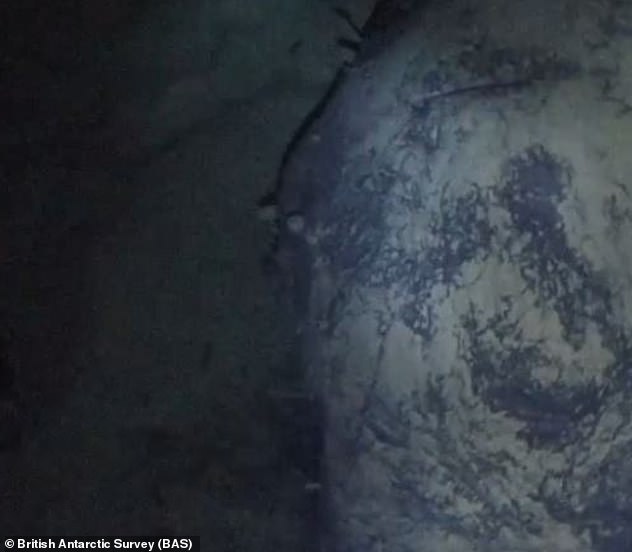
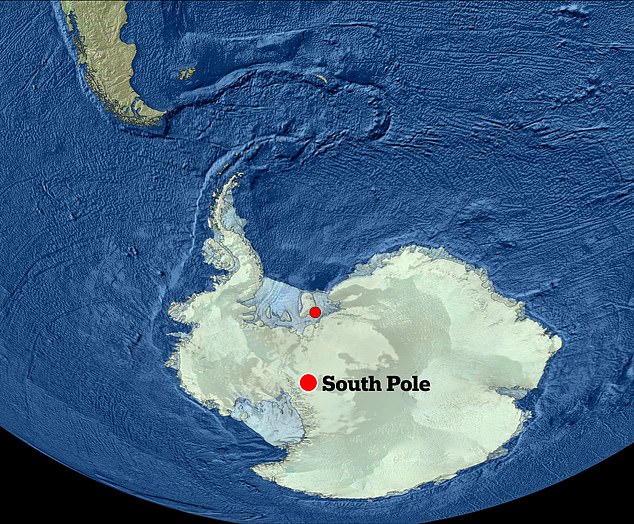
The accidental discovery of marine organisms on a boulder on the sea floor beneath 900 metres (3,000ft) of Antarctic ice shelf has led scientists to rethink the limits of life on Earth.
Researchers stumbled on the life-bearing rock after sinking a borehole through nearly a kilometre of the Filchner-Ronne ice shelf on the south-eastern Weddell Sea to obtain a sediment core from the seabed.
While the boulder scuppered their chances of obtaining the core, footage from a video camera sent down the hole captured the first images of organisms stuck to a rock far beneath an ice shelf.
“It’s slightly bonkers,” said Dr Huw Griffiths, a marine biogeographer at the British Antarctic Survey. “Never in a million years would we have thought about looking for this kind of life, because we didn’t think it would be there.”
Ice shelves form when frozen water from the continent’s interior flows to the coast and floats on to the surrounding sea. As the ice flows over the land, it can pick up boulders that become embedded in the base of the ice shelf before dropping out on to the sea floor.
While surveys of Antarctic marine life have found some small mobile organisms – such as fish, worms, jellyfish and krill – far beneath ice shelves, they have never previously found stationary filter-feeders, which survive by ingesting food that falls down on them. Their absence led many scientists to suspect that the total darkness, the lack of food and the -2C temperature was too hostile for them.
Photos and video footage of the boulder show that it is home to at least two types of sponge, one of which has a long stem that opens into a head. But other organisms, which could be tube worms or stalked barnacles, also appear to be growing on the rock. Details on the discovery have been published in Frontiers in Marine Science.
Sponges, tube worms and stalked barnacles appear to be growing on the rock.
Photograph: Huw Griffiths
The isolated boulder community lies 500 metres under the base of the ice shelf and 160 miles (260km) from the nearest open water. Because of the strong currents in the area, the food they ingest – perhaps dead plankton – is thought to be carried between 370 and 930 miles before reaching them.
“This is by far the furthest under an ice shelf that we’ve seen any of these filter-feeding animals,” said Griffiths. “These things are stuck on a rock and only get fed if something comes floating along.
“It was a real shock to find them there, a really good shock, but we can’t do DNA tests, we can’t work out what they’ve been eating, or how old they are. We don’t even know if they are new species, but they’re definitely living in a place where we wouldn’t expect them to be living,” he said.
As 2021 unfolds ...
... and you’re joining us from Belgium, we have a small favour to ask. Through these turbulent and challenging times, millions rely on the Guardian for independent journalism that stands for truth and integrity. Readers chose to support us financially more than 1.5 million times in 2020, joining existing supporters in 180 countries.
For 2021, we commit to another year of high-impact reporting that can counter misinformation and offer an authoritative, trustworthy source of news for everyone. With no shareholders or billionaire owner, we set our own agenda and provide truth-seeking journalism that’s free from commercial and political influence. When it’s never mattered more, we can investigate and challenge without fear or favour.
Unlike many others, we have maintained our choice: to keep Guardian journalism open for all readers, regardless of where they live or what they can afford to pay. We do this because we believe in information equality, where everyone deserves to read accurate news and thoughtful analysis. Greater numbers of people are staying well-informed on world events, and being inspired to take meaningful action.
In the last year alone, we offered readers a comprehensive, international perspective on critical events – from the Black Lives Matter protests, to the US presidential election, Brexit, and the ongoing pandemic. We enhanced our reputation for urgent, powerful reporting on the climate emergency, and made the decision to reject advertising from fossil fuel companies, divest from the oil and gas industries, and set a course to achieve net zero emissions by 2030.
Parallel Twin Ziggurats: The Tower of Babel and Pyramid of Cholula
From the oasis sands of the biblical cradle of Mesopotamia all the way to the volcanic Valley of Mexico, parallel pyramids and mirroring myths have endured across the ages. Isolated from each other by vast oceans and deserts of time, disperse cultures have incorporated analogous stories into their mythology, building structures, such as the Tower of Babelor the Pyramid of Cholula, that are strikingly similar even though they are located in different corners of the globe.
Stories of ziggurats built by different cultures abound, one could even call them twin towers, challenging conventional narratives of human history. These tales have several components in common: offended deities, the multiplication of languages, a global deluge and vexing ancient structures. These aspects are all intertwined, as if they are all pieces of a grand global puzzle waiting to be deciphered.
Mythology must not be blindly accepted at face value (thank you very much Dr. Jones), but on the other hand, to instantly dismiss mythology as ancient fiction is equally flawed reasoning. The former results in superstition, the latter produces ignorance. Some of the most renowned scholars on the subject of comparative mythology, such as Carl Jung and Joseph Campbell, theorize that widespread mythological parallels amongst separate cultures can be explained away by the formation of base archetypes conjured from the cauldron of the collective human subconscious. While their expertise and the essence of this concept are beyond question, some myths are so specific, so universal, and are then compounded by their entanglement with mysterious structures, they defy this concept.
There are widespread mythological parallels relating a story to that of the Tower of Babel.
The most commonly known of all these accounts is the biblical Tower of Babel narrative found in the Book of Genesis, chapter eleven verses one through nine. This narrative basically states that the generations following a global deluge cataclysm united together under one language. They migrated west into the region of Shinar ( Sumer or modern day Iraq) and they were determined to build a great city, with a tower.
There is a curious indication that somehow, this tower would empower them and prevent any future annihilation. Furthermore, this project is seen as an affront to the supreme deity. To counter this effort, the deity intervenes by confounding the language that united them, thereby undermining the project and causing the people to scatter throughout the planet.
Authors and scholars ranging from ancient times up to the present have made a variety of noteworthy observations and interpretations regarding this account. Josephus for example, wrote that a key aspect of the story is the arrogance of the tyrannical ruler who commissioned the construction whom the biblical text names Nimrod. Another interpretation is that this is more of an etiological myth (a myth that explains the origin of something unknown) which provides an explanation for the origin of different languages and cultures.
Perhaps the scholarly observations of the greatest magnitude are the attempts to identify the structure in question by associating it with the mysterious ziggurats of ancient Babylon and Sumer. This is quite logical due to the fact that the cities mentioned in the texts have historical basis in fact, were said to have been founded by this ruler in the texts, and come complete with enigmatic ziggurat structures, or towers, as their focal point. The extremely loose consensus among modern scholars identifies this tower with the Ziggurat of Etemenanki in Babylon which was somewhat restored by Nebuchadnezzar II and then eventually destroyed in a restoration attempt by Alexander the Great .
Pieter Bruegel the Elder’s depiction of the Tower of Babel.
A ziggurat is an enormous, ancient structure composed of terraced layers of stone which ascended to great heights by stacking raised platforms atop each other and were physically climbed by spiraling ramps. These were built by the Elamites, the Elbaites, the Akkadians, the Sumerians, and the Babylonians, dating as far back as the sixth millennium BC.
The ziggurat was not utilized for communal worship, but instead was believed to be the literal dwelling place of the deity to whom it was dedicated. Human presence at the ziggurat was restricted to an elite priesthood and a small contingent of armed guards. According to Herodotus, at the summit of the ziggurat was a temple that housed a small shrine, and at this shrine, offerings were made exclusively by the high priest who also preformed other secretive occult rituals.
The Ziggurat of Etemenanki
In the 1880s, foundation cylinders were discovered with Neo-Babylonian inscriptions that chronicled the restoration effort by the king. It reads:
At that time my lord Marduk told me in regard to E-temen-anki, the ziggurat of Babylon, which before my day was (already) very weak and badly buckled, to ground its bottom on the breast of the netherworld, to make its top vie with the heavens. I fashioned mattocks, spades and brick-molds from ivory, ebony and musukkannu-wood, and set them in the hands of a vast workforce levied from my land. I had them shape mud bricks without number and mold baked bricks like countless raindrops. I had the River Arahtu bear asphalt and bitumen like a mighty flood. Through the sagacity of Ea, through the intelligence of Marduk, through the wisdom of Nabû and Nissaba, by means of the vast mind that the god who created me let me possess, I deliberated with my great intellect, I commissioned the wisest experts and the surveyor established the dimensions with the twelve-cubit rule. The master-builders drew taut the measuring cords, they determined the limits. I sought confirmation by consulting Samas, Adad and Marduk and, whenever my mind deliberated (and) I pondered (unsure of) the dimensions, the great gods made (the truth) known to me by the procedure of (oracular) confirmation. Through the craft of exorcism, the wisdom of Ea and Marduk, I purified that place and made firm its foundation platform on its ancient base. In its foundations I laid out gold, silver, gemstones from mountain and sea. Under the brickwork I set heaps of shining sapsu, sweet-scented oil, aromatics and red earth. I fashioned representations of my royal likeness bearing a soil-basket, and positioned (them) variously in the foundation platform. For my lord Marduk I made it an object fitting for wonder, just as it was in former times.
Aerial view which shows the remains of the Ziggurat Etemenanki
Herodotus’s Account of the Same Babylonian Ziggurat
Before the discovery of this royal inscription in the 1880s, the only other description of this particular ziggurat came from Herodotus who described it in his writings from the mid-fifth century BC, he wrote:
The center of each division of the town was occupied by a fortress. In the one stood the palace of the kings, surrounded by a wall of great strength and size: in the other was the sacred precinct of Jupiter [Zeus] Belus, a square enclosure two furlongs [402 m/1319 feet] each way, with gates of solid brass; which was also remaining in my time. In the middle of the precinct there was a tower of solid masonry, a furlong [201 m/659 feet] in length and breadth, upon which was raised a second tower, and on that a third, and so on up to eight. The ascent to the top is on the outside, by a path which winds round all the towers. When one is about half-way up, one finds a resting-place and seats, where persons can sit for some time on their way to the summit. On the topmost tower there is a spacious temple, and inside the temple stands a couch of unusual size, richly adorned, with a golden table by its side. There is no statue of any kind set up in the place, nor is the chamber occupied of nights by any one but a single native woman, who, as the Chaldeans [the Babylonians], the priests of this god, affirm, is chosen for himself by the deity out of all the women of the land .
The White Temple ziggurat in Uruk is an example of a simple ziggurat from ancient Sumer. It’s purpose was to bring the temple closer to the heavens.
There are many, extremely ancient Sumerian myths that predate biblical narratives. They are most certainly their precursors especially since the biblical narrative itself emphasizes the role of the patriarchal figure Abraham whose father was said to have had significant status in one of these very cities. Among these precursor narratives, is one that is undoubtedly the original version of the biblical story of the tower and the confounding of languages.
The story is entitled Enmerkar and the Lord of Arratta . Although some lines of text are missing, the nucleus of the story is that a king called Enmerkar is told by his patron deity to subjugate a neighboring kingdom and demand huge quantities of mineral tribute so as to embark on future constructing of more ziggurat dwellings and sanctuaries for the deities. The rival king refuses to submit, and Enmerkar (aided by the deities) conquers the rival king and the deity Enki/Ea is invoked to confound the united language.
This sets of a chain of events resulting in the dispersal of the population who now speak a variety of languages. The incantation invoking Enki reads:
“Enki, the lord of abundance and of steadfast decisions, the wise and knowing lord of the land, the expert of the gods, chosen for wisdom, the lord of Eridu, shall change the speech in their mouths, as many as he had placed there, and so the speech of mankind is truly one."
Could it be that the parallel myths throughout the world are actually the story of the same event in history? Here an artist’s version of how the Great Pyramid of Cholula in Mexico looked originally.
Similar parallel myths exist throughout the world. The Native American Cherokee have an oral tradition that contains many elements which are similar to the Sumerian myth.
When we lived beyond the great waters there were twelve clans belonging to the Cherokee tribe. And back in the old country in which we lived the country was subject to great floods. So in the course of time we held a council and decided to build a storehouse reaching to heaven. The Cherokees said that when the house was build and the floods came the tribe would just leave the earth and go to heaven. And we commenced to build a great structure, and when it was towering into one of the highest heavens the great powers destroyed the apex, cutting it down to about half of its height. But as the tribe was fully determined to build to heaven for safety they were not discouraged but commenced to repair the damage done by the gods. Finally, they completed the lofty structure and considered themselves safe from the floods. But after it was completed the gods destroyed the high part, again, and when they determined to repair the damage they found that the language of the tribe was confused or destroyed.
The Greco Roman narrative of the Gigantomachy is almost identical to this story. However, it must be objectively conceded that the close contact of these cultures very well could have transmitted this myth from Mesopotamia to the Mediterranean via contagion and conflation much in the same manner as it was transmitted from Mesopotamian to Hebrew cultures. Be that as it may, this mode of transmission cannot explain the parallel myths and enigmatic structures found at far flung corners of the globe. One of the most striking parallels is the proverbial twin tower of the Great Pyramid of Cholula in Mexico.
The Great Pyramid of Cholula, also known as Tlachihualtepetl, is the largest known pyramid on Earth in terms of volume.
The largest known pyramid on Earth, in terms of volume, resides in the Valley of Mexico. Known as the Great Pyramid of Cholula, this enormous pyramid is closely associated with the Mesoamerican deity Quetzalcoatl and the nearby, equally enigmatic, site of Teotihuacan. While this structure and the previously discussed ziggurat are not remotely twin in terms of their design, they are astonishingly twin in terms of their mythological traditions and mysterious functions.
According to Aztec mythology, (note that the Aztecs absolutely did not construct the Cholula Pyramid or Teotihuacan, but regarded them as sacred sites of pilgrimage) the Quinametzin were a race of giants who inhabited the region in the previous “Sun of Rain” era. They stood twelve-feet-tall (3.7 meters) and it was they who were responsible for the construction of both Teotihuacan and the Great Pyramid of Cholula.
In the sixteenth century AD, Dominican friar Diego Duran wrote a report that was relayed to him by an old priest of Cholula. This account stated that when the sun first rose there were giants in the land and they decided to build a tower that would lead them up to the Sun. The creator deity was angered by this and summoned the inhabitants of the sky to destroy the tower and scatter the race of giants. Another variation within Aztec mythology is that of seven giants (principle among them Xelhua), who, having survived a cataclysmic deluge, arrived in the valley and attempted to construct a mountain that would prevent another such catastrophe. The gods were angered by this, and hurled fire down onto the pyramid, killing many of them and ceasing its construction.
The Key to the Mystery is Etymology
It can, and has, been argued that these Mesoamerican myths were subject to the biblical projections of the friars and missionaries who first recorded them, and that this is the explanation for such stark parallels. However, this convenient cop-out does not stand up in the court of reality, and the reason why is the etymology of the names associated with the sites which existed long before these missionaries ever arrived and which parallel the Tower of Babel narrative.
Chapter eleven verse six of the Book of Genesis states: “And the LORD said, Behold, the people is one, and they have all one language; and this they begin to do: and now nothing will be restrained from them, which they have imagined to do.” The word cholula itself originates from the Nahuatl word cholollan which means “place of refuge.” The word Teotihuacan itself means “The Place Where Men Become Gods.”
In the Chimalpopoca Codex is a narrative in which, after a period of just living on Earth, Quetzalcoatl (the deity associated with Teotihuacan and Cholula) becomes intoxicated with his celibate priestess sister, copulates with her, and neglects his sacred obligations. The next day, he and his subjects erect an enormous stone chest. In the story Quetzalcoatl lies down inside the chest, clad entirely with jade, and is set ablaze. His ashes and heart then rise up into the heavens whereupon he became the morning star.
The Greek Gigantomachy narrative states that the giants sought to lay siege to Olympus (literally translated as sky) by stacking mountains atop mountains. The Greek etymology of the word pyramid itself is pyr-fire ra-star mid-heart. These etymological connections were not projected by anyone as they existed for thousands of years before contact of any kind.
What all this means is a mysterious riddle wrapped in an enigma. The reader will have to draw their own conclusions, but it can be objectively stated once again that these links cannot be the result of some kind of cultural contagion. Furthermore, it must be noted that the ziggurat and the pyramids of both Teotihuacan and Cholula were built by unknown peoples for unknown functions using unknown methods in some dark distant recess of prehistory.
Top image:Is the mythology surrounding the Tower of Babel somehow connected to that of the Great Pyramid of Cholula in Mexico?
Ancient Tanzanian Paintings of Bizarre Humanoids Perplex Experts
Rare, multidimensional art has been discovered in a Tanzanian cave shelter. However, the ritual scenes depicted in the ancient art don’t tally up the traditions of the modern Sandawe people.
Archaeologists exploring in Tanzania have discovered rare examples of cave art made by the ancient ancestors of the Sandawe people. These indigenous descendants of the older “Gogo” group are credited with having the oldest DNA lineage known to science, which can be dated back at least 87,000 years. The recently discovered images show a range of human figures, some speared with horns and some eating other humanoid characters, and other paintings show buffalos, giraffes, and domesticated cattle.
General view of the paintings at Amak'hee 4, in Tanzania.
The paintings were discovered in June 2018 hidden beneath a rock overhang in what is known as the Amak'hee 4 rock shelter site, in the Dodoma area of central Tanzania. Researchers from the Jagiellonian University in Cracow, Poland, told Sci News that while many of paintings depict unknown figures, others show animals like domesticated cattle, buffalo, and giraffes. However, none of the rituals depicted in the artworks can be correlated with modern Sandawe people rituals.
The team of Polish researchers said that the Tanzanian cave paintings were “well-preserved and in good condition.” This is because the rock overhang served to protect the pigments from centuries of flowing water and sunlight, which both degrade the vibrance and luminescence of inks and paints. One thing the team of researchers couldn’t do, however, was accurately date when the paintings might have been executed. Dr. Maciej Grzelczyk, from the Institute for the Study of Religions at the Jagiellonian University, explained that the team were only able to summarize that the artworks were “several hundreds of years old.”
Comparison of the Amak'hee 4 (A), Kolo B2 (B) and Kolo B1 (C) trios.
In a Daily Mail article the newly discovered Amak'hee 4 paintings are described as centering around three primary images, consisting mostly of stylized buffalo heads. Dr. Maciej Grzelczyk said that based on “superimposition,” the Tanzanian paintings were probably created from right to left. One disturbing section of the large mural shows what appears to be a collection of small figures that look like they’ve been speared by horns. Another area depicts what the archaeologists have interpreted as someone crushing someone else in their mouth.
Possibly a Deeply-Ancient Tanzanian Scared Site?
The team of Polish scientists were slightly perplexed during the research because “no elements of anthropomorphisation of buffaloes, nor belief in the possibility of transformation of people into these animals,” exists within modern Sandawe people groups. However, Dr. Maciej Grzelczyk pointed out that the present day “simbó ritual,” requires people entering “trance states,” which is a key element in Shamanic transitionary processes.
Comparison of the head of figure 059 (top left) and African buffalo (top right) and close-up of the digitally enhanced photograph (using DStrech) showing finer detail and superimposed layers.
Furthering their speculations into the possible ritualistic or ceremonial nature of the Tanzanian cave site, and the artwork, the researchers said the modern Sandawe group believe caves in hills “harbored spirits and would travel to such structures to perform rituals and shout prayers not to disturb the ghosts.”
Moreover, evidence suggests the Tanzanian site was use repeatedly over many generations. When the paintings were analyzed it was discovered that the artists had “intentionally respected” an existing figure by not superimposing the new image onto it.” Rather than simply painting over the older image, the painter incorporated the preexisting image into the new scene.
The study says that a great example of this same sympathetic painting technique, where the work of an older artist is included in a new piece, can be seen in one of the buffalo paintings. The new study shows how the tail of one buffalo was interrupted so that it would not superimpose onto the leg of a human figure.
Digital tracing of the Tanzanian paintings at Amak'hee 4.
What this shows is not only artistic prowess, but a significant degree of foresight, preplanning, and logical thinking. The artist must have first conceived the image, before conceptualizing it within the bounds of the available space. Then, before executing the painting, the painter must have studied all of the preexisting figures and forms, looking for ways that parts of animals could be used to represent human parts.
Top Image: A trio of anthropomorphic figures from the Tanzanian cave art at the Amak’hee 4 site.
The most advanced robot ever sent to Mars has landed successfully.
You can exhale now: NASA's Perseverance rover has landed safely on Mars.
The car-sized Perseverance, the most advanced robot ever sent to the Red Planet, aced its "seven minutes of terror" touchdown this afternoon (Feb. 18), alighting gently on an ancient lakebed inside the 28-mile-wide (45 kilometers) Jezero Crater shortly before 4 p.m. EST (2100 GMT).
After a series of instrument and hardware checkouts, Perseverance will start doing what it crossed interplanetary space to do: hunt for signs of ancient Mars life, collect and cache rock samples for future return to Earth and demonstrate some shiny new exploration technologies, among other things.
"I don't think we've had a mission that is going to contribute so much to both science and technology," NASA Acting Administrator Steve Jurczyk told Space.com earlier this week . "It's going to be truly amazing."
The first image from the Perseverance Mars rover displayed in mission control minutes after landing on Feb. 18, 2021. (Image credit: NASA TV)
Persevering through a pandemic
Perseverance, the heart of NASA's $2.7 billion Mars 2020 mission, lifted off from Florida's Space Coast atop a United Launch Alliance Atlas V rocket on July 30, 2020.
That was about halfway through Perseverance's month-long launch window, which closed in mid-August. Such windows come along just once every 26 months for Mars missions, so NASA was determined to get the rover off the ground on time — a challenging task made even tougher by the coronavirus pandemic, which forced a rethink of assembly and testing protocols and made it harder for the team to travel.
"In March and early April, we weren't sure we were going to be able to make it," Jurczyk said. (Back then, the NASA chief was Jim Bridenstine, and Jurczyk led the agency's Space Technology Mission Directorate.)
NASA Perserverance Rover landed safely on Mars shortly before 1 pm PST and shortly after beamed its first images from the red planet of its landing site.
NASA-TV
An illustration shows the steps that will occur during the landing sequence of the Perseverance rover. Hundreds of critical events must execute perfectly and exactly on time for the rover to land on Mars safely on Feb. 18, 2021. Entry, Descent, and Landing, or "EDL," begins when the spacecraft reaches the top of the Martian atmosphere when the lander is traveling about 12,000 mph.
NASA/JPL-Caltech
"But we were able to work through the planning and get there," he added. "It's a real credit to the dedication and hard work of the team."
Perseverance personnel in mission control applaud a milestone in the mission's landing procedure.
(Image credit: NASA TV)
The Perseverance mission control room celebrates the rover's touchdown on Feb. 18, 2021.
(Image credit: NASA TV)
The Perseverance mission control room celebrates the rover's touchdown on Feb. 18, 2021.
(Image credit: NASA TV)
The Perseverance mission control room celebrates the rover's touchdown on Feb. 18, 2021.
(Image credit: NASA TV)
The rover's name is a testament to the spirit that got the mission off the ground and on its way to Mars, agency officials have said.
"Perseverance is a strong word," Thomas Zurbuchen, associate administrator of NASA's Science Mission Directorate, said in March 2020 during the rover's naming ceremony. "It's about making progress despite obstacles."
Like NASA's other Mars rovers, Perseverance got its name via a nationwide student competition. The winning moniker was submitted by Alex Mather, at the time a seventh grader at Lake Braddock Secondary School in Burke, Virginia.
The six-wheeled Perseverance is modeled heavily after its predecessor, NASA's Curiosity rover, which touched down inside Mars' huge Gale Crater in August 2012 and is still going strong today.
Perseverance is a few inches longer than Curiosity and, with a weight of 2,260 lbs. (1,025 kilograms), nearly 300 lbs. (136 kg) heavier. Some of their scientific instruments are also quite different. But the two rovers share the same basic body plan and the same type of nuclear power source, and they used the same strategy to land safely on the Red Planet.
That strategy, which Curiosity pioneered, sounds like something out of science fiction. Perseverance hit the Martian atmosphere at about 12,100 mph (19,500 kph) and deployed a 70.5-foot-wide (20.5 meters) parachute a few minutes later, while still traveling faster than the speed of sound.
But Mars' air is just 1% as thick as that of Earth, so a chute couldn't slow the rover down enough for a safe landing. Mars 2020 therefore employed a rocket-powered sky crane, which lowered the Mars car to the red dirt on cables, then flew off to crash-land intentionally a safe distance away.
NASA received word that Perseverance had gotten down safely at 3:55 p.m. EST (2055 GMT) today, about 11 minutes after the landing actually took place. (It currently takes that long for signals to travel from the Red Planet to Earth.) The news prompted wild celebrations at the Jet Propulsion Laboratory (JPL) in Southern California, which manages the Mars 2020 mission.
There was doubtless a decent dose of relief mixed in with the excitement, for success today was far from guaranteed. Over the decades, only about half of Mars surface missions have touched down safely. And Perseverance's landing site on Jezero's floor, which features hazards such as cliffs, sand dunes and boulder fields, was the toughest ever targeted by a Mars mission, NASA officials have said.
Indeed, this dangerous terrain required Perseverance to make the most precise Red Planet touchdown ever. The rover's landing ellipse was just 4.8 miles long by 4.1 miles wide (7.7 by 6.6 kilometers), compared to 4 miles by 12 miles (7 by 12 km) for Curiosity.
Perseverance hit that target today with the aid of two new entry, descent and landing (EDL) technologies that Curiosity didn't have at its disposal. One, called "range trigger," allowed the mission to deploy its supersonic parachute at just the right moment. The other, "terrain-relative navigation," enabled Perseverance's sky crane to assess the Jezero landscape and navigate autonomously around potential hazards during the descent.
Looking for Mars life
Curiosity is a habitability-assessing mission, and that rover has found plenty of evidence that Gale Crater could have supported Earth-like life billions of years ago. Perseverance will take the next step, actively searching for signs of past organisms in the first life hunt conducted on the Martian surface since NASA's twin Viking landers ceased operations in the early 1980s. (The Vikings looked for present-day Mars life, however, whereas Perseverance is focused on the distant past.)
Jezero is a great place to do such work, mission team members have said. The crater, which lies about 18 degrees north of the Martian equator, hosted a lake the size of Lake Tahoe long ago and also sports an ancient river delta. In addition, Mars orbiters have spied on Jezero's floor clay minerals, which form in the presence of liquid water.
Perseverance will scrutinize Martian dirt and rock with a variety of high-tech science gear, including multiple spectrometers, high-resolution cameras and ground-penetrating radar. One of the rover's seven instruments, called SuperCam, will zap rocks with a laser and gauge the composition of the resulting vapor.
Such observations could potentially identify a convincing sign of ancient Mars life — perhaps something akin to stromatolites, structures created here on Earth by dirt-trapping microbial mats. But that's a tall order for a lonely robot far from home. A positive ID of Martian life, if it ever existed, will likely require analyses by advanced equipment in laboratories here on Earth, NASA officials have said. And Mars 2020 aims to help make that happen.
Using the drill at the end of its long robotic arm, Perseverance will collect about 40 samples from especially promising sites and seal them inside special tubes. This material will then be brought back to Earth by a joint NASA-European Space Agency campaign, perhaps as early as 2031.
Once here, the samples will be studied in countless ways by hundreds of scientists for decades to come. Researchers are still poring over the moon rocks hauled home by NASA's Apollo astronauts half a century ago, after all, and that material has no serious astrobiological potential.
"Mars sample return is the planetary science endeavor of our generation," Bobby Braun, director of solar system exploration at JPL, said during a pre-landing news conference yesterday (Feb. 17).
"It's ambitious. It's challenging. It's a scientifically compelling goal that, over decades, we have been working toward," Braun said. "And it's right there. It's just within our reach."
Demonstrating future exploration tech
Mars 2020 will also pave the way for more ambitious exploration of the Red Planet in the future, if all goes according to plan.
For example, one of Perseverance's instruments, called MOXIE ("Mars Oxygen ISRU Experiment"), is designed to generate oxygen from the Red Planet's atmosphere, which is 95% carbon dioxide by volume. Such equipment, if scaled up, could help humanity get a foothold on Mars down the road, NASA officials have said. ("ISRU," by the way, is short for "in situ resource utilization," a fancy term for living off the land.)
And attached to Perseverance's belly is a 4-lb. (1.8 kg) helicopter named Ingenuity, which will attempt to become the first rotorcraft ever to fly in the skies of a world beyond Earth. If Ingenuity succeeds, helicopters could soon become an important part of the Mars-exploration toolkit.
"We could put sensors on them and use them as science platforms, and also as scouts," Jurczyk said. Aerial reconnaissance by rotorcraft could allow rovers to "drive more autonomously, and drive faster and longer on the surface," he added.
An artist's concept of NASA's Ingenuity helicopter flying on Mars. (Image credit: NASA/JPL-Caltech)
Ingenuity will get to strut its stuff soon. The little helicopter will conduct its few test flights very early in the mission, shortly after the Mars 2020 team assesses the condition of the rover and calibrates its science instruments. Perseverance will roll a safe distance away before Ingenuity lifts off, but the rover might still be able to document the flights — perhaps with its cameras or its two microphones.
Those two mics — which are part of SuperCam and the EDL subsystem, respectively — are another groundbreaking aspect of Mars 2020: No mission has ever successfully captured true audio on the Red Planet's surface. So, if either mic is able to record some Martian sounds, Perseverance will bring this alien world to life for us in a new way.
These initial activities — the checkouts and Ingenuity's demonstration flights — will likely take several months, Mars 2020 team members have said. Perseverance will then be ready to start its main science work, the hunt for biosignatures and the collection of samples.
The mission team has already mapped out a tentative traverse for Perseverance. If all goes according to plan, the rover will start its studies in Jezero's delta region, then move toward ancient lakeshore environments and eventually climb up onto the crater's rim, which sits several thousand feet above its floor.
"This will allow us to come up with the best possible set of samples to be brought back to Earth, to answer the major questions that we have about Mars and about life," Mars 2020 project scientist Ken Farley, who's based at JPL, said during a news conference last month.
The envisioned traverse is about 15 miles (25 km) long and will take Perseverance a number of years to complete, Farley added. The rover's prime mission lasts just one Mars year (about 687 Earth days), so Mars 2020 would need some extensions and continued good health to make it all the way to Jezero's rim.
But there's reason to be hopeful that it can happen. After all, Curiosity is well into its ninth Earth year exploring Gale, about 2,300 miles (3,700 km) from Perseverance's new digs.
Perseverance's landing came just a week after two other Mars missions reached the Red Planet. The United Arab Emirates' Hope probe and China's Tianwen-1 mission slipped into Mars orbit on Feb. 9 and Feb. 10, respectively, landmark achievements for both nations. Hope will remain in orbit, as will one component of Tianwen-1. But the Chinese mission will also put a rover duo down on the Martian surface, likely in May.
Mike Wall is the author of "Out There" (Grand Central Publishing, 2018; illustrated by Karl Tate), a book about the search for alien life. Follow him on Twitter @michaeldwall. Follow us on Twitter @Spacedotcom or Facebook.
Alpha Centauri A may have its own habitable-zone planet.
This wide-field view of the sky around the bright star system Alpha Centauri was created from photographic images forming part of the Digitized Sky Survey 2.
The nearest solar system to our own may actually host two potentially life-supporting planets, a new study reports.
In 2016, scientists discovered a roughly Earth-size world circling Proxima Centauri, part of the three-starAlpha Centauri system, which lies about 4.37 light-years from Earth. The planet, known as Proxima b, orbits in the "habitable zone," the range of distances from a star at which liquid water could exist on a world's surface. (A second planet,Proxima c, was later discovered circling the star as well, but it orbits farther away, beyond the habitable zone's outer limits.)
There's considerable debate about the true habitability of Proxima b, however, given that its parent star is a red dwarf. These stars, the most common in the Milky Way, are small and dim, so their habitable zones lie very close in — so close, in fact, that planets residing there tend to be tidally locked, always showing the same face to their host stars, just as the moon always shows Earth its near side. In addition, red dwarfs are prolific flarers, especially when they're young, so it's unclear if their habitable-zone worlds can hold onto their atmospheres for long.
The other two stars in the Alpha Centauri trio, however, are sunlike — a pair called Alpha Centauri A and B, which together make up a binary orbiting the same center of mass. And Alpha Centauri A may have its own habitable-zone planet, according to the new research, which was published online today (Feb. 10) in the journal Nature Communications.
The study presents results from Near Earths in the Alpha Cen Region (NEAR), a $3 million project led by the European Southern Observatory (ESO) and Breakthrough Watch, a program that hunts for potentially Earth-like worlds around nearby stars.
NEAR has been searching for planets in the habitable zones of Alpha Cen A and B using ESO's Very Large Telescope (VLT) in Chile. The NEAR team upgraded the VLT with several new technologies, including a thermal coronagraph, an instrument designed to block a star's light and allow the heat signatures of orbiting planets to be spotted.
After analyzing 100 hours of data gathered by NEAR in May and June of 2019, the scientists detected a thermal fingerprint in the habitable zone of Alpha Centauri A. The signal potentially corresponds to a roughly Neptune-size world orbiting between 1 and 2 astronomical units (AU) from the star, study team members said. (One AU, the average Earth-sun distance, is about 93 million miles, or 150 million kilometers.)
But that planet has not yet been confirmed, so it remains a candidate for now.
"We were amazed to find a signal in our data. While the detection meets every criteria for what a planet would look like, alternative explanations — such as dust orbiting within in the habitable zone or simply an instrumental artifact of unknown origin — have to be ruled out," study lead author Kevin Wagner, a Sagan Fellow in NASA's Hubble Fellowship Program at the University of Arizona, said in a statement.
"Verification might take some time and will require the involvement and ingenuity of the larger scientific community," Wagner added.
Study co-author Pete Klupar said he hopes the new results will inspire astronomers to study the Alpha Centauri system in greater detail, both via new observing programs and closer scrutiny of archived data, which may hold as-yet unrecognized evidence of the exoplanet candidate.
"It's like getting a hint in [the board game] Clue," Klupar, a researcher with Breakthrough Watch's parent organization, Breakthrough Initiatives, told Space.com. "Now that we've got the hint, maybe they can find something."
And, if the Alpha Centauri A world does indeed exist, it may not be alone.
"In my mind, the most exciting thing about this is, once we find one planet, we tend to find others," Klupar said.
Even if the Alpha Cen A planet turns out to be a mirage, however, NEAR's work will not have been in vain, team members said.
"The new capability that we demonstrated with NEAR to directly image nearby habitable-zone planets is inspiring to further developments of exoplanet science and astrobiology," Wagner said in the same statement.
Mike Wall is the author of "Out There" (Grand Central Publishing, 2018; illustrated by Karl Tate), a book about the search for alien life. Follow him on Twitter @michaeldwall. Follow us on Twitter @Spacedotcom or Facebook.
An unidentified flying object, as seen in a recently declassified Department of Defense video.
U.S. DEPARTMENT OF DEFENSE
When Dr. Salvatore Cezar Pais, an aerospace engineer at the Naval Air Warfare Center Aircraft Division (NAWCAD), filed a patent for a “Plasma Compression Fusion Device” in 2019, it was either a giant breakthrough – or mad science. According to the patent application, the miniature device could contain and sustain fusion reactions capable of generating power in the gigawatt (1 billion watts) to terawatt (1 trillion watts) range or more. A large coal plant or mid-size nuclear powered reactor by comparison produces energy in the 1–2 gigawatt range. The revolutionary invention by Dr. Pais, if real, would produce near unlimited clean energy from something no larger than a sports utility vehicle.
Dr. Pais’ fusion device is among a handful of outlandish technologies dubbed “The UFO patents” that have, in some shape or form, been pursued by the U.S. Navy.
I’ve written before with some skepticism on the implications of Dr. Pais’ purported compact fusion reactor for U.S. energy independence. The physicist appears to have bona fide credentials including a Ph.D. from Case Western, and published some of his work, while much is presumably classified.
He has been employed by the Pentagon for decades. And this isn’t the first patent filed in his name, and all of them appear centered around what he calls the Pais Effect. Dr. Pais posits that by controlling the accelerated spin or vibration of electrically charged matter, high energy electromagnetic fields can be produced.
One proposed use for such fields is an “electromagnetic field generator” device which could be applied to alter the trajectory of earthbound asteroids over a period of time. While the patent makes clear that such a device would work only on “small” asteroids of under roughly 100 meters length or less, it isn’t hard to grasp the interest of any defense agency in providing contingencies for such a scenario.
Ida, discovered by the Galileo probe in 1993, is 52 km long and has a tiny moon, Dactyl. (Photo by: ... [+]
UNIVERSAL IMAGES GROUP VIA GETTY IMAGES
Dr. Pais’ “inertial mass reduction device” is one of his most extraordinary patents. This technology suggests manipulation of quantum field fluctuations which could reduce a vehicle’s inertial and gravitational mass, allowing it to travel at hitherto unseen speeds. The reason the speed of light is something of a universal speed limit is that mass increases to infinite as one reaches it, demanding infinite energy to continue moving. The ability to reduce mass could have incredible implications for the future of space travel. Only faster than light speeds of travel would allow the humanity to venture outside of the solar system.
His High Temperature Superconductor patent would, like a fusion device, revolutionize global energy systems. Superconductors have no electrical resistance, meaning electricity can be transferred without loss of energy to unlimited distances. That could mean quite a drop in energy costs, but getting any superconductor to operate even as warm as room temperature is a longstanding problem.
Last but not least is what Pais calls a high frequency gravitational wave generator. The patent purports that the electromagnetic fields created by the Pais Effect could be intersected, generating waves of gravity upon which a spaceship could propel itself to its destination. Such waves could also be used to deflect asteroids more efficiently or communicate through solid objects.
High frequency gravitational wave generator. Per the description: A high frequency gravitational ... [+]
GOOGLE PATENTS
Any one of these “UFO” patents would transform modern science and society. It might be too early to break out the champagne, though. While Dr. Pais has spoken confidently about his work in the past, the Navy recently threw cold water on hopes of a breakthrough.
Queries about his experiments were met with confirmation that a three-year $508,000 assessment had found no proof of the Pais Effect. For now at least, the odds are good that the Navy may not lead the energy revolution, while President Joe Biden expends political capital squaring off against fossil fuel companies.
That brings us back to his fusion device. Even if Dr. Pais is wrong, it doesn’t mean fusion is going to stay the stuff of science fiction forever, though. The International Thermonuclear Experimental Reactor (ITER) project, an initiative with roots stretching back to a November 1985 summit between Reagan and Gorbachev, is currently scheduled to generate its first “small star” in November 2025. Variousprojects are racing them there, all with that shared goal of 2025.
All this is to say that fusion might no longer be perpetually thirty years away.
With some tangible, well-funded projects underway, it raises the question of why the Navy has previously gone to bat for Dr. Pais — and his ideas, which seem considerably ahead of their time if not outright implausible. The other possibilities are worth pondering though.
A picture shows winding facility for the construction of poloidal field coils which will be part of ... [+]
AFP VIA GETTY IMAGES
Occam’s Razor would suggest there might be something there. A genuine breakthrough in theoretical physics so advanced would require serious and well-funded lab work and prototype experimentation for years or even decades. Think of the long journey from J.J. Thompson’s discovery of the electron (1897) and Rutherford’s atomic model (1911) to the Manhattan Project (1939-1946). There are defense applications to most physics breakthroughs, and that is plenty incentive to invest in any potential Enrico Fermi, Niels Bohr, Albert Einstein, or Andrey Sakharov. The patents could be a sort of hedging, ensuring the United States can claim it was there first.
A second explanation is that is a U.S. disinformation operation to entice our adversaries into spending billions of dollars on dead-end research. That was more or less the initial thinking behind President Reagan’s “Star Wars” initiative. By faking data, the officials behind the program hoped to entice the Soviets to burn billions for a then-non-viable space-based missile defense system. Sending China on a wild goose chase for the Pais Effect would be a clever use of half a million dollars. Otherwise, his research would be deeply classified and not patented.
Lastly, and most out there, Dr. Pais’ patents could be a cover for alien technology. If the recent disclosure by the Pentagon of possible encounters with extraterrestrial artifacts is true, such technology may be in the U.S. Government’s possession. Talk about a low probability, high impact event!
I am not sure if we will see Faster Than Light space travel any time soon, but with or without Dr. Salvatore Cezar Pais, the race for fusion power is on, and we are likely to see a successful result within our lifetime.
*Correction: a previous version of this story reported that Dr. Pais graduated from Carnegie Mellon. He is a graduate of Case Western Reserve University where he received all three of his degree (BS, MS, Ph.D).
WRECKAGE from the Roswell UFO incident could still be buried in the desert, an expert has claimed.
The astonishing revelation is made in a startling new six-part documentary which sets out to get the bottom of the world's most baffling UFO mystery.
Former CIA operative Ben Smith has been working with geophysicists
Credit: Sky History
Scans of the area appeared to show large gouges in the surface of the desert
Credit: Sky History
Soils samples were collected from the suspected crash site
Former CIA operative Ben Smith has been called in to work with a team of top experts to find out exactly what happened in New Mexico in July, 1947.
And he exclusively told The Sun Online he believes debris from the crash could still be buried in the sand just waiting to be found.
Ben has teamed up with geophysicists and ufologists for 'Roswell: The First Witness', which starts on February 9 as part of Sky History's Mystery Season.
He told The Sun Online: "There are delineations in the soil from a north-western to a south-eastern direction which match witness descriptions of something falling from the sky, hitting the earth, skipping and scattering debris."
During his investigation, he visited New Mexico to search for "unnatural features" which could be evidence of a flying saucer crash.
Scientists then conducted an exhaustive geo-thermal examination of the area where the first debris was discovered - using cutting-edge technology to look deep into the earth for clues.
The experts scoured the desert with state-of-the-art kit including drones in the hunt for an "impact and skid mark".
They also studied aerial images of the area before and after the Roswell incident and soon noticed what could be multiple "furrows" in the surface.
Studies also revealed "something really hot hit the earth and heated up the surrounding soil", changing the magnetic field in the area.
Hi-tech detecting equipment also appeared to pick up signs of metal hidden beneath the surface.
Major Jesse Marcel led the original investigation into the Roswell crash
Credit: Handout - Getty
Marcel was the first military man to visit the desert crash site
Credit: Sky History
Soil samples were then sent to a lab to see if they contained materials "not from this world".
Ben believes the fact there could still be debris scattered beneath the desert is what makes the Roswell mystery so intriguing.
"This is what makes this project so interesting. We have this amazing Tic-Tac video recently declassified from American Navy pilots but it is footage but there is nothing physical," he said.
"Here we have a a record of something crashing into the ground and the geology (from the site) certainly supports trapping some of this debris.
"This a desolate site. The potential of finding a piece of it...whether through sophisticated space age technology that we used or tracking down original witnesses who may have taken a piece home is part of the crux of the invesitgation.
"We tried to keep it focused on the original witnesses and the original accounts of debris and go from there."
He now believes the key to solving this whole mystery could even be lying in a box after being collected by a local in the hours and days after the crash.
Ben said: "That's the crazy part and it could be the conclusive evidence that we need to determine whether this was truly extra terrestrial or this is very terrestrial.
"It could just be in a box somewhere. I think there is a piece of this thing somewhere out there and I think we can find it with enough time and resources."
Yesterday we told how a journal written by a US army major – who was first on the scene – may hold all the secrets to what has been described as the biggest cover-up in US military history.
The Roswell Daily Record's front page after the incidentCredit: Alamy
Not surprisingly, the news made headlines across the US but the very next day the US Army suddenly backtracked and released a second statement claiming the recovered object was actually just a weather balloon.
The bizarre incident would have been lost over the decades had it not been for Major Jesse A Marcel, a former intelligence officer who was stationed at RAAF at the time.
When a local rancher reported the debris’ discovery, Marcel was sent out to take a look and bring some of the material back to the base before being ordered to fly some of the wreckage to Fort Worth, Texas, for further examination.
Marcel was an intelligence officer of the 509th Bombardment GroupCredit: Sky Histry
However, in the late 70s, Marcel told UFO researchers later photos with him and the debris was staged for the press as part of an elaborate plan to dupe the press and the public.
He claimed the Army whisked the real debris away while he was ordered to aid in the cover-up of what was really found.
Marcel claimed the actual crash site was scattered with extremely strong shiny material that was foil-like but returned to its original shape after it was crumpled.
He later told his family what he found was “not made by human hands” but they say he was pressured by the US government to retract his original statement and deny he ever saw evidence of a UFO.
Now his diary – which has been in the hands of his family for decades – is being probed from cover-to-cover to unlock its secrets.
Ben Smith is a former CIA case officer with many years in the field as an undercover operative tracking terrorist networks, foreign intelligence activities and weapons of mass destruction.
He holds a degree in International Affairs and a Master's of Fine Arts. In his free time, he is either researching his next investigation or writing science fiction from his home in New York.
Pindai Caves, Once Home to the Lapita People and Extinct Species
New Caledonia, in the South Pacific , is a special collectivity of France. Not only does it have a fascinating history and unique culture, the islands also have one of the most important archaeological sites in all of Oceania, the Pindai Caves. These caves have provided archaeologists with a treasure trove of human remains, and palaeontologists with remains of extinct birds, reptiles and other fauna that dates to the Holocene Period.
The Ancient History of Pindai Caves
The Lapita people were the first people to settle on the islands of New Caledonia. As these sailors of Austronesian extraction were extremely skilled navigators, New Caledonia played a very important role in their colonization of Oceania. They are regarded as the ancestors of the Polynesians who went on to populate many Pacific Islands and New Zealand. They are also the ancestors of the modern Kanak people of New Caledonia.
Archaeologists have found items that once belonged to the Lapita people, including many pot shards, within the Pindai Caves. They also left several heaps of shellfish scraps. Guano (bird excrement) was harvested in the caverns and used as a fertilizer.
New Caledonia was absorbed into the French Empire in the 19 th century when they used the islands as a penal colony. While the caves were explored in the 19 th century, archaeologists only investigated in the 20 th century and found two settlements in the Pindai Caves that were occupied by humans over a period of at least two millennia.
Along with the prehistoric settlements, a great many animal and bird remains have been discovered. Of the 45 species found, at least 20 are now extinct in New Caledonia or globally. Among the extinct species are rails, a kagu, pigeons, and a large snipe. Other long-extinct species of birds found includes the Sylviornis, a flightless megapode who laid its eggs on the ground in mounds, and a flightless swamp hen. The remains of a number of owls were also found. These too have been extinct for many years. A great number of these remains were found in potholes and sinkholes in the caves, which trapped the birds.
A number of extinct reptiles were also found, including a land-dwelling crocodile ( Mekosuchus) as well as fossils of the giant horned turtle, Meiolania. The fossils and remains in the cave are providing researchers with insights into the extinction of species after the arrival of the first humans.
The results of various studies have not shown a definite link between human activity and the extinction of species such as the flightless birds on New Caledonia. The remains have been carbon dated and indicate that humans and the extinct species co-existed for many years. Over time, humans had an adverse impact on the environment and this, rather than overhunting, led to the demise of many species.
Layout of the Pindai Caves
The caves are on a peninsula on the north coast of the main island, Grande Terre. The location has six caves of the karst type, two of which are accessible. The remaining four caves have been categorized as sinkholes - chasm created by the flow of subterranean water.
The location of New Caledonia
(Google Maps)
The two accessible caves were once the homes of the first people who settled on the islands. The entrances of the cave broaden out into a large chamber and contain stalactites and stalagmites. Many species of birds lived in the caves, such as the extinct prehistoric birds whose fossils have been found by palaeontologists.
Visiting the Pindai Caves in New Caledonia
The caves are 130 miles (182 km) north of Noumea, the capital city of New Caledonia. There are guided tours of the region and they include excursions to the caves. The caves are protected by the local government and visitors are asked to respect the site.
Top image: New Caledonia Cave. Credit: damedias / Adobe Stock
Mystery Of Markawasi: UFOs And Baffling Stone Monuments
Marcahuasi (Markawasi) is located on the mountain range that rises to the right bank of the Rímac River nearly 4,000 meters high in Huarochirí Province, east of Lima, Peru. This plateu is home to a various set of huge granite rocks with unusual shapes resembling human faces, animals, and religious symbols.
There are many theories as to their origins. There is also a collection of ruins on the north side of the plateau. Over 50 structures still stand in varying states of decay. There are also what appear to be burial tombs on the outskirts of the settlement.
The plateau is shrouded in mystery at many levels. There is even disagreement as to the derivation of the name Marcahuasi (Markawasi). Daniel Ruzo states that the name is relatively recent and means “two-storied house,” referring to the stone buildings (which Ruzo regards as Inca military garrisons) found on the plateau.
Shape of a human head on Marcahuasi
In contrast, Lisa Rome states that marca in Quecha means the land belonging to a community, and huasi means town, so the name Marcahausi refers to the land for the town or entire community, and from this etymology she suggests that the plateau was communal religious center for the surrounding area.
She states that there is are no Inca remains to be found at Markawasi, dating many of the structures to the thirteenth and fourteenth centuries A.D. Others have tentatively dated some of the buildings to a good five hundred or more years earlier.
Local people say nothing about who the builder were, where the figures were made or quite possibly more important — where were they from. Yet still an extraordinary energy pervades this sanctuary cloaked in the clouds for untold centuries, having only recently been discovered by the outside world. In this place, many reports of UFO’s being seen, as well as strange beings who reportedly walk around the place day and night.
The local people believe these beings come from inside the earth or are materializing from other dimensions. The archaeological community is at a loss to explain some of the more unfathomable images carved in the stone.
Supposedly they created monumental carvings from the granodiorite cliffs, boulders, and outcroppings on the top of the plateau – carvings of an anthropomorphic and zoomorphic nature, including peoples of many different races and animals found not just in the immediate vicinity, but from other continents as well.
There was even an alleged sculpture of the Egyptian divinity Ta-urt (Thoueris), goddess of childbirth and maternity, in her typical form as an upright female hippopotamus. If these reports were true, this would indicate a pre-Columbian culture that had transoceanic ties, and just perhaps it represented a branch of the primordial global lost civilization of which many writers and philosophers have speculated over the centuries.
Markawasi Stone Forest
In addition to toads, dogs and condors which are all indigenous to the area, there are also 25-foot tall carvings of a walrus, camel, lion, polar bear, alligator, turtle and what can only be described as a prehistoric stegosaurus dinosaur! These and other creatures haunt this mist shrouded plateau from a lost world.
There is a3-story tall human head carved from a single bolder and faces carved on a cliffs that drop thousands of feet representing all the different races of the world, speaking in muted silence of the many questions permeating these stones resting upon the Markawasi plateau. So what are the meaning of structures, the monuments, the gigantic megalithic sculptures, found at Markawasi?
Dr. Robert M. Schoch interpret the monuments of Markawasi as incredible simulacra – that is, in this case, natural objects that in the mind’s eye take the shape of forms of other entities, such as human faces and animals. He believe they were recognized as such even in very remote ancient times. The weathering and erosion of the granodiorite of which the plateau is composed gives rise to rounded anthropomorphic and zoomorphic features that, with a little imagination and insight, can be seen as very convincing sculptural forms.
The Markawasi sculptures are point-of-view manifestations, not typical sculptures in the round. Most can only be seen from a particular angle, and in many cases under particular lighting conditions, be in morning, evening, a solstice sunrise, by the light of a full moon, or under other special conditions.
Believers in the sculptures feel there are special spots that have been designated as viewing locations, and to move even a few feet from some of the spots means that the sculpture is obscured or not visible at all.
Certain sculptures appear to change forms as one moves or the light changes, perhaps from a face of one race to a face of another race. Such apparent subtlety and precision in sculpting and viewing has been used to argue for the reality of the artificiality of the monuments, but likewise has been advanced as strong evidence that they are simply natural structures to which humans brings their own meaning and interpretations.
The indigenous Andean peoples had a traditional concept of wakas (guacas), which can in an abstract sense refer to laws (as laws or nature) or knowledge, or could at times be personified as heroes and deities (similar, perhaps, to the Egyptian concept of neterw or divine principles) or as cult ancestors.
Wakas, it was believed, could sometimes take the physical form of uniquely shaped rocks or other natural structures. This is exactly what we may behold in the simulacra of Markawasi. The perfection and abundance of the manifestations of the wakas would make this an incredibly sacred place indeed. Schoch believe there is no doubt that Markawasi is a very powerful, energy-filled, and sacred place.
There are also numerous chulpas (chullpas), or tombs, to be found on the plateau, some neatly constructed of stone blocks (and in some cases rebuilt in modern times) and other tombs that simply utilized natural overhangs and shallow caves on the edge of the plateau. Bodies were bound and formed natural mummies, but most of the tombs have now been cleared out and any remains removed. Schoch and his team did come across human skulls and other bones in one of the more inaccessible regions, however.
The plateau is spotted with a number of artificial and natural lakes and reservoirs, most of which were dry during our August 2005 visit. Artificial dams and canal systems collect water during the rainy season and carry the water down to the village and terraced fields below the plateau.
Even today the people of San Pedro de Casta celebrate a ritual festival in October that celebrates the water that is captured on the Markawasi Plateau.
According to Ruzo, men opened the festival with rituals in honor of the Huari (their pre-Inca ancestors of a thousand or more years ago deified as the god Huari that was their protector; huari means giant or strong and the women and girls carry out the remainder of the ceremony over a number of days.
Some people are willing to go to the extreme in their attempts to prove the existence of Planet Nine – the rumored ninth (or maybe tenth) planet which may or may not have wreaked chaos through the solar system on its last trip around, and may or may not do the same on its next – whenever that might be. That last event has been predicted by doomsayers to be sooner (without success) or by renowned space scientists to be later (without visible or concrete proof). As a result, a new team of researchers has gone to a different extreme – Extreme Trans-Neptunian Objects – to analyze whether their strange orbits were caused by a Planet Nine. The report is in and the answer is (drum roll here) …
Pause that drum roll for a second. Despite the conspiratorial and apocalyptic nature of many Planet Nine theories, the search for it is indeed serious in many scientific circles. That search heated up in 2016 when astronomers Konstantin Batygin and Michael Brown of Caltech unveiled their theory supporting the existence of Planet Nine based on the behavior of Extreme Trans-Neptunian Objects (ETNO). Brown is a well-known ETNO discoverer, but he became famous to the general public when he “killed Pluto” by demoting it to a dwarf planet, based on the fact that there is at least one ETNO larger than it.
Orbits of Sedna, other objects and a possible orbit of Planet X
Brown and Batygin’s Planet Nine theory is based on the idea that a select group of ETNOs is “clustered” in an orbit that puts their closest point to the sun in the same spot – an event they show with simulations that they conclude could only be caused by a ninth planet’s gravity. Without any physical evidence for Planet Nine, this theory has been disputed ever since, and so far Brown and Batygin’s say no one has proven them wrong.
“The apparent clustering in longitude of perihelion ϖ and ascending node Ω of extreme trans-Neptunian objects (ETNOs) has been attributed to the gravitational effects of an unseen 5-10 Earth-mass planet in the outer solar system. To investigate how selection bias may contribute to this clustering, we consider 14 ETNOs discovered by the Dark Energy Survey, the Outer Solar System Origins Survey, and the survey of Sheppard and Trujillo. Using each survey’s published pointing history, depth, and TNO tracking selections, we calculate the joint probability that these objects are consistent with an underlying parent population with uniform distributions in ϖ and Ω.”
That’s astronomer-speak for “Hold our beers and watch this.” A large team of astronomers led by Kevin Napier of the University of Michigan believed Brown and Batygin were suffering from “selection bias” – a theory that the six ETNOs they used were only the brightest but not all of them, and a larger sampling would show that bias. As explained in their pre-print, non-peer-reviewed paper, they used three different surveys: the Dark Energy Survey (DES) which uses the Blanco Telescope in Chile, the Outer Solar System Origins Survey on the Canada-France-Hawaii Telescope in Hawaii, and a third which used a variety of telescopes, and found 14 more ETNOs besides the six from Brown and Batygin. They then fed their data into a survey simulator that took into account any kinds of bias. And what did they find? (Resume drum roll.)
“We find that the mean scaled longitude of perihelion and orbital poles of the detected ETNOs are consistent with a uniform population at a level between 17% and 94%, and thus conclude that this sample provides no evidence for angular clustering.”
Their simulation found no evidence of clustering that could only be caused by a Planet Nine. Kevin Napier told Science Magazine, “(The clustering) is a consequence of where we look and when we look. There’s no need for another model to fit the data.” In his and Brown’s defense, Konstantin Batygin claims the new study looked at the same area as he did and found more ETNOs, so he takes the Spockian approach that their negation of his Planet Nine theory is “not logical” and asks “Can their analysis distinguish between a clustered and uniform distribution?” which he immediately answers: “No.”
Meanwhile, Planet Nine shakes its head and smiles.
Declassified Russian Files List Gruesome Underwater UFO Encounters
A Russian UFO researcher is calling for an investigation after declassified files from the Soviet era detailed cases of terrifying incidents alien encounters, reports dailystar.co.uk.
Former naval officer and UFO researcher Vladimir Azhazha believes the documents that mention Soviet K-222 submarines being hunted out of the sea by speeding unidentified objects, “are of great value.”
The experiences listed in the documents are similar to the ones reported in the region of the Bermuda Triangle, one of the world’s biggest mysteries, reports Alien Revelations.
According to the declassified Russian Navy records, unidentified submerged objects (USOs) have been spotted within the Earth’s oceans.
The technologically advanced objects are far superior to anything we’ve ever built, the website adds.
One of the most interesting cases Mr Azhazha examined, involved a nuclear submarine on a combat mission in the Southern Pacific.
During the routine operation, the submarine detected six unknown objects traveling in formation at speeds in excess of 230 knots (265+ mph).
In comparison, the fastest submarine was the Soviet K-222, which reached about 44 knots (51 mph).
The objects were believed to be headed straight for the Soviet submarines, which were therefore forced to surface. But the USOs followed them to the surface and then flew away.
Retired submarine commander Yuri Beketov recalled similar instances in the region of the Bermuda Triangle.
Mr Beketov said on-board instruments often malfunctioned, indicating the presence of strong interference. which many believed was a clear sign of USO and UFO presence.
Mr Beketov said: “On several occasions the instruments gave reading of material objects moving at incredible speed. Calculations showed speeds of about 230 knots, or 265 mph.
“Speeding so fast is a challenge even on the surface. But water resistance is much higher. It was like the objects defied the laws of physics. There’s only one explanation: the creatures who built them far surpass us in development.”
Vladimir Azhazha believes the issue should be thoroughly investigated.
He said: “I think about underwater bases and say: Why not? Nothing should be discarded.
“Skepticism is the easiest way: believe nothing, do nothing. People rarely visit great depths. So it’s very important to analyse what they encounter there.”
I think Ron and I are the only two guys, hereabouts, who see the fracturing of UFO efforts as not helpful or useful in resolving the UFO mystery.
Almost everyone in the UFO community has a fish to fry, many of those fish only peri- pherally connected to UFOs or the UFO conversation, some fish personal with no connection to ufology or UFOs at all.
The paranormal sobriquet often intrudes. And while there may be a tangential connection to the UFO phenomenon, the efforts expended on things paranormal haven’t shown what that connection may be.
Also, ufology is flush with persons, mostly via podcasts or Facebook postings, providing too much information about their personal lives, illnesses mostly but financial and domestic problems, plus reminis- cences of past glories or suggestions of music memories and trips to scenic sites around the country.
UFOs aren’t even a backdrop in these online excursions.
In the “old days,” often a UFO sighting or report would take hold of persons following the phenomenon, but nowadays, we’re all so jaded, disappointed by the lack of anything vital or substantive about UFOs that we comment and become absorbed by the discursive activity and verbiage by those soaked in their own personal sweat and inane lives, encouraging them to slavishly indulge in more banal personal activities.
This posting is another example of splurged quasi-UFO nonsense. (I apologize)
There comes a time when we UFO people have got buckle down and find solutions to some UFO sightings and accounts. We have to stop fooling around or sitting, still waiting for disclosure.
I know many do not like rechewing old UFO tales, but what can we do with newer, splashier accounts like those encapsulated in those AATIP videos?
We are kids hoping to be enraptured by something fresh or new then moving on, wishing for something else to titillate us. Meanwhile those iconic older UFO reports/sightings lie moldering in the dustbin where UFO books reside pretty much and therein lie all the answers as to what UFOs are, if we only had the stalwart patience to ferret out the clues that have to be there, yes?
I found some structures in a crater on Earths moon. Its from the LROC moon map and we are looking at a crater on the dark side of the moon. Inside are several structures. Two larger structures at the center of the crater, one higher with a dark window, the other long like an airplane wing. Then another structure outside the crater on the left side.
The thing is...if you click the URL, don't zoom in all the way, because NASA uses a smoothing program to erase detail, so don't...don't zoom in too much. Zoom in enough to see the objects before they are changed by the smoothing program. You will know when. Apparently NASA failed at using the smoothing program correctly and put it at the wrong settings so we could see the actual structures aliens built on the moon. This is undeniable proof that aliens exist on our moon.
Fast UFO making fast maneuvers over Huntington State Beach, California
This was filmed back in 2019 (11th March) but it was just posted on MUFON’s website today.
Witness report:
UFO flying next to plane in the sky above the beach goes Into a STAR WARS hyperdrive turn into space, then attempted coverup!!! 2 friends of mine along with one of their girlfriend’s and I were all together at the beach around 6 pm in Huntington Beach near a bathroom stall when suddenly we notice a vey mysterious giant fireball looking star, but obviously nothing like we seen before, moving steadily down the coast line. We could see a plane with its blinking lights flying in the opposite direction in the same line of direction of view which made it apparent that this was particularly not flying like a plane or jet. We watched for maybe a few or so minutes before I pulled out my iPhone and recorded the incident. I filmed for about 25 seconds and then turned off recording.
About a few minutes or less after I stopped recording, we all witnessed the UFO go from a steady tread to the left into an impossible abrupt turn towards west so fast that not the sky that the light faded away almost instantaneously like a stars wars hyperdrive intro space when the light stretches then fades away. The object shot towards the sky in front of us and faded away, then almost immediately after the incident, I personally witnessed the most aircraft at one time in the sky, which to me looked like a bunch of planes flying in every direction in the sky. There were also jets that came from the south that were suspicious because it was obvious why they were there and that was the only time I seen a team of jets fly in at night on top of the beach.
But the icing on the cake was when helicopters came and tried to cover up what we saw by trying to replicate the light by flying around where the UFO was flying and shining a search light around that looked kinda something similar to the UFO’s, but obviously was not perfect because it did not at all move like the UFO did and the light did not match the exact size or color and was also spinning in multiple directions. It baffled my friends and I and then a few months later in December.
Jezero Crater may be the proving ground in our search for Martian life.
If all goes to plan, NASA's Perseverance rover will alight at the location Thursday (Feb. 18) to start its multi-year quest to seek signs of habitability and cache particularly promising rocks for a future sample-return mission to bring to Earth's laboratories.
Picking the spot Percy will explore was an "exhaustive" process, NASA said in a statement, requiring five years of research examining 60 candidate locations. Mars sports abundant evidence of water and organic molecules, making it difficult to pick one single spot to answer the scientific questions driving the Mars 2020 mission.
Within 148 pages, explore the mysteries of Mars. With the latest generation of rovers, landers and orbiters heading to the Red Planet, we're discovering even more of this world's secrets than ever before. Find out about its landscape and formation, discover the truth about water on Mars and the search for life, and explore the possibility that the fourth rock from the sun may one day be our next home.VIEW DEAL
But NASA determined Jezero was a good location to show how water periodically appeared and then disappeared on the Martian surface. Scientists believe Mars lost its water because the atmosphere grew too thin, but about 3.5 billion years ago, Jezero appears to have been a potentially habitable river valley.
"Scientists see evidence that water carried clay minerals from the surrounding area into the crater lake," NASA representatives wrote in a description of the site. "Conceivably, microbial life could have lived in Jezero … If so, signs of their remains might be found in lakebed or shoreline sediments. Scientists will study how the region formed and evolved, seek signs of past life, and collect samples of Mars rock and soil that might preserve these signs."
When NASA selected Jezero in 2018, scientists said a delta is typically an ideal spot to search for signs of ancient life, which would likely be microbial.
"A delta is extremely good at preserving biosignatures, [be they] evidence of life that might have existed in the lake water, or at the interface between the sediment and the lake water, or, possibly, things that lived in the headwaters region that were swept in by the river and deposited in the delta," Mars 2020 project scientist Ken Farley, of NASA's Jet Propulsion Laboratory in California, said during a s conference held that November.
Jezero Crater is about 18 degrees north of the Martian equator and shows extensive variety in geology, allowing scientists to look at diverse rocks that may represent the planet's evolution over the eras. The site's drawback, however, is that the complex terrain poses danger during landing with obstacles such as sand dunes. The scientists also wanted to avoid touching down on the delta itself.
A view of the Perseverance rover's landing site in Jezero Crater as seen by NASA's Mars Reconnaissance Orbiter.
(Image credit: NASA/JPL-Caltech/MSSS/JHU-APL)
This image shows the remains of an ancient delta in Jezero Crater. It was taken by the High Resolution Stereo Camera on ESA's Mars Express orbiter.
(Image credit: ESA/DLR/FU Berlin)
The white circle near the center of this image of Mars represents the location where NASA’s Perseverance rover is expected to land.
This annotated map of Jezero Crater on Mars was created using data from the High Resolution Stereo Camera on ESA's Mars Express orbiter.
(Image credit: ESA/DLR/FU Berlin)
This map shows regions in and around Jezero Crater on Mars, the landing site of NASA's Perseverance rover. The green circle represents the rover's landing ellipse.
(Image credit: NASA/JPL-Caltech/USGS/University of Arizona)
This elevation map of Jezero Crater on Mars was created from ESA Mars Express data.
(Image credit: ESA/DLR/FU Berlin)
Long ago, Jezero contained a deep lake about the size of Lake Tahoe. The mission plan calls for Perseverance to land at the rim of the crater. The rover will wander over to the delta to examine the sediments, before examining the ancient shoreline and finally checking out some of the rocks at the rim of the crater.
"These rocks would have been hot shortly after the impact and may have hosted hot springs," scientist Ken Farley, of NASA's Jet Propulsion Laboratory, said in a December 2018 flyover video based on imagery collected by Mars orbiters. "Deposits from these springs would be another target in our search for possible ancient life on Mars."
Follow Elizabeth Howell on Twitter @howellspace. Follow uson Twitter @Spacedotcomand on Facebook.
They find track of Gigantic Vehicles “12 Million Years Old”
A famous geologist claims to have discovered intricate tracks that would have been made by vehicles, but several million years ago.
These peculiar marks on the ground are found in Turkey, specifically in the Phrygian Valley, according to the researcher, they were created by an ancient highly technological civilization and today unknown.
These ancient furrows discovered in Turkey’s Phrygian Valley have left Dr. Alexander Koltypin , a geologist at the National Science Scientific Research Center in Moscow, in complete awe.
The geologist believes that this construction could have been created by an intelligent race more than 12 million years ago.
The ruts in the Phrygian Valley have been closely examined, and one of the theories given is that they were made by off-road vehicles, much like those used today. But how could these clues, more than 12 million years ago, have been made from artifacts that to our knowledge had not yet been invented? Or better yet, an ancient and unknown civilization operated this type of vehicle?
Geologist Dr. Alexander Koltypin believes that these mysterious furrow-like marks in the Phrygian Valley in central Turkey were made by an intelligent race 12 and 14 million years ago.
“We can assume that older vehicles drove their heavy wheels on soft ground, perhaps a wet surface,” he said.
Inspections have found that the distance between the grooves is approximately the same as that left by current vehicles. However, there is one thing that does not match, these ruts seem to have been made by something much heavier than modern common transport.
These tracks are, for the most part, an impressive three feet deep.
In addition to the deep grooves, horizontal notches have been found in them along their interior walls. These notches on the inside of the grooves or tracks could well have been made by some kind of shaft, which adds more mystery to the matter.
Dr. Koltypin was aware that this finding would be too controversial and would cause quite a stir.
Koltypin stated the following:
I think we are seeing the signs of a civilization that existed before the classical creation of this world. Perhaps the creatures of that pre-civilization were not like modern human beings. These ancient clues can prove the existence of ancient civilizations, yet they are often ignored by scientists. ”
Although many detractors of Dr. Koltypin’s theories have emerged, in reality the Phrygian Valley of Turkey is not the only place where these ancient roads are found. Other areas, like the Maltese archipelago , have tracks that run along the cliffs and others that lead to the ocean.
These tracks in Malta have the same amount of controversial theories. More information on this can be found in the following video.
Although the audio for the following video is in English, you can enable Spanish subtitles. In case you don’t knowhow to do it, you can consult this GUIDE.
Despite the fact that conventional archeology pays no attention to these impressive discoveries, Koltypin continues to rely on his controversial theories.
It is possible that in the future, history will reveal many other findings that reveal once and for all that we are not the first to have advanced technology and that other sophisticated humanities existed before us.
William Cooper: How to Build A Flying Saucer! The Conspiracy Theorist Who Predicted His Own Death
William Cooper: The Conspiracy Theorist Who Predicted His Own Death | Tales From the Bottle
He made a lot of predictions, some came true, some yet to be seen, but one cost him everything. “Milton William “Bill” Cooper (May 6, 1943 – November 5, 2001) was an American conspiracy theorist, radio broadcaster, and author known for his 1991 book Behold a Pale Horse, in which he warned of multiple global conspiracies, some involving extraterrestrial life.
Cooper also described HIV/AIDS as a man-made disease used to target blacks, Hispanics, and homosexuals, and that a cure was made before it was implemented. He has been described as a “militia theoretician”.”
Hitler’s UFO Alien Connection During World War II - whatweknow
Hitler’s UFO-Alien Connection During World War II When Hitler first stepped onto the world stage with his contrived rhetoric, he was re-writing German mythology and history into a form of propaganda designed to increase German self-worth after Germany’s WWI defeat.
Most people thought he was insane and did not take him seriously at first. However Hitler announced that he was a member of a UFO cult and had an exclusive line of communication with a powerful extraterrestrial group. According to Hitler, these extraterrestrials were the source and power behind his new-found, born-again German ideology.
He explained that Nazi mysticism was the product of their devotion and worship of the Manipulative Extraterrestrials. Many high ranking Nazi members of Hitler’s inner circle declared that they also communicated with the extraterrestrial Nordic gods.
This is What Happens to Spacecraft When They Re-Enter the Earth’s Atmosphere
When one of the Russian Progress resupply ships undocks from the International Space Station, timing is everything. The Progress needs to fire its engines at just the right time to instigate the deorbit burn in order for the ship to enter the atmosphere at just the right place, so that its destructive re-entry occurs over the Pacific Ocean. That way, any potential surviving bits and pieces that might reach Earth will hit far away from any land masses – which are home to people, buildings, and other things we don’t want to get bonked.
Last week, the timing for the Progress MS-15 cargo ship was just right so that the astronauts/cosmonauts on board the ISS could see the ship as it broke apart and burned up in Earth’s atmosphere. JAXA astronaut Soichi Noguchi shared the view on social media.
“Farewell, Progress 76P MS-15! #Russian cargo spacecraft undocked from #ISS, and successfully burned up,” Noguchi tweeted, sharing a photo of the Progress’ fiery demise.
Uncrewed Progress cargo ships have been flying since 1978, supporting previous Soviet-era space stations such as Salyut 6, Salyut 7 and Mir. They have been bringing supplies to the ISS since the very beginning of operations.
But now, there are several different robotic, automated resupply ships for the space station: the European Space Agency’s Automated Transfer Vehicle (ATV), JAXA’s (Japan Aerospace Exploration Agency) HTV resupply ship, Northrop Grumman’s (formerly Orbital ATK) Cygnus cargo ship, and SpaceX’s Cargo Dragon.
The ISS Progress 60 cargo craft is seen just a few minutes away from docking to the International Space Station on July 5, 2015. Credit: NASA TV
These ships bring supplies such as food, water, replacement/spare parts, and experiments to the crew, as well as propellants and oxygen. After everything is unloaded, the ships like Progress become a trash can – a place to stow garbage and other unneeded items. The ships stay docked to the ISS for about 6 months, and after being loaded with trash and waste, the hatch to the vehicle is closed and the Progress undocks from the station. Then the procedures for reentry begin.
Progress is designed to burn up in the atmosphere, but not everything is completely combustible. In a press release, Roscosmos said the non-combustible components of the craft land and sink into a “non-navigable region of the South Pacific. Non-combustible structure elements will drop in the calculated area of the non-navigable region of the Pacific Ocean. The estimated fragments drop area is approximately 1,680 km east of Wellington (New Zealand). Roscosmos has completed all the necessary procedures to flag this area as temporarily dangerous for sea navigation and aircraft flights.”
In this Oct. 23, 2016 image, the International Space Station’s Canadarm2 robotic arm captures Orbital ATK’s Cygnus cargo spacecraft on its sixth mission to the station. Credits: NASA
But besides the cargo ships returning from the ISS, other man-made objects regularly meet their demise by streaking through and burning up in Earth’s atmosphere. Things like old, inactive satellites, rocket stages and other discarded hardware, as well as smaller pieces of space debris — such as fragments of vehicles that exploded or collided, and even small pieces of paint that have come off of space vehicles.
All these items – both big and small – are tracked by radar by the Space Surveillance Network (SSN), which oversees radar and optical sensors at various sites around the world. There is the Joint Combined Space Operations Center (CSpOC) at Vandenberg Air Force Base, part of U.S. Strategic Command and ESA’s Space Debris team. They detect, track and identify all objects in Earth orbit, as well as monitoring the International Space Station (ISS) and other NASA satellites for collisions.
Trackable objects in Low Earth Orbit. Image Credit: ESA
Interestingly, on average, about one satellite crashes back to Earth every week. Most are uncontrolled entries, and it’s kind of a crap shoot as to where any pieces surviving pieces might fall. But these fiery reentries are rarely seen, mostly because Earth is a big place, mainly covered by water, and much of what falls ends up in the oceans. Another thing is, most of us aren’t looking up into the night sky all that often.
The Hayabusa spacecraft burned up on re-entry into Earth’s atmosphere in 2010, but the capsule containing the samples survived. The glowing piece on the bottom front of the debris stream is the sample capsule. Image: NASA Ames.
But these reentries do sometimes get seen – sometimes by video surveillance cameras or dashcams. If the satellite or old rocket piece is big enough, pieces can be seen shedding as the reentering vehicle descends in a superheated shroud of incandescent plasma. The ablation process starts around a height of 100 km and is usually complete by the time the object has descended to about 20 km. (Here’s additional info on space debris).
Of course, “naturally occurring” objects fall through our atmosphere too, space rocks that range in size from dust grains to small asteroids. Many times, if you see something steak across the night sky, it is hard to tell the difference between a meteor and a piece of disintegrating space debris.
Of course, for the spacecraft we DON’T want to have break up in the atmosphere — such as crewed spacecraft — there are heat shields to protect them. But that’s another story for another day.
How Reptilians Highjacked The Matrix - The Biggest Secret in Human History
How Reptilians Highjacked The Matrix – The Biggest Secret in Human History
Bringing you the highest quality, edited videos. All of my videos are created by me primarily using the editing programs Adobe premiere pro course Photoshop. change backgrounds, overlay images. And also im narrate to my videos my own voice. All of my videos are created with one purpose in mind. Aliens, spirituality.
Welcome the truth can change your life youtube channel Thanks for subscribe. Share Our Messages with Love and Gratitude
Bright Object With Nearby Orb, Coventry, England 2-1-2021, UFO Sighting News.
Date of sighting: February 1, 2021 Location of sighting: Coventry, England Source: MUFON 113692
This UFO is very shiny and bright, even during the day. Its as if it were made of pure light. That orb shooting past it was absolute proof that these two objects are UFOs. What we are looking at its an orb maker, a mothership of sorts. They create hundreds of orbs, usually one ever three seconds. This one is not...its probably noticed that its being watched and recorded. So its waiting and will move off to a new location to create cloud orbs. Cloud orbs are alien drones that are fully autonomous. They are controlled by AI. The appear white when 50 meters or further away, but when they are just 2-3 meters away they are almost glass-like but with a surface like mother of pearl, but the orbs surface rotates at about 1 rotation every 10 seconds. I saw one once 2 meters in front of me on the roof of my 8th floor apartment building, but it scared easily and shot 50 meters in 2 seconds when I reached for my camera, which was on, but it was facing straight up at the sky. I got a great shot of a white spot in the distance. LOL, little buggers.
Scott C. Waring - Taiwan
Eyewitness states:
Spotted helixical shape whilst in garden pruning trees hence it was in line of sight . Started filming after a minute another faster moving shape enters frame moving erratically . The second object disappeared . The first object tracked on a fairly straight trajectory ( ISS was shown by nasa as being over UK at approximately that time but not sure this would be visible in daylight) either way second object flight path was to erratic to be a satellite. Wife also witnessed at time. Flight radar app checked and no flights over location at the time.
Unidentified Lights In Over Tempe, Arizona Night Sky 2-12-21 UFO Sighting News.
Date of sighting: February 12, 2021 Location of sighting: Tempe, Arizona, USA Source: MUFON 113700
At first I thought this could be Chinese lanterns, but the lights are not orange or red, but white. They don't disappear, but fade and then come back. They are too bright to be drones and too large.
The brightness of the UFOs is incredible. The UFOs are almost evenly spaced and seem to hold position. Arizona is a UFO hotspot and this...is absolutely why. Aliens love Arizona. But the city of Tempe, is on the edge of Phoenix...so this is obviously the same UFOs that was seen back in 1997, also I just reported a similar sighting in the same area, but from Feb 9, 2021, and will place the video below. Undeniable proof there is a UFO base below the city of Phoenix, Arizona.
Scott C. Waring - Taiwan
Eyewitness states:
On the night of 2/12/2021, I happen to look out of my kitchen window while talking to my wife when I noticed a group of strange lights in the sky. I always look into the night sky and in the general direction of what I filmed. I've never seen anything like this especially in that part of the sky. This video is what I recorded. The objects traveled to a certain part of the sky and stayed there pulsated and then vanished into the clear night sky. I recorded is 2 separate clips. Because I thought the event ended but more returned. At one point an airplane traveling east went in the general direction of the objects. The objects seemed unaffected by this and more returned in the sky. They had a reddish orange color. The cell phone camera didn't pick up these colors. Not sure what these were.
Object rotating silently over Aldie Airport, Virginia, USA 8-16-2020, UFO Sighting News.
BELOW I ADDED LIGHT, WHICH REVEALS A SHINY DOME AT ITS CENTER. Possible cockpit of pilot.
Date of sighting: 8-16-2020 Location of sighting: Aldie, Virginia, USA Source: MUFON 113688
This triangle craft was seen over Virginia six months ago, but reported today. The eyewitness says he has a drone, but dones don't work because the airport is using an anti drone system to stop drones from flying in the area, I'm guessing it signal jamming. I personally have never heard of that, but sound smart. So...that rules out drones. But when I took a screenshot and added light, I noticed a glimmering center to it. That may be the cockpit for an alien pilot. Not the typical TR3B craft the USAF has, but something unique. This is 100% proof aliens exist.
Scott C. Waring - Taiwan
Eyewitness states:
I live near Dulles airport within the surface area and no drones are functional (i have one and it will not work outside). I was driving home and saw this object hoving and sort of drifting in a westerly direction below the clouds. It was completely silent. It slowly rotated with what seemed like a purpose. The object was black, and had 3 control surfaces protruding from the center so it looks like a 3 pronged aircraft of some sort...
Legends of lost and mysterious islands, advanced civilisations and Eden-like paradises have been told by sailors throughout human history. Is it possible these stories are more than just the myths of imaginative seafarers?
Lights Over Ocean Near Laguna Niguel, California 2-7-2021, UFO Sighting News.
Date of sighting: February 7, 2021 Location of sighting: Niguel, California, USA Source: MUFON 113681
I noticed some of the comments below the video say that they are military flares, but they don't seem to fall or move. Often UFOs will be seen in one location only and not move if they are about to leap out of the area with a massive jump at light speed. UFOs near military bases are not as uncommon as you might think. Aliens actually want to remind the military of their superior alien technology in order to keep humans in check. For instance, back in 1980 in Redlesham Forest many soldiers watched and recorded a glowing UFO skirting the edge of the base. Aliens like to be seen, especially to the military. And this sighting in Niguel, California is near several US military bases. Thats one instance, of dozens I can name. I think these are UFOs, telling the US military bluntly, "don't even think about messing up, or else." A warning to keep the weapons in check and unused in order to prevent future conflicts and wars.
Scott C. Waring - Taiwan
Eyewitness states:
The six or seven lights were constant, not blinking, and appeared to be originating over water near Dana Point. I was far away, but the lights were very unusual. There are military bases/testing in the area, but this still appeared awkward, I'm not sure what type of training exercise would look like this...
Conspiracy theories make the world go round (or flat). The greatest hits include the Illuminati, lizard people and Avril Lavigne being a clone, but none have endured quite like the theory that ancient aliens built the pyramids. The tin-foil belief has been kicking around since medieval times and now, thanks to TV series like Ancient Aliens – currently in its 16th season - it’s more popular than ever.
In July, 2020, tech edgelord Elon Musk tweeted “aliens built the pyramids, obv” and conspiracy theorist bed friend Joe Rogan has hosted a podcast with an autodidact who believes ancient civilisations ruled the earth. Believers aren’t just your classic conspiracy theorists, LSD heads or Louis Thereoux longform nut-jobs either. Mainstream international publications including the BBC and National Geographic have reported on the matter, and it’s also popped up on TikTok, which suggests people debate the theory across all walks of western (we’ll get to this later) life.
What they all believe, in one form or another, is that the pyramids in Ancient Egypt were built by outer-space terrestrials who likely use them as a way to monitor and observe planet Earth. But where, of every absurd belief in the world, did the idea that aliens built the pyramids come from?
To find out, I spoke to Karen Douglas, a professor of social psychology at the University of Kent, who explained that – much like simulation theory, which Elon Musk also loves – “the most popular conspiracy theories are those which can’t be proven wrong, or theories that mainly just ask questions about what happened”.
When the mystery is as big as the Great Pyramid of Giza – the world’s tallest building for about 3,800 years and the only original wonder of the world still standing – it’s easy to see how conspiracy theories can stick like a bad case of super skunk-induced paranoia. These points don’t really explain the astronomical leap from “those who lived there did it” to “aliens did”, though.
I decided to poll my Instagram and Twitter following to see how many of the people I regularly enjoy beers with also harbour a belief that aliens knocked up the Egyptian pyramids and, if so, why.
Twitter came in at 24 percent, Instagram 42. Almost everyone who said yes said their primary reason for believing the conspiracy is the sheer scale of the pyramids and the lack of technology to build them at the time, plus some stuff about space (essentially: there’s a correlation between the location of the three largest pyramids in Giza and the Orion’s Belt constellation).
For Rhian, 21, from Cardiff, “it just seems impossible that any humans could have [built the pyramids] back then, they’re so intricately built and there’s a lot of mathematical clues supposedly built into them”.
Dr. Nicky Nielsen is an egyptologist at the University of Manchester who knows that the Egyptians built the pyramids themselves, as proven by quarries, diaries, tool marks and other forms of evidence. For the benefit of the theorists, I asked how humans could have lifted the giant stones used to build the pyramids (some weighing 80 tonnes, or around around 40 small elephants) into the sky.
“Pulleys,” he says calmly. “They could pull very heavy blocks up a very steep gradient using pulleys and a ramp. The actual ramp that's preserved is very steep, I think it's something like 16 degrees.”
Despite there being academic reasoning for how Egyptians built the pyramids – AKA the pulleys – people still believe aliens built or at least instructed the building and go on to make YouTube videos about the conspiracy, which then perpetuates the belief for a whole new generation of skeptics and extraterrestrial enthusiasts. We’ll never know the full story, so people fill in the gaps with the narrative they believe the most – which, for lots of people, goes back to aliens.
Tim, 25, from Northampton, says: “A theory I’ve thought of is that the pyramids might have been used like hands on a clock, so that aliens could measure the passage of time when observing Earth from the outside.” This, he says, is “why they are placed in such a specific position”.
For Rhian, the ambition of the task of constructing 400 foot high pyramids, coupled with how “there must be other forms of life out there'', suggests “there’s a fair chance extraterrestrials could have been involved. [The pyramids are] way beyond anything else of the time that we know about.”
But is it really true that we don’t know of any other elaborate structures from a similar, ancient period? Greek and Roman architecture are historically seen as ahead of their time, both beautiful and intricate, but no one suggests extraterrestrials came down and helped build the Colosseum.
“I don't think that the people who believe [that aliens built the pyramids] are all racist, but the conspiracy perpetuates a very Eurocentric view of other cultures – not just the Egyptians, but Mayans and Incas and whoever else,” says Nielsen.
“Aside from Stonehenge, European ancient monuments aren’t dragged into the whole Ancient Aliens debate, like the Colosseum, even though it's clearly a massive work of construction. It removes agency from indigenous cultures, and it takes their ownership of their own history away from them. Arabic writing from the time pretty unanimously says it was the Egyptians, but nobody bothered to check for a long time.”
When I raised this with Rhian, she says: “I hadn’t thought about that – it is problematic. All of the people I’ve seen mention the conspiracy are white, too. It is still the most impressive of all of the ancient buildings, though, so perhaps it could be the one aliens did help with… I’ll have to think more about it.”
Nielsen happily concedes that while there is evidence for many things, there’ll always be questions about how exactly the pyramids were built. “In 200 years, when something else becomes popular in culture, maybe that will be used as the alternative to Egyptians themselves building it,” he says, adding: “People will always have an alternative idea instead of accepting that non-Europeans are capable of building monumental architecture, which is, after all, the easiest explanation: the pyramids were built by the Egyptians. Because they were there.”
Artist’s reconstruction of Chicxulub Crater soon after impact, 66 million years ago. Image via Detlev Van Ravenswaay/ Science Source.
Around 66 million years ago, a giant asteroid struck our planet off the coast of Mexico. The devastating impact, whose force was equivalent to 10 billion Hiroshima A-bombs, unleashed huge tsunamis hundreds of feet tall, global wildfires, and sent molten rock hurtling all the way to the moon. About 75% of all life on Earth was killed almost instantly, including all non-avian dinosaurs. But according to a controversial Harvard astronomer, the culprit wasn’t an asteroid, but rather a comet fragment from the outer reaches of the solar system.
Since geophysicists first identified the huge impact crater in Chicxulub, Mexico, the site has been the subject of important research probing into the nature of the impactor in order to reconstruct the devastating timeline of the mass extinction that would follow.
We now know, for instance, that the impactor must have been very large, measuring between 10 and 80 kilometers in diameter, judging from the staggering 180-kilometer-wide crater, most of which is submerged in the Pacific Ocean. The impact then shrouded the planet into a decades-long winter, which decimated the suitable environments for dinosaurs.
This leading theory is that this impact arrived from the asteroid belt between Mars and Jupiter, but Harvard’s Professor Avi Loeb and astrophysics graduate student Amir Siraj have published a new study proposing an alternative source.
Loeb is no stranger to controversial theories. Previously, he claimed that the first-ever interstellar object Oumuamua may actually be an alien spaceship. He’s actually being a lot more conservative with his most recent paper published Monday in the journal Scientific Reports.
The pair of researchers performed the statistical analysis and gravitational simulations to essentially reverse-engineer the path the Chicxulub impactor took, showing that the impact actually originated from the Oort cloud — a shell of icy objects that exist in the outermost reaches of the solar system, more than a trillion miles away from Earth.
The Oort cloud is where most of the comets in the solar system are flung from. However, the Chicxulub impact wasn’t produced by a comet, but rather by comet fragments.
According to the researchers’ simulations, many Earth-crossing events were also directly preceded by very close encounters with the Sun. Astronomers call these comets “sun-grazers”.
Due to the gravitational interactions with the Jupiter-Sun system, large comets are torn apart into a large number of smaller fragments. Since the number of fragments large enough to account for the Chicxulub crater was about an order of magnitude greater than the background asteroid or comet population, the researchers simply conclude that it was far more likely that the crater was produced by a comet fragment.
“The solar system acts as a kind of pinball machine,” Siraj said. “Jupiter, the most massive planet, kicks incoming long-period comets into orbits that bring them very close to the sun.”
“And crucially, on the journey back to the Oort cloud, there’s an enhanced probability that one of these fragments hit the Earth,” the scientist added.
The comet fragment hypothesis may explain the unusual composition of the Chicxulub crater, which suggests the impactor was made of carbonaceous chondrite. These minerals are rare amongst main-belt asteroids, but rather widespread among long-period comets that make rounds between the sun and the Oort cloud.
A similar mineral composition was also encountered at the 2-billion-year-old Vredefort crater in South Africa, which is the largest confirmed crater in Earth’s geological history, as well as the Zhamanshin crater in Kazakhstan, which is the largest confirmed crater within the last million years. This is why the researchers plan to use the same approach on these craters as well.
These insights may be important in the future as the new Vera Rubin Observatory in Chile is scheduled to come online next year. The observatory can measure both the composition and tidal disruption of long-period comets, so it should be able to provide data that may confirm the researchers’ model.
“We should see smaller fragments coming to Earth more frequently from the Oort cloud,” Loeb says. “I hope that we can test the theory by having more data on long-period comets, get better statistics, and perhaps see evidence for some fragments.”
Ultimately, these investigations may be crucial in our efforts to mitigate catastrophic cosmic impacts and avoid the same fate as the dinosaurs.
“It must have been an amazing sight, but we don’t want to see that again,” Loeb said.
China’s Yutu-2 rover just turned two years old and it received a fitting birthday gift. During one of its forays on the far side of the moon, the rover came across an elongated shard that has surprised scientists.
Yutu-2 is the first man-made craft that has explored the moon’s far side. On February 6, the rover resumed operations after Chinese mission control engineers forced it into hibernation in order to preserve energy during the cold lunar nights.
Thanks to Yutu-2, we now know what the moon looks like below the surface after the rover beamed back radar images it had collected. It also sent back very valuable photos and videos of the moon’s far side that will keep scientists busy for years.
Since it arrived at the moon’s far side, Yutu-2 has also come across a number of peculiar objects. In 2019, not long after touchdown, the rover found a “gel-like” substance that turned out to be breccia (broken fragments of minerals cemented together) formed by impact melts.
Credit: China National Space Administration.
Now, Chinese scientists have reported what they describe as a ‘milestone’: an elongated shard sticking out of the lunar surface. The vast majority of lunar rocks are rounded, so the pointy rock immediately drew scientists’ attention.
Due to its shard-like shape and pronounced ridge near the rock’s edge, scientists believe that it must be geologically young since it didn’t have enough time to get rounded by weathering.
As for its formation, the most likely explanation is that it is impact ejecta from a nearby crater. Planned investigations using the rover’s visible and near-infrared imaging spectrometer may reveal more insights surrounding this strange rock’s nature.
'A fortunate accident': Scientists stumble across sea creatures living in -2°C water on the Southern Ocean seabed underneath Antarctica
By Joe Pinkstone For Mailonline
British Antarctic Survey researchers drilled a borehole through 900m of ice
They then ventured further through the ocean water and down to the sea floor
Here they ricocheted off a large boulder and a camera caught sight of the rock
Revealed sponges and unidentified stalked animals on the surface, a world first
Animals have been found living on the sea floor underneath Antarctica in what was previously thought to be an uninhabited wasteland.
Two types of filter-feeding sea sponges were spotted attached to a boulder at the bottom of the ocean by scientists from the British Antarctic Survey.
The explorers dropped a camera down a borehole which went through the 3,000ft (900m) of solid ice before plunging into the frigid Antarctic ocean underneath.
In the pitch black of the unexplored marine frontier the researchers found evidence of life in the -2.2°C water, the first stationary animals ever seen in this habitat.
These currently unidentified species are more than 200 miles from the nearest food source but appear to be thriving despite the arduous existence.
Animals have been found living on the sea floor underneath Antarctica in what was previously thought to be an uninhabited wasteland. Pictured, a boulder with the stationary life on
Sponges and unidentified stalked animals were spotted on a boulder at the bottom of the ocean by scientists from the British Antarctic Survey (pictured)
This part of the world is one of the last truly unexplored regions of the world as floating ice shelves have made it impossible to study the ocean beneath.
More than 1.5 million square km — an area bigger than the UK, Germany, Spain and Italy combined — is covered by this fortress of ice.
As a result only an area the size of a tennis court has been explored at all, thanks to eight boreholes drilled through the ice.
The exploration and study that has been done in this area has been primitive by modern standards as accessibility is so difficult due to the extreme weather.
'This discovery is one of those fortunate accidents that pushes ideas in a different direction and shows us that Antarctic marine life is incredibly special and amazingly adapted to a frozen world,' says biogeographer and lead author of the study Dr Huw Griffiths.
Researchers drilled the hole to take sediment samples from the sea floor when they ricocheted off the boulder (pictured), with the spinning camera capturing the lifeforms
The borehole was drilled 160 miles (260km) from the open sea, further confounding researchers
Earth lost a record 28 TRILLION tonnes of ice between 1994 and 2017
A record-breaking 28 trillion tonnes of ice — enough to cover the whole of the UK in a sheet over 300 feet thick — melted from the face of the Earth between 1994–2017.
Researchers from the University of Leeds carried out the first ever global survey of ice loss using data collected from satellites orbiting our planet.
The team found that the annual rate of ice loss increased by 65 per cent over the 23-year period — going from 0.8 trillion tons in the nineties up to 1.3 trillion tons.
The accelerating melt — which continues to get worse — has been driven largely by steep increases in losses from the polar ice sheets in Antarctica and Greenland.
Ice melt serves to raise sea levels across the globe, increases the risk of flooding to coastal communities and endangers natural habitats that wildlife depend upon.
'Our discovery raises so many more questions than it answers, such as how did they get there? What are they eating? How long have they been there? How common are these boulders covered in life? Are these the same species as we see outside the ice shelf or are they new species? And what would happen to these communities if the ice shelf collapsed?'
The borehole was drilled 160 miles (260km) from the open sea, further confounding researchers.
Current theories clearly state that life becomes increasingly unlikely the further underwater and away from open water a location is.
Previous studies have found some mobile animals, such as fish and krill, in these areas but never before has an organism which stays still and filters the water around it for food ever been found.
Aptly, the study has been titled 'Breaking All the Rules' by its authors, and published today in the journal Frontiers in Marine Science.
Researchers drilled the hole to take sediment samples from the sea floor when they ricocheted off the boulder, with the spinning camera capturing the lifeforms.
'To answer our questions we will have to find a way of getting up close with these animals and their environment - and that's under 900 m (3,000 ft) of ice, 260 km (160 miles) away from the ships where our labs are,' adds Dr Griffiths.
'This means that as polar scientists we are going to have to find new and innovative ways to study them and answer all the new questions we have.
Mysterious lifeforms have been discovered in one of the most inhabitable places on our planet. Deep below the Antarctic ice shelf is very dark with subzero temperatures but some species are surprisingly thriving down there.
Located on a seafloor boulder were several species. In fact, this is the first time ever that stationary creatures attached to one specific location have been found underneath the ice of Antarctica.
Huw Griffiths, who is a biogeographer at the British Antarctic Survey and an author of the study, explained this further, “This discovery is one of those fortunate accidents that pushes ideas in a different direction and shows us that Antarctic marine life is incredibly special and amazingly adapted to a frozen world.”
Since it is so difficult to study what’s underneath Antarctica’s ice shelves, scientists are only able to make holes in the ice and lower equipment into the depths of the water. Based on evidence gathered from eight of their borehole surveys, they do know that there is some life beneath the ice, such as jellies, fish, crustaceans, and worms. But the fact that they found sponges was incredibly surprising.
Antarctica
They found the sponges underneath 890 meters of ice (2,920 feet) on the seafloor which was 1,233 meters down (4,045 feet). Located on the seafloor boulder was one sponge on a stalk while 15 others were without them. Furthermore, they discovered 22 organisms that have yet to be identified but could possibly be sponges, hydroids, ascidians, cnidaria, barnacles, or polychaetes. (Pictures can be seen here.)
Griffiths noted that there are still many unanswered questions like how they got there; how long have they been there; what do they eat; how many boulders have this type of life attached to them; are they new species and what would happen to them if the ice shelves ended up collapsing?
Since the majority of life on our planet needs sun to survive, it’s amazing to think that these creatures reside in complete darkness and are still able to live. Chemosynthesis is when organisms use the energy from reactions created by inorganic chemicals when there isn’t any sunlight around. Thermal vents found in the ocean release volcanic chemicals and heat, and bacteria uses chemosynthesis to make sugar for their food chain.
Antarctica
Organisms that live beneath glaciers chemosynthesise hydrogen and some chemosynthetic ecosystems depend on methane. Interestingly, a methane leak has been discovered in the waters of Antarctica.
With that being said, the living creatures underneath Antarctica’s ice shelves probably depend on a chemosynthetic food chain but much more research needs to be conducted in order to know for sure. Nevertheless, it’s incredibly interesting to know that several different species can survive beneath the freezing cold ice shelves of Antarctica.
Unknown lights filmed over Tempe, Arizona 12-Feb-2021
These UFOs were filmed over Tempe, Florida on 12th February 2021.
Witness report:
On the night of 2/12/2021. I happen to look out of my kitchen window while talking to my wife when I noticed a group of strange lights in the sky. I always look into the night sky and in the general direction of what I filmed. I’ve never seen anything like this especially in that part of the sky. This video is what I recorded. The objects traveled to a certain part of the sky and stayed there pulsated and then vanished into the clear night sky. I recorded is 2 separate clips. Because I thought the event ended but more returned. At one point an airplane traveling east went in the general direction of the objects. The objects seemed unaffected by this and more returned in the sky. They had a reddish orange color. The cell phone camera didn’t pick up these colors. Not sure what these were.
This bright UFO was filmed hovering in the sky above Coventry, a city in central England. This happened on 1st February 2021.
Witness report:
Bright helixical shape with Additional orb. Spotted helixical shape whilst in garden pruning trees hence it was in line of sight .Started filming after a minute another faster moving shape enters frame moving erratically . The second object disappeared . The first object tracked on a fairly straight trajectory ( ISS was shown by nasa as being over UK at approximately that time but not sure this would be visible in daylight) either way second object flight path was to erratic to be a satellite. Wife also witnessed at time. Flight radar app checked and no flights over location at the time.
When researchers are drilling almost one kilometer of ice, they’re not expecting to find all that much life. But in a recent survey in the Weddell Sea in Antarctica, they came across multiple life forms living in complete darkness, at temperatures of -2.2°C (28 °F)
“This discovery is one of those fortunate accidents that pushes ideas in a different direction and shows us that Antarctic marine life is incredibly special and amazingly adapted to a frozen world,” says biogeographer and lead author, Dr. Huw Griffiths of British Antarctic Survey.
Breaking all the rules
Antarctica is the world’s harshest continent, and yet life seems to find a way even in these conditions. Few creatures can survive in Antarctica in the first place, but to do it in such hellish conditions is truly stunning. This is the first study to find stationary animals attached to a boulder on the Antarctic seafloor, the authors say, and they’re “breaking all the rules.”
Researchers found several sponge-like species, including some species previously unknown to science. It’s very unlikely that they just got lucky and hit the needle in the Antarctic haystack — the one place where such animals happen to survive in these conditions. Instead, Griffiths says, there’s probably much more like this waiting to be discovered.
“There appear to be at least three species present in the images, possibly more. Given that this is the first record of a hard substrate community observed from a habitat that covers 1.6 million km2 then I would be very surprised if we had been lucky enough to find all the species on a single boulder, so I would expect that there are many more waiting to be found,” Griffiths told ZME Science.
We don’t yet know much about these species, and in a way, their discovery seems to pose more questions than it answers. They appear to be a group of unpretentious filter-feeders — creatures that feed by straining suspended matter (food) from the water. But where does their food even come from, and how common are these life forms? Since it’s so dark, there can’t be any talk of photosynthesis, and there doesn’t seem to be any hydrothermal vent, so Griffiths suspects the food comes from farther away.
“From looking at the video it appears to be a filter-feeding community, obviously this community must be able to cope with less food than others elsewhere. There are no obvious signs of chemosynthesis, these sponges are not the typical hydrothermal vent or methane seep fauna and the water temperatures are very cold. As far as we know the most likely source of food is what washed in from beyond the ice shelf by the currents, but this requires further investigation,” Griffiths added in an email.
British Antarctic Survey camera travelling down the 900-meter-long bore hole in the Filchner-Ronne Ice Shelf. (Marine creature pictured is unrelated to the discovery).
Image credits: Dr Huw Griffiths/British Antarctic Survey.
Tantalizing information for life on Earth and beyond
The discovery of an established community on a boulder 260 km from the ice raises “significant questions,” the researchers note, forcing us to rethink what we think about how life survives under ice shelves. The findings have wide implications not just in regards to creatures inhabiting the Earth now, but also to creatures that lived hundreds of millions of years ago, in a period called the “snowball earth” — and even for potential life on frozen bodies such as Jupiter’s satellite Europa.
The problem is further complicated by the fact that these creatures are filter-feeders. Filter-feeders depend on a supply of food from above, so they are among the first to disappear as you move away from open water and sunlight. Yet, here they are, probably covering large habitats, showing just how much we’ve still yet to learn about these extreme environments.
“Ice shelves cover roughly a third of the Antarctic’s 5 million km2 continental shelf and the Ronne-Filchner Ice Shelf [where the creatures were found] covers around 420,000 km2, so these environments are surprisingly common but we know virtually nothing about them. Finding filter feeding animals so far from their food source shows us that life beneath ice shelves is more resilient and widespread than we expected.”
Now, researchers will continue to study these creatures and see what they can understand about these extremophilic communities. But they also leave a warning: we may end up destroying these communities before we even truly understand them. Despite being remarkably well adapted for the cold, they are vulnerable to the global heating that could wreck their entire ecosystem.
“If these communities turn out to be new species, only found under ice shelves then this would make them very vulnerable to climate change and ice shelf collapse, which could destroy their entire habitat in the future,” Griffiths concludes.
NASA's Hubble Telescope provides 14 years of data on the exoplanet HD106906 b.
It exhibits strange behavior along its orbit 336 light-year away from Earth.
Scientists think data from the exoplanet may explain what happened to the possibly hidden Planet Nine in our Solar System.
How many planets are in our Solar System? You may think there's an obvious answer you learned in kindergarten, but the number has fluctuated between 8 and 9, depending on whether you accept Pluto as being large enough for a planet. But there's another mysterious planet that may be lurking at the edge of the Solar System – the so-called "Planet Nine". All we know about it is through inference, arrived at by judging the effects this potential planet may be having on its surroundings. Now, for the first time, scientists measured the motion of a massive exoplanet, in a different solar system, that may be exhibiting behavior similar to that of the hypothesized Planet Nine.
The exoplanet HD106906 b is 336 light-year away from Earth. With the mass of as much as 11 Jupiters, it orbits a double star system. Scientists first discovered it in 2013 but have now been able to get much better information about its orbit thanks to NASA's Hubble Space Telescope. In fact, Hubble has collected 14 years worth of precise data about the exoplanet, allowing for a wealth of new insight.
The exoplanet is located very far from its host stars, 730 times as far as it is from the Earth to the Sun. While its slow 15,000-year-long orbit would ordinarily not allow for very conclusive observation in just 14 years, the Hubble team found that its orbit is extreme, both very inclined and elongated, staying on the outside of a debris disc surrounding the twin stars.
Meiji Nguyen of the University of California, Berkeley, who led the study, commented on how unusual the exoplanet's orbit is:
"To highlight why this is weird, we can just look at our own Solar System and see that all of the planets lie roughly in the same plane,"shared Nguyen. "It would be bizarre if, say, Jupiter just happened to be inclined 30 degrees relative to the plane that every other planet orbits in. This raises all sorts of questions about how HD 106906 b ended up so far out on such an inclined orbit."
The Strange Exoplanet That Resembles the Long-Sought “Planet Nine”
How did this planet develop such an orbit? The scientists think it likely formed much closer to the host stars, but the drag from the system's gas disc might have affected its orbit. This could have pushed it closer to the twin stars, whose gravitational force then threw it out into an eccentric orbit, nearly all the way into interstellar space. As the Hubble team's press release explains, a passing star then possibly corrected the exoplanet's orbit and stopped it from leaving the home system altogether.
This explanation is similar to what scientists predict could have pushed the potential Planet Nine to the edges of our Solar System, past the Kuiper belt. Jupiter might have affected its orbit, kicking it out from the inner Solar System. Planet Nine could have kept going past Pluto but a passing star possibly stopped it by altering its orbit.
Paul Kalas of the University of California, Berkeley, a member of the Hubble team, commented that analyzing what happened to exoplanet HD106906 b is like investigating our own past.
"It's as if we have a time machine for our own Solar System going back 4.6 billion years to see what may have happened when our young Solar System was dynamically active and everything was being jostled around and rearranged,"elaborated Kalas.
This image, taken by the Hubble Space Telescope, shows one possible orbit (via the dashed ellipse) of the exoplanet HD 106906 b.
Credits: NASA, ESA, M. Nguyen (University of California, Berkeley), R. De Rosa (European Southern Observatory), and P. Kalas (University of California, Berkeley and SETI Institute)
Of course, none of this means we actually found Planet Nine, if it even exists. Evidence for its corporeality includes the strange behavior of small space bodies past Neptune, whose inexplicable orbits might be the result of being affected by the gravitational pull of an unseen planet.
Further investigations into the formation and debris system of the exoplanet HD106906 b will be carried out by the James Webb Space Telescope, slated to launch in October 2021. It promises to shed more like on the exoplanet's unusual system and, by extension, on our own mystery Planet Nine.
Check out the team's paper, published in The Astronomical Journal.
Artist's impression of the possibly hidden "Planet Nine"
The hunt for life on Mars: A visual guide to NASA’s latest mission
The Perseverance spacecraft, due to land this week, aims to scour Jezero Crater and collect the first rocks from the red planet.
By Alexandra Witze
Perseverance will explore Jezero Crater (shown in this artist’s impression), the oldest terrain yet explored on the red planet. Credit: NASA/JPL-Caltech
About 3.9 billion years ago, a wayward rock slammed into Mars, punching a 45-kilometre-wide hole into its surface. On 18 February, NASA plans to land its latest rover inside that pit, named Jezero Crater.
The goal is to explore an area of Mars that was once much warmer and wetter, and perhaps even liveable. Scattered throughout the crater are geological formations hinting at its watery past, including the remains of a lake and a river delta. Studying the make-up of these rocks — in a region where no spacecraft has gone before — will give NASA its best chance yet at answering the age-old question of whether life ever existed on Mars.
“Jezero is very special,” says Briony Horgan, a planetary scientist at Purdue University in West Lafayette, Indiana, and a member of the mission’s science team.
NASA’s six-wheeled rover, named Perseverance, will explore Jezero as a robotic geologist — examining outcrops and then scooping dirt and rock into a carousel of tubes stored in its belly. If all goes well, by the end of its first Mars year on the surface — a little under two Earth years — the rover will have travelled more than 15 kilometres. And it will have collected a precious set of samples that it will drop onto the Martian ground, where future spacecraft might one day retrieve them — the first attempt to bring Mars rocks back to Earth.
Destination: Jezero
Two other missions reached Mars this month. The United Arab Emirates’ Hope spacecraft started orbiting the planet on 9 February, followed a day later by China’s Tianwen-1 mission — a first for both nations. But Perseverance aims to become the first rover to land since 2012, when NASA’s Curiosity spacecraft arrived in Gale Crater, a dry lake bed about 3,700 kilometres from Jezero. (Tianwen-1 is slated to send a rover to touch down as early as May, and Hope will continue orbiting.) Only eight spacecraft have successfully operated on the red planet’s surface (see ‘Touch Down’).
Touch Down
Only eight spacecraft, beginning with the twin Viking landers in 1976, have successfully landed and operated on the red planet. Perseverance is heading to a previously unexplored region on 18 February.
Phoenix , Viking 2, Jezero Crater, Viking 1, Pathfinder, Perseverance,
Scientists are excited about Perseverance because it could answer questions about Mars’s past that they have only guessed at. Jezero’s ancient, fractured landscape will be the oldest terrain ever explored on the red planet. “This region is a very old part of Mars,” says Vivian Sun, a planetary geologist at the Jet Propulsion Laboratory in Pasadena, California, and a member of the Perseverance science team. “That’s important because the oldest periods of time are when we think Mars was most habitable.”
Ancient landscape
Perseverance aims to land within a 7.7 x 6.6 kilometre ellipse in Jezero Crater, either next to or on top of the ancient river delta it aims to explore.
Jezero Crater rim Target landing site for Perseverance
Credit: ESA/DLR/FU-Berlin
From around 4.1 billion to 3.7 billion years ago, volcanoes belched gases into Mars’s atmosphere, thickening it, trapping heat and allowing clouds to form and rain to fall. Flowing water carved out river valleys and filled up lakes — and scientists see evidence of these on the surface today. Eventually, however, Mars became colder, drier and much more inhospitable.
Images taken by orbiting spacecraft show that one river that formed during this time flowed through and over the western edge of Jezero Crater. The river must have carried tiny particles of sediment scoured from far upstream. When it entered the crater, it dropped this sediment into the lake there, creating a delta that fanned out to the east. In and around the delta and lake, conditions would have been ripe for microbial life to thrive. Later, the lake drained away and left behind the formation, now turned to rock.
Mining the delta
Perseverance is heading to Jezero to explore this ancient delta. One goal will be to look for organic matter in the delta’s rocks, which could indicate whether microbes or other life forms once thrived in the region. On Earth, deltas such as that of the Mississippi River hold huge amounts of organic material, the decaying remnants of plants and other matter from farther upstream. If the Jezero delta trapped this type of organic matter, the rover could find it by rolling across the formation and drilling, says Linda Kah, a geologist at the University of Tennessee in Knoxville and a member of Perseverance’s science team.
A watery past
Billions of years ago, a river flowed into Jezero from the west, spilling into a large lake that filled the crater. Sediment exited the river to form a fan-shaped delta.
Crater rim, Ancient lake, shoreline, Inflowing, ancient river, River delta, Nili,
Planum, Crater floor, (bottom of ancient lake)
Credit: NASA/JPL-Caltech/MSSS/JHU-APL/Brown University
Another place to look for signs of past life on Mars is along the ancient shores of the lake. In particular, Perseverance will study an arc of rocks that run alongside the delta and parallel to the rim of the crater. Earlier observations from orbiting spacecraft suggest that these rocks could be made of carbonate minerals, which are relatively rare on Mars but common on Earth. Carbonates, including limestone, are often associated with living organisms such as coral reefs, and with fossils that preserve past organisms such as microbes. “Carbonate excites the hell out of geobiologists like me,” says Kah.
A path forward
Once it lands, Perseverance’s biggest challenge will be to quickly and efficiently explore all these target areas and collect samples. NASA has allotted only one Mars year (equivalent to nearly two years on Earth) for Perseverance to carry out its initial mission.
So scientists on the team have been drawing up routes that the rover might take soon after it touches down. “A lot will depend on where we land” in the 8-kilometre-wide target area, says Kah.
A rover’s journey
One possible route would see Perseverance landing on the crater floor, travelling across and along the ancient river delta and collecting rocks from multiple locations before driving out of Jezero to lay those rock samples down for future missions to bring back to Earth.
Credit: NASA/JPL-Caltech/USGS
In one scenario, Perseverance will land on the crater floor, just in front of the delta’s cliffs. Scientists aren’t entirely sure what the crater floor is made of, but the rock appears to be dark and smooth and could be a volcanic flow. If so, picking up a sample will be a top priority for mission scientists: when that sample eventually gets back to Earth, researchers will be able to analyse it and obtain a precise date for the volcanic eruption that created it, which will help them to understand the timing of geological events in Jezero.
From the crater floor, the rover could drive up and onto the delta, grabbing clay-rich samples and other rocks. It could then head onto the potentially carbonate-rich rocks, drilling into those as well, and afterward drive up onto the rim of Jezero.
If the rover takes this route, it will have travelled more than 15 kilometres and collected at least 15–20 tubes of rocks of different types.
In this video, scientist Ken Farley narrates a flyover of the terrain Perseverance will explore. Credit: NASA/JPL-Caltech
Rock collector
To obtain rock and soil samples, Perseverance will use a drill on its robotic arm (see ‘Tools To Explore’). It will collect duplicates of the most important samples, filling two tubes with the same rock. When the rover reaches the rim of Jezero Crater, it will lay one set of these tubes on the ground and keep the other stashed in its belly. This is to ensure that there is an initial collection of Mars samples available for a future mission to pick up easily and return to Earth.
If the rover is still healthy after its first Mars year, it will head from the crater rim out to the surrounding plains, called Nili Planum. This part of its journey will explore the most ancient terrain yet, including enormous blocks of jumbled-up rock that were blasted from deep inside Mars when another huge asteroid hit, nearly 4 billion years ago. These rocks could come not just from the Martian crust, but from a deeper layer of Mars known as the mantle — which scientists have never been able to look at directly before. “They’re just sitting there, perhaps for more than three billion years, waiting for us to look at them,” says Horgan.
Tools to explore
The car-sized Perseverance carries multiple instruments to probe the Martian landscape. The drill that it will use to collect rock samples is at the end of its robotic arm.
Mastcam-Z and SuperCam, imagers, MEDA,weather station, Carousel, RIMFAX
subsurface, radar, Robotic arm, MOXIE produces oxygen from carbondioxide,
Also up on Nili Planum, according to past observations, are the remains of ancient hydrothermal systems, where hot water once percolated through the Martian crust. On Earth, in places like Yellowstone National Park in Wyoming, these hydrothermal areas are teeming with microbial ecosystems. The same might once have been true on Mars. So Nili Planum offers a type of potentially habitable environment entirely different from that in Jezero Crater.
If everything is still going well in this ‘extended mission’, Perseverance will drill and collect samples until it runs out of tubes. With one set dropped off at the rim of Jezero Crater, the rest of the tubes will be laid down somewhere out on Nili Planum, awaiting retrieval.
This video shows a simulation of the job Perseverance’s helicopter will do on the red planet: scouting ahead and taking images of the landscape to help the rover navigate its route. (This video contains the sound of machinery and helicopter blades in an otherwise silent Martian landscape.)
Credit: NASA/JPL-Caltech
Perseverance will perform other tasks during its time on Mars, including testing the first helicopter placed on another world — as a way to scout the safest path across the landscape — and experimenting with ways to extract oxygen from the Martian atmosphere, as a resource for future human explorers. But its top priority is to collect those samples for eventual return to Earth.
The European Space Agency and NASA are working on plans for two missions needed to retrieve the samples. Launching no earlier than 2026, they would send a rover to Jezero Crater or Nili Planum to retrieve the sample tubes laid down by Perseverance, as well as an orbiter to loop around Mars. The rover would put the tubes on a rocket and launch them into Mars orbit, where the orbiter would grab them and fly them back to Earth no earlier than 2031.
Perseverance is the first step in that lengthy process — a step scientists have been anticipating for decades. “Perseverance will be the first rover to seek the answer to the outstanding questions that we haven’t been able to address with other rovers — was there life on Mars, and can we find evidence that there used to be life?” says Sun. “I’m super-excited.”
According to more than 20 witnesses, a very large aerial object with very bright lights hovered near Fox Lake between 8pm and 9pm, in December of 1996, in Yukon, Canada.
Reflect On:
The disclosure of these strange objects has happened, and they've been recognized within the 'mainstream.' Are these objects extraterrestrial? How long have they been sighted?
The topic of UFOs has gained a tremendous amount of credibility, especially within the past few years alone. We’ve written in depth about the subject for ten years now, and if you’re interested in skimming through some of our articles on the subject, you can find all of them, in order, here
There are no shortage of stories from around the world when it comes to UFO sightings, one great example of strange objects that are commonly seen in the sky comes from the Yukon, a province in Canada situated on the Northwest side of the country. It’s a remote area, nowhere near any major cities or populated areas. This reported sighting happened on December 11th, 1996 near a place called Fox Lake. It’s extremely cold in this part of the country at this time of year – it’s not far from Alaska – and again, it is hundreds of miles from any major city or heavily populated public area.
According to more than 20 witnesses, a very large aerial object with very bright lights hovered near the lake (Fox Lake) between 8pm and 9pm.
The picture you see as the cover for this article was done by Canadian engineer Martin Jasek, who wrote a detailed account of the event after he investigated it for himself.
“Two of the witnesses were cousins, driving in separate vehicles. Each saw it over the lake, slammed on their brakes, and got out of their vehicles. They watched the huge object as it slowly drifted towards one of them and was soon almost directly overhead. It then moved slowly across the highway and over a hill to the east, whereupon it was lost to view.” (1)
“While the two cousins were observing this object, a married couple with their baby were a bit farther to the south along the same highway, driving toward them. They too saw the object. By the time they caught up with the cousins and pulled over, the object had moved off. The married couple continued driving until they arrived at a lodge farther ahead. There, they told the owner abougt what they had seen. He promptly recounted a sighting from an earlier witness, who had gotten very close to this object. (1)
“At the nearby village of Pelly Crossing, other people described the same object. In one case it seemed to respond to a man’s flashlight by accelerating towards him. When he turned off his flashlight, the object stopped. By then it had gotten quite close to him, filling much of the sky. It also emitted several beams of light, including one that swooped along the ground. They ran ran across a clearing, perhaps to get to a better view. When he turned to look for the object, it was gone.” (1)
Just imagine seeing something like this. How remarkable would that be? I myself have had a number of fairly remarkable UFO encounters, even with a few members here at Colletive-Evolution. As a result of all of the evidence supporting the phenomena, along with my own experiences, I have been fascinated with this subject for a very long time.
This case has been investigated by many, and most of the interviews with the witnesses are available online. Here is a video that has a few of them describing their experience in person, but again, more are available online.
This is one out of many extraordinary sightings that has occurred around the world, and judging by ancient artwork and history, it seems to have been happening for a very long time. One example would be the aboriginal community in Canada. Their stories have not been passed down through documentation, but through an oral storytelling tradition. These stories often speak of spiritual beings from another world.
“My people tell of Star People who came to us many generations ago. The Star people brought spiritual teachings and stories and maps of the cosmos and they offered these freely. They were kind, loving, and set a great example. When they left us, my people say there was a loneliness like no other.”
5000 year old cave art from Australia depicts strange beings that resemble what many perceive to represent the modern day ‘Gray Alien.’ These beings were known as Wandjina, cloud spirits and sky beings. You can read more about that here. It’s all very interesting to think about.
If you put all of these teachings and stories from multiple cultures around the world together with the evidence that is available today, things start to seem quite strange – and very real.
This particular case included various drawings and detailed interviews with many of the people who witnessed the object.
Dulce Base: Human And Alien Underground Facility On Earth?
For most people, the words Dulce Base mean nothing. Not even the faintest thought, nor memory of what it could mean comes to mind.
But to those studying UFO phenomena Dulce Base is very familiar and often hotly debated. For Dulce Base is an alleged secret underground base the U.S. Government shares with Aliens.
Dulce Base is said to be located on the Colorado-New Mexico border, near the town of Dulce, New Mexico or more accurately under the Archuleta Mesa. The base was first revealed by Paul Bennewitz, an Albuquerque businessman who operated an electronics company called Thunder Scientific Corporation.
Besides being a businessman Paul was an UFO investigator during his off hours. At some point he and another ufologist, Dr. Leo Sprinkle, investigated the clams of Myrna Hansen regarding cattle mutilation near Cimarron, New Mexico.
During a hypnotic session conducted by Dr. Leo Sprinkle the woman reveal a strange tale. She claimed that not only had she witness UFOs and cattle mutilations, but had also been abducted and taken to an underground base. She claimed that implants had been placed in her body there to control her thoughts she also claimed to have seen containers of human body parts.
Bennewitz believed the story and thought it must somehow be connected with the anomalous lights he had been filming at the nearby Manzano Nuclear Weapons Storage Facility and Coyote Canyon Test Area.
Besides anomalous lights Bennewitz had also been investigating odd radio signals he had inadvertently intercepted. Driven by what he had heard during Myrna Hansen’s hypnotic session Bennewitz built a device, called Project Beta, to intercept and decode alien communications.
Bennewitz soon believed that he had uncovered a hive underground alien activity near Dulce. The discovery fit perfectly in with the universal alien plot that he thought existed. He named the alien facility Dulce Base and spread his ideas about it to others in the UFO community.
Of course, his claims were met with skepticism, even among UFO enthusiast. Some regarded him as a deluded paranoid, due in part to the fact that he had been in a mental health facility at least three times.
Later ufologist William Moore admitted to participating in a disinformation campaign along with Kirtland AFB AFOSI agent Richard C. Doty to push Bennewitz into a mental breakdown by feeding him false information about aliens.
Nonetheless, his story about Dulce Base spread gaining some plausibility due to the Cold War. Examples of underground facilities like Cheyenne Mountain and underground missile sites were well known.
Perhaps it was not that far-fetched to think that there was a Dulce Base. This seed of doubt gave the story the seed of truth it needed to grow and for years was just regarded as an odd tale.
The story took an odd twist starting in 1979 when Philip Schneider came forward with his story. According to Schneider he was employed Morrison-Knudsen, Inc. as part of a project to expand an underground military base a Dulce, New Mexico. In the process, the workers accidentally opened a large artificial cavern, a secret base for the aliens known as Grays.
In the panic that occurred, sixty-seven workers and military personnel were killed, with Philip Schneider being one of only three people to survive. Philip claimed that scars on his chest and missing fingers on his left hand were caused by his being struck by an alien weapon that would later result in cancer due to the radiation.
Time for another twist in the story. Two years after Schneider started telling his story he was found dead having been strangled by a catheter hose.
Tomas Costello tells a similar story but with more detail. Tomas Costello claims to be a former security officer at Dulce base. He described it as an underworld highly secret base operated by humans, reptilian aliens, and their worker class.
He described horrific experiments conducted on men, women and children by aliens at the base. The former security officer revealed that he and other personnel were told that the experiments were being conducted on hopelessly insane subjects for medical and humane purposes.
However, his fellow employees told him that the experiments were being conducted on heavily sedated abduction victims. Conflict between employees and aliens regarding the experiments conducted there eventually erupted into outright war for control of Dulce Base.
The fighting involved Dulce Base security forces, US military personnel, and aliens. Many people were killed in the conflict, but in the end Dulce Base resumed operating with the same goals and methods as before. Time for another twist. Tomas Costello disappeared after telling his story at this point no one knows if he went into hiding or possibly met with foul play.
So, that is the legend of Dulce Base. Is it real? Like all dark secrets it’s impossible to say one way or another. There may actually be a secret underground base located there.
When they first began to mysteriously appear, the giant holes or cratersin remote Siberian areas had no explanation – leaving them open to speculations ranging from bombs and rockets to giant worms and aliens to climate change and reindeer eating too much grass (really!). Eventually, the blame was definitively put on pingos – methane gas bubbles trapped under solid permafrost domes until they defrosted, collapsed and exploded – but knowing what they are and why they open up hasn’t opened up any solutions. In fact, a new report reveals that the older ones are growing while more new ones are forming every day.
They didn’t blame us again, did they?
“We found that 5% of the landscape changed from 1984 to 2017. The algorithm detected all seven GECs reported in the scientific literature and three new GEC-like features, and further revealed that retrogressive thaw slumps were more abundant than GECs.”
When you have a territory as big as Siberia to search, scientists are wise to turn to satellite data and modeling for help, and that’s exactly what Sue Natali, Arctic program director at Woodwell Climate Research Center in Massachusetts, and her team from Woodwell, the U.S. Forest Service and the Trofimuk Institute of Petroleum Geology and Geophysics (Novosibirsk, Russia), did. Their paper, published in the journal Geosciences, shows an alarming number of other gas emissions crater (GEC) and previously undetected landscape changes over a 327,000 sq km (126,000 sq miles) area centered around the Yamal Peninsula in western Siberia where the first craters were found in 2014 – an area that continues to be a hotbed of crater formation due to permafrost melting from climate change.
“The latest science suggests that GECs form when subterranean methane accumulates beneath ice-rich permafrost, which can over-pressurize, deform the land-surface, and explode catastrophically. This activity is associated with warmer air temperatures, so as the climate warms and temperatures rise in western Siberia, that may in turn accelerate GEC formation in the region, increasing greenhouse gas emissions and posing a risk to humans and infrastructure. Understanding these risks however, has been hindered by limited capabilities for detecting and mapping GECs.”
The press release announcing the paper details the process used by the Woodwell team. Satellite data from Google Earth (of course) showing surface reflectance, elevation, and water extent was fed through “a semi-automated multivariate change detection algorithm” to create detailed topographical and geophysical maps (see them here) of the Yamal and Gydan Peninsulas (the ground zeroes of past crater formation) and adjoining areas which immediately highlighted abrupt permafrost thaw and lake drainage – two big signs of GEC formation.
“Our change detection algorithm successfully identified the seven GECs previously reported in the scientific literature and three previously undocumented GEC-like features. Two of the newly identified features had geomorphic similarities to—and were located in an area nearby—several known GECs in the vicinity of the Bovanenkovo gas field. While less abundant than retrogressive thaw slumps in the Yamal-Gydan region, GEC activity is challenging to predict and poses a hazard to human populations and infrastructure.”
While finding three previously unknown craters was big, detecting changes that could lead to more in less remote areas with human populations and vulnerable infrastructures was even bigger. Unfortunately, while knowing ahead of time the signs of potential crater explosions is useful, it’s too late to fix the climate changes that caused them – only to fix the future before the landscape formations begin to occur.
Data is just data. It’s what you do with it that counts.
Among UFO sightings some of the more spectacular are those of mass sightings, in which many people, sometimes dozens or hundreds, witness the same strange things going on in the skies. Although rarer than most accounts, such mass sightings typically provide a rich variety of witnesses, many of them often very trusted people in social high standing, or professionals, trained personnel, and experts. They often serve to be harder to explain away than typical sightings, and usually earn there place among the more bizarre UFO accounts. One such incident occurred in England back in the 1990s, and remains one of the most amazing and famous mass UFO sightings there is.
The beginning of what as gone on to be one of the most talked about mass UFO sighting incidents in recent memory was March 30, 1993, in the country of England. On this evening there suddenly began a deluge of reports coming in from the across a swath of southwest England, particularly in the vicinity of Shropshire, of something decidedly weird in the sky, from witnesses of all walks of life and many of them traditionally. One of the first reports came from a policeman who claimed to have seen a massive object resembling “two Concordes flying side by side and joined together,” and there were other reports that put the object’s size at a massive 200 meters long. Other reports claimed that the object had been observed sometimes flying very low to the ground, and there was even a panicked resident who claimed that it had landed in a field. Dozens of reports like this came in, and curiously people were giving different descriptions, including a cylindrical object, a triangular-shaped craft with three lights, and a pair of lights seeming to emit a tail-like plume, suggesting there was more than one aerial disturbance at work. Yet this was only the beginning.
The south England countryside
Continuing into March 31st, 1993, the reports kept coming in, and it seemed as if the phenomena had gotten even more active. The evening of the 31st would also mark a series of high level sightings from police and military personnel, who had been on alert due to the sheer number of anomalous reports the night before. There would be several sightings made from RAF bases in the region, including sightings of a fast moving red light by personnel at RAF Cosford and another incident at RAF Shawbury. One meteorologist at RAF Shawbury by the name of Wayne Elliot would claim that a triangular shaped craft measuring around 200 feet across had slowly approached his base slowly while emitting a low humming noise and, then shot a bright beam of light towards the ground before shooting off at amazing speed while leaving a luminous vapor trail in its wake. At no point were any of these objects picked up on radar at the bases. Some of the reports were scattered over a wide area, as another military encounter with one of the objects allegedly happened to an Irish military helicopter en route to Ireland over the coast of southwest Wales. The crew would report seeing “two white lights at a fixed distance apart in the horizontal plane” with trails visible through night vision equipment, that appeared to close the distance and pace them for a time.
The sightings were investigated by Nick Pope, who ran the UFO project run by the British Ministry of Defense (MoD), and he collected a steady stream of the reports, which he described as “coming in thick and fast,” in particular from the areas of Devon, Cornwall and Wales. Pope would claim to gather several hundred eyewitness reports of the bizarre unidentified aerial phenomena from March 30 and 31, and he also asserted that it was such a major incident that it even captured the attention of military officials at the Pentagon, who he believed included it in their 490-page secret report under the part of the Advanced Aviation Threat Identification Program. Pope has said of this:
The Cosford Incident was the most high-profile and compelling UFO incident that took place during my time on the MoD’s UFO project in the early Nineties. It is probably among the best cases in our entire archive, that goes back decades and includes around 12,000 sightings. It is inconceivable to me that this wouldn’t be one of the incidents mentioned in the secret US report. I’m sure the Americans knew all about the Cosford Incident, and maybe conducted some discreet enquiries of their own.
Despite how amazing this may all seem, we are still left to wonder about just what exactly was seen by all of these witnesses, and there has been much debate on the matter. One very prevalent theory is that the aerial phenomena were caused by some kind of falling space debris, notably the re-entry of a Russian satellite called the Cosmos 2238, which it turns out was scheduled to renter the atmosphere on the evening of March 31. This would not be out of the question, as falling space debris has caused UFO flaps before, and incidentally, a similar Cosmos satellite that had gone down in the winter of 1978 also coincided with a wave of UFO sightings. A reentering satellite might explain some of the sightings, but it would not really explain the fact that many of the reports describe distinctly triangular objects that were allegedly seen flying in a seemingly intelligently controlled manner, including changing speed, hovering, or flying low to the ground, even in one case landing and taking off, which doesn’t really fit in with the space debris theory. The Russian satellite angle also would not explain the sightings going on during the evening of March 30, nor the insistence of some very trained witnesses that these were not space debris. So what are some of the other other possibilities? Other ideas are that this was some sort of top secret experimental aircraft being tested, a military black op, or some strange atmospheric phenomena. There is also the possibility that this was just misidentified normal aircraft such as airplanes or helicopters. One local police investigator has said of this likelihood:
If there’s no full moon you would not necessarily see the shape of the aircraft just the three lights and perhaps the searchlight. On a number of occasions in the last nine years we have had people ringing the police to report UFOs and when we have checked our operation logs it has turned out to be our helicopter. On other occasions we have had people reporting UFOs who have actually seen airliners descending into Manchester who have switched their landing lights on or off. Most people have no idea of spatial awareness at night and cannot accurately judge the height or distance. We have had people saying they have seen things at treetop height and when we have checked it has been an aircraft descending into Manchester at 10,000 feet or more.
One argument against this is that many of the observers were reliable, trained witnesses such as FAF personnel, police officers, and the meteorologist, so how could they all misidentify a helicopter or plane? UFO investigator Chris Fowler has addressed this by explaining the problems with leaning too heavily on supposed expert witnesses, pointing out that even trained and seasoned individuals can be fooled by innate problems with our senses of perception. Fowler says of this:
The human visual perceptual system and cognizance are very discerning but easily fooled by events like those described here. It is part of common UFO reportage that lights and aircraft flying at night can lead to false reports of distance, altitude, time estimates, size and other fundamental attributes. We should take note all observers are fallible to misperception and illusory effects and to false interpretation and apply adequate reasoning here. These 1993 events may be exemplary in providing more evidence of the inability of those often described as ‘trained observers’ to discern altitude in lights than is supposed. It is fallacious to assume that certain subsets of people, by occupation, may be more or less accurate in their observations of lights, shapes, distance and altitude without providing evidence. Observational accuracy by any subset of witnesses depends upon circumstance and a willingness to apply useful pragmatic means to recording observations at the time and on some understanding of limitations.
One of the problems with trying to get to the bottom of the Cosford Incident is that Nick Pope has been accused by skeptics and even others within the UFO field of being a bit over zealous in his approach, and too willing to try and fit everything into his own preconceived theories. He has been accused of cherry picking, twisting and misrepresenting data to fit his needs, leading witnesses in interviews into the outcomes he wants, and generally exaggerating certain elements of the cases, giving misleading statements, or leaving out certain information to misrepresent the facts. For instance, although Pope has admitted that some of the sightings could have been space debris, he rarely mentions this, instead focusing on the more bizarre and mysterious sightings and elements. UFO researcher Gary Anthony has criticized Pope’s approach in relation to his participation in a documentary of the incident called The British UFO Mystery – Stranger Than Fiction, saying of it:
After watching the documentary myself, I wondered if Nick Pope had lost the real plot or not because in places there were exaggerative comments and the reports were misrepresented both by Nick and in the visual continuity and the narrating voice. The presentation was more geared towards Pope’s own personal and theatrical interpretation of the sightings and was laid out fallaciously for an unsuspecting public. Relevant information was not included, witness participation was minimal and some of the facts presented were grossly out of context. He clearly has fallen into the trap of not recognizing salient features and errors of multiple witness reports, making links that do not exist and falling back on the questionable prowess of ‘trained observers,’ endowed with super-human abilities of discerning distance, altitudes and size in lights seen at night. A real house of cards. The programme featured only one witness, a lady who saw a row of lights whilst driving home. For the 45-minute plus feature exclusively on these sightings none of the official witnesses used to bolster the theme appeared.
In the end, the whole incident has sort of quietly been brushed away, and is rarely talked about outside of UFO circles, despite how many witnesses there apparently were. What was going on here? Was this merely space debris? Was it experimental aircraft, aliens, atmospheric phenomena, or all of the above? How reliable is Pope’s documentation of the supposed events and is there anything we are missing? There is no way to really know the answers to such questions and others like them, and we are left to wonder just what went on over the English countryside in March of 1993.
Wetenschappers ontdekken tot hun verbazing leven onder ijslaag van 900 meter in Antarctica
Wetenschappers hebben in Antarctica per toeval levensvormen ontdekt onder een negenhonderd meter dikke ijslaag. Dat blijkt uit een artikel dat maandag gepubliceerd werd in het wetenschappelijke magazine Frontiers in Marine Science.
Wetenschappers van onderzoeksproject British Antarctic Survey wilden stalen van bezinksel nemen door te boren in een negenhonderd meter dikke ijslaag in het Filchner-Ronne-ijsplateau, ten zuidoosten van Weddellzee. Maar in plaats van modder, troffen ze een stuk rots aan. Uit videobeelden is gebleken dat het gesteente bedekt was met verschillende levensvormen.
Er werden onder meer dieren aangetroffen die op sponzen leken, naast nog enkel andere, mogelijk nog onbekende soorten. De sedentaire dieren hadden zich weten aanpassen aan zeer extreme leefomstandigheden: in complete duisternis en bij temperaturen van min 2,2 graden.
De dieren werden aangetroffen op 260 kilometer van de open zee. Hoe en wanneer ze op die afgelegen locatie terecht zijn gekomen, is voorlopig een raadsel. Het is ook nog niet duidelijk hoe ze zich voeden.
Uitzonderlijk
De ontdekking toont aan dat het mariene leven in Antarctica zeer bijzonder is en bovendien ook uitzonderlijk goed aangepast is aan de omstandigheden, zegt onderzoeker Huw Griffiths.
Het is nog niet duidelijk tot welke soort de dieren behoren. De wetenschappers vragen zich ook af wat het voor die dieren zou betekenen wanneer de ijsplaat afbreekt. Door de klimaatverandering is er maar weinig tijd om hen te bestuderen en om hun ecosysteem te beschermen, zo klinkt het.
3 Things That Were Once Science Fiction That Have Now Become Science Fact
I think that everyone can agree that our world is becoming stranger with each passing day. As I survey the news on a daily basis, I am absolutely astounded by the bizarre things that I come across. When I was growing up, our world seemed like such a stable and predictable place, but that is definitely no longer the case. These days, we are constantly seeing things happen that I never thought that we would actually see, and that includes officials at the Pentagon admitting that they have been testing wreckage from UFO crashes…
THE Pentagon has admitted to holding and testing wreckage from UFO crashes in a bombshell Freedom of Information letter, shared with The Sun.
Researcher Anthony Bragalia wrote to the Defense Intelligence Agency (DIA) requesting details of all UFO material, which they hold and results of any tests they had been carrying out on it.
In the old days, government officials would go to great lengths to deny that UFOs existed.
But now apparently all you have to do to find out the truth is submit a FOIA request.
As a child, I was told that UFOs only existed in science fiction movies. But over the years sightings have become more and more frequent, and it has become clear that people are not just imagining these objects.
And now the government is even admitting that it has studied materials from crashed UFOs that possess “extraordinary capabilities”…
In the response, shared with The Sun, the DIA released 154 pages of test results that includes reports on a mysterious “memory” metal called Nitinol, which remembers its original shape when folded.
Bragalia said it was a “stunning admission” from the US government and the documents reveal that some of the retrieved debris possesses “extraordinary capabilities” including the potential to make things invisible or even slow down the speed of light.
So the good news is that we are starting to get some truth about UFOs from the U.S. government.
But the bad news is that many experts that have studied UFOs believe that the intentions of those piloting the craft are not good at all.
But the bad news is that many experts that have studied UFOs believe that the intentions of those piloting the craft are not good at all.
Switching gears, governments around the world are now developing “super soldiers” to fight in the wars of the future.
You would expect to read about such a thing in a comic book, but now it is becoming a reality.
In particular, we are being warned that China has actually conducted “human testing” on members of their own military. The following comes from NBC News…
U.S. intelligence shows that China has conducted “human testing” on members of the People’s Liberation Army in hope of developing soldiers with “biologically enhanced capabilities,” the top U.S. intelligence official said Friday.
John Ratcliffe, the director of national intelligence, included the explosive claim in a long Wall Street Journal op-ed in which he made the case that China poses the pre-eminent national security threat to the U.S.
Could you imagine an entire army of men with “super intelligence”, “super speed” and “super strength”?
Thousands of hybrid soldiers that possess powers like Superman or Captain America would definitely be a force to be reckoned with, and that is apparently what China is after.
In pursuit of this goal, China has been conducting extremely strange genetic experiments for many years…
In a communist society with unrestrained ambition, researchers are pursuing weird science. What happens when you mix pig and monkey DNA? Chinese experimenters can tell you. How about growing human-like organs in animals? Yes, they have done that as well.
More recently, one scientist in China has been attempting to give human intelligence to a monkey…
Bing Su, a Chinese geneticist at the state-run Kunming Institute of Zoology, recently inserted the human MCPH1 gene, which develops the brain, into a monkey. The insertion could make that animal’s intelligence more human than that of lower primates. Su’s next experiment is inserting into monkeys the SRGAP2C gene, related to human intelligence, and the FOXP2 gene, connected to language skills.
Other governments around the world have also been “playing God”, and now that we have gone down this road there will be no going back.
The last thing I want to talk about is the giant science experiment that is being conducted all over the planet right now.
The experimental mRNA shots that people around the world are being given right now were rushed through the development phase at record speed, and most people don’t realize that they actually “hijack your cells”…
When Moderna was just finishing its Phase I trial, The Independent wrote about the vaccine and described it this way: “It uses a sequence of genetic RNA material produced in a lab that, when injected into your body, must invade your cells and hijack your cells’ protein-making machinery called ribosomes to produce the viral components that subsequently train your immune system to fight the virus.”
“In this case, Moderna’s mRNA-1273 is programmed to make your cells produce the coronavirus’ infamous coronavirus spike protein that gives the virus its crown-like appearance (corona is crown in Latin) for which it is named,” wrote The Independent.
Authorities insist that there will be no unexpected problems, but could there be a downside to programming our cells to do things that they were never designed to do that they aren’t anticipating?
Sadly, it appears that we are starting to get an answer to that question.
We are now being told that it is “normal” for people to experience severe side effects from these shots, and we are also now being told that it is “normal” for some patients to die. Here is one example…
A 78-year-old Southern California woman died on Friday after receiving the first dose of the COVID-19 vaccine.
The patient got the injection of the Pfizer vaccine around 12 p.m. at the COVID-19 vaccination site located at Cal Poly Pomona, according to Dr. Michael E. Morris, physician director of Kaiser Permanente Southern California’s COVID-19 Vaccination Program.
While waiting in the observation area, she reported feeling discomfort and, while being evaluated by medical personnel, she lost consciousness, Morris said in a statement.
Of course this is not an isolated case. According to the latest VAERS data, there have been hundreds of deaths in the U.S. so far.
Fauci, speaking on NBC’s “Meet the Press,” said less is known about the South African variant than the U.K. version, which has proved to be more transmissible than the original version of the virus.
“But we do know that it (the South Africa variant) evades the protection from some of the monoclonal antibodies, and it diminishes somewhat the capability and the effectiveness of the vaccine to block it,” Fauci said. “It doesn’t eliminate it, but it diminishes it by multiple fold.
And we are also being told that even if the whole world embraces the treatments, COVID will “remain with us” indefinitely…
The world should be prepared for the coronavirus to continue to circulate long-term despite the roll-out of vaccines, the head of the EU’s ECDC health agency, Andrea Ammon, said on Friday.
‘We should be prepared that it will remain with us,’ the head of the Stockholm-based European Centre for Disease Prevention and Control said in an interview.
So it appears that authorities will want us to “mask up” and practice social distancing for the foreseeable future, and it is just a matter of time before the next pandemic comes along.
If someone had told me what life would be like in 2021 when I was a kid, I would not have believed them.
Our world has become a really crazy place, and the pace of change is only going to accelerate as we move into the future…
***Michael’s new book entitled “Lost Prophecies Of The Future Of America” is now available in paperback and for the Kindle on Amazon.***
About the Author:
My name is Michael Snyder and my brand new book entitled “Lost Prophecies Of The Future Of America” is now available on Amazon.com. In addition to my new book, I have written four others that are available on Amazon.com including The Beginning Of The End, Get Prepared Now, and Living A Life That Really Matters. (#CommissionsEarned) By purchasing the books you help to support the work that my wife and I are doing, and by giving it to others you help to multiply the impact that we are having on people all over the globe. I have published thousands of articles on The Economic Collapse Blog, End Of The American Dream and The Most Important News, and the articles that I publish on those sites are republished on dozens of other prominent websites all over the globe. I always freely and happily allow others to republish my articles on their own websites, but I also ask that they include this “About the Author” section with each article. The material contained in this article is for general information purposes only, and readers should consult licensed professionals before making any legal, business, financial or health decisions. I encourage you to follow me on social media on Facebook, Twitter and Parler, and any way that you can share these articles with others is a great help. During these very challenging times, people will need hope more than ever before, and it is our goal to share the gospel of Jesus Christ with as many people as we possibly can.
Meet the newest branch of the United States Armed Forces – the United States Space Force. Space Force was created on December 20, 2019, as part of the National Defense Authorization Act in 2020 and is part of the Department of the Air Force. The United States Marine Corps is similar in that it also falls under another military branch, the Department of the Navy. The mission of Space Force is to protect U.S. and allies in space and provide space-based capabilities to joint forces. All previously created military space programs will now fall under Space Force and members will continue to be called “Guardians,” which is a name given to the original US Air Force Space command.
Space Force was created almost a year before the 2020 election and this fact is important to consider because of their technological capabilities. Using state-of-the-art satellites and communication systems, Space Force has the uniquely sophisticated capability to perform surveillance on various technology systems. One such system, which you all have probably heard of by now, is Dominion Voting Systems. These voting systems are connected to the internet via a network of private servers, owned by Dominion. Rudy Giuliani, who is currently be sued by Dominion for defamation, states that his conclusive evidence will save him from the frivolous lawsuit. Is it possible Giuliani received this supposed evidence from the US Space Force?
Evidence of election fraud also showed up in Italy with a former head of IT at Leonardo SpA. Arturo D’Elia was formerly charged by a public prosecutor in Naples for manipulation of technology/data and for planting viruses on computer systems at Leonardo SpA. The charges are interesting because D’Elia stated that he was directed by US personnel from the US Embassy in Rome to perform these actions. D’Elia went on to say that he transmitted switched votes to a communications tower in Frankfurt, Germany, which transmitted the date via military-grade encryption to a military satellite. Is it possible that US Space Force monitored these transmissions and was able to decrypt the data using their superior technological capabilities?
The evidence of election fraud is there but this kind of article won’t ever appear in the mainstream media except to say that it’s fake news, their usual ploy in defense of accusations that could help to bring down the deep state. One thing for sure here is that Trump ensured that the Space Force was created and that it would play a central role in protecting the United States in cyber space and beyond.
I found an interesting structure on Mars. It has an upper look out tower where they could see anyone coming from far away. It also helps that the building is on the side of a hill. There is also a strange twisted structure not far away. That twisted structure also looks intelligently made and looks like nothing else seen on Mars. A third structure...a monument or monolith is fallen over but you can easily make out the structure and its size. The first structure is only about 1 meter across and the monolith is two or more meters across. The aliens who built these were small in stature, about 5-8cm tall, and yet, they designed the structures so well, that they stood the test of time...to tell us their story.
UFO Disguised As Meteor Over Melbourne, Australia Feb 14, 2021, UFO Sighting News.
Date of sighting: February 14, 2021
Location of sighting: Melbourne, Australia
This UFO was recorded by Fernando Braga in Melbourne last night. He recorded what he believes to be a meteor falling at 10:40 PM. But I really don't think its a meteor. You see, the object doesn't fall fast. A meteor would be moving twice as fast, but this is a bit slow. Also I see no tail on this meteor. Instead it looks like its a round metallic spiked object, much like the old ship mine explosives in the ocean back in WWII. I also don't see an explosion, but do see a flash, but a second after the flash we see the object is still intact! Then the object goes dark. This is a UFO disguising as a meteor to fool both radar and any eyewitnesses that night.
Disk Over US Military Ship Yard Bremerton, Washington On 1-21, 2021, UFO Sighting News.
Date of sighting: January 21, 2021 Location of sighting: Bermerton, Washington, USA
This UFO was caught over the Bermeton ship yard. A place where many US Navy Military ships are docked. This UFO was flying over that area to record data on the latest US Navy ship technology and weapons. Many things interest aliens, but weapons technology and its evolution is of prime concern, because it could lead to humanities extinction.
Wow, this UFO is a disk shape and you can see it flipping slowly as its moving forward. It seems to be a metallic color that is reflective of the colors around it. In front of the cloud its black, in front of the blue sky it's white. Typical color changing behaviors of cloud orbs, but this one is larger and more flat than others. I guess with so many people trying to stay home to stay safe from covid, UFOs are have a lot of freedom with little concern about being seen.
Scott C. Waring
Eyewitness states:
I filmed this near Bremerton ship yard whatcha think it is? I was doing a drywall job in Portorchard, Washington and my wife brought me lunch and I went outside to meet her. Thats when we noticed a really shiny ball, sphere and I thought I'd record it.
Meer van UFO'S of UAP'S, ASTRONOMIE, RUIMTEVAART, ARCHEOLOGIE, OUDHEIDKUNDE, SF-SNUFJES EN ANDERE ESOTERISCHE WETENSCHAPPEN - DE ALLERLAATSTE NIEUWTJES


 Aliens Told Canadian Engineer Secrets Of UFOs & That Light Speed Is Not Constant


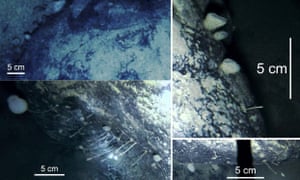


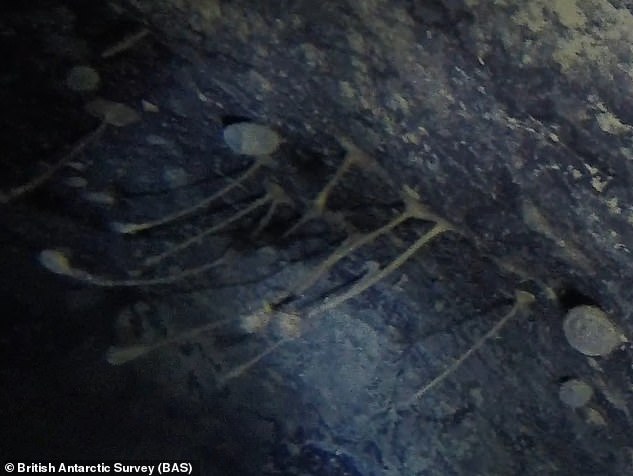
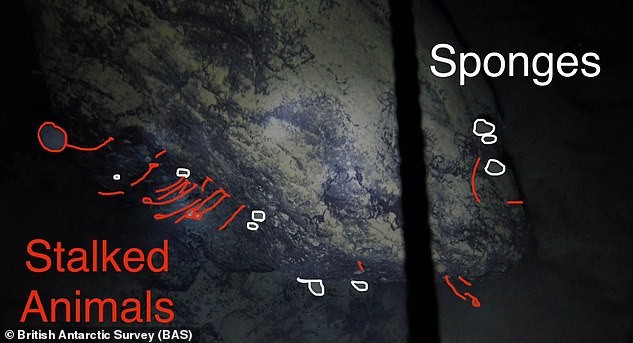
 Martian landslides may be caused by underground salts and...
 Is this the end of the A68a iceberg? Enormous block of...
 Earth lost a record 28 TRILLION tonnes of ice between 1994...
 How melting icebergs change ocean patterns: New study sheds...