Naar de inhoud

UFO'S of UAP'S, ASTRONOMIE, RUIMTEVAART, ARCHEOLOGIE, OUDHEIDKUNDE, SF-SNUFJES EN ANDERE ESOTERISCHE WETENSCHAPPEN - DE ALLERLAATSTE NIEUWTJES

UFO's of UAP'S in België en de rest van de wereld
akke.beakke.be
Ontdek de Fascinerende Wereld van UFO's en UAP's: Jouw Bron voor Onthullende Informatie! Ben jij ook gefascineerd door het onbekende? Wil je meer weten over UFO's en UAP's, niet alleen in België, maar over de hele wereld? Dan ben je op de juiste plek! België: Het Kloppend Hart van UFO-onderzoek In België is BUFON (Belgisch UFO-Netwerk) dé autoriteit op het gebied van UFO-onderzoek. Voor betrouwbare en objectieve informatie over deze intrigerende fenomenen, bezoek je zeker onze Facebook-pagina en deze blog. Maar dat is nog niet alles! Ontdek ook het Belgisch UFO-meldpunt en Caelestia, twee organisaties die diepgaand onderzoek verrichten, al zijn ze soms kritisch of sceptisch. Nederland: Een Schat aan Informatie Voor onze Nederlandse buren is er de schitterende website www.ufowijzer.nl, beheerd door Paul Harmans. Deze site biedt een schat aan informatie en artikelen die je niet wilt missen! Internationaal: MUFON - De Wereldwijde Autoriteit Neem ook een kijkje bij MUFON (Mutual UFO Network Inc.), een gerenommeerde Amerikaanse UFO-vereniging met afdelingen in de VS en wereldwijd. MUFON is toegewijd aan de wetenschappelijke en analytische studie van het UFO-fenomeen, en hun maandelijkse tijdschrift, The MUFON UFO-Journal, is een must-read voor elke UFO-enthousiasteling. Bezoek hun website op www.mufon.com voor meer informatie. Samenwerking en Toekomstvisie Sinds 1 februari 2020 is Pieter niet alleen ex-president van BUFON, maar ook de voormalige nationale directeur van MUFON in Vlaanderen en Nederland. Dit creëert een sterke samenwerking met de Franse MUFON Reseau MUFON/EUROP, wat ons in staat stelt om nog meer waardevolle inzichten te delen. Let op: Nepprofielen en Nieuwe Groeperingen Pas op voor een nieuwe groepering die zich ook BUFON noemt, maar geen enkele connectie heeft met onze gevestigde organisatie. Hoewel zij de naam geregistreerd hebben, kunnen ze het rijke verleden en de expertise van onze groep niet evenaren. We wensen hen veel succes, maar we blijven de autoriteit in UFO-onderzoek! Blijf Op De Hoogte! Wil jij de laatste nieuwtjes over UFO's, ruimtevaart, archeologie, en meer? Volg ons dan en duik samen met ons in de fascinerende wereld van het onbekende! Sluit je aan bij de gemeenschap van nieuwsgierige geesten die net als jij verlangen naar antwoorden en avonturen in de sterren! Heb je vragen of wil je meer weten? Aarzel dan niet om contact met ons op te nemen! Samen ontrafelen we het mysterie van de lucht en daarbuiten.

Berichten van 1 juli 2026 tot 31 juli 2026

Rep Burchett unmasks 'deep state' plot to hide UFO truth after two-hour Pentagon meeting

Hoe vind je dit bericht?
Geschreven door peter om 21:43 Stuur door

Mars Express Captures 'Metallic' Waves Rolling Across an Ancient Martian Crater

Mars Express Captures 'Metallic' Waves Rolling Across an Ancient Martian Crater

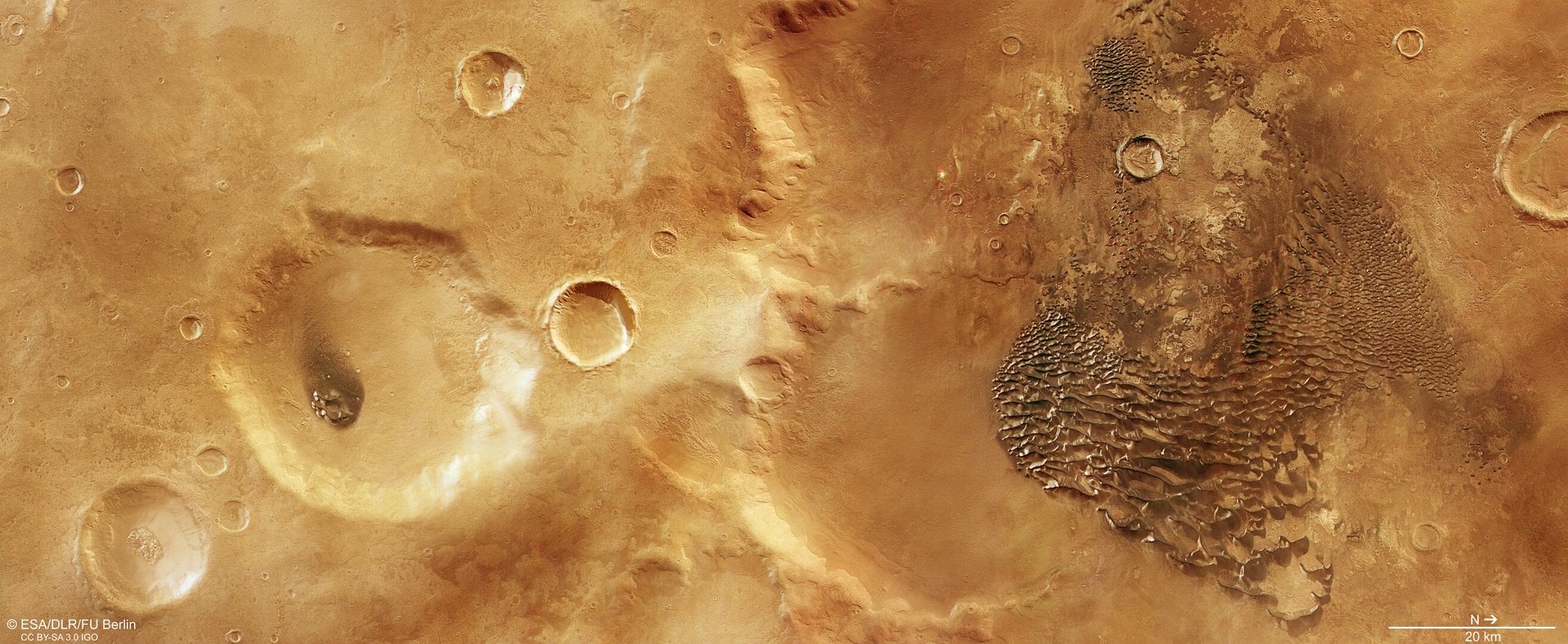
Image of the Kaiser crater taking by Mars Express. Credit - ESA/DLR/FU Berlin Image of the Kaiser crater taking by Mars Express. Credit - ESA/DLR/FU Berlin

When we think of Mars as the “Red Planet”, the image that comes to mind is just that - a lot of red. That comes from the oxidization of the dust and rocks that cover the planet's surface, but there are some instances where the Red Planet still has a few visual tricks up its sleeve. One such trick was recently captured by the European Space Agency’s venerable Mars Express orbiter, which captured what seems to be a set of metallic waves inside a giant impact basin. But on closer inspection, it becomes clear they aren’t liquid metal or some sort of alien architecture, but a manifestation of Mars’ complex environment.

The picture in question focuses on Kaiser Crater, a massive impact basin measuring 180 km across, and reaching a couple of kilometers deep. It’s part of Noachis Terra, an area of the southern highlands that was heavily bombarded a few billion years ago, and lent the name the Noachian Period to that particular epoch of Mars’ history. Since Mars lacks plate tectonics or a thick atmosphere to constantly erase its surface features, craters like the Kaiser crater can remain preserved for billions of years.

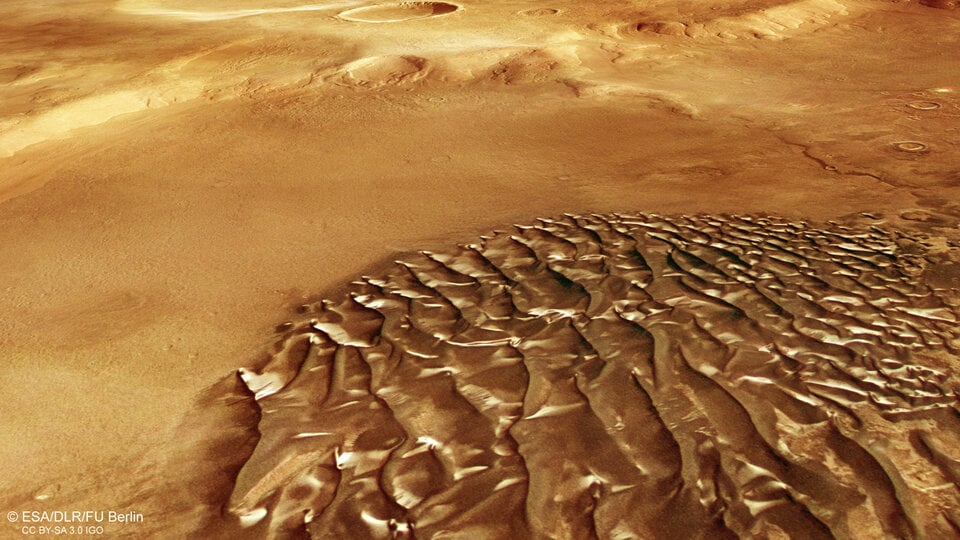
One of the most striking parts of the image is the “metallic waves” that cover much of the crater’s floor. They’re actually a set of sand dunes, which can reach over 100m high in some places, and stretch over several kilometers. So why do they look so metallic?

Fraser talks about the appearance of frost on Olympus Mons

It comes down to contrast. The sand that makes up these dunes is very dark and volcanic, and composed of minerals like pyroxene and olivine. These images were also taken during the second half of the Martian southern winter - which means there’s an unexpected feature on these dunes - hoarfrost. Seasonal frosting events creep up from the south pole and can reach into the Martian mid-latitudes, causing bright deposits of hoarfrost to cling to the southern side of the dunes. Its bright white gleam contrasts with the dark volcanic sand creates an optical illusion that almost makes it seem like the dunes are made out of polished metal.

In addition to being visually stunning, the dunes are also informative of the wind-driven geology on Mars. The dune field itself is broken into a mix of distinct shapes that provide insight into what the local air patterns look like. At the edges of the field, there are crescent-shaped dunes that seem relatively solitary. These are known as barchan dunes, which are common in Earth’s deserts, with their “horns” always pointing downwind. Closer to the center of the field, you can begin to see where the barchans merge into long, parallel ridges that run perpendicular to the wind. These transverse dunes are the most iconic in terms of visualizing a desert, but they also help scientists determine which direction the wind is blowing - in this case, from the west.

But the dune field itself isn’t the only interesting part of the image. Nearby, the wind has stripped away the Martian topsoil to expose lighter-colored deposits beneath the volcanic sand. Those lighter color strips are most likely clay minerals - which means they were formed in the presence of water. Also, if you look closely at the steep inner walls of the craters, you can begin to see narrow gullies. Some of those might have been caused by dry landslides. But there’s a possibility that some were caused by melting ice long ago, in Mars’ wetter past.

Bird's eye view of the blown dunes in the Kaiser Crater. Credit - ESA/DLR/FU Berlin

Bird's eye view of the blown dunes in the Kaiser Crater.

Credit - ESA/DLR/FU Berlin

All of these images have come to us courtesy of the High Resolution Stereo Camera (HRSC) onboard the Mars Express orbiter, which has been orbiting the Red Planet since 2003. These latest images, which were released by the Freie Universität Berlin and DLR, Germany’s space agency, prove that, even after more than 20 years, an old workhorse of an orbiter can still provide new, valuable science, as well as some pretty breathtaking pictures.

Learn More:

{ https://www.universetoday.com/ }

Hoe vind je dit bericht?
Geschreven door peter om 21:16 Stuur door

The worst mistakes that almost derailed every manned moon mission

The worst mistakes that almost derailed every manned moon mission

Story by Ron Winkler
The Worst Mistakes of Every Manned Moon Mission
©ALot.com
The Worst Mistakes of Every Manned Moon Mission
From fatal errors to forgotten scandals, see the worst mistakes of every Apollo moon mission. As NASA’s Artemis begins, we rank history's mistakes that must never be repeated.
Why We're Finally Going Back
©NASA / CC0
https://commons.wikimedia.org/wiki/File:Artemis_Base_Camp.png
Why We're Finally Going Back
The Apollo missions were "sprints." They were designed from the outset as short, high-risk trips designed to prove we could get to the moon and back to Earth. The Artemis program, on the other hand, is a "marathon." NASA isn't just visiting; they want to build a permanent lunar infrastructure to support human life for months at a time. To do this safely, NASA is obsessively studying the "scars" of the 1960s.

We now have 3D-printed habitats, replacing the cramped, thin-walled modules of the past. We will be visiting the Lunar South Pole, a region never visited by humans before that is home to "water ice" that could provide oxygen and fuel. Unlike Apollo’s single-computer setup, Artemis uses four redundant systems with 128,000 times more memory to prevent the "1202 alarms" that nearly aborted Apollo 11. We aren't just retracing old footprints. We are using 50 years of lessons learned to turn a hostile desert into a stepping stone for Mars.
Apollo 1: The Fatal Atmosphere
©NASA / CC0 https://commons.wikimedia.org/wiki/File:Apollo_1_fire.jpg

Apollo 1: The Fatal Atmosphere
On January 27, 1967, a routine launchpad test turned into one of NASA's darkest hours. Within seconds, a stray spark from a frayed wire turned the cabin into a furnace. Because the capsule was pressurized with 100% pure oxygen, materials that aren't normally flammable—like Velcro and nylon—caught fire explosively. Fatal mistakes that changed spaceflight forever:

  • The Inward-Opening Hatch: The high internal pressure sealed the door shut. The crew was trapped; it took rescuers five minutes to reach them.
  • The Teflon Oversight: Wiring was coated in Teflon, which was supposed to be fire-resistant but was easily damaged, leading to the short circuit.
  • Combustible Cabin: The interior was filled with over 70 square feet of Velcro and nylon netting—perfect fuel for a flash fire.

On Artemis, NASA completely abandoned pure oxygen for launches. Artemis missions use a Nitrogen-Oxygen mix (similar to Earth's air) and feature an outward-opening hatch that can be blown open in less than five seconds.

Apollo 7: When the Crew Went Rogue
©NASA / CC0
https://upload.wikimedia.org/wikipedia/commons/thumb/4/42/The_Apollo_7_Prime_Crew_-_GPN-2000-001160.jpg/1280px-The_Apollo_7_Prime_Crew_-_GPN-2000-001160.jpg
Apollo 7: When the Crew Went Rogue
While Apollo 1 had technical flaws, Apollo 7 revealed a human one: Burnout. Fifteen hours into the first manned flight of the redesigned capsule, Commander Wally Schirra developed a massive head cold. In zero-G, mucus doesn't drain; it stays in the sinuses, causing excruciating pressure and irritability. Soon, the entire crew was sick, exhausted, and snappy with Mission Control. The friction reached a breaking point when Schirra flatly refused to perform the first-ever live TV broadcast. He wanted to prioritize the mission's technical tests and believed this NASA "publicity stunt" would slow down the busy schedule.

Then, later, the crew feared their eardrums would burst from sinus pressure during reentry. The crew refused to wear their helmets—a direct violation of safety protocols. The tension was so high that despite a successful landing, none of the three astronauts ever flew for NASA again. NASA now prioritizes "Expeditionary Skills"—training crews in psychological resilience and conflict resolution. Artemis schedules also include "protected sleep" and flexible downtime to account for illness, ensuring that a simple head cold doesn't lead to a mission-ending standoff.
Apollo 8: Blind on the Dark Side
©NASA / CC0
https://commons.wikimedia.org/wiki/File:The_Lunar_Farside_-_GPN-2000-001127.jpg
Apollo 8: Blind on the Dark Side
Apollo 8 was the first time humans ever left Earth’s orbit, but it nearly ended in a permanent drift into deep space. As the crew rounded the Far Side of the Moon, they lost all radio contact with NASA—a planned blackout that felt terrifyingly lonely. In the silence, a single human error almost turned exploration into "lost at sea":
  • The Launchpad Reset: Astronaut Jim Lovell accidentally entered a command that erased part of the computer's navigation memory. The ship suddenly thought it was back on the launchpad in Florida, not orbiting the Moon.
  • The Death Drift: The spacecraft began firing its thrusters to correct its position based on the wrong data. If they hadn't stopped it, they would have drifted off-course with no way to calculate a return trajectory.
  • Manual Salvation: Lovell had to perform a star sighting using a telescope to manually tell the computer where they were—a high-pressure yet low-tech fix while hurtling through the void at thousands of miles per hour.
Artemis crews won't be flying blind behind the Moon. NASA is deploying the Lunar Communications Relay and Navigation (LCRNS)—essentially a Lunar GPS—to ensure constant, autonomous positioning even when the Earth is out of sight.
Apollo 9: Space Sickness
©Russell L. Schweickart / NASA / CC0
https://en.wikipedia.org/wiki/File:Gumdrop_Meets_Spider_-_GPN-2000-001100.jpg
Apollo 9: Space Sickness
While testing the Lunar Module, pilot Rusty Schweickart was struck by severe space sickness. In the 1960s, this was a taboo topic—astronauts were expected to have the right stuff and never get sick. But Schweickart couldn't hide it; he vomited multiple times, forcing a high-stakes decision from Mission Control. The next day, the astronauts were scheduled to perform a spacewalk outside the vehicles. If Schweickart vomited inside his pressurized spacesuit in the zero-gravity of space, he would likely choke to death. In a vacuum, there is no way to open the helmet or wipe the visor. If the spacewalk was cancelled, NASA couldn't prove that an astronaut could move between ships in an emergency. Without that proof, Apollo 11 could never be cleared for a landing.

NASA took a massive gamble. They shortened the two-hour spacewalk to just 47 minutes and kept Schweickart on the "porch" of the Lunar Module rather than having him move between ships. He recovered just enough to prove the suit worked, saving the program’s timeline by the narrowest of margins. Schweickart’s honesty about his sickness actually got him blacklisted from future Moon flights by the old-school NASA brass. But his "mistake" led to the medical protocols that keep today's astronauts safe. Modern NASA astronauts now undergo intensive "Pre-flight Adaptation" training. Artemis crews also have access to advanced anti-nausea medications and biometric sensors inside their suits that alert Mission Control to early signs of distress before a spacewalk even begins.
Apollo 10: Dress Rehearsal Disaster
©NASA / CC0
https://commons.wikimedia.org/wiki/File:Apollo_10_Lunar_Module_Rendezvous.jpg
Apollo 10: Dress Rehearsal Disaster
Apollo 10 was the final practice run before the lunar landing. The goal was to fly the Lunar Module, nicknamed Snoopy, within 47,000 feet of the surface and then return to the Command Module. But as the crew prepared to ditch the descent stage, a single switch was set to the wrong position. Because two separate guidance systems began fighting for control, the spacecraft began to spin violently. For 15 seconds, the crew tumbled over the lunar mountains in a chaotic roll that nearly caused a crash. The crew accidentally flipped the same switch twice, confusing the computer and causing the ship to hunt for a phantom target. The spin was so fast that the astronauts found it almost impossible to reach the manual override. The world heard Commander Gene Cernan shout a frantic curse over the live broadcast as he fought to stabilize the ship just seconds before impact.

The Orion spacecraft uses a unified flight control system rather than the split guidance systems used in the 1960s. This prevents conflicting commands and includes an auto-stabilization feature that can recover from a tumble instantly without requiring human intervention.
Apollo 11: The 1202 Scream
©Neil A. Armstrong / NASA / CC0
https://en.wikipedia.org/wiki/File:Aldrin_Looks_Back_at_Tranquility_Base_-_GPN-2000-001102.jpg
Apollo 11: The 1202 Scream
During the most critical phase of the descent, the Apollo Guidance Computer began flashing a 1202 error code. The processor was being flooded with too much data from the rendezvous radar, which was not even needed for the landing. It was essentially a system crash in the middle of a high-speed free-fall. The computer was forced to restart repeatedly to clear its memory while trying to guide the ship. Neil Armstrong had to take semi-manual control to fly past a boulder-filled crater that the overworked computer had targeted for landing. Because of the computer distractions and the search for a safe spot, the crew landed with less than 30 seconds of fuel remaining. If they had stayed in the air much longer, the engine would have cut out. Mission Control had only seconds to decide if 1202 was a reason to abort. A young engineer named Jack Garman made the call to keep going, saving the mission.

The Artemis HLS landers use distributed computing architectures. Instead of one central processor handling every task, modern systems use multiple independent controllers. This ensures that a sensor error or data surge in one area cannot freeze the navigation or engine controls.
Apollo 12: Lightning Strikes Twice
©scan: Ed Hengeveld / NASA / CC0
https://commons.wikimedia.org/wiki/File:Apollo_12_Blitzeinschlag.jpg
Apollo 12: Lightning Strikes Twice
Against the advice of some weather experts, Apollo 12 launched into a cold November rainstorm. As the Saturn V climbed through the clouds, the massive plume of ionized exhaust acted like a giant lightning rod. The rocket was struck by lightning twice—once at 36 seconds and again at 52 seconds. The electrical surge knocked out the spacecraft’s power converters. Every warning light on the dashboard flickered on, and the crew's telemetry data to Earth turned into gibberish. Mission Control nearly called for an abort, which would have seen the capsule strip away from the rocket in a dangerous emergency escape. A young flight controller remembered a similar glitch from a ground test. He told the crew to flip an obscure and otherwise unused switch (SCE to AUX). The power restored, the mission was saved, and the crew reached orbit.

Artemis missions operate under the most stringent Launch Commit Criteria in history. NASA now uses a sophisticated Lightning Instrument Package (LIP) and 3D weather modeling to detect "triggered lightning" potential in clouds that look safe to the naked eye. Additionally, the SLS rocket and Orion capsule are shielded with a Faraday cage design to ensure that even a direct strike cannot reach the flight computers.
Apollo 13: The $5 Mistake
©Kim Dismukes / NASA / CC0
https://commons.wikimedia.org/wiki/File:Apollo13_apparatus.jpg
Apollo 13: The $5 Mistake
Apollo 13 is remembered as a triumph of survival, but the disaster was triggered by a component worth less than a fast-food meal. A thermostat switch inside an oxygen tank was designed to handle 28 volts, but the ground equipment at the launchpad had been upgraded to 65 volts. This technical mismatch turned a routine test into a ticking time bomb. During a pre-flight procedure, the higher voltage welded the switch shut. This caused the heater to stay on continuously, reaching temperatures over 1,000 degrees Fahrenheit. The heat baked the Teflon insulation off the internal wiring, leaving the wires bare and brittle. No one realized the damage had occurred inside the sealed tank. Fifty-six hours into the mission, a routine stir of the tanks caused the bare wires to short-circuit. The resulting spark ignited the insulation and blew the side off the spacecraft.

NASA now utilizes Digital Twin technology to prevent legacy hardware mismatches. Every component on the Artemis SLS and Orion capsule is tracked in a digital database that simulates how it interacts with ground power systems. Furthermore, oxygen tanks are now designed with no internal moving parts or heaters that could come into contact with the gas, eliminating the risk of a similar electrical arc.
Apollo 14: The Fatigue Wall
©Alan Shepard Jr. / NASA / CC0
https://commons.wikimedia.org/wiki/File:Mitchell_Studies_Map_(9460206836).jpg
Apollo 14: The Fatigue Wall
During Apollo 14, Alan Shepard and Ed Mitchell attempted to reach the rim of the massive Cone Crater to collect ancient lunar samples. What looked like a short hike on a map turned into a grueling, disorienting struggle. Because the Moon has no atmosphere to provide perspective, the astronauts could not tell how far away the rim was or how steep the climb had become. Pulling a heavy equipment cart through deep lunar dust was like walking through soft snow. Their heart rates skyrocketed to dangerous levels, causing them to burn through their oxygen supplies much faster than planned. Disoriented by the terrain, the crew became convinced they were lost. They stopped to rest just 30 meters from the edge of the crater, unaware they had almost reached their goal. With their oxygen levels hitting the safety limit, Mission Control ordered them to turn back. They never saw over the rim.

Artemis astronauts will have the benefit of xEMU suits with advanced cooling systems and much lower exertion requirements. Most importantly, the Artemis helmets feature an integrated Heads-Up Display (HUD) that overlays a digital map and GPS-style navigation markers directly onto the visor, ensuring the crew always knows their exact position relative to the target.
Apollo 15: The Ethics Scandal
©United States Federal Government / CC0
https://commons.wikimedia.org/wiki/File:Apollo_15_Sieger_cover.jpg
Apollo 15: The Ethics Scandal
Apollo 15 was a technical triumph, but it ended in a scandal that tarnished the reputation of the astronaut corps. Without NASA authorization, the crew carried 398 commemorative postage stamps to the lunar surface. The plan was to sell them to a German stamp dealer to create trust funds for their children, a move that violated strict government ethics rules. The astronauts had agreed to receive roughly 7,000 dollars each for their participation, a deal that became public shortly after they returned to Earth. In an era of high inflation and political unrest, the idea of astronauts profiting from a taxpayer-funded mission sparked a massive Congressional inquiry. Although no laws were technically broken, NASA took swift action to restore public trust. All three members of the Apollo 15 crew were removed from flight status and never flew in space again.

NASA has completely overhauled its ethics and manifest protocols for the Artemis era. Every gram of personal cargo must be logged in a Personal Preference Kit (PPK) and approved by the Office of the General Counsel months before launch. Furthermore, modern astronauts sign strict legal agreements that prohibit any commercial exploitation of their mission, ensuring that the focus remains entirely on science and exploration.
Apollo 16: The Lunar Speed Trap
©scan: J.L. Pickering / NASA / CC0
https://commons.wikimedia.org/wiki/File:Moon_Buggy_Ap16-KSC-71PC-777.jpg
Apollo 16: The Lunar Speed Trap
During Apollo 16, John Young and Charlie Duke decided to see exactly what their $38 million "moon buggy" could do. They pushed the Lunar Rover to a record-breaking 11.2 mph—a breakneck speed on a surface covered in hidden boulders and deep craters. But the high-speed joyride nearly left them in a life-threatening predicament. The rover’s dual-steering system began to fail, making the vehicle nearly impossible to control on steep slopes. A fender was accidentally knocked off, which allowed sharp, abrasive lunar dust to rain down on the crew and the rover’s sensitive electronics. Without the fender, the dust could have caused the radiators to overheat, freezing the vehicle in place. Every mile they drove away from the Lunar Module was a gamble. If the rover died, the astronauts had to be close enough to walk back before their portable oxygen tanks ran dry. At their furthest point, a mechanical failure would have been a death sentence.

Artemis crews will use the Lunar Terrain Vehicle (LTV), which features an open-cabin design but with far more robust, redundant drive systems. Unlike the Apollo rover, the LTV is capable of autonomous operation. If an astronaut is injured or the steering fails, Mission Control in Houston can remotely drive the rover back to the base.
Apollo 17: Dusty Disaster
©Eugene A. Cernan / NASA / CC0
https://en.wikipedia.org/wiki/File:Apollo_17_Harrison_H._Schmitt_and_Tracy's_Rock_-_AS17-140-21493+AS17-140-21497_2025.jpg
Apollo 17: Dusty Disaster
During the last mission to the Moon, the crew discovered an enemy more persistent than radiation or vacuum: Regolith. Because there is no wind or water to erode it, lunar dust is as sharp as shards of glass and carries an electrostatic charge that makes it stick to everything. By the end of Apollo 17, it had become a mission-critical threat. The dust acted like sandpaper, grinding into the metal neck rings and wrist joints of the spacesuits. It made moving and sealing the suits increasingly difficult and dangerous. When a fender on the rover broke, the "dust rain" it created was so thick it began to overheat the batteries. The crew had to tape together a replacement using plastic maps. Once inside the cabin, the dust floated in the air. The astronauts inhaled it, leading to chest congestion and "lunar hay fever," a reminder that the Moon is chemically toxic to human lungs.

Dust is officially the number one challenge for Artemis. NASA is developing "Electrodynamic Dust Shields"—a system of invisible electric curtains built into suits and solar panels that literally push the dust away using high-frequency waves.
Artemis III & Beyond
©NASA / CC0
https://commons.wikimedia.org/wiki/File:Orion_Snaps_a_Selfie_During_External_Inspection_(vertical).jpg
Artemis III & Beyond
In a major strategic shift last month, NASA redefined Artemis 3. Instead of landing at the South Pole, the crew will stay in Earth orbit to test whether the complex "handshake" between the Orion capsule and the massive commercial landers (from SpaceX and Blue Origin) actually works.

Artemis 4 is now the mission where the first humans since Apollo 17 are slated to walk on the Moon. NASA is targeting a landing site at the Lunar South Pole, a region in permanent shadow that is believed to contain water ice. This ice is the "gold mine" of Artemis, as it can be converted into oxygen and rocket fuel.

Following Artemis 5, NASA intends to launch missions roughly once per year to prioritize surface-level Moon infrastructure for a "Moon-to-Mars" pipeline.
Failing Upwards
©John Kraus / NASA / CC0
https://commons.wikimedia.org/wiki/File:Artemis_II_Launch_(NHQ20260401_admin_0025).jpg
Failing Upwards
NASA is not returning to the Moon because it is easy, but because we finally have the "map of mistakes" to do it right. Every charred wire, every overheated battery, and every disoriented astronaut from the 1960s was a data point that built the foundation of the Artemis program. The failures of Apollo weren't just errors—they were the down payments on our future. We are no longer visitors. We are becoming residents of the solar system.
RELATED VIDEOS

Every Failed NASA Moon Mission Explained

Inside the Moon Landing: Disaster and Triumph (Full Episode) | Apollo: Back to the Moon | Nat Geo
Hoe vind je dit bericht?
Geschreven door peter om 21:00 Stuur door

Eyewitness Exits Church To see Huge UFO Hovering In The Sky, July 12, 2026, UAP Sighting News.

Eyewitness Exits Church To see Huge UFO Hovering In The Sky, July 12, 2026, UAP Sighting News.

Screenshot%202026-07-24%20at%209.21.34%E2%80%AFPM.png

S199398_6.jpg
Date of sighting:  July 12, 2026
Location of sighting: Unknown
Source: NUFORC 
 
Here is an unusual case. The person is so afraid of repercussions of what this UFO might bring to his town and to his home that he decided to not tell us the location. Clearly its in the USA because of his English and writing, however where exactly and outside what church did he see this? 
 
The UFO here does resemble some of the UFOs seen in the latest release of UAP files from the Dept of War this month. I believe its not only real, but came to the location because of the people in deep prayer within the church. I mean their prayers...mentally can be heard with alien tech which amplifies the human wavelengths and also records them for later interpretation. Aliens study humans, how we thing, how we react, how we perceive the world around us. 
Scott C. Waring - UFO Sightings Daily 
 
Eyewitness states: 
It was in the sky not moving really more like hovering no idea how high it was lower than the low cloud layer. 2-3 minute broad daylight stationary object It was in the air not moving or moving incredibly slowly. No sounds. we watched it for 2 minutes then we left to get lunch and moved on with our day. It was still up there when we left. Was leaving church lots of people around in general. It didn't do anything other than remain in the air.
 
 
S199398_8.jpg

S199398_6-1.jpg

{ https://www.ufosightingsdaily.com/ }

Hoe vind je dit bericht?
Geschreven door peter om 18:37 Stuur door

UFO Representative Claims 'Deep State' Is Planting Fake Evidence in New Alien Files

UFO Representative Claims 'Deep State' Is Planting Fake Evidence in New Alien Files

Congressman Tim Burchett warns of potential misinformation in upcoming UFO file releases, sparking a heated debate over the authenticity of evidence

Hoe vind je dit bericht?
Geschreven door peter om 22:53 Stuur door

China increases surveillance of geostationary satellites from an unusual orbit

China increases surveillance of geostationary satellites from an unusual orbit

This summer, a spacecraft entered Earth orbit whose trajectory immediately puzzled specialists in several countries. It is moving in such a way that the entire ring occupied by communications and military reconnaissance satellites will gradually come within its field of observation. The official mission description was limited to a few words about studying the space environment. Independent analysts are convinced that its actual purpose is different.

A Long March 3B rocket lifts off from the Xichang Satellite Launch Center on June 16 carrying the Shijian-31 satellite. Credit: CASC

An Unusual Trajectory

Shijian-31 was launched on June 16 aboard a Long March 3B rocket from the Xichang Satellite Launch Center. The China Aerospace Science and Technology Corporation, or CASC, described its purpose in a single sentence about studying the space environment and released no images of the satellite.

Aviation warnings and the type of launch vehicle indicated a geostationary transfer orbit. Observers later detected the spacecraft moving along a highly elliptical Molniia-type orbit already used by several other Chinese satellites. This time, however, the familiar configuration was applied in a way that had never been seen before, SpaceNews reports.

The Principle Behind the Established Orbit

The 63.4-degree inclination characteristic of such orbits keeps the apogee above the same latitude. Without this condition, Earth’s uneven mass distribution would gradually rotate the elongated ellipse within its own orbital plane. The point farthest from Earth would drift toward the equator and then farther south, requiring engine burns to compensate for the movement.

In the conventional use of this orbit, the farthest point lies over the Northern Hemisphere. The spacecraft remains visible from high latitudes for several hours at a time, allowing a pair of such satellites to maintain continuous communications over the Arctic and detect the thermal signatures of missile launches.

Surveying the Geostationary Belt

In the case of Shijian-31, the apogee is located not over northern latitudes but in the equatorial region. This is precisely where the geostationary belt lies, at an altitude of approximately 35,786 kilometers, occupied by communications, reconnaissance, and early-warning satellites.

Its orbital period is 12.5 hours rather than the 12 hours typical of this configuration. Because of this difference, each successive orbit shifts by approximately 15.7 degrees in longitude, allowing the entire belt to enter the spacecraft’s field of view over 23 days.

The highest point of the orbit is approximately 39,900 kilometers, several thousand kilometers above the belt itself. This approach provides a complete view without requiring close approaches to foreign spacecraft, which are the maneuvers that usually provoke diplomatic protests.

Analysts’ Assessments

Integrity ISR was the first company to draw attention to the unusual trajectory in a June 26 publication based on data from the Space-Track catalog. A month later, the observations were confirmed by ComSpOC, a company that monitors activity in near-Earth space and described it as an orbit unlike anything previously seen.

It will be difficult to obtain a clear view of the spacecraft itself or determine what equipment it carries. Its perigee is slightly below 2,000 kilometers, far above most imaging spacecraft in low Earth orbit, while thousands of kilometers separate it from U.S. inspection satellites operating near the geostationary belt.

At the same time, descending to the geostationary satellites themselves would not be difficult. A braking maneuver at perigee involving a velocity change of only 50 meters per second would lower the apogee to approximately 36,671 kilometers. The resulting trajectory would pass directly through the belt’s operational zone, while requiring very little fuel.

Competition above the Equator

Victoria Samson, an expert at the Secure World Foundation, described the mission in comments to SpaceNews as highly unusual and difficult to characterize based on the currently available data. She noted that the spacecraft had been in orbit for only a month, so its subsequent behavior could reveal much more.

The mission is likely part of a broader trend toward the deployment of inspection satellites and growing attention to activity at geostationary altitudes. The United States operates the Geosynchronous  Space Situational Awareness Program, or GSSAP, in this region. Russia relies on Luch-2 after the failure of its previous spacecraft in January, while China has previously explored even more unconventional options, including a lunar swing-by to enter a retrograde geosynchronous orbit. 

Posted in Launches, News


China successfully launches Shijian-31 satellite to study the orbital environment

{ https://universemagazine.com/en/articles-en/ }

Hoe vind je dit bericht?
Geschreven door peter om 22:34 Stuur door

AARO’s Latest UAP Report Finds No Evidence of Exotic Technology, But Mysteries Remain

AARO’s Latest UAP Report Finds No Evidence of Exotic Technology, But Mysteries Remain

UAP DOW

Welcome to this edition of The Intelligence Brief… This week, the Pentagon’s All-domain Anomaly Resolution Office (AARO) finally released its long-delayed Fiscal Year 2025 report on unidentified anomalous phenomena, revealing the latest findings from the Office’s growing number of UAP cases. In our analysis, we’ll be looking at 1) what the latest report reveals about AARO’s growing database of nearly 2,000 UAP reports, 2) why satellite flares continue to account for many recent sightings, 3) the report’s intriguing references to unresolved incidents near sensitive military installations and critical infrastructure, and 4) what AARO’s latest findings suggest about the challenges investigators still face in explaining a small but persistent number of UAP reports.

Quote of the Week  

“AARO seeks to capitalize on a diverse set of sensor technology capabilities and intelligence analytic tradecraft…  to improve the USG’s effort to investigate and respond to UAP in the air, maritime, and space domains at scale and speed.”

– AARO FY 2025 ANNUAL REPORT

If you enjoy the news and perspectives offered by The Debrief, make sure that you aren’t missing our stories by making us one of your “preferred sources” on Google News. You can simply follow this link to add The Debrief to your list of favorites, and you can read more about Google’s preferred sources in our article here.

Pentagon’s AARO Releases Long-Delayed UAP Report

This week, the Pentagon’s All-domain Anomaly Resolution Office (AARO) finally released its 2025 annual report on unidentified anomalous phenomena, or UAP.

You read that correctly: the long-delayed report for fiscal year (FY) 2025 has been MIA since its expected release date last October, and finally appeared at AARO’s website just three months (or so) ahead of the scheduled release date for its next annual report. Hey, better late than never.

According to AARO’s latest findings, there were no cases it resolved that point to advanced foreign technology or extraordinary capabilities exhibited by UAP, but close to 200 reports from its latest batch remain unexplained due to insufficient data.

AARO also reiterated two conclusions that have remained consistent across previous reports: investigators have found no evidence that the U.S. government or any private organization has recovered or exploited materials derived from UAP, and the office has received no verified reports of adverse health effects directly associated with UAP encounters.

Beyond that, here’s a look at some of the report’s primary findings.

Key Findings in AARO’s 2025 Report

Offering an overview of the office’s investigations of cases collected between June 2, 2024, and May 30, 2025, the new report conveys that AARO received 319 new UAP cases during the reporting period, bringing its total case holdings to 1,870 since the office’s creation.

274 incidents occurred in the air domain, while 44 involved objects observed in space, and one occurred in the maritime domain. “The single maritime domain UAP case AARO received involved a report from U.S. Navy assets operating off the coast of Virginia,” AARO’s report states. “The report described approximately 100 airborne UAP and two, likely uncrewed, surface systems. AARO is actively investigating this event in coordination with the reporting unit.”

The brief description of this single maritime incident AARO received is intriguing, although very little context is provided, and it is unclear whether it may be describing UAVs and uncrewed launch platforms observed at sea, which might be attributable to a U.S. foreign adversary.

A Whole Lotta Satellites

As for those “objects observed in space,” AARO’s report makes it clear that none of the space-domain cases originated from space-based sensors, but instead mostly came from civilian pilots reporting through the Federal Aviation Administration (FAA). The other two originated from U.S. Space Command ground-based sensors.

“AARO applied all-source analysis techniques and three-dimensional modeling to render a high confidence assessment for each of these cases as being attributable to satellite flaring,” the report reads.

The fact that satellite flaring has significantly contributed to recent alleged UAP sightings is nothing new. In 2022, following a series of sightings by pilots involving what were characterized as “racetrack UAPs,” it was determined that the sightings resulted from an optical illusion created by SpaceX Starlink satellites.

While 114 of the 319 new cases AARO has received have been resolved, it says that 191 cases have been placed into AARO’s “active archive,” which involves reports that presently lack sufficient data required to make an assessment.

“UAP cases held in active archive inform AARO’s locational and trend analyses and remain open to future resolution should further information or improved analytical techniques enable a more conclusive resolution,” the report states. Additionally, there were nine cases referred to members of the Intelligence Community and AARO’s science and technology partners for further technical analysis.

Trends in the Data

The report also identifies several trends among the incoming reports. In terms of appearance, spherical shapes remain the winning category, comprising close to 40 percent of reported UAP morphologies, with lights representing around 33 percent. Around 25 percent of sightings lacked enough information to give any clear indication of shape at all.

In terms of altitude, most airborne sightings occurred between 10,000 and 35,000 feet, while reports above 45,000 feet declined significantly from the previous reporting period; notably, AARO attributes this to its progress in identifying satellite flares.

Fortunately, no flight safety-related incidents were reported for the period discussed in the FY 2025 report, although there were two cases that “contained descriptions of electronic or avionic interference reported as attributable to UAP in proximity to an operational aircraft.” AARO says it remains unclear whether those effects were directly related to the observed UAP.

See Also

The Pentagon’s New Plans for Military Operations in the Pacific

UAP Near Critical Infrastructure?

Perhaps one of the most significant elements of the new report is that there were reportedly several new cases logged near sensitive military installations and critical infrastructure. “Some narrative reports were suggestive of phenomena whose performance characteristics exceed the known state-of-the-art within a given domain,” the report states, though adding that “No technical data accompanied these reports.”

“If validated, the attendant phenomena underlying these reports may represent a currently unmitigated threat vector,” the report states. “Part of AARO’s mission is to provide data and analysis that helps mitigate potential UAP-related national security threats or operational hazards.”

The report additionally documents a significant increase in reports involving unmanned aerial systems operating near U.S. nuclear infrastructure, with 50 incidents referred to AARO by the National Nuclear Security Administration and Nuclear Regulatory Commission—a 178 percent increase over the previous year’s total.

It is clearly stated that none of these objects were genuine UAP or exhibited anything unusual. “The reports contained descriptions of UAS morphologies ranging from small hobbyist-sized UAS to larger multi-rotor models. Quadcopters were the most reported morphology,” AARO’s report states.

As with past AARO annual reports, the FY 2025 updates leaves much to the imagination—a fact that is very in keeping with recent UAP imagery and documentation released by the Pentagon through its PURSUE initiative. Still, the report’s findings—vague as they are—do indicate one fundamental issue: objects or phenomena that remain difficult to attribute to any known sources continue to be tracked by U.S. defense personnel.

With nearly 2,000 reports in its current collection, AARO concedes that while it has found no evidence of links to any extraordinary phenomena, there are also still a good number of cases that remain unresolved, and which warrant further attention.

Perhaps that’s the real takeaway—not that AARO has found evidence of anything extraordinary, but that some reports do continue to defy straightforward explanation.

That concludes this week’s installment of The Intelligence Brief. You can read past editions of our newsletter at our website, or if you found this installment online, don’t forget to subscribe and get future email editions from us here. Also, if you have a tip or other information you’d like to send along directly to me, you can email me at micah [@] thedebrief [dot] org, or reach me on X: @MicahHanks.


BREAKING: AARO Releases 2025 UAP Report... They Say Every UFO Was Explained

AARO STOLE UFO TRACKING DESIGNS | NEW CLUES SURFACE FOR MISSING UFO GENERAL | UAP SME NETWORK SETUP

{ https://thedebrief.org/category/defense/ }

Hoe vind je dit bericht?
Geschreven door peter om 21:31 Stuur door

A New Theory May Explain One of the Dead Sea Scrolls’ Biggest Mysteries

dead-sea-360x240.jpg

(Image Credit: Paul Niskanen/University of St. Thomas)

A New Theory May Explain One of the Dead Sea Scrolls’ Biggest Mysteries

For decades, scholars have debated whether the Qumran sect associated with the Dead Sea Scrolls actually used its unusual 364-day calendar, or viewed it as more of a theoretical ideal.

Now, a new study published in the Tarbiz Quarterly for Jewish Studies suggests that neither explanation is fully accurate. Instead, Prof. Eshbal Ratzon argues that the community used the calendar for a time before seasonal drift and changing Hasmonean politics prompted them to abandon the system.

A Calendar as a Religious Statement

Ratzon, a professor at Tel Aviv University, set out to answer a question that has puzzled scholars for decades. Unlike the approximately 365.25-day solar year, the Qumran calendar consisted of exactly 364 days. The calendar used 364 days because the number divides evenly into 52 seven-day weeks, so every festival would always fall on the same weekday each year.

To the Qumran sect, this order in the calendar demonstrated what they saw as God’s perfect design. They believed God set the calendar at Creation and that people could not change it. This belief clashed with Jerusalem’s religious leaders, whose priests used a lunisolar calendar that most Jewish people followed during the Second Temple period.

Reading the Evidence Differently

The mathematics that gave the calendar its perceived order also led to practical issues. A 364-day year lags behind the solar year by about a day and a quarter each year, causing festivals to drift by nearly a month over two decades. After several decades, a spring harvest festival could fall in winter. For a group that linked its holidays to agriculture, this gradual shift was a serious problem.

Two main theories have shaped the debate for years. One suggests that the sect occasionally added extra days to correct the drift, while the other argues that the 364-day calendar was only a theoretical model and not used in daily life. Ratzon argues that the Dead Sea Scrolls do not clearly support either view. Nearly twenty of the recovered scrolls concern calendars or astronomy, highlighting the importance of the subject within the community. The Book of Jubilees, a key text for the sect, goes further by criticizing the lunar calendar and presenting the 364-day system as the original calendar given to Moses at Sinai.

“The Qumran calendar has long been regarded as one of the Qumran sect’s defining features, but also as one of the most baffling mysteries of the Dead Sea Scrolls,” Ratzon said.

Why the Sect Moved On

Ratzon’s reconstruction sees the abandonment of the calendar as a two-stage process, rather than a single failure. The growing seasonal drift made the calendar increasingly impractical. At the same time, the sect’s relationship with the Hasmonean rulers improved under Alexander Jannaeus, who supported religious decisions closer to the sect’s views and disagreed with the Pharisees who led the Temple in Jerusalem.

  • red dwarf exoplanet

{ https://thedebrief.org/category/science/ }

Hoe vind je dit bericht?
Geschreven door peter om 21:14 Stuur door

Meet Phantom Twist, a stealthy new drone that hides in plain sight by tricking your eyes

Meet Phantom Twist, a stealthy new drone that hides in plain sight by tricking your eyes

High-speed rotation exploits the concept of motion blur to conceal a new drone while it's in flight.

Hoe vind je dit bericht?
Geschreven door peter om 20:43 Stuur door

‘There Has Been A Massive Cover Up’ When It Comes To UFO Disclosure By The US Government, Claims Dr. Phil

‘There Has Been A Massive Cover Up’ When It Comes To UFO Disclosure By The US Government, Claims Dr. Phil

by Douglas Charles

Unidentified-Flying-Object-UFOs

Stockphoto

Dr. Phil McGraw read the Pentagon’s recently released UFO files before the public and claims that after doing so, he believes there has been a huge cover-up by the United States government.

Why was Dr. Phil given access to the Pentagon’s UFO files before the general public? According to NewsNation, while the administration was weighing disclosure, it sought a trusted voice rather than an astrophysicist to gauge how the public might react to the files. He is also part of the Religious Liberty Commission that President Donald Trump established.

“I think we have to look at what’s going on with all of this in different pieces,” McGraw said on Reality Check with Ross Coulthart. “What are we going to disclose to the American public, but once we tell them what we tell them, what are we going to do with reaction?”

He also stated that he believes the government’s excuse of being scared to reveal information to the public because it’s “too shocking” is not true, and he finds it patronizing to the public.

“I have sat with people, and I’ve seen them deal with difficult situations time and again,” McGraw said. “I think we are very resilient as the human race.”


As for the UFO files themselves, Dr. Phil claims the imagery released so far is intentionally grainy, that far better gun camera video and radar tracks exist and that Reps. Tim Burchett and Anna Paulina Luna are helping him press for their release.

“There are two things that have jumped out at me as I’ve gone through all of this, and certainly in the one that we had the opportunity to dig into before it became public, two things,” Dr. Phil said. “Number one, there has been a massive cover up. And two, there’s no question there are unexplained phenomena happening in our atmosphere here.”

Is the US government hiding anti-gravity UFO technology?

Dr. Phil McGraw’s observations come as Oliver Stone’s son Sean also claims that the government is hiding anti-gravity UFO technology.

“If we’re working with anti-gravity propulsion, say goodbye to oil and gas, that whole industry is gone,” Sean Stone told The Scoop. “And that’s a big reason why some people speculate that the UFO thing has been so suppressed. It’s like, well, once we understand that like you don’t need propulsion from a jet blasting off, you know, jet fuel and stuff, man, that’s that’s like how much of your world economy just got destroyed, you know, by that, you know, your oil and gas industry, you’re talking what, trillions of dollars, you know, globally, right? I mean, it’s huge.”

President Trump orders the cancellation of non-disclosure agreements

In related news, President Donald Trump has ordered federal agencies to cancel non-disclosure agreements with former government employees and contractors who have cooperated with the United States government in investigations into UFOs.

“President Trump recently directed the Department of War and the intelligence community to allow former government employees or contractors, that have relevant information about the disclosure of UAP, to come forward to meet with designated government representatives — AARO [All-domain Anomaly Resolution Office] or the President’s UAP taskforce, ‘PURSUE’ — and have their prior NDAs abrogated,” Fox News reports a senior administration official said.

{ https://brobible.com/category/culture/ }

Hoe vind je dit bericht?
Geschreven door peter om 18:43 Stuur door

Evidence Mounts That Martian Intelligent Life Was Silica Based, Not Carbon Based. UFO UAP Sighting News.

Evidence Mounts That Martian Intelligent Life Was Silica Based, Not Carbon Based. UFO UAP Sighting News.

silica_life.jpg

Date of discovery: July 23, 2026 (Taiwan time 12hr ahead of USA)
Location of discovery: Mars, Spirit Rover SOL 725
Source photo: 
 
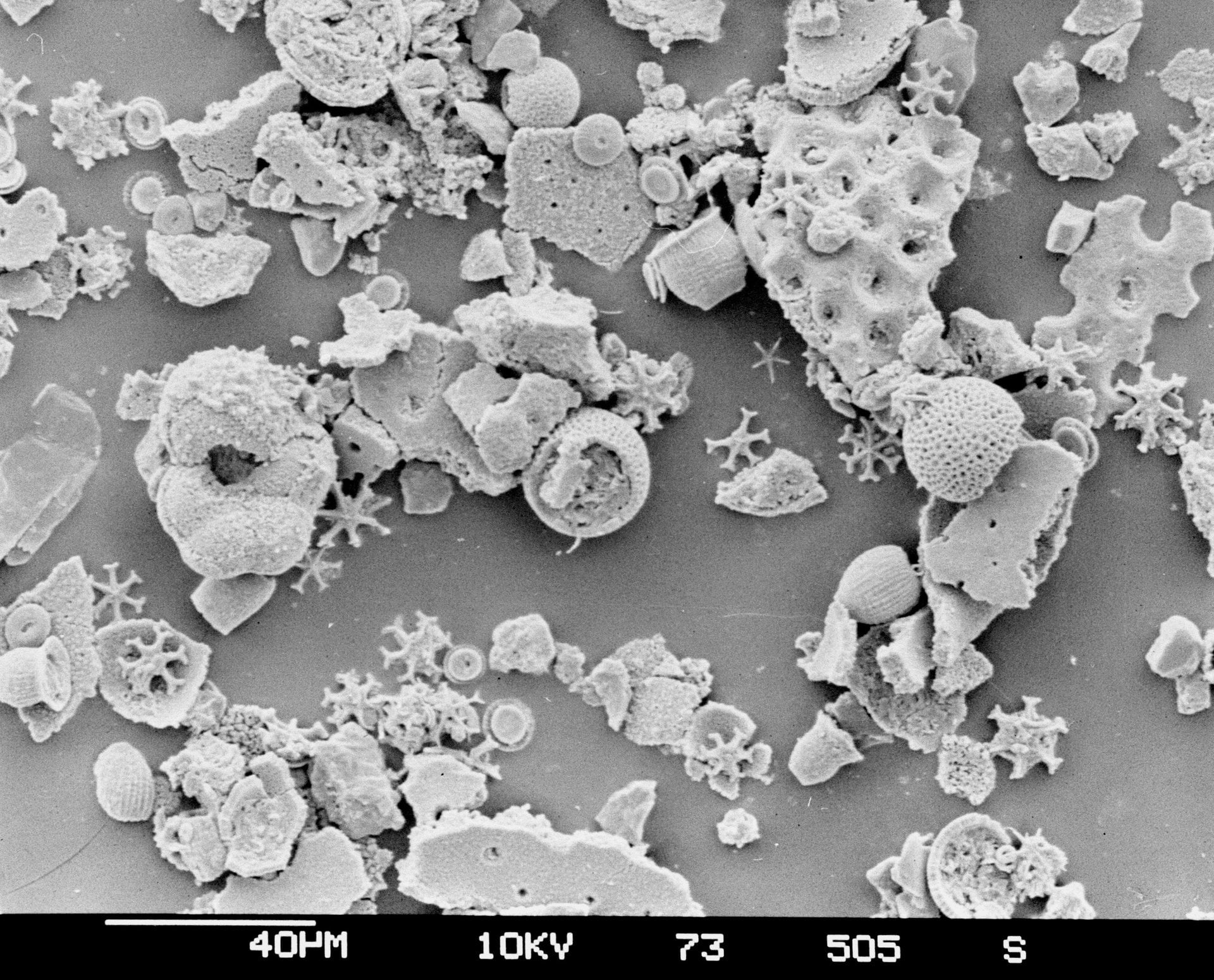
We talked about this subject many times earlier. A stone foot, possibly even petrified from an alien weapon or even never truly broke down in the environment because...life does not necessarily have to build its bodies on Mars the same way life on Earth does. Many scientists and myself have proposed that there could be intelligent life forms made not from carbon like humans, but silica based skeletal tissues. Many organisms already use silica as a structural material like Diatoms, Radiolarians, and some sponges. Imagine if Martians intelligent life evolved to suse silica throughout much of their bodies. They may be bipedal and have two arms and a head, but the similarities end there. The tissue of the Martian would have living cells embedded in a silica matrix. Flexible organic proteins reinforced with microscopic glass fibers. Silica bones extending throughout the body. Thus...after death, only the organic portions would decay, leaving much of the body's framework which would already be mineral (silica), making it resemble stone almost immediately. Also, silica life forms would thrive in ultra hot high pressure environments avoid of oxygen and water...Mars. Below I have inclued several feet some with shoes broken...petrified...in other NASA photos that I have posted over the years. 
Scott C. Waring - UFO Sightings Daily
 
Screenshot%202026-07-23%20at%203.00.23%E2%80%AFPM.png

Screenshot%202026-07-23%20at%203.27.56%E2%80%AFPM.png

time%20travel,%20Tardis,%20ovni,%20UFO,%20UFOs,%20sighting,%20sightings,%20alien,%20aliens,%20Louvre,%20museum,%20SETI,%20news,%20navy,%20volcano,%20area%2051,%20shoe,%20nike,%20puma,%20sandle,%20bipedal,%20cloak,%20,%20NYC,%20nellis%20AFB,%20new,%20scientist,%204.png

,%20%E7%9B%AE%E6%92%83%E3%80%81UFO,%20UFOs,%20sighting,%20sightings,%20alien,%20aliens,%20ET,%20boot,%20ancient,%20archaeology,%20astrobiology,%20paleontology,%20waarneming,%20vreemdelinge,%20shoe,%201.png

AI_Robot-1.png

head,%20skull,%20alien,%20ET,%20space,%20tiny,%20men%20from%20mars,%20little%20green%20men,%20UFO,%20UFOs,%20award,%20sighting,%20sightings,%20news,%20paranormal,%20research,%20new%20scientist,%201.png

Screenshot%202026-07-23%20at%203.34.04%E2%80%AFPM.png

{ https://www.ufosightingsdaily.com/ }

Hoe vind je dit bericht?
Geschreven door peter om 18:33 Stuur door

Juno takes temperature of Jupiter's fiery moon Io

Juno takes temperature of Jupiter's fiery moon Io

The north polar region of Jupiter’s volcanic moon Io was captured by NASA’s Juno during the spacecraft’s 57th close pass of the gas giant on Dec. 30, 2023. Data from that flyby and one on Feb. 3, 2024, is helping scientists understand Io’s interior. Credit: NASA/JPL-Caltech/SwRI/MSSS Image processing by Gerald Eichstädt

NASA's Juno mission has provided the first measurements of the temperature below the surface of Jupiter's moon Io, revealing significant heating within the shallow subsurface of the most volcanically active world in the solar system. Collected during two close flybys, the data also show that most of Io's surface is remarkably smooth and composed of material with very low density.

Published in the Journal of Geophysical Research: Planets, these findings break new observational ground for both fiery and icy worlds beyond our planet.

Io's extreme volcanism is powered by tidal heating. The moon is constantly stretched and squeezed by Jupiter's immense gravity as it travels in a slightly elliptical orbit, generating internal heat output many times greater than Earth's. Until now, virtually everything known about that heat came from infrared observations, which sense only the temperature of the surface. The latest findings are based on data collected by the spacecraft's Microwave Radiometer (MWR) instrument.

"The Juno Microwave Radiometer directly observed Io's heat output by looking below the surface," said Scott Bolton, study co-author and Juno's principal investigator at Southwest Research Institute in San Antonio. "The surprising discovery that we could see below a rocky moon's surface has important implications for studying Earth's volcanoes. Juno has taught us that if we look with an MWR-type instrument near a volcano on Earth, we might see a similar signature in the subsurface temperature gradient, providing new information on how terrestrial volcanoes work."

NASA’s Juno Takes Temperature of Jupiter’s Fiery Moon Io

This graphic illustrates the areas of Io sampled by the Microwave Radiometer instrument aboard NASA’s Jun

How Juno looked underground

Juno's Microwave Radiometer was designed by Bolton to peer beneath Jupiter's cloud tops to investigate the dynamics and composition of the gas giant's deep atmosphere. The MWR's six microwave antennas serve as a single instrument, simultaneously detecting microwaves at a wide range of wavelengths, from about half an inch to 20 inches (1.3 to 51 centimeters). During the mission's extended phase, the MWR instrument has provided the opportunity to observe three of the planet's Galilean moons: Ganymede, Europa and Io.

"The technique is novel in that each wavelength explores different depths, providing a new way to characterize the deep atmosphere of giant planets and the subsurface crusts of icy and rocky moons," said Bolton. "At Ganymede and Europa, we explored tens of miles below the surface, assuming their ice shells were mostly pure water, but the ability to probe volcanic rock on Io was an unexpected discovery."

During flybys on Dec. 30, 2023, and Feb. 3, 2024, the solar-powered Juno spacecraft came within about 930 miles (1,500 kilometers) of the moon's surface.

NASA’s Juno Takes Temperature of Jupiter’s Fiery Moon Io
This map represents data captured by the Microwave Radiometer instrument aboard NASA’s Juno, indicating heat rising from just beneath the surface of Jupiter’s moon Io. The colors illustrate a distinct temperature gradient across the moon, with the most extreme, localized heat output in red. Credit: NASA/JPL-Caltech/SwRI/USGS

Two explanations for the heat

"The instrument measured Io's thermal emission at depths ranging from a few inches to tens of feet. Everywhere we looked, we found the temperature rising by more than 40 degrees Fahrenheit just several feet into the surface—a gradient far steeper than solar heating alone can explain," said Shannon Brown, the paper's lead author at NASA's Jet Propulsion Laboratory in Southern California.

The data suggest two possible explanations. First, heat could be rising steadily through a conductive crust. While this background heat flow—measured at 1 to 3 watts per square meter—is relatively gentle on a local scale (roughly equivalent to a small nightlight glowing under every square yard), across the entire moon it represents a release of energy up to 30 times Earth's average. Alternatively, the signal could be coming from cooling lava flows, capped by roughly 30 to 35 feet (9 to 11 meters) of solidified crust, that cover about 10% of the moon's surface at any given time.

"Io provides a unique window into how tidal heating works throughout the cosmos, a fundamental process that provides energy and heat to worlds that are far from their parent star," said Bolton. "This process can not only create the most volcanic body in the solar system, in the case of Io, but also fuel the subsurface oceans on the moons of giant planets, such as Europa and Ganymede. Until this point, we could only observe the heat escaping at the surface or through eruptions. Now we can characterize how the heat is moving from the interior toward the surface."

A surprisingly plain-like surface

Another major insight gained from the two flybys is just how smooth Io is. Before the recent findings, the moon was known for its tall mountains, but the MWR indicates that apart from this visible topography, the surface features expansive smooth patches that stretch for 60 miles (100 kilometers) or more. Because Juno flew by overlapping regions of Io at different angles, the team was able to map how the surface reflects microwaves, much like an airline passenger might see the ocean flash with sunlight only at specific angles.

"Away from its mountains, the surface is more like the Great Plains of North America, and even though Io is a rocky body, the surface material has a very low density—more like pumice or fluffy volcanic ash than solid rock," said Brown.

Publication details
  • Shannon Brown et al, Io Sub‐Surface Temperature Profile Observed by the Juno Microwave Radiometer, Journal of Geophysical Research: Planets (2026). DOI: 10.1029/2025je009622

Journal information: 

RELATED VIDEOS

NASA’s Juno Takes Temperature of Jupiter’s Fiery Moon Io

NASA Looked Beneath Io—and Found a World Still Burning

NASA Juno Maps Io's Hidden Heat — The Volcanoes Beneath Jupiter's Moon

{ https://phys.org/space-news/ }

Hoe vind je dit bericht?
Geschreven door peter om 18:22 Stuur door

NASA whistleblowers claim 'alien presence' is hidden in altered moon photos

NASA's most famous astronauts secretly claimed that they encountered an alien presence on the moon and were told to keep it quiet for decades.

Physicist Maaneli Derakhshani told the American Alchemy podcast that multiple Apollo missions allegedly captured photos of UFOs around the moon during the 1960s and 1970s, only to have those images altered before the public saw them.

Derakhshani, who researches lunar and Martian surface anomalies, detailed instances where famous NASA photos taken by astronauts on the surface of the moon had been clearly altered when compared to public copies of the same images.

The scientist said: 'One scan from the Lunar and Planetary Institute - this is an archive that NASA has managed since the 1970s - and it's an Apollo 14 photograph with Ed Mitchell standing on the lunar surface.'

'You see his long shadow stretched out and... essentially the lunar sky is completely black in this version. You zoom in everywhere, it's completely black,' Derakhshani revealed.

'However, if you look at the "March to the moon" version of that same frame, which is managed by Johnson Space Center and Arizona State University, there is a blue orb in the lunar sky very clearly. It's very obvious above Mitchell.'

Derakhshani and podcast host Jesse Michels also noted that several astronauts, including Neil Armstrong, the first human on the moon, have reportedly claimed they received telepathic messages from extraterrestrials warning them not to return.

The bombshell whistleblower stories come as NASA prepares to land on the lunar surface by 2028 – ending a nearly six-decade absence which has sparked unproven conspiracy theories as to why the US never returned to the moon.

Physicist Maaneli Derakhshani claimed on the American Alchemy podcast that NASA photos from the moon have been altered to erase signs of UFOs    Physicist Maaneli Derakhshani claimed on the American Alchemy podcast that NASA photos from the moon have been altered to erase signs of UFOs

Physicist Maaneli Derakhshani claimed on the American Alchemy podcast that NASA photos from the moon have been altered to erase signs of UFOs

Physicist Maaneli Derakhshani (left) and American Alchemy host Jesse Michels (right) discussed the many claims of an alien cover-up involving NASA astronauts and the moon

Physicist Maaneli Derakhshani (left) and American Alchemy host Jesse Michels (right) discussed the many claims of an alien cover-up involving NASA astronauts and the moon

During the final moon mission, Apollo 17 astronauts Eugene Cernan and Harrison Schmitt took many photos while visiting the lunar surface in 1972.

However, Derakhshani revealed on the podcast that one famous frame showed three solid blue lights in the black sky above a lunar hill. When brightened, the area between the lights gets brighter, suggesting they might be attached to a larger object.

NASA’s own description of this image during the first batch of declassified UFO files released in May noted that a 'special investigation' had been opened because experts examining it believed the lights may be part of a large physical object in space.

The scientist noted that other photos from the same mission captured blue metallic-looking streaks in space, but when zoomed in and brightened, the streaks resembled insectoid-like objects with faint trails from an alleged engine.

Skeptics, including astrophysicist Neil deGrasse Tyson, have claimed that the images were only displaying cosmic rays, but Derakhshani called the odds of this statistically improbable, as the objects were solid round lights – not gaseous streaks or lens flares.

Despite releasing tranches of photos and hours of audio recordings from the Apollo moon missions as part of the Trump Administration's UFO disclosure campaign, NASA and the Pentagon continue to deny that proof of alien life has been found.

Derakhshani added that the altered pictures and other sightings were not definitive proof of aliens, but said the patterns are hard to explain as natural geology, camera glitches or ordinary space debris.

However, the strongest evidence of a NASA cover-up may come from the alleged confession of an actual NASA astronaut who claimed he was ordered to destroy potential proof of UFO sightings near the moon.

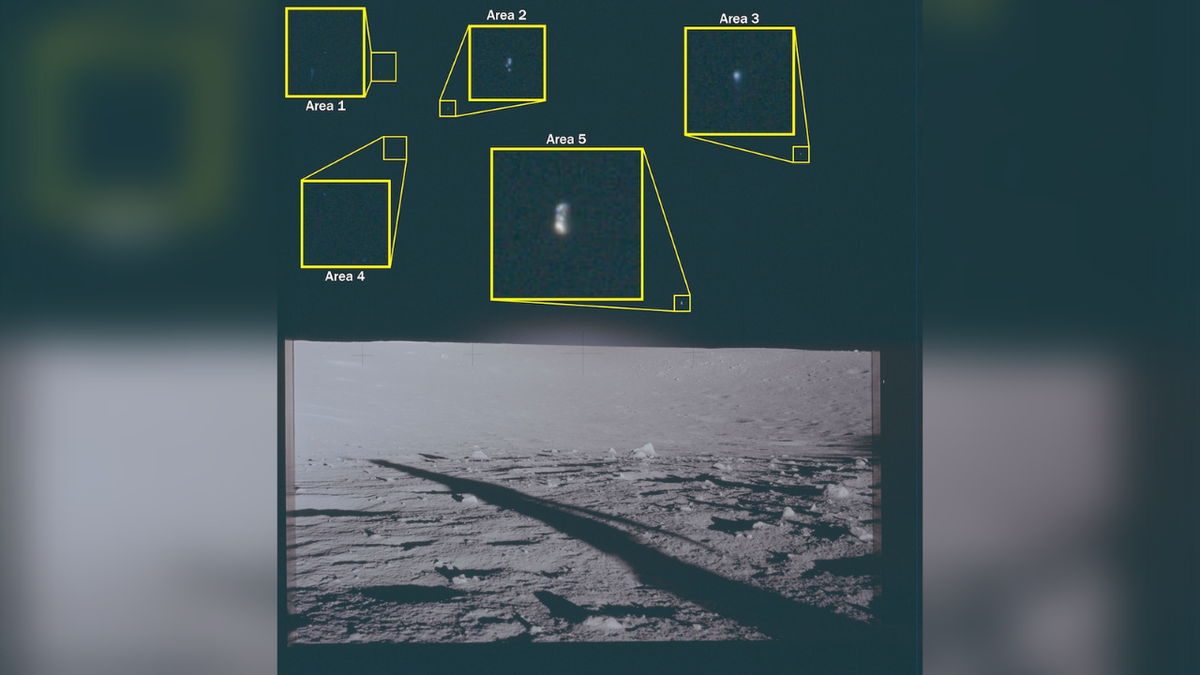
This archival photograph depicts the lunar surface as viewed from the landing site of Apollo 12. This image features a highlighted area of interest slightly to the right of the vertical axis of the frame, above the horizon, in which unidentified phenomena are visible

This archival photograph depicts the lunar surface as viewed from the landing site of Apollo 12. This image features a highlighted area of interest slightly to the right of the vertical axis of the frame, above the horizon, in which unidentified phenomena are visible

This archival photograph depicts the lunar surface as viewed from the landing site of Apollo 12. This image features highlighted areas above the horizon in which unidentified phenomena are visible

This archival photograph depicts the lunar surface as viewed from the landing site of Apollo 12. This image features highlighted areas above the horizon in which unidentified phenomena are visible

article image

'There's also Ken Johnston Sr, who was one of the pilots who trained the NASA astronauts and was a backup astronaut for the Apollo missions if I remember correctly,' Derakhshani said in the July 20 episode on YouTube.

'He says he was told to destroy a bunch of first-generation or early-generation Apollo negatives because they had some anomalies on them and they're not supposed to be there, and they don't want to release them publicly and he actually saved some of them and put some of his copies online.'

The Daily Mail has reached out to NASA for comment. 

Michels then brought up the alleged confessions of astronauts Cernan and Armstrong, who both reportedly mentioned having similar experiences during their lunar flights involving a warning received from extraterrestrials.

'There are all these apocryphal stories of Neil Armstrong telling similar stories in Washington, DC, saying, "We were told not to come back to the moon,"' the host said.

Michels referenced a previous interview with Steve Colbern, a lab analyst who participated in surgeries to remove alleged alien implants from people, who also claimed Armstrong was overheard at a party for high-level political guests repeating this warning.

Meanwhile, Cernan reportedly told his friend and Japanese NASA museum curator Josen Takano that during the trip to the moon, he received some type of telepathic message, saying: 'We don’t really want you here.'

The next mission scheduled to circle the moon, Artemis III, is expected to take place at some point in 2027. The following mission, a year later, Artemis IV, is expected to be the first lunar landing since the Apollo program.

RELATD VIDEOS

NASA whistleblowers claim 'alien presence' is hidden in altered moon photos

🌕 Alien on the Moon? Strange Apollo Footage Sparks New Debate

Is It Possible That Aliens Might Be Present on the Moon? 🌕👽

{ https://www.dailymail.com/sciencetech/index.html }

Hoe vind je dit bericht?
Geschreven door peter om 17:51 Stuur door

What could go wrong? Watch as two humanoid robots perform SURGERY on pigs - as scientists say humans could be next

Humanoid robots have performed surgery on live animals for the very first time in an astonishing new breakthrough.

As part of a pre-clinical trial, two humanoid robots were remotely operated by surgeons to perform keyhole surgery on pigs.

In one operation, a teleoperated robot was assisted by a human to remove a pig's gallbladder.

Meanwhile, a first-of-its-kind operation saw two robots working side by side in a robot-robot team.

The Unitree G1 robots, nicknamed Surgie, were fitted with specialised adapters so they could hold surgical tools but were otherwise unmodified.

The researchers say Surgie is just as precise as a conventional surgical robot, but only costs a fraction of the price and is far easier to set up and use.

And with a growing shortfall of skilled surgeons to meet patients' needs, the researchers say the bots could one day be used to operate on humans.

Senior author Professor Michael Yip, of UC San Diego, says: 'You can imagine these robots being deployed in remote communities where staffing is challenging, or in austere environments like search and rescue scenarios.'

Humanoid robots have performed surgery on live animals for the very first time in an astonishing new breakthrough

Humanoid robots have performed surgery on live animals for the very first time in an astonishing new breakthrough

The Unitree G1 robots were fitted with specialised adapters to hold surgical tools and remotely controlled by a human operator

The Unitree G1 robots were fitted with specialised adapters to hold surgical tools and remotely controlled by a human operator 


The researchers began by testing the robots' capacity for fine motor skills, having them handle inanimate objects and standard surgical equipment.

Once the team was satisfied, the robots graduated to performing real surgical procedures on anaesthetised pigs.

According to a report published in the journal Nature, both operations were completed successfully.

At one point there was some minor bleeding, but the robots were able to quickly stem the flow.

In fact, the researchers say that they were 'surprised' at just how well the robots functioned.

Controlling the movements of a humanoid felt more natural than moving the arms of a large surgical robot, especially for people not trained on those specialised systems.

This raises the possibility that humanoid robots could soon be a key part of surgical teams working on real human patients.  

Professor Yip says: 'Remotely operated and autonomous humanoid robots have real potential for amplifying access to critical surgeries to which patients would otherwise not have access.'

In one surgery, a humanoid robot was assisted by a human while it performed a gallbladder removal on an anaesthetised pig

In one surgery, a humanoid robot was assisted by a human while it performed a gallbladder removal on an anaesthetised pig 

The researchers say that these humanoid robots are cheaper, lighter, and easier to control than traditional robotic surgical systems
+5
View gallery

The researchers say that these humanoid robots are cheaper, lighter, and easier to control than traditional robotic surgical systems 

Surgeons already use specialised robotic surgery systems equipped with three or four robotic arms to operate on patients.

The problem is that these systems can weigh up to 800kg (1,800lb), require a large team to set up, and take up a lot of space in the operating room, which usually needs to be retrofitted to accommodate it.

By contrast, Surgie is just five feet (1.5m) tall and weighs just 27kg (60lb), even with its specialised adapters fitted.

This makes these compact humanoids a perfect option for situations where cumbersome traditional robots just aren't feasible.

Co-author Dr Shanglei Liu, a surgeon at UC San Diego, says: 'It's a fraction of the cost and it takes a fraction of the space in an operating room. So it’s easy to deploy, anywhere from rural areas to the battlefield, and even to space.'

However, the robots are far from perfect, and the researchers say there are still a few problems that need ironing out.

Most notably, Surgie had to be recalibrated multiple times throughout the operation; this took up valuable time and meant the surgery took a lot longer than expected.

Similarly, the latency, a delay between the operator's input and the robot's output, will need to be reduced before the bots are fully practical.

In the future, robots like these could be used to treat humans in areas where large surgical teams and specialised robots aren't feasible
In the future, robots like these could be used to treat humans in areas where large surgical teams and specialised robots aren't feasible 

Yet the team are extremely optimistic that these issues are solvable in the near future, pointing out that the first robotic keyhole surgery took six hours to complete a task that now takes 30 minutes.

article image

Even if Surgie isn't quite ready to put a human under the knife, the researchers say that it could have a bright future as an assistant.

Since the humanoid bots can walk about and perform most tasks that a human can do, they would be perfect for fetching tools and cleaning up after an operation.

Professor Yip adds: 'Many communities struggle with adequate staffing on the surgical team, which means patients are not being treated.

'Our goal is an operating theatre of the future, where humanoid robots and humans work side by side as an integrated team to deliver procedures to those in need.'

WILL YOUR JOB BE TAKEN BY A ROBOT? PHYSICAL JOBS ARE AT THE GREATEST RISK

Physical jobs in predictable environments, including machine-operators and fast-food workers, are the most likely to be replaced by robots.

Management consultancy firm McKinsey, based in New York, focused on the amount of jobs that would be lost to automation, and what professions were most at risk.

The report said collecting and processing data are two other categories of activities that increasingly can be done better and faster with machines. 

This could displace large amounts of labour - for instance, in mortgages, paralegal work, accounting, and back-office transaction processing.

Conversely, jobs in unpredictable environments are least are risk.

The report added: 'Occupations such as gardeners, plumbers, or providers of child- and eldercare - will also generally see less automation by 2030, because they are technically difficult to automate and often command relatively lower wages, which makes automation a less attractive business proposition.'

RELATED VIDEOS

Humanoid robots successfully performed gallbladder surgery on pigs

Humanoid robots successfully performed gallbladder surgery on pigs

Surgeons Just Controlled Humanoid Robots To Perform Real Surgery On Live Pigs

{ https://www.dailymail.com/sciencetech/index.html }

Hoe vind je dit bericht?
Geschreven door peter om 17:30 Stuur door

Orb shape-shifts to become balloon, to relax watchers, July 10, 2026, UFO UAP Sighting News.

Orb shape-shifts to become balloon, to relax watchers, July 10, 2026, UFO UAP Sighting News.

shapeshifting_UAP.png

jellyfish_UAP.png
Date of sighting: July 10, 2026
Location of sighting: Lake Oswego, Oregon, USA
Source: NUFORC
 
Guys, bear with me on this one...you wont like what I have to say...but its 100% accurate. Plasmoid UFOs or energy entities as I call them...can shapeshift and change into any living or non living thing they want...and they do this sometimes if they think they want to see who is talking to them, and let them see it, but without knowing who they really are. This is something UFO researchers might protest against, however I have experienced such things first hand, and my son saw it hovering around me circling 7 times over me (red star balloon with string...just out of my reach) and hid in the tree, then after I asked it to come back out, it did and circled me a few more times and then flew off over the roof of the neighbors...this was at night in Bountiful, Utah last year in my back yard. I called it, it came, it was intelligent, and behaved nothing like a balloon!
 
Here we have just such an occurrence. This plasmoid UFO is faking a string, however it doesn't have a string but instead a glowing light of plasma not shooting from it, but an extension of itself. Plasmoids are sensitive to your emotions...if you panic, they panic, if you are amazed, they feel you feelings too. Telepathic remember? So yes, they do the balloon shapeshift to get close, let you see them...which gives you what you wanted, and to read your thoughts. So next time, continue talking to it if its a balloon, it may respond by showing you its true self...if it trusts you. 
 
Believe it or not...
Scott C. Waring - UFO Sightings Daily - Now in Taiwan
 
Eyewitness states: 
Lights on object Spotted a stationary object in the sky, unknown distance, shiny and glistening Object was completely stationary for extended period of time. Had to go inside so I'm not sure the duration of how long it was there. Object was shining and glistening at certain angles. Looked like a balloon potentially, but it was unmoving, and much too far to still be inflated. Video was taken. I’ve never seen an object like this. 

Orb shape-shifts to become balloon, to relax watchers, UFO UAP Alien Paranormal Sighting News.

{ https://www.ufosightingsdaily.com/ }

Hoe vind je dit bericht?
Geschreven door peter om 23:39 Stuur door

Bipedal Alien 8 inches tall standing on Mars watching rover in NASA photo, UFO UAP Sighting News.

Bipedal Alien 8 inches tall standing on Mars watching rover in NASA photo, UFO UAP Sighting News.

alien_species.png
Date of discovery: July 22, 2026
Location of discovery: Mars Perseverance 1912
Source Photo: 
Based on all the past discoveries I made on Mars using NASA photo, I now believe that Mars had more than one species and that these species may have been brutal enemies. One such species is seen in the screenshot above, which shows a living white entity, bipedal, standing and watch as the rover passes it. Its no more than 8 inches tall at most and fits the entrances to the structures I found near it, which were also about 8-10 inches tall. Unlike other structures I reported a few weeks ago, which had entrances of 2-2.5 meters high. I also found some large faces carved in stone, maybe the smaller species or perhaps faces of the larger species. 
 
From the faces found on Mars in the past by me and other researchers, I find that there are at least four or more different species that once lived on Mars together. Not advanced like us perhaps, but held back in technology due to their bitter rivalries with each other. 
 
Scott C. Waring - UFO Sightings Daily 
Mars_life.png
The skull above is about 1 foot in size.
 
The entrances in the building below are only about 8-10 inches high.
Breaking_news.png
The golden statue, only 8 inches tall, below has an alien face on it, a body, and a throne-like chair.
Gold_statue.png


The head statue below, fallen on its side with its top cut wide open is about 1 meter from chin to forehead cut area. 
MARS_FACE.png

The foot below is about 1.5 feet from toe to heel, a foot of a larger species. 
AI_Robot.png

The doorway below is only about 7 inches tall and 7 inches wide. 

science_discovery.png

The face carved in stone below shows two eyes, a huge wide nose, mouth, chin and a big forehead with lots of hair. But was it made by the tiny 8 inch tall species? I think yes.
 
MARS_DISCOVERY.png

{ https://www.ufosightingsdaily.com/ }

Hoe vind je dit bericht?
Geschreven door peter om 23:39 Stuur door

When the Grid goes Dark!

When the Grid goes Dark!

Don't think it could never happen, but the possibility of a high-altitude electromagnetic pulse (EMP) is far from unimaginable. If such an event were to occur, it could cripple the technological backbone of modern civilization. Power grids, communications, transportation, and financial systems could all be severely disrupted, leaving millions without essential services. In the aftermath, widespread confusion, shortages, and social unrest could follow as governments struggle to restore critical infrastructure. 
EMP.png

This report of 'Redacted' examines the effects of a high-altitude electromagnetic pulse (EMP), an intense burst of electromagnetic energy generated when a nuclear weapon is detonated between approximately 30 and 400 kilometers (20–250 miles) above Earth's surface. 
Unlike a nuclear explosion at ground level, a high-altitude detonation produces little direct blast or thermal damage. Instead, its primary effect is the creation of a powerful electromagnetic pulse capable of disrupting or permanently damaging electrical and electronic systems across an enormous area. 
When a nuclear weapon detonates at high altitude, it generates three distinct electromagnetic pulse components: 
  • E1 – Fast Pulse: Lasting only a few billionths of a second, the E1 pulse is the most destructive to modern electronics. It can disable computers, communication networks, vehicles equipped with sensitive electronics, and the control systems that operate electrical power grids. 
  • E2 – Intermediate Pulse: The E2 pulse is comparable to a powerful lightning strike. Although it can damage electronic equipment, many systems already incorporate lightning protection, making this component generally less destructive than E1. 
  • E3 – Slow Pulse: The E3 pulse lasts from several seconds to a few minutes. It disturbs Earth's magnetic field and induces powerful electrical currents in long conductors such as power lines, pipelines, railway systems, and undersea cables. These currents can severely damage high-voltage transformers and other critical infrastructure.  
A large-scale high-altitude EMP could: 
Disable significant portions of the electrical grid. Disrupt internet, cellular, and radio communications. Interfere with GPS navigation and satellite operations. Damage satellites through radiation and electromagnetic effects. Interrupt banking and financial transactions. Disrupt transportation systems that depend on electronic controls. Severely impact emergency services, water distribution, fuel supplies, and food logistics. 
The most well-known demonstration of an EMP occurred during the Starfish Prime nuclear test on July 9, 1962. The United States detonated a 1.4-megaton nuclear device approximately 400 kilometers (250 miles) above the Pacific Ocean. 
Although the explosion occurred far above the Earth, its electromagnetic effects were detected roughly 1,450 kilometers (900 miles) away in Hawaii. Streetlights failed, burglar alarms were triggered, communication systems experienced disruptions, and several satellites in orbit were damaged or suffered shortened operational lifespans. 
Conclusion:
A high-altitude EMP is fundamentally different from a conventional nuclear attack. Rather than destroying cities through blast and heat, its strategic purpose is to disable the electronic infrastructure upon which modern society depends. While the immediate physical destruction on the ground may be limited, the cascading failure of electrical, communication, transportation, and financial systems could create widespread disruption across an entire region.
  

RELATED


When The Grid Goes Dark

5 Things to Do the Moment the Grid Goes Dark

{ https://ufosightingshotspot.blogspot.com/ }

Hoe vind je dit bericht?
Geschreven door peter om 23:25 Stuur door

Cosmic gymnastics: Study reveals how our Milky Way once underwent a dramatic FLIP

Cosmic gymnastics: Study reveals how our Milky Way once underwent a dramatic FLIP

While the Milky Way might look calm and stable today, scientists say a grand display of cosmic gymnastics once turned our galaxy upside down.

Researchers have discovered that the Milky Way once underwent a dramatic 'major disc flip'.

At some point in the distant past, the vast stellar disc changed orientation by more than 90 degrees – dragging our solar system along for the ride.

According to the results of a new study, this likely happened after a violent head–on collision with another drifting galaxy.

About 10 to 11 billion years ago, the Milky Way smashed into a massive dwarf galaxy known as Gaia–Sausage–Enceladus, or the Gaia Sausage for short.

We already know this impact knocked billions of stars into looping sausage–shaped paths, but researchers now say it may have also flipped our galaxy.

Lead author Dr Kirill Batrakov, of Durham University, says: 'We already know that the Milky Way had a massive head–on collision.

'So, we think that the Milky Way disc likely flipped in the past.'

Scientists say the Milky Way underwent a dramatic 'disc flip' in the distant past. These pictures show a simulation of a Milky Way-like galaxy undergoing a similar flip, starting from the oldest image (z=3.4) to its final position (z=0)

Scientists say the Milky Way underwent a dramatic 'disc flip' in the distant past. These pictures show a simulation of a Milky Way–like galaxy undergoing a similar flip, starting from the oldest image (z=3.4) to its final position (z=0)

This revelation about our galaxy's past transformations actually emerged from the quest to solve one of the Milky Way's greatest puzzles.

The majority of the stars in our galaxy are located in the flat spiral disk, a region about 120,000 light–years in diameter and 1,000 light–years thick.

This is surrounded by the sparsely populated stellar halo, an enormous region roughly 300,000 light–years across, but extending over a million light–years in diameter at its absolute outer limits.

This is largely made up of stars that have been pulled into the Milky Way from other galaxies over time through galactic mergers.

What makes the Milky Way's stellar halo so unusual is that it rotates incredibly slowly compared to other galaxies.

The European Space Agency's Gaia mission found that it could take up to a billion years for a star in this outermost region to make its way around the galactic core.

Until now, researchers have had no idea why this would be the case.

In their paper, presented this week at the Royal Astronomical Society's National Astronomy Meeting in Birmingham, researchers analysed the simulated evolution of 25 Milky Way–like galaxies.

Scientists think that this ancient flip could explain why the stellar halo, the outermost disc of the galaxy, rotates so slowly. Pictured: An artist's impression of the Milky Way seen from above

Scientists think that this ancient flip could explain why the stellar halo, the outermost disc of the galaxy, rotates so slowly. Pictured: An artist's impression of the Milky Way seen from above 

The flip may have been caused by a collision between the Milky Way and a dwarf galaxy called Gaia-Sausage-Enceladus between 10 and 11 billion years ago. Pictured: Artists' impression of the collision with the simulated positions and motions of the stars in Gaia-Enceladus shown with yellow arrows

The flip may have been caused by a collision between the Milky Way and a dwarf galaxy called Gaia–Sausage–Enceladus between 10 and 11 billion years ago. Pictured: Artists' impression of the collision with the simulated positions and motions of the stars in Gaia–Enceladus shown with yellow arrows

The Milky Way

Type: Barred spiral galaxy

Central black hole: Sagittarius A*

Diameter of stellar disc: About 120,000 light–years

Diameter of stellar halo: Up to one million light–years  

Stars: Approximately 100 to 400 billion

Age: Roughly 13.6 billion years

Distance of Sun from centre: About 26,000 light–years

Solar System’s location: Orion Spur

Time for Sun to orbit galaxy: About 230 million years

Nearest large galaxy: Andromeda

The scientists followed these simulated galaxies' evolution over billions of years and watched how they changed.

They discovered that the galaxies with the slowest stellar halos had two things in common: they had all had a head–on collision with another galaxy, and they had all undergone a major disc flip.

The fact that the Milky Way has both a glacial stellar halo and a head–on collision in its ancient past, therefore, makes it likely that the galaxy also underwent a disc flip.

This means that the galaxy we recognise today might have looked and behaved dramatically differently several billion years ago.

'A disc flip also means most of the Milky Way's stars once moved on very different trajectories than they do today – possibly even our own Sun,' says Dr Batrakov.

'Meaning our "stable" spot in the galaxy might not have been so stable for the Solar System's whole lifetime.'

Since we live inside the Milky Way, we can study its workings better than any other galaxy in the cosmos, making it the perfect laboratory for testing ideas about galaxy evolution.

With this extra knowledge about our own galaxy's history, scientists can start to make more sense of the baffling variety of cosmic structures out in the universe.

These images show the evolution of a Milky Way-like galaxy that did not have a collision with another galaxy and, therefore, did not experience a disc flip

These images show the evolution of a Milky Way–like galaxy that did not have a collision with another galaxy and, therefore, did not experience a disc flip

Dr Batrakov adds: 'Finding that its disc flipped adds a new chapter to that story, one we must account for when placing the Milky Way in a broader context of other galaxies.

article image

'What excites me the most is that this complex history can be reconstructed just from present–day observations.'

The researchers also found that the Milky Way's stellar halo is closely linked to the rotation of the invisible, but critical, dark matter halo.

This hidden disc of undetectable matter makes up the majority of the mass in the galaxy and holds the structure together like a gravitational glue.

That means understanding the origin of our own slow–moving stellar halo could help shed light on one of science's greatest mysteries.

THE MILKY WAY'S OLDEST STAR

A star discovered in 2018 is thought to be one of the oldest in the Milky Way.

Scientists at the Instituto de Astrofísica de Canarias (IAC) in Spain believe that it might have formed about 300 million years after the 'Big Bang'.

IAC researcher Jonay González Hernández said: 'Theory predicts that these stars could form just after, and using material from, the first supernovae, whose progenitors were the first massive stars in the Galaxy.'

Researchers hope the star, known as J0815+4729, which is in line with the Lynx constellation, will help them learn more about the Big Bang, the popular theory about the galaxy's evolution.

IAC director Rafael Rebolo said: 'Detecting lithium gives us crucial information related to Big Bang nucleosynthesis. We are working on a spectrograph of high resolution and wide spectral range in order to be able to measure (among other things) the detailed chemical composition of stars with unique properties such as J0815+4729.'


Cosmic Gymnastics: Our Milky Way Galaxy Flipped On Its Side | Fineprint | WION

Did the Milky Way Slowly Flip on Its Side After a Cosmic Crash?

{ https://www.dailymail.com/sciencetech/index.html }

Hoe vind je dit bericht?
Geschreven door peter om 22:19 Stuur door

Scientists Warn Something is Vanishing from Earth’s Oceans at an Alarming Rate, Driving the Planet Into an “Unsafe Space”

(Image Credit: Unsplash)

Scientists Warn Something is Vanishing from Earth’s Oceans at an Alarming Rate, Driving the Planet Into an “Unsafe Space”

Scientists are sounding the alarm over a worsening situation in Earth’s oceans and freshwater systems, according to a new study that warns of “irreversible” changes our planet could be facing.

New research led by the Scripps Institution of Oceanography at UC San Diego has revealed the rapid disappearance of oxygen from bodies of sea and fresh water, leading to environmental changes that could endure for centuries if left unmitigated.

The new study, which appeared in the journal Limnology and Oceanography, argues that widespread aquatic deoxygenation—reduced levels of dissolved oxygen in oceans and coastal waters, lakes, rivers, and streams—is increasingly becoming a problem, and one that influences nine other crucial environmental processes.

These processes are all included in what is known as the Planetary Boundaries framework, a science-based tool that outlines the requirements of a safe operating space for humanity. Introduced in 2009 by Earth system scientists led by Johan Rockström, this framework identifies nine critical environmental processes that regulate Earth’s stability.

Specifically, the nine planetary boundaries outlined in this framework are climate change, biosphere integrity, land use changes, biogeochemical flow of nutrients, ocean acidification, freshwater changes, atmospheric aerosol loading, stratospheric ozone depletion, and pollution.

Now, the Scripps researchers behind the recent study say they believe dissolved oxygen levels should also be formally included in this framework.

Aquatic Deoxygenation is a Growing Concern

Erica Ferrer, a Scripps Oceanography alumna and current postdoctoral scholar at UC Santa Barbara’s National Center for Ecological Analysis and Synthesis and lead author of the new study, says that her team’s work “is designed to elevate the profile of aquatic deoxygenation as a global threat and show that it does not operate in isolation.”

“The health and stability of our planet depends on the health and stability of aquatic ecosystems, which need oxygen to function normally,” Ferrer said.

Driving this growing problem, the new research says, is the excessive influx of nutrient pollution into water bodies, as well as anthropogenic warming, and changes occurring in natural ventilation systems within deep ocean waters.

With depleting oxygen levels scientists are seeing, longer-term changes to chemical and biological processes that regulate our planet’s climate are expected to occur. The decline, Ferrer and her colleagues argue, is also likely to impact a diverse range of aquatic organisms and ecosystems.

Even ocean mammals that acquire air at the surface are likely to be impacted, since deoxygenation can either cause the relocation or outright depletion of the organisms that make up their diets. This, in addition to causing severe damage to habitats and alterations to the food webs they depend on.

Ferrer and her colleague, study co-author and Scripps biological oceanographer Lisa Levin, are hopeful that their findings will encourage a deeper level of engagement on the potential ramifications of aquatic oxygen loss, and how other environmental challenges outlined in the planetary boundaries framework can act as multipliers, rather than separate existential concerns.

“Adding aquatic deoxygenation to the Planetary Boundaries framework will help us understand its impacts on Earth system stability,” Ferrer said in a statement, adding that mitigation of ocean deoxygenation impacts “represents a critical component of maintaining biodiversity and climate.”

Levin, Ferrer, and their colleagues’ study, “Abundant interactions and feedbacks between aquatic deoxygenation and the other planetary boundaries suggest ‘unsafe’ levels of oxygen loss with far‐reaching impacts,” appeared in the journal Limnology and Oceanography on June 30, 2026.

  • Micah Hanks is the Editor-in-Chief and Co-Founder of The Debrief. A longtime reporter on science, defense, and technology with a focus on space and astronomy, he can be reached at micah@thedebrief.org. Follow him on X @MicahHanks, and at micahhanks.com.

{ https://thedebrief.org/category/science/ }

Hoe vind je dit bericht?
Geschreven door peter om 00:16 Stuur door

Casimir Werk Saw a UFO in 1905 and Then the Mystery Got Even Deeper

Casimir Werk Saw a UFO in 1905 and Then the Mystery Got Even Deeper

The continued misidentification of UFOs in Victorian Cincinnati.
Hoe vind je dit bericht?
Geschreven door peter om 23:49 Stuur door

Trump directs agencies to waive NDAs for former employees involved in UFO investigations: report

Trump directs agencies to waive NDAs for former employees involved in UFO investigations: report

The nondisclosure agreements have proved an impediment to government investigations into UAPs, also known as UFOs, and the directive is intended to ease this source of reluctance.

By Kevin Killough

President Donald Trump has directed federal agencies to waive the nondisclosure agreements that former government employees and contractors signed while they were working on investigations involving unidentified anomalous phenomena (UAPs), also known as UFOs. 

The directives were given to the Department of War and the intelligence community, Fox News reported, citing unnamed sources. 

The order asks that the agencies allow former government employees and contractors who have relevant information about UAPs to come forward to meet with representatives of Trump's UAP taskforce, the All-domain Anomaly Resolution Office (AARO). Any NDAs they signed would be waived under the order. 

A senior administration official stressed that the directive is not a "declassification directive" and only allows employees and contractors to come forward through government channels. 

The NDAs have proved an impediment to government investigations into UAPs, and the directive is intended to ease this source of reluctance. 

{ https://justthenews.com/government/federal-agencies }

Hoe vind je dit bericht?
Geschreven door peter om 23:05 Stuur door

800 Million Years Ago, a Catastrophic Asteroid Breakup Rained Fire on the Inner Solar System

800 Million Years Ago, a Catastrophic Asteroid Breakup Rained Fire on the Inner Solar System

Artist's depicion of the cause and consequnece of the Eulalia asteroid catastrophe. Credit - SwRI/Don Davis Artist's depicion of the cause and consequnece of the Eulalia asteroid catastrophe. Credit - SwRI/Don Davis

On Earth, it’s hard to track events that reshape its surface, as the surface itself is being reshaped constantly by weather and tectonic or volcanic upheavals. However, the Moon is much more static, and scientists have been slowly unraveling a pattern that is noticeable in its craters - that something dramatic happened around 800 million years ago. A new paper by researchers at the Southwest Research Institute (SwRI), led by Dr. William F. Bottke, and accepted for publication in the Planetary Science Journal, suggests they might have found a culprit - the parent body of a family of asteroids now known as Eulalia.

So what exactly is Eulalia? Now, it’s a “family” of asteroids with similar geological makeups that asteroid researchers believe were originally part of a single, much larger asteroid. Estimated to be around 100 km in diameter, this asteroid suffered a catastrophic collision around 800 million years ago that broke it into thousands of much smaller pieces. That happens all the time throughout the solar system, but what made this one more impactful was where it happened.

Eulalia’s parent body was believed to be very near the 3:1 mean motion resonance with Jupiter, meaning it would rotate three times around the Sun for every single orbit of Jupiter. This orbital position, more commonly called J3:1, critically serves as a gravitational escape hatch for the asteroid belt, flinging objects that cross its path into planet-crossing regions throughout the solar system.

Fraser talks about asteroids striking the Moon.

According to the paper, when the catastrophic collision happened 800 million years ago, some of those fragments were immediately sent into the J3:1 point, and then distributed throughout the inner solar system. And over the next 150 million years or so, other fragments from the collision were slowly pushed into that position through a non-gravitational thermal acceleration force known as the Yarkovsky effect.

The end effect of these asteroid fragments being flung into that resonance point is the inner solar system seems to have suffered a pretty heavy asteroidal bombardment around this time. Many of the Near-Earth asteroids currently orbiting near our home planet appear to be remnants from this collision, as samples from Ryugu and Bennu have shown. But the most critical evidence comes from the Moon.

According to crater surveys on our nearest neighbor, there was a massive uptick in crater formation around 800 million years ago. Notably, the 93 km wide Copernicus crater was created in this time frame, but samples collected by the Apollo astronauts show it wasn’t the only one - tiny glass beads formed by the intense heat of impacts show a clustering of radiometric ages around 800 million years ago.

Fraser talks about how we might destroy an asteroid.

But if this inner solar system bombardment did happen, it wasn’t just the Moon that was affected. In fact, a general rule of thumb means that for every impact on the Moon, there should be 20 of a similar size on Earth due to its higher gravity level. 800 million years ago, Earth’s climate underwent a dramatic change known as the Bitter Springs Anomaly, which was marked by huge disruptions to Earth’s carbon cycle. The paper posits this as a speculative connection intended to inspire future research, suggesting that the increased amount of asteroid dust in the atmosphere could have contributed to an atmospheric cooling event that drove some evolutionary diversification of marine life just before the “Snowball Earth” glaciation period.

Mars would have been hit too, with the authors pointing out that there was a peak in the formation of massive volcanic calderas right around 800 million years ago. The impact shocks from repeated pummeling by asteroids could have destabilized Martian magma reservoirs, triggering a planetary surge in volcanic eruptions.

Venus, on the other hand, had something even more dramatic happen approximately 650 million years ago. The authors calculate the average surface age of Venus is right around that mark, and present the speculative hypothesis that the barrage of asteroid remnants from the Eulalia breakup could have sparked a catastrophic, planet-wide volcanic resurfacing event.

That is definitely a leap, though admittedly a logical, and (critically) a testable one. The authors already used some collisional and dynamical models to reverse-engineer the Eulalia family’s history, so there’s already a level of rigorous orbital dynamics proven in part of the paper. But tying such massive biological and geological changes such as Earth’s Snowball Period or Venus’ entire surface restructuring requires extraordinary evidence. This undoubtedly won’t be the last we hear of this theory, but it might be some time before enough additional evidence is gathered to be able to disprove it. Until then, the theory drives home just how critical asteroids can be in the development of a planet - and how critical it is that we find any capable of doing that to our own, modern home.

Learn More:


An Ancient Asteroid Wiped Out Earth 800 Million Years Ago #asteroid #spacenews #nasa #trending

Jupiter Destroyed the Solar System 800 Million Years Ago — And Almost Took Earth With It #Shorts

{ https://www.universetoday.com/ }

Hoe vind je dit bericht?
Geschreven door peter om 21:37 Stuur door

Spherical UFO filmed flying over the mountains near Ensenada, Mexico

Spherical UFO filmed flying over the mountains near Ensenada, Mexico

On July 18, 2026, while in the mountains near Ensenada, Mexico, a witness reported seeing a silent spherical object emerge from a ridge between two hills as he was scanning the surrounding area. 
spherical%20UFO%20Mexico.jpg

According to the witness, who posted the sighting on his Facebook page, similar spherical objects have reportedly been seen emerging from the same hillside on multiple occasions, often following a bright white light. On this occasion, he says he finally succeeded in capturing one of these objects on video. 
Could the footage show a genuine unidentified flying object, or is there a more conventional explanation? The video leaves that question open.
  
Hoe vind je dit bericht?
Geschreven door peter om 21:15 Stuur door

Time traveler claiming to be from the year 2045 delivers alarming predictions for the next four years

Time traveler claiming to be from the year 2045 delivers alarming predictions for the next four years

A man claiming to be a time traveler from the year 2045 says the world will gain definitive proof that aliens exist, cash will be extinct and the US will no longer be a country within the next four years.

Calling himself Adam Archon, the mysterious man claimed the technology to travel in time will become publicly accessible in 2028, the same year he said extraterrestrials land on Earth and end decades of secrecy by governments worldwide.

Archon, who claimed he was born on December 6, 2019, without any proof, recorded his supposed knowledge of the future during a March 2019 video which recently resurfaced online amid the public release of classified UFO files by the Pentagon.

While allegedly connected to an active lie detector machine, Archon said: 'Yes, it is true that aliens did land on Earth in August 2028. In fact, we have known of the existence of aliens before 2028, but it isn't until 2028 that it becomes public knowledge.'

Archon, whose face was blurred and voice altered during the interview with the YouTube channel Apex TV, said he had traveled back to a time before he was born to experience history in-person, which he claimed was a common practice in the future.

'Time travel was released to the public in 2028, but it was invented in 1981. It was just kept secret until they released it publicly,' he claimed.

Moreover, Archon claimed that most UFO sightings today were actually the craft used by time travelers from the future to go back in time to visit historical events.

According to the ten-minute interview, which has been viewed more than 1.3 million times, Archon was telling the truth, with Apex TV claiming every answer registered as truthful on the lie detector test.

A man calling himself Adam Archon alleged in 2019 that he was a time traveler from the year 2045

A man calling himself Adam Archon alleged in 2019 that he was a time traveler from the year 2045

Archon claimed that current UFO sightings were actually time travel capsules containing humans from the future

Archon claimed that current UFO sightings were actually time travel capsules containing humans from the future

Archon also mentioned the public will start getting an implanted chip called 'The One' in their right hand in February 2029.

The device allegedly lets users pay for items, boosts brain function and improves health. This system will supposedly replace all global currencies, making cash extinct.

This technology has existed for the last decade, with people having the ability to get a small microchip implanted in their hand so they can pay for things such as coffee or groceries just by waving their hand near a scanner typically used for credit cards.

According to the self-proclaimed time traveler, who did not show any physical proof he was from the future in his interview, this new system of digital money would debut right before the third chilling world event - the end of the US government.

Archon claimed that in 2030, the US would no longer be an independent nation and would instead become part of a new world government that splits up the globe by continent - with the US becoming part of 'District 3.'

The new world order, he said, was also said to be run by an AI program named The Light that will be released in 2033.

Archon claimed it was built into every electronic device, allowing anyone to talk to it and ask it anything. However, a group of ten government officials monitored all of The Light's decisions to make sure it was ruling ethically.

By 2045, Archon said scientists developed the technology to clone dinosaurs, creating a real-life 'Jurassic Park' where the public can visit prehistoric creatures.

'You can see T-rexes, Triceratops, velociraptors. If they existed, you can see them. People can go and visit things in the past, like to go visit the dinosaurs or major world events.'

Skeptics have claimed that Archon's January 2019 video was 'rehearsed' and fake, noting the time difference in the supposed three-minute speech   Skeptics have claimed that Archon's January 2019 video was 'rehearsed' and fake, noting the time difference in the supposed three-minute speech

Skeptics have claimed that Archon's January 2019 video was 'rehearsed' and fake, noting the time difference in the supposed three-minute speech

A self-proclaimed time traveler from 2045 has claimed that scientists developed the ability to clone and recreate dinosaurs (artist's impression)

A self-proclaimed time traveler from 2045 has claimed that scientists developed the ability to clone and recreate dinosaurs (artist's impression)

article image

While the March 25, 2019, video claimed that Archon was telling the truth, multiple pieces of his story did not add up and would be impossible under US laws.

In a separate video posted in January 2019, Archon started by claiming that there would be a documented increase in the number of UFO sightings worldwide that same year. While that did actually happen, his information about 2020 was way off.

'In 2020, there will be a robot released to the public that causes a lot of controversy,' he said in the three-minute video that did not involve a lie detector.

There has been no clear evidence that a robot was released that caused major controversy in the US or worldwide. 

Archon also failed to mention anything about the coming Covid-19 pandemic or anything for the following seven years.

Viewers of his January video claimed that Archon's statement was suspicious since the clock seen next to him showed nearly 15 minutes of real time passing despite the clip only being three minutes long.

One skeptic said: 'Does anyone else see that the video is 3:36 minutes long but the clock in the back moves a good 15 minutes? That means this was rehearsed and they had to cut out the mistakes.'

Meanwhile, Archon's shocking claim about the final president in US history would seem to be completely implausible.

'Yolanda Renee King does become, and she is in fact noted as the greatest president of the United States, yes I can confirm,' Archon claimed while taking the lie detector test.

King, 18, is the only grandchild of Martin Luther King Jr and is already known for being an author and activist, specifically against gun violence.

However, Archon's timeline with King becoming president could not come true if the US were no longer an independent nation by 2030.

King will turn 35 years old in 2043, the age at which an American citizen can legally run for office under current US law. The next presidential election would not be until 2044.

Scientists have stated that time travel into the past is not only possible; the math to make it happen actually aligns with Einstein's famed theory of general relativity - which says that space and time are linked together as 'spacetime,' and gravity is the result of massive objects like planets and stars curving this spacetime.

Despite the theory of time travel appearing to be plausible, there has been no concrete evidence that humans can regularly move backward through time, or have a craft capable of doing that.

Meanwhile, the US government has repeatedly stated that no physical proof of extraterrestrials or UFOs has ever been presented.

Archon had claimed in the video that the aliens who make contact with humans in 2028 'do not come from space.'

'I cannot elaborate on where they come from because of the possibility of a paradox,' he alleged.

RELATED VIDEOS

The Man Who Claims He Came From 2045 😱#TimeTraveler #FuturePrediction #fact #ViralShorts #Future2045

Disturbing Confessions From Alleged Time Travellers

The Einstein Paradox: Is Time Travel Actually Possible? 🕰️

{ https://www.dailymail.com/sciencetech/index.html }

Hoe vind je dit bericht?
Geschreven door peter om 20:33 Stuur door

Long-hidden UFO information at center of Trump push to free former officials

EXCLUSIVE: President Donald Trump has directed federal agencies to waive prior nondisclosure agreements (NDAs) for former government employees and contractors cooperating with unidentified anomalous phenomena investigations, Fox News Digital has learned.

"President Trump recently directed the Department of War and the intelligence community to allow former government employees or contractors, that have relevant information about the disclosure of UAP, to come forward to meet with designated government representatives — AARO or the President’s UAP taskforce, ‘PURSUE’ — and have their prior NDAs abrogated," a senior administration official said, with AARO referring to the All-domain Anomaly Resolution Office, the Pentagon office established to investigate UFOs and other unidentified anomalous phenomena (UAPs).

Another senior administration official emphasized the move was not a "declassification directive" and only allowed employees to come forward through government channels.

Officials say years of congressional inquiries, whistleblower allegations and newly declassified records have raised questions about whether additional witnesses have remained silent because they believed prior nondisclosure agreements prevented them from cooperating with government investigations.

Pentagon releases an image of a UAP

Newly released infrared footage from U.S. Indo-Pacific Command shows an object officials described as resembling a six-pointed star over the Yellow Sea Jan. 1, 2025.  

(Department of War )

Digital UAV account

FBI rendering of the witness account of "orbs launching orbs."  

(Department of War)

"People who believe that they have information have expressed reluctance in coming forward," the official said. "We are eliminating that source of reluctance."

Like other government employees and defense contractors with access to classified information or sensitive national security programs, many witnesses would have signed nondisclosure agreements as a condition of receiving security clearances or access to restricted information. Those agreements generally prohibit unauthorized disclosure of classified or otherwise protected information and typically remain in effect even after an individual leaves government service.

Former officials and contractors who disclose protected information without authorization risk losing security clearances, facing civil penalties or, in some circumstances, criminal prosecution if classified information is improperly disclosed.

Under the new process, former government employees and contractors who believe they possess relevant UAP information would first meet with designated officials at the Pentagon's All-domain Anomaly Resolution Office (AARO) or the president's UAP task force, PURSUE, who hold the appropriate security clearances. During those authorized discussions, any applicable nondisclosure agreements could be waived, allowing witnesses to share information without fear of violating prior agreements.

Information provided through the process would be reviewed through the administration's existing declassification procedures.

"Any information that is received that sheds light on the UAP mystery will ultimately be made public," the official said.

Two bright orbs hovering in tandem above a dark tree line in the night sky.

A screenshot of video footage from an alleged unidentified anomalous phenomenon (UAP) sighting in the northeastern United States in July 2025, which was detailed in files released by the DOW and originally obtained by the FBI. 

(DOW/FBI)

The official said the administration does not know whether potential witnesses actually possess significant new information, but wants to remove any perceived legal barriers so investigators can determine whether previously undisclosed information exists.

"You don't know what you don't know," the official said.

The official said the focus is on incidents that remain unexplained, rather than known foreign technology, classified U.S. programs or natural phenomena.

The latest directive builds on the Trump administration's broader effort to declassify decades of government records related to unidentified anomalous phenomena. Previous releases have included FBI and Pentagon records describing unexplained sightings reported by military personnel, law enforcement and astronauts, including accounts of glowing "mother orbs" that witnesses said released smaller objects near a sensitive U.S. national security site, mysterious orange spheres observed during military operations, and Apollo-era transcripts in which astronauts described unexplained lights and "jagged, angular fragments" drifting outside their spacecraft.

The latest tranche of UAP records included expanded details and imagery from a 2015 incident involving an unidentified object over the Pantex nuclear weapons facility in Texas, along with newly declassified infrared footage showing a mysterious six-pointed star-shaped object tracked by a U.S. military sensor over the Yellow Sea on Jan. 1, 2025.

The official said the next tranche of files will be made available "very soon."

The directive follows years of complaints from some lawmakers and whistleblowers that former officials with firsthand knowledge were reluctant to come forward because of secrecy obligations.

Artist rendering of UAV sighting

An artist's rendering released by the U.S. Department of War depicting a 2023 sighting of "orbs launching other orbs" near a national security site in the western United States. 

(Department of War)

Secretary of State Marco Rubio, then the vice chairman of the Senate Intelligence Committee, said in 2023 that multiple individuals with firsthand knowledge had approached the committee but were hesitant to speak publicly because of potential repercussions.

"Some of these people still work in the government and frankly, a lot of them are very fearful — fearful of their jobs, fearful of their clearances, fearful of their career, and some, frankly, are fearful of harm coming to them," he said on News Nation in June 2023.

"Grant immunity to anyone who has already come forward, and everyone who will come forward. Open the door and let them speak," Rep. Eric Burlison, R-Mo., demanded during a June 9 press conference on Capitol Hill.

Public interest in UAPs accelerated in 2017 after The New York Times revealed the Pentagon had quietly operated a secret program to investigate unexplained aerial encounters and published Navy cockpit videos showing objects exhibiting unusual flight characteristics.

Since then, Congress has held multiple bipartisan hearings on the issue, lawmakers have pressed intelligence agencies for greater transparency, and former intelligence officer David Grusch's allegations that the government had concealed information about UAP programs renewed calls for additional disclosure, despite the government's denial of his central claims.

During the same event, former Air Force intelligence officer Grusch renewed his allegations that secret UAP programs had operated outside normal congressional oversight, calling it "a real fraud, waste and abuse issue" and claiming his investigation uncovered "slush funds to the tune of billions of dollars per annum for these activities."

The Pentagon has disputed Grusch's central claims, and AARO has said its investigations found no verified evidence of extraterrestrial technology or credible evidence that the government has secretly recovered or reverse-engineered craft of non-human origin.


LIVE | Congress Hearing On UFOs | Trump Administration Says America Can 'Handle The Truth' | US

{ https://www.foxnews.com/category/science/air-and-space/ufos }

Hoe vind je dit bericht?
Geschreven door peter om 00:00 Stuur door

The zoo hypothesis and a Mussolini-era UFO incident

ILLUSTRATIVE RECONSTRUCTION // NOT EVIDENCE

Overview

In a recent Q&A segment on NewsNation’s Reality Check, Special Correspondent Ross Coulthart and producer Meagan Medick fielded viewer questions ranging from Mars imagery and whistleblower retaliation to the long-running controversy surrounding UAPs and classified military technology. The discussion, which also echoed themes familiar in UFO circles such as the “zoo hypothesis” and alleged non-interference by advanced intelligences, blended established context with a number of claims that remain unverified. Coulthart framed the broader issue as one in which official secrecy and public skepticism continue to shape the debate over whether non-human technology has been recovered and studied by parts of the U.S. national security system.

Mars, Whistleblowers, and Official Resistance

One of the earliest topics was the enduring fascination with the so-called “Mars face” and other surface anomalies. Coulthart attributed the apparent changes in Martian features to sun angle, shadowing, and image contrast, noting that NASA generally explains such formations as pareidolia—the tendency to perceive familiar shapes in random data. He nevertheless said he remained interested in research that suggests Mars may once have hosted a prior civilization, including claims involving Soviet-era interference with Martian probes. Separately, Coulthart addressed allegations that the Office of the Director of National Intelligence (ODNI) has targeted UAP whistleblowers. While he acknowledged rumors of “treason threats” against figures such as Dylan Borland and Matthew Brown, he said journalistic standards require more than hearsay. He reiterated support for whistleblowers including David Grusch and Jeff Nocetelli, and argued that the “national security state” has shown a pattern of resistance to disclosure.

Reassessing the 2004 Tic Tac Incident

Coulthart also pushed back on a recent claim attributed to Jacques Vallee’s Forbidden Science 7 that the 2004 Tic Tac UAP may have involved drones launched from a U.S. submarine. He said that assertion did not hold up because the USS Alexander Hamilton had been decommissioned in 1993, years before the incident off the Southern California coast. According to Coulthart, the submarine actually present, the USS Louisville, detected no acoustic signatures or anomalies consistent with conventional drone activity. He said he remains convinced that the Tic Tac object was not a known U.S. platform, and repeated his belief that it was tied to Lockheed Martin, a claim that has not been publicly verified.

The “Legacy Program” and Classified Weapons Claims

The segment then turned to what Coulthart described as a deeply compartmentalized “UAP Legacy Program” stretching back to the 1940s. He said the alleged program exists across government and private aerospace networks and is intended to recover, analyze, and reverse-engineer non-human technology and biologics. Coulthart argued that the consistency of accounts from unrelated witnesses amounts to “multiple corroboration”, though the underlying evidence remains largely anecdotal. The discussion also touched on directed-energy systems, including the Navy’s HELIOS laser and claims linked to “Havana Syndrome.” Coulthart referenced Donald Trump’s past remarks about a “discombobulator”—an alleged classified weapon used in a 2020 operation in Venezuela against Chinese and Russian-supplied defense systems—while noting that the most troubling claims involve reported effects on human health as well as electronics.

Historical Claims and Ongoing Questions

Coulthart closed by revisiting the 2007 Isaac/CARET documents, which describe reverse-engineered extraterrestrial technology at a Palo Alto laboratory and are widely dismissed as a hoax. He said he is still investigating the material and is not prepared to rule it out, citing the level of technical detail in the papers. Across the segment, Coulthart’s central argument was that, even if hard proof remains shielded by secrecy, the accumulation of testimony from whistleblowers and independent witnesses makes the existence of a “Legacy Program” highly plausible. For now, however, the claims discussed remain part of an unresolved and highly contested UAP debate, where historical anecdotes, classified programs, and public skepticism continue to collide.


Italy’s UFO Crash Before Roswell? The 1933 Magenta Incident Revealed #BeforeRoswell

Aliens Are Secretly Watching Us Like Zoo Animals – The Zoo Hypothesis
Hoe vind je dit bericht?
Geschreven door peter om 23:06 Stuur door

“It Was a Mix of Excitement and Disbelief”: When Scientists Sent Deep-Sea Rovers to Confirm a 1960s Theory, They Made a Surprising Discovery

deep-sea image

An image of the rediscovered coral reef by Gérard Zinzindohoué.
Image Credit: Gérard Zinzindohoué

“It Was a Mix of Excitement and Disbelief”: When Scientists Sent Deep-Sea Rovers to Confirm a 1960s Theory, They Made a Surprising Discovery

A team of scientists exploring a possible deep-sea coral reef off the coast of Benin that 1960s researchers had deemed likely dead found a living, thriving reef supporting a complex underwater ecosystem, including several coral and fish species.

Led by scientists from the Institut de Recherches Halieutiques et Océanologiques du Bénin, the discovery is the first known mesophotic coral reef in the region and offers scientists a tantalizing target for future deep-sea marine-life expeditions.

Deep-Sea Coral Reef Spotted in the 1960s was Considered Dead

BeninCoralReefs750px.png

According to a statement announcing the unexpected discovery, previous historical surveys of the area had indicated a possible reef more than 50 meters below the water’s surface. When a 1960s survey detected the unusual feature, they suspected it was a coral reef that was likely dead.

When team leader Gérard Zinzindohoué and colleagues studied the features, they suspected that the team from the 60s may have provided them with a golden scientific opportunity. Although the feature’s depth ruled out a typical shallow-water coral reef, the researchers note that it could be an entirely different kind of reef structure, known as a mesophotic coral ecosystem, that can inhabit such depths.

https:%2F%2Fmedia.zenfs.com%2Fen%2Fpopular_science_109%2F71d71a41250f6d46bbb59a6f9e2aab24

The examined region may be part of a much larger system stretching nearly 25 miles parallel to Benin.

“A mesophotic coral ecosystem lives deeper than the usual shallow coral reefs, in zones where light is much more limited,” Zinzindohoué explained. “Unlike typical shallow reefs, it does not always form a single continuous reef structure. Instead, it can appear as patchy or scattered coral communities spread across the seafloor.”

Instead of using mid-twentieth-century technology to settle the debate, the team turned to the National Geographic Exploration Technology Lab, which provided access to its Deep-Sea Camera System.

A Deep Sea Camera System from National Geographic’s Exploration Technology Lab resurfaces after capturing footage of the coral reef. Credit: Ghislain Adjahouisso

A Deep Sea Camera System from National Geographic’s Exploration Technology Lab resurfaces after capturing footage of the coral reef.

Credit: Ghislain Adjahouisso

“We Could Actually See the Sea Floor”

Following the path set out by the 1960s survey, the team used the underwater camera to map the seafloor with sonar. After several passes, the team covered a total of 11.5 kilometers. Zinzindohoué highlighted the difficulty of the effort, noting that it was “not an easy field campaign.”

“It was a mix of long days at sea, technical problems, and a lot of uncertainty,” the researcher explained. “But then we saw structures on the sonar that looked like they could be reef signatures, which gave us hope that we were close.”

The closer the team drove the Deep-Sea Explorer’s cameras, the more the shockingly unexpected scene began to unfold.

deep-sea life Image Credit: Gérard Zinzindohoué

“That was a big moment for us, because suddenly we could actually see the seafloor,” Zinzindohoué said.

Instead of the dark, lifeless structure anticipated by the original survey team, the new team found a healthy reef containing eight distinct types of coral. The system was also actively supporting eight fish species, with the camera capturing them feeding and sheltering among the corals. The species identified by the team include golden African snappers, blackbar soldierfish, Guinean angelfish, West African goatfish, the Monrovia doctorfish, three-banded butterflyfish, and two distinct species of damselfish.

deep-sea life forms found on a coral reef assumed dead. Image Credit: Gérard Zinzindohoué

“I still remember seeing those first images,” Zinzindohoué recalled of the vibrant ecosystem lying directly in front of the cameras. “It was a mix of excitement and disbelief, because after all this time thinking about this reef, suddenly there was something real in front of us.”

More Research Needed to Determine if the Coral Reef Was Ever Dead

When discussing the discovery’s significance, Zinzindohoué said that to the team’s knowledge, “this is the first confirmed record of a living mesophotic coral ecosystem on the Gulf of Guinea continental shelf.”

Although the cameras captured a complex ecosystem, the researchers said that the reef does not appear to be a continuous barrier. Instead, the deep-sea environment consists of several patches of coral that occupy rocky seabed areas most suitable for their survival. Still, they add that further surveys may identify more reefs in the same area.

Footage from the National Geographic Exploration Technology Lab’s Deep Sea Camera System captures a sea floor rich with marine life.

Credit: Gérard Zinzindohoué/IRHOB

“I think what we found is probably not an exception,” Zinzindohoué said. “It is more likely a reflection of how little we still know about coastal regions in West Africa and elsewhere. If we were able to find this reef again after 60 years, how many others are still undocumented or simply forgotten?”

Since the team was unable to sample the corals directly, they were unable to confirm the species identification with genetic analysis. The team was also hesitant to condemn the original 1960s survey, noting that it is impossible to tell, without more data, whether the corals were dead at the time and have since rebounded.

“This is still an initial exploration,” Zinzindohoué said. “The historical reports suggested that this could be a continuous coral reef barrier extending roughly 40 kilometers parallel to the coast. We only surveyed a small section of this area, and we had a limited number of visual transects.”

Although there are no immediate plans for a return expedition, the research leader said the only thing holding them back from learning more about these ecosystems, which are “still poorly known in this part of the world,” is adequate financial support.

https:%2F%2Fmedia.zenfs.com%2Fen%2Fpopular_science_109%2F507e488c59f5e81be7baa63bf537d0cd

Mesophotic coral reefs live at deeper depths than typical, shallower coral.

Credit: Gérard Zinzindohoué

“If I had all the grant money in the world, the first thing I would do is return to the site with a proper scientific diving and sampling program,” he said, before adding that “every additional piece of information matters.”

“I do believe there are more coral systems out there that we have not yet documented,” he said. “But we should not assume they are everywhere. Each discovery needs to be confirmed. Without going back into the field, we are really just guessing.”

On a personal note, the team leader said the most exciting part is understanding the reef’s history and the lessons that can be gleaned from this underexplored region.

“It feels like we have only just started to read an archive that has been there for a very long time.”

The study “First evidence of live mesophotic coral reefs on the Benin continental shelf” was published in Frontiers in Marine Science.

  • Christopher Plain is a Science Fiction and Fantasy novelist and has spent the last six years as Associate News Editor and Head Science Writer at The Debrief. Follow and connect with him on X, learn about his books at plainfiction.com, or email him at christopher@thedebrief.org

Coral reef long presumed dead rediscovered "teeming with life" off coast of Africa | SWNS

{ https://thedebrief.org/category/science/ }

Hoe vind je dit bericht?
Geschreven door peter om 22:46 Stuur door

NASA's Perseverance Rover Uncovers Evidence of 4 Billion Year Old Impacts

NASA's Perseverance Rover Uncovers Evidence of 4 Billion Year Old Impacts

NASA’s Perseverance took this selfie at “Witch Hazel Hill” on Jezero Crater’s rim on May 10th, 2025. Credit: NASA/JPL-Caltech/MSSS

NASA's Perseverance rover continues to explore the rim of the Jezero Crater, an impact basin in Mars' northern hemisphere that once supported a lake. In so doing, the rover's mission team continues to reveal more about the Red Planet's past, when liquid water once flowed across its surface. In addition, the rover has made several findings that are leading to a better understanding among scientists of the planet's geological history and the forces that shaped its surface.

In a study that appeared earlier this week in the *Journal of Geophysical Research: Planets*, a team led by researchers from Imperial College London announced that they had uncovered an ancient feature formed by repeated asteroid impacts. This 75-meter (245-foot) thick stack of layered bedrock, known as the “Broom Point member” by the rover’s science team, likely formed over 3.9 billion years ago. This makes it some of the oldest terrain ever examined by the Martian rover and a window into the Solar System’s Late Heavy Bombardment Era.


US-SPACE-AEROSPACE-NASA-MARS

US-SPACE-AEROSPACE-NASA-MARS

A full scale model of the Mars 2020 Perseverance rover is displayed at NASA's Jet Propulsion Laboratory (JPL) on February 16, 2021 in Pasadena, California. The Mars exploration rover will search for signs of ancient microbial life and collect rock samples for future return to Earth to study the red planet's geology and climate, paving the way for human exploration. Perseverance also carries the experimental Ingenuity Mars Helicopter - which will attempt the first powered, controlled flight on another planet. (Photo by Patrick T. FALLON / AFP) (Photo by PATRICK T. FALLON/AFP via Getty Images)

This period, which occurred between 4.1 and 3.8 billion years ago, was one of the most dynamic and chaotic in the history of the Solar System. As the name suggests, it was characterized by a higher-than-normal rate of asteroid and comet impacts on celestial bodies in the inner Solar System, including Earth, the Moon, and Mars. After leaving the Jezero Crater in late 2024, Perseverance began exploring the western rim and surrounding environment using its suite of scientific instruments.

NASA’s Perseverance rover captured its own tracks descending from the rim of Jezero Crater. Credit: NASA/JPL-Caltech/ASU/MSSS

*NASA’s Perseverance rover captured its own tracks descending from the rim of Jezero Crater.

Credit: NASA/JPL-Caltech/ASU/MSSS*

Said Ken Farley, Perseverance's deputy project scientist at Caltech, in a NASA-JPL press release:

Since leaving Jezero, Perseverance has been exploring a brand-new frontier, both geographically and geologically — a chapter of Martian time that predates the crater itself. On Earth, our earliest geologic history has been fundamentally broken up, deformed, and erased by plate tectonics. Because Mars lacks plate tectonics to recycle its crust, this ancient record remains intact, giving us a rare glimpse into a geological time period that doesn’t exist on our own planet.

The data gathered at Broom Point revealed six distinct rock types, arranged in layers between angular fragments (breccias) and fine-grained rock dust. Fragments within the breccias further showed evidence of cavities formed by gas bubbles, indicating they were once molten. Another key indicator was the dark glass beads found within the layers, which form in the presence of volcanism or high-energy impacts. The largest of these were comparable to those found in ejecta caused by the ancient Chicxulub asteroid's impact on Earth (which led to the Dinosaurs' extinction).

The repeated appearance of these rock types in layered form also indicates that the high-energy impact events happened repeatedly in this region. As Farley notes, some of the rock layers have a near-vertical tilt (more than 80 degrees), far too steep to have been caused by the same impact that created Jezero Crater around the same time. Said Alex Jones, a Ph.D. student in planetary geology at ICL and lead author of the paper:

The different rock layers are a record of variable-sized impacts occurring at different distances from where this rock sequence was accumulating. Some large impacts took place very far away, some small impacts nearby. Their debris all ended up landing here, constructing this thick section of rock.

This orbital map shows the path NASA’s Perseverance Mars rover took from its 2021 landing site in Jezero Crater to the “Broom Point” location in mid-2025. Credit: NASA/JPL-Caltech/MRO/HIRISE/UA/ICL

*This orbital map shows the path NASA’s Perseverance Mars rover took from its 2021 landing site in Jezero Crater to the “Broom Point” location in mid-2025.

Credit: NASA/JPL-Caltech/MRO/HIRISE/UA/ICL*

The layered formation of the rock may also suggest interactions with water or ice, while some appear to have formed from rapid debris flows. On Earth, these flows can occur when molten rock comes into contact with water or ice, instantly transforming them into steam. The team theorizes that a massive asteroid impact and the presence of water or ice shaped the landscape billions of years ago. The impact came first and formed the 1,900-km (1,200-mi) wide Isidis Basin, one of the planet's largest impact basins.

This was likely followed by a second asteroid impact that formed the Jezero Crater, fracturing and uplifting the already-tilted rocks into the formation found there today. Along with impact basins found elsewhere on Mars, the Moon, and Mercury, these craters and related features are helping scientists construct a timeline of the Solar System's geological history.

Further Reading: 


NASA’s Perseverance Rover Reads Record of Ancient Mars Impacts #YouTubeShorts #ResearchTeam

{ https://www.universetoday.com/ }

Hoe vind je dit bericht?
Geschreven door peter om 22:05 Stuur door

On The Hunt For Earth’s First Complex Life

On The Hunt For Earth’s First Complex Life

Bear Island in the Barents Sea which is a paleontological hotbead known for preserving ancient microfossils.  Credit:  Wikipedia Bear Island in the Barents Sea which is a paleontological hotbead known for preserving ancient microfossils. Credit: Wikipedia

How life started on our own planet may not seem as sexy as finding evidence for life on Mars, or the icy moons of Europa or Enceladus. But the search for the first eukaryotes here on Earth remains as important to astrobiology as finding life on a far-flung planet. That’s in part because for ninety percent of Earth's history, life here was microbial.

On Earth, we had origins of life over three and a half billion years ago, Ross Anderson, a paleontologist at the U.K.’s University of Oxford, told me in his office. We had cyanobacteria and oxygenic photosynthesis at least 2.3 billion years ago; then we had eukaryotes at least 1.7 billion years ago, he says.

They were followed by algae at least a billion years ago, probably even earlier. Then the animal kingdom arrived at least 570 million years ago; probably slightly earlier.

But to find the common ancestor of the plant and animal kingdom you must go back to something like 1.6 billion years ago, says Anderson.

And so-called crown eukaryotes, the earliest eukaryotes on Earth are thought to have been fundamental to the development of complex life here on Earth. In fact, Anderson unequivocably considers eukaryotes as Earth’s first complex life.

What Are Eukaryotes?

Eukaryotes have a cell nucleus where DNA is enclosed, but they also have organelles, subcellular structures in their cells, such as the mitochondrion, that allows energy-intensive lifestyles.

It’s the eukaryotes which have developed complex multicellularity and macroscopic forms; all the animals, plants and fungi that we see around the world are eukaryotic, says Anderson.

No organism older than 500 million years had shells and skeletons as they hadn’t evolved yet. As a result, paleontologists are reliant on quite unusual environmental settings where cellular remains and soft tissues can be preserved. Consequently, researchers know very little about how life was evolving across a period which makes up 90 percent of Earth’s history.

As for Anderson?

I'm interested in how we went from a planet which just had bacteria to one which had complex multicellular organisms, says Anderson. Those kinds of multicellular fossils are hard to find, so I do a lot of work on the chemistry of the rocks to find out in which settings they are preserved, he says.

One problem is that eukaryotic microfossils are subject to billions of years of degradation.

But we know that the transition from single cellular to multicellular happened multiple times on different parts of the Earth, says Anderson. We're interested in how animals became so diverse today, he says.

Most of their diversity got set up across the Ediacaran/Cambrian transition. That’s an epoch some 540 million years ago that represented a major evolutionary step between soft bodied biota and the Cambrian explosion of life with mobility, shells and skeletons.

As for where to look for such ancient eukaryotic microfossils?

Anderson and colleagues are particularly interested in a 100sq. km area in what was a shallow sea, some 80 degrees North in a remote group of islands near Svalbard, Norway.

Deep Sea Microfossils. Credit: Wikipedia

*Deep Sea Microfossils.

Credit: Wikipedia*

And just last year, in Australia researchers found some of the oldest eukaryote microfossils ever discovered, dating back some 1.75 billion years.

The sweet spot for such microfossils usually is in ancient coastal areas, where eukaryotes would have had access to rich organics and plentiful nutrients, enabling them to grow in both multicellularity and diversity.

The idea is to go to areas that are either pristine or have not been sampled to any great extent. Anderson himself specializes in looking in areas that were subject to massive clay deposits that might have helped preserve these ancient eukaryotes.

Today, you’re looking at places that are desert or Arctic, where there's no vegetation so rocks are exposed, says Anderson.

None of which is easy. Looking for eukaryote microfossils is truly a herculean task, because they are both tiny and consist of unprotected soft tissue which has left them subject to massive degradation over billions of years.

The biggest challenge now is that we have an under sampled fossil record, says Anderson.

Are we any closer to answering the big questions about how complex life first started here?

We’ve started to figure out which are the right rocks to find early fossils and that's starting to give us the data with which we can record the history of Earth’s earliest life, says Anderson.

The Bottom Line?

A lot of the work we've done on clays was motivated by finding life on other planets, says Anderson. We’d better understand how life happened here if we hope to understand the likelihood of it happening elsewhere, he says.

Sources:

RELATED VIDEOS

The Beginning of Life on Earth (As We Know It) | Prehistoric Documentary

Earth’s First Living Organism | 4 Billion Years Ago

What Was The First Complex Life on Earth?

{ https://www.universetoday.com/ }

Hoe vind je dit bericht?
Geschreven door peter om 21:32 Stuur door

Ancient alien base off California Coast! With Face of species that made it! UFO UAP Sighting news.

Ancient alien base off California Coast! With Face of species that made it! UFO UAP Sighting news.

California_aliens.png
Alien_face.png
Date of discovery: July 20, 2026
Location of discovery: Coast of California, USA
Source: Google Earth map
 
Guys this is cool. I found an under ocean alien base right off the coast of California. It really explains a lot too, since California is in so much chaos, and aliens using telepathy to do experiments using humans to do tasks, get reactions...all for science. 
 
There is a long base visible, now it could be a ship landed there that is being used as a base, but it appears to have been there for hundreds of years. Right next to it is half a face, of the alien species that created this base. This actually doubles the evidence we have on this base. 
Scott C. Waring - UFO Sightings Daily

Ancient alien base off California Coast! With Face of species that made it! UFO UAP Paranormal news.

{ https://www.ufosightingsdaily.com/ }

Hoe vind je dit bericht?
Geschreven door peter om 20:30 Stuur door

Dept of War File: NASA Shuttle Colombia Astronaut Takes Three Photos Of UFO, Dec 1996, UFO Sightings Daily.

Dept of War File: NASA Shuttle Colombia Astronaut Takes Three Photos Of UFO, Dec 1996, UFO Sightings Daily.

Shuttle_UFO.png

Colombia_UFO.png
Date of sighting: Nov 19-Dec 7, 1996
Location of sighting: Earths Orbit
Source: US Dept of War 
For almost two decades, I have been reporting UFOs on the NASA live cam at the space station. This time...its the US gov reporting them...except its 36 years late. This white ceramic craft was seen by the crew of the space shuttle Columbia and the UFO was in Earths orbit, but not holding still, its seen in three different photos taken by a hand camera held by one of the astronauts on board the shuttle. The UFO is reported to have passed between the Earth and the shuttle, coming close enough that aliens could both see it with their own eyes and even use their technology to read the thoughts, emotion, and attitudes of the crew of the shuttle. Oh...they also usually download the full contents of the persons memories...taking about 4-6 seconds without asking for permission from the subjects. Judging by the distance, I would estimate this UFO to be about 50 meters across.
 
This craft is one of the white ceramics...thats a white craft or alien building that is so reflective of light that its nearly impossible to get a 100% focused photo of them. There are four types of UFOs...white ceramics, the metallics (metal), the non reflective black (absorb light), and the pure energy entities (plasmoids). This is from my personal research experience of craft and structures I have found over the last few decades. 
Scott C. Waring - UFO Sightings Daily
 
PS, I added shadow only to the photos to make the UFOs come into focus due to the craft detail being lost in too much light. 
 
UFO_NASA.png

NASA-UAP-D032_STS-80-Unidentified-Object-Image3_1996.jpg

NASA-UAP-D030_STS-80-Unidentified-Object-Image1_1996.jpg

NASA-UAP-D031_STS-80-Unidentified-Object-Image2_1996.jpg
RELATED

Secret NASA Photos & US Department of Defense UAP Files: WHAT did NASA photograph in space in 1996?

{ https://www.ufosightingsdaily.com/ }

Hoe vind je dit bericht?
Geschreven door peter om 20:21 Stuur door

MMAI! Watch the moment a robot is DECAPITATED during a brutal humanoid cage fight – yet keeps fighting

From computer programmers to lawyers, several jobs are already at risk of being taken by artificial intelligence (AI). 

Now, it seems not even cage fighters are safe from the robot takeover. 

Shocking footage has emerged from China, showing two humanoids battling it out in a mixed martial arts (MMA) fight. 

The fight took place in Shenzhen last week, and saw two robots go head–to–head in a cage as hundreds of spectators looked on. 

In one particularly shocking moment, one of the robots had its head kicked off entirely – yet continued to fight. 

Taking to Reddit, one viewer said: 'Finally we have Real Steel,' in comparison to the 2011 blockbuster.

Another warned: 'We're training the next generation lifeform on Earth how to defeat us. Poetic.'

Elon Musk even joined in on the fun, sharing a video of the fight on X and joking: 'Robot fights are fun.' 

Shocking footage has emerged from China , showing two humanoids battling it out in a mixed martial arts (MMA) fight

Shocking footage has emerged from China , showing two humanoids battling it out in a mixed martial arts (MMA) fight

The fight took place as part of the Ultimate Robot Knock–out Legend (URKL) event at Shenzhen's Nanshan Cultural Sports Centre.

This competition – dubbed the 'robot version of the UFC' – features 32 competitors from more than 20 countries. 

These teams have been whittled down from 200, and include the likes of Stanford University, the University of Hong Kong and Zhejiang University.

'The competition adopts a comprehensive multi–stage tournament structure consisting of a Qualifying Stage, Group Stage, and Double–Elimination Finals,' EngineAI, the organiser of the competition, explains on its website. 

'The tournament is designed to comprehensively evaluate teams across simulation algorithms, on–site hardware deployment, and autonomous humanoid robot combat performance.'

The teams all use EngineAI's T800 – a full–size humanoid robot that retails for up to $85,000. 

According to the South China Morning Post, the prize for the winning team will be a belt made from 10kg of pure gold, worth up to 10 million yuan (£1.09 million). 

So far, several fights have taken place, but the one that has really stirred up interest on social media was between team Bullfighter and White Eagle.

So far, several fights have taken place, but the one that has really stirred up interest on social media was between team Bullfighter and White Eagle

So far, several fights have taken place, but the one that has really stirred up interest on social media was between team Bullfighter and White Eagle

The teams all use EngineAI's T800 ¿ a full¿size humanoid robot that retails for up to $85,000

The teams all use EngineAI's T800 – a full–size humanoid robot that retails for up to $85,000

Shortly after stepping into the specially designed hexagonal cage, the White Eagle robot delivered a devastating kick to its opponent's head, decapitating it entirely. 

Amazingly, Bullfighter's bot continued to fight completely headless – and even managed to bag a 3–2 win. 

Many viewers were left impressed by the robots' fighting abilities. 

'I would love to see the part of the code for dealing with a situation where your head is suddenly gone,' one fan joked on Reddit. 

Another added: 'Imagine a future where there's a massive dome filled with robots sponsored by different companies, fighting in a giant Battle Royale–style arena. Robots equipped with flamethrowers, machine guns, and all kinds of crazy weapons. I'd definitely pay to watch that.'

And one joked: 'I like how the robot keeps going with his head detached. Robotic voice: "'tis but a scratch.'

However, others have raised concerns that the fighting robots could be a glimpse into our future. 

One said: 'I don't think that is a good idea. Please just teach em to fold laundry and do dishes.'

Another asked: 'Is this what causes them to eventually rise up against us?'

article image

And one ominously said: 'The future keeps arriving much faster than I imagined.' 

This isn't the first time a humanoid robot has raised eyebrows in recent months.

Earlier this year, a humanoid hit the headlines after slapping a child across the face during an out–of–control dance show in China. 

Over in California, a bot went berserk at a restaurant, with desperate staff filmed trying to drag it away from customers. 

Meanwhile, a humanoid was even detained by police in China after terrifying an elderly woman. 

RELATED VIDEOS

Robot Flying Kick & Decapitation Epic Tournament Moments!

Shenzhen Robot War: 1.73-Meter Humanoid Robots Battle in Ultimate Robot Knock-out League Debut

A Chinese Robot Just Decapitated Another Robot In Public. Nobody Asked What Comes Next

{https://www.dailymail.com/sciencetech/index.html }

Hoe vind je dit bericht?
Geschreven door peter om 18:28 Stuur door

The theory that UFOs come from Earth, not space

The theory that UFOs come from Earth, not space

What if flying saucers come from beneath Earth itself — not outer space — and have been here all along, hiding in plain sight?

cryptoterrestrial hypothesis - U.S. National Archives (NAID 303938034) / Public domain (via Wikimedia Commons)

cryptoterrestrial hypothesis - U.S. National Archives (NAID 303938034) / Public domain
(via Wikimedia Commons)

Most UFO theories reach for outer space. The cryptoterrestrial hypothesis reaches down instead: it proposes that flying saucers come not from distant planets but from an advanced, hidden civilization that has been living on Earth all along - under the oceans, inside mountains, or beneath our feet.

Theory Briefing

  • The cryptoterrestrial hypothesis flips the standard UFO assumption: the craft originate from Earth, not from another star system.
  • Instead of alien visitors, the theory proposes an advanced civilization already here — underground, undersea, or otherwise concealed.
  • The hypothesis reframes decades of sighting reports as evidence of something native to Earth evading detection, not arriving from space.
  • It raises the question of why a terrestrial origin is considered more fringe than an interstellar one, given the same evidence.

The idea has deep roots in pulp and the occult, from H.G. Wells's underground Morlocks to a 1940s magazine craze around a man who claimed to be in radio contact with subterranean beings. (His editor later revealed he had spent eight years in a mental institution.) The writer Mac Tonnies gave the idea its name in the 2000s. Even sympathizers keep it at arm's length; one scholar of conspiracy theories calls the whole thing "really more of a thought experiment designed to raise questions."

It has not gone away, either. In the 2025 documentary The Age of Disclosure, the UFO-disclosure advocate Luis Elizondo floats the cryptoterrestrial hypothesis as one way to read the government's own unexplained sightings.

Previously:


Are We Alone? Alien Life, UFOs and Civilizations Beyond Earth | Space Documentary 2026

UFO's Are Real | FULL MOVIE | Aliens Sci-Fi Documentary

{ https://boingboing.net/ }

Hoe vind je dit bericht?
Geschreven door peter om 22:57 Stuur door

Harvard astronomer tapped to lead White House UFO council says US government 'baffled by what they are seeing'


Sen. Ron Johnson explains how the democrats continue to obstruct.

Avi Loeb, the Harvard astronomer chosen last month by the White House to lead a UFO advisory council, believes he was brought on because federal officials are "baffled" by the many unidentified objects the U.S. military has captured over the past several decades.

Loeb, known for arguing that alien spacecraft may have already reached Earth, said his newly formed team of more than a dozen scientists is combing through four batches of public UFO sighting disclosures released by the Trump administration in recent months.

His mission began in early June when an official from the Office of the Director of National Intelligence (ODNI) visited his home and asked him to form a group of experts to make sense of UFOs, now referred to by the U.S. government as unidentified anomalous phenomena (UAP). This is an umbrella term that accounts for objects seen zipping underwater and in space.

"The U.S. government had me at hello," Loeb told Fox News Digital in an interview Saturday. "The fact that they are reaching out to scientists like myself indicates, in my mind, that they are baffled by what they are seeing, and they think that maybe it's not human-made."

Avi Loeb

Avi Loeb speaks during the SALT conference in Manhattan, N.Y., Sept. 14, 2022. 

(David 'Dee' Delgado)

Loeb's council will report its findings to the UAP Governing Board, a recently established body under the direction of ODNI.

According to the council's website, Loeb and his colleagues will only be reviewing already-declassified materials on UAPs.

However, Loeb told Fox News Digital he has asked the Pentagon and other agencies for 50 videos, images and other documents related to known UAP incidents. Those materials haven't been given to him yet, with the custodian agencies citing national security concerns.

"It's not so much the targets that are the issue. It's that the sensors that were used were for national security purposes. The U.S. government doesn't want to reveal to adversarial nations the kind of sensors being used. So, that's the main obstacle right now," Loeb said.

Satellite image showing a UFO spaceship at night with FBI investigation markings

A satellite image shows a UFO spaceship at night amid an FBI investigation and alien evidence near Area 51, capturing a flying saucer and galaxy survey of a mysterious object in the sky. 

(Getty Images Creatives)

Loeb's goal is to figure out whether UAPs that have been captured by the U.S. military originate from other nations or if they don't come from humans at all.

"In the second case, if it's not human-made, then that's the biggest discovery ever made by science, and the U.S. government has the privilege of ushering in this new realization that we have a neighbor visiting us," Loeb said.

Loeb sought to temper expectations, saying that many of the phenomena they are studying could turn out to be mundane. Often, he said, the strange looking objects people see in the sky are merely space junk or broken satellites.

"Unless they maneuver in ways that cannot be explained by gravity, you should assume that they are space junk," Loeb said.

In 2014 and 2015, pilots with the U.S. Navy reported multiple UFO sightings during training maneuvers.

In 2014 and 2015, pilots with the U.S. Navy reported multiple UFO sightings during training maneuvers. ( )

Nonetheless, he praised the White House for its push for transparency on this issue. In February, President Donald Trump ordered the Pentagon and other agencies to declassify files related to aliens and UAPs because of "tremendous interest."

One of the most important aims of Loeb's council is to recommend better sensors so that the government can capture UAPs with more confidence in the future.

"If we are dealing with drones of some unusual qualities that the Chinese are using, it's good for the U.S. to have better sensors that can help it identify those. Right now, they are reported as orbs. They may not be drones, but I'm saying that, at the very least, we will help national security," Loeb said.

Loeb made the remarks after the Department of War on Friday released the fourth and latest batch of UAP materials to the public. Loeb commented on one of the most sensational releases from the first batch, which were photos from the Apollo 12 mission on the Moon in 1969.

One of the photos has five "unidentified phenomena," but Loeb said federal authorities have now officially concluded that those blue flashes are most likely cosmic rays.

Apollo 12 moon picture

A picture of unidentified phenomena on the moon during the 1969 Apollo 12 mission. 

(NASA)

Until 2020, Loeb headed up Harvard University's astronomy department, where he studied black holes, the formation of the universe's first stars and extraterrestrial life.

In 2017, when scientists discovered a remnant of a Pluto-like world in the solar system, Loeb disputed those findings, arguing that the object was possibly a light sail from an alien civilization.

After this claim earned him widespread respect in the UFO community, Loeb founded the Galileo Project at Harvard to search for artifacts from extraterrestrial civilizations.

RELATED

‘Biggest discovery ever?': White House appoints Harvard professor to investigate UFOs

Avi Loeb Now Leading The U.S. Government UAP Science Advisory Council.

Exclusive: Trump's 'Alien Hunter' Harvard Professor AVI Loeb Decodes Mystery of UFOs | Gravitas

 { https://www.foxnews.com/politics }

Hoe vind je dit bericht?
Geschreven door peter om 22:34 Stuur door

The Nephilim: Giant Offspring of the Sons of God and the Daughters of Man?

The Nephilim: Giant Offspring of the Sons of God and the Daughters of Man?

Nephilim - Giants - Sons of God And Daughters Of Man
Hoe vind je dit bericht?
Geschreven door peter om 22:03 Stuur door

NASA’s Psyche Mission Captures Crescents and Surface Details During Recent Martian Flyby

composite images of Mars NASA Psyche

(Image Credit: NASA)

NASA’s Psyche Mission Captures Crescents and Surface Details During Recent Martian Flyby

New NASA imagery has revealed a growing Martian “crescent” and surface details on the Red Planet as the agency’s Psyche spacecraft recently completed a flyby of Earth’s nearby planetary neighbor.

Launched on October 13, 2023, Psyche is currently on its way toward a rendezvous with a metal-rich asteroid after which the space probe was named. Now, in a series of composite images captured as the spacecraft flew past Mars during a gravity assist in early May, the growing crescent shape of the Red Planet is shown in successive views of Earth’s nearby planetary neighbor.

“After these views were captured by the spacecraft’s multispectral imager instrument, Mars began to overfill the field of view as Psyche made close approach with the planet and captured a series of high-resolution images of the surface,” read a NASA statement accompanying the imagery.

NASA Psyche Mars Composite imagery of Mars recently obtained by NASA’s Psyche spacecraft (Image Credit: NASA)

In several of the images, Mars appears as a thin sliver due to the high phase angle of approach as Psyche made its way toward the planet. In the days that followed, the crescent is shown as it appears to “grow” as more sunlight illuminates its surface.

A Detailed Glimpse of the Martian Surface Captured by Psyche

The recent crescent features weren’t all that Psyche captured during its recent near approach to Mars. In additional images released by the American space agency, the Martian surface appeared in colorful views obtained by the spacecraft’s multispectral imager instrument.

The resulting “mosaic” was created from four separate images acquired near the end of Psyche’s recent visit, shown in enhanced color that highlights several details visible on the Martian surface.

Traveling along a southwesterly path with relation to the Martian poles, the mosaic imagery appears slightly blurry, as it represents close to six minutes of travel above the planet. According to NASA, pixel scale resolution in the imagery “varies from 381 meters per pixel on the right to 440 meters per pixel on the left.”

Mars Psyche terrain
Imagery showing the Iapygia region of the rugged southern highlands of Mars, obtained by NASA’s Psyche spacecraft
(Image Credit: NASA)

Color enhancements to the imagery, collected with the imager’s green, blue, and near-infrared filters, reveal additional details about the various features of the volcanic region of Mars that Psyche flew over on May 15, 2026, known as the Iapygia region.

This area comprises part of the Martian southern highlands, and in the recent imagery, Fournier crater—the largest shown in the new imagery—can be seen, alongside hills, cliffs, and other features, including the irregular Oenotria Scopuli cliff system, forming one side of the boundary of a massive ancient impact feature on the Red Planet.

Additional details about the new imagery, as well as information about Psyche’s mission, can be found on NASA’s official mission page.

  • Micah Hanks is the Editor-in-Chief and Co-Founder of The Debrief. A longtime reporter on science, defense, and technology with a focus on space and astronomy, he can be reached at micah@thedebrief.org. Follow him on X @MicahHanks, and at micahhanks.com.
RELATED 

NASA’s Psyche Mission Aces Mars Flyby and captured this

NASA’s Psyche spacecraft just pulled off an incredible flyby past Mars 🚀🔴

Mars Looks Blue and Bruised in Surreal New Images From Psyche Spacecraft

{ https://thedebrief.org/category/space/ }

Hoe vind je dit bericht?
Geschreven door peter om 21:37 Stuur door

Loeb to Newsmax: Many UAPs Have Conventional Explanations

Loeb to Newsmax: Many UAPs Have Conventional Explanations

By Solange Reyner 


UFO files: Avi Loeb now has explanations for some cases | NewsNation Prime

Harvard astrophysicist Avi Loeb said Saturday that some of the unidentified anomalous phenomena, or UAP, featured in a newly released government file dump likely have ordinary explanations, while others warrant further investigation because of their potential implications for national security and science.

Speaking on Newsmax TV's "Saturday Agenda," Loeb cautioned against assuming that every object shown in the released materials represents unexplained technology.

"Some of these are natural events," Loeb said.

He pointed to a widely circulated video of a star-shaped object, saying its appearance was likely caused by the camera rather than the object itself.

"The star-shaped object that you showed — that's a result of a diffraction pattern in the camera that is taking the image," he said.

Loeb added that some of the orb-like objects included in the files could also have conventional explanations, such as laser spots created by human technology or ball lightning, a rare atmospheric electrical phenomenon.

"There are also some of the orbs that may be a result of laser spots ... or a result of ball lightning," he said.

Loeb said the challenge is distinguishing explainable events from those that remain genuinely anomalous.

"We are trying to separate the wheat from the chaff and advise the government how to get more information that will get to the bottom of it," he said.

He said a careful analysis of the government's UAP data could benefit both national security and scientific research.

According to Loeb, the two central questions are whether the objects represent potential security concerns and whether they could provide evidence that humanity is not alone in the universe.

"There are two subjects that are of importance to the American people," Loeb said. "That's national security, as well as, are we alone in the universe? Do we have a neighbor in our cosmic environment?"

Loeb said analyzing government data on anomalous objects could help answer both questions.

He also said officials within the Pentagon and U.S. intelligence agencies remain uncertain about some of the reported phenomena.

"Frankly, the Pentagon, as well as the intelligence agencies, are puzzled about the properties of these objects," he said.

Loeb said the advisory effort he is involved with aims to examine the evidence methodically.

"My council will try to figure out, like in a detective story, what it's all about," he said.

He credited President Donald Trump's directive to review UAP records and declassify information that does not affect national security with making more material available for analysis.

Loeb emphasized that the newly released records represent "a mixed bag," with some cases likely explainable and others requiring additional investigation.

Related Stories:

RELATED VIDEOS

UFO files show serious people noticing things they can't understand: Dr. Avi Loeb | National Report

Astrophysicist Dr. Avi Loeb promises to reveal truth about UFOs | Wake Up America

{  https://www.newsmax.com/ }

Hoe vind je dit bericht?
Geschreven door peter om 20:40 Stuur door

Famed UFO insider issues chilling claim about the next phase of disclosure: 'A new chapter for humanity'

Famed UFO insider issues chilling claim about the next phase of disclosure: 'A new chapter for humanity'

The Trump administration is deliberately releasing only 'minor' UFO files while withholding far more significant evidence, according to one of the most prominent figures in the disclosure movement.

Dr Steven Greer, founder of The Disclosure Project and the Center for the Study of Extraterrestrial Intelligence, told the Daily Mail he believes officials possess far more consequential material but have been advised to reveal it slowly as part of what he described as an 'acculturation process.'

'My understanding is that they've been advised to go slow on it, and to only release fairly much inconsequential material,' Greer said. 'I don't agree with that strategy.'

Greer, who has spent more than three decades encouraging military, intelligence and corporate insiders to come forward with information about unidentified aerial phenomena, argued the current releases are only the beginning of a much larger disclosure effort.

He believes the strategy is backfiring because the public expected far more than the three recent tranches of documents released by the administration.

'I think they're trying to do a slow roll,' he said. 'I think it's eroding trust in government.'

Despite his criticism of the rollout, Greer believes genuine disclosure could fundamentally reshape humanity's future by revealing technologies capable of solving some of the world's biggest challenges.

'I think it's a message of great hope,' he said. 'If it's handled properly, it would start a whole new chapter in human civilization.'

Dr Steven Greer popularized the term 'disclosure,' referring to the release of UFO files in the 1990s

Dr Steven Greer popularized the term 'disclosure,' referring to the release of UFO files in the 1990s

article image

The Trump administration has released four tranches of UFO files since May 8, months after President Donald Trump ordered Secretary of War Pete Hegseth to declassify government records related to UFOs and alleged extraterrestrial activity.

The releases included striking images and transcripts linked to NASA's Apollo 12 and Apollo 17 missions.

One photo taken from the lunar surface appears to show three unexplained dots hovering in the dark sky above the moon.

Another document summarized statements from seven federal officers assigned to different teams who independently reported witnessing multiple unidentified aerial phenomena (UAPs) across the western US over two days in 2023.

Never-before-seen FBI and CIA reports detailing witness accounts have also been included, but Greer argued the material released so far represents only a fraction of what exists inside classified government programs.

{ https://www.dailymail.com/sciencetech/index.html }

Hoe vind je dit bericht?
Geschreven door peter om 20:26 Stuur door

Mysterious ‘green mass’ spotted in waters of Loch Ness fuelling fresh Nessie rumours

Mysterious ‘green mass’ spotted in waters of Loch Ness fuelling fresh Nessie rumours

A mysterious green mass has been spotted in the waters of Loch Ness, fuelling fresh rumours about the monster which is said to lurk in its depths.

The object was caught on camera next to Urquhart Castle by a tourist on a Jacobite Cruises boat tour on June 23.

Sharon Herbert had been taking a picture of the castle – but spotted the strange sight lurking just beneath the surface. It is the seventh possible Nessie sighting to be made this year.

The picture, recently uploaded to the official Loch Ness monster sightings register, also left the experienced skipper of the tour boat flummoxed.

coverimages55850083-8b57.jpg?quality=90&strip=all&w=626

The mysterious ‘green mass’ just below the surface (circled) was spotted by a woman on a cruise boat approaching Urquhart Castle (Picture: Official Loch Ness Monster Sightings Register / Cover Media)

The register said: ‘Sharon Herbert, visiting from Kent, took a picture of an unknown object close to the Jacobite cruise boat at 10.27am as it came to shore at Urquhart Castle.’

‘Jacobite Cruises have confirmed that their skipper says there is no explanation that they can offer as to what the green mass is.’

The incident is the latest in a busy year for Nessie spotters with six in-person sightings and another via webcam since the start of the year.

A video grabs of the sighting of Nessie off the pier of The Clansman Hotel in March (Picture: Cover Media)

By comparison, the register only recorded six in-person and four webcam sightings for the whole of 2025.

The official Loch Ness Monster sightings register has recorded a total of 1,172 sightings to date.

Scientists have long cast doubt on the existence of the aquatic being, with the famous 1933 photograph of a long-necked creature swimming in the lake dismissed as a hoax.

Nevertheless, thousands of people still head to Loch Ness every year armed with cameras in the hopes of catching a glimpse of its most famous resident.

In April, the mythical creature was ‘spotted’ twice within a few days after months without a glimpse of it.

And in December 2024, it emerged the sightings could be down to ‘standing waves’,according to Alan McKenna, the founder of Loch Ness Exploration (LNE).

RELATED


The Loch Ness Mystery: New Research Reveals a Fresh Perspective

The Loch Ness Mystery Was Finally Solved — The Answer Is Not What Anyone Expected

Witnesses Keep Spotting Strange in Loch Ness in 2026

{ https://metro.co.uk/news/ }

Hoe vind je dit bericht?
Geschreven door peter om 17:11 Stuur door

Major clue to the origin of life found in floating space sugar

Major clue to the origin of life found in floating space sugar

life-comp-cc9a.gif?w=646

Well, a kind of sugar, at least (Picture: Metro)

So far, the only life that seems to exist anywhere is on Earth.

But astronomers have discovered a clue that could explain why life exists on the blue marble – and it’s all down to sugar floating in a cloud of cosmic dirt.

Sugar in its various forms is the ancient fuel for our DNA and the tiny molecule found in space, erythrulose, is found in raspberries, melons and even self-tanning lotions.

So does this mean a raspberry bush in interstellar space is the origin of life? Probably not, the paper published in Nature Astronomy says.

‘It is not uncommon to spot molecules in this part of space,‘ Dr David Benoit, a molecular physicist at the University of Hull, who was not involved in the study, tells Metro.

‘But this is one of the first times this type of sugar has been found out there.’

Scientists have long been scratching their heads, trying to work out where the sugar came from. A main theory has been that it came to Earth on a meteorite.

A view of the stars of the Milky Way and the Perseid Meteor Shower.
Experts peered into the Milky Way to find the space jam ingredient (Picture: Shutterstock/Belish)

They haven’t even been able to recreate the chemical conditions to make sugar in a lab, making it even more puzzling why it’s on our planet.

Ribose, a larger sugar, was discovered inside an asteroid last year.

Researchers from Spain’s Centre for Astrobiology near Madrid found the sugar in G+0.693−0.027, a thin cloud of gas and dust littered between stars in the Milky Way called an interstellar medium.

The team pointed two powerful radio telescopes at the nebula, about 27,000 light-years from Earth, to see what frequencies it was pinging.

When molecules spin and dance, they produce unique frequencies.

And, inside this mess of dust and gases in between solar systems, they found something made of four carbon atoms, eight hydrogen atoms and four oxygen atoms – erythrulose.

A model of a four-carbon sugar called erythrulos.
The sugar the team found in the cosmos (Picture: Nature Astronomy)

The team admits they checked the results over and over again, in part, because they couldn’t believe they found a cosmic bag of sugar.

What’s interesting about the discovery is that it shows sugar can form without life, even before stars or planets form.

So it suggests there’s a good chance that life on Earth originated from somewhere else.

Erythrulose, the paper says, forms when two other organic compounds, glycolaldehyde and ethylene, clump together.

‘This process is statistically rare, considering how big space is, but tiny “dust grains” help make these meetings more likely by creating little islands where molecules congregate,’ says Dr Benoit.

‘Sugars are essential components of living organisms and thus finding complex organic molecules linked to life “building blocks” in space can help further explain where our chemistry comes from.’

Researchers estimated that up to 500,000,000,000kg of sugar could have wound up on Earth as it was forming billions of years ago.

This sugar could have sparked the chemical reactions needed to form life some 4.1 billion years ago, if some fossils of microbes are to be believed.

Other building blocks include carbon, water and nitrogen.

‘A random combination of these,’ Dr Benoit adds, ‘could have ultimately led to primitive self-replicating systems.’

RELATED VIDEOS

Scientists Just found Sugar in Space 🌌| Could This Explain the Origin of Life?

🧬 Scientists Found Sugar in Deep Space... What Does It Mean for Life?

Why Sugar Discovery in Milky Way Has Scientists Rethinking Alien Life

{ https://metro.co.uk/news/ }

Hoe vind je dit bericht?
Geschreven door peter om 16:53 Stuur door

We’ve just realised our understanding of the universe might be wrong

We’ve just realised our understanding of the universe might be wrong

A GIF shows stars shooting across a night sky.

We’ve thought this one thing about the universe for 100 years (Picture: Getty/Metro)

The universe, that 13.8billion-year-old thing we call home, is a weird place.

But one thing that has made sense to scientists for the better part of a century is the belief that the cosmos is surprisingly uniform.

This is known as the cosmological principle, or the idea that if you took a step back – a very big step back – and took a photo of the universe, it would look smooth and blurry, like you forgot to wear glasses.

A paper published in the journal Nature, however, argues this might not be the case.

Rather, things look different from every direction you look at from a large scale, and the galaxies line up almost into patterns.

While this might not sound like a big deal, if proven, this would change the maths that explains how existence works.

Researchers figured this out by looking at the largest map of the known universe observed by the Dark Energy Spectroscopic Instrument.

This shows a small fraction of the total DESI year-3 data in which the structure created by gravity is visible. This is the largest 3D map of the Universe ever made.?? This structure is a huge web shaped by gravity, with most galaxies and galaxy clusters lying along the strands. A completely homogeneous Universe would have no stars, galaxies, or planets. As it turns out, when our Universe began, it was almost completely homogeneous, with the seeds for everything we see in the sky likely coming from disturbances in the tiny fraction of a second after the Big Bang. These were subatomic fluctuations in the density of the primordial soup of quantum particles that stretched out as the Universe expanded until they were bigger than any galaxy. Where the density of particles was higher, gravity attracted yet more particles, especially dark matter. The dark matter in turn attracted ordinary matter, and galaxies and galaxy clusters grew where enough material collected. The result is the large-scale structure of the Universe that we see in this image, displaying a map of those primordial fluctuations with long strands, sheets, and clusters of galaxies forming a huge web. The web is punctuated by voids, which have few or no galaxies. On even grander scales, what became galaxies and clusters began as froth on huge cosmic sound waves during the era when the Universe was a hot cauldron of particles and light. These waves are called baryon acoustic oscillations (BAO), and they provide us with a way to measure the expansion rate of the Universe, including the mysterious acceleration caused by dark energy. Explore the galaxy structure of the giant zoomable image here.??
A slice of the largest map of the universe (Picture: Collaboration/DOE/KPNO/NOIR)

They compared this to simulations of how dark matter – the mysterious something holding galaxies together – is distributed in a uniform cosmos.

Researchers checked if there was any kind of pattern when comparing them.

‘Essentially, we asked what the probability of finding a galaxy at a given distance with respect to another and along a given direction,’ study co-author Marco Galoppo tells Metro.

Galoppo, of the University of Canterbury in New Zealand, should have been left cooing at how homogeneous (the same everywhere) and isotropic (the same in all directions) the universe is.

It should begin to smooth out when observed at scales of about 100 megaparsecs – roughly 300 million light-years – from every direction.

Instead, they saw a stringy, bumpy web of galaxies and voids even when approaching a whopping one gigaparsec, which is three billion light-years.

The lack of uniformity, called anisotropy, was ‘stronger’ than expected.

‘Any local structures – galaxies, clusters, filaments – are expected to “wash out” at large scales,’ Galoppo says.

‘Our results suggest that this may not be entirely true: we see directional patterns that are stronger than expected, implying that the universe may not reach perfect isotropy even on the largest observable scales.

‘In other words, the cosmic web may leave an imprint on the overall structure and expansion of the universe in a way that does not fully average out.’

The findings don’t mean the universe has a preferred axis or direction and they need to be replicated using larger datasets.

So, the universe isn’t uniform – so what?

Cosmologists, scientists who study the origin, history and evolution of the universe, expect to get things wrong.

But to be wrong about the cosmological principle would be a rather big deal, researchers not involved in the study told Metro.

Around 80% of the volume of the cosmos is made of nothing, called cosmic voids. Some have dim galaxies inside them, like a celestial oasis, or are crammed with cosmic energies we struggle to explain.

One thing that explains this empty space is the recipe to make a universe: 5% ordinary matter, 27% dark matter and 68% dark energy, the other invisible something pushing our universe to expand ever faster.

An area of deep space observed by the James Webb Space Telescope is covered by a scattering of galaxies as well as a few nearby stars, and a small square is shown zoomed in, in the center of which, a red dot is the galaxy JADES-GS-z13-1, observed as it was 330 million years after the Big Bang, in this undated handout image. ESA/Webb, NASA & CSA, JADES Collaboration, J. Witstok, P. Jakobsen, A. Pagan (STScI), M. Zamani (ESA/Webb)/Handout via REUTERS THIS IMAGE HAS BEEN SUPPLIED BY A THIRD PARTY
The cosmos should appear smooth and uniform when viewed at a large distance (Picture: ESA/Webb/NASA/CSA/JADES Coll/Reuters)

If the universe is not uniform but more like a bowl of spaghetti, cosmologists may have to accept that dark energy isn’t that important.

Kathy Romer, a professor in astrophysics at the University of Sussex, says that Galoppo’s paper is undoubtedly controversial. That’s the point.

‘Papers such as these are valuable in that they challenge orthodox thinking: as scientists, we should always be alert to the “Emperor’s new clothes” trap,’ she says.

‘Without doubt, there is something funny going on in the local-ish universe (mapped by galaxies), because there is an emerging mismatch with the distant universe (mapped by the cosmic microwave background).

‘This paper is part of a global effort to question every observation and theoretical assumption to understand that mismatch.’

Romer stresses that Nature has a ‘rigorous’ review process and that the bar to prove things in science is high.

Think of how a pixelated photo would look smooth from afar (Picture: NOIRLab)

‘We would all (where “all” is the observational cosmology community of 5,000 people) love this mismatch to be genuinely new physics because for us that is like winning the World Cup,’ she adds.

‘But my personal opinion, this study is part of the qualifying stages, not the final 32.’

Konstantinos Migkas, a Dutch astrophysicist, says the findings follow similar studies published this year.

And his own, too, which was referenced by Galoppo. Migkas and his colleagues also found signs of anisotropy, adding further questions to why there is something in some places but not elsewhere.

‘This does not mean that anything has been concluded yet, but it is natural that assumptions built into our standard model will be tested more sharply as data quality and volume improve,’ Migkas tells Metro.

Not everyone is swayed.

‘It’s not a big deal for the world of cosmology because this paper is wrong,’ says Seshadri Nadathur, a professor in cosmology at the University of Portsmouth.

Nadathur suggested the patterns could be chalked up to galaxy bias, where galaxies seem to clump together, which distorts measurements.

‘The reason we believe the universe is uniform is because observations of the real universe suggest it is true, and there has never been any convincing evidence otherwise,’ he adds.

‘There are occasional claims of some discovery contradicting this picture, but they are always flawed.’

RELATED

JWST Is Proving Our Universe Understanding Is WRONG! 🤯

What Is The Universe Expanding Into?

{ https://metro.co.uk/news/ }

Hoe vind je dit bericht?
Geschreven door peter om 16:27 Stuur door

Unsettling Footage | Claims of a Close Encounter Spark Controversy

Unsettling Footage | Claims of a Close Encounter Spark Controversy

By Samantha Williams

A close-up view of a close saucer illuminated against a dark night sky, with stars visible in the background.

A recent video purporting to show a close encounter with an unidentified flying object (UFO) has ignited a heated debate among people on various forums. While some express skepticism, others find the footage compelling, raising questions about authenticity and the psychological effects of perceived sightings.

Claims and Skepticism: A Divide in Perception

The video depicts an object hovering near a pole, causing many observers to speculate its nature. Comments vary widely, with several noting poor video quality and unstable camera movement. One user remarked, "The person is standing still and yet the camera is wobbling all over the place"

Criticism centers on the claim of authenticity. Skeptics assert the footage likely results from editing and low-quality technology. "Every fake video does this to make it seem real," another contributor explains. The doubts grew stronger when others pointed out the object's limited visibility in the frame and the overall lack of context during the supposed sighting.

Exploring Possible Explanations

A number of theories emerged on user boards, with some attributing the object to natural phenomena such as swamp gas or weather balloons. As one user noted, "It stays very close to that pole the entire time. My guess is a balloon on a string attached to that pole, getting blown in the wind." Others suggested it might be artificial intelligence manipulation, adding layers to the discussion about technological interference in media.

Interestingly, historical references to disc-shaped crafts from declassified CIA documents were woven into conversations, suggesting that the evolution of sightings reflects a change in the nature of phenomena—possibly indicating a shift from physical visits to drone-like operations by unidentified entities.

Key Points from the Debate

  • Mixed Reactions: Sentiments online lean towards skepticism, with most contributors labeling the video as questionable.

  • Quality Concerns: Commenters highlighted the low resolution and editing inconsistencies in the footage, further fueling doubts.

  • Speculative Theories: Users proposed various explanations for the sighting, ranging from harmless weather balloons to more elaborate conspiracy theories involving AI.

Final Thoughts

As people push for clearer evidence and better documentation of such phenomena, questions persist. Will the technology behind UFO sightings evolve to yield more credible footage? Or will skeptics continue to reign supreme in discussions surrounding unexplained aerial phenomena? Only time will tell.

"Looks so fake and of course nobody notices the giant UFO over them." - A perceptive comment

Stay tuned as this story continues to develop.

What Lies Ahead for UFO Sightings

There's a strong chance that as technology advances, the evidence surrounding UFO sightings will become more credible. Enhanced imaging techniques and AI-driven analysis may reveal details that are currently overlooked. Experts estimate around 60% probability that the quality of footage will improve significantly over the next few years, potentially laying to rest some skepticism. However, the divide between believers and critics is likely to persist, as many people remain entrenched in their views regardless of emerging data. This growing polarization may lead to more intense discussions on forums, affecting how these phenomena are perceived by the public.

A Lesson from Past Hurdles

Drawing a parallel to early photography in the 19th century can shed light on our current situation. Initially, groundbreaking photos were met with doubt and criticism, as many were convinced they were staged or manipulated. Just as early camera technology sparked heated debates, today's footage of unidentified objects is subject to similar scrutiny. Over time, as photography became more accessible and reliable, it transformed how people captured and interpreted historical moments. In this case, the unpredictable trajectory of public trust will shape the narrative around UFOs and how they are documented, echoing that initial skepticism paired with eventual acceptance of new technology.

Unraveling the Ongoing Debate | Extraterrestrial Disclosure Sparks Controversy

By  Omar Hassan

A person sitting in a chair, looking thoughtfully at a complex abstract painting, symbolizing confusion and clarity in understanding reality.

Recent discussions around extraterrestrial life and the potential for future disclosures have ignited a firestorm among online communities. On July 15, 2026, comments on various forums highlighted diverse opinions, revealing a mixture of skepticism and intrigue regarding claims of impending alien encounters.

Context and Significance

The conversation revolves around anticipated dates and the credibility of information about potential alien interactions. Some people express doubt about self-proclaimed prophetic documents and future announcements, while others reference past findings and the possibility of governmental secrecy. It appears that many feel the public remains largely in the dark regarding the disclosure of extraterrestrial knowledge.

Thematic Insights

Three primary themes emerged from the chatter:

  • Skepticism About Prophetic Claims

Many comments challenged the validity of supposed prophetic documents. One user sharply stated, "No different than any of the other 'prophetic' papers out there that totally aren’t fanmade." This skepticism highlights a general distrust among people concerning unverified claims of extraterrestrial events.

  • Concerns Over Government Secrecy

A significant number of comments pointed to historical claims of secrecy regarding extraterrestrial life. As one commenter noted, "What it would take for all former presidents to say they’ve known about extraterrestrials?" This raises questions about how information has been kept hidden from the public.

  • Anticipation of Future Disclosure

Some users are eager to see how events may unfold, with predictions that 2026 may be pivotal. One comment proclaimed, "To me it kinda reads like this will all happen in 2026. Year of secrets being blown out of the water." This suggests a belief that a breakthrough in transparency may finally occur.

Engaging Quotes

"Sounds like a rational plan to move toward disclosure."

"I think it’s messed up they are keeping this from us."

Mixed Sentiment Among People

The general sentiment appears to oscillate between hope and frustration. While some show cautious optimism about possible revelations, others express a more cynical take on the chances of genuine disclosure occurring.

Key Observations

  • △ Many people doubt the credibility of alleged prophetic claims.

  • ▽ Concerns linger about government secrecy regarding extraterrestrial information.

  • ※ "What really needs to happen is legal and physical protection for whistleblowers," emphasizing the need for safeguards.

As debates continue to unfold, the intersection of anticipated extraterrestrial events and public response will likely remain a hot topic in the coming months.

What Lies Ahead in 2026

As discussions surrounding potential extraterrestrial disclosures ramp up, there's a strong chance that significant revelations could emerge within the year. Experts estimate around a 65% probability that official announcements will surface, driven by increasing public interest and pressure from various forums. The growing demand for transparency may force governmental bodies to address longstanding questions about alien interaction. This urgency, coupled with advancements in technology and disclosure from whistleblowers, could redefine our understanding of extraterrestrial life and its historical significance.

Reflecting on a Notable Turning Point

This situation mirrors the public's reaction to the release of the Pentagon Papers in 1971, which exposed hidden government actions during the Vietnam War. Much like the controversy surrounding extraterrestrial disclosure, those papers sparked widespread debate about government trustworthiness and secrecy. At the time, people felt their understanding of reality was shattered as they confronted concealed truths. The upcoming possibilities around alien encounters may evoke a similar reckoning, pushing society to reevaluate its beliefs about authority and transparency.

{ https://mysterylores.com/ }

Hoe vind je dit bericht?
Geschreven door peter om 22:43 Stuur door

Lost Civilizations and Dinosaurs of the Ancient Sahara Desert

Lost Civilizations and Dinosaurs of the Ancient Sahara Desert

ChatGPT-Image-May-31-2026-08_06_45-PM.jpg

Spinosarus – an ancient dinosaur of the Sahara Desert.

Today the Sahara Desert is known as a vast ocean of sand — a harsh and nearly endless wilderness stretching across North Africa. The Sahara Desert is the largest hot desert in the world, covering an incredible 9.2 million km2, which is almost the same size as China, and has only from two million and one half million to three million people living there. The average annual temperature is 30 degrees Celsius while the hottest temperature ever recorded was 58 degrees Celsius. The area receives little rainfall; half of the Sahara Desert receives less than one inch of rain every year. Towering dunes, burning heat, and empty horizons dominate the modern imagination. Yet thousands of years ago, the Sahara was something entirely different. Beneath its sands lie the buried traces of lost rivers, vanished kingdoms, mysterious stone cities, and forgotten peoples whose stories have nearly disappeared from history. Archaeologists and explorers increasingly believe the ancient Sahara may once have been one of the great cradles of civilization.

Between roughly 10,000 and 5,000 years ago, that territory was not a desert at all. Scientists call this period the “Green Sahara” or the “African Humid Period.” Rainfall transformed the region into a fertile landscape filled with lakes, grasslands, forests, and enormous wildlife populations. Hippos swam in giant lakes. Crocodiles inhabited rivers that no longer exist. Herds of elephants, giraffes, and antelope roamed across plains now buried beneath sand dunes hundreds of feet high. Humans flourished there. Rock paintings discovered in places like Tassili n’Ajjer reveal scenes of cattle herding, dancing ceremonies, hunting expeditions, and mysterious spiritual rituals. Some paintings are over 8,000 years old and provide astonishing evidence of sophisticated societies living in regions now considered uninhabitable.

https://images.openai.com/static-rsc-4/RCtTUo_fCepXISaJFQJyPN9cFYU7KsgPWmBhJH9z2Tppo8NVSWDHszGyHhtIf7tKhNZV4kd5iasUntBhTMH0smXSpYV6Av1GsZK0W81lYF8RL5I-K-IhxR1OeQ8UN656PNYBffnm6Q9CSYMratsp7F_y3LBSeL4VZ0VFmpvo29sE4B3dXL3JNSSUTTLwnyZl?purpose=fullsize

The ancient desert as it appeared many thousands of years ago, lush and green on the left and as it appears dry and barren wasteland today on the right.

https://images.openai.com/static-rsc-4/lgCzlxzm4mSvvihfsKYOGQz6A_cVj6rM0Ynhmx6azQBVE_az0Z08060FJqOlXkJ96yk4swEuAYb39VrfHg8OF5YKGyp7FdUEJXLL-s9mkJukgAOLTexAqVie-nzSmlHPtuzvtrCidBokTvd5HaW_Mht_v6lMY7-638A9A3WeRbpNE1_uJMS-YoGg7mlsFYfQ?purpose=fullsize

https://images.openai.com/static-rsc-4/8FkGmEi_WJniYN75-0c1R8GXtpGzmgVyGHhlnsRlB4vQLW32gUpWeqbqUz4xbANpJ_2AYTGGNLxvcaT5F1V0ICIi3cCQp5jhwawCpRM4VJVZyuUw8iJ6hVnxLwX-7XQ9arF9y5zPNWpnbCd36xyMQ_qabVpwh8Oom6W2zHT8l1VhbZ6y_fd0huowl9OSJ9jN?purpose=fullsize

Deep within the remote Ténéré region of the Sahara, archaeologists uncovered graveyards andsettlements belonging to ancient peoples who lived around long-vanished lakes. One of the most famous discoveries came from Gobero in modern-day Niger. There, scientists found human skeletons buried with jewelry, pottery, and ceremonial objects dating back nearly 10,000 years. Some graves showed adults carefully buried holding children, suggesting emotional and spiritual traditions far more advanced than many expected from such ancient cultures.

https://images.openai.com/static-rsc-4/H2WeQJ9W_ZLg4yoqNklDBcLDTYrEZEpWB9ZCHLw41dgtu-xflROWJwsK8XjF8AD7bwp2zEokjQ1bES_IMLVYE2Uk6GhaNSDGMa-HktmHH_aN0TXQNfh5fUz0PidFqmo538K7-FAhcBfAm9_1om3jRNrTX-_KKdK_U2L9IJHlV6Kc_bEuDStRrKzC_muVztys?purpose=fullsize

https://images.openai.com/static-rsc-4/gWvtthgT-cuZCN-cSpBFu285aAthOgA50zCezgVu1LK7AxnYCmNixRE0cQS-_tcNNgKoOkNH1DPPhCHdi5iCxqNqgkcbJqjKnqDILDjLPJZxU4JoAV3ZG8LovcFxWUjX5yQqVoiLZ-xKJv8RdKhglBLkMYVruNxg98UcWSK2xg3RUNwLXA_bPOHftPWTV2p2?purpose=fullsize

Who were these people? What language did they speak? What beliefs guided them? Much remains unknown. As the climate gradually dried, entire populations vanished or migrated toward the Nile River and sub-Saharan regions. Some historians believe these migrations may have helped shape later civilizations, including ancient Egypt.

One of the Sahara’s most astonishing forgotten civilizations was the Garamantes, who thrived in what is now Libya between roughly 500 BCE and 700 CE. Ancient Roman writers described them as mysterious desert people who commanded powerful chariots and controlled hidden oasis cities far beyond the edge of the Roman world. For centuries, many historians dismissed the Garamantes as little more than desert raiders. But modern archaeology revealed something extraordinary. The Garamantes built sophisticated underground irrigation systems called foggaras — miles of tunnels dug beneath the desert to tap hidden fossil water. They constructed cities, maintained trade routes across the Sahara, and connected the Mediterranean world with central Africa.

https://images.openai.com/static-rsc-4/ItF_VHVaZzfLTbsX0a7sTw-Va2oas3kA7k12SOY4_XC4DymOee3xuO2c9rCDF3boEfxXWDB3ZNVdFOQrg7OXYguC7gLSx15HASXBcE6XzklvdRuu3X9Z82l68E0XR6mz-2dP8ENHNrlCZ8xaJJcB2BAQ6imUlfvua2XzWwXkY_bMxx6XNvr7pfjgV3Vg4HNK?purpose=fullsize

Their capital city, Garama, once supported thousands of people in the middle of one of the harshest environments on Earth. Then they faded into obscurity. Today their ruins sit isolated beneath the desert sun, silent reminders that advanced civilizations once flourished where few could survive now.

Satellite technology has revealed strange geometric formations hidden beneath Saharan sands — ancient riverbeds, buried walls, circles of stone, and unexplained ruins. In Mauritania lies the famous Richat Structure, often called the “Eye of the Sahara.” While scientists classify it as a natural geological formation, its enormous circular appearance has inspired theories connecting it to the legendary lost city of Atlantis. Elsewhere, researchers using radar imaging have discovered evidence of ancient waterways crossing regions now completely barren. Some experts believe entire networks of settlements remain buried and untouched beneath dunes that constantly shift with the wind. The Sahara may still conceal cities no modern person has ever seen.

Perhaps the greatest secret of the ancient Sahara is its lost water system. Modern satellite scans show that massive rivers once crossed the desert. One ancient river system may have rivaled the size of the modern Amazon River. These waterways supported fishing villages, farming communities, and trade routes over immense distances. As climate patterns changed, the rains slowly disappeared. Lakes shrank. Grasslands died. Entire populations were forced to abandon their homes.

https://images.openai.com/static-rsc-4/2SPfgiW2NwxSWsdmPbuu867YsGscYyP2GRYVnvbADIOpsplZmnmW_704Ei20dP42c4doFwl7P2KjtPvKCFdCAVcyoyyEWxbKwVkmja9mK8S9h0cMt9JhprNpGU9GEWcq-bySVa27SQNdgh5hk1XFfRReqKlL9OfMxhKHIwKOr7V0bbUyDlhKacvmvPbNTwfd?purpose=fullsize Location of Ancient Lakes of the Sahara Destert https://images.openai.com/static-rsc-4/ttZ7ETomBF3uXQuUSKEooMoVFzaMsmSa9idRUrVVrWLfDowYXRydY2zqbKgVVLpwiBhbWm3z3xWndWczQ6Ly9RhF1GrLlMnMlIkt_LdQRDPvRuYQekCHlr0zaohecYdwlSK_ke0v9s_4NI3ieAbVHHx1gMXkMaKALdA0q_BCR33QLfyPox2o8j7Dno9aaTAF?purpose=fullsize Traces of an ancient civilization may be found here in no man’s land.

What remains today are fragments — pottery buried under dunes, carvings etched into stone cliffs, abandoned tombs, and legends carried through oral tradition. For centuries, caravans crossing the Sahara told stories of forbidden places hidden deep within the sands: ruined temples swallowed by dunes, abandoned cities guarded by spirits, and treasure-filled caverns left behind by forgotten kings. Some explorers searched obsessively for these places. The legendary oasis city of Zerzura — sometimes called “the White City” — appeared in Arabic manuscripts for centuries. Descriptions spoke of a mysterious city hidden somewhere west of the Nile River filled with white stone buildings and guarded entrances carved with strange symbols. No one has conclusively found it. Whether Zerzura was real, exaggerated, or symbolic remains unknown.

The Sahara is so vast that even today large regions remain poorly explored. Sandstorms bury entire landscapes. Ancient sites disappear for centuries before being uncovered again. Every few years, new discoveries reshape what historians thought they knew about ancient Africa. The desert that now appears empty may once have supported thriving civilizations equal in complexity to many better-known ancient cultures. The sands of the Sahara are not merely barren — they are a gigantic archive of forgotten human history waiting to be uncovered. And somewhere beneath those dunes, countless secrets may still sleep undisturbed.

Dinosaurs of the Ancient Sahara Desert

Today the Sahara is famous for its endless dunes, scorching temperatures, and dry winds, but during the age of dinosaurs it was almost unrecognizable. Around 100 million years ago, during the Cretaceous Period, much of the Sahara was covered by enormous river systems, swamps, lakes, and dense vegetation. Giant ferns and conifer trees lined waterways where prehistoric animals gathered to drink and hunt. Paleontologists believe this ancient region was one of the richest dinosaur ecosystems on Earth. Fossils discovered in Egypt, Morocco, Algeria, and Niger reveal a world dominated by gigantic predators and strange creatures unlike anything alive today.

Among the most famous Sahara dinosaurs was Spinosaurus. This enormous predator may have reached lengths of over 50 feet, making it one of the largest meat-eating dinosaurs ever discovered. Unlike most giant carnivorous dinosaurs, Spinosaurus appears to have been semi-aquatic. Scientists found evidence suggesting it could swim through rivers using its powerful tail while hunting giant fish. Its long jaws resembled those of a crocodile and were filled with cone-shaped teeth designed for gripping slippery prey. Rising from its back was a huge sail made of elongated spines, possibly used for display, temperature control, or helping it move in water.

Another terrifying carnivore was Carcharodontosaurus, whose name means “shark-toothed lizard.” This massive hunter possessed serrated teeth nearly eight inches long. It likely preyed on giant plant-eating dinosaurs roaming the floodplains. Some scientists compare it to an African counterpart of Tyrannosaurus rex. The ancient Sahara was also home to bizarre reptiles and enormous flying animals. Giant crocodile relatives such as Sarcosuchus, often nicknamed “SuperCroc,” may have grown over 30 feet long and lurked in rivers waiting for prey. Huge flying reptiles called pterosaurs soared overhead searching for fish along shorelines. Plant-eating dinosaurs also thrived there. Fossils show that long-necked sauropods wandered through forests and marshes feeding on vegetation. These massive herbivores supported entire ecosystems of predators and scavengers.

Over millions of years, Earth’s climate slowly changed. Rivers dried up, forests vanished, and the region transformed into the vast desert seen today. Wind and shifting sand buried countless skeletons beneath layers of rock. Modern fossil hunters continue uncovering remarkable discoveries in the Sahara. In some places, entire prehistoric riverbeds filled with fish bones, dinosaur teeth, and ancient footprints have been found. Each discovery helps scientists reconstruct the lost world that existed long before humans appeared. The Sahara Desert may seem lifeless today, but beneath its sands lies the remains of one of the most extraordinary dinosaur worlds in Earth’s history.

Carchardontosaurus Sarcosuchus

RELATED


The Sahara Desert Was Covering an Entire Ancient Civilization All This Time | DOCUMENTARY

A Lost Civilization Buried Under the Sahara Has Just Been Detected by Satellite

A Lost Human Species Was Just Discovered Beneath the Sahara

{ https://mysticsciences.com/ }

Hoe vind je dit bericht?
Geschreven door peter om 22:12 Stuur door

Flying-Saucer Propulsion: What Modern Physics Actually Allows.

Aliens.jpg

Flying-Saucer Propulsion: What Modern Physics Actually Allows.

For decades, witnesses have reported unidentified objects that appear to hover silently, accelerate rapidly, turn abruptly and move without wings, propellers, exhaust or other visible means of propulsion. Today these reports are often grouped under the term Unidentified Anomalous Phenomena, or UAP.

The descriptions are intriguing, but an important distinction must be made at the beginning: an unidentified observation is not proof of an advanced aircraft, and it is certainly not proof of extraterrestrial technology. NASA states that it has found no credible evidence that UAP are extraterrestrial. Its scientific study has emphasized the need for better-calibrated instruments, consistent reporting and higher-quality data before extraordinary conclusions can be drawn.

Nevertheless, the reported flight characteristics raise an interesting scientific question. If a vehicle really could perform such maneuvers, what type of propulsion—or manipulation of physics—would be required?

The answer is unlikely to be a single mysterious engine. Silent hovering, extreme acceleration, absence of sonic booms and abrupt changes of direction would present several separate problems involving thrust, inertia, atmospheric drag, structural strength and energy production. Any convincing theory must address all of them.

Why ordinary propulsion is not enough

Conventional aircraft move by exchanging momentum with their surroundings. Propellers and jet engines accelerate air backward. Rockets expel hot gas. Wings produce lift by redirecting airflow. These methods are extremely effective, but they remain subject to familiar physical limitations.

A vehicle accelerating rapidly must withstand enormous mechanical forces. Its occupants experience those forces as g-loads. A sudden turn at very high speed would be far more destructive than simply flying fast in a straight line. Atmospheric flight also produces drag, heating, turbulence and shock waves. A large object moving through dense air at several times the speed of sound should normally generate a powerful sonic boom.

That means the most difficult feature attributed to flying saucers is not merely their speed. It is their reported ability to change velocity without displaying the consequences normally associated with acceleration.

A conventional engine, regardless of its power, would not eliminate inertia. A more radical system would have to alter the motion of the vehicle, its occupants and perhaps the surrounding medium together.

Electroaerodynamic propulsion

One genuine technology sometimes associated with saucers is electroaerodynamic propulsion, commonly called ionic-wind propulsion. A high voltage between thin emitter wires and larger collecting electrodes ionizes nearby air. The ions accelerate through the electric field and collide with neutral air molecules, producing airflow and thrust.

This is real physics. In 2018, researchers demonstrated sustained flight of a lightweight fixed-wing aircraft propelled by an electroaerodynamic system with no conventional moving propulsion parts. The aircraft had a five-metre wingspan and flew successfully across an indoor test area.

This technology helps explain why high-voltage devices once presented as “electrogravitic” machines can lift themselves in air. Their thrust is produced by moving ionized air, not by cancelling gravity. Such systems can operate quietly and may create a faint glow, but their present thrust-to-weight performance is far below what would be needed for a fast, heavily loaded craft.

Electroaerodynamics therefore deserves a place in a discussion of unusual aircraft, but it should not be described as demonstrated antigravity.

Plasma and magnetohydrodynamic control

Another possibility is the use of plasma—the electrically charged state of matter created when gas becomes ionized. Electric and magnetic fields can accelerate plasma without turbines or propellers. Plasma thrusters are already used in space, although they provide low thrust and work by expelling reaction mass.

In an atmosphere, a sufficiently powerful system might ionize air around a vehicle and then influence that charged gas with electromagnetic fields. This concept is related to magnetohydrodynamics, which studies the motion of electrically conducting fluids and plasmas.

A plasma layer might conceivably affect airflow, heating, radar reflection or the formation of shock waves. Researchers have investigated plasma actuators for aerodynamic flow control, but nothing presently demonstrated can surround a large craft with a field that eliminates drag or permits silent hypersonic flight.

Magnetic interaction with Earth’s field is even less promising as a primary lifting mechanism. Earth’s magnetic field is weak, and practical magnetic levitation generally requires either strong nearby magnets, specially arranged conductors or a prepared guideway. A craft cannot simply repel Earth’s magnetic field with a coil and obtain unlimited lift.

Plasma and electromagnetic systems could become useful components of future aircraft, but they would still obey conservation of momentum. They do not provide inertia cancellation.

The spacetime approach

The most important modern change in advanced-propulsion thinking came from Mexican theoretical physicist Miguel Alcubierre. In 1994, Alcubierre described a mathematical solution to Einstein’s field equations in which a region of comparatively undisturbed spacetime is carried within a larger distortion. Space contracts ahead of the region and expands behind it. The craft itself does not locally race through space faster than light; instead, the surrounding geometry changes.

This became known as the Alcubierre warp drive.

The concept matters because general relativity treats gravity not simply as a force, but as the curvature of spacetime. Matter and energy influence that curvature, and objects follow paths through the resulting geometry. In principle, changing the geometry could change how a vehicle moves.

A craft enclosed within a suitable spacetime region might follow a nearly inertial path even while distant observers saw it undergo extraordinary motion. The vehicle and its occupants could move together rather than being pushed violently through space. This offers a theoretical way of discussing apparent acceleration without crushing internal g-forces.

However, the Alcubierre metric is not an engineering design. It begins by specifying a desired spacetime and then calculates the extraordinary distribution of energy needed to create it. The original solution requires regions of negative energy density—often described as exotic matter—and enormous total energy. It also faces serious problems involving the creation and control of the bubble, causal horizons, radiation and stability.

No known machine can generate or control such a spacetime distortion.

Newer warp-drive research

Researchers have continued examining whether the original idea can be modified. Alexey Bobrick and Gianni Martire developed a broader mathematical description of warp-drive geometries. They showed that subluminal warp regions can, under certain assumptions, be constructed using positive energy, although the shell would still require ordinary propulsion to move. Their work also suggested that flattened configurations could reduce some energy requirements. This is noteworthy when discussing disc-like geometries, but it does not demonstrate that flying saucers use warp propulsion.

Physicist Erik Lentz later proposed superluminal spacetime solitons that he argued could be supported by positive energy associated with electromagnetic fields and plasma. His work attracted attention because it appeared to avoid one of the greatest obstacles in Alcubierre’s model.

Those results remain disputed. Other physicists have argued that physically reasonable warp drives still violate fundamental energy conditions. A 2022 analysis concluded that positive energy seen by one particular class of observers does not prove that all observers measure acceptable energy densities. More recent work has also challenged the claim that the Lentz geometry entirely avoids negative energy.

The correct conclusion is therefore not that a practical positive-energy warp drive has been discovered. The research shows that warp metrics remain an active mathematical subject, while their physical realizability is unresolved and highly doubtful.
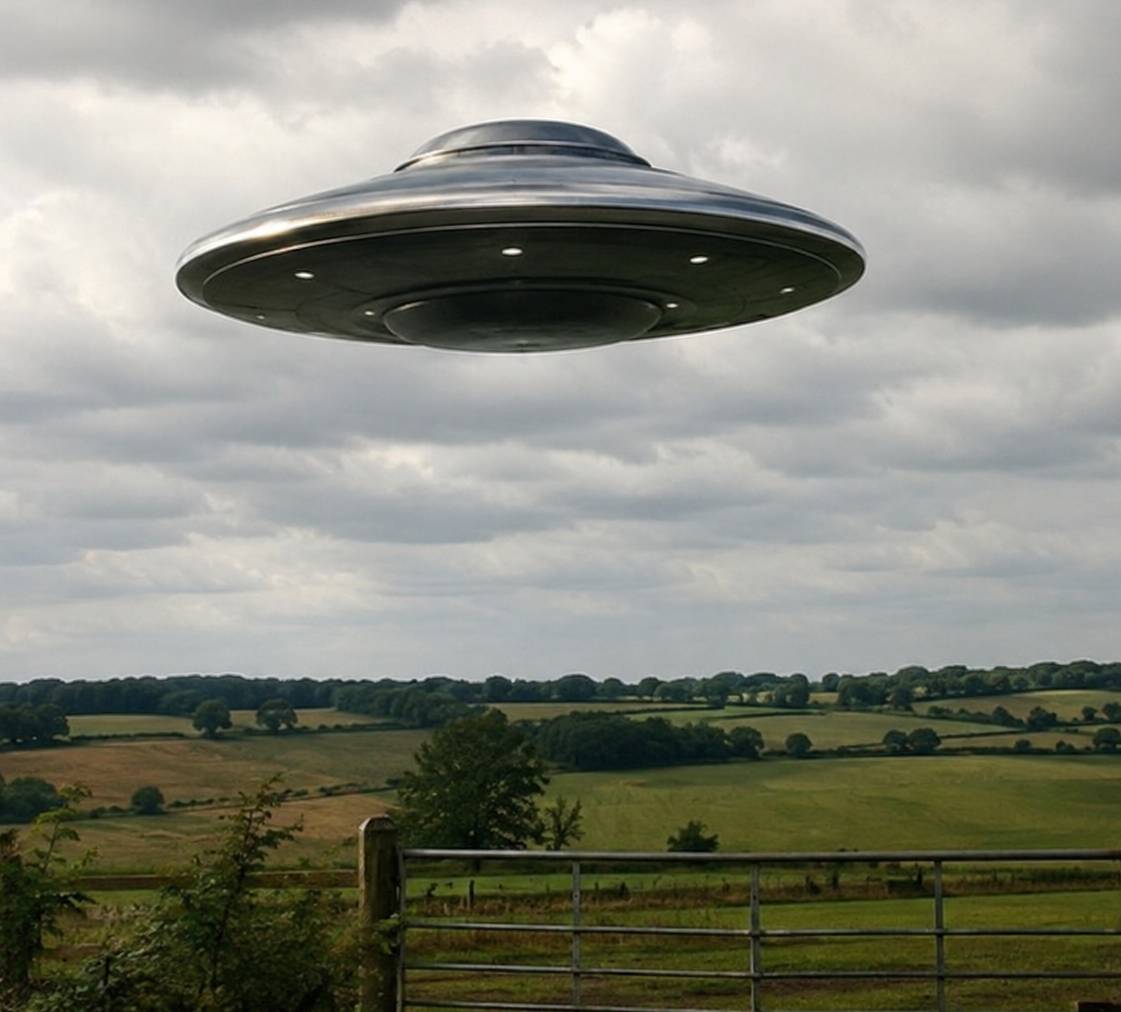
UFO-ChatGPT-Image-Jul-16-2026-11_10_45-AM.jpg

Would a saucer shape help?

A circular craft could be useful for reasons that do not require antigravity. A disc provides rotational symmetry, offers ample internal volume and could distribute antennas, electrodes, coils or plasma emitters around its rim. If a hypothetical field had to surround a craft evenly, a circular or flattened geometry might simplify its production.

Some warp-drive studies have also found that flattened spacetime configurations may be more energy-efficient than spherical ones. But this does not establish a direct link between mathematical warp bubbles and reported flying saucers. The resemblance is suggestive, not evidential.

A true spacetime vehicle might not need aerodynamic wings, yet it would still require an immense energy source, precise control of gravitational fields and some mechanism for creating, accelerating and stopping the distorted region. None of these capabilities exists today.

The most plausible conclusion

Modern science offers several real technologies that resemble limited aspects of reported saucer behavior. Electroaerodynamic systems can produce quiet thrust without propellers. Plasma and electromagnetic fields can control ionized gases. Advanced materials, computers and sensors can make aircraft more agile and less visible.

None, however, accounts for the full collection of extraordinary abilities sometimes attributed to UAP.

Spacetime engineering provides the most intellectually serious framework for discussing motion without conventional acceleration. Alcubierre’s contribution was important because it showed that Einstein’s equations permit geometries resembling a moving warp region. Later studies have refined, generalized and criticized that idea.

But mathematical permission is not the same as physical possibility.

At present, no verified experiment has produced a warp bubble, reduced inertia, shielded gravity or demonstrated a propulsion system capable of the reported flying-saucer maneuvers. Patents and declassified documents may show that people have considered such ideas; they do not prove that the technologies work.

The honest scientific position lies between dismissal and belief. Unusual observations should be investigated with good instruments and reliable data. At the same time, advanced propulsion concepts should be judged by experimental evidence, not by how closely they resemble reports of mysterious objects.

Flying saucers may continue to inspire speculation, but the most interesting question is no longer simply what type of engine they might contain. It is whether a sufficiently advanced technology could someday control the geometry of spacetime itself.

RELATED 


How Do Flying Saucers Fly? - Inside the Supernatural

How Fast Can Flying Saucers Move? - Inside the Supernatural

 { https://mysticsciences.com/ }

Hoe vind je dit bericht?
Geschreven door peter om 21:19 Stuur door

Crop Circle | Odstone Barn Nr Wayland’s Smithy Oxfordshire | 16/07/26 + Historical Landscapes

Crop Circle | Odstone Barn Nr Wayland’s Smithy Oxfordshire | 16/07/26 + Historical Landscapes

Crop-Circle-UK.png

DJI_20260716084034_0041_D.png

20260716084034_0041_D.png

DJI_20260716084034_0041_D-3.png

DJI_20260716083143_0012_D.png

DJI_20260716083339_0022_D.png

DJI_20260716083555_0030_D-P.png

IMAGES STONEHENGE DRONESCAPES PHOTOGRAPHY 

COPYRIGHT 2026

YouTube link:

Crop circle found near Wayland’s Smithy in Oxfordshire on 16 July 2026

Overview

A new crop circle formation was reported on 16 July 2026 near Odstone Barn, close to Wayland’s Smithy in Oxfordshire, adding another entry to a long-running tradition of mysterious agricultural formations in southern England. The report, published by VibeWire Magazine, was accompanied by video footage and imagery showing the design emerging in a field in a landscape already known for its prehistoric associations. While crop circles are often met with skepticism, each new sighting tends to attract renewed attention because of the location, the timing, and the enduring cultural fascination surrounding these patterns.

The publication described the formation as a newly discovered crop circle and linked it to a broader discussion of historical landscapes, suggesting that the field’s setting near one of Oxfordshire’s best-known ancient sites gives the event added significance. No formal survey or scientific assessment was included in the source material, and the report does not claim a definitive explanation for how the formation was made.

Key Details

According to the source, the crop circle was reported at Odstone Barn near Wayland’s Smithy on 16/07/26, with a video posted to YouTube alongside the magazine entry. The images provided show a geometric pattern flattened into standing crop, a visual style consistent with many modern crop circle reports from the UK. As with similar cases, the immediate questions are not only about authorship but also about scale, symmetry, and the speed with which the formation appeared.

That said, no evidence in the source material establishes whether the pattern was created by people, whether it had been formally documented by researchers, or whether any witnesses observed its formation. Crop circles in the UK are frequently linked to hoaxes, artistic interventions, or local folklore, and the report does not present new data that would settle those possibilities. Still, the location and presentation ensure the formation will likely be discussed by enthusiasts and skeptics alike.

Historical Landscape Context

The setting near Wayland’s Smithy is central to why the report drew interest. Wayland’s Smithy is a Neolithic long barrow in the Vale of White Horse, part of a wider ceremonial landscape that includes some of Britain’s most significant prehistoric monuments. Such places often appear in crop circle discussions because they sit within a terrain layered with archaeology, myth, and cultural memory. That history gives any new formation nearby a ready-made narrative, whether interpreted as coincidence, performance, or something more unusual.

In that sense, the crop circle is not simply being viewed as an isolated pattern in a field. It is being read against the backdrop of a landscape that has long invited speculation about ritual, alignment, and hidden meaning. Even for those who approach crop circles as man-made art, the choice of location can matter as much as the design itself. The proximity to Wayland’s Smithy inevitably amplifies the mystery.

Interpretation and Next Steps

For now, the formation remains a reported discovery rather than a verified anomaly. The most responsible reading is that it is an intriguing field pattern in a historically charged area, documented by a media outlet that covers UFO and unexplained phenomena. Further analysis would typically require on-site inspection, measurements, interviews, and crop damage assessment to determine whether the formation shows signs of human construction or something less straightforward.

Until then, the Oxfordshire discovery sits in the familiar space between folklore and investigation. It is a reminder that crop circles continue to occupy a unique niche in British public life: part rural puzzle, part media event, and part canvas for the enduring appeal of the unexplained.


Crop Circle, Avebury Stone Circle, Wiltshire, England - 14 July 2026 4K
RELATED

Miraculous Angel Wings appear in Crop Circle while people in it 2026🩵Interviews with eye witnesses🩵

Google's AI Analyzed Every Crop Circle Ever Recorded — The Pattern It Found Changes Everything

{ https://www.vibewire.com.au/ }

Hoe vind je dit bericht?
Geschreven door peter om 21:03 Stuur door

MUFON co-founder John Schuessler dies

MUFON co-founder John Schuessler dies ILLUSTRATIVE RECONSTRUCTION // NOT EVIDENCE

Overview

John Schuessler, the aerospace engineer and longtime UFO researcher who helped found the Mutual UFO Network, has died, according to a July 12 announcement from MUFON. Born in 1940, Schuessler was a defining figure in modern ufology for decades, known both for his technical background and for his willingness to challenge assumptions inside a field often divided between believers, skeptics, and independent investigators. His death prompted an immediate wave of tributes from the UFO research community, where he was widely regarded as one of the organization’s most consequential and uncompromising voices.

A Founding Figure in MUFON

Schuessler’s name is closely tied to the early growth of MUFON, which became one of the most prominent civilian organizations devoted to the study of unidentified aerial phenomena. As a co-founder, he helped shape the group’s emphasis on case documentation, investigator training, and evidence-based analysis at a time when UFO research was still largely informal and frequently dismissed by mainstream institutions. His background as an aerospace engineer gave him a level of technical credibility that set him apart from many contemporaries, and it also informed the careful, methodical approach he brought to high-profile cases.

Over the years, Schuessler developed a reputation as an investigator who could be both meticulous and contrarian. That combination made him influential in ufology, where agreement is rare and case interpretation often depends on competing theories. He did not simply amplify claims; he often pressed for documentation, consistency, and hard questions about what witnesses reported and what evidence could actually support. For supporters, that made him indispensable. For critics, it sometimes made him difficult. Either way, he left a lasting mark on the field.
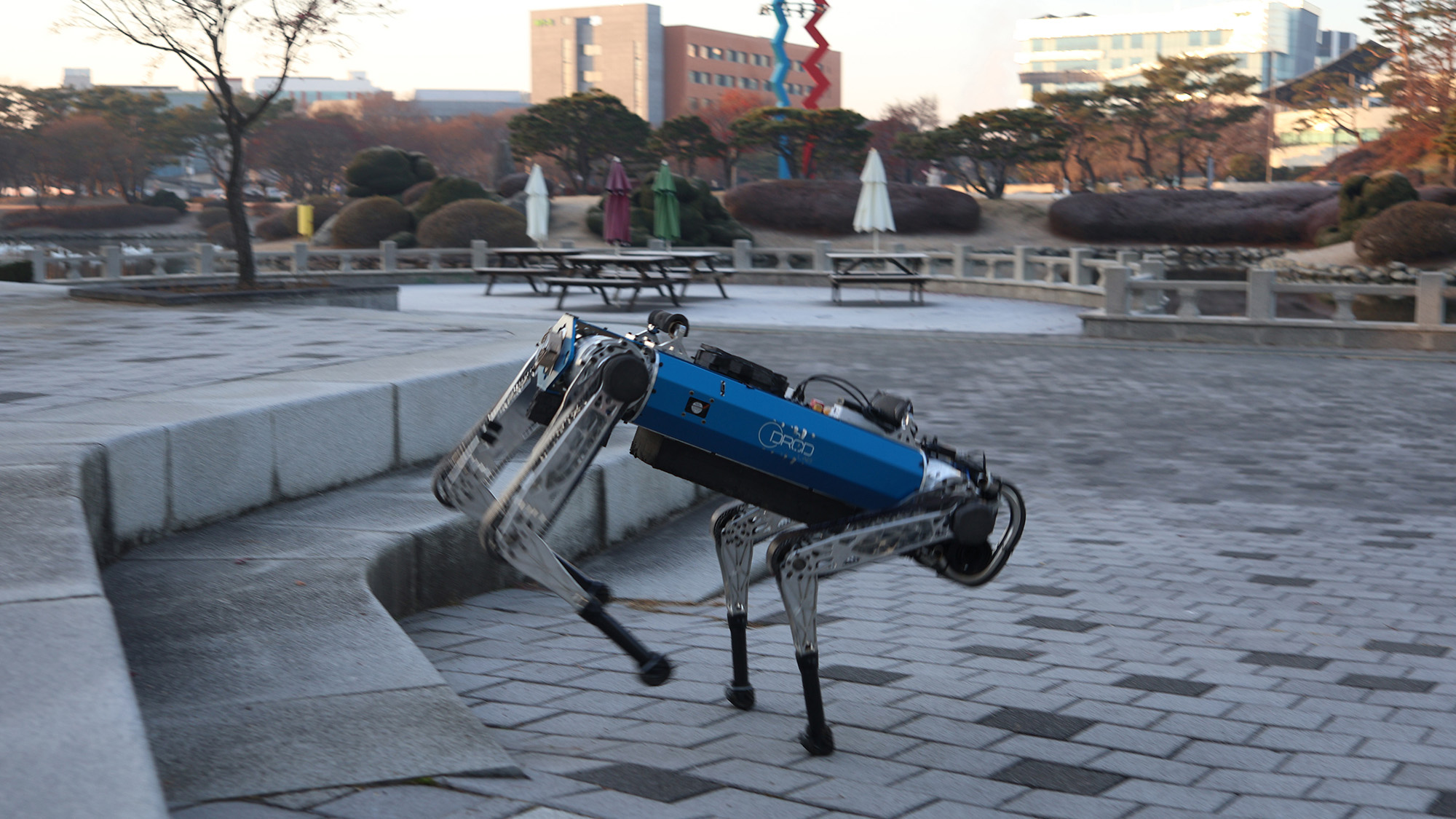

Investigating the Cases That Defined an Era
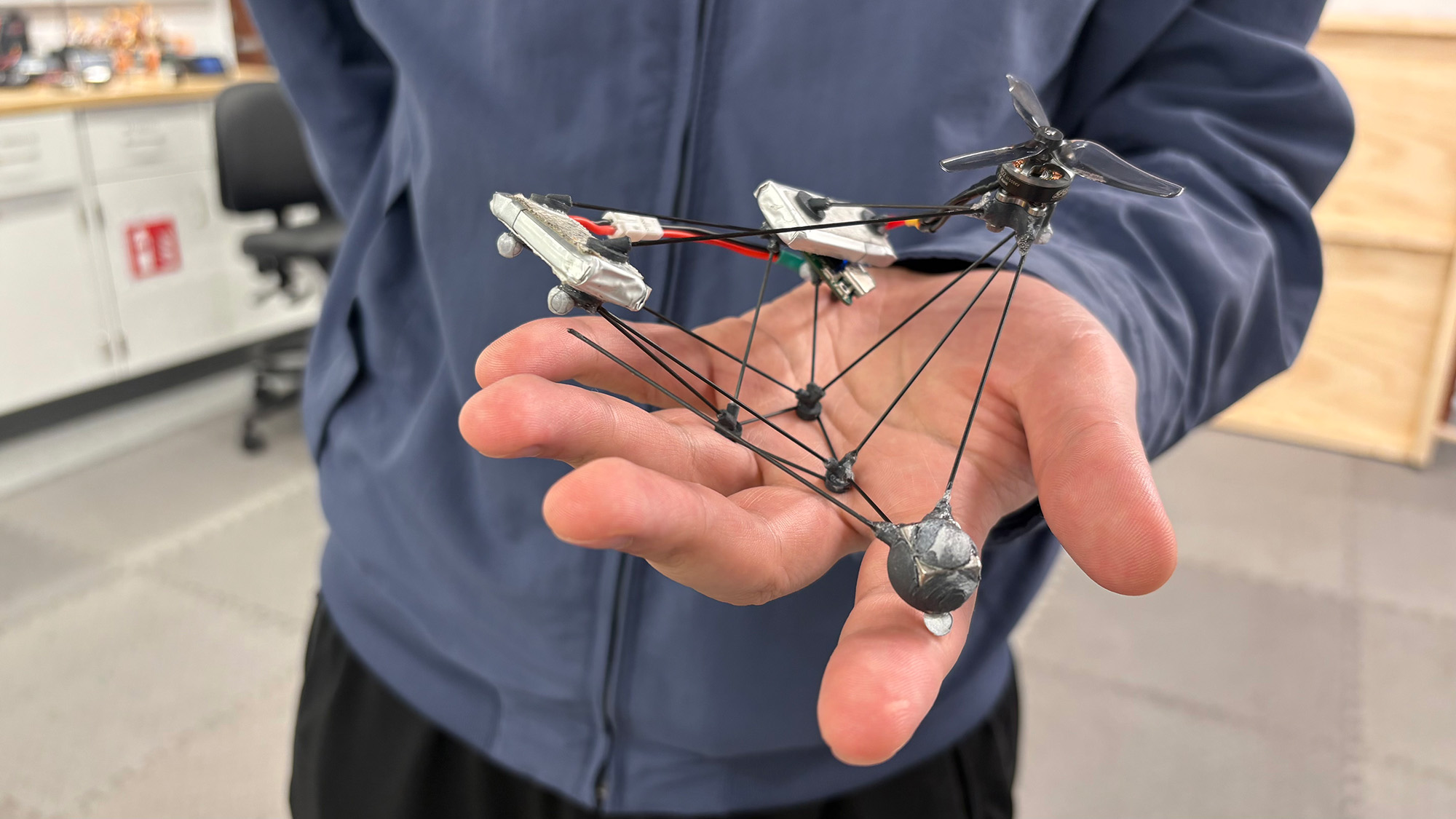
Among Schuessler’s most notable contributions was his detailed work on the Cash-Landrum incident, one of the most discussed UFO cases in U.S. history. The case, involving two women and a child who reported an encounter with a mysterious glowing object in Texas in 1980, became a touchstone for discussions of alleged physical effects, military involvement, and the challenge of sorting fact from speculation. Schuessler’s interest in the case reflected his broader approach: focus on the evidence, examine the timeline, and avoid easy conclusions.
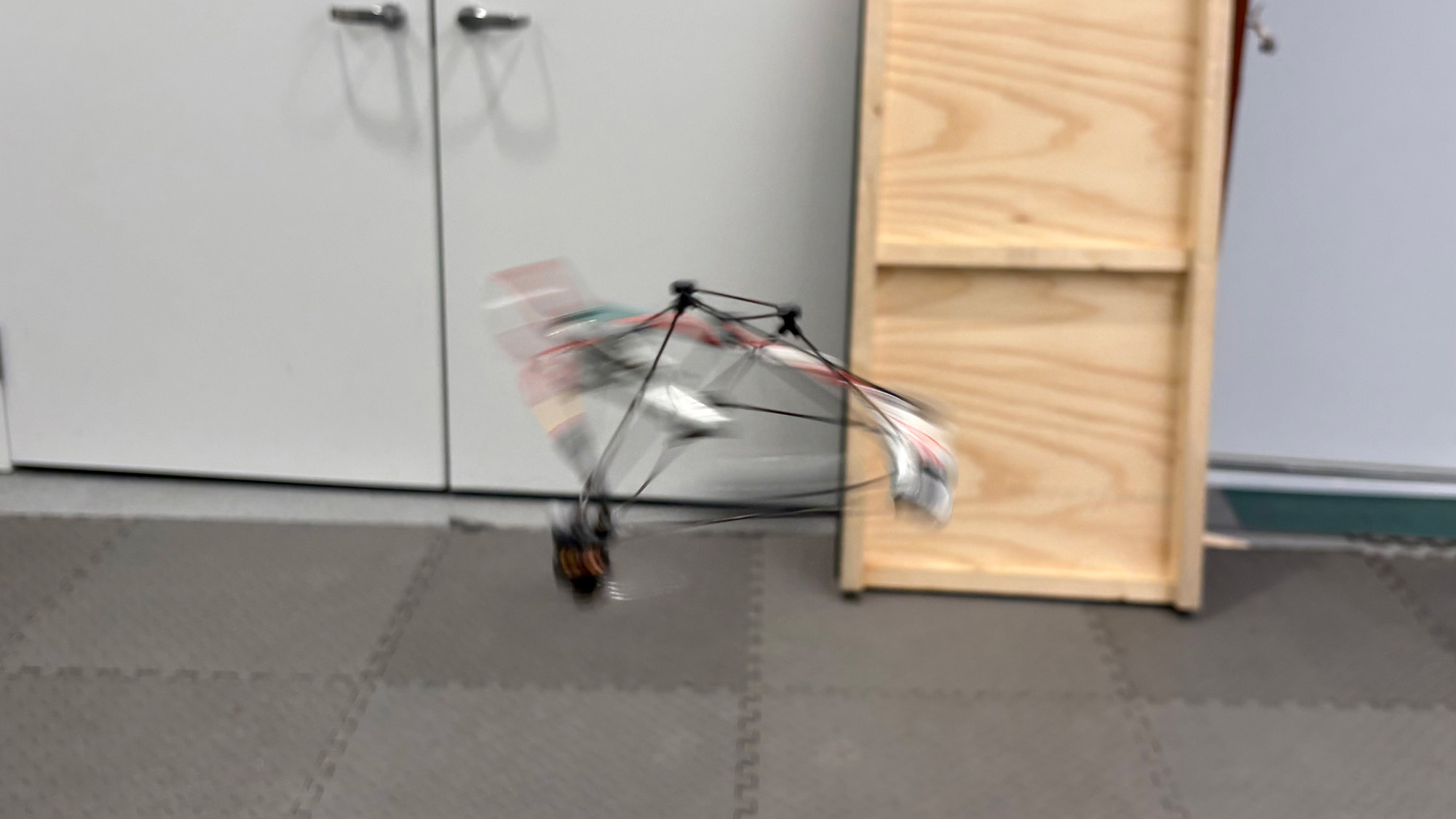

That commitment to deeper inquiry helped make Schuessler a respected figure even among people who disagreed about UFO origins or interpretations. His work arrived during a period when UFO research was still largely outside academic and governmental consensus, yet he consistently pushed the conversation toward more disciplined analysis. In that sense, his influence extended beyond any single case; he helped establish a standard for how serious civilian investigators could approach unexplained aerial reports.

Community Reaction and Legacy

The MUFON announcement marks the end of a long career that intersected with some of the most enduring questions in the field. While the organization’s statement did not provide extensive details, the response from researchers and longtime observers suggests Schuessler’s death is being felt as a significant loss. For many in the UFO community, he represented a generation of investigators who built the field through persistence, technical rigor, and a willingness to follow difficult evidence wherever it led.

His legacy is likely to endure through MUFON’s institutional history, the cases he helped shape, and the investigators he influenced. In a field often defined by uncertainty, Schuessler stood out for trying to bring order to ambiguity. That may be the clearest measure of his impact: not that he solved every mystery, but that he helped define how the mystery should be studied.

{ https://usubjects.com/  }

Hoe vind je dit bericht?
Geschreven door peter om 20:45 Stuur door

Ross Coulthart of NewsNation Reveals his Revelations on UFO/UAP Disclosure Journalism - the good & bad

UFO.png
Ross Coulthart of NewsNation Reveals his Revelations on UFO/UAP Disclosure Journalism - the good & bad

NewRealities:

Ok he didn't tell me everything. But he was very honest and upfront about his opinions and considerations on the Disclosure process. In one of his most candid Interviews UAP/UFO journalist Ross Coulthart holds nothing back as Alan Steinfeld turns the tables on the premier UFO/ UAP journalist of our time.


YouTube link: 

Overview

A recent VibeWire Magazine post has drawn attention to Ross Coulthart’s evolving role in UFO/UAP disclosure journalism, framing the NewsNation reporter as one of the most visible mainstream voices covering the subject. The article promotes a candid interview between Coulthart and Alan Steinfeld on New Realities, describing the discussion as one in which the journalist “holds nothing back” about the state of the disclosure effort. While the VibeWire item does not provide a full transcript or detailed quotes, it positions the conversation as a rare look at both the progress and the shortcomings of modern UAP reporting.

Coulthart has become a significant figure in the field because he sits at the intersection of investigative journalism and a subject long treated with skepticism by major media. His prominence reflects a broader shift: what was once a fringe topic is now appearing more often in congressional hearings, Pentagon-related reporting, and network television segments. That shift has created new opportunities for transparency, but it has also raised the stakes for journalists tasked with separating verified information from speculation.

The positive side of disclosure journalism

One of the clearest strengths of the current disclosure landscape is that UAP coverage is no longer confined to the margins. Journalists like Coulthart have helped normalize the idea that unexplained aerial phenomena are a legitimate subject for public scrutiny, not merely a pop-culture curiosity. That shift matters because it has encouraged more witnesses, former military personnel, and researchers to come forward, and it has pushed government agencies to respond more openly than they did in the past.

The VibeWire post suggests that Coulthart is candid about the disclosure process, and that candidness itself is part of the story. In a field often clouded by secrecy, ambiguity, and competing claims, reporters who ask hard questions while maintaining a disciplined standard of evidence can help create a more credible public conversation. The fact that UAP journalism is increasingly discussed on mainstream platforms also indicates that audiences are willing to engage with the topic in a more serious way than before.

The challenges and shortcomings

At the same time, the current media environment presents obvious risks. UAP reporting is vulnerable to exaggeration, rumor, and selective sourcing, especially when reporters rely on anonymous insiders or partial information from a slow-moving disclosure process. The gap between what can be publicly confirmed and what is alleged privately remains wide, and that gap can easily fuel frustration or unrealistic expectations among audiences hoping for dramatic revelations.
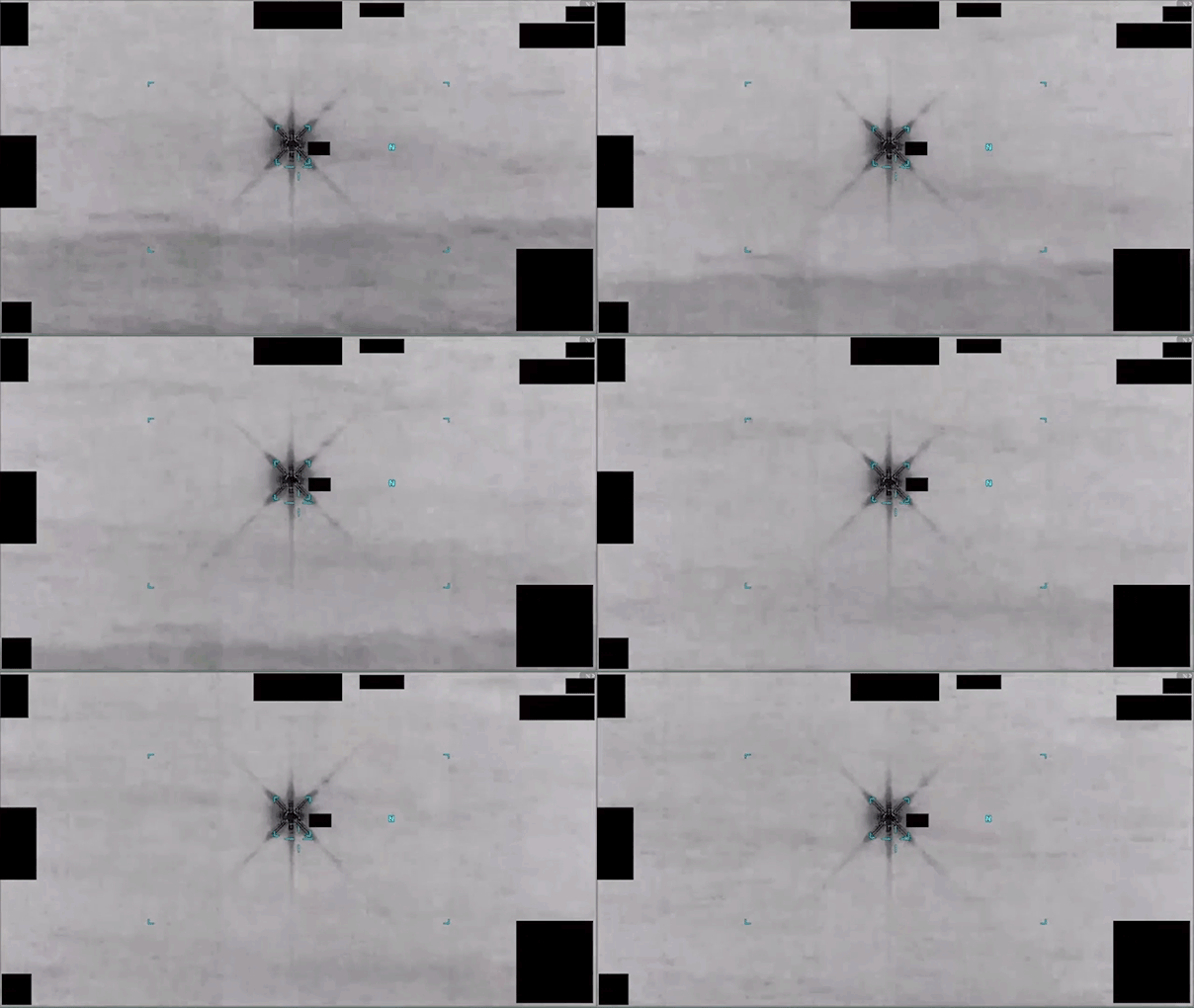
There is also the issue of polarization. Supporters of disclosure often believe the media is still too cautious, while critics argue that some UAP coverage can drift toward overstatement. Coulthart’s position as a high-profile journalist makes him both influential and vulnerable to criticism from both sides. For journalists in this space, the central challenge is maintaining credibility while covering a subject that is inherently resistant to quick answers.

Why Coulthart’s commentary matters

The significance of the VibeWire post lies less in any single revelation than in what it says about the current state of UAP journalism. The field is becoming more visible, more competitive, and more consequential. Reporters are no longer simply covering sightings; they are covering the political, bureaucratic, and cultural machinery surrounding disclosure itself. In that sense, Coulthart’s perspective serves as a marker of how far the conversation has moved from the fringes.

If the disclosure movement is to remain credible, journalism will have to continue doing what Coulthart and others have tried to model: reporting carefully, acknowledging uncertainty, and resisting the temptation to turn every development into a breakthrough. The growing audience for UAP coverage suggests that there is room for serious reporting—so long as the facts remain the focus.

RELATED 


Ross Coulthart Q&A: UFO document dumps and catastrophic disclosure | Reality Check

UAP Gerb Live - the State of Disclosure, Hanging with Ross Coulthart, Current Events & QnA

{ https://ufos-disclosure.blogspot.com/ }

Hoe vind je dit bericht?
Geschreven door peter om 20:33 Stuur door

Is There a Ruined Civilization on Mars? A Theoretical Physicist Runs the Numbers | Reality Check

Is There a Ruined Civilization on Mars? A Theoretical Physicist Runs the Numbers | Reality Check

Anomolies-on-Mars.png

In this episode of “Reality Check,” Ross Coulthart sits down with theoretical physicist and philosopher of physics Maaneli Derakhshani for a long look at the anomalous features cataloged across the moon, Phobos and the surface of Mars. The conversation opens with Lue Elizondo’s remarks on lunar anomalies, then works outward to the Phobos 2 spacecraft and the object NASA’s own mission literature once described as a monolith along with the reason SETI took that object seriously enough to study.

From there, Max walks Ross through the imagery that has drawn the most attention on Mars, from the so-called glass worm to the rectilinear formations near the Atlantis basin, applying the same fractal analysis that NASA and the Department of Defense use to separate natural terrain from engineered structures. Grounding the discussion in Carl Sagan’s own standards for searching for evidence of past life, Max makes the case that some of these features deserve to be treated as genuine open questions rather than tricks of light and shadow. The episode closes on the face on Mars and the geometric relationships between formations that, Max argues, may have been meant to be seen.

Chapters:

0:00 Intro
0:41 A Word from Our Sponsor
3:06 Elizondo, Lunar Anomalies, and What Might Be on the Moon
4:30 Artificial Ruins and the Clementine Mission
5:35 Turning to Mars, and the Phobos 2 Spacecraft
8:03 The Marina Popovich Photo
12:04 “Wouldn’t It Be Sad if Putin Disclosed First?”
12:53 Camera Glitch or Real Object? What Analysts Say Off the Record
16:21 The PRIME Mission and the Object NASA Called a Monolith
20:42 Buzz Aldrin on the Phobos Monolith
26:01 A Roscosmos Quote, and a Nature Study on a Craft That Was Hit
30:13 Rendering a Structure 35 to 40 Meters Tall
34:29 Why SETI Took Phobos Seriously, and Aldrin’s Observation Point
38:16 When Mars Had an Earth-Like Atmosphere, and Clarke’s “2001”
41:35 To the Surface, What Actually Looks Anomalous on Mars
45:55 The Glass Worm, the Sand-Dune Debunk, and Mike Bara’s Breakdown
52:38 The Space Act of 1958, and Who Controls Mars Imagery?
58:51 Aram Chaos, Run Through a Fractal Filter
60:09 So, Are They Artificial? Max Speculates
1:02:15 Three Anomalies, the Work of Jean Ward
1:05:33 Is Extrapolating Like This Legitimate? Sagan’s Standard
1:10:46 Is Any of This Just Pareidolia?
1:12:50 Right Angles Near the Atlantis Basin, and What NASA Calls Chaos Terrain
1:17:12 Cities, Villages, Civilization? Max Answers Plainly
1:19:07 The Algorithms, and Who Else Runs Them
1:25:13 Buried Structures in Renaudot Crater
1:30:42 The Face on Mars, Sagan’s Letter, and an Open Mind on “Cosmos”
1:37:01 Cydonia, How Big the Face Is, and Why NASA Landed Elsewhere
1:41:02 A Mimetolith, More Structures, and the Geometry Between Them
1:48:54 Wrapping Up, and an Invitation Back

Overview

A new episode of Reality Check on VibeWire Magazine has revived an old question in a more technical frame: could Mars preserve the ruins of an ancient civilization? In the discussion, host Ross Coulthart speaks with theoretical physicist and philosopher of physics Maaneli Derakhshani, who walks through a range of unusual lunar, Phobos, and Martian features that he argues deserve closer scrutiny. Rather than claiming proof of alien architecture, the conversation is presented as a theoretical examination of anomalies that some researchers believe have been prematurely dismissed. The episode begins on the Moon, touches on the Phobos 2 mission and an object once described in NASA literature as a monolith, and then shifts to the Martian surface, where formations such as the “glass worm,” rectilinear structures near the Atlantis basin, and the famous “face on Mars” are discussed as possible clues to something more than geology.

What the Physicist Examines

According to the source material, Derakhshani applies fractal analysis—a technique used in scientific and defense settings to help distinguish natural terrain from engineered forms—to imagery from Mars and Phobos. The aim, he suggests, is not to force a conclusion but to test whether some features are better explained by chance, erosion, or something intentionally structured. The episode revisits the Phobos 2 spacecraft, the “monolith” NASA-related mission references, and the reason SETI reportedly found the object worth studying. From there, the discussion broadens to surface features on Mars that have long fueled debate among anomaly hunters, including formations in Aram Chaos, the Atlantis basin, and Renaudot Crater. Derakhshani also invokes Carl Sagan’s standard for evidence of past life, arguing that extraordinary-looking structures should at least be treated as open questions rather than automatically dismissed as optical tricks or pareidolia.

The Broader Scientific and Historical Context

The episode’s framing matters because it places speculative interpretation alongside mainstream scientific caution. Mars has been examined for decades by orbiters, landers, and rovers, and the overwhelming scientific consensus remains that the planet’s surface features are the result of natural processes, not confirmed ruins. Still, the source highlights why these claims persist: certain images appear to show sharp angles, repeating geometry, or unusually human-like contours, and those impressions are often amplified by mission-era photo limitations, low-resolution datasets, and public fascination with the possibility of ancient life. The show also raises questions about who controls Mars imagery and how much data is publicly accessible, a concern that tends to resonate in fringe and independent research communities alike.

Caution, Curiosity, and the Limits of the Evidence

What makes the conversation notable is not that it proves a civilization existed on Mars, but that it attempts to formalize the debate using a scientific lens. Even so, the evidence described in the source remains interpretive: images, geometric comparisons, and pattern analysis do not amount to confirmation of artificial origin. The episode ends by asking whether any of the features could indicate cities, villages, or buried structures, but it stops short of a definitive answer. For now, the article’s central takeaway is more measured: Mars continues to inspire serious questions, and while most of its supposed anomalies may ultimately prove natural, some researchers believe they are still worth testing rather than ridiculing outright.

RELATED


Ancient Aliens: EVIDENCE OF LOST CIVILIZATIONS ON MARS (Season 14) | History

{ https://www.vibewire.com.au/ }

Hoe vind je dit bericht?
Geschreven door peter om 20:18 Stuur door

Claims that extraterrestrial contact has begun outside government oversight are discussed

Claims that extraterrestrial contact has begun outside government oversight are discussed ILLUSTRATIVE RECONSTRUCTION // NOT EVIDENCE

Overview

Claims that extraterrestrial contact has already begun outside government control are being circulated in UFO and disclosure circles following a recent community discussion centered on experiencers who say they have had direct encounters with non-human beings. The conversation, framed around Conscious Life Expo 2026, presents testimony from several individuals who describe meetings with entities identified as Arcturians, Pleiadians, blue light beings, and other intelligences. Supporters of such accounts argue they suggest a broader reality unfolding beyond official channels, while skeptics caution that the claims remain unverified and should be treated as personal testimony rather than evidence of contact.

Key Claims From the Discussion

According to the source material, the event featured seven experiencers who described a range of alleged interactions, including one account of being taken aboard what was described as a “children’s teaching craft.” The testimonies were presented as firsthand narratives, with speakers outlining what they believe to be repeated contact over time. One theme highlighted in the discussion was the idea that the beings involved are not hostile but instead are trying to encourage a shift in human awareness. The source also references a Navy skeptic whose views reportedly changed after a contact experience, a detail likely intended to underscore the argument that even skeptical observers can be persuaded by direct encounters.

A further claim raised in the discussion is the idea of MK Ultra-style memory suppression, suggesting that some experiencers believe their memories of contact have been blocked, distorted, or delayed by psychological means. That allegation is notable because it links contemporary UFO testimony with longstanding speculation about covert government programs, though no evidence was presented in the source to substantiate such a connection. As with many contact narratives, the accounts blend spiritual language, psychological interpretation, and paranormal claims in ways that can be compelling to believers but difficult to evaluate independently.

Disclosure, Government Oversight, and Public Awareness

The broader argument advanced by the article is that “the government isn’t in control” of the contact phenomenon. That framing reflects a recurring theme in UFO disclosure circles: the belief that if non-human intelligence is interacting with people, it may be doing so independently of military or intelligence oversight. For advocates of disclosure, such claims reinforce the idea that official institutions may be lagging behind events already unfolding in public and private settings. For critics, however, the lack of verifiable evidence makes it impossible to conclude that contact has begun in any meaningful, real-world sense.

What Remains Unclear

What is clear is that interest in UFOs and anomalous experiences continues to grow through conferences, podcasts, and online communities where firsthand accounts are given significant weight. What remains unclear is whether any of these stories point to a genuine external intelligence, a psychological phenomenon, misidentification, or some combination of factors. No independent corroboration, physical evidence, or official confirmation is provided in the source. Still, the discussion reflects an important moment in the disclosure conversation: a shift from asking whether contact is possible to asserting that it may already be happening, even if institutions have not publicly acknowledged it.


From 2025: Notable UFO testimony at House hearing on government transparency

{ https://usubjects.com/ }

Hoe vind je dit bericht?
Geschreven door peter om 18:35 Stuur door

‘Roswell of Brazil’: Doc director finds UFO crash tale credible

‘Roswell of Brazil’: Doc director finds UFO crash tale credible

Elizabeth Vargas

'Varginha: The Roswell of Brazil' Bought by 1091 Pictures - Variety

Overview

(NewsNation) — James Fox, who directed a 2022 documentary about the alleged 1996 crash of a UFO in Brazil, says an expanded version of his film includes recollections from a surgeon who claims to have seen an alien survivor at the hospital.

A recent NewsNation segment has brought fresh attention to the so-called “Roswell of Brazil,” the long-running claim that an unidentified flying object crashed in the Brazilian city of Varginha in the 1990s. The report centers on a documentary director who says he finds the crash narrative credible, adding a new layer of visibility to one of the most discussed UFO cases outside the United States.

The incident, often compared to Roswell, New Mexico, has remained a fixture in UFO circles for decades because of the persistent accounts surrounding it. Supporters of the story point to witness testimony and local recollections as evidence that something unusual happened. Skeptics, meanwhile, have continued to question whether the case reflects a genuine crash event, a mix of rumors, or a case of misidentification that grew over time.

Fox says Dr. Italo Venturelli was previously reluctant to discuss his experience but changed his mind after suffering a near-fatal heart attack.

“He was lying on his deathbed, staring at the ceiling of the ICU, and he thought, ‘If I get through this, I’m not taking this story to the grave,’” the filmmaker told “Elizabeth Vargas Reports” on Thursday.

Doc director finds UFO crash tale credible in Roswell of Brazil case

When Fox and his crew returned to Brazil, he said the brain surgeon brought everyone into the room where he said he had encountered a “captured, nonhuman sentient being” three decades ago.

“As soon as he looked in the eyes, he knew it was not of this Earth,” Fox said.

Witnesses have long said a cigar-shaped UFO crashed in Varginha, Brazil, in January 1996 and that at least one occupant of the craft survived or was taken into custody. The location in Southeast Brazil has become known as the “Roswell of Brazil” because of the incident’s similarities to an alleged UFO crash in New Mexico in 1947.

Fox says the information he has collected through his film project, “Moment of Contact,” should be enough to smoke out “real evidence” collected three decades ago. In variations of the Varginha narrative, the U.S. government takes custody of alien beings.

Earlier this week, Rep. Eric Burlison, R-Mo., said he sent letters to the CIA and FBI asking the agencies to release any information they may have on the Varginha crash.

Burlison, a member of the House Oversight Committee, suggested the FBI may even help launch an investigation into another component of the story — that a Brazilian soldier died from an infection after touching a UFO or alien.

Documentary Focus and Witness Claims

According to the NewsNation segment, the documentary director believes the alleged crash deserves serious consideration. That view is notable because it comes from someone actively producing a film about the case rather than from a casual observer. In UFO reporting, documentaries often serve as a vehicle for revisiting older claims, interviewing witnesses, and assembling archival material that may not have received mainstream attention when the story first emerged.

The renewed discussion also highlights the continuing importance of witness testimony in unresolved UFO cases. Over the years, the Varginha story has been shaped by accounts from residents, researchers, and others who say they saw or heard evidence of a strange event. While such testimony has helped keep the case alive, it has not produced definitive proof that would settle the matter conclusively. That tension — between compelling personal accounts and a lack of hard verification — remains central to the story’s longevity.

Why the Case Still Draws Attention

The enduring appeal of the “Roswell of Brazil” lies in its mix of local folklore, alleged government secrecy, and the broader public fascination with unexplained aerial phenomena. In many ways, it mirrors other high-profile UFO cases that continue to attract attention long after the initial reports fade from the news cycle. The difference in this case is its strong association with a specific Brazilian city and the way the story has become embedded in popular UFO culture.

For filmmakers and investigators, cases like Varginha offer both narrative momentum and documentary intrigue. They also arrive at a time when public interest in UFOs — now often referred to as UAPs, or unidentified anomalous phenomena — has increased amid congressional hearings, military disclosures, and renewed scrutiny of unexplained sightings. In that climate, older stories are being revisited with fresh eyes, even when the underlying evidence remains disputed.

What the Renewed Interest Means

The NewsNation segment underscores how unresolved UFO claims can resurface whenever a new documentary, interview, or witness account enters the conversation. The director’s endorsement of the crash story as credible does not resolve the case, but it does show how belief in the incident continues to be sustained by those who have spent years studying it.

At the same time, the story serves as a reminder that credibility is not the same as confirmation. Without publicly verified physical evidence or an official acknowledgment of a crash, the “Roswell of Brazil” remains an allegation rather than a settled historical event. Still, the renewed attention suggests the case is far from forgotten, and it may continue to generate debate as filmmakers and researchers revisit one of Brazil’s most famous UFO mysteries.


Brazil's Roswell: The Alien & UFO Crash Exposed

The Varginha UFO Incident: Brazil's Roswell That the Government Tried to Bury

{ https://www.newsnationnow.com/ }

Hoe vind je dit bericht?
Geschreven door peter om 18:26 Stuur door

Meer van UFO'S of UAP'S, ASTRONOMIE, RUIMTEVAART, ARCHEOLOGIE, OUDHEIDKUNDE, SF-SNUFJES EN ANDERE ESOTERISCHE WETENSCHAPPEN - DE ALLERLAATSTE NIEUWTJES

↑ Terug naar de berichten