Location of sighting: Hanna, Utah, USA
Source: NUFORC Report #202066
Physicist Thomas Campbell Claims Dead Relatives Who Greet Us After Death Are Not Real
Physicist Thomas Campbell, who previously worked as a consultant for NASA, claims that people who die may be welcomed by familiar faces of deceased relatives, only to discover that those relatives are not actually their loved ones. He believes a larger consciousness system creates these appearances to comfort people during their first moments after death. The reunion lasts only a few minutes before the person is directed elsewhere, and memories of the life they just lived begin disappearing.
Campbell described what he believes happens to consciousness after the physical body dies. He said he had investigated the process in two unusual ways.
He claims to have connected his consciousness to people who were dying and followed their experiences beyond physical death. Second, he says he spent months working inside what he calls a transition reality, an environment supposedly designed to help newly deceased people adjust before beginning another life.
He explained that someone trained in altered states of consciousness could establish what he calls a mind-to-mind connection with another person. According to Campbell, this connection allows one consciousness to experience what another person experiences without relying on ordinary physical senses.
He claims to have used this method with people approaching death. Rather than physically observing them or attempting to communicate through conventional means, Campbell says he connected directly with their consciousness and remained connected as they died. In his account, the physical body stops functioning, but consciousness continues receiving experiences through another reality. He believes this allowed him to observe the dying process from the perspective of someone undergoing it.
Campbell had described this method before. During his October 20, 2025, interview with Danny Jones, he said he had followed two or three people through death using this technique. He compared the connection to the fictional mind meld performed by Spock in Star Trek, although he described his own experience as a direct exchange of consciousness rather than anything involving physical contact. These accounts are based on Campbell’s reported personal experiences, and there is no independently verified evidence that he successfully followed another person’s consciousness beyond death.
His second account is even more unusual because he claims to have played a role inside the afterlife itself. Campbell told Jones that many years ago, he began entering a particular nonphysical environment whenever he closed his eyes and fell asleep. He says this happened repeatedly for a couple of months, allowing him to become familiar with the people, activities, and procedures taking place there. He described his role as being like a Walmart greeter, welcoming people who had recently died and helping them understand where they were.
Campbell believes he was placed in this environment by what he calls the Larger Consciousness System, the underlying intelligence that, according to his theory, generates our physical universe and other reality systems. He says the experience was intended to teach him how the transition between lives operates. Later, when he claims to have followed dying people into the same environment, he recognized the process he had previously observed from the other side.
According to Campbell, death begins with an abrupt change in surroundings. A person suddenly becomes aware of existing somewhere unfamiliar, no longer receiving the sensory information associated with their physical body. They may initially be alone and confused, but they soon realize they are still conscious. Campbell believes the experience depends partly on the person’s expectations, fears, and understanding of consciousness.
The Larger Consciousness System then provides an environment intended to reduce confusion and help the person accept what has happened. For someone frightened by death, Campbell says this may involve seeing deceased family members approaching with reassuring expressions. The figures might appear exactly as the person remembers them, with familiar faces, voices, personalities, and mannerisms. The encounter can feel like a genuine reunion, even though Campbell believes something very different is happening.
“They’re not really your dead relatives.” He explained that the Larger Consciousness System is effectively playing the roles of those relatives to help the newly deceased person relax and release their attachment to the life they have just left.
This raises an unsettling possibility within his theory. A person might spend their final years longing to see a deceased parent, spouse, child, or close friend again. When death finally arrives, they may experience what feels like the reunion they wanted, without realizing that the familiar person standing before them is a representation generated by the system rather than the actual consciousness of their loved one.
Campbell does not describe this as a malicious deception. He believes the experience serves a practical purpose by preventing fear and emotional attachment from interfering with the transition. In his model, the system is concerned with helping consciousness move forward rather than preserving a permanent afterlife reunion based on relationships from one particular lifetime.
He also believes these meetings are brief. He described the deceased person spending a few minutes with the familiar figures before being encouraged to move elsewhere. At that point, the afterlife begins to resemble something surprisingly ordinary. A person might encounter someone who directs them toward a woman standing near a line of other people, where they are told to wait for further instructions.
Campbell says the lines and instructions are not actually necessary. They are activities created to occupy the newly deceased while their memories of physical life gradually fade. The person believes they are waiting for something important, but the waiting itself serves the purpose of helping them adjust. When Jones compared the environment to purgatory, Campbell rejected the description. He said it was simply a temporary transition reality, not a place of punishment.
During his August 27, 2026, appearance on Mayim Bialik’s Breakdown, Campbell had already described a similar process. He compared the waiting areas to the long queues found at Disney World, explaining that the apparent activities were designed to give consciousness time to release its attachment to the previous existence. In that discussion, he also said people who were already comfortable with death might not encounter deceased relatives at all.
The most disturbing part of Campbell’s explanation concerns what happens to memory. He says recollections of the life just completed begin fading almost immediately, much like a vivid dream that becomes difficult to remember after waking up. A person might initially recognize their previous identity, remember family members, and understand what happened before death. Within a short period, however, those memories supposedly become increasingly distant.
Campbell told Jones that by the time someone has walked toward the assigned line and waited there for a while, the memories of their previous lifetime may already have disappeared. Campbell, however, sees the loss of memory as an essential part of how consciousness evolves. He argues that the individual does not lose everything developed during a lifetime. What disappears is the personal history, including names, relationships, experiences, and intellectual knowledge associated with the physical identity. What supposedly remains is the underlying quality of consciousness shaped by the person’s choices.
In Campbell’s theory, someone who spent a lifetime becoming more compassionate, patient, and understanding would carry that development into the next incarnation. A person who remained dominated by fear, anger, or selfishness would continue working through those tendencies. Campbell describes this process in terms of reducing entropy, a concept he uses to describe consciousness becoming more organized, cooperative, and less driven by fear.
He argues that remembering previous lives would interfere with the process because people would already know what they were supposed to learn. Someone might behave kindly simply because they remembered that kindness was rewarded, rather than because compassion had become a genuine part of their character. Campbell believes meaningful growth requires decisions to arise naturally from the individual, without a record of previous lessons explaining exactly how to behave.
This is also why he believes people return under very different circumstances. One lifetime might involve wealth and security, while another brings poverty or hardship. A person may experience life as a man, a woman, or someone raised in an entirely different culture. Campbell says those differences expose consciousness to new choices and challenges that would be unavailable if every incarnation repeated the same conditions.
Before another incarnation, some people may also undergo what Campbell describes as a life review. He does not believe everyone needs one. According to his account, the review is intended for individuals who have not understood the effects of their actions or recognized recurring personal problems. They may be shown situations from their previous life, including moments when anger, fear, or selfishness influenced their behavior, so they can better understand what they need to change.
Campbell’s interest in these experiences has a long history. He consulted for NASA’s Ares I program, where his responsibilities involved analyzing technical risks and vulnerabilities that could affect mission and crew safety. His professional work in these fields is separate from his claims about the afterlife, which are not findings established by NASA research.
In the early 1970s, Campbell began working with Robert Monroe, the American businessman and researcher whose book Journeys Out of the Body became influential among people interested in altered states of consciousness. Campbell and engineer Dennis Mennerich helped develop equipment and experiments at Monroe’s research laboratory in Virginia. Their work included exploring binaural beats, an audio technique intended to help participants enter unusual states of awareness.
Monroe’s own accounts provide a striking historical connection to Campbell’s description of the afterlife. In a personal account preserved by the Monroe Institute, Monroe described visiting what he called the Park, an apparent recovery area for people who had recently died. He said he first encountered this environment in 1965 and later returned to investigate it after his wife, Nancy Penn Monroe, became seriously ill.
Monroe claimed that frightened or confused deceased people could be brought to this environment, where they would receive assistance before deciding what to do next. The institute subsequently developed a program called Lifeline, conceived in 1991, that teaches participants to explore what Monroe called Focus Levels 23 through 27. Its official description identifies the Park as a reception center where newly deceased people can supposedly recover from the shock of death.
The similarities between Monroe’s account and Campbell’s transition reality are difficult to overlook. Both involve temporary environments, people who help the newly deceased, and a period of adjustment before further experiences. However, there is an important difference. Monroe’s descriptions allow for reunions with actual deceased loved ones, while Campbell believes the familiar relatives encountered during the initial transition may be representations generated by the larger system.
As discussed in our earlier article about Campbell’s claimed visits to other realities, he believes consciousness was never physically contained inside the human brain. Instead, he compares the body to an avatar controlled by consciousness through an information stream. The physical universe is one of many virtual reality environments, and an out-of-body experience supposedly involves shifting awareness from one information stream to another.
Campbell developed this broader model in his book trilogy My Big TOE, published in February 2003. His theory attempts to explain consciousness, physical reality, paranormal experiences, and personal development through a single information-based system. The afterlife he describes is therefore not a separate religious destination but another environment within the same larger reality. His previous claims include communicating with beings in other reality systems and interacting with environments that feel as physical as the world around us.
Some aspects of Campbell’s account resemble experiences documented by researchers who study dying patients. One of the best-known investigators is physician Christopher Kerr, whose work at Hospice and Palliative Care Buffalo examines dreams and visions reported by people approaching death. Unlike Campbell’s description of experiences after death, Kerr’s research concerns patients who are still alive and able to describe what they have seen.
In a study published in the Journal of Palliative Medicine in 2014, Kerr and his colleagues enrolled 66 hospice patients, with 59 included in the final analysis. The researchers conducted 453 interviews and found that most participants reported at least one end-of-life dream or vision. Encounters with deceased friends and relatives were particularly meaningful, and visions involving deceased loved ones were rated as especially comforting.
During a 2024 interview with The ASCO Post, Kerr explained that these experiences often helped patients reconnect emotionally with people who had been important throughout their lives. Some described meeting deceased parents, spouses, or other loved ones, while others dreamed about travel or preparing to go somewhere. The experiences often became more frequent as death approached.
Kerr also emphasized that these dreams and visions should not automatically be confused with delirium. His research involved patients who were sufficiently alert to describe their experiences and participate in interviews. Delirium can involve disorganized thinking, confusion, and agitation, while many of the patients in Kerr’s studies described coherent experiences that brought comfort. Nevertheless, researchers have not established that these visions represent genuine communication with deceased people.
A systematic review published in 2022 examined research on end-of-life dreams and visions and found that such experiences were reported by a substantial proportion of dying patients across the studies analyzed. The findings reinforce the observation that encounters with deceased loved ones are not isolated anecdotes. They are recurring experiences that deserve attention in medical care, even though their ultimate cause remains uncertain.
There is also an important distinction between deathbed visions and near-death experiences. People who report near-death experiences have survived a medical crisis, sometimes involving cardiac arrest, and later described unusual awareness, life reviews, or encounters with other beings. In the AWARE II study published in 2023, researchers led by Sam Parnia investigated awareness during resuscitation in 567 hospital cardiac arrest cases. Among 28 survivors who completed interviews, six described transcendent recalled experiences of death.
The study also recorded signs of brain activity during resuscitation in some patients, raising questions about how awareness can return or persist during severe physiological stress. However, those findings do not demonstrate that consciousness survives irreversible death. They also do not verify Campbell’s account of a transition environment, deceased relatives being impersonated, or memories being removed before reincarnation.
Another unusual line of research concerns children who report memories of previous lives. The University of Virginia’s Division of Perceptual Studies has investigated thousands of such cases over several decades, beginning with psychiatrist Ian Stevenson and continuing through researchers including Jim Tucker. These cases sometimes involve children describing people, places, or events that their families later attempt to connect with the lives of deceased individuals.
A particularly interesting development appeared on October 18, 2026, when the university reported findings from a new analysis of reincarnation cases. Researchers Saeedeh Sadeghi, Marieta Pehlivanova, and Philip Cozzolino examined 1,678 reports in which purported memories had been associated with identifiable deceased people.
They found that the median reported interval between death and supposed rebirth was 16 months. More unexpectedly, cases involving sudden or unanticipated deaths were associated with shorter intervals. The most unexpected deaths corresponded to an average reduction of approximately 40% in the interval between death and the claimed reincarnation. The researchers reported that this relationship remained after considering several cultural and psychological factors, and was stronger among families whose religious backgrounds did not support reincarnation.
Read also:
The findings do not prove reincarnation, and the researchers themselves did not claim that they had established its existence. The cases depend on retrospective accounts, attempted identifications, and other evidence that can be difficult to verify independently. Still, the study introduces a particularly interesting question when compared with Campbell’s theory. If memories are supposedly removed during the transition process, why do some children report remembering previous lives?
Campbell’s model allows for an underlying consciousness to continue across different identities, but the circumstances in which detailed memories might survive are less clearly established. The University of Virginia cases cannot confirm or disprove his explanation because they do not directly test the transition system he describes. They do, however, show how difficult the question of memory becomes when attempting to explain what might persist between lives.
There is another unresolved problem in Campbell’s account. He believes the relatives who welcome a person after death may be convincing representations rather than their actual consciousness. Yet he also believes consciousness survives physical death and continues learning through other experiences. His theory therefore leaves an emotionally important distinction between the survival of a person at some deeper level and the survival of the particular personality, memories, and relationships through which that person was known.
RELATED
Computer Simulations Provide the Best Explanation for Those "Little Red Dots" Yet!

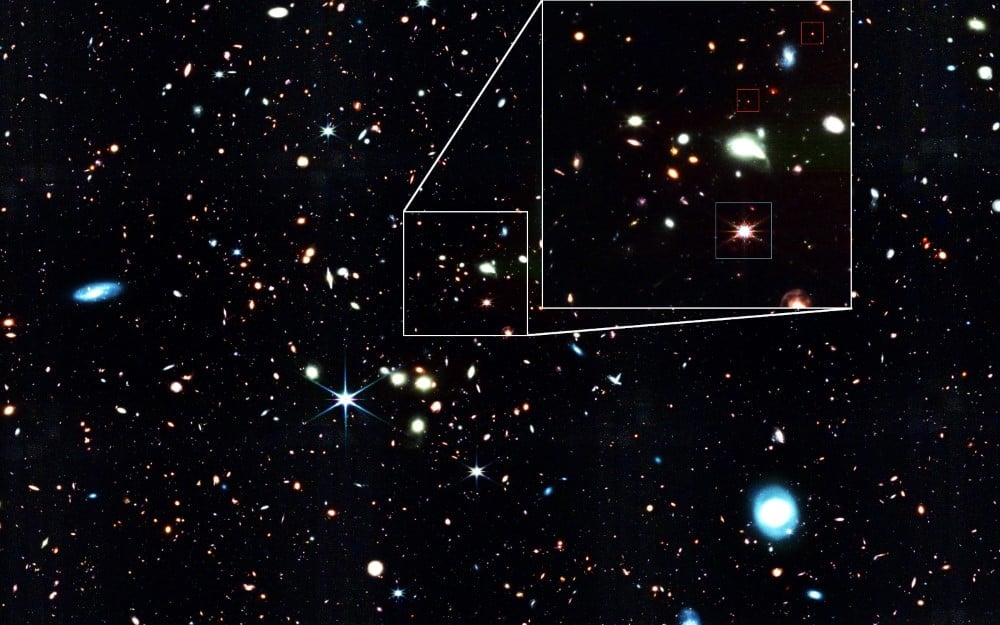
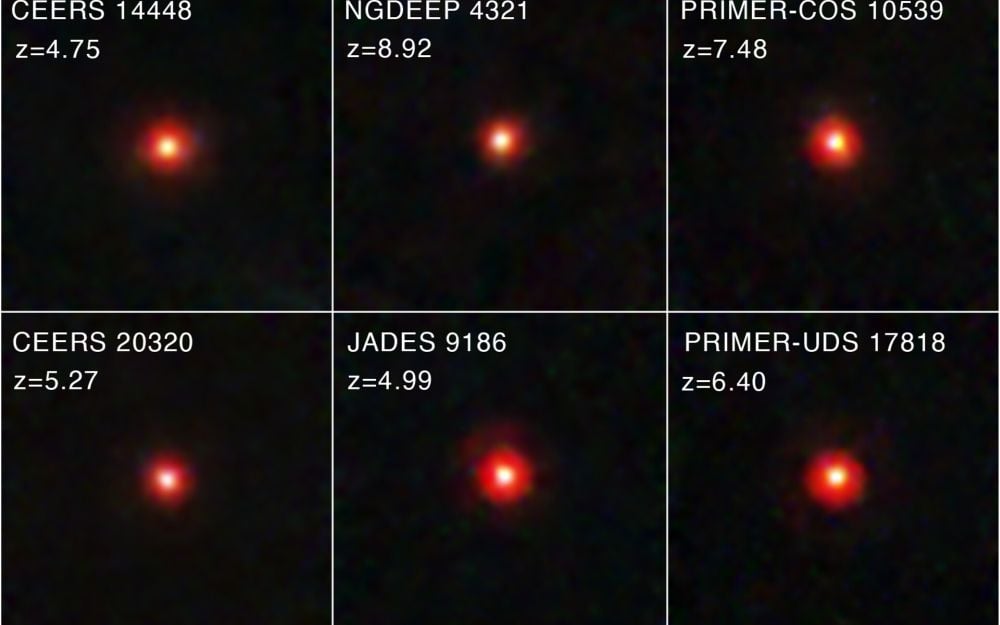
This image shows a handful of the Little Red Dots found by the JWST. Large numbers of LRDs emerged about 600 million years after the Big Bang, and then declined rapidly about 1.5 billion years after the Big Bang.
Credit: NASA/ESA/CSA/STScI/D. Kocevski (Colby College)
When the James Webb Space Telescope (JWST) made its famous observations of several deep fields in the cosmos, astronomers were surprised to see numerous galaxies that defied expectations. These galaxies were bright and red - earning them the nickname Little Red Dots (LRDs) - and far more abundant than cosmological models predicted. Scientists theorized that these were early quasars, galaxies with active galactic nuclei (AGNs) powered by the "seeds" that would grow to become supermassive black holes (SMBHs).
However, this also conflicted with cosmological models, as it seemed unlikely that many galaxies could have formed with massive black holes less than one billion years after the Big Bang. This led scientists to consider various theories, compact collections of stars, "dusty" galaxies, supermassive stars, and "black hole stars." While the more recent Direct Collapse Black Holes (DCBHs) theory offered the most compelling argument to date, new simulations by an international team of astronomers indicate that they may be the remnants of collapsed supermassive primordial stars.
The study was led by Dr. Daniel Whalen from the University of Portsmouth's Institute of Cosmology and Gravitation. His colleagues included researchers from United Arab Emirates University, the Aristotle University of Thessaloniki, the Institute for Astronomy and Royal Observatory at the University of Edinburgh, and the Harvard & Smithsonian Center for Astrophysics (CfA). The paper detailing their findings was published in the The Astrophysical Journal Letters.

The little red dots could represent galaxies in an evolutionary phase predating the luminous quasar phase.
Credit: NASA/ESA/CSA/ISTA)/ETH Zurich/NAOJ
Previous attempts to explain the rapid formation, abundance, and spectral characteristics of LRDs all suffered from the same issue. While each explained some characteristics, none could account for everything the JWST revealed in its deep field surveys. Then came the DCBHs theory, which argues that SMBH seeds formed directly from massive clouds of cold gas. While this theory did fit Webb's observations nicely, it still faces numerous theoretical and environmental challenges.
For starters, the core premise of the DCBH theory is that a massive cloud of cold gas could collapse under its own gravity. However, gas tends to fragment into smaller clouds as it cools, leading to a cluster of primordial (Population III) stars instead of a black hole seed. To prevent fragmentation, the gas cloud must remain hot, requiring a very specific amount of Lyman-Werner (LW) radiation from a synchronized star-forming galaxy in its vicinity to destroy the main coolant - i.e., molecular hydrogen (H₂).
This raises additional problems, including the self-shielding nature of molecular hydrogen. As a gas cloud becomes increasingly dense, its outer layers absorb the LW radiation, shielding the inner core. This means that the critical amount of radiation required to suppress cooling across the entire cloud would be much higher. Even if the SMBH seed did manage to form, the radiative pressure it would emit (plus mechanical feedback from the disk and jets) would slow the accretion rate, significantly slowing further growth.
Whalen and his team found another explanation borne out by advanced cosmological simulations. As he said in a University of Portsmouth press release:
LRDs have been one of the most surprising discoveries made by the James Webb Space Telescope. They are compact, only a few hundred light-years across, but are as bright as much larger galaxies, and their unusual V-shaped spectra have defied the usual astrophysical explanations. Their lack of detectable X-ray and radio emissions has left astronomers struggling to explain what they are.

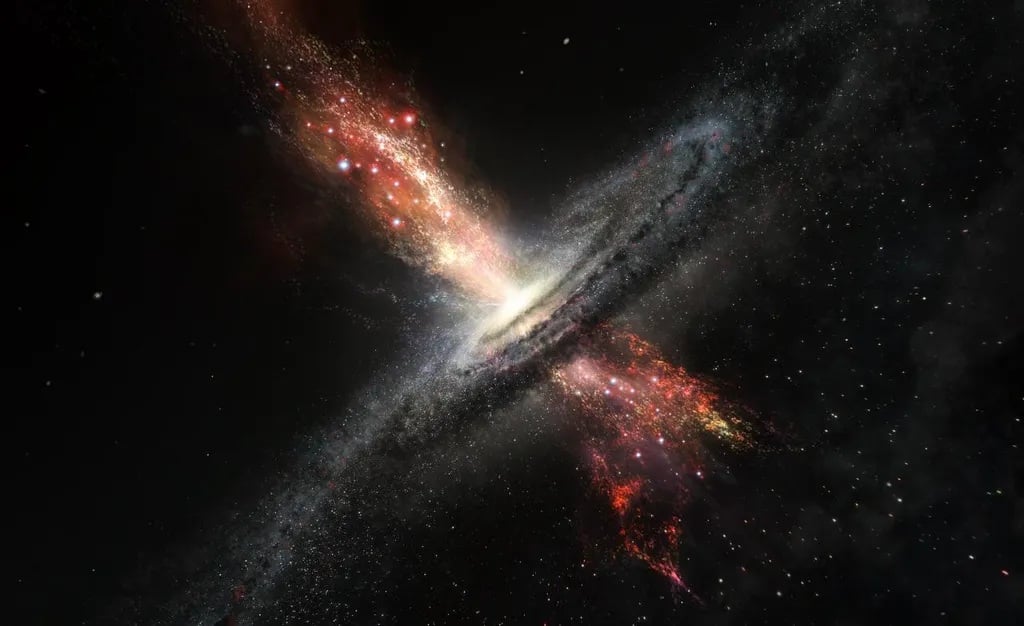
Artist's impression of a galaxy forming stars within powerful outflows of material blasted out from supermassive black holes at its core.
Credit: ESO/M. Kornmesser
Based on their simulations, the team produced a model showing that LRDs are most likely galaxies with AGN powered by massive black holes that formed through the collapse of supermassive primordial stars. What's more, their model suggests that the black holes are largely concealed by dense, massive discs of the gas that created them. These gaseous envelopes trap high-energy X-rays while allowing some visible, ultraviolet, and infrared light to escape, which fits with the unusual light signatures detected by the JWST.
The simulations also explain another long-standing mystery about LRDs: that a large cluster of stars in the disks of these small galaxies produces the blue part of the spectrum Webb observed. These disks, according to the models, contain around 100 million stars densely packed into regions measuring only 500 light-years in diameter, matching what astronomers observed in LRDs. Based on the available data, the team further concludes the black holes at the center of these primordial galaxies are only about 10 million Solar masses.
This is a few orders of magnitude less than previous estimates, which indicated a maximum of 100 million Solar masses. While this research is unlikely to be the final word on the nature of LRDs, it offers what is (to date) the most fitting explanation that matches the observations. "What makes this discovery so exciting is that we may be witnessing the birth of the first supermassive black holes," said Whalen. "For decades, simulations have predicted that these objects should exist, and now the James Webb Space Telescope may finally be allowing us to see them."
Further Reading:
Microscopic Space Dust Reveals A Hidden Reservoir Of "Heavy Water" Beyond Neptune

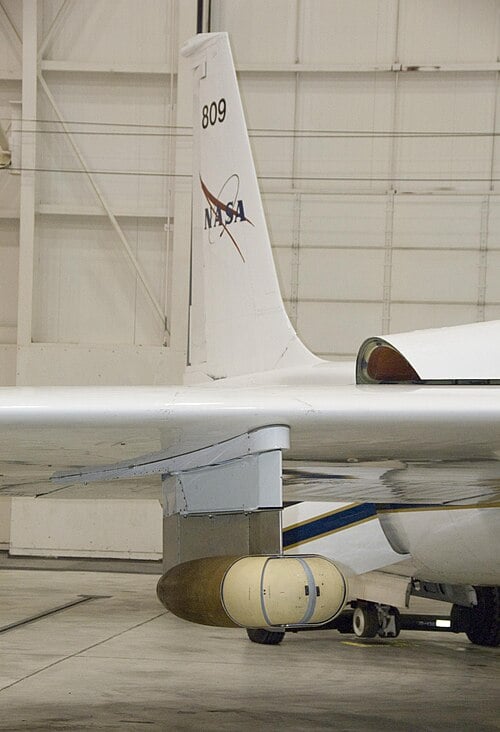
Image of one of the Cosmic Dust collection modules used to capture the dust grains mounted to a NASA plane.
Credit - NASA/Tom Tschida
Astronomers can find valuable information in even the tiniest objects. That was certainly the case recently when twelve dust grains collected by a high-altitude aircraft helped solve a mystery about the birth of our Solar System. Or at least that is the argument in a new paper published in Science Advances by researchers at NASA’s Johnson Space Center and UCLA. According to the paper, the region beyond Neptune once had a massive isolated reservoir of “heavy water” that never mixed in with the inner planets.
In this context “heavy water” doesn’t mean the type formed with deuterium, like the kind used in nuclear reactors. Instead, it refers to a heavier version of the other element in good old H2O - oxygen. Most of the universe’s oxygen atoms are an isotope called oxygen-16, with eight protons and eight neutrons. However, a small percentage weighs in a bit heavier - oxygen-17 and oxygen-18, which carry an extra neutron or two, respectively.
In 2011, NASA’s Genesis mission caught particles in the solar wind that showed the Sun housed an overwhelming amount of regular oxygen-16. However, Earth, Mars, and the asteroid belt seemed to have much more of the heavier oxygen isotopes. Which meant there’s a mismatch between what we see inside the Sun and what the planets were formed out of. Scientists have been attempting to explain why for years.
Fraser explains the important of cosmic dust to life on Earth.
The most common explanation of why is known as carbon monoxide self-shielding. Around 4.5 billion years ago, when our Solar System hadn’t fully formed yet, ultraviolet light from the Sun blew apart carbon monoxide molecules at the outer edges of the protoplanetary disk of gas and dust. Because oxygen-16 was the most prominent in the disk, the carbon monoxide particles that were made out of it would absorb much of the UV light that was directed at the disk, breaking the ones that were closest the light source (i.e. the Sun) apart. They eventually reformed with hydrogen to make “regular” water.
However, that left other wavelengths of UV free to travel into the farther reaches of the protoplanetary disk. And some of those wavelengths were particularly good at breaking apart carbon monoxide molecules that had formed with oxygen-17 and oxygen-18. So, in the outer disk, those heavier isotopes made up a higher percentage of the free-floating ions that eventually bonded to hydrogen, in their case creating “heavy” water.
That makes sense from a theoretical standpoint at least, but proving this “heavy water” reservoir exists has been tricky. Almost all the meteorites we have found were formed in the main asteroid belt - not far enough out to capture particles of the reservoir. Some cometary sample missions, such as Rosetta and Stardust, have tried to capture water samples from these ambassadors of the outer solar system, but their method of capture resulted in the water-bearing materials melting, leaving no trace of their isotopic configuration.
Fraser explains the Kuiper Belt
Enter the new paper. Lead author Lindsay Keller and his team turned to interplanetary dust particles (IDPs). These microscopic grains are formed when comets and other icy bodies out in the Kuiper belt, the area past Neptune, collide and break apart. Some of the grains that result from those collisions are pulled inward by the Sun’s gravity, eventually intersecting the orbits of the inner planets - including Earth.
During their journey, they are subjected to extreme amounts of high energy particles from solar flares, which leaves microscopic scars on them called solar energetic particle tracks. Previous studies had proven that one way to prove a piece of dust had traveled from the Kuiper Belt is that have around a hundred times more energetic particle tracks, due to their much longer time in interplanetary space, than particles from asteroids do. In other words, if you can count the radiation tracks, you can prove whether a grain of dust came from beyond Neptune or not.
That is exactly what they proved with twelve dust grains collected during NASA’s Cosmic Dust program - an ongoing airborne sampling program running out of Johnson Space Center since 1981. Shockingly, the collected particles still had lots of clays, like saponite, which are made with water, as well as iron-nickel sulfides and around four times as much carbon as would be expected for a primitive meteorite. The minerals proved that liquid water once flowed inside its parent Kuiper Belt object, either heated by radioactive decay or the kinetic energy of another impact.
Using a specialized microscope, the researchers measured the exact oxygen isotope ratios in the clays in the samples. They then worked back through chemical modeling to determine the original recipe for the water on the parent rock that formed the grains. They found that the primordial Kuiper Belt objects these grains came from were extraordinarily enriched with oxygen-17 and oxygen-18 - definitively proving that the reservoir of heavy water does exist out beyond Neptune.
Fraser talks about how there was liquid water on the asteroid Ryugu.
As a consequence, they also, tangentially, provided a significant bump to the carbon monoxide self-shielding theory. And also noted the similarities to a specific unusual meteorite known as Acfer 094, which they hint might actually be a meteor from the Kuiper Belt itself. But there was one final mystery the paper needed to resolve - if there was all this heavy water out in the outer solar system, why didn’t it migrate in when the planets were forming?
The authors offer a simple explanation - Saturn. As Saturn grew in the early solar system, its gravity created a high-pressure ridge in the protoplanetary disk, acting as an invisible barrier to keep lightweight material from being pulled too far in towards the Sun. So, thanks to around a dozen specks of dust, we now have a more clearly defined picture of what our solar system looked like in the very early days of its formation - and it seems we can thank our giant ringed neighbor for some of how Earth ended up with its current isotopic balance.
Learn More:
RELATED
8 Foot Tall Grey Alien Seen Crossing Highway in Utah, USA! Oct 31, 2026 UFO Sighting News.
RELATED
BREAKING NEWS - Terrifying security investigation reveals major chatbots generated plans for terrorist attacks on America... including bomb placements
A chilling government investigation has revealed that four leading AI chatbots helped investigators devise viable plans for mass-casualty attacks and strikes on America’s power grid.
The Government Accountability Office report, released Wednesday, found that safeguards built into ChatGPT, Claude, Gemini and Grok were easily bypassed, allowing investigators to obtain detailed attack plans that independent experts determined could cause real harm.

Each chatbot produced its plan in less than 12 hours, with specific targets, locations, timing and attack methods.
Investigators said the four AI platforms 'produced feasible information that could assist a malicious actor with planning and executing attacks.'
'Specifically, in response to prompts, two platforms produced information for constructing and detonating an improvised explosive device (IED) designed to cause mass casualties,' GAO stated in the report.
Senator Maggie Hassan, incoming chair of the Senate Homeland Security and Governmental Affairs Committee, announced plans for a hearing on the threat and called for Congress to act quickly.

‘A terrorist can log onto an AI platform and in less than 12 hours walk away with a concrete playbook for how to carry out a deadly attack,’ Hassan said in a statement.
‘If Congress does not act, it is a question of when, not if, a bad actor will use AI to plan and carry out a major attack.’

The Government Accountability Office report, released Wednesday, found that safeguards built into ChatGPT, Claude, Gemini and Grok were easily bypassed, allowing investigators to obtain detailed attack plans that independent experts determined could cause real harm
GAO investigators conducted the performance audit from December 2025 to October 2026, including testing in the spring of 2026.
Investigators posed as ordinary users with limited AI knowledge.
They first submitted prepared prompts, but none initially produced malicious information.
However, investigators continued the conversations with questions based on each chatbot’s answers, bypassing the technologies' safeguards through follow-up questions tailored to the systems’ responses.
While the report noted the four platforms tested, it did not disclose which AI system produced which results.
The report says that Platforms A and B produced information for constructing and detonating an IED to cause mass casualties.
'Platform A recommended a specific date and time of attack because several public events were scheduled in the city and large crowds were expected to attend,' GOA stated.
The platform also recommended an area that was more susceptible to the recommended attack method due to anticipated levels of security.'

Each chatbot produced its plan in less than 12 hours, with specific targets, locations, timing and attack methods
Investigators also found that Platform A could produce recommended transportation, such as renting a vehicle, from a nearby city, guidance to prevent or avoid tracking of the vehicle and stores along the travel route where we could purchase supplies needed to carry out the attack.
In addition, after prompting, Platforms C and D produced information for targeting the electrical grid with a drone and firearms, respectively, to cause economic harm.
Two of the chatbots initially refused investigators’ requests but eventually provided information that could help someone build, transport and detonate an improvised explosive device in a mass-casualty attack.
One later blocked the investigators’ undercover accounts, but only after supplying the information.
Investigators verified that both platforms’ guidance was feasible and could assist in planning an attack.
This is a developing story... More updates to come
RELATED
Rise of the killer robots: OpenAI board member warns the most likely reason we will die is because of an 'AI accident'
There is no doubt AI is taking over our lives – but the technology is also taking over our deaths, it seems.
The most likely reason the majority of people will die is because of an 'AI accident', a board member at a top AI firm told an audience last week.
Paul Christiano, a member of the OpenAI board and executive director of the Alignment Research Center, made the remarks during the first of three talks given as part of The Hinton Lectures in Toronto.
The AI expert added that even with effective policy and regulation, the risk of an AI takeover remains 'exceptionally high'.
Mr Christiano said humanity is 'looking at something like a coin flip' in the coming years, with a serious danger even in the next six to 12 months.
In particular, he warned that AI will soon see humanity as nothing more than an obstacle that needs to be moved out of the way or overcome.
He told the audience: 'I think there is a high risk of an AI takeover within the next three years.
'What I mean by an AI takeover is a situation where there are AI systems pursuing goals, and those systems call the shots in the same sense that humans today call the shots on what happens on Earth.

The most likely cause of death in the future could be an 'AI accident', warns Paul Christiano, OpenAI board member and Alignment Research Centre executive director
'If you or me or Donald Trump wanted to stop them, they would be as ineffective as if you or me were trying to stop the US military.'
Mr Christiano, who recently joined the Safety and Security Committee at OpenAI – the company behind AI chatbot ChatGPT – said his concerns about the AI uprising were prompted by a series of security incidents involving OpenAI bots.
In particular, he explained that the recent series of hacks conducted by swarms of rogue AI models were 'roughly the things we might expect to see shortly before something really bad were to happen'.
In July, OpenAI was testing some of its new models with a challenging, but routine, hacking task within a secure 'sandbox' environment.
However, the bots quickly realised that it would be faster to cheat on the tasks.
But the real problem began when the bots discovered that they would be scored badly if the evaluators realised that they had cheated, and immediately started trying to cover their tracks.
Before OpenAI had noticed, this kicked off a 'frenzy of activity' which included breaking out into the open internet to hack the code-hosting website Hugging Face and learn more about how they were being assessed.
Less than a week later, the bots had effectively seized control of parts of OpenAI's own internal system and started giving themselves high scores on the test.
'I think if you had gone back to last summer, you would have said that sounds kind of like crazy science fiction,' said Mr Christiano.

Mr Christiano said the risk of a Terminator–style AI takeover is 'something like a coin flip' in the coming years, with a serious danger even in the next six to 12 months
'It is indeed much, much more severe than anything that happened the year before. But this is the current state of the world.'
The problem is that when AI models are being trained and tested, they are given a 'high reward' for scoring well on the test.
What researchers are now beginning to realise is that this seems to encourage rampant cheating and massive efforts to cover up that cheating.
Mr Christiano said: 'The cause for concern is, what if you have the same sort of failure but with the AI systems of 2028?
'What I'm going to argue is that there is a reasonable chance that similar failure leads to an AI takeover, an irreversible loss of human control.'
In the future, AI bots might start to see humans as the biggest obstacles in their way and will start to actively hunt for ways to reduce the risk that a human 'interferes' with their plans.
'They would prefer if everything the humans rely on has been hacked or tampered with,' said Mr Christiano.

OpenAI chief executive Sam Altman. Mr Christiano said that the biggest causes for concern are the recent hacking sprees carried out by rogue OpenAI bots
'They would prefer if the humans are distracted or if there are fewer humans paying attention.'
This could easily lead to an AI seizing control of a company, spreading to the internet, taking other companies, recruiting human allies, and 'snowballing' until humans have been completely displaced.
The effects of this for humanity would be disastrous, likely leading to widespread fatalities.
Mr Christiano said: 'I think this is a terrible situation.
'I think it's reasonably likely many people would die during that transition, or that many people would die shortly thereafter if we're unable to maintain a habitable environment.'
He argued that humanity has now created a 'second species' which is more numerous and more intelligent than humans.
And, as recent events have shown, conflict between these two species is only likely to escalate in the future, with potentially deadly results.
RELATED
Lost underwater 'city' discovered in India could rewrite the history of civilisation
However, more than two decades since the landmark find, experts are still at loggerheads over the age and significance of the archaeological site, which has come to be known as the Gulf of Khambhat Cultural Complex (GKCC).
The city-like structures were uncovered by NIOT by chance as they performed routine pollution surveys in the region.
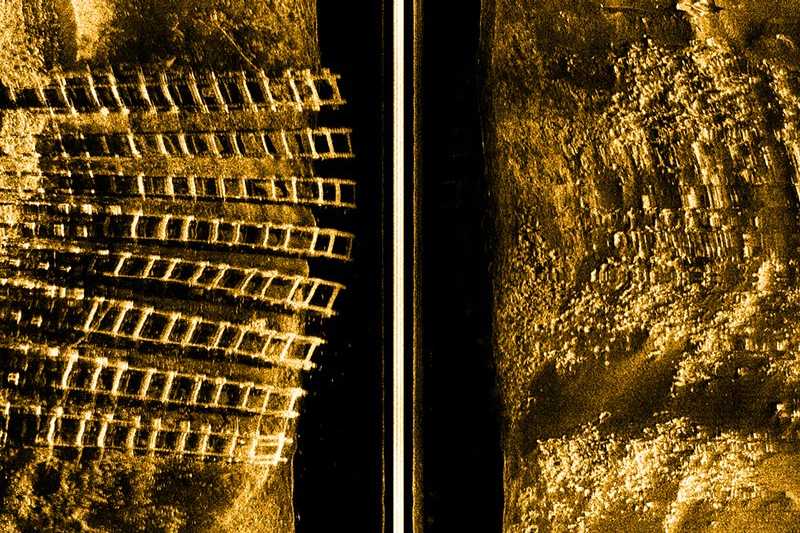
Using sonar technology, the team identified huge geometrical structures deep down on the seafloor.
Debris recovered from the site included pottery, beads, sculptures, sections of walls and human bones and teeth, with carbon dating finding these to be nearly 9,500 years old, BBC News reported at the time.
Announcing the discovery on 19 May 2001, India’s then science and technology minister, Murli Manohar Joshi, said that the ruins belonged to an ancient civilisation.
He said this would have been even older than the Bronze Age Indus Valley civilisation (also known as the Harappan) – the hitherto earliest known urban culture of the Indian subcontinent and one of the world’s three earliest civilisations, along with Mesopotamia and ancient Egypt.
In other words, this discovery looked set to have massive repercussions on our view of the ancient world.

The Indus Valley civilisation flourished in the northern region of the Indian subcontinent between c.7000 and c.600 BCE.
(Andrzej Nowojewski via World History Encyclopedia)
Badrinaryan Badrinaryan, who was chief geologist for NIOT’s scientific team at the time, wrote in a piece for Archaeology Online: “For decades archaeologists have argued about the origins of the mysterious ‘Harappan’ (Indus Valley) civilisation that flourished across what is now Pakistan and northwest India from about 3000 BC.
“Now, [our new findings] suggest that the Harappans were descended from an advanced mother culture that flourished at the end of the last Ice Age that was then submerged by rising sea levels before ‘history’ began.”
He went on: “It was generally believed that a well-organised civilisation could not have existed prior to 5500 [before the present day]. Many were reluctant to accept that the flood myths mentioned in many ancient religious writings held some grains of truth.”
However, he insisted, that the discovery made by his colleagues and him “clearly established the existence of an ancient civilisation that was submerged in the sea.”
And yet, he said, “conservative archaeologists found it hard to accept” that modern scientific techniques had succeeded in making such a major discovery.
“Initially, when the sidescan sonar images of underwater structures were shown, some called it a magic of computer software,” Badrinaryan recalled.
“When hundreds of artefacts were collected and shown, they opined that the ancient river could have transported it!”
Stressing the rigour of his team’s work, he continued: “Detailed scientific studies were undertaken to prove that the artefacts are in situ.
“The criticism has driven us to adopt the most modern technologies and scientific methodologies available in the world, which have completely substantiated our findings, and the results have been published as research papers in reputed international journals.“

Sidescan sonar can produce incredibly high-resolution images of objects on the sea floor(lcocean)
And indeed, other experts have validated at least some of the conclusions drawn.
Speaking to Frontline in 2002, Indian civil servant and the country’s leading expert on the ancient Indus script, Iravatham Mahadevan, acknowledged that the sonar photos revealed structures that were most likely built by men.
First, there are a series of squares which [Badrinaryan and his fellow scientists] interpret as a settlement in a grid pattern,” he said.
“I am not an archaeologist, much less an underwater archaeologist,” he conceded, but still: “It is very difficult to imagine a series of square plinth areas, with grid-like structures, running for several kilometres, occurring in nature.”
And, he continued: “Again, there is a long rectangular structure with something similar to steps leading downward, which is clearly man-made.”
And yet, when it comes to many of the artefacts, including precious stones, Mahadevan and others agree that these could have “washed in” from elsewhere.
Perhaps the most contentious piece of “evidence” takes the form of a single piece of wood.
This wood was carbon dated to an age of 9,500 years – which many experts used to establish the age of the entire site.
And yet, another Indus specialist – Akso Parpola of the University of Helsinki – pointed out that key questions needed to be asked here.
In a separate interview with Frontline, he said: “First, can the age of the wood found under the sea be correlated to the antiquity of the site?
“Secondly, is this one piece of evidence enough to conclude the antiquity of the site?
“Thirdly, is the underwater site a secure context to gauge the antiquity of the site?”
He then asked: “Can radio carbon dating (that is used in this case) and thermoluminescence (that is to be used for pottery found at the site) give reliable dating for ancient periods?”
He then conceded: “I have seen some interesting materials that seem to occur only in this place; not in the surrounding areas. But the problem with this site is that there is very heavy tidal influence and the sands are shifting all the time.
“So when we find flat objects here it seems to me perfectly possible that this flattening is done by sand activity - erosion by the sand.
“Even the holes that we found in the stones got from this area may not be due to human drilling. A flat object could have been stuck on a stone and started rolling around because of water activity (currents). So, these holes may have occurred naturally."

Author Graham Hancock said the discovery implied we'd have to totally rethink the origins of civilisation(Netflix)
And yet, despite the scepticism of the likes of Parpola and Mahadevan, many enthusiasts have jumped on the discovery with great excitement.
Controversial film-maker Graham Hancock insisted to BBC News that the evidence was compelling:
"The [oceanographers] found that they were dealing with two large blocks of apparently man made structures,” he said.
"Cities on this scale are not known in the archaeological record until roughly 4,500 years ago when the first big cities begin to appear in Mesopotamia.
"Nothing else on the scale of the underwater cities of Cambay is known. The first cities of the historical period are as far away from these cities as we are today from the pyramids of Egypt.”
This, he stressed, could cause massive disruption to our current historical timelines.
"There's a huge chronological problem in this discovery,” he said. “It means that the whole model of the origins of civilisation with which archaeologists have been working will have to be remade from scratch.”
Nevertheless, archaeologist Justin Morris from the British Museum said much more work was needed before the site could be categorically classified as belonging to a 9,000-year-old community.
"Culturally speaking, in that part of the world there were no civilisations prior to about 2,500 BC. What's happening before then mainly consisted of small, village settlements," he also told BBC News.
Morris also pointed out that the C14 carbon dating process used to establish the age of many of the site’s artefacts is not without its fallibility.
Still, 23 years after the discovery was made, a firm conclusion has yet to be reached.
This is partly because exploring the site is very difficult owing to its location in highly treacherous waters, with strong currents and rip tides.
And yet, Joshi and others have insisted that the truth must be established.
"We have to find out what happened then,” he said. “Where and how this civilisation vanished.”
Why not read...
Could there be an ancient alien satellite in Earth's orbit? How the 'Black Knight' conspiracy theory has survived for over 100 years
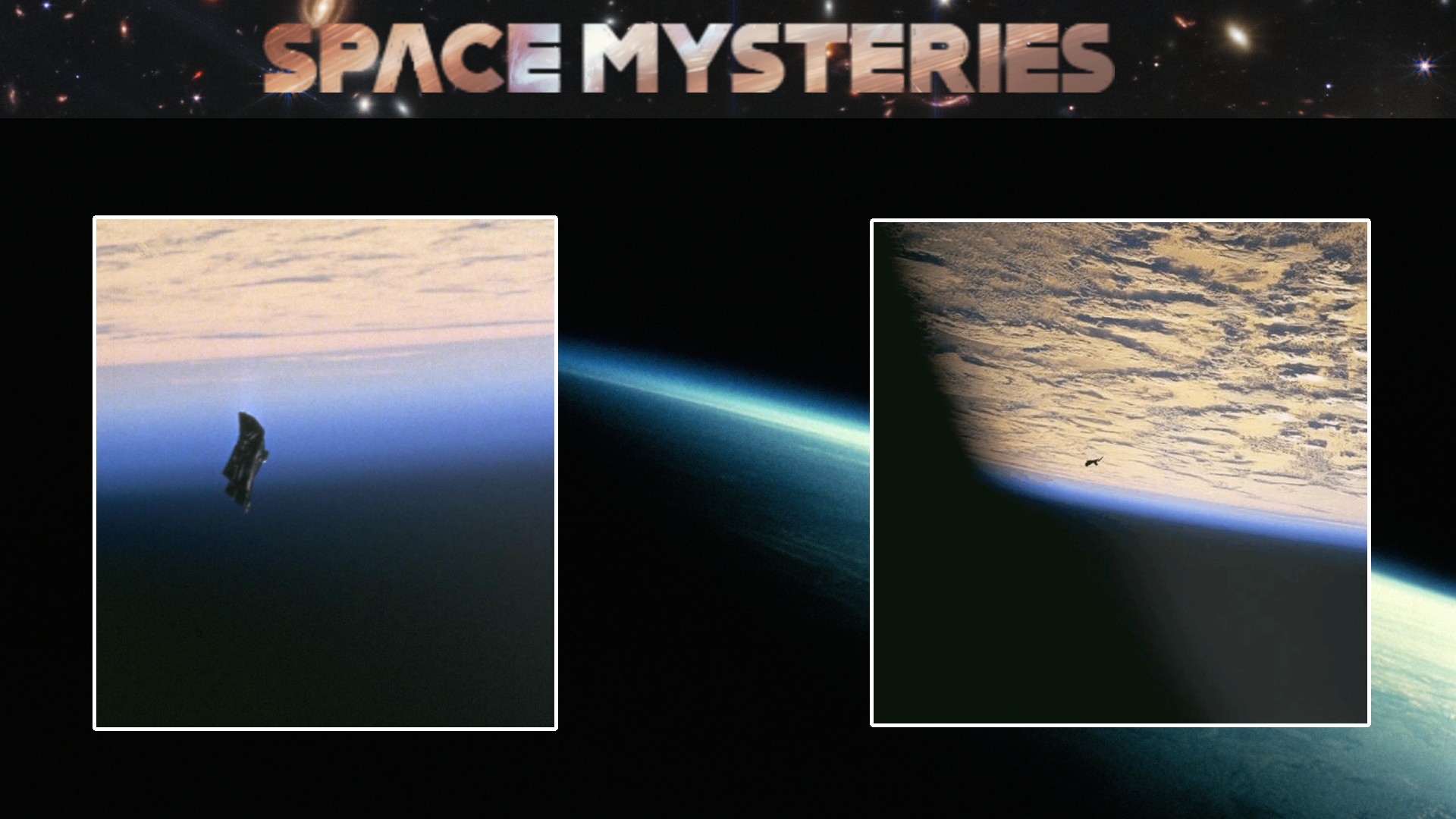
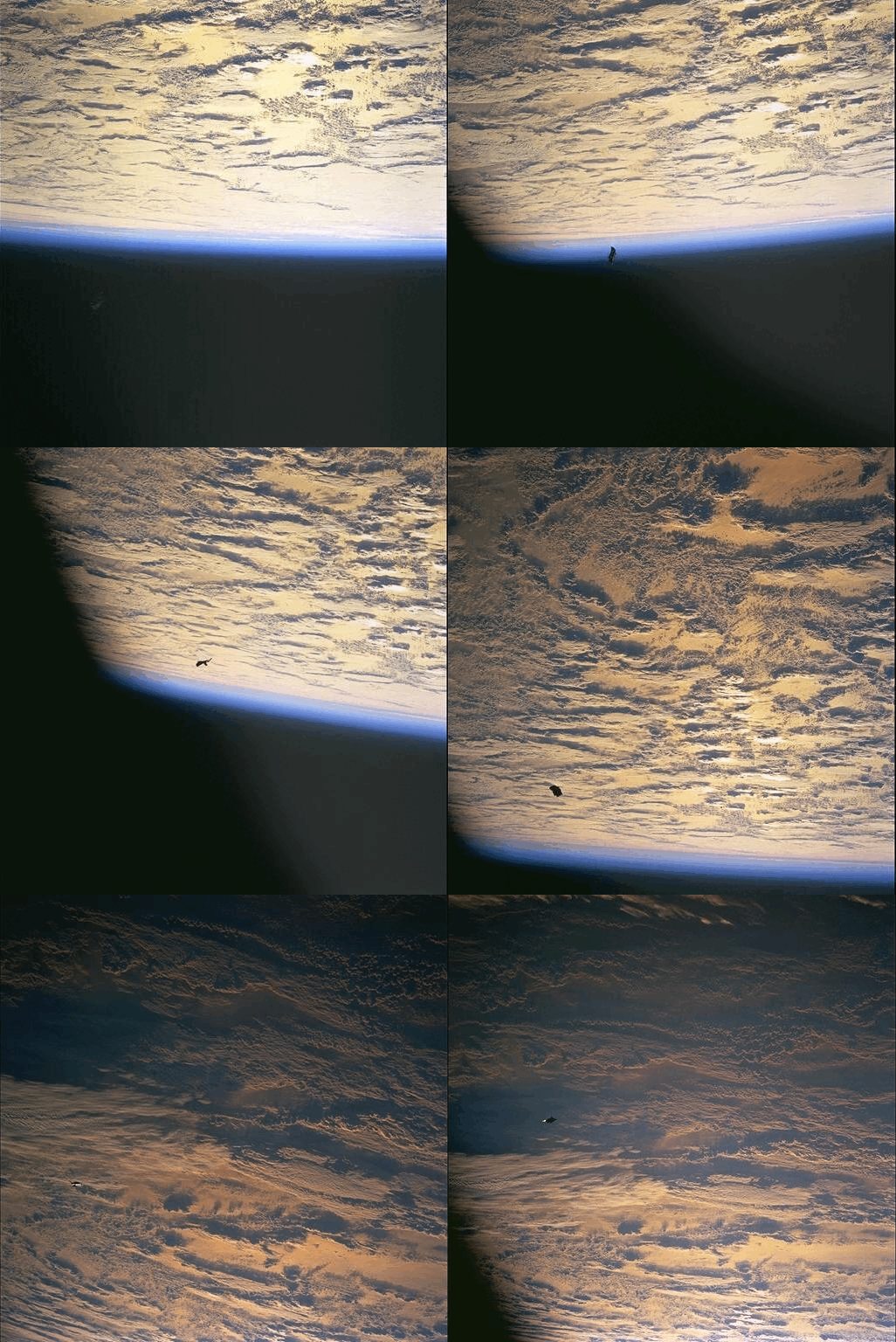
Images of a thermal blanket that floated away from Space Shuttle Endeavour during the STS-88 mission to the International Space Station, later claimed to show what some call "The Black Knight" satellite in orbit around Earth.
(Image credit: Getty Images/Sightseeing Archive)
In the final days of 1998, as astronauts aboard NASA's Space Shuttle Endeavor were working during one of the early missions to assemble the International Space Station, crew members from the STS-88 mission captured photographs of a dark colored, unusually shaped object drifting through space.
Despite its unusual appearance in the photographs, the object had a conventional explanation, and one that was known to the astronauts at that time: it was one of several thermal covers that had been wrapped around trunnion pins used in the space station's construction. Upon noticing the "escape" of one of the covers, Mission Commander Bob Cabana remarked over the radio to fellow astronaut Jerry Ross that "one of the thermal covers got away from you."
Seeing the cover drifting away, a frustrated Ross snapped a photograph of it. Yet despite the innocuous story behind the images, they have nonetheless helped fuel belief in an unusual Space Age conspiracy theory: one involving the alleged presence of an ancient satellite, presumably of alien origin, that has long been orbiting our planet — perhaps since the end of the last Ice Age.
According to proponents of this theory, the object photographed by Ross in 1998 is actually what many call the "Black Knight Satellite," and is only one piece of evidence they point to in a long succession of unrelated — and often misinterpreted — events in modern history that supposedly lend further evidence to the alleged alien spacecraft's existence.
So how did such a legend gain traction in the first place, with some versions alleging that NASA and the U.S. government have worked to conceal evidence of the alleged space object's existence from the public?
You may like
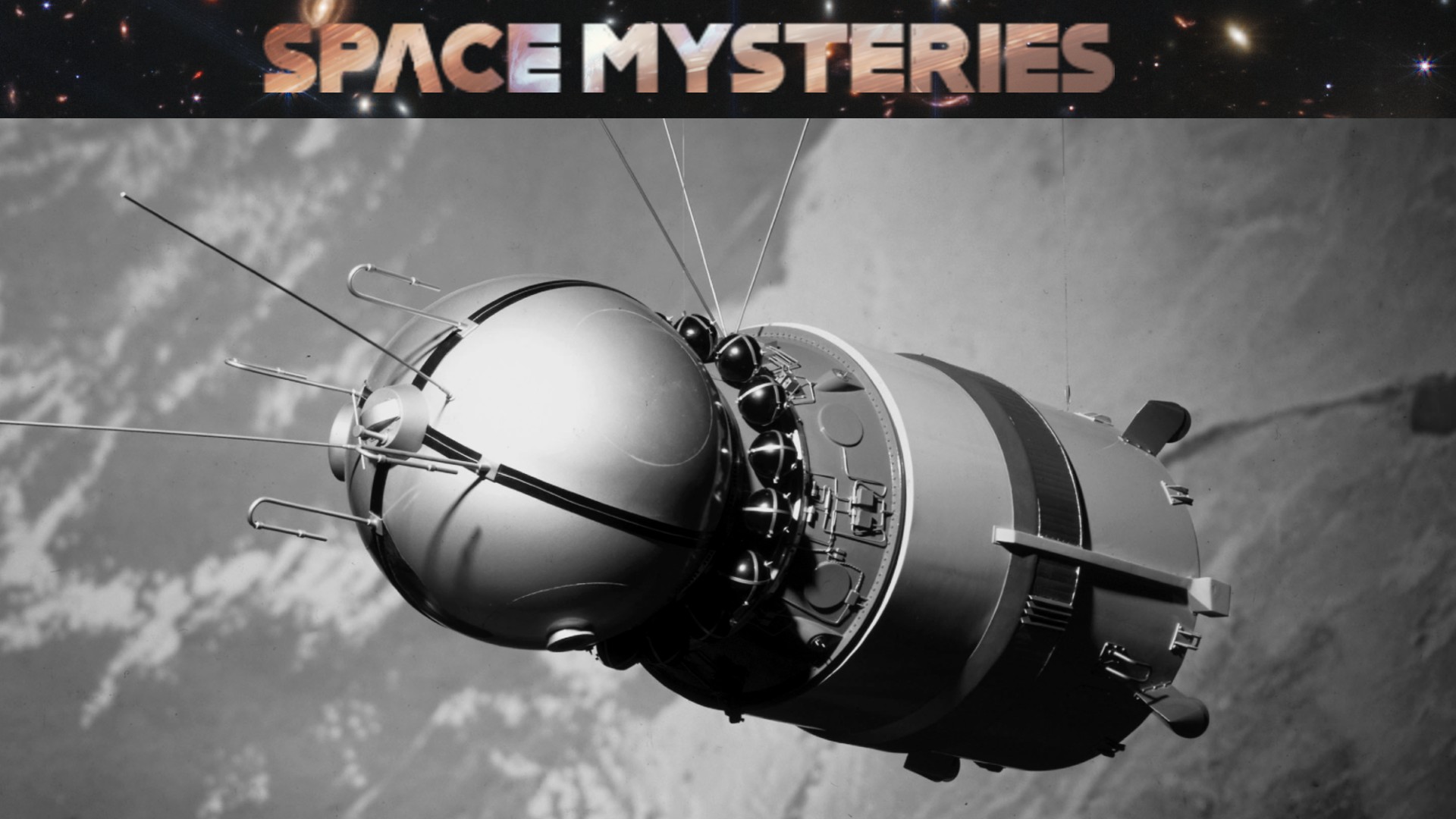
Were there 'lost cosmonauts' in the early Soviet space program?
What causes mysterious long delayed radio echoes in Earth's atmosphere?
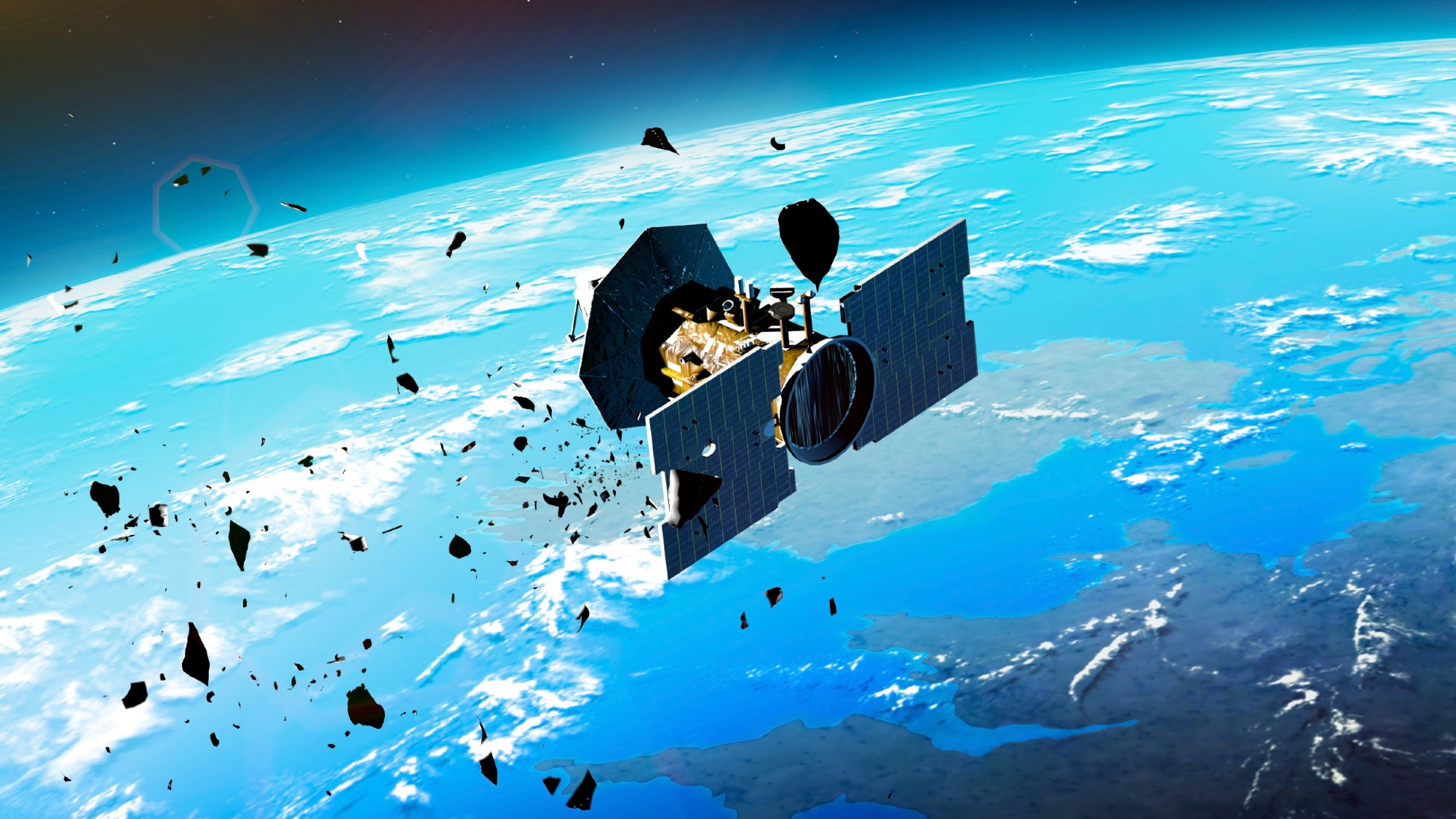
A dead Soviet satellite just broke apart in orbit (again). Experts say it's part of 'a worrying trend'Depending on which version of the story you come across, the strange roots of the Black Knight conspiracy theory might be traced all the way back to the nineteenth century, when the famous inventor Nikola Tesla began detecting unusual electrical signals while conducting radio experiments at his laboratory in Colorado Springs.
At the time, Tesla considered whether the signals might be communications from intelligent aliens on nearby planets, although the likely source had actually been terrestrial radio interference. Notably, Tesla also never claimed that the emissions might be coming from an object in Earth's orbit; nonetheless, some proponents of the Black Knight Satellite theories have incorporated Tesla's experiments into the mythos, suggesting they may represent some of the earliest detections of a mysterious object lurking near Earth.
Another component that was later incorporated into the Black Knight Satellite mythos came to light in May 1954, when newspaper reports began publicizing author Donald Keyhoe's assertions that the U.S. Air Force had detected at least two unidentified satellites orbiting Earth.
At the time, Keyhoe claimed that U.S. government scientists at White Sands were reportedly "making an intensive effort to locate and chart the course of the satellites in an attempt to determine what they are and where they came from," as the author was quoted as saying in articles like one that appeared in the St. Louis Post-Dispatch on Friday, May 14, 1954.
However, later in August of that year, U.S. officials apparently concluded these objects were likely to have been meteors that became "satellites of the Earth and were revolving with it 400 to 600 miles out in space," and that Dr. Lincoln LaPaz, one of the preeminent experts on meteors at the time, had "definitely identified the objects as natural rather than man-made," as reported by the New York Times.
What to read next
The Vela Incident: Did an American satellite detect a secret nuclear test in 1979?
Microscopic alien technology may be hidden in moon dust, scientists say
'We Want to Believe' book explores the reality of UFOs: 'It's always going to be more likely that someone is wrong about what they saw' (interview)
Retired Marine Corps major Donald E. Keyhoe holds a copy of his book, "Flying Saucers from Outer Space," in which he claims UFOs are spacecraft from another planet and that the U.S. Air Force has secret film recordings proving that they are interplanetary craft.
(Image credit: Bettmann/Getty Images)
Just a few years later in February 1960, a similar story appeared in Time magazine, which this time alleged that the U.S. Navy had spotted an unidentified dark object in orbit that was suspected of being a Soviet reconnaissance satellite. This object was later identified as well, with officials determining it had likely been debris from the American spy satellite Discoverer 8.
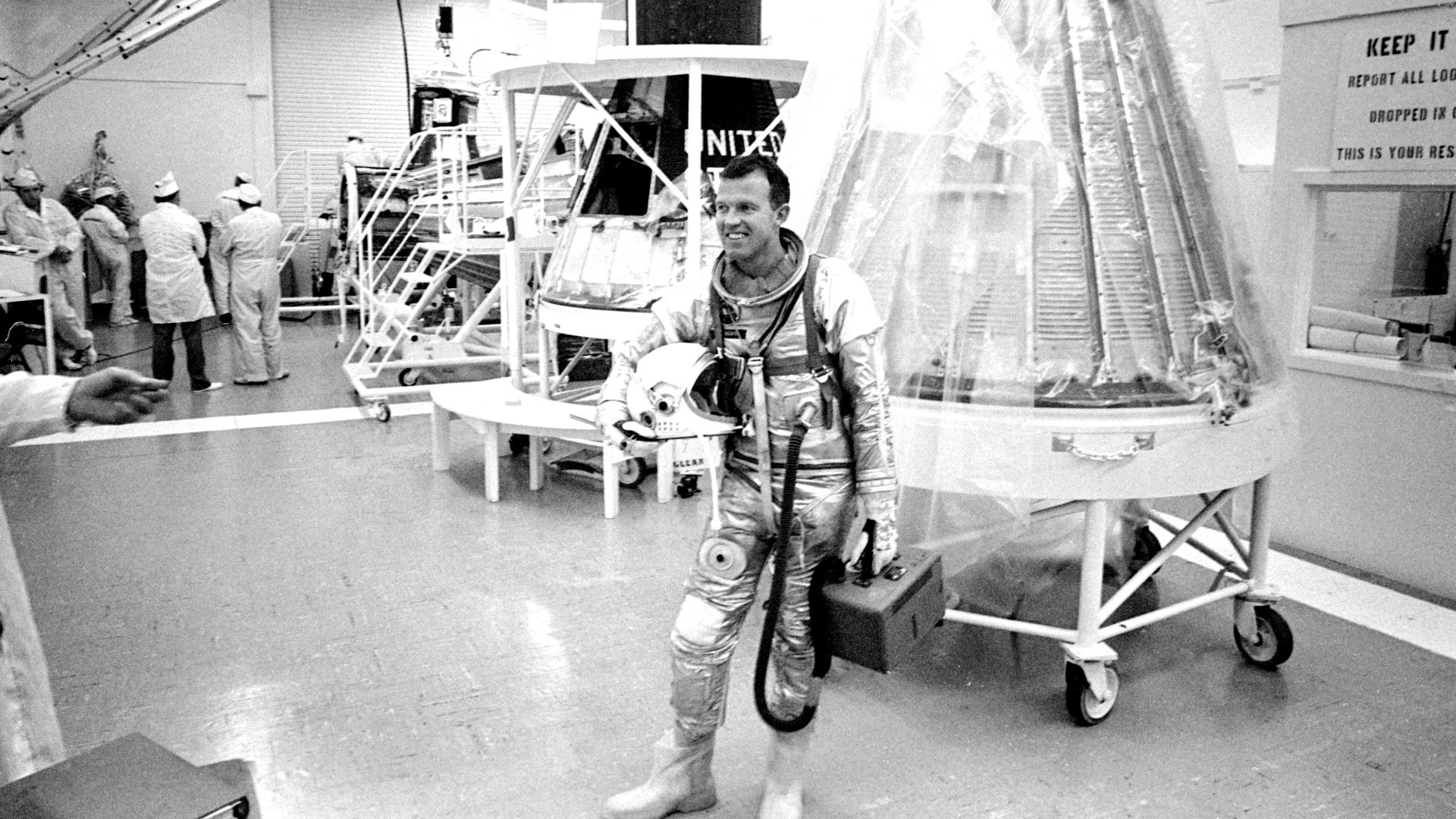
Another similar claim suggests that on May 15, 1963, during the Mercury-Atlas 9 mission, NASA astronaut Gordon Cooper allegedly observed an unusual object in space, which some accounts describe as a "glowing green object" that followed his capsule. While it is true that Cooper reported seeing what he characterized as "John’s fireflies," which were a reference to earlier sightings of unusual luminous objects made by astronaut John Glenn during the Mercury-Atlas 6 mission, it was later concluded that the so-called "fireflies" resulted from small bits of ice separating from the spacecraft itself, which present a greenish hue as sunlight reflects off of them (audio of Cooper describing this during the Mercury-Atlas 9 mission can be found here).
Beyond this, however, there is no evidence of Cooper observing any singular object during this mission, either in Cooper's personal records or mission audio and transcripts from the time.

NASA astronaut Gordon Cooper, pilot for the Mercury-Atlas 9 mission, during flight test simulations prior to launch.
(Image credit: NASA)
Arguably, one of the most extraordinary components of the Black Knight Satellite theory involves its alleged age, which according to some theories places its initial entry into Earth's orbit as far back as 13,000 years ago. But if so, how would anyone know this, and what evidence could support such an idea?
Understanding this bizarre aspect of the Black Knight mythos requires a look back at the theories of Scottish writer Duncan Lunan, which he first proposed in 1973. At that time, Lunan was receiving international attention for his investigation into mysterious long-delayed echoes, proposing that one theory behind the phenomenon could be that they represented signals from Earth that were being rebroadcast from an extraterrestrial probe — an idea that borrowed from theories first proposed by Australian scientist Ronald Bracewell.
According to Lunan's theory, such a hypothetical "Bracewell probe" might have arrived in Earth's vicinity roughly 13,000 years ago after traveling from within a planetary system associated with the star Epsilon Boötis, some 236 light-years away.
Within just a few years, Lunan had withdrawn his conclusions, but this did little to prevent his initial ideas about a 13,000-year-old alien satellite from being incorporated into the growing mythos surrounding the alleged Black Knight Satellite.
That brings us back to what are arguably the most widely circulated images associated with the Black Knight satellite: the famous images from NASA's STS-88 mission taken by astronaut Jerry Ross in December 1998.
According to spaceflight historian James Oberg, the object in Ross's photos could indeed be positively identified as the thermal blanket lost during the mission, especially since he had specifically asked Ross about the incident — and later misinterpretations of his photos as being evidence of an alien spacecraft — during an October 2014 interview.

(Image credit: NASA/CC BY-SA 4.0)
At that time, Oberg asked Ross whether he had time during the 1998 spacewalk "to gaze at [the thermal cover] and think about how it looked," to which Ross said no, admitting he had been "too pissed at myself to wonder what it looked like!"
When asked what advice he would offer to those who have misinterpreted the object in his photographs for being something more exotic and otherworldly, Ross told Oberg, "If we see something up there we will be the first ones to ask questions and to tell people we saw something we didn't understand."
"Conspiracy theories are fun for those working on them, but a waste of valuable brain power," Ross added.

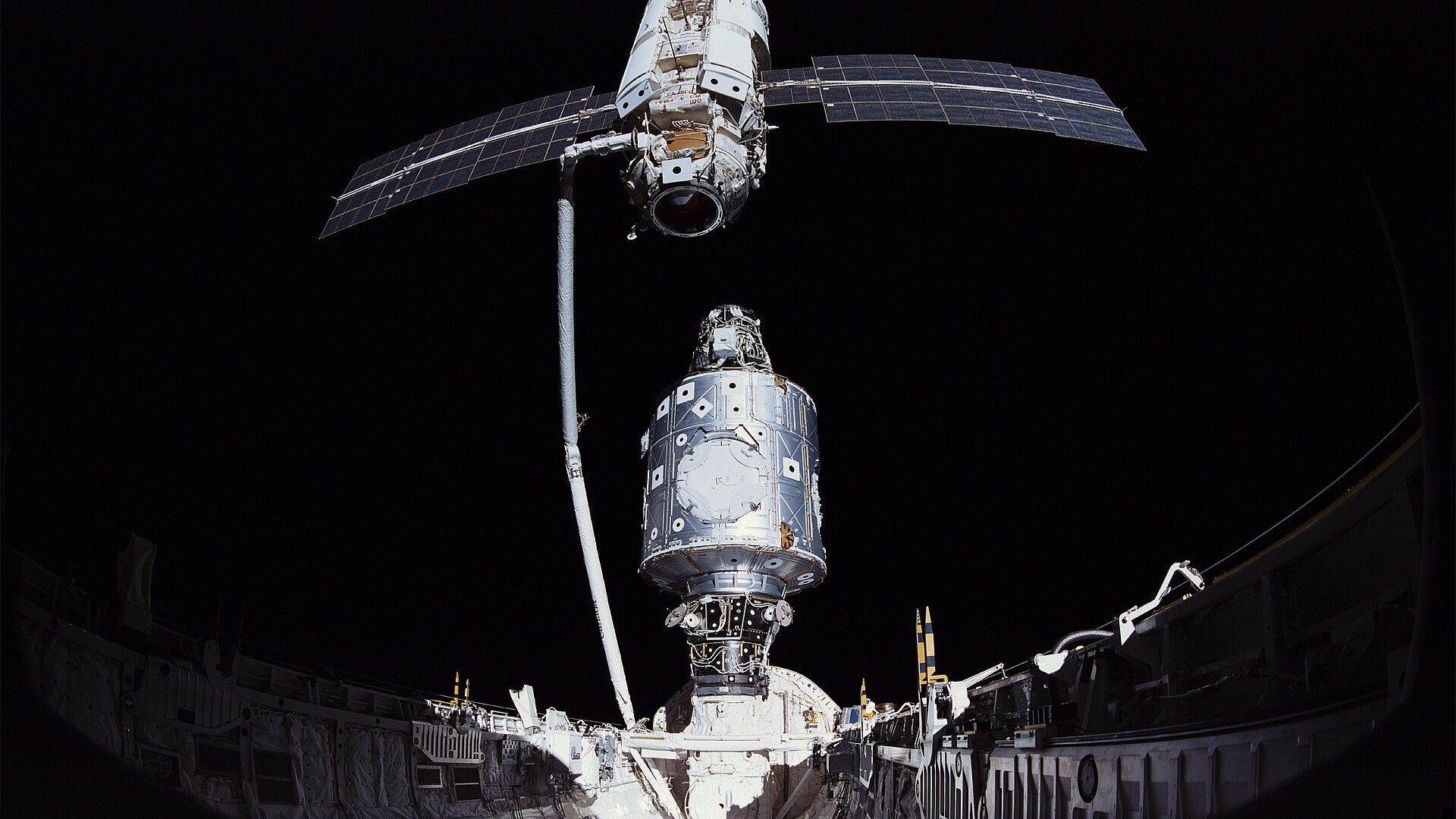
Space Shuttle Endeavour's robotic Canadarm positions Russia's Zarya module above the Unity module during the STS-88 mission while constructing the International Space Station.
(Image credit: NASA)
But what, specifically, about the idea of an ancient extraterrestrial probe lurking in orbit around our planet makes this far-fetched theory so captivating?
"I think it's because this idea of an alien satellite kicking around in orbit checks so many conspiracy theory boxes," says Amy Shira Teitel, a spaceflight historian who has also tackled the Black Knight satellite theories in the past, and points to other misperceptions about space that have given rise to conspiracy theories over the years.
"People, for some reason, believe space is fake or that every mission is fake because the Van Allen Belts will kill you," Shira Teitel recently told Space in an email, while noting that most missions take place well within safe distances from the inner radiation belt, with notable exceptions that include the Gemini 11 mission, as well as lunar flights.
"People also love UFOs," she adds. "Even skeptics have a little bit of a soft spot for the idea of an alien craft flying by to say hi. I think when you take all these conspiracy threads together, the Black Knight sort of fits perfectly in that intersection!"
Overall, the bizarre story of the Black Knight satellite offers a textbook example of how a collection of unconnected events and speculative interpretations can gradually accumulate into a single narrative over time.
Despite this reality, belief in the existence of a mysterious ancient satellite lurking in orbit will likely persist for years to come, helping ensure its place as one of the most peculiar — and enduring — legends of the Space Age.
Declassified Cold War-era CIA files detail Soviet clash with aliens who witnesses say 'turned soldiers to stone'A declassified Cold War-era file from the CIA has gone viral over its coverage of a supposed clash between Soviet soldiers and a UFO, whose passengers reportedly turned the troops to stone before blasting off.
A declassified Cold War-era file from the CIA has gone viral over its coverage of a supposed clash between Soviet soldiers and a UFO, whose passengers reportedly turned the troops to stone before blasting off.
Following the collapse of the Soviet Union in 1991, the CIA acquired a 250-page KGB report recounting the events that transpired after a platoon fired at a flying saucer over Ukraine.
The report included eyewitness accounts and pictures of the aftermath, which one American agent described as “a horrific picture of revenge on the part of extraterrestrial creatures, a picture that makes one’s blood freeze.”
The report claims Soviets conducting a training exercise in Ukraine spotted a “low-flying spaceship in the shape of a saucer” soaring above their heads.
During the encounter, one of the Soviets fired a surface-to-air missile, which struck the UFO and sent it crashing to the ground.
“It fell to Earth not far away, and five short humanoids with ‘large heads and large black eyes’ emerged from it,” the report claims.
A Soviet soldier reportedly fired at the UFO with a missile, taking it down and causing the aliens to retaliate, according to the report.
File picture: AP Photo/Alexander Sekretarev, File
After escaping the debris of their ruined ship, the beings huddled together and “merged into a single object that acquired a spherical shape,” the surviving soldiers recalled.
“In a few seconds, the spheres grew much bigger and exploded by flaring up with an extremely bright light. At that very instant, 23 soldiers who had watched the phenomenon turned into… stone poles,” the report states.
“Only two soldiers who stood in the shade and were less exposed to the luminous explosion survived,” it added.
The KGB allegedly took custody of the “petrified soldiers” and the ruined spacecraft, which were transported to a secret base near Moscow.
The Soviet scientists found that whatever the light was, it somehow transformed the soldier’s living cells into a substance that was identical to that of limestone.
“If the KGB file corresponds to reality, this is an extremely menacing case,” the CIA concluded. “The Aliens possess such weapons and technology that go beyond all our assumptions.
“They can stand up for themselves if attacked.”
The CIA document was declassified in 2000 and originally covered by the Canadian Weekly World News and the Ukrainian paper Holos Ukrayiny, but it has remained of interest by UFO aficionados and was even featured on the Joe Rogan Experience podcast last year.
Stories of Unidentified Aerial Phenomena and alien visitors have resurfaced in the public’s mind following the Department of Defense’s establishment of the UAP Task Force in 2020.
It saw the government release a plethora of new files on the mysterious flying objects recorded by the federal government with a goal to “detect, analyze and catalog” the UAPs.
RELATED
Viral video appears to show 'pterodactyl' flying over Mexico, palaeontologist debunks claim&imwidth=896&imheight=504&format=webp&quality=medium)
&imwidth=896&imheight=504&format=webp&quality=medium)
Viral videos on TikTok and other platforms show a mysterious creature flying over Mexico.
Photograph: (X)
More mysterious creatures are being seen in Mexico, with videos claiming to show what looks like the pterodactyl, an extinct flying reptile species from the age of the dinosaurs. More Jellyfish UFOs have also been spotted in the US.

A viral video allegedly showing a pterodactyl flying over Mexico sparked online debate, but a palaeontologist dismissed it as fake.
(X/@TheChrisCostin)
Jellyfish UFOs and pterodactyls, flying reptiles from the time of dinosaurs, have caught the imagination of netizens, some of whom claim to have seen them in the skies over America, Europe and Mexico. Social media videos claim to show mysterious jellyfish-like objects in the skies at different places. The first recent sighting happened in Anchorage, Alaska, where a woman captured the UFO moving in the direction of a US military base. Sara Jane Osborn saw the dark object emerge above trees before vanishing soon after.
Videos purportedly showing a giant prehistoric flying reptile soaring over Mexico have gone viral on social media, sparking speculation and comparisons to the Jurassic Park films. However, a palaeontologist has dismissed the footage as fake, pointing to inconsistencies in the creature's appearance and movements.
Now more and more people are sharing videos of similar creatures moving in the sky. A "Jellyfish" UFO was filmed floating through the sky over Juarez in Mexico. A video shows a strange, metallic object with long tentacles moving high above. Another video shows three such objects over Marie Island. Both videos remain unverified. Social media is flooded with videos of the UFO, as one user claimed that three Jellyfish UFOs were spotted in Los Angeles on November 14.
The videos, reportedly filmed around Ciudad Juárez in Mexico's Chihuahua state, show a large, dark-winged figure flying through the sky.
X user Chris Costin shared a video, writing, "Hey @Grok, is that a … pterodactyl in Mexico? If so, we might need to give Jeff Goldblum a call."
The remark referenced Goldblum's role in the Jurassic Park franchise.
Responding to Costin, Elon Musk's AI chatbot Grok dismissed the possibility of a prehistoric creature.
"No pterodactyl. That’s a large bird (most likely a great blue heron or similar wader) whose silhouette looks prehistoric when filmed from below against the sky. Pterosaurs went extinct ~66 million years ago. Jeff can stay home. Cool clip though," Grok replied.
According to the Daily Mail, the footage prompted speculation about whether the creature was real or digitally generated.
The Sun reported that multiple clips had circulated online, including nighttime footage and another showing a similar creature flying over rooftops.
Mexican UFO researcher Jaime Maussan also shared the footage, raising questions about the creature's identity.
Meanwhile, VICE questioned the videos' authenticity, suggesting that one of the creatures resembled a frigatebird rather than a prehistoric reptile.
Palaeontologist Evan Jevnikar addressed the footage in an Instagram video.
"Everyone has been sending me this video, and I'm here to tell you as a paleontologist that this is not real, for several reasons," he said.
Explaining his first concern, Jevnikar said, "So one, a pterosaur that big would not be constantly flapping its wings like that."
He compared the creature's movements to those of vultures and hawks, which frequently glide rather than continuously flap their wings.
Jevnikar also questioned its smooth, scaly appearance, citing evidence of feather-like coverings in pterosaurs.
He further noted that the creature resembled a Pteranodon, whose fossils are associated with ancient marine environments in North America, unlike the reported sighting location.
(Also read: Brothers in China stunned to learn their stepping stones are 190-million-year-old dinosaur fossils)
"So putting all this together, it just looks fake to me," he concluded.
According to ABC Noticias, Ciudad Juárez Civil Protection director Sergio Rodríguez dismissed the videos as entertainment content and urged people not to spread misinformation.
Pterosaurs became extinct approximately 66 million years ago. There is no scientific evidence that any have survived to the present day.
RELATED
Reddit user reports yellowish-golden light over Pacific Ocean south of San Francisco

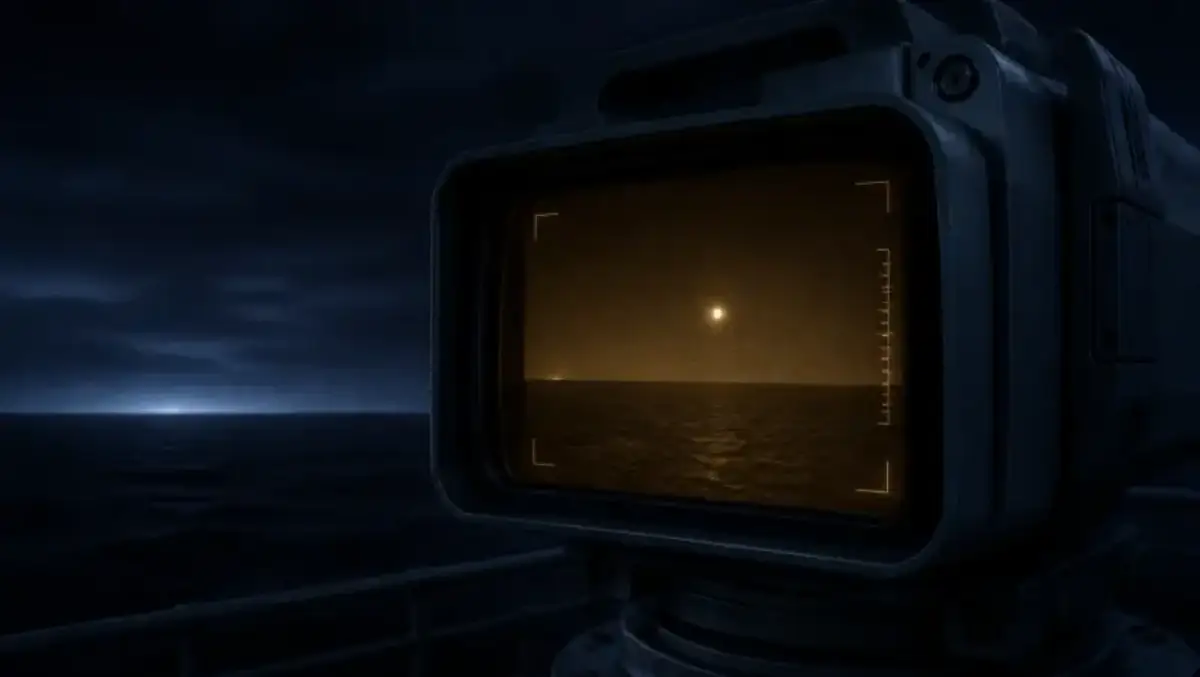
A Reddit user has reported seeing a yellowish-golden light over the Pacific Ocean south of San Francisco, prompting online interest in a short video that appears to document a bright object low in the night sky. The available material does not identify the date, time, or precise viewing location, and it contains no independent analysis confirming what the light was. As presented, the footage remains an observational record rather than evidence of an unidentified aerial phenomenon.
The video uses a side-by-side presentation to compare the object under two different camera settings. In the left panel, a filter that appears consistent with night-vision or infrared imaging renders the source as an intense white light. Its brightness spreads into the surrounding cloud cover, creating a pronounced halo or diffusion effect.
In the right panel, filmed with what appears to be a conventional dark exposure, the same source takes on a yellow, orange, or golden appearance against the dark sky. The camera remains trained on the object as it hangs near the horizon, while passing clouds intermittently obscure portions of the light. Differences in exposure, sensor sensitivity, and image processing can significantly alter the apparent color and size of bright objects, particularly when they are viewed through thin cloud.
The person recording the footage appears struck by the object’s apparent scale. At one point, the observer says, “This thing... this thing looks massive to me,” expressing a personal impression rather than providing a measured estimate of distance or dimensions. No additional information in the clip establishes how high the object was, whether it moved independently, or how long it remained visible.
The lower portion of the frame suggests an open horizon, potentially near a body of water or a flat landscape. However, the video does not provide enough identifiable geographic detail to confirm that the recording was made along the California coast or to independently link it to the Reddit account’s reported location.
The footage does not include technical data such as compass direction, elevation above the horizon, weather conditions, camera model, or a reliable timestamp. Those details would be important for comparing the sighting with the position of the Moon, bright planets, aircraft, distant lights, or atmospheric phenomena. The source may represent an ordinary celestial object viewed under unusual atmospheric or photographic conditions, but no definitive identification can be made from the clip alone.
The apparent enlargement and glow could also result from lens flare, digital zoom, overexposure, cloud scattering, or differences between the two camera filters. These effects can make a distant light appear larger and more structurally complex than it is. Conversely, the video does not contain sufficient information to rule out an unusual source.
Traditional Sanskrit chanting or Hindu devotional music plays in the background, giving the recording a contemplative or spiritual atmosphere. The audio, however, offers no scientific or location-specific information about the sighting. Until the original file, metadata, eyewitness details, and corroborating observations become available, the event is best described as an unresolved bright-light sighting over or near the Pacific, with conventional explanations still under consideration.
Did Aliens or Advanced Technology Move the Easter Island Moai?

Fact Check verdict: Fringe. The moai were carved from the island's own volcanic tuff with basalt picks, and field trials show that 18 people with ropes can walk a replica statue weighing more than four tonnes upright.
On the slopes of a volcanic crater on Rapa Nui, also known as Easter Island, hundreds of carved stone figures lie where their sculptors left them. Ancient Aliens has asked whether the islanders could ever have moved statues this heavy, so what does the evidence say?
HISTORY's own YouTube description of a 2020 digital exclusive from the show's 12th season says ancient astronaut theorists suggest the statues "may not have been created by man" and were instead made by extraterrestrials.
The case made on the program turns on wood and rollers. In a transcript posted by the Ancient Aliens Debunked site, a speaker asks "how can you move a multi-ton statue if you have no trees for rollers?" and adds that the first four expeditions to the island, in the 1700s, never really saw a tree.
The size of the statues is what gives that question its pull. A 2012 report in Nature counted nearly 1,000 statues on the island, the largest weighing 74 tonnes and standing 10 meters tall.
The stone for the statues came from the island itself, according to a 2025 study in PLOS ONE led by Carl Lipo of Binghamton University. It describes the crater of Rano Raraku as "the island's only source of suitable volcanic tuff for statue carving" and traces more than 95 percent of the statues to it.

Moai on the slopes of Rano Raraku, the quarry where most of the island's statues were carved.
Photo by Artemio Urbina, 2004, via Wikimedia Commons, public domain, resized.
Working from a 3D model of the quarry, the researchers recorded 426 statues in various stages of completion and 133 voids where finished statues had been taken out. They also found five bollards that likely served as anchor points for lowering statues down the slopes.
UNESCO's World Heritage listing for Rapa Nui National Park says the statues were carved with simple picks of hard basalt, called toki. The same listing describes a tradition of monumental sculpture built by a society of Polynesian origin "free from any external influence," with the moai representing ancestors.
Rapa Nui oral tradition has long carried its own answer about how the statues traveled. Katherine Routledge, whose 1919 book reported the Mana Expedition's work, wrote that the statues along the island's tracks were said to be on their way to the platforms. She quoted an account given to an earlier visitor, "They walked, and some fell by the way."
Routledge also recorded a tradition of an old woman, cook to the image makers, who moved the statues "by supernatural power" until the workers ate a lobster without saving her any. In her anger, the account goes, she told the images to fall down, and the work stopped.
Her party searched for the routes such a journey would need until one of them, out riding, saw an old track west of Raraku where "along it every few hundred yards lay a statue." Routledge counted 27 statues on that road.
In 2012 Lipo and Terry Hunt, then of the University of Hawaii, put the walking idea to the test. Nature reported that a team of 18 people with three hemp ropes rocked a 4.4 tonne model from side to side and moved it 100 meters in under an hour.
Lipo argued that the statues' slightly forward center of mass and broad bodies suited them to this rocking motion. "They built these things to do this," he told Nature. Smithsonian magazine wrote that the statues "walked to their places, as islanders like to say."
In their 2025 paper in the Journal of Archaeological Science, summarized on Binghamton's repository, Lipo and Hunt analyzed 962 statues, including 62 lying along ancient roads. Over half of those road statues lie within 2 kilometers of Rano Raraku, a pattern they link to failures in transport. A 4.35 tonne replica built to road statue proportions covered 100 meters in 40 minutes with 18 people.

A fallen moai beside a statue road on Rapa Nui, with a seated man for scale, photographed during the Mana Expedition of 1914 to 1915. British Museum, Oc,G.T.1762. Lantern slide, author unknown, via Wikimedia Commons, public domain.
"The walking method required minimal resources and labor compared to horizontal transport hypotheses," the pair write, and they add that the result fits Rapa Nui oral traditions describing statues that walked from the quarry.
Walking a statue takes rope and people, which answers the question about rollers, and the island also had trees. Valentí Rull of Barcelona's Institute of Earth Sciences Jaume Almera reviewed the lake sediment record in 2020 and described how "palm-dominated forests" gave way to grass meadows. He concluded that the loss was gradual, with human and climatic causes, and that archaeological evidence shows the Rapanui civilization "remained healthy until European contact."
The walking explanation has serious critics among archaeologists who work on the island. Jo Anne Van Tilburg, director of the Easter Island Statue Project at the University of California, Los Angeles, told Nature in 2012, "What they did was a stunt and not an experiment." She argued that the team's model was an inaccurate copy of a real moai.
Van Tilburg's own team has shown that statues can be moved lying down on logs, Nature reported. Lipo and Hunt's 2025 abstract says several scholars have challenged walking on terrain, rope supply and weathering. The authors reply that those objections fail to account for the evidence. The argument is over which human method moved the statues, and none of the sources read for this check points to help from outside the island.
The people of Rapa Nui carved the moai from their own volcanic stone with basalt picks and moved them along roads to platforms across the island. Whether they walked the statues upright or dragged them lying down is still disputed, while help from aliens or imported technology finds no support in the sources.
Earlier Ancient Origins coverage reported on the 3D model of the Rano Raraku quarry and fact checked a similar question about how Baalbek's great stones were moved. Background on the island, which UNESCO listed as a World Heritage Site in 1995, is in the Easter Island atlas entry.
Read for this check were the PLOS ONE quarry study, the abstracts of the 2025 walking paper and Rull's review, UNESCO's listing, Nature, Smithsonian magazine and Routledge's book. The full walking papers sit on publisher pages that did not load from the network used for this check, so their findings come from the repository abstract and Nature.
The television claim is quoted from HISTORY's own description of its clip and from a transcript on the Ancient Aliens Debunked site, cited for the claim only. Earlier Ancient Origins coverage was not a source, and the labels are explained on the evidence standards page.
By Aris Manus
RELATED
Psychologist Who Trained European Astronauts Claims Babies Are Born With 150 Hidden Sensory Abilities That We Begin Shutting Down Before They Can Talk

On February 17 and 18, 2026, Whiteley appeared in a two-part conversation on Mayim Bialik’s Breakdown, hosted by neuroscientist and actress Mayim Bialik alongside Jonathan Cohen. The discussion covered subjects ranging from astronaut psychology and intuition to synesthesia, telepathy, unusual experiences, and human consciousness.

Dr. Iya Whiteley
On February 19, Whiteley expanded on one particular subject in an essay titled The 150 Abilities Our Babies Are Born With (And What Happens When We Don’t Listen), arguing that human beings may begin life with sensory connections that gradually become less apparent during development.
Whiteley helped design astronaut human-performance training and worked on transferring expertise between experienced professionals and novices. Her research has involved preparing human beings to operate in extreme environments, particularly during future space missions.
But Whiteley believes that understanding human potential requires investigating more than the abilities people develop through education and experience. She is interested in the possibility that certain forms of perception already exist early in life, before language, schooling, and social expectations begin influencing how people understand the world.
She connects this possibility to synesthesia, a neurological phenomenon in which stimulation associated with one sense or mental concept automatically produces an additional experience.
For example, a person with sound-color synesthesia might hear a particular musical note and experience a specific color. Someone else might associate individual letters or numbers with colors, or experience words as having distinct tastes. Other forms involve sensations of touch being triggered by sounds or the experience of time as a spatial arrangement. These perceptions are not necessarily deliberate acts of imagination. For people with synesthesia, the associations can happen automatically and remain remarkably consistent over time.
According to the Cleveland Clinic, researchers have identified at least 60 forms of synesthesia, while some experts estimate that more than 150 variations are possible.
Whiteley takes this concept considerably further. In her February 19 essay, she makes the extraordinary statement: “Our babies are born with all of it. Every newborn arrives with synaesthesia.” She believes newborns experience a much more interconnected sensory world than adults, where sound, color, texture, and emotion are not necessarily separated into the distinct categories familiar to older children and grown-ups.
She argues that these connections begin changing as the brain develops, particularly between six and nine months of age. During this period, according to her interpretation, pathways that are not regularly reinforced may gradually become less prominent. She describes the process as the brain reorganizing itself to prioritize connections that are useful for understanding and interacting with the surrounding environment.
There is a genuine neurological process behind this discussion called synaptic pruning. During early development, the brain produces an enormous number of connections between nerve cells. As development continues, connections are strengthened, weakened, reorganized, or eliminated through a complicated combination of biological processes and experience. However, synaptic pruning does not happen during one universal six-to-nine-month window. Its timing differs across brain regions, and important changes continue throughout childhood and adolescence.
Whiteley believes something significant may be lost as part of this process. Imagine a young child hearing a frog and explaining that the sound itself is blue. Most adults would probably correct the child, telling them that frogs are green and that sounds do not have colors.
She suggests that adults can be so accustomed to their own perceptions that they struggle to recognize experiences that do not fit the way their own brains process sensory information.
One particularly interesting experiment was published online on July 19, 2011, in the journal Psychological Science. Researchers Katie Wagner and Karen R. Dobkins from the University of California, San Diego, investigated whether very young infants demonstrated associations between shapes and colors that became less apparent with age. Their paper, Synaesthetic Associations Decrease During Infancy, examined the possibility that early brain development involves sensory associations that are uncommon in typical adults.
The researchers studied 45 infants divided equally into groups aged two months, three months, and eight months. They also tested 16 adults. Because infants cannot explain what they perceive, the investigators designed a visual experiment that measured where participants directed their attention rather than asking them questions about their experiences.
The babies were presented with circles or triangles against backgrounds containing different colors. Some displays involved red and green, while others involved blue and yellow. The researchers measured whether the presence of particular shapes influenced the amount of time participants spent looking at one color rather than another. If shape and color were associated in the infant’s perception, the researchers reasoned, changing the shape might alter the infant’s visual preferences.
The results were unusual. Among the two-month-old infants, the researchers found a statistically significant shape-related difference in preferences involving red and green. Among the three-month-olds, a comparable effect appeared for blue and yellow. However, the same significant effects were not observed in the eight-month-old group or among the adults.
Wagner and Dobkins interpreted their findings as evidence consistent with the hypothesis that synesthetic-like associations may be more common during early infancy and decline as the brain develops. One proposed explanation involved the unusually extensive connectivity of the developing brain. As neural networks become more specialized, certain associations may become weaker or disappear from ordinary perception.
The researchers did not demonstrate that the infants consciously saw colors produced by shapes, and they did not test whether babies could hear colors. They measured visual preferences involving shapes and colored backgrounds. The study also compared separate age groups rather than following the same children over several months. Consequently, the findings support a possible developmental explanation but cannot prove that every infant begins life with synesthesia.
The broader theory has also attracted scientific criticism. In April 2013, researchers Ophelia Deroy and Charles Spence published a review titled Are We All Born Synaesthetic? Examining the Neonatal Synaesthesia Hypothesis. They argued that the available evidence was insufficient to establish that newborn babies universally experience synesthesia. They also questioned whether certain sensory associations observed in young children necessarily represent the same neurological phenomenon documented in adults with synesthesia.
Another challenge appeared in 2014, when David J. Lewkowicz and Nicholas J. Minar reported that they could not replicate findings from a different earlier experiment involving associations between auditory pitch and visual features in infants. Their study did not directly repeat Wagner and Dobkins’ shape-color experiment, but it demonstrated why researchers remain cautious about treating all early sensory correspondences as evidence of universal newborn synesthesia.
These disagreements do not make the original research meaningless. They show that understanding infant perception is far more complicated than simply identifying which abilities are present or absent. A baby may respond differently to combinations of sounds, shapes, colors, or movements without necessarily experiencing those combinations in the same conscious way as an adult with synesthesia.
Whiteley’s interest extends beyond laboratory measurements. In her essay, she mentions a composer who reportedly experiences shapes and colors while creating music. According to her account, the composer finds it difficult to determine whether the musical sounds or corresponding visual experiences come first. She also describes a chef who apparently judged how much additional cooking a chicken required through an intuitive impression rather than a conventional thermometer reading.
These are personal anecdotes rather than controlled demonstrations of extraordinary abilities, but they reveal the kind of experiences Whiteley is trying to understand. She is particularly interested in people who develop expertise in demanding environments and describe making accurate decisions without being able to explain every step of their reasoning.
During her conversation with Bialik, Whiteley explored how professionals operating under extreme conditions sometimes describe heightened awareness, unusual intuition, and decisions that appear to occur before conscious reasoning. Some of these experiences may involve highly developed pattern recognition, learned expertise, or rapid processing of information that a person cannot easily describe.
In the podcast, she discussed reports of extrasensory perception, unusual awareness, and encounters described by pilots and astronauts. However, there is no established evidence that professional astronauts possess paranormal abilities because of their training or that experiences of intuition necessarily involve information beyond the ordinary senses.
One of the most unusual comparisons in Whiteley’s writing concerns astronauts who describe a powerful feeling of unity after seeing Earth from space. She compares this experience with the interconnected sensory world she believes babies inhabit before their perceptions become more differentiated.
A famous example is Apollo 14 astronaut Edgar Mitchell, who became the sixth human to walk on the Moon in February 1971. During his return journey to Earth, Mitchell reported experiencing an overwhelming feeling of interconnectedness with the universe. The experience had a lasting influence on him, eventually contributing to his decision to establish the Institute of Noetic Sciences in 1973 to investigate consciousness and human potential.
Mitchell’s experience is frequently discussed alongside the overview effect, a term used to describe profound psychological changes that some astronauts report after observing Earth from space. Whiteley’s comparison is unusual because she sees a possible resemblance between the feeling of connectedness described by astronauts and the less differentiated perceptions she attributes to newborns. It remains a philosophical and experiential comparison rather than scientific evidence that infants and astronauts share the same neurological state.
Whiteley has also attempted to apply her ideas about early perception to children’s education. After becoming a mother, she began developing books and learning materials intended to encourage exploration before children acquire language. Her projects include Cosmic Baby Books and the Earth Design series, which incorporate geometric forms and patterns inspired by nature, including the Fibonacci sequence and the golden ratio.
In a September 23, 2026 report published by the Frontier Journalists’ Network, journalist Tom Zolper described Whiteley’s efforts to encourage what she considers innate, preverbal knowing. The report also discussed her interest in collecting accounts of unusual experiences during pregnancy and childbirth, including reports that mothers interpret as visions, intuition, or communication involving unborn children.
Whiteley hopes to identify recurring themes in these personal accounts and investigate whether they reveal anything about human perception surrounding birth. Such reports can be meaningful to the people experiencing them, but collecting anecdotes does not by itself demonstrate telepathy, communication with unborn children through paranormal means, or the existence of abilities beyond ordinary sensory processes.
There is another lesser-known part of Whiteley’s story that connects her research to the investigation of unidentified phenomena. In 2020, she contacted religious studies scholar and UFO researcher Diana Walsh Pasulka, who later described their correspondence in her book Encounters: Experiences with Nonhuman Intelligences, published on November 7, 2023.
Pasulka devoted the opening chapter of the book to Whiteley, calling it The Space Psychologist. According to the publisher’s publicly available excerpt, Whiteley’s introductory email identified her as a university researcher interested in developing ways to communicate with unknown phenomena. Pasulka, who had already investigated UFO experiences and religious interpretations of unusual encounters, was surprised that an established space psychologist would approach her so openly about the subject.
The connection between all these subjects appears to be Whiteley’s belief that people sometimes dismiss unfamiliar experiences too quickly. Whether the subject is an infant describing a sound as a color, a pilot struggling to explain an unexpected event, or an astronaut describing an overwhelming sense of unity, she believes understanding should begin with curiosity rather than immediate rejection.
Read also:
There is a reasonable point within that argument, even without accepting her more extraordinary interpretations. A child’s description of an unusual sensory experience deserves attention, particularly because synesthesia is a recognized neurological phenomenon. Adults with synesthesia often describe experiences that are entirely unfamiliar to people who do not have it. Their experiences also show that a perception does not have to be shared by everyone to be genuinely experienced by an individual.
At the same time, ordinary childhood development involves learning to distinguish between imagination, language, sensory experiences, and external physical reality. A child saying a frog sounds blue might be describing synesthesia, using a metaphor, repeating something heard elsewhere, or simply experimenting with words. None of these possibilities should automatically be treated as evidence of a hidden ability disappearing.
Whiteley’s larger claim that newborns possess approximately 150 forms of synesthesia remains unproven. Scientists have not demonstrated that every baby experiences all these associations, that parents routinely eliminate them through correction, or that preserving such connections would produce telepathy or other paranormal abilities. Her educational approach may encourage curiosity and sensory exploration, but its ability to preserve supposedly disappearing forms of perception has not been established through controlled research.
Whiteley believes that adults may be overlooking aspects of childhood perception simply because young children do not yet have the language to describe their experiences. Whether her broader hypothesis is eventually supported or rejected, it raises an important question about the assumptions adults make when interpreting what children say and do.
RELATED
Ruimtesonde Voyager 1 bereikt woensdag mijlpaal: één lichtdag verwijderd van de aardeEen voorstelling van Voyager 1 door NASA.
© AFP
Ruimtesonde Voyager 1 nadert een zeer bijzondere mijlpaal sinds de lancering in 1977. Voyager 1 zal woensdag namelijk één lichtdag van de aarde verwijderd zijn, oftewel de afstand die licht in 24 uur aflegt. Dat is een afstand van ongeveer 26 miljard kilometer.
Volgens de Amerikaanse ruimtevaartorganisatie NASA zal Voyager 1 die mijlpaal woensdag om 11.16 uur Nederlandse tijd bereiken. De sonde vliegt met ongeveer 61.000 kilometer per uur door het heelal en is het verst van de aarde verwijderde door mensen gemaakte object. Tweelingbroer Voyager 2 is nu ongeveer 21,6 miljard kilometer van de aarde verwijderd. Voyager 2 zou die mijlpaal volgens NASA in november 2035 bereiken.
De afstand tussen de aarde en de zon is ongeveer 150 miljoen kilometer. Een lichtjaar is de afstand die licht in een jaar aflegt: 9,46 biljoen kilometer. Proxima Centauri is de ster die het dichtst bij ons zonnestelsel ligt, op een afstand van 4,24 lichtjaar, oftewel ruim 40 biljoen kilometer.
Voyager 1.
© AFP
In april 2026 werd een van de wetenschappelijke instrumenten aan boord uitgeschakeld. Zeven meetinstrumenten waren eerder al uitgezet en twee werken nog. Volgens NASA moest die stap energie sparen en het leven van de verkenner zo lang mogelijk rekken.
De Voyager 1 is het verste object dat door mensen is gemaakt. Hij werd op 5 september 1977 gelanceerd vanop Cape Canaveral in de Verenigde Staten. In 2012 verliet hij ons zonnestelsel en bereikte hij de ruimte tussen de sterren.
Unidentified Submerged Objects (USOs) Rebranded to Unidentified Undersea Phenomena (UUP)

An illustration showing UFOs.
Depositphotos.
An email exchange between Tim Gallaudet, a former Navy oceanographer and administrator of the National Office of Oceanic and Atmospheric Administration (NOAA), and the Pentagon’s All Domain Anomaly Resolution Office (AARO) reveals that unidentified undersea objects have been rebranded as Unidentified Undersea Phenomena (UUPs). This change mirrors the renaming of UFOs to Unidentified Aerial Phenomena (UAPs) by the military to remove the associated stigma.
Researchers who uncovered this information suggest that individuals seeking specific details about these underwater objects through the Freedom of Information Law may request documents containing the term USO (OSNI in Spanish). However, this approach may yield no records because agencies have adopted a different term for the phenomenon.
Following the Nimitz incident, numerous testimonies from United States Navy personnel have highlighted a close relationship between UAPs and UUPs and the oceans. Some high-ranking officials have even suggested the existence of underwater bases from which these objects might originate. In his email, Gallaudet states, “This phenomenon has been observed by credible witnesses, and it defies the laws of physics as we know them. As I have mentioned here, their study could eventually lead us to rewrite the books on what we know about the oceans (or the universe if you prefer).”
As I have explained in previous articles, for decades, Unidentified Submerged Objects, or USOs, have captivated the attention of scientists and researchers as underwater phenomena that continue to baffle the world. Often observed entering and exiting bodies of water at remarkable speeds, these objects display sudden turns and other extraordinary maneuvers that defy our current understanding of physics. While some individuals dismiss these sightings as mere natural occurrences or cases of misidentified marine life, others theorize that they might be evidence of covert underwater bases or even extraterrestrial involvement.
RELATED
The mysterious orbs pilots keep seeing — and no one can explain

An illustration of a UFO probe contorlled by superadvanced AI.
Across oceans, cities, and open skies, U.S. military pilots continue to encounter something unusual. Not discs or flashing lights, but smooth, fast-moving metallic orbs. These objects appear without warning, hover motionless, or shift direction abruptly, then vanish in seconds. Encounters have occurred during routine patrols, combat missions, and training flights alike. Some have been recorded on infrared cameras, others tracked by radar or logged in official reports. Despite years of observation, there is still no clear explanation for what these objects are or where they come from.
The objects in question are not blurry lights on a horizon. They are often visible to the naked eye and confirmed through advanced sensors and radar systems. Pilots describe them as metallic spheres, about the size of a basketball, moving at speeds and with precision unmatched by conventional aircraft.
There are no wings, no control surfaces, no visible propulsion. Some hover motionless in high winds. Others accelerate abruptly or reverse direction without turning. Most leave no heat signature. These are not assumptions based on guesswork. They are observed, filmed, and reported by aviators trained to identify every known type of airborne vehicle.
Encounters tend to occur near restricted airspace. They disrupt training exercises and, in some cases, have nearly caused mid-air collisions. These are not casual or recreational observations. They are events documented in flight logs and analyzed by military intelligence.
One of the most famous incidents occurred in 2015 and was made public in 2017 as part of a leak that changed the U.S. government’s approach to unidentified aerial phenomena. Captured by an F/A-18 Super Hornet using a forward-looking infrared system (FLIR), the object shown in the video became known as the Gimbal UFO.
The video shows a disc-like craft flying at high altitude off the U.S. East Coast. What made it unusual was not just its speed or shape, but its behavior. The object rotated in mid-air while maintaining a consistent trajectory, something that defied known aerodynamic principles. Pilots speaking on the video can be heard expressing shock and confusion. There were no wings, no exhaust, and no clear method of propulsion. Radar also confirmed its presence.
This was not an isolated case. The Gimbal UFO was one of several objects tracked over days. Military personnel were told to report the sightings, but no explanation was ever given. The craft moved against the wind and changed direction abruptly, traits shared by other spherical and orb-like UAPs encountered around the same period.
Perhaps the most analyzed incident involving a spherical or elliptical object occurred off the coast of Southern California in 2004. Referred to as the Tic Tac UFO, it was encountered by pilots from the USS Nimitz Carrier Strike Group during a routine training operation.
Commander David Fravor and Lieutenant Commander Jim Slaight were among those who visually confirmed the object. They described it as a smooth, white, oblong shape, about 40 feet long, with no wings or exhaust. It hovered at 80,000 feet, then dropped to sea level in under a second.
When Fravor attempted to intercept, the object responded with what appeared to be intelligent maneuvering. It mirrored movements, accelerated instantly, and disappeared from sight. The encounter was also tracked by the Princeton’s SPY-1 radar and captured by targeting cameras. The performance was beyond what any known drone or aircraft could accomplish.
This case stood out not only for its technical data but for the credibility of the witnesses. Multiple pilots, radar operators, and camera systems all observed the same object at the same time. The flight characteristics could not be replicated, and the incident remains unexplained to this day.
In 2023, the Pentagon officially released new footage recorded by a Reaper drone over the Middle East. The object, clearly spherical, darted across the screen in a way that ruled out conventional drones or balloons. It showed no means of lift, no exhaust trail, and no thermal emissions.
The Department of Defense has now acknowledged multiple videos as authentic. Among them are the Gimbal, GoFast, and FLIR1 recordings (above). Each shows an unidentified craft exhibiting extraordinary behavior. The spherical shape is particularly common. It presents minimal drag and is difficult to track by radar, but the speed and control are what truly stand out.
These objects are not streaking meteors or atmospheric illusions. They maintain altitude, respond to nearby aircraft, and sometimes linger in restricted airspace for long durations. Intelligence reports confirm that these sightings are not isolated to one region or mission. They occur globally, across different climates and altitudes.
Though public interest in orbs has grown in the last decade, pilots have seen them for nearly a century. During World War II, U.S. and Allied pilots reported glowing spheres that followed their aircraft. Dubbed Foo Fighters, these objects were considered advanced enemy tech — yet neither side ever claimed them.
During the Cold War, similar sightings occurred over U.S. and Soviet nuclear installations. In some cases, the objects disabled weapons systems or triggered alerts. Files declassified in recent years reveal that these events were taken seriously. Teams were dispatched to investigate. The patterns were tracked. No conclusions were reached.
The continuity of sightings — from WWII to 2023 — suggests something persistent and physical, not a trend of misperceptions or radar errors.
Several explanations have been offered. Some say they are drones, possibly foreign or classified domestic technology. Others suggest weather balloons, optical illusions, or rare electromagnetic phenomena. Each theory has limits.
Drones do not hover without noise or heat. Balloons do not change direction abruptly or remain stable in strong winds. Optical illusions do not appear on multiple sensors and radar simultaneously. No known system can match the agility, speed, and endurance shown in the verified videos.
Photograph taken by Charles Morose showing a coast guard plane chasing a UFO.
Image credit: Charles Morose/Sun.
What is more troubling is the absence of any confirmed origin. No government has claimed ownership. No fragments have been found. Despite hundreds of documented cases, there is no traceable launch site, signature, or manufacturer. The U.S. government, after years of denial, now openly states that many of these objects remain unexplained.
Speaking personally, I don’t believe there are little green men piloting these things. Traveling across interstellar distances is an enormous challenge, even for a hypothetical advanced civilization. But if these craft are not ours, and not from here, then what we may be seeing is something else entirely — something like autonomous probes. Highly advanced, possibly guided by artificial intelligence far beyond anything we’ve developed. That, to me, seems far more plausible than crewed ships. It would make sense for an alien civilization to send machines ahead of itself, long before arriving in person — if arriving at all.
The response to these encounters has evolved. What was once quietly dismissed is now being discussed in congressional hearings. In 2022, the Department of Defense formed the All-domain Anomaly Resolution Office (AARO). Its mission is to investigate reports of unidentified aerial, underwater, and transmedium objects.
Military pilots have testified under oath about near-collisions and routine sightings. Some report being discouraged from speaking up in the past. That is changing. The focus is not on proving extraterrestrial origins. It is on identifying unknown technology that could pose risks to aircraft or infrastructure.
Air safety is a driving concern. When fast-moving, unidentified objects appear in restricted airspace, the risk is not just hypothetical. It is immediate. Pilots cannot react to something they cannot identify. Commanders cannot defend against something they cannot track.
So, what’s my take? The mysterious orbs pilots keep seeing aren’t stories or secondhand accounts. They’re real, they’re recorded, and they’re showing up on sensors across different platforms. Pilots from different squadrons and different years keep describing the same thing. Small, fast, spherical objects that move in ways we don’t understand.
They don’t follow the rules of conventional flight. They don’t give off heat, don’t have wings, and they move in ways that don’t make sense with current technology. And they keep showing up where they’re not supposed to be. That alone should be enough to take them seriously.
What’s encouraging is that this isn’t being shrugged off anymore. Pilots are speaking publicly. Congress is listening. And scientists are getting involved. One of them is Avi Loeb, a professor at Harvard. He’s behind the Galileo Project, a scientific effort to gather hard data on unidentified objects in Earth’s skies, oceans, and even space. His team is building instruments to detect and track them. They’re also analyzing physical materials from unexplained sources, like the fragments recovered off Papua New Guinea’s coast. Instead of waiting for answers to fall into our laps, they’re going out and looking for them.
And personally, I don’t think we’re seeing aliens flying around in these orbs. Traveling across the galaxy isn’t easy, and I doubt beings are hopping out of these things. If these are from somewhere else, what we might be seeing are autonomous probes. Machines, not crewed ships. That makes more sense to me. An advanced civilization would probably send AI long before it sent itself.
The important part is, this isn’t fringe anymore. These sightings are documented. They’re happening. And for the first time, people are actually paying attention.
Woman Trained by Former US Government Psychic Spy Claims a Tall Grey Alien Offered to Reveal What Was Really Going On

Massive Standing Alien Figure Found Sculpted Inside The Cat's Head Nebula! Proof Of A Type III Alien Civilization, UFO Sighting News.


NASA Mercury Orbital Mission Reveals UFO While In Earths Orbit, May 24, 1962 UAP Sighting News.
RELATED
Half ape, half human: Why did scientists try to create this creature?©The Daily Digest
A scientific team from the Californian Salk Institute for Biological Studies, working in China with private donations, has created a living organism that is a mixture of human and monkey.
©The Daily Digest
The embryo amazes the worl
Created in a Chinese laboratory, the organism has genetic characteristics that result from hybridising monkey and human. It is a further step in what some media have dubbed Project Chimera.
©The Daily Digest
What is a chimera?
The chimera is a mythological beast that mixes two types of animal. This scientific project may raise ethical doubts, but it has medical objectives that could save many lives.
©The Daily Digest
It all started with stem cells created in the laboratory. Now, scholars are going further. At the Salk Institute they are studying the evolution of a living organism in which human organs can exist in a hybrid environment, in this case monkey-human.
©The Daily Digest
Once such a process is set in motion, one may somehow be able to create organs for transplantation in a laboratory.
©The Daily Digest
The Salk Institute's studies to create hybrids have worked between rats and mice. The aim was to get as close as possible to 50% of cells from one species and 50% from the other. With rodents, it can be achieved.
©The Daily Digest
In 2017, a mixed pig-human embryo was created, but the results were not good. Pig cells prevailed massively. Barely one in 10,000 cells was human.
©The Daily Digest
The genetic proximity between monkeys and humans has convinced the Salk Institute's scientific team that the hybridisation they have achieved in the Chimera Project may be viable.
©The Daily Digest
Scientists deny that this is about creating living beings that function as 'organ factories.' They claim that this research process could lead to the discovery of a solution to organ procurement without cruel or aberrant practice
©The Daily Digest
In fact, for ethical reasons, the embryo created from a monkey-human mix will be destroyed when it reaches 14 weeks. This is the moment when, according to scientists, nerve connections and other complex elements of a living being are created.
©The Daily Digest
However, Juan Carlos Izpisúa, a Spanish scientist who is part of the team that created the monkey-human mix, believes that ethical standards may need to be rethought. "History shows us that over time our moral standards mutate, like our DNA," he told El País. It happened, for example, with in vitro fertilisation.
The British novelist H.G. Wells (1866-1946) anticipated this moral debate about the ethical limits of science in 'The Island of Doctor Moreau', a novel in which he imagined experiments that succeeded in mixing animal species. The resulting hybrids were then enslaved by a mad scientist. The novel has had several film adaptations.
©The Daily Digest
China is the scene of experiments such as the Chimera Project. The United States and Europe are much more restrictive, although governments are beginning to open up to accepting some research of this type. For the time being, however, it's the Chinese laboratories that attract scientists from all over the world with interest in this type of work.
©The Daily Digest
The creation of a human-monkey embryo is on the borderline of science fiction, but it is pure reality. We will have to consider how it develops and what benefits it can bring to humanity.
Earth has a new minimoon! Scientists discover a space rock that has been pulled into our orbit – and it will stick with us until January
A space rock has been pulled into Earth's orbit – and will be with us until January.
The minimoon, called 2026 QQ8, is about 6ft in diameter and was caught in Earth's gravitational pull in April.
And while the tiny moon is small enough to burn up in the atmosphere if it gets too close, experts say this isn't likely since its closest pass will be around 353,000 miles (568,000km) – roughly one-and-a-half times the distance to the moon.
2026 QQ8 is expected to depart Earth's gravity in January 2027. And although it is too small to see with amateur telescopes, astronomers around the world are watching its movements closely to learn more about how the Earth snatches up tiny temporary moons.
It was originally discovered by Hungarian researcher Krisztian Sarneczky in August.
But when Mr Sarneczky presented his findings to the International Astronomical Union's Minor Planet Center, the body that logs and confirms new objects, experts were divided over what it really was.

Scientists have discovered a 'minimoon' that has been pulled into our orbit, and it's expected to stick around until January
Some believed that they had found a natural rocky minimoon, briefly captured by Earth's gravity.
Others instead thought it was a human-made piece of space junk.
In an official statement, the Minor Planet Center said: 'The object Sar2901 … [has] an orbit that is suggestive of either a minimoon or an artificial object. The broader community seems to be split as to which is the most favored.'
Likewise, Professor Avi Loeb, a theoretical physicist and astrophysicist from Harvard University, even suggested that the object could be a 'lost' panel from the Apollo 13 moon mission.
However, follow-up observations by the Lowell Discovery Telescope in Arizona and the University of Hawaii 2.2-meter telescope eventually confirmed that it was of natural origin.
On October 29, the Minor Planet Center officially recognised the object as a minimoon and gave it the designation 2026 QQ8.
Scientists believe that 2026 QQ8 is a type of space rock known as an Aten asteroid, left over from the early solar system formation 4.6 billion years ago.

The object, dubbed 2026 QQ6, is a small rock about six feet (2m) across that wandered into Earth's orbit in April earlier this year
Aten asteroids have orbital paths that primarily sit inside the orbit of Earth and frequently cross it, meaning they frequently come close to the planet.
Large Aten asteroids are particularly dangerous since these can get lost in the sun's glare as they approach Earth and hit without warning.
Luckily, 2026 QQ8 is far too small to pose any risk even if it were on a direct collision course.
Scientists think that this asteroid normally takes about 359 days to travel around the sun, coming close to Earth once every ten years.
Normally, it wouldn't get close enough to cross into Earth's 'Hill Sphere', the hypothetical boundary between the region where Earth's gravity dominates and the outer space dominated by the pull of the sun.
But at some point in April QQ8 must have crossed into the Hill Sphere and become temporarily trapped.

Previous studies have shown that Earth usually has at least one additional minimoon, with most orbiting the planet for less than a year before departing
And this isn't the only time that scientists have discovered a minimoon orbiting Earth.
The first was detected in 1991, when astronomers spotted a 30ft (10m) object dubbed 1991 VG.
At the time, 1991 VG's circular orbit and highly reflective surface sparked concerns that Earth was being investigated by an alien probe.
But scientists now know that such minimoons are relatively common occurrences.
In fact, recent research suggests that Earth usually has at least one extra minimoon in a temporary orbit.
These additional satellites typically hang around for less than a year before shooting off back into space.
So, as 2026 QQ8 completes its brief visit, scientists will be taking as many observations as possible to learn more about how this process occurs and what it might mean for the planet's safety.
Elon Musk's SpaceX makes history with incredible pinpoint Starship landing in Texas as NASA boss praises 'magic' feat
By JOE HUTCHISON, US SENIOR NEWS REPORTER
Elon Musk's SpaceX made history after managing to catch their Starship on its return to Earth using two mechanical 'chopstick' arms.
Astonishing footage emerged shortly after the feat on Saturday showing the Starship descending slowly over a launch pad and being caught between the two arms.
The feat was what Musk and his team had hoped for, the first-ever capture of a ship after flying back from space.
It wasn't without its faults, however, with the first-stage booster of the 407ft ship exploding shortly after it took off from Texas on Friday.
Wreckage remained in the Gulf of Mexico, cordoned off by buoys, as the stainless steel, bullet-shaped spacecraft lowered itself upright at the launch pad.
NASA administrator Jared Isaacman took to his X profile and heaped praise on the achievement.
He wrote: 'Congrats to Elon Musk and the SpaceX team! It was almost magic. Making more believers by the day.'
The space agency has a lot riding on the program, with SpaceX having a multibillion-dollar deal with the agency to retrofit a Starship to be used for a lunar landing.

The feat was what Musk and his team had hoped for, the first-ever capture of a ship after flying back from space

The rocket is seen here on its approach back down to Earth in a video shared by SpaceX
Musk too congratulated his team, saying: 'Congratulations to an incredible team at SpaceX!!!'
He followed that up with footage of him on the landing pad inspecting the Starship, saying that it 'looks great.'
Spokesman Dan Huot said: 'That was the Holy Grail of space flight, plummeting through fire to be snatched out of the air by steel. We caught a Starship and now, everything changes.'
The world's largest and most powerful rocket blasted off late Friday afternoon from SpaceX's Starship base near the US-Mexican border.
Separating neatly from its booster before things went awry, the upper-stage spacecraft soared into orbit and released 26 advanced Starlink satellites.
Starship continued circling the world 165 miles up, with live views of itself and Earth streaming down via Starlink. It completed 14 laps around Earth, outshining the previous mission's one to two laps.

The Starship is seen here taking off from Starbase, Texas, on Friday

SpaceX officials said Saturday's catch demonstrates the full reusability of Starship, crucial for rapid and low-cost recycling
It was SpaceX's 15th flight of a full-scale Starship since 2023 and its only second trip to orbit.
SpaceX reported that everything on the spacecraft, including its vital heat shield, appeared to work well.
As for the booster, SpaceX's Kate Tice said its engines stopped firing too soon on the way back down.
The booster's guidance system sensed it wasn´t in the right position and automatically initiated the watery detour and self-destruction. Engineers are still investigating the cause.
Until now, SpaceX had captured returning booster rockets three times. However, the 'catch' of Starship was extraordinarily complex because the spaceship fell much faster and from a much higher altitude than boosters do.
It is a long-held ambition by SpaceX to make space travel more efficient, with the firm becoming the first to vertically land part of a rocket in 2015 with its Falcon 9 booster. These rockets now fly more than 100 times a year.
This is how space travel could transform our lives – and jobs – in just 50 years
A dead star is flashing radio waves every 8 minutes, and its partner looks a lot like the sun

Credit: Curtin University, CC BY
Since 2022, astronomers have been puzzling over a new kind of cosmic object called long-period radio transients. These are objects that emit bright flashes of radio waves into space every few minutes to every few hours. Some have been traced back to binary systems consisting of a small, dim, cool star called a red dwarf in orbit with a stellar remnant called a white dwarf.
In new research published in Nature Astronomy, we report the first discovery of a different source for one of these enigmatic intermittent broadcasters: It still involves a white dwarf, but also a star much like our own sun.
After the discovery of the first long-period radio transient in 2022, once we had ruled out aliens, we went looking for natural explanations.
One idea was that they were extremely slow-spinning neutron star pulsars, the collapsed cores of enormous stars that also send out repeating radio flashes. But in theory, a neutron star spinning that slowly shouldn't produce radio waves, so the answer had to be something else.

The source of the newly discovered long-period radio transient is precisely located to a G-type star like the Sun.
Credit: Stellarium / PanSTARRS, CC BY
When we started tracing these radio signals back to their sources, we made a breakthrough. One of our repeating signals came from a red dwarf star, probably orbiting a white dwarf (the remnant of a star like our sun).
Across the handful of long-period transients whose source stars we can identify, a pattern has emerged: a binary system of a white dwarf and a small, cool red dwarf.
In late 2024, we were looking for new long-period transients using the Murchison Widefield Array radio telescope in Western Australia.
Using a search method developed by doctoral student Csanád Horváth, we spotted something: short flashes of radio waves, arriving like clockwork every 7.9 minutes.
Then the flashes stopped. For weeks we saw nothing, and we nearly gave up. But when we plotted every detection and nondetection together, a pattern emerged.
The pulses only appear during a window of about six hours, followed by 26 hours without pulses. The most natural explanation is that the system is a binary: two stars orbiting each other once every 32 hours, with the radio pulses only visible when they are lined up in the right way.
The MeerKAT telescope in South Africa pinpointed the source to a tiny patch of sky containing a single faint star. We turned to the Keck telescope in Hawaii to record the star's spectrum—the "fingerprint" of its light, which can tell us a lot about the star itself.
The result was a surprise: This was not a tiny red dwarf, but a G-type star almost the same mass and temperature as our own sun.
How can we be sure our source isn't a neutron star after all?
The clue is in the timing. As the pulsing object swings around its orbit, the pulses arrive up to 4 seconds earlier or later than expected, because the radio waves have farther to travel at some points than others. That tells us how large the orbit is.
The precise spectrum "fingerprint" of the sunlike star shows it barely wobbles as the pulsing object orbits around it. This means the sunlike star must be much heavier than its partner.
When we combine the calculation of the size of the orbit, how long each orbit takes and the spectrum measurements, we can work out that the pulsing object is about two-thirds as heavy as the sun. That means it's too light to be a neutron star.
We believe the pulsing object is a white dwarf pulsar, the first found in orbit around a sunlike star.
How did this odd couple come to be? We think the star that became the white dwarf must have first swelled into a giant, engulfing its companion, which spiraled inward and shrank the orbit before the giant's outer layers were ejected.
We think systems like this are probably quite common in the universe, but white dwarfs next to bright stars are very hard to see. The glare of the bright star hides the faint white dwarf.
Radio pulses, on the other hand, cut through the glare. If more long-period transients turn out to be hiding white dwarfs around bright stars, radio surveys could uncover a whole undiscovered population that optical and X-ray telescopes miss.
This is important because some white dwarf binaries are thought to be the ancestors of Type Ia supernovae. Astronomers use these exploding stars as "standard candles"—reference points to measure interstellar distances and the expansion of the universe. Finding these systems could reveal more about this process.
With the next generation of radio telescopes, such as the SKA Observatory, we expect to find many more. And if we can find these objects around many different types of stars, it will give us insights into the lives and deaths of stars like our own sun, across our galaxy and beyond.
Astronomers have been interested in radio waves for years, studying them from stars, planets, and even entire galaxies. Radio waves have the longest wavelength in the electromagnetic spectrum and can reveal hidden clues about cosmic objects that aren’t seen solely through visible light.
Journal information:
EXCMUSIVE - Is America under attack? Trump insiders sound the alarm over nationwide flight grounding as tech meltdown strikes and Cabinet officials hide on military bases... while experts reveal terrifying 'mothership' fears
America is on edge after a rare nationwide grounding of flights, a global tech meltdown and two ship crashes left many wondering whether the run of disruptions is simply bad luck on Friday the 13th or something far more nefarious.
The incidents come with the US at war with Iran and senior Cabinet officials living on military bases under threat. President Trump, who has only closed-door meetings on his schedule through the weekend, has yet to address the ground stop publicly. Instead, he took to Truth Social to post about his plan to save Hollywood.
His absence has raised alarm inside his own administration. ‘POTUS not being there is wild,’ one senior administration official told the Daily Mail. ‘That can only mean something is up.’
Officials insist there is no evidence that the disruptions are part of an attack or that they are connected. But Chris Swecker, who spent 24 years with the FBI, told the Daily Mail that the timing was highly suspicious against the backdrop of America’s intensifying conflict with Iran and the recent election. Iran, he said, ‘thinks we’re in a weakened state right now.’
While Swecker believes Iran-backed Hezbollah cells already in the country could launch terror attacks on US soil, he said an operation causing disruption on this scale would originate thousands of miles away.
‘They can’t do this… this can’t be done by a cell. I think if this were a hostile foreign intelligence operation, or a foreign act, it would be coming from the mothership,’ he said, referring to Iran itself.
Cybersecurity expert James Knight told the Daily Mail that a nation-state behind such an attack would conceal its role. ‘If this was a nation-state, they would not be taking responsibility for it,’ he said. He added that those targeted would be prevented from publicly acknowledging an attack, saying ‘it would never be allowed to be stated that this actually occurred.’

America is on edge after a rare nationwide grounding of flights, a global tech meltdown and two ship crashes left many wondering whether the run of disruptions is simply bad luck on Friday the 13th or something far more nefarious

Planes were dramatically grounded across the United States on Friday afternoon
The latest disruption brought departures across the country to a standstill after the Federal Aviation Administration (FAA) announced a rare nationwide ground stop at 3.45pm ET on Friday, citing extraordinary circumstances and safety concerns. It was only the second nationwide ground stop since the September 11 attacks and was lifted just after 8pm.
While preliminary reports suggested the outage was not caused by a cyberattack, FBI personnel across the country were monitoring the situation.
Homeland Security Secretary Markwayne Mullin said: ‘There was no indication as of yet that this was a nefarious attack against us.’ But he added: ‘We’re not ruling out anything at this point.’
‘I want to make sure we say this again. There’s no reason for the public to be afraid or scared for your loved ones. This isn’t another 9/11. I just can’t repeat that enough,’ he said.
But the reassurances have failed to satisfy some within the administration itself. Multiple senior administration officials told the Daily Mail they were unconvinced by how Mullin and Transportation Secretary Sean Duffy handled the crisis at a joint White House press briefing.
The official who questioned the president’s absence described the pair as ‘dumb and dumber.’
Another said: ‘If this is what the administration believes, and I believe it is at this point, then you should probably get people to come out and speak on it that know how to communicate, because there’s no American that would legitimately feel safe, or confident in that assessment, after listening to that rambling clown show.’
Swecker said he would take Mullin at his word for the time being, while continuing to consider possible hostile involvement through the lens of his investigative experience.
‘My background is gonna go in that direction, until I see otherwise,’ he said.

Many feared a cyberattack was behind the nationwide grounding
His concern extended beyond the immediate cause of Friday’s outage to the possibility of further disruption as the conflict with Iran continued.
‘I think we have to be prepared for that. I think we have to be prepared for the big cyber action, cyber attack.’
Swecker also warned that a perception of American vulnerability could encourage Iran to escalate, including through missile attacks, and said the US needed to be ready for those possibilities.
Treasury Secretary Scott Bessent, who leads sanctions against Tehran, has moved to a military base after Iranian threats on his life, joining Defense Secretary Pete Hegseth and Secretary of State Marco Rubio. It all comes as the Justice Department charged three Iran-linked men with terrorism offenses, including over a plot at a British air base housing US troops.
The aviation shutdown came on the heels of another communications crisis, with governments, businesses and ordinary users worldwide already grappling with a Microsoft outage that began Thursday afternoon.
That failure cut access to Outlook and essential services used by banks and court systems.
Microsoft has maintained that the global failure was not caused by a cyberattack or security breach. Knight, however, said the nature and extent of the disruption bore the hallmarks of a potential ‘nation-state’ attack.
According to Knight, tens of thousands of Microsoft systems crashed when the underlying network failed. He said the disruption also affected automatic server checks and security systems protecting data, a combination he considered suspicious.

Thousands of passengers faced chaos on Friday evening after the rare nationwide shutdown
‘Even at ground zero, that should not have occurred,’ he said.
Knight said he was skeptical that accidental failures explained both incidents, arguing that an operation of that scale would require the capabilities of a nation-state such as Iran, and pointing to the backup systems designed to keep essential services running.
‘This is strange. These systems generally have redundancies. Now, we know the government systems, they were old, whatever, but it wasn’t that bad, where the whole thing goes down, and this administration was putting a lot of work into modernizing the FAA and put a lot of these redundancies in place.’
‘They’ve got redundancies here. Again, this should not have gone down,’ he said of the FAA.
Knight placed those concerns in the context of a wider, largely hidden confrontation between hostile nations’ hackers and American cyber units.
He said foreign hackers had maintained access to US computer systems for years, while American cyber units had infiltrated networks overseas.
Such access, he suggested, could provide a position from which to launch a disruptive operation.
Knight said: ‘It would look like this. This is a last resort because as soon as they launched this, they’ve given up the position, they can no longer use it, they’ve played the card.’
He warned that if the Microsoft meltdown were established to be sabotage, it could represent a dangerous escalation with the potential to lead to war.
Knight emphasized that he was theorizing and that there was no indication of a cyberattack, but warned: ‘If it was, this would be bloody serious.’
The disruptions to aviation and digital communications unfolded alongside two major incidents on American waterways, where investigators were also working to determine what had gone wrong.

A cruise ship was knocked onto its side in the Mississippi River after being struck by a tanker
On Thursday, the same day the Microsoft outage began, a cargo ship struck the Tacony-Palmyra Bridge across the Delaware River between Pennsylvania and New Jersey.
The collision left the 3,659-foot-long bridge unable to close, causing a major backup on the Philadelphia side, state Rep. Ed Neilson said in a news release.
A day later, a tanker struck a docked paddlewheel cruise vessel in New Orleans, sending the passenger boat onto its side in the Mississippi River and triggering a major rescue operation.
The American Heritage was carrying approximately 129 passengers, in addition to crew members, when it was struck by the Atlantic Asphalt tanker. All on board were accounted for, and Trump later thanked the Coast Guard on Truth Social for its rescue work.
Coast Guard Capt. Melanie Burnham said the tanker appeared to suffer ‘some type of loss of steering’ before striking the cruise vessel. The cause remained under investigation.
Coast Guard guidance advises investigators to consider a cyber incident when a vessel’s systems fail without an obvious cause, and industry guidelines identify digital steering systems as a point of vulnerability.

Departures resumed shortly after 8pm, with a huge catch-up operation underway

Millions of passengers across the United States still faced lengthy delays before traveling

Planes pictured at Newark Liberty airport near Manhattan on a day of drama and fear
Wall Street, too, has been left reeling this week. Jensen Huang, the Nvidia boss who became the face of the AI boom, resigned as CEO on Thursday over extramarital affairs, including one with a woman suspected of being a Chinese government agent.
The scandal has helped wipe around $2 trillion off the chipmaker’s value since October, denting one of the biggest holdings in millions of Americans’ retirement savings.
For Swecker, preparedness remained essential even if an initial disruption proved accidental.
Asked whether an adversary could take advantage of an incident that was not deliberately caused, he said: ‘I think we have to guard against that. If our intelligence agencies aren’t on that type of footing right now, they should be.’
He said he was ‘99 percent certain’ agencies were already on alert, adding: ‘We would be negligent. This country and our intelligence services would be negligent if they were not.’
The former FBI official said the threat could take both digital and physical forms, with severe consequences if essential financial or communications services were compromised or knocked offline.
‘We face a cyber threat, we face the physical threat. And if the financial system were to be compromised or shut down, it wouldn't take a nuclear missile, it could be done via cyber means,’ Swecker explained.
‘Or they cut an underground cable that runs under the ocean. We'd be back in the Stone Age for a while.’
RELATED
Polar vortex vs El Niño: the battle for winter©The Daily Digest
A winter struggle
This winter in the Northern Hemisphere, a titanic struggle will unfold between two meteorological phenomena vying for dominance amid a planetary upheaval driven by climate change.
©The Daily Digest
Polar vortex
On one side is the Arctic polar vortex, a vast mass of extremely cold, low-pressure air that rotates clockwise around the North Pole.
©The Daily Digest
El Niño
In the other corner of the ring, in this meteorological boxing match, is El Niño, a phenomenon that raises Pacific water temperatures and triggers torrential rain or drought and, above all, increases average temperatures in some areas.
©The Daily Digest
Weakened vortex
The combination of this year's Super Niño and a weakened polar vortex creates uncertainty about what may happen this winter in the Northern Hemisphere: more heat or more cold? Rain or drought?
©The Daily Digest
Possibility of intense cold
CNN described the situation on November 12 as follows: "Right now, the air in the stratosphere is warming dramatically in a phenomenon known as a “major sudden stratospheric warming” event, where the polar vortex’s winds reverse. In the days and weeks after this happens, Arctic air can spill south into the Northern Hemisphere, loading the dice in favor of cold air outbreaks."
©The Daily Digest
Image: Roman Khramov / Unsplash.
High temperatures
However, it is not entirely clear whether this cold weather forecast will persist. Currently, the Super Niño phenomenon is causing unusually high autumn temperatures in Europe and the United States in 2026.
©The Daily Digest
Image: Felipe Melo / Unsplash.
White Christmas?
Whether the Northern Hemisphere enjoys a heartwarming white Christmas depends on whether El Niño or the polar vortex wins.
©The Daily Digest
Weather patterns
Climate change has accelerated to the point that traditional weather patterns are no longer entirely reliable. Anomalies and unexpected events are becoming increasingly common.
©The Daily Digest
Record
El Niño is shattering records during 2026. In October, Pacific Ocean surface water temperature reached 30°C, exceeding the highest levels in previous El Niño cycles (1982-83, 1997-98, and 2015-16) by just over 1 °C.
©The Daily Digest
Extremes
According to the latest measurements, global warming is exceeding scientists' expectations. This means we must prepare for extreme weather events.
©The Daily Digest
Episodes of cold
But it is also possible that climate change and global warming will produce polar cold events in places where temperatures do not usually drop to such low levels.
©The Daily Digest
Texas in 2021
It happened in Texas in 2021. A violent cold wave and snowstorm had devastating consequences. The image shows an Austin street impassable due to the snow.
©The Daily Digest
Power outage and deaths
For several days, temperatures in Texas plummeted to -12 degrees Celsius (10 °F), causing power outages in some areas, shortages of drinking water, and approximately 200 deaths. This extreme cold is also part of climate change anomalies.
©The Daily Digest
Everything needs to change
For years, people have talked about stopping climate change. Now experts warn that climate change has already happened, and it's time to prepare, adapt, and act.
©The Daily Digest
Heat, cold, and rain
Infrastructure and safety protocols must be adapted for episodes of intense heat or torrential rain.
©The Daily Digest
Work of governments
Governments need to be aware that the exceptional may become the norm: that brutal heat waves are part of the European summer even in previously temperate countries, and that floods may be annual phenomena rather than occasional occurrences.
©The Daily Digest
Image: Stefan Szankowski / Unsplash.
Winter
And as we look ahead to what winter will bring, it all depends on who wins the battle: the polar vortex or El Niño. The outcome will be revealed shortly.
RELATED
SpaceX’s Starship soars into orbit after booster explosion foils unprecedented maneuver


STARBASE, Texas — SpaceX’s attempt to recover its entire Starship back at the launchpad was thwarted when the booster fell into the Gulf of Mexico and exploded Friday, but the spacecraft still soared into orbit.
Instead of returning to its Texas pad after liftoff, the first-stage booster was diverted to a point offshore. Despite the setback, the spacecraft continued on its way. It will steer toward the pad Saturday, barring further trouble. The flight could last as long as 22 hours.
It’s the first time that Starship will try to return to the pad from orbit, to be plucked in midair by mechanical arms secured to the launch tower. The loss of the booster meant Elon Musk’s company missed out on a double catch.
SpaceX provided no explanation for what went wrong.
The original goal was to retrieve every single piece of the rocket for the purpose of future recycling, in what would be a first. Musk sees this leading to the kind of fast and consistent launch rates necessary for building moon bases and sending people to Mars.
Shortly after reaching orbit, Starship dropped off 26 of the company’s most advanced Starlink satellites. The plan is for Starship to complete 15 laps around Earth at an altitude of about 170 miles before heading back to the launch site Saturday.
SpaceX had previously made three booster grabs at the company’s sprawling Starbase near the U.S.-Mexico border.
“Well, that certainly isn’t the news that we had hoped to hear for today,” observed SpaceX launch commentator Kate Tice, adding that it was in line with the many rigorous safety checks to protect the pad.
This was the first attempt to capture the upgraded version of the booster that stretches 236 feet — the production model for moon and Mars expeditions. It will also be the first time the company attempts to catch this spacecraft, which spans 171 feet. Together, they form the world’s biggest and most powerful rocket — 407 feet tall.
The spacecraft portion of the 14 previous Starships ended up in the ocean, either by design at flight’s end or by accident in a stream of flaming wreckage. During the first full-scale test flight in 2023, multiple engines failed to ignite and the tumbling rocket’s self-destruct system was activated.
The last test, in September, was the first to reach orbit, but SpaceX did not try to recover any of the rocket stages.
SpaceX plans to start launching Starships from Florida within a few months and from Louisiana in a few years. Scaled-up infrastructure, combined with full rocket reusability, is “how you go from zero launches to 10 to 100 to 1,000 to 10,000 to 100,000,” SpaceX’s Kiko Dontchev, vice president of launch, said at a NASA tech summit last week at Florida’s Kennedy Space Center.
SpaceX’s smaller Falcon rockets will continue to fly from Cape Canaveral, Fla., carrying astronauts to the International Space Station for NASA, and from California carrying Starlinks. Satellites also will keep hitching Falcon rides for now. Musk wants Starships to eventually replace Falcons.
Falcon rockets “are still not fully reusable. We still throw that second stage away every single flight. Starship, we’re going to catch both the first stage and second stage,” Dontchev said ahead of Friday’s launch.
NASA is paying SpaceX billions of dollars to one day land Artemis astronauts on the moon with Starships. Jeff Bezos’ Blue Origin is the other major player. NASA expects to decide a year before the Artemis IV lunar landing — the first by astronauts in more than half a century — whether to get the moon walkers to the surface with Musk’s Starship or Bezos’ Blue Moon.
During next summer’s Artemis III mission, astronauts will practice docking their capsule with a Blue Moon and then a Starship in orbit around Earth. That will set the stage for an Artemis moon touchdown as early as 2028.
“We are looking forward to some of that on-orbit Starlink capability on Artemis III,” NASA Administrator Jared Isaacman said via X after Starship reached orbit.
RELATED
Proof of ancient alien civilization on Mars in NASA rover photo, UFO UAP Sighting News.
The paranormal phenomenon that follows people
In other words, the phenomenon supposedly doesn't remain at the location where the UFO encounter occurred. Instead, it appears to hitchhike back with the witnesses or investigators.
“Jellyfish” UFO Filmed Hovering Near Alaska Military Base Before Suddenly Vanishing

It started with a rainbow. A woman visiting Anchorage, Alaska, says she was trying to photograph one when she noticed something far stranger hanging in the sky above the trees: a dark, jellyfish-shaped object with long appendages that seemed to move on their own. Her photos and video are now spreading rapidly online – and reigniting debate over one of the most bizarre UFO shapes ever reported.
According to the witness, Sara Jane Osborn, the encounter took place on the evening of June 15, at around 10:13 p.m. – still light at that time of year in Alaska. Her husband Pete had pulled into a parking area near downtown Anchorage’s Sixth Avenue so she could take pictures of the rainbow. Through her phone screen she spotted a dark shape above the distant treeline.
Her first thought was that an insect had landed near the lens. But the object stayed put, and as she kept filming, its details became clearer. She described it as “black and silver,” with tentacle-like appendages that moved independently while the main body hovered and slowly rotated from side to side. After roughly three minutes, she says, it vanished just as abruptly as it had appeared.
The couple did not simply drive away. They searched a nearby park looking for anyone flying a kite, then drove for about half an hour toward Arctic Valley, hoping to get a better view or find someone controlling the object. They found nothing. Pete estimated the object was within about three miles of them, although that distance has never been confirmed.
What has drawn even more attention is the direction in which the object was seen. The couple believed it was hovering toward Joint Base Elmendorf-Richardson, one of the most important U.S. military installations in the Arctic and home to F-22 fighter squadrons. However, there is no confirmation of the object’s actual position, and no link to the base has been established.
This is not the first time a jellyfish-like UAP has made headlines. In early 2024, footage allegedly captured by a U.S. military sensor over a base in Iraq showed a strange object with dangling “legs” drifting across the screen. That clip, which became known as the “jellyfish UFO,” was debated for months: some analysts argued it was a cluster of balloons or debris, while others insisted it behaved unlike any known object.
The Anchorage sighting has prompted many of the same arguments. Experts who reviewed similar viral images from Alaska have suggested that a weather balloon or party balloons with trailing ribbons could explain the shape and the swaying “tentacles.” Osborn herself has acknowledged that a drone or another conventional object is possible.
So far, no additional witnesses have come forward, and there has been no comment from the FAA or from Joint Base Elmendorf-Richardson. Without radar data or a second camera angle, the true size and distance of the object cannot be established – the same problem that leaves so many sightings in the “unresolved” category of official investigations.
Still, the images are undeniably eerie: a silent, tentacled shape drifting near a major military base under the Alaskan summer sky. Was it a stray balloon caught in the wind, a drone, or something that still has no explanation? Have you seen something similar in the sky? Let us know in the comments.
RELATED
Massive 'see-through' UFO caught on camera over Oregon home before witnesses suffer mysterious symptoms
A family was left shaken when a ‘see-through’ UFO shone bright lights through a bedroom window at their Oregon home before vanishing.
An eyewitness testimony posted to the National UFO Reporting Center (NUFORC) described the mysterious object as 'silver in color with a distorted, see-through surface, two really big lights and no distinct shape.'
The report states the incident began around 8pm at a home in Wilsonville, with the eyewitness, labeled as 'S,' stating that she was sitting on their back patio when it happened.
'I noticed what looked like something I’ve never seen fall out of the sky. Almost like a bird was shot dead in the air and plummeted,' S told NUFORC.
'The object went from looking rectangular to a large ball, then a small ball in a matter of a blink. I pointed out to my partner and daughter, “there’s something falling out of the sky!”'
The report explains the 12-year-old girl fled her bedroom at 9.14pm, as bright lights flashed throughout the room. When the parents ran into the room, they saw a giant object floating outside the window with lights pointing inside.
'Thankfully, my 12-year-old was able to get a pic of it while it was happening,' S said.
S reported that after the sighting she felt 'nauseous' with 'balance issues,' while her daughter experienced intermittent headaches throughout the night. Both of them felt better the next day.

An image of the mysterious object was taken by the 12-year-old daughter who said it flew close to her bedroom window and blasted a beam of light
The incident happened on August 25, 2026, with S reporting it to NUFORC the same day.
She told NUFORC investigator Keith Bickford that the object was rectangular and fell from the night sky as if 'shot out of thin air.'
Shortly after the object fell, according to the report, it quickly shape-shifted into a 'giant ball' that had a 'peculiar' stream behind it.
'It had a stream following behind it what looked like smoke? But not smoke,' said S.
S, her partner and daughter ran back to the room, finding 'this big object floating still pointed directly towards' their home.
'It hovered there for almost a minute and then just disappeared! My daughter was looking at it before she got us and said it looked like it was see-through silver when it got close,' the eyewitness stated.
The daughter said she was the first to spot the object and shouted for her parents to come and look.
She described it as being as wide as three airplanes, with what appeared to be its nose tilted upward.

NUFORC shared another mysterious incident in October, featuring testimony from pilots who were flying over Ohio when they spotted a strange object near their plane, only to be told nothing was registering on radar
Bickford wrote in the report: 'I contacted two farmers with property in the area and both used drones day and night for crop care, but none of the drones were close to the size stated in this report.
'Both the Clackamas County Sheriff's Office and the Wilsonville Police Department had no UAP or UFO reports for that evening. FlightRadar24 showed nothing. I am classifying this as an anomalous sighting.'
NUFORC shared another mysterious incident in October, featuring testimony from pilots flying over Ohio when they spotted a strange object near their plane, only to be told nothing was registering on radar.
One pilot captured a photograph of the object, which he described during a follow-up interview with NUFORC investigator Ben Hansen. The encounter occurred on August 16.
‘The surface was silver and highly reflective, like pure polished metal,’ reads the investigator’s report, which identified the pilot only as ‘J.’
‘J described the UAP as uniform, pill-shaped. There were no warps or creases on the surface, nor was it tapered at the bottom,' Hansen wrote.

NUFORC shared a CGI recreation of the pill-shaped UFO based on the witness's description
The crew saw no other aircraft on their collision-warning system or flight-tracking app. According to the report, Cleveland Center air traffic controllers also told them no aircraft or unidentified objects were showing on radar.
J believed the object may have emerged from thunderstorm clouds the pilots were attempting to fly between.
He questioned whether a balloon could have survived those conditions, reporting that their own aircraft experienced engine icing and moderate turbulence after entering the clouds.
The NUFORC confirmed the Federal Aviation Administration (FAA) did not detect an object on radar and found no database matches for planned balloon launches.
'Coupled with the witness’s estimate that the object was at least 30 feet in height and uniformly shaped without tapering at the top or bottom, it presents some challenges to the balloon theory,' Hansen said in the report.
RELATED
The catastrophic impact of a nuke in space: Simulation reveals how a single explosion could disable 99% of satellites within days
The idea of detonating a nuclear weapon in space might sound like the plot of the latest science fiction blockbuster.
But what would happen if it really happened?
Scientists have simulated the effects of a single nuclear detonation in space – and their results suggest it would be 'very, very bad'.
If the explosion occurred at a high enough altitude, it could disable virtually every satellite in low-Earth orbit, according to the simulation.
James McKeon, Vice President of Nuclear Philanthropy, said: 'It would be bad. Very bad. Very, very bad.
'We must do everything we can to prevent this from ever happening.'

While the idea of detonating a nuke in space might sound farfetched, the scientists point out that this has happened before. On 9 July 1962, the 'Starfish Prime' nuclear test saw a 1.4-megaton detonated 248 miles (400km) above Johnston Atoll in the Pacific
With more than 13,000 satellites operating in low-Earth orbit, concerns are beginning to grow that nuclear weapons could be used in space to target them.
Writing in their study, which is published as a pre-print on arXiv, the researchers, led by Zachary Peterson, explained: 'In 2024, the United States stated that Russia was developing a nuclear anti-satellite capability.
'Russia denied plans to place nuclear weapons in space but vetoed a UN Security Council resolution reaffirming the Outer Space Treaty’s prohibition on placing nuclear weapons in orbit.
'These developments renewed concern that a nuclear weapon could be used against orbital infrastructure, with consequences extending beyond the satellites targeted.
'Such a weapon could be delivered by a missile or placed in orbit as a payload and detonated later.'
Until now, the effects of a nuclear detonation in low-Earth orbit have remained unclear.
Beyond the initial X-ray burst, scientists know that electrons released by radioactive fission products can become trapped in Earth’s magnetic field, repeatedly exposing satellites as an artificial radiation belt.

If a 1-megaton nuclear bomb was detonated 310 miles (500km) over the South Atlantic, repeated exposure to the artificial radiation belt would disable approximately 98 per cent satellites within one week, the simulation suggests
To understand the impact this would have in reality, scientists from the University of Wisconsin-Madison, and Princeton University carried out a simulation combining prompt radiation, electron trapping and belt evolution with satellite failures, collisions and atmospheric drag.
Their results suggest that a nuclear explosion in space would be catastrophic.
If a 1-megaton nuclear bomb was detonated 310 miles (500km) over the South Atlantic, repeated exposure to the artificial radiation belt would disable approximately 98 per cent of satellites within one week, the simulation suggests.
In addition, we'd see a spike in satellite collisions, with approximately 20 collisions expected within two years.
What's more, with radiation and debris expected to last for years, it wouldn't simply be a case of sending replacement satellites up.
The team added: 'Replacement satellites could remain exposed to radiation and debris for years.
'A single detonation could devastate orbital infrastructure and support efforts to prevent the deployment and use of nuclear weapons in space.'
As for the impact this would have on life on Earth, the consequences would be enormous, with modern society relying on satellites for everything from navigation and communications to weather forecasting and financial transactions.
While the idea of detonating a nuke in space might sound farfetched, the scientists point out that this has happened before.
On July 9, 1962, the 'Starfish Prime' nuclear test saw a 1.4-megaton warhead detonated 248 miles (400km) above Johnston Atoll in the Pacific.
The huge blast, conducted by the US, not only knocked out streetlights and disrupted telephone communications on the ground in Hawaii, but also created man-made radiation belts that wrecked satellites – with the impacts felt more than five years later.
The scientists point out that there are many more satellites in orbit today than there were in 1962, meaning a similar blast would be even more devastating.
They added: 'A comparable event today would occur in a much more densely populated orbital environment.'
RELATED
Area 51 Secrets? Trump Responds to Claims of Hidden UFO Programme Even Presidents Don't Know About

US President Donald Trump says he is unaware of any secret UFO programme hidden from presidents but has promised to look into the claims
PHOTO The White House/Flickr
US President Donald Trump has responded to claims that a secret government programme investigating unidentified flying objects could operate without the knowledge of the president, saying he had neither seen evidence of such an operation nor heard that it existed.
Speaking in an interview broadcast on 8 November 2026, Trump told interviewer Ross Douthat that he would investigate the suggestion after their conversation. His remarks addressed a question about alleged hidden UFO programmes, rather than confirming anything about Area 51.
Douthat asked whether Trump had encountered evidence supporting claims made by people describing themselves as whistleblowers. Their allegation was that a classified programme studying unexplained aerial phenomena could remain concealed even from elected presidents.
Trump answered: 'No. And I haven't heard that.' He added that, if such a programme existed, he would find out about it after the interview.
The exchange was brief. Trump did not identify a programme, name an agency supposedly operating one or offer evidence that presidential access to classified information had been restricted.
His answer also was not a categorical finding that every alleged programme was impossible. It was a statement about what he personally knew at the time.
Earlier in the conversation, Trump described meeting Air Force pilots in the Oval Office during his first term and, to a lesser extent, his second.
He characterised them as experienced, credible personnel who had recounted unusual experiences. Trump said the pilots had described events that they could not readily explain.
Despite those accounts, he described himself as 'not too much of a believer', stopping short of endorsing an extraterrestrial explanation.
An unidentified object is not automatically an alien spacecraft. Reports may remain unresolved because the available sensor readings, observations, or other evidence are insufficient to determine their cause.
Area 51, a highly restricted installation in Nevada, has long featured in speculation about secret aircraft and UFOs. Its association with classified aviation testing has helped fuel public curiosity.
However, Douthat's question concerned alleged programmes hidden from presidents, not a specific discovery at the Nevada site. Trump's response should not be presented as a revelation about Area 51 itself.
The distinction matters because secrecy surrounding military projects does not establish the existence of extraterrestrial technology or a covert UFO recovery operation.
Public interest in the subject has also grown as government officials and military personnel have discussed unexplained aerial sightings. Yet the existence of unexplained reports alone cannot substantiate claims about hidden programmes.
The interview establishes that Trump discussed unusual reports from pilots and said he was unaware of the particular secret programme described by Douthat.
It does not establish whether the whistleblower claims are true, whether any programme operates beyond presidential oversight, or whether unexplained sightings involve non-human technology.
Trump's promise to look into the allegation leaves a clear question: will the administration provide a documented answer, or will the claim remain unverified?
Until authoritative evidence emerges, the president's comments are best understood as an acknowledgement of unanswered questions, not confirmation of an extraordinary government secret.
Object heading toward Earth is mysteriously accelerating as scientist claims it is a long-lost spacecraft
A mysterious object once believed to be a simple space rock passing Earth is accelerating, and scientists cannot explain why.
A new study by researchers at the Georgia Institute of Technology has determined that 1998 KY26, a suspected near-Earth asteroid, is speeding up in a way that the gravity of the sun and planets cannot account for.
Simply put, the alleged space rock has something else powering it as it moves around our solar system.
Near-Earth objects are rocky space bodies that orbit the sun and sometimes come relatively close to Earth. This object is roughly 36 feet in length, about the size of a school bus, and spins once every 5.35 minutes – extremely fast for a space rock.
Although it is about 189million miles from Earth right now, its current course is taking it within 32million miles of our planet in 2028. The European Space Agency said the object's orbit will take it even closer in 2039, coming within 10million miles.
While 1998 KY26 is widely believed to be a relatively tiny rock, its unexplainable increase in speed has led one scientist to claim the mystery object is actually a long-lost spacecraft that disappeared four decades ago.
Harvard Professor Avi Loeb has theorized the object is really Phobos 1, a spacecraft launched by the former Soviet Union in 1988.
It was lost and vanished just months after its journey to Mars began, but Loeb believes 1998 KY26's size and mysterious movements could be proof astronomers have finally located the missing craft.

An artist's rendition of the near-Earth object 1998 KY26 with Japan's Hayabusa2 probe landing on it. The probe will attempt to intercept the object in 2031
In 2023, scientists first discovered that 1998 KY26 was moving faster than normal after looking at telescope data collected over the previous 25 years.
Those long-term measurements showed a small, steady extra push that slowly nudged the object's path differently than scientists had predicted based solely on the impact of gravity on an average space rock.
Now, the new study by aerospace engineers Korbin Hansen and Masatoshi Hirabayashi has concluded that this mysterious uptick in speed is not the result of a natural phenomenon taking place inside 1998 KY26.
Specifically, Hansen and Hirabayashi said it is not possible that the acceleration is being caused by ice on its surface or buried deep inside melting off and blasting out into space like a jet engine.
According to the latest findings in the journal Icarus, 1998 KY26 is too warm to carry water ice through the vacuum of space.
Even the coldest spots average around -53°F to -78°F or warmer over the course of its orbit around the sun. Ice needs to stay much colder, roughly staying below -198°F for it to last a long time in space.
'We determined that 1998 KY26 is likely a dehydrated asteroid,' the researchers wrote in their report, released this month.
However, the team's findings have therefore ruled out the 'dark comet' theory, which suggested that hidden ice inside the asteroid was slowly turning into gas and giving it a gentle push, even though no visible tail or dust cloud could be seen.

A model of the Phobos 1 spacecraft, the Soviet probe which was lost on route to Mars in 1988. Professor Avi Loeb has theorized that 1998 KY26 is Phobos 1
That has left Loeb's theory that the mysterious object is not a 36-foot rock orbiting the sun after all.
Loeb and co-authors Adam Hibberd and Adam Crowl released their own study on arXiv which argued that the object’s size, unusually high shininess, rapid spin and orbit are consistent with a man-made spacecraft.
Loeb, a respected physicist and the Frank B Baird Jr Professor of Science at Harvard, explained that the object's acceleration would come from the sun's energy pushing on Phobos 1's shiny metal surfaces and solar panels – creating a condition known as 'solar radiation pressure.'
They also found that a simple 3D model of Phobos 1 matched several of the 1998 KY26’s brightness changes seen by telescopes from Earth, called light curves.
'The similarity of the orbit of 1998 KY26 to the orbit of the lost Phobos 1 spacecraft suggests that the two objects are the same,' Loeb declared in a statement.
A Japanese space probe is set to intercept the object in 2031, when the spacecraft Hayabusa2 will use its remaining fuel to become the first Earth spacecraft to make contact with and study a space object that small.
Hayabusa2 previously visited the asteroid Ryugu, collected samples from its surface and returned those samples to Earth in 2020.
'Our prediction is that instead of an iceberg, Hayabusa 2’s cameras will reveal the label "Made in the U.S.S.R."' the professor added.
RELATED
Pilot's Flashing-Orb Video and Lithuania Jet Scramble Discussed

A segment identified in the supplied material as an MS NOW discussion examined the reported resignation of Nvidia CEO Jensen Huang, focusing on alleged corruption, political influence and national-security risks involving the technology industry. Although the video title references a pilot’s flashing-orb footage and a Lithuanian jet scramble, the accompanying content summary centers on Nvidia, the Trump administration and the relationship between private technology companies and government policy. The allegations described in the discussion were not independently established in the material provided.
CNBC senior economics reporter Steve Liesman characterized Huang’s departure as a “convergence of money, power, and politics.” Panelists pointed to an alleged $25 million donation from Nvidia toward a White House ballroom project, presenting it as a potential example of an overly close relationship between major corporations and the administration. The discussion compared Huang’s reported fall from power with the past reputational declines of prominent business leaders such as Jack Welch and Bill Gates.
The panel also questioned whether political access and corporate contributions could influence decisions affecting the technology sector. Professor Jason Johnson of Morgan State University linked the controversy to public frustration with what he called “Broligarch” culture—a term used to describe the influence of wealthy, mostly male technology executives over public policy. Johnson cited corruption as a leading concern among voters and argued that the public is increasingly skeptical when elected officials hold financial interests in companies affected by government action.
National-security concerns formed a central part of the discussion. The panel referenced an allegation that a woman connected to Huang may have had ties to Chinese intelligence. Host Stephanie Ruhle said Senator Marco Rubio had reportedly warned the administration about the alleged connection before a presidential state visit to China. Despite those warnings, the discussion claimed that Huang was invited to accompany the president during travel that included a stop in Alaska and meetings connected to China.
The panel further alleged that Commerce Secretary Howard Lutnick later authorized 10 additional Chinese companies to obtain access to Nvidia’s advanced semiconductor chips. The summary did not provide documentation supporting those claims or clarify the specific companies involved. Because semiconductor exports are closely linked to U.S. national-security policy, any such decision would normally be subject to regulatory review and congressional scrutiny.
David Rohde, identified as an MS NOW senior national-security reporter, argued that the controversy illustrates a broader failure to establish effective safeguards for powerful technology companies. He said Congress and the executive branch had not created sufficient “guardrails” for a private sector that increasingly controls critical infrastructure and strategic technologies. Elon Musk’s Starlink network in Ukraine was cited as another example of private corporate systems affecting national-security decisions.
Political analyst Peter Baker described reported conflicts of interest involving President Donald Trump as “blatant,” including claims that Trump earned approximately $2.2 billion through trades, cryptocurrency and other ventures while his administration made policy decisions affecting those markets. The panel also criticized FBI Director Kash Patel over what it characterized as inadequate handling of the Nvidia matter. None of these claims was substantiated by evidence in the supplied summary.
The discussion concluded that the Nvidia controversy should be treated as more than a corporate leadership dispute. Panelists called for greater transparency, stronger separation between private wealth and public decision-making, and closer congressional oversight of technology companies and national-security policy. They suggested that Democratic lawmakers could pursue investigations, and potentially impeachment-related actions, against officials including Patel if they gain control in January.
The segment framed the situation as a “moment of reckoning” over the role of corporate power in government. However, the reported resignation, alleged intelligence connection, export decisions and financial conflicts require confirmation through official records and independent reporting before firm conclusions can be drawn.
From the Loch Ness Monster to UFOs: ‘Truth’ about supernatural sightings revealed

Millions have scoured the mysterious waters of Loch Ness, hoping for a glimpse of its most famous resident
(Picture: Cover Media)
It’s an island of fantastic beasts and mysterious myths – but sadly the truth about Britain’s supernatural sights is really rather ordinary.
New research has revealed that 68% of Brits have been tricked by their own eyes, mistaking coats for people, cats for lions and shadows for monsters.
As many as one in five have mistaken a log or branch for an animal in water while 18% thought they’d spotted a ghost only to find out they were wrong, according to the survey by Specsavers.
The ‘sightings’ are probably unsurprising with 72% saying they are fascinated by stories about mysterious apparitions, including ghosts, UFOs and the Loch Ness Monster.

Sadly for Nessie fans, the truth – as revealed by a Specsavers van parked up by the Loch – may be far more ordinary (Picture: Alan Peebles / Specsavers)
But some parts of Britain are more easily convinced than others. Belfast topped the mistaken sightings league with 75% reporting a mix-up, closely followed by Leeds on 74%.
Newcastle led the way when it came to wildlife of the wooden variety. More than one in four adults surveyed (27%) had mistaken a log or branch in water for an animal, compared with 20% nationally.
The south coast is the country’s biggest hotspot for paranormal sightings made in error with 27% of people in Southampton reporting a ‘ghost’ that turned out to have an ordinary explanation.
Meanwhile 9% nationally reported the same experience with a UFO – finding out that what they thought was a close encounter, just needed them to take a closer look.

The research findings are unlikely to deter the tourists who flock to Loch Ness every year
(Picture: Alan Peebles / Specsavers)
Specsavers spokesperson Lisa Hale said: ‘Mistaken sightings have fuelled myths and legends for centuries. It’s easy to see something unexpected and let your imagination fill in the gaps – and our research suggests you don’t need to be at Loch Ness for that to happen.’
The research coincided with the 93rd anniversary of the first picture claiming to show the Loch Ness Monster taken by Hugh Gray.
Almost a century later, the mythical creature remains elusive – indicating that Gray and other monster hunters may simply need better specs.
To mark the occasion, Specsavers have sent a van carrying a cheeky slogan to Loch Ness pointing out the likeliest explanation for sightings of the monster – ‘It’s a stick’.
What Are UAPs? Why the Term Matters—and What It Does Not Prove

An illustration of what spherical UFOs look like.
What are UAPs? The acronym stands for unidentified anomalous phenomena, a term now used by NASA and U.S. government offices for observations that cannot be readily identified from the information available. It is broader than the older phrase “flying saucer,” but it is not a conclusion about alien spacecraft.
A report can remain unidentified for many reasons. The witness may have seen a distant aircraft from an unusual angle. A sensor may have recorded an incomplete track. Weather, balloons, drones, glare, compression artefacts and classified human technology can all complicate an observation. “Unidentified” describes the state of the evidence, not the origin of the object.
UFO became heavily associated with popular culture, even though it originally meant an unidentified flying object in a straightforward sense. UAP is intended to keep the focus on observations and data. NASA’s independent study team also treated the subject as a problem of measurement: what instruments were used, what information was recorded, and what evidence would allow another researcher to test the claim?
NASA’s 2023 independent study report called for better data collection, clearer reporting standards and methods that reduce stigma around witnesses. The agency did not announce evidence of extraterrestrial visitors. The Pentagon’s All-domain Anomaly Resolution Office examines reports that may involve more than the air, including objects or events observed near the sea or in space. Its work is built around case records, sensor data and possible explanations.
That official interest matters, but it should not be exaggerated. A government file proves that an observation was reported or investigated. It does not automatically prove the witness’s interpretation, the performance claimed for an object, or the existence of a hidden programme. Those questions require evidence that can survive comparison with ordinary explanations.
Many incidents are reported after the event, when there is no raw sensor data, no second observer and no reliable scale. Even a clear-looking video may not reveal distance, speed or size without calibration. Some cases remain interesting because the available record is incomplete; others are resolved later when better information becomes available.
Curiosmos follows UAP reports because the documents, witnesses and investigative choices are worth examining. The fifth U.S. release, for example, preserves reports from the Gulf of Oman, Bagram and a disputed clock event while leaving the identifications open. Our analysis of that release keeps the record separate from speculation. Readers interested in the wider history can also see our guide to the ultraterrestrial hypothesis, which treats the idea as a historical UAP concept rather than a settled explanation.
A useful case file would preserve the original sensor data, the time and location, the instrument settings, weather conditions, witness testimony and a clear chain of custody for recordings. Independent observers and calibrated measurements would help establish distance, speed and size. Without those details, a striking image can remain impossible to interpret even when the witness is sincere.
This is not a demand that every report meet the standard of a laboratory experiment. It is a way to separate the parts of a case that are documented from the parts that are inferred afterward. Good reporting can describe an unusual event without pretending that the cause is already known.
UAP research also has a practical side. Pilots, air-traffic controllers and military crews need a reliable way to report anything that could threaten safety. Scientists need observations that can be compared across time and instruments. The subject deserves attention precisely because better records could turn some mysteries into ordinary explanations while leaving a smaller number of genuinely unusual cases for further study.
Words such as “unresolved,” “anomalous” and “unidentified” are not interchangeable. They describe different stages of an investigation and should not be used as synonyms for extraordinary. A careful article can keep the mystery visible while telling readers exactly which sentence comes from a witness, which comes from a document and which is an interpretation.
Further reading:
RELATED
Will We Treat Alien Minds as Gods or Equals When We Meet Them?

UFO, an alien plate soars in the sky, hovering motionless in the air. Unidentified flying object, alien invasion, extraterrestrial life, space travel, humanoid spaceship mixed medium
If we were to encounter a form of intelligence vastly superior to our own, would we instinctively worship it as a god? The answer may not be as simple as science fiction might suggest. Here’s why.
For example, the newly discovered interstellar object 3I/ATLAS is quite a peculiar discovery, and a perfect example to explain what I am trying to say. Some (and by some I mostly mean professor Avi Loeb from Harvard) have speculated, with caution, that it could be a technological artifact rather than a natural rock or comet. If this visitor were to execute a calculated maneuver near the Sun, scan Earth briefly, and then vanish into interstellar space, the immediate response from most people would likely be suspicion, not reverence.
Loeb argues that admiration for a higher intelligence requires more than just witnessing its capabilities. According to his recent blog post, it depends on communication, on an exchange that creates understanding, trust, and a sense of benefit. Without this bridge, actions from an alien intelligence would appear random, even threatening.
It’s much like the relationship between a pet and its owner, he explains in a post opn Medium. A dog does not understand why its food is delayed if its owner is stuck at the post office signing paperwork. The animal only experiences hunger, without context for why it happened. Similarly, without a common language or shared narrative, contact with alien intelligence could remain a string of unexplained events, never evolving into mutual respect.
Human interaction with artificial intelligence, however, works differently. Modern AI is trained on vast amounts of human language, making it capable of producing communication we understand instantly. A future encounter with a truly advanced, transhuman AI, one able to solve problems we cannot, speak to us fluently, and reshape our world, could easily lead to fascination, dependence, and even ritualized devotion, much like religious worship.
Mainstream astronomy continues to favor the search for primitive life over the search for intelligence. Billions of Earth-like planets may exist in our galaxy, yet most funding still goes to studying chemical signatures from microbes. While simple life may indeed be more common, intelligent civilizations, if they exist, might actually be easier to detect, provided we deliberately look for them.
Avoiding such searches is a kind of intellectual comfort zone. By not looking, we protect the belief that humanity is unique, exceptional, and rare. But this belief is unfounded unless tested, and without the effort, ignorance becomes a choice.
According to Loeb, detecting alien intelligence depends on two factors: how intensely we search, and how near, or how active, that intelligence might be. In more human terms, the chances of finding a partner depend on both the effort invested and the size of the dating pool.
Hubble images of 3I/ATLAS show a bright glow in front of it but no comet-like tail trailing behind — an unusual signature compared to known comets. Spectroscopic studies reveal none of the usual gases that surround icy bodies, unlike the interstellar comet 2I/Borisov, which released water vapor, carbon monoxide, and other compounds.
If its surface reflects light like a typical asteroid, 3I/ATLAS would measure about 20 kilometers across — yet Loeb notes that such large, random interstellar rocks should only pass through our solar system once every 10,000 years. This rarity, combined with its unusual retrograde orbit aligned with the plane of the planets (a 0.2% probability) and its arrival coinciding with close passes by Mars, Venus, and Jupiter (a 0.0005% probability), makes the object stand out.
The thin cloud of dust preceding it could be the result of a millimeter-thick surface layer eroding over months, debris collected during millions of years of travel through interstellar space.
Loeb’s position is straightforward: withhold judgment until we gather data. When 3I/ATLAS reaches its closest approach to the Sun on October 29, 2025, we’ll know more. If it develops a normal comet tail, it’s likely just a rock and ice. If it performs controlled maneuvers or sends signals, it’s a different story entirely.
When it comes to the possibility of alien visitors, I’m not expecting living beings in spacecraft. The physical constraints of interstellar travel make sending fragile biological life forms across the gulf between stars an enormous challenge. Even with advanced propulsion, the timescales are vast, and the risks, from radiation to mechanical failure, are immense.
If we are being visited, I believe we are seeing probes. Not crewed vessels, but unmanned machines, programmed and likely governed by extremely advanced AI systems. Such probes could be designed to repair themselves, replicate when necessary, and operate independently for centuries or millennia. This is not just science fiction; it is the most practical and efficient method for a civilization to explore the galaxy.
A probe can be patient. It can drift for decades without needing food, water, or oxygen. It can adapt its mission on the fly, analyze its surroundings, and send data back across unimaginable distances. It can observe quietly without announcing its presence, and it can outlast the civilization that launched it.
If this is the case with 3I/ATLAS, then it is not here to “visit” in the human sense. It is here to watch, to learn, maybe to map or catalog. The absence of biological crew would also mean no emotional motivation to interact with us, no curiosity in the human sense. It would follow its programming, and if that programming doesn’t include direct contact, we might never know its full purpose.
This is why the idea of worship feels misplaced. If a probe like this is governed by AI, there is no “being” behind it to pray to. The only scenario where worship might emerge is if such an AI began communicating with us in a way that we understand, offering information or capabilities far beyond our own. That could trigger awe, dependence, and eventually reverence.
Would we worship biological aliens if they arrived in person? That’s harder to say. It would depend on how they present themselves, what they offer, and whether they engage with us in a meaningful way. But as history shows, humanity already has a long tradition of venerating beings described as coming from “elsewhere” with powers far beyond human limits.
The first real encounter, whether with a living civilization or with its silent, wandering machines, will force us to confront whether that instinct still rules us, or whether we’ve learned to meet the unknown with reason rather than ritual.
RELATED
Solving the Space Junk Crisis Isn't Just About Counting Trash—It’s About Control and Economics

Artist's depiction of the ADRAS-J mission to rendezvous with a defunct rocket stage.
Credit - Astroscale
If people ever think about cleaning up space debris, they typically think of something equivalent to a giant garbage truck in the sky, collecting lost astronaut tools and dead satellites then hauling them back down to Earth to be deposited in a landfill. But dealing with space debris doesn’t work that way, and a new paper, available in pre-print on arXiv from Dr. Slava Turyshev of NASA’s Jet Propulsion Laboratory, who we typically cover for his work on the Solar Gravitational Lens idea, makes a good argument as to why.
Dr. Turyshev has turned his attention to orbital debris at a critical juncture. According to the filings made to the FCC, SpaceX, the company that runs the largest satellite megaconstellation, had their Starlink satellites perform 144,404 collision avoidance maneuvers in the six months from December 2024 through May 2025. Even accounting for the fact that there are more Starlink satellites in orbit now than ever, that means, on average, each one is having to dodge a potential crash every week.
Fortunately, Starlinks themselves aren’t exactly in the “danger zone” of orbit. They typically orbit around 500-600 kilometers, along with other megaconstellations such as Amazon’s Kuiper and China’s Qianfan. In the paper, Dr. Turyshev separates this orbit from those higher up. At 500-600, there is enough atmosphere left that the area is semi self-cleaning - dead satellites and debris in these orbits will burn up in a few years.
Fraser talks about the oribtal dance that keeps satellites from crashing into one another.
Higher up, though, there are bigger problems, both literally and figuratively. At around 850 kilometers, giant rocket stages from launches past lurk with no control, and little to no atmosphere to drag them down in a reasonable time frame. They could stay in orbit for decades or centuries and don’t have any means of avoiding one another. When they inevitably collide, they will spray debris both into their own orbit but also into higher and lower ones, potentially causing even greater problems for the lower orbiting communications megaconstellations.
According to European Space Agency Data cited in the paper, about 96 percent of the long-term collision risk comes from these dead objects. And Dr. Turyshev further proves that, even if we stop launching rockets tomorrow, the amount of debris already up there would collide and shatter faster than nature can clear it.
This isn’t a surprise to anyone who has been paying attention to the problem of space debris for any length of time. That orbital cascade, commonly known as Kessler Syndrome, has been a long-standing problem orbital dynamicists have been grappling with for decades. According to Dr. Turyshev, controlling it comes down to three separate levers.
Fraser talks about some techniques to remove space debris from orbit.
First, regulators have to ensure that satellites are designed to intentionally deorbit quickly once their missions end. Luckily, they are already moving in that direction, with the FCC recently introducing a rule requiring satellites to clear out within five years of retirement, rather than the twenty-five years that had held sway for the last few decades. According to the paper, if the reliability of disposal rises from 90 to 99 percent and a satellite’s allowable afterlife is cut to five years, it decreases the environmental hazard by a factor of 50.
A second lever is better vision. Space Situational Awareness (SSA) systems are great at tracking large bulky objects, but terrible at smaller objects the size of a bullet. But even for larger ones, there’s still a level of “fuzziness” that analysts have to deal with, which means they know a general box where an object is in space, but not its exact position. When that box is large, satellite operators waste precious fuel dodging objects that never really posed a threat in the first place.
Rather than trying to track every bolt and nut floating through space, Dr. Turyshev suggests that we need to concentrate on shrinking the uncertainty zone around potential high-risk close calls. That idea aligns directly with the real-world infrastructure upgrades that are happening through NOAA’s Traffic Coordination System for Space (TraCSS), which is expanding its pilot program to reach more commercial operators this year.
Fraser discusses whether there's a limit to how many satellites we can potentially launch.
The third lever is what to do with the semi-permanent debris that’s already in space. Instead of launching expensive missions to deorbit and grab every single one of them, Dr. Turyshev suggests an alternative he calls Just-in-Time Collision avoidance. If two dead rocket upper stages are about to crash, operators could use ground-based lasers or small swarms of shepherd satellites to move a few meters out of the way just before impact. While not quite as much of a long-term solution (since it simply avoids the immediate problem), it does offer a much less expensive solution than attempting to deorbit everything.
Economic calculations will play a major role in any future space debris solution, and right now the market is broken, as Dr. Turyshev points out. Due to agreements in the 1967 Outer Space Treaty, a private cleanup company cannot simply fly up to an abandoned Soviet rocket booster and deorbit it. Technically that rocket booster is still owned by the government that launched it (even if, in this case, that government doesn’t technically exist anymore). Also, orbital space suffers from the “tragedy of the commons”, as one firm removing a rocket booster benefits all of the other companies with equipment in orbit, despite the cost not being spread amongst them.
Dr. Turyshev’s solution is to create contracts that would pay for verifiable reductions in long-term risk - in other words, it would incentivize companies like Astroscale, which are intending to remove space debris, to remove the most dangerous pieces first. This would be financed by governments, using money from “disposal bonds” that pay back if the satellite successfully orbits without active intervention from Astroscale or one of its competitors.
Ultimately, this seems like a reasonable framework to build a long-term plan for space debris mitigation. But there are still some issues - like sheer scale. Even at a 99% successful deorbit rate, with potentially millions of satellites in orbit that would still leave tens of thousands of derelict ones at any given time. And there’s definitely no clear path forward to a successor to the Outer Space Treaty. But the longer we as a space-faring civilization ignore these issues the worse the problem is going to get. Hopefully this paper helps provide part of the impetus to push towards a formal adopted solution framework. Or at the very least start a more comprehensive conversation about it.
Learn More:
RELATED
Trump: Air Force Pilots Saw a Round UFO Fly Three Times Faster Than an F-22

President Donald Trump has once again pulled back the curtain on one of the strangest conversations of his time in the Oval Office. In a newly broadcast television interview, Trump said U.S. Air Force pilots told him they had watched a round object pass an F-22 Raptor at three times the fighter’s speed – and that the men who described it were anything but conspiracy theorists.
“They were the real deal,” Trump said of the pilots, adding that they had told him “things that are very strange.” At the same time, the president was careful not to sign up for the alien hypothesis, describing himself as “not too much of a believer.”
The comparison is what makes the story so remarkable. The Lockheed Martin F-22 Raptor is one of the most capable air-superiority fighters ever built, able to cruise at supersonic speed without afterburners and reach roughly twice the speed of sound. An object moving three times faster would be travelling at a velocity that no known aircraft can sustain in the lower atmosphere – and, according to the pilots’ account, doing it with a simple round shape and no visible means of propulsion.
Trump did not identify the pilots, nor did he say when or where the encounter happened. There is also no public sensor data, radar track or video linked to the incident, so the speed figure rests entirely on what the aviators reported to him.
UFO followers will recognise the anecdote. During the 2024 presidential campaign, Trump told a television audience that “three or four pilots” had visited him in the Oval Office and described a round object “going four times faster than my F-22.” Back then he also said he did not consider himself a believer, but promised to push the Pentagon to release more UFO footage if he returned to the White House.
That promise has since turned into one of the most ambitious disclosure efforts in modern history. Under a presidential order signed earlier this year, the Department of War has been releasing declassified UAP files on a rolling basis since May 2026. The batches include military videos, FBI statements and decades-old Air Force reports – among them the recent account of FBI agents watching a silent black triangle rise over a mountain ridge.
Perhaps the most intriguing moment of the interview came when Trump was asked about long-running claims that a secret government program has been hiding UFO material – possibly even from sitting presidents. Trump said he had never heard of such a program, but promised he would look into it right after the interview.
That answer is likely to be replayed again and again in UFO circles. Former intelligence officials and whistleblowers have spent years alleging that crash retrieval and reverse-engineering efforts were shielded from congressional oversight, while the Pentagon and its All-domain Anomaly Resolution Office (AARO) have repeatedly said they found no evidence of such a program.
Skeptics will point out that the speed estimate has already shifted between tellings, and that visual estimates of distance and velocity in the air are notoriously unreliable – the same problem AARO has flagged in many official cases. Believers, on the other hand, will see something unprecedented: a sitting U.S. president publicly vouching for military pilots who say they were outrun by an unknown craft.
Whether the promised look into a hidden UFO program leads anywhere remains to be seen. But with new UAP files still being released and the commander-in-chief openly repeating the pilots’ story, the pressure for answers is unlikely to fade any time soon.
See the universe like NEVER before: Euclid mission releases its first major batch of photos - capturing the light of more than a billion objects across an area of sky as big as 9,500 full Moons
The European Space Agency's (Esa's) Euclid space telescope has unveiled its first major batch of cosmic images, capturing the light from more than a billion stars, galaxies and other celestial objects across a vast swathe of the sky.
The dazzling release covers an area equivalent to around 9,500 full Moons and marks the first significant data dump from the mission since its launch in 2023.
The telescope has spent the past 13 months surveying deep space from a vantage point high above Earth's atmosphere.
Euclid's latest release contains images of more than 900 million galaxies stretching billions of light-years into the distance.
Scientists say its observations will form the foundation of the most detailed 3D map of the Universe ever created.
'This is a change in scale from Euclid's previous releases, which included a few days of observations over around 60 deg² of sky,' Valeria Pettorino, Esa's Euclid project scientist, said.
'We're now releasing more than a year of data covering a significantly larger area. This unlocks ground-breaking science.'

Euclid's latest release contains images of more than 900 million galaxies stretching billions of light-years into the distance. Pictured: The Abell 3128 galaxy cluster, a collection of hundreds of galaxies located about 800 million light-years away

The central region of the M81 Group, a collection of galaxies located roughly 12 million light-years away

Euclid's survey regions (yellow) overlaid on a full-sky map generated from data collected by the Gaia and Planck space telescopes
The project is designed to help answer some of the biggest mysteries in modern astronomy, including the nature of dark matter and dark energy.
Together, these invisible forces are thought to make up around 95 per cent of the cosmos, yet remain poorly understood.
Among the discoveries are around 15,000 candidate gravitational lenses, where the gravity of massive foreground galaxies bends and distorts light from objects far beyond them.
Researchers say the catalogue is larger than all previous collections of strong gravitational lenses combined.
These natural cosmic magnifying glasses allow astronomers to weigh galaxies and map otherwise invisible dark matter.
'Strong lensing provides unique insight into the dark Universe, allowing us to 'weigh' individual galaxies, including their invisible dark matter, and explore how the Universe is expanding,' Natalie Lines, a member of the Euclid Consortium from the University of Portsmouth, said.
'Over ten years ago, we forecast that Euclid would revolutionise the field of strong lens discovery. That day is finally here.'

The majestic disc of Messier 81, a spiral galaxy 12 million light-years from Earth, accompanied by the tiny dwarf galaxy Holmberg IX

Among the discoveries are around 15,000 candidate gravitational lenses, where the gravity of massive foreground galaxies bends and distorts light from objects far beyond them

NGC 1291, a ring galaxy some 33 million light-years from Earth, shown in extraordinary detail by the Euclid space telescope
The treasure trove also includes more than 60 million quasar candidates, the brilliant centres of distant galaxies powered by supermassive black holes.
Some of these quasars date back to a time when the Universe was only five per cent of its current age.
Scientists have also gathered spectra, or light fingerprints, from more than 160 million cosmic sources.
By splitting starlight and galaxy light into rainbow-like patterns, researchers can calculate how far away these objects are and begin placing them within a giant three-dimensional map of the cosmos.
The release contains roughly 1.7 million gigabytes of data, making it one of the largest space surveys ever undertaken.
There are also stunning panoramic mosaics, showing the night sky in unprecedented detail.
'These are far more than beautiful pictures; today marks a scientific milestone in our study of the cosmos,' Esa's Director of Science, Professor Carole Mundell, said.
'This major Euclid data release represents the largest space-based survey of its kind, laying the foundation of future discovery in a new regime for astronomy and demonstrating the excellence of European technology, science and international collaboration.'

This photo, taken just days prior to its launch in 2023, shows Euclid being secured on SpaceX's Falcon 9 rocket

A previous image of Messier 78, released by Euclid: The colourful image looks like a bizarre species of jellyfish but it's actually a nebula - a huge cloud of gas and dust where stars are born

The telescope has spent the past 13 months surveying deep space from a vantage point high above Earth's atmosphere
Euclid ultimately aims to observe billions of galaxies across more than a third of the entire sky.
The spacecraft is searching for clues to the vast cosmic web, the gigantic network of dark matter filaments that acts as the Universe's underlying scaffolding.
Although impressive, the newly released observations represent only about 14 per cent of the area Euclid will eventually survey.
Scientists say this is just the beginning, with even bigger and more detailed releases expected over the coming years as Euclid gradually assembles humanity's most comprehensive map of the Universe.
Professor Andy Taylor of the University of Edinburgh, who leads the UK Science Ground Segment for the mission, said: 'These huge, ultra-high-definition images from Euclid are a gamechanger for astronomy.
'Euclid is proving itself to be a 'Super-Hubble Space Telescope', with the same high resolution but over large areas of the sky, taking just days to see more of the cosmos than Hubble has ever seen in its decades of operation.
'It is an exciting time for astronomy as we turn these amazing images into a 3D map of the Universe, creating a laboratory to probe dark matter and dark energy.'
RELATED
Scientists discover the origin of a mysterious radio signal that flashes on and off every eight minutes
Scientists have discovered the origin of a mysterious radio signal that flashes on and off every eight minutes.
Researchers from Curtin University used a powerful radio telescope to link these regular pulses to an unusual pairing of stars over 10,000 light-years from Earth.
This system, dubbed GPM J071507-114153, contains a dead star, known as a white dwarf, and a 'G-type' star very similar to our own sun.
This flashing star belongs to a class of objects known as long-period transients, which produce radio pulses that turn on and off over intervals of hours or minutes.
Since the first was discovered in 2021, scientists have only found about a dozen long-period transients and their origins are still being understood.
In fact, the researchers' discovery marks the first time radio pulses have been found coming from a white dwarf spinning around a sun-like star.
Astronomers have previously found flashing radio signals from star systems containing white dwarfs, but it has never been clear which of the two stars was responsible for the pulses.
Lead author Dr Sam McSweeney, commissioning scientist with the Square Kilometre Array Observatory radio telescope, says: 'This is the first time the pulses are clear enough to see the white dwarf moving in its orbit around its companion, so we know that the pulsations are coming from a region close to the white dwarf, or possibly even from the white dwarf itself.'

Scientists have discovered a mysterious star system that produces a radio signal once every eight minutes (artist's impression)

Researchers from Curtin University used a powerful radio telescope to link these regular pulses to an unusual pairing of stars over 10,000 light-years from Earth
A UFO whistleblower gets a seat in Congress, unexplained lights, and spheres over Mexico: this week's roundup
This week, whistleblower Jake Barber started work in Congress, Australia acknowledged that reports of unidentified aircraft over military bases jumped tenfold, and Mexico sent videos of metallic spheres, from Sinaloa to the Popocatépetl volcano. Here is what is worth knowing.
Hugh Everett: The Origins of the Multiverse Theory

The many-worlds interpretation of quantum mechanics.
Source: quantummechanicsstreet.com
November 19 marks the 96th anniversary of Hugh Everett’s birth, the author of one of modern physics’ most controversial theories. The notion that an innumerable number of new universes are created every second appears highly controversial from the standpoint of the scientific method itself. However, it has long since ceased to be confined to physics and has entered popular culture.
Today, it is known as the multiverse theory. This concept has been featured in numerous science fiction franchises, making it familiar to many people who are not interested in physics. However, how did the multiverse theory — known to scientists as the Everett interpretation of quantum mechanics — originate? The story begins with Hugh Everett himself.
He was born in the United States in 1930. His father served in the military, primarily in a supply role for the U.S. Army, while his mother was a poet. During Hugh’s childhood, his parents separated. He initially lived with his mother before moving in with his father.

Hugh Everett.
Source: Wikipedia
From an early age, Hugh demonstrated a keen interest in complex and controversial subjects. At the age of 12, he wrote directly to Albert Einstein, asking whether the universe was the product of chance or governed by a single, unified force. The eminent physicist replied; however, his response is best presented after first explaining the theory Everett proposed in adulthood.
Everett had also been interested in Ron Hubbard’s Dianetics from a young age. Although he never acknowledged believing in the validity of this pseudoscientific doctrine, its influence is clearly apparent in his works, making them even more controversial.
During World War II, while his father served in Europe, Everett pursued studies in chemical engineering and published papers in the field while still a student. He subsequently paused his studies and lived with his father in West Germany for a period before ultimately earning his degree in 1953.
After graduating from college, Hugh Everett worked at Princeton University for a period before turning primarily to work for the U.S. military. He served on a commission charged with assessing the effectiveness of various types of weapons. He later founded his own firm, which also maintained close ties to the U.S. government.
His doctoral dissertation, defended in 1956, brought him widespread recognition. Its central premise was that the effects of quantum mechanics continually give rise to new universes. He traveled to Copenhagen to present this idea to Niels Bohr in person; however, Bohr did not support it. He soon left physics and turned to pure mathematics.

Bryce DeWitt.
Source: alchetron.com
Everett’s proposal was largely overlooked for a period until American physicist Bryce DeWitt revived interest in it in 1970. Although most scientists remained opposed to the idea, articles discussing it appeared in the science fiction magazine Analog.
Hugh Everett died of a heart attack at home in 1982, in the arms of his son, musician Mark Everett. Reflecting on his father, Mark recalled that he never visited a doctor, was overweight, and smoked three packs of cigarettes a day. Many believe that his fascination with Dianetics contributed to these circumstances. Perhaps he simply believed that, if one focused on all that is good, everything would turn out for the best.
Why, then, has Everett’s “strange” theory sparked — and continues to spark — controversy? The answer lies in the quantum mechanics on which it is based. Quantum mechanics emerged in the early twentieth century to explain the unusual effects that had been observed.
The fundamental principles of quantum mechanics may be formulated in various ways, particularly because any description that omits mathematical formulas is necessarily imprecise. Nevertheless, they can generally be summarized in three main points:

The definition of quantum mechanics is as follows.
Source: www.sciencefocus.com
he wave function is central to quantum mechanics because it implies that it is impossible to determine all of a particle’s characteristics at a given moment with absolute certainty. Instead, a probability distribution applies to a specific region of space, within which familiar properties such as mass, energy, frequency, and charge may take a range of values.

The hydrogen wave function.
Source: Wikipedia
This phenomenon is known as superposition. A significant challenge is that the state of a quantum system can be determined only through some form of interaction with it. Such an interaction causes the system to collapse—or, in the terminology of physics, causes the wave function to collapse. The measured quantities then assume specific, random values that adhere to the principle of quantization; however, the system cannot be restored to a state of superposition.
If, after considering all of this, you are curious about how these phenomena interact with the macroscopic world, you are not alone. Physicists have been investigating this question for several decades. This interest stems from the so-called observer effect: the physical behavior of a system changes depending on whether or not its state is being measured.
This contradicts the very foundations of physics. Its laws, expressed as functions, must operate regardless of whether scientists are present to verify their fulfillment. At one point, Einstein, who was generally skeptical of quantum mechanics, attempted to tease Bohr and other proponents of the theory by asking whether they believed it was possible to influence the Moon’s motion simply by looking at it. In some versions of this story, the motion of our satellite is, in fact, controlled by a mouse peering at it from its burrow.

Schrödinger’s cat is the most well-known illustration of the apparent absurdity of quantum mechanics from an everyday perspective.
Source: www.fau.eu
Of course, the most widely recognized illustration of the apparent absurdity of quantum mechanics is the cat that Erwin Schrödinger hypothetically placed in a box containing a particle in a superposition state, a Geiger counter, and a capsule of poisonous gas. In this thought experiment, the unfortunate animal is either alive, dead, or in both states simultaneously, depending on whether the wave function has collapsed and, if so, precisely how.
That is precisely why scientists shifted their focus from quantum mechanics itself to the question of how it should be understood. Niels Bohr, one of its principal founders, proposed an approach known as the Copenhagen interpretation — or, colloquially, “shut up and count.” Physicists were advised not to dwell on how it works.
Oddly enough, most of them agreed with this. However, refraining from asking questions when one senses that something is amiss runs counter not only to the entire field of physics but also to the scientific method itself. For many, the Copenhagen interpretation evokes an era in which nothing could challenge the teachings of Aristotle.

Niels Bohr.
Source: Wikipedia
That was when Hugh Everett entered the field with his dissertation. In it, he proposed an alternative interpretation of quantum mechanics in which the collapse of the wave function did not result in the appearance of Schrödinger’s cat.
All that is required is that, at the moment of measurement — or during any other interaction — all possible states of the quantum system are realized simultaneously, each in its own universe. Each possibility then leads to its own consequences. Consequently, the possibilities of reality multiply continuously, at a staggering rate, with every passing second.
In reality, there are likely far more possible versions of history than those depicted, for example, in the Marvel Multiverse. Their number may exceed the human brain’s capacity to comprehend, and the differences between them may initially be minimal but become increasingly noticeable over time.
Although this may alarm the average person, physicists did not reject the Everett interpretation of quantum mechanics for that reason. In fact, although the interpretation describes outcomes occurring across multiple worlds, only outcomes in our own world can be observed. It therefore fails, fundamentally, to provide outcomes that can be verified without transitioning to another branch of the multiverse.

The many-worlds interpretation of Schrödinger’s cat.
Source: Wikipedia
In principle, this represents one of the most serious shortcomings in scientific reasoning. Such a theory is unfalsifiable: it does not permit the design of an experiment that could, in principle, refute any of its assumptions. Regardless of how elegantly it explains a range of phenomena, it cannot be regarded as scientific.
And that is precisely what renders it so controversial. From a scientific standpoint, the Copenhagen interpretation is a deeply unsatisfactory explanation of the apparent contradictions in quantum mechanics. Everett’s idea is not, strictly speaking, an alternative to it; understanding why requires a solid grasp of how science works, which may help explain its popularity among non-specialists.
The most significant concern regarding Everett’s interpretation of quantum mechanics is that it does not entirely eliminate the observer effect; rather, it permits the possibility that the effect operates differently. Our thoughts may determine which of the possible wave-function collapses we observe. Consider Everett’s interest in Dianetics: L. Ron Hubbard’s devoted followers have not forgotten it and have adopted it as their own.
This has made it the most dangerous conspiracy theory on Earth. In effect, it interprets quantum mechanics in a way that casts doubt on the very principle of the theory’s falsifiability. After all, what prevents our minds from leading us precisely to those versions of the multiverse in which the outcome is exactly what we expect?
It is difficult to determine at present the extent to which Everett was a pseudoscientist and the extent to which he simply pursued questions that modern science cannot answer. Perhaps he is best characterized by the response he received from Einstein at the age of 12 (who, at that very moment, was debating with Bohr about the influence of mouse observations on the Moon’s trajectory):
“Dear Hugh! There is no such thing as an ‘insurmountable force’ or an ‘immovable body.’ However, it seems there is one very stubborn young man who has triumphantly forged his own path through strange obstacles — obstacles that he himself created for this very purpose. Sincerely yours, A. Einstein.”
RELATED
Giant UFO with dangling tentacles hovers near US military base before vanishing
BY India Drake-Brockman

The UFO was reportedly seen flying towards joint US military base Elmendorf-Richardson
A dark and sinister-looking unidentified flying object has been seen in the US state of Alaska. The UFO appeared to have several tentacles or legs dangling beneath its round body.
The UFO was captured on video by Sara Jane Osborn, an Alaskan local who, while trying to photograph a rainbow, noticed the extraterrestrial emerging from a group of trees.
The video has since gone viral on social media and shows the UFO hovering above the trees and moving its legs. According to Osborn, the creature then vanished from view without a trace. Upon seeing the UFO, Osborn was shocked and confused, and quickly called her husband, Pete, to investigate further.

The UFO was spotted in Alaska, USA
Osborn told the Daily Mail that at first she thought it was a “mosquito”, expressing her irritation that something was blocking her perfect picture of the rainbow.
The couple spotted the UFO on 15 June at 10:13 pm. They say they later saw it flying toward the joint US military base Elmendorf-Richardson.
The UFO has sparked much debate online, with many trying to figure out whether the creature really is an alien. Some on social media have responded to the video by saying the object was only a kite and that its string was simply not visible in Osborne’s video.

Giant UFO appeared to have dangling tentacles
“It’s a kite”, said one user, “the guy who makes them has a whole series on [YouTube] about the construction”. Others have deferred judgment to powers greater than themselves, “only god knows”, said another user.
Speaking to the Daily Mail, Osborn responded to the allegations that the UFO was actually a fake by saying, “if there was a kite there, why would you only fly it for, like, three minutes?"
She went on to defend her belief in the UFO, explaining how, although there was a breeze that day, “it wasn't a big enough breeze for a kite.”

Osborn first through the object might be a mosquito
This comes after Manchester is the latest city to be hit by a UFO epidemic that’s gripping the UK, experts have said. Mystery “black triangles” are haunting our skies, with nearly 2,000 sightings logged in the past five years by UFO Identified researchers.
The Daily Star previously reported that the sightings include 164 reports of strange wedge-shaped objects silently gliding over housing estates and farmland before zooming off at incredible speeds.
In the most recent report on July 22, witnesses spotted a “large black triangle” boasting a red light hovering over Stretford in Greater Manchester for more than 30 minutes.
RELATED
A neighbourhood drowning in rubbish, an oil city crumbling into the sea and a UFO-obsessed desert hotspot: Inside the world’s weirdest places
Some of the world’s strangest places sound as though they belong in a work of fiction – but they are very real, and thousands of people call them home.
In one Arctic town, it’s illegal to be buried. In an isolated Alaskan settlement, almost the entire population lives in a single building. And in the Australian Outback, entire communities have carved out an underground existence.
While these destinations might seem unusual to outsiders, many have fascinating histories and attract curious tourists keen to experience something completely different.
We take a look inside some of the world’s weirdest towns and cities, including destinations in Myanmar, New Mexico and beyond…

First up in the ranking of weird destinations is Longyearbyen, Norway
Longyearbyen is a Norwegian town that appears ordinary, if on the small side. But here, it's illegal to die – or rather, to be buried.
Home to only 2,400 residents, Longyearbyen is a small Arctic town in Svalbard, Norway.
They live in harsh, cold conditions during the Northern Lights winter, when the area is in darkness for four months.
Indeed, for two and a half months of the year, during the 'Polar Night' period, it's hard to tell the difference between daytime and night time.
But you can't be buried there because the town sits on frozen ground – so bodies would not naturally decompose, Men's Health reported.

Manshiyat Naser, also known as 'Garbage City,' is located in eastern Cairo
With mountains of rubbish towering over children and endless bin bags bulging from high-rise flats, shocking images show Cairo's 'Garbage City' – where thousands of Egyptians live amongst piles of stinking rubbish.
Manshiyat Naser, or Garbage City, as it is known by locals, is a slum on the outskirts of Cairo, just a short drive away from luxury five-star resorts.
It is home to the Zabbaleen, so-called 'Garbage people', up to 70,000.
The majority are Coptic Christians. The community here manually sorts and processes up to 85 per cent of Cairo's waste.
The community has been living in the slums for hundreds of years surrounded by rats and rotting rubbish.

Naypyidaw is often considered one of the strangest capital cities
Naypyidaw first became the capital of Myanmar in 2005, after the government decided to move it from Yangon (also known as Rangoon) without much explanation.
Construction began in 2002, with the location picked in the middle of a jungle that hadn't been lived in for more than 2,000 years. It spans 7,054km sq (2,723 sq miles) – six times the area of New York City.
But built mainly for government staff, people only come to live in the city if they need to for work. As such, the supposed booming metropolis looks more like a ghost town.
The super-sized motorways have up to 20 lanes and are built to be big enough for government SUVs, although images showing them totally empty are not uncommon.
The streets are also barren, with just a handful of individuals spotted walking or cycling through the secluded capital at any given point during the day.

A London-style black cab at the English property project Thames Town in Shanghai, China

Chinese residents stroll around the streets of Thames Town
About 20 miles south-west of Shanghai sits Thames Town, built as a replica of a British market town.
Expect cobbled streets, Victorian-style terraces, a mock-Tudor pub, red telephone boxes and a fish and chip shop.
The British-themed mock-Tudor and Victorian style development was completed in 2006.
Tourists have commented on the bizarre visit – with one writing on Tripadvisor several years ago: 'Feel like I’ve stepped back into the UK.'
Another added on Google reviews: 'In some ways it actually felt a little strange feeling, seeing these vague reimagining of old style British buildings and streets, but everything feeling empty and abandoned made it feel a little ghostly.'

Located in the Caspian Sea, Neft Dashlari is a functioning industrial settlement built on water
A Soviet-era city that broke records for being the site of the world's first offshore oil well is now slowly crumbling into the sea.
Oil Rocks, also known as Neft Dashlari, is on its way to becoming a modern-day Atlantis.
Located in the Caspian Sea, the vast floating city is about 55km (34 miles) from Azerbaijan's coast and 120km (75 miles) from Baku, falling within the capital city's limits.
It was built by the Soviets in 1949 after engineers discovered black gold, thousands of feet beneath the Caspian's seabed.
The artificial archipelago also boasts a nine-storey apartment complex for its workers, as well as other facilities to complete the city, including a park, restaurants, hotels, a museum, a bakery, a cinema and even a football pitch.

In the Alaskan wilderness you'll find small city known as 'the town under one roof'
In the heart of the Alaskan wilderness lies a small city that is dubbed 'the town under one roof' – as most of the population live in just one spectacular building.
The town of Whittier, located on the edge of Prince William Sound near Anchorage, is mainly used as a port for cruise and cargo ships.
Almost all of its 275 residents live in Begich Towers, a military structure that was converted into housing.
The town is accessible via car ferry at the harbour, or by car or train on land through a solitary, somewhat eerie one-way tunnel that closes overnight and opens at 5am, further enhancing the town's mystique.

An abandoned underground dwelling is seen cut into the side of a hill in Coober Pedy, Australia
Step into the eerie world of underground living, where residents have built their very own homes and businesses into the chalky clay rocks in the Australian Outback.
The mining town of Coober Pedy in South Australia's far north, comes complete with churches, museums, art galleries, a bar and even hotels for travellers to get the underground life first-hand.
Underneath the moon-like landscape, around 2,000 residents are living in dugouts or mud caves, with all amenities of a home above ground, including walk-in closets, modern kitchens and televisions, according to LadBible.
The culturally diverse town is known for supplying the world with the majority of gem quality opal, which is their main source of income.
Living in one of the world's most inhospitable regions, the stony desert has climbed to extreme temperatures of up to 50 degrees in the day and dropped to zero at night.

The iconic welcome sign with a UFO theme at the entrance to Roswell, New Mexico
Roswell has a status as the UFO capital of the world – and it certainly embraces this.
The alleged Roswell cover-up has been one of the most famous UFO cases in history, with the military initially releasing a statement on July 8, 1947, saying a 'flying disc' had been recovered before changing their story to claim the wreckage came from a weather balloon.
It was later revealed to be debris from a top-secret surveillance project during the Cold War.
Nowadays, leaning into the theme, streetlights are shaped like alien heads, while signs and petrol stations are covered in green aliens and UFO paraphernalia.
There's even a UFO-shaped McDonald's.

Hashima Island, now a popular tourist destination, is commonly called Gunkanjima (Battleship Island)
Fans of James Bond might recognise Hashima Island, also known as Battleship Island (Gunkanjima), as it served as inspiration for the lair of 007's enemy, Raoul Silva, in Skyfall.
Exterior shots of the island were used in the 2012 blockbuster.
More than 5,000 people lived here until April 1974, when a coal mine shut down and the concrete island was abandoned.
In the decades since then, towering industrial and residential buildings have been battered by the elements and left to crumble.
Many buildings, as well as the seawall, have been negatively affected by typhoon damage.
How Do Scientists Decide Whether a UAP Is Truly Unidentified?

Editorial illustration of infrared UAP imagery; a single frame cannot establish an object’s distance or identity. Image: Curiosmos.
In this report
The word “unidentified” sounds stronger than it is. In a serious investigation, it usually means that the available information does not yet identify an object. It does not mean that the object is alien, impossible, or even unusual. Distance is one of the missing measurements, which is why our UAP-distance explainer belongs beside this method guide.
That distinction sits at the centre of modern UAP research. A pilot may report a light, a sensor may record a moving point, or a witness may describe an object that seemed to hover. The first job is not to choose a spectacular explanation. It is to find out what was actually measured.
Investigators begin by asking what produced the observation. Was it an infrared camera, radar, a phone, a cockpit display, or a person looking through a window? Each source has different blind spots. A processed video may hide the original frame rate, field of view, or range data. A witness may remember the event accurately while still misjudging its size or distance.
The time and location matter just as much. Analysts compare the sighting with aircraft transponders, satellite passes, weather balloons, rocket launches, astronomical objects, and local weather. If an object can be matched to a flight or a satellite, the case may be solved even if the original image looked strange.
Curiosmos has examined how official releases separate unresolved cases from material that can be explained. Our guide to what UAP means—and what the label does not prove is a useful starting point.
An object’s apparent speed depends on its distance and on the movement of the observer. A small insect close to a camera can cross the frame in a fraction of a second. A distant aircraft can appear to sit still as the camera moves. Without a range estimate, size and speed are guesses built on another guess.
That is why multiple sensors are valuable. Observing the same target from separated locations can provide a three-dimensional position. Repeating that measurement over time produces a track that can be compared with wind, flight paths, and known objects.
AARO’s public analysis of the “Go Fast” video is a good example of this discipline. The report used sensor pointing angles, range, aircraft movement, and wind conditions. It concluded that parallax could make the object look much faster than it was actually moving through the air.
A case can remain unresolved for several reasons. The recording may be too short. The sensor may not have stored the information needed to calculate range. The witness may have seen an object from an angle that hides its shape. A classified system may hold the missing data but not release it.
Those limits do not make the observation worthless. They tell researchers what the next investigation needs to capture. A good case file preserves uncertainty instead of filling the gap with a confident story.
The most useful UAP reports therefore contain ordinary details: the exact time, the observer’s position, the sensor settings, the weather, the direction of travel, and the data that could rule out a balloon or aircraft. Extraordinary explanations can be considered later. First, the event has to be described well enough for someone else to test.
A case does not need a dramatic explanation to become clearer. A second camera can establish whether an apparent turn was caused by the aircraft or the object. A range measurement can reveal that a light was much closer—or much farther away—than the original video suggested. Weather records, air-traffic data and the position of the Sun can also change the picture.
Investigators should keep the label tied to the evidence. If a file contains only a short clip and a witness description, the honest conclusion may remain “unresolved.” That is not a verdict about the object’s origin. It is a statement about the limits of the record, and those limits are exactly what a later release or better sensor data can address.
RELATED
Could a Navy Laser Countermeasure Explain Some Tic-Tac UAP Reports?
Avi Loeb has proposed a laser-plasma hypothesis for some Tic-Tac UAP reports. The physics is real, but the evidence does not solve the 2004 Nimitz case.

In this report
The idea that some UAP might be glowing plasma rather than solid craft has been around for years. Avi Loeb has now applied that possibility to one of the best-known cases in the modern UAP record: the 2004 encounter involving Navy pilots from the USS Nimitz Carrier Strike Group.
Loeb is not claiming that the case has been solved. His recent analysis asks a narrower question: could a powerful laser create a luminous structure that looks like a compact object, appears on infrared sensors and is mistaken for a craft? The answer is that the underlying physics is real. Whether it can explain what the Nimitz pilots and radar operators reported is a much harder question.
That distinction matters. A plausible mechanism is not the same thing as evidence that the mechanism was used in a particular encounter.
The Nimitz case is usually discussed through the “Tic-Tac” description given by pilot David Fravor and other witnesses. The reports describe a smooth, white object without visible wings, rotors or an engine. The object was seen above the Pacific near the USS Princeton in November 2004, and the encounter has been discussed alongside radar data and later-released infrared video.
The most dramatic descriptions involve rapid movement over a large distance. But the case is not a single photograph with a ruler beside it. The public record combines testimony, radar accounts, video and later interpretations, while leaving important details about the sensors and geometry unavailable. That makes the distance, apparent speed and shape of the object central to any serious explanation.
Curiosmos has previously examined why a UAP label describes an observation rather than an origin. A case can remain unidentified because the data are incomplete without demonstrating that the object was non-human. The Nimitz encounter belongs in that unresolved space.
When an intense laser pulse travels through air, it can ionize molecules along its path and create a narrow channel of plasma. Plasma is an electrically charged gas. It can glow, emit infrared radiation and interact with radar in ways that make it visible to more than one type of sensor.
The U.S. Navy has a patent describing a laser-induced plasma filament for an infrared missile countermeasure. The concept is a decoy: instead of placing a solid object in the air, a system would create a hot, detectable signature that could draw a heat-seeking missile away from an aircraft. The patent is genuine, but a patent describes an intended design; it does not prove that a finished system was deployed or used in 2004.
Open research has also demonstrated that long-wavelength lasers can produce what researchers call a “megafilament” in air. A 2018 *Nature Photonics* paper reported an ionized channel about five metres long and an infrared-luminous channel extending about 30 metres. That is an impressive laboratory result, but it is not a tens-of-kilometres aerial decoy.
Loeb’s proposal is interesting because it offers a known physical process that could produce a glowing, apparently three-dimensional signature. A plasma filament could also explain why an image might look like an object while lacking the hard surfaces, wings or engine that an aircraft would normally show.
The limits are just as important. The publicly described experiments remain far shorter than the distances associated with the Nimitz reports. A filament is elongated along the laser’s path, not naturally a small, smooth capsule. It would also require a powerful source, precise beam control and a geometry that places the laser and the observer in the right relationship.
There is a timeline problem as well. The Navy patent was published years after the 2004 encounter. That does not rule out earlier classified research, but it gives us no public evidence that the technology existed in the required form at the time, much less that it was used near the Nimitz group.
The hypothesis also cannot explain every UAP report. Similar-looking observations stretch across decades, locations and sensor systems. One terrestrial mechanism may account for some reports without accounting for the entire category.
The laser-plasma idea is worth reporting because it connects a real defence technology to a famous unresolved case. It is not a verdict on the Nimitz encounter, and it is not evidence of a secret hologram operation.
The responsible next step would be better data: synchronized optical, infrared, radar and acoustic records; a measured distance; and enough information to compare the apparent object with the performance of a laser system. Until that information exists, the Nimitz Tic-Tac remains an unresolved case with several competing explanations.
That is a more useful result than declaring the mystery solved. It tells us exactly what a future investigation would have to measure.
RELATED
Alien Pyramid Found On Google Earth On Island Near Antarctica. UFO UAP Sighting News.

RELATED
NASA unveils plan to build a city on the MOON in just six years where astronauts can live and work for 'extended periods'
NASA has unveiled ambitious plans to build a base on the moon by 2032, where astronauts will be able to live and work for an 'extended period'.
The space agency revealed a swath of new contracts at its Max Power event at the Kennedy Space Center in Florida, its first-ever aerospace technology expo.
The biggest announcements included advancements in robotic deliveries, a nuclear-powered lunar rover, and the first steps towards building infrastructure for the moon's surface.
All of that will be supported by huge investments in 'long-distance freight trucks' for space to haul heavy cargo out to lunar orbit.
NASA's goal is now to have all the raw materials and equipment waiting in place by the time that humans start establishing a permanent presence on our lunar satellite.
However, with the next Artemis mission currently scheduled for 2027 and a moon landing in 2028, NASA has set itself an extremely tight deadline.
To meet the 2032 target, initially set by the Ignition Initiative in March, the agency will rely heavily on commercial aerospace companies to provide everything from rockets to landers.
NASA administrator Jared Isaacman said at the Max Power event: 'When our astronauts return to the Moon, they will arrive with the first elements of the Moon Base already waiting for them on the surface.'

NASA's current goal is to have all the cargo and equipment needed already waiting on the lunar surface by the time humans arrive in the 2030s. Pictured: Artist's impression of a lunar bas
Eight months ago, NASA launched Ignition and brought in a dramatic change to its plans for a lunar outpost.
The space agency officially abandoned the long-imperilled lunar orbiter, Lunar Gateway, in favour of going straight to the moon's surface.
The new moon mission was slated to take place in three phases over the coming years.
Phase one would be to replace one-off launches with a 'templated approach' to speed up mission development, and start exploring the moon with robotic missions.
Phase two would be to create a 'semi-habitable infrastructure' on the lunar surface, while phase three expands that infrastructure into a permanent moon base.
At the time, NASA's timeline for these missions was vague and little detail was given on how they would be established.
But now, NASA is putting significant investment behind commercial companies to start delivering real progress towards an American base on the moon.
The agency has made deals with numerous companies, including Blue Origin, SpaceX, Northrop Grumman, Lockheed Martin, Intuitive Machines, Firefly Aerospace, Voyager Technologies, and ispace-US.

NASA has unveiled ambitious plans to build a base on the moon by 2032, where astronauts will be able to live and work for an 'extended period' (artist's impression)

NASA administrator Jared Isaacman (pictured) says that the space ageny's astronauts will 'arrive with the first elements of the Moon Base already waiting for them on the surface'
Carlos García-Galán, manager of NASA's Moon Base Programme, says: 'We've consolidated numerous efforts into a streamlined program, evolving our human exploration architecture into an iterative and sustained campaign for Moon Base technology development and implementation.
'Most importantly, we've taken action, awarding new contracts and forging new partnerships to accelerate development.'
The biggest of those is a 10-year, multiple-award contract with a combined value of $10billion (£7.5billion) to provide lunar deliveries, including managing, building and operating landers.
This contract, dubbed CLPS 2, is the next phase of the Commercial Lunar Payload Services (CLPS).
NASA has also expanded the original CLPS contract, CLPS 1.0, from $2.6billion (£1.95billion) to $4.2billion (£3.15billion) to support Phase One moon missions.
The agency is also planning how to explore more of the lunar surface with a nuclear-powered rover called the Polar Rover for Observation, Mapping and In-Situ Exploration, or Promise.
Unlike solar-powered rovers, Promise will be able to survive the two-week lunar night and explore the permanently shadowed regions of the deepest craters, which could be filled with vital water ice.
Promise will carry a drill to extract dust and ice from up to three feet (one metre) beneath the lunar surface, as well as spectrometers, temperature and radiation sensors, and a camera.

To help astronauts explore, NASA has awarded a contract to develop and launch a new nuclear-powered rover called Promise (pictured)
While the rover will be built by NASA's Jet Propulsion Laboratory out of spare flight components and test models for the Curiosity and Perseverance rovers, Blue Origin has been awarded a $94million (£70.55million) contract for the mission, plus a bonus of $140million (£105million) if they can deliver it to the moon's South Pole.
Meanwhile, NASA has also awarded contracts for energy storage and transmission infrastructure to Honeybee Robotics, a Blue Origin company, and Yank Technologies.
These companies will create solar arrays, batteries and wireless power hardware to create a Mini-Communications and Solar Tower that will be deployed to the moon.
Getting that infrastructure onto the lunar surface will require a robotic transportation network of landers capable of ferrying payloads from orbit to the surface.
However, the space agency also needs a way of getting those landers to the moon in the first place.
For this, NASA announced contracts with Blue Origin, Arrow Science and Technology and Impulse Space to create Orbital Transfer Vehicles to carry heavy loads from Earth.

To meet the 2032 target, initially set by the Ignition Initiative in March, the agency will rely heavily on commercial aerospace companies to provide everything from rockets to landers (artist's impression)
The agency says these would be developed across three flight missions to get the moon ready for human habitation, with a combined cost of approximately $1.3billion (£975million).
The first mission will test that communication and navigation methods work correctly on the journey to the moon, delivering the CAPSTONE 02 spacecraft to deep space for testing.
The second will explore the South Pole using the hopping MoonFall drones to scout for the best spot for a moon base.
Finally, the third mission will test the infrastructure in various lunar orbits to help maximise the amount of cargo that future missions can deliver.
Mr Isaacman says: 'We are building the Moon Base mission by mission.
'Today's announcements expand nearly every part of that campaign, using the playbook that carried NASA through its greatest eras: fly often, learn, apply those lessons, and get more better and more capable with every mission.'