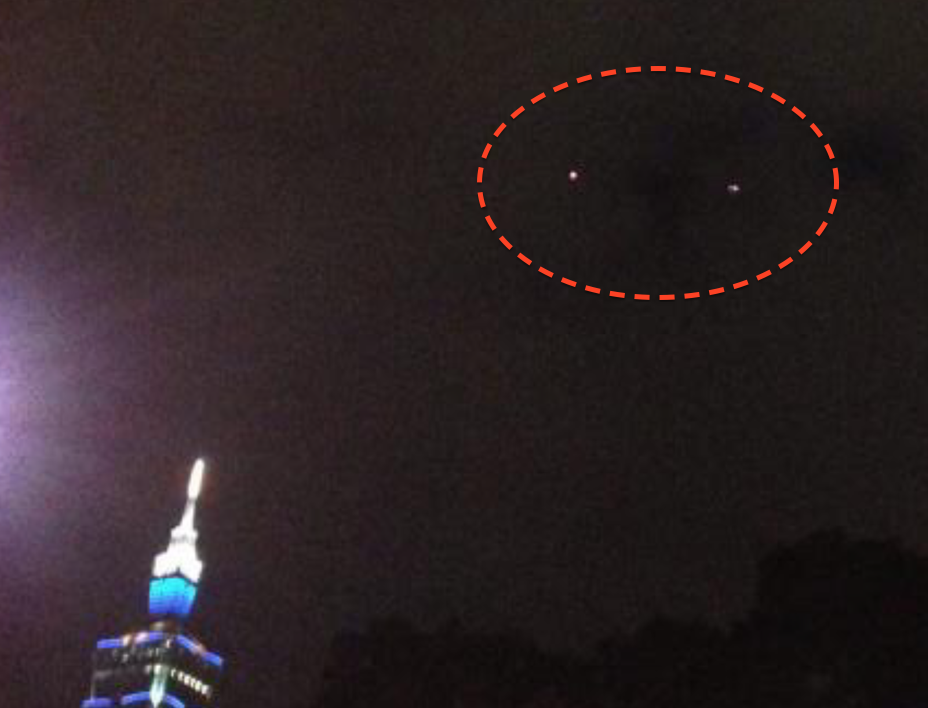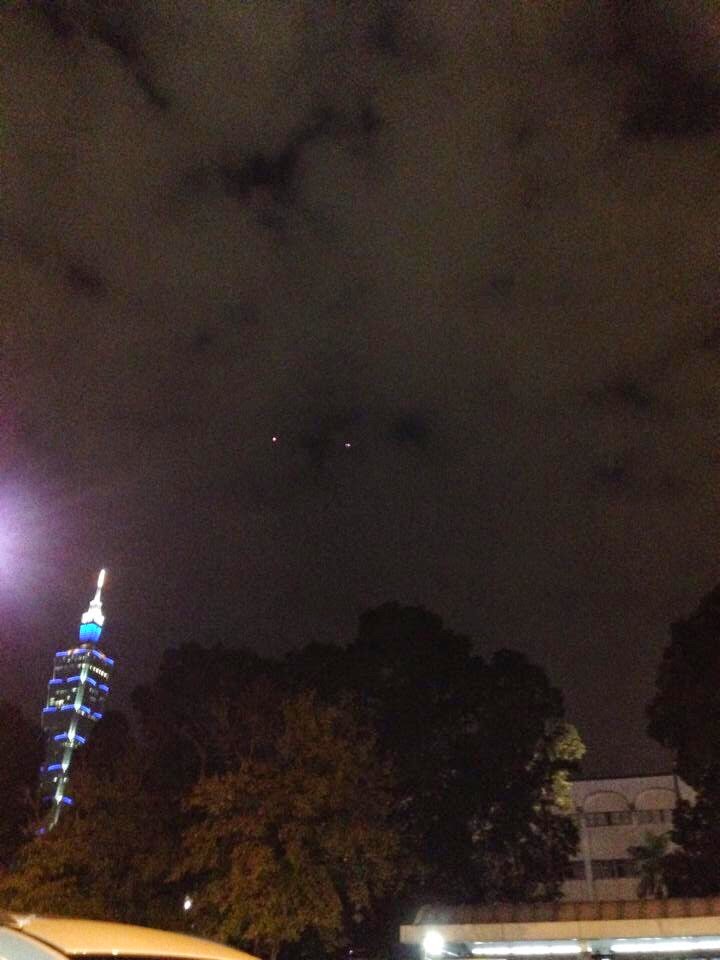




Het bestaan van buitenaards leven en ufo's wordt door de Amerikaanse regering achter gehouden, zo beweert de voormalige NASA-astronaut en zesde man op de maan, Edgar Mitchell. Dat meldt CNN.
"We zijn niet alleen", zegt de 78-jarige Mitchell. "Aliens bestaan weldegelijk, maar de waarheid wordt toegedekt door de Verenigde Staten."
De ex-astronaut, die deel uitmaakte van de Apollo 14-maanmissie in 1971, deed zijn uitspraken op de vijfde editie van de jaarlijkse X-Conference, een bijeenkomst van mensen die geloven in ufo's en buitenaardse vormen van leven.
"Wij zijn voorbestemd om te leven in een planetaire gemeenschap. We moeten bereid zijn om ver buiten onze planeet en ons zonnestelsel te kijken om te weten wat er zich daar echt afspeelt."
De astronaut beweert ook dat hij een poging ondernam om het 'Roswell-incident' uit 1947 te onderzoeken. Roswell in de staat New Mexico, waar Mitchell opgroeide, was volgens believers de plaats waar in 1947 een UFO crashte. Volgens Mitchell werden de inwoners door het leger aangemaand om daarover te zwijgen. Een admiraal bij het Pentagon zou de ufotheorie hebben bevestigd, maar hij trok later zijn verklaringen weer in.
De NASA beweert dat de organisatie "niet betrokken is bij eender welke geheimhouding over buitenaards leven, op deze planeet of ergens anders".
 Cosmic Glow Discovered --"Radiates More Light than All the Known Galaxies in the Universe

Cosmic Glow Discovered --"Radiates More Light than All the Known Galaxies in the Universe"
December 7, 2014 - Using an experiment carried into space on a NASA suborbital rocket, astronomers at Caltech and their colleagues have detected a diffuse cosmic glow that appears to represent more light than that produced by known galaxies in the universe. Initially some researchers proposed that this light came from the very first galaxies to form and ignite stars after the Big Bang. CalTech researchers say that the best explanation is that the cosmic light originates from stars that were stripped away from their parent galaxies and flung out into space as those galaxies collided and merged with other galaxies.
The discovery suggests that many such previously undetected stars permeate what had been thought to be dark spaces between galaxies, forming an interconnected sea of stars. "Measuring such large fluctuations surprised us, but we carried out many tests to show the results are reliable," says CalTech Fellow Michael Zemcov, who led the study.
Although they cannot be seen individually, "the total light produced by these stray stars is about equal to the background light we get from counting up individual galaxies," says Bock, also a senior research scientist at JPL. Bock is the principal investigator of the rocket project, called the Cosmic Infrared Background Experiment, or CIBER, which originated at Caltech and flew on four rocket flights from 2009 through 2013.
In earlier studies, NASA's Spitzer Space Telescope, which sees the universe at longer wavelengths, had observed a splotchy pattern of infrared light called the cosmic infrared background. The splotches are much bigger than individual galaxies. "We are measuring structures that are grand on a cosmic scale," says Zemcov, "and these sizes are associated with galaxies bunching together on a large-scale pattern."
CIBER was designed to help settle the debate. "CIBER was born as a conversation with Asantha Cooray, a theoretical cosmologist at UC Irvine and at the time a postdoc at Caltech with [former professor] Marc Kamionkowski," Bock explains. "Asantha developed an idea for studying galaxies by measuring their large-scale structure. Galaxies form in dark-matter halos, which are over-dense regions initially seeded in the early universe by inflation. Furthermore, galaxies not only start out in these halos, they tend to cluster together as well. Asantha had the brilliant idea to measure this large-scale structure directly from maps. Experimentally, it is much easier for us to make a map by taking a wide-field picture with a small camera, than going through and measuring faint galaxies one by one with a large telescope."
Cooray originally developed this approach for the longer infrared wavelengths observed by the European Space Agency's Herschel Space Observatory. "With its 3.5-meter diameter mirror, Herschel is too small to count up all the galaxies that make the infrared background light, so he instead obtained this information from the spatial structure in the map," Bock says.
"Meanwhile, I had been working on near-infrared rocket experiments, and was interested in new ways to use this unique idea to study the extragalactic background," he says. The extragalactic infrared background represents all of the infrared light from all of the sources in the universe, "and there were some hints we didn't know where it was all coming from. ( via dailygalaxy.com )