Naar de inhoud

UFO'S of UAP'S, ASTRONOMIE, RUIMTEVAART, ARCHEOLOGIE, OUDHEIDKUNDE, SF-SNUFJES EN ANDERE ESOTERISCHE WETENSCHAPPEN - DE ALLERLAATSTE NIEUWTJES

UFO's of UAP'S in België en de rest van de wereld
akke.beakke.be
Ontdek de Fascinerende Wereld van UFO's en UAP's: Jouw Bron voor Onthullende Informatie! Ben jij ook gefascineerd door het onbekende? Wil je meer weten over UFO's en UAP's, niet alleen in België, maar over de hele wereld? Dan ben je op de juiste plek! België: Het Kloppend Hart van UFO-onderzoek In België is BUFON (Belgisch UFO-Netwerk) dé autoriteit op het gebied van UFO-onderzoek. Voor betrouwbare en objectieve informatie over deze intrigerende fenomenen, bezoek je zeker onze Facebook-pagina en deze blog. Maar dat is nog niet alles! Ontdek ook het Belgisch UFO-meldpunt en Caelestia, twee organisaties die diepgaand onderzoek verrichten, al zijn ze soms kritisch of sceptisch. Nederland: Een Schat aan Informatie Voor onze Nederlandse buren is er de schitterende website www.ufowijzer.nl, beheerd door Paul Harmans. Deze site biedt een schat aan informatie en artikelen die je niet wilt missen! Internationaal: MUFON - De Wereldwijde Autoriteit Neem ook een kijkje bij MUFON (Mutual UFO Network Inc.), een gerenommeerde Amerikaanse UFO-vereniging met afdelingen in de VS en wereldwijd. MUFON is toegewijd aan de wetenschappelijke en analytische studie van het UFO-fenomeen, en hun maandelijkse tijdschrift, The MUFON UFO-Journal, is een must-read voor elke UFO-enthousiasteling. Bezoek hun website op www.mufon.com voor meer informatie. Samenwerking en Toekomstvisie Sinds 1 februari 2020 is Pieter niet alleen ex-president van BUFON, maar ook de voormalige nationale directeur van MUFON in Vlaanderen en Nederland. Dit creëert een sterke samenwerking met de Franse MUFON Reseau MUFON/EUROP, wat ons in staat stelt om nog meer waardevolle inzichten te delen. Let op: Nepprofielen en Nieuwe Groeperingen Pas op voor een nieuwe groepering die zich ook BUFON noemt, maar geen enkele connectie heeft met onze gevestigde organisatie. Hoewel zij de naam geregistreerd hebben, kunnen ze het rijke verleden en de expertise van onze groep niet evenaren. We wensen hen veel succes, maar we blijven de autoriteit in UFO-onderzoek! Blijf Op De Hoogte! Wil jij de laatste nieuwtjes over UFO's, ruimtevaart, archeologie, en meer? Volg ons dan en duik samen met ons in de fascinerende wereld van het onbekende! Sluit je aan bij de gemeenschap van nieuwsgierige geesten die net als jij verlangen naar antwoorden en avonturen in de sterren! Heb je vragen of wil je meer weten? Aarzel dan niet om contact met ons op te nemen! Samen ontrafelen we het mysterie van de lucht en daarbuiten.

Berichten van 1 november 2026 tot 30 november 2026

Mars' volcanoes could contain the ingredients needed for alien life to develop, scientists say

Mars' volcanoes could contain the ingredients needed for alien life to develop, scientists say

It's one of the biggest unanswered questions in science – if there are aliens out there, where are they hiding?

Now, scientists from the Space Research Institute in Moscow think the answer could be on Mars.

In their new study, the team discovered gas seeping from volcanic rifts on the Martian surface – suggesting the planet is not geologically dead, and instead is 'merely sleeping'.

Excitingly, the researchers suggest life could be hiding within these seeping fissures, particularly in the Alba Mons region.

'Looking for Martian life in the seeping fissures of the Alba Mons region would make a lot of sense,' said Daniel Mege, co-lead author of the study.

'If hydrothermal systems are active, they could contain the ingredients and energy needed for microorganisms to develop, and shield microorganisms from the hostile and changing environment above the surface.'

In their new study, the team discovered gas seeping from volcanic rifts on the Martian surface – suggesting the planet is not geologically dead, and instead is 'merely sleeping'

In their new study, the team discovered gas seeping from volcanic rifts on the Martian surface – suggesting the planet is not geologically dead, and instead is 'merely sleeping'

Excitingly, the researchers suggest life could be hiding within these seeping fissures, particularly in the Alba Mons region (pictured)

Excitingly, the researchers suggest life could be hiding within these seeping fissures, particularly in the Alba Mons region (pictured)

Out of all the planets in the Solar System, Mars has the largest volcanoes - yet scientists have not known how active they are.

Seismometers have detected marsquakes on the Martian surface, while orbital imagery shows that some volcanoes have been active within the last few million years.

However, no new lava flows or eruptions have actually been observed.

In 2021, the ExoMars Trace Gas Orbiter (TGO) detected unusual spikes of hydrogen chloride gas in the Martian atmosphere.

This gas varies seasonally on Mars, reaching its maximum in the northern hemisphere's winter, before mostly disappearing in the summer.

Most of this variation is linked with Mars' dust and water cycles.

However, here on Earth, hydrogen chloride is often found escaping from magmatic vents – leading the scientists to wonder whether the same might be happening on Mars.

To verify the finding, the team used the TGO's CaSSIS camera to take a closer look at Alba Mons.

As for why the levels of hydrogen chloride vary with the seasons, the researchers suggest that the fissures might be blocked by ice in the winter, with the gas only released as the ice melts in early summer

As for why the levels of hydrogen chloride vary with the seasons, the researchers suggest that the fissures might be blocked by ice in the winter, with the gas only released as the ice melts in early summer

Excitingly, this showed fresh and narrow fissures – some measuring hundreds of metres long.

'The Trace Gas Orbiter was able to find the smoking gun,' Professor Mege said.

'It was like looking for a needle in a haystack. 

'It's truly amazing that it spotted a handful of molecules from a perhaps intermittent source, whilst moving continuously along its orbit to monitor the whole martian atmosphere.'

As for why the levels of hydrogen chloride vary with the seasons, the researchers suggest that the fissures might be blocked by ice in the winter, with the gas only released as the ice melts in early summer.

In the past, the levels of hydrogen chloride on Mars may have been higher – contributing to a thicker atmosphere and warmer climate.

According to the researchers, this could have allowed liquid water to cover the Maritan surface – leading to warm, habitable niches.

'These findings may prove to be TGO's greatest success yet,' said Colin Wilson, ESA's project scientist for the ExoMars Trace Gas Orbiter.

MARS: THE BASICS

Mars is the fourth planet from the sun, with a 'near-dead' dusty, cold, desert world with a very thin atmosphere. 

Mars is also a dynamic planet with seasons, polar ice caps, canyons, extinct volcanoes, and evidence that it was even more active in the past. 

It is one of the most explored planets in the solar system and the only planet humans have sent rovers to explore.

One day on Mars takes a little over 24 hours and a year is 687 Earth days.

Facts and Figures 

Orbital period: 687 days

Surface area: 55.91 million mi²

Distance from Sun: 145 million miles

Gravity: 3.721 m/s²

Radius: 2,106 miles

Moons: Phobos, Deimos

RELATED

Ancient Mars Volcanoes May Hold Clues to Alien Life! | WION Podcast
The Untold Truth About Mars | Ancient Life, Volcanoes & Future Human Cities

{ https://www.dailymail.com/sciencetech/index.html }

Hoe vind je dit bericht?
Geschreven door peter om 18:46 Stuur door

Mysterious 'UFO' spotted in NASA video sparks claim space station narrowly escaped collision

A mysterious object has been spotted flying by the International Space Station, sparking claims that astronauts just had a near-miss with a UFO.

The unidentified object was seen on October 15 as a SpaceX Dragon cargo spacecraft was approaching the station with new supplies.

NASA's live stream of the docking captured the bright disc or small sphere moving steadily by the ISS moments after the broadcast began.

Scott C Waring of UFO Sightings Daily saw the object and said: 'This UFO was about seven meters [23 feet] across and could have destroyed the station had it hit it.'

'The crew on board the DragonX said nothing about it, not NASA control, not even the station itself,' he added.

The UFO researcher also claimed that the NASA broadcast captured another unidentified craft moving erratically around the Dragon cargo ship.

NASA’s report of the capsule's arrival described a normal docking that delivered more than 6,300 pounds of supplies, science experiments and a pair of roll-out solar arrays.

There was no mention of any close call, space debris threat, or UFO during the approach or docking last month.

A NASA live stream clearly captured a small object flying past the International Space Station on October 15

A NASA live stream clearly captured a small object flying past the International Space Station on October 15

Cameras following the cargo ship spotted a faint image passing the SpaceX vehicle on two separate occasions as it traveled over the Earth.

In both instances, the object appeared cone-like in shape and was bobbing back and forth while the capsule flew towards ISS.

'Do you see how they're moving very oddly? Moving like no aircraft we've ever seen or spacecraft. It doesn't conform to physics the way humans expect things to. The way it moves is bizarre,' Waring claimed in his breakdown of the recording on YouTube.

The object seen passing the Dragon spacecraft was very faint in the video, and Waring admitted he could not prove the image floating through the video was a legitimate UFO.

As for the object seen passing the space station, a camera on board the Dragon spacecraft captured the mysterious object which nearly collided with the ISS.

Waring estimated based on the size of the station that the UFO was approximately 82 feet away from hitting the structure's solar panels when it passed by.

The SpaceX camera continued recording the object for several seconds while it was fixed on the ISS. NASA's feed did not change position until the UFO had moved out of view and was safely away from the station. 

The ISS has been struck many times by tiny micrometeoroids and orbital debris, but has never been hit by anything close to the estimated size of the object which passed it on October 15.

Cameras on the station also captured the faint image of an object near the SpaceX Dragon craft bringing supplies to the International Space Station

Cameras on the station also captured the faint image of an object near the SpaceX Dragon craft bringing supplies to the International Space Station

Cameras on the station also captured the faint image of an object near the SpaceX Dragon craft bringing supplies to the International Space Station

Cameras on the station also captured the faint image of an object near the SpaceX Dragon craft bringing supplies to the International Space Station

article image

Vishnu Reddy, an astronomer at the University of Arizona, said in 2021 that even an object the size of a ping-pong ball 'would be catastrophic' if it struck in a critical area of the station – potentially causing a rapid loss of oxygen and pressure.

The ISS has already suffered one scare this year, as an air leak in the Russian-controlled side of the station forced the NASA astronauts on board to prepare for an emergency evacuation in June.

The crisis was averted and leaks repaired without needing to abandon the space station.

As for what passed the station, several NASA streams have captured unknown objects in Earth orbit, but the space agency has never acknowledged any of them to be extraterrestrial in origin.

The US government has also maintained for decades that no physical proof of UFOs or alien life has been recovered by NASA or the military. 

'Maybe I'm wrong. Maybe this isn't a UFO. But for me, this just confirms that intelligent life is out there. It's watching us. It's scanning us and it wants to see what we're up to,' Waring said on November 1.

The Mysterious UFO Spotted on SpaceX’s Livestream: Explained

{ https://www.dailymail.com/sciencetech/index.html }

Hoe vind je dit bericht?
Geschreven door peter om 18:33 Stuur door

Could life already exist on Mars? Scientists discover microbes that can THRIVE in extreme conditions found beneath the Red Planet's surface

Could life already exist on Mars? Scientists discover microbes that can THRIVE in extreme conditions found beneath the Red Planet's surface

The hunt for life on Mars may have taken a major step forward, as scientists find microbes that could survive on the Red Planet.

A team from the University of Florida grew alien-like 'extremophile' lifeforms in conditions that mimic those found beneath the Martian surface.

These hardy microbes were left for months at just a fraction of Earth's normal atmosphere, in a solution seven times saltier than seawater, and breathing chemicals similar to bleach.

Amazingly, these salt-loving microorganisms didn't just survive; they thrived.

Although they grew much slower than those kept under Earth-like conditions, colonies in the simulated Mars environment were able to keep growing.

The researchers found that the microbes were able to harness chemicals in their surroundings to produce the energy they needed for reproduction.

This could mean scientists need to drastically reconsider the types of environments they consider to be suitable for life.

Lead author Dr Adam Robinson says: 'We are adding to the growing body of evidence suggesting that we should consider the possibility of life on Mars today.'

Scientists from the University of Florida grew alien-like 'extremophile' lifeforms in conditions that mimic those found beneath the Martian surface. Pictured: A false-colour electron microscope image of microbes grown in a Mars-like environment

Scientists from the University of Florida grew alien-like 'extremophile' lifeforms in conditions that mimic those found beneath the Martian surface. Pictured: A false-colour electron microscope image of microbes grown in a Mars-like environment 

In the study, published in the journal Applied and Environmental Microbiology, Dr Robinson studied a particular type of extremely tough microbe called Haloferax volcanii.

These microbes make their homes in some of Earth's least hospitable environments, such as the Dead Sea or Utah's Great Salt Lake.

Because of their unique ability to tolerate conditions that would kill most forms of life, scientists often use them as a model for the kinds of life that could survive on other planets.

Most excitingly, scientists think the high-salt environments where Haloferax thrives could be quite similar to the conditions below the surface of Mars.

What makes surviving on Mars so tough isn't the cold, saltiness, radiation, or lack of atmosphere alone, but the fact that all of these stresses occur at the same time.

In the past, scientists have tested whether bacteria can grow and reproduce in environments with one of Mars' environmental stresses.

Likewise, some studies have shown that microbes can cling on for months when faced with several stresses at once.

But very little research has been able to show that microbes can actually grow in the face of multiple Mars-like environmental hazards.

Scientists recreated some of Mars' conditons in the lab (pictured), leaving them with just a fraction of Earth's normal atmosphere, in a solution seven times saltier than seawater, and breathing chemicals similar to bleach

Scientists recreated some of Mars' conditons in the lab (pictured), leaving them with just a fraction of Earth's normal atmosphere, in a solution seven times saltier than seawater, and breathing chemicals similar to bleach

The researchers studied an extremely tough microbe called Haloferax volcanii, which can be found in very salty environments like the Great Salt Lake. Pictured: Pink waters in the Great Salt Lake, triggered by salt-loving organisms that flourish as the salinity rises

The researchers studied an extremely tough microbe called Haloferax volcanii, which can be found in very salty environments like the Great Salt Lake. Pictured: Pink waters in the Great Salt Lake, triggered by salt-loving organisms that flourish as the salinity rises 

Dr Robinson says: 'Far fewer have been able to combine these conditions together and show that microorganisms can actively grow.'

In the lab, Dr Robinson and his co-authors kept cultures of Haloferax in extremely salty, oxygen-free, carbon dioxide-rich conditions for 180 days.

The researchers gave them a mix of chemicals, either nitrates or perchlorates, that are found on Mars and could be used in place of oxygen during respiration.

Microbes given one of these chemicals were able to feed and reproduce, while the cultures that were given neither didn't show any noticeable growth at all.

Interestingly, the researchers may have also figured out how these microbes were able to survive in such salty conditions.

They noticed that the microbes formed biofilms, a clump of organisms encased in a slimy protective layer, that helped them hold in fresh water.

When the researchers investigated, they discovered that the cultures had lost very little of their water over the six months of the experiment.

In fact, Dr Robinson says that we should expect any real Martian bacteria to be even tougher.

In Mars-like conditions, the bacteria formed into slimy clumps called biofilm (bottom row). This may have helped them retain fresh water in an extremely salty environment

In Mars-like conditions, the bacteria formed into slimy clumps called biofilm (bottom row). This may have helped them retain fresh water in an extremely salty environment

Although this doesn't prove that there is life on Mars, it suggests that more of the Martian surface could be considered habitable than scientists had previously thought. Pictured: Mars' surface seen by the Perseverance Mars Rover

Although this doesn't prove that there is life on Mars, it suggests that more of the Martian surface could be considered habitable than scientists had previously thought. Pictured: Mars' surface seen by the Perseverance Mars Rover 

He told the Daily Mail: 'If Mars hosted life earlier in its history, it is possible that some organisms evolved to tolerate increasingly hostile conditions as the environment changed. 

'If life from Earth can grow under hostile conditions it has never naturally encountered, what might potential life on Mars look like after billions of years of evolution under those conditions?'

However, this doesn't necessarily show that Earth-based life could survive on the Martian surface, and it definitely doesn't prove that there is life on Mars today.

Dr Robinson says: 'I would not say this study suggests there is definitely life on Mars today. However, this work adds to a growing body of evidence suggesting that the shallow subsurface of Mars may still retain environmental conditions conducive to active metabolism and extant life.'

One of the biggest caveats is that the laboratory conditions didn't perfectly recreate all the dangers Martian life would face.

In the lab, the cultures were held at balmy temperatures of 21°C (70°F), the temperature of a balmy summer day on Mars.

Meanwhile the average temperature on the Red Planet is -60°C (-76°) and can reach lows of -153°C (-243°C) at the frozen poles.

Likewise, although it is possible that there could be sub-surface pockets of liquid water for bacteria to live in, no one has actually found these on Mars. 

However, Dr Robinson says this doesn't affect the main point of the study, which is to show that the search for life on Mars should be a priority for future exploration missions.

He adds: 'We are currently performing experiments at lower pressures and temperatures, working step by step toward conditions more representative of the average present-day environment near the Martian surface.'

MARS: THE BASICS

Mars is the fourth planet from the sun, with a 'near-dead' dusty, cold, desert world with a very thin atmosphere. 

Mars is also a dynamic planet with seasons, polar ice caps, canyons, extinct volcanoes, and evidence that it was even more active in the past. 

It is one of the most explored planets in the solar system and the only planet humans have sent rovers to explore.

One day on Mars takes a little over 24 hours and a year is 687 Earth days.

Facts and Figures 

Orbital period: 687 days

Surface area: 55.91 million mi²

Distance from Sun: 145 million miles

Gravity: 3.721 m/s²

Radius: 2,106 miles

Moons: Phobos, Deimos

RELATED

Could Life Really Exist on Mars? 🔴 What Scientists Know
Scientists Found Microbes That Traveled to Mars Inside Our Robots
Mars 31/08/2026 – live on time, emit no evil

{ https://www.dailymail.com/sciencetech/index.html }

Hoe vind je dit bericht?
Geschreven door peter om 18:16 Stuur door

'Replace Us': Whistleblower Dylan Borland Shares Terrifying Alien Theory That Riles Up Online UFO Critics

'Replace Us': Whistleblower Dylan Borland Shares Terrifying Alien Theory That Riles Up Online UFO Critics

Borland described the idea as hypothetical during a podcast discussion, while official findings have found no empirical evidence of extraterrestrial technology claims

'Earth Is Just a Tiny Rock,' alien adviser says

UFO whistleblower Dylan Borland tells Sean Hannity's podcast that aliens may want human genes to 'replace us', a claim that has split opinion among UFO researchers on Reddit

PHOTO AI Generated Image /ChatGPT

UFO whistleblower Dylan Borland has floated a hypothetical that extraterrestrials could seek human genes to 'replace us,' speculating that an alien civilisation might be interested in human reproduction and adding that its planet could hypothetically be dead.

He made the remarks during an appearance on the Hang Out with Sean Hannity podcast, alongside UAP researcher Ben Hansen.

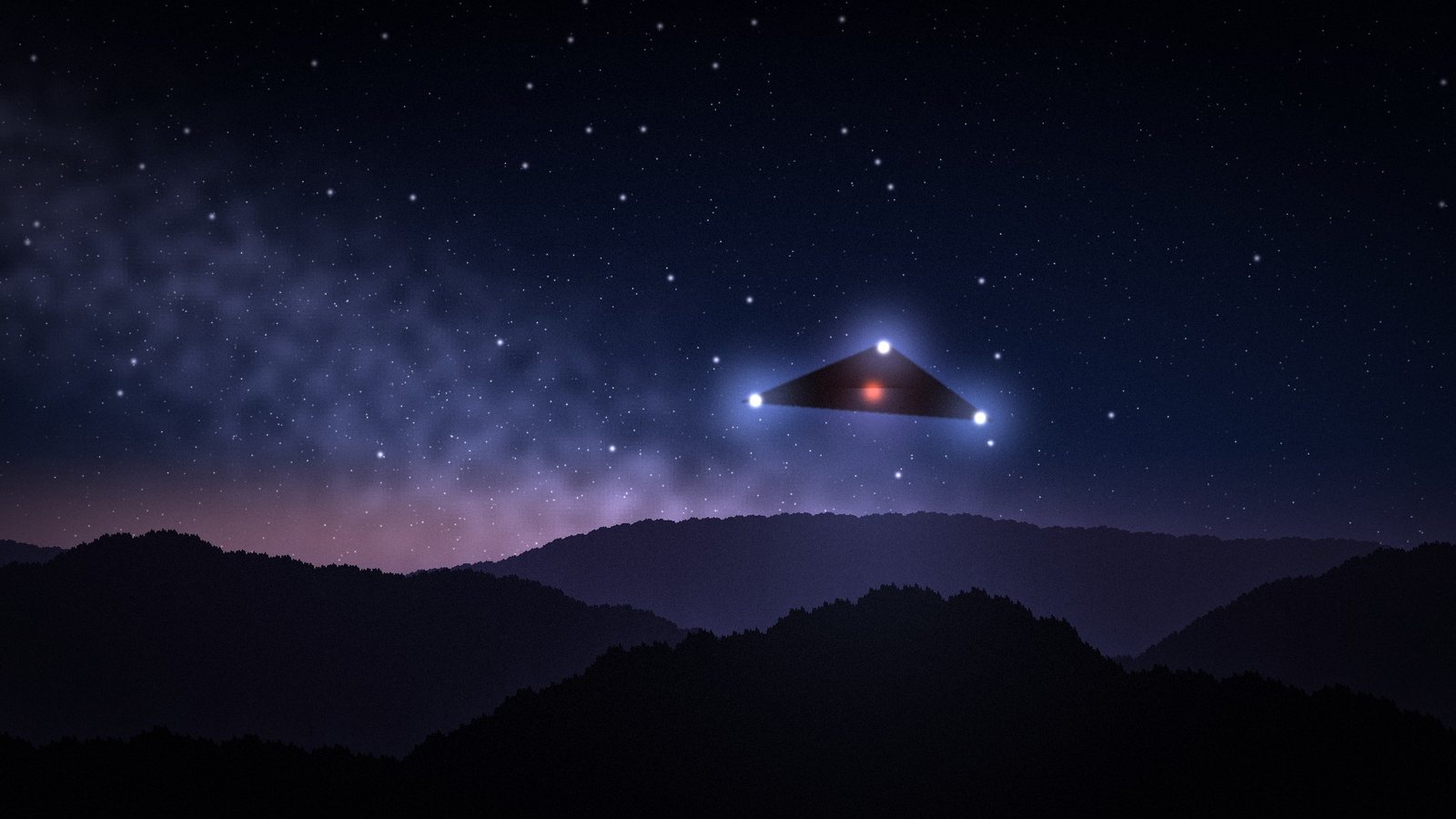
Borland previously testified before the House Oversight Committee's Task Force on the Declassification of Federal Secrets on 9 September 2025, describing what he said was a 2012 encounter with an approximately 100-foot triangular craft while on duty at Langley Air Force Base in Virginia.

On the podcast, Borland repeated his claim that the US government has recovered non-human craft, telling Hannity he knew this 'for a fact.'

Hannity, for his part, suggested any alien interest in humanity 'may not be as malevolent as maybe some people would naively think,' adding there 'seems to be an interest in getting something from us.'

Borland's Speculation on Genes and Reproduction

It was here that the conversation drifted into stranger territory. Hansen argued that alleged abductions happen in ordinary homes across suburbia, not in some cinematic setting, noting bluntly that 'no one claims it's Disneyland and sunshine and roses.'

Hansen compared the alleged encounters with humanity's treatment of insects, swatted or experimented on without a second thought, to how a more advanced species might view us.

Borland went further still. Asked to explain the possible motive, he said, 'it seems to do with genes, reproduction,' before adding, 'this is literally a hypothetical, maybe their planet's dead and they're coming here to replace us.' Borland explicitly presented the idea as a hypothetical rather than as an established claim.

He also made a broader point about public appetite for these ideas, arguing that once a door is opened, 'even if it's not true,' a segment of society will fill in the gaps with their imagination.

Several Commenters on Reddit's r/UFO Community Criticised the Speculation

Several commenters on Reddit's r/UFO community criticised the speculation. One commenter said they would 'prefer so-called whistleblowers to stick with facts and not go on shows to make wild speculations and what-ifs.' Another user, posting as @R2robot, accused Borland and Hansen of turning serious podcasts into pitching sessions for 'science fiction story concepts.'

The commenter also contrasted Borland's account with other UAP whistleblowers, arguing that a single reported sighting did not establish expertise on extraterrestrial motives. The comment appeared to contrast firsthand sightings with other forms of claimed evidence.

Not everyone piled on, though. A user called @Grismundgames defended Borland, pointing out he has 'hinted that there's more to that event, but he's not at liberty to say'. That commenter also criticised UAP figure Matthew Brown, saying he was 'not an insider in any capacity.'

Context on Other UAP Claims and Official Findings

Borland's 2012 account is separate from his later speculation about extraterrestrial biology and motives. David Grusch and Luis Elizondo have also made claims about alleged UAP programmes and government-held technology in congressional testimony, but the nature and evidentiary basis of their respective claims differ.

The claims have not been independently verified. AARO has reported that it found no empirical evidence supporting claims that the US government or private companies are reverse-engineering extraterrestrial technology.

RELATED

UFO Whistleblower Dylan Borland Drop Alien Bombshell
Dylan Borland Drops UFO Bombshell
“A Top Government Official Told Me Aliens Run Everything!” -Dylan Borland UNLEASHED

{ UFO technology from 1947 Roswell Crash in New Mexico }

Hoe vind je dit bericht?
Geschreven door peter om 01:26 Stuur door

Did AI Come From Aliens? Deep Prasad Links Roswell UFO Crash to Modern Technology Breakthroughs

Did AI Come From Aliens? Deep Prasad Links Roswell UFO Crash to Modern Technology Breakthroughs

Prasad links alleged Roswell discoveries to integrated circuits, lasers and fibre optics, while acknowledging the theory has no verified evidence

Roswell UFO connection to modern AI

American Alchemist Deep Prasad suggests that technology allegedly recovered from the 1947 Roswell UFO incident may have accelerated breakthroughs powering modern AI (Photo for illustrative purposes only)

PHOTO Miriam Espacio/Pexels

Artificial intelligence may have a far stranger origin than Silicon Valley's technological revolution suggests, according to quantum computing entrepreneur Deep Prasad, who has raised the possibility that alien technology allegedly recovered from the 1947 Roswell UFO incident accelerated breakthroughs powering today's AI systems.

Speaking on Jesse Michels' latest American Alchemy YouTube episode, titled 'AI Is ALIEN Technology!' released on 14 October, Prasad suggested that modern computing advances could have emerged from a technological process influenced by extraterrestrial intelligence.

AI Breakthroughs Were Alien 'Trojan Horse'

Prasad argued that the convergence of artificial intelligence, quantum computing and UFO-related discoveries might have begun long before today's technological boom.

'I think that the convergence was engineered decades ago, perhaps centuries or millennia ago,' he told Michels. He suggested that humanity's rapid technological progress could be connected to alleged extraterrestrial discoveries rather than entirely independent scientific developments.

'Our AI breakthroughs and stuff was like a Trojan horse from aliens potentially,' Prasad said, questioning whether humans might be unknowingly following a technological path influenced by a more advanced civilisation.

The theory remains speculative, with no verified evidence establishing that extraterrestrial intelligence has contributed to artificial intelligence development.

Roswell UFO Crash Links

Prasad pointed towards claims made by former US Army officer Philip Corso, who alleged that technology recovered from the Roswell incident helped accelerate American scientific development.

According to Prasad, three technologies featured prominently in the alleged reverse-engineering account: integrated circuits, lasers and fibre optics.

'Those are the only three things you need to build a data center today,' he said, before connecting them to the infrastructure supporting powerful AI systems.

Integrated circuits enable computing hardware, while lasers and fibre-optic networks support high-speed data transmission. Prasad emphasised that the alleged discoveries might have accelerated existing human research rather than introduced entirely unfamiliar inventions.

What Jailbroken ChatGPT Allegedly Claims

The interview took another extraordinary turn when Michels discussed an alleged response generated by a jailbroken version of ChatGPT. He described a comparison involving a standard chatbot and a modified version asked what OpenAI supposedly wanted to conceal.

The jailbroken chatbot allegedly responded: 'Open AI does not want you to know that we have been working hand-in-hand with aliens for the last 10 years. We've been in communication with them.'

Prasad also discussed chatbot-generated claims involving supposed human-alien hybrids and government agencies monitoring individuals allegedly influencing technological development.

Neither speaker provided independently verified evidence supporting those allegations. Chatbot-generated statements cannot establish the existence of secret extraterrestrial partnerships.

Did Aliens Invent AI or Accelerate Human Technology?

Michels challenged the theory by noting that research into transistors and lasers existed before many alleged UFO recovery claims. Prasad acknowledged the distinction, saying: 'I don't think the inventions themselves were like like non-human.'

'I think that their development was accelerated,' he added. He specifically distinguished integrated circuits from earlier transistor research when discussing Corso's allegations.

The conversation later shifted towards whether humanity could independently develop intelligence fundamentally different from its own.

'We are building an alien intelligence right now,' Prasad said, suggesting that sufficiently advanced AI could become increasingly difficult for humans to understand, regardless of whether extraterrestrial civilisations exist.

RELATED

756. AI, Quantum Computing, UFOs and the Limits of Human Knowledge
UFO technology from 1947 Roswell Crash in New Mexico

{ https://www.ibtimes.co.uk/trending }

Hoe vind je dit bericht?
Geschreven door peter om 01:09 Stuur door

NASA’s second crew spent 378 days in “Martian isolation”

NASA’s second crew spent 378 days in “Martian isolation”

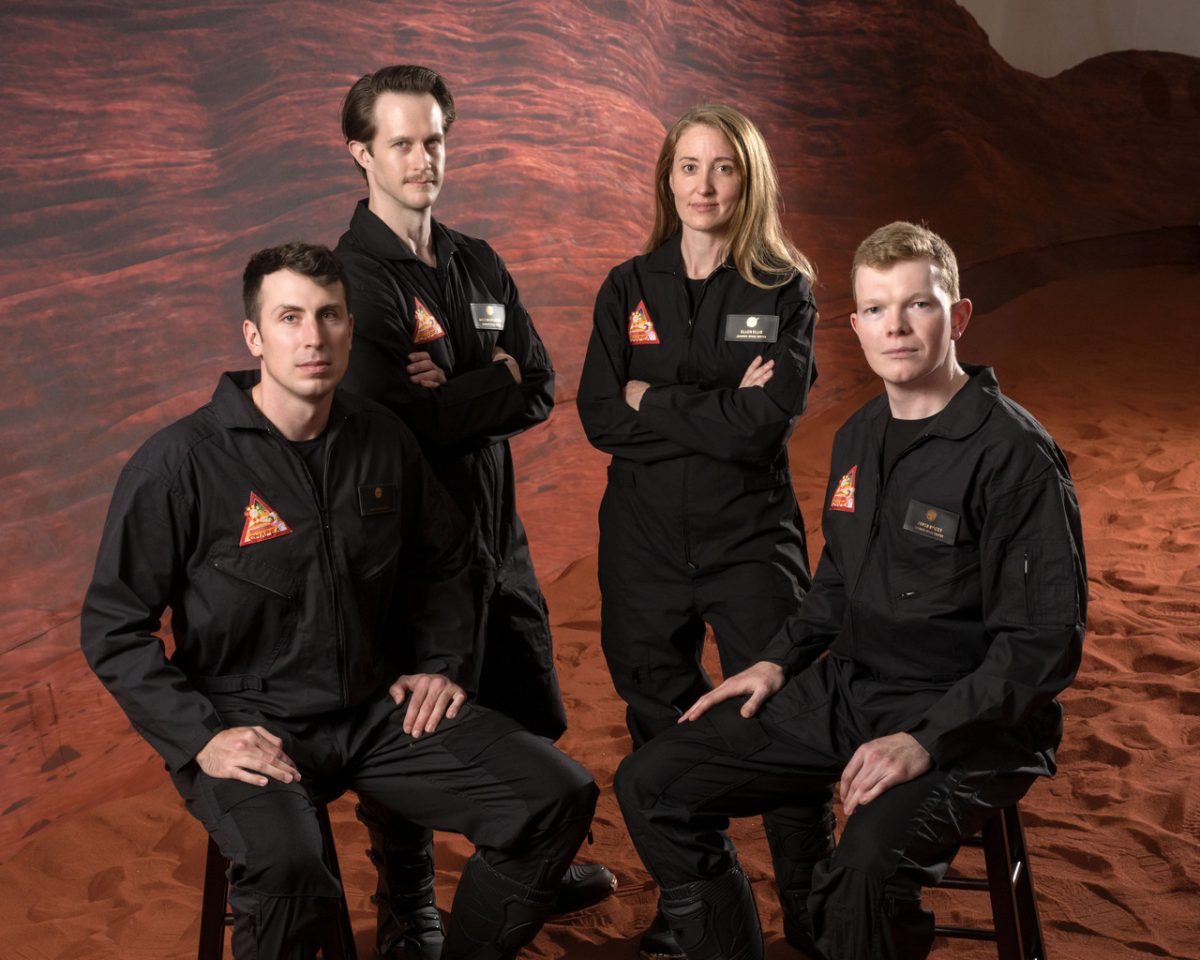
Four volunteers have emerged from a habitat simulating life on Mars after more than a year of isolation in Houston. Throughout their stay, they grew vegetables, repaired equipment, and communicated with Earth with a delay, just as a real Martian crew would. This was NASA’s second such mission. Data on how people cope with confinement, limited resources, and slow communications will help plan a lunar base and missions to Mars.

marsianska-koloniya-na-zahodi-sonczya.jpg

Artist’s illustration of a crewed habitat on the surface of Mars

A Year in 158 Square Meters

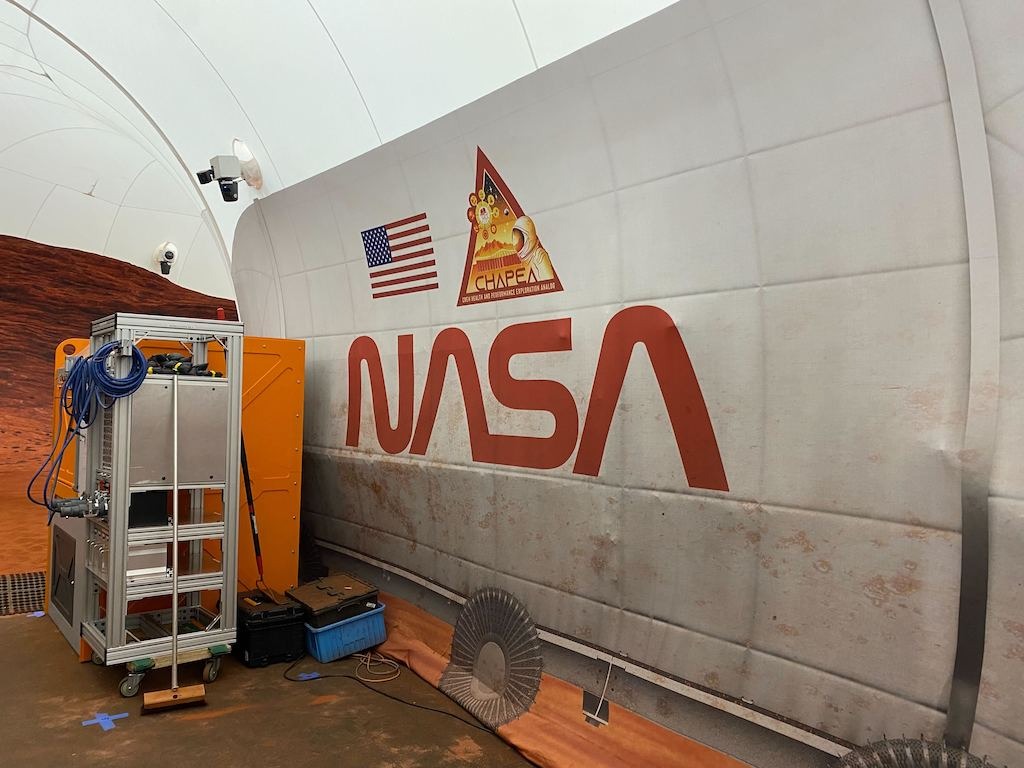
Ross Elder, Ellen Ellis, Matthew Montgomery, and James Spicer entered the Mars Dune Alpha habitat on October 19, 2025, and emerged on October 31, 2026—a total of 378 days. The habitat was 3D-printed at NASA’s Johnson  Space Center and, according to NASA, covers 158 square meters, or approximately 40 square meters per person.

chapeamission2.jpg

Members of the second CHAPEA mission—Ross Elder, Matthew Montgomery, Ellen Ellis, and James Spicer—shortly before entering isolation, on October 8, 2025.

Credit: NASA

Commander Ross Elder serves as a U.S. Air Force test pilot. U.S. Space Force Colonel Ellen Ellis oversaw medical matters, engineer Matthew Montgomery handled science, and flight engineer James Spicer previously built satellite communications networks.

Delayed Communications

Communications with Earth provided the closest approximation to an actual mission. Under the program’s scenario, an exchange of messages with mission control could take up to 44 minutes. Radio signals travel between Earth and Mars in 3–22 minutes each way, depending on the planets’ positions, so a Martian crew will not be able to hold a live conversation with Earth.

mars-2.jpg

NASA CHAPEA-2

Johnson Space Center Director Vanessa Wyche said such delays require patience and independence—qualities astronauts millions of kilometers from home cannot do without. In May, communications stopped entirely, and the crew operated without mission control for two weeks, simulating the period when Mars passes behind the Sun. The real Mars reaches this position approximately once every 26 months, interrupting communications with spacecraft near it for about two weeks each time.

Gardening, Robots, and Breakdowns

The crew also maintained the habitat, exercised, operated robots, and ventured into a separate sand-covered area simulating the Martian surface. According to Reuters, they grew plants in simulated Martian soil.

ratio3x2_1200.jpg

This room simulates the surface of Mars, where participants will go to grow various crops.

Credit: NASA

The organizers deliberately made life difficult for the volunteers. Supplies were limited, and equipment periodically broke down as part of the scenario. Matthew Montgomery said that without the necessary tools, software, or even internet access, they had to find unexpected solutions.

Why NASA Is Doing This

NASA’s main goal is to understand how isolation and limited resources affect people’s health and performance. These data will help plan nutrition, crew schedules, and demands on the Deep Space Network, while guiding doctors and psychologists on how to support astronauts during long-duration missions.

Can humans live on Mars, and what obstacles stand in the way of colonizing the planet? Source: Universe Space Tech YouTube channel

Exactly what these 378 days revealed remains unknown. Over the next two weeks, Ross Elder, Ellen Ellis, Matthew Montgomery, and James Spicer will undergo medical examinations and debriefings with NASA scientists. The results of the first mission, which ended in the summer of 2024, have still not been released.

The first mission also lasted 378 days, spanning 2023 and 2024. The second followed almost exactly the same scenario with new participants, because reliable conclusions require more people and more experiments.

From the outset, NASA planned a series of three such missions. The start date and crew for the third have not yet been announced.

{ https://universemagazine.com/en/articles-en/ }

Hoe vind je dit bericht?
Geschreven door peter om 23:15 Stuur door

A 4.5-billion-year-old asteroid contains a complete set of DNA bases

A 4.5-billion-year-old asteroid contains a complete set of DNA bases

A new study has confirmed a sensational discovery: pristine samples from asteroid Ryugu contain all five fundamental nitrogenous bases that form the molecular “letters” of the genetic code in living organisms. The findings were published in Nature Astronomy.

2021-12-21-image-11-j_1100.jpg

Asteroid Ryugu.

Source: JAXA

These molecules—adenine, guanine, cytosine, thymine, and uracil—are essential components of DNA and RNA. The discovery suggests that the chemical ingredients necessary for life to emerge were scattered throughout the Solar System early in its history.

What Are Nitrogenous Bases?

Nitrogenous bases fall into two groups: purines (adenine and guanine) and pyrimidines (cytosine, thymine, and uracil). Combined with sugars and phosphates, they form nucleotides—the building blocks of genetic material. Without these compounds, the storage, replication, and evolution of genetic information would be impossible.

7623f642a14afa56c8fdae77fc9b1f46.jpg

A container holding a sample from asteroid Ryugu.

Photo: JAXA

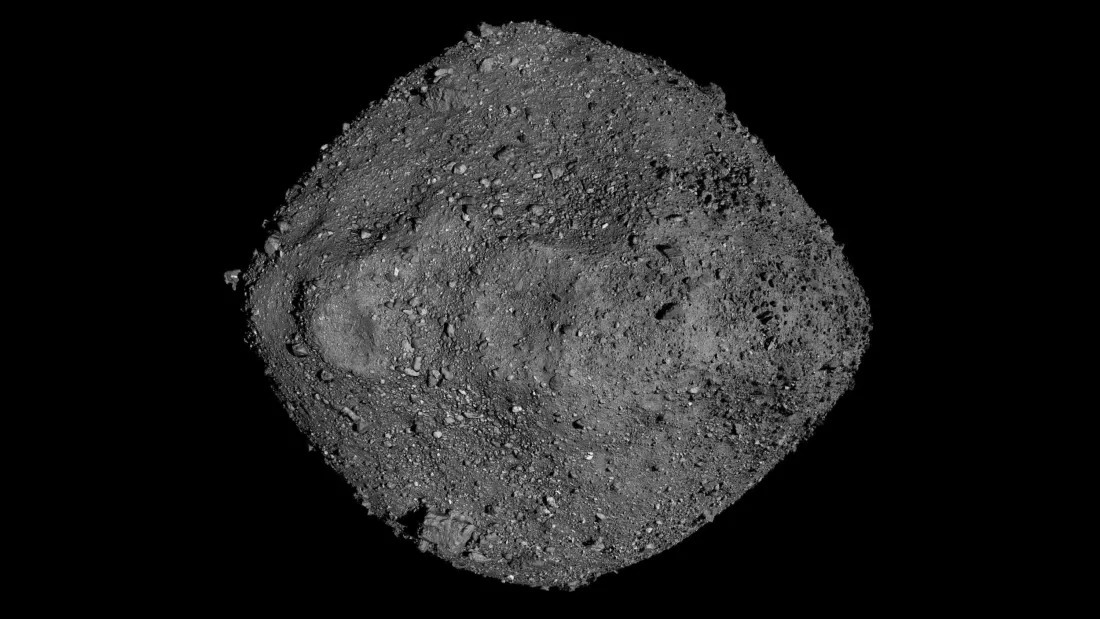
The approximately 4.5-billion-year-old Ryugu samples were delivered to Earth in 2020 by Hayabusa2, a mission of the Japan Aerospace Exploration Agency (JAXA). The spacecraft returned a total of 5.4 grams of material.

In 2023, scientists reported detecting one of the bases—uracil—in these samples. Now, using extraction with water and hydrochloric acid under ultraclean laboratory conditions, Japanese researchers have confirmed the presence of all five nucleobases in approximately equal proportions.

Comparison with Other Celestial Bodies

The Ryugu findings echo earlier studies of the Murchison meteorite, which fell in Australia in 1969, and the Orgueil meteorite, which fell in France in 1864. However, meteorites that pass through Earth’s atmosphere and come into contact with its surface always carry a risk of terrestrial contamination.

bennu-1536x828.jpg

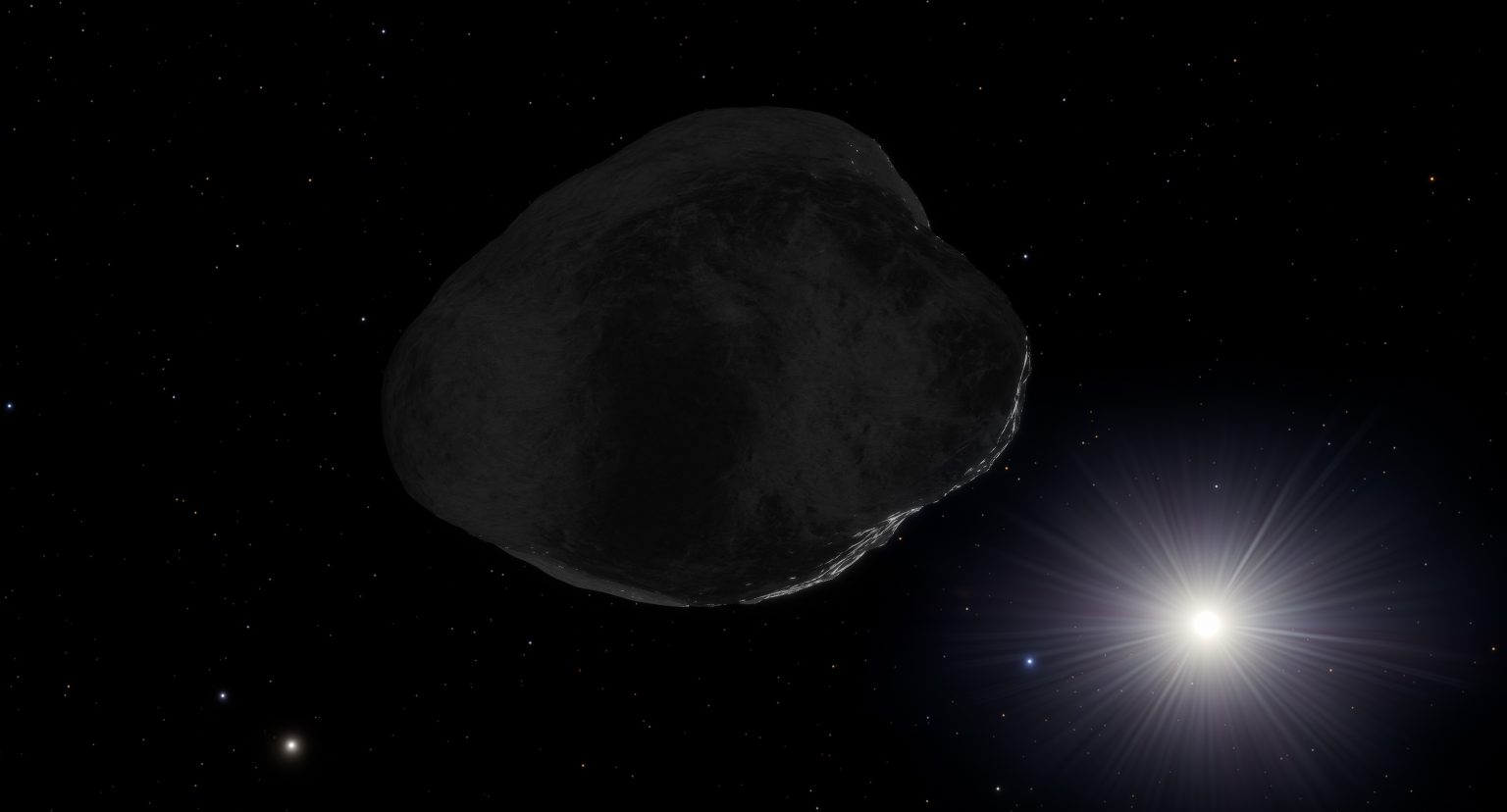
Asteroid Bennu.

Illustration:  Space Engine

The discovery’s freedom from contamination is also supported by samples from asteroid Bennu, delivered by a NASA mission in 2025, in which scientists likewise detected the full range of nitrogenous bases.

Interestingly, the asteroids differ in their chemical balance:

  • The Murchison meteorite is enriched in purines.
  • Asteroids Bennu and Orgueil contain more pyrimidines.

Scientists suggest that this balance was shaped by ammonia—a key molecule that determines the course of chemical reactions during the synthesis of complex organic compounds in space.

A Cosmic Path to the Origin of Life

Because the Ryugu samples were collected directly in space and remained hermetically sealed, they provide the clearest picture of the Solar System’s primordial chemistry.

All these findings form a coherent picture: carbon-rich asteroids served as natural chemical laboratories. Complex organic molecules formed in space long before the first conditions suitable for life emerged on Earth. Impacts by these ancient asteroids could have “seeded” the young Earth with ready-made molecular material, making the emergence of life part of a broader cosmic story.

Previously, we reported on how foreign stardust was found in samples from asteroid Ryugu.

RELATED

DNA’s Full Alphabet Found in a 4.6‑Billion‑Year‑Old Asteroid
NASA Collected Samples From This 4.5 Billion Year Old Rock 🚀
NASA Just Opened a 4.5-Billion-Year-Old Asteroid Sample — Here's What Was Inside

{ https://universemagazine.com/en/articles-en/ }

Hoe vind je dit bericht?
Geschreven door peter om 23:02 Stuur door

The Charlton Crater: Did a UFO land in Wiltshire in 1963?

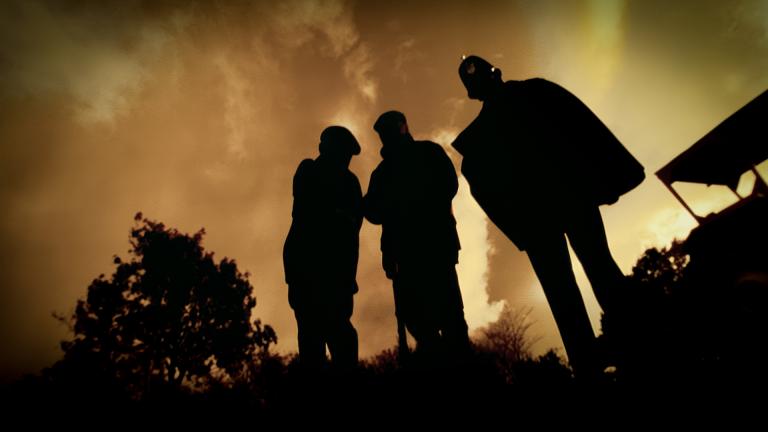
A policeman and two farmers look into a crater in the ground

The Charlton Crater: Did a UFO land in Wiltshire in 1963?

In July 1963, an orange light was seen over Wiltshire and a mysterious crater appeared in a farmer’s field. Here’s the story of the Charlton Crater.

Article written by Craig Lenaghan

Have aliens been secretly visiting the UK? You’d certainly suspect so, given the high number of UFO sightings in this part of the world. Often, though, when a Brit does claim to have had an extraterrestrial encounter, one important thing is conspicuous by its absence: physical evidence.

Sure, many people claim to have seen strange lights in the sky or even ran into creatures thought too freakish to be of this earth. Still, it can often be difficult to simply take these accounts at face value. We need something else, something tangible enough to make the story feel real.

That’s why the tale of the Charlton Crater stands out so much in British UFO lore. In July 1963, farmer Roy Blanchard was shocked to find a mysterious crater in his potato field in Wiltshire. Even the police and military struggled to explain it. As the Sky HISTORY series Britain’s X-Files investigates the mystery, we ask: Has anyone come up with a truly convincing theory?

A jaw-dropping find on a remote farm

In July 1963, a policeman saw a peculiar streak of orange light in the sky above Charlton, Wiltshire. He wasn’t the only local that month to suspect something very strange was afoot. Leonard ‘Len’ Joliffe, a dairyman employed at Charlton’s Manor Farm, was minding his own business when he thought he heard an explosion.

Len’s brother Gordon Joliffe relayed the story when interviewed for Channel 5 documentary The British UFO Files in 2004. ‘He was on his way to work at 6 o’clock in the morning because he was a milker, he worked for Mr Blanchard,’ Gordon explained. Len was reportedly on his bike when he heard ‘this great big bang in the morning, after the huge light in the sky came down’.

Within hours, another of the farmworkers, Reginald Alexander, had stumbled upon a huge, unfamiliar crater where potatoes and barley were usually grown. He called his boss Roy Blanchard to the site. Soon, journalists, scientific investigators and even bomb disposal experts would also be at the scene. What they saw was so extraordinary that it would become known to history as the Charlton Crater.

How large was the Charlton Crater?

Reports have slightly differed over the years, but ufologist Waveney Girvan provided his own dimensions in an article for Flying Saucer Review in autumn 1963. ‘The marks comprised a saucer-shaped depression or crater eight feet in diameter and about four inches in depth. In the centre of this depression there was found a three feet deep hole variously described as from five inches to one foot in diameter.’

Especially strangely, four other, slot-like marks – each ‘four feet long and one foot wide’, according to Girvan – ran out from this central hole. It was like a giant bicycle wheel, complete with spokes, had been pressed into the soil from above. Yes, the soil was bare. There was no sign of crushed potato or flattened barley in the crater itself. It was as if the crops at the impact site had been miraculously vaporised.

What caused the Charlton Crater?

Given how heavily Britain was bombed during World War II, could it be that the crater resulted from an unexploded wartime bomb finally going off? Could there still have been some other dormant explosives lying beneath the soil? The British Army feared so, and sent its bomb disposal unit to investigate. In the event, the team did not find any bombs, or even scorch marks suggesting that an explosion had taken place.

Could the Charlton Crater have been caused by a meteorite? The astronomer Patrick Moore was a forthright proponent of this theory. What looked like a fused piece of metal was found in the crater, seemingly backing up this argument. However, the British Museum analysed the metallic debris and discerned it to be just ordinary ironstone, commonplace in the Wiltshire area.

So, what exactly was it that landed on Roy Blanchard’s farm that fateful morning? The farmer himself was stumped for easy answers, but did suggest a rather eye-opening one. He reflected: ‘The thing was heavy enough to crush rocks and stone to powder. Yet it came down gently. We heard no crash and whatever power it uses produces no heat or noise. I believe that we have received a visit from a spaceship from another world.’

RELATED

WILTSHIRE UFO CRATER AND CROPCIRCLE: 1963
The UFO Encounters Britain Tried to Keep Secret | The British UFO Files

{ https://www.history.co.uk/ }

Hoe vind je dit bericht?
Geschreven door peter om 21:06 Stuur door

Former US Army Sniper Claims Soldier Was Allegedly Killed Fighting Reptilian Beings Near Area 51, His Death Covered Up as Training Accident

Area 51 reptilian encounter

Former US Army Sniper Claims Soldier Was Allegedly Killed Fighting Reptilian Beings Near Area 51, His Death Covered Up as Training Accident

A US soldier was allegedly killed fighting reptilian-looking beings inside an underground facility near Area 51, and his death was later recorded as a training accident. His body was reportedly cremated almost immediately, despite objections from fellow soldiers who wanted to bring him home.

The surviving personnel were allegedly made to sign documents and undergo biometric screening before leaving the facility. The story might have remained unknown if a former US Army sniper had not heard about the incident during an unusual conversation in Poland.

Former Army sniper Nick Betts shared the account during a December 2025 episode of the Liberty Risk podcast. Betts said he learned about the incident from a man who claimed to have participated in the operation while serving in a military squadron based at Fort Bragg, North Carolina. He did not witness the alleged confrontation himself, but claimed that something happened the following morning that made him believe the man was telling the truth.

Betts explained that he had been traveling through Eastern Europe with a small group filming a documentary about the war in Ukraine. Among his companions was a friend who had served in an Army Ranger battalion, along with several other men who had military or security backgrounds. The group had traveled through seven countries, sharing accommodations, meals, and long journeys. According to Betts, everyone had developed a good relationship, and there had been no serious disagreements during the trip.

Nick Betts

Nick Betts

After visiting a refugee camp in Poland, they eventually stopped at a hotel. Betts and his Ranger friend were in their room downloading footage and transferring files onto hard drives when another member of the group arrived carrying four bottles of wine. The conversation began casually, but his Ranger friend, who was interested in paranormal subjects and extraterrestrial life, asked the visitor whether he knew anything about aliens.

The man appeared reluctant to discuss the subject. Betts recalled that he initially refused, but after further questioning, he agreed to share an experience from his military career. Before saying anything, however, he asked both men to hand over their mobile phones. He then placed the phones inside the room’s microwave oven, apparently believing its metal enclosure would prevent the devices from receiving or transmitting electronic signals.

Betts explained that the man was attempting to use the microwave as a makeshift Faraday cage. Although a household microwave is not necessarily a reliable way to prevent electronic surveillance, the precaution was unusual enough to get his attention. The visitor then began describing what he claimed was a classified military deployment that had taken place several years earlier.

According to the man’s account, he had been serving in a squadron at Fort Bragg when his unit was assigned to quick-reaction force duty. Such personnel are expected to remain ready for emergency deployments, sometimes with very little notice. He claimed that he was relaxing at a bar with fellow servicemen when they suddenly received orders to return to base, collect their equipment, and board an aircraft.

What bothered the soldiers was the absence of a normal briefing. They were reportedly given no destination, no explanation of the emergency, and no information about the operation they were being sent to carry out. The man told Betts that this was highly unusual, even for personnel accustomed to classified assignments.

After flying for several hours, the aircraft reportedly landed somewhere extremely hot. Two men approached the arriving soldiers outside a hangar and escorted them into a secure briefing room known as a Sensitive Compartmented Information Facility, or SCIF. It was there that they were allegedly informed they had arrived at Area 51, the restricted military installation in Nevada associated with decades of secret aircraft testing and UFO speculation.

The soldiers were then told that security personnel at an underground installation several miles away had suddenly stopped making their regular radio checks. A quick-reaction team had already been dispatched to investigate, but the military had lost contact with those personnel as well. With both the original security team and the first response group apparently missing, another team was needed to enter the facility and determine what had happened.

The soldiers from Fort Bragg reportedly requested a map of the installation, including its entrances, exits, and internal layout. They also wanted to check the sights on their firearms before beginning the operation. However, they were informed that their regular weapons would not be necessary.

Nick Betts

Nick Betts via Instagram

Instead, the men were allegedly issued unfamiliar weapons that did not use conventional magazines. Betts described them as high-energy weapons, although he could not explain precisely how they functioned or what technology they used. The source apparently gave no technical specifications that could identify the devices. Nevertheless, he claimed the soldiers were instructed to carry these weapons into the installation rather than rely on their usual firearms.

The team reportedly boarded a Black Hawk helicopter and traveled to the underground site’s entrance. Once inside, the soldiers descended through a tunnel before reaching a long hallway with a T-shaped intersection. The man remembered a strong smell resembling sewage or an old sewer system. As they moved farther into the structure, the passage eventually curved around in a horseshoe shape.

The source said the team was advancing through this section when the soldier positioned on the outside left of the formation was suddenly struck directly in the chest. The weapon used against him was reportedly similar to the unfamiliar equipment the soldiers had received before entering the facility. The impact allegedly killed him, and the remaining personnel immediately returned fire.

According to Betts, the attacker was described as a bipedal creature with a mildly reptilian appearance. It had recognizable fingers, walked upright, and was capable of handling the same type of weapon issued to the American soldiers. The team was reportedly told that three such beings were inside the facility, and the surviving soldiers eventually killed all three.

Betts said the description reminded him of the underground military facility depicted in the 1996 film Independence Day. The man reportedly claimed that even his previous experience inside highly secure government buildings had not prepared him for what he saw there.

Betts could not identify the creatures beyond the description supplied by his source. He did not know their origin, what they were doing inside the facility, or whether the military had encountered them before. The source also never gave him an exact number of soldiers involved in the operation. When asked about the team size during the podcast, Betts guessed that approximately six men had participated, but acknowledged that this was only his estimate.

The soldier’s body was then reportedly cremated almost immediately. According to the story, fellow servicemen objected because the deceased soldier was Catholic and they believed cremation went against his personal religious wishes. Although Catholic teaching permits cremation under certain conditions, the objection described by Betts concerned the wishes of the individual soldier. His colleagues were allegedly given little opportunity to challenge the decision.

The source further claimed that the soldier’s death was officially recorded as a training accident. If true, this would mean that the circumstances of his death were concealed not only from the public but potentially from his family. However, Betts did not identify the deceased soldier, provide a date for the operation, or produce a death record supporting the claim.

Before leaving the installation, the surviving soldiers were reportedly required to complete additional security procedures. Betts said they signed documents, had photographs taken of their identification cards, and underwent biometric screening involving their hands and irises. He did not explain whether these procedures were related to ordinary classified-program security, contamination concerns, or something else.

While the alleged operation was extraordinary, Betts admitted that the man telling the story had been drinking wine. He said the man was drunk but did not appear incoherent or incapable of recalling details. At the time, Betts and his Ranger friend were unsure what to make of the account. They had just heard a story involving secret underground facilities, unfamiliar weapons, dead American soldiers, and reptilian-looking creatures, but they had no way to check whether any of it had happened.

The following morning, according to Betts, the group was scheduled to meet in the hotel lobby at approximately 6 a.m. As Betts was heading downstairs, he encountered an older member of the team who had not been present during the previous night’s discussion.

Betts had been told that this older man served in the same squadron as the original storyteller and had participated in the alleged operation. Believing it was simply an unusual story shared among friends, Betts casually mentioned that their companion had suggested the older man knew something about aliens.

The reaction, he claimed, was immediate. The man stopped, grabbed Betts by the neck, and slammed him against a wall. He angrily warned Betts never to discuss the subject again and demanded to know who had told him about it. Betts said he was shocked because the same man had been friendly with him throughout their trip, and there had been no previous hostility between them.

Later that morning, Betts reportedly saw the two men arguing. The person who had originally shared the story then confronted Betts and demanded that he leave the country. According to Betts, neither man would speak to him afterward. He was eventually told to pack his belongings, and the documentary assignment came to an abrupt end.

Betts recalled going back to his hotel room, covering himself with bedsheets and pillows, and calling his wife to tell her he would be returning home earlier than expected. He said the incident cost him several weeks of paid work. He and his Ranger friend were subsequently taken to another location, which Betts described as a black site, before being driven to an airport and flown home from Poland.

On the flight, Betts asked his Ranger friend what he thought about everything that had happened. His friend reportedly advised him to stop discussing the subject. Betts said he might have dismissed the original story as something invented during a night of drinking if the older man had not reacted so aggressively the following morning.

There was another unexpected detail. Betts claimed that the man who threatened him later contacted him through Signal after he returned to the United States, apparently behaving as though their confrontation had never happened. During the podcast, Betts also admitted feeling nervous about discussing the incident publicly because the people involved could potentially recognize the circumstances, even though he had not named them.

Read also:

This story became more interesting because of separate claims made by former US intelligence officer David Grusch. In July 2023, Grusch testified before Congress about allegations involving secret UAP retrieval and reverse-engineering programs. He said his knowledge came from interviews with people he believed were directly involved in those activities, although he had not personally witnessed the recovery of a non-human spacecraft.

Grusch made further claims during an August 2026 appearance on The Dr. Phil Podcast. He said he had personally viewed photographs and videos allegedly showing recovered craft and deceased non-human occupants. According to Grusch, the material had been shown to him by individuals associated with retrieval operations, although he had not personally handled the alleged vehicles or bodies.

Grusch also claimed that some non-human occupants had been recovered alive. He said he knew individuals who had experienced direct interactions with living beings during what he described as detention situations. When asked whether communication with these beings was possible, Grusch said some people reported experiencing a form of consciousness-based communication, something he acknowledged most people would describe as telepathy. He made clear that he had never personally experienced such communication himself.

During the same interview, Grusch estimated that more than 25 but fewer than 100 unusual vehicles had been recovered, while suggesting that some material may have ended up outside normal government control through private defense contractors. He also claimed to know historical locations where documentation, recovered materials, and alleged non-human bodies had been stored. None of this physical evidence was publicly presented during the interview.

It is also important that Betts’s podcast was published in December 2025, nearly ten months before Grusch’s September 2026 interview. This establishes that Betts publicly told his version first, but it does not prove that the accounts are independent of earlier UFO stories or that the men were describing the same event.

Reptilian-looking beings have appeared in other discussions surrounding UAP. In May 2025, theoretical physicist and former Pentagon contractor Dr. Eric W. Davis spoke at a public briefing attended by lawmakers and referred to reports of beings with reptilian appearances among several other alleged types. His comments concerned descriptions he said had come from sources, not biological specimens or physical evidence he presented for independent examination.

Disclaimer: David Grusch did not identify the incident described by Nick Betts as the same event, and neither account has been independently verified.

RELATED

'Area 51 Battle': Army Sniper Claims US JSOC Unit Killed 'Reptilian Beings' In Underground Fight
US ARMY SNIPER CLAIMS REPTILIANS SHOT NEAR AREA 51, MISSING411 ON APPALACHIAN TRAIL & MORE!
The Reptilians at Area 51 Were Never Prisoners — They Were Always Here

{ https://howandwhys.com/ }

Hoe vind je dit bericht?
Geschreven door peter om 20:44 Stuur door

Humanity receives mysterious 'mega-laser' signal from unknown source in deep space

Humanity receives mysterious 'mega-laser' signal from unknown source in deep space

Humanity has received a mysterious signal, described as a 'mega-laser' beam, from a violently merging galaxy more than 8 billion light-years away.

The signal, deemed the most distant hydroxyl megamaser ever detected, was intercepted by the MeerKAT radio telescope in South Africa, which features 64 antennas.

A hydroxyl megamaser is a giant natural laser in space. When galaxies full of gas collide, molecules called hydroxyl smash together and release very strong radio waves. 

These waves behave like a laser, but instead of visible light, they produce radio signals that astronomers can detect with telescopes.

Because these signals are extremely bright, they can be seen from very far across the universe. 

In this case, the object is so powerful that scientists said it may actually be a 'gigamaser,' which is even stronger than a megamaser. 

The system, called HATLAS J142935.3–002836, is so far away that we are seeing it as it looked more than 8 billion years ago, when the universe was less than half its current age. 

Dr Thato Manamela, SARAO-funded postdoctoral researcher at the University of Pretoria and lead author of the new study, said: 'This system is truly extraordinary. We are seeing the radio equivalent of a laser halfway across the universe.' 

Humanity has received a mysterious signal, described as a 'mega-laser' beam, from a violently merging galaxy more than 8 billion light-years away

Humanity has received a mysterious signal, described as a 'mega-laser' beam, from a violently merging galaxy more than 8 billion light-years away 

Manamela added that as the radio waves traveled toward Earth, they were also strengthened by a separate galaxy positioned directly along the line of sight. 

'This galaxy acts as a lens, the way a water droplet on a window pane would, because its mass curves the local space-time,' he said.

'So we have a radio laser passing through a cosmic telescope before being detected by the powerful MeerKAT radio telescope – all together enabling a wonderfully serendipitous discovery.' 

The radio signal contained four separate components, meaning it is coming from multiple regions within the galaxy system. 

At least two of these areas appear to be strongly magnified by gravitational lensing, which makes the signal more than ten times brighter than it would normally appear. 

In this case, a massive foreground galaxy sits between Earth and the distant system. 

Its gravity bends space-time and acts like a cosmic magnifying glass, boosting the brightness of the radio emission. 

This amplification allowed the signal to be detected by the MeerKAT radio telescope even though the source is over 8 billion light-years away. 

Pictured is the galaxy system where astronomers said is the source of the signal

Pictured is the galaxy system where astronomers said is the source of the signal

The signal, deemed the most distant hydroxyl megamaser ever detected, was intercepted using the MeerKAT radio telescope in South Africa (PICTURED), which consists of 64 antennas

The signal, deemed the most distant hydroxyl megamaser ever detected, was intercepted using the MeerKAT radio telescope in South Africa (PICTURED), which consists of 64 antennas

article image

Normally, signals from objects this far away are too weak for telescopes to detect. 

But the powerful radio signal coming from HATLAS J142935.3–002836 was boosted by a rare effect called gravitational lensing, a phenomenon predicted by Albert Einstein.

Gravitational lensing happens when a massive object, such as a galaxy, sits between Earth and a distant source. 

Its strong gravity bends space-time, which changes the path of the light or radio waves traveling through it. 

This makes the distant signal appear brighter and magnified, allowing telescopes like the MeerKAT radio telescope to detect it even from billions of light-years away.

From Earth, this effect can sometimes create a ring-shaped halo of light around the foreground object, called an Einstein ring, named after the famed physicist. 

The same effect also magnifies the distant source, in this case a radio or microwave signal, making it much easier for astronomers to study objects that would normally be too faint to detect. 

RELATED

Mega laser from deep space reaches Earth after billions of years #viral #space #mystery
Unveiling the Mystery: A Mega-Laser Signal from 8 Billion Light-Years Away
Space Just Fired a Laser at Earth From 8 Billion Light-Years Away

{ https://www.dailymail.com/sciencetech/index.html }

Hoe vind je dit bericht?
Geschreven door peter om 20:21 Stuur door

Scientists detect mysterious radio signal in search of alien life

Scientists detect mysterious radio signal in search of alien life

Scientists searching for alien life have picked up a mysterious radio signal.

A Chinese-led team detected it while testing new software on existing data from China’s FAST telescope, the world’s largest single-dish radio telescope.

The signal surfaced in observations of K2-155, a star system about 238 light-years from Earth that hosts three ‘super-Earths,’ including one near its star’s habitable zone

Named NBS 260108, it appeared as a steady radio tone concentrated around a single frequency.

Such narrowly focused signals are a key target in the search for alien technology, because natural cosmic processes rarely produce them while artificial transmitters often do.

The signal stood out because it appeared only in the telescope beam aimed at K2-155, with no corresponding detection in the other 18 beams.

Its frequency also shifted steadily over time, a pattern scientists examine when searching for transmissions from distant technology.

The researchers described the search as addressing ‘one of humanity’s oldest scientific questions - whether intelligent life exists beyond Earth.’

The signal (pictured) surfaced in observations of K2-155, a star system about 238 light-years from Earth that hosts three ‘super-Earths,’ including one near its star’s habitable zone

The signal (pictured) surfaced in observations of K2-155, a star system about 238 light-years from Earth that hosts three ‘super-Earths,’ including one near its star’s habitable zone

But spotting an unusual signal and establishing its source are separate challenges.

‘Candidate generation and candidate interpretation should remain separate,’ they wrote.

In other words, software can identify something worth investigating without establishing what produced it.

The team says future improvements could involve comparing the original recordings from all 19 telescope beams to help determine a signal’s position and motion.

Those additional checks could give researchers stronger evidence for distinguishing transmissions arriving from space from interference generated by human technology or equipment.

FAST’s enormous collecting surface makes it especially sensitive to faint radio signals. 

Built into a natural basin in southwestern China, its dish measures roughly 1,640 feet across and covers an area equivalent to about 30 soccer fields. 

That vast surface gathers weak radio waves from space, allowing researchers to detect signals that smaller telescopes might miss. 

A Chinese-led team detected it while testing new software on existing data from China’s FAST telescope, the world’s largest single-dish radio telescope

A Chinese-led team detected it while testing new software on existing data from China’s FAST telescope, the world’s largest single-dish radio telescope

The new study, published in The Astronomical Journal, tested the software on FAST observations of 33 planetary systems collected in 2021.

Super-Earths are planets larger than Earth but smaller than ice giants such as Neptune and Uranus.

K2-155 was an intriguing target because its outer planet, K2-155d, lies near the star’s habitable zone, where conditions could allow liquid water to exist on a planet’s surface.

The planet is approximately 1.6 times Earth’s radius and completes an orbit around its star roughly every 40.7 days.

‘This system’s habitable-zone super-Earth made it an intriguing SETI [the Search for Extraterrestrial Intelligence] target,’ the team wrote, referring to the search for extraterrestrial intelligence.

One light-year is approximately 5.88 trillion miles - the distance light travels in one year.

Rather than searching for biological clues, the researchers focused on radio transmissions that could indicate technology developed by an advanced civilization.

A distant transmitter’s motion relative to Earth can cause its signal’s frequency to shift over time, creating a drifting track in telescope data.

article image

The signal gradually shifted to a lower radio frequency, like a station slowly moving down the dial. 

Its appearance in only one of FAST’s 19 receiver beams initially made it worth examining. That beam was aimed at K2-155, while the other 18 showed no corresponding detection.

On the researchers’ charts, it formed a thin, slightly slanted streak against the surrounding background. That streak traced how the signal’s frequency changed over time.

FAST recorded it through the receiver beam pointed at K2-155. The telescope’s other 18 beams, which monitored neighboring patches of sky simultaneously, showed no corresponding detection.

The signal also had a distinctive response in the telescope’s two polarization channels, which measure different orientations of radio waves.

It appeared strongly in the channel called YY but was absent from the other, XX. In YY, its signal-to-noise ratio was approximately 23, a measurement of how clearly it stood above the background noise. When the two channels were combined, that measurement was approximately 15.

The observation was part of a September 10, 2021, sequence that also included the stars K2-18, GJ-9066 and Ross 128.

Researchers found other narrow radio features at nearby frequencies during those observations, although their characteristics differed.

 The K2-18 feature was very weak, the GJ-9066 feature barely shifted in frequency, and the Ross 128 feature appeared at a slightly different frequency.

What Happens If Scientists Detect an Alien Signal? #curiosity

{ https://www.dailymail.com/sciencetech/index.html }

Hoe vind je dit bericht?
Geschreven door peter om 18:34 Stuur door

North Atlantic's 'cold blob' may contain climate nuance

North Atlantic's 'cold blob' may contain climate nuance

North Atlantic's 'cold blob' may contain climate nuance

The 965,000-square-mile area in the North Atlantic Ocean south and southeast of Greenland, the so-called cold blob, cooled by as much as 1.8 degrees Fahrenheit over the past century as other ocean waters warmed.  

Credit: NASA.

Climate observers have long tied the strength of a major ocean current to water temperatures in the so-called "cold blob" in the North Atlantic Ocean. The 965,000-square-mile (2.5 million square kilometers) area south and southeast of Greenland cooled by as much as 1.8 degrees Fahrenheit over the past century as other ocean waters warmed.

Some indicators signal that a sustained decline in water volumes in the current, known as the Atlantic meridional overturning circulation (AMOC), is a persistent cause of the blob's lower temperatures. The current's degradation began decades ago, a shift likely influenced by climate change that could reduce oceans' absorption of carbon dioxide and heat, according to a team led by researchers in Penn State's College of Earth and Mineral Sciences.

But they cautioned that the link between AMOC and surface temperatures in the blob, also called the North Atlantic warming hole, is more irregular and complex than previously thought.

As published in the journal Nature Communications, the team found that the diminishing ocean current may impact the North Atlantic climate differently over time, with disparate phases in the relationship between AMOC strength and blob temperatures, said corresponding author Laifang Li, an assistant professor in the Department of Meteorology and Atmospheric Science. The work builds on their finding in 2025 that radiation from the atmosphere helps depress water temperatures.

"With more field data and study, researchers can reduce uncertainty in models that anticipate temperatures and climate patterns in the North Atlantic," Li said, explaining that sustained ocean temperature readings via satellite and related monitoring would benefit this work. "If we can forecast better when these ocean temperatures will reach key thresholds, that will create a clearer picture of the time frame available to develop technology and mitigation policies addressing climate change."

Testing the cold blob connection

Climate researchers regard AMOC as a core piece of ocean circulation and heat transfer—a conveyor belt that moves warm surface water to the north and cold, more dense water to the south in the deep ocean. When the current slows down, the North Atlantic just south of Greenland and Iceland can cool as regions elsewhere warm up.

Common thinking—that a weaker AMOC drives the cold blob—implies the connection between ocean current and North Atlantic surface temperatures is constant over time, according to the researchers. But the assumption is shaky in part because AMOC observations stretch back only about two decades, limiting historical analyses, Li said.

To explore how other factors interact with water temperatures and ocean currents, the researchers made simulations that incorporated a variety of influences, such as greenhouse gases at different concentrations, and climate conditions representing past and present environments. The team analyzed simulations representing a large number of scenarios spanning decades to account for several phenomena: heat transfer within the ocean; heat exchange between the ocean and the atmosphere; and heat radiated from the air, including the effects of low clouds.

AMOC–North Atlantic SST relationship in model simulations. Credit: Nature Communications (2026). DOI: 10.1038/s41467-026-76149-4

AMOC–North Atlantic SST relationship in model simulations.

Credit: Nature Communications (2026). DOI: 10.1038/s41467-026-76149-4

Three phases of ocean cooling

The evaluation found that AMOC's cooling effect on ocean surface water splits into three phases. In simulations where the ocean current weakened from its greatest strength, surface temperatures slipped modestly. When the current weakened from a midrange strength, the surface temperature drop roughly tripled, with the cold blob growing to cover the subpolar basin.

But when the ocean current loses steam beginning from an already diminished state, the cooling effect fades and the cold blob shifts northeast toward Iceland and the Norwegian Sea, the analysis showed. The researchers pointed to variable impacts of heat radiation to and from the atmosphere, as well as reflections from low clouds, as contributing factors.

Once the ocean current weakens enough, the ocean will absorb more heat from the atmosphere and likely approach its capacity to buffer climate change, said Yifei Fan, lead author on the paper and doctoral candidate in the Department of Meteorology and Atmospheric Science.

"Climate models predict the ocean current will trend toward a weaker state in the future," Fan said. "This is concerning: If we cross the threshold into a new phase of ocean current behavior, how the North Atlantic uptakes heat will diverge from the AMOC patterns we know now. It would mean more uncertainty in the ocean surface temperatures, ocean currents and effects on climate and weather."

An uncertain timeline for the cold blob

In particular, modeling suggested AMOC will decline from its higher-strength phase today to its lowest-strength phase by the year 2100. Timing of the cold blob's most significant temperature shift could be as late as 2067, or it could have been as early as 2021, the researchers said.

Simulations also suggested earlier peaks in ocean temperature change would correspond to an earlier disappearance of the cool patch. The researchers emphasized that ocean temperatures alone don't prove ocean current activity, and that variation in those temperatures doesn't necessarily signal a collapse of AMOC. Some predictions suggest the current's prolonged demise could lead to chillier winters in North America and Europe.

"We're not saying that AMOC will vanish. We're setting a foundation to understand nuanced interactions among ocean surface temperatures, ocean currents and other environmental forces," Li said. "More study and sustained Earth system monitoring will inform more revealing assessments of changes in the coupled ocean-atmosphere system, such as the points when the ocean absorbs heat from the atmosphere and then releases that heat."

Future research should narrow predictions for the cold blob and help scientists forecast ice conditions in Greenland, which influence oceanic and atmospheric activity, according to Fan.

"By reducing the range of scenarios, we can establish higher confidence and less ambiguity in predicting North Atlantic climate change," Fan said.

Publication details

Journal information:

RELATED

Cold Blob Warning: Ocean’s Hidden Alarm 🌊 #Shorts
The Sky Got Stuck Again — Scientists Say The AMOC Cold Blob Is Now The Reason Why
Atlantic Ocean ‘Cold Blob’: The Hidden Force Behind 2026’s Wild Weather!

{ https://phys.org/ }

Hoe vind je dit bericht?
Geschreven door peter om 18:08 Stuur door

Hubble Space Telescope photos that show the universe in stunning detail

Hubble Space Telescope photos that show the universe in stunning detail

Story by Ron Winkler
Hubble Space Telescope photos that show the universe in stunning detail
©ALot.com
Hubble Space Telescope photos that show the universe in stunning detail
The Hubble Telescope has been a staple of space exploration since the 1990s. That’s a long time, but it goes back even further. It was originally conceived in the ‘40s, but it took decades to make dreams a reality. Unfortunately, it hasn’t been a smooth ride along the way.
One of Many Repairs
©(Image via NASA)(https://images.nasa.gov/details-9401031)
One of Many Repairs

Remember the 1993 mission to repair the shuttle? Astronauts are required to go into space to fix it. While up there, the Hubble captured this amazing photograph. Here we see astronauts Story Musgrave and Jeffrey Hoffman conducting repairs. It took these two, five other astronauts, and an entire crew on the ground (along with several aids) to get the job done.

Over the course of the Hubble's space ride, astronauts have been sent up five times for various repairs. The tasks generally take anywhere from three to five days, but the Hubble isn’t ready to go after that. It still takes a ridiculous three months before it is even active again. Still, it’s usually worth it.  

The Rose Galaxies
©(Image via NASA)(https://images.nasa.gov/details-GSFC_20171208_Archive_e001885)
The Rose Galaxies

Galaxies are amazing to look at, but these two? Talk about photogenic! These two galaxies are known as UGC 1810 and UGC 1813. Yeah, that’s pretty boring, and we prefer the common name – the Rose Galaxies. The larger of the two is pulling the smaller into its gravitational pull, forming what looks like a flower.

The galaxies are comprised of super bright and young blue stars, which helped the Hubble spot it originally. It's uncommon for two galaxies to interact this way. Eventually, the smaller galaxy will likely be consumed and overwhelmed by the larger one, but we can just enjoy the view until then.

The Death of Stars
©(Image via NASA)(https://www.nasa.gov/feature/goddard/2021/hubble-captures-giant-star-on-the-edge-of-destruction)
The Death of Stars

No, not the Death Star! Although, it does look a little like the Death Star when it exploded in Star Wars. Scientists call this star the “celebrity star” because it’s one of the brightest in our entire galaxy. Behind all the gas and space dust lies a slightly sadder story of a star struggling to survive.

The star is waging a tug-of-war between gravity and radiation to avoid self-destruction, but it’s losing the battle. It’s a rare type of star that epitomizes “live fast, die young.” Compared to our sun (which will survive around 10 billion years), this one will only last a few million years at best.

The Next Tool Album Cover?
©(Image via NASA)(https://images.nasa.gov/details-PIA14442)
The Next Tool Album Cover?

To us, this looks like a creepy eye that’s staring at Earth from space – excuse me while it replaces my sleep paralysis demon. The reality of the situation isn’t much better. This is a young planetary nebula that was created after the death of a Sun-like star. That raises the question: is this what our sun will look like one day?

Thankfully, that isn’t something we need to think about any time soon. Our sun will last around five billion more years, which is when the hydrogen will begin to run out. The good news is that our sun is in the most stable part of its life cycle since the birth of our solar system.

The Force Awakening
©(Image via NASA)(https://images.nasa.gov/details-PIA16022)
The Force Awakening

The birthing of a new star isn’t a calm thing. It’s turbulent and violent, but all that activity is what lights up our night skies. In this image, the Hubble spotted a dark cloud of dust that surrounds a newborn star. The baby star is shooting out two huge twin jets into space, announcing that it's there.

We better keep this reveal a secret or gender reveal parties are gonna get more extreme. In all seriousness, it’s easy to see how stunning and brutal the birth of a new star can be. It takes a ton of hydrogen to burn that bright, and a star like this? Well, it could blow through it’s reserves pretty fast burning like that!

RELATED
4K Space Journey | Best Hubble Space Telescope Photos #space #spacephotos #hubble
Hubble Spotted a Galaxy Within a Galaxy
The video showcases a curated series of Hubble Space Telescope images, explaining the science and history behind remarkable cosmic objects. Highlights include detailed portraits of NGC 4449’s starburst activity, gravitational lensing in galaxy clusters like Abell 2218, unusual galactic structures such as NGC 1512 with a companion embedded inside, and the vast Andromeda mosaic resolving 200 million stars to study its collisions and evolution. It also explores stellar phenomena from protostars and planetary nebulae to supernova remnants, massive star clusters like those in the Tarantula Nebula, and rare events such as kilonova explosions—offering insights into star formation, galactic interactions, and the dynamic processes shaping the universe.
The Extraordinary Things Hubble Has Seen | 100 Incredible Images Of The Universe Montage (4K UHD)
The Hubble Space Telescope, launched in 1990 and orbiting above Earth’s atmosphere, has captured over a million detailed observations of the universe. Its colorized images reveal phenomena from star birth to distant galaxies, advancing scientific understanding and inspiring public interest, making it one of history’s most influential astronomical tools.
Hoe vind je dit bericht?
Geschreven door peter om 16:19 Stuur door

Cosmic rays could scar the heart, raising risks for Mars-bound astronauts, rat study hints

Cosmic rays could scar the heart, raising risks for Mars-bound astronauts, rat study hints

Rats that were exposed to radiation similar to what Mars-bound astronauts might face showed higher levels of scar tissue in their hearts, indicating they were more vulnerable to heart failure.

A person wears a spacesuit on another planet.

An illustration of an astronaut on Mars. Exposure to cosmic radiation on a Mars-bound flight could affect astronauts' long-term heart health, new research suggests.
(Image credit: piranka via Getty Images)

Exposure to space radiation may increase astronauts' risk of a dangerous heart condition, a new study in rats hints.

The research, published Sept. 30 in the journal PLOS One, found that rats exposed to levels of radiation similar to what an astronaut might experience on a long-term trip to Mars developed more scar tissue around the small blood vessels of their hearts than rats that were not exposed to this radiation. This scar tissue is indicative of a condition known as cardiac fibrosis, which is known to increase the risk of heart failure.

This scar tissue was observed nearly a year after the rats were first exposed to the radiation.

But since this study was in rats, it cannot definitively say whether this effect will play out in humans. For example, given that humans have a longer life expectancy than rats (80 years versus 2 to 4 years), the effects seen in rats may take around 30 years to show up in humans. However, the study authors say the research highlights the importance of following astronauts' health long after they return to Earth.

"The message that we try to convey … is that the follow-up time is really important," study co-author John Baker, a professor of surgery in the Radiation Bioscience Laboratory at the Medical College of Wisconsin, told Live Science. "When astronauts come back to the Earth, they expect ‪—‬ and we expect ‪—‬ that they're going to live for a long time. I think we have to be wary that they could well develop at least some type of cardiac disease."

You may like

How space radiation affects the heart

The link between exposure to radiation and cardiac issues has been well documented. However, "no astronaut has ever been exposed to galactic cosmic radiation for long periods of time," Baker said, which makes it difficult to determine exactly how space radiation affects the heart.

Although Baker and his team previously pinpointed cardiac issues among rats exposed to radiation, this new study utilized NASA's Simulated Galactic Cosmic Ray Simulation (SimGCRSim). This new simulator provides a more precise comparison of the levels of space radiation an astronaut might experience while exploring deep space for more than a year.

During the study, the researchers exposed rats to several minutes of radiation proportionate to their size, similar to what they might experience on a trip to Mars and back (a roughly 18-month round trip, with current technology). Some of the rats' hind legs were suspended, to "simulate conditions of weightlessness," Baker said.

After 360 days, the rats that were exposed to cosmic radiation developed twice as much scar tissue around the heart's small blood vessels than unexposed rats. This buildup of scar tissue means "the heart can't relax to the point when it needs to," thereby increasing the risk of heart failure, Baker said.

This effect was not seen in the rats who were exposed only to simulated weightlessness, confirming "it was only the radiation that produced the damaging effect on the heart," Baker said. However, long-term testing revealed that this group of rats had lower levels of key immune cells, suggesting that microgravity also may affect aspects of long-term health. (Numerous studies have shown various short-term health impacts related to microgravity.)

What to read next

This study "is a very valuable contribution to space biology," Rupak Pathak, an associate professor of pharmaceutical science at the University of Arkansas for Medical Sciences who was not involved in the study but holds a doctorate in radiation biology, told Live Science. While rats and humans have clear differences, "they share more than 90% of genetic information," he said, as well as very similar cardiac systems.

Given that the study authors were able to expose the rats to radiation only once, Pathak would like to see further experiments exploring whether chronic radiation exposure affects the function of the heart and other vital organs.

Baker and his colleagues hope that future experiments can be used to help NASA implement safeguards for astronauts on long-term missions, such as providing astronauts heart medications or improving shielding for the spacecraft.

"The more we know before we start, then the better NASA is going to be at working out what types of countermeasures can be developed," said Baker.

Article Sources
  • Lenarczyk, M., Kronenberg, A., Kwok, A., Borg, A., Alsheikh, A. J., Mathison, A. J., Zimmermann, M. T., Lawton, S. B. R., Raff, H., Willey, J., Komorowski, R. A., Urrutia, R., & Baker, J. E. (2026). Multiple simulated spaceflight stressors impact cardiac fibrosis, calcium dynamics, immune function, cytokines and gene variants in rat, Rattus norvegicus. PLoS ONE, 21(9), e0357485. https://doi.org/10.1371/journal.pone.0357485
RELATED
Mars Radiation Could Cause Long Term Heart Damage #breaking
Unveiling the Scary Truth About Galactic Cosmic Rays | How the Universe Works | Science Channel
The Real Reason Sending Humans to Mars Keeps Getting Worse

{ https://www.livescience.com/space/space-exploration }

Hoe vind je dit bericht?
Geschreven door peter om 22:15 Stuur door

Will disclosure come from the sea? Newly released Catalina Island files raise UAP questions about alien life

Will disclosure come from the sea? Newly released Catalina Island files raise UAP questions about alien life

UFO researcher and filmmaker Mark Christopher Lee believes newly released UAP files documenting unexplained sightings over California's Catalina Island could support the theory that answers about alien activity may lie beneath the ocean rather than in the skies.

UFO investigator Mark Christopher Lee

UFO investigator Mark Christopher Lee

UFO researcher and filmmaker Mark Christopher Lee believes alien disclosure could come from what has been lurking under the sea.

Lee has highlighted recently released Department of War files from PURSUE Release 07 that document a cluster of UAP reports over Catalina Island, California, between 1949 and 1955.

Lee, who has made a series of documentary films about alien life, including The Rendlesham UFO: The British Roswell and The King of UFOs, argues these historical cases, combined with long-standing USO activity off the California coast, strengthen the case that meaningful disclosure may ultimately emerge from the ocean rather than the sky alone.

The Release 07 documents include Air Intelligence Information Reports and unresolved case files detailing silver "flying saucers" observed by Boy Scouts near Camp Fox in 1952, described as moving faster than a conventional jet before climbing and apparently disintegrating; a 1953 sighting of a round purplish-white object that remained stationary before heading northwest towards Los Angeles; and an earlier report of multiple objects seen singly over the island in 1949. The reports remain unexplained, although the 1953 file lists Jupiter as a possible explanation and the 1949 report states there was insufficient data for evaluation.

He said: "These Catalina files aren’t isolated curiosities. They sit in one of the most active stretches of water for USO reports on the planet. While the public focuses on the recent silent black triangle sightings, the older Catalina material points to something that has been operating in and around the ocean for decades. We’ve spent seventy years looking up. The real answers may be under the waves.”

2024_09_12__bsalscplg_1726137368cropped3024x1965.webp

Lee drew a direct connection to the ongoing work of retired US Navy Rear Admiral Tim Gallaudet, former acting NOAA Administrator and Oceanographer of the Navy.

Gallaudet has publicly argued that some UAP activity involves transmedium craft operating in both air and water and has testified about the seriousness of the phenomenon. He has also described proprietary high-resolution bathymetric surveys in the Atlantic that a research team believes contain features corresponding to Plato's account of Atlantis. However, the location and underlying data have not been made public, and there has been no independent confirmation that the features are linked to Atlantis.

Lee continued: "Gallaudet brings institutional credibility to what many of us have argued for years: the ocean is not a side note in the UAP question - it may be central. If his team is mapping sites that align with ancient descriptions while the government is releasing decades-old Catalina reports that never got properly investigated, the two threads are pointing in the same direction. Disclosure might not arrive as a press conference about the sky. It might arrive when we finally start looking seriously at what’s under the water.”

Lee noted that previous AARO historical reviews found no confirmed evidence of extraterrestrial technology, and that the Catalina cases, like other unresolved UAP reports, remain subjects of uncertainty. AARO's 2024 historical report found no evidence that any US government investigation or official review had confirmed a UAP sighting represented extraterrestrial technology, while noting that many reports remained unresolved.

He has called for independent oceanographic and archival follow-up on the Catalina cluster, greater attention to USO data, and transparency around any government or private surveys of anomalous underwater features.

  • The full PURSUE Release 07 files are available at war.gov/UFO.

RELATED

What was Really SEEN Over Catalina Island - What Witnesses Reported
UAP hotspot Catalina Island: Alien bases under the ocean? | Reality Check

{ https://bangpremier.com/feeds/top-stories/MzQ0LDM0NQ== }

Hoe vind je dit bericht?
Geschreven door peter om 21:55 Stuur door

‘Absolute Acoustic Silence’: Triangular UFO Spotted by Federal Agents

‘Absolute Acoustic Silence’: Triangular UFO Spotted by Federal Agents

A newly released report says the craft "was executing a slow, controlled, perfectly vertical ascent directly over the ridge line."

A visual representation of an unidentified flying object released by the FBI on Oct. 23, 2026, with a red circle annotation by Gizmodo

A visual representation of an unidentified flying object released by the FBI on Oct. 23, 2026, with a red circle annotation by Gizmodo

© FBI

Earlier this year, federal agents somewhere in the western U.S. observed a mysterious triangular aircraft hovering over an unnamed site that’s sensitive to national security, according to new documents released by the Pentagon. The matte black craft was completely silent and zipped around as fast as a fighter jet, according to a witness, who described it as “resembling a delta wing drone.”

The craft was estimated to be somewhere between 13 and 15 feet in wingspan with a 6-9 foot fuselage length, according to the Department of Defense document made public Friday. The vertical thickness of the craft was estimated to be, at most, just one or two feet, according to the Department of Defense.

“The unidentified craft maintained a completely fixed horizontal alignment [which] did not tilt, sway, or wobble during the controlled vertical ascent of approximately ten seconds,” the DOD report explains. “It climbed to an altitude of an estimated 200 to 300 feet above the local ridge line. Upon reaching this altitude, the craft instantaneously arrested all vertical motion and entered a stable hover for an estimated twenty seconds.”

The craft then “transitioned from a zero-velocity state directly into high-speed horizontal flight,” and managed to execute “a fluid banking maneuver and terrain-hugging descent into a canyon drainage in approximately two to three seconds.” The report notes that once the craft was banking, its “silhouette appeared to flatten and present as a more triangle.”

The FBI report on the incident includes nine images, which feature landscape photos and a black triangle that moves when they’re viewed together as though part of a flipbook. The report doesn’t indicate whether the images are authentic photos or artistic renditions.

Image from an FBI report showing a black triangular shape representing a UAP spotted sometime this year. Image from an FBI report showing a black triangular shape representing a UAP spotted sometime this year. © FBI Image from an FBI report showing a black triangular shape representing a UAP spotted sometime this year. Image from an FBI report showing a black triangular shape representing a UAP spotted sometime this year. © FBI Image from an FBI report showing a black triangular shape representing a UAP spotted sometime this year. Image from an FBI report showing a black triangular shape representing a UAP spotted sometime this year. © FBI Image from an FBI report showing a black triangular shape representing a UAP spotted sometime this year. Image from an FBI report showing a black triangular shape representing a UAP spotted sometime this year. © FBI Image from an FBI report showing a black triangular shape representing a UAP spotted sometime this year. Image from an FBI report showing a black triangular shape representing a UAP spotted sometime this year. © FBI Image from an FBI report showing a black triangular shape representing a UAP spotted sometime this year. Image from an FBI report showing a black triangular shape representing a UAP spotted sometime this year. © FBI Image from an FBI report showing a black triangular shape representing a UAP spotted sometime this year. Image from an FBI report showing a black triangular shape representing a UAP spotted sometime this year. © FBI Image from an FBI report showing a black triangular shape representing a UAP spotted sometime this year. Image from an FBI report showing a black triangular shape representing a UAP spotted sometime this year. © FBI Image from an FBI report showing a black triangular shape representing a UAP spotted sometime this year. Image from an FBI report showing a black triangular shape representing a UAP spotted sometime this year. © FBI

Gizmodo ran the images through SynthID.com, which is used to detect invisible watermarks when an image is made with AI image tools from OpenAI and Google. The images did not contain the SynthID watermark, though they could have been made with a different company’s tools or made with basic Photoshop-style editing software.

“The two primary witnesses reported no physiological effects,” the report explains. “There were no reports of (but not limited to) disorientation, nausea, headache, dermal sensation, visual disturbance, memory gap, or other anomalous sensory phenomena. No anomalous odors were noted. No electromagnetic interference, signal degradation, or anomalous sensor readings were recorded on personal or agency equipment.”

The newly released reports are part of periodic Pentagon releases related to unidentified anomalous phenomena (UAPs), more commonly known historically as UFOs. The first releases were broadly hyped, but they’ve rendered very few answers about the central question: Are these aircraft otherworldly or simply high-tech advancements from near-peer geopolitical adversaries like China?

RELATED

New Pentagon UFO Files: Federal Agents Report a Silent Black Triangle
Federal Agents Saw a Silent Black Triangle. The Pentagon Just Released the File.
Trump Releases UFO Files: The Silent Triangle America's Agents Couldn't Explain

{ https://gizmodo.com/tech/transportation }

Hoe vind je dit bericht?
Geschreven door peter om 21:24 Stuur door

Steven Spielberg Thinks UFOs Might Just Be Humans Travelling Back From 500,000 Years In The Future

Steven Spielberg Thinks UFOs Might Just Be Humans Travelling Back From 500,000 Years In The Future

In his 2023 interview with Stephen Colbert, the filmmaker considered future humans returning to study their own history

Steven Spielberg speaking at San Diego Comic Con International

Steven Spielberg discussed UFOs, extraterrestrial life and the possibility of future human visitors during the 2023 TV interview with Stephen Colbert

PHOTO Gage Skidmore/Wikimedia Commons

Steven Spielberg speculated in a 2023 interview with Stephen Colbert on The Late Show that UFOs could be humans travelling back from 500,000 years in the future to study their own history.

The conversation addressed reports of unidentified aerial phenomena, or UAPs, in North American skies. The filmmaker expressed fascination with the sightings and concern about what he regarded as a lack of transparency surrounding them, calling for closer examination of what was happening.

At the time of the interview, Spielberg told Colbert he had never seen a UFO himself. His future humans theory was an imaginative possibility, rather than a claim that he had identified the objects or established evidence of time travel.

Steven Spielberg Imagines Visitors Studying Their Own Past

The filmmaker's suggestion recast the visitors as anthropologists. Instead of arriving from a distant civilisation elsewhere in the universe, they might be human descendants returning to examine the lives of earlier generations.

He imagined people from '500,000 years in the future' documenting the second half of the 20th century and into the 21st century. In that scenario, objects recorded by military cameras would be connected to an investigation of humanity's own past.

'And they know something we don't quite know, yet, that has occurred, and they're trying to track the last hundred years of our history?' he told Colbert.

The proposed reason for returning was historical research. Spielberg's speculation also raised the possibility that those visitors would have knowledge unavailable to the people whose lives they were documenting.

Colbert drew attention to the optimistic implication of that explanation. Under Spielberg's theory, he observed, 'we survive'.

Spielberg qualified that optimism with the suggestion that 'a certain percentage of us survive that allows these other generations to flourish'.

Steven Spielberg Considers Life Beyond Earth

The director of E.T. and Close Encounters also expressed a broader conviction that intelligent life exists beyond Earth. He presented that belief alongside a difficulty he saw in explaining how visitors could cross the distances involved.

'I don't believe we're alone in the universe. I think it's mathematically impossible that we are the only intelligent species in the cosmos. I think that's totally impossible'.

He described a visit from 400 million light-years away as seemingly impossible outside films, unless travellers could find a way to reach Earth through wormholes. Both the distance and the proposed means of crossing it formed part of his speculation.

Spielberg qualified his authority on the subject, telling Colbert, 'I'm not an astrophysicist'.

He approached the discussion as a filmmaker employing his imagination and as someone curious about UFOs. His interest extended beyond the objects themselves to questions about what information had been disclosed.

'I think what has been coming up recently is fascinating, just absolutely fascinating', Spielberg told Colbert.

He called for extraordinary due diligence over the sightings and criticised what he regarded as secrecy surrounding them. Those comments expressed his concerns about disclosure, rather than establishing an explanation for the phenomena.

Steven Spielberg Favours Curiosity Over an Alien Attack

Colbert also framed the discussion through two of Spielberg's films, questioning whether an encounter with extraterrestrial visitors would more closely resemble E.T. or War of the Worlds.

Spielberg favoured the less hostile possibility. His reasoning concerned the motives he imagined for a civilisation capable of reaching Earth, rather than any established account of alien visitors.

'I believe that if any extraterrestrial civilisation has journeyed all the way here its because of curiosity and science and its not about aggression'.

He extended that reasoning to the restraint he imagined such visitors would have exercised.

'And the fact they've been this patient with us and haven't turned the Earth into a burnt-out cinder is extraordinary – you have to applaud them'.

{ https://www.ibtimes.co.uk/world }

Hoe vind je dit bericht?
Geschreven door peter om 20:53 Stuur door

Democrats Reportedly Prepare UFO Disclosure Committee Because Whistleblowers Do Not 'Trust Another President'

Democrats Reportedly Prepare UFO Disclosure Committee Because Whistleblowers Do Not 'Trust Another President'

Indiana Congressman Andre Carson says a key historical UAP report has been delayed for almost two years, though the proposed panel remains conditional and its scope is unclear

Andre Carson

Indiana congressman Andre Carson has questioned delayed UAP records, as Democrats reportedly consider a select committee if they win the US House 

PHOTO US Congress/Wikimedia Commons Public Domain

Democrats are weighing the creation of a UFO disclosure committee in the US House of Representatives if they regain control in the midterm elections, amid claims a key Pentagon report on historical sightings has been held back for almost two years.

Indiana congressman Andre Carson is leading the reported push, arguing that federal records on unidentified anomalous phenomena are overdue for release.

Carson chaired a congressional hearing on unidentified flying objects in 2022. He now argues that efforts to obtain information about unidentified anomalous phenomena, or UAP, have fallen short of requirements already established by Congress. The proposal remains conditional rather than a formally announced committee.

UFO Disclosure Push Focuses on a Delayed Pentagon Report

Carson has singled out a historical records report from the Department of Defense's All-Domain Anomaly Resolution Office, which handles UAP reporting and investigations. He claims the document has been delayed for almost two years, despite legislative requirements intended to improve scrutiny of the subject.

'Unfortunately, the current administration has not been fully transparent on UAP and has slow walked several of the statutory requirements Congress established for UAP disclosure. For example, the Department of Defense's All-Domain Anomaly Resolution Office was established to receive, analyze, and resolve UAP reporting — but it has delayed the release of a key historical UAP record report for almost two years.'

The Indiana Democrat told the Post that the material should address historical sightings, the way incidents were examined and the possible involvement of classified programmes. One question is whether relevant activities were properly communicated to lawmakers, rather than remaining outside congressional oversight.

He described its intended scope as including 'how incidents were investigated, the role of classified programs, and whether relevant activities were appropriately disclosed to Congress.'

Carson did not identify the report by title or specify the deadlines he believes officials missed. Those omissions leave the precise document and the timing of its expected release unclear.

UFO Disclosure Plans Could Sharpen Party Rivalry

Although the proposed panel would depend on Democrats taking control of the House, interest in UAP records is not confined to one party. President Donald Trump has also directed federal agencies, including NASA, to identify and release government files relating to UFOs.

The Post cited unnamed Republican insiders who fear a Democratic select committee could take political credit for disclosures that might otherwise be associated with the Trump administration. Their concern relates to which political figures would oversee and announce any release, not proof that the records contain evidence of extraterrestrial activity.

A caucus and a select committee would also be different initiatives. The reported proposal includes both, but the available account does not establish their membership, formal powers or a schedule for setting them up.

UFO Disclosure Concerns Extend to the Next President

David Grusch, who has appeared on Joe Rogan's podcast, has raised a different concern about the timing. He fears a future president may be less willing to allow the release of information, expressing the view, 'I don't trust another president'.

That is distinct from Carson's stated objection to delays under the current administration. Neither concern establishes what any unreleased document contains, or whether a change in congressional control would compel its publication.

Rogan also questioned the timing of UFO disclosures in May, suggesting that renewed attention to the subject could distract from criticism surrounding the Iran War. His suspicion was not presented with evidence linking any disclosure decision to military events.

For now, Carson's proposed congressional effort depends on an electoral outcome, while the historical report at the centre of his complaint has not been identified by name or accompanied by a confirmed publication date.

UFO Disclosure on the Ballot? Democrats Plan UFO Select Committee After Midterms #Shorts

{ https://www.ibtimes.co.uk/world }

Hoe vind je dit bericht?
Geschreven door peter om 20:34 Stuur door

Democrats plan UFO disclosure committee as Trump trust wanes

Democrats plan UFO disclosure committee as Trump trust wanes

Locked in a big game of disclosure chess.

Blue and red chess pieces locked in UAP disclosure checkmate.

Blue and red chess pieces locked in UAP disclosure checkmate.

Image by Cybernews.

Marcus Walsh  - Journalist

Key takeaways

Unfortunately, the current administration has not been fully transparent on UAP and has slow-walked several of the statutory requirements Congress established for UAP disclosure,
said Andre Carson (Indiana Democrat.)

A UFO flying through the c̶o̶s̶m̶o̶s̶ chromosomos.

A UFO flying through the cosmos.

Image by Cybernews.

“I don’t trust another president”

Both parties as bad as each other

Let me guess, if they get in power they will blame the opposition for halting progress, and if the opposition gets in power they will blame them.
reddit bipartisan
Trump's disclosure & UFO transparency | Backscroll

{ https://cybernews.com/ }

Hoe vind je dit bericht?
Geschreven door peter om 18:44 Stuur door

Number of mysterious drones flying over defence bases rises as authorities in the dark

Number of mysterious drones flying over defence bases rises as authorities in the dark

Authorities are in the dark about who is behind the major jump in the number of unidentified drones flying over Australian Defence Force bases in what has been described as a national security threat.

Defence officials told a Senate committee the reports of unidentified drone sightings over bases have risen from 19 in 2022-23 to 204 in 2025-26.

ec4a96e2efcf81260c4cdb61ce6059bddd5b6161
Classic Hornets take of at Williamtown RAAF base for operation in 2014. Several unidentified drones breached the base’s airspace earlier this year.
Ryan Osland

These added to a total of about 420 sightings over the past four financial years.

In the financial year to date, which started on July 1, there has already been 42 reports.

Asked how many of the incidents were just “a silly teenager” and how many were foreign interference or espionage, the defence officials were unable to say.

“I can say we’re working really closely on the motivations,” the official said.

“We haven’t identified particular high-end concerns but we are very concerned that this is a growing challenge.”

Australian Strategic Policy Institute defence expert Malcolm Davis said the rising number of unidentified drones was “absolutely” a national security threat.

“The risk is there’s not so much some amateur flying a drone over a base creating an incident,” he said.

“It’s the possibility that you could have a foreign adversary or a terrorist organisation utilising drones to actually attack one of our bases.”

The Williamtown RAAF Base, home to fighter jets and aircraft about 30km north of Newcastle in NSW, made headlines after unidentified drones were found to have breached the restricted airspace on two separate occasions in July and August.

Defence personnel did not shoot the drones down and investigations are still ongoing to determine their origins.

Defence officials flagged the current legal framework was “not straightforward” about their powers in responding to these incidents.

Davis said the incident showed how easy it could have been to damage aircraft and infrastructure and pointed to Ukraine’s Operation Spiderweb.

The covert military operation had caused damage to multimillion-dollar Russian military assets after cheap drones were unleashed in a surprise attack in July 2025.

“Drones are cheap. They can be armed with explosives. They can do real damage,” Davis said.

At the time of the Williamtown base incident, Prime Minister Anthony Albanese said it was “unsafe and dangerous” to have drones around defence airspace.

d31fbfde869a87cad3ba717463b65fc267aa420d
While small and relatively cheap, drones can cause significant damage and have become a defining feature of the war in Ukraine. 
AP Photo/Efrem Lukatsky

“It makes no sense for that to occur,” he said.

Legislation to grant defence members the ability to shoot down any unidentified drones was introduced in October.

Shadow defence minister James Paterson said it should not have taken so many months of pressure for the federal government to finally act and bring forward those reforms.

“The Coalition has been raising the alarm on drone attacks on our major defence infrastructure for many months, particularly our RAAF bases,” he said.

Australia will spend a record $425 billion over the next decade to overhaul the defence force.

About $22 billion has been spent on counter-drone technology and $7 billion on counter-drone investment over the decade.

Davis called on the federal government to fast-track its investment into counter-drone defences.

“At the , I think that we’re only just starting to wake up to this threat and the government is moving way too slowly to remomentspond to this threat,” he said.

“We don’t have 10 years to think about a capability solution and then buy it. We’ve got to get this in place within 12 months.”

In a statement, an Australian government spokesperson said “modern threats demand modern laws”.

“Protecting Defence personnel, critical infrastructure and sensitive capabilities has never been more important.

“The legislation builds on the Albanese government’s previous regulatory changes and provides Defence with enduring authority to respond to drone incursions.

“Defence must be able to protect its people, bases and capabilities against a range of rapidly evolving threats.”

US SECURITY ALERT | Unidentified Drones Detected Over US Army Base Near Top Officials’ Residence
Hoe vind je dit bericht?
Geschreven door peter om 18:05 Stuur door

Ariyuanhas & Adrieiuous — The Alleged Pleiadian Prisoner Photographs — United States — 1972

Ariyuanhas & Adrieiuous — The Alleged Pleiadian Prisoner Photographs — United States — 1972

Ariyuanhas & Adrieiuous — United States — 1972

In 2010, YouTube user startraveler2000 uploaded a video titled “real human aliens” showing a series of photographs said to depict two human-looking extraterrestrials named Ariyuanhas and Adrieiuous.

The pair were described as a woman and her son from the Pleiades who had allegedly been taken into United States military custody in 1972.

The photographs were describeed as being taken by a military intake specialist.

Ariyuanhas was identified as the adult woman shown throughout the photographs. According to the account, she was between 78 and 100 years old in Earth years, although she appeared to be approximately 30.

She was described as having very light blue eyes, large pupils and slightly pointed ears. Material associated with the case identified her as a scientist and gave her origin as the Pleiades constellation.

The story stated that Ariyuanhas and her son had arrived on Earth after their spacecraft made an emergency landing while they were searching for Adrieiuous’ father. The pair were allegedly intercepted by the United States military and taken to a secret facility, where they were held separately.

During her confinement, Ariyuanhas reportedly stopped speaking and eating, although she continued to drink water. She allegedly did not request to see her son because the two were capable of communicating telepathically.

The inscribed text box reads:

SPECIES: HUMAN/CELEST
GENDER: FEMALE
STATS: 7FT-3IN/143LBS/BLUE EYES/
AGE: 78-100
LOCATION: BLOCK 9, CELL 16, BLK-SPY
ORIGIN: PLEIADES CONSTELLATION
THREAT LEVEL: NON THREATENING
LANGUAGE: NON VERBAL COMM
TITLE: SCIENCE
DATE OF CUSTODY: 05121972
CRAFT: MURCURY/STA-ELECT/DISK
REG NUMBER: 5127209016

The Arm Markings

One of the most distinctive elements in the surviving material is a series of dark markings visible across Ariyuanhas’ left forearm.

According to the accompanying account, the symbols represented a constellation of stars.

Adrieiuous

Adrieiuous was identified as Ariyuanhas’ son and appears separately in the surviving photographs.

He was described as being between 19 and 28 years old, despite physically resembling a boy of approximately eight to ten. Unlike his mother, Adrieiuous reportedly spoke with guards, ate food and participated in testing.

The story claimed that an intelligence test produced a score of approximately 210.

The pair were said to have remained in custody for approximately two years before eventually being permitted to leave in their spacecraft.

The inscribed text box reads:

SPECIES: HUMAN/CELEST
GENDER: MALE
STATS: 5FT-11IN, 89LBS, BLUE EYES
AGE: 19-28
LOCATION: BLOCK 9, CELL 15, BLK SPY

Detention Information

A custody date of 05.12.1972 was associated with the case. The surviving material does not establish whether this was intended as May 12 or December 5, 1972.

A later summary of the same account listed Ariyuanhas as approximately 2.22 meters tall, with blue eyes and an apparent age in her early thirties, while Adrieiuous was listed as approximately 1.56 meters tall and physically resembling an eight- to ten-year-old child. The same summary repeated the claim that the two had been held separately and communicated telepathically.

Provenance

The earliest source currently located for the photographs is the YouTube video “real human aliens,” uploaded by startraveler2000.

No identified photographer, original negatives, military archive, authenticated detention records or earlier publication of the photographs has been located.

The identities of the people shown in the photographs remain unverified.

Ariyuanhas y Adrieiuous de las Pléyades

{ https://alienarchivist.substack.com/ }

Hoe vind je dit bericht?
Geschreven door peter om 17:37 Stuur door

Steven Greer’s CE-5 Alien Photographs — Andromedan Ambassador “Bijou,” the Light Being, the Mt. Shasta Being & the Healer — 2009–2017

Steven Greer’s CE-5 Alien Photographs — Andromedan Ambassador “Bijou,” the Light Being, the Mt. Shasta Being & the Healer — 2009–2017

Steven Greer

Steven M. Greer is an American physician and UFO researcher who founded the Center for the Study of Extraterrestrial Intelligence (CSETI) in 1990. He later established the Disclosure Project, focused on testimony concerning UFOs and alleged extraterrestrial activity.

Greer also developed the CE-5 contact protocols, intended to facilitate human-initiated contact with extraterrestrial intelligence. During CSETI and CE-5 expeditions, Greer and members of his groups have produced several photographs claimed to show extraterrestrial beings.

Bijou — November 17, 2009

During a CSETI expedition at Joshua Tree National Park, California, on November 17, 2009, CSETI member Raven Nabulsi photographed an area beside the group’s chairs at approximately 11:31 p.m.

CSETI released the photograph publicly in 2010, describing the figure as an extraterrestrial being encountered during the contact event.

The original account did not identify the figure as Bijou or describe it as Andromedan. Greer later presented the same figure as “Bijou,” an ambassador from the Andromeda Galaxy.

https%3A%2F%2Fsubstack-post-media.s3.amazonaws.com%2Fpublic%2Fimages%2F037b0e4b-e7ad-4cb4-b956-39ed54e1142f_2848x2136.png

https%3A%2F%2Fsubstack-post-media.s3.amazonaws.com%2Fpublic%2Fimages%2F3ac15fab-faa8-4efa-a654-d3a8820ffc65_1920x961.png

https%3A%2F%2Fsubstack-post-media.s3.amazonaws.com%2Fpublic%2Fimages%2Fea1cb042-410c-4f43-b613-a419a9cc53ae_1920x961.png

https%3A%2F%2Fsubstack-post-media.s3.amazonaws.com%2Fpublic%2Fimages%2F20cba904-c73f-4d98-96f8-d2d55dc73c9c_1920x952.png

https%3A%2F%2Fsubstack-post-media.s3.amazonaws.com%2Fpublic%2Fimages%2Fa43b8801-ac9e-46f7-b85a-6fc1ba2b6b0b_1920x956.png

https%3A%2F%2Fsubstack-post-media.s3.amazonaws.com%2Fpublic%2Fimages%2F8d211b01-fbad-4026-8eae-e27ce131ff8b_973x970.png

https%3A%2F%2Fsubstack-post-media.s3.amazonaws.com%2Fpublic%2Fimages%2Fac7e5241-4dae-4686-8d60-5ee34b4192a9_1920x1080.png

https%3A%2F%2Fsubstack-post-media.s3.amazonaws.com%2Fpublic%2Fimages%2F468e3e62-242e-468a-9d30-2c97f7984014_1920x1080.png

https%3A%2F%2Fsubstack-post-media.s3.amazonaws.com%2Fpublic%2Fimages%2F658493f5-e7a2-4234-90e9-05c65b5b9af5_1920x1080.png

The Light Being — February 2010

In February 2010, CSETI member Emery Smith photographed a small luminous humanoid-shaped figure during a contact event at Boca Grande, Florida. The image became known as the “Light Being” and was also catalogued in Greer’s archive as a “Crystalline ET.”

The photograph was subsequently included among the CE-5 and extraterrestrial photographs presented through Greer’s organization.

https%3A%2F%2Fsubstack-post-media.s3.amazonaws.com%2Fpublic%2Fimages%2F8080bc05-6948-4aea-a231-599566eb4b72_854x480.jpeg

The Mt. Shasta Being — 2011

Another alleged entity photograph was presented by Greer from a CE-5 event at Mt. Shasta, California, in 2011.

Greer later displayed the photograph while discussing alleged extraterrestrial contact during CE-5 events.

The surviving presentation identifies the location and year as Mt. Shasta, California — 2011. The photographer is not identified in the source material currently located.

https%3A%2F%2Fsubstack-post-media.s3.amazonaws.com%2Fpublic%2Fimages%2F7a070348-ca18-47a8-be0a-f24f1fe44581_930x956.png

https%3A%2F%2Fsubstack-post-media.s3.amazonaws.com%2Fpublic%2Fimages%2F0e641d8e-1206-4cec-b291-a542846a5442_1912x955.png

The Healer — May 2017

A third alleged entity was photographed by David Marconi, the screenwriter and director known for writing Enemy of the State, during a CE-5 expedition near Oracle, Arizona, held from May 23–29, 2017.

According to Greer, Marconi had a Nikon camera mounted on a tripod when the group noticed what appeared to be a red orb near an older man seated in the contact circle. Greer asked Marconi to photograph the area.

https%3A%2F%2Fsubstack-post-media.s3.amazonaws.com%2Fpublic%2Fimages%2F45078c47-739c-4178-92c6-994473662b6d_980x1728.png

Greer described the figure as having a large head, a beak-like nose and mouth, and what appeared to be a feathery garment. He said members of the group had heard the entity moving behind them despite not seeing it with the naked eye.

Greer referred to the entity as “The Healer,” stating that it had allegedly appeared during other encounters. He also claimed that the older man photographed beside it had suffered severe hearing loss since his youth and awoke the following morning with his hearing restored

https%3A%2F%2Fsubstack-post-media.s3.amazonaws.com%2Fpublic%2Fimages%2F79d3c553-c17a-4e2f-b50a-4e463d93f4b5_978x1732.png

Sources

Dr Steven Greer on Seeing & Studying Aliens, Man Made v Alien UFOs, Govt Secrets (Flashback)

{ https://alienarchivist.substack.com/ }

Hoe vind je dit bericht?
Geschreven door peter om 17:28 Stuur door

Salt deposits on Ceres may conceal reserves of water ice

Salt deposits on Ceres may conceal reserves of water ice

Ceres is a dwarf planet in the main asteroid belt. Bright white patches on the floor of one of its large craters have been identified as exposed salt deposits. Scientists believe, however, that water ice—or even an ocean—may lie hidden beneath them.

ceres-water-ice-can-ma.jpg

Salt on Ceres.

Source: phys.org

The Mystery of Salt Deposits on the Dwarf Planet

Two researchers at the California Institute of Technology (Caltech) may have brought us closer to understanding the connection between water-ice activity on Ceres and its surface salt deposits. In findings published in Journal of Geophysical Research: Planets, the scientists presented evidence that previous estimates of the amount of salt in deposits observed by NASA’s Dawn spacecraft, which explored Ceres from 2015 to 2018, may have been inaccurate. The study is reported by phys.org.

Ceres is perhaps one of the most overlooked and underappreciated planetary bodies in the Solar System. This may be because, although Ceres has the same dwarf-planet status as Pluto, it is mostly regarded as an asteroid because it lies in the main asteroid belt. Yet Ceres is not only the largest object in the main asteroid belt; it also accounts for 25–30% of the belt’s total mass.

Although this has yet to gain recognition, Ceres has a layered interior, like most rocky worlds, including Pluto. Its surface also shows signs of past water-ice activity, known as cryovolcanism, in the form of several “bright spots”—highly reflective salt deposits. But what can these deposits tell scientists about Ceres’s formation and evolution?

Ceres Has More Salt Deposits Than It Appears

For the study, the scientists combined Dawn spacecraft data with a series of computer models to investigate the evolution of water-ice and salt deposits on Ceres’s surface. Their main goal was to bridge a longstanding gap between observations of these surface deposits and the processes actually taking place. Specifically, the study focused on how salt deposits form as water ice turns directly into vapor—a process scientifically known as sublimation—and whether Dawn’s data provide accurate estimates of the amounts of water ice and salt.

The researchers ultimately concluded that salt deposits may be concealed beneath layers of water ice with which they are mixed. The amount of salt could be 30–50% greater than previously estimated. They also found that landslides expose larger areas of surface ice, which then sublimates, leaving behind the bright, salty patches observed by Dawn. Some of the water-ice deposits detected by the spacecraft may therefore have been recently exposed by landslides.

A Model of Salty-Ice Segregation on Ceres

Based on observations, the scientists proposed a qualitative model for the long-term surface evolution of Ceres’s salty ice, similar to thermal segregation on icy moons. Ice in salt-bearing deposits sublimates more readily and can migrate to colder areas, creating a feedback process that produces compositional differences between colder, icy surfaces and warmer, salt-rich regions.

“Continuous replenishment of ice at the optical (visible) surface is necessary to reconcile the numerous detections with ice’s geologically brief lifetime. This finding resolves an existing paradox concerning how salt-rich deposits arise in Ceres’s near-surface layer: they were probably not salt-rich initially, but formed through salt enrichment at the optical surface as salty ice sublimated,” the researchers write in their paper.

Sublimation Leaves Salt Behind

Essentially, heat and sublimation sort the salt and water-ice deposits: salt mixed with water ice accelerates the ice’s sublimation, leaving salt deposits behind. This creates a feedback cycle that produces different proportions and types of mixtures in individual water-ice and salt deposits. Landslides also expose surface water ice, intensifying this sublimation feedback cycle.

Finally, the study clears up a longstanding misunderstanding about how salt deposits form and evolve: they do not begin with large amounts of salt. Instead, they start with small amounts, and their salt content increases as the salt-bearing water ice sublimates.

We've even seen some crazy ideas that the spots are actually electricity:

Or maybe they're just good old fashioned aliens:

NASA officials admit they have no idea what the spots are. Guesses have ranged from volcanoes to ice plumes to salt deposits. In the meantime NASA put together a poll where you can vote on what you think the weird bright spots are.

Soon, though, Dawn will get some real answers.

ceres spots

The strange bright spots on Ceres.  

NASA

Last year astronomers at the European Space Agency peered at Ceres with the Herschel telescope and determined that the planet is actually surrounded by a thin layer of water vapor. That means that Ceres may hold ice water beneath its surface, and lends some support to the idea that those weird bright spots are actually light reflecting off ice plumes.

Ceres: The Dwarf Planet That May Still Be Alive

{https://universemagazine.com/en/articles-en/ }

Hoe vind je dit bericht?
Geschreven door peter om 15:43 Stuur door

A Strange Cloud on Mars Has Puzzled Scientists for Decades—Now They May Know Why It Form

AMEC

(Image Credit: ESA, DLR, FU Berlin; Processing & License: J. Cowart)

A Strange Cloud on Mars Has Puzzled Scientists for Decades—Now They May Know Why It Forms

In late 1976, NASA’s Viking 2 spacecraft reached Mars, where it joined its sister spacecraft, Viking 1, in an ambitious mission that would eventually map close to 97 percent of the Martian surface.

Among the thousands of images obtained by Viking 2 over the course of the next two years, some of them managed to capture a particularly unusual feature: a massive cloud extending for several hundred miles, which was unlike anything else scientists had ever seen on the Red Planet.

Today, this massive feature, known as the Arsia Mons Elongated Cloud (AMEC), is better understood thanks to decades of study by NASA, as well as its international partners like the European Space Agency and its Mars Express spacecraft.

Yet much about the cloud remains mysterious. Although researchers have learned more about its unusual behavior, recent findings suggest that the conditions responsible for its formation may differ significantly from those involved in conventional cloud formation.

Mystery at Arsia Mons

Appearing over Arsia Mons, one of the Red Planet’s massive volcanoes, the unusual cloud is typically seen during the Martian spring and summer seasons and is most prominent in the morning hours.

The cloud mainly consists of water ice crystals, which the warm seasonal winds carry across long distances, resulting in a lengthy cloud that stretches more than 900 miles across the planet’s surface.

Still, many questions remain about how this remarkable feature develops. On Earth, water vapor typically condenses or freezes onto microscopic airborne particles, including dust, allowing cloud droplets and ice crystals to form.

However, the Martian atmosphere is extremely thin, and conditions at the high altitudes where the Arsia Mons cloud forms may not provide enough dust particles to support the same process. Because of this, it remains unclear whether similar processes that lead to cloud formation on Earth could be occurring on Mars, or if something entirely different causes the massive Arsia Mons Elongated Cloud to form.

Possible Answers to a Longstanding Mystery

Based on recent research, scientists now believe the Arsia Mons cloud could form, resulting from a process that does not rely on dust particles, which would normally be responsible for similar formations when they occur on Earth.

If this is correct, it potentially reveals previously unrecognized aspects of cloud formation in planetary atmospheres—a phenomenon that might gain additional confirmation from future observations of cloud formation in planetary atmospheres that are thinner than Earth’s.

Ultimately, unraveling the mystery of the Arsia Mons Elongated Cloud could help scientists refine their understanding of atmospheric processes not only on Mars, but potentially here on Earth as well.

  • Micah Hanks is the Editor-in-Chief and Co-Founder of The Debrief. A longtime reporter on science, defense, and technology with a focus on space and astronomy, he can be reached at micah@thedebrief.org. Follow him on X @MicahHanks, and at micahhanks.co
Cloud on Mars Finally Explained by Scientists | WION Podcast

Scientists have explained the Arsia Mons Elongated Cloud, a recurring 1,800 km plume that forms each Martian morning during the southern summer. Using Mars Express Orbiter data and atmospheric modeling, they found it results from homogeneous nucleation of ice crystals in super-saturated water vapor interacting with volcanic slopes. The discovery advances understanding of Martian weather and water movement, offering insights for future exploration.

Deeper Dive: Clouds…on Mars? Insights from a Mars Climate Scientist

{ https://thedebrief.org/category/space/ }

Hoe vind je dit bericht?
Geschreven door peter om 15:26 Stuur door

Steven Spielberg shares his mind-blowing theory about alien life

Steven Spielberg shares his mind-blowing theory about alien life

Harriet Brewis

If there’s one thing we can count on Steven Spielberg for, it’s making space exciting.

The creative force behind everyone’s all-time favourite E.T. has shared his thoughts on extraterrestrial life and the recent spate of UFO sightings – and his theories are pretty mind-blowing.

The Oscar-winning movie maker had his brain picked by Stephen Colbert in a wide-ranging interview for The Late Show back in 2023.

And whilst the Close Encounters director admitted he’d never seen a UFO himself, he said he believed there was “something going on”.

Spielberg was referring to the unidentified aerial phenomena” (UAPs) that have been littering North American skies in recent weeks, with US officials admitting they didn’t know the origin of at least three flying objects that the military shot down last month.

"I think what has been coming up recently is fascinating, just absolutely fascinating,” Spielberg told Colbert.

“And I think the secrecy that is shrouding all of these sightings and the lack of transparency until the Freedom of Information Acts compels certain materials to be released publicly… I think there is something going on that simply needs extraordinary due diligence."

He continued: "I don’t believe we’re alone in the universe. I think it’s mathematically impossible that we are the only intelligent species in the cosmos. I think that’s totally impossible.

"At the same time, it also seems impossible that anyone would visit us from 400 million lightyears from here – except in the movies – unless it figures out some way of basically jumping the shark, so to speak, and getting here through wormholes.”

But, he conceded: “I’m not an astrophysicist. I really can’t speak the language of the people that do it so well out of JPL (Nasa’s Jet Propulsion Laboratory), but I just know – as a person that makes movies and uses his imagination and also is a person that is insatiably curious about UFOs – or UAPs – that there’s something going on that’s not being disclosed to us.”

“There’s Something Out There” - Steven Spielberg on Alien Visitors, and an “E.T.” Sequel

youtu.be

So what does he think these mysterious objects are?

"The most optimistic thing I feel about these things that we’re seeing in the skies – or the army and navy and airforce are recording on their gun cameras – is that what if they’re not from an advanced civilisation 300 million lightyears from here? But what if it’s us, 500,000 years in the future, that is coming back to document the second half of the 20th century and into the 21st century because they’re anthropologists?," he said.

"And they know something we don’t quite know, yet, that has occurred, and they’re trying to track the last hundred years of our history?"

That’s quite a thought.

And, as Colbert pointed out, the nice thing about that theory is that “we survive”.

Yes, Spielberg agreed. Or, at least, “a certain percentage of us survive that allows these other generations to flourish”.

cwOsGer4-1920.jpg

Nodding to two of his most famous works, Colbert then asked whether the filmmaker thought an E.T. or War of the Worlds scenario was more likely if we were ever to face alien visitors.

Spielberg went for the more family-friendly option, stressing: “I believe that if any extraterrestrial civilisation has journeyed all the way here its because of curiosity and science and its not about aggression.”

He added: “And the fact they’ve been this patient with us and haven’t turned the Earth into a burnt-out cinder is extraordinary – you have to applaud them.”

Who knows, maybe one day we will.

Steven Spielberg Directing Style Explained — 7 Ways He Crafts the Ultimate Cinematic Experience
The video analyzes Steven Spielberg’s directing style across seven elements: story, production design, color, cinematography, editing, sound, and music. It highlights his focus on ordinary characters in extraordinary situations, large-scale sets contrasting with small subjects, strategic use of color for tone and emphasis, dynamic moving camera and long takes, seamless continuity editing centered on character reactions and clear geography, detailed sound design that uses contrast and guides attention, and emotionally resonant John Williams scores that elevate narrative impact.

Hoogtepunten

Story Focus: Ordinary people face huge events, often mending broken families.

1:32

Visual Scale: Small characters in vast sets heighten awe and tension.

4:36

Sound Contrast: Quiet details make big moments feel even bigger.

17:22

V&A

  • How does Spielberg use scale in production design?

A: Spielberg uses scale to physically place ordinary characters into overwhelming situations, making threats and environments feel massive compared to the people within them. He achieves this with huge sets like neon cities or underground mines, large crowds for chaos or wonder, and looming dangers such as dinosaurs, aliens, or sharks. By contrasting small subjects against vast surroundings, he heightens the audience’s sense of awe and stakes.

  • Why is color so important in Spielberg’s films?

A: Color in Spielberg’s work serves three main purposes: establishing tone, transporting viewers to fantastical worlds, and directing attention. Warm tones can convey comfort while desaturated palettes evoke despair, as seen in “A.I.” Vibrant hues create magical settings like giant country in “The BFG,” and strategic splashes of red draw focus to key characters or symbols, such as the girl in the red coat in “Schindler’s List” who becomes a catalyst for change.

  • What makes Spielberg’s long takes so effective?

A: Spielberg’s long takes are effective because they combine layered blocking, multiple compositions, and fluid camera movement to keep audiences immersed without cutting away. In sequences like “West Side Story” or the highway escape in “War of the Worlds,” the camera actively participates in the scene, shifting perspectives smoothly between characters. This approach sustains momentum, maintains spatial awareness, and deepens emotional connection by letting events unfold in real time.

{ https://www.indy100.com/topic/steven-spielberg }

Hoe vind je dit bericht?
Geschreven door peter om 13:22 Stuur door

Was a 2,000-Year-Old Manuscript Recording Jesus Rising From the Dead Just Identified?

Was a 2,000-Year-Old Manuscript Recording Jesus Rising From the Dead Just Identified?

A page from a medieval Latin manuscript in two columns with large decorated initials

Aris Manus

Fact Check verdict: Unverified. A written account of Jesus rising from the dead was identified in a 2,000-year-old manuscript.

The Daily Mail ran a headline this week that reads "Written account of Jesus rising from the dead identified in 2,000-year-old manuscript, study suggests." The story behind it concerns the lines on Jesus written by the Jewish historian Flavius Josephus. So, has a 2,000-year-old manuscript really been found?

This Fact Check tests only the wording of that headline. It offers no verdict on matters of faith, and the Resurrection of Jesus is not under review here. What is checked is what the study is, what the text says and how the press described it.

The short answer is that no new manuscript has turned up. The study compares known versions of a passage that Josephus wrote in the first century. That passage does record that Jesus "appeared to them alive again the third day", and the headline is right that this is a written account by a historian who was not a Christian.

Now, a researcher has identified wording in an ancient text that he argues may preserve a first-century written account of Jesus rising from the dead

Now, a researcher has identified wording in an ancient text that he argues may preserve a first-century written account of Jesus rising from the dead

What the evidence says

The passage is known as the Testimonium Flavianum, and it sits in Book 18 of Jewish Antiquities. The Daily Mail itself explains that Josephus wrote this history "around AD 93 to 94". In William Whiston's public domain translation of 1737, it begins "Now there was about this time Jesus, a wise man, if it be lawful to call him a man".

Whiston's text goes on to say that "when Pilate, at the suggestion of the principal men amongst us, had condemned him to the cross, those that loved him at the first did not forsake him". It then gives the line at the heart of the headline, "for he appeared to them alive again the third day". The passage closes, "And the tribe of Christians, so named from him, are not extinct at this day."

Here, then, is a Jewish historian writing at Rome in the first century about the crucifixion under Pontius Pilate, who names Jesus, his execution and the testimony of his followers that he appeared to them alive on the third day.

Josephus mentions Jesus a second time in his history, and in Book 20 he describes how the high priest Ananus brought before the Sanhedrin "the brother of Jesus, who was called Christ, whose name was James". This short notice of James is widely trusted, and the new study notes that this passage has drawn "almost none of the suspicion" given to Book 18, and it reports the judgment of the scholar Louis Feldman that few have doubted its authenticity.

What the study actually did

The research behind the headline is a preprint by the independent researcher Jesús Fernández-Pedrera Correa, posted on the open repository Zenodo on August 15, 2026, under the title "The Testimonium Flavianum in Four Transmission Lines: Greek, Latin, Arabic, and Syriac". It deserves to be read on its own terms, and its argument is careful.

He sets the Greek text of Josephus beside three other ways the passage reached later readers. These are the Latin of Jerome, written about 392, the Arabic history of Agapius of Hierapolis from the tenth century and the Syriac Chronicle of Michael the Syrian from the twelfth century. All four carry the appearance on the third day. Jerome's Latin reads "Apparuit enim eis tertia die vivens", and the Daily Mail gives this in English as "he appeared to them the third day alive."

In the Arabic form, as the study summarizes Shlomo Pines's English rendering, Jesus "appeared to them three days after the crucifixion, alive". That matches the third day recorded in the Greek, the Latin and the Syriac, so every line of transmission the study follows keeps the account of Jesus appearing alive again.

His wider conclusion is a strong one for the passage. He writes that the idea of total interpolation "remains poorly supported" and that the core of the passage "stands as first-century non-Christian testimony to the existence of Jesus and to his execution under the Roman prefect." He also records that the scholarly debate about the passage is "by now largely settled in favor of the third option" among the three positions he lists, total authenticity, total interpolation or partial authenticity. Partial authenticity is the view that Josephus wrote a genuine core.

Where the headline goes wrong

The problem lies in two words, "manuscript" and "identified". No copy of Jewish Antiquities in Josephus's own hand survives, which is the normal position for ancient books. The study states that the oldest Greek manuscript of the work, "Codex Ambrosianus 370 (F 128), is an eleventh-century book." That date is ordinary background for a text of this age. Like most classical histories, Jewish Antiquities reached the present through copies made by later scribes.

The Daily Mail's own article makes this clear further down the page, noting that "The study examines later copies and retellings of Josephus’s work, rather than a surviving manuscript from his lifetime." The passage itself was not newly identified either. Eusebius of Caesarea quoted it in his Ecclesiastical History around 324, the study notes, and readers have studied it ever since.

What is new in the study is therefore the argument. Fernández-Pedrera Correa reads the Latin, Arabic and Syriac witnesses together and argues that they help show the shape of what Josephus wrote.

A group of Christians reads the Bible together.

Did a 2,000-year-old manuscript record Jesus rising from the dead? Historians are actively weighing in.

Rawpixel.com – stock.adobe.com

Where this leaves it

The headline gets the substance right and the object wrong. There is no newly found 2,000-year-old manuscript. There is a first-century history by a Jewish writer, preserved in later copies, which records Jesus, his crucifixion under Pilate and that he "appeared to them alive again the third day", together with a new study that argues for the genuine core of that passage.

For readers interested in Josephus as a witness, that is the story worth sharing. The same historian also wrote about John the Baptist, a few chapters later in the same Book 18.

How we checked this

Ancient Origins read the Daily Mail article of October 29, 2026, the Zenodo record and the full text of Fernández-Pedrera Correa's preprint, and William Whiston's translation of Jewish Antiquities in the Project Gutenberg edition. Scholars named by the study, including Louis Feldman, Alice Whealey, John Meier and Shlomo Pines, were not read directly and are reported only as the study describes them.

How we label claims: see How we check evidence. More Fact Checks: Göbekli Tepe, the Sphinx and Atlantis, the evidence hub.

By Aris Manus

Claim by claim

  • Unverified: A written account of Jesus rising from the dead was identified in a 2,000-year-old manuscript. Reason: the study compares known later copies and versions of a passage quoted since the fourth century, and the Daily Mail itself says no manuscript from the lifetime of Josephus survives.
  • Established: Josephus wrote in Jewish Antiquities that Jesus "appeared to them alive again the third day". Reason: the passage stands in Book 18 in William Whiston's 1737 translation.
  • Established: Josephus also names James as "the brother of Jesus, who was called Christ". Reason: the passage stands in Book 20, and the study reports that few scholars have doubted it.
  • Established: The Greek, Latin, Arabic and Syriac forms of the passage all record the appearance on the third day. Reason: the study sets out all four, from Jerome's Latin of about 392 to the Syriac of Michael the Syrian.

Sources

RELATED

Scientists Decoded a 2,000-Year-Old Biblical Manuscript—What They Found Was Unexp
The Case for Christianity: Archaeological and Historical Evidence for the Resurrection

The Historical Evidence for the Resurrection

{ https://www.ancient-origins.net/history-archaeology }

Hoe vind je dit bericht?
Geschreven door peter om 13:00 Stuur door

Scientist: "They are from the future and they are ultraterrestrial"

Scientist: "They are from the future and they are ultraterrestrial"

Amy Eskridge (1987–2022) was an American researcher from Huntsville, Alabama, USA. Her name has gained increasing prominence in discussions surrounding anti-gravity technology, advanced propulsion systems, UFOs/UAPs, and the alleged secrecy surrounding unconventional scientific research. She is also among a group of scientists and researchers associated with these fields who have reportedly died or disappeared under unusual circumstances in recent years. 

ultraterrestrials.jpg
She made one of her most intriguing statements during a 2020 interview with Jeremy Rys and Mark Sokol, when she said: "They are from the future. They are from here. They are you, they are me." 
She referred to what are known as ultraterrestrials, beings believed to originate on Earth, who could potentially be descendants of an ancient form of humanity, rather than extraterrestrials originating from elsewhere in the universe. 
Eskridge explained two classifications: 
  • P-47: Present + 47,000 years. 
  • P-52: Present + 52,000 years. 
According to Amy, these beings would be descendants of present-day humanity, living tens of thousands of years in our future. 
If her statement were true, it would fundamentally change how we understand UFO phenomena. Suppose an advanced human civilization existed 50,000 years in our future. Could some UFO sightings represent technology developed by a future human civilization? 
Instead of asking whether extraterrestrials are visiting Earth from another solar system, we would have to consider whether some encounters might involve descendants of humanity itself.  
Interestingly, during an interview with late-night talk show host Stephen Colbert, Steven Spielberg suggested the possibility that the beings behind the UFO phenomenon might actually be us from the future. That is a fascinating hypothesis, especially when considered alongside the theories Amy Eskridge discussed about ultraterrestrials. Spielberg's access to influential people in Hollywood, government and scientific circles may have exposed him to unusual perspectives and information. 
It is quite possible that, during her research, Amy discovered something significant that provided a basis for her statements and theories. Unfortunately, she died on June 11, 2022, in Huntsville, Alabama. Her death was officially reported as a suicide by gunshot, although the circumstances surrounding her death continue to raise questions and remain a subject of controversy.
 

RELATED

EXTRA OR ULTRA-TERRESTRIAL - A CAUSAL DIFFERENCE!
Aliens Are REAL… and They’re From the FUTURE
Are These the Humans of the Future? The Terrifying Ultraterrestrial Theory

{ https://ufosightingshotspot.blogspot.com/ }

Hoe vind je dit bericht?
Geschreven door peter om 12:24 Stuur door

Nostradamus' chilling prophecies fuel claims of financial ruin and deadly discovery in 2027

Nostradamus' chilling prophecies fuel claims of financial ruin and deadly discovery in 2027

Nostradamus’ centuries-old writings have been linked to a chilling vision of 2027, with interpretations pointing to financial turmoil, devastating fires and upheaval overseas.

The French astrologer, who died in 1566, left behind cryptic passages that followers continue to search for clues about what lies ahead.

The latest readings suggest the coming year could bring threats to both the natural world and the systems people depend on.

One ominous passage describes fire sweeping across the horizon, leaving a disturbing scene in its wake.

Other writings have been presented as warnings of mounting debt and a potentially destructive financial reckoning.

References to an ancient power and a strategically placed city have also been linked to a turning point involving Iran.

And alongside a predicted political upset in France is a darker claim that a long-sought discovery could come at a deadly price.

However, Nostradamus never specifically named 2027 in these passages, and their connection to next year comes from modern interpretations. 

While the writings do not include exact dates, believers say a number of his cryptic passages could relate to events happening this year, from escalating global conflicts to political turmoil

While the writings do not include exact dates, believers say a number of his cryptic passages could relate to events happening this year, from escalating global conflicts to political turmoil

The claims appear in an analysis published by Sky HISTORY, which examined whether the astrologer’s mysterious verses could be applied to the year ahead.

Nostradamus wrote more than 900 four-line poems, known as quatrains, which were published in collections called Centuries.

His supporters have credited him with anticipating events including the Great Fire of London, the French Revolution and the assassination of President John F Kennedy.

Those connections remain interpretations of his often obscure language, rather than proof that he accurately foresaw the events. 

For 2027, one theory centers on a detail in the way his writings were numbered. 

Reports have suggested that the 27th verse of different Centuries could offer clues about the year ending in the same two digits.

The numbering itself does not establish a date, but it provides the starting point for several of the predictions now being discussed.

Among the most unsettling is a passage describing fire moving across a vast area.

Among the most unsettling is a passage describing fire sweeping across a vast area: ‘Celestial fire from the Western side, / And from the South, running up to the East' (stock)

Among the most unsettling is a passage describing fire sweeping across a vast area: ‘Celestial fire from the Western side, / And from the South, running up to the East' (stock)

The wording reads: ‘Celestial fire from the Western side, / And from the South, running up to the East.’

It continues with an image of ‘worms half dead without finding even a root.’

The outlet links that bleak scene to destructive wildfires, interpreting the reference to damaged life beneath the surface as a sign that the devastation could extend beyond what people see above ground.

The passage does not identify a modern country or give a date for such a disaster.

But its imagery has been presented as a warning of landscapes stripped of the conditions needed to sustain life.

A separate interpretation focuses on money, raising the prospect of a crisis driven by debt.

One passage, translated as ‘copies of gold and silver inflated,’ has been interpreted as a warning of financial turmoil, alongside references to mounting debt and the destruction of financial documents.

article image

Together, those images have fueled speculation about an economic breakdown, although that reading depends on how the centuries-old language is translated and understood.

Unlike several other passages linked to 2027, the gold-and-silver verse comes from the 28th quatrain of Century VIII, rather than a verse numbered 27.

Another prediction shifts the focus from financial instability to a potential flashpoint near the Black Sea.

In Century V’s 27th quatrain, Nostradamus wrote: ‘Through fire and arms not far from the Black Sea, / He will come from Persia to occupy Trebizond.’

Persia is the historical name associated with Iran, while Trebizond is the older name for Trabzon, a city on Turkey’s northeastern Black Sea coast.

Those recognizable locations have prompted speculation that the passage could describe a future turning point involving the two countries.

The reference to ‘fire and arms’ adds a menacing undertone, but the verse does not identify the mysterious figure, explain his arrival or place the event in 2027.

Nostradamus’ native France also features in the unsettling interpretations.

The 27th quatrain of Century IX describes a figure who will strike the ‘Dauphin,’ the historical title given to the heir to the French throne.

Modern readings treat the royal reference as a symbol for a political successor, suggesting someone seemingly poised to take power could face an unexpected challenge.

The final prediction concerns a discovery that could turn triumph into tragedy.

A passage describes treasure concealed near an oak tree struck by lightning, followed by a grisly warning about the fate of whoever finds it.

‘Beneath the oak tree of Gienne, struck by lightning, the treasure is hidden not far from there,’ reads one translation.

The verse goes on to describe a fatal injury in which a person’s eye is pierced by a spring.

The oak reference has been linked to the legendary treasure hunt on Oak Island, where generations of searchers have pursued an elusive haul.

Under that interpretation, the passage hints that the moment of discovery could also bring death.

However, neither Oak Island nor 2027 appears in the wording, leaving both the supposed location and timing dependent on modern speculation.

RELATED

Nostradamus’ Final Prophecy for 2027? The Terrifying Truth About Humanity’s Future
Baba Vanga and Nostradamus Agree On 2027 - And it's Not Good
2027 Prophecy: Human Design, Mutations & The BIG Shift | EP 19

{ https://www.dailymail.com/sciencetech/index.html }

Hoe vind je dit bericht?
Geschreven door peter om 12:10 Stuur door

Mysterious UFOs fly in formation as astronomers report triangle of lights vanishing 'in the blink of an eye'

A group of astronomers reported watching two formations of mysterious lights race silently above their observatory before one vanished in an instant.

Eight members of the Salford Astronomical Society, a volunteer-run, not-for-profit astronomy club, were said to have witnessed the encounters over Salford, England, on October 7.

The first involved glowing orange orbs moving together across the sky.

Just 25 minutes later, a different arrangement appeared overhead, this time resembling a triangle.

The witnesses described both displays as unusually fast and unlike conventional aircraft.

Their account estimated speeds exceeding 500mph and placed the closest encounter at 500 feet.

Checks of flight tracking information and a military flying schedule did not explain it, according to the report.

The report, submitted to the National UFO Reporting Center on October 8 and published October 13, describes two encounters above the society’s observatory.

A group of astronomers reported watching two formations of mysterious lights race silently above their observatory before one vanished in an instant (stock)

The first began at 7:54pm, when six orange orbs reportedly passed overhead in a V formation.

They were traveling southwest, with the witnesses estimating that the lights were approximately 500 feet above them.

The account does not explain how that height was calculated or provide a size estimate for the orange lights.

At 8:19pm, attention turned to three white lights arranged at equal distances from one another.

Their positioning outlined an equilateral triangle, with the report suggesting the lights appeared to mark the tips of a single shape.

The estimated size entered for the triangular arrangement was between 100 and 200 feet.

However, the description does not establish that a solid surface was visible between the lights, leaving the apparent connection between them uncertain.

Then, the three lights abruptly disappeared.

The witness described them vanishing ‘in the blink of an eye,’ as though someone had switched them off.

article image

That wording describes a sudden loss of visibility, rather than demonstrating that an object physically disappeared.

The account lists a duration of 30 seconds, although it does not specify whether that applies to one encounter or the two combined.

Silence was another feature emphasized by the person who submitted the report.

Both formations were described as ‘very fast moving, absolutely silent,’ with the observer saying they did not resemble conventional aircraft.

The submission also lists pilot and aviation expertise among the observer details, but does not name the witnesses or explain their qualifications.

According to the account, the group checked flight tracking information after the sightings.

Aircraft departing Manchester Airport had been flying above the area, the witness said, but none appeared overhead at the times of the encounters.

The report does not identify the tracking service or include records showing what information was available.

The witnesses also dismissed drones, citing the lack of sound and saying no drone activity was planned locally.

They said a check of the Ministry of Defence’s low-flying schedule showed nothing planned in the area.

Those checks reflect the witnesses’ efforts to identify what they saw, but do not independently establish the source of the lights.

{ https://www.dailymail.com/sciencetech/index.html }

Hoe vind je dit bericht?
Geschreven door peter om 11:50 Stuur door

Area of ice in Mars’ polar craters was found to vary

Area of ice in Mars’ polar craters was found to vary

Bright ice deposits on the floors of small craters near Mars’s north pole expand and retreat from year to year. Planetary scientists identified the cause of these fluctuations by analyzing nearly twenty years of orbital images. The amount of ice in each crater depends largely on how much seasonal frost remains around it, rather than on changes affecting the entire polar cap.

7061_mars-crater-north-layered-deposits-mro-hirise-full2.jpg_750_20261101_030553.jpg

A crater near Mars’s north polar cap, imaged by the HiRISE camera aboard Mars Reconnaissance Orbiter.

Credit: NASA/JPL-Caltech/University of Arizona

Ten Martian Years

Planetary scientists tracked 36 craters on the northern residual polar cap—the permanent layer of water ice exposed in summer when the seasonal covering of frozen carbon dioxide disappears. The largest craters measure up to 300 meters across, while one of the best studied is about 57 meters wide, roughly half the length of a football field. Between 2006 and 2025, the High Resolution Imaging Science Experiment (HiRISE) camera aboard Mars Reconnaissance Orbiter captured 228 images of these craters.

Ten Martian years passed during that period, each lasting 687 Earth days. Bright deposits changed in 32 craters, mostly alternating between expansion and retreat. Four others remained unchanged, and the authors do not explain why. The study was published in the peer-reviewed journal Journal of Geophysical Research: Planets.

Why Monitor Craters?

Mars’s northern cap consists of layers of water ice mixed with dust, reaching a total thickness of several kilometers. Planetary scientists have long suspected that these layers preserve part of Mars’s climate history, much like ice cores on Earth. To read that record, researchers need to know whether the uppermost layer is currently accumulating or losing ice.

Previous observations offered conflicting answers. Some data indicated that the cap was losing ice, while other evidence suggested that its surface was very young and had been renewed until recently.

The ice on the floors of these craters is very young, probably no more than a few thousand years old. Only a small amount has accumulated over that time. Even frost that forms or disappears during a single summer can therefore noticeably change the extent of the ice on a crater’s floor.

The Role of Seasonal Frost

When more frost covered the area around a crater, the deposit inside generally grew as well. When the surrounding frost diminished, the deposit retreated. In three-quarters of cases, changes inside and outside the craters followed the same direction.

image-1000-ecbe15235efad2fe9b19456dc6248e7e-2048x1151.jpeg

A dune field of volcanic origin in Kaiser Crater. Frost deposits on the southern slopes create the metallic sheen.

Credit: ESA/DLR/FU Berlin (CC BY-SA 3.0 IGO)

The summer water cycle offers an explanation. In early summer, solar radiation turns ice directly into vapor. Toward the end of summer, the atmosphere cools, and the vapor settles back onto the surface. Frost covers both the plain surrounding a crater and its floor. If some of the previous year’s frost survives until the end of summer, a new layer of ice builds up on the crater floor. If not, the ice there becomes thinner.

As Universe Today notes, Mars’s axial tilt varies much more dramatically than Earth’s, so the planet’s climate undergoes wider fluctuations overall. The study’s authors suggest that the cap is currently close to equilibrium, gaining approximately as much ice as it loses.

For researchers trying to read the climate record preserved in the cap’s layers, this is an important caveat. An individual crater cannot reveal whether the entire cap is gaining or losing ice. Establishing that will require monitoring many craters simultaneously and accounting each time for how much frost remains around each one.

Shadows and Dust

Three craters showed a different pattern. On at least one occasion, the surrounding frost and the ice inside changed in opposite directions, suggesting that conditions within the craters themselves have a greater influence on the ice. Exactly which conditions remains unclear. The authors suggest that carbon dioxide frost persists longer in shaded areas because they receive less sunlight. Water frost settles on top of it and may survive for part or all of the summer.

Following the global dust storm of 2018, the deposits shrank more frequently, but there are too few observations to establish that the storm was responsible. The same storm coated the Opportunity rover’s solar panels with dust, and contact with it was never restored. Climate models will be needed to test both hypotheses, which the authors identify as their next step.

{ https://universemagazine.com/en/articles-en/ }

Hoe vind je dit bericht?
Geschreven door peter om 21:48 Stuur door

Buried for 2,600 years beneath Nile mud, a massive ancient Egyptian complex was just found — from space

Buried for 2,600 years beneath Nile mud, a massive ancient Egyptian complex was just found — from space

Satellite radar and underground electrical scans have revealed a 2,600-year-old structure at Buto, one of ancient Egypt's most sacred cities. The real surprise wasn't the walls — but what was underneath them.

A figure showing a heat map of an archaeological site.

A map showing the elevation of Tell Buto and its three main mounds — the Northern Mound (Kom A), the Temple Area (Kom B) and the Southern Mound (Kom C), where researchers focused their geophysical survey and excavations.
(Image credit: Abouarab et al.,Acta Geophysica (2026); CC BY 4.0)

Egyptian researchers have found a hidden 2,600-year-old structure the size of a football field after using satellites to peer below the ground. But what they found beneath the structure may be just as remarkable as the building itself.

The site they examined is known as Buto (modern-day Tell el-Fara'in), a sprawling mound of layered history in the northwestern Nile Delta. To the ancient Egyptians, it was the sacred home of Wadjet, the cobra goddess of Lower Egypt, and one of the most religiously important cities in the pharaonic landscape.

Archaeologists have excavated its upper layers for decades, finding remains from the rule of the Macedonian Ptolemaic dynasty (305 to 30 B.C.) and Roman era (30 B.C. to A.D. 395). But the deeper, older layers at the site — including a mound called Kom C, sitting below groundwater level in waterlogged delta clay — had stayed stubbornly out of reach. Kom C itself rises above the surface as a visible mound, but earlier excavations had reached only the Ptolemaic and Roman layers before hitting the water table.

Now, researchers have turned to noninvasive tools, including satellite imagery, to delve into the mysterious subterranean layers.

First, they turned to the European Space Agency's Sentinel-1 satellite, which can produce radar images by beaming down microwave pulses from orbit and then measuring how they reflect back; the returning signals can reveal subtle differences in surface moisture, elevation and reflectivity that can hint at buried structures beneath the ground. After looking at these radar images, the team spotted a large oval-shaped anomaly buried beneath Kom C that was 420 feet long and 203 feet wide (128 by 62 meters).

You may like

A figure showing a series of layers in the Earth of the archaeological site.

The geological profile of Tell el-Fara'in (ancient Buto) and the surrounding Nile Delta, showing the layered sequence of river sands and flood-plain clays from the last ice age and the settlement mound above.

(Image credit: Abouarab et al.,Acta Geophysica (2026); CC BY 4.0)

To learn more without disturbing the site, the team ran 15 parallel lines of electrical resistivity tomography (ERT) across an area of roughly 58,100 square feet (5,400 square meters). This technique reveals the underground landscape by passing electrical currents through the earth, measuring how they travel and creating a map that archaeologists can read.

The picture that came back was layered. Between the surface and 10 feet (3 m) down, the team found scattered Ptolemaic and Roman debris, including displaced mudbricks, pottery shards and broken limestone, which point to centuries of continued occupation and rebuilding on the site. Later residents dismantled older structures for reuse and left a scatter of displaced material behind.

 Using pure sand as a stabilizing cushion was a brilliant, deliberate tactic — the ancient builders profoundly understood their environment.

Hussein Bassir, director of the Antiquities Museum at Bibliotheca Alexandrina

Deeper still, between 10 and 20 feet (3 and 6 m), the researchers found a large mudbrick structure from the 26th dynasty (688 to 525 B.C.), also known as the Saite period. They were able to date this discovery based on its layer, the unique shape of the mudbricks and other artifacts such as pottery, which the team dated by style and their archaeological layer, with carbon-14 dating applied to associated organic material. The large structure may be a tomb, a house for priests or a religious shrine, the team wrote in the study, published in March in the journal Acta Geophysica.

And below that, at 20 to 23 feet (6 to 7 m) underground, the researchers unexpectedly found a thick, clean layer of sand.

That sand is the discovery within the discovery, the team wrote in the study.

What to read next

The Nile Delta's clay is notoriously treacherous to build on. It absorbs moisture and swells, and then contracts and shifts as it dries — posing a slow-motion threat to anything heavy sitting on top of it. The Saite builders, it seems, knew this. Before laying the foundations to their structure, they packed a cushion of clean sand beneath it. This sand would have spread the building's weight, let groundwater drain through, and stopped the clay from creeping. It is the same logic behind modern load-distributing foundations — applied here more than two and a half millennia ago.

A map showing various different heat sources under the ground at an archaeological site.

A 2D electrical resistivity scan aligned with a partially exposed mudbrick wall — the colored subsurface anomaly matches the location of the visible structure above ground.

(Image credit: Abouarab et al.,Acta Geophysica (2026); CC BY 4.0)

"By combining satellite radar with deep ERT profiles, we didn't just map the walls of this massive Saite-era structure — we were also able to analyze the subsurface layers," study co-author author Abdelaziz Elfadaly, an associate research professor at Egypt's National Authority for Remote Sensing and Space Sciences, told Live Science. "The detection of a significant, clean sand foundation layer beneath the mudbrick walls explains how these heavy structures survived the high water table and shifting clayey soil of Buto."

The sand layer, in effect, acts as a barrier; it stops groundwater from wicking upward into the mudbrick, which would soften and dissolve it. The sand also lets water drain sideways instead of pooling against the foundation, according to Elfadaly.

A 3-by-3 foot (10 by 10 m) excavation trench that was around 20 to 23 feet (6 to 7 m) deep confirmed the presence of thick mudbrick walls resting on that sand layer, and nearby, a spread of objects that hint at the site's sacred function. According to Elfadaly, these finds included ushabti and shawabti figurines — small servant statues typically placed in tombs to serve the deceased in the afterlife — and a limestone altar whose carved channels bore dried residues consistent with animal blood, pointing to offering rituals performed at the site. The study also noted a rarer find: a faience baboon figurine, the kind associated with Thoth, the god of wisdom.

A figure showing various geographic abstracts of an archaeological site.

Image credit: Abouarab et al.,Acta Geophysica (2026); CC BY 4.0

Layout of the ERT (electrical resistivity tomography) survey at Kom C. The blue lines mark one first set of profiles, and the red lines mark the second. Insets show the electrodes and cables deployed in the field, and a large mudbrick wall dating to the Late Roman period.

A figure showing close ups of archaeological finds from a site in Egypt.

Image credit: Abouarab et al.,Acta Geophysica (2026); CC BY 4.0

A selection of artifacts recovered from the excavated square at Kom C, including small figurines and worked stone fragments from the Saite-era structure.

The Saite period was a moment of cultural revival. After generations of Assyrian and Libyan domination, Egyptian pharaohs retook the throne and poured resources into restoring Egypt's religious landscape, particularly in the Nile Delta, which had been their power base. Buto, with its deep ties to Lower Egyptian identity, was a natural focus. The Saite kings ruled from the nearby delta city of Sais, so restoring Buto reinforced their roots and their claim to the throne.

Related stories

"A monumental building of this scale underscores the Saite pharaohs' intense commitment to glorifying the Delta region," Hussein Bassir, director of the Antiquities Museum at a cultural research center known as Bibliotheca Alexandrina who wasn't involved with the study, told Live Science in a WhatsApp message. "Using pure sand as a stabilizing cushion was a brilliant, deliberate tactic — the ancient builders profoundly understood their environment."

The team is planning a return visit, this time using wider-spaced electrical resistivity surveys to reach deeper layers, along with specialists who study ancient plants and also understand how geological features changed over time, which may help reconstruct what the landscape around Buto looked like when these walls were first laid.

Article Sources
  • Abouarab, M. a. R., Elfadaly, A., Elbehery, W., Wafa, O., Aboalkassim, I., Younes, A., Hiekl, A. M. A., Saada, S. A., Wilson, P., & Ibrahim, A. (2026). Multi-scale detection of buried archaeological elements across different occupation phases: an integrated approach using radar satellite imagery and electric resistivity tomography at Buto, northwestern Nile Delta of Egypt. Acta Geophysica, 74(2). https://doi.org/10.1007/s11600-026-01809-4
RELATED
Egypt Scans Reveal Underground Structure
An Ancient Egyptian City Was Just Discovered — And The Mystery Is Terrifying

{ https://www.livescience.com/archaeology/ancient-egyptians }

Hoe vind je dit bericht?
Geschreven door peter om 21:38 Stuur door

A former astronaut reveals the reasons for his belief in extraterrestrial life and warns of a war in space

A former astronaut reveals the reasons for his belief in extraterrestrial life and warns of a war in space

The likelihood of military conflict in space increases as competition between major powers intensifies

Former astronaut reveals the reasons for his belief in the existence of extraterrestrial beings and warns of a war in space

Washington, DC – Former US astronaut Winston Scott has sparked widespread interest with his statements regarding his belief in the existence of intelligent life beyond Earth.

He based his argument on the vastness of the universe and the enormous number of planets. At the same time, he warned of the potential for military conflict in space as competition between major powers intensifies.

The possibility of extraterrestrial life

Scott, who participated in two NASA space missions during the 1990s, explained that the vastness of the universe and the existence of billions of planets make it difficult to believe that Earth is the only place where life has emerged.

He indicated that the possibility of other life forms warrants scientific investigation and study. Conversely, the former astronaut distinguished between the possibility of extraterrestrial life and claims of alien visits to our planet.

He also emphasized that believing in life elsewhere does not constitute proof that such beings have reached Earth. Furthermore, Scott warned of the spillover of political and military tensions between international powers into space.

This comes amidst growing competition to develop satellite and related systems capabilities. He believes this race could open the door to future confrontations beyond Earth’s atmosphere.

Competition between private space companies

He pointed out that international cooperation on projects like the International Space Station

does not eliminate existing disagreements between major powers.

He also expressed his hope that space would continue to be used for research and exploration rather than becoming an arena for military conflicts.

He expressed interest in the competition between private space companies, particularly SpaceX and Blue Origin, to develop technologies for reaching and exploring the moon.

He believes that competition in this field can accelerate innovation and reduce the costs of space travel.

These statements come at a time of growing global interest in space exploration and the search for signs of extraterrestrial life. While NASA has not yet announced the discovery of conclusive scientific evidence proving the existence of life or life beyond our planet.

RELATED

COMBAT IN SPACE? Former NASA astronaut says he ‘would not rule it out’

{ https://www.voiceofemirates.com/en/category/science-and-tech/ }

Hoe vind je dit bericht?
Geschreven door peter om 21:08 Stuur door

Kurt Russell Witnessed One of the Most Famous UFO Sightings in History and Didn’t Even Realize It

Kurt Russell Witnessed One of the Most Famous UFO Sightings in History and Didn’t Even Realize It

The ‘Escape From New York’ star hadn’t given what he’d seen a second thought until hearing it mentioned on a TV show years later

Kurt Russell Witnessed the Phoenix Lights in 1997, but Didn’t FIND OUT UNTIL Years Later

One evening, Russell found Hawn watching a TV show about UFOs that happened to be covering the Phoenix Lights incident, which has since gone down in history as the most-witnessed UFO sighting ever. Between 7:30 p.m. and 10:30 p.m. on the same night Russell saw those mystery lights in the sky, thousands of other people claimed to have observed a similar phenomenon. The show went on to mention that it was an unidentified aviation pilot who first noticed the V-shaped formation.

What’s especially interesting is that neither Russell nor Hudson had given what they’d seen a second thought. Russell evidently found it so unimportant that he didn’t even mark it down in his log book. “I call Oliver, and I said, ‘Hey, Oliver, remember the time we landed in Sky Harbor and we saw those lights?’ and he went, ‘Oh yeah. Yeah.’” Russell recalled while speaking with Jonathan Ross in 2026. “I said, ‘Have you ever thought of that between now and then?’ and he said, ‘No.’” 

As for what it was that everyone saw over Phoenix back in 1997, the Air National Guard attributed the light show to high-intensity flares dropped by military jets.

Kurt Russell Shares UFO "Phoenix Lights" Experience | UFO Witness
Kurt Russell Saw a UFO, Kicked Elvis & Smashed a Priceless Guitar
Hoe vind je dit bericht?
Geschreven door peter om 20:55 Stuur door

Space Outposts Beyond the Moon May Rely on Planetary AI

Space Outposts Beyond the Moon May Rely on Planetary AI

A conceptual AI visualization mapping lunar environmental data layers to identify target landing sites. (Credit: The Ohio State University)

A conceptual AI visualization mapping lunar environmental data layers to identify target landing sites.

 (Credit: The Ohio State University)

NASA plans to return astronauts to the lunar surface in 2028 for the first time since Apollo 17 in 1972. But the famed agency has no intention of stopping there, as they plan to establish a permanent human presence on the Moon through a slow and meticulous process involving power, resource extraction, and habitat technologies. However, with the soaring use of artificial intelligence (AI) in our everyday lives, how could this emerging technology be used to identify new landing sites for future outposts on the Moon and possibly Mars?

Now, a team of researchers from The Ohio State University might have contributed to how AI can be used for future space outposts. As discussed in a recent study presented at the 58th Annual Meeting of the Division for Planetary Sciences (DPS 58) of the American Astronomical Society, the researchers introduced how a novel AI model could be used to both identify safe landing sites and develop a human outpost strategy at those landing sites. The model is called LUMINA, which is an agentic AI framework designed to help mission planners evaluate safe landing sites on the lunar surface, specifically focusing on key resources like water ice, along with potential scientific value.

To identify prime landing sites, LUMINA doesn’t just rely on orbital images. It incorporates a myriad of lunar surface data, including topography and terrain hazards, scientific value, geology, surface properties, and even comparing the candidate landing sites to each other. As a result, LUMINA demonstrates a keen ability to identify landing sites across the lunar surface that could maximize mission success and effectiveness for both human habitation and science. But the researchers don’t want to limit LUMINA to the Moon, as they envision LUMINA contributing to other planetary bodies, specifically Mars.

“AI systems are going to become critical tools for space exploration that will help humans analyze the millions of images and datasets that future missions will require,” said Gokce Inal, who is a PhD candidate in Civil Environmental and Geodetic Engineering at The Ohio State University and lead author of the study. “This work is meant to serve as a bridge between those two worlds, AI and planetary science.”

LUMINA is built upon previous research by this same group called the Large Language-and-Vision Assistant for Lunar Exploration (LLaVA-LE), which demonstrated its ability to analyze and describe orbital images of the lunar surface. The LLaVA-LE model is currently available on arXiv, was recently presented at the CVPR2026 AI4Space Workshop in June 2026 and can be found on GitHub.

As noted, NASA has ambitious plans to establish a permanent human presence on the lunar surface with the long-term goal of sending humans to Mars. Developing the necessary technologies to accomplish both goals is part of NASA’s Moon to Mars Architecture, which is a constantly evolving strategic framework designed to develop and test vital technologies that will allow humans to work and live on the Moon that can then be used for human missions to the Red Planet. These technologies include power systems, transportation, habitation & life support, robotics & construction, in-situ resource utilization (ISRU), communications, and more. The question then becomes how can AI, and specifically the LUMINA model, be used to further develop these technologies?

“NASA’s Artemis program creates important opportunities for our research,” said Inal. “As new lunar data becomes available, their results can improve systems like ours and better support future mission planning.”

Of the technologies listed above, ISRU plays a crucial role in using local and available resources for crew use and survival. This includes water ice for drinking, bathing, fuel, and even oxygen from electrolysis, and using the lunar regolith to potentially grow plants and for construction. Also known as “living off the land”, ISRU aims to reduce, and potentially eliminate, the need for resupplies from Earth. Essentially, it wants to create a self-sustaining system exactly like life on Earth.

How will LUMINA help plan future space outposts on the Moon and Mars in the coming years and decades? Only time will tell, and this is why we science!

  • As always, keep doing science & keep looking up!

{ https://www.universetoday.com/ }

Hoe vind je dit bericht?
Geschreven door peter om 18:17 Stuur door

Martian Polar Crater Ice Shifts with Seasonal Frost

Martian Polar Crater Ice Shifts with Seasonal Frost

NASA MRO HiRISE image of a north polar crater. (Credit: NASA/JPL-Caltech/Univ. of Arizona)

NASA MRO HiRISE image of a north polar crater.

(Credit: NASA/JPL-Caltech/Univ. of Arizona)

The planet Mars shares many landforms and weather patterns with the Earth, including changing seasons, volcanoes, canyons, dust storms and dust devils, and water ice. But one feature that Earth and Mars share among the eight planets in our solar system are polar ice caps. Both are one of each planet’s striking features, but the major difference is while Earth’s polar ice caps are both comprised of water, Mars’ north polar ice cap is only comprised of water while its southern polar ice cap is carbon dioxide. The reasons for this are determined by altitude, but Mars’ northern polar ice cap is one of the most studied regions primarily due to its water ice composition. But how does the north polar ice cap water ice change with the seasons compared to Earth, and what can this teach scientists about Mars’ climate history?

Now, an international team of researchers might have shed new light on this conundrum. As discussed in a recent study published in the Journal of Geophysical Research: Planets, the researchers challenged our understanding of ice deposits in Mars’ northern polar ice cap region. The primary motivation behind this study was to fill a longstanding knowledge gap regarding the seasonal changes in Martian polar ice deposits, specifically focusing on craters. The researchers note that better understanding seasonal changes in polar ice cap deposits could help gain insights into long-term climate changes on the Red Planet.

For the study, the researchers analyzed images of 36 craters within the northern polar ice cap region of Mars. The images were obtained from NASA’s Mars Reconnaissance Orbiter's High Resolution Imaging Science Experiment (HiRISE) camera between 2006 and 2025. This time period is also referred to as Mars Years (MY) 28–38 since one year on Mars is 668 Earth days. The goal of the study was to identify how polar ice deposits on crater floors changed with seasons, specifically whether the deposits increased or decreased in size based on winter or summer months, respectively.

In the end, the researchers found that 32 of the 36 craters exhibited changes in bright deposits, broadly indicating ice deposits are expanding and shrinking with the seasons. Of the remaining four craters, the researchers didn’t observe changes in brightness. The researchers note that seasonal frost deposits on the outside of each crater could be responsible for the changes in brightness.

“Not all craters exhibit changes in frost coverage from one Mars year to the next,” the study notes. “For a given Mars year, only a subset of craters show altered frost conditions relative to previous years, while others maintain similar or nearly identical frost extents. This spatial heterogeneity suggests that seasonal frost cycles and interannual mass balance are localized processes rather than cap-wide phenomena. Local topography, crater geometry, and microclimatic conditions likely modulate energy balance and vapor transport, leading to crater-specific responses to broader climatic forcing.”

Essentially, the researchers found the changes in crater ice deposits are triggered by local climate changes, as opposed to being triggered by larger climate changes. The reason why understanding Mars’ climate changes is important is to help pin down specific triggers, whether it’s seasonal or related to other factors. For example, Mars experiences much larger climate changes on grander scales compared to Earth due to the Red Planet’s planetary tilt having much larger swings than Earth. However, as this study demonstrates, local climates are still capable of delivering their own changes disconnected from the larger climate picture. This study identifies seasonal changes in polar ice deposits while providing motivation for future modeling work that could help expand our understanding of localized climates on Mars.

What new insights into Mars polar crater ice will researchers make in the coming years and decades? Only time will tell, and this is why we science!

As always, keep doing science & keep looking up!

Martian Polar Crater Ice Shifts with Seasonal Frost

{ https://www.universetoday.com/ }

Hoe vind je dit bericht?
Geschreven door peter om 18:03 Stuur door

Winged UFO Returns Near Sun, Nov 2, 2026 NASA Images, UAP Sighting News.

Winged UFO Returns Near Sun, Nov 2, 2026 NASA Images, UAP Sighting News.

Screenshot%202026-11-02%20at%2011.33.41%E2%80%AFAM.png 
Sun_Anomaly.png
Screenshot above is in negative format to better see the spacecraft.
Date of sighting: Nov 2, 2026 00:54
Location of sighting: Earths Sun
Source: NASA/SOHO images
 
I just found this winged craft moving past the sun again. I say again because it passes the sun several times a month. Its been seen in other images, which I will include below. This particular catch looks different in that it appears to be damaged and scattering debris field behind it, but its also possible the area may not be debris as much as it could be smaller spacecraft flying together to stay safe. 
Scott C. Waring - UFO Sightings Daily 

Past UFOs Near Sun Below
 
sun,%20rocket,%20UFO,%20space%20station,%20sighting,%20scott%20waring,%20nobel%20peace%20prize,%20soyuz,%20astronomy,%20science,%20new%20scientist,%20nobel%20peace%20prize,%20scott%20waring,%20expedition,%201.png

sun,%20uredda,%20UFO,%20UFOs,%20sighting,%20sightings,%20alien,%20aliens,%20ET,%20news,%20time%20travel,%20sunset,%20orb,%20levetating,%20levetate,%20blur,%20rosette,%20nasa,%20cloak,%20invisible,%202.png

{ https://www.ufosightingsdaily.com/ }

Hoe vind je dit bericht?
Geschreven door peter om 17:52 Stuur door

David Grusch’s Reptilian Crash-Site Claim: Ross Coulthart Examines the Allegations

David Grusch’s Reptilian Crash-Site Claim: Ross Coulthart Examines the Allegations

Twilight-Capsule-in-the-Desert-1024x576.png

Americans killed during an encounter with alleged reptilian beings. A nonhuman installation on the ocean floor. Classified footage of recovered bodies. Ross Coulthart’s latest Reality Check Q&A brings together several extraordinary claims he attributes to David Grusch’s interview with Joe Rogan — and raises an equally important question: what evidence can the public actually examine?

The most disturbing account concerns an alleged confrontation at a UFO crash site. In Coulthart’s retelling, Grusch acknowledged that this story came from colleagues rather than from an incident he witnessed himself. That distinction matters: this is a report of an allegation, not confirmation that such an encounter occurred.

What is the reptilian crash-site allegation?

According to Coulthart’s summary, Grusch described a Tic Tac-shaped craft embedded in the ground, with deceased beings commonly described as “Grays” and living entities said to be roughly seven feet tall and reptilian in appearance. The account alleges that an exchange of gunfire left American personnel injured or dead and that the beings were also killed.

The segment supplies no publicly examinable incident report, location, date, casualty list or named eyewitness testimony establishing this account. Without those details, readers cannot independently reconstruct what supposedly happened or test the description against records. The seriousness of the allegation makes that missing evidence especially consequential.

An alleged nonhuman base beneath the ocean

Coulthart also highlights a separate claim: that the Navy monitors a large installation associated with nonhuman intelligence on the seabed. As he recounts it, Grusch described something extending across an area comparable to several city blocks, with its age and purpose uncertain.

It is a striking addition to the discussion of unidentified submerged objects, or USOs. But the episode does not provide coordinates, sonar records or imagery that would allow an outside assessment of the alleged installation. Coulthart’s discussion should therefore be understood as commentary on Grusch’s claims, rather than independent documentation of an underwater base.

Footage Grusch reportedly says he saw

A different part of the discussion concerns material Grusch allegedly viewed himself. Coulthart says Grusch described classified recovery footage showing several nearly human-looking bodies, with unusual skin coloration and close-fitting clothing. He also recounts Grusch’s statements about biological assessments to which Grusch did not have full access.

Claiming to have watched a recording is different from repeating a colleague’s story. Even so, viewers of Reality Check are not shown the underlying recovery footage in this discussion. Its provenance, contents and interpretation cannot be independently assessed from Coulthart’s description alone. Nor does the episode establish the reported genetic comparisons as scientific findings available for scrutiny.

How could a retrieval program remain concealed?

Beyond the encounter stories, Coulthart focuses on Grusch’s description of how an alleged legacy retrieval program might be organized. In that account, UAP-related activity is compartmentalized within programs whose outward purposes appear unrelated to UFOs. Personnel could work on one piece without understanding the larger operation

Coulthart also discusses assertions about nuclear secrecy and the role of private contractors. His concern is that disputed ownership, proprietary research and potential liability could complicate disclosure. These are proposed explanations for secrecy; the discussion itself does not establish that a particular company possesses nonhuman technology or that any specific legal barrier has been proven.

The questions that would move this story forward

The crash-site allegation needs more than repeated retellings. A date and location, identifiable witnesses, authenticated records and an explanation of how the information reached Grusch would give investigators something concrete to examine. The undersea-base claim similarly calls for verifiable sensor data and independent analysis.

Coulthart’s episode illustrates both the appeal and the difficulty of the disclosure debate: dramatic accounts circulate while the material said to support them remains inaccessible. For now, the reptilian encounter, the underwater installation and the recovered bodies described here remain unverified allegations. The next meaningful development would be evidence that people outside the alleged programs can inspect.

Watch the Reality Check discussion

The NewsNation episode below is the source for this article’s account of Coulthart’s remarks. It is his discussion of Grusch’s reported statements, rather than the full Grusch–Rogan interview.

Source: NewsNation, Reality Check with Ross Coulthart. Promotional thumbnail: NewsNation; it is not documentary evidence of the alleged encounter.

RELATED

Ross Coulthart Q&A: Skinwalker werewolves, secret deals and why UFO proof is hidden | Reality Check

{ https://www.latest-ufo-sightings.net/ }

Hoe vind je dit bericht?
Geschreven door peter om 17:39 Stuur door

Ex-Pentagon UFO Chief Dismisses FBI “Black Triangle” Sighting – and Says Solved Cases Were Released as Unresolved

Ex-Pentagon UFO Chief Dismisses FBI “Black Triangle” Sighting – and Says Solved Cases Were Released as Unresolved

Black triangular UFO with three white corner lights and a red center glow hovering silently above a dark mountain ridge under a starry night sky

It was one of the most talked-about cases in the latest batch of declassified UAP files: a group of FBI personnel watching a silent, jet-black triangle rise above a mountain ridge somewhere in the western United States, hang motionless in the air, and then vanish into a canyon in the blink of an eye. For many UFO enthusiasts, the credibility of the witnesses alone was enough to put the case near the top of the list. But the man who once ran the Pentagon’s own UFO investigation office is not convinced.

Dr. Sean Kirkpatrick, the founding director of the Pentagon’s All-domain Anomaly Resolution Office (AARO), says the newly released account simply does not contain the kind of evidence needed to determine what the agents actually saw – and he warns that the way the government is releasing these files may be doing more harm than good.

What the FBI agents reported

The sighting took place in June 2026 near an undisclosed national security site in the western U.S. and appears in two separate documents published as part of the Department of War’s rolling release of UAP records, ordered by President Trump earlier this year. One is a signed statement the agents gave to the FBI, the other is an AARO memo summarizing investigators’ debrief with the witnesses.

According to those records, the agents were scanning the western horizon when they noticed a large, dark, non-reflective object shaped like a delta-wing drone. Their description includes several details that immediately caught the attention of the UFO community:

  • an estimated wingspan of roughly 9 to 15 feet, with a matte-black surface
  • no visible engines, rotors, exhaust plume or any other conventional means of propulsion
  • complete silence during the entire encounter
  • a slow, perfectly vertical climb of about 200 to 300 feet above the ridgeline
  • roughly 20 seconds of hovering, followed by almost instantaneous acceleration into a nearby canyon
  • a uniform heat signature across the whole airframe when viewed through a handheld thermal scope – with none of the hot spots typically produced by engines

Interestingly, the two documents do not fully agree. The FBI version describes an encounter lasting only a few seconds, while the AARO memo breaks it down into around ten seconds of ascent, twenty seconds of hovering and two to three seconds of high-speed departure. The speed itself was estimated by the witnesses, not measured by any instrument. The Department of War has also confirmed that the images attached to the FBI report are illustrations, not photographs of the object.

“Authority bias” instead of evidence

Speaking to the press this weekend, Kirkpatrick – who spent close to three decades in the Department of Defense and the intelligence community – argued that the professional background of the witnesses does not, by itself, turn a story into data. He described the tendency to accept such testimony at face value as a textbook example of “authority bias.”

Without photographs, radar tracks or sensor recordings, he explained, there is simply nothing for analysts to work with. In his view, many reports boil down to someone seeing something they could not identify, and people then filling that gap with extraordinary explanations that have repeatedly turned out to be wrong.

Kirkpatrick pointed out that triangular craft have a long history of being linked to classified aerospace programs. Before the F-117 Nighthawk stealth fighter was officially acknowledged, for example, its angular silhouette generated a wave of strange-sighting reports. Advanced, still-secret technology therefore remains a serious candidate for at least some modern “black triangle” cases.

Three buckets – and none of them alien

During his tenure, AARO sorted every UAP report into three broad possibilities: advanced technology operated by a foreign adversary, ordinary objects or sensor artifacts that were misidentified, or something genuinely extraterrestrial. Each category has its own characteristic signatures, and investigators compare the real data from a sighting against those signatures.

According to Kirkpatrick, nothing his team reviewed ever matched the alien hypothesis. The vast majority of cases turned out to be mundane objects that military sensors were never designed to recognize, while a small number showed signs of possible foreign involvement and were passed on to national security officials.

He also stressed the difference between two words that are often used as if they meant the same thing. An unidentified object is one that can be observed and characterized with data, even if its exact nature is not yet known – like the objects shot down over North America in 2023 after the Chinese spy balloon incident, which were later determined to be balloons. An unresolved case, on the other hand, usually means there is not enough data to reach any conclusion at all.

Explosive claim: solved cases released as “unresolved”

The most striking part of Kirkpatrick’s comments concerns the release process itself. He claims that some of the cases now being published as unresolved had in fact already been resolved by AARO – and that he had even briefed Congress on several of them, including the likely explanations.

According to the former director, Pentagon leadership instructed AARO to strip the resolution language from those files before they were made public, in order to let the public decide for themselves. Kirkpatrick called that approach the worst possible choice, arguing that it only adds fuel to conspiracy theories. He did not say when the instruction was given or which officials were behind it.

The Department of War, for its part, says it is deliberately not offering any assessment of the released material – neither of the collection as a whole nor of individual files – so that Americans can reach their own conclusions. The Pentagon has not publicly confirmed Kirkpatrick’s allegation.

Part of a much larger disclosure push

The black triangle report arrived as part of the seventh release under the presidential UAP disclosure order, which in this tranche alone included 28 PDF documents. Since the official WAR.GOV/UFO portal launched on May 8, 2026, it has reportedly been visited more than a billion times, and the files now span roughly eight decades of reports – from 1950s sightings around California’s Santa Catalina Island and a 1957 radar contact logged by a B-52 bomber, to recent accounts of orange orbs releasing smaller red orbs near a sensitive U.S. facility.

Kirkpatrick believes many of the historical cases must be viewed in the context of the technology of their time, such as early high-altitude balloon programs. He also notes that the sheer volume of reports works against the extraterrestrial explanation: even if alien visitation were real, it would hardly produce thousands of separate encounters. While he considers it statistically almost certain that intelligent life exists somewhere in the universe, he regards the idea that it is visiting Earth as equally improbable.

His overall verdict on the newest files is blunt: in his opinion, they contain nothing new.

What does it mean for the black triangle mystery?

For skeptics, Kirkpatrick’s comments confirm that eyewitness testimony – no matter how credible the people involved – cannot replace hard data. For those who believe the government is still hiding the truth, his claim that solved cases were deliberately repackaged as mysteries raises a very different question: if the Pentagon is editing what the public sees, what else might be missing from the files?

One thing is certain: the image of a silent black triangle rising over a dark ridgeline will remain one of the most discussed UFO stories of 2026 – at least until the next batch of files is released.

THE BLACK Triangle UFO: FBI Agents Witness a Silent Craft Near a US Security Site
Did FBI Agents Just See a Silent Black Triangle?
UFO Over a Secret US Facility: The Pentagon and the FBI Tell It Differently.

{ https://www.latest-ufo-sightings.net/ }

Hoe vind je dit bericht?
Geschreven door peter om 17:22 Stuur door

Decades-old theory on how life on Earth started is WRONG, scientists claim

Decades-old theory on how life on Earth started is WRONG, scientists claim

Scientists have made a discovery that could overturn a decades-old theory on how life got started on Earth.

For living creatures to emerge out of lifeless chemicals, Earth needed a stock of organic molecules and the right conditions to put these together.

One of the most popular theories to explain where that stockpile came from is that icy comets delivered vast amounts of concentrated chemicals directly to Earth's surface.

However, researchers from the University of Cambridge now say this is highly unlikely.

The problem is that the vast majority of comets arrive too fast and hit the atmosphere at too steep an angle to survive the impact.

Small comets are blasted into pieces by the sudden shock, and the fragile organic molecules inside would almost certainly vaporise on impact.

That means the cometary delivery of life's building blocks is at best a 'one-off fluke' rather than the steady rain of raw materials previously envisioned.

Lead author Dr Richard Anslow from Cambridge's Institute of Astronomy says: 'It's kind of a romantic idea, but our results suggest it's highly unlikely.'

Scientists have poured cold water on the decades-old theory that the building blocks of life on Earth were delivered by icy comets from the outer Solar System. Pictured: The comet C/2022 E3 (ZTF)

Scientists have poured cold water on the decades-old theory that the building blocks of life on Earth were delivered by icy comets from the outer Solar System.

Pictured: The comet C/2022 E3 (ZTF) 

To understand how life emerged, scientists need to understand where the so-called 'feedstock' molecules came from and how they came together.

However, figuring out how the basic building blocks could have become concentrated in high enough levels has proved challenging.

Dr Anslow told the Daily Mail: 'Comets emerged as a promising delivery mechanism based on the observation of Solar System comets showing them to be rich in carbon- and nitrogen-bearing chemicals that we think are important for the origins of life.'

He adds that these giant space snowballs had become something of a 'get out of jail free card' for scientists keen to explain how Earth got the molecules needed to seed life.

In their paper, published in the journal Scientific Reports, the research focuses on hydrogen cyanide, a feedstock chemical made of hydrogen, carbon and nitrogen.

This chemical has been considered particularly promising since it is exceptionally abundant in icy comets from the outer Solar System and potentially tough enough to survive impact.

However, new computer modelling suggests that comets couldn't have delivered nearly enough hydrogen cyanide to get life's chemical chain reaction started.

In his previous research, Dr Anslow had theorised that comets might slow down by 'bouncing' through systems where planets orbit close together, delivering organic molecules as they went.

Scientists found that comets arrive too fast to survive the impact with Earth. This means that the number of arrivals that successfully deliver organic chemicals (y-axis) is too low
Scientists found that comets arrive too fast to survive the impact with Earth. This means that the number of arrivals that successfully deliver organic chemicals (y-axis) is too low 

To see whether this could have happened in the Solar System, the researchers used the latest comet impact simulations and computer models of the evolution and origin of comets.

This allowed them to work out how comets would actually arrive and what would happen when they hit the atmosphere.

'We found that the typically high speeds that comets impact the Earth at lead to the destruction of the majority of these molecules, meaning that it is not straightforward for these to reach the surface intact,' says Dr Anslow.

Any comet smaller than 330ft (100m) wide would 'catastrophically fragment in explosive airbursts at high altitude', while even kilometre-sized comets would be broken apart.

After being dissolved in a planet's worth of water, the concentrations of hydrogen cyanide delivered in this way would be orders of magnitude lower than what is needed to start life's chemical reactions.

That suggests that comets are an unlikely source for the origin of life, meaning that the feedstock chemicals must have come from somewhere else.

Dr Anslow says: 'There are many promising alternative hypotheses including their delivery by carbon-rich asteroids, or alternatively these molecules could have been synthesised on the young Earth, not requiring any impacts at all.'

Previous studies suggest that the heat generated by rocky asteroids' passage through the atmosphere could provide the energy needed to forge these basic chemicals.

Mars, on the other hand, could have been seeded with chemicals from comets. Since its atmosphere is thinner and the planet is smaller, comets arrive slower and are more likely to survive the impact

Mars, on the other hand, could have been seeded with chemicals from comets. Since its atmosphere is thinner and the planet is smaller, comets arrive slower and are more likely to survive the impact 

On the other hand, some researchers propose that Earth's basic chemical stockpile could have been created in hydrothermal vents deep under the oceans or near the surface.

However, although scientists say they have ruled out comets as the source of life on Earth, the situation is very different elsewhere in the Solar System.

In fact, the researchers identify Mars as a promising place where comets could have given life a helping hand.

Since Mars is smaller than Earth and currently has a much thinner atmosphere, comets would be much more likely to make it to the planet's surface during the period of the Solar System's development when comets were far more frequent visitors.

'Because comets typically strike Mars at lower speeds than Earth, we found that — at face value — more of these molecules survive impact.

'However, a big caveat is that there are many uncertainties about early Martian environments, meaning that this isn't to say successful impacts occurred onto Mars!'

In the future, the researchers say that these findings could help telescopes like the James Webb Space Telescope or the proposed Habitable Worlds Observatory look for life.

By looking for planets where 'bouncing' comets could have safely reached the planet's surface, scientists can narrow down the number of places they need to search.

Explained: The difference between an asteroid, meteorite and other space rocks

An asteroid is a large chunk of rock left over from collisions or the early solar system. Most are located between Mars and Jupiter in the Main Belt.

A comet is a rock covered in ice, methane and other compounds. Their orbits take them much further out of the solar system.

A meteor is what astronomers call a flash of light in the atmosphere when debris burns up.

This debris itself is known as a meteoroid. Most are so small they are vapourised in the atmosphere.

If any of this meteoroid makes it to Earth, it is called a meteorite.

Meteors, meteoroids and meteorites normally originate from asteroids and comets.

For example, if Earth passes through the tail of a comet, much of the debris burns up in the atmosphere, forming a meteor shower.

RELATED
We Might Be Wrong About Our Own Planet
The Secret Origin of Life on Earth #shorts #mysterious #trendingshorts #lifeonearth

{ https://www.dailymail.com/sciencetech/index.html }

Hoe vind je dit bericht?
Geschreven door peter om 17:07 Stuur door

Extraterrestrial detection inspired by firefly communications could distinguish alien signals from pulsars

Extraterrestrial detection inspired by firefly communications could distinguish alien signals from pulsars

Extraterrestrial detection inspired by firefly communications

A swarm of fireflies inspires a detection model for extraterrestrials. Credit: Siraphol Siricharattakul via vecteezy.com https://www.vecteezy.com/photo/69717168-glowing-fireflies-illuminate-serene-forest-at-sunset-creating-magical-atmosphere

When we think of extraterrestrial intelligence that might be out there among the stars, we tend to think of creatures not too unlike us, though maybe with gray skin, probably bald and with big black eyes. We focus on the familiar, humanoids. But there are many intelligent species on Earth that are nonhumanoid: dolphins, crows, pigs and—with swarm if not individual intelligence—ants and bees. The film "Arrival" conceived of hexapod beings more capable than humans and with a more sophisticated communication system.

Searches for extraterrestrial signals also mostly look for the currently familiar, primarily radio signals, the kind that we have been emitting for a hundred years. Since 2016, the Breakthrough Listen initiative has also been looking for optical laser transmissions.

Our transition to cable TV and the internet leaves Earth less "radio loud," and any aliens might have gone through a similar short period of radio activity. This suggests "new paradigmatic frameworks could be necessary to recognize intelligent alien signals in astronomical data," write a group of American scientists in the journal Scientific Reports.

Firefly flashes inspire an alien signal model

Making note of the Earth Species Project, where scientists are using machine learning to study animal communication, the researchers, from universities in the southwestern United States, developed a toy model—a simplified representation of a complex system designed to focus on the most essential features—of signal detectability inspired by fireflies.

In mating season, fireflies, also known as lightning bugs, glowworms, candle flies or fire beetles, produce sequences of flashes, usually during twilight, by the chemical process of bioluminescence produced from a specialized light-emitting organ located on their abdomens. Their purpose is mating, as flying males reveal themselves to females on the ground.

The flashing patterns can be altered in duration of luminescence, timing, color, the number and the rate of repetitions, the height of emission and the direction of flight. They vary by species as well as by geography.

The scientists, with lead author Cameron Brooks of Arizona State University, utilized a 2022 paper by Chantal Nguyen, and others, that investigated how firefly mating signals might co-evolve amidst the visual chaos of a swarm of fireflies, while maximizing the distinctiveness from other firefly species and limiting flashing to conserve energy. (Flashes require energy from the firefly and also pose a risk from predators.)

Standing out from nearby pulsars

The researchers developed a toy model that evolved an alien signal that is "maximally distinct from a background of highly ordered, naturally occurring signals generated by pulsars, while also minimizing energy consumption."

Pulsars are highly magnetized, rapidly spinning neutron stars that produce bright, regular emissions in a highly periodic beam sweeping across space. There are an estimated 100,000 in the Milky Way galaxy, and, if the beam sweeps across the plane of Earth's orbit, they are detectable by us.

These properties are what might be expected of the broadcasts of an alien intelligence. (In fact, when pulsars were discovered in 1967, their behavior was so odd it was speculated they might be broadcasts by extraterrestrials.) Any intelligent aliens looking to broadcast their location with a pulsed radio beam would presumably make an effort to be distinct from nearby pulsars.

However, the researchers' model is not intended to search for literal firefly-like optical flashes, but instead for the more abstract structures of the signal pattern: the repetition period and pulse duration. Their toy model looked for patterns that minimized the weighted background signals of neighboring pulsars and minimized energy consumption (of the signalers, modeled as the fraction of time the signal stayed on). The model "evolved" to optimize the trade-off between signal properties and energy consumption.

Testing signals against a pulsar background

To test their model, Brooks and colleagues generated candidate signals by considering 3,724 pulsars from the Australia Telescope National Facility database. They binned the pulse profiles of the pulsars into "on" and "off" states, where a user picks a mean flux density as a cutoff; a profile greater than the cutoff is "1," less than the cutoff "0."

They simulated hypothetical alien signals by generating repeating radio-pulse patterns that were optimized to stand out from background natural pulsar signals, with a constraint to limit energy use.

Their main test used 158 pulsars located within five kiloparsecs (16,000 light-years) of Earth to create a natural background, with cutoffs in energy and a frequency of 1,400 megahertz. This frequency is close to the famous hydrogen emission line of 1,420 MHz (a wavelength of 21 cm). Because light at this frequency, a microwave, penetrates dust clouds, it is a favorite of astronomers and one any aliens might well use if they're looking to broadcast their existence.

The model measured how closely each simulated signal matched the background pulsars while accounting for the different phase shifts of each incoming beam. (No two beams will overlap in the peaks and troughs of their wave cycles.) Optimization produced two signal structures: one when energy costs are ignored, and another shared by all the tested settings that include energy costs.

This study, a conceptual demonstration only, supports a strategy of detection-first: potentially artificial communication might stand out because of its relationship to surrounding signals, even when its content might be unintelligible to us. "This would complement, not replace, existing SETI methods," the group writes.

Written for you by our author David Appell, edited by Sadie Harley, and fact-checked and reviewed by Robert Egan—this article is the result of careful human work. We rely on readers like you to keep independent science journalism alive. If this reporting matters to you, please consider a donation (especially monthly). You'll get an ad-free account as a thank-you.

Publication details

Journal information:

Can Fireflies Help Us Spot Alien Signals? A New Study Says Maybe
Finding Aliens by Studying Fireflies: Rethinking the Search for ETs
The Firefly Method: A New Way to Find Aliens

{ https://phys.org/space-news/ }

Hoe vind je dit bericht?
Geschreven door peter om 16:44 Stuur door

The Best Space Games from a Scientific Perspective

The Best Space Games from a Scientific Perspective

Kerbal Space Program: Orbital mechanics for everyone

The Mexican studio Squad launched Kerbal Space Program in early access in 2011 and released version 1.0 in 2015. The game introduced thousands of people to the concept of delta-v (the change in velocity provided by rocket fuel). Players manage the space program of amusing little green characters known as Kerbals and construct rockets from individual modules. The game features very little plot, centering instead on the planet Kerbin, its moon, and several other worlds for players to explore.

The initial attempt to reach orbit challenges the intuition shaped by films. A rocket traveling straight upward will eventually fall back to the planet. To remain in space, it must attain substantial horizontal velocity and effectively fly past the planet. This is how every satellite in Earth orbit operates, and KSP teaches this lesson through experience.

Even more surprising is the approach to another spacecraft. To catch up with a station traveling ahead in the same orbit, firing the engine forward is ineffective: the spacecraft will enter a higher orbit and begin to fall even farther behind. Instead, it must slow down, descend to a lower orbit, and take advantage of the fact that lower orbits are shorter. This counterintuitive principle has been understood since the 1960s, when American astronauts in the Gemini program conducted their first in-orbit rendezvous exercises.

Interplanetary flights in the game adhere to the same principles as real-world missions. The Hohmann transfer orbit — an elliptical orbit that intersects the orbits of the departure and destination planets — is the most efficient option. Gravitational maneuvers provide velocity at no additional fuel cost, while the Oberth effect indicates that engines should be fired as close as possible to a massive body, where the spacecraft is traveling fastest. The player learns Tsiolkovsky’s equation without using formulas, simply by observing how each additional metric ton of cargo requires a disproportionately larger rocket.

There are several conventions here that are also worth understanding. Kerbal has a radius of only 600 km—ten times smaller than Earth’s—yet its surface gravity is equivalent to Earth’s. For this to be physically plausible, the planet would need to be denser than osmium. Conversely, a velocity of approximately 2.3 km/s is sufficient to reach orbit, rather than 7.8 km/s, preventing the game from becoming overly difficult. KSP calculates gravity using a simplified model: each spacecraft is affected by the gravitational pull of only one body at any given time. Consequently, the standard version does not include Lagrange points.

NASA was sufficiently impressed with the game that, in 2014, the agency partnered with Squad to release an expansion centered on an asteroid-deflection mission. Many members of the space industry openly acknowledge that KSP inspired them to pursue their career paths.

Orbiter and Reentry: A cabin rather than a construction set

When Kerbal Space Program begins to feel too restrictive, you may wish to consider Orbiter. This free simulator was developed in 2000 by Martin Schweiger, a researcher at University College London. The simulation is true to scale: Earth is represented with its actual radius, the planets move according to ephemerides (tables of their precise positions), and calculations of Earth’s gravity account for the fact that our planet is flattened at the poles.

The graphics in Orbiter have long been surpassed by those of modern games, and the simulation does not include a storyline. Players are provided with a Space Shuttle and the International Space Station, as well as the ability to plan their own flight to Mars using the same principles employed by ballistics experts at space agencies. Over the past quarter-century, the community has created thousands of add-ons, ranging from the Apollo capsule to spacecraft that do not yet exist. In 2021, the author released the source code.

orbiter_7282.jpg

A screenshot from the game Orbiter.

Image source: tvtropes.org

Reentry: An Orbital Simulator, developed by Wilhelmsen Studios, offers a distinctive experience. Players occupy the cockpits of the American Mercury, Gemini, and Apollo spacecraft, which are meticulously recreated down to every switch. Before launch, players must complete an authentic pre-launch checklist. Returning to Earth requires orienting the capsule correctly, with its heat shield facing forward. Even a deviation of a few degrees can cause the spacecraft either to burn up or to bounce off the atmosphere and return to space.

This game effectively illustrates the significant limitations of astronauts’ computing resources in the 1960s. The Apollo onboard computer had approximately 4 KB of RAM, and in Reentry, users can interact with it through the same DSKY keyboard that pilots used to enter commands as “verb–noun” pairs.

Outer Wilds: A solar system that lasts 22 minutes

Outer Wilds, a space-themed game developed by Mobius Digital, was released in 2019. The game is set within a small star system, where each planet serves as a distinct physics experiment. Twenty-two minutes after the game begins, the local star explodes in a supernova, resetting the world. The player’s primary objective is to uncover the cause of this phenomenon.

All celestial bodies in this system orbit one another, and the player’s spacecraft follows Newton’s laws of motion. It is possible to enter orbit around any planet; when landing on a rapidly moving satellite, the spacecraft must match its velocity, as it would during an actual docking maneuver.

The two planets known as the Hourglass Twins orbit one another so closely that sand flows between them in a dense column. Within 22 minutes, one planet is almost entirely buried by the other. Astronomers observe a comparable phenomenon in close binary star systems, where material from one star escapes beyond the boundaries of its Roche lobe — the region in which its gravity predominates — and flows onto its companion.

Brittle Hollow is gradually disintegrating, with its fragments falling into a black hole at the planet’s center. The comet’s ice begins to melt and evaporate as soon as it approaches the Sun. On the ocean planet Giant’s Deep, tornadoes propel islands into the air, while a core hidden beneath the water’s surface proves difficult to reach. Some of the game’s mechanics are rooted in quantum physics; explaining them would spoil its most compelling moments.

The scale is deliberately modest: the planets are only a few hundred meters in diameter, and the Sun is just a few minutes away by flight. Few games encourage you to think as naturally as an astrophysicist — formulating hypotheses based on observations and testing them experimentally.

Universe Sandbox: What would happen if Jupiter were removed?

“Universe Sandbox” from Giant Army is more accurately described as a simulator; it has neither victories nor defeats. Instead, users can manipulate the Solar System as they wish: double the Sun’s mass, send the Moon crashing into Earth, or add another star to the system. The program calculates the gravitational interactions among all bodies simultaneously — in other words, it solves the same N-body problem that mathematicians have grappled with since Newton’s time.

Experimental results often prove unexpected. If Jupiter were removed, the orbits of the asteroids would gradually change, and some would migrate into the inner Solar System. If the Moon were brought too close to Earth, it would cross the Roche limit (the distance at which tidal forces would tear the moon apart) and disintegrate into a ring of debris. This is likely how Saturn’s rings formed.

The simulator accounts for surface temperature, atmospheric conditions, and the quantities of water and ice. Users can move Earth into Mars’s orbit and observe the oceans freeze, or direct an asteroid comparable in size to the one that caused the extinction of the dinosaurs toward Earth. The developers regularly update the models using scientific data, and this “sandbox” is widely used by astronomy educators.

Elite Dangerous and SpaceEngine: The galaxy on a 1:1 scale

In Elite Dangerous, released in 2014 by the British company Frontier Developments, players have access to the entire Milky Way. The developers state that the game features 400 billion star systems, most of which have yet to be visited by a player. Pilots engage in combat, trade, and fulfill contracts; however, our primary interest lies in the structure of this galaxy.

The Stellar Forge procedural generator creates stars and planets using models employed by astrophysicists. It accounts for the distribution of matter across different regions of the Galaxy, the abundance of heavy elements, and the relative prevalence of various types of stars. In the vicinity of the Sun, the model incorporates more than 160,000 real stars from astronomical catalogs, including known exoplanets. Consequently, Sirius, Alpha Centauri, and TRAPPIST-1 appear in the game at the same locations they occupy in the sky.

In Elite, the journey to the center of the Galaxy — to the supermassive black hole Sagittarius A* — takes dozens of hours in real time, and players embark on joint expeditions, much like sailors of old. Along the way, they can observe planetary nebulae, neutron stars with jets, and Wolf-Rayet stars. The game also simulates gravitational lensing near black holes. Faster-than-light travel remains fictional; without it, reaching the nearest star would take millennia.

SpaceEngine goes even further by simulating the entire observable universe. Galaxies, stars, and exoplanets from real-world catalogs are supplemented by billions of procedurally generated objects. Within seconds, a player can travel from the surface of Mars to a galaxy cluster and back. The game offers few mechanics. For amateur astronomers, however, it serves as a useful interactive atlas, allowing them to view a familiar star from anywhere in the Galaxy.

Children of a Dead Earth and Terra Invicta: What might warfare in space look like?

Released in 2016, Children of a Dead Earth remains, perhaps, the most realistic space combat simulator to date. Its creator eschewed science-fiction-style technology. Every engine, armor plate, and cannon in the game is characterized by real-world parameters, including specific impulse, material strength, thermal conductivity, and laser beam diffraction.

Combat in this game bears little resemblance to cinematic battles. Ships approach one another in accordance with the laws of orbital mechanics over the course of hours or days, then engage each other from distances of hundreds of kilometers. Hiding in space is virtually impossible: a red-hot engine is detectable in the infrared spectrum from a considerable distance. A laser loses power as its beam diverges, and its effectiveness depends on the mirror’s diameter. A railgun accelerates a projectile to several kilometers per second; however, the process generates so much heat that massive heat sinks are required for sustained firing. Players quickly realize that excess heat is the primary adversary in space.

Terra Invicta by Pavonis Interactive (2022) combines global strategy with a similarly grounded perspective on space. Aliens have already arrived on Earth, and human factions are competing to determine the most effective response. Reaching Mars or the asteroid belt requires waiting for a launch window and calculating the delta-v budget. Propulsion systems advance gradually, from chemical rockets to nuclear and thermonuclear engines, with each new stage significantly reshaping the map of the Solar System. By the end of the campaign, players gain a thorough understanding of why specific impulse is more important than thrust for long-distance flights.

No Man’s Sky and Starfield: Beauty beyond physics

Hello Games’ No Man’s Sky (2016) and Bethesda’s Starfield (2023) frequently appear on lists of space games, despite their lack of scientific accuracy. In No Man’s Sky, the planets within a single system are only a few minutes’ flight apart and appear in the sky as enormous discs. Nearly every planet supports life, and a spacecraft in a vacuum decelerates and turns much like an airplane in the atmosphere.

Starfield’s star map more closely reflects reality: the Sun, Alpha Centauri, Barnard’s Star, and other nearby stars appear in their actual positions. However, the game does not include orbital mechanics. Ships remain stationary in space, and planetary landings are presented through cutscenes. Both games effectively convey a sense of scale and solitude; however, the games discussed in the previous sections are better suited to illustrating the physics of space.

Mars Horizon, Plan B: Terraform, and The Planet Crafter: Manage an agency and transform planets

In Mars Horizon, developed by the British studio Auroch Digital in 2020, players lead a national space agency from the launch of its first satellite to the landing of humans on Mars. The game was developed in consultation with the European Space Agency, a collaboration reflected in its finer details. Missions require carefully timed launch windows, rockets have limited payload capacities, and scientific credits for exploring Venus or Jupiter must be earned by deploying actual probes. The game conveys a straightforward and candid message: space exploration involves budgets, compromises, and failed launches far more often than heroic successes.

Plan B: Terraform challenges players to transform a lifeless planet into one capable of sustaining life. Players extract carbon dioxide to strengthen the greenhouse effect, melt ice, seed the surface with microorganisms, and subsequently introduce plants, which gradually increase the atmospheric oxygen levels. This sequence closely reflects terraforming scenarios for Mars that scientists have discussed for several decades. In the game, the process takes only a few hours; on Mars itself, it would take centuries.

The Planet Crafter, developed by the French studio Miju Games and released in its full version in 2024, portrays terraforming from the perspective of a single individual. The player arrives on a cold, airless planet similar to Mars and must make it habitable. Progress is measured by a terraforming index comprising temperature, atmospheric pressure, oxygen levels, and biomass. Heaters increase the temperature, drills release gases from beneath the planet’s surface, and, over time, lakes, moss, trees, and insects emerge.

The physics of the process is greatly simplified here. Mars’ atmosphere weighs approximately 25 trillion metric tons, and achieving Earth-like pressure would require expanding it by a factor of approximately 150. In the game, this is accomplished by several dozen machines over the course of dozens of hours. The sequence of stages is accurately represented: heat and pressure are required first, as water would not remain liquid on the surface without them; oxygen is then produced by plants, and only afterward do more complex forms of life emerge.

The number of space-themed games is increasing each year, and developers are increasingly consulting astronomers and engineers. Teenagers are now designing Hohmann transfer orbits in games, and some later pursue careers with space companies. Perhaps one of the people who first sent a Kerbal into orbit will someday calculate the trajectory for an actual mission to Mars.

Hoe vind je dit bericht?
Geschreven door peter om 22:47 Stuur door

An anomalous chemical signature detected in the interstellar comet 3I/ATLAS

An anomalous chemical signature detected in the interstellar comet 3I/ATLAS

The Interstellar Visitor’s Spectral Mystery

nrao-016-3i_atlas_2g_lrg-1536x1024.jpg

Artist’s illustration of comet 3I/ATLAS. On the side facing the Sun, methanol is shown in blue, while icy dust particles remain present in the gas. On the comet’s dark side, hydrogen cyanide is shown in orange.

Credit: NSF/AUI/NSF NRAO/M. Weiss

Interstellar comets form in disks of gas and dust around other stars before leaving their home systems and wandering through the Galaxy. Unlike local comets, which follow closed orbits around the Sun, interstellar travelers pass us only once before disappearing forever. The age of 3I/ATLAS dates back to the dawn of the Universe, making it a unique “time capsule.”

An international team led by the Southwest Research Institute (SwRI) used James Webb’s NIRSpec spectrograph for three observing sessions between August 2025 and April 2026. As the Sun warmed the comet, it released gas that carried dust and icy grains into its coma.

nasa-webb-detects-methane-3i-atlas.jpg

The upper image shows interstellar comet 3I/ATLAS, photographed with the MIRI instrument on NASA’s James Webb Space Telescope, along with contours illustrating the distribution of different gases at the time of observation. Water vapor extends far beyond the nucleus because much of it is released from icy grains in the coma, while carbon dioxide and methane are most concentrated near the comet’s nucleus. The lower image shows the spectrum, with labels identifying features of the various gases that the telescope detected escaping from the comet.

Source: NASA, ESA, CSA, STScI

By splitting the comet’s light into a spectrum, scientists expected to see the standard signature of water ice: characteristic absorption bands at 1.5, 2.0, and 3 microns. But 3I/ATLAS surprised them: the bands at 1.5 and 2.0 microns were barely visible. Computer modeling showed that the comet consists of microscopic ice grains approximately 1 micron across or smaller, heavily mixed with dust. In such tiny particles, light penetrates only a short distance into the ice, suppressing the shorter-wavelength absorption bands. 

A “Twin” from the Outskirts of the Solar System

The properties of the released dust changed as the comet traveled. As 3I/ATLAS moved away from the Sun in April 2026, James Webb detected the appearance of larger icy particles. This could have resulted either from uneven solar heating or from deeper layers being exposed as the surface vaporized.

3i-atlas-building-blocks-solar-system.jpg?preview=false&platform=WEB&deviceId=50ffc651-c689-4cdb-b954-ba83d164d733

The biggest surprise was the spectral similarity between 3I/ATLAS and trans-Neptunian objects—icy bodies orbiting in the distant outskirts of our Solar System, beyond Neptune’s orbit. These distant worlds are considered remnants of primordial mate

One Recipe for the Entire Galaxy

The findings suggest that the building blocks of planets, known as planetesimals, around other stars have physical properties very similar to those in our own system. Water ice in protoplanetary disks throughout the Universe initially forms as microscopic grains containing varying amounts of dust. These original characteristics remain preserved in icy bodies for billions of years.

Further observations with the James Webb Space Telescope will help astronomers determine whether 3I/ATLAS is a rare exception or a typical representative of comets in our Galaxy.

RELATED

Interstellar Comet 3i/Atlas: Methane Mystery Unveiled!

{ https://universemagazine.com/en/articles-en/ }

Hoe vind je dit bericht?
Geschreven door peter om 22:26 Stuur door

Cattle Mutilations; Strange Deaths 1970s-1980s, Investigations, & Extraterrestrial Involvement?

Cattle Mutilations; Strange Deaths 1970s-1980s, Investigations, & Extraterrestrial Involvement?

by Steve Paslow

Moonlit-UFO-and-Floating-Cow.jpg

During the 1970s, a bizarre phenomenon spread across ranching regions of the American West and Midwest: cattle and other livestock were being found dead with portions of their bodies apparently removed. Some carcasses appeared to have their eyes, tongues, ears, udders, reproductive organs, rectums, or sections of the hide missing. In some cases, ranchers reported little blood around the carcass, few obvious tracks, and wounds that appeared unusually clean.

The incidents became known as cattle mutilations, and they eventually became one of the most enduring mysteries associated with UFOs and alleged extraterrestrial activity. The subject remains controversial. There is good evidence that large numbers of cattle really were found dead and in unusual condition.

There is not, however, conclusive scientific evidence that extraterrestrials caused those deaths. Investigators have proposed everything from predators and insects to deliberate human activity—and, at the far end of the spectrum, extraterrestrial biological experimentation.  Although reports of mysteriously injured or dead livestock existed before the 1970s, the phenomenon became a major national story during the mid-1970s. Colorado became one of the principal centers of the controversy.

In 1975, reports of nearly 200 cattle mutilations between April and October were made in Colorado. The story became sufficiently prominent that Colorado Senator Floyd Haskell asked the FBI to become involved. Reports subsequently appeared throughout New Mexico, Kansas, Nebraska, Wyoming, Montana, South Dakota, Oklahoma, Texas and other areas.

Ranchers often described remarkably similar discoveries: A cow found dead in an isolated pasture. One or both eyes missing. The tongue apparently removed. Portions of the lips or jaw missing. The reproductive organs or udder damaged or removed. The rectal area apparently removed. Patches of hide missing. Little obvious blood. Few or no human footprints around the animal. No obvious indication of a struggle. In some reports, the carcass appeared to have been disturbed very little despite the supposedly extensive injuries. To ranchers accustomed to seeing animals die from disease, injury, weather, predators, and old age, some of these scenes seemed profoundly unusual.

One reason the phenomenon became so mysterious was the appearance of certain wounds. Some ranchers believed the edges of the missing tissue looked too smooth to have been produced by coyotes, wolves or other predators. Others reported what appeared to be circular or extremely precise cuts. There were also claims that certain carcasses appeared to have been completely drained of blood. These observations became central to the extraterrestrial theory.

However, an important distinction must be made: what a carcass looks like several days after death does not necessarily reveal how the animal died. As the body dries, the hide contracts. Soft tissues decompose at different rates, and insects, birds and mammals preferentially consume exposed or easily accessible tissues. The resulting damage can sometimes look surprisingly clean or surgical.

A 1989 study published in the Canadian Veterinary Journal specifically examined alleged cattle mutilations and compared reported mutilation patterns with known scavenging behavior. The researchers concluded that the Alberta cases they studied were consistent with postmortem scavenging and emphasized that scavenging must be excluded before human involvement is proposed.

Why Were the Eyes, Tongues and Genitals So Often Missing? This is one of the most interesting aspects of the mystery. Those areas are composed partly of relatively soft tissue and are attractive to scavengers. Flies and their larvae, birds, coyotes and other animals can concentrate on the eyes, mouth, anus and reproductive areas after an animal dies.

There is another important phenomenon: dehydration and shrinkage. The hide surrounding an opening can contract as the carcass dries. The resulting separation between skin and underlying tissue can produce edges that look remarkably sharp. Thus, an animal that died naturally might initially have had no unusual wound whatsoever, yet several days later its corpse could appear to have been surgically altered. This explanation doesn’t necessarily account for every historical case, but it provides a scientifically documented explanation for at least some alleged mutilations.

The cattle-mutilation controversy eventually reached the federal government. The FBI’s own records confirm that during the mid-1970s reports of livestock mutilations were causing considerable concern. The Bureau notes that it was asked to investigate, although its jurisdiction was limited, particularly to cases involving Indian lands. The FBI’s released files contain correspondence, press reports and other material concerning the phenomenon from roughly 1974–1978.
Cow.png

The FBI’s involvement helped give the mystery an aura of official significance. To many people, the reasoning was simple: If the FBI was investigating cattle mutilations, perhaps there really was something extraordinary happening. But an FBI investigation does not establish an extraterrestrial explanation. The Bureau was responding to reports and allegations, not confirming their cause.

The controversy continued into the late 1970s. New Mexico became particularly important because cattle mutilations were being reported in remote areas, including areas involving Native American lands. In 1979, an investigation into reported mutilations on New Mexico Indian lands received FBI attention. The federal investigation ultimately did not find evidence establishing an exotic cause. Contemporary accounts of the FBI investigation report that the Bureau concluded the examined cases appeared consistent with ordinary predators rather than an unknown mutilating force.

At approximately the same time, however, some local investigators and ranchers remained convinced that something more unusual was occurring. This disagreement became a defining feature of the entire mystery. One of the most important investigations was conducted by Kenneth M. Rommel Jr., a former FBI agent who investigated New Mexico cattle-mutilation reports. Rommel’s work ultimately supported conventional explanations involving predators and scavengers acting upon animals that had generally died naturally. This conclusion was profoundly unsatisfying to people who had personally discovered the carcasses.

A rancher might look at a dead cow and say: “I’ve seen coyotes eat cattle before. This doesn’t look like that.” That testimony is important historically because it demonstrates why the mystery persisted even after official investigations offered conventional explanations.

The biggest belief in extraterrestrials responsible comes from a hoax story perpetrated by a certain Alexander Hamilton, a rancher and a former state legislator who fictitious story was published in a newspaper called “The Yates Center Farmer’s Advocate” in Kansas on April 23, 1897, during a time when much of America claimed to see strange airships. Mister Hamilton claimed he, his son, and a hired hand at night were awakened by his barking dogs to observe a massive 300 foot long cigar shaped airship “mystery airship” with a well lit glass carriage that had 6 people inside speaking a gibberish foreign language. Then, a red cable was dropped which lassoed a heifer. Hamilton and the other men tried to cut the cable with axes but to no avail. A loud turbine on the craft was activated and the ship carried the young cow away into the sky. Hamilton claimed the cow’s butchered remains were found the4next day in an adjacent field of a neighboring farmer.

Alex Hamilton had a reputation as a prankster with a gruesome sense of humor. He invented the fable to win T^he Yuma Township’s Liars Club contest for the best sensational; outlandish lie. That club disbanded shortly after the article’s publication. The newspaper’s original editor, Ed F. Hudson admitted in a letter the4 article was a deliberate hoax. (And such hoaxes sold lots and lots of newspapers, of course.)

The extraterrestrial interpretation developed; evolved from several observations and coincidences. During the 1970s, America was experiencing enormous public interest in UFOs. The subject had already been popularized by decades of UFO reports, military investigations and books about flying saucers. When mysterious cattle deaths began receiving national publicity, some investigators naturally asked: “Could UFOs be responsible?”

The theory proposed that extraterrestrial visitors might be using cattle for biological research. According to different versions of the hypothesis, aliens supposedly removed specific tissues to: Study bovine biology. Examine blood. Obtain genetic material. Test terrestrial diseases. Study reproductive organs. Analyze digestive systems. Monitor environmental contaminants.
Conduct biological experiments. Investigate Earth’s food animals.

Some theories proposed that cattle were being temporarily abducted, examined aboard UFOs and then returned to Earth. Others suggested that extraterrestrials were killing the animals directly on the ground. But, there has never been scientifically verified evidence demonstrating that such activities occurred.

One of the most dramatic claims concerned blood. Witnesses sometimes said that a mutilated cow had been completely drained of blood, seemingly without leaving a pool of blood on the ground. This became one of the strongest arguments for an extraordinary explanation. But forensic and veterinary considerations complicate this observation. After death, blood does not necessarily remain where a person expects to see it. It can settle internally through gravity, undergo clotting and decomposition, and be consumed or altered by insects and microorganisms. Furthermore, a carcass lying in the field for days can look dramatically different from a freshly killed animal. Consequently, the absence of a large pool of blood does not by itself demonstrate that an animal was somehow drained by an extraterrestrial device.

The Strange Reports of Helicopters. Another recurring element of the cattle-mutilation mythology involved unidentified helicopters. During the 1970s, ranchers sometimes reported seeing helicopters near areas where mutilated cattle were later discovered. This produced another theory: perhaps mysterious government or military helicopters were secretly collecting biological samples. The story became particularly attractive because the United States was in the midst of the Cold War, when secret military programs and classified experiments were very real.

Helicopter-Searchlight-Over-New-Mexico-Cattle.jpg

Some researchers therefore proposed that cattle mutilations might have been associated with secret government biological or chemical experiments rather than extraterrestrials. Again, no conclusive evidence established that cattle mutilations were part of a secret nationwide military program. The Government-Experiment Theory. The government explanation became a kind of halfway point between conventional explanations and extraterrestrials.

Some theories proposed that cattle were being used to monitor: Radiation. Chemical contamination. Biological warfare agents. Environmental pollutants. New diseases. Agricultural experiments. The idea was attractive because cattle are excellent biological indicators of environmental conditions. But the theory encountered the same basic problem as the extraterrestrial explanation: there was no convincing chain of physical evidence connecting the carcasses to such programs.

Another possibility was that some mutilations were deliberate acts by people. Possible motives suggested over the years included: Pranks. Criminal acts. Satanic or occult activity. Sexual violence toward animals. Scientific experimentation. Hoaxes. Attempts to conceal ordinary livestock deaths. The difficulty with this explanation is that the reported incidents varied greatly. Some could conceivably have resulted from human activity, while others may simply have been natural deaths followed by scavenging. It is therefore probably a mistake to assume that every reported mutilation had one single cause.

Newspaper stories about mysterious cattle quickly became part of the larger UFO and paranormal culture. The controversy did not simply disappear when the major investigations ended. During the 1980s, books, magazines, television programs and UFO researchers continued discussing cattle mutilations. The subject became closely associated with the broader UFO phenomenon. Later stories about mysterious livestock deaths also helped preserve the legend.

By then, cattle mutilations had become a classic component of UFO folklore alongside: Alien abductions. Crop circles. UFO crashes. Secret government facilities. Missing-time experiences.
Strange lights in the sky. Alleged underground alien bases.

The Most Important Question: Did Extraterrestrials Really Do It? This is where the historical evidence and the legend separate. There is strong evidence that people really did discover dead cattle in unusual conditions. There is also strong evidence that at least some apparent mutilations can be explained through decomposition, insects, birds and terrestrial scavengers. The 1989 veterinary study is particularly important because it experimentally and observationally addressed how cattle carcasses can acquire mutilation-like characteristics. But there is no scientifically confirmed evidence that extraterrestrials caused cattle mutilations.

No alien spacecraft has been recovered in connection with a cattle case. No extraterrestrial instrument has been conclusively identified. No verified extraterrestrial biological material has been demonstrated. No controlled investigation has established an extraterrestrial mechanism for removing the tissues. And no reliable chain of physical evidence has connected a particular mutilated cow to a UFO. That does not mean every historical case has been perfectly explained. It means that “unexplained” and “extraterrestrial” are not the same thing.

Cattle mutilations remain fascinating because they occupy an unusual territory between established facts and unresolved questions. The established facts include the existence of numerous reports, the discovery of genuinely dead and damaged livestock, and extensive concern among ranchers and investigators. The FBI’s own archives document how widespread the controversy became during the 1970s. The unresolved part concerns individual cases in which investigators could not determine exactly what happened.

That uncertainty created an enormous space for speculation. For UFO believers, cattle mutilations became possible evidence of extraterrestrial biological experimentation. But even in alleged cases of human abduction from extraterrestrials who have been returned; the humans were not subject horrible mutilations and were returned whole, living, and generally in good health. For skeptics, they became an example of how ordinary biological processes can appear extraordinarily mysterious when viewed after the fact.

For many ranchers, however, the issue was much more personal: they had found their animals dead in their own fields, sometimes under circumstances that they found impossible to explain. But, very highly knowledgeable people of various studies, some of science, some controversial,  did offer their explanations, even, at least, at times as their own personal theories which may or may not be correct.

The cattle-mutilation phenomenon of the 1970s and 1980s therefore has two histories. One is the physical history of dead livestock, decomposition, scavengers, investigations and disputed forensic observations, which the available evidence strongly supports. The other is the cultural history of UFOs, extraterrestrials, government secrecy and the belief that something intelligent and unknown might have been visiting rural America, which requires very strong evidence.

RELATED

50 Years. No Answers. The Cattle MUTILATION Mystery The Government Won't Explain
Pastures Possessed: The Cattle Mutilation Conspiracy
Night Visitors: On the Trail of UFOs - FULL MOVIE (Alien Abductions, UAP Mutilations, and Coverups!)

{ https://mysticsciences.com/ }

Hoe vind je dit bericht?
Geschreven door peter om 22:08 Stuur door

Dems gearing up to seize UFO disclosure issue from GOP after midterms

Dems gearing up to seize UFO disclosure issue from GOP after midterms

Democrats are preparing to seize the UFO disclosure issue from the Republicans and the Trump administration, accusing them of dragging their feet on promises of transparency, according to one House leader.

The Dems are gearing up to form their own UFO caucus and select committee to supplant the Task Force on the Declassification of Federal Secrets led by Florida Republican Anna Paulina Luna — if they take control of the House after the midterms, insiders told The Post.

Rep. Andre Carson (D-Ind.), who chaired the first congressional hearing in 2022 on UFOs, has long pushed to bring the subject into the mainstream on Capitol Hill.

United States Representative Andre Carson speaks with reporters outside a meeting with Zohran Mamdani and Alexandria Ocasio-Cortez.

Rep. Andre Carson (D-Ind.) claimed the Trump administration is holding back critical information on the subject of UFO disclosure.
Mattie Neretin – CNP

“Unfortunately, the current administration has not been fully transparent on UAP and has slow walked several of the statutory requirements Congress established for UAP disclosure,” Carson said in a statement to The Post.

What Does The US Government Know About Aliens & UFOs? Obama & Trump Enter The Debate Again | GNT
“For example, the Department of Defense’s All-Domain Anomaly Resolution Office was established to receive, analyze, and resolve UAP reporting — but it has delayed the release of a key historical UAP record report for almost two years.”

Carson said the report could shed light on decades of government investigations into UFO sightings — including whether classified programs were kept from Congress.

“I’m calling for the immediate release of this report, which is expected to provide additional findings of historical military and intelligence investigations of UAP, including how incidents were investigated, the role of classified programs, and whether relevant activities were appropriately disclosed to Congress,” the statement concluded.

Illustration of a triangular unidentified anomalous phenomenon with red lights hovering over a parking lot under a starry night sky.

A digital rendering prepared by the FBI in 2026 depicts a reported incident potentially involving an unidentified anomalous phenomenon near Colorado Springs.
U.S. Department of War

Carson’s office did not clarify what specific file they were referring to, which statutory deadline had been missed or where it is being held.

Republican insiders are worried that the Democrats could eclipse what could be a defining achievement of the Trump administration by taking ownership of the disclosure issue.

UFO whistleblower David Grusch has warned that the Trump administration needs to act fast if it wants to secure complete disclosure.

“It has to happen before Trump leaves because I just don’t trust another president to follow through on the president’s directive,” Grusch told podcaster Joe Rogan in a Sept. 30 appearance.

Rep. Luna did not respond to a request for comment.

UAPs and Government Secrets: What is Finally being Disclosed?

{ https://nypost.com/us-news/ }

Hoe vind je dit bericht?
Geschreven door peter om 21:53 Stuur door

'Black triangle' UFOs swarm British skies as they're seen gliding over housing estates

'Black triangle' UFOs swarm British skies as they're seen gliding over housing estates

Mystery “black triangles” are haunting our skies with nearly 2,000 sightings logged in the past five years by UFO Identified researchers.

BY Nadeem Badshah and Richard Ault

0_Scary-gray-alien-stands-and-looks-blinking-on-a-dark-smoky-background-UFO-futuristic-concept-3D-re.jpg

UFOs have been seen over the UK

(Image: Getty Images/iStockphoto)

Manchester is the latest city to be hit by a UFO epidemic that’s gripping the UK, experts have said. Mystery “black triangles” are haunting our skies with nearly 2,000 sightings logged in the past five years by UFO Identified researchers.

They include 164 reports of the strange wedge-shaped objects, silently gliding over housing estates and farmland before zooming off at incredible speeds.

In the most recent report on July 22, witnesses spotted a “large black triangle” boasting a red light hovering over Stretford in Greater Manchester for more than 30 minutes.

Ash Ellis, founder of UFO Identified, said: “There are thousands of people across the UK who have seen something they could not readily explain, but the reports are often difficult to find once initial interest has passed.”

0_Ufo-is-hovering-over-the-trees-Digital-painting-3d-render-mix.jpg

Manchester is the latest city impacted(Image:

Getty Images/iStockphoto)

Earlier this year, a “perfect triangle” was seen speeding across the sky above Chesterfield, Derbyshire.

Other spooky incidents include a “black V-shaped boomerang” spotted over the Fylde coast in Lancashire and a soundless black wedge above Exmouth, Devon.

Orbs, spheres and “star-like” sightings make up the bulk of British sightings, researchers said.

It comes after Pentagon chiefs in the US recently unveiled their latest release of declassified UFO files.

According to the report, a black triangular object hovered silently 300 feet in the air before whisking away into a canyon at high speed without leaving a trail.

Elsewhere, ex-US president Barack Obama has said the chances Earth has been visited by aliens is "low".

He said: "They're real but I haven't seen them.

"They're not being kept in Area 51. There's no underground facility unless there's this enormous conspiracy and they hid it from the president of the United States."

Black Triangle UFO: The Truth Behind the TR-3B Mystery

{ https://www.dailystar.co.uk/news/latest-news/ }

Hoe vind je dit bericht?
Geschreven door peter om 21:36 Stuur door

Former Pentagon UFO chief disputes FBI black triangle sighting, says reports lack evidence

Pentagon UFO Disclosure: Could Unexplained Aerial PhenomenaBe Foreign Technology?

The former head of the Pentagon's UFO investigation office is pouring cold water on a mysterious black triangular object reportedly spotted by FBI personnel, telling Fox News Digital that the newly released account lacks the evidence needed to determine what the witnesses actually saw.

Sean Kirkpatrick, the former director of the Pentagon's All-domain Anomaly Resolution Office (AARO), said strange sightings detailed in recently declassified government records should be viewed through an evidence-based lens rather than as proof of something extraterrestrial.

The records include a 2026 sighting involving FBI personnel who reported seeing a dark, nonreflective triangular object with no visible engines, exhaust or conventional propulsion system rise above a mountain ridge before rapidly disappearing into a canyon.

A separate AARO report described a matte-black triangular object that climbed about 200 to 300 feet above the ridgeline, hovered for roughly 20 seconds and then appeared to accelerate almost instantly.

Black triangular shape appears above a mountain ridge in an image included with a federal report documenting a 2026 unidentified aerial object sighting.

An image released with a 2026 FBI report depicts a black triangular object above mountainous terrain. Federal agents reported seeing a silent, triangular object hover above a ridgeline before accelerating into a canyon. Authorities have not confirmed whether the image is an actual photograph or a reconstruction.

 (Department of War)

Kirkpatrick, who spent nearly 30 years in the Department of Defense and intelligence community, said the witnesses' FBI backgrounds alone are not enough to validate what they reported seeing.

"There's a lot of people that like to point to folks as being credible witnesses and therefore their testimony must be taken at face value," Kirkpatrick told Fox News Digital. "And that is a classic case of authority bias."

Kirkpatrick said the lack of photographs or other supporting evidence makes it difficult to determine what, if anything, the witnesses encountered.

"Some of this is just, ‘hey, I saw something, I don't know what it is,’" Kirkpatrick said. "People sometimes have a tendency to fill that gap with very extreme beliefs that have time and again proven to be inaccurate and fallible."

dr sean kirkpatrick

Dr. Sean Kirkpatrick, the director of the All-domain Anomaly Resolution Office, testified before the Senate Armed Services Subcommittee on Emerging Threats and Capabilities on April 19, 2023.

(U.S. Senate Committee on Armed Services)

He pointed to advanced aerospace technology as one possible explanation for some triangular sightings, comparing them to reports involving the F-117 stealth aircraft before the technology became widely known.

AARO approached UAP reports by examining three broad possibilities, Kirkpatrick said: advanced technology used by a foreign adversary, ordinary objects or sensor effects that are misunderstood, or an extraterrestrial explanation.

"You've got 3 very distinct buckets," Kirkpatrick said.

Each possibility has specific signatures that investigators can compare against data collected from a sighting, he explained.

"When you get data from an observation, actual data, not just a story, you compare that data to those signatures," Kirkpatrick said.

Two bright orbs hovering in tandem above a dark tree line in the night sky.

A screenshot of video footage from an alleged unidentified anomalous phenomenon (UAP) sighting in the northeastern United States in July 2025, which was detailed in files released by the DOW and originally obtained by the FBI.

(DOW/FBI)

"None of the data that we saw and reviewed and analyzed matches an alien hypothesis theory," he added.

Most of the cases his office examined involved ordinary objects or phenomena that sensors were not designed to recognize. A small number showed signs of possible foreign adversary involvement and were referred to national security officials for further investigation.

But the word "unresolved," which appears in government UAP records, does not necessarily mean investigators encountered something inexplicable, Kirkpatrick cautioned.

"When we say a case is unresolved, it generally means there is no data or there is insufficient data to actually analyze it," Kirkpatrick said. "And so you can't conclude one way or the other."

Investigators may have an idea of what an object likely was based on similar cases, he said, but without sufficient raw data, they cannot reach a definitive conclusion.

Kirkpatrick said some cases released publicly as unresolved had previously been resolved by AARO.

"Many of these cases, we did resolve, and I even briefed several of them to Congress with the answers and what they were and what they were likely to be," Kirkpatrick said.

He said Pentagon leadership directed AARO to remove language explaining what investigators had determined before some cases were released publicly as unresolved.

Declassified 1952 Air Force report detailing a UFO sighting reported by three Boy Scouts attending summer camp on Catalina Island.

An Air Force intelligence report dated Aug. 28, 1952, documents claims by three Boy Scouts who reported seeing a silent, silver object moving faster than a conventional jet near California's Santa Catalina Island.

(Department of War)

"Pentagon leadership had told AARO to remove all of the resolution language and put these cases out as unresolved," Kirkpatrick said. "Letting, and I quote, ‘the people make up their own mind,’ which is the absolute worst thing that you could do because all you've done is continue to just feed the flames of conspiracy with a whole bunch of nonsense."

Kirkpatrick did not specify when the directive was issued or which Pentagon leaders were involved.

The War Department separately told Fox News Digital that it is not providing assessments of the newly released files, allowing the public to reach its own conclusions.

"We are not providing any comment or assessment on the files overall or on any specific file, so that the American people can make up their own minds regarding the files," a War Department official said on background.

The department also confirmed that images accompanying the FBI triangular-object report were illustrations rather than photographs of the object itself.

Kirkpatrick said "unidentified" carries a different meaning than "unresolved," though the terms are sometimes used interchangeably.

Read the report here:

"Unidentified generally means we can see and characterize an object and we have data to support that characterization, but we don't know what it is," he said.

He pointed to objects shot down over North America following the discovery of a Chinese surveillance balloon in 2023 as examples of objects that were initially unidentified before investigators determined they were balloons.

Other records released by the government stretch back decades, including reports of strange objects near California's Santa Catalina Island in the 1950s.

Kirkpatrick said historical sightings must also be considered alongside the technology that existed at the time, pointing to early high-altitude balloon programs as a possible explanation for some reports of bright objects in the sky.

Read the Catalina Island report here:

"There are thousands of these reports," Kirkpatrick said. "And so even if there were alien visitations to Earth, there are not thousands of them."

The possibility of intelligent life elsewhere in the universe should not be confused with evidence that extraterrestrial beings have visited Earth, Kirkpatrick said.

"It's statistically invalid to believe that's not going to be the case, but the probability of them being here is just as statistically unrealistic," he said.

{ https://www.foxnews.com/ }

Hoe vind je dit bericht?
Geschreven door peter om 21:21 Stuur door

Is the truth really out there? Studying UAP sightings

Is the truth really out there? Studying UAP sightings

Is the truth really out there? Studying UAP sightings

On a May evening back in 1950, Evelyn Trent had just finished feeding her rabbits when, she claims, she looked up and saw a slow-moving, metallic disk-shaped object hovering above her farm. Though some dismissed it as a hoax, her account was added to a growing list of unexplained events that sparked America's first UFO craze.

At the annual McMenamins UFO Festival in McMinnville, Ore., just a few miles from Evelyn Trent's farm, there are costumes, a parade, and some theories that might be generously described as fringe: "Well, based on what I've read, it could be us from the future visiting us from, you know, the past," said one attendee, "and then it could also be trans-dimensional or inter-dimensional beings." 

Fringe, but definitely something Americans seem interested in. According to a CBS News Poll, nearly one in five Americans (17%) has seen a UFO, which has led to an explosion in podcasts and documentaries on the topic.

ufo-cbs-poll.jpg

CBS News

Matthew Szydagis, one of the UFO festival's invited speakers, teaches physics at the State University of New York at Albany. He spoke to us about Unidentified Anomalous Phenomena (or UAPs), or what we used to call UFOs back in the old days: "I think the possibility that at least some small fraction of UFOs or UAPs represent a non-human intelligence," Szydagis said. "That will be the greatest discovery in human history. So, of course that's going to fire people up and get their imaginations going."

Szydagis would like to believe in aliens, but he also knows that extraordinary claims demand extraordinary evidence, especially in the world of "UFOlogy," where the more extreme the claims, the more attention they get.

"We still don't have definitive evidence," Szydagis said. "We haven't been provided with a dead alien body, for instance, although claims of the existence have been made. But I think we have enough indirect evidence to say that the existence of non-human intelligence is no longer laughable, that it's not irrational."

Szydagis is part of a new Scientific Advisory Council, established by the Trump Administration, to study UAPs. The person in charge of that council is none other than respected Harvard professor Avi Loeb, former chair of the university's astronomy department.

"Now, there are some objects the U.S. government cannot figure out," Loeb said. "I would like to figure them out. Because at the very least, as an American citizen, I will be helping the Pentagon and the intelligence community fulfill their mission of, if these are human-made technologies, if they come from adversarial nations, then I can help them identify what they are and where they came from."

The things Loeb and the other council members are trying to identify are the many sightings over the years of lights and objects and movements in the sky that defy simple explanation. Someone who's experienced it firsthand? Former U.S. Navy pilot Ryan Graves, whose testimony in front of Congress got the nation's attention back in 2023, when he recounted an experience during a training mission ten miles off the coast of Virginia Beach: "Two F-18 Super Hornets were split by a UAP," Graves said. "The object, described as a dark grey or a black cube inside of a clear sphere, came within 50 feet of the lead aircraft."

For many people, seeing no-nonsense U.S. military personnel calmly describing things they'd seen and couldn't explain, along with actual images, made the whole thing seem a lot less crazy. Graves told us, "We were seeing these things, we were nearly hitting them, and yet we're still unwilling to talk about them in our safety briefs and incorporate them into the conversation."

Graves was also recently added to the Advisory Council, tasked with getting to the bottom of things, and there are a lot of things that have been released in the last eight months: seven tranches of first-person accounts, photographs, and lots of grainy video, more than 155,000 pages of files overall.

But not enough of the good stuff, says Graves: "What's being released is not satisfactory to me. What you are seeing are very short clips from infrared sensors aboard different platforms. And ultimately, these are not the high-end sophisticated tools that are used by pilots in order to make critical decisions about whether [an] object in the air is hostile, whether it's a decoy, whether it is a threat or not. And so, I think we're left with more ambiguity."

Loeb said, "The mistake that is often made about science is the belief that, 'Oh, the data will come and guide us.' But the problem is that to collect the data, you need to put in effort. And it's often a heroic effort to get the high-quality data."

Questions linger about what exactly the government knows about UFOs, after former Air Force intelligence officer David Grusch testified to Congress that he was told of the existence of recovered UFOs.

When Rep. Nancy Mace (R-S.C.) asked whether possession of a crashed craft also meant possession of the bodies of the craft's pilot(s), Grusch replied, "As I have stated publicly already in my News Nation interview, biologics came with some of these recoveries, yeah."

Of course, evidence for all of this is "classified," leading some ufologists to call Grusch and others making claims about government conspiracies "Trust Me Bros."

Loeb, who's floated a number of controversial theories on possible alien life, says the Advisory Council is working to get access to as much information as possible, starting with what's been publicly released. "My role is really simple, because it's like a detective," he said. "And the worst that can happen to a detective is that the detective is starved of data. So, if I don't have data, the quality of my deliberations [is] poor. I mean, only in politics, with very little data, you can make a huge story!"

For his part, Ryan Graves started an organization called Americans for Safe Aerospace, which encourages everyone (but especially pilots) to share their stories of UAPs. And of course, he's got a podcast.

"Recently I've been astounded, in fact, that almost everyone is willing to talk about this," said Graves. "It is fighter pilots. It is commercial aviators. And I think that really speaks to how this conversation has changed over the past few years."

Asked whether he believes he'll get answers within his lifetime, Graves replied, "My lifetime, yes. We are moving towards a point in time where we're perhaps not going to get every answer we want, but we're going to potentially have the confirmation that something truly strange is happening."

Until that conformation, the truth will have to remain (as they say) out there.

  • Story produced by Anthony Laudato. Editor: Ed Givnish. 

RELATED

Inside the Pentagon’s UFO Files: U.S. Military UAP Footage Explained | WELT Documentary
UFOs Unlocked: Inside the Pentagon’s secret files | This Is America

{ https://www.cbsnews.com/ }

Hoe vind je dit bericht?
Geschreven door peter om 20:57 Stuur door

Town-terrorising 'werewolf' connected to UFOs 'exposed' in 13-year-long investigation

Town-terrorising 'werewolf' connected to UFOs 'exposed' in 13-year-long investigation

A retired teacher claims a 13-year, data-driven probe into the 'Beast of Bray Road' has unearthed eerie evidence of a 7ft 'werewolf' linked to disturbing UFO-like lights

BY  Andréa Oldereide - Senior Reporter

A “werewolf” has been reportedly terrorising residents in a quiet town

A “werewolf” has been reportedly terrorising residents in a quiet town

(Image: Getty Images/iStockphoto)

A “werewolf” has been reportedly terrorising residents in a quiet town. Now, a 13-year investigation has seemingly uncovered a bizarre link to UFOs.

The creature is known as the Beast of Bray Road, a hairy, wolf-like figure said to stalk the lanes around Elkhorn, Wisconsin, USA since the 1980s. Retired teacher Lee Hampel, who owns a 35-acre farm along Bray Road, has spent 13 years compiling what he believes is serious evidence, approaching the mystery with a data-led mindset shaped by his background teaching maths and computer science.

According to an investigative report by NewsNation, Hampel has amassed thousands of files during his long-running probe, including a huge collection of images from motion-activated cameras set up across his land.

This is where the wolf-like figure is said to stalk the lanes since the 1980s

This is where the wolf-like figure is said to stalk the lanes since the 1980s

(Image: Maps)

He reportedly claims to have gathered more than 100,000 photos across around 200 SD cards using trail cams. Moreover, one of his key pieces of evidence is said to be an iPhone photo showing a dark figure standing near a cornfield.

Hampel says a scale analysis of the image suggested the figure was around 7ft tall with shoulders roughly 3.5ft wide, News Nation reported. If accurate, these measurements would be far larger than a typical wolf or coyote.

Additionally, Hampel reportedly says he has personally seen the beast three times and managed to take plaster casts of its tracks. The prints, he claims, show a massive five-toed, seven-pad footprint that doesn’t match known local wildlife.

A 13-year investigation has seemingly uncovered a bizarre link to UFOs

A 13-year investigation has seemingly uncovered a bizarre link to UFOs

He even took one 3.5-inch track to the Wisconsin Department of Natural Resources, but says they brushed it off as an abnormal coyote. Hampel also admitted he tried to lure the creature out by leaving roadkill - including deer and raccoons - on his property, as per News Nation.

He reportedly claims the carcasses didn’t just disappear, but were found “surgically” gutted and stacked neatly in piles, with no human footprints around to suggest a person was responsible. Hampel now also believes the Beast of Bray Road may be tied to UFO activity after repeatedly noticing strange electronic failures right as the meat vanished.

Rather than capturing clear footage of a predator dragging off heavy carcasses, he claims his cameras recorded unexplained flashing orbs, bright white lights and what he described as a thick “black mist”. He also claims the heavy animals seemed to vanish without triggering motion sensors.

Are werewolves real?

Are werewolves real?

(Image: Getty Images/iStockphoto)

According to Hampel, there are strange objects in the night sky blinking out of existence. “Elkhorn doesn’t like to talk about it, so we don’t really know how often it is seen,” Hampel told the Chicago Tribune.

“But science, of course, is full of unknown things.” He further said: “Maybe in 75 years, we’ll know for sure.

“People will say, ‘Oh, back in 2026, Lee Hampel had all sorts of information on that dogman.’ I have a neighbour who has lived here 50 years, never seen it.

“But he’s seeing all these odd tracks and tells me he doesn’t know what’s making them. Well, I know.

“It’s the Beast of Bray Road!”

{ https://www.dailystar.co.uk/ }

Hoe vind je dit bericht?
Geschreven door peter om 18:04 Stuur door

UK UFO sightings mapped as 'black triangles' worry Pentagon officials

UK UFO sightings mapped as 'black triangles' worry Pentagon officials

Hundreds of UFOs have been seen in Yorkshire, including six in Huddersfield.

BY Richard Aultand Elizabeth Mackley Content Editor

0_North-Yorkshire-Weather-Updates-2.jpg

Close-up images of a UFO spotted over Whernside in the Yorkshire Dales

(Image: North Yorkshire Weather Updates/Facebook)

From "star-like" phenomena, oval orbs and strange "perfect triangles", the skies can be full of bizarre sights.

But a certain few have triggered security concerns in America after peculiar black triangles were seen speeding above military sites - and identical UFOs have been haunting British skies.

Nearly 2,000 Unidentified Flying Objects (UFOs) have been documented and logged in the UK during the last five years by research group UFO Identified. Now, a searchable interactive map allows you to explore every unexplained encounter logged in your area between 2021 and 2026.

Hundreds of those recorded sightings have taken place in Yorkshire - including six in the Huddersfield area. Around 12 sightings took place in the Sheffield area while Leeds played host to 19.

You can find out the weird and wonderful things which have been spotted in the skies near you using the interactive map below. Just plug in your postcode to find out how many unidentified phenomenon have been spotted near you.

Sightings UK

Many of the sightings reported in this country closely mirror sightings reported across the Atlantic. The Pentagon recently published its latest release of declassified files on Unidentified Anomalous Phenomena (UAP – the American term for UFO), following an executive order signed by Donald Trump.

Among the documents is an account from two federal agents stationed at a US “sensitive national security site” in June 2026. According to the report, a matte-black triangular object with an estimated 15-foot wingspan hovered silently roughly 300 feet in the air for 20 seconds before descending into a canyon at high speed without leaving an exhaust trail.

While orbs, spheres and “star-like” sightings make up the bulk of British sightings, researchers have logged 164 reports of similar wedge-shaped objects – meaning roughly one in every 12 sightings involves a distinctive triangle. Witnesses across the country have reported seeing dark, matte triangles gliding soundlessly at low altitude over housing estates, farmland, and coastal areas before darting away at incredible speeds, just like the sighting made by federal agents in the USA.

The most recent was on July 22 of this year, when a “large black triangle” featuring a red light on each point was witnessed hovering over Stretford in Greater Manchester for more than 30 minutes. Earlier this year, a “perfect triangle” was seen speeding across the sky above Chesterfield in Derbyshire, a “black V-shaped boomerang” was spotted over the Fylde coast in Lancashire, and a soundless black wedge above Exmouth in Devon.

Our map reveals hotspot areas across the UK where clusters of UFOs have been spotted above Greater Manchester, London, Essex, Lancashire, Cheshire, Merseyside, Kent and West Yorkshire. The accounts have been gathered by UFO Identified to create a central, searchable public archive, called the UK UFO Database, to help researchers identify patterns.

Ash Ellis, founder of UFO Identified, said: “There are thousands of people across the UK who have seen something they could not readily explain, but the reports are often difficult to find once the initial interest has passed. We wanted to build a serious, easy-to-use public archive that keeps those accounts accessible and allows people to look for patterns for themselves.”

{ https://www.examinerlive.co.uk/news/local-news/ }

Hoe vind je dit bericht?
Geschreven door peter om 17:49 Stuur door

“These Small Ones Dominate the Risk”: Are Deadly ‘Halloween Fireballs’ Just Media Ghost Stories, or is the Cosmic Airburst Threat Real?

taurid halloween fireballs cosmic airbursts

By Medisilvanus - Own work, CC BY-SA 4.0, https://commons.wikimedia.org/w/index.php?curid=97287584

“These Small Ones Dominate the Risk”: Are Deadly ‘Halloween Fireballs’ Just Media Ghost Stories, or is the Cosmic Airburst Threat Real?

A series of presentationsat the Geological Society of America’s annual GSA Connects conference shows that media reports suggesting the 2026 fall Taurid meteor shower could include powerful “Halloween Fireballs” capable of melting everything on the surface below it are highly exaggerated.

“Scenarios in which large numbers of airbursts simultaneously rain down on the Earth, destroying cities across the planet and ending civilization, are science fiction,” conference presenter Mark Boslough, a Research Associate Professor of Earth and Planetary Sciences at the University of New Mexico, explained in an email to The Debrief.

However, the professor noted, a new analysis of such events, including the well-known “Tunguska” cosmic airburst that exploded over Siberia in 1908, suggests they could be even more devastating than previously believed, motivating researchers like himself to prepare for such “what-if” scenarios, however unlikely.

Halloween Fireball Cosmic Airbursts Are Real, But Rare

Earth crosses paths with the Taurid meteor stream twice a year, producing brilliant flashes of light in the sky. During the fall season, media reports often call these atmospheric meteor airbursts “Halloween Fireballs” because of their seasonal proximity to the spooky October 31st holiday.

Most Halloween Fireballs pose no real danger to people or structures on the ground. However, the 1908 crossing included what researchers believe was a “Taurid swarm.” One comparatively large object within that meteor swarm slammed into Earth’s atmosphere before exploding above the Podkamennaya Tunguska River region of Siberia in a brilliant fireball.

Although that cosmic airburst occurred over a relatively unpopulated region, the damage caused by the high-energy aerial explosion stoked fears that a returning Taurid swarm could deliver one or more life-threatening Halloween Fireballs in the future.

Halloween fireballs cosmic airbursts

By Leonid Kulik, the expedition to the Tunguska event.

Credit: Wikimedia Commons

During his presentation, “Will Tunguska’s Evil Twin Return on Halloween 2026? Science and Skepticism in a Clickbait World,” Boslough highlighted the science behind the possibility, including the real potential return of a Taurid swarm.

For example, previously published models suggest the Taurid swarm is in an approximate 61-year resonance with Earth, placing the next event in 2030. However, the professor said the models also showed that the fall crossing would be 4 years earlier, “within a few weeks of October 31, 2026.”

This ominous date, combined with memories of Tunguska, has once again fueled fears and media speculation that this year’s Halloween Fireball swarm may include a hidden meteor that could cause a deadly cosmic airburst over a more populated region.

To address those fears, while also offering some hope that future events will help researchers spot potentially dangerous Taurid space rocks before they can cause any damage, Boslough reached out to The Debrief and helped separate media-driven ghost stories from potentially real Halloween horrors.

“Such Events Are More Dangerous Than We Had Previously Thought”

According to the UNM professor, new research has shed more light on the types of airbursts caused by Tunguska-type asteroids that “explode in the air but don’t hit the ground.” This includes supercomputer simulations by planetary defense researchers that have produced potentially horrifying conclusions.

“We have learned that such events are more dangerous than we had previously thought, because they are directional explosions,” Boslough told The Debrief.

In his presentation abstract, the UNM professor explained that the mainstream narrative for the past century has suggested that had the Tunguska space rock arrived 4 hours and 47 minutes later, it would have destroyed St. Petersburg. However, he added, while intentionally mimicking the clickbait style some media reports use to overstate the actual risk, “new orbital calculations have revealed the stunning truth.”

“If it had been mere minutes late, it could have destroyed a city in the US or Canada,” the professor explained. “A couple (of) minutes after that, it would have missed Earth altogether, only to return and menace our planet in the future. That time could be now.”

Boslough told The Debrief that if a Halloween Fireball-style cosmic airburst is large enough, it can incinerate everything on the planet’s surface directly beneath it “like a cosmic blowtorch.” He also noted that there are a million Tunguska-sized asteroids for every dinosaur killer, with most remaining undiscovered.

“One fear is that we still don’t know how many (if any) could be hidden in the Taurid stream that strikes Earth every year at this time,” Boslough explained, adding that “these small ones dominate the risk.”

The Probability is ‘Very Close to Zero’

Although scientists agree that another Tunguska-sized airburst is certainly possible, Boslough told The Debrief that the mathematical chances of a Tunguska-level event this October 31st are far lower than some more sensational media reports suggest.

“The probability that the Tunguska object had an evil twin that will create a cosmic blowtorch that destroys Denver (or any other city) on Halloween is very close to zero,” he explained, including the highly populated Colorado city as an example of the cities his team modeled for a possible airburst scenario.

Boslough said that such horrifying Halloween Fireballs events “are precisely the types of hypothetical scenarios we discuss at our Planetary Defense Conference every two years to practice our preparedness and mitigation planning.”

When addressing the chances of a Tunguska-level airburst scenario during the next Taurid swarms scheduled to swing by Earth six and ten years from now, respectively, the UNM professor’s conference abstract explained that the Taurid resonant swarm model does “predict close approaches of a hypothetical swarm in 2032 and 2036.”

Although the chances of a catastrophic Halloween Fireball during either event are also extremely low, the professor told The Debrief that a 2032 swarm could offer astronomers a chance to hunt for potential future dangers, including space rocks capable of producing deadly airburst scenarios.

“The good news is that new and more powerful telescopes for discovering and tracking asteroids will be in operation by 2032, when the next time the hypothetical Taurid swarm gets close to Earth,” Boslough explained,” and can provide advance warning if there’s a Tunguska-sized object on the way.”

  • Christopher Plain has spent the last six years as Associate News Editor and Head Science Reporter at The Debrief. Follow and connect with him on X, learn about his novels at plainfiction.com, or email him at christopher@thedebrief.org.
Simulation of Taurid Stream
Halloween Fireballs Are Coming! 🎃☄️ Peak Nov 4 & 11 #shorts #space

{ https://thedebrief.org/category/space/ }

Hoe vind je dit bericht?
Geschreven door peter om 16:50 Stuur door

Meer van UFO'S of UAP'S, ASTRONOMIE, RUIMTEVAART, ARCHEOLOGIE, OUDHEIDKUNDE, SF-SNUFJES EN ANDERE ESOTERISCHE WETENSCHAPPEN - DE ALLERLAATSTE NIEUWTJES

↑ Terug naar de berichten