The purpose of this blog is the creation of an open, international, independent and free forum, where every UFO-researcher can publish the results of his/her research. The languagues, used for this blog, are Dutch, English and French.You can find the articles of a collegue by selecting his category. Each author stays resposable for the continue of his articles. As blogmaster I have the right to refuse an addition or an article, when it attacks other collegues or UFO-groupes.
Druk op onderstaande knop om te reageren in mijn forum
Zoeken in blog
Deze blog is opgedragen aan mijn overleden echtgenote Lucienne.
In 2012 verloor ze haar moedige strijd tegen kanker!
In 2011 startte ik deze blog, omdat ik niet mocht stoppen met mijn UFO-onderzoek.
BEDANKT!!!
Een interessant adres?
UFO'S of UAP'S, ASTRONOMIE, RUIMTEVAART, ARCHEOLOGIE, OUDHEIDKUNDE, SF-SNUFJES EN ANDERE ESOTERISCHE WETENSCHAPPEN - DE ALLERLAATSTE NIEUWTJES
UFO's of UAP'S in België en de rest van de wereld Ontdek de Fascinerende Wereld van UFO's en UAP's: Jouw Bron voor Onthullende Informatie!
Ben jij ook gefascineerd door het onbekende? Wil je meer weten over UFO's en UAP's, niet alleen in België, maar over de hele wereld? Dan ben je op de juiste plek!
België: Het Kloppend Hart van UFO-onderzoek
In België is BUFON (Belgisch UFO-Netwerk) dé autoriteit op het gebied van UFO-onderzoek. Voor betrouwbare en objectieve informatie over deze intrigerende fenomenen, bezoek je zeker onze Facebook-pagina en deze blog. Maar dat is nog niet alles! Ontdek ook het Belgisch UFO-meldpunt en Caelestia, twee organisaties die diepgaand onderzoek verrichten, al zijn ze soms kritisch of sceptisch.
Nederland: Een Schat aan Informatie
Voor onze Nederlandse buren is er de schitterende website www.ufowijzer.nl, beheerd door Paul Harmans. Deze site biedt een schat aan informatie en artikelen die je niet wilt missen!
Internationaal: MUFON - De Wereldwijde Autoriteit
Neem ook een kijkje bij MUFON (Mutual UFO Network Inc.), een gerenommeerde Amerikaanse UFO-vereniging met afdelingen in de VS en wereldwijd. MUFON is toegewijd aan de wetenschappelijke en analytische studie van het UFO-fenomeen, en hun maandelijkse tijdschrift, The MUFON UFO-Journal, is een must-read voor elke UFO-enthousiasteling. Bezoek hun website op www.mufon.com voor meer informatie.
Samenwerking en Toekomstvisie
Sinds 1 februari 2020 is Pieter niet alleen ex-president van BUFON, maar ook de voormalige nationale directeur van MUFON in Vlaanderen en Nederland. Dit creëert een sterke samenwerking met de Franse MUFON Reseau MUFON/EUROP, wat ons in staat stelt om nog meer waardevolle inzichten te delen.
Let op: Nepprofielen en Nieuwe Groeperingen
Pas op voor een nieuwe groepering die zich ook BUFON noemt, maar geen enkele connectie heeft met onze gevestigde organisatie. Hoewel zij de naam geregistreerd hebben, kunnen ze het rijke verleden en de expertise van onze groep niet evenaren. We wensen hen veel succes, maar we blijven de autoriteit in UFO-onderzoek!
Blijf Op De Hoogte!
Wil jij de laatste nieuwtjes over UFO's, ruimtevaart, archeologie, en meer? Volg ons dan en duik samen met ons in de fascinerende wereld van het onbekende! Sluit je aan bij de gemeenschap van nieuwsgierige geesten die net als jij verlangen naar antwoorden en avonturen in de sterren!
Heb je vragen of wil je meer weten? Aarzel dan niet om contact met ons op te nemen! Samen ontrafelen we het mysterie van de lucht en daarbuiten.
08-09-2024
There’s More Water Inside Planets Than We Thought
Planets with magma oceans like this one, GJ 1214b, could have most of their water beneath the surface, deep in their interiors. Image: NASA/JPL-Caltech/R. Hurt
When you walk across your lawn or down the street, you move on the surface of a surprisingly layered world. Some of those layers are rock, others are molten. A surprising amount of water is mixed into those layers, as well. It turns out that most planets have more of it “deep down” than we imagined.
Most of a planet’s water isn’t on the surface, even though we see oceans, lakes, and rivers here on Earth. The heart of our planet is iron, and covered by silicate rock layers. Scientists have long used our planet’s makeup as a sort of “model” for rocky exoplanets around other stars. That model may be outdated and too simplistic, according to Professor Caroline Dorn at ETH Zurich. “It is only in recent years that we have begun to realize that planets are more complex than we had thought,” she said. Dorn has been collaborating with Haiyang Luo and Jie Deng from Princeton University to understand the distribution of water mixed with silicates and iron inside a planet. They used computer simulations to come up with a robust model of the distribution of water on exoplanets.
Recent investigations of Earth’s water content triggered the team’s work. It turned out that our oceans contain only a small fraction of the overall water budget. The interior could be hiding the equivalent of 80% of the surface oceans. That raised a big question: could other planets have similarly hidden reservoirs?
Planets and Water
To answer that question, the science team simulated how water behaves in the conditions present when planets are young. Many known exoplanets orbit close to their stars, which means they’re likely to be hot worlds. They probably have oceans of molten magma that haven’t yet solidified to make silicate bedrock mantles.
Artist’s impression of a lava world. The exoplanet K2-141b is so close to its host star that it likely has magma oceans and surface temperatures over 3000 degrees. Water may be mixed in with the magma. c. ESO
As it turns out water dissolves very well in these magma oceans. The iron core takes time to develop,” she said. “A large share of the iron is initially contained in the hot magma soup in the form of droplets,” she explained, noting that water sequestered in this soup combines with the iron droplets and sinks with them to the core. “The iron droplets behave like a lift that is conveyed downwards by the water,” Dorn said.
That kind of mixing of iron and water happened in the moderate pressure environment in Earth’s interior. Larger planets with higher interior pressures presented a challenge to understand. It turns out they mix water and iron, too. “The larger the planet and the greater its mass, the more the water tends to go with the iron droplets and become integrated in the core,” said Dorn. “Under certain circumstances, iron can absorb up to 70 times more water than silicates. However, owing to the enormous pressure at the core, the water no longer takes the form of H2O molecules but is present in hydrogen and oxygen.”
Evolving Planets over Time
This result is a big deal if you want to understand how planets form and develop. That’s because the water never escapes the planet’s core. However, under the right conditions, water mixed in with the magma ocean can “de-gas” under the right conditions. Essentially, it separates and rises to the surface as the magma cools and forms the mantle. “So if we find water in a planet’s atmosphere, there is probably a great deal more in its interior,” explained Dorn.
That gives a lot of new information to use as scientists search for planets around other stars and look for habitable worlds. In particular, astronomers using the JWST can track the types of molecules in exoplanet atmospheres and use that information to find habitable worlds. “Only the composition of the upper atmosphere of exoplanets can be measured directly,” said Dorn. “Our group wishes to make the connection from the atmosphere to the inner depths of celestial bodies.”
TOI-270d appears to be a super-Earth or Earth-type planet, as shown in this artists’ concept. Could it have water hidden in its core that could boost its habitability. Courtesy Martin Vargic CC BY 3.0
Currently, the team studies exoplanet TOI-270d. “Evidence has been collected there of the actual existence of such interactions between the magma ocean in its interior and the atmosphere,” said Dorn. It’s at the top of her list of interesting objects to examine more closely for water, along with another one called K2-18b. It seems to be a promising candidate for habitability as well.
So, Does Deep Water Imply Life or Habitability?
Since water is important in the search for life-bearing worlds, looking for wet Earth-type and super-Earth worlds is the next step in searching out life. Dorn’s team found that planets with these deep water layers are likely to be fairly rare. That’s because most of their water is not on the surface. In other words, they may not be ocean worlds, but places with water trapped in their cores.
That’s not all bad. The science team assumes that even planets with a relatively high water content could have the potential to develop Earth-like habitable conditions. Dorn’s team may give scientists new ways to look for water-abundant worlds.
Could Comets have Delivered the Building Blocks of Life to “Ocean Worlds” like Europa, Enceladus, and Titan too?
Throughout Earth’s history, the planet’s surface has been regularly impacted by comets, meteors, and the occasional large asteroid. While these events were often destructive, sometimes to the point of triggering a mass extinction, they may have also played an important role in the emergence of life on Earth. This is especially true of the Hadean Era (ca. 4.1 to 3.8 billion years ago) and the Late Heavy Bombardment, when Earth and other planets in the inner Solar System were impacted by a disproportionately high number of asteroids and comets.
These impactors are thought to have been how water was delivered to the inner Solar System and possibly the building blocks of life. But what of the many icy bodies in the outer Solar System, the natural satellites that orbit gas giants and have liquid water oceans in their interiors (i.e., Europa, Enceladus, Titan, and others)? According to a recent study led by researchers from Johns Hopkins University, impact events on these “Ocean Worlds” could have significantly contributed to surface and subsurface chemistry that could have led to the emergence of life.
Voyager 1 image of Valhalla, a multi-ring impact structure 3,800 km (2,360 mi) in diameter. Credit: NASA/JPL
Exogenesis
As indicated in their paper, impacts from asteroids, comets, and large meteors are more often associated with destruction and extinction-level events. However, multiple lines of evidence indicate that these same types of impacts may have supported the emergence of life on Earth roughly 4 billion years ago. These events not only delivered volatiles (such as water, ammonia, and methane) and organic molecules, but modern research indicates that they also created new substrates and compounds essential to life.
Moreover, they created a variety of environments that were essential to the emergence and sustainment of life on Earth. As they wrote:
“Exogenously delivered materials have been estimated to be an important source of organics on early Earth. Shockwaves could provide the energy for organic synthesis of important precursors like HCN or amino acids. The iron and heat from very large impactors can facilitate the reducing atmospheric conditions necessary for abundant HCN production. Impacts fracture and, in typical terrestrial events, melt the target: the more permeable substrates and excavation of deeper rock layers promote hydrothermal activity and endolithic habitats.”
According to the latest fossilized evidence, the earliest life forms emerged on Earth roughly 4.28 billion years ago. These fossils were recovered from hydrothermal vent precipitates in the Nuvvuagittuq Greenstone Belt in northern Quebec, Canada, confirming that hydrothermal activity played a vital role in the emergence of life on Earth. But what about the many “Ocean Worlds” that reside in the outer Solar System? This includes bodies like Europa, Ganymede, Enceladus, and Titan, as well as Uranus’ moons Ariel and Titania, Neptune’s moon Triton, and Trans-Neptunian bodies like Pluto, Charon, and possibly more.
Ocean Worlds
This term refers to bodies predominantly composed of volatile elements such as water and differentiated between an icy crust and a rocky and metallic core. At the core-mantle boundary, tidal flexing (the result of gravitational interaction with another body) causes a buildup of heat and energy released via hydrothermal vents into the ice. This allows these worlds to maintain oceans of liquid water in their interiors. In short, these worlds have all the necessary ingredients for life: water, the requisite chemical compounds, and energy.
Impact velocity and first contact pressure estimates for potential icy and rocky impactors on “Ocean Worlds.” Credit: Mackenzie, S.M. et al. (2024)
Furthermore, data from the NASA/ESA Cassini–Huygens mission confirmed that the plumes regularly erupting from Enceladus’ southern polar region contain organic molecules. Last but not least, the presence of surface craters indicates that these bodies have experienced surface impacts throughout their history. The question naturally arises: could impacts have delivered the necessary building blocks of life to “Ocean Worlds” the same way they delivered them to the inner Solar System? And if so, what does that mean about their potential habitability today? As the team wrote in their paper:
“Impact processes are likely an important part of the answers to these questions, as impacts can drive exchange through the ice crust—either through direct seeding or flushing through the crust—and therefore drive episodic influxes of organic and inorganic materials from the surface and/or from the impactor itself. Impacts can also generate ephemeral microcosms: any liquid water melted during impact freezes out over timescales commensurate with the impact energy.”
“The exciting potential for chemistry within these pockets has been established, from concentrating salts to driving amino acid synthesis. Furthermore, shock-driven chemistry of icy, sometimes organic-rich (in the case of Titan especially) target materials may generate new “seed” compounds (e.g., amino acids or nucleotides) in the melt pool.”
Investigation
The first step for MacKenzie and her team was to investigate the initial shock levels created by the most common impacts for Ocean Worlds—comets that likely originated from the Kuiper Belt and Oort Cloud. To do this, the team calculated the velocities and maximum pressure that would be achieved by impacts involving icy and rocky bodies. They also considered how this would vary based on different families (primary or secondary impacts) and which systems were involved – i.e., Jupiter or Saturn. Whereas primary impacts involve comets or asteroids, secondary impacts are caused by the ejecta they create.
In the case of the Jupiter and Saturn systems, secondary impactors may be icy or rocky depending on where they originated (an icy body like Europa, Enceladus, and Titan, a rocky body like Io and larger asteroids). Whereas primary impacts have higher velocities and produce larger melt volumes), secondary impacts are more frequent. To determine melt sizes, the team consulted observed crater sizes on Europa, Enceladus, and Titan, and dynamic models that calculate the cumulative rate of cratering over time. They then compared the peak pressures at impact to thresholds for the survivability of elements essential to life, organic molecules, amino acids, and even microbes identified in previous studies.
From this, they determined that most impacts at Europa and Enceladus experience peak pressures greater than what bacterial spores can survive. However, they also determined that a significant amount of material still survives these impacts and that higher first-contact pressures could also facilitate the synthesis of organic compounds in the meltwater that fills the craters. Meanwhile, on average, Titan and Enceladus experienced impacts with lower impact velocities, creating peak pressures that fall within the tolerance range for both bacterial spores and amino acids.
The next step was to consider how long fresh craters would survive and whether this would be sufficient for synthesizing biological materials. Based on the observed crater sizes on Enceladus and Europa, they determined that the longest-lived craters last only a few hundred years, whereas Titan could take centuries to tens of thousands of years for fresh craters to freeze. While Europa and Enceladus experience more high-velocity impacts (due to Titan’s dense atmosphere), the long-lived nature of Titan’s craters means that all three bodies have a chance for organic chemistry experiments to occur.
They also considered resurfacing rates on Europa, Enceladus, and Titan and how these would cycle biological material to their interiors. In all three cases, the satellites have relatively “young” terrain, implying regular resurfacing events.
Results
Based on these considerations, Mackenzie and her team determined that melts produced by comet impacts on Europa, Enceladus, and Titan have been frequent and long-lived enough to be of astrobiological interest. However, this varies based on the composition of the comets and the surface ice in question. As they summarized:
“At Europa and Enceladus, the survival and deposition of impactor organics is more important as there are fewer surface organics within the ice crust to seed the melt pool. On Titan, the survival of elements like phosphorous may be more important. Thus, even the small, more frequent impact events contribute to the astrobiological potential by delivering less modified compounds to the surface that are available either for immediate reaction if melt is produced or for future processing (including in subsequent impact events).”
Total melt production for observed craters on Enceladus (cyan) and Titan (orange), binned by observed crater diameter. Credit: Mackenzie, S.M. et al. (2024)
For instance, they found that a comet impacting Europa at the average impact velocity would create a 15 km (9.3 mi) crater and provide ~1 km3 (0.24 mi3)of meltwater. Based on the abundance of glycine (an essential amino acid) found on the comet 67P Churyumov–Gerasimenko, they determined that several parts per million would survive – roughly three orders of magnitude higher than what has been observed forming around hydrothermal vents here on Earth. “Thus, impactors seed whatever chemistry happens in the melt, providing organic and other essential elements depending on the impactor composition,” they added.
While this does not necessarily mean that these and other “Ocean Worlds” are currently habitable or actively support life, they demonstrate potential for future study. In the coming years, missions like the ESA’sJUpiter ICy moons Explorer (JUICE), and NASA’s Europa Clipper and Dragonflymissions will reach Ganymede, Europa, and Titan (respectively). There are also plans to create an Enceladus Orbiter to pick up where the Cassini-Huygens probe left off by examining Enceladus’ plume activity more closely.
Therefore, conducting in-situ sampling and analysis on these moons could provide powerful insight into prebiotic chemical pathways and determine under what conditions life can emerge. These sample studies will also address the larger question of whether or not life could exist in the interiors of “Ocean Worlds,” providing a preview of what future missions prepared to explore beneath the ice will find.
Study: There Were Volcanic Eruptions on Moon as Recently as 123 Million Years Ago
Study: There Were Volcanic Eruptions on Moon as Recently as 123 Million Years Ago
There is extensive geologic evidence of ancient volcanic activity on the Moon, but it is unclear how long that volcanism persisted. Magma fountains produce volcanic glasses, which have previously been found in samples of the Moon’s surface. Dr. Qiuli Li and colleagues from the Institute of Geology and Geophysics at the Chinese Academy of Sciences have analyzed around 3,000 glass beads from lunar soil samples collected by China’s Chang’e-5 mission. They’ve identified three glass beads as having a volcanic origin on the basis of their textures, chemical compositions, and sulfur isotopes. Uranium-lead dating of these volcanic beads shows that they formed approximately 123 million years ago.
Volcanic eruption producing glass beads on the Moon.
Image credit: T. Zhang & Y. Wang.
Samples collected by the Apollo, Luna and Chang’e‑5 missions have previously shown there was widespread basaltic volcanism on the Moon extending from about 4.4 to 2 billion years ago.
The findings of the current study demonstrate that volcanism persisted much longer than was previously suspected, at least on smaller, more localized scale
“Dating of lunar volcanic basalt samples returned to Earth by the Apollo and Luna missions or delivered to Earth as lunar meteorites has shown that lunar basaltic volcanism continued until at least 2.9-2.8 billion years ago,” the researchers said.
“However, analysis of lunar samples returned by the Chang’e-5 mission has demonstrated that basaltic volcanism persisted until at least 2 billion years ago.”
“Remote sensing observations have indicated potentially even younger volcanism during the late Copernican era (less than 800 million years ago) on the Moon.”
“However, none of these remote observations provide a precise date for the potential volcanism.”
“In addition, the proposed extrusions of late-Copernican mare basalt cover only restricted areas, no samples of which are available.”
“Eruptions of gas-rich magma can generate magma fountains, which produce submillimeter glass beads.”
“Such beads could potentially be deposited over wide areas and subsequently be transported further across the lunar surface by impact.”
“The volcanic glasses could be a trace component in existing samples.”
In their study, Dr. Li and co-authors sorted through 3,000 tiny glass beads they recovered from a lunar sample collected by Chang’e‑5, examining the bead’s chemical compositions, physical textures and sulfur isotopes to distinguish potential volcanic glasses from glasses produced by meteorite impacts.
They identified three beads as being of volcanic origin, then used radiometric dating to determine the beads formed 123 million years ago.
The volcanic beads contain high abundances of potassium, phosphorus and rare-earth elements, known as KREEP elements, which can produce radioactive heating.
Localized heating due to KREEP elements might melt rocks in the Moon’s mantle, leading to small amounts of magma erupting to the surface.
“We measured high abundances of rare earth elements and thorium in the volcanic glass beads, which could indicate that such recent volcanism was related to local enrichment of heat-generating elements in the mantle sources of the magma,” the researchers said.
Bi-Wen Wang et al. 2024. Returned samples indicate volcanism on the Moon 120 million years ago. Science 385 (6713); doi: 1077-1080; doi: 10.1126/science.adk6635
Ruimtecapsule Starliner succesvol, maar zonder 2 Amerikaanse astronauten, geland op aarde
Ruimtecapsule Starliner succesvol, maar zonder 2 Amerikaanse astronauten, geland op aarde
Artikel door Ellen Maerevoet, Belga
Ruimtecapsule Starliner succesvol geland op aarde
De Boeing-ruimtecapsule Starliner is zaterdag geland op aarde. Dat blijkt uit beelden die NASA heeft vrijgegeven. De capsule landde zonder de astronauten die het naar het internationale ruimtestation ISS heeft gebracht, nadat NASA had besloten dat het risico te groot was.
De Starliner landde zaterdag zachtjes op de White Sands ruimtebasis in New Mexico rond 06.01 uur. De landing werd vertraagd door parachutes en airbags.
De capsule had ongeveer zes uur eerder het ISS verlaten, zonder de twee astronauten die op de heenvlucht naar het ISS meereisden. Astronauten Sunita Williams en Butch Wilmore zijn al sinds 6 juni aan boord van het ISS. Ze voerden een testmissie uit die ongeveer een week had moeten duren. Maar door problemen met de Starliner konden ze niet terugkeren. Er werd gevreesd dat het toestel niet over de nodige stuwkracht zou beschikken om de baan rond de aarde te verlaten.
De Starliner werd 3 maanden geleden voor het eerst met 2 Amerikaanse astronauten aan boord gelanceerd: Sunita Williams (58) en Butch Wilmore (61). Tijdens hun vlucht naar het Internationaal ruimtestation ISS waren er al technische problemen.
Williams en Wilmore kwamen op 6 juni aan in het internationaal ruimtestation ISS. Het was de bedoeling dat ze er 8 dagen zouden blijven, maar een resem technische defecten besliste daar dus anders over. Zo was er een probleem met de stuwmotoren, maar er werden ook 3 heliumlekken ontdekt.
Door die problemen moest de automatische piloot tijdens de heenvlucht uitgeschakeld worden, en moesten de astronauten de capsule handmatig koppelen aan het ISS. Nadat een eerste poging mislukte, slaagden ze daar bij een tweede poging toch in.
Vrees voor gebrek aan stuwkracht onterecht
Omdat de technische problemen nog altijd niet helemaal opgelost zijn, is de Starliner nu dus onbemand teruggekeerd naar de aarde. Er werd gevreesd dat het toestel niet over de nodige stuwkracht zou beschikken om de baan rond de aarde te verlaten.
Ruimtecapsule Starliner succesvol geland op aarde
De Starliner landde vanochtend rond 6.01 uur (onze tijd) zachtjes op de White Sands-ruimtebasis in New Mexico. De landing werd vertraagd door parachutes en airbags.
De capsule had ongeveer 6 uur eerder het ISS verlaten, zonder de 2 astronauten dus die op de heenvlucht naar het ISS meereisden.
Een vlotte terugvlucht was belangrijk voor fabrikant Boeing, niet alleen voor het vertrouwen, maar ook voor toekomstige kansen om nieuwe goedkeuringen voor bemande vluchten te krijgen.
Volgens NASA gaat het momenteel goed met het duo en hebben ze regelmatig contact met hun familie.
NASA heeft nu beslist om de twee astronauten met een ruimtevaartuig van SpaceX weer naar huis te brengen. De Crew 9-missie van SpaceX zal daarom later in september met slechts twee van de vier voorziene astronauten naar het ISS vertrekken. Bij de terugkeer naar aarde in februari volgend jaar, zullen Wilmore en Williams de twee vrijgekomen plaatsen innemen.
A Brown University astrobiologist and an international team of planetary scientists say they have found an ‘improbable’ series of patches of water frost sitting atop a number of massive Martian volcanoes. According to the researchers behind the discovery, this finding represents the first time that water frost of any kind has been spotted near the planet’s equator. It would also be a finding that goes against current models describing the red planet’s atmosphere and water cycle.
“We thought it was improbable for frost to form around Mars’ equator, as the mix of sunshine and thin atmosphere keeps temperatures during the day relatively high at both the surface and mountaintop — unlike what we see on Earth, where you might expect to see frosty peaks,” explained Adomas Valantinas, a postdoctoral fellow and astrobiologist at Brown University and the team’s lead researcher.
This simulated perspective oblique view shows Olympus Mons, the tallest volcano not only on Mars but in the entire solar system. The volcano measures some 600 km across. CREDIT: Credit: ESA/DLR/FU Berlin (A. Valantinas)
According to the team’s analysis, the layer of water frost appears each morning until the rising sun heats up the planet’s surface and causes it to evaporate back into the atmosphere. The process normally only takes a few hours, as the frost only appears as a very thin layer, likely only one-hundredth of a millimeter thick, before disappearing. For comparison, this is about the thickness of a human hair.
Still, the researchers say that the actual covering of frost is incredibly vast. In fact, the team calculates that as much as 150,000 tons of water are evaporated and then redeposited on the Martian surface every single day. “That’s roughly the equivalent of 60 Olympic-sized swimming pools,” they explain.
Discovery Atop Martian VOlcanoes is the Culmination of Six Year Long Project
In the team’s published study, which appears in the journal Nature Geoscience, Valantis notes how he first began searching for evidence of frost atop Martian volcanoes back in 2018 when he was still a Ph.D. student at the University of Bern. That effort involved combing through thousands of high-resolution photos of Mars captured by the Color and Stereo Surface Imaging System (CaSSIS) instrument onboard the European Space Agency’s Trace Gas Orbiter.
When an image revealed a spectral signature consistent with water frost, Valantis says he placed it into a larger series of images sorted by time, location, and season. As more images joined the series, Valantis found that they began to reveal a daily cycle, where this ultra-thin layer of water frost was deposited overnight and then evaporated back into the atmosphere by the rising sun each morning.
“What we’re seeing may be a remnant of an ancient climate cycle on modern Mars,” Valantis posited, “where you had precipitation and maybe even snowfall on these volcanoes in the past.”
To ensure that what they were seeing was real since it was so unexpected, Valantis and his colleagues verified the images using separate observations made by the High-Resolution Stereo Camera onboard the ESA’s Mars Express orbiter and the Nadir and Occultation for Mars Discovery spectrometer onboard the Trace Gas Orbiter. All told, the researchers say over 30,000 images were selected and verified during the six-year project.
In the study’s conclusion, the team says they believe the water frost, which sits inside the caldera of several Martian volcanoes within the Tharsis range, is created and deposited due to microclimates that form within these massive structures. These microclimates exist due to the enormous height of the Tharis volcanoes. According to the researchers, the mountainous volcanoes of Tharsis range between one and two times the size of Mount Everest on Earth. The largest, Olympus Mons, is as wide as France.
Astrobiology and the Search for Marian Life
Since his transition from Bern University to Brown University, Valantis says he is going to continue exploring “Martian mysteries.” This includes transitioning to a full-time astrobiology role, where he will apply his analysis skills to help characterize the ancient environments around Martian vents, where microbial life may have once thrived.
According to the press release announcing the discovery, the researchers believe that modeling how the frosts are forming atop these Martian volcanoes “could allow scientists to reveal more of Mars’ remaining secrets, including understanding where water exists and how it moves, as well as understanding the planet’s complex atmospheric dynamics, which is essential for future exploration and the search for possible signs of life.”
If everything goes well, Valantis said he hopes his work, including his discovery of water frost atop Martian volcanoes, can help lead to the detection and collection of high-value Martian soil samples that are brought back to Earth for study. In fact, he says that searching for life that evolved outside of Earth has always captured his imagination, so he is not going to miss out on the opportunity to help science try to make another major discovery.
“This notion of a second genesis, of life beyond Earth, has always fascinated me,” Valantinas said.
Christopher Plain is a Science Fiction and Fantasy novelist and Head Science Writer at The Debrief. Follow and connect with him onX,learn about his books atplainfiction.com, or email him directly atchristopher@thedebrief.org.
Inside Monster Martian Volcanoes
The newly discovered volcano has monstered-sized company in the form of three other gigantic Martian volcanoes
Background image: NASA Mars Global Surveyor (MGS) Mars Orbiter Laser Altimeter (MOLA) digital elevation model. Geologic interpretation & annotations by Pascal Lee and Sourabh Shubham 2024
The volcano, temporarily named the Noctis, spans 280 miles wide and was discovered alongside a buried ice glacier to the east of Mars.
NASA/USGS
“This area of Mars is known to have a wide variety of hydrated minerals spanning a long stretch of Martian history,” said Sourabh Shubham, a graduate student at the University of Maryland’s Department of Geology.
Astronomers have detected a peculiar radio signal originating from deep space that evades current scientific understanding. Designated ASKAP J1935+2148, the signal repeats every 53.8 minutes, making it the longest period ever recorded for such a phenomenon.
Published in the journal Nature Astronomy, the discovery, made using the Australian Square Kilometre Array Pathfinder (ASKAP) radio telescope, has left astronomers puzzled and excited about the potential implications for our understanding of the universe.
In recent years, astronomers have identified several enigmatic objects emitting repeating radio signals. In 2020, GLEAM-X J162759.5-523504.3, located near the galactic center, was observed emitting unusually bright flashes for just three months before falling silent.
Another object, discovered last year, GPM J1839-10, behaves like a slow pulsar, emitting five-minute radio bursts every 22 minutes.
However, the newly-discovered radio signal acts a bit differently.
The signal was first detected during routine observations by the ASKAP radio telescope, located in Australia’s Wajarri Yamaji Country. The telescope, known for its wide field of view, was monitoring a gamma-ray burst when it stumbled upon ASKAP J1935+2148. The signal stood out due to its unique properties, including its long period and distinct emission states.
ASKAP J1935+2148 blinking on and off. (Image: Emil Lenc, CC BY-NC)
Dr. Manisha Caleb, an astrophysicist at the University of Sydney and the lead author of the study, said in a press release that she thinks this could be a new type of neutron star.
“It is highly unusual to discover a neutron star candidate emitting radio pulsations in this way,” she said in a press release. “The fact that the signal is repeating at such a leisurely pace is extraordinary.”
Following the initial detection, the team conducted further observations for several months using both ASKAP and the more sensitive MeerKAT radio telescope in South Africa.
Equipped with a special type of radio receiver, the ASKAP telescope was set up in a grid pattern to scan the sky at a frequency of 887.5 MHz. The signals it picked up were divided into smaller chunks to get a clearer picture, and the data was processed every 10 seconds to catch the bright pulses from ASKAP J1935+2148. Meanwhile, the MeerKAT telescope, which operates at a higher frequency range (0.86-1.71 GHz), provided more detailed and sensitive observations.
“What is intriguing is how this object displays three distinct emission states, each with properties entirely dissimilar from the others,” Caleb explained. “The MeerKAT radio telescope in South Africa played a crucial role in distinguishing between these states. If the signals didn’t arise from the same point in the sky, we would not have believed it to be the same object producing these different signals.”
According to the study, the astronomers observed bright linear pulses that lasted anywhere between 10 and 50 seconds, followed by weaker pulses that followed a circular pattern that only lasted 370 milliseconds, followed by a lull where no pulses were detectable. This would all then repeat.
This new mysterious radio signal challenges the current astrophysical models of neutron stars and white dwarfs. Neutron stars, known for their rapid rotation, typically complete rotations in seconds or fractions of a second. The 53.8-minute period of ASKAP J1935+2148 places it in the “pulsar death valley,” where detectable radio signals are not expected. In other words, if this is a neutron star, it shouldn’t be giving off anything.
One hypothesis is that ASKAP J1935+2148 could be an ultra-long period magnetar, a type of highly magnetized neutron star. However, the slow rotation and continued radio emission are unusual for such objects. Another possibility is a highly magnetized white dwarf, but no known white dwarfs have been observed to emit radio waves in this manner, making this explanation less likely.
Caleb and her team currently believe that this radio signal is probably from a slow-spinning neutron star or a binary system with a neutron star or another white dwarf. They admit that this is only a hypothesis since something like this has never been observed before, and further research needs to be done.
“It might even prompt us to reconsider our decades-old understanding of neutron stars or white dwarfs,” Caleb concluded. “How they emit radio waves and what their populations are like in our Milky Way galaxy.”
MJ Banias covers space, security, and technology with The Debrief. You can email him at mj@thedebrief.org or follow him on Twitter @mjbanias.
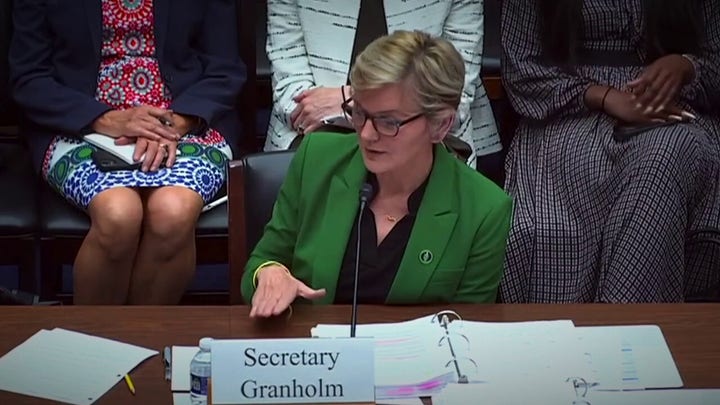
US Secretary of Energy Jennifer Granholm (Photo: AP)
It's a drone; it'sa UFO; it's really who you ask: What's buzzing around U.S. nuclear sites?
Going back from the 1940s and ‘50s to the present day, whistleblowers have reported UFO sightings around nuclear sites, but Department of Energy (DOE) Secretary Jennifer Granholm said they’re "drones."
Rep. Anna Paulina Luna, R-Fla., hit Granholm with rapid-fire questions, including if the DOE was reverse engineering crashed alien technology, and if it worked with a counter-terrorism task force.
Granholm's answers were, "I have no knowledge of that," and "Yes," respectively, which an expert told Fox News Digital is a "big deal" admission.
Granholm danced around the question at first, but Luna repeated the inquiry and demanded a yes or no answer.
Granholm finally responded, "Yes, we do."
Investigative journalist and leading UFO expert Jeremy Corbell said, "This was a bold move by Congress."
WATCH FULL EXCHANGE BETWEEN LUNA AND GRANHOLM
JSOC is a military task force that plans and executes special operations missions under the command of U.S. Special Operations Command.
Corbell said a whistleblower had pointed out that JSOC had worked with the DOE to recover crashed alien spacecraft and reverse-engineer their technology.
“JSOC is likely heavily involved in the aircraft recovery program under the purview of the CIA, so it’s a big deal for the Department of Energy to acknowledge that it’s working with JSOC,” Corbell told Fox News Digital. “Secretary Granholm has been loath to acknowledge that.”
JSOC has denied these allegations and implications in previous statements. Fox News Digital reached out to JSOC for comment but did not receive a response.
Rep. Anna Paulina Luna questioned Energy Secretary Jennifer Granholm about reverse engineering alien technology.
(Fox News Digital/John Michael Raasch)
In an email to Fox News Digital, Luna said that while “some people, like Secretary Granholm, want to ridicule these things,” “more than 50 percent of Americans believe UAPs may exist.”
“That means the federal government should be taking this seriously,” the Florida Republican said. “I have confronted Energy Secretary Granholm directly with multiple reports and statements from the Department of Defense, and she continues to deny the facts.”
“And that’s why I think the American people have lost faith in government transparency.”
Luna’s exchange with Granholm wasn’t the end of her interactions with the DOE.
She submitted nine questions to the DOE, obtained exclusively by Fox News Digital. The questions include:
“DOE has received the QFR and will respond directly to the committee and members of Congress,” a DOE spokesperson said in an email.
Footage of a UFO flying near the USS Omaha off the coast of San Diego in July 2019 and disappearing into the ocean without a splash or crash debris.
(Jeremy Corbell/Weaponized Podcast)
Former Navy pilot Ryan Graves, former Navy commander David Fravor, and former U.S. intelligence officer David Grush testified before a House subcommittee specializing in UFOs.
(House of Representatives Subcommittee on National Security, Borders, and Foreign Affairs)
Luna’s Question
How are Unmanned Aerial Vehicles (UAVs) and Unmanned Aerial Systems (UAS) designated by DOE?
What characteristics must an object have to be considered a UAP?
How many UAP intrusions have been reported to the All-Domain Anomaly Resolution Office (AARO)?
F1 events deploy private companies that can disable drones and track the pilots. Is that technology available to DOE? Follow-up: If so, how many drones were able to track the pilots? And how many were able to be disabled?
Follow-up: If so, how many drones were you able to track to their operators? And how many were you able to disable?
This year alone, how many UAP intrusions have been reported internally at all critical infrastructure locations under DOE’s oversight (e.g., nuclear weapons, refining, and deployment sites such as Pantex and the Savannah River Site)?
There have been multiple reports of frequent drone intrusions over DOE nuclear facilities, including the incident that occurred at Lawrence Livermore National Laboratory (LLNL) on April 1, 2021. Can you tell us more about DOE’s current security measures to prevent unauthorized drone activity? Also, given the frequency of these incidents, what steps are being taken to strengthen these measures?
A recent AARO report emphasized that better data collection is essential to understanding the UAP phenomenon. What technologies and methodologies is DOE employing to collect and analyze data related to UAP sightings, especially near critical infrastructure?
Given the potential security and safety risks posed by UAPs near nuclear facilities, what protocols are in place to ensure the safety of DOE personnel and the public? Have there been any documented cases of personnel being adversely affected as a result of an encounter with a UAP?
In the spirit of transparency, how is the Department of Energy handling public disclosure of UAP incidents? Are there plans to declassify and release more detailed reports on UAP sightings over Department of Energy facilities to keep the public informed and reassured?
Department of Energy: Sightings are ‘drones’, not UFOs
Before Luna’s exchange with Granholm, Republican Rep. Tim Burchett of Tennessee questioned the Energy secretary about “suspicious sightings” of UFOs near nuclear facilities.
She responded that the Department of Defense had concluded that there was no evidence of UFOs or aliens.
“But there is the possibility of malicious drones out there,” Granholm said, emphasizing that safety and defensive measures are in place.
As both senators pointed out, UFO sightings near nuclear facilities predate drones.
This was one of several examples of unexplained UAPs listed in NASA’s Sept. 14 report.
(NASA)
In 2018, a mysterious jellyfish-like object was spotted flying over a military base in Iraq.
(Jeremy Corbell/Weaponized Podcast)
Recently declassified documents about a UFO program called Kona Blue detail a government plan to collect and reverse engineer crashed alien technology.
“Several highly sensitive and unconventional aerospace discoveries have been identified and significant progress has been made,” former U.S. Senator Harry Reid said in a June 2009 letter.
An excerpt from a 2009 letter from former U.S. Senator Harry Reid discussing the need to keep the government’s crashed
alien technology recovery program and reverse engineering efforts secret. (Department of Defense)
“Given the current rate of success, continued research into these subjects is likely to lead to technological advances requiring special protection in the near future…”
“Given the potential applications of these technologies in future systems, including space flight, weapons, communications and propulsion, standard management and protection procedures cannot adequately ensure that all aspects of the project will be adequately protected.”
READ THE FULL DECLASSIFIED KONA BLUE REPORT
AARO, The Pentagon’s specialist unit investigating UAP said “multiple” whistleblowers mentioned Kona Blue during its investigation into the alleged aircraft recovery program.
In its report, AARO stated: History and origins Kona Blue said it was “proposed” to Homeland Security leadership but “never approved or formally enacted.”
According to AARO, the project has never received any materials or funding, and the Department of Homeland Security disapproved the project in 2011 “citing concerns about the adequacy of the program’s legitimacy” and ordered it immediately halted.
According to AARO, its complete origins and history can be found at: It is here.
Chris Eberhart is a crime and U.S. news reporter for Fox News Digital. Email tips to chris.eberhart@fox.com or on Twitter @ChrisEberhart48.
Boeing's Starliner was mysteriously blooping like a submarine in space. Here's why.
Boeing's Starliner was mysteriously blooping like a submarine in space. Here's why.
Story by Elisha Sauers
UPDATE: Sep. 2, 2024, 7:00 PM EDT In a statement released to Mashable on Monday, Sept. 2, NASA said the pulsing sound astronaut Butch Wilmore heard coming from a speaker inside Starliner was the result of an audio configuration between the International Space Station and Starliner and has since stopped. Because many spacecraft are interconnected through the station's audio system, noise and feedback are common, the space agency said: "The speaker feedback Wilmore reported has no technical impact to the crew, Starliner, or station operations, including Starliner’s uncrewed undocking from the station no earlier than Friday, Sept. 6."
Starliner's commander, astronaut Barry "Butch" Wilmore, asked Houston mission control on Saturday why the test capsule had started emitting strange noises from a speaker. At first the sounds weren't audible, then Wilmore, 61, captured a better recording: an unnerving, perpetual blooping, similar to the pulse of a submarine's sonar ping.
"I'll let y'all scratch your heads and see if you can figure out what's going on," Wilmore said in his Southern drawl over the radio.
Flight controllers didn't seem to immediately know the cause or source of the noise. Neither NASA nor Boeing, the spacecraft's developer, responded to questions from Mashable on Sunday regarding the sounds, and it was unclear whether the issue persisted. The only unusual thing Wilmore had observed at the time was the sound transmitted over the speaker. No other problems or weird configurations were happening within the capsule, he said.
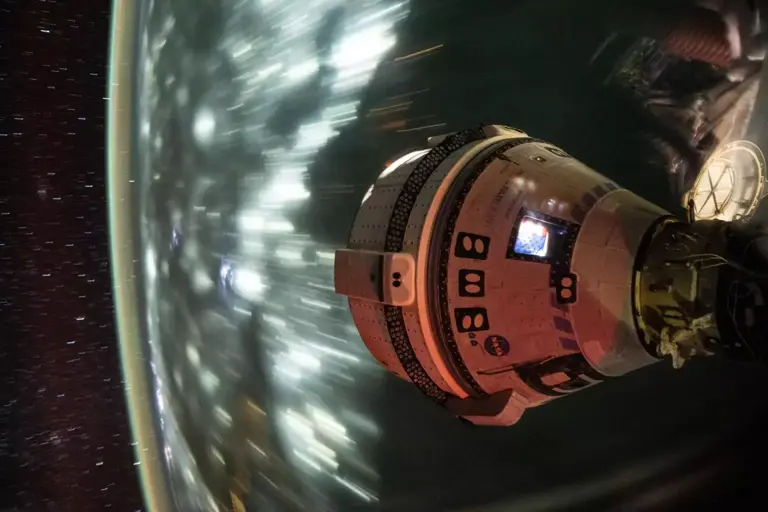
Boeing's Starliner experienced propulsion problems during its crewed testflight in June 2024.
On Monday, after Mashable's report published, NASA responded to the inquiry, saying the pulsing sound coming from a speaker in Starliner has since stopped. The sound was the result of an audio configuration between the International Space Station and Starliner — a common occurrence due to the many interconnected spacecraft and modules to the audio system, the U.S. space agency said.
Related video:
Boeing Starliner to return empty: What happens to Sunita Williams and Butch Wilmore? (WION)
NASA and Boeing push back Starliner's crewed return to June 18 | WION
Boeing Starliner NASA astronauts give update from International Space Station | full video
"The speaker feedback Wilmore reported has no technical impact to the crew, Starliner, or station operations, including Starliner’s uncrewed undocking from the station no earlier than Friday, Sept. 6," NASA said in an emailed statement.
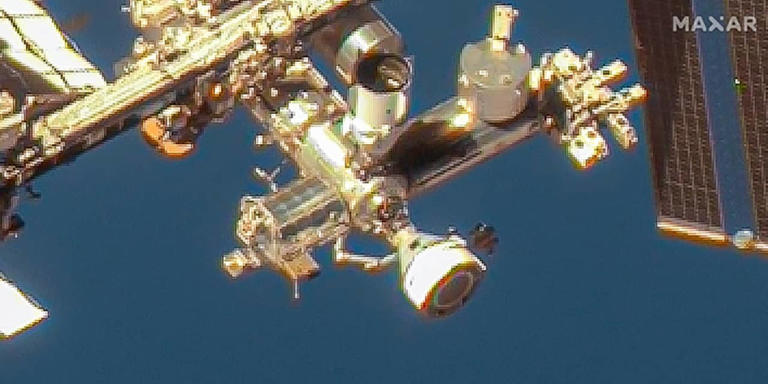
Though the agency recently decided Wilmore and his crewmate, pilot Sunita "Suni" Williams, would not return on Starliner but a SpaceX Crew Dragon capsule, Starliner remains docked at the space station some 250 miles above Earth. It is expected to stay there until departing for a robotic landing without passengers no earlier than 6:04 p.m. ET Friday, Sept. 6.
If all goes as planned, Starliner will touch down at the Army's White Sands Missile Range in New Mexico about six hours later. A system of parachutes and air bags should cushion its drop over the desert shortly after midnight on Sept. 7.
The pulsing sounds were the latest in a series of quandaries related to Starliner, which launched from Cape Canaveral, Florida, in June for its first test flight carrying people. The issue was first reported by Ars Technica on Sunday, based on a posting of the space station chatter in a NASASpaceflight.com forum.
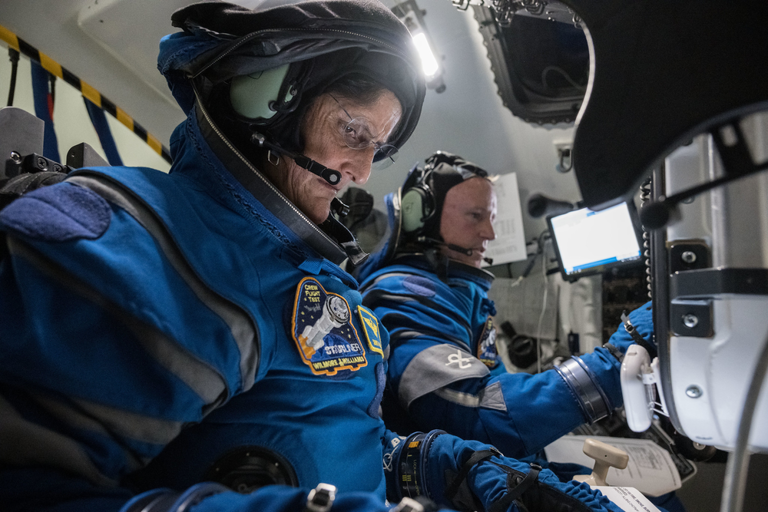
Boeing Starliner's test pilots Butch Wilmore and Suni Williams will return to Earth on a SpaceX Crew Dragon capsule in February 2025.
Veteran astronauts Wilmore and Williams were in limbo this summer while NASA leadership and Boeing managers discussed whether Starliner was safe to bring them home. During their flight to the space station, Starliner experienced propulsion issues.
What should have been an eight-day stint in space for them will now stretch for eight months. Both will be incorporated as regular crew members of Expedition 71/72 through February 2025 and will return with the agency’s Crew-9 mission. In the fallout, two astronauts who were originally assigned to Crew-9 — Zena Cardman and Stephanie Wilson — lost their ride to space to free up a pair of seats for Wilmore and Williams to come home.
"I'll let y'all scratch your heads and see if you can figure out what's going on."
Getting Starliner through its testing phase has been a relentless battle for Boeing, though its representatives have not always been forthcoming on why the program has suffered so many setbacks. A string of issues has spanned a decade.
After the Space Shuttle retired in 2011, NASA hitched all of its rides on Russian rockets to the space station, costing the United States tens of millions of dollars per ride. Some considered it a national embarrassment.
NASA hired Boeing and SpaceX to build commercial spaceships to carry astronauts to and from the station in 2014. While SpaceX's capsule went into service four years ago, Boeing's Starliner has yet to obtain certification for regular flight operations.
NASA never intended to have all its eggs in Elon Musk's basket and says Starliner is still crucial to have as a backup. Ken Bowersox, associate administrator for space operations, hinted that the agency expects Starliner to fly again.
"We’ve learned a lot about the spacecraft during its journey to the station and its docked operations," he said in a statement. "We also will continue to gather more data about Starliner during the uncrewed return and improve the system for future flights to the space station."
This story has been updated from an earlier version to include a NASA statement explaining the nature of the pulsing sound within Starliner.
NASA has an explanation for the “strange noise” emitted by Boeing Co.’s Starliner spacecraft docked at the International Space Station.
The noise was heard by astronaut Butch Wilmore, who radioed mission control about the sound Saturday, as first reported by Ars Technica. “There’s a strange noise coming through the speaker [on Starliner],” he said. “I don’t know what’s making it … I don’t know if there’s something that’s maybe connected between here and there making that happen,” he added.
NASA said the noise — which is no longer being emitted — was the result of an audio configuration between the Boeing capsule and the International Space Station. Boeing referred MarketWatch to NASA for comment.
“A pulsing sound from a speaker in Boeing’s Starliner spacecraft heard by NASA astronaut Butch Wilmore aboard the International Space Station has stopped. The feedback from the speaker was the result of an audio configuration between the space station and Starliner,” NASA’s Commercial Crew program wrote Monday on X, formerly Twitter. “The space station audio system is complex, allowing multiple spacecraft and modules to be interconnected, and it is common to experience noise and feedback.”
“The crew is asked to contact mission control when they hear sounds originating in the comm system,” the Commercial Crew program added. “The speaker feedback Wilmore reported has no technical impact to the crew, Starliner, or station operations, including Starliner’s uncrewed undocking from the station no earlier than Friday, Sept. 6.”
Related video: NASA Infusing Fast Laser Communications On Space Missions (Dailymotion)
Starliner will return to Earth uncrewed with Wilmore and his fellow crewmember Suni Williams returning in a SpaceX capsule after the Boeing capsule was beset with problems. The Boeing spacecraft is scheduled to autonomously undock from the space station at approximately 6:04 p.m. Eastern time on Sept. 6 to begin the journey home, weather conditions permitting, NASA said, in an Aug. 30 statement. NASA and Boeing are targeting approximately 12:03 a.m. on Sept. 7 for the landing and conclusion of the flight test at White Sands Space Harbor in New Mexico.
NASA and Boeing have wrestled with helium leaks and thruster issues on Starliner, which launched on June 5 and arrived at the ISS the following day. The capsule was initially expected to be docked at the orbiting space lab for at least eight days before bringing the two astronauts home. They have now been there for more than 80 days.
The test, which has faced a number of delays in recent years, is the first crewed mission of the Starliner capsule. The spacecraft’s launch in June also marked the first time NASA has had three crewed vehicles in orbit.
SpaceX’s Crew-9 mission is scheduled to depart for the ISS no earlier than Sept. 24.
Gewoonlijk draaien sterren rond het centrum van een sterrenstelsel, bijvoorbeeld de Melkweg: dit is het geval voor de zon en de meer dan 200 miljard sterren in ons sterrenstelsel... op één na. Sommige wetenschappers hebben een object gezien dat zo groot en zwaar is als een ster en dat zich met meer dan 1,6 miljoen kilometer per uur voortbeweegt, een snelheid die zo hoog is dat het aan de zwaartekracht van de Melkweg ontsnapt... vroeg of laat. Laten we eens kijken hoe dit mogelijk is!
Er is een ster ontdekt die op de vlucht is uit de Melkweg
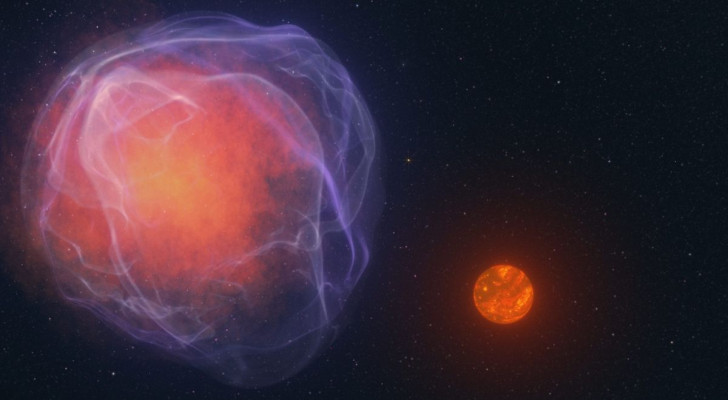
We bevinden ons in het project Backyard Worlds: Planet 9, dat tot taak heeft nieuwe planeten en bruine dwergen in de omgeving van ons zonnestelsel te ontdekken, ook met de hulp van amateurs. Door de beelden te bestuderen die zijn gemaakt door de Wide Field Infrared Explorer of WISE-missie en latere missies, hebben sommige amateurwetenschappers een nooit eerder gezien object gezien, een hemellichaam dat veel te snel door de ruimte beweegt, alsof het ontsnapt uit de Melkweg. Dit zijn de woorden van een van de ontdekkers, die samen met anderen een studie publiceerde in Astrophysical Journal Letters:
Ik kan het niveau van opwinding niet beschrijven. Toen ik voor het eerst zag hoe snel het bewoog, was ik ervan overtuigd dat het al was gemeld.
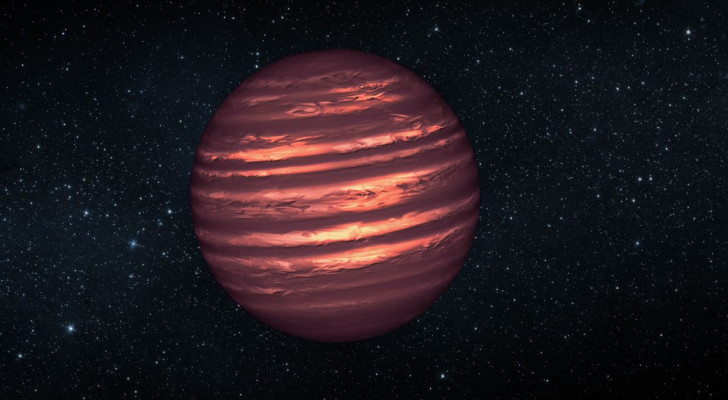
Het hemellichaam, CWISE J124909.08+362116.0 genaamd maar kortweg CWISE J1249 genoemd, heeft zo'n lage massa dat het moeilijk te classificeren is. Volgens onderzoekers zou het desondanks een kleine ster of een bruine dwerg kunnen zijn. Maar waarom beweegt hij zo snel?
Waarom zo'n hoge snelheid?
NASA/JPL-Caltech
Alleen al binnen het project Backyard Worlds: Planet 9 zijn er al meer dan 4000 bruine dwergen geïdentificeerd, hemellichamen die het midden houden tussen een gasvormige planeet zoals Jupiter en een ster zoals de zon. Geen van hen beweegt echter met zo'n hoge snelheid dat ze zouden kunnen ontsnappen aan de zwaartekracht van de Melkweg. Bovendien heeft CWISE J1249 een andere samenstelling dan de andere bruine dwergen en sterren in ons melkwegstelsel, omdat hij minder ijzer en andere metalen bevat: hij zou deel kunnen uitmaken van de eerste generatie sterren in de Melkweg.
Over zijn snelheid hebben wetenschappers twee hypotheses bedacht. Aan de ene kant kan de bruine dwerg deel hebben uitgemaakt van een binair systeem met een witte dwerg, die op een gegeven moment explodeerde als supernova en zo de ontsnapping van CWISE J1249 in gang zette. Aan de andere kant zou de snelheid veroorzaakt kunnen zijn door een ontmoeting met een binair systeem gevormd door twee zwarte gaten, waarvan de interacties de bruine dwerg de ruimte in zouden hebben geslingerd. En uit de Melkweg.
Het belang van Backyard Worlds: Planet 9
De ontdekking van CWISE J1249 en zijn ontsnapping aan de zwaartekracht van de Melkweg is slechts het laatste succes van Backyard Worlds: Planet 9. Het project bevordert de samenwerking tussen duizenden astronomen wereldwijd en heeft het mogelijk gemaakt om enorme hoeveelheden astronomische gegevens te analyseren. Het project bevordert de samenwerking tussen duizenden liefhebbers van de astronomie over de hele wereld en heeft het mogelijk gemaakt om enorme hoeveelheden astronomische gegevens te analyseren, vergelijkbaar met het project Black Hole Finder voor het zoeken naar zwarte gaten. Terwijl Backyard Worlds: Planet 9 ook uitgaat van het idee van het bestaan van een negende planeet in het zonnestelsel voorbij Neptunus, is het een initiatief dat heeft geleid tot de ontdekking van vele bruine dwergen en andere hemellichamen in ons melkwegstelsel.
In dit opzicht is het project een perfect voorbeeld van hoe wetenschap en passie voor de astronomie tot buitengewone resultaten kunnen leiden. Waaronder de ontdekking van een ster die ontsnapt uit de Melkweg, het eerste voorbeeld van een hemellichaam met zo'n hoge snelheid dat het ontsnapt aan de galactische zwaartekracht, maar niet aan onze ogen.
Saturn's majestic rings will vanish in just six months from now
Saturn's majestic rings will vanish in just six months from now
Story by Eric Ralls
Saturn's majestic rings will vanish in just six months from now
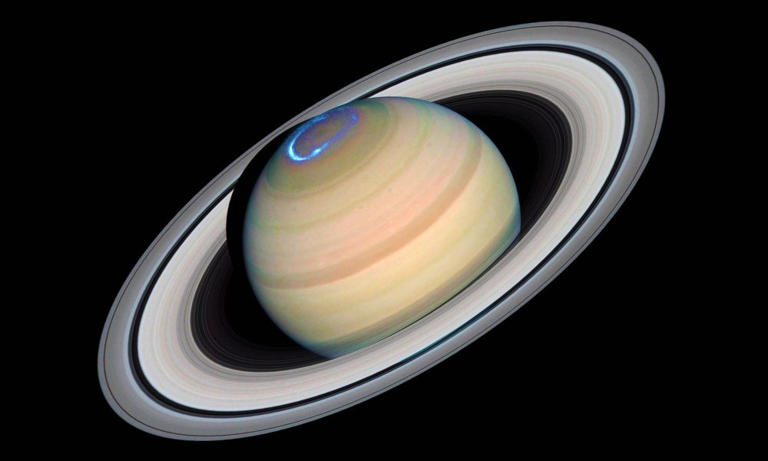
Most people consider Saturn's awe-inspiring system of rings that encircle the gas giant to be the most fascinating and iconic celestial feature in our solar system.
Back in the 17th century, Italian astronomer Galileo Galilei first spied Saturn through his ancient telescope. He compared the planet's appearance to having "ears" due to the limitations of his device.
The diligent work of scientists like Galileo Galilei has laid the foundation for our modern-day ability to explore the incredible wonders of our universe.
Over the years, advances in technology and innovative techniques have empowered astronomers, such as Dr. Lucy Jones from the esteemed Harvard-Smithsonian Center for Astrophysics (CfA), to delve deeper into the enigmas surrounding celestial bodies.
Through cutting-edge research and observations, they have unraveled the intricate mysteries of Saturn's rings, revealing their composition and the dynamic processes that shape them.
Cosmic vanishing act
A fast-approaching and significant cosmic event will soon dramatically alter our view of this magnificent planet. Come March 2025, Saturn's majestic rings will become virtually invisible to earth-based observers.
This phenomenon occurs due to the unique tilt of Saturn's axis, which will position the rings edge-on to our line of sight.
Related video:
Saturn and the moon to join side by side on Aug. 20(Dailymotion)
As a result, this is a rare opportunity for citizens and astronomers alike to witness this celestial transformation, while also reminding us of the ever-changing nature of our universe.
Thankfully, this isn't a permanent change. It's a fleeting cosmic event that recurs every 29.5 years, which is how long it takes Saturn to orbit the Sun. After March 2025, Saturn's axial tilt will bring the rings back into view, then vanish again in November 2025.
So, the rings are not really disappearing but rather playing a celestial game of hide and seek. At their reappearance, we can also enjoy an accentuated view of Saturn's moons.
Saturn's ring structure
So, what are Saturn's rings really made of? Mostly, they consist of ice particles, rocky debris, and cosmic dust, creating a stunning spectacle visible from Earth with a telescope.
Picture a bustling city with buildings of all sizes. Similarly, the ring particles vary from tiny grains, about the size of sand, to huge chunks as big as houses or even school buses. This mix gives the rings their intriguing look.
Saturn's rings aren't just one solid structure. They're made up of several distinct sections, including the A, B, and C rings, along with the fainter D, E, F, and G rings that are harder to see.
These sections are separated by gaps, like the well-known Cassini Division between the A and B rings, which is around 4,800 kilometers wide. The shapes and setups of these rings are mainly shaped by gravitational interactions with Saturn's many moons.
Some of these moons, dubbed "shepherd moons," hang out near the edges of the rings and help keep things in shape by pulling on the ring particles with their gravity.
As for how Saturn's rings came to be, that's still a hot topic among astronomers. There are plenty of theories, from being the leftovers of a destroyed moon or comet that got torn apart by Saturn's strong gravity to materials left over from when Saturn formed over 4 billion years ago.
Each theory has its own fascinating ideas, and ongoing research keeps revealing new insights about these amazing structures that orbit the planet.
This ambitious journey to uncover the cool mysteries of Saturn and its stunning rings started when the spacecraft arrived at Saturn in 2004, kicking off a thorough 13-year exploration that wrapped up in 2017.
Throughout its journey, the Cassini-Huygens mission brought us a treasure trove of information about Saturn and its complex system. One of the coolest finds was discovering gaps in the rings, especially the Cassini Division, which is the noticeable space between the A and B rings.
This division is shaped by the gravitational pull of Saturn's moons, showcasing how dynamic and ever-changing the ring system really is.
The mission also gave us deeper insights into Saturn's many moons, revealing their unique compositions and geological features. For example, Enceladus, one of Saturn's icy moons, has geysers that shoot out water vapor and organic materials, hinting at the possibility of subsurface oceans.
Thanks to the Cassini-Huygens mission, scientists gained valuable insights into the intricate dance of moons and rings around Saturn, completely transforming our understanding of the planet and its unique traits.
Saturn's moons and magnetic field
There is much more to Saturn than just those incredible rings. In fact, Saturn boasts a minimum of 145 moons, each with its own unique characteristics and mysteries.
Among these, Titan, the second-largest moon in the Solar System, truly steals the show with its thick atmosphere and intriguing surface. Interestingly, Titan has a magnetic field that, while weaker than Jupiter's, is stronger than Earth's, indicating complex interactions with Saturn's magnetic environment.
Titan radiates powerful radio waves, particularly from its spectacular auroras at the poles, which can provide valuable insights into both Titan's atmosphere and the overall dynamics of Saturn's magnetic field. The upcoming Dragonfly mission will search for life on Titan.
That said, Titan's mysteries pale in comparison to what we might find on Enceladus. Cassini discovered the presence of vital components for life on this icy Saturnian moon.
Based on this data, experts have identified crucial organic compounds and a potent energy source, hinting at the moon's potential to support life.
"Not only does Enceladus seem to meet the basic requirements for habitability, we now have an idea about how complex biomolecules could form there, and what sort of chemical pathways might be involved," explains Jonah Peter, a doctoral student at Harvard University who conducted the research while working at NASA's Jet Propulsion Laboratory.
Stargazers, Saturn, and those magnificent rings
To sum it all up, as Saturn's rings prepare to vanish from view in March 2025, stargazers have a unique opportunity to witness this fleeting cosmic event.
The rings will align edge-on with Earth, making them virtually invisible and highlighting the dynamic nature of celestial objects.
For now, Saturn remains a captivating target for those with telescopes or high-powered binoculars. The planet's stunning rings, composed of countless ice particles and rocky debris, offer a glimpse into the complex and beautiful structure of our solar system.
ESA lanceert nieuwe satelliet die waterkwaliteit, natuurrampen en methaanuitstoot beter in kaart kan brengen
ESA lanceert nieuwe satelliet die waterkwaliteit, natuurrampen en methaanuitstoot beter in kaart kan brengen
Artikel door Michaël Torfs
De lancering maakt deel uit van ESA's Sentinel 2-programma, een project dat in samenwerking met de Europese Commissie loopt. De Sentinel-2C zal de Sentinel-2A vervangen. Die was gelanceerd in juni 2015 en intussen staan we heel wat verder, wat voor een grote verbetering zal zorgen in de aangeleverde data. Dat zegt Inge Jonckheere van de ESA in een gesprek met VRT NWS.
Jonckheere werkt als directeur van de Green Solutions Division bij ESA die satellietdata gebruikt voor alle mogelijke wetenschappelijke en maatschappelijke toepassingen, specifiek dan voor het observeren van de aarde, het milieu en het klimaat.
Over de missie
De Sentinel 2-missie telt 2 identieke satellieten, Sentinel 2A (gelanceerd in 2015) en Sentinel 2B (2017), die in dezelfde baan vliegen maar 180 graden uit elkaar om de dekking en de revisit-tijd te optimaliseren. De satellieten draaien elke 100 minuten in een baan om de aarde en bestrijken elke 5 dagen alle landoppervlakken, grote eilanden, binnenwateren en kustwateren.
Eenmaal in een baan om de aarde zal Sentinel-2C zijn voorganger Sentinel-2A vervangen, terwijl Sentinel-2D later Sentinel-2B zal vervangen om de continuïteit van gegevens na 2035 te waarborgen.
Sneller data, en een goed oog
De combinatie met de nog actieve Sentinel-2B wordt voortaan beter. Er zullen vaker data binnenlopen, wetenschappers zullen zowat om de week een update krijgen van wat er op de grond gebeurt.
"We zullen met deze satellietcombinatie elke 5 tot 10 dagen beeld hebben van een specifiek gebied, afhankelijk van de breedtegraad - tegenover ongeveer tweewekelijks met 1 satelliet - waardoor de tijdsresolutie preciezer wordt", zegt Jonckheere.
"We krijgen daardoor bijna continu een aanvoer van data. En hoe meer data je hebt, hoe beter de opvolging van natuurlijke processen en extreme events."
En er is meer. De nieuwe optische satelliet heeft ook een relatief scherp oog. "Je moet rekenen op een grondresolutie van 10 tot 30 meter, wat relatief gezien behoorlijk nauwkeurig is. Sommige satellieten die gebruikt worden voor het klimaat hebben amper een paar kilometer resolutie."
Het is wel zo dat wolken de observatie kunnen verstoren, maar net daarvoor is het zo belangrijk dat de omlooptijd door het gebruik van de 2 satellieten nu een stuk korter gaat worden.
Van methaan tot algenbloei in het water
De nieuwe satelliet heeft toepassingen voor landbouw, waterkwaliteit, natuurrampen en de uitstoot van het sterke broeikasgas methaan.
Landbouw/bosbouw:"We kunnen opvolgen hoe vochtig het is in een bepaalde regio en hoe goed de Green Index is, die ook een aanwijzing geeft over hoe gezond een stuk land is. Zo kan je bijvoorbeeld de landbouw helpen", schetst Jonckheere. Ze verwijst naar het World Cereal-project dat geleid wordt door de Vlaamse Instelling voor Wetenschappelijk Onderzoek VITO en gewassen als granen en maïs wereldwijd in kaart brengt.
Waterkwaliteit: onderzoekers kunnen zien hoeveel water (of niet) er is in een bepaald gebied en hoe dat evolueert. Het is ook interessant om waterkwaliteit in kaart te brengen, bijvoorbeeld wat betreft het bloeien van bepaalde algen. Onderzoekers kunnen een soort kwaliteitsindex van het rivierwater opmaken, of onder meer ook afval op zee in beeld brengen.
Natuurrampen: na pakweg een zware bosbrand kan de satelliet in kaart brengen of en hoe snel een gebied zich herstelt, en waar moet worden bijgestuurd. Of hoe groot de impact van overstromingen is, of hoe snel gletsjers wegsmelten.
Methaan: de methaanuitstoot is de jongste jaren naar historische hoogtes gestegen. Voor een deel is dat rechtstreeks het gevolg van bijvoorbeeld olie- of gaswinning met lekkend methaan. Dat moet nog beter in kaart worden gebracht, ook al om landen die zeggen inspanningen te doen goed te kunnen opvolgen. Dat is belangrijk voor het klimaat, want methaan zou momenteel voor ongeveer 30 procent van de klimaatopwarming verantwoordelijk zijn (na CO₂).
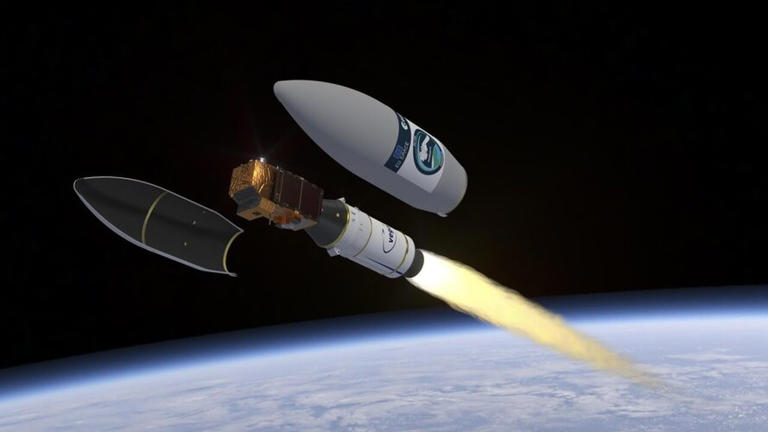
De ESA gaf deze illustratie vrij van de lancering van de Sentinal-2C.
Zoveel mogelijk op eigen benen staan in tijden van AI (en fake data)
De lancering is niet enkel van belang voor meer en betere data. Het gaat er ook om dat Europa zelf zoveel mogelijk op eigen benen wil staan wat betreft datagaring. Momenteel is er voor zulke aardobservatie- programma's veel samenwerking met bijvoorbeeld de Amerikaanse ruimtevaartorganisatie NASA en/of met China, en worden veel data samengelegd.
Maar wat als Trump verkozen raakt als VS-president en het programma afbouwt, of wat als China geld vraagt? "Hoe meer ownership Europa zelf heeft, hoe beter", onderstreept Jonckheere.
Bovendien kan Europa de eigen garing 100 procent betrouwen: "We zien dat er door artificiële intelligentie (AI) valse satellietdata circuleren via deep fakes. Bij eigen garing heb je de garantie dat het wel degelijk om authentieke data gaat."
De Sentinel-data zijn open en worden met iedereen gedeeld, zoals ook de NASA dat doet. Ze zullen onder meer gebruikt worden door de Europese klimaatdienst Copernicus.
'Fingers crossed' (want het ging al eens verkeerd)
Hoe veelbelovend de nieuwe satelliet ook klinkt, ze moet komende nacht eerst nog met succes naar de ruimte worden gestuurd. De ESA wacht toch met een beetje spanning de lancering in Kourou, Frans-Guyana, af.
Sentinel-2C wordt de ruimte ingestuurd door de Vega-draagraket, waarvoor het overigens de laatste vlucht wordt. De Vega-raket heeft geen vlekkeloze reputatie. Zo gingen er in december 2022 2 kostbare satellieten verloren toen een lancering mislukte.
Geld op het spel, maar vooral continuïteit
Anderzijds ging het vaak wel goed, zoals in oktober vorig jaar toen Vega enkele Belgische instrumenten meenam van de Vlaamse Instelling voor Technologisch Onderzoek (VITO). De lancering is voorzien voor 3.50 uur vannacht, maar uitstel is altijd mogelijk als het weer zou tegenzitten.
Bij ESA schuiven ze toch wat zenuwachtig heen en weer op hun stoel. Een satelliet zou tussen de 50 en 100 miljoen euro kosten, de lancering zelf 20 miljoen. Maar het zou vooral jammer zijn voor de opeenvolging van data, zegt Jonckheere. "Dan zou er geen datacontinuïteit verzekerd zijn, wat net een van de grote troeven is van het programma."
Ganymede Was Struck by Giant Asteroid 4 Billion Years Ago, New Research Suggests
Ganymede Was Struck by Giant Asteroid 4 Billion Years Ago, New Research Suggests
Jupiter’s moon Ganymede has an ancient impact structure called a furrow system. This system is the largest impact structure in the outer Solar System, and the impact should have significantly affected Ganymede’s early history.
Distribution of furrows and location of the center of the furrow system shown in the hemisphere that always faces away from Jupiter (top) and the cylindrical projection map of Ganymede (bottom). The gray regions represent geologically young terrain without furrows. Furrows (green lines) exist only on geologically old terrains (black regions).
Ganymede is the largest satellite in the Solar System and has many unique features, including tectonic troughs known as furrows.
Furrows are the oldest surface features recognized on Ganymede because they are crosscut by any impact craters with diameters exceeding 10 km. They can provide a window into the early history of this moon.
Furrows have been proposed to be fragments of multiring impact basin structures, similar to those of the Valhalla or Asgard basins on Callisto.
The largest furrow system is present across Galileo and Marius Regios — the so-called Galileo-Marius furrow system — and it is the remnant of an ancient giant impact, which extends concentrically from a single point of Ganymede.
“The Jupiter moons Io, Europa, Ganymede and Callisto all have interesting individual characteristics, but the one that caught my attention was these furrows on Ganymede,” said Kobe University planetologist Naoyuki Hirata, author of a paper published in the journal Scientific Reports.
Kobe University HIRATA Naoyuki was the first to realize that the location of an asteroid impact on Jupiter's moon Ganymede is almost precisely on the meridian farthest away from Jupiter. This implied that Ganymede had undergone a reorientation of its rotational axis and allowed Hirata to calculate what kind of impact could have caused this to happen.
Credit: HIRATA Naoyuki
“We know that this feature was created by an asteroid impact about 4 billion years ago, but we were unsure how big this impact was and what effect it had on the moon.”
First, Dr. Hirata realized that the purported location of the impact is almost precisely on the meridian farthest away from Jupiter.
“Drawing from similarities with an impact event on Pluto that caused the dwarf planet’s rotational axis to shift and that we learned about through NASA’s New Horizons spacecraft, this implied that Ganymede, too, had undergone such a reorientation,” he said.
According to the study, an asteroid that hit Ganymede probably had a diameter of around 300 km — about 20 times as large as the Chicxulub asteroid that hit Earth 65 million years ago and ended the age of the dinosaurs — and created a transient crater between 1,400 and 1,600 km in diameter.
Only an impact of this size would make it likely that the change in the distribution of mass could cause the moon’s rotational axis to shift into its current position. This result holds true irrespective of where on the surface the impact occurred.
“I want to understand the origin and evolution of Ganymede and other Jupiter moons,” Dr. Hirata said.
On large parts of its surface, the Jupiter moon Ganymede is covered by furrows (right) that form concentric circles around one specific spot (left, red cross), which led researchers in the 1980s to conclude that they are the results of a major impact event.
Credit: HIRATA Naoyuki
Distribution of furrows and the location of the center of the furrow system shown in the hemisphere that always faces away from Jupiter (top) and the cylindrical projection map of Ganymede (bottom). The gray regions represent geologically young terrain without furrows. Furrows (green lines) exist only on geologically old terrains (black regions).
Credit: HIRATA Naoyuki
“The giant impact must have had a significant impact on the early evolution of Ganymede, but the thermal and structural effects of the impact on the interior of Ganymede have not yet been investigated at all.”
“I believe that further research applying the internal evolution of ice moons could be carried out next.”
N. Hirata. 2024. Giant impact on early Ganymede and its subsequent reorientation. Sci Rep 14, 19982; doi: 10.1038/s41598-024-69914-2
Black Hole in a Planet's Orbit Could Indicate an Advanced Civilization An English mathematical physicist and Nobel-prize winner named Roger Penrose hypothesized how energy could be extracted from a rotating black hole in 1971. He proposed constructing a harness around the black hole's accretion disk—where infalling matter reaches near-light speeds—which would trigger an enormous release of energy across multiple wavelengths.
Since then, several scientists have proposed that advanced civilizations might use this idea—dubbed the Penrose Process—to power their technology. This technological possibility suggests just one interesting technosignature that scientists looking for life beyond Earth could search for in outer space.
Following Hypotheses Building upon this idea, scientist John M. Smart has proposed the Transcension Hypothesis. In this hypothesis, he suggested that advanced intelligence may migrate to regions surrounding black holes. There, they could take advantage of the energy available.
The latest idea based on the Penrose Process comes from Harvard Professor Avi Loeb. His paper where he poses his latest findings and ideas, "Illumination of a Planet by a Black Hole Moon as a Technological Signature," was recently published in the scientific journal Research Notes of the AAS.
Avi Loeb’s Paper Professor Avi Loeb is an extremely accomplished scientist. He is the Frank B. Baird Jr. Professor of Science at Harvard University, the Director of the Director of the Institute for Theory and Computation at the Harvard-Smithsonian Center of Astrophysics (CfA), the founding Director of the Black Hole Initiative (BHI), and the head of the Galileo Project.
In his latest paper, he proposed that advanced civilizations could rely on a "Black Hole Moon" to provide their home planet with power indefinitely. He argues that the way a black hole would light up the planet it orbits could serve as a potential technosignature for future SETI surveys. (SETI stands for Search for Extraterrestrial Intelligence.)
Stephen Hawking’s Theory In 1975, Stephen Hawking theorized that black holes emit photons, neutrinos, and some larger particles. These theoretical larger particles have been called "Hawking Radiation." Since then, proposals for harnessing black holes as an energy source typically fall into one of two categories.
Some scientists believe in the possibility of the Penrose Process, which involves capturing the energy from angular momentum of black hole accretion disks. Similarly, some believe that capturing the heat and energy generated by black hole hypervelocity jets would be possible, perhaps in the form of a Dyson Sphere. On the other hand, some believe that these black-hole-civilizations would have to feed matter into the black hole they rely on and harness the resulting Hawking Radiation in order to create power.
An Orbiting Black Hole Engine In his recent paper, Loeb proposed that an advanced alien civilization could rely on the latter process by engineering a black hole to orbit their home planet. This black hole would be relatively very small, weighing just one hundred thousand tons (10-11 g). (Yes, this sounds like a lot, but it is not in terms of black holes.)
However, without any sort of maintenance, this black hole would evaporate in just a year and a half through the emission of Hawking Radiation. Loeb explained that, luckily for any potential civilization, a black hole could be sustained by giving it small amounts of matter—about 4.85 lbs (2.2 kg) per second. In return, the black hole would offer a continuous supply of power.
Powerful and Efficient “This black hole system is the most efficient engine that I ever thought about,” Loeb explained. “The fuel is converted to energy with the perfect efficiency of 100%, because the mass falling into the black hole is ultimately coming out as Hawking Radiation. I have not seen this idea discussed before and had a ‘Eureka moment’ when I realized it a few weeks ago.”
According to Loeb, the amount of antimatter needed is currently beyond humanity’s capabilities—a civilization more advanced than our own would have to figure that out. However, Loeb's proposed 10-11 g black hole could continuously supply 40 quadrillion Watts of power, which is certainly enough to power a planet.
Using Waste for Energy "The global energy use is a few terra-Watts, ten thousand times less than the power supply of this black hole," Loeb explained. Another benefit is that a black hole can use any type of matter as fuel, including the waste generated by a civilization. In this way, a black hole engine could address an advanced civilization's waste disposal issues while simultaneously offering a limitless source of energy.
"The other advantage of this black hole engine is that it can use any form of matter as fuel,” Loeb said. “It could be trash. There is no better way to recycle trash than convert it into clean energy with 100% efficiency."
Possible for Advanced Civilizations Humans produce roughly 1.92 billion metric tons of waste annually. This is having a severe impact on our planet Earth. However, this would be enough to feed a black hole of Loeb’s proposed size for more than 437 million years.
According to Loeb, a black hole engine that uses waste as its energy source would be much simpler than other proposed alien energy sources. Theoretically, it would be technology that a Type II civilization could engineer (for reference, Earth is only _almost_ a Type I civilization).
A Technosignature on Earth “This is the big challenge,” Loeb said. “Any production line of a 10-11 g black hole requires compressing matter or radiation to a mass density that is 60 orders of magnitude above the density of solid iron. The density of atomic nuclei or neutron stars is only 15 orders of magnitude above solid density. This was possible to achieve in the cosmic radiation density less than a femtosecond after the Big Bang."
In another recently written paper by Loeb, he argued that, based on the theory of General Relativity, black holes could be made out of light. According to his theories, this proposed black hole engine would be detectable light-years away, which might be most interesting about his hypothesis. This would make black hole engines viable technosignatures that would indicate the existence of a far-away advanced civilization to scientists.
Potential Extraterrestrial Power As with many proposed technosignatures—such as science-fiction-like Dyson Spheres and other megastructures—the idea of a black hole engine remains speculative and theoretical. However, as Freeman Dyson noted, if something is within the realm of our imagination and the underlying physics are valid, a sufficiently advanced civilization might already be employing it.
Loeb speculated, “The black hole engine could be discovered as a rogue rocky planet that is illuminated by a gamma-ray moon with no stellar-mass companion. If we ever find evidence for such an engine, we would need to consider the possibility that the source was created or trapped as a primordial black hole by a highly advanced technological civilization. There is no better marker of technological innovation than creating a furnace out of spacetime curvature in the form of a mini black hole.” Loeb’s hypothesis is another interesting theory posed by scientists that could help to confirm life beyond our Earth.
The spacecraft has resumed full science operations after a technical issue began creating complications in November 2023.
(Image credit: NASA)
All right, everyone — we can all breathe a sigh of relief. NASA's Voyager 1 spacecraft is fully operational once more, with all four science instruments returning usable data to Earth.
The problems began in November 2023, when Voyager 1 lost its ability to "speak" with us. More specifically, it started sending to Earth unintelligible data instead of its normal 0s and 1s of binary code. Of course, Voyager 1 is 46 years old — ancient for a spacecraft — so it wasn't entirely a surprise that its health might be waning. And that's not to mention that it's in entirely uncharted interstellar territory, some 15 billion miles (24 billion kilometers) from Earth.
Voyager 1's dogged team was determined to not only figure out what went wrong, but also to fix the problem. And they've succeeded! Controllers identified where the issue was located: the flight data subsystem (FDS), used to "package" data to be sent to Earth. Further sleuthing revealed the exact chip causing the problem, which allowed them to find a workaround. After the team relocated the code to a new location in the FDS, Voyager 1 finally sent back intelligible data on April 20, 2024 — but only from two of its four science instruments. Now, just two months later, Voyager 1's remaining two science instruments are back up and running, communicating effectively with mission control on Earth.
Even if Voyager 1 had gone dark for good, however, the mission would still have been a wild success. After it launched in 1977, its primary mission was to study Jupiter and Saturn — that was accomplished by 1980. (Its twin spacecraft, Voyager 2, went on to study Uranus and Neptune.) But Voyager 1 is on an unstoppable path. Continuing its journey away from Earth, the spacecraft entered interstellar space in 2012, returning crucial data about this mysterious realm.
Now that Voyager 1 is back online, the team will continue to "touch up" the spacecraft to get it back in top form, including resynchronizing its timekeeping software to execute commands at the right time, as well as performing maintenance on the digital tape recorder that measures plasma waves. And hopefully, Voyager 1 will have a long, happy life ahead.
It is Back! Voyager 1 Returns Data from All 4 Instruments – Full Update!
Voyager 1 is back online! NASA's most distant spacecraft returns data from all 4 instruments
This snapshot compares the distribution of galaxies in a simulated universe used to train SimBIG (right) to the galaxy distribution seen in the real universe (left). Bruno Régaldo-Saint Blancard/SimBIG collaboration
The Standard Model describes how the Universe has evolved at large scale. There are six numbers that define the model and a team of researchers have used them to build simulations of the Universe. The results of these simulations were then fed to a machine learning algorithm to train it before it was set the task of estimating five of the cosmological constants, a task which it completed with incredible precision.
The Standard Model incorporates a number of elements; the Big Bang, dark energy, cold dark matter, ordinary matter and the cosmic background radiation. It works well to describe the large scale structure of the Universe but there are gaps in our understanding. Quantum physics can describe the small scale of the Universe but struggles with gravity and there are questions around dark matter and dark energy too. Understanding these can help in our understanding of the evolution and structure of the Universe.
Enlarged region of the Saraswati Supercluster, the largest known structure in the Universe, showing the distribution of galaxies. Credit: IUCAA
A team of researchers from the Flatiron Institute have managed to extract some hidden information in the distribution of galaxies to estimate the values of five of the parameters. The accuracy was a great improvement on values that were attained during previous attempts. Using AI technology the team’s results had less than half the uncertainty for the element that describes the clumpiness of the Universe than in the previous attempt. Their results also revealed estimates of other parameters that closely resembled observation. The paper was published in Nature Astronomy on 21 August.
The team generated 2,000 simulated universes after carefully specifying their cosmological parameters. These included expansion rate, the distribution and clumpiness of ordinary matter, dark matter and dark energy and using these the team ran the simulations. The output was then compressed into manageable data sets and this was used to compare against over one hundred thousand real galaxies data. From this, it was possible for the researchers to estimate the parameters for the real Universe.
The parameters the team managed to fine tune are those that describe how the Universe operates at the largest scale. These are essentially, the settings for the Universe and include the amount of ordinary matter, dark matter, dark energy, the conditions following the Big Bang and just how clumpy the matter is. Previously these settings were calculated using observations from the structure of galaxy clusters. To arrive at a more accurate group of settings observations needed to go down to smaller scale but this has not been possible.
The full-sky image of the temperature fluctuations (shown as color differences) in the cosmic microwave background, made from nine years of WMAP observations. These are the seeds of galaxies, from a time when the universe was under 400,000 years old. Credit: NASA/WMAP
Instead of using observations, the team used their AI approach to extract the small scale information that was hidden in the existing observational data. At the heart of the approach was the AI system that learned how to correlate the parameters with the observed structure of the Universe – but at small scale.
In the future the team hope to be able to use their new approach to solve other problems. The uncertainty about the Hubble Constant is an example where the team hope AI can help to fine tune its value. Over the next few years though, and as observational data becomes more detailed both Hubble’s Constant and the Settings of the Universe will become far better understood along with our understanding of the Universe.
Coronal Loops-Digital Art Combination Captures Power of the Sun, Rendered by Andrew McCarthy
Our Sun is one of the most fascinating objects in the universe and photographing it with specialized equipment to capture its splendor and beauty has become increasingly more common around the world. This is most evident with the work obtained by renowned astrophotographer, Andrew McCarthy (@AJamesMcCarthy), who owns Cosmic Background Studios in Florence, Arizona.
On July 27, 2024, McCarthy posted an image of the Sun on X (formerly known as Twitter) taken with his specialized equipment designed to safely photograph our life-giving star, which revealed active coronal loops and plasma within the solar chromosphere that are some of the many intriguing features of the Sun. However, McCarthy is quick to mention in his post that this image isn’t entirely genuine, but a combination of several attributes.
“This image is a piece of digital art that combines real astrophotos with some rendered features,” McCarthy tells Universe Today. “I captured the solar chromosphere with a solar-modified telescope, designed to block out the photosphere’s light to reveal the faint structure in the Sun’s atmosphere. The corona was captured during April’s total solar eclipse. Between the large-scale and small-scale structures of the photos, there’s a lot going on invisibly with the Sun’s magnetic field. Using some real data of that field as reference, I rendered coronal loops in a plausible way to show a more complete image of the scales of magnetic structure on the Sun.”
The solar chromosphere is the second layer of the Sun’s atmosphere residing above the Sun’s surface, known as the photosphere (4,130 to 6,330 °C), and below the corona (just under 1,000,000 °C). The chromosphere is known for its red color that is observed hydrogen-alpha electromagnetic emissions and extends between 3,000 to 5,000 kilometers (1,900 to 3,100 miles) in height, which is approximately one percent of the Sun’s radius, while exhibiting temperatures ranging between 3,500 to 35,000 °C. It is the solar chromosphere that is responsible for producing coronal loops, which are arch-like structures produced by the Sun’s magnetic field activity, typically occurring from sunspots. In addition to the incredible image, McCarthy also posted an equally incredible 14-second video of these incredible features in action.
McCarthy tells Universe Today, “These are an example of the magnetic loops captured authentically by isolating the plasma caught in them. This produces coronal rain, plasma raining back onto the photosphere.”
Our Sun is essentially a giant ball of plasma that is undergoing constant change, both within its interior and on its surface, including radio waves, solar wind, and magnetic field. Studying the magnetic field teaches scientists about 22-year cycles where the poles of the magnetic field flip and then return to their initial position, resulting in increased solar activity occurring over 11-year cycles during each transition. This increased magnetic field activity results in increased solar wind emanating from the Sun, leading to solar storms that can strike Earth, causing auroras near our planet’s poles while also harming satellites in orbit and electronic ground stations. One of the most revered incidents of solar storms on Earth was the Carrington Event, which occurred between September 1-2, 1859, resulting in worldwide auroras and telegraph station fires across the globe, as well.
Scientists who study the Sun and its various features are known as solar physicists who use a combination of ground- and space-based telescopes to obtain data regarding the Sun’s activity on a 24/7 basis. Arguably one of the most successful missions to study the Sun is NASA’s Parker Solar Probe, which was launched on August 12, 2018, and has traveled closer to the Sun than any human-made spacecraft in history, coming within 7.26 million kilometers (4.51 million miles) from the Sun’s surface in September 2023 and again in March 2024. During its mission, the Parker Solar Probe encountered magnetic field switchbacks, which is when the magnetic field reverses its direction, resulting in heating the solar corona.
Examples of ground-based telescopes that study the Sun include the Mauna Loa Solar Observatory, which like McCarthy, uses specialized equipment to safely study the Sun and its various features, providing data and images that can be used for research and public outreach. Therefore, how can McCarthy’s work be used for scientific research, and has his past work been used for scientific research purposes?
“This image is in no way intended for scientific research, but rather a product of scientific research,” McCarthy tells Universe Today. “That said, hydrogen alpha images of the sun offer real insight into the behavior of the sun’s magnetic field and are used by scientists worldwide. Amateurs capturing the sun in detail can complement the data produced by professional observatories on earth and in space and play a role in public outreach that can sometimes be lacking by professional institutions.”
McCarthy has become well-known for capturing incredible images of the Sun and sharing them with the public, including breathtaking images and videos of tornado-like prominences emanating from the solar chromosphere in March 2023, which also captured images of the solar corona. Along with these images, McCarthy provides detailed descriptions of the events occurring in his work with the goal of exciting the public about the Sun and its many incredible features.
“The Sun is unique in that every time I photograph it, it looks completely different,” McCarthy tells Universe Today. “The features are always changing. For that reason, it’s a target I will keep coming back to. While intended purely as a piece of digital art, my goal with this piece was to inspire people to ponder our fragile existence kept in balance by our host star. Hopefully it inspires more people to study it, as it gives us a better understanding of this universe we live in!”
What new discoveries will we make about our Sun in the coming years and decades? Only time will tell, and this is why we science!
Fly Over The 'Grand Canyon' Of Mars In High-Resolution Orbiter Imagery Space June 15, 2024 4 See the 2,500 mile-long (4000 km) Valles Marineris in imagery captured the Mars Reconnaissance Orbiter. Global topography: NASA/GSFC CTX global mosaic: NASA/MSS
Fly Over The 'Grand Canyon' Of Mars In High-Resolution Orbiter Imagery
See the 2,500 mile-long (4000 km) Valles Marineris in imagery captured the Mars Reconnaissance Orbiter.
Discovery: it wasn't a comet that wiped out the dinosaurs, and it didn't come from Jupiter
Discovery: it wasn't a comet that wiped out the dinosaurs, and it didn't come from Jupiter
Story by Cédric DEPOND
About 66 million years ago, a cataclysmic event marked the end of the dinosaur era. This episode is linked to the impact of a giant asteroid in the Chicxulub region of Mexico. Until now, the exact nature and origin of this celestial body remained subject to debate.
A new study published in Science sheds light on these mysteries by revealing that this asteroid originated from the outer Solar System, beyond Jupiter, and not from a comet as some had supposed.
Illustration image Pixabay
Researchers employed an innovative method to analyze samples of ancient sediments. These contain ruthenium, a chemical element absent from terrestrial rocks. By comparing the isotopes of ruthenium in the samples with those from different classes of meteorites, they determined that the asteroid that struck Earth was a carbonaceous type (type C). This indicates it formed beyond Jupiter's orbit, in a region where asteroids contain more carbon and volatile elements.
This discovery challenges the hypothesis put forward in 2021 by two Harvard researchers, who proposed that the Chicxulub impactor was a long-period comet. According to their theory, the comet was fragmented by the Sun's gravitational influence before a fragment collided with Earth. However, the new data confirm that the celestial object was indeed a carbonaceous asteroid, thus refuting the comet idea.
Ruthenium played a key role in this identification. In fact, the isotopes of this element allow for distinguishing type C asteroids, formed in the outer Solar System, from type S asteroids, which are more common and originate from the inner Solar System. The fact that the Chicxulub asteroid is type C is particularly significant, as most meteorites found on Earth are type S, formed in regions closer to the Sun.
The implications of this discovery extend beyond dinosaur history. According to Mario Fischer-Gödde, a geochemist at the University of Cologne and lead author of the study, better understanding the nature of asteroids that have impacted Earth over time could provide clues about the origin of water on our planet. He also suggests that if other mass extinctions were caused by type C asteroids, it would be essential to closely monitor this type of celestial object in the future, as they could pose a significant threat to life on Earth.
Ismar de Souza Carvalho / Southern Methodist UniversityL.(L)
A footprint left by a Theropod dinosaur discovered in the Borborema region in northeastern Brazil in South America. (R) Theropod tracks located in theCameroon's Koum Basin from when South America and Africa were connected under the super continent of Gondwana. Brazil's and Cameroon's Koum Basin
Two astronauts marooned in space may sound like the plot of a Hollywood blockbuster, but for two NASA crew members, it is now a reality. Commander Barry Wilmore and pilot Sunita Williams are currently in limbo on the International Space Station (ISS).
They arrived in the Boeing Starliner spacecraft — the first test of the spaceship with astronauts. Wilmore and Williams were supposed to stay on the ISS for around eight days and return on the same spacecraft. But there is now debate about the safety of Starliner after it experienced helium leaks and thruster problems on its way to the ISS.
In the coming days, NASA and Boeing may decide to clear Starliner to carry the astronauts back to Earth. This means their stay might not last too much longer. But if officials decide against Starliner, the astronauts face waiting an additional six months in orbit before returning. So how do astronauts cope with a potential six-month wait for a lift home?
Part of the reason that waiting is difficult is that it distorts our sense of time. Think of the last time you were waiting for a delayed train, test results or a text from a potential new partner. Did it fly by or drag? For most people, time spent waiting crawls at a glacial pace. As a result, delays and periods of anticipation often feel much longer than they actually are.
Waiting slows our perception of time because it changes the amount of time that we spend thinking about time. During normal daily life, we often ignore time, and our brains have a limited capacity. If time isn’t important, we simply don’t think about it, and this helps it to pass quickly.
When we are waiting, our desire to know when the wait is over increases how much we think about time. This “clock watching” can make the minutes and hours feel like they are passing at a snail’s pace. Stress, discomfort and pain exacerbate this effect, meaning that waiting in difficult situations can seem even longer.
Waiting also slows our perception of time because it is what we do and how we feel. Normal life is busy and full of ever-changing activities and interactions. The sudden need to wait halts the flow of life, often leaving us with nothing else to do, thus increasing levels of boredom and frustration.
In general, time filled with activity passes more quickly. We all got a taste of this during COVID lockdowns. When we were stuck inside, unable to see friends and engage in normal daily activities, the loss of routine and distractions caused time to drag for many.
For the astronauts stuck on the ISS, anxiety about when they will return, limited opportunities for activities and fewer opportunities to contact friends and families combine to make their wait to return home feel significantly longer than six months — if it should come to that.
However, as academics who research the effects of time on human psychology and biology, our ongoing work with crew members at research stations in Antarctica aims to shed light on whether waiting in extreme environments is different to waiting during normal daily life.
A year in Antarctica
While being stuck for six months on the ISS may sound like many people’s worst nightmare, it is not uncommon for scientists to spend long periods isolated and confined in extreme environments. Every year, organizations such as the Instituto Antártico Argentino (which uses the Belgrano II Antarctic station), the French Polar Institute and the Italian Antarctic Programme, in cooperation with the European Space Agency (which all use Antarctica’s Concordia station), send crews of people for up to 16 months to conduct research on the frozen continent.
During the March to October polar winter, teams spend six months in near darkness – and from May to August, in complete darkness – facing outside temperatures of up to -60C, wind speeds of 160 km/h (100 mph) and storms which prevent almost all outdoor activity. Limited internet coverage can also prevent constant communication with the outside world.
For the last year, we have researched how life in Antarctica influences people’s experience of time. Each month, we asked crew members how time felt like it was passing in comparison to before their mission. Trapped on base, with limited contact with the outside world, you might expect time to drag. However, our results suggest the opposite may be true.
Analysis of crew members’ experiences indicated that being constantly busy with complex tasks such as scientific research helped the time to pass swiftly, according to 80% of crew responses. Only 3% of responses indicated that time actually dragged, and these reports occurred when nights were long, and there was little to do.
These experiences may provide hope for those stuck on the ISS. Like life in an Antarctic station, these NASA astronauts have busy and mentally demanding lives. These factors may help time to pass quickly.
However, a key factor of their wait may be their ability to tolerate the uncertainty of when they will return. Wilmore and Williams will spend their time in a space equivalent to the inside of a Boeing 747 plane. However, better information about “when” things will happen and “why” delays are being incurred can help people tolerate waiting and reduce its impact on their wellbeing.
This article was originally published on The Conversation by Ruth Ogden at the Liverpool John Moores University and Daniel Eduardo Vigo at the Pontificia Universidad Católica de Argentina. Read the original article here.
Beste bezoeker, Heb je zelf al ooit een vreemde waarneming gedaan, laat dit dan even weten via email aan Frederick Delaere opwww.ufomeldpunt.be. Deze onderzoekers behandelen jouw melding in volledige anonimiteit en met alle respect voor jouw privacy. Ze zijn kritisch, objectief maar open minded aangelegd en zullen jou steeds een verklaring geven voor jouw waarneming! DUS AARZEL NIET, ALS JE EEN ANTWOORD OP JOUW VRAGEN WENST, CONTACTEER FREDERICK. BIJ VOORBAAT DANK...
Druk op onderstaande knop om je bestand , jouw artikel naar mij te verzenden. INDIEN HET DE MOEITE WAARD IS, PLAATS IK HET OP DE BLOG ONDER DIVERSEN MET JOUW NAAM...
Druk op onderstaande knop om een berichtje achter te laten in mijn gastenboek
Alvast bedankt voor al jouw bezoekjes en jouw reacties. Nog een prettige dag verder!!!
Over mijzelf
Ik ben Pieter, en gebruik soms ook wel de schuilnaam Peter2011.
Ik ben een man en woon in Linter (België) en mijn beroep is Ik ben op rust..
Ik ben geboren op 18/10/1950 en ben nu dus 75 jaar jong.
Mijn hobby's zijn: Ufologie en andere esoterische onderwerpen.
Op deze blog vind je onder artikels, werk van mezelf. Mijn dank gaat ook naar André, Ingrid, Oliver, Paul, Vincent, Georges Filer en MUFON voor de bijdragen voor de verschillende categorieën...
Veel leesplezier en geef je mening over deze blog.




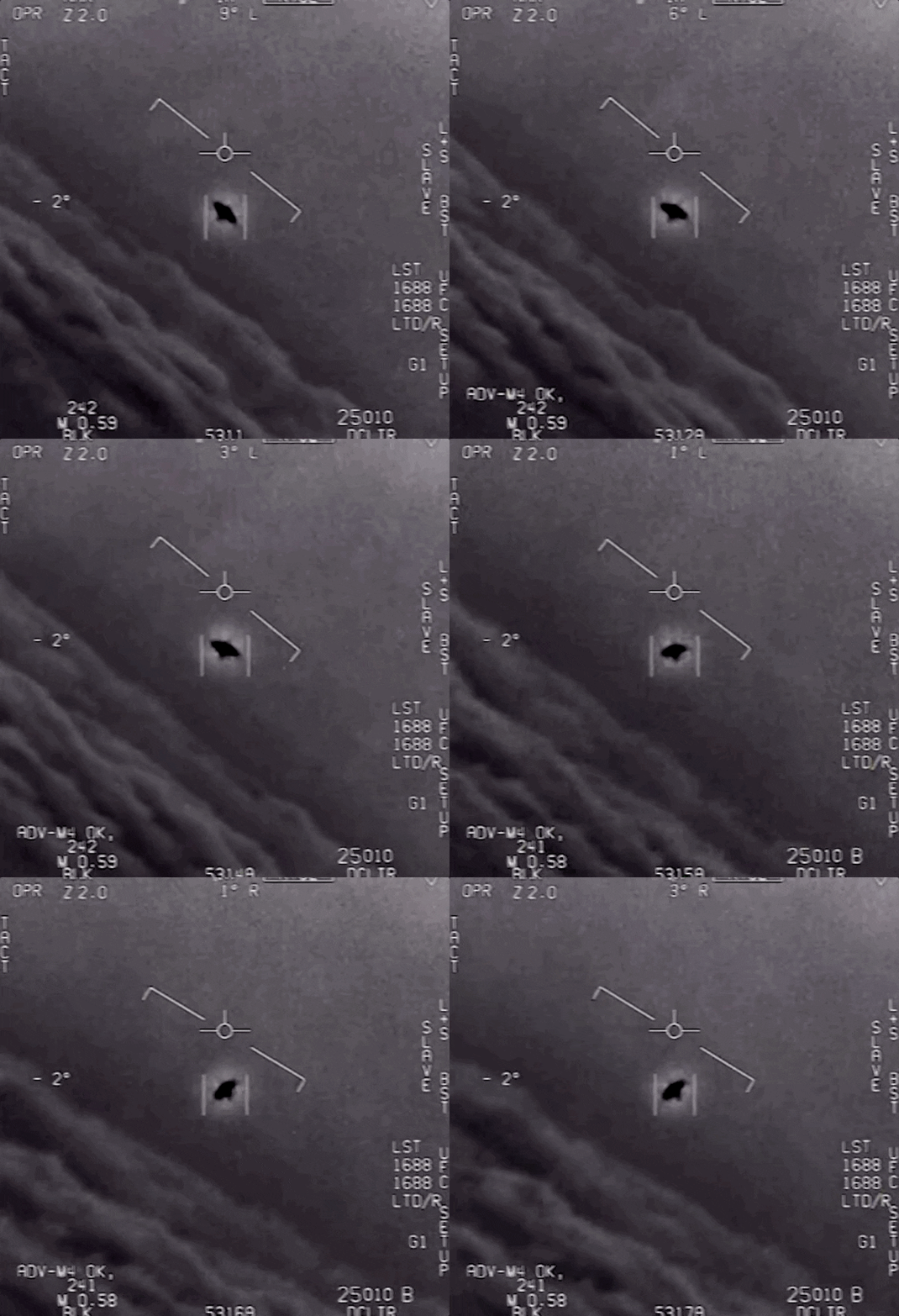




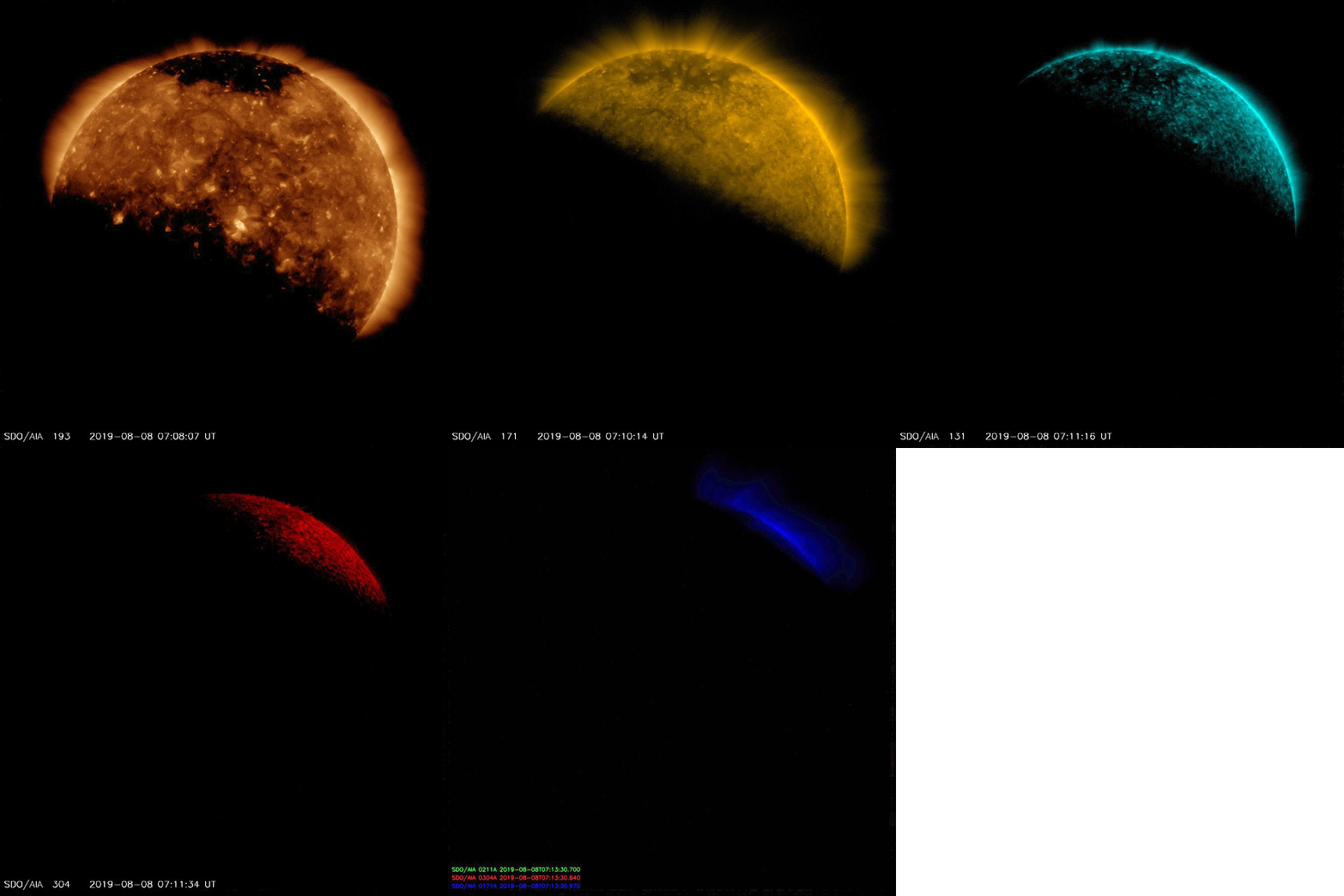


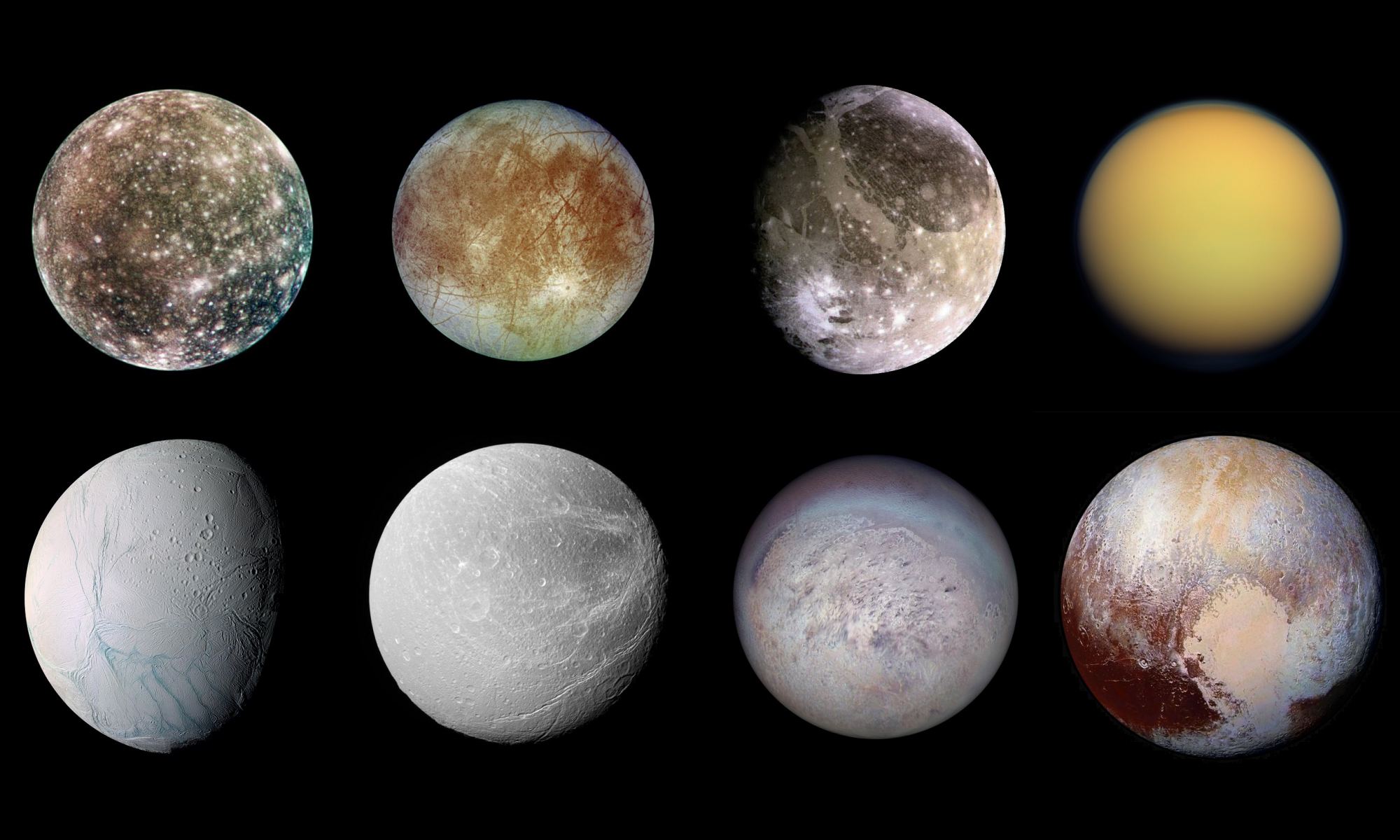


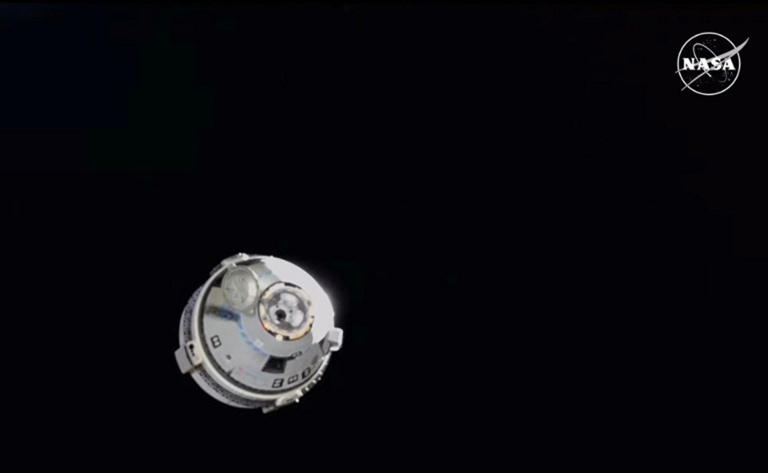

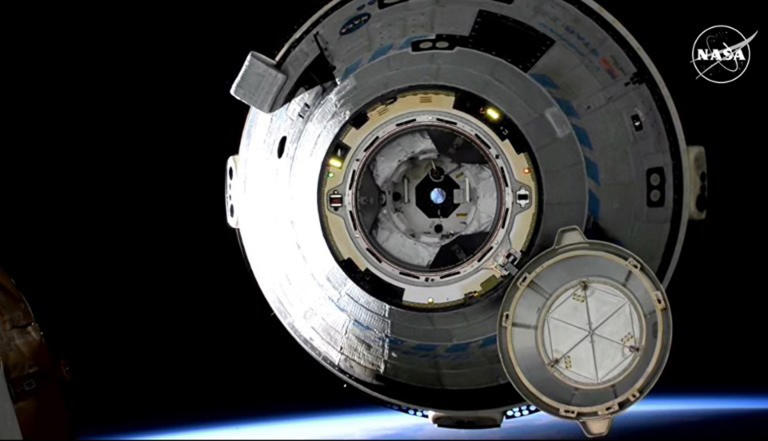




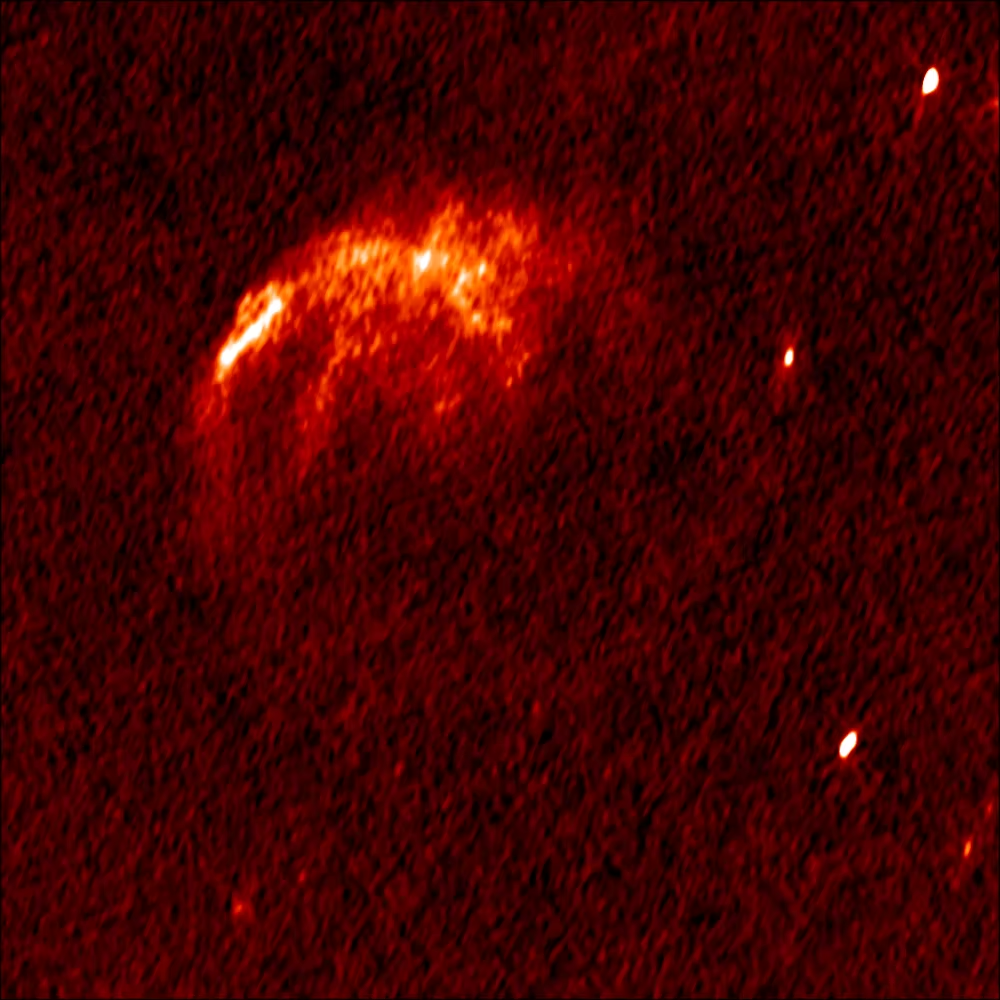



)