The purpose of this blog is the creation of an open, international, independent and free forum, where every UFO-researcher can publish the results of his/her research. The languagues, used for this blog, are Dutch, English and French.You can find the articles of a collegue by selecting his category. Each author stays resposable for the continue of his articles. As blogmaster I have the right to refuse an addition or an article, when it attacks other collegues or UFO-groupes.
Druk op onderstaande knop om te reageren in mijn forum
Zoeken in blog
Deze blog is opgedragen aan mijn overleden echtgenote Lucienne.
In 2012 verloor ze haar moedige strijd tegen kanker!
In 2011 startte ik deze blog, omdat ik niet mocht stoppen met mijn UFO-onderzoek.
BEDANKT!!!
Een interessant adres?
UFO'S of UAP'S, ASTRONOMIE, RUIMTEVAART, ARCHEOLOGIE, OUDHEIDKUNDE, SF-SNUFJES EN ANDERE ESOTERISCHE WETENSCHAPPEN - DE ALLERLAATSTE NIEUWTJES
UFO's of UAP'S in België en de rest van de wereld Ontdek de Fascinerende Wereld van UFO's en UAP's: Jouw Bron voor Onthullende Informatie!
Ben jij ook gefascineerd door het onbekende? Wil je meer weten over UFO's en UAP's, niet alleen in België, maar over de hele wereld? Dan ben je op de juiste plek!
België: Het Kloppend Hart van UFO-onderzoek
In België is BUFON (Belgisch UFO-Netwerk) dé autoriteit op het gebied van UFO-onderzoek. Voor betrouwbare en objectieve informatie over deze intrigerende fenomenen, bezoek je zeker onze Facebook-pagina en deze blog. Maar dat is nog niet alles! Ontdek ook het Belgisch UFO-meldpunt en Caelestia, twee organisaties die diepgaand onderzoek verrichten, al zijn ze soms kritisch of sceptisch.
Nederland: Een Schat aan Informatie
Voor onze Nederlandse buren is er de schitterende website www.ufowijzer.nl, beheerd door Paul Harmans. Deze site biedt een schat aan informatie en artikelen die je niet wilt missen!
Internationaal: MUFON - De Wereldwijde Autoriteit
Neem ook een kijkje bij MUFON (Mutual UFO Network Inc.), een gerenommeerde Amerikaanse UFO-vereniging met afdelingen in de VS en wereldwijd. MUFON is toegewijd aan de wetenschappelijke en analytische studie van het UFO-fenomeen, en hun maandelijkse tijdschrift, The MUFON UFO-Journal, is een must-read voor elke UFO-enthousiasteling. Bezoek hun website op www.mufon.com voor meer informatie.
Samenwerking en Toekomstvisie
Sinds 1 februari 2020 is Pieter niet alleen ex-president van BUFON, maar ook de voormalige nationale directeur van MUFON in Vlaanderen en Nederland. Dit creëert een sterke samenwerking met de Franse MUFON Reseau MUFON/EUROP, wat ons in staat stelt om nog meer waardevolle inzichten te delen.
Let op: Nepprofielen en Nieuwe Groeperingen
Pas op voor een nieuwe groepering die zich ook BUFON noemt, maar geen enkele connectie heeft met onze gevestigde organisatie. Hoewel zij de naam geregistreerd hebben, kunnen ze het rijke verleden en de expertise van onze groep niet evenaren. We wensen hen veel succes, maar we blijven de autoriteit in UFO-onderzoek!
Blijf Op De Hoogte!
Wil jij de laatste nieuwtjes over UFO's, ruimtevaart, archeologie, en meer? Volg ons dan en duik samen met ons in de fascinerende wereld van het onbekende! Sluit je aan bij de gemeenschap van nieuwsgierige geesten die net als jij verlangen naar antwoorden en avonturen in de sterren!
Heb je vragen of wil je meer weten? Aarzel dan niet om contact met ons op te nemen! Samen ontrafelen we het mysterie van de lucht en daarbuiten.
07-08-2024
Mars Once Hosted Lake Larger than Any on Earth: Lake Eridania
Mars Once Hosted Lake Larger than Any on Earth: Lake Eridania
This new image from the High Resolution Stereo Camera (HRSC) onboard ESA’s Mars Express spacecraft shows Caralis Chaos, broken-down and dried-up remnants of a vast ancient Martian lake named Lake Eridania.
This image from ESA’s Mars Express shows Caralis Chaos, a Martian region where copious water is thought to have once existed in the form of an ancient lake known as Lake Eridania.
Image credit: ESA / DLR / FU Berlin.
Lake Eridania once held more water than all other Martian lakes combined and covered an area of over a million km2.
The lake was larger than any known lake on Earth, containing enough water to fill the Caspian Sea nearly three times over.
It likely existed around 3.7 billion years ago, first as one large body of water and later as a series of smaller isolated lakes as it began to dry out.
Eventually Lake Eridania disappeared completely, along with the rest of the water on the Red Planet.
“The lower-left part of the frame features the remains of an old lakebed,” the Mars Express researchers said.
This oblique perspective view was generated from the digital terrain model and the nadir and colour channels of the High Resolution Stereo Camera on ESA’s Mars Express. It shows a region of Mars known as Caralis Chaos, where copious water is thought to have once existed in the form of an ancient lake.
Credit: ESA/DLR/FU Berlin
This colour-coded topographic image shows a region of Mars known as Caralis Chaos, where copious water is thought to have once existed in the form of an ancient lake. It was created from data collected by ESA’s Mars Express on 1 January 2024 (orbit 25235) and is based on a digital terrain model of the region, from which the topography of the landscape can be derived. Lower parts of the surface are shown in blues and purples, while higher altitude regions show up in whites and reds, as indicated on the scale to the top right. North is to the right. The ground resolution is approximately 15 m/pixel and the image is centred at about 38°S/177°E.
Credit: ESA/DLR/FU Berlin
This tan-colored slice of ground is smoother to the left and becomes covered in small hills and mounds to the right. Wriggly, uneven ridges cut horizontally across the frame, while two prominent fault lines cut down vertically on the left and right. Large and small craters are peppered across the terrain. The worn-away boundaries of a once-colossal lakebed can be seen curving up and away from the bottom-center to the top right; this skirts around the largest crater seen here, which sits in the middle of the picture encircled by rough, irregular valleys and channels.
Credit: ESA/DLR/FU Berlin
“The boundaries of this bed can be seen curving up and away from the center of the frame, skirting around the large central crater.”
“The old lakebed is now filled with lots of raised mounds, thought to have formed as ancient Martian winds swept dust across the planet.”
“This dust was later covered and altered by water, before drying out again and breaking apart.”
Alongside water, there are clear signs of volcanism at play in and around this region, known as Caralis Chaos.
“Two long cracks run horizontally through this image, cross-cutting both the aforementioned lakebed and the smoother ground to the top,” the scientists said.
“These are known as the Sirenum Fossae faults, and formed as Mars’ Tharsis region — home to the largest volcanoes in the Solar System — rose up and put immense stress on the Martian crust.”
“Volcanic stress is also to blame for the many wrinkle ridges found here.”
“These appear as wriggly lines weaving across the frame vertically.”
“Wrinkle ridges are common on volcanic plains, forming as new lava sheets are compressed while still soft and elastic, causing them to buckle and deform.”
“The impact craters here, created as space rocks collided with Mars, are also fascinating.”
For decades, a massive anomaly sprawling across 1.2 million square miles on the Indian Ocean floor has baffled scientists. This phenomenon, known as the “gravity hole,” has sparked endless debate and curiosity. Read on as we uncover this mystery, officially named the Indian Ocean Geoid Low.
The Indian Ocean’s Gravity Anomaly So, what’s the deal with this vast region of the Indian Ocean that sits up to 106 meters below the global average sea level? It turns out there’s a significant dip in Earth’s gravity here. This gravitational anomaly has puzzled scientists for years, but recent studies are shedding light on its origins and linking it to deep geological processes.
Understanding the Geoid Low Geologists have a term for this “hole”—a geoid low, where Earth’s gravity is weaker than average. It might sound alarming, but it’s just a natural part of our planet’s gravitational landscape. Recent research suggests that molten rock plumes rising from deep beneath Africa are responsible for this phenomenon; these plumes are at the edge of an ancient sea bed.
Earth’s Shape and Gravitational Variation Ideally, Earth would have uniform gravity, but it’s not a perfect sphere. It’s flatter at the poles and bulges at the equator, causing variations in gravity. Different regions exert varying gravitational pulls based on the crust, mantle, and core mass distribution. Such complexity contributes to gravitational anomalies like the low geoid of the Indian Ocean.
The Potsdam Gravity Potato To visualize these gravitational tugs, scientists use gravity measurements from sensors and satellites to create models like the “Potsdam gravity potato.” The model highlights Earth’s gravitational highs and lows, helping scientists understand the mass distribution beneath the surface. It’s like taking off each layer of an onion, discovering more with every peel.
Discovery and Confirmation of the IOGL The Indian Ocean Geoid Low (IOGL) was discovered by Dutch geophysicist Felix Andries Vening Meinesz in 1948 during a ship-based gravity survey. Since then, subsequent shipboard expeditions and satellite measurements have confirmed its presence. This IOGL is the planet’s most prominent gravitational anomaly, covering over three million square kilometers.
Investigating the Origins Researchers Attreyee Ghosh and Debanjan Pal compared various computer models of the region’s formation over the past 140 million years. Each model used different variables for the convection of molten material within the mantle. Their goal? To pinpoint the cause of the IOGL. Their findings point to a distinctive mantle structure influenced by ancient geological events.
The Role of the Mantle and the African Blob The study suggests that the IOGL is due to a unique mantle structure combined with an adjacent disturbance under Africa known as the “African blob.” This large low-shear velocity province (LLSVP) consists of hot, low-density material, thought to be remnants from ancient seafloor slabs, which influence the region’s gravitational characteristics.
Connection to the Tethys Ocean Geologists believe Tethyan slabs, remnants of an ancient seafloor from the Tethys Ocean, form the African blob. Over 200 million years ago, the Tethys Ocean existed between the supercontinents Laurasia and Gondwana. As India moved northward, it created the Indian Ocean and left behind these geological traces.
Evolution and Persistence of the IOGL Around 20 million years ago, the geoid low probably formed its current shape as plumes began spreading through the upper mantle. The mantle material flow from the African blob sustains this anomaly. As long as these flows continue, the geoid low will persist.
Future Implications The IOGL will eventually dissipate when temperature anomalies cause it to move, which could take many millions of years. Studying this geoid low provides valuable insights into Earth’s internal processes and the dynamic nature of its mantle.
We weten al eeuwen dat de aarde slechts een punt is in een steeds groter wordend heelal, en het is vaak moeilijk om je deze afstanden zelfs maar voor te stellen. De bijna 400.000 kilometer die ons van de maan scheiden, verbleken in vergelijking met de 150 miljoen kilometer die nodig is om de zon te bereiken, en het is hoe dan ook een heel klein deel van de Melkweg. Alles rondom onze planeet is lege ruimte, of bijna, maar waar begint de ruimte dan? Dit is een minder banale vraag dan het lijkt: laten we eens kijken waarom!
Ruimte en het idee van ruimte
Wanneer een astronaut zich klaarmaakt om naar het Internationale Ruimtestation te gaan, zeggen we vaak dat hij de ruimte in gaat. Wanneer hij zich al in het ISS bevindt en buiten de structuur een taak uitvoert, spreken we van een ruimtewandeling. Maar is het dat echt? Op het eerste gezicht lijkt het een “eenvoudige” kwestie van grenzen: waar eindigt de aarde, waar begint de ruimte? Het zijn vragen die banaal lijken, maar verbonden zijn met de vraag wat een planeet is, of beter gezegd: wat onze planeet is.
We weten dat de aarde een atmosfeer heeft die ons in staat stelt om op het oppervlak te leven, dus de ruimte moet beginnen wanneer de atmosfeer eindigt, toch? Helaas strekt de atmosfeer van de aarde zich uit tot ongeveer 800 kilometer boven het oppervlak, met een grens verder weg dan de reizen van Gagarin en andere astronauten, zelfs hoger dan het ISS. Misschien begint de ruimte wanneer het effect van de zwaartekracht van de aarde eindigt, maar dan zouden we 21 miljoen kilometer van onze planeet moeten verwijderen en dichter bij Venus moeten komen. Dit is geen bevredigende maatstaf: zoals we al zeiden, we moeten op basis van conventie vaststellen waar de ruimte begint.
Van de atmosfeer tot de thermosfeer
NASA
Zoals vaak gebeurt bij metingen, is het noodzakelijk om een criterium vast te stellen, een bevredigende meting die ons in staat stelt te zeggen waar de ruimte begint. Volgens de Internationale Astronomische Federatie ligt de rand van de ruimte 100 kilometer boven zeeniveau. Daar is de atmosfeer al zo ijl dat gewone vliegtuigen niet kunnen vliegen: een bijna empirische meting, zoals die waarbij het begin van de ruimte op ongeveer 80 kilometer wordt geplaatst, de limiet die door de Amerikaanse X-15-raket in de jaren zestig werd overschreden. Maar is dit genoeg?
Een meer wetenschappelijke methode is die waarbij het einde van de aarde en het begin van de ruimte op ongeveer 118 kilometer boven zeeniveau worden geplaatst. Hier is sprake van een overwicht van deeltjes die uit de ruimte komen vergeleken met deeltjes die van de planeet komen: kortom, er is nog steeds een atmosfeer, maar de dingen worden verwarrend. Een paar honderd kilometer hoger bevindt zich de thermosfeer, het gebied van de atmosfeer waarin het Internationale Ruimtestation zich bevindt. Als er een grens is tussen de aarde en de ruimte, zou dit de grens kunnen zijn, ook al is niet iedereen het daarmee eens.
Waar begint de ruimte?
Zoals we hebben gezien, is het beantwoorden van deze vraag niet zo eenvoudig als het lijkt. Er is geen fysieke barrière die ons in staat stelt te zeggen waar de aarde eindigt en waar de ruimte begint, en er is zelfs geen enkele grens die onze taak gemakkelijker maakt. Er zijn veel grenzen, elk met uitstekende argumenten. De waarheid is dat we mensen zijn en beslissen wat ruimte is en wat niet: dit zijn conventies die meer vertellen over onze doelen en doelstellingen dan over de werkelijke ruimte.
Tegenwoordig heeft de IAF het begin van de ruimte gedefinieerd volgens de Kármánlijn, maar we hebben al gezien dat er meerdere interpretaties zijn, die allemaal legitiem zijn. Op dit moment hebben we het over 100 kilometer, 118 kilometer of de 400 kilometer hoogte van het ISS. In de toekomst zal het toenemende onderzoek ons misschien in staat stellen andere metingen van de ruimte te geven die uiteindelijk alleen maar metingen van onszelf zijn. Of weinig meer.
A team of North Carolina State University Engineers has devised a shapeshifting robot inspired by the ancient Japanese paper-folding art of Origami, capable of functions ranging from space exploration to disaster relief.
By implementing hierarchical concepts observed in nature, the team’s approach combines simple and efficient kinematics with “rich shape-morphing capability” to successfully mitigate the complexity and power use issues holding back earlier concept work from real-life implementation. The researchers believe these improvements could pave the way to a simpler, more malleable shape-shifting robot for practical use.
“The question we’re asking is how to achieve a number of versatile shapes with the fewest number of actuators powering the shapeshifting,” said Jie Yin, associate professor of mechanical and aerospace engineering, in a press release announcing their work.
“Here we use a hierarchical concept observed in nature – like layered muscle fibers – but with plastic cubes to create a transforming robot.”
A prototype of the transforming robot Shapeshifter is tested in the robotics yard at NASA's Jet Propulsion Laboratory. Shapeshifter is made of smaller robots that can morph into rolling spheres, flying drones, swimming submersibles, and more.
An illustration of an early concept of Shapeshifter imagines the robots on Saturn's moon Titan. In the picture, the Shapeshifter breaks into smaller pieces that can investigate a methane waterfall from the sky.
An illustration of the small robots that form Shapeshifter. Dubbed "cobots," they each have a propeller for flying and can combine to form a sphere, rolling on the ground to save energy
In that same release, team leader Yin explained that they looked at the hierarchical construction of human muscle, of fiber wrapped in connective tissue, with those bundles once again joined by another layer of connective tissue. To this hierarchical concept, they added a combinatorial principle that the robot could split into sub-pieces or even into smaller autonomous units. According to the team’s new paper recently published in the journal Nature Communications, the combination of these two ideas provided the jumping-off point to rethink how a shape-shifting robot could be composed,
In that work, the team also looked at the issues plaguing previous work, including one Origami-inspired robot previously covered by The Debrief that was otherwise promising. Plus, while advances have been made in other biologically inspired robots, they have so far struggled to compare to the real thing.
For example, the variety of shapes that many robots could put themselves into was limited. Also, those with a more diverse array of potential forms quickly became a complicated mess of intricate control systems and actuators. Their transformations were difficult, lengthy, and tapped too much energy.
In an effort to overcome those limitations, the team designed a robotics framework that can bend, fold, and reshape itself into a variety of forms. In their shape-shifting robot’s final structure, four, six, or eight cubes are connected by an equal number of hinges acting as joints. These joints are also rotational, increasing the angles available to a single pivot.
Adding to the robot’s versatility, the servomotors that control them are controlled by Bluetooth and powered by rechargeable batteries.
Mori3: A polygon-based modular robot
Printing Out a Transforming Robot
To construct their test model, the team relied on 3D printing. First, they printed rigid ABS plastic panels, which were then connected into hollow cubes and joined with flexible hinges. According to the researchers, this design does not just make assembly easy; it becomes a snap to disassemble and change the hierarchy. Additionally, the model tested to have a significant amount of strength. For example, it could support two and a half times its weight even when deployed as a multistory structure. Simpler uses, such as bridges and tunnels, could bear even greater stress, over three and a half times its weight.
“We want to make a more robust structure that can bear larger loads,” said Yanbin Li, an NC State postdoctoral researcher and co-corresponding author of the paper. “If we want a car shape, for example, how do we design the first structure that can transform into a car shape? We also want to test our structures with real-world applications like space robots.”
The efficiency of this robust design relies on allowing for many possibilities while finding the simplest solution. While one robot is equipped with 22 motors controlling 36 joints, it only needs to use up to three at a time for a transformation. This includes rearranging itself from a dense cube into a fully open structure, a feat that was accomplished with only two motors actively driving 16 of its joints.
The Mori3 robot standing up.
Gif: EPFL RRL
This reduced transformation times to two minutes from the hours described in earlier work.
When highlighting the design’s efficiency, the paper’s authors noted that at its maximum expansion, the robot could occupy 200 times the initial volume of its components when packed flat. Based on its unprecedented speed of transformation and compactness for transport, the team identified the robots as perfect for use as emergency shelters or other structures needed in rapid deployment situations.
When operating on a planet’s surface, large-scale functions like transforming into a shelter or acting as a cargo robot are possible. In one proposed application, the separate pieces split into multiple robots with separate functions, an idea common in Japanese science fiction entertainment. This level of malleability also allows the shape-shifting robot to assume a more aerodynamic shape for either pointing down and landing or pointing up and taking off without turning the entire structure around. Such a robot could significantly cut down the needed equipment, while simultaneously increasing its own safety and efficiency.
MIT CSAIL
The Future of Space Exploration May Be In Transporting Less
In their paper, the researchers also illustrate an example of how such robots could be used in space exploration. This is consistent with recent work in the field that has been trying to identify ways to make devices more reclaimable and cost-effective. In a previous story, The Debrief looked at the ways engineers have been attempting to make space vehicles reusable.
One example highlighted by the NC State researchers is how it can form itself into a large, flat slab for solar panels, maximizing the surface area for energy collection. It can also reconfigure itself to create holes in its surface for objects to pass harmlessly through, avoiding collisions with small space objects. Such a feature would also allow it to generate docking ports for other spacecraft or even convert itself into a living space for future astronauts.
“We think these can be used as deployable, configurable space robots and habitats,” said Antonio Di Lallo, an NC State postdoctoral researcher and co-first author of the paper. “It’s modular, so you can send it to space flat and assemble it as a shelter or as a habitat, and then disassemble it.”
Whatever form the shape-shifting robots ultimately take, the researchers agree that ease of use will be critical to their overall value.
“For users, it needs to be easy to assemble and to control,” Yin said.
Ryan Whalen covers science and technology for The Debrief. He can be reached at ryan@thedebrief.org.
Floating LEAVES Could Characterize Venus’s Atmosphere
Venus’s atmosphere has drawn a lot of attention lately. In particular, the consistent discovery of phosphine in its clouds points to potential biological sources. That, in turn, has resulted in numerous suggested missions, including floating a balloon into the atmosphere or having a spacecraft scoop down and suck up atmospheric samples. But a team of engineers led by Jeffrey Balcerski, now an adjunct at Kent State University but then part of the Ohio Aerospace Institute, came up with a different idea years ago – use floating sensor platforms shaped like leaves to collect a wide variety of data throughout Venus’ atmosphere.
The Lofted Environmental and Atmospheric Venus Sensors (or LEAVES) project was funded by NASA’s Institute for Advanced Concepts (NIAC) program in 2018. The mission design is simple enough: design lightweight platforms with a wide surface area, attach some low-cost and weight sensors to them, release them from a mothership transiting into orbit around Venus, and let those platforms float down through the Venusian atmosphere over the course of a few hours, all the while sending back atmospheric, chemical, and temperature data to the mothership.
There are a few enabling technologies behind the idea. The first is a lightweight yet robust and deployable structure that could support a platform of sensors and not be destroyed by Venus’s notoriously hellish environment. Designing this structure required understanding expected flight times and geolocation requirements, as well as the requirement that the system must be trackable by orbital radar in order to communicate back to the mothership. The resulting design resembles the famous inverted pyramid at the Louvre.
Venus is one of the most interesting planets in the solar system – and has captured Fraser’s imagination.
Inside that structure, the second enabling technology sits—harsh environment sensors designed to operate in Venus’s extreme environments. Chemical, pressure, and electrical sensors have undergone extensive development work over the past few years, and some are approaching readiness for use on Venus. They are also lightweight, allowing the structure to descend slowly, which is necessary to complete its mission goals.
After receiving the NIAC Phase I grant, the team led by Dr. Balcerski got to work modeling LEAVES’ structure and mission design. They quickly realized that delivery methodology and a system’s light weight would be critical to future missions. As such, they modeled depositing a series of upwards of 100 LEAVES throughout Venus’ atmosphere, each of which would be networked back to the mothership that deposited them as part of its planned orbital maneuver. They also thought there were several planned Venus missions, such as DaVINCI, which could easily take LEAVES on as a secondary payload with no real risk to mission success or uptime, as the LEAVES would fall and be destroyed by the lower Venusian atmosphere in a matter of hours.
But those hours of data, relayed back to the mothership and then on to Earth, could provide invaluable insights into the inner workings of Venus’s atmosphere. LEAVES would be able to reach a wide altitude range—it is estimated to operate between 100 km and 30 km in altitude. It could also be spread literally all over the world, allowing for a more complete picture of the Venusian atmosphere than other mission designs, which would only capture a small vertical slice of the atmosphere.
Venus’s environmental is rough on technology, to say the least. Fraser discusses the new technologies that could one day survive on its surface.
Given the potential impact of what we might find in the Venusian atmosphere, any mission designs that allow us to capture a large amount of information about a wide swath of it would be welcome. Dr. Balcerski and his colleagues think they have advanced the LEAVES concept to a Technology Readiness Level of 3-4. However, they haven’t yet received further support for LEAVES, and development appears to be on hold. But, given the increasing interest in exploring the Venusian atmosphere, perhaps it’s time to look at this lightweight, inexpensive way of doing so again.
The International Space Station (ISS) will soonretire. As humanity’s farthest outpost approaches its sunset, researchers are raking in data on how astronautsmight survive in the next iterations of human spaceflight. Unfortunately, arecent studyreveals there’s a long way to go before we’re ready to live long stretches off planet Earth.
In short, we can’t stomach it.
Biodata from astronauts and rodents in space are revealing that being up there significantly increases a major digestive issue called gut permeability.
Thursday’s lineup at the International Space Station Research & Development Conference in Boston included a presentation from University of Florida PhD student Oluwamayowa Akinsuyi. After looking at several datasets from NASA and the Japanese Aerospace Exploration Agency (JAXA), Akinsuyi’s team found a “substantial reduction” in the expression of genes that maintain our intestinal barrier.
NASA astronaut Scott Kelly performing a spacewalk on November 6, 2015.
NASA/Getty Images/Getty Images
“Our findings on this project underscore the critical need to develop effective countermeasures to treat gastrointestinal (GI) health during long-duration spaceflight, “Akinsuyi said in a July 20 presentation about the same work. “And also one key thing our work pointed out is that there is clearly more work that is needed to increase awareness about the problem of leaky gut during space flight.”
It Takes Guts
The human body takes a big risk when we eat. Many times a day, it’s exposed to potentially harmful substances that hitch a ride alongside the good stuff in food and medicine. The gastrointestinal tract operates in a delicately robust fashion consisting of two layers to transport water and nutrients into the rest of the body, secrete other material out, and, all the while, keep out harmful substances like bacteria and toxins.
When the GI tract is in a good groove, that’s intestinal homeostasis. Without homeostasis, when the gut barrier is too permeable, inflammation and a host of diseases can appear. This is called leaky gut.
Akinsuyi analyzed five datasets from the NASA Genelab program. Genetic information from astronauts and rodents that were flown into space seems to suggest that spaceflight alters the gene expression that prevents leaky gut.
The astronauts and rodents experienced an imbalance in their gut microbiome, which is associated with increased intestinal pathogens and decreased beneficial microbes.
“Osteoporosis ... can be worsened by gut microbes and also a weak gut barrier.”
A lack of intestinal integrity could trigger disorders like inflammatory bowel disease, nonalcoholic fatty liver disease, cirrhosis and bone loss.
“Osteoporosis is a big problem astronauts experience during spaceflight, and this can be worsened by gut microbes and also a weak gut barrier,” according to Akinsuyi. The inflammatory response from leaky gut can “ultimately alter bone remodeling and result in bone loss,” he added.
Spaceflight is previously known to have an effect on gene expression and bone loss. If astronaut tummies are also connected to these phenomena, research into long-duration missions may have to continue in the few years that the ISS has left in orbit.
When NASA’s DART missionintentionally slammed into Dimorphos in September 2022, the orbit of the moonlet was altered. Researchers have studied the photos and data taken by DART before its impact, learning more about the geology of the Didymos/Dimorphos system. They have now estimated the surface age of both the asteroid and its moon. The asteroid Didymos has a surface age of 12.5 million years, while the moon Dimorphos is only 300,000 years old.
Additionally, the DART researchers concluded both Didymos and Dimorphos are rubble piles, with Dimorphos likely inheriting its boulders from Didymos.
“It’s a pile of gravel and boulders (and some sand/dust) held together by its own gravity, and really not anything else,” said Andy Rivkin, DART investigation team co-lead at the Johns Hopkins Applied Physics Lab (APL), on Bluesky. “There’s really no cohesion between different pieces of gravel or rocks on Dimorphos.”
Several DART researchers published five papers in Nature Communications, looking at the geology and geophysics of Didymos and Dimorphos as seen by DART.
“These findings give us new insights into the ways that asteroids can change over time,” said Thomas Statler, lead scientist for Solar System Small Bodies at NASA Headquarters in Washington, in a NASA press release. “This is important not just for understanding the near-Earth objects that are the focus of planetary defense, but also for our ability to read the history of our Solar System from these remnants of planet formation. This is just part of the wealth of new knowledge we’ve gained from DART.”
In “The geology and evolution of the Near-Earth binary asteroid system (65803) Didymos,” Olivier Barnouin, Ronald-Louis Ballouz, also of APL, and their team were able to determine the disparate ages of Didymos and Dimorphos. They also found that both objects have weak surface characteristics, which very likely contributed to DART’s significant impact on the moonlet’s orbit.
“The images and data that DART collected at the Didymos system provided a unique opportunity for a close-up geological look at a near-Earth asteroid binary system,” said Barnouin, in a press release from APL. “From these images alone, we were able to infer a great deal of information on geophysical properties of both Didymos and Dimorphos, and expand our understanding of the formation of these two asteroids. We also better understand why DART was so effective in moving Dimorphos.”
Based on the internal and surface properties described in Barnouin et al. (2024), this video demonstrates how the spin-up of asteroid Didymos could have led to the growth of its equatorial ridge and the formation of the smaller asteroid Dimorphos, seen orbiting the former near the end of the clip. Particles are colored according to their speeds, with the scale shown at the top, along with the continually changing spin period of Didymos. Credit: University of Michigan/Yun Zhang and Johns Hopkins APL/Olivier Barnouin
Images captured by DART and its cubesat companion the LICIACube – contributed by the Italian Space Agency (ASI) — showed Dimorphos’ topography covered with boulders of varying sizes, while the larger asteroid Didymos was smoother at lower elevations, though rocky at higher elevations. It also had more craters than Dimorphos. The authors inferred that Dimorphos likely spun off from Didymos in a large mass shedding event.
“The size-frequency distribution of boulders larger than 5 meters on Dimorphos and larger than 22.8 meters on Didymos confirms that both asteroids are piles of fragments produced in the catastrophic disruption of their progenitors,” the team wrote. “This finding supports the hypothesis that some asteroid binary systems form through the spin up and mass shedding of a fraction of the primary asteroid.”
In another paper, “Fast boulder fracturing by thermal fatigue detected on stony asteroids” Alice Lucchetti, also of INAF, and colleagues found that the size and distribution of boulders on Dimorphos is consistant with thermal fatigue, which is the gradual weakening and cracking of a material caused by heat. This could rapidly break up boulders on the surface of Dimorphos, generating surface lines and altering the physical characteristics of this type of asteroid more quickly than previously thought. The DART mission was likely the first observation of such a phenomenon on this type of asteroid.
Thermal fatigue could also have a bearing on what happens if this type of asteroid would need to be deflected for planetary defense.
“The presence of boulder fields affected by thermal fracturing on near-Earth asteroid surfaces may contribute to an enhancement in the ejected mass and momentum from kinetic impactors when deflecting asteroids,” the authors wrote.
a. The approximate equator (dashed magenta line), example boulder tracks (magenta arrows) and likely boulders (white arrows) on the surface of Didymos. b. The 15 boulder tracks identified on the surface of Didymos are indicated by the magenta lines. Credit: Bigot, Lombardo et al.
Another paper, “The bearing capacity of asteroid (65803) Didymos estimated from boulder tracks” led by students Jeanne Bigot and Pauline Lombardo of ISAE-SUPAERO in Toulouse, France show that the bearing capacity — the surface’s ability to support applied loads of asteroid Didymos’ surface is only 0.1% that of dry sand on Earth. NASA said that this is considered an important parameter for understanding and predicting the response of a surface, including for the purposes of displacing an asteroid.
Finally, “Mechanical properties of rubble pile asteroids through surface boulder morphological analysis” by Colas Robin, also of ISAE-SUPAERO, and co-authors analyzed the surface boulders on Dimorphos, comparing them with those on other rubble pile asteroids, including Itokawa, Ryugu and Bennu. The researchers found “stiking similarities” the boulders on all four asteroids, suggesting they all formed and evolved in a similar fashion, and were also changed by impacts. This data, too, informs future planetary defense missions or attempts at impactor missions.
“Planetary defense efforts rely on estimates of the mechanical properties of asteroids, which are difficult to constrain accurately from Earth,” the team wrote. “The mechanical properties of asteroid material are also important in the interpretation of the DART impact.”
All the DART researchers team will continue to observe and study DART’s impact. Additionally, another spacecraft will launch in 2024 to study Dimorphos even closer. ESA’s Hera mission should arrive at Didymos and Dimorphos in December 2026. Hera will undertake a detailed study of Dimorphos to understand more deeply how the impact affected it.
Artist’s impression of the graphenes (C24) and fullerenes found in a Planetary Nebula. The detection of graphenes and fullerenes around old stars as common as our Sun suggests that these molecules and other allotropic forms of carbon may be widespread in space. Credits: IAC; original image of the Helix Nebula (NASA, NOAO, ESA, the Hubble Helix Nebula Team, M. Meixner, STScI, & T.A. Rector, NRAO.)
In 2004, scientists at the University of Manchester first isolated and investigated graphene, the supermaterial composed of single-layer carbon atoms arranged in a hexagonal honeycomb lattice. Since then, it has become a wonder, with properties that make it extremely useful in numerous applications. Among scientists, it is generally believed that about 1.9% of carbon in the interstellar medium (ISM) exists in the form of graphene, with its shape and structure determined by the process of its formation.
As it happens, there could be lots of this supermaterial on the surface of the Moon. In a recent study, researchers from the Chinese Academy of Science (CAS) revealed naturally formed graphene arranged in a special thin-layered structure on the Moon. These findings could have drastic implications for our understanding of how the Moon formed and lead to new methods for the manufacture of graphene, with applications ranging from electronics, power storage, construction, and supermaterials. They could also prove useful for future missions that will create permanent infrastructure on the lunar surface.
For decades, scientists have speculated that the Earth-Moon system was formed from a massive collision – the Giant Impact Hypothesis – between a Mars-sized body (Theia) and Earth roughly 4.4 billion years ago. This theory is supported by analyses of the moon rocks returned by the Apollo astronauts, which led to the notion of a carbon-depleted. However, recent findings have come to challenge this consensus based on the observation of global carbon ion fluxes on the Moon, which suggest the presence of indigenous carbon.
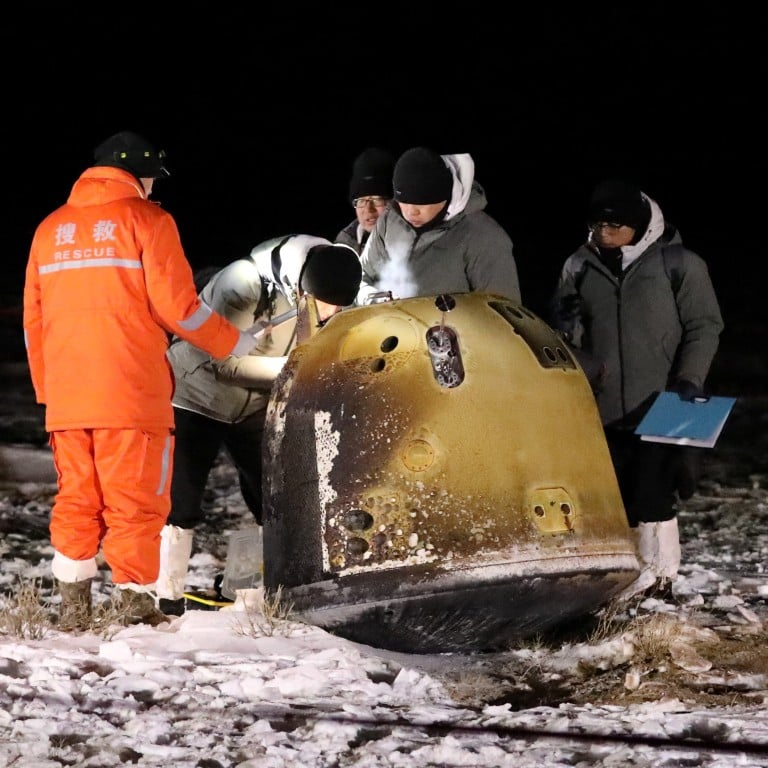
These observations are consistent with the analysis of one of the Apollo 17 samples that showed the presence of graphite. For their study, the team conducted a spectroscopic analysis of an olive-shaped sample of lunar soil (measuring about 2.9 mm by 1.6 mm) retrieved by the Chang’e 5 mission in 2020. This was China’s third robotic mission to reach the lunar surface and its first sample return from the Moon. From the spectra they obtained, they found an iron compound in a carbon-rich section of the sample that is closely related to the formation of graphene.
Upon further analysis using advanced microscopic and mapping technologies, they confirmed that the carbon in the sample was graphene flakes two to seven layers thick. In terms of how it got there, the team proposed that the graphene may have formed during a period of volcanic activity early in the Moon’s history when it was still geologically active. They further hypothesize that the graphene was catalyzed by solar winds that kicked up the lunar regolith and its iron-containing minerals, which could have helped transform the carbon’s atomic structure.
They also allow for the possibility of meteorite impacts, which are also known to create high-temperature and high-pressure environments similar to volcanic activity. As they state in their paper:
“Graphene is embedded as individual flakes or formed as part of a carbon shell enclosing the mineral particles. Our result reveals one typical structure of indigenous carbon in the Moon and its formation mechanism has been proposed. This finding may reinvent the understanding of chemical components, geography episodes and the history of the Moon.”
Artist’s impression of the interior of the Moon. Credit: Hernán Cañellas/Benjamin Weiss
These findings could also have a tremendous impact on research here on Earth, where graphene is being investigated for applications ranging from electronics and mechanics to materials science. As they indicate in their study, this study could lead to new methods for inexpensively producing the material and offer additional opportunities for lunar exploration:
“The identification of graphene in the core–shell structure suggests a bottom-up synthesis process rather than exfoliation, which generally involves a high-temperature catalytic reaction. Therefore, a formation mechanism of few-layer graphene and graphitic carbon is proposed here…
“In turn, the mineral-catalysed formation of natural graphene sheds light on the development of low-cost scalable synthesis techniques for high-quality graphene. Therefore, a new lunar exploration program may be promoted and some forthcoming breakthroughs can be expected.”
These findings could also prove useful for future missions that will lead to the development of permanent infrastructure on the lunar surface. This includes NASA’s Artemis Program, which aims to create a “sustained program of lunar exploration and development.” There’s also the ESA’s Moon Village initiative and China and Russia’s plan for an International Lunar Research Station (ILRS). In addition to exploration and scientific research, these programs could conduct experiments on the properties and uses of graphene, which could include the manufacture of lunar habitats!
The Milky Way is just a speck in a universe filled with an untold number of galaxies. But if we had to take an educated guess, how many galaxies are in the universe?
That sounds like a simple question, but it's anything but. The first problem is that even with our most powerful telescopes, we can see only a tiny fraction of the universe.
"The observable universe is only that part of the universe from which the light has had time to reach us," astrophysicist Kai Noeske, now outreach officer at the European Space Agency, told Live Science.
Arp 273 is a pair of spiral galaxies, which may have collided in the past. Their gravitational interaction pulled the galaxies into the sweeping shapes we see; it also produced a burst of star formation, which is visible as blue splotches in the spiral arms of both galaxies.
Credit: NASA
The universe is 13.8 billion years old, but the observable universe stretches more than 13.8 light-years in every direction. That's because the universe is expanding and light got a head start early on, when the universe was smaller
"Now, the total size in each direction is about 46 billionlight-years," Noeske said.
That's much smaller than even our smallest estimates of the entire universe. "We see at most 3% of the universe," Pamela Gay, a senior scientist at the Planetary Science Institute, told Live Science.
The second problem is that there are so many galaxies that we can only make estimates of the total number based on what we can observe in small regions of the universe.
"You look at a small patch of the sky, and you count everything in that small patch and then multiply over the size of the sky," Gay said.
But even that requires a cutoff. "What do we define [as] a galaxy?" Noeske said. "We have really giant galaxies that have to have a factor of 10 more" the mass of our galaxy, "and we have a lot of small galaxies, from lower-mass galaxies that have about 10 times less mass … down all the way to dwarf galaxies."
At some point, scientists need to define a minimum mass for a galaxy to make estimates possible.
The Antennae Galaxies have been colliding and merging into a single galaxy for roughly 100 million years. This image combines X-ray, infrared, and visible light to show how the collision is making new stars and churning the gas in the galaxies into marvelous shapes.
"If we set a mass cutoff and try to make this conservative, like a million solar masses, we end up with an average number of galaxies in the universe from the beginning to today of about 1 to 2 trillion," Noeske said. Scientists think there were more galaxies earlier in the universe's history than there are today, which is why galaxy estimates are an average over time.
"But those results come from the Hubble [telescope] — the James Webb Space Telescope is starting to speak to these results — which are near Earth, inside of our solar system, and are limited on what they can see by all the stuff in our solar system that adds light to the sky," Gay said. "We do have one spacecraft with a camera that has gotten beyond all the garbage within our solar system, and that's the New Horizons spacecraft."
A 2021 study used the camera aboard New Horizons to measure the total amount of light in various patches of sky and estimated how many galaxies would be needed to create that much light.
"And suddenly, as they're outside of all the light sources in our solar system, they realize we don't need as many galaxies as we thought," Gay said. "And so their estimates put us at, like, 200 billion, maybe even 100 billion galaxies in the visible universe.
"So somewhere between 2 trillion galaxies at the top edge and 100 billion at the lower edge is the number of galaxies in our observable universe," she said.
If you assume that's 3% — at most — of our universe, you can multiply that range of galaxies to get the total number of galaxies in the universe. If we're seeing less of the universe than we think, there will be a smaller total number of galaxies.
But considering we don't actually know the size of the universe, those estimates are murky. "If it's an infinite universe, you're going to have infinite galaxies," Gay said.
Evidence of Ancient Life on Mars Confirmed by NASA Rover A discovery made by NASA’s Perseverance rover may have just confirmed ancient life on Mars.
Because of the rover’s Mars exploration, scientists have discovered an extremely exciting rock. This rock has evidence suggesting the presence of ancient tiny martians!
A Necessary Clarification The NASA scientists working on the Perseverance rover mission wish to clarify that they are not claiming to have definitely found life on Mars. However, the rover has just found a rock that is very likely to have fossilized remains of microbial martians within it.
Kathryn Stack Morgan, the mission’s deputy project scientist, explains, “What we are saying is that we have a potential biosignature on Mars.”
What is a Biosignature? According to Morgan, a biosignature is a structure, composition, or texture in a rock that has the potential of being of biological origin.
The rock that Perseverance has just discovered is being dubbed Cheyava Falls by scientists. Cheyava Falls was likely part of an ancient martian river delta. It has features left behind from microbes—from when the area was wet and warm several billion years ago.
The Possibility of Finding Life on Mars Martian rocks could hold important clues about ancient life on Mars. Scientists have long-wondered if there was life on the planet when it had flowing water and a dense atmosphere.
Kenneth Farley, the mission’s project scientist and a professor of geochemistry at the California Institute of Technology, said that the Cheyava Falls discovery “is, for me at least, the most compelling rock that we have collected so far.” The scientists hope to bring the rock to Earth for study. According to Dr. Farley, if a sample is successfully brought back home, “it has the potential to really get at the question.”
Finding Organic Compounds Organic compounds provide the building blocks for life. Perseverance’s instruments detected organic compounds within Cheyava Falls.
Mineral deposits of calcium sulfate in the rock appear to have been deposited by flowing water. Liquid water is another necessary component for life as we know it.
Leopard Spotted Rocks Another interesting find on the rock are small leopard-spot-like shapes. These rock spots are small whitish splotches—about a millimeter in size—that have black rings around them.
The spots’ black rings contain iron phosphate. Additionally, the ancient chemical reactions that created the leopard spots could also have provided energy for microbes.
The Importance of Organic Compounds Molecules that contain carbon and hydrogen are called organic compounds. The detection of organic compounds means that the presence of life is likely.
However, the presence of organic compounds in the Cheyava Falls rock could have many possible explanations. For example, organic compounds can also be created by geological processes like hydrothermal events, which are not connected to the presence of life.
An important part of Perseverance’s mission is to drill samples of a variety of interesting Mars rocks. Then, a future mission is planned to bring samples back to Earth for scientists to study.
The variety of rocks that have been collected by Perseverance have the potential to answer a wide variety of questions about the Red Planet. Dr. Farley made sure to note that just because they hadn’t found biosignatures until now, it doesn’t mean that the mission had been a disappointment.
A Long and Costly Trip Home Unfortunately, getting the samples back to Earth is turning out to be a herculean task. The Mars sample return mission has hit major developmental and cost difficulties. It is years behind schedule and billions of dollars over budget.
Bill Nelson, the NASA administrator, explained, “The bottom line is that $11 billion is too expensive… and not returning samples until 2040 is unacceptably too long.” What NASA chooses to do about the sample return mission will affect the future of Mars exploration. “We’re all in the same holding pattern waiting to see what might transpire,” Dr. Farley said.
Eventual Further Research The Perseverance rover’s movements are limited, so scientists cannot give a more definite answer about the presence of life on Mars… until they are able to get the samples back to Earth. However, Perseverance is continuing to traverse Mars.
This discovery of a potential biosignature is very exciting, and the Perseverance rover’s findings may have just changed what we know about Mars. Alas, until the NASA scientists come up with a plan to get the samples back to Earth, we’ll just have to wait for upcoming updates.
Physicist Michio Kaku proposesthe existence of other dimensions, also known as parallel universes, coexisting alongside our own reality. Within these dimensions, it is plausible that there are beings or entities living alongside us, despite our inability to perceive them. While the concept of alternate dimensions or universes may seem far-fetched to some, it is intricately connected to the subject of Unidentified Aerial Phenomena (UAPs), commonly referred to as UFO phenomena.
We live in a four-dimensional world (if time is included), but scientists propose there are more dimensions. However, they do not believe there can exist more than 11 dimensions because conditions become unstable and particles naturally collapse back down into 10 or 11 dimensions. The 12th dimension, for example, introduces a second time.
“Our understanding of reality is not complete, by far,” says Stanford University physicist Andrei Linde. “Reality exists independently of us.” If they exist, those universes are separated from ours, unreachable and undetectable by any direct measurement (at least so far). And that makes some experts question whether the search for a multiverse can ever be truly scientific.
In the realm of science, our quest for understanding alternate or higher dimensions remains ongoing. However, within the field of UFOlogy, intriguing cases have emerged suggesting the existence of not just other dimensions, but also the presence of entities residing within them. These beings seem to possess the ability to manipulate a bridge connecting their realm to ours, enabling them to embark on regular visits to our world.
Crashed UFO that ‘distorted space and time’
A very strange UFO case has been shared by American attorney Daniel Sheehan with Daily Mail. Sheehan involved in bringing UFO whistleblowers to Congress, claimed that a whistleblower told him a mind-boggling tale about a recovered crashed UFO. He revealed that a crashed UFO recovered by the US military had distorted space-time and was “bigger on the inside.” The whistleblower has reportedly briefed Senate Intelligence Committee staff on the matter.
Daniel P. Sheehan. Image credit: danielpsheehan.com
According to Sheehan, one of the alleged recoveries described by the insider involved a 30-foot saucer partially embedded in the earth. When attempts were made to remove it using a bulldozer, the craft exhibited unusual behavior. As it was being pulled out, it seemingly detached in a pie slice-shaped section, suggesting that it was constructed in a unique way.
The anonymous whistleblower then entered the craft and was astonished to find that the interior was as large as a football stadium, while the exterior was only about 30 feet in diameter. The experience inside caused disorientation and nausea due to the vast size discrepancy. Furthermore, upon exiting the craft in a few minutes, the whistleblower found that four hours had passed outside, indicating time distortion as well.
Sheehan mentions that the craft’s distortion of space and time is consistent with the theories proposed by physicists regarding advanced propulsion systems. These theories suggest that warping space-time could be used to counteract the effects of gravity and achieve advanced forms of propulsion. However, Sheehan does not provide further specific details, such as the location or date of the incident, and admits to being unable to provide concrete evidence to support these claims.
Moreover, on Jesse Michels’ show, astronomer and UFO researcher Jacques Vallee discussed another UFO case that includes experiencing another dimension by the witness. Valle said: “There was one case in San Jose. A woman had seen something over her house. It was a big disc, and I say, ‘How big was it?’ And she says, ‘Well, it was about the same size as her house. It was, you know, just like that.’ Then I say, ‘Well, when you went inside, you said, uh, you know, there was this being, and the being took you on a staircase.’ I say, ‘Where did the staircase go?’ Well, the staircase went up the side of this big round room. I say, ‘How would you compare it?’ Well, like a movie house, you know, like an M5 theater. I said, ‘That’s bigger than your house.’”
Luis Elizondo, the man who managed the UFO program inside the Pentagon, explains how space-time distortion works and hints that we can manipulate this physics for technological advancement. In an interview with George Knapp in 2018, Elizondo explains:
“Space-time is something we observe in the natural world all the time, especially in relation to gravity and GPS satellites. The clocks on these satellites need constant calibration. Even though the clocks on the satellites are identical to the ones on the ground station, they still require regular calibration. The reason for this is the effect of Earth’s gravity on space-time. The clocks on Earth run slightly slower compared to the clocks on the platforms above Earth.
How is this possible if the clocks are the same? Well, it’s because the closer you are to a massive object, like Earth, the more space-time warps. This phenomenon is explained by the theory of general relativity, which boils down to using the equation E=mc². Essentially, it means that a significant amount of mass or energy warps space-time. When you approach a supermassive object like the sun, the distortion becomes even greater. In fact, near a black hole, time becomes so distorted that it virtually stops.
We have observed this phenomenon through gravitational lensing when studying distant galaxies. We can actually see the effects of gravity on space-time with our own eyes, so it’s a scientific fact, not fiction. The question now is how we can manipulate this physics for technological advancement. Potentially, we could warp space-time in a way that allows us to travel from point A to point B more quickly.”
Is it possible that an advanced extraterrestrial civilization has already accomplished this kind of technology and has been using it to visit our world? Or perhaps we already have such technology?
In 2021, leaked documents revealed that the US Navy had conducted experiments on various far-fetched technologies, including a “space modification weapon.” These documents, disclosed by The War Zone, detailed the research carried out by the Naval Air Warfare Center Aircraft Division (NAWCAD) between 2017 and 2019. The most interesting thing is that the technology written in those documents discusses propulsion system that defies gravity, or to devastating weapons that bends the laws of physics and craft that alters the fabric of time and space.
The man behind all the patents is Dr. Salvatore Cezar Pais, who is an aerospace engineer at the Naval Air Warfare Center Aircraft Division (NAWCAD). He has four patents registered in his name that contain the source of technology that would change the world. In these patents, a “Spacetime Modification Weapon” (SMW, a weapon that can make the Hydrogen bomb seem more like a firecracker, in comparison) is mentioned.
Dr. Salvatore Pais is a physicist and aerospace engineer with the US Navy. In 2019 his inventions of 3 highly advanced forms of technology were granted patents.
Are these patents a cover for the reverse-engineered extraterrestrial technology? The Navy’s objective in testing this conceptual system was to keep pace with similar programs being developed in China. The researchers believed that the space modification weapon could revolutionize power and propulsion systems. The technology was based on the “Pais effect” aimed to push the boundaries of science.
Pais made ambitious claims about the potential of this technology, suggesting that it could lead to a propulsion system defying gravity or devastating weapons that bend the laws of physics. He even outlined plans for a “hybrid aerospace-underwater craft” capable of altering the fabric of time and space.
The Navy’s aerospace research enterprise supported Pais’s patents, stating that they filed them to keep up with similar technological advancements being pursued by the Chinese military. The “space modification weapon” described in the documents was envisioned to release extremely high energy levels, surpassing the destructive power of a Hydrogen bomb.
However, the experiments conducted between 2017 and 2019 were inconclusive. The elusive Pais effect was neither observed nor disproven during this period. The Pais effect refers to a theoretical physics concept that involves the controlled movement of highly electrically charged matter. If proven possible, it could enable the creation of powerful energy fields capable of fundamentally engineering the fabric of reality.
It is unclear whether the US Navy is continuing its experiments on the Pais effect or if the project has been discontinued entirely. None of the futuristic technologies described in the leaked UFO patents were developed, leaving the ultimate fate of the space modification weapon and related concepts uncertain.
NASA's MRO photographs suspected underground base at Mars crater edge
NASA's MRO photographs suspected underground base at Mars crater edge
Researcher Jean Ward, while analyzing a Mars image acquired by NASA's Mars Reconnaissance Orbiter on March 2, 2010, discovered an unusual anomaly in Noachis Terra, a region of Mars north of Asimov, also known as the "Land of Noah."
Using Topaz Labs' Gigapixel to upscale the image for better detail, Ward observed the anomaly, measuring approximately 250 to 300 meters in length, resembles what looks like an artificially created structure with multiple right angles. Ward suggests it could outline a 'tanker-shaped' anomaly.
Some suggest that the anomaly could be part of an ancient road with a wall and might be part of a longer route that has been partially covered by landslides or other natural occurrences but others say that it is only the wall that stands out supporting the theory that it could be the upper part of an underground base built at/inside the rim of a crater.
Just imagine if it is an underground Mars base, the location would be suitable for UFOs to take off or land on landing pads inside the crater, which are connected to the base. This would not be the first time UFOs have been observed descending into or taking off from craters.
Whatever its origin, this anomaly does not appear to be a natural formation.
Study: Dinosaur-Killing Mass Extinction Triggered Rapid Evolution of Bird Genomes
Study: Dinosaur-Killing Mass Extinction Triggered Rapid Evolution of Bird Genomes
About 66 million years ago, at the end of the Cretaceous period, a 10-km-wide asteroid crashed into Earth near the site of the town of Chicxulub in what is now Mexico. The impact eradicated roughly 75% of the animal and plant species on Earth, including whole groups like non-avian dinosaurs and ammonites. New research has identified important changes in birds’ genomes sparked by this end-Cretaceous mass extinction, ultimately contributing to the incredible diversity of living birds.
This painting depicts an asteroid slamming into tropical, shallow seas of the sulfur-rich Yucatan Peninsula in what is today southeast Mexico. The aftermath of this immense asteroid collision, which occurred approximately 65 million years ago, is believed to have caused the extinction of the dinosaurs and many other species on Earth. Shown in this painting are pterodactyls, flying reptiles with wingspans of up to 50 feet, gliding above low tropical clouds.
Image credit: Donald E. Davis / NASA.
“By studying the DNA of living birds, we can try to detect patterns of genetic sequences that changed just after one of the most important events in Earth’s history,” said University of Michigan’s Dr. Jake Berv.
“The signature of those events seems to have imprinted into the genomes of the survivors in a way that we can detect tens of millions of years later.”
A living organism’s genome comprises four nucleotide molecules, referred to by the letters A, T, G and C. The order of these nucleotides in a genome defines the blueprint of life.
The DNA code can sometimes evolve in a way that shifts the overall composition of DNA nucleotides across the whole genome.
These compositional changes are crucial in determining what kind of genetic variation is possible, contributing to an organism’s evolutionary potential, or its ability to evolve.
Dr. Berv and colleagues found that the mass extinction event sparked shifts in nucleotide composition.
They also found that these shifts seem to be connected to the way birds develop as babies, their adult size and their metabolism.
For example, within approximately 3 million to 5 million years of the end-Cretaceous mass extinction, surviving bird lineages tended to develop smaller body sizes.
They also changed how they developed as hatchlings, with more species becoming ‘altricial.’
“This means they are still very embryonic when they hatch, need their parents to feed them, and can take weeks to fledge,” Dr. Berv said.
“Birds that hatch ready to fend for themselves, like chickens and turkeys, are called ‘precocial’.”
“We found that adult body size and patterns of pre-hatching development are two important features of bird biology we can link to the genetic changes we’re detecting.”
“One of the most significant challenges in evolutionary biology and ornithology is teasing out the relationships between major bird groups — it’s difficult to determine the structure of the tree of life for living birds.”
Over the past 15 years, researchers have been applying increasingly large genomic data sets to try to solve the problem.
Previously, they used genomic data to study the evolution of birds’ genomes using statistical models that make strong assumptions.
These traditional models allow researchers to reconstruct the history of genetic changes, but they typically assume that the composition of DNA, its proportion of A, T, G and C nucleotides, does not change across evolutionary history.
The study authors developed a software tool to more closely track DNA composition over time and across different branches of the tree of life.
With this tool, they were able to relax the assumption that the composition of DNA remains constant.
“This allowed the model of DNA evolution to vary across the evolutionary tree and identify places where there was likely a shift in DNA composition,” said University of Michigan’s Professor Stephen Smith.
“For this new research, these shifts were concentrated in time, within about 5 million years of the end-Cretaceous mass extinction,” Dr. Berv added.
This approach also allowed the team to estimate which bird traits were most closely associated with these shifts in DNA composition.
“This is an important type of genetic change that we think we can link to the mass extinction event,” Dr. Berv said.
“As far as we know, changes in DNA composition have not been previously associated with the end-Cretaceous mass extinction in such a clear way.”
“We know that mass extinction events can dramatically affect biodiversity, ecology and organismal form,” said University of Cambridge’s Professor Daniel Field.
“Our study emphasizes that these extinction events can actually influence organismal biology even more profoundly — by altering important aspects of how genomes evolve.”
“This work furthers our understanding of the dramatic biological impacts of mass extinction events and highlights that the mass extinction that wiped out the giant dinosaurs was one of the most biologically impactful events in the entire history of our planet.”
By relaxing the typical assumptions used in evolutionary biology, the researchers are building more nuanced insight into the sequence of events that occurred in the early history of birds.
“We have typically not looked at the change in DNA composition and model across the tree of life as a change that something interesting has happened at a particular point of time and place,” Professor Smith said.
“This study illustrates that we have probably been missing something.”
The study was published in the journal Science Advances.
Jacob S. Berv et al. 2024. Genome and life-history evolution link bird diversification to the end-Cretaceous mass extinction. Science Advances 10 (31); doi: 10.1126/sciadv.adp0114
This article is a version of a press-release provided by the University of Michigan.
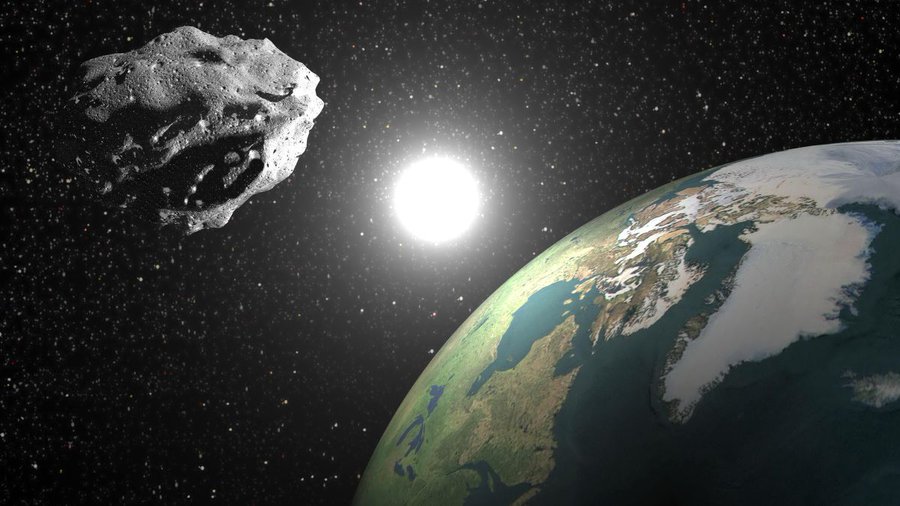
Astronomers recently identified asteroid 2023 FW13 as a quasi-moon, a space rock orbiting the sun nearly in tandem with Earth.
An illustration of an asteroid orbiting the sun alongside Earth, much like the newly classified quasi-moon
(Image credit: Zoonar GmbH / Alamy Stock Photo)
Scientists recently discovered an asteroid that tags along with Earth during its yearly journey around the sun.
Dubbed 2023 FW13, the space rock is considered a "quasi-moon" or "quasi-satellite," meaning it orbits the sun in a similar time frame as Earth does, but is only slightly influenced by our planet’s gravitational pull. It is estimated to be 50 feet (15 meters) in diameter — roughly equivalent to three large SUVs parked bumper to bumper. During its orbit of the sun, 2023 FW13 also circles Earth, coming within 9 million miles (14 million kilometers) of our planet. For comparison, the moon has a diameter of 2,159 miles (3,474 km) and comes within 226,000 miles (364,000 km) of Earth at the closest point of its orbit, according to NASA.
2023 FW13 was first observed in March by the Pan-STARRS observatory, which is located atop the volcanic mountain Haleakalā in Hawaii. The asteroid's existence was then confirmed by the Canada-France-Hawaii Telescope in Hawaii and two observatories in Arizona before being officially listed on April 1 by the Minor Planet Center at the International Astronomical Union, a network of scientists responsible for designating new planets, moons and other objects in the solar system.
Some estimates suggest that 2023 FW13 has been Earth's cosmic neighbor since at least 100 B.C. and that the space rock will continue to follow this orbital path until around A.D. 3700, Adrien Coffinet, an astronomer and journalist who first categorized the asteroid as a quasi-moon after modeling its orbit, told Sky & Telescope.
"It seems to be the longest quasi-satellite of Earth known to date," Coffinet said.
Astronomers have discovered a quasi-moon that has orbited around the Sun alongside Earth since 100 BC.
Following 2023 FW13's initial discovery in March, space observers dug into the data and found observations of the asteroid dating all the way back to 2012, according to Live Science's sister site Space.com.
Despite hovering relatively close to Earth, this quasi-satellite likely isn't on a collision course with our planet.
"The good news is, such an orbit doesn't result in an impacting trajectory 'out of the blue,'" Alan Harris, an astronomer at the Space Science Institute, told Sky & Telescope.
This is not Earth's only quasi-companion; a different quasi-satellite known as Kamo'oalewa was discovered in 2016. The rock sticks similarly close to our planet during its orbit around the sun, and a 2021 study suggested that this asteroid could actually be a fragment of Earth's moon.
NASA says that its new inflatable heat shield, which may one day assist in landing humans on Mars, will soon be launched with a National Oceanic and Atmospheric Administration (NOAA) satellite to help study Earth’s climate.
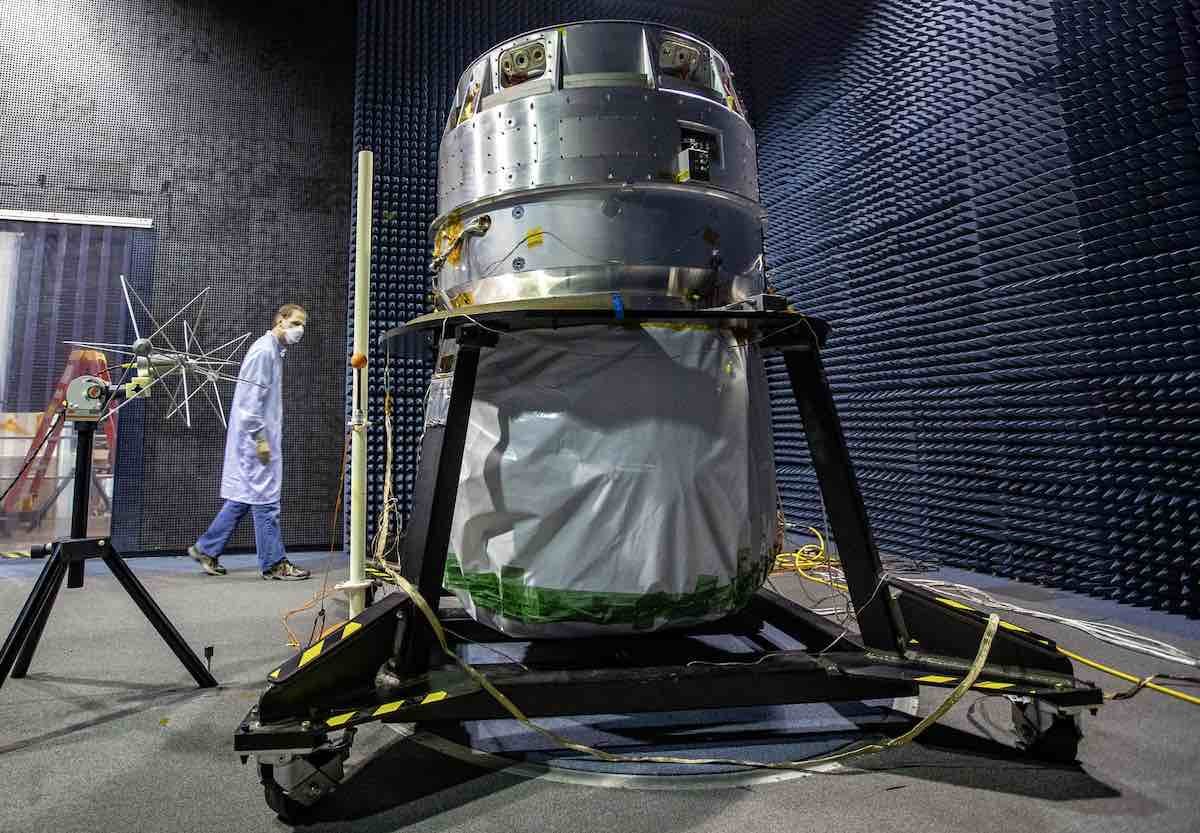
Currently undergoing tests at Vandenberg Space Force Base in California, the Low-Earth Orbit Flight Test of an Inflatable Decelerator (LOFTID) is an inflatable heat shield designed to withstand incredible temperatures approaching 2900°F, for use in slowing down large payloads.
Following tests at Vandenberg, the LOFTID is scheduled to be included as a secondary payload aboard NOAA’s Joint Polar Satellite System-2 (JPSS-2) satellite. The space agency hopes that current testing of the device will help gauge its capabilities for future missions, which may include the delivery of everything from future robotic explorers that will follow in the tread marks left by Perseverance to spacecraft carrying human crews.
NASA’s LOFTID inflatable heat shield undergoes electromagnetic testing in a shielded room (Credit: NASA).
“LOFTID is dedicated to the memory of Bernard Kutter, manager of advanced programs at ULA, who passed away in August 2020 and was an advocate for technologies like LOFTID that can lower the cost of space access,” the space agency said in a statement.
Over the last several weeks, the LOFTID underwent a complete systems test, along with several environmental tests, electromagnetic compatibility tests, and other checkups, along with match-mate testing between NASA and ULA components to help ensure that the systems can be successfully integrated prior to launch.
Following testing, the heat shield (also called an aeroshell) was fully inflated under conditions that replicated its orbital deployment environment, after which it underwent laser-assisted measurements before being repackaged for launch.
The LOFTID will be carried to space on board a United Launch Alliance (ULA) Atlas V rocket, after which its inflation mechanism will be deployed. Then, traveling at speeds nearing 5 miles per second, the inflatable heat shield will be tested on whether it can withstand the tremendous pressures of re-entry.
The LOFTID, a project of NASA’s Space Technology Mission Directorate, falls under its Technology Demonstration Missions program. In partnership with United Launch Alliance (ULA), the current LOFTID launch is being overseen out of Langley Research Center in Hampton, Virginia.
Micah Hanks is Editor-in-Chief and Co-Founder of The Debrief. Follow his work atmicahhanks.com and on Twitter:@MicahHanks.
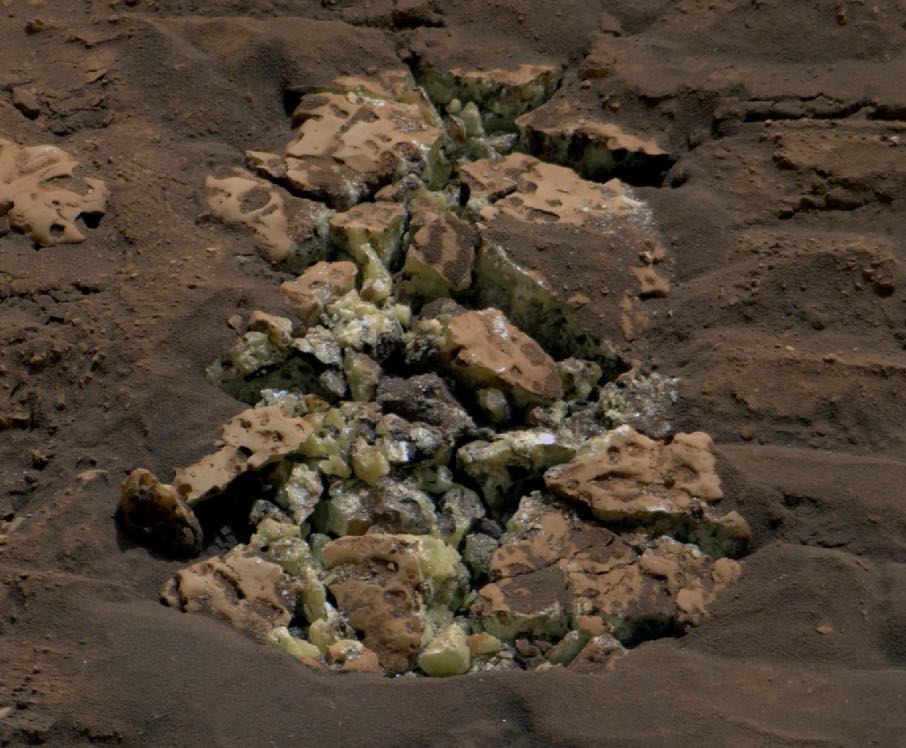
NASA’s Curiosity rover has made an uncharacteristically colorful discovery on the Red Planet. It revealed a small pocket of yellow crystals hidden within a stone on the Martian surface.
The colorful stones, composed of sulfur, were found on May 30 during the rover’s exploration of a sulfate-rich region of the Martian surface. However, the discovery of the bright yellow crystalline mineral was an unexpected find for the Curiosity team, marking a colorful first that, to date, has never been previously encountered on the Red Planet.
The discovery raises several intriguing questions about Mars and its history, as well as what environmental factors could have led to the formation of the crystals.
A Chance Discovery
Since October 2023, Curiosity has been scouring the Gediz Vallis channel on Mount Sharp, an area where scientists believe ancient lava flows occurred in the planet’s early history. The Martian rover has concentrated its explorations in the area, given the region’s promising potential for having once been home to microbial life or even the possibility that it may still be a present-day refuge for such simple organisms.
The sulfur was revealed in a chance discovery as NASA’s Curiosity rover smashed open a rock by driving over it (Credit: NASA/JPL-Caltech/MSSS).
The discovery of the colorful mineral was made by chance, as Curiosity cracked open a rock while driving over it. To the Curiosity team’s surprise, the yellow interior of the stone revealed what is likely to be pure sulfur, whereas the sulfates that are normally encountered in the area are salts comprised of combinations of sulfur and other minerals.
Unveiling Mount Sharp’s Mysteries
Since 2014, NASA’s Curiosity rover has made its ascent of Mount Sharp, where its explorations of the Gediz Vallis channel have revealed a portion of the landscape once shaped by ancient water flows on the planet. Curiosity’s present mission is to investigate whether this ancient channel and its surrounding terrain could have supported microbial life, particularly at a time when water was more abundant on Mars.
“This was not a quiet period on Mars,” according to Becky Williams, a scientist at the Planetary Science Institute and deputy principal investigator of Curiosity’s Mast Camera. “There was an exciting amount of activity here.
“We’re looking at multiple flows down the channel, including energetic floods and boulder-rich flows,” Williams said.
Going forward, the Curiosity team hopes to conduct drilling on larger rocks in the area to determine if they may also contain sulfur crystals. Presently, the relationship between elemental sulfur and other sulfur-based minerals in the area remains unclear to scientists studying the Martian environment.
“Finding a field of stones made of pure sulfur is like finding an oasis in the desert,” said Ashwin Vasavada, Curiosity’s project scientist at NASA’s Jet Propulsion Laboratory.
“It shouldn’t be there, so now we have to explain it,” Vasavada said in a statement.
“Discovering strange and unexpected things is what makes planetary exploration so exciting.”
In lunar regolith samples collected by China’s Chang’e-5 probe, planetary scientists have identified few-layer graphene formed together with complex minerals. The finding provides new insights into the origin of the Moon, supporting the hypothesis of a carbon-containing Moon.
Structural and compositional characterization of few-layer graphene in the Chang’e-5 lunar soil sample.
Image credit: Zhang et al., doi: 10.1093/nsr/nwae211.
“Graphene has revolutionized the research of condensed matter physics and materials science with its novel physical phenomena and extraordinary properties,” said Jilin University Professor Wei Zhang and colleagues.
“It plays an increasingly important role in extensive areas including planetary and space science.”
“It is estimated that around 1.9% of total interstellar carbon is in the form of graphene and protosolar graphene has been identified in carbonaceous chondrite meteorites.”
The researchers analyzed an olive-shaped sample of lunar soil, about 2.9 mm by 1.6 mm, collected by the Chang’e 5 mission in 2020.
Using a special spectrometer, they found an iron compound that is closely related to the formation of graphene in a carbon-rich section of the sample.
They then used advanced microscopic and mapping technologies to confirm that the carbon content in the sample comprised ‘flakes’ that have two to seven layers of graphene.
The scientists proposed that the few-layer graphene may have formed in volcanic activity in the early stages of the Moon’s existence, and been catalyzed by solar winds that can stir up lunar soil and iron-containing minerals that helped transform the carbon atoms’ structure.
Meteorite impacts, which create high-temperature and high-pressure environments, may also have led to the formation of graphene.
Scientists have discovered graphene on the Moon, in a lunar sample returned to Earth
“This is the first study to verify the presence of natural few-layer graphene in lunar soil samples by examining its microstructure and composition,” the authors said.
“Our finding provides new insights into the origin of the Moon, supporting the hypothesis of a carbon-containing Moon.”
“Moreover, the exotic properties of graphene are highly structurally and environmentally dependent.”
“Further in-depth property investigation of natural graphene would provide more information on the geologic evolution of the Moon.”
“In turn, the mineral-catalysed formation of natural graphene sheds light on the development of low-cost scalable synthesis techniques for high-quality graphene.”
“Therefore, a new lunar exploration program may be promoted and some forthcoming breakthroughs can be expected.”
Chinese researchers have discovered a form of carbon in lunar soil samples collected in 2020 which could overturn the theory that the moon was formed by a cosmic collision between Earth and a smaller planet.
Photo: Reuters
The findings were published in the journal National Science Review.
Wei Zhang et al. Discovery of natural few-layer graphene on the Moon. National Science Review, published online June 17, 2024; doi: 10.1093/nsr/nwae211
Fresh lunar powder collected less than two years ago shows promising — albeit early — signs that it could support humans in space for long periods.
As part of a recent study published Thursday in the journal Joule, Chinese scientists opened Moon parcels from the country’s Chang’e-5 mission. In December 2020, this spacecraft performed a quick rendezvous with Earth’s natural satellite, collecting lunar soil from the Moon’s "Ocean of Storms" plain (Oceanus Procellarum) and bringing it back to our planet. In the new research, a team analyzed the moondust’s basic building blocks to see how it might serve as a cornerstone for life-sustaining chemical reactions on a future lunar base.
An Apollo 12 astronaut walking on the Moon’s “Ocean of Storms” region.
NASA./Corbis Historical/Getty Images
What’s new —The new study proposes “extraterrestrial photosynthesis,” a process by which humans in space can draw on just two simple, out-of-this-world ingredients — lunar soil and sunlight — to produce fuel and recycle carbon dioxide back into breathable oxygen on long-duration crewed missions to the Moon and Mars.
One major talking point for space agencies with their eyes to the skies: How do you power a trip far from Earth? The longest crewed lunar mission to date — NASA’s Apollo 15 flight in 1971 — lasted 12 days. They maintained themselves on the supplies they brought along, which had the heaviest payload in a lunar orbit at about 107,000 pounds.
Digging into the details —The study looks at ways to replenish water, oxygen, and fuel by using human byproducts, solar radiation, and local lunar soil called regolith. If this is successfully achievable, space agencies can save on cargo weight and vehicle space for crewed missions lasting weeks or even months.
Their preliminary findings inspired them to propose a model for how a self-sustaining Moon outpost could work.
Apollo 15 lunar module pilot Jim Irwin loads the lunar rover.
Heritage Images/Hulton Archive/Getty Images
The team analyzed the Chang’e-5, or “CE-5,” regolith samples to see what chemicals they contained and then investigated how well these components could catalyze carbon dioxide into oxygen. Exhaled breath might be used for potable water, or turned into hydrogen or methane for fuel.
Their experiments yielded some positive results. They saw bubbles of hydrogen and oxygen gas, for example. The paper reports that compounds in lunar regolith catalyzed a reaction during a photovoltaic-driven water electrolytic (PV-EC) test, which takes light and water and turns the liquid into those two gases. On the Moon, the water used here would come from lunar ice and human breath that would have previously gone through a dehydrating process. The astronauts would use the water for drinking.
What’s next — A lot more needs to be done before the research is Moon-ready. The researchers wrote that “the current catalytic performance from the CE-5 lunar sample cannot fully satisfy the requirement of extraterrestrial survival,” adding that their findings weren’t on par with the efficiency of existing catalyst systems on Earth.
They wrote that researching the compounds on the Moon more thoroughly could lead to more success.
Diamonds aren't the traditional 20th anniversary gift, but we're not going to complain, since these came from a spacecraft that crashed into the surface of Mercury back in 2015.
NASA's MESSENGER spacecraft launched 20 years ago, on August 2, 2004, and although its mission ended in 2015, MESSENGER's observations of the Sun-scorched planet are still yielding new discoveries today. A recent study of MESSENGER data suggests that a 10-mile-thick layer of diamond might lie deep inside Mercury, between the planet's mantle and its core. That's a heck of a find from a defunct spacecraft!
Yongjiang Xu, of the Center for High Pressure Science and Technology Advanced Research in Beijing, and his colleagues published their work in the journal Nature Communications.
The dark patches on Mercury’s surface, seen in this photo from Mariner 10 in 1974, are graphite.
Space Frontiers/Archive Photos/Getty Images
Diamonds In The Rough
Like most rocky planets, Mercury was once a seething, churning ball of magma. Over time, that magma cooled and solidified, and in the process, it settled into layers — giving the planet a dense inner core, a slightly lighter and mostly fluid mantle, and a light, rocky outer crust. To simulate that process, Xu and his colleagues made digital models using data from MESSENGER that offered clues about Mercury's inner structure. They also squashed a lot of carbon samples in the lab to see how the material behaved under tremendous heat and pressure.
According to Xu and his colleagues’ simulations, there should be a layer of diamond lying atop Mercury's core and just beneath its mantle — and it could be between 9 and 11 miles thick. The diamond would have crystallized out of an ocean of carbon-rich magma that once covered Mercury billions of years ago.
Meanwhile, on the surface, carbon crystallized into a different (and much less sparkly) form called graphite. Graphite and diamond are both pure carbon, but the atoms are arranged in different crystal structures, which gives the two materials very different properties. At the surface, where pressures and temperatures were much lower, the carbon formed dark, soft graphite. Deep below, the intense pressure beneath Mercury's mantle pressed carbon into diamond — if Xu and his colleagues are right.
In this photo, Messenger prepares for prelaunch testing.
The finding is just the latest scientific gem MESSENGER has laid at our feet since its launch 20 years ago. It took four years just to reach Mercury in 2008, and then the spacecraft had to make a carefully-planned series of flybys to slow down enough to enter Mercury's orbit without also accidentally getting pulled into the Sun. (Trying to maneuver a spacecraft that close to the Sun's gravitational influence is a challenge.) MESSENGER settled into Mercury's orbit in 2011.
During its four years in orbit around Mercury, MESSENGER revealed some surprising things about our Solar System's innermost planet. One of those is the graphite that dusts its surface, which gives the planet's surface its dark, patchy appearance — and gave Xu and his colleagues the idea for their recent simulations.
Xu and his colleagues’ simulations may help explain another of MESSENGER's most important discoveries: Mercury's surprisingly strong magnetic field.
For such a small planet, Mercury boasts a disproportionately powerful magnetic field. If Xu and his colleagues are right, the layer of diamond lying beneath the mantle could be changing how heat flows from the core to the mantle (because diamond transfers heat very efficiently). That, in turn, could be changing how convection, currents driven by hot liquid rising and cool liquid sinking, happens in the molten outer layers of Mercury's core. And since all that flowing molten metal is part of what generates the magnetic field, the diamond layer could be a big part of the explanation.
The MESSENGER mission came to a dramatic end on April 30, 2015, when the spacecraft smashed into Mercury's surface at more than 8,000 miles per hour. Because MESSENGER was on the far side of the planet at the time, its human team back on Earth didn't witness its final moments; they heard only the silence of the dead spacecraft failing to resume radio contact a few moments later.
"The processes that led to the formation of a diamond layer on Mercury might also have occurred on other planets, potentially leaving similar signatures," says Yanhao Lin, also of the Center for High Pressure Science and Technology Advanced Research in Beijing and a coauthor of the recent study, in a recent statement. The riches of the Universe seem to only grow with time.
Volgens de New York Times zet het Pentagon spoed achter de voorbereidingen om oorlog in de ruimte te kunnen voeren.
Washington is ervan overtuigd dat de snelle vooruitgang van China en Rusland op het gebied van ruimteoperaties een groeiende bedreiging vormt voor de Amerikaanse troepen en andere militaire middelen op de grond en satellieten in een baan om de aarde.
De details van de inspanningen van het Pentagon blijven zeer vertrouwelijk. Bepaalde documenten zijn echter onlangs vrijgegeven en gepubliceerd door de New York Times.
Daarin erkennen functionarissen van het Ministerie van Defensie in toenemende mate dat het initiatief een grote verschuiving in militaire operaties weerspiegelt, waarbij de ruimte een echt slagveld zal worden.
De VS zal niet langer alleen vertrouwen op militaire satellieten om te communiceren, navigeren, traceren en te richten op terrestrische bedreigingen, instrumenten die het Pentagon decennialang een aanzienlijk voordeel hebben gegeven in conflicten.
Het ministerie van Defensie wil een nieuwe generatie instrumenten op de grond en in de ruimte verwerven waarmee het zijn satellietnetwerk kan verdedigen tegen aanvallen en, indien nodig, vijandelijke ruimtevaartuigen in een baan om de aarde kan verstoren of uitschakelen, aldus functionarissen van het Pentagon in een reeks interviews, toespraken en verklaringen
De strategie verschilt fundamenteel van eerdere militaire ruimteprogramma's door de uitbreiding van het scala aan offensieve capaciteiten, wat heel anders is dan het voorstel voor het Strategisch Defensie-initiatief uit de jaren tachtig, dat nooit het daglicht zag en dat tot doel had satellieten te gebruiken om de Verenigde Staten te beschermen tegen aanvallen met nucleaire raketten.
(SR and MaSi for Tagtik/Source: New York Times/Photo: Pixabay)
Beste bezoeker, Heb je zelf al ooit een vreemde waarneming gedaan, laat dit dan even weten via email aan Frederick Delaere opwww.ufomeldpunt.be. Deze onderzoekers behandelen jouw melding in volledige anonimiteit en met alle respect voor jouw privacy. Ze zijn kritisch, objectief maar open minded aangelegd en zullen jou steeds een verklaring geven voor jouw waarneming! DUS AARZEL NIET, ALS JE EEN ANTWOORD OP JOUW VRAGEN WENST, CONTACTEER FREDERICK. BIJ VOORBAAT DANK...
Druk op onderstaande knop om je bestand , jouw artikel naar mij te verzenden. INDIEN HET DE MOEITE WAARD IS, PLAATS IK HET OP DE BLOG ONDER DIVERSEN MET JOUW NAAM...
Druk op onderstaande knop om een berichtje achter te laten in mijn gastenboek
Alvast bedankt voor al jouw bezoekjes en jouw reacties. Nog een prettige dag verder!!!
Over mijzelf
Ik ben Pieter, en gebruik soms ook wel de schuilnaam Peter2011.
Ik ben een man en woon in Linter (België) en mijn beroep is Ik ben op rust..
Ik ben geboren op 18/10/1950 en ben nu dus 75 jaar jong.
Mijn hobby's zijn: Ufologie en andere esoterische onderwerpen.
Op deze blog vind je onder artikels, werk van mezelf. Mijn dank gaat ook naar André, Ingrid, Oliver, Paul, Vincent, Georges Filer en MUFON voor de bijdragen voor de verschillende categorieën...
Veel leesplezier en geef je mening over deze blog.




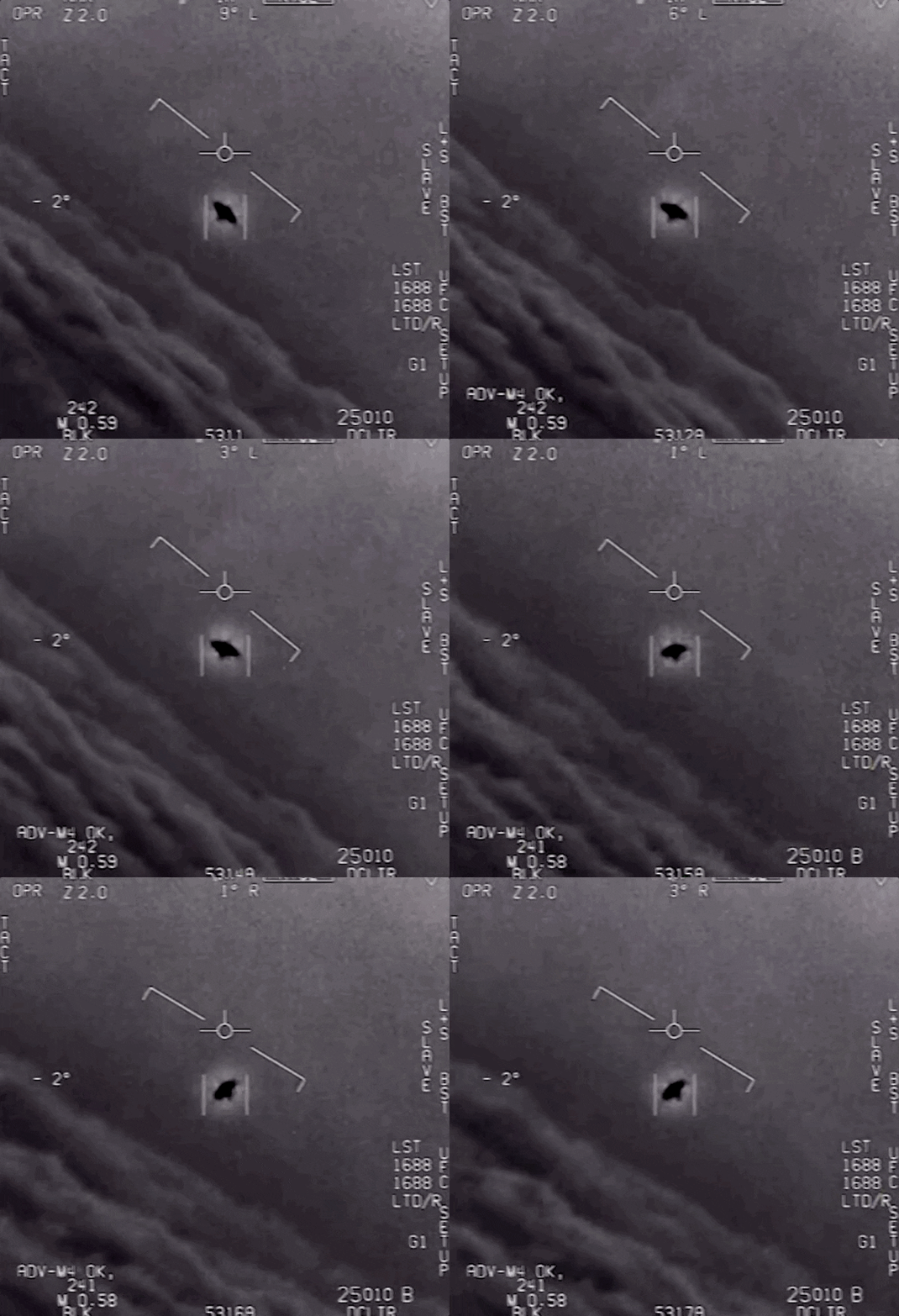






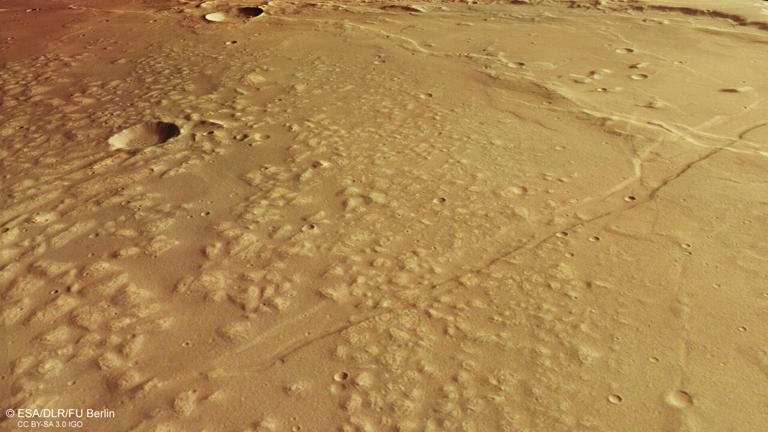
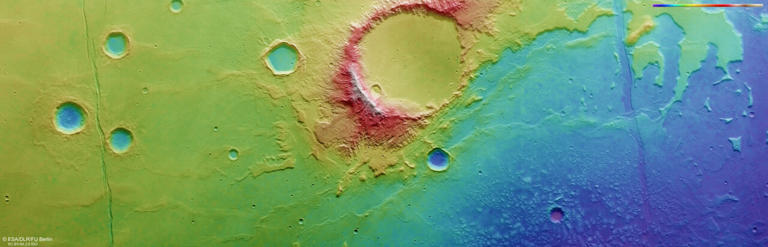
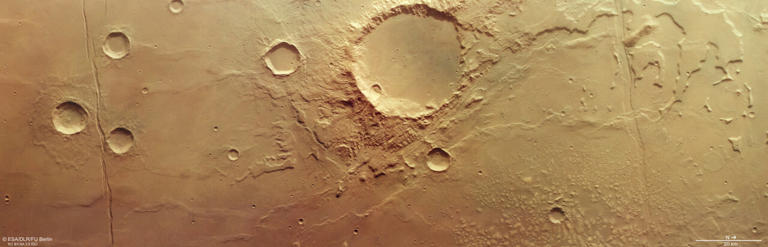





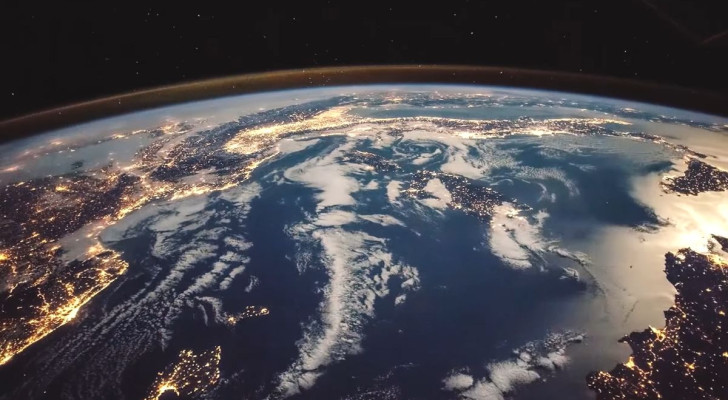
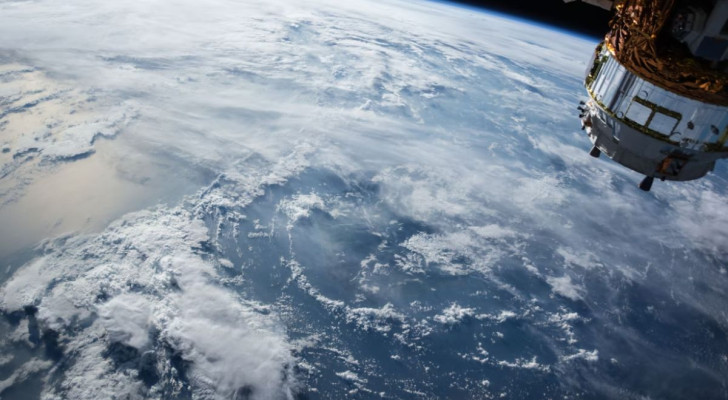







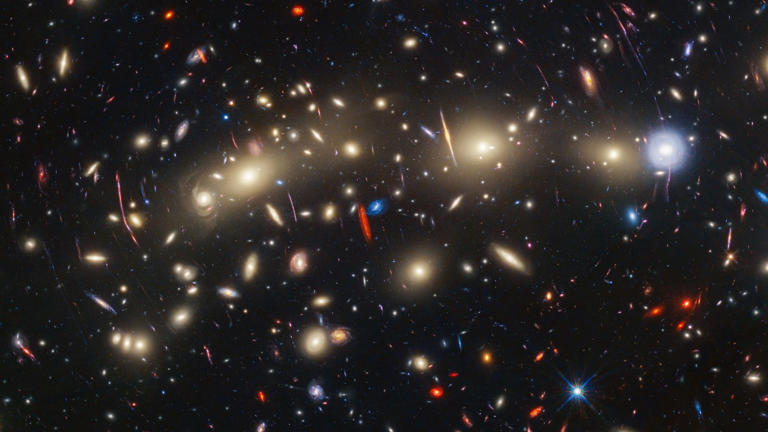
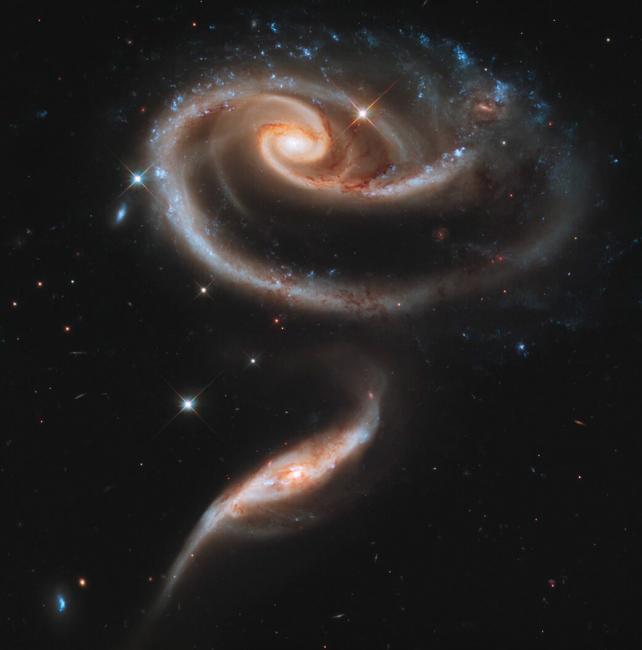
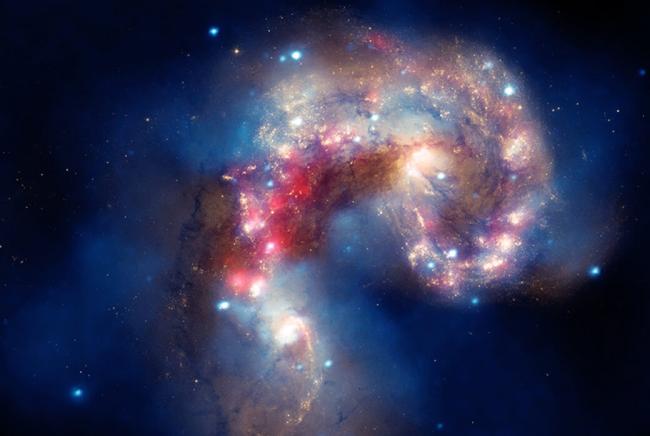



.jpg)
.png)
.png)