The purpose of this blog is the creation of an open, international, independent and free forum, where every UFO-researcher can publish the results of his/her research. The languagues, used for this blog, are Dutch, English and French.You can find the articles of a collegue by selecting his category. Each author stays resposable for the continue of his articles. As blogmaster I have the right to refuse an addition or an article, when it attacks other collegues or UFO-groupes.
Druk op onderstaande knop om te reageren in mijn forum
Zoeken in blog
Deze blog is opgedragen aan mijn overleden echtgenote Lucienne.
In 2012 verloor ze haar moedige strijd tegen kanker!
In 2011 startte ik deze blog, omdat ik niet mocht stoppen met mijn UFO-onderzoek.
BEDANKT!!!
Een interessant adres?
UFO'S of UAP'S, ASTRONOMIE, RUIMTEVAART, ARCHEOLOGIE, OUDHEIDKUNDE, SF-SNUFJES EN ANDERE ESOTERISCHE WETENSCHAPPEN - DE ALLERLAATSTE NIEUWTJES
UFO's of UAP'S in België en de rest van de wereld Ontdek de Fascinerende Wereld van UFO's en UAP's: Jouw Bron voor Onthullende Informatie!
Ben jij ook gefascineerd door het onbekende? Wil je meer weten over UFO's en UAP's, niet alleen in België, maar over de hele wereld? Dan ben je op de juiste plek!
België: Het Kloppend Hart van UFO-onderzoek
In België is BUFON (Belgisch UFO-Netwerk) dé autoriteit op het gebied van UFO-onderzoek. Voor betrouwbare en objectieve informatie over deze intrigerende fenomenen, bezoek je zeker onze Facebook-pagina en deze blog. Maar dat is nog niet alles! Ontdek ook het Belgisch UFO-meldpunt en Caelestia, twee organisaties die diepgaand onderzoek verrichten, al zijn ze soms kritisch of sceptisch.
Nederland: Een Schat aan Informatie
Voor onze Nederlandse buren is er de schitterende website www.ufowijzer.nl, beheerd door Paul Harmans. Deze site biedt een schat aan informatie en artikelen die je niet wilt missen!
Internationaal: MUFON - De Wereldwijde Autoriteit
Neem ook een kijkje bij MUFON (Mutual UFO Network Inc.), een gerenommeerde Amerikaanse UFO-vereniging met afdelingen in de VS en wereldwijd. MUFON is toegewijd aan de wetenschappelijke en analytische studie van het UFO-fenomeen, en hun maandelijkse tijdschrift, The MUFON UFO-Journal, is een must-read voor elke UFO-enthousiasteling. Bezoek hun website op www.mufon.com voor meer informatie.
Samenwerking en Toekomstvisie
Sinds 1 februari 2020 is Pieter niet alleen ex-president van BUFON, maar ook de voormalige nationale directeur van MUFON in Vlaanderen en Nederland. Dit creëert een sterke samenwerking met de Franse MUFON Reseau MUFON/EUROP, wat ons in staat stelt om nog meer waardevolle inzichten te delen.
Let op: Nepprofielen en Nieuwe Groeperingen
Pas op voor een nieuwe groepering die zich ook BUFON noemt, maar geen enkele connectie heeft met onze gevestigde organisatie. Hoewel zij de naam geregistreerd hebben, kunnen ze het rijke verleden en de expertise van onze groep niet evenaren. We wensen hen veel succes, maar we blijven de autoriteit in UFO-onderzoek!
Blijf Op De Hoogte!
Wil jij de laatste nieuwtjes over UFO's, ruimtevaart, archeologie, en meer? Volg ons dan en duik samen met ons in de fascinerende wereld van het onbekende! Sluit je aan bij de gemeenschap van nieuwsgierige geesten die net als jij verlangen naar antwoorden en avonturen in de sterren!
Heb je vragen of wil je meer weten? Aarzel dan niet om contact met ons op te nemen! Samen ontrafelen we het mysterie van de lucht en daarbuiten.
28-06-2024
That’s No Planet. Detecting Transiting Megastructures
That’s No Planet. Detecting Transiting Megastructures
One of the easiest ways to find exoplanets is using the transit method. It relies upon monitoring the brightness of a star which will then dim as a planet passes in front of it. It is of course possible that other objects could pass between us and a star; perhaps binary planets, tidally distorted planets, exocomets and, ready for it…. alien megastructures! A transit simulator has been created by a team of researchers and it can predict the brightness change from different transiting objects, even Dyson Swarms in construction.
51 Pegasi-b was the first exoplanet discovered in 1995 and it sparked the development of numerous ground-based and space-based instruments. The launch of the Kepler Space Telescope and the Transiting Exoplanet Survey Satellite (TESS) in 2018 popularised the transit method, leading to the discovery of over 4,000 exoplanets. As instruments have become increasingly sensitive and precise, research has progressed from simply detecting exoplanets to studying their detailed characteristics.
Illustration of NASA’s Transiting Exoplanet Survey Satellite. Credit: NASA’s Goddard Space Flight Center
Transit photometry has uncovered signatures of many interesting phenomena beyond the detection of exoplanets and eclipsing binaries. This technique has been instrumental in identifying features such as star-spots, and signatures of tidal interactions between host stars and exoplanets leading to significant growth in the sub-field of Asteroseismology
The study of transiting exoplanets and their timing variations has led to many discoveries. Non-transiting planets in distant solar systems have been found, orbital decay, disintegrating planets, exocomets and exomoon candidates has all been identified. Additionally, and perhaps of particular interest is that transit photometry has detected signals that have sparked interest in the search for technosignatures for the evidence of advanced civilizations.
It is important to note that no technosignatures have been confirmed yet but such signatures would not arise form natural processes and would demonstrate the presence of intelligent life. The signatures would come from a wide range of astroengineering projects like Dyson Spheres (a theoretical shell surrounding a star to capture its energy output) or the newly conceptualised Dyson Swarms (habitable satellites and energy collectors that orbit the star in formation.
The research team led by Ushasi Bhowmick from the Indian based Space Application Centre has reported that they have developed a transit simulator that can not only generate light curves for exoplanets but also for any object of any size or shape! The simulation uses the Monte-Carlo technique that predicts all possible outcomes of an uncertain event. In this instance it can predict the light curve when an object of any shape or size transits across the disk of star.
Artist’s impressions of two exoplanets in the TRAPPIST-1 system (TRAPPIST-1d and TRAPPIST-1f). Credit: NASA/JPL-Caltech
When the simulation was tested against actual exoplanet systems such as Trappist-1 it nicely predicted the light curve. It can also be used to model tidal distortions in binary star systems and even predict the light curve of non-natural objects such as the alien megastructures. The simulator has shown itself to be an invaluable method for understanding a wide range of transit phenomena.
A Single Robot Could Provide a Mission To Mars With Enough Water and Oxygen
Utilizing regolith on the Moon or Mars, especially to refill propellant for rockets to get back off the surface, is a common theme in the more engineering-minded space exploration community. There have been plenty of proof-of-concept technologies that could move us toward that goal. One of the best supported was the Regolith Advanced Surface Systems Operations Robot (RASSOR). Let’s take a look at what made this project unique.
It was initially conceived at Swamp Works, NASA’s version of Skunk Works, the famous Lockheed Martin development facility that worked on the SR-71 Blackbird and F-117 stealth plane. So far, it has gone through two iterations, known as 1.0 and 2.0, released in 2013 and 2016, respectively.
RASSOR consists of a chassis, a drive train, and two large bucket drum excavators. The excavating elements are on opposing sides of the rover, allowing the system to cancel out any horizontal forces caused by the excavating activity. On Earth, those horizontal forces would be offset by the physical weight of the digging machinery. Since weight is a precious commodity on space missions, this force-canceling technology is arguably the most crucial innovation in the system.
Video showing testing of the RASSOR 2.0 prototype. Credit – NASA Video Collection YouTube Channel
The RASSOR 2.0 prototype had several design goals, but it’s probably most helpful to walk through a use-case scenario. According to the soil samples collected by Curiosity and other rovers, around 2% of the regolith on Mars is water, even in the relatively “dry” regions outside the poles. Collecting that water could help refuel rockets and supply settlements with drinking water, radiation shielding, or water for agriculture.
NASA commonly uses a mission structure involving four astronauts on a journey to Mars. In a paper describing the 2.0 version of the robot back in 2016, the authors, including Robert Mueller, the founder of the Swamp Works facility and a doyen of ISRU research, describe a mission structure that would see RASSOR mining 1,000,000 kg of Martian regolith per year and supplying 10,000 kilograms of oxygen to the mission.
To do so, it would utilize a lander with processing capabilities for separating the useful parts from the chaff and would trek from the lander site to the regolith collection site about 35 times a day. With a charging cycle that would take about 8 hours a day, that would leave upwards of 16 hours to continuously mine the surface of Mars for these valuable materials.
Fraser describes how to live off the land in space using ISRU.
The paper goes on to describe the design process for the RASSOR’s various subsystems, including the powerful actuators that make up the majority of the weight of the system. They also used 3D-printed titanium to make the bucket drum excavating tools, which required some ingenious machining by Swamp Work’s machinists.
But in the end, they did make a working prototype. They tested it with improvements like a 50% drop in weight and an autonomous mode that utilizes simple stereo-vision cameras. The team believes this project is ready to move on to the next phase, taking a step closer to making it a reality.
That paper, however, was published eight years ago. A relatively detailed internet search doesn’t produce any results for RASSOR 3.0 other than a brief mention at the end of the 2.0 paper. So, for now, it seems the project is on hold. However, another NASA project, the Lunabotics Challenge, keeps university teams working toward effectively mining regolith for us in ISRU systems. Maybe one of those teams will pick up where the RASSOR team left off – or come up with a completely new design. We’ll have to wait and see.
Deflecting potentially hazardous asteroids (PHAs) is one of humanity’s most critical long-term efforts to ensure we don’t suffer the fate of the dinosaurs. There are plenty of suggested mission architectures to move a PHA out of the way, the most famous of which was the Double Asteroid Redirection Test (DART), which successfully changed the orbit of Dimorphos, a harmless small asteroid. That proof of concept bodes well for our chances of deflecting any future PHAs as long as they are discovered in time. But when it comes to the safety of the planet, we can’t be too careful, so developing more ways to deflect a PHA is better, and a paper from researchers at Beihang University details a methodology that is gaining some traction lately – using an asteroid’s regolith as a propellant.
The paper details a mission known as deflecting an asteroid by dusting (DAD) and describes a potential proof-of-concept mission to Apophis. This asteroid recently captured the imagination as potentially hazardous, though it has been proven to be no threat to Earth lately. As part of the mission design, the paper describes a seven-step process.
First, an orbiting spacecraft would assess potential landing sites that might be good for dust collection and for the orbital mechanics of the thrust redirection efforts. A lander would then descend and characterize the asteroid’s internal structure, including assessments for any elements that might provide a higher level of thrust.
Finding a PHA is the first step in moving it, as Fraser discusses.
The next step would be to complete a full 3D model of the asteroid’s surface, followed by using a high-powered laser to force the dust off the surface and into a storage tank. In the storage tank, the dust would be pulverized even more, with a thruster motor pushing the dust out from the rover in a direction that causes thrust against the asteroid’s surface, thereby changing its orbit.
The dust thrust deflection would be monitored from Earth, and an orbiting probe would be used to close the loop. If necessary, several other autonomous rovers could make their way along the asteroid’s surface, coordinating their thrusting efforts to increase the deflection force.
All this requires a lot of new technologies, coordination, and testing to become a reality. The authors suggest a potential test case to be ready for the close approach of Apophis in 2029. However, even if a lander is prepared and ready for that time, it could take upwards of 20 years for a perceptible deflection to happen – assuming that nothing goes wrong with the system in that time frame. Any engineer will tell you that having a system operate non-stop for 20 years is almost unheard of, though admittedly, some space probes are the exception to that.
Fraser discusses ideas to stop a potential asteroid strike.
One major advantage of this technique, though, would be its dual use as a proof of concept for asteroid deflection and mining. Many of the technologies would overlap, and there would be an incentive for governments and non-profits to invest in a potentially world-saving technology—at least more so than for them to invest in an as-yet unproven mining technology.
For now, this idea remains on the drawing board. But, if there is ever a real push to try out different methods of asteroid redirection, it could crop up again, especially if it’s supported by one of the major space agencies. And humanity might even get the benefit of a fully functional asteroid miner out of it.
The world is becoming clogged with plastic. Particles of plastic so tiny they cannot be seen with the naked eye have been found almost everywhere,from the oceans’ depths to themountaintops. They are in the soil, in plants, in animals, and inside us. The question is: what harm, if any, are they causing?
When plastic trash is dumped in a landfill or the sea, it breaks down very slowly. Sunlight and waves cause the surface of the plastic to become brittle, and particles are shed into the environment. Collectively known as “small plastic particles,” they range in size from five millimeters or smaller (microplastics) to less than one-thousandth of a millimeter (nano plastics). The smallest can only be detected with special scientific instruments.
It remains unclear how microplastics and nanoplastics get inside living things, but several entry points have been suggested. For example, they might pass through the gut from food or drink contaminated with small plastic particles. Or they may be breathed in, or absorbed through the skin.
Our research suggests that, for some animals, nanoplastics are bad news. We injected plastic nanoparticles into chicken embryos. We found that the particles traveled quickly in the blood to all tissues, especially the heart, liver, and kidneys. They were also excreted by the embryonic kidneys.
We noticed, too, that plastic nanoparticles tend to stick to a certain type of stem cell in the embryo. These cells are essential for the normal development of the nervous system and other structures. Any damage to stem cells could put the development of the embryo in jeopardy.
We suspect that the chicken embryo stem cells have substances on their surface called “cell-adhesion molecules,” which stick to the polystyrene nanoparticles that we used. We are following up on this finding because when nanoplastics stick to cells and get inside them, they can cause cell death and even serious birth defects in chickens and mice.
Similar studies cannot, of course, be carried out on people, so it is not yet possible to say what the implications of our animal research are for humans. What we know is that nanoplastics are found in the blood of human beings, in other bodily fluids, and in several major organs and key body tissues.
In recent years, microplastics and nanoplastics have been found in the brains, hearts, and lungs of humans. They have been discovered in the arteries of people with arterial disease, suggesting they may be a potential risk factor for cardiovascular disease. And they have been detected in breast milk, the placenta, and, most recently, penises.
Chinese researchers reported earlier this year that they had found microplastics in human and dog testes. More recently, another Chinese team found microplastics in all 40 samples of human semen they tested. This follows an Italian study that found microplastics in six out of ten samples of human semen.
Our fear is that microplastics and nanoplastics might act in a similar way to deadly asbestos fibers. Like asbestos, they are not broken down in the body and can be taken up into cells, killing them and then being released to damage yet more cells.
Nanoplastics have even been found in breastmilk.
Dzmitry Kliapitski / Alamy Stock Photo
REASSURING, FOR NOW
But there is a need for caution here. There is no evidence that nanoplastics can cross the placenta and get into the human embryo.
Also, even if nanoplastics do cross the placenta and in sufficient numbers to damage the embryo, we would expect to have seen a big increase in abnormal pregnancies in recent years. That is because the problem of plastic waste in the environment has been growing enormously over the years. But we are not aware of any evidence of a corresponding, large increase in birth defects or miscarriages.
That, for now, is reassuring.
It may be that microplastics and nanoplastics if they cause harm to our bodies, do so in a subtle way that we have not yet detected. Whatever the case, scientists are working hard to discover what the risks might be.
One promising avenue of research would involve the use of human placental tissue grown in the laboratory. Special artificial placenta tissues, called “trophoblast organoids,” have been developed to study how harmful substances cross the placenta.
Researchers are also investigating potentially beneficial uses for nanoplastics. Although they are not yet licensed for clinical use, the idea is that they could be used to deliver drugs to specific body tissues that need them. Cancer cells could, in this way, be targeted for destruction without damaging other healthy tissue.
Whatever the outcome of nanoplastics research, we and many other scientists will continue trying to find out what nanoplastics are doing to ourselves and the environment.
This article was originally published on The Conversation by Michael Richardson and Meiru Wang at Leiden University. Read the original article here.
A Mysterious Object Is Emitting Microwaves in Deep Space. It's Unlike Anything Ever Known.
A Mysterious Object Is Emitting Microwaves in Deep Space. It's Unlike Anything Ever Known.
Story by Darren Orf
Scientists found an unknown object emitting microwaves near the Milky Way’s center. The object's unique characteristics don't fit known celestial categories.
The Atacama Large Millimeter/submillimeter Array (ALMA) interferometer detected a strange object that appears to only be emitting microwaves near the Milky Way’s center.
Now, a new study compares this object to known celestial objects in this chaotic region of deep space. After doing so, the scientists behind the study discovered that none of the known objects’ descriptions fit this new object perfectly.
While the authors guess the object could be the remnants of stellar merger or an intermediate-mass black hole (IMBH), future studies in millimeter and mid-infrared bands will need to be conducted in order to definitively identify this currently unknown phenomenon.
Space is a big place.
But despite our diminutive size among the hundreds of billions of stars in the Milky Way (which is itself among hundreds of billions of galaxies), scientists have slowly pieced together a long list of all the strange stuff we might encounter throughout the cosmos. However, sometimes humanity’s collection of orbital space telescopes, ground-based arrays, and interplanetary spacecraft come across something that’s a bit of a head-scratcher.
Meet the latest one—the millimeter ultra-broad-line object, or the MUBLO for short.
Identified in a new paper published last week in the Astrophysical Journal Letters, the object in question lies near the center of the Milky Way Galaxy, which the researchers describe as containing “tens of millions of solar masses of gas, a supermassive black hole, a tenth of our Galaxy’s ongoing star formation, and an extensive graveyard of stellar remnants.”
Although it’s a cosmic mess, it’s among this interstellar chaos where new celestial objects will be discovered, and the Atacama Large Millimeter/submillimeter Array (ALMA) interferometer is one of the most powerful tools in humanity’s star-gazing arsenal. Composed of 66 radio telescopes, this array (as its name suggests) can analyze electromagnetic radiation emanating from space at millimeter and submillimeter wavelengths.
While gazing at our galaxy’s center, researchers stumbled upon a compact source subsequently labeled “G0.02467–0.0727,” otherwise known as the MUBLO. Made of cold dust and fast-moving gas, the MUBLO also exhibited another strange behavior—it only emitted microwave radiation. Adam Ginsburg, the lead author on the paper, and his team went through the long list of celestial explanations and came up short.
“We consider several explanations for the [MUBLO], including protostellar outflow, explosive outflow, a collapsing cloud, an evolved star, a stellar merger, a high-velocity compact cloud, an intermediate-mass black hole, and a background galaxy,” the paper reads. “Most of these conceptual models are either inconsistent with the data or do not fully explain them. The MUBLO is, at present, an observationally unique object.”
According to Nature, the gas molecules are also not traveling in a simple ring, which could point to having been blown away by a stellar explosion. But the MUBLO lacks certain chemicals that would be tell-tale signs of such an event.
Among the various celestial phenomena examined in the paper, the authors point out two that could explain the MUBLO—a stellar merger or an intermediate-mass black hole (IMHO). However, neither of these hypotheses are perfect. While the stellar merger idea is compelling, the MUBLO has “dust mass is substantially larger, by more than an order of magnitude, than observed toward any other merger remnant.” As for the IMHO suggestion, it “does not explain all of the observed features of the MUBLO.”
To understand this new phenomenon—or, perhaps, a well-disguised known object— uture millimeters and mid-infrared studies will need to analyze the MUBLO and discern previously unseens features that, hopefully, will point toward what it is.
For now, add another galactic mystery to the list.
Asteroid moonlet Dimorphos as seen by NASA's DART spacecraft 11 seconds before the impact that shifted its path through space, in the first test of asteroid deflection.
Johns Hopkins University Applied Physics Laboratory/NASA
Is humanity prepared to face down an asteroid with a 72% chance of hitting Earth in 14 years?
Scientists and experts say there's work to be done.
When NASA posed the hypothetical scenario, devised by the Planetary Defense Coordination Office, to a group of nearly 100 government representatives, they found their plan to combat an asteroid hurtling towards Earth had several "high-level gaps," according to a NASA slide presentation. Space officials have "limited readiness to quickly implement needed space missions," and methods to keep the public informed about a looming disaster are not fully developed.
Of the participants, from federal agencies like the State Department and international bodies like the U.N.'s Office for Outer Space Affairs, 33% said humanity was not prepared to launch a space mission to prevent an asteroid from impacting the planet, and 19% said "reconnaissance missions" were not ready.
Kelly Fast, NASA's acting planetary defense officer, said the exercise helped government agencies to plan out how they would work together to prepare for a future asteroid strike.
"In the unlikely event we ever face a scenario like this, it won't be the first time that anybody's talked about how to treat this," she said.
In the scenario posed by NASA, humanity has 14 years to face an asteroid with a 72% chance of hitting Earth.
NASA runs fifth test to gauge asteroid preparedness
The exercise, designed to test government readiness for an asteroid headed towards Earth, was organized by NASA and the Federal Emergency Management Agency at an April meeting at the Johns Hopkins Applied Physics Laboratory in Laurel, Maryland, according to a news release. It marked the fifth test to gauge whether authorities are prepared to defend Earth from space. This year's exercise was the first to include "international collaborators on planetary defense."
In the hypothetical scenario, an asteroid collides with the Earth in 2038. The collision would have a 47% chance of affecting more than 1,000 people, and an 8% chance of affecting more than a million. It could strike a swath of cities across the U.S., Europe, and Africa, including Washington, Dallas, Madrid, and Algiers.
In the scenario, participants weren't told "the asteroid’s size, composition, and long-term trajectory," according to the news release. Further observations about the asteroid would also hypothetically have to be delayed by at least seven months as the asteroid passed behind the Sun – "a critical loss of time."
Even with years to prepare, agencies would still have to work efficiently to respond to an approaching asteroid, Fast said. "When you talk about planning a mission, any kind of spacecraft mission, it doesn't happen on a dime," she said.
"Even though 14 years sounds like a long time, it actually might not be when you think of developing missions," Fast added.
Space officials have only one tested method of heading off an asteroid on its way toward Earth – "kinetic impact," or crashing a spacecraft into the asteroid to change its trajectory. In 2022, NASA crashed a spacecraft into Dimorphos, a small "moonlet" orbiting the asteroid Didymos around 6.8 million miles from Earth, successfully shortening the moonlet's orbit by 32 minutes, according to NASA.
Fast said scientists would need to tailor a space mission to respond to a particular asteroid collision scenario.
"It all depends on the asteroid," she said. "A single kinetic impactor might work for a smaller asteroid but not for something much larger."
Some participants were also skeptical that enough federal funding would be available to deal with the threat, according to the presentation. The decision-making process was "unclear," it said.
Authorities would also have a limited ability to gather more information about the incoming asteroid by flying a spacecraft close to it, evaluators concluded.
The presentation also warned that coordinating the release of information to the public about an asteroid flying towards the planet would pose problems. "Misinformation and disinformation would have to be dealt with," they wrote.
"Maintaining trust at the start of this event is critical and that means talking early – probably earlier than the scientists and lawyers are comfortable with," another unnamed participant said.
Fast said it would be important to "turn information into something that is understandable to the public, and not to be overly technical and jargon-y."
NASA successfully crashed a spacecraft into an asteroid Monday, marking a win for the agency's plan for when a devastating asteroid should ever threaten humanity.
The latest exercise, which used data from the test, recommended more tests on the new technology
Fast said people should be reassured that scientists and agencies are coming together to map out strategies in the unlikely event of an asteroid collision.
The scenario was "just a chance to continue to explore these possibilities and our own readiness, and to identify how we can do better in the future."
"This is actually a good thing, to be talking through this," she said.
An asteroid with a 72% chance of colliding with Earth on July 12, 2038 is the scenario that Nasa has just tested to see how humanity would handle a massive space rock impact.
NASA organised its fifth planetary defence interagency tabletop exercise, inviting more than 100 participants including the UN, the UK Space Agency (UKSA) and the European Space Agency (ESA).
Faced with the challenge of an asteroid between 60 and 200 metres wide likely to hit somewhere between North America and Saudi Arabia in 14 years' time, these organisations had to collaborate to save us or identify what might hinder the process and leave us bracing for the big impact.
Yes, it appears that even when faced with potential extinction, scientists and space leaders worry that politicians will fail to unite and work as a team to prevent it happening.
In September last year, Nasa's OSIRIS-REx mission successfully brought back samples of an asteroid, named Bennu, to Earth.
Bright comet tail. Ice evaporates from the comet's surface.
Currently, it has about a 1 in 2,700 chance of colliding with Earth on Tuesday, September 24, 2182.
The chances of it hitting sometime between now and 2300 are even lower, at about 1 in 1,750.
While the most costly mission was estimated at just over $1 billion, global GDP is rapidly nearing $1 trillion, so it seems like a worthwhile investment although the NASA scenario predicted it was more likely between 1,000 and 100,000 people would die, rather than a mass extinction.
The change of day and night on planet earth a view from space. 3D render of Earth with a detailed night view showing city lights and shooting stars. 4
The lack of disaster management plans for survivors in the event of an asteroid strike is a major concern, suggesting that not only might politicians fail to prevent the asteroid, but we could also be left to fend for ourselves post-impact.
NASA has already demonstrated its ability to deflect an asteroid if necessary even though it inadvertently created dozens of smaller asteroids that may eventually collide with Mars
Related video:
What If an Asteroid Were on a Collision Course to Hit Earth? (Underknown)
While its Double Asteroid Redirection Test (DART) mission has only been tested once, there's hope that it could be repeated if necessary provided there's sufficient funding from politicians.
Furthermore, NASA emphasised that its new Near-Earth Object (NEO) surveyor mission, a powerful infrared telescope designed to detect dangerous space rocks, is scheduled for launch in 2028.
Fly Through the Pillars of Creation in this New Visualisation Made from Webb and Hubble Data
I remember April 1995 very well. It was the month that the stunning and iconic image that has been called ‘Pillars of Creation’ was released. It was taken by the Hubble Space Telescope but now the James Webb Telescope is getting in on the act. Webb snapped images of the Eagle Nebula (home to the ‘pillars’) early on but now astronomers have combined the data form Hubble and Webb to create an amazing 3D animation flight through the nebula.
The Pillars of Creation are composed mostly of cool molecular hydrogen and dust. They are being worn away by strong winds and ultraviolet radiation emitted by nearby hot, young stars. The pillars, which resemble great big cosmic fingers have additional protrusions, that are larger than the solar system, extending from their tops. Embedded within these fingers are young hot stars. The tallest of the pillars measures three light-years from top to bottom.
Eagle Nebula Pillars of Creation as seen by Hubble Space Telescope in 2005. (Credit NASA, ESA, STScI, J. Hester and P. Scowen (ASU)
The stunning new 3D movie takes viewers on a journey through the structures of the pillars, relying on real observational data from a scientific study led by Anna McLeod, an associate professor at the University of Durham in the United Kingdom. The video allows viewers to get a glimpse at how the two space telescopes can collaborate
The new visualisation allows viewers to understand how two of the world’s most powerful space telescopes collaborate to deliver a more detailed view. Hubble captures objects glowing in visible light at thousands of degrees, while Webb’s infrared camera is sensitive to cooler objects at just hundreds of degrees and can penetrate the dust to reveal stars embedded within.
This image of NASA’s Hubble Space Telescope was taken on May 19, 2009 after deployment during Servicing Mission 4. NASA
The movie does more than just create a fabulous video. It helps viewers to explore a number of different areas and stages of star formation. The central pillar for example is approached and can be observed with an infant protostar embedded at its top. It can be seen glowing bright red in the infrared image. Near the top of the left pillar is a diagonal jet of material that has been ejected from a newborn star. The hot young star cannot be seen but the jet gives away its presence. Finally at the tip of one of the left pillar’s protrusions is a brand new star that is shining brightly.
Another wonderful benefit of the new 3D visualisation is the creation of a 3D printable model of the Pillars of Creation. The information has been converted into an STL file format that can be downloaded and printed at home using 3D printers. Not only will this be of fabulous interest to fellow geeks but it will also be of immense educational value to schools.
This scientific visualization explores the iconic Pillars of Creation in the Eagle Nebula (Messier 16 or M16) and the various ways that stars and dust are intertwined in the process of star formation. In developing the contextual story and the three-dimensional model, the video uses data from science papers, the Hubble Space Telescope, the Webb Space Telescope, the Spitzer Space Telescope, and the Chandra X-ray Observatory.
The sequence begins with zoom from our Milky Way galaxy in to the Pillars of Creation, a scale change greater than a factor of 10,000. Along the way, the general distribution of stars and dust clouds on the sky leads to the specific details of the star-forming Eagle Nebula. The stellar winds and high energy light from hot young stars at the center of the nebula are responsible for creating the pillars' shapes.
The video then enters a journey into the three-dimensional structure of the pillars. Based on scientific results, astronomers and artists modeled this striking formation in three dimensions and created a sequence that flies past and among the pillars. What can look like three connected pillars in a two-dimensional image separates into four dust clouds with ionized gas streaming away from each in the three-dimensional model.
As the virtual camera flies through the model, the view shifts back and forth between Hubble's visible-light and Webb's infrared-light perspectives. Viewers explore the contrasts between Hubble's and Webb's observations, which demonstrate how the telescopes complement each other by probing different scientific aspects of the clouds.
The Pillars of Creation get their nickname from the fact that stars are forming within these dust clouds. The visual tour highlights various stages of star formation, including an embedded protostar at the top of the central pillar, bipolar jets from a hidden star in the process of forming in the upper part of the left pillar, and a newborn star in the middle of the left pillar.
This visualization is a product of the AstroViz Project of NASA's Universe of Learning. A shorter non-narrated visualization, The Pillars
Mountain-sized “planet-killer” Asteroid 2011 UL21 is headed towards Earth this week and during its trip it will be making a very close approach to our planet.
The asteroid, classified as a Potentially Hazardous Asteroid (PHA) by NASA, is supposed to go zooming by Earth at 58,000 mph on June 27th.
Asteroid 2011 UL21 is also classified as a near-Earth object (NEO), which means that its orbit can move the space rock within 1.3 astronomical units (AU) of the sun. An AU is the average distance between Earth and the Sun, or about 93 million miles.
This asteroid is no tiny space rock either. According to SpaceReference.org, it is comparable in size to Mount Everest – Earth’s highest mountain above sea level – and is between 1.1 and 2.4-miles wide.
Needless to say, a 2-mile wide rock traveling at 58,000 mph would definitely “kill” our planet.
Thankfully, the asteroid will only pass Earth at a distance of around 4.1 million miles. Still, that is the closest it will have come to Earth in the past 110 years, at least.
And while 4.1 million miles may sound like a great distance, in terms of space it isn’t so much. By comparison, Mars is 245.22 million miles from Earth.
According to Gianluca Masi, astrophysicist and director of the Virtual Telescope Project, “There is absolutely no risk for our planet.”
“The term ‘Potentially Hazardous Asteroid’ (PHA) is a precise formal definition, referring to minor planets larger than approximately 140 meters that can come within 7.5 million km from the Earth,” said Masi. “In other words, only the largest asteroids capable of approaching close enough to our planet are flagged as PHAs, which does not mean they are going to hit the Earth, but they nonetheless warrant a better monitoring.”
That being said, there is always the possibility that the gravitational tug of Earth could alter the “planet killer” asteroid’s orbit (called the Yarkovsky Effect). And if that were to ever occur there isn’t much we could do to stop it.
Study: Active, Seafloor Hydrothermal Systems on Small Ocean Worlds Could Support Life
Study: Active, Seafloor Hydrothermal Systems on Small Ocean Worlds Could Support Life
Ocean worlds are planetary bodies that have a liquid ocean, often under an icy shell or within the rocky interior. In our own Solar System, several moons of Jupiter and Saturn are ocean worlds. Some ocean worlds are thought to have hydrothermal circulation, where water, rocks, and heat combine to drive fluids in and out of the seafloor. Hydrothermal circulation would impact the chemistry of the water and rock of ocean worlds, and could help life to develop deep below the icy surface. In a new study, planetary researchers used computer simulations of hydrothermal circulation, based on a well-understood system on Earth, to measure the influence of lower gravity at values appropriate for ocean worlds smaller than our home planet. The simulations with ocean world (lower) gravity result in fluid circulation much like that occurring on and below Earth’s seafloor, but with several important differences. Lower gravity reduces buoyancy, so fluids don’t become as light when heated, and this reduces flow rates. This can raise temperatures in the circulating fluid, which could allow more extensive chemical reactions, perhaps including those that sustain life.
This graphic illustrates how Cassini scientists think water interacts with rock at the bottom of Enceladus’ ocean, producing hydrogen gas.
Image credit: NASA / JPL-Caltech / Southwest Research Institute.
Rock-heat-fluid systems were discovered on Earth’s seafloor in the 1970s, when scientists observed discharging fluids that carried heat, particles, and chemicals.
Many vent sites were surrounded by novel ecosystems, including specialized bacterial mats, red-and-white tubeworms, and heat-sensing shrimp.
In the new study, University of California, Santa Cruz’s Professor Andrew Fisher and colleagues used a complex computer model based on hydrothermal circulation as it occurs on Earth.
After changing variables like gravity, heat, rock properties and fluid-circulation depth, they found that hydrothermal vents could be sustained under a wide range of conditions.
If these kinds of flows occur on an ocean world, like Jupiter’s moon Europa, they could raise the odds that life exists there as well.
“This study suggests that low temperature — not too hot for life — hydrothermal systems could have been sustained on ocean worlds beyond Earth over timescales comparable to that required for life to take hold on Earth,” Professor Fisher said.
The seawater-circulation system that the researchers based their computer models on was found on a 3.5 million-year-old seafloor in the northwestern Pacific Ocean, east of the Juan de Fuca Ridge.
There, cool bottom water flows in through an extinct volcano (seamount), travels underground for about 30 miles (48.3 km), then flows back out into the ocean through another seamount.
“The water gathers heat as it flows and comes out warmer than when it flowed in, and with very different chemistry,” Kristin Dickerson, a Ph.D. candidate at the University of California, Santa Cruz.
“The flow from one seamount to another is driven by buoyancy, because water gets less dense as it warms, and more dense as it cools,” Professor Fisher added.
“Differences in density create differences in fluid pressure in the rock, and the system is sustained by the flows themselves — running as long as enough heat is supplied, and rock properties allow enough fluid circulation. We call it a hydrothermal siphon.”
“While high-temperature vent systems are driven mainly by sub-seafloor volcanic activity, a much larger volume of fluid flows in and out of Earth’s seafloor at lower temperatures, driven mainly by background cooling of the planet.”
“The flow of water through low-temperature venting is equivalent, in terms of the amount of water being discharged, to all of the rivers and streams on Earth, and is responsible for about a quarter of Earth’s heat loss.”
“The entire volume of the ocean is pumped in and out of the seafloor about every half-million years.”
Many previous studies of hydrothermal circulation on Europa and Enceladus have considered higher temperature fluids.
“Cartoons and other drawings often depict systems on their seafloors that look like black smokers on Earth. Lower-temperature flows are at least as likely to occur, if not more likely,” said Dr. Donna Blackman, also from the University of California, Santa Cruz.
The findings show that, under very low gravity — like that found on the seafloor of Enceladus — circulation can continue with low to moderate temperatures for millions or billions of years.
This could help to explain how small ocean worlds can have long-lived fluid-circulation systems below their seafloors, even though heating is limited: the low efficiency of heat extraction could lead to considerable longevity — essentially, throughout the life of the Solar System.
The scientists acknowledge the uncertainty of when the seafloors of ocean worlds will be directly observed for the presence of active hydrothermal systems.
Their distance from Earth and physical characteristics present major technical challenges for spacecraft missions.
“Thus, it is essential to make the most of available data, much of it collected remotely, and leverage understanding from decades of detailed studies of analog Earth systems,” the authors concluded.
Their paper was published in the Journal of Geophysical Research: Planets.
A.T. Fisher et al. 2024. Sustaining Hydrothermal Circulation with Gravity Relevant to Ocean Worlds. Journal of Geophysical Research: Planets 129 (6): e2023JE008202; doi: 10.1029/2023JE008202
NASA Doesn't Know When Starliner Will Return From Orbit
An aurora streams below Boeing’s Starliner spacecraft docked to the forward port on the Harmony module as the International Space Station soared 266 miles above the Indian Ocean southwest of Australia. Photo credit: NASA/Matt Dominick
NASA Doesn't Know When Starliner Will Return From Orbit
After helium leaks and thruster problems with Boeing’s Starliner capsule, NASA has been pushing back the return date from the International Space Station. On Friday, the agency announced they no longer had a planned return date. Instead, they will keep testing the capsule, trying to understand its issues, and seeing if they can make any fixes. Plenty of supplies are on the station, so there’s no urgent need to bring the two astronauts back to Earth.
Another reason NASA decided to cancel the planned departure of Wednesday, June 26 is because of conflicting timelines with a series of planned spacewalks on the ISS, set for today (Monday, June 24), and Tuesday, July 2. The delay also allows mission teams time to review propulsion and system data.
Boeing’s CTS-100 Starliner taking off from Cape Canaveral, Florida, on June 5th, 2024. Credit: NASA
After years of delays and two recent scrubbed launch attempts, Starliner finally launched on June 5, 2024 with NASA astronauts Butch Wilmore and Suni Williams on board. Although two of the spacecraft’s thrusters failed during the flight, the spacecraft managed to reach the ISS and delivered 227 kg (500 lbs) of cargo. Additionally, five small leaks on the service module were also detected, and the crew and ground teams have been working through safety checks.
“We are taking our time and following our standard mission management team process,” said Steve Stich, manager of NASA’s Commercial Crew Program in a NASA blog post. “We are letting the data drive our decision making relative to managing the small helium system leaks and thruster performance we observed during rendezvous and docking. Additionally, given the duration of the mission, it is appropriate for us to complete an agency-level review, similar to what was done ahead of the NASA’s SpaceX Demo-2 return after two months on orbit, to document the agency’s formal acceptance on proceeding as planned.”
Safety and gaining a better understanding of the issues with Starliner are NASA and Boeing’s motivations for the delay in returning the spacecraft and crew back to Earth.
This first crewed flight of Starliner was supposed to validate the spacecraft as part of NASA’s Commercial Crew Program (CCP), with the hope of it working alongside SpaceX’s Crew Dragon to make regular deliveries of cargo and crew to the ISS. This mission is the second time the Starliner has flown to the ISS and the third flight test overall. During the first uncrewed test flight (OFT-1), which took place back in December 2019, the Starliner launched successfully but failed to make it to the ISS. After making 61 corrective actions recommended by NASA, another attempt was made (OFT-2) on May 22nd, 2022. That flight successfully docked to the ISS, staying there for four days before undocking and landing in the White Sands Missile Range in New Mexico.
The seven Expedition 71 crew members gather with the two Crew Flight Test members for a team portrait aboard the space station. In the front from left are, Suni Williams, Oleg Kononenko, and Butch Wilmore. Second row from left are, Alexander Grebenkin, Tracy C. Dyson, and Mike Barratt. In the back are, Nikolai Chub, Jeanette Epps, and Matthew Dominick. Photo credit: NASA
Wilmore and Williams are now working with the Expedition 71 crew, assisting with station operations as needed and completing add-on in-flight objectives for NASA’s certification of Starliner.
Stich said that despite all the issues, Starliner is performing well in orbit while docked to the space station.
“We are strategically using the extra time to clear a path for some critical station activities while completing readiness for Butch and Suni’s return on Starliner,” he said, “and gaining valuable insight into the system upgrades we will want to make for post-certification missions.”
Mission managers will evaluate future return opportunities for Starliner and NASA said they will host a media telecon with mission leadership following a readiness review. NASA added that Starliner is actually cleared for return in case of an emergency on the space station that would require the crew to leave orbit and come back to Earth.
China’s Chang’e-6 Probe Drops Off Samples From Moon’s Far Side
Three weeks after it lifted off from the far side of the moon, China’s Chang’e-6 spacecraft dropped off a capsule containing first-of-its-kind lunar samples for retrieval from the plains of Inner Mongolia.
The gumdrop-shaped sample return capsule floated down to the ground on the end of a parachute, with the descent tracked on live television. After today’s touchdown, at 2:07 p.m. local time (0607 GMT), members of the mission’s recovery team checked the capsule and unfurled a Chinese flag nearby.
Chang’e-6, which was launched in early May, is the first robotic mission to land and lift off again from the moon’s far side — the side that always faces away from Earth. It’s also the first mission to bring dirt and rocks from the far side back to Earth.
“The Chang’e-6 lunar exploration mission achieved complete success,” Zhang Kejian, director of the China National Space Administration, said from mission control. Chinese President Xi Jinping extended congratulations to the mission team, the state-run Xinhua news service reported.
Chang’e-6 followed a flight plan similar to the one used for Chang’e-5, a mission that brought back samples from the moon’s Earth-facing side in 2020. After entering lunar orbit, the spacecraft sent a lander down to the moon’s South Pole-Aitken Basin region.
The lander used an onboard drill and robotic arm to collect and store samples on its ascent stage. It also gathered data about its surroundings with a radon detector, a negative-ion detector and a mini-rover. Data and telemetry were relayed between Chang’e-6 and Earth via China’s Queqiao-2 satellite.
On June 4, Chang’e-6’s ascent stage lifted off for a rendezvous with the orbiting spacecraft. The samples were transferred to a re-entry capsule, and the spacecraft left lunar orbit several days ago for the trip back to Earth. The re-entry capsule was released as the spacecraft sped about 5,000 kilometers (3,100 miles) over the South Atlantic Ocean, CNSA said in a mission update.
After an initial round of processing at the landing site in China’s Inner Mongolia region, the capsule is due to be airlifted to Beijing, where the mission’s precious cargo will be removed for distribution to researchers.
The samples are expected to include volcanic rock and other materials that could shed fresh light on the moon’s origins and compositional differences between the near side and the far side. Scientists may also learn more about resources in the moon’s south polar region. That region is of high interest because it’s thought to harbor deposits of water ice that could be used to support future lunar settlements.
This image shows the bright stars within 15 parsecs of the Sun. If red dwarfs and brown dwarfs were included, there would be far more stars. But those stars are difficult to spot. Have we found all of them yet? Image Credit: By Andrew Z. Colvin - Own work, CC BY-SA 3.0, https://commons.wikimedia.org/w/index.php?curid=14359465
If the Sun has a stellar neighbourhood, it can be usefully defined as a 20 parsec (65 light-years) sphere centred on our star. Astronomers have been actively cataloguing the stellar population in the neighbourhood for decades, but it hasn’t been easy since many stars are small and dim.
Even with all of the challenges inherent in the effort, astronomers have made steady progress. Do we now have a complete catalogue?
In a new article in Research Notes of the American Astronomical Society, a pair of researchers from the Leibniz Institute for Astrophysics in Potsdam, Germany, try to understand how complete or incomplete our catalogue of the stellar neighbourhood is. The article is titled “Do We Finally Know all Stellar and Substellar Neighbors within 10~pc of the Sun?” The authors are Ralf-Dieter Scholz and Alexey Mints.
If all stars shone as brightly as main sequence stars like our Sun do, it would be easy to catalogue the stars in our neighbourhood. But they don’t. Some are so small and dim that they’re considered failed stars. We call them brown dwarfs or substellar objects.
When we look up at the night sky with the unaided eye, our view is dominated by main sequence stars and giant stars, many of which are far beyond our stellar neighbourhood. Many stars are too dim to see, like red dwarfs and brown dwarfs. In fact, Proxima Centauri, a red dwarf and our nearest neighbour, wasn’t discovered until the early 20th century.
Proxima Centauri. Credit: ESA/Hubble & NASA
In the early days of astronomy, measurements of proper motions showed that some stars that appear fixed in place are closer than other stars. All stars move and have proper motion; it’s just not always noticeable in the span of a single lifetime. High proper motion surveys of stars led to the selection of certain stars for measurements of their parallax, which helped locate more stars correctly in space. Then, in the early 20th century, as astronomy and photography were used in conjunction, photographic astrometry triggered a wave of discoveries of our solar neighbours. Those efforts showed that our nearest neighbours are red dwarfs (M dwarfs).
In the 1990s, as technology advanced, infrared sky surveys found more dim stars. “A second wave of discoveries started in the late 1990s with the advance of infrared sky surveys,” the authors write. Missions like the Two Micron All-Sky Survey (2MASS) gave us a new, unprecedented look at the sky. It found M dwarfs, brown dwarfs, and substellar objects like L, T, and Y types, and even minor planets in the Solar System. (Definitions of brown dwarfs and other substellar objects overlap.) By the year 2,000, the Sloan Digital Sky Survey came online, strengthening our catalogue of the sky.
In 1997, Henry et al. published an important paper on the solar neighbourhood titled “The solar neighborhood IV: discovery of the twentieth nearest star.” It showed that the discovery of LHS 1565, about 3.7 pc from Earth, spelled trouble for our census of the neighbourhood. “It ranks as the twentieth closest stellar system and underscores the incompleteness of the nearby star sample, particularly for objects near the end of the main sequence,” Henry et al. wrote. “Ironically, this unassuming red dwarf provides a shocking reminder of how much we have yet to learn about even our nearest stellar neighbours.”
Since about 1997, there’s been a burst of discoveries of stars within the Sun’s neighbourhood. The authors say that these seem to have filled in the gaps in our 10 pc neighbourhood. But some of the knowledge was still based on two assumptions. The first was that the survey out to 5 parsecs was complete, and the second was that the density was uniform out to 10 parsecs. “The first of these is not true, and the second is in question,” the authors write.
Where does that leave us? Up to 90 star systems could still be missing.
An artist’s conception of a brown dwarf. Brown dwarfs are more massive than Jupiter but less massive than the smallest main sequence stars. Their dimness and low mass make them difficult to detect. Image: By NASA/JPL-Caltech (http://planetquest.jpl.nasa.gov/image/114) [Public domain], via Wikimedia Commons
“Using all neighbours the luminosity and mass functions and the star-to-brown dwarf (BD) number ratio can be studied,” the authors state. Astronomers don’t fully understand the ratio of brown dwarfs to other stars, but two recent papers (1,2), in particular, have continued the work to better understand and catalogue our stellar neighbourhood’s dim members.
Earlier this year, Kirkpatrick et al. published a study claiming that a complete survey of nearby stars is possible, largely thanks to Gaia data. They found 462 objects (including the Sun) in 339 systems within 10?pc. of the Sun.
In previous work, the authors of this new paper added 16 more stars to the list. These were late M-dwarfs, some of the coolest and dimmest main sequence stars, and brown dwarfs. They also discovered a new white dwarf companion to an existing M dwarf.
But how complete is this newest survey?
The problem lies in the difficulty of detecting dim stars like brown dwarfs and late M-dwarfs. The further we look, the more difficult they are to detect. They’re also more difficult to detect in the direction of the galactic plane.
Dim objects like brown dwarfs are more difficult to detect when looking toward the galactic plane because that’s where most of the Milky Way’s mass is. Image Credit: ESA/Gaia/DPAC
The authors say that our neighbourhood stellar catalogue is still likely missing 93 stellar systems, “… corresponding to a deficit of ?21.5%,” they write. In terms of individual stars, it’s not much better: “…138 missing objects corresponding to a deficit of ?23.0%,” they write.
They broke it down even further to individual star types. We’re probably missing 28.1% of AFGK stars, -31% of white dwarfs, and ?27.8% of M-dwarfs. There’s also a higher deficit for late M-dwarfs. These deficits are higher than expected. What does it mean?
“The estimated deficits of systems and individual objects within 10?pc exceed expectations, in particular for the well-known AFGK stars,” the authors write. They conclude that the general assumption of a constant stellar density in the solar neighbourhood is incorrect. They say that small-scale density fluctuations can at least partly explain the deficits.
“Our statistical estimates show that the probability of these discrepancies being caused by random fluctuations is around 40%,” the authors conclude.
Webb Observes Intricate Structures in Ionosphere of Jupiter
Webb Observes Intricate Structures in Ionosphere of Jupiter
Jupiter’s upper atmosphere is composed of a neutral thermosphere and charged ionosphere. Astronomers using the NASA/ESA/CSA James Webb Space Telescope have spotted unexpected small-scale intensity features such as arcs, bands and spots in Jupiter’s low-latitude ionosphere in the region above the Great Red Spot.
This graphic shows the region observed by Webb: first its location on a NIRCam image of the whole planet (left), and the region itself (right), imaged by Webb’s Near-InfraRed Spectrograph (NIRSpec).
Image credit: NASA / ESA / CSA / Webb / Jupiter ERS Team / J. Schmidt / H. Melin / M. Zamani, ESA & Webb.
Jupiter is one of the brightest objects in the night sky, and it is easily seen on a clear night.
Aside from the bright northern and southern lights at the planet’s polar regions, the glow from Jupiter’s upper atmosphere is weak and is therefore challenging for ground-based telescopes to discern details in this region.
However, Webb’s infrared sensitivity allows scientists to study Jupiter’s upper atmosphere above the infamous Great Red Spot with unprecedented detail.
The gas giant’s upper atmosphere is the interface between the planet’s magnetic field and the underlying atmosphere.
Here, the bright and vibrant displays of northern and southern lights can be seen, which are fuelled by the volcanic material ejected from Jupiter’s moon Io.
However, closer to the equator, the structure of the planet’s upper atmosphere is influenced by incoming sunlight.
Because Jupiter receives only 4% of the sunlight that is received on Earth, astronomers predicted this region to be homogeneous in nature.
University of Leicester astronomer Henrik Melin and his colleagues observed the Great Red Spot in July 2022 using the Integral Field Unit of Webb’s Near-InfraRed Spectrograph (NIRSpec).
Their Early Release Science observations sought to investigate if this region was in fact dull, and the region above the iconic Great Red Spot was targeted for Webb’s observations.
They were surprised to discover that the upper atmosphere hosts a variety of intricate structures, including dark arcs and bright spots, across the entire field of view.
“We thought this region, perhaps naively, would be really boring. It is in fact just as interesting as the northern lights, if not more so. Jupiter never ceases to surprise,” Dr. Melin said.
Although the light emitted from this region is driven by sunlight, the team suggests there must be another mechanism altering the shape and structure of the upper atmosphere.
“One way in which you can change this structure is by gravity waves — similar to waves crashing on a beach, creating ripples in the sand,” Dr. Melin said.
“These waves are generated deep in the turbulent lower atmosphere, all around the Great Red Spot, and they can travel up in altitude, changing the structure and emissions of the upper atmosphere.”
“These atmospheric waves can be observed on Earth on occasion, however they are much weaker than those observed on Jupiter by Webb.”
“We hope to conduct follow-up Webb observations of these intricate wave patterns in the future to investigate how the patterns move within the planet’s upper atmosphere and to develop our understanding of the energy budget of this region and how the features change over time.”
The findings appear in the journal Nature Astronomy.
H. Melin et al. Ionospheric irregularities at Jupiter observed by JWST. Nat Astron, published online June 21, 2024; doi: 10.1038/s41550-024-02305-9
Hey @NASA @NASAjpl @NASA_Johnson could you please answer this question? UFO Sighting News.
Hey @NASA @NASAjpl @NASA_Johnson could you please answer this question? UFO Sighting News.
Hey everyone, I decided to tweet to three NASA accounts and see if they respond or not. So I made this video and sent it off to them. They will see it for sure, but the real question is...are they prepared to answer it?
Also I'm currently keeping the NASA like to this photo a secret for now, otherwise NASA would delete it immediately.
NASA/JPL-Université Paris Diderot - Institut de Physique du Globe de Paris / Pexels
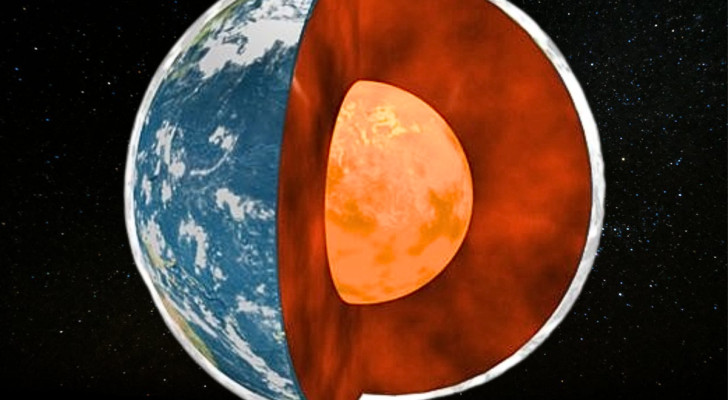
De binnenkern vertraagt al meer dan tien jaar, bevestigt een nieuwe studie. Wat veroorzaakt dit fenomeen en wat kan er in de toekomst gebeuren?
De binnenkern draait nu langzamer dan het aardoppervlak
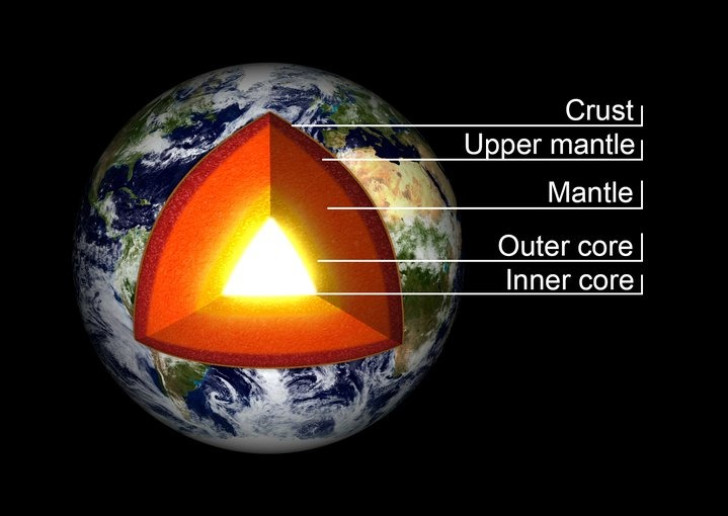
In het centrum van onze aarde bevindt zich een vaste, dichte, hete binnenkern, bestaande uit ijzer en kleine hoeveelheden nikkel. De straal bedraagt 1.221 kilometer en de temperaturen bereiken die van het zonneoppervlak, rond de 5.200°. Dergelijke hitte is voldoende om ijzer te smelten, maar de enorme druk van de planeet zorgt ervoor dat de binnenkern vast blijft. De druk bedraagt bijna 3,6 miljoen atmosfeer.
De kern roteert in dezelfde richting als het aardoppervlak, maar iets sneller, waardoor elk millennium een volledige rotatie meer wordt bereikt. Tenminste, dat dachten wij, of dat was tot enkele jaren geleden zo. Nu heeft een nieuw onderzoek, uitgevoerd door het team van wetenschappers van de Universiteit van Zuid-Californië, aangetoond dat het hart van onze planeet zijn rotatie heeft vertraagd en dat het proces al in 2010 begon. Het onderzoek bevestigde dat nu dus de binnenkern langzamer roteert dan het aardoppervlak.
Waarom de binnenkern van de aarde langzamer beweegt
NASA (ADAPTED FROM GODDARD MEDIA STUDIOS)
De kwestie van de beweging van de kern is al twintig jaar omstreden: verschillende onderzoeken beweerden dat de rotatie van de kern groter was dan die van het aardoppervlak. De nieuwe studie bewijst echter onomstotelijk dat dit niet langer het geval is.
John Vidale, hoogleraar aardwetenschappen aan het USC Dornsife College of Letters, Arts and Sciences, zei: "Toen ik voor het eerst de seismogrammen zag die deze verandering suggereerden, was ik verbaasd, maar toen we nog twee dozijn waarnemingen vonden die op hetzelfde patroon wezen, was het resultaat onvermijdelijk. De binnenkern was voor het eerst in vele decennia vertraagd. Andere wetenschappers hebben onlangs soortgelijke en andere modellen beargumenteerd, maar onze laatste studie biedt de meest overtuigende resolutie.”
Maar waarom is de rotatie van de binnenkern van de aarde vertraagd? Wetenschappers denken dat dit fenomeen te wijten is aan de beweging van de aardmantel, die de afgelopen veertig jaar iets langzamer is geworden in plaats van andersom.
Seismische golven onthullen de beweging van de binnenkern
Deze vaste bol, omringd door zijn vloeibare buitenkern die ook uit ijzer en nikkel bestaat, ligt meer dan 4.800 km onder de grond en het is een echte uitdaging om hem te bereiken. Om de beweging ervan te begrijpen, zijn wetenschappers afhankelijk van seismische golven. Voor het nieuwe onderzoek maakten Vidale en Wei Wang van de Chinese Academie van Wetenschappen gebruik van de golven van herhaalde seismische gebeurtenissen, dat wil zeggen gebeurtenissen die in hetzelfde gebied plaatsvonden en identieke seismogrammen opleverden.
De onderzoekers kozen als locatie de Britse Zuidelijke Sandwicheilanden, waar zich tussen 1991 en 2023 121 seismische episodes voordeden. Met behulp van gegevens van kernproeven kwamen ze tot de conclusie dat de vertraging van de binnenkern werd veroorzaakt door de vermenging van de vloeibare buitenkern, die een groot deel van het magnetische veld van de aarde genereert, maar ook door de zwaartekracht van de rotsachtige mantel.
Voorlopig blijven de gevolgen voor het aardoppervlak pure theorie: Vidale schat dat deze verandering de duur van een dag met slechts een paar fracties van een seconde kan veranderen, dus onmerkbaar, maar toekomstig onderzoek zal meer duidelijkheid verschaffen over de kwestie en over waarom de kern zijn rotatie precies vertraagt.
Satellites are Going to Track Garbage Drifting Across the Oceans
Map of the Mediterranean Sea with the locations of the accumulations of marine litter detected thanks to the European satellite Copernicus Sentinel-2. Each red circle represents an accumulation detected between June 2015 and September 2021 (in blue, the urban and industrial areas of the river countries). (Image credit: M. Arias/A. Cózar/CSIC)
Satellites are Going to Track Garbage Drifting Across the Oceans
We are all too aware of the pollution on planet Earth. There are increased amounts of plastic and garbage on the world’s beaches and debris littering the oceans. Until now, it was thought that satellites weren’t capable of tracking marine debris but a supercomputer algorithm challenges that. 300,000 images were taken every three days at a resolution of 10 metres and were able to identify large concentrations of debris.
Upper estimates of plastic in our oceans peak at around 200 million tons! Every day it is believed another 8 million pieces of plastic make their way into the marine environment. Now, a study led by a team at the Institut de Ciencies del Mar at the University of Cadiz believe it may be possible to study and track the surface debris in the oceans. Using supercomputers and advanced algorithms, the team have shown that satellites can indeed be used.
Using data from the European Copernicus Sentinel-2 satellite, a total of 300,000 images of the Mediterranean Sea were analysed. The images were taken every 3 days at a resolution of 10 metres. Typically of course, there is not much debris in the sea which is that big but accumulations of debris have grown to that size. The aggregations are known as ‘windrows’ and have built up as ocean currents and winds bring debris together to form large structures.
The output from the study reveals the most polluted areas of the Mediterranean and the main entry points from the mainland. It will help us to improve our understanding of the processes and mechanisms that transport debris across the ocean and even help us to perhaps predict movement. The results also show that the amount of debris in the Mediterranean covers around 95 square kilometres.
Eastern Mediterranean Sea Area June 1993
Unfortunately the research does not help resolve the issue of pollution but it does help us understand the scale. The team propose future satellites should be equipped with detectors to monitor the debris. It would increase the ability to detect plastic in the open ocean by a factor of 20 and help to model the impact of marine pollution on first, tourism and the marine ecosystem.
One element of the studies conclusion is that population density, geography and rainfall patterns play an important part in the accumulation of marine litter. Dry arid lands like deserts that play host to cities seem to contribute much less to marine litter while those that are much more temperate with higher rainfall seem to contribute more.
It is also interesting to note that the majority of litter that originates from land masses seems to be confined to 15 kilometres form the coast and subsequently returns after a few days of months. The team conclude that satellite based monitoring is an essential element in our battle against litter in the ocean. The technology can also be used for the detection of other floating objects such as the loss of ships, oil spills and even search and rescue elements.
Satellites are Going to Track Garbage Drifting Across the Oceans
Map of the Mediterranean Sea with the locations of the accumulations of marine litter detected thanks to the European satellite Copernicus Sentinel-2. Each red circle represents an accumulation detected between June 2015 and September 2021 (in blue, the urban and industrial areas of the river countries). (Image credit: M. Arias/A. Cózar/CSIC)
Satellites are Going to Track Garbage Drifting Across the Oceans
We are all too aware of the pollution on planet Earth. There are increased amounts of plastic and garbage on the world’s beaches and debris littering the oceans. Until now, it was thought that satellites weren’t capable of tracking marine debris but a supercomputer algorithm challenges that. 300,000 images were taken every three days at a resolution of 10 metres and were able to identify large concentrations of debris.
Upper estimates of plastic in our oceans peak at around 200 million tons! Every day it is believed another 8 million pieces of plastic make their way into the marine environment. Now, a study led by a team at the Institut de Ciencies del Mar at the University of Cadiz believe it may be possible to study and track the surface debris in the oceans. Using supercomputers and advanced algorithms, the team have shown that satellites can indeed be used.
Using data from the European Copernicus Sentinel-2 satellite, a total of 300,000 images of the Mediterranean Sea were analysed. The images were taken every 3 days at a resolution of 10 metres. Typically of course, there is not much debris in the sea which is that big but accumulations of debris have grown to that size. The aggregations are known as ‘windrows’ and have built up as ocean currents and winds bring debris together to form large structures.
The output from the study reveals the most polluted areas of the Mediterranean and the main entry points from the mainland. It will help us to improve our understanding of the processes and mechanisms that transport debris across the ocean and even help us to perhaps predict movement. The results also show that the amount of debris in the Mediterranean covers around 95 square kilometres.
Eastern Mediterranean Sea Area June 1993
Unfortunately the research does not help resolve the issue of pollution but it does help us understand the scale. The team propose future satellites should be equipped with detectors to monitor the debris. It would increase the ability to detect plastic in the open ocean by a factor of 20 and help to model the impact of marine pollution on first, tourism and the marine ecosystem.
One element of the studies conclusion is that population density, geography and rainfall patterns play an important part in the accumulation of marine litter. Dry arid lands like deserts that play host to cities seem to contribute much less to marine litter while those that are much more temperate with higher rainfall seem to contribute more.
It is also interesting to note that the majority of litter that originates from land masses seems to be confined to 15 kilometres form the coast and subsequently returns after a few days of months. The team conclude that satellite based monitoring is an essential element in our battle against litter in the ocean. The technology can also be used for the detection of other floating objects such as the loss of ships, oil spills and even search and rescue elements.
Will Space Tourists Be Getting Heart Attacks in Space?
Astronauts are considered by many to be an elite bunch of people; healthy, fit and capable in many disciplines. Went they travel into space they can face health issues related to weightlessness from reduction in bone density to issues with their eyesight. These are people at the peak of physical fitness but what will happen to the rest of us when space tourism really kicks off. It is likely that anyone with underlying health issues could worsen in space. A new study suggests those with cardiovascular issues may suffer heart failure in space!
Space travel and automatic intelligence (AI) are two fabulously interesting topics. Combine them and you have a fascinating story. Dr Lex Van Loon from the Australian National University has been using AI and mathematical models to explore human physiology and the impact of space exploration. In a recent study he created digitally identical AI twins, one with an underlying heart condition.
The interest driving the study is the advancement toward space tourism and the opening up of space to those less physically fit than astronauts. As space travel becomes more available to the mass population we will start to see a shift in demographic of space travellers to older, more wealthy individuals but they are more likely to have health issues. We will eventually see people with a whole multitude of conditions wanting to holiday in space, but what are the likely impacts.
ESA astronaut Alexander Gerst gets a workout on the Advanced Resistive Exercise Device (ARED). Credit: NASA
Microgravity causes a redistribution of fluids around the body and can cause conditions like ‘puffy face bird leg syndrome.’ The name aptly describes the effect, the face swells up and the legs thin. It results in an increase in venous pressure in the upper body, this is fine for healthy people but heart failure sufferers are at a much higher risk. Given that there are over 100 million people around the world that suffer heart failure it is essential this is explored.
Looking at the wide spectrum of heard failure, conditions can be grouped into two categories; a weak hart that cannot pump effectively and a heart that cannot relax and fill properly. All possible conditions need to be studied with specific ways to treat and mitigate the risk during space travel.
This is a study that is difficult to collect real data in space so we have to turn to computer modelling to simulate the effects. The team led by Dr Loon showed that a microgravity environment leads to an increase in cardiac output (the quantity of blood pumped by the heart in a given period of time.) This is not a problem for most people but with heart failure patients it is accompanied by a rise in pressure in the left atrial region of the heart, to dangerous levels. If left unchecked, it can lead to a condition where fluid accumulates in the lungs known as a pulmonary edema, making it difficult to breathe!
With the increase in corporate interest in space travel, space tourism is slowly becoming a reality. People can already pay for trips into space but as costs come down, the number of people heading out into space will increase. Eventually, trips into space will be as common as trips to other countries. It is imperative we understand the impact on our health and what we can do to make space as widely accessible as possible without putting our health at risk.
The Pacific island of Rapa Nui — also called Easter Island by the Europeans that arrived there on a Sunday in 1722 — is arguably most famous for its iconic human-like volcanic rock statues called moai. But since European settlers arrived at Rapa Nui a pervasive myth has persisted: Rapa Nui’s mere 3,000 inhabitants were incapable of erecting all these moai statues. Instead, Rapa Nui must have once had a larger population that had been depleted, by about 10,000 people, due to economic collapse. Now, a novel study used satellite data to debunk this myth, and reveal new information about the Rapa Nui people.
For the study, a team of researchers combed through satellite data of Rapa Nui’s landscape for signs of rock gardening, which is a technique that transforms unproductive land into fertile soil. Rapa Nui people knew that bedrock had the ability to enrich the ground. They would break off pieces and place them on the surface and into the soil, giving the land missing minerals. Plants then could reliably grow.
The team calculated how much food those mulches could produce, and from there determined how many people could be fed. (The scientists assumed fishing resources were relatively fixed. What could vary is the amount of land crops, like sweet potatoes, the land could produce to feed the islanders.) They found the number was about 3,000 people, the same number of inhabitants the Europeans first encountered before the diseases they carried decimated the islander population. In other words, the population didn’t collapse. In fact, it was stable, thanks to their reliable agricultural techniques.
This photo taken on April 5, 2024 shows a Moai stone statue on Easter Island.
“That gives credit to the Rapa Nui people, their ancestors, and the ingenuity they had for surviving on this island,” Carl Lipo, archaeologist and professor at Binghamton University in New York, told reporters on Monday. He is the lead author of the new study, published Friday in the journal Science Advances.
“You know, 14 by seven miles doesn’t give you a lot of different things you could do with it, but they made the most of what they had. And certainly there’s a linkage of this ingenuity of carving and manipulating rocks [into moai statues] and understanding of the rock’s properties. It’s something really clearly embedded in their culture,” Lipo said. “Europeans when they arrived to this island were bewildered by the fact that there were spectacular statues and very few numbers of people. They assumed that in order to move these gigantic statues, there must have been much larger populations. Really that’s a European perspective,” he added.
A group of people visit the Tongariki ceremonial structure during the 'Pacific Leaders Summit 2024 to Protect the Oceans and Challenge Plastic and Microplastic Pollution in the Region' on Ana Kena beach, Easter Island, Chile, April 5 2024.
ELVIS GONZALEZ/EPA-EFE/SHUTTERSTOCK
Satellite imagery allowed the researchers to do this debunking work faster than otherwise possible. “Satellite imagery enabled us to produce an island-wide estimate of rock mulch, where a field study would have taken years, if not decades, of walking around to map these things,” Lipo said.
Their work shows that the Rapa Nui people were likely able to sustain their population size centuries ago. But their work also looks forward.
“What inspired us to do this particular study is the fact that ecologists often continue to use Rapa Nui as a case study for collapse and ecological failure,” Lipo said. “They use it for modeling and for policy setting over and over again, which we think is really misguided. Easter Island is a great case of how populations adapt to limited resources on a very finite place and how they did so sustainably.”
Beste bezoeker, Heb je zelf al ooit een vreemde waarneming gedaan, laat dit dan even weten via email aan Frederick Delaere opwww.ufomeldpunt.be. Deze onderzoekers behandelen jouw melding in volledige anonimiteit en met alle respect voor jouw privacy. Ze zijn kritisch, objectief maar open minded aangelegd en zullen jou steeds een verklaring geven voor jouw waarneming! DUS AARZEL NIET, ALS JE EEN ANTWOORD OP JOUW VRAGEN WENST, CONTACTEER FREDERICK. BIJ VOORBAAT DANK...
Druk op onderstaande knop om je bestand , jouw artikel naar mij te verzenden. INDIEN HET DE MOEITE WAARD IS, PLAATS IK HET OP DE BLOG ONDER DIVERSEN MET JOUW NAAM...
Druk op onderstaande knop om een berichtje achter te laten in mijn gastenboek
Alvast bedankt voor al jouw bezoekjes en jouw reacties. Nog een prettige dag verder!!!
Over mijzelf
Ik ben Pieter, en gebruik soms ook wel de schuilnaam Peter2011.
Ik ben een man en woon in Linter (België) en mijn beroep is Ik ben op rust..
Ik ben geboren op 18/10/1950 en ben nu dus 75 jaar jong.
Mijn hobby's zijn: Ufologie en andere esoterische onderwerpen.
Op deze blog vind je onder artikels, werk van mezelf. Mijn dank gaat ook naar André, Ingrid, Oliver, Paul, Vincent, Georges Filer en MUFON voor de bijdragen voor de verschillende categorieën...
Veel leesplezier en geef je mening over deze blog.




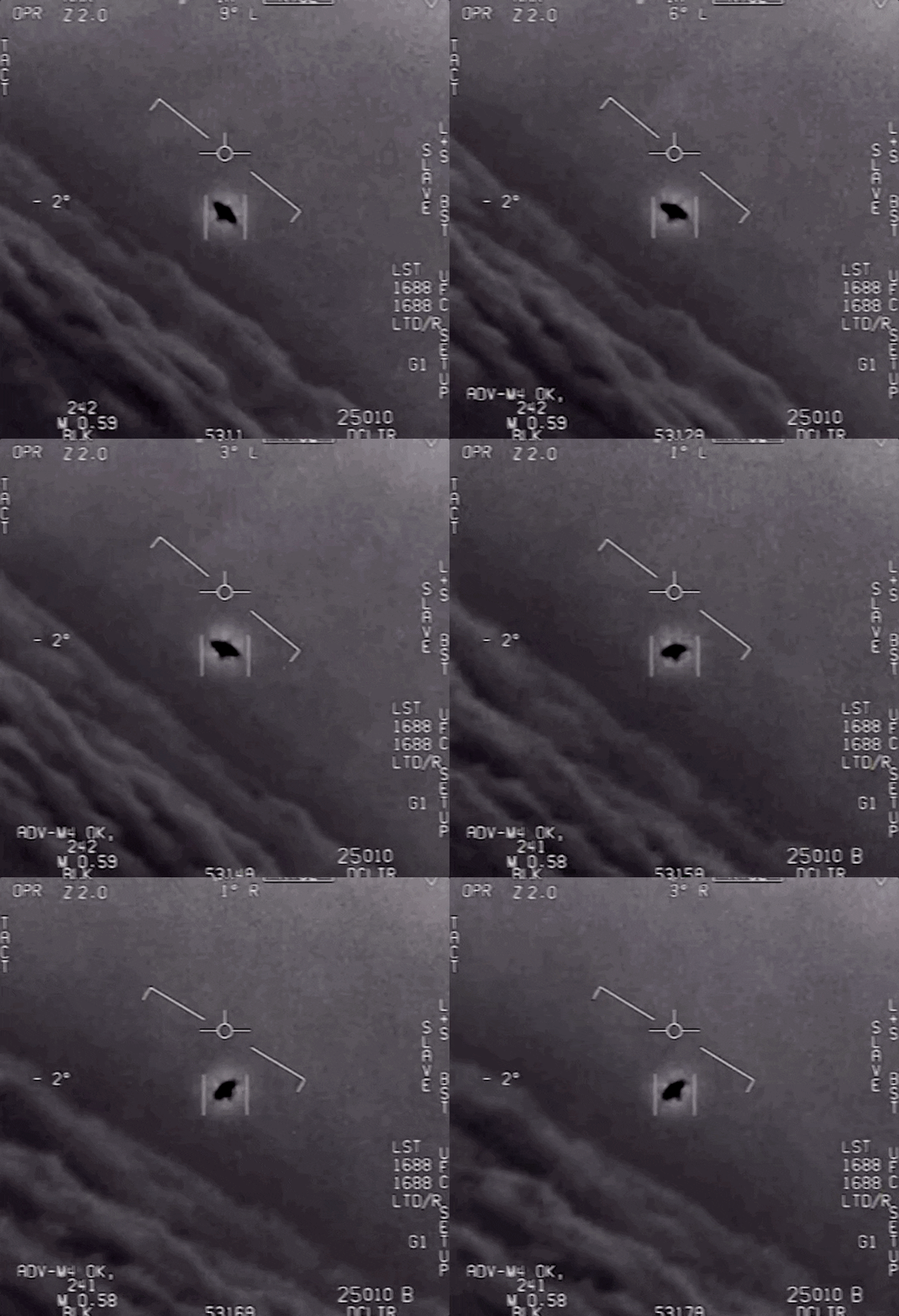




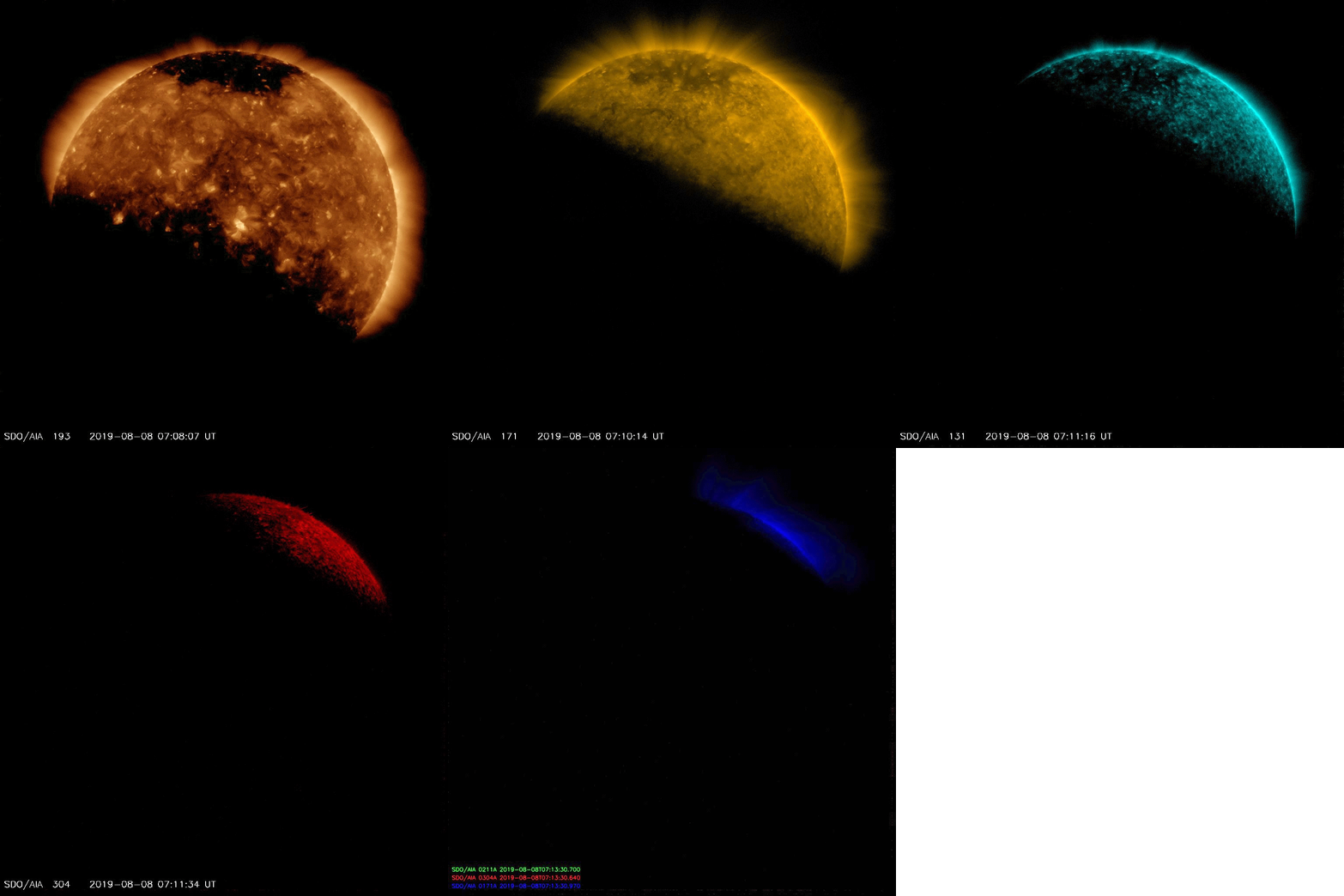






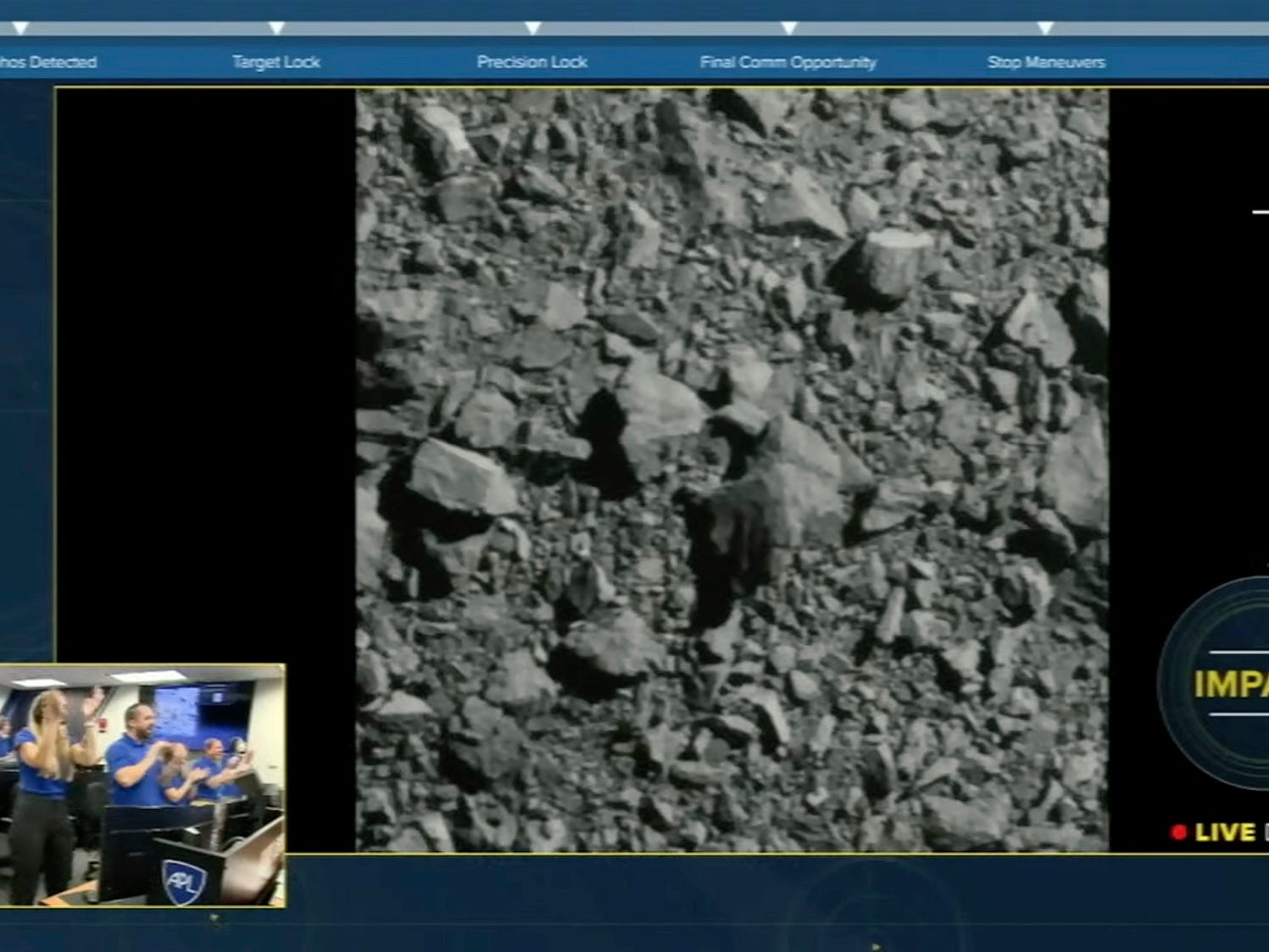
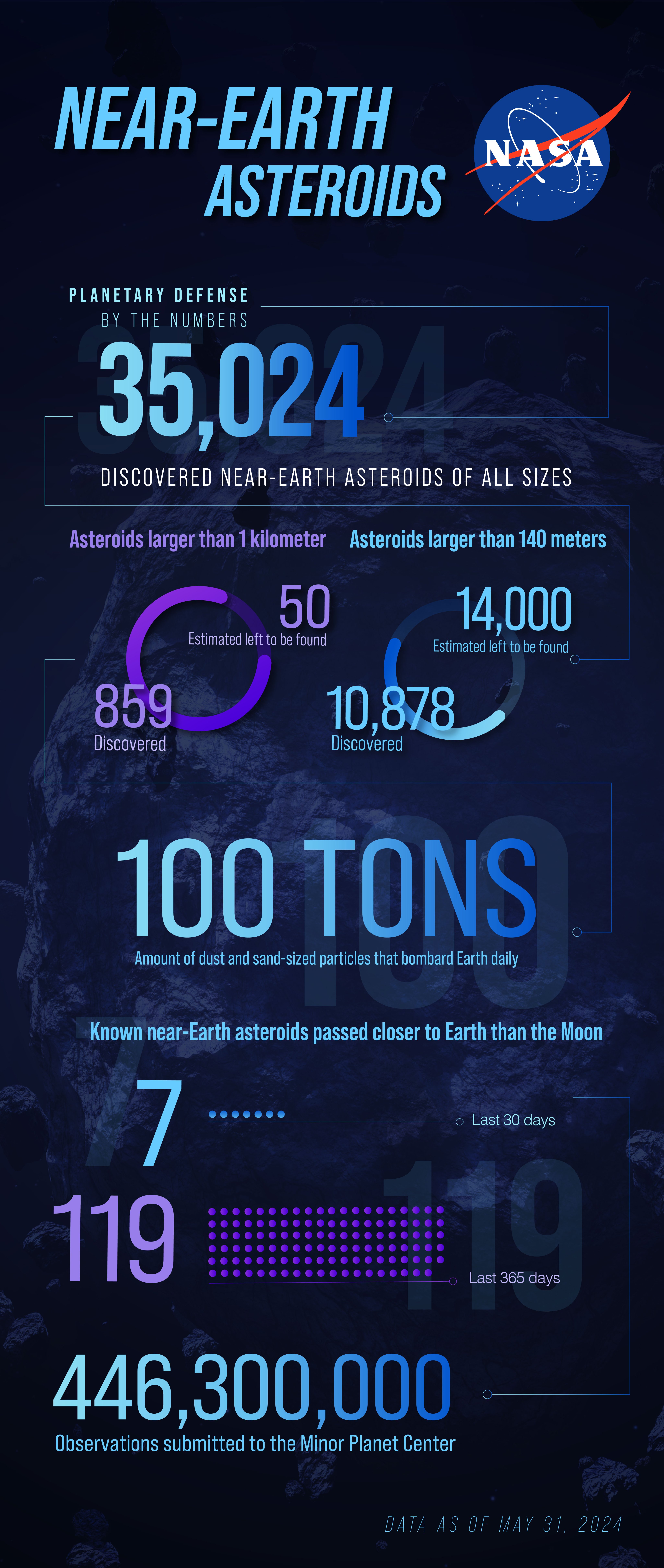
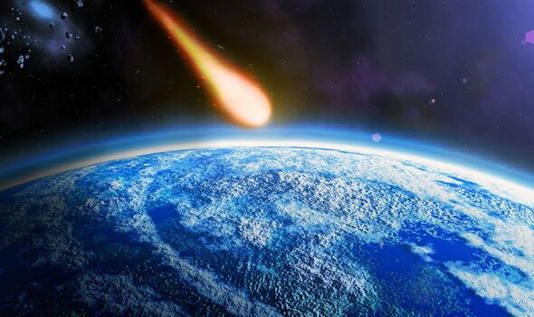
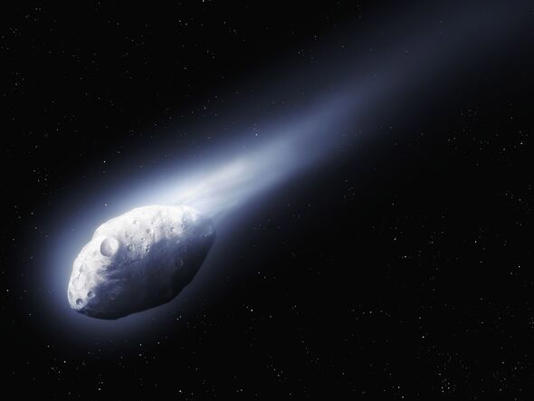



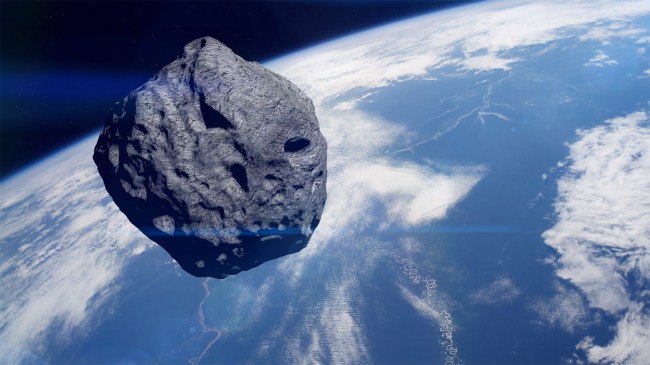
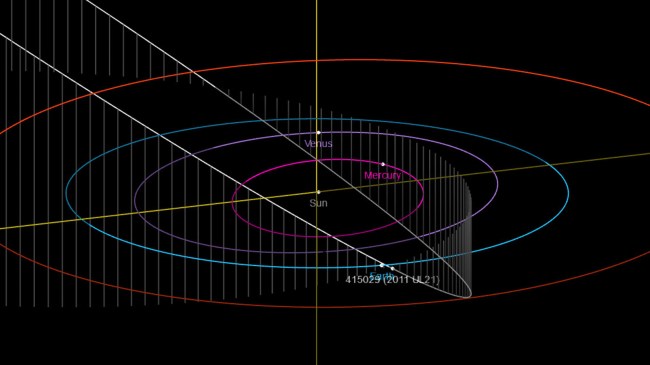


![An artist's conception of a brown dwarf. A new study identifies CK Vulpeculae as the remnant of a collison between a brown dwarf and a white dwarf. Image: By NASA/JPL-Caltech (http://planetquest.jpl.nasa.gov/image/114) [Public domain], via Wikimedia Commons](https://www.universetoday.com/wp-content/uploads/2018/10/Artist%E2%80%99s_conception_of_a_brown_dwarf_like_2MASSJ22282889-431026-1024x576.jpg)