The purpose of this blog is the creation of an open, international, independent and free forum, where every UFO-researcher can publish the results of his/her research. The languagues, used for this blog, are Dutch, English and French.You can find the articles of a collegue by selecting his category. Each author stays resposable for the continue of his articles. As blogmaster I have the right to refuse an addition or an article, when it attacks other collegues or UFO-groupes.
Druk op onderstaande knop om te reageren in mijn forum
Zoeken in blog
Deze blog is opgedragen aan mijn overleden echtgenote Lucienne.
In 2012 verloor ze haar moedige strijd tegen kanker!
In 2011 startte ik deze blog, omdat ik niet mocht stoppen met mijn UFO-onderzoek.
BEDANKT!!!
Een interessant adres?
UFO'S of UAP'S, ASTRONOMIE, RUIMTEVAART, ARCHEOLOGIE, OUDHEIDKUNDE, SF-SNUFJES EN ANDERE ESOTERISCHE WETENSCHAPPEN - DE ALLERLAATSTE NIEUWTJES
UFO's of UAP'S in België en de rest van de wereld Ontdek de Fascinerende Wereld van UFO's en UAP's: Jouw Bron voor Onthullende Informatie!
Ben jij ook gefascineerd door het onbekende? Wil je meer weten over UFO's en UAP's, niet alleen in België, maar over de hele wereld? Dan ben je op de juiste plek!
België: Het Kloppend Hart van UFO-onderzoek
In België is BUFON (Belgisch UFO-Netwerk) dé autoriteit op het gebied van UFO-onderzoek. Voor betrouwbare en objectieve informatie over deze intrigerende fenomenen, bezoek je zeker onze Facebook-pagina en deze blog. Maar dat is nog niet alles! Ontdek ook het Belgisch UFO-meldpunt en Caelestia, twee organisaties die diepgaand onderzoek verrichten, al zijn ze soms kritisch of sceptisch.
Nederland: Een Schat aan Informatie
Voor onze Nederlandse buren is er de schitterende website www.ufowijzer.nl, beheerd door Paul Harmans. Deze site biedt een schat aan informatie en artikelen die je niet wilt missen!
Internationaal: MUFON - De Wereldwijde Autoriteit
Neem ook een kijkje bij MUFON (Mutual UFO Network Inc.), een gerenommeerde Amerikaanse UFO-vereniging met afdelingen in de VS en wereldwijd. MUFON is toegewijd aan de wetenschappelijke en analytische studie van het UFO-fenomeen, en hun maandelijkse tijdschrift, The MUFON UFO-Journal, is een must-read voor elke UFO-enthousiasteling. Bezoek hun website op www.mufon.com voor meer informatie.
Samenwerking en Toekomstvisie
Sinds 1 februari 2020 is Pieter niet alleen ex-president van BUFON, maar ook de voormalige nationale directeur van MUFON in Vlaanderen en Nederland. Dit creëert een sterke samenwerking met de Franse MUFON Reseau MUFON/EUROP, wat ons in staat stelt om nog meer waardevolle inzichten te delen.
Let op: Nepprofielen en Nieuwe Groeperingen
Pas op voor een nieuwe groepering die zich ook BUFON noemt, maar geen enkele connectie heeft met onze gevestigde organisatie. Hoewel zij de naam geregistreerd hebben, kunnen ze het rijke verleden en de expertise van onze groep niet evenaren. We wensen hen veel succes, maar we blijven de autoriteit in UFO-onderzoek!
Blijf Op De Hoogte!
Wil jij de laatste nieuwtjes over UFO's, ruimtevaart, archeologie, en meer? Volg ons dan en duik samen met ons in de fascinerende wereld van het onbekende! Sluit je aan bij de gemeenschap van nieuwsgierige geesten die net als jij verlangen naar antwoorden en avonturen in de sterren!
Heb je vragen of wil je meer weten? Aarzel dan niet om contact met ons op te nemen! Samen ontrafelen we het mysterie van de lucht en daarbuiten.
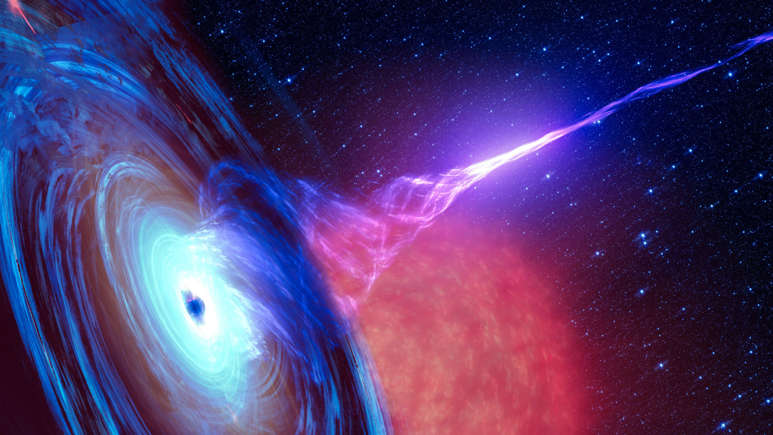
De grootste mythes over het heelal Hoewel we meer van het heelal begrijpen dan ooit tevoren, zijn er nog steeds veel misvattingen over de ruimte, die grotendeels te danken zijn aan Hollywood. Sommige van deze misvattingen zijn eigenlijk aannemelijk en hebben velen van ons voor de gek gehouden. Denk je bijvoorbeeld dat Mercurius de heetste planeet in het zonnestelsel is omdat hij het dichtst bij onze zon staat? En zuigen zwarte gaten echt materie naar hun kern?
To find out the answers to these questions and more, check out the following gallery on the biggest myths about space. LEES VERDER.
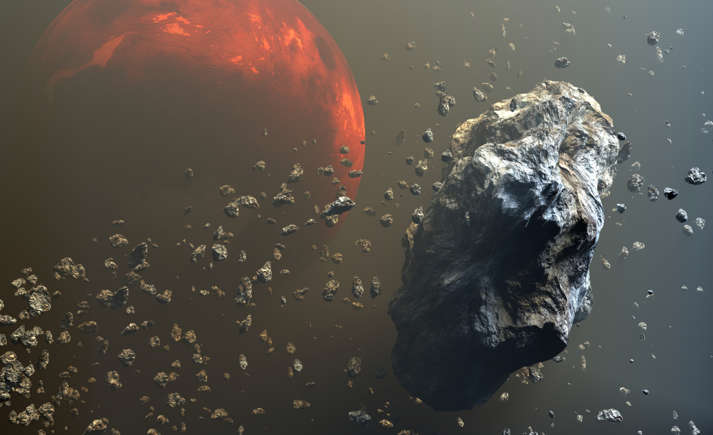
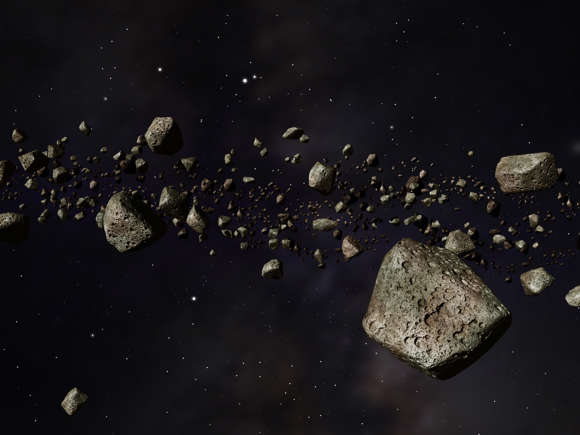
De asteroïdengordel is heel gevaarlijk De asteroïdengordel ligt tussen Mars en Jupiter en bevat meer dan drieduizend kleine planeten en meer dan 750.000 afzonderlijke asteroïden. De grotere asteroïden botsen soms op elkaar, wat de mythe voedt dat het gevaarlijk is voor ruimtevaartuigen om zich er een weg doorheen te banen.
De asteroïdengordel is heel gevaarlijk Er is echter geen gevaar, omdat de afstand tussen asteroïden enorm is. Gemiddeld is er een afstand van ongeveer 970.000 km tussen de asteroïden, wat meer dan twee keer zo groot is als de afstand van de aarde tot de maan.
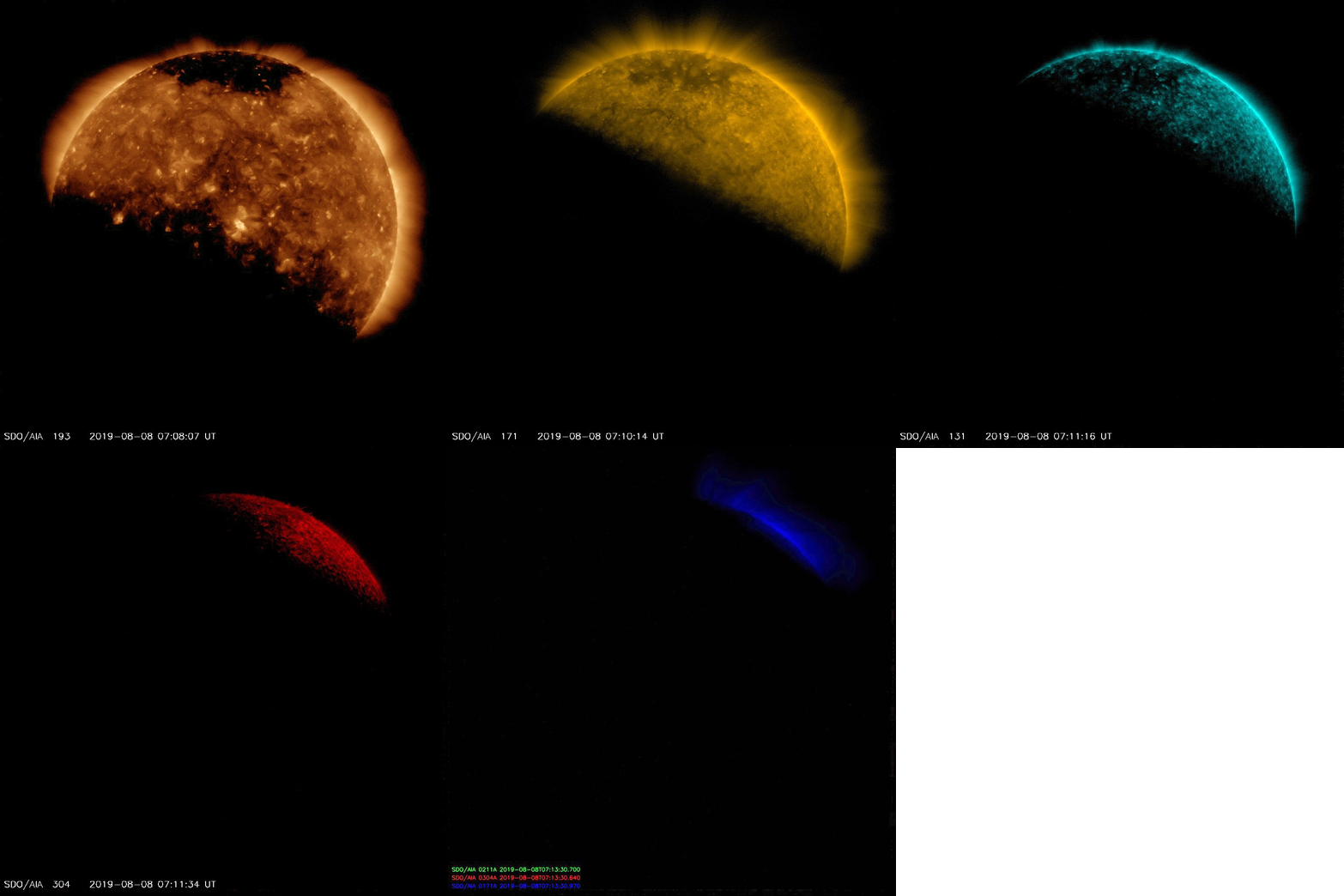
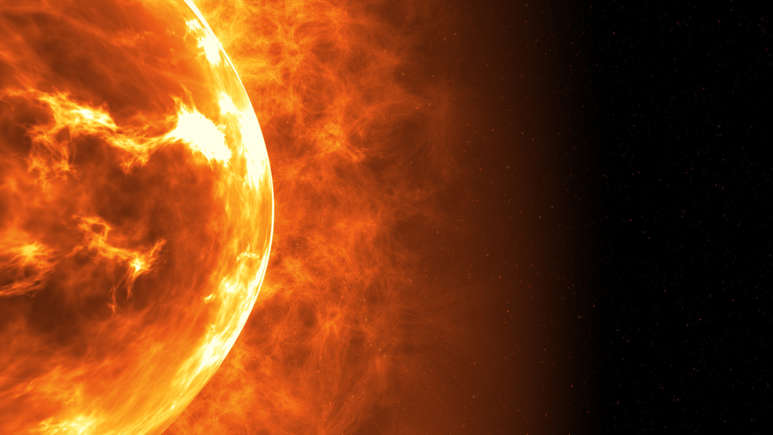
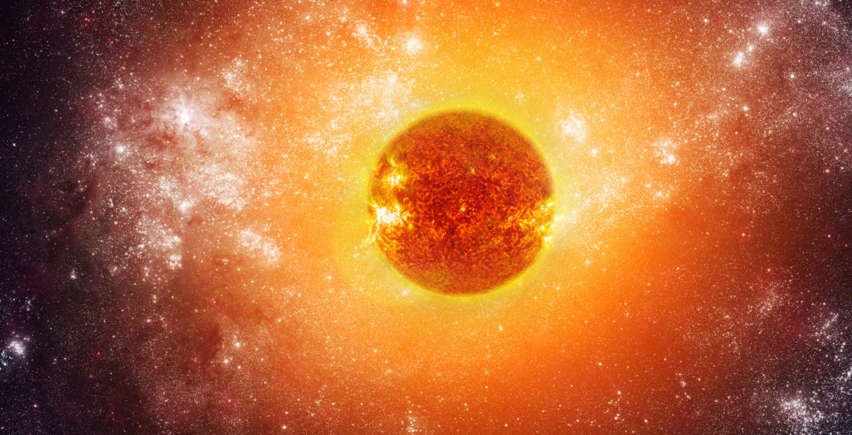
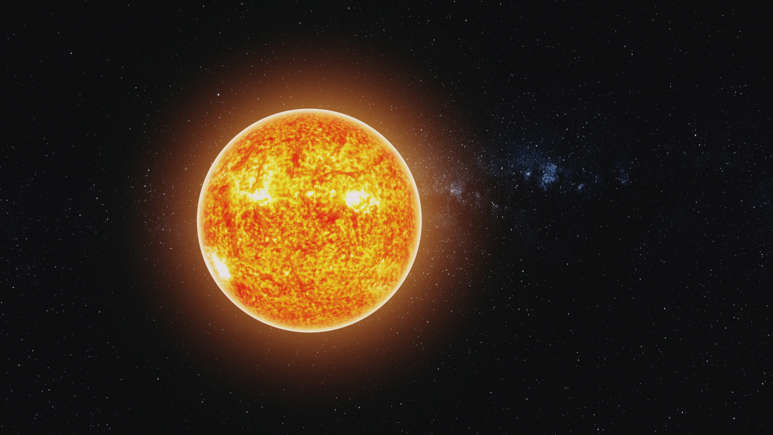
De zon staat in brand Elke seconde zet de zon 700 miljoen ton waterstof om in 695 miljoen ton helium. Er komt dan energie vrij in de vorm van gammastralen, die dan licht worden. De zon zendt dus licht en warmte uit, maar staat niet in brand, omdat er geen zuurstof aan te pas komt.
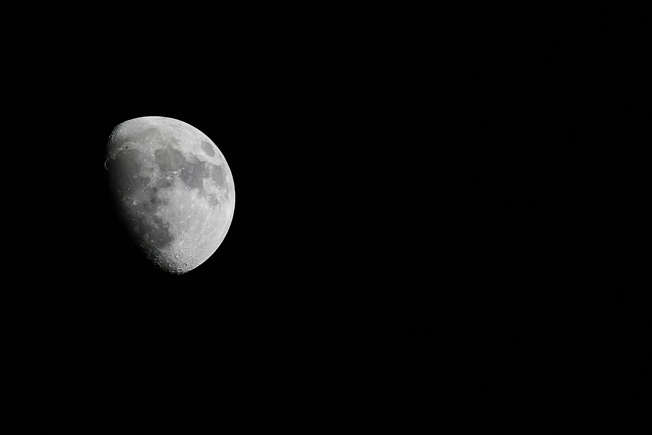
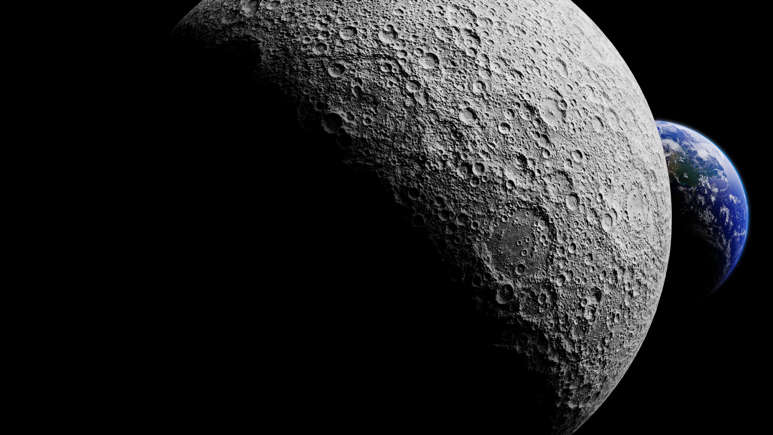
De maan heeft een donkere kant In tegenstelling tot wat vaak wordt gedacht, is de andere kant niet donker. Het krijgt dezelfde hoeveelheid zonlicht als de andere kant.
Sterren in constellaties staan dicht bij elkaar De sterren aan de nachthemel zijn verdeeld over 88 constellaties. Dit zijn herkenbare groeperingen die al duizenden jaren als richtlijn voor boeren en reizigers dienen.
Sterren in constellaties staan dicht bij elkaar Ondanks dat het lijkt alsof de sterren die de constellaties vormen dicht bij elkaar staan, zijn ze vaak tientallen of honderden lichtjaren van elkaar gescheiden.
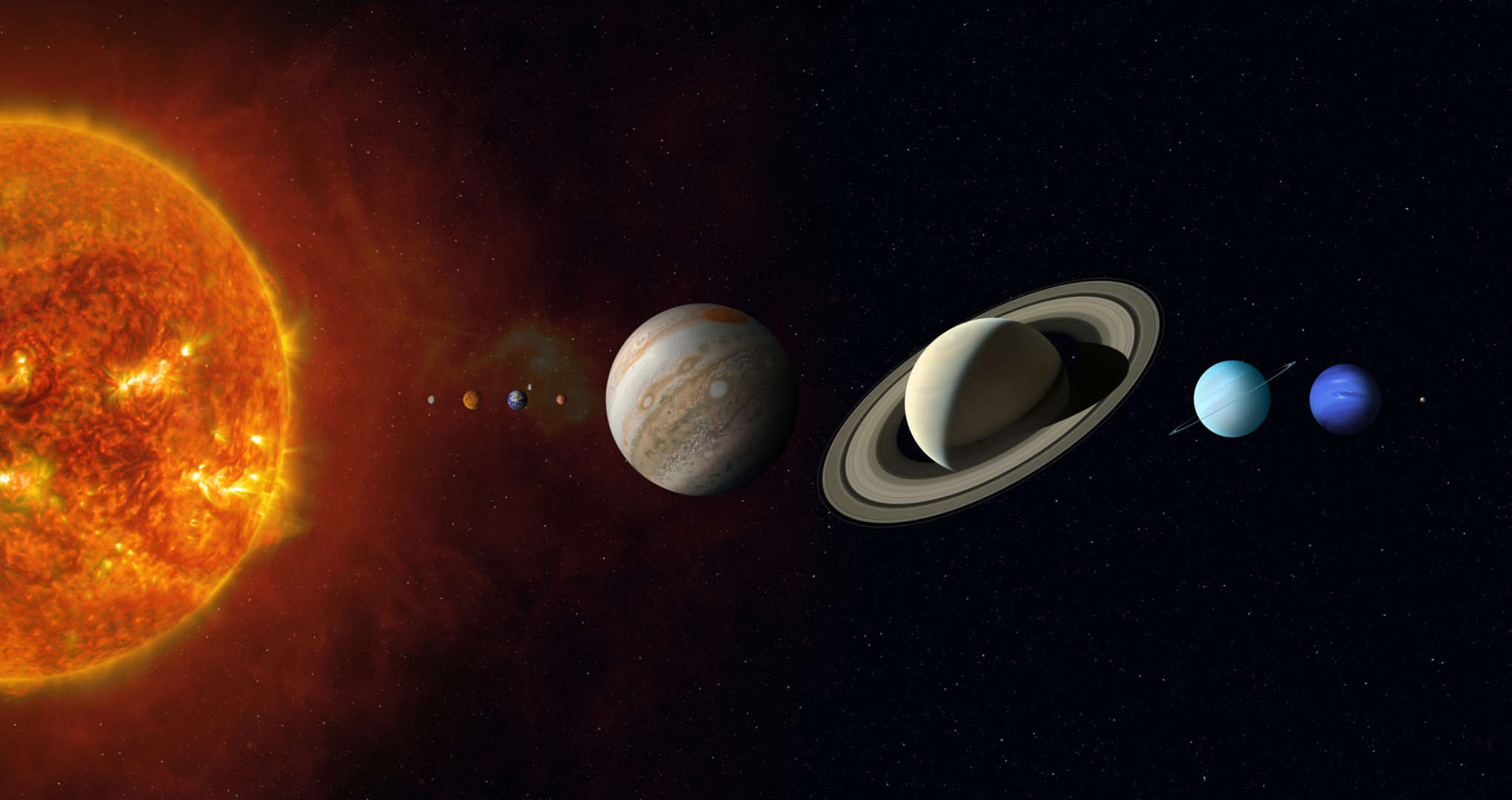
Saturnus is de enige planeet in het zonnestelsel met ringen Wanneer de meeste mensen aan planeten met ringen denken, is er maar één die in hun gedachten opkomt. De gasreus Saturnus staat bekend om zijn zeven hoofdringen.
Saturnus is de enige planeet in het zonnestelsel met ringen Maar Saturnus is niet de enige. Jupiter, Uranus en Neptunus hebben ook allemaal hun eigen ringen. Niemand wist echter zeker dat ze bestonden totdat het ruimteschip Voyager in de jaren zeventig en tachtig heel dichtbij kwam.
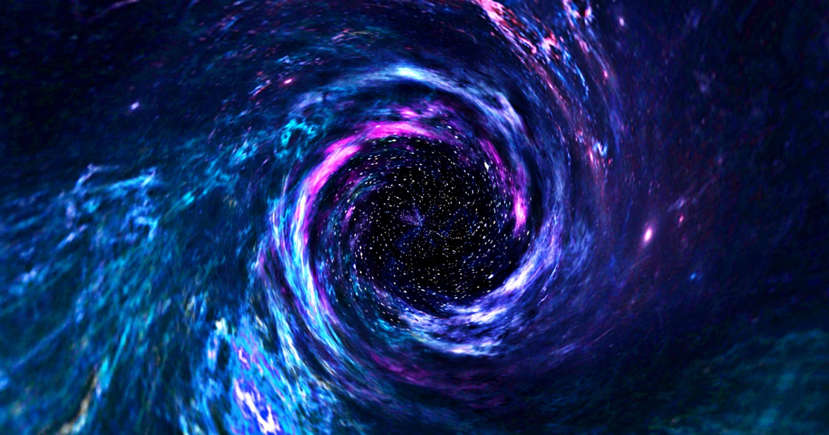
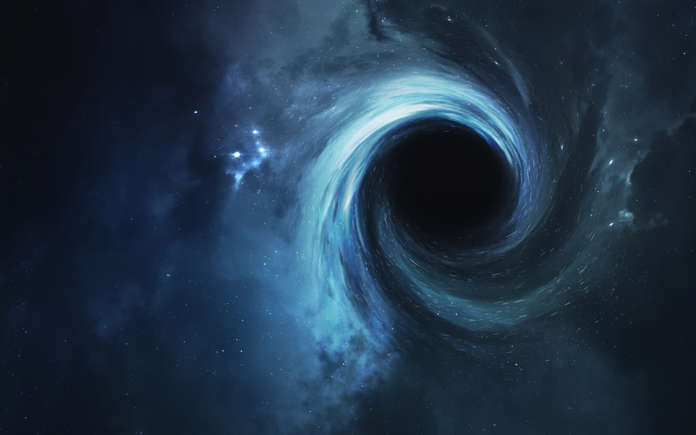
Zwarte gaten creëren een vacuüm Zwarte gaten zijn eigenlijk meer een soort vliegenvangers dan vacuüms. Ze zijn vrij inactief totdat een ster te dichtbij komt. Dan worden ze actief en verscheuren ze lagen gas en versnipperen ze de bestaande atomen.
Zwarte gaten creëren een vacuüm In werkelijkheid lopen objecten die genoeg afstand houden en met een hoge snelheid passeren geen gevaar om in het centrum van een zwart gat gezogen te worden. Als de zon bijvoorbeeld zou worden vervangen door een zwart gat, zou de aarde gewoon blijven draaien.
De zon is geel Eigenlijk is deze gele kleur een illusie. De zon produceert alle golflengtes van zichtbaar licht en daarom is haar echte kleur wit. Maar als het zonlicht door de atmosfeer reist, verandert het van kleur.
De zon is geel De atmosferische gassen van de aarde buigen het licht af door een effect dat Rayleighverstrooiing heet en waardoor de lucht blauw lijkt.
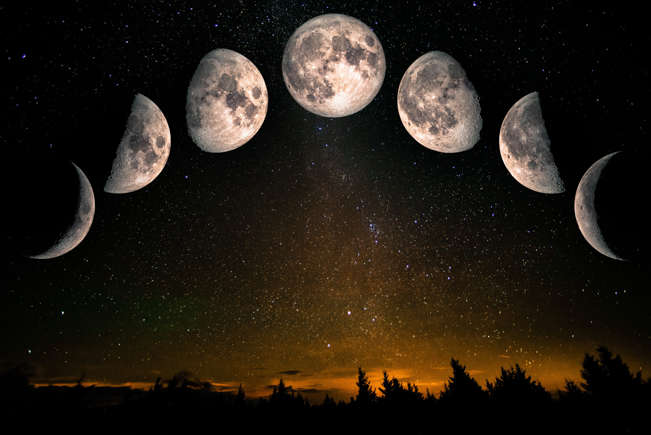
De schaduw van de aarde veroorzaakt de maanfasen Maanfasen zijn eigenlijk het resultaat van de opkomst en ondergang van de zon boven de zichtbare kant van de maan terwijl deze om de aarde draait.
De schaduw van de aarde veroorzaakt de maanfasen Terwijl de maan om de aarde draait, worden verschillende delen ervan verlicht door de zon. Het draait dus allemaal om de positie van de zon, de maan en de aarde.
Een lichtjaar is een tijdmaat Een lichtjaar is eigenlijk een afstandsmaat. NASA omschrijft een lichtjaar als "de totale afstand die een lichtstraal, die in een rechte lijn beweegt, in één jaar aflegt".
Een lichtjaar is een tijdmaat Volgens de relativiteitstheorie van Albert Einstein is een lichtjaar de snelste snelheid in het heelal, met ongeveer 300.000 kilometer per seconde.
Sterren twinkelen Wanneer licht naar de aarde reist, passeert het gasmoleculen (sterren) waar onze atmosfeer uit bestaat. De sterren wervelen vanwege turbulentie in de atmosfeer. Hierdoor wordt een deel van het licht afgebogen, waardoor het lijkt alsof het licht verschuift en twinkelt.
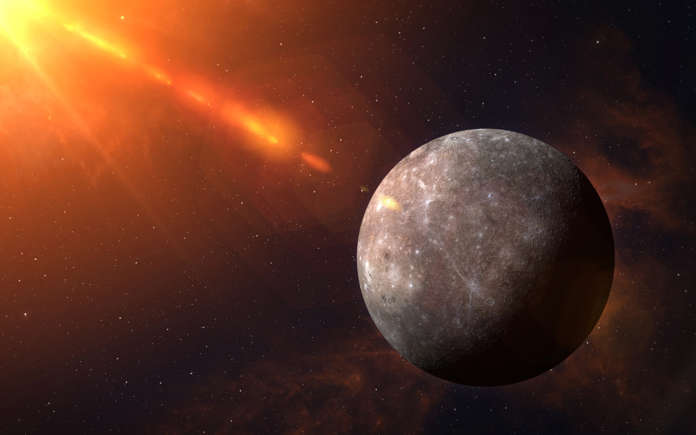
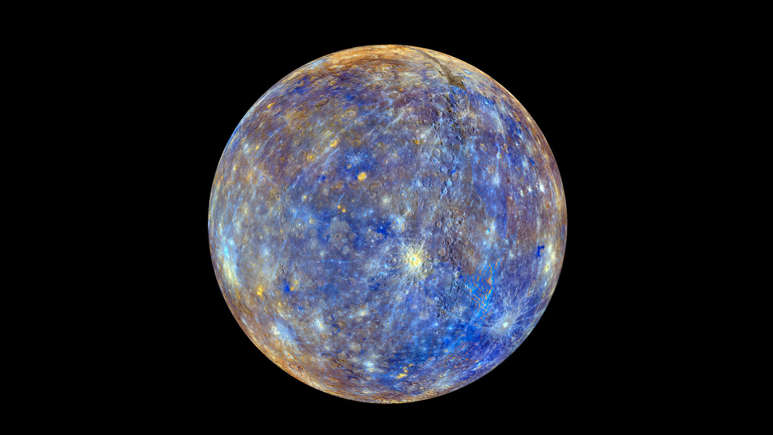
Mercurius is de heetste planeet in het zonnestelsel Veel mensen geloven deze misvatting omdat Mercurius de planeet is die het dichtst bij de zon staat. De afstand tot de zon heeft echter weinig te maken met de gemiddelde temperatuur van een planeet.
Mercurius is de heetste planeet in het zonnestelsel Venus bijvoorbeeld, die bijna twee keer zo ver van de zon staat, heeft een gemiddelde temperatuur van 462ºC. Het verschil is te danken aan de atmosfeer. Op Venus is de atmosfeer dik en bestaat deze voornamelijk uit kooldioxide, waardoor de warmte wordt vastgehouden in een isolerende luchtbel, terwijl Mercurius een hele dunne atmosfeer heeft.
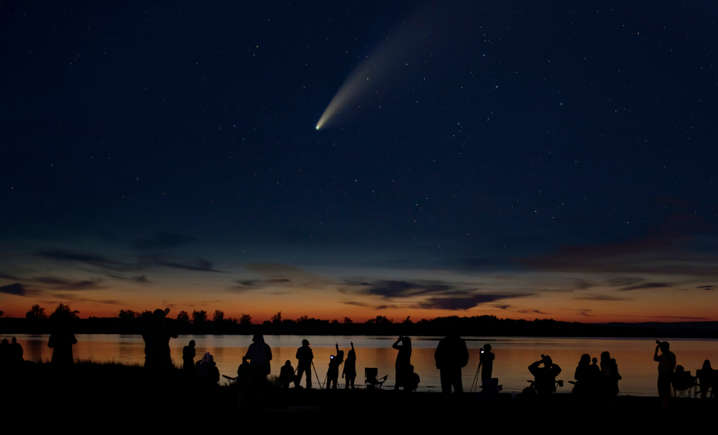
Komeetstaarten geven aan welke kant ze opgaan Kometen zijn in wezen brokken vies ijs die opwarmen wanneer ze de zon naderen. Op dat moment laten ze gas en stof los.
Komeetstaarten geven aan welke kant ze opgaan Op aarde zouden we verwachten dat de staart naar achteren wijst, maar in de ruimte is er geen lucht. Kometen worden gevormd en voortgeblazen door stralingsdruk en zonnewind, dus wijzen ze altijd van de zon af.
Zonder ruimtepak exploderen mensen in de ruimte De menselijke huid is rekbaar genoeg, dus het zal niet tot een explosie komen. Maar na ongeveer 10 seconden blootstelling raken mensen bewusteloos.
Zonder ruimtepak exploderen mensen in de ruimte In 1966 gebeurde dit helaas met een technicus tijdens een NASA-test, nadat bepaalde apparatuur uitviel. Gelukkig was de druk na 30 seconden al hersteld en knapte de technicus weer op.
De zon is de enige ster met planeten Deskundigen geloven dat de meeste sterren in de Melkweg planeten om zich heen hebben. Elke planeet die buiten ons zonnestelsel wordt gevonden, wordt een exoplaneet genoemd en deze beïnvloeden de manier waarop een ster verschijnt.
De zon is de enige ster met planeten Eén manier om exoplaneten te vinden is door op verschillende tijdstippen te zoeken naar een afname van het licht van bepaalde sterren. Dit kan betekenen dat een planeet voor de ster langs beweegt, wat invloed heeft op de manier waarop het licht voor ons verschijnt.
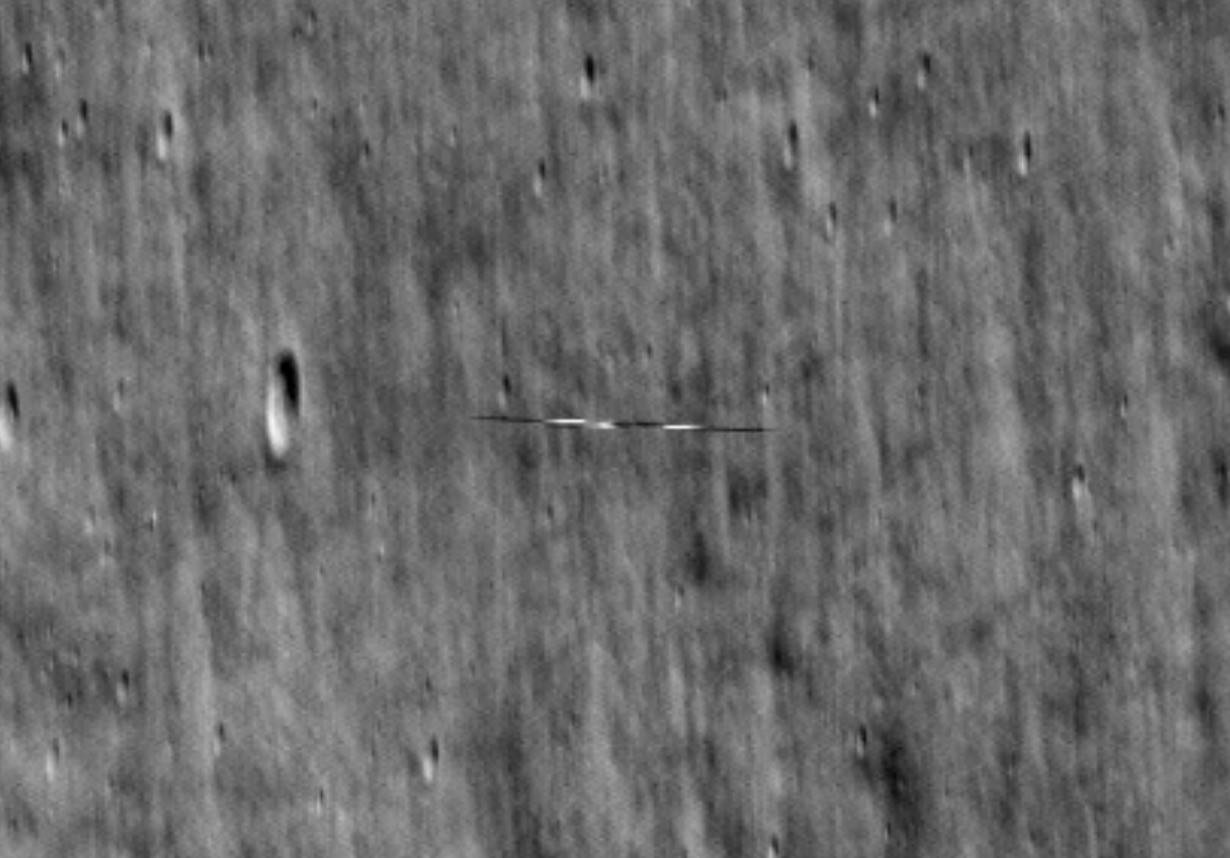
The identity of a speeding object captured in images by NASA’s Lunar Reconnaissance Orbiter last month has now been revealed, according to officials with the American space agency.
The unusual-looking, elongated object was spotted by the narrow-angle camera aboard the Lunar Reconnaissance Orbiter (LRO) as it made its routine pass over the Moon’s surface between March 5 and 6, 2004.
Now, NASA officials have revealed the identity of the strange-looking object and the reason for its curious appearance in the photos the LRO obtained last month.
The object was photographed by the narrow-angle camera aboard the Lunar Reconnaissance Orbiter last month (Credit: NASA/Goddard/Arizona State University).
In 2022, the Korea Aerospace Research Institute (KARI) launched its own orbital spacecraft, the Korea Pathfinder Lunar Orbiter (KPLO), on August 4 from Cape Canaveral Space Force Station. Also known as Danuri, the KPLO represents the first official mission launched by South Korea, which will see the spacecraft in orbit around the Moon for one year.
During its mission, Danuri will be utilizing a suite of scientific instruments built by South Korea, as well as one U.S.-built instrument, to carry out several experiments that will study the lunar environment, as well as help demonstrate a “lunar internet” and identify potential future landing sites.
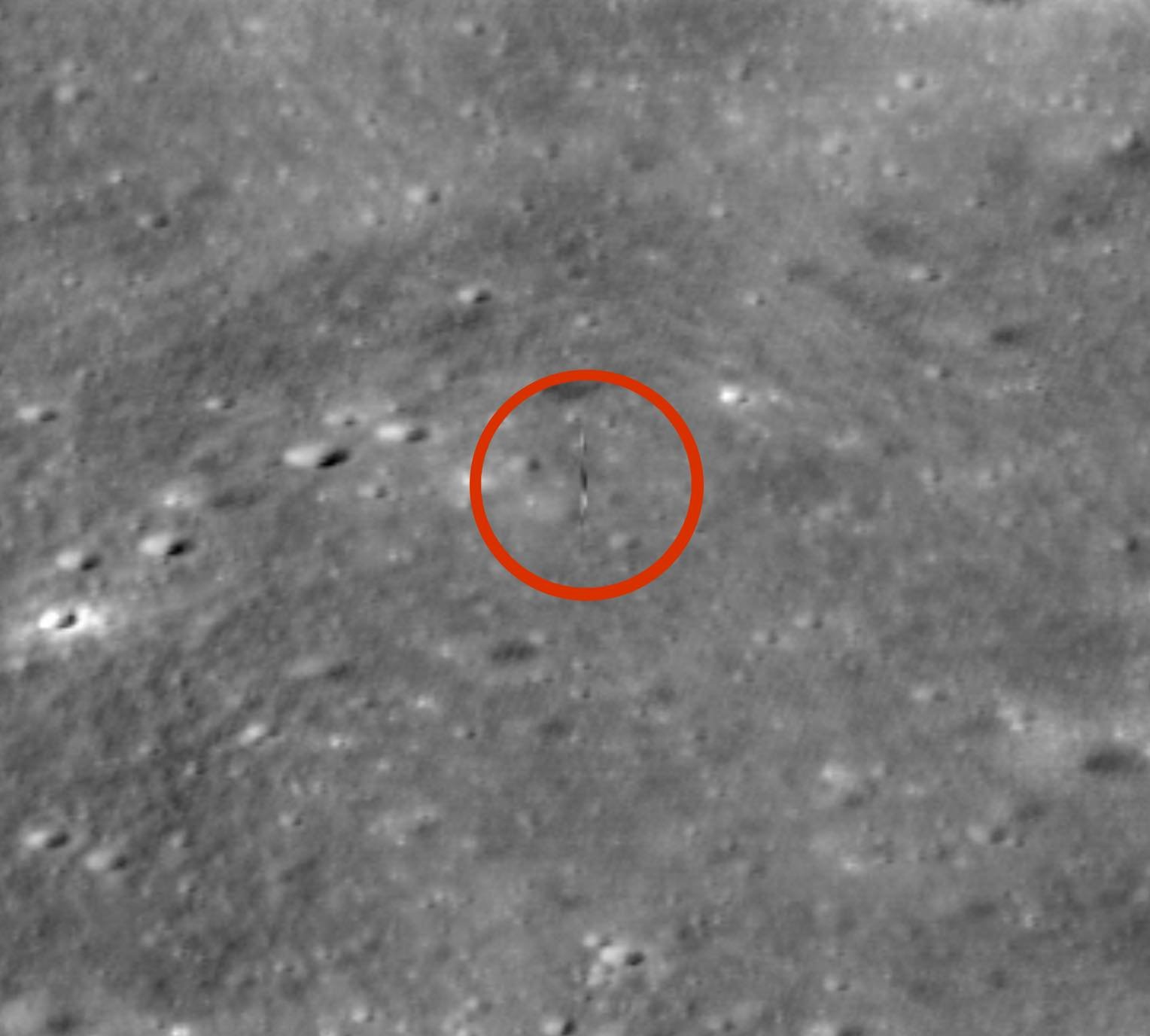
Operating in almost parallel orbits, last month, the KPLO and LRO passed each other going in opposite directions, allowing the LRO to capture images of the South Korean spacecraft as it whizzed by.
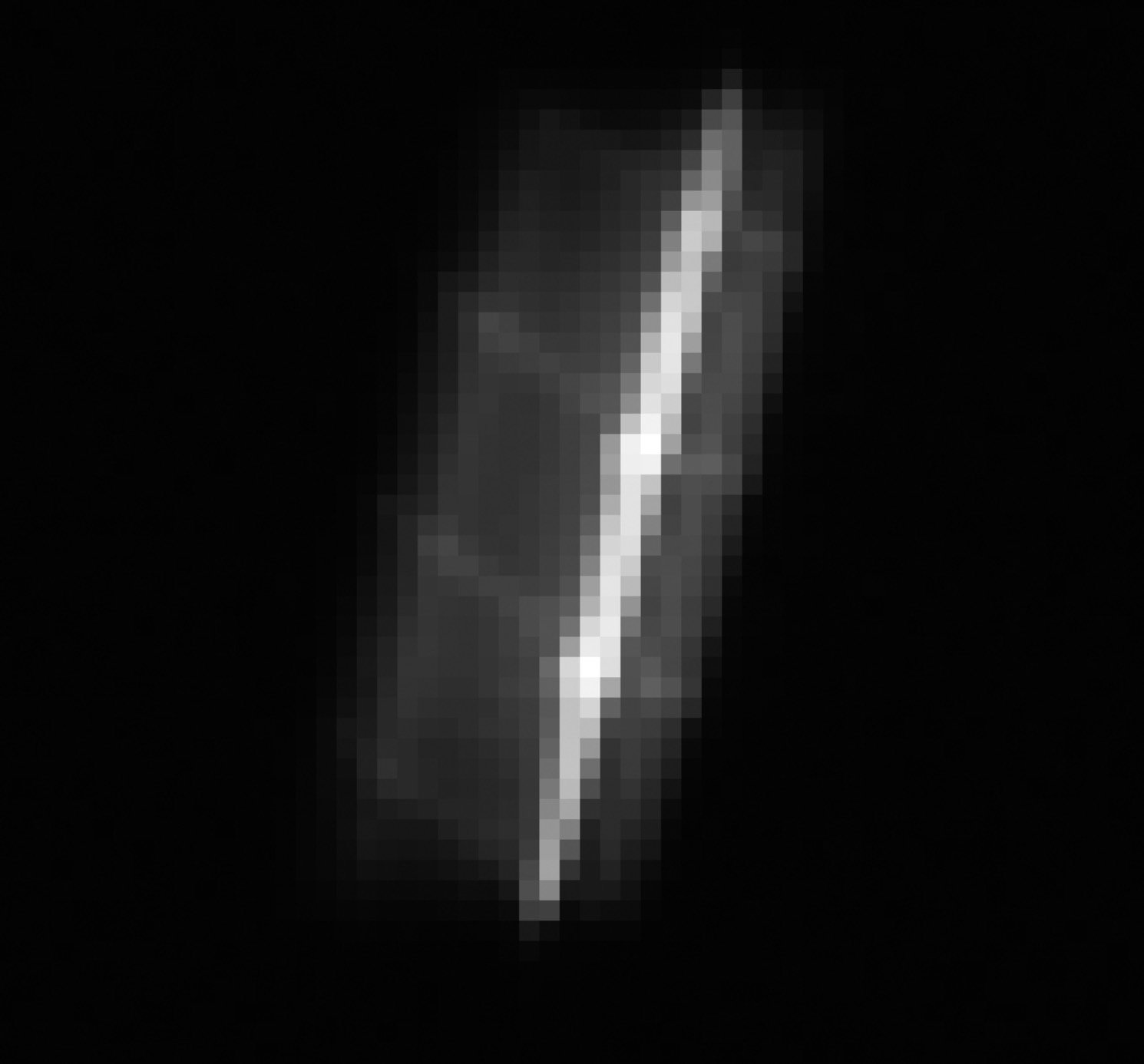
Due to their opposite directional paths and the speed at which each lunar orbiter is traveling in their respective orbits (estimated to be close to 7,200 miles, or 1,500 kilometers, per hour), Danuri appeared elongated, making it look close to ten times its actual size, even despite the short exposure time of just 0.338 milliseconds used by the LRO’s narrow-angle camera.
According to the LRO operations team based at Goddard Space Flight Center in Maryland, the high travel velocities between the LRO and Danuri meant that perfect timing was required in order for the NASA team to capture images of the South Korean spacecraft.
The KPLO appears close to ten times its actual size in the images obtained by NASA’s Lunar Reconnaissance Orbiter in March, 2024
(Credit: NASA/Goddard/Arizona State University).
The images obtained by NASA in March aren’t the first time that one of these spacecraft has obtained images of the other. Last April, the KPLO successfully obtained images of the LRO using its ShadowCam, which was provided by NASA for the South Korean orbiter’s mission.
NASA’s LRO, as seen from the KPLO in April 2023 (Credit: NASA/KARI/Arizona State University).
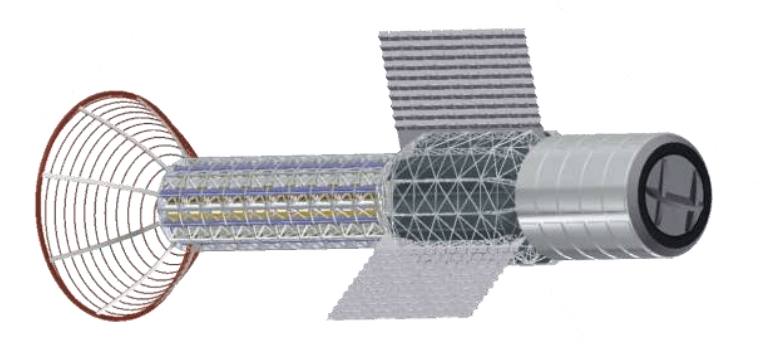
Possessing a conventional box shape with a pair of solar panel wings and a parabolic antenna, Danuri relies on a mono propulsion system that incorporates four 30N thrusters, which help it achieve orbital maneuvers, and an additional four 5N attitude control thrusters.
Although designed to operate for just a year, it is possible that the KPLO, like the LRO, may enter an extended phase, during which it will descend to a lower position in orbit, placing it just 70 km above the lunar surface.
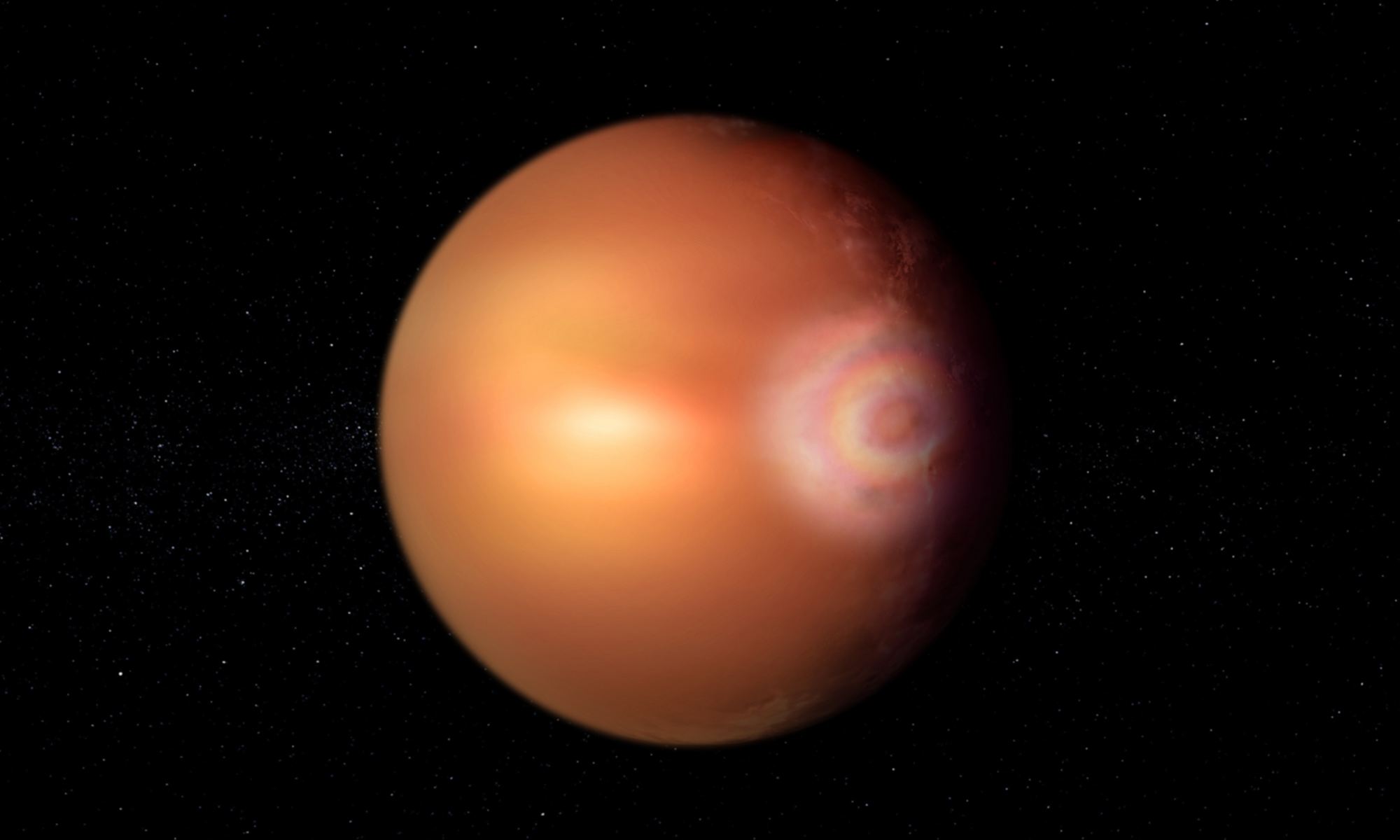
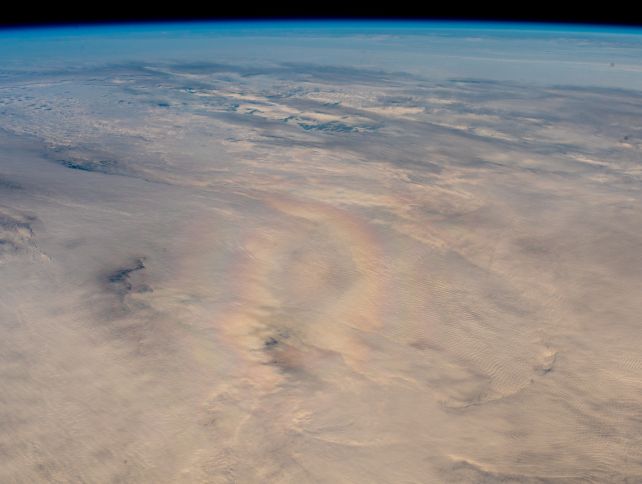
When light strikes the atmosphere all sorts of interesting things can happen. Water vapor can split sunlight into a rainbow arc of colors, corpuscular rays can stream through gaps in clouds like the light from heaven, and halos and sundogs can appear due to sunlight reflecting off ice crystals. And then there is the glory effect, which can create a colorful almost saint-like halo around objects.
Like rainbows, glories are seen when facing away from the light source. They are often confused with circular rainbows because of their similarity, but glories are a unique effect. Rainbows are caused by the refraction of light through water droplets, while glories are caused by the wave interference of light. Because of this, a glory is most apparent when the water droplets of a cloud or fog are small and uniform in size. The appearance of a glory gives us information about the atmosphere. We have assumed that some distant exoplanets would experience glories similar to Earth, but now astronomers have found the first evidence of them.
A solar glory seen from an airplane. Credit: Brocken Inaglory
The observations come from the Characterising ExOplanet Satellite (Cheops) as well as observations from other observatories of an exoplanet known as WASP-76b. It’s not the kind of exoplanet where you’d expect a glory to appear. WASP-76b is not a temperate Earth-like world with a humid atmosphere, but a hellish hot Jupiter with a surface temperature of about 2,500 Kelvin. Because of this, the team wasn’t looking for extraterrestrial glories but rather studying the odd asymmetry of the planet’s atmosphere.
WASP-76b orbits its star at a tenth of the distance of Mercury from the Sun. At such a close distance the world is likely tidally locked, with one side forever boiling under its sun’s heat and the other side always in shadow. No such planet exists in our solar system, so astronomers are eager to study how this would affect the atmosphere of such a world. Previous studies have shown that the atmosphere is not symmetrical. The star-facing side is puffed up by the immense heat, while the atmosphere of the dark side is more dense.
For three years the team observed WASP-76b as it passed in front of and behind its star, capturing data on the intersection between the light and dark side. They found that on the planet’s eastern terminator (the boundary between light and dark sides) there was a surprising increase in light. This extra glow could be caused by a glory effect. It will take more observations to confirm this effect but if verified it will be the first glory observed beyond our solar system. Currently, glories have only been observed on Earth and Venus.
The presence of a glory on WASP-76b would mean that spherical droplets must have been present in the atmosphere for at least three years. This means either they are stable within the atmosphere, or they are constantly replenished. One possibility is that the glory is caused by iron droplets that rain from the sky on the cooler side of the planet. Even if this particular effect is not confirmed, the ability of modern telescopes to capture this data suggests that we will soon be able to study many subtle effects of exoplanet atmospheres.
A glory in Earth's atmosphere photographed by ESA astronaut Alexander Gerst from the ISS in 2018.
The Stellar Demolition Derby in the Centre of the Galaxy
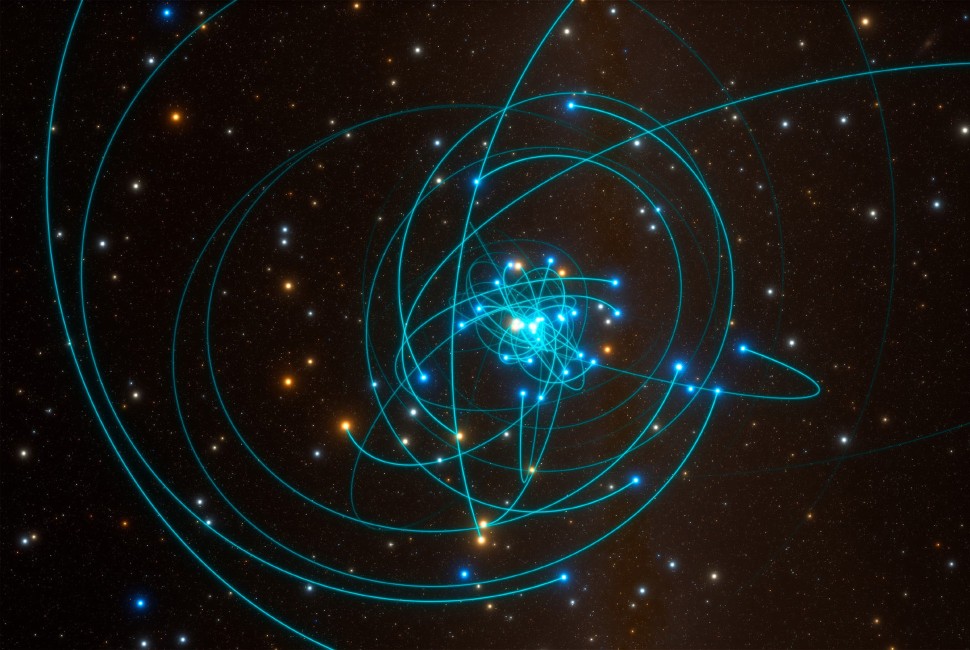
This illustration shows stars orbiting close to the Milky Way's central supermassive black hole. The black hole accelerates stars nearby and sends them crashing into one another. Credit: ESO/L. Calçada/Spaceengine.org
The Stellar Demolition Derby in the Centre of the Galaxy
The region near the Milky Way’s centre is dominated by the supermassive black hole that resides there. Sagittarius A*’s overwhelming gravity creates a chaotic region where tightly packed, high-speed stars crash into one another like cars in a demolition derby.
These collisions and glancing blows change the stars forever. Some become strange, stripped-down, low-mass stars, while others gain new life.
The Milky Way’s supermassive black hole (SMBH) is called Sagittarius A* (Sgr. A*). Sgr. A* is about four million times more massive than the Sun. With that much mass, the much smaller stars nearby are easily affected by the black hole’s powerful gravity and are accelerated to rapid velocities.
In the inner 0.1 parsec, or about one-third of a light-year, stars travel thousands of kilometres per second. Outside that region, the pace is much more sedate. Stars beyond 0.1 parsec travel at hundreds of km/s.
But it’s not only the speed that drives the collisions. The region is also tightly packed with stars into what astronomers call a nuclear star cluster (NSC.) The combination of high speed and high stellar density creates a region where stars are bound to collide.
“They whack into each other and keep going.”
Sanaea Rose, Department of Physics and Astronomy, UCLA
New research led by Northwestern University simulated stars orbiting Sgr. A* to understand the interactions and collisions and their results. It’s titled “Stellar Collisions in the Galactic Center: Massive Stars, Collision Remnants, and Missing Red Giants.” The lead author is Sanaea C. Rose from UCLA’s Department of Physics and Astronomy. The research was also recently presented at the American Physical Society’s April meeting.
The researchers simulated a population of 1,000 stars embedded in the NSC. The stars ranged from 0.5 to 100 solar masses, but in practice, the upper limit was about 30 solar masses due to the initial mass function. Other characteristics, like orbital eccentricities, were varied to ensure that the sample caught stars at different distances from Sgr. A*. That’s necessary to build a solid understanding of the stellar collisions.
“The region around the central black hole is dense with stars moving at extremely high speeds,” said lead author Rose. “It’s a bit like running through an incredibly crowded subway station in New York City during rush hour. If you aren’t colliding with other people, then you are passing very closely by them. For stars, these near collisions still cause them to interact gravitationally. We wanted to explore what these collisions and interactions mean for the stellar population and characterize their outcomes.”
“Stars, which are under the influence of a supermassive black hole in a very crowded region, are unlike anything we will ever see in our own solar neighbourhood.”
Sanaea Rose, Department of Physics and Astronomy, UCLA
The stellar density in the inner 0.1 parsecs is nothing like our Solar System’s neighbourhood. The nearest star to our Sun is the low-mass Proxima Centauri. It’s just over four light-years away. It’s like having no neighbours at all.
But in the NSC, things are way different.
The Milky Way galaxy hosts a supermassive black hole (Sgr A*, shown in the inset on the right) embedded in the Nuclear Star Cluster (NSC) at the center, highlighted and enlarged in the middle panel. The image on the right shows the stellar density in the NSC. Image Credit: Zhuo Chen
“The closest star to our sun is about four light-years away,” Rose explained. “Within that same distance near the supermassive black hole, there are more than a million stars. It’s an incredibly crowded neighbourhood. On top of that, the supermassive black hole has a really strong gravitational pull. As they orbit the black hole, stars can move at thousands of kilometres per second.”
In a stellar density that high, collisions are inevitable. The rate of collisions is more severe the closer stars are to the SMBH. In their research, Rose and her colleagues simulated the region to determine the collisions’ effect on individual stars and the stellar population.
The simulations showed that head-on collisions are rare. So stars aren’t destroyed. Instead, they’re more like glancing blows, where stars can be stripped of their outer layers before continuing their trajectories.
“They whack into each other and keep going,” Rose said. “They just graze each other as though they are exchanging a very violent high-five. This causes the stars to eject some material and lose their outer layers. Depending on how fast they are moving and how much they overlap when they collide, they might lose quite a bit of their outer layers. These destructive collisions result in a population of strange, stripped down, low-mass stars.”
These stars end up migrating away from the SMBH. The authors say that there is likely a population of these low-mass stars spread throughout the galactic centre (GC.) They also say that the ejected mass from these grazing collisions could produce the gas and dust features other researchers have observed in the GC, like X7, and G objects like G3 and G2.
X7 is an elongated gas and dust structure in the galactic centre. The researchers suggest it could be made of mass stripped from stars during collisions between fast-moving stars near Sgr. A*. G3 and G2 are objects that resemble clouds of gas and dust but also have properties of stellar objects. Image Credit: Ciurlo et al. 2023.
Outside of the 0.1 parsecs region, the stars are slower. As a result, collisions between stars aren’t as energetic or destructive. Instead of creating a population of stripped-down stars, collisions allow the stars to merge, creating more massive stars. Multiple mergers are possible, creating stars more massive than our Sun.
“A few stars win the collision lottery,” Rose said. “Through collisions and mergers, these stars collect more hydrogen. Although they were formed from an older population, they masquerade as rejuvenated, young-looking stars. They are like zombie stars; they eat their neighbours.”
But after they gain that mass, they hasten their own demise. They become like young, massive stars that consume their fuel quickly.
This artist’s illustration shows a massive star orbiting Sagittarius A*. Post-collision, some stars gain mass and end up shortening their lives. Image Credit: University of Cologne
“They die very quickly,” Rose said. “Massive stars are sort of like giant, gas-guzzling cars. They start with a lot of hydrogen, but they burn through it very, very fast.”
Another puzzling thing about this inner region is the lack of red giants. “Observations of the GC indicate a deficit of RGs within about 0.3 pc of the SMBH,” the authors write, referencing other research. Their results could explain it. “We consider whether main-sequence stellar collisions may help explain this observational puzzle,” they write. “We find that within ~ 0.01 pc of the SMBH, stellar collisions destroy most low-mass stars before they can evolve off the main sequence. Thus, we expect a lack of RGs in this region.”
The region around the Milky Way’s SMBH is chaotic. Even disregarding the black hole itself and its swirling accretion disk and tortured magnetic fields, the stars that dance to its tune live chaotic lives. The simulations show that most stars in the GC will experience direct collisions with other stars. But their chaotic lives could shed light on how the entire region evolved. And since the region resists astronomers’ attempts to observe it, simulations like this are their next best tool.
“It’s an environment unlike any other,” Rose said. “Stars, which are under the influence of a supermassive black hole in a very crowded region, are unlike anything we will ever see in our own solar neighbourhood. But if we can learn about these stellar populations, then we might be able to learn something new about how the galactic center was assembled. At the very least, it certainly provides a point of contrast for the neighbourhood where we live.”
Note:these results are based on a pair of published papers:
It’s not like any other over before it NASA is always striving to push the boundaries of space exploration and that has led its engineers to develop a new type of robot rover that could completely change how space exploration missions are undertaken according to the agenc
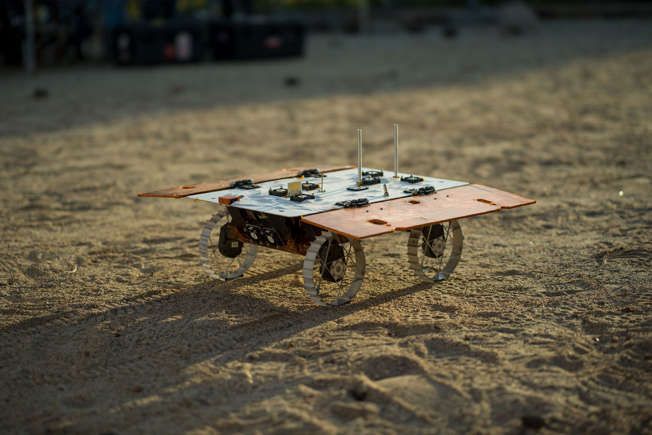
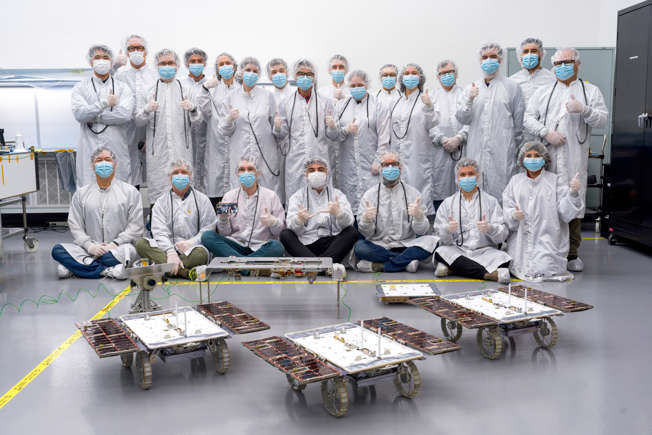
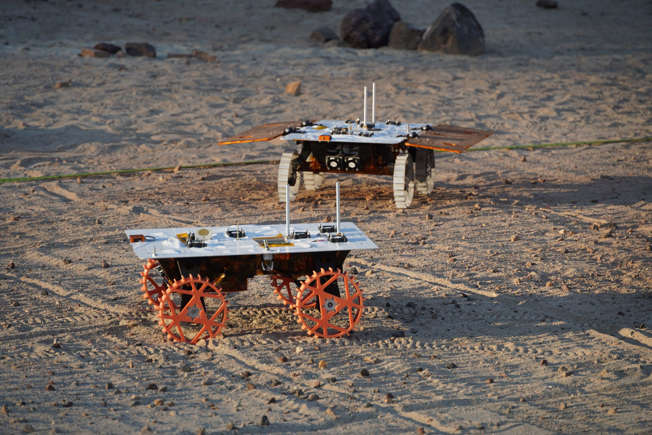
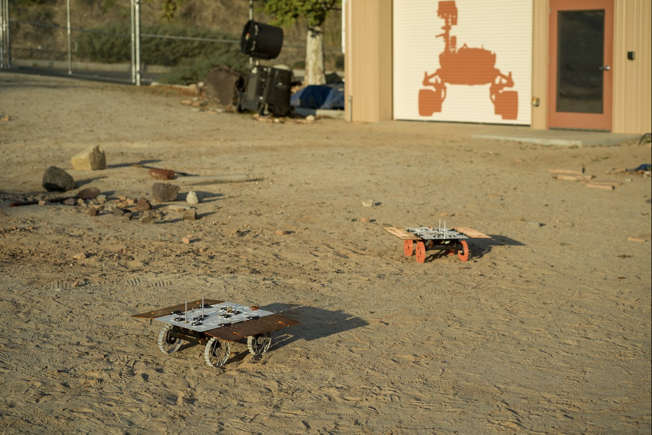
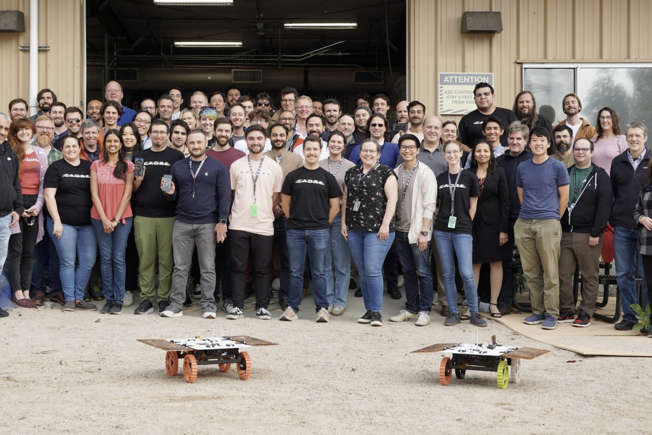
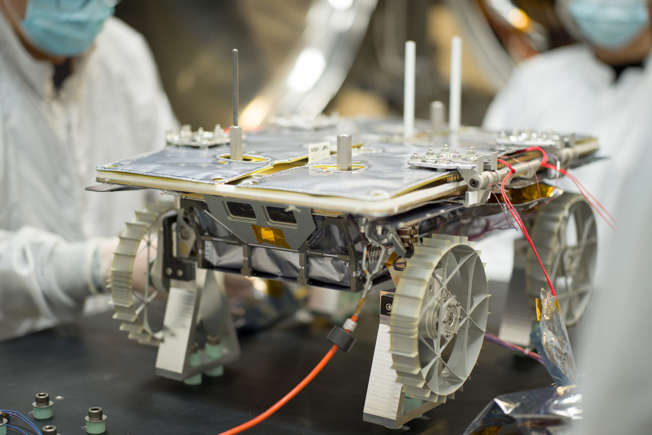
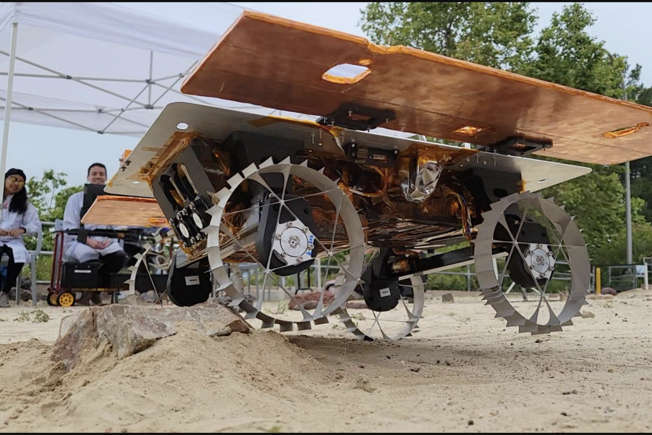
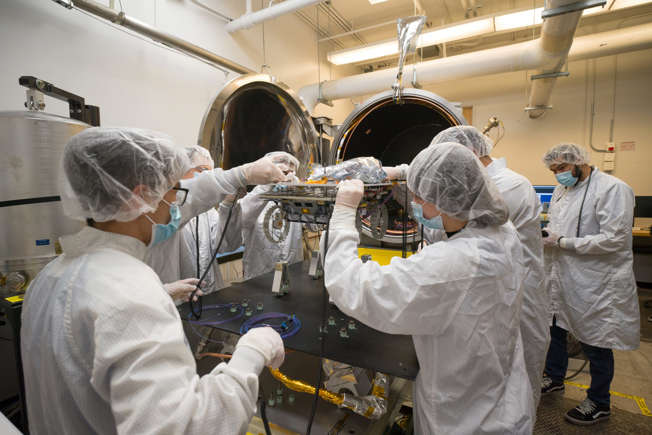
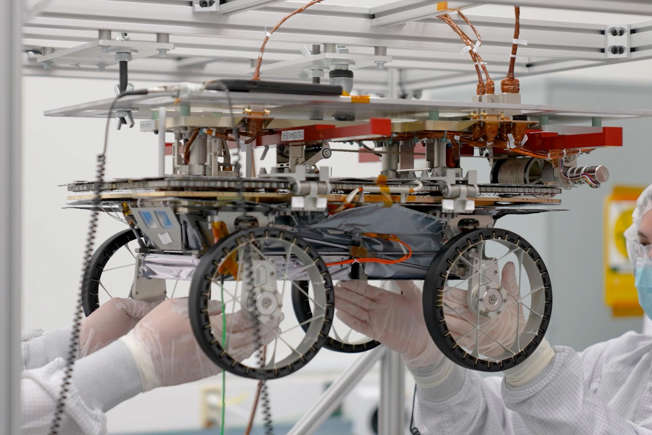
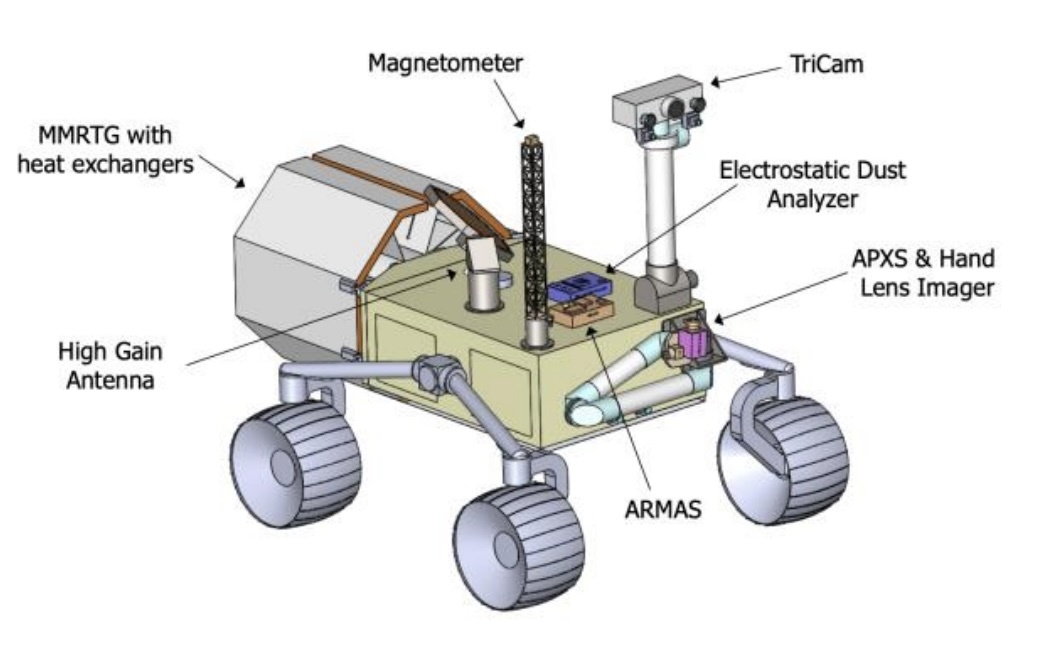
The CADRE Rover The Cooperative Autonomous Distributed Robotic Exploration—more commonly known by the acronym CADRE—project has developed a rover that operates without the input of humans with the aim of supporting future exploratory missions.
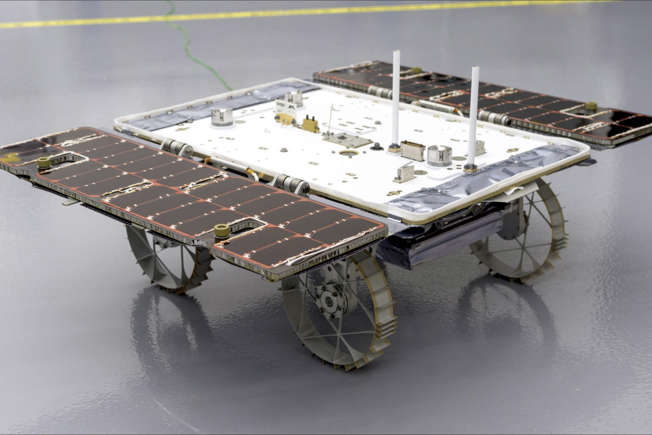
Smaller than your average rover NASA’s CADRE rovers are a lot smaller than something like Curiosity of Perseverance, two of the space agency’s more modern rovers exploring the surface of Mars. CADRE’s rovers are only about the size of the average carry-on luggage.
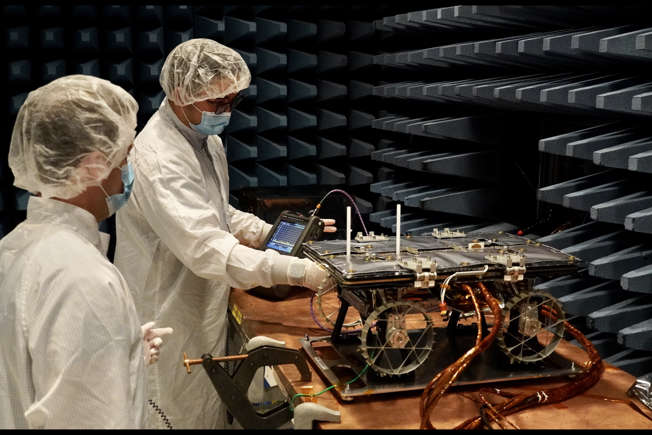
Packed with new technologies However, engineers have packed the tiny new rover with a lot of technology that will be very useful for mapping the surface of a planet. The rover is equipped with an array of sensors and cameras as well as other advanced technologies.
Fitted with powerful mapping tools Powered by solar panels and four wheels, the CADRE rover also has been fitted with a powerful ground-penetrating radar that its designers developed so that it could map the lunar surface during the new technology's first mission to the moon.
Three will head to the moon in 2024 A trio of new rovers from NASA will be heading to the moon in 2024 aboard Intuitive Machines’ third lunar lander the IM-3 as part of the space agency’s Commercial Lunar Payload Services (CLPS) initiative according to Space.com.
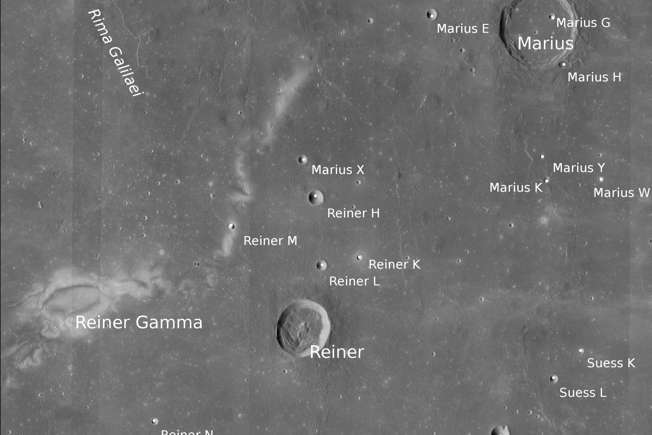
Exploring a mysterious region of the moon NASA is tasking its tiny autonomous rovers with exploring a very mysterious region on the moon known as Reiner Gamma. The area is just one of several fascinating places on the lunar surface that have their own local magnetic field.
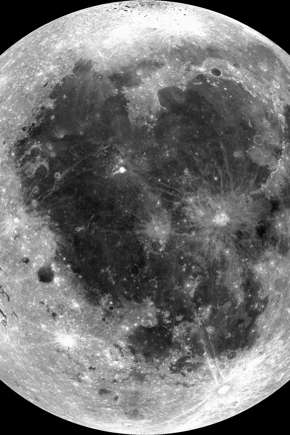
The Ocean of Storms Reiner Gamma is located inside an area on the moon’s surface referred to as Oceanus Procellarum, which translates to Ocean of Storms. The region is on the western edge of the moon north of the equator and temperatures are volatile.
The perfect area for robotic exploration During the middle of the day, surface temperatures in Reiner Gamma can reach as high as 237° Fahrenheit or 114° Celsius, which makes the area perfect for exploration using autonomous robots like the ones developed by the CADRE project.
A simple mission The mission NASA’s new robots are being sent on is very simple. The aim is to see how the three rovers interact with each other without direct input from the mission controllers back on Earth according to a press release from the space agency.
Measurements and mapping The rovers will take measurements from several locations so that NASA can provide the proof of concept. If the mission is successful, it could dramatically transform how NASA explores other planetary and celestial surfaces in the near future.
Exploring without human input “Our mission is to demonstrate that a network of mobile robots can cooperate to accomplish a task without human intervention – autonomously,” explained Subha Comandur, the CADRE project manager at NASA’s Jet Propulsion Laboratory.
They could change space exploration “It could change how we do exploration in the future,” Comandur continued, adding that the “question for future missions will become: ‘How many rovers do we send, and what will they do together?’” But what do we know about the mission?
Examining the moon for a full lunar day The Cadre rovers will explore Reiner Gamma for a full lunar day, which is equivalent to about 14 Earth days, and will conduct a number of experiments throughout the area that will test the capabilities of the new recovers and how they work together.
Minimal orders will be given Mission control will send the rovers a broad directive as to what they should do once on the moon. The robots will select a leader and then get to work on reasoning out the best way to complete the tasks that they have been given.
One instruction only “The only instruction is, for example, ‘Go explore this region,’ and the rovers figure out everything else: when they’ll do the driving, what path they’ll take, how they’ll maneuver around local hazards,” said CADRE’s principal investigator Jean-Pierre de la Croix.
Will the rovers pass the test? “You only tell them the high-level goal, and they have to determine how to accomplish it,” Jean-Pierre de la Croix added. It’s a very interesting way to increase our capabilities that could revolutionize the future of space exploration.
NASA’s Curiosity Mars rover just made it to a channel called Gediz Vallis. This spot is the perfect place for taking a dramatic alien panorama. But, it might also contain hidden clues of ancient water on the Red Planet.
Rocks have long suggested that Mars was wetter and warmer billions of years ago. Current evidence suggests that water on the Red Planet came and went in phases. NASA is searching for hints of a critical turning point: when these phases ended and liquid water permanently disappeared from Mars’s surface and forever transformed the once-wet planet into the barren world of today. Gediz Vallis might contain clues of this point of no return.
As it drives along the serpentine-shaped land feature, the six-wheeled rover will get a novel look at this “Earth-like past,” NASA officials announced on Friday.
Curiosity has now reached Gediz Vallis, the channel that runs through the center of this NASA image, created from orbital data.
Previous satellite data suggested that water flow may have helped form the channel. The debris pile inside the channel also hints that water once ran there. Geological structures within the channel suggest that the region may have dried up only to flood again, which aligns with similar evidence in other areas of Mars that NASA has explored. Scientists currently surmise that Gediz Vallis probably formed after a dry period, preceded by another wet period.
The rover team wants to confirm what carved the bedrock to create Gediz Vallis. “The formation’s sides are steep enough that the team doesn’t think the channel was made by wind. However, debris flows (rapid, wet landslides) or a river carrying rocks and sediment could have had enough energy to chisel into the bedrock,” according to NASA.
Curiosity has been exploring Mars for more than a decade to understand whether inhospitable modern Mars was once hospitable to life.
A New Map Shows the Universe’s Dark Energy May Be Evolving
This image shows a slice of the 3D map of galaxies collected in the first year of the Dark Energy Spectroscopic Instrument (DESI) Survey. Earth is at the tip, with the furthest galaxies plotted at distances of 11 billion light-years. Each point represents one galaxy. This version of the DESI map includes 600,000 galaxies — less than 0.1% of the survey's full volume. Image Credit: DESI Collaboration/NOIRLab/NSF/AURA/R. Proctor
A New Map Shows the Universe’s Dark Energy May Be Evolving
At the Kitt Peak National Observatory in Arizona, an instrument with 5,000 tiny robotic eyes scans the night sky. Every 20 minutes, the instrument and the telescope it’s attached to observe a new set of 5,000 galaxies. The instrument is called DESI—Dark Energy Survey Instrument—and once it’s completed its five-year mission, it’ll create the largest 3D map of the Universe ever created.
But scientists are getting access to DESI’s first data release and it suggests that dark energy may be evolving.
DESI is the most powerful multi-object survey spectrograph in the world, according to their website. It’s gathering the spectra for tens of millions of galaxies and quasars. The goal is a 3D map of the Universe that extends out to 11 billion light-years. That map will help explain how dark energy has driven the Universe’s expansion.
DESI began in 2021 and is a five-year mission. The first year of data has been released, and scientists with the project say that DESI has successfully measured the expansion of the Universe over the last 11 billion years with extreme precision.
“The DESI team has set a new standard for studies of large-scale structure in the Universe.”
Pat McCarthy, NOIRLab Director
DESI collects light from 5,000 objects at once with its 5,000 robotic eyes. It observes a new set of 5,000 objects every 20 minutes, which means it observes 100,000 objects—galaxies and quasars—each night, given the right observing conditions.
This image shows Stu Harris working on assembling the focal plane for the Dark Energy Spectroscopic Instrument (DESI) at Lawrence Berkeley National Laboratory in 2017 in Berkeley, Calif. Ten petals, each containing 500 robotic positioners that are used to gather light from targeted galaxies, form the complete focal plane. DESI is attached to the 4-meter Mayall Telescope at Kitt Peak National Observatory. Image Credit: DESI/NSF NOIRlab
DESI’s data creates a map of the large-scale structure of the Universe. The map will help scientists unravel the history of the Universe’s expansion and the role dark energy plays. We don’t know what dark energy is, but we know some force is causing the Universe’s expansion to accelerate.
“The DESI instrument has transformed the Mayall Telescope into the world’s premier cosmic cartography machine,” said Pat McCarthy, Director of NOIRLab, the organization behind DESI. “The DESI team has set a new standard for studies of large-scale structure in the Universe. These first-year data are only the beginning of DESI’s quest to unravel the expansion history of the Universe, and they hint at the extraordinary science to come.”
DESI measures dark energy by relying on baryonic acoustic oscillations (BAO.) Baryonic matter is “normal” matter: atoms and everything made of atoms. The acoustic oscillations are density fluctuations in normal matter that date back to the Universe’s beginnings. BAO are the imprint of those fluctuations, or pressure waves, that moved through the Universe when it was all hot, dense plasma.
As the Universe cooled and expanded, the density waves froze their ripples in place, and where density was high, galaxies eventually formed. The ripple pattern of the BAO is visible in the DESI leading image. It shows strands of galaxies, or galaxy filaments, clustered together. They’re separated by voids where density is much lower.
The deeper DESI looks, the fainter the galaxies are. They don’t provide enough light to detect the BAO. That’s where quasars come in. Quasars are extremely bright galaxy cores, and the light from distant quasars creates a shadow of the BAO pattern. As the light travels through space, it interacts with and gets absorbed by clouds of matter. That lets astronomers map dense pockets of matter, but it took over 450,000 quasars. That’s the most quasars ever observed in a survey like this.
Because the BAO pattern is gathered in such detail and across such vast distances, it can act as a cosmic ruler. By combining the measurements of nearby galaxies and distant quasars, astronomers can measure the ripples across different periods of the Universe’s history. That allows them to see how dark energy has stretched the scale over time.
It’s all aimed at understanding the expansion of the Universe.
In the Universe’s first three billion years, radiation dominated it. The Cosmic Microwave Background is evidence of that. For the next several billion years, matter dominated the Universe. It was still expanding, but the expansion was slowing because of the gravitational force from matter. But since then, the expansion has accelerated again, and we give the name dark energy to the force behind that acceleration.
So far, DESI’s data supports cosmologists’ best model of the Universe. But there are some twists.
“We’re incredibly proud of the data, which have produced world-leading cosmology results,” said DESI director and LBNL scientist Michael Levi. “So far, we’re seeing basic agreement with our best model of the Universe, but we’re also seeing some potentially interesting differences that could indicate dark energy is evolving with time.”
Levi is referring to Lambda Cold Dark Matter (Lambda CDM), also known as the standard model of Big Bang Cosmology. Lambda CDM includes cold dark matter—a weakly interacting type of matter—and dark energy. They both shape how the Universe expands but in opposite ways. Dark energy accelerates the expansion, and regular matter and dark matter slow it down. The Universe evolves based on the contributions from all three. The Lambda CDM does a good job of describing what other experiments and observations find. It also assumes that dark energy is constant and spread evenly throughout the Universe.
This data is just the first release, so confirmation of dark energy evolution must wait. By the time DESI has completed its five-year run, it will have mapped over three million quasars and 37 million galaxies. That massive trove of data should help scientists understand if dark energy is changing.
Whatever the eventual answer, the question is vital to understanding the Universe.
“This project is addressing some of the biggest questions in astronomy, like the nature of the mysterious dark energy that drives the expansion of the Universe,” says Chris Davis, NSF program director for NOIRLab. “The exceptional and continuing results yielded by the NSF Mayall telescope with DOE DESI will undoubtedly drive cosmology research for many years to come.”
DESI isn’t the only effort to understand dark energy. The ESA’s Euclid spacecraft is already taking its own measurements to help cosmologists answer their dark energy questions.
In a few years, DESI will have some more powerful allies in the quest to understand dark energy. The Vera Rubin Observatory and Nancy Grace Roman Space Telescope will both contribute to our understanding of the elusive dark energy. They’ll perform surveys of their own, and by combining data from all three, cosmologists are poised to generate some long-sought answers.
But for now, scientists are celebrating DESI’s first data release.
“We are delighted to see cosmology results from DESI’s first year of operations,” said Gina Rameika, associate director for High Energy Physics at the Department of Energy. “DESI continues to amaze us with its stellar performance and how it is shaping our understanding of dark energy in the Universe.”
Want to Start a Farm on Mars? This Rover Will Find Out if it’s Possible
Travelling to Mars has its own challenges. The distance alone makes the journey something of a mission in itself. Arrive though, and the handwork has only just begun. Living and surviving on Mars will be perhaps humans biggest challenge yet. It would be impossible to take everything along with you to survive so instead, it would be imperative to ‘live off the land’ and produce as much locally as possible. A new rover called AgroMars will be equipped with a number of agriculture related experiments to study the make up of the soil to assess its suitability for growing food.
Growing food on Mars poses a number of challenges, chiefly due to the harsh environmental conditions. Not least of which is the low atmospheric pressure, temperature extremes and high radiation levels. To try and address these, new techniques have been developed in the fields of hydroponics and aeroponics. The key to these new techniques involves using nutrient rich solutions instead of soils.
Special structures are build analogous to greenhouses on Earth with artificial lighting, temperature and humidity control. Genetic engineering too has played a part in developing plants that are more hardy and capably of surviving in harsh Martian environments. As we continue to explore the Solar System and in particular Mars, we are going to have to find ways to grow food in alien environments.
The space station’s Veggie Facility, tended here by NASA astronaut Scott Tingle, during the VEG-03 plant growth investigation, which cultivated Extra Dwarf Pak Choi, Red Russian Kale, Wasabi mustard, and Red Lettuce and harvested on-orbit samples for testing back on Earth. Credits: NASA
Enter AgroMars. A space mission taking a rover to Mars to hunt for, and explore the possibility of establishing agriculture on Mars! The rover will be launched with similar capabilities to the likes of Perseverance or Curiosity. The rover will be launched to Mars by a Falcon 9 launch vehicle operated by Space X but this is some years off yet. The development phase has yet to start. In a paper by lead author M. Duarte dos San- tos the mission has been shaped, reality is a little way off.
On arrival, AgroMars will use an X-ray and infrared spectrometer, high resolution cameras, pH sensors, mass spectrometers and drilling tools to collect and analyse soil samples. The samples will be assessed for mineralogical composition, soil texture, soil pH, presence of organic compounds and water retention capacity.
To be able to assess the Martian soil the rover must possess advanced capabilities for collecting and analysing soil samples, more than before. The data will then be sent on to laboratories on Earth and it is their responsibility to interpret the information. The multitude of groups involved is a wonderful reminder how science transcends geographical borders. Working together will yield far better results and help to advance our knowledge of astrobiology and agriculture on Mars.
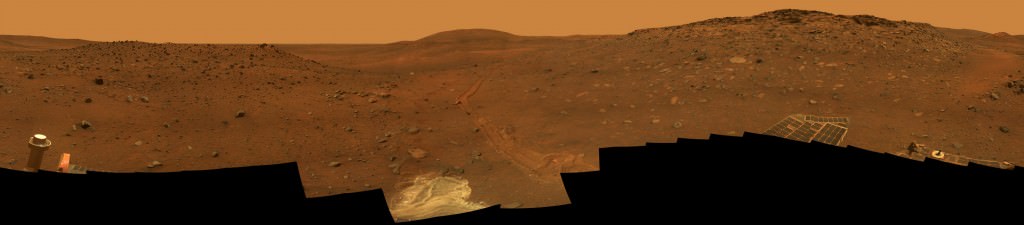
‘Calypso’ Panorama of Spirit’s View from ‘Troy’. This full-circle view from the panoramic camera (Pancam) on NASA’s Mars Exploration Rover Spirit shows the terrain surrounding the location called “Troy,” where Spirit became embedded in soft soil during the spring of 2009. The hundreds of images combined into this view were taken beginning on the 1,906th Martian day (or sol) of Spirit’s mission on Mars (May 14, 2009) and ending on Sol 1943 (June 20, 2009). Credit: NASA/JPL-Caltech/Cornell University
This doesn’t come cheap though. The estimated cost of the mission is in the region of $2.7 billion which includes development, launch and exploration for the entire mission.
The total cost of the mission is estimated to be around $2.7 billion, which includes $2.2 billion for the development and launch of the rover and $500 million for its exploitation during the entirety of the mission. Whether it – pardon the pun – gets off the ground is yet to be seen but if we are to explore and even establish a permanent base on Mars then we will have to gain a better understanding of the environment to feed and sustain future explorers.
NASA Announces Starliner’s Next Launch Attempt: May 6
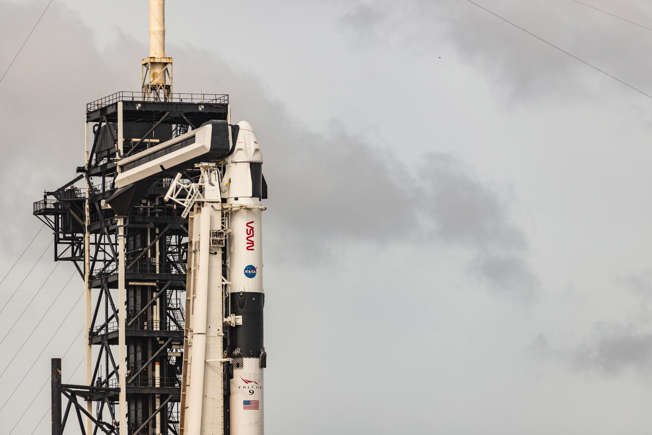
Starliner, the new crewed capsule from Boeing, has been in the works for a long time. Originally unveiled in 2010, the capsule has been under development for the last 14 years, primarily utilizing NASA grants and contracts. However, Boeing itself has taken upwards of 1 billion dollars in hits to earnings as part of the craft’s development. After all that time in the prototype stages, Starliner is finally ready for its first crewed flight – which has now officially been scheduled for May 6th.
The launch will utilize a ULA Atlas V, which was also partly developed by Boeing. Like most Atlas V launches, it will take off from Cape Canaveral in Florida and take two astronauts – Suni Williams and Butch Wilmore – to the International Space Station.
To make room for the capsule, the crew already stationed on the ISS has to do some additional work, including moving a Dragon capsule out of the docking port on the ISS’s Harmony module to which the Starliner will have to attach. To move the capsule, they will also have to complete some additional “science and cargo logistics,” according to a NASA Press release.
Fraser covers Starliner’s successful test flight.
Those logistics seem to be the primary cause of a final five-day delay (from May 1st to 5th) that the Starliner will have to endure. Once at the ISS, Williams and Wilmore will spend a week helping out on the ISS before using the Starliner capsule to return to Earth.
That is assuming all goes well with their flight. Starliner has had at least one spectacular failure as part of its development, though it successfully completed an uncrewed flight in May of 2022. If any astronauts are ready to ride on a new crewed capsule, it’s Williams and Wilmore. Both have been astronauts for over 20 years, and each was a trained Navy Test Pilot before joining NASA.
The capsule they will be using, known as Calypso, has already been to orbit, though not as many times as the astronauts themselves. It was used in the first orbital test flight, and while it didn’t manage to dock up with the ISS, it did land successfully and wouldn’t pose a risk to any astronauts on board.
Video from Boeing showcasing Starliner mounted atop an Atlas V. Credit – Boeing YouTube Channel
Upon completing this test flight, NASA hopes to rely on the Starliner to provide regular crewed missions to the ISS. This would be supplemental to the SpaceX Dragon capsule the agency already uses and mark the definitive end to the drought of American crewed spaceflight.
Future missions include a four-person flight planned for 2025, assuming all goes well with this first one. Boeing also has a contract with NASA for five additional flights between 2026 and 2030. But first, if all goes well, on May 6th, after decades of work, the world will hopefully gain another crewed vehicle to help facilitate our path to the stars.
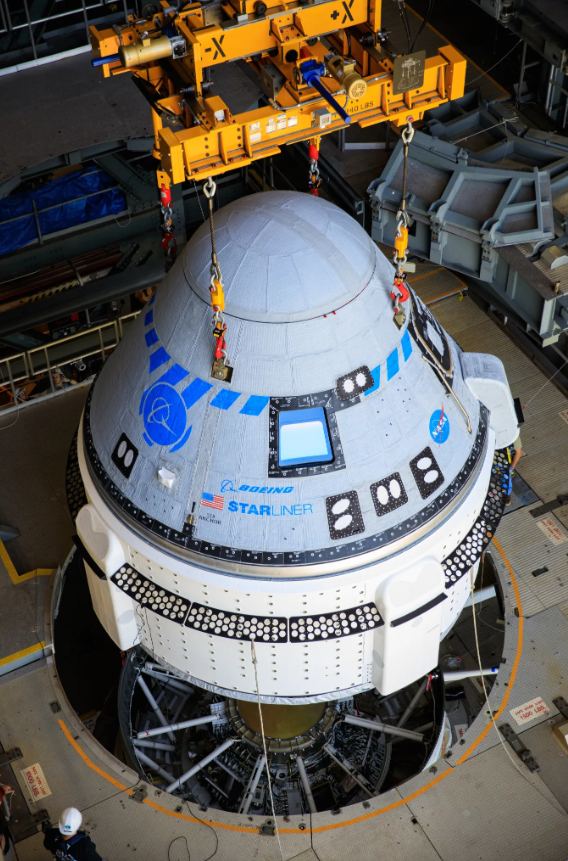
The Boeing CST-100 Starliner spacecraft is lifted at the Vertical Integration Facility at Space Launch Complex-41 at Florida’s Cape Canaveral Space Force Station on May 4, 2022. Photo credit: NASA/Frank Michaux
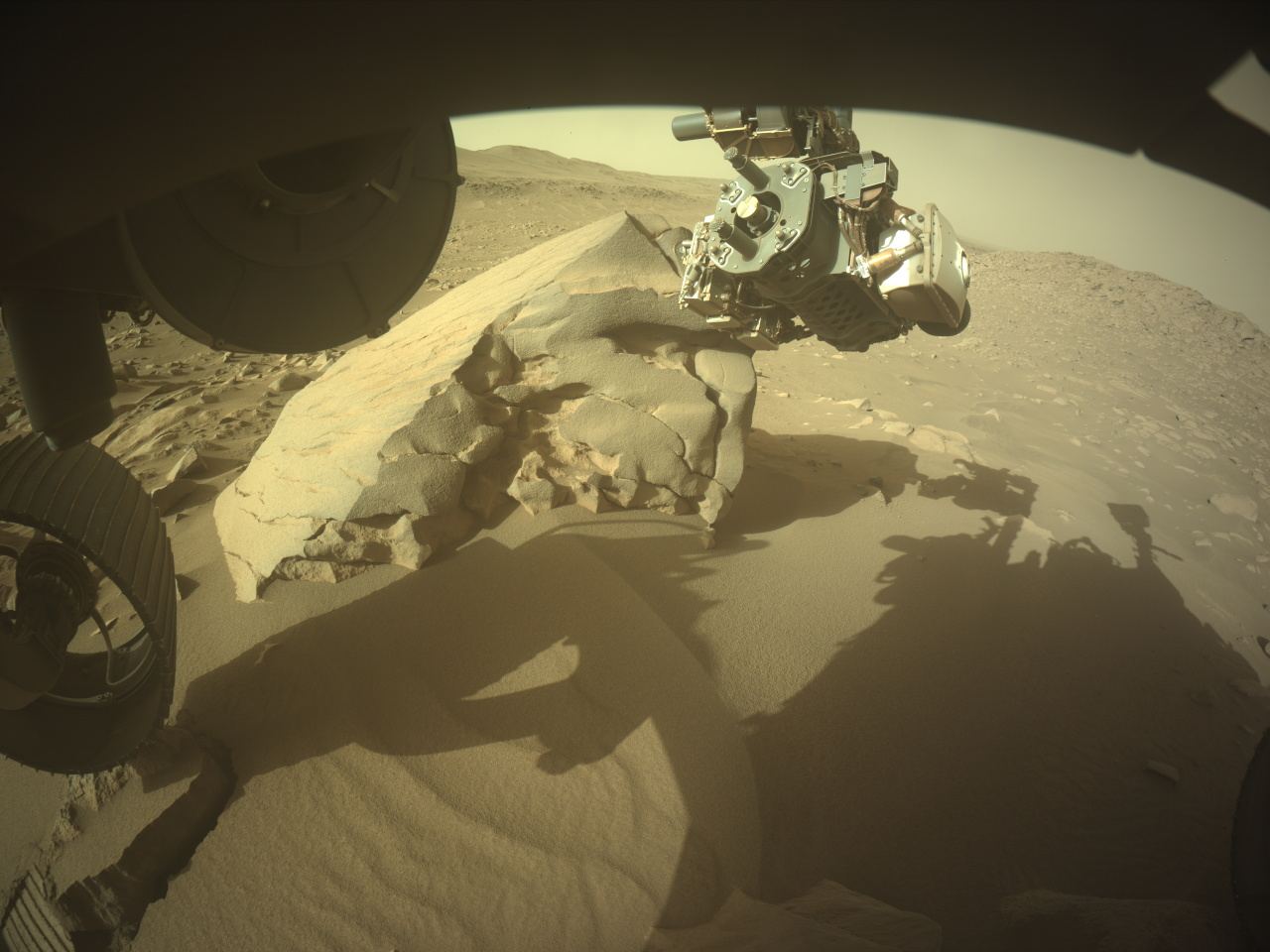
This Martian rock, named Bunsen Peak, contains minerals that formed in thepresence of water. On Earth, these water-deposited carbonate minerals are good at preserving ancient organic material. Image Credit: NASA/JPL-Caltech
If there’s a Holy Grail on Mars, it’s probably a specific type of rock: A rock so important that it holds convincing clues to Mars’ ancient habitability.
Perseverance might have just found it.
If scientists could design the perfect rock for Perseverance to find, it would be one that displayed evidence of ancient water and was the type that preserves ancient organic material. The rover may have found it as it explores the Margin Unit, a geologic region on the inner edge of Jezero Crater’s rim. The Margin Unit was one of the reasons Jezero Crater was selected for Perseverance’s mission.
“To put it simply, this is the kind of rock we had hoped to find when we decided to investigate Jezero Crater.”
Ken Farley, Perseverance project scientist, Caltech.
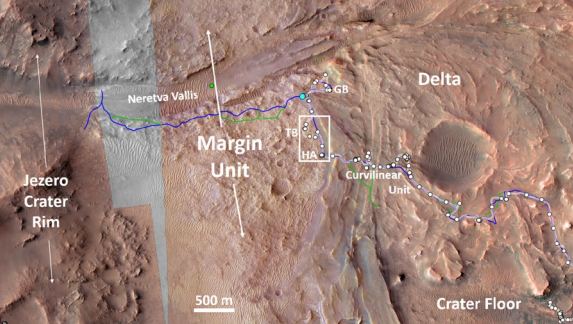
The Margin Unit is in a narrow band along the crater’s western rim. Orbital observations showed that it’s one of the most carbonate-rich regions on the planet. “Its presence, along with the adjacent fluvial delta, made Jezero crater the most compelling landing site for the Mars 2020 <Perseverance> mission,” presenters at the 2024 Lunar and Planetary Science Conference wrote.
The Margin Unit lies near the western rim of Jezero Crater. White dots show Perseverance’s stopping points, and the blue line shows the rover’s future route. Image Credit: R.C. Wiens et al. 2024
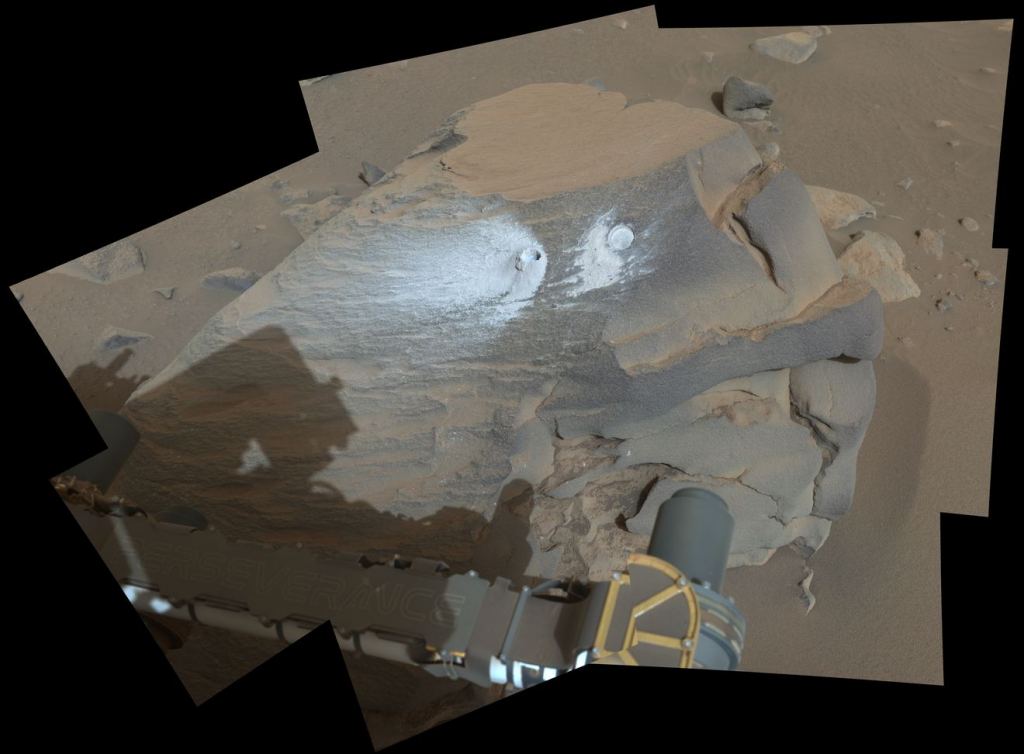
The decision to send Perseverance to the Jezero Crater and the Margin Unit seems to be paying off. Bunsen Peak caught scientists’ attention because it stands tall compared to its surroundings. One of the rock’s faces also has an interesting texture. Scientists thought the rock would allow for nice cross-sections, and since it stood vertically, there’d be less dust when working on it. Surface dust is a problem for Perseverance because it can obscure the rock’s chemistry.
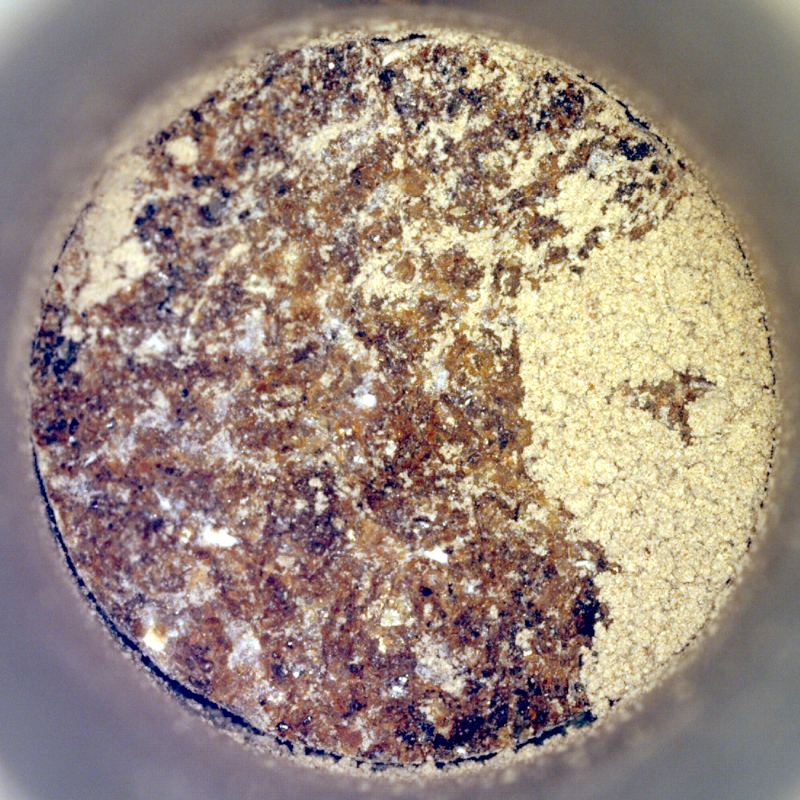
The Perseverance team decided to sample it and cache the sample along with the rest of its cores for eventual return to Earth. But first, they scanned the rock’s surface with SuperCam and PIXL, the rover’s spectrometers. Then, they abraded the rock’s surface and scanned it again. The results show that Bunsen Peak is 75% carbonate grains cemented together by nearly pure silica.
This image mosaic shows the Bunsen Peak rock that has ignited scientists’ excitement. The rover abraded a circular patch to test its composition and extracted a core sample for return to Earth. The lighter surfaces are dust-covered, so Perseverance avoided those areas as the dust can obscure the rock’s chemistry from the rover’s instruments. Image Credit: NASA/JPL-Caltech/ASU/MSSS
“To put it simply, this is the kind of rock we had hoped to find when we decided to investigate Jezero Crater,” said Ken Farley, project scientist for Perseverance at Caltech in Pasadena, California. “Nearly all the minerals in the rock we just sampled were made in water; on Earth, water-deposited minerals are often good at trapping and preserving ancient organic material and biosignatures. The rock can even tell us about Mars’s climate conditions that were present when it was formed.”
This image shows the bottom of the Bunsen Peak sample core. The sample contains about 75% carbonate minerals cemented by almost pure silica. Image Credit: NASA/JPL-Caltech
Here on our planet, carbonate minerals can form directly around microbe cells. Once encapsulated, the cells can quickly become fossils, and are preserved for a long time. This is what happened to stromatolites here on Earth, and they now constitute some of the earliest evidence of life on our planet.
These minerals are a high priority for return to Earth. This sample is number 24, named Comet Geyser, because everything gets a name when you intend to transport it to Earth from another planet.
There’s something specific that makes this sample even more intriguing. They’re microcrystalline rocks, meaning they’re made of crystals so small that only microscopes can see them. On Earth, microcrystalline rocks like Precambrian chert hold fossilized cyanobacteria. Could the same be true of Bunsen Peak?
“The silica and parts of the carbonate appear microcrystalline, which makes them extremely good at trapping and preserving signs of microbial life that might have once lived in this environment,” said Sandra Siljeström, a Perseverance scientist from the Research Institutes of Sweden (RISE) in Stockholm. “That makes this sample great for biosignature studies if returned to Earth. Additionally, the sample might be one of the older cores collected so far by Perseverance, and that is important because Mars was at its most habitable early in its history.”
Comet Geyser is Perseverance’s third sample from the Margin Unit. There’s still more work to do, but the samples support what scientists thought about Jezero Crater before Perseverance landed there: it was once a paleolake.
“We’re still exploring the margin and gathering data, but results so far may support our hypothesis that the rocks here formed along the shores of an ancient lake,” said Briony Horgan, a Perseverance scientist from Purdue University. “The science team is also considering other ideas for the origin of the Margin Unit, as there are other ways to form carbonate and silica. But no matter how this rock formed, it is really exciting to get a sample.”
It wasn’t that long ago that we knew very little about Mars. In the absence of knowledge, imagination took over. American astronomer Percival Lowell wrote three books about canals on Mars, popularizing the idea that intelligent life was extant on Mars and engineering the planet’s surface.
Astronomers didn’t buy the idea, which turned out to be untrue. But now we know that Lowell was at least partially, though inadvertently, correct. There are no canals, but there may have been lakes.
There was no intelligent life, but there may have been simple life in those lakes. Once we get Comet Geyser and the other samples back to Earth, we may find out for sure.
Arrokoth and Other Kuiper Belt Objects Contain Pristine Ices, Study Suggests
Arrokoth and Other Kuiper Belt Objects Contain Pristine Ices, Study Suggests
A duo of planetary scientists from Brown University and the SETI Institute has found that the Kuiper Belt object (486958) Arrokoth, which was the target of the January 1, 2019 flybyby NASA’s New Horizons mission, may have ancient ices stored deep within it from when the object first formed billions of years ago. Using a new model they developed to study how comets evolve, the researchers suggest this feat of perseverance isn’t unique to Arrokoth but that many objects from the Kuiper Belt may also contain the ancient ices they formed with.
This composite image of Ultima Thule was compiled from data obtained by NASA’s New Horizons spacecraft as it flew by the object on January 1, 2019. The image combines enhanced color data (close to what the human eye would see) with detailed high-resolution panchromatic pictures. Image credit: NASA / Johns Hopkins University Applied Physics Laboratory / Southwest Research Institute / Roman Tkachenko.
“We’ve shown here in our work, with a rather simple mathematical model, that you can keep these primitive ices locked deep within the interiors of these objects for really long times,” said Dr. Sam Birch, a planetary scientist at Brown University.
“Most of our community had thought that these ices should be long lost, but we think now that may not be the case.”
Until now, planetary scientists had a hard time figuring out what happens to ices on these space rocks over time.
The new study challenges widely used thermal evolutionary models that have failed to account for the longevity of ices that are as temperature sensitive as carbon monoxide.
The model Dr. Birch and SETI Institute researcher Orkan Umurhan created for the study accounts for this change and suggests that the highly volatile ices in these objects stick around much longer than was previously thought.
“We are basically saying that Arrokoth is so super cold that for more ice to sublimate — or go directly from solid to a gas, skipping the liquid phase within it — that the gas it sublimates into first has to have travel outwards through its porous, sponge-like interior,” Dr. Birch said.
“The trick is that to move the gas, you also have to sublimate the ice, so what you get is a domino effect: it gets colder within Arrokoth, less ice sublimates, less gas moves, it gets even colder, and so on.”
“Eventually, everything just effectively shuts off, and you’re left with an object full of gas that is just slowly trickling out.”
The study suggests that Kuiper Belt objects can act as dormant ‘ice bombs,’ preserving volatile gases within their interiors for billions of years until orbital shifts bring them closer to the Sun and the heat makes them unstable.
This new idea could help explain why these icy objects from the Kuiper Belt erupt so violently when they first get closer to the Sun.
All of a sudden, the cold gas inside them rapidly gets pressurized and these objects evolve into comets.
“The key thing is that we corrected a deep error in the physical model people had been assuming for decades for these very cold and old objects,” Dr. Umurhan said.
“This study could be the initial mover for reevaluating the comet interior evolution and activity theory.”
Altogether, the study challenges existing predictions and opens up new avenues for understanding the nature of comets and their origins.
The results from this study could help guide CAESAR’s exploration and sampling strategies, helping to deepen our understanding of cometary evolution and activity.
“There may well be massive reservoirs of these primitive materials locked away in small bodies all across the outer Solar System — materials that are just waiting to erupt for us to observe them or sit in deep freeze until we can retrieve them and bring them home to Earth,” Dr. Birch said.
Meteorites: Why study them? What can they teach us about finding life beyond Earth?
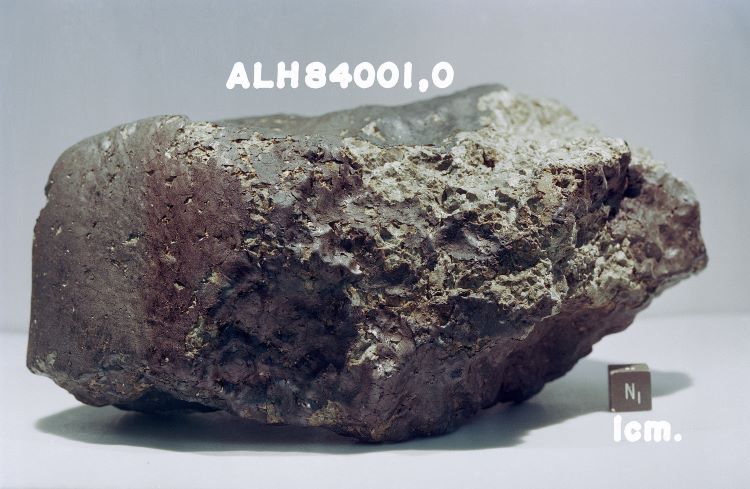
ALH84001, which is one of the most famous meteorites ever recovered, helped catapult the field of astrobiology to new heights when scientists uncovered what initially appeared to be microscopic bacteria fossils within this meteorite, though those findings remain inconclusive to this day. (Credit: NASA)
Meteorites: Why study them? What can they teach us about finding life beyond Earth?
Universe Today has explored the importance of studying impact craters, planetary surfaces, exoplanets, astrobiology, solar physics, comets, planetary atmospheres, planetary geophysics, and cosmochemistry, and how this myriad of intricately linked scientific disciplines can assist us in better understanding our place in the cosmos and searching for life beyond Earth. Here, we will discuss the incredible research field of meteorites and how they help researchers better understand the history of both our solar system and the cosmos, including the benefits and challenges, finding life beyond Earth, and potential routes for upcoming students who wish to pursue studying meteorites. So, why is it so important to study meteorites?
Dr. Alex Ruzicka, who is a Professor in the Department of Geology at Portland State University, tells Universe Today, “They provide our best information about how the solar system formed and evolved. This includes planet formation. We also obtain information on astrophysics (stellar processes) through studies of pre-solar grains.”
There is often confusion regarding the differences between an asteroid, meteor, and meteorite, so it’s important to explain their respective differences to help better understand why scientists study meteorites and how they study them. An asteroid is a physical, orbiting planetary body that is primarily comprised of rock, but can sometimes be comprised of additional water ice, with most asteroids orbiting in the Main Asteroid Belt between Mars and Jupiter and the remaining orbiting as Trojan Asteroids in the orbit of Jupiter or in the Kuiper Belt with Pluto. A meteor is the visual phenomena that an asteroid produces as it burns up in a planet’s atmosphere, often seen as varying colors from the minerals within the asteroid when heated up. The pieces of the asteroid that survive the fiery entry and hit the ground are called meteorites, which scientists’ study to try and learn about the larger asteroid body it came from, and where that asteroid could have come from, as well. But what are some of the benefits and challenges of studying meteorites?
Dr. Ruzicka tells Universe Today, “Benefits: scientific knowledge, information on potential resources (e.g., metals, water) for humans to utilize, information on how to link meteorites and asteroids, which can provide information on space collision hazards for Earth. Challenges: compared to Earth rocks, we lack field evidence for their source bodies and parent bodies (how they relate to other rocks), we have to factor in the element of time that is longer for space rocks than for Earth rocks, and sometimes we are dealing with formation environments completely unlikely what we have on Earth. So, the challenges are big and many.”
According to NASA, more than 50,000 meteorites have been retrieved from all over the world, ranging from the deserts of Africa to the snowy plains of Antarctica. In terms of their origins, it is estimated that 99.8 percent of these meteorites have come from asteroids, with 0.1 percent coming from the Moon and 0.1 percent coming from Mars. The reason why we’ve found meteorites from the Moon and Mars is due to pieces of these planetary bodies being catapulted off their surfaces (or sub-surfaces) after experiencing large impacts of their own, and these pieces then travel through the Solar System for thousands, if not millions, of years before being caught in Earth’s gravity and the rest is history. Therefore, with meteorites originating from multiple locations throughout the Solar System, what can meteorites teach us about finding life beyond Earth?
Morgan Nunn Martinez, who was a PhD student at UC San Diego, and Dr. Alex Meshik seen photographing and measuring a meteorite specimen in Antarctica’s Miller Range during the 2013-2014 Antarctic Search for Meteorites (ANSMET) program field season. (Credit: NASA/JSC/ANSMET)
“That the ingredients for making life formed in space and were delivered to Earth,” Dr. Ruzicka tells Universe Today. “We know organic molecules formed in gas clouds, were incorporated in our solar system, and processed in asteroidal and cometary bodies under higher temperatures in the presence of water. These were then delivered to Earth which wouldn’t have been very hospitable in early times due to sterilizing impacts. We also know that there must have been a lot of planetary rock swapping early when impact rates were high. Life itself may have been transplanted to Earth from Mars.”
As it turns out, one of the most fascinating meteorites ever recovered did come from Mars, which was identified as ALH84001, as it was found in Allan Hills of Antarctica on December 27, 1984, during the 1984-85 field season where researchers from all over the world gather in Antarctica to search for meteorites using snowmobiles. Despite being collected in 1984, it wasn’t until 1996 that a team of scientists discovered what initially appeared to be evidence of microscopic bacteria fossils within the 1.93-kilogram (4.25-pound) meteorite.
ALH84001, which is one of the most famous meteorites ever recovered, helped catapult the field of astrobiology to new heights when scientists uncovered what initially appeared to be microscopic bacteria fossils within this meteorite, though those findings remain inconclusive to this day. (Credit: NASA)
This immediately made headlines across the globe, resulting in countless non-scientific claims that these microfossils were clear evidence of life on Mars. However, both the researchers of the initial study and the scientific community were quick to point out the unlikelihood that these features resulted from life based on other observations made about ALH84001. For example, while ALH84001 is estimated to be 4.5 billion years old, which is when Mars is hypothesized to have possessed liquid water on its surface, radiometric dating techniques revealed that ALH84001 was catapulted off Mars approximately 17 million years ago and landed on Earth approximately 13,000 years ago.
Microscopic image of ALH84001, which initially made headlines for potentially possessing microscopic bacteria fossils, though these finding remain inconclusive to this day. (Credit: NASA)
To this day, there has been no clear evidence that ALH84001 ever contained traces of life. Despite this, ALH84001 has nonetheless helped launch the field of astrobiology into new heights, with present-day scientists claiming this one meteorite was the reason they pursued their career path to find life beyond Earth. But what have been the most exciting aspects about meteorites that Dr. Ruzicka has studied throughout his career?
Dr. Ruzicka tells Universe Today, “A lot is interesting, what’s most exciting? That’s hard to say. I get satisfaction from taking clues left by the rocks to figure out or constrain the processes that formed them. I am engaged in a meteoritic version of CSI, we can call it MSI (for meteoritic scene investigation).”
Like many scientific fields, this “meteoritic version of CSI” requires individuals from a myriad of backgrounds and disciplines, including geology, physics, geochemistry, cosmochemistry, mineralogy, and artificial intelligence, just to name a few, with the aforementioned radiometric dating frequently used to estimate the ages of meteorites by measuring the radioactive isotopes within the sample. It is through this constant collaboration and innovation that scientists continue to unlock the secrets of meteorites with the goal of understanding their origins and compositions, along with how our Solar System, and life on Earth (and possibly elsewhere), came to be. Therefore, what advice can Dr. Ruzicka offer upcoming students who wish to pursue studying meteorites?
Dr. Ruzicka tells Universe Today, “Work hard and pursue your dreams. Find a rigorous program of study because it will come in handy.”
While meteorites are space rocks that crash land on Earth after traveling through the heavens for millions, and possibly billions, of years, these incredible geologic specimens are slowly helping scientists’ piece together the origins of the Solar System and beyond, and even how life might have come to be on our small, blue world, and possibly elsewhere. With a myriad of tools and instruments at their disposal, scientists from all over the world will continue to study meteorites in hopes of answering the universe’s toughest questions.
Dr. Ruzicka concludes by telling Universe Today, “Rocks from space are the best kinds of rocks to study. Way more cool than most rocks on Earth because they are in some ways more puzzling.”
How will meteorites help us better understand our place in the cosmos in the coming years and decades? Only time will tell, and this is why we science!
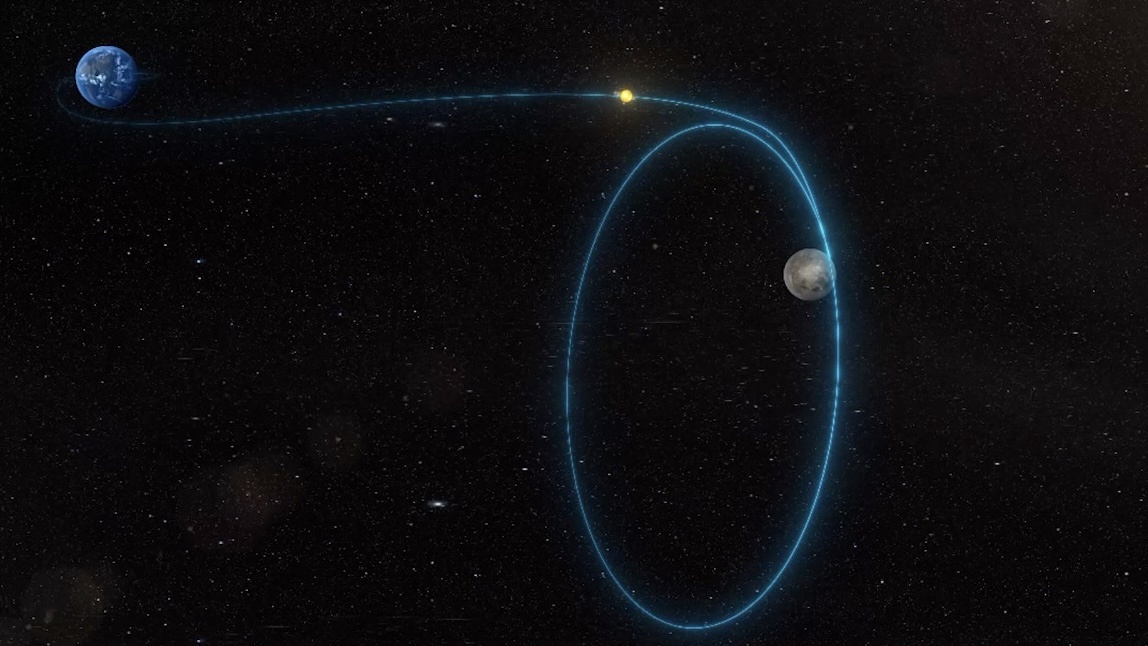
On March 20th, China’s Queqiao-2(“Magpie Bridge-2”) satellite launched from the Wenchang Space Launch Site LC-2 on the island of Hainan (in southern China) atop aLong March-8 Y3 carrier rocket. This mission is the second in a series of communications relay and radio astronomy satellites designed to support the fourth phase of the Chinese Lunar Exploration Program (Chang’e). On March 24th, after 119 hours in transit, the satellite reached the Moon and began a perilune braking maneuver at a distance of 440 km (~270 mi) from the lunar surface.
The maneuver lasted 19 minutes, after which the satellite entered lunar orbit, where it will soon relay communications from missions on the far side of the Moon around the South Pole region. This includes the Chang’e-4 lander and rover and will extend to the Chang’e-6 sample-return mission, which is scheduled to launch in May. It will also assist Chang’e-7 and -8 (scheduled for 2026 and 2028, respectively), consisting of an orbiter, rover, and lander mission, and a platform that will test technologies necessary for the construction of the International Lunar Research Station (ILRS).
A perilune braking maneuver is vital to establishing a lunar orbit and consists of a thruster firing as the spacecraft approaches the Moon. This reduces the spacecraft’s relative velocity to less than the lunar escape velocity (2.38 km/s; 1.74 mps) so that it can be captured by the Moon’s gravity. Two experimental satellites that will test navigation and communication technology (Tiandu-1 and -2), which accompanied the Queqiao-2 satellite to the Moon, also performed a perilune braking maneuver and entered lunar orbit on Monday.
These two satellites will remain in formation in an elliptical lunar orbit and will conduct communication and navigation tests, including laser ranging with the Moon and microwave ranging between satellites. According to the CNSA, Queqiao-2 will enter a 24-hour elliptical orbit around the Moon at a distance of 200 km (125 mi) at its closest point (perigee) and 100,000 km (62,000 mi) at its farthest point (apogee). Mission controllers will further alter Queqiao-2’s orbit and inclination to bring it into a “200 by 16,000-km, highly-elliptical ‘frozen’ orbit.”
Within this highly stable orbit, Queqiao-2 will have a direct line of sight with ground stations on Earth and the far side of the Moon and will conduct communication tests with Chang’e-4 and Chang’e-6 using its 4.2-m (13.8-ft) parabolic antenna. The mission could also support other countries in their lunar exploration efforts, many of whom are also interested in scouting the Moon’s far side and southern polar region. The satellite also carries scientific instruments, including extreme ultraviolet cameras, array-neutral atom imagers, and lunar orbit Very Long Baseline Interferometry (VLBI) test subsystems.
“Experts told me that this is an ideal location on the Moon to observe the separation of the Queqiao-2 star arrow, and it also has a deep connection with China’s lunar exploration project. This is the Moon’s rich maria region… Fifteen years ago, on March 1, 2009, it was here that the Chang’e-1 probe of China’s lunar exploration project completed a controlled collision with the Moon… The location of the Sea of Abundance on the moon is also very eye-catching. The next time the moon is full, you look up at the moon and find this dark black patch in the southeast of the moon. This is the Sea of Abundance!”
Visualization of the ILRS from the CNSA Guide to Partnership (June 2021). Credit: CNSA
The satellite will support China’s upcoming Chang’e-6 mission, China’s second attempt to return lunar samples to Earth. Mission controllers will adjust its orbit into a 12-hour period to support the Chang’e-7 and -8 missions. These missions aim to map the terrain and scout resources (particularly water ice) around the South Pole-Aitken Basin. These missions will ultimately support the creation of the ILRS, a joint project between CNSA and Roscomos to create a lunar base that will enable research and development on the Moon.
This program is intended to rival NASA’s Artemis Program, which will send astronauts on a circumlunar flight next year – the Artemis II mission. The program will culminate in 2026 with the first crewed mission to the lunar surface (Artemis III) in over 50 years. NASA also plans to deploy the core elements of the Lunar Gateway next year, an orbital habitat that will facilitate the deployment of the Artemis Base Camp. Along with its international and commercial partners, these elements will support the creation of “a sustained program of lunar exploration and development.”
Extremophiles: Why study them? What can they teach us about finding life beyond Earth?
Image of a tardigrade, which is a microscopic species and one of the most well-known extremophiles, having been observed to survive some of the most extreme environments, including outer space. (Credit: Katexic Publications, unaltered, CC2.0)
Extremophiles: Why study them? What can they teach us about finding life beyond Earth?
Universe Today has conducted some incredible examinations regarding a plethora of scientific fields, including impact craters, planetary surfaces, exoplanets, astrobiology, solar physics, comets, planetary atmospheres, planetary geophysics, cosmochemistry, meteorites, and radio astronomy, and how these disciplines can help scientists and the public gain greater insight into searching for life beyond Earth. Here, we will discuss the immersive field of extremophiles with Dr. Ivan Paulino-Lima, who is a Senior Research Investigator at Blue Marble Space Institute of Science and the Co-Founder and Chief Science Officer for Infinite Elements Inc., including why scientists study extremophiles, the benefits and challenges, finding life beyond Earth, and proposed routes for upcoming students. So, why is it so important to study extremophiles?
“The study of extremophiles represents the edge of the human knowledge in terms of the environmental limits where life forms can live, withstand, or preserve their integrity and living potential,” Dr. Paulino-Lima tells Universe Today. “For example, the exploration of the hot springs at Yellowstone led to the discovery of the Taq DNA polymerase from Thermus aquaticus, which was subsequently used to develop the polymerase chain reaction (PCR) technique. Just like the thermophiles, represented by organisms that thrive in hot temperatures, a growing diversity of microorganisms and ecosystems have been found in cold temperatures, extremes of pH, pressure, salinity, radiation, desiccation, and toxic substances.”
The study of extremophiles can be summed up as “life in extreme environments”, or environments that are inhospitable for most of life on Earth, including humans, plants, and animals. Extremophiles have been found to not only survive, but thrive, in the unlikeliest of environments on Earth, including hydrothermal vents, alkaline lakes, acid mine drainage, cosmic rays, sunlight, Mariana Trench, dry environments such as the McMurdo Dry Valley and Atacama Desert, gold mines, and even underneath ice shelves in Antarctica.
Along with the environments noted by Dr. Paulino-Lima, other types of extremophiles include those that can survive without oxygen, high amounts of carbon dioxide, dissolved heavy metals, and sulfur. Therefore, with their wide array of locations, what are some of the benefits and challenges of studying extremophiles?
“The study of extremophiles is often challenging because of their very nature that defies our traditional concepts,” Dr. Paulino-Lima tells Universe Today. “Some anaerobic microorganisms are extremely sensitive to oxygen and require anaerobic chambers and special techniques for their cultivation and routine maintenance. In terms of benefits, some types of extremophiles are very resistant to desiccation and can be preserved in a dry state for many years. Similarly, thermophiles can be preserved at room temperature for a long time since their normal metabolic activity happens at a much higher temperature.”
Finding life in such extreme environments on Earth has helped change the conversation regarding where scientists might find life beyond Earth, including Venus, Mars, Europa, Titan, Enceladus, and even exoplanets. Of these worlds, Europa and Enceladus have gained a lot of attention over the last few decades due to the existence of internal liquid water oceans within these small moons. It is currently hypothesized that hydrothermal vents could exist at the bottoms of these oceans, potentially providing nutrients for life, just like here on Earth. Currently, the NASA Europa Clipper mission is scheduled to be launched to Europa this October and arrive at Jupiter in 2030, with the goal of ascertaining the habitability potential for Europa and its internal ocean. Therefore, what can extremophiles teach us about finding life beyond Earth?
“The study of extremophiles allows us to establish empirical and theoretical limits to life on Earth, Dr. Paulino-Lima tells Universe Today. “With these limits, we can narrow down the search for life beyond Earth and constrain the habitats that Earth-like life could currently inhabit or could have inhabited at some point in the past. During our search for extraterrestrial life, it is very possible that we will come across even more exotic possibilities, known collectively as ‘alternative biochemistries’. For example, a different type of metabolism for carbon-based life has been proposed for Titan, one of Saturn’s moons. However, these possibilities remain theoretical or speculative, and have yet to be demonstrated in a laboratory. The search for life beyond Earth is necessarily guided by established knowledge, but with an open mind. Extremophiles represent the state of the art in terms of our established knowledge for the limits of Earth-like life.”
Aside from their astrobiological implications, extremophiles also present opportunities for use in a myriad of industries, including biotechnology, medical science, food processing, and clothing. For biotechnology, extremophiles that live in extreme heat, cold, salinity, and methane can be used for copying DNA, biofuel production, and biomining. For medical science, extremophiles that live in extreme dryness, radiation, acid, and vacuum can be used for DNA transfer, which is a crucial practice in repairing DNA damage resulting from a myriad of reasons. Therefore, with their myriad of astrobiological and industrial applications, what are some of the most exciting aspects about extremophiles that Dr. Paulino-Lima has studied during his career?
“One of the most exciting aspects of extremophiles that I have studied in my career is the fact that they can withstand the ultimate frontier of tolerance – outer space,” Dr. Paulino-Lima tells Universe Today. “This includes vacuum, extremes of temperature, blasts of radiation coming from the solar wind, cosmic rays, supernovas, all of that combined, and for an extended period. To me it is impossible to be aware of these facts and not to ask whether we are alone in the universe. The detection of a single spore anywhere in the solar system that excludes an Earth origin, or the detection of biosignatures from exoplanets, or even elaborate radio signals with sophisticated patterns coming from other solar systems, will take us to a new era of self-awareness and exploration, which will have a profound impact on the culture and future of our society.”
One of the most well-known extremophiles are tardigrades, also known as water bears, which are known for their extreme resilience in almost any environment, including outer space. These microscopic creatures can suspend their metabolism when under extreme environmental stressors, only to later reanimate without detrimental health effects. They have been observed to survive under any type of conditions, including starvation, freezing, boiling, extreme heat, and vacuum.
Image of a tardigrade, which is a microscopic species and one of the most well-known extremophiles, having been observed to survive some of the most extreme environments, including outer space. (Credit: Katexic Publications, unaltered, CC2.0)
Along with the myriad of extremophile types and the locations where they are found, studying extremophiles are equally accomplished by a myriad of scientific disciplines, including microbiologists and astrobiologists, who conduct field studies and collect samples to be examined and analyzed back in homebase laboratories. Through this, scientists learn the complex processes that enable extremophiles to survive in such harsh environments, all the way down to the organisms’ genetic material. Along with laboratory experiments and tests, scientists who study extremophiles collaborate with other disciplines, including organic geochemistry, biochemistry, geology, and stratigraphy, just to name a few. Therefore, what advice does Dr. Paulino-Lima have for upcoming students who wish to pursue studying extremophiles?
“Our society is based on all kinds of information,” Dr. Paulino-Lima tells Universe Today. “The trick is to select what can be turned into knowledge, what can lead to a path. Be wise to separate knowledge from mere information. Attend conferences, organize meetings, organize your time, and make connections. The best opportunities may be the ones you are not thinking of or have never imagined. My career would never be the same without all the answers and feedback that turned into the stepstones of my professional development. I would never have known if I had not asked. I will be forever grateful to everyone who played a role and helped shape my trajectory.”
As noted, the study of extremophiles comes from collaboration with other researchers and scientific disciplines. For example, Dr. Paulino-Lima and a member of his PhD committee, Dr. Lynn Rothschild (who was previously one of his primary publication references), have worked together on a myriad of projects at NASA Ames Research Center, including a satellite with biological experiments and a database designed to conduct a method to remotely identify extraterrestrial life. Additionally, he has worked with Dr. Jesica Urbina, who is currently the CEO at Infinite Elements Inc., on an innovative research project, as well.
The study of extremophiles is a multidisciplinary and collaborative effort, encompassing field work and laboratory experiments in hopes of further identifying where and how we can find life, both on Earth and beyond. It is through these efforts that scientists work to answer some of the most difficult questions throughout human history, including how did we get here and are we alone? As the study of extremophiles continues to grow and evolve with new methods and discoveries, the number of individuals involved in this incredible and unique field of study will undoubtedly grow and evolve along with it.
“Many people may feel discouraged to pursue a career in biological sciences because they feel unattracted by the tedious routine of laboratory experiments,” Dr. Paulino-Lima tells Universe Today. “I imagine this is especially true for the study of extremophiles. However, this is only one aspect of the scientific method. A large part comes from reading and staying up to date with the newest developments in a particular field. In a time where all biological information is digitized, the development of coding skills is fundamental for everyone who wants to study extremophiles from a bioinformatics perspective. For those who have an entrepreneur spirit, this is a vast area filled with exciting opportunities. Let your knowledge guide your imagination towards a better and more sustainable future.”
How will extremophiles help us better understand our place in the universe in the coming years and decades? Only time will tell, and this is why we science!
A new study by researchers from Brown University and the SETI Institute of an object nicknamed “Space Snowman” is reportedly “shaking up” what scientists thought they knew about distant objects in the far reaches of the solar system.
Officially named Kuiper Belt Object 486958 Arrokoth, the researchers say the double-lobed object at the edge of our solar system may contain stores of ice deep within its interior from over 4.6 billion years ago when the solar system formed. Perhaps even more surprising, the researchers believe other Kuiper Belt objects (KBOs) may also contain these ancient ices from the dawn of the solar system.
The study’s results, published in the journal Icarus, are expected to inform future missions, including a sample return mission designed to help unlock the secrets of life on Earth.
SPACE SNOWMAN MAY NOT BE THE ONLY KBO CONTAINING ANCIENT ICE
“We’ve shown here in our work, with a rather simple mathematical model, that you can keep these primitive ices locked deep within the interiors of these objects for really long times,” said Sam Birch, a planetary scientist at Brown and one of the paper’s co-authors. “Most of our community had thought that these ices should be long lost, but we think now that may not be the case.”
If true, these ancient ice stores hidden within Space Snowman and other KBOs could offer critical information to scientists studying the formation of our planets and moons, as well as the dawn of Earth life itself.
Much of the previous skepticism came from the wide use of thermal evolutionary models applied to the solar system’s creation that, the researchers say, “failed to account for the longevity of ices that are as temperature sensitive as carbon monoxide.” This led Birch and his co-author Orkan Umurhan, a senior research scientist at the SETI Institute, to design and create their own model, which revealed that it is more likely that these highly volatile ancient ices “stick around” much longer than previously thought.
“We are basically saying that Arrokoth is so super cold that for more ice to sublimate — or go directly from solid to a gas, skipping the liquid phase within it — that the gas it sublimates into first has to have travel outwards through its porous, sponge-like interior,” Birch said.
Unfortunately, Birch explained, if you want to move the gas, you also have to sublimate the ice surrounding it. His models show that for many KBOs, including Space Snowman, there isn’t enough solar energy to accomplish this.
“So what you get is a domino effect: it gets colder within Arrokoth, less ice sublimates, less gas moves, it gets even colder, and so on,” Birch explained. Eventually, everything just effectively shuts off, and you’re left with an object full of gas that is slowly trickling out.”
If their models are correct, the researchers say a large number of KBOs besides Space Snowman could contain ancient ices, which remain effectively dormant within the object’s interior unless they experience an orbital shift that moves them closer to the sun. In fact, the researchers suspect that this is why KBOs that do experience an orbital shift that brings them closer to the sun explode so violently. The ancient ices inside these objects suddenly sublimate to gas and expand, essentially turning them into comets.
“The key thing is that we corrected a deep error in the physical model people had been assuming for decades for these very cold and old objects,” said Umurhan. “This study could be the initial mover for reevaluating the comet interior evolution and activity theory.”
RESEARCH WILL INFORM UPCOMING MISSIONS TO RETRIEVE SAMPLES FROM COMETS
Although the study is based on theoretical models, the researchers get the opportunity to apply their expertise in the near future. That’s because both Birch and Umurhan are listed as co-investigators for NASA’s upcoming Comet Astrobiology Exploration Sample Return (CAESAR) mission, which could launch as soon as August of this year.
According to NASA, “The Comet Astrobiology Exploration Sample Return (CAESAR) mission will acquire and return to Earth for laboratory analysis a minimum of 80 grams of surface material from the nucleus of comet 67P/Chur-yumov-Gerasimenko (67P). CAESAR will characterize the surface region sampled, preserve the collected sample in a pristine state, and return evolved volatiles by capturing them in a separate gas reservoir.”
As the name’s inclusion of “astrobiology” implies, one of the goals of CAESAR is to look for gins of life or its building blocks at the dawn of the solar system’s creation. Although the mission isn’t expected to actually land on a comet until 2038, the researchers say their new study shows that sample return missions like CAESAR may contain a wide range of tantalizing clues that are just waiting to be unlocked.
“There may well be massive reservoirs of these primitive materials locked away in small bodies all across the outer solar system — materials that are just waiting to erupt for us to observe them or sit in deep freeze until we can retrieve them and bring them home to Earth,” Birch said.
Christopher Plain is a Science Fiction and Fantasy novelist and Head Science Writer at The Debrief. Follow and connect with him on X, learn about his books at plainfiction.com, or email him directly at christopher@thedebrief.org.
De Mars Express-sonde arriveerde eind 2003 bij Mars en cirkelt alweer dus alweer bijna 21 jaar om de rode planeet heen. En in die tijd heeft hij 25.000 baantjes om Mars getrokken. Een enorme mijlpaal die de sonde viert door een geweldige foto van Mars af te leveren.
Op de foto schittert een flink stuk van het Marsoppervlak, met daarop enkele van de beroemdste vulkanen die de rode planeet rijk is. Zo zien we Olympus Mons; niet alleen de grootste vulkaan van Mars, maar ook de grootste van ons zonnestelsel! De vulkaan is bijna 22 kilometer hoog en is met een oppervlakte van 300.000 vierkante kilometer zeven keer omvangrijker dan ons eigen Nederland.
Grote vulkanen Naast Olympus Mons zijn op de foto echter nog meer vulkanen te zien. Ascraeus Mons, bijvoorbeeld. Met een hoogte van 18 kilometer kan deze ook tot de grotere vulkanen van Mars worden gerekend. Ook zijn op de foto de vulkanen Arsia Mons – net iets hoger dan onze Mount Everest – en Pavonis Mons – ongeveer 14 kilometer hoog – te zien.
Klovensysteem Onder dit drietal van vulkanen vinden we Noctis Labyrinthus; een klovensysteem, met valleien die tot wel 30 kilometer breed en tot wel 6 kilometer diep zijn. Het klovensysteem is ongeveer 1190 kilometer lang; vergelijkbaar met 3,5 keer de afstand tussen Groningen en Maastricht.
Wolken Wat daaronder opvalt, zijn de blauwe tinten op een verder zandkleurig plaatje. Ze worden veroorzaakt door wolken. Helemaal onderaan zijn golfstijgwinden (Lee wave clouds) te zien. Ze ontstaan doordat lucht over een obstakel – bijvoorbeeld een berg – wordt gedwongen.
Afbeelding: ESA / DLR / FU Berlin.
Phobos Wie goed kijkt, ziet dat niet alleen Mars door Mars Express is vereeuwigd; ook maan Phobos is op de foto te zien. En wel schuin onder Arsia Mons. Phobos bevindt zich vrij dicht bij Mars in de buurt; de afstand tussen beide hemellichamen bedraagt slechts 6000 kilometer. Ter vergelijking: onze maan draait op zo’n 385.000 kilometer afstand om de aarde heen.
Veel werk verzet Met de geweldige foto viert ESA dus het 25.000e rondje van Mars Express rond Mars. Dat 25.000 rondje voltooide de ruimtesonde overigens al in oktober 2023. Maar nu pas staat de Europese ruimtevaartorganisatie daar uitgebreid bij stil. Niet alleen met deze foto, maar ook door terug te blikken op wat Mars Express ons – cirkelend rond Mars – allemaal over de rode planeet heeft geleerd. Zo bracht de sonde de atmosfeer van Mars in kaart en gaf deze meer inzicht in hoe het water op de rode planeet door de tijd heen verging. Ook bestudeerde de sonde de twee manen van Mars – Phobos en Deimos – in ongeëvenaard detail en maakte deze geweldige foto’s van Mars.
En als het aan ESA ligt, gaat de oude orbiter daar ook nog wel even mee door. In 2023 werd de missie van Mars Express – voor de zoveelste keer – verlengd. Afgesproken werd toen om Mars Express zeker tot 2026 rond Mars te laten cirkelen. De informatie die de ruimtesonde nog altijd verzamelt, wordt namelijk als zeer waardevol beschouwd. Niet alleen omdat we zo nóg meer over Mars te weten komen. Maar ook omdat de informatie van belang kan zijn voor aankomende Marsmissies. Zo hoopt de Europese ruimtevaartorganisatie ergens in de komende jaren een rover naar Mars te sturen die op zoek moet gaan naar sporen van (vergaan) Martiaans leven. En NASA wil door Marsrover Perseverance op Mars verzameld materiaal op gaan pikken en naar de aarde brengen. En hoe meer we – bijvoorbeeld via Marsorbiters, zoals Mars Express – over de rode planeet te weten komen, hoe groter de slagingskans van dergelijke ambitieuze missies.
Earlier this month, a sudden atmospheric warming event caused the Arctic's polar vortex to reverse its trajectory. The swirling ring of cold air is now spinning in the wrong direction, which has triggered a record-breaking "ozone spike" and could impact global weather patterns.
The polar vortex is a key driver of the polar jet stream (seen here).
(Image credit: NASA/Goddard Space Flight Center)
The polar vortex circling the Arctic is swirling in the wrong direction after surprise warming in Earth's atmosphere triggered a major reversal event earlier this month. It is one of the most extreme atmospheric U-turns seen in recent memory.
In the past, disruptions to the polar vortex — a rotating mass of cold air that circles the Arctic — have triggered extremely cold weather and storms across large parts of the U.S..
The current change in the vortex's direction probably won't lead to a similar "big freeze." But the sudden switch-up has caused a record-breaking "ozone spike" above the North Pole.
Polar vortices occasionally reverse temporarily. These events can last for days, weeks or months and are caused by sudden stratospheric warming (SSW), when the temperatures in the stratosphere climb by as much as 90 degrees Fahrenheit (50 degrees Celsius) in the space of a couple of days, according to the Met Office.
The sudden warming is caused by "planetary waves" in the atmosphere — compression waves formed when air rises into a region of different density and is pushed back downward by the force of Earth's spin. This process disrupts or reverses the vortex flow. (Image credit: NOAA Climate.gov)
The current reversal event in the Arctic began on March 4. However, the winds are starting to slow down, hinting that the vortex will return to its normal trajectory soon, Spaceweather.com reported.
"It was a substantial reversal," Amy Butler, a climate scientist at the National Oceanic and Atmospheric Administration (NOAA) and author of NOAA's new polar vortex blog, told Spaceweather.com. The speed of the reversed winds puts the event in the top six on record, she added.
Disruptions to the polar vortex can impact weather in the U.S., such as in 2019 when a massive cold front descended across the Midwest. These extreme weather events occur when the polar vortex deforms the jet stream — an air current that surrounds the polar vortex — exposing lower latitudes to large blobs of icy Arctic air.
This month's disruption did not change the shape of the jet stream, so weather patterns are expected to remain largely unaffected, according to Spaceweather.com.
However, the change in air temperature around the Arctic has sucked up large amounts of ozone from lower latitudes, creating a temporary ozone spike — the opposite of an ozone hole. Currently, there is more ozone surrounding the Arctic than at this time during any other year on record, according to Spaceweather.com. However, this ozone spike will disappear after the polar vortex returns to normal.
The current reversal is the second of its kind this year, following a smaller event in January that did cause a brief cold snap in some states, Butler wrote in NOAA's polar vortex blog.
Historical records show that SSW events are more likely to occur during El Niño or La Niña, the two contrasting phases of a natural cycle of planet-wide warming and cooling. During these phases, global weather systems become more unstable, which sets the stage for more frequent reversal events, Butler wrote in the NOAA blog.
We are currently in the midst of a major El Niño, which could make further reversals or disruptions more likely over the next year or so.
Thermal Modeling of a Pulsed Plasma Rocket Shows It Should Be Possible To Create One
We’ve reported on a technology called pulsed plasma rockets (PPRs) here at UT a few times. Several research groups have worked on variations of them. They are so popular partly because of their extremely high specific impulse and thrust levels, and they seemingly solve the trade-off between those two all-important variables in space exploration propulsion systems. Essentially, they are an extremely efficient propulsion methodology that, if scaled up, would allow payloads to reach other planets in weeks rather than months or years. However, some inherent dangers still need to be worked out, and overcoming some of those dangers was the purpose of a NASA Institute for Advanced Concepts (NIAC) project back in 2020.
Originally granted to Howe Industries, a design shop that has received several NIAC grants (including two in 2020 itself), the purpose of this project was to model the design of a fully functional PPR in modeling software to see if the necessary materials and power systems are available for a rocket that can provide 100 kN of thrust and over 5,000 seconds of specific impulse.
In essence, a PPR takes a fuel pellet made out of some form of fissionable material (in this case, uranium), and zaps it into a plasma, then emits the plasma out the back for a forceful thrust. Rockets with this design can carry much less fuel than standard chemical rockets, but their design must be significantly larger due to the heating constraints put on the system by creating the plasma in the first place.
SciShow discusses a scaled down version of the PPR proposed in the paper. Credit – SciShow Space
Those heating constraints were one of the Phase I NIAC study’s main focal points in 2020. In particular, this study focused on analyzing the barrel the fuel pellet is released into to see if it could withstand the extreme temperatures created by handling a plasmatized uranium pellet.
To do this modeling, the team at Howe Industries used a modeling software called MCNP6 to check where particles went in the system and thereby calculate how much heat would be collected on other parts of the system where it wasn’t desired. MCNP6 uses a Monte Carlo simulation methodology, which calculates where neutrons will be created from the fission reaction that makes the plasma and where those neutrons will impact the rest of the spacecraft.
Those plasmas would have to be created about once every second, according to the calculations done by Howe Industries, and each pulse must reach an energy level of around 1 keV – much smaller than industrial-level nuclear fission reactors but a relatively high number for a spacecraft propulsion system. That energy is turned into heat, and while some of the heat is effectively used to eject the plasmatized uranium out as a thrust propellant, the rest is absorbed by other parts of the system.
Troy Howe, one of the paper’s authors, discusses his research into the PPR. Credit – Interstellar Research Group YouTube Channel
The barrel was a part of that system that is particularly important in these thermal calculations. The modeled barrel was made out of low-enriched uranium but of a different type than the projectile, allowing the energy to heat the projectile and not the barrel itself. However, a small part of the barrel would be made of highly enriched uranium, allowing for rapid plasma propagation in an otherwise relatively stable system.
That’s not to say that none of the heat generated by the fission reaction would end up in the barrel. Still, by the author’s calculations as part of their final report, an active cooling system should be enough to lower the temperature to a point where at least the barrel itself wouldn’t melt. Other parts of the system, such as the nozzle and a rotating drum that helps handle the fuel pellet, will be modeled in future work.
Additional future work would include building benchtop prototypes of these systems to test them out, though the prospect of working with highly enriched uranium as part of this process seems daunting. However, NIAC hasn’t yet funded a Phase II study of the PPR system, so for now, it is resigned to a nicely modeled project and another step forward in an idea that has plenty of history. Maybe someday, it will find its time to shine.
Search for Life on Mars Could Level-Up with MARSE Mission Concept
A breakdown of the Mars Astrobiology, Resource, and Science Explorers (MARSE) mission profile and its Simplified High Impact Energy Landing Device (SHIELD) system, which could revolutionize how we search for life on Mars by using four rovers at four different landing sites. (Credit: Longo (2024))
Search for Life on Mars Could Level-Up with MARSE Mission Concept
A recent study presented at the 55th Lunar and Planetary Science Conference (LPSC) discusses the Mars Astrobiology, Resource, and Science Explorers (MARSE) mission concept and its Simplified High Impact Energy Landing Device (SHIELD), which offers a broader and cheaper method regarding the search for—past or present—life on the Red Planet, specifically by using four rovers at four different landing sites across Mars’ surface instead of just one-for-one. This concept comes as NASA’s Curiosity and Perseverance rovers continue to tirelessly explore the surface of Mars at Gale Crater and Jezero Crater, respectively.
Here, Universe Today discusses the MARSE mission concept with the study’s sole author, Alex Longo, who is a MS student in the Department of Earth, Marine and Environmental Sciences at the University of North Carolina at Chapel Hill, regarding the motivation behind MARSE, how the landing sites were chosen, significant implications, current work being conducted, and next steps for MARSE becoming an actual mission. Longo draws on his ten-plus years of experience finding landing sites on Mars, along with having several publications under his belt, including an assortment of scientific abstracts, papers, and a Kindle book. So, what was the motivation behind the MARSE mission concept?
“The overarching goal of the MARSE concept study was to reduce the cost of access to the surface of Mars,” Longo tells Universe Today. “Flagship-class rovers, such as Curiosity and Perseverance, are extremely capable vehicles. The caveat is that, since they cost over a billion dollars apiece, we can only visit one or two sites on Mars every decade. Like Earth, Mars is an astoundingly diverse planet. Using satellites in orbit, we have mapped a variety of ancient environments which may have been habitable in the distant past. However, the resolution of orbital imagery and spectra are limited, and they sometimes fail to predict what a field geologist (or, in the case of Mars, a rover controlled by geologists) will discover on the ground. Even on Earth, finding early biosignatures is difficult, and even with comparatively little weathering and erosion, I would not be surprised if the same is true on Mars. MARSE was intended to present one possible solution which would allow planetary scientists to explore more sites on Mars within a realistic budget.”
The car-sized Curiosity rover landed in Gale Crater on August 6, 2012, with its mission website displaying that Curiosity has traveled a total of 31.27 kilometers (19.43 miles) as of January 27, 2024, having far surpassed its primary mission timeline of one Martian year, or 687 Earth days. Gale Crater was chosen as the landing site due to a multitude of evidence that it once held liquid water at some point in Mars’ ancient past, as scientists estimate that Gale Crater was formed from an impact between approximately 3.5 to 3.8 billion years ago. During its time in Gale Crater, Curiosity has used its suite of scientific instruments to identify evidence of past liquid water within Gale Crater and evidence that Mars once contained the building blocks for life, including carbon, oxygen, nitrogen, phosphorus, and sulfur.
A selfie of NASA’s Curiosity rover taken on Oct. 11, 2019, or the 2,553rd Martian day, or sol, of its long and successful mission. (Credit: NASA/JPL-Caltech/Malin Space Science Systems)
The car-sized Perseverance rover landed in Jezero Crater on February 18, 2021, with its mission website displaying that Perseverance has traveled a total of 25.113 kilometers (15.604 miles) as of March 28, 2024. While Perseverance and Curiosity have similar designs, the main upgrade has been the delivery of the Ingenuity helicopter to Mars, which became the first robotic explorer to achieve a powered flight on another world and accomplished dozens of flights before being permanently grounded after damaging one of its rotor blades on what would be its final landing in January 2024. Like Gale Crater for Curiosity, Jezero Crater was chosen as the landing site for Perseverance due to strong evidence that it once held a massive body of liquid water, which is made evident from the enormous fan-delta deposit that was the likely entry point for the liquid water billions of years ago. During its time in Jezero Crater, Perseverance has used its suite of scientific instruments to identify ancient volcanic rocks, sediments from an ancient lakebed, converted carbon dioxide (the primary atmospheric constituent of Mars) to oxygen, and even used its powerful microphones to record the sounds of Mars. Given the incredible science conducted by Curiosity and Perseverance, what are the most significant implications for the MARSE mission?
A selfie of NASA’s Perseverance rover taken in January 2023 displaying the rover with several sample tubes it has collected and dropped on the Martian surface to be picked up and returned to Earth by the Mars Sample Return mission, scheduled for the 2030s. (Credit: NASA/JPL-Caltech/Malin Space Science Systems)
“The most significant ramification of this trade study is that it should be possible to build a small rover capable of characterizing an unexplored site on Mars,” Longo tells Universe Today. “There have been several proposals for cheap Mars landers, such as SHIELD. MARSE demonstrates that it may be possible to deliver useful scientific payloads with these landers. Each MARSE rover weighs just 15 kilograms and is about the size of a microwave oven. If we can determine how to land similar rovers on Mars, that would help proliferate and democratize Mars exploration. We are already seeing a similar paradigm shift in lunar exploration thanks to the Commercial Lunar Payload Services (CLPS) program.”
Artist rendition of one of the four MARSE mission rovers that will each be deployed to explore separate landing sites on Mars. (Credit: Longo (2024))
While Curiosity and Perseverance have successfully explored their respective landing sites in great detail, the cost of each mission was in the billions of dollars (Curiosity: ~$2.5 billion, Perseverance: ~$2.7 billion). Therefore, the cost alone only allows for one rover per mission, and their landings occurred almost seven years apart. As noted, one of the objectives of the MARSE mission concept is to land four rovers at four separate landing sites, which are Columbia Hills, Milankovi? Crater, Mawrth Vallis, and Terra Sirenium, with Coumbia Hills being the landing site for the Spirit rover during its mission from 2004 to 2010, and the others having never been explored by landers or rovers. But how were the landing sites chosen and are other landing sites being considered?
Longo tells Universe Today, “The four landing sites are not an exclusive list. We just wanted to illustrate the range of investigations which can be conducted with this approach. All four of the listed sites have been highlighted in peer-reviewed papers and prior landing site studies, so we know that they have high scientific potential.”
Image of Columbia Hills on Mars, which is one of the potential landing sites for a MARSE rover. The white circle denotes the approximate 80-kilometer (50-mile) landing ellipse that SHIELD will use to land. (Credit: Longo (2024))
Longo continues by telling Universe Today that SHIELD will be designed to “land at any flat site on Mars below the datum (0 km of elevation on Mars; the equivalent of sea level on Earth), so you could readily swap one or more of them out for locations of your choice”, with Longo noting that one of his personal favorite landing sites would be inside Valles Marineris, which is the largest and deepest canyon in the solar system. Longo discusses the years-long research by Dr. Steven Ruff at Arizona State University, who conducted analog studies comparing hot spring deposits at Columbia Hills on Mars to similar features at the El Tatio hot spring in Chile, concluding that microbial communities could thrive at these locations.
A breakdown of the Mars Astrobiology, Resource, and Science Explorers (MARSE) mission profile and its Simplified High Impact Energy Landing Device (SHIELD) system, which could revolutionize how we search for life on Mars by using four rovers at four different landing sites. (Credit: Longo (2024))
As noted, Curiosity and Perseverance landed on Mars almost nine years apart, 2012 and 2021, respectively, but their respective missions had been in the works almost an entire decade earlier. Both rovers are part of NASA’s Mars Exploration Program, with the Curiosity rover mission having been approved in 2003 and the Perseverance rover mission having been announced in 2012. Once approved, it takes NASA years to design and build each rover, ensuring every aspect of their systems is functioning at their fullest potential before being delivered and loaded onto the launch vehicle. This includes tests designed to analyze the rovers’ endurance, exposure to harsh environments, and longevity, and many others. Therefore, if a MARSE mission were to get the green light, it could still be almost a decade of designs, builds, and tests before their microwave-sized rovers touch the surface of Mars. So, what are the next steps in terms of MARSE being approved for an actual mission?
“Regrettably, the future of MARSE and SHIELD is uncertain,” Longo tells Universe Today. “This concept was developed with the support of the SHIELD team at JPL, led by Lou Giersch and Nathan Barba. They were doing phenomenal, cutting-edge work, and I was grateful for the opportunity to work with them. Unfortunately, JPL was forced to implement massive budget cuts and layoffs last month due to uncertainty over the future of the Mars Sample Return mission, which accounts for the majority of the center’s budget. Because JPL’s future priorities are in flux, we have placed the development of the MARSE concept on hold.”
While uncertainty looms for the MARSE mission, it’s important to note that space exploration missions often take decades to go from a simple concept to real hardware, and then several more years until it’s launched. This is noted by the Curiosity and Perseverance rover missions, as it took almost a decade from the time each was approved until they landed on Mars. Moreover, it is not uncommon for mission proposals to take several attempts before they’re approved, as NASA has very stringent criteria for approving missions, including cost, timelines, science objectives, and long-term implications for science. Despite the outlook, this has not deterred Longo from continuing his work for the MARSE mission concept.
“Developing a mission concept is a rewarding experience, and it was a privilege to work on this concept with the SHIELD team,” Longo tells Universe Today. “Even if it happens a decade from now, I hope that someone will eventually implement a low-cost, multi-rover Mars geology and astrobiology mission. Following the completion of Mars Sample Return, the next logical steps in Mars exploration are to explore more of the planet, to develop a better understanding of its history, and to learn what Mars can teach us about our own planet’s past. If we want to have a thriving space program, we need to be creative and embrace bold ideas, and I love working with the scientists and engineers who are doing just that.”
Will the MARSE mission get to explore the Red Planet in the coming years and decades? Only time will tell, and this is why we science!
On February 15th, Intuitive Machines (IM) launched its first Nova-C class spacecraft from Kennedy Space Center in Florida atop a SpaceX Falcon 9 rocket. On February 22nd, the spacecraft – codenamed Odysseus (or “Odie”) – became the first American-built vehicle to soft-land on the lunar surface since the Apollo 17 mission in 1972. While the landing was a bit bumpy (Odysseus fell on its side), the IM-1 mission successfully demonstrated technologies and systems that will assist NASA in establishing a “sustained program of lunar exploration and development.”
After seven days of operation on the lunar surface, Intuitive Machines announced on February 29th that the mission had ended with the onset of lunar night. While the lander was not intended to remain operational during the lunar night, flight controllers at Houston set Odysseus into a configuration that would “call home” if it made it through the two weeks of darkness. As of March 23rd, the company announced that their flight controllers’ predictions were correct and that Odie would not be making any more calls home.
The company started listening for a wake-up signal from Odysseus on March 20th, when they projected that there was enough sunlight in the lander’s vicinity. At the time, it was thought that this could potentially charge Odysseus‘ power system, allowing it to activate its radio and reestablish contact with Houston. However, three days later, at 10:30 AM Central Standard Time (08:30 AM PST; 11:30 AM EST), flight controllers determined that the lander was not charging up after it completed its mission.
Image from the IM-1 Odysseus lander after it soft landed on the lunar surface. Credit: Intuitive Machines
This consisted of the Nova-C spacecraft making its inaugural soft landing on the Moon, the first time an American spacecraft has done so in over 50 years. The IM-1 mission was also the first time a spacecraft used methalox – the combination of liquid methane and liquid oxygen (LOX) – to navigate between the Earth and the Moon. While the IM-1 was not expected (or intended) to survive the lunar night, the data acquired by this mission could prove useful as the company continues to improve the lunar landing systems to deliver payloads to the Moon.
One of the company’s main objectives is to develop heat and power sources that can “keep systems from freezing during the lunar night.” This technology will greatly extend the life of lunar surface missions and facilitate the buildup of infrastructure on the Moon’s surface. A second Nova-C lander with the IM-2 mission will launch aboard a Falcon 9 no earlier than December 2024. This mission will land a drill and the Polar Resources Ice Mining Experiment-1 (PRIME-1) mass spectrometer near the south pole of the Moon.
This NASA payload will demonstrate the feasibility of In-Situ Resource Utilization (ISRU) and measure the volatile content of subsurface samples. ISRU and the presence of water are vital to the creation of a lunar base and the ability to send crews to the lunar surface well into the foreseeable future. A third mission (IM-3) is scheduled for early 2025, which will carry four NASA payloads to the Reiner Gamma region of the Moon, a rover, a data relay satellite, and secondary payloads to be determined. All three launches were contracted as part of NASA’s Commercial Lunar Payload Services (CLPS) program.
In addition, the IM-1 mission controllers and company managed to have a final farewell with the Odysseus mission before nightfall and the depletion of its battery power. On February 22nd, the lander transmitted a final image (shown below), which mission controllers in Houston received by February 29th. The image, Intuitive Machines said in a statement, “showcases the lunar vista with the crescent Earth in the backdrop, a subtle reminder of humanity’s presence in the universe. Goodnight, Odie. We hope to hear from you again.”
The last image sent by the IM-1 Odysseus mission on Feb. 22nd, 2024. Credit: Intuitive Machines
Beste bezoeker, Heb je zelf al ooit een vreemde waarneming gedaan, laat dit dan even weten via email aan Frederick Delaere opwww.ufomeldpunt.be. Deze onderzoekers behandelen jouw melding in volledige anonimiteit en met alle respect voor jouw privacy. Ze zijn kritisch, objectief maar open minded aangelegd en zullen jou steeds een verklaring geven voor jouw waarneming! DUS AARZEL NIET, ALS JE EEN ANTWOORD OP JOUW VRAGEN WENST, CONTACTEER FREDERICK. BIJ VOORBAAT DANK...
Druk op onderstaande knop om je bestand , jouw artikel naar mij te verzenden. INDIEN HET DE MOEITE WAARD IS, PLAATS IK HET OP DE BLOG ONDER DIVERSEN MET JOUW NAAM...
Druk op onderstaande knop om een berichtje achter te laten in mijn gastenboek
Alvast bedankt voor al jouw bezoekjes en jouw reacties. Nog een prettige dag verder!!!
Over mijzelf
Ik ben Pieter, en gebruik soms ook wel de schuilnaam Peter2011.
Ik ben een man en woon in Linter (België) en mijn beroep is Ik ben op rust..
Ik ben geboren op 18/10/1950 en ben nu dus 75 jaar jong.
Mijn hobby's zijn: Ufologie en andere esoterische onderwerpen.
Op deze blog vind je onder artikels, werk van mezelf. Mijn dank gaat ook naar André, Ingrid, Oliver, Paul, Vincent, Georges Filer en MUFON voor de bijdragen voor de verschillende categorieën...
Veel leesplezier en geef je mening over deze blog.