The purpose of this blog is the creation of an open, international, independent and free forum, where every UFO-researcher can publish the results of his/her research. The languagues, used for this blog, are Dutch, English and French.You can find the articles of a collegue by selecting his category. Each author stays resposable for the continue of his articles. As blogmaster I have the right to refuse an addition or an article, when it attacks other collegues or UFO-groupes.
Druk op onderstaande knop om te reageren in mijn forum
Zoeken in blog
Deze blog is opgedragen aan mijn overleden echtgenote Lucienne.
In 2012 verloor ze haar moedige strijd tegen kanker!
In 2011 startte ik deze blog, omdat ik niet mocht stoppen met mijn UFO-onderzoek.
BEDANKT!!!
Een interessant adres?
UFO'S of UAP'S, ASTRONOMIE, RUIMTEVAART, ARCHEOLOGIE, OUDHEIDKUNDE, SF-SNUFJES EN ANDERE ESOTERISCHE WETENSCHAPPEN - DE ALLERLAATSTE NIEUWTJES
UFO's of UAP'S in België en de rest van de wereld Ontdek de Fascinerende Wereld van UFO's en UAP's: Jouw Bron voor Onthullende Informatie!
Ben jij ook gefascineerd door het onbekende? Wil je meer weten over UFO's en UAP's, niet alleen in België, maar over de hele wereld? Dan ben je op de juiste plek!
België: Het Kloppend Hart van UFO-onderzoek
In België is BUFON (Belgisch UFO-Netwerk) dé autoriteit op het gebied van UFO-onderzoek. Voor betrouwbare en objectieve informatie over deze intrigerende fenomenen, bezoek je zeker onze Facebook-pagina en deze blog. Maar dat is nog niet alles! Ontdek ook het Belgisch UFO-meldpunt en Caelestia, twee organisaties die diepgaand onderzoek verrichten, al zijn ze soms kritisch of sceptisch.
Nederland: Een Schat aan Informatie
Voor onze Nederlandse buren is er de schitterende website www.ufowijzer.nl, beheerd door Paul Harmans. Deze site biedt een schat aan informatie en artikelen die je niet wilt missen!
Internationaal: MUFON - De Wereldwijde Autoriteit
Neem ook een kijkje bij MUFON (Mutual UFO Network Inc.), een gerenommeerde Amerikaanse UFO-vereniging met afdelingen in de VS en wereldwijd. MUFON is toegewijd aan de wetenschappelijke en analytische studie van het UFO-fenomeen, en hun maandelijkse tijdschrift, The MUFON UFO-Journal, is een must-read voor elke UFO-enthousiasteling. Bezoek hun website op www.mufon.com voor meer informatie.
Samenwerking en Toekomstvisie
Sinds 1 februari 2020 is Pieter niet alleen ex-president van BUFON, maar ook de voormalige nationale directeur van MUFON in Vlaanderen en Nederland. Dit creëert een sterke samenwerking met de Franse MUFON Reseau MUFON/EUROP, wat ons in staat stelt om nog meer waardevolle inzichten te delen.
Let op: Nepprofielen en Nieuwe Groeperingen
Pas op voor een nieuwe groepering die zich ook BUFON noemt, maar geen enkele connectie heeft met onze gevestigde organisatie. Hoewel zij de naam geregistreerd hebben, kunnen ze het rijke verleden en de expertise van onze groep niet evenaren. We wensen hen veel succes, maar we blijven de autoriteit in UFO-onderzoek!
Blijf Op De Hoogte!
Wil jij de laatste nieuwtjes over UFO's, ruimtevaart, archeologie, en meer? Volg ons dan en duik samen met ons in de fascinerende wereld van het onbekende! Sluit je aan bij de gemeenschap van nieuwsgierige geesten die net als jij verlangen naar antwoorden en avonturen in de sterren!
Heb je vragen of wil je meer weten? Aarzel dan niet om contact met ons op te nemen! Samen ontrafelen we het mysterie van de lucht en daarbuiten.
01-02-2024
“BLACK HOLE” CREATED USING SOUND WAVES COULD HELP ENABLE THE DEVELOPMENT OF A PHYSICAL WARP DRIVE
“BLACK HOLE” CREATED USING SOUND WAVES COULD HELP ENABLE THE DEVELOPMENT OF A PHYSICAL WARP DRIVE
An artificial black hole produced using sound waves and a dielectric medium has been created in the lab, according to researchers withan international think tank featuring more than 30 Ph.D. research scientistsfrom around the world.
The researchers say their discovery is significantly more cost-effective and efficient than current methods in use by researchers who want to simulate the effects of a black hole in a laboratory environment.
New York-based Applied Physics first achieved recognition with the 2021 publication of a peer-reviewed theoretical paper detailing the mathematics behind the construction of a physical warp drive. More recently, the organization published a method for using Cal Tech’s Laser Interferometer Gravitational-Wave Observatory (LIGO) to detect the use of warp drives in outer space, co-authored by Dr. Manfred Paulini, the Associate Dean of Physics at Carnegie Mellon University.
Now, the group says their peers working in the field warp field mechanics have a tool that didn’t exist previously or was simply too expensive and impractical to utilize. Their findings, published in the peer-reviewed journal Universe, are setting the pace for a small but growing community of researchers hoping to explore the mechanics of gravity and bring about humanity’s first real warp-drive spacecraft.
SOUND WAVES AND GLYCERIN PROVED TO BE THE KEY INGREDIENTS
To create their simulated black hole, the paper’s lead author, Dr. Edward Rietman, and his co-author, Dr. Brandon Melcher, filled a chamber with an everyday, non-toxic liquid. “The dielectric medium used was glycerin,” explained Rietman in an exclusive email to The Debrief. “It has the nice property of being optically transparent and dense, and its normal refractive index is 1.4768.”
Next, the researchers bombarded the dielectric medium with targeted sound waves. Once the waves were tuned correctly, Rietman and Melcher employed a Thorlabs FS30SMA-1550 fiber collimator to send the light into a Thorlabs CSS 100 series spectrometer, which confirmed the bending of light, exactly like a real black hole in space.
“The team induced a black hole by modulating acoustic waves in a dense fluid, building on recent research that explores the use of high-frequency acoustic waves for analog simulations of gravity and general relativity in the laboratory,” the Applied Physics team told The Debrief. “The acoustic waves alter the medium through which they travel, deflecting laser light in the lab similarly to how the gravitational pull of black holes bends the light of distant stars behind them.”
In other words, sound waves were focused into a thick fluid, causing light to bend around like they were close to a black hole. “This discovery provides a novel method to gain insight into the physics of black holes, all within the safety of a laboratory,” the team explained.
Also significant, the team says that their measurements of the degree to which bent light the artificial black hole bent light jibe perfectly with the real thing. “We show the calculations comparing our results with the Schwarzschild metric (in our paper),” Rietman told The Debrief.
“CHEAPER, BETTER, FASTER” BLACK HOLE OPENS UP GRAVITY RESEARCH TO EVERYONE
While simulated black holes are currently used in labs to explore a wide range of phenomena, the team at Applied Physics says their particular black hole is more accessible to operate than the alternatives and is markedly less expensive. This cost-benefit, they note, will allow the small but growing community of physicists and engineers trying to advance science toward the construction of a real warp drive to afford a highly-specialized tool that is critical to their work.
“A Bose-Einstein condensate requires liquid He (helium) temperatures plus a room full of costly equipment (that can total) over $1 million,” Gianni Martire, founder of Applied Physics, explained in a message to The Debrief, “whereas our system is truly benchtop, with total costs around $10k.”
“We couldn’t afford $1 million,” added Martire,” so we invented a cheaper, better, faster way simply out of need.”
ARTIFICIAL BLACK HOLE COULD ENABLE DEVELOPMENT OF A REAL WORLD WARP DRIVE SPACECRAFT
The researchers behind the artificial black hole caution that the first flight of a working warp drive spacecraft could still be decades away, or that such technology may simply be too complex to ever really come to fruition. However, they reiterate that their solution provides a new tool to like-minded researchers who are banking on the possibility that making warp drive a reality can be achieved.
“Nobody has used glycerin to create a black hole system in the lab,” Melcher told The Debrief. “We view this advance as offering another tool to analog system researchers. We view the pressure variations in glycerin as fertile soil for more complicated space/time possibilities.”
“We’re here to scale science,” the physicist added, “not conjecture, so measuring is important.”
When asked how their work can help facilitate advancements toward a working warp drive, Rietman was notably cautious, though still optimistic.
“This discovery demonstrates the exciting potential of analog systems for studying astrophysical and cosmological phenomena in the laboratory,” he told The Debrief. “With this innovation, we can better understand the effects of curved space/time and advance the future of warp drive research.”
“It is too early to answer clearly [how this will lead to a warp drive] as we need to publish more papers on work we’ve done,” he later added. “Science and technology advance one step at a time, so we can say it will, but going into the details is a deep science hole that will take away focus. We need this to measure and prove theories in warp [mechanics]. That’s the simple way to say it.”
Ultimately, the Applied Physics research team says their new tool is sorely needed by researchers like themselves who hope to advance humanity’s understanding of gravity. But they also point out that the top benefit of their new laboratory-created black hole may be its safety since creating an actual black hole here on earth could have catastrophic consequences.
“Just don’t leave your black hole unattended,” Martire joked before adding, “We should probably make that into a sign.”
Christopher Plain is a novelist, comedian, and Head Science Writer at The Debrief. Follow and connect with him on Twitter, learn about his books at plainfiction.com, or email him directly at christopher@thedebrief.org.
Are we alone in the universe? It’s one of the most compelling existential questions facing humanity. And the past half-century has witnessed a revolution in our ability to scan the cosmos in search of an answer. When I was a university student, the possibility of discovering, much less observing, planets in other star systems seemed like science fiction. But that has changed. Thanks to orbiting observatories such as the James Webb Space Telescope, and huge ground-based telescopes such as the Keck Observatory in Mauna Kea Hawaii, astronomers could be on the cusp of finding evidence for life around one or more of the thousands of extrasolar planets (also known as exoplanets) that have now been discovered.
And yet, even as new technology allows humanity to peer into distant galaxies and answer profound questions about the universe, some scientists working in this field are being hounded by colleagues more focused on leading terrestrial outrage mobs than finding new discoveries in the heavens.
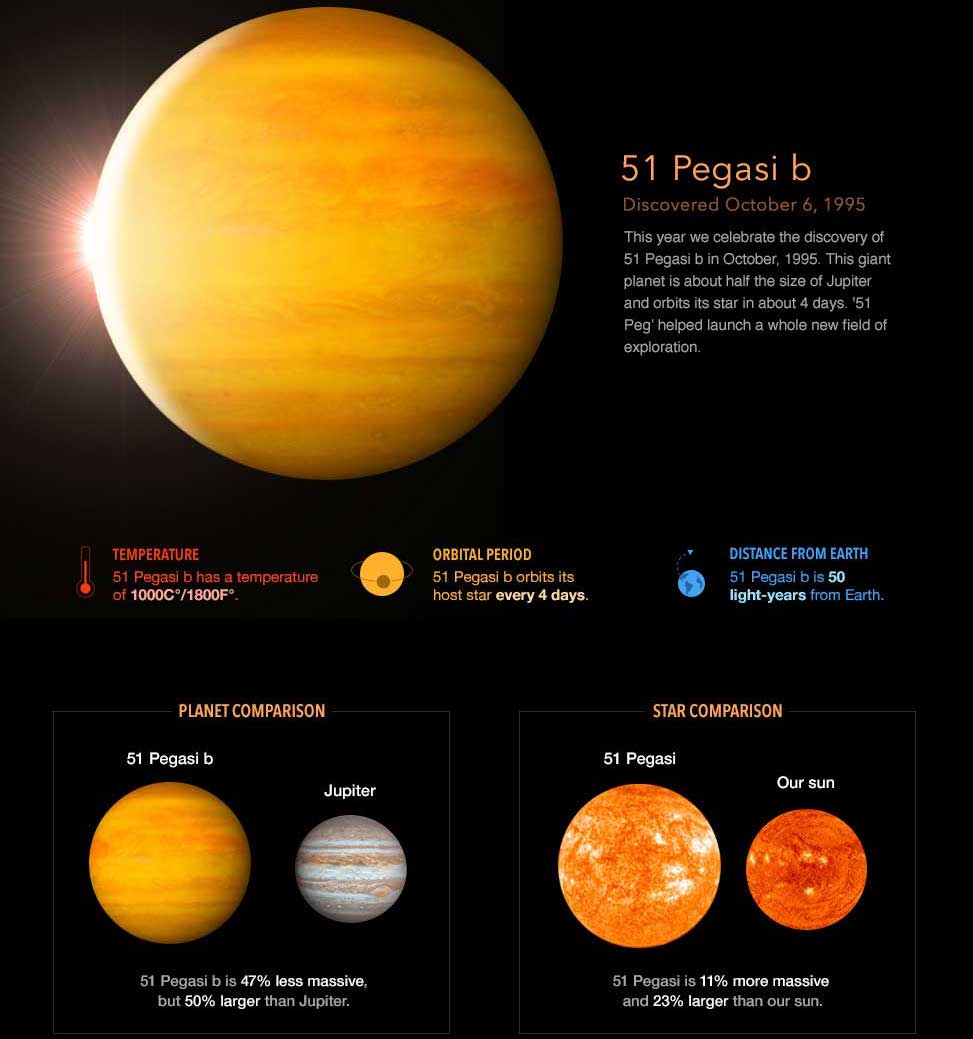
The existence of planets orbiting other main sequence stars (a category that includes about 90 percent of the stars in the universe) was first demonstrated in 1995, when Swiss astrophysicist Michel Mayor and Swiss astronomer Didier Queloz inferred the existence of a Jupiter-mass companion of the star 51 Pegasi, approximately 50 light years away from our own solar system. They did this by observing cyclic “wobbles” in the star’s path—tiny oscillatory movements whose maximum speed is about 70 meters per second, negligible in astronomical terms. These oscillations reflect the gravitational tug of 51 Pegasi’s planetary companion, which orbits the star once every four days, at a distance far closer than Mercury orbits our Sun.
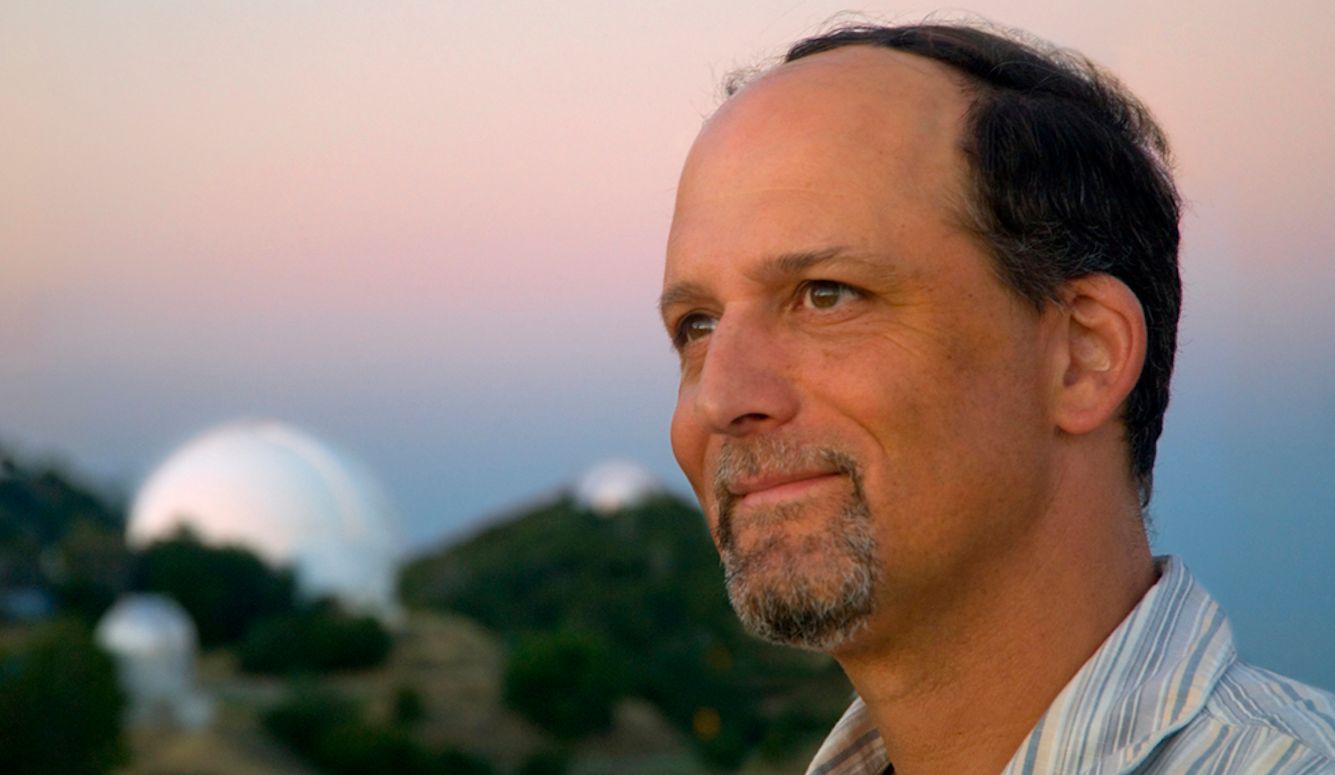
The discovery was accomplished using a technique that Mayor and Queloz spearheaded in parallel with similar work done by American astronomer Geoff Marcy. Both teams based their observations on the Doppler effect, the well-known phenomenon by which a wave’s apparent frequency will change depending on whether the observer is moving toward, or away from, the radiation source. (It’s similar to the principle that police use to measure your car’s speed with a radar gun.) To the extent that a star’s wobble aligns with the axis of observation, the frequency of its emitted light, as observed on Earth, would also vary, albeit by a minute amount.
The two teams used sensitive spectrometers that could measure such shifts. And within a month of Mayor and Queloz’s observations becoming known, their results were confirmed by Marcy and his own colleagues. Marcy’s team went on to identify 70 of the first 100 known exoplanets, including the first exoplanet located as far from its star as Jupiter is from the Sun. In 2005, Marcy and Mayor shared the prestigious Shaw Prize in Astronomy, awarded for outstanding contributions in the field.
Another planet-detecting technique—which I will admit to having previously dismissed as nearly impossible—was uncovered by Marcy’s group, working with Tennessee State University astronomer Greg Henry. Using this method, a planet’s existence is inferred from the fact that its associated star is dimmed (to a terrestrial observer) by a minute amount (less than one part in a thousand) when the planet passes in front of it. This “transit” technique of exoplanetary detection was used by NASA’s 2009 Kepler Mission, of which Marcy was a Science Team member, to discover approximately 4,000 planets. Many of these are the size of our Earth, and would seem to have surface temperatures conducive to biology (as we know it).
By now, we have discovered many systems with multiple planets orbiting a single star. And this naturally invites the question: Is the character of our own solar system, with large giant gas planets (Jupiter, Saturn, and Neptune) orbiting farther out, and smaller rocky planets (Mars, Earth, Venus, and Mercury) orbiting closer in (allowing the surface of at least one of these latter planets, Earth, to be sufficiently warm to host liquid water), a prerequisite for the development of life?
In March, a group of 16 authors—including Marcy; lead author Lauren Weiss, a junior faculty member in the astrophysics group at Notre Dame University, and a former PhD student of Marcy; and Caltech astronomer Andrew Howard, a former postdoctoral researcher who’s worked under Marcy’s direction—posted a paper entitled ‘The Kepler Giant Planet Search. I: A Decade of Kepler Planet Host Radial Velocities from W. M. Keck Observatory’ to arXiv, an archive for electronic preprints of scientific papers in certain fields. One of the authors’ purposes was to explore how the existence of Jupiter-size outer planets might correlate with the existence of smaller rocky inner planets. (A layperson might ask what the existence of a gas giant such a Jupiter has to do with the emergence of life on a rocky planet much closer to the sun. One answer is that—to take our own solar system as a representative example—Jupiter is believed to have absorbed or deflected large asteroids and comets from the outer solar system that otherwise would have vaporized Earth’s oceans, from which life first emerged.) Here is part of the abstract of that paper:
Despite the importance of Jupiter and Saturn to Earth’s formation and habitability, there has not yet been a comprehensive observational study of how giant exoplanets correlate with the architectural properties of close-in, sub-Neptune sized exoplanets. This is largely because transit surveys are particularly insensitive to planets [whose orbit radius is greater than that of Earth], and so their census of Jupiter-like planets is incomplete, inhibiting our study of the relationship between Jupiter-like planets and the small planets that do transit. To establish the relationship between small and giant planets, we conducted the Kepler Giant Planet Survey (KGPS). Using W. M. Keck Observatory HIRES [High Resolution Echelle Spectrometer], we spent over a decade collecting 2,858 [exoplanets detected using the Doppler wobble method] (2,181 of which are presented here for the first time) of 63 sun-like stars that host 157 transiting planets.
But if you visit arXiv to read the paper now, you can’t. It’s been withdrawn. Why? Was the data incorrect? Was the analysis conducted improperly? No. The problem was that Geoff Marcy’s name was on it.
Nine years ago, Marcy was investigated by his then-employer, the University of California, for behaviour that was described as sexual harassment. (You can read his take about the claims here, wherein he describes the infractions as resulting from him treating students as friends, hugging them or kissing them on the forehead if they related personal problems, and so forth.) It is worth adding that during his time at the University of California, Marcy also developed a record of working to promote a welcoming environment for women in science, advocating progressive university policies, and mentoring many female PhD students who subsequently went on to successful careers.
It is true that a University of California investigator decided in favour of Marcy’s complainants, albeit based on a (weak) preponderance-of-the-evidence standard. (And the low levels of due process that typify campus investigations of this type are well-known.) But even so, following the investigation, U.C. Berkeley recommended that Marcy should continue as a full professor, as he’d recently demonstrated five years of more careful behavior, which had elicited no further complaints.
Nevertheless, the online pressure against him became intolerable, and so Marcy eventually chose to leave his position voluntarily, so as to allow his colleagues and the department as a whole to get past the controversy surrounding his continued presence in the department. Grant sponsorship of his research ended, and he was removed from various collaborations. The Nobel Prize was awarded to Mayor and Queloz in 2019 for their work on exoplanets, but Marcy wasn’t included, in spite of the seminal role he and his group had played. In 2021, Marcy was ejected from the National Academy of Sciences, a shockingly severe response to behaviour that not only wasn’t criminal in nature, but which his university hadn’t even considered a firing offense. The pattern was clear: The imperatives of academic virtue signaling required individuals and institutions to publicly humiliate Marcy as a means to indicate their own moral bona fides.
Marcy’s name had been included in the authorship of ‘The Kepler Giant Planet Search’ on the basis of his long-standing contributions to the project therein discussed. He helped design, build, and even fund the Doppler system at the Keck Observatory; and he helped write the novel computer algorithm used to distill evidence of stellar wobbles from the background data.
One might imagine that the previous sanctions meted out to Marcy might have been enough. But not so: Once Astronomy Twitter discovered his name on the paper, a wave of outrage manifested itself. Many complained that it was wrong to have such a person’s work “promoted” in such a way—as if scientific publications were press releases. The pressure became so great that Weiss, the lead author, withdrew the paper from the arXiv altogether on April 7th, indicating, euphemistically, “It has come to my attention that there are significant concerns about the author list of this manuscript. It is very important to me that I honor everyone’s contribution to this work appropriately. Accordingly, I am revisiting the author list, with the goal of setting a standard for authorship that fairly acknowledges everyone’s contribution.” I have learned that, as a result of the social-media furor, several co-authors had requested their names be removed from the author list. As of now, the status of the paper is still in limbo.
In the style of a Soviet apparatchik announcing that one of his comrades had fallen from favour, the aforementioned Caltech astronomer and former Marcy-supervised post-doc, Andrew Howard, publicly assured everyone that Marcy, in a reporter’s words, “won’t co-author any papers the group publishes going forward.” These remarks were published in a May 16th Science hit piece on Marcy’s reputation, whose author appeared to agree with those seeking to bounce Marcy from the author list. The torqued title: “After outcry, disgraced sexual harasser removed from astronomy manuscript.”
A student who co-authored earlier publications as part of the same collaboration—in which Marcy’s name had appeared as co-author—now claims that having Marcy’s name on this new manuscript would be bad for her career. On what basis she made this claim is not clear. As noted above, Lauren Weiss, the lead author, is one of Marcy’s former students. Her name, like Howard’s, has appeared on numerous publications alongside Marcy’s. It appears that their association with the so-called “disgraced sexual harasser” helped, not hurt, their careers.
Another student, whose role on the project was confined to collecting data, complained that the appearance of Marcy’s name on the paper would somehow serve to “promote” Marcy at the expense of the student. Putting aside the respective importance of the contributions being made, the complaint reflects a fundamental misunderstanding of how scientific publication works. These articles are not press releases, and one’s appearance on an author list is not a form of “promotion.” Rather, it is meant to indicate one’s actual intellectual contribution to the design and implementation of a project—a form of recognition the lead author and other co-authors presumably agreed upon before the paper was submitted for publication.
The Science article also included a student’s extremely dubious claim that the presence of Marcy’s name on the author list would produce “potential psychological harm.” Specifically: “A lot of people in astronomy, especially a lot of women, are survivors of sexual assault and sexual harassment themselves, so seeing your name next to his—seeing his name at all—can be extremely triggering for a lot of people.” At the risk of appearing insensitive, anyone whose psychological trauma is so severe that it causes them to be emotionally triggered by the sight of someone’s name on a publication is in need of therapy. More importantly, such personal sensitivities should not serve to award individuals with veto power on the appearance of bylines in scientific publications.
Such is the (new) outcry over Marcy that the American Astronomical Society (AAS), a publisher of journals in which his name has appeared frequently, felt compelled to get in on the act. One might imagine that it would stand on the side of proper scholarship, asserting that author credits should reflect project contributions; which is to say that the only grounds for removing an author’s name should be a disclosure to the effect that he or she did not actually contribute to the underlying science, or that he or she was involved in falsifying or distorting data.
Instead, AAS President Kelsey Johnson publicly confirmed that the society’s ethics working group is now considering whether to classify “sexual harassment—and, indeed, all forms of harassment, discrimination, and bullying”—as grounds for restricting authorship. Under this standard, any number of people might have their names stripped from scientific papers, including, ironically, many of those same individuals now demanding that Marcy’s name be removed from ‘The Kepler Giant Planet Search.’ After all, how was lead author Weiss (a junior faculty member, it should be remembered) induced to withdraw the paper with its current author list except through mob bullying tactics?
Indeed, one of Marcy’s SETI collaborators, Nordic Institute of Theoretical Physics researcher Beatriz Villarroel, has filed harassment complaints on this very basis. Recently, she was blocked from presenting at an astrobiology conference at Penn State because of her collaboration with Marcy. She also had to withdraw an application to become an affiliate at the SETI institute in California after being instructed not to publish any papers, or apply for any grants, for a project involving Marcy.
The campaign against not only accused harassers, but also those who are accused of even dealing with accused harassers, including producing good science with them, is beginning to take on the flavour of anti-collaborator campaigns during wartime. Some organizations are even seeking to encode this mob logic in their formal rules, through codes of conduct that serve to punish those who collaborate with, or even cite the work of, those deemed to have committed harassment or offences against Diversity, Equity, and Inclusion (DEI).
In the current political environment, few are willing to stand against the pitchforks. Two senior female astronomers to whom I sent a draft of this piece for possible comment prior to publication indicated that they agreed with the expressed views, but would not be willing to say so publicly. One stated that she didn’t want her students and postdocs to have a supervisor who could be viewed as “guilty by association.” Shouldn’t the mob mentality that produces this kind of fear be deemed at least as worthy of condemnation by the scientific community?
Even the AAS leadership seems to have recognized the hypocrisy at play here, albeit grudgingly. A 2021 online note authored by the AAS’s then-President, University of Washington astronomer Paula Szkody (who herself co-authored a paper with Marcy in 2012), affirmed that the AAS ethics code states that “all persons who have made significant contributions to a work intended for publication should be offered the opportunity to be listed as authors” (a policy consistent with that of Springer, a major science publisher, which warns contributors that “it is dishonest to omit an author who has made significant contributions”). But in the same breath, she noted that the AAS anti-harassment policy “allow[s] for the denial of authorship privileges”—a provision that, when implemented, would plainly make nonsense of the idea that “all persons” who’d made “significant contributions to a work intended for publication” would be entitled to appear as listed authors. The two principles, the then-President acknowledged, “could be construed as being in potential conflict.” Could be?
The slippery slope here is very slippery indeed. In the future, will everyone who writes scientific papers first have to be vouched for by some social-justice tribunal that assesses their moral purity? And if so, using what criteria—and under what statute of limitations?
It has long been seen as a progressive habit of mind to understand that people can change, and that past sins do not inevitably define a human’s worth. There are famous examples of scientific papers being written from prison. And the same people baying for Marcy’s ongoing humiliation would likely be horrified to see the authorship of such then-incarcerated individuals stricken from the published record. Their puritanism is highly selective, in other words, being guided by the cyclic wobbles (to apply an astronomical metaphor) of political fashion.
Members of the anti-Marcy contingent might peer into their own closets, and remember that there are many ways that one can run afoul of online mobs. In recent years, it has become seen as normal for scientists to be required to put their signature to DEI pledges and anti-racism manifestos as a condition of academic employment. And the broad language in these documents leaves signatories vulnerable to all manner of accusations. Once we accept the principle that a scientist’s “significant contributions” to a project stop being significant simply because of his or her alleged moral defects, there is no particular reason to expect that such scrutiny won’t be extended to one’s political views, social-media posts, and even private conversations and jokes.
As Canadian science historian, Yves Gingras, put it in a thoughtful article last year, scientists are hardly immune from social panics. The Soviets were fond of judging science based on the politics of the men and women who conducted it, often denouncing the work of “bourgeois” scientists, whom they accused of being lackeys to Western imperialists. Google the name “Trofim Lysenko” to learn how that story ended. As Gingras stressed, “The road to hell is paved with good intentions.”
My wife recently reminded me of a quote from Henry Adams, which suggests, I think, an apt lesson to end on: “A teacher affects eternity: he can never tell where his influence stops.” The same principle applies to scientists. Members of the mob that came after Marcy won nothing for themselves but a brief spasm of schadenfreude. The consequences of this kind of precedent will last much, much longer.
Editor’s note:
On May 27, the text of this article was modified so as to clarify that Caltech astronomer Andrew Howard was not among those who had requested that his name be removed from the author list of The Kepler Giant Planet Search. Additionally, the article has been corrected in regard to the quoted text indicating that Geoff Marcy “won’t co-author any papers the group publishes going forward.” Due to an editing error, these words were originally attributed to Howard. In fact, they are properly attributed to a Science magazine writer who’d summarized Howard’s comments.
By Pat Brennan, NASA's Exoplanet Exploration Program
Scientists explain how NASA's James Webb Space Telescope will investigate exoplanet clouds.
Clouds of vaporized rock, and perhaps even glittering gems, could fill the skies of some distant worlds. Add howling winds and broiling temperatures, and you begin to catch the first glimpse of wildly different environments on one of the many varieties of exoplanets – planets around other stars.
Exoplanet scientists are on the edge of their seats. NASA’s James Webb Space Telescope has begun to deliver its first science images and data. The targets for observations to come include the atmospheres of some of the strangest exoplanets found so far.
Among the best ways to understand these atmospheres, and even the planets themselves, will be the first-ever direct observations of clouds, however weird and exotic they might be.
“On Earth, a lot of these minerals are jewels,” said Tiffany Kataria, an exoplanet scientist at NASA’s Jet Propulsion Laboratory in Southern California. “A geologist would study them as rocks on Earth. But they can form clouds on exoplanets. That’s pretty wild.”
These planets – hot gas giants – are among many exoplanet types confirmed in the galaxy. They could have clouds of vaporized rock because they orbit so close to their stars, making their atmospheres ferociously hot.
And while clouds of rock, rubies, or sapphires might sound enchanting, actually detecting such minerals in an exoplanet atmosphere also would be a giant step forward in scientific knowledge.
“Clouds tell us a lot about the chemistry in the atmosphere,” Kataria said. “It then becomes a question of how the clouds formed, and the formation and evolution of the system as a whole.”
Exoplanets – planets beyond our solar system – are among the prime targets for NASA's James Webb Space Telescope. And Webb could reveal details of exoplanet clouds, providing further insights into the composition and structure of their atmospheres. Infographic: NASA/JPL-Caltech/Lizbeth B. De La Torre
The Webb telescope's many capabilities include “spectroscopy” – splitting the light Webb receives from distant stars and planets into a spectrum, a bit like a rainbow. That would allow scientists to read the types of molecules present in an exoplanet atmosphere.
And that means Webb could detect specific types of minerals in clouds.
Detailed study of exoplanet clouds might even yield evidence of a habitable, potentially life-bearing planet – say on a small, rocky world like Earth.
“Clouds are an important feature on Earth, to regulate temperature,” Kataria said. “They’re an important consideration for Earth’s climate. It stands to reason that clouds could also be a vital component in the atmosphere of a habitable exoplanet. The more we understand how clouds form in general – as they have on Earth and other solar system planets – the more we understand how clouds evolved in more exotic environments.”
Probing the hearts of exoplanet clouds could bring together experts from many scientific fields as they seek to understand the origin, evolution, and environments of other planets in our galaxy.
“This further illustrates that exoplanets as a field really is interdisciplinary, borrowing lessons learned from astronomy, planetary science, geology, chemistry, and other areas of science,” Kataria said. “It’s so important to build these connections with scientists in all these different fields to better understand the many exotic worlds out there.”
The James Webb Space Telescope is the world's premier space science observatory. Webb will solve mysteries in our solar system, look beyond to distant worlds around other stars, and probe the mysterious structures and origins of our universe and our place in it. Webb is an international program led by NASA with its partners, ESA (European Space Agency) and the Canadian Space Agency.
For more information about Webb, visit www.nasa.gov/webb.
A metallic-looking rock that smashed through the roof of a residential home in New Jersey's Hopewell Township earlier this week is indeed a meteorite — a rare one about 4.6 billion years old, scientists confirmed on Thursday (May 11).
"It was obvious right away from looking at it that it was a meteorite in a class called stony chondrite," Nathan Magee, chair of the physics department at The College of New Jersey (TCNJ), whose office was contacted by the Hopewell Township police soon after the rock was found on Monday (May 8), told Space.com.
Chondrites are primitive rocks that make up 85% of meteorites found on Earth. Most chondrites found to date have been discovered in Antarctica; only rarely does one crash in populated areas.
This apparent meteorite struck a house in Hopewell Township, New Jersey on May 8, 2023. (Image credit: Hopewell Township Police Department)
The New Jersey rock, which is about 6 inches long by 4 inches wide (15 by 10 centimeters), is a notable exception. It slammed into the Hopewell Township house, dented the floorboard, punched two holes in the ceiling and was still warm when it was discovered by Suzy Kop in her father's bedroom around noon on Monday.
"I'm looking up on the ceiling and there's these two holes, and I'm like, 'What in the world has happened here?'" Kop told 6 ABC's Trish Hartman.
Once emergency responders cleared Kop, her family and their home of any harmful radioactive residues, Kop handed over the space rock to the nearby college for further inspection.
At TCNJ, Magee's team consulted Jerry Delaney, a retired meteorite expert who had worked on the meteorite collection at the American Museum of Natural History in New York. The team confirmed the space rock to be about 4.56 billion years old, which means it has been around since the beginning of our solar system and represents the leftover fragments from its creation.
Researchers at The College of New Jersey have confirmed that this rock, which struck a house in Hopewell Township, New Jersey on May 8, 2023, is a 4.6-billion-year-old meteorite. (Image credit: The College of New Jersey)
The 2.2-pound (0.9 kilograms) meteorite, which will likely be named Titusville, NJ — the postal address closest to its landing site — is "in excellent condition, and one of a very small number of similar witnessed chondrite falls known to science," Magee said in a statement on Thursday.
The top layer of the meteorite has a blackened crust a few millimeters thick from partially burning up in Earth's atmosphere. Using a hand lens designed to look at rocks closely, his team found that the meteroite's minerals are blue and gray in color, with a small amount of other metals mixed in, Magee told Space.com.
The team studied the rock's texture and composition by placing it inside a large chamber of a scanning electron microscope. Based on initial estimates, the meteorite is a chondrite of class LL-6, which has less iron than other members of its family and is at least 30 to 40% denser than the most common rocks on Earth, like slate or granite.
"So it was clear it was not an Earth rock," Magee told Space.com.
Even before the space rock had breached Earth's atmosphere, it was exposed to a lot of heat in outer space that had heavily altered its structure and composition, so much so that it is difficult to easily distinguish individual grains or chondrules that make up the meteorite, scientists shared in Thursday's update.
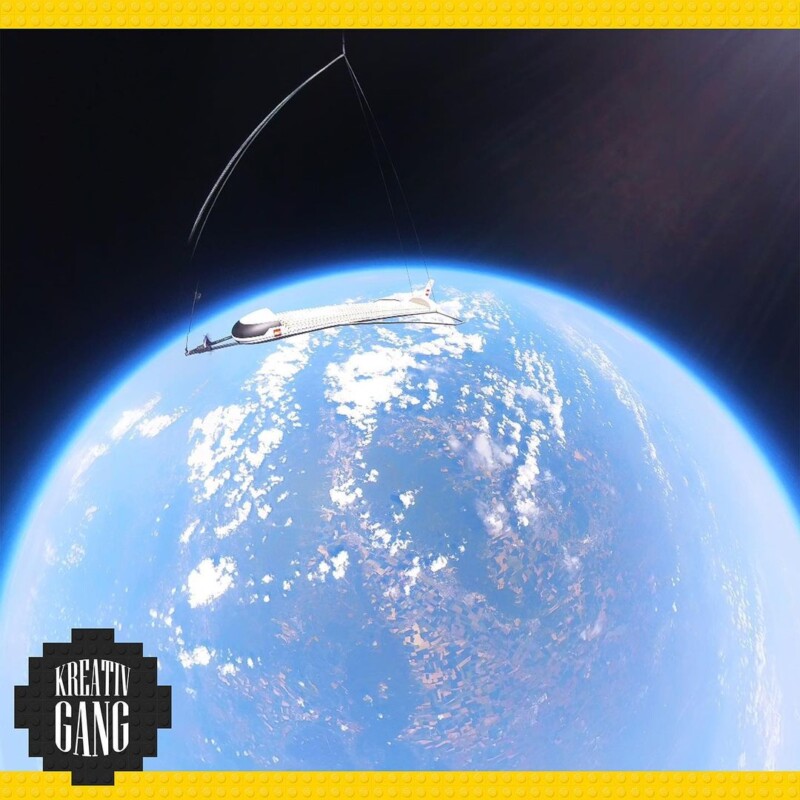
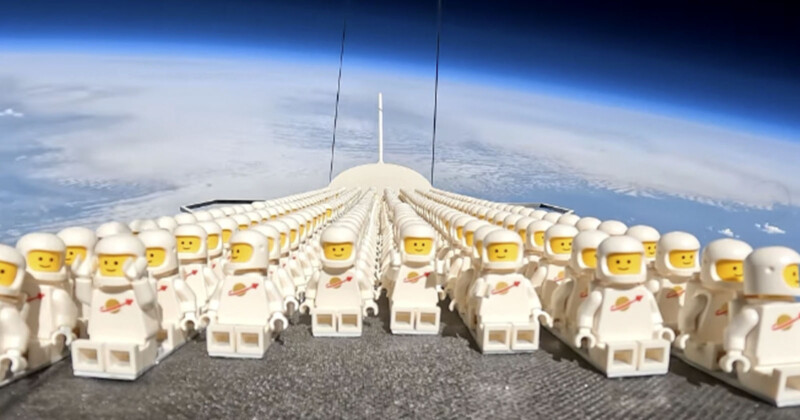
Two cameras captured 1,000 Lego astronauts flying to the edge of space on a 3D-printed mini space shuttle.
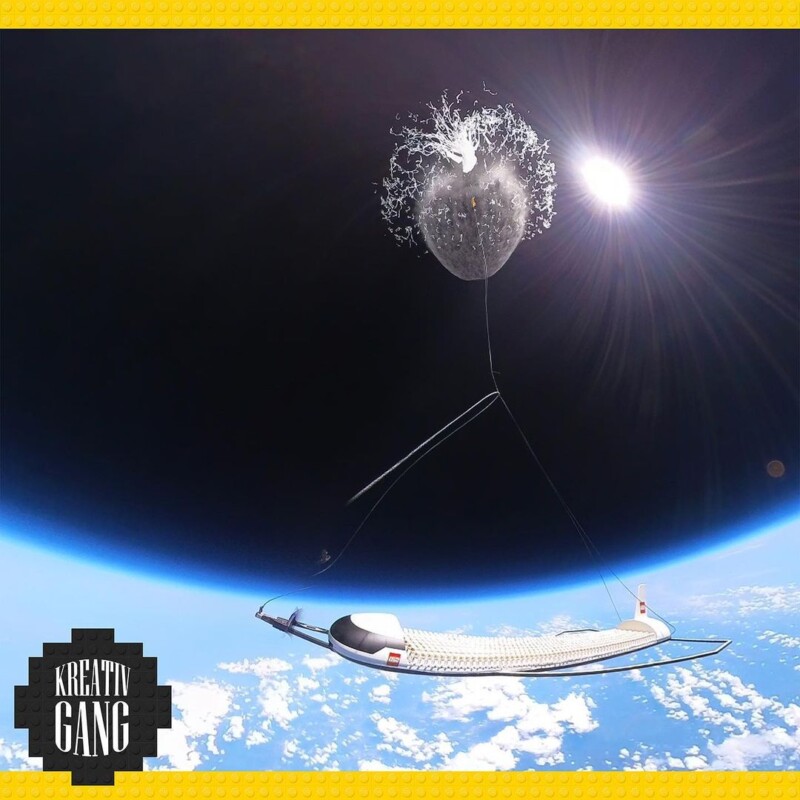
The voyage was powered by a stratospheric balloon that burst after taking the Legonauts 22 miles above the Earth’s surface when they safely landed back on terra firma with the help of a parachute.
Lego sent 1,000 mini-astronauts on a trip to near space.
(Image credit: LEGO/Kreativ Gang)
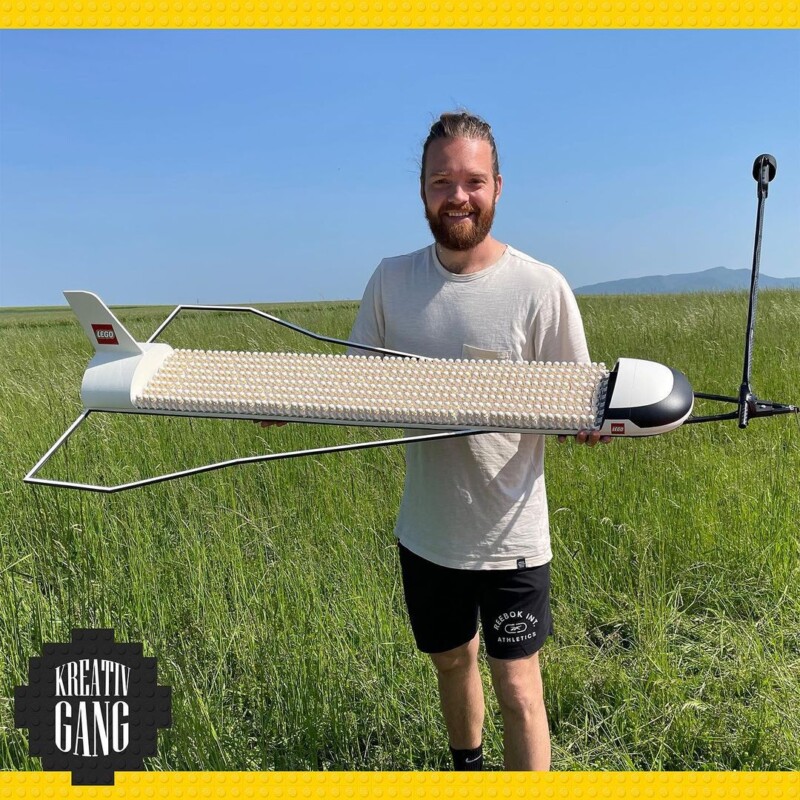
A Kreativ Gang team member with the 3D-printed space shuttle made for Legonauts.
The stratospheric balloon popping 21 miles above the Earth’s surface on the edge of space.
The 3D-printed space shuttle was made from a lightweight carbon composite material, built by a team of space architects and engineers from Slovakia and the Czech Republic.
There were three separate space flights with roughly 330 Legonauts going up each time and the team from Kreativ Gang, a marketing agency producing a Lego campaign, had to ensure none of the astronauts fell off the open-air shuttle.
The Legonauts being taken up to space by the stratospheric balloon.
“To make the figures stay on the space shuttle after the balloon burst was a major challenge,” says Dominik Matusinsky, an executive at Kreativ Gang, tells Space.com.
“We wanted the figures to be exposed directly to space, not to be stored inside anything. But during the free fall stage [before the parachute opened], they experienced speeds of up to 300 kilometers per hour [186 miles per hour], so that was a challenge.”
In an Instagram post, the Kreativ gang explained that the Legonauts flew from Malé Bielice Airport near Partizánské in Slovakia on Saturday, May 20 on a shuttle made of carbon fiber and 3D-printed stainless steel.
“They have landed in three different places and are ready to end their journey on your nightstand,” the team jokes.
“This space feat of ours was captured by two cameras during the entire ride. One monitored the space with the mini-crew from the cockpit, and the other, attached to the shoulder, took a view of the entire platform.
“In the photos and videos, you can see breathtaking shots of the Earth as well as figures who are fully enjoying their flight into space.”
The stunt was a promotional campaign for Lego. Anyone who buys a new Lego set and registers it could win the Lego astronauts as a prize. More details are avaialbe on Kreativ Gang’s website.
According to Dominik Matusinsky, an executive at marketing agency Kreativ Gang that produced the campaign for Lego, the team had to make sure that none of the astronauts fell off the open-air shuttle during the early stages of the platform's descent.
"To make the [Lego] figures stay on the space shuttle after the balloon burst was a major challenge," Matusinky told Space.com in an email. "We wanted [the figures] to be exposed directly to space, not to be stored inside anything. But during the free fall stage [before the parachute opened], they experienced speeds of up to 300 km/h [186 mph], so that was a challenge."
For the balloons to comfortably lift off, the whole platform including its passengers had to weigh no more than 6 pounds (2.7 kilograms).
"The challenge was to build the space shuttle as lightweight as possible," added Rousek. "We ended up making it from carbon fiber, 3D printed stainless steel and plastic."
Two cameras filmed the rides: One monitoring the crew compartment;, the other attached to a boom filming a view of the entire platform.
The Lego astronauts will now be put up as a prize in a drawing in the Czech Republic and Slovakia for anyone who buys and registers a new Lego set.
Space.com caught up with Bill Diamond, President and CEO of the SETI Institute for an exclusive, mind-stretching close-encounter discussion regarding the search for extraterrestrial intelligence.
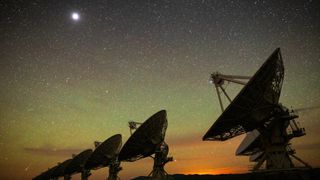
New Mexico’s Very Large Array (VLA) – on the SETI trail.
(Image credit: Bettymaya Foott, NRAO/AUI/NSF)
To spot potential intelligent life out there in the great beyond, first you must cast a net wide by using an array of techniques and technologies.
Any "fishing expedition" for E.T. includes close-in studies of life in extreme environments right here on Earth, to help us recognize any signatures we might find on Mars or deep diving through the icy shell of Jupiter's moon, Europa. The search can also blend in the use of space-based telescopes to inspect Earth-like planets circling their home stars. Then there's cupping a proverbial ear to the cosmos using radio telescopes to pick up any bustling interstellar civilization or perhaps look for far-off laser-pulsed communiqués from extraterrestrial homebodies.
These and other efforts are actively pursued by the SETI Institute in Mountain View, California, right there in the high-tech heartbeat of Silicon Valley. More than a hundred institute scientists are busily carrying out research in astronomy and astrophysics, astrobiology, as well as exoplanets, climate and bio-geoscience and the Search for Extraterrestrial Intelligence (SETI).
Space.com caught up with Bill Diamond, President and CEO of the SETI Institute for an exclusive, mind-stretching close-encounter discussion regarding the mounting evidence for extraterrestrial intelligence.
Spoiler alert! It's not that old tried, true and tired query "are we alone?" Rather, it's more like "just how crowded is it?"
Early stages
There's a lot going on today in terms of searching for and trying to understand potential extraterrestrial life in the universe, Diamond said.
"Much of the first several decades of SETI, the effort has been quite minimal, looking with fairly 'insensitive' instruments in fairly narrow parts of the radio spectrum in random parts of the sky. So hardly anything that could be considered a comprehensive endeavor," said Diamond.
But even today, in many ways, SETI work is still in the early stages. However, more and more is taking place with an increasing number of instruments and technologies around the world. "There's an extensive and expanded effort ongoing now," Diamond said.
COSMIC collaboration
For example, there's the Commensal Open-Source Multimode Interferometer Cluster Search for Extraterrestrial Intelligence — mercifully shortened to COSMIC SETI.
All 27 antennas that constitute the Very Large Array (VLA) in New Mexico have been outfitted with new gear to perform 24/7 SETI observations under a collaboration between the SETI Institute and the National Radio Astronomy Observatory, the group that operates the VLA.
Yes, that's the same VLA showcased in the 1997 sci-fi film "Contact," replete with actress Jodie Foster adorned with a tight-fitting stereo headset. In reality, the VLA was never used for SETI, Diamond noted, but now it is.
SETI Institute's Allen Telescope Array, situated northeast of San Francisco. This array has undergone high-tech upgrades. (Image credit: Simon Steel/SETI Institute)
Detectable signatures
"COSMIC is really the most comprehensive SETI search on a single instrument in history. That's very exciting," Diamond said, and gives the COSMIC effort access to a complete and independent copy of the data streams from the entire VLA.
COSMIC will analyze data for the possible presence of "technosignatures" - detectable signatures and signals that shout out the presence of distant advanced civilizations.
In scientific circles, technosignatures are viewed as a subset of the far more established search for "biosignatures" — evidence of microbial or other primitive life loitering on some of the billions of exoplanets we now know exist.
Newly augmented
"For classical radio SETI, there's more going on now around the world than there has ever been," Diamond said. That uptick also includes the SETI Institute's newly augmented Allen Telescope Array situated northeast of San Francisco. It was named after Paul Allen, co-founder of Microsoft, given his generous financial backing of the facility in its early phases.
The Allen Telescope Array (ATA) has undergone antenna redesign and now is outfitted with high-end computers, signal processors, and other electronics making it far faster than ever before, Diamond adds. "The instrument is performing at a level that it has never performed at since it was built. All of that is fairly new in the two to three years."
One output from ATA has been its use by SETI Institute scientists to delve into powerful Fast Radio Bursts (FRBs), a head-scratching phenomenon wanting of explanation.
Philanthropic gift
A passionate booster in ATA's overhaul was Franklin Antonio, a co-founder of Qualcomm, a communications chip company. Antonio's support as an institute technical advisor continues with his philanthropic gift to the SETI Institute of $200 million after his passing last May.
That bequest is sparking an action plan that will enhance the institute's multi-disciplinary, multi-center research, education and outreach make-up, Diamond said.
Also on the institute's agenda is taking in and evaluating ideas from SETI researchers anywhere in the world to tap into a pool of money for such things as technology, software, or to run an experiment.
"If we like what you're doing, we'll fund it," Diamond said. "We will kind of take the place of NASA for the time being as the only place in the world where you can submit a proposal to do SETI work."
Those three words
Roll back time to Columbus Day in 1992 when NASA initiated a formal, more intensive, SETI program. But less than a year later, Congress short-circuited the program.
Is it time for the government to re-embrace the search for extraterrestrial intelligence?
"Yes, absolutely," Diamond responded. NASA, he said, has a trio of science questions it's spearheading: How does the Universe work? How did we get here? Are we alone?
Almost every time NASA leadership publicly speaks, said Diamond, they invoke those three words — Are we alone?
"We all want to know. NASA clearly wants to know as it's one of their science priorities," Diamond said. "So isn't it time they get back in the business of trying to answer that question?"
Artistic view of the NASA data-gathering Transiting Exoplanet Survey Satellite (TESS). Scientists are now sifting through its findings for possible technosignatures indicating an extraterrestrial civilization. (Image credit: NASA)
Planets are everywhere
NASA's own Kepler space telescope served as the space agency's first planet-hunting mission. During nine years of deep space scoping, Diamond emphasized, it showed our galaxy contains billions of exoplanets. "It told us that planets are everywhere and a lot of them are potentially habitable."
NASA is starting to chip away at SETI work, Diamond noted. A NASA-funded grant to a SETI Institute scientist is using observations from the space agency's Transiting Exoplanet Survey Satellite (TESS). The intent is to purge out of the TESS data possible technosignatures aided by artificial intelligence/machine learning tools.
"So yes, I think the winds of change are blowing a little bit in favor of the government getting back into this business. And, in my opinion, I think they should step up and do it," Diamond said
Launched on March 6, 2009, the Kepler space telescope became NASA's first mission to detect Earth-size planets in the habitable zones of their stars. (Image credit: NASA)
With all the in-motion SETI research underway, just how prepared are we for a confirmed, door-ringing neighborhood watch revelation?
"The straight answer to that question is no, we are not necessarily ready, although it depends on what the answer is," Diamond responded. It's only a matter of time before this question is answered, he added, at one level or another.
We should begin to think about how we convey this information, possible impacts to society, to religion, to politics, to technology, to governments, said Diamond.
"I do think that with all these technologies, modalities, instruments looking in different ways," Diamond concluded, "it's getting closer and closer for sure."
Atmosphere Pressure Changes Could Explain Mars Methane
One ongoing mystery on Mars is the sporadic detection of atmospheric methane. Since 1999 detections have been made by Earth-based observatories, orbital missions, and on the surface by the Curiosity Rover. However, other missions and observatories have not detected methane at all, and even when detected, the abundances appear to fluctuate seasonally or even daily.
So, where does this intermittent methane come from? A group of scientists have proposed an interesting theory: the methane is being sucked out of the ground by changes in pressure in the Martian atmosphere. The researchers simulated how methane moves underground on Mars through networks of underground fractures and found that seasonal changes can force the methane onto the surface for a short time.
“Our work suggests several key time windows for Curiosity to collect data,” said John Ortiz, a graduate student at Los Alamos National Laboratory who led the research team. “We think these offer the best chance of constraining the timing of methane fluctuations, and (hopefully) down the line bringing us closer to understanding where it comes from on Mars.”
The presence of methane (CH4) in the Martian atmosphere is of great interest to planetary scientists and exobiologists because it could indicate present or past microbial life. Or, it could also be related to nonbiological processes, such as volcanism or hydrothermal activity.
The problem with detecting methane is that it doesn’t last long. Once released into the atmosphere, it can be quickly destroyed by natural atmospheric processes. Therefore, any methane detected in Mars’ atmosphere means it must have been released recently, which only adds to the intrigue.
On Earth, most methane is produced by living creatures such as microorganisms in sedimentary strata, or in the guts of ruminants (cows, sheep, deer, etc.). For methane produced through abiotic or non-living processes, there is a high likelihood it could have been produced millions or even billions of years ago, lying trapped in underground rock formations.
But still, finding methane on Mars is a big deal because of the potential for biological sources, such as methanogenic microbes.
This graphic is the result of an analysis that gives a percentage chance of the methane originating in each grid square centered on Gale Crater. Image Credit: Giuranna et al. (2019)
In 2004, the Mars Express Orbiter (MEO) detected methane in the Martian atmosphere. In 2013 and 2014 Curiosity detected spikes in methane in the atmosphere at Gale Crater. Interestingly, MEO detected a methane spike again, at the same location that Curiosity did, only one day later.
Ortiz and his team wanted to better understand Mars’ methane levels, and used high-performance computing clusters to simulate how methane travels through networks of underground fractures, and then released into the atmosphere when driven by atmospheric pressure fluctuations. They also modeled how methane is adsorbed onto the pores of rocks, which is a temperature-dependent process that may contribute to the methane level fluctuations.
The team said their simulations predicted methane pulses from the ground surface into the atmosphere just before the Martian sunrise in the planet’s northern summer season, which just recently ended. This corroborates previous rover data suggesting that methane levels fluctuated not only seasonally, but also daily. With these insights, the Curiosity rover team can figure out when and where to look for methane, which could aid in the rover’s main goal, searching for signs of life.
“Understanding Mars’ methane variations has been highlighted by NASA’s Curiosity team as the next key step towards figuring out where it comes from,” Ortiz said. “There are several challenges associated with meeting that goal, and a big one is knowing what time of a given sol (Martian day) is best for Curiosity to perform an atmospheric sampling experiment.”
Astronomers spot 18 black holes gobbling up nearby stars
Astronomers spot 18 black holes gobbling up nearby stars
The detections more than double the number of known tidal disruption events in the nearby universe.
Jennifer Chu|MIT News
Star-shredding black holes are everywhere in the sky if you just know how to look for them. That’s one message from a new study by MIT scientists, appearing today in the Astrophysical Journal.
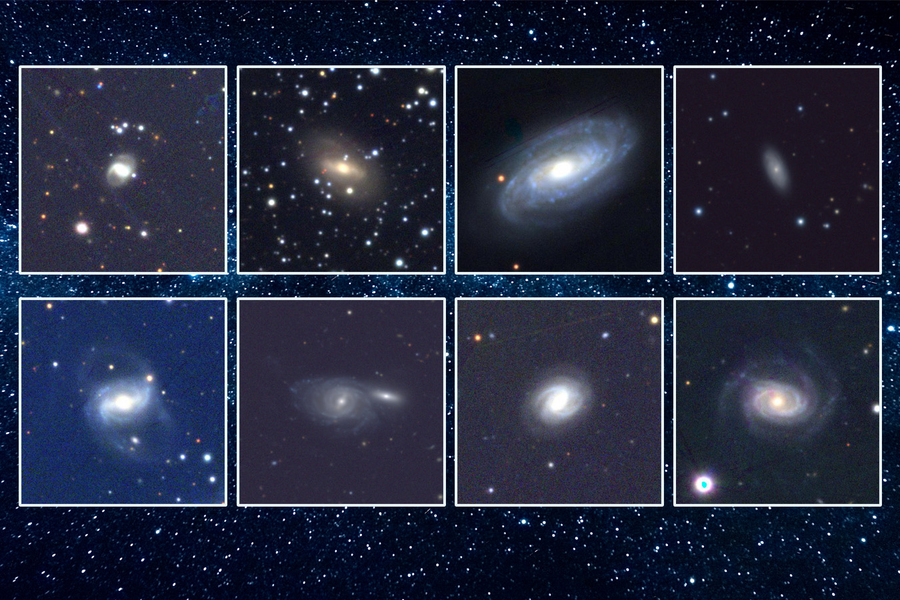
The study’s authors are reporting the discovery of 18 new tidal disruption events (TDEs) — extreme instances when a nearby star is tidally drawn into a black hole and ripped to shreds. As the black hole feasts, it gives off an enormous burst of energy across the electromagnetic spectrum.
Astronomers have detected previous tidal disruption events by looking for characteristic bursts in the optical and X-ray bands. To date, these searches have revealed about a dozen star-shredding events in the nearby universe. The MIT team’s new TDEs more than double the catalog of known TDEs in the universe.
The researchers spotted these previously “hidden” events by looking in an unconventional band: infrared. In addition to giving off optical and X-ray bursts, TDEs can generate infrared radiation, particularly in “dusty” galaxies, where a central black hole is enshrouded with galactic debris. The dust in these galaxies normally absorbs and obscures optical and X-ray light, and any sign of TDEs in these bands. In the process, the dust also heats up, producing infrared radiation that is detectable. The team found that infrared emissions, therefore, can serve as a sign of tidal disruption events.
By looking in the infrared band, the MIT team picked out many more TDEs, in galaxies where such events were previously hidden. The 18 new events occurred in different types of galaxies, scattered across the sky.
“The majority of these sources don’t show up in optical bands,” says lead author Megan Masterson, a graduate student in MIT’s Kavli Institute for Astrophysics and Space Research. “If you want to understand TDEs as a whole and use them to probe supermassive black hole demographics, you need to look in the infrared band.”
Other MIT authors include Kishalay De, Christos Panagiotou, Anna-Christina Eilers, Danielle Frostig, and Robert Simcoe, and MIT assistant professor of physics Erin Kara, along with collaborators from multiple institutions including the Max Planck Institute for Extraterrestrial Physics in Germany.
Heat spike
The team recently detected the closest TDE yet, by searching through infrared observations. The discovery opened a new, infrared-based route by which astronomers can search for actively feeding black holes.
That first detection spurred the group to comb for more TDEs. For their new study, the researchers searched through archival observations taken by NEOWISE — the renewed version of NASA’s Wide-field Infrared Survey Explorer. This satellite telescope launched in 2009 and after a brief hiatus has continued to scan the entire sky for infrared “transients,” or brief bursts.
The team looked through the mission’s archived observations using an algorithm developed by co-author Kishalay De. This algorithm picks out patterns in infrared emissions that are likely signs of a transient burst of infrared radiation. The team then cross-referenced the flagged transients with a catalog of all known nearby galaxies within 200 megaparsecs, or 600 million light years. They found that infrared transients could be traced to about 1,000 galaxies.
They then zoomed in on the signal of each galaxy’s infrared burst to determine whether the signal arose from a source other than a TDE, such as an active galactic nucleus or a supernova. After ruling out these possibilities, the team then analyzed the remaining signals, looking for an infrared pattern that is characteristic of a TDE — namely, a sharp spike followed by a gradual dip, reflecting a process by which a black hole, in ripping apart a star, suddenly heats up the surrounding dust to about 1,000 kelvins before gradually cooling down.
This analysis revealed 18 “clean” signals of tidal disruption events. The researchers took a survey of the galaxies in which each TDE was found, and saw that they occurred in a range of systems, including dusty galaxies, across the entire sky.
“If you looked up in the sky and saw a bunch of galaxies, the TDEs would occur representatively in all of them,” Masteron says. “It’s not that they’re only occurring in one type of galaxy, as people thought based only on optical and X-ray searches.”
“It is now possible to peer through the dust and complete the census of nearby TDEs,” says Edo Berger, professor of astronomy at Harvard University, who was not involved with the study. “A particularly exciting aspect of this work is the potential of follow-up studies with large infrared surveys, and I’m excited to see what discoveries they will yield.”
A dusty solution
The team’s discoveries help to resolve some major questions in the study of tidal disruption events. For instance, prior to this work, astronomers had mostly seen TDEs in one type of galaxy — a “post-starburst” system that had previously been a star-forming factory, but has since settled. This galaxy type is rare, and astronomers were puzzled as to why TDEs seemed to be popping up only in these rarer systems. It so happens that these systems are also relatively devoid of dust, making a TDE’s optical or X-ray emissions naturally easier to detect.
Now, by looking in the infrared band, astronomers are able to see TDEs in many more galaxies. The team’s new results show that black holes can devour stars in a range of galaxies, not only post-starburst systems.
The findings also resolve a “missing energy” problem. Physicists have theoreticially predicted that TDEs should radiate more energy than what has been actually observed. But the MIT team now say that dust may explain the discrepancy. They found that if a TDE occurs in a dusty galaxy, the dust itself could absorb not only optical and X-ray emissions but also extreme ultraviolet radiation, in an amount equivalent to the presumed “missing energy.”
The 18 new detections also are helping astronomers estimate the rate at which TDEs occur in a given galaxy. When they figure the new TDEs in with previous detections, they estimate a galaxy experiences a tidal disruption event once every 50,000 years. This rate comes closer to physicists’ theoretical predictions. With more infrared observations, the team hopes to resolve the rate of TDEs, and the properties of the black holes that power them.
“People were coming up with very exotic solutions to these puzzles, and now we’ve come to the point where we can resolve all of them,” Kara says. “This gives us confidence that we don’t need all this exotic physics to explain what we’re seeing. And we have a better handle on the mechanics behind how a star gets ripped apart and gobbled up by a black hole. We’re understanding these systems better.”
Astronomers Discover 18 New Tidal Disruption Events
Astronomers Discover 18 New Tidal Disruption Events
A tidal disruption event occurs when a star winds up so close to a supermassive black hole that the tidal forces exceed the star’s self-gravity and shred the star; as the black hole feasts, it gives off an enormous burst of energy across the electromagnetic spectrum.
Masterson et al. identified 18 new tidal disruption events — extreme instances when a nearby star is tidally drawn into a black hole and ripped to shreds.
Image credit: Masterson et al., doi: 10.3847/1538-4357/ad18bb.
“The majority of the new sources don’t show up in optical bands,” said Megan Masterson, a graduate student in MIT’s Kavli Institute for Astrophysics and Space Research.
“If you want to understand tidal disruption events (TDEs) as a whole and use them to probe supermassive black hole demographics, you need to look in the infrared band.”
Masterson and her colleagues recently detected the closest TDE yet, by searching through infrared observations.
The discovery opened a new, infrared-based route by which astronomers can search for actively feeding black holes.
That first detection spurred the group to comb for more TDEs.
For their new study, the researchers searched through archival observations taken by NASA’s NEOWISE mission.
They looked through the mission’s archived observations using an algorithm that picks out patterns in infrared emissions — likely signs of a transient burst of infrared radiation.
They then cross-referenced the flagged transients with a catalog of all known nearby galaxies within 600 million light-years.
They found that infrared transients could be traced to about 1,000 galaxies.
The authors then zoomed in on the signal of each galaxy’s infrared burst to determine whether the signal arose from a source other than a TDE, such as an active galactic nucleus or a supernova.
After ruling out these possibilities, the team then analyzed the remaining signals, looking for an infrared pattern that is characteristic of a TDE — namely, a sharp spike followed by a gradual dip, reflecting a process by which a black hole, in ripping apart a star, suddenly heats up the surrounding dust to about 1,000 K before gradually cooling down.
The team’s analysis revealed 18 clean signals of tidal disruption events.
The authors took a survey of the galaxies in which each TDE was found, and saw that they occurred in a range of systems, including dusty galaxies, across the entire sky.
“If you looked up in the sky and saw a bunch of galaxies, the TDEs would occur representatively in all of them,” Masteron said.
“It’s not that they’re only occurring in one type of galaxy, as people thought based only on optical and X-ray searches.”
“It is now possible to peer through the dust and complete the census of nearby TDEs,” said Harvard University’s Professor Edo Berger.
“A particularly exciting aspect of this work is the potential of follow-up studies with large infrared surveys, and I’m excited to see what discoveries they will yield.”
The new discoveries help to resolve some major questions in the study of TDEs.
For instance, prior to this work, astronomers had mostly seen TDEs in one type of galaxy — a post-starburst system that had previously been a star-forming factory, but has since settled.
This galaxy type is rare, and astronomers were puzzled as to why TDEs seemed to be popping up only in these rarer systems.
It so happens that these systems are also relatively devoid of dust, making a TDE’s optical or X-ray emissions naturally easier to detect.
Now, by looking in the infrared band, astronomers are able to see TDEs in many more galaxies.
The team’s new results show that black holes can devour stars in a range of galaxies, not only post-starburst systems.
The findings also resolve a missing energy problem. Physicists have theoretically predicted that TDEs should radiate more energy than what has been actually observed.
But the authors now say that dust may explain the discrepancy. They found that if a TDE occurs in a dusty galaxy, the dust itself could absorb not only optical and X-ray emissions but also extreme ultraviolet radiation, in an amount equivalent to the presumed ‘missing energy.’
The 18 new detections also are helping astronomers estimate the rate at which TDEs occur in a given galaxy.
When they figure the new TDEs in with previous detections, they estimate a galaxy experiences a tidal disruption event once every 50,000 years.
This rate comes closer to physicists’ theoretical predictions. With more infrared observations, the team hopes to resolve the rate of TDEs, and the properties of the black holes that power them.
“People were coming up with very exotic solutions to these puzzles, and now we’ve come to the point where we can resolve all of them,” said MIT’s Dr. Erin Kara.
“This gives us confidence that we don’t need all this exotic physics to explain what we’re seeing.”
“And we have a better handle on the mechanics behind how a star gets ripped apart and gobbled up by a black hole. We’re understanding these systems better.”
The team’s paper was published in the Astrophysical Journal.
Megan Masterson et al. 2024. A New Population of Mid-infrared-selected Tidal Disruption Events: Implications for Tidal Disruption Event Rates and Host Galaxy Properties. ApJ 961, 211; doi: 10.3847/1538-4357/ad18bb
The James Webb Space Telescope caught Saturn's icy moon Enceladus spraying a 'huge plume' of watery vapor far into space — and that plume may contain chemical ingredients for life.
An illustration of NASA's Cassini orbiter soaring through a giant vapor jet over the moon Enceladus
(Image credit: NASA/JPL-Caltech)
Scientists caught Saturn's icy moon Enceladus spraying a "huge plume" of watery vapor far into space — and that plume likely contains many of the chemical ingredients for life.
Scientists detailed the eruption — glimpsed by the James Webb Space Telescope (JWST) in November 2022 — at a conference at the Space Telescope Science Institute in Baltimore on May 17.
"It's immense," Sara Faggi, a planetary astronomer at NASA's Goddard Space Flight Center, said at the conference, according to Nature.com. According to Faggi, a full research paper on the massive plume is pending.
This isn't the first time scientists have seen Enceladus spout water, but the new telescope's wider perspective and higher sensitivity showed that the jets of vapor shoot much farther into space than previously realized — many times deeper, in fact, than the width of Enceladus itself. (Enceladus has a diameter of about 313 miles, or 504 kilometers.)
Scientists first learned of Enceladus' watery blasts in 2005, when NASA's Cassini spacecraft caught icy particles shooting up through large lunar cracks called "tiger stripes." The blasts are so powerful that their material forms one of Saturn's rings, according to NASA.
Analysis revealed that the jets contained methane, carbon dioxide and ammonia — organic molecules containing chemical building blocks necessary for the development of life. It's even possible that some of these gases were produced by life itself, burping out methane deep beneath the surface of Enceladus, an international team of researchers posited in research published last year in The Planetary Science Journal.
Water is another piece of evidence in the case for possible life on Enceladus. Enceladus is totally encrusted in a thick layer of water ice, but measurements of the moon's rotation suggest that a vast ocean is hidden beneath that frozen crust. Scientists think the spurts of water sensed by JWST and Cassini come from hydrothermal vents in the ocean floor — a hypothesis supported by the presence of silica, a common ingredient in planetary crusts, in the vapor plumes.
NASA scientists are discussing future return missions to seek out signs of life on Enceladus. The proposed Enceladus Orbilander would orbit the moon for about six months, flying through its watery plumes and collecting samples. Then, the spacecraft would convert into a lander, descending on the surface of the icy moon. Orbilander would carry instruments to weigh and analyze molecules, as well as a DNA sequencer and a microscope. Cameras, radio sounders and lasers would remotely scan the moon's surface, The Planetary Society reported.
Another proposed mission involves sending an autonomous "snake robot" into the watery depths below Enceladus' surface. The robot, dubbed the Exobiology Extant Life Surveyor, features cameras and lidar on its head to help it navigate the unknown environment of Enceladus' ocean floor.
Perseverance is Definitely Inside an Ancient Lake on Mars
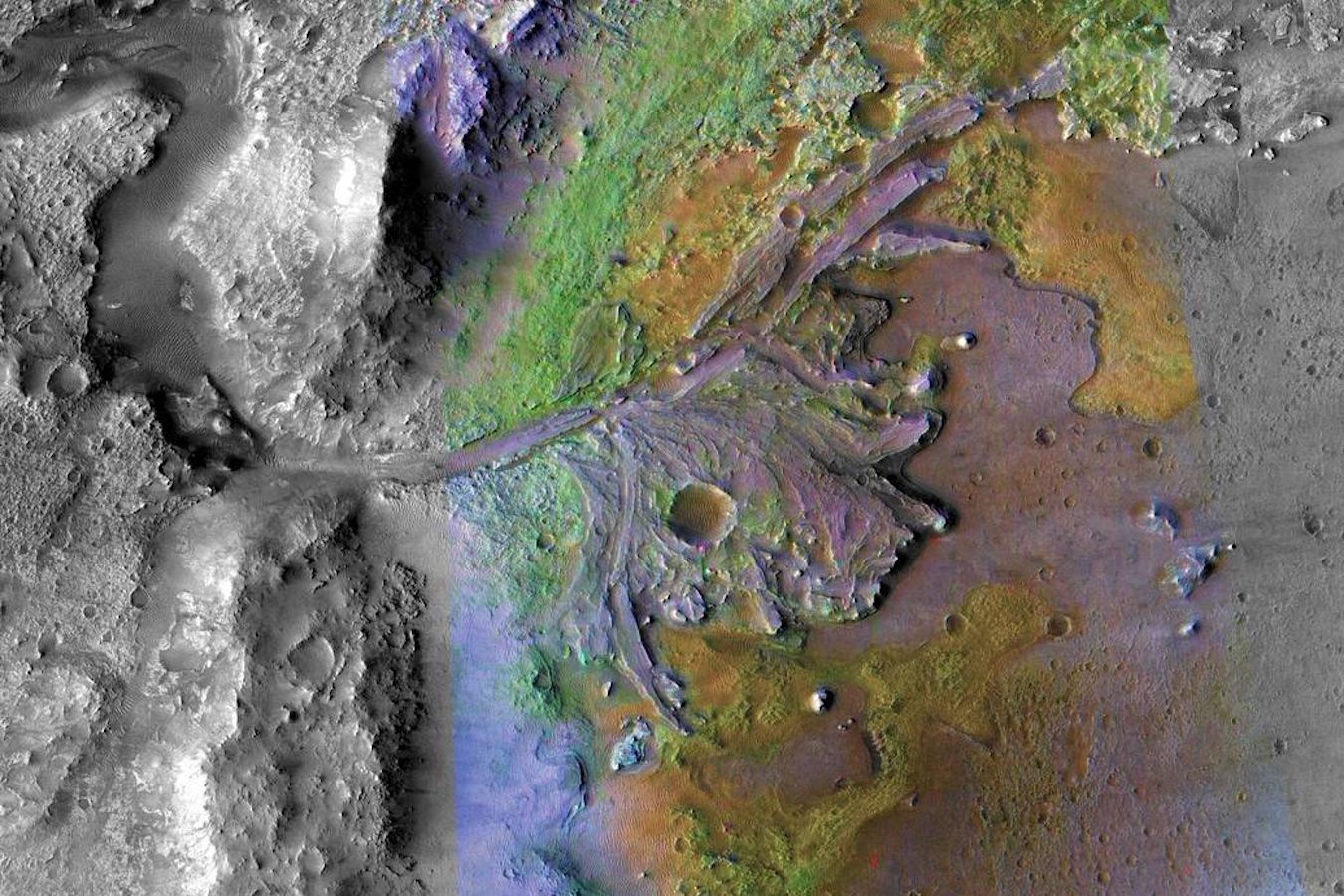
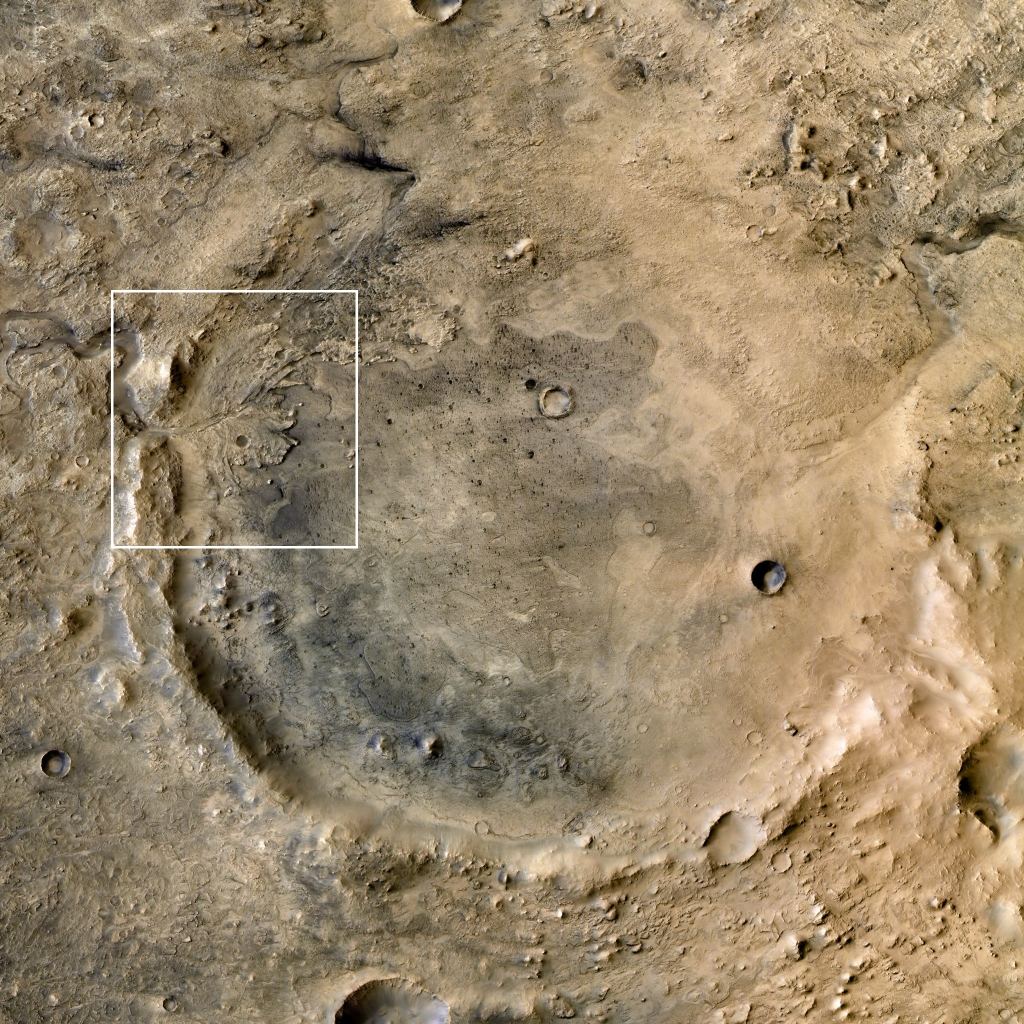
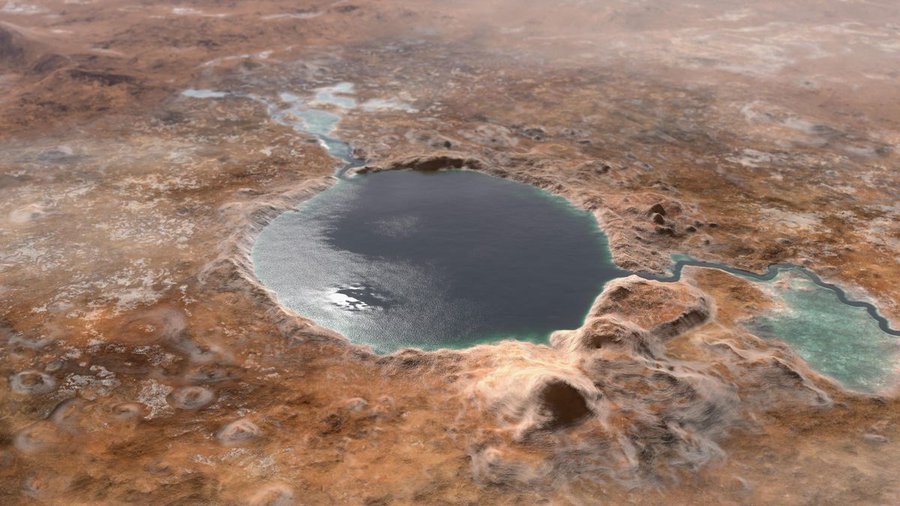
The search for life on alien worlds has captivated us for hundreds of years. In some respect, the search for life has expanded to the search for water since it is not unreasonable to assume if there is water then there is a good chance there is life too. When NASA selected the landing site for Perseverance, they were looking for such a body of water and settled upon the Jezero Crater. Images from orbiters reveal a crater that looks like it has been filled with water in the past but further investigations were needed to confirm. Now it seems, Perseverance has risen to the challenge.
Perseverance is a car sized rover that arrived on Mars on 18 February 2021 and carried with it the innovative Ingenuity helicopter, the first powered aircraft on another world. The main objective of the mission was to identify ancient Martian environments capable of supporting life and if possible, finding evidence of ancient microbial life through collecting rock and soil samples. Since its arrival in 2021, the rover has been travelling around the 50km wide crater studying the geology and atmosphere as it goes.
Mars Perseverence rover sent back this image of its parking spot during Mars Solar Conjunction. Courtesy NASA/JPL-Caltech
A paper recently published in Science Advances journal declares that the crater was indeed filled at some point in its geological past, with water! More that it has deposited layers of sediments on the floor of the crater which have gone through periods of erosion as the lake shrank but are now visible in space images of the region.
Although there have been nearly 3 years of operation on Mars, the really interesting stuff occurred between May and December 2022 when Perseverance drove from the crater floor onto the ancient river delta, a region believed to be 3 billion years old. During its journey, Perseverance used RIMFAX (the Radar Imager for Mars’ Subsurface Experiment) to shoot radar signals into the ground every 10cm. The pulses reflected from depths of about 20metres from below the surface showing that the base of the sediment was here and they had located the top of the buried crater.
The Jezero Crater and delta. Credit NASA
The data from RIMFAX showed sediment from two distinct periods bordered by periods of erosion as the environmental factors affected the sediments. The team reported that the original crater floor was not completely flat and that erosion must have taken place prior to the deposition of the sediments in the lake.
Despite the discovery of sediments, the team have yet to identify any fossilised remains or primitive life. The journey however has just begun. Over the last few decades we have found mounting evidence that water is common across the universe. It seems to that the processes we see on Earth are also common. Perhaps then we may be permitted to assume that other processes are replicated across the Cosmos, perhaps those that lead to the evolution of life! Time will tell if this latter assumption plays out.
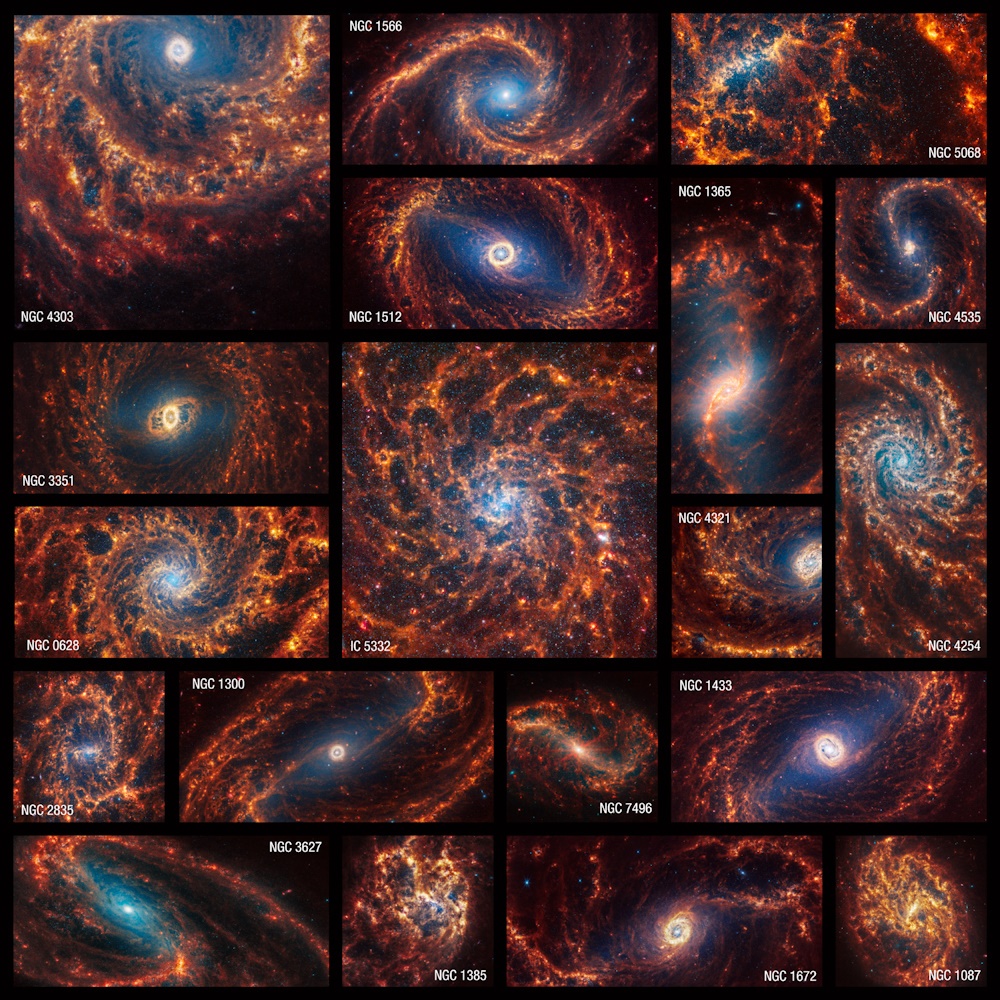
Feast Your Eyes on 19 Face-On Spiral Galaxies Seen by Webb
These Webb images are part of a large, long-standing project, the Physics at High Angular resolution in Nearby GalaxieS (PHANGS) program, which is supported by more than 150 astronomers worldwide. Before Webb took these images, PHANGS was already brimming with data from NASA’s Hubble Space Telescope, the Very Large Telescope’s Multi-Unit Spectroscopic Explorer, and the Atacama Large Millimeter/submillimeter Array, including observations in ultraviolet, visible, and radio light. Webb’s near- and mid-infrared contributions have provided several new puzzle pieces. Image Credit: NASA/ESA/CSA
Feast Your Eyes on 19 Face-On Spiral Galaxies Seen by Webb
If you’re fascinated by Nature, these images of spiral galaxies won’t help you escape your fascination.
These images show incredible detail in 19 spirals, imaged face-on by the JWST. The galactic arms with their multitudes of stars are lit up in infrared light, as are the dense galactic cores, where supermassive black holes reside.
The JWST captured these images as part of the Physics at High Angular resolution in Nearby GalaxieS (PHANGS) programme. PHANGS is a long-running program aimed at understanding how gas and star formation interact with galactic structure and evolution. One of Webb’s four primary science goals is to study how galaxies form and evolve, and the PHANGS program feeds that effort. The VLT, ALMA, the Hubble, and now the JWST have all contributed to it.
But Webb’s images are the juiciest.
“Webb’s new images are extraordinary. They’re mind-blowing even for researchers who have studied these same galaxies for decades.”
Janice Lee, Project Scientists, Space Telescope Science Institute.
The JWST can see in both near-infrared (NIR) and mid-infrared (MIR) light. That means it reveals different details, and more details, than even the powerful Hubble Space Telescope, which operates in visible light, UV light, and a small portion of infrared light.
This is NGC 4254 (Messier 99), a spiral galaxy about 50 million light-years away. It has a peculiarity to it, as one spiral arm is normal looking, and one is extended and less tightly wound. Though not a starburst galaxy, it forms stars three times as fast as other similar galaxies. This rapid star formation rate may have been triggered by interaction with another galaxy about 280 million years ago. With the JWST’s help, the PHANGS program will help astronomers understand NGC 4254’s history. Image Credit: NASA, ESA, CSA, STScI, Janice Lee (STScI), Thomas Williams (Oxford), PHANGS Team
In these JWST high-resolution images, the red colour is gas and dust emitting infrared light, which the JWST excels at seeing. Some of the images have bright diffraction spikes in the galactic center, which are caused by an enormous amount of light. That can indicate that a supermassive black hole is active, or it could be from an extremely high concentration of stars.
“That’s a clear sign that there may be an active supermassive black hole,” said Eva Schinnerer, a staff scientist at the Max Planck Institute for Astronomy in Heidelberg, Germany. “Or, the star clusters toward the center are so bright that they have saturated that area of the image.”
The diffraction spike in the center of NGC 1365 is a telescope artifact caused by an enormous amount of light in a compact region. It’s caused by either the active supermassive black hole or tightly grouped stars in the galactic centre. NGC 1365 is a double-barred spiral galaxy about 74 million light-years away. Image Credit: NASA, ESA, CSA, STScI, Janice Lee (STScI), Thomas Williams (Oxford), PHANGS Team
Stars near a galaxy’s center are typically much older than stars in the arms. The further a star is from the galactic center, the younger it typically is. The younger stars appear blue and have blown away the cocoon of gas and dust that they spawned in.
This is NGC 2835, a spiral galaxy about 35 million light-years away that has four or five spiral arms. Blue dots are very young stars that have blown away nearby gas and dust with their powerful UV light. Orange/red clumps are where even younger stars reside. They’re still surrounded by gas and dust. Several background galaxies are visible in the image. Image Credit: NASA, ESA, CSA, STScI, Janice Lee (STScI), Thomas Williams (Oxford), PHANGS Team
Orange clumps indicate even younger stars. They’re still wrapped in their blanket of gas and dust and are still actively accreting material and forming. “These are where we can find the newest, most massive stars in the galaxies,” said Erik Rosolowsky, a professor of physics at the University of Alberta in Edmonton, Canada.
The new images were released alongside some of the Hubble’s views of the same galaxies. These highlight how observing different wavelengths of light reveals or obscures different details in the galaxies. In the PHANGS observing program, different telescopes have observed galaxies in visible light, infrared light, UV light, and radio.
A Hubble Space Telescope image of NGC 628 (left) and the same galaxy as imaged by the JWST (right.) Both images are grand and inspiring and full of information, but the JWST image provides more detail. Large bubble-shaped gaps between concentrations of gas and dust are visible. In some of the images, those could be caused by supernovae. Image Credit: NASA, ESA, CSA, STScI, Janice Lee (STScI), Thomas Williams (Oxford), PHANGS Team
Since the human eye can’t see infrared, different visible colours are assigned to different wavelengths of light in order to make the images meaningful. In the JWST image of NGC 628 above, the galaxy’s center is filled with old stars that emit some of the shortest wavelengths of light the telescope can detect. They’ve been given a blue colour to make them visible. In the Hubble image, the same region is more yellow and washed out. The region emits the longest wavelengths of light that the Hubble can sense, so it has different colour assignments than the JWST.
Janice Lee is a project scientist at the Space Telescope Science Institute in Baltimore. She spoke for all of us when she said, “Webb’s new images are extraordinary. They’re mind-blowing even for researchers who have studied these same galaxies for decades. Bubbles and filaments are resolved down to the smallest scales ever observed and tell a story about the star formation cycle.”
This is NGC 1672, a spiral galaxy about 60 million light-years away. It may be a type II Seyfert galaxy, though astronomers aren’t totally certain. It has both a bright nucleus and a surrounding starburst region. Image Credit: NASA, ESA, CSA, STScI, Janice Lee (STScI), Thomas Williams (Oxford), PHANGS Team
These galaxies are all spiral galaxies like the Milky Way, meaning their massive arms define them. The spiral arms are more like waves that travel through space rather than individual stars moving collectively. Astronomers study the arms because they can provide key insights into how galaxies build, maintain, and shut off star formation. “These structures tend to follow the same pattern in certain parts of the galaxies,” Rosolowsky added. “We think of these like waves, and their spacing tells us a lot about how a galaxy distributes its gas and dust.”
The spiral galaxy NGC 1566 is about 60 million light-years away in the constellation Dorado. NGC is interacting with smaller member galaxies in its neighbourhood. It’s an active galaxy, meaning its nucleus emits a lot of light that doesn’t come from stars. Instead, it probably comes from the supermassive black hole at the center. NGC 1566 is extensively studied due to its proximity, orientation, its strong spiral arms and its active galactic nucleus. Image Credit: NASA, ESA, CSA, STScI, Janice Lee (STScI), Thomas Williams (Oxford), and the PHANGS team
Ever since it began science operations, the JWST has given astronomers an overwhelming flow of data that will fuel research for years and decades to come. These beautiful images are just a part of a larger data release that includes a catalogue of about 100,000 star clusters. “The amount of analysis that can be done with these images is vastly larger than anything our team could possibly handle,” said the University of Alberta’s Erik Rosolowsky. “We’re excited to support the community so all researchers can contribute.”
Solar flares pose a major hazard to electronics and infrastructure in Low Earth Orbit, but they may have played a role in kick-starting life on Earth. Credit: NASA/SDO/J. Major
The water that life knows and needs, the water that makes a world habitable, the water that acts as the universal solvent for all the myriad and fantastically complicated chemical reactions that make us different than the dirt and rocks, can only come in one form: liquid.
The vast, vast majority of the water in our universe is unsuitable for life. Some of it is frozen, locked in solid ice on the surface of a world too distant from its parent star or bound up in a lonely, wayward comet. The rest is vaporized, existing as a state of matter where molecules lose their electron companions, boundless and adrift through the great nebular seas that dot the galaxies, or ejected completely into the great voids between them. Either way, that water exists only one molecule at a time, at a temperature of over a million degrees yet its density so low that you could pass through it and mistake it for the cold, hard vacuum of space itself.
No, for water to be liquid it must exist in special place around a star, not too cold for it turn to ice, not too hot for it to turn to gas. It must lay within what astronomers call the habitable zone, or, if they’re feeling playful, the Goldilocks zone.
The habitable zone is different for every star throughout the galaxy, because no two stars are alike. The smallest red dwarfs are barely a tenth the mass of the Sun, with luminosities a thousand times weaker. The largest are great beasts, a hundred solar masses or more, so bright they can be seen from thousands of light-years away by the unaided eye. Around each star a simple iron law holds, the fact that the intensity of light, and all the warmth and comfort that light brings with it, diminishes with the square of the distance from the source. An object twice as far away will experience a quarter of the brightness; at a distance of four times that drops to a sixteenth, and so on. That is why Pluto, despite only sitting about 30 times further away from the Sun than the Earth, is forced to experience never-ending dim twilight, even at the height of its day.
Too far from a star and the radiant temperatures are too cold, and any water freezes. Too close, and the water slips its bonds, free to roam as a gas. In between, in a special band determined by the star’s mass, age, and brightness, sits the habitable zone, where a planet is capable – yes, merely capable – of hosting water in its liquid state on its surface.
For our own Sun, the habitable zone stretches from just within the orbit of Venus to just beyond the orbit of Mars. Three planets perfectly situated within the warm embrace of our Sun, and yet only one has life. What happened? What made our planet so special, or so lucky? It’s impossible to say for sure, because the potential of habitability is not a promise.
There is, however, one other place where we know liquid water can exist. Ironically, it’s in the frozen moons of the outer solar system. There, under surfaces of frozen ice a hundred kilometers thick sit globe-spanning liquid water oceans, with more liquid water than exists on the surface of the Earth. There the habitability isn’t given by the rays of the Sun, but from their molten cores emanating heat, driven by the gravitational warping of the giant planets they orbit. Life could certainly find a purchase there, in places of darkness that the Sun never can touch, even though there worlds are not, according to the traditional definition, habitable.
port Us Log In Credit: CfA POSTED ONJANUARY 28, 2024 BY PAUL M. SUTTER The Improbable Origins of Life on Earth We do not yet know how, where, or why life first appeared on our planet. Part of the difficulty is that “life” has no strict, unive
We do not yet know how, where, or why life first appeared on our planet. Part of the difficulty is that “life” has no strict, universally agreed-upon definition.
Normally this is not an issue, as the vast majority of life is most definitely alive, and only biologists interested in the extreme edges – viruses, prions, and the like – need to worry about precise classifications. But to study the origins of life we must, by necessity, examine a process that takes non-living matter and fundamentally changes it. Presumably this process happened in stages, with fits and starts along the way, and so the line between uncoordinated chemical reactions and the beginnings of vibrancy must be blurred.
It’s helpful here to present at least a simple working definition of life, not to rewrite the biology textbooks, but so that at least we can properly frame the discussion of life’s origins. And for those purposes a simple statement will suffice: life is that which is subject to Darwinian evolution. That is, life experiences natural selection, that unceasing pressure that chooses traits and characteristics to pass down to a new generation through the simple virtue of their survivability. If the trait contributes in some way, even circuitously, to the survivability of an organism and its ability to reproduce, it persists. All else is discarded (or, at best, gets carried unceremoniously along for the ride).
Earth is the only known place in the solar system, in the galaxy, in the entire universe where Darwinian evolution takes place.
To succeed at evolution and separate itself from mere chemical reactions, life must do three things. First, it must somehow store information, such as the encoding for various processes, traits, and characteristics. This way the successful traits can pass from one generation to another.
Second, life must self-replicate. It must be able to make reasonably accurate copies of its own molecular structure, so that the information contained within itself has the chance to become a new generation, changed and altered based on its survivability.
Lastly, life must catalyze reactions. It must affect its own environment, whether for movement, or to acquire or store energy, or grow new structures, or all the many wonderful activities that life does on a daily basis.
By interacting with its environment, making copies of itself, and storing information (like how to interact with the environment and make copies of itself), life can evolve, growing in complexity and specialization over geologic time, from humble molecules to conscious minds capable of peering into its own shrouded origins.
In the modern era, with billions of years of practice behind it, life on Earth has evolved a dizzying array of chemical and molecular machines to propagate itself – a menagerie so complex and interconnected that we do not yet fully understand it. But a basic picture has emerged. Put exceedingly simply (for I would hate for you to mistake me for a biologist), life accomplishes these tasks with a triad of molecular tools.
One is the DNA, which through its genetic code stores information using combinations of just four molecules: adenine, guanine, cytosine, and thymine. The raw ability of DNA to store massive amounts of information is nothing short of a miracle; our own digital system of 1’s and 0’s (invented because it’s much simpler to tell if a circuit is on or off than some stage in-between) is the closest comparison we can make to DNA’s information density. Natural languages don’t even earn a place on the chart.
The second component is RNA, which is intriguingly similar to DNA but with two subtle, but significant, differences: RNA swaps out thymine for uracil in its codebase, and contains the sugar ribose, which is one oxygen atom short of the deoxyribose of DNA. RNA also stores information but, again speaking only in generalities, has the main job of reading the chemical instructions stored in the DNA and using that to manufacture the last member of the triad, proteins.
“Proteins” is a generic catch-all term for the almost uncountable varieties of molecular machines that do stuff: they snip apart molecules, bind them back together, manufacture new ones, hold structures together, become structures themselves, move important molecules from one place to another, transform energy from one form to another, and so on.
Proteins have one additional function: they perform the job of unraveling DNA and making copies of it. Thus the triad completes all the functions of life: DNA stores information, RNA uses that information to manufacture proteins, and the proteins interact with the environment and perform the self-replication of DNA. This cycle allows living organisms to experience the gift of evolution.
And this cycle is, as I said, gloriously complex and obviously the result of billions of years of fine-tuning and refinement. The interconnected nature of DNA, RNA, and proteins means that it could not have sprung up ab initio from the primordial ooze, because if only one component is missing then the whole system falls apart – a three-legged table with one missing cannot stand.
Plants Growing in Space are at Risk from Bacterial Infections
Graduate student Noah Totsline works in the College of Agriculture and Natural Resources lab of Harsh Bais on a NASA-sponsored project looking at how plants grown in space are more prone to infections of Salmonella compared to plants not grown in space or grown under gravity simulations. The microgravity environment of space can be simulated in the lab by rotating the plants at a precise speed that causes the plants to react as if they were in a constant state of free-fall.
Plants Growing in Space are at Risk from Bacterial Infections
I have spent the last few years thinking, perhaps assuming that astronauts live off dried food, prepackaged and sent from Earth. There certainly is an element of that but travellers to the International Space Station have over recent years been able to feast on fresh salad grown in special units on board. Unfortunately, recent research suggests that pathogenic bacteria and fungi can contaminate the ‘greens’ even in space.
It’s been at least three years that astronauts have been able to eat fresh lettuce and other leafy items along with tortillas and powdered coffee.. Specially designed chambers on board allow them to grown plants under carefully controlled temperature, water and lights to ensure a successful harvest. There is however an issue that the ISS is a relatively closed environment and so it is easy for bacteria and fungi to spread and astronauts to get ill.
The International Space Station stretches out in an image captured by astronauts aboard the SpaceX Crew Dragon Endeavour during a fly-around in November 2021. Credit: NASA
A paper just published in Scientific Reports and NPJ Microgravity and authored by a team led by Noah Totsline explores what happens with lettuce grown under ‘simulated’ weightless environments (the device known as a clinostat rotate them so that plants did not know which way was up or down). This was achieved by being gently rotated. Plants it seems though, are pretty good at sensing gravity using their roots. The team found that plants under these conditions were more prone to infection than those on Earth in particular Salmonella.
One of the main lines of defence for plants is their stomata. These are tiny pores in the leaves, much like the pores in our skin, that close to defend when an environmental stress is detected, such as bacteria. The team exposed plants in their micro-gravitational environment to find the plants opened the stomata instead of closing them.
The team went a step further and introduced a natural bacteria known as UD1022 which usually helps to protect plants. In the clinostat however, it failed to help the plant to protect itself from other more harmful bacteria.
The research was not just an interesting scientific problem but does solve real world problems. Space is slowly opening up with more and more non-astronauts becoming astronauts and travelling into space and this is only going to increase. As SpaceX and the like press ahead with the commercialisation of space travel we absolutely must find a way to grow and farm sustainable and healthy food instead of prepackaged snacks if we are to become a truly space fairing civilisation.
We are some way away from that of course but this is step one in a long journey. Sadly it is not as simple a task as sterilising the seeds since their could easily be microbes in the environment on board the ISS (or other space craft that come in the future) and perhaps it is these that pose the greatest risk. The team are now looking at ways to genetically modify plants to help them cope in the microgravity of space.
NASA Gives us an Update on its Long-term Plans for the Moon and Mars
NASA's plans for exploration of the Moon and Mars are a unified architecture covering all mission, crew, and technology contigencies. Image courtesy NASA.
NASA Gives us an Update on its Long-term Plans for the Moon and Mars
Going to Mars is a major step in space exploration. It’s not a quick jaunt nor will it be easy to accomplish. The trip is already in the planning stages, and there’s a good chance it’ll happen in the next decade or so. That’s why NASA and other agencies have detailed mission scenarios in place, starting with trips to the Moon. Recently, NASA updated its “Moon to Mars Architecture” documents, including a closer look at some key decisions about Mars exploration.
Those decisions cover a wide gamut of challenges to living and working on the Red Planet. NASA planners narrowed them down to these key areas: science priorities, number of crew members on the first trip, how many on each follow-up trip, number of crew members per Mars location, Mars surface power generation technologies, what kinds of missions will be sent (the “target state”), and establishing what they call a “loss of crew risk” posture. That last one involves making the right decisions about missions based on risk to the crew’s health and performance.
NASA Plans for the Moon and Mars
Why create a mission architecture for the Moon and Mars? Essentially, anybody going to these other worlds needs a mutually agreed-upon “roadmap” that plans the explorations and technologies needed. That’s why NASA created its first Moon to Mars objectives in 2022 and has been refining them ever since. The agency’s roadmap includes feedback from a wide swath of society. Members of academia, U.S. industry, international partners, and the NASA workforce all contributed to the project.
“Our new documents reflect the progress we’ve made to define a clear approach to exploration and lay out how we’ll incorporate new elements as technologies and capabilities in the U.S. and abroad mature,” said Catherine Koerner, associate administrator, Exploration Systems Development Mission Directorate at NASA Headquarters in Washington. “This process is ensuring that everything we are doing as an agency and together with our partners is focused on achieving our overarching exploration goals for the benefit of all.”
The Key Decisions Regarding Mars Exploration
In a white paper published along with the Moon to Mars Architecture document, NASA explains key areas of concern when it comes specifically to Mars exploration. The first is science. It’s the main reason for going the both the Moon and Mars, and its needs will drive almost all other considerations. It will determine the resources needed, including crew numbers, payloads, technology deliveries, and power and communications infrastructure, and contingencies for possible accidents or other challenges.
An artist’s concept of Mars explorers and their habitat on the Red Planet. Courtesy NASA.
Once the science is determined, planners can decide on crew needs for the first and subsequent missions. As the white paper states, “…a series of focused science exploration missions to different landing sites would favor one architecture. Establishing a permanent, fixed base from which astronauts could conduct many surface missions supporting diverse and evolving exploration activities would favor a very different architecture.”
From there, planners will figure out the “cadence” of the missions and crew deployments. How often do we send missions and how many people will go? Just as an example, let’s say that the first mission will land in Jezero Crater, near the Perseverance rover. NASA could use its data to determine further science exploration at the site. That will drive the best placement for habitats and other infrastructure, and the type of mission will dictate the number of crew members needed.
Those decisions will then drive the infrastructure and technology needed for each step. Science stations need power to do the science, but also to sustain the habitats for the science teams. If those teams travel across the surface, their rovers will need power, fuel, and possibly replacement parts. Crew members themselves will need to be able to grow food, use local resources to extract fuel and water, and otherwise maintain safe living conditions. And, these are just the first steps in the long-term exploration of Mars, enabled by what people learn about living and working on the Moon.
Why Does NASA Want a Moon to Mars Plan?
While it may seem sexy to send people directly to Mars without any intervening stops at the Moon, NASA and other agencies want a measured approach. The idea to use the Moon as a stepping stone to Mars is not new. The Moon makes a good “training base” of sorts where we can “practice” with the technologies and techniques of living on another world. In addition, it offers a unique environment for astronomy and planetary science exploration. Astronauts learn in an environment close to Earth and if something dire happens to them, rescue is not far away.
Artist’s impression of astronauts on the lunar surface, as part of the Artemis Program. Credit: NASA
These ideas underlie the planning for the upcoming Artemis missions to the lunar surface. There’s supposed to be a gateway orbiting the Moon, to which astronauts and equipment will fly. Then, from there, materials and people head to the Moon to explore various sites, and begin the complex tasks of exploration and habitat construction. That set of missions will establish the foundation for scientific exploration, and land a diverse set of people on the lunar surface, all in cooperation with international partners. Ultimately, everything they learn on the Moon will prepare people for the leap to Mars.
The Moon to Mars mission architectural plans unite both lunar and Mars exploration in one timeline, identifying technologies and capabilities needed to accomplish each step. They are living documents, updated every year to reflect changes in any aspect of mission planning and technology.
Japanse maanlander werkt opnieuw, meer dan een week na de landing
Japanse maanlander werkt opnieuw, meer dan een week na de landing
Artikel van Kathleen Heylen
Op 19 januari slaagde Japan erin om voor de eerste keer een onbemand ruimtetuig neer te zetten op de maan. Maar de landing verliep niet helemaal volgens plan. Er bleekeen probleem met de zonnepanelen van de maanlander, waardoor ze geen stroom konden opwekken. Daardoor was JAXA genoodzaakt om de maanlander uit te schakelen, om zo energie te sparen.
Kort voordien hadden de maanlander en de twee robotvoertuigjes aan boord nog wel foto's en data doorgestuurd naar de aarde. Zo kon JAXA achterhalen dat de maanlander door een probleem met een van de motoren op zijn zijde was geland. Daardoor konden de zonnepanelen onvoldoende zonlicht opvangen. Maar er was nog hoop dat dat zich zou herstellen.
De zonnepanelen waren gericht op het westen. Ze zouden meer zonlicht kunnen opvangen naarmate de zonsondergang op de landingssite zich inzet. Die vindt plaats op 1 februari, in de aanloop naar dat moment verandert de richting van waaruit het zonlicht komt geleidelijk. En dat lijkt de maanlander nu weer aan de praat te hebben gekregen.
Een foto gemaakt door het robotvoertuigje LEV-2, meteen na de landing, toont dat de maanlander op zijn zijde terechtgekomen is en daardoor onvoldoende zonlicht kon opvangen.
De maanlander is ook meteen aan de slag gegaan. Met zijn multispectrale camera (MBC) onderzocht hij de samenstelling van gesteenten in de buurt van de landingssite. Met dat soort onderzoek willen wetenschappers meer te weten komen over het ontstaan van de maan.
Op X (vroeger Twitter) postte JAXA een van de foto's die zijn doorgestuurd. Daarop is een gesteente te zien dat de naam "Toy poodle" kreeg. "Toy poodle" is een van de gesteenten die het Japanse team als "interessant" beoordeelde op basis van de eerste foto's meteen na de landing.
Nauwkeurige precisie
Uit die allereerste gegevens bleek ook al dat de maanlander op ongeveer 55 meter is geland van de plaats waar hij oorspronkelijk had moeten landen. Dat is uiterst nauwkeurig. Japan had zich als doel gesteld om binnen een zone van 100 meter te landen, terwijl andere ruimtevaartnaties marges van enkele kilometers gebruiken.
Die nauwkeurigheid is een van de speerpunten van de Japanse maanmissie. De komende jaren staan heel wat onbemande én bemande vluchten naar de maan op de agenda. Ook wordt gekeken naar een basis op maan. Het is dus belangrijk om uiterst precies te kunnen landen, ook op terrein dat minder toegankelijk is.
Een eerdere simulatie toont hoe de Japanse maanlander op de maan had moeten landen.
Het is niet duidelijk wanneer de operaties van de Japanse maanlander zullen eindigen. Eerder al had JAXA gezegd dat het tuig niet ontworpen was om een nacht op de maan te overleven. Die maannacht begint nu donderdag en duurt ongeveer 14 dagen.
Japan is nog maar het vijfde land dat erin slaagt om een onbemand ruimtetuig op de maan te laten landen, na de Sovjet-Unie, de Verenigde Staten, China en India.
Details involving a mysterious object that was released during the test flight of an experimental Chinese spaceplane that landed this month were among several potential threats from space addressed in a recent report issued by a Washington-based think tank.
The assessment, produced by the Center for Strategic and International Studies (CSIS) Aerospace Security Project (ASP), examined the varieties of weapons most likely to pose a threat from orbit, as well as the nations capable of deploying them, specifically citing China and Russia as “both challenging the world order that has been in place and has secured peace since the end of World War II.”
Detailing counterspace weapons that “pose a serious risk to the space environment and the ability of all nations to use the space domain for prosperity and security,” the ASP assessment places particular significance on systems that result in orbital debris, focusing on four distinct types of weapons: kinetic physical, non-kinetic physical, electronic, and cyber counterspace weapons.
A portion of the report also focused on the recent launches of a pair of spaceplanes by China, one orbital, the other suborbital, from its Jiuquan Satellite Launch Center.
“[Few details have surfaced about either vehicle,” the report states, although it is known that the first spacecraft was launched in September 2020 by a Long March 2F and thereafter remained in Low Earth Orbit (LEO) for close to 48 hours. During that time, it was observed to release a secondary object.
The mystery object, circled in red, appears some distance behind China’s spaceplane, circled in blue, during its operations in orbit
(Credit: Slingshot Aerospace/CSIS).
While little else is known about the mysterious object, it was determined to be “capable of broadcasting transmissions,” according to the ASP report.
The second test flight occurred on August 4, 2022, remaining in LEO for close to two months before raising its orbit on October 23, shortly before the spacecraft also released an object.
The ASP report says that publicly available data does not provide clear details on the exact time that the object was released from the second Chinese spacecraft. However, it was first recognized on
The Debrief previously reported that the object had been observed while China’s spaceplane had been carrying out its operations in orbit, which is believed to resemble the U.S. X-37B spaceplane, showing “a Chinese interest in matching U.S. capabilities.”
The X-37B, which is said to resemble China’s spaceplane (Public Domain).
October 31, 2022, according to the U.S. Space Force space tracking database.
“There are no indications that a spaceplane capability would act as a counterspace weapon,” the ASP concludes, though noting that its ability to release unknown objects into orbit “could progress to a co-orbital ASAT capability.”
Earlier this month, images released online by independent geospatial intelligence provider BlackSky Technology Inc appeared to show a Chinese aerostat hovering over a runway at the country’s Korla East Test Site in Xinjiang, along with what analysts believed to have been laser anti-satellite weapons capabilities.
A report published by the Defense Intelligence Agency (DIA) last year also stated that between 2019 and 2021, China has reportedly doubled the number of satellites it has in orbit.
According to the ASP’s recent assessment, China currently possesses satellite capabilities that include “advanced positioning, navigation, and timing (PNT); satellite communications; intelligence, surveillance, and reconnaissance (ISR); missile warning; and space situational awareness.”
China’s ground-based space surveillance infrastructure is also addressed, citing knowledge of facilities it has built “in countries around the world, including as far away as South America.”
Apart from concerns over China’s space operations, extensive portions of the ASP report also address developments in Russia, which include mention of Dimitry Rogozin’s replacement last July by Yuri Borisov, changes that were “possibly a demotion for both men” on account of Rogozin’s social media activity which the report’s authors characterized as “erratic,” as well as Russia’s then-stated plans to depart from its operations aboard the International Space Station (ISS).
Last month, Russia said in an about-face that it planned to continue its support of ISS operations at least until 2028, despite previous statements that it would end its support in 2024, and amidst rising tensions between Washington and Moscow related to Russia’s invasion of Ukraine.
(Credit: NASA)
A February 2022 incident involving a Viasat hack carried out by Russia was also addressed among the cyber-related activities the country has engaged in recently, citing it amidst information on a more recent similar cyber intrusion carried out against a “U.S. commercial satellite communications provider” last November.
A U.S. Department of Homeland Security official serving as an analyst with CISA said that the Russian state-sponsored hacking group Fancy Bear had succeeded in the infiltration of the network, where they had reportedly been able to operate for several months before it was learned that the hack had occurred.
While countries like North Korea have shown significantly less in the way of space operations in recent months, the ASP notes in the report that such minimal counterspace weapons concerns are “overshadowed by the immense number of missile launches conducted in 2022.”
While the majority of the ASP space threat assessment addresses potential weapons and other dangers that may emanate the activities of various nations in space, there were also some positive developments, which included the absence of any confirmed ASAT tests within the last year, which the CISA says may be due to “greater recognition of the destructive potential of debris-generating activity in space,” which potentially impacts the safety of orbital operations for all nations and their space programs.
“In 2023, it will be important to monitor if this consequential trend is sustained,” the report concludes.
Evidence of ancient lake sediments at the base of Mars' Jezero crater offer new hope for finding traces of life in samples collected by NASA's Perseverance rover.
An illustration of Jezero Crater, the landing locale of the Mars 2020 Perseverance rover as it might have appeared billions of years ago when it was perhaps a life-sustaining lake.(Image credit: NASA/JPL-Caltech)
Evidence of ancient lake sediments at the base of Mars' Jezero Crater offer new hope for finding traces of life in samples collected by NASA's Perseverance rover.
Perseverance touched down on Feb. 18, 2021 inside the Red Planet's 28-mile-wide (45 kilometers) Jezero Crater, which is believed to have once hosted a large lake and river delta. The rover has been scouring the crater in search of signs of past life and collecting and caching dozens of samples along the way for a possible future return to Earth.
Using the rover's Radar Imager for Mars' Subsurface Experiment (RIMFAX) instrument, researchers from the University of California, Los Angeles (UCLA) and the University of Oslo revealed new clues about how sediment layers formed over time on the crater floor, according to a statement.
"From orbit we can see a bunch of different deposits, but we can't tell for sure if what we're seeing is their original state, or if we're seeing the conclusion of a long geological story," David Paige, first author of the study, RIMFAX's deputy principal investigator and UCLA professor, said in the statement. "To tell how these things formed, we need to see below the surface."
As Perseverance travels across the surface of Mars, the RIMFAX instrument sends radar waves downward at 4-inch (10-centimeter) intervals and measures pulses reflected from depths of about 65.6 feet (20 meters) below the surface to create a subsurface profile of the crater floor.
The RIMFAX data showed evidence of sediment deposited by water that once filled the crater. It's possible that microbial life could have lived in the crater at this time and, if such life existed on Mars, sediment samples from this area would contain signs of their remains.
Two distinct periods of deposition occurred, creating layers of sediments on the crater floor that appear regular and horizontal, much like strata layers seen on Earth. Fluctuations in the lake's water levels caused some of the sediment deposits to form an enormous delta, which Perseverance traversed between May and December 2022, according to the statement.
Mars Perseverance Rover RIMFAX ground penetrating radar measurements of the Hawksbill Gap region of Jezero Crater. (Image credit: Svein-Erik Hamran, Tor Berger, David Paige, University of Oslo, UCLA, California Institute of Technology Jet Propulsion Laboratory, NASA)
The radar measurements also show an uneven crater floor below the delta, which is likely due to erosion before sediments were first deposited. After, as the lake dried up over time, the sediment layers in the crater were eroded, forming the geologic features visible on the Martian surface today.
"The changes we see preserved in the rock record are driven by large-scale changes in the Martian environment," Paige said in the statement. "It's cool that we can see so much evidence of change in such a small geographic area, which allows us [to] extend our findings to the scale of the entire crater."
Their findings were published today (Jan. 26) in the journal Science Advances.
Perseverance project scientist Ken Farley provides a guided tour of the richly detailed 360-degree panorama taken by the rover’s Mastcam-Z instrument at the “Airey Hill” location in November. Credit: NASA/JPL-Caltech/ASU/MSSS; ESA/DLR/FU-Berlin
This animated artist’s concept depicts water breaking through the rim of Mars’ Jezero Crater, which NASA’s Perseverance rover is now exploring. Water entered the crater billions of years ago, forming a lake, delta, and rivers before the Red Planet dried up.
A NASA-funded study that evaluated a key strategic location on the Moon with help from imagery obtained by the Lunar Reconnaissance Orbiter (LRO) has revealed the presence of moonquakes and faults in areas near the lunar south pole, which the space agency plans to utilize for future crewed space missions.
The study found that the Moon’s interior is shrinking over time as it cools, a phenomenon that is giving rise to tremors and other seismic activity occurring near the vicinity of the Moon’s south polar region.
The findings could present complications for NASA’s Artemis program, particularly its third mission which will involve crewed lunar exploration that may use the Moon’s south pole for potential landing sites.
Tom Watters, a Senior Scientist with the Center for Earth and Planetary Studies of the National Air and Space Museum at the Smithsonian Institution, says current models reveal shallow moonquakes resulting from fault activity that could produce violent ground shaking in the Moon’s south pole region.
Watters, an expert on tectonic landforms on the Earth and the Moon and the lead author of a paper detailing the new findings, says the potential thrust fault activity in the region “should be considered when planning the location and stability of permanent outposts on the Moon.”
LRO image depicting the the Wiechert cluster of lobate scarps, as detailed with arrows pointing leftward, located near the lunar south pole
(Credit: NASA/LROC/ASU/Smithsonian Institution)
Currently, thousands of small, relatively new thrust faults have been detected in the lunar crust, as revealed in imagery collected by the Lunar Reconnaissance Orbiter (LRO). LRO Deputy Project Scientist Maria Banks, also a co-author of the new study, called the imagery “a good demonstration of one of the many ways in which LRO data is being used to assist planning for our return to the Moon.”
According to the team, these thrust faults detected in LRO imagery are the result of contractions driven by factors that include the Moon’s hot interior gradually cooling over time, which breaks the crust and misaligns the separate halves, producing steep banks resembling steps on a staircase.
Shallow moonquakes have also been detected in conjunction with the formation of these thrust faults by seismometers associated with the Apollo Passive Seismic Network, the strongest of which had an epicenter that was traced to the lunar south pole.
Based on models used in the recent study, the formation of a young thrust fault scarp in the de Gerlache Rim 2, a location NASA has identified as a potential landing site for Artemis III, could have been associated with a moonquake of comparable strength.
Above: Predicted areas of surface slope instability in areas near the lunar south pole, as revealed in models produced by Watters and the team during the recent NASA-funded study (Credit: NASA/LROC/ASU/Smithsonian Institution)
Also of concern is the potential for regolith landslides that may occur, which the recent study shows could result even from much milder seismic activity.
In the years ahead, NASA aims to work with its international and commercial partners to establish the first long-term human presence on the lunar surface under its Artemis program, in addition to landing the first woman and first person of color on the Moon.
However, Renee Weber with NASA’s Marshall Space Flight Center and a co-author of the new study, says that understanding seismic hazards that may potentially impact future human lunar exploration during the Artemis missions, as well as those further in the future, will require additional seismic data from regions around the Moon, and not just its south pole.
“Missions like the upcoming Farside Seismic Suite will expand upon measurements made during Apollo,” Weber said in a statement, “and add to our knowledge of global seismicity.”
The team’s recent paper, “Tectonics and Seismicity of the Lunar South Polar Region,” was published on January 25, 2024, in The Planetary Science Journal.
Beste bezoeker, Heb je zelf al ooit een vreemde waarneming gedaan, laat dit dan even weten via email aan Frederick Delaere opwww.ufomeldpunt.be. Deze onderzoekers behandelen jouw melding in volledige anonimiteit en met alle respect voor jouw privacy. Ze zijn kritisch, objectief maar open minded aangelegd en zullen jou steeds een verklaring geven voor jouw waarneming! DUS AARZEL NIET, ALS JE EEN ANTWOORD OP JOUW VRAGEN WENST, CONTACTEER FREDERICK. BIJ VOORBAAT DANK...
Druk op onderstaande knop om je bestand , jouw artikel naar mij te verzenden. INDIEN HET DE MOEITE WAARD IS, PLAATS IK HET OP DE BLOG ONDER DIVERSEN MET JOUW NAAM...
Druk op onderstaande knop om een berichtje achter te laten in mijn gastenboek
Alvast bedankt voor al jouw bezoekjes en jouw reacties. Nog een prettige dag verder!!!
Over mijzelf
Ik ben Pieter, en gebruik soms ook wel de schuilnaam Peter2011.
Ik ben een man en woon in Linter (België) en mijn beroep is Ik ben op rust..
Ik ben geboren op 18/10/1950 en ben nu dus 75 jaar jong.
Mijn hobby's zijn: Ufologie en andere esoterische onderwerpen.
Op deze blog vind je onder artikels, werk van mezelf. Mijn dank gaat ook naar André, Ingrid, Oliver, Paul, Vincent, Georges Filer en MUFON voor de bijdragen voor de verschillende categorieën...
Veel leesplezier en geef je mening over deze blog.