Dit blog wordt regelmatig bijgewerkt - this blog will be updated regulary
Beste lezer, mocht u onverwachts grammatica foutjes tegenkomen in de reportages/verhalen op dit blog, bij deze mijn verontschuldiging, Wayn, Storyteller
Dear reader, if you encounter, unexpectedly grammar mistakes in the reports / stories on this blog, my apology, Wayn, Storyteller
NIEUW BOEK VAN WAYN PIETERS ''SURUCUCU' BESTELLEN ramblinwayn@home.nl
PLOT: Tonho gaat op zoek naar de moordenaar van zijn vader Lirio, omgebracht voor ruwe diamanten. Hij raakt verzeild in een wereld van intriges, moord en komt in bezit van een schatkaart. Het avontuur begint in Rio de Janeiro. Via de Mato Grosso en junglestad Manaus komt hij tenslotte terecht in Novo Mundo, Pará, waar 258 jaar geleden een goudschat begraven werd. Dit is ook het gebied van de Mundurucu-stam, met hun mysterieuze wereld en het woud van de Surucucu slangen, het metafysische van Amazonas. Het verhaal geeft een visie op de Braziliaanse samenleving en vraagt begrip voor het Indianen-vraagstuk.
BIOGRAFIE: Wayn Pieters (1948) werd geboren in Maastricht. Naast auteur is hij kunstschilder en singer-songwriter. Sinds 1990 bezoekt hij Brazilië, waar hij vele reizen ondernam en in 1995 een bezoek bracht aan de Xavante Indianen in de staat Mato Grosso. Zijn oom, pater Thomas geboren 1921 Maastricht, Nl - overleden 1998 Tangua, Brazil, die 40 jaar in Brazilië werkte, omschreef hem ooit: ‘Op zijn reizen door Brazilië wordt Wayn geleid door een mystiek gevoel van broederlijke verbondenheid met ras, bloed en bodem.’
Surucucu is Alsnog verkrijgbaar bij boehandel DE TRIBUNE https://www.detribune.nl/ Maastricht, NL
Tevens het boek Xingu , vertalingen van korte sagas der Xingu inheemsen vanuit het Portugees. Wayn Pieters
BOEK WAYN PIETERS: XINGU, DE INDIANEN, HUN MYTHEN mythologische verhalen der Xingu Indianen- midden-Brazilië vert. van uit Portugees/uitg. Free Musketeers - Het boek is verkrijgbaar bij boekhandel 'DE TRIBUNE' aan de Kapoenstraat te Maastricht
Op zoek naar de Ware Ziel van Brazilië - Het alternatief
07-05-2015
Social restaurant in Niteroi, Rj gets more expensive
The breakfast, which cost 0.35 real, increased to R 0.50 (33 dollar cent) , while lunch rose to R $ 2. (66 dollar cent) The Secretariat explained that this was the first increase in 13 years of operation
Who will gets in the Popular restaurant in Niterói Centre already meets most expensive meals. The breakfast, which cost £ 0.35, increased to R $ 0.50, while lunch rose to R $ 2, an increase of 100% in the amount charged. Furthermore, soups and desserts were cut. The state Department of Social Services reported that the attitudes happened due to the economic climate.
The increase reached 16 popular restaurants across the state and took many by surprise. In the case of Niteroi, increasing the announcement was made through a paper written by hand in local main entrance. The secretariat also reported that this was the first increase in 13 years that the establishments are operating. "The increase was high, twice is a lot. Other than that, it was not a decision forewarned. It was all very suddenly.
"Many people do not have 1 real for lunch and asks for help to get something to eat, as is my case. Now we have to ask twice to have a decent meal, " laments the retired Emilda da Silva, 66
Besides the increase, another subject that took the popular restaurant was a lack of fruit as a dessert and the distribution of soups. "Food is good, but still the same old thing, do not know why it only now increased. And as if that were not enough, they took awayn the fruits and soup. They increased the price, they should go back like it was before, " declared retired Waldemar Silva, 75.
O Fluminense jornal
....It will be hard to many people, like beggars, to get the daily meal, the economic situation in Brazil on this moment is lousy, there are more poor and the excluded needs more attention... many got no income, the restaurant is a social heaven for these people... storyteller
Indians go on the attack - Peruvian Indians of the Mashco Piro tribe killed a 20-year-old man with bow and arrow
The Mashco Piro tribe in eastern Peru is one of the last uncontacted tribes in the world. The possible by logging and lack of food cornered Indians came in 2011 into contact with the outside world. The victims of the recent attack is Leonardo Pérez, resident of Shipetiari, a remote village deep in the Peruvian Amazon. The Mashco Piro Indians found themselves Friday at one of the fields of the village. When Perez walked there with some other villagers, they were attacked Indians. Pérez was hit in the chest and died instantly. It's the third time this year that the Indians Shipetiari penetrated, until Friday without deadly consequences.
Evacuate
In December last year two hundred Mashco Piros attacked two other communities. They urged the houses, killed livestock and took utensils and farm implements. No one was injured. The terrified villagers fled in to a mountain on time, and the government evacuated them to safer areas. Again, the government isexploring the possibilities to ensure the safety of the inhabitants of Shipetiari. "We're thinking to evacuate them," said Lorena Prieto, within the Ministry of Culture responsible for isolated indigenous peoples. "This is to prevent a new confrontation," said Prieto in the local media. The inhabitants of the village see little in an evacuation to a nearby town, local advocacy Fenamad announced. They propose to set up a fence at the place where the Indians penetrate the community. In addition, they ask the government for food aid. They have lost a share of the harvest because of the attacks of the Indians and it is difficult to perform their normal farming activities.
Food
Prieto thinks the Indians drifting Indians were looking for food. "We see the desirability of a dialogue with the Mashco Piros. That way we can find out why they leave their habitat and what their problems. " It is normally prohibited to enter the habitat of the Indians, or to make contact with them. This is because they probably will not withstand the diseases and bacteria that visitors brings along. The Mashco Pirotribe consists of 600 to 1500 members, who live in different groups in theAmazon. They move in the border between Peru and Brazil, a region where also a lot of illegal mining and logging exist. It is unclear whether their aggressive actions are related to it.
The Munduruku Indians: A Living History of Resistance
APRIL 30, 2015
MAÍRA IRIGARAY AMAZON WATCH
"I say this because I know that if you want to take care of the forest, you need to invest in us – indigenous peoples – because no one takes better care of the forest than we do."Antonio Dace Munduruku
According to the Munduruku, Karusakaibu is the god who created their people, the animals and the myriad of their cultural artifacts. What many don't know is that they weren't known always known as the "Munduruku" people.
In the 18th century the State of Para was divided mostly between Kayapó and Munduruku territories (they are historically enemies). The Munduruku where known as "the beheaders" because of their ruthless favored murdering tactic when capturing enemies.
Later, when outsiders began visiting their region in the 19th century, they were coined the "Munduruku" – meaning "red ants" – by their enemies the Parintintin people, who saw that they were numerous, notoriously angry, attacked en masse and very hard to kill.
The Munduruku people have never lived in peace. They are brute warriors; today the difference is they now fight with paper and pen. They say now that their best defense is their word and the law to protect them. No law, however, seems to stop devious plans the government has for destructive dam projects in the Tapajós region where they live.
"The government sends the national force, the army, the federal police here as if we were criminals instead of sending them to where the crimes actually happen," said Antonio Dace Munduruku in a conversation during a recent National Assembly. "The government keeps trying to intimidate us, but we will never lower our heads."
And they will not back down. The Munduruku gathered to discuss strategies to continue resisting governmental plans and pressure.
"The government sees us as objects, rather than to be proud that we still have this alive and standing forest," declared Antonio. "I say this because I know that if you want to take care of the forest, you need to INVEST in us – indigenous peoples – because no one takes better care of the forest than we do. If it weren't for us, the cattle and the soy would have taken this whole forest. I know we are only of the size of a grain of sand but we make a huge difference. The air you breathe comes from [the Amazon]. The water you drink comes from here. And so, by killing us, you are killing nature and therefore yourselves."
With such messages in their minds the Munduruku continued on from the assembly straight to Brasilia to participate in a national indigenous mobilization.
As if it wasn't enough to face the concurrent threats and maintain the struggle for their territroy, the new Minister of Energy and Mines Eduardo Braga declared publicly the same week that the slated São Luiz do Tapajós dam will be auctioned by the end of this year, and that the government had a "good relationship" with the Munduruku.
Appalled, the Munduruku denied such "relationship" at a press conference, reaffirming their position against the massive hydroelectric dam complex planned for the beloved Tapajós. They also took the opportunity to again request the demarcation of Sawre Muybu territory (the area which they have been demarcating themselves). Sawre Muybu is a key region for the government because the São Luis do Tapajos dam would greatly affect it and consequently make the demarcation project impossible, which is unconstitutional according to the indigenous federation FUNAI.
The Munduruku protested against the lack of dialog and specifically the lack of the Free Prior and Informed Consultation, as required by ILO 169 of the Brazilian constitution.
"This plan for dams humiliates us and takes away our physical and moral dignity!" Antonio cried out in protest. "It cannot be considered clean energy!"
The Munduruku continue fighting and have asked for support from the world.
"Our goal now is to seek international support because Brazil does not value the Amazon. If you value the Amazon, then support us because we protect the forest."Antonio Dace Munduruku, on behalf of the Munduruku people
two turtles were found dead at the Itaipu beach in Niteroi, RJ. when a team came to examine the animals they were disappeared, could be taken for consumption or other purposes.
The center sidewalks are for years cause of headache for those with physical disabilities or limited mobility - the problem is that the municipalety of Itaborai, RJ is full of corruption... so as many cities in Brazil
RIO - A serious accident involving a bus left one dead and 23 people injured on the morning of Thursday, in Madureira, in the north of the city. The accident happened in the Carolina Machado Street, close to the train station in the neighborhood. The driver of the bus had lost control of the vehicle, hit a bar and a furniture store, which were partially destroyed.
At least five vehicles from the Fire Department were on the spot to help the victims. Some of the injured were taken through the windows by the team, who were broken to facilitate the work of the firemen.
The driver of the bus stuck to the hardware, and firemen had difficulty removing him from the bus.
Aposentado com câncer não consegue se tratar em hospital público Nem com laudo a internação é aceita
In the treatment of lung cancer two years ago, retiree and resident of Covanca, in São Gonçalo, RJ, , José Borato Evangelista, 57, had another negative report: a metastasis - formation of a new tumor lesion from another - cerebral and lumbar . Even with the pathologies, the retiree can not be admitted to any hospital.
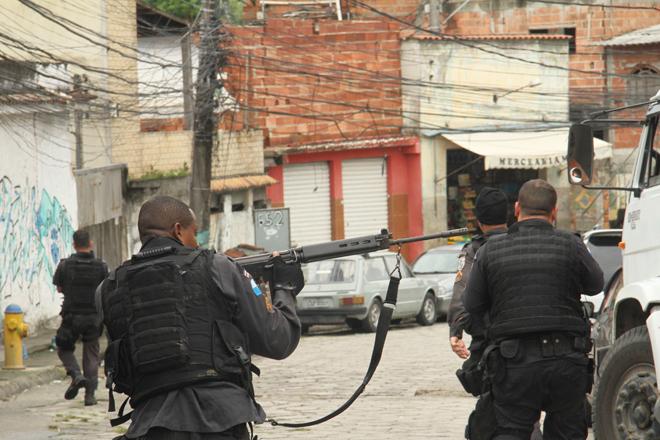
Schietpartij tijdens een mega-operatie op de ochtend van vrijdag (16) door de militaire en civiele politie in Complexo do Viradouro, in Santa Rosa, ten zuiden van Niteroi. Bij een minderjarige werd een pistool kaliber 9 mm, en een radiozender, en verdovende middelen, in belsag genomen. De drugsoorlog neemt grotere vormen aan. De dealers zijn, gezien de slechte situatie in Rio waardoor hun verkoop achteruit gaat, uit op andere middelen zoals beroven van voetgangers en winkels.De economische situatie is zeer slecht in de staat Rio de Janeiro. Voedselprijzen rijzen de pan uit. Veel werklozen waardoor de criminaliteit hoogtij viert.
Als de rivier weer in haar normaal doen is, is het tijd voor het 'almoço' het middagmaal. Het menu is helaas hetzelfde: bruine bonen, spaghetti, stukjes kip en een of ander raadselachtig vlees. De een zegt dat het jacarévlees is, de ander van de tapir, weer een ander raadt naar apenvlees. Mensen drommen rond de tafel en achter ieder stoel staan minstens vier personen te wachten dat de tafelgast klaar is. Ik wacht geduldig dat er meer ruimte is en eet weinig. Aan de scheepsleuning hangend overdenk is dit alles; water, bomen, hutten,arme stakkers, caboclos, Indianen, water, bossen en af en toe een vogel of vlinder. Waar zijn de alligators? Panters? Tamandoa? (grote meiereneter), waar is de cobra? Ja, ze lijken verborgen in de ingewanden van het moederbos. En de bosgeesten? Zullen ze bescherming bieden? Zoals Curupira, de ontzagwekkende, die mensen het bos insleurt, voor altijd verloren. Doch zou hij de arme caboclo beschermen tegen de indringers, de vernielzuchtigen? We varen langs beboste eilandjes en ik zie de kano's met vrouwen en kinderen, peddelend alsof hun leven er van af hangt, en is dat geen snedige uitdrukking? Vanaf de boot worden spullen in het water geworpen, kleding, voedsel en de kano's gaan er als pijlen op af. Ze kennen de boten en weten dat er altijd passagiers zijn die aan hun denken.De kinderen zijn handig en geboren in de lichte boomstammen kano's, die waggelend, doch met een vloeiende lijn over het water glijdt. Ze zijn de kinderen van de caboclo en Indiaan, de natuurmensjes, die dansen met de roze dolfijn.Intussen is de bonkige cachaça drinker zich aan het roeren. Hij laat zijn schijnbaar menselijke zijde zien als hij de baby van van mijn hangmat-buren probeert op te vrolijken, wat het niet al te gemakkelijk afgaat. Het kindje schreeuwt als een geslagen mensje. De ouders vinden het maar niets.Zo nu en dan kijkt hij me aan met een sceptische blik, maar heeft tot nu toe nog geen moeilijkheden gemaakt. Ik ben voorbereid.
Op het achterdek ontmoet ik weer de oude man met het uitpuilend oog. Dit was nu nog roder en angstwekkender. De man heet Lúis Antonio en komt uit de buurt van Santarém, waar hij langs de oever in een hutje leeft samen met zijn dochter. Lúis was visser. De ontsteking heeft hij sinds twee weken en gaat nu naar Belém om een soort heksendokter te bezoeken. Hij vraagt me of we al in de baai zijn, doch we zitten nog steeds enkele uren van Belém, nu op de Tocantins rivier, nadat we de Pará achter ons gelaten hadden, en eerder de Amazonas. De bootsman loods zijn boot door het labyrint van waterweggetjes, langs kleine eilanden en dan langs het grote van 'Marajó'. Het is rond halftwaalf als we de haven binnenvaren. Ik voel me goed, na toch de laatste dagen last van koortsaanvallen te hebben gehad. Ik ga de drukke kade op en zie de vele aasgieren die het vuilnis inspecteren, ik zie de mensen, fruit, mooie vrouwen, en Indiaanse gezichten. Ik ga op zoek een hotel en kom terecht in 'Central'. Een oud gebouw in het centrum. Op de kamer bekijk ik me eens goed in de spiegel en constateer dat ik kilo's kwijtgeraakt ben sinds Manaus. Op straat ontwaar ik een kraampje met vis en neem een broodje kreeft met driedubbel portie 'mostarda', (een soort piccalilly) om mijn honger te stillen en daar ik verlangde naar iets zuurs, en ik eigenlijk dagenlang zo goed als geen voedsel binnengekreeg.
Het is zondag in de stad van de 'mangueiras' de mangabomen en ik slenter langs de straten waar hippies op de grond hun sieraden, ammuletten en ander spul proberen kwijt te raken. In een eetbar kom ik de boot-medereiziger weer tegen, die op zoek was naar een job als huisschilder in Belém. Hij rraad me aan naar een dokter te gaan, daar ik er slecht uit zie. "Misschien heb je wel Malaria,' was zijn conclusie. Later ontmoet ik de man nogmaals en probeert geld los te peuteren voor een goede cocaine deal. Het wordt me een beetje te gek en maak hem duidelijk dat hij nu snel moet verdwijnen uit mijn gezichtsveld. Hetgeen hij mij vreemd aanstarend accepteerd. De dag erop bezoek ik het oude Belém, want ze hier 'Cidade velha' noemen. Nu loop ik langs de rivier en dokken waar de oude Portugeese huizen zichtbaar zijn, hier langs de haven liggen de pitoreske boten met een veelvuldig cargo: papegaaien, parkieten, apen, schildpadden, trossen bananen, zakken met castanhes en enorme melancias (watermeloenen). Niet ver vandaar bevindt zich de 'Ver-o-Peso, de markt wat zoveel betekent als: Zie het gewicht. Hier is van alles te koop, de Amazonae-markt bij uitstek en vanwaar uit de wouden van alles wordt aangevoerd. Velen soorten vis zijn verkrijbaar en de tipische amazonas producten zoals, Acai en de fruitsoorten Bacuri en Pupunha, Mangas, Pompoenen, Papaja, Abacaxi (ananas) en Cajú. Ook kan men traditionele gerechten veroberen zoals Tacacá. Je moet er wel poen voor hebben en de arme donder is hier van uitgesloten. Ook zijn op de markt de 'Jacaré slagers'. Daar liggen de alligatoren met dichtgesnoerde muilen en vastgebonden poten te wachten op de koper, die het beest aanwijst, wat dan prompt wordt afgeslacht. Aha... hier zegt men dat het krokodillenvlees, zeker dit van de 'jacaretinga', goed moet zijn voor de gezondheid, en men zegt dat de arme bevolking met regelmaat dit vlees eet, maar de jacaré heeft nog veel andere voordelen: van zijn verpulverde knoken wordt een soort meel gemaakt dat rijk is aan vitaminen. Voor mij kan men de dieren het best in de rivieren laten, waar de arme caboclo-visser en Indiaan zeker gebruik zal maken van het vlees, van de woestelingen der rivieren.
Ik loop langs de kruidenmarkt, met de wonderdoeners, medicijnen tegen maagklachten, verlamming, reumatiek, slangen,- en spinnenbeten, inwendige bloedingen, bronchitis, dysenterie, tumors, spierziektes, menstruatieklachten en impotentie. Ik zal wel een hoop vergeten zijn, God vergeef me, Oxalá me-disculpa, maar dit zijn de stallen van de toverdokters met hun wondermiddelen, hun magie van het onmetelijke, het geloof in de heling door trancendente krachten. Daar zijn dolfijnogen, krokodillentanden, gedroogde huiden van de kameleon, boskatten, gordeldieren, miereneters en vleermuizen, en de kurkdroge koppen van slangen en jaguars, schedels van watervogels en staarten van pijlstaartroggen en gordeldieren. Dit alles moet dienen tegen allerlei kwalen en ik vraag me dan ook af of de oude man met zijn ontstoken oogbol híér op zoek was naar een middel tegen zijn kwaal. Het is een oud gegeven want de Indianen hébben hun planten en kruiden, ze hébben hun kennis en hier op de markt zal menig middel wel eens improductief kunnen zijn, maar vaak is de diepgang van het 'onbekende', een welkome hulp. Hier in Amazonia is de mystiek een middel en velen planten zijn weldoeners en genezers van kwalen. Ik denk dat voor de vele hedendaagse ziektes hier antwoorden liggen, verborgen tussen de groene krachten van het woud en geesten....
Bij de inhoud zijn alleen de laatste 200 items weergegeven, mocht u zoeken naar onderwerp doe dit via 'zoeken in blog' op de linkerbalk. Het 14-delig verslag van mijn bezoek aan de Xavante stam kunt u opzoeken IN DE LINKER zoek BALK
Berichten die niet getoond worden zijn bereikbaar via het archiefvia de pijltjes onder aan het blog












 two turtles were found dead at the Itaipu beach in Niteroi, RJ. when a team came to examine the animals they were disappeared, could be taken for consumption or other purposes.