The purpose of this blog is the creation of an open, international, independent and free forum, where every UFO-researcher can publish the results of his/her research. The languagues, used for this blog, are Dutch, English and French.You can find the articles of a collegue by selecting his category. Each author stays resposable for the continue of his articles. As blogmaster I have the right to refuse an addition or an article, when it attacks other collegues or UFO-groupes.
Druk op onderstaande knop om te reageren in mijn forum
Zoeken in blog
Deze blog is opgedragen aan mijn overleden echtgenote Lucienne.
In 2012 verloor ze haar moedige strijd tegen kanker!
In 2011 startte ik deze blog, omdat ik niet mocht stoppen met mijn UFO-onderzoek.
BEDANKT!!!
Een interessant adres?
UFO'S of UAP'S, ASTRONOMIE, RUIMTEVAART, ARCHEOLOGIE, OUDHEIDKUNDE, SF-SNUFJES EN ANDERE ESOTERISCHE WETENSCHAPPEN - DE ALLERLAATSTE NIEUWTJES
UFO's of UAP'S in België en de rest van de wereld Ontdek de Fascinerende Wereld van UFO's en UAP's: Jouw Bron voor Onthullende Informatie!
Ben jij ook gefascineerd door het onbekende? Wil je meer weten over UFO's en UAP's, niet alleen in België, maar over de hele wereld? Dan ben je op de juiste plek!
België: Het Kloppend Hart van UFO-onderzoek
In België is BUFON (Belgisch UFO-Netwerk) dé autoriteit op het gebied van UFO-onderzoek. Voor betrouwbare en objectieve informatie over deze intrigerende fenomenen, bezoek je zeker onze Facebook-pagina en deze blog. Maar dat is nog niet alles! Ontdek ook het Belgisch UFO-meldpunt en Caelestia, twee organisaties die diepgaand onderzoek verrichten, al zijn ze soms kritisch of sceptisch.
Nederland: Een Schat aan Informatie
Voor onze Nederlandse buren is er de schitterende website www.ufowijzer.nl, beheerd door Paul Harmans. Deze site biedt een schat aan informatie en artikelen die je niet wilt missen!
Internationaal: MUFON - De Wereldwijde Autoriteit
Neem ook een kijkje bij MUFON (Mutual UFO Network Inc.), een gerenommeerde Amerikaanse UFO-vereniging met afdelingen in de VS en wereldwijd. MUFON is toegewijd aan de wetenschappelijke en analytische studie van het UFO-fenomeen, en hun maandelijkse tijdschrift, The MUFON UFO-Journal, is een must-read voor elke UFO-enthousiasteling. Bezoek hun website op www.mufon.com voor meer informatie.
Samenwerking en Toekomstvisie
Sinds 1 februari 2020 is Pieter niet alleen ex-president van BUFON, maar ook de voormalige nationale directeur van MUFON in Vlaanderen en Nederland. Dit creëert een sterke samenwerking met de Franse MUFON Reseau MUFON/EUROP, wat ons in staat stelt om nog meer waardevolle inzichten te delen.
Let op: Nepprofielen en Nieuwe Groeperingen
Pas op voor een nieuwe groepering die zich ook BUFON noemt, maar geen enkele connectie heeft met onze gevestigde organisatie. Hoewel zij de naam geregistreerd hebben, kunnen ze het rijke verleden en de expertise van onze groep niet evenaren. We wensen hen veel succes, maar we blijven de autoriteit in UFO-onderzoek!
Blijf Op De Hoogte!
Wil jij de laatste nieuwtjes over UFO's, ruimtevaart, archeologie, en meer? Volg ons dan en duik samen met ons in de fascinerende wereld van het onbekende! Sluit je aan bij de gemeenschap van nieuwsgierige geesten die net als jij verlangen naar antwoorden en avonturen in de sterren!
Heb je vragen of wil je meer weten? Aarzel dan niet om contact met ons op te nemen! Samen ontrafelen we het mysterie van de lucht en daarbuiten.
25-11-2017
NASA Drone Race Pits Man Against Machine (Video)
NASA Drone Race Pits Man Against Machine (Video)
By Harrison Tasoff, Space.com Staff Writer
To showcase NASA's accomplishments on artificially intelligent navigation, the agency invited professional drone racer Ken Loo to go toe-to-toe with their software.
The race on Oct. 12 followed two years of AI research by NASA's Jet Propulsion Laboratory (JPL), in Pasadena, Calif. JPL's success in spacecraft navigation attracted Google, who funded the research on drone autonomy, NASA said in the statement accompanying a video they released on Tuesday (Nov. 21).
JPL built three quadcopter drones — nicknamed Batman, Joker and Nightwing — to test the new software. The algorithms use two cameras mounted on each drone and compare what they see with a pre-loaded map of the area. The program also takes advantage of Google Tango, an augmented reality technology the company developed to use vision to allow a device to determine its position and location. [10 Ways Robots Move on Mars]
Two wide-angle cameras allow the AI to compare the drone's surroundings with a pre-loaded map of the area.
Credit: NASA/JPL-Caltech
The team set up an obstacle course in one of JPL's warehouses to put the software to the test. "We pitted our algorithms against a human, who flies a lot more by feel," Rob Reid, the project's task manager, said in the statement.
The two pilots began with similar lap times. However, Loo was able to learn the course after many laps. He achieved higher top speeds with impressive aerial maneuvers, cutting down his overall times. In contrast, the AI took the course more cautiously, but more consistently as well. "The AI was able to fly the same racing line every lap," NASA said.
The pilots also faced unique challenges. Sometimes, the race-ready drones moved so fast that the cameras couldn't properly focus, which disoriented the computer flying them. But as the day wore on, Loo had to battle fatigue, a problem the AI pilot needn't worry about. You'll have to watch the video to see who won the race.
Most autonomous drones use GPS to navigate. But this won't work for indoor spaces and crowded urban environments — hence the efforts to develop alternative forms of computer navigation. These technologies may find use in warehouses, roads, and disaster sites, Reid said.
0
1
2
3
4
5
- Gemiddelde waardering: 0/5 - (0 Stemmen) Categorie:SF-snufjes }, Robotics and A.I. Artificiel Intelligence ( E, F en NL )
24-11-2017
Atlas, The Next Generation
Atlas, The Next Generation
A new version of Atlas, designed to operate outdoors and inside buildings. It is specialized for mobile manipulation. It is electrically powered and hydraulically actuated. It uses sensors in its body and legs to balance and LIDAR and stereo sensors in its head to avoid obstacles, assess the terrain, help with navigation and manipulate objects. This version of Atlas is about 5' 9" tall (about a head shorter than the DRC Atlas) and weighs 180 lbs.
-
$50,000 humanoid robot built from scratch in Hong Kong
Like innumerable children with imaginations fired by animated films, Hong Kong product and graphic designer Ricky Ma grew up watching cartoons featuring the adventures of robots, and dreamed of building his own one day.
Unlike most, however, Ma has realised his childhood dream at the age of 42, by successfully constructing a life-sized robot from scratch on the balcony of his home.
The fruit of his labours of a year-and-a-half, and a budget of more than $50,000, is a female robot prototype he calls the Mark 1, modelled after a Hollywood star whose name he wants to keep under wraps. It responds to a set of programmed verbal commands spoken into a microphone.
In a work funded by Google, NASA engineers trained an artificial intelligence to race drones in a challenging obstacle course. The AI proved to be a worthy match against one of the world’s best human pilots. While it didn’t have the fastest time, the AI never fatigues and made far safer turns and twists.
Credit: NASA.
The drone-racing AI is the culmination of two years of work by researchers at NASA’s Jet Propulsion Laboratory. The team designed three drones — Batman, Joker, and Nightwing — which were embedded with complex algorithms that instruct the flying gizmos how to navigate obstacles. JPL used some of the visual-based navigation technology it had previously used for spacecraft.
To see how well their drones behave, NASA enlisted world-class pilot Ken Loo who raced against the drones on October 12.
The drones could reach a staggering 80 mph (129 kph) in a straight line. However, during the actual race itself which took place in a JPL warehouse, the drones mainly flew at 30 or 40 mph (48 to 64 kph).
Loo scored a better time, averaging 11.1 seconds, while the completely autonomous drones clocked in 13.9 seconds on average. The AI was far more steady, on the other hand, while Loo’s times varied more. What’s more, the AI flew the same racing line every lap.
“We pitted our algorithms against a human, who flies a lot more by feel,” said Rob Reid of JPL, the project’s task manager. “You can actually see that the A.I. flies the drone smoothly around the course, whereas human pilots tend to accelerate aggressively, so their path is jerkier.”‘
Unlike Loo, however, the drones never get tired and are always up to the task of navigating a challenging environment time and time again. This makes them far safer and reliable in the long run.
“This is definitely the densest track I’ve ever flown,” Loo said. “One of my faults as a pilot is I get tired easily. When I get mentally fatigued, I start to get lost, even if I’ve flown the course 10 times.”
Autonomous drones typically rely on GPS to navigate their surroundings but this is not an option in enclosed spaces such as a warehouse or dense urban areas. Camera-based localization and mapping are far more useful in this situation which is what’s been used here. According to Reid, their technology could be used by commercial drones to check inventory in a warehouse, for instance, or assist in rescue operations atdisaster sites where there unpredictable and numerous obstacles. One day, autonomous drones might even shuttle around a space station.
Toyota just unveiled the T-HR3, a humanoid robot. The robot is designed to be controlled by a human operator with the help of a virtual reality headset.
T-HR3
On November 20, Toyota revealed its latest humanoid robot, the T-HR3, which the company says “represents an evolution from previous generation instrument-playing humanoid robots,” according to the company’s press release. The new robot was created to assist humans safely whether at home or work, particularly in dangerous or remote areas — even outer space. The T-HR3’s third-generation robotic hardware was developed and designed by Toyota’s Partner Robot Division, and is meant to facilitate “unique mobility needs.”
The T-HR3 makes use of Toyota’s “Master Maneuvering System,” which allows a human operator to control the robot remotely. Among the features of the robotic exoskeleton is an HTC Vive virtual reality (VR) headset which allows the human operator to see what the T-HR3 “sees” in full 3D. The robot’s exoskeleton includes motor gears and sensors that control a total of 29 individual robot parts, allowing the operator to have a “smooth and synchronized experience.”
ENTERPRISE APPLICATIONS
With the T-HR3, Toyota is banking on the future of what’s been termed telepresence-controlled humanoid robots — though they aren’t the first company to incorporate VR into a device designed to assist with tasks both at home and in the workplace. VR devices seem to have long passed their gaming applications. Although there are still plenty of games developed for VR, the technology is being increasingly tapped for industrial uses.
Toyota is set to demo the T-HR3 at the upcoming International Robot Exhibition 2017 at the Tokyo Big Sight, which is taking place from November 29 to December 2.
Ever since scientists cloned the first animal, a sheep named Dolly, one important question on everyone’s mind was whether or not a clone can expect a poorer health. This is still an open question, one that South Korean researchers hope to settle in time. They’ve essentially cloned a clone, using cells from the world’s first cloned dog, an Afghan hound named Snuppy.
The three surviving reclones of ‘Snuppy’ at 2 months of age.
Credit: Scientific Reports.
Theoretically, a clone is a carbon copy of the original organism, with the two sharing identical genes. The science of cloning, however, is still in its infancy and there are many loose ends that we might be missing. There is a possibility that the cloned individual might carry certain abnormalities, and may have a shorter life expectancy. Another concern is that cloned individuals might retain the age of the donor’s gene, seeing how genes change with age.
Clones of clones
Dolly the sheep died at age six, which raised concerns that cloned individuals might not be entirely healthy. The sheep appeared to age faster than normal and suffered from osteoarthritis in her knees and hips at an early age. But a follow-up study of 13 cloned sheep — including four derived from the same DNA strand as Dolly– concluded that there didn’t seem to be any evidence that indicates cloning has any long-term health effects. “They’re old ladies,” said Kevin Sinclair, a developmental biologist and lead author of the study of the 2016 study published in Nature Communications. “They’re very healthy for their age,” he added.
Scientists at the Seoul National University, South Korea, are now also investigating the health of ‘clones of clones’, this time in dogs. Snuppy, became the world’s first cloned dog in April 2005. He was cloned from the cells belonging to an Afghan hound called Tai who lived to be 12 years old and died of cancer. Snuppy lived 10 years and also died of cancer but a different kind. Afghan hounds live to be 11.9 years on average and dogs commonly die of cancer so there’s really nothing unusual about either dogs, donor or clone.
The team led by Min Jung Kim used stem cells collected from Snuppy when the dog was five years old. The scientists then employed somatic cell nuclear transfer (SCNT) to insert Snuppy’s cells into eggs collected from female dogs whose nuclei were removed. A total of 94 embryos were created which were then implanted into surrogate mothers. The success rate was 4.3 percent leading to four live births of ‘reclones’. That might seem really low but take a minute to consider that during the time Snuppy was first born (let’s call him ‘Snuppy Mark 1’), the success rate was only 0.2%.
One of the four reclones died within a few days from birth due to diarrhea while the other three grew to be nine months old when the Kim and colleagues drafter their paper, now published in Scientific Reports. They’re still alive and well, seemingly healthy. The dogs will be closely monitored in the years to come.
“With the data from Tai and Snuppy in hand, we are excited to follow the long-term health and aging processes of these second generation of clones and work with them to contribute to a new era of studying longevity of cloned canines and given the history of both Tai and Snuppy they may also provide potential insights into the development of cancer,” the authors concluded.
Chinese AI-powered robot Xiaoyi took the country's medical licensing examinations and passed, according to local reports. Xiaoyi is just one example of how much China is keen on using AI to make a number of industries more efficient.
A ROBOT MEDICAL PROFESSIONAL
Experts generally agree that, before we might consider artificial intelligence (AI) to be truly intelligent —that is, on a level on par with human cognition— AI agents have to pass a number of tests. And while this is still a work in progress, AIs have been busy passing other kinds of tests.
Xiaoyi, an AI-powered robot in China, for example, has recently taken the national medical licensing examination and passed, making it the first robot to have done so. Not only did the robot pass the exam, it actually got a score of 456 points, which is 96 points above the required marks.
This robot, developed by leading Chinese AI company iFlytek Co., Ltd., has been designed to capture and analyze patient information. Now, they’ve proven that Xiaoyi could also have enough medical know-how to be a licensed practitioner.
With both governments and private companies intent on putting AI to good use, one of the first fields in which AI technologies are being applied has been medical research and healthcare. Most are familiar with IBM’s Watson, which has made significant headway in AI-assisted cancer diagnosis and in improving patient care in hospitals.
In the same manner, iFlytek plans to have Xiaoyi assist human doctors in order to improve their efficiency in future treatments. “We will officially launch the robot in March 2018. It is not meant to replace doctors. Instead, it is to promote better people-machine cooperation so as to boost efficiency,” iFlytek chairman Liu Qingfeng told China Daily.
Concretely, iFlytek’s vision is to use AI to improve cancer treatment and help to train general practitioners, which China is sorely in need of. “General practitioners are in severe shortage in China’s rural areas. We hope AI can help more people access quality medical resource,” Qingfeng added.
In short, there’s no need to fear an AI takeover in the medical field, even though many worry that such advances will eliminate human jobs. In this case, it is quite the opposite, because this AI will work to augment the capabilities of its human counterparts instead of replace them. So, at least for now, you don’t have to worry about being referred to a robot doctor.
0
1
2
3
4
5
- Gemiddelde waardering: 0/5 - (0 Stemmen) Categorie:SF-snufjes }, Robotics and A.I. Artificiel Intelligence ( E, F en NL )
20-11-2017
BIOHACKERS START TO HACK THEIR OWN DNA USING CRISPR AND THEY CAN'T BE STOPPED
BIOHACKERS START TO HACK THEIR OWN DNA USING CRISPR AND THEY CAN'T BE STOPPED
Biohackers attempt to modify his genes using cutting-edge medical treatment.
Pharmaceutical companies all over the world are currently locked in a race to be the first to perfect the process of gene editing to cure diseases. CRISPR is considered to be a cheap and easy technique which can make precise changes to a person’s DNA which could be potentially revolutionary in the field of medical science.
Already, scientists have created a leukemia treatment using this technology, and it is hoped that more therapies will come in the future. However, the use of CRISPR is not exclusively limited to pharmaceutical laboratories according to Josiah Zayner, a biochemist and former NASA scientist, who has begun treating himself to CRISPR and hoped that others will follow suit.
He caused quite a storm recently during a lecture on human genetic engineering and biohacking which Zayner streamed live on when he pulled out a syringe of edited DNA and injected himself on camera. He explained that the experiment was intended to increase his capacity for physical strength by removing the gene for myostatin which regulates muscle growth. This kind of gene editing has proven to work in dogs whose genomes were edited at the embryotic stage, but it is believed that Zayner was the first person to attempt it on an adult human.
“Will allowing broad access to CRISPR risk creating a group of ‘superhumans’ with enhanced abilities?”
The experiment has not been entirely successful. Indeed, Zayner claims that since he has begun injecting himself in this way he has not seen any considerable change in the bulk of his muscles. This is probably because myostatin levels are believed to manifest themselves and become static while an organism is developing.
CRISPR DO-IT-YOURSELF BIOHACKING KIT
However, the failure of the experiment is not of huge concern to Zayner who claims that he is simply trying to prove a point. He believes that biohacking technology such as CRISPR should be available to people outside of formal laboratories. If people are allowed to modify their body through methods such as plastic surgery, tattoos, and piercings, why should they not be allowed to edit their own DNA, he wonders. “I want to live in a world where people get drunk, and instead of giving themselves tattoos, they’re like, ‘I’m drunk, I’m going to CRISPR myself, ’” said Zayner, “It sounds crazy, but I think that would be a pretty interesting world to live in for sure.”
THE $140 MAIL-ORDER CRISPR KIT: IS UNREGULATED BIOHACKING THE FUTURE OF SCIENCE?
According to some experts, Zayner’s views are a little more than crazy. Robin Lovell-Badge, a leading CRISPR researcher, based at the Francis Crick Institute in London, Zayner’s experiments are ‘foolish’ and potentially dangerous. He said that they could lead to tissue damage, cell death or an exaggerated immune response which could cause devastating damage to the human body.
These fears are shared to some extent by another CRISPR researcher, Dana Carroll. While Carroll is not overly concerned that the genes will actually be edited by Zayner’s rudimentary technology, he does point out that routine injections in a non-sterile environment could lead to infection or a dangerous inflammatory response. “There are aspects of what he’s doing that people need to be really, really careful about, ” Carroll said.
While Zayner himself has not suffered any ill-effects because of his experiments, there are concerns that other people could fall ill if they following his lead. While it is likely that he would not face legal action if someone copied him and endured a negative bodily response, his example does raise serious ethical questions, “Even if you are not liable by legal terms, how responsible are you?” asks Eleonore Pauwels, a researcher in genomics and artificial intelligence at the Woodrow Wilson Center, think tank. “How do you define that in today’s bioengineering and democratized technology setting?”
For Zayner, these concerns are largely irrelevant. He asks whether CRISPR should really be considered more harmful than other socially acceptable things which can permanently damage genes such as smoking, sunbathing and even chemotherapy treatment. “We should be able to do whatever we want, ” he said. “There are a lot of things we do that occur during the normal day that does a lot more damage, probably, than things like CRISPR.”
“This is the first time in the history of the Earth that humans are no longer slaves to the genetics they are born with.”
With that bit of bravado, a biochemist recently became the first person known to have hacked their own DNA using CRISPR. He recently hacked his DNA a second time and has since been joined by others and is making the building blocks of CRISPR available to all by selling do-it-yourself kits. What could possibly go wrong?
According to Josiah Zayner, not much. The former NASA fellow cut his gene-editing teeth in the Synthetic Biology program where he engineered bacteria that could one day terraform Mars. and biochemist He is also the creator of the Chromochord — the world’s first musical instrument based on engineered protein nanotechnology.
However, he now puts that Ph.D. in Molecular Biophysics from the University of Chicago to work at The ODIN – the biohacking company he founded. To demonstrate the effectiveness and safety of the process, he injected himself with a CRISPR tool programmed to attack his myostatin gene which regulates muscle growth. Without it, muscles grow uncontrolled and become bodybuilder-worthy without exercise. This has already been done in animals and now, in a human arm.
“I’m hoping to see localized muscle growth in my forearm. That’s what I would hope because it was a localized injection to a specific area.”
Zayner describes the complete process in great but easy-to-understand detail on his blog. He bought the myostatin DNA online (ODIN now sells it) and grew and purified it himself before injecting it. He reported mild tenderness and proceeded to measure his forearm regularly, both relaxed and flexed. Does he now have what it takes to be the next Mr. Bicep?
“The way to test to see how many cells were modified would require some “deep sequencing” i.e. I would need to do a muscle tissue biopsy and would need to sequence the myostatin gene in thousands of my muscle cells. I have contacted some companies for quotes.”
Well, at least it didn’t kill him or turn him into a mutant. Just to be on the safe side, the DNA ODIN sells on the same sitewhere it offers a complete Genetic Engineering Home Lab Kit ($1,549.00 – a great Christmas gift for the guy who has everything but a massive forearm) is not injectable. However, Zayner gives instructions on how to obtain it online. He also gives some encouragement to fellow biohackers.
“And as far as I know, in animals or in non single celled organisms, spontaneous formation of tumours or cancers never happened using CRISPR.”
While it’s not known if an ODIN kit was used, Gizmodo reportsthat a man with HIV recently attempted to stop its progress by injecting himself with a gene biohacked by Ascendance Biomedical.
Will DIY biohacking using CRISPR one day replace doctors and hospitals? Or will it one day replace normal but slightly flawed humans with dangerous genetic mutants? Keep your eye on the arm of Josiah Zayner.
The controversial Italian doctor Sergio Canavero claims he’s successfully performed a human head transplant, demonstrating that the technique is ready for prime time. At a press conference on Friday morning, the Italian neurosurgeon reported that, in an 18-hour surgery, he transplanted a head onto a corpse in China, proving that it’s possible to connect blood vessels, nerves, and the spine. Canavero, the director of the Turin Advanced Neuromodulation Group, has talked a big game for years about his plans to transplant human heads, and he says this latest achievement proves it can be done.
In the Telegraph on Friday, Canavero said that an operation on a living human will happen very soon.
“The first human transplant on human cadavers has been done. A full head swap between brain dead organ donors is the next stage,” he said. “And that is the final step for the formal head transplant for a medical condition which is imminent.”
Sergio Canavero likes to think he's on the margins of the scientific community because he's ahead of his time, like Copernicus, but it's more likely that he is not taken seriously because he's a snake oil salesman.
There’s plenty of reason not to believe Canavero, who has been making these outrageous claims for years, much to the chagrin of the global medical and scientific community. This latest announcement builds on his previous claim, in January 2016, that he’d transplanted a monkey head. Then as now, however, he never provided enough proof to convince the scientific community. When Inversepreviously reported on Canavero, reporter Ben Guarino called his goal of transplanting a living human head onto the body of a brain-dead person “not fucking likely,” and this latest announcement does little to adjust our assessment.
The 18-hour surgery took half as long as Canavero previously estimated, which he attributes to time-saving techniques from his team of Chinese colleagues, led by Dr. Xiaoping Ren. Once again, Canavero did not provide evidence of the successful operation, though he did say a paper would be made public in the next few days.
So far, the papers linked to his research that he has managed to publish in peer-reviewed journals include only a handful in Surgery, which were carefully editedto focus specifically on Canavero’s treatments for traumatic spinal cord injury, and a series published in the controversial journal Surgical Neurology International, in which he lays out his idea of “head anastomosis venture” — or HEAVEN, for short.
Subsequent procedures will be performed in China, said Canavero, since the “Americans did not understand.” Canavero, whose work continually pushes the boundaries of medical ethics, seems to envision himself as a modern version of Copernicus or Galileo, someone who is so far ahead of his time that he appears heretical. But it’s more likely that he’s simply selling snake oil.
In 2015, when Canavero first came on the scene, outspoken medical ethicist Arthur Caplan told Forbes that the doctor is out of his mind, and that his goal was unattainable and irresponsible. “It is both rotten scientifically and lousy ethically,” wrote Caplan.
Inverse reported earlier this year that Canavero said he’d be able to thaw cryonically preserved brains in 2018. Now, just as then, Canavero has done nothing to inspire any confidence in his claims.
Nonetheless, he’s found a willing subject in a Russian computer scientist named Valery Spiridonov, who suffers from Werdnig-Hoffman disease, a muscle condition that leaves him wheelchair-bound. Spiridonov’s condition is debilitating, and he deserves a chance at life if he can get one, but this procedure is not likely to give him more than an accelerated and gruesome death.
If Canavero wants to prove himself to the medical community, he should make incremental advances, like connecting nerves in people with severed spinal cords. But instead, he’s setting his goal at the very peak of what could be achievable, and as such, he’s likely to fall flat.
17-11-2017 om 23:57
geschreven door peter
0
1
2
3
4
5
- Gemiddelde waardering: 0/5 - (0 Stemmen) Categorie:SF-snufjes }, Robotics and A.I. Artificiel Intelligence ( E, F en NL )
CRISPR is a powerful gene editing tool that can accurately add in or take out bits of DNA. There’s a lot of buzz about it because it is cheap, easy, and precise. There is also a lot of mystery surrounding CRISPR, perhaps because of its more controversial uses, such as plans of resurrecting the woolly mammoth or editing human embryos, and more sci-fi uses, like eliminating malaria and other diseases from mosquitoes and growing human organs in pigs. However, right now, it’s causing its biggest revolution in the lab, where scientists are now able to manipulate and control any gene easily.
CRISPR is an acronym for Clustered Regularly Interspaced Short Palindromic Repeats. These are actually just sequences which repeat at regular intervals with spaces in-between them. Bacteria use these spaces to keep a genetic memory of viruses that have invaded it in the past. If that virus dares to show its face again, the system will recognize it and destroy it. The sequences can’t detect and destroy viruses by themselves, but they have two helpers: the enzyme Cas9 and guide RNA.
Researchers from Kanazawa University and the University of Tokyo in Japan have published a new study inNature Communications in which they visualized CRISPR-Cas9 in action, cleaving a strand of DNA in two. They visualized the process for a more detailed look at what CRISPR-Cas9 actually does. The technique that they used is called high-speed atomic-force microscopy and uses mechanical probes to get good resolution images and videos down to a nanometer. Now, you can watch the CRISPR-Cas9 complex work in real-time and real-space.
CRISPR-Cas9 is like a hand with scissors. The guide RNA is the hand that directs the scissors to bits of DNA matching info in the genetic memory, leading it to the target. When found, Cas9 are like scissors that cut the DNA and destroy it. In this video, you can see the molecular scissors at work cleaving the DNA at the end of the clip. The original sequence can be destroyed or a new sequence can be patched into the gap.
It is pretty amazing that we can see exactly what happens when CRISPR-Cas9 is at work.
Journal reference:
Shibata, M., Nishimasu, H., Kodera, N., Hirano, S., Ando, T., Uchihashi, T. & Nureki, O. (2017) Real-space and real-time dynamics of CRISPR-Cas9 visualized by high-speed atomic force microscopy. Nature Communications 8, 1430.
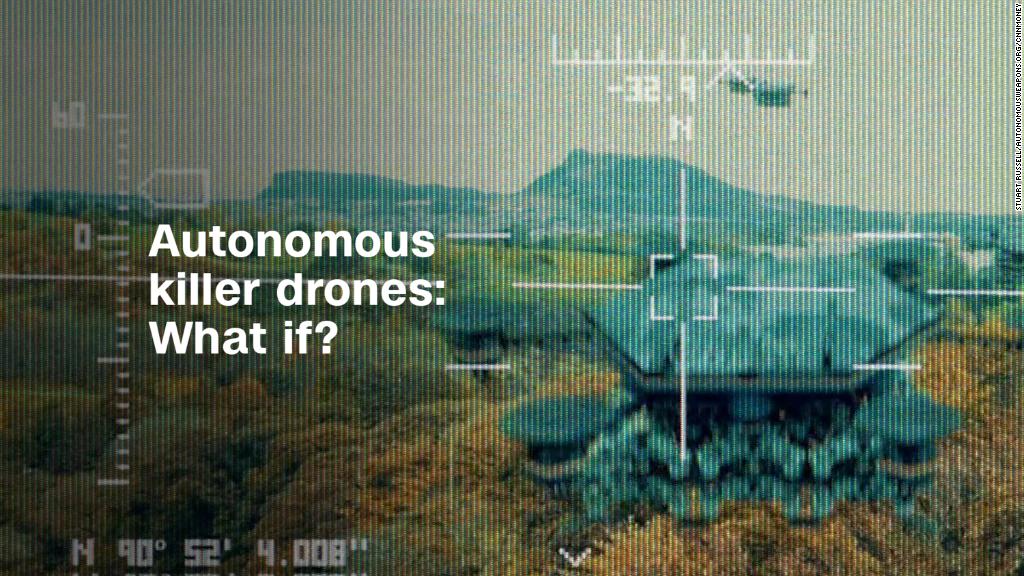
The good guys call themselves the Future of Life Institute. The bad guys are smart drones called Slaughterbots that can swarm a crowd yet kill precisely, delivering an explosive to the forehead of selected individuals while letting the others run in terror … or cheer the killing. While it sounds like a great plot for a dystopian movie or a sci-fi series, the Future of Life Institute is a real organization. And the Slaughterbots?
“Slaughterbots” the video (link here) was released this week by the Future of Life Institute at the United Nations Convention on Certain Conventional Weapons held in Geneva. The purpose of the Convention “is to ban or restrict the use of specific types of weapons that are considered to cause unnecessary or unjustifiable suffering to combatants or to affect civilians indiscriminately.” The mission of the Future of Life Institute is “To catalyze and support research and initiatives for safeguarding life and developing optimistic visions of the future, including positive ways for humanity to steer its own course considering new technologies and challenges.” The purpose of the video is “safeguarding life” from tiny autonomous armed drones that can kill without human initiation based on things like data collected from social media.
Uh-oh.
The Future of Life Institute created the fictional (for now) video in conjunction with the Campaign to Stop Killer Robots, an international coalition working to preemptively ban fully autonomous weapons. It sound like the Convention on Certain Conventional Weapons is the perfect place to fight for such a ban … if it’s not too late.
Stuart Russell — Professor of Computer Science and Smith-Zadeh Professor in Engineering at the University of California, Berkeley, and a leading AI researcher – closes the video with a warning about Slaughterbots:
“Its potential to benefit humanity is enormous, even in defense. But allowing machines to choose to kill humans will be devastating to our security and freedom. Thousands of my fellow researchers agree. We have an opportunity to prevent the future you just saw, but the window to act is closing fast.”
The goal of the Campaign to Stop Killer Robots is not to restrict innovation in AI and drones but to stop the use if AI for selecting and killing without having a human in the decision-making process or pulling the trigger. The AI technology shown in the video is admittedly fictional but the components are recognizable in current devices, drones and social media.
Perhaps the most disturbing part of the video is not the killing but the cheering. It’s just as easy to imagine this happening as well. Maybe that’s what the powers-that-be should focus on when deciding whether to ban slaughterbots.
The robot dog of the future is getting smarter. SpotMini, created by Boston Dynamics, has improved dramatically since its June debut. It’s designed to complete household chores while using its four legs to maintain balance, and a new video released Monday shows the incredible progress the company has made.
In the 24-second video, SpotMini runs up to the camera, peers down to look at the viewer, then lifts itself up and hops along on its way. Unlike its predecessors, which looked like a mesh of wires and metal bars, the new version has a fetching yellow exterior that makes it look more like a cute toy than some sort of military bot. If this dog-like machine is going to live alongside the rest of a family, you want it to look as friendly as possible.
The bot also appears to have a smoother motion. In previous demonstrations, the 55-pound SpotMini has been seen using a retractable arm located in its back to help out around the house, carefully moving objects to avoid dropping them. It can pick up cans, load up a dishwasher, and even do a little dance. During the 16 months since its debut, SpotMini has come on leaps and bounds to develop into a bot that wouldn’t look amiss alongside the Roomba autonomous vacuum cleaner or the Amazon Echo A.I. voice assistant.
At this stage, it’s unclear where SpotMini’s future lies. Japanese telecommunications firm SoftBank announced its purchase of Boston Dynamics back in June, taking over from Google parent company Alphabet. SoftBank is known in robotics for its Pepper customer assistant, a humanoid bot with a touchscreen on its front for taking orders in hi-tech stores.
“Smart robotics are going to be a key driver of the next stage of the information revolution, and Marc (Raibert) and his team at Boston Dynamics are the clear technology leaders in advanced dynamic robots,” SoftBank Group Chairman Masayoshi Son said at the time of the purchase.
0
1
2
3
4
5
- Gemiddelde waardering: 0/5 - (0 Stemmen) Categorie:SF-snufjes }, Robotics and A.I. Artificiel Intelligence ( E, F en NL )
12-11-2017
REAL LIFE IRON MAN SETS NEW JET SUIT SPEED RECORD
REAL LIFE IRON MAN SETS NEW JET SUIT SPEED RECORD
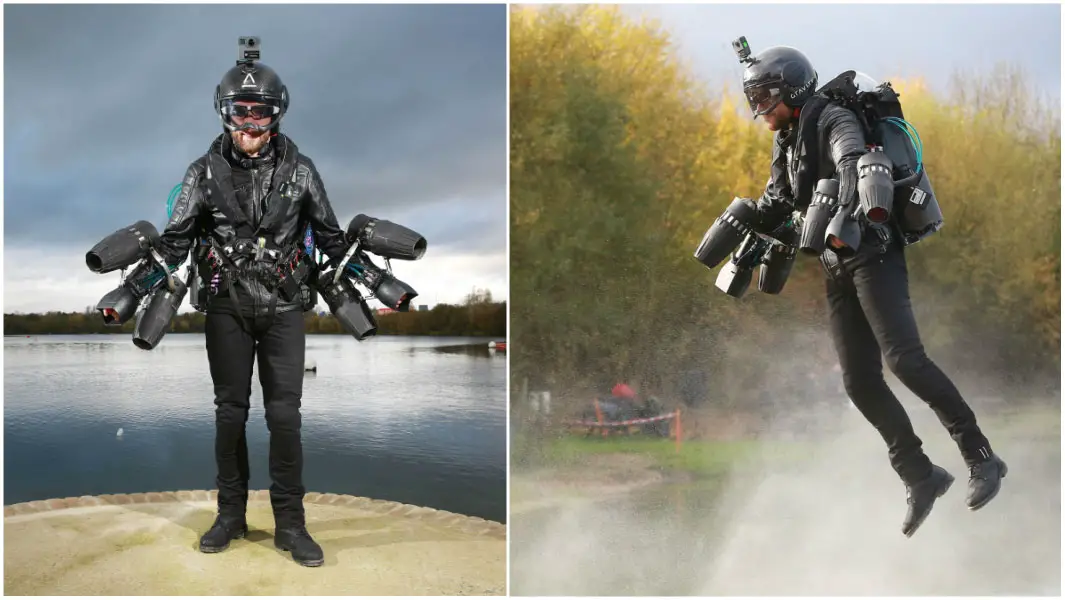
Richard Browning, the chief test pilot and founder of Gravity Industries, has made his way into the Guinness World Record books for the fastest speed in a jet suit and he has become the real-life Iron Man.
Browning took the title in Reading in the UK to celebrate the Guinness World Records Day 2017. Pravin Patel was the adjudicator, and he verified the achievement to make sure that the speed had been measured accurately and Browning flew over the minimum distance, which was 100 meters.
GUINNESS WORLD RECORD FOR JET SUIT SPEED SET BY REAL LIFE IRON MAN
Browning managed to achieve a speed of 32.02 mph when he made his third attempt, which was the final attempt and then he plummeted into the lake. At that point, it didn’t matter as Richard had made it into the history books with his company’s invention, which has been described as game-changing.
The real-life Iron Man suit is made of six micro gas turbines that are kerosene-fueled and which offer 22kg of thrust. The jet suit is said to depend on the movement of the human body to control the flight path, which means there is no remote control device to steer the suit.
The record was not all about the jet suit; Browning had practiced core strength exercises before he attempted to ensure that he could balance along with being able to hold a position in the air when he was flying. Richard got back on the ground after plummeting into the lake and said that he was delighted to have set a new world record. He said that he had been proud to have been a part of the celebrations of Guinness World Records Day and that it was a pleasure to have the unique creation of Gravity Industries recognized along with being celebrated around the globe.
The Guinness World Records Day brings people together from around the globe and from all walks of life, people who all have one common goal and that is to be amazing, said Craig Glenday, the Guinness World Records Editor In Chief. He went on to say that whether people choose to spin the biggest hula hoop or build along with fly an Iron Man suit, the achievements are from people who are dedicated to being the best.
The Guinness World Records was first launched in 2004 and it went on to become the bestselling book. This year more than 600,000 people around the globe are trying to secure a place in the history books alongside Browning.
0
1
2
3
4
5
- Gemiddelde waardering: 0/5 - (0 Stemmen) Categorie:SF-snufjes }, Robotics and A.I. Artificiel Intelligence ( E, F en NL )
Scientists want to clone 50,000-year-old Cave lion cub in Jurassic Park-style experiment
Scientists want to clone 50,000-year-old Cave lion cub in Jurassic Park-style experiment
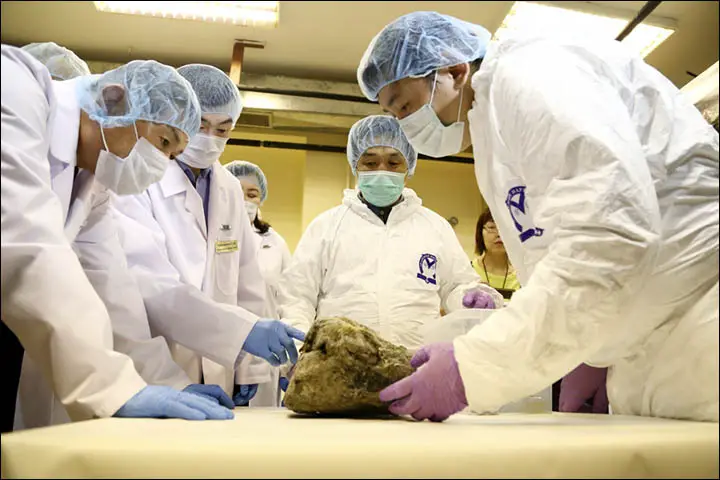
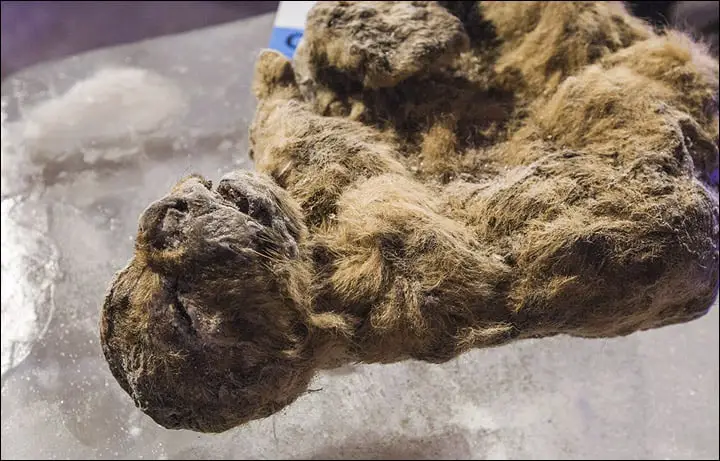
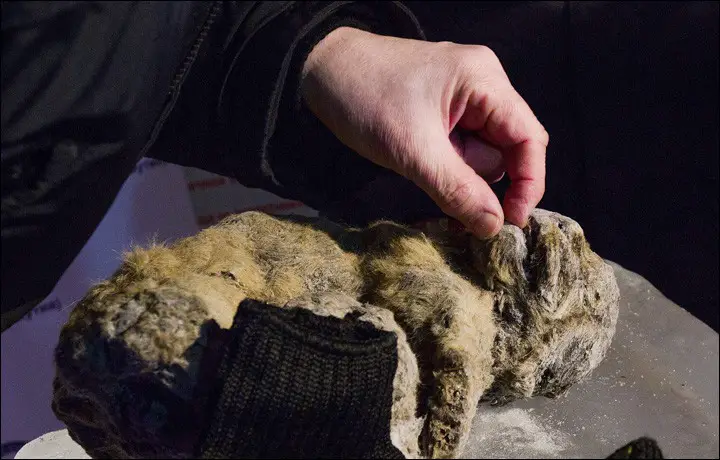
After a 50,000-year-old cave lion was found perfectly preserved in Siberia, scientists are now thinking about cloning the ancient lion in hopes to bring the species back to life.
The cave lion (Panthera leo spelaea) is a subspecies of feline that inhabited the European and Asian continent 50,000 years ago.
Today it is completely extinct, but a discovery in Russia has just opened the door to the possibility of resurrecting the species through cloning.
The body has been frozen for 50,000 years in the permafrost of the tundra that surrounds the Tirekhtykh River, in the Russian province of Yakutia.
The extreme cold of that region has served to keep the body in an impressive state.
Not only does it preserve all its bones, but also the skin and a large part of the soft tissues.
Scientists argue that the cub was between six and eight weeks old when it died due to unknown reasons. Experts hope that the cub’s teeth will reveal more about its age.
Dr. Albert Protopopov, head of the department of paleontology at the Yakutia Academy of Sciences believes that the specimen could give enough DNA samples to clone the species and resuscitate it, as scientists have been wanting to resurrect other species.
Cave lions were once considered the largest ‘big’ cats on the surface of the planet, living in extremely cold regions in the northern hemisphere before they were wiped out.
Speaking to the Siberian times, Dr. Protopopov said: “That means that the cubs were not younger than 25,000 years old. Previously the youngest date for the cubs was 12,000, the time when the cave lions become extinct.”
‘We made a CT scan and saw that their teeth had not appeared yet. Based on a comparison with African lions, we concluded that they were younger than one month, most likely between 1 and 2 weeks old.’
This discovery was made two years after the same experts found two newborn cave lion cubs called Uyan and Dina. At the time of the discovery, Dr. Protopopov said that compared to modern lion cubs, Uyan and Dina were very small, maybe a week or two old.
“The eyes were not quite open, they have baby teeth and not all had appeared,’ said Dr. Protopopov.
Experts are still unsure as to why the species became extinct. However, one theory suggests that the population of cave bears and deer – one source of prey – caused them to die out.
Ray Kurzweil, chief engineer for Google and famous futurist, spoke in a discussion held at the Council on Foreign Relations on Friday. He emphasized how AI would enhance humankind, despite the possibility of "difficult episodes."
A DIFFERENT TAKE
Amidst all the talk about how artificial intelligence (AI) is threatening society with great harm—beginning with taking over human-held jobs and then, eventually, becoming more intelligent and taking over the entire world—some experts believe that AI shouldn’t be feared. Foremost among these experts is Google’s director of engineering and notable “future teller” Ray Kurzweil, who has said time and again that the technological singularity won’t necessarily go down as expected.
Kurzweil discussed the future of AI at the Council on Foreign Relations (CFR) in Washington, D.C. on Friday. And, while he agreed with Tesla CEO and founder Elon Musk who warned of the potential “existential risks” a super-intelligent AI could bring, Kurzweil said that humanity would be able to overcome these “difficult episodes,” if they ever actually happen.
He continued by noting that scientific and technological advancements always come with inherent risks and that AI should not be considered any more (or less) of a threat. “Technology has always been a double-edged sword. Fire kept us warm, cooked our food and burned down our houses,” Kurzweil said, using the example: “World War II – 50 million people died, and that was certainly exacerbated by the power of technology at that time.”
Addressing the concerns over job displacement due to intelligent automation, Kurzweil reiterated a point he previously explained to Fortune. He argued that, while there will be jobs lost, newer ones will be created. What these are, he obviously doesn’t know since they haven’t been invented yet.
He stated his main point by noting that, ultimately, AI will benefit us in the same way that previous technologies have. “My view is not that AI is going to displace us,” he said at the CFR. “It’s going to enhance us. It does already.”
LIVING WITH MACHINES
Indeed, for Kurzweil, the singularity, if it happens, won’t be a machine takeover. Instead, he predicts it to become more like a co-existence, where machines reinforce human abilities. Kurzweil predicts that a hybrid AI would become available by the 2030s. This hybrid AI, he explained, would allow human beings to tap directly into the cloud with just their brains, using what he called a neocortex connection. Kurzweil previously predicted that part of this reinforcement would come from nanobots, which he said would flow throughout our bodies by 2030.
In short, according to Kurzweil, there will be a melding of humans and machines as a result of the singularity and the growth of AI. Kurzweil said that we’re already experiencing this with our smartphones, which he referred to as “brain extenders.” He told the audience at CFR, “I mean, who can do their work without these brain extenders we have today? And that’s going to continue to be the case.”
Kurzweil added that, aside from connecting the human brain to machines via the cloud, these neocortex technologies would also allow humans to connect to another person’s neocortex. As a result, humans would become smarter and funnier. The technological singularity, he argued, would lead to a more diverse group of thinkers and would allow for a deeper expansion into humanity’s various expertise.
So, instead of making us obsolete, Kurzweil predicts that, as machines become more intelligent, humanity will also grow to become smarter. We could only hope that Kurzweil is correct in this prediction.
In recent years, we've seen huge advances in robotics. As these technological developments begin to be implemented in industry, the market for humanoid robots is set to skyrocket.
RISE OF ROBOTS
A new report claims the market for humanoid robots will expand tenfold by 2023. Current estimates put its value at $320.3 million, but it’s projected to reach $3.9 billion within the next six years.
Many of the major potential applications for the technology are found within the education sector and the retail industry, where robots will be able to take on a swathe of customer service roles. Robots are also expected to be used in fields such as logistics and medicine as a vessel for advanced artificial intelligence systems.
There are some obstacles that could potentially slow the predicted growth, though: For one, robots are not yet as mobile as they would need to be for many of these roles, so improving their ability to traverse a wide range of environments quickly and safely will be crucial over the next few years.
While North and South America are the biggest force in the robotics market, over the six years the the report covered, it was forecasted that the fastest rate of growth in the industry will actually be in the Asia-Pacific region (APAC).
“APAC is likely to adopt humanoids for almost all the major applications during the forecast period,” reads the report. “As the elderly population in APAC countries such as China and Japan is on the rise, the region is expected to employ humanoids for the personal assistance and caregiving application.”
MORE HUMAN THAN HUMAN
We’re already seeing robots become a part of our daily lives, albeit at a cautious pace. Everything from delivery services to police work is being considered as a potential job opportunity for machines.
However, humanoid robots have a particularly high potential for growth because they can take on tasks that were previously the domain of humans alone. Whether it’s something as simple as holding a natural conversation, or a more complex role like providing care for an infant or an elderly person, there are times when a familiar presence is valued – even if the mind at work is a machine’s.
It’s no surprise that the market for this technology will skyrocket as robots become increasingly capable of mimicking some aspects of human behavior; an ability that will only continue to improve as technology and innovation advances.
Lamborghini wants to make an electric car that ditches the batteries, and it’s working with the Massachusetts Institute of Technology to make it happen.
The company took the wraps off its electric sports car concept on Tuesday. With input from two MIT labs, the group has come up with a system that uses super-capacitors to deliver energy.
“Collaborating with MIT for our R&D department is an exceptional opportunity to do what Lamborghini has always been very good at: rewriting the rules on super sports cars,” says Stefano Domenicali, chairman and CEO of Automobili Lamborghini. “We are inspired by embracing what is impossible today to craft the realities of tomorrow: Lamborghini must always create the dreams of the next generation.”
The “Terzo Millennio” concept stores energy in carbon fiber nanotubes. These are capable of releasing energy faster than batteries, ideal for performance. They also cut down on weight compared to batteries, ending the tradeoff between battery size and vehicle mass.
Lamborghini Terzo Millennio.
“I want to go one, two, three laps without having to stop and recharge after every lap,” Mauricio Reggiani, Lamborghini head of research and development, told CNN.
Lamborghini Terzo Millennio.
If the team can bring the vision to life, it could give it a major advantage over competitors like Tesla. Elon Musk’s firm has dominated the electric car industry in recent years, with the Model S offering incredibly fast acceleration times of 0-60mph in 2.1 seconds. With the launch of the $35,000 Tesla Model 3, the company is focused on bringing traditional battery prices down by expanding output.
The use of supercapacitors also gives cars the ability to “self-heal.” If the car detects damage, micro-channels with healing chemistries can stop small cracks in the carbon fiber structure from turning into bigger ones.
Lamborghini Terzo Millennio.
The design does have some downsides, though. Unlike batteries, today’s supercapacitors aren’t very good at storing large amounts of energy. This is one of the major issues the team will now need to resolve.
Lamborghini Terzo Millennio.
“The new Lamborghini collaboration allows us to be ambitious and think outside the box in designing new materials that answer energy storage challenges for the demands of an electric sport vehicle,” says Mircea Dinca, professor at MIT. “We look forward to teaming up with their engineers and work on this exciting project.”
If you liked this article, check out this video about spherical tires for self-driving cars.
Photos via Lamborghini
08-11-2017 om 00:15
geschreven door peter
0
1
2
3
4
5
- Gemiddelde waardering: 0/5 - (0 Stemmen) Categorie:SF-snufjes }, Robotics and A.I. Artificiel Intelligence ( E, F en NL )
01-11-2017
Doctors 3D Printed a Replacement for This Woman’s Damaged Spine
Doctors 3D Printed a Replacement for This Woman’s Damaged Spine
Doctors in India replaced a woman's damaged vertebrae with a 3D-printed titanium copy during a 10-hour surgery that was the first of its kind in the nation.
3D printing technology allowed the doctors to created a perfect replacement part for this patient, another way that technology is leading us into an age of personalized healthcare.
FROM A DISEASE TO A DISABILITY
Human innovation continues to push forward in so many directions. In all walks of science, researchers are achieving new “firsts” in the pursuit of a better life for the people of the world. Now, doctors in India, a country that has been basking in its recent record-breaking satellite launch, have completed the nation’s first 3D-printed spinal restoration surgery.
The patient, a 32-year-old Indian woman, lost her ability to walk due to a severe case of tuberculosis. The disease commonly affects the lungs, but it traveled to the woman’s spinal cord when her immune system was particularly weakened by drugs she was prescribed for infertility. The tuberculosis compromised her first, second, and third cervical vertebrae, removing support for both her skull and lower spine.
The damaged spinal cord resulted in a curved posture, weakness in her limbs, and an involuntarily sliding of the head. If left untreated, her condition would have been essentially a death sentence. However, a team of surgeons at Gurgaon Hospital had an interesting solution.
TO PRINT A SPINE
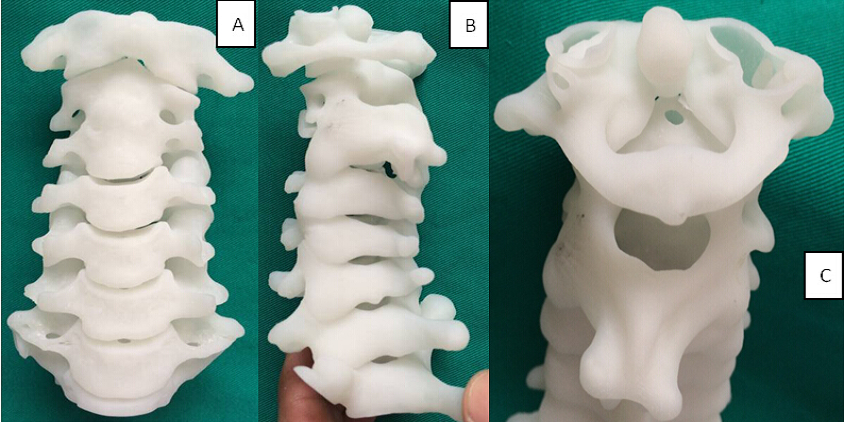
A team of surgeons led by Dr. V Anand Naik, a senior consultant of spine surgery from the Medanta Bone and Joint Institute, replaced the damaged vertebrae with a 3D-printed titanium copy. Using CT and MRI scans as reference, they first 3D printed a dummy spine that was perfectly sized for the patient’s needs. After much testing by design teams from India, the U.S., and Sweden for biomechanics and stress resistance, the final titanium implant was created.
Photo Credit: Sanjay Kumar Pathak
Naik and his team then inserted the replacement between the first and fourth vertebrae, bridging the gap within the damaged spine. The surgery was completed over an intense 10-hour period, and afterward, Dr.Naik told the Hindustan Times, “It was a very complex surgery and the patient’s condition was deteriorating by the day. It would not have been possible to do it without 3D-printing technology.”
The woman is expected to recover fully in two weeks and live a normal life. Her journey is truly one for the history books. What seemed like an impossible case was resolved with multinational efforts that went beyond traditional medical thinking. Today’s “first” in a field could eventually become a common practice that saves many lives, but for now, just saving one is enough.
Beste bezoeker, Heb je zelf al ooit een vreemde waarneming gedaan, laat dit dan even weten via email aan Frederick Delaere opwww.ufomeldpunt.be. Deze onderzoekers behandelen jouw melding in volledige anonimiteit en met alle respect voor jouw privacy. Ze zijn kritisch, objectief maar open minded aangelegd en zullen jou steeds een verklaring geven voor jouw waarneming! DUS AARZEL NIET, ALS JE EEN ANTWOORD OP JOUW VRAGEN WENST, CONTACTEER FREDERICK. BIJ VOORBAAT DANK...
Druk op onderstaande knop om je bestand , jouw artikel naar mij te verzenden. INDIEN HET DE MOEITE WAARD IS, PLAATS IK HET OP DE BLOG ONDER DIVERSEN MET JOUW NAAM...
Druk op onderstaande knop om een berichtje achter te laten in mijn gastenboek
Alvast bedankt voor al jouw bezoekjes en jouw reacties. Nog een prettige dag verder!!!
Over mijzelf
Ik ben Pieter, en gebruik soms ook wel de schuilnaam Peter2011.
Ik ben een man en woon in Linter (België) en mijn beroep is Ik ben op rust..
Ik ben geboren op 18/10/1950 en ben nu dus 75 jaar jong.
Mijn hobby's zijn: Ufologie en andere esoterische onderwerpen.
Op deze blog vind je onder artikels, werk van mezelf. Mijn dank gaat ook naar André, Ingrid, Oliver, Paul, Vincent, Georges Filer en MUFON voor de bijdragen voor de verschillende categorieën...
Veel leesplezier en geef je mening over deze blog.























 Biohackers Allow Human Beings To See In The Dark
 CRISPR - Programmable Molecular Scissors: A cure for HIV?
 CRISPR kills HIV and 'eats' Zika like Pac-Man. Next target? Cancer!
 CRISPR Gene-Editing Introduced Hundreds Of Unintended Mutations Into










 Inventor flys with homemade ‘Iron Man’ jet suit over harbor
 Former Marine Develops Iron Man Suit That Really Flies