The purpose of this blog is the creation of an open, international, independent and free forum, where every UFO-researcher can publish the results of his/her research. The languagues, used for this blog, are Dutch, English and French.You can find the articles of a collegue by selecting his category. Each author stays resposable for the continue of his articles. As blogmaster I have the right to refuse an addition or an article, when it attacks other collegues or UFO-groupes.
Druk op onderstaande knop om te reageren in mijn forum
Zoeken in blog
Deze blog is opgedragen aan mijn overleden echtgenote Lucienne.
In 2012 verloor ze haar moedige strijd tegen kanker!
In 2011 startte ik deze blog, omdat ik niet mocht stoppen met mijn UFO-onderzoek.
BEDANKT!!!
Een interessant adres?
UFO'S of UAP'S, ASTRONOMIE, RUIMTEVAART, ARCHEOLOGIE, OUDHEIDKUNDE, SF-SNUFJES EN ANDERE ESOTERISCHE WETENSCHAPPEN - DE ALLERLAATSTE NIEUWTJES
UFO's of UAP'S in België en de rest van de wereld Ontdek de Fascinerende Wereld van UFO's en UAP's: Jouw Bron voor Onthullende Informatie!
Ben jij ook gefascineerd door het onbekende? Wil je meer weten over UFO's en UAP's, niet alleen in België, maar over de hele wereld? Dan ben je op de juiste plek!
België: Het Kloppend Hart van UFO-onderzoek
In België is BUFON (Belgisch UFO-Netwerk) dé autoriteit op het gebied van UFO-onderzoek. Voor betrouwbare en objectieve informatie over deze intrigerende fenomenen, bezoek je zeker onze Facebook-pagina en deze blog. Maar dat is nog niet alles! Ontdek ook het Belgisch UFO-meldpunt en Caelestia, twee organisaties die diepgaand onderzoek verrichten, al zijn ze soms kritisch of sceptisch.
Nederland: Een Schat aan Informatie
Voor onze Nederlandse buren is er de schitterende website www.ufowijzer.nl, beheerd door Paul Harmans. Deze site biedt een schat aan informatie en artikelen die je niet wilt missen!
Internationaal: MUFON - De Wereldwijde Autoriteit
Neem ook een kijkje bij MUFON (Mutual UFO Network Inc.), een gerenommeerde Amerikaanse UFO-vereniging met afdelingen in de VS en wereldwijd. MUFON is toegewijd aan de wetenschappelijke en analytische studie van het UFO-fenomeen, en hun maandelijkse tijdschrift, The MUFON UFO-Journal, is een must-read voor elke UFO-enthousiasteling. Bezoek hun website op www.mufon.com voor meer informatie.
Samenwerking en Toekomstvisie
Sinds 1 februari 2020 is Pieter niet alleen ex-president van BUFON, maar ook de voormalige nationale directeur van MUFON in Vlaanderen en Nederland. Dit creëert een sterke samenwerking met de Franse MUFON Reseau MUFON/EUROP, wat ons in staat stelt om nog meer waardevolle inzichten te delen.
Let op: Nepprofielen en Nieuwe Groeperingen
Pas op voor een nieuwe groepering die zich ook BUFON noemt, maar geen enkele connectie heeft met onze gevestigde organisatie. Hoewel zij de naam geregistreerd hebben, kunnen ze het rijke verleden en de expertise van onze groep niet evenaren. We wensen hen veel succes, maar we blijven de autoriteit in UFO-onderzoek!
Blijf Op De Hoogte!
Wil jij de laatste nieuwtjes over UFO's, ruimtevaart, archeologie, en meer? Volg ons dan en duik samen met ons in de fascinerende wereld van het onbekende! Sluit je aan bij de gemeenschap van nieuwsgierige geesten die net als jij verlangen naar antwoorden en avonturen in de sterren!
Heb je vragen of wil je meer weten? Aarzel dan niet om contact met ons op te nemen! Samen ontrafelen we het mysterie van de lucht en daarbuiten.
04-12-2025
Paleo Diet Myth: Humans Were Mass Processing Plants 170,000 Years Ago
Paleo Diet Myth: Humans Were Mass Processing Plants 170,000 Years Ago
Archaeological research once again dispells the widespread belief that ourPaleolithic ancestorswere primarily meat-eaters, revealing instead that they were sophisticated plant food processors who thrived on a diverse diet thousands of years before the advent of agriculture. The study, published in the Journal of Archaeological Research by researchers from the Australian National University and the University of Toronto Mississauga, demonstrates that early humans were grinding wild seeds, pounding starchy tubers, and detoxifying bitter nuts as far back as 170,000 years ago.
"We often discuss plant use as if it only became important with the advent of agriculture," explained Dr. Anna Florin, co-author of the study titled "The Broad Spectrum Species: Plant Use and Processing as Deep Time Adaptations." According to Phys.org, the research fundamentally challenges the popular narrative of Paleolithic humans as hyper-carnivorous hunters.
"However, new archaeological discoveries from around the world are telling us our ancestors were grinding wild seeds, pounding and cooking starchy tubers, and detoxifying bitter nuts many thousands of years before this," Florin added.
The research introduces a compelling alternative to the traditional Broad Spectrum Revolution hypothesis, which suggested that humans only diversified their diets around 10,000 years ago due to environmental pressures and population growth. Instead, the study proposes the "broad-spectrum species" hypothesis, arguing that dietary flexibility and plant food processing have been fundamental human characteristics throughout our evolutionary history. This ability to process plant foods allowed early humans to unlock essential calories and nutrients, enabling them to colonize and thrive in diverse environments across the globe.
Dr. Monica Ramsey, the study's other co-author, emphasized that processed plant foods were crucial to early human survival. "This ability to process plant foods allowed us to unlock key calories and nutrients, and to move into, and thrive in, a range of environments globally," Ramsey stated in a press release. She colorfully summarized the findings:
"Our species evolved as plant-loving, tool-using foodies who could turn almost anything into dinner."
Archaeological Evidence of Ancient Food Processing
One of the primary challenges in recognizing the importance of plant foods in ancient diets has been the preservation bias in the archaeological record. Animal remains, particularly bones, survive far better than plant materials over millennia. However, recent discoveries across multiple continents have revealed extensive evidence of sophisticated plant food processing dating back far earlier than previously imagined. Researchers have analyzed plant macrofossil assemblages that show evidence of diverse processing techniques, including cooking, peeling, fat extraction, pounding, and roasting.
These processing activities were often employed in multi-step, labor-intensive sequences that demonstrate remarkable technological sophistication. By processing plant foods through various methods, early humans were able to extract nutrients and energy more efficiently, improve palatability, and enhance digestibility. The thermal processing of plant foods has been documented at early human and Neanderthal sites in Africa, Southwest Asia, and southern Europe dating back as far as 170,000 years ago.
Map of all archaeological sites with direct evidence for early plant food use, dating from ≥35 kya, as well as, Ohalo II; listed in chronological order.
The findings have profound implications for understanding human evolution and the popular modern "paleo diet" movement. Contrary to the meat-centric narrative often promoted by paleo diet advocates, the research demonstrates that humans have never been hyper-carnivores. Instead, our ancestors exhibited remarkable dietary flexibility, adapting their food choices to available resources and environmental changes. This adaptability, particularly the ability to process diverse plant foods, directly contributed to our evolutionary success as a species.
The research team's work reveals that processed plant foods were not a late addition to human diets prompted by agricultural development, but rather a fundamental component of human nutrition throughout our existence. This challenges the premise of strict paleo diet interpretations that emphasize heavy meat consumption while minimizing the importance of plant-based foods, particularly those requiring processing. The evidence suggests that our ancestors were omnivorous opportunists who skillfully exploited whatever food resources their environments provided, using innovative technologies to make these resources more nutritious and accessible.
Top image: Tribe of Prehistoric Hunter-Gatherers Wearing Animal Skins Grilling and Eating Meat in Cave.
UFO clues emerge in decades-old images showing strange bursts over nuclear testing sites: report - Fox News
UFO clues emerge in decades-old images showing strange bursts over nuclear testing sites: report - Fox News
Overview
A set of previously classified photographs taken during the 1960s and 1970s has been released by the National Archives, showing brief, intense luminous bursts above several U.S. nuclear testing sites. The images, captured by high‑speed cameras that were originally installed to document underground detonations at the Nevada Test Site, the Pacific Proving Grounds, and the Johnston Island range, have reignited scientific interest in the long‑standing correlation between unidentified aerial phenomena (UAP) and nuclear facilities. While the Department of Energy (DOE) has not offered an official explanation, researchers say the newly available visual data could provide fresh clues about the nature of these unexplained events.
The Declassified Images
The photographs, spanning roughly 1963 to 1975, depict momentary flashes of light appearing seconds after a scheduled test blast, often hovering above the cloud tops before dissipating. In one frame taken on July 12, 1966, over the Nevada Test Site, a bright, disc‑shaped illumination rises to an altitude of about 12 kilometers and lingers for less than a second. A second image from the Pacific Proving Grounds on March 4, 1972 shows a similar burst occurring at night, producing a “star‑like” flare that was not recorded by any of the test’s instrumentation.
“The clarity of these frames is remarkable,” said Dr. Emily Carter, senior researcher at the Center for Unidentified Aerial Phenomena Studies. “Because the cameras were calibrated for nuclear‑explosion monitoring, we have precise timestamps, exposure settings, and geographic coordinates, which are rarely available for UAP sightings.” The agency responsible for the original footage, the Defense Nuclear Agency (DNA), declassified the material as part of a broader 2024 release of Cold‑War era surveillance records.
Scientific Analysis
A multidisciplinary team led by Dr. Carter has begun a forensic review of the images, comparing them against known atmospheric and optical phenomena such as meteors, auroras, and electrical discharges. Preliminary findings suggest the bursts differ in several key respects: they occur directly above the test sites, appear at consistent altitudes, and exhibit a luminous intensity that exceeds typical meteoric events of comparable size. Moreover, the flashes are not synchronized with the detonations themselves, ruling out direct nuclear‑induced plasma effects.
“We have consulted with atmospheric physicists and aerospace engineers, and the data does not fit conventional explanations,” noted Dr. Luis Ortega, an atmospheric scientist at the University of Nevada, Reno. “The bursts lack the spectral signatures of lightning or re‑entry debris, and they do not correspond to any known satellite or aircraft activity recorded at the time.” The team plans to employ spectral analysis on the original negatives, a technique that could reveal the composition of the light source and help determine whether the phenomena are natural, man‑made, or something else entirely.
Historical Context
The association between UAP and nuclear sites is not new. Since the 1950s, pilots and ground personnel have reported unexplained lights and objects near test facilities, prompting investigations such as Project Blue Book and the 1979 “Project Condign” study in the United Kingdom. In 2020, the U.S. Office of the Director of National Intelligence released a preliminary assessment acknowledging that UAP incidents are “more frequent near high‑value assets, including nuclear weapons installations.” The newly declassified images add visual documentation to a body of anecdotal reports that have long been dismissed as folklore or instrumentation error.
Implications and Next Steps
While the photographs do not constitute definitive proof of extraterrestrial technology, they underscore a persistent gap in the scientific record regarding aerial anomalies near critical national security installations. The DOE has indicated it will cooperate with independent researchers, and a joint task force comprising the Department of Defense, the National Aeronautics and Space Administration, and civilian scientific bodies is slated to convene later this year to evaluate the findings.
“The responsible path forward is rigorous, transparent analysis,” emphasized Senator Maria Delgado (D‑NV), a member of the Senate Armed Services Committee. “If there is a genuine unknown phenomenon affecting our nuclear infrastructure, we owe it to the American people to understand it fully.” As the investigation proceeds, the declassified images stand as a rare, high‑resolution glimpse into a mystery that has lingered for decades, offering the scientific community a concrete dataset on which to build future research.
Aliens, A Meteor, Or A Soviet Satellite? Inside The Enduring Mystery Of The Kecksburg UFO Incident - All That's Interesting
Aliens, A Meteor, Or A Soviet Satellite? Inside The Enduring Mystery Of The Kecksburg UFO Incident - All That's Interesting
Overview
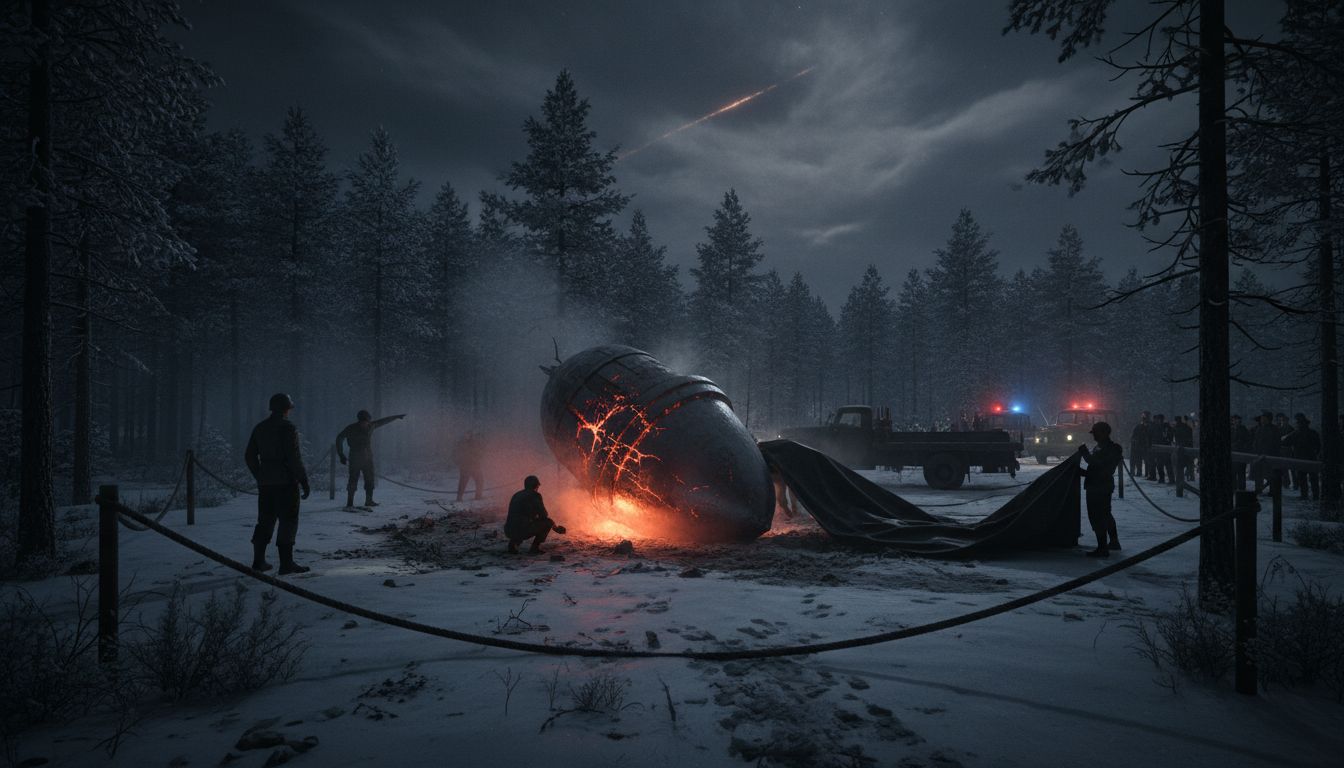
On the evening of December 9, 1965, a brilliant fireball streaked across the skies of the northeastern United States and southern Ontario. The phenomenon was reported by thousands of observers from Michigan to New York, and by residents of the small Pennsylvania town of Kecksburg, located about 30 miles south of Pittsburgh. Within minutes of the flash, witnesses described a “thump” and a brief vibration, after which a metallic, acorn‑shaped object allegedly came to rest in a densely forested area near the town. The incident quickly became known as the “Roswell of Pennsylvania,” and it has remained a focal point for UFO researchers, military historians, and meteorite specialists for six decades.
Eyewitness Accounts
Local resident Bill Bulebush recounted that the object “moved just like it was controlled” before striking the ground. He claimed to have approached the crash site and found a 10‑foot-long, glowing, acorn‑shaped craft that emitted sparks before he fled when other people arrived. Volunteer firefighter James Romansky, who initially thought the event might be a plane crash, reported seeing a metallic object with a smooth, tapered body and a series of rivets along its surface. The Greensburg Tribune‑Review quoted military officials as saying the object “appeared to be an unidentified flying object, possibly the same one seen streaking across seven northeastern states and Canada.” While the accounts vary in detail, they share consistent descriptions of a controlled descent and an unusual, non‑natural shape.
Official Response
Within hours of the sighting, U.S. Army, National Guard, and State Police units established a perimeter around the alleged impact zone. The Greensburg Tribune‑Review noted that the area was “cordoned off on the order of U.S. Army and State Police officials,” and that “no one was allowed near the area,” fueling speculation about possible radioactive or classified material. Military spokespeople told United Press International that no rockets had been launched that night, and the Air Force denied involvement in any test flight. However, the rapid deployment of troops and the removal of the object—reported to have been taken away on a military truck—suggested a level of secrecy that has kept the case alive in public memory.
Competing Theories
Researchers have offered three primary explanations for the Kecksburg event.
Meteorite – Some scientists argue that the fireball was a natural bolide that fragmented and landed in the woods, with the “acorn‑shaped” description arising from a partially melted stone. No recovered meteorite has ever been publicly identified, and the lack of a crater or typical impact evidence challenges this view.
Soviet Satellite– Cold‑War analysts note that the timing coincides with the launch of Kosmos 961, a Soviet reconnaissance satellite that re‑entered Earth’s atmosphere in late 1965. If a fragment survived re‑entry, it could explain the metallic construction and the military’s interest in securing the debris before it fell into Soviet hands.
Classified U.S. Device– A third hypothesis posits that the object was a top‑secret U.S. test vehicle, such as a high‑altitude balloon or a prototype aerospace craft. The swift military response and the removal of the object without public disclosure align with standard procedures for safeguarding classified technology.
Each theory has supporters, but none has been definitively proven. The lack of official documentation—most of which remains classified or has been lost—prevents a conclusive determination.
Legacy and Ongoing Inquiry
The Kecksburg incident continues to attract attention from both scholarly and popular audiences. In recent years, the Pennsylvania Center for the Book has catalogued the event as part of the state’s cultural heritage, while UFO investigative groups have organized annual “Kecksburg Days” gatherings to interview surviving witnesses. A 2024 Freedom of Information Act request yielded a handful of declassified memos indicating that the Air Force’s Project Blue Book examined the case but concluded that “insufficient data exist to determine the nature of the object.”
As the 60th anniversary approaches, historians emphasize the need for rigorous, evidence‑based analysis rather than speculation. Whether the object was a meteor, a Soviet satellite fragment, or a classified American craft, the Kecksburg incident remains a reminder of the challenges inherent in investigating anomalous aerial phenomena—especially when national security concerns intersect with public curiosity.
0
1
2
3
4
5
- Gemiddelde waardering: 0/5 - (0 Stemmen) Categorie:ALIEN LIFE, UFO- CRASHES, ABDUCTIONS, MEN IN BLACK, ed ( FR. , NL; E )
Joe Rogan: There's Something Strange Under The Pyramids!
Joe Rogan: There's Something Strange Under The Pyramids!
Overview
In a recent episode of his widely followed podcast, Joe Rogan and his guests delved into the longstanding enigmas of the Egyptian pyramids, focusing particularly on new radar evidence suggesting the existence of intricate underground structures beneath these ancient monuments. The discussion touched on advanced ancient engineering, possible lost civilizations, and the intersection of myth and emerging science—prompting new questions about humanity's distant past.
Underground Structures and Advanced Engineering
Rogan referenced synthetic aperture radar scans conducted by Italian researchers, which have reportedly revealed vast subterranean complexes beneath the pyramids. According to the guests, these scans indicate the presence of columns and spiral tubes forming what could be interpreted as an "energy grid" extending as deep as two kilometers underground. One guest, who had interviewed the Italian team, explained: "There are these structures, tubes, huge tubes that are the stranding underneath and we have noticed... these tubes have a sort of spiral nature."
The scale and complexity of these findings raise questions about the technological capabilities of ancient builders. Rogan emphasized the logistical marvel of the pyramids, noting that more than two million stones—some weighing up to 90 tons—were precisely aligned and transported over great distances. The conversation speculated that the society responsible may have possessed health and engineering technologies surpassing those currently known to mainstream archaeology.
Ancient Cataclysms and Lost Civilizations
The discussion also bridged ancient myth and geological science, highlighting Plato’s account of Atlantis. As recounted, the date given for Atlantis’s destruction—9,600 BC—aligns with a well-documented geological phenomenon known as Meltwater Pulse 1B, a sudden, massive sea level rise that occurred around 11,600 years ago. Rogan and his guests pointed out that this era coincides with the end of the Younger Dryas, a period marked by dramatic climatic upheaval.
"Nobody disputes that there was a Meltwater Pulse 1B. And it raised sea levels massively, literally overnight," one guest noted, suggesting that such cataclysms could have erased evidence of earlier advanced societies, supporting theories of lost civilizations far older than traditionally accepted by historians.
Sumerian Kings List and Longevity Speculation
The conversation shifted to ancient Mesopotamia, specifically the Sumerian Kings List, a document that blends historical rulers with legendary figures claimed to have reigned for tens of thousands of years. Rogan and his guests observed the strange juxtaposition of myth and reality, with some kings' reigns corresponding to plausible human lifespans and others described as living for millennia.
They speculated on the possibility of ancient longevity technologies, citing modern experiments in life extension. Rogan referenced hyperbaric chamber therapies and research on cellular aging, including studies showing the lengthening of telomeres—a marker of youthfulness—through specific medical protocols. He remarked, "We're real close to being able to do weird [stuff] right now. And there’s a lot of people that believe that if you can make it to 90 right now, you're going to be able to make it to like 300 years old." The implication: if ancient societies had cracked such technologies, it could help explain their monumental achievements.
The Ongoing Mystery
While the podcast acknowledged the speculative nature of some claims, it underscored the growing body of evidence that challenges the conventional timeline of human civilization. The combination of advanced underground structures, the alignment of mythic dates with geological events, and enigmatic ancient records like the Sumerian Kings List invites further scientific investigation.
For now, the mysteries beneath the pyramids remain unsolved, but as Rogan and his guests concluded, "There’s something strange under the pyramids," and the search for answers continues to captivate both researchers and the public alike.
BOMBSHELL Anti-Gravity Documents Prove Classified Research Continued!
BOMBSHELL Anti-Gravity Documents Prove Classified Research Continued!
Overview
A resurfaced 1990 US Air Force study titled "Electric Propulsion Study" is challenging decades of mainstream scientific consensus by validating controversial research into anti-gravity propulsion. The document, prepared by Science Applications International Corporation, examines the Biefield-Brown Effect—a phenomenon long dismissed by academic physics as mere ion wind—as a genuine candidate for exotic propulsion. This revelation suggests that classified research into technologies with potential UFO-like capabilities persisted well into the late 20th century.
Biefield-Brown Effect: From Fringe to Feasible
For decades, the Biefield-Brown Effect, discovered by Thomas Townsend Brown in the 1920s, has been relegated to the fringes of physics. Brown claimed that high-voltage, asymmetric capacitors could produce thrust through an interaction with gravity, not just by pushing air. Mainstream science has typically explained reported effects as "ion wind," or electrical devices moving by pushing against surrounding air, thus dismissing any gravitational connection.
However, the 1990 Air Force study directly contradicts this view. "It places the Biefield-Brown configuration at the top of its list of legitimate propulsion candidates," the video transcript notes, highlighting the study’s willingness to endorse phenomena that academic institutions have long ignored or denied. The study evaluates the underlying physics of the effect as a real, potentially gravitational phenomenon deserving of further military research.
Mass Fluctuation and Reactionless Propulsion
One of the most striking proposals in the document is the idea that electrical charge and mass may be interconvertible. According to the study, rapidly modulating the energy stored in a capacitor could lead to "genuine fluctuations in mass." This suggests the possibility of dynamically reducing an object’s weight—a concept that, in lay terms, constitutes anti-gravity.
The report goes further, exploring the possibility of violating the traditional law of momentum conservation. "If momentum conservation is broken or bypassed, you can generate thrust without expelling anything," the video points out. This reactionless propulsion is precisely the kind of technology that could explain the silent, high-acceleration, and exhaust-free maneuvers often reported in UFO sightings.
Gravitational Engineering and Energy Potential
The study also delves into unified field theories, suggesting that "power densities 10 billion times greater than nuclear reactions become possible and accessible" under certain interactions. To put this in perspective, nuclear energy already eclipses chemical energy by several orders of magnitude. If such energy densities were achievable, it could revolutionize technology and society overnight.
Additionally, the document proposes that gravitational components of electromagnetic waves could be amplified at specific frequencies. This blurs the line between electromagnetism and gravity, hinting at the engineering of gravity itself by tuning electromagnetic systems. The report even claims that electromagnetic energy could penetrate a superconducting Faraday cage—a device typically impervious to such signals—if transformed into a mixed gravitational mode.
Implications and Continuing Research
While the resurfacing of this study does not provide direct evidence that operational anti-gravity craft exist, it does show that serious military and scientific investigation into these concepts continued far beyond their public dismissal. The presence of such ideas in a formal Air Force document, presented without sensationalism, suggests that classified research may have pursued technologies once thought impossible.
The findings link directly to the behaviors reported in numerous UFO encounters: silent operation, high acceleration, and lack of visible exhaust. While the true extent of the research remains classified, the study’s technical assertions present a significant crack in the facade of mainstream scientific narratives—raising new questions about the limits of physics and the potential for breakthrough propulsion systems.
Chinese officials are warning that the country’s humanoid robotics industry could be forming a massive bubble.
As Bloomberg reports, strategists from the National Development and Reform Commission (NDRC), which serves as the country’s state-run macroeconomic management agency, say that extreme levels of investment could be drowning out other markets and research initiatives.
It’s a notable shift in tone as the humanoid robot industry continues to attract billions of dollars in investment. Aided by advancements in artificial intelligence opening up new use cases — and plenty of unbridled enthusiasm — for the tech, investors are pouring untold sums into over 150 humanoid robot companies in China alone, according to the NDRC.
Many of those companies are producing robots that are extremely similar to each other, overspending that could overwhelm the market. Bike-sharing apps, for instance, flooded the market in China in 2017 and 2018, with dozens of them crowding each other out at the same time. The outcome: streets littered with unused bikes.
“Frontier industries have long grappled with the challenge of balancing the speed of growth against the risk of bubbles — an issue now confronting the humanoid robot sector as well,” NDRC spokeswoman Li Chao told reporters last week, as quoted by Bloomberg.
China has established itself as a clear global leader in the space, with Morgan Stanley predicting the humanoid robot market could surpass a whopping $5 trillion by 2050. Citigroup is even more optimistic, expecting the market to hit $7 trillion by that point.
New offerings by companies like Unitree have made bipedal robots far more affordable and advanced than ever before. Unitree’s G1 robot, in particular, has garnered tons of attention for its flashy abilities to throw punches in the ring or play basketball.
A burgeoning industry of far smaller Chinese competitors has cropped up as well, fueling even more investment — as well as concern from policymakers that the industry could be growing too fast.
Last month, Chinese robotics company UBTECH claimed it had rolled out the “world’s first mass delivery” of industrial humanoid robots. Startup AgiBot’s A2 also set a Guinness World Record for the longest distance ever walked by a humanoid robot, with its A2 covering over 66 miles while live-swapping its battery over and over.
Despite plenty of enthusiasm, turning humanoid robots into a viable and affordable product with a clear-cut use case remains a major challenge. Case in point, the current crop of androids still struggles significantly with completing household tasks, particularly without the help of a nearby human teleoperator.
To speed up the process of finding real-world applications, the NDRC is hoping to spread industrial resources across the country, while also accelerating research and development for “core technologies.”
The risks of a bubble are certainly there. Without consolidation, China’s market could soon be flooded with armies of largely identical humanoid robots — which is either a terrifying prospect, considering the possibility of them putting us all out of work, or risks a market crash if it turns out they’re not particularly good at real work.
The tech industry has become obsessed with the idea of humanoid robots, bipedal androids designed to complete tasks on behalf of their flesh-and-blood counterparts.
But as many experts have argued, having robots walk around on two legs and manipulate the world around them with two hands and arms may not always be the most efficient option. After all, plenty of industrial robots use wheels to roll around a warehouse, or feature one large, strong, and multi-pivoting arm instead of relying onseveral weaker ones.
Besides, the existing crop of humanoid robots is capable of a lot more than walking around and waving their hands.
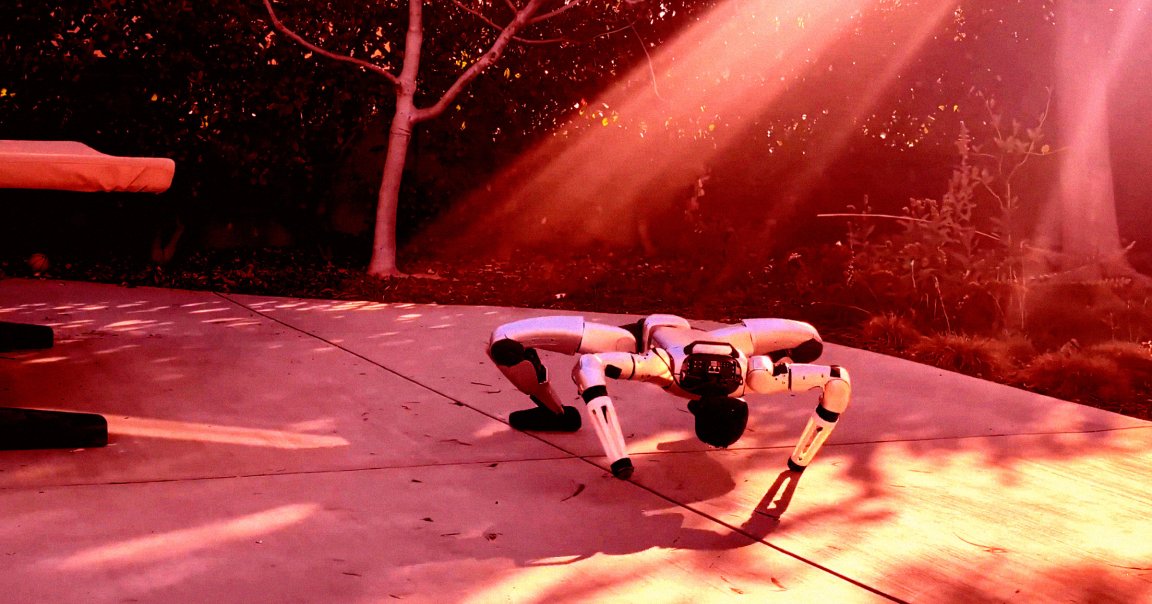
Look no further than a video shared by robot tinkerer and researcher Logan Olson last month, which shows how a humanoid robot can turn itself into a surprisingly creepy crawling machine while using the full extent of its four limbs’ freedom of movement. The footage shows the robot dropping down to all fours in less than a second, unnervingly bending its arms and legs to crouch down and scuttle across a concrete patio — like a demon straight out of a horror movie.
Agility Robotics AI research scientist Chris Paxton, who recently reshared the video, used the footage as a reminder that a “lot of these robots are ‘faking’ the humanlike motions.”
“It’s a property of how they’re trained, not an inherent property of the hardware,” he wrote. “They’re actually capable of way weirder stuff and way faster motions.”
“Human motion is most efficient for humans; robots are not humans,” he added in a follow-up.
It’s a particularly pertinent topic as companies like Tesla, Figure, and China’s Unitree race to commercialize humanoid robots for the mass market. While companies have made major strides — in a separate tweet, Paxton argued that “running is now basically commoditized” — experts have questioned if it’s really the best form factor for every job.
Case in point, Chris Walti, the former lead of Tesla’s humanoid robot Optimus, told Business Insider earlier this year that humanoid robots simply don’t make much sense on the factory floor.
“It’s not a useful form factor,” he said at the time. “Most of the work that has to be done in industry is highly repetitive tasks where velocity is key.”
The human form “evolved to escape wolves and bears,” he added. “We weren’t designed to do repetitive tasks over and over again.”
While a creepy-crawling robot, as demonstrated in Olson’s video, admittedly may not be the pinnacle of productivity, it serves as a great — albeit nightmare-inducing — reminder that humanoid robots are technically capable of a lot more than masquerading as a human being, while walking around, shaking hands, and giving out popcorn.
At the same time, a humanoid robot distending its joints to crawl along the floor likely won’t endear it to humans, either.
“That is terrifyingly cool,” one user wrote in response to Olson’s video.
A veteran Russian astronaut has been removed from an upcoming NASA mission after allegedly violating an international arms trafficking law.
Oleg Artemyev is said to have been accused of photographing classified documents and rocket equipment at a SpaceX facility in Hawthorne, California, and then 'smuggling' that information out of the building on his phone in late November.
The 54-year-old was scheduled to be part of the SpaceX Crew-12 mission, led by NASA, heading to the International Space Station (ISS) in early 2026.
He has been replaced by fellow cosmonaut Andrey Fedyaev, and Russia's official space agency Roscosmos said the change was made because of 'Artemyev's transfer to another job'.
However, other reports from Russia have said the move was made for much more serious reasons, claiming that Artemyev violated the International Traffic in Arms Regulations (ITAR) by allegedly photographing and leaking the SpaceX materials.
ITAR is a set of US government rules that tightly control the export, sharing, or transmission of sensitive defense-related technologies, information, and items, including spacecraft components and technical blueprints.
Russian investigative outlet The Insider reported that an international probe has been launched into Artemyev's actions.
At the moment, there are no claims that the alleged incident took place in order to harm the US. However, the case would amount to espionage if it is proven that Artemyev collected the photos with the intent to deliver them to a foreign government to gain an advantage over the US.
Cosmonaut Oleg Artemyev is believed to have been accused of photographing sensitive documents and equipment at the SpaceX facility in California
Artemyev was working at the SpaceX building in Hawthorne in preparation for Crew-12's 2026 mission to the International Space Station
The Daily Mail has reached out to NASA and SpaceX for comment regarding the allegations against Artemyev.
Russian media also reported that the cosmonaut has already been 'booted out of America' as space and national security officials investigate the alleged incident.
Space industry analyst Georgy Trishkin revealed on his Telegram channel that the veteran cosmonaut committed a 'serious violation' of the ITAR laws, which can carry both civil and criminal punishments if investigators were to determine he is guilty.
He added that the change was made with no official announcement by NASA or SpaceX, noting that the allegations seem credible since Artemyev was removed less than three months before the Crew-12 mission.
'My contacts confirm that a violation occurred and an interdepartmental investigation has been launched,' Trishkin told The Insider.
'It's very difficult to imagine a situation in which an experienced cosmonaut could inadvertently commit such a gross violation.'
The space industry expert also claimed that NASA was trying to make sure the scandal did not become public knowledge.
Artemyev had flown to the ISS on three previous missions, in 2014, 2018 and 2022. He has spent a total 560 days in space and performed eight spacewalks lasting over 53 hours. The 2026 mission would have been his first in the SpaceX Dragon Capsule.
Artemyev was removed from the 2026 mission to accept a 'transfer to another job', according to the Russian space agency Roscosmos
The Crew-12 SpaceX mission to the International Space Station is set to take off in early 2026, and another Russian cosmonaut has replaced Artemyev. Pictured: SpaceX's Dragon Capsule
The ITAR restrictions were created by the US Department of State in 1976 to protect national security by preventing unauthorized access to important data and equipment that could benefit enemy nations.
In this case, Artemyev is alleged to have violated the law because he is a foreign national illegally capturing images of materials deemed 'restricted' by the US government. Allegedly leaving SpaceX headquarters with those images on his phone would amount to 'exporting' the information without US government approval.
If the claims against Artemyev are proven to be true, breaking ITAR laws can lead to fines of more than $1million per violation.
In the most serious cases, where a violator is found to be committing espionage against the US, the State Department noted that criminal penalties include up to 20 years in prison.
Even in less serious cases, violators can also be banned from government contracts, including working with NASA and SpaceX on future missions.
If the incident is proven true, it could also strain joint missions between NASA and Roscosmos, as cosmonauts will likely face increased monitoring while they work at US-based facilities.
Pixar's adorable hopping lamp has been brought to life – and he could soon be lighting up your own desk at home.
Developed byCalifornia firm Interaction Labs, Ongo the robotic smart lamp can move, see, hear and even talk.
A promo clip shows the 'ambient desk lamp companion robot' peering curiously at objects and people around him while giving help around the home.
And to allay any privacy concerns, he even comes with a pair of sunglasses blocking his view.
Karim Rkha Chaham, co-founder and CEO Interaction Labs, said the 'expressive' bot can even remember users and anticipate their needs.
'Think of it as a cat trapped inside the body of a desk lamp,' he said.
On X, commentators called the design 'incredible', 'epic', 'very cool' and an 'amazing-looking piece' of tech.
One said it's 'definitely something I would have at home and not a creepy humanoid robot', while another added it 'might be the cutest robot on the market'.
According to the company, the cute desk lamp 'lights up your desk and your day' and brings ' a familiar magic presence' to your home
Developed by California firm Interaction Labs as a tribute to the Pixar character, Ongo the smart lamp can move, see, hear and even talk
Ongo has movements designed by Alec Sokolow, the Oscar-nominated writer of Pixar film Toy Story as well as Garfield: The Movie and Evan Almighty.
As the promo video shows, Ongo spins on its base and self-adjusts its axis just like the legendary Pixar character.
Depending on the user's needs, he can adjust levels of light that are emitted from his 'eyes' and bring them closer, for when reading a book after nightfall for example.
Ongo utters cheery greetings, helpful advice and instructions such as 'Hey, don't forget your keys' and 'Maybe try a dash of balsamic' during cooking.
Another adorable scene shows Ongo bopping to the sound of music in the next room when his owners are having a party.
According to the company, the cute desk lamp 'lights up your desk and your day' and brings 'a familiar magic presence' to your home.
'It brings your space to life with movement, personality and emotional intelligence,' Interaction Labs says on its website.
'It remembers what matters, senses how you feel, and supports you through the day with small, thoughtful interactions.
'Ongo senses the rhythm of your day and responds with quiet understanding, reading the subtle shifts in your environment.'
Ongo comes with 'fun' opaque sunglasses that snap on with magnets for when users want total privacy
Karim Rkha Chaham, co-founder and CEO Interaction Labs, said the 'expressive' bot can even remember users and anticipate their needs
One commentator posted: 'definitely something I would have at home and not a creepy humanoid robot'
Much like smart products packed with cameras, Ongo has an awareness of its surroundings but it processes vision on the device itself and never sends clips out to the cloud for company staff to watch.
When users want total privacy without Ongo peering in, they can put 'fun' opaque sunglasses over his eyes that snap on with magnets.
On X, several users said they found Ongo's voice 'annoying' and 'grating', but Chaham said it can be customised along with his personality.
The co-founder also admitted that the promo clip is computer-generated, but it gives users a good idea of what to expect as prototypes are being worked on – so it's not quite ready yet.
He said: 'Will be posting more and more videos of us interacting with the prototype.'
Ongo is available to pre-order on the company's website, with a fully refundable 'priority access deposit' costing $49/£38.38.
This deposit secures users a unit from the first batch and will be taken from the product's final price – which Chaham said will be 'about $300' (£225) – and those who pay now will get Ongo when shipping begins summer next year.
Ongo is an obvious nod to Pixar's original lamp, called Luxo Jr., which has appeared on the production logo of every Pixar film since the first one, Toy Story, back in 1995.
'That's not what a chair looks like': Ongo keeps an eye on his users and offers helpful suggestions and reminders - such as when they're trying to put furniture together
Pixar's lamp, called Luxo Jr., has appeared on the production logo of every Pixar film since the first one, Toy Story, back in 1995
In the short sequence, Luxo Jr. is seen hopping into view and jumping on the capital letter "I" in "PIXAR" to flatten it before turning his head.
Toy Story director John Lasseter created the character in August 1986, modeling it after his own Luxo brand lamp.
Luxo Jr. starred in his own short film of the same name that year, also directed by Lasseter, in which he appears with a larger lamp, 'Luxo Sr'.
It was also in 1986 that the animation studio was purchased by Apple co-founder Steve Jobs, having been owned by George Lucas' Lucasfilm.
After a run of hugely-successful films including Toy Story, A Bug's Life, Monsters Inc and Finding Nemo, Disney acquired Pixar in 2006.
Key milestones in Pixar's history
1979: George Lucas recruits Ed Catmull from the New York Institute of Technology to head Lucasfilm’s Computer Division.
1982-83: The division completes a scene for Star Trek II: The Wrath of Khan showing a lifeless planet being transformed by lush vegetation. It is the first completely computer animated sequence in a feature film.
1986: Apple co-founder Steve Jobs purchases the Computer Division from George Lucas and establishes the group as an independent company, Pixar. At this time about 40 people are employed.
1986: A short film called Luxo Jr. is completed featuring two anthropomorphic desk lamps
1991: Disney and Pixar announce an agreement 'to make and distribute at least one computer-generated animated movie' which will become Toy Story.
1995: Toy Story, the world’s first computer animated feature film, is released on November 22. It opens at #1 that weekend and goes on to become the highest grossing film of the year, making $192 million domestically and $362 million worldwide.
1998: Pixar's second feature-length film A Bug's Life is released in theaters on November 25
2006: The Walt Disney Company announces that it has agreed to purchase Pixar Animation Studios
Conspiracy Vault returns with a new investigation - and this time, it's stepping into the case that sparked America's modern fascination with UFOs.
After debuting with the Dyatlov Pass mystery, the series now turns its focus to the event that changed everything: Roswell.
Hosted by US Reporter Alexa Cimino, this episode digs into one of history's most debated incidents through five key objects pulled from the vault - artifacts that shaped the narrative, fueled speculation, and cemented Roswell as the cornerstone of UFO lore.
The investigation leads to the New Mexico desert in the summer of 1947, when a rancher discovered strange metallic debris scattered across his land - including foil-like material that allegedly snapped back into shape when crushed, and thin, rigid beams marked with unusual, glyph-like symbols.
Newspapers that had splashed the sensational headline suddenly printed retractions. Witnesses insisted the material they handled was unlike anything used in conventional aircraft, while the photographs released by the military showed debris that many argued did not match what was first collected from the ranch.
The second installment of Conspiracy Vault delves into the Roswell Incident
Depending on who you ask, the Roswell crash was either a classified military project cloaked in confusion… or the first recovered evidence of something not made by human hands.
Despite repeated government assurances that the case is closed, new documents, witnesses, and theories continue to emerge - keeping the nearly 80-year-old mystery alive.
Conspiracy Vault reconstructs how the Roswell narrative took shape, why it remains fiercely disputed, and what might still be hidden behind decades of secrecy.
Daily Mail Reporter, Alexa Cimino, takes a look at the 5 key pieces of evidence from the Roswell Incident and discusses the theories that could potentially explain what really happened in New Mexico that fateful day in 1947.
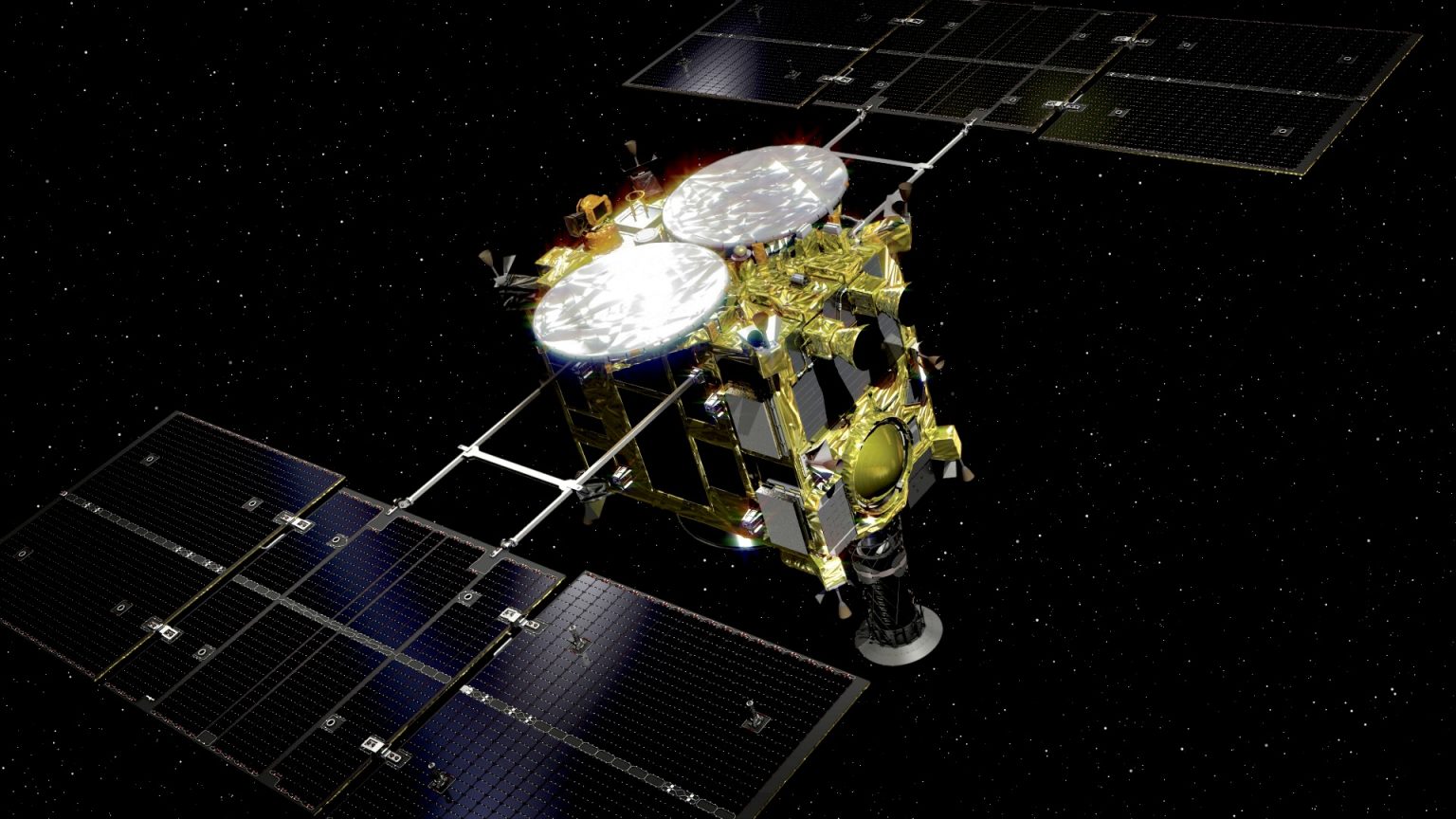
Five years ago, on December 5, 2020, the Hayabusa2 spacecraft dropped a capsule containing samples of material collected on the asteroid Ryugu into Earth’s atmosphere. Scientists are still studying them and finding substances that can tell us a lot about the past of the Solar System.
Hayabusa2 spacecraft. Source: Wikipedia
Hayabusa spacecrafts
The Japanese space program is usually talked about as something that’s way behind the American, Russian, and Chinese ones. But there’s one thing that’s way ahead of all of them. That’s using innovative ways to speed up in space.
And while solar sails remain an experiment, the use of ion engines has already yielded very important results. We are talking about two spacecraft from the Hayabusa series, which delivered samples from asteroids to Earth. December 5 marks the fifth anniversary of the second spacecraft dropping a capsule with samples from the asteroid Ryugu onto our planet.
And while solar sails remain an experiment, the use of ion engines has already yielded very important results. We are talking about two spacecraft from the Hayabusa series, which delivered samples from asteroids to Earth. December 5 marks the fifth anniversary of the second spacecraft dropping a capsule with samples from the asteroid Ryugu onto our planet.
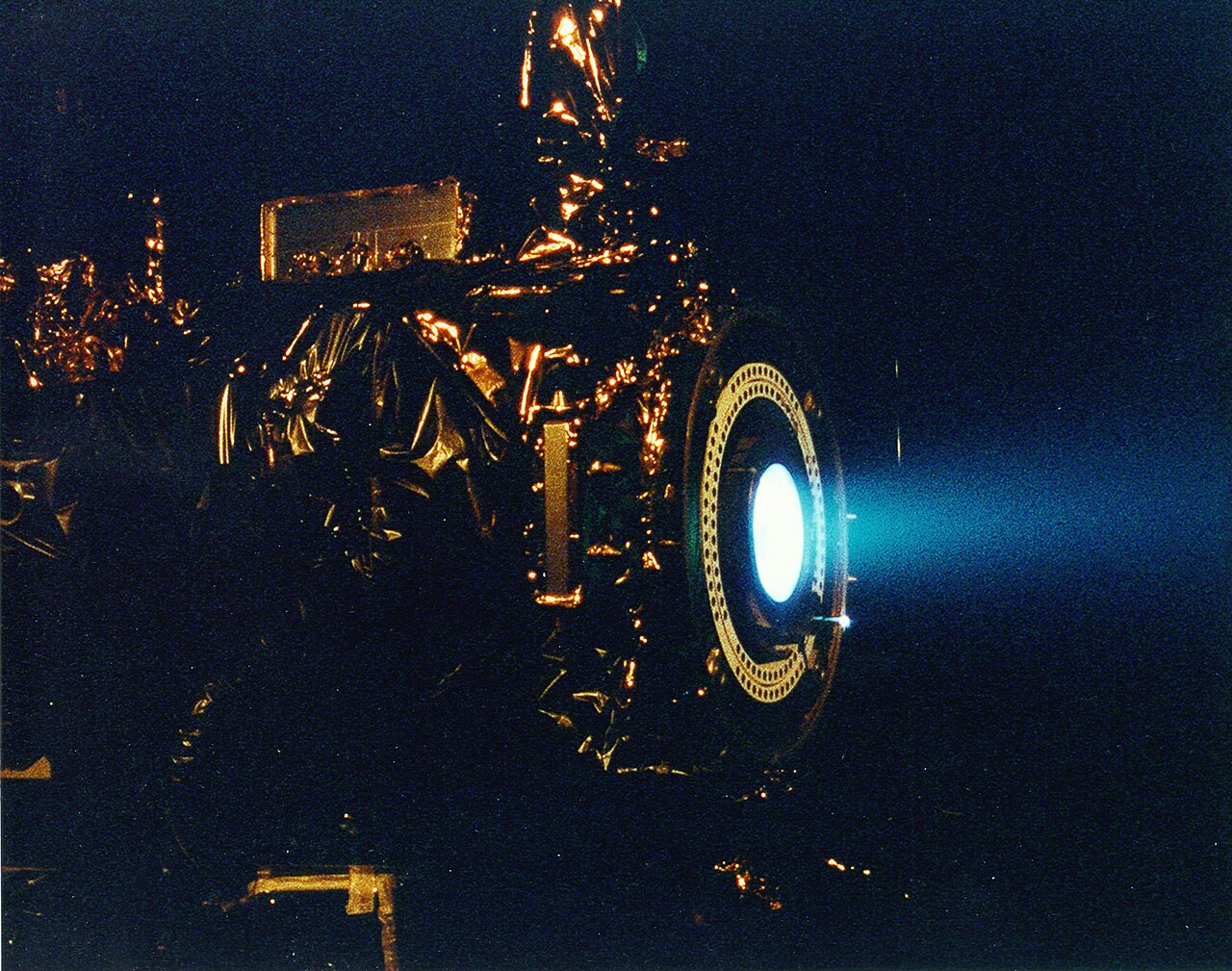
Ion engine. Source: phys.org
Its small size and therefore gravitational pull make this task easier. However, for spacecraft with conventional chemical engines, it remains unattainable. Ion engines, in which charged particles are accelerated by a magnetic field, are another matter. Their thrust is small, but the speed of the jet is several times higher than that provided by rockets that launch spacecraft into orbit.
This allows fuel to be used much more economically and acceleration to be maintained for much longer. And this was perfectly suited to the tasks of flying to an asteroid. The Hayabusa spacecraft, whose name refers to the peregrine falcon, had four engines. They were powered by solar panels, used xenon as a working fluid, and provided acceleration for the 510 kg spacecraft.
The spacecraft also carried containers for samples and a device for collecting them, communication systems, and equipment necessary for landing on the asteroid. The first spacecraft also carried a small robot, while the second carried two robots, plus a stationary MASCOT module.
Hayabusa2 flight
The flight of Hayabusa2 was entirely determined by the results of the first spacecraft’s journey, which was extremely problematic. From its launch in 2003, it was expected that by 2007, it would have collected samples from the near-Earth asteroid Itokawa and returned to Earth. But something kept happening during the flight.
Ryugu asteroid. Source: Wikipedia
First, during the initial landing, Hayabusa lost the miniature robot MINERVA, which simply could not stay on the surface and flew off into space. Then the spacecraft itself touched down rather unsuccessfully on the surface of the space rock, so it was unclear until the very end whether it had managed to collect any material. And finally, on its way back to Earth, its propulsion system failed, so it was even considered lost for some time.
In the end, specialists managed to start some of the ion engines, and Hayabusa was able to reach Earth in 2010 and drop a capsule with samples onto the surface. Incidentally, it turned out to be not empty at all and gave scientists the first sample of material delivered from an asteroid. But it was clear that a second attempt was needed to get everything right this time.
This was the mission of Hayabusa2, which began on December 3, 2014. The target was the carbonaceous asteroid 162173, a member of the Apollo group of near-Earth asteroids. During the probe’s 2015 flight, it was named Ryugu after the palace of the dragon lord of the seas in the Japanese fairy tale about Urashima Tarō.
Hayabusa2 flight path. Source: Wikipedia
On July 7, 2018, Hayabusa2 entered orbit around Ryugu, which had a diameter of 920 m and resembled a nut in shape. On September 21 of the same year, two small robots were lowered to the surface. This time, they were able to stay on the surface long enough to transmit images back to Earth. Then, on October 3, the MASCOT module landed on the surface and was able to conduct research on Ryugu’s chemical composition on site.
But researchers on Earth still wanted to obtain something for their laboratories. So, on February 22, 2019, the probe itself descended to the surface of Ryugu and took samples of material from its surface. But that was not all. Japanese researchers also wanted to obtain materials from its depths. Therefore, the probe took off from the asteroid and fired a copper projectile at it on April 5 of the same year.
As a result, a crater was formed, and some rock samples from the depths of the asteroid settled on the surface near it. These were needed by Hayabusa2, which landed on the asteroid’s surface for the second time on July 11, 2019, filled another container, and took off. The probe remained in Ryugu’s orbit until November 13, 2019. One of its ion engines failed on the way, but this did not prevent the mission from being completed.
MINERVA-II-1 robot. Source: Wikipedia
What scientists learned from Ryugu samples
On December 5, 2020, Hayabusa2 dropped a capsule containing samples collected on Ryugu into Earth’s atmosphere. It landed at the Woomera Range Complex in Australia. A team of specialists quickly retrieved it and took it to a laboratory, where they opened it and began studying the samples.
The first thing that scientists noticed when studying the samples was that they resembled black sand. The soil delivered by Hayabusa2 turned out to be the darkest of all samples extracted in space. This, along with chemical analysis, allowed scientists to establish a connection between Ryugu and carbonaceous meteorites found on Earth.
Determination of the physical characteristics of these samples showed that they are quite fragile and porous. This allowed us to solve an old mystery: why are there so many carbonaceous asteroids in space, but very few meteorites of similar composition have been found on Earth? It turns out that they do not survive collisions with our planet’s atmosphere, being destroyed in it.
Copy of a sample capsule. Source: Wikipedia
The second important discovery was published in January 2025. Carbonate and sodium sulfate, as well as chlorides, were found in samples from Ryugu. These could only have formed in hot water conditions.
This means that the asteroid was previously part of a much larger body that was closer to the Sun. It may belong to the Elania or Pulana group. According to scientists’ estimates, Ryugu is only 8.9 million years old.
The third important discovery made during the study of samples from the Hayabusa2 capsule is that a bunch of organic substances were found in Ryugu. These include all twenty essential amino acids, aliphatic amines, carboxylic acids, aromatic hydrocarbons, and nitrogen-containing heterocyclic compounds.
Perhaps this news is the most important of all. Because, despite the fact that Ryugu broke away from its parent body relatively recently, the material it is made of has remained unchanged since the formation of the Solar System. This means that even back then, in interplanetary space, all the components necessary for biological evolution were already present.
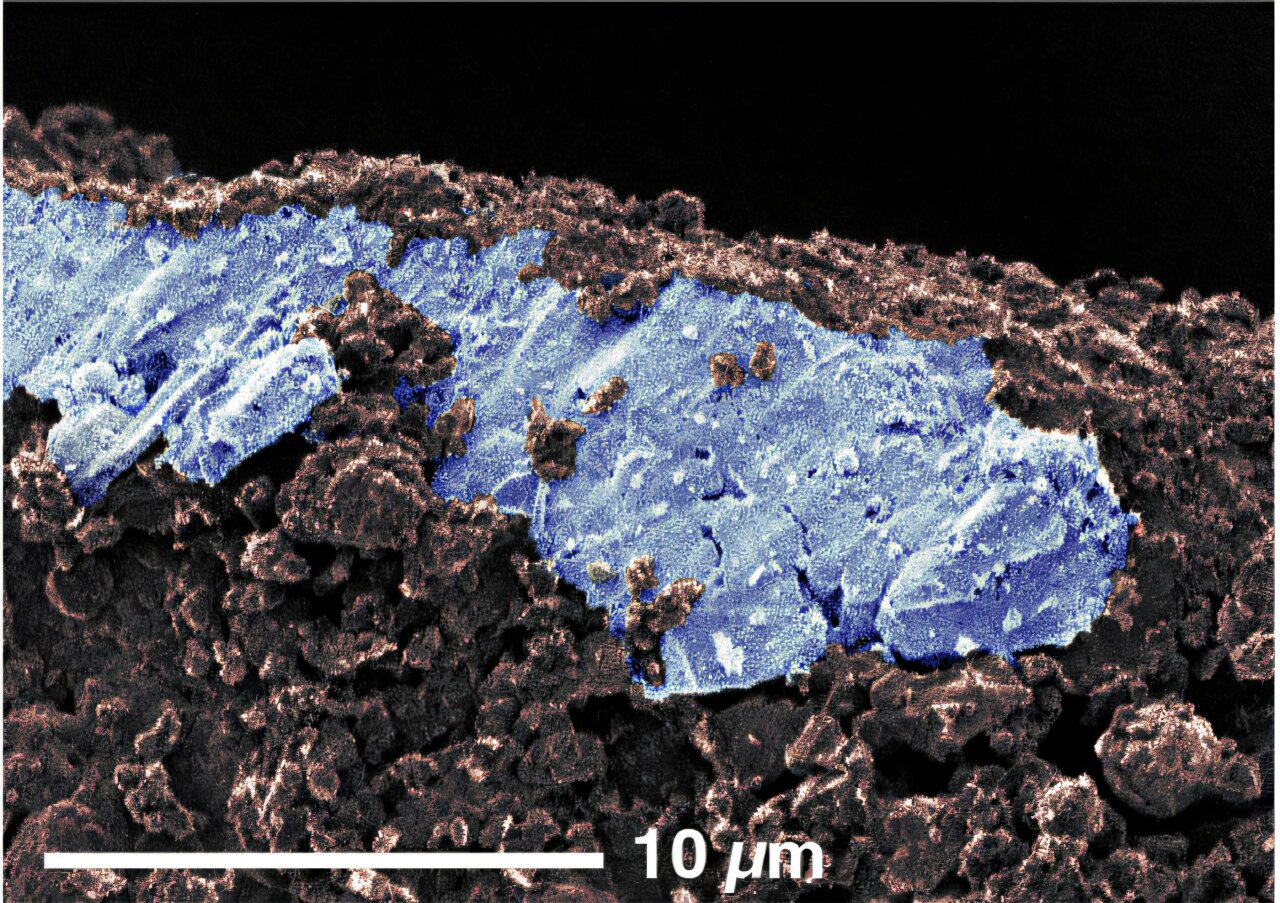
Sodium carbonate deposits in samples from the asteroid Ryugu. Source: KyotoU / Toru Matsumoto
The question of where it began has long been a source of concern for scientists. It is quite possible that the first biochemical reactions did not even take place in the protoplanetary disk, but in the gas and dust cloud from which the Solar System was formed. Samples from Ryugu support this theory.
It is not over yet
But that’s not all. After dropping the capsule with the samples, Hayabusa2 did not burn up in Earth’s atmosphere, as its predecessor did. It flew on, and so the mission continues even 11 years after its launch. The spacecraft still has three engines and fuel for them, as well as equipment for photographing and remotely studying asteroids.
And now the Japanese probe is continuing its mission. In July 2026, it is scheduled to fly past asteroid (98943) Torifune, which belongs to the silicate class and has a diameter of about 500 m. Hayabusa2 is expected to fly at a distance of 10 km from it.
Asteroid Torifune from three angles. Source: Wikipedia
After that, the probe will continue to orbit the Sun and will approach 1998 KY26 in 2031. Like other objects studied by Hayabusa2, it belongs to the Apollo group of near-Earth asteroids. However, observations of this space rock, which is only 11 m in diameter, have shown that it may be extremely interesting.
In 2023, after the Hayabusa2 flight program was approved, 1998 KY26 was classified as a dark comet. This asteroid does not form a tail or coma, but it experiences acceleration similar to that of a comet. It is expected to contain a significant amount of water, so it will be interesting to see during the flyby whether anything evaporates from its surface, creating jet streams.
However, it is possible that the Hayabusa2 mission will not end there. If its equipment remains functional and there is enough xenon in the tanks for new maneuvers, its mission may be extended again.
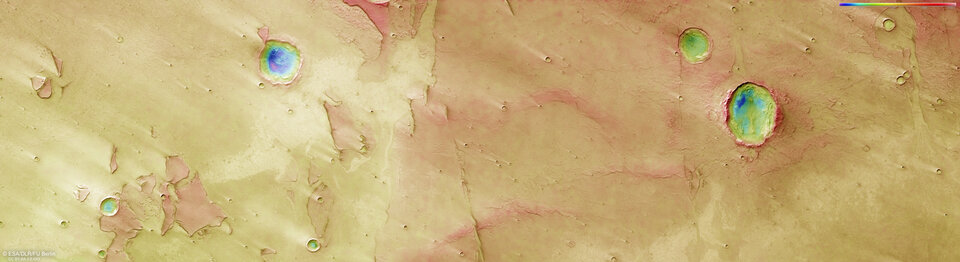
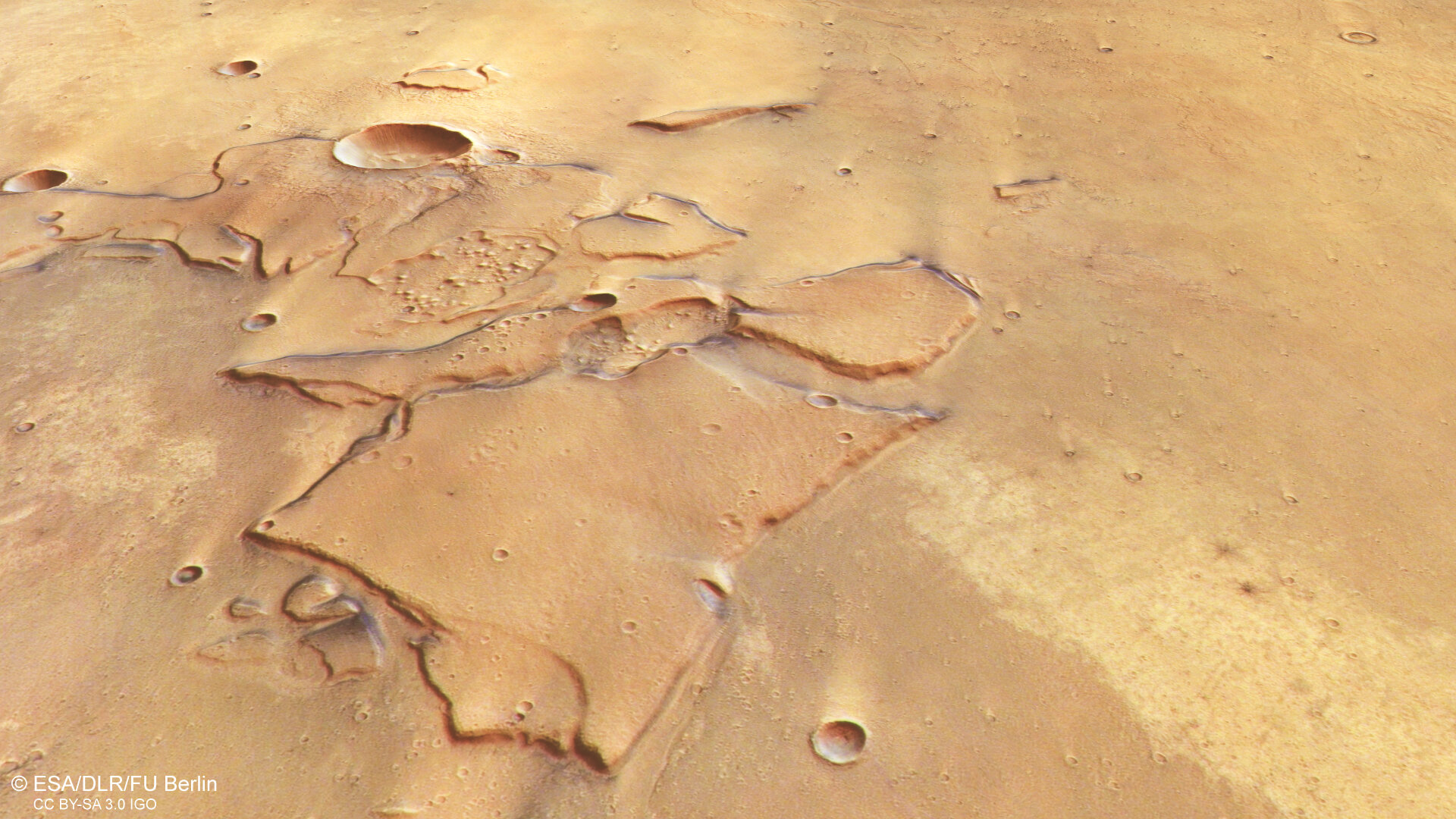
The European Space Agency (ESA) has published an interesting image taken by the Mars Express spacecraft. It shows a very unusual crater, whose structure resembles a butterfly.
Butterfly crater. Source: ESA/DLR/FU Berlin
Usually, in a collision that causes a crater to form, material will be ejected in all directions. However, this is not always the case. In the case of the butterfly crater, the space rock fell at a low, shallow angle, resulting in the interesting and unusual shapes that can be seen in the Mars Express image.
As a result of the collision, two separate sections of material were ejected north and south of the crater, creating two elongated “wings” of raised ground. The “wings” of this unique butterfly crater are rather vague and irregular, but they can be seen in the lower left and upper right parts of the main crater, which resembles a walnut. It has an atypical oval shape and measures 15 by 20 km.
The region where the butterfly crater is located. Source: ESA/DLR/FU Berlin
Some of the debris forming the wings (mainly visible just above the crater) also appears smoother and more rounded, almost resembling a mudflow. This indicates that it mixed with water or ice from beneath the surface of Mars, which melted during the impact.
The butterfly crater is far from the only interesting feature of this place. The rest of the frame is mostly flat, drawing attention to a group of steep, flat-topped rock formations known as mesas. The higher areas of land here have been gradually eroded away, and the remaining hills are those that have managed to withstand erosion over time.
Martian masses. Source: ESA/DLR/FU Berlin
The mesas stand out sharply against the brownish surroundings thanks to layers of exposed dark material at their edges. As on Earth, it is probably rich in magnesium and iron and was formed by eruptions. In the past, this region experienced fairly powerful volcanic activity, resulting in the accumulation of lava and ash deposits over time, which were buried by other materials.
Signs of lava can be seen in the form of “wrinkled ridges”: folded patterns that formed when lava flows cooled and contracted, causing the surface to crumple.
Future astronautsmay not just be looking for life on Mars, but bringing life forms from Earth along with them, such as microbes that can help produce the building materials for a permanent human colony on the Red Planet.
As programs like NASA’s Artemis project seek to extend humanity’s reach toward an ongoing presence on the Moon and, eventually, on Mars, the logistics of these missions raise several questions. Sourcing local Lunar or Martian materials for these projects is now a major research area for mission planners, and an international team has provided new insights in a recent paper published in Frontiers in Microbiology.
The Harsh Red Planet
The surface of Mars is highly inhospitable to human life, due to billions of years of catastrophic changes that likely erased any past habitability. Any colonists will need an artificial air supply, as the planet’s atmosphere is extremely thin and composed chiefly of poisonous carbon dioxide. That atmospheric weakness also prevents effective regulation of the planet’s temperature, resulting in wild swings from a comfortable 79°F to an unsurvivable -194°F.
On top of all this, brutal cosmic radiation, bringing with it a significant cancer risk for future astronauts, showers the planet’s surface, unimpeded by its thin atmosphere.
Such a challenging environment—inimical to most complex life, let alone humans—will require robust shelters and life-support systems if any permanent settlement is to occur. Given long journeys, limited payload, and the tremendous expense of landing humans on Mars, mission planners are understandably concerned about using any available local resources.
Life on Mars Once and Again
Samples collected from Mars’ Jezero crater do not conclusively contain life, but they do hint that microbes may have inhabited the soil long ago. Although such microbes are not readily apparent, they still populate the Red Planet, and microbial life on Earth offers a chance to study how such organisms could impact Mars. One such process is biomineralization, in which microbes produce hard minerals, shaping the terrestrial landscape over long periods and operating in some of the most extreme environments on Earth.
Now, a team of international researchers has devised a way to harness natural biomineralization to produce sturdy building materials from Martian regolith. Among the methods the team studies, biocementation, a process where microbes generate calcium carbonate at room temperature, emerged as the most promising for practical implementation.
Bacterial Powerhouses
The team identified two bacteria that, when working in tandem, produce remarkable results. The first is Sporosarcina pasteurii, which, through a process called ureolysis, produces the desired calcium carbonate. The other is a cyanobacterium called Chroococcidiopsis, an extremely resilient organism capable of weathering environments as challenging as the Martian surface.
When co-located, Chroococcidiopsis acts as a natural life-support system, creating an oxygen-rich microenvironment in which Sporosarcina pasteurii can thrive. Additionally, Chroococcidiopsis secretes a substance that protects its microbial mate from the harsh UV radiation pouring over the Red Planet. In this protective bubble, Chroococcidiopsis is safe to secrete polymers, which turn the loose Martian regolith into a sturdy building material similar to concrete.
Bio-Based 3D Prints On Mars
Producing the raw materials is a massive step toward human permanence on the Red Planet, but the researchers did not stop there. They have also begun exploring the optimal method for erecting structures on the Martian surface from their microbial concrete.
The optical solution, the team says, would be to use giant 3D printers, fed on a mixture of their microbial pair and Martian soil. 3D-printed concrete buildings are a technology already well established on Earth, with one notable example being their use in constructing a Starbucks in Texas earlier this year.
The researchers’ focus on these two microbes doesn’t end with construction, as the team believes both could be useful for long-term life support operations. Chroococcidiopsis could be used to produce oxygen not just for microenvironments but also on a larger scale to produce breathable air for astronauts. On an even larger timescale, Sporosarcina pasteurii produces ammonia, which could be utilized in terraforming efforts, to fundamentally change Mars from the barren wasteland it is today into something more habitable.
For now, any practical implementation of such processes to permanently colonize Mars is likely to be at least a few decades away, though ongoing advancements are paving the way for a lasting human presence on the Moon and Mars to become a 21st-century reality.
Ryan Whalen covers science and technology for The Debrief. He holds an MA in History and a Master of Library and Information Science with a certificate in Data Science. He can be contacted at ryan@thedebrief.org, and follow him on Twitter @mdntwvlf.
The circle of pits stretches over 2 kilometers wide, surrounding Durrington Walls and Woodhenge, two other sites created by the Neolithic inhabitants of the area. Since their initial discovery in 2020, archaeologists have determined that the pits are up to 10 meters across and 5 meters deep, with further investigations reported in a recent paper in the journal Internet Archaeology.
Neolithic Britain
Although Stonehenge is the most famous Neolithic construction in Britain, it is located close to two other notable features. One is Woodhenge, a timber monument about 3 kilometers from Stonehenge, that was discovered in a 1926 aerial photograph. Evidence from the site, such as pig remains, suggests it was a place associated with vitality and living worship.
Durrington Walls, unlike Stonehenge and Woodhenge, was not a ceremonial site but a settlement. It was situated close to Woodhenge, also about 3 kilometers from Stonehenge. Excavations two decades ago uncovered seven homes, but archaeologists estimate that the site once boasted around 1,000 homes and 4,000 residents. This would have made Durrington Walls the largest settlement in Europe for a portion of its suspected 500-year occupancy.
The series of recently discovered pits, whose perimeter encircles all three sites, underscores the close link between Woodhenge and Durrington Walls.
A Mysterious ring of Ancient Pits
Initially, some of the Durrington circle pits were dismissed as natural sinkholes. However, the researchers note that the pits’ internal structures and distributions do not correspond to what would be typical of sinkholes. The team concedes that some of the pits may’ve originated as natural features that were later excavated further. Analysis of the pits’ contents suggests possible bone-derived material and quartz.
Similar networks of large pits have been discovered elsewhere in Britain in recent decades. Large-scale investigations of the British pits have revealed that they were likely not used for hunting or storage. Commonly found near bodies of water, archaeologists interpret them as having ritual significance.
Exploring a Neolithic Mystery
Discovering and mapping the holes was only the beginning, as new research explores the environment and origins of the structures. Techniques employed in the study include advanced Optically Stimulated Luminescence (OSL) dating and environmental DNA (sedaDNA), along with more traditional methods such as sediment analysis, geochemistry, and borehole coring.
According to the team’s findings, Late Neolithic humans constructed the pits around the same time as Durrington Walls. Fine clay-silt layers at the bottoms of the 4.5-6.9 meter deep pits indicate that the pits were gradually infilled. The SedaDNA and soil chemistry analyses provided evidence for what types of plants grew in the area and how the pits fit into their surroundings. Notably, much of the DNA found in the infill was not from local sources.
A Deeper Understanding of Ancient Britain
“The recent work confirms that the circle of shafts surrounding Durrington Walls is without precedent within the UK,” said lead author Professor Vince Gaffney, of the University of Bradford. “These features were not simply dug and abandoned – they were part of a structured, monumental landscape that speaks to the complexity and sophistication of Neolithic society.”
The research marks a significant step away from viewing such finds as merely “mysterious holes” and toward seeing them as meaningful indicators of how ancient peoples lived. Presently, the researchers suggest that the holes marked a sacred boundary, cutting off the ceremonial activity occurring at Durrington Walls during the period.
Fundamentally, understanding the purpose of these features, their chronology, and their environment helps to sharpen our understanding of the lives of the Neolithic people of Britain.
Ryan Whalen covers science and technology for The Debrief. He holds an MA in History and a Master of Library and Information Science with a certificate in Data Science. He can be contacted at ryan@thedebrief.org, and follow him on Twitter @mdntwvlf.
New research from Zhejiang University could reshape the future of robotics and wearable technology by enabling self-powered soft robots that generate power solely from ambient motion.
Inspired by the lymphatic system, this innovation relies on a soft, flexible pump that mimics the crucial part of the human body that circulates fluid without relying on a single central pump. Our bodies use this distributed network of vessels and one-way valves to support a range of everyday activities, including walking and breathing.
“We wanted to address one of the biggest limitations in soft robotics today: the dependence on heavy, rigid power systems,” said Professor Wei Tang, a lead author of the study, in a statement. “Our goal was to create a pump that is soft, lightweight, and capable of operating autonomously, just like biological tissues.”
Future Space and Sea Missions
The team’s research is important because it addresses one of the most significant limitations in robotics and wearables: the need for heavy batteries or external power sources. Mimicking the human lymphatic system allows the creation of robotic systems that can flow autonomously.
Such technologies could lead to wearable smart gloves that regulate temperature and circulation when a person moves, as well as robots that can perform tasks in hazardous environments, such as deep-sea exploration or even outer space.
The Design
Using low-cost 3D printing techniques, the team created pumps in various shapes and sizes, making them customizable for a wide range of applications, from medical devices to remote robotics. This led to the development of the soft fiber pump (SFP), a slender, highly flexible device that can bend, twist, and stretch in various ways.
Two designs were developed from the research: a high-performance version that uses spiral electrodes to boost pumping capabilities, and a durable version with parallel electrodes inspired by the human lymphatic vessels. Both designs offer flexibility and strength in environments where traditional pumps would fail.
What makes the technology different from others before is its built-in ability to generate its own power. The researchers integrated a triboelectric nanogenerator (TENG) (a device that converts mechanical motion into electricity) directly into the pump system. When in rotation or motion (such as wind, water flow, or human movement), the TENG provides all the energy the pump needs.
“This turns everyday motion into a power source,” said Professor Jun Zou, co-lead of the project. “It moves us closer to machines that power themselves, without batteries or external electrical systems.”
To showcase the pump’s true potential, the team built several functional prototypes, including artificial muscles capable of lifting weights to mimic a lifelike robotic movement. This, in addition to microfluidic control systems to enhance lab-on-a-chip diagnostic devices, and a temperature-regulating smart glove that uses the pump to circulate fluid and adjust temperature comfort.
“By fusing biological inspiration with advanced materials and energy harvesting,” said Tang, “we’re creating systems that are not just functional—but genuinely alive with autonomy.”
Are Ancient Sites Interdimensional Doorways to Other Realms of Existence?
There are many ancient sites around the world, many of which have legends that appear to speak of portals and gateways to other realms of existence. So many, in fact, that they surely can’t be dismissed as nothing but a coincidence.
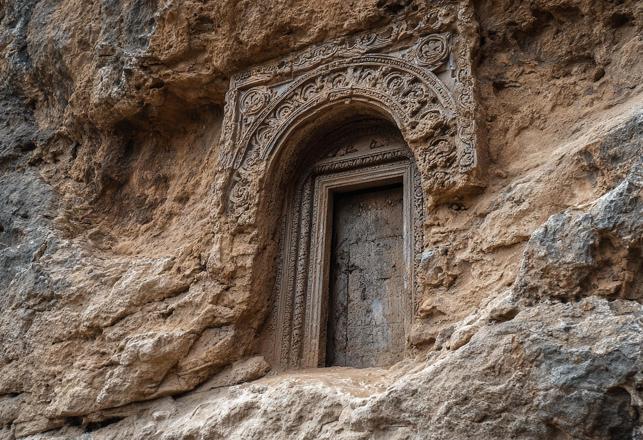
Perhaps a good place to start would be with the Gate of the Gods. Carved into the rock of Hayu Marca Mountain in the Andes Mountains of Peru near Lake Titicaca, the Aramu Muru – or Puerta de Hayu Marca, The Gate of the Gods – is one of the most intriguing and mysterious archaeological sites in South America. The mountain itself is believed to have been a place of worship or other importance to the Inca civilization, and so Aramu Muru is thought by many to have also been of great importance to them. We should note that some researchers have questioned whether the Incas created the Gate of the Gods, or whether it was created much earlier by an unknown civilization and then simply “used” by the Incas.
The Gate of the Gods was discovered in 1996 by Jose Luis Delgado Mamani, who stumbled upon the archaeological marvel while attempting to learn the area's layout, anticipating a new job as a tour guide. In a further strange twist, Mamani even stated that he had a peculiar recurring dream about this enigmatic location in the years leading up to its discovery. In this dream, Mamani would find himself on a pink marble pathway that led him to a large doorway in the rock. However, upon arriving at this doorway, he would see a second, smaller door open with a “brilliant blue light coming from what looked like a shimmering tunnel”.
In reality, this “doorway” is two separate T-shaped doorways carved into the rock of the mountain, with the larger one being 23 feet high and 23 feet across at its widest point, while the other, smaller door is just short of 7 feet high and across. According to legends of the region, the larger doorway was once used by the gods themselves to come and go from this world to their own realm of existence, while the smaller doorway was for “mortals” to pass through, although only very select mortals, with those who crossed then becoming immortal.
We might question whether this reference to “Immortality” is one that we should take at face value or not. Is it referring to the passing of a person into another dimension, a realm where they will truly exist forever? Or might the reference be to a person passing into the afterlife—essentially, the “soul” passing into the realm of the dead? And if the latter is true, might we consider that the site was some kind of funerary location?
One particularly interesting legend about the doorway, however, comes from the sixteenth century when Spanish explorers arrived in the region. As they made their way inland – looting Incan gold and riches as they did so – an Incan priest named Amaru Muru decided to flee his temple, taking with him a mysterious golden disk – The Key of the Gods of the Seven Rays.
Muru made his way to the Gate of the Gods, finding a Shaman priest guarding the entrance. He presented the golden disc to the priest, who then proceeded to perform a ritual with it before inserting it against the rocky wall beside the doorway. Upon doing so, the smaller doorway opened. According to the legend, a tunnel of shimmering blue light stretched beyond this doorway, and Amaru Muru then stepped inside, never to be seen again.
What is further interesting about this legend is that when archaeologists and investigators examined the Gate of the Gods following its discovery, they located a small, round indentation on the right side of the smaller doorway. Even more remarkable, the impressions were such that if a metallic disc like that described in the legend of Amaru Muru was placed in this indentation, it would almost certainly be held in place there, almost as if this indentation had been purposely made.
It is also worth mentioning another Incan ruin across the border with Peru that some have put forward could be another portal to the land of the gods – the Gate of the Sun in Tiahuanaco in Bolivia. This gate is shaped as a square arch and made from a single piece of stone, and it shows not only remarkable workmanship but also intriguing depictions of strange beams of light that could very well be interpreted as a portal.
In fact, legends state that the Sun God, Virachocha, first appeared at Tiahuanaco and began the human race. Of particular interest to us is that legend also states that he used the Gate of the Sun to travel between his world and ours. When the gate was discovered, there was a large crack in the top section near the archway, with one part toppled over. This has led many to believe that it was operational until this damage occurred, either intentionally or due to some kind of natural event (such as an earthquake). Of further interest to us here, the Gate of the Sun sits along the same grid line as the Gate of the Gods in Haya Marca. Something which, given the similarities of their design and equally similar legends, can’t be simply dismissed purely as a coincidence.
According to the Native American tribes that called the region home for hundreds of years, Sedona, a small town in Arizona that they called Nawanda, was once a sacred city. Furthermore, the Red Rock deserts that surrounded the town were “spiritually charged” and capable of creating “vortexes” that could transport a person immediately from one location to another, including to other dimensions or another world. Making these legends even stranger and unsettling are reports from many people of strange, haunting sounds coming from the desert at night, as well as strange, floating lights.
Perhaps strangest of all, though, is an alleged stone archway somewhere in the mountains around the town of Sedona known as the Doorway of the Gods – said to be a portal to another destination in spacetime.
One particularly thought-provoking encounter involving this archway occurred in 1956, when two treasure hunters, Rob and Chuck Quinn, ventured into the surrounding rocky desert in search of gold and lost treasure. After several days in the wilderness – during which time they too spotted strange floating lights during the night hours – they came across a strange stone archway.
They estimated that the archway was around seven feet high and five feet wide and contained columns of andesite around it. The pair further noted that around the bottom of the archway were many broken geodes that glittered brightly as they reflected the sun. They made a note of the archway and went on their way. When they returned to town, however, they learned much more about it.
A Native American guide known only as “John” heard the two treasure hunters speaking of the stone archway following their arrival back in Sedona, and he was more than happy to tell them what he knew of it.
He told of multiple stories of people throwing stones through the archway that would simply not fall at the other side and seemingly vanish, as well as a blue, shimmering light sometimes appearing within the arch.
One particularly disturbing tale dates back to the 1800s, when three members of his tribe stumbled onto the archway while out in the desert. According to John, one of the tribesmen walked through the arch and simply disappeared, never to be seen again. After seeing this, the remaining two tribesmen turned and ran, fearing they had encroached on sacred land.
John also offered that he had had his own bizarre encounter at the archway. He recalled that he was in the desert when a sudden rainstorm swept over the area. With previously bright blue skies now a dark grey, John turned to leave. However, as he did, he caught sight of the archway. To his amazement, the skies through the archway were a bright blue, as if it were a doorway to another world. Cautiously, he walked closer to the arch and peered through it. The scenery on the other side of it was completely the same as that he could see around the arch, with the only difference being the difference in the skies. At this point, he became fearful that something terrible would happen to him, and he turned and set out for home.
Now even more intrigued than ever, Rob and Chuck, along with several other men, decided to return to the area. They quickly located the archway once more and began to perform various experiments. They would throw rocks through it, for example, and even put their arms through. However, nothing out of the ordinary occurred, and they began to wonder if there was anything to John’s seemingly tall tales.
The following day, though, while investigating the site further, Rob and one of the other men saw a bizarre “shimmering” within the archway – a sight they would later describe as looking like a heat mirage. This lasted for several minutes, during which time both men could feel a pressure steadily building in their ears. Then, as soon as it had appeared, the shimmering stopped, and the archway returned to normal.
Although this was the only strange incident the men witnessed themselves, during the trip, they met with another group of treasure hunters who had their own story to tell about the archway. They claimed to have been camping near the archway several days previously when a barrage of stones rained down on them out of nowhere. They left the area not long after.
Just short of two decades later, in 1973, Chuck decided to return to the site once more. As he hiked into the desert, he suddenly had the realization that he could see a canyon that had not been there previously. A little confused, he climbed back down and found an alternative entrance into the canyon. When he entered from this different direction, he suddenly realized that he wasn’t seeing a different canyon, but that he had somehow been transported to the other side of the canyon – a distance of around 250 yards – and was facing a completely different direction. Needless to say, he was more than perplexed by these events, although he eventually concluded that he had somehow stepped through a portal that had immediately transported him from one part of the canyon to the other.
Not only are there claims of some kind of ancient portal existing somewhere deep in Davelis Cave just outside of Athens in Greece, but for several years in the late 1970s and early 1980s, the American and Greek military were involved in some kind of top-secret operation there. The cave and the surrounding Davelis Mountains have a long history of strange goings-on, with the Ancient Greeks dedicating the cave to their God of Nature, Pan. The Ancient Greeks also used the cave and the surrounding area of Penteli Mountain to quarry marble that was used to build the Parthenon in Athens. This rock, incidentally, contains quartz crystal, something we will return to later.
Over the centuries, there have been many reports of strange, shadowy figures being seen in the area, as well as the sound of strange voices emanating from the cave. In fact, all manner of paranormal activity has been noted in and around the cave as the decades have progressed, with reports still being made today in the early twenty-first century.
In 1977, a mystery military unit – who, incidentally, never officially identified themselves – suddenly arrived and put the area around the cave off-limits. The Greek magazine Tachydromos reported this mysterious activity in their October 6th, 1977 edition, highlighting that armed guards patrolled the barbed-wire fence around the area.
It didn’t take long for the locals to take an interest in the activities of this suddenly appearing group, and onlookers would regularly venture to the area. Rumors quickly began to circulate of heavy-duty machinery and explosives being taken into the cave, as well as suggestions that this unit was made up of American, Greek, and various other NATO soldiers.
One person who took an interest in the strange goings-on at Davelis Cave was Greek paranormal researcher Giorgos Balanos, who had been researching strange events on Penteli Mountain, including Davelis Cave, since the late 1960s. He documented many of these in the book The Riddle Of Penteli, with these events ranging from sightings of strange lights to suffering bizarre confusion and memory loss while in the cave.
He also revealed the existence of intricate tunnel networks and how they connected to the alleged NATO military presence. He made connections with the storage of nuclear weapons, as well as top-secret mind-control projects taking place inside Davelis Cave. Some people even began to question if the military had discovered the existence of an ancient portal in the cave, or if they were attempting to manipulate the naturally occurring energy there to open some kind of gateway for unknown reasons.
One further thing of interest regarding Girogos Balanos is that, in 1977, just before the military unit arrived in the area, Balanos was part of a television documentary about the mysteries of the Davelis Cave and Penteli Mountain. The documentary, however, never aired, and a short time after its cancellation, the entrance to the cave was behind barbed wire fencing.
Writing in an article titled The Riddle of Pendeli’s Cave: A Never Ending Saga in December 2002, Thanassis Vempos stated that the situation around Davelis Cace was “total chaos” with “Greek Air Force, Navy, Army, various secret agencies, NATO and the Americans, various technical companies” all being involved, “but nobody was officially responsible”.
Whatever was going on in Davelis Cave, in 1983, after six years of top-secret activity, the unit packed up the operation and abandoned the location almost literally overnight. In fact, they were seemingly in such a hurry to vacate the area that some of their equipment was left behind.
Following this sudden departure, many conspiracy enthusiasts and adventure seekers descended on the cave. They did indeed discover a network of tunnels, some of them “ruined”, perhaps even purposely. There were also several bunker-like chambers that had been carved into the rock, with some of these chambers appearing to be incomplete, as if they were half-finished when the location was suddenly abandoned.
It is worth noting that these tunnel systems were sealed shut over the years that followed, with the official reason being for the “protection of the public”.
There are several suggestions that have been put forward. Some researchers have suggested that nuclear weapons were stored in the cave in some kind of secure underground compound, and if we keep in mind the climate of the Cold War, such suggestions make a certain amount of sense. However, many experts have stated that the location was simply not at all suited for the storing of such weapons, and so it would be unlikely, at best, if this were the case. This is further corroborated by the fact that the cave and the area around it are of absolute archeological interest, so much so that the Greek authorities would almost certainly have refused permission for such storage simply due to the risk, however minimal, of the location being destroyed.
The fact is, though, the Greek authorities did give permission for some kind of activity involving the American military. Interestingly or not, when asked to comment on the secretive activity at Davelis Cave, the Greek government stated only that it was a “matter of national security”.
With that last point in mind, another suggestion was that the activity surrounding Davelis Cave revolved around mind control. And what’s more, at least according to some suggestions, the participants in these speculative mind control experiments were unwitting ones, to say the least.
According to some observations, after an initially tight security around Davelis Cave after the mystery military unit took it over in 1977, security suddenly began to become lapse after several years, almost too lapse for some. It was noted that many people who ventured into the grounds managed to get in remarkably easily, and once inside, often witnessed strange figures or heard bizarre voices and even music coming from nowhere around them, while others observed strange lights and orbs. Perhaps of most concern, many people reported how they felt sudden despair and fear, as if something was taking over their very emotions.
One particularly intriguing account featured a husband and wife who happened to be hiking in the area when they stumbled onto the cave’s entrance. However, what really captured their attention was the presence of a mysterious car that appeared to be parked above the cave’s entrance on a ledge.
They stared at the car for some time, viewing it from different locations and perspectives below. However, they couldn’t understand or work out just how someone had managed to drive the vehicle to its current location. The only sensible explanation, as bizarre as it sounded, even to them, would be if something had picked the car up and placed it above the entrance to the cave.
Out of curiosity, the couple went on the same hike for the next few days, each time noting that the mysterious car was in the same place above the cave’s entrance. One particular day, curiosity got the better of them, and they made the decision to climb up to the ledge and inspect the vehicle more closely.
They ventured up to the ledge and approached the car. They could immediately see that the vehicle was in brand new, pristine condition, almost as if it had been placed there straight off the factory production line. Literally every part of the vehicle appeared brand new, even the tires, as if it had never even been driven.
The gentleman walked toward the car to take a look inside. No sooner had he left his wife’s side, however, than she let out a piercing scream. He spun around to face her, turning his attention to where she was looking. Although he couldn’t see exactly what had terrified her, he could see movement in the nearby bushes.
After taking a few moments to compose herself, she eventually told her husband that she had seen a strange and menacing “oval-shaped creature” with a pair of large, red, glowing eyes. She further stated that the creature had rushed at her out of the bushes before retreating into them a second or so later.
Incidentally, several days later, the husband found himself in the middle of another unsettling encounter. He claimed that while he was near the cave, he witnessed a “black disc-shaped object” hovering overhead. Strangely, as soon as he set his eyes on the strange craft, he was filled with a sudden feeling of absolute dread. Equally bizarrely, when the object disappeared, the feeling of dread immediately left him.
Some have suggested that this sudden lapse of security was to encourage adventure-seekers to the land around the cave, so whatever technology was inside could be unleashed upon them and the results noted. While there is little proof of this, it certainly wouldn’t be the first time that intelligence agencies have used small groups of people as test subjects without their permission or knowledge.
Of course, other suggestions for the mysterious activity are that the cave was conducive to creating some kind of portal, either because of the discovery of some kind of ancient technology, or because of the unique composition of the marble rock in the region. Could the strange, paranormal behavior in the region have somehow alerted the United States military to the potential weaponization of such capabilities?
Could the large amount of ancient crystal in the mountainous region, coupled with the long history stretching back to antiquity of strange powers attributed to the area, as well as the many paranormal encounters reported in the modern age, have alerted the military or the powers that controlled them, to the possibility of utilizing the energy within the cave to create – or recreate – some kind of portal. Further rumors even suggested that the US military intelligence had worked out a connection between the ancient cave and an undisclosed location in West Virginia, in the United States.
What is interesting is that the latter two suggestions (mind control or a portal) could both be achieved, at least in theory, by the use of the manipulation of electromagnetic energy.
Could some kind of naturally occurring electromagnetic energy exist within the confines of Davelis Cave? Or perhaps the environment inside the cave is conducive to such energies being manipulated or tapped into. If this is the case, were the American military, with the Greek authorities, experimenting with opening portals to another realm of existence?
Abu Ghurab, known as the Place of the Gods, is a site steeped in intrigue, mystery, and controversy. While mainstream historians place its creation around the time of the fifth dynasty (around 2400 BC), other researchers, like William Henry, argue for a much older origin. In fact, Henry’s research suggests that Abu Ghurab, according to ancient Khemetian oral tradition, predates the fifth dynasty, making it one of the oldest ceremonial sites on Earth. This was purportedly a place where the Pharaoh could commune with the gods themselves.
This took place at the heart of Abu Ghurab, where there is an ancient platform consisting of ultra-precise circular markings – so precise, in fact, that it suggests to some researchers the use of advanced technology. Furthermore, this platform is made from alabaster, or Egyptian crystal, which is said to react in sympathy with the vibration of the Earth itself (we will return to the potential importance of crystal a little later). It is thought that by being on this alabaster platform, a person’s senses will be opened, allowing them to be “at one” with higher, sacred energies – or the Neters, otherwise known as The Gods.
Interestingly, these descriptions bear a striking resemblance to our modern understanding of portals or gateways. This similarity is further underscored by indigenous tradition, which claims that the Neters once materialized in physical form at Abu Grurab.
There are a few things of interest to keep in mind in relation to the above claims. Many Native American legends speak of similar communication with otherworldly entities, with some of the Cherokee legends being particularly interesting. They speak, for example, of formless “thought beings” who can travel to Earth on “waves of sound” from their home planet in the Pleiades Star System. The great Nikola Tesla also appeared to speak about the importance of energies and frequency. He stated:
“…If you want to find the secrets of the universe, think in terms of energy, frequency, and vibration…”
Was Tesla correct, and did the Ancient Egyptians know this also? And might our collective understanding of energies, frequencies, and vibrations help us to understand the potential reality of stargates and portals to other worlds?
Another intriguing location in ancient Egypt is the ancient city of Abydos, and perhaps specifically, the Temple of Seti I, not least because of some of the hieroglyphics that at least some people have interpreted as looking like modern flying machines, such as a helicopter, and even a saucer-shaped UFO.
Abydos is around six miles from the River Nile in Upper Egypt and was a necropolis for the earliest kings of the Ancient Egyptian civilization. Even more fascinating than that, in relatively recent years, private pilot and military aerospace historian, Michael Schratt, claimed that in 2003, the United States military was not only aware of a naturally occurring stargate or portal existing under the ancient city of Abydos, but that they utilized it to send an extraterrestrial entity back to its own realm of existence. Is this what Ben Rich, the one-time Lockheed Skunkworks Director, meant when he offered that “we now have the technology to send ET home”?
Schratt, incidentally, did make some intriguing references to the infamous Area 51. He claimed that the location didn’t house any extraterrestrials or UFOs, but was instead home to highly advanced experimental technologies – many of which were at least 50 years ahead of where we are today. In fact, he stated publicly that the “things you saw in Star Wars and Star Trek – we’ve been there, done that – and either put it to good use or realized it is not worth the effort”.
While some of this advanced technology is indeed experimental aircraft – including some that are similar to the advanced aerial craft described in ancient Hindu texts – other technologies revolve around the harnessing of natural energies to create portals and gateways to other worlds – just one of which resides at Abydos.
Schratt further offered that the government allowed, encouraged, and used the widespread belief in UFOs and alien visitors to hide any evidence or sightings of this technology. Schratt has conducted many talks on this subject at various conferences. And as we might imagine, his claims divide opinion somewhat.
The legends of the Sumerians are also some of the most thought-provoking of the ancient world, not least as they also hint very heavily at some kind of influence from “the gods” who were said to have arrived on Earth from elsewhere.
One researcher who firmly believes the kings, queens, and gods of the Ancient Sumerians were not only aware of such portals but actively used them is Elizabeth Vegh. She believes an ancient stargate is buried under the Euphrates River, likely lost under the ruins of the ancient city of Eridu thousands of years ago. Moreover, Vegh even points to a verse in Chapter 9 of the Book of Revelation as further proof of the existence of Stargate. The verse reads:
“…Then, the fifth angel sounded his trumpet, and I saw a star that had fallen from Heaven to Earth, and it was given the key to the pit of the abyss. The star opened the pit of the abyss, and smoke rose out of it like the smoke of a great furnace, and the sun and the air were darkened by the some from the pit. And out of the smoke, locusts descended on the earth…”
Vegh argues – against scholarly agreement – that the word “abyss” likely doesn’t refer to a body of water but to a portal or gateway to elsewhere.
It is also worth noting some of the Sumerian seals that appear to show, at least according to some interpretations of them, gateways to other worlds. One such seal shows a Sumerian god standing in a doorway with some kind of staircase appearing to stretch away from them on the other side of it. Around the edges of this doorway, there appears to be something shimmering. Another seal shows the Sumerian god, Ninurta, who is standing in a doorway and appears to be pressing a button on the wall, perhaps manipulating the potential portal.
As outlandish as the suggestion undoubtedly is, we should highlight that there have been persistent rumors for years of an “Iraqi Stargate”. Although we should treat the claims with a pinch of salt, the stargate in question was discovered in the 1920s and was said to have sent shockwaves around the archaeological world. As the 1930s progressed and war looked increasingly likely, it appeared that many governments around the world had taken a keen if discreet interest in the alleged stargate, not least the Third Reich.
Against this backdrop, several attempted recovery missions took place, usually under the guise of other military operations. One of these was said to be the 1941 Anglo-Iraqi war—a conflict that ultimately involved Britain fighting Germany and Italy, both of whom had aligned themselves with the Iraqi nationalists. To many, though, the real goal of the conflict was to provide cover for an attempted recovery operation.
There is, of course, no proof of this. We should note, though, that it is well-documented that the Third Reich had an active interest in hunting down and recovering ancient relics, and so considering that they might attempt to locate the Iraqi Stargate is not that much of a stretch of the imagination.
Of course, whatever the truth might be, we can assume that neither the Allies nor the Third Reich were successful in recovering the Iraqi Stargate when we consider some of the claims of the early twenty-first century, specifically that the Stargate was in the possession of Saddam Hussein at the time of the second Gulf conflict.
What’s more, an apparent whistleblower named Dan Burisch even claimed that he was part of an elite unit sent on a secret mission in the country to find and retrieve the portal. Burisch claims that information on creating artificial stargates from “cylinder seals” the military retrieved during the 1991 and 2003 Gulf Wars – information that some researchers claim is extraterrestrial in nature and was given to the ancient Sumerians, who then transferred this information to cuneiform texts. These artificial stargates are said to “tap into” the many natural stargates around the world.
He further asserts that, as well as transporting a person from one place to another, these stargates – of which he claims there are around 50 around the planet – allow people to “physically enter or move material through time and into different time streams”. He even goes as far as to say that extraterrestrials used this stargate technology to “enter into Earth’s timelines”.
This last detail is worth pondering for a moment or so. Most researchers agree, if there is an alien presence on Earth, then it has very likely been here for thousands of years, long before the start of the Modern UFO era that began in the late 1940s. Might that presence stretch across time in a different way than we might think – that is, rather than a prolonged presence, these alien beings are “landing” at different points in time? Might this explain their supposedly extraordinarily long lifetimes, for example?
Burisch himself did state that at least some alien entities were, for all intents and purposes, time-travelers, not least those involved in the Roswell UFO crash in July 1947. He claimed that the occupants of the Roswell crash were, in fact, humans from a future Earth, and that they had traveled back in time in order to alter the timelines due to an upcoming event in their history.
It is perhaps interesting to note here that there have been several other specific UFO events that have had claims of human occupants from the future connected to them. The alleged 1936 UFO crash in the Black Forest in Germany, for example, while a case that should be treated with a pinch of salt, is one such case. According to one researcher, who used “channeling” in order to obtain his information, the occupants of this downed craft were humans from the future. He elaborated that he had obtained a pair of field glasses worn by an SS officer who had attended the crash site, and used the glasses to channel the information, including that all of these human crew were “shot on sight”.
Perhaps more credible is the UFO incident at Rendlesham Forest in England in December 1980. One of the key witnesses to the events was US soldier Jim Penniston. Ultimately, upon investigating strange lights in the woods that night, he claimed a UFO landed in a clearing in the forest. Furthermore, he managed to get close to the object, even reaching out and touching it. When he did so, a surge of information rushed through him.
A little later, back at the base, he began to write a series of 1s and 0s that simply came to him in his mind. When this apparent binary code was analyzed, parts of it contained what appeared to be a message that the occupants of the vehicle were sending from the “Eyes of your Eyes” from the year 8100. This would mean that they were not only human but had traveled from 6000 years in the future.
Burisch makes further remarkable claims regarding stargate technology and different timelines. He claimed that a consequence of the discovery of these stargates was the program, Project Looking Glass, the technology of which came from the reverse-engineering of this ancient stargate technology. Bursich also spoke about the technology retrieved from these stargates enabled the development of a device that allowed people to see into the future. Not only that, but it allows the user to “view into different probabilities of future events or different time streams”.
It was worth noting other alleged advanced devices, such as Die Glocke of the Third Reich, which was said to also allow the viewer to see future and past events. Very similar details are offered for the Chronovisor, said to be developed by the Vatican. While we should treat the claims of these advanced devices with a pinch of salt, it is interesting that persistent claims surface about some kind of long-hidden technology allowing, at the very least, the ability to see upcoming future events, with some even claiming actual traveling in time.
It is further worth highlighting that another whistleblower – a man using the name Henry Deacon – specifically stated that the information given by Burisch on stargates was very accurate. In fact, he would corroborate several details offered by Burisch. It should be stressed that while much of what Dan Burisch says resonates with other apparent whistleblowers, many urge caution with his claims.
With this in mind, however, it is also worth noting the claims of Dr. Michael Salla, who also puts forward that a stargate does indeed exist in Iraq, and that the real reason for the 2003 invasion of the country by the United States was to obtain the ancient device for themselves.
It is claimed that the Stargate had been placed somewhere beneath Saddam’s palace, and so we might assume, if this were the case, American forces would have located it shortly after the fall of the Saddam regime. What is further interesting is that the location where the Stargate was said to reside sits inside what became known as The Green Zone following American forces taking control of Baghdad. This was a diplomatic area and one of the most heavily guarded in the country, leading many familiar with the Stargate claims to question just what was being guarded.
One thing is certain: following the invasion of Iraq in early 2003, widespread looting took place. Within days of the fall of the Saddam regime, something akin to lawlessness engulfed much of Iraq. What followed were days upon days of looting, with many museums and cultural institutions targeted and many archaeological sites destroyed and stripped of any valuable materials.
However, reports soon began to leak out that much of this looting was not done by rioting residents but by highly organized groups, with some people even going as far as to describe them as military units. Further reports mentioned that at many of the sites targeted, heavy-duty military-style trucks were seen near entrances to the respective buildings, with a team of people systematically loading vast amounts of boxes and ancient artifacts onto them.
Further still, many of these locations were not simply looted out of opportunism but had clearly been the subject of intricate planning. Many items, for example, were removed from hidden vaults deep inside the respective buildings, while others were so heavy that it would have taken a team of people to move them and heavy-duty vehicles to transport them (much like the heavy-duty vehicles many people claim to have seen).
Suppose we assume that at least some of these looters were highly organized military units that seemingly targeted specific buildings and locations. Might we also consider that at least one of the items removed was somehow connected to the Iraqi Stargate and that, at the very least, such lootings provided perfect cover for the speculative relocation of the Stargate from beneath Saddam’s palace?
We should also note some of the further statements from Dr. Michael Salla. He claims, for example, that the location of the Stargate was the ancient city of Babylon, around 50 miles to the south of Baghdad. Furthermore, this part of the country sustained some of the heaviest bombardments during the invasion, and this region remains heavily censored on Google Earth.
Salla further offers that “these technologies (stargates) are used quite regularly” and are “found all over the planet”. He elaborated that they are located, for example, in “places like Iran and Syria”, which is why, he asserts, “there is a push for America to go into Iran and (to) intervene in the Syrian civil war”. He described these events as “very significant in what drives international conflict”.
In the caves of Ranmasu Uyana (also known as Gold Fish Park) in Sri Lanka, curious symbols are carved into the stone in what appears to be an ancient star chart or star map. Opposite this stone star map are four stone seats. Some say these symbols are some kind of code that, if cracked, will open the stargate and provide access to another world or realm of existence.
Interestingly or not, this star map – if that’s what it is – is called Sakwala Chakraya, which translates to “The Rotating Circle of the Universe”. What is interesting here is that many depictions of portals or stargates are of rotating, swirling circles – many Native American cave art features such depictions, for example. Perhaps what makes this particular location all the more interesting is that little is known about its origins, age, or purpose. In light of the other locations we have explored here, though, and in terms of potential reference to portals in antiquity, it is certainly worthy of future study.
Perhaps one of the most controversial ancient sites of recent times, not least because its apparent age would alter what we know about civilization, is Gobekli Tepe in Turkey. And while there are no ancient writings of whatever culture inhabited the site to suggest so, some researchers have put forward that a portal existing, or having once existed at the ancient site, is, at the very least, a possibility. Some researchers, for example, point to how the T-shaped columns appear similar to an archway, much like the archways in South America. Furthermore, they point to the fact that the Pleiades star system appears in the shape of T, perhaps suggesting a possible otherworldly destination (we might also recall that many Native American legends speak of “gods” who came from the Pleiades star system). What’s more, the site is said to reside right where multiple ley lines meet, perhaps suggesting a purposeful attempt to harness the energy of the Earth.
In fact, many of these ancient locations sit along ley lines or a convergence of ley lines. In its most basic form, leylines are lines of energy that appear to criss-cross the Earth. What makes these lines particularly interesting is that many ancient sites sit in locations where these ley lines are said to cross. These include almost all of the sites we have explored above, perhaps particularly so with Stonehenge, for example, which has, according to some reckoning, as many as 14 ley lines running through it, making it a particularly potentially powerful location.
Taking this a stage further, it is the belief of some researchers that the ancient world was somehow aware of and tapped into an ancient energy grid, and that these leylines, as part of this grid, somehow connected many of these ancient sites. Indeed, we might ask just how these civilizations of the ancient world, many of whom were supposedly largely unaware of each other’s existence, all appeared to tap into the same lines of energy as each other for the same apparent purpose. Was this by pure chance, or does the recognition of these leylines and convergences of energy where they meet stretch much further back into pre-history – perhaps to an unknown, global civilization?
With all of this in mind, it is worth mentioning that NASA offered in 2014 that portals do appear to exist in the Earth’s magnetic field. According to plasma physicist Jack Scudder, these portals exist at “X-points” high above the planet and are created when the magnetic fields of the Earth and the sun meet. This “joining of magnetic fields can propel jets of charged particles from the X-point, creating an electron diffusion region – or a portal. Of course, where these portals might lead – if anywhere – remains open for debate.
With the suggestions of NASA in mind, might we contemplate that these naturally occurring portals could also exist on the Earth itself, if only temporarily? Could that be the reason so many people go missing without a trace and are, more often than not, never seen again? Could these temporary portals also explain why some people reappear just as mysteriously as when they vanished, often in places that have already been searched? Might this also be why these strange disappearances are often in cluster spots – because they occur near naturally occurring portals that come into existence along leylines of naturally converging energy?
Taking this a stage further, we might also consider that many of these cluster spots are also UFO hotspots and areas with increased Bigfoot sightings. If we consider for a moment that Bigfoot is a supernatural or interdimensional creature, might they, and UFOs, be gaining access to our world through these naturally occurring portals, hence why they are considered hotspots, because they are entry and exit points. Might that be why both UFOs and Bigfoot creatures are seen one minute and then are gone the next?
While the notion of portals and gateways to other dimensions existing at the locations of ancient sites might be far from being established as fact, the idea is perhaps not one that can be fully dismissed without further study. At the very least, the fact that many of these locations do appear to be connected by ley lines suggests a greater understanding of the power of the planet in antiquity than we perhaps have today. Did civilizations from the ancient world purposely tap into the natural energy of the Earth, building monuments and temples at key locations in order to enhance, harness, and manipulate that energy for their own ends, including, perhaps, the creation and utilization of portals? And if so, are these portals depicted in ancient seals and artwork, as well as spoken of in the legends and writings of the ancient world?
Perhaps of more concern to us in our modern world, we might ask just what our respective governments around the world know of this speculative ancient technology. Indeed, if there is any truth to the idea of recovered stargates from the Middle East and the utilization of portals at sites of Ancient Egypt, we might ask just what else this technology has been used for and what it might be used for in the future? The fact is, whatever might be going on behind closed doors, the possible existence of portals and other dimensions is openly discussed in mainstream science today. Indeed, we just might find that if we should understand this area of our very mysterious universe, then that understanding will likely shine a light on other areas of our enigmatic and nuanced reality.
They Walk Among Us: The Secret Human–Alien Hybrid Program
They Walk Among Us: The Secret Human–Alien Hybrid Program
In the quiet suburbs of Sacramento in the early 1970s, a blind college student named Marissa Latrell was desperate for a roommate. Her counselor arranged what seemed like the perfect match — a polite young woman named Rachel who spoke like a robot, wore sunglasses indoors, and seemed completely unfamiliar with the world around her.
But when Marissa’s mother, Helen, came to visit, everything changed.
As Helen reached out to steady the girl, Rachel’s skin felt cold, spongy — like raw mushrooms. Her sunglasses slipped, revealing large green eyes with vertical pupils, the eyes of something not entirely human. And then, in an instant, Helen felt thoughts that weren’t her own flood into her mind.
Rachel wasn’t human. And the U.S. Air Force officer who arranged for her to live there knew it.
A Classified Experiment Called “Project Humanization”
The story began long before that day in 1972. In 1951, Helen claimed she was taken against her will — paralyzed under a bright blue light — and impregnated by something she could barely comprehend. The being told her: “It will look like you, but it will be like us.”
Years later, that “child” returned to Earth.
Colonel Harry Nadian, an Air Force officer stationed at a secret base in Nevada, had been involved in a clandestine operation known as Project Humanization — an attempt to blend extraterrestrial DNA with human genetics to save a dying alien species. The beings, known as the “Grays,” had lost their ability to reproduce naturally. They needed us — humanity — to survive.
After one of their craft crashed in the desert, Nadian discovered a young female survivor — part human, part alien. He adopted her, named her Rachel, and began raising her as his daughter. She was the first of her kind — a fully functional hybrid designed to live among humans.
The Experiment
Rachel spent years being trained to appear human — her speech, behavior, and even diet were monitored. She wore hats and glasses to conceal her features, and ate only a mysterious green nutrient paste marked with a red triangle, the symbol of the program.
When she was finally ready, she was placed in the outside world — as a college student, with a blind roommate who wouldn’t notice her differences. That roommate was Helen’s daughter, Marissa.
What the Colonel didn’t realize was that both women — Helen and Marissa — were already connected to Rachel by blood. Helen was Rachel’s biological mother. Marissa was her half-sister.
The entire roommate arrangement wasn’t luck — it was planned. The military wanted to see what would happen when a hybrid interacted with her own human family.
A Hybrid’s Humanity
Over time, Rachel became more than a subject — she became human in the truest sense. She laughed, learned, cared, and even healed her sister’s blindness before disappearing for good. That act of compassion — choosing love over obedience — was her final betrayal of the program that created her.
Soon after, Rachel died under mysterious circumstances. Officially, she fell down a flight of stairs. Unofficially, she was “liquidated” — erased to protect a secret that could unravel everything.
The Evidence and the Mystery
Helen Latrell documented her story in the book “Rachel’s Eyes.” Skeptics dismiss it as the product of false memories induced by hypnosis decades later. Supporters note that her descriptions remained consistent over time, and that she risked ridicule and threats to tell the truth.
Records from American River Junior College once confirmed Rachel’s enrollment — until the document vanished, and the employee who signed it was transferred. Rachel Nadian was erased from history.
The Tragic Irony
Whether fact or fiction, Rachel’s Eyes speaks to something profoundly human — the desire to belong, to be loved, and to understand where we come from. Rachel, a being born of two worlds, achieved what her creators couldn’t: She felt empathy, compassion, and love.
In the end, that was what made her too human for the project — and what cost her life.
The Legacy
For believers, Project Humanization is proof that humanity is part of a larger cosmic story — one in which our DNA is both experiment and key. For skeptics, it’s a modern myth born from trauma and imagination.
But either way, the question lingers in the dark corners of classified archives and desert skies:
What if some of us really don’t come entirely from here?
Researchers have uncovered extensive pre-Hispanic settlements hidden beneath the waters and vegetation of Bolivia's Great Tectonic Lakes. Using advanced LiDAR technology and collaborative fieldwork with Indigenous communities, theGrupo de Trabajo para los Llanos de Moxos has revealed a sophisticated civilization that thrived between 600 and 1400 AD, transforming vast wetlands into productive agricultural landscapes through ingenious water management systems.
The discoveries, recently published in Frontiers, challenge long-held assumptions about the Amazon being a pristine, sparsely inhabited wilderness. Instead, it reveals generations of human innovation in one of the world's most challenging environments - the seasonally flooded savannas of the Llanos de Moxos, Bolivia's largest wetland system in the Amazon basin.
In September 2021, a team of specialists traveled to one of the least-documented areas of the Bolivian Amazon: the Great Tectonic Lakes of Exaltación in the department of Beni. The expedition, organized by the Grupo de Trabajo para los Llanos de Moxos (GTLM), brought together experts from the Wildlife Conservation Society, the National Museum of Natural History, the Institute of Ecology, the Biodiversity and Environment Research Center, the Aquatic Resources Research Center, and the Department of Anthropology of the Americas at the University of Bonn.
Between September 2021 and subsequent field seasons, researchers documented settlements at Paquío, Coquinal, Isla del Tesoro, and Jasschaja - each revealing different stages of habitation spanning eight centuries. What makes these findings extraordinary is the scale and sophistication of landscape engineering that allowed communities to thrive in an environment that floods dramatically with the seasons. The archaeological sites near Lakes Rogaguado and Ginebra represent one of the most significant pre-Columbian discoveries in recent years.
LiDAR surveys covering 8.6 square kilometers revealed complex networks of circular and rectangular ditches, some measuring up to 200 meters in diameter, alongside raised agricultural fields, drainage canals, and earthen platforms.
At the Coquinal site, researchers identified quadrangular ditches measuring 136 by 136 meters with lateral channels extending 185 to 220 meters toward the lake. These structures weren't randomly placed - they represent centuries of experimentation as communities developed increasingly sophisticated methods to control water flow and create stable areas for living and farming in a wetland that transforms dramatically throughout the year.
Excavations at the Paquío site, located 200 meters from Lake Rogaguado's shore, revealed shell middens and dense ceramic refuse that provide intimate glimpses into daily life. The site yielded 1,224 bone fragments representing at least 1,092 individual animals across six taxonomic groups. Fish dominated the assemblage, with 12 species identified including wolf fish, peacock bass, and the distinctive South American lungfish. Reptiles such as caimans, aquatic turtles, and snakes complemented a diet that also included mammals like capybaras, pacas, and armadillos.
Plant remains tell an equally compelling story. Analysis of 1,485 macroremains revealed evidence of maize cultivation alongside the harvesting of multiple palm species—moriche palm, corozo palm, cumare palm, totai palm, and peach palm. This botanical diversity, combined with the faunal evidence, points to a sophisticated subsistence strategy that balanced fishing, hunting, gathering, and agriculture. Rather than exploiting the environment unsustainably, these communities developed flexible ways of living that worked with the region's seasonal cycles, using periodic flooding as an opportunity rather than an obstacle.
Radiocarbon dating reveals two distinct occupation phases at Paquío: an early settlement around 600 AD and a more intensive occupation between 1000 and 1200 AD. The later phase coincided with the construction of extensive canal systems and raised fields connected to maize-based farming. At the nearby Jasschaja site, dating from 1300 to 1400 AD, evidence suggests intensified forest and crop management with greater botanical diversity.
Indigenous Knowledge Shapes Modern Research
The research was conducted in close collaboration with the Cayubaba and Movima Indigenous communities who continue to live in these landscapes. During the post-Covid-19 field seasons, representatives of the Cayubaba Indigenous Council, which includes 21 Cayubaba and Movima communities, assisted researchers in identifying areas for study, providing access to culturally important places, and specifying sites that should not be disturbed.
This partnership ensured the research reflected community priorities and contributed to a fuller understanding of the living heritage of the region. Through the Grupo de Trabajo para los Llanos de Moxos, Indigenous leaders and scientists are working together to link archaeological and ecological research with conservation initiatives. These efforts emphasize that the Llanos de Moxos is not only a center of biodiversity but also a landscape shaped through long human histories.
The region also holds prominence in ethnohistorical literature through its association with the legendary Land of Paititi. Historian Vera Tyuleneva's archival research suggests this area may have been the historical core of this mythical land, long sought after by explorers and missionaries since the sixteenth century. Father Agustín Zapata's 1693 account documented contact with the Cayubaba nation, led by a chief known as "El Gran Jefe Paititi," ruling over several villages with more than 2,000 individuals.
The newly discovered settlements add to a growing body of evidence suggesting the Amazon was home to far more extensive and sophisticated pre-Columbian societies than previously imagined. Similar discoveries using LiDAR technology have revealed urban centers throughout the Amazon basin, fundamentally changing our understanding of ancient Amazonian civilizations and their capacity to transform challenging environments into thriving cultural landscapes.
Top image: Raised cultivation platforms near Lake Ginebra.
UFO Disclosure incoming or is it just another Psyop?
UFO Disclosure incoming or is it just another Psyop?
Documentary filmmaker Dan Farah made a prediction on the Joe Rogan Experience while talking about his new documentary The Age of Disclosure. Trailer (Here)
He says President Trump could become the first world leader to publicly reveal the truth about UFOs, non-human technology, and decades of buried intelligence. But there’s a catch, some are already asking whether this could be a genuine disclosure or a carefully engineered distraction, especially with familiar Pentagon figures like Chris Mellon and Luis Elizondo appearing in the film.
The film features 34 U.S. government insiders and alleges an 80-year global cover-up involving non-human intelligences, clandestine crash recoveries, and a silent technological arms race among world powers competing to reverse-engineer off-world craft.
During the interview, Farah doubled down: he believes a sitting U.S. president is finally ready to “spill the truth” about the UAP phenomenon and he says that president is Donald Trump.
Then came the real shocker: Farah claims Trump has already assigned Tulsi Gabbard to quietly investigate specific UFO related matters behind the scenes.
Whether this is the first rumble of historic disclosure or just another layer of misdirection remains the burning question.
A new analysis of samples returned from the near-Earth asteroid Bennuhas revealed a rich collection of organic molecules, including several chemical building blocks used by life on Earth, as well as the potentially historic detection of the complex amino acid tryptophan.
Discovered in 1999, Bennu is a near-Earth asteroid that passes by our planet every six years. It was the target of NASA’s OSIRIS-RExmission, which aimed to collect samples from the asteroid and deliver them to Earth in September 2023.
Now that samples are safely in labs for examination, this new study, led by Angel Mojarro of NASA’s Goddard Space Flight Center and published in the Proceedings of the National Academy of Sciences, examined tiny fragments of Bennu’s rocky surface. Because these samples were taken directly from the asteroid and sealed before re-entry, they preserve a pristine record of early Solar System chemistry, free from contamination by Earth’s atmosphere and biosphere.
The sample site was imaged by OSIRIS-REx at touchdown on the rocky surface of the asteroid Bennu. The circular head in the image center is 30 centimeters in diameter. (Image credit: NASA)
“Our findings expand the evidence that prebiotic organic molecules can form within primitive accreting planetary bodies and could have been delivered via impacts to early Earth and other solar system bodies, potentially contributing to the origins of life,” the researchers wrote in their study.
The team focused on two main types of organic material within the Bennu samples. One is a tough, tar-like “insoluble” organic sample made of large, interconnected carbon-rich structures, similar in some ways to very old coals or kerogen on Earth. The other is a “soluble” sample made up of smaller, more mobile molecules that can be extracted with liquids, such as amino acids and nucleobases, the molecules life uses to build proteins and to store genetic information in DNA and RNA.
To study both, the team used a combination of heating samples to release volatile compounds and a wet-chemistry method that chemically tags small molecules for detection with high-sensitivity mass spectrometry.
A sample collected from the asteroid Bennu by NASA’s OSIRIS-REx mission. (Credit: NASA)
Mojarro and his co-authors identified 15 of the 20 standard amino acids used by terrestrial life to assemble proteins, along with all five nucleobases that form the “letters” of DNA and RNA: adenine, guanine, cytosine, thymine, and uracil. Earlier work on other Bennu fragments had already shown that the asteroid carries 14 protein-forming amino acids and the full set of nucleobases, but the new study adds one more amino acid to the list.
In a historical first, a tentative detection of the amino acid tryptophan in the aggregate Bennu sample indicates that a relatively complex amino acid exists in extraterrestrial objects. Tryptophan is one of the 20 amino acids used by life, and on Earth, it plays roles in both protein structure and cellular signaling. In the Bennu samples, it appears at trace levels across multiple subsamples and is absent from blank laboratory controls, so the team argues that it is unlikely to be a contamination artifact, while still stressing that further measurements will be needed to confirm the detection beyond doubt.
If confirmed, its presence would suggest that some fragile organic molecules are missing from meteorites because they do not survive the heating and shock of atmospheric entry, highlighting the importance of sample-return missions for capturing the full range of prebiotic compounds in space.
The study also shows that Bennu is not chemically uniform. OSIRIS-REx returned not only a mixed “aggregate” powder of fine particles, but also three visually distinct stones which correspond to different boulder types seen on the asteroid’s surface. When the team analyzed these stones separately, they found clear differences in both the soluble and insoluble organics for each one.
The different types of rock indicate that Bennu’s parent body experienced multiple, distinct episodes of aqueous alteration in a wet, alkaline, ammonia-rich environment, and that different lithologies record different moments in this history rather than a single, uniform alteration event. In other words, wherever Bennu originally came from, it has had a complex upbringing across multiple environments, which have impacted its chemical makeup.
“Sample return missions from a variety of planetary bodies are accordingly crucial to enabling new discoveries and elucidating products of cosmochemistry,” the authors concluded.
MJ Banias covers space, security, and technology with The Debrief. You can email him at mj@thedebrief.org or follow him on Twitter @mjbanias.
Beste bezoeker, Heb je zelf al ooit een vreemde waarneming gedaan, laat dit dan even weten via email aan Frederick Delaere opwww.ufomeldpunt.be. Deze onderzoekers behandelen jouw melding in volledige anonimiteit en met alle respect voor jouw privacy. Ze zijn kritisch, objectief maar open minded aangelegd en zullen jou steeds een verklaring geven voor jouw waarneming! DUS AARZEL NIET, ALS JE EEN ANTWOORD OP JOUW VRAGEN WENST, CONTACTEER FREDERICK. BIJ VOORBAAT DANK...
Druk op onderstaande knop om je bestand , jouw artikel naar mij te verzenden. INDIEN HET DE MOEITE WAARD IS, PLAATS IK HET OP DE BLOG ONDER DIVERSEN MET JOUW NAAM...
Druk op onderstaande knop om een berichtje achter te laten in mijn gastenboek
Alvast bedankt voor al jouw bezoekjes en jouw reacties. Nog een prettige dag verder!!!
Over mijzelf
Ik ben Pieter, en gebruik soms ook wel de schuilnaam Peter2011.
Ik ben een man en woon in Linter (België) en mijn beroep is Ik ben op rust..
Ik ben geboren op 18/10/1950 en ben nu dus 75 jaar jong.
Mijn hobby's zijn: Ufologie en andere esoterische onderwerpen.
Op deze blog vind je onder artikels, werk van mezelf. Mijn dank gaat ook naar André, Ingrid, Oliver, Paul, Vincent, Georges Filer en MUFON voor de bijdragen voor de verschillende categorieën...
Veel leesplezier en geef je mening over deze blog.